

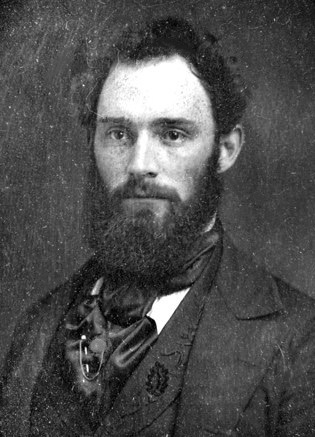
Dwight Spencer (1827-1910) “was born in Mansfield, Connecticut, on February 27, 1827. In 1851 he moved to Brooklyn, New York, and was employed as a bookkeeper and as a Sunday School worker until he was ordained in 1863. During the Civil War Spencer was a delegate for the United States Christian Commission. After the war he did evangelistic work and in 1869 became pastor at Fair Haven, Vermont. In 1880 Spencer became superintendent of missions for the Rocky Mountain District of the American Baptist Home Mission Society. His territory included Utah, Idaho, Montana, and Wyoming. During his ten years in this position he started 30 churches and 33 Sunday Schools and built 25 meeting houses. After his tenure in the West, Spencer became secretary for the Wabash District of the Baptist Home Missionary Society for southern Illinois and Indiana and later for the New York District. He held that position until his resignation in 1901.”
From Spencer family papers, 1860-1979 (MC 151). Dwight Spencer papers consist of diaries (1860-1867) concerning his Civil War ministry and later work; an autobiography; and miscellany. James Spencer’s papers consist of biographical materials; correspondence (1871-1939); religious writings; a scrapbook; and miscellany. Collection also includes small subgroups of the papers of James’ wife Cora Spencer; daughters Marion Spencer and Frances Spencer; son Dwight Spencer; and grandson Spencer Wilson.
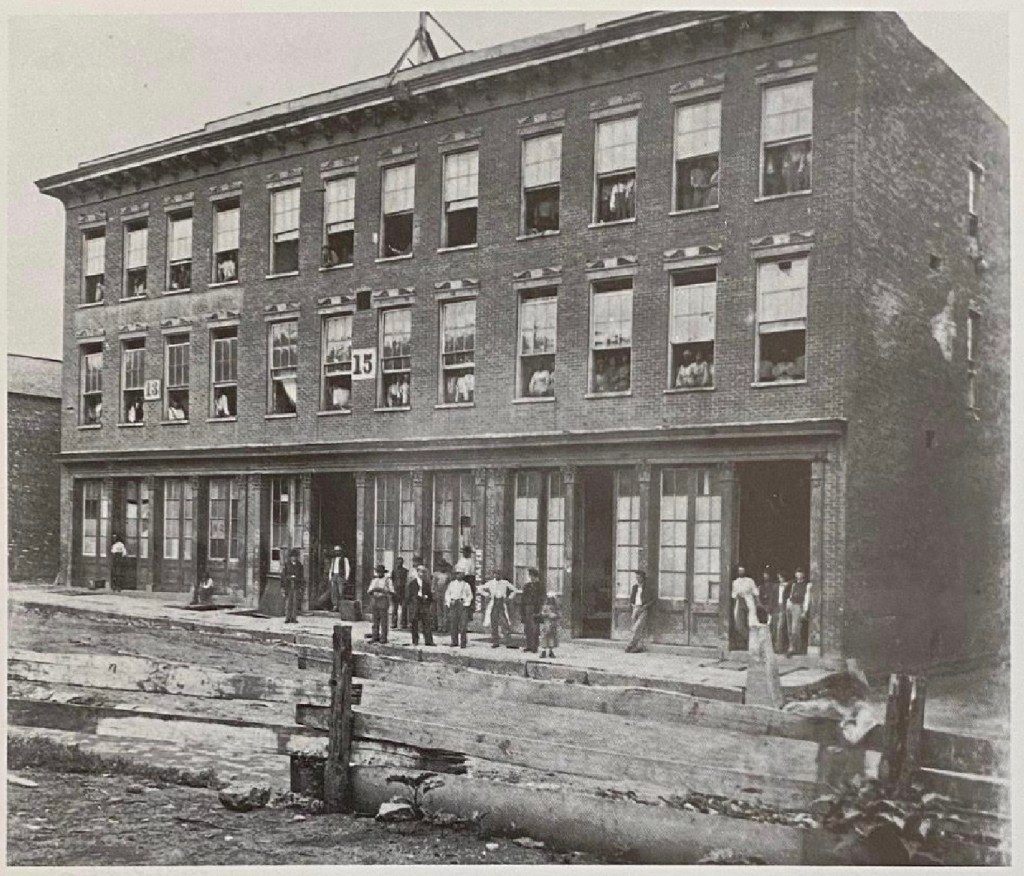
COAN SCHOOL Opened in April 1863, this was the first school in Norfolk for African Americans. Established by AMA missionary William Coan, the school operated in the Colored Methodist Church on Bute Street. Within a few days after opening, there were 1,200 pupils who would eventually be divided between the Coan School and another one that opened in the Bute Street Baptist Church.
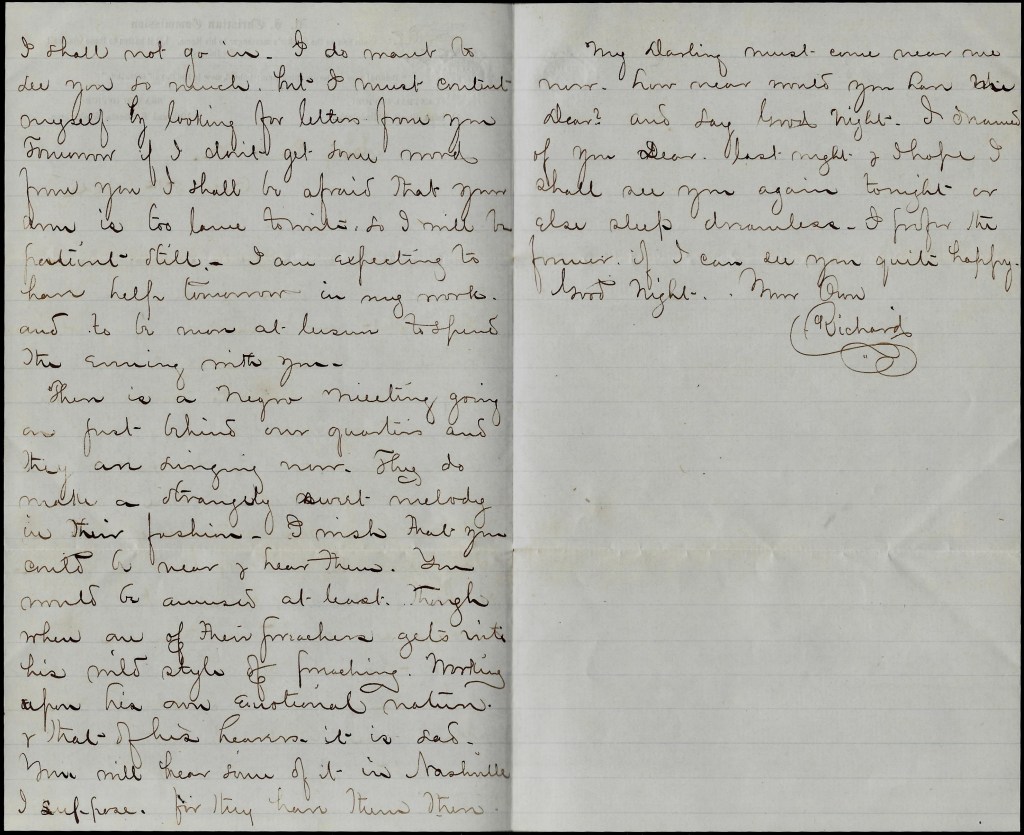
This diary is housed and digital images of its pages can be found at the Montana State Library.
T R A N S C R I P T I O N
May 27, 1864—Arrived at Norfolk from Fortress Monroe about 10 o’clock and reported to Rev. E. N. Crane, the Norfolk agent of the Christian Commission. In the evening attended a meeting of the Convalescent soldiers at Belfour Hospital, Portsmouth. About 100 present. At the close of my address, I said that I should be happy to grasp by the hand as soon as the services were closed as many of the soldiers as would promise me that they would become true soldiers of the Lord Jesus. Accordingly when I had concluded about a dozen came forward and eagerly took my hand. After the meeting at the hospital, attended a meeting of colored children and adults gathered for educational purposes, The school (for such it properly is) is under the direction of Mr. [William] Coan (formerly of New York) assisted by a corps of about 30 young and middle aged ladies together with several soldiers and citizens who from time to time volunteer their services. About 400 children and adults were present and most of them were studious and as far as I examined them, they had made a good degree of progress. After the school exercises were concluded, I addressed the scholars for a short time upon the importance of improving every spare moment in the prosecution of their studies in order that they might acquire sufficient education to fit them for the discharge of their duties which would devolve upon them in their new relations in life. So closed the day.
May 28. I saw this morning a regiment of Union soldiers made up of men who were formerly rebel prisoners but who took advantage of the President’s amnesty proclamation and enlisted in the Union army. They were a good-looking set of fellows. Saw also a gang of prisoners working at street paving under a guard of soldiers and from one of these latter I learned that these prisoners had formerly been citizens of Norfolk and were being punished for acts of rebellion. I could but think how the scales were turned. Here were some of the Southern aristocracy working under a guard of Northern mudsills. Started for the Naval Hospital at Portsmouth and was kindly received by the chaplain Rev. Mr. Stockbridge. About 350 patients in the hospital. After dinner went through the different wards and conversed with about 30 of the patients several of which I found in an interesting state of mind. For particulars, see page 101-103. I was particularly interested in the case of two boys aged respectively 15 & 16 years. The latter was from Boston and was suffering from the effects of a blow which he received by being brought in contact with the walking beam. He told me that his parents opposed his enlisting, that they were in good circumstances, and that he had a good home. He run away and enlisted four different times and his father got him released and that when he still persisted his parents reluctantly gave their consent. He showed me a testament which his mother gave him before he left. Upon the blank leaves of which were written several texts of scripture after which she had written no doubt with tearful eyes. “Dear Eddy be a good boy. I shall never forget you. I shall constantly pray for you. Goodbye.” The other lad was from Baltimore and was an orphan. He told me that he had no relatives unless they were very distant. He had been a Sunday school scholar and had committed several texts from the new testament. He wept while I told him of Jesus—that He would be a friend that would stick closer than a brother. I was also interested in a young many who was dying with consumption. He was from Philadelphia. When he had a good home with kind parents, brothers and sisters who would gladly minister to his wants, could he get home. He had frequently been promised his discharge but through the neglect of officials, he was still detained. I told him of another home and urged him to seek the Savior and thus be fitted to enjoy its society and rest forever. He promised to meet me in Heaven. At 5 o’clock attended a meeting in one of the rooms. I addressed about 50 convalescent mariners. At the close of the meeting, several promised me that they would endeavor to become the children of God. At 7 o’clock I addressed the convalescents at Belfour Hospital. On account of the rain, but few were present. At the close of the services, several lingered to shake hands with me to whom I spoke words of encouragement and advice. Some promised me that they would endeavor to initiate the conduct of the prodigal son and arise and go to God, their Heavenly Father. So the day closed.
Sunday, May 29th 1864—At 9 o’clock, visited the Sunday School (colored) at the Bell Church where I found about 200 children apparently much interested in the study of the word of God. From this school I proceeded to the colored school in Bate Street under the superintendence of Mr. Coan. Here I found about 700 children, listened to their exercises in singing and repeating passages of scriptures. The scholars in both these schools show that they have rapidly improved both in useful information and in deportment. I made a brief address to each school. At 10 o’clock preached to the prisoners in the Union prison. About 100 prisoners were assembled. These are all from the northern army and are suffering punishment for various crimes. They are kept at work during the week at cleaning and repairing the streets. They listened to me attentively. At 11 o’clock preached in the City prison. About 75 prisoners assembled at the close of the service. Several appeared deeply impressed with the text to which they had listened. One young man came to me and wanted to converse privately with me. Promised to meet him in the afternoon At 3 o’clock preached to the 1st United States volunteers at their camping ground. The men were marched up by platoons and formed in solid columns. They listened attentively and I noticed several weeping during the services. The men comprising this regiment were taken prisoners from the rebel army and had since taken the oath of allegiance and enlisted in the Union army. they appeared orderly and apparently engaged in their various duties with a hearty good will. After services, religious papers were distributed among the ranks. There were in the regiment men from every southern state. Some were pointed out to me who had a few days before been taken prisoners at the Battle of the Wilderness and who only remained in the prison camp one night, so heartily sick were they of the rebel service. About forty recruits arrived during the day. Letters were shown from men in the regiment to their comrades in camp telling them how thoroughly they had been deceived in entering the rebel army and urging them to do as they had done and come over on to the side of Union. Nearly every man in the regiment can read and write. The commissioned officers (who were all northern men) bore testimony to their uniform good behavior and orderly conduct said they had rather command them than a regiment of northern men. After this service, I visited the young man in the City Prison above alluded to. I found that he belonged to Gen. Butler’s army and that during a drunken spree he had left his regiment and was afterward arrested for desertion. He was from the interior of New York State where he had parents residing. Said he had a good pious mother who had done for him all a mother could, Acknowledged that he alone was to blame for the suffering whenich he had brought upon him. He appeared truly penitently and said that after the morning service he fully resolved to lead a new life. I urged to seek help from God who alone was able to keep him in the hour of temptation. He promised me to commence praying at once. In the evening, preached in the Presbyterian Church in Portsmouth. A good audience composed largely of soldiers. The audience was attentive and appeared deeply interested. Engaged to preach for them again next Lord’s day. Also met a Baptist brother who wished me to preach in the Baptist Church. So the day closed.
Monday, May 30, 1864—Felt poorly today. In the morning visited the colored schools in Norfolk under the auspices of the American Missionary Association. In these schools there are about three thousand children under the care of forty teachers (white) assisted by several colored. These scholars show a good degree of improvement and appear anxious to learn. Some were well advanced in Geography and Arithmetic and wrote a fair hand.
Tuesday, May 31st 1864—Visited Fortress Monroe and from thence repaired to the Chesapeake and Hampton Hospitals. In these are about six thousand patients. We found in addition to the two chaplains four delegates of the Christian Commission which was as many as the surgeons in attendance (McClellan) would allow as assistants of the chaplains. In these two hospitals the average mortality is about twenty. Saw one poor fellow carried out on a stretcher to the dead house while there. Chaplain Marshall of the Chesapeake Hospital is the most efficient of any chaplain I have yet met with. He has been at the hospital about two years. About a year ago, he went North and collected money sufficient to build a chapel and reading room. He then had the chapel built at the North and brought down all ready for putting up. Entire cost about one thousand dollars. I attended a meeting of convalescent soldiers in this chapel in the evening. A good attendance and much interest manifested. Several soldiers spoke of the goodness of God to them, especially in turning them from paths of sin and folly into ways of righteousness. Several also offered prayers. I addressed the meeting and so the day closed.
Wednesday, June 1st—Assisted Bro. Tisdale at the rooms at Fort Monroe. Attended to the giving out of some delicacies to a part of the 15th Regiment N. Y. Engineers on board the transport Ranger while lying off the fort. Also two hundred books, tracts, and newspapers. To another company of the same regiment on board the transport City of Albany, I gave one hundred newspapers and tracts. Heard of the occupation of the house of Dr. STrong, a Baptist minister near Bermuda Hundred and an amusing incident in regard to the baptizing of his negroes. In the evening left for Norfolk expecting to go to the front, Bermuda Hundred tomorrow.
Thursday, June 2nd 1864—Did not go to Bermuda Hundred as I expected. Was quite sick during the early part of the day. In the evening attended prayer meeting in the High Street Presbyterian Church, Portsmouth—a good meeting. Quite a number of soldiers present. I addressed the meeting a short time. After meeting, addressed several personally upon the subject of religion. Several expressed desires to become Christians and several others told me that they hoped that they were already numbered among the faithful.
Friday, June 3rd—Spent the day in conversing with the soldiers in Belfour Hospital. Conversed with about thirty. Of this number, only four or five were indifferent. Of the others, I found five or six in an enquiring state of mind and I consider their cases as hopeful. The rest were free to acknowledge the claims of religion upon them but were disposed to delay. Nearly everyone asked me to come again and several wished me to bring them books and papers. Met a boy of fifteen who told me that he was an orphan. He came from Albany as a waiter upon an officer. He had a fever which I doubt not will result in death. He told me that he had been to Sunday school, that he wanted to be a good boy. Wanted me to bring him a testament which I did in the afternoon and gave him some advice. Conversed also with Benjamin F. Osborn from New York who has the consumption and who I fear will not live long. He showed me a daguerreotype which his wife had sent him of herself as well as some scraps of beautiful poetry, one of which commencing, “Nearer my God to thee,” I considered as very appropriate in his case. He wept freely while I talked to him and endeavored to point out to him the way of life. I urged upon him the importance of renouncing all his own righteousness and relying alone and solely upon Christ. I think that he is not far from the Kingdom of Heaven.
Saturday, June 4th—I spent the day in visiting at the Belfour Hospital and distributing religious papers. Almost four hundred of the latter were distributed and thankfully received by the soldiers. As opportunity presented, I conversed with the soldiers upon the subject of religion. They generally listened with interest and appeared thoughtful. Found none who could be called despisers of the truth but many neglecters. I have hardly met with a scoffer since I commenced my work. If the soldiers in our hospitals are a fair representation of our army in regard to morals (and I see no reason why they should not be), then may we truly say that never country mustered an army so noble. At the Belfour Hospital is a reading room and library under the management of Mrs. Perry from Massachusetts—a very estimable lady from which the soldiers are supplied with reading matter.
Sunday, June 5th—In the morning went out to the entrenched camp beyond Portsmouth and preached to the soldiers. On account of the rain which immediately preceded the time of the service, there was only a small number present. Immediately after service a young man came up and spoke to me saying that he was a member of the Baptist Church in Fall River, but that he had wandered from God and neglected many duties, I encouraged him to take a decided stand in favor of truth and ever to let his light shine. I also spoke to several others who appeared thoughtful and impressed by the truth to which they had listened. The men were all attentive. Dined with bro. Godfrey in his tent. Returned to Norfolk and attended colored services in th Bell Church. Was witnessed with the introductory prayer in which the minister prayed for the liberty of his brethren in bondage as well as for the success of the Union arms. WhenI remembered that a short time ago such a prayer could hardly have been offered in New York without raising a mob, I could not but think that it was a great change which permitted it now in Norfolk and that too before an audience which but a short time ago were almost everyone slaves. At 5 o’clock went out to the entrenched camp beyond Norfolk and preached to the 38th Regiment (colored). This regiment is composed almost entirely of men who were formerly slaves. The officers speak of them as being orderly—more easy to manage that white men and quick in the art of imitation. They say that they learn to go through with the drill exercise readily. The regiment is not yet full. The men listed with good attention and I hope that my labor may not have been in vain. At 7.30 o’clock, preached in the High Street Presbyterian Church in Portsmouth. The house was quite full and the audience attentive. A large number of soldiers were present and I pray that they may be led to embrace the truth and become followers of the Lord Jesus.
Monday, June 6th—Started for Bermuda Hundred. As we entered the James river, saw the fleet lying outside at its mouth. We soon came to Jamestown where we saw the remains of the first church built upon this continent which was soon after the settlement of the town in 1607. At Wilson’s Landing, saw where the attack was made by the rebels upon Col. Wild’s Colored troops. Fort Powhatan just above and opposite commands the river. At this point lies the iron clad Atlantic taken from the rebels near Savannah. She was captured by the Weehawken and is a dangerous looking craft. Passed Harrison’s Landing, the point to which McClellan retreated after his famous Peninsula Campaign. Arrived at Bermuda Hundred and formed no favorable idea of the place. In fact, it can hardly be called a place unless large fields dotted over with tents is such. There is nothing worthy of being called a house in the vicinity but only here and there a miserable chanty. Visited the Christian Commission tent and returned to the boat of which I passed the night.
Tuesday, June 7th—Started for the Point of Rocks, a place a short distance up the Appomattox from this place. We started for the front, taking a bundle of papers. We first proceeded to the left of the works resting upon the Appomattox, from which point we plainly saw the spires of Petersburg. From this point we continued our course along the works towards the James. My bundle of papers was soon gone, the soldiers actually snatching them from my hand. I was surprised to see the extent of the works thrown up in so short a time. Forests had been cut down and a line of earthworks thrown up from the Appomattox to the James. I should suppose a distance of six miles. The men must have had a mind to work. Just after we passed the center of the works, the rebels favored us with a half dozen shots, the shells exploding just outside our lines. The shrill whistle of these was anything but pleasant. Approaching the James, saw the fleet of monitors and gunboats lying abreast our works and just above them a net of ropes extending across the river to protect the fleet from torpedoes. From a signal station upon the roof of an unfinished house, at this point, with the aid of a glass, we could see the spires of Richmond, and works on the outside of the city over which floated a rebel flag. Looking across the river from this station, I saw a country indescribably beautiful. Fields of corn and wheat already opening for the harvest lay spread out as far as they could reach. About two o’clock heard heavy firing from the peninsula, supposed to be in Gen. Grant’s army. On our return, visited Gen. Gilmore’s Headquarters and were courteously entertained by him for a few moments. He offered to render us any assistance in his power in the prosecution of our work as agents of the Christian Commission. During our travels saw several shot and shell lying upon the field. Returned to Bermuda Hundred and in the evening attended a prayer meeting held in the Christian Commission tent at which a good number of soldiers were present. Several took part in the meeting speaking and offering prayer, anda good spirit prevailed. I addressed the meeting for a few moments. At the close of the meeting, spoke to several who tarried after the meeting had been dismissed.
Wednesday, June 8th—Returned to Norfolk. Nothing occurred worthy of note.
Thursday, June 9th—Spent the day in visiting the Gosport Navy Yard. Distributed about 500 papers, testaments, and other religious books. I spoke from time to time as opportunity presented to those receiving the book or paper urging upon them the importance of religion. On some of the vessels I found the men actually starving for religious reading. I found several boys of 15 or 16 years who had no testaments. I furnished them and one in particular promised to read it daily and to pray. May the Lord grant them His spirit. I was in every instance treated with great courtesy by the officers. I never feel satisfied with such a days work. I always feel at its close that I have not been been half in earnest—that I might have found many more opportunities had my heart been right, of impressing upon those with who I meet the importance of immediate attention to the great subject of religion. May the Lord help me to be more faithful. In the evening attended a prayer meeting in Portsmouth at which a good number of soldiers were present. I addressed them briefly. Near the close of the meeting I requested all those who hoped that they were on the Lord’s side, as well as those who desired to be on His side to manifest it by rising. About half a dozen rose and afterward two of those who had risen spoke acknowledging their wanderins and promising in the future to lead a holy life. We all felt that it was a good meeting.
Friday, June 10th—In the morning took a watch and package of money to a patient at Balfour Hospital named John R. Miller. Found that he enlisted in Mansfield, Conn., my native town, and at once became interested in him. He acknowledged that he had lived a reckless life and said that he had fully resolved to learn from his follies and become a different man. He looked upon his affliction (he had lost a leg) as sent of God to lead him to reflect upon his ways and to turn from his sins. I gave him such advice as I thought suited to his case. Afterward went to Fortress Monroe and took a tug in company with some friends to visit the Rip Raps. From this place, proceeded to Hampton Hospital in company with Mr. Crane. We thought we would go over and visit the remains of Hampton which was burned by the rebel Magruder. There is scarce anything left of this once beautiful town; but instead of fine houses, little slab huts everywhere greet the eye of the visitor. The negroes, the owners and occupants of the huts, have built by the side of the chimneys, which were left standing, and so use the same fireplace that the wealthy proprietors had formerly used. Visited the old church which is said to have been the second built in this country, the bricks of which were brought from England. It is now a mass of ruins, having been burned with the rest of the town, and the burying ground surrounding it shows unmistakable evidences that it has been visited by an unfeeling soldiery. Talked with some of the colored people with whom I met and now at the close of the day, I feel that little or nothing has been accomplished for my Master.
Saturday, June 11th—Spent the day at the Naval Hospital, Portsmouth. I first met a man who professed to be an atheist. I talked with him some time and endeavored to show him the folly of his course and the dangers of his position. I did not feel satisfied with myself, fearing that there had been an effort to display the wisdom of this world rather than that spirit of meekness and love everywhere recommended in the scriptures. Saw the two boys John Williams and Edward Lock referred to on pages 5 & 6. I became more interested in them than on my previous visit. For the latter, I have great hope that a mother’s prayers and counsels may not prove in vain. He appears to be sincere in his desire to become a Christian. For the other lad, I feel sorry. He has no earthly friends. Oh that Jesus may become his friend. Found another boy from Massachusetts who I trust is not far from the Kingdom of Heaven. His brother had recently fallen in battle and he showed me a letter from his sister in which this sad intelligence was communicated to him, and in which she also exhorted him to prepare for death. I conversed with about fifty in all and distributed a number of testaments among the men, they promising to read them. In the evening attended a meeting at which about fifty of the patients were present. I was glad to see a good number with whom I had conversed during the day. I addressed them for a short time and when I had concluded, I asked all who hoped that they were on the Lord’s side as well as all those who had a desire to be on His side to manifest it by rising. Some dozen rose and among those Edward Lock, the lad already referred to. May the Lord keep him and all the rest who with him are trying to take a stand for Jesus. I felt as I retired that my labors had not been in vain.
Sunday, June 12th—In the morning went up to the Taylor farm about six miles from Norfolk in the direction of Fortress Monroe, and preached to the colored people who are living there and managing the farm for the benefit of government. I found Mr. Beale, the superintendent, a very kind man and I should think well fitted for his position. There are about seven hundred colored people on the place including children, a day school, and Sunday school are kept on the farm, and on week days the children are required to work four hours and attend school four hours. About three hundred were present at the services and were very attentive. They were anxious that I should come and see them again. At the close of the service, I distributed about 300 books and papers. At 3 o’clock I preached to the 1st US Volunteers at their camp near Norfolk. Did not enjoy the services as on a former occasion, the Lieut.-Colonel have severely reprimanded the Adjutant for not forming the lines according to orders. I do not think the Adjutant was to blame as I think he did not understand the orders. The Lieut.-Colonel commanded the companies to be dismissed and the lines to be formed again in ten minutes. I felt that the men were not there willingly and could not enjoy the service. However, the men listed to me attentively. At the close of the service, distributed about 300 papers. At five o’clock attended an anniversary service of the (colored) Sunday school under the superintendence of Mr. Coan in the Bute Street M. E. Church. The attendance was large and the services interesting. The scholars showed that the labor expended upon them had not been in vain. I addressed the meeting for a few minutes. In the evening preach in the High Street Presbyterian Church in Portsmouth. The audience was large and the attention good. May the Lord own and bless His truth. I am much interested in this service from the fact that so many soldiers attend it. [page 40]






 Spared & Shared 23