
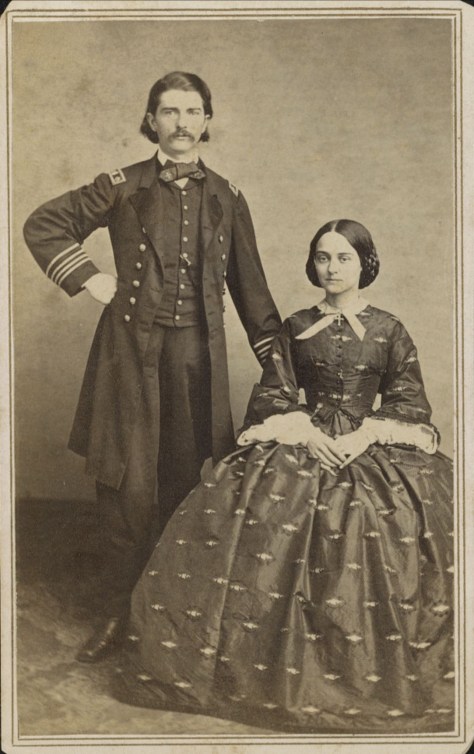
The following letter was written by Charles J. Henry (1829-1920) who served in the US Navy during the American Civil War. Charles was born in Weedsport, Cayuga county, New York on 13 December 1829. He was the son of Samuel Henry (1793-1841) and Harriet Peterse Voorhees (1793-1854). Now orphaned, John was married to Ruth Eliza Carter (1834-1916) on 20 December 1854 in Brewerton, Onondaga county, New York. He and Ruth had only one child—unnamed—who died at birth in mid-April 1861. In 1863, just prior to his enlistment in the Navy, Charles was employed in the manufacture of barrel staves in Brewerton—an industry that thrived at the time demanded by regional salt industry at Syracuse.
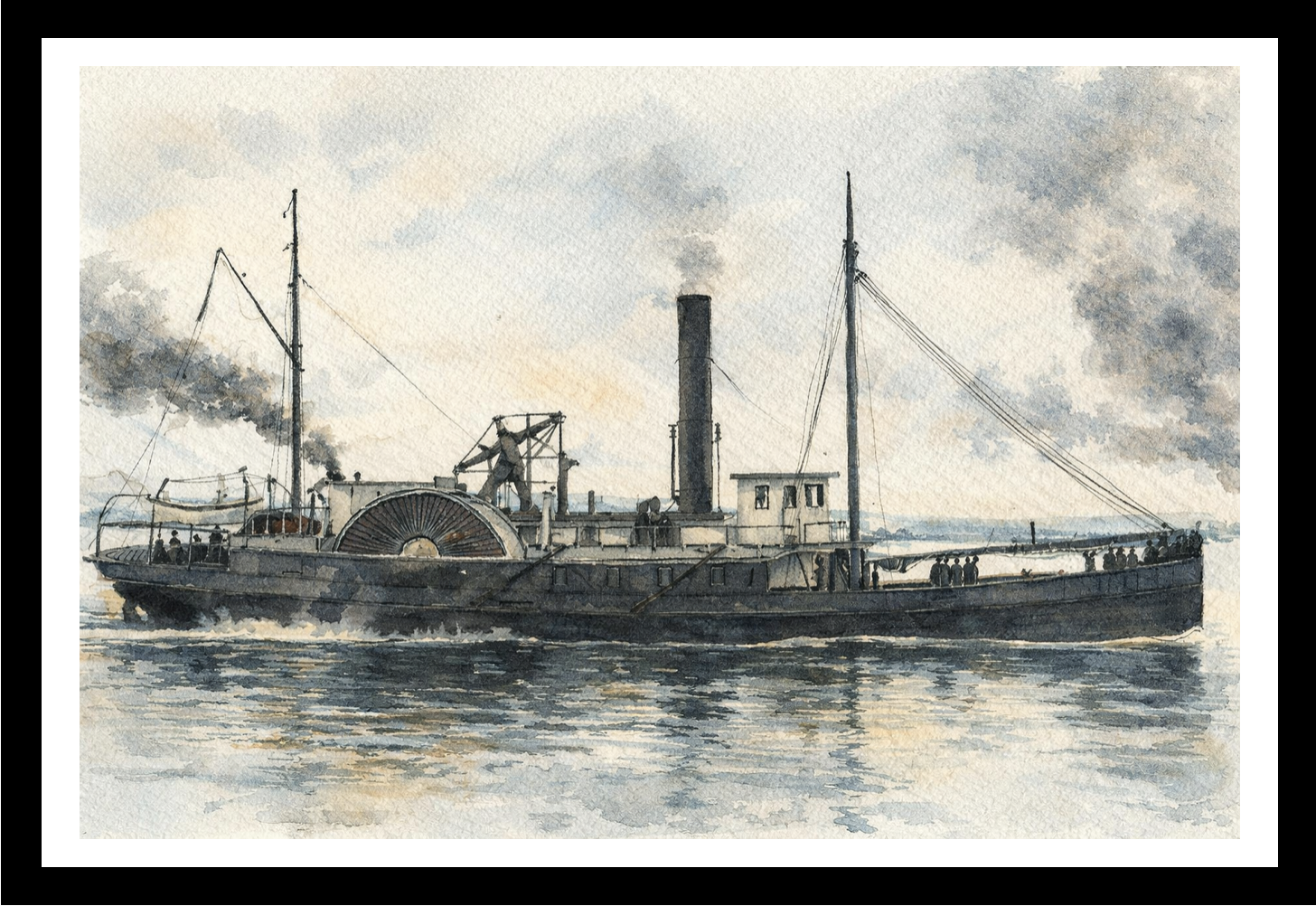
In late September 1863, Charles bid goodbye to his wife and went to the Brooklyn Navy Yard where he enlisted and was soon afterward assigned to the recently constructed side-wheel steam tugboat, USS Geranium. She had been designed for commercial use but the Navy acquired her for $13,500 on 5 September 1863 and had her commissioned on 15 October at the New York Navy Yard under Acting Ensign G. A. Winsor. She operated without armament as a support vessel. She measured 128 feet in length with a beam of 23 feet and displaced 356 tons, powered by a single beam steam engine producing 210 horsepower. During her naval career from 1863 to 1865, Geranium was assigned to Rear Admiral John A. Dahlgren’s South Atlantic Blockading Squadron, departing New York on 20 October 1863 and arriving off Charleston, South Carolina, on 4 November. She performed duties as a picket boat, dispatch vessel, and light transport, supporting operations at stations including Ossabaw Sound and the St. Johns River, while occasionally ferrying Admiral Dahlgren.
Notable actions included a July 1864 diversionary expedition up the Stono and North Edisto Rivers to disrupt Confederate rail lines, where she towed supplies, supported troops under General Birney, and engaged a Confederate battery at the Dawhoo River. In February 1865, she aided joint Army-Navy operations at Bull’s Bay, contributing to the evacuation of Charleston, and later conducted reconnaissance up the Santee River to facilitate supplies for General Sherman’s forces. After the war, she decommissioned at Washington, D. C., on 15 July 1865 and was sold to the Treasury Department on 18 October for $13,000 to join the Lighthouse Service.
In this incredible letter, written in early November 1863, Charles provided his brother-in-law William H. Carter with a detailed account of the vessel’s first voyage from New York City to the mouth of the St. Johns River in Florida. He provides us with a bystander’s view from the deck of the Geranium, inside the bar of Charleston Harbor, during the daytime shelling of Fort Sumter on November 4th and 5th 1863 as the old fort was being mercilessly reduced to a pile of rubble.
Charles’ service record indicates that the US Steamer Geranium was the only vessel her served on. He was made the Acting 2nd Assistant Engineer. He remained with her until his discharge from the Navy on 19 July 1865. After he was discharged, he lived in various localities including Albany (NY), Tunkhannock (PA), Leadville (CO), and Denver (CO) where he died in 1920. Two more children were born to the couple, in 1866 and in 1868, but neither lived more than a few months.
[Note: This letter is from the private collection of R. J. Ferry and was made available for transcription and publication on Spared & Shared by express consent.]
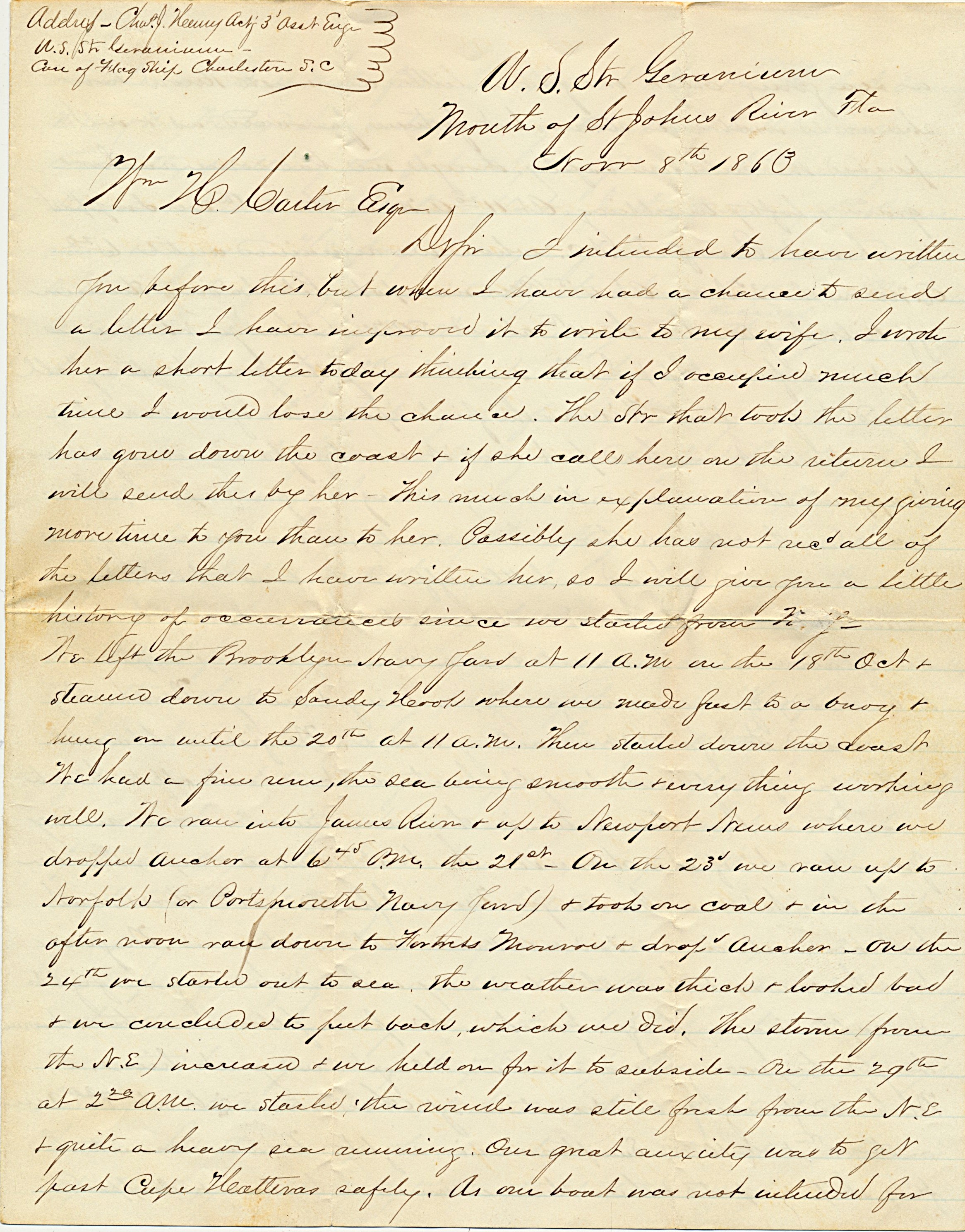
T R A N S C R I P T I O N
U. S. Steamer Geranium
Mouth of St. Johns River, Florida
November 8th 1863
Wm. H. Caiter,
Dear sir, I intended to have written you before this but when I have had a chance to send a letter I have improved it to write to my wife. I wrote her a short letter today thinking that if I occupied much time I would lose the chance. The steamer that took the letter has gone down the coast & if she calls here on the return, I will send this by her. This much in explanation of my giving more time to you than to her. Possibly she has not received all of my letters that I have written her, so I will give you a little history of occurences since we started from New York.
We left hte Brooklyn Navy Yard at 11 a.m. on the 18th of October & steamed down to Sandy Hook where we made fast to a buoy & hung on until the 20th at 11 a.m. Then started down the coast. We had a fine run, the sea being smooth & everything working well. We ran into James River & up to Newport News where we dropped anchor at 6.45 a.m. the 21st. On the 23rd we ran up to Norfolk (or Portsmouth Navy Yard) & took on coal & in the afternoon ran down to Fortress Monroe & dropped anchor.
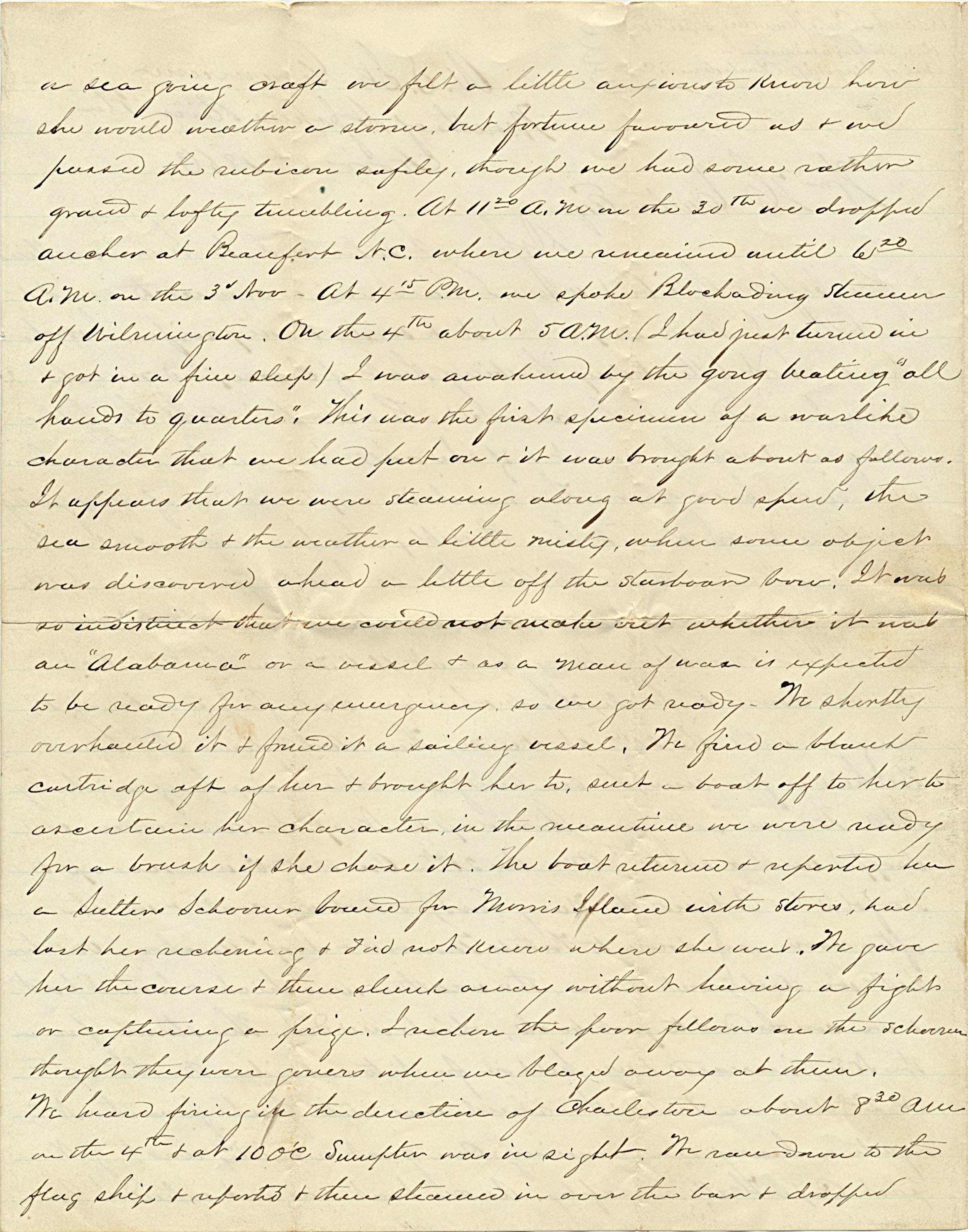
On the 24th we started out to sea. The weather was thick and looked bad & we concluded to put back, which we did. The storm (from the N. E.) increased & we held on for it to subside. On the 29th at 2.30 a.m. we started. The wind was still fresh from the N. E. and quite a heavy sea running. Our great anxiety was to get past Cape Hatteras safely. As our boat was not intended for a sea going craft, we felt a little anxious to know how she would weather a storm, but fortune favored us & we passed the Rubicon safely, though we had some rather grand & lofty tumbling.
At 11.20 a.m. on the 30th we dropped anchor at Beaufort, North Carolina, where we remained until 6.20 a.m. on the 3rd November. At 4.15 p.m. we spoke Blockading steamer off Wilmington. On the 4th about 5 a.m. (I had just turned in and got in a fine sleep), I was awakened by the gong beating “all hands to quarters.” This was the first specimen of a warlike character that we had put on. It was brought about as follows. It appears that we were steaming along at good speed, the sea smooth & the weather a little misty, when some object was discovered ahead a little off the starboard bow. It was so indistinct that we could not make out whether it was an “Alabama” or a vessel & as a man-of-war is expected to be ready for any emergency, so we got ready.
We shortly overhauled it & found it a sailing vessel. We fired a blank cartridge aft of her & brought her to, sent a boat off to her to ascertain her character. In the meantime we were ready for a brush if she chose it. The boat returned & reported her a Sutler’s Schooner bound for Morris Island with stores, had lost her reckoning and did not know where she was. We gave her the course & then slunk away without having a fight or capturing a prize. I reckon the poor fellows on the schooner thought they were goners when we blazed away at them.
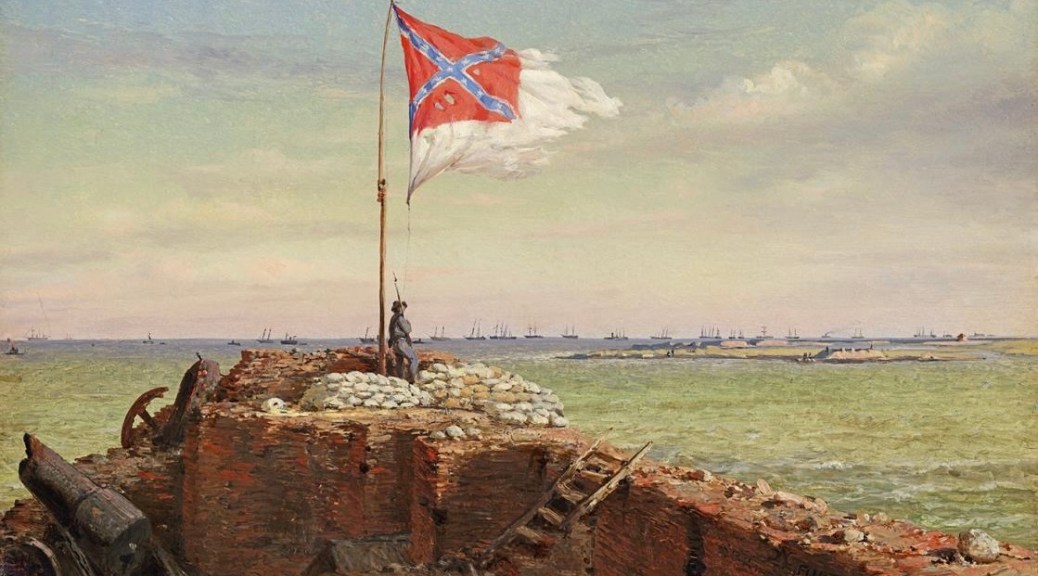
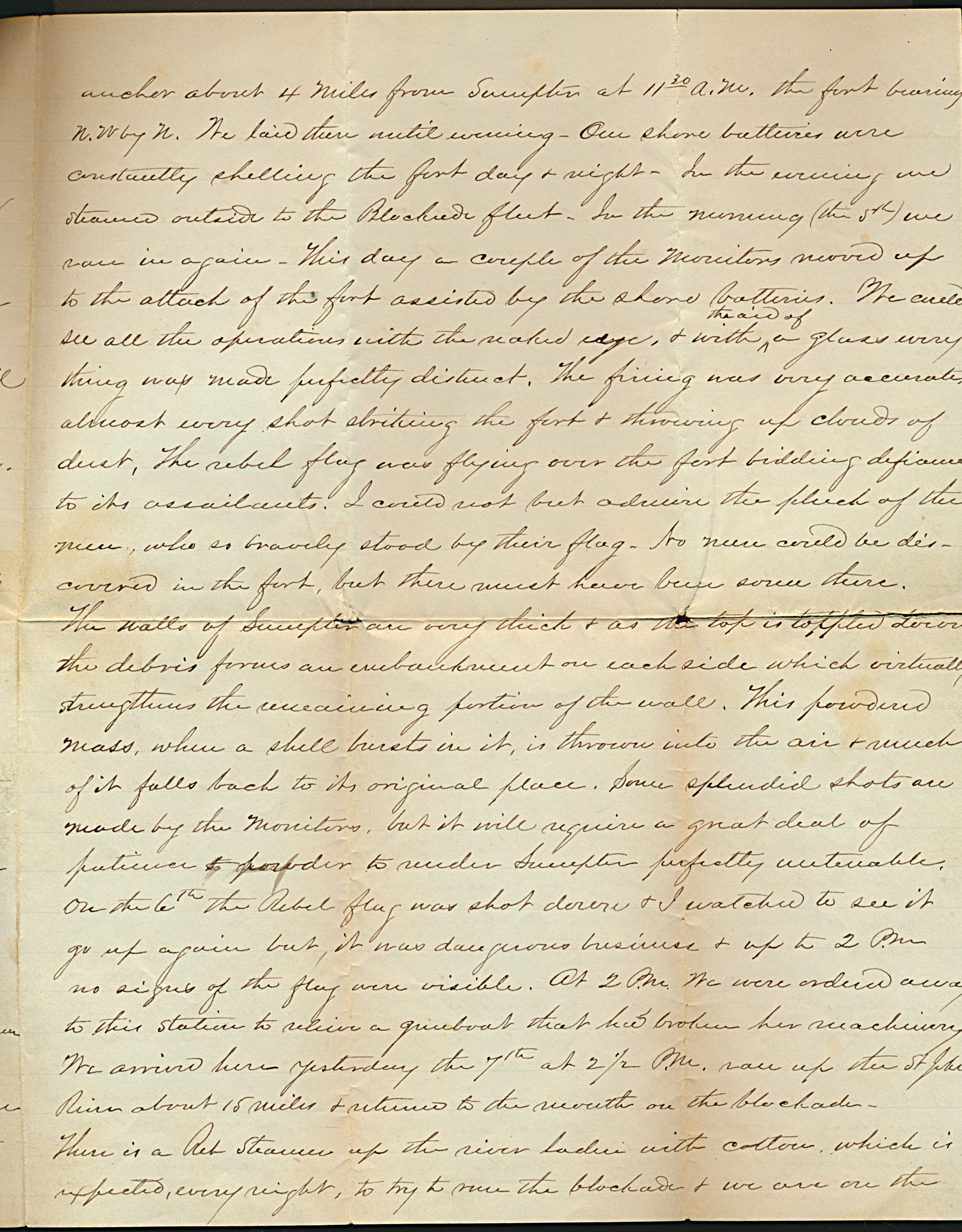
We heard firing in the direction of Charleston about 8.30 on the 4th & at 10 o’clock [Fort] Sumter was in sight. We ran down to the flag ship & reported & then steamed in over the bar & dropped anchor about 4 miles from Sumter at 11.30 a.m., the fort bearing N. W. by N. We laid there until evening. Our shore batteries were constantly shelling the fort day and night. In the evening we steamed outside to the blockade fleet. In the morning (the 5th) we ran in again. This day a couple of the monitors moved up to the attack of the first assisted by the shore batteries. We could see all the operations with the naked eye & with the aid of a glass everything was made perfectly distinct. The firing was very accurate—almost every shot striking the fort & throwing up clouds of dust. The rebel flag was flying over the fort bidding defiance to its assailants. I could not but admire the pluck of the men who so bravely stood by their flag. No men could be discovered in the fort but there must have been some there.
The walls of Sumter are very thick & as the top is toppled down the debris forms and embankment on each side which virtually strengthens the remaining portion of the wall. This powdered mass, when a shell bursts in it, is thrown into the air & much of it falls back to its original place. Some splendid shots are made by the monitors but it will requite a great deal of patience and powder to render Sumter perfectly untenable.
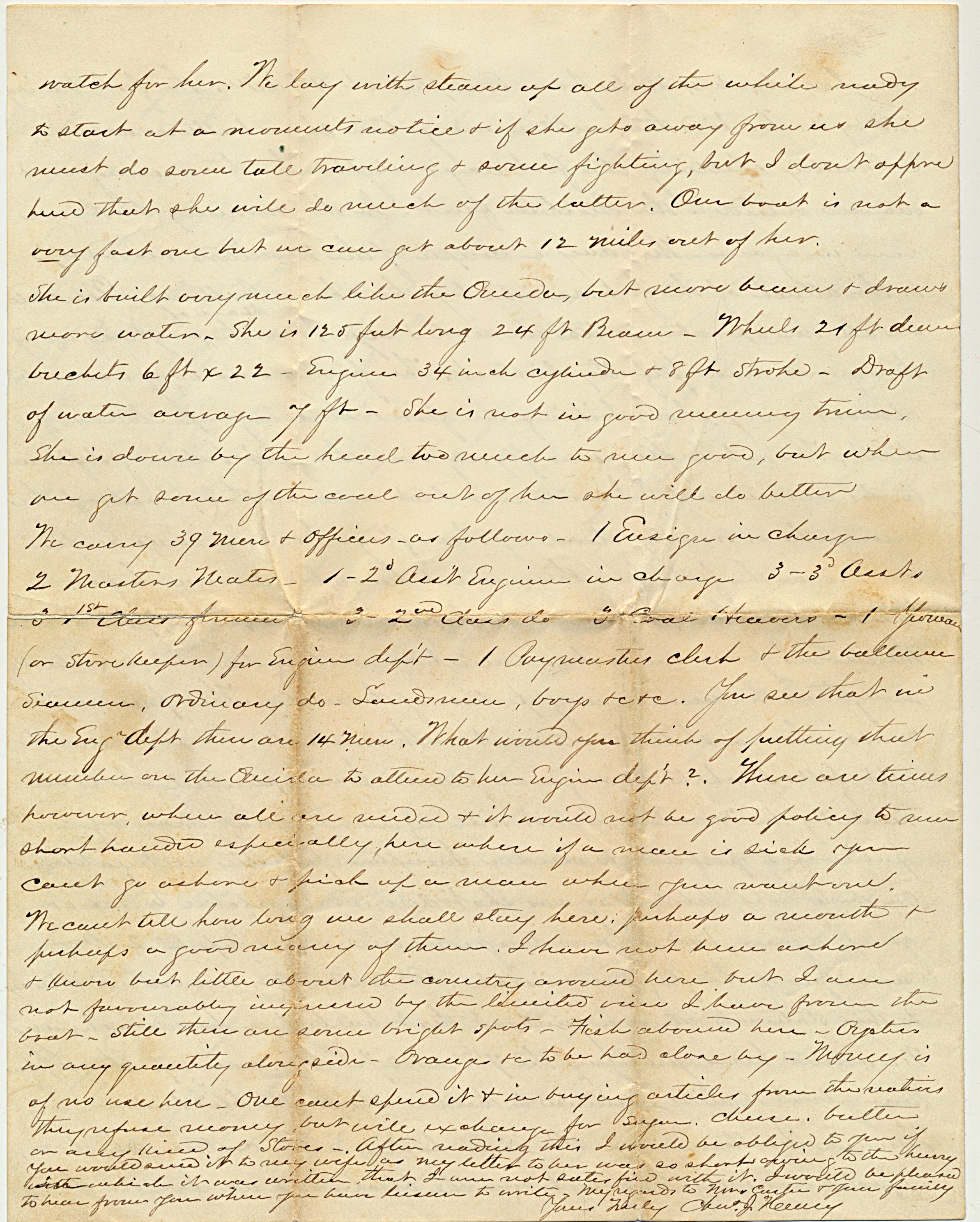
On the 6th, the Rebel flag was shot down & I watched to see it go up again but it was dangerous business & up to 2 p.m. no signs of the flag were visible. At 2 p.m. we were ordered away to this station to relieve a gunboat that had broken her machinery. We arrived here yesterday the 7th at 2.30 p.m., ran up the St. Johns River about 15 miles & returned to the mouth on the blockade. There is a Reb steamer up the river laden with cotton which is expected every night to try to run the blockade & we are on the watch for her. We lay with steam up all of the while ready to start at a moment’s notice & if she gets away from us, she must do some tall traveling & some fighting, but I don’t apprehend that she will do much of the latter.
Our boat is not a very fast one but we can get about 12 miles out of her. She is built very much like the Oneida, but more beam and draws more water. She is 125 feet long, 24 foot beam. Wheels 21 feet draw buckets 6 feet x 22. Engine 34 inch cylinder & 8 foot stroke. Draft of water averages 7 feet. She is not in good running trim. She is down by the head too much to run good, but when we get some of the coal out of her, she will do better. We carry 39 men & officers as follows. 1 Ensign in charge 2 Master Mates, One 2d Asst. Engineer in charge. Three 3d Assistants. Three 1st Class Firemen, Three 2nd class Firemen. Three coal heavers. One Storekeeper for Engine dept. One Paymaster’s Clerk & the balance seamen, ordinary seamen, landman, boys &c. You see that in the Engineering Department, there are 14 men. What would you think of putting that number on the Oneida to attend to her Engine Department? There are times, however, when all are needed & it would not be good policy to run short handed—especially here where if a man is sick, you can’t go ashore & pick up a man when you want one.
We can’ tell how long we shall stay here—perhaps a month & perhaps a good many of them. I have not been ashore & know but little about the country around here but I am not favorably impressed by the limited view I have from the boat. Still there are some bright spots. Fish about here. Oysters in any quantity alongside. Oranges &c. to be had close by. Money is on no use here. Once can’t spend it & in buying articles from the natives, they refuse money but will exchange for sugar, cheese, butter, or any kind of stores.
After reading this, I would be obliged to you if you would send it to my wife as my letter to her was so short owing to the hurry which it was written that I am not satisfied with it. I would be pleased to hear from you when you have leisure to write. My regards to Mrs. Carter & your family. Yours truly, Chas. J. Henry
 Spared & Shared 23