James M. Mason, the older brother of Maynadier Mason of Virginia
This is an original handwritten letter written by Maynadier Mason (1807-1865), dated January 7, 1862, at Rome Georgia on letterhead from Confederate States of America, War Department, Ordnance Office in Richmond, Virginia. The letter is addressed to Miss Ellie Bouser who we learn from the letter was seeking a teaching position in some southern female seminary. In addition to chronicling is travels throughout the south inspecting ordnance in Virginia, Kentucky, Alabama and South Carolina, he also mentions in some detail the efforts of his son—Robert French Mason (1834-1902)—to rescue some slaves, particularly Charles and Buck, from the family plantation at Rose Hill that was occupied by Yankee officers in Union controlled Virginia on the outskirts of Alexandria. By the time of this letter, Robert was a member of J. E. B. Stuart’s Horse artillery and though he offered to make the daring rescue attempt himself, his father considered it too risky and persuaded him to try again by hiring a scout to perform the task. In the 1860 Slave Schedules, Maynadier Mason owned 17 slaves ranging in age from 1 to 65.
Maynadier concludes his letter by expressing his profound disappointment regarding the Lincoln Administration’s decision to release James M. Mason (his brother), and John Slidell, figures associated with the Trent Affair, believing that had they not been released, England would undoubtedly have entered the war by this point.
No doubt Maynadier Mason shared the same views as his more famous older brother, James M. Mason (1798-1871) who was a white supremacist. He believed that negroes were “the great curse of the country.” His solution to the “problem” of free blacks was returning them to slavery, stating they were better off enslaved in the United States than they could possibly be in Africa.” [Wikipedia]
T R A N S C R I P T I ON
Rome, Georgia January 7th 1862
My dear Ellie,
I certainly had expected when last in Richmond to have received a communication from you. The last I heard of you was through your younger sister Tody. You were then sick and promised to write as soon as you were well and was very much disappointed in not hearing from you to tell me that you had recovered. I hope, however, when I reach Richmond which will be in about three weeks to receive a long letter.
Since 1st October, I have been traveling and seen a great many influential and wealthy gentleman and have endeavored to get you for you such a situation as I thought would suit, but find the distracted state of things in the South have thwarted all my efforts so far as a private families. I applied at Florence, Alabama; also in Kingville, South Carolina, to the female seminary, but found they had engaged their teachers. In any other times save these war times, there would be no difficulty, salary from 3 to 7 dollars per day. I shall be here for a few days proving cannon, thence to Nashville, Memphis, and Columbus, Kentucky, from there to this place and then to Richmond. I left Tuscaloosa, Alabama, on my last jaunt; took the East Tennessee route to Richmond, then to Manassas, [and] to Centerville to see Robert who is now there in search of news from Rose Hill. He told me he had engaged a scout at $50 to go to Rose Hill and bring Charles and Buck away. The scout returned (Rose Hill from Centerville is about 20 miles) and reported it is impossible as the house has been guarded for months and the officers made it their quarters. This the scout got from a black man who told him that Charles was dead, also four of his children. I can only infer that black man was Josh, Sophie’s husband.
I directed Robert to renew his efforts and give $100 to bring Buck away and see William Reid who may aid him. Robert said he would go himself. I told him not yet; [to] try your scout once more. I have no doubt with the aid of Mr. Reid it can be accomplished. Now is not this a sad and sorrowful story? And what has become of Mary, Mrs. Swain and Chip, Kitty, and Betsy? God only knows as neither Robert or myself have heard for three months and the scout could not learn from this black man—a sad and mournful story.
After I left, I wrote and begged Mary and Mrs. Swain to come to Fairfax Court House and I could get the Negroes away, but they [Mary & Mrs. Swain] preferred to remain to take care of the property. I write all this as I am sure you would like to hear from those who so much esteemed you. All this war news you see in the papers more than I do.
I wish the Yankees had not given Mr. Slidell & my brother [James M. Mason] liberty as they were very comfortable and well-treated at Fort Warren. John Bull would have soon raised the blockade and pitched into them by sea and the war would soon be at an end & have no doubt it will not be long before a quarrel is raised, if the Yankees have spunk enough to do so, and I do hope and trust if ever we should have a chance, to carry the war into Africa and shew them how pleasant it is to be driven from home, possessions, and all destroyed. You may rely on it if ever our army gets into [paper torn] will give them a sad retribution. But I’m at the end of my tether and must now close & hope to have a letter from you when I get to Richmond. With kind remembrances to all at home. Henry Dixon, or Dan Delany, I believe, are in Washington. when you write, tell me about Mrs. Dixon and the girls.
The following letter was written by 45 year-old Nathaniel Peyton Young (1816-1896) of Smithfield who was the county clerk of Isle of Wight county, Virginia, at the time of the 1860 US Census. The letter was penned on 17 July 1861 just prior to the battle of Bull Run and at a time when Virginian’s lived in fear of a Yankee invasion. To protect the record books of the Isle of Wight county from theft or destruction during the Civil War, Young had his manservant, Randall Booth, transport the books to the western part of the state for safekeeping.
Nathaniel was married to Sarah Virginia Carroll (1822-1875) and when the war began, they were the parents of four daughters, born between 1845 and 1852. Sarah was the daughter of Gray Carroll (1773-1843) and Polly Wheadon (1785-1840). He wrote the letter to his brother-in-law, Thomas Carroll (1805-1888), a farmer in Ridgeway, North Carolina, who cultivated his plantation with 24 slaves ranging in age from 21 to 72 in 1860.
T R A N S C R I P T I O N
Addressed to Thomas Carroll, Esq., Ridgeway, North Carolina
Isle of Wight Court House, Virginia July 17, 1861
My dear sir,
Your letter of the 13th inst. is just received. You must excuse my negligence in not answering yours of the 15th ulto. enclosing vouchers form Graves. They leave here attended to.
We are under many obligations to you for your kind invitation to go out to your house in case of our invasion on this side of the river. If such a thing shall take place we will avail ourselves of your kindness and at least take out the ladies & childrren. I hope, however, that we are not now in much danger as we leave a very fine battery of large guns erected at the rocks which is supported by Pryor’s Regiment with field pieces &c. and Col. Pender’s Regiment of North Carolina is stationed between the mouth of Pagan Creek 1 & the ragged Islands, and if they (the vandals) attempt to land at either place they will meet with a warm reception. It is thought by the officers in command that the battery at the rocks will effectually prevent a landing either at that place or the Bay.
If nothing turns up to prevent it, we will try and pay you a visit during the summer. I am pleased to learn that your crops are good. Our wheat & corn crops are good, but owing to the want of rain, the oat crop was indifferent.
I am sorry to inform you that George Carroll’s health is fast declining. He is now quite feeble & suffers excessively from his cough. He is barely able to ride a mile or two in the morning & shuffle about the house. Poor fellow. It grieves me very much to see his condition but we have the consolation to know that he is prepared to die. I have never seen a man in his condition talk with so much coolness & self control as he does. He is perfectly aware of his condition & knows that there is no hope for him. The balance of us are quite well with the exception of Caroline Holleman who we learn has been quite sick, but on last accounts, was improving.
We have just learned this morning that one of the Yankee steamers came up in the region of the Rocks battery last night and was fired into & driven off. 2 I forgot to say that we have also a fine battery of four 32-pounders at Mr. Jack Todd’s which precludes the possibility of scamps getting up the creek.
Excuse the hurried manner of this as I am beset by several in my office who are troubling me very much. Our immediate family are all quite well and write in the best regards for yourself. Your esteemed lady & the children.
Very truly yours, — N. P. Young
Mr. Thomas Carroll
1 Pagan Creek is a tributary of the James River in Isle of Wight county, Virginia.
2 The Yankee steamer may have been the USS Harriet Lane. The Pagan River enters the James River at the location of the town of Smithfield, Virginia. In the early stages of the Civil War, Union naval forces based at Fort Monroe maintained a blockade of the James River and conducted reconnaissance missions and skirmishes against Confederate shore batteries. The Harriet Lane was an active participant in these early actions.
The following letter was written by Evelina Margaret Harris (1820-1897), the daughter of Henry Tate Harris (1787-1845) and Mary Woods (1788-1875). She married her cousin Albert Wagstaff Harris (1814-1880) in October 1851 and was living in Roberts Mill, Nelson county, Virginia, when she wrote this letter in June 1862.
Evelina addressed her letter to her older brother, Henry St. George Harris (1816-Aft1880). In the 1860 US Census, Henry was enumerated near New Caton, Buckingham county, Virginia, where he had a large plantation and owned 54 slaves. After the war, Henry applied for a Presidential Pardon claiming that he was always a Union man at heart and would have gladly accepted Lincoln’s proposal for a gradual emancipation as a “basis for compromise.”
Transcription
Robert’s [Mills] June 24, 1862
My dear Brother,
I received your kind letter a few days ago and was glad to hear that you and family were well. I heard from Mama yesterday by Mr. Wailes who was at court and said he stopped Sunday night at Dr. Watson’s and Mama was there and very well. She attended preaching the same day. Mary has just returned from her Papa’s. She spent a week with them. I have not seen her since she returned. It is now difficult to get horses to go visiting much. I have postponed my visit to Covesville [Albemarle county] much longer than I intended but I still hope to go in a few days.
We have had very severe rains in this neighborhood. The water courses higher than they have been for twelve years and doing some damage to the crops. Some persons in this neighborhood have commenced harvest. It is thought the wheat crop is very indifferent. Mr. Wheeler was at court yesterday getting corn for the soldiers.
You have no doubt heard of the unfortunate difficulty between Capt. John Harris’s son Henry and Dr. Horton ending in the death of the latter. I am sorry Henry Harris did not make his escape and join the Yankees. His trial is put off until next court on account of the absence of Dr. Forbes who is an important witness. He has employed Mr. Coghill & Col. Fitzpatrick. I feel truly sorry for Addison Roberts. His wife is in bad health—thought to have the consumption, not expected to live long—and Mrs. Horton very feeble and greatly distressed.
Mrs. William Henry Harris died very suddenly about ten days ago at Cousin William B. Harris’ where she had gone I suppose to stay a month or two. She was taken after breakfast and died at nine o’clock. Dr. B__ was called in to see her. I expect she was a very delicate lady and the fatigue was too great & learned she went down on [ ] the next day she come up to the depot and on Sabbath attended church. Mrs. Ames spent Monday with her and she was very well Tuesday morning after breakfast.
I heard Aunt Rebecca’s son Henry was quite sick with the measles. Cousin George’s health has improved some. He still thinks he has dropsy but I hope he will recover. He is a [ ] manager. He is having all his servant’s clothes spun & [ ] at home with Mrs. Woody’s [ ]. Our overseer, Mr. Hamill, has left for C___ Shepherd’s. We are without any at this time. Albert has employed a Mr. Nash for next year at $175 dollars. He says he is afraid he will not hold out to [ ] to business and thinks it best to employ one. Col. [Alexander] Fitzpatrick is busy collecting suitable things to send the sick and wounded soldiers in Charlottesville. It is the first call that has been made on this neighborhood for assistance for them. Some of neighbors were killed in the late battles near Richmond. I expect the next battle will be an awful one.
I must conclude my letter by sending my love to Lide, Mary, and Ada, and the little children. You must come over. You ought to have time by when you were in the court was too near not to come. Your affectionate sister, — Evaline M. Harris
We are all well.
Albert says horses are very high and scarce in this country. The most indifferent looking horse sells at two hundred dollars. He says he needs horses but it is almost useless to buy as they will be pressed into service. I think the country will be ruined if this is a long war.
The following letter was written by Oliva C. (Jordan) Davidson (b. 1831), the oldest child of James Casey Jordan (1794-1855) and Adelaide Taylor Johnson (1811-1865) of Isle of Wight County, Virginia. Olivia (or “Livie”) had several siblings she mentions in her letter: James “Casey” Jordan, Jr. (b. 1836), Adelaide (“Addie”) C. Jordan (b. 1840), Susan (“Sue”) C. Jordan (b. 1842), Rufus T. Jordan (b. 1849), and Robert (b. 1849). The Jordan family went back several generations in that county and were prominent Quakers. In the 1850 US Census, the last one taken before her father’s death and before her marriage in 1852, Livie was enumerated with her parents in Smithfield, Virginia.
Livie was married to a Baptist minister named Andrew T. Davidson (b. 1832) in Isle of Wight county on 27 October 1852. In the 1860 US Census, the couple were enumerated in Clarksville, Mecklenburg county, Virginia. It appears that when this letter was written in April 1863, Livie and her husband were still living in Mechlenburg county and that Livie’s younger siblings and mother were living with them, perhaps having abandoned their home in Isle of Wight county during the war.
Livie wrote the letter to her cousin, Mary Ann Jordan (1828-1915), the daughter of John Alexander Jordan (b. 1809-Aft1863) and Keturah G. Firth (1812-1873) of Smithfield, Isle of Wight county, Virginia. Mary Ann married William Thomas Buxton (1825-1891) in February 1864 in Northampton, North Carolina.
Transcription
Addressed to Miss Mary A. Jordan, Portsmouth, Va.
Oakwood April 28th 1863
My loved cousin,
Your last letter was received little more than a week ago most gladly, I do assure you, for I had been extremely anxious to hear from you—particularly after hearing you had accepted a situation in Carolina. The seal was very eagerly broken and its contents perused but I was disappointed in finding no description of your new home—not even the name of the family in which you reside. You must write more fully and give me a minute account of everything connected with yourself & believe I am deeply interested. I do hope you may be happy where you are & that you may succeed in getting Lucy a situation for as you say it will be much more pleasant for you both. You did not say whether you were teaching in a private family as governess or had charge of a school.
Your letter was mailed from Pleasant Hill. Uncle James Johnson lived there for several years—during the whole of his first wife’s life & several years after he was married the second time. I was never there but have frequently passed it on the cars. Do you live there or near there? You said you lived 10 miles from Weldon. Uncle James now lives three & you must try and go to see them. They will be very glad indeed to see you. When I find out with what family you reside, I will write to Aunt Hattie & Jimmie and they will go to see you.
We haven’t heard from Smithfield in nearly three weeks except a short business letter to Mr. D[avidson] from Uncle William [Jordan] 1 received a few days ago. At the close of that, he said that Longstreet with 30,000 men had surrounded Suffolk—had demanded of Peck a surrender but he had refused. Longstreet then demanded that the women & children be allowed to leave the place. This too was refused and Uncle William said he was hourly expecting to hear of dreadful slaughter. We have watched the papers anxiously but no account is given of anything but skirmishing & I don’t suppose anything like a general engagement has taken place.
I was glad to hear that Elfrida Brewer 2 was not allowed to proceed in her visit to her brother for since her extensive intimacy with the Yankees, I do not think she ought to be countenanced by any southern [family]. It is shameful indeed & I blush for her & her mother for I suppose one is as bad as the other.
I suppose you hear quite regularly from your family at home. We are glad to hear that Uncle John is improving. They were all well when we last heard but him & he was better. I don’t know why they don’t write to us from S[mithfield]; they have been writing pretty regularly once a week until recently. Uncle William wrote that Charlie had been ordered back to his company & as he did not think he could stand the service, he was about to put him in a substitute. It would cost him $2500—quite a sum.
Casey has been to see us recently. He was quite thin & looked badly. Said he didn’t enjoy much health in Richmond. He had only 20 days furlough & so couldn’t stay with us long. We hated very much to see him go away again. It had been so long since any of us had seen him that a few days seemed nothing. I hope he will be able to get another furlough during the summer.
The young folks in this neighborhood have been quite gay all winter. Lidia & Sue & Bob have been to several dinings and parties and weddings. Bob is so large for his age that he almost passes for a man & is invited about with the grown folks & escorts ladies & Sue all about. You would be surprised to see him in size. He looks several years older than Casey. Rufus too has grown considerably but not as much as Bob. They are not at school. Unfortunately there is no school in the neighborhood & Ma is not able to board them out. We try to get them to study at home but it’s almost a thing impossible—there is so much to take their attention on the farm. Ma has been quite sick with a cold & cough but is up & nearly well again.
Mr. D[avidson] too has had a terrible cold for two weeks—great [ ] with pain in his chest & lungs & it makes me miserable whenever this is the case. You know the predisposition of the family to consumption. He sends his best love to you & wishes you much happiness in your new situation. Says he has always regarded you as quite an intelligent lady, but if you become a Baptist from principle, he will think it is the smartest thing you ever done. He is a warm conscientious Baptist himself.
Ma, Addie, Sue & the boys all send best love to you and ,any wishes for your happiness & we all say we wish you would come to see us in your vacation. Now don’t this is mere invitation of favor. We all want very much to see you & wish you would come. Write to me often. I prize your letters very much & am always glad to receive them. Accept my sincere love and believe me now & ever your friend & cousin, — Livie D[avidson].
1 Livie’s uncle, William Henry Jordan (1807-1865), was a merchant in Smithfield, Isle of Wight county, Virginia.
2 Before the Civil War, Elfrida Charlotte Holland (1837-1925) of Suffolk married Capt. Jesse B. Brewer (1825-1862) of the 13th Virginia Cavalry. He died early in 1862 and Elfrida lived with her mother Catherine B. Holland in Suffolk which became a Union occupied city early in 1862. Near the end of the Civil War, on 19 March 1865, Elfrida (Holland) Brewer remarried Capt. George W. Lewis, 3rd New York Cavalry.
The following letter was written by Nathaniel Clayton Manson (1820-1894), the son of Nathaniel John Manson (1782-1859) and Sallie K. Alexander (1779-1861). Nathaniel wrote the letter to his wife, Polly Cary Wilson (1833-1912). From the letter we learn that Polly Cary was visiting her sister Francis or “Fannie” (Wilson) Price (1825-1891), the wife of Charles Allen Price (1822-1892) of Prince Edward Court House, Va. Charles served as a lieutenant in Co. D, 18th Virginia Infantry. Living near Fanny was her sister Ellen (Wilson) Berkeley (1839-1913) and Ellen’s husband, William (“Willie”) Randolph Berkeley (1838-1877) of Farmville. Willie served in the 21st Virginia Infantry.
Lynchburg, Virginia,, ca. 1850. James River and Kanawha Canal at left. Valentine Richmond History Center
Transcription
Lee Wood September 11th 1861
My dear Polly Cary,
I received your very welcome letter Monday and would have answered it yesterday but I was employed the whole day assisting in the assessment of Mr. Steen’s property and did not get back home until sometime after dark. I am very glad to hear that you and the children are so well and am afraid that you and they will be very sorry when the time comes for you to return home. I wish very much I could be with you. I should like so well to spend a few days with sister Fanny and Ellen that I have almost concluded to leave everything up here and meet you there when you return.
I sent the box to Charles today by express. I would have sent it sooner but Mr. Bassot expected to go today and kindly offered to take charge of it and as he is an officer he thought he could probably have it forwarded to him from Manassa at once. This would have been very desirable for I am afraid the potatoes will be damaged if they are detained long on the road. It is now quite uncertain when Mr. B. & Mr. Rassom will leave. Mr. R. rode over to Dr. Armistead’s Monday and returned the next morning completely broken down. He is now a good deal better and is about as well as when you left. I do not think he will be well enough though to join his regiment again this winter. I think his lungs are seriously threatened. Any little walk seems to put him almost as much out of breath as it would William Hopper. All of the other members of his company in the country and Lynchburg are improving very fast except Mr. McSarin who has almost despaired of returning again.
Louisa has just received quite a number of letters from the boys. They write in very fine spirits and seem to enjoy themselves very much in spite of the hard service they have been through. Frank sent a Yankee cartridge box and contents amongst which were a lady’s braid which he says he sometimes wore but as he had some difficulty in making it stay on. He wants it made into a plume for his hat. Frank mentions having been to Munson’s Hill on furlough and witnessing a skirmish between the pickets, and saw the Yankee balloon when it was fired on by our artillery and it came suddenly down. 1
He sends Matty fifty kisses which he say you must deliver and that you must not let Clayton forget him. Lucy is very much interested in the sewing society. She has attended both of the meetings since you left. I believe they are doing very well. Mrs. McDaniel makes an energetic president. The Bolleny’s are doing much better now than at first. I saw the Doctor today and he told me he had htirteen sick soldiers staying with him. This is doing his duty bravely as all should whether in the army or out of it. I should like very much to send you some of Frank’s letters. He gives a very interesting and graphic description of camp life, but [sister] Charlotte I reckon would start down after it even if she could be prevailed on to part with it for a short time. She has been reading them aloud for the second time and commenting on them ever since I have been writing which must be my apology for this badly written and unconnected epistle.
I came here today and as I could not get through all of my business today, I concluded to stay all night and start early in the morning and try and finis tomorrow time enough to get home. I have not yet finished the arrangements for the next year. I have been engaged on it ever since you left with the exception of one day. I will write to you again and give all of the particulars so soon as it is perfected.
We have not heard a word from Willie since he left here. Frank said in his last letter than an order had been issued to prevent their writing again from Manassa for fifteen days. It may be that that Gen. Lee’s Division is under similar orders. I have been trying to sell the crop of wheat but find that there are no persons disposed to buy in Lynchburg. I will have either to keep it longer—which I do not wish to do—or have it ground into flour and sell it in that shape as I can. Charlotte says she would write to you all the news from the boys as she promised but she expects me to do so. She is as restless as ever and has a strange way of doing things as ever. When she found out that Mr. Rassam was not as well as when she left, she wanted very much to send immediately to Gen. Clags 7 miles off for a horse to go home on in the morning to get him some blackberry wine. She has now almost concluded to toast Louisa with her wine and to write to her in regard to it. Lila promised to write to you when I did but her letter was not finished when I left home. But you will get it in a few days.
I called at E’s today and found Sally and Miss Hope from home. They are at Dr. Lemmon’s and for the first time I allowed myself to be provoked by my relation. I do not think she means anything by it but it was disagreeable so I left the house at once in no very good humor. I will give you the particulars when I see you.
Give my best love to Ellen, Patty, and sister Fanny. Tell sister Fanny she must keep the honey until I can come down. All here and at home send their love. Yours truly, — N. C. Manson
I send a map of Manassa drawn by Frank. Be sure and take care of it. Charlotte does not know it.
1 “I had the pleasure of seeing Prof. Lowe’s balloon, and am sure his observations were of little account to him. The Yankee experiment of ballooning came near receiving a great ‘”pull back,”’ by the firing upon the balloon spy by the Washington Artillery. Several shots were fired at it, when it immediately ‘”went down.”’ Don’t suppose, however, ‘”anybody was hurt.”’ But, nevertheless. somebody was scared, for the balloon suddenly disappeared and did not come up again.” Correspondent for the Richmond Daily Dispatch dated September 6, 1861.
The following letters were written by Benson Miles Jones (1843-1876), the son of Lambert Jefferson Jones (1813-1894) and Mary Eliza McHardy (1822-1894) of Newberry county, South Carolina. It does not appear that Benson ever served in the Confederate army. We learn that he was working as a Government clerk in Richmond in 1863 and such personnel were routinely drilled with the local militia.
Benson wrote the letters to his cousin, Belton Oscar Mauldin (1839-1874), son of Samuel Easley Mauldin and Caroline McHardy Mauldin. Belton attended Furman University from 1852 to 1859. Belton’s orphaned mother and her siblings fell under the guardianship of John Belton O’Neall (1793-1863)—a chief justice of the South Carolina Supreme Court. At the beginning of the Civil War, Belton enlisted 12 June 1861 and was mustered into Co B, South Carolina (Hampton’s Legion Cavalry) and transferred 15 Aug 1862 to Co I, 2nd South Carolina Cavalry.
Letter 1
Addressed to Mr. B. O. Mauldin, Signal Corps, Care of General J. E. B. Stuart
Richmond [Virginia] August 9th 1863
My Dear Cousin:
A few days ago I was very much delighted to receive a letter from you as it had been a very long time since I had that pleasure before. But I thought the reason you did not write was because you were always on the march and could not write or could not get our letters. I am sorry you have been changed from your position, both on your account because you wished to remain, and on my own for I was in hopes I could get with you and I do not wish to go anywhere unless you are there. Can you not get me on the Signal Corps of Gen’l Stuart? I would like so much to be with you and in fact I do not want to go anywhere but with you if I can help it. I would not care if you were in a company just so I could be with you & have you as my bed fellow, &c.
I suppose you have written to Willie and told him not to come on as he intended riding his horse here. I saw Billy Maudin here about three weeks ago. He has left now tho’ with his brigade. I see by the papers that Gen’l Hampton is to be made Major Gen’l, and it is likely your former Major Butler will be Brig’ in his stead. I saw Butler when he was here. He did not seem to mind his foot being amputated for he said he always did suffer with cold feet, and now he would only have one foot to keep warm. I suppose it will be sometime before he can return. 1
How is Capt. Williams getting along? Col. Butler spoke very well of him to me. I asked him if he saw Pa to try & persuade him to let me go to the army in the cavalry. Thought he might have some place he could give me. Gen’l Hampton has also gone home wounded.
Tell Jno. Willingham I still have his overcoat in my room and if he wishes it this winter, he will know where to send for it. I also have your old sword still. Do you think you can get off any time and come down to see me? I would like very much to see you. Am living finely now, keeping Bachelors Hall. Jack & I [are] alone now and we live very well. Can get something to eat now—plenty of vegetables, &c. I have not received a letter from home this week but have heard through Joe Ward [that] all [are] well. I am standing this summer finely. Have not got sick yet and do not think I will. Hoping soon to hear from you, I remain as ever your loving cousin, — Benson
1 Colonel Matthew Caldwell Butler of Hampton’s Legion Cavalry Battalion was wounded in the Battle of Brandy Station on 9 June 1863 and had his foot amputated.
Letter 2
Addressed to Mr. Bo. O. Mauldin, Signal Corps, Care of Gen’l J. E. B. Stuart
Richmond, Virginia August 30, 1863
My Dear Cousin,
Your very long and kind letter was gladly received some day or two ago. I should have received it before but the P. O. was closed for four or five days in consequence of a rebellion among the clerks who “struck” for higher wages and that of course delayed all mail arrangements.
I was sorry to hear your corps, under Gen’l Jones, had been broken up, for I know you had a nicer time than you will have now. I have written to Pa as you told me about seeing Gen’l Hampton and I hope he will see him and get both of us on his corps when he returns to his command. Pa does not try to get me a place for he does not want me to go in the service, and he will wait till it is too late and I will have to go just any where, for I am confident that as soon as Congress meets, the first thing it will do will be to turn all Government Clerks out. Even if I did not think so, I think it is time now for me to go, and I must go, and I don’t wish to go any where, where I cannot be with you. So we must try and make arrangements to get together somehow.
I have been looking a little for you down this past week, and when you do come, you must come immediately to my room (same place) and stay with me, for I am keeping Bachelor’s Hall all alone now, for Jack and his brother-in-law could not agree & Jack has gone to boarding and Mr. Wolford goes up every Saturday night to see his wife and returns Monday morning about day & brings enough provisions to last him till the following Saturday and he only pays $25 for his eatables & the days he stays up there. So you see I am all alone now and I have a fine time, for I do not have to adapt my expenses in marketing to suit Mr. Wolford and live much more like I have been accustomed to. There are two beds in my room now. Have moved that lounge out, so you can have aplenty of room and we can have a fine time together.
Do you still think you will be sent down to learn telegraphing? I hope so. We were out on another soldering expedition Friday & Saturday. Came in Saturday afternoon. Did not have such a hard time as before, for they sent us blankets, cooking utensils, 3 skillets & 2 pots to a company and aplenty of bacon, crackers, peas & some sugar & salt and then carried our blankets & utensils back for us. I went out foraging Saturday morning for things to make a Brunswick stew. Got two haversacks full of tomatoes, irish potatoes & butter beans & my arms full of corn for $1.50 and two chickens for six dollars. We cleaned the chickens nicely & cut them up & cleaned all the vegetables & divided them in half & borrowed another pot, and putting a chicken & some bacon & half the vegetables in each pot, and then filling with water, we put them on to boil, seasoned with salt. It was a delightful dinner and there being ten of us, it only cost us seventy five cents each, and we have the two drummer boys in our mess. There were only six of us at first but we had to make ten so as to get a cooking utensil as there were only 5 to a company. I have all the nice men in our company in my mess. We had just finished our dinner when we were ordered back to town.
I do wish you could be down here with me, for I am very homesick now and if you could be here I would feel better & not so lonely. I never hear from your house now except through Mother. They have quit coming to town entirely. I don’t think I have got a letter this year—I know not since you went home. They were well the last I heard, except Helen who had the mumps. Sissie is up there now. With much love & hoping I hear soon, I remain your loving cousin, — Benson
The following letter was written by James McCally (1786-1872), the son of Capt. James J. McCally (1746-1810) and Elizabeth C. Watson (1764-1834) of Pendleton county, Virginia. When James wrote this letter in January 1862 from his home in Clarksburg, Harrison county, Virginia (now West Va.), he was a widower, his wife Penelope Williams (1795-1858) having passed some three years previous. He was still practicing medicine at the time of the 1860 US Census but in 1870 he was described as a retired farmer.
James wrote the letter to his daughter Helen McCalley (1833-1882) who married George Edward Pitkin (1826-1878) in Jackson county, Missouri, in 1858. Apparently Helen and George’s first child—Charles F. Pitkin (b. 1860) suffered from chronic catarrh. Helen’s husband George E. Pitkin was the assistant auditor of the Missouri River, Fort Scott, and Gulf Railroad in 1878 when, in a drunken stupor, “blew his brains out at the office of the company in Kansas City.”
Also mentioned in the letter was Virginia McCally (1823-1874) who married Judge George Hay Lee (1806-1873) after his first wife died in 1839. The wedding of Hugh Holmes Lee (1836-1869), one of the children of the Judge’s first marriages, is described. Hugh was married to Mary Marsh Criss (1843-1906) on 25 December 1860.
Finally, Penelope Rachel McCally (1818-1897) is mentioned. Rachel was married in 1840 to Thomas Ramage (1811-1861).
The letter contains a great description of James McCally’s heritage (the surname sometimes spelled McCauley) as well as his views on the war in 1862.
Transcription
Clarksburg, Virginia January 3rd 1862
My dear Helen,
I received your affectionate and kind letter of the 24th ult. (Christmas eve) on yesterday & I will first reply to that part of it relating to our correspondence. There must have happened a failure of the mail. You did not receive two of my letters—the first promptly acknowledging the receipt of the box containing Dody’s clothes. I informed you of the fact, and how well they fit her and how well they pleased her, and of the other fact I think that there was some little delay in consequence of the box being directed to the care of G. Hoffman for it seemed to me strange that anything addressed to our house should be sent to the care of anyone else. I who have lived here upwards of fifty years can hardly be so obscure as to render it necessary to direct a package to my little granddaughter to anyone else.
Next, how I gave the Gum Ammoneack. Well, I seldom have given it & lately not at all. It is not now much used but it is thought it has some good effects in chronic catarrh. The way to prepare it is as follows, Zake of Amononcac 2 drams, which is a quarter of an ounce, and water half a pint, rub in a mortar, the amoniac with the water gradually added until they are thoroughly mixed, then strain through a thin cloth in order to remove impurities. This is called Lac. Ammonieaci. The substance called Ammoniack generally comes in a dirty condition & ot is pretty difficult to get it clean. The best way for you to do is to buy say a quarterer of a pound & pick out two drams of the gum. The dose of the milk thus prepared for a grown person is a table spoonful. Your baby I suppose might take a common tea spoonful. I have but little confidence in it though it has been used as a medicine from high antiquity.
Now I must say something about your dear little Charra Joe. She is in most excellent health and happiness & grows fast enough to make a woman exactly like her mother in body & mind. She is acknowledged to be the most apt & talented child amongst us. I undertook to learn her to write & you will see a specimen in her letter to you. The way I done it was to write a line of a comic song & she would copy it, then another line, and she copy until we would write the whole song in this way. And then another song, and whilst she was highly delighted she learned to write. The letter you will receive is every word of her own diction, and writing. The way that was done was she wrote the letter herself on a sheet of this paper on which I now write, but she had generally left too much space between the words, so I copied it placing it on the paper & on a sheet the size of the one sent. She then drew it off again as you will receive it. It is directed by her as you will see. I am sorry I don’t write myself a better hand, for I find she is copying my hand almost exactly. This plan has had the advantage of learning her to read writing which she does with very considerable facility. She reads print remarkably well. I often get her to read pieces in the newspaper for me in the dim of the evening when I cannot well see, and she does it very satisfactorily. She is growing, I think, very handsome. The skin is smooth and her countenance very radiant, particularly when she is in a good humor which is her wont.
Your sister Virginia is at home with her fine baby. I was there last night. She sends her love to you & instructed me to say that she intends to write to you that her baby Grace Darling is very much like Maud was when a babe. I think her health is quite as good if not better than usual under similar circumstances. I think Judge Lee’s health good although he has had two attacks of gastritis (inflammation of the stomach) and is not yet quite over the last one which I think he brought on by eating a little too much & drinking a little too much wine at his son’s infare, who was married on Christmas Day evening and the infare at Lee’s on the next Friday. The entertainment at Cress & at Lee’s were certainly as fine as I ever saw. Hugh married Mary Cress, the 4th daughter. There is one single older than her & two younger. Aaron Cross has six daughters.
Your sister Rachel’s health is not good. She was dangerously ill two or three weeks ago but has got better. I have not seen her.
Tell Mr. Pitkin to give me his views on the disastrous affairs of the U. S. I wish I could give him mine to my own satisfaction. I am a native of about the middle of Virginia. My blood is full anglo-saxon. My grandfather Henry McCally was born in Scotland, married an English woman by the name of Aspy, and settled in Ireland in the linen draper business where my father was born who was raised a cabin boy at sea until he became a captain in the British Navy, which office he resigned on the approach of the Revolution in the United States Colonies and married in Virginia Elizabeth Watson, the daughter of the brother of that Bishop who wrote the apology of the bible in answer to Thomas Paine’s Age of Reason.
My grandmother was Margaret Hunter, a daughter of one of the Doctor Hunter’s of English medical fame so that I am of that stock of men that would rather lose their lives than liberty. I am in favor of the call of a convention of the People of Virginia and their amending the Constitution of the US and submitting it to all the states and with those states who ratify the Constitution thus amended unite, be they north, south, east, or west, and to dissolve with all who refuse. And that this amendment shall open the territories to the settlement of all the people of all the states, slaves or no slaves, and that no state shall ever come into this Union thus formed or reformed who prohibits the holding of African slaves except the states which now exists, and that they shall not harbor or admit the immigration of either free or runaway negroes, and that none of them shall allow negroes the right of suffrage.
Well, my dear child, my own dear daughter, I have filled my sheet. Excuse its errors and may God bless your pure heart. — J. McCally
The following letter was written by Joseph Clark Addington though I can’t be certain whether it was by Joseph Clark Addington, Sr., or Jr. The Addington family was from Norfolk, Virginia, long occupied by Union troops at the time this letter was written in March 1863. For many years prior to the Civil War, Joseph, Sr. (1813-1880) earned a living as a school teacher in that city. He and his wife, Virginia Harwood were married in 1836 and had as many as ten children, one of whom was Joseph, Jr. who enlisted in Co. C, 6th Virginia Infantry when the war began in 1861. He was discharged for disability, however, in 1861, and I’m not certain what he did and where he was for the balance of the war though clearly he could not return to Norfolk after that city fell to Union troops. Another son of Joseph, Sr. was named John Howard Addington (1838-1862) who served in Co. E, 4th Kentucky, and lost a leg at Shiloh. He was taken prisoner there and died in Louisville on 12 May 1862.
While both Joseph Sr. and Jr. probably both had excellent handwriting, my hunch is that this letter was written by Joseph, Jr. (1842-1909) who worked as a clerk before and after the war.
Transcription
Patriotic stationery with poem, “Bright Banner of Freedom…”
Richmond [Virginia] March 23rd 1863
My Dear Friend,
I wrote to you at Goldsboro, North Carolina, some six or seven weeks since, but have received not a line in answer. The supposition which has since been confirmed was that it had not reached its destination. After writing my letter spoken of above, I learned that you were ill (or rather sick) and had gone home. I hope when this reaches you, it will find you enjoying fine health, &c. I hear from Mrs. Archer frequently through Miss Ada. Miss Lucy Gilliam who has been confined for some time is now at Pittsburg at her Aunt Emily Battis. Her mother is with her also. The last I heard from her was this morning through her father who has just returned from Pittsburg. He reports her quite well. Think she will soon be well.
Give my highest regards to all my acquaintances in your brigade—particularly Capt. Martin and Lieut. Lindsey, accepting a large portion for yourself. Excuse this brief note. Will write one more at length when I hear from you. Write soon. By so doing, you will greatly oblige your friend, — Jos. C. Addington
The following collection of letters were all written to Martha Susan (“Suzie”) Overton (1844-1935) of Rice’s Depot, Prince Edward county, Virginia, during the Civil War. Suzie was the youngest of several children born to Dr. Thomas Carlton Overton (1803-1844) and Martha White (1811-Aft1880). Her siblings included: William M. Overton (b. 1829), Elizabeth Carleton Overton (1831-1860), James Lee Overton (b. 1835), Nancy (“Nannie”) Overton (b. 1838), and Mary (“Mollie”) Overton (b. 1841).
Suzie married Lindsay Branch Walthall (1840-1912) in May 1866 in Prince Edward County, VA. They had three children. Lindsay served in Co. C of the 53rd Virginia Infantry Regiment. He was acting aide-de-camp at the surrender. After the war, Lindsay and Suzie settle in Lockett, Prince Edward county, Virginia.
The story that accompanies this small cache of letters claims that they were found “in the walls of the Overton/Walthall House in Prince Edward county, Virginia.” I have not been able to confirm this story but if true, it must have been Suzie Overton’s mother’s house where Suzie and her widowed mother were residing at war’s end near Rice’s Depot. It’s possible that Suzie hid the letters there in 1865 when Union General John Gibbon’s Corps approached the station on April 6th as they pursued Longstreet’s retreating Corps westward from Richmond on the South Side Railroad. The letters certainly have the appearance of having been stored in the walls of a home—they are badly stained though mostly still legible.
Map showing the location (orange oval) of the “Mrs. Overton” home near the South Side Railroad and overlooking the Appomattox River valley not far from Farmville.The famous “High Bridge crosses the Appomattox River at far right on the map. The Overton home was located just a mile to the northwest of the bridge.
In the 1850s, the South Side Railroad was built between Lynchburg and Petersburg passing through Farmville. Subsidized by a contribution from the Town of Farmville, this route required an expensive crossing of the Appomattox River. High Bridge was built in 1853. In the following decade, High Bridge was heavily damaged during the final days of the Civil War. After the battle at nearby Sayler’s Creek, the last major engagement of the Civil War, Confederate General Robert E. Lee retreated directly through the Town of Farmville, and the Confederate army crossed and then attempted to burn High Bridge. The Union forces saved the bridge and continued their pursuit of Lee’s army towards Appomattox Courthouse, where General Lee surrendered a few days later to General Ulysses S. Grant.
Letter 1
Union Female College 1 Saturday, April 1861
Dear Martha Susan,
As I got up quite soon this morning, I will try and write you a few lines this morning before breakfast. Nannie Meador went home this morning but came very near being left. Judie and myself slept the first part of the night and Nannie and Luchie dropped to sleep and the candle went out and we did not have any matches. None of us waked until this morning after the omnibus came. She had to get up and dress in the dark while the omnibus waited for her. She left a dress, a cloak, a gown, her handkerchief, her trunk, key and even left her snack. You may know something [ ] to happen if she left that.
Mrs. Burwell and Rose Tacher are coming up to see us today. They say so but I don’t believe much. I went down to see Mrs. Burwell yesterday. She looked as sweet as ever. Luchie, Nannie, and myself took the rounds and told them all goodbye yesterday evening. Give my love to cousin Mollie and tell her John Ed. has gone to war. I hope he will fight a little faster than he talks. Tell her be sure to take the ribbon off her bonnet when she washes it. I have not written to anyone else but you since you left.
I have had the blues ever since you left. I would finish another two pages but it will make Luchies letter too large. Luchie received her button very safely the other day. All teachers join us in love to you and Mr. [William A.] Tyree says you must come back for three reasons. First is we all want to see you. Second is that you will have to pay all the session. I have forgotten the third. I have not had the measles yet. Yesterday in reading class, Mr. Tyree told Judie she ought to learn to read poetry very well as she receives so much of it. Give my love to Cousin William [Susie Overton’s brother and a Confederate Surgeon] and tell him Mrs. Page says he ought to have gone to her before he left. Mr. Tyree says you ought not to have gone home. Love to Cousin Nannie and kiss her for me.
[from cousin Alice to Martha Susan Overton]
1 The college was incorporated by the Assembly of Virginia in December of 1859 as the Union Female College. A new brick building was erected on top of “Baptist Hill” at Ridge and Patton Streets in Danville next door to William I. Berryman’s home who had previously operated the Danville Female Institute. In 1861, Rev. William Allen Tyree replaced his brother-in-law Nathan Penick as principal. Tyree served a the principal until 1863. The school’s name was changed in 1864 (the word “Union” not popular) to the Roanoke Female College. It’s known today as Averett University.
Letter 2
Danville [Virginia] Thursday night, May 7th, 1861
Scarcely a day has passed since the reception of your kind, dear, missive in which I have not intended to devote one or more of its golden hours in sweet communion with thee, my beloved friend. But various things have conflicted with my plans. Consequently, hope you will forgive my delay. Dear friend, you have no idea how much I have missed you since your exit, & do, if you please, make haste & come back. I have no one to come in my room & laugh & talk to me now—no one to help me eat snacks and no one to cheer my poor sad heart.
I am exceedingly low spirited tonight. In fact, I have felt sad ever since our volunteer companies left town. I hear from John almost every day & he makes inquiries about you frequently. I think he is fond of you. Don’t you agree with me? Don’t you want to go down to Richmond (with me) to see him? I intend to go as soon as my Bank resumes. I think it has been suspended long enough for me to take a trip if it should ever resume, don’t you?
Who do you reckon came up to see me last night? Well, it was that hateful old Turner, but I did not go out to see him. I had two friends to see me this afternoon—Mr. Taylor and Dr. Baily. They were very agreeable & I spent the afternoon very pleasantly. Mr. Taylor told me he saw your brother William in Richmond a few days since. I suppose you hear from him very often. It is heart-wrenching to give up a true brother. But I don’t think any true woman would stay a strong arm from defending his country. Would to God I could volunteer my services. I would be off tomorrow. I don’t think there are enough gentlemen [left] in Danville to protect the ladies so I will have to stay at home & be Capt.
Mollie Vaughan has left town. She came to see Mr. Vry frequently after you left. Sallie Law has been suffering very much with her bosom (breast) for the last two days. Dr. Green lanced it today & she is much better. She grieves Bob’s absence much better than I expected. Sister Mary don’t do much else than cry about Sam’s being absent. He came up Saturday to see her, but left yesterday.
My friend George is now at West Point. Poor fellow. I am fearful we shall never see him again. Well my paper is out so I must conclude & besides, it is late & I want to dream about Mr. Turner. Write soon.
Farewell, dear friend, & may God bless & protect you is the wish & prayer of your devoted & affectionate friend, — Fannie
[Frances Walthall, sister of Lindsey B. Walthall]
This is the meanest pen I ever wrote with. If you can’t read this writing, you must guess at it.
P. S. Remember me very affectionately to Nannie & Mary [Overton]. Excuse this hastily written letter. I am sitting with my gown and I am fearful it will make “Poor little me” sick if I don’t write in haste. Good night. I did not write you half I intended to write but will do better next time.
Letter 3
[The following letter was written by Richard H. Phillips (b. 1832), the son of Joseph Phillips, 1800-1870) and his wife Louisa D. (last name not known but possibly Overton?) of Prince Edward county, Virginia. Richard was the oldest of at least six children.]
Unidentified soldier in Confederate uniform with state of Virginia buttons (LOC)
Yorktown [Virginia] May 27, 1861
Dear Cousin [Suzie],
I am anxious to hear from you and will write to you hoping that you will not hesitate to answer this when you receive it. I should have written to you before now, but circumstances would not admit of it. I have nothing that will interest you. We are spending the time as pleasantly as could be expected under the circumstances. We have great excitement in camp at present. It is supposed that we will be attacked in a short time. I would not be surprised if we were attacked tonight. We are all called out tonight. It said that Lincoln’s men is landing below here in large numbers. I hope that the excitement will soon be over though I fear it will not be the case. We can but hope for the best [even] if the worst comes. 1
“I would not be surprised if we were attacked tonight. We are all called out tonight. It said that Lincoln’s men is landing below here in large numbers. I hope that the excitement will soon be over though I fear it will not be the case. We can but hope for the best [even] if the worst comes.”
— Lt. Richard H. Phillips, Old Dominion Riflemen, 27 May 1861
We are blessed with good quarters at this time but don’t know how long we will have them. We are comfortably situated and faring tolerably well at present but I can tell you that we need your sympathy. We are bound to suffer under the circumstances, having left all our friends behind. Oh that I could see you all. I would give anything on earth if I could but see the faces that I saw the morning I left the depot. That scene has been before my eyes ever since I witnessed a similar scene at the [Burkeville] Junction the same morning. I saw a great many of my friends there. I felt that my heart was almost broken after leaving you all. I hope the time is not far distant when we shall meet with as much joy as we parted with grief. I hope you all have become reconciled by this time. We will do the best we can and return home as soon as possible.
Cousin, you must write soon and give me all the news in the neighborhood. I would write more but have not the time. I have so many to write to that I have to be short so as to get round with them all. Cousin, you must write as soon as you get this. Give my love to all the girls that you think will write to me. I would be glad to hear from you often. I have written to several and have not received an answer. Cousin you must write. — R. H. Phillips
P. S. You must direct your letters to the care of Capt. H. D. Dickerson, ODR 2
Write, write, write.
1 By the end of May 1861, nearly 4,500 officers and men under the command of Major General Benjamin F. Butler had been transferred to Fortress Monroe for its defense.
2Capt. Henry D. Dickerson put together a company in May 1861 known as the Old Dominion Riflemen (“ODR”). This Company joined Major Edgar B Montague’s Battalion of Virginia Infantry. This Battalion had only three Companies; A – Halifax Light Infantry, B – Chatham Grays and C – Old Dominion Riflemen and was accepted into Confederate service on 1 July 1861. The Battalion was assigned temporarily to the 32nd Virginia Infantry and saw action at Big Bethel Church during the Peninsula fighting during June 1861, this was possibly the first land battle of the Civil War. During Nov. 1861 the Battalion was reassigned to the 53rd Virginia Volunteer Infantry per Special Order #214 from the A&IGO. The 53rd consolidated Fort Grafton in York County, VA then moved to Kings Mill Wharf just below Jamestown, VA. They then moved to Sandy Cross, Gates County, NC by rail in April 1862. In May 5 1862 it was in Suffolk County, VA and only 35 miles from the Battle of Williamsburg. The 53rd held elections on May 5th and at this time Capt. Henry D. Dickerson and other officers, including 2Lt Richard H. Phillips, lost the election. Capt. Dickerson and Lt. Phillips retired at this time.” [Civil War Talk, 21 August 2009]
Letter 4
[The following letter was written by Richard H. Phillips (b. 1832), the son of Joseph Phillips, 1800-1870) and his wife Louisa D. (last name not known but possibly Overton?) of Prince Edward county, Virginia. Richard was the oldest of at least six children.]
Williamsburg [Virginia] June 24th 1861
Dear Cousin [M. S. Overton],
I am indebted to you a letter and should have written to you before now but having nothing that I thought would interest you—therefore would not write hoping I would get something by the time that would be worth your attention but have not. I am sorry you have taken up an idea that I had become offended at something you wrote in your last letter. I can assure you that far from that, I was more than pleased to receive a letter from you and was glad to find that you were interested enough in my welfare to give me advice upon an important subject as you did. I return my heartfelt thanks to you for your kindness. Cousin, the advice you gave me affected me more than anything that I have seen or heard since I left home. The idea of your thinking that I had become offended with you is out [of] the question, when I think that you are one of my best friends.
I correspond with a good many and can’t get round very quick. I would like to write to all of my friends but have not time. Therefore I write to those that I think most of. You will scold me for putting off writing so long and then write nothing worth your attention.
Our company is stationed in one mile of Williamsburg. I like the place very much. I have been fortunate since I got here. I have had the pleasure of seeing a great many ladies since I got here and have formed some acquaintances among them. I find the ladies here very kind. They appear to be willing to do anything that is in their power. They have been working for the soldiers at the different churches. I enjoyed myself very well with them. I had a little work that I wanted them to do that made me feel free and easy with them. I was not acquainted with any of them but they showed a disposition to get acquainted. Therefore, I did not hold back. Some of them were tolerably fast, so I did not hold back at all. You may guess I engaged myself very well as I am fond of ladies company.
We are all well except those that have the measles. They are all improving. I hope they will be fit for duty soon. Cousin, you must make those militia boys come down and join our company if you can so as to get them…[unfinished letter]
[—Cousin Richard H. Phillips, Old Dominion Riflemen]
Letter 5
[The following letter was written by Richard H. Phillips (b. 1832), the son of Joseph Phillips, 1800-1870) and his wife Louisa D. (last name not known but possibly Overton?) of Prince Edward county, Virginia. Richard was the oldest of at least six children.]
Camp Page 1 [Williamsburg, Virginia] July 3rd 1861
Dear Susie,
I received your letter yesterday evening and I now hasten to respond so you see I am returning good for evil, for you waited several days and I have not waited a single one. Now you see I am a very forgiving little cousin.
I received a very long and interesting letter from another young lady yesterday but I perused yours first with great pleasure, for nothing affords me more happiness than perusal of kind and affectionate letters from my dear lady friends. Oh! I would have liked so much to have been at the dining with you for oh how I would have enjoyed myself so much with you. Does the Capt. talk as foolish now as he did before he was married? If he does, I pity his poor wife for I know she will get tired of such nonsense. What does she call him and what does he call her?
Give Sue Mottley my love when you see her. Tell her I was very much obliged to her for hers and that she must take good care of herself and not get married before I get back. I heard a few days ago that Mr. John Harper was going to see her very often though I don’t reckon he will hardly make expenses.
You mentioned in your letter that Cousin Ed came in occasionally. I don’t know but I would not be much surprised if he didn’t come in very often though no doubt you think it quite seldom for lovers have no idea of time when they are alone. You must write me word how you all are getting on with your love matters for I know he has not been visiting you as long as this without making known his business. I wonder greatly at his not carrying you to the associations. No I don’t either, for he thought that would be showing too plainly. I do wish I was at home. I would certainly carry you, if you would accept of my services. It would afford me the greatest of pleasure too.
You said in your letter you reckoned I hated parting with Alice Arends as badly the last time as I did the first. Certainly I did for I liked her equally as well now as I did the first time I left, for I think she is quite a nice, pretty, and sweet little creation, and I don’t see how anybody can help liking her or any other young lady possessing those qualities. You wished to know what I had done with the letters I had. I have them yet and don’t know when I shall send them to her. I got the letter and ring that Ma had in her possession before I left. I haven’t heard a word from her since I returned to camp. I guess she thinks rather strangely of me for I received a letter from her before I went up home and haven’t answered it yet, and don’t know as I shall ever. I will acknowledge I am treating her badly, but that can’t be helped now, though I did not intend treating her so at first. This will learn me one lesson sure. Oh, you said something about the picture (hers). I have it yet. Have looked at it twice since I got back. Please don’t let her know what I have written.
— Mr. Richard H. Phillips, Capt. [Henry D.] Dickerson’s Company, Williamsburg Virginia
Capt. Edward A Phillips Junior Cadets, Prince Edward, Virginia
1 According to an account by Colonel Benjamin Stoddert Ewell, the Williamsburg Junior Guard had a training field on Capitol Landing Road that they called Camp Page. Land ownership patterns suggest that it was located on the west side of Capitol Landing Road on property that in 1871 belonged to Dr. R. M. Garrett (Chapman 1984:125, 127-132; Anonymous 1871)
Letter 6
[The following letter was written by Richard H. Phillips (b. 1832), the son of Joseph Phillips, 1800-1870) and his wife Louisa D. (last name not known but possibly Overton?) of Prince Edward county, Virginia. Richard was the oldest of at least six children.]
Camp Page [near Williamsburg, Virginia] July 22, 1861
Dear Suzie,
I think it is getting high time I was replying to your letter received some time since though we have seen each other since. Yet I hold the obligation good and I will transfer it to you. My visit among you all was more than satisfactory and has enabled since my return to my duties to perform them much more cheerfully than I otherwise would. I have been talking and telling the news ever since my return. Several of the boys enquired very particularly about you. You just ought to have sen Dick when I was telling of the pleasant moments spent with you while on my visit to my friends and relatives. They give me reflection which must soothe my mind here among the clang of warlike operations.
When I got here I found two letters for me which made twelve on hand unanswered and this is the second one I have answered and I think it will be several days before I will get through. How are you getting on? As lonesome as you expected? I often think of you and the pleasant moments I enjoyed with you when at home and then wonder how long it will be before I will be able to enjoy the same privilege with one whom I consider one of my best friends.
You can’t imagine my feelings at having to leave without seeing you again. I thought you would be certain to be at the train but how much disappointed when I asked Mary where you were and her answer was, “she is at home.” I eat the cake you sent and gave a part of it to several of the boys and they said it was the nicest cake that had been sent here and I know it was the nicest I had.
You should have been here yesterday to see the cannon fire. We fired off eleven here and seventeen at Yorktown were fired to salute the battle fought on Sunday [at Manassas]. I was very sorry to hear that so many of our brave and gallant boys were left on the field but we can’t expect to gain our independence without some loss and it may be that some of our nearest and dearest friends may fall.
Oh! I forgot to tell you of my visit to see Miss [illegible]…enjoyed my visit very well. She was looking as sweet as you ever saw her and the only objection I had was [illegible]…locks of hair to keep in remembrance of each other.
Give my love to all of my lady friends and tell them to write to me for nothing affords me more pleasure than the reception of letters from them. Farewell my dear Suzie. Write soon to your true friend and cousin, — Jos. Boys
Letter 7
[Late July or early August 1861?]
….You said you wanted I should write you long letters when I wrote. I will try my best this time, but I am afraid it [will] prove void of interest for I haven’t any news to write at all. Haven’t been anywhere or heard anything that would interest you. I reckon I think of the pleasant moments spent with you at Pa’s as often as you do and perhaps oftener. I hope it may be my privilege soon to enjoy some equally as pleasant [as] those.
Well, Dr. Owen 1 has left us. He left last Monday. Said he was going to his Pa’s and from there to Manassas. Then he was coming back to our neighborhood and stay a few days and then return to camp again, but I don’t much expect him back for I think he got pretty tired of camp life before he left. He told me about writing to Susan. Said if he had thought of it, he would have shown me the letter before he sealed it. We had lots of fun with him while he was here. Dick, Rich, and your brother William all send their love to you. Dick says he wrote to you a few days ago. You must write me word how you and Dick are getting on for he won’t tell me a single word, or let me see your letters either so I guess there must be some secrets in them.
I had my picture taken in Petersburg as I came on down here. It is not a very good one but if you will accept of it, you are perfectly welcome to it. I will send it by the first passing. I would like to have yours very much. Will think as much of it as anybody except [ ]. Mine is in a very small case and just about as black as the one you now have.
Well, I believe I have written you all the news I have at this time or almost all I can think of. Give my love to your Mother and Mary, and accept a large portion for yourself. Be sure and answer this soon. Don’t show my letters to any lady at all, for if you do, I will certainly find it out. I don’t show yours. Goodby, Susie
From your fond cousin, — J. Boy
P. S. I have concluded since I finished my letter to send the picture by mail with the letter, as we have just received orders to hold ourselves in readiness to march at a moment’s warning and don’t know when I shall have an opportunity to send at privilege. I think I have done mighty smart. Have written about six pages to you and have fixed my picture up too for my dear little cousin Susie. — J. Boy.”
1 Christian David Owens, Surgeon 1st Virginia Cavalry
Letter 8
[The following letter was written by Richard H. Phillips (b. 1832), the son of Joseph Phillips, 1800-1870) and his wife Louisa D. (last name not known but possibly Overton?) of Prince Edward county, Virginia. Richard was the oldest of at least six children.]
Camp Page [near Williamsburg, Virginia] August 16th [1861]
My Dear Susie,
I received your long looked for and interesting letter this evening. Will now make a faint attempt to answer it though I am afraid it will prove void of all interest as I have not heard any news since I wrote to you last. I had almost given out ever getting an answer to mine. Was thinking perhaps it was lost and you had never received it or that you did not intend making me any reply at all, but under the circumstances I can’t think anything of it or at least I will not as I know you to be such a good little creature. Enough of this.
I went to preaching twice last Sunday. Dr. McCabe preached in the morning and Dr. Young in the evening. The latter is much the best preacher. I think he is a Baptist and Dr. McCabe an Episcopalian. We went to the Georgia camp to preaching in the afternoon and there were more of our company there than there were of the whole regiment. Don’t you think that speaks well for us? We also had a great sermon last night from Mr. Witt and he complimented us very highly indeed and I believe brought tears from almost every one of us for he spoke very touching in winding up—called us all “his boys” and wondered if he should ever meet us all again under similar circumstances. He said he thought we had been greatly blessed since we left our homes and friends—more so than any other company he knew of.
You said you had a very lonesome time at the association. I wonder at that as your cousin Ed was there. I did not think he would let you get so while he was there. You seemed to think if I had been there you would have enjoyed yourself a great deal more provided my beloved was not there and if so you didn’t think I would notice you at all. Well, if you think so, I can’t help this.
I was very sorry to hear you could not have your picture taken for me for I would like very much to have [it and] would prize it very highly. You said you reckoned the young [lady] that I alluded to in your last whose picture that I would prize more highly than yours was one by the name of Alice. Perhaps she may, but I will leave that to you to find out. Dick sends his love to you. Says he has a great mind to stop writing altogether to all his correspondents. It is because he doesn’t receive letters as often as he thinks he ought from Anna, I reckon. He has written to her twice since I have been here and hasn’t gotten an answer to either of them yet. I don’t know why though she hasn’t written…. [unsigned]
Letter 9
[The following letter was written by Richard H. Phillips (b. 1832), the son of Joseph Phillips, 1800-1870) and his wife Louisa D. (last name not known but possibly Overton?) of Prince Edward county, Virginia. Richard was the oldest of at least six children.]
Camp Page near Williams[burg, Va,] August 21st 1861
My Dear Susie,
I received your very dear and interesting letter yesterday and will now try and answer it tonight as I will have to be on guard duty tomorrow and will not have time to write and I can’t think of waiting longer to write in reply to your kind letter as you are so punctual in writing. You are the only lady that I have received a letter from for two or three weeks except Cousin Jennie Branch. I received one from her a few days ago. She said as she had not received an answer to the last letter she wrote me (which was about two months ago), that she had come to the conclusion that perhaps I had not received it and under the impression she had at last come to the conclusion to write again, and she said if I did receive the other one, that I must forgive her for writing the last and let it pass by unnoticed and let her know if I ever received her letter. I haven’t written to her yet and don’t know when I shall, though I know I ought to have written to her before now. I feel very badly about it very often for I know I have treated her as I ought not to have. Well, enough about this affair.
I would like very much to come up home and spend a few days with you all and go to one of the society meetings. I think I could have some fun there if I could just get up there for a short time—especially if [I] could just ride out with you [on] horseback occasionally.
I went down to Williamsburg to preaching last Sunday and what do you think—I went to sleep as soon as I sat down and slept the whole time the man was preaching. But that was because I had just come off of duty and had not slept any since the night before so I think I was excusable for it.
You wished to know what I meant when I told you you must not be too sure that Ed might fool you. Cousin, I didn’t want you to think for a moment that I thought he would jest or flirt with you in earnest for I don’t think he would. And another thing, I don’t think you would let him. You seemed to think I was displeased at something that you wrote me in your last letter—certainly not. My dear cousin, you have never written anything I could get offended at. And another thing is I am not one of the sort to be watching and itching at every little thing I see and hear—to be making something of nothing. I am always willing to look on the bright side of everything so you need never be afraid of my getting offended or displeased at anything that you will write for I know you don’t mean any harm in anything that you say or do, or at least I don’t reckon you do.
Dick says I must give you his best love and tell you he has stopped writing to every[one], but if he ever writes to any”
[— Mr. Richard H. Phillips, Capt. [Henry D.] Dickerson’s Company, Williamsburg Virginia]
Letter 10
The High Bridge conveying the South Side Railroad across the broad seeping valley of the Appomattox River east of Farmville, Va.
[uncertain author]
Farmville, Virginia December 5th, 1862
My Dear Susie,
I received your kind this week in which you asked me to go to Lockett’s 1 and get you one quire of letter paper and ten stamps. I send you the stamps and one quire of the best paper which is to be had in Farmville. I did not want to get you blue paper but it was the very best I could do. I send you five sheets of nice white paper. You must write to your beau on them if you have one and if not, you can write to who you please. I got the paper and stamps at Mr. Lockett’s. Hope they will suit you.
Well, Martha Sue, how do you manage to keep warm this chilly, cold snowy night. I can well imagine you all drawn around a warm fore in Aunt Martha’s room and she sitting in the corner smoking her pipe. I often wish that I could be with you all sometimes. I reckon you have scolded me before this for not writing to you sooner but the days are so short I scarcely have tome to write much of a letter after school before night come on and then I have to prepare my lessons for the next day. Surely your friends and Luchie must be married or she would have answered my letter before this. I wrote to her sometime before I wrote to you the first time and she has not answered my letter yet.
Sue Motley was in town yesterday. She bought her two winter calicoes at 150 cents a yard. I think if I was in her place, I would have given a little more and gotten something nicer than a calico while I was getting. What sort of a Christmas do you expect to spend? I have not decided yet whether or not to go home. I think you and I both had better get in the bed and sleep the whole week of Christmas out. Has your school broken up yet? You did not say anything about her in your last letter, or first either.
I saw Mrs. Farley 2 yesterday evening. I have not been to see her yet, nor do I expect to as long as she stays at a hospital. She begs me to visit her every time she sees me. Mr. Elijah Baker is going to be married next Wednesday evening [10 December 1862] at four o’clock to Miss Rhoda Harvey of Richmond. 3 I reckon you have seen Mr. Baker. He lives at Walton’s store.
Martha Susan, I send you a few pieces of music and if you have the words to “The Cottage by the Sea,” please…”
1 Christopher Columbus Lockett (1815-1870) was a merchant in Farmville, Prince Edward county, Virginia.When he died in 1870, townfolk called him “one of our oldest and best citizens.” He was for more than twenty years a leading merchant in Farmville—“a good citizen, a kind parent, an affectionate husband and a conscientious christian.”
2 Mrs. Farley was identified as the Chief Matron at the Farmville General Hospital from 1 January 1864 to 1 January 1865. Source: Confederate Matrons—Women who served in Virginia Civil War Hospitals by A. Elise Allison, 1998, page 62.
3 Elijah Fuqua Baker (1837-1892) was the son of William Price Baker (1802-1860) and Maccarina Barksdale Harvey (1804-1884) of Farmville, Prince Edward county, Virginia. He was married to Rhoda E. Harvey (b. 1842). One source [Virginia Select Marriages] places the date of their marriage on 18 February 1863 instead of the 10 December 1862 date stated in the letter. It may be the couple had to quickly wed as Rhoda gave birth to her first child, William Abner Baker on 21 December 1862.
Letter 11
[Nannie Overton to Susie Overton]
[Amelia county, Virginia?] June 24th, 63
Dear Martha,
I suppose you all would like to hear something from me so I thought I would try and write a few lines home this evening. Cousin Toody has been quite sick for a fortnight—confined to her bed all the time and Dr. comes to see her once a day. She is strongly threatened with the typhoid fever but I think she is better this morning. I have to keep house and doing something of most everything. Have as much as I can stand too. Cousin Toody says I came in very good time. They also have the mumps in the family, but no one has it at this time. I expect I shall have it soon.
Has Jimmie gone to his company? If he has, does he ever write to any of you. I heard from my friend & you know who last week. He was well but has to be on the march all the time. He was [with Lee’s army] in or near Pennsylvania at the time he wrote. Someone is all the time coming in here. Have a great deal of company since she has been sick.
Have you found my Guineas nest yet? I wish you would find it and set the eggs. Cousin M. has a great many chickens and 46 turkeys. How many chickens have you? I don’t get much chance to do sewing. Haven’t done any work hardly since I left home. I feel very unwell this morning myself. You know I left off my gown before I left home. I took a violent cold from it and had to put them on again. So I shall have to buy me some cloth soon or at least to make me some as I have none but nice ones [and] I do not like to wear them.
Cousin M. said she thought you were coming home to see her. Says she thinks you all might come down once [ ] at least. My bonnet is very much adored down here. They say it is the prettiest one in the neighborhood. Write to me soon as you get this and all the news. Tell Mary and sister to write also. How is Aunt Lou Overton? All send love. My love to Mother and Mary and tell Mary she must write. I must close as I am in a hurry. My love to Beck Farley and all hers. I saw Mrs. Gills and Bettie Sunday. They were well. I haven’t been anywhere since I have been here, as I am so closely confined now, but I hope it will not be so long, for I hope cousin will be well soon. Have you all had beets and potatoes? We have them every day and chicken all the time. Mr. Whitlock says he thinks I will make a very good housekeeper. They broke into his smoke house not long [ago] and took three or four hundred pounds of meat and some ice.
Your sister, —Nannie [Nancy Overton]
Be sure to write soon. Burn this letter.
Letter 12
[Amelia county, Virginia] August 13th 1863
Dear Susie,
It has been a week today since I received your long long looked-for letter. I had come to the conclusion that you did not intend to write again. Perhaps you are thinking the same about me. Well, I would of written before but I have been busy making myself a dress. I finished it yesterday.
I guess you will be surprised when I tell you that I have not been to Nottoway yet. I thought I would have been there two weeks ago but I could not possibly get ready and now I am nearly ready. I will not go until I find out whether Uncle Charlie has to go in the army or not. So you see I am bothered on all sides. I doubt whether I go there at all. I would like so much to go to [see] cousin Eugenia and Ada is up now. Sister gave your note to Johnny last Thursday. I guess by that time you have got it as he goes to see you every day so I am sorry you did not enjoy yourself when you were here last. I was in so much trouble that I could not be at all agreeable. I am getting over my trouble a little. You have no idea how much trouble I have seen since I saw you. I almost wish sometimes I was hearing of some of some of the people around here. Perhaps I will be some of these days.
Fannie Walthall came to see us once while she was staying with Alice. They got here about dark and left about ten o’clock that night. Four gentlemen were with them. We would of gone to see her but the horses were busy all the time she was there. Some people down this way think Fannie quite pretty. John S. told me that you showed him your foot when in Farmville and that you said I would do the same. I told him I never show my feet to gentlemen.
I havent had peas but once. That was yesterday. We have had some time watermelons &c. Also sister and the children are eating a watermelon now. I have had a few very nice peaches—some that Cousin Joe brought me. I reckon you have had them plentiful. I have not been from home but once since you were here. I staid at Mr. Farley’s a week. Cousin Joe and Cousin Jimmie came to see us while we were there. The rain caught them and they had to stay all night but I did not talk as loud as I did when Johnny was there. I had a jolly time with them.
Miss Lightfoot—the one that was at Mr. Walthall’s—is teaching at Mr. Tom Webster’s. She commenced her school last week. I heard Fannie intended going to Mr. [Elihu] Morrisette. 1 I am sorry your pigeons got out. I would like so much for you to have them. I would make my beau Johnny more accommodating if I were you. He might have carried the pigeons home for you. I don’t reckon you blame him at all as you are so desperately in love with him. Judy says she is coming with us when we come to see you but there is no telling when that will be—months before [we do] I reckon, but hope not. The Baptist school in Danville will commence the 15th of September. All new teachers. Mr. Lake president. Suppose you and I go back?
Dr. Lipscomb is a sergeant in the navy at Charleston. What do you think of that? I would not like to take medicine from him. William Henry is still in the army. I suppose you got the buttons for your wedding gown when in Farmville. If you will have it made like I want it, it will certainly be nice and pretty and will cost only $100 now. So you had better get the materials now if you expect to sew soon. I would certainly get me one like it now if I could. I never seen one made so but sister and I took of a notion, it would be pretty. If I had one hundred dollars, I think I would spend it for a gown. I will certainly have yours made when you get ready—that is, if you think Sallie can make it nice enough. Be sure to tell Mollie [Susie’s sister Mollie] to send the pattern of her handkerchief the next time you write and any others that she has. I can’t think of anything else to write, so must close. You must write soon. Don’t do as you did before, and write a long letter. This neighborhood is so dull. I never hear anything worth writing. Be sure to burn this. My best love to all and accept for yourself the most of it. Your true friend, — Mollie
1 Elihu Morrisette was born in Chesterfield county, Virginia in 1837. He graduated from William and Mary College at the age of 19 and conducted the Smithside Institute in Farmville. Served in the Farmville Guards during the Civil War and was wounded at Frazier’s Farm. He was married to Nannie Overton of Cumberland county who died in 1866.
Letter 13
Oak Grove Amelia County, Virginia March 5th 1864
My Dear Friend Susie [Overton],
A long, long time has passed since I received your letter but I have a good reason for so long a delay. I received it a day or so after getting from Petersburg. I then expected to come to see you the next week but could not get ready and I have been waiting so as to tell you when I now can come, but I cannot now say I know. You would not want me now and I would be afraid to come as we have the variola small pox here. I have not yet been exposed to it but am awfully afraid I will get it. I am currently tied at home now for a long time. I cannot go anywhere until it it all over and no one can come here. How sad to think of it. I must tell you of the pleasant time I had at the Springs on Wednesday last. You know the Amelia Cavalry had a dinner and party given them on that day. I had a delightful time. We commenced dancing in the evening and danced until about three the next morning. I missed only one set & I could hardly walk the next day. I certainly enjoyed myself. Got acquainted with several very nice gents. Several were there from your neighborhood. I saw your Brother William [Confederate Surgeon].
I commenced this yesterday and would of finished it but commenced to come down here (Mr. Farley’s I mean) to keep from the small pox. We have one case here but I do not think I will get it if I stay here as the one that had it is far from the house. I was afraid to stay at home as so many have it and nearly all have been exposed to it. Fifteen have it. Now I have moved here and intend to stay until everyone gets well at home which I expect will be in the summer. I shall stay at home. Soon everybody will be glad to see me I guess when I do get out again. Nannie Meador was at the party. She intended coming to stay with me some but the Dr. would not let her come to our house, so she went from the depot to Mrs. Southalls and went with Alice Miller to the Springs. She was very lively indeed and is the same Nannie. I had a very nice time with her. I was so sorry she could not come to our house. I anticipated such a nice time. Her beau Mr. Graham was with her. I liked him very much indeed.
Had a very pleasant time in Petersburg. Did not stay as long as I expected. Stayed only two weeks. I am so sorry I could not get to see you. The next week the weather was so bad that I could not get my clothes ready and after that I heard of the party and I could not miss that and now I am afraid I will not get there until the last of Summer. I am certainly coming there the first place after the small pox gets well. You must take the will for the deed for I certainly have been anxious to come. Annie Roberts, one of Judie’s cousins died not long since with diphtheria. I never heard of so much sickness in my life. I suppose your beau has left for the war. I saw him at the Springs. He did not stay to the party. Said he had to leave the next morning. What a pity it was. After frolicking all night, some of them were looking very serious. Others enjoyed themselves as much as possible. I wish they could have stayed a second week or too longer. Their furlough was not out until the fifteenth but the Yankees were advancing so fast they were called back. The city battalion acted very badly & surrendered. The say everyone run like anything. If I were you I would advise my beau to leave that company and join some other. I heard it from good authority. Give me a cavalryman, but no doubt some of them have run too.
Tell Mollie [that] Aunt Duss has her lamb for her and intended sending it by us but as we cannot go, I do not know how she can get it. I expect she would be afraid to send after it and I think she ought to be. Aunt Duss says tell her she will have to make her another bed quilt for feeding it so long. She told me all this before we had the small pox and then told me to tell Mollie to send for the lamb but of course she won’t expect her to send as long as they are sick. The Dr. says no one must be allowed to come there and no must be allowed to leave and it is the same case here. I heard from home this morning. None of the white ones has it yet. I hope you will not be afraid to read my letters. If I do get the small pox or be exposed to it, I shall stop writing for fear I might send it in the paper, and that I would not do for anything in the world. I wish so much I could see you. There are so many things I can’t tell you that I cannot write. But I expect I shall forget all before I see you.
Your intended sis Sue was at the party. She looked very sweet indeed and was considered as one of the prettiest girls in the house. I think myself she is very pretty. There were a great many pretty girls at the Springs and some very handsome gentlemen also. I wish you could have been there but perhaps you are such a good Christian you would not attend such places. But a great many members of the church was there and some danced. I will not call names. I expect you will find out who they were as Fannie Walthall was there. She can tell you. Fannie was looking badly.
You must write me a long letter. Tell me everything that is going on. This is the longest one & I expect to write you for several months. I cannot see any one and of course will not hear any news. You know that is a very good reason and I am in hopes you will write me one as long as this every time. Try and see if you cannot do it & I shall want something to cheer me up. I do not know when we can go to the office. We cannot send any servants there. Mr. Farley says perhaps he may go Saturday but I expect the people are afraid of him. Don’t you feel sorry for us? I guess you will get tired reading this uninteresting scrawl so will close. Give my best love to your Mamma, Sis Nannie, Sis Mary and accept as much for yourself. If you are afraid for me to write to you now, say so & I will not be at all offended at it. Write very soon another long letter to your true friend, —Mollie
Burn this if you please.
Letter 14
[This letter was written by James (Jimmie”) Jefferson Overton (1845-1924) of Capt. Paris’ Company, Virginia Artillery (Staunton Hill Artillery— formerly Capt. Charles Bruce’s Company, Virginia Artillery). Jimmie enlisted on 11 September 1863. James was the son of John Motley Overton (1796-1869) and Loiosa Walthall (1807-@1863]. Louisa was the daughter of Branch Hall. After Louisa’s death, John took Nancy (“Nannie”) White Overton Childress, widow of James Childress as his 2nd wife. Jimmie married Sallie Jean Atkins (1849-1911) in 1870.]
Camp Bruce near Wilmington, North Carolina February 10th 1864
Dear Cousin,
I have the privilege to answer your kind letter that came to hand yesterday. I had just arrived at camp from on a long march & have had a very hard time of it. Since I wrote to you, we have had to march for ten days without any rest and nearly all night but I did the trip very well. I never enjoyed better health in my life and I hope these few lines may find you all enjoying the same great blessing.
Cousin, I have been in a small fight with the Yankees and by the kindness of Providence came out unhurt and all the rest of our company came out unhurt . The Yankees did not make much of a fight before they began to run. We chased them about ten miles. We captured around eighty prisoners. We lost in the whole engagement about five men killed and about twenty wounded and that of the enemy was double ours. The Yankees had very fine living in their encampment and everything that heart could wish for. We got some nice eatables. I captured a very nice overcoat and some other things.
Well cousin, I will stop telling you the Yankees as I know it will not be nice reading to you. You must excuse a short letter from me as I haven’t gotten over my trip yet and I cannot get a chance to write in the daytime as the boys make so much fuss so you must excuse a badly written letter and all the mistakes.
Cousin, you wanted to know how Maggie Brassnow and myself are getting along. There is nothing between me and her no more than a friend. I have not got any sweetheart. I want you to pick me out one by the time I come home on a furlough. You must be sure to do it. Cousin, you must tell me who is your sweetheart and if you love s____ and I will tell you mine….
Cousin, I am glad that you enjoyed your Christmas so much. I am sorry to say that I had a very lonesome time of it. I went to see some young ladies the last Christmas night but I did not enjoy myself much. I am glad that you enjoyed yourself. You must not give Miss Mollie Vaughan away to no one else. You must [ ] for me. I wish it was in my power so I could come home to call on her and to have a nice time with you all.
Cousin, we are expecting to be ordered to Old Virginia. I wish we were ordered there as I am certainly tired of North Carolina and I want to get back to Virginia.
Well, cousin, I must close. Excuse bad writing and all mistakes. You must give my love to all of your Mam’s family and to all of the young ladies around there. Well, cousin, goodbye. Henry Madison joins me in love to you. Write soon. Your beloved cousin, — Jimmie [Overton]
You must not let anyone see this…
Letter 15
Woodlawn [Carroll County, VA] October 7th 1864
Dear Susie,
I have been so busy ever since I received your letter that really I have not had time to answer it and tonight I do not think I can interest you at all for I haven’t scarcely an idea in my head and I do not think it right [for] me to be so punctual in answering [your] letters when you always wait [so] long to answer mine. I am afraid this time you have left Mr. Vaughan but hope not as I shall direct this in his care. I think you were really mean to ride down here and not stay long enough for me to get a good look at you. I want to see you worse than ever and I am exceedingly sorry to inform you that I cannot come next week as I expect something has again prevented. I will tell you when I see you what it is and you cannot blame me. I assure you, I will be very much disappointed not coming, but I will try to come in a few weeks. I cannot set any time.
You were unusually still the evening you were here. Why so? I was indeed sorry to see you so. You and Alice both were looking very well but still I have just heard that you have gone home. I hope you did not go because I told you I was coming. Ida will leave for home next Wednesday. I am really sorry. I will miss her so much. She is so very lively. Miss Lucy Gills’ funeral was preached yesterday at Sandy Creek. Did you all go to Providence the first Sunday? We concluded not to go as it was so far. We stayed at home all day—we three girls did. Aunt Duss and Uncle Charlie went to see Armistead. He is quite sick yet. There is a great deal of sickness in the neighborhood.
How I wish you were here tonight. We have the greatest romps sometimes you ever heard of and I think I could have one longer and I wish you and Alice were here to help us. Pattie McGehee stayed with us a week not long since. She is a very sweet girl indeed. I hope you enjoyed your visit at Mr. Vaughan very much. I expect you all had several rides. We had not had any recently but have had some delightful rides. I have to ride as much as ever. What has become of Mollie and Mr. Childress? You never said a word about them. Give them both my very best love. Tell Mollie I certainly do want to see her so much.
Well, enough of my nonsense. I know you will be perfectly disgusted at my writing such a letter. For mercy sake, do not let anyone see it. My best love to all and accept a part for yourself. Write soon and a long letter to your friend forever, — Nellie
I can’t be certain of the identity of the author of this letter who signed her name “Sallie” but she was clearly a cousin of several members of the Gravely family who lived in Pittsylvania county, Virginia. I believe she wrote the letter to her friend Joseph R. Dickerson who was, at the time, sick in a hospital at Staunton, Virginia, while serving as a private in the Danville Artillery. Joseph enlisted in the spring of 1861 and was with the company in the Battle of Greenbrier River (West Virginia) in early October where he was wounded, but was taken ill in November and December of that year. In April 1862 when the company reenlisted, he was elected 3rd Lieutenant.
The letter contains a lot of news about local soldiers. More research would likely lead to the author’s identity.
Transcription
Danville, Virginia January 29th 1862
Dear friend Josephene,
I received your interesting communication last night and hasten to reply. As you expect to get a furlough, I thought I would write before you left Staunton. I was exceedingly glad to hear that you was improving and was also glad to hear that my sweetheart (as you say) (Mr. William Lawrence) was improving. I thought he had gone to his last resting place long ago.
Mr. George Wooding 1 came up on the cars one day last week. He is improving, but very slowly indeed. I think he is about as smart a young man as there is in Danville, “don’t you?” I have heard him deliver some excellent speeches. Mr. Henry Stamps (your orderly sergeant) is also at home. He has gotten well again. He has made him up a company. Has nearly 100 men already. 2
Capt. [T. D.] Claiborne of the Danville Greys 3 has made up an artillery company out of that regiment. He is in town now on 30 days furlough. Uncle Marshall has not joined. Neither has Lewis or Frank.
Uncle Abner McCabe 4 has procured a discharge and has gone home on account of his health, I suppose. John Burch has also procured a discharge and I heard from very good authority him and cousin Bettie Gravely is about to knock up a wedding. Perhaps you will get home just in time for it. I am rather opposed to chat but if she does marry him, I hope she will give me an invitation to the nuptial feast.
I received a letter from Dr. Wingfield last mail & he said they were camped near Winchester. The enemy has possession of Romney—a town about forty miles from them. He said they had a dull Christmas, those that were not drunk. I enjoyed myself very pleasantly during Christmas. I was in company with several of my acquaintance from the army which made the time fly much faster than if otherwise spent. I thought of you all and wondered how you spent your Christmas.
I heard from a very good authority that Cousin Joe Morton Gravely 5 was in the Northern army and had made official reports to Washington. I was somewhat surprised to hear that. His father [Edmund] was looking for him to come home Christmas but if he has joined the Federals, I reckon he has been at home his last time.
I received a letter from cousin John Gravely not long since. He enjoyed himself finely Christmas. John R. Brown & Boleyn were at their camp & spent the Christmas with them. I suppose you have heard of Oliver Witcher’s resignation 6 & T. J. Martin being elected in his place. Mr. [George W.] Dickinson 1st Lieut. & cousin John W. G[ravely] 2nd Lieut. 7
I have not had the pleasure of seeing your Dules Parella (Miss Mollie) since I returned home but I reckon you are posted as regards her health & the news in general about there as I understand you write to her about 17 times a week and sometimes oftener. I don’t wonder at paper and envelopes being hard to come at. I am sorry that you are sick enough to be compelled to go to the hospital. Staunton seems to be an unlucky place for soldiers. You are not the only one of my acquaintances that has been sick there, but from accounts, some of Captain Hereford’s officersare destined to remain in the hospital at Winchester for some considerable time as they are quite sick. But enough of that foolishness.
Joseph Henry Harrison Gravely (1840- ) was born in Leatherwood, Henry Co., VA. He was the son of Willis Gravely and Ann Marshall (Barrow) Gravely.
I will not trespass on your patience any longer but will now conclude. Permit me to express many kind wishes for your happiness & with a hope of hearing from you very soon, will now desist. I remain as ever your true friend, — Sallie
I would almost bet my sweetheart against Barkmill that you can’t read this letter.
P. S. My kindest regards to anyone that may enquire after me. Write soon. Excuse all defects as I write in great haste. Joe Henry Gravely 8 has been elected 3rd Lieutenant in place of Lieut. Law who died some time ago.
1 George W. Wooding, a lawyer in Pittsylvania county, Va., was 23 years old when he enlisted in May 1861 to serve in the Danville Artillery. He was elected 2nd Lieutenant and was with the unit until late in 1861 when he was reported sick at Warm Springs. In December 1861 he returned to Danville, as noted in this letter. In April 1862, he was elected Captain of the Danville Artillery and was with them at the Battle of Fredericksburg where he was wounded on 13 December 1862. He appears to have been court martialed the following month.
2 Timothy “Henry” Stamps was a 41 year-old Pittsylvania county farmer who enlisted at Danville in Capt. L. M. Shumaker’s Company (“Danville Artillery”) in May 1861. He was selected as the 1st (Orderly) Sergeant. Late in 1861, he was reported sick and at Warm Springs. We learn from this letter that Henry raised another company in 1862 which became part of the “Ringgold Battery,” 13th Battalion Virginia Artillery. He resigned his commission of captain in June 1863.
3 The Danville Greys became Co. B of the Eighteenth Virginia Infantry. Capt. Thomas D. Claiborne led the company.Claiborne’s men were covered with glory at the Battle of Bull Run when they captured Union guns (Sherman Battery) posted between the Henry House and the Sudley Road. They successfully turned the guns around and used them against the federals.
Susan (Gravely) McCabe)
4 Abner McCabe (1831-1866) was married in 1853 to Susan Eleanor (“Sue Ellen”) Gravely (1834-1920). He enlisted at Danville as a private in Capt. Claiborne’s Co. B, 18th Virginia Infantry and served until 20 August 1861 when he was hospitalized with a hernia. (Perhaps he injured himself dragging the guns at Bull Run.) He was discharged for disability on 15 January 1862. He was a farmer in Bedford county, Virginia.Susan Gravely was the daughter of Willis Gravely (1800-1885) and Ann Marshall Barrow (1812-1885) of Henry county, Virginia.
5 Joseph Morton Gravely (b. 1832) was the son of Edmund Gravely (1788-1883) and Susan Robertson (1800-1879) of Henry county, Virginia. Willis Gravely mentioned in footnote 4 was Edmund’s younger brother.
6 Vincent Oliver Witcher was the captain of Co. F, 57th Virginia Infantry from July 1861 until 21 October 1861 when he became ill and went home to Pittsylvania county on furlough. He resigned his commission in November 1861 and his successor was T. J. Martin.
7 John W. Gravely, the author’s cousin, was wounded in the wrist slightly at the Battle of Malvern Hill (or Crew’s Farm) on 1 July 1862 while serving as lieutenant in Co. F, 57th Virginia.He resigned his commission in late September 1862 for medical reasons claiming his eyesight was failingdue to congenital blindness.
8 Joseph Henry Harrison Gravely (1840-1920) became a lieutenant in Co. F, 42nd Virginia Infantry. He was a younger brother of Sue Ellen Gravely (wife of Abner McCabe) mentioned in footnote 4.

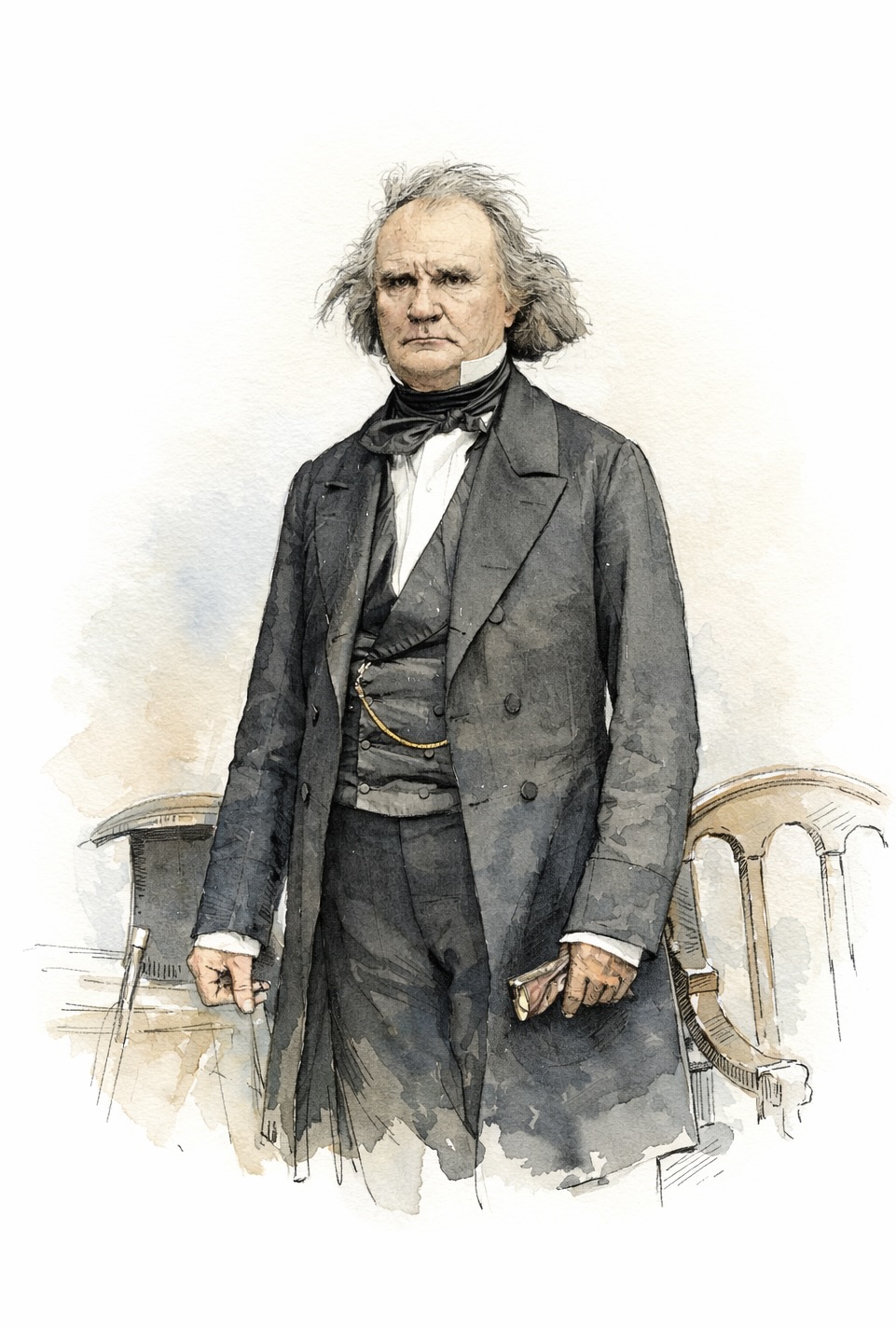
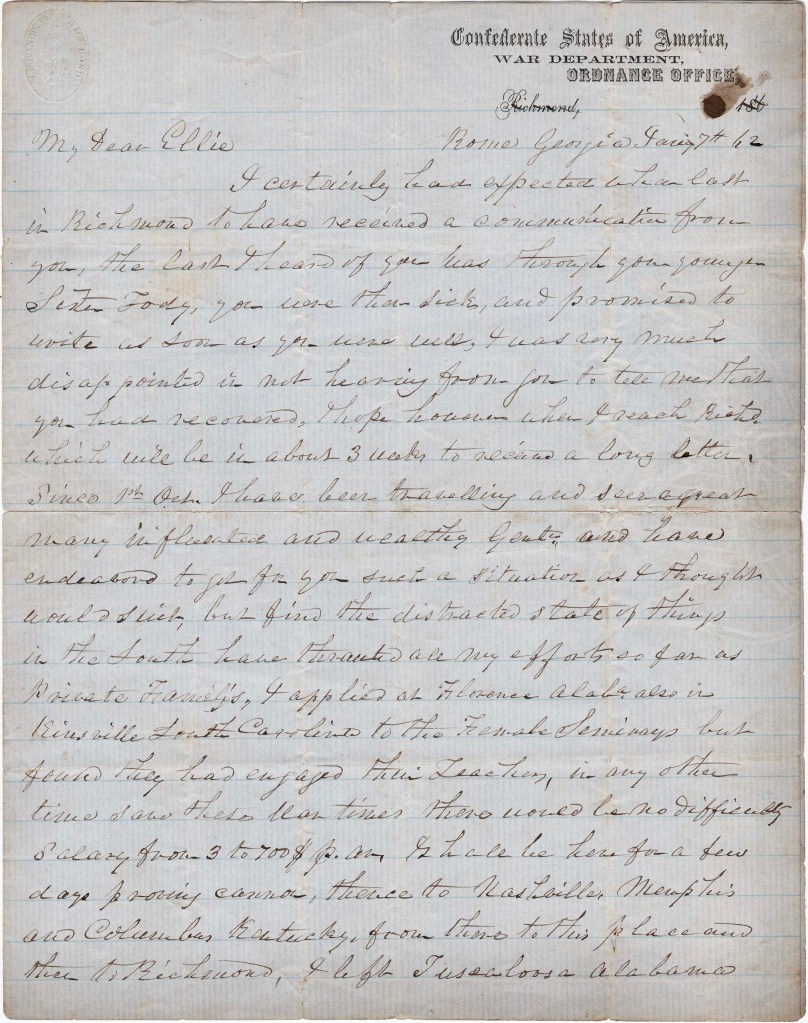
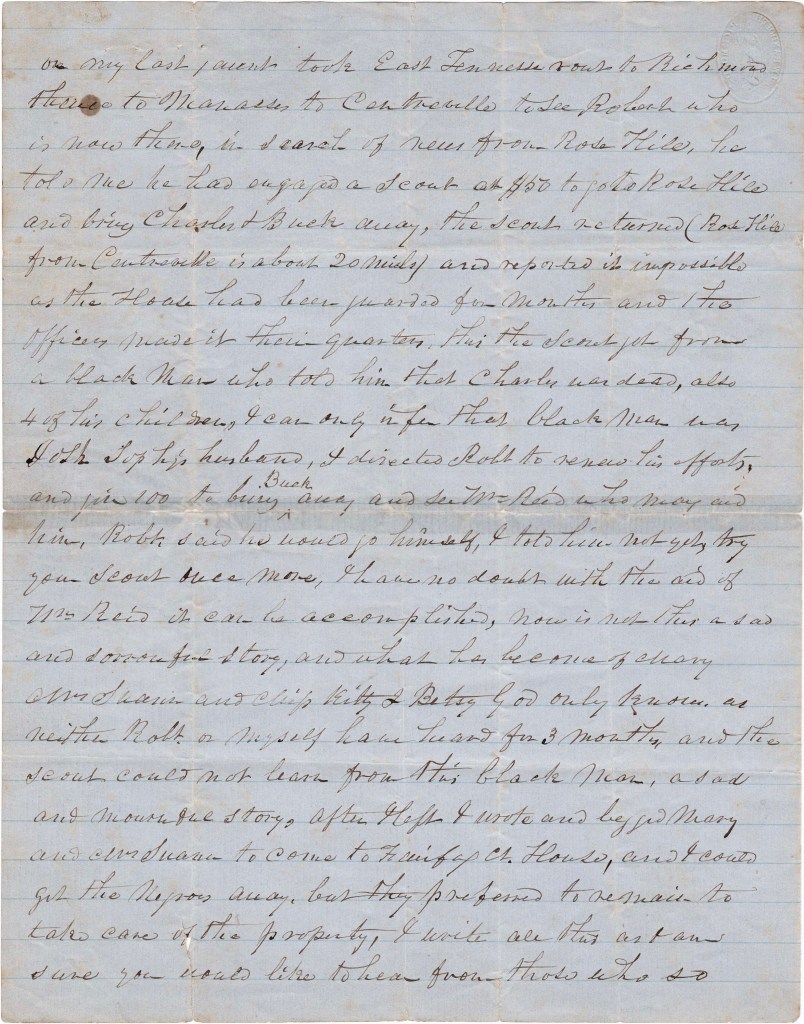
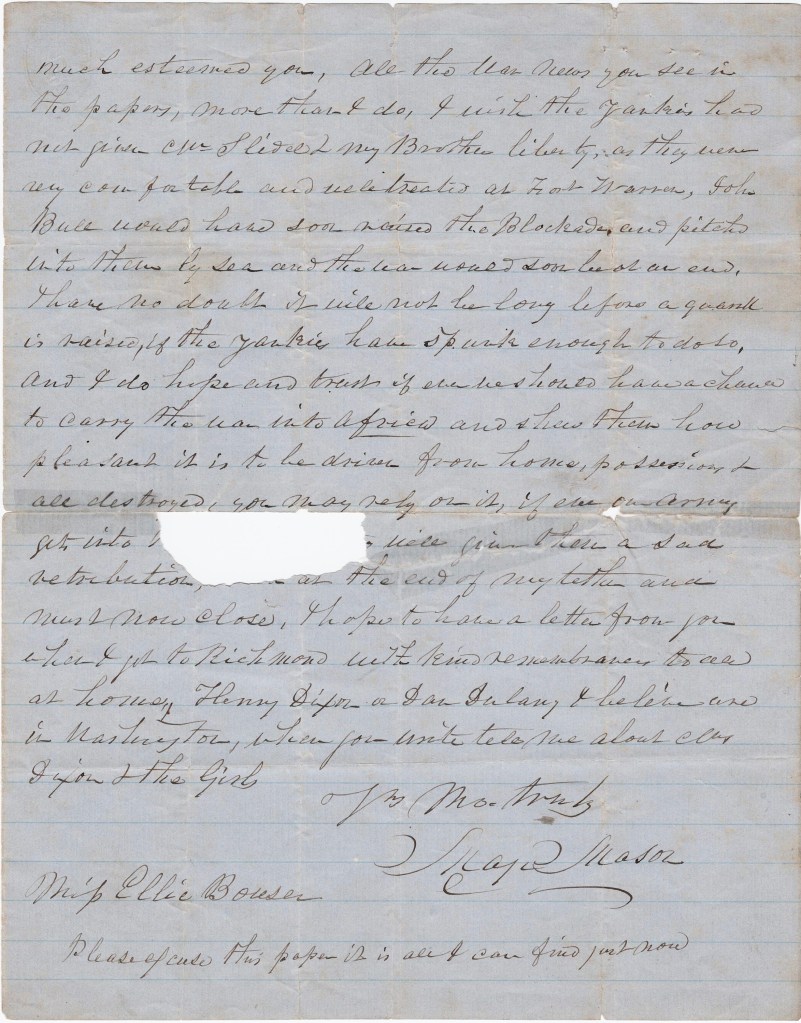
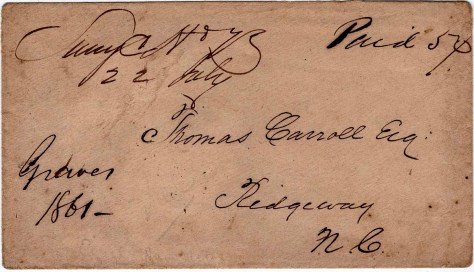
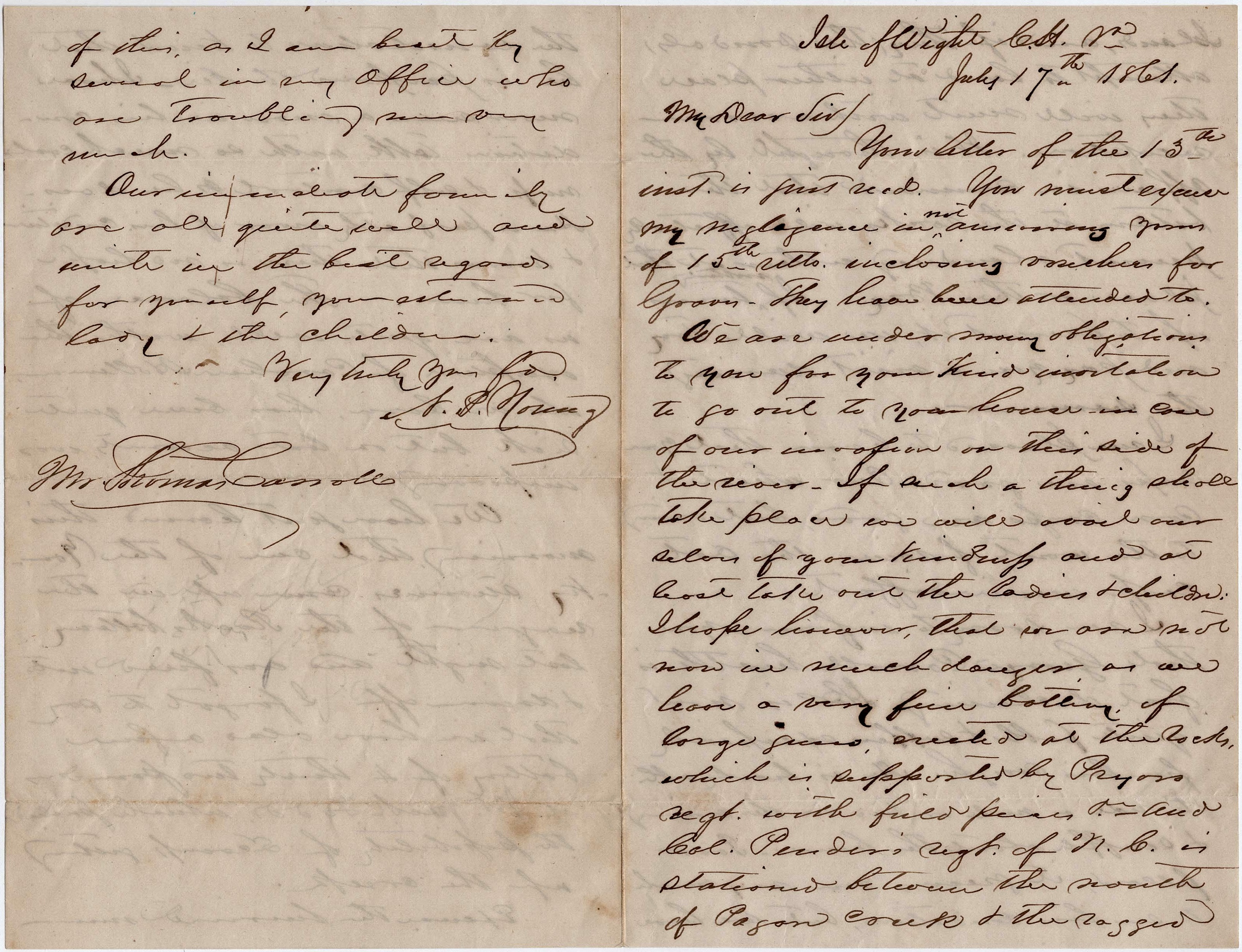
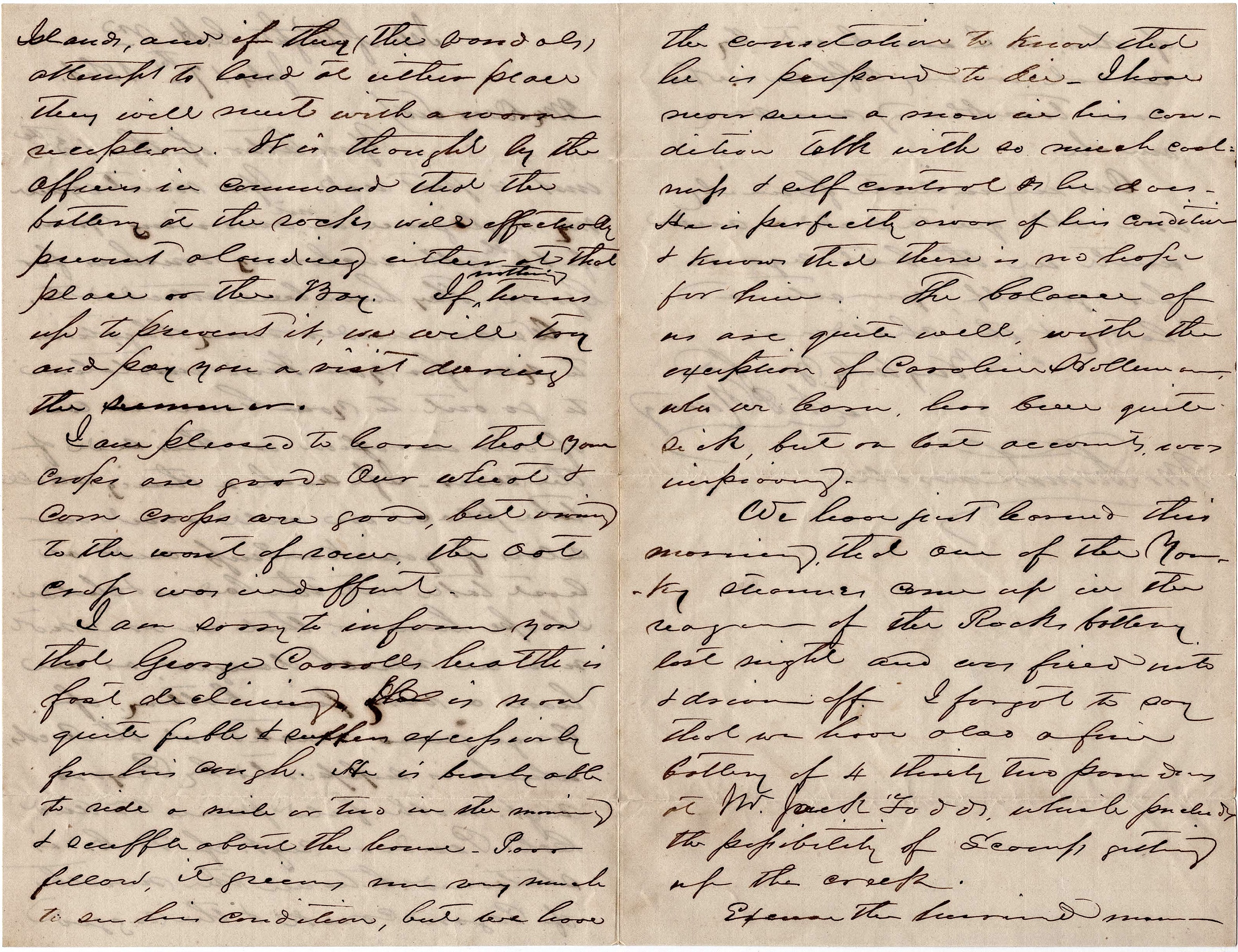

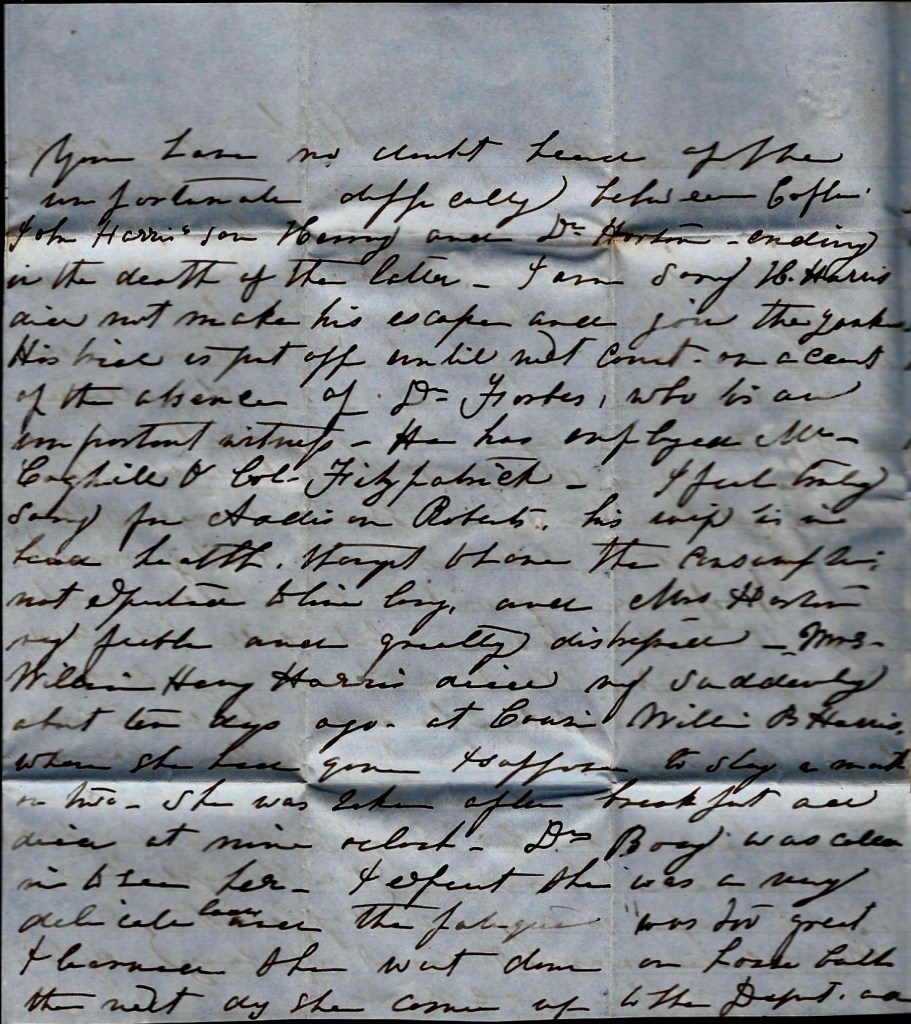


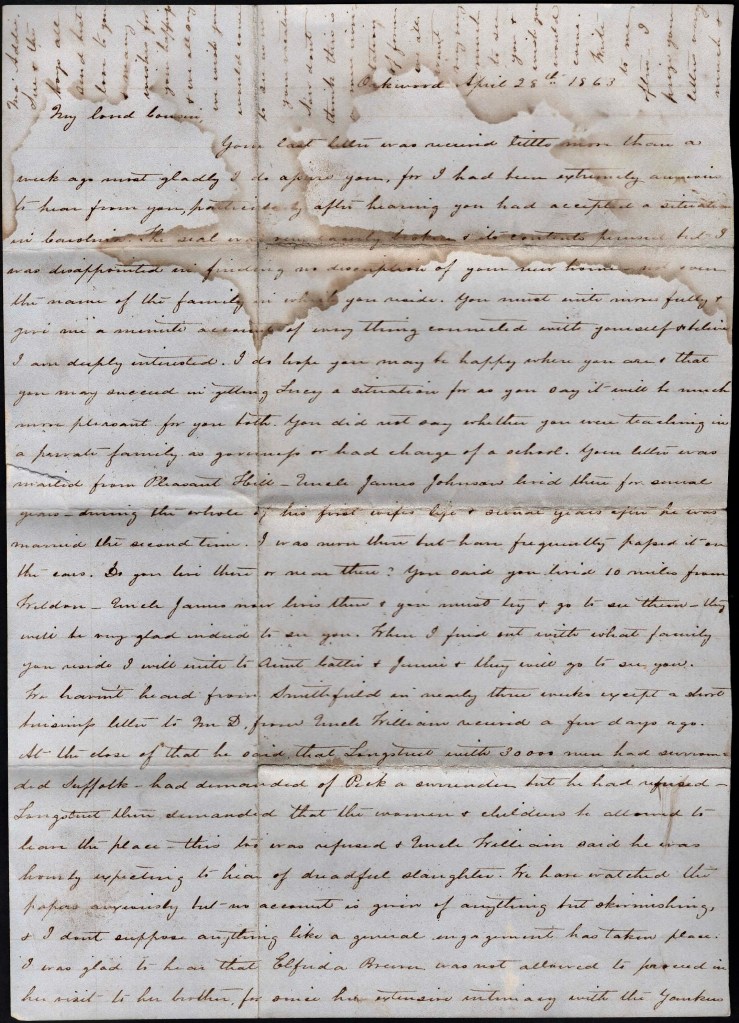

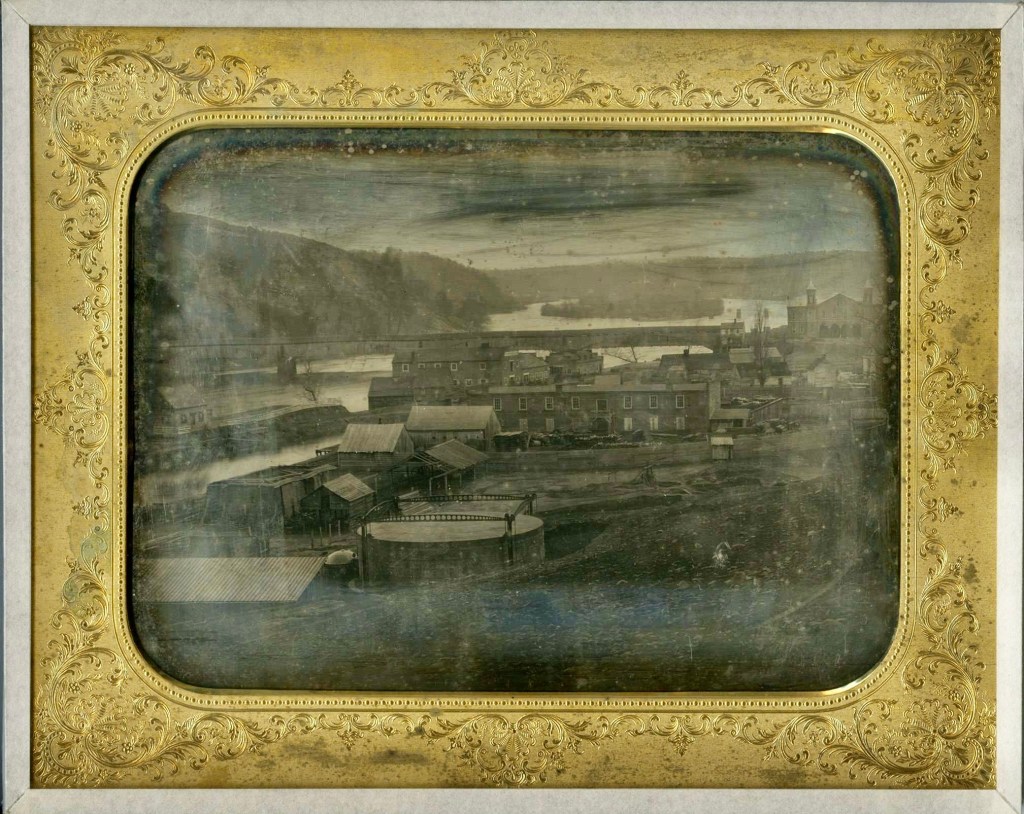
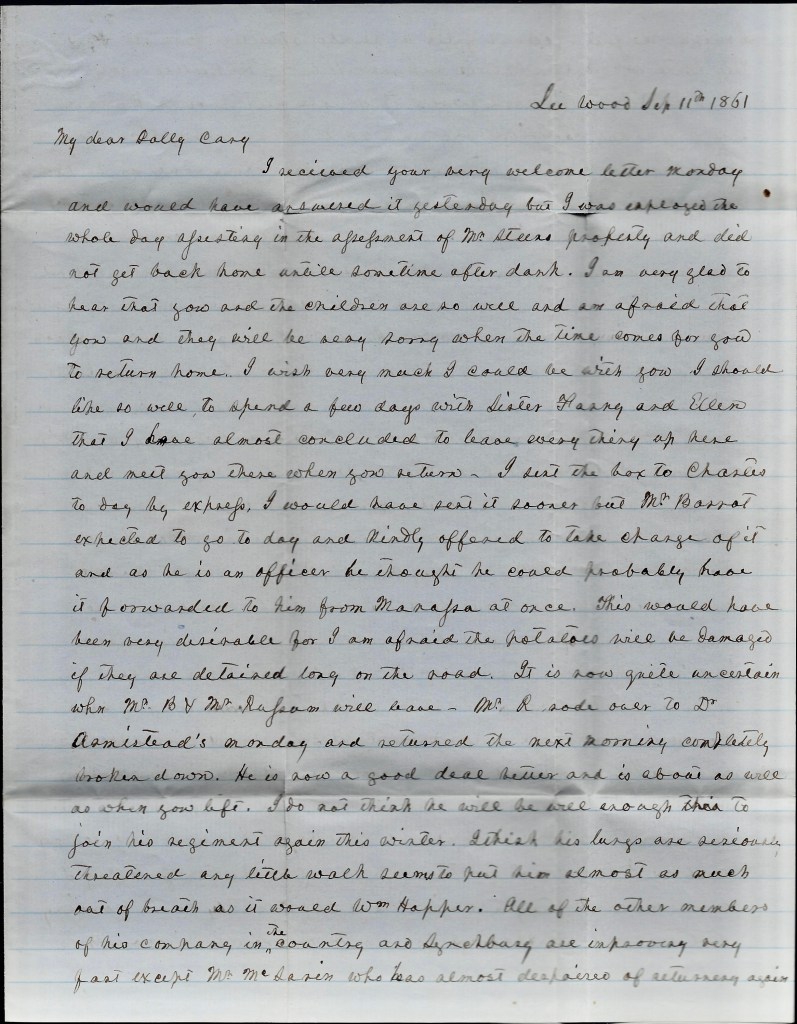
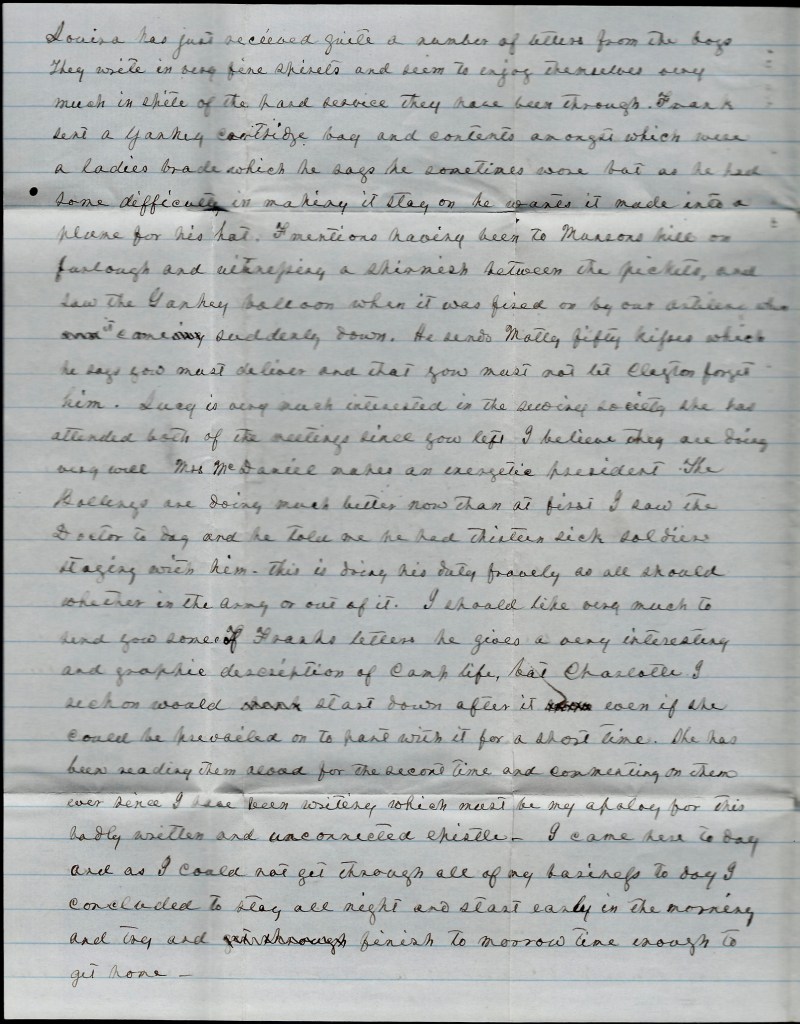
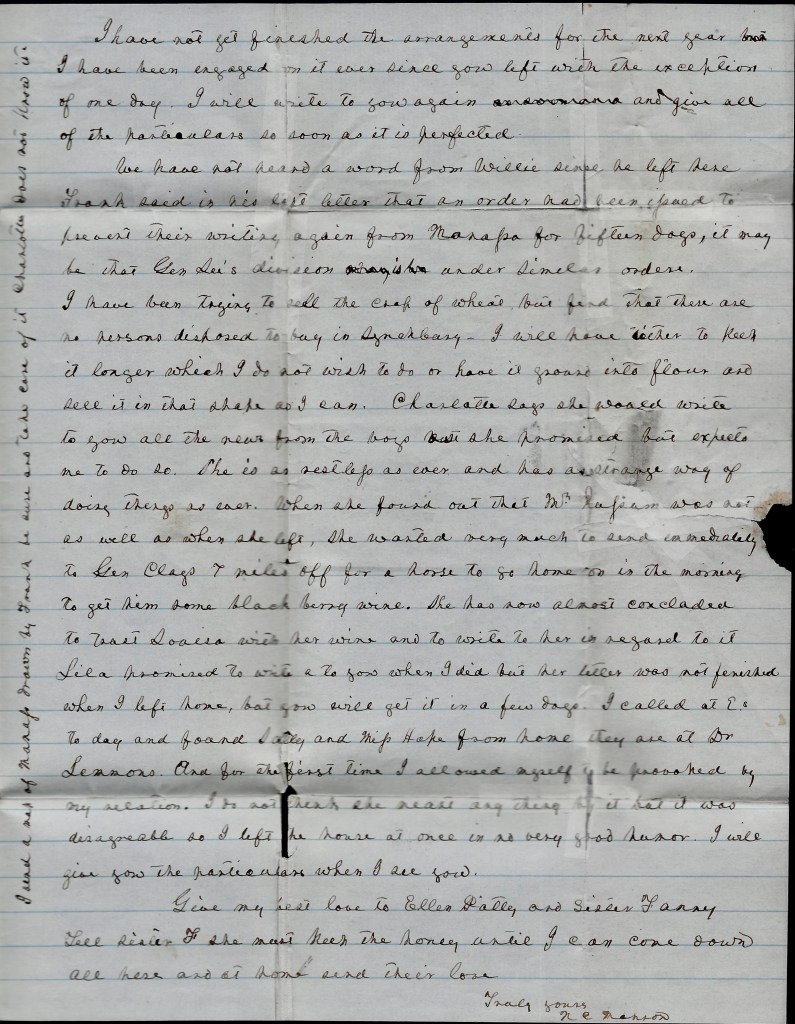


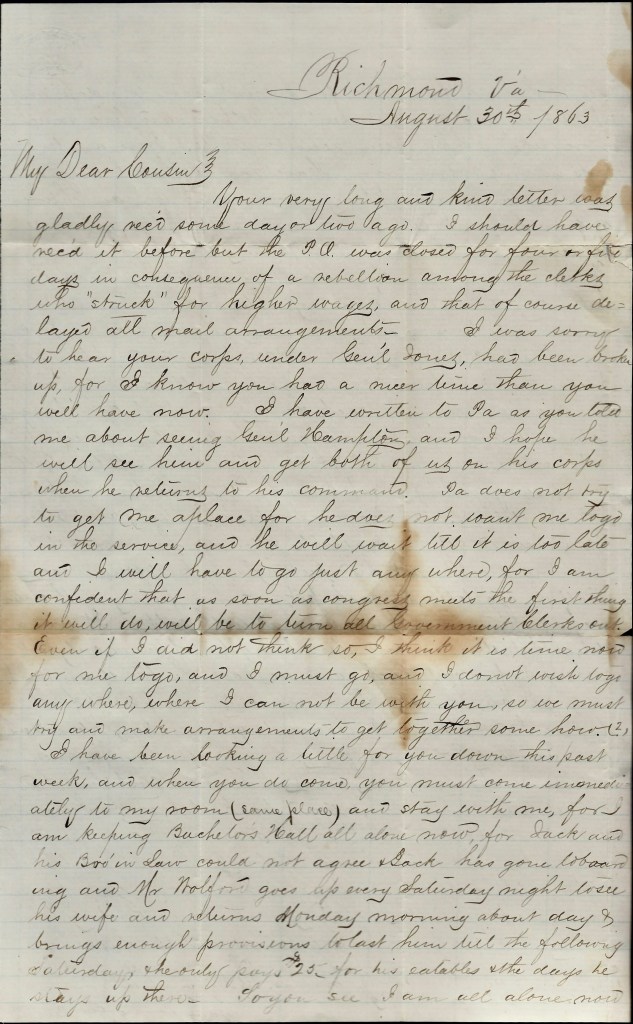
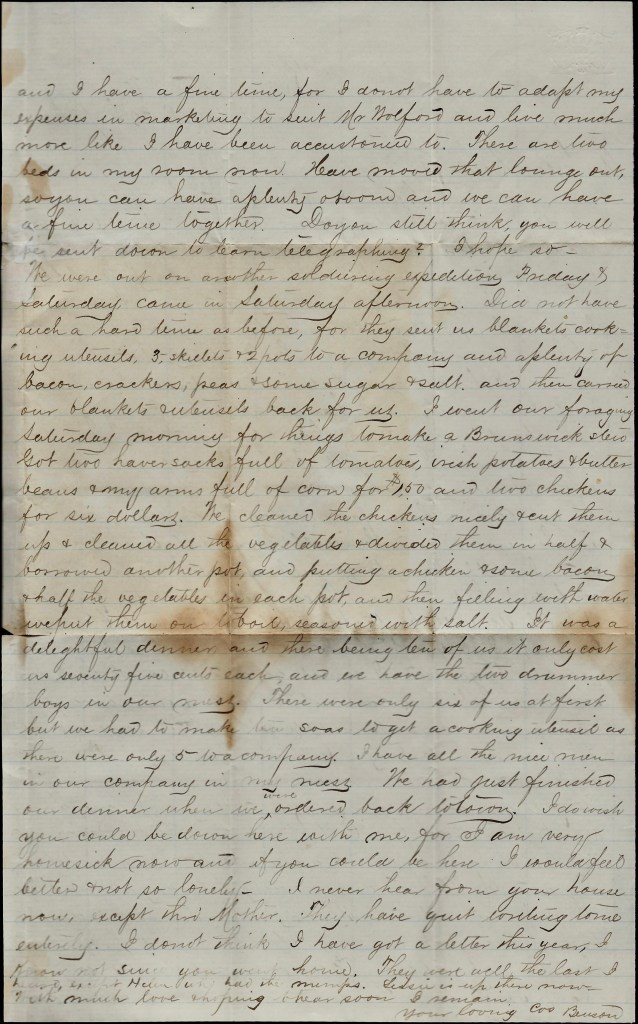

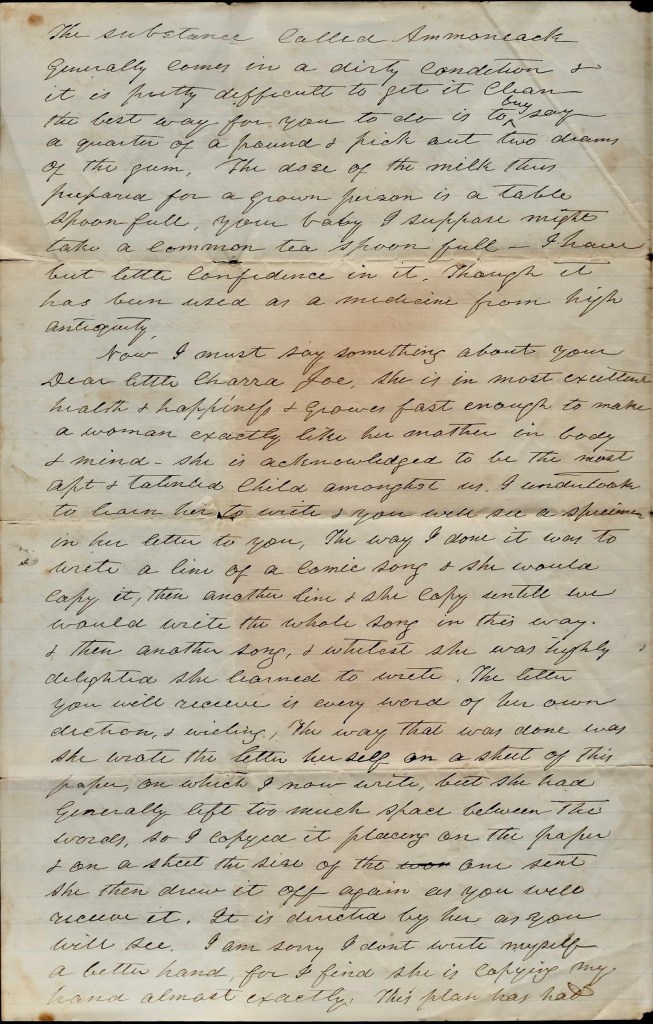


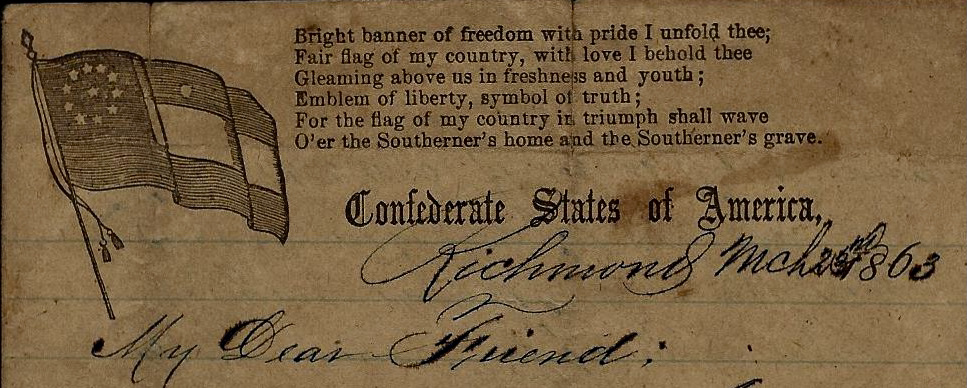


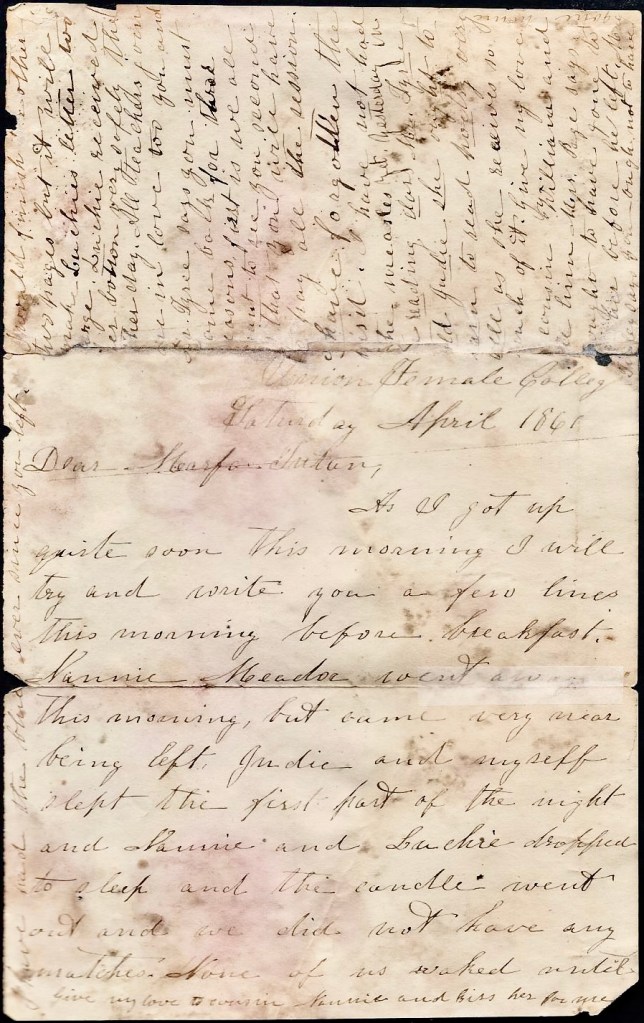
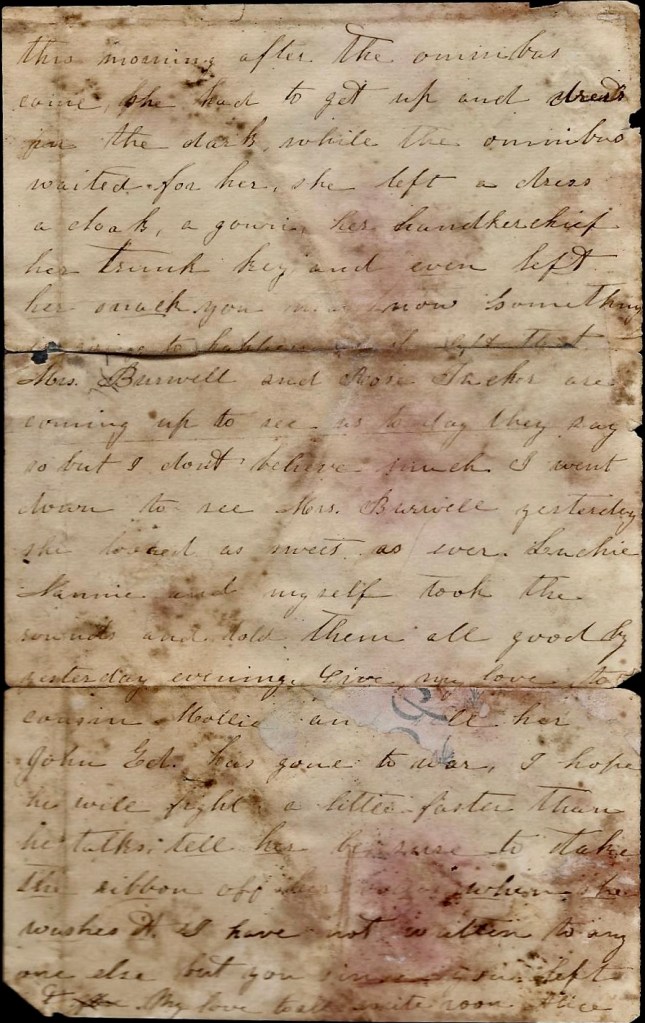

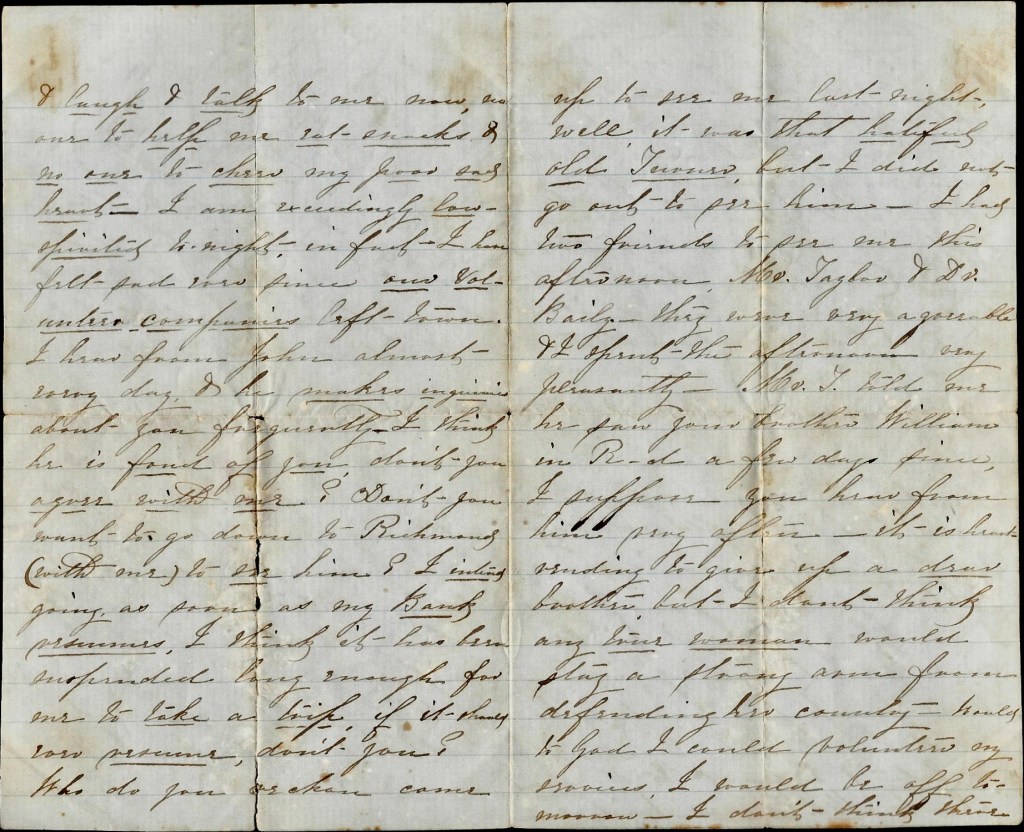
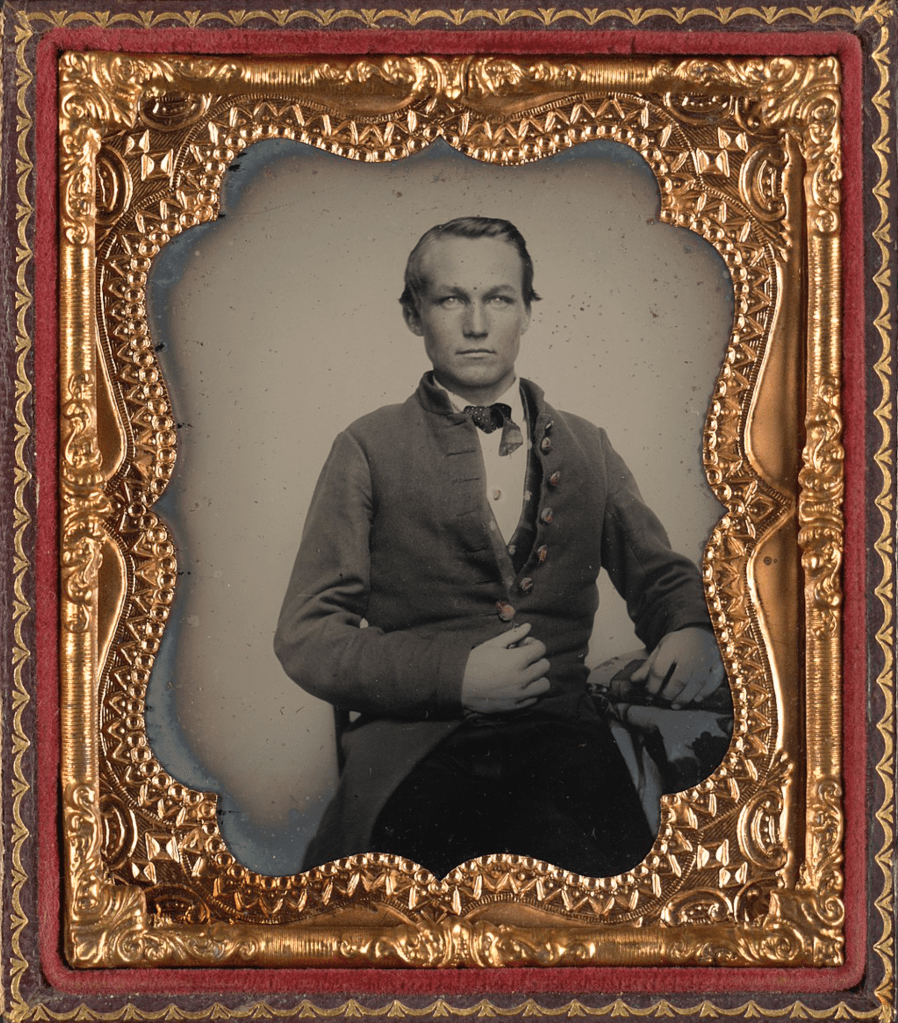

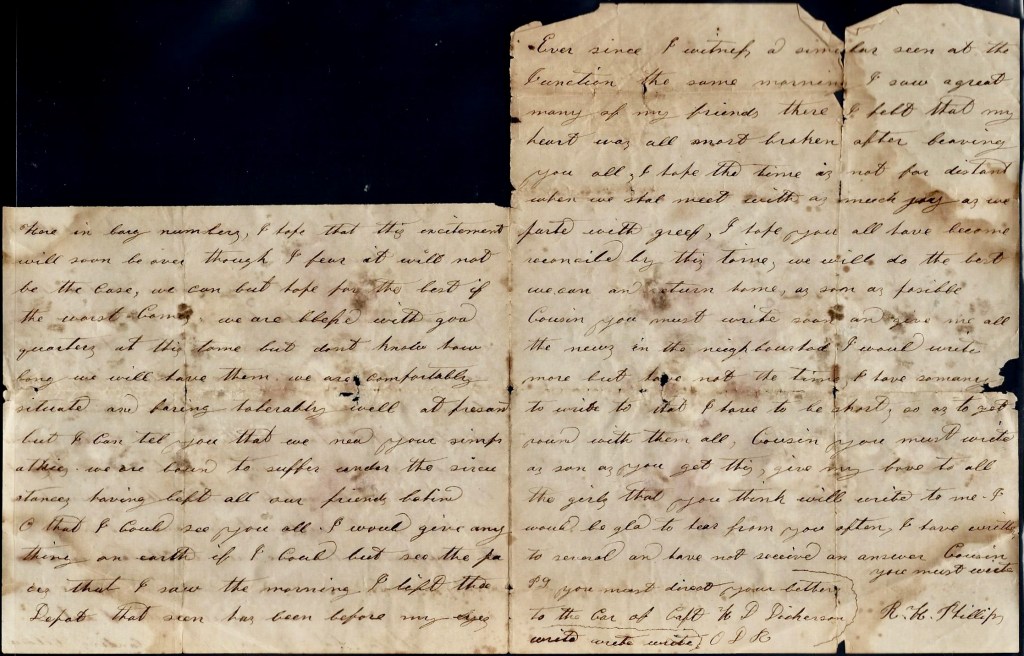


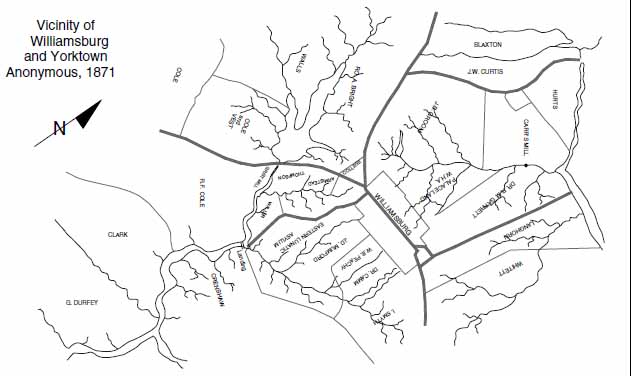
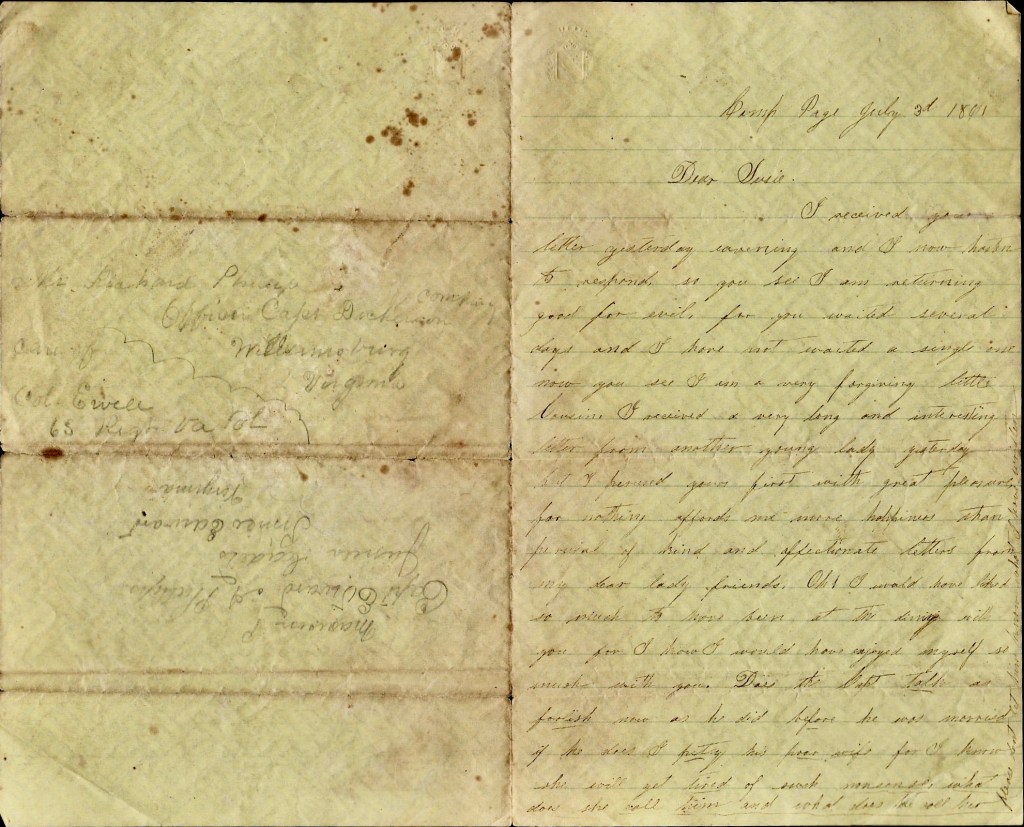
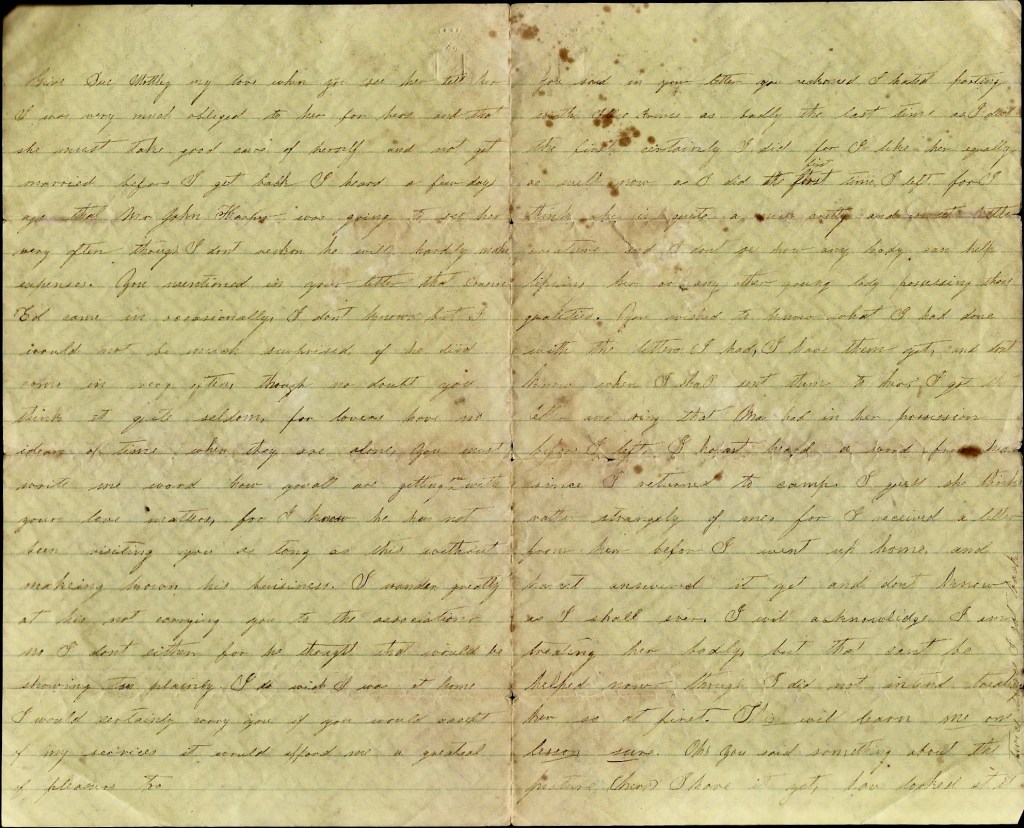

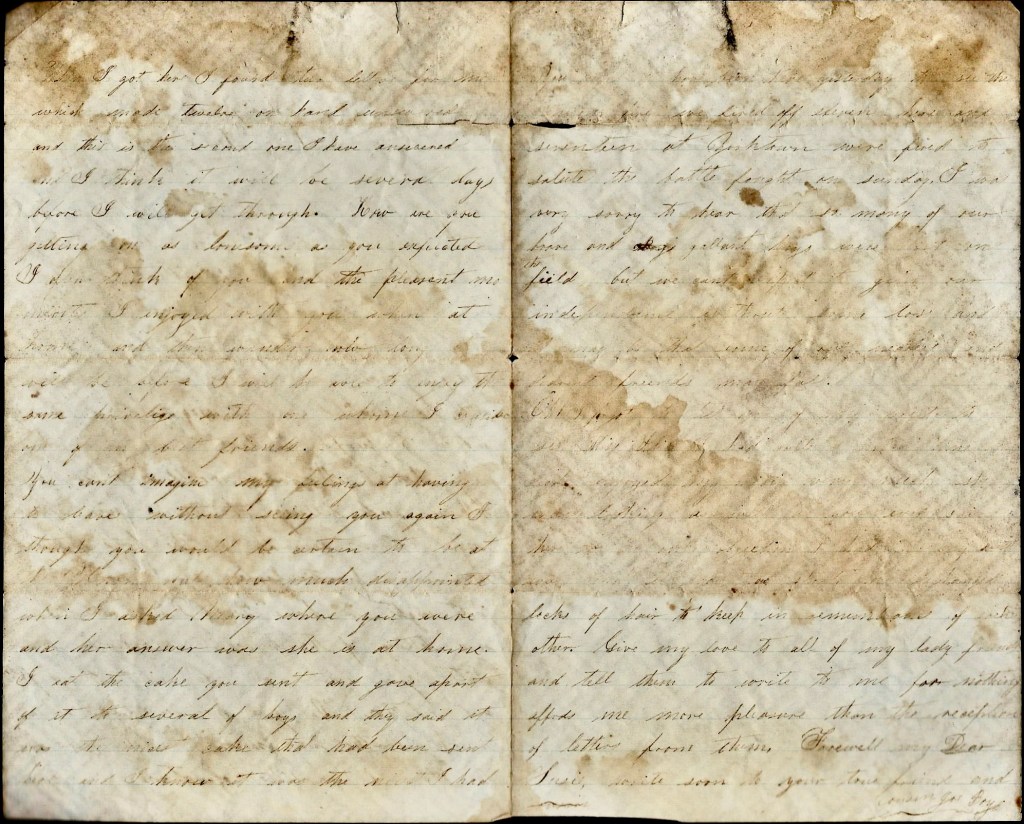

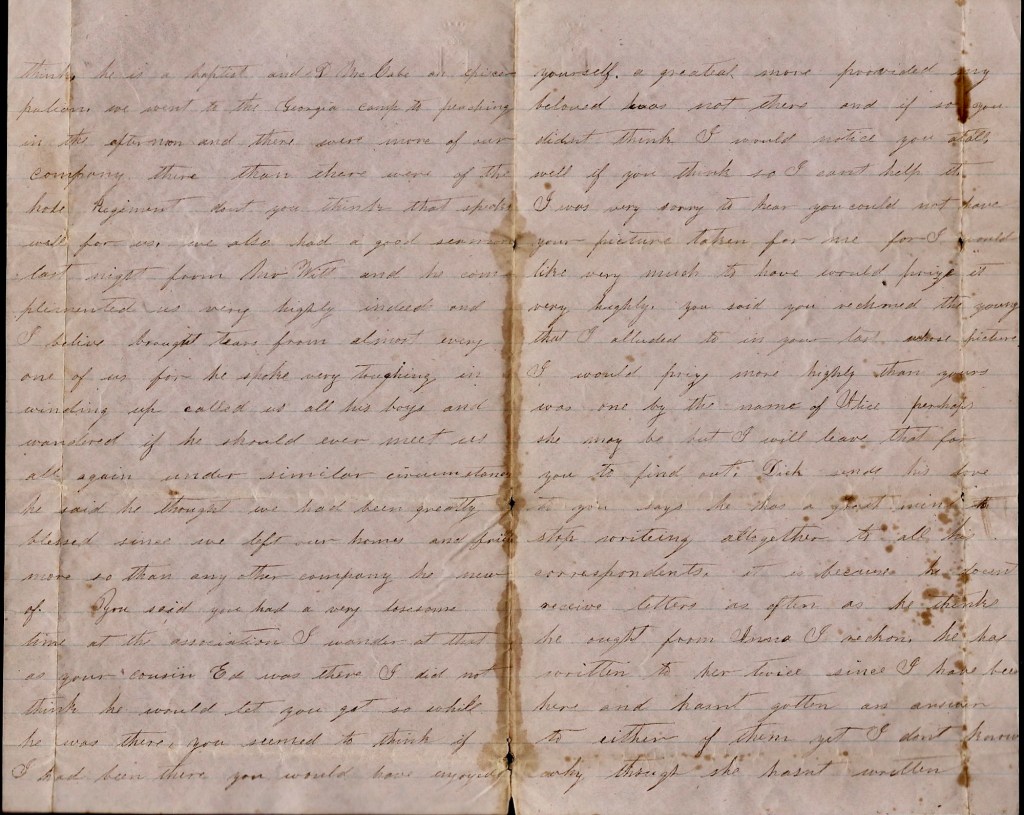

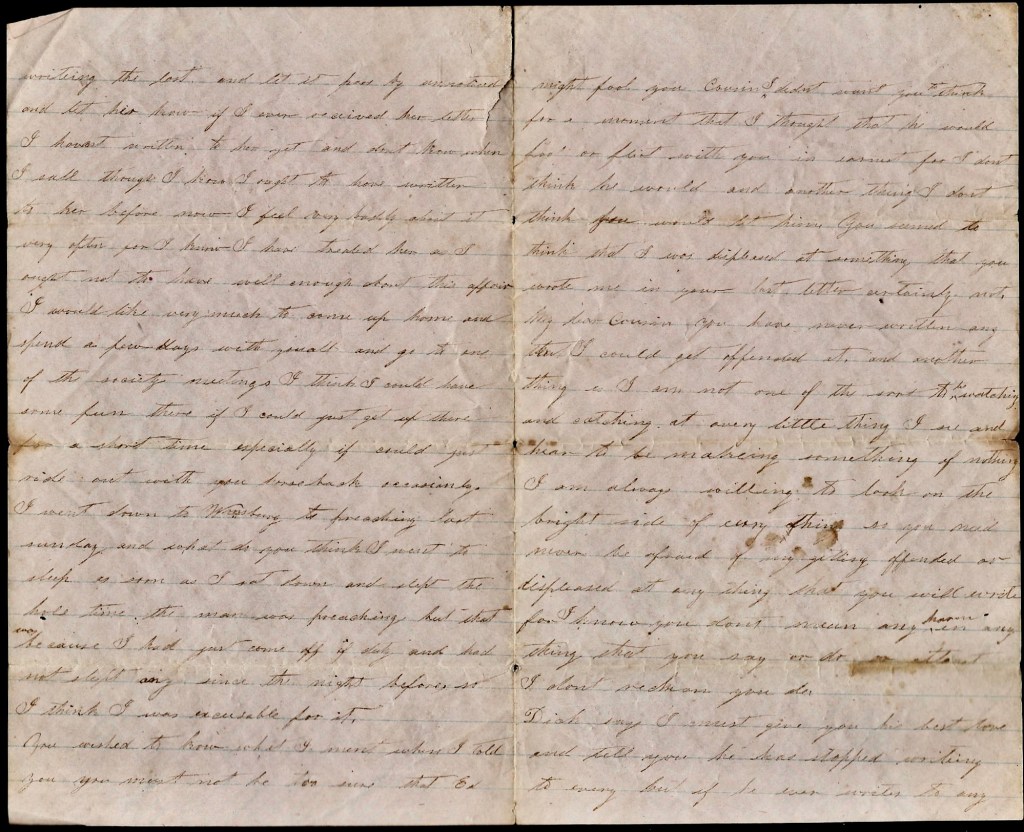
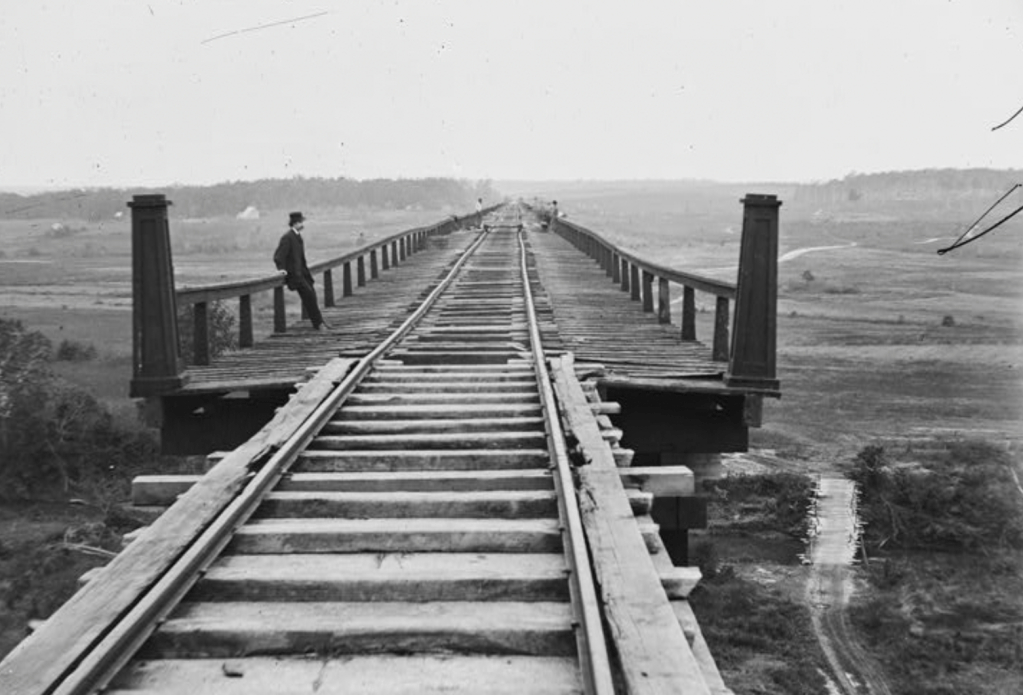


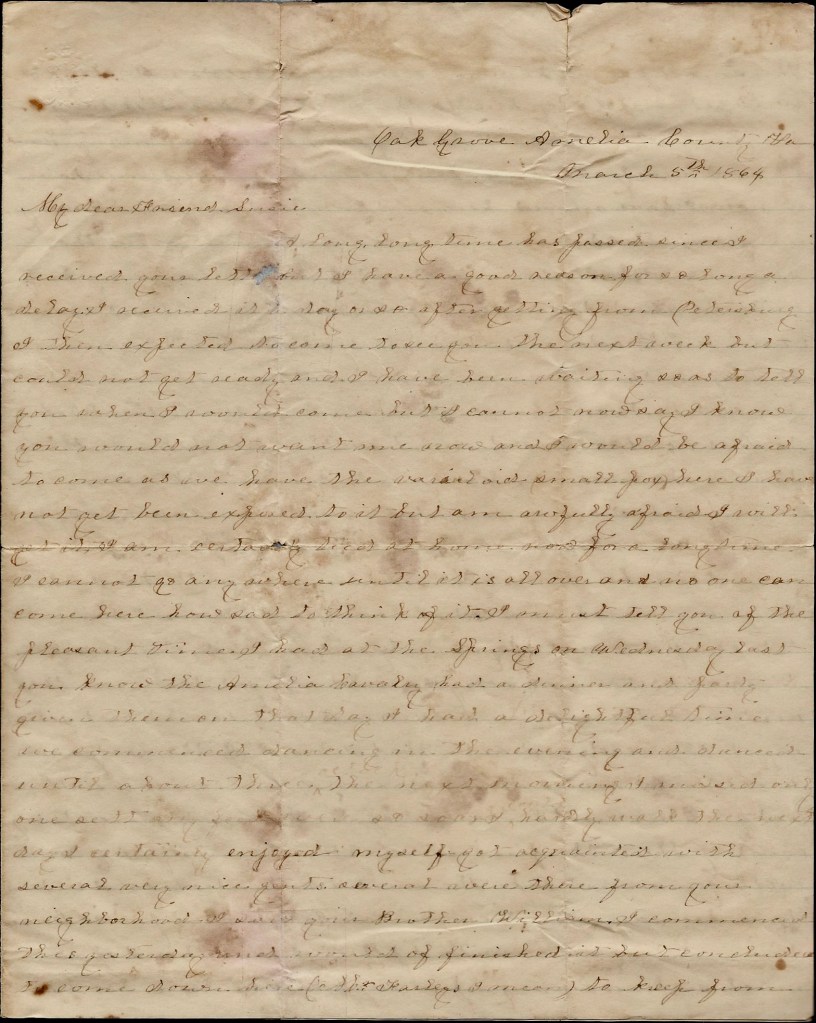
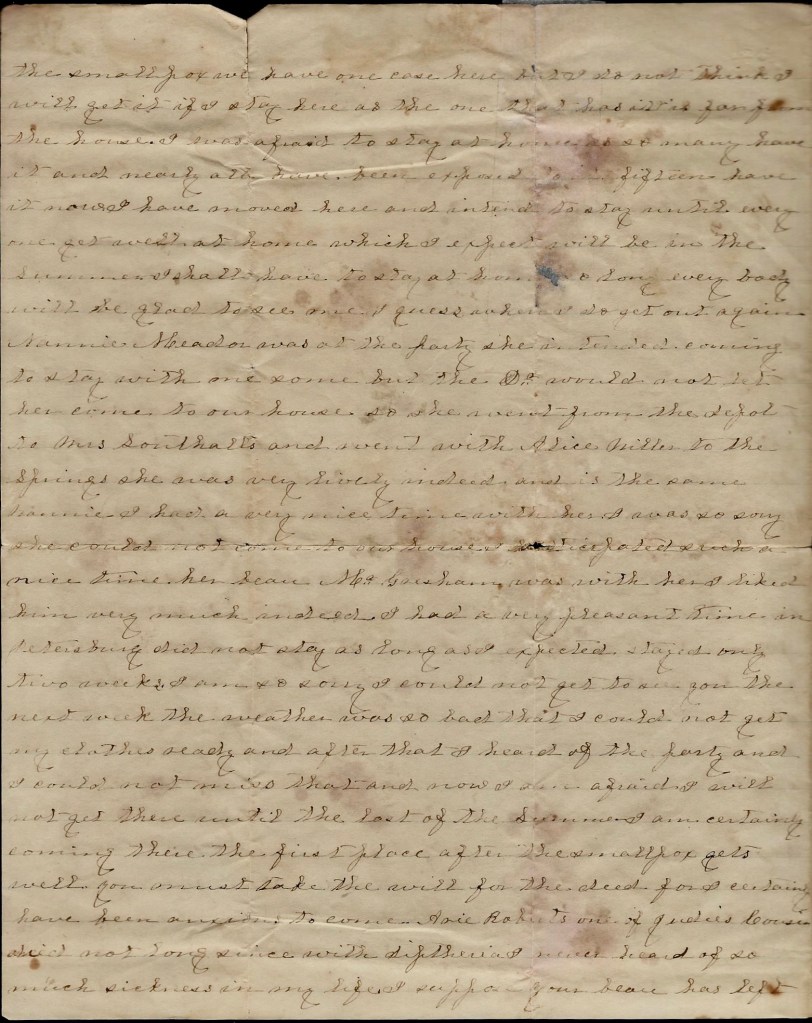
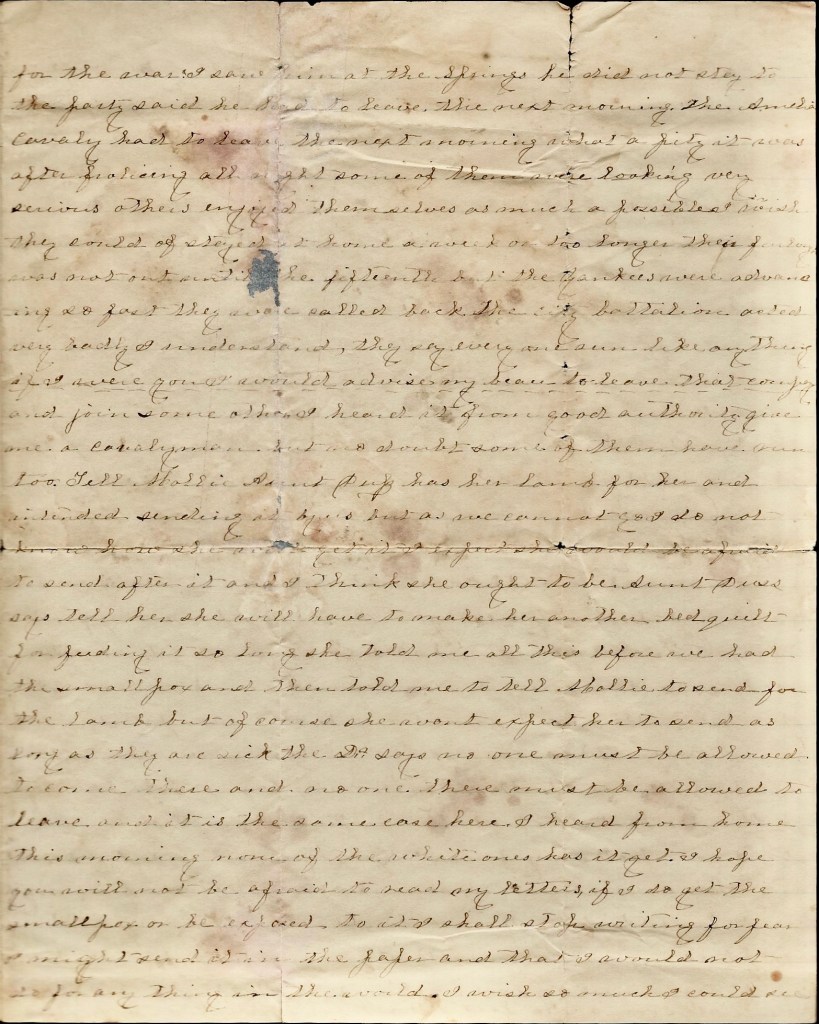
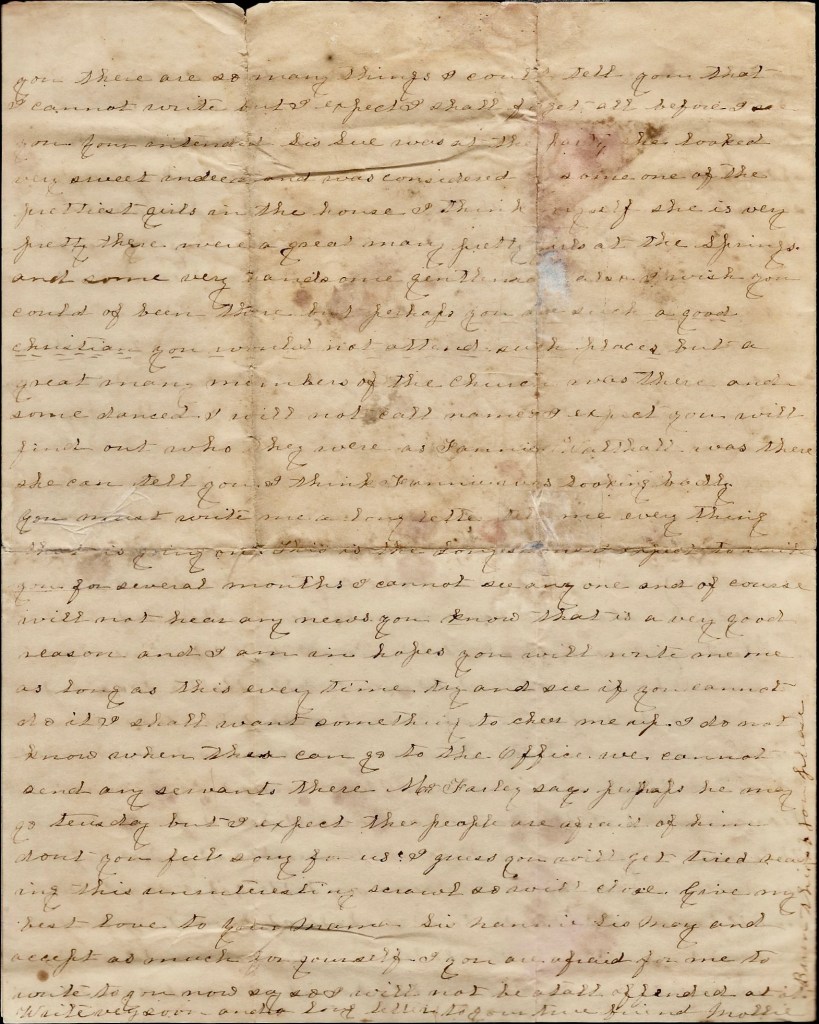
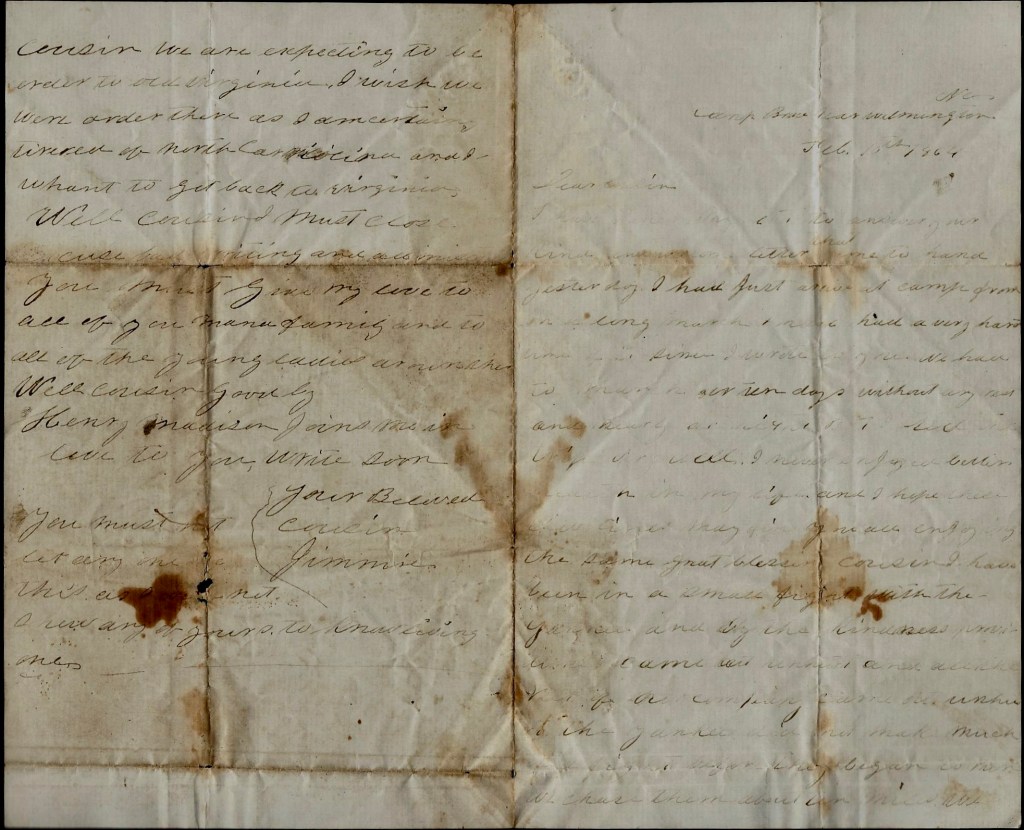

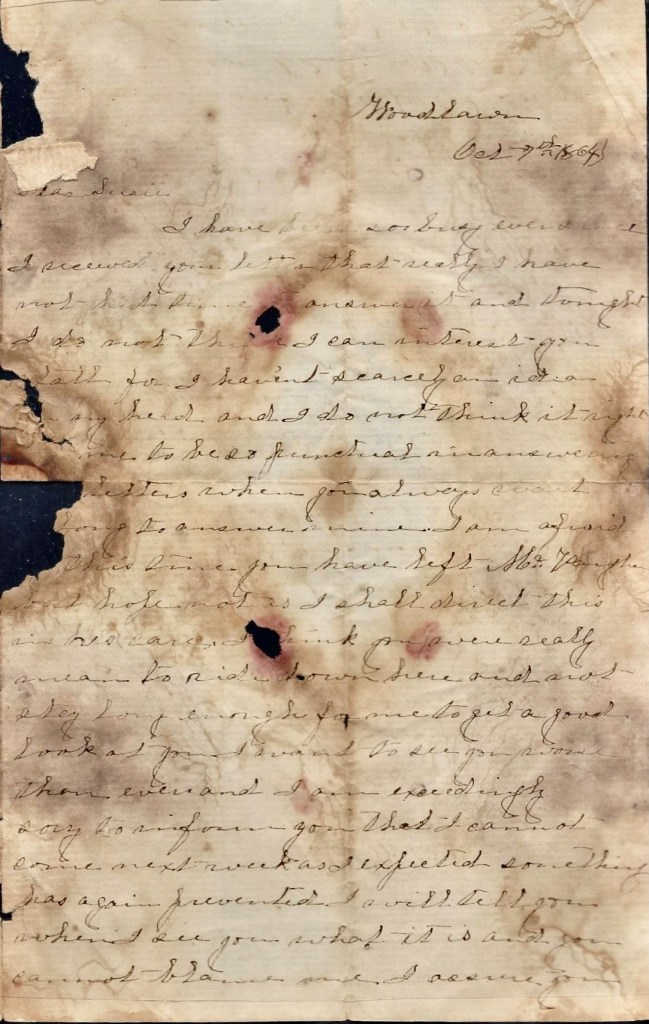
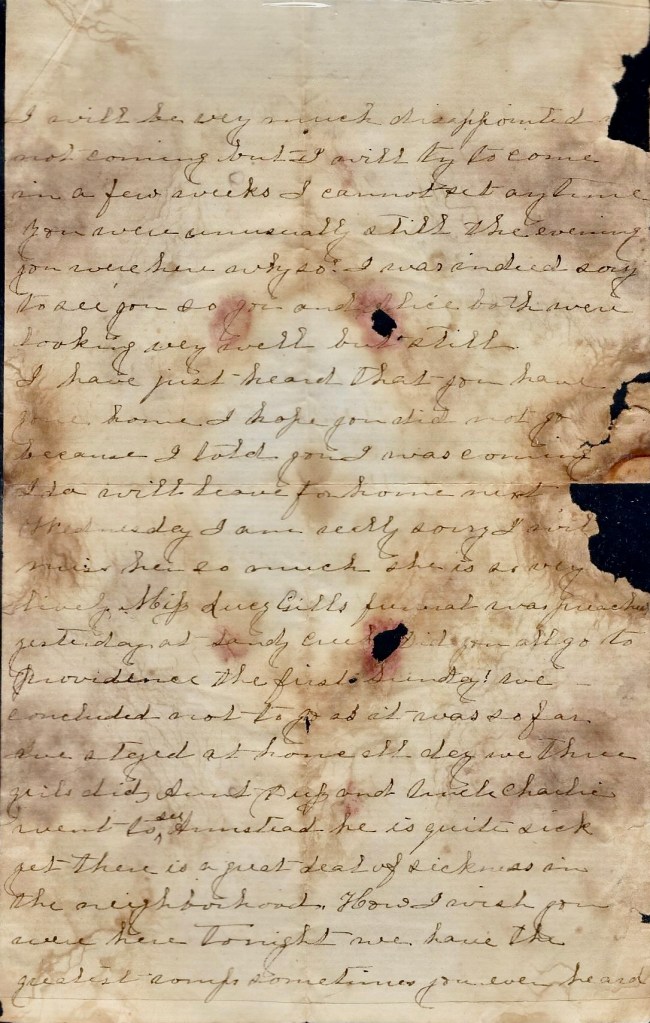
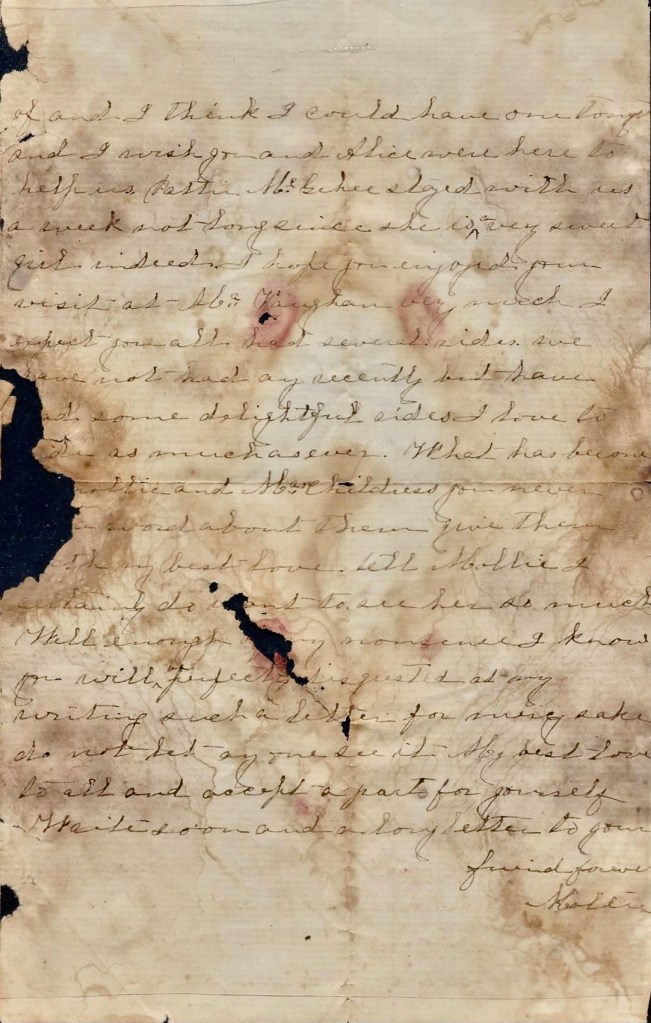
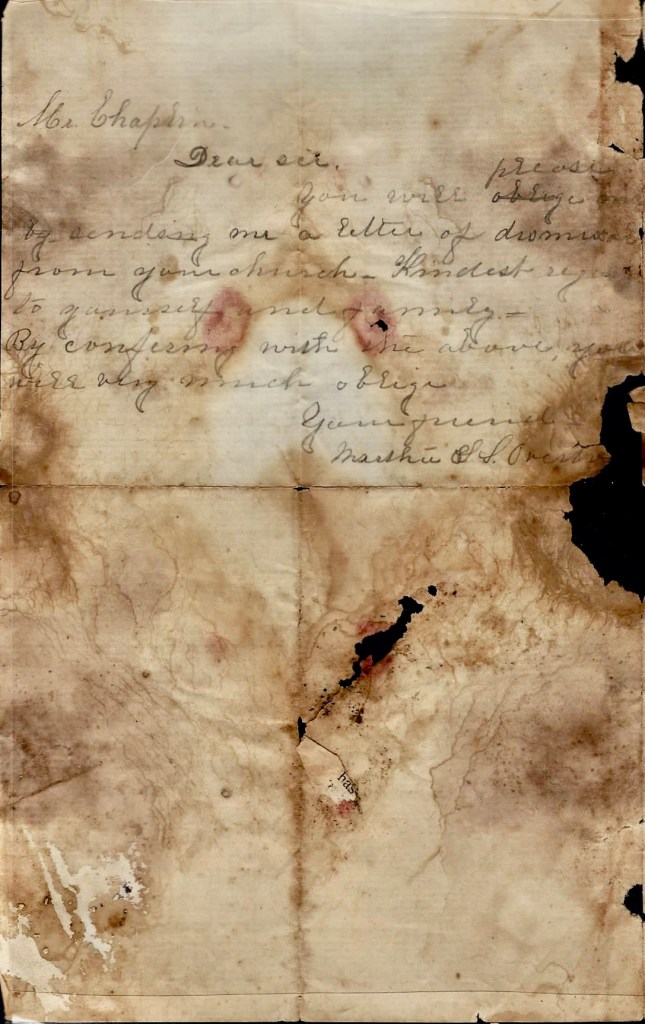

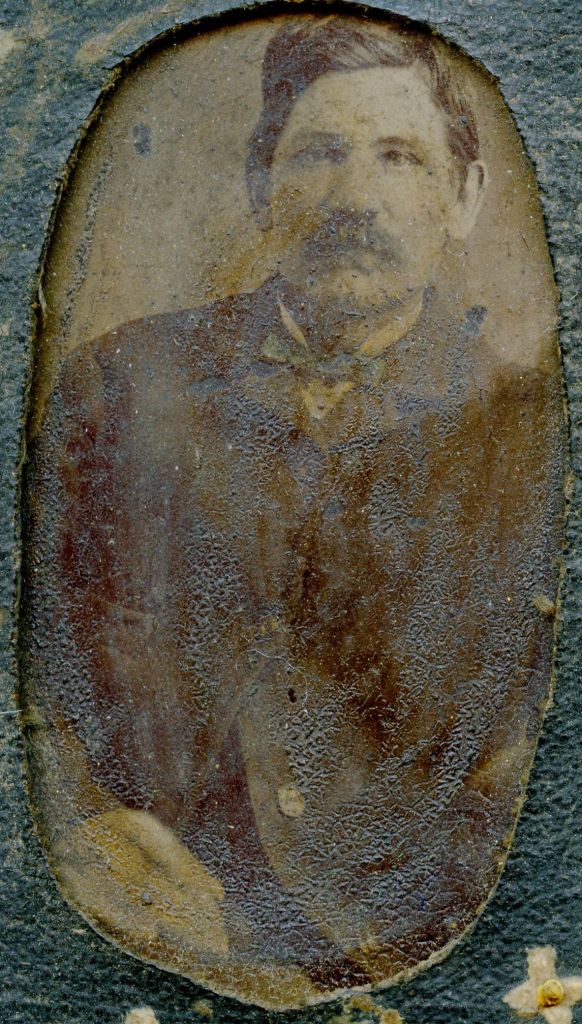
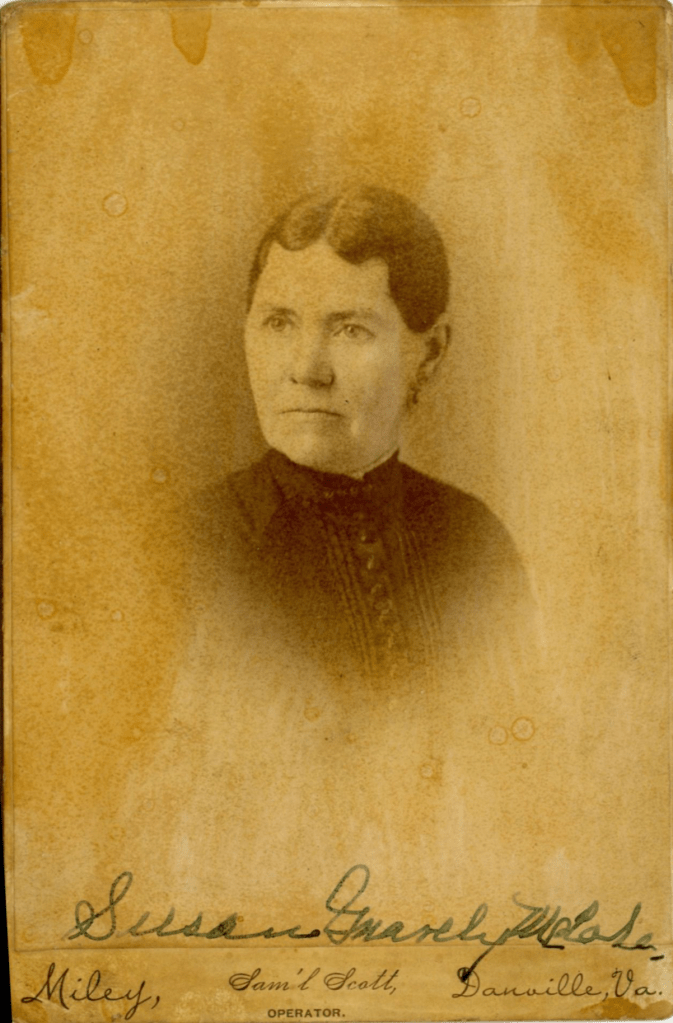

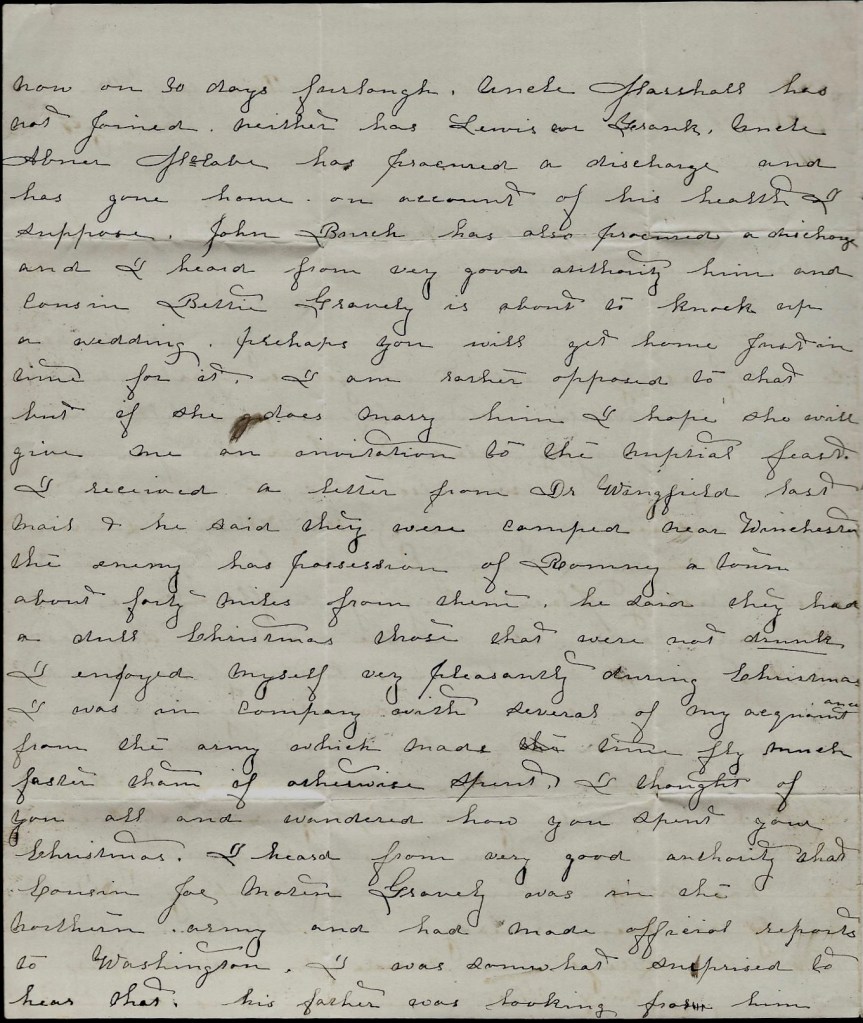
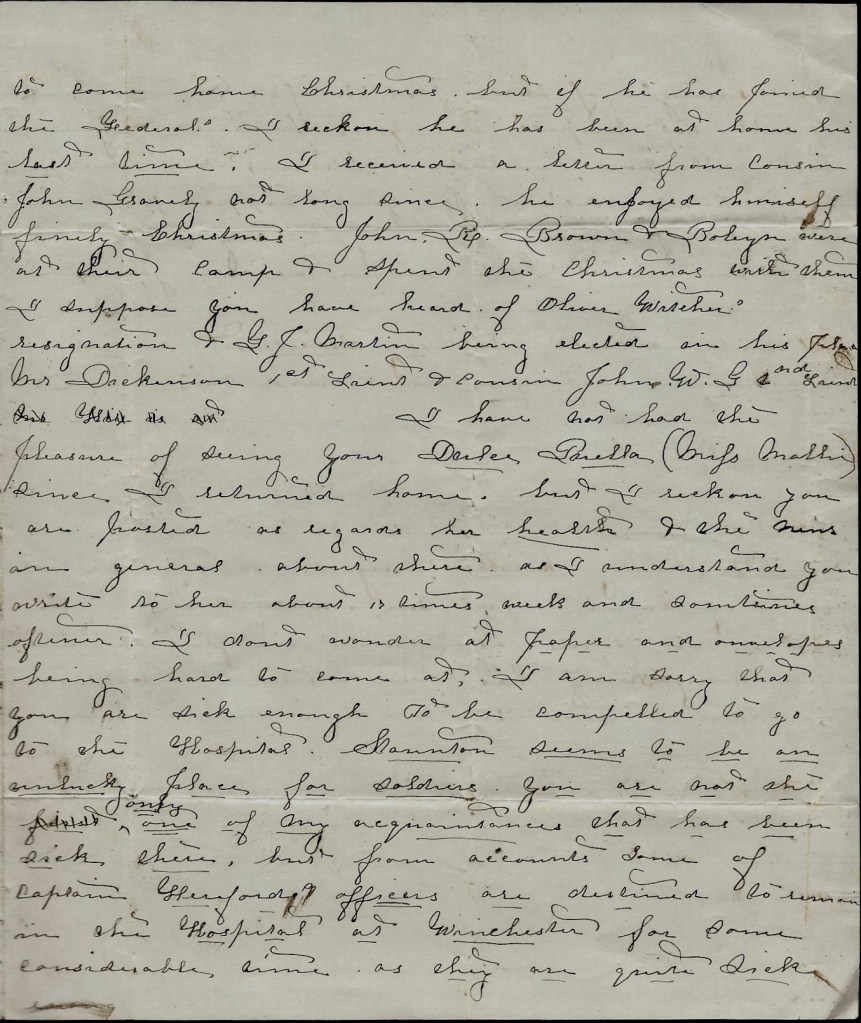

 Spared & Shared 23