I could not find an image of Edward but here is Sgt. Ransom Y. Hazard who served in Co. B, 137th New York Infantry. (Union Drummer Boy)
The following letter was written by Edward H. Finch (1842-1867), the son of Bryan Finch (1814-1852) and Mary Thorne (1818-1893) of Caroline Centre, Tompkins county, New York. Edward was working as a mechanic at the time he enlisted on 14 August 1862, accepting a $100 bounty from the town to serve in Co. K, 137th New York.
According to county records, Edward was wounded “in hip slightly” while defending Culp’s Hill on 2 July 1863 at Gettysburg. There is an excellent blog article entitled, “Who Lives, Who Dies, Who Tells Your Story? David Ireland and the 137th New York” that was published on 19 October 2016 describing the critical role played by the 137th New York at Gettysburg. It points out that “Just as the 20th Maine under Joshua Lawrence Chamberlain held the Union left flank at Gettysburg on July 2, David Ireland and the 137th New York held the Union right. Yet unlike the 20th Maine, the 137th saw significant action on the final day of battle.” Regrettably and unfairly, Chamberlain and the 20th Maine get most of the publicity when the losses at either end of the Union defenses might have proven equally disastrous.
After Edward recovered from his wound, he returned to the regiment and participated on Sherman’s Atlanta Campaign and later on the march through the Carolinas. Though he dodged death in the war, Edward did not live long after he returned to Tompkins county following his discharge in 1865. Less than two years later, on 22 April 1867, when Edward and his sister, Mary Ellen Finch, were riding home in a wagon from Caroline Centre to their home on the Speed farm, “a flash of lightning struck him on the head and passed down the whole length of his body, tearing his clothes into shreds. The same stroke” set his sister’s clothes on fire and burned the left side of her body very badly before she could put it out. (Ithaca Journal)
The letter was addressed to John Taft (1795-1876), the father of his friend and comrade, 2nd Lieut. William Henry Taft, who had also served in the same company until he died of disease at Knoxville, Maryland, on 31 October 1862. William’s remains were returned home and buried in the family plot at Caroline. See—1862: William Henry Taft to John Taft.
The letter contains a rare reference to Thaddeus Lowe’s Observation Balloon being launched “every day when it is still” on the heights overlooking Harper’s Ferry in late October 1862.
Transcription
Addressed to Mr. John Taft, Caroline Center, Tompkins county, New York
137th New York Vols. Col. Ireland Company K Sunday, November 2nd 1862
Mr. John Taft,
I thought that I would write you a few lines as it was Sunday and I had a few moments to spare. Well, Mr. Taft, we are in the land of the Rebs. I am within sight of them at the present time as I am out on picket duty today and yesterday. We was to be relieved this morning but through some mistake we was not. We are on Bolivar Heights at the present time but we know not how long we shall remain here.
We are under marching orders. We have had orders to have everything in order so that we could lay our hands on them in three moments warning. Our pickets are extended out about two miles from the heights & from our outside pickets it is about one half mile. They are in plain sight. Our Colonel [David Ireland] is afraid of an attack on this place for the reason that the man that that goes up in the balloon on the heights [to] see their movements was up yesterday & he said that they was being heavily reinforced at some place—I cannot think of the name—it is at the west of us.
We have a splendid view of the country here. We can see all over the United States, I was a going to say, but I will take that back, And another thing that is a splendid thing & that is the balloon. He goes up every day when it is still. He goes up about three hundred feet & then they pull him back. 1
Sketch courtesy of A. Lee. Drawing shows Bolivar Heights as seen from Camp Hill. Scattered buildings in hilly country, with a hot air balloon hanging in the sky in the distance.
Mr. Taft & family, I suppose that you were very much grieved to hear of the death of your son [William] but you must stand up under it as well as you can. Think that he died in a good cause for certainly he did. We was all very much grieved to hear of his death as the company thought a great deal of him. He was thought a great deal of as a Lut [Lieutenant] also. Mr. Head’s son [Isaac] died last night. He was taken with the measles in the first place and then he caught a very hard cold and did not live but a short time. We have had very bad luck in our company. There has not been but four men die in the regiment and three of them was out of our company.
There is very [much] cannonading today in the direction of Leesburg. There is supposed to be a very hard battle there this day that came on this ground. There is a great movement of the army in these parts. The regiments that was in camp here was ordered to move off & we was ordered to move on and it is said that the whole army was under a move. It is supposed that there is to be some fighting now. I shall be home by spring I think if my life is spared me till that time.
Mr. Taft, I have heard them talk about the Sunny South but deliver me from this country. It is quite warm here yet. It is warm days and cold nights. I hear that you have had snow in your town. That’s more than I have seen yet. Well, I must close. Excuse this writing as I am writing on the ground. If you think this worthy of an answer, please write soon. — Edward H. Finch
1 According to the Harper’s Ferry National Historical Park, on October 16, 1862, chief of aeronautics for the Union Army Professor Thaddeus Lowe manned a balloon above Bolivar Heights to assist with observations of General Robert E. Lee’s Confederate army. Lowe’s balloon corps marched with a complex contraption consisting of two wagons “with very large high boxes made perfectly air tight.” These boxes held the gas that filled and lifted the balloon. Harley Milborn of the 145th Pennsylvania Infantry noted, “For the last two days they have been inflating it. [T]hey finished last night, and then a few men took hold of the cords to keep it down and they conducted it through our camp.” Hillborn watched for a time, but didn’t observe the end product: “Whether he made any discoveries or not, I do not know.”
In 1860 he was a 20 year old divinity student living on his parent’s farm in Derry Township, Westmoreland County, PA. His parents were John and Nancy (Morrison) Barnett. James mustered into service as Private, Co. K, 53rd Pennsylvania Infantry sometime after 16 September 1861.
Inside cover of Barnett’s Journal
After the Battle of Antietam in September 1862, James was appointed Commissary Sergeant of the regiment and later Quartermaster Sergeant. He passed an examining board and was commissioned First Lieutenant, 10th Regiment, US Colored Troops, and mustered and joined the regiment on 22 November 1863. He was appointed acting regimental Assistant Quartermaster in February 1864, and was acting Brigade Quartermaster (in 1st Division, 25th Army Corps) from June to September 1864. He was back with his regiment from January to April 1865, then detailed again to Brigade staff (in 3rd Division, 25th Army Corps), then at Corpus Christi, TX. From October 1865 to January 1866 he was Brigade Assistant Inspector General, briefly back with his regiment, then in March and April 1866 the Depot Quartermaster at Houston, TX.
After the war, he taught school for a year and was a clerk in a Pittsburgh, PA store. He opened his own store in Johnstown, PA in 1868, then, in 1870, with 2 partners, two more stores, in Derry and Hillside, PA. He ran the Hillside store as sole owner after 1874. At the 1870 census he was living with his parents in Derry Township but by 1880 he was a dealer in general merchandise living in his own place with his wife and 5 children. In 1900 he was ticket agent for the Pennsylvania Railroad, but by 1910, still living in Derry, was the postmaster at Hillside, PA. He’d finally retired completely by 1920.
To read excellent letters by other soldiers in the 53rd Pennsylvania that I’ve transcribed and published on Spared & Shared, see:
[Note: This diary is in the personal collection of Greg Herr and was transcribed and published on Spared & Shared by express consent.]
Transcription
Camp at Harrison’s Landing, August 5th 1862 James W. Bennett, Co. K, 53rd P. V., 3rd Brigade Richardson’s Division, Sumner’s Corps D’Armie
The only image of James Wilson Barnett not in an officers’s uniform so this might be the image he had taken at Harrison’s Landing in August 1862. There is no back mark on the image.
Monday, August 4, 1862—Went down to the artists and got picture taken. Cost $1.00. Were paid off on Sabbath for the two months ending June 30th. Making the fifth payment, sum total one hundred and twenty-three dollars and fifty-five cents ($123.55) I sent home $15. I altogether I have sent home $80 and from various sources have received $30 in addition to the above. Deducting the amount sent home from the sum total leaves $73.50. What I have spent since entering the service on the 16th of September 1861. A rather large sum considering that Uncle Sam has kept me in grub and clothing.
Tuesday, August 5, 1862—The first item of importance that I have to record is my ne memorandum is the taking of Malvern Hill by our forces this morning by portions of Hooker’s and Sedgwick’s Divisions. The cannonading commenced about six a.m. and was very heavy for two hours. The affair was attended with a good deal of loss on both sides. We packed up expecting to be called out but when the news came of the success of the expedition, we felt much relieved. Two hundred prisoners were taken, 5 killed, eleven wounded on our side. Received a letter from Father & one from J. S. this morn. John sent me his pen. Wrote home & to A. F. Sent a gold dollar to father.
Wednesday, August 6, 1862—Are under marching orders today. Went with Ed to the artists. Got his picture taken. I stand behind him leaning against a tree. Gen. French drilled us in Division drill till eight p.m. A few minutes after, orders came to march in ten minutes.
Thursday, August 7, 1862—Marched out within half a mile of Malvern Hill. Remained an hour and marched back to a hill a mile and a half from our fortification where we remained till this morning. After daylight all of our Division left us except the 57th and a battery (Frank’s). All of our troops having gone in except some few regiments that had been left on picket. The sun was scorching hot and we suffered a good deal. In the afternoon most of us left our stacks and sought the shelter of trees.
Friday, [August 8, 1862]—Slept well last night on corn husks. This morn one of the 11th came up. He is one of the released prisoners who came down from Richmond on Thursday. All of the 11th that were taken during the seven days fighting. Orders came near noon for our Brigade to go to camp. Though but three miles, it was a most terrible hot and fatiguing march. The roads were dusty and the heat intense. The men suffered very much. Went to the river to bathe this evening.
Saturday, [August 9, 1862]—Went over to the 11th last eve. Saw several of my old friends. Rob, Roy,Jos. Walkinshow, and others. They were rather the worse for their hardships and were very glad to get back. McNulty, Holther & some more were up here today. They give a sorry account of their captivity and have no desire whatever to try it over. It seems that the rebels are somewhat short of provisions and cannot supply the prisoners with a sufficient quantity of food. All they got daily was half a ration of bread and beef full of maggots, a little soup. This was rather hard fare. And if all the soldiers knew it, would shun capture.
Sabbath, August 10, 1862—This is another very warm day and the flies are as bad as ever. They are an almost intolerable nuisance. There was preaching this morning in the 64th. I did not get there in time to hear the text as I was up assisting to draw rations. It was a good sermon. I received a letter from Mr. J. Culbertson this morning. Everything seems to indicate an onward movement at no distant day. Orders for baggage were read this eve on dress parade. Richmond is again to be attacked in front and rear. God grant that our arms may be successful and but little blood be shed, and that rebellion may speedily be crushed out.
“It does seem a little as though the Peninsula was to be abandoned and the James left to the gunboats entirely. Perhaps it is as well so. It has been and is one vast charnel house where the bones of brave comrades and their rebel foe lie moldering.”
—James W. Barnett, 53rd Pennsylvania, 11 August 1862
Monday, August 11th 1862—Last evening we were told that we would march at one today. This morning we were ordered to pack up all our baggage and carry it out. we did so, only keeping tent and gum blanket. The knapsacks were taken down to the river to be put on transports. Appearances indicate that we are going to make a big move but we don’t know where we are bound for—whether to the rebel city or northward. It does seem a little as though the Peninsula was to be abandoned and the James left to the gunboats entirely. Perhaps it is as well so. It has been and is one vast charnel house where the bones of brave comrades and their rebel foe lie moldering.
Tuesday, August 12, 1862—Last night I was detailed with a squad of nine men to load the knapsacks on the boat. We packed them into and old canal boat which was to hold the baggage of French’s Brigade. It was rather an old hulk and there will be some danger of them getting wet. We got through at midnight. This morning an order came round for roll call every hour, and to be in readiness for marching at a moment’s notice. The sutlers have packed up and left. Everything seems dull and lifeless. All seem to be waiting for the order to march and all too are anxious to get away. This state of uncertainty is what we all dislike.
Wednesday, August 13, 1862—This is a cool pleasant morning—not near so warm as it has been for several days. No more signs of a speedy movement today than were yesterday. This evening copious orders were read on dress parade from which I would infer that we are to make a big march, Some think it will be towards the York [River] and connect our lines with those of Pope. I rather think we will move up the [James] river and attack Richmond in the rear. But whether we move on the rebels or away from them, I don’t think that our movement will be the result of fear. The officers of the 11th came down from Richmond today.
Thursday, August 14, 1862—Was down to see Col. Gallagher today. He is quite unwell. They give (the officers) a hard account of their treatment while in Richmond prison. And the clothes and appearance of each bears out their testimony. Quite a number of them came up to our quarters this eve. Ate supper with the Captain and had a jolly time generally. Our company officers got a keg of ale with which they treated their visitors and also their company. I expect there will be a rather high time in [Co.] K tonight. Some of the officers did not present a very sober appearance on dress parade. Lieut. Weaver is acting Quartermaster—Rice being sick.
Friday, August 15, 1862—The Orderly of Co. G was buried this morning. He died yesterday. A man in Co. H fell over dead. Do not know what ailed him. It was a very sudden death. It is said that we will march at five a.m. It is as yet to us a mystery where. Have been waiting very patiently all day for the order to march. Everything is torn up and in marching trim. I suppose the advance has left ere this and on their way down the peninsula. Our pickets are out yet as far as usual & the Rebs will be apt to be surprised in a day or two to find Harrison’s Landing & the Yankee Army goners.
Saturday, August 16, 1862—At eleven got orders to march. Was in line in a few minutes where we lay for an hour. After fixing up things around our camp in a manner to suit our taste, we “fell in” and took up the line of march.We made frequent swoppegs [?] before getting outside our fortifications, marched four miles at a moderate pace and passed some very fine farms. Halted for the night in a large bottom and side by side to a cornfield. We made good use of our opportunity and enjoyed a good big mess of roasting ears—roasting them on the coals. Oh! Secessia!
Sabbath, August 17, 1862—Started pretty early this morning and made a big day march of 16 miles and through rough, wooded country. Passed by Charles City Court House—a rather dilapidated looking place for a county seat. At dark arrived at the Chickahominy half a mile from its junction with the James River. Crossed it on a pontoon bridge half a mile long. It was solid, noiseless, and a great success. It proves a great benefit to our army. Camped for the night on the point of land between two rivers. One other Division (Slocum’s) is camped on this side.
Monday, August 18, 1862—Moved at eight this morning. Passed through a tolerable looking country. A great deal of timber land but not very heavily wooded. A great [deal] of scrub and underbrush. Stopped for the night on a farm near the James. Strolled around and found a cornfield which was laid under [ ] for a large quantity of roasting ears. They were delicious and formed quite a feast for us. The roads were quite dusty today and made the marching very disagreeable.
Tuesday, August 19, 1862—Left camp at an early hour and marched to Williamsburg where we halted an hour. In the afternoon we marched three miles out from town and camped. Williamsburg is a very pretty rural village and wears the aspect of one of the old provincial towns. The homes are scattered and the streets very much shaded. It is indeed a pleasant place, or rather was before the war commenced.
Wednesday, August 20th 1862—Marched to Yorktown today. Camped near our old camping place. The probability is that we will have to march to Newport News. Kearny and Hooker’s Division are embarking tonight. Go to Burnside.
Thursday, August 21st 1862—Left early this morning and going outside of the Rebel fortifications, took a road leading most of the way between the two lines. Halted three hours at Warwick Court House and got our dinner. Found an orchard not far off and got as many peaches and apples as could carry. Marched five miles further making 16 miles for the day and camped for the night. It was a pretty hard day’s march and very many of the boys gave out. Our company was rear guard and had great difficulty in keeping up stragglers. We were about played out ourselves.
Friday, August 22, 1862—Newport News. Arrived here this morning after a short march of five miles. It rained very hard the last half hour of the march but it didn’t incommode us very much. By the time we got our tents pitched, the rain had ceased. We are camped above the point on a bluff overlooking Hampton Roads. It is a beautiful and pleasant location. This afternoon I sauntered down to the landing which is inside the fortifications and found it to be a very business-like place. There are barracks for several thousand men and a great number of army stores and sutler shops. Franklin’s Corps are embarking today. We will likely go as soon as possible.
Saturday, August 23, 1862—Am on guard today. Our stacks being right on the edge of the bluff. The sea breezes wafted o’er the “Roads” are a luxury well worth enjoying. It is indeed pleasant to sit on the bluff. The salt water foaming on the beach below making music melodious to the ear—the zephyrs playing with the sea air—while the broad expanse of water the shipping on its bosom and the landscape around found a panorama equally grateful and pleasing to the eye. We received a large mail today which had been waiting on us nearly a week. I got four letters—one from home, [ ], M. R., & sister M. J. P. The boys are fishing for crabs in the river today.
Sabbath, August 24, 1862—Orders came to go on board a vessel this morning. Got on the steamship United States about noon—our regiment and the 64th. Gen. French was was on board.
Monday, August 25, 1862—Our corps is getting on board the different vessels as rapidly as possible. Will not get away till morning. The most of the troops will be loaded this evening.
Tuesday, August 26, 1862—Cast anchor at an early hour and steamed down the roads past the fortress and rip raps and our noble ship ploughed her way up the bay. Our boat is very much crowded.
Wednesday, August 27, 1862—Cast anchor last night in the river and today were taken on shore by a lighter. Remained about two hours when we were ordered on board again. Steamed up the river and cast anchor off Alexandria at ten p.m.
Thursday, August 28, 1862—Landed at Alexandria. Marched out to Camp California and camped a short distance from our old camp. The place seems quite familiar. I did not think when we left it last spring that we would return under the present circumstances but such are the fortunes of war.
Friday, August 29, 1862—Got marching orders this morning and ordered to have four days rations. Wallace is quite unwell and is likely to have a hard spell of sickness. Ed. Wils, Hummes, Hols. Horbach, and Blakely are also sick and will have to be left behind. The boys got somewhat rapid today and pitched into some sutlers’ wagons rather roughly, tumpbling the articles out and making way with them. The sutlers were selling their truck at high rates for which there was no excuse & the boys thought they would punish them “instanter.”
Saturday, August 30, 1862—Marched last eve at five. Passed through Alexandria and took the road for Arlington Heights where we arrived about midnight and bivouacked. This morning we marched a mile further to the Georgetown Aqueduct where we again halted and pitched tents. Any number of hucksters came around and the soldiers soon got to relieving them of their loads. While in the midst of them, orders came to march immediately by leaving tents behind. Heavy firing has been heard all day in the direction of Bull Run.
Sabbath, August 31, 1862—Marching to within 3 miles of Centerville last night. This morning came on and took up a position on the heights. The battle yesterday proved very disastrous to our arms. McDowell’s Corps retreated in great disorder to Centerville. I saw several of my old acquaintances that were in the battle. Lieut. Dalby of Hillside was killed. McDowell is severely censured and Pope seems to be played out. There was evidently a want of generalship on our side. The veterans of McClellan’s army covered themselves with glory. There appears to be a good deal of disorder. No fighting today.
Monday, September 1, 1862—Quietude seems to reign today. We are in some doubt as to whether we are to go backward or forward.
Tuesday, September 2, 1862—About midnight we were ordered to “fall in.” Took the back track and about daylight arrived at Fairfax. Marched two miles this side on the Vienna road and camped. The sun came out warm and we enjoyed a fine rest. Porter’s Corps passed us and at three Sumner’s Corps fell in the rear of it. Our Co, K was placed as flankers on the left, marching some 150 yards from the main body.
Wednesday, September 3, 1862—When we arrived at Balls Cross Roads last night, the 53rd with two pieces of Capt. Pettit’s Battery was left to guard the turnpike until the Corps got past. Just when we were ready to start, firing was heard in front and cavalry coming back reported that we were cut off by rebel cavalry from the [rest of the] Corps. The battery and regiment were immediately ordered down the pike on a double quick towards Falls Church. At Upton’s Hill, we took the road to Georgetown, halting soon in a cornfield where we remained till this morning when we marched down to the camp we left on Saturday. We are quite tired and will relish a good rest.
Thursday, September 4, 1862—Left our camp at Georgetown last eve at five. Crossed the aqueduct and proceeded up the river on the chain bridge road. when nearly there the Colonel overtook us and we turned up the hill taking a road which led us back to Georgetown. Then we took the pike for Tennallytown where we camped. The Colonel [John R. Brooke] and Lieut.-Colonel made an inexcusable blunder in taking the wrong road. The men are very tired and footsore. This is a pleasant place. Our whole Corps is here. Fulton came up to see us. We were very glad to see him, not having seen anything of him since last winter.
Friday, September 5, 1862—Marched at three p.m. Banks’ Corps is alongside. Halted for the night one mile from Rockville.
Saturday, September 6, 1862—Marched this morning at eight. Passed through Rockville and met the [wagon] trains coming back as it was reported the enemy were advancing. Went a couple of miles where we were maneuvered about till evening and almost exhausted when we were placed in a strip of wood in line of battle and permitted to rest. Rations are very scarce and we are doing as well as we can on corn and apples.
Sabbath, September 7, 1862—A very beautiful and quiet day. Oh, how I could enjoy a seat with my friends today in the Holy Tabernacle. This evening we drew two days rations of bread which is very acceptable.
Monday, September 8, 1862—Gen. French today received the command of a new Division and Col. Brooke takes command of the Brigade. Lt. Weaver is adjutant.
Tuesday, September 9, 1862—Left Camp Defiance at noon, marched six miles, bivouacking for the night in a clover field—the clover being cut for seed. We used it for beds.
Wednesday, September 10, 1862—Marched three miles today. Bivouacked in a wood.
Lt. Col. Richard McMichael led the 53rd Pennsylvania Vols. after Col. Brooke was promoted to Brigade Command on 8 September 1862.
Thursday, September 11, 1862—Started early this morning and arrived at Clarksburg at one p.m. Our regiment lay in a cornfield. Being out of rations, we eat corn. At dark, [Lt.-]Col. [Richard] McMichael was ordered to take the regiment out on picket. He run us around nearly all night, not being able to find the line.
Friday, September 12, 1862—When we came in this morning, the Brigade was gone. We followed on in the rear. Reached Urbana in the afternoon and camped where a body of Rebel cavalry had been a night or two before on the bank of a beautiful stream where we had the pleasure of a bath.
Saturday, September 1862—Marched at an early hour this morning, passed Urbana, and soon crossed a range of hills when the Monocacy [river], its beautiful valley, and Frederick City, appeared to the view. Crossed the river on the turnpike bridge just below where the railroad crosses. Marched through the town and camped in a clover field beyond. The ladies welcomed us with flags and smiling countenances as we passed along.
Sabbath, September 14, 1862—Was on guard last night. Nearby the inhabitants of it were a fair specimen of secession sympathizers. Marched this morning. Crossed the Catoctin Range and descended into the valley of the same name. The advance of our army was fighting on the next mountain. Towards evening the heights were carried and our Corps was ordered up. We halted for the night at the foot of the hills. Passed quite a number of wounded which was evidence of a pretty hard fight. On our way we met Lt. [Hugh] A. Torrence, Quartermaster of the 11th P. R. C. [40th Penn. Infantry] wounded in the face [at Turner’s Gap] and unable to speak.
Maj. Gen. Israel Bush Richardson led the 1st Division of Sumner’s 11 Corps at Antietam. The 53rd Pennsylvania was in the 3rd Brigade of his Division. He was mortally wounded in the battle.
Monday, September 15, 1862—This morning our Division moved up the mountain supporting Hooker. Cast about awhile for the enemy but found him not. Our Division was then ordered down the mountain on the national pike in pursuit. By ten we arrived at Boonsboro—a pleasant village—an hour behind the enemy. The 8th Illinois Cavalry and a battery of flying artillery took the Hagerstown Road while we turned off on the Sharpsburg Road. About five miles out we hove in sight of the rebel front, formed on a range of high hills. They presented a very bold front. Gen. R[ichardson] got three pieces up and commenced shelling them—a rather hazardous experiment considering our small force. We were formed behind a hill and did not suffer any. Towards eve the army began to come up,
Tuesday, September 16, 1862—Shelling commenced on both sides this morning and continues vigorously Our troops are getting up and into position ready for the expected battle. It seems certain that tomorrow will witness a great battle and a very desperate one. The contending armies are now putting on their armor and burnishing their weapons for the conflict. The loyal and patriot heroes wait with longing for the command of the young and gallant chieftain to move on the traitor horde.
A sample of Barnett’s Handwriting; his entry on 17 September 1862
Wednesday, September 17, 1862—This morning the battle opened on the right. Our Division supporting a battery in front was ordered to the right about seven a.m. We crossed the Antietam creek [at Pry Ford] and marching to the front formed in line of battle—the Irish Brigade in front, Caldwell next, and Brooke in the rear. [Thomas] Meagher and [John] Caldwell soon became engaged hotly. Our regiment was ordered into an orchard and told to hold it at all hazards while the remainder of the Brigade were taken into the action on the left. We did not get firing a single shot during he day. We had two men wounded—Joe Coulter and Toby [Tobias] Sigel. Lieut. John D. Weaver [of Co. K] was mortally wounded & he was very gallant brave soldier—a noble patriot—beloved commander—a martyr in the country’s cause. Future ages will extol you as among the noble band of heroes who left the peaceful pleasure of home and laid their lives a sacrifice at the altar of their country’s freedom. Soon after he was wounded, he said, “Tell my mother that I died as a brave man.” I assisted to carry him back to the hospital and remained a short time with him. His wounds were cleaned and all in human power done for him. Kew and [John] Keenan carried him to Keedysville.
The 53rd was moved from the battery to the right and two companies thrown out on picket. Gen. Richardson was wounded severely in the shoulder by a grapeshot and carried off the field. Although our regiment did not get firing any, we were in pretty hot places at times and at other times the sharpshooters’ bullets whistled uncomfortably near. The storm of battle raged fiercely on the left where Burnside was posted late in the eve., seeming to be one great spasmodic effort of either party to gain the day. When night came on, we arrived at the conclusion that the enemy were practically whipped but they might be rash enough to try it again on the morrow. Many of our generals were wounded and many regiments disorganized.
A map of the Fighting in and around the Sunken Road (“Bloody Lane”) on 17 September 1862. The 53rd Pennsylvania is shown at upper right being detached from the rest of the Brigade and sent to support a battery planted in the orchard of William Roulette behind which his house and barn were filled with Union wounded soldiers. (Map from Antietam, the Soldiers’ Battle)
Thursday, September 18, 1862—This morning there is a lull—pickets skirmishing now and then—but there is no sign of a renewal of the conflict. Both parties seem exhausted. Our lines embrace the greater part of the battlefield and the rebel dead are strewn thick upon the ground.
Historic photo of Roulette Farm taken several days after the Battle of Antietam. Alexander Gardner (Antietam National Park Archives)
The following is Lt. Col. R. McMichael’s Post-Battle Report:
Headquarters 53rd Pennsylvania Camp of Richardson’s Division September 21, 1862
Sir, I have the honor to make the following report of this regiment in the several engagements near this place. On Monday, the 15th ultimo, we arrived in sight of the enemy near Antietam Creek. My command being on the left of the brigade, I was ordered by Colonel Brooke, commanding the brigade, to halt in a cornfield, being then in rear of the 57th New York. We were considerably exposed to the shells from the enemy’s batteries while in that position. Some time afterward I was ordered to march by the right flank and follow the 57th New York. My command was then placed in the second line, in rear of the 69th New York, of General Meagher’s brigade. I remained in that position until the morning of the 17th ultimo, when I was ordered to march by the right flank on left of the brigade.
After crossing Antietam Creek, I was ordered to halt in front of the 57th New York, and have my men load and prime their pieces. Shortly afterward we were again advancing in same order as before, until we came near the scene of action. I was then ordered to form in line of battle on the left of the 66th New York, which was done speedily and in good order. We were then in the second line. While in this position, General Caldwell’s brigade passed through the line of this brigade on the right of my regiment. Shortly afterward we were ordered to advance to the front and take position on the left of the brigade. On arriving there, however, found the enemy, after repeated efforts, had succeeded in piercing the line of the division immediately on our right, leaving us in imminent danger of being flanked. Colonel Brooke at once saw that they must be held at bay at all hazards. Ordering the 53rd to file to the right, my regiment passed down the enemy’s line to the right in perfect order, receiving their fire with entire composure. General Richardson ordered Colonel Brooke to send the 53rd Regiment forward, and hold in check the rebel brigade now on our right and in front; also to hold at all hazards the barn and orchard a short distance in front, the barn being used as a hospital. Steadily, under a shower of musketry, my regiment advanced to the orchard and gained the barn about 100 yards in front of the main line, and, still pressing onward, reached the crest of the hill and drove back the enemy. We moved forward until we formed a connection with General French’s division, and held that position until ordered by Colonel Brooke to support a battery.
While in this position, First Lieut. John D. Weaver, acting adjutant of the regiment, was mortally wounded when nobly cheering the men on to victory. It was here, also, that First Lieut. Philip H. Schreyer was wounded. We were exposed to a murderous fire from the enemy’s batteries during the whole time we were in this position. After we had supported the battery for some time, I was ordered to move my regiment and occupy the ground vacated by the 5th New Hampshire Regiment, in front line, on right of the brigade. I moved my regiment there under a heavy fire from the enemy’s batteries, yet my men behaved splendidly and never once flinched. I sent out my left company (B), commanded by Captain Eicholtz, as skirmishers, to a corn-field some distance in the front. During the balance of the day my regiment was continually exposed to the destructive fire from the enemy’s batteries, yet I had not a man who left his post or went to the rear. My regiment remained in front line until the 19th ultimo, when I was ordered to be in readiness to march, the enemy having retreated.
My loss in killed is 6, including Acting Adjt. J. D. Weaver, who died on the 18th ultimo; wounded, 18; missing, 1. I cannot particularize any of my officers, from the fact that they all did nobly. Capt. S. O. Bull, acting major, ably assisted me during the whole engagement, as also did all the officers of the regiment.
Very respectfully, – R. McMichael, Lieut.-Colonel, Comdg. 53rd Regt. Pa. Vols.
[There are no entries between September 19-29, 1862. The regiment is known to have forded the Potomac River at Harper’s Ferry on 22 September 1862 and encamped the following day on Bolivar Heights, where new shoes and clothing were given to the men to replace the clothing worn since the previous winter.]
Tuesday, September 30, 1862—Drilled this forenoon in company drill. In the afternoon we were brought out in review (Col. Brooke commanding) and formed in “close column” on the heights. Just as we got into line a pelting rainstorm came on but soon after the sun smiled gladly upon us. A salute of 24 guns warned us that some high dignitaries were on hand. In a few minutes “Od Abe” * came riding down the line accompanied by “Mac” and [his] staff. Round after round was heartily given to them as they passed from the enthusiastic soldiers. Ling live “Old Abe” and “Little Mac.” They are the soldiers’ hopes, and the pets of the Nation.
* It has always been assumed that President Lincoln did not leave Washington D. C. until the morning of October but this entry places him in the vicinity of Harper’s Ferry on 30 September and already in company with McClellan. He would spend several more days with McClellan at Grove’s farm (“Mount Airy”) just outside of Sharpsburgduring which time he would gently, but futilely, urge McClellan to take the offensive against Lee’s army.
Wednesday, October 1, 1862—The President looked jaded yesterday. McClellan was bright and full of smiles. This morning they reviewed the troops on Loudon Heights [near Harper’s Ferry]. Everywhere they go they are greeted with great enthusiasm. The President exhibits great interest in the soldiers and they appreciate it. Today we drew new clothes. I took mine to the river, washed and changed from top to toe and having previously shaved and had my hair cut, I feel like a new man. I have got rid of all the “raiments” and I hope to keep clear of them. Our regiment looks much better and have higher spirits since getting the clothes.
Thursday, October 2, 1862—Did not drill any today. Are waiting for inspection. Our brigade has been furnished with new clothes and today are drawing canteens, haversacks, and knapsacks. We are anxiously looking for some of our friends to see us. Cy had a letter from Wallace which is in Washington sick. I believe that I never felt so anxious at any time since I left home to see some of my friends as I have been during the past week. It seems as though we were going away from home again.
Friday, October 3, 1862—A very warm day—quite sultry. I was very much surprised to see T. B. enter our tent accompanied by Robert Elder. I was indeed glad to see them and will enjoy a good long conversation with them. They were out in a militia company and being disbanded at Harrisburg, came down by way of the Antietam Battlefield to see us. It does one good to look on their familiar faces. It brings back past scenes to memory when we mingled together in the peaceful pleasure of good old Elder’s Ridge.
Saturday, October 4, 1862—T. B., Robert, Cy, & I rambled about the forenoon and took a bath in the clear waters of the Shenandoah. I got dinner for them at the boarding house and then went down along to Harper’s Ferry and saw them off on the cars for Harrisburg via Baltimore. I think they were well pleased with their visit. Harper’s Ferry is assuming a more business aspect than it did when we came. Everyone seems anxious to make something off the soldiers and many little shops are starting.
Sabbath, October 5, 1862—This morning we were inspected byCol. Brooke, he having returned to the regiment of the Brigade by Col. Frank and he by Col. Zook. I have been at no preaching today and I do not know where there is any. As yet, we have no chaplain in our regiment and the officers do not seem to care whether we get one or not. Dr. [William B.] Wynne has been promoted to a Major Surgeon and we have got another in his place—a very young and seemingly inexperienced man [Charles William Spayd].
Monday, October 6, 1862—Nothing important transpiring today. It is very hot.
Tuesday, October 7, 1862—Weather continues warm. Men are engaged cutting down the timber on the surrounding heights. Was detailed for fatigue today at Gen. Hancock’s Headquarters. Was engaged fixing up a pine dining arbor for him and putting a pine floor in his tents.
Wednesday, October 8, 1862—On fatigue today again. About 9 a.m. I saw two gentlemen walking along and recognized them immediately as my father and Mr. Altman.
Thursday, October 9, 1862—Went round with father a good deal yesterday showing him the sights. This afternoon I got a pass for myself and John Altman to go along with them as far as Sharpsburg as they expect to go home by way of Hagerstown and Chambersburg.
Friday, October 10, 1862—Left camp yesterday about 4 p.m., crossed the river on the pontoons, found the roads extremely dusty. Stopped for supper sometime after dark four miles from the Ferry. Got a good supper for 21 cents. After we were through eating, an ambulance came along and I got father in it with the baggage. The rest of us walked and came up with him at Sharpsburg. We proceeded to the battlefield last night and bivouacked in a corn field. This morning went to a farm house on the edge of the battlefield and got the girls to make us some coffee. After breakfast we started over the battlefield passing over it from where the left of our Corps fought till where the right of Hooker’s Corps rested. After they had viewed the field of strife to their satisfaction, we started to hunt up some of our acquaintances, leaving their baggage at the toll gate. We went first to the 11th [Pennsylvania], Col. Richard Coulter, and found the boys well. Then to the Reserves and the 56th Pennsylvania and finally we went to the 133rd P. V. and there I found several of my old school mates. I was sorry to [hear] Sammy Gilson was very sick and in the hospital. Unless he is removed from that, he will stand but a poor chance of recovering. We left their camp between three and four, father and Mr. Altman going to Sharpsburg, there to take a hack for Hagerstown, and John and I taking the Harper’s Ferry rod. The Heavens were overcast with clouds and gave abundant indications of rain.
Saturday, October 11, 1862—It commenced raining on us last night about the time we got on the towing path and soon became so dark that we could not see our way. We sat down by the foot of a tree and remained till midnight when we tried it again. We arrived at the pontoon bridge about daylight the preceding morning. We drilled in the afternoon. Today we got the news of the invasion of Pennsylvania and the rebels [JEB Stuart’s Cavalry] being in Chambersburg. It is certainly very daring of them and yet it is more than likely that they will get away safely.
Sabbath, October 12, 1862—This morning I was detailed on picket. After we got out to the main reserve, I lay down and fell asleep. About noon I woke up and found D. Wineland and Joe Landis had come out to relieve John Atman and I. Our fathers had been turned back at Greencastle on account of the Rebel raid and had made their way back to camp. Mr. Altman intends remaining a day or two to take Murray home with him as he is getting his discharge. There was cannonading this forenoon in the direction of Edwards Ferry and the probability is that the Rebels are attempting to effect a crossing back into Virginia.
Monday, October 13, 1862—Father left on the two p.m. train today. I hope he may have a speedy journey home. Nothing of interest transpiring today. [Alexander] Douglass and McAuley were taken up in Bolivar by the Provost Guard. They were taken to Harper’s Ferry and incarcerated. Capt. [Henry S.] Dimm [of Co. I] released them this morning.
Tuesday, October 14, 1862—Am on picket today on the 3rd Relief. Will be on duty from 10 p.m. till 4 a.m. Picketing is quite easy duty the way it is managed now! Each sentinel has to stand guard only two hours in the twenty-four.
Wednesday, October 13, 1862—Nothing of special occurrence occurred today. Came off picket this morning.
Thursday, October 16, 1862—Last night received orders to be ready to march at daylight this morning in light trim with two days rations. Our regiment and the 1st Minnesota took the advance under the command of Col. Brooke. Our Division and a Brigade of Howard’s with the requisite amount of artillery and cavalry followed all under the command of Gen. Hancock. The object was a reconnoissance to Charlestown [Va.] and beyond. About eight our advance cavalry and light artillery came up with the rebel outposts when soon after four pieces were opened on us which were promptly replied to. The artillery duel lasted nearly an hour when the infantry skirmishers from the advance regiments were thrown out and the column advanced slowly to the town encountering no further opposition. We halted outside the town and remained till night in that position. One man was wounded in Co. A. No firing was done by infantry but what was done by the skirmishers from our regiment. There were three regiments of the enemy—all cavalry and one battery.
Friday, October 17, 1862—[part of page left blank as if he intended to write something there later; then began…] At this point we captured a lot of prisoners & decided to parole them. I was detailed to go to the Provost Marshals offices in hotel opposite stone jail (Charlestown, Va.). I was left there without being notified. Became alarmed—looked out of door and saw all guards gone. Looking up street I saw convalescent soldiers & militias in command. I looked down street and saw the Rebel pickets coming. I jumped into street and took to my heels & as I passed a ten or eleven year-old boy pulled off [ ] straw hat, swung it around his head and yelled, “Go it blue belly.” He commenced [ ] and crowded in street behind. I ran until I reached the top of the hill to the tree where John Brown was hung. My regiment was camped on opposite hill. I got to them as soon as possible & found them eating supper. On my way I met Maj. Bull on his way back for me. I avoided the command closing in on me, a safety guard, and gave me courage.
[There are no entries again until October 29, 1862]
The needlepoint cover of Barnett’s “housewife” carried with him in the service.
Wednesday, October 29, 1862—We were not relieved on picket till five o’clock. Marched rapidly into camp and found our Division engaged pulling down tents and packing up, having just received orders to be ready to march in an hour. I was glad to find Cy’s father in camp, he having come at noon and brought some things for Cy & Foster & I. Did not have much chance of talking to him. He brought Cy a pair of boots but they were rather small. I got a can of peaches from sister Martha P. We also got some butter and apple butter.
Thursday, October 30, 1862—Marched last night at eight. Crossed the Shenandoah on a pontoon bridge and proceeded around the base of Loudon Heights and halted for the night two miles from the Potomac & four miles from Harper’s Ferry. This morning we again marched and made about six miles. Camped and pitched our tents.
Friday, October 31, 1862—Our regiment was ordered out on a reconnoissance. Just as the regiment was starting, the Captain directed me to stay and make out a muster roll. They got back by three p.m. without meeting the enemy. I worked busily all day and had the roll ready for mustering by eve.
Saturday, November 1, 1862—Marching orders this morning. Started about ten. Marched eight miles. Bivouacked in a wheat field. A very heavy picket sent out.
Sabbath, November 2, 1862—Our Division took the lead this morning. Reached Snicker’s Gap by noon. Marched up the mountain at a rapid rate and found the enemy hastening up the other side but we got there first & got the position. Our Brigade went up to the summit on the left of the pass and from our picket line had a fine view of the enemy. Sykes’ Division relieved us at dark and we marched down to the Valley and and camped.
Monday, November 3, 1862—Last night several of us went over to Humphrey’s Division to see some of our friends but the lost of them were on picket. This morning Singleton and Tom Davis came over. Both look well. Marched at nine a.m. Reached the splendid farm of a Col. Carter of the Rebel Army (but killed at Malvern Hill) near Ashby’s Gap—a distance of eight miles.
Tuesday, November 4, 1862—Had marching orders this morning.
Wednesday, November 5, 1862—This afternoon we received orders to be ready to march. Started at three. Made a very rapid march of eight miles. Reached an old mill by dark and were sent out on picket (53rd).
Thursday, November 6, 1862—Took up the line of march at an early hour this morning. Crossed the railroad (Manassas Gap Road) at Piedmont and wound round the hills to Rectorville. We halted at two p.m. and pitched our tents. The clouds became very black and the wind rising threatened to bring us some snow. Harry Fulton came over from headquarters to see us.
Friday, November 7, 1862—Quite stormy and snowy today. This is a forsaken looking country—bleak and barren. Today I was ordered to report to the Quartermaster as clerk. It may prove to be worth something and may not.
Saturday, November 8, 1862—Last night we got marching orders. The troops started at the appointed time, 7 a.m., but the train did not get stretched out until four p.m. We had a very tedious march of 11 miles over a bad road and did not get parked till ten at night. Did not get with the regiment.
Sabbath, November 9, 1862—Troops started at seven but the train did not stretch out till eleven. Marched about 8 miles over a hilly country to Warrenton where we camped. reached the regiment about three p.m. Put up our tent. Got supper and went to bed to sleep.
Monday, November 10, 1862—he great event of today was the leave taking of Gen. McClellan. He took his final departure. The cause we know not, but it has caused great sorrow throughout the army. When he rode along the line of troops, McClellan looked sad and yet magnificent.
General George B. McClellan Bidding Farewell to Army of Potomac, November 10, 1862, Watercolor by Alfred R. Waud
Tuesday, November 11, 1862—Gen. McClellan left in a special train for Trenton, New Jersey. All seem to regret his leaving very much yet it may all be for the better.
[No entries November 12-14, 1862]
Saturday, November 15, 1862—Orders came last night to march at seven this morning. Rations were drawn and issued last night. At the appointed hour this morning the column moved. Our trains did not move till ten. Our course lay along the Warrenton Railroad for some five or six miles, when we kept to the right, striking the Va. Central Railroad two miles below Warrenton Junction where we camped for the night. Went a mile to get some rails to make a fire. Got some coffee and retired.
Sabbath, November 16, 1862—Troops started at seven. Trains got started about ten. Marched 14 miles through a barren pine region, thinly populated and abounding in nothing. Camped on a large plantation. Water tolerably convenient. I do not see how the country we came through can support any population whatever. Barrenness reigns supreme.
Monday, November 17, 1862—Column moved at daylight. The 53rd [Pennsylvania] having the advance. Trains started out at the usual time. After having travelled 10 miles, heard quite heavy cannonading in front which proved to be our advance batteries (Capt. Pettit) shelling the Rebels across the river at Falmouth. We went into park two miles from the village and put up for the night, finding it impossible to get to the regiment. Drew the balance of clothing due on estimate.
Tuesday, November 18, 1862—This morning the Quartermaster and Whitney went out to find the regiment while I packed up the clothing and loaded it. They came back in an hour or so and took a team with rations to the regiment. Our train moved on two miles and parked. In the afternoon orders came to draw three days rations at the Brigade Commissary. Two days were taken to the regiment and the remainder left in park. All of the regimental wagons went in except one which was loaded with rations.
Wednesday, November 19, 1862—This morning at daylight, I started to the regiment with the team in advance of the train. Found them lying in front of Fredericksburg and having a good view of it. One day’s beef was drawn and [ ] together with one day’s hard bread. The clothing on hand was also [ ]. None of our troops have yet crossed the river and the Rebels seem to be quite busy in removing supplies &c. from the town. Why they did not cross when the column first came up is a query.
Thursday, November 20, 1862—This has been a dreary, wet day, and very unpleasant. Forage is very scarce and the poor mules suffer very much for want of it. All of our supplies must come from Aquia Creek and the roads are so thronged that it is difficult to get along with a train of wagons. Fredericksburg lies directly opposite us and we have a very good view of it. Our pickets are within hailing distance of the enemy. They sometimes talk together.
Friday, November 21, 1862—Drew fresh beef this morning. Before we were done issuing, orders came to pack up and move to town. The quartermaster started away this morning with all of our teams but one to Aquia Creek for supplies and we have but that one team to do all the moving with. I remained at the camp till dark, went down and fixed up our tent, while Whitney went back for another load. We have things quite nice now. The regiment is comfortably quartered in the town.
Saturday, November 22, 1862—Everything went on swimmingly today till evening. We were issuing rations when orders came to pack up and move all the baggage out of town immediately. With a good deal of hurrying, we succeeded in getting everything packed and loaded by nine, sending the teams out to park. W & I stayed in town with our Co. K. I was expected that the Rebels would shell the place and we thought to stay and see the fun. Col. Brooke took up his quarters in a house preferring that to a tent.
[end of diary]
CDV’s of James Wilson Barnett. He is wearing an officer’s coat in all but one.
This is a wonderful handwritten letter, written on 8 July 1835, by 17 year-old Robert Thomas Corss (1818-1879), who had recently moved to New York to seek his fortune. He wrote the letter to Joseph C. Stone, an acquaintance who lived in Guilford Centre, Vermont. This articulate and tongue-in-cheek letter is of a philsophical nature, regarding how NYC is a place where young, hardworking people can become successful: ” New York is the place…for young men to ruin themselves or to make something out of themselves, just as they choose…” Corss also relates the ongong riots on the (politics, abolition, etc) which raged at the time. He also details what life was like for a young man at the time; long work hours—but still time to have fun. The address leaf has the applicable red postal mark of New York City.
Robert was the son of John and Lucy (Lee) Corss of Leyden, Franklin county, Massachusetts. By the late 1850’s, Robert was working as a broker on Wall Street—a position held until he died single in 1879.
Robert’s letter mentions the riots in New York City that were getting to be commonplace. “There has been so many riots in this place that it is almost impossible for a public day to pass off without some disturbance,” he wrote. The year previous to this letter saw a huge antiabolitionist riot (the Tappan Riot) that lasted nearly a week until it was put down by military force. At times the rioters controlled whole sections of the city while they attacked the homes, businesses, and churches of abolitionist leaders and ransacked Black neighborhoods. But the growing number of Irish immigrants flowing into the city loomed as an even greater threat. By 1835, it was estimated that over 30,000 Irish emigrants were arriving in New York City annually. The conflict between the newly arrived Irish “foreigners” and the so called “native” Americans—those born in the United States—was keenest on the lower east side of Manhattan in the Bowery (Five Points), but fighting occasionally spilled over into other parts of the city.
Scene from “Gangs of New York” (Movie)
[Note: This letter is from the personal collection of Richard Weiner and was transcribed and published on Spared & Shared by express consent.]
Transcription
New York [City] July 8, 1835
Joseph C. Stone, Esq., Dear sir,
I received a paper from you July 3rd and am happy to hear that you have found business; and to you mind I hope. I have had several letters from Leyden recently, and some of them bring very interesting intelligence in regard to the young people, their present and future prospects, &c. I understand they are as usual, very serious, and meeting with more changes everyday in their temporal, as well as spiritual affairs.
There is one happy result in the experience which they profess to go through; as soon as they are brought to see the error of their ways, they become so attached to one another that an offer of the heart & hand is indispensable. And with these two changes secure their happiness in this world, and the world to come. What lovely times! In fact, some of them hardly live to see the error of their ways before they become so deeply impressed with their situation that an offer from the most respectable citizen would not be respected.
I had rather a serious time in getting into business in this place but at last succeeded to my satisfaction. But had it not been for Cephus Root, I hardly think I should have succeeded at all. I was out of business five weeks doing nothing but viewing the infernal great city which is nine miles in length, buildings as thick as they can stand, six or seven stories high, and generally filled with pretty girls. I am in as good place as I could wish to be. There have about thirty clerks and porters and have as much business as they can attend to in the business seasons four months in the fall and four months in the spring, but the summer and winter, we have nothing to do of any consequence. They give each clerk fifteen days in the summer to go in the country. I shall not probably go home till next summer.
The Fourth of July was celebrated in grand style, and passed off without any rioting or disturbance, which was contrary to the anticipation of a great many if the citizens who went into the country to spend the Fourth. There has been so many riots in this place that it is almost impossible for a public day to pass off without some disturbance.
I am engaged in the store from six o’clock in the morning until six o’clock in the evening, when I go home to tea, and after tea, sit down with the ladies and have a chat, and sometimes walk on the battery with them. I have a very good boarding place for four dollars per week, washing included. They live like “pigs in the clover” and have three pretty girls for associates as any man need boast of, and the way I enjoy myself is the right way.
New York is the place, and I wish you was here for young men to ruin themselves, or to make something out of themselves, just as they choose. I cannot [say how] I shall come out, but I am inclined to think at the little end of the horn. I have but two old acquaintances in the city. They are James W. Newton and his brother Ralph. There is another coming, however, soon from Greenfield to try and get a situation. You must come on after you have been in a store three or four years and by that time perhaps you and I will enter into copartnership in the wholesale business.
Remember me to all who enquire and I should be happy to hear from you always and of your prosperity.
Truly your friend & servant, — R. T. Corss, 122 Pearl Street
Andrew A. Harwood sits with his son, West Point Cadet Frank Harwood (1859)
The following letter was written by Andrew Allen Harwood, the son of John Edmund Harwood and Elizabeth Franklin Bache of Settle Farm, Bucks county, Pennsylvania. His maternal grandparents were Sarah Franklin Bache and Richard Bache. He was a great-grandson of Benjamin Franklin, one of the Founding Fathers of the United States, and Deborah Read. He had his early education in local schools.
At the age of 16, Harwood was appointed a Midshipman in the Navy in 1818. From 1819 till 1821 he served in the West Indies on the sloop-of-war “Hornet” in the suppression of the African slave-trade. He was commissioned lieutenant in 1827 serving in the Mediterranean, and at the Philadelphia Navy Yard before being promoted to lieutenant in 1827 when he was appointed to USS Sea Gull, which was the receiving ship at Philadelphia, Pennsylvania. He was detached as special messenger to bring home the ratified treaty with Naples, and from 1835 till 1837 served in the Mediterranean squadron. Two decades of further duty afloat and ashore, including a long assignment with the Bureau of Ordnance and Hydrography, were recognized with Commander’s rank in 1848. During 1852-1855 he made a Mediterranean deployment on the frigate Cumberland.
After 1855 Captain Harwood served in shore posts, among them a tour as Chief of the Bureau of Ordnance and Hydrography in 1858-1862. Promoted to Commodore in mid-1862, he was in charge of the Washington Navy Yard and the Potomac Flotilla until December 1863.
Commodore Harwood subsequently was appointed as a member of the Board of Examiners and Secretary of the Light House Board, remaining on the job in retired status from October 1864 onward. Beginning in 1869, when he was promoted to Rear Admiral on the Retired List, he held legal positions, concluding with a year as the Navy’s Judge Advocate in 1870-1871. During retirement he served as secretary of the light house board, and a member of the examining board from 1864 till 1869, when he was made rear-admiral on the retired list. During the civil war he prepared a work on “Summary Courts-Martial,” and published the “Law and Practice of United States Navy Courts-Martial” (1867).
Harwood wrote this 1832 letter to his first wife, Sarah Anne Wood (1801-1843), the mother of his children. Harwood’s children (still living in the 1850s) included Henry Wood Harwood (1829-1879), Elizabeth (“Bessie”) Franklin Harwood (1831-1892), Franklin (“Frank”) Harwood (1838-1883), and Sarah (“Sally”) Anne Harwood (1843-1911).
Painted by G.H. Preble who was midshipman aboard the United States. He wrote the following on the back of this watercolor, ‘U.S. Frigate, United States, in a gale of wind, 1832, called par excellence the Mycona Gale, being the heaviest gale of wind known in the Mediterranean the last 30 years and causing a rise of tide within the straits of several feet. The French line of battle ship Superbe was lost in endeavoring to weather the gale not having room to wear. The United States escaped the same fate by having room to wear and standing out between the islands of Andrea and Tino.’ (Maine Historical Society)
Transcription
Stampless Cover bearing address: Mrs. Andrew A. Harwood, Care of Henry Wood, Esqr., Newport, United States of America
Frigate United States Tunis Bay December 14th 1832
My dear Sarah,
I am exceedingly well pleased to have any opportunity, however indirect, to write to you, for we have been so constantly on the go for the last two or three months that the chances of communication with home have indeed been few and far between. At present I am told there is a vessel about to sail for Marseilles and I am in hopes this will reach you in time to receive your answer at Mahon before we sail for the Archipelego in the spring.
After leaving Naples, we sailed for Messina (of which you have heard me say so much) and spent a week there very pleasantly—the inhabitants receiving us with much attention and the Consul and his lady opening their doors to us at all hours. From Messina we went to Syracuse where I had an opportunity of revisiting the antiquities which interested me so much in my former cruise and the pleasure of officiating as guide to my fiend Jones and some others who had not been there before.
After a weeks stay at this place we ran over to Malta where we were received with unbounded hospitality and had invitations to dine and for evening parties almost every evening we were there. It would require a special letter for each post were I to attempt to enter into any particulars so that I shall defer a more minute account of our movements from our sailing from New York until our arrival at winter quarters (which I hope will be in a week or two) until the sailing of one our own ships for home when I can may my budget as large as I please.
From Malta we sailed for Tripoli where the ship stood off and on the land until we could settle the differences between our Consul and the Pasha which occupied several days. The people of the town and its neighborhood are at war & the situation of Mr. [Daniel Smith] McCauley and his family has been very unsafe—several shot having passed directly through his house perforating both parlor and bedrooms and scattering the plaster and brick in every direction. I could hardly realize that he had been the husband of your old Philadelphia acquaintance, had so soon got a new wife [Frances Ann Jones, daughter of Hugh Jones of North Carolina] and strayed away with his little flock to so far a country. They were all sent to Malta in the Brandywine where they will stay until the spring at least or perhaps until the war between the Pasha and his rebellious relatives is concluded. You may expect a long account of the various audiences with the great mussulman [Muslims] when I can find leisure for the task.
From Tripoli we had quite a boisterous passage until our arrival at the island of Sicily under the lee of which we found smooth water and better weather for four or five days, when catching a fair breeze we made all sail again and arrived here on the 10th, glad enough to get clear of the pelting of the elements for a few days at least.
Streets of Tunisia
I have just returned from a visit to Tunis where I had the honor to shake hands with the Bey [of Tunis] & the pleasure of stepping from streets inconceivably filthy, dark, and shabby into the American consulate where we were entertained with a sumptuous dinner and found a delightful evening party of ladies to remind us of home and its much regretted comforts. The transition from the elegances to a wretched Italian inn was somewhat hard to realize. Fortunately we had fed well beforehand since we at least escaped a supper which if we may reason by analogy would have been terrific. Four were put to bed in a billiard table. The remaining seven and youre unfortunate husband among the number laid upon lumpy cotton mattresses and between damp sheets in the attic story. I began to wheeze forthwith and would have given a dollar for a bottle of Coxe’s Hive Syrup [for hives or croup], but fortunately my enemy—the asthma—did not make as heavy an attack upon me as I anticipated.
On my return to the ship, we had to cross the salt lake before we came to the Goletta as the castle is called which is situated at the bottom of the bay. We were overtaken by a sudden squall and although the water is not deep, the mud is and we were much indebted to our Genoese watermen who with considerable vociferation shortened sail and at length brought us safe to the castle but refused to carry us off to the ship for her value in gold & so we were obliged to take up our quarters for the night where we could. I was berthed in an improvised bed in the recess in the side of a room as large as a market, having a door towards the street like that of a barn. Boatmen were drinking & gaming at a small table opposite to where we had stretched our tired limbs and two infamous disciples of Orpheus were making war upon those of Morpheus by some obscene attempts at Hail Columbia & Yankee Doodle. Finding, however, we gave neither money or praise, they desisted and towards 10 o’clock to our great delight, all was quiet.
As usual I have attempted to write you an outline of our proceedings and have been betrayed into detail. I shall take a hint, however, from the smallness of my paper to squeeze as much of my important matter as I can in the remaining space. I employ almost all my intervals of leisure in studying Greek and am in hopes to prepare myself nearly for that change of profession which we have both desired so much by the time we return. At the same time, I leave it to the all wise disposition of Providence which has protected me and mine with continual blessing whether I shall leave my present state of life for one more congenial to my altered feelings and views. Pray with me, beloved Sarah, that all things which concern us may be ordered by His governance and righteous in His sight and that our private wishes may not interfere too much in my decision. Jones is assisting me and does not now oppose my views as at first he seemed inclined to do upon the score of my being of greater use in the Navy.
Remember, dear wife, to keep all my plans between ourselves as in all cases it is better to do when they do not concern others who may think me vacillating. For my own part I never felt half so inclined to be energetic in my life. Write by the Havre packet & direct to us. I told you in my last letter by the Concord, to the care of the American consul at Marseilles. Do not neglect any good opportunities which may offer by the Gibraltar vessels. We shall go, if nothing happens to Smyrna in the spring where you may remember excellent carpets are to be had. Mr. Todd, our purser, who is an old housekeeper tells me they are invaluable in nurseries and sitting rooms and wear better than any others. Shall I buy one large or two small ones? I think we can get one the size of our old carpet for about 30 dollars. Rugs which answer for table or sofa covers are also cheap. Let me know the state of our finances. What will be their probable state as I am too poor to purchase anything out of my economy. I shall not be fairly out of debt with great pain for two years at least. But I really believe a good carpet and a quarter cask of good Madeira wine would prove a profitable investment…Kiss our dear children many many times for me. Do not let them forget their Heavenly Father in your endeavors to remind them of their earthly one. In a few days I expect to hear from you for the first time. I trust God has blessed you and yours with health and you with fortitude. I pray He may ever continue to bless you.
The following letter was written by 27 year old Samuel Merry (1811-1883), the son of Ebenezer Merry (1773-1846) and Charlotte Adams (1780-1879) of Milan, Erie county, Ohio. Adding a second brief letter on the same sheet was James Bradford Pier (1813-1888) who was married to Lucy Merry (1814-1897)—the younger sister of Samuel.
James Bradford Pier was the son of Dr. Ira and Sarah A. (Bradford) Pier of Circleville, Ohio. He came to Texas in 1835 with his wife Lucy (Merry) and settled near the site of the early Texas town of Travis, in Austin County. James B. Pier was a merchant and druggist in Velasco, Texas, prior to moving to Travis. Pier served as a member of the Texas Army during the war for independence. He was detailed as a rear guard at the camp opposite Harrisburg during the Battle of San Jacinto. In later years, he was a farmer, stock raiser, teacher, and merchant. He served as Justice of the Peace of Austin County and was the first postmaster of the Travis community. The State of Texas erected a monument to his memory at the intersection of Travis Street or old SH 36 and Nelsonville Road, in Austin County.
Samuel’s hometown, Milan, Ohio (1846)
Transcription
Caddo Parish, Louisiana January 11, 1839
Dear Parents,
It is little more than a month since I wrote home. That was at this place. We heard such bad news about the Indians we left our wagon here at Old Mr. Blount’s and one horse as we traded horses, as I mentioned in my last letter, and Robert & myself took the two gray horses and rode them into Texas. We stopped to Nacogdoches at Doct. [James Harper] Starr’s 1—a brother of Hiram Starr that went to the Seminary in Milan last winter with R. O. Pier. He invited us to stay with him all night. We accepted of the invitation. We was treated very kindly & we got information of him for the rest of our rout. We had a first rate time in getting there and you must guess at the times we had when we arrived. We stayed there long enough to keep Christmas with them. Then J. B. P[ier] & myself started for our wagons.
We arrived here last Saturday. I had some business up to Cross Lake with our old friend McAlister about 25 miles from here & from there I went to Shreveport. I had some cash to collect from our horse trade & I had the pleasure of staying with our Mr. Poulice—that youngster who kept the Eagle Tavern in Milan. He is at that business in Shreveport. He sent his compliments to you all.
Tomorrow morning we calculate to start again for Travis. I don’t know whether we shall get through or not. We have had very bad news today. I am afraid it is too true. When we left Mr. Blount’s—Robert & myself, Gen. [Thomas Jefferson] Rusk 2 had gone up to fight the Indians & Mexicans up on the three forks of the Trinity or Trinidad River where they expected they had imbedded. That was about 5 weeks ago & the first news we heard from them was 10 or 12 days ago. There was two Negroes & a Mexican & one American came in to Nacogdoches that the Indians had taken prisoner & they stated that there was an Army [with]in about two days march of them. The Mexicans & Indian Chiefs were holding a council when these prisoners got away. I can’t think of much more news to write—only if that is the case, that Rusk is wiped out [and] the [area] about Nacogdoches is gone. They swear they will have Nacogdoches or die in the attempt.
I forgot to mention that I am in good health and all the rest of the friends here. I shall write again when I get to Travis if we have good luck to get there. You must not be any concerned for mails are very uncertain in this country. Give my love to all. Yours for ever, — Samuel Merry
[to] Ebenezer & C. Merry
We shall go the lower rout & I think there won’t be no danger.
[another hand]
James Bradford Pier, ca. 1875
Caddo Parish January 12th 1838 [1839]
Dear Parents & friends,
After so long a time we had the pleasure of seeing Brother Samuel & Robert at my house in [Travis] Texas. We was happy to hear of your good health & doing well & further our pleasure at seeing our long expected friends. The boys Robert & Samuel got this far with their wagon & heard such bad news concerning the Indians, they left the wagon here and rode two of the horses to Texas where I live 300 miles from here. Samuel & me came back after the wagon. We calculate to start in the morning for home.
We have just heard that our Texas Army commanded by General Rusk has been cut off by the Indians. If so, we will see the devil. We have 300 miles of Indian country to go through. I merely write a few lines to get Samuel [free postage. I will give you a full detail when I get home, if we are lucky enough to get there.
My love to you all, my friends that I can spare, from my wife & child who God, I hope, will protect. Yours forever, — J. B. Pier
[to] Alexander & Mary McClure
You are remembered by your friends as well as others.
1 James Harper Starr (1809-1890), physician, Republic of Texas treasurer, land agent, banker, and Confederate official, son of James and Persia (Shaw) Starr, was born at New Hartford, Connecticut, on December 18, 1809. The Starr family originally migrated from England in the early seventeenth century. Starr’s immediate family moved to Franklin County, Ohio, in 1815, and the elder Starr died in 1824. At fifteen, J. H. Starr permanently injured his knee. He attended an academy in Worthington, Ohio, taught school near Columbus, taught himself medicine, and in 1830 became a member of the first class of the Reformed Medical Society of the United States of America, located in Worthington. He moved to Georgia in 1832 and practiced medicine at McDonough and later at Pleasant Grove. He and his wife, the former Harriet J. Johnson (daughter of Samuel Johnson), moved to Nacogdoches, Texas, on January 17, 1837, with other Georgians.
2 Thomas Jefferson Rusk (1803-1857) was an early political and military leader of the Republic of Texas, serving as its first Secretary of War as well as a general at the Battle of San Jacinto. He was later a U. S. Politician and served as a Senator from Texas from 1846 until his suicide in 1857.
This mother-to-daughter letter describes the fear of NYC citizens during the draft riots, which extended from July 12-17, 1863, beginning the day following the NYC draft lottery. The letter itself was written on July 19, and expresses the hope that the riots were indeed over. It also indicates the role of the Catholic clergy in calming the rioters, most of whom were poor Irish who vented their anger at the U.S. government, at people with means, and particularly at Black citizens. They were angry at the government for establishing what they considered to be an unfair draft. They were angry at the middle and upper classes of society for having been given the option of hiring “substitutes.” And they were angry at Blacks who they blamed for being the cause of the war, and, in their view, for taking jobs away from them.
How Joanna might have looked
The letter is only signed “J. Mills” and there is no envelope to aid in the identity of the correspondents but given the names mentioned in the letter, I’ve concluded it was written by 50 year-old Joanna Mills (1813-1902) of 251 Madison Street in Brooklyn, New York. Joanna’s maiden name was Frost and she and her husband, Scottish emigrant George Mills, Sr. (1796-1867), had several other children besides Emma Louisa Mills (1836-1916) to whom she addressed her letter. They included John Mills (1823-1861), Charles Mills (1832-1866), Joanna (“Josey”) Mills (1833-1908), George Mills, Jr. (1838-1887) and Isabelle (“Bell”) Terese Mills (1847-1905). Most of these family members were buried in Greenwood Cemetery in Brooklyn.
For those unfamiliar with the New York City Riots, I’ll state briefly that they were both the most violent and the most publicized. By the time the names of the first draftees were drawn in New York City on July 11, reports about the carnage of Gettysburg had been published in city papers. Lincoln’s call for 300,000 more young men to fight a seemingly endless war frightened even those who supported the Union cause. Moreover, the Enrollment Act contained several exemptions, including the payment of a “commutation fee” that allowed wealthier and more influential citizens to buy their way out of service.
“Perhaps no group was more resentful of these inequities than the Irish immigrants populating the slums of northeastern cities. Poor and more than a little prejudiced against blacks with whom they were both unfamiliar and forced to compete for the lowest paying jobs, the Irish in New York objected to fighting on their behalf.
On Sunday, July 12, the names of the draftees drawn the day before by the Provost Marshall were published in newspapers. Within hours, groups of irate citizens, many of them Irish immigrants, banded together across the city. Eventually numbering some 50,000 people, the mob terrorized neighborhoods on the East Side of New York for three days looting scores of stores. Blacks were the targets of most attacks on citizens; several lynchings and beatings occurred. In addition, a black church and orphanage were burned to the ground.
All in all, the mob caused more than $1.5 million of damage. The number killed or wounded during the riot is unknown, but estimates range from two dozen to nearly 100. Eventually, Lincoln deployed combat troops from the Federal Army of the Potomac to restore order; they remained encamped around the city for several weeks. In the end, the draft raised only about 150,000 troops throughout the North, about three quarters of them substitutes, amounting to just one fifth of the total Union force.”
Source: The Civil War Society’s “Encyclopedia of the Civil War”. See also B. L. Lee, Discontent in New York City, 1861–1865 (1943); I. Werstein, July, 1863 (1957, repr. 1971); J. McCague, Second Rebellion: The Story of the New York City Draft Riots (1968); A. Cook, The Armies of the Streets (1974); I. Bernstein, The New York City Draft Riots (1989).
The burning of the “Colored Orphan Asylum” in NYC during the 1863 Draft Riots
[Note: This letter is from the personal collection of Richard Weiner and was transcribed and published on Spared & Shared by express consent.]
Transcription
New York [City] July 19, 1863
My very dear Emma,
For fear I should become so wrapped in the arms of Morpheus if I indulged myself in an easy chair, I concluded to write my letter first and take a nap afterwards if necessary. I can’t keep the thought of Edward’s sudden affliction from forming in my own mind words of wonder and regret, that the poor old gentleman should have been taken away, when so nearly having his hopes of seeing his favorite son realized. I sympathize with poor Edward too, it seems so much worse to be so very near home and yet have been deprived the satisfaction of attending his last moments.
I am very sorry Sarah did not send for Elizabeth but perhaps the poor child had no thought for anyone but her suffering patient. I could not understand whether you saw the old gentleman while in health, or did you not call on Sarah until her father died? I do hope you saw him. You should not have waited on ceremony to see him for you could have gone when Sarah was in school if you thought she ought to call on you first. At all events, you must be attentive to her now in her affliction. She may feel kindly disposed towards you but being possessed of a peculiar disposition, may think the overtures of friendship should come from our side. And as Edward has always been so good and kind to you and George as well as highly esteemed by all of us, I hope you and Josey will do all you can to break down the barrier that has separated her from the family the past two or three years. I know Josey will do her duty whatever she may think that includes, and you must not let your pride restrain any good action you otherwise would perform.
Yesterday morning I mailed Bell’s letter to Josey and some papers for Aunt Lizzie, ordered my groceries, went home, read the news, took my dinner at twelve and half o’clock, after which the appearances of the clouds indicating the suns determination to gladded our eyes by its brilliant effulgence. We made immediate preparation to make a search for that wonderful round hat and feather. We rode to Broadway, or rather to Canal Street where you purchased yours and she had one exactly like yours and as it fitted and was very becoming, I took it at the same price, though she wanted more and did not seem much inclined to take my offer. We went in several stores. About the feather hat, the prices ranged from three and a half to six dollars where they were the real quill so we winded our way to Ridley’s where we had seen very handsome sewed feathers for one dollar fifty and there we got it to Bell’s entire satisfaction. I took great notice how they were trimmed in the store where we bought the hat so on my return home, after taking my tea, I sat down and bound it, and trimmed it and I flatter myself, you will have to acknowledge it looks as well as if a milliner had turned it out of her tasty fingers. I think I did a wonderful day’s work. Walked all the way except to ride over there, besides all the way up to Sloane. Bell has had it on her head two or three times to admire it and did not know how to sufficiently express her admiration, being I suppose so surprised to think I could do it so well.
I forget to tell you that Bell and I deposited the materials in the house on our return and went down to call on Cousin Eliza whom we had not seen since you left. We saw Mrs. Condit in the parlor so I talked to her a little before going to Cousin Eliza’s room—the latter having one of her headaches.
Poor Mrs. Condit. She is frightened out of her wits. What do you think she made Mr. Condit do?—take their name off the door because she thought it would correspond, she said, with the appearance of the neighborhood and the rioters would think that was a tenant house too. Quite and original idea and a good one too, I thought. It seems the gentleman, Mr. Condit, let the upper part of the house to do business for the government and was one of the enrolling officers and that is one reason Mrs. Condit stands in fear and trembling. So far we have been the most quiet Ward in the City, but we were enough frightened two nights last week as Bell told Josey.
On Monday night we all went to bed and slept soundly while our neighbors were awake all night watching. So I told Bell those that know nothing fear nothing. We had not heard of any intention to destroy that Station house so we had nothing to keep us awake. Not so on Tuesday night. Kate brought me in the news about ten o’clock. George was asleep and Charley out. I debated in my own mind a few minutes what I should do and went up in the parlor to take a view out of the window when I saw Miss Steckle and her friend running as fast as they could up the street with a large basket between them filled with things. In a few minutes, she was back and opened the door with her night key and took out another large basket which had been ready in the hall. I also saw some of the poor people that lived below the Station house taking out things for safe keeping.
I sat down a minute to think what I should do but could not think at that time of night one place that I could trust anything to be any safer than in my own house for they might be stolen if not burned. I went up and called George and consulted him and we decided to let things remain in the house. Then I got the key of Joseph’s wardrobe as quietly as possible out of my drawer (so as not to disturb Father) and took out the box Josey left in my charge. At first George thought it best to put the contents of the box about his person for the mob of course snatch everything out of a person’s hands, but I told him if he were robbed, then Joe and Tom might think if I had carried the box, it would have been saved. So I decided to put on a large shawl and keep the box out of sight if anything happened. I then took Father’s money and put it in my under skirt pocket and [your brother] John’s watch and things in another under jacket and my own watch on as much out of sight as possible and everything else I should have had to abandon—even my silver I could not have saved. I suppose though we intended to have Charley go in Mrs. Pomroy’s and we were going to break the blind out in your room by your bureau and George was to hand him other valuables.
But nothing happed, thank God. For two night s I had my things placed in my pockets and Josey’s box done up in an old flannel ready for a start and Father knew nothing about it. On Wednesday and Thursday night, I was not alarmed because there were plenty to guard against the invaders but on Monday and Tuesday nights, all the policemen were in other parts of the City.
Last night Kate was out in Avenue B & C and many places up town shopping for clothes for her brother but everything was just as quiet as any night. Mr. Farmer, the gentleman in Charley’s office, went home on Wednesday afternoon and found he had lost every stitch of clothes he owned and one thousand dollars worth of silver that was in his trunk all burned up in the house in which he boarded. Mr. Bull’s brother’s house was sacked and the inmates had to leave. Charley stayed home on Wednesday evening and George has not been out in the evening during the week. I hope everything will remain quiet now as the rioters have been addressed today in the different Catholic churches, I expect. Kate said the priest talked to them in her church this morning and told them if there were any rioters or any who had been engaged in stealing property as he knew there were some present, to return it and desist from such a course of conduct as they nor their children would never prosper. He also read them several parables so I hope Bishop Hughes and the rest of his brethren will have some influence over them.
Tomorrow Cousin Eliza is coming to spend the day as I thought I had better set the time as Bell and I want to go to see Mary Ellen and Mr. Carlisle just as soon as a day offers that the clouds are not just ready to deluge us. I am so sorry you went in July since you are to have nothing but fogs. George says it was just so last year this time. When he was in Poughkeepsie, it rained or looked like it all the time. George has gone to see Lizzie Legget and Miss Everett. This morning he accompanied Bell and me to church. It was as thinly attended as usual. We had a very good sermon on the mediation of Christ. None of the Vauns were there excepting Mr. Vaun and in fact, I think most of the congregation were strangers. 1
I expect Alexander went to Craneville yesterday or he would have been here. I have hard work to get rid of my pies though they are excellent—the paste being rich enough suit even Josey. But you know Bell don’t eat pies and Father hast not tasted them so they are left to George, Kate, and myself. I have one for tomorrow so Cousin Eliza can help me eat it. I tell Bell I have had to eat one piece for her and one for myself sometimes twice a day rather than let them spoil.
Father went down to dinner today the first time in some days. He is so lame he thinks it don’t pay. Two nights we did without gas and I had to burn candles so I would light a whole one when I went to bed and it would last till daylight. Last night we had the gas again but when Father went to bed, he said, “Ma, what made you burn the candle last night the full blaze?” “Why,” said I, “how could you burn a candle any other way?” “Oh, I could show you,” said he. So for the fun of the thing, I got a candle and lighted it and took it to him while he was all undressed sitting on the side of the bed, but the minute he saw it, he shook with laughter and decided it must have been something else he meant. I suppose he had been thinking of lamps.
I did not tell you that I finished my white waist and washed and ironed it thinking I could go last Friday or yesterday to Miss Carlisle’s but the weather prevented. Now, for awhile, I will not be busy. I intend to go out and read some if everything remains quiet. I had nothing in the world in the way of news as Bell told all that happened but I think I kept awake pretty we;; and my hand aches. I am so sorry for poor dear Joe. She is particularly unfortunate with her things but I hope it will be restored to its original whiteness. Father sends his love to each of you. Tell Lib I send her a good hearty kiss and hope her good husband will come home in good health to her and all safe. Tell her not to let you plague her to death. She must call on Josey to take her part which I know she will do.
George [said he] would write to her in a few days….Charley is well and would send his love if he knew I was writing. He has gone out as usual. We have not seen Capt. Livingston since Bell wrote word he was here and I guess nothing will be said about going down the stream. Bell sends her love and kisses to each one and told me to tell you and Josey she has not had to wake up at five or half past and gets up, puts on part of her clothes, and finds I am asleep, lies down again until six o’clock. Give my love and a sweet kiss to dear Joe and tell all the children I remember them with love and hope they re all good children. That will only apply to Harry and Lizzy as Augusta and Eddy are now grown to be young lady and gentleman since I was in Portsmouth. Nevertheless I send my love to them and good wishes for their welfare.
Now with love and kisses to yourself, I must close remaining your affectionate Ma, — J. Mills
1 The Mills family attended the All Saints Church on the corner of Henry and Scammel streets.
The following letters were written by members of the Tew family of Sampson county, North Carolina, during the American Civil War. Both home front letters were addressed to Joel John Tew (1836-1914) who enlisted as a sergeant in Co. K, 51st North Carolina Infantry when he was 25 years old. He was promoted to a 2nd Lieutenant on 17 September 1862 and was wounded in the left arm on 31 May 1864 in the fighting at Cold Harbor. He returned to his regiment in January 1865. [It should be noted that Joel’s first and middle name appear interchangeably in various records and he is often referred to as “J. J.” I have used Joel as his first name as that it is the way it appears on his headstone.]
The first letter was written by Sylvania (Godwin) Tew (1811-1875), the wife of John “Lewis” Tew, Jr. (1807-1882), and the mother of J. J.—the recipient of the letter. The second letter was written by Frances Matilda Elizabeth Tew (1838-1916), the younger sister of J. J.
Lewis and Sylvania Tew sent two other sons to the Confederate service. The eldest son, William Robertson Tew (1833-1862) enlisted as a private in Co. E, 20th North Carolina Infantry in June 1861 and was killed in the fighting at Malvern Hill on 1 July 1862. The other son, Sampson Millard Tew (1841-1864) was a private in Co. H, 20th North Carolina Infantry (Iverson’s Brigade) during the Civil War. Sampson survived the Seven Days Battle and Chancellorsville but was taken prisoner at the Battle of Gettysburg on 1 July 1863 and died of diarrhea and small pox while in captivity at Hammond Hospital at Point Lookout, Maryland on 15 January 1864. From these letters we learn that the Tew family was not yet aware of Sampson’s death two months after he expired.
The letters contain great local history of Sampson county during the war, the hunting down of deserters and of extreme efforts to avoid military service.
Members of the J. J. Tew family in front of the Tew Residence in Sampson county, North Carolina
Transcription
[Sampson county, North Carolina] January 27, 1864
Dear Son,
I once more write you a few lines which will inform you that we are all well, hoping these few lines may reach and find you well and enjoying all the comforts that camp life can afford. We have a sad time here now. We have not heard from Samson yet. There came a letter to the office last mail to Henry Jackson informing him of the death of his son Josiah 1 which we were very much grieved to hear—his mother and sisters in particular. The letter was written by a Mr. Randal. He said he belonged to the Texas Cavalry and fell near Morristown, Tennessee on the 30th of December while gallantly fighting in his country’s defense and survived until the following day, and that his dying request was for Susan and Raiford to have his effects. He said his horse and gun and other equipment had been sold for near $1,000 and that he had a deposit of gold in Houston, Texas. 2
Your sister received a letter from Hezekiah Jackson last mail which informed her that he was in Richmond sick. He was in the Winder Hospital, first division ward D. He says he has been in the State of Virginia 18 months and has never seen one of his old friends yet and I should be glad if you could get two days leave of absence and go and see him. 3
The Cumberland Militia keeps very busy now looking up deserters. They have catched D[avid] J. Godwin 4, Blackmon and Branch. They dug them out of a cave under old Blackmon’s Stable and they are all lodged in Fayetteville jail at this time. They said David come out and told them he was glad to see them and was glad they had found him as he wanted to go to his company. A little while before that, they were out looking [for] deserters and about the time they were going to start home, they saw Harris and Jones. Harris had his gun to his face. One of the militia halted them when Harris shot Daniel Colvin in the face and he fell dead upon the spot. 5 They say they shall hunt continuously now until they find them.
J. W. Godwin came here last Monday after your double barreled gun. We let him have her but he requested we would write to you about it and if you were not willing he should have her, he would bring her back. He said if she was injured, he would be responsible.
They have also catched Willis Lee. They shot him in the hand and back but the doctor says he is not hurt much but he pretends he is about to die.
I can inform you that I have been after your coat and pants. I brought them home last Saturday. The time is too short to get them done by the first of February but you need not let that keep you from coming home as you will not come to stay less than fifteen days. We can make them before you will have to go back.
You spoke of coming home to get married and I think this is a bad time to think about it, let alone talking about, but I do not think you are in earnest or at least I hope you are not. 6 But if you are, you can marry in your long tail blue. You wanted to know if it had any trimming on it. It has got a little bars about as wide as the trimming you sent home to go on the sleeves of your other and none at all on the sleeves. I will now bring my long letter to a close. Come if you can. If not, write soon.
Your affectionate mother, — Sylvania Tew
To J. J. Tew
1 Josiah Jackson served as a private in Co. A, 8th Texas Cavalry (Terry’s Regiment or 8th Texas Rangers). Josiah enlisted in Bosque county, Texas, in September 1861 and was mortally wounded in the Battle of Mossy Creek Station which occurred on 29 December 1873.The letter informing the Jackson family of Josiah’s death was probably written by Sergt. Jack Randall who is the only member of the company by that name.
2 William Henry Jackson (1802-1877) and his wife Anna Godwin (1805-1882) of Mingo, Sampson county, North Carolina, were the parents of Susan Jackson (1845-1916) and Raiford Jackson (1847-1911)—the beneficiaries mentioned in the letter.
3 Hezekiah Jackson served in Co. I, 11th Georgia Infantry and was admitted to Winder Hospital in December 1863. He had been taken a prisoner at Antietam early in the war but exchanged. His descriptive list identifies him as having been born in Sampson county, North Carolina, but was residing in Georgia at the time of his enlistment in July 1862.
4 David J. Godwin served as a private in Co. F, 24th North Carolina Infantry. He enlisted in 1861 but reported as deserted on 31 July 1862 from the encampment near Petersburg, Va. Muster rolls indicate he deserted again on 5 August 1864.
5 Daniel James (“D. J.”) Colvin (1818-1864) was 45 years old when he was killed on 20 January 1864, leaving a wife and two young children. They lived in Linden, Cumberland county, North Carolina.According to this letter, his murderer was Harris of the Cumberland Militia.
6 J. J. did not marry until 19 December 1865. He married Mary Jane Draughton (1843-1915) who bore him at least nine children between 1867 and 1888.
[Sampson county, North Carolina] March the 16th 1864
Dear Brother,
I again take my pen in hand for the purpose of writing you a few lines which will inform you that we are all well, hoping these few lines may early reach and find you in good health and fine spirits. Papa is gone after Wiley. He is very sick if he is not dead. Dawson’s Gabriel sent his master a letter dated the 28th of February stating that Wiley [Dawson] 1 was very sick and had been since the middle of February and his feet and legs was swelled & he had not had on his shoes in a week. We got the news on Sunday at the funeral and he started and he started the same night. I do not know where he is. The letter said they were talking of discharging him and if they did and his master went after him, to stop in Wilmington and look in the hospital for him.
I received a letter from J. R. Godwin last Sunday and he said there had come a letter to the company from Point Lookout dated the 14th of February which said Sampson was still in the hospital and also W. H. Dawson [Co. D, 57th N. C.] but did not say how sick they were nor whether they were mending.
I am very sorry to tell you that he wrote that W. B. Johnson was dead. B was a good soldier and his company all liked him and I was very sorry to hear of his death. Please tell George of it if his people does not write this week. W. W. Hood is also dead. He belonged to the same company but I do not know where he lived nor whose son he was. I am afraid they will keep them there until they kill them all but I suppose they have paroled 800 of them and that they are going to parole the balance as soon as they can. But I am afraid they will stop before Samson is sent over—if he is living.
There has nothing new taken place since you left—only they caught the Wades last Saturday. The militia all went to muster except a detail left for the purpose. They watched the house until Susan went to carry their breakfast and then followed her to them. L. H. Godwin and Levit and S. W. Taylor was the detail. Deal was not with them and so he is out yet.
Last Thursday was the day for the substitute men to be conscripted and they all have to go that had substitutes and the old militia officers has to stay at home. They did not take none of the exempts in this settlement except John W. Smith and there is lots of men about here as well able to go as he is and I wish that everyone had to go for one is no better than another.
Ben Wellons, Esqr. is out with another petition for the doctor. He passed here this morning but did not call. I guess he thought it was not worthwhile. He says the doctor does not wish to get out of service—that he is well satisfied with his station, but the men in the company wanted him to come home and attend to their families.
Ed sent you a letter which come after you left. He did not talk very complimentary about your staying until the funeral. I would tell him if I had 20 days like he had, I should not be behind time. Excuse bad writing for it is very cold. It snowed a little last night. Affectionately, — F. M. E. [Frances Matilda Elizabeth] Tew
To J. J. Tew
1 Possibly Wiley Dawson who served as a private in Co. E, 66th North Carolina Infantry.
How George might have looked in 1873 (W. Griffing Collection)
The following letters were written by 20 year-old George Washington Chatterton, Jr. (1853-1915), the son of George W. Chatterton (1822-1888) and Sarah S. Chatterton (1827-1916) of Springfield, Sangamon county, Illinois. George Jr. eventually became the proprietor of the oldest music house in Illinois, established by his father on the west side of the Springfield public square in 1838. In addition to selling pianos, other musical instruments, and sheet music, he sold jewelry. It was from the Chatterton store that Abraham Lincoln purchased the wedding ring engraved with the words, “Love in Eternal” that he placed on Mary Todd’s finger in November 1842. In April, 1879, George purchased the Opera House in Springfield, and that season rebuilt it in elegant style, making Chatterton’s Opera House the finest in the State outside of Chicago. The Chatterton Home, called “Castle Cottage” was built in 1857 on Sixth Street in Springfield.
Both letters were only signed “George” and there were no accompanying envelopes to aid in the identification of the author. From the letters we learn that the author has traveled to Potter—a station on the Union Pacific Railroad near Lodge Pole Creek in the panhandle of western Nebraska. His letters speak of visiting a cattle ranch, hunting buffalo, and seeing an Indian for the first time. From the content of the two letters, I was finally able to identify him by discovering a long letter published in the Illinois Journal (Springfield, IL) appearing on 31 March 1873 which reads as follows (in part):
Nebraska—Life in a Cattle Ranch—Sketch of the Jouney Thither—Potter Station—Indians—A Buffalo Hunt—The Pest of the Plains
Potter, Nebraska, March 26, 1873 Editor of the Illinois State Journal
Here we are—-Chatterton and myself—comfortably seated in a cattle ranch on the extreme western edge of Nebraska, 430 miles west of Omaha. We have just been perusing the the columns of our Springfield Daily Journal, and the thought has penetrated our wise heads that perhaps the numerous readers of said journal might be interested in a brief description of life in a cattle ranch out on the mighty plains of Nebraska…It was on the 10th of March that George W. C—-, Jr., and myself, remembering the injunction of the old Patriarch: “Go west, young man, go west!”—started from the fair city of Springfield on the Beardstown express, enroute for Beardstown, and the mighty west. We remained but two hours at Beardstown, during which interval “Chat” shot at several celebrated Beardstown mosquitoes, with his newly purchase revolver, to the immense terror of several persons standing behind him, who narrowly escaped with their lives. From the latter vile we journeyed to Monmouth, and there took the cars of the B&MRR for Council Bluffs and Omaha.
We remained one night at the latter city, resting ourselves and examining the advantages and disadvantages of the metropolis of Nebraska…The following day at noon we took our places in the cars of the great Union Pacific RR and proceeded on our journey westward. We passed through a very fine farming country for about two hundred miles west of Omaha…We passed rapidly along, stopping ever and anon at the little towns of the railroad, which places I may say, excel in the number of of their liquor saloons, and lawyer’s signs—not that the two always go together, by no means…At one place where we halted, there were eleven saloons, one lawyer’s office, one drug store, and five residences. I suggested to my friend that nothing was wanting but a first class jewelry store…Through the night we journeyed on, and at nine o’clock the next morning we arrived at our destination—at Potter.
Potter is not a large town—Oh no! In fact I may say it is a small town, there being but two houses in it—one the depot, and the other the station agent’s abode; however, it has a mighty future before—or at any rate behind it. I would not advise any ambitious young man from the east to locate in Potter unless he desires to grow with the town...
From Potter we drove over the prairie three miles and soon found ourselves at the ranch of Duncan, Redington, & Co. These gentlemen—General Duncan, Henry V. Redington of New York State, and General Perry, at present Quarter Master General Department of the Platte—became impressed with the importance and profit of the cattle business two years ago, and at present own a herd of 5,000 cattle. Hon. T. Wilson from New York State, has also 1,000 cattle with these gentlemen. Their range, or grazing ground, is about 40 miles north of Potter, situated in a beautiful valley, undisturbed by everything except the Indians; and right here a word about the latter. Is the opinion of the western men and frontiersmen the correct one, or that of Vincent Colyer, Gen. Howard, and the eastern men generally, who know about as much of the noble red man as they do of the inhabitants of the moon—provided it is inhabited—I am strongly inclined to the opinion of the former. Not that I would deny but that the Indians are frequently and continually abused, defrauded and cheated—especially by the agents of the government in the distribution of their supplies, rations, &c., but I would and do most strongly assert that the red men will lie, steal, murder, and commit the most frightful depredations provided they can commit the same undiscovered by the government…The hersdmen throughout this region are obliged to keep armed from one hour to another with revolvers and rifles…
After remaining for a few days near Potter, we started on horseback with Mr. Redington for his other ranch forty miles north. While on the way we experienced that which men from all parts of the world come here to experience, viz: a buffalo hunt. We had been on the road but an hour, when the buffaloes came in sight. We each singled out a buffalo and “went” for him. After a chase of three miles I, recklessly for a novice, came up alongside within six feet of the huge animal, and, alas, fired. I will not say that I was frightened—oh no!—yet I felt uneasy at the proximity of the huge beast; my digestion was seriously impaired for the time being. I…unluckily hit the animal. At once he turned and charge upon me; and at once my horse turned and ran, thereby partly unseating me in the saddle. At this critical juncture my rifle dropped. Some audacious wretch might say I flung it away—’tis false!—it dropped and I clung to the saddle.”
The letter goes on to describe the Redington cattle ranch. It was signed, L. W. R.
The George W. Chatterton Store (center) in Springfield, Illinois
Letter 1
Potter Station [Union Pacific Railroad] April 21, 1873
Dear Father,
I received your letter on Monday, also the watch though believe I notified you of it in Mother’s letter. Yesterday Wilson & I rode up to the Depot as usual for the mail & there found a small band of Indians which being the first I had seen were quite an object of curiosity to me. After saying “How, How” to them all, they wanted to “swap” for my revolver, but being on their way for buffalo were rather poor, so could not offer me a good trade. Tried to buy Irwin 1 a bow & arrow but asking me $30, gave it up, as they have no idea of money but he either wanted his bow, or something to hunt with, & today the Interpreter stationed at Sidney passed by here on his way to their camp, so Wilson & I went along. After a ride of 12 miles we came up on them as they were all packed up ready to start. After smoking the “Pipe of Peace” with them, Wilson & I came home, leaving the Interpreter to go with them as a warning to all the Whites that they were friendly. It was quite a novel scene to me, the squaws driving the pack horses along & the bucks riding at their leisure.
The pistol I told Mother I traded for was stolen so I am to send it back tomorrow to the owner and get mine with the $5.00. As I think I have an opportunity to sell mine, have written to Schuyler, Hartley & Graham [in NYC] to ascertain the price of one. Will R. told me today that he was to be admitted as an equal partner in the ranch. The others don’t sell but just make the capital so much more & buy cattle.
Am thinking of of buying me a pony. Have seen two that will cost with saddle & bridle near $75 each & after trying the one I like & suits, will buy as Mr. R. is rather short of horses since he lost & has use for them all & can sell a good pony any time.
Am very pleased where I am. Have a good bed, good country table, and feeling very well, while I am getting fleshier slowly, exercise a good deal & do just as I please. You evidently think from the way you write that the cattle business here should be an exception to any other & not have any risk to run, though I am sure there are not as many here as in the store, no busted Insurance to the companies, thieves, old stock, &c, to contend against. Am going to the cattle ranch Friday but back again by Saturday night. Told Mr. R[eddington] 2 that I wanted to stay here as long as I wanted to, would pay a reasonable board, as the house is run by the Company. Did not ask for a salaried place as then I would have to stay at the other ranch & that I would not do. Regards to Commodore & Freeman & love to all at home.
Your Son, — George
1 Robert Irwin Chatterton (1859-1897) was George’s younger brother.
2 Henry Vining Redington (1840-Aft1920), the son of Hon. George Redington (1798-1850) and Amoret Stone (1811-1843) was the first rancher in the panhandle of Nebraska. He located his ranch in 1870 on “Lorren’s Fork” about a mile from its junction with Gonneville or Pumpkin Creek. Stage routes from Sidney and Cheyenne, and the tremendous freight transportation opened up this new country in 1876 and later. In 1874, John M. Adams came to Sydney and formed partnership with Redington. Adams, Redington & Company ran 4,000 to 6,000 cattle and they principal ad best known brand was H-bar.
Letter 2
Potter Station, Union Pacific Railroad Nebraska
Dear Father,
Well, I believe it is said that every man is destined to accomplish something great that will astonish the world, and if so, Reddington and I have certainly astonished ourselves, if not the world—viz: the killing of a large buffalo this evening, and rare sport it was. We left the house after dinner on our ugly little ponies—but must say they are adapted for the purpose for which they are used as they climb a steep bluff on a full gallop very easily—and rode four miles when we saw him grazing on a side of a bluff. [We] went way beyond him to get behind him and drive him into the valley where we could have a good and fair run, but in trying to do so we had to pass so many bluffs that when we got behind him, we lost the bluff where we saw him, so we parted and tried to find him.
Finally I looked around and saw Reddy & the buffalo about half a mile away having a race across the bluffs, and such a race as I had running up and down such steep bluffs as fast as my pony could run and I expecting every moment he would fall and brake my neck, until finally I lost sight of them, when we heard a gun & followed the report, and there was Reddy & the buffalo in a valley having it between them. He had wounded it in the leg when it turned on him and came very near being run over but his horse got away. But when he saw me coming he felt relieved when we put three or four bullets into him and at last he fell on his knees and then over (dead).
Was going to send the head home but we killed it so far away from home and had no way to carry it. Had three hours hard work this morning in grinding cane in a horse machine, but you would have laughed to have seen me a few moments ago. But to commence, we are all going over to the large ranch tomorrow. This morning Mr. Reddington drove the ladies to Sidney to remain while we are gone, so Reddy went to work after we came from our hunt and got us supper for five—beefsteak, coffee, & baked potatoes—and after I went to work and plated Biddy in washing the dishes. Am in hopes that someone else will offer to do it at next meal as I am heartily sick of it.
Mr. Short—the man that I have heard so many comical stories of and is head herder came home this evening and while I am writing, I can hardly keep from laughing as Reddy is telling him his European stories and such comical expressions as he has that no doubt he will prove quite and acquisition.
We start tomorrow for the ranch 30 miles away and shall have a job of a week as they are going to “round” (get them together) the cattle and count them, and as they are running over a section of land 20 miles long that we will have riding enough to last us for some time. Am not homesick as yet as they are all very, very kind to me. Have not said anything as yet about my remaining with them for any length of time but shall do so soon and after I have my plans made for a couple of months, I shall try to make some arrangements about a pony and rifle. They never think of leaving the house without a revolver and knife with them as they are expecting trouble any time now with the Indians as a white man killed a chief and they want vengence.
Tom Short is expounding his opinions on things in general and especially of letter writing as Reddy has spoken to me of getting up a letter for the Journal and think we will send it if they will publish it. You might ask Major Balbach about it though don’t say anything about it to anyone else as we might give it up.
Was sound asleep last night when I heard a gun fired from our window and thought my time had come and as I felt for Reddy and he was not in bed and then I was pretty near dead from fright for a moment when I heard a voice and there they were in the window, shooting at “Kiotes” a species of wolf that were around trying to kill the goats and chickens and felt quite relieved. Write soon. Your Son, — George
The following incredible letter was written by a young man by the name of J. A. (or I. A.) Nichols who we learn was attending the Kingston Academy in Kingston Plains, New Hampshire in 1844. There were several families residing in or about Kingston Plains at the time of this letter but I have not been able to place him in any particular family tree. He frequently mentions Sanborn so much hunch is that he was related to the Jonathan Sanborn Nichols family. Perhaps he died or moved away prior to the 1850 US Census.
The letter is interesting because it demonstrates the fervor in which citizens backed their favorite candidates—particularly in the Election of 1844 which pitted James K. Polk, Democrat (or Loco), against Henry Clay, Whig, whose defenders slugged it out on the campaign trail over the controversial issues of slavery and the annexation of Texas. Hoping to take advantage of the splintered traditional parties was James G. Birney who entered the race as the nominee of the Liberty (or “Abolitionist”) Party. Birney was the editor of a Cincinnati abolitionist newspaper.
As the letter shows, there were a few abolitionists who voted for Birney in Kingston but the Locos carried the majority by a wide margin under the banner of “Polk, Slavery, Free Trade, and Texas!” The ripping down or trampling on the banners of opposing presidential nominee’s banners described in this letter reminds me of the 20th Century citizens removing or destroying campaign signs in each others yards.
Surprisingly the author makes no mention of the “Millerite excitement” that, next to the election, was probably the most frequent topic of debate and laughter at Calef’s general store in Kingston. “The believers of the pernicious doctine” in Kingston and other villages in the lower part of New Hampshire, “have almost entirely neglected to provide for future wants,” reported the Boston Post.
Transcription
1830Kingston Academy in Kingston Plains, New Hampshire, 1857 (Harvard University Map Collection)
Kingston, New Hampshire November 3, 1844
My dear friend,
I am confident that you will not turn a deaf ear towards a recital on my part of the public matters of our old beloved Kingston. For two weeks I have been a constant attendant of the “Old School.” The first day I attended it seemed as if none but strange faces stared me on every side. I recognized but a few indeed who were the life and joy of last winter schooldays. I took my seat in the corner which last winter was occupied by Miss S. W. N. and more recently vacated by S. W. Mason. You may think by this time I have initiated myself in the acquaintance of the ladies. This is true and I find most of them to [be] very fine young ladies! But I can mention no names familiar with you.
I think the school is nearly as full as it was last winter and quite as pleasant to me!! Thus far I have learned as well as you would expect! I board at [the] old building formerly occupied as The Banner Office but those old stairs are nothing in comparison with our here. Do you take the hint? As yet, I am true to the principles of bachelorism—I mean the professed principles. I have waited upon none of the fair sex since I have been here although I have had several opportunities and have received severe reprimands for not so doing. I would just say that Miss E. A. M. is well—I think so—although rather low-spirited. Can you divine the course?
There is to be an examination at the close of this term, or the Tuesday (the 12th inst.) before Thanksgiving in this state. You must come up then certain—do not fail. It commences at 10 o’clock a.m. The larger ladies prepare compositions for the occasion; also Ben Cheerful and myself. Dialogues have been prepared for others.
A Temperance convention was held in this place last Thursday. The exercises were rather interesting. On that morning for the first time was discovered on the cupola of the academy, a banner made of red cambria brick with silver letters upon it forming the following words: “N. Hampshire, the Banner State for Polk and Dallas.” You may well think this exasperated me not a little. I declared to Mr. Dalton that I would not enter that building to attend school under that banner and that if I went in after my books, I would enter the back door. There was no school that day and I bore it patiently.
Evening came and I determined on having it removed. Accordingly, I fastened a large knife to a pole and ascended to the top the building and succeeded in cutting some of the fastenings—but not enough to lose it. I went to the meeting house and with D. Garland, agreed to take it down after meeting at any rate. But after meeting, we went there and found it down! Wm. Hogdon made [it] and put it up and probably took it down. That same day, Moses Sanborn and myself made a flag of cotton cloth 2 yds wide, 3 yds long, with Clay & Frelinghuysen painted and also the stars and stripes, and hung out on Mr. [Samuel] Calef’s [general store] sign post and there it floats to the breeze now.
Yesterday I went home away at night. I came home and found that same Loco banner attached to a line reaching from the cupola of the academy to the elm tree [in] front of Dr. [Levi Stevens] Bartlett’s. It hangs over the road. It looks like one of these “solid” rests in music—just the same proportion. It is red—without stars and stripes—so we call it the Pirate’s Flag!
I get but very little political news up in this region. Mason, Snow, and myself talk of going to Amesbury on Sunday next. Excuse all. Yours, J. A. Nichols
EXTRA!!!!!!!! RIOT &c!
November 3d, Four o’clock P. M.
I have just returned from one of the most heartrending and diabolical scenes ever witnessed on Kingston Plains. The circumstances are as follows. It appears that before sunrise this morning an Abolition Flag was raised on a line leading from Mr. [Benjamin Dodge] Cilley’s chimney to the elm tree near 0[rin P.] Spofford’s. It was made and owned by Mon. [Monroe] & Elihu Colcord, 1 and P. Frost. It was a very handsome flag made of bleached white cloth with stars and stripes of pink. The names of Birney & Morris were painted upon it. It was the size of 15 feet by 9. They had the bells rung on the occasion when [they] raised it and felt rather proud of it. But a short time elapsed before that miserable Webster who carried that rum banner last spring around the streets came along and commenced stoning it and threw one stone through it. This was considered as a gross insult by the owners and at town meeting. Mon[roe] Colcord gave this Jont. Webster a severe drubbing, somewhat exasperated him, and he came down and got his Father onto the building and cut the rope of this flag whilst he and some others took it and dragged it into a mud puddle and stomped the Liberty which was upon it underfoot. This was seen by some friend of TheBanner. The owners were at the Town House at the time but at the time saw it fall! and mistrusting the cause, they set out accompanied by others, and came foaming down like lightening. The rowdies run—some to the tavern and others at Peasley’s. They took the old man and gave him a beating without gloves on! The young Webster was taken by others and pretty essentially mauled, after which he got clear from them and was chased into Mr. Calef’s house. The ladies prevented them taking him at that time.
At the time I arrived at the scene of excitement, anarchy and confusion reigned triumphant. The [town] square [in] front of Peasley’s was crowded and more bloodthirsty fellows I never saw than were the friends of the flag. Such horrid imprecations as were uttered by them, I never before heard, Hogdon took an active part and if he didn’t damn Spofford and some others, I don’t know what damning is. Esq. Wise, Wm. Webster, and many others took an active part. Meanwhile the flag was again raised, securing one of the line to Mr. Calef’s sign post and the other to the elm by Dr. Bartlett’s. It was now reported that Webster was going home. The crowd now rushed down to Mr. Calef’s. The flag party was determined to pound him yet. In vain did Mr. Calef endeavor to pacify them—to persuade them to use no personal violence—to let him go home in peace. But no—they would not. The fugitive’s father got the sheriff to take him home but they suffered him not to go.
From my supper, I returned there. Gen. J[ames] Spofford was sent up to take him home. He went in and coaxed him out on the platform but upon the advance of the leaders, he ran back into the house. General Spofford then threatened them—intimated as though he would shoot them with pistols, &c. He was obliged to clear out to save threshing. He then went to the tavern, raised a gang of about 20 drunken vagabond loafers with Oren and marched down with much dignity as we thought to fight! Dreadful forebodings were pictured on every countenance. That blood would be shed was not doubted. I felt determined to at all hazards! We counted about a dozen. Sanborn was on hand, determined to do his part. The mob approached, broke into our ranks, and endeavored to frighten us by threats. We did not retrograde a hair’s breadth, but only the firmly clenched our fists and strengthened our valor. Failing to drive us by their boasted courage, they did not seem willing to fight. Neither did they dare to take the prisoner out of the house. At every corner and nook of the house we had watchmen placed to prevent his escape undiscovered.
A reporter for the Boston Atlas would give you a description of this affair which would be interesting. He would describe them at this time in great commotion—some urging on fight, some restraining, some screaming, and some talking love, &c. The outskirts were lined with women praying, dancing, renting their clothes, tearing their hair, and agonizing in fearful expectation of the approaching crisis. But our opponents did not dare to fight and so concluded to let him ask their forgiveness for injuring their flag, which they before would not do. Upon his acknowledging his wrong, they forgave him freely and broke up their ranks. Thus we hope ended a scene which might have proved sad and lamenting in its results.
Yours, &c., — J. A. Nichols
P. S. — The vote for this town for Presidential Electors stood
Clay 52 Polk 107 Birney 17
At noon, it was reported that Kingston had given [ ] majority for Polk.
An 1857 Map of Kingston Plains with residences marked, including the Kingston Academy. (Harvard University Map Collection)
1 Monroe Colcord (1824-1887) and Elihu Colcord (1825-1909) were the sons of Daniel and Polly (Woodman) Colcord of Kingston, Rockingham county, New Hampshire.
The following four letters and an 1863 diary were written by Sheldon C. Treat whose biographical sketch was included with a large collection of his letters that sold at Cowan’s Auctions in 2012. It reads:
Lt. Sheldon C. Treat
“Born in West Haven, Connecticut, Sheldon Treat emigrated to Missouri in 1859 to find work as a carpenter. Not the best choice. Although he was fully employed, Treat soon found himself on the frontlines of what would become a Civil War. This fine collection documents the transformation of a young easterner looking for work into a Civil War solder.
In some ways, the three pre-war letters are the most interesting of the lot. Written from Forest City, Missouri, a troubled outpost near the Kansas border, the letters provide a glimpse into the drama as war fever rose in an area already engulfed by violence. On 24 January 1861, Treat described an incident with border ruffians: No law of this state could molest them fellows at all for they had got my on the Kansas side and the only way get it was by force. A fellow from Ohio was with me on the river at the time of the fuss. There was 6 of them they all drawed their knives and one his revolver. We had no arms but one knife to defend ourselves with but we got the boat and got back safe. When we got up town 30 men was ready to go after them. Had we had our revolvers there would have been some shooting done.
By March, the scene grew even darker. The young men of this place are having their hair cut short for the spring fights, Treat reported, They commenced election day to fight and have been at it ever since. Under the circumstances, Treat decided to decamp for the north: I shall leave here next week for some spot unknown. I think of going to Fort Desmoine to work. This state will probably go south soon… this state legislator met the 2 of May and elected all of their officers secession. They have threatened to drive out all the free state…Once there, he wasted little time before enlisting in Co. E,4th Iowa Infantry, where he proved himself a capable soldier, earning promotion to 2nd Lieutenant by October 1862 and to 1st Lieutenant in January 1863.
Serving mostly in the western theatre, Treat saw action in 17 battles and took part in Sherman’s March to the Sea, reenlisting after a furlough for the duration. His letters reveal a strong pro-unionist as he became accustomed to military life in Missouri, culminating in his first major battle—Pea Ridge. On 18 August 1862, he wrote home to describe the devastation he experienced during one of the year’s most decisive battles, and the way in which his commitment to the cause was growing stronger as he grew from new recruit into a veteran.
Martha says it almost makes her sick to see them poor fellows in the hospital at New Haven. She ought to go over one battlefield and see the sights. It would make her sick for certain. I should liked to had you seen the field at Pea Ridge for I know it would not made you sick but you would not have forgotten it very soon. Man is a curious thing in a fight. People will say fight for honor and glory but I tell you that they fight because they are mad and because they love to fight. You put a company into action and watch them. The first 2 or 3 rounds, they take it very cool. But soon they begin to fall and this one looses a brother and that one a messmate, and blood runs freely. Then just listen and hear the deep curses of revenge, and then see if they fight because they love it. Yes, every shot is dearer than life to them. They don’t think of honors then. And how different is it with them the next time they come into action. They go at it like a day’s work…
Interestingly, Treat’s support for the war seems not to have been shared by his father, and he writes a passionate letter complaining that his father seems to offer nothing in his letters but sarcastic and discouraging comments: I have here some 80 men to associate with and all are getting letters from home, cheering them on the good work. And although I have proved myself as brave as the bravest, yet I get no encouragement from father…(28 August 1862).
Posted at Helena in latter half of 1862, the 4th Iowa took part in the early maneuvers of the Vicksburg Campaign, and the collection includes a fine description of the fall of Fort Hindman [Arkansas Post], 18 January 1863. Our loss is 500 killed and wounded. Our Regiment lost but 4 men in all. The battle lasted 3 hours when they surrendered the fort to us. They had 1 gun of 100 lbs. and 3 of 68 lbs. all casemated with railroad iron and 6 feet of oak timber… We got 2 field batteries and 2 splendid Parrott guns and 4000 stand of Enfield Rifles, some muskets, plenty of shot guns, revolvers, and pistols of all sorts…
There are also two excellent letters from later in the Vicksburg Campaign, written after the regiment had been circled behind Vicksburg to cut off any possible escape to the east, though at heavy cost to their own ranks. On 24 May 1863, he wrote: We have taken 8000 prisoners and 75 pieces of artillery. Our loss is heavy. My regiment has lost about 50 men. The 9th Iowa lost all but 130. Some regiments have lost all their field officers and some most all their line officers. Jackson—the capital of this state—is burned down. I am in camp on Walnut Hills two miles back of the town. In front is a big fort still in the hands of the rebels… We have got Warenton and Haines Bluffs both with all their guns and have got the rebels where we can tend to them just when it suits us…
A thread running through Treat’s letters is the squabble with his father, and Treat takes every opportunity to lambaste the Copperheads. After the draft riots of 1863, he taunted his father: How much has the Copperheads made by their riots in New York city? I think they will get their fill before long. I rather guess bullets will stop them. It was a pity they used blank cartridges as they had such a nice range for canister in the streets. I guess that Father Abraham who lives in Washington is able to stop such proceedings and if necessary stop some of their winds…After the election later that fall, he poked his father again: The soldiers of the 2nd Brig., 1st. Division fought a bloodless battle yesterday but very decisive victory was gained. Stone the republican candidate for Governor went up, Tuttle and Copperheadism went down. The 4th gave Stone 292 and Tuttle 13…”
[The letters and diary of Sheldon C. Treat published here are from the personal collection of Greg Herr and appear on Spared & Shared by express consent.]
Letter 1
Helena, Arkansas August 15, 1862
Dear Sister,
Your letter of August the 6th has just come to hand and I am glad to hear from home again. I am as well as ever. There is no news of importance here. Our Brigade was reviewed day before yesterday by Gen. Carr. There is some skirmishing around here but it don’t amount to much. The main body of the troops are laying quietly in camp.
You speak of suffering in this army but the worst is for water. On the road from Jacksonport we could not get near water enough to drink and a mud hole where the hogs had wallowed was quite a luxury to all. Provisions is nothing compared to water. You must recollect that we have been in the interior all the while and 200 miles from civilization and could not get provisions. Our suffering are nothing to what we expect to see in times to come if the war lasts.
Drafting is a good thing and I was glad our government has adopted that system. Had they gone at that one year ago, the war would have been at end now and that system brings all on the level as it has no respect for a man’s ricjes. I hope they will fill up the old regiments as it will be a great saving to government both in drill and in officers. Besides, in old regiments they will learn more about camp life in one month than they can in a new one in one year. Tell the boys to go and serve their country and they will never regret it. Now is the time when every loyal man and woman should put the best foot forward. I hope to hear that John Treat is in th ranks before long and prepared to defend his country even to death. Tell him to go and let nothing stop him. Tell Father and Mother to let him go with their consent. Do what you can for them poor fellows in the hospital. Recollect that they have been fighting for the dearest cause that God ever gave to man, recollect that a good many of them are far from home and friends and you have a little brother that may be in want sometime. Do to them as you would to him. He is not better than thousands of others who are in the army and his friends think no more of him than their do of them. And a little kindness often does more for them than all the medicines that doctors can give. I have been on the battlefield and in the hospital and know that a great many suffer for care. If you can’t do nothing else to help them when you pass through their sick wards, speak a kind word to them. They will not forget it and will bless you for it. Just watch the change that comes over their faces. It will light up instantly at kind words and not only make them forget their pains, but will make you feel as if you had done good.
I am glad to hear that Leander has taken a wife and I think he has got a good one and I think she has got a good husband too. So good luck to them both. I would like to have been to the wedding but it came in the wrong time. Just my luck, as always. But I think that Shel will come out alright yet and it is something to have a good opinion of yourself.
Dinner is ready and I must stop. Give my love to all, — S. C. Treat
Letter 2
Helena, [Arkansas] November 7, 1862
Dear Sister,
I received your kind letter this morning and was glad to hear you were all well at home. I am very glad you sent that picture of Jane’s. A thousand thanks to her for it. I am well with the exception of a bad cold which I caught last night on chain guard.
I have been promoted to a Second Lieutenancy from the 16th day of October and shall get my commission before long. Four new regiments have arrived here—3 from Iowa and one from Wisconsin—all full, and our old regiment looks like a Battalion beside of them. One year ago we could muster 1000 men but now we muster but 690 all told and but 450 able to take the field. Our Lieut.-Colonel has gone to Iowa to get 300 recruits and will be back before long.
I don’t know what you can expect of such men as you say broke open the church. They are too great a cowards to fight for their country but are just the men to break up a church. It is a pity that such men can’t get their just dues because of a civil law which they can get out of the scrape by paying 5 or 10 dollars. I hope there is men enough left there yet to tar and feather them and ride them on a rail or else shoot them and let their bodies rot on top of the ground for the buzzards to eat. That is one thing why I like to live in Missouri—shooting and disputing both commence at once and before long somebody gets hurt and it ends. Nobody takes any notice of it further than to laugh about it.
I had to stop a[while] for Sergeant Bramhall brought in a cranberry pie and soon as that was out of the way, Houser got another and as I love pie, I had to stop awhile as you know that I am very fond of it.
There is not much of sickness among troops but the niggers are dying off very fast. They buried 9 yesterday and 8 the day before. They can’t live like a soldier.
I wonder if you think of my coming home. It will be sometime yet before you see me. I think if the war should end soon, I shall go back to Forest City [Mo.] or Kansas to live. I mean to have me a farm before I come home or else die in the undertaking. That is the whole story without any if or ands about it, if I can’t do it at all.
I would like to see all of the family but that is impossible for years. Yet I have learned one thing—that [is] to rely on my own exertions and trust nobody. If I should get a furlough, I should go to Missoury and look round. You need not be afraid of me getting married. I have something else to do and can’t spend time for that.
Give my love to all, — Sheldon C. Treat
[insert transcription of 1863 diary here.]
The shelling of Fort Hindman
January 1—Left the Yazoo River on transport John J. Roe. Anchored in the Mississippi 6 miles from the mouth of Yazoo. Sick all day with the ague and fever.
January 2—Got under way at daylight and steamed up the river. Sick.
January 3—Going up the river. Had the ague.
January 4—Received a mail. Got $40 dollars from home. Going up the river.
January 5—Still going upstream. had the ague.
January 6—Lying still for wood and fresh provisions.
January 7—Started up again. Chills and fever still keeps me down.
January 8—Off the mouth of the Arkansas. Steamed up to the cut off from White river. Found the whole fleet here.
January 9—Ran through the cut off into the Arkansas river and up that to the post.
January 10—Landed on the east side of the river 4 miles below the fort [Fort Hindman]. Tried to out flank it but could not cross the bayou. Traveled all night and drove the rebels from their encampment.
January 11—At sunrise found myself asleep on the roof of a log house. Artillery opened on us at 8 a.m. Battle began at 2 and lasted till 4.30 p.m. Camped on the field.
January 12—Our tents got up at 12 noon and we went into camp. Broke up camp at sundown and marched to the lower landing. Rained hard all night.
January 13—Snowing hard this morning. We had no shelter and are taking it harrd. Stormed all day.
January 14—Ordered on board the steamer Hiawatha with the 9th Iowa. Went on board at 12 noon.
January 15—Went down the river to Napoleon, Stopped for mail and provisions.
[January 16-22—no entries]
January 23—Landed near Vicksburg and marched most all night. Camp below the town on the opposite side of the river.
[January 24-February 13—no entries]
February 14—Detailed in the Pioneer Corps of the 3rd Brigade, 1st Division, 15th Army Corps.
February 15—On duty in my company.
February 16—On duty in my company.
February 17—Received orders to organize my corps immediately.
February 18—Getting in my men all day. The 26th Iowa detail not reported yet.
February 19—My detachment all reported for duty. List of non coms, Sergt. Conrad Ditmore, 9th Iowa Sergt. Joseph McQuiston, 26th Iowa Corp. Benjamin Vanasdoll, 4th Iowa [Co. E]
February 20—Awaiting orders.
February 21—Awaiting orders.
February 22—Ordered to report to Capt. Klosterman of the 3rd Mo. I went did so and got some tools. Ordered to build log houses for my men.
February 23—Began my houses today. 1st Detachment cutting logs and one preparing the ground.
February 24—Working at the houses.
February 25—Still at my houses. Had teams from our regiment and 1 from the 9th Iowa.
February 26—The boys have been bringing in shakes for the roof.
February 27—Got two of my houses done today. A party stayed to watch our rations.
February 28—Rained all day hard. Roads impassable for teams.
March 1—Finished our houses up and moved in to them.
March 2—Working at the canal, building runs for barrows.
March 3—Working at the canal.
March 4—Still at the canal.
March 5—Building a carpenter shop.
March 6—Got it done in good shape.
March 7—1 year ago today. Fight at Pea Ridge.
March 8—Still at the canal. 1 year ago today, Price retreated to Van Buren with his army from the battleground at Pea Ridge.
March 9—The dam at the mouth of the canal gave away and the water overflowed the bottoms.
March 10—We will have to get out of our houses before long if the water continues to rise.
March 11—Had to move camp up the river to keep away from the water.
March 12—Got new tents for the boys and I will tent for myself.
March 13—Began the bridge from the levy to boats. Myself and Corp. McQuiston in charge.
March 14—Working at the bridge from the levy to the boats. Sergt. Auterburn and Corp. McQuiston in charge.
March 15—Working at the bridge from the levy to the banks. Sergt. Auterburn in charge.
March 16—Finished up the bridge from the levy to the boats at noon. In quarters all the afternoon.
March 17—Ordered to the canal to bridge the break in the levy. Sergt. [Conrad] Ditmore does the job.
March 18—Lieut. [Benjamin F] Darling from the 9th Iowa took the 2nd Detachment to day in place of [Edgar] Tisdale. Promoted to a QM of the corps.
March 19—Sergt. [Conrad] Ditmore and Corp. [Sterns D.] Pratt at the canal with 15 men.
March 20—Sergt. Ditmore at the canal with 15 men and Corp. Pratt.
March 21—Had a party on the canal. The enemy shelled them all day but done them no harm.
March 22—Went to the canal myself and finished up the bridge. Brought up a boat and turned them over to Capt. Smith on steamer Decta.
March 23—Send one party to open [illegible] railroad. Sergt. Auterburn in charge.
March 24—[purchases]
March 25—Not well today. Sent a party to the canal to repair bridge. Corp. Pratt in charge. 1 p.m., sent one part to the canal to repair [ ]. Sergt. Auterburn in charge.
March 26—At the canal myself all day. Levy nearly gone. Pulled several drifts to pieces and used them for breakwater.
March 27—Sent out 3 parties, two to canal and one for Capt. Jenney to out up stabling. Sergt. Authern, Corp. Pratt, & McQuiston.
March 28—Two parties at the canal. Sergt. Auterburn finished his job. Stood guard for the whole corps, 11 men and Corp. McQuiston.
March 29—Got up 7 o’clock and eat my breakfast. Going up to my regiment today. Had a dreadful storm last night. Had the day to myself.
March 30—Sent 1 part of 8 men to the cotton gin. Corp. McQuiston in charge. Paid out 250 for the mess.
March 31—Sent a detachment to the canal to work there myself. Ordered to put up a flag staff at Headquarters 15th Army Corps. Settled up my account with the mess due me for the past month. 80 cents. Richard Ballou detailed to take George Black’s place from Co. K, 4th Iowa. Reported April the 1st. Absent now sick. Abijah Lancaster, Co. J, 4th Iowa with his company at Young’s Point.
April 1—All fools day. Sent out two parties—one at the canal with Sergt. Ditmore and one with Sergt. Autburn for a pole to make a glag staff.
April 2—Sent out two parties—one to the canal and one for the flag staff. Corp. McQuuiston and corp. Pratt.
April 3—Two parties out. One at the canal and one brought in the flag pole and topmast. Staid in quarters.
April 4—Sergt. Ditmore and 8 men at the canal. Corp. McQuiston and 4 men on flag staff . In quarters all day.
April 5—Sunday. All my squad off duty today.
April 6—Turned out at 2 o’clock this morning to cut the railroad and let the water off canal. Levee broken at the upper end near the old levy.
April 7—Done but little all day.
April 8—Went to the canal with a party to fix the ferry boat.
April 9—Had the rheumatism.
April 10—Been over to shop. Up to camp.
April 11—Pole already to put up but the irons.
April 12—[no entry]
[The remainder of the diary is filled with post war notes.]
Letter 3
Camp on Black River, Mississippi August 25 [1863]
Dear Sister,
It is a very nice cool morning here. Yesterday it was as hot as thunder and this morning overcoats and gloves are in demand. I have not received a letter from home since the 10th of this month and I shall block on this one till I do hear from there. I am a keeping old Bachelor Hall. All the rest have gone home on furloughs. I am the only officer left in the Brigade Corps. My turn will come sometime. It is dreadful lonesome in camp—not much to do—no books to read—nothing a going on to interest a fellow at all but to eat and sleep.
We are getting better rations than this army ever got before and enough of them. It is getting to be quite sickly here. Most everyone has got or had the ague and fever. But a very few die with it.
I hear that the 1st Brigade is losing men by the dysentery—quite a number having died last week. I should like to know whether Doct. is home yet or not and how he had endured the campaign. I don’t think he is tough enough for a soldier. It takes a good constitution to stand this climate. My head is getting gray in the service but my time is short now. I am mustered till 1866 on my last commission but I shall go out with my regiment next July if I live and nothing happens.
It is most dinner time and I am too lazy to write. Give my love to all.
Sheldon C. Treat, 1st Lieut. 4th Iowa Infantry Commanding 3rd Brigade Pioneer Corps
Letter 4
Camp at Black River Bridge September 8, 1863
Dear Sister,
Your kind letter of August 19 has just arrived and I am glad to hear you are enjoying yourself so well. I sent you my picture some weeks ago and one to Mary too. I put in rather a hard night last night. I worked hard all day and was up all night with the Flux but I feel better this afternoon. I am very glad that Doctor has got home safe and sound. As for friends there, I suppose I have a few but have got friends here too—plenty of them—such as I can depend on in time of need. And a friend in need is a friend indeed.
You may look for me there in September 1864 if I live till that time for I don’t think I shall come on this fall. I am very sorry to hear of Fred Beecher’s bad health and I hope he will get better soon. I used to correspond with him but he never answered my last letter so it stopped. I sing some but not often of late. I can’t get no songs. I still keep the prayer book I got from you. I have carried it all through the campaign and many a poor soldier has had the last service read over his grave out of it by our chaplain, it being the only one in the regiment of the kind.
When my time is out, my duty will be done and not before. My oath says for three years and so let it be. Brave men must die on ever battlefield. They know it and expect it and when I think of my comrades who now sleep on the battlefield, it don’t alter my mind. More must die yet. I don’t think of the dead but of the living. Whose turn will it be next? That nobody knows. It would take longer to come home by the way of New Orleans than by Cairo.
I am very much obliged to you for your song. The words are very good but not very true. I am afraid Little Mac [McClellan] will not save the Union by making Copperhead speeches. It seems to me that Maine comes in for more than her share of the flory. I believe Gen. [Philip] Kearny was the smartest general in that army and I believe Gen. Grant the best in the States. I see that 20,000 of this army has gone to reinforce Meade.
Gen. Grant has thanked the 9th Army Corps for their services here in a General Order but they could not cross Pearl river so Gen. Parkes’ orderly told Gen. Sherman I will send one Division of the 15th Army Corps to cross and hold the ground till the 9th can cross, says Gen. Sherman. In about one hour the orderly came back and told the Gen. that the 9th was crossing. In meantime, the First Division had orders to be ready to move at a moment’s notice and they would have cross if the Devil himself had been there. Gen. Lauman lost most all of one Brigade at Jackson by carelessness. His whole Division was marching by the flank and ,arched right between two rifle pits and then charged one Brigade to save his Division. He had 300 men killed and wounded and lost 700 prisoners. Gen. Grant sent him to the rear and broke him of his command.
I have got my watch and chain. Both are broken and i don’t wear either one. The gold ring which I used to wear I lost in a skirmish in Missouri one year ago last July. I have got to go down to the river and see about getting up the machinery of some steamboats the rebs burned there last spring.
The artillery is just blowing Boots & Saddles for Division drill and I must saddle up and be off. I will write some more tonight.
[Later]
I have been down and looked at the boats. There is 5 all told and it will take two weeks to remove it. Tomorrow is issue day for the month and the clothing has just come into camp. I have not heard a gun in most two months except a musket and I believe the boom of cannon would be quite welcome as it makes a fellow feel young again. 10 boat loads of troops leave Vicksburg today for the South so I am told by the Quartermaster Sergeant who has just come from there and I expect something is up below. I wish it was this Corps a going. Lying still don’t suit me. I want to see the country below here.
We are looking for Capt. Klosterman back this week from St. Louis and then probably some of the rest of us will get to go. I must close as it is getting dark.
Give my love to all. — S. C. Treat, 1st Lieut., 4th Iowa Infantry, 1st Div. Pioneer Corps, 15th AC



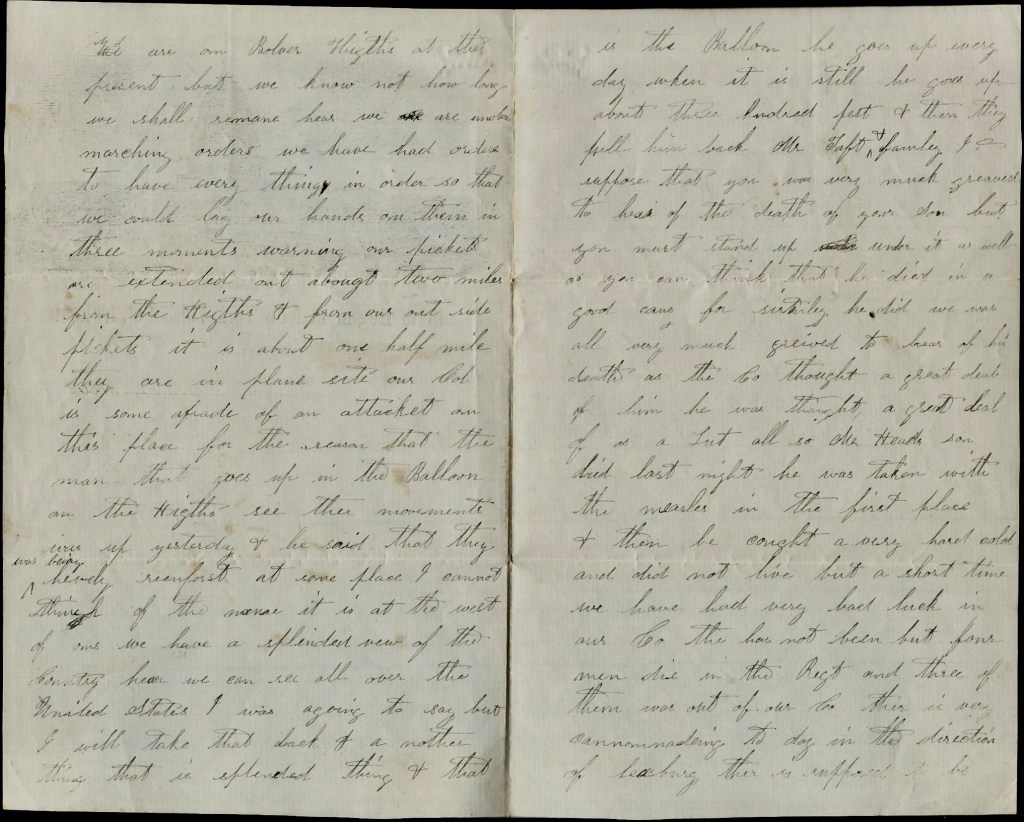

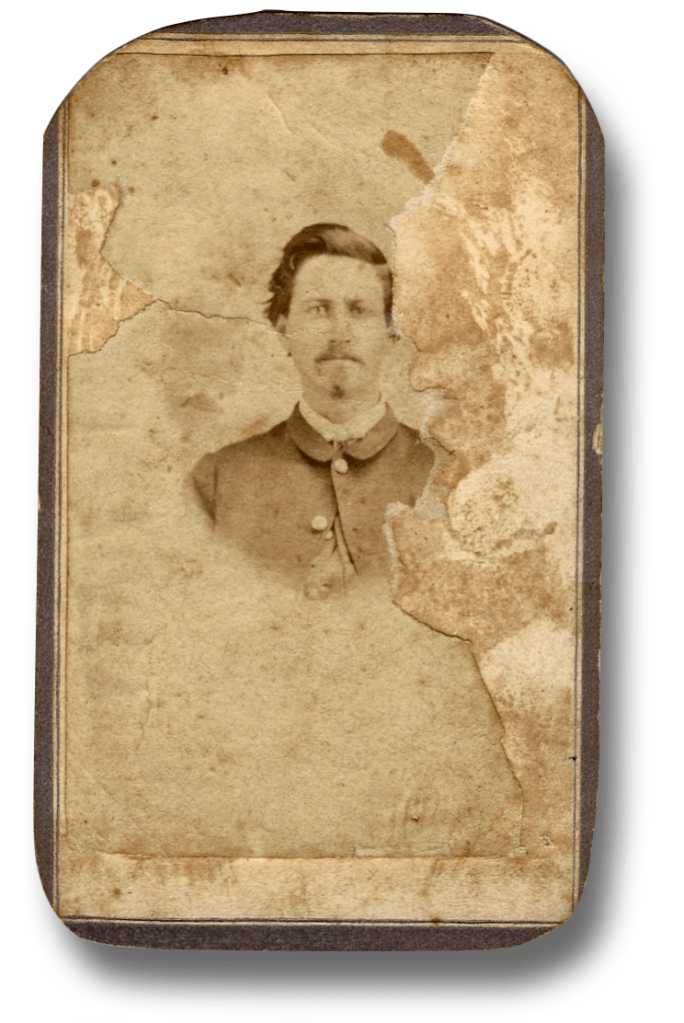
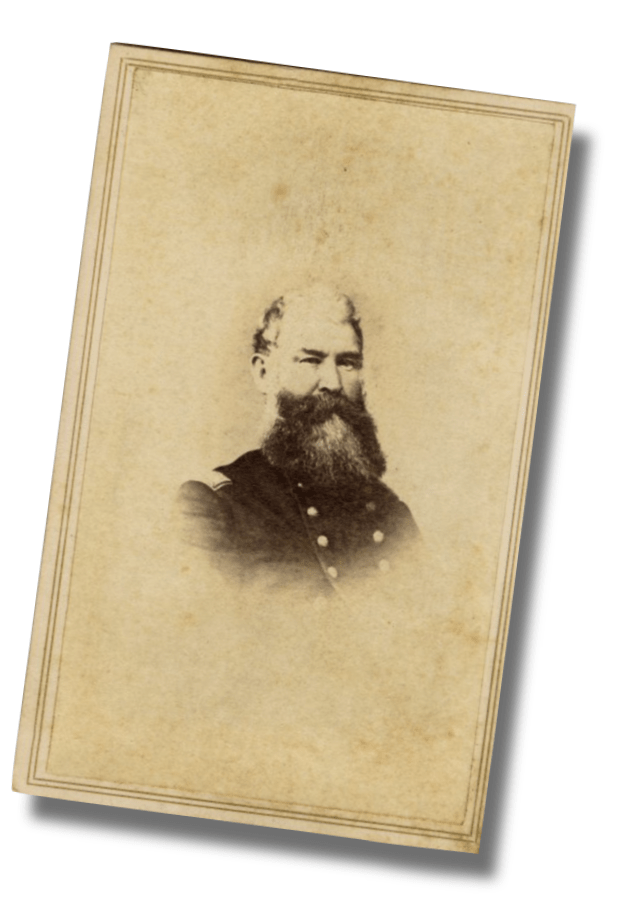


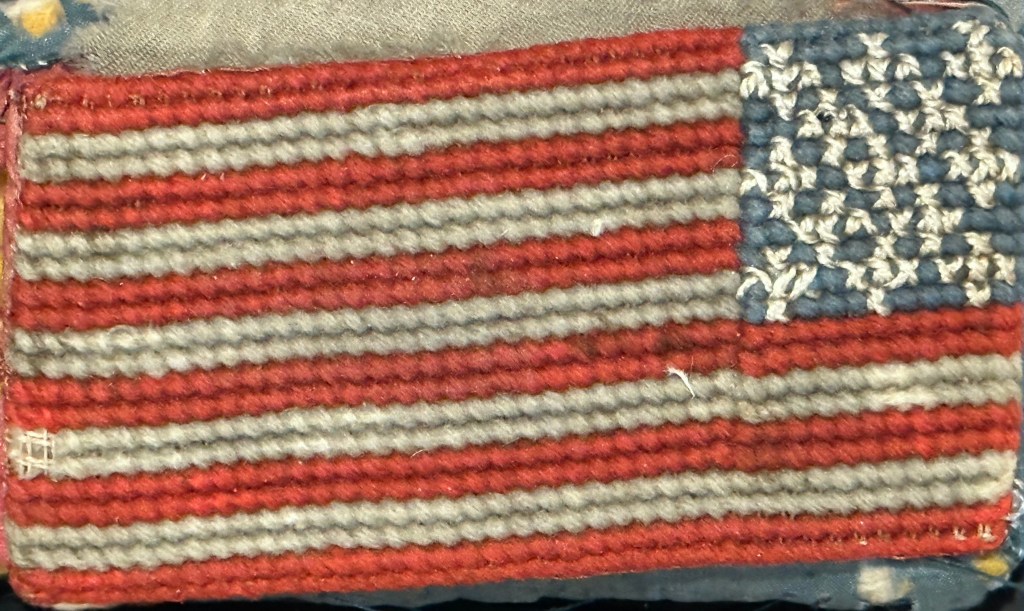


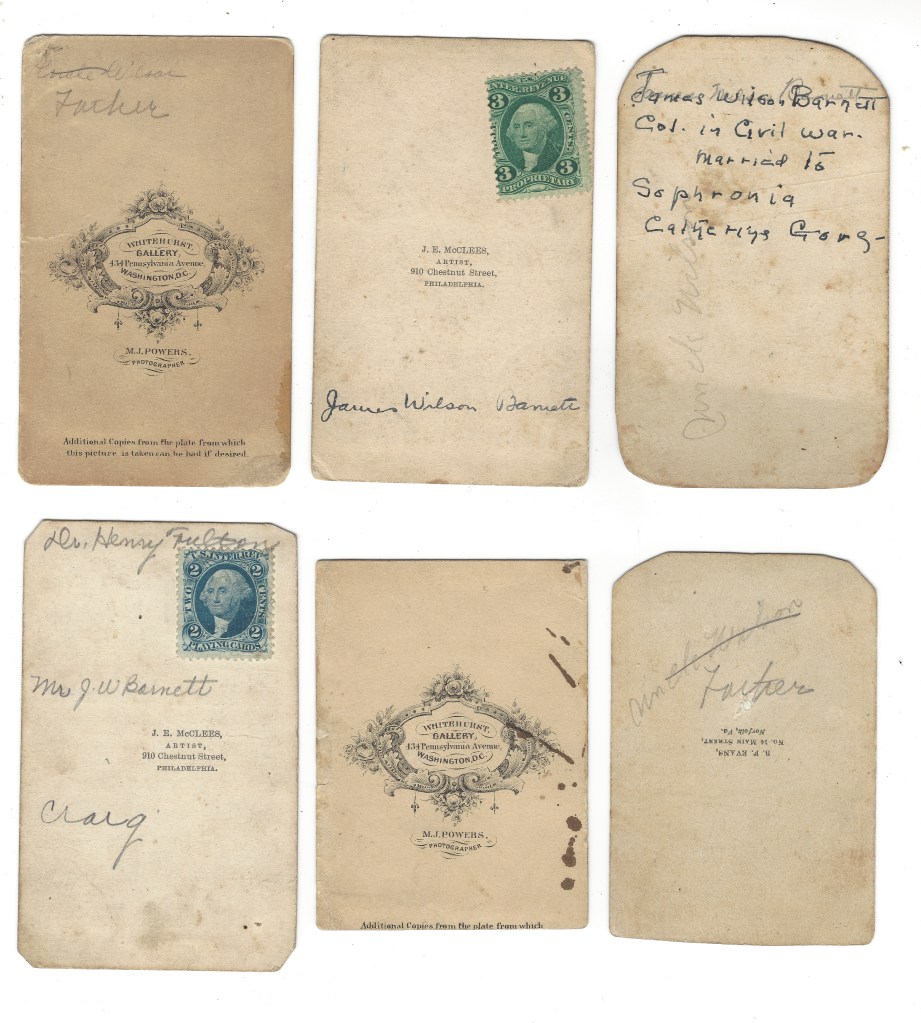
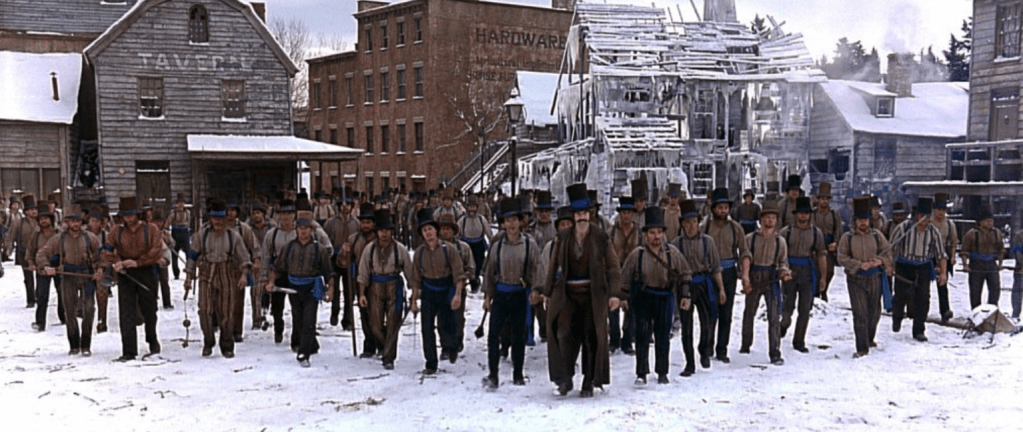

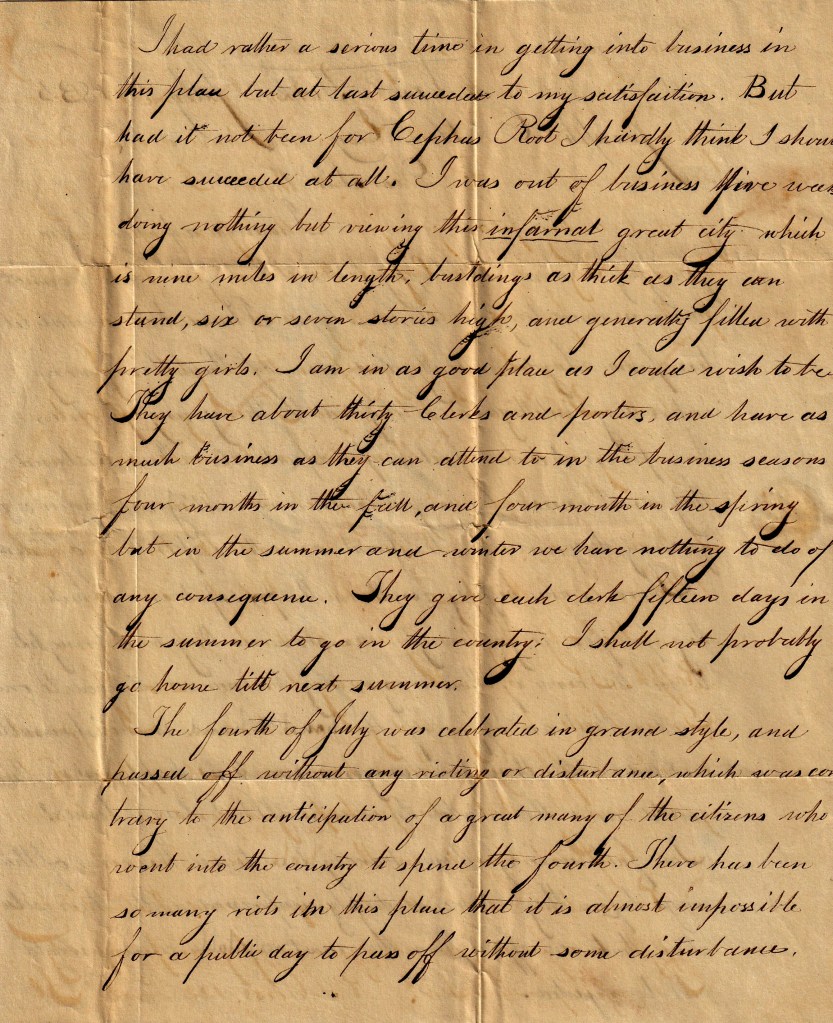
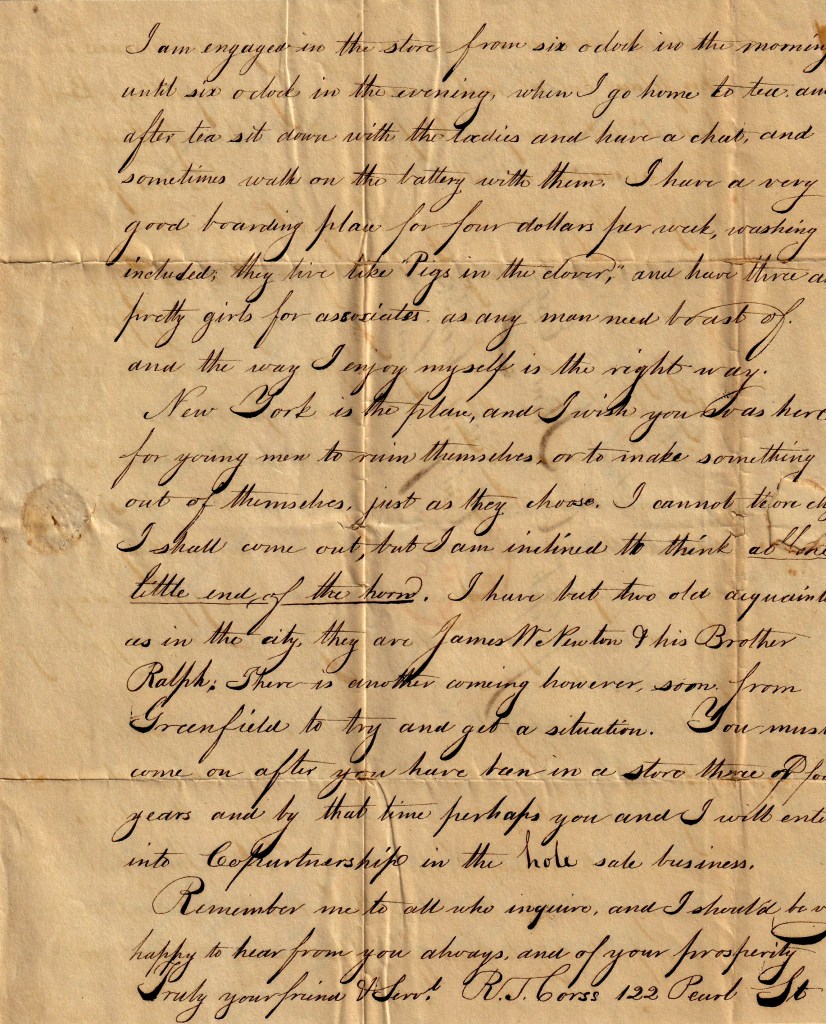
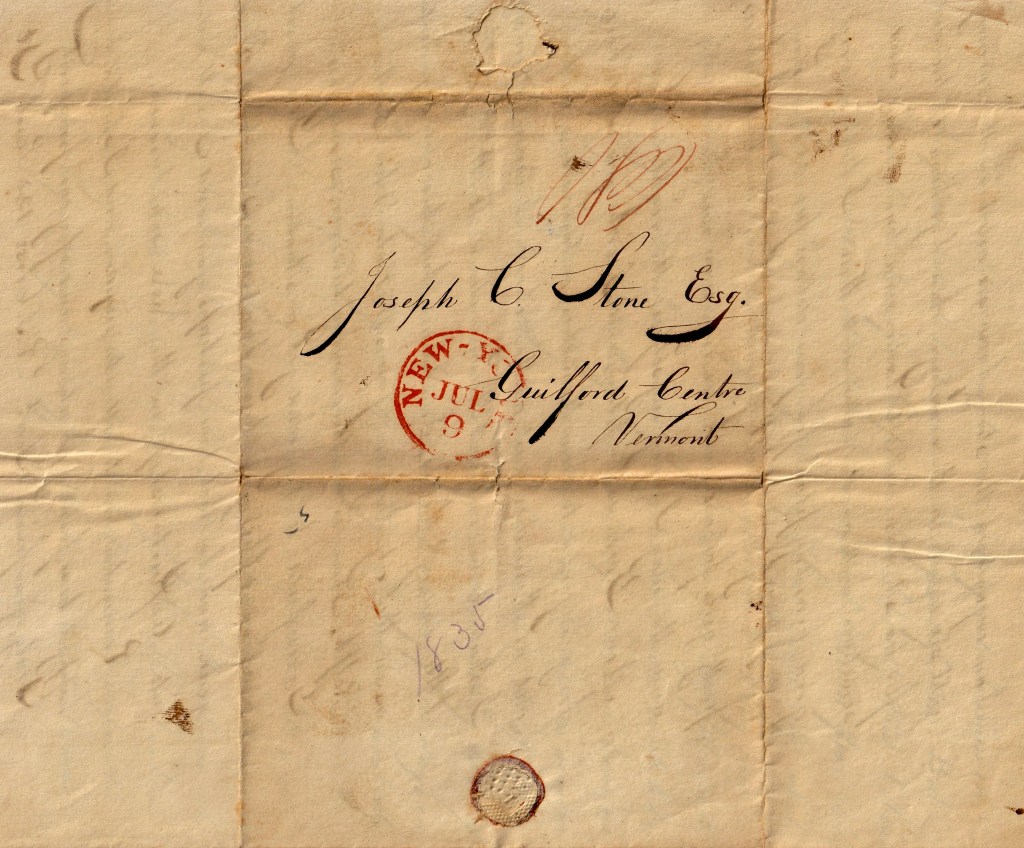
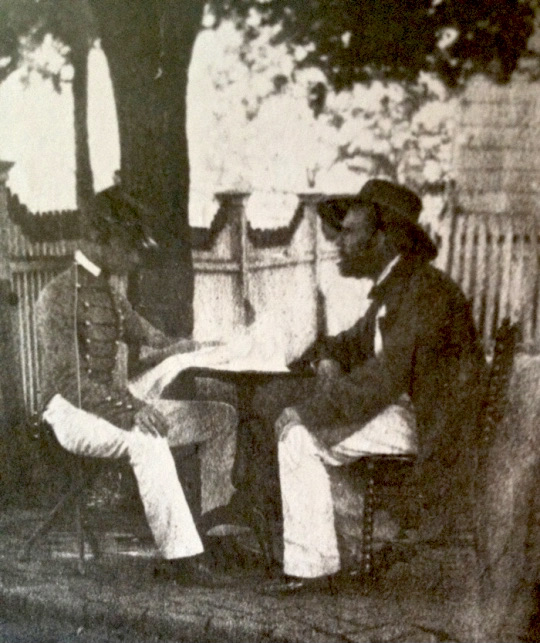


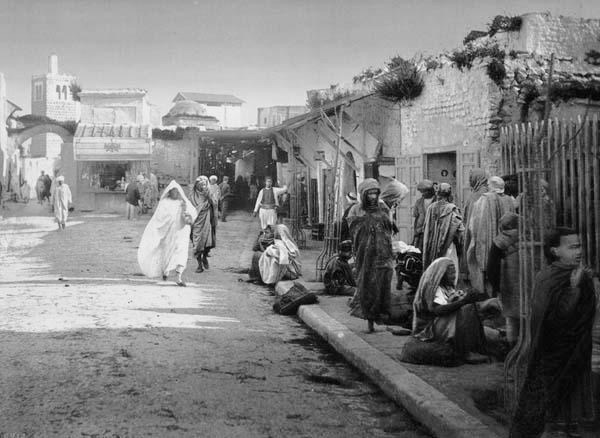
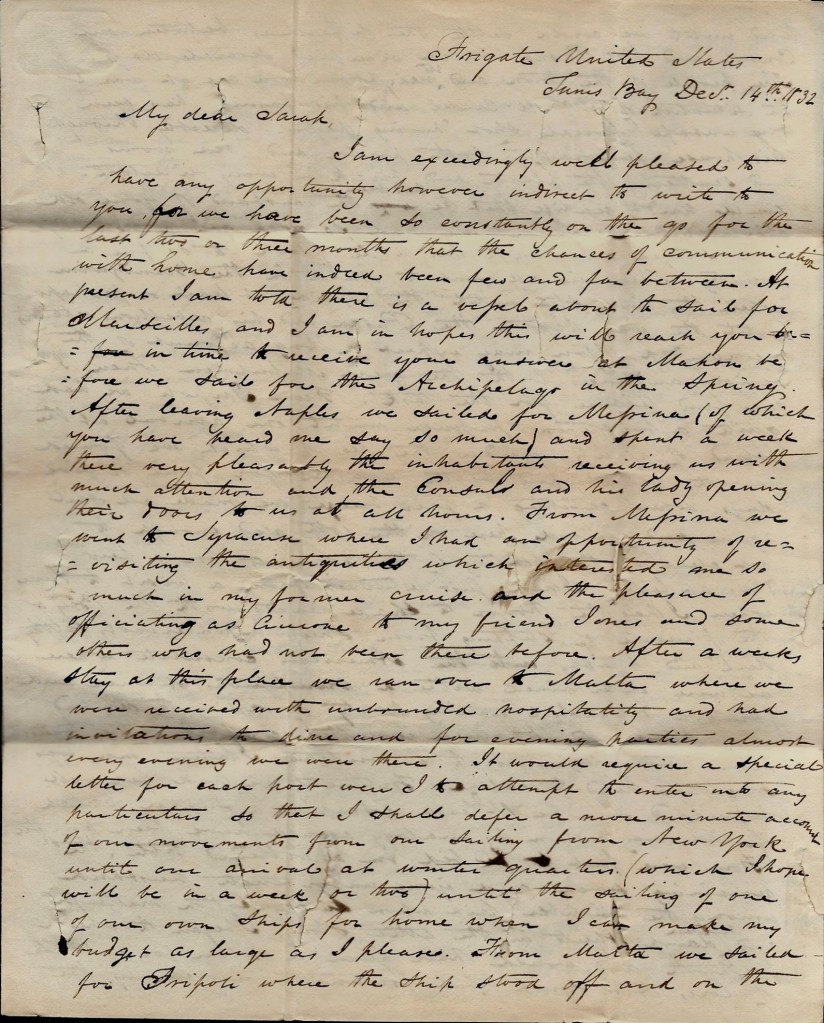

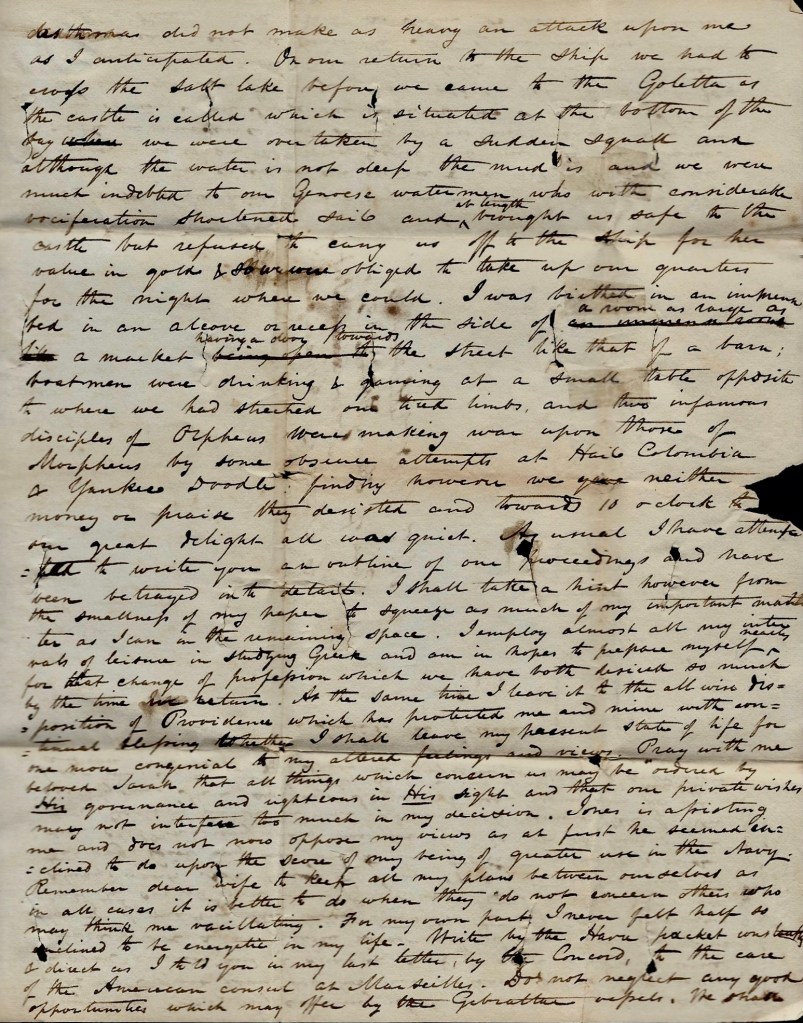
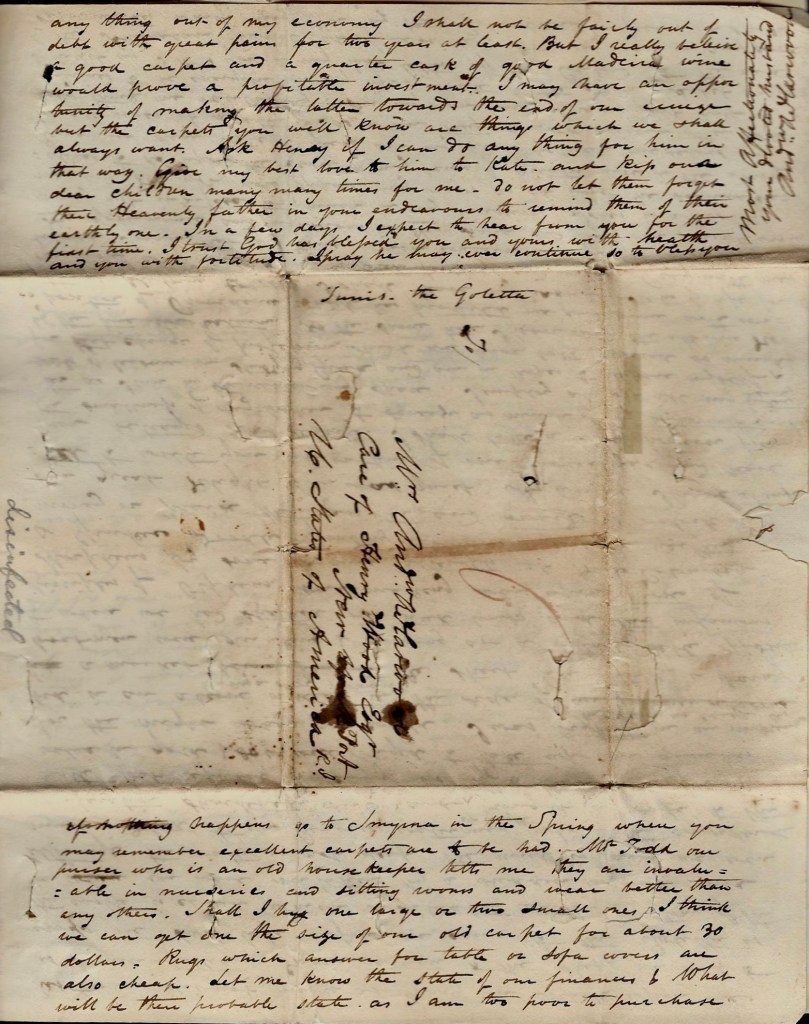
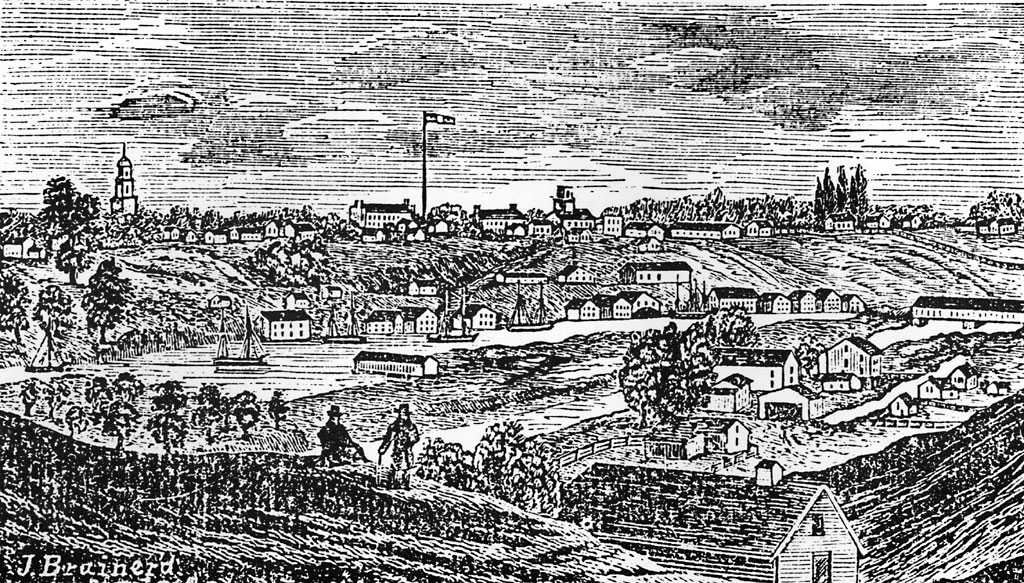


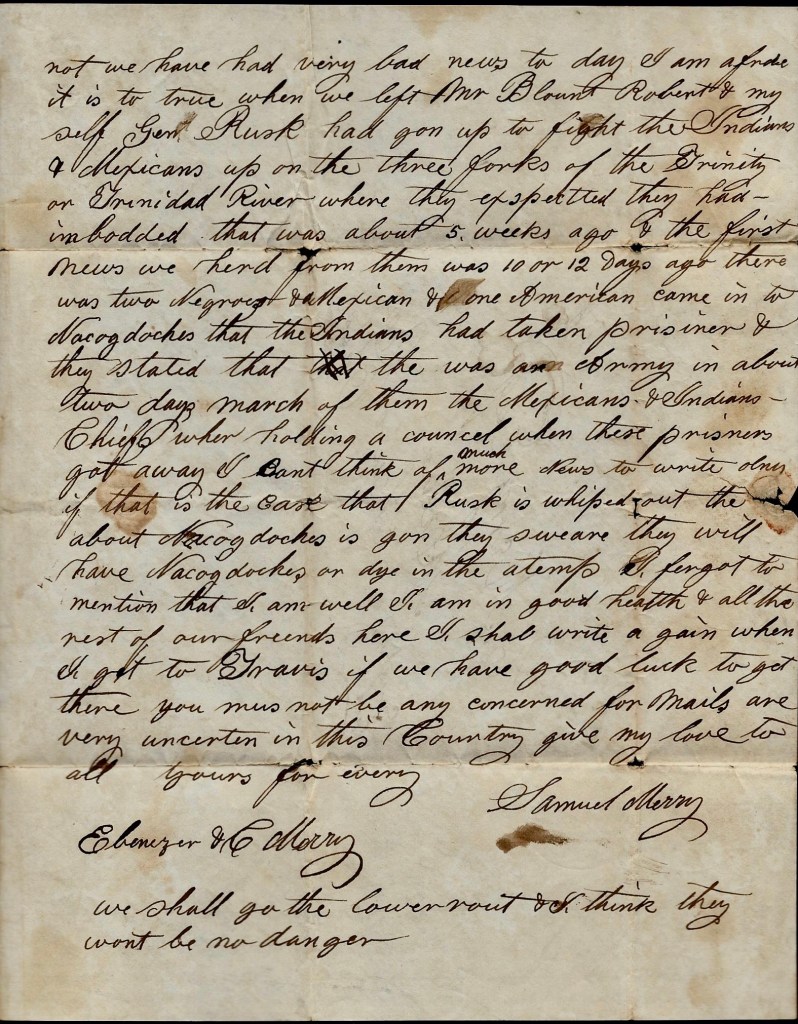


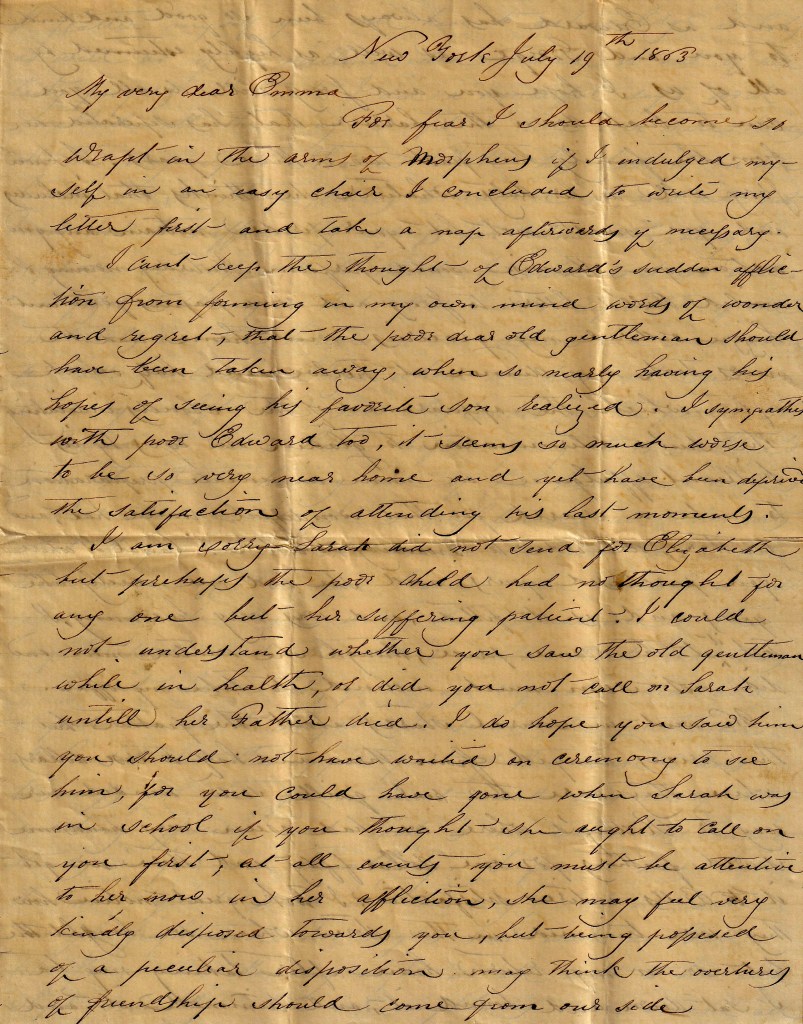
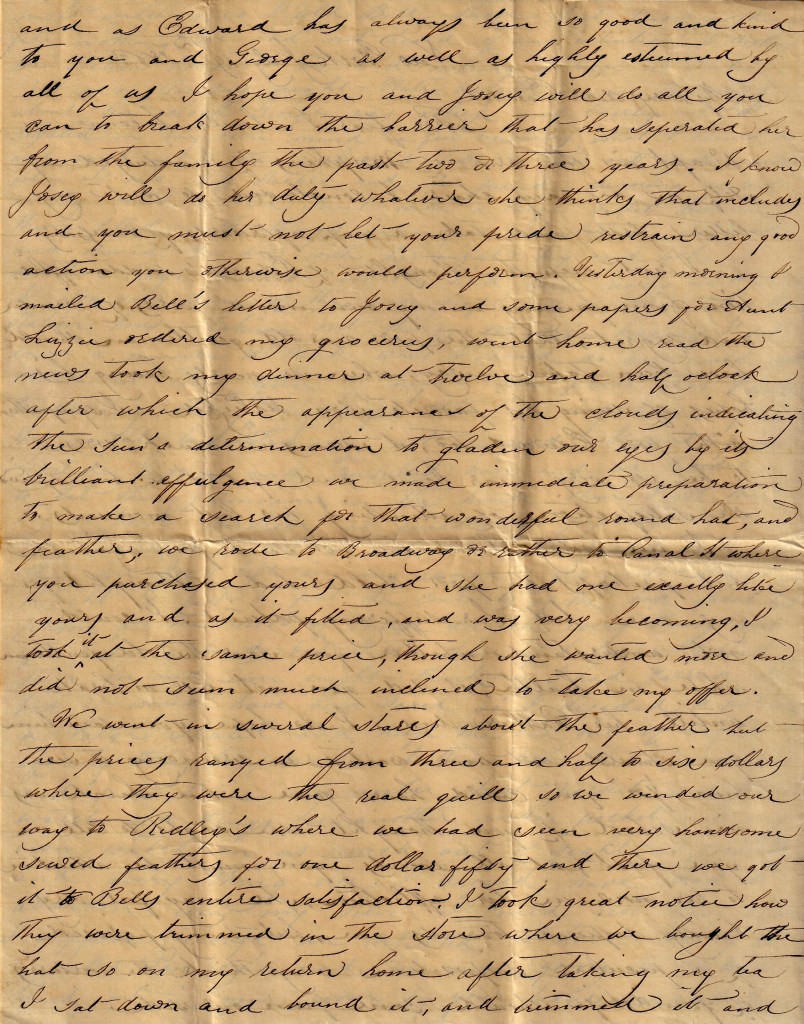
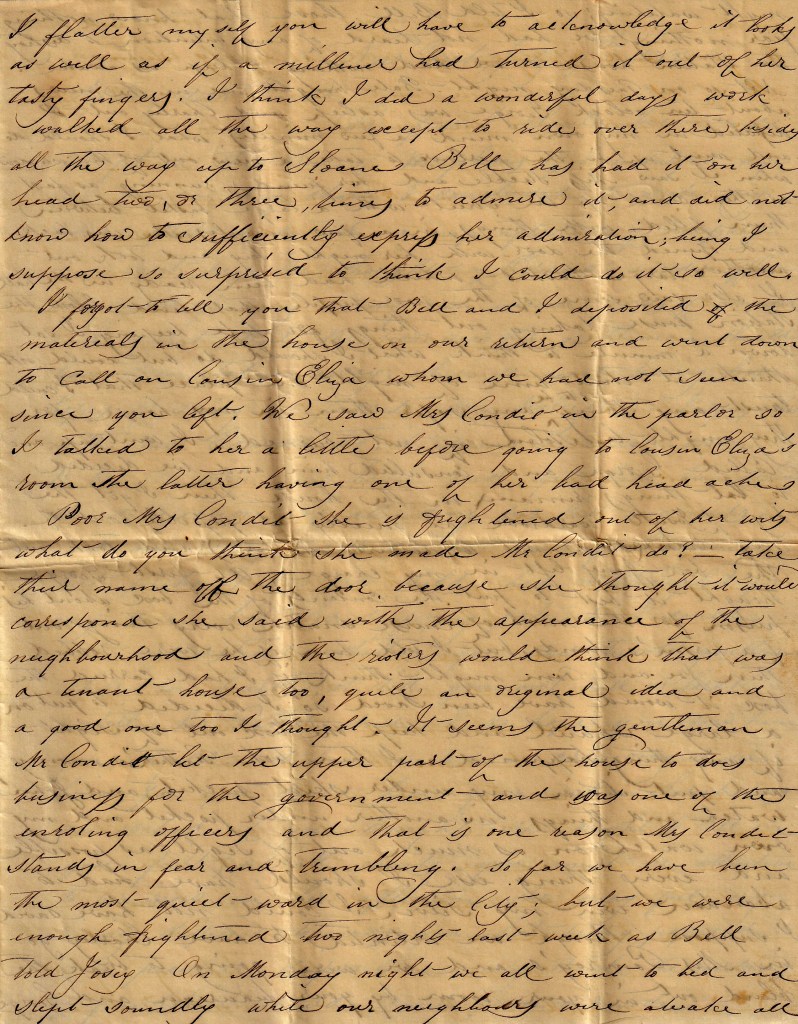


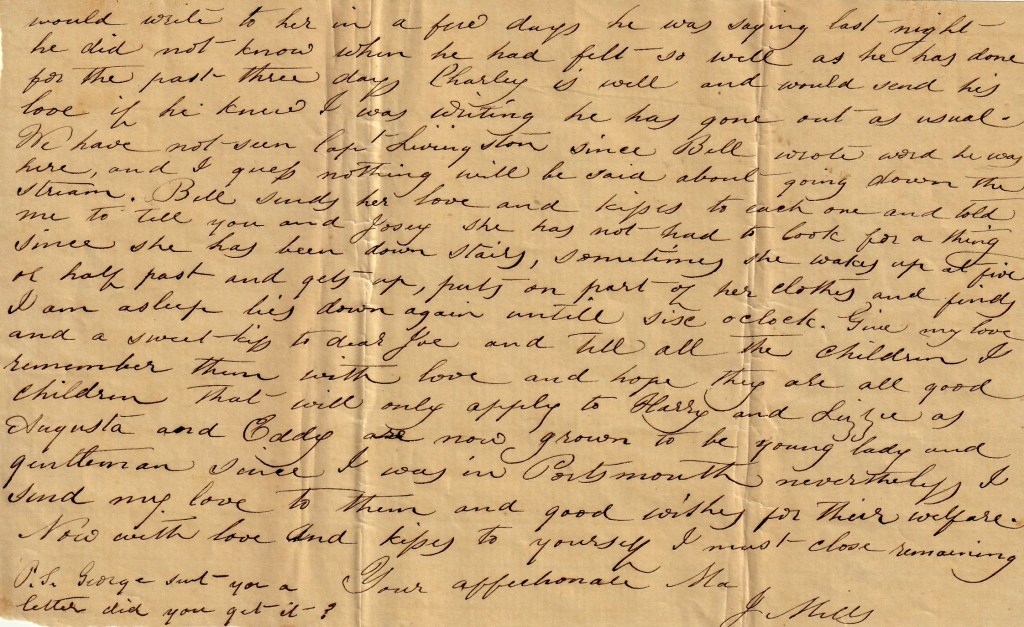


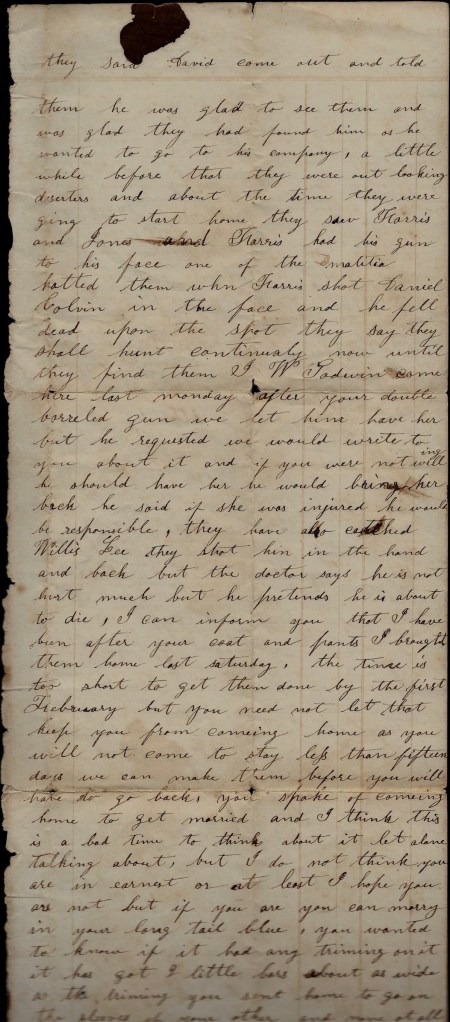

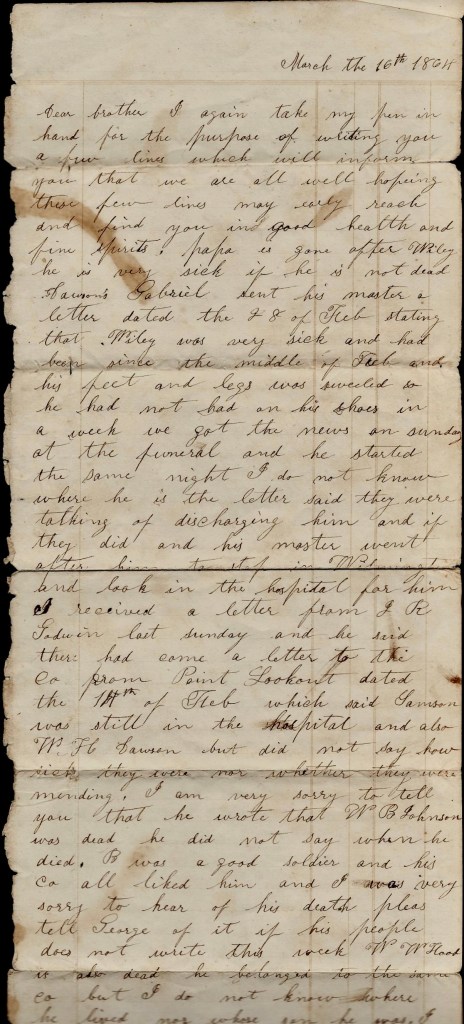

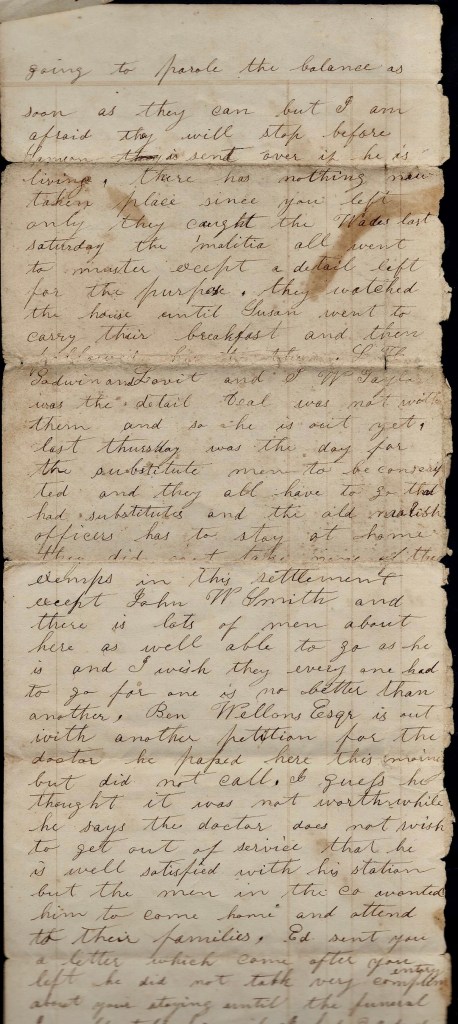

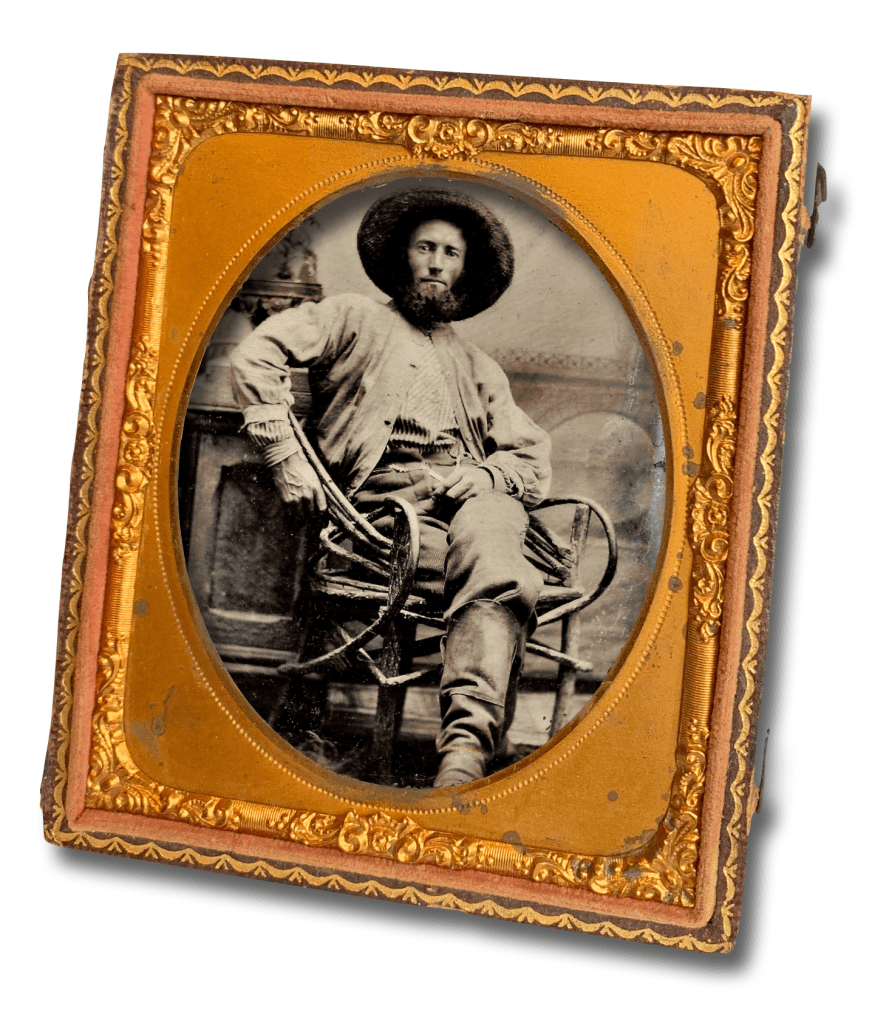




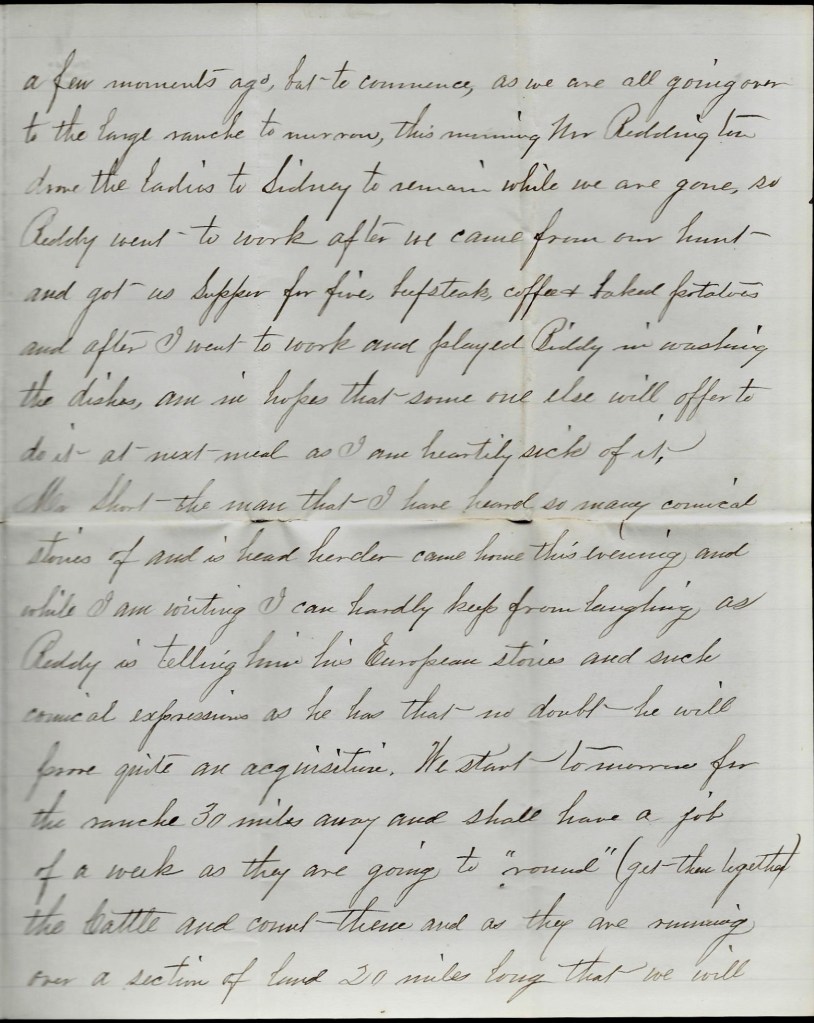
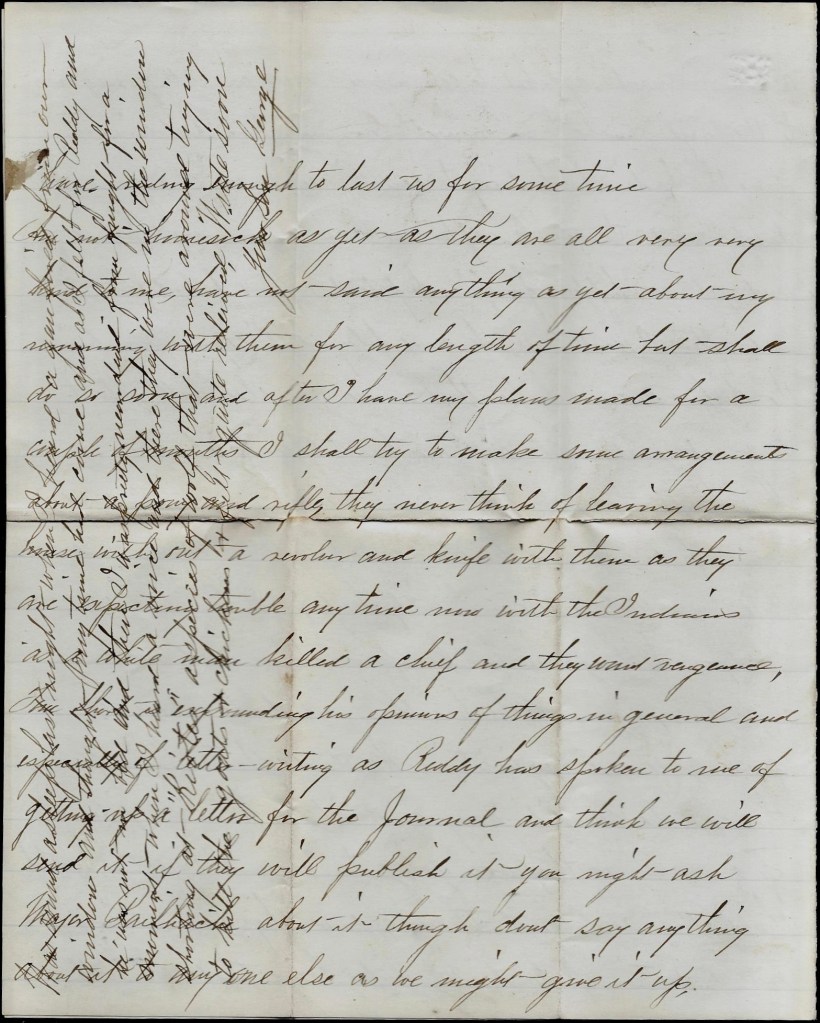
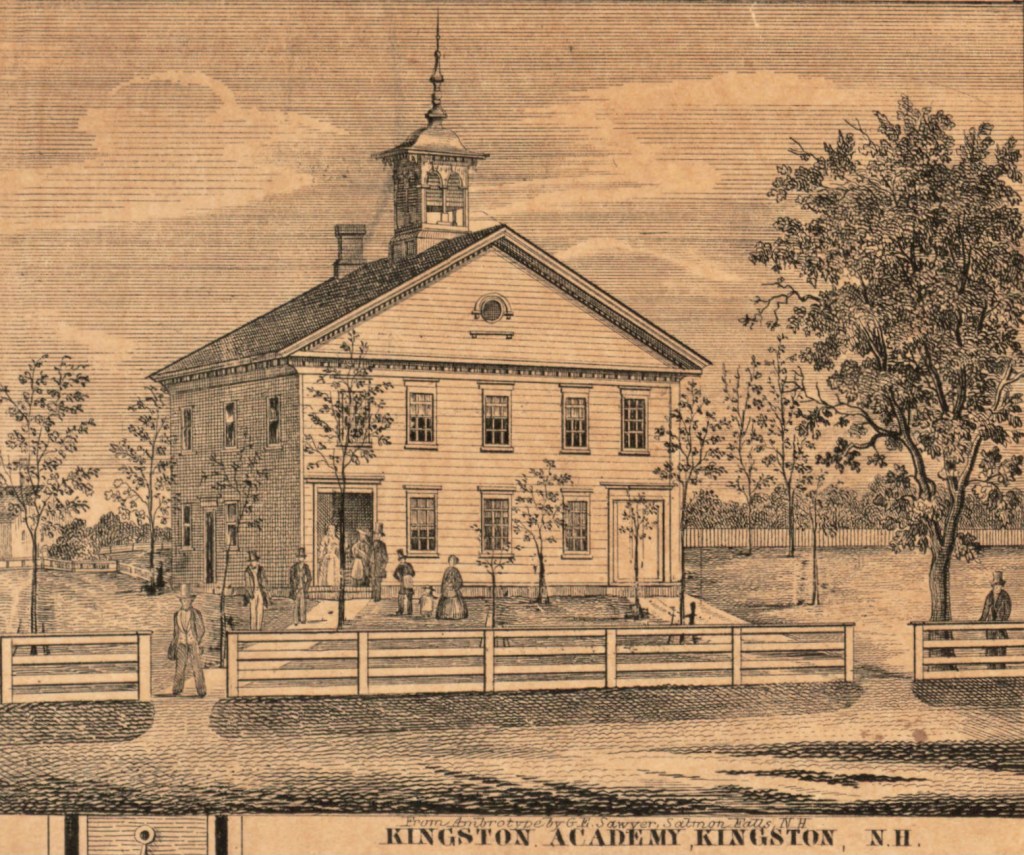
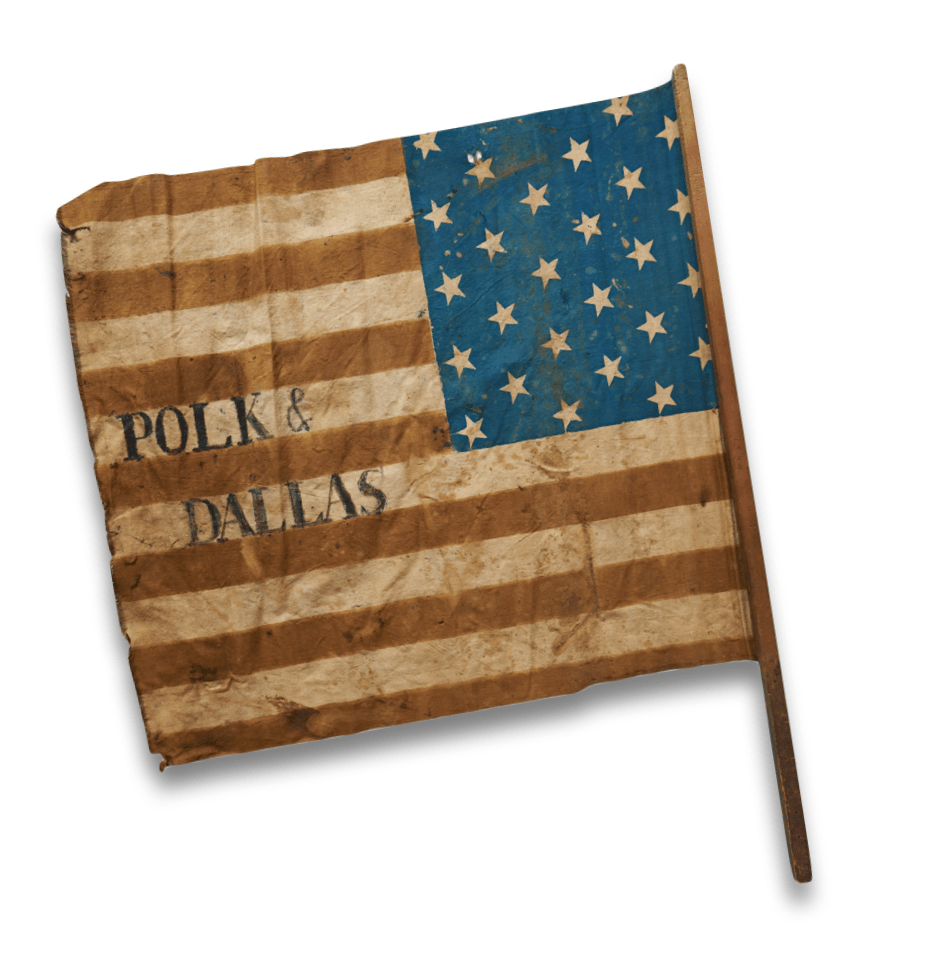
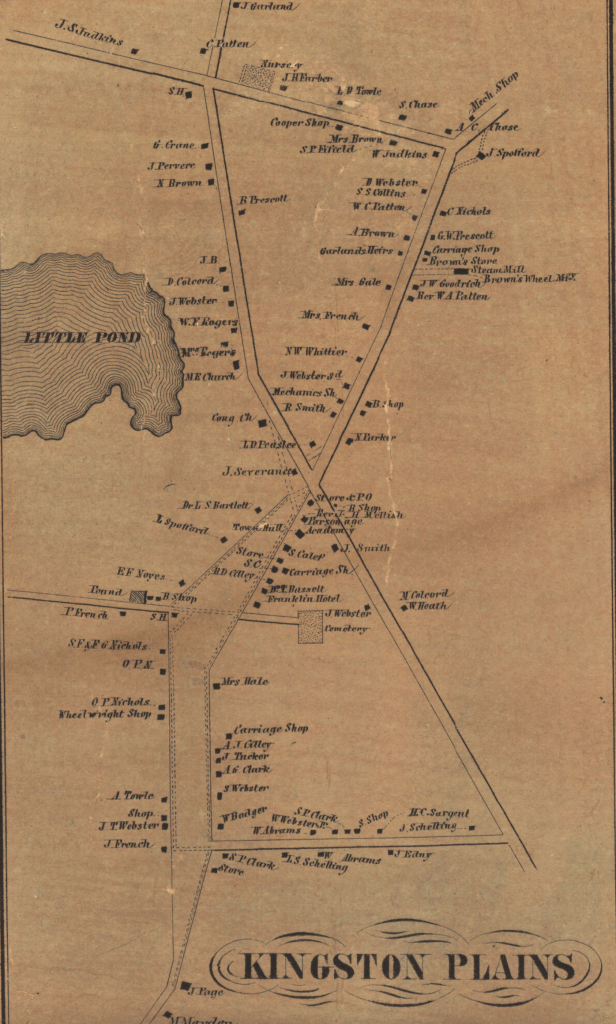
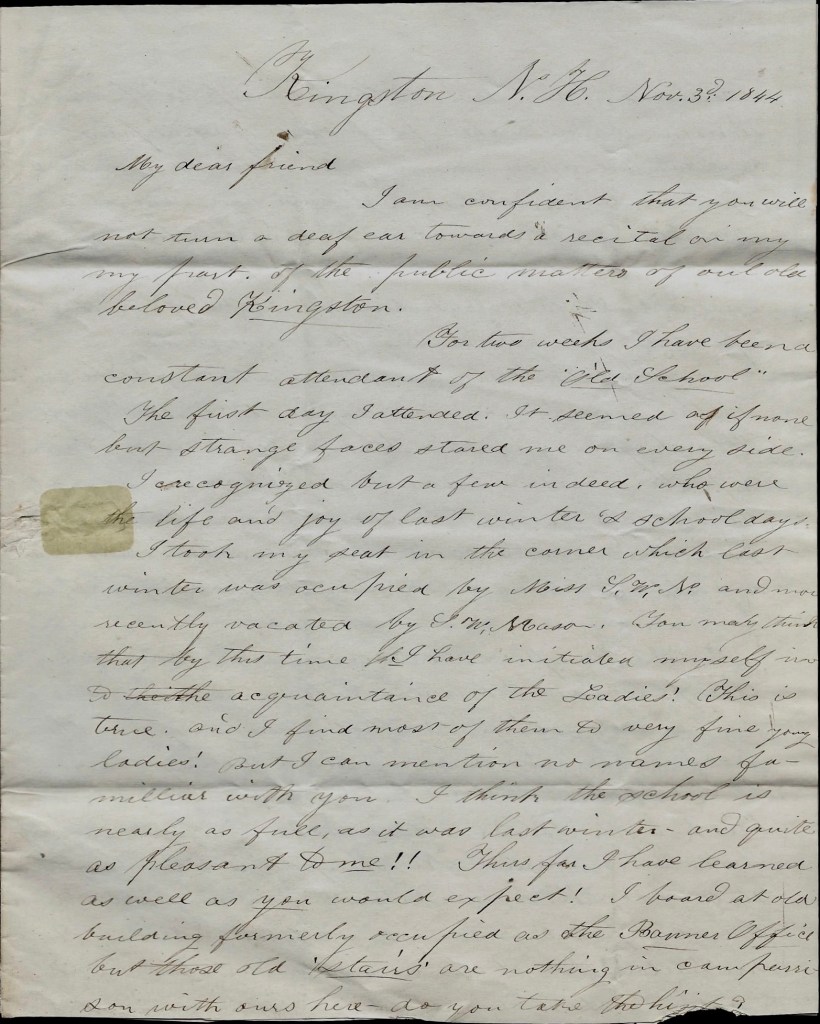
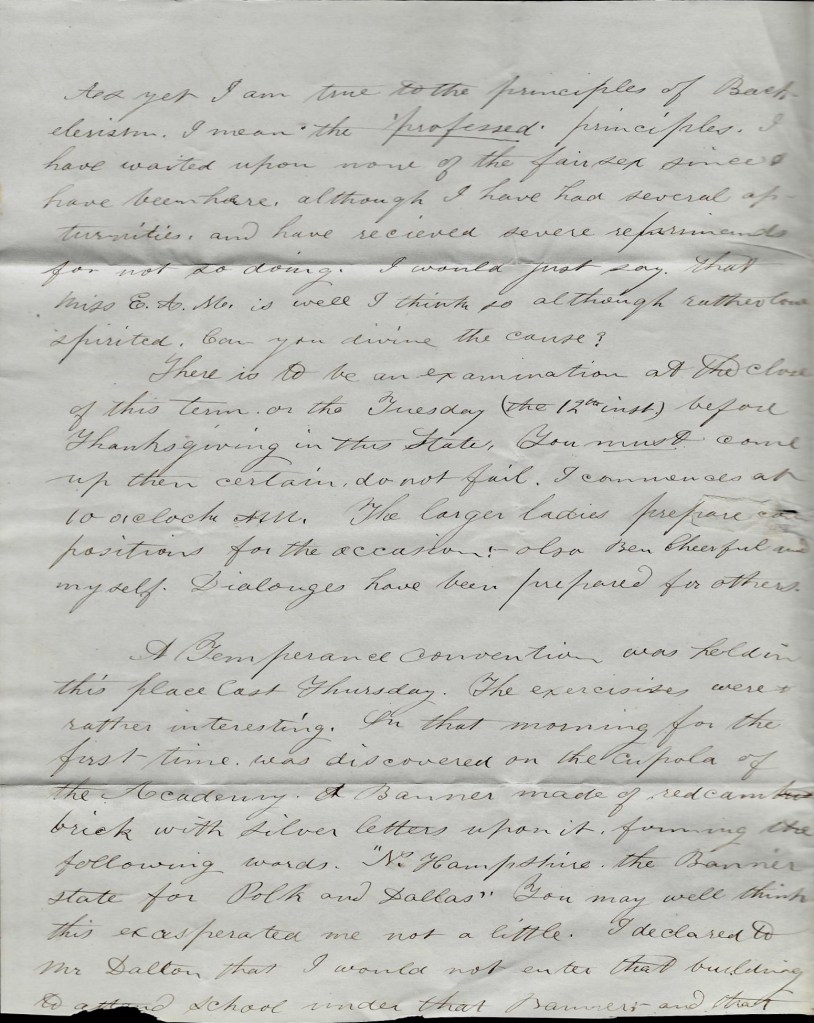


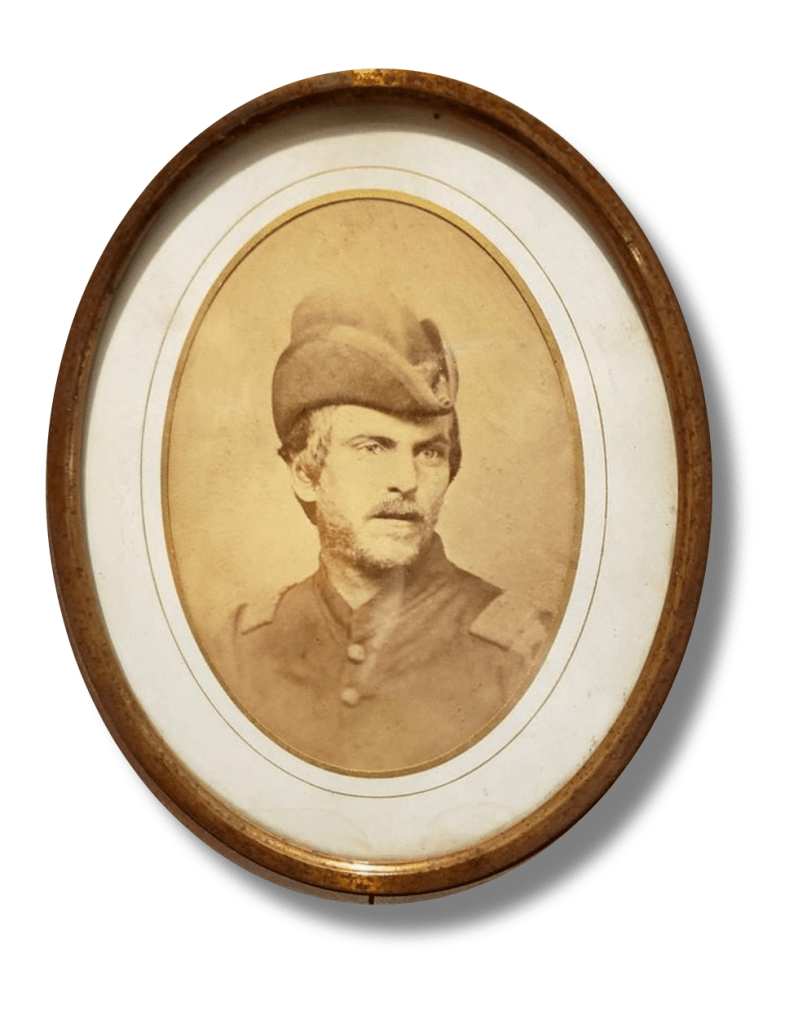

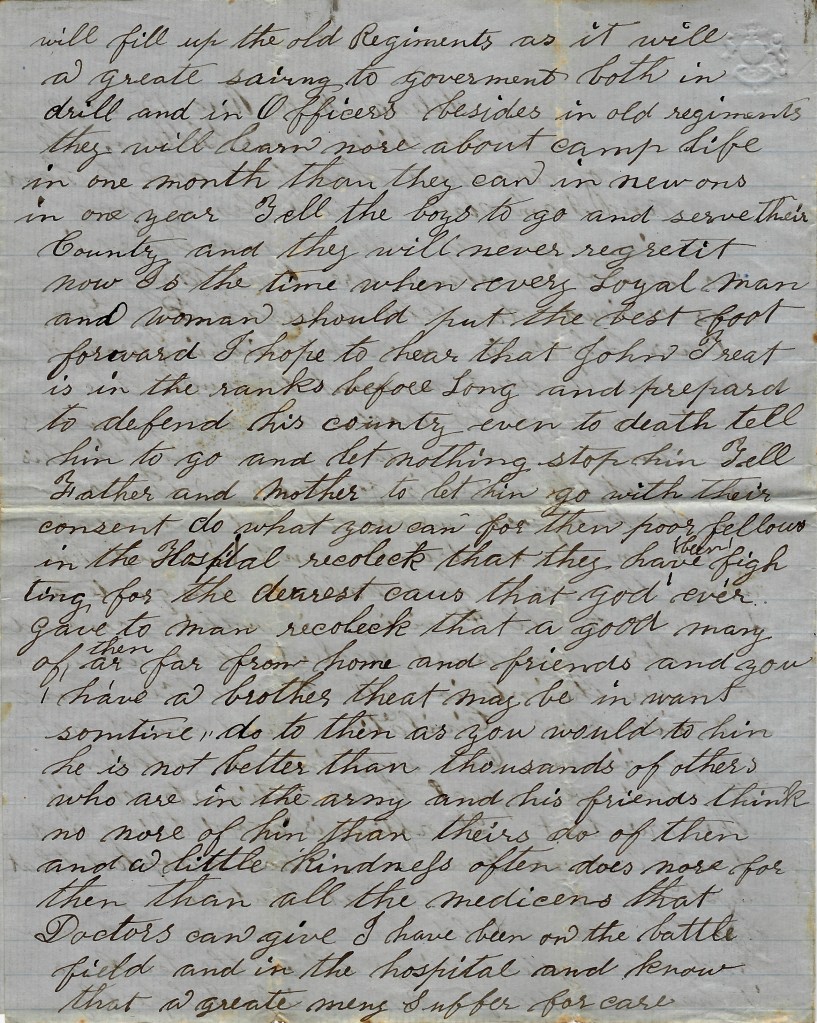
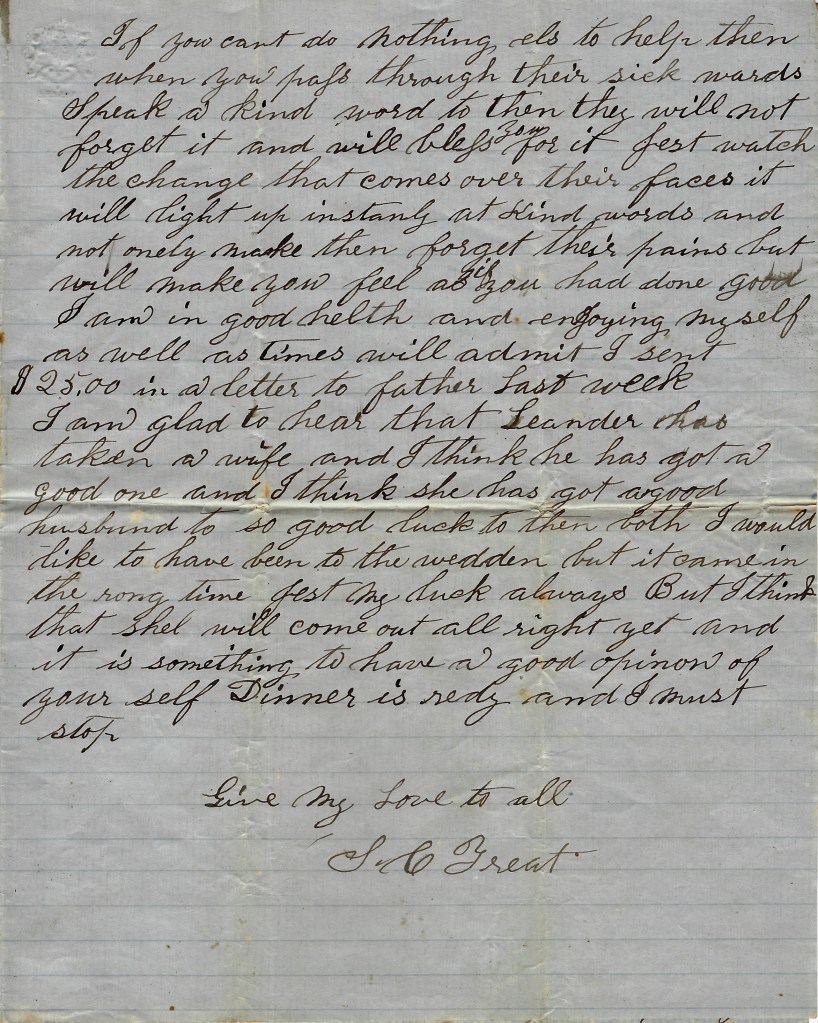
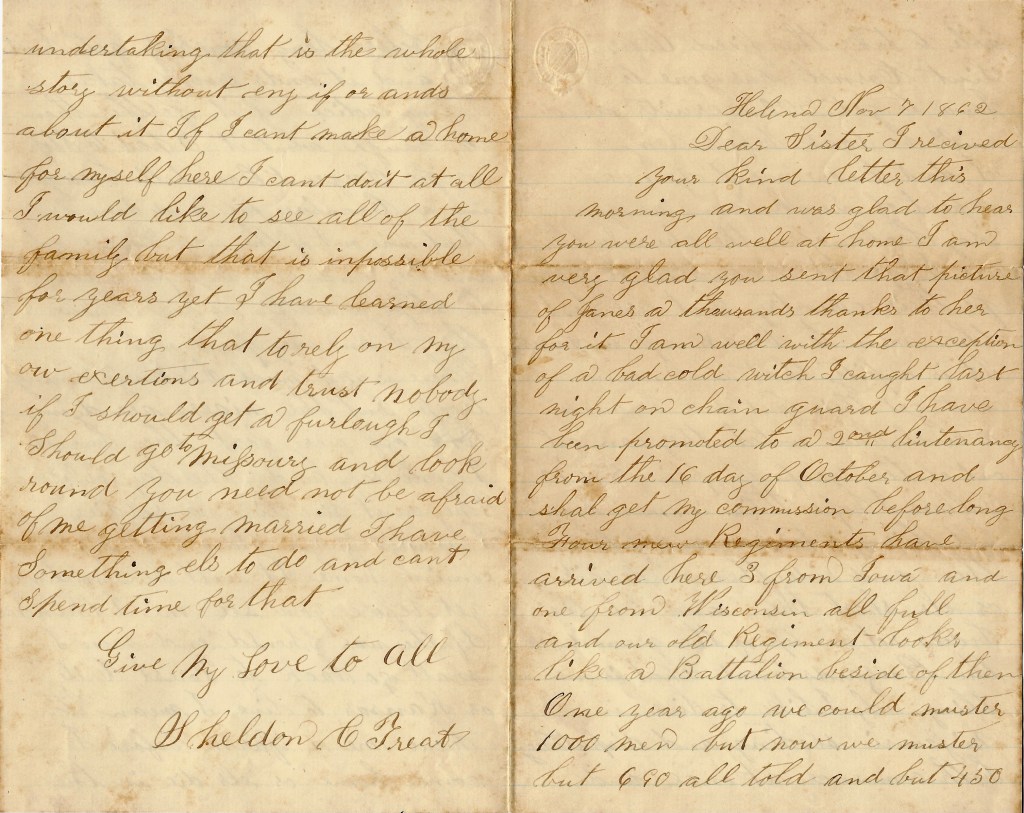

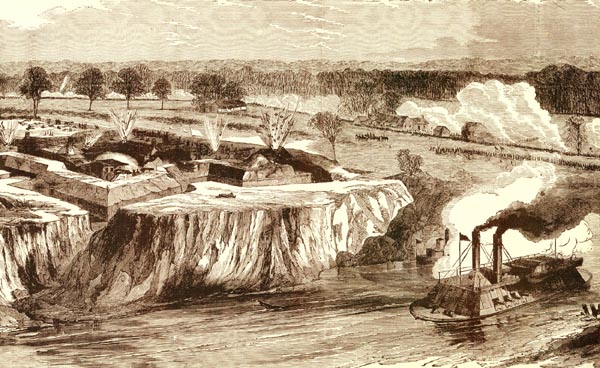


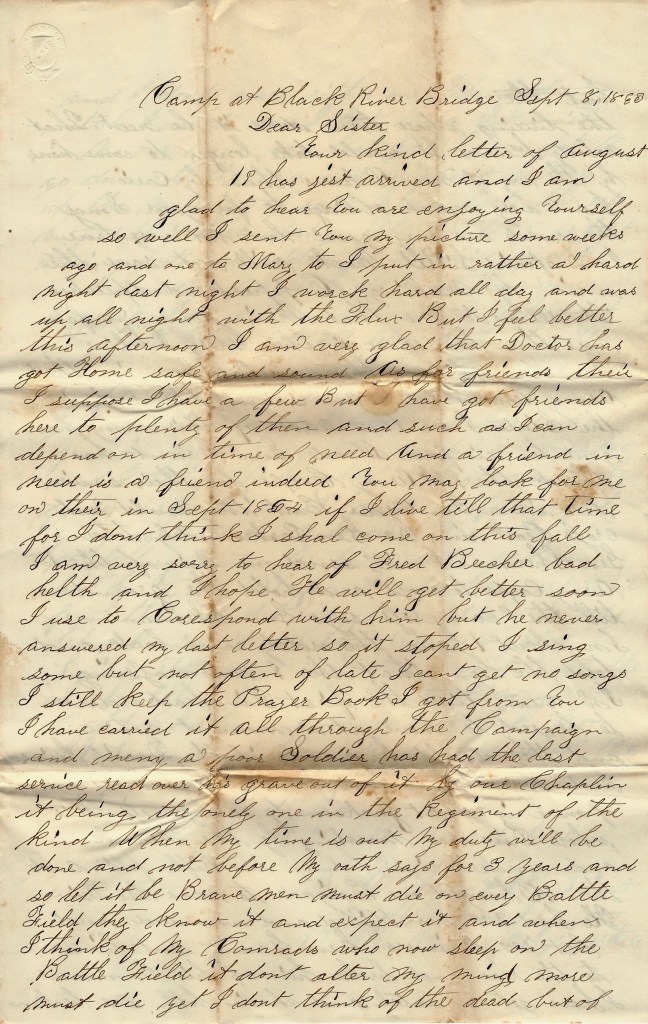
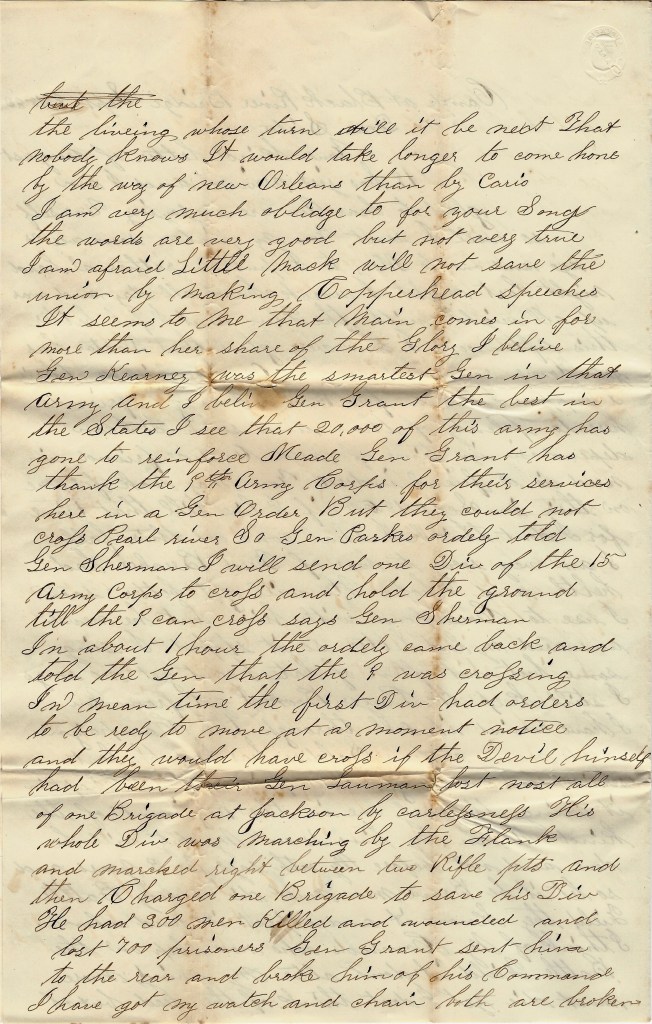
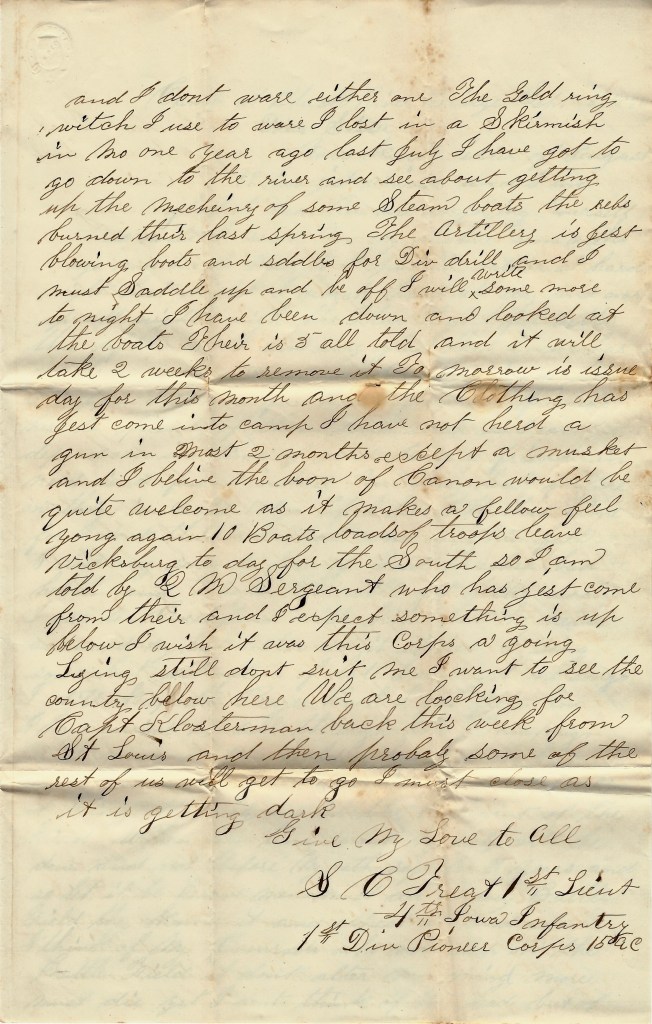
 Spared & Shared 23