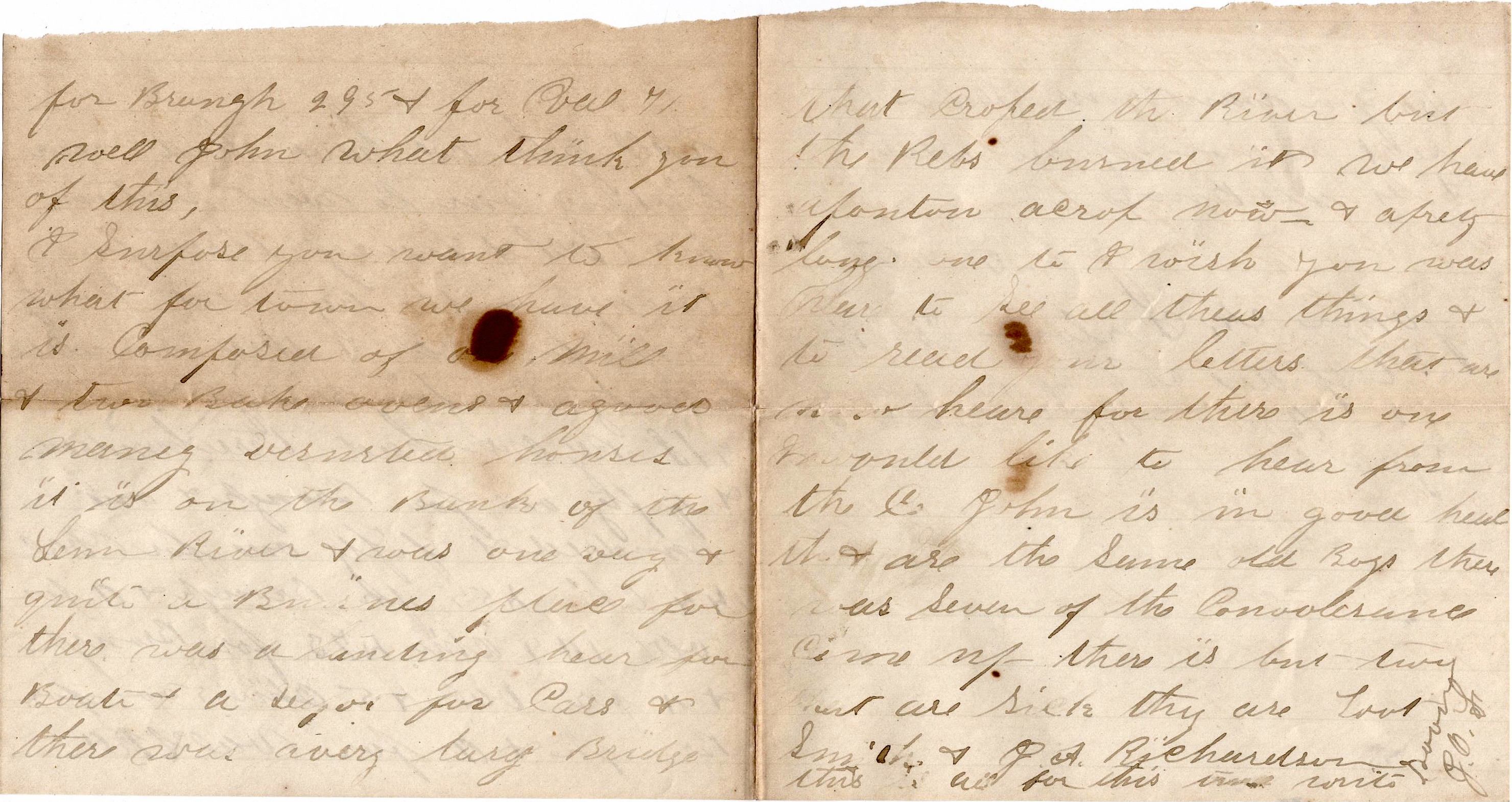
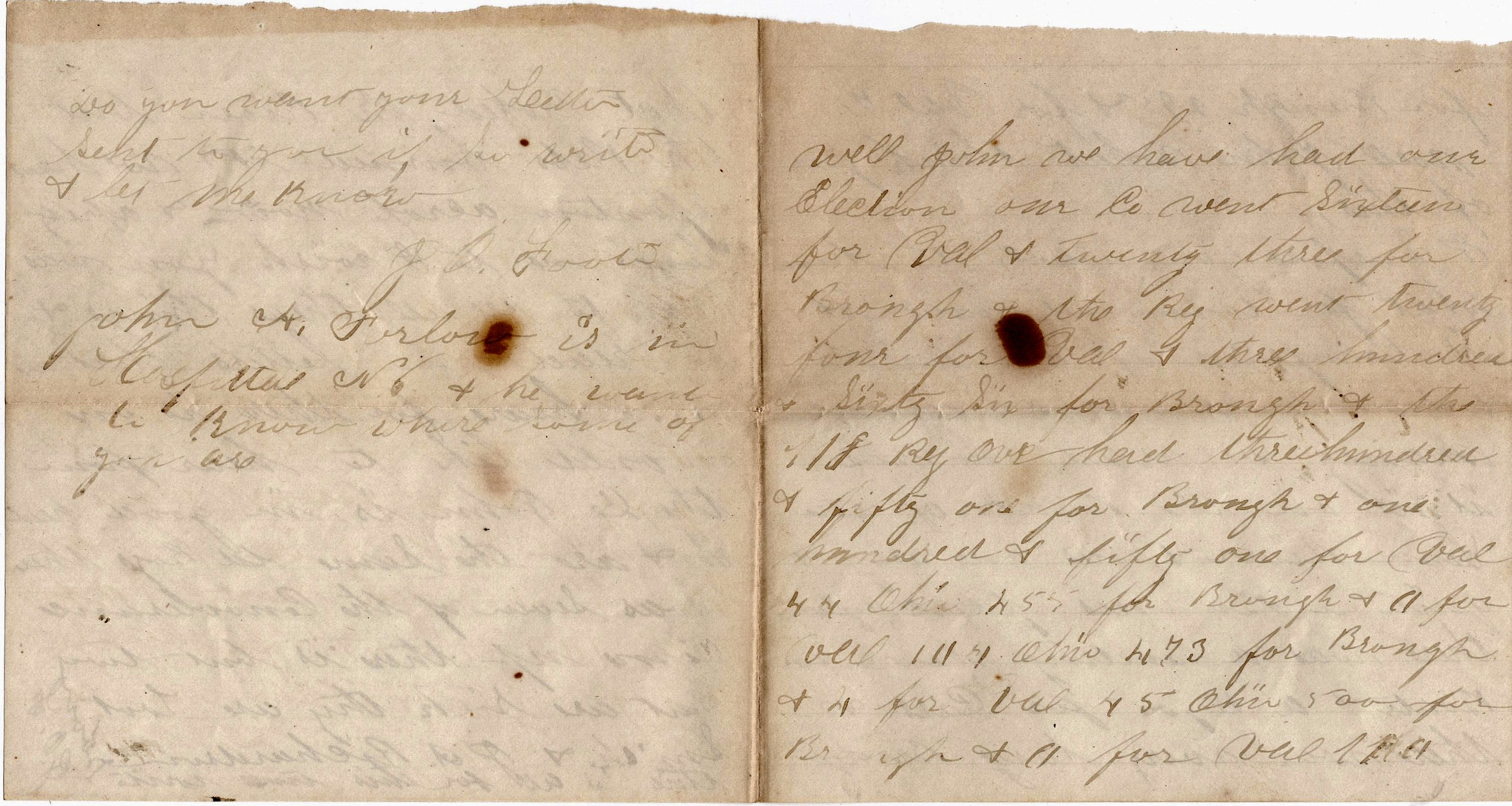
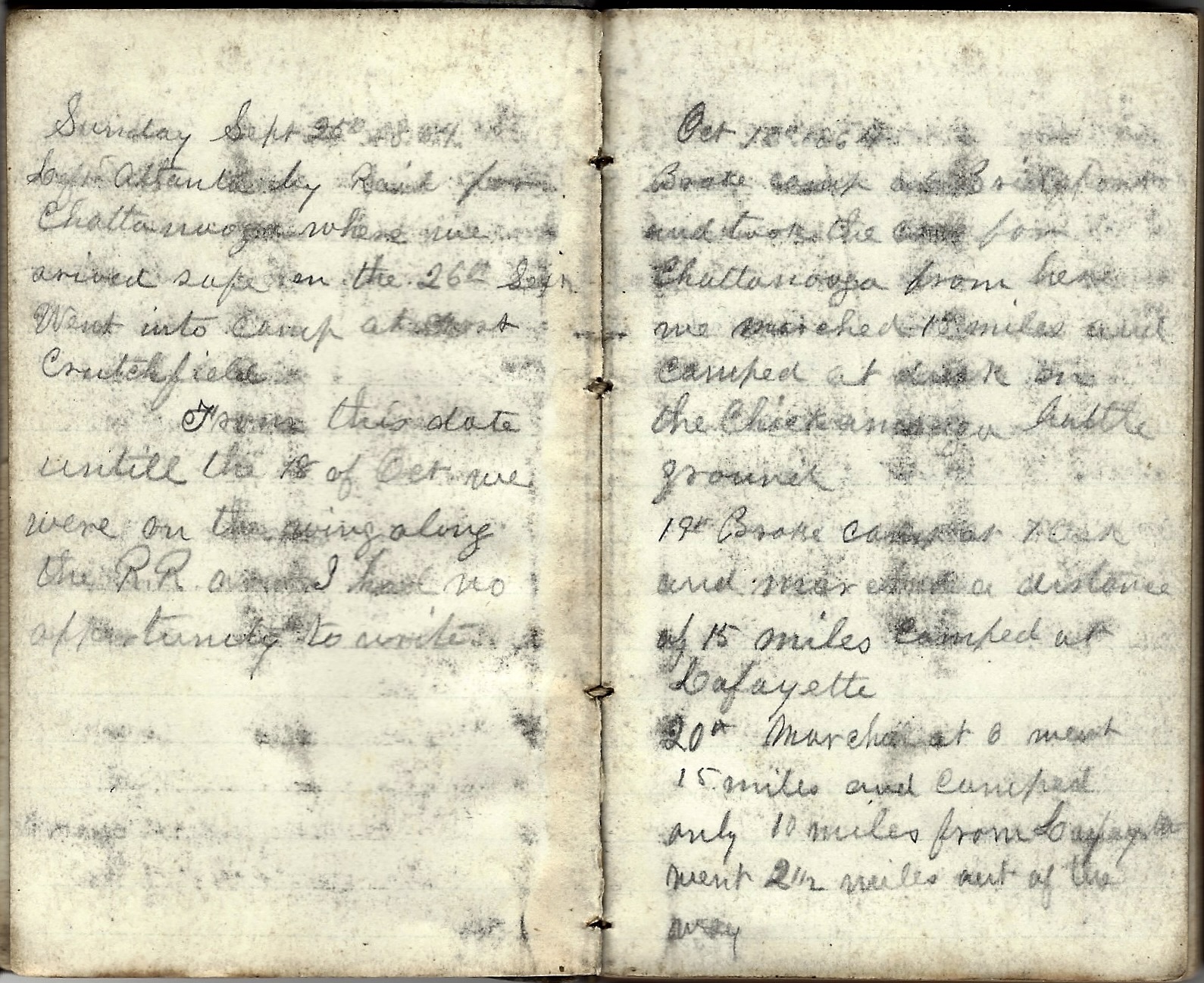
The 1864-65 Reuben Cross Norton Journal, 44th Illinois Infantry

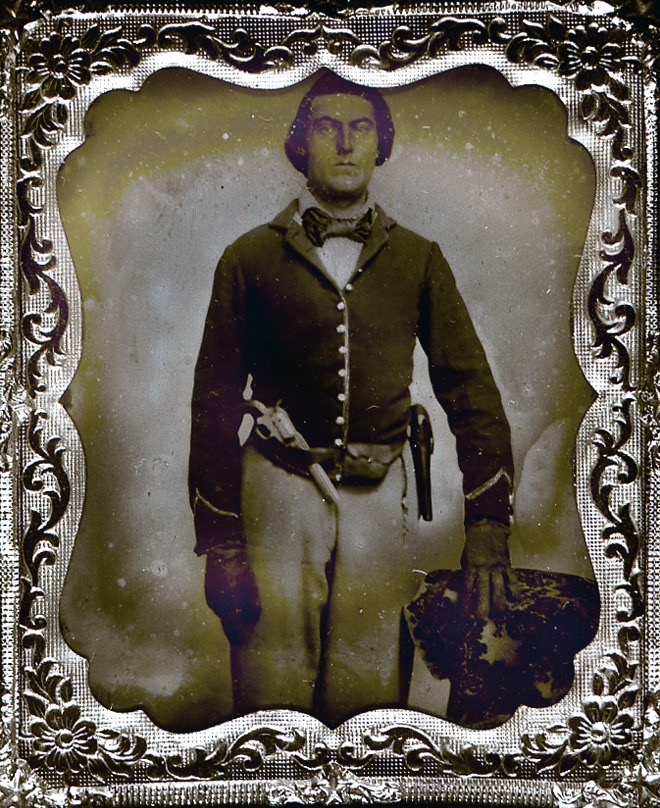
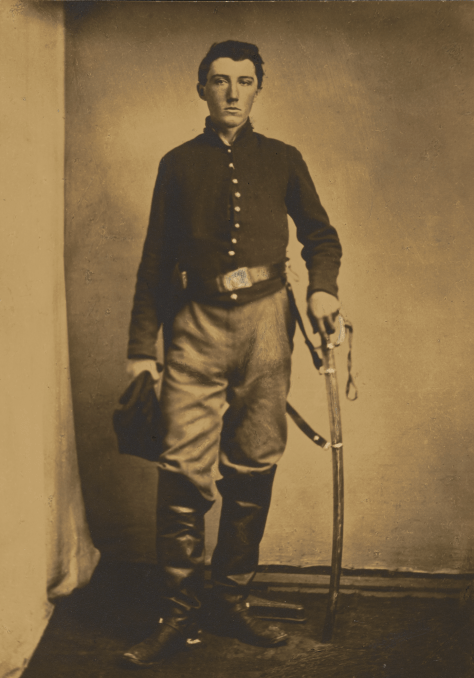
Lt. Reuben Cross Norton, Co. G, 44th Illinois (1862)

The following journal was kept by Reuben Cross Norton (1838-1920), the son of Hoel Buell Norton (1797-1876) and Margaret Cross (1799-1866) of Rockford, Illinois. Reuben’s father was born in East Bloomfield, New York; his mother was born in Sligo, Ireland. The Norton’s were residing in Bridgewater, Michigan in the late 1830s when Reuben was born. They moved to Rockford, Illinois, in 1852. It’s noted that Reuben’s father’s name is spelled “Hoel” on his grave marker and in the cemetery records. Upon his death in 1876, he was remembered by his friends for his “strict integrity and probity.”

Reuben first entered the war in September 1861, enlisting in Co. G (the “Northwestern Rifles”), 44th Illinois Infantry, with his brother Marcus Norton. Reuben rose in the ranks and was commissioned 1st Lieutenant of Co. G in April 1862 but resigned in January 1863. Though a veteran, he was drafted into the same company on 30 March 1864 and served in the ranks of the 44th Illinois as a private throughout the Atlanta Campaign. After he was wounded in the Battle of Franklin in late November 1864, he was transferred to the Field & Staff (F&S) to serve as a hospital steward with Dr. Emery Merrifield. He remained in this capacity until 25 September 1865 when he mustered out of the regiment at Port Lavaca, Texas. At the time of his enlistment he was described as a dark-haired, dark-eyed mechanic who stood just shy of five and a half feet tall.
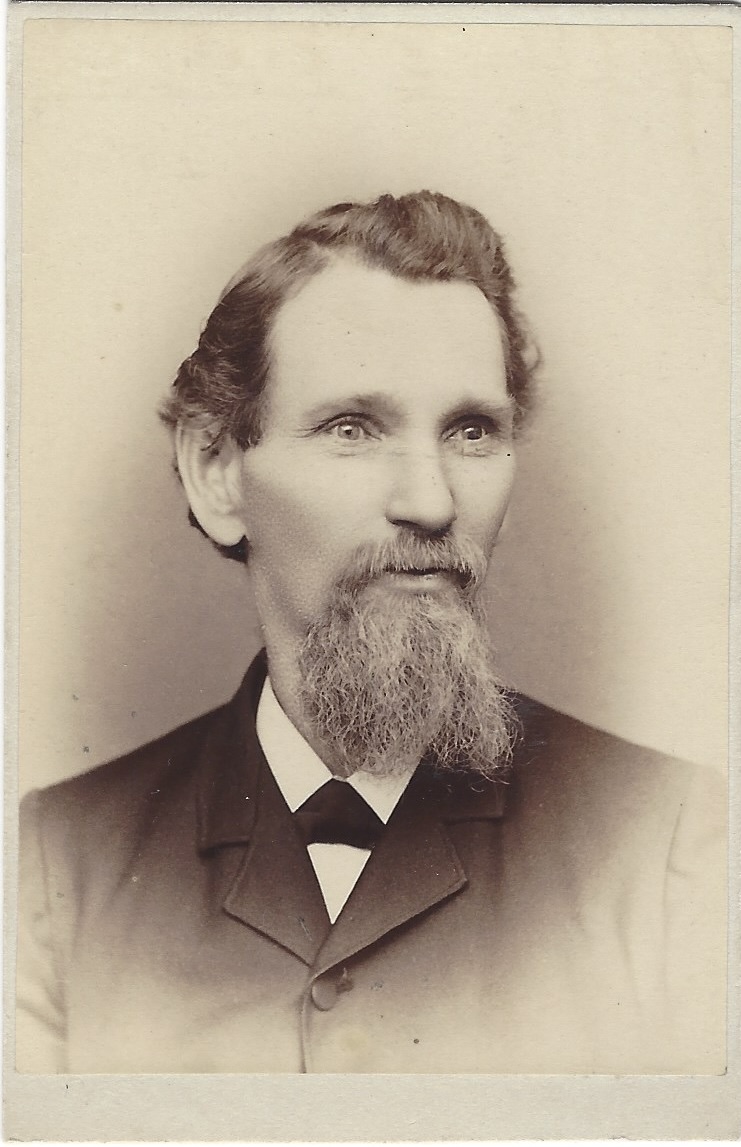
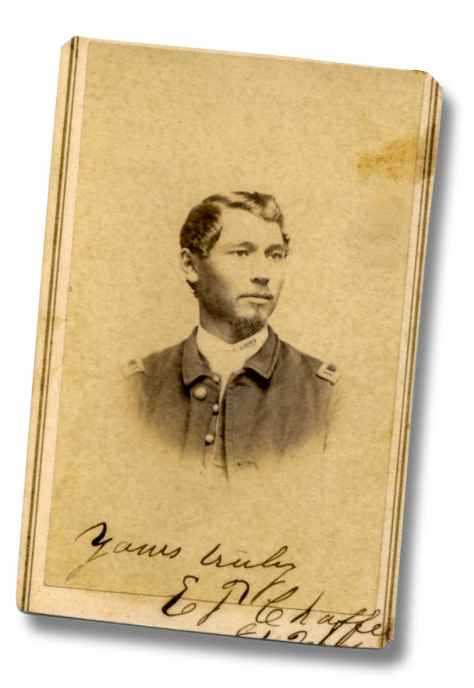
A post war cabinet card of Reuben

After he returned to civilian life, Reuben married Miss Flora M. Holbart in 1874 and settled in Rockford where he worked as a pattern maker in the Love Manufacturing Company. He died of pneumonia in 1920.

Several years ago I transcribed a couple of other letters by the Norton family. One was by Samuel Norton (1839-1926), Reuben’s younger brother who became a druggist in Rockford. He was a frequent correspondent with Reuben. See—1865: Samuel Norton to Reuben Cross Norton.

Another brother, Robert (“Bob”) F. Norton (1836-1918) moved to Minneoah, Minnesota, in 1854 and then enlisted in Co. B, 7th Minnesota Infantry, during the Civil War. See—1865: Robert F. Norton to Katie Hinds.

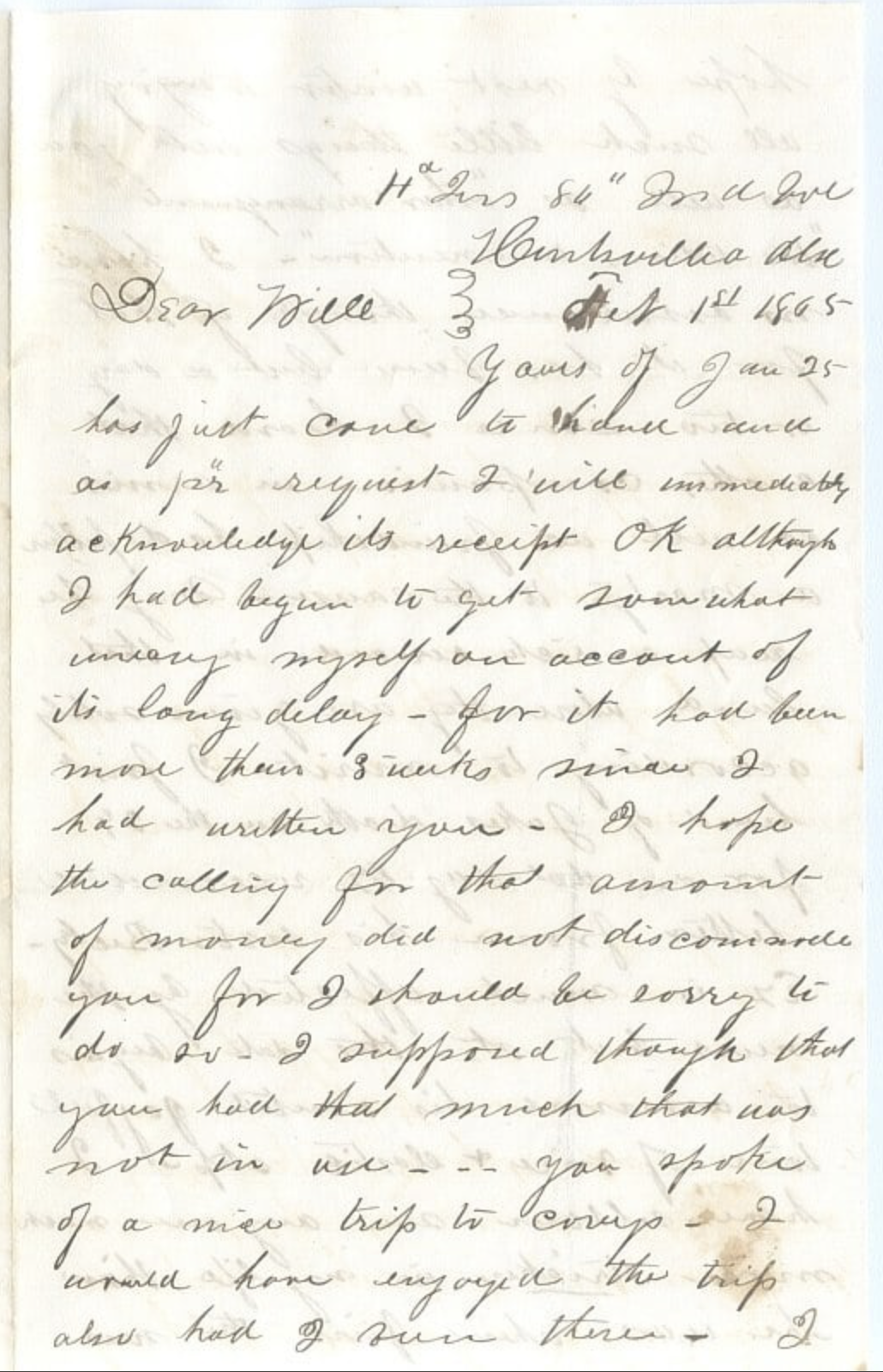
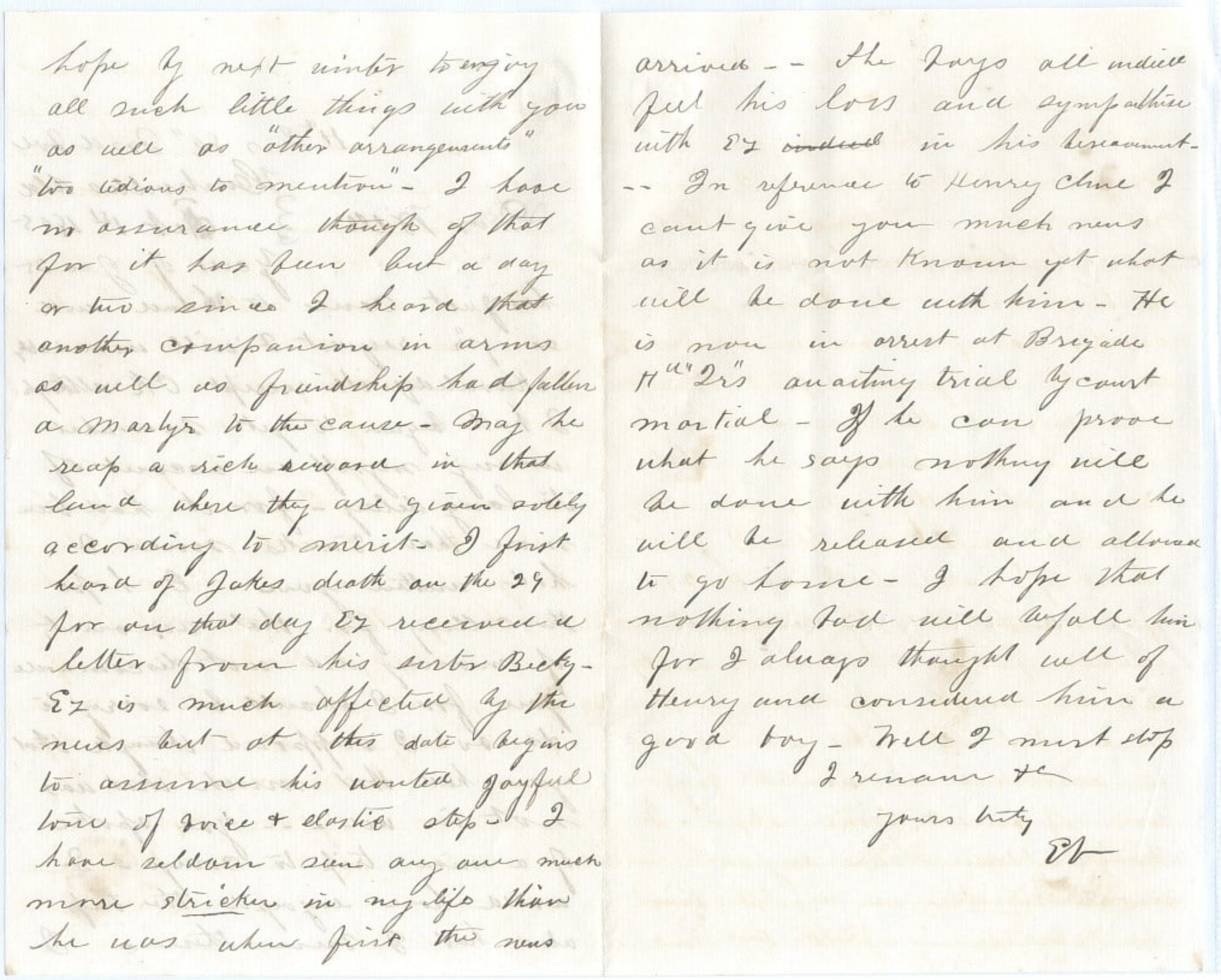
The journal, 1865 letter, and cdv of Reuben C. Nelson are all from the collection of Allen Cebula and made available for transcription and publication on Spared & Shared by express consent.

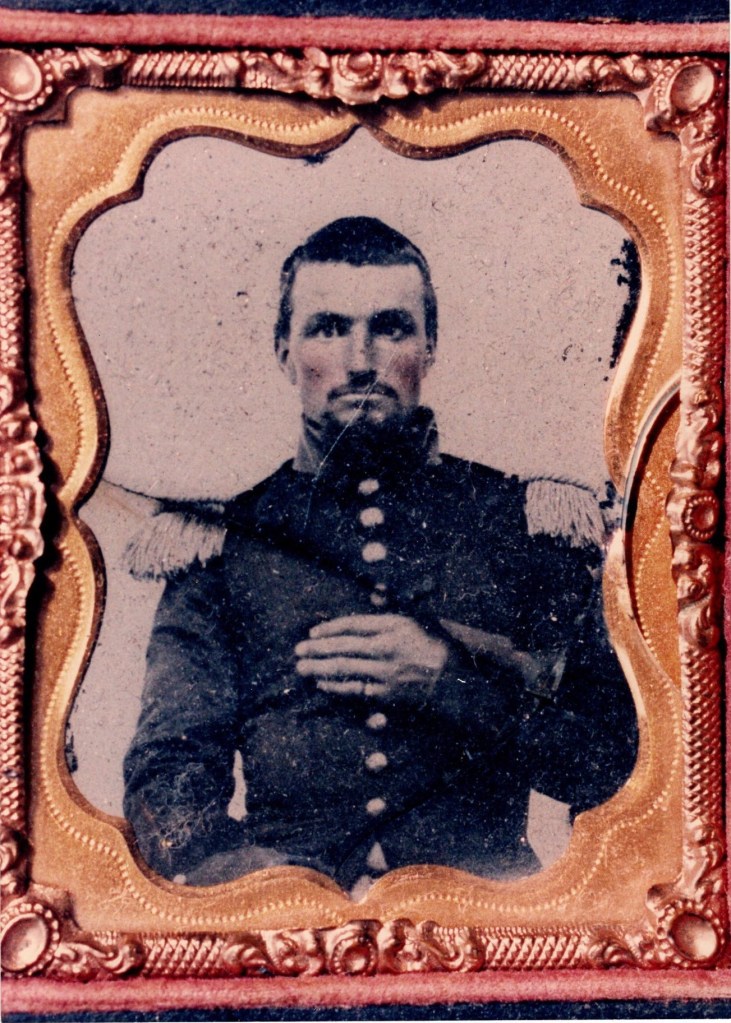
An AI enhanced image from a very poor quality tintype posted in the Norton Family Tree said to be Reuben’s parents, Robert and Margaret, with an older brother, William Norton who died in 1860.

R. C. Norton, Co. G, 44th Illinois Veteran Volunteers, 1st Brigade, 2nd Division, 4th Army Corps, Department of Cumberland

Sunday, September 25, 1864—Left Atlanta by rail for Chattanooga where we arrived safe on the 26th September. Went into camp at [ ] Crutchfield. From this date until the 18th of October we were on the wing along the railroad and I had no opportunity to write.

October 18, 1864—Broke camp at Bridgeport and took the cars for Chattanooga. From here we marched w3 miles and camped at dusk on the Chickamauga battleground.

19th—Broke camp 7 o’clock and marched a distance of 15 miles. Camped at Lafayette.

20th—Marched at 6. Went 15 miles and camped only 10 miles from Lafayette. Went 2.5 miles out of the way.

21st—Broke camp at 6 and marched to Alpine, a distance of 12 miles and camped for the night.

22nd—Laid by today. Did some foraging in the way of apples and sweet potatoes, pigs, sheep, and chickens were brought into camp by the thousand.

23rd—Still in camp. Forage wagons gone out again. Don’t know what we are laying here for. At noon I, together with about a dozen of the 44th, went to a mill about 6 miles from here and got a wagon load of flour. I rather like raiding. It brings a change of diet which is very beneficial to health.

24th—Still in camp. Orders to take anything that we need to eat. Our policy seems to be to clean this valley completely of forage so that the Rebs never can take advantage of it again to slip from our grasp.
25th—On picket today. Quiet.
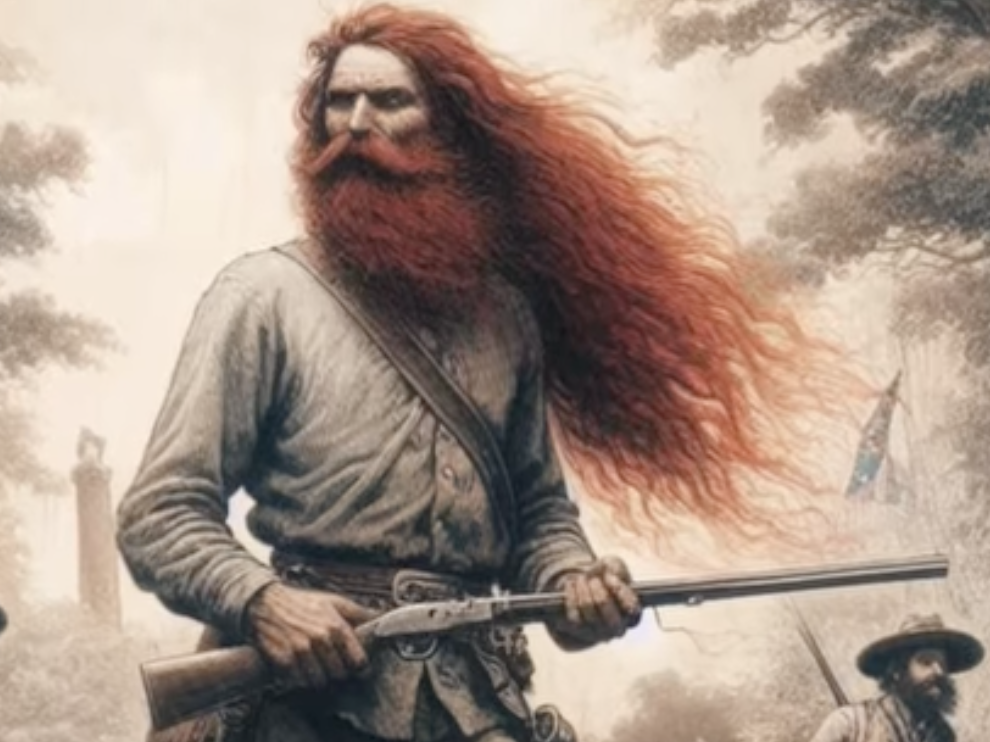
An artist’s rendition of the “Red-headed Beast of Georgia” (John Pemberton Gatewood)

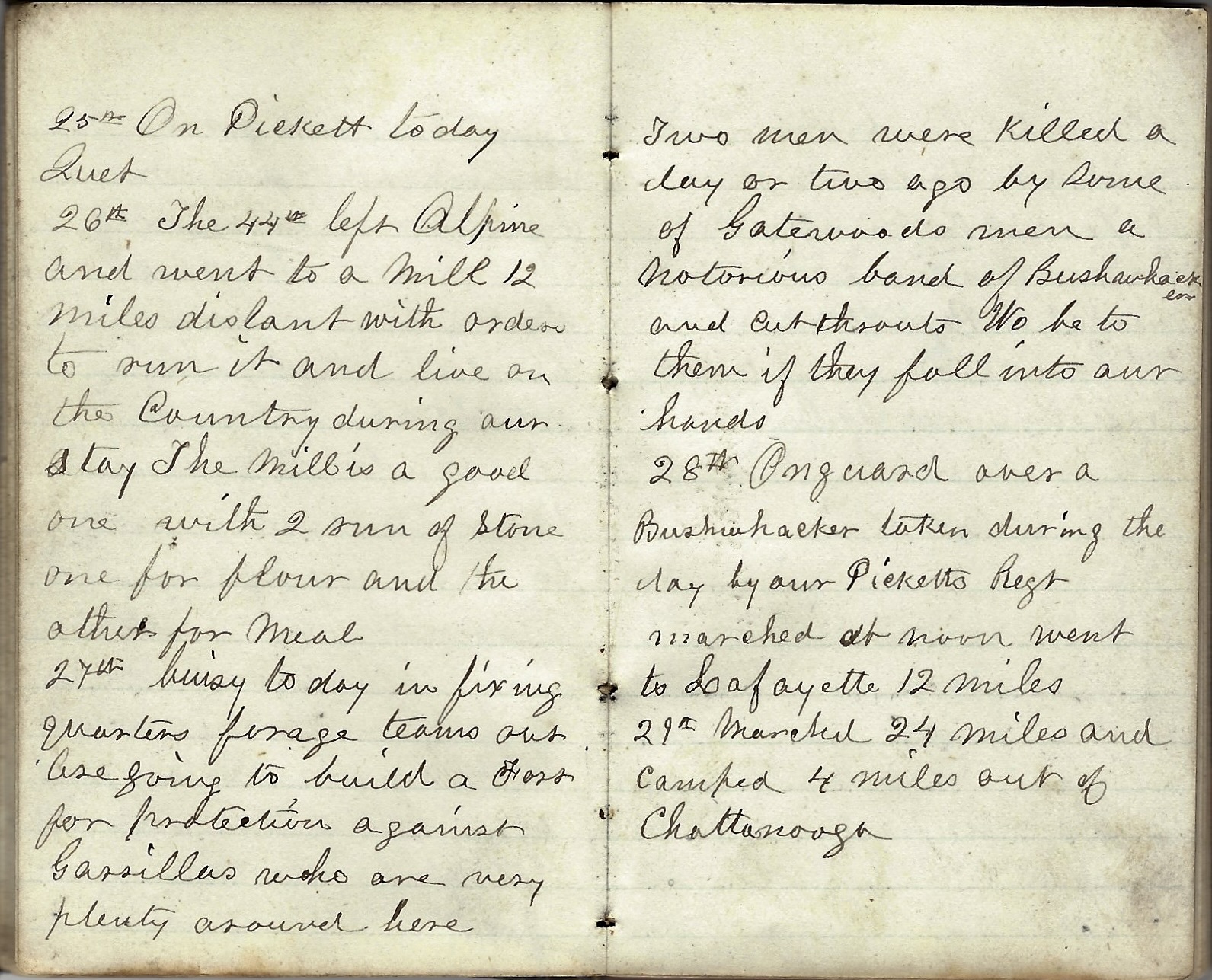
26th—The 44th left Alpine and went to a mill 12 miles distant with orders to run it and live on the country during our stay. The mill is a good one with two run of stone—one for flour and the other for meal.

27th—Busy today inn fixing quarters. Forage teams out. Are going ot built a fort for protection against guerrillas who are very plenty around here. Two men were killed a day or two ago by some of Gatewood’s men—a notorious band of bushwhackers and cutthroats. Woe be to them if they fall into our hands.

[Editor’s Note: John Pemberton Gatewood (b. 1845) was a controversial guerrilla fighter from the Fentress county, Tennessee, raised amidst the conflicting loyalties of Confederate and Union supporters. During the Civil War, paranoia tore communities apart, leading to brutal rivalries. Known as the “Red-headed Beast of Georgia” for his size and wild hair, Gatewood’s ferocity stemmed from his family’s deep Confederate roots in East Tennessee, an area of Union sympathizers. He joined Champ Ferguson’s guerrillas when he learned of his family’s mistreatment by Union soldiers.]

28th—On guard over a bushwhacker taken during the day by our pickets. Regiment marched at noon. Went to Lafayette 12 miles.

29th—Marched 24 miles and camped 4 miles out of Chattanooga.

30th—Marched through town and camped on Lookout Creek at the foot of the mountain. Laid in this camp all day worked on Pay Rolls.

31st—Laid in same camp today. Pay rolls signed by the men.

November 1, 1864—Took the cars this morning at Chattanooga, Tennessee, for Athens, Alabama, where we arrived about two o’clock on the morning of the 2nd.

2nd—Left the cars and marched 3 miles and went into camp for the night.

3rd—Broke camp at 12 M and marched 10 miles. Rained all day. Slept cold all night.

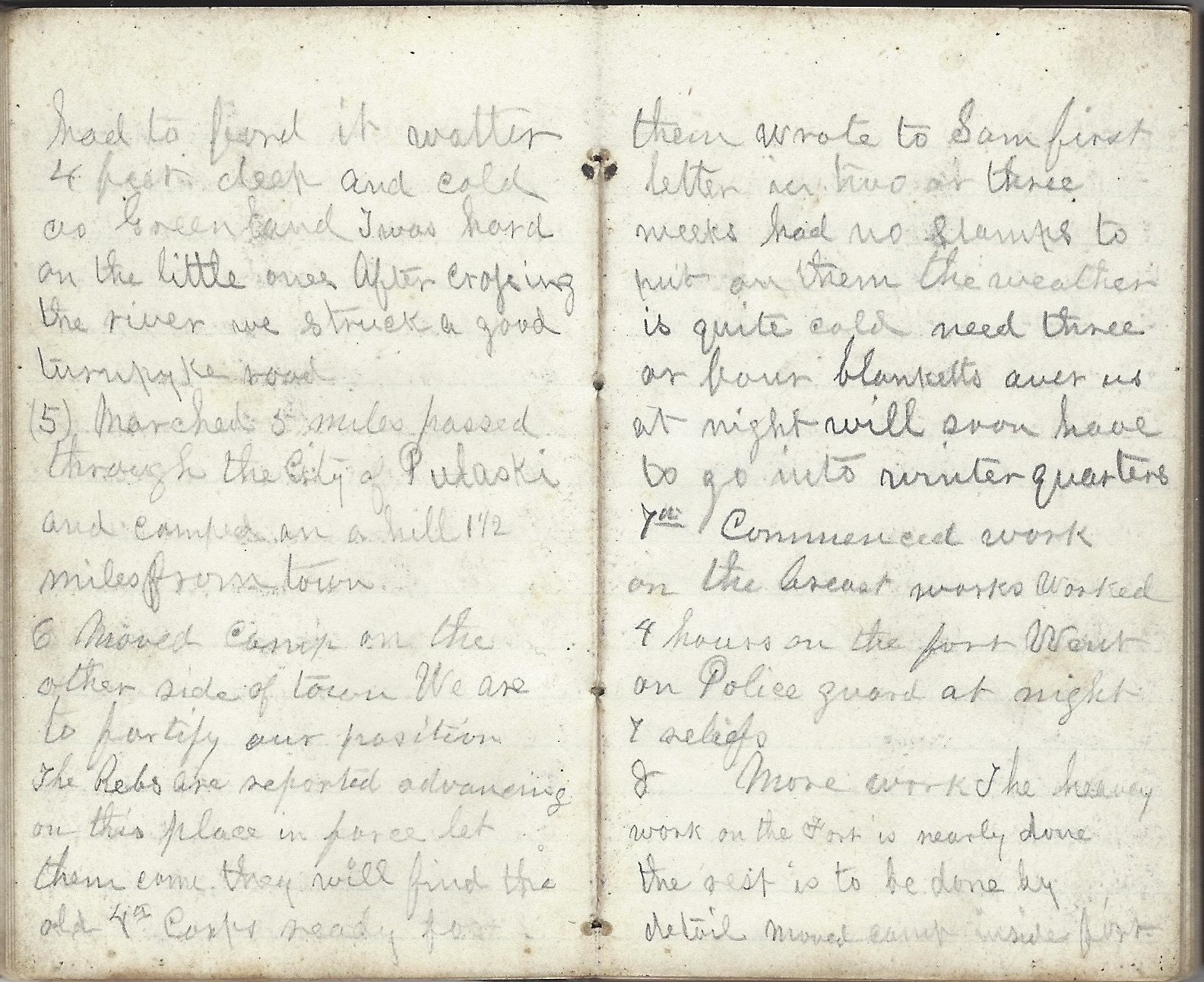
4th—Broke camp at 7 o’clock and marched 17 miles. Crossed the Elk River. Had to ford it. Water four feet deep and cold as Greenland. Twas hard on the little ones. After crossing the river, we struck a good turnpike road.
5th—-Marched 5 miles. Passed through the city of Pulaski and camped in a hill 1.5 miles from town.

6th—Moved camp on the other side of town. We are to fortify our position. The Rebs are reported advancing on this place in force. Let them come. They will find the old 4th Corps ready for them. Wrote to Sam first letter in two or three weeks. Had no stamps to put on them. The weather is quite cold. Need three or four blankets over us at night. Will soon have to go into winter quarters.

7th—Commenced work on the breastworks. Worked four hours on the fort. Went on police guard at night. 7 reliefs.

8th—More work. The heavy work on the fort is nearly done. The rest is to be done by detail. Moved camp inside fort.

November 9, 1864—Worked very busily on our quarters. Got them up in good shape. Rain all day. Went on police guard at night.

10th—Put up a chimney and fireplace to our tent. The weather has come off clear and cold and a fire in the tent is a great luxury.

11th—Received our pay from the government. $118.30. Buck paid me $5.50. Al Hobart $2.50, N[at] Ramsdell $1.00. Paid sutler $10.50. Paid [Wilson] Johnson $3.00. Paid Sebastion $2.50. Paid Zack 10 cents.
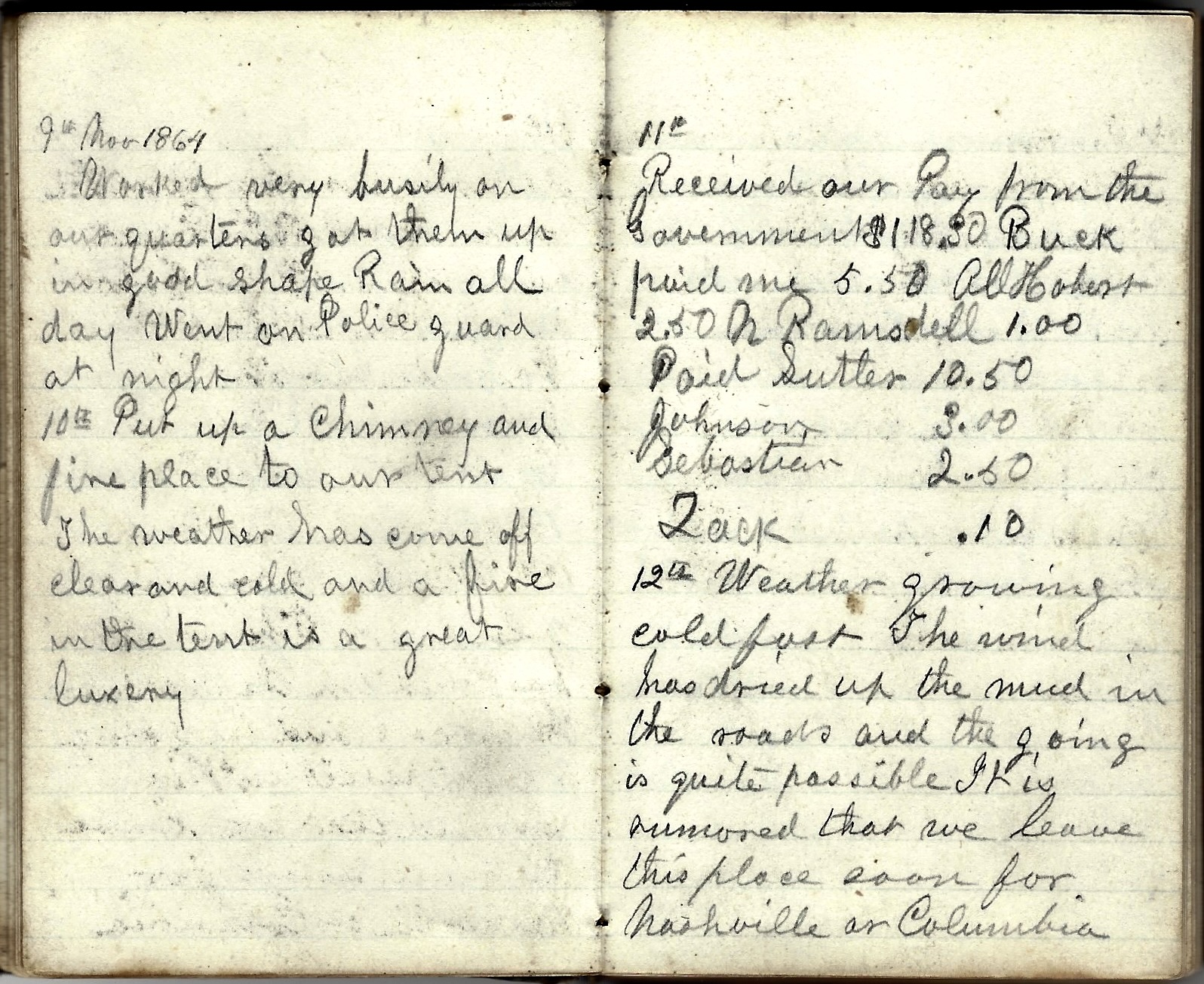
12th—Weather growing cold fast. The wind has dried up the mud in the roads and the going is quite possible. It is rumored that we leave this place for Nashville or Columbia. How much reliance we may put in this grape vine, I cannot say. Time will tell. Are we never to have rest? Ever since the first of May we have been on the wing, not being in one place long enough to was our clothes hardly or at least we dare not commence the operation of washing for fear that we would be obliged to march before they would have time to dry and for us to carry wet clothes in addition to our load is out of the question.

13th—On picket guard today. Very strict orders. Are not allowed to sit down on post. Have to carry our guns at shoulder arms or right shoulder shift. The weather is very cold.

14th—Nothing unusual going on today. Had a mail but I got no letters. The recruits of the 36th Illinois came up today. Got a Spencer gun yesterday. Paid $25 for it.

15th—Rained all night last night. Lowery and black today. Wrote to Mac and Eliza. On police guard last night. Rain quite hard.

16th—Rain all day just for a change. Mud up to knees or less. Dress parade at 4 o’clock. Twenty men from the regiment in the line. The rest on guard.

17th—Rain. Rain. On police guard last night. Weather growing cold.

18th—A very material change in the weather. Rain just for a change. Nothing unusual going on. The usual camp routine.

Sgt. Benjamin Rolph of Co. B, 44th Illinois Infantry (Dan Binder Collection)

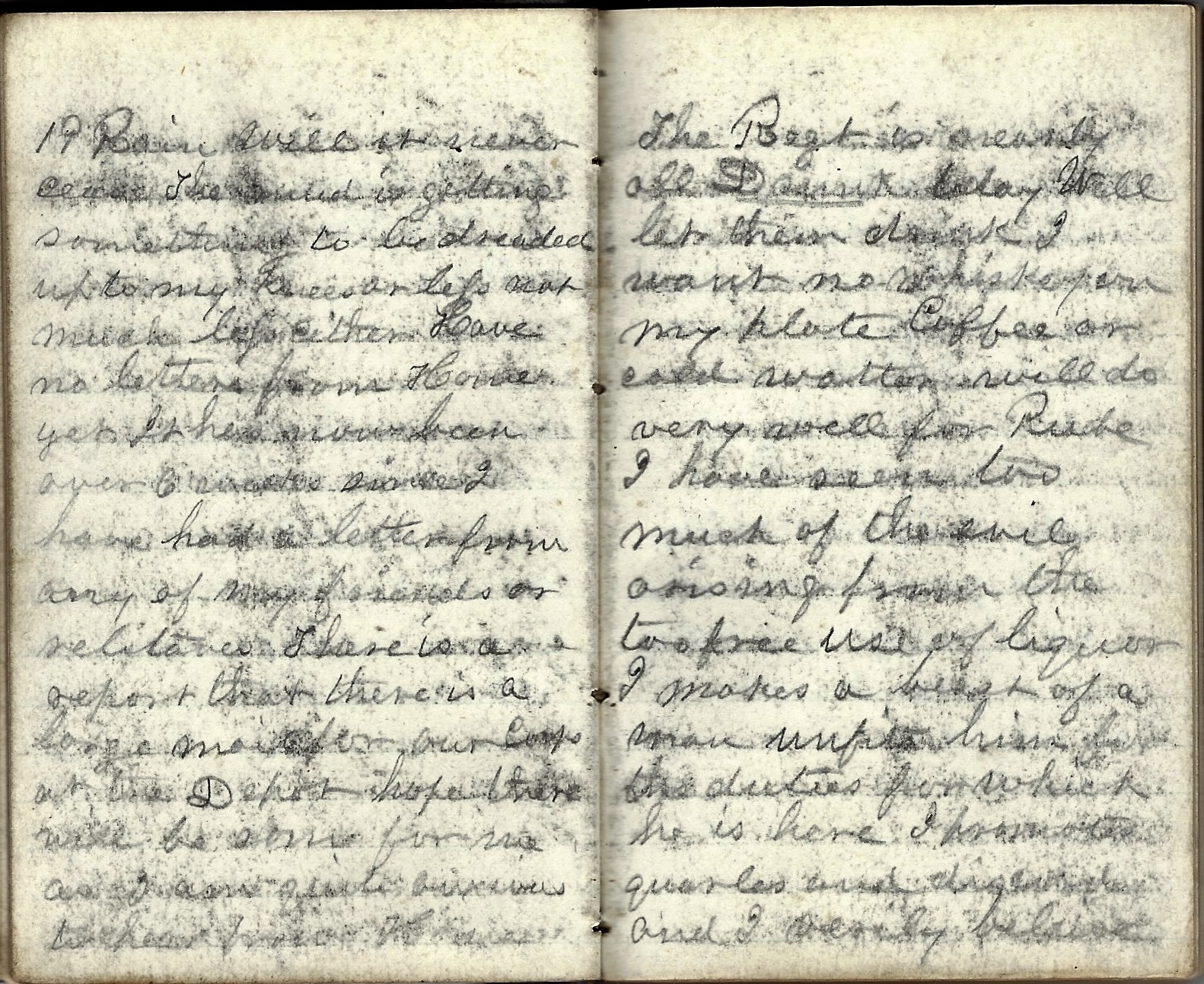
19th—Rain, will it never cease. The mud is getting something to be dreaded. Up to my knees or less. Not much less either. Have no letters from home yet. It has now been over 6 weeks since I have had a letter from any of my friends or relatives. There is a report that there is a large mail for our Corps at the depot. Hope there will be some for me as I am quite anxious to hear from home. The regiment is nearly all drunk today. Well let them drink. I was no whiskey on my plate. Coffee or cold water will do very well for Rube. I have seen too much of the evil arising from the too free use of liquor. It makes a beast of a man [and] unfits him for the duties for which he is here. It promotes quarrels and discord and I verily believe that the death of one quarter of our soldiers are occasioned through the agency of liquor.

20th—No rain today but the sky is overcast with clouds and weather is quite chilly. That large mail arrived at camp safe but there was none for me. Al stil receives from one to three a day, yet he writes but half as many as I do. Stamps are played out and none are to be had in this place. The indications are that we will soon be on the march again. On police guard tonight.

21st—Orders were received to march this morning but for some reason we did not go. Snow today quite hard.
22nd—Marched this morning at 8 o’clock. Our regiment led the division. Went 12 miles and camped at Linnville. Very cold. Freezing all day. On picket. Cold comfort.

23rd—Very cold today. Relieved from picket at dark this eve.

24th—At 12 M, broke camp. At 4 o’clock this morning marched to Columbia, a distance of 23 miles. Formed line of battle and got coffee. Slight skirmishing near town. Two hundred recruits joined the regiment today.

25th—Considerable skirmishing today. Our regiment took no part in it. Built breastworks at night. Our division moved round to the right.

26th—Battle commenced in earnest this morning. Worked last night on breastworks. No general engagement in our front. Rained nearly all day quite hard. Had orders to move this eve but did not march.

27th—Cloudy but no rain this morning. Skirmishing quite brisk. Fell back across the river. Mud knee deep in places. Crossed the river on pontoons.

28th—Moved about thre e miles to the left and formed our lines near and parallel to the river. Here we had orders to out up camp and make ourselves as comfortable as circumstances would permit. A sharp artillery was kept all day at the river. Also considerable skirmishing.

29th—Fell back at 8 in the morning to Spring Hill where we had a severe skirmish with Reb cavalry. They were going for our train but did not succeed in getting at it.

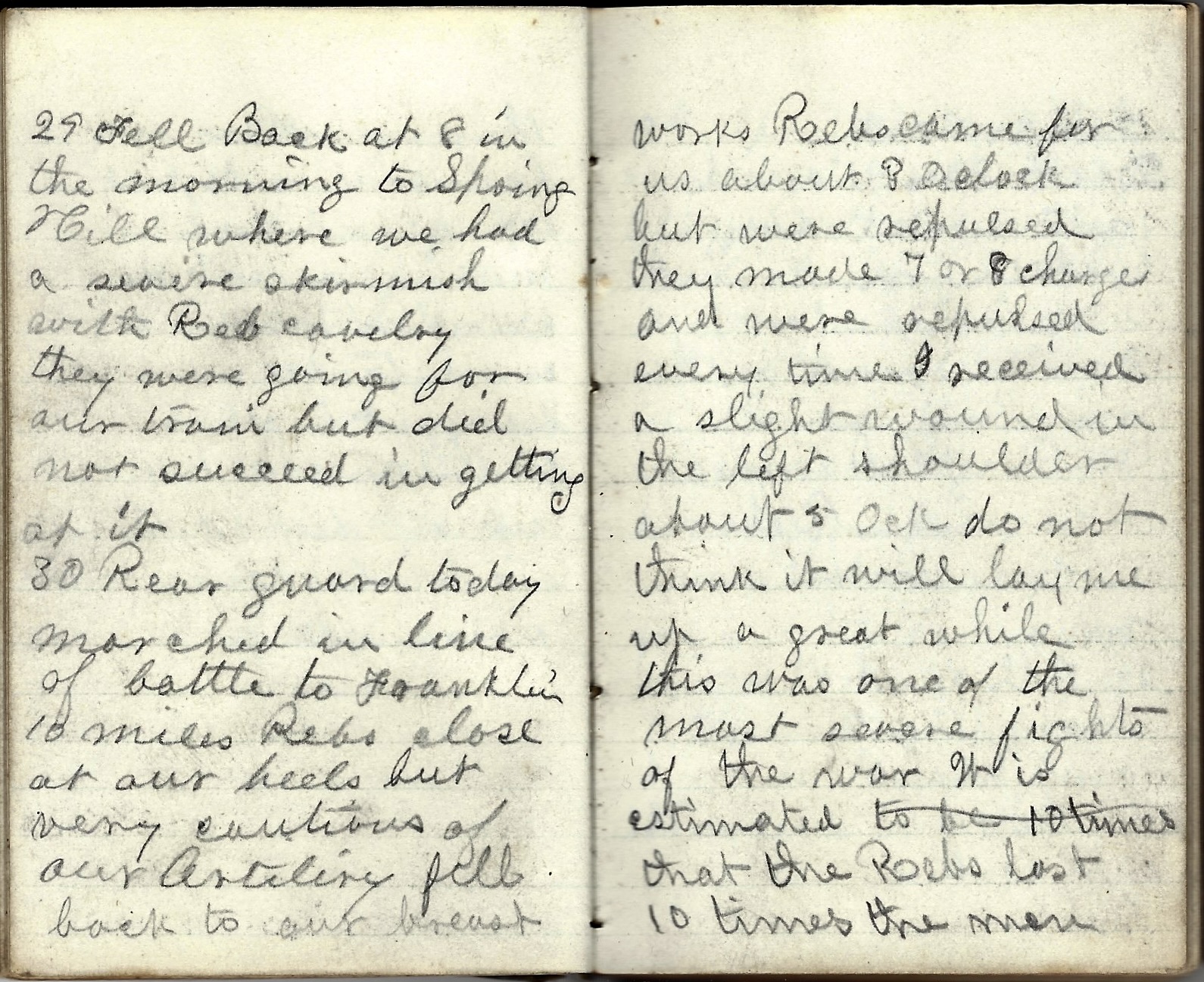
30th—Rear guard today. Marched in line of battle to Franklin 10 miles, Rebs close at our heels but very cautious of our artillery. Fell back to our breastworks. Rebs came for us about 3 o’clock but were repulsed. They made 7 or 8 charges and were repulsed every time. I received a slight would in the left shoulder about 5 o’clock. Do not think it will lay me up a great while. This was one of the most severe fights of the war. It is estimated that the Rebs lost 10 times the men that we did.

December 1, 1864—Wound quite sore today. Walked from Franklin to Nashville last night, 18 miles. Saw Doc this morning. Joined the regiment as soon as it came in. Rebs did not come on us today.

2nd—All quiet this morning. Moved camp about 1 mile to the right. Skirmishing still continues along the lines.

3rd—Appointed hospital steward to rank from the 15th September. All quiet today along the lines. Moved on to the front lines. Strengthened the works. Rebs showed themselves in considerable numbers in our front today. Wound doing finely. Got a letter from Mack with $4 worth of stamps.

4th—Wound getting better. Saw 7th Minnesota, Al Huff and Tom Hanly.
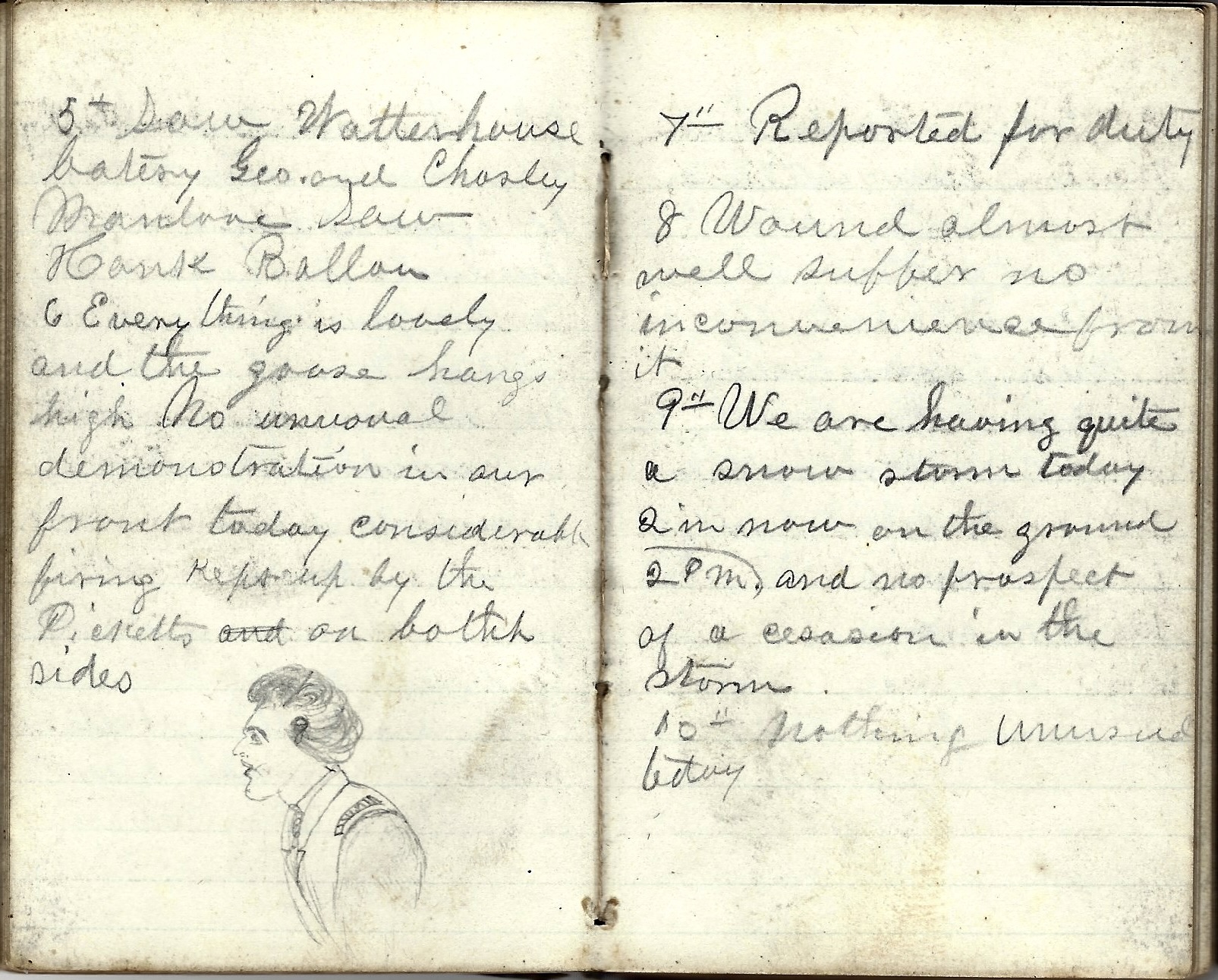
5th—Saw Waterhouse Battery. George and Charley Manlove. Saw Hank Ballou.

6th—Everthing is lovely and the goose hangs high. No unusual demonstration in our front today. Considerable firing kept up by the pickets on both sides

7th—Reported for duty.

8th—Wound almost well. Suffer no inconvenience from it.

9th—We are having quite a snow storm today. Two inches now on the ground. 2 p.m. and no prospect of a cessation in the storm.

10th—Nothing unusual today.
11th—Cold as Greenland today. Snow still on the ground. Sent three men to Division Hospital—Miller, Dutchman, and a man from Co. C. Had a letter from Sam yesterday. Al Haugh was here to dinner.

12th—Little warmer today. Sent 6 men to hospital. Harned from Co. G.

13th—Cold again/ Snow still on the ground.

14th—Went to town today. Nothing unusual on the lines.

15th—Broke camp at 6 a.m. Brigade formed in front of the works. 44th as skirmish line to cover the Brigade inside the works. I went forward with the Brigade in company with Doc. [Emery A.] Merrifield. The Johnnies were driven out of their works. A large number of prisoners were taken and several pieces of artillery.
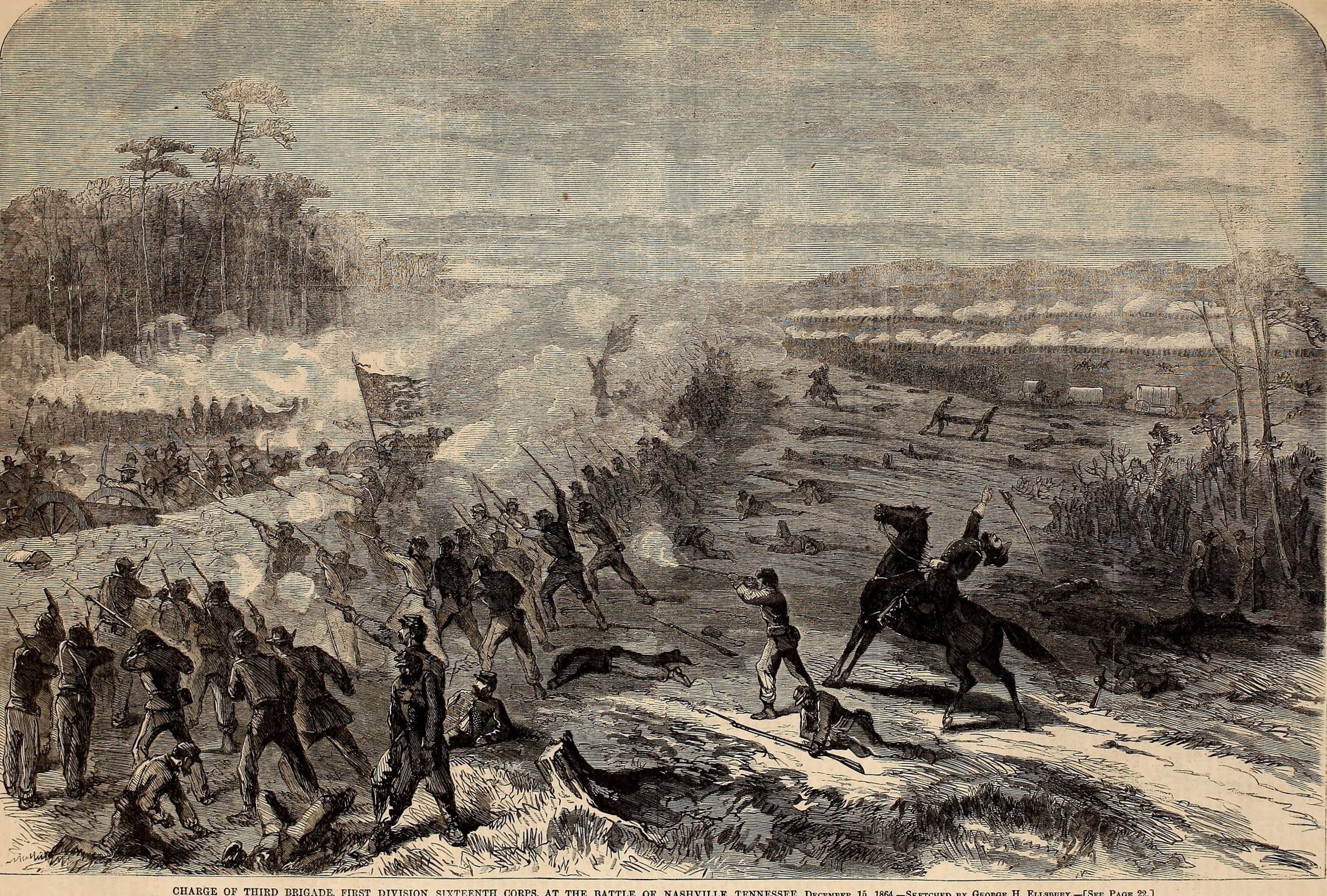
Battle of Nashville

16th—Regiment came up this morning. Went on the front line. There is a large number of or regiment wounded. How many it is impossible now to tell. The fight raged with great fury until night came on, shutting out the Rebs from our view. The 44th lost heavily owing to its being on the front line. The number lost was 35.

17th—Rebs in full retreat today. We are after them hot. Cavalry took in a large number of prisoners. Rebs lost in this battle 56 pieces of artillery and some 6 or 8 thousand small arms. Camped for the night near Franklin.

18th—Crossed the Harpeth River and marched 18 miles and camped in a cornfield, mud up to knees.

Boston Evening Transcript, 7 January 1865

19th—Found the Johnnies at Duck Creek. Went into camp for the night.

20th—Marched at 12 M. Crossed Duck Creek and went into camp 3 miles.

21st—Lay in camp all day. Snow and cold as Greenland. Received two letters from Eliza. Also from [ ]. Wrote an answer to both.

22nd—Laid in camp all day and at night marched about 4 miles and crossed Duck River. Passed through Columbia.

23rd—Marched at 2 p.m. Went about 4 miles and went into camp. Cavalry had a brisk skirmish with Forrest’s command.

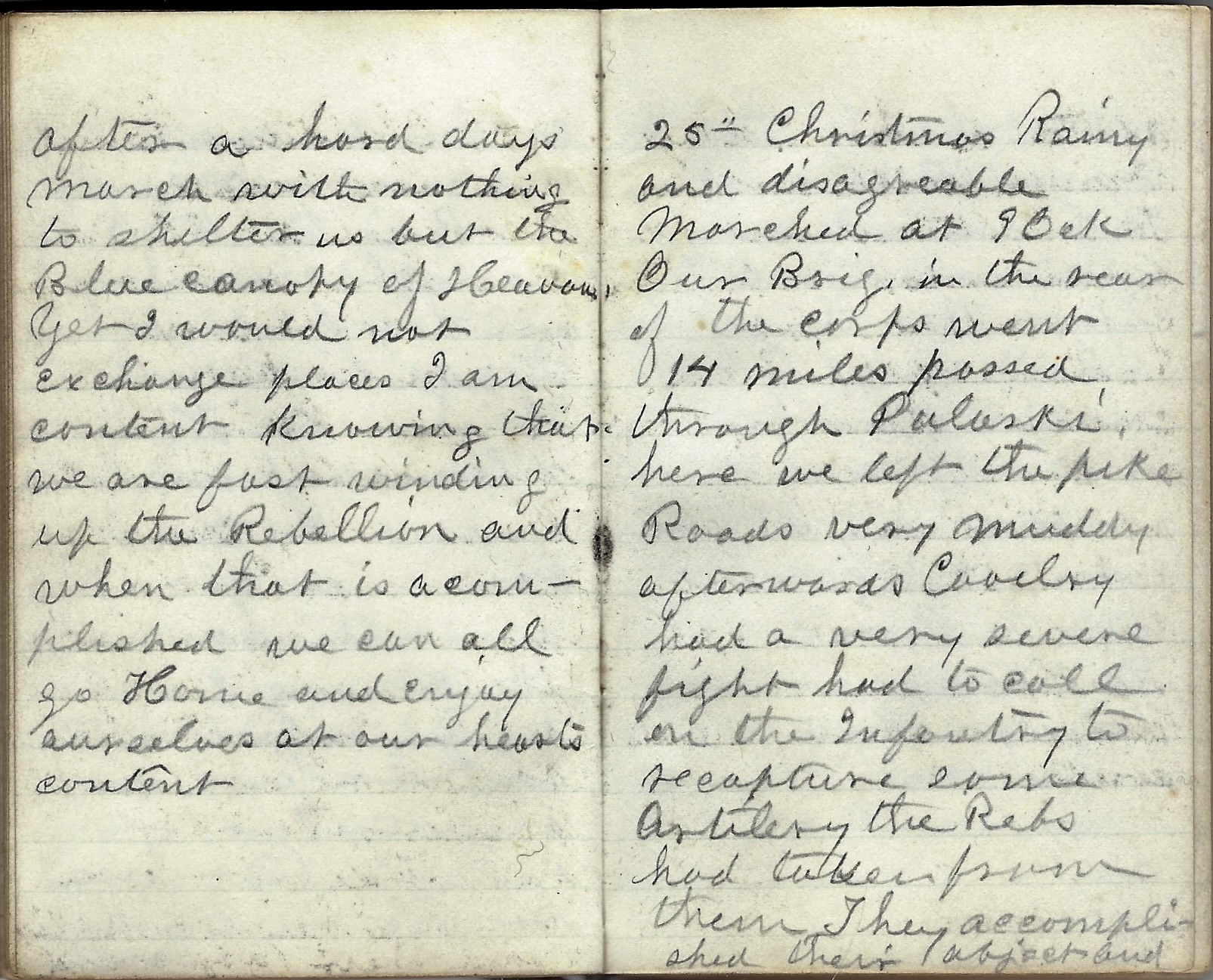
24th—Marched 16 miles and went into camp. Our Brigade led the Corps. Cavalry skirmishing all day briskly. Passed through Linnville today. Christmas eve. How different from last year at this time. I remember that at about this hour of the evening I was enjoying myself hugely with —— in a horse an cutter [sleigh] “two forty on the pike. But here we are in camp after a hard days march with nothing to shelter us but the blue canopy of Heaven. Yet I would not exchange places. I am content knowing that we are fast winding up the Rebellion and when that is accomplished, we can all go home and enjoy ourselves at our hearts content.

25th—Christmas. Rainy and disagreeable. Marched at 9 o’clock. Our Brigade in the rear of the Corps. Went 14 miles. Passed through Pulaski. Here we left the pike. Roads very muddy. Afterwards cavalry had a very severe fight. Had to call on the infantry to recapture some artillery the Rebs had taken from them. They accomplished their object and report has it took a Brigade of Rebel cavalry. There is another report in circulation to the effect that the Johnnies took a regiment of our cavalry. How true these reports are I am unable to say. At all events, it is evident that the Rebs were hard pressed as they left large quantities of ammunition for both artillery and small arms besides some 20 or 30 wagons.

26th—Laid by today to draw rations. Drew three to last five. Some rain last night but none during the day.

27th—Marched at 7 a.m. Went 10 miles. Went into camp in a high hill at 2.30 p.m. The roads are very muddy, 6 to 8 inches deep. Hard on artillery. Almost impossible to get along. Our cavalry is pecking at their rear, pushing them hard.
28th—Our Brigade led the Corps today. Marched 13 miles and went into camp about 3 o’clock. Roads not quite as bad today as they were yesterday. The day was clear and pleasant.

29th—Laid in camp today. Foraging parties gone out. The report is this morning that the Johnnies are all across the river. The Pioneers were all ordered to take the back track to repair the roads. The rumor is that we will all move back in the morning.

30th—Laid in camp today. Nothing unusual going on.

31st—Division marched at 9 o’clock. Took the back track as far as Lexington where we took the road for Athens. Our regiment rear guard for the train. Did not get into camp until 7 o’clock p.m. Drew three days rations to last five.

Oliver Rodgers of Co. G, 44th Illinois Infantry (Civil War in Tennessee Collection)

1865

January 1, 1865—The new year was ushered in bright and clear, not a cloud obscured the Heavens. The weather is quite cold but just right for marching. Broke camp at 8 o’clock and marched a distance of 8 miles. This we did without halting once. Although we made the distance without a halt, I never marched the same distance with as much ease. There is plenty of forage in this vicinity and the boys are improving their time to good advantage. They are coming into camp with hams and bacon with now and then a hog.

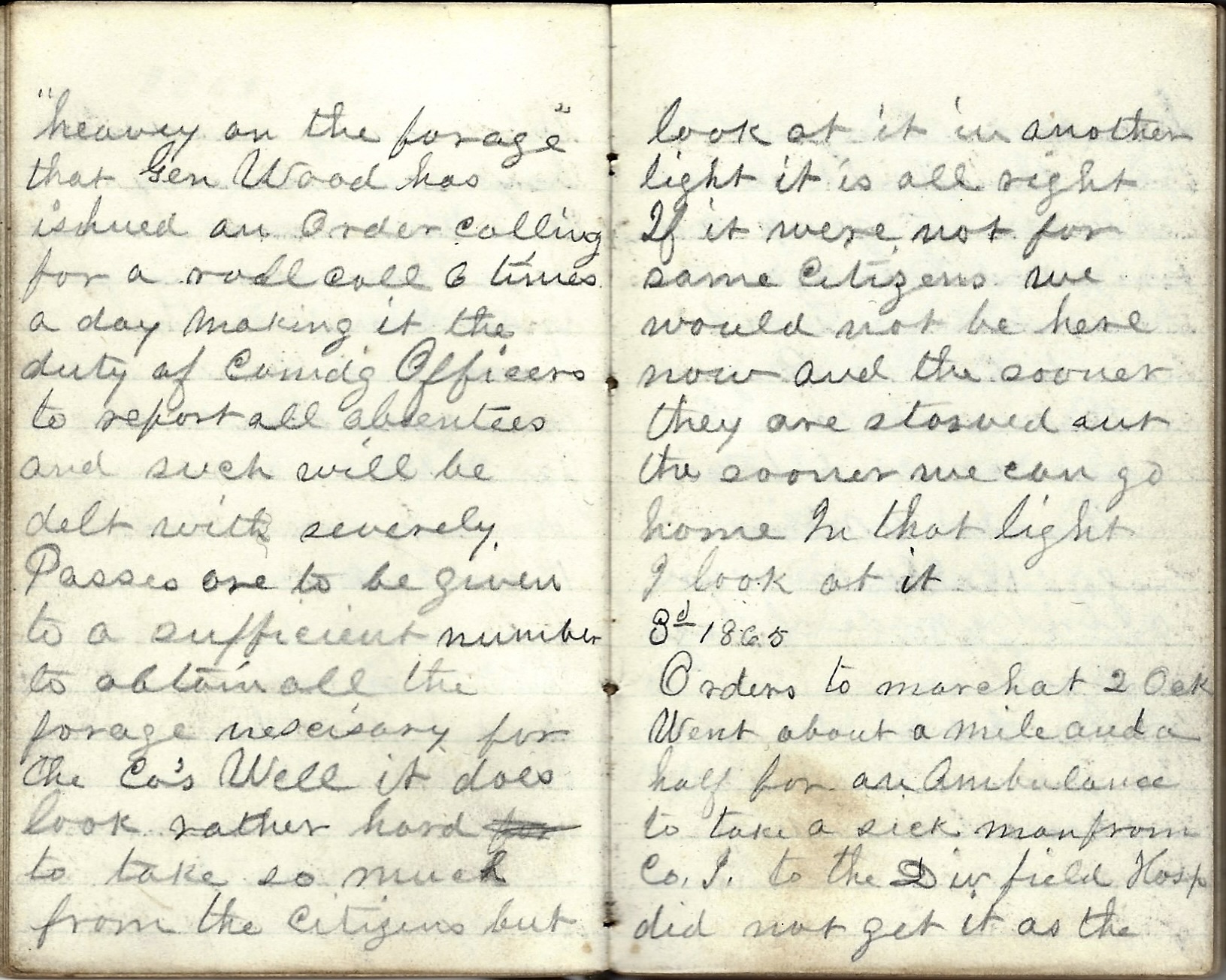
January 2nd 1865—Laid in camp today. 1st and 3rd Divisions are building a bridge across the Elk River. We will have to lay here until it is completed when we will again resume our march. The boys are going in so “heavy on the forage” that Gen. Wood has issued an order calling for a roll call six times a day making it the duty of commanding officers to report all absentees and such will be dealt with severely. Passes are to be given to a sufficient number to obtain all the forage necessary for the companies. Well, it does look rather hard to take so much from the citizens but look at it in another light, it is all right. If it were not for some citizens we would not be here now and the sooner they are starved out the sooner we can go home. In that light, I look at it.

3rd—Orders to march at 2 o’clock. Went about a mile and a half for an ambulance to take a sick man from Co. I to the Division Field Hospital. Did not get it as the Lieutenant in charge of the train thought it would be useless to go up to the Brigade and back again as the ambulances would have to pass the regiment on the march and the patient could be taken in. Marched 6 miles. Crossed the Elk River on a bridge made of logs and rails.

4th—Marched at daylight this morning. Went 22 [miles] and camped at sundown. Passed through Athens.

5th—Marched at daylight. Went 10 miles and got into camp at 11.30 o’clock. Struck a splendid pike in three miles of Huntsville. Made one of the quickest marches today that I ever did. Went four miles in one hour over the muddiest kind of road. Cavalry is nowhere to the Flying Infantry of the 1st Brigade.
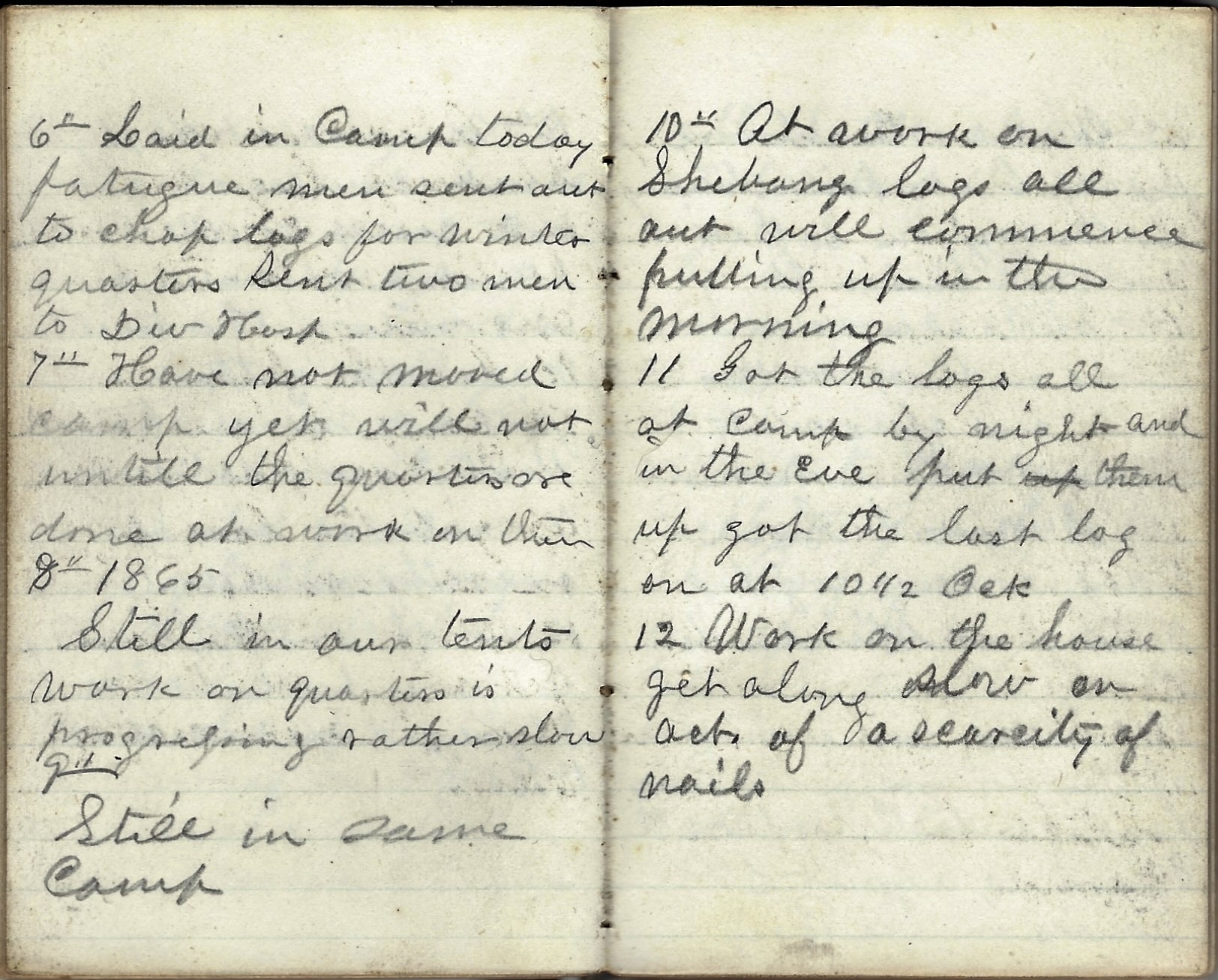
6th—Laid in camp today. Fatigue men sent out to chop logs for winter quarters. Sent two men to Division Hospital.

7th—Have not moved camp yet. Will not until the quarters are done at work on them.

8th—Still in our tents. Work on quarters is progressing rather slow.

9th—Still in same camp.

10th—At work on Shebang. Logs all cut. Will commence pulling up in the morning.

11th—Got the logs all at camp by night and in the eve put them up. Got the last log on at 10.30 o’clock.

12th—Work on the house. Get along slow on account of a scarcity of nails.

13th—Worked on the shebang. Put up bunks, built chimney, got the roof on so that we can live in it.

14th—Still at work on house. Moved in today. Weather mild and clear, Wrote to Eb and Colonel Bunnell.

15th—I wrote to Sam today concerning box. Sent for Spiritus Ter. &c.

16th—Getting somewhat settled down in the Brigade. Looks quite citified. There is about 500 houses in the Brigade, all built alike—or at least of the same size.

17th—Wrote to Dell. No unusual stir in camp today.

18th—Wrote to Pearly Sage, Rochester, Gambro county, Minnesota. The boys was inspected today by the Inspector, Capt. Layton. The weather continues fine. Reminds one of spring in the Northern States.
19th—Wrote to Eb. Also to R. F. Mercer, Nashville, concerning ballad, Battle of Nashville. Enclosed $5 for 100 copies. Also to [sister] Eliza. Col. Russell arrived in camp today. Dress Parade.

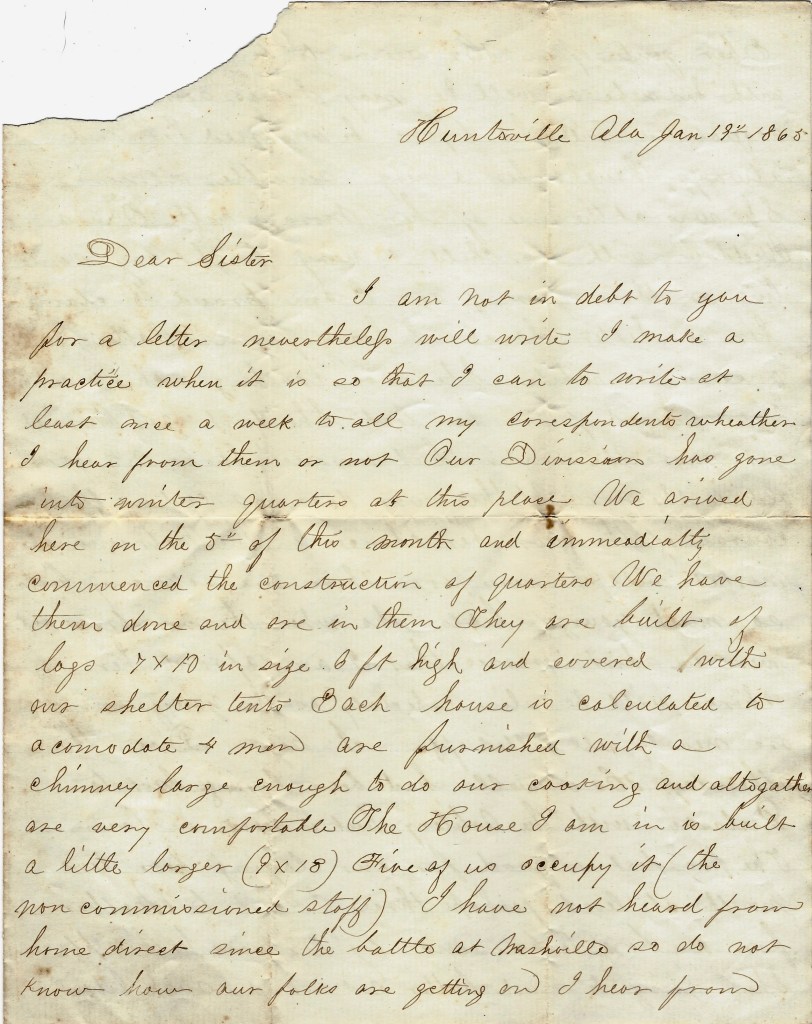
Huntsville, Alabama
January 19, 1865

Dear Sister [Eliza],

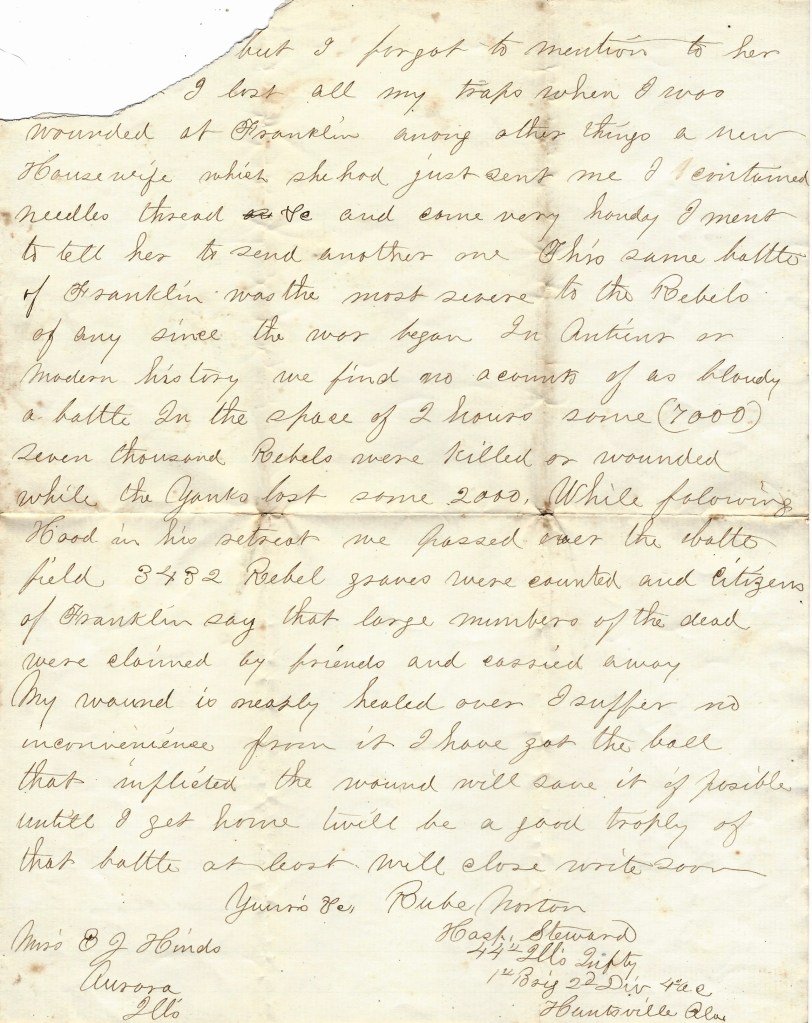
I am not in debt to you for a letter. Nevertheless will write. I make a practice when it is so that I can to write at least once a week to all my correspondents whether I hear from them or not. Our Division has gone into winter quarters at this place. We arrived here on the 5th of this month and immediately commenced the construction of quarters. We have them done and are in them. They are built of logs 7×10 in size, 6 feet high and covered with our shelter tents. Each house is calculated to accommodate 4 men, are furnished with a chimney large enough to do our cooking, and altogether are very comfortable. The house I am in is built a little larger (9×18). Five of us occupy it 9the non-commissioned staff). I have not heard from home direct since the Battle of Nashville so do not know how our folks are getting on. I hear from Eber quite often. He seems to be [paper torn] with his wife as well he may. I was somewhat acquainted with her before he married her and always thought her a very sensible woman. She was at the time of her marriage with Ebe a widow with one child—a very bright boy some two or three years of age. I am proud to claim her as sister Sarah.


I hear from Hattie once in a while. She was teaching school when I heard from her last. She don’t get married yet. More the wonder. Let me see. She is 25 years old, is she not? If this war does not end in the course of the year, her chances in the matrimonial market will be very poor. There are so many girls—so much younger girls—who when the war broke out were in short dresses that I am afraid her chance will be slim, especially as the young men are nearly all killed off. I saw Doc the other day. he is well. Had been laying back to Pulaski with the artillery but is now in town. The prospect is good for our laying here two months at least, perhaps three. I sent to Mother for a box to be sent by Express to this place. She is going to send butter cake and such like [paper torn] but I forgot to mention her [paper torn].

I lost all my traps when I was wounded at Franklin. Among other things, a new housewife which she had just sent me. It contained needles, thread, &c. and came very handy. I meant to tell her to send me another one. This same Battle of Franklin was the most severe to the Rebels of any since the war began. In ancient or modern history we find no accounts of as bloody a battle. In the space of two hours, some (7,000) seven thousand Rebels were killed or wounded while the Yanks lost some 2,000. While following Hood in his retreat, we passed over the battlefield. 3432 Rebel graves were counted and citizens of Franklin say that large numbers of the dead were claimed by friends and carried away.

My wound is nearly healed over. I suffer no inconvenience from it. I have got the ball that inflicted the wound. Will save it if possible until I get home. T’will be a good trophy of that battle at least. Will close. Write soon. Yours, &c. — Rube Norton

Hospital Steward, 44th Illinois Infantry, 1st Brigade, 2nd Division, 4th Army Corps, Huntsville, Alabama.

To Miss E. J. Hinds, Aurora, Illinois
20th—Rain today and all night.

21st—Rain all day. Will have to pay for the fine weather we have been having lately.

22nd—Wrote to Hattie today. Nothing unusual in the wind.

23rd—Wrote to Monroe Carpenter.

24th—Nothing unusual going on in the regiment today.

25th—Ditto.

26th—Also ditto.

27th—Took our chimney down and rebuilt it. Draws like fun now. Weather still continues clear and cold. Ground froze to the depth of [ ]. Received a letter from Sam and answered it. [Fairy Bell poem]

The way a raw recruit was taken in and done for. The “Chappe” upon whom this trick was performed is a young man of German birth not overstocked with common sense but possessing self esteem enough for three common mortals.

We had been riding on the cars from one point to another for several days scarcely once getting off the train and had stopped at Bridgeport for the night. The Colonel let the boys get off the train and put up their tents. Consequently, they were in good spirits and rife for any fun. It was the first time Charley had ever been in camp and he was very much bewildered at the numerous camp fires and asked us a great many foolish questions in regard to them. To learn him a thing or two the “Scout” was gotten up.

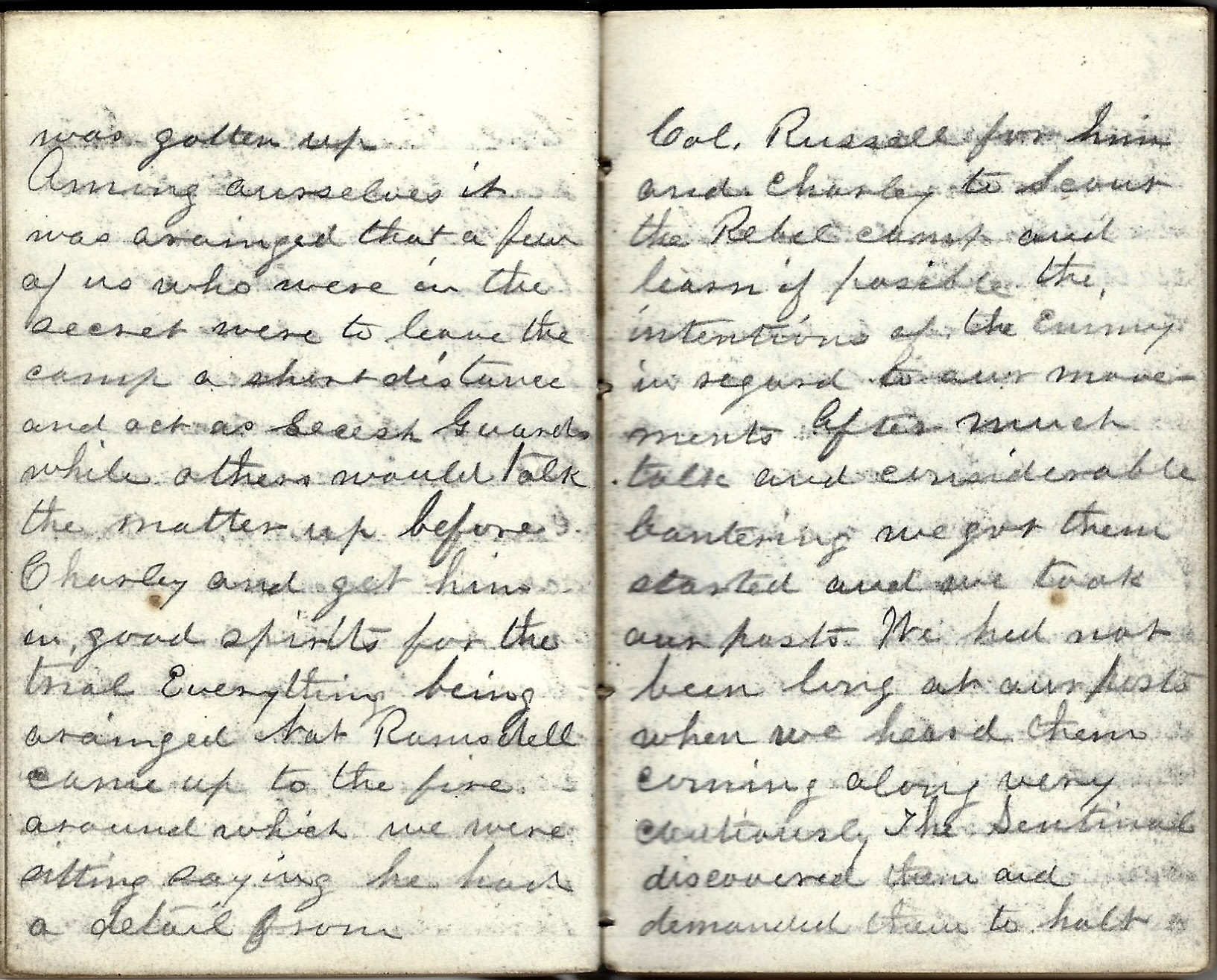
Among ourselves it was arranged that a few of us who were in the secret were to leave the camp a short distance and act as Secesh guards while others would talk the matter up before Charley and get him in good spirits for the trial. Everything being arranged, Nat Ramsdell came up to the fire around which we were sitting saying he had a detail from Col. Russell for him and Charley to scout the Rebel camp and learn if possible the intentions of the enemy in regard to our movements. After much talk and considerable bantering, we got them started and we took our posts. We had not been long at our posts when we heard them coming along very cautiously. The sentinel discovered them and demanded them to halt and make known their business. Nat answered that they were friends with the countersign. He advanced until near enough for his purpose when he dealt the unsuspecting sentinel a blow over the head with the butt of is gun which laid him out.

He then beckoned the now terrified Charley to come up assuring him the guard was past doing them harm, that they were now inside the Rebel lines and must proceed with the utmost caution. Charley came up trembling giving the body of the supposed Reb a wide berth and the two passed on. They had proceeded but a short distance when they run directly on a Battery (an old barrel filled with oyster cans). A few commands given in a loud voice caused them to come to a sudden halt. Nat turned and caught Charley by the arm and told him in a tone that sent a chill of horror through the boy’s frame that they had run on a masked battery and their on;y salvation was in flight. They started off on the run, taking the direction of our own camp (Charley in his fright supposed the fires in his front were those of the Rebel camp). Our whole party started in pursuit yelling out to stop the Yankee spies. This scared Charley nearly out of his wits causing him to make greater speed. It was all Nat could do to keep within sight of him but by making almost superhuman exertions, he succeeded. Of course they distanced us and finally eluded us altogether in the darkness.

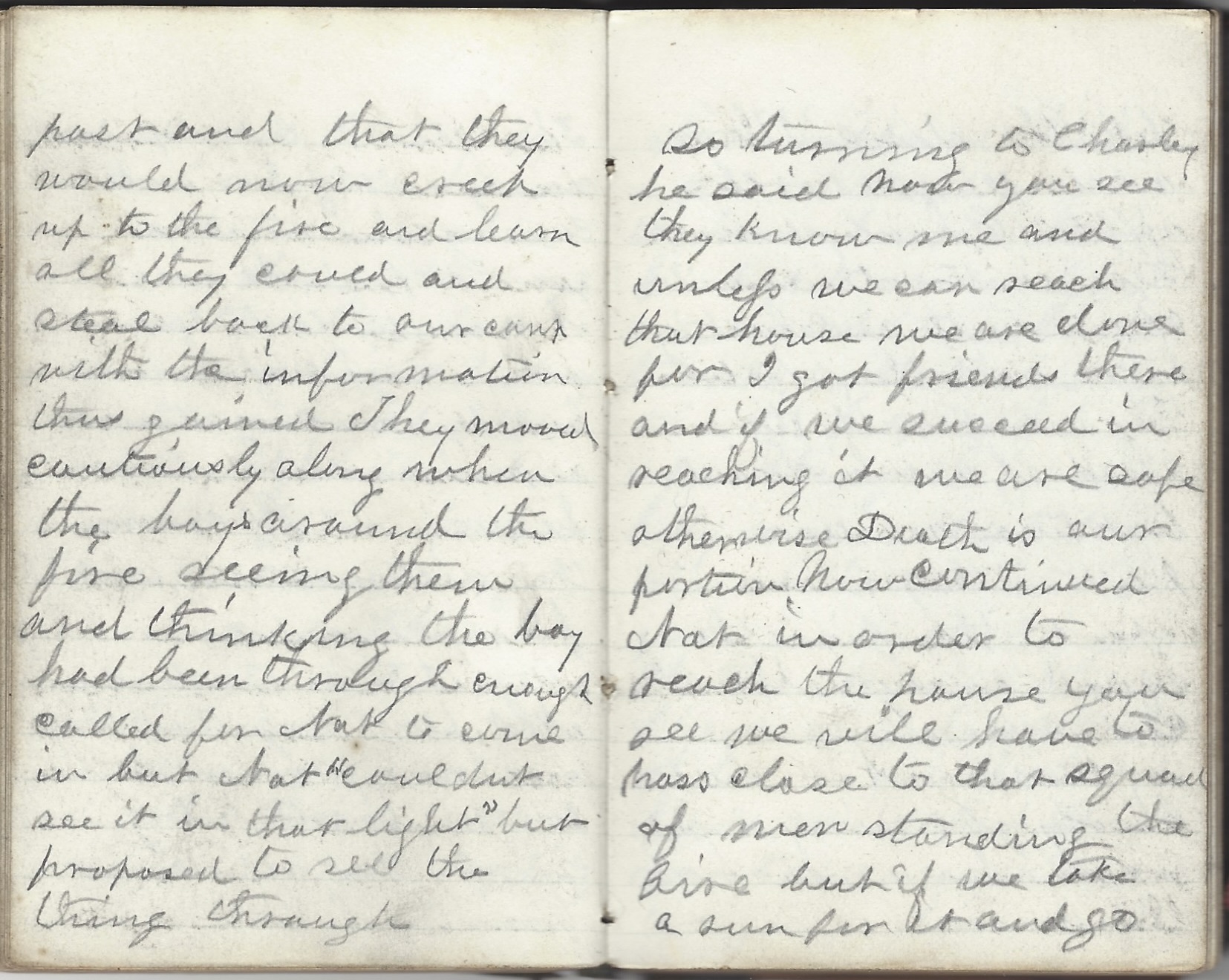
Nat, perceiving that they were not pursued, halted to take breath telling Charley that all danger from the guards was past and that they would now creep up to the fire and learn all they could and steal back to our camp with the information thus gained. They moved cautiously along when the boys around the fire, seeing them and thinking the boy had been through enough, called for Nat to come in. But Nat “couldn’t see it in that light” but proposed to see the thing through. So turning to Charley he said, “Now you see they know me and unless we can reach that house, we are done for. I got friends there and if we succeed in reaching it, we are safe. Otherwise, death is our portion. Now,” continued Nat,” in order to reach the house you see, we will have to pass close to that squad of men standing the fire, but if we take a run for it and go like the devil, I think we will make the siffle [?].”

Charley received these instructions with open mouth and beating heart and they started. They went with the speed of a whirlwind but twas no use. Just as they were opposite the fire, the squad charged them and succeeded in capturing Nat but Charley got away and would have reached the house had not Nat implored him in piteous tones not to leave him in that fix but to render him some assistance. Charley turned with the intention of helping him when the squad in a body made a dash for him at the same time, giving an unearthly yell. This was too much for Charley and he started off like a rocket. He made such speed that no attempt was made to capture him. In fact, t’would have been useless to have attempted his capture as a locomotive under full speed would have been a “slow coach” in regard to speed compared with his time made on that occasion.
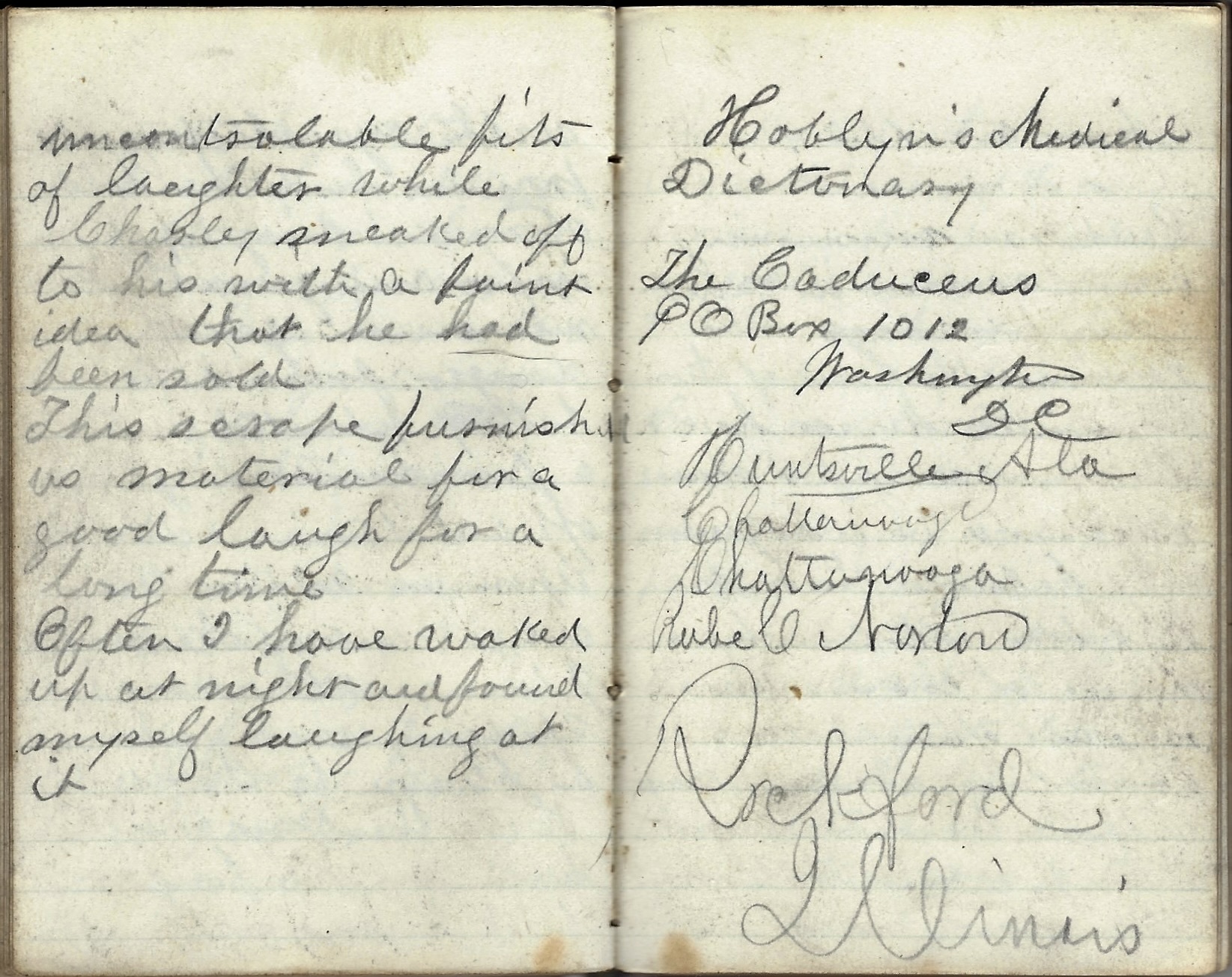
After wandering around among the numerous camps, he finally found his company. At sight of him the boys gathered around him to hear his adventures. With eyes starting from his head he told his story, winding up by informing us that we were in great danger from a Rebel battery planted only a few hundred yards off and trained directly upon us and unless we got out of that place and that right speedily, we would be blown to the devil. Here the boys could hold in no longer but burst into uncontrollable fits of laughter while Charley sneaked off to his with a faint idea that he had been sold. This scrape furnished us material for a good laugh for a long time. Often I have waked up at night and found myself laughing at it.

March 5, 1864—Quite an amusing scene occurred in camp a day or so ago. It seems that one of the regimental horses had been missing for several days and it was generally believed that it had been stolen by some of the Darkies who are often seen prowling around camp with the evident design of confiscating whatever they could lay hands upon.

Reuben’s unflattering sketch of a Negro

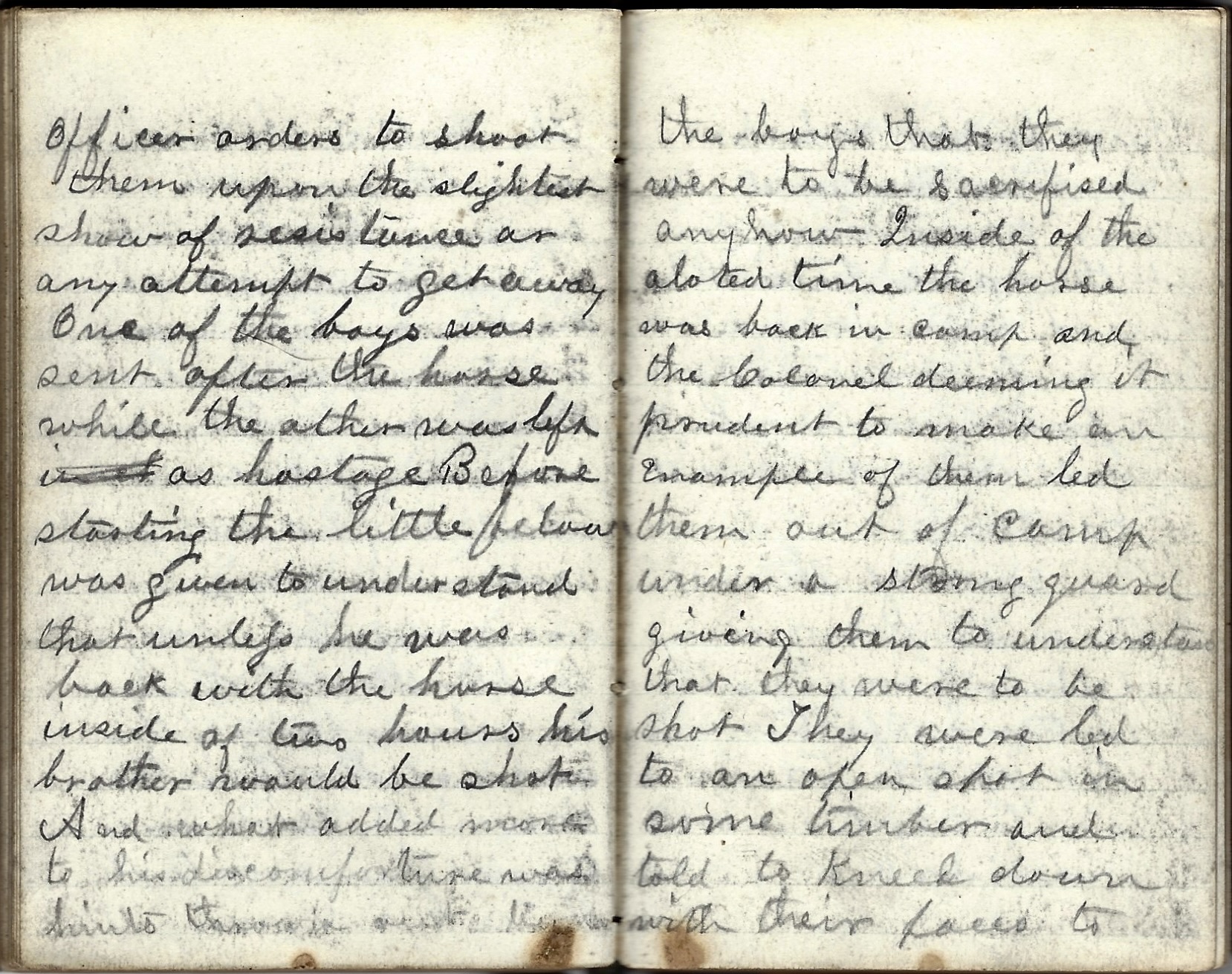
The Colonel [Wallace W. Barrett] had occasion to go to the rear of the camp for some purpose where he espied a couple of little Darkies in the act of hiding in a clump of bushes. He called to them in no gentle terms to come out which they did, seeing that further concealment was useless. By using terrible threats he learned the whereabouts of the animal. He then took them into camp and turned them over to the police guard giving the officer orders to shoot them upon the slightest show of resistance or any attempt to get away. One of the boys was sent after the horse while the other was left as hostage. Before starting, the little fellow was given to understand that unless he was back with the horse inside of two hours, his brother would be shot. And what added more to his discomfiture was him to thrown in [illegible] the boys that they were to be sacrificed anyhow.

Inside the allotted time, the horse was back in camp and the Colonel deeming it prudent to make an example of them led them out of camp under a strong guard giving them to understand that they were to be shot in some timber and told to kneel down with their faces to their homes which they were destined never to see more. At the same time the guard was drawn up in line awaiting the fatal word which would send them out of existence.

The cries of the little ones for mercy and their promises to do better in future if let off this time were truly ludicrous considering that it was not for a moment intended to carry the threat into execution. The Colonel. appearing to be softened by their entreaties told them he would give them a chance for their lives on the consideration that they would never be found within a mile of our camp again. They were to be given a start of 20 rods [110 yards] before a shot should be fired and then they were to trust their heels for the rest. This was enough for them. They waited to hear no more but jumped to their feet and started on the run. Lord how they did run. A shot fired over their heads tended to accelerate their speed and the last seen of them was their little woolly heads poking up and down as they made their tracks through the tall grass for the timber. I will venture to say they were never caught within the proscribed limits.

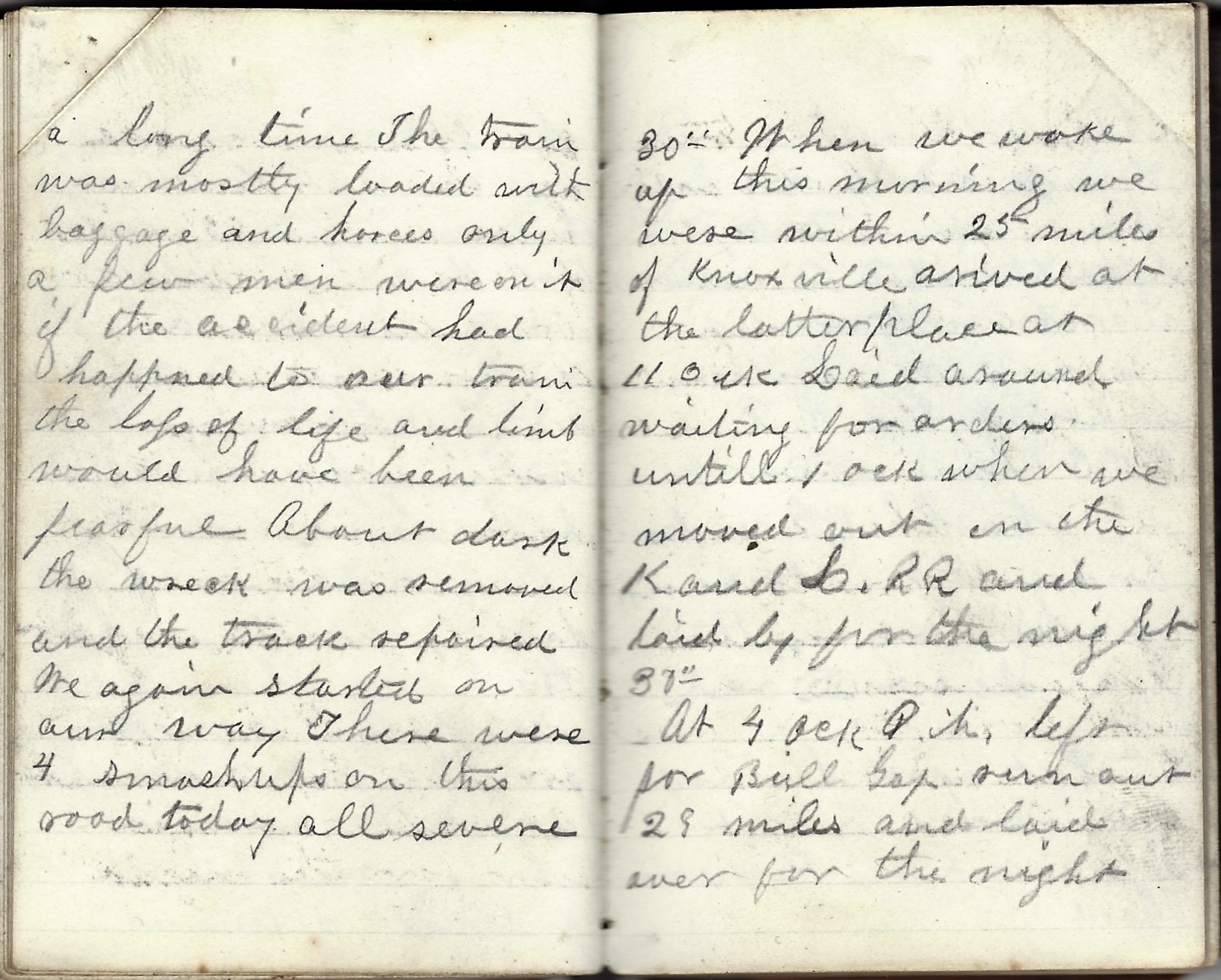
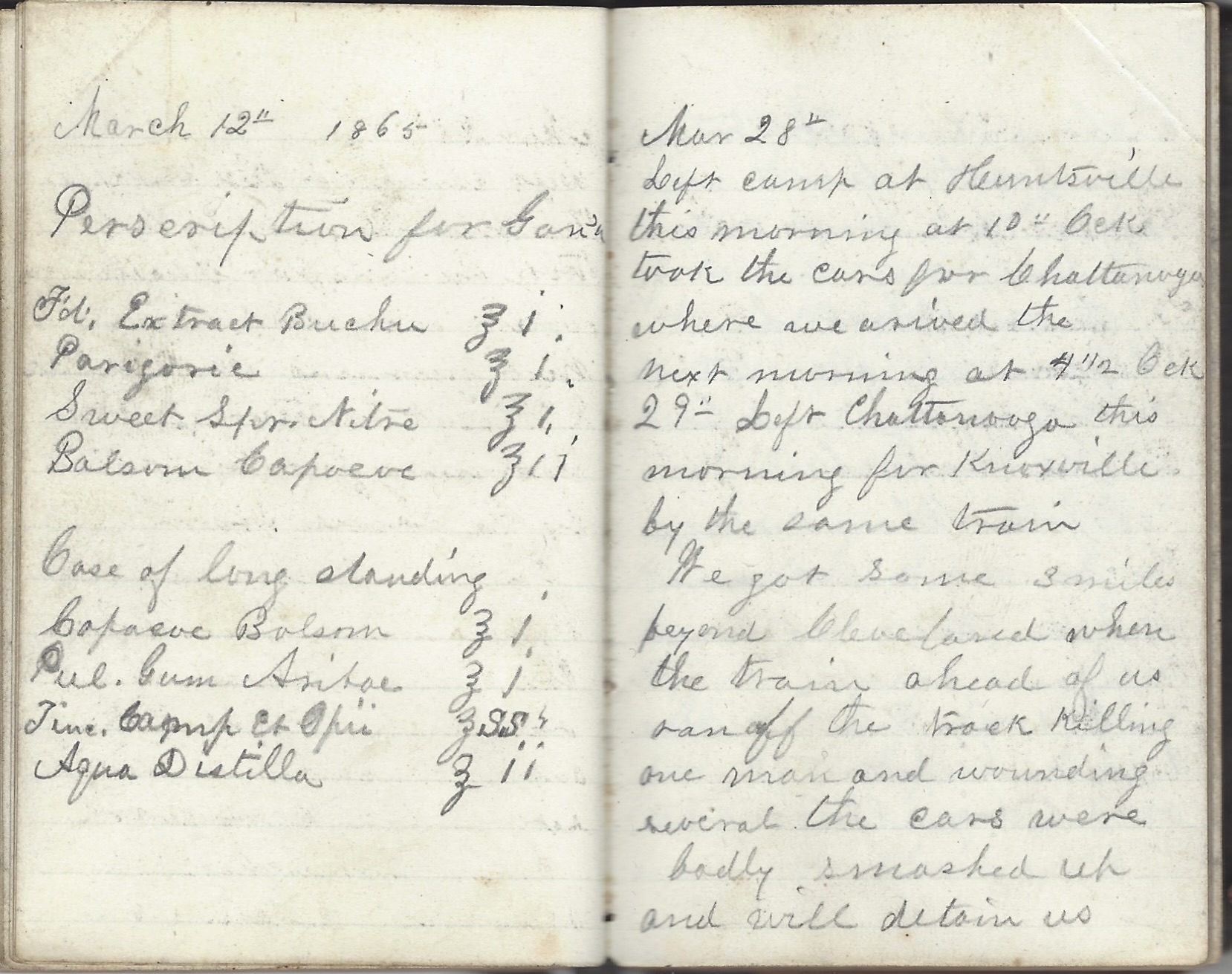
March 28, [1865]—Left camp at Huntsville this morning at 10 o’clock. Took the cars for Chattanooga where we arrived the next morning at 4.30 o’clock.

29th—Left Chattanooga this morning for Knoxville by the same train. We got some three miles beyond Cleveland when the train ahead of us ran off the track, killing one man and wounding several. The cars were badly smashed up and will detain us a long time. The train was mostly loaded with baggage and horses. Only a few men were on it. If the accident had happened to our train, the loss of life and limb would have been fearful. About dar, the wreck was removed and the track repaired. We again started on our way, There were four smashups on this road today. All severe.

30th—When we woke up this morning we were within 25 miles of Knoxville. Arrived at the latter place at 11 o’clock. Laid around waiting for orders until 1 o’clock when we moved out on the K & L Railroad and laid by for the night.

31st—At 4 p.m. left for Bull Gap. Run out 29 miles and laid over for the night.
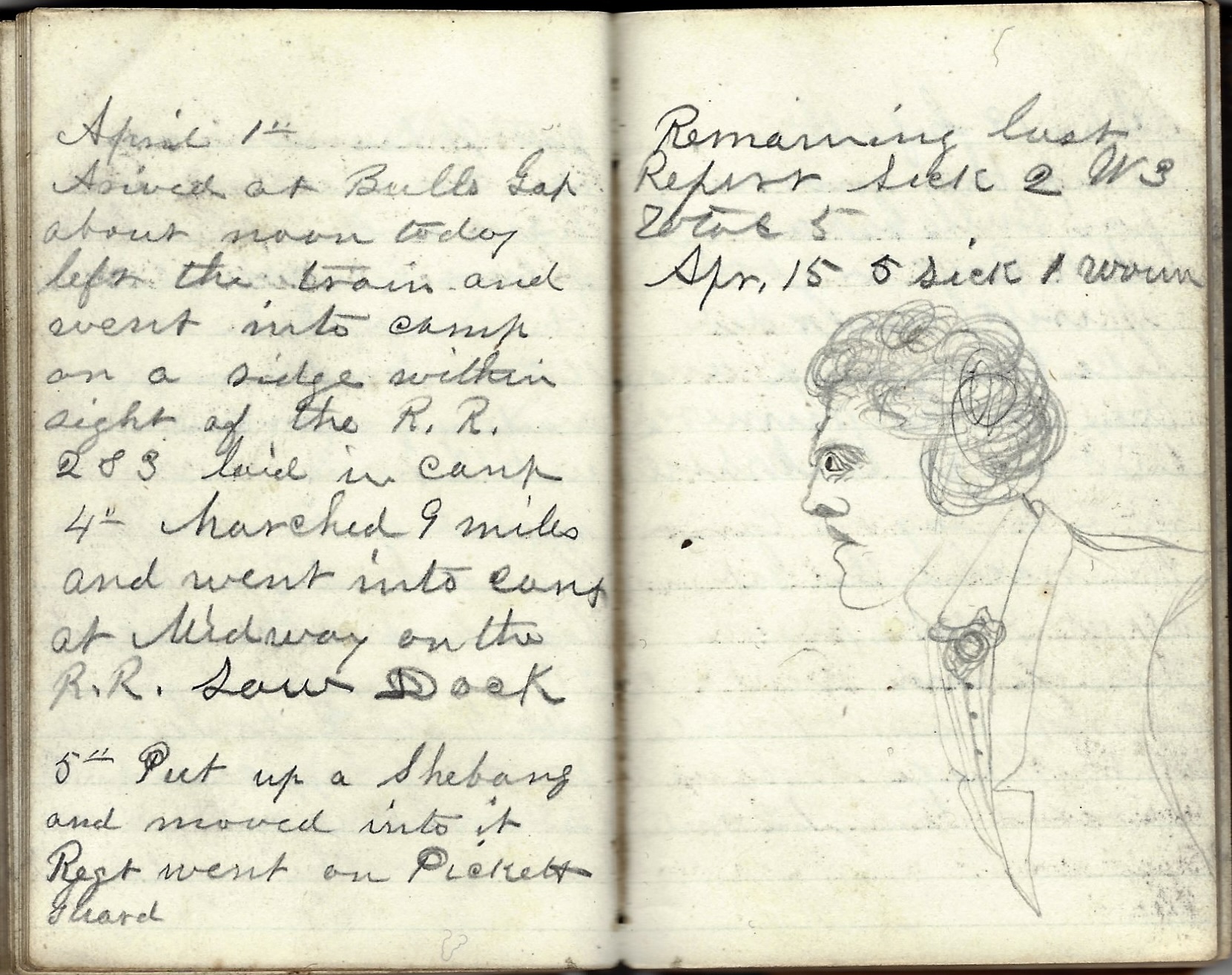
April 1 [1865]—Arrived at Bulls Gap about noon today. Left the train and went into camp on a ridge within sight of the railroad.

2nd & 3rd—Laid in camp.

4th—Marched 9 miles and went into camp at Midway on the railroad. Saw Dock.

5th—Put up a shebang and moved into it. Regiment went on picket guard. Remaining last report sick=2, wounded=3. Total 5.

April 15th—5 sick, 1 wounded.

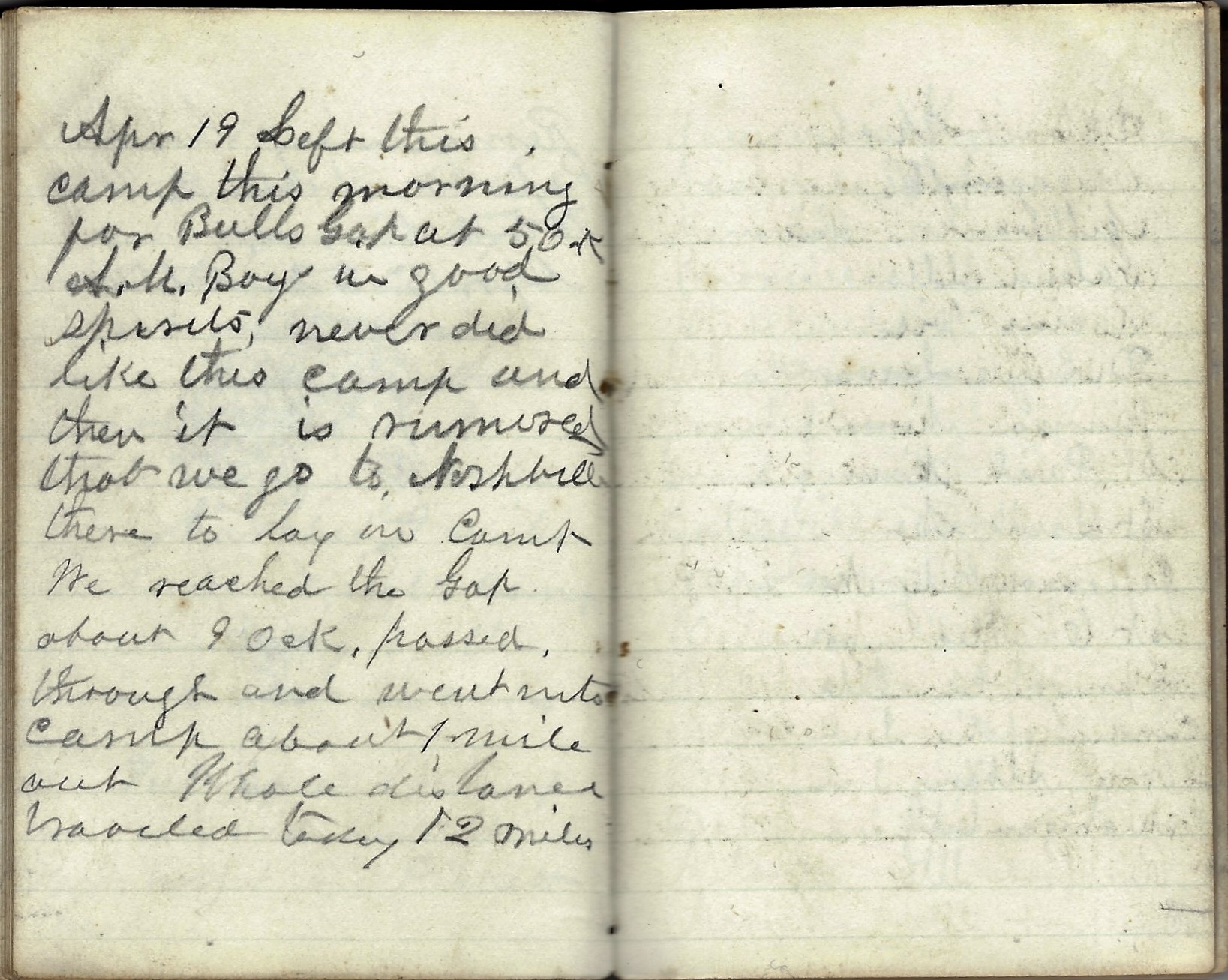
April 19th—Left this camp this morning for Bulls Gap at 5 o’clock a.m. Boys in good spirits. Never did like this camp and it is rumored that we go to Nashville, there to lay in camp. We reached the Gap about 9 o’clock. Passed through and went into camp about 1 mile out. Whole distance traveled today 12 miles.
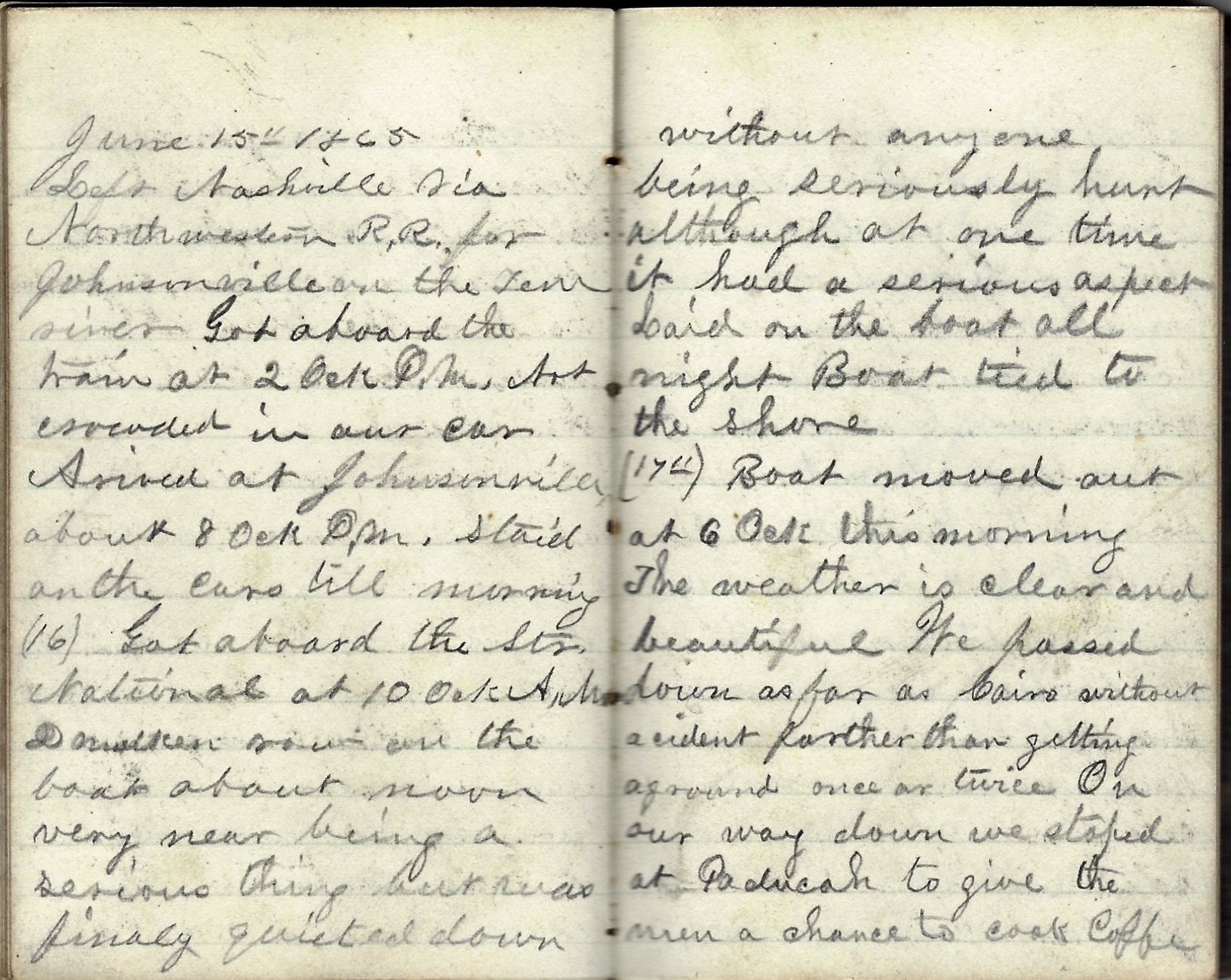
June 15, 1865—Left Nashville via Northwestern Railroad for Johnsonville on the Tennessee River. Got aboard the train at 2 o’clock p.m. Now crowded in our car. Arrived at JOhnsonville at 8 o’clock p.m. Stayed on the cars till morning.

16th—Got aboard the steamer National at 10 o’clock a.m. Drunken row on the boat about noon, very near being a serious things but was finally quieted down without anyone being seriously hurt although at one time it had a serious aspect. Laid on the boat all night. Boat tied to the shore.

17th—Boat moved out at 6 o’clock this morning. The weather is clear and beautiful. We passed down as far as Cairo without accident farther than getting aground once or twice. On our way down we stopped at Paducah to give the men a chance to cook coffee.

18th—This morning found us still at Cairo. The boat has yet to coal up. Strong guards are out on shore to prevent the boys from getting into town while on the river two monitors are laying to keep them from getting out that way. Notwithstanding all this precaution, large numbers are off. It’s impossible to keep men on board. Left Cairo at 2 o’clock p.m. Stopped at Island No. 10 for supper. Laid up for the night a few miles below New Madrid. About 700 men deserted the Division since we left Nashville.

[June] 19th—On the move early this morning. Fine weather. Passed Fort Pillow at 8 o’clock a.m. Arrived in sight of Memphis at 2 o’clock p.m. where we were put off on an island while the boat went to coal up. No signs of mutiny now. While laying here the bodies of some 7 or 8 of the victims of the [April 27th] Sultana disaster were picked up and buried by our boys. They were very much decomposed. We were unable to find the P. O. address of but one. His was printed on his arm with India ink.

An artist’s rendering of the Sultana steamboat in flames, 27 April 1865.

20th—Boat came for us at 2 this morning and started down the river at daylight. The day is bright and clear—not a cloud to be seen. A gentle breeze blowing on the river which makes it quite pleasant riding. Cools the air off finely. Passed Helena about 9 o’clock a.m.. Not much of a town. Stopped at White River Landing for supper about 5 p.m. Passed Napoleon at dusk. This place was nearly all burned by our forces in retaliation for firing into our transports near the place. Laid up about four hours at an island.

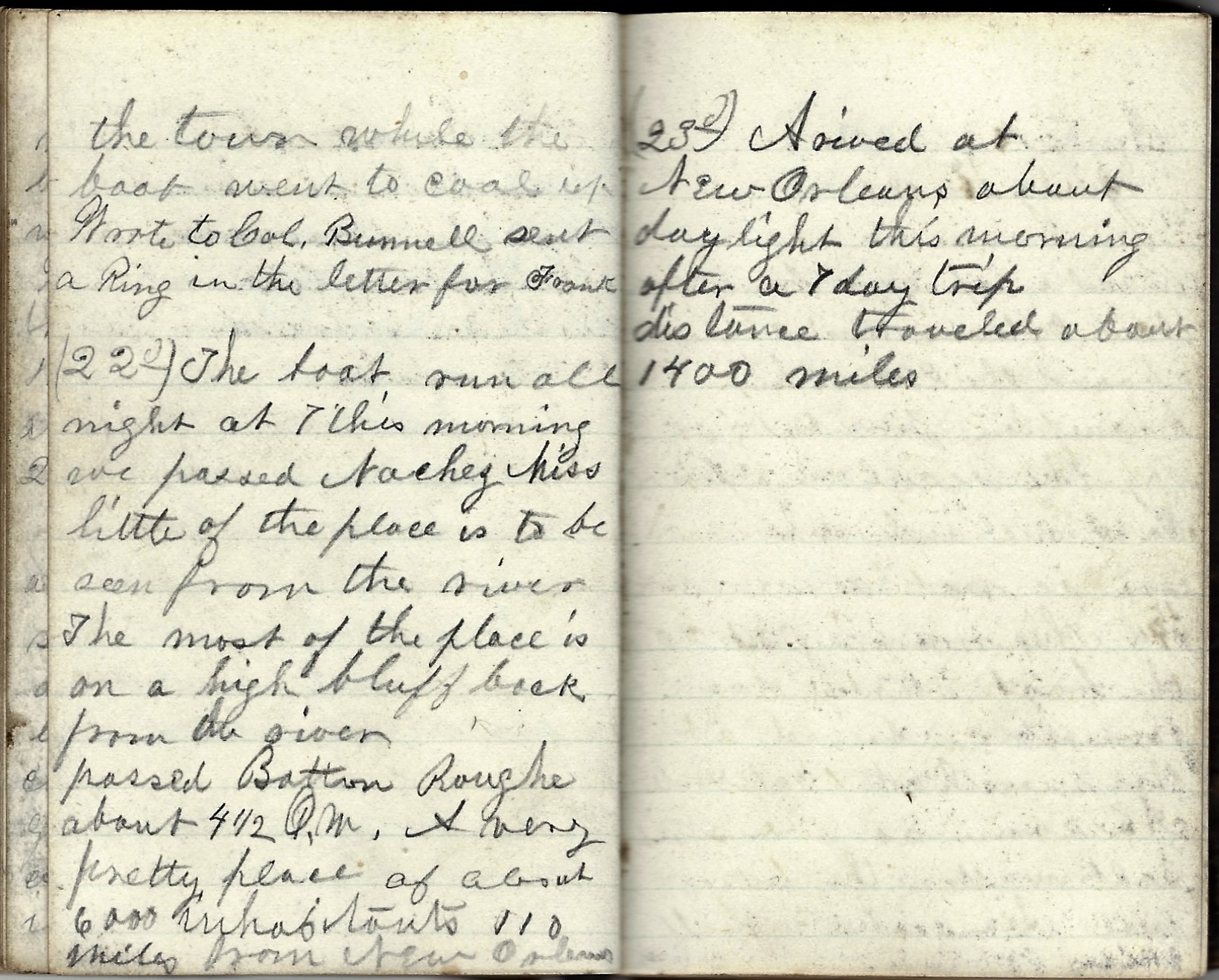
21st—Weather fair as usual. Arrived at Vicksburg at 4 p.m. Laid opposite the town while the boat went to coal up. Wrote to Col. Bunnell. Sent a ring in the letter for Frank.

22nd—The boat run all night. At 7 this morning we passed Natchez, Mississippi. Little of the place is to be seen from the river. The most of the place is on a high bluff back from the river. Passed Baton Rouge about 4.30 p.m.—a very pretty place of about 6,000 inhabitants, 110 miles from New Orleans.

23rd—Arrived at New Orleans about daylight this morning after a 7 day trip. Distance traveled about 1400 miles.

July 16, 1865—Broke up our camp at New Orleans and shipped aboard the steamship Champion for Matagorda Bay. The vessel is a first class one and where we are is not overcrowded.

17th—This morning at 3 o’clock the boat started down the river. Arrived at the mouth at 1 o’clock p.m. As soon as we struck salt water, the boys were sea sick, myself among the rest though not as bad as some. It lasted on me only four hours while some were troubled three or four days.

18th—Out at sea. Saw shark, dolphin, and other saltwater fish. Nothing unusual.

19th—Out at sea. Nothing today.

20th—Arrived off the bay at dusk this eve. Dropped anchor 7 miles from shore.

21st—Still at anchor in sight of shore. No sign of getting to shore. Our boat can’t go over the bar. Draws too much water.

22nd—A propellor came this morning early and took the troops off the boat. Took us to Powderhorn on Matagorda Bay where we again shipped on schooners and went 14 miles farther and landed at a small fort at the head of the bay. From here we marched 6 miles into the country and camped for the night.

23rd—Marched this morn at daylight. Went 12 miles and went into camp. Tis supposed we will stop here about three weeks.

Out of Service

Sunday, September 24th, 1865—Our regiment was mustered out of service of the United States and Tuesday, 26th left our camp on the El Pulsador for Lavaca on the coast. Here we laid waiting for transportation until today, Sunday, October 1st. As yet there is no signs of getting off. The regiment have been quartered in houses during our stay in town.

For the last two or three days, I have been troubled with what the citizen doctors call Bonebreak Fever. Bonebreak it surely is for every bone in a person’s body is in pain. I have become very weak from the effects of the disease. Am now on the gain. Should be all right I think if I were away from this unhealthy shore.

[Editor’s Note: Bone break fever is another name for dengue fever, a viral infection transmitted by mosquitoes that causes symptoms like high fever, severe headaches, pain behind the eyes, and excruciating muscle and joint pain. While dengue does not actually cause bones to break, the intense aches and pains lead to its nickname. Most people with dengue recover in 1–2 weeks, but some develop severe dengue, which can be fatal.]

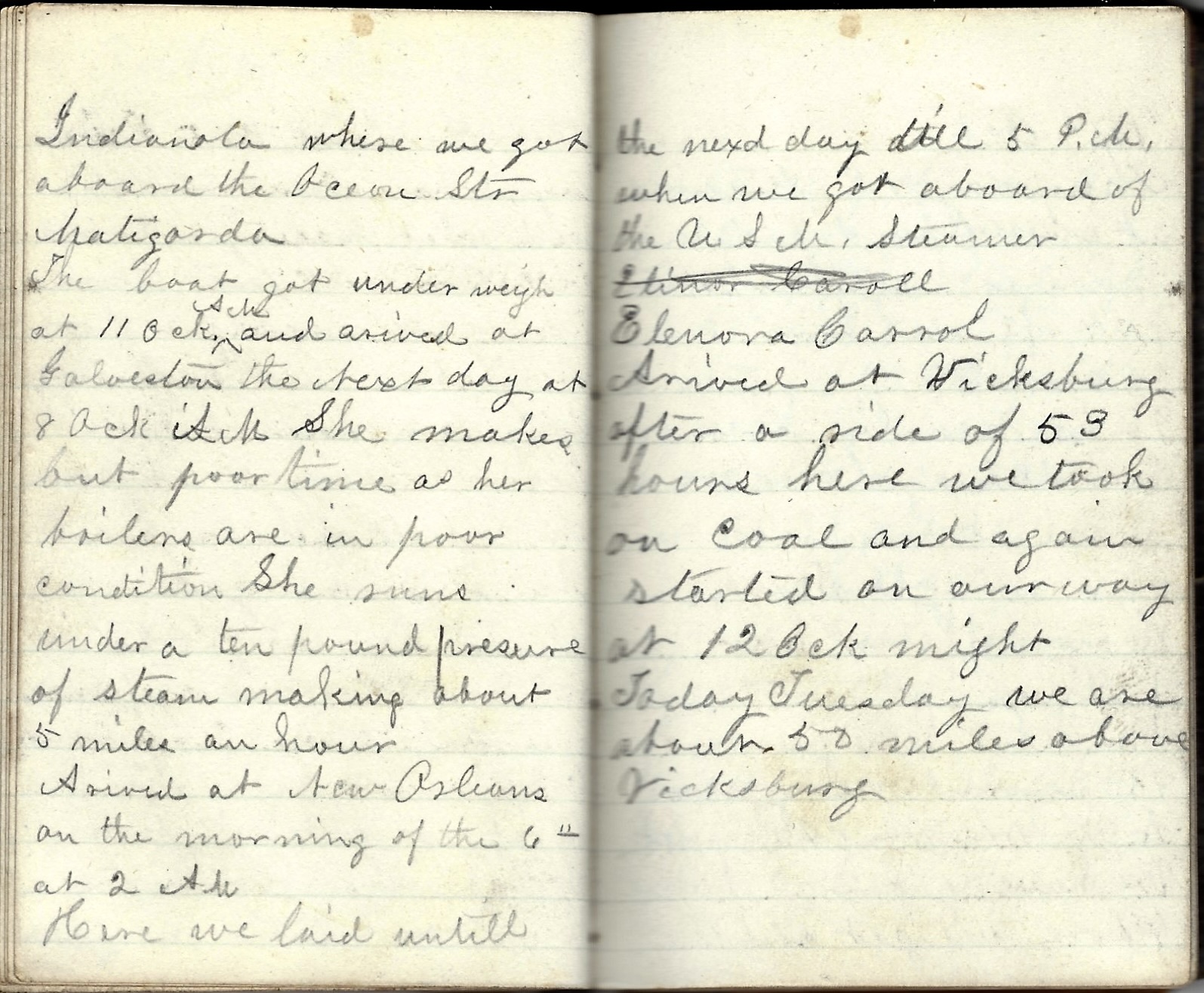
On the evening of the 1st, we got off from Lavaca via steamer Mustang. This boat took us to Indianola where we got aboard the ocean steamer Matagorda. The boat got under weigh at 11 o’clock a.m. and arrived at Galveston the next day at 8 o’clock a.m. She makes but poor time as her boilers are in poor condition. She runs under a ten pound pressure of steam making about 5 miles an hour. Arrived at New Orleans on the morning of the 6th at 2 a.m. Here we laid until the next day till 5 p.m. when we got aboard the U. S. Mail Steamer Elenora Carrol. Arrived at Vicksburg after a ride of 53 hours. Here we took on coal and again started on our way at 12 o’clock night. Today, Tuesday, we are about 50 miles above Vicksburg.

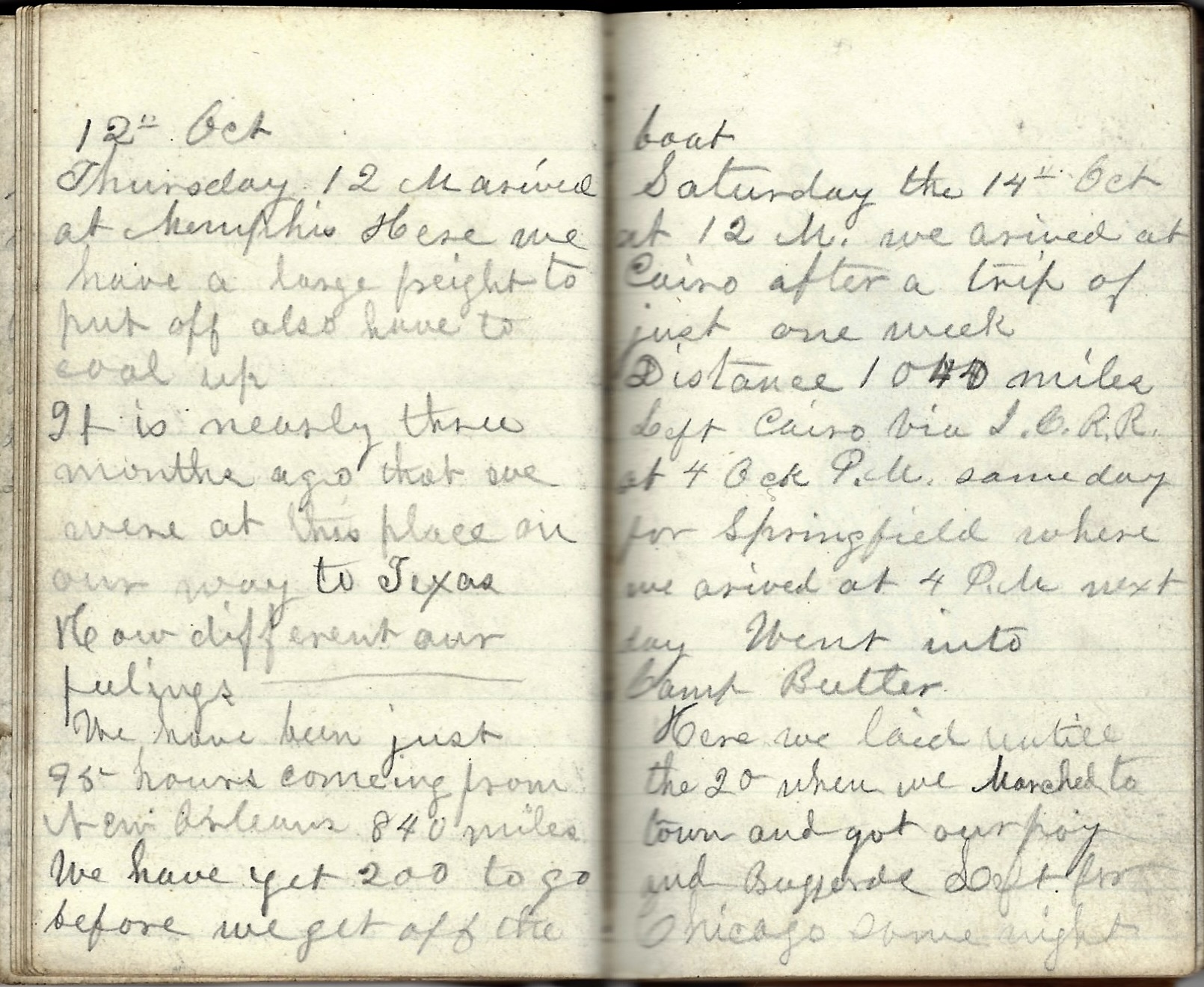
12th October [1865]—Thursday 12 M arrived at Memphis. Here we have a large freight to put off. Also to coal up. It is nearly three months ago that we were at this place on our way to Texas. How different our feelings. We have been just 95 hours coming from New Orleans 840 miles. We have yet 200 to go before we get off the boat.

Saturday the 14th October—At 12 M we arrived at Cairo after a trip of just one week. Distance 1040 miles. Left Cairo via Illinois Central Railroad at 4 o’clock p.m. same day for Springfield where we arrived at 4 p.m. next day. Went into Camp Butler. Here we laid until the 20th when we marched to town and got our pay and [ ]. Left for Chicago same night.

When this cruel war is over
no Irish need apply
For everything is lovely
and the goose hangs high
That young girl from New Jersey
Oh wilt thou be my bride
And off in the stilly night
We’ll all take a ride.

Let me kiss him for his mother
He’s a gay young gambolier
I’m going to fight wit Sigel
and de bully lager beer
Hunky boy is Yankee Doodle
When the cannons loudly roar
We are coming Father Abraham
Three hundred dollars more.

In the days when I was hard up
And my Mary Ann my Johnny
Was a shoemaker or any other man
The captain with his whiskers
and Annie of the vale
Along with Bob Ridley
A riding on the rail
On rock we used to sleep
Mother I’m going around the barn
I’m not myself at all, Mother
I’m a batchelor forlorn.

Mother is the battle over
What are the men about
How are you Horace Greely
does your Mother know you are out.
We won’t go home till morning
with the bold privateer
Annie Lisle and Zouave Johnny
riding in a railroad keer.

We are coming sister Mary
with the folks that put on airs
We are marching along
with the four and thirty stars.
You are way far away
So goodbye at the door
And did you see my sister
with the ring my mother wore.

Our Union starry banner
the flag of Washington
shall float victorious over
the land from Maine to Oregon.
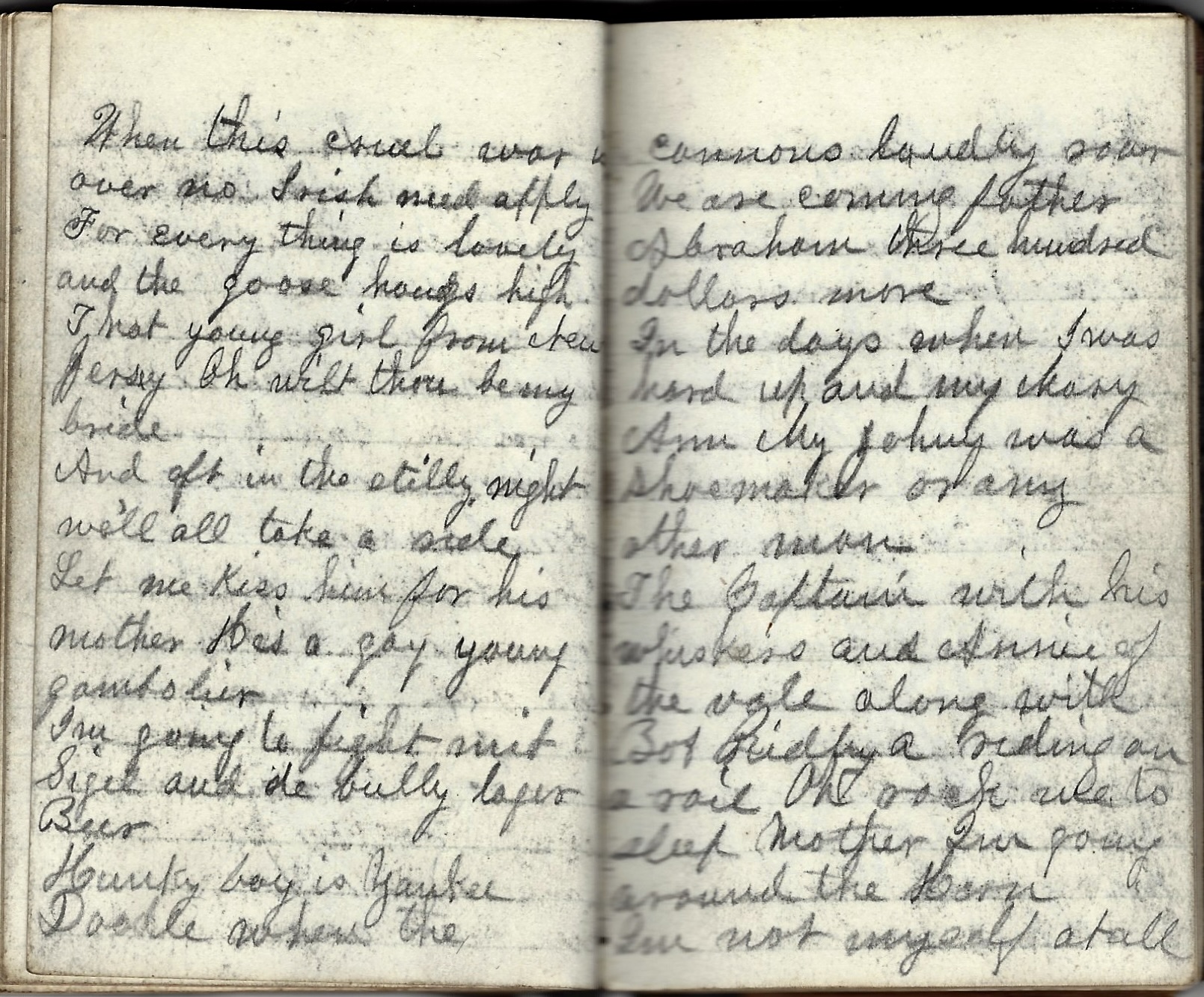
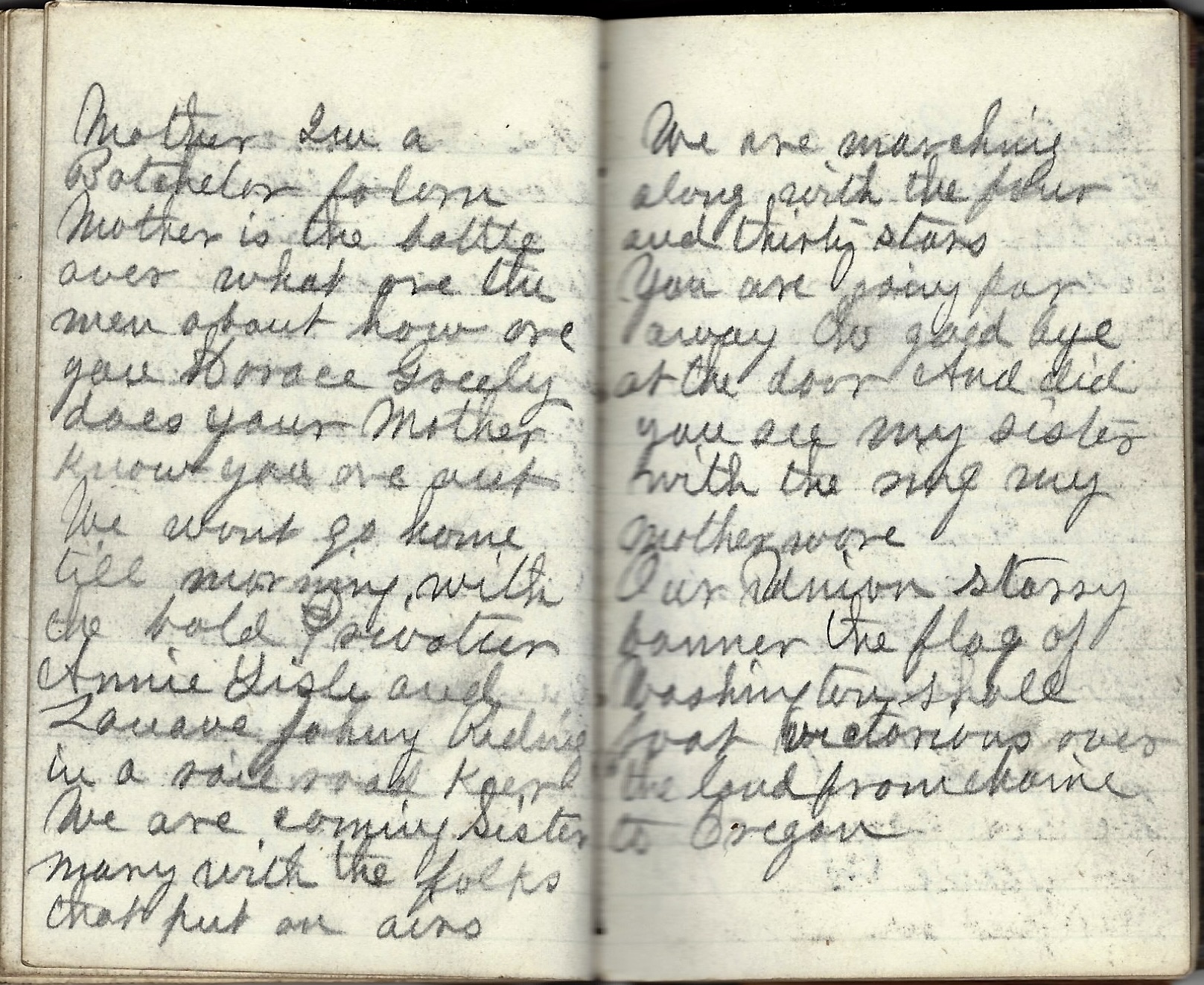
Words to the tune of “Glory Hallelujah” about Jeff Davis
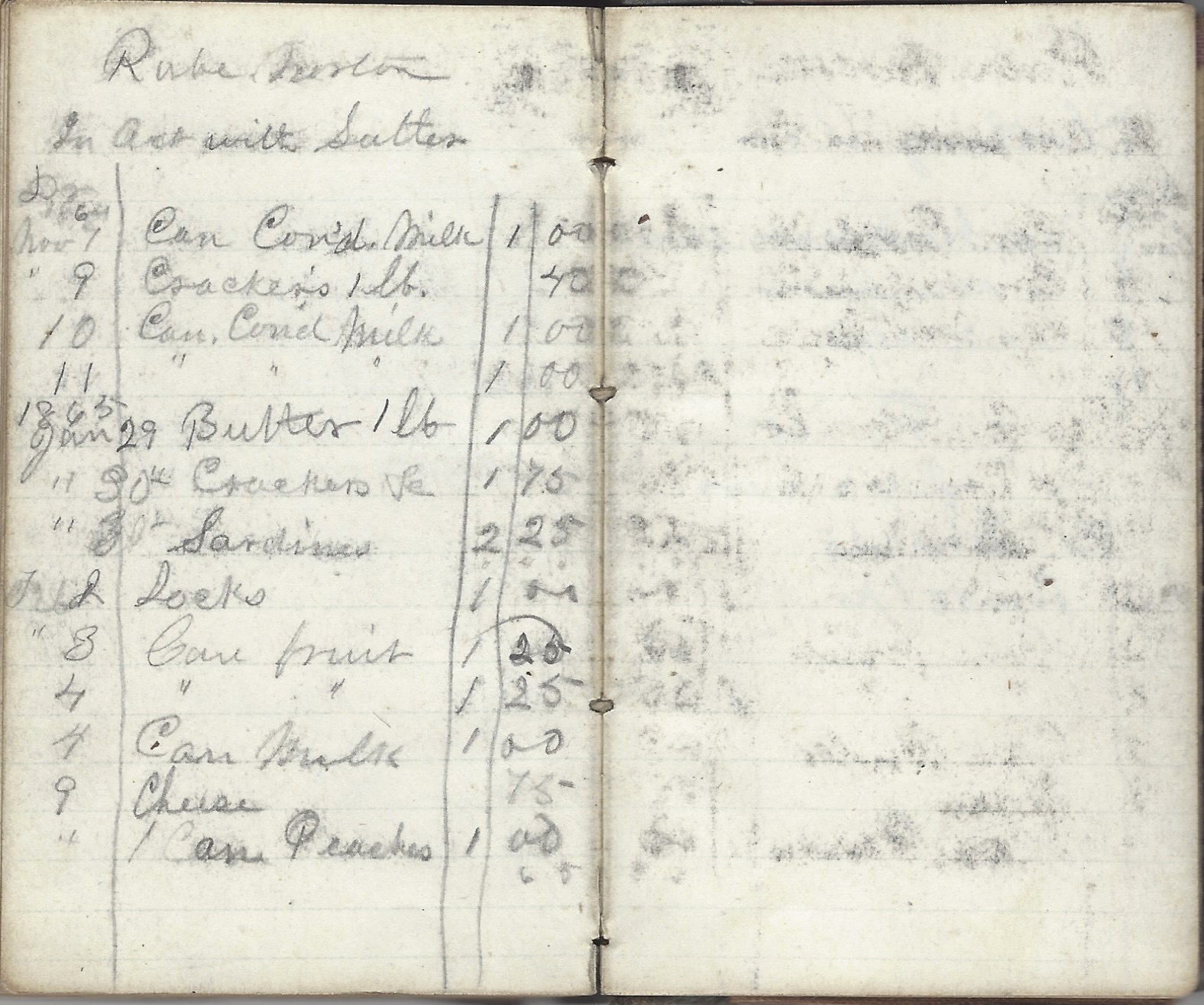

Items purchased from the sutler while keeping this journal.
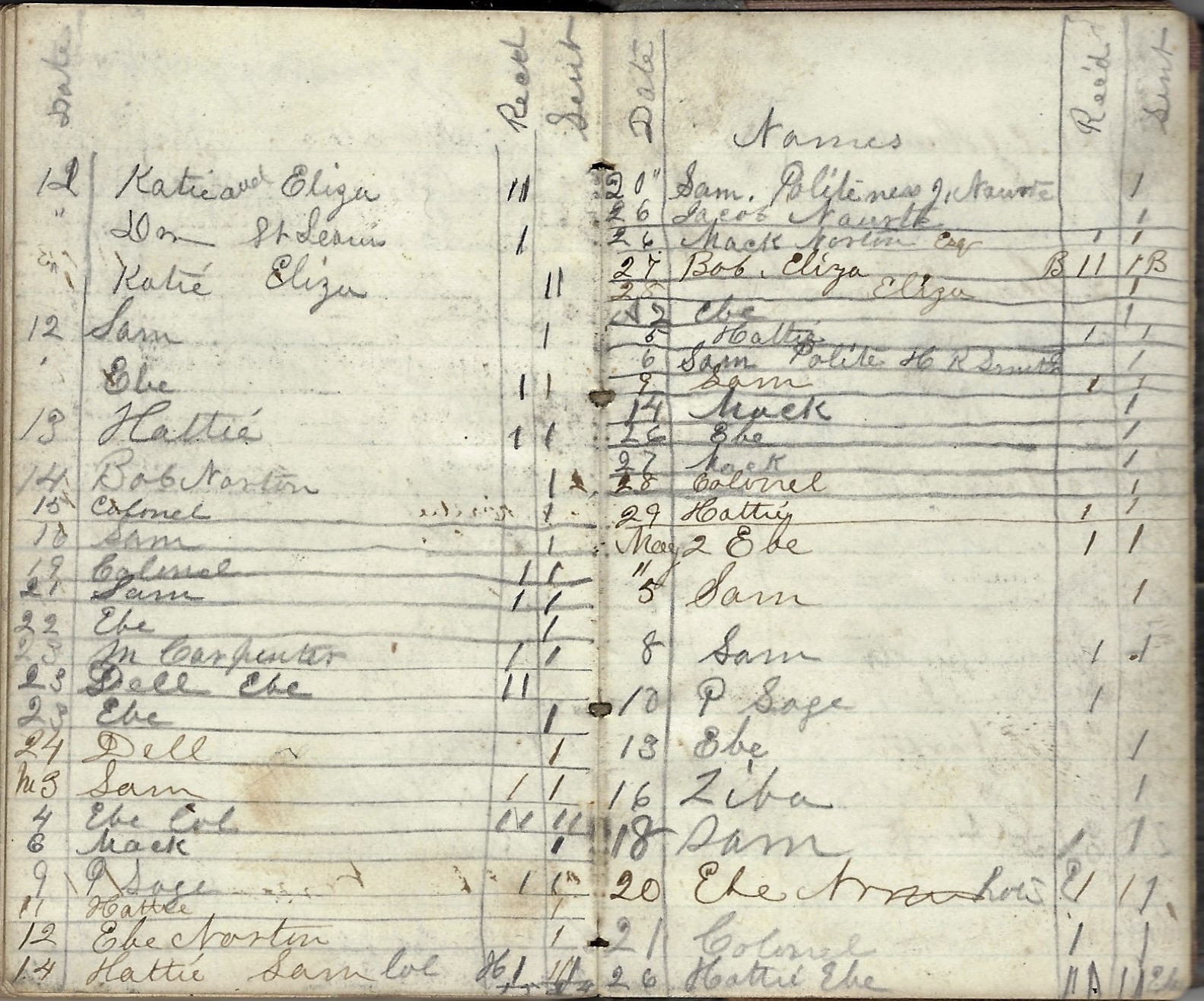

Record of correspondence kept by Reuben C. Norton.


A ten dollar Confederate bill tucked into back pocket of Reuben’s journal.
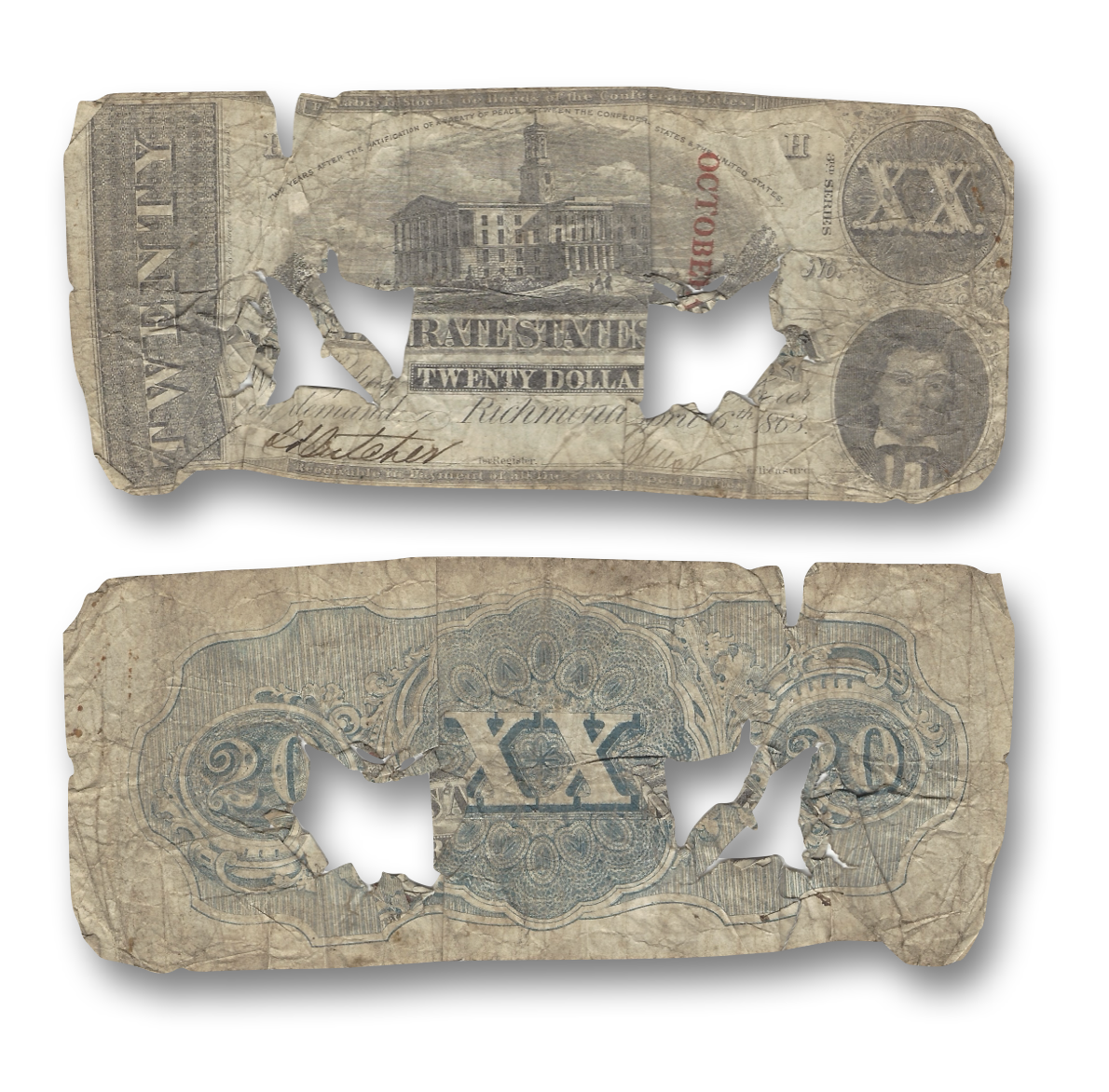

A twenty dollar Confederate bill tucked into back pocket of Reuben’s journal.
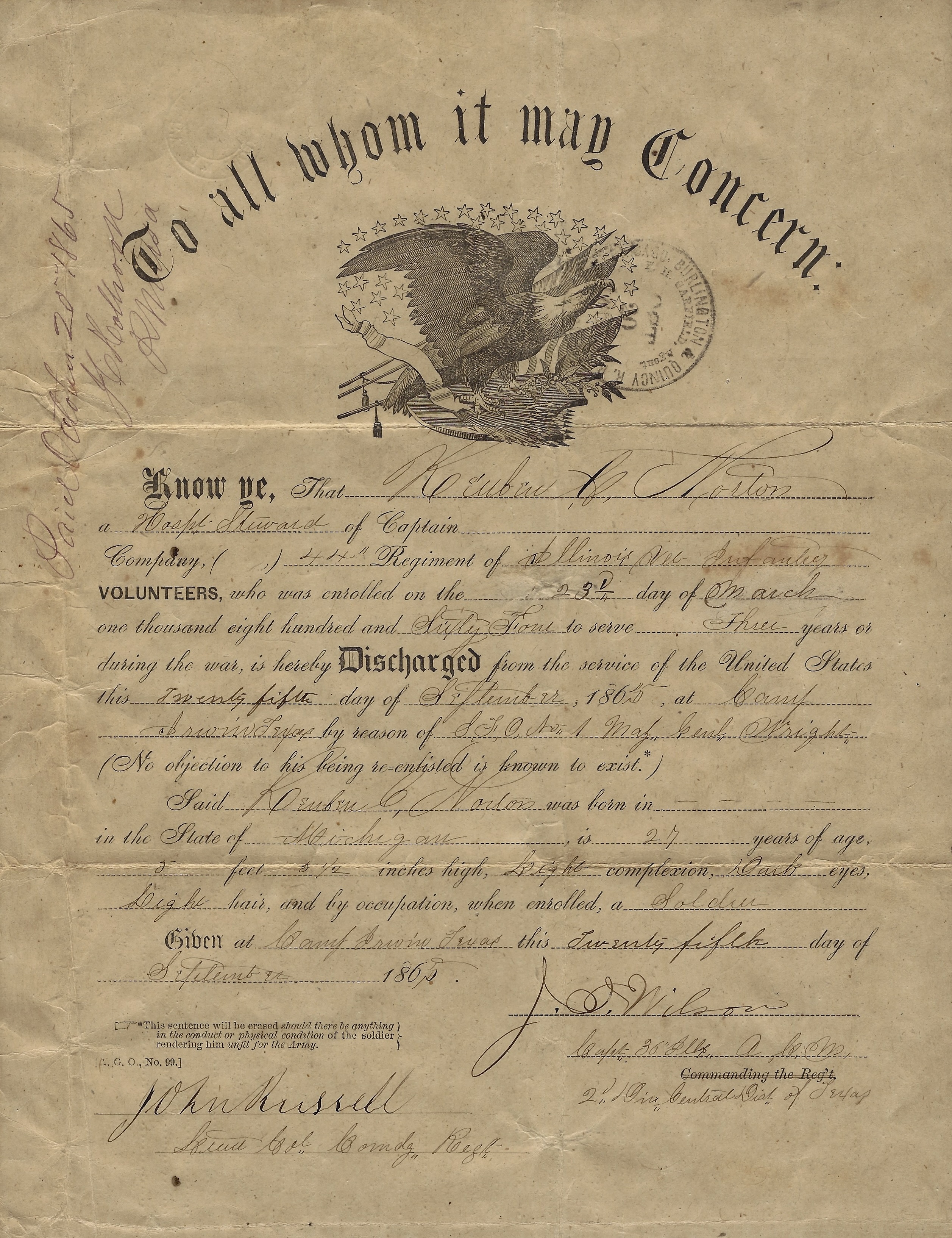

Reuben’s Honorable Discharge Papers

Rockford Daily Register, March 8, 1920

1863-65: John L. Phelps to his Family

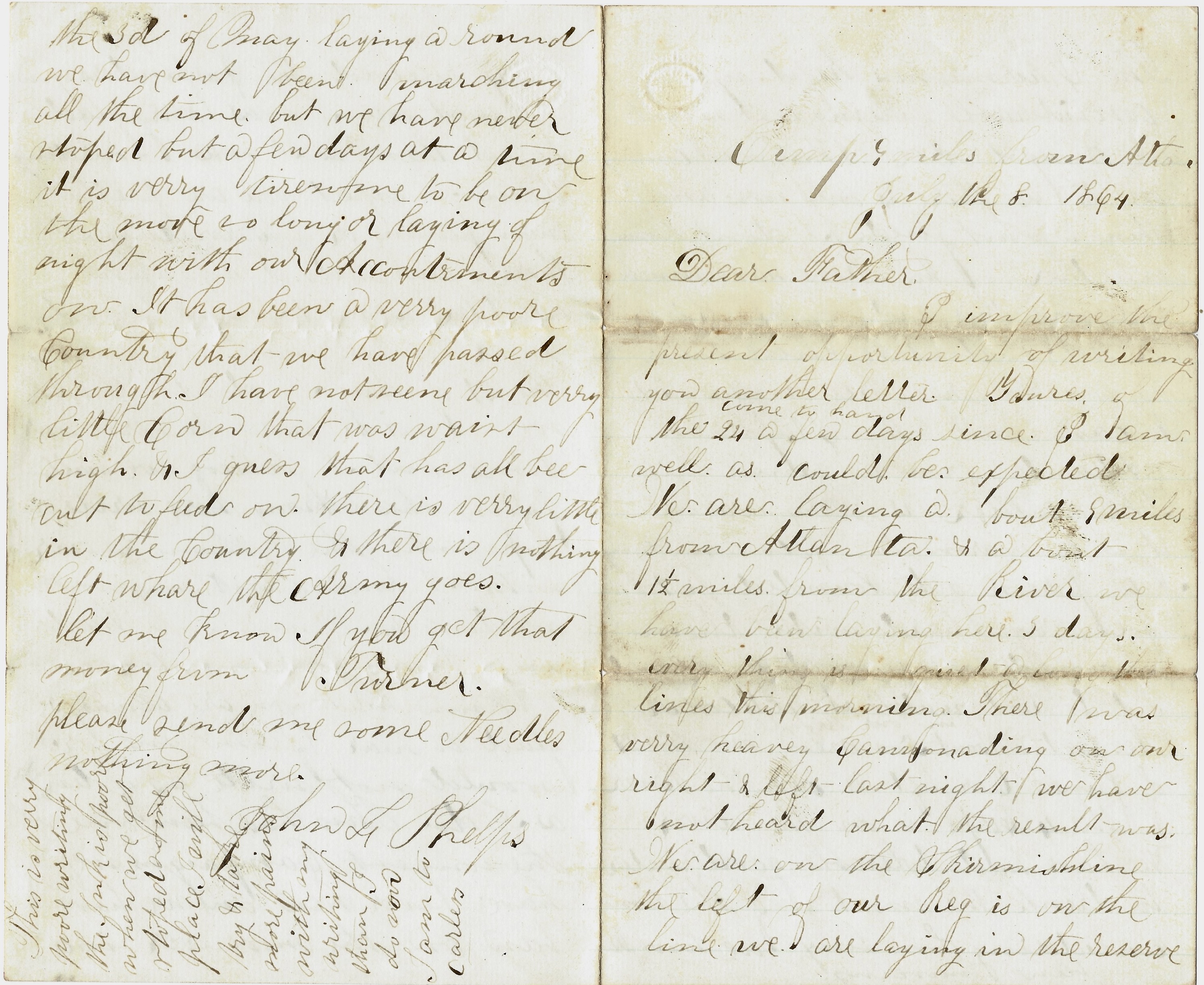
The following letters were written by John L. Phelps (1840-1914), the son of Richard J. Phelps (1817-18xx) and Catherine Camp (1819-1852). They were all written during the American Civil War when John served in Co. D, 85th Illinois Infantry. At the time of his enlistment in August 1862, John was described as a 5′ 10″ tall, grey-eyed, dark-haired farmer from Mason county, Illinois. He served through the end of the war, mustering out on 5 June 1865 at Washington D. C.

He was married on 12 February 1869 to Isabella Sloss (1851-1894) in Nebraska and lived out his days farming in Nora, Nuckolls county, Nebraska.

The letters are from the collection of Doc Krausz who made them available for transcription and publication on Spared & Shared by express consent.

Images of soldiers in the 85th Illinois shared on Civil War Faces:

Letter 1

[Editor’s note: This letter was datelined from Brentwood, Tennessee, where the regiment was garrisoned from early April until the 1st of June 1863. While at Brentwood, in early May, the regiment received four months pay. The health of the regiment generally improved there as well.]

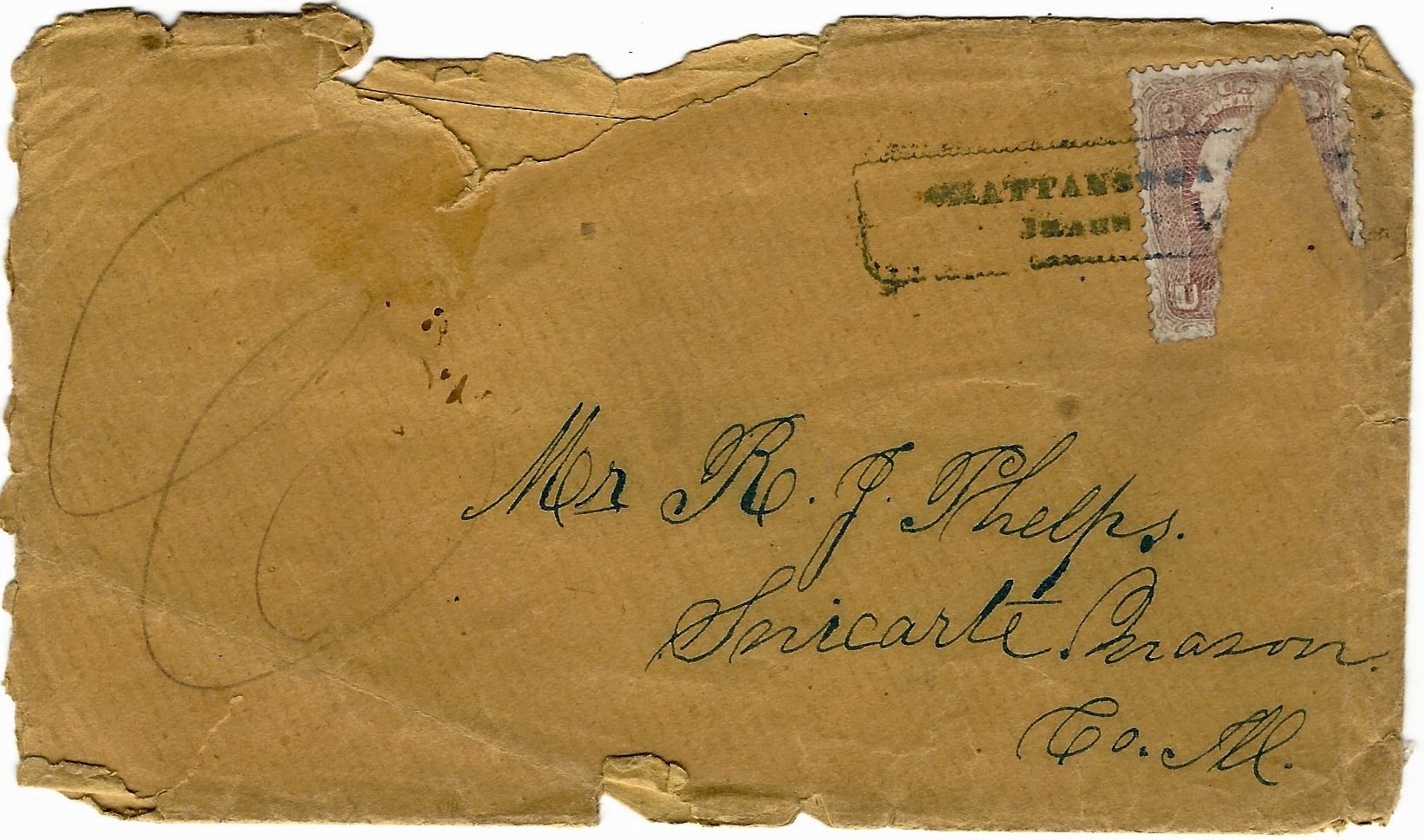
Addressed to Mrs. Sarah C. Phelps, Snicarte, Mason county, Illinois

Camp Brentwood
May 10, 1863

Dear Father,

Yours of the 3rd was received the 9th. I was very glad to hear from home. I was anxious to hear from the money that I sent. I am well at present, hoping this may find you all well. I had heard of the death of Uncle Mead. You had a hard time bringing him home. I know more about the disease of camp cafe that you could tell me. I seen more while I was in the hospital than I ever want to see again. I hope that I never shall have to spend another six weeks in a hospital. If I should take sick, I would want to go to the hospital as soon as possible.

I received sister’s letter the 3rd. From the way you write, I don’t know whether you get all my letters or not. She spoke about Cyrus getting one that was [written] while we was on picket. I wrote one to Aunt Sarah about the 6th of April. Also I wrote one to Elizabeth the 16th and another the 26th. I write so many that I can’t hardly recollect the date of all of them all. I would like to know whether you get them all. The last one I wrote I sent my minature but you have got it before this time.

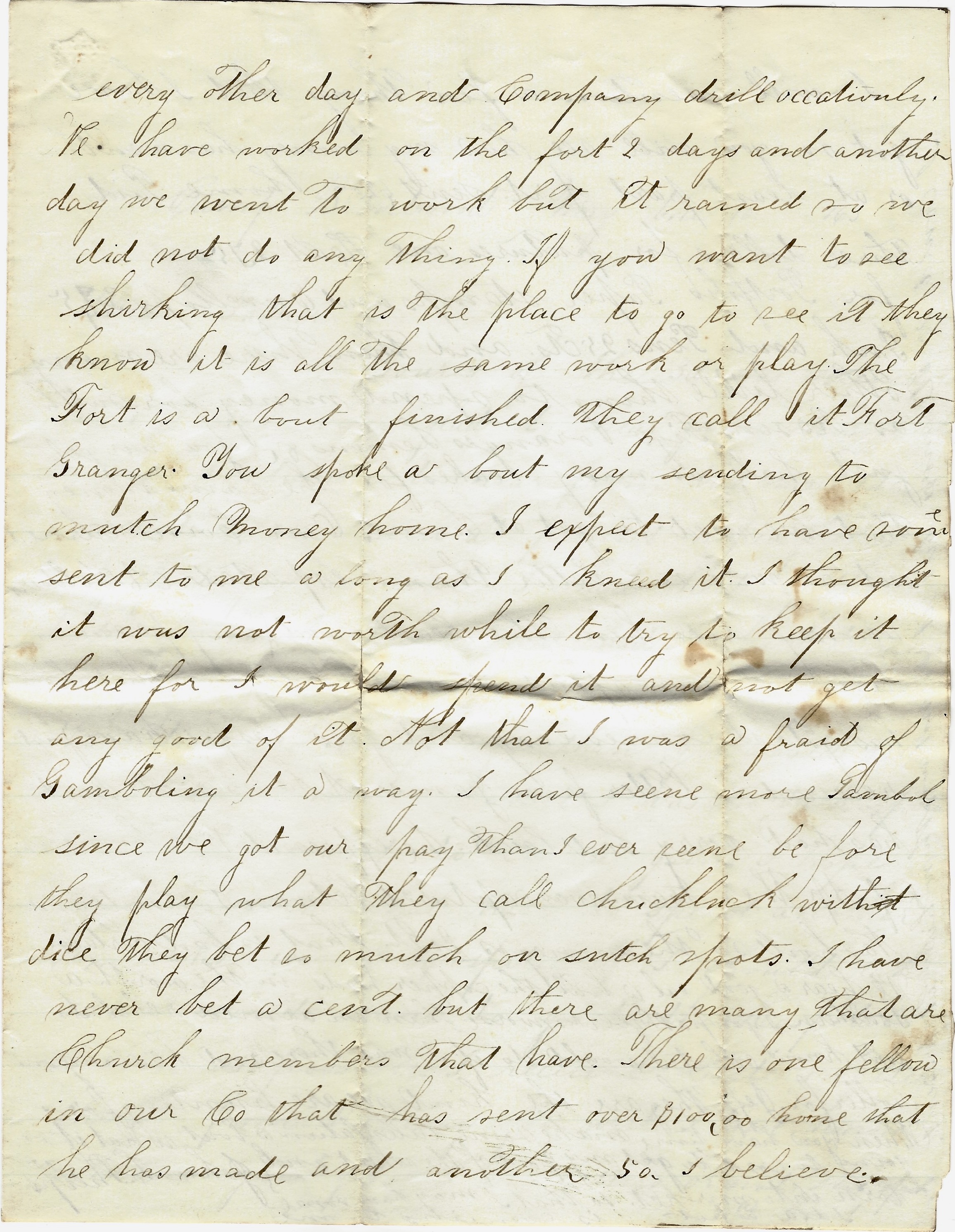
Colonel [Robert S.] Moore arrived here last Sunday. He looks well though he is still a little lame. All the boys I believe likes the Colonel very well. I like him very well. He has things about as he pleases. Colonel Dan McCook of the 52nd Ohio is acting Brigaduer General. THey say he only outranks Col. Moore three days—that is, his commission is only three days the oldest. The other day when out on drill, McCook spoke about having Brigade drill. Moore told him he didn’t know anything about his Brigade drill. We have to stand picket once a week, camp guard once a week. We have Battalion drill about every other day and company drill occasionally. We have worked on the fort two days and another day we went to work but it rained so we did not do anything. If you want to see shirking, that is the place to see it. They know it is all the same—work or play. The fort is about finished. They call it Fort Granger.

You spoke about my sending too much money home. I expect to have some sent to me along as I need it. I thought it was not worthwhile to keep it here for I would spend it and not get any good of it—not that I was afraid of gambling it away. I have seen more gambling since we got our pay than I ever seen before. They play what they call chuck-a-luck without dice. They bet as much on such spots. I have never bet a cent but there are many that are church members that have. There is one fellow in our company that has sent over $100 home that he has made and another $50. I believe I will mention a few things that I have got so you will see how my money has went or at least part of it. Sent $62 home. Paid three dollars for pictures. One hat $2.75. For portfolio, paper, stamps, and envelopes $3.75. Ink and pens 25 cents. And then there are many other little things to spend money for such as raisons, figs, oranges, lemons, &c. You can get just half as many cakes for the same money that we used to get at home.

Our corn turned out as well or better than I expected. A soldier’s money does him the least good of any person living. He can spend it and hardly see what he has got. It comes easy and goes easy. I have just received a letter from James A. He is well but has had very bad luck. He expressed $75 home the 8th of April [but] the train was captured between Louisville and Nashville so the money is lost. That is bad certain.

We hear a good deal about the Copperheads in the North. A southern sympathizer is worse than an armed rebel. I don’t know what I would do if I was there and hear anyone holler for Jeff. They are the kind we are hunting for.

When you have time, make some calculations about what it is going to cost to get my part of the wheat and corn into market so that I may have some idea what is coming to me. I could write more but it is not worthwhile at present. — John L. Phelps

D. B. is at the hospital yet. He don’t get much better. If you want to write, direct to General Hospital No. 23, Nashville, TN.

[Editor’s Note: The following slip of paper is undated but was most likely written early in John’s service when he was in Tennessee. There was a very large Union meeting held in Franklin on 23 August 1863 and my hunch is that it was written at that time.]

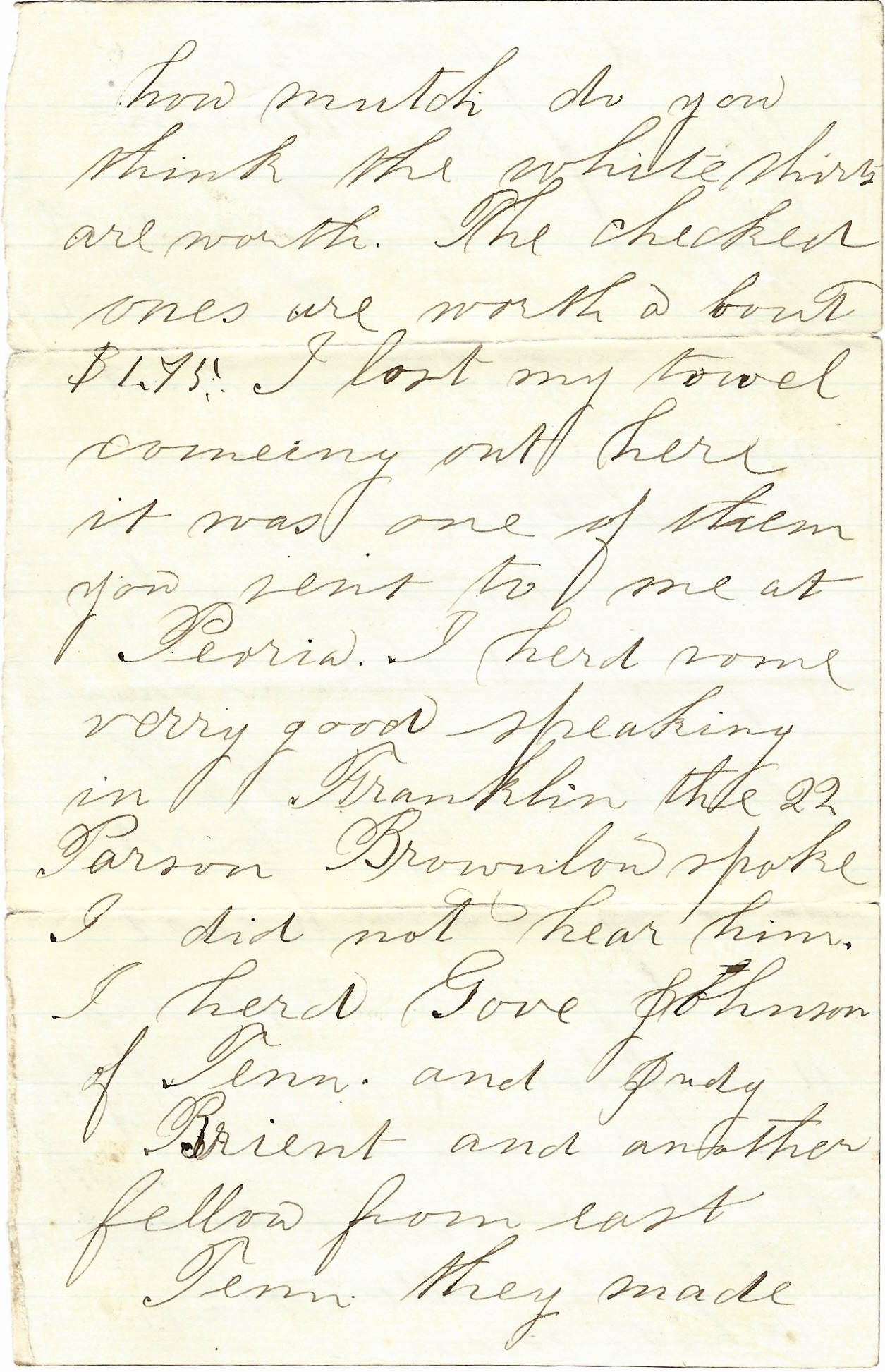
…How much do you think the white shorts are worth. The checked ones are worth about $1.75. I lost my towel coming out here. It was one of them you sent to me at Peoria. I heard some very good speaking in Franklin the 22nd. Parson Brownlow spoke. I did not hear him. I heard Gov. [Andrew] Johnson of Tennessee and Judge Bryant and another fellow from East Tennessee. They made good speeches in favor of the Union. They said the worst proclamation that had ever been issued was the first fire on Fort Sumter. Their speeches was interesting to all who heard them I think—at least among the soldiers.

I heard a Negro preach last Sunday. His text was 11th Chapter, 36th Verse of John. He was somewhat awkward in his language but he done better than some white men.


Letter 2

[Editor’s Note: This letter was datelined in early February 1864 from McAfee’s Church where they built winter quarters in late November 1863. The camp was located in a dense pine forest at the northern limits of the battlefield of Chickamauga and some six miles from Chattanooga. They remained in camp at McAfee’s Church until the launch of the Atlanta Campaign.]

Camp McAfey’s Church
February 7, 1864

Dear Father,

I seat myself this pleasant Sabbath morning to write you a short letter. I received yours January the 18th about the 26th. Also the gloves you sent me. The gloves are very good ones. The only fault I found with them, the left one is a size smaller than the right. If you had wrote on them gloves the postage would have only been 4 cents. James H. only lost 4. Also a pair of socks 4 cents. If you write what is in the package, it will come cheaper.

I received a letter from Eliza wrote the 24th. It come to hand the 4th.

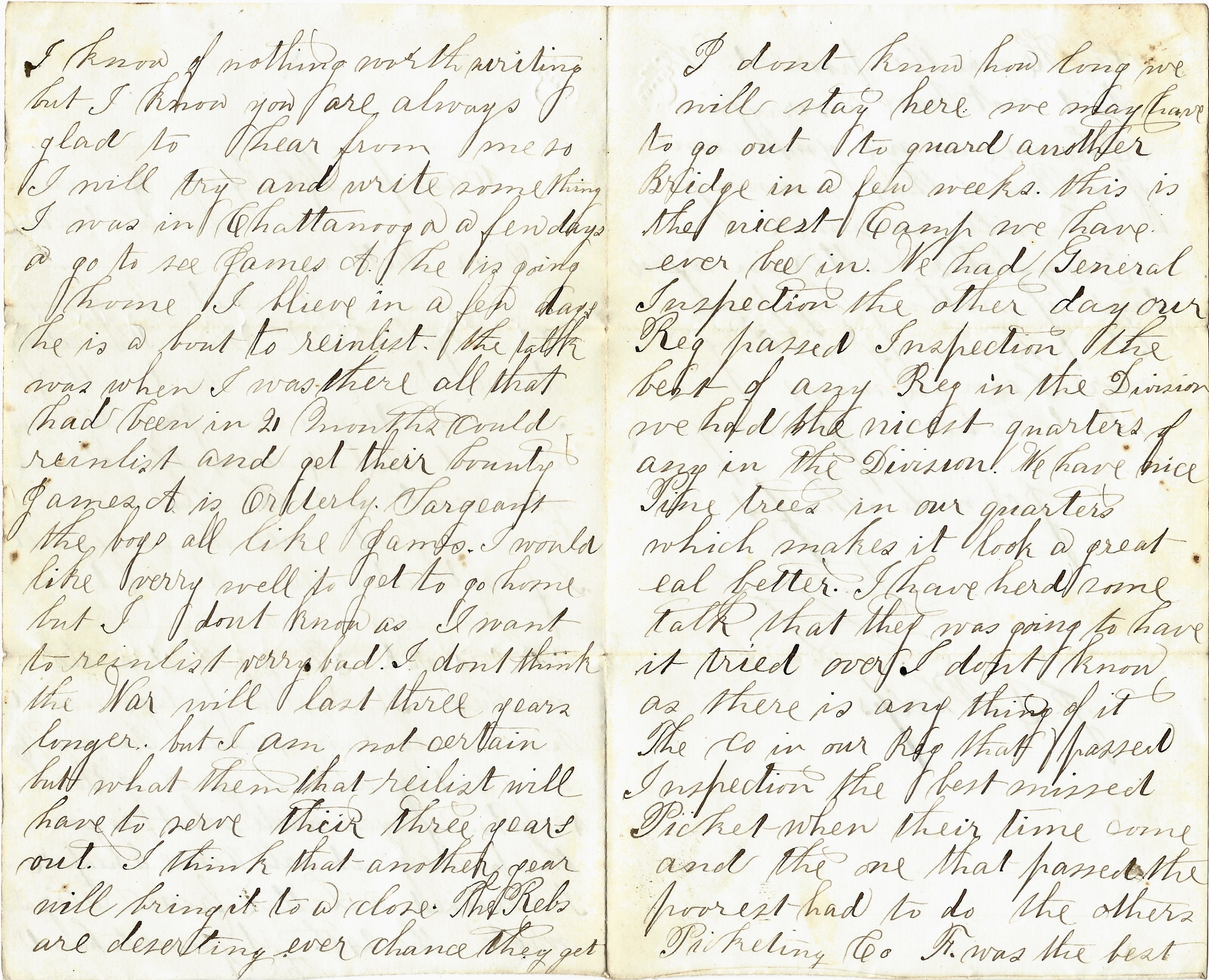
I know of nothing worth writing but I know you are always glad to hear from me so I will try and write something. I was in Chattanooga a few days ago to see James A. He is going home, I believe, in a few days. He is about to reenlist and get their bounty. James A. is Orderly Sergeant. The boys all like James. I would like it very well to get to go home but I don’t know as I want to reenlist very bad. I don’t think the war will last three years longer but I am not certain but what them that reenlist will have to serve their three years out. I think that another year will bring it to a close. The Rebs are deserting every chance they get.

I don’t know how long we will stay here. We may have to go out to guard another bridge in a few weeks. This is the nicest camp we have ever been in. We had General Inspection the other day. Our regiment passed inspection the best of any regiment in the division. We had the nicest quarters of any in the division. We have nice pine trees in our quarters which makes it look a great deal better. I have heard some talk that they are going to have it tried over. I don’t know as there is anything of it. The company in our regiment that passed inspection the best missed picket when their time come and the one that passed the poorest had to do the others picketing. Co. F was the best. Co. H was the poorest. We did not have a very fair chance as we just came off of picket that morning.

I will answer Elizabeth’s letter in a few days if nothing happens. I am always glad to hear from you. — John L. Phelps


Letter 3

Camp near Acworth Station, Ga.
June 3, 1864

Dear Aunt Sarah.

Yours of the 17th and Father’s of the 26th was received last evening and one from Eliza date the 20th. So you see I had a fine time reading letters. I am well and enjoying myself very well. We camped here the 6th—the longest we have laid at any one time since the 7th of last month without being in a line of battle or where we could hear firing. Since we stopped here, everything has been quiet. Our regiment has not been in any engagement although we have been in front a good part of the time. When we took Rome, we lost a good many men for what the fight lasted. There has been but very little hard fighting done for the amount of ground we have gained. There was pretty hard fighting done at Resaca one afternoon. We know very little about what is going on—only what we see.

The Rebs are said to be falling back across the Chattahoochee River. I think they will try to make a stand there but if there is any way to get around, I think Sherman will flank them. That is his way of fighting. I don’t believe he wants to lose a man more than he can help. We advance and then build fortifications. Last Saturday night we worked until after midnight building fortifications. I think we will move forward in the morning. I expect we will have one hard fight before we get to Atlanta.

The soldiers are all in good spirits about getting to go home. Some thinnk they will get to eat their Christmas dinner at home. I heard Colonel Dillworth say that he thought it could not last long the way things was going. He seemed to be in good spirits. He said when we got home, he expected he would have to come down to Bath every few days to get us out of some trouble.

We have had some very warm days down here. It is warmer here than it was at Nashville. There is some pieces of corn around here that looks well & some little wheat that is ripe enough to shell out. But the army is feeding it to their teams. I guess they don’t like that we take the fences wherever we stop—if there is any.

I have not seen James A. They are about 3 miles from here. Two of the boys out of Co. F, 51st [Illinois] was here today. I answered E. C.’s letter last evening. The mail was going out yesterday evening & I wrote it in a great hurry. We have not been getting our mail regularly. I don’t know when we will have a chance to send letters—perhaps in two or three days. I directed Elizabeth’s letter to Bath. I don’t know which place she will get it the soonest.

I got my hat last evening. I like it very well. J. H. W. got one mailed at Snicarte. The postage was 4 cents which mine was 16 cents. I don’t think they should make that difference in the two places. Please send me some thread. Nothing more. Yours truly, — John L. Phelps


Letter 4

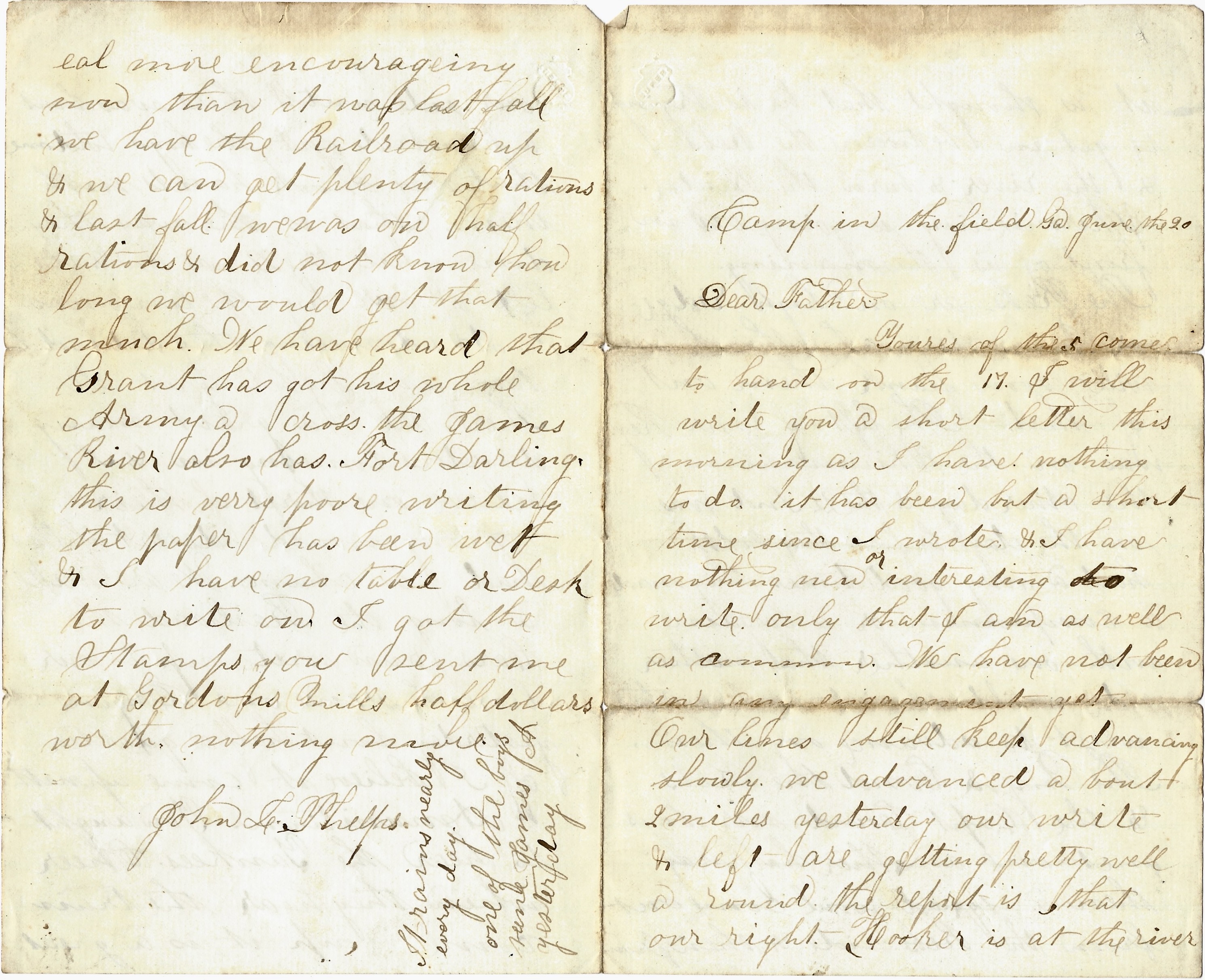
Camp in the field, Ga.
June 20, 1864

Dear Father,

Yours of the 5th came to hand on the 17th. I will write you a short letter this morning as I have nothing to do. It has been but a short time since I wrote & I have nothing new or interesting to write—only that I am as well as common.

We have not been in any engagement yet. Our lines still keep advancing slowly. We advanced about two miles yesterday. Our right and left are getting pretty well around. The report is that our right—Hooker is at the river—it is thought that he is trying to get in between the Rebs and the river & burn the bridge. Skirmishing is going on in front of us this morning. The Rebs are on the high ridge or mountain. I think we will soon flank them out of that. The left of our regiment was on the skirmishers the other day and the 22nd Indiana was on the day before. They both had a very good time. They made a compromise or a bargain with one another that neither side would shoot unless they went to advance on them.

The Major [of the] the Rebs and the Capt. [of our] our boys met one another halfway. Then a squad would come out from the Rebs side and then from our side until there was about a hundred out. The boys told me that they shook hands with them. That is the way they done while the 22nd was on & the left of our regiment was not advancing. They did not have any fighting at all. There was a great many deserters coming in & I believe one thrd of their army would desert if they had a chance.

We are right along the railroad. The cars run right up to our lines. I seen one engine yesterday about half a quarter off. I believe it come up with the ammunition. You ought to hear the Yankees cheer when they hear the train come up. It is a great deal more encouraging now than it was last fall. We have the railroad up & we can get plenty of rations & last fall we was on half rations & did not know how long we would get that much.

We have heard that Grant has got his whole army across the James River. Also has Fort Darling. This is very poor writing. The paper has been wet & I have no table or desk to write on. I got the stamps you sent me at Gordon’s Mills. Half dollars worth. Nothing more. — John L. Phelps

It rains nearly every day. One of the boys saw James A. yesterday.


Letter 5

Camp 9 miles from Atlanta
July 8, 1864

Dear Father,

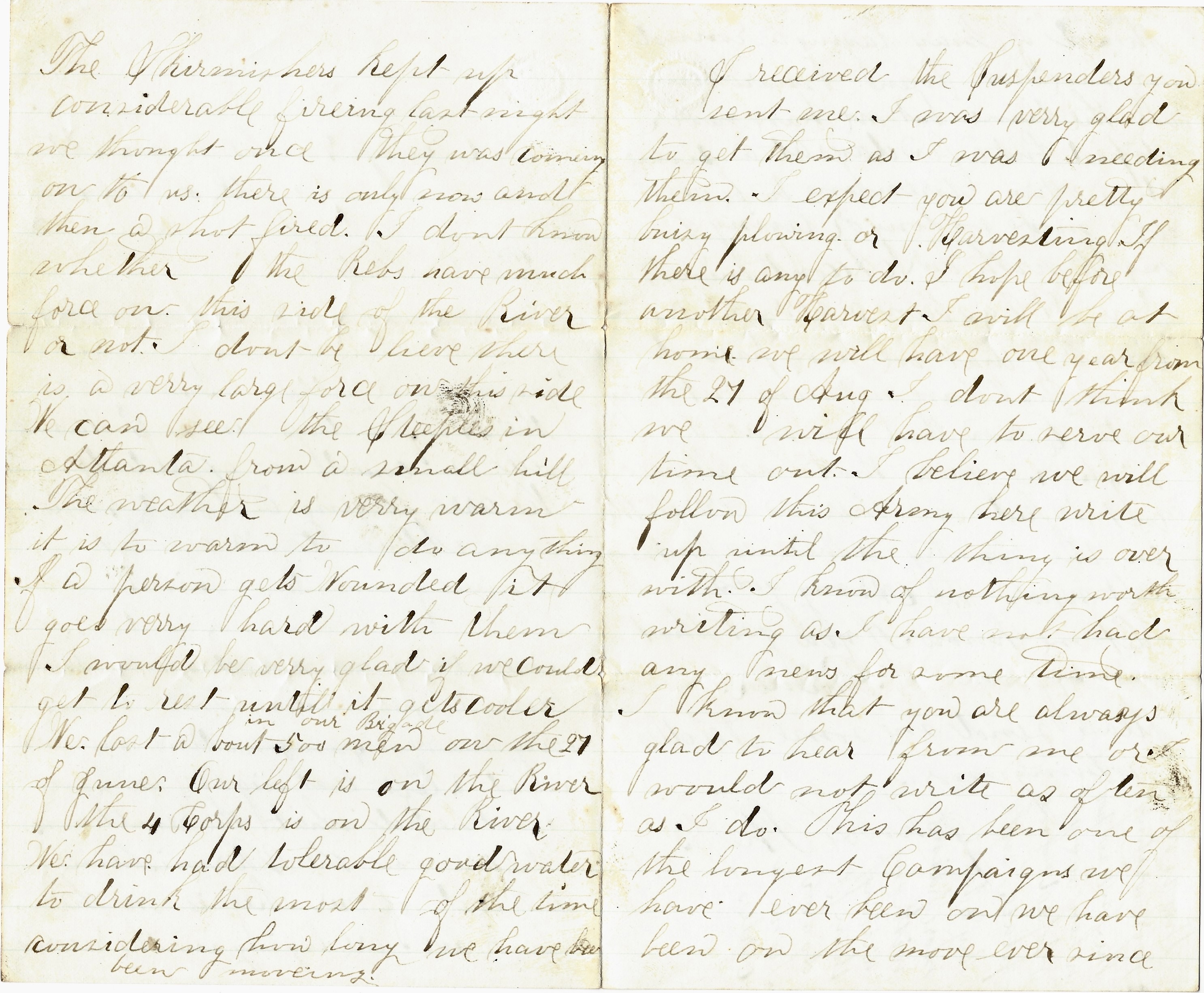
I improve the present opportunity of writing you another letter. Yours of the 24th come to hand a few days since. I am well as could be expected. We are laying about 9 miles from Atlanta & about 1.5 miles from the river. We have been laying here 3 days. Everything is quiet along the lines this morning. There was very heavy cannonading on our right and left last night. We have not heard what the result was. We are on the skirmish line. the left of our regiment is on the line. We are laying in the reserve. The skirmishers kept up considerable firing last night. We thought once they was coming on to us. There is only now and then a shot fired. I don’t know whether the Rebs have much force on this side of the river or not. I don’t believe there is a very large force on this side. We can see the steeples in Atlanta from a small hill.

The weather is very warm. It is too warm to do anything. If a person get wounded, it goes very hard with them. I would be very glad if we could get to rest until it gets cooler. We lost about 500 men in our brigade on the 27th of June. Our left is on the river. The 4th Corps is on the river. We have had tolerable good water to drink the most of the time considering how long we have been moving.

I received the suspenders you sent me. I was very glad to get them as I was needing them. Expect you are pretty busy plowing or harvesting. If there is any to do. I hope before another harvest, I will be at home. We will have one year from the 27th of August. I don’t think we will have to serve our time out. I believe we will follow this army here right up until the thing is over with.

I know of nothing worth writing as I have not had any news for some time. I know that you are always glad to hear from me or I would not write as often as I do. This has been one of the longest campaigns we have ever been on. We have been on the move ever since the 3rd of May laying around. We have not been marching all the time but we have never stopped but a few days at a time. It is tiresome to be on the move so long or laying off nights with our accoutrements on.

It has been a very poor country that we have passed through. I have not seen but very little corn that was waist high. I guess that has all been cut to feed on. There is very little in the country and there is nothing left where the army goes.

Let me know if you get that money from Turner. Please send me some needles. Nothing more. — John L. Phelps

This is very poor writing. The ink is poor. When we get stopped some place, I will try and take more pains with my writing than I do now. I am too careless.


Letter 6

[Before Atlanta] Georgia
August 4, 1864

Dear father,

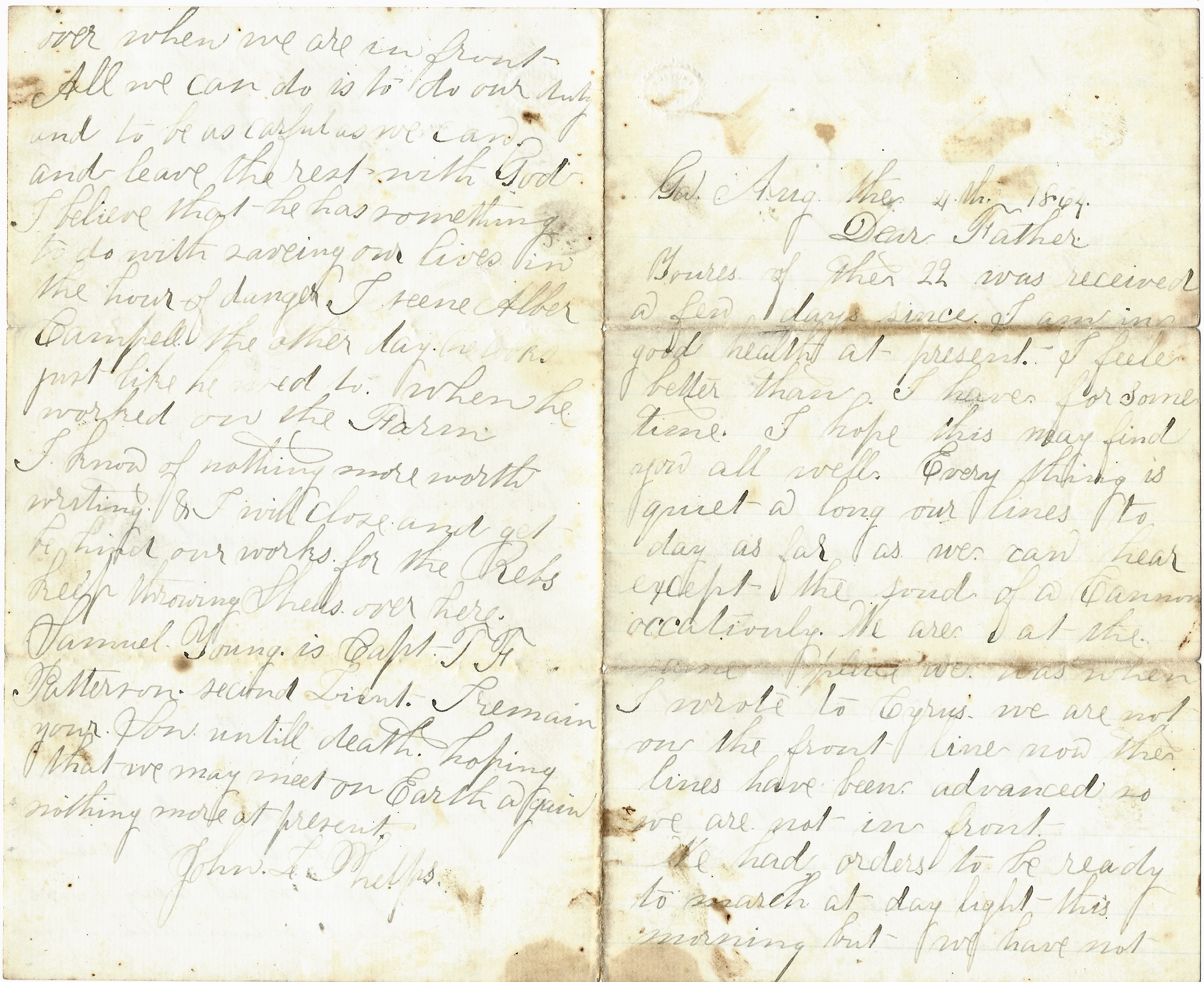
Yours of the 22nd was received a few days since. I am in good health at present. I feel better than I have for some time. I hope this may find you all well. Everything is quiet along our lines today as fast as we can hear except the sound of the cannon occasionally. We are at the same place we was when I wrote to Cyrus. We are not on the front line now. The lines have been advanced so we are not in front.

We had orders to be ready to march at daylight this morning but we have not moved yet. But I am afraid we will move. I have heard two bugles.

August 6th. You will see from the above that I had to stop writing. We had to move out and advance the line on the right & then we had to go on picket that night. We built some skirmish pits. We lay in them until morning. At daylight we had to advance about half a mile farther. I believe there was no one hurt. Cos. K and I took about 25 prisoners. We was relived last evening. We are in the second line of works. There is as much danger here as there is in the front line. The bullets fly over from the skirmishers with a shell occasionally but not hurting anyone today that I have heard of. I think from the way our lines run that we are trying to out flank the Rebs and get on to the railroad running to Montgomery, one branch. The other, I believe, runs to Charleston.

I remember well two years ago today, two years ago yesterday I put my name down and was sworn in. I think the war will be over before this time next year but if not, those that are left of us will begin to think about getting home. But one year is a long time to look ahead and in front at that. A ball is liable to hit a person at any time for they are continually flying over when we are in front. All we can do is to do our duty and to be as careful as we can and leave the rest with God. I believe that He has something to do with saving our lives in the hour of danger.

I seen Albert Campbell the other day. He looks just like he used to when he worked on the farm. I know of nothing more worth writing & I will close and get behind our works for the Rebs keep throwing shells over here. Samuel Young is Capt. T. F. Patterson’s second lieutenant. I remain your son until death. Hoping that we may meet on earth again. Nothing more at present. — John L. Phelps


Letter 7

[Before Atlanta, Georgia]
August 15, 1864

Dear Father,

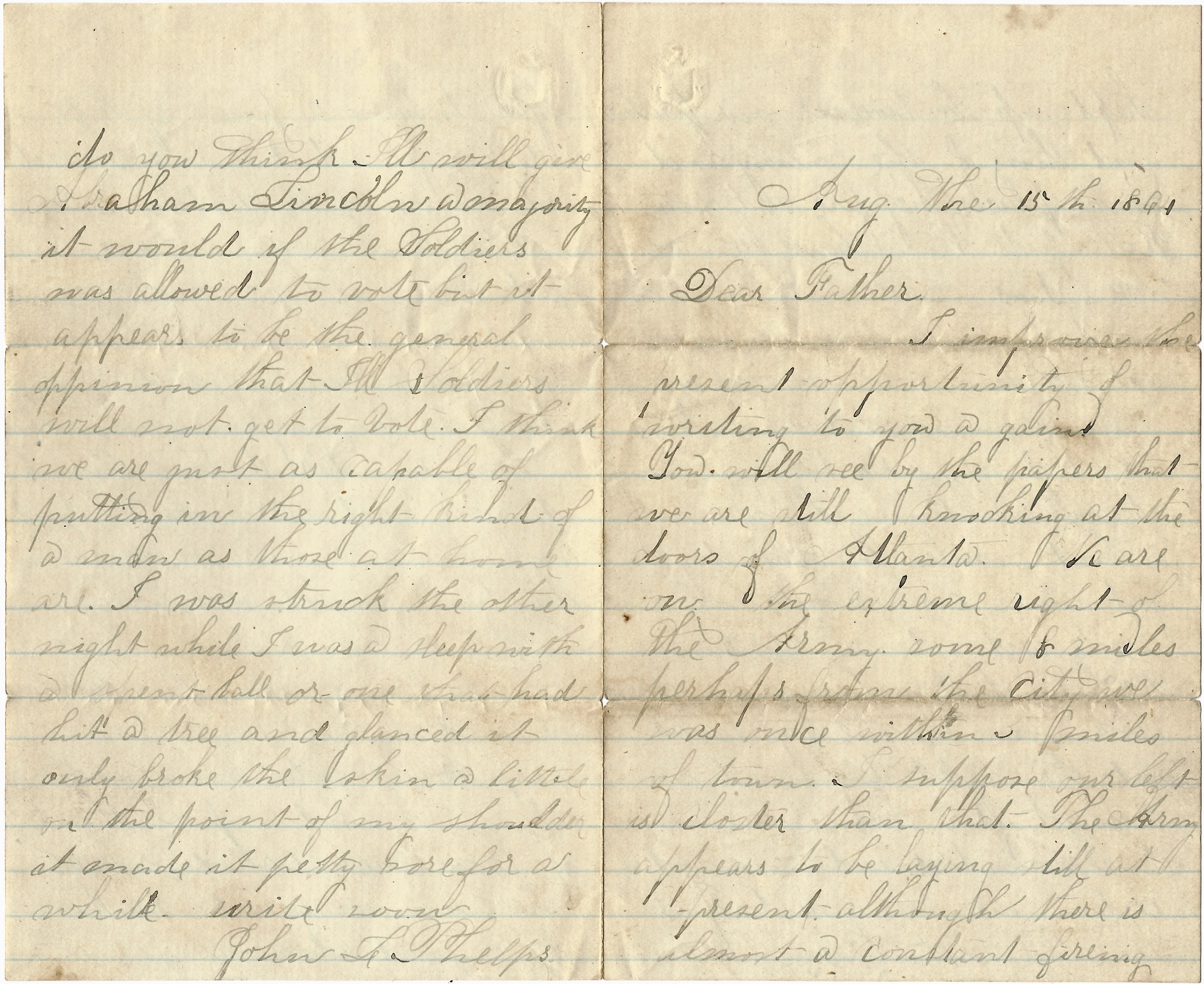
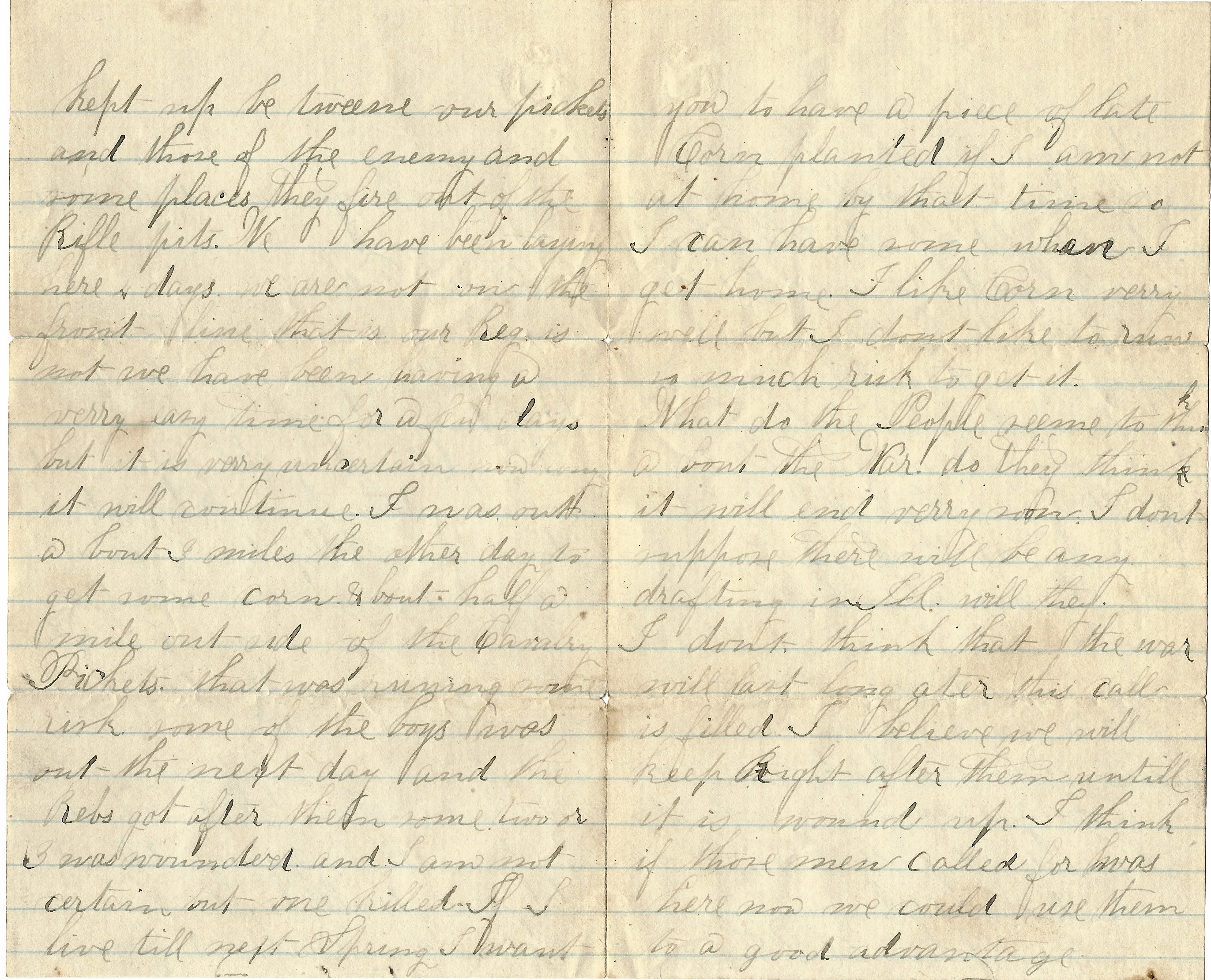
I improve the present opportunity of writing to you again. You will see by the papers that we are still knocking at the door of Atlanta. We are on the extreme right of the army some 8 miles perhaps from the city. We was once within 5 miles of town. I suppose our left is closer than that. The army appears to be laying still at present although there is almost a constant firing kept up between our pickets and those of the enemy and some places they fire out of the rifle pits. We have been laying here 4 days. We are not on the front line—that is, our regiment is not. We have been having a very easy time for a few days but it is very uncertain how long it will continue.

I was out about 3 miles the other day to get some corn & about half a mile outside of the cavalry pickets. That was running some risk. Some of the boys was out the next day and the Rebs got after them—some two or three wounded and I am not certain but one killed. If I live till next spring, I want you to have a piece of late corn planted. If I m not at home by that time, I can have some when I get home. I like corn very well but I don’t like to run so much risk to get it.

What do the people seem to think about the war? Do they think it will end very soon? I don’t suppose there will be any drafting in Illinois, will they? I don’t think that the war will last long after this call is filled. I believe we will keep right after them until it is wound up. I think if those men called for was here now, we could use them to a good advantage.

Do you think Illinois will give Abraham Lincoln a majority. It would if the soldiers was allowed to vote but it appears to be the general opinion that Illinois soldiers will not get to vote. I think we are just as capable of putting in the right kind of man as those at home are. I was struck the other night while I was asleep with a spent ball or one that had hit a tree and glanced. It only broke the skin a little on the point of my shoulder. It made it pretty sore for a while.

Write soon. — John L. Phelps


Letter 8

Goldsboro, North Carolina
March 30, 1865

Dear Father,

I have received 3 letters from you since we arrived here. We got here the 24th of March. I wrote one letter to Elizabeth. I thought I would wait a few days before writing to you.

We had a long muddy trip of it making two months and four days from the time we left Savannah until we got here. There was a great deal of rain making it very muddy. We had to corduroy nearly all the way. It is the worst country I ever seen. A wagon was most sure to get down if it got off the main road. We passed through some of the poorest country I ever seen. We passed through a strip of about 40 miles after we crossed the Pee Dee River that there was scarcely anyone living—only a few little houses along where persons lived that worked the pine timber to get the turpentine and rosin.

There are a great many people that are bound to suffer through North Carolina. There is nothing at all left for them to live on. You see the army had to depend on living off of the country mostly and when we come into a poor country, it took everything to make a mouthful you might say.

Our regiment was in two fights—one of the 16th, the other on the 19th. We was very lucky in getting out of it. We was detailed with the train at Fayetteville on the Cape Fear river & was with the train until we got through. I tell you, we was lucky in missing it. I have never heard what the loss on either side [was] but from all accounts the Rebels lost a great many the most men.

We crossed a good many fine rivers on our trip. We crossed two branches of the Broad River, Catawba, Pee Dee, Cape Fear & Neuse. We have the best line of communication we have ever had. We have railroad from Wilmington through and river to Kinston 30 miles from here and then they haul with the wagons from there to here, making two lines all the way. We have more rations that we ever had before. Old Billy [Sherman] told the boys he would give us a rest here and we should have the best the North could afford. We have plenty of pork, beans, codfish, sugar, coffee, & crackers.

I just received a letter from E. C. speaking of the election. I say there is nothing fair in levying a tax on all alike. Some men have done a great deal for the war and some have not done a thing. Nobody had to make up a bounty for me to come and I wish you did not have to pay anything for anyone else to come.

Every soldier puts full confidence in Sherman as our leader. Everyone likes him and is willing to obey him. I would rather be under Sherman than any other general that I know of Grant may be as good. He has had a harder place than Sherman has but Sherman in my man. — John L. Phelps


Letter 9

Washington D. C.
May 28, 1863

Dear father,

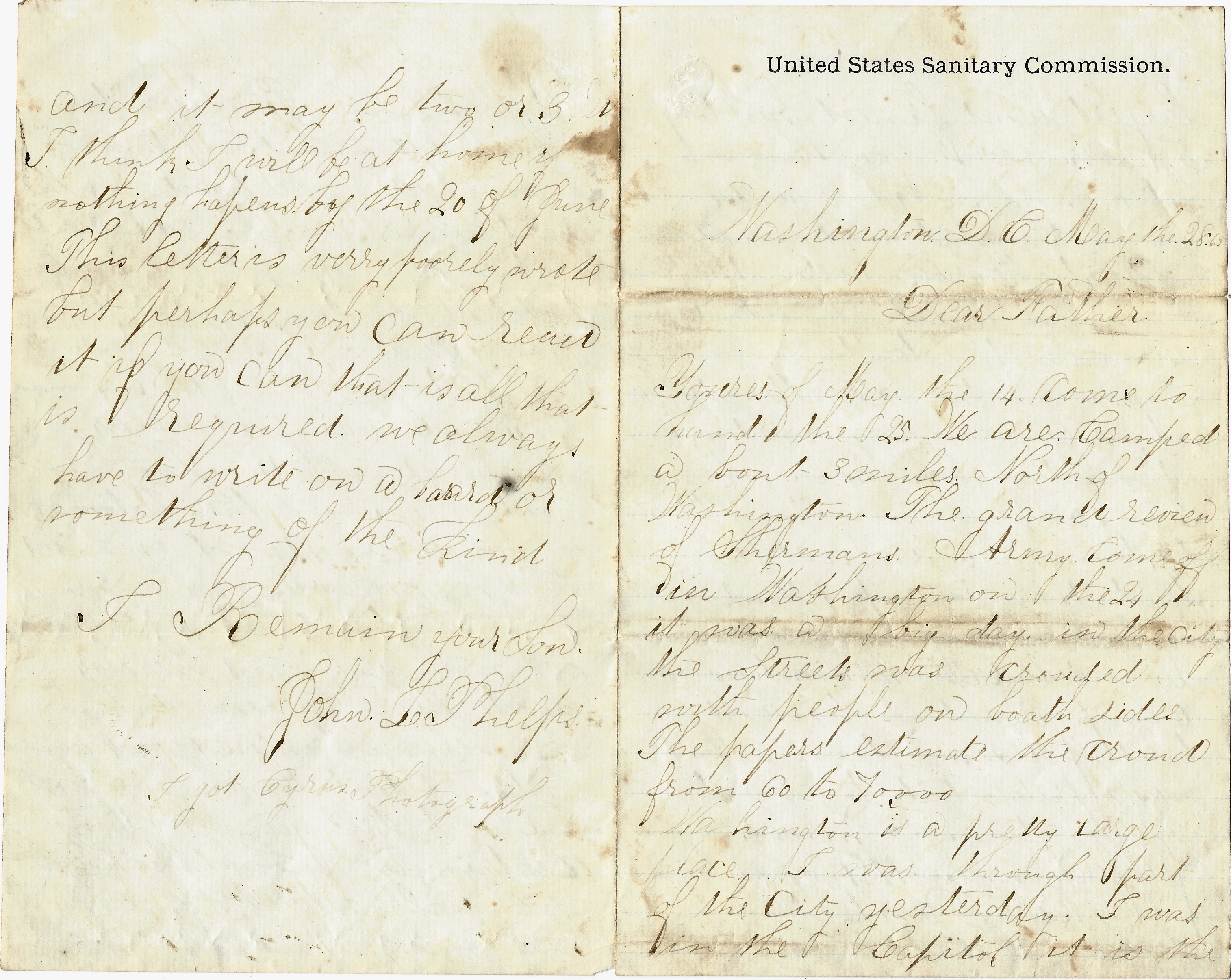
Yours of May the 14th come to hand the 25th. We are camped about three miles north of Washington. The Grand Review of Sherman’s ARmy come off in Washington on the 24th. It was a bidg day in the city. The streets was crowded with people on both sides. The papers estimate the crowd from 60 to 70,000.

Washington is a pretty large place. I was through part of the city yesterday. I was in the Capitol. It is the largest and finest building I ever seen. You have no idea how big it is until you go through it. It is all solid marble, even the floors. The house is lit up with gas in the daytime.

I was in the Patent Office. It is a very large building. It is built of marble. You can see everything there that ever was invented that there is a patent on by looking long enough. I seen Gen. Washington’s camp chest, his tent and tent poles, his dishes that was presented to Martha Washington by Thomas Jefferson in 1781, his buckskin pants that he wore.

We had a long, tiresome march from Raleigh to Washington but I think I am very well paid for the hard marching if I could not have seen the [Rebel] Capitol without it. We marched from near Raleigh to Richmond in 7 days. We left Richmond then and camped near Washington the 19th. The Long Bridge across the Potomac is quite a sight. It is said to be one mile and a quarter long.

I don’t know whether we will get paid here or not. There is some talk of our being mustered out here but I don’t think we will. I can’t tell you anything certain about when we will start for Illinois. We may start in a week and it may be two or three. I think I will be at home by the 20th of June. This letter is very poorly wrote but perhaps you can read it. If you can, that is all that is required. We always have to write in a board or something of the kind.

I remain your son, — John L. Phelps

I got Cyrus’s photograph.

1861: Robert H. Osborn to Emily (Lathrop) Osborn

I could not find an image of Osborn but here is one of Edwin Finefield who also served in Co. C, 6th Iowa Infantry Iowa Civil War Images)

The following letter was written by Robert H. Osborn (1837-1864), the orphaned son of Zimri Osborn (1793-1850) and Nancy Hathaway (1805-1857) of Belmont county, Ohio. He was married in 1861 to 15 year-old Emily Lathrop (1846-1892) before he was mustered into Co. C, 6th Iowa Infantry, on 17 July. His references to “Father” and “Mother” in the letter refer to Emily’s parents, Ichabod Lathrop (1814-1896) and Catherine Humphreys (1814-1897) of Hardin county, Iowa.

The letter was datelined from Lafayette Park in St. Louis in early September 1861. The regimental history confirms their presence there: “It was stationed for a time at Jefferson Barracks, then at the United States Arsenal and, later, at Lafayette Park and Benton Barracks. On the 19th of September, 1861, the regiment left Benton Barracks, and was transported by rail to Jefferson City, and from that place started upon an active campaign in the State of Missouri, in which it learned its first severe lesson in marching, and the endurance of hardships.”

In January 1864, Robert reenlisted as a veteran in his company but did not return home to his Emily. He was killed in action on 28 May 1864 at Dallas, Georgia.

T RA N S C R I P T I O N

Camp Jessie
Lafayette Park, Missouri
September 4, 1861

My Dear Companion,

It is with pleasure that I get to converse with you even in this way for it is the only way that we can converse at this time. Emily, I am not very well at present but not so unwell but I am able to get around. Emily, I hope that you are well.

Emily, I am anxious to hear from you for I have wrote you two letters to you and this is the third once since I had got any from you. My dear, I think your letters must have been miss laid on the route for I don’t think you would want me to go so long without hearing from you.
Emily, we have good news of late. First we took 1500 prisoners in two places in Mis. Jeff Davis dead, 400,000 prisoners taken at Washington. I hope these reports is true. Every paper being a good on our side.

Emily, I don’t think it will be long till I can fold my only love in my arms once more. One more sweet kiss from you would pay me for all of my trouble. But I cannot get it now for you are too far off. But I will be close enough as quick as I can. Emily, I wished last night when I got very thirsty that you was here to give me a drink for I did not feel like getting it myself and it seemed to me like if you could give me a drink, it would be worth a thousand that anybody else would give me. Emily, I want to see you all the time but when I get sick, it seems like it will kill me to stay away from you. Emily, I hope that I never will need to part from you again in this world and when parted for the next, that I may go fast for how can I stay if you was gone?

Emily, [General] Fremont has give our Colonel his choice to be stationed here for the war to protect this city. The people of this city made applications to Fremont for us to stay here saying that we was the best soldiers in every respect that had ever been here—the soberest and best behaved, and hearty, robust, and young men in general. We thanked the people for their good opinion. When I said we, I meant our regiment.

[Joseph J.] G. Knoles and J[ohn] Dorte [Dourtey] is about well. J. Dorte and O[zro]. Sawyer is writing letters now.

Emily, what little money I had [has] taken legs and waled out of my pocket—maybe lost it. But that one dollar bill that father got off Frank was not gone. But let it go the way of the world.

Emily, if we left here to protect the city, perhaps we will have to stay here for the three years if peace is made sooner and if we do, will you come and stay with me if I get a good room for us to stay in near to my quarters? If I can come after you in January, let me know the next letter. I am not afraid but you will. I do not want you to come if I think there is any danger here but again we may be disbanded soon after peace is made.

The First Cansis [Kansas] Regiment came here while I am writing. They was in the Springfield fight [at Wilson’s Creek]. They have had pretty hard usage. They say fighting is no fun when you see your best friends lying dead around you.

We had a nice rain night before last, The weather is pleasant. Everything is quiet about town since the martial law has been put in force. I was to church twice last Sabbath. Good sermons. Plenty of citizens to see us. The very best of order. People likes the soldiers. Make many presents to them. Perhaps they are too clever with their print for one’s good. Tell father to read the 9th Chapter of Romans.

Tell father and mother that I would like to see them and tell them about what times we have had for they are too many to write. Tell Elizabeth and Warren they must not spell all of the folks down up there this winter for if they do that I will get after them. Tell Harrison and the rest of them that I would like to see them and have some fun with them.

Emily, I will send you a watch locket. It cost me a ten cent ticket.

Emily, I am tired out writing and I must quit for the present. Emily, please write as soon as this comes to hand for my sake. Your companion, – R. H. Osborn

To my dearest Emily Osborn

1857: J. E. Fisher to his Mother

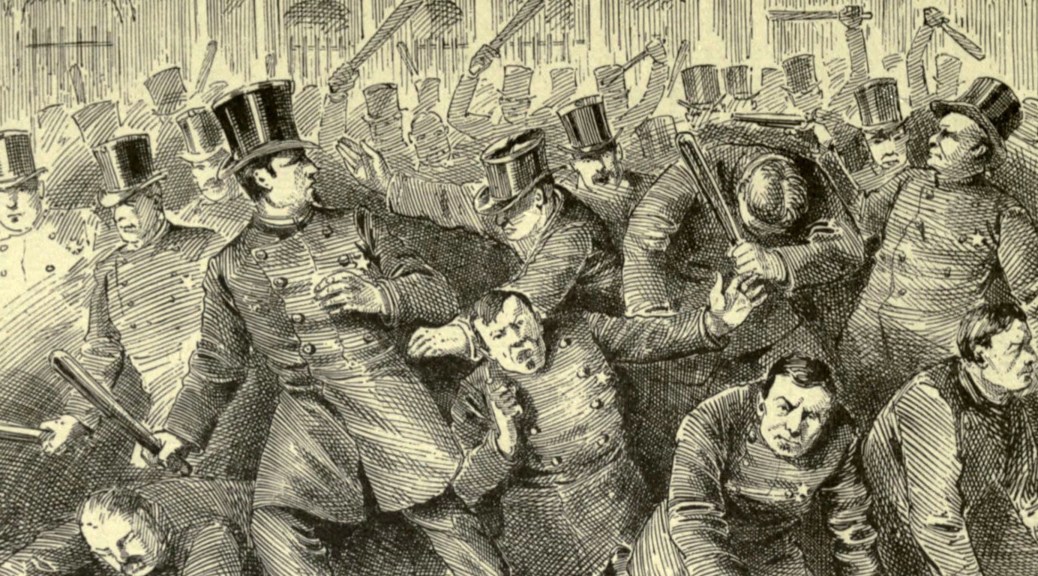
The author of this letter, J. E. Fisher, has not been further identified due to his common name but the content of the letter is interesting for it mentions the 1857 Police Riot in New York City. This incident was described in a recent article entitled. “In 1857, NYC Police Didn’t Keep the Peace—They Caused a Riot” by Joseph A. Williams. In it he informs us that “two rival police forces were operating at the same time in New York City…. The unusual situation was the outcome of a corrupt mayor and opposing political parties heading the state and city governments and would eventually erupt in a bloody, all-out police brawl.

“The tensions took root in a city seeped in corruption. The administration of Democratic Mayor Fernando Wood was regularly accused of graft, electioneering, demagoguery and bribery. Despite the mayor’s sleaziness, he had a solid base of support from New York City’s immigrant lower classes, particularly the Irish, who felt that the mayor protected them from a patronizing, anti-immigrant elite class. Mayor Wood’s deliberate failure to enforce temperance laws which would have restricted drinking saloons, made him a hero among the underclass. To help maintain his grip on the city, Wood misused New York’s police as a cudgel to guarantee election results and his power. Many of the police, meanwhile, took part in the graft and bribery common of the era.

“However, the recently formed Republican Party, coming into control of the New York State government, strategized a means to break the mayor’s and the Democratic Party’s control over the city. In April 1857, the State Legislature passed a law which disbanded New York’s Municipal Police, ostensibly for corruption and to enforce liquor laws, and replaced it with a State-controlled Metropolitan Police force that encompassed the area of Manhattan, then independent Brooklyn, Staten Island, and Westchester County. Wood claimed the new police was illegal since it violated the principle of home rule, and sued. A decision would not be made for months.

“In the meantime, Wood’s Municipal force and the State’s Metropolitans were operating in the same city at the same time. At the various station houses throughout the city, roll calls were taken and individual policemen were to announce their support— either to Wood or to the State. Fifteen police captains remained loyal to Wood, and only about 300 of the 1,100 rank-and-file police joined the new police. Each side dismissed those police who were not loyal and filled the vacancies by appointing new officers. With the stage set for conflict, the two forces often competed with each other.”

To read the details of the conflict that erupted on the morning of June 16th, I’ll refer you to the rest of Williams’ article. See: …”They Caused a Riot.”

T R A N S C R I P T I O N

New York [City]
June 18th 1857

Mother,

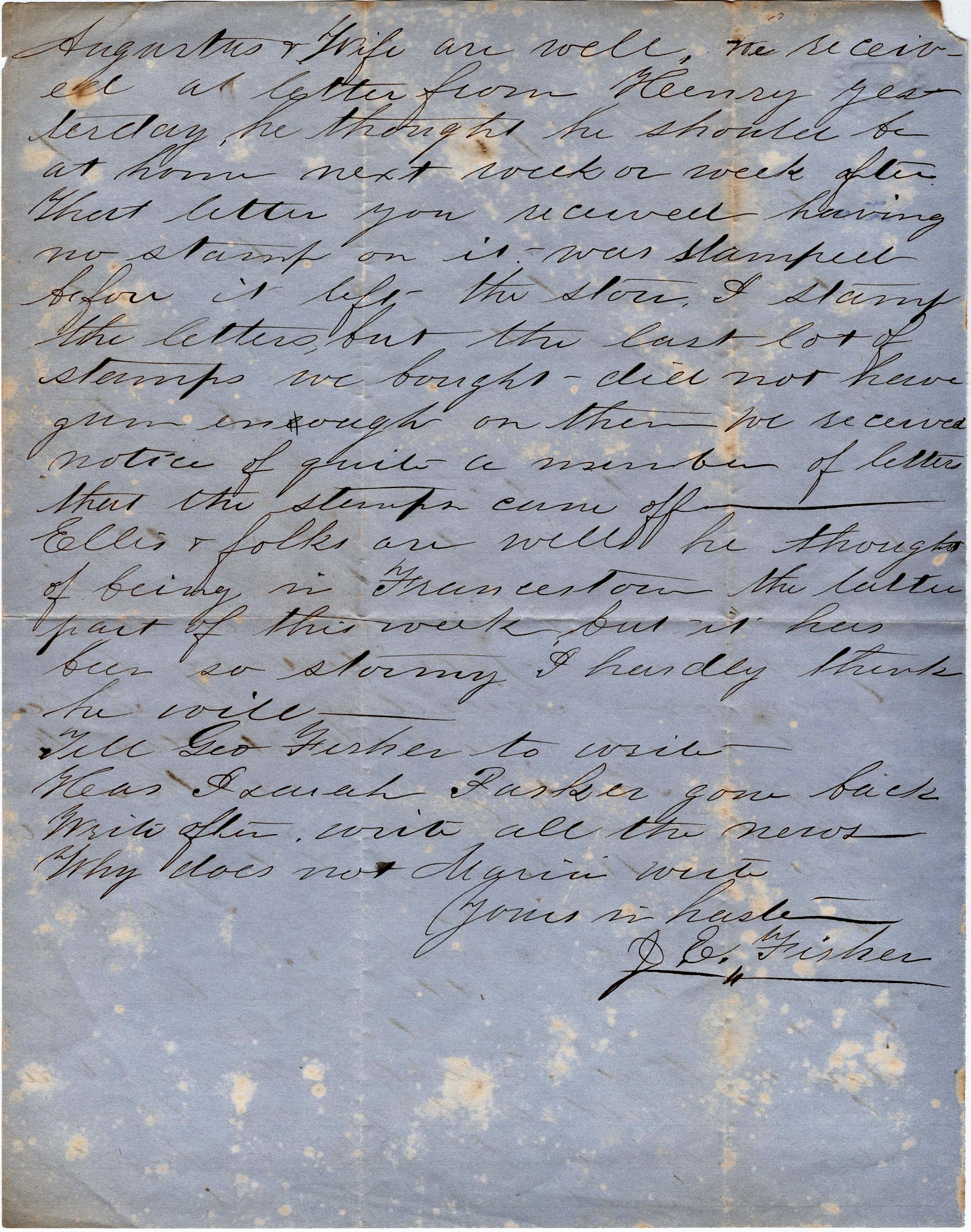
I received your letter in due season and was very glad to hear from you. The weather has been quite stormy for several weeks raining nearly half of the time.

We are having quite an exciting time here now in regard to the new police & street commissioner [Daniel Conover] appointed by the Governor [John King] Tuesday. The police had quite a fight yesterday. The Major [Fernando Wood], Sheriff [James C. Willett] & several others were arrested. The Governor arrived last night. The Military are kept in readiness to be called out at any moment.

I received a letter from Harvey Goodrich a few days ago. He wrote that Bradford’s boy was dead. What do they say about it? I should think Mr. Sawyer’s folks would feel bad about it. Augustus & wife are well. We received a letter from Henry yesterday. He thought he should be at home next week or week after. That letter you received having no stamp on it was stamped before it left the store. I stamp the letters, but the last lot of stamps we bought did not have gum enough on them. We received notice of quite a number of letters that the stamps came off.

Ellis & folks are well. He thought of being in Francestown the latter part of this week but it has been so stormy I hardly think he will. Tell George Fisher to write. Has Isaiah Parker gone back? Write often. Write all the news. Why does not Maria write? Yours in haste. — J. E. Fisher

1864: Chester H. Weston to his Sisters

The following letter was written by Chester H. Weston (b 1847) of Chesterfield, Hampshire county, Massachusetts, who accepted a bounty of $325 to enlist in Co. C, 34th Massachusetts Infantry on January 4, 1864. In June 1865, he was transferred to Co. A, 24th Massachusetts Infantry. He was the son of Ira and Laura Weston. His brother Frank served in Co. B, 31st Massachusetts.

T R A N S C R I P T I O N

Camp Sandy Hook
Co. C, 34th Massachusetts

My dear sisters,

How do you do? I hope well. I am here at Sandy Hook. I am not very well and my hands tremble. I will try and see what I can so with a [pencil?]. I find that it goes better than the ink. I received your very kind letter day before yesterday and was very glad to hear that you are where you was. You said that you wold send me some money. I have had no money for some three months and am getting out of paper and have not had any stamps until here a day or two ago. We had some little bags with some little things in it such as pins and needles and thread and in them an envelope and a sheet of paper. On mine there was a stamp on a nice envelope so I can send a letter to you. I am very glad that I can send one.

May 11, 1864. My dear sister. How do you do this morning? I hope well. I feel pretty well. It is a very rainy morning with a little thunder. It looks like clearing off. I hope so any way. Tell Aliny Fish that the reason that I han’t wrote to her is that I have no money to but anything with so she can’t blame me for not writing to her.

Please answer this letter as soon as you get it. I am here at Sandy Hook Hospital so you see that you can send what you are a mind to and direct your letters to Sandy Hook, First Division Hospital, Maryland, and they will come right here. Please write soon as you get this. This is from your brother Chester H. Weston

They have been… I can’t get my money now—not till the next payday and nobody knows when that will be.

1862: Charles L. Thompson to Sarah E. Morton

I could not find an image of Charles but here is one of Edward Hall who served in Co. A, 23rd Massachusetts Infantry (Photo Sleuth)

The following letter was written by Charles L. Thompson (1838-1890), a carpenter from New Bedford, Massachusetts, who volunteered to serve in Co. D, 23rd Massachusetts Infantry. He mustered in as a private on 28 September 1861 and rose in rank to sergeant, quartermaster sergeant, and finally to 2nd Lieutenant, though he was never mustered in as an officer before leaving the service in 1865.

Charles was the son of Amasa T. Thompson (1806-1865) and Betsy Maria Eaton (1811-1851). In 1850, the Thompson family was enumerated as farmers in Plymouth county, Massachusetts.

T R A N S C R I P T I O N

Addressed to Miss Sarah E. Morton, New Bedford, Mass., No, 35 Cove Street

Newbern [North Carolina]
September 24th 1862

Dear Cousin Sarah,

I have neglected writing you longer than I should but there has been nothing to write about and having waited long enough, I concluded to commence and trust luck for items enough to fill the sheet. I have heard nothing from Father for a long time. I wonder what the reason is why he don’t write? Most of my New Bedford [N. B.] correspondents have enlisted in the new regiments so I don’t have as many letters from home as I used to.

The rebels have been making unusual demonstrations lately in our neighborhood. You have probably heard of the attack upon Washington, N. C. about 35 miles from here. Since then our pickets have been driven in several times by bands of rebels, but no further demonstrations have as yet been made. Probably they don’t like the looks of our fortifications. Reconnoitering parties are sent out almost every day but generally they don’t meet with any large bodies of rebels—only a few scattering ones now and then.

I am glad that N. B. has done so well in sending men for the war. I am glad to learn that they are such a “better class of men” than those who went formerly who didn’t have to be paid a bounty to urge them to enlist. Well let them talk. I want to see what they can do when they get into the field. I hope they will be able to prove themselves a great deal better than the old troops, but very much doubt it.

Last week a parting speech was read to us from Gen. Burnside. He has now taken leave of us and given up the Department of North Carolina to Gen. J. G. Foster. If we can’t have Burnside, I had rather fight under Foster than any other general.

We have just received very cheerful news from the Army of the Potomac to the effect that McClellan has driven the Maryland invaders across the Potomac and this p.m. there is a rumor that Richmond is taken by our gunboats. I shall not credit this until I hear a great deal more about it than is now reported. But I must close so as to be able to get this into the mail before it closes.

In haste. Yours truly, — Chas. L. Thompson

Love to Uncle and Aunt.

1865: Ebenezer Thayer Chaffee to William Carey Chaffee

The following letter was written by Ebenezer (“Eb”) Thayer Chaffee (1841-1922), the son of Rev. William Chaffee (b. 1801) and Abigail Thayer (b. 1806), who were residents of Hartford City, Blackford county, Indiana, at the time of the 1860 Census. He wrote the letter to his older brother, William Carey Chaffee (1835-1927).

Lt. Ebenezer Thayer Chaffee, 84th Indiana Infantry (Dale Niesen Collection)

Eb enlisted on 25 August 1862 as a private and was mustered into Co. K, 84th Indiana Infantry. He mustered out on 14 June 1865 at Nashville, Tennessee. His records indicate that he was wounded (date and place not stated) by a gunshot wound in his right arm. He received a commission as a 1st Lieutenant on 29 September 1864 (1st Lieut. & Adjutant) and was transferred to F&S at that time. After the war he lived in Hartford City, Indiana, where he was employed as a hardware merchant.

The young soldier mentioned as being in trouble in the last paragraph of Chaffee’s letter was Henry Cline of the 84th Indiana. Henry was from Hartford City and was mustered out on 14 June 1865 at Nashville, Tennessee.

This letter and the cdv of Chaffee are from the collection of Dale Niesen who made them available for publication on Spared & Shared by express consent.

T R A N S C R I P T I O N

Headquarters 84th Indiana Volunteers
Huntsville, Alabama
February 1st 1865

Dear Will,

Yours of January 25th has just come to hand and as per request, I will immediately acknowledge its receipt OK although I had begun to get somewhat uneasy myself on account of its long delay, for it had been more than three weeks since I had written you. I hope the calling for that money did not discommode you for I should be sorry to do so. I supposed though that you had that much that was not in use.

You spoke of a nice trip to Corup [?]. I would have enjoyed the trip also had a been there. I hope by next winter to enjoy all such little things with you as well as “other arrangements too tedious to mention.” I have no assurance though of that for it has been but a day or two since I heard that another companion in arms as well as friendship had fallen a martyr to the cause. May he reap a rich reward in that land where they are given solely according to merit. I first heard of Jake’s death on the 29th for on that day Ez received a letter from his sister Becky. Ez is much affected by the news but at this date begins to assume his wonted joyful tone of voice & elastic step. I have seldom seen anyone much more stricken in my life than he was when first the news arrived. The boys all indeed feel his loss and sympathize with Ez in his bereavement. 1

In reference to Henry Cline, I can’t give you much news as it is not known yet what will be done with him. He is now in arrest at Brigade Headquarters awaiting trial by court martial. If he can prove what he says, nothing will be done with him and he will be released and allowed to go home. I hope that nothing bad will befall him for I always thought well of Henry and considered him a good boy. Well, I must stop. I remain &c., yours truly, — Eb


1 It was Jacob (“Jake”) Stahl whose death was mourned as another “martyr to the cause.” Jake was a sergeant in Co. K, 84th Indiana Infantry, and he died on 22 January 1865 from wounds he received in the fighting at Rocky Face Ridge on 9 May 1864. He was the son of Abraham Stahl (1809-1889) and Elisabeth Waltz ( 1808-1875) of Hartford City, Blackford county, Indiana. Jake’s older brother, Ezra (“Ez”) Mann Stahl was also in the 84th Indiana.

1862: Martin L. Wallick to Rebecca Jane Wallick

I could not find an image of Martin but here is one of Stephen A. Forbes who also enlisted in the 7th Illinois Cavalry. Martin and Stephen were approximately the same age. (Illinois Library Digital Collections)

The following letter was written by Martin L. Wallick of Orange, Knox county, Illinois, who enlisted in September 1861 to serve as a private in Co. D, 7th Illinois Cavalry. He reenlisted in March 1864 as a veteran but did not survive the war. He died of disease at Decatur, Alabama on 10 August 1865.

In the 1860 US Census, Martin was enumerated in his parent’s household in Knoxville, Knox county, Illinois. He was identified as a 16 year-old; born in Pennsylvania. His father was Joseph Wallick (1811-Aft1862). His older sister was Rebecca Jane Wallick (1842-1917).

T R A N S C R I P T I O N

Bird’s Point, Missouri
January 4, 1862

Dear Sister,

I take my pen in hand to inform that I am well at present and I hope that these few lines may find you all well. I received your letter day before yesterday and was glad to hear from you. I would like to know why you did not answer my letter sooner. You wanted to know about that paper and stamps that you sent with Lieutenant Hodge. Well, I got the paper and stamps also, the letter and the [ ] that cousin Rachel sent, and so the next day I wrote you an answer but never received any so the day before I started away from Camp Butler, I wrote to you again and have just received an answer. Now Miss Becky Jane, I want you to do better than this or I shall have too rake you over the coals.

The next day after I wrote to you, we bid farewell to Camp Butler and went to a little station on the railroad called Jimtown. We rode all night in the cars and till noon the next day when we arrived in Cairo. We came to what is called and I thought in was in old Pennsylvania for it was nothing but hills and hollows and timber for about fifty miles before we reached Cairo. We stayed in Cairo about a week when the order came for us to go to Bird Point so accordingly we loaded our horses and baggage onto a steamboat and came across to this place.

Birds Point is strongly fortified. There are ditches dug and embankments throwed up and about a dozen 24-pound cannons pointing over the top of the banks besides twelve brass cannons so you see the rebels would have some fun if they attempted to take Bird’s Point.

Cairo is right in the forks of Ohio and Mississippi rivers and you can stand in Cairo and look across the Ohio river to Fort Holt in Kentucky and you can stand in the same place and see across the Mississippi river into Bird Point in Missouri. It is very muddy here. We have not had any snow here yet. I suppose you have some jolly old times sleigh riding and going to parties. We had some fun on New Years day. Some of the soldiers dressed up as ugly as they could and called themselves Jeff Thompson‘s men and paraded around the camp. They were more like devils than anything else.

We have not drawed our arms yet. Some of the boys have drawed their sabers but I have not drawn any yet. Colonel [William Pitt] Kellogg has been in Washington for a month but he arrived here last night. I saw him today so that I know it be so. It’s thought the [he] has brought our arms with him. Some of the companies of this regiment that have drawed their arms have built themselves log cabins and day before yesterday the cabin of one company took fire and burnt up all their saddles and arms and all their blankets and clothing except what they had on their backs. The loss is about $4,000.

Some of our regiment have been out a scouting several times. Our company was ordered one night to go on a scouting expedition but they could not get the arms so they had to come back. But Lieutenant Hodge and three more of our men went along with the scouts. They [were] one day and night away and took 26 horses and mules and about sixty head of hogs and six prisoners and a lot of guns. There [was] no one hurt except that Lieutenant Hodge got kicked on the leg by a horse but is getting well fast.

The paymaster is in Cairo and he will commence paying the soldiers at this place on next Monday. I guess we will get our pay in about a week and then I will send you a letter about once a week. You said something about me sending you some money. Well, I will try to send you some. Now Jane, I want you to go to school. Tell Jim I want him to go too. Let [me] know when you write if you heard from any of our friends. I have not received any from anybody but you since I have been in camp. If you write to Pap, tell him to write me. Tell him how to direct his letter. Now Jane, you told me in one of your letters that Aunt did not want me to pay Woolsey for that horse but he has got the bonds for to show. He said that he took the bonds to Aunt but said she would not accept them. Now if aunt don’t want me to pay, write Wright Woolsey for that horse. She must get Levi to write to me that they don’t want to do so and they must tell whether Wright Woolsey did offer them bonds to aunt or not…

Our captain [Wright Woolsey] is sick about all the time. He is a going to resign and go home and we are a going to have Lieutenant Hodge for our captain and I am mighty glad of it, you had better believe.

Jane, I want you to excuse this poor writing for it is a pretty cold day and we have no fire in our tent and my hands are so numb that I can hardly write at all. Jane, I have not been inside of a house since we got to Camp Butler. Tell Jake I will give him a dollar for that valise if he will give you that chest. Nothing more at present. So goodbye. From Martin L. Wallick

Write soon and tell me all the news. Direct as you did box, only send to Birds Point, Missouri

1862: Joel Slate to his Brother & Sister

The following letter was written by Joel Slate (1800-1874). He was married to Mary Hale (1803-1874) in 1822 at Bernardson, Massachusetts. In 1860, they were enumerated in South English, Keokuk county, Iowa, where he farmed.

I could not find an image of Orra Slate but here is a great cdv of William T. Crozier of Co. K, 5th Iowa Infantry. (Iowa Civil War Images)

Joel’s letter conveys the sad intelligence of two son’s deaths in the service. The eldest son, Israel Bernard Slate (1827-1862) was a private in the 2nd Iowa Light Artillery. He died of disease on 18 September 1862 at Corinth, Mississippi. He was married to Mary E. Voorhies (b. 1830), had two young children named William and Amelia, and was enumerated in Adel, Dallas county, Iowa as a farmer in the 1860 US Census.

The other son was Orra Slate (1841-1862) who joined Co. F, 5th Iowa Infantry in July 1862. He was wounded at Iuka on 19 September 1862 and died on 5 October at Jackson, Tennessee.

Also mentioned is another son named Lorenzo D. Slate (1835-1923) who served in Co. H, 33rd Iowa Infantry, and a son-in-law, William H. Gore (1832-1906) who was a 2nd Lieutenant (later Captain) in Co. H, 33rd Iowa.

Joel also conveys the news that a nephew, son of of his brother Gideon Hurlbert Slate (1792-Aft1850), Lionel L. Slate (1837-1862) also died on 13 September 1862 at Jefferson Barracks in St. Louis. He was also on Co. F, 5th Iowa Infantry. Lionel’s brother Charley would also die some two weeks after this letter was written.

T R A N S C R I P T I O N

South English [Keokuk county, Iowa]
November 11th 1862

Dear Brother & Sister,

I sit down to inform you of our situation. We are well but in trouble. We have lost two sons in the army. Bernard died September 15th of fever near Corinth, Mississippi. Orra died October 5th of a wound he received at the Battle of Iuka the 19th of September. He was shot in the right lung. The ball lodged in his back. He died a faithful Christian. Bernard left a wife & two children. They are 125 miles from here.

Lorenzo is in the war. Mary’s husband [William H. Gore] is Lieutenant in the war. We live here and take care of his farm. I have to work hard but if they will whip the rebels, I will try to stand it. One of Gideon’s boys died September 13th—Lionel Slate, aged 23 years.

Orra was 21 years. They both belonged in the same company. There has a good many died and been killed that went from here. Orra belonged to the Iowa 5th. They was supporting the 11th Ohio Battery. It was taken from them three times and they took it back three times. There was 51 when they went to battle & 13 fit for duty the next day. 1

I must close for I must write two more letters. Write soon. — Joel Slate


1 To read more on the action at Iuka on 19 September 1862, the 11th Ohio Battery, and the 5th Iowa, see Music of the Sphere: The 11th Ohio Battery at Battle of Iuka by Dan Masters, 3 December 2018.

1863: Johnson O. Foote to John W. Cleland

The following letter was written by Johnson O. Foote (1844-1933), the son of Orley Newell Foot (1818-1888) and Fanny Bowker (1822-1904) of Defiance county, Ohio. Johnson helped to raise and enlisted in Co. F, 111th Ohio Vol. Infantry (OVI) at the age of 18 as a drummer on 25 August 1862. He was promoted to corporal in January 1864, to commissary sergeant in May 1864, given as commission as 2nd Lieutenant in May 1865, and mustered out of the regiment in late June 1865.

Foote wrote the letter to Corporal John W. Cleland (1843-18xx) who enlisted in the same company in September 1862 at age 19. He was promoted to 1st Sergeant in March 1863. In April 1864, Sgt. Cleland was promoted to 2nd Lieutenant and in May 1865 to 1st Lieutenant. He was mustered out of the service with his company in June 1865 at Salisbury, North Carolina. Cleland may have been on detached duty or in the hospital at Knoxville at the time this letter was penned.

The Daily Argus-Leader, Sioux Falls, S. D., 17 April 1933

T R A N S C R I P T I O N

Addressed to John W. Cleland, Co. F, 111th OVI, Knoxville, Tenn. To follow the regiment.

Loudon, Tennessee
October 16, 1863

Friend John,

I have taken the opportunity today to write to you and let you know of our whereabouts and what we are about. We had a very hard march but left no boys behind on the road here. We were 19 days on the road and laid over three of these days. Our rations were scant and so we were compelled to follow our old train. As usual as we found plenty of green corn so we laid in heavy on that nights when we put up and sometimes would find some potatoes, apples, peaches, &c., and as for the luck we had, came through very well.

We stopped on our way and were mustered for pay. This was the same way that we came off the mountains. We came in this place on 4th of August. [Col. Frank] Wolford [and his cavalry brigade] had made the rebs skedaddle and we had nothing to hinder us from coming in. It was one of the roughest fortified places I ever saw and they must of been pretty scared or they never would of left for all the [?] we could of got them out. Could have been to of shelled them out and that would of taken some time but there was plenty of artillery with us and if they would of stood, it would of been a pretty fight.

Well, John, after we came in, we were dragged around as usual. We went in camp and stayed one day and then moved camp and here we remained until the 16th of September when we were ordered to report to Knoxville, Tennessee. They went there and then got orders to go on and they went on 35 miles above Knoxville and then were ordered back to here.

I was left back and went to meet them on the cars and went up as far as Morristown, 45 miles above Knoxville, and then turned round and came back. After we came back, we stayed here until the 24th when we were ordered to go to Sweetwater 12 miles. We got there at 1 PM and at 7 were ordered back and got back at two in the morning and are here yet.

The rebs came up [with]in 4 miles of this place so we could hear Wolford and them fight but when they fought, they were at Philadelphia and then Wolford fell back to here and all the regiments that were here were out in line of battle except ours and they were held back and here they waited for the rebs to march in but instead of this, they run the other way. And in the morning our cavalry started after them and have been out there ever since until Sunday night when they fell back to Philadelphia. And when this news came, we were ordered out to support the Henshaw Battery.

We laid out all night and nothing was heard and in the morning we came back to camp and everything has been quiet since—only today I heard there was a wagon train captured out near Sweetwater 12 miles from here. There was six teams and 15 men. Our Co. has been out several times a foraging but never saw any trouble yet.

Well John, we have had our election. Our Co. went 16 for Vallandigham and 23 for Brough and the Reg. went 24 for Val. and 366 for Brough and the 118th Reg. OVI had 351 for Brough and 151 for Val. [The] 44th Ohio 455 for Brough and 11 for Val. [The] 104th Ohio 473 for Brough and 4 for Val. [The] 45th Ohio 500 for Brough and 11 for Val. Well, John, what think you of this?

Building the pontoon bridge at Loudon after Rebels burnt the bridge.

I suppose you want to know what for [a] town we have. It is composed of one mill and two bake ovens and a good many deserted houses. It is on the bank of the Tennessee river and was one day quite a business place for there was a landing here for boats and a depot for cars, and there was a very large bridge that crossed the river but the Rebs burned it. We have a pontoon across now and a pretty long one too. I wish you was here to see all these things and to read your letters that are now here for there is one I would like to hear from. The company, John, is in good health and are the same old boys. There was seven of the convalescents came up. There is but two that are sick. They are Loot Smith and J[ames] A. Richardson. Do you want your letters sent to you? If so, write and let me know. — J. O. Foote

John A. Forlow is in Hospital N6 & he wants to know where some of you are.