1861: Garland W. Mead to William H. Mead

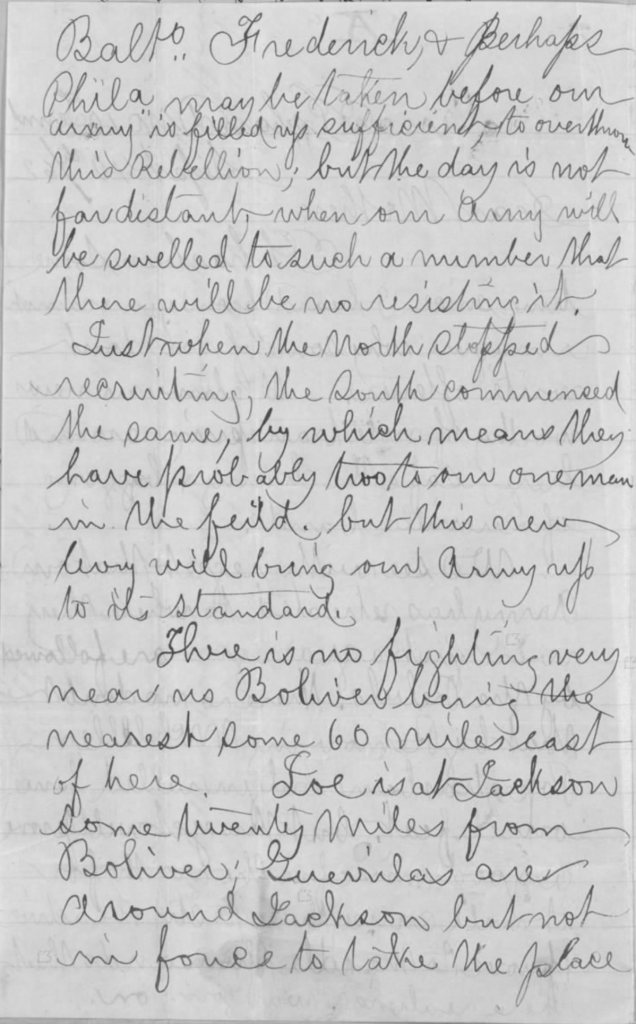
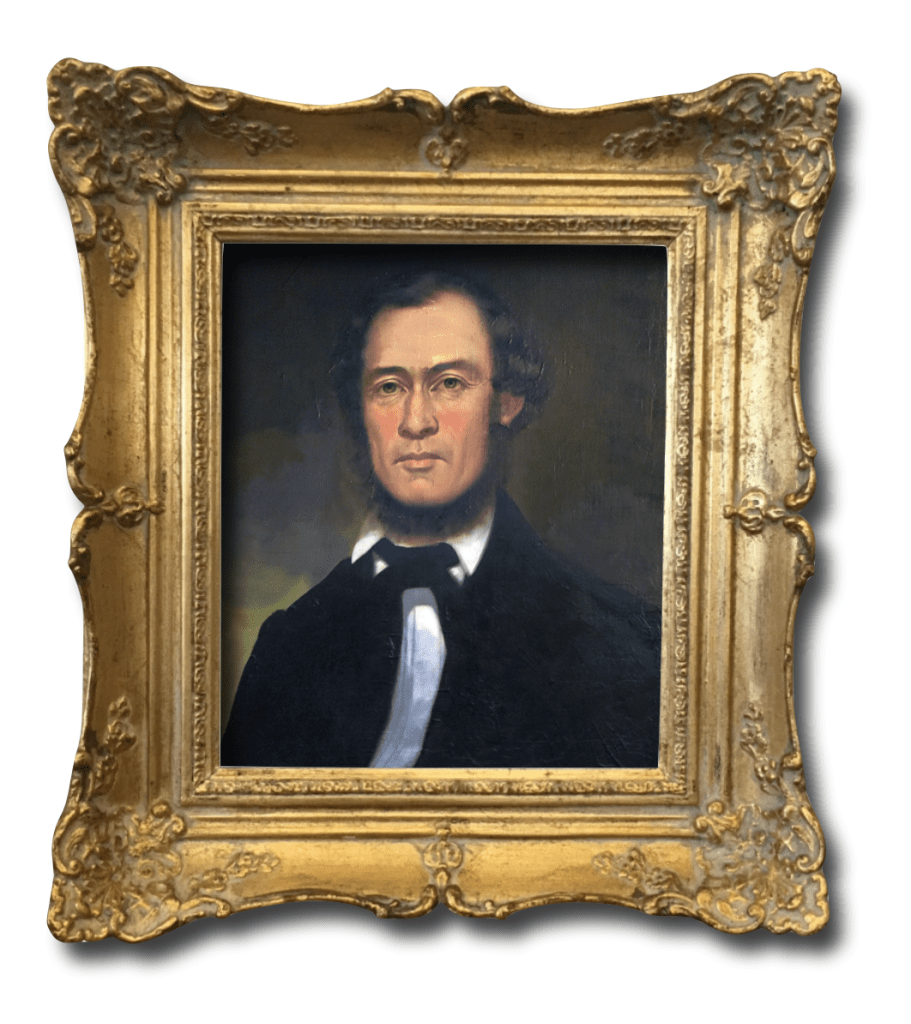
This letter was written by 17 year-old school teacher Garland W. Mead (1843-1863), the son of Henry Mead (1794-1860) and Betsy Kent (1796-1853) of Lanesborough, Berkshire county, Massachusetts. Garland wrote the letter to his older brother, William H. Mead (1835-1894).

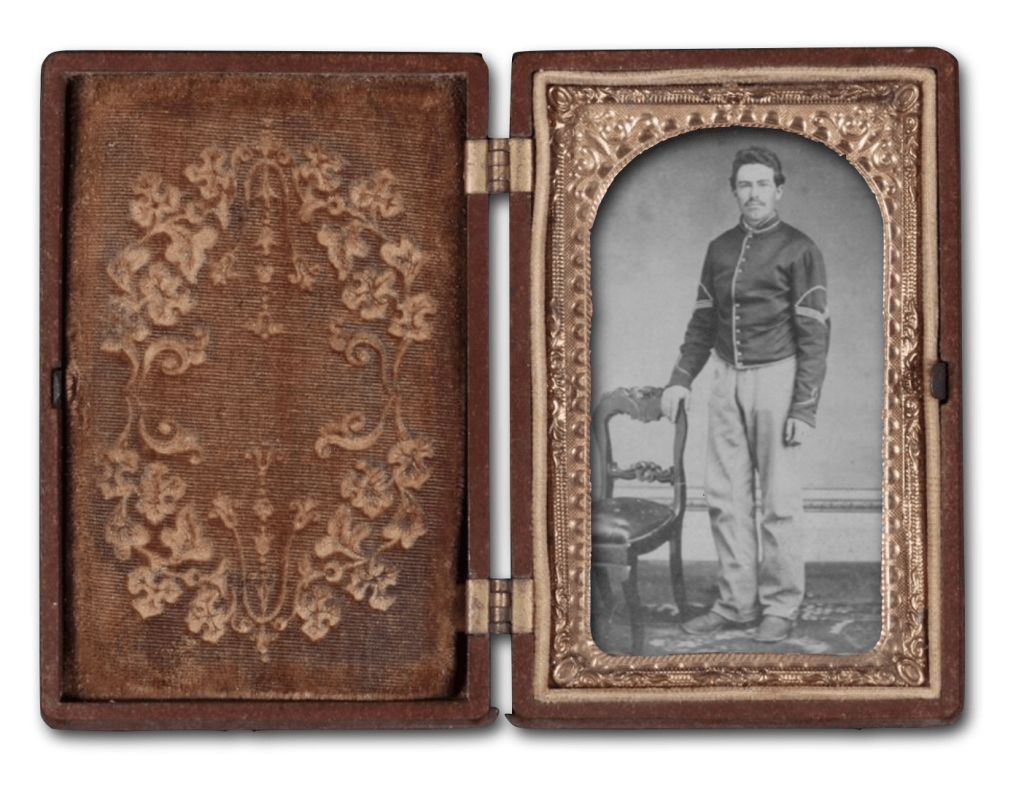
I could not find an image of Garland but here is a tintype of John Murphy (1836-1862) of Co. A, 34th NY Infantry who also lost his life at Antietam. (Jim Jezorski Collection)

Though Garland grew up in the Berkshire mountains of western Massachusetts, he enlisted with Co. G of the 34th New York Infantry in June 1861. Perhaps he was teaching a select school in or near Herkimer where the company was recruited at the time.

The 34th New York, sometimes referred to as the “Herkimer Regiment,” was composed of five companies from Herkimer county, two from Steuben, one from Albany, one from Clinton and one from Essex county. They mustered into service at Albany on 15 June 1861 for two years. They left the state for Washington on 3 July and were quartered at Kalorama Heights until July 28, when they moved to Seneca Mills. The regiment moved to Edwards Ferry on 21 October, to Poolesville, on 23 October, and there established Camp McClellan, where they remained until late February 1862.

The regiment spent March in camp at Berryville, Virginia, and later in the month moved to Washington where it was ordered to the Peninsula. It shared in the siege of Yorktown; lost 97 members killed, wounded or missing at Fair Oaks, and again lost heavily during the Seven Days’ battles. It was then in camp at Harrison’s landing until Aug. 15, when it was ordered to Newport News, and there embarked for Acquia creek. Subsequently it returned to Alexandria and was again at the front during the Maryland campaign. At Antietam, the regiment lost 154 in killed, wounded and missing, of whom 41 were killed or mortally wounded—over 13% of the 311 engaged.

Garland was one of the casualties at Antietam. William McLean, a sergeant in the 34th, was with the regiment as they marched out of the East Woods to a point 20 yards in the rear of the Dunker Church where they met the enemy coming up the hill beyond in force. He wrote:

“We fired two or three tremendous volleys, which thinned their ranks: but we in turn received quite as warm a fire as we were able to give, and being flanked and cross-fired upon, were obliged to fall back.  We did so at first, in good order, loading and firing as we could: but the advancing of the rebels and their deadly fire was at last too much for the famed 34th, as well as for many regiments, and we broke for a time and ran about thirty rods: then we rallied and turned upon the foe, who gave way before us. The action was short, not exceeding fifteen minutes, and our loss in killed, was 32 and wounded, 108.  All this was the fault of some one who led us into the face of the foe unsupported on the left.  We were within ten rods of the enemy when the first fire was opened, and before we fell back far, they came so close as to take ten prisoners, and others were wounded with gun-stocks, &c.  This we could call nothing better than outright slaughter, and the time and number of victims show it was nothing else.”

Other letters by members of the 34th New York transcribed & published on Spared & Shared include:

Orlando R. Chamberlin, Co. E, 34th New York (Union/1 Letter)
Francis R. Bailey, Co. F, 34th New York (Union/1 Letter)
Isaac G. Campbell, Co. G, 34th New York (Union/1 Letter)
Judson Hewitt Gibson, Co. I, 34th New York (Union/1 Letter)
James R. McCarrick, Co. I, 34th New York (Union/1 Letter)

Transcription

Addressed to William H. Mead, Lanesborough, Massachusetts

Washington [D. C.]
July 6th 1861

Dear Brother,

The 34th [New York] Regiment did leave Albany Tuesday at 7 o’clock bound for the seat of war. We were out aboard of an old propeller and as there wasn’t room enough, we had a barge in tow. After steaming all night, we found in the morning that we were approaching Poughkeepsie. From that time till we reached New York, I kept my station on deck looking at the objects which came in sight as we passed along. It seemed more to me that we were on a pleasure excursion than on our way to the field of battle.

Arriving at New York about 3 o’clock, we anchored in the North River. The officers went on shore but the privates were not allowed that privilege so I have not seen much of the city yet. The quartermaster finally came on board with two days rations for each man. These were distributed and we pushed off again and anchored for the night. I slept on deck as I did the night before—[Erwin] Fuller with me. [Albert] Doty was on guard. There was considerable firing during the night but it did not seem like the 3rd of July night.

In the morning we heard some tall firing at the Battery and over on the Jersey side. At 10 we pushed across to Elizabethport about 12 miles and there we got aboard of the cars for Baltimore. We came by way of Harrisburg, passing through Philipsburg, Bethlehem, [and] Allentown. Reached Reading about ten. There we changed engines and kept right on all night. Passed Harrisburg about 3 in the morning and Little York about 6. There we stopped and washed up and eat all the gingerbread, pie and cheese we could find in the place. I don’t believe there was a shop in the place where they kept anything to eat or drink but was bought out.

About ten miles the other side of Baltimore, 20-ball cartridges were given to each company to be used in case we should meet with any disturbance but we passed through Baltimore without any trouble at all. We had quite a march from one depot to the other. At every other town or city we were welcomed and cheered, but here nothing was said. Occasionally we would see a handkerchief waving and hear a cheer but after we got to the depot and the company got aboard, I managed to get liberty till the train started which was about an hour and I talked with some of the men. They said that the Union feeling was strong there now, but if there are any secessionists, they dare not show their heads now for Gen. Banks has taken up their policemen and they have now none but Union men. They won’t allow the news boys to sell secession papers. I tried hard to get one but couldn’t. I got the Clipper & Patriot which I send on to you.

There were five companies of the 22nd Pennsylvania Regiment encamped near the depot and 2 Maryland regiments. The Massachusetts 8th and two or three Pennsylvania regiments are encamped just out of the city. The Allen Guard are stationed at the prison at Baltimore as guard. This a soldier told me at the Relay House. If I had known it before, I could have gone and seen them.

We got into Washington about 10 o’clock at night and we marched about half a mile to the place where we are quartered at present. All but two companies are in a large and commodious building on D Street North. We are on the left flank of the Battalion so we were put in another building which is a dark hole. The Captain says if we don’t get orders to encamp out of the city or different quarters here, he will put his men aboard of the cars and go home. Since [then], we hear that we go out of the city tomorrow certain.

I have been up to the Capitol and stayed an hour or two. But we were expecting marching orders all the time so we came back again. But now Lieut. [Warren J.] Mack says [Albert] Doty and I can go where we have a mind to till night and we are anxious to improve the chance so I must close and write more tomorrow. I am well. Doty the same. Fuller on the sound list too. Love to all, — G. W. Mead

P. S. There is no excitement here among the people and I don’t hear the citizens say much about the war. The Zouaves have just tore down and burned up a drinking house where one of their number was shot last night.

Doty says tell them we are proof against Jersey lightening and Washington flies—the two greatest nuisances we have met with yet. Write soon and direct to Company G, 34th New York Regiment, Washington, District of Columbia, and I think I shall get it wherever we may march in the morning.

— Garland

[to] Wm. H. Mead

1864: John W. James to Sarah Arnow

I could not find an image of Corp. James but here is a tintype of a member of the 8th Ohio Infantry with his lady. (Kevin Canberg Collection)

This letter was written by 28 year-old Corp. John W. James of Co. G, 8th Ohio Volunteer Infantry, a member of the Gibraltar Brigade of the Army of the Potomac. John enlisted on 7 June 1861 and was mustered out after three years service on 13 July 1864.

“Following President Lincoln’s call for regiments of 3 years’ duration, the 3 month regiment reenlisted on 22 June. It participated in the Shenandoah Valley Campaign against the forces of General “Stonewall” Jackson, and gained distinction at the Battle of Antietam with their fighting at the Sunken Road. They also served at the battles of Fredericksburg, Chancellorsville, and Gettysburg. The 8th became well-known after its service at Gettysburg, due to its repulse of Confederate troops during “Pickett’s Charge.”

After Gettysburg, the regiment was sent to quell the New York City draft riots. Following its return to the Army of the Potomac, the 8th participated in Grant’s Overland Campaign from the Wilderness to the siege of Petersburg. At Spotsylvania Court House, they were engaged in the fighting at the “Bloody Angle,” where hand-to-hand combat raged for 22 hours. Just 3 weeks before their enlistment expired, on 1 June 1864, they took part in the ill-fated attacks at the battle of Cold Harbor. This constant, intense fighting throughout the war gained the 8th a dubious honor: more of its men died from hostile action than of disease.

The regiment was officially mustered out of service on 13 July 1864. Veterans who wished to continue the fight, along with new recruits, formed two companies and were attached to the 4th Ohio Infantry Battalion on 25 June 1864. A total of 205 members of the 8th Ohio Regiment died during its term of service, including 8 officers and 124 enlisted men in battle and 1 officer and 72 enlisted men from disease.” [Encyclopedia of Cleveland History]

John wrote the letter to his aunt, Sarah R. Arnow (1811-1892), the wife of William H. Arnow (b. 1808), a carpenter in Westchester, New York.

Transcription

Addressed to Mrs. Sarah Arnow, Westchester, Westchester county, New York

Camp of the 8th Regt. O. V. Infantry
Near Stevensburg, Virginia
April 17th, 1864

Dear Aunt,

With haste I embrace the opportunity of addressing you as I learn from a reliable source that after today, no mail will be permitted to leave the army during the spring campaign. I presume the object of this is to prevent any news going North as regards the movements of this army. Therefore, undoubtedly this will be the last letter you will receive from me while in the service of the United States. But if I live, I hope to be enabled to write to you before long as I have but sixty-seven more days to serve in this cruel war. All mail sent to the army will be received as in the future. Therefore, I trust you will write to me often and if I get an opportunity of writing sooner than I expect to, I will improve it. I shall endeavor to write a line to each of my very numerous correspondents today to inform them of the stoppage of the mail.

“The season on inaction is past, and with the opening of Spring comes the beginning of that portentous struggle which as we finally believe will end this unnatural revolt…

—Corp. John James, 8th OVI, 17 April 1864

The season of inaction is past, and with the opening of Spring comes the beginning of that portentous struggle which as we finally believe will end this unnatural revolt that has annoyed the Sons of the South against the government of their fathers. During the past few months, neither side has been idle. The thinned ranks of our veterans has been largely reinforced. Liberal bounties have enlisted many a sturdy recruit and thus far spared the necessity of a draft. The heroes of many a well fought field have renewed their vows of devotion to the country for which they have imperiled life and limb and have reenlisted for 3 years more. Our armies have been reorganized under new, yet tired and faithful leaders who inspire the confidence and kindle the enthusiasm of their followers, and soldiers of the Republic enter on another campaign amply equipped and full of hope. And they only need good leadership to march to battle and to victory. The great captain who eagles have never fled before the enemy is now in chief command. Gen. Grant has made the 4th of July 1863 historic. We fondly hope that he will make the 4th of July 1864 even more renowned as the National Anniversary of a once more united and regenerated Republic.

I wil now close as my time for writing is but limited. Therefore, I must use it to the best advantage. Father, mother, brothers and sister were enjoying good health at last accounts. These lines [leave] me well. May htey find you and family the same. Give my love to all. I will now bid you a kind adieu, hoping to hear from you soon.

I remain as ever your nephew, — John W. James

Address all letters to me as follows: John W. James, Co. G, 8th Regt. O. V. Infantry, Carroll’s Brigade, 2nd Corps, Army of the Potomac

1863: Charles Morrill Hammond to I. G. Edward

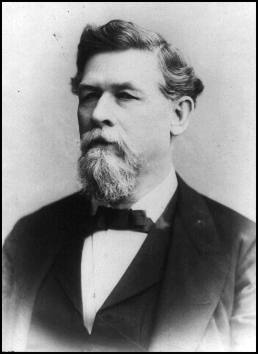
Charles Morrill Hammond (Illinois State Historical Library)

This after action report of the Battle of Chickamauga was written by Charles M. Hammond (1824-Aft1900), the Lt. Colonel of the 100th Illinois Infantry. This was probably a first draft of the report or a hand-written copy that Hammongd kept for his personal files.

Hammond was born in Swansey, New Hampshire, the son of Benjamin Hammond (1792-1858) and Charlotte Richardson (1804-1842). He was married to Lydia Ann Fancher in 1847 and had at least three children by the time of his enlistment in the service. Prior to the war. he ran a livery in Wilmington, Will County, Illinois. After the war, he took up residence in Joliet and was employed as a collector for the Internal Revenue Service. By 1900 he had relocated to Salt Lake City where he worked as a lawyer.

This letter is from the personal collection of Jim Doncaster and is published by express consent.

Transcription

The following is the personal handwritten copy of the after action report filed by Charles M. Hammond of the 100th Illinois Infantry following the Battle of Chickamauga. The official report may be found on-line at: The Chickamauga Campaign.

Headquarters 100th Illinois Vols.
Chattanooga, Tennessee
September 26, 1863

Capt. I. G. Edward, A. A. A. G.

I have the honor to report that on the 19th of September at about 3 o’clock p.m., this regiment (Col. Frederick A. Bartleson commanding) lay in position on the right of the 3rd Brigade, Wood’s Division, who were protecting the ford at Lee & Gordon’s Mill. Orders were received to move in the direction of of Chattanooga on the Chattanooga & Lafayette Road. As a part of the 1st Brigade, this regiment in the advance proceeded rapidly about two miles and formed in line of battle on the right of the road. A battery of Davis’s Division and the 26th Ohio Vols. on our right and left respectively, to support Davis’s Division which was being heavily pressed and giving away, but a few moments intervened for our point to be cleared of our own troops, when the order to advance and charge the enemy was given and promptly complied with under a heavy fire of musketry and with a loss of nearly one hundred men in killed and wounded including Lt. Col. [Arba N.] Waterman who was severely wounded in the right arm. On the order to retreat being given, the regiment fell back and made a stand first behind a breastwork of rails on the left of the road, and afterwards advanced to the right of the road driving the enemy before us and making a stand which was monumental until relieved by troops of Sheridan’s Division when we again retired to the rear of the breastworks and lay down on our arms for the night.

On the morning of the 20th at about 3 o’clock, we moved to the left on a road in the rear, about one mile and a fourth, at at 8 a.m. to the front and relieved a part of Gen. Negley’s Division, our left resting on Harker’s Brigade and on our right supported by the 26th Ohio Vols. and occupied a position behind a light breastworks. Skirmishers were thrown out and as they were met by slight resistance, they were quickly followed by the regiment, which charged across an open field and through a small ravine. Masked batteries supported by infantry both of which opened a fire so deadly that the main portion of the regiment fell back to its original position behind the breastworks. A part of it, however, was rallied by the Colonel commanding behind a picket fence near the ravine checking the advance of the enemy until overpowered when it hastily retreated, leaving the Colonel and several of the men dead or wounded upon the field.

At this juncture I had just returned from the line of skirmishers of the 1st Brigade, which I had located by order of Col. Buell, and found the regiment in a disorganized state without their commanders. I rallied them and formed them behind the crude rail breastworks, and after remaining in that position for 5 or 10 minutes, I called for volunteers to go and recover Col. Bartleson whereupon Adjutant Rouse, Lieut. Weeks, and 4 men volunteered and went soon after. I was ordered by Col. Buell to move the regiment by the left flank and follow the 58th Indiana Vols. and move across an open piece of ground to the top of a hill under a heavy fire. I then lost sight of the 58th Indiana, but discovered a long line of the enemy moving around on our right which I held in check for a short time, but were forced by superior numbers to fall back.

Here portions of other regiments of the 1st Brigade became intermingled with my own. Of these, I took command and attached them to a portion of Gen. Negley’s Division who were drawn up in line of battle, but which eventually fell back with them and a portion of Gen. Reynold’s Division to a point near Cossville which I found Lt. Col. Young of the 26th Ohio Vos. and where I turned over command of the 1st Brigade that I had succeeded in gathering up. I was then ordered into camp by Col. Young with my regiment being 98 officers and men. Respectfully submitted.

Your most obedient servant, — C. M. Hammond

1863: Charles R. West to James Overstreet

I could not find an image of West, but here’s a cdv of Capt. James A. McCampbell who also served in the 20th Kentucky Infantry

This letter was written by 26 year-old Charles R. West of Nicholasville, Kentucky, who enlisted as a sergeant in Co. K, 20th Kentucky Infantry in October 1861 at Lexington. He was appointed 1st Sergeant in the spring of 1862 and then commissioned a 1st Lieutenant in October 1862—his commission received directly by the Governor of Kentucky. He received extra pay in the spring of 1863 for commanding the company in the absence of the captain, and then was finally named the captain of Co. K with his commission back-dated to 7 February 1863. He served in that capacity and was with the regiment until mustering out at war’s end in 1865

Charles’ parents were Wilson Hunt West (1812-1877) and Stella Elizabeth Overstreet (1815-1889) of Nicholasville, Jessamine county, Kentucky.

[Transcribed by Stacy Cookenour; researched & edited by Griff.]

Transcription

Lebanon, Kentucky
May 26, 1863

Mr. James Overstreet
Dear Sir, 

Your letter of the 16th came to hand today. I was glad to hear from you and to hear that all of my friends are all well. I regret to hear that Uncle James is dead but I hope that when we are called to go, that we may be as well prepared as he was. You wish to know if I have received my mess chest. I have, and am well pleased with it. There is nothing worth writing about at this time for you see the papers and they keep you posted as to what the army is doing. The news from Vicksburg is good for Grant has whipped the rebels badly. 

What do you think of the administration raising Negroes to fight? I will give you my view on the subject. The administration will raise the Negro regiments and try them. They will soon find out that the Negro will not fight then they will muster them out of the service and carry on the war on conservative principles. Then we will soon whip the South. 

You wrote that you had some papers for General Carter to sign. The General is out front at this time on the Cumberland River. If you will send the papers to me, I will send them to Gen. Carter and have him to sign them. Then I will return them to you. Do you think that would be safe way to do? You can direct them—that is, if you send them, [to] Capt. C. R. West, Co K, 20th Kentucky Vol. Infantry, Lebanon, Kentucky. I will forward them to Carter and when he signs them, return the papers to you.

I would like to spend a week with you this summer very much but will have to forego that pleasure but if I shall come home, will visit you. I will ask you to write to me. I will take pleasure in answering your letters. It is late so I will close. Give my love to all my friends and remember me kindly. Have the kindness to excuse the many mistakes in this. 

Yours Truly, — Capt. C. R. West

Co. K, 20th KY Vol. Infantry. Lebanon, KY

1862: Francis Asbury Shute to Sarah (Campbell) Shute

This letter was written by Francis (“Frank”) Asbury Shute (1840-1889), the son of Joseph Atkinson Shute (1815-1863) and Sarah Ann Campbell (1816-1890) of Harrison, Gloucester county, New Jersey.

Frank joined the 3rd New Jersey Volunteer Infantry in April 1861. 
Although the letter is undated, the content suggests it was written in May 1862 while the regiment was participating in McClellan’s Peninsula Campaign. Private Shute was discharged due to disability from the Convalescent Camp near Alexandria, Virginia, on 15 December 1862.

After the war, Frank married Anna Maxwell (1842 – 1912) and they had two children, Emily Shute Taylor (1869-1928) and Mabel Shute Levering (1882-1962.) Frank died on August 10, 1889 at the age of 49.

Frank’s Diary posted on Find-A-Grave by Jeff Leonards

Transcription

5 Miles of Richmond

Dear Mother,

I have long been looking for a letter from home but as yet none have come. I received a letter on the 20th inst. from you on the 20th of April. This is the last news I have had from home. Don’t think I complain of you, but Father and the rest might write more than they do if they only write a few words. I heard through Mrs. Cole to Frank that Emma was sick and I have been more anxious since to get a letter from home. My last letter was not directed properly or I would of got it much sooner. Follow my directions and they will come safe.

We are now on the edge of Chickahominy Swamp and five miles from Richmond and dear [God] only knows when we will go into Richmond. Some anticipate a hard fight but I do not. But let come what will, we are ready for the worst.

I have not got the box that Father brought to Alex for me and that is not all—never will. I am very sorry to think he is such a big coward as to be afraid to venture down to see me when we were 10 miles within the lines. Why just tell him we boys think it fun to get on the outpost to do picket duty. Tell him Andrew Ridgeway and me stood on a post once and the rebs was not 150 yards off, but neither dared to show their heads or pop would come or go a bullet. He a Colonel too and exercise such bravery? What do you think if I would write and tell Governor Olden what he would say? This looks too much like some of the Southern chivalry.

We have not heard from John Eacritt as yet nor do I suppose we will find him in Richmond for they will move all the prisoners back. [William] Buller is pretty sick but not in the hospital. Elkitton is in the hospital. So is Dave Gibson. [Joseph] Picken looks bad and has been pretty sick but he stays along with the company. Several other of our boys are sick in the hospital but no more that you know. I have been quite unwell for 2 or 3 days but am better now. Do please write soon.

From your loving son, — Frank A. Shute

Co. A, 3rd Regiment N. J. Vols., Fortress Monroe, Va., Franklin’s Division

Don’t forget to direct this way. Paper is very scarce.

1864-65: Henry Snow to Mary E. Sears

I could not find an image of Henry in uniform but here is one of Pvt. George T. Meech of the 21st Conn. Volunteers

These letters were written by Pvt. Henry Snow (1839-1921), the son of Henry Snow, Jr. (1802-18xx) and Eunice Sears (1801-1875) of East Haddam, Middlesex county, Connecticut. Prior to his enlistment in Co. H, 21st Connecticut Volunteers, Henry was working in a bell shop. Henry entered the service in September 1862 and mustered out in June 1865. He was promoted to a corporal on 1 March 1865.

The regimental history compiled by Wm. Stone Hubbell contains some very interesting statics for Co. H of the 21st Connecticut. It claims that the average age was 27.6 and that 46 of the 100 men were married. There were 19 farmers, 21 mechanics, 13 laborers, 7 clerks, 6 teamsters, 6 sailors, and a smattering of 13 other occupations.

The 21st Connecticut Volunteer Infantry Regiment lost 5 officers and 55 enlisted men killed or mortally wounded and 1 officer and 114 enlisted men to disease during the Civil War.

Henry’s first letter, dated, 23 August, 1864, gives a good description of the Battle of the Crater that took place on 30 July 1864.

Other letters by members of the 21st Connecticut Vols published on Spared & Shared include:
Arthur Henry Dutton, F&S, 21st Connecticut (Union/15 Letters)
Thomas Latham Bailey, Co. C, 21st Connecticut (Union/38 Letters)

Letter 1

Addressed to Miss Mary C. Sears, East Hampton, Connecticut

In the rifle pits before Petersburg, Virginia
Tuesday morning, August 23rd 1864

Dear Cousin,

I received your kind letter of the 16th on the 20th and was very glad to hear from you. I had not heard from you for a long time. I have always answered all the letters that I have received from you.

We have indeed passed through many and trying scenes since I heard from you. When I write to you last we were at Rodman’s Point near Little Washington, North Carolina. Since then we have been almost all over Virginia. First, we went to Portsmouth and from there to Bermuda Hundred—a little above City Point—and to the Battle of Drewry’s Bluff, and from there to White House and from there to the Battle of Cold Harbor and from there back to White House and back to Bermuda Hundred, and from there to Petersburg where we are now and are likely to be for all that I know.

We have been here in sight of the City of Petersburg over two months now. We have been in the pits a good share of the time. We have to be up a good deal nights and sometimes all night, but we have stood it through—some of us. There is many a poor soldier that started with us on this campaign that is now sleeping beneath the sod or lying wounded in hospitals. Oh! how thankful all of us might be that while others are being called from this to another world, that we are still permitted to live and enjoy health and strength.

Our Corps was there when the [fort] blew up [see Battle of the Crater]. It was on the left of us—the line that we held, and they relieved us and sent us down there to relieve the 9th Corps and hold their works while they made the charge. This was on the 30th of July and a very warm day. You undoubtedly have seen an account of it in the paper but we were right there. Just as soon as the fort blew up, we all fired a volley from behind the breastworks and then they charged. But it was just like pulling teeth. They hated to go and I don’t blame them. The papers may cry out that the soldiers are in good spirits and eager for a fight, but I do not believe it. We lay there all that day amid the fighting and they lost everything that they gained in the morning. Towards night, after the fighting had ceased, I went up and looked over the breastworks where the charge was made and such a sight as that I never want to witness again. The bodies were lying one upon another, just as they had fallen, and some of them were wounded and you could see them wave their hands in pain out there in the hot sun between our lines and their lines so that we could not help them any. Anyone that has see a few such places as that will not be very eager for a charge.

It was not the fault of the men. I think that it was their officers—some of them were drunk. I am sorry to say it but we have officers in our own regiment that will get so drunk that they do not know what they are about. We have lost two good Colonels since this campaign commenced—as good ever need be over men and several good captains as there is in the regiment. Our regiment got reduced down pretty small. There is but 10 privates in our company [fit] for duty.

You say that the Sabbath School went out the other day to pick blackberries for the soldiers. I can tell you unless you send them right to them, the private soldier will get very little, if any, of them if some of the officers get hold of them [first]. I have known how these things are worked in this army better than folks at home. Our Doctor once went and drew shirts and drawers and such things for the men from the Sanitary Commission and then gave them out among the officers. I do not know of but one that got anything. So you see how things go on here.

I received the drawers and towel that you sent me and was very thankful for them but did not know who sent them. They were just right for me. I have a great deal more that I could write if time and space would permit me but as my sheet is about full, I shall have to close. I guess that it will bother you some to read some of this but you must excuse all mistakes as I have written in a hurry and excuse that dirt on the bottom of the page for my hand got wet and I got some dirt on it and put it on there before I thought. So I will close with respects to all inquiring friends.

Accept this from your cousin, — Henry


Letter 2

Camp of the 21st Regiment Connecticut Vols.
On Chapin’s Farm, Virginia
February 14th 1865

Dear Cousin,

I received your kind letter of January 10th a long time ago and do not know but you will think that I have forgotten you entirely. But it is not so. I often think of home and all the friends that are dear to me there and wish that I could see them all once more. But I must wait patiently and I trust that the time is coming when we shall all meet again. If not on this earth, may we all meet in Heaven where there will be no parting there.

The Christian Commission have got a large tent set up where they hold meetings every eve in the week and they have good ones so there is a good attendance. The tent is pretty full every eve. I enjoy going to them when I am not on duty. I should have been on duty today but I was excused from one turn of guard making the best shot the other morning. We have to go down every morning when we come off guard and the one that makes the best shot out of the guard is excused from one turn.

Henry Snow in later years

We have to drill every day—a company drill in the forenoon and a battalion drill in the afternoon. We drill an hour and a half each time which makes three hours. Our regiment is so small that it is not much to drill it. We do not have as many out on drill out of the whole regiment as we used to have in one company. When we came out this forenoon, there was three privates and one sergeant for drill. The rest were on guard or fatigue or had just come off guard. But we are large enough I hope that they will not send us any recruits. We have got a few that came to us about one year ago and that is enough. There is every few days someone deserting to the rebels from other regiments and some of them get caught and then have to be shot. It is nothing strange for us to hear that there is a man to be shot on such a day. There was one shot about a weeks ago within a half mile of here. They have never taken us up to witness it but they take those that desert—most, that is—so as to give them warning I suppose. I saw in the paper the other day the Newel Roots execution. He was very foolish to desert and then get shot. The drum has just beat for drill so I will close and finish some other time.

Tuesday evening. I have just come from meeting. There is quite a revival. There is quite a number of hopeful ones and I wish that there were more. I expect that Henry Sellew is on his way back to the Regiment. Hubert is in Washington yet and they talk of putting him into the Invalid Corps but do not know whether they will or not. There is a great deal said about peace now days. I do not know whether there is anything in it or nit but I hope that they will make peace if they can make it on the right terms. But I uphold Old Abe in saying that he does and not flinch at it. But it is getting late and I will close. Please excuse all mistakes and give my respects to all inquiring friends and accept this from your cousin.

— Henry Snow

1863: Samuel W. Madison to Nancy Madison

I could not find an image of Samuel but here is an unidentified Union private approximately Samuel’s age.

This letter was written by Samuel W. Madison (1840-1864) while serving in Co. F, 13th Indiana Infantry. According to muster records, Samuel enlisted as a private on 19 June 1861 and he died of chronic dysentery at Davids Island, New York, on 14 February 1864.

A claim for a widow’s pension was filed by Samuel’s mother, Elizabeth, after she received word of his death. She contended that relied upon the wages of her son, her husband Robert having died in 1853.

The 13th Indiana Volunteer Infantry Regiment was originally accepted for state service for one year and was organized at Indianapolis for the U.S. service by volunteers from the companies in camp. It was one of the first four regiments volunteering from the state for three years.

Transcription

Camp 13th Regiment
Folly Island, South Carolina
September 8, 1863

Dear Sister,

I seat myself this morning to write you a few lines to let you know how I am getting along. In the first place, you will excuse my ragged paper as I have no other here in the tent and the sun is very hot and I am too lazy to go to the sutler’s shop to get any.

I have not got altogether well yet and I would state here that you may hear that I got wounded which I did but it was so slight that it is hardly worth mentioning. It was by a small piece of shell—not bigger than a pea. Went in my shoulder. It is about well now. It was on the first night of this month. We was laying in front of Fort Wagner and a shell from there burst over our company and wounded two besides me, but none of us bad enough to stop from duty. So if you hear about me being wounded, you need not be uneasy for it is as I say. It don’t amount to much. I would of not said anything about it but I thought you might hear it and think it is a good bit worse than it is.

There has been five in our company wounded since we are here but only two that is shot bad as to stop from duty. Fort Wagner and Fort Gregg and all Morris Island is now in our possession and today the gunboats have been keeping up a heavy fire all morning—to what effect, I don’t know.

I will close for this time hoping these few lines may find you all enjoying good health. Write soon. I am your brother till death. — Sam Madison

Company F, 13th Regiment, Indiana Volunteers
Foster’s Brigade, Folly Island, S. C.

Please send me a few stamps.

1862: Albert Clarence Aubery to Cullen Bullard

This letter was written by 17 year-old Albert Clarence Aubery (1844-1932), the son of Harvey F. Aubery and Annabella Dodge of Brooklyn. In 1860, Albert’s father was a liquor dealer in NYC. After preparatory school, Albert attended the University of Vermont and then graduated from Columbia College in 1867 and became a lawyer.

Albert wrote the letter to his cousin, Cullen Bullard, Jr., the son of Cullen Bullard (1806-1883) and Wealthy Bullard Aubrey (1812-1894) of Weybridge, Vermont.

Albert’s letter informs his cousin of the grand welcoming party sent to greet Gen. Michael Corcoran—a favorite Irish son of NYC—who had recently been released from Rebel prison where he had been confined for over a year.

Transcription

Addressed to Master Cullen Bullard, Weybridge, Vermont

New York
August 23, 1862

Dear Cousin and Friend,

I wrote to Uncle and Aunt when I arrived and by the letter, you know before this, that I am once more within the limits of this vast city. Last evening I wrote to my friend at __emsters and went down to the post offie this morning so it would go by this day’s mail. On my way home, I thought of you and Vermont and at the next corner at a paper stand, I bought you this week’s Harpers Weekly as on the first page is the engraving of General [Michael] Corcoran who was a prisoner in Richmond, Va., since the Battle of Bulls Run. You have heard a great deal of this man and I thinking you would like to see him, I bought it for you.

Gen. Michael Corcoran’s lithograph in Harper’s Weekly, August 1862

Yesterday he arrived in the city. I went down Friday where I saw the procession and the General and then run down some of the other streets ahead of the procession to the corner of Stanton Street and Bowery where I saw him again. The procession was composed of a few military and some prisoners who came from Richmond with the General and a large procession of Irish societies which in all made about 2 or 3 thousand people in the procession and took about an hour to pass. General Corcoran rode in an open carriage drawn by four or six horses (I forget which), all decorated (with plumes on their heads and some of the most beautiful horses I ever saw. He had his hat off and once in awhile stood up to make a bow to the ladies. You know, Cullen, Aunt Wealthy did complain of what a noisy fellow I was. I tell you, if she was in the city when Corcoran passed and heard me yell and scream and shout, what in the world would she think? I think she would say I made more noise than all the rest for my voice was heard above all others.

The city was greatly decorated with flags and ensigns, “Welcome Corcoran—the Hero of the Brave.” Now you want to know something about the crowd? Just before the procession came, you could walk on the people’s heads, when the policemen received notice to clear the streets so the procession could pass. I tell you, Cullen, many a person got a sap over he head with the policeman’s club. I was in such a place that I could not see my feet and my hat being jammed with now and then a thump upon my breast by a policeman’s club and begging, “Stand Back!” when they are pushing like “thunder” behind.

Quite a disturbance took place last evening next door to our house. A man tried to kill his wife. He stabbed her in the head and cut her considerable. He was arrested soon after.

The city is in quite an excitement about the war and the rumor of Gen. Pope being cut to pieces by “Stonewall” Jackson.

Tell Mother I received the letter she sent which came from Danbury. I go to Danbury on Wednesday. Cullen, I am in a great hurry and would write more. I would send and write you the whole four pages full if I had time. You will please excuse all imperfections. Remember me to all enquiring friends. I remain your close friend and cousin, — Albert Clarence Aubery