The following letters were written by Pvt. Jesse W. Shaw who enlisted when he was 20 years old in Co. F, 126th Ohio Volunteer Infantry (OVI) on 15 August 1862 for three years. He was discharged on 26 April 1865 for wounds received 11 months earlier in the Wilderness.
I could not find an image of Jesse but here is Joseph Whetstone of Co. A, 126th OVI (Ohio History Connection)
The 126th OVI was organized in September under Colonel Benjamin F. Smith and moved the same month to Parkersburg, West Virginia, and then to Cumberland, Md. It guarded the B&O Railroad during the winter, and in the spring of 1863 operated against guerrillas in West Virginia. In June the Regiment returned to the vicinity of Martinsburg and was severely pressed by the advance of Lee’s army, but escaped to Harper’s Ferry and afterwards moved to Washington City. It soon re-joined the Army of the Potomac and operated in Virginia under Grant. It took part in the battles of Snicker’s Gap, Opequan, Fisher’s Hill, the Wilderness and Petersburg, and joined the pursuit of Lee until the surrender. The Regiment was mustered out June 25, 1865, and lost during its term of service over 500 men in battle.
Letter 1
Headquarters 126th [Ohio] Regt., Co. F Camp Martinsburg April 15, 1863
Dear Cousin,
It is with pleasure that I attempt to write you a few lines in reply to your last letter. It was received with the greatest of pleasure. I am glad to inform you that our regiment is improving fast. The regiment is nearly one third larger than it was in the winter season. The regiment is a little more like it was at first. We did not think that it would recruit up as well as it has. It looks like a full regiment to what it did a while [ago]. We still have plenty of picketing to perform yet but the health of the regiment is much better than it was, so we have not quite so much guard [duty] to perform as we had some time past. But I must say that there is plenty of it yet. But there was a while that were on every other day. That, I think, is often enough. But the guard [duty] has been reduced a little. That is alright for there were more guards than there was any use of. There is too much duty at this place for one regiment to perform. There is no infantry troops here but the 126th. It is the only regiment that performs the duty.
We have begun to drill this spring so I suppose they will have us to drill this summer also but I think we will not keep it up quite so regular as we did the last summer. I suppose it will be kept up as long as we stay at this place.
The town ladies come to camp every nice evening to see us on dress parade. There is most sure to be some every evening of dress parade. The citizens want this regiment to stay here all summer. We have had several pretty nice days this spring but we have had a good little bit of rain this spring. This is a very wet day here and it appears as though it will remain ugly weather for a while but it is very changeable here. It is hard to tell one day what it will be like the next one. It being close to the mountains, is very changeable weather. There was one or two days that was very hot but the people say that it will get five times as hot after a while. If it does, it will be pretty warm weather for us soldiers for we thought that those few days was warm enough, but we are between the mountains [and] there is mostly a breeze.
It is rumored in camp that this regiment will be separated and placed as guards along the railroads but it is only a report. It may be that it is true or it may not be. There was twelve hundred prisoners of our men went through here the other day. They were going to Camp Chase. They were taken in Tennessee. The while brigade was taken—surrounded by about twenty thousand rebels. 1
Thomas Crawford met with an accident the other day [when] he was placing the relief guard at their post. He was walking down the railroad. There was a bridge he did not know of. It was so dark that it was imperceivable. He fell some eighteen or twenty feet. It broke his leg in two places. I believe he is getting along as well as could be expected.
Well, Tenna, I have not much news to write so I will close but write soon. No more at the present. — Jesse W. Shaw
1 These paroled Union soldiers being transported by traIn to Camp Chase to await exchange were surrendered to Brig. Gen. Nathan Bedford Forrest near Brentwood, Tennessee on 25 March 1863. The Union forces were commanded by Lt. Col. Edward Bloodgood who surrendered 800 men with very little resistance. Major General William S. Rosecrans was disgusted with the lack of fight and had Bloodgood court-martialed for cowardice. In a letter dated 9 April 1863 at Martinsburg, Lt. Rufus Ricksecker of the 126th OVI, wrote his folks that “Day before yesterday there was a long train went by of ‘Paroled Prisoners’ passed here; they stopped about half an hour; after the train had left I understood some of the 51st Ohio were along, I did not get to see any of them. This evening another one passed coming the other way with Rebels. I suppose they are going to be exchanged, they did not appear to like the idea very much, as they said they were so much better fed in the North.”[Source: The 126th Ohio Volunteer Infantry]
Letter 2
New Creek, Virginia May 17, 1863
Miss Tenna Caskey
Well Tenna, I thought that I would answer your letter which I received some time ago. We left Martinsburg April 26th. We took the train and rode to New Creek. There we stayed until morning and then was ordered to march to Greenland Gap. We went within 7 miles from the Gap the first day. We were all pretty well tired out [after] the first day’s march. There was 50 or more fell back and come up on the wagon train. We had the creek to cross about 30 times. It kept us wet all the time but we at last stopped for the night. We then got our supper and laid down to sleep. But we did not sleep very much for we were all wet.
We were ordered to march at four o’clock. We then proceeded for the Gap. We arrived at the Gap about 5 o’clock but found no rebels there. They had left but they had a pretty smart fight with 80 of [James Adelbert] Mulligan’s men. They fought 21 hundred of the rebels for five hours. The rebels charged on them three times but were repulsed every time. The 80 men were in a little fort. The rebs dismounted and went around the mountain and come down on them from the top and run them out but they were too spunky to give up so they run to an old Meeting House that stood close by. The rebs set the house on fire but they kept them away as long as they had plenty of ammunition but they run out. The last load they shot was their ramrods. Then threw their guns in the fire and surrendered. 1
The dead was all buried when we got there. The dead horses was lying around plenty. I saw the graves of part of the dead. There was two houses that stood close by that had 25 wounded and killed. They [the rebels] lost 80 killed and wounded. Only one of Mulligan’s men was killed at the time but there was two or three wounded and one died since. There was guns lying around on the ground but I did not pick any of them up. I thought that I had enough to carry for fifty cents per day.
Then we were ordered to follow them. We then proceeded 8 miles farther up the Alleghany Mountains. We arrived at a place by the name of Mt. Storm. There we lay two days. We had not been there long before we heard that the rebs was marching that way. Then the next thing was to prepare for them. We fortified with logs and stone the best we could and waited awhile for them but they did not come. We were then ordered back to New Creek. We had not got quite there until we received the dispatches that the rebs was going through the Gap. Then come the hard times. It was a pretty hard march in the forenoon but it was a harder one in the afternoon. We then started back to the Gap. We were as tired a lot of boys as ever I saw but we arrived there about sundown. We then formed our regiment in as good a position as we could which did not take no little time for they were pretty well scattered along the ways. We then built some fires and got our suppers.
Then come the time for picket to go out and we had already marched 30 miles. I for one had to go on picket. So had John. We were on the same post. I presume if the rebels had come we would not have run very much for we were too tired but we were not disturbed. We were there three or four days and then were ordered back to New Creek. But we had another hard march to perform. We marched 16 miles in the afternoon. We camped for the night 7 miles from New Creek Station. It was then raining. I used to think it was pretty hard for the soldiers to pay out after night in snow or rain but I have experienced right smart of it myself the last month. We are now at New Creek.
Well, I will have to close for this time. Write soon. Direct to New Creek Station, Va., Co. F, 126th Regt. O. V. I., in care of corporal Walton.
— Jesse W. Shaw
1 On April 25, 1863, about 1,500 Confederate soldiers under General William “Grumble” Jones advanced through Greenland Gap, a scenic 820-foot-deep pass in New Creek Mountain in Grant County. Jones’s Confederates clashed with 87 Union soldiers, who’d taken positions in a local church and cabins.The Northern troops held off several assaults over four hours of fighting. After the church was set on fire, the Union forces finally surrendered. The Union side lost two killed and six wounded, while the Confederates lost seven killed and 35 wounded.It was the beginning of what would become known as the Jones-Imboden Raid, an ambitious but ultimately unsuccessful bid by Confederates to disrupt the Baltimore and Ohio Railroad and weaken Union control in what would soon become the new state of West Virginia. For a good summary of this engagement at Greenland Gap, readers are referred to an article by George Skotch (2018) entitled, “To the Last Crust and Cartridge.”
The following brief letter was written by 35 year-old 1st Sergeant William Bredow of Waterville, Oneida county, New York, who enlisted in Co. E, 81st New York Infantry to serve three years. He was promoted from private to corporal in February 1862, to sergeant in July 1862, and to 1st Sergeant in January 1864 when he re-enlisted as a veteran. In February 1865 he was commissioned a 1st Lieutenant and he mustered out as the Captain of Co. H in August 1865.
I believe that William Bredow was born in Germany in 1836 and came to the United States in 1843 when he was seven years old.
A small Confederate battle flag (24 inches by 25 inches) marked “Local defence/Richmond/Co. G/10th Va/10th May 1864″ and marked, Captured April 3rd 65 at Richmond by 1st Lt. W. Bredow, 81st NY Vols.” sold at auction recently for $55,000.
Note: This letter is from the personal collection of Greg Herr and was made available for transcription and publication on Spared & Shared by express consent.
Transcription
In front of Petersburg, Virginia near Bermuda Hundred September 16th 1864
Friend Tailiur!
I received your letter dated the 14th this month and am very much surprised to learn that you got no letter from me. I wrote one the next day as your brother-in-law Mr. Day in Hampton. The other I wrote the 11th this month. In the latter I answered you all the questions about payroll and so on and told you the news about our regiment. I hope you got both letters by this time. Your trunk is left by Captain [Lewis B.] Porter 1 in the storehouse in Norfolk.
I hope your leg will get well pretty soon and will not trouble you much. Everything is quiet here since you left. No excitement at all except this morning a couple boys were shot on picket by fooling with their guns. [John] Daily 2 out of Company B was brought in this morning about 5 o’clock shot through his buttocks, and now about half hour ago, [Francis P.] Graves 3 of Company I shot by Thomas McDonald 4 through the bowels.
Lieutenant [Maurice P.] Tidd joined the regiment yesterday. The boys sent their love to you. Hoping you got my letter by this time. I remain your friend, — W. Bredow
1 Lewis B. Porter was 30 years old when he enlisted on 5 September 1861 at Oswego to serve three years in Co. D, 81st New York Infantry. He was promoted to 1st Sergeant in August 1862, commissioned a 2nd Lt. in November 1862, and made Captain of Co. K in June 1864. He was wounded in action at Chaffin’s Farm, Va. two weeks after this letter was written and died of his wounds on 15 November 1864 at Fort Monroe, Va.
2 John Daly [or Dailey] was 36 years old when he enlisted at Oswego as a private in Co. B. in the fall of 1861. He was wounded “while on picket near Bermuda Hundred” and mustered out on 25 May 1865.
3 Francis (“Frank”) P. Graves of Rome, New York, was 19 when he enlisted in August 1862 to serve in Co. I with his brothers. He was wounded in action on 23 June 1864 at Cold Harbor but was standing duty on picket at Bermuda Hundred when he was “accidentally killed.”
4 Thomas McDonald was 18 when he enlisted on 14 December 1861 at Rome, New York to serve in Co. I. He was wounded in action at Cold Harbor on 3 June 1864 but survived the war.
Believed to beNewcomb Dyer, 46th Massachusetts; sold with the collection of his letters.
These letters were written by Newcomb Dyer (1837-1897), a farmer from Plainfield, Massachusetts, who enlisted as a private in Co. F of the 9-month 46th Massachusetts Infantry in September 1862. After training in Springfield, they were transported to New Bern, North Carolina on 15 November, where they mostly remained through March. His 21 November letter describes the regiment’s guns, adding that “all of our other accouterments were taken from the Rebels. Our belts are fastened together with a croocked brass rattlesnake. Lots of the tents & a great many Austrian guns used here are captured property.”
Dyer’s 12-page 22 December letter describes his participation in the Goldsborough Expedition, which included three battles. He praised the 3rd New York Cavalry: “The N.Y. boys all had short rifles, breech-loading, & would ride over fences 4 feet high & jump ditches 6 feet across & not stop. They did everything to keep the road clear & take the spies that were hovering around. . . . The Rebels fell trees in the road & did all they could to delay us, but the cavalry got by the trees & chased 300 Reb cavalry & 50 infantry, taking & killing 18.” At the Battle of Kinston, “we came on to the enemy. They were posted in a swamp. The water & mud was more than two feet deep. . . . The battle lasted four hours. The place where the Tenth Conn charged on a battery of Reb cannon was perfectly trimmed & the bark torn from the trees. It did not look as though a man could live after such a volley of musketry & grape shot. . . . The cavalry made a rush for the bridge & the Rebels were all ready to fire it. They had cotton & turpentine & started the fire. The cavalry fired & rushed on them. They spilt the turpentine on themselves & one was burnt to death. I saw him as we passed.” At the battle of White Hall, “the 46 was called on to volunteer to go & shoot at the Rebels. They were posted behind trees, logs & rifle pits.” Dyer was one of 4 volunteers: “We had to go down in fair sight of them. We got within from 25 to 50 rods. . . . they shot at us a great many times, Stevens & my backs were covered three times with splinters flung from boards & rails.” As they withdrew at night, “the balls struck just over my head & went into the house.” After the Battle of Goldsborough Bridge, “we had burnt the bridge & we started back at dark & marched 8 miles toward New Bern. We had fighting every day.”
Dyer’s 14 March 1863 letter describes the Battle of Fort Anderson or Deep Gully, in which the Confederates threatened New Bern: the river “was lined with Rebs & their batteries for more than two miles & they made an attempt to fling a pontoon bridge across the river, & had it more than halfway across but the gunboats tore it to pieces.” Dyer left the army in June at the end of his term, and settled in Missouri after the war.
A sixth-plate tintype in a worn case shows a Union soldier in a gray winter coat–possibly Newcomb Dyer in winter quarters in North Carolina.
Note: These letters are from the personal collection of Greg Herr and were offered for transcription and publication on Spared & Shared by express consent.
Letter 1
[There is no envelope with this penciled letter but it is assumed it was written to Bela and Ruth (Ranney) Dyer of Plainfield, MA]
On board the Mississippi November 13th 1862
We are now about 40 miles from North Carolina coast going south. We started from Boston Monday at 6 o’clock in the evening. We went on board Wednesday night. Was taken off Sunday night & stayed in Faneuil Hall from 9 in the evening until 4 the next afternoon. The Boston folks were very kind to us. Mr. Hallett & Bassett brought us apples & crackers. Mrs. James Joy and Mr. Porter came there to see us.
We have come rather slow so far. The gunboat cannot sail as fast as this ship. The name of the boat is Huron. It has five guns—one 11-inch Columbiad and one Parrot pivot gun. The ocean today is as smooth as glass. We are near Hatteras. I saw two whales yesterday. There has three been seen today. I was sea sick yesterday. Feel better today. I was sick in the harbor at Boston. The whole of our regiment was taken from the ships & landed at Boston. The Saxon has taken seven companies and the other three have gone with the Mississippi & Merrimack. The Springfield company & half of ours are on the Mississippi. All of the Plainfield boys are with me. All have been sick except Frank Cook and Allen Smith. Mr. Rood is quite sea sick. Our water is very poor.
The snow and hail fell six inches in Boston. I saw banks 4 feet deep where it had been shoveled up from the walk. You must write how much it snowed & how much you plowed & whether the snow stays on or not. The wind has been in the south ever since we started. It is as war as it is in September in Plainfield. All of the soldiers are very kind to one another. The regiment that we go with is the 45th. They are good fellows. We expect to get to Beaufort tomorrow. You may send me some stamps. We could not get any good ones at Springfield. I have ordered 8 dollars of my pay to be sent home. You can get it when it comes. Five a month will be all that I shall be apt to want. I shall send a letter to W____ and Mary Ann when I get to Newbern. I will write some more when I get there.
Newbern. November 15th. We landed this morning at Beaufort. Arrived here at 11. We are all well. Saw Willie Halleck. He is well. Have not seen any of the other Plainfield boys. Direct to Newbern, N. C., 46th Regt. Mass. Vols., Care of Capt. [Russell H.] Conwell.
— Newcomb Dyer
Letter 2
Newbern [North Carolina] November 21, 1862
Dear Parents,
Being on guard, I have a few moments to write. All from Plainfield are well. I have not had a cold yet. It rained and thundered as hard as ever I saw it last night. It flooded a great many tents so that they had to stand up. It is as warm as September in Plainfield. I sleep with coat and boots off. Shall undress when we get into barracks, We lay on the ground now. Can’t get any straw here. We are on the south bank of the Neuse [river] 15 rods [~80 yards] from the water. The bank slopes down to the water’s edge is 20 feet high. The river is 1 3/5 miles wide here. The Trent [river] is south of us and runs into this half mile below here. Gunboats are on both rivers. The pickets were fired into two days before we got here & the troops were ordered out & before morning the rivers had 16 gunboats on them. There is two large forts between the rivers. The boats & forts can keep off 50,000 men.
We have 17 regiments here now, not all full. Five more are coming as quick as can be transported. We are to be brigaded under Lee & Foster. Shall go into barracks soon two miles south from here. We are having enough to eat now. It came rather irregular after we left Camp Banks. We have got our guns. They weigh 11 lbs, two feet, 10 inches long and thick barrel brass trimmings. They are as good as any gun I have seen. They are a regular rifle. All of our other accoutrements were taken from the Rebels. Our belts are fastened together with a crooked brass rattlesnake. Lots of the tents & a great many Austrian guns used here are captured property. We go half mile for wood & find cedar pitch pine, black gum and several other kinds.
We commenced to drill yesterday. Alson, Willie, and Chauncey have been here to see us. They are well and look tough as ever. I cannot find where Wesley is. Their regiment is scattered on picket duty. We are to be brigaded with them (expect to).
Oysters and sweet potatoes are very plenty. Butter 40 cents and other things are rather high. I like it as well as I did in Springfield. It don’t seem as if I was more than 30 miles from home. The land is poor except on the river bank. Red clover was in the blow yesterday. Butterflies, grasshoppers, and crows are thick as in Massachusetts. The government is building barracks. They saw 25,000 feet of boards in two steam mills, The soldiers do the sawing. The barracks for a regiment are 600 feet long & 24 wide with 10 kitchens & fireplaces. They are all Massachusetts soldiers except the 10th Connecticut and 9th New Jersey. There is tons of iron of every description where we are encamped. There was several tar and turpentine works. They were burnt. The sand is filled with pitch so that it is as hard as a stone for acres where the buildings stood. You can find pieces as big as your head. They make a good fire. The bottom of the river tars your feet. It is not hardened under water.
I have just heard that Wesley was in the hospital & not very sick. One of the assistants told me of it. I shall go and see if it is so. We have not received any reliable war news yet but hear that there was fighting at the Potomac. We shall have the weekly Springfield [paper]. Our regiment takes it. Expect it in the next mail. I sent Hanson and Emily a letter this week. Have not had any mail from Massachusetts since we arrived. Our mail goes two or three times a week from here. Suppose you are all well and that you have had some snow. You must write all about the stock, sheep, steers, and everything. You had better fat one pig than buy meal. Be sure to water the sheep & not let them waste hay. Make a good rack, Feed them a few turnips. Tell Mr. Gloyd’s folks that Charley is fat and not homesick. He likes it first rate & so does Sam Jones. Tell Newell to write & Mahlon & all of the boys. I will write soon again & you must send all of the news. Yours respectfully, – Newcomb Dyer
November 22. The boys are sending for some things. Send me a good big cheese sage. Twenty of our men commenced to build barracks yesterday, [George W.] Cottrell boards with us. Tell Frank, Emily & Uncle Jared that they may send him butter, sugar, cheese, or anything that they can have his sincere thanks. We are all well. — N. Dyer
Letter 3
January 1, 1863
As the mail does not go yet, I send a few lines more. Has the box of old clothes come yet? I had an overcoat & a pair of new pants made by Tilly Hanes. Write whether they have come or not. We expect to be paid for four months this week. Suppose that part of it will come to Plainfield. If it comes, let me know it. It will come in my name. Pa can keep it.
We have not received our box yet but a boat got stuck in the river yesterday with Express boxes on and we expect that it has got that 650 pound box on somewhere. Our regiment had four tons if stuff come last week. We had papers come as late as the 24th. Heard of the defeat of Burnside & that Plainfield had to raise five more. Are they agoing to enlist & who is going?
We do not have to work today or drill. All of the soldiers have an holiday. It is clear and cool. It has not frozen for more than a week & not but a few nights this year. Our tent has sent over 40 letters this mail. I have sent one to Hanson and Mahlon & Augusta.
The Co. A boys have caught a young wildcat & have got him in a wooden cage. They caught him in a box trap. He weighs about 20 pounds. He will travel around his cage and growl. He looks savage enough. There are some deer & have see them lately but we can’t get them. Turkey buzzards are as thick as crows are up our way.
Have our folks carried Augusta’s lamb over yet> If not, they must. It will grow faster over there. Fordyce is better today & will drill soon. His cold is most gone. Write soon. — N. Dyer
Letter 4
Newbern, North Carolina January 15th, 1863
Dear Parents,
This morning I received a letter from you & Mary Dyer. Was glad to hear that you were well & that all things were going on so well. It is very pleasant & warm here. The ground has not frozen for two weeks. We have had but little rain yet but expect that it will come It is as warm as I want it should be now. We sleep without blankets warm nights. We are content and think that we are more healthy & comfortable than we should be in Barracks. We have raised our tent 3 feet and it makes twice the room. We split boards five feet long from Cypress trees and some of them are near two feet wide. We have built an arch & can heat water and cook some small things for our tent. Whitney & I chopped wood two weeks. We liked it better than drill. We are not going on the Expedition that is to start soon. Think that 20,000 infantry will go & all of the artillery that they can get. We have 60 regiments in North Carolina & they are coming in every day. I do not know their destination. It may be Weldon.
I had heard that Newell was a going to be married but it was unexpected when it came. Did the Boys give him a good serenade? Is he doing [George] Cottrell’s chores or not? And what do you think—will he do his work this summer? All of your letters have come to me. Some of them were carried to Newport Barracks where the Springfield Boys are stationed & once the mail boat was stuck in the river. Campbell is all right. He won’t take a letter. Uncle Albert’s letter dated December 7th got to me January 11th. It was miscarried to the 45th Regiment.
My stockings are good except heels. I have darned. My shirts are good. Boots have not worn off the first sole. We have got our pay today up to the first of January. Alden is in the hospital sick with the typhoid fever. He commenced to be sick about the 10th. He is very dizzy & crazy some but think that he is not dangerous. Fordyce has had a bad cold but has got over it & is writing for a Surgeon in the city. Mr. Rood is so as to come in to our tent and walk about. He is better off here for a while than he would be at home. All of the rest are in good health. You need not tell Uncle Samuel’s folks about Abe. Edwards will write to them all about him that they wish them to know.
Charlie had a letter from Dwight today. He is well & is going to Galveston. My pay was a few cents over 50 dollars. I shall send home to you 40 dollars. We all shall send it to Freeman Hamlin & he will pay to all of those that we order. It will be some slight expense to you but you can pay the money to who you please. We shall have enough before all of the sugar is sold & we can pay that that church owes if anyone wants it back.
Letter 5
Newbern, North Carolina January 28, 1863
Dear Father & Mother,
I received a letter from you yesterday with eight others from different places. We had over 40 come to our tent. All are in good health except Mr. Rood & he is no worse.
You before now have heard of [cousin] Alden [H. Dyer]’s death. We did not think him dangerous at the first but he gradually gre worse from the first. He was taken sick the 6th and thought that he would get over it in a day or two & stayed in the tent. We did all we could for him. The Cummington doctor [Thomas Gilfillan?] called & see him while in the tent. The 10th he was carried to our regimental hospital. He was within ten rods of us & we had the privilege of calling on him as often as we thought it was for his benefit. The 14th he was carried to the General Hospital in the City (the Masonic Lodge), 40 feet square and 20 high & well ventilated, and in the second story we called on him as often as we could and did all we could in our power for him. But it was of no avail. He had as good care as could be given to anyone. The best physician in the city called on him twice a day and he had good nurses and many things that he could not have had at home. It was with the greatest efforts that we could send home his body. There was a time that we thought we should have to bury him. You can think of our feeling & sympathy for Uncle Samuel’s family & Nellie. It will come hard for them. We do not realize it as we would in a different place & under circumstances that did not bring it continually with the dead and dying. It would be but a mockery to tell them of his kindness to all & the many friends that he has that daily miss his ever welcome company & cheerful way. He was the fattest and most healthy that ever I saw him. If he had lived, he would have been Orderly Sergeant. We are to choose today an Orderly & a 1st Lieutenant.
We moved our camp the 24th one mile south back and between the fork and on the edge of the city. All of the soldiers are inside of the fortifications & thousands are digging rifle pits & cutting trees to block the Rebs if they come to retake Newbern. We are skirmishing with them every day eight miles northwest from here. They are trying to make us keep a large force here or are coming in force. We hear that Longstreet & 40,000 are at Kinston & this side. But the funerals will be all on one side if they try to come here. We can keep back 50,000.
It is very warm & pleasant. We have had but a little rain. It is as warm as May at Massachusetts. The knot grass is six inches high & in blossom. The sweet potatoes in gardens & Irish [potatoes] are planted. It has not frozen nor have we had frost for more than two weeks. We have had orders (our company) to go to Newport Barracks on picket tomorrow. It is on the railroad 28 miles from Newbern & on the road to Beaufort. The position is not considered dangerous & we can have it as long as we choose. We shall not drill much but shall have to lay out every other 24 hours without fire, wet or dry.
Our box arrived the day that Alden died. All of the things come good except a few cookies. The cheese is as good one as ever I saw. I am making sauce of the apple. The stuff will last me more than a month. Butter is worth 45 cents, cheese 25. I can sell mine for two shillings but shall eat it. I could sell maple sugar for more than 25 cents. I had a letter from Mary Ann. She is well. Marantha has not sent a letter this month. Fordyce has been chosen 2nd Lieutenant today. All are well. It is raining gently. We go tomorrow. We can carry everything that we have, box and all. You had better hire someone in sugaring. Hanson will be good. Don’t let it. They will burn up everything. Write how many turkeys you wintered. If not any, buy in March. Send by Sears and get big ones. — N. Dyer
Letter 6
Addressed to Mr. Bela Dyer, Plainfield, Mass.
Newport Barracks 1 North Carolina February 2nd 1863
Dear Father & Mother,
Having time, I write you a few lines to let you know my present occupation & give you some description of our quarters. We were ordered to move our camp from the Neuse to the back of the city January 24th & had just got things all straight when our company was ordered to go to this place & do picket duty. We have had to be on duty every other day but shall try to arrange it so as not to be on only every third day. There are three in a place; two are to keep awake nights and one in the day & alsys have two on the post. I am on with Eds. & Whitney. We are near a mile from our quarters in what is called the Woods Division. The posts are more comfortable than we thought we should get. We have a small cabin 7 feet square with a bunk for one to sleep & an arch for fire fixed so that the fire cannot be seen in the night. Our meals are brought to us. We carry [ ] & blankets from camp. We can sit on a good seat where it is warm & dry & do our duty. We like it far better than we did at Newbern.
Our ranch that we live in is built of logs 30 feet long, 20 wide with five windows and good floor & brick fireplace. All of our boys & [George W. Cottrell & Henry Dickson of Middlefield are with us. The 7th North Carolina Regt. built the quarters & occupied them before the capture of Newbern. We have a yoke of oxen that we took to draw wood. Water is near & good. We are three miles from the ocean in Carteret county as you can see on the Atlas. The captain and twenty others went to the shore & crossed 3 [?] and a half miles to an island 25 long and 3 wide trying to capture two spies that the Rebs keep to watch the movements of our shipping. They burnt the cabins that someone had occupied but did not see anyone. Justice Theodore & Allen Smith went. The rest of us were on guard.
The weather is very pleasant. The frogs are peeping & we are having a good time. There is lots of game here—bears, wildcats, otters, minks, & a great many kinds of birds. We cannot shoot them. It is against the rules to shoot within a mile of the pickets. We have several families that live close to us. They are in camp almost every day. We can get meal for 30 cents per peck, eggs for 25 cents a dozen. We are making hoecakes today. My address will be the same as ever but we shall not have the time to answer our letters before the return of mail that we did before. I am starting several & will finish when the mail comes in.
February 3rd. The mail has not come yet but one is to go out in a few minutes. I have got the first cold that I have had but shall get over it soon. Charley & Steven are some sick but will get better soon. I have sent a few lines to Mahlon to let them know how he was. You may tell them that he is not very sick and is out when it is pleasant. He has eaten too much. Mr. [Josiah] Rood is better but at Newbern. Write all the news & about Uncle Samuel’s folks.
It snowed two inches at Newbern last night. None here. Send me a box of Branch’s [ ] Pills in a paper or something. Give my respects to all. — Newcomb Dyer
1 The 7th Regiment North Carolina Infantry built the barracks south of Newport for quarters in the winter of 1861 and 1862. Shortly thereafter, the cluster of log huts was captured by Union troops, who added a hospital, headquarters, stables, storehouse and earthworks. Newport Barracks effectively became a Federal supply depot, since it was located near both the Atlantic Ocean and railroad tracks.
Letter 7
Newport Barracks North Carolina February 17th 1863
Dear Father & Mother,
I received your letter dated the 7th the 16th, and one from Nathan & Eliza & from Williamsburgh. The one from Marantha came to Newbern in four days. They do not come here as quick as to Newbern. Was glad to hear that all are well. As for money, I have near 7 dollars & don’t think I shall spend it before we are paid off. We may be paid the first of March or expect to be. We do not know how long we shall stay here but think that it will be as late as the first of April & hope it will be the remainder of the time. A company of cavalry are with us now & we expect another. Our company goes on short expeditions frequently. They have been on three. Brought us some horses and other things. We go on now about three times a week. It is far easier than our drill at Newbern.
I think the heifers will be worth more to come in as soon as you can have them. You had better not raise those little calves that we have this spring. I had rather winter the lambs. The hogs can eat the milk and save the corn for the steers. They ought to have some meal. Have you killed a pig or not? If you did not winter any turkeys, have Sears buy two good hens & a big gobbler when down to Hatfield. Have good ones or none. I think tat what sugar you have to sell you can get the most in molasses. Make clear & sell it at the door. It ought to fetch a dollar as sugar is now & other things. You can fix the buckets before you want them to be ready. Don’t feed the sheep more than they will eat & be careful & not let the lambs die.
My cheese & dried apple are not gone. The dried apple comes handy. You had better see if Sears cannot find a market for the molasses, what you have to sell more than to pay for making. May be that Levi Beals will take it. I should try and sell it if I could or it won’t come to much.
I had a bad cold the first of this month but am around & on guard all the time. It is hot and a cold don’t hang on long. Charley is in the hospital at Newbern. When the cars come in today, I will write how he is. Fordyce is better than he has been for several weeks & Mr. Rood is better. All the others are in good average condition. I have just heard from Charley and he is better and doing first rate.
February 18th. It is rainy. All are well. The mail goes this afternoon to Newbern. If you have got to buy flour, you had better buy some seed to [ ] & you can get better now than in the spring. You can go to Charlemont in a day or where you can get good. It wil pay & you had better sow all east of the house. I shall send a letter to Newell soon & you must write often. Yours, &c. — N. Dyer
Letter 8
Newport Barracks, North Carolina February 26th 1863
Dear Father & Mother,
As the mail goes out this afternoon, I thought you might like to hear from me although I have no news of any consequence. Yesterday I received two letters from you & the pills & today four—one from Mr. Nelson Campbell, one from Emily & Alfred each, and one from Mr. Tirrel’s folks. We have heard of the death of Thad Rood’s child & the latest dates are February 20th. Our mail boat was damaged & was delayed & some of the letters were 20 days in coming (the boiler was damaged).
For the last three days I have been building small log houses with others for picket posts. It is worth ten dollars to build one but they will stand for years and are more comfortable for us and I had rather work than stand guard. We have two cavalry companies with us & we go on picket now less than three times a week when men are not on detached duty.
It is very pleasant & spring like & showers are frequent. We do not have much cold weather. Charles is better but at the hospital. Theodore had a letter from Alson (now at Plymouth, N. C.) that Chauncy was sick with fever. We have heard that we were to go home in May and go to Camp Banks & try to get up a cavalry regiment of this & new volunteers. We would like it but don’t expect it. All of the Boys are in good health except Mr. Rood & Charles.
You need not buy turkeys if you think we had better not, but let that sheep one in a while have a chance to exercise or he will grow poor. I shall write soon to Nelson but have not time before the mail goes out as it gives us only two hours to read and write our letters. If the snow gets deep, remember the sugar house & write all the news in your next. Give my love to all & write soon. — Newcomb Dyer
Letter 9
Newbern, North Carolina March 25th 1863
Dear Father and Mother,
I received your letter today and was glad to hear that you were better but did not know that you had been so sick as one of the boys had received any thing of it in their letters. From all sources, we hear of bad colds but here we have had but few. The climate is just what I like but it will be hot soon.
Charles Gloyd has come to the tent today and soon will do duty. Went to the hospital February 12th. Has been there 7 weeks. Mr. Rood is with the company & healthier than he has been since in North Carolina. We have not started for Plymouth yet but two companies have gone & the boats are waiting for us in the river. But the Rebs drove in our pickets at Deep Gully last night and report says that they are coming down the other side of the Neuse to shell the city & maybe we shall be kept here a few days before we go. If they come this time, they will bring big siege guns but we shall be better prepared than before as we have jad reinforcements in cavalry and artillery. I have not yet heard an account of the battle but shall have to wait for the papers from the North.
What do the folks think of the draft & will they resist it? We have heard that Charleston had been taken but don’t believe it. Mr. Woodward wants to know how much I will take for the Buck. If you don’t want to keep him, you may sell him. Wool will be worth near a dollar and he is big. I told Mr. Woodward that he might have him for what he was worth & you might keep the Cossett [pet lamb]. Kill all the little calves & I will buy one or two good ones. The pigs can eat the milk. Edwards is a good health. Weighs 203. I 207. Strawberries are in blossom and grass is getting up high where it can grow. Saw some of the best land in our last tramp that ever I saw. There will be plenty of it when the war is over.
I have had a letter from Nathan & Jerry. Nathan thinks that he shall work for Tirrell this summer. Heard from Uncle N. & Aunt Lucy the last mail. They were well.
26th. The mail goes today. We are all well & the weather 8s cool. If you want to make good molasses you must strain and skim the sap and syrup down every day. Write in your next all about sugaring & how many calves, their color, and the lambs & don’t let them die. How does the hay hold out? You had better sow the wheat early and get some good seed if possible. Wm. Dyer has clean.
We expect to go to Plymouth tomorrow & shall have a good ride. Who takes Gerry’s camp this year? As I have no more to write, I close with the expectation of hearing from you soon. — N. Dyer
P. S. Address is Newbern. Go to Plymouth this afternoon.
Letter 10
Newbern, North Carolina March 26th 1863
Dear Uncle & Aunt,
Today finds me writing although I have nothing of interest to communicate, having nothing but our daily routine of duties which we have become accustomed to that we feel entirely destitute of exercise or excitement that is agreeable. At times like these we do not depend on the comforts and position we retain but draw a great share of our happiness from the remembrance of the days spent in Massachusetts. Here we are thrown wholly from some portions of society, our habits changed & climate different from our own & scenery new to us. As I look away, I miss the old hills of New England. I feel as though I was in a hollow or half sunk. You can see only as you walk all scenery comes by driblets. We have none of those grand and noble views that make one stand and want for words to express his admiration. But no place has all things perfect or that which we desire. The climate here in the winter is very mild compared to our Northern winter & it seems a pity that so much of the best of land should be left to waste while worthy citizens are living on the dregs of the mountains.
But things are so ordained & suffering that never was known in the North has followed the poor whites here for years. They seem to have lost all ambition to acquire a more comfortable position & live on that which fall to them from someone that wishes to use them for his benefit. They themselves feel lower than the slave & every move & action indicates a crushed & wicked ambition. The slaves are smarter & more witty for the reason they have the society of their masters in a measure of which the Whites are deprived. Our soldiers will be nearer alike than when they went into camp for they partake of each others habits, but I hope to be in a condition not to make my friends ashamed of me.
The news here we get from the North. Have not had an account of our late skirmish in this place but suppose you have had it all. We were out five days, marched 60 miles & drove the Rebs 20 up the Trent River. Saw the best land that I have seen yet. One can make more money in five years than in a lifetime in Plainfield. The climate is good, far better in winter. One can work all winter on a farm. I could live here contented by having a few of my acquaintances with me.
So far I like a soldier’s life far better than I expected to. Have had but one cold & that through carelessness. Strawberries are in blossom & peaches & cherries were a month ago. The weather is getting rather warm but dress accordingly. Expect to go to Plymouth this afternoon as two of our companies went several days ago. The town is on the Roanoke River 160 miles from here. Think that we are to build forts and maybe fight some. We like to move. It kills time faster. C[harles] Gloyd is well and Mr. Rood better than any time since in the South. All others are well now. Write all the little news & accept of my thanks for your other long & interesting letter and I will close with the expectation of hearing from you soon. Yours respectfully, – N. Dyer
The following letter was written by 1st Sgt. William J. Clark (1839-1870) who mustered into Co. G, 106th Pennsylvania Volunteers on 27 August 1861 and was discharged for disability on 25 July 1862. After he was discharged from the service, William returned to Norristown where he became a railroad worker. He died of dropsy in 1870.
William was probably the son of David H. Clark and his wife Letitia, emigrants from Ireland who resided in Norristown, Pennsylvania. David was a weaver by trade.
Transcription
Addressed to Mr. Thomas C. S____, No. 160 Main Street, Norristown, Montgomery county, Pennsylvania
Camp Winfield Scott (well never mind how near it is to Yorktown) April 28th 1862
Cousin Tom,
I take this opportunity of writing to you to let you know that I am well, hoping these few lines will find you in the same. Well, I have got to hurry up with this letter for I don’t know how soon I will have to travel out again.
Well, we just got in yesterday, Sunday morning, after being out since Friday afternoon and just after we was called out it commenced raining and it rained all night and all day a Saturday and Saturday night and (I want you to reckon, as the Rebels say) that Company G was pretty well soaked through. Well our company was out on the outpost. Well we could hear the rebs working their hatchets and axes very plain over on the other side of the swamp.
Well they have batteries all along but our boys keep them very busy minding themselves and jumping and dodging our shell and bullets. Well Saturday night was the longest night I ever saw or ever put in I will tell you for our regiment was called out on last Friday afternoon and we was out all night Friday night and all day Saturday and then our company was put on the outpost at night. Well, that is nothing for we have just the little bit the best-looking company that I see about in this part of the country. Well we could hear the Rebels a working all night and then every one of their pickets carries a dark lantern and they tried their best to throw the light into the face of two of my men that I had on post for I had two posts with 12 men and a corporal for them both. But the secesh could not make anything out of the Blazers, as our boys call themselves.
Well, Tom, there is nothing but a continual roar of musketry and artillery a going on all the time. But we have got so used to it that we don’t mind it any more. Only once the week before last when our company and company D & F & K—four companies—got saluted by four shells from the Rebel’s batteries. Well, I will tell you how that happened. We were all out working at a fort all night and in the morning after we had finished the fort, we was a going back through the woods to our camp and we got out on a road that was clear and right on our right was a big open field with a Rebel battery. Well they opened on us of course. But they are very bad gunners for their shells all went over our heads. But we had to get out of the road as quick as we could for our artillery come up and opened on the Rebs and they always have to leave when our boys open on them,
Well, I cut or rather bruised my finger this morning a cleaning my gun and you will have to excuse this sheet of paper for being so dirty, Well, I suppose we will go on picket tomorrow again and then we will be up to the gentlemen again. Well, now I got a paper from you and I am very much obliged to you for The Defender for they always give me all the news about the town and country.
Well, you must not forget to answer this letter. Direct to Sergeant William J. Clark, Co. G, 106th Regiment P. V., Col. Morehead Commanding, Burns Brigade, Sedgwick’s Division, Washington D. C. or elsewhere.
Well, give my respects to Deacon and Hart. Tell Deacon that I will take a gin cocktail. Goodbye. Write son. I remain yours, Cousin W. J. Clark
James F. Salley, 2nd US Sharpshooters, Co. D, Maine. (Brian White Collection)
This letter was written by James F. Salley (1843-1864), the son of Ephraim Salley and Mary F. [Liniston] of Madison, Somerset county, Maine. James enlisted on 2 November 1861 when he was 19 years old in the 2nd United States Sharpshooters, Co. D (Maine). This regiment was placed in the defenses of Washington D. C. until April 1862 and were part of the “First Iron Brigade.” The regiment was broken up on February 20, 1865, and Company “D” transferred to the 17th Maine Volunteer Infantry Regiment. The regiment suffered loss of 8 officers and 117 enlisted men who were killed in action or mortally wounded and 2 officers and 123 enlisted men who died of disease, for a total of 250 fatalities.
James was one of those who did not return home. He was killed in action on 9 June 1864 in the multi-day Battle of Cold Harbor. He was initially buried on McGhee’s Farm (at the intersection of Gaines’ Mill and Cold Harbor) but later moved to the Cold Harbor National Cemetery.
Note: This letter is from the personal collection of Greg Herr and was made available for transcription and publication on Spared & Shared by express consent.
Transcription
Patriotic letterhead “The Union Must & Shall be Preserved” on Salley’s letter.
Washington D. C. December 11, 1861
Dear Mother,
I have just received your kind letter and was very glad to hear from home. I am well as usual. It has been very warm—so warm that it has been uncomfortable. We have been out skirmish drilling and I have come into camp every day for a fortnight with the sweat dropping off my nose. But we have some good times out drilling. We have been all over the country for three miles or four from the camp. We have been through cornfields with the corn all standing but you may guess that the boys have parched corn after we go through one.
You wanted to know how we got along. We live in tents which hold ten men to a tent. We have a tick and heavy blanket to a man. The tick is filled with straw. We have clothes enough for this weather. We have no chaplain for it is not calculated for us to be a regiment when we move from here but we have preaching every Sunday. As to papers we have Washington & Philadelphia & Baltimore and New York daily papers when we buy them but I have not seen any papers from Maine since I came here. I should like some.
As for visiting other regiments, we can get a pass once in a while but I have not asked for one yet. But I can have one any day. We drill about six hours in a day. As to my supper that I wrote to you about, I get enough to make me as fat and lazy as a hog. We have shoes. I received Cephas’s letter at the same time that I did yours. Tell him that I will write in a few days. I have written to Sabrina but I have not heard from her yet.
I got a letter from Daniel which was mailed the first. I have answered it. I was glad to hear that you had had that cancer cut out and that it was doing well. I was sorry to hear that the folks had been sick but was glad that they were better. You wanted to know if there was anyone that I knew before I came here. I had seen Abel W. Hutchins but never saw any of the other boys till I came here but I guess that I can tell every man name in the company. There is a man by the name of Walker from Emden. He is in a Minn. Co. He is a brother to Eli and John.
You wanted to know if Thomas or Thompson. I could not tell which was here but I do not know who you meant. Tell Amelia that I will give her this sheet of paper. But it is getting late and I must close. Write often for I am disappointed when I look for a letter and it does not come. Write all the news. Give my best respects to all. Goodbye from your son, — James T. Salley
The following letter was written by “T. H. Hall”—a Federal soldier but not otherwise identified and the clues in the letter are limited. We know that he wrote the letter to his cousin whose name was Hannah Forest but there is no envelope to inform us of her location. He mentions receiving a letter from another soldier named Hiram Campbell who may have been a member of his regiment. Pursing that lead, I found a private by that name in Co. E, 4th Vermont Infantry. Looking through that roster, I found a Pvt. Thomas H. Hall in the same company so my hunch is that the author was this comrade of Campbell’s. Company E was raised in Windsor county, Vermont and I found a Hannah Forest (b. 1841) residing in Gaysville, Windsor county, Vermont in 1860 who may have been his cousin. Unfortunately I cannot confirm the soldier’s identity without reviewing regimental or hospital records further.
From the letter we learn that Hall was in the Judiciary Square Hospital in Washington D. C. He does not tell us how long he had been there, whether he had been wounded or sick, though he appears to have recovered and anticipated returning to his regiment. The hospital was designated as the Eye and Ear Hospital from November 5, 1862 to March 9, 1863, when Desmarres Eye and Ear General Hospital opened. Judiciary Square was then designated as a Stump Hospital in April 1864—most of its patients being amputees.
Transcription
Hand drawn patriotic header on Hall’s letter, 20 February 1864
U. S. Hospital Judiciary Square Washington D. C. February 20th 1864
Dear Cousin Hannah,
I now seat myself to answer your much welcome letter which I received some time since and happy was I to hear from you and to hear that you was well. I am well and never better and tough as a bear and fat as a pig. And as these lines leave me well, I hope they will find you enjoying the same blessing.
Well, Hannah, the hospital get afire last night in the 9th Ward about one o’clock and there was an awful hustling amongst us for a while but it was put out and it took fire again today but they put it out.
Well, how do you think we live here? I will tell you. Sometimes we have enough to eat and sometimes we do not. But we can buy what we want but we have to pay for it for things are extremely high here. Butter is 45 cents per pound, cheese 25, apples three for five cents, milk which is chalk and water ten cents a quart, and so on.
Well, I expect to go to my regiment soon. The doctor spoke to me about going some time ago and I expected to have gone before this but he has not said anything more about it. I had a letter from James yesterday. He was well and was enjoying himself very well. But Hiram Campbell was sick. He had had a fever but was getting better.
I have been over the City and to the Capitol and seen President Lincoln and the Capitol is a nice building—far nicer than I ever saw before. I have not had a letter from home for some time but shall look for one tonight.
Well, Hannah, there are wounded men here—lots of them—and you never saw how they suffer, some [in] one way and some another. Some have their legs are off and some their arms and the men are finding their graves every day and it seems hard. But I have got to stand my chance with the rest. There is some getting into the guard house but I have not been there yet, but I came awful near going there. I got a pass and another man stole it and went out and got drunk and did not come back in time and they have to get in and give up their passes or go to the guard house. But the head nurse, being a friend of mine, helped me and I got rid of going. Had it not been for him, I should have had to gone too but when they caught him, he had to go to the guard house and stay three days.
Well, I have not much to write this time. I have just been to dinner and what do you think we had? One small piece of soft bread and beef and rice soup and the soup we could not eat. Were I at home, I would not look at such a dinner. Well, I must close hoping to hear from you. I send my best respects to all enquiring friends and my love to you.
With the assurance of my high respect and personal regard, I am dear Hannah, your obedient servant and cousin, — T. H. Hall
I could not find an image of Julian but here is an unidentified member of Co. K, 44th New York Infantry who looks to be about Julian’s age. The “P. E.} on his hat stands for “People’s Ellsworth Zouaves” which is how they were originally designated. (Dan Binder Collection)
The following letter was written by Pvt. Julian Knowlton (1834-1881) of Co. A, 44th New York Infantry. The 44th was organized at Albany, New York, and was transported to Washington D. C. in late October 1861 where they were attached to Butterfield’s Brigade, Fitz-John Porter’s Division of the Army of the Potomac. They did not see their first action until the siege of Yorktown in April 1862. Julian was captured in action during the Battle of Gaines’ Mills but soon paroled. He then was wounded in the Battle of Gettysburg on the second day of fighting, having participated in turning back Longstreet’s assault on the Union left. A member of Co. A later wrote of that day: “Our regiment lost very heavy; 111 out of 300. Our company lost more than any other company in the regiment, 22 out of 40, had 5 killed. Each company cared for their wounded. [Julian] Knowlton, from Forestville, was badly wounded in the knee. I helped carry him off from the field. The last I heard from him, he was doing well. Both of my tent mates were wounded.—After we had carried our wounded of from the field, we then buried our dead. Three boys from our company together with myself, carried four of our dead comrades back. It seemed hard, I tell you. They had stood right beside us, in the ranks all through everything until now.” Though Julian survived the war, his right leg continued to cause him pain, and it was finally amputated in 1880. He died the following year in Elliott, Ford county, Illinois.
The letter was datelined from Camp Butterfield on Christmas day, 1861—just five days after the Battle of Dranesville—a skirmish really—in which both sides suffered relatively low casualties. The Union infantry regiments engaged in the fight included the 9th, 12th and 13th Pennsylvania Reserves (the latter being designated the 42nd Pennsylvania, the 1st Pennsylvania Rifles, or more popularly referred to as “Kane’s Bucktails”). Julian’s younger brother, Byron (“By”) D. Knowlton (1842-1923) was a member of Co. D in the Bucktails but we learn from Julian’s letter that By was not in the battle. Rather, he was on guard duty at their camp on the day of the battle.13th Pennsylvania Reserves, Officially designated the 42nd Pennsylvania Volunteer Infantry, the unit was also known as the 13th Pennsylvania Reserves, the 1st Pennsylvania Rifles, and the Kane Rifles.
Julian and Byron were the sons of William and Mary Ann (Whipple) Knowlton of Forestville, Chautauqua county, New York. Though unnamed, Julian no doubt wrote the letter to his brother Jerome (b. 1836).
Transcription
Camp Butterfield [December] 25, 1861
Dear Brother,
It is with pleasure I resume my pen to inform you that I received your letter and was very glad to hear from you and to hear that you were well. I was glad to hear that you received the money that I sent you. I began to think that you had not received it. I am as well as usual and I hope that these few lines will find you enjoying the same blessing.
We still remain in our old camp but I do not think that we shall not remain here long for the rebels are getting rather bold of late. They have made several charges on our pickets and our men had quite a battle. There was three regiments of our men engaged with four or five regiments of the rebels. The Bucktails regiment was engaged in the battle. They were engaged in a hand-to-hand contest with the Bloody Sixth or the Louisiana Tigers and the Bucktails were more than a match for the bloody villains.
The battle lasted about three hours. Our boys fought gallantly. It marched up within a hundred yards of the Louisiana Tigers before they saw them. The rebels were drawn up in good order sheltered by small pines which [give] them a great advantage but Col. [Theodore L.] Kane did not mind that. He opened fire on the rebels and they were obliged to retire for their ranks were gettin’ thinned pretty well. That was the chance for Col. Kane to advance on them. He ordered his men to rise and fire and charge bayonet at a double quick and the rebels fled before them like chaff before the wind.
The loss on our side will not exceed twenty. There was only four of the Bucktails killed and four wounded. The Colonel was among the number. The Colonel was wounded in the cheek with a minié ball and one other man in the same company with By [Byron] was wounded too. He was shot in the mouth and the ball passed out under the right ear but they do not consider either of the cases fatal. By did not happen to be in the fight. He was on guard at the camp at the time. He was very sorry that he was not in the fight. One of the men that was wounded in the face was Nelson Geer 1 of old Hanover. He fired twenty-two rounds after he was wounded and he snatched a sword from the sheath of a dead rebel and fetched it off as a trophy. The boys brought of numerous things such as revolvers and watches and rifles, &c.
I was over to see By yesterday. The boys were in fine spirits. They have got themselves a very comfortable encampment. I saw Nelt Geer. He looked rather hard. His face was very badly swollen but he does not mind that.
I have nothing of importance to communicate but what I have already written so I will speak of our business. I shall send you twenty or twenty-three dollars the first of next month and I want you to settle my account at the farmers and if there is anything left, I want you to pay Pierce that five dollars that you got him for me. I am owing W. M. Gardner a little but I cannot pay him now as I see. Give my respects to all enquiring friends. Give my respects to Mr. Pierce and tell him that I am much obliged to him. In haste, — J. Knowlton
About the things of mine that you spoke of, you can keep until I give you different orders. I think that they [ ] as well as they are.
Julian’s letter asserts that the Bucktails faced the Louisiana Tigers at Dranesville but he was mistaken. The Confederate forces consisted of Kentucky, Virginia, Alabama, and South Carolina troops under the command of General Stuart.
1 Nelson Theodore Geer (1842-1895) of Warren county, served as a private in Co. D (the “Raftsman Guard”), 42nd Pennsylvania Rifles. He enlisted in May 1861 and was discharged for wounds in March 1863.He was first wounded in the Battle of Dranesville on 20 December 1861 and wounded a second time at the Battle of Antietam on 17 September 1862.
The following journal laid away in the attic of a home in Dewitt, Michigan, until recently. It was handed over to Terry Hartner, a neighbor of the homeowner with the understanding that he would do “the proper thing, including having it transcribed and eventually depositing the original in a local historical society or museum. It has never been published before and I’m humbled that Terry selected Spared & Shared as the medium for sharing the journal’s contents with the American Civil War enthusiasts community.
The journal was kept by Grover B. Wixom (1828-1864), the son of Benjamin P. Wixom (1797-1868) and Sally Ryal (1803-1884). Grover’s parents moved New York State to what is now Farmington, Oakland county, Michigan, at least a decade before Michigan was admitted as the 26th state in the Union. Despite the primitive and rural environment in which Grover was raised, he somehow managed to acquire an education as evidenced by his superb handwriting and credible composition. When he was 24, Grover married Ellen Harger—their marriage certificate in Oakland county indicating the union took place on 22 September 1852. The couple had four children that we know of—Franklin (b. 1853), Flora (b. 1855), Arvilla (b. 1857), and Willie (b. 1859)—all less than ten years old when Grover left his plow and answered Lincoln’s call for volunteers in the fall of 1862.
Being in his mid-30’s at the time he enlisted, the cavalry must have seemed a more attractive alternative to the rigors of foot soldiery. And so it was that Grover joined other young and middle-aged men from his area to enlist as a sergeant in Co. G of the 5th Michigan Cavalry on 15 August 1862. The regiment assembled and drilled at Camp Banks near Detroit until early December when they were transported by train to Washington D. C. by way of Cleveland, Pittsburgh, and Baltimore. It is with this journey that Grover begins his journal. Grover’s daily entries are not bounded by prescribed limits as are often found in pocket diaries. He may sometimes use an entire page of more to chronicle his daily activities and observations and there is an attempt to make the entries interesting—as if he intended to send the journal home to his wife. There is only one gap in time which was a three week period in the first part of January 1863 when we learn that Grover had been in the regimental hospital suffering from pneumonia. Due to the limitations in number of beds, he was returned to duty by late January but his health seems to have been permanently impaired following this confinement. Incredible detail is provided on the staff, facilities, and daily routine of the regimental hospital that readers will find interesting, however.
Once returned to duty, we are informed that the “rough” weather of January through March 1863 characterized by periods of snow and rain, freezing and thawing, leaving such miserable and muddy conditions that little drilling by the troopers in the use of their newly issued weaponry could be carried on. These same conditions are those that plagued first Burnsides’ and later Hooker’s Army of the Potomac just 50 miles further south as they attempted to bring the war to a speedy conclusion by carrying on a winter campaign. In late February, Grover rode with the regiment to Falmouth on a week’s excursion that appears to have accomplished little or nothing but fatigue the men and their horses. Following this trip, Grover again had a relapse in his health. We learn that he suffered from diarrhea, a perpetual cough and headache, erysipelas, and a severe pain in his side. By the end of March, as his regiment readied for a march, the company surgeon ordered him to remain behind and check himself into the Lincoln General Hospital in the District of Columbia. Here the attending surgeon cupped Grover’s left side which offered little apparent relief. While a patient there, Grover provides an excellent description of Lincoln Hospital and the Sisters of Charity that attended there.
The journal ends abruptly on April 5th 1863 shortly after Grover was advised that he and other patients from Ohio, Michigan, and Indiana would be transported to a hospital in Cincinnati. This may have been a measure taken to free up beds in the hospital for the anticipated campaign that Hooker hoped to launch on the Rappahannock in early May. In any event, we don’t know what happened to Grover between this date and when his muster records indicate that he died of pneumonia at Lincoln Hospital on 16 March 1864—almost a year later. Did he ever leave the hospital? Did he ever return to his regiment? More research is needed to answer these questions.
Transcription
Saturday Dec. 6, 1862—Camp Banks near Detroit. This morn found us with everything packed and ready to start for Washington. At ten o’clock in the forenoon, we marched out of camp and proceeded to the depot and near twelve o’clock took the cars for Toledo where we arrived at four in the afternoon. Here we waited for cars to be brought from other stations and were treated to hot coffee. At eight o’clock, took the cars for Cleveland. There not being room for the whole company, I was sent to one of the other cars with a part of the company.
Toledo Blade, 6 December 1862
Sunday, December 7, 1862—Arrived at Cleveland about daylight this morning. Only stopped long enough to wood and water and started for Pittsburgh. The road runs a little east of south. About noon we crossed the Ohio line into Pennsylvania. Here the country begins to be quite rolling and by the time we reached the Ohio River, it became very rough. the Ohio River is here about twenty rods [110 yards] wide and is a very nice stream of water. There were several river boats on the river—some of them were aground. The river is very low on account of the dry fall and summer. The railroad follows close along the river from here to Pittsburgh. The country being very rough as soon as we leave the river, some of the bluffs extending up almost perpendicular. The country is covered with hills and rocks and mountains and is scarcely inhabited except by a few who lived by mining coal. We saw several scows loaded with coal on the river. The road winds along the edge of the river; sometime there is scarce room for the track between the bluffs and the stream and there the rock have been blasted out so as to make room for the track.
We arrived at Pittsburgh at four o’clock in the afternoon and were treated to a good supper by the inhabitants. The supper was prepared in a hall large enough to accommodate the whole regiment at this place. We overtook our horses. They started one day before we did. At six o’clock, took the cars for Baltimore. We had two large trains of cars to convey ourselves and horses. The railroad runs nearly east from here. The night was cloudy and we did not have a very good opportunity of seeing the country. We passed through several tunnels, one of which is said to be nearly one mile in length, worked through the solid rock.
Monday, December 8, 1862—Daylight of this morning found us in the mountains between Pittsburgh and Harrisburg. Some of these hills are nearly one mile in height, covered with scrubby pine and oak timber, the road runs through these hills until it reaches a small branch of the Susquehanna River and then follows down the valley of this stream until it reaches the river and then follows close along the banks of the river to Baltimore. We were twenty-four hours in going from Pittsburgh to Harrisburg—a distance of two hundred and fifty miles.
About sundown we passed Harrisburg. The city was on the opposite side of the river from us and appeared to be a very nice town and showed off to good effect in the setting sun. Just before reaching this place, the hills and rocks began to disappear and the country becomes more level and has the appearance of being a very good farming country. By daylight the next morning, we reached Baltimore.
principalTuesday, December 9, 1862—Found us getting out of the cars in the City of Baltimore at daylight in the morning. We washed at a small, clear running stream of water by the side of the street and then formed in column and marched about two miles through the streets of this very beautiful town, having a good opportunity of seeing the principle streets. This is the most beautiful city I ever saw. The streets are kept very clean and the buildings have a very neat appearance. There is a horse railway traversing the principal streets and the streets are nicely paved. Long before we reached this town, we began to see the camp fires of the soldiers stationed along the railway to prevent the road being destroyed by the Rebels and secesh inhabitants.
At one small stream we stopped on the bridge to water and the guards told us that was the first bridge burned by the Rebels in Maryland at the commencement of the war. Every few rods we saw a guard stationed along the road and very often saw small cabins covered with dirt in which they slept and cooked their provisions. Some of these men said they had been on this duty one year and a half. We remained at the depot all day waiting for an opportunity of going on to Washington, all of the rolling stock of the road being employed in carrying soldiers to Washington. There were several regiments here that were to be moved before ours.
At about nine o’clock in the evening, we took the cars for Washington. They were open stock cars with seats around the outside and across the middle to sit on. The night was very cold and we had only gone ten miles when we were stopped by a train in front of us which had run its engine off of the track. We had to wait until nearly daylight before the engine could be got on and then we had to run very slow as there were several trains in company. The night was very cold and we were obliged to build fires by the side of the track of fence rails. We burned the fence for about eighty rods [440 yards].
Wednesday, December 10, 1862—Daylight of this morning found us on the road to Washington. The country from Baltimore to Washington is rolling but not rough, timbered small and scarce. there are many small cedars scattered over the improved lands apparently left for shade. There are no good buildings in sight along the road, being mostly old brick houses that looked as if they were fifty years old and were frequently surrounded by cabins which were used by the negroes for their quarters. Fences [were] poor—made from old rails and sometimes of ditches. Saw some wire fence. Saw guards stationed all along the road and every few rods passed small cabins which were used by them to cook and sleep in.
About ten miles before we reached Washington, saw a small blockhouse built near a bridge to protect it from being destroyed by the Rebels. Arrived at Washington about ten o’clock. Stopped at the Soldier’s Rest, got our dinners, and then marched out about one mile east of the City to our camping ground. Just before sundown, our tents arrived and we pitched them and laid down to sleep, tired and worn out with our long journey. 1
1 This journey from Detroit, Michigan, to Washington D. C. was described in a letter by another member of the 5th Michigan Cavalry that I published on Spared & Shared 23 on 10 July 2024. Unfortunately the identity of the trooper has never been confirmed. Perhaps it was Grover? See—1862: Unidentified 5th Michigan Cavalry Trooper to his wife.
December 11, 1862—Were busy arranging our camp and taking care of our horses.
December 12, 1862—Our saddles and horse equipage arrived today. Our living here now is very poor and hardly enough to prevent our starving. The men complained some.
December 13, 1862—Camp near Washington. In the morning went with the sick to the hospital tent. My face and hands were swollen and the doctor said I had been poisoned. When I returned, we were ordered to pack clothing and blankets and examine our horse equipage and have everything ready to march at a moment’s notice. The weather is fine—warm, pleasant days. Clear and cold nights. We expected to receive orders to march every moment all day but at night were ordered to unpack our blankets and go to bed in our tents as usual but were ordered to pack them again by daylight next morning.
December 14, 1862—Sunday. Packed our blankets and clothing again early in the morning. At nine o’clock, assembled for company inspection. At one o’clock, assembled for church. And at four, assembled for dress parade, all on horseback—this being the first dress parade with our horses. We’re expecting to receive orders to march all day but were disappointed.
December 15, 1862—Monday. The weather continues pleasant. the camp is rearranged and our company is to take rank as the fifth company. We removed our horses to our new position in the regiment. The Seventeenth Pennsylvania which was encamped about eighty rods to the north of our camp have received marching orders and started for Fairfax Court House this morning. They were sent forward in place of our regiment, having been longer in the service and having their arms.
The news from Fredericksburg is that the fighting is still continuing and that the most desperate fight of the war is now being in progress. The baggage of the Sixth Michigan Cavalry arrived on the ground today and our camp is being newly arranged to accommodate them on this same ground.
December 16, 1862—Tuesday. This morning was woke up about three o’clock by the wind and rain, Our tent was an old one and the rain wet through and there were no trenches around them and the water ran under and wet our blankets. the weather is colder and our clothing wet and we suffered from cold. But about noon the sun came out and the wind dried our clothing. In the afternoon, we received orders to move our tents to our new position and received new tents in place of the old ones. The night was cold and the ground froze hard.
December 17, 1862—Wednesday. I went over on to the [ ] ground and bought a small sheet iron stove for one dollar and put it up in our tent to warm us by these cool nights and mornings and to cook by. Corporal Morton 2 went down to the City today. They saw a great many of the wounded and sick soldiers coming in from Fredericksburg. There were over one thousand of them came in today. The news from Fredericksburg is that Burnside has been repulsed in his attack on the Rebel fortifications near Fredericksburg and has recalled his forces to this side of the river with considerable loss.
2 Corporal Chauncey Morton of Co. G was from Greenbush, Michigan. He was taken prisoner at Gettysburg and died a POW at Richmond on 13 December 1863.
December 18, 1862—Thursday. The weather is pleasant. Warm sunny days and clear, cold nights. Was occupied in arranging our tent and stove. Wrote a letter home today. Had dress parade at four o’clock in the afternoon. Weather clear and pleasant.
December 19, 1862—Friday. Warm pleasant days and clear, cold nights. We’re occupied in policing the grounds in front of our tents. Corporal Morton sick with the flux. The news from the City is that there are twenty-eight hundred of the sick and wounded in the City from the late Battle at Fredericksburg. Parade again.
December 20, 1862—Saturday. I was detailed as sergeant of the guard today. There are only nine posts in camp and these are to guard hay, wood and other things on the camp ground. There are no guards around the camp. Saw one of our rifles for the first time this morning. 3 The weather is clear but pretty cold for his place.
3 The rifles issued to the 5th Michigan Cavalry before Jan. 5, 1863 were referred to as Copeland Spencers, 1,200 of these guns were ordered by Col. Joseph Copeland to arm his 5th Michigan Cavalry. The Copeland Spencers saw a lot of field use in hands of their original cavalry owners into 1864, when they were largely replaced by carbines.
December 21, 1862—Sunday. Came off guard this morning. Weather pleasant. Not so cold as yesterday. Was not on duty today. Had no preaching this Sabbath. Looked for a letter from home but was disappointed.
December 22, 1862—Monday. Went out on drill in the forenoon and again in the afternoon on our horses both times. This is the first drilling done since we left Banks Barracks. Weather clear and cold. The ground is quite dry, being dusty drilling. There were forty sabers and pistols delivered to each company today.
The Model 1840 Cavalry Saber (with scabbard) that was assigned to David M. Merrifield of Co. F, 5th Michigan Cavalry. Merrifield was severely wounded through both arms during the fighting at East Cavalry Field. Assistant Surgeon Henry C. May (of the 145th New York Infantry) reported on his wounds the day Merrifield was admitted to the General Hospital at Gettysburg, August 20, 1863. “When wounded (he) was mounted and on a charge, the enemy’s cavalry being dismounted and deployed as skirmishers. (Merrifield) saw his antagonist about to fire, being four rods from him – turned his horse quickly and received the ball from the enemy’s carbine through both arms. … Was wounded at noon of July 3 and (arm) amputated at noon of July 4th.”
December 23, 1862—Drilled on foot with saber and pistols in the forenoon and on horseback without saber and pistols in the afternoon. Went out on dress parade with saber. Weather warm and pleasant. Went out to dress parade without overcoats. Comfortable. The Seventeenth Pennsylvania Cavalry [commanded by John Irvin Gregg] which left here a few days ago for Fairfax Court House lost their baggage train by having the guerrillas capture it from them on the road.
December 24, 1862—Wednesday. There was no drill in the forenoon. The officers all went down to the city and Corporal [Chauncey] Morton and myself went over to the cemetery which is about one half mile south of the camp. There are a great many vaults in which are buried many of those who lived in the time of the revolution and their descendants, besides many Representatives in Congress who have died here at the Capitol. There are many very nice monuments. Some of them bear date nearly a century old. The graves are many of them covered with a small evergreen vine and many of the shade trees are dear and are all green now in the months of coldest weather in this climate. The walks are many of them paved with heavy hewed stone. There are some new graves and some were being dug now. the weather is warm and mild. We had drill in the afternoon on horseback. the ground is dry and dusty drilling.
December 25, 1862—Thursday. This is Christmas and no drill today. Thomas Ingersoll 4 died this morning in the hospital where he was taken last Sunday. He died quite sudden, not being thought dangerously sick by the doctor until a few minutes before his death.
4 Thomas Ingersoll of Co. G, 5th Michigan Cavalry, was from Perry, Michigan. He died of disease on Christmas Day.
December 26, 1862—Friday. Went out to drill on foot with sabers in the forenoon and on horseback in the afternoon. An escort of a corporal and eight men went with the remains of Thomas Ingersoll to the Soldier’s Home—a distance of five miles. The number of his grave is three thousand, one hundred and seventy [3,170].
December 27, 1862—Camp Copeland. 5 Saturday. Went out to drill with sabers on foot in the forenoon, Lieutenant [George W.] Townsend acting as captain as he has ever since Tuesday morning, Captain [William T.] Magoffin being unable to act having very sore eyes. In the afternoon, went with a number of men over on to the hill north of the camp about half a mile to get posts for the picket rope. Had a very good sight of the City from the top of the hill. Also of the river. Went out on dress parade. Lieut. Seymore acting as Adjutant. From the commencement of this journal until the present time, the writing was first dome with a pencil and then re-written with a pen at leisure.
5 The 5th Michigan Cavalry went into camp on East Capitol Hill, one mile from the Capitol Building and next to the Lincoln Hospital. The site was named Camp Copeland after the regiment’s original commander.
January 19, 1863—After three weeks interruption, I again commence my journal having been confined to my bed in the regimental Hospital by a very severe attack of pneumonia followed by erysipelas in the face from the 27th of December to the present time. I am able to go out doors but have not been discharged from the hospital. I have received the best of medical treatment while here which has enabled me to go through the most severe and painful illness I ever experienced. There has been one death in the hospital since I came here and occurred this morning. The man’s name is Axford. 6 He was Captain Gray’s servant. His disease was pneumonia. He came from the vicinity of Pontiac. He was here only three days, being past help when he went to the hospital.
6 John Kinney Axford was in Co. A, 5th Michigan Cavalry. He died of illness on 19 January 1863.
theJanuary 20, 1863—Tuesday. The weather is quite cold and blustery today and I am confined to the hospital. There is a good deal of excitement among the inmates of the hospital today in consequence of the announcement by the surgeon [John P. Wilson] that one of the sick men had the small pox. This man has been here several days and we all have been exposed to this fearful disease. The surgeon was unable to determine his disease until this morning when the disease showed itself in a manner not to be mistaken. The man was sent to one of the City hospitals and all of the men who had not been vaccinated at Camp Banks were now vaccinated, myself among the rest. This man’ bed stood close beside mine and I shall in all probability have the small pox.
January 21, 1863—Wednesday. This morning it is raining hard and the wind blows almost hard enough to blow over the tents. It has rained and blown all night. The hospital is composed of three wall tents set up so that the ends touch and are fastened together so as to form one tent and will accommodate sixteen persons and leave one tent for the use of the steward and surgeons where the sick of the regiment come every morning to be prescribed for by the surgeon. The man that died Monday morning is to be buried today. Captain [Wellington W.] Gray telegraphed home to see if his friends wished his remains sent home and received no answer, He will be buried in the soldiers’ burying ground which is three or four miles off.
January 22, 1863—Thursday. The rain continued all through the night and is till raining. The wind blows cold and hard and we are all obliged to remain in the hospital tents all day. the mud is getting deep and it is very bad getting about. We are quite comfortable here, the hospital being warmed by a furnace running along under the floor of the tents. The furnace is made by digging a ditch and then placing sheet iron over it. The ditch commences at one end of the tents and runs the whole length of the tents with a chimney at the opposite end to give a draft to the smoke. The fire is built in the ditch under the sheet iron. By this arrangement, the hospitals are kept warm and comfortable and we feel quite contented this rough weather.
“Starting in 1861, the wintertime Union field tent hospitals of the U.S. Civil War often used subterranean heating systems known as Crimean Ovens. The system under discussion was basically a firebox, or oven, on the outside of the tent, with a shallow, brick-lined, sheet-metal-covered trough running down the center of the tent’s interior, and ending in a chimney on the opposite exterior side of the tent. The tents were placed on ground with slight inclines, allowing the hot air to naturally rise and escape out the flue.”Sketch by Wally Owen, Courtesy of Thunderbird Archeology
orJanuary 23, 1863—Friday. The rain has ceased and the weather is warmer than it was yesterday. We are all kept at the hospital and will be until it is known whether we are going to have the small pox or not. It will take several days yet before we know for certain. We are getting tired of this confinement and also of our food which consists of beef broth with some bread crumbed in it and a small piece of bread and meat which we eat out of our hands, Sometimes we get coffee and bread with sauce spread over the bread instead of butter over. Miss Meriweather—the woman who makes our breads—brought me some pancakes with molasses on them and some baked potatoes and a small piece of meat on a plate and a cup of tea for which am very thankful.
7 I feel certain that the “Miss Meriweather” was actually Mrs. Margaret (Allyn) Merryweather (1831-1880), the wife of Charles Merryweather (1828-1918) who enrolled as a private in Co. B, 5th Michigan Cavalry but was promoted to Hospital Steward. Charles and Margaret emigrated from England in 1857 following their marriage the previous year and settled in Holly, Oakland county, Michigan, where Charles was employed as a surveyor before the war. Among the letters of Surgeon Addison Ray Stone (1828-1888) in the Bentley Museum at the University of Michigan are two letters written by the Merryweather’s—one by Charles and one by “M. Merryweather, who writes as through he was a member” of the regiment (though not on the roster). Stone was the assistant surgeon of the 5th Michigan Cavalry in 1862-63. See: M. Merryweather.
January 24, 1863—Saturday. The weather is warmer than it has been for several days before and the rain and wind is drying up the mud. We are still at the hospital with no prospect of being discharged for some time. I am getting quite tired of this confinement and quite anxious to get out where I can see what is going on. The surgeon refused to give me permission to go to the quarters this morn. There is one surgeon, one assistant, two stewards, and three attendants and one man to do washing and one woman to make the beds and help take care of the sick. She also does the cooking for the surgeons. The surgeon visits us every morning and evening and sometimes at noon. The assistant surgeon prescribes for the sick of the regiment who come to the hospital every morning and visits those that are sick in their tents. The first steward keeps the books of the hospital and sees to getting provisions for the hospital and attendants. The second steward deals out the medicine according to the surgeon’s prescription and has charge of the medicine generally and the three attendants take turns in giving the medicine and taking care of the sick. The first one of the attendants is called the ward master and takes charge of the clothing of the sick and all of the hospital furniture and bedding and gives the medicine and takes care of the sick eight hours in twenty-four, commencing at eight o’clock in the morning. At four o’clock in the afternoon, the second attendant takes charge of the sick and gives medicine for eight hours. At twelve midnight, the third attendant takes charge of the sick and continues until eight in the morning when the first attendant takes charge again.
January 25, 1863—Camp Copeland near Washington. Monday. The weather continues warm and pleasant. I am still at the hospital. My health is improving and if I escape the small pox, will soon be good again. I have been walking out around the hospital tents enjoying the pleasant weather and feel quite well except I am very weak yet. Went out to the cook fire and eat dinner today noon. Miss Meriweather brought me in a nice breakfast this morning—pancakes and molasses, some nice beef and potatoes, and bread on a plate with a knife and fork to eat with. Besides the persons mentioned yesterday, there is one man to cook for us and two men who have charge of the ambulances. Each one of them has a team and a heavy spring wagon for moving the sick and wounded on. They are now kept busy in bringing provisions and other necessary things from the City here. They go down almost every day and fetch up something from the Sanitary Commission. They brought up fifty pairs of socks, fifty pairs of gloves and mittens, several pairs of slippers for the sick to wear on their feet when in this hospital. The gloves and mittens are for the men to wear when they walk out. These are received from various charitable societies, Our sheets are all from the Soldiers’ Aid Society at Detroit. We also receive considerable dried fruit and berries from various charitable societies but have no way of cooking it. All of our cooking is done over a fire in camp kettles out doors and in rainy weather. the fires are almost put out with rain. Miss Meriweather cooks some of the fruit over the stove for us sometimes.
January 26, 1863—Monday. The weather is warm but hazy and the air feels as if there would be rain. I am still at the hospital. There is no signs of any one of us having the small pox yet. Company K have been detailed as an escort to Gen. [Silas] Casey on a reconnoissance south and have gone off with him this morning. Colonel [Joseph Tarr] Copeland has received the appointment of Brigadier General and his brigade consists of the Michigan Fifth and Sixth Cavalry and he is ordered to report to General Casey and belongs to Casey’s Division.
This afternoon the surgeon gave me permission to go to our company quarters and sign our pay rolls. We are expecting to draw pay up to the first of November. The first two companies got their pay today.
January 27, 1863—Tuesday. Commenced raining about daylight this morning and has rained a little all day. There were two very sick men brought to the hospital last night and as there is a scarcity of beds, two of us were discharged and I am again at our company quarters again feeling pretty well and very thankful for all the kindness and attention of the physicians and attendants. They have been pretty strict about diet but I think it has been a great help in restoring the health of all of the patients in the hospital. The company have been called out to receive their pay and have not returned yet as it is raining. I have requested Lieutenant [John] Gunderman to receive mine and I am staying at our tent and writing and keeping warm and dry instead of going out in the rain. Weather continues warm.
Ellen (Harger) Wixom (1834-1928) married Grover in 1852. They made their home in Olive, Clinton county, Michigan.
January 28, 1863—Wednesday. Continued raining all night and is snowing this morning and continued snowing all day with a heavy wind. Snow melting as fast as it falls. It is very muddy around the tents. Got Mr. [Nathaniel] Russell [of Co. G] to tap my boots today.
Lieutenant Gunderman received a letter from Ellen last night and brought it down to me. She says that she has written me five letters and has not received an answer to any of them and wishes him to write to her and inform her what is the matter with me. I wrote one letter to her two weeks ago last Monday and again one week ago last Monday and was looking for an answer from her. Also wrote to Jack [brother John R. Wixom?] two weeks ago last Tuesday.
January 29, 1863—Thursday. Continued snowing all night but the snow melted almost as fast as it fell. There were about three inches of snow on the roof of the stables this morning but not so deep on the ground. The snow is melting all day and makes plenty of mud around the stables and tents. I have been quite sick since my return to our tents caused by taking cold in my face and head. This cold, stormy weather has been pretty hard on me. My cold has caused neuralgia and I have had very little sleep the last two nights but am feeling better today. Have walked out a little.
Capt. William T. Magoffin of Co. G, 5th Michigan Cavalry
The captain [William T. Magoffin] came down to our tent and brought me twenty-six dollars in money which he received of the paymaster pay day for me.
January 30, 1863—Friday. The weather was colder last night & the ground is frozen some this morn. The weather is pleasant today but the air is cool. There is plenty of mud around the tents and stable. Wrote a letter home to Jack today. Wrote to him two weeks ago last Monday and have received no answer yet. My health is better. Am feeling quite well today. Went over to the hospital this morn and got an excuse from duty for today. Mr. [Nathaniel] Russell went down to the City yesterday and got a frying pan and we cooked our supper last night and this morning in our tent and make out a good meal. Have received no letters from Ellen yet. Shall feel much disappointed if I do not get one this week. No war news today.
readyJanuary 31, 1863—Saturday. The weather is warm and pleasant today. The ground froze some last night but is all thawed out now. Went over to the hospital and got excused from duty today. The company was ordered to be ready for regimental inspection at nine o’clock in the morning but have been waiting all day and have not been called out. I received a letter from Jack last night after I had written to him again but before I had sent the letter to the office, he sent me five dollars in money which I wrote to him for nearly three weeks ago. He wrote that my family were all well as they had lately heard from them. Our friends in Oakland were all well. There is no war news of any importance. Am looking for a letter from Ellen today.
February 1, 1863—Sunday. The weather is warm and pleasant. My health is improving. Went over to the hospital and got excused from duty again today. Went to the stable and found and cleaned off my horse. it has been five weeks today since I had seen him. Found him looking very well. Yesterday about four o’clock in afternoon, received orders to pack up and be ready to march at a moment’s warning. Packed up and waited until bed time and then went to bed. In the morning, packed up again and waited for orders to march. The order came for Company D and K to march and the rest of the regiment to unpack and remain. The supernumerary horses were sent over to the veterinary surgeon.
carte-de-visitA carte-de-visit of Arnold Goodman of Algansee who served in Co. M, 5th Michigan Cavalry. (Civil War Photo Sleuth)
February 2, 1863—Monday. Went over to the hospital this morning and got excused from duty for today. The regiment were out for regimental inspection in the forenoon. They were inspected by the U. S. Inspector’s Office. The men have ben grinding their sabers this afternoon. I have shaved for the first time since we left Camp Banks. Got Mr. [Martin] Blackford [of Co. G] to do my washing. Thought I would do it myself and brought one pail of water and felt too tired. the weather is pleasant with sunshine but the air is chilly. Got a letter from Ellen last night. The folks at home were all well. Sent her an answer this morning and also the Morning Chronicle to Mr. Howe. No war news of any consequence. Bean soup, beef, and bread our dinner.
February 3, 1863—Tuesday. Went to the hospital and got excused from duty for the day. The weather is cold and blustery and there is no drill today. In the afternoon the rifles were distributed to the men of our company. We now have Spencer repeating rifles, Colt’s revolving pistol, and each of us have a saber. The rifles shoot seven times not without stopping to load. The pistols shoots six times without loading which gives us thirteen shots without loading. But so much heft of our equipments will be likely to fatigue us on long marches. We have lightened our load by fastening our sabers onto our saddles. We also have the cartridge box for the rifles and one for the pistol.
The Colt Model 1860 Army revolver was manufactured in 1861 and is the benchmark example for approximately 129,000 Model 1860’s purchased by the U.S. government as the primary handgun issued to the Federal cavalry from 1860–1863.
February 4, 1863—Got a pass to go to the City today. Went down to the City on foot about ten o’clock. In the forenoon, went to the U. S. Hotel for Corporal [Albert] Smith 8 with a watch to be repaired and then came along back on Pennsylvania Avenue. The avenue will not compare with Jefferson or Woodward Avenue of Detroit. There is an old and shiftless appearance of the buildings. There were plenty of people thronging the streets—many of them were military officers and soldiers besides a great many who appeared to be travelers looking about to see the town and public buildings. There is no wholesale dry good and grocery establishments as there are in most other towns. The government business is all that make any business here that I can see. Went up to the Capitol Buildings. They are an immense pile of granite and marble. The whole length of the Capitol is seven hundred and fifty feet and the hight of the dome is two hundred and sixty-four feet from the base. The wings are finished up for the Senate and Representatives. There are an immense number of smaller rooms. The central part of the building—or rotunda—is in one vast hall, the walls of which are covered with paintings and adorned with sculptures and lighted from the dome which is covered with glass. This part of the building is still incomplete.
“Screenshot”West front of the U. S. Capitol at Washington D. C. as it appeared the moment the statue was completed and placed in position by Charles F. Thomas, December 2nd, 1863”
8 Corporal Albert Smith of Co. G, 5th Michigan Cavalry was killed at the Battle of Gettysburg later in 1863.
February 5, 1863—Thursday. The weather is cold and blustery with snow. The snow has fallen all day and the wind blows it into every crack and crevice of our tents and reminds me of home. We have been busy in cleaning our guns and revolvers. Were ordered to be ready to march this morning and prepared ourselves for a tramp but were again disappointed. But Company E has gone off somewhere on a scouting expedition. I got me a new military vest yesterday when I was in the City and also a neck handkerchief. Wrote a letter home to Ellen today to let her know that I had sent her twenty-five dollars in money by Express.
February 6, 1863—Friday. The snow storm of yesterday turned into rain before night and rained all night and until the middle of the afternoon today and then cleared off clear and cold. Company K returned to camp today. They have been down to Fairfax Court House on picket duty. Company E went out yesterday to relieve them. We are still looking for orders to march. There is no war news of any consequence. The brevet lieutenants of our regiment are all removed. They have their choice to take their position as first sergeants or resign and most of them will resign and go home. I have no news from home this week. Shall look for a letter tomorrow.
February 7, 1863—Saturday. The weather is very cold and the ground is frozen hard but the sun comes out clear and warm and thaws. The afternoon was warm as spring and reminds me of sugaring. The weather is such as we call good sugar weather in Michigan. We are very agreeably surprised by the paymaster coming on to the camp ground and paying us all off up to the first of January and also by being ordered to prepare for a march with cooked rations for three days. As the order did not come until late in the afternoon, the cook was nearly all night in cooking and the men in fastening their sabers to their saddles and packing their blankets. Rations were boiled beef and bread.
February 8, 1863—Sunday. We were all waked from our sleep at about four o’clock in the morning by Lieutenant [John] Gunderman ordering us out to feed and get ready for the march. I am detailed to remain in camp and take care of the horses and camp equipage as the regiment is only going out to be gone six days. There are thirteen men left under my command and most of them are not well enough to stand the fatigue of so long a march. My health is improving but I do not feel strong enough for this march and the exposure I should be subject to. About noon, one of the men returned and said his horse had tired out. The weather is very fine—warm sunny days and clear cold nights—being good sugar weather.
February 9, 1863—Monday. The weather continues pleasant and has the appearnce of spring. I have taken up my quarters in Lieutenant Gunderman’s tent at his request before he left and am all alone. He had in his care several boxes of cartridges and there were also his trunks and camp equipage, clothing, bedding, &c., all of which were in his tent and he wished me to see to it until his return. Several of our men came to me and left their money with me and the name of their friends they wanted me to send their money to in case they were killed before their return. Company E has returned from Fairfax Court House this evening. We have been scanted in our provisions by the companies. They took almost everything eatable.
February 10, 1863—Tuesday. The weather continues clear and pleasant with some wind and the mud is drying up some. We have had no news from the regiment since they left. Today is the day for drawing our rations for the next five days. We draw rice, sugar, molasses, coffee, pork, candles, soap, vinegar for five days, We also draw beef three times in five days and bread every day. Each man draws one loaf of bread per day weighing twenty-two ounces. We are called on to furnish two guards every day from our company. There are scarcely enough men to take care of the horses and do the cooking and furnish the men for guards. W[illiam] J. Smith [of Co. G]—the man who returned when the regiment left—has not been in camp today.
February 11, 1863—Wednesday. The weather is warm and pleasant in the forenoon but in the afternoon commenced raining and rained gently until night. Went over to the hospital in the morning with the sick and had a large boil lanced which had troubled me several days and nights. Slept very little last night, the boil—or rather abscess—was in my right arm pit and I have not been able to use my right arm much lately. W[illiam] J. Smith was not on the campground last night or this morning but a little before noon I saw him in one of the tents and sent Corporal [Charles] Wait [of Co. K] to take him to the guard house for being absent from camp without leave. Sold some beans and coffee which we had on hand more than we could use. Also had more rice than was needed but could get but three cents offered.
February 12, 1863—Thursday. Just as I had got to bed last night, was somewhat surprised by the arrival of our regiment in camp and had to get up and leave the lieutenant’s tent and go down to our tent and arrange it and our beds for myself and the men who tent with me and help put out the horses. The men were very tired having ridden about forty miles this day and wet and cold as it had rained nearly all the afternoon. They had been up into the Shenandoah Valley and as far as the Shenandoah River. They represent this as being a very wealthy section of country and told of plantations where they stayed over night and the two regiments of horses and men found plenty of forage for the night on one plantation and still left plenty of wheat, oats, and hay stacks for another night’s forage. They saw but few men. There were plenty of women and wenches, the white men having been forced into the rebel army and the Negroes having gone to the Union armies or been taken off by the Rebels to work on fortifications. They captured nine Rebels—mostly officers. One captain had several thousand dollars in confederate money with him They came suddenly onto him and he crawled into a hay stack where he was found by some of our scouts. They also took forty or fifty good cavalry horses. There were some good Union men among them and the Negroes were very willing to give all information they could. Saw none of [J. E. B.] Stuart’s famous cavalry although his scouts were all scattered over this portion of the country. They gave our men plenty of room. They were accompanied by one regiment of Vermont Cavalry.
February 13, 1863—Friday. The weather was cloudy in the morning but cleared up before noon and the afternoon was warm and very pleasant. The men were busy in cleaning up their arms in the forenoon. Went out and fired off their rifles. In the afternoon we signed our clothing rolls and I went down to the City and only stayed long enough to get two lengths of stove pipes. Went up to the Capitol to get a military map of Virginia but could not find any. Went out through the west grounds of the Capitol. They are nicely laid out with walks and shade trees and fountains and furnished with seats. Got back to the campground just as the regiment was going out to dress parade.
The grounds west of the U. S. Capitol as they looked in the summer of 1863.
February 14, 1863—Saturday. The weather continues warm and pleasant and the mud is drying up some. I was sergeant of the police today. Had very little to do. Sent two men up to the hospital to do police work up there such as cutting work for the surgeon’s tents and fetching water for the use of the hospital and to do the cooking for the sick. In the afternoon, sent two men to cut wood at the Major’s tents and two to relieve those at the hospital and near night was called on for all the men under my command to help unload the wagon trains which had just come in with provisions and feed. Was looking for a letter from home today but was disappointed. My arm is still very lame by the boil.
February 15, 1863—Sunday. The weather is warm and raining in the morning and continued raining until afternoon. Was warm and cloudy in the afternoon. Received a letter from home. The folks were all well. They had not yet received my letter of fifth yet. Had just received mine of the first. There are no war news of any importance. Corporal [Chauncey] Morton is sick with some disease of the head—probably a cold. Corporal [Gabriel] Anderson is not well. Has not been on duty since his return from the raid into Virginia. My arm is getting better and will soon be so as to report for duty again. Wrote a letter home so as to have it go out in the morning’s mail and reach home by Saturday’s mail. My letters are a long time in getting home.
February 16, 1863—Monday. The weather is warm and pleasant. Had saber drill in the forenoon and drill with the rifles in the afternoon. Corporal [Chauncey] Morton still continues quite sick. Went up to the hospital in the morning with the sick. In the morning had coffee and bread for breakfast, At noon had beans and boiled beed and bread. For supper, fried some beef in the tent. Had coffee and bread. This is a fair specimen of our living. Once in a very long time we have potatoes but have had none since I came back from the hospital. Sometimes have boiled rice. Draw more rice than we can get cooked or sugar to sweeten. The sugar is mostly used in the coffee. No war news of importance.
February 17, 1863—Tuesday. Went out to roll call last night for the first time since my return from the hospital and again this morning commenced snowing about daylight and continued all day. Snow three or four inches deep at night. Went over to Lieutenant [Ebenezer] Gould’s tent as a witness in court martial—John O’Neil [of Co. G] for taking his horse out and running him until he was nearly spoiled.
There was an Act passed one or both houses of Congress ordering the enrolling of all men in the loyal states capable of bearing arms last night. Fried our beef again this morning. Had coffee and bread so there was no cooking done except in the tents all day. Stewed a few berries, fried some beef for supper. Had no dinner.
February 18, 1863—Wednesday. Commenced raining in the forenoon and continued all day, thawing off the snow which was four or five inches deep in the morning and making plenty of mud. Had our squad clean out the manure from behind their post of the stable in the forenoon. Early this morning before the rain had commenced to soften the snow, saw a cutter and horse pass our camp. The horse had sleigh bells on and reminded me of home. This is the only sleigh I have seen this winter. Fried some pork in our tent and got some coffee at the cook fire. Had a few berries left from our supper last night and some molasses and bread for breakfast. Bean soup and bread for dinner. Not yet supper time.
February 19, 1863—Thursday. Was still storming when we got up in the morning and continued storming nearly all day. [Nathaniel] Russell and myself went out and tried our revolvers. This is the first shooting I have done in the U. S. Service. Got a letter from Ellen by the afternoon mail. The folks were well and also the neighbors. There is no war news of importance. had beef and bread and coffee for breakfast. Bean soup and bread for dinner and coffee and bread for supper. There is rumors of our being ordered to march again before long. The horses are being shod and we are preparing our arms and equipments so as to be ready when the order come which may be any day.
February 20, 1863—Friday. The rain had ceased when we got up this morning and the wind commenced blowing and we spread out our blankets on the roof of the stable to air and dry but the wind soon blew so hard that we were obliged to take them in to keep them out of the mud. Corporal [Chauncey] Morton and myself sent a package home by Express to our wives which contained some ivory articles consisting of a spool stand, needle cushion, needle case, thimble case and thimble, and bracelet. Also sent $25 in money and he sent $20. The package was valued at $48. Got a letter from [cousin] Sarah Wixom. Our folks were well in Farmington. Sent a letter to Jack yesterday. Bread, coffee, bean soup for dinner. Coffee, bread for supper.
February 21, 1863—Saturday. The weather was warm and had the appearance of spring. All of our horses which needed shoeing were taken to the City to be shod. Went with them. The shop is at the farther side of the town. Passed the Treasury Buildings and the President’s House—the latter is a very handsome but plain house and is surrounded by pleasant and nicely laid out grounds. There are a great many workmen employed in the government shops. The one we had our horses shod at had fifty-four forges in it and nearly two hundred men. The mud in the streets near the shops is from six to twelve inches deep over the pavements and was almost impossible for footmen.
Government blacksmith shop in District of Columbia, ca. 1865. Library of Congress.
February 22, 1863—Sunday. There was considerable snow on the ground when we got up and snow still falling and continued all day with a cold, severe northeast wind which kept us in our tents all day and at night the snow was about six inches deep and still snowing. Company D and H returned from Poolesville [Maryland] in this storm today. They have been up there about three weeks. Their business has been to catch the deserters who are leaving our armies at Fredericksburg and Harper’s Ferry. Saw Nodiah Ward who belongs to Company D. He told me of the death of Lieutenant [Henry] Foote of his company who died while the company was out at Poolesville from exposure and fatigue. His remains were sent home.
February 23, 1863—Monday. The night was very cold and windy but this morning the sun came out bright and clear and the snow commenced melting but there was still much snow on the ground at night. Companies D and H were accommodated in other tents all through the regiment as their tents did not arrive in time for them to pitch them before night and they pitched them again today. [Levi] Gibbs and myself rode our horses to water in the afternoon and then rode around by the battery tents which is about eighty rods north of ours. There is a very large apple orchard along the road. The apple trees do not have that thrifty growing appearance which our northern orchard have and the peach trees have a slender appearance.
February 24, 1863—Tuesday. The weather is pleasant with clear, cold night and warm sunshiny days. The snow has melted away some but there is three or four inches of snow still left on the ground. We have no drill nor dress parade this several days back on account of the snow and mud. Are expecting to move as soon as the weather and state of the roads will permit. There are no war news of importance. Asked for a pass to go to the City to see G. A. Webb who is at the Mansion House Hospital. Have to speak for a pass one or two days before hand. Our horses are recruiting after the late raid. The horses and men were very much fatigued and have hardly recovered yet. Had my hair cut today by Wesley Howell—one of our privates [in Co. G]. No news from home.
February 25, 1863—Wednesday. Camp Copeland near Washington. The weather continues warm and the snow has mostly melted. The ground was frozen very hard this morning and the weather is what we would call good sugar weather at home. Have had but very little to do for several day back as there has been no drill and we only have to take care of our horses. We were cleaning our arms today and getting ready for general inspection and muster which will be next Saturday and is the regular day for mustering for pay which we do every two months. Fried our own beef this morning. Had bread and tea for the first time since we came into this camp. Had bean soup and boiled beef and bread for dinner and tea and bread for supper. No news from home.
February 26, 1863—Thursday. The whole camp was waked up at midnight and ordered to prepare for a march. We were busy until near daylight in packing our blankets and getting our arms and rations ready and feeding our horses. Commenced raining soon after we got up. About daylight we mounted our horses and the whole regiment fell in to column and commenced our march leaving a few men to take care of the camp. Went through the City, crossed the [Potomac] river on the Long Bridge and marched up to the camp of the 1st Virginia Cavalry where we were joined by the 6th Michigan [Cavalry] and a part of the 1st Virginia Cavalry and a part of the 5th New York [Cavalry] and 18th Pennsylvania [Cavalry] making in all between twenty-five and thirty hundred mounted men. The rain continued falling nearly all day and wet through our pants and run into our boots. We continued our march in the rain going through Alexandria and followed the turnpike which is macadamized on to the Fairfax Court House, passing several military encampments.
The Village of Fairfax which surrounds the court house has been a flourishing country village but is now nearly destroyed by the soldiers who have ben quartered in it since the war and the fence all along the road where we passed has been burned by the soldiers who have camped along the road for cooking their rations. We continued our march until we reached the village of Centerville where we stopped for the night. We had no tents with us and the ground was covered with two or three inches of melting snow and was soon trod into mud three or four inches deep. We fed our horses grain which we had carried with us and made a fire adnn boiled our coffee and made such preparations as we could for passing the night, having only hard tack and coffee for our supper and no place to lay or even sit down except on our saddles which we had taken off our horse. About midnight the rain which ceased during the evening commenced again and continued until near daylight when it ceased and we were ordered to prepare to continue our march.
Two pages from Grover Wixom’s Journal giving evidence of his superb handwriting.
February 27, 1863—Friday. Were ordered to take three days rations for ourselves and horses and continued our march following the turnpike towards the village of Warrenton between three and four miles from Centerville. We crossed Bull Run which is a very rapid stream between two and three rods wide and son after came to the scene of the Bull Run Battlefield which extends along the turnpike for two or three miles. After crossing Bull Run we turned int one of the large fields beside the road and formed in close columns while our scouts went forward to reconnoiter. This field is part of the ground on which the Bull Run Battle was fought and the ground was almost covered with cannon balls and shells and grape shot.
After halting about half an hour we continued our march. All along the road for two or three miles could be seen shells and shot and the trees were all scarred and limbs broken off and some trees one foot in diameter were broken entirely off by cannon balls. For a long ways the roads are lined by the graves of the killed. Some of the dead were covered so little that the rains had washed the earth off and we could see the clothing and boots of the dead and bones were scattered over the ground which had never been buried or had been washed out by the rains. The dwelling houses have all been burned leaving the chimneys standing which are always built of stone and on the outside of the houses. In every direction can be seen these huge stone chimney which look as if they would stand for years as monuments of the once happy homes which they served to make warm and cheerful. The horse and Negro quarters are still left and generally surround the place where the dwelling house used to stand. The inhabitants—both black and white—have mostly left the country, only a very few remaining and no signs of farming, the fences being all torn down and burned up.
We continued our march following macadamized road on to the village of Warrenton which is about eighteen miles west of Centerville and where we expected to find [J. E. B.] Stuart and his rebel cavalry but were disappointed.
Warrenton appears to be a flourishing country village of several hundred inhabitants and has escaped the destruction which has overtaken most of the small towns of this portion of Virginia. We charged through this place and finding no enemy, continued our march several miles south and west of this place and encamped on a large plantation which had been left by its owner. Here we found dry ground and plenty of rails to make our fires of and also a flock of sheep and we helped ourselves to mutton. We saw no inhabitants about here but put out pickets so as not to be surprised by any enemy lurking about here. This portion of the country has been owned by large planters and the plantations comprise several thousand acres of land and you cannot see the buildings on the next plantation. The country is slightly rolling and the timber in the first place was chestnut and oak, but has been mostly used up and is now timbered with small thrifty pines from five to eight inches through which has grown up on the old exhausted tobacco lands which have been left to grow up through these small pines.
February 28, 1863—Saturday. We were waked up before daylight and after feeding our horses and cooking our coffee which each one did for himself in a pint cup which we all carried, continued our march in a southwest direction across the country, paying little attention to roads but crossing plantations and riding through wood as best we could. The men commenced scouring the country riding up to the houses and helping themselves to anything they saw and searching them for concealed firearms and rebel soldiers. Almost the first house searched we found two soldiers concealed in the cellar which we took prisoner and also several others in the course of the day and some fine horses. The houses along the road we passed today have not been burned and the fences are still standing. Our horses commenced giving out during this day’s march and many of them were left along the road, their riders taking fresh horses which we had seized of the Rebels.We were now marching in the direction of Falmouth which is on this side of the Rappahannock River and opposite Fredericksburg where the late battle was fought and where our men were repulsed with the loss of several thousand killed. When we had arrived within eight or ten miles of Falmouth, we began to pass military encampments and were scarcely out of sight of one before we came to another and passed the camp of the Michigan 3rd and 5th, but I did not know it at the time. When we were within three or four miles of Falmouth, found many soldiers busy in cutting down the small pines which were hauled to Falmouth for wood by six mule teams. The road was almost impassable for the mud caused by these wood teams passing over the dirt road.
We arrived at Falmouth a little before sundown and passing through the village encamped nearly one mile east of it near the railway station where we drew forage for our horses but it was so late before our horses were fed and the men were very tired that we lay down to sleep without drawing rations for ourselves. I found a very good bed on a large pile of oat sacks filled with oats near the quartermasters tent and had a good night’s rest in spite of the rain which commenced falling about midnight, Most of the men lay on the ground and were soon wet with the water running under them. I had my oil cloth over me and kept nearly dry. This was our third days march and we had had very little rest on the road marching until late in the evening and starting very early in the morning.
Two more pages from Grover Wixom’s Journal describing Falmouth, Virginia.
March 1, 1863—Sunday. Did not get up very early this morning. It was a damp rainy morning and I felt very tired. My feet and legs were very much swollen and could not get my boots on without much trouble. The village of Falmouth lays close to the river and nearly one mile above Fredericksburg. The river is fifteen or twenty rods [<100 yards] wide and very deep and rapid. there is a level piece of ground each side of the river and extending from it 80 or 100 rods and then raises gradually up to a height of from 50 to 100 feet. On this gradual raise is the rifle pits and on the heights are their earthworks. These could be seen from where we were camped quite plain and with a small field glass could be seen very plain. We could see their pickets.
Dr. Isaac Wixom (1803-1880) was surgeon of 16th Michigan Infantry. He mustered out of the service in April 1863.
As the men and horses were very tired, our officers thought best to remain here over Sunday and recruit. We drew three days rations for men and horses and about noon the sun came out and we went a short ways up the hill and spread out our blankets to dry as most of them had got wet by the last night’s rain. Were busy in the afternoon in cleaning our guns and revolvers and sabers and getting our horses ready for tomorrow’s march. Toward night heard where Uncle Isaac Wixom’s regiment lay. They were only three miles north of where we were camped. Saw some men from his regiment who said that he was well but it was so late in the day that I had not time to go up and see him. Camped on the hill where we had spread our blankets and had a good night’s sleep.
March 2, 1863—Monday. Albert Norris, [Martin] Blackford, [Marcus] Bentley, and myself were called up long before daylight, fed our horses, packed our blankets, and started for Washington about daylight, leaving several horses which were used up. Sent several sick men home by railway to Aquia Creek and then by water to Washington. Had only gone one or two miles when two of Company H’s horses mired down in the mud at the crossing of a small stream. the men took off their saddles and left them. All along the road for many miles were camped regiments of infantry and artillery and we passed one large pontoon train. These were large open boats loaded in heavy wagons and are used for bridging streams in the way of the army.
Passed Stafford Court House which is a small village. The court house is a small stone building, the lower part of which is used for a jail. At noon, stopped where a New York regiment were camped and fed our horses and eat our hard tacks and then continued our march. Soon after crossed a deep, rapid stream bridged by placing two open boats in the stream and anchoring them and then laying on stringers and plank. Near the middle of the afternoon. I fell out of the ranks to fix my pack and was overtaken by Albert Norris who told me his horse was tired out. I rode forward, overtook our company and got a horse belonging to one of our men we sent home sick, and took him back to Norris, but before I got back he had unsaddled his horse and left him, saddle, blanket, and all. There had more come up with us, the other men belonging to our company who’s horses were very tired and I though it best to ride slow and overtake the company after they had camped for the night and we continued our march slowly until dark when we stopped and made a fire and boiled our coffee, broiled our pork on the end of a sharp stick, and eat our supper and then continued our march. But we soon came to where some pickets were stationed and soon after to others and we were halted every few rods and thought best to camp for the night which we done by taking possession of a deserted house which stood by the side of the road and where were stationed two pickets. Found a good place to sleep in the upper part of the house and had a good night’s rest. Were waked up in the night by the report of guns along the road where we had come and were told in the morning that the pickets had been fired on about one mile back, the ball passing through his overcoat.
March 3, 1863—Tuesday. Got up early this morning and fed our horses and got our breakfast and were joined by several others who had camped near where we did. Continued our march and in going five miles came to where the regiment had camped. They had two or three hours the start of us and as our horses were nearly used up, we had to go very slow and then had to leave some of our horses and saddles. We told the pickets stationed along the road where they would find them. After going six or seven miles farther, we crossed the Occoquan river at a place called Wolf Run Shoals—the river five or six rods wide—and we forded it as there was no bridge, the water being up to our horses sides and running very swift. On this side of the river, found a regiment of infantry camped here. We stopped and fed what grain we had left and then continued our march for Fairfax Station. The road is crosswayed nearly all the way with small pines which cover the ground most of the way. Arrived at the station about four o’clock in the afternoon and drew grain from the quartermaster of the station and fed our horses and then continued our march for Fairfax Court House where we arrived about dark. Drew one day’s rations for ourselves and horses and went out of the village nearly one mile where we stayed at a barn owned by a northern man who had lived in this country seventeen years. Found a good place to sleep in the hay mow but slept very cold as the night was very cold and the ground was froze hard in the morning when we got up. Found our horses all right.
March 4, 1863—Wednesday. Fed our horses and got breakfast at the house where we had ordered it the night before, this being the first time I had set down at a table or eat a meal of victuals in a house since we left Camp Banks. Got a pass from the Provo Marshall at Fairfax Court House for all the men with men being nineteen and started for Washington, the distance being seventeen miles where we arrived about the middle of the afternoon. The men and officers expressed some surprise as they were afraid we had been taken prisoners by the rebels. We had been absent from camp six nights and seven days and have seen much of the eastern portion of the state which has the appearance of once being a wealthy portion of country but had seen its best days before the war commenced and was fast returning to its original uncultivated and wild state. Much of the soil has been exhausted by poor cultivation and long continued cropping with tobacco and other exhausting crops. The original timber has mostly been used up and the fences have nearly all rotted down and large portions of this country which was once cultivated have been left to grow up to pine. The road from Falmouth to Fairfax runs through an almost deserted and worthless country grown up to pines from four to eight inches through which has once been tilled and there are many large apple orchards and some very large cherry trees are seen growing among the pines. Saw cherry trees along this road from one foot in diameter to two feet and noticed one two and a half feet in diameter among the pines.
The country along the road from Washington to Fairfax, Centerville, and Warrentown is moderately rolling and has the appearance of better cultivation than some other portions we saw but the buildings ere old-fashioned, standing sided to the road and the roof running down over a low piazza or stoop with a huge stone chimney standing on the outside of each end of the house and the roads before the war were lined by very large locusts and tame cherry and other shade trees which have been cut down and burned up by the soldiers as well as the fences and many of the houses and there only remains the stumps of the shade trees and those huge fireplaces and chimneys which once surrounded their dwelling house.
March 5, 1863—Thursday. We were busy in cleaning our arms which had got some rusty by being out in the rain. The men and horses were very sore and stiff after our long march and the horses required much care to recruit them and get them ready for use again. Sergeant [John S.] Borden [of Co. G] is sick with the mumps and I have to act as veterinary sergeant in his place although I am not very well myself. The company were very much surprised by the arrest of Sergeant [Noble S.] Hammond [of Co. G] 9 and his brother by the City authorities for removing shrubbery from the Congregational burying grounds. Our camp grounds are very muddy caused by the recent rains. Found a letter from home in camp which had arrived while we were out and also Ellen’s likeness which she had sent.
9 Sergeant Noble S. Hammond was from Essex, Michigan. He served as Quartermaster Sergeant in Co. G. He was killed in the Battle of Brandy Station on 11 October 1863. His brother was John K. Hammond of Co. G. He was taken prisoner at Buckland’s Mill, Virginia, and died a POW.The Bentley Historical Library at the University of Michigan has a collection of four letters written by Lt. George W. Townsend of Co. G, 5th Michigan Cavalry, one of which mentions Sergeant Hammond being arrested for stealing statuary from the Congregational Cemetery, sending it home marked “shrubs.”
Alexandria Gazette, 25 March 1863
March 6, 1863—Friday. Rained some today and the mud is getting very bad around our tents. We were much surprised by the appearance of an article in the Chronicle stating that Sergeant [Noble S.] Hammond had been arrested for stealing statuary instead of shrubbery from the burying ground and it was found by examining his letters from home—that he had sent five pieces of statuary home since we had been at Washington, some of which he had taken from private residences surrounding the City. He had been sending by Express to his residence in Essex shrubbery and plants for his green house and had occasionally sent these pieces of statuary as he could confiscate them. Ellen wrote to me in the letter which I got yesterday that she had received the package of ivory which I sent her but no money.
[Missing pages]
March 11, 1863—Wednesday.Were called up before daylight and ordered to prepare for a march. There were only 40 or 50 men and horses of our company fit for use. Was snowing some when we got up but soon cleared off and the sun came out and the day was a pleasant one. I was not able to go out and remained in camp. Our officers were all on the sick list and Lieutenant [Henry] Starkey of Company H was placed in command of the company.
March 12, 1863—Thursday. The weather is cold and blustery with snow squall. Heard from the regiment. They were at Fairfax. Am acting as 1st Sergeant. Sent the mail on to Fairfax by one of the sergeants of Company C who had returned with a message and was going back to Fairfax tonight and also acting as Commissary Sergeant.
March 13, 1863—Friday. Corporal [Chauncey] Morton and myself went to the City today to the Express agent about the money we sent home. he said the company was not liable for money sent in that way but would try and look up the money. Also went into the Patent Office to see the sights. Saw many curious models and inventions and the printing press on which Benjamin Franklin worked as a journeyman printer when in London and also a bureau and set of china dishes and many other things once belonging to General Washington. They were taken from the house of the rebel General Lee at the commencement of the war. The china ware was a present from General Lafayette to Miss Washington. Also saw Gen. Washington’s treasury chest.
After the Revolutionary War, George Washington, the Marquis de Lafayette, and their families exchanged numerous gifts and tokens of affection, perpetuating the warm friendship forged by the General and his “adopted son,” as Lafayette styled himself. According to family tradition, Lafayette gave this tea set, of which a teapot, sugar bowl, and saucer survive, to Martha Washington’s granddaughter, Eliza Parke Custis Law.[Image Courtesy of Mount Vernon]
March 14, 1863—Saturday. The weather is clear and cold. Froze hard last night. Clear and pleasant today. The regiment returned about noon today. They had only been out to Fairfax and remained there and sent out scouts as far as Ashby Gap [in the Blue Ridge Mountains] and up into the Valley of the Shenandoah but found no rebels except small scouting parties, some of which they took prisoners.
March 15, 1863—Sunday. The weather was pleasant in the morning but in the afternoon stormed. Had inspection in the morning. Got a letter from Ellen by the afternoon mail. Folks were all well except Flora. She had fell and hurt herself. Was ordered to prepare for dress parade. No war news of any importance. A rumor of the capture of several thousand rebels on the Yazoo [in Mississippi].
March 16, 1863—Monday. Snowed in the forenoon. Snow three or four inches deep. Had no drill. There is a rumor of the evacuation of Vicksburg by the rebels. Had no cooking done except in the tents. Hard bread today—the first since we have been in camp here. Draw hard bread to carry with us in our haversacks when we leave camp for a raid on the Rebels. Am acting Veterinary Sergeant in the place of Sergeant Borden who is sick with the mumps.
March 17, 1863—Tuesday. The weather is warm and pleasant. The snow is melting and we shall have mud plenty again. Had saber drill in forenoon on horseback and rifle drill on foot in the afternoon. Was out on drill myself. Have a very bad diarrhea and am not able to be around much. The news is good from the Mississippi. We have captured twenty-six Rebel steamboats and several thousand prisoners. They are leaving Vicksburg.
March 18, 1863—Wednesday morning. Put my name on the sick list and went over to the doctor’s and got excused from duty today. My diarrhea continues very bad and am confined to my tent. The weather cloudy and has the appearance of rain. Baked some potatoes in the ashes of our stove. these are the second mess of potatoes we have drawn since I came from the hospital. No war news today.
The Philadelphia Inquirer, March 23, 1863
March 19, 1863—Thursday. The ground was frozen very hard this morning andn it has been a cold air all day. the sun came out in the afternoon and thawed some and then is plenty of mud again. Today’s Chronicle gives an account of a successful raid by General [William W.] Averill across the Rappahannock taking eighty prisoners and a large number of horse and driving the Rebs back four miles where they were supported by fortifications. There is in today’s Chronicle an account of Professor Nutting’s joining the Southern Confederacy at the commencement of the present war. He was professor of music and a leader of the regimental bands. The members of the band were reduced to the ranks and the professor’s wife and family who were to have been supported by the Rebel authorities were left to suffer and two of his children actually died of starvation and want and finally his wife was passed through over lines and sent to her friends in Michigan by the charity of some of the Union officers, This professor is the son of Prof. Nutting of the lad’s seminary adn his wife is the daughter of the late Lieutenant Foote of Co. H of our regiment who died a few weeks since at Poolesville where he and his company were on duty at the time. Miss Nutting was the school mate and friend of my deceased sister Elvira and an old acquaintance of my own.
March 20, 1863—Friday. The weather continues cold and rough. Froze some again last night. cold north wind today. Had saber drill again in the forenoon on foot and on horseback without saddles in the afternoon. Am getting some better of my diarrhea. Am not able to go out on drill yet but think I shall tomorrow. Went over to the doctor’s tent again this morning and got some medicine. No news from home today.
March 21, 1863—Saturday. There was two or three inches of snow on the ground and still falling when we got up this morning but the storm turned into rain in the afternoon and rained until night. I am some better of the diarrhea but am feeling quite unwell with what appears to me to be erysipelas. My face and eyes are somewhat swollen and also my feet and legs and my hands are some swollen also.
March 22, 1863—Sunday morning. Camp Copeland. The weather was foggy but soon cleared off and the sun came out and this is one of the pleasantest spring days we have had in a long time. Our camp ground is very muddy but a few days like this will soon dry up the mud. Had inspection today. Was looking for a letter from home but was disappointed. I am feeling some better today yet have some headache and feel very weak. Have lain in the tent all day.
March 23, 1863—Monday. The weather is not so fine as yesterday. It’s cool and cloudy with wind which is drying up the mud some. Have hung our blankets out to air and cleaned out our tent and thrown them open to dry. there has been no drills today. Am troubled some with diarrhea yet and my feet and legs continue swollen. Slept very little last night. Felt distressed for breath. Have some cough nights.
March 24, 1863—Tuesday. Was waked up before daylight and ordered to feed and pack our blankets and get ready for a march. After breakfast, were all supplied with hats and ordered to wear them whenever we left camp, Soon after this, heard a report of a gun or pistol and saw a crowd collecting in front of our line of tents where Company I were camped and on inquiry found that one of Company I men had been accidentally shot. the ball entered the lower part of the body and lodged on the opposite side near the backbone and will probably prove fatal. After this the men were ordered out to drill on foot with sabers and after drill were ordered to prepare to march and to be ready at two o’clock in the afternoon at which time they left camp. Myself and a few sick men were left to take care of the camp.
March 25, 1863—Wednesday morning. Was raining when we got up and had rained most all night. Soon cleared off and the sun came out and has the appearance of being showery. There is a rumor in camp that our regiment and most of the cavalry around Washington are to be joined by ten thousand mounted men from Baltimore and that all of our available cavalry are to be concentrated and are to cross the Rappahannock and try to route Stuart and Lee who are reported to have a large cavalry force in a fortified camp on the other side of the river. I am acting as 1st Sergeant now, Lieutenant [George W.] Townsend is here in camp with us, his health not being good enough to allow him to accompany the company. Got orders to prepare to move our camp and sent off the company’s desk and papers, looked over our horse equipage, and packed all of the saddles not wanted to ride on.
March 26, 1863—Thursday morning. The weather is cloudy and cool. Went over to see the doctor this morning and he says that I must stay in Washington at the General Hospital until my health is better. There is no order for moving yet but we are packing and getting ready and will probably move the camp tomorrow to Fairfax. The man who was accidentally shot the other morning died last night. John H, Hammond who had been confined in the Old Capitol Prison with his brother for stealing statuary from the cemetery has been released and returned to camp last evening. His brother has confessed the stealing and clears John from all knowledge of the crime he is accused of. The regiment is at Fairfax and have sent todays mail out to them. I am feeling some better today but get but little rest nights on account of a very severe cough. I have had my Descriptive List made out today. Sent a letter home.
March 27, 1863—Friday. The weather is very pleasant and spring-like today and the mud is drying up very fast. We still remain in camp and have not received any orders to move. I am expecting to remain in the General Hospital and have had my Descriptive List made out and signed. Have had no news from home for two weeks and fear our folks at home are sick. The war news is more favorable and active preparations appear to have commenced in all the Union armies. The regimental commissary says that they are ordered to be ready to move tomorrow morning at eight o’clock. Late in the afternoon, part of the regiment returned to camp from Fairfax. They came to assist in moving the camp. None of our company returned. They were out scouting. Took down most of the tents and folded up in them the clothing of the men.
March 28, 1863—Lincoln Hospital, Ward No. 14. Saturday morning was raining and had rained nearly all night. Got up at the sound of the bugle and called the roll and reported to the Adjutant. Hiram Sturgis [of Co. G] stayed with me in my tent last night. After reporting to the Adjutant, got breakfast and packed up my blankets and clothing. Still continued raining and we thought there would be no order to move camp today but about nine o’clock the order came to saddle our horses and I had not been informed whether I was to accompany the regiment or to go to the hospital but soon after an orderly came for me and told me I was to accompany him to the hospital and he said there were eight men more who were to go with me, only one of whomI was acquainted with and his name is [Ransford Clarence] Comstock and belongs to Company F. The hospital is only a few rods from our tent. Found good quarters, washed and put on clean clothes which was given us by the ward master. Sent my clothes to [ ].
March 29, 1863—Sunday. The weather is clear with rough drying wind and is drying up the mud caused by yesterday’s rain. My health is about the same as it has been for some time. There are sixty patients in this ward, some of whom were wounded at the Battle of Fredericksburg. They are all doing well and none of them are dangerously sick.
Lincoln General Hospital in Washington D. C.
The Lincoln Hospital consists of 21 buildings situated in the form of a common drag with the center occupied by the dining and cook rooms and sutler commissary buildings with several other buildings occupied as barracks for the soldiers who guard the hospitals. Each one of these hospital buildings constitutes a ward and has a surgeon and ward master. All of the inmates of these wards who are able go to the dining room for their meals. We had meeting in our ward at three o’clock this afternoon.
March 30, 1863—Monday. The weather is clear and pleasant and has a spring-like appearance. Went over to the old camp ground his morning. There were a few of the men there yet. There were not teams enough to carry all the baggage and some of the men are left to take care of the camp until the teams returned. They were loading up when I was over but could not get all the baggage on this time. Don’t know whether they all went today or not. Sent by Sergeant [John S.] Borden to have my letters re-mailed to me here as they will follow the regiment and I shall not get them unless someone mails them to me. Wrote to Sergeant [Chauncey] Morton yesterday to re-mail them but hear that all of the well men of the regiment have gone south on a raid and was afraid he would not be in camp. My health is about the same it has been for several days back. Have some pain in my chest and back. My feet and legs are not swollen much more now.
March 31, 1863—Tuesday morning. The snow was two inches deep and still snowing but soon turned to rain and continued raining all the forenoon and melted off the snow and the day has been a cloudy, stormy cold day. Some of the men in this ward have been furloughed home. They left here this morning. They were from Connecticut and their furloughs were for twenty days.
A Sister of Charity nurse attends a hospital patient. She is not, however, wearing the long white apron that extended to her ankles.
All the medicine given here is in the care of one of the sisters of charity who are constantly in attendance during the day and carries to each one his medicine at the proper time. They wear a long white apron which extends down to their feet and reaches nearly around the body and have on their heads a large white sun bonnet of very peculiar shape with their hair combed back and a white handkerchief tied around their heads so as to conceal their hair. Each one of these sisters wear two long strings of large wooden beads with a small cross.
April 1, 1863—Wednesday. The weather is cold and rough with north wind. The ground was froze some this morning. I am feeling about the same I did when I came in the hospital. The surgeon ordered me cupped on my left side which has pained me ever since I was in the regimental hospital. The cupping was done this afternoon. The operation is not a very painful one. Went over to Ward No. 13 this forenoon and saw Lorin Peet [of Co. G]. His health is about the same as it has been.
April 2, 1863—Thursday. The cold north wind of yesterday stil continues and is drying up the mud very fast. This cold rough weather keeps me confined to the hospital building, My side feels pretty sore where i was cupped yesterday. I have a very severe headache much of the time which prevents me from reading. Had the misfortune to lose my gold pen into the case and cannot get it out until I go to the City.
April 3, 1863—Friday. The weather is warm and spring-like. The sun and wind is drying up the mud very fast. My health continues about the same. Have a good deal of headache. I have had no letters from home yet and feel very anxious to hear from there. have not heard from the regiment since they left here. There is no war news of any consequence. All the men in this ward are doing well and most of htem will soon return to their regiments.
April 4, 1863—Saturday. The weather is rough and windy but not as cold as it has been for several days. Carried our beds all outdoors and aired them and scrubbed the floors in the forenoon. The doctor has just been in and ordered [Ransford C.] Comstock and myself to be ready to start for Cincinnati, Ohio, at three o’clock in the afternoon of Monday next. All of the Ohio, Michigan, and Indiana men are to go with us.
April 5, 1863—Sunday. There was several inches of snow on the ground and still snowing and blowing and drifting. There were places around the hospital buildings where the snow was drifted two feet deep. Commenced thawing towards night. Had no meeting in this ward today. Are expecting to start for Cincinnati tomorrow. Have received no news from home yet.
I could not find an image of George but here is Daniel W. Lamson who also served in Co. D, 111th New York. He was wounded by a shell at Gettysburg and taken captive at Cold Harbor where he would die a POW. (Cole Rutkowski Collection)
The following letter was written by 36 year-old George Richmond (1827-1863) of Sodus, New York, who enlisted on 28 July 1862 to serve three years as a private in Co. D, 111th New York Infantry. George wrote the letter to his wife from Camp Douglas near Chicago, Illinois, where he was a paroled prisoner of war awaiting exchange. He and most of his regiment had been taken prisoner at Harper’s Ferry when that government stronghold was surrendered to Stonewall Jackson’s men during the Maryland Campaign in September 1862. George would later be exchanged, survive two days of fighting at Gettysburg, but be wounded in action on 14 October 1863 at Bristoe Station, Virginia. According to Lieutenant Augustus Green, who was in command of Co. D at the time, George “was wounded through the calf of the left leg.” Taken from the field when the regiment retreated closer to Washington, DC, George was admitted to the Grosvenor Branch Hospital (Lee-Fendall House) in Alexandria. It was there that he died of traumatic gangrene on October 21st.
George’s wife was Sibble Gillett (1818-1883). When he left to join the 111th, George and Sibble had two living children—Samuel S. Richmond (1854-1926) and Harry O. Richmond (1857-1903). Two other children died young.
Transcription
Patriotic Stationery “The Captured Battery”
Camp Douglas [near Chicago, Illinois] Oct 26th [1862]
Dear Wife,
I thought I would write you a few lines this morning and let you know how we are getting along. I received your letter on Thursday and was glad to hear you were well. I have not been very well for ten days. I had a bad cold the same as all the boys but am better now so that I went on duty yesterday. I tell you, it is cold here. The ground is white with snow and this corn crib is none of the warmest place to sleep in the world. I am sorry that well does not operate for I thought it would be so handy.
I received a letter this morning from Jane & Samantha. They were well.
I want you to send me a couple of dollars to buy butter, mittens, &c. with. I have sent home a hatchet to the boys by Cornelius Johnson of South Sodus.
There, we have just got through inspection which comes every Sunday morning. Be sure and send that money as soon as you get this for I shall have to eat dry bread till it comes. Butter we get for 18 cents per lb. Some of it is strong enough to keep house without a hired girl. We generally toast our bread on a long stick, then with butter & coffee, we get along first rate.
My love to yourself & the children. Tell them to be good boys. From your affectionate husband, — George Richmond
I could not find an image of Peter in uniform but here is Daniel H. Frazier who served in the 11th Kansas Cavalry
The following two letters were written by Esther (Warner) Calkins (1834-1880), the wife of Peter Berdic Calkins (1833-1897). The couple were married in Richland, Oswego county, New York and were living in Elm Creek Township. Saline county, Kansas, during the Civil War.
Esther wrote the letter to her sisters-in-law, Jane (Calkins) Alexander, the wife of Samuel Alexander, and Phebe (Calkins) Hager (1831-1898), the wife of John Hager (1829-1897) of Altmont, Michigan.
Esther’s letter indicates that her husband Peter had recently become a soldier. Peter enlisted in Co. L, 11th Kansas Cavalry on 31 March 1864. He was discharged for disability on 14 June 1865 at Fort Riley. Both letters were written while Esther was home alone in Saline county with her two little girls—Mary (b. 1856) and Jane (b. 1863).
Letter 1
Salina [Kansas] June 11, 1864
Ever dear Brother and Sister,
I improve the time this morning in answering your kind and affectionate letter which came to hand in due time. I was very glad to hear from you. I and my little children are well. It has been 3 weeks since I have seen Peter. He says he likes a soldier’s life first rate. His health is much better since he enlisted, but it has been very lonely for me since he has gone. He has been at Fort Riley all the spring, until within a few days he has gone to Fort Scott.
It has been a very cold backward spring. The winter wheat is an entire failure. How I wish I could come and spend the summer with you and Phebe. I think I should enjoy myself better than I shall here.
The Indians have been trying to be troublesome this spring. Four weeks ago, news came to us; the Indians was just above town killing everybody they came to. We thought if they were that near to us it was time for us to be leaving. The man that I live with got his team and we started and went 15 miles before we stopped but to find out the truth of it, there was one white man and three Indians killed [and] that was about 70 miles from us. We were all very badly scared but I think that we are safe now. The soldiers came and drove them back. The men in Salina have built a fort so they will be ready for the rebels if they ever come to make war with the whites. I hope we won’t have any more trouble with the Indians.
I hope this cruel war will come to a close this year. It is enough to make one’s heart ache to think how many homes it has made desolate. Good of all kinds re very high. Calico is 35 cents a yard. Coffee 55 cents a pound and everything according. I have 7 cows with me and five yearlings and 2 horses. Peter has bought nine head of cattle since he has been in the war. I have not got them home yet.
I can’t think of much to write since Hattie died and Peter has gone in the war, I ain’t myself any more. Tell Phebe that I will write to her soon. Peter’s post office: Fort Riley, Company L, Kansas 11th, in care of Capt. Henry Booth. If I could see you I could tell you more then. I can write no more at this time but ever remain your sister until death. Let us try and meet in heaven where we never shall take the parting hand. — Esther
Goodbye.
Letter 2
Salina [Kansas] July 10, 1864
My dear sister Phebe,
I take my pen in hand to let you know that I have not forgotten you. I am well today and I hope when this reaches you it will find you enjoying the same blessing. Dear Phebe, I can sympathize with you in your loneliness. I got a letter from Peter today. He was well and seems to enjoy himself first rate. He is about 75 miles from home.
The Indians are quite troublesome this summer. They have killed two white men this summer. The soldiers are out all the time keeping them back. Whether they will come into this place I cannot tell.
How often do you hear from your dear husband? Where is his post office address. I will try to write to him. Peter’s address is Council Grove, Company L, Kansas 11th, in care of Captain Henry Booth.
I feel very lonely since Peter has enlisted in the war. I hear from him nearly every week. How I would like to come where you are. I think I would enjoy the visit first rate. But I must be contented with my lot. My children are well. Mary has got to be a large girl. We think that little Jane is just about right.
And you must excuse my short letter this time and I will try and do better next time. Give my love to Samuel and Jane and the children and reserve a good I share of it yourself, — Esther

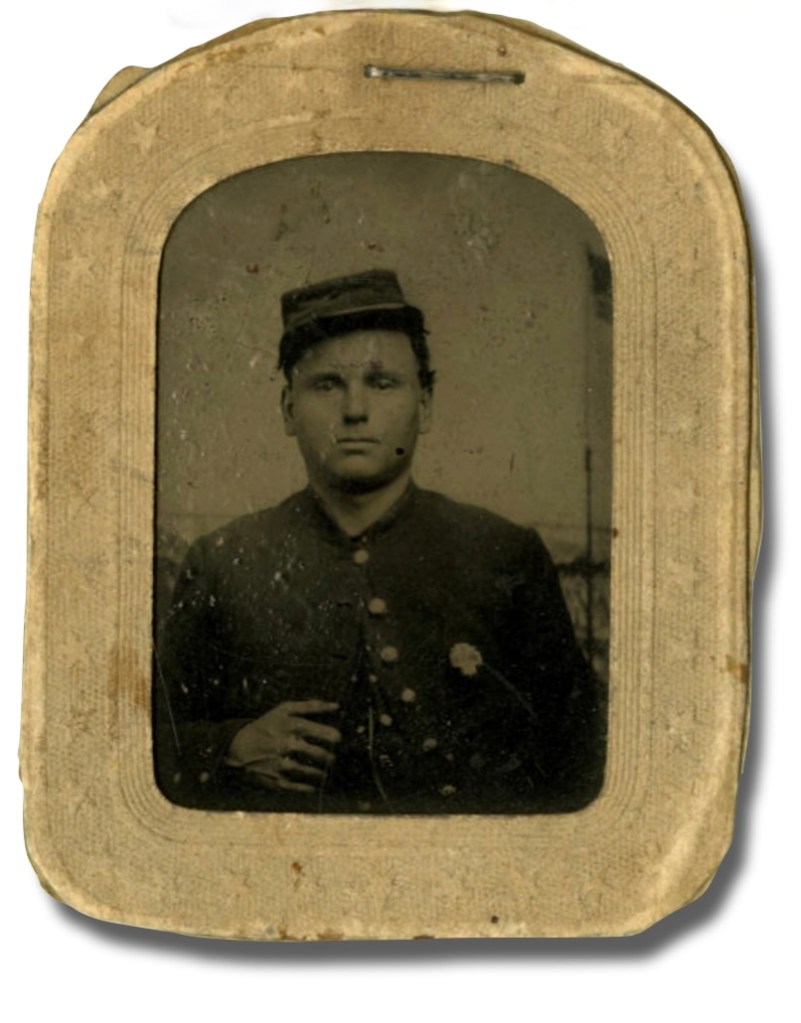
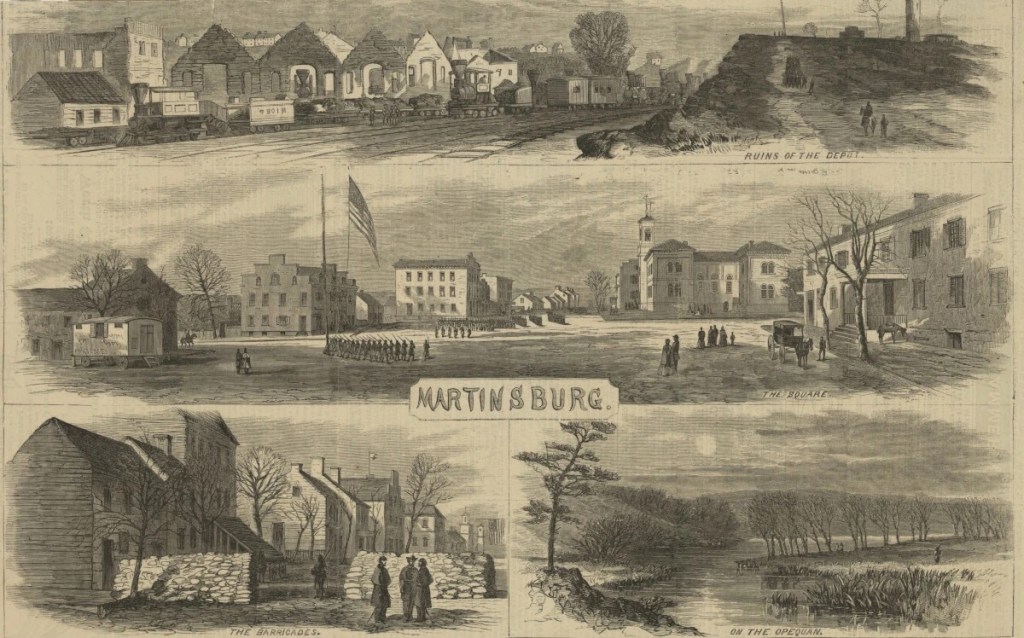
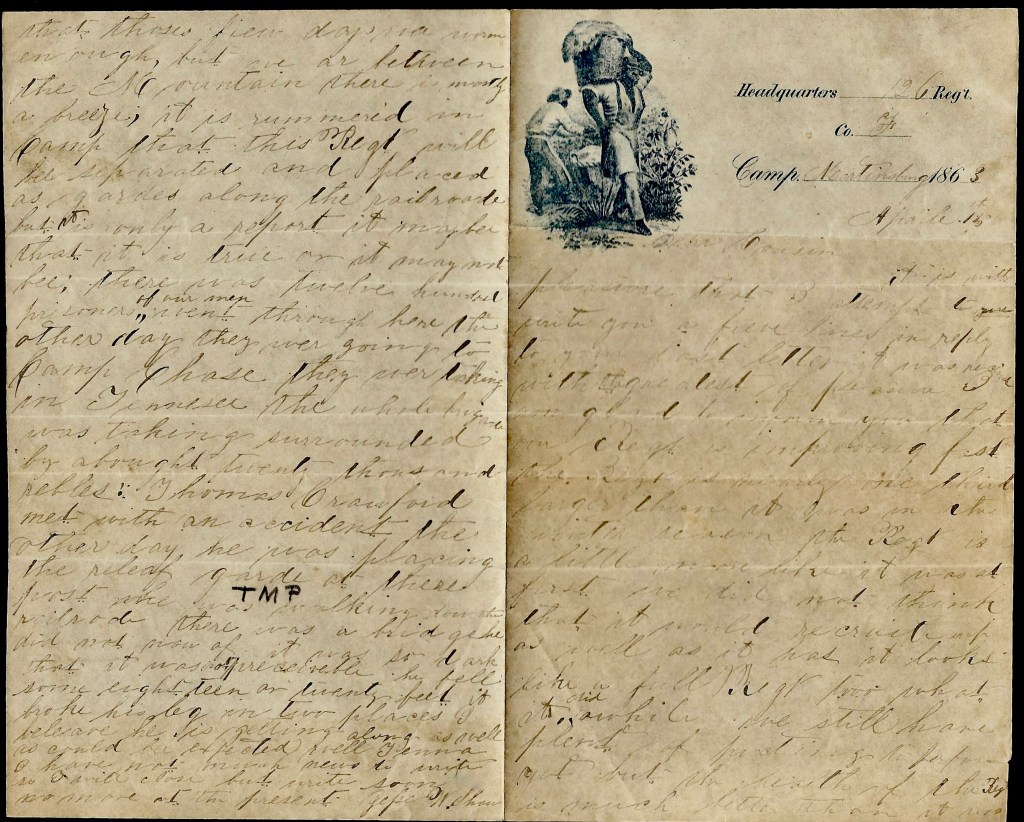


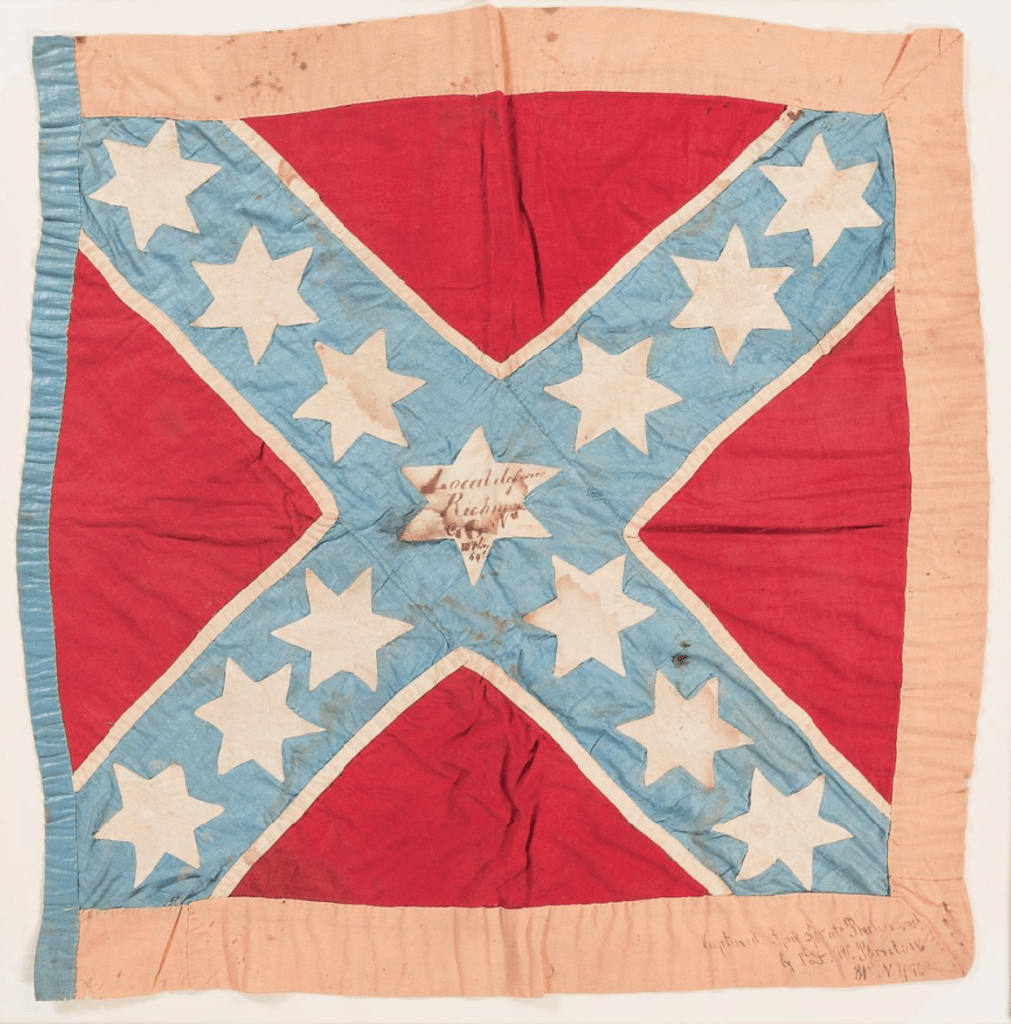


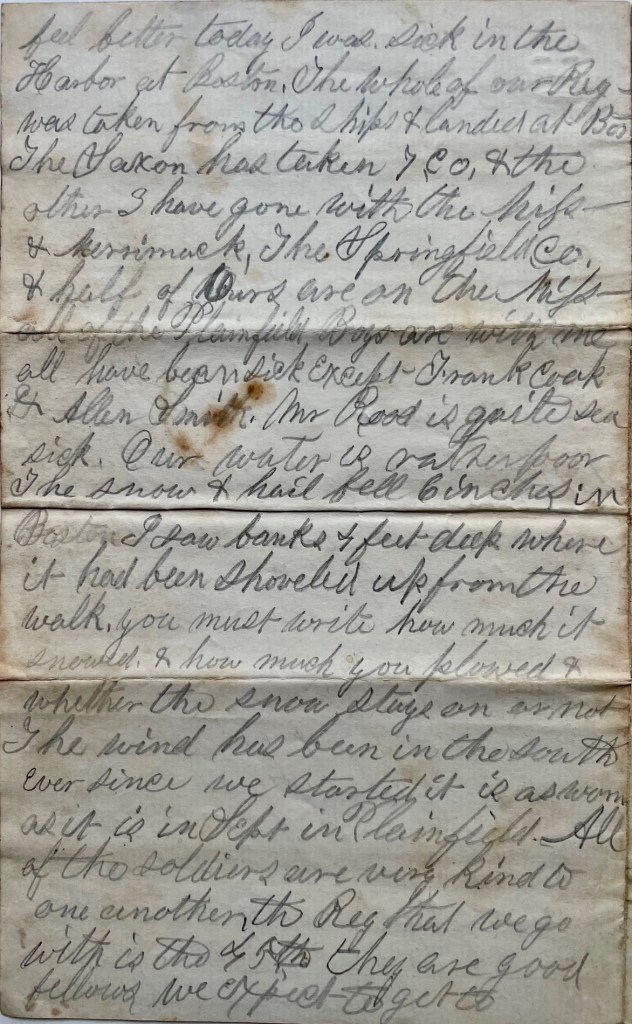

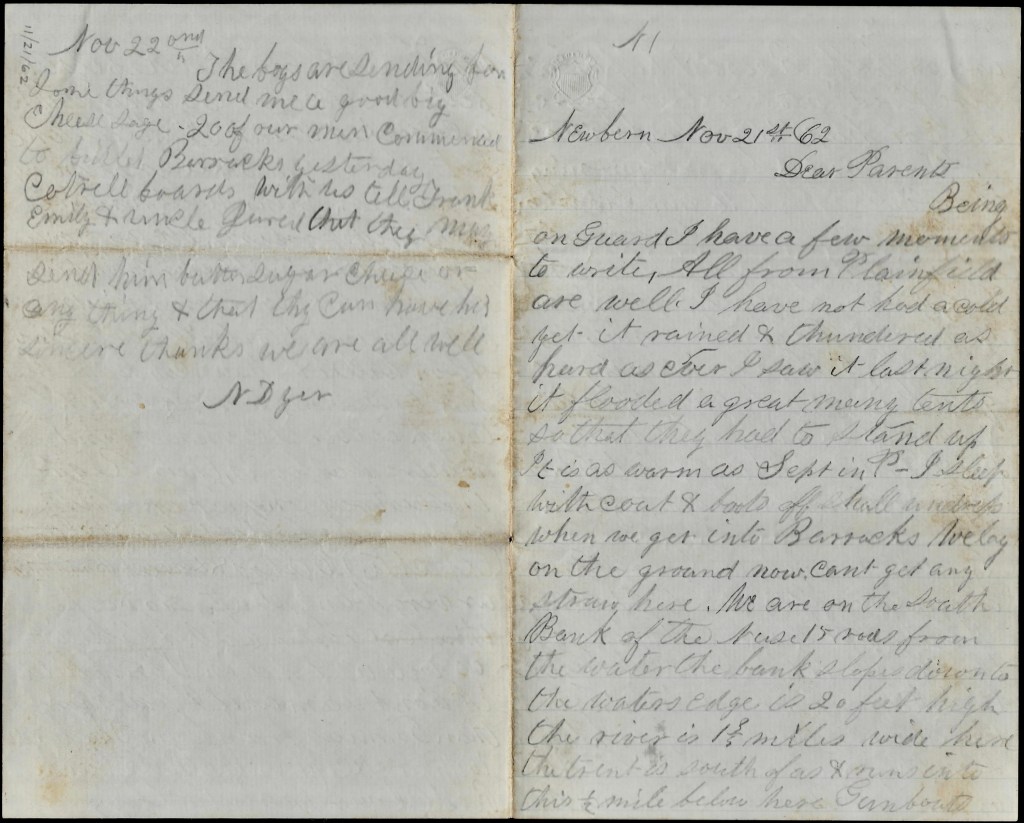
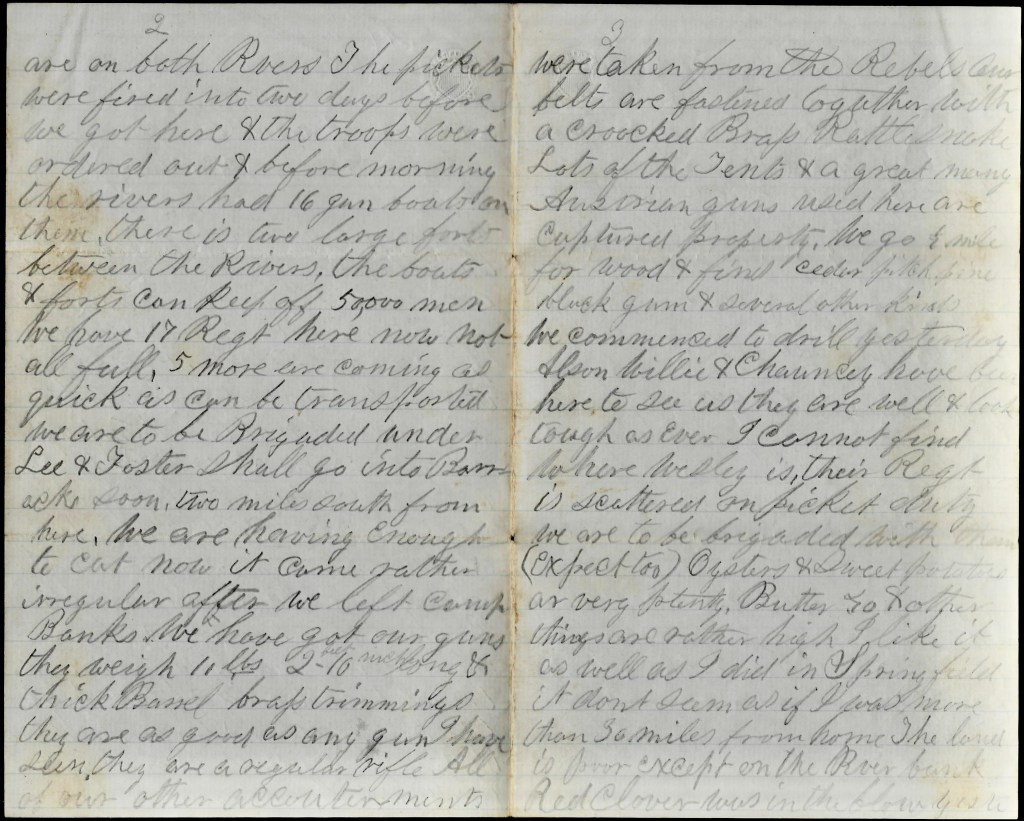
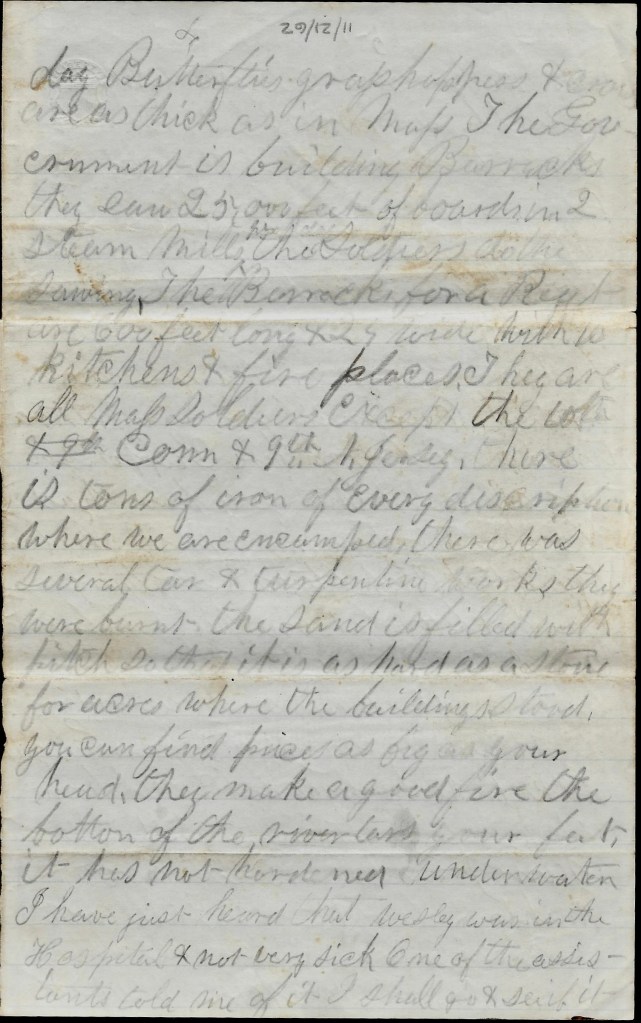
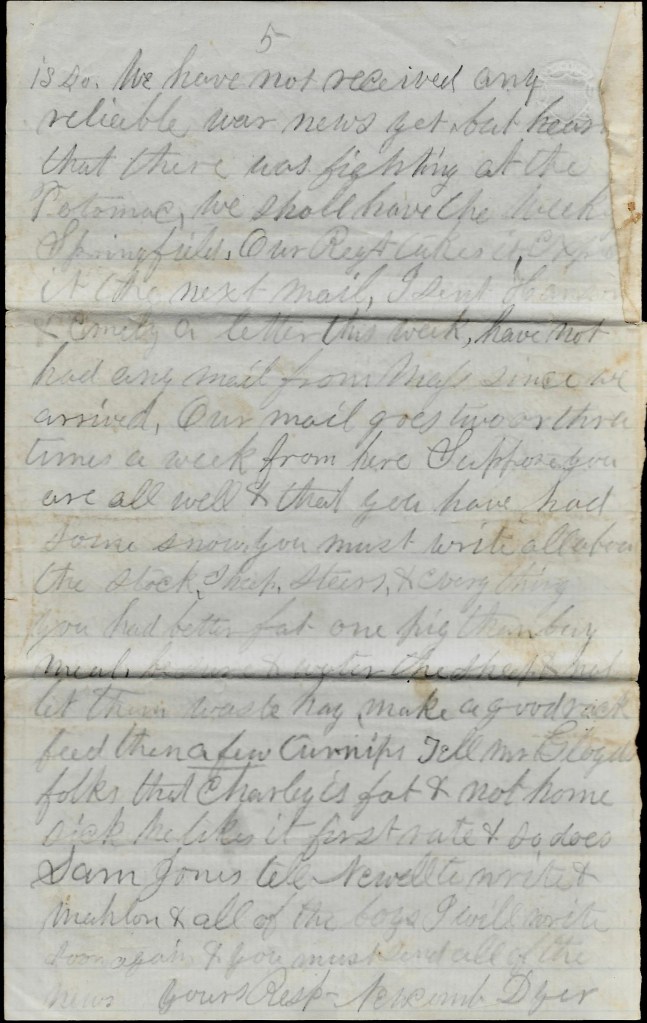


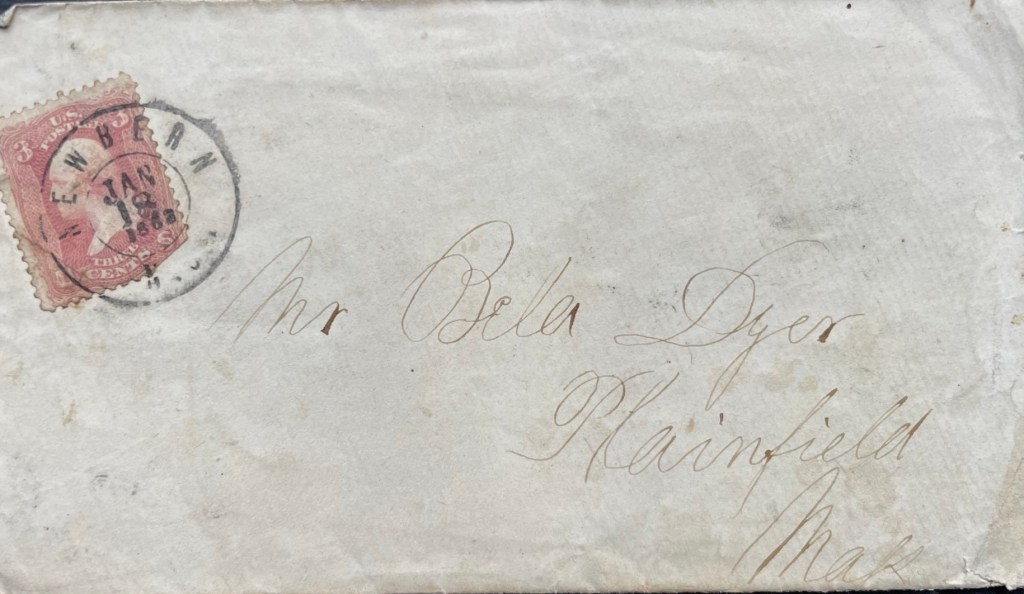

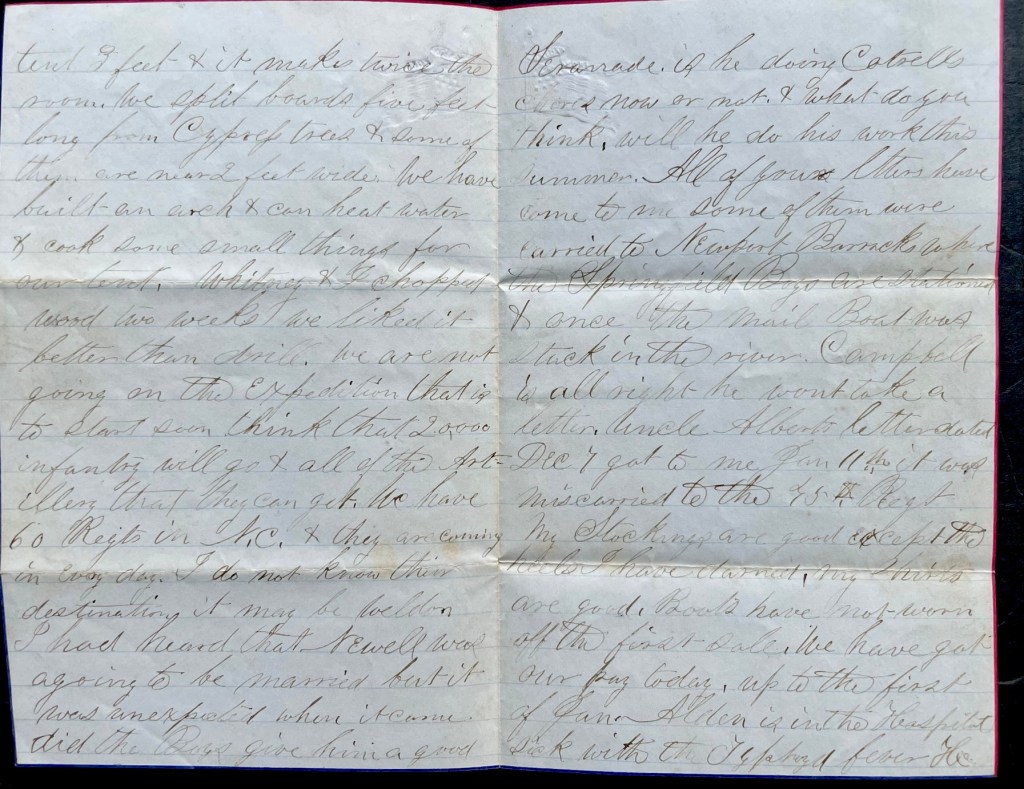
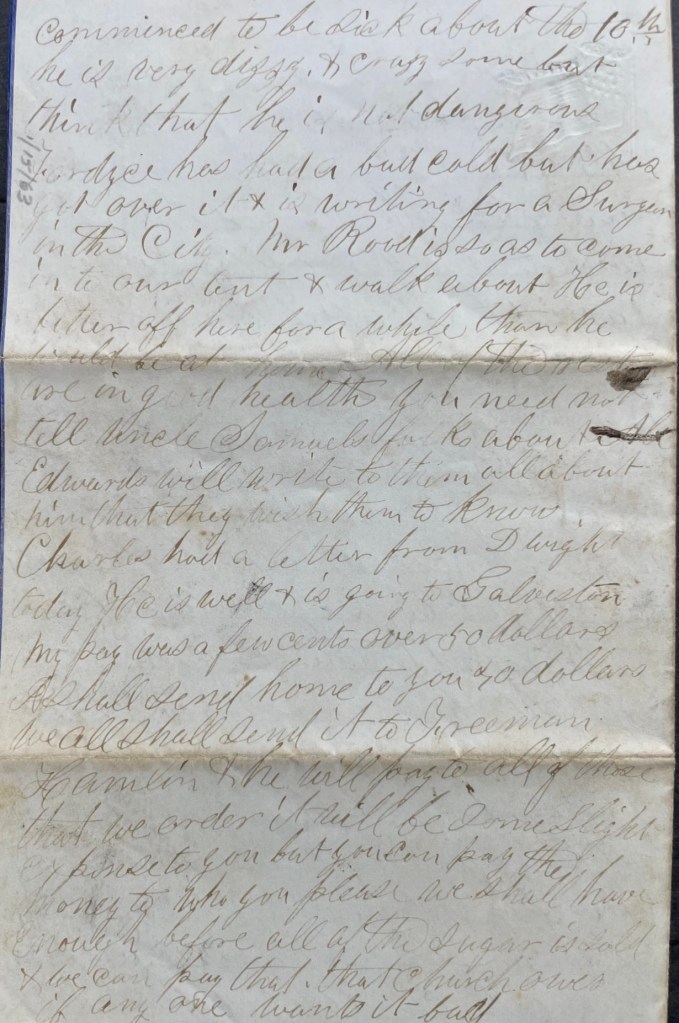
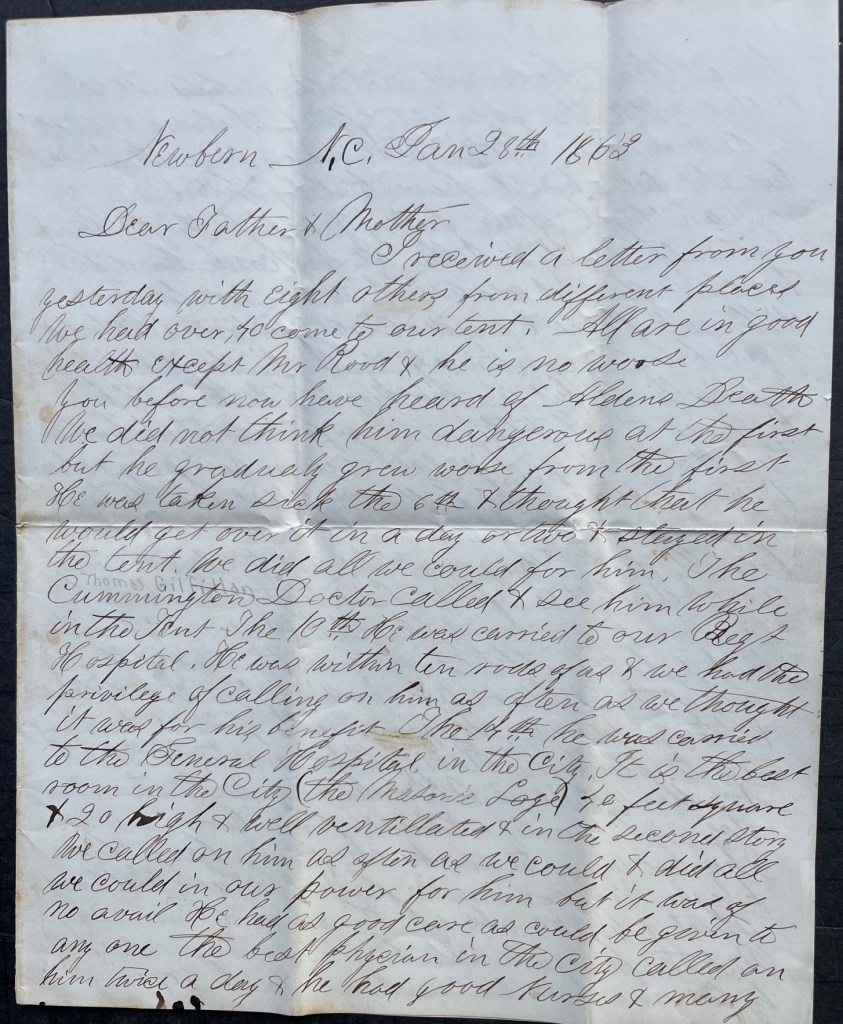

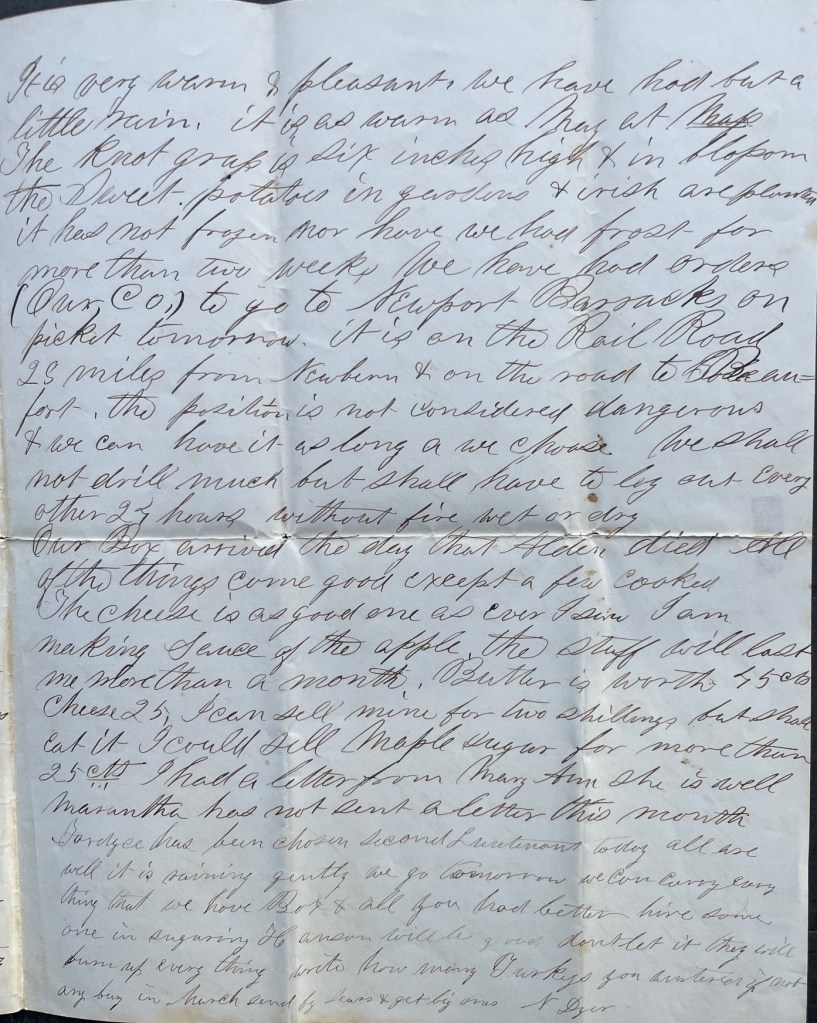

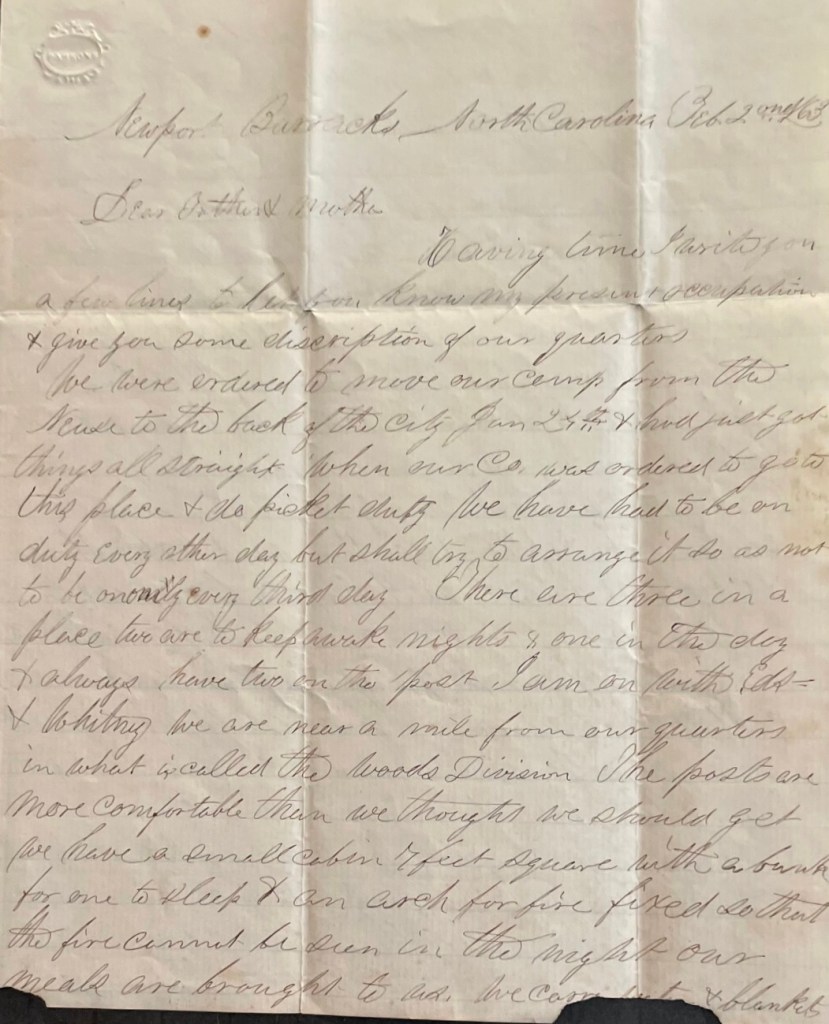


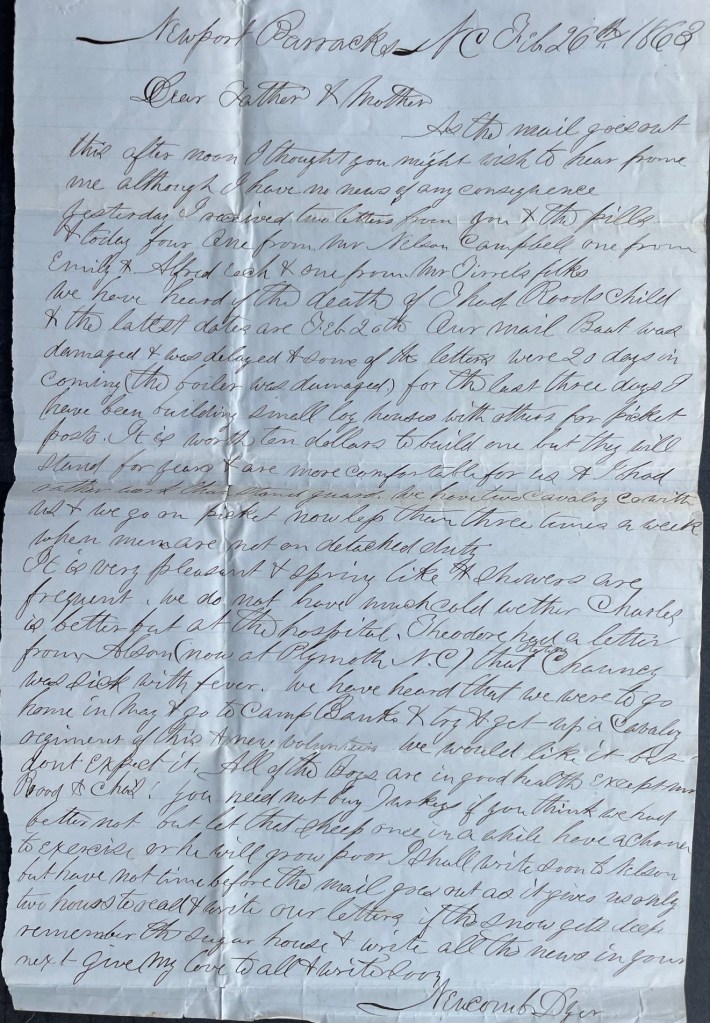
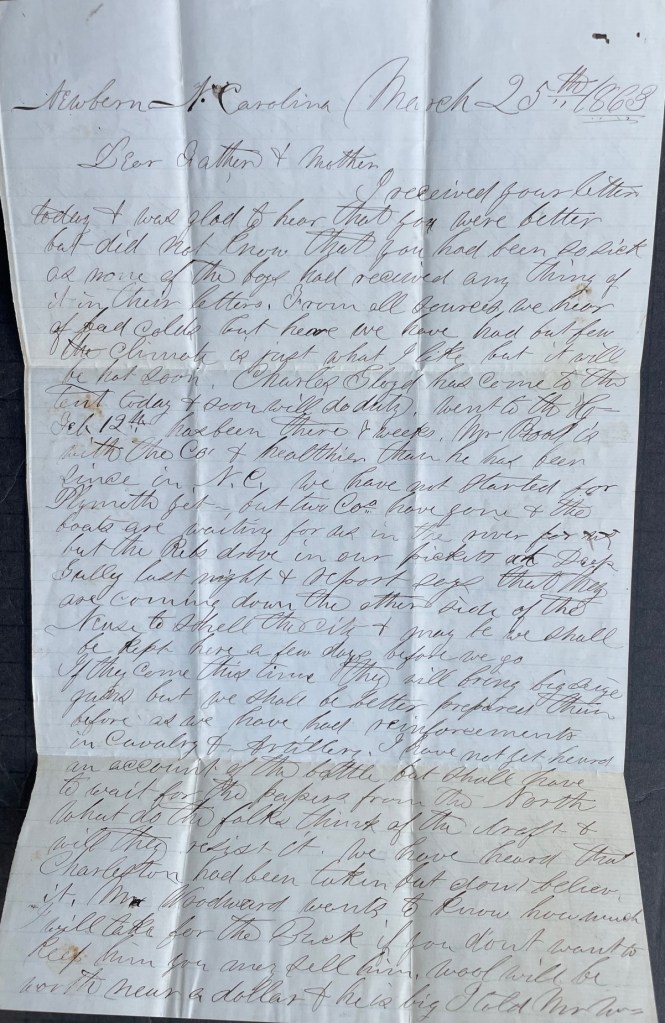


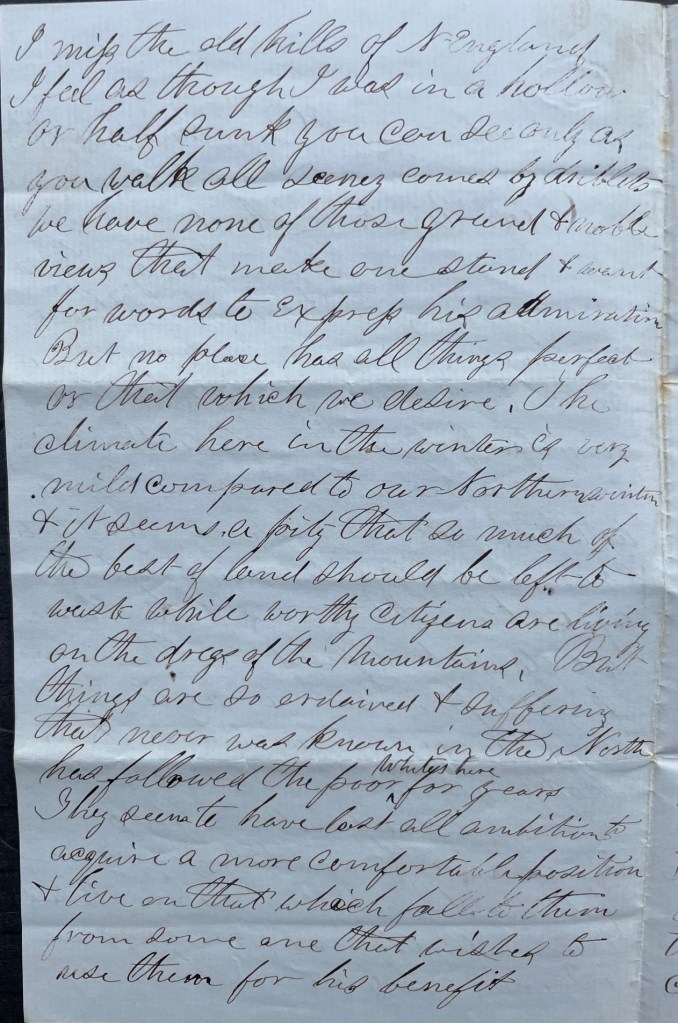


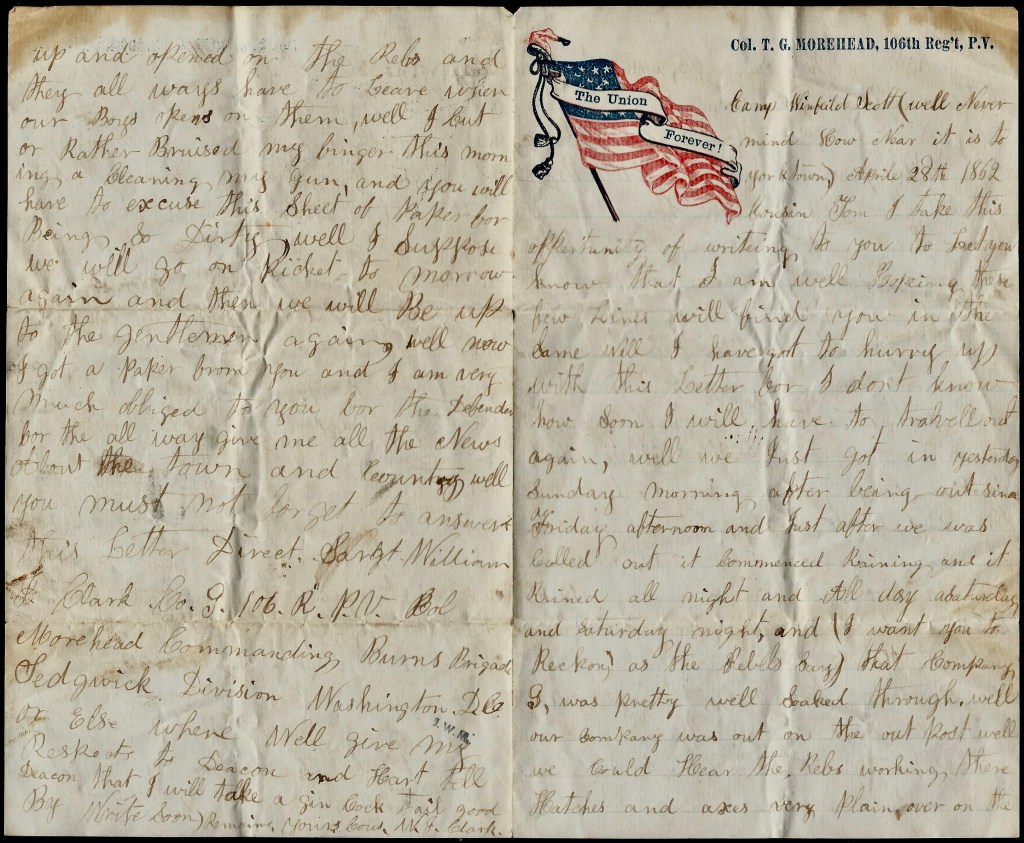

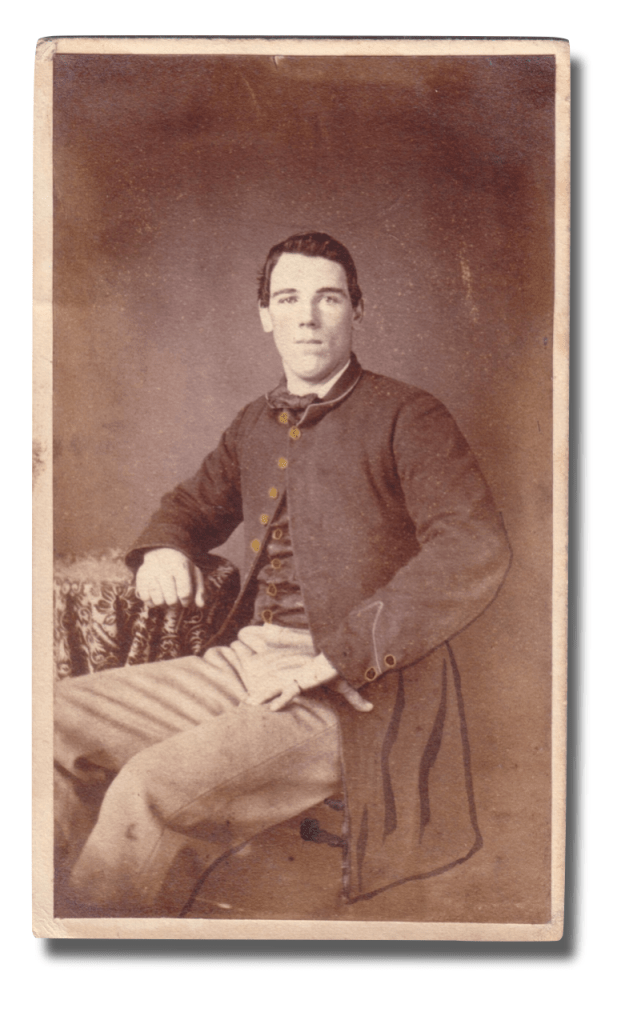
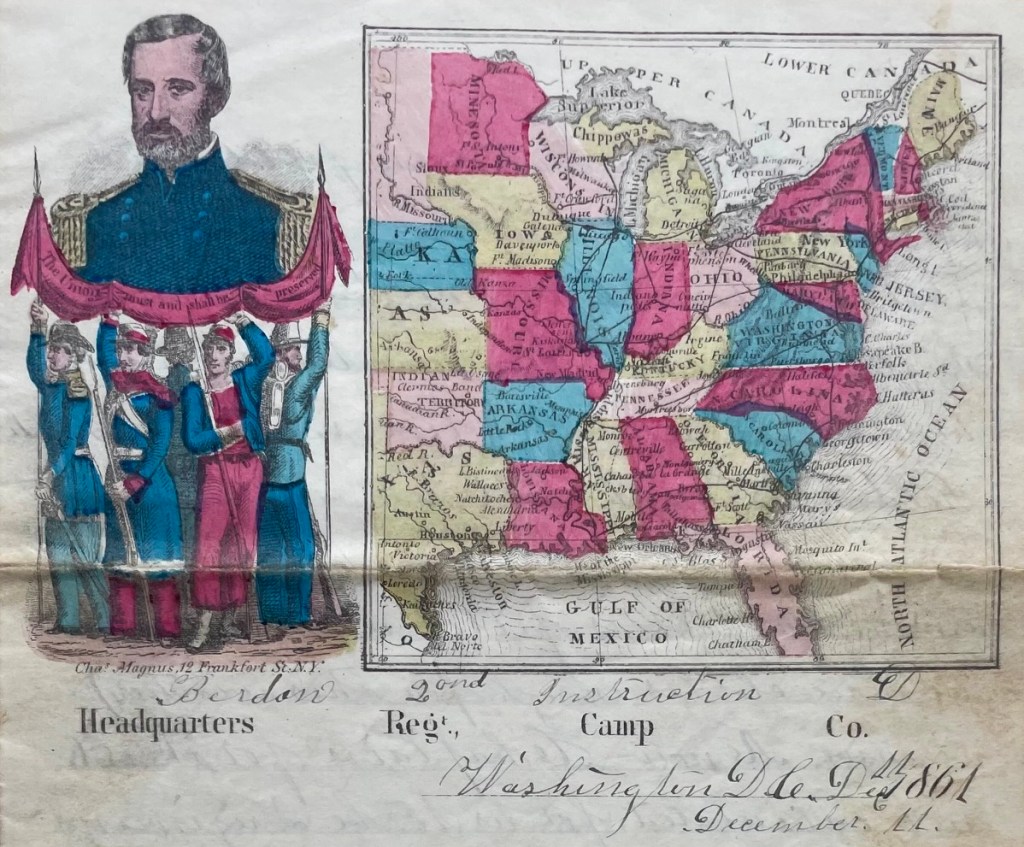
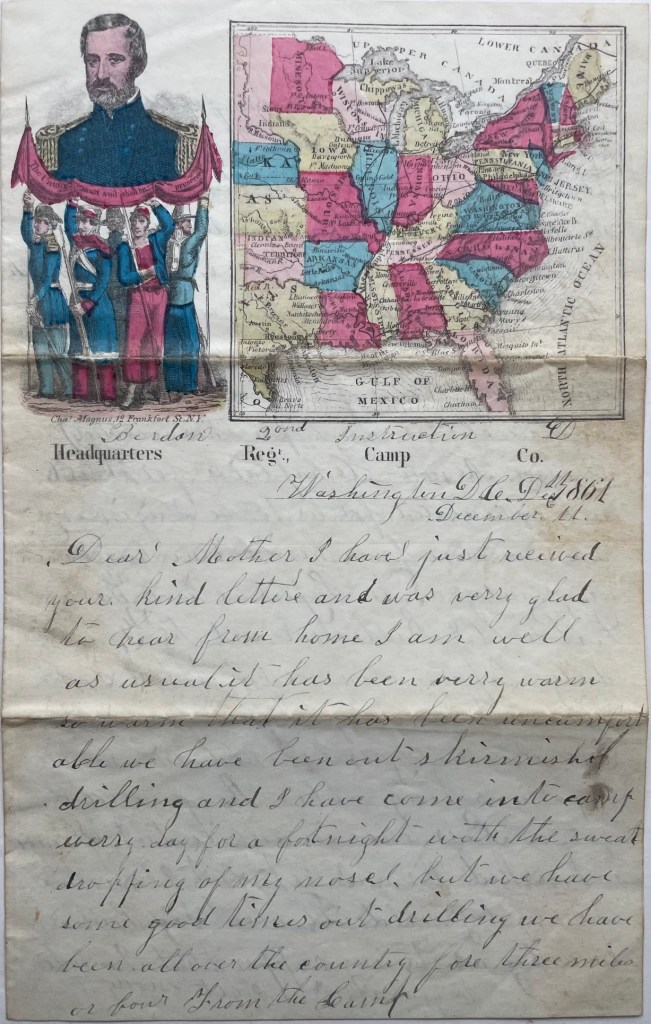
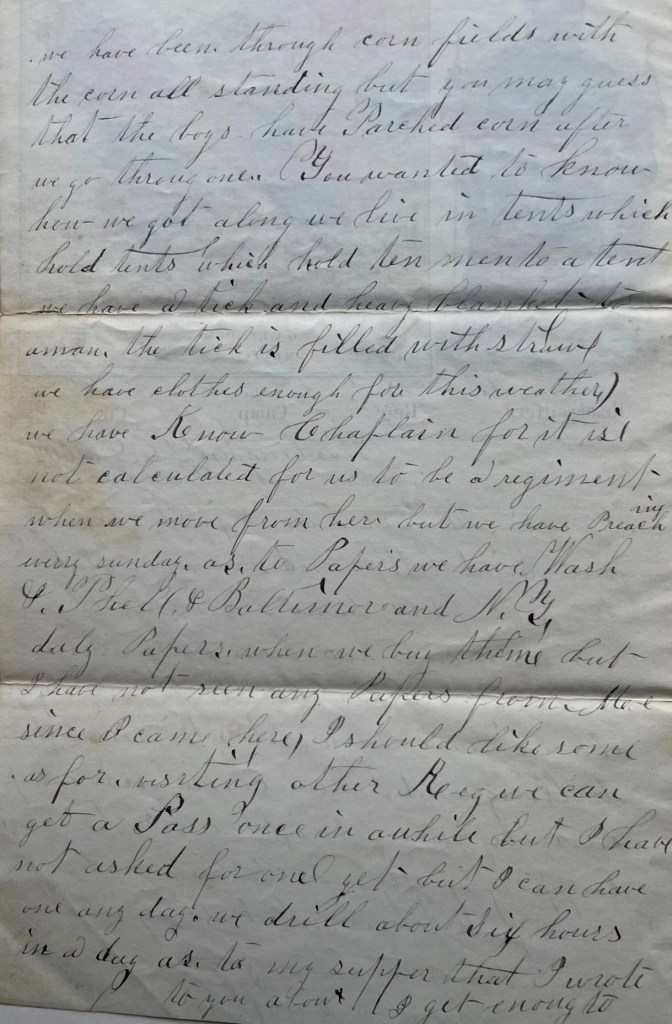
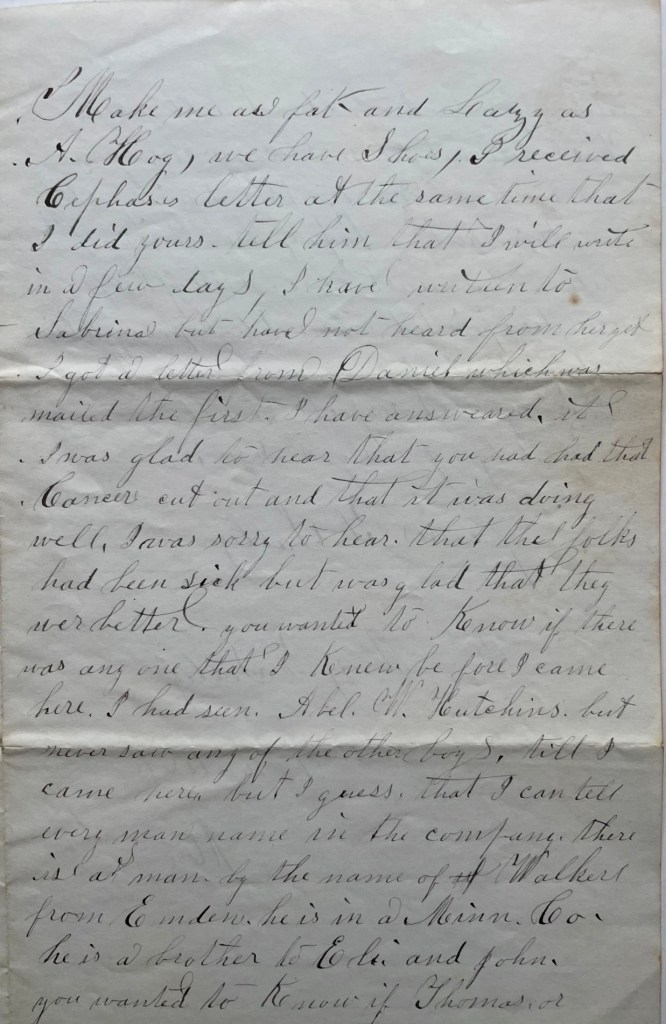

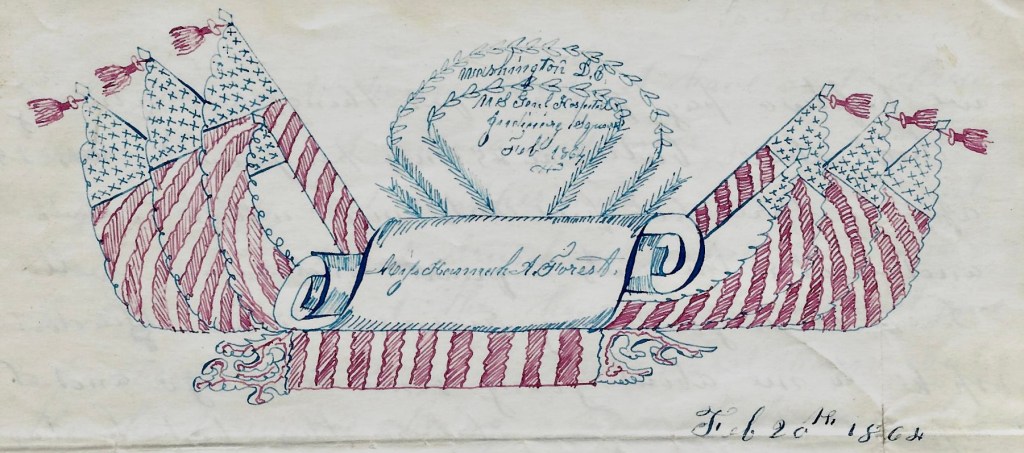
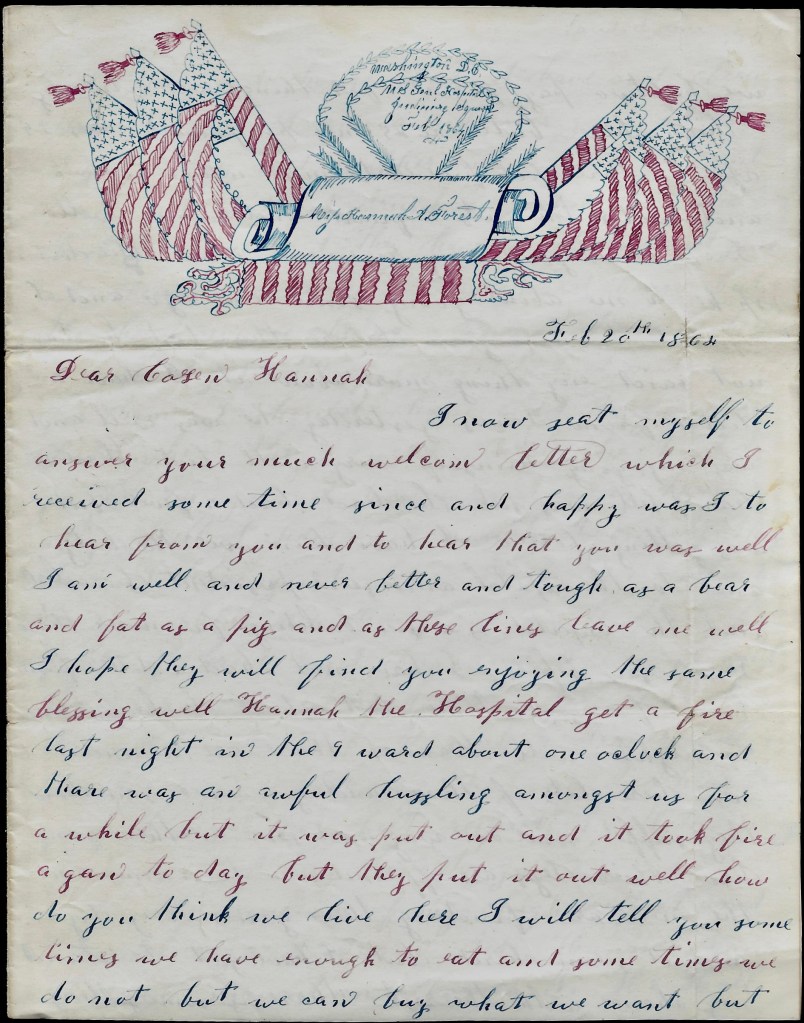


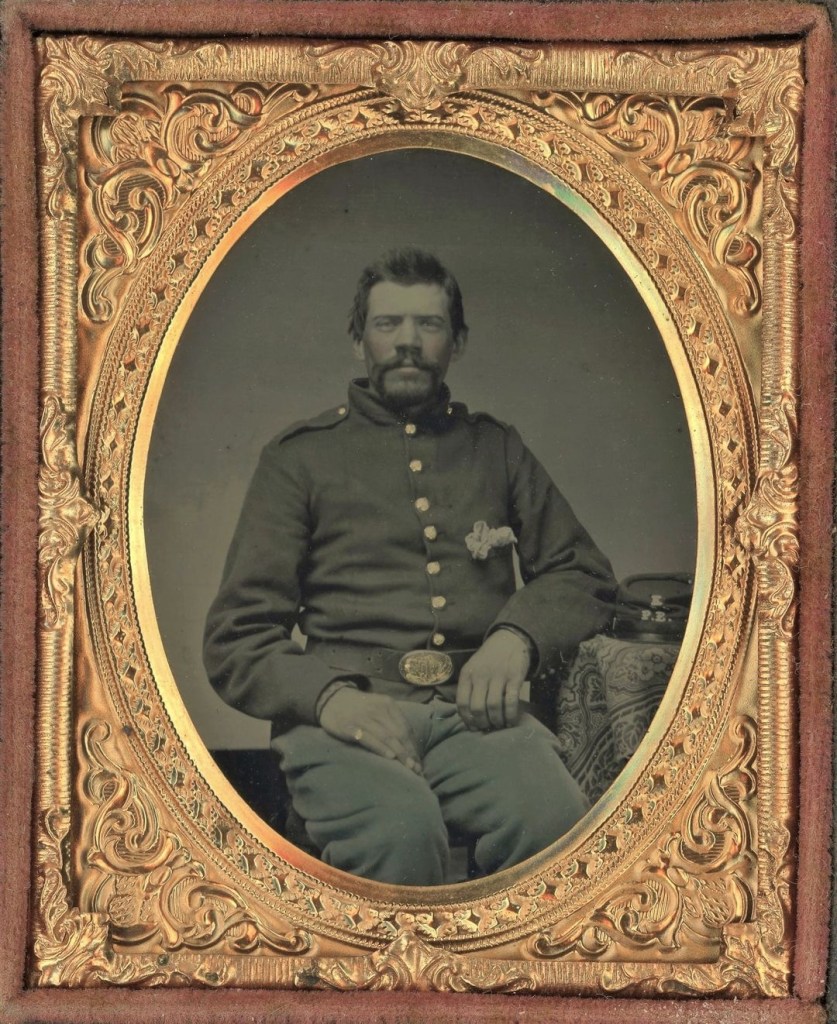


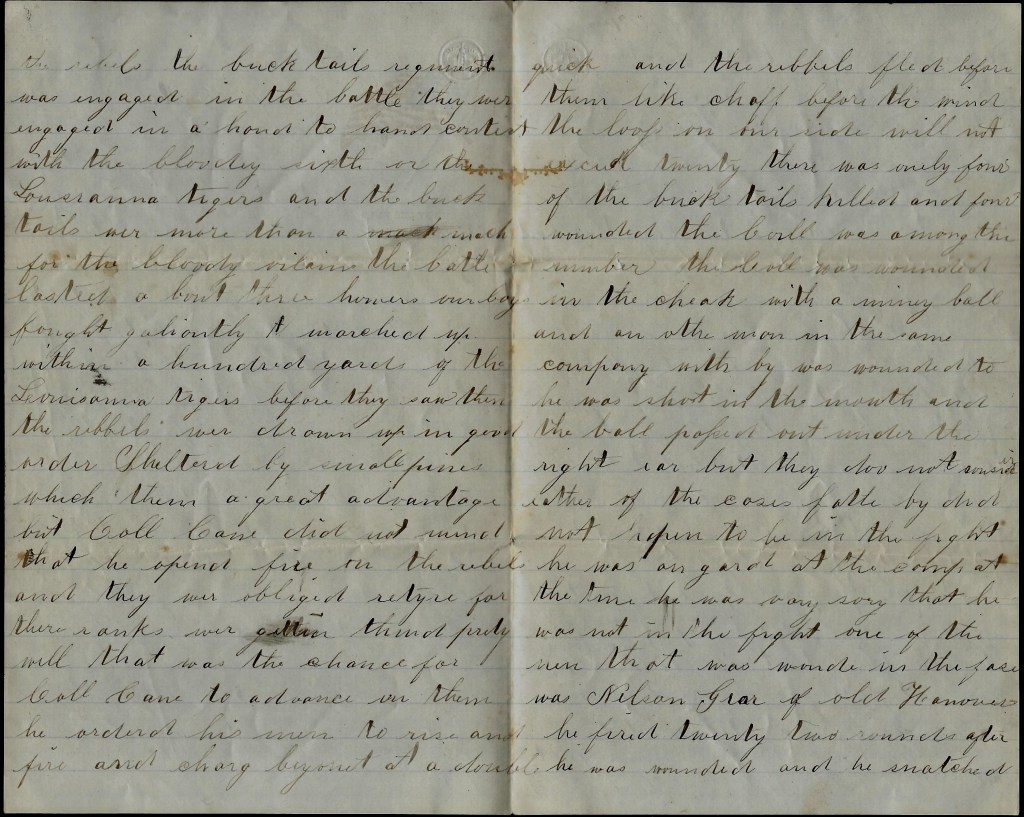
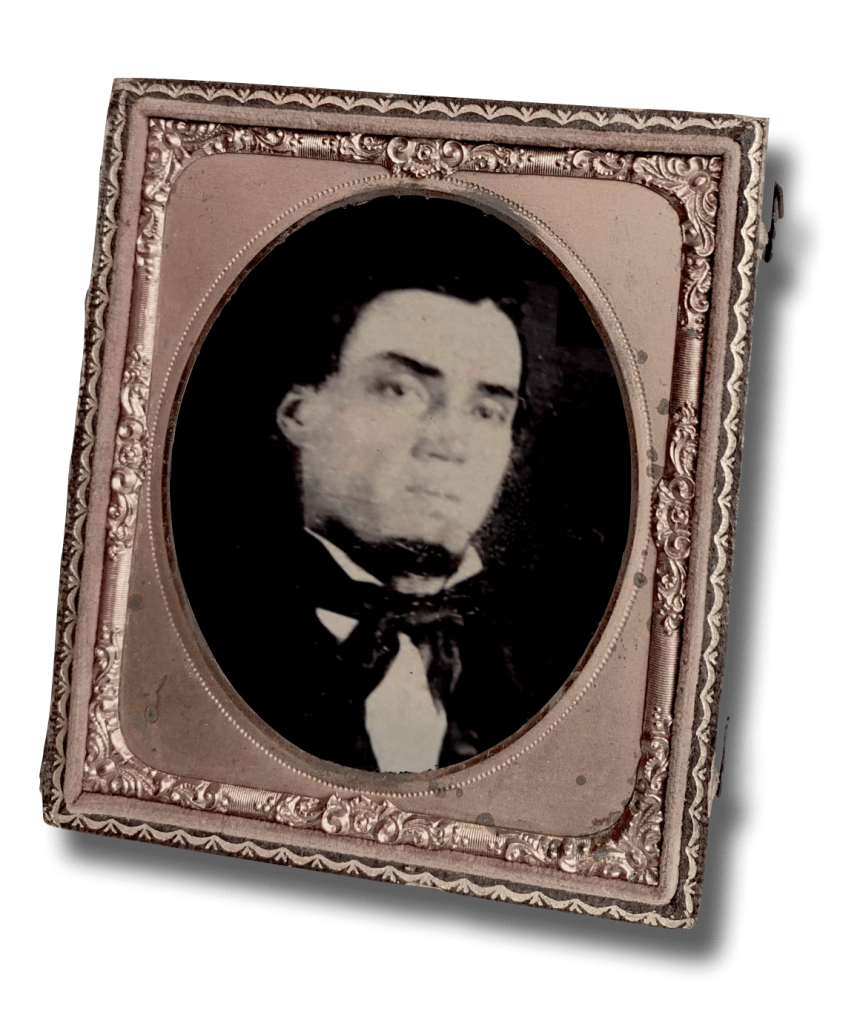



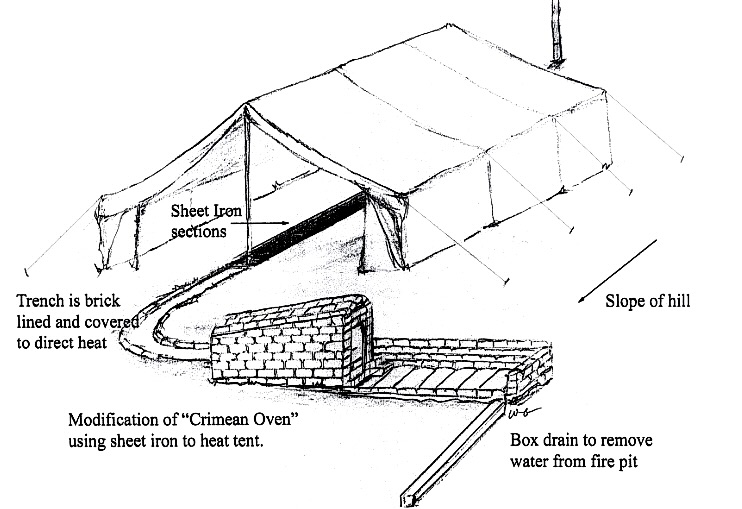


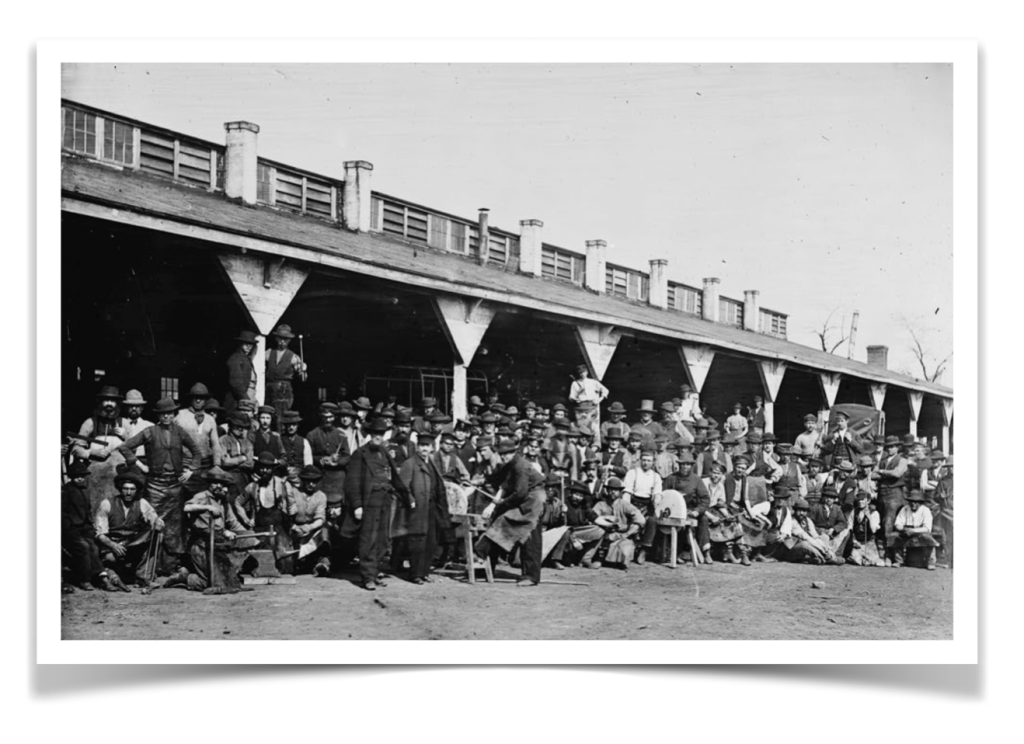
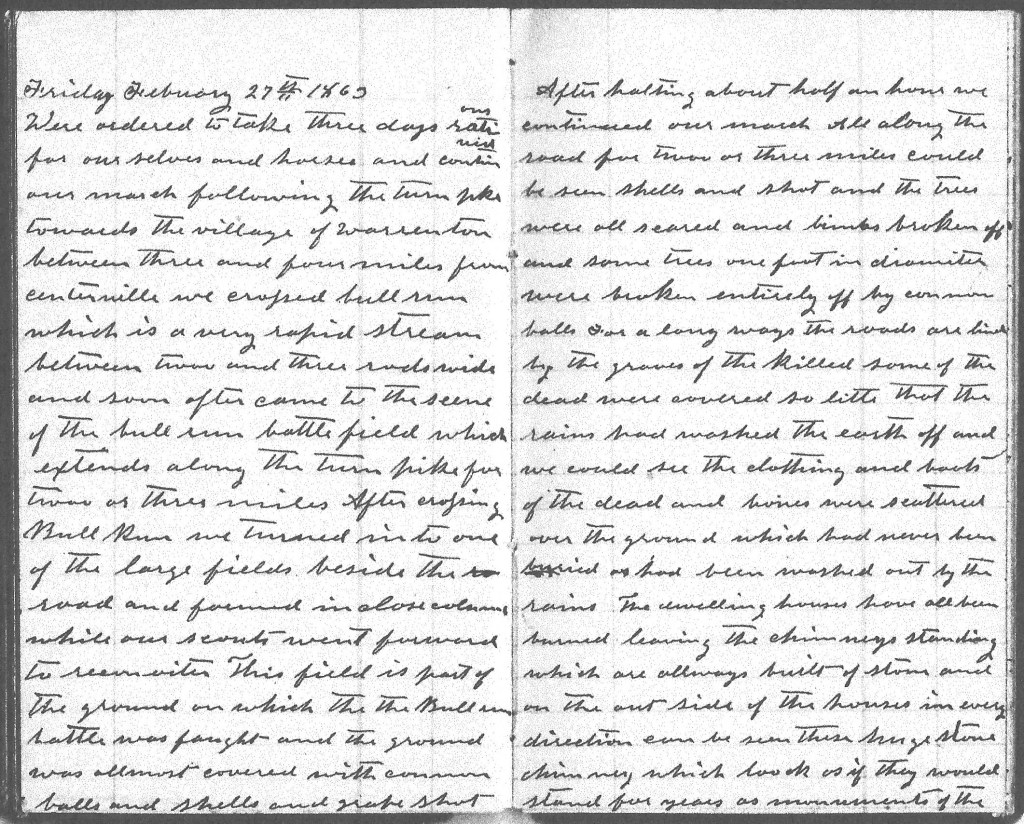
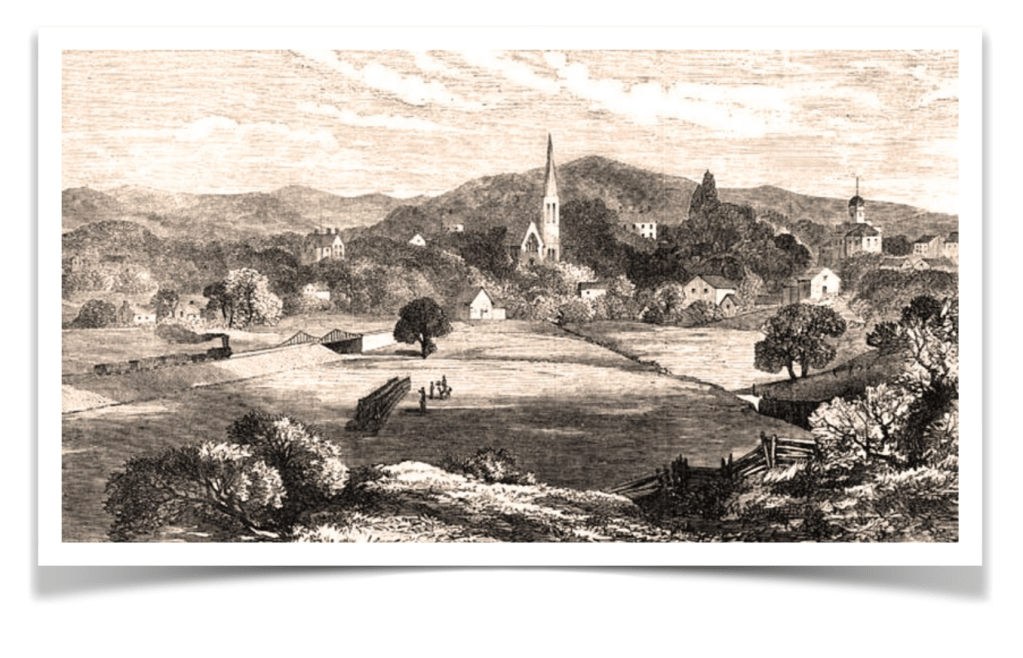
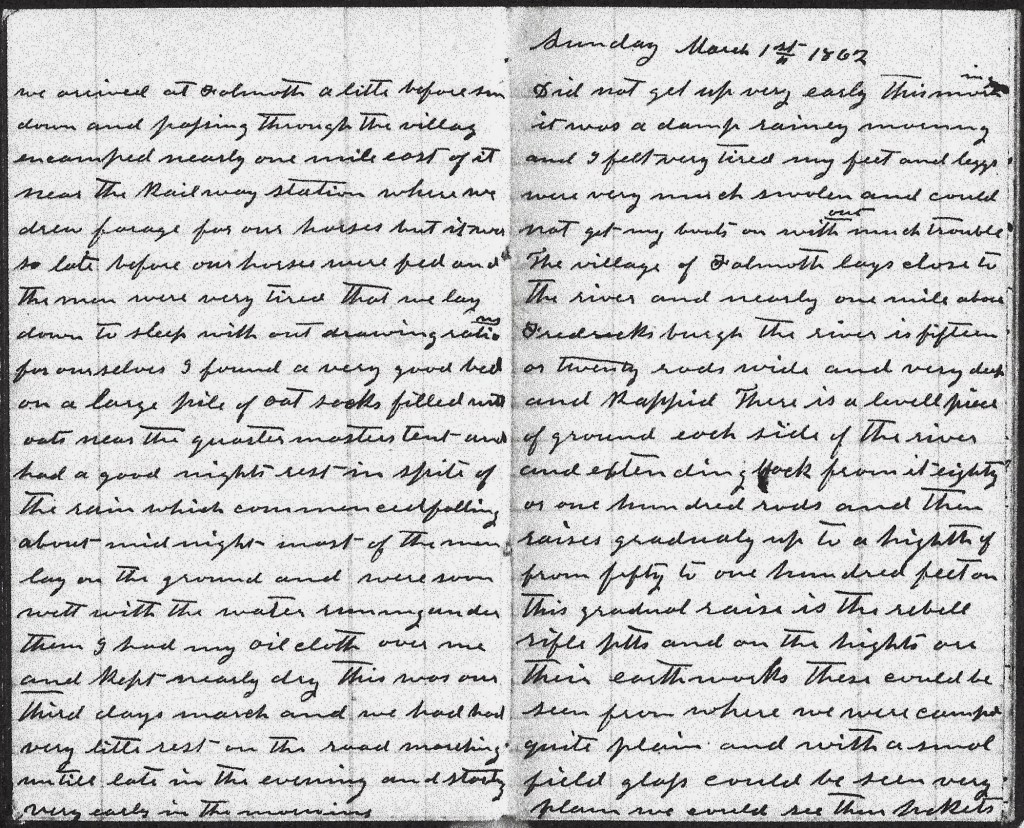





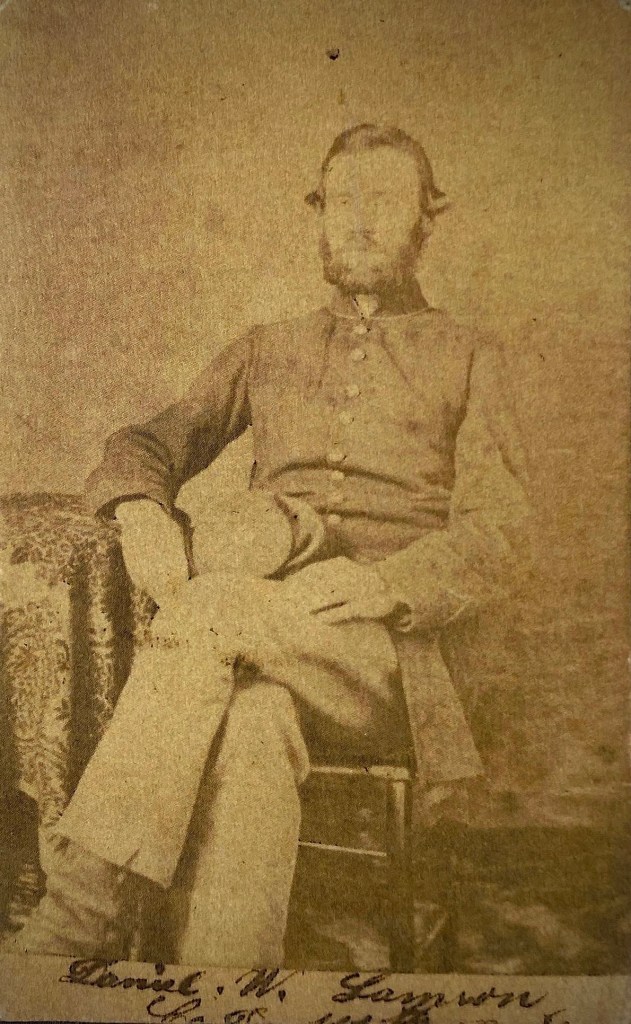
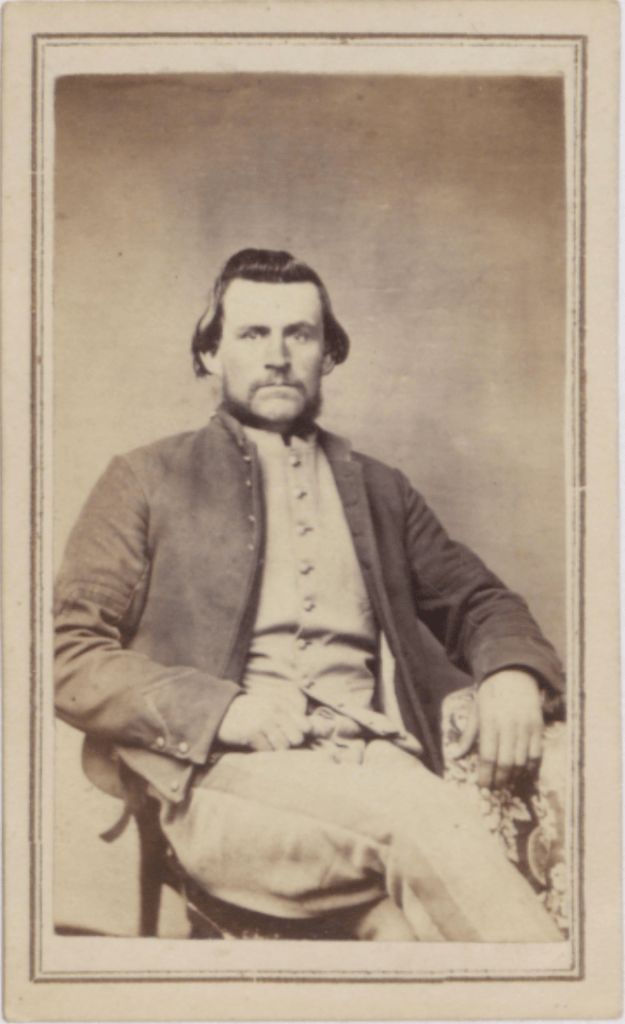


 Spared & Shared 23