
The following letter was sold to a client of mine stating that it was penned by a Union soldier named “Frank Prior” to his father, “Capt. Samuel Prior, Jr.” but I am unable to see a signature and I cannot identify the Prior family correspondents. It’s possible this information was simply made up but on the outside chance it’s true, I pass on the “provenance.”
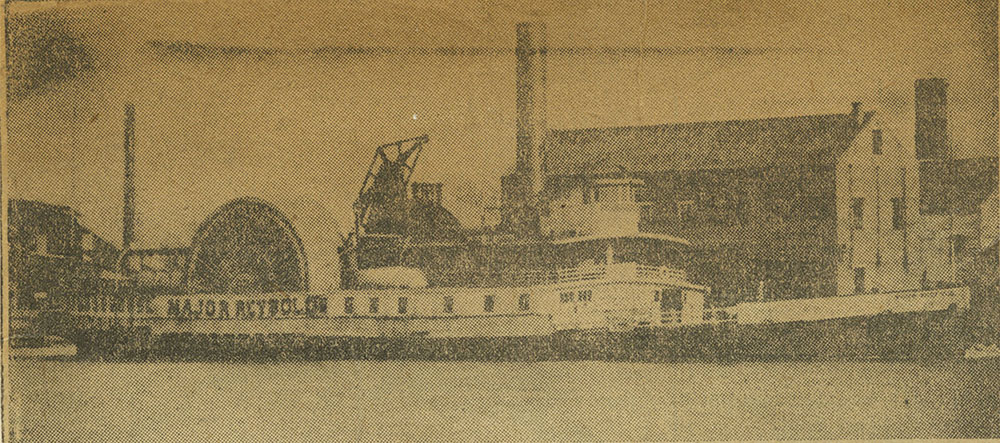
The letter describes an August 1864 incident pertaining to the Major Reybold, a steamer operating on the Delaware River, in which a number of Confederate prisoners were transported by her from Philadelphia to Fort Delaware. After dropping off the prisoners, it was discovered they were one short which triggered the whole fiasco.
The Major Rebold was built in 1853 in Wilmington, Delaware. She was the first iron vessel to see service on the Delaware, plying between Salem, New Jersey, and Philadelphia until 1906. During the Civil War she was retained on the river on account of Fort Delaware and was for a long time the only steamboat running below Wilmington, carrying thousands of troops and prisoners to the fort.
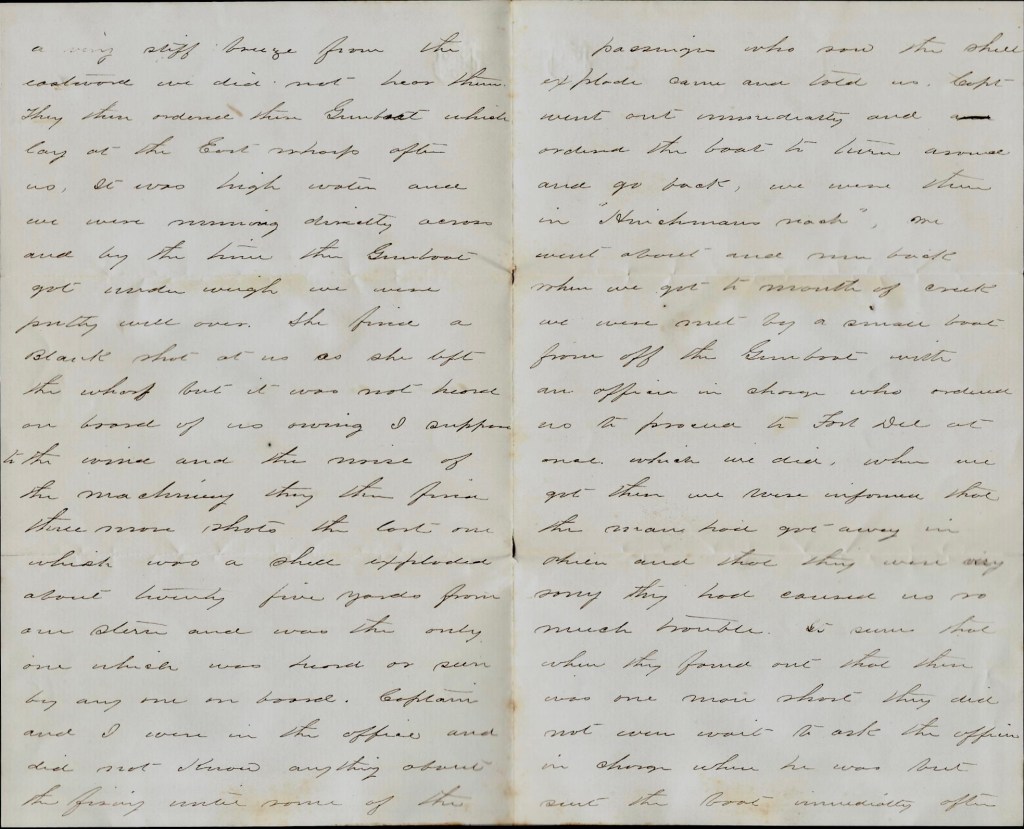
Transcription
Steamer Major Reybold
August 15, 1864
Dear Pa,
Your very welcome letter was received Friday evening. I was glad to hear you had found the boat so soon. By what Captain Loomis (who was on board of us Friday in Philadelphia) said, I was afraid you would have trouble finding her.
We were fired into by a gunboat from the Fort on Friday evening. The way of it was this. We landed some forty-five prisoners there that evening and after we had left, they found out that there was one short. They fired two musket shots to attract our attention but there being a very stiff breeze from the eastward, we did not hear them. They then ordered their gunboat which lay at the East wharf after us. It was high water and we were running directly across and by the time the gunboat got under weigh, we were pretty well over.
She fired a blank shot at us as she left the wharf but it was not heard on board by us owing, I suppose, to the wind and the noise of the machinery. They then fired three more shots—the last one, which was a shell, exploded about twenty-five yards from our stern and was the only one which was heard or seen by anyone on board.

Captain and I were in the office and did not know anything about the firing until some of the passengers who saw the shell explode came and told us. Captain came out immediately and ordered the boat to turn around and go back. We were then in “Hinchman’s reach,” We went about and run back. When we got to mouth of creek, we were met by a small boat from off the gunboat with an officer in charge who ordered us to proceed to Ft. Delaware at once, which we did. When we got there, we were informed that the man had got away in Philadelphia and that they were very sorry they had caused us so much trouble. It seems that when they found out that there was one man short, they did not even wait to ask the officer in charge where he was but sent the boat immediately after us. After she left, they found out where the man escaped and tried to recall her but could not for the same reason I suppose that prevented us from hearing.
The idea of the boat shooting at us with the intention of hitting us as the Lieutenant in charge of her says he did, is preposterous and should be reported from his actions. When he boarded us, I should say he was drunk and that may have been a reason for his firing at us. If the shell had struck us in the saloon, it would have caused a great loss of life in there at the time.
Thomas Bond has a claim against you of $32 for hay. Shall I settle it? We told John Mulford about it and John told me.

 Spared & Shared 23