1864: James L. Green to Mary A. (Griffith) Green

This letter originated as a letter from Mary Ann (Griffith) Green (1822-1906) to her husband James Lee Green (1822-1864) while he was serving as a private in Co. H, 30th North Carolina Infantry. The couple made their home in Rutherford county, North Carolina, and two of their four children are mentioned—George Washington Green (1858-1933) and Jasper L. Green (1860-1913).
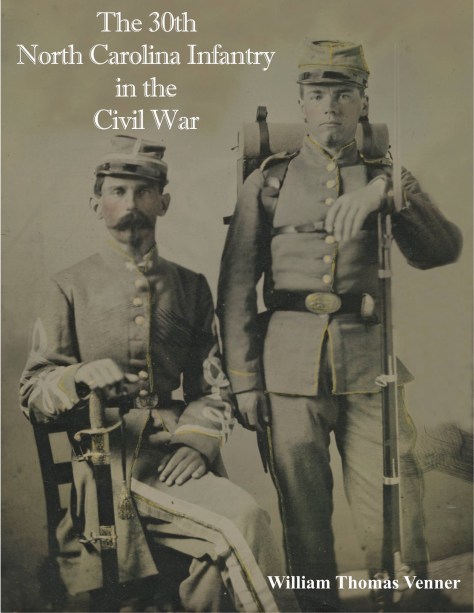
The jacket cover of William T. Venner’s book published in 2016.

The experiences of the Green family during the Civil War are meticulously documented in the book, “A Broad River Digest,” compiled in 1991 by Irene Roach Delano, a direct descendant. The narrative reveals that James entered military service in the spring of 1862. Prior to his departure to join his regiment, he took the necessary steps to ensure his affairs were in order, which included drafting his will and commissioning family portraits. Two of these portraits are featured in Delano’s work. Throughout his service in the Confederate army, James and Mary Ann maintained a profound emotional connection, exchanging heartfelt letters that conveyed their enduring love. These letters are currently preserved by Irene Delpino; however, it remains unclear whether this specific letter was included in that collection.

In May, 1864, James Lee was captured at the Battle of Bloody Angle in Spottsylvania Courthouse, Virginia, and transferred to the prison at Elmira, New York. In June of that year he wrote Mary Ann advising her of his capture, as well of his illness. On October 4, 1864, he died of dysentery at Elmira and was buried at the Woodlawn National Cemetery, in Elmira, in lot number 600W.N.C.

James does not give the location of his regiment but the regimental history indicates they would have been with the Army of Northern Virginia encamped somewhere along the Rapidan river.

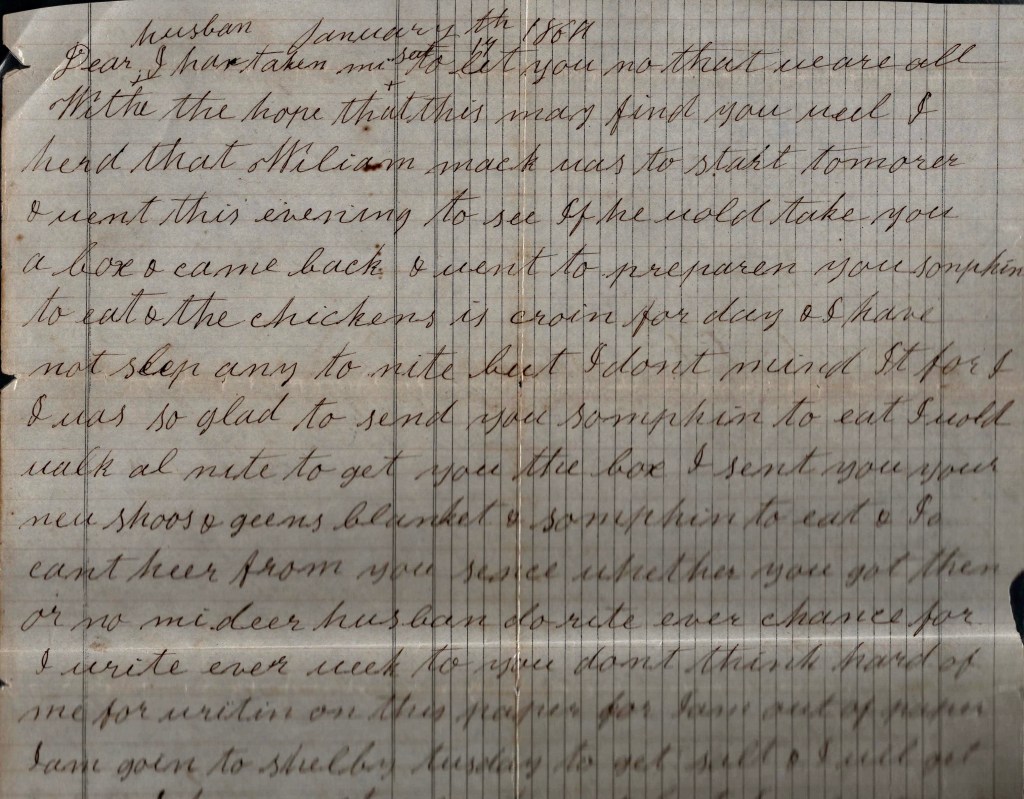
T R A N S C R I P T I O N

January 14, 1864

Dear husband,

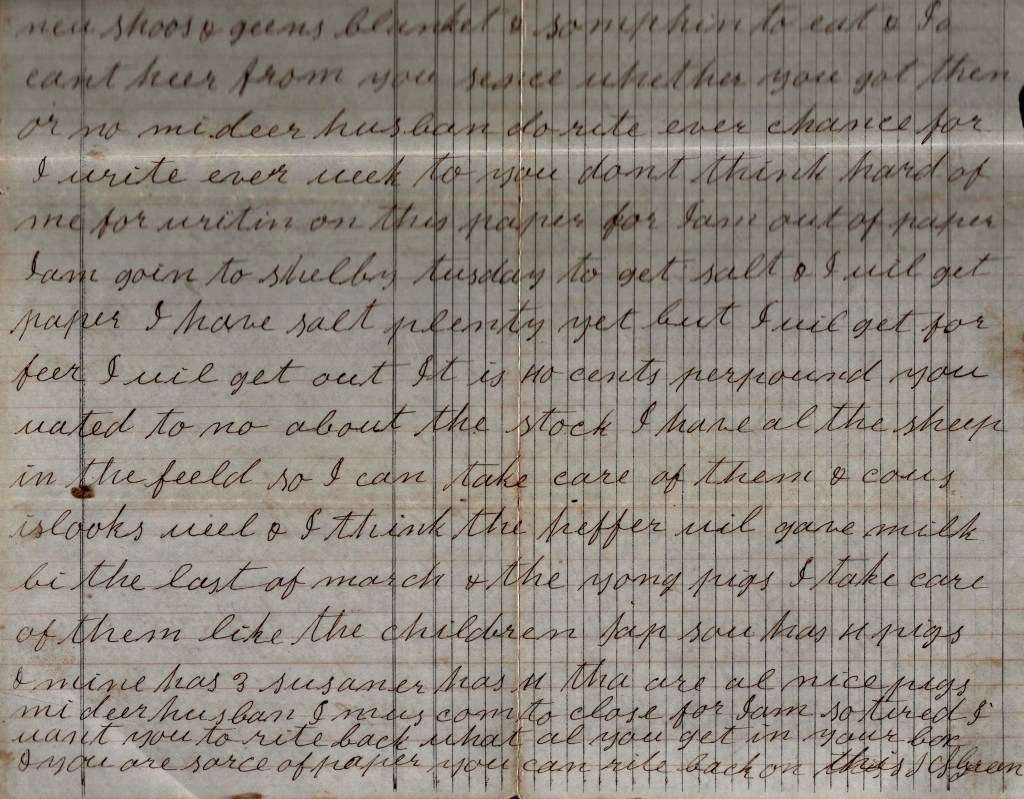
I have taken my seat to let you know that we are all with the hope that this may find you well. I heard that William Mack was to start tomorrow [for the regiment] and went this evening to see if he would take you a box & came back & went to preparing you something to eat & the chickens is crowin’ for day & I have not slept any tonight but I don’t mind it for I was so glad to send you something to eat. I would walk all night to get you the box. I sent you your new shoes and jeans, blanket, and something to eat & I can’t hear from you since whether you got them or no. My dear husband, do write every chance for I write every week to you. Don’t think hard of me for writing on this paper for I am out of paper. I am going to Shelby Tuesday to get salt and I will get paper. I have salt plenty yet but I will get [more] for fear I will get out. It is 40 cents per pound.

You wanted to know about the stock. I have all the sheep in the field so I can take care of them & cows is looking well & I think the heifer will give milk by the last of March & the young pigs, I take care of them like the children. Pap’s sow has 4 pigs and mine has three. Susan has 4. They are all nice pigs. My dear husband, I must come to a close for I am so tired. I want you to write back what all you get in your box & if you are scarce of paper, you. can write back on this.

To Mrs. Mary Green
March 4th 1864

Dear wife,

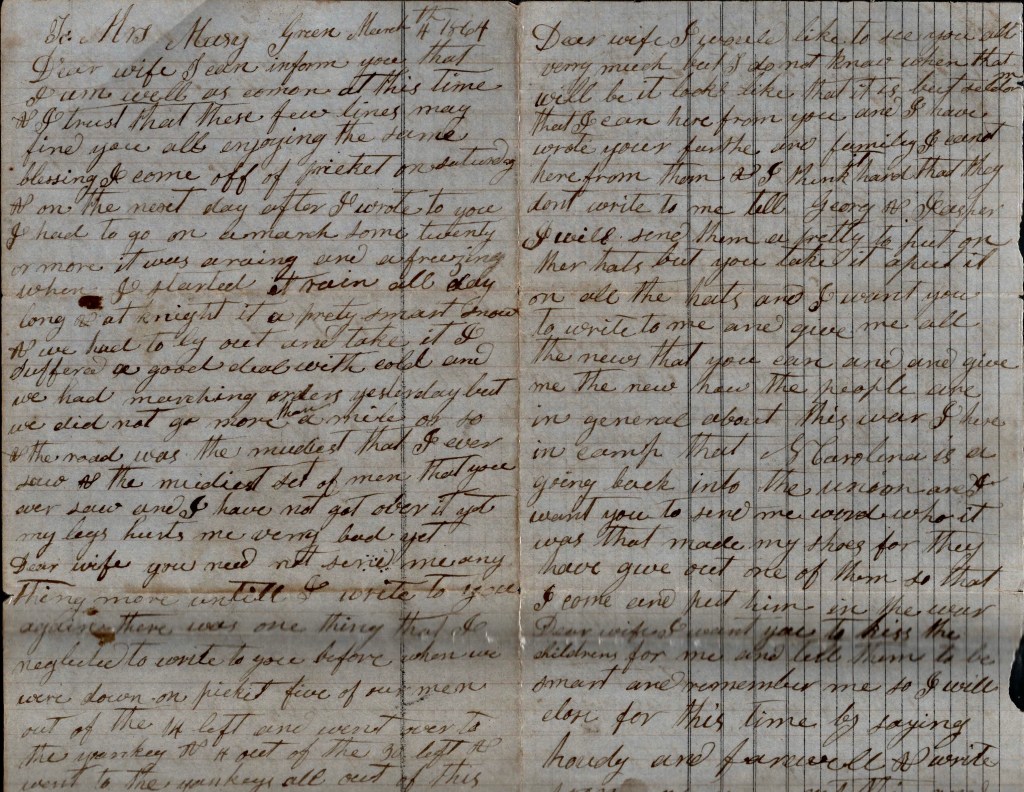
I can inform you that I am well as common at this time & I trust that these few lines may find you all enjoying the same blessing. I come off picket on Saturday & on the next day after I wrote to you I had to go on a march some twenty or more [miles]. It was a raining and a freezing when I started. It rained all day long and at night it [turned into] a pretty smart snow & we had to lay out and take it. I suffered a good deal with cold and we had marching orders yesterday but we did not go more than a mile or so & the road was the muddiest that I ever saw & the muddiest set of men that you. ever saw. And I have not got over it yet. My legs hurt me very bad yet.

Dear wife, you need not send me anything more until I write to you again. There was one thing that I neglected to write to you before. When we were down on picket, five of our men out of the 14 left and sent over to the Yankees and 4 out of the 30 left & went to the Yankees—all out of this brigade & two of them was out of my company & I was not close to them when it took place. One of them was my best friend—Hunter, my great mate. Hunter and Branch were the men’s names that deserted.

I want you to write to me how you are a getting on with your crop & I want you to move the cross fence at the upper side of the column [?] and tend all the good ground in it and also tear it out at the lower side & clean up around that big dead pine and you will have to get somebody to clean out the ditches.

Dear wife, I would like to see you all very much but I do not know when that will be. It looks like that it is but seldom that I can hear from you and I have wrote your father and family [but] I cannot hear from them. I think hard that they don’t write to me. Tell George & Jasper I will send them a pretty to put on their hats but you take it and put it on all the hats and I want you to write to me and give me all the news that you can. And give me the news how the the people are in general about this war. I hear in camp that South Carolina is a going back into the Union and I want you to sends me word who it was that made my shoes for they have give out—one of them—so that I come and put him in the war.

Dear wife, I want you to kiss the children for me and tell. them to be smart and remember me. So I will close for this time by saying howdy and farewell & write soon as you get this and let me hear from you. I remain your true friend until death, — J. L. Green

To Mrs. Mary A. Green
1862: George H. Tyler to his Cousin

The following letter was written by George H. Tyler (1837-19xx) of Winamac, Indiana, who served in Co. H of the 46th Indiana Infantry. He was enlisted on 25 November 1861 and mustered out of the regiment on 31 May 1862. The 46th Indiana was organized at Logansport and spent most of the winter at Wickliffe, Kentucky. Some ten days after this letter was penned, the regiment moved to the Mississippi River where they took part in the siege of New Madrid and the capture of Island No. 10.

T R A N S C R I P T I O N

Wickliffe, Kentucky
46th Indiana Volunteers, Co. H
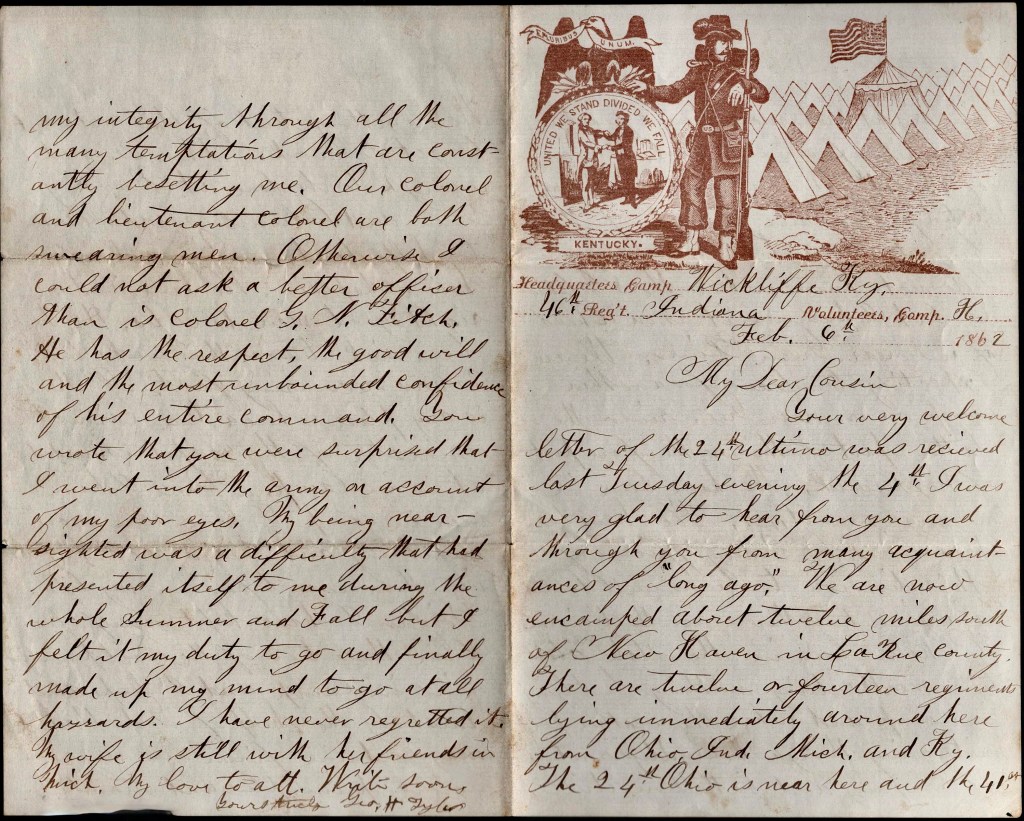
February 6th 1862

My dear Cousin,

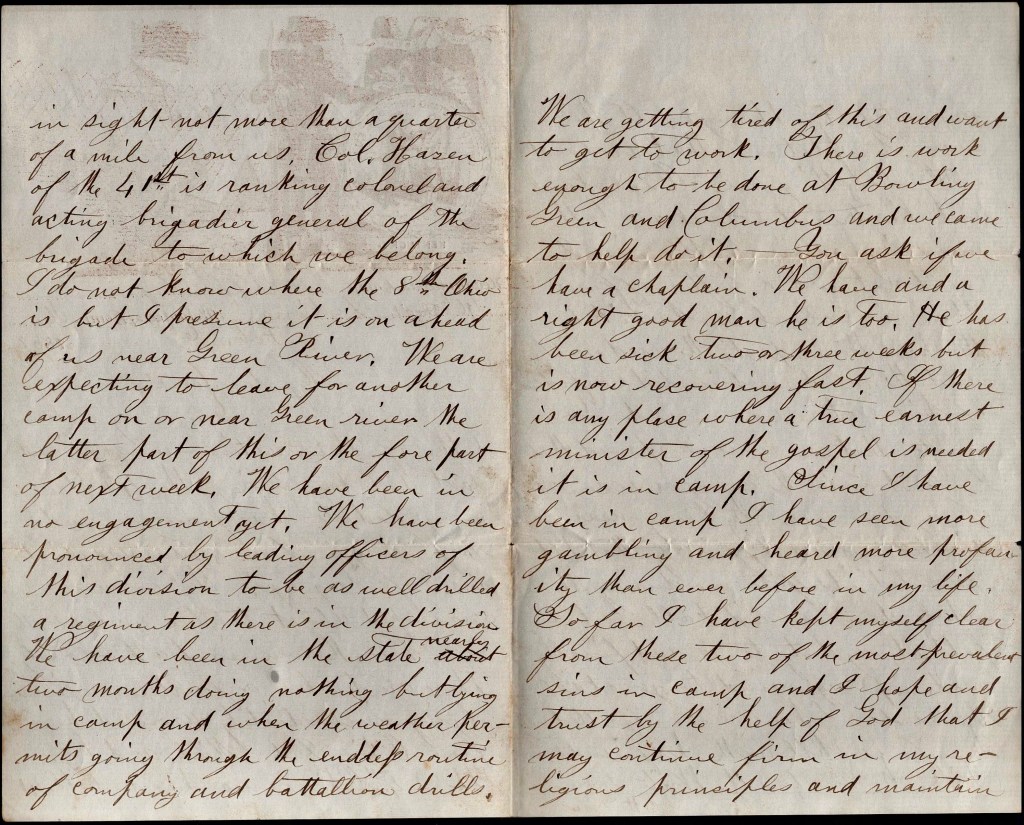
Your very welcome letter of the 24th ultimo was received last Tuesday evening the 4th. I was very glad to hear from you and through you from many acquaintances of “long ago.” We are now encamped about twelve miles south of New Haven in La Rue County. There are twelve or fourteen regiments lying immediately around here from Ohio, Indiana, Michigan, and Kentucky. The 24th Ohio is near here and the 41st in sight not more than a quarter of a mile from us. Col. [William Babcock] Hazen of the 41st is ranking Colonel and acting Brigadier General of the brigade to which we belong. I do not know where the 8th Ohio is but I presume it is on ahead of us near Green River. We are expecting to leave for another camp on or near Green River the latter part of this or the fore part of next week.

We have been in no engagement yet. We have been pronounced by leading officers of this division to be as well drilled a regiment as there is in the division. We have been in the State nearly two months doing nothing but lying in camp and when the weather permits, going through the endless routine of company and battalion drills. We are getting tired of this and want to get to work. There is work enough to be done at Bowling Green and Columbus and we came to help do it.

You ask if we have a chaplain. We have and a right good man he is too. He has been sick two or three weeks but is now recovering fast. If there is any place where a true, earnest minister of the Gospel in needed, it is in camp. Since I have been in camp, I have seen more gambling and heard more profanity than ever before in my life. So far I have kept myself clear from these two of the most prevalent sins in camp and I hope and trust by the help of God that I may continue firm in my religious principles and maintain my integrity through all the many temptations that are constantly besetting me.

Our Colonel and Lieutenant Colonel [Aaron Miller Flory] are both swearing men. Otherwise I could not ask a better officer than in Colonel G[raham] N[ewell] Fitch. He has the respect, the good will, and the most unbounded confidence of his entire command.

You wrote that you were surprised that I went into the army on account of my poor eyes. My being near-sighted was a difficulty that had presented irself to me during the whole summer and fall but I felt it my duty to go and finally made up my mind to go at all hazards. I have never regretted it. My wife is still with her friends in Michigan. My love to all. write soon. Yours truly, — George H. Tyler

1861: Henry D. Lincoln to his friend Everett

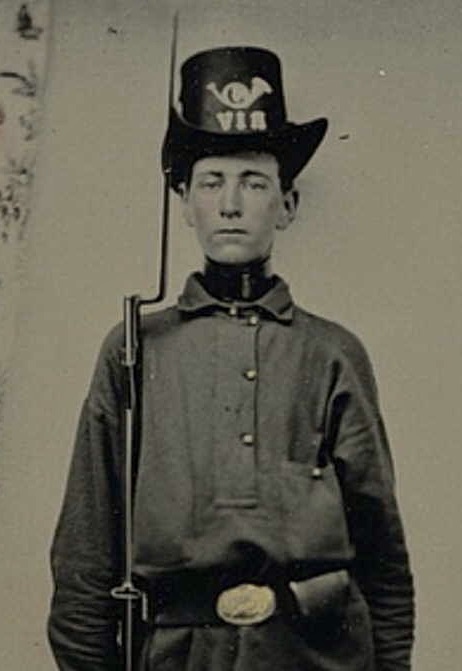
I could not find an image of Henry but here is David A. Sheldon of Co. B, 4th Rhode Island wearing the classic R. I. blouse and Hardy hat.

The following letter was written by Henry D. Lincoln (1839-1900), the son of Joseph and Sally (smith) Lincoln of Attleboro, Bristol county, Massachusetts, who served in Co. I, 4th Rhode Island Infantry. Henry enlisted as a corporal at Pawtucket on 14 September 1861 and was with his regiment at Antietam where he was wounded and hospitalized for months afterward. The regiment lost 21 men killed and 77 men wounded at Antietam when they were hit in the flank by A. P. Hill’s Division as they attempted to advance though Joseph Sherrick’s 40 acre cornfield beyond Burnside’s Bridge. Henry was eventually discharged on 15 October 1864. He received a disability pension after the war but was able to supplement his monthly payment by employment as a railroad conductor. Previous to his enlistment he had been employed as a “stair builder”—a trade he learned from his father.

This letter was written in late November 1864 while the regiment was still bivouacked at Camp Casey near Washington D. C.

T R A N S C R I P T I O N

[Camp Casey, near Washington D. C.]
November 24th [1861]

Friend Everett,

I have just got through supper and smoking and I thought that I would write to pass away the evening. I don’t know when I shall write again. There is going to be something pretty quick. Friday we got paid off and tonight the guard house is full. All the guards were brought in drunk last night. You had ought to of been here this morning and seen them. There was a squad of them, I can tell you. Last night the Major, the Colonel, and the Doctor detailed 12 men from each company to go on picket dity. They went 8 miles from camp. What they went for, nobody knows but them that went. They had to take an oath of secrecy to say nothing what they went for. One of them that [went] told me that he laid two hours side of the wall and did not dare to speak. His orders were that if he [was to] see a man, to shoot him down. We have two spies in the guard house now. I hope if they be rebels, they will hang them.

Tuesday our Brigade has got to go to the City on a review. There is to be thirty thousand reviewed. Would not you like too see them? The story is that we are going on an expedition. I hope we shall for I want to see Old Jeff and if I see him, I will kill him if I can.

It is very cold here now. It snows a little here now. It has stormed here very near all the time for a week. Newton was down here to see me the other day. He is the same old six pence. He has not altered any. I wish that I had his gun and dog out here. There is something to hunt out here. One of the boys killed two rabbits with a stone. The woods be full of them. Newton says that Uncle Sam pays four shillings a cord and board, clothes. It is a easy way of getting a living but a dangerous one, don’t you think?

So I should like to step in and see you a little while tonight but I guess that I shall see Old Jeff first. If I. do see him, I will try to make him say rip, would not you say. He says that he is going to hoist his black flag in Massachusetts. I guess that if he is there, that will be when he is dead. Think Barnum would give something to have him in his museum. If he will lay low, he will get him by the first of April. Should not you like to see him in a show case? He would look handsome, would not he?

How is Orin? Give my love to him. Tell him to come out here and he can see some fun before long. I wish that I had a little cider. I be gettin’ dry. Well, I shall have to dry up for I hain’t got much more paper. Good night. Write, won’t you, for I like to hear from you. Yours, — Henry

4th Regt. R. I. V., Co. I, Washington D. C.

1861: John Elmer Mulford to William Runyon

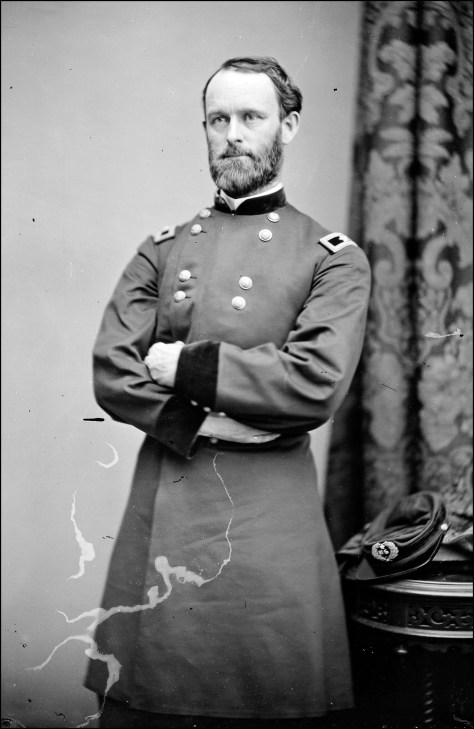
General John Elmer Mulford

This letter was written by John Elmer Mulford (1829-1908). An obituary informs us that he was “born at Lawrenceville, Pa., Feb . 26, 1829. Mulford joined the Union Army in 1861, going as a Captain of the Third NY Volunteers. He was later given the rank of General and served on the Commission for the Exchange of Prisoners between the North and South. He was the loved and trusted friend of President Lincoln—no man standing closer to the President in those days. He took no orders except from Secretary of War Stanton. His integrity was above reproach, and his war record was one of high honor to himself, to his posterity and to the Nation which he served. As a business man General Mulford had marked and unusual abilities. He was one of the promoters of, and the leading spirit in the building of the Glen Route, and his ability has shown itself in countless ways. As a soldier and a citizen his loss will be equally regretted. In public life Mr. Mulford was a man who was liked intensely. He had a very philanthropic nature and many generougifts have been bestowed in this, his native village. He leaves to mourn his loss, his widow of this village, and one son, Edwin H.”

In his letter, Mulford speaks of his attempts to recruit an officer for a Pennsylvania regiment. He also mentions the retirement of General Scott and the promotion of General McClellan. Finally he alludes to the danger of violence in Maryland on the day he wrote the letter which was November 6th 1861, the day of Maryland’s Gubernatorial election pitting a Union Party Candidate against one from the Democratic party.

T R A N S C R I P T I O N

Headquarters 3rd Regt. N. Y. V.
Fort McHenry [Baltimore]
November 6, 1861

My dear friend,

I have just received a letter from Silas which I enclose herein. I wrote him twice to Capt. Davis but have had no reply from him. His answer to Silas, however, is quite as favorable as we could expect and now it remains for us to get the man. Can you get one in your town to go with the Bradford Company? Please try without delay, and I will also, for I think him worth two. Capt. Davis has however offered to trade even, & let us close the bargain at once. You will pardon me for assuming that you have consented to this change. I hope you will. No matter where the regiment goes, we can find it & when you find a man who is willing to go, we will pay his fare to the regiment, wherever it may be. I am very sorry that Silas did not give me the name of his Colonel & number of their regiment. I have, however, written to Headquarters at Harrisburg to find out & shall I doubt not be in possession of all that information before I hear again from Silas.

My command is still in Fort McHenry, but how long to remain I cannot tell. We are to have a battle on the Potomac lines in a few days & what changes will be made in the station of troops will in a degree depend upon that. General Dix has requested the Secretary of War to leave our regiment with him, but if we are needed more elsewhere, we must go.

As far as we have been able to judge, the Army seems well pleased that General Scott has retired, and now if our McClellan proves equal to his position, & is able to sustain the proud reputation he has already acquired, we may hope for success in the field. He is now untrammeled, & no one is responsible for any farther blunders which may be made but himself. Our campaign so far has only been a series [of] “brilliant” blunders & like railroad smash ups, “No body to blame.” But now we have a man who is responsible. There is a great movement of troops towards Washington this week and everything indicates an early engagement. There are great fears of an uprising in Maryland today and some fear as to whom will be in the ascendancy. Large forces of the rebel troops are along the Potomac and will undoubtedly many of them cross at unguarded points for the purpose of voting, or taking part in an outbreak which may occur.

I will write you again as soon as I have anything to communicate. — Jno. E. Mulford, Capt. 3rd Regt. N. Y. V.

[to] William Runyon, Esq., Granville Summit, Bradford county, Pa.

1861: Unidentified Civilian to her Sister

I initially endeavored to transcribe this letter in hopes of identifying its anonymous author, yet, regrettably, there are insufficient clues to arrive at a conclusive determination. My initial impression suggested a male author; however, the content, along with the handwriting and penmanship, compels me to surmise that it was a female addressing her sister. It is my assertion that she was the mother of the young boy referred to as “Willie” in this correspondence, who had the distinguished opportunity to shake President Buchanan’s hand during what was likely one of his final White House receptions prior to his departure from office, the last of which took place on 12 February 1861.

The author asserts that “Mr. Deming” was also present at the White House reception, and I am inclined to believe that he may have been her husband. During the mid-19th century, it was common for wives to refer to their spouses in such formal terms in correspondence. In my research for residents of Washington City in 1860 with the surname Deming, I identified a government clerk named Chester Deming (1814-1862), who had a son named William born in 1850; however, the extended family tree was not sufficiently detailed to establish a definitive connection.

I’ve published the letter on Spared & Shared regardless because I find the content interesting and hope you will too.

Patriotic fervor in 1861 among the children. (LOC)

T R A N S C R I P T I O N

Washington City
[Friday] February 15, 1861

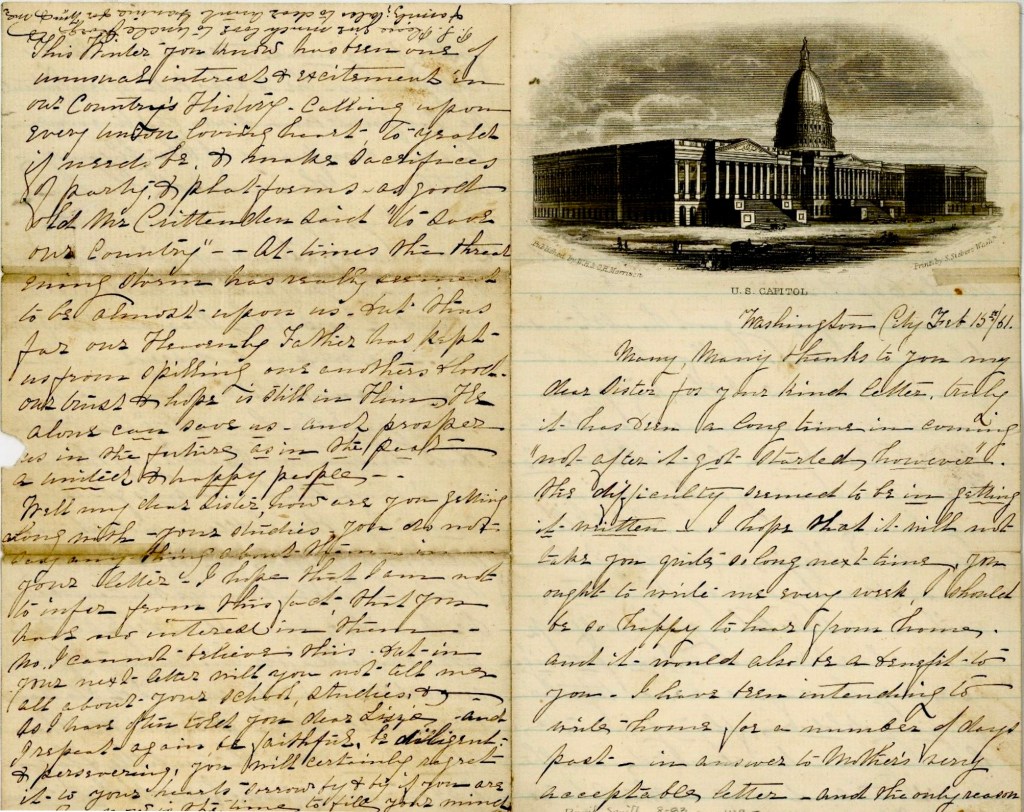
Many, many thinks to you my dear sister for your kind letter. Truly it has been a long time in coming “not after it got started, however.” This difficulty seemed to be in getting it written. I hope that it will not take you quite so long next time. You ought to write to me every week. I should be so happy to hear from home and it would also be a benefit to you. I have been intending to write home for a number of days past in answer to Mother’s very acceptable letter, and the only reason why I have not done so is, that I do not stay at home long enough to accomplish anything. you would really think that I was getting to be guide dissipated if I should tell you that the greater part of my time this winter had been spent at “the Capitol.”

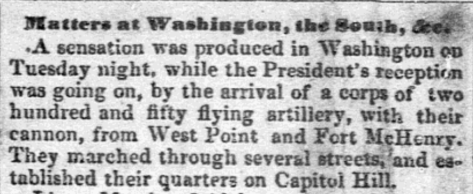
The Pittsfield Sun, 7 February 1861

We are all enjoying good health. Indeed, I have not been so well for the last five years as now. I think if you were to see me you would say, “that sister looked just like old times.” Little Willie too is very well and enjoying himself very much. I told him what Aunt Lizzie said—that he must be a big boy by this time. “Well,” he said, stretching himself up in his chair, “Mama, so I am pretty big.” He and Coszy have fine times together playing soldier, flying kite, &c. He is very much interested in the military and now as the City is full of regiments and artillery companies, he is also full of excitement. He has just been down the Arsenal to see a company of “flying artillery” that arrived here a few days ago from West Point.

Two weeks ago Tuesday evening [February 1, 1861], Mr. Deming, William, and the two Willies attended one of the President’s receptions. When we were introduced to Mr. Buchanan, I told him that Willie “was a great Buchanan boy.” He then took him very heartily by the hand and said that he was “glad to know it.” This little incident in Willie’s early life will be something that he will always remember. He has also formed a deep seated attachment for his country. You would be greatly amused to hear him talk about the Union—the whole Union & with his little flag of 34 stars and 13 stripes, show forth his patriotism.

This winter you know has been one of unusual interest & excitement in our Country’s history—calling upon every Union-loving heart to yield if needs be & make sacrifices of party & platforms as good old Mr. Crittenden said, “to save our Country.” At times the threatening storm has really seemed to be almost upon us, but htus far our Heavenly Father has kept us from spilling one another’s blood. Our trust and hope is still in Him. He alone can save us and prosper us in the future as in the past—a united and happy people.

Well, my dear sister, how are you getting along with your studies? You do not say anything about them in your letter. I hope that I. am not to infer from this fact that you have no interest in them. No. I cannot believe this. But in your next letter will you not tell me all about your school studies &c. As I have often told you, dear Lizzie, and I repeat again, be faithful, be diligent, and persevering. You will certainly regret it to your hearts sorrow by and by if you. are [ ] in the time to fill your mind.

P. S. Please give much love to Uncle George & family. Also to dear Aunt Fannie for William and me.

1861: Aaron Kirt Ellenwood to Friend Hattie

I could not find an image of Aaron, but here is James M. Stewart of Salem who served in Co. E, 19th Indiana. He was killed in the fighting at Brawner’s Farm in August 1862. (Ancestry.com)

The following letter was written by Pvt. Aaron Kirt Ellenwood (1842-1872) of Co. H, 19th Indiana Infantry. Aaron was the son of Adolphus Ellenwood (1796-1858) and Fanny Hendrix (1802-Aft1850) of Jennings county, Indiana. Aaron’s muster in date is given as 29 July 1861 but there are no other remarks in his military record. The 19th Indiana Brigade website states that Aaron was discharged early in the war because of disability but does not provide the date.

Most history buffs will recognize the 19th Indiana as part of the famed Iron Brigade who saw action in many of the Army of Potomac’s largest battles—Gainesville, Antietam, Gettysburg, and Petersburg. It isn’t known whether Aaron participated in any of these, however.

After the war, in 1866, Aaron married Mary Kiger (1846-1913) in Shelby county, Indiana. Aaron was buried in Crown Hill Cemetery in 1872; reinterred from Greenlawn Cemetery. No headstone marks in gravesite.

T R A N S C R I P T I O N

Camp Advance,
September 22nd 1861

Dear friend Hattie,

As I have been writing letters to nearly everybody today, I thought that I would write to you. I am tolerable well & hope you are the same. We have had tolerable hard times since we came over on this side of the Potomac. One night when I was on guard, the long roll beat and we did not know where we had to go so we did not bring any clothes with us here. We had to lay on the cold ground some two weeks without tents. All we had was our oil cloth and blanket for bed and cover. It was on a side hill and it rained nearly every night and the water running under us. But now we have our tents which is better for us. Tomorrow I understand that we go back on the other side of the river. That will suit me the best kind.

Capt. Johnson was here today. He looks fine. All of his boys are well. I think that we will be in the same brigade that he is in so there will be a good many of us boys from Edinburgh here now and all together. I suppose that [you] heard all the news from here by someone else. We have been in one little fight already. 1 Did not lose many of our men. I believe they killed five of our men and wounded two out of our regiment. Most of the Edinburgh boys are all well. Dude Gray is sick in the hospital.

I have received several letters since I have been here. Mag has written to me several times. She said in her last letter that you was well. Gave me your respects also. This is the first time that I ever wrote to you and likely I have taxed your patience already. I will stop by giving you my best respects. Give them to all the family and friends. — A. K. Elenwood

Co. H, 19th Regt. Indiana Volunteers, Washington City, D. C.

You would laugh to hear the boys singing this evening. This is Sunday here, I believe, judging by not having to work today. Our preacher preached a good sermon today. His name is Rev. [Lewis] Dale


1 Aaron is probably referring to the minot skirmish at Lewinsville that took place on 11 September, 1861.

1862: Unidentified Soldier in Co. D, 121st Ohio Infantry

Unfortunately there is no signature on the following letter and I have not been able to identify him based on the content except to note that he addressed it to someone named “Adah” and we can also confirm that he served in Co. D, 121st Ohio Infantry. His writing skills were subpar so I would not think him highly educated. No doubt he worked at a trade with his hands, not his pen.

His letter is dated 8 [or 9th] October 1862, coinciding with the day of [or day after] the Battle of Perryville that he recounts. The regiment had served for scarcely a month when they were hastily dispatched to Cincinnati to defend against Bragg’s impending invasion, armed with antiquated Prussian muskets and lacking adequate training in their usage. Their subpar performance at Perryville is not unexpected, and morale sank further when assigned the grim task of remaining in Perryville to inter the fallen soldiers from both sides. For an in-depth exploration of the 121st Ohio’s experience at Perryville, I recommend the article, “Wipe out Perryville!” The 121st Ohio’s Redemption at Chickamauga by Dan Masters.

T R A N S C R I P T I O N

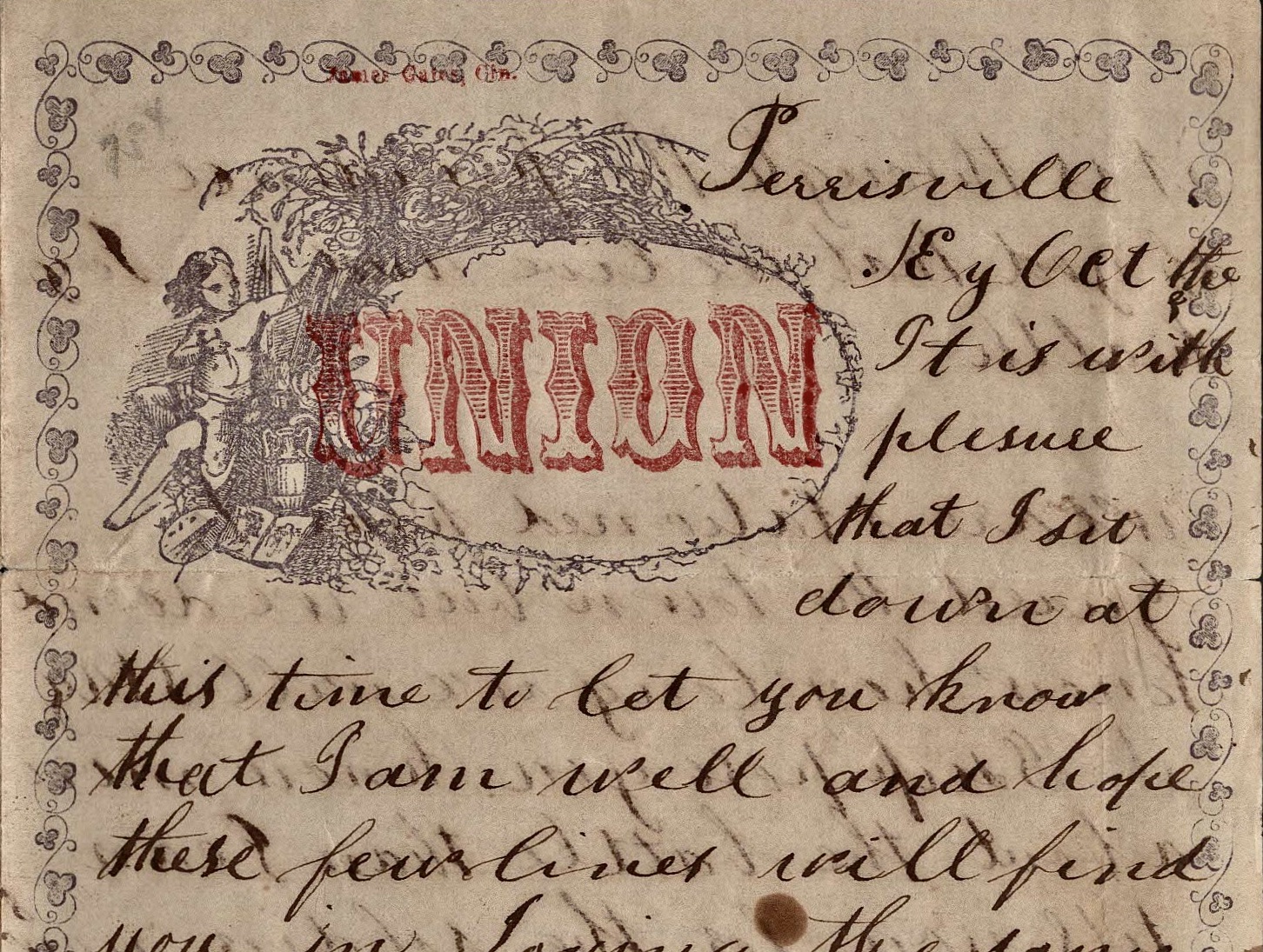
Patriotic letterhead of soldier’s letter.

Perryville, Kentucky
October 8, [1862]

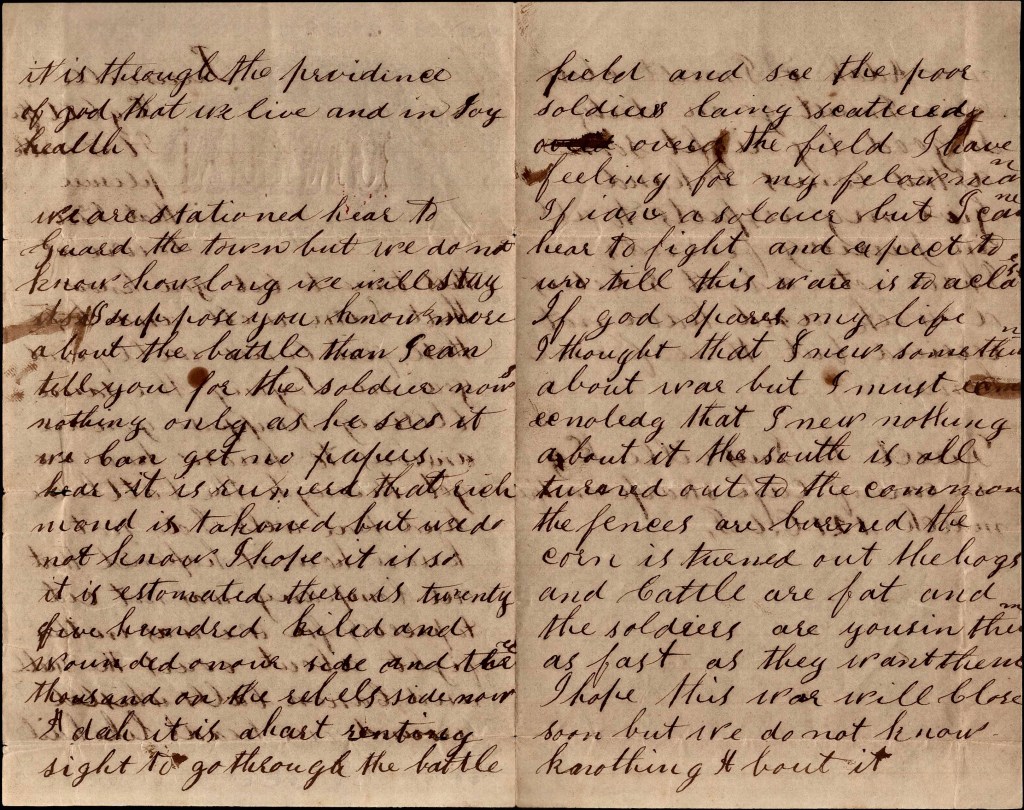
It is with pleasure that I sit down at this time to let you know that I am well and hope these few lines will find you enjoying the same blessing. I suppose you are anxious to know how we got through the battle we had here. Well, I do not know how it happened that our company was not cut to pieces for we was in the fight about six hours. The shell and cannon balls whistled over our heads like hail. It is through the Providence of God that we live and enjoy health.

We are stationed here to guard the town but we do not know how long we will stay. I suppose you know more about the battle than I can tell you for the soldier knows nothing—only as he sees it. We can get no papers here. It is rumored that Richmond is taken but we do not know. I hope it is so.

It is estimated there is twenty-five hundred killed and wounded on our side and three thousand on the Rebel’s side. Adah, it is a heart-rending sight to go through the battlefield and see the poor soldiers laying scattered over the field. I have feeling for my fellow man. I am a soldier but I came here to fight and expect to until this war is [brought] to a close, if God spares my life. I thought that I knew something about war but I must acknowledge that I knew nothing about it.

The South is all turned out to the common. The fences are burned, the corn is turned out, the hogs and cattle are fat and the soldiers are using them as fast as they want them. I hope this war will close soon but we do not know nothing about it.

Now Adah, I must close soon. I must go on duty. So goodbye. Write soon as this comes to hand. Give my respects to all inquiring friends. I have wrote about three letters a week and have not received but three from home. Direct to Louisville, Kentucky, in care of Capt. [Samuel L.] Sharp on the march. 121st OVI

1862: Albert L. Henry to Milo B. Sharp

The following letter was written by Albert L. Henry (18xx-1863) of Scotland, Windham county, Connecticut, who served in Co. B, 5th Connecticut Volunteers. Albert enlisted on 29 June 1861 and died of disease on 25 March 1863 while in the service.

In his letter, Albert speaks of the First Battle of Kernstown (23 March 1862) and the carnage witnessed following the battle. It was just the opening act of Stonewall Jackson’s 1862 Valley Campaign.

“We have got them Started. Come On! Come On!” The Union breakthrough at First Kernstown. Artwork by Keith Rocco

T R A N S C R I P T I O N

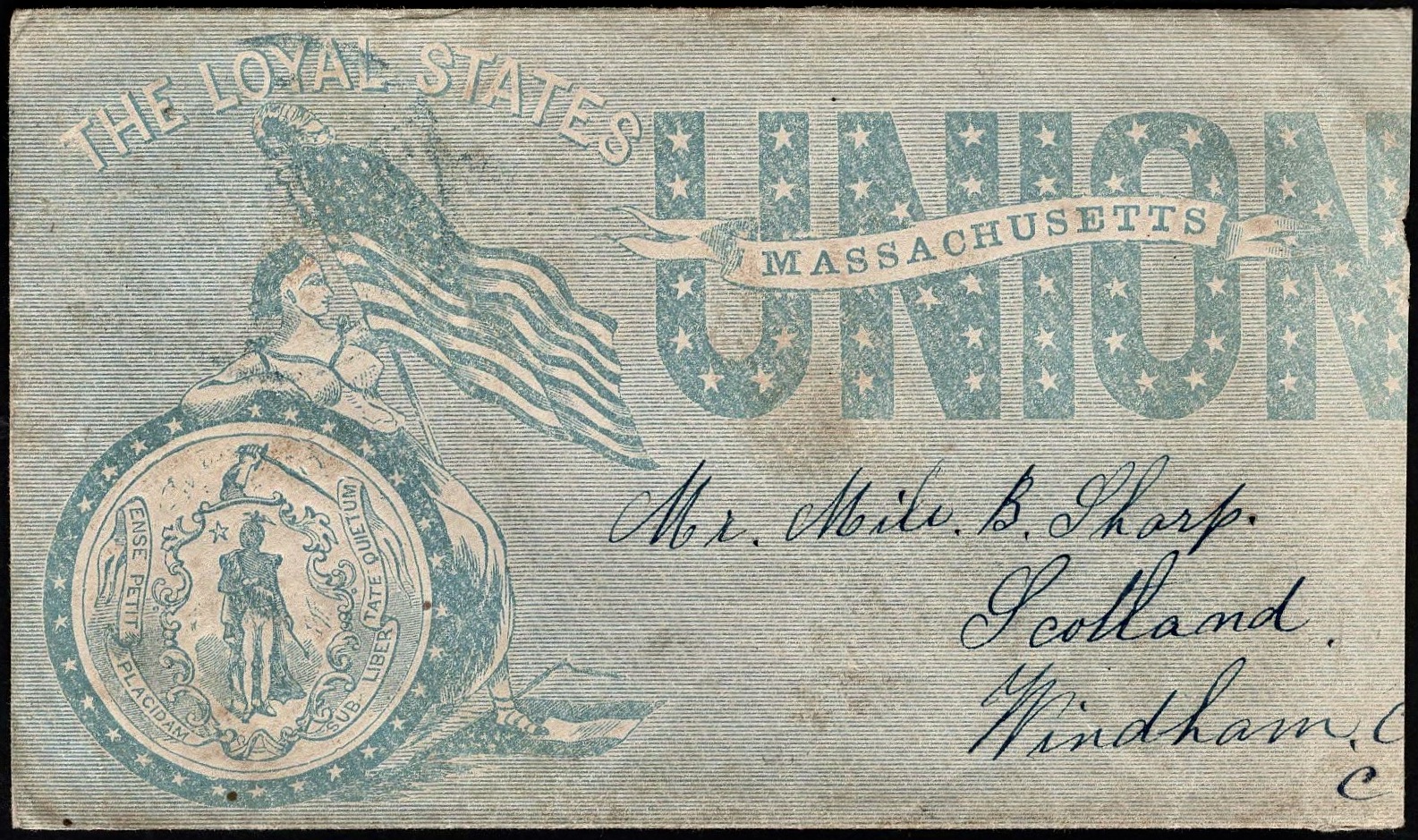
Addressed to Mr. Milo B. Sharp, Scotland, Windham county, Connecticut

Camp near Edinburg, Va.
April 8, 1862

Friend Milo,

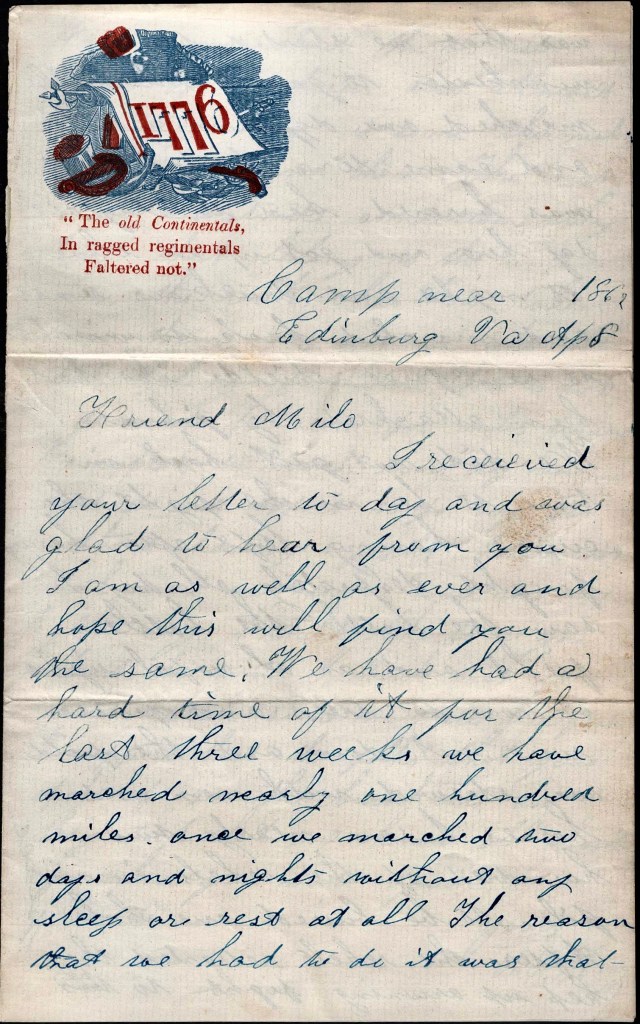
I received your letter today and was glad to hear from you. I am as well as ever and hope this will find you the same.

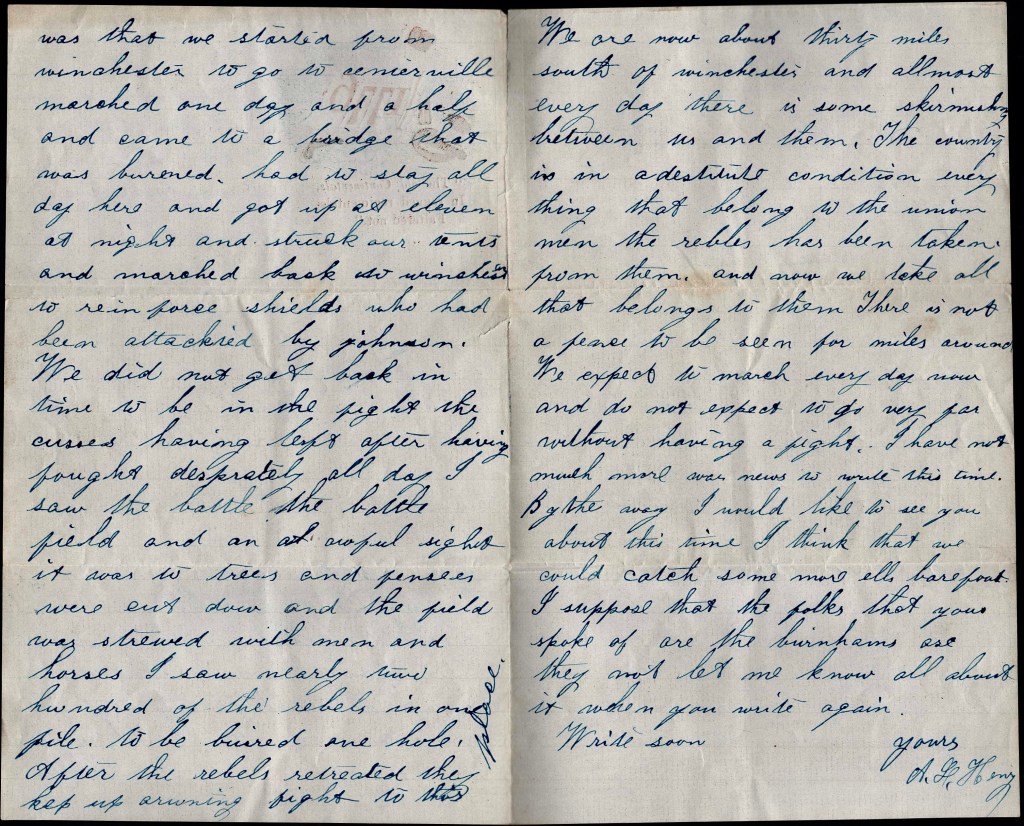
We have had a hard time of it for the last three weeks. We have marched nearly one hundred miles. Once we marched two days and nights without any sleep or rest at all. The reason that we had to do it was that we started from Winchester to go to Centerville, marched one day and a half, and came to a bridge that was burned. Had to stay all day here and got up at eleven at night and struck our tents and marched back to Winchester to reinforce Shields who had been attacked by Johnson [Jackson]. We did not get back in time to be in the fight, the cusses having left after having fought desperately all day. I saw the battlefield and an awful sight it was too. Trees and fences were cut down and the field was strewed with men and horses. I saw nearly two hundred of the rebels in one pile to be buried in one hole. After the rebels retreated, they kept up a running fight to this place.

We are now about thirty miles south of Winchester and almost every day there is some skirmishing between us and them. The country is in a destitute condition. Everything that belong to the Union men, the rebels has been taken from them. And now we take all that belongs to them. There is not a fence to be seen for miles around. We expect to march every day now and do not expect to go very far without having a fight.

I have not much more war news to write this time. By the way, I would like to see you about this time. I think that we could catch some more ells barefoot. I suppose that the folks that you spoke of are the Burnhams, are they not? Let me know all about it when you. write again. Write soon. Yours, — A. L. Henry

1862: William Henry Rinehart to Joseph K. Miller

The following letter was written by William Henry Rinehart of Co. I, 6th Pennsylvania Cavalry. At age 20, he enlisted in the company on 26 September 1861 as a private and mustered out of the regiment on 17 June 1865 as a sergeant. He was described as standing 5′ 6″ tall, with brown hair, hazel eyes, and the dark complexion of a farmer. He was born in Chester county, Pennsylvania, probably the son of Joshua Rinehart (1813-1899) and Amelia Sheppard Dare (1809-1891) of East Coventry.

After the war he married and moved to Leavenworth, Kansas, where he became an agent for a company making lightning rods. He married the daughter of an Irish emigrant named Fanny (1843-Bef1900) who died prior to 1900 when he was enumerated in a home for disabled veterans.

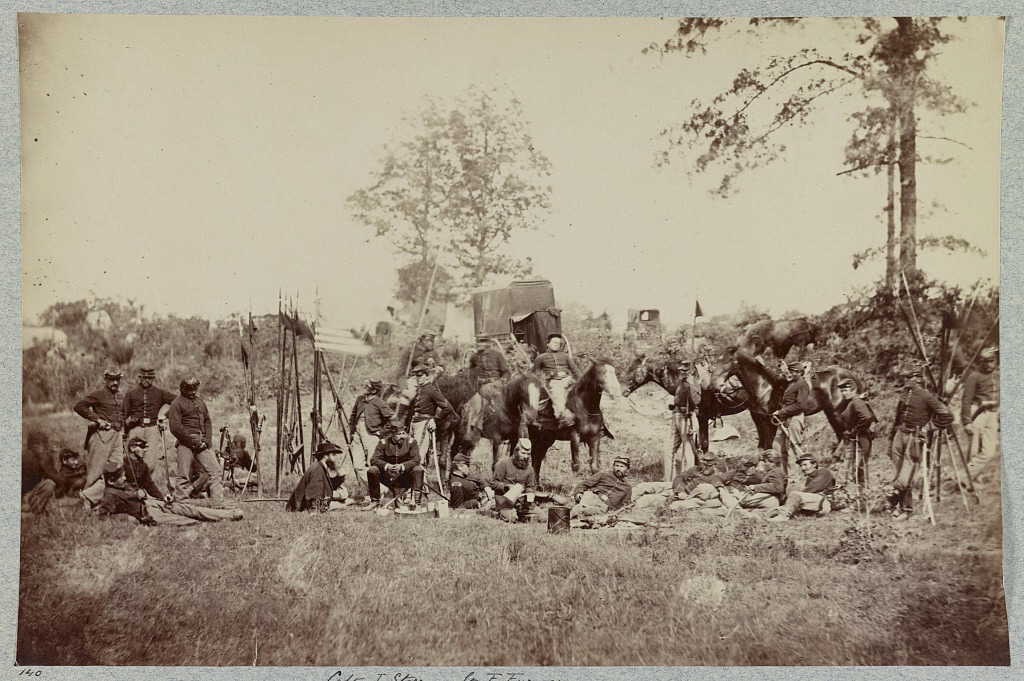
The 6th Pennsylvania Cavalry (“Rush’s Lancers”) were equipped with lances as shown in this image.

T R A N S C R I P T I O N

Addressed to Mr. Joseph K. Miller, Limerick Bridge, Montgomery county, Pennsylvania

Near Hampton, Virginia
April 21st 1862

Esteemed Friend,

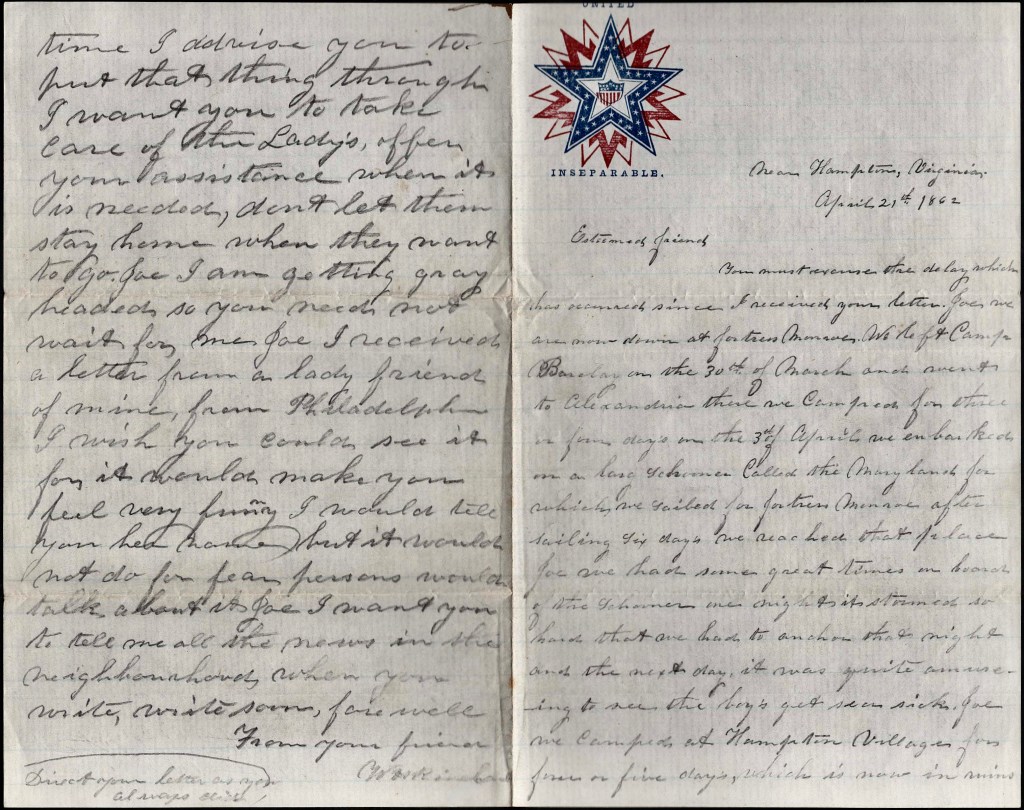
You must excuse the delay which has occurred since I received your letter. Joe, we are now down at Fortress Monroe. We left Camp Barclay on the 30th of March and went to Alexandria. There we camped for three or four days. On the 3rd of April we embarked on a large schooner called the Maryland for which we sailed for Fortress Monroe. After sailing six days we reached that place.

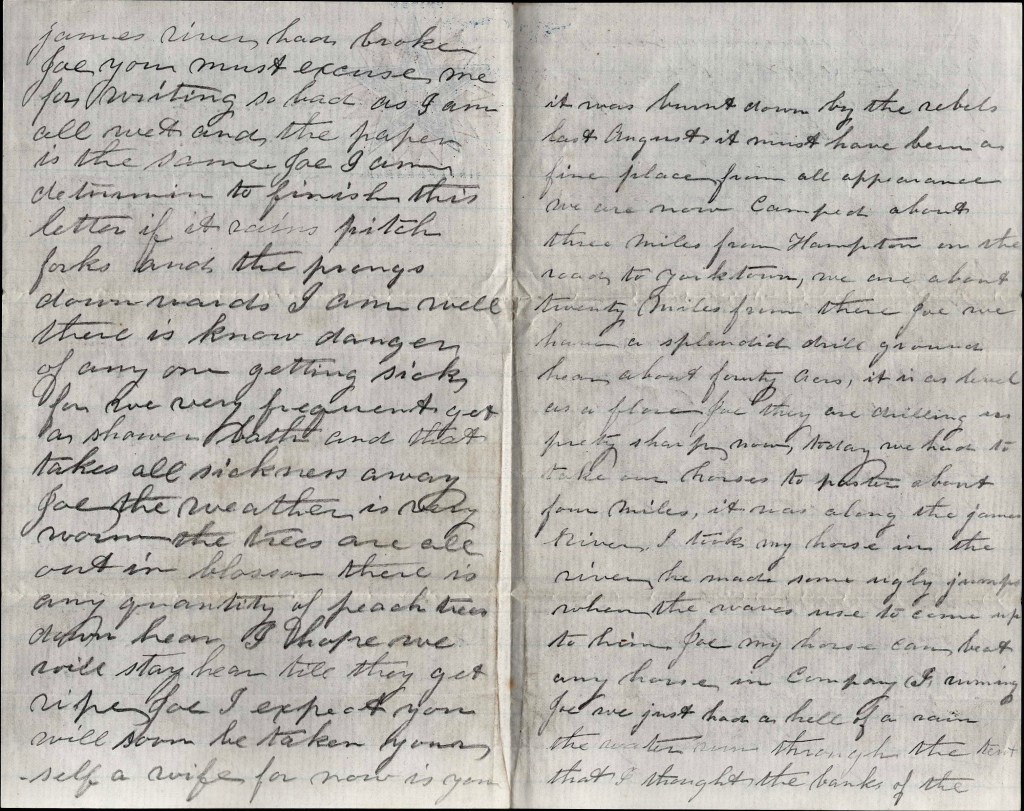
Joe, we had some great times on board of the schooner. One night it stormed so hard that we had to anchor that night and the next day. It was quite amusing to see the boys get seasick. Joe, we camped at Hampton village for four or five days, which is now in ruins. It was burnt down by the rebels last August. It must have been a fine place from all appearance. We are now camped about three miles from Hampton on the road to Yorktown. We are about twenty miles from there.

Joe, we have a splendid drill ground here [of] about forty acres. It is as level as a floor. Joe, they are drilling us pretty sharp now. Today we had to take our horses to pasture about four miles. It was along the James River. I took my horse in the river. He made some ugly jumps when the waves use to come up to him. Joe, my horse can beat any horse in Company I running. Joe, we just had a hell of a rain. The water run through the tent [such] that I thought the banks of the James river had broken. Joe, you must excuse me for writing so bad as I am all wet and the paper is the same.

Joe, I am determined to finish this letter if it rains pitch forks and the prongs downwards. I am well. There is no danger of anyone getting sick for we very frequently get a shower bath and that takes all sickness away. Joe, the weather is very warm. The trees are all out in blossom. There is any quantity of peach trees down here. I hope we will stay here till they get ripe. Joe, I expect you will soon be taking yourself a wife for now is your time I advise you to put that thing through. I want you to take care of the Ladies. Offer your assistance when it is needed. Don’t let them stay home when they want to go.

Joe, I am getting grey-headed so you need not wait for me. Joe, I received a letter from a lady friend of mine from Philadelphia. I wish you could see it for it would make you feel very funny. I would tell you her name but it would not do for fear persons would talk about it. Joe, I want you to tell me all the news in the neighborhood when you write. Write soon. Farewell. From your friend, — W. H. Rinehart

Direct your letter as you always did.

1861: Edward French Hall to Susan (Blood) Hall

The following letter was written by Edward French Hall (1824-1903) of Co. B, 3rd New Hampshire Infantry. The 3rd New Hampshire was a three year’s regiment who members were mostly recruited in New Hampshire, but there were also 116 men from Ireland, 81 from Vermont, 70 from Maine, and 31 from New York. 

Edward wrote the letter to his wife, Susan (Blood) Hall (1822-Aft1900) with whom he married in 1847. Edward was a native of Epping, New Hampshire. His parents were Samuel Hall. and Elizabeth Lee. Edward and Susan lived in Haverhill, Essex county, Massachusetts in 1860 where Edward was employed as a shoemaker.

Edward was 37 years old when he enlisted in August 1861 as a private. He was severely wounded on 16 August 1864 at Deep Bottom Run which resulted in the amputation of his left arm.

The Steamer Atlantic transported the 3rd New Hampshire on the Expedition to Port Royal.

T R A N S CR I P T I O N

Hilton Head, South Carolina
Dec 11th 1861

Dear Susan,

I received your letter dated Exeter, Nov 30th, last night and take the first opportunity to answer it. Those money letters are all accounted for except one with $10 in it and $15 which I sent to Mary by Express. Two letters I sent from Fortress Monroe, each containing five dollars, and directed to Oxford. The next two were written on the Steamer Atlantic, directed to Bradford, $10 in one and $20 in the other, and put in the [Post] Office before we landed. Then after we had got ashore, I got a letter from you written at Orford so I found out you had not returned to Bradford. (and the next two money letters were directed to /this is a mistake, one letter instead of two/ Orford each containing $10. I don’t remember the dates but they were both written after we landed and before the 20th of November. The fifteen dollars I sent by Express was given to the Chaplain on the 20th November and he said a receipt for it would be sent back from Fortress Monroe soon as they could have time to make them out and a boat was coming this way. This receipt is given so that in case the money is lost we can have something to show that we have sent it and the company makes it good. But I have not seen the receipt or heard from the money yet.

I sent a letter to Mary directly after telling her I had sent it and have not heard from her since. There don’t seem to be much regularity about letters going or coming. Some go or come quicker than others. There is no regular Mail Boat but the Mail is sent or brought whenever there is a chance. If you write a letter and it gets to N Y just before a boat leaves for this place, it will come very direct. But if it gets there a week before the boat leaves, of course it will take so much longer for it to reach here. Sometimes letters lay in the Office here some time before there is a chance to send a Mail to N. Y.

You ask me if I have clothes enough. Yes, with the exception of a pair of gloves. I have two coats and an overcoat, two woolen shirts, two pairs of drawers. The cold weather here is only once in a while. A good deal of the time it is too warm for comfort in the day time, a little chilly nights.

When you get to Haverhill, I think you will find some letters there from me. I think the missing letter with $10 in it must have reached Orford after you left unless it is lost. But I don’t understand why I have not heard from the $15 sent by Express. I write so many letters that I can’t keep the run of them and I think it will be a good plan to number them, and I will commence with this and call it Letter No 1. The next will be No two and so on. And when you get one, you can acknowledge the receipt of No one or two as the case may be. Then if any are missing, we can tell where the gap is.

I believe I have written about all of consequence, and will bring my letter to a close. Please write and tell me all the news when you get to Haverhill and tell Mary to write often. My love to all and believe me I think of you much and often. Good by, — Edward F. Hall