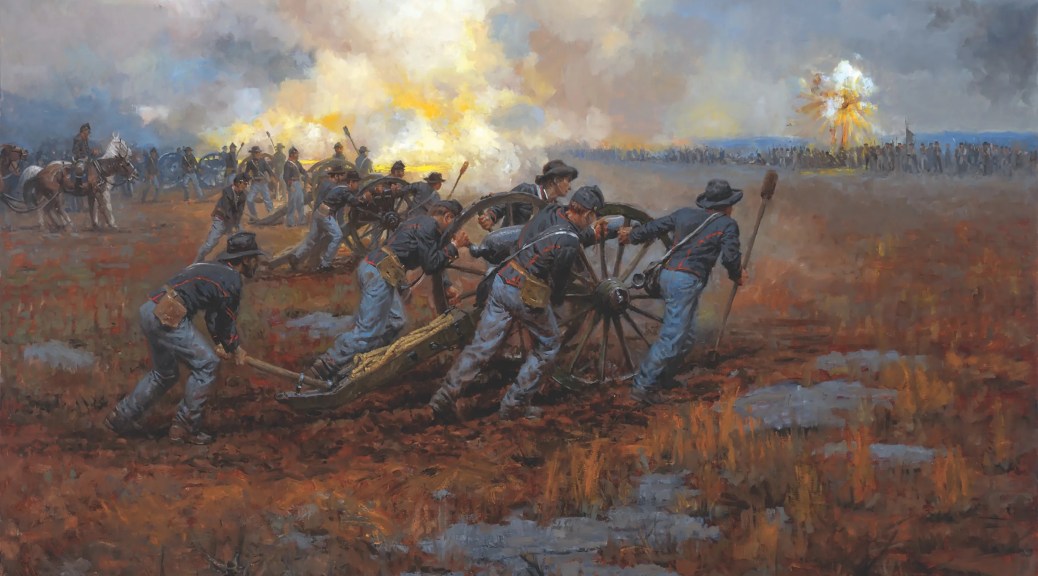
Though only signed “Ol,” I believe this letter was written by Corp. Oliver P. Clark (1839-1909) of Battery E, 1st Ohio Light Artillery—a battery that was overrun in the opening moments of the Battle of Stones River on 31 December 1862. One of the best articles that can be found on the web describing that battery’s experience that day was written by fellow historian, Dan Masters—see Captured Entire: The Loss of Battery E, 1st Ohio Light Artillery at Stones River (14 February 2020).
Oliver served in Battery E from 26 September 1861 to 26 September 1864. His presence at Camp Chase is not explained in the letter though he might have been sick or slightly wounded. Camp Chase served not only as a Confederate prison camp but as a Union Hospital during the Civil War. He may have also been a paroled Union prisoner awaiting exchange.
T R A N S C R I P T I O N
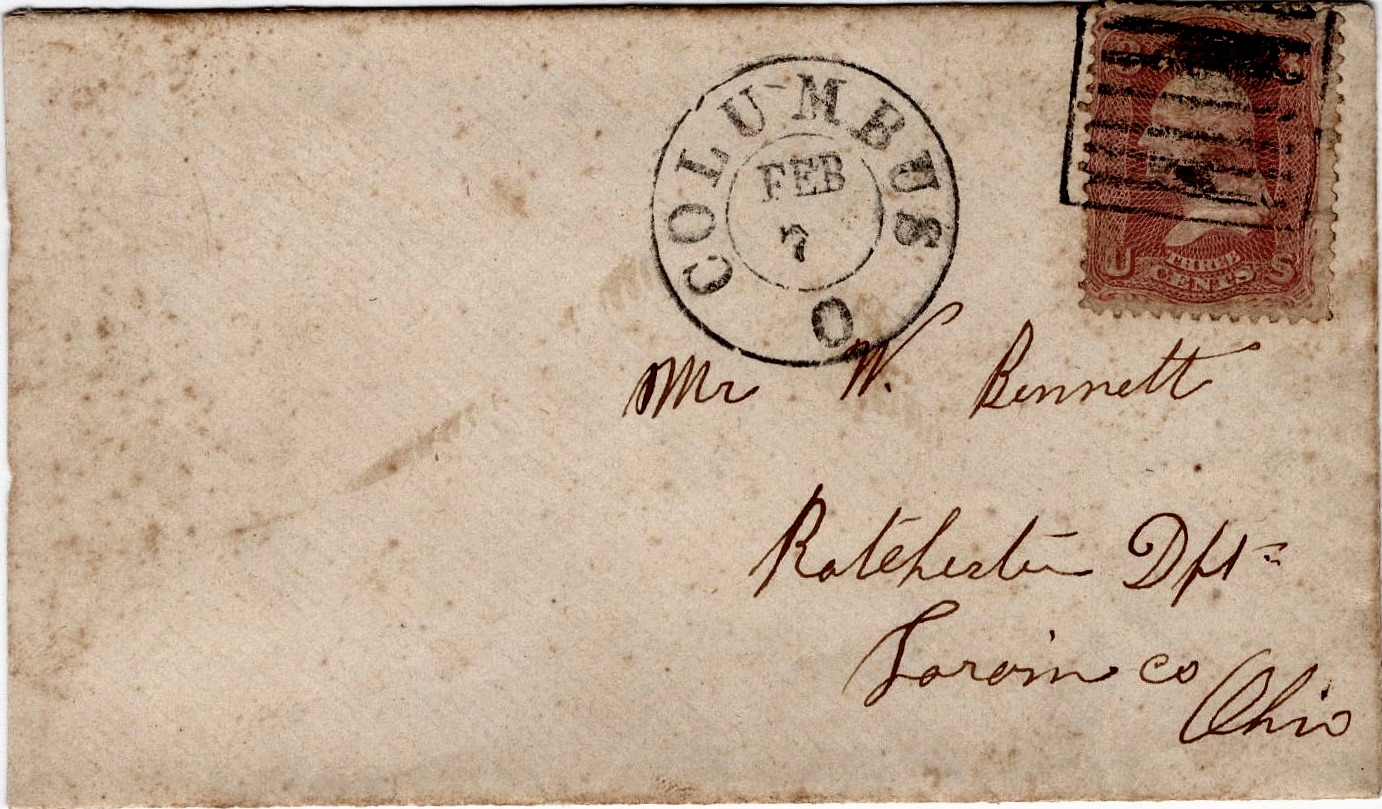
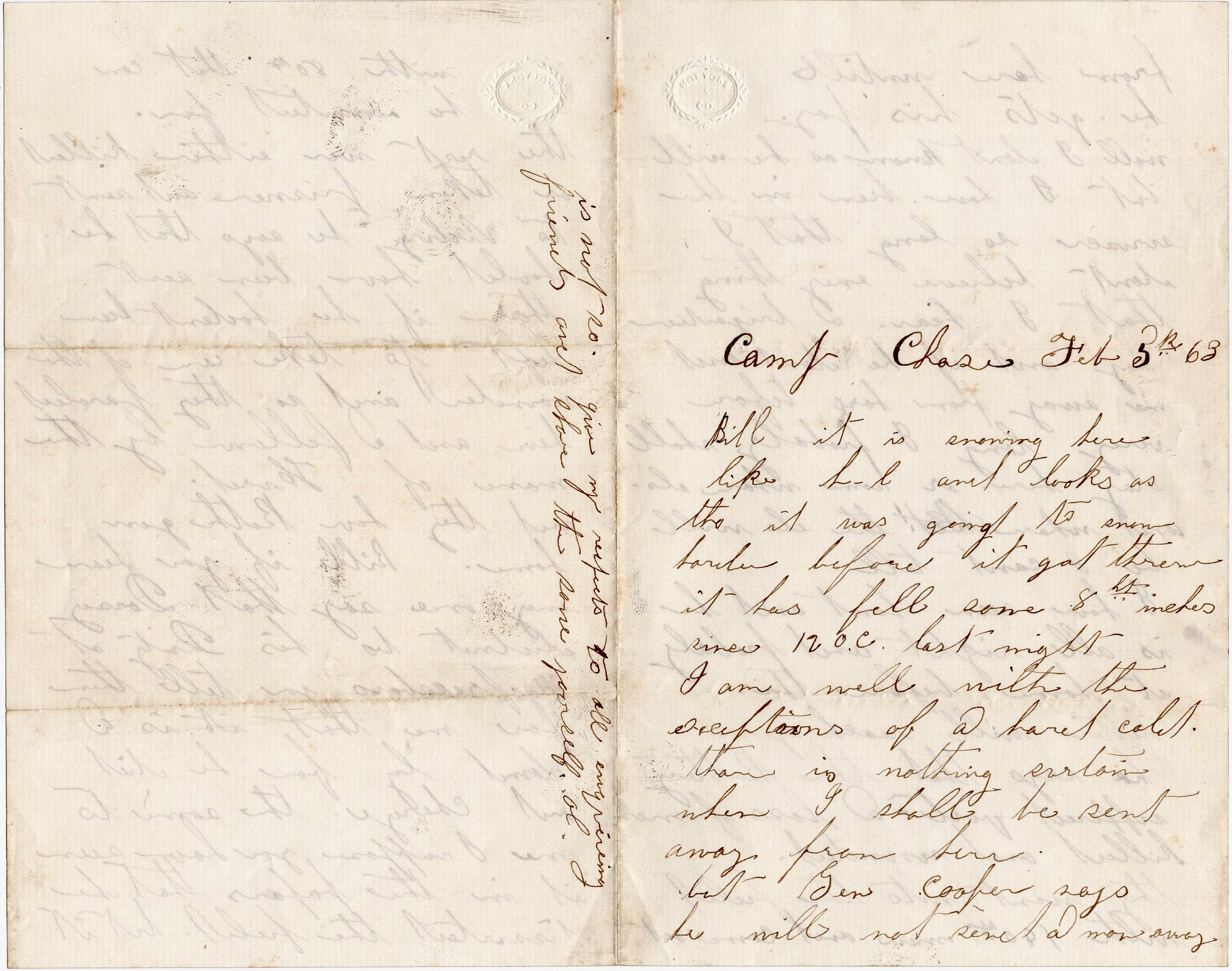
Camp Chase [Columbus, Ohio]
February 5th 1863
Bill,
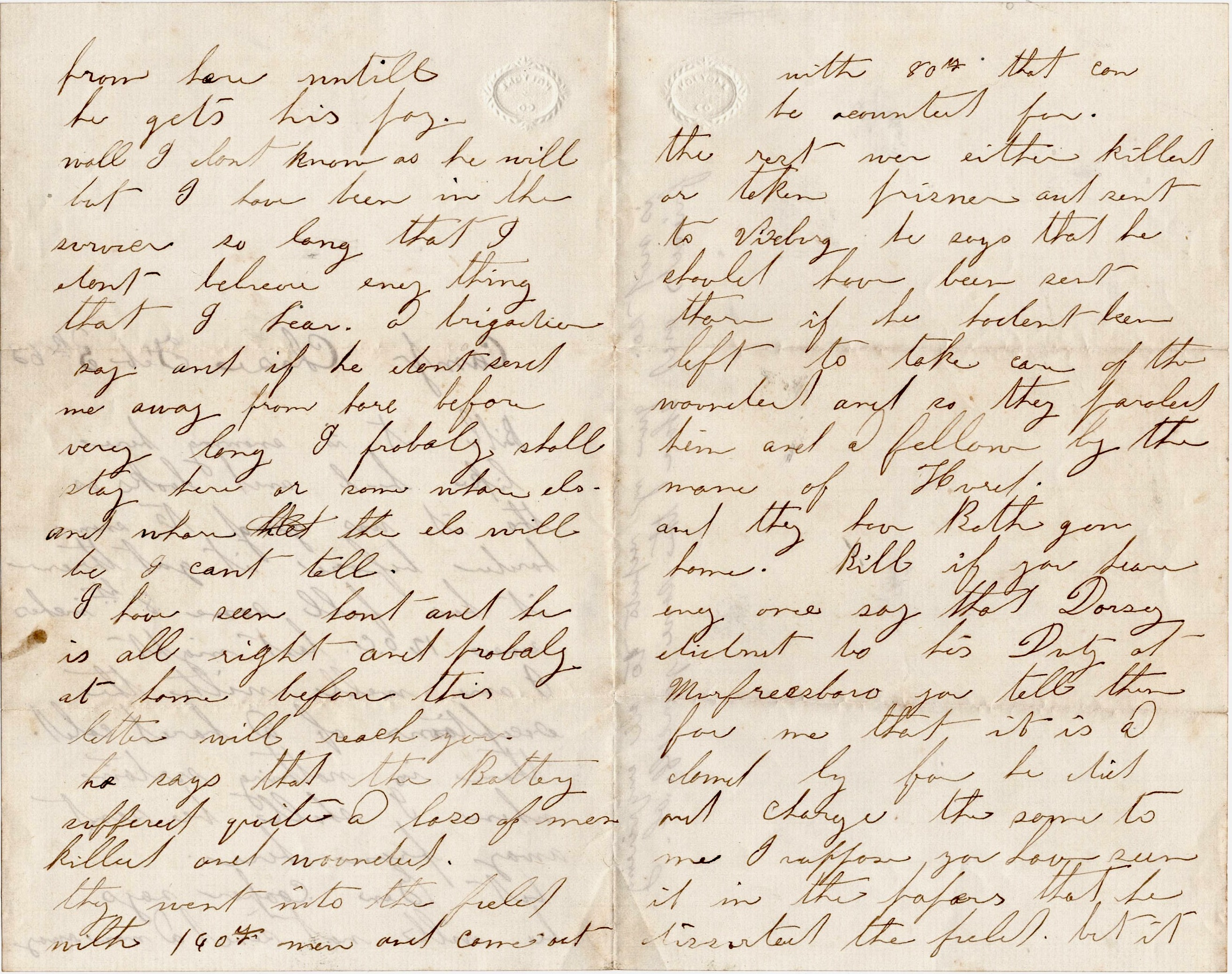
It is snowing here like h–l and looks as if though it was going to snow harder before it got through. It has fell some 8 inches since 12 o’clock last night. I am well with the exceptions of a hard cold. There is nothing certain when I shall be sent away from here but Gen. [James] Cooper 1 says he will not send a man away from here until he gets his pay. Well, I don’t know as he will but I have been in the service so long that I don’t believe anything that I hear…If he don’t send me away from here before very long, I probably shall stay here or somewhere else and where the “else” will be, I can’t tell.
I have seen [Lont?] and he is all right and probably at home before this letter will reach you. He says that the battery suffered quite a loss of men killed and wounded. They went into the field with 140 men and came out with 80 that can be accounted for. The rest were either killed or taken prisoner and sent to Vicksburg. He says that he should have been sent there if he hadn’t been left to take care of the wounded and so they paroled him and a fellow by the name of Hurd 2 and they have both gone home. Bill, if you hear anyone say that Dorsey didn’t do his duty at Murfreesboro, you tell them for me that it is a damned lie for he did not charge the same to me. I suppose you have seen it in the papers that he deserted the field but it is not so. 3
Give my respects to all enquiring friends and share the same yourself. — Ol.
1 Brig. Gen. James Cooper (1810-1863) was commandant at Camp Chase, Columbus, Ohio, at the time of this letter. He died on 28 March 1863, some 6 or 7 weeks later.
2 Possibly James Smith Hurd of Co. E, 1st Ohio Light Artillery. He enlisted in August 1861 in Elyria, Ohio. At Stones River, he was shot through the shoulder about two inches above the lower point of blade, breaking the shoulder and the ball passing out in the neck. The would was received while fighting on the extreme right in McCook’s Corps. He was taken prisoner and treated by Rebel surgeons but paroled afterwards.
3 Stephen Wallace Dorsey was appointed and mustered as 1st Lieutenant in Battery E of the 1st Ohio Light Artillery. Dorsey took command of the Battery after Edgarton’s capture but since they had no guns (all were captured by the Rebels), he took the command back to Nashville where he was out in charge of the city’s siege guns. In doing so, Dorsey was a accused of cowardice by Lt. Albert Ransom (the other lieutenant in Battery E). Ransom later retracted his charges of cowardice against Dorsey as the overwhelming opinion of the men of Battery E believed him a brave officer and worthy of their confidence. [Source: Portrait of an Age: The Political Career of Stephen W. Dorsey, 1868-1889, by Sharon K. Lowry, 1980]