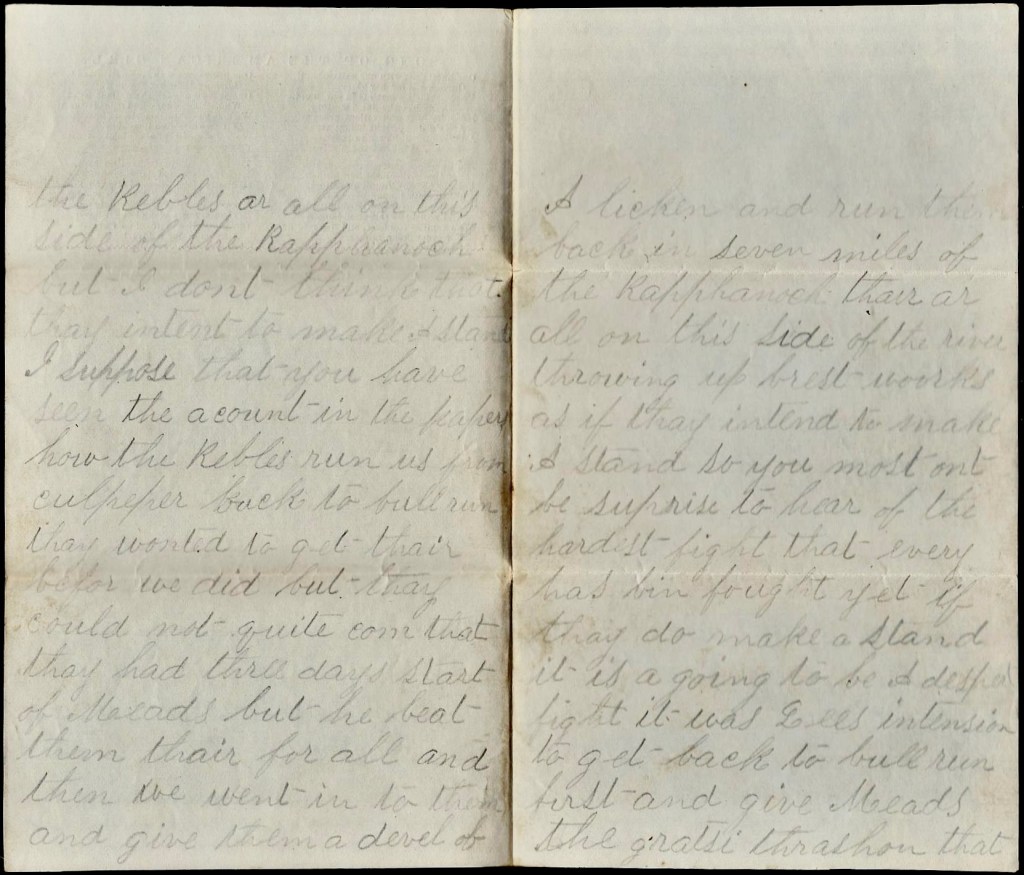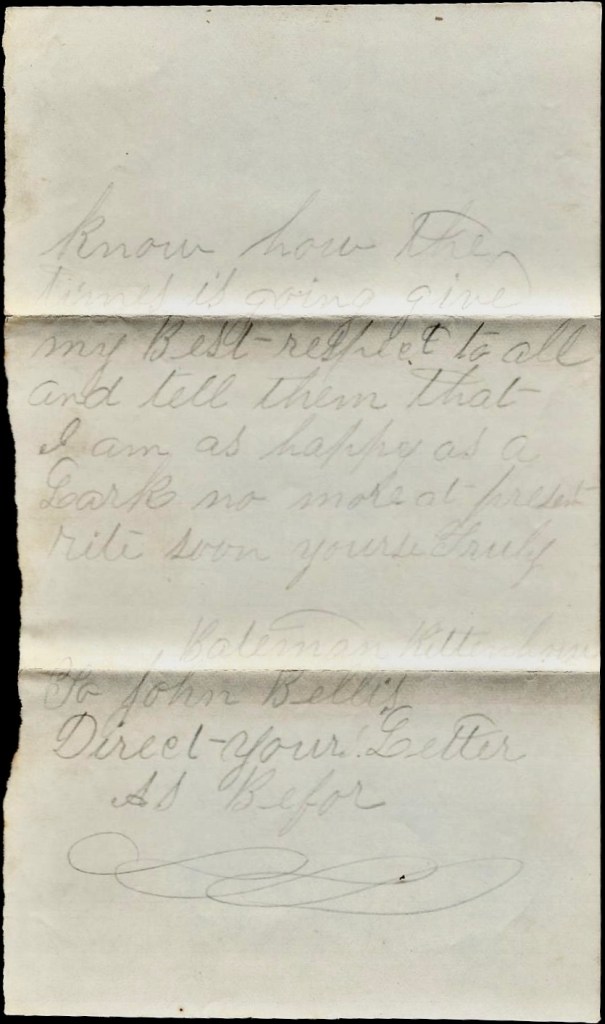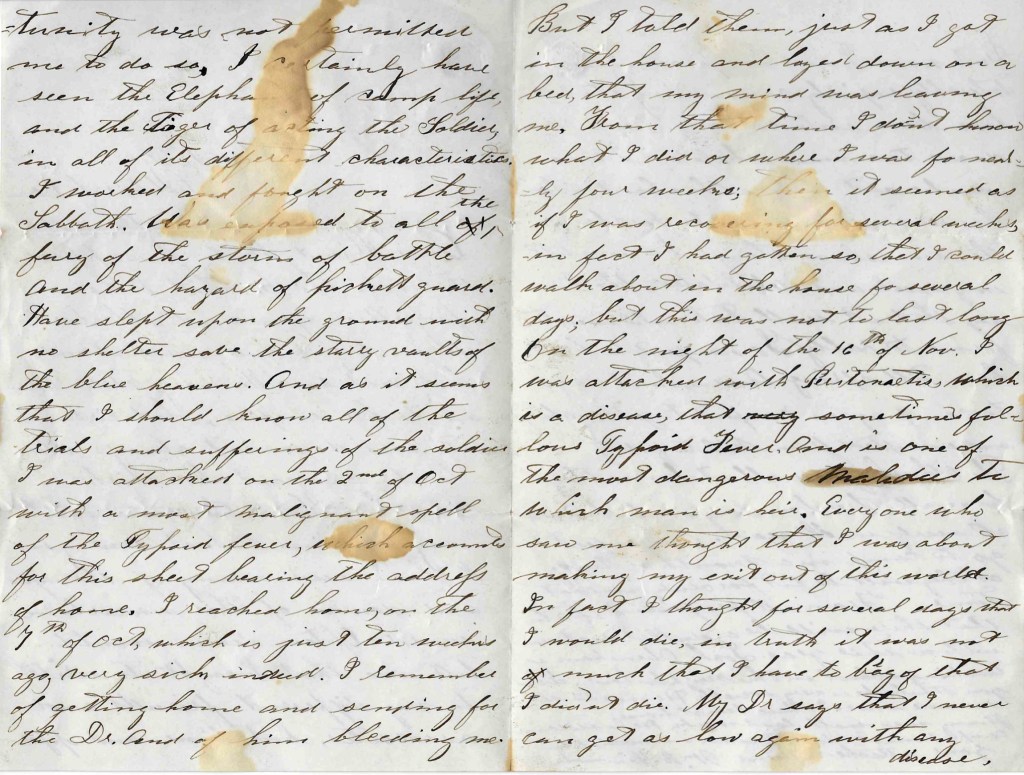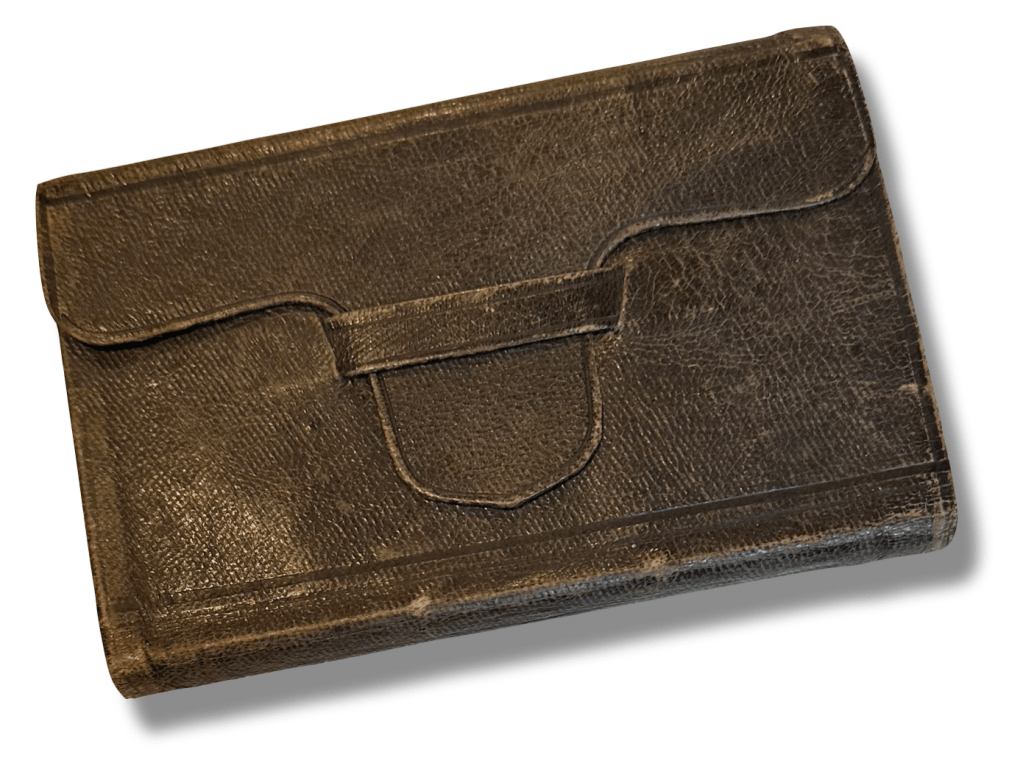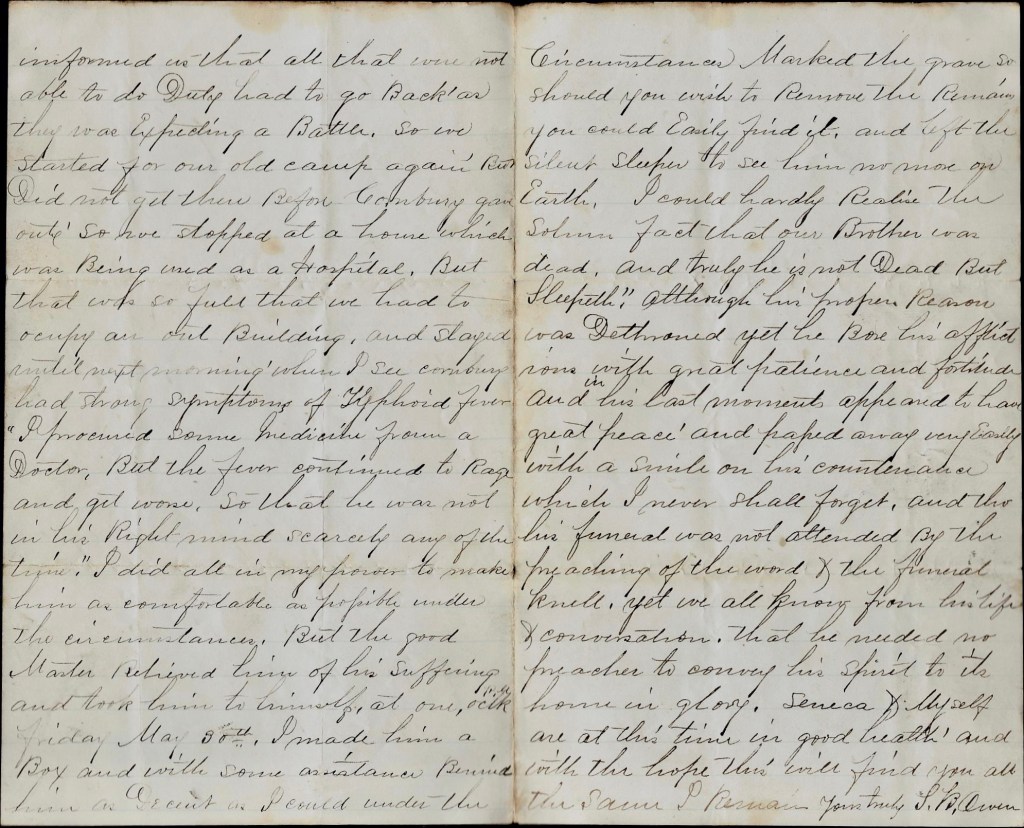
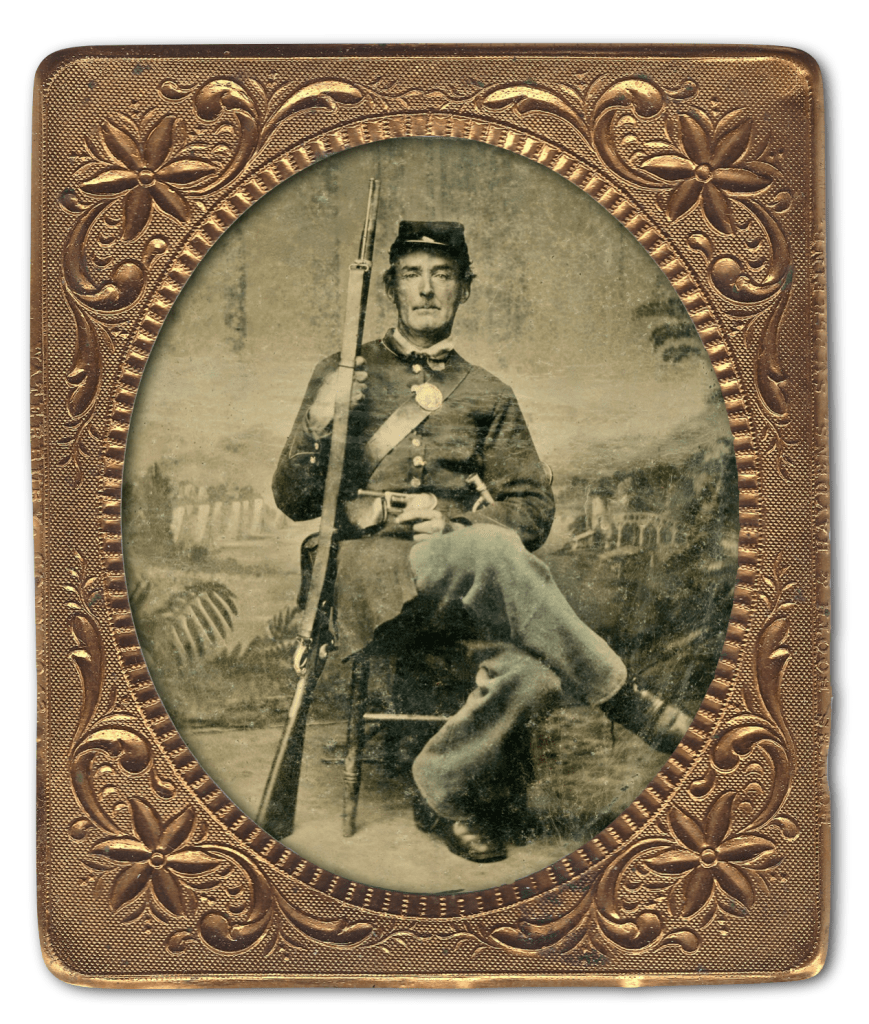
This diary was kept by Samuel Brown Beatty (1818-1863) of Co. E, 57th Pennsylvania Infantry. Samuel was 44 years old when he enlisted as a private in October 1861. At the time of his enlistment, he was described as a 5 foot 11 inch tall shoemaker with dark eye color and black hair. When he joined his comrades in arms, he left a wife—Susan M. (Walker) Beatty (1823-1899) and at least eight children in Delaware Grove, Mercer county, Pennsylvania. Samuel’s parents were Francis G. Beatty (1789-1872) and Isabella Williamson (1792-1879).
Also serving in the war was Samuel’s oldest son, David “Walker” Beatty (1844-1863)—a member of Co. K, 63rd Pennsylvania Infantry. David’s letters to his mother may be found at the following URL—1861-62: David Walker Beatty to Susan (Walker) Beatty.
An extremely pious man, Samuel often urged his wife to pray for him such as the following passage: “Now I want you to always remember me in your prayers that I may not falter in well doing and that I may be preserved from evil and sin of every kind. That I may be prepared to stand my lot and always be found at my post let that be what it may.” Tragically, Samuel never returned home from the war. He died at the Union Hotel Hospital in Georgetown on 18 January 1863 from wounds that he received in action at the Battle of Fredericksburg on 13 December 1862. Likewise, Samuel’s son Walker died in a Georgetown hospital less than a month later on 7 February 1863 and was interred at the Soldier’s Home Cemetery (Grave 3344).
To read the letters Samuel wrote to his wife, see—1861-62: Samuel Brown Beatty to Susan (Walker) Beatty.
To read the letters written by Samuel’s son, see—1861-62: David Walker Beatty to Susan (Walker) Beatty.
Transcription
April 8, 1861—Left home at two o’clock intending to go to Georgetown. The roads were so bad I thought best to go to the Oil. Got to Brownsville at six o’clock. Stayed all night with Mr. Kitch. Next morning started for Franklin by way of Waterloo. Arrived at Franklin half past eleven. Took dinner at the Lamberton House, then started for the Oil. Went up the two mile run. Stayed over night. Next morning started for Oil Creek. Arrived there at ten and a half o’clock. Started up the creek to see what could be seen. Arrived at McClintocksville at twelve. Got dinner. Started up the creek to the mouth of Cherry Tree Run. Went up the run about eighty rods. Saw what was to be seen. There is land to be leased on that run for one hundred dollars per acre, the third of the oil. Started back for the mouth of the creek. Arrived there at five o’clock. Stopped at Mr. Thomas’s Hotel. Stayed there till next morning. Started up the creek again looking around awhile. Came back to the tavern, got dinner, and then started for Two Mile Run again. Arrived there at four. Stayed around till next morning. Went to work for Clark & Co. chopping wood Friday and Saturday.
April 14th—Sabbath morning. Contemplate going to preaching. The morning is rather dull and cloudy but God is ever good and kind to me notwithstanding my waywardness. Still His grace is sufficient for me. Went to preaching. Heard a sermon by a young man from Job 30:23, “For I know thou wilt bring me to death the house appointed for all living.” The sermon was a running discourse on the certainty of death and its consequences. It brought me to contemplate my later end and examine my prospect for a happy death and glory and immortality beyond. I feel like praising God for my hope of eternal life and blessedness beyond the grave.
Monday, April 15—Went and turned till eight o’clock, then went to chopping wood. Cut and racked three cords that day before sundown.
April 16, 1861—Went to work quarrying stone for Mr. Lundy till noon. Then went to Franklin and it snowed like everything and such roads I never did see. Got back about dark.
17th—Wednesday morning. Snowed five inches deep. Went to fixing up an [ ] to go to chopping but it is rather bad day for work but it is a first rate day for loafing. Went to work at nine and put up two cords and a half that day.
18th—Thursday. It still snows but not so bad as the day before. Cut wood all that day. Cut two cords and a half of engine wood and was pretty tired again night.
19th—Friday morning. It still snows. Wrote a letter to my wife and children and then went to see the burning well on the creek and it was the greatest sight that I have seen. In the first place, it burnt for two rods around at least and the smoke looks like a cloud. It can be seen for miles.
Editor’s Note: An oilfield tragedy occurred on 17 April 1861 when a highly pressurized well’s geyser of oil explodes in flames on the Buchanan Farm at Rouseville, killing the well’s owner and more than a dozen bystanders. Sometimes called “Oil Well Fire Near Titusville” but more accurately, Rouseville, the early oilfield tragedy was overshadowed by the greater tragedy of the firing on Fort Sumer. The well spouted furiously for many hours, and the column of flame extended often two and three hundred feet in height, the valley being shut in, as it were, by a dense and impenetrable canopy of overhanging smoke. Fifteen persons were instantly killed by the explosion of the gas, and thirteen others scarred for life. [Source: Rouseville 1861 Oil Well Fire]
20th—Saturday. Worked for Mr. Lundy at stone works and it wore my hands to the quick.
Sabbath morning, April 21st—This calm beautiful and serene [day], my thoughts are in unison with the morning. Contemplate going to preaching. Went to church and heard a sermon from a local preacher of the Methodist Church from first John 4: 1st verse. “Beloved, believe not every spirit but by the spirits whether they be of God.”
22nd—Monday. Went to work for Mr. Clark at chopping and picking brush. Nothing particular that day.
23rd—Went to work for Lundy & Co. at masoning and carpentering preparing for setting their engine. Think considerable of home.
“Nothing special beyond the usual events of labor and toil incident to oil life. Business is very dull on the run at present. The war absorbs the attention of almost every person.”
— Samuel Brown Beatty, 24 April 1861
24th—Wednesday morning. Went to work for Lundy but it is so wet that we did not work long. Cleared up soon. Went to work again the rest of the week for him. Nothing special beyond the usual events of labor and toil incident to oil life. Business is very dull on the run at present. The war absorbs the attention of almost every person.
The next week work for Clark again and the work sets pretty hard on me. My hands are sore and my arms are stiff but still enjoy pretty good health.
Sabbath, May 5th—This morning is beautiful but it seems that we have no sabbath here for while I write, I hear the sound of the harness and the noise of the men at work…
May 7th—Went to work for Mr. Hock at turning the drill. It is a new business to me and it goes rather awkward but it is not hard work. Think I can stand to work at it. Get a dollar a day and board myself. Get board for two dollars and a half a week.
Sabbath, May 12th—This morning I am at the house of an Irish Catholic. Taken boarding for a short time. Read some Catholic papers and periodicals. Saw some good pieces and some rather objectionable but the women are as most people. They are clean and good cooks so that I live very comfortable considering I’m not at home.
Sabbath, May 19th—This morning got up at seven and took breakfast. Feel very lonesome. Wish I was at home to spend the day with wife and children. It is hard to spend the day without good book or good people to converse with on God’s Holy Day but still I can examine with my own thoughts…
[Here the diary entries stop until after Samuel has enlisted in the 57th Pennsylvania Volunteers.]
Thursday, October 17, 1861—Left for Mercer to go to Camp Griffith to join the regiment for the war. I felt very sorry about it but I felt it to be my duty to go. I left Mercer on the 18th for Camp Curtin. Arrived there on the 19th. Pitched my tent on the same day. On the Sabbath, went to preaching. On Monday, fooled around and did not do much. On Tuesday, moved into tents and policed the grounds. Thought a good deal about home. Still I am content and do the best that I can and put my trust in God to guide me in the path of duty.
October 23—Nothing new but the drill which is not hard work. Had a little touch of the dysentery. It did not last long.
October 24th—I am well today and am able to drill thanks be to God for His goodness to me, unworthy though I am.
October 25th—This day wrote a letter to my neice Lou and then went to squad drill for an hour. Then into company drill for an hour and a half, then went to dinner. It rained and then we went to drill again in the afternoon. This morning, changed quarters. Slept very well.
October 26th—Saturday morning. This day on guard for the first time. I feel well in my mind this morning thanks to the goodness of God for keeping me staid on Him amidst temptations. I can still say that I will leave unto thee, my Savior and my King. This afternoon wrote a letter to my beloved wife and children. Then went on guard again/
October 27th—Sabbath morning. Came off guard at 5. Went to bed till breakfast. Got up and washed and eat, then went to my tent and had prayer with Mr. W____ from Jamestown. We had a very good time of it. We had the presence of the spirit of God to view in our hearts with love towards Him. At ten, went to preaching. Came back and got dinner and then wrote a letter to my Father. At three went to preaching again. At six went to prayer meeting and we had a very pleasant time of it. The gracious presence of God’s spirit was shone to warm our hearts.
October 28th—Monday morning. Arose at five. It is a beautiful morning. Got breakfast at six. Fell alright this morning. Roll call at half past seven. Nothing new this day but usual dress parade and drill. Roll call at eight; went to bed.
October 29th—Tuesday morning. Got up at five. it is clear and a little frost. It was pretty cold last night but it is pleasant today. Went on guard at nine. Nothing new till evening when some of the boys raised a row but it passed off and no harm done. There was a man shot on guard tonight.
October 30th—Wednesday. Feel sleepy. There is no drill this morning and we had no drill till evening when we had Dress Parade and then company drill. The new recruits came in about 7. Went to bed about nine. Slept very well.
October 31st—Thursday morning up at five. Considerable [ ] in them recruits. We attached ourselves to the [ ] Grey’s, Capt. [James B.] Moore.
November 1, 1861—This day went to Harrisburg and was mustered into the United States service and seen the town. Came back to camp and then we dragged our overcoats. On guard today. It rained the most of the night.
November 2nd—It is still wet and it is cold and disagreeable. I begin to taste the sweets of a soldier’s life and it’s not very pleasant. Today I think a good deal about how my wife and children is getting along but I can still resign all unto the hand of an all-wise God to take care of them.
November 3rd—Sabbath morning. It is more pleasant this day than it was yesterday. We had prayer in our tent this morning and enjoyed myself very well. It is pleasant to read the bible and join in worship with those that have God.
November 4th—Monday. This day on guard. There is nothing of importance going on in the camp today. We had some fun to keep the soldiers breaking guard.
November 5th—Tuesday. Came off guard this morning. Sleepy. This day got our uniforms—one coat, pants, 2 shirts, 2 pair of drawers, two pair of socks, one pair of shoes. Nothing new this day.
November 6th—Monday morning. Got up at five and went to the commissary and got our rations for the day. It is raining this morning and we have no wood in the camp today and cannot get any. Have to burn coal and it is very cold but it is not our Colonel’s fault for he has not the command of the camp.
November 7th—Thursday. This day on guard. It is pleasant but cold. We are better supplied with wood today. I feel well thanks be to God for his goodness and mercy to me.
November 8th—Friday. Came off guard this morning. Feel well and enjoy camp life very well. I would like to see Susan and the children but have not repented coming yet. Our captain is the officer of the day and no drill today.
November 9th—Saturday. Camp police today. Nothing new today.
November 10th—Sabbath. This is a beautiful day. Went to preaching at ten. Had an excellent sermon by a young man from Pittsburgh. I feel to enjoy the presence of God this day in my heart. I am on guard today.
November 11th—Monday. Came off guard this morning. It is raining this morning but it cleared up at noon and it is warm and clear. Nothing new today.
November 12th—Tuesday. It is clear this morning. Up at five o’clock. Got breakfast at six and then went to the commissary for our rations. I am well and feel to rejoice in God, my Savior. Some grumbling about the rations but I feel satisfied with mine.
November 13th—Wednesday. Up at five. Feel well this morning. It is a beautiful day. We are moving our tents and policing our grounds and I am guarding our stuff. It is noon and no sign of dinner yet. Got dinner and put up our tent. Felt tired. Mr. Forrest looks sick today.
November 14—Thursday. Got up at five. Roll call at six. Then breakfast. Mr. Forrest no better. Called the doctor to see him. On guard today. Nothing new today. 35 of our men on guard tomorrow.
November 15—Friday. It snowed some last night for the first this fall here and it was wet and cold all day. Mr. Forrest is no better.
November 16—Saturday. Cold and windy today. Mr. Forrest is no better. Took him to the hospital and I stayed with him all day and night. Think he is better.
November 17th—Sabbath. It is still cold and windy. I think Mr. Forrest is a little better this morning. There is about twenty-five in the hospital and some of them is very bad. Nothing new in camp this morning.
November 18th—Monday. This morning is clear and more calm. With Mr. Forrest in the hospital all day. Thanks be to God, I am well and can still say that my trust is in Him for his mercy endureth forever.
November 19th—Tuesday. Still clear and beautiful. The air is refreshing. I am well and in good spirits. On guard today and wrote two letters—one to my wife and one to D. M. Beaty. Nothing of interest today.
November 20th—Wednesday. Came off guard this morning and feel sleepy and tired.
November 21st—Thursday. This is a fine day and there is nothing new of interest.
November 22nd—Friday. Still pleasant and warm but looks like [we are in] for a change. Company and regimental drill today.
November 23rd—Saturday. This morning it is raining and it is cold and disagreeable. On guard today. Cleared up at noon and was a fine evening.
November 24th—Sunday. This morning it is snowing and cold. There is no preaching in camp and it is hard to spend the Sabbath without some exercise.
November 25th—Monday. Got up at five. Stood around till breakfast and then went out on drill for an hour and then came and took dinner. Then regimental [drill] and after that dress parade.
November 26th—Tuesday morning up at five. Feel well. Morning drill and then went on guard at one. Nothing new.
November 27th—Wednesday. Sent to hunt for a deserter. Marched to the city and scouted around all day and did not find him. Came back tired. Got a bad cold.
November 28th—Thursday. Thanksgiving Day. No drill. Had a sermon today. Nothing of interest.
November 29th—Friday. Up at five. It is raining this morning. On guard today. Feel and realize the goodness of God in sparing my life and health this far notwithstanding my sins and folly. There was a death in our regiment last night and the funeral today.
November 30th—Saturday. Came off guard and this morning it is still wet and cold. Have the headache a little but feel well. Wrote a letter to A. Walker. Dress parade.
December 1st—Sabbath morning. Feel well today and it is cold. At noon it snowed. Had a sermon today by the chaplain. Did not hear much of it so could not enjoy the service.
December 2nd—Monday. Up at five. It is cold and frosty. Got breakfast. Was ordered to go to the city for two of our men that broke guard. Did not find them. Had regimental drill.
December 3rd—Tuesday. On guard. Today has been the coldest day that has been this fall. It froze hard. One of our regiment died today, the second death of our men.
December 4th—Wednesday. This day is some warmer. Nothing of interest but regimental drill.
December 5th—Thursday. Up at five. Regimental drill in the morning, at two, company drill, at four Dress Parade. Felt tired.
December 6th—Friday. This is a fine day. Usual drill and then our Colonel marched us out and marched us down to the river and then we got our dinner. Company drill and dress parade.
December 7th—Saturday. This is a very foggy day and the usual regimental drill and then we got our position in the regiment. we have the right center.
December 8th—Sabbath. Up at sun. Roll call at seven. Got breakfast and then wrote a letter and then went to church and back and closed a letter to my wife. Nothing else of importance till evening prayers and then went to bed.
[One week’s entries are missing]
[December 14th—Saturday] ….ton was all night on the road.
December 15th–Sunday. Got to Baltimore after a long and rough ride. I think that the government ought to provide better transportation for her troops. We got dinner there and then started for Washington. We had a slow and cold time of it. Got there about half past nine. Stayed there all night.
December 16th—Monday morning. Got breakfast and then started for Camp Allegheny. Got there and pitched our tents and slept on the ground.
December 7th—Tuesday morning. Felt bad. Had the headache and some sore throat but not bad. Drill today.
[Editor’s note: Several days entries are skipped in Samuel’s diary at this point. The regiment set up its camp on the Bladensburg Pike, near the toll gate. Considerable sickness had prevailed before leaving Camp Curtin, and the exposure of the men on the journey, confined in box cars without fire, contributed to increase it. The new camp, unfavorably located on low wet ground, and the inclemency of the weather while there, caused a still further increase of the sick list, and several died.]
December 18th—Wednesday. Nothing new or of much interest in camp today. There was a report that there was one of our regiment shot last night.
December 19th—Thursday morning. On guard this day. Nothing of interest today but the nigger scrape which I know nothing about—only hearsay. But the Colonel had him drummed out of the camp and he pretended to be almost killed but he was not much hurt.
December 20th—Friday. We had no drill today and nothing of much interest. Feel some anxiety about the family at home but I am still resigned.
December 21st—Saturday. We spent this day in doing nothing but we spent the day somehow. I got a letter from S. Loveland today and was surprised to hear that I had written home that he had sold his men.
December 22nd—Sabbath. This morning up at six. Roll call, then review and inspection. Spent the rest of the day in our quarters reading in prayers before going to bed.
December 23rd—Monday. It is raining this morning and it is cold and spitting snow this evening. Cold and windy—it blew all night.
December 24th—Tuesday morning it is still cold and windy but it is clear. Lieutenant [William S.] Ebberman arrived from Camp Curtin with the sick and the Colonel left for home.
December 25th—Wednesday morning. This is Christmas Day. Up at five and got breakfast at seven. Guard today. Nothing new or of interest today. Wish I was at home to eat dinner with my wife and children.
December 26th—Thursday. Day after Christmas. It is wet and disagreeable. Got orders to move our camp today.
December 27th—Friday morning up at five and got breakfast. Moved our camp today.
December 28th—Saturday. The Colonel came back today and some of our sick. Got a letter from my wife today and it done more good than my dinner.
December 29th—Sabbath. Inspection today and then went to preaching and heard a good sermon by the chaplain. from Romans 6th Chapter and 23rd Verse; “The wages of sin is death” ad it was a very plain and practiced discourse—one that was calculated to touch the feelings of any sensible man.
December 30th—Monday. On guard today and it is only five days since I was on before but I will not complain but do my duty as a good soldier.
December 31st—Tuesday. Up and breakfast at six and we had a review and mustered for pay today by a United States officer and we expect to draw some pay soon. This is the last day of the year and it is a most delightful day, It is warm and pleasant and as clear as a summer’s day and we have had no snow here since we came.
1862
January 2nd—Thursday. This is a clear and cold day and I have a very bad cough but I am still able for duty, thanks be to God for his goodness and mercy to me.
January 3rd—Friday morning it is clear and cool but pleasant. We have not got our pay yet and we are all out of money and stationery and tobacco and such things as that.
January 4th—Saturday. This morning there is a little snow—the first that has been since we came here but it was but a shift.
January 5th—Sabbath. It is clear and beautiful this Holy day but we are under obligation yo desecrate the day by the order of our officers as we have review and inspection on the Sabbath only. But our Colonel says that it is an army regulation.
January 6th—Monday. Last night it snowed about two inches which was the first that we have had since we came here.
Assigned duty as Hospital Nurse
January 7th—Tuesday. It is still cold this morning but it is clear and it got pleasant about noon. Went to the hospital this afternoon as a nurse at twenty dollars a month but it is hard work to wait on the sick.
January 8th—Wednesday. In the hospital twelve hours and there was two discharged today and some are worse and some are improving. Nothing new.
January 9th—Thursday. This morning is wet and foggy but it cleared up at noon and was pleasant till night. In my ward till midnight.
January 10th—Friday. Up at eight and got breakfast at nine and then run down to the quarters. Came back and wrote a letter to my wife. Then went to the hospital till twelve at night. There is some sick boys there but the most of them are better.
January 11th—Saturday. Up at seven. Eat at eight. Then went over to the hospital and seen the boys. Then went to the quarters. We got new guns today. Nothing else of interest. Clear today.
January 12th—Sunday. This is the day the Lord has made but it is not kept here as if it was the Sabbath. There is 16 in this morning and they was doing pretty well but I have thought this day of the goodness of God in sparing me thus far.
January 13th—Monday. It is cold and windy this morning and there was four brought to the hospital today and four left—two discharged and two sent to the General Hospital.
January 14th—Tuesday. The snow is about two inches deep this morning and it still snows but it quit about ten. I am in the hospital at noon and the boys are all better but two.
January 15th—Wednesday. It sleeted last night and froze on the snow and it rained today and froze. All day in the hospital as nurse. Two went to the city hospital. I feel well and I thank God for it.
January 16th—Thursday. It has cleared up this morning and it looks pleasant. I sleep about five hours a day now since I came to the hospital but my health is good, thanks be to God for it.
January 17th—Friday. wrote a letter to my niece Lori this morning. In the hospital at twelve. There was three sent to the city and the boys are all better. I feel well and in good spirits.
January 18th—Saturday. This morning it rains and is very muddy. I am still in the hospital and my health is good, thanks be to God for his mercy and goodness to me. I can still put my trust in thee.
January 19th—Sabbath morning. It is still wet and muddy. Up at seven and then got breakfast. Went into the hospital to see the boys. Wrote a letter to my wife. Then took dinner and went to the hospital. Nothing of interest. The men are all better.
January 20th—Monday. It is still wet and muddy. I feel pretty well this morning and the boys are all doing as well as can be expected. Walker came to see me today and he looks well and hearty.
January 21st—Tuesday. This day do not feel very [well]. I have a sore neck and I am very chilly and cold but hope.
January 22nd—Wednesday. Not any better but worse. I rubbed it with volatile ligament & still it is sore and my head aches and I feel very drowsy. Took some pills and went to bed.
January 23rd—Thursday morning. I am some better and hope that I will not be sick. Able to take my turn in the hospital again this afternoon and got along very well.
January 24th—Friday. I am well this morning and able for duty and my neck is better and I hope now that I am not going to have a sick spell, thanks be to God for His loving kindness and tender mercy to me notwithstanding my sins and shortcomings.
January 25th—Saturday. It sleeted and froze all night. This morning the ice and snow is about two inches deep. I am well and in the hospital. It is a pretty good place now for the sick now is quite comfortable. I got a letter today from my wife and a present of small piece of tobacco in it. I think the cost overrun the profit.
January 26th—Sabbath. Still at the hospital and we have more quiet times than at the quarters but still it is bad enough and it is hard to spend God’s Hole Day in such a place but still God is here as well as at home.
January 27th—Monday. It is warm and pleasant this morning. Still in the hospital and the most of the boys are doing well. Our pay has not come yet but the payroll is here for us to sign.
January 28th—Tuesday morning. It is raining and it is warm, just about like our March in Mercer county. I signed the payroll this morning but we did not get our pay today. I am well. It is near twelve at night on duty in the hospital.
January 29th—Wednesday. It is foggy and a mist falls this morning but it is warm. I am well and at the hospital. We got our pay today. Mine was $32.50 and it was very acceptable. Nine o’clock at night. On duty in the hospital and I think a great deal about home and my wife and children. Wonder how they are getting along but do not repine.
January 30th—Thursday morning. It is raining and very muddy. Went down to the quarters and heard that Lieutenant Cummings had fifty dollars stolen last night. I am well and able for my duty. I feel thankful for mercies past and willing to trust the same hand for time to come.
January 31st—Friday. This morning is more pleasant and I am in good health and spirits. Yesterday bought a watch for ten dollars. I am in the hospital and the boys are all doing well and it’s a good place and it is the place I believe for me where I can do the most good and I have the good will of all concerned—the doctors as well as men. I praise God that He has kept me thus far without sickness or pain of any kind. I have slept in the hospital for some nights past. Ten at night and still on duty.
February 1st—Saturday. The snow is about two inches deep but it is raining and the snow is melting fast. I am well and able for my rations. There was one of our company died yesterday in the City Hospital. He was about 60 years of age. Eight at night [and still] on duty and I still have reason to be thankful.
February 2nd—Sabbath morning. It is clear and beautiful. I thank God for his goodness and mercy to me through the week that is past and for the health that I enjoy at this time. I am in the same place yet. There is some curious case in th hospital but it takes all kinds of people to make a world. I spend my Sabbaths somehow but I can hardly tell how. We are doing nothing yet and it is so muddy that we cannot move or drill or do anything else. The most of the boys that are in my ward have had the mumps and taken cold. Mr. J. C. Brown was here today and I sent fifty dollars home to be deposited with Achse and Wick till I want to lift it.
February 3rd—Monday. It is snowing and it looks like winter. It snowed all day but the snow is only about three inches deep at night. There is nothing new in camp today. I am still in good health. It makes me think of home to see the snow. It makes me think about how my wife and children are getting along. I am in the hospital yet and I am glad that I have so good a place.
February 4th—Tuesday morning. It is clear and cool. Went down to the quarters and seem the company. Came back and wrote a letter to Walker and then eat dinner. In my ward again on duty and the boys are doing well.
February 5th—Wednesday. This is a clear morning and is pleasant for the time of year and was warm and pleasant all day. Nothing new today. I am well and on duty at the same place. I think that I will stay here as long as I can be useful.
February 6th—Thursday. This morning it is rainy and the snow is going away as fast as it can. Nine at night. I have just wrote a letter to Nancy Walker and I am on duty in the hospital. I have got so used to it that I do not get sleepy till about twelve o’clock,
February 7th—Friday. A fair day and I was down to the quarters and the boys are all well. The boys in the hospital are all getting along first rate. I wrote a letter to D. E. W. tonight and one today to Nancy Walker. I am well. Nothing new.
February 8th—Saturday. I am in good health, thanks to the giver of every good for health and every blessing that I enjoy. I am still with the hospital doing all that I can for the comfort of the sick. There is nothing of much importance going on at present. It is clear and warm today. I would like to be at home and spend the Sabbath with my family and enjoy one sweet day of rest.
February 9th—Sabbath. It is clear and pleasant this morning. I am in my usual health and still at the hospital yet and there is one discharged every day and about as many come as go. Noon in the hospital on duty. We have prayer here everyday by the chaplain, Mr. McAdam. He is a good man, I believe, and he labors hard for him but there is no Sabbath here or at least it looks like it. Men are at work chopping wood and teams hauling and companies out in full uniform with knapsacks on their back and guns on their shoulders for inspection. But still we have some time to think of God and his goodness.
[Editor’s note: The following three paragraphs in bold font are the only entries in the diary written in ink and they are written on pages out of chronological order with the rest of the diary. They were clearly written on Sunday, 9 February 1862, however, and I have inserted them here. These paragraphs are intended for his wife and I believe he must have mailed this diary home to her for safekeeping in mid-February when the diary entries stop.]
Sabbath night at ten o’clock. I am well and in the hospital on duty as a nurse and I think that Providence has opened up this place for me and I shall never shrink from any duty that I am called to perform if it falls in my power to do it. Before I came to the hospital our boys thought that it was certain death to go there but I am glad to say that there has not one died there since I went and there has been about fifty in there since I went there. Everything depends on good nursing and we have got good nurses in there now and the surgeon says that he is going to keep them.
We have prayers in the hospital every day by the chaplain so that we have some religious exercises but you would think that we were not much better than [ ] of heathen if you saw all that transpires here but still if we wish we can have some enjoyment. As long as I tented with my company, we had prayers in our tent every night and it is still kept up. We have some good men in our regiment adn there is some bad ones. We have got along very well so far. We have the name of being the quietest regiment that has been quartered in the District since the war commenced.
I have been scribbling some here and if you can read it, you can do more than I can. And I suppose that you will be tired of it before you get it read but if you do not think it worth reading, you can turn over to something better if you can find it and it is all about alike. I can talk a great deal better than write. You must excuse me for I write on my knee and am sleepy and nursing at the same time. — S. B. Beaty
February 10th—Monday morning. It is clear and frosty. Up at six and eat breakfast and went down to the quarters. They are going to have regimental drill—the first for a month, it has been so muddy. But it has dried up and it looks like April . It looks as if the winter was over. I am well and able for duty. I sold my watch for eleven dollars. The men are all doing well.
February 11th—Tuesday. It is cloudy this morning. There is nothing of interest here—only the drill and we are going to draw our new knapsacks and clothes. I am still in the hospital. I am well and I got a letter from J. A. Beaty today and it is snowing tonight but it is waning. I got a letter from Walker last night and he was well. The boys here are doing fine.
February 12th—Wednesday. It is clear and warm today. Returned my old knapsack and got a new one. I am well and doing as well as I can. It looks like spring.
February 13th—Thursday. This morning got a letter from William Lundy. The spring birds are singing and everything looks like as if winter was over. I am still in the hospital. Our camp is quite dry today. I am losing all my drill by being in the hospital but it may be best.
February 14th—Friday. It rained a little this morning and was cloudy all day and got cold towards evening. It was clear tonight. I am in my usual health. I am still at the same place and the health of the regiment is improving. We have a woman here as a cook now but it is not much of an improvement for it is still bread and meat and coffee or meat and coffee and bread. I think I shall never want any more coffee after I get home for I am so tired of it. Nothing new in camp today.
February 15th—Tuesday. It is snowing this morning and it looks as if it was going to be quite a snow. I am well at this time. We are still lying idle as a regiment and I do not think ever will do much. Then at night. I heard sleigh bells for the first time this evening. At ten we got orders this evening to cross the Potomac and report to General [Samuel P.] Heintzelman’s Headquarters near Alexandria.
February 16th—Sabbath morning. It is clear and pleasant and the snow is melting fast. At noon it is quite soft. It is about like some of our March snows in Mercer county.