My passion is studying American history leading up to & including the Civil War. I particularly enjoy reading, transcribing & researching primary sources such as letters and diaries.
The following letters were written by Addison Pool (1831-1868), the son of War of 1812 Veteran Abraham Howe Pool (1789-1860) and Rachel Tarr (1788-1872). Addison was married to Matilda Augusta White (1832-1883) and living in Ellsworth, Hancock county, Maine when the 1860 US Census was taken. At that time he was working as the register of deeds in his county. The couple had three children but the letter dated in November 1864 gives us a hint that it was a troubled marriage. A search of Maine newspapers informs us that Addison (“libelant”) sued his wife for “misbehavior” and prevailed, resulting in a divorce being decreed in October 1864.
Addison wrote all four of these letters to his nephew, Henry Martin Lowe, who served with him aboard the US Gunboat Penobscot and the USS Steamer Southfield earlier in the war. Addison was the Assistant Paymaster, and Henry was the Paymaster Steward or Clerk. [See—1862-64: Henry Martin Lowe to his Family] Fortuitously, both Addison and Henry avoided possible injury or death when the steamer Southfield was rammed and sunk in the Roanoke river by the CSS Albemarle in April 1864. [See—1864: John J. Allen, Jr. to Henry Martin Lowe] Henry had resigned from the Navy just prior to that incident during the Battle of Plymouth, and Addison had made a trip to New Bern.
Later in 1864, Addison was assigned to the newly constructed USS Mahopac—a Canonicus-class monitor built for the Union Navy. The vessel was assigned to the James River Flotilla of the North Atlantic Blockading Squadron upon completion in September 1864. The ship spent most of her time stationed up the James River where she could support operations against Richmond and defend against sorties by the Confederate ironclads of the James River Squadron. She engaged Confederate artillery batteries during the year and later participated in both the first and second battles of Fort Fisher, defending the approaches to Wilmington, North Carolina, in December 1864-January 1865. Mahopac returned to the James River after the capture of Fort Fisher and remained there until Richmond was occupied in early April.
The Boston Semi-Weekly Advertiser of 28 September 1864 announced the commissioning of the USS Mahopac during the previous week giving the names of the following officers: Commander, William A. Parker; Lieutenant-Commander, James M. Pritchett; Assistant Surgeon, F. B. A. Lewis; Acting Assistant Paymaster, Addison Pool; Acting Master, C. K. Harris; Acting Ensigns, W. E. Jones and S. C. Halen; Engineers, Acting Chief, M. T. Cheevers; Acting First Assistants, Charles Dougherty and John Bloomsburg; Acting Third Assistants, J. G. Brown, Nelson Crossman, and Charles Enggresen.
Most likely, Addison Pool is one of the five seated officers in the photograph below, who would have been the five highest ranking officers. Commander William A. Parker is the officer seated fourth from left. Those standing behind would be the Ensigns and Engineers.
The monitor in “Mahopac” on the James River. The coffin-like hatch in the foreground was the only means of gaining entrance to the bowels of the vessel. Air holes can be seen as small grates in the deck planking. She had a crew of 92 men. Her first engagement was with Battery Dantzler in the James River. She was in the first line of the ironclads at Fort Fisher. Spring of 1865. A Brady photo.
Letter 1
[U.S.S.] Mahopac James River, Va. November 20th 1864
Dear Henry,
Yours of the 12th inst. was received today. I am pleased to hear that you did well in your voyage “down East” and hope your prospects for next year and your hopes of success may be more than realized. You speak of the $400 note. I have no immediate use for the money and had as leave you would renew it for 4 or 6 months as to pay it. As to the interest you speak of, I lent you the money without intending to take anything for its use. I enclose a draft on Rockport Bank for $100 and want your mother to use it for the children as they may need it—that is, to pay their board, &c.
That confounded suit has nearly stripped me, but thank God it is ended and the children are mine. No one can interfere with them now. I should like to see the little rascals for a while this p.m.
We have no immediate prospect of leaving James River. It is not improbable that we may remain here all winter. We are lying about 300 yards from Grant’s Headquarters and either he is aboard or we are there nearly every day.
Give my love to all and write me. Don’t expect any long letter from me. I have nothing to write about. I am as ever, — Addison Pool
[to] H. M. Lowe
November 20th. I have enclosed check for $100 but do not know as I have that amount in bank, but am quite certain I have. If not, deposit enough to make it up and draw it for your mother. Write me how my account stands at the bank. — A. P.
Letter 2
Near Fort Fisher Off Wilmington Bar January 17, 1865
Dear Henry,
How are you Fort Fisher? If you recollect about May 1st 1862 the old Penobscot steamed in and gave them their first shot. Then there was one gun in a small sand battery. Now there are about thirty-six heavy guns backed by the greatest earthwork on the coast. Then two vessels like the Penobscot could have silenced it in an hour. Not it took more than fifty ships and five ironclads five days to reduce it.
You will get fuller accounts of it through the papers than I can give you. Therefore, I’ll only give a few items that might not reach you in the public accounts. We commenced the action on the morning of the 13th. The fight that day being entirely carried on by the ironclads and continued by them up to a very late hour on the 14th when the other vessels—which had been protecting the landing of the troops—came up and the fight became general. We were fighting for three days during which time I was on deck and had a fine opportunity of seeing the battle. The monitors were but about 700 yards from the work and beside the great guns, a large number of sharp shooters were playing on the deck from the fort and we had to keep up some pretty good dodging to clear our heads from bullets.
On the evening of the 15th about 10, the work surrendered. I had been on deck for the entire three days and had turned in that night to get the rest so much needed, but was hardly asleep when the officer of the deck sent down word to me to inform the captain that the fort had surrendered. You may guess that I lost no time, but rolled out of bed and put for the cabin without even stockings on. I told the captain and we hurriedly dressed and went on deck. The cheers from the ship was the first sound we heard and as we got up, we saw rockets going up from every ship and Coston’s signals burning without any reference to number, steam whistles, and every other thing that could make a noise being used to keep up the jubilee.
Paymaster Robert Gillette of the USS Gettysburg was killed when the magazine exploded at Fort Fisher on 16 January 1865. His death is described in a great blog artcle by my friend John Banks in a piece he wrote in January 2020 entitled, A Death at Fort Fisher of a ‘young man of unusual promise.’
It was about 12 before I turned in again and I did not get asleep until near morning. At 5 our breakfast was ready and we were at the table. After breakfast we went on deck and took a good look at Federal Fort Fisher. At about 8 in the morning while our eyes were directed towards the fort, an explosion of the most terrific nature took place, and for a moment we thought the whole fort was in the air. But as it settled again, we saw that but a small part of the work was ruined. The doctor and myself were soon in a boat and on our way ashore. On landing we learned that the Fort had been mined and electric wires laid to the main magazine which had been blown up by the rebs after its surrender. By this terrible occurrence, we lost more men than in taking the fort. Never have I seen anything so horrible as the sight of those noble fellows who had been blown to atoms while flushed with the pride of recent victory. Six hundred men have lost their lives through the perfidy of a cowardly foe. Had Gen. Terry taken the same number from among his prisoners and butchered them, it would have been a fitting retaliation.
Later. 7 o’clock p.m. Since I wrote the foregoing, our destination has been changed. We have been ordered to Charleston. This is a great disappointment to us as on the first day of the fight we burst a XV-inch gun and felt certain that we should be ordered North to have it replaced. We had no warning of it but were ordered right away with just time enough to drop a line.
While ashore yesterday in Fort Fisher, I undertook to bring off some relics of the fight. I got a sword with a canvas scabbard, one good Springfield musket, and a good rifle (Enfield). I have besides these a musket captured up James River and expect to get lots of things at Charleston. I met Captain Tarr on the beach in front of the fort and just before shoving off, Tom Jones came up and spoke but I didn’t know him. I went up to the works and between two of the mounds. Saw a party burying a marine. I did not notice then but a young officer came up and spoke. It was Jus. Clitz.
I forgot to tell you the gunboats are in the [Cape Fear] river and the Osceola Capt. Clitz took the lead, being the first in. The enemy blew up Fort Coswell and evacuated it last night. The whole of the mouth of the river is in our possession. I don’t know how the people at home may view this thing but we think it the greatest victory of the war. Send in all the papers containing the account and those with the official reports of Admiral Porter & General Terry—more especially the Herald and Tribune.
Ben Butler is in a good place for himself and the government. I hope he’ll be kept there. The old rascal—he defeated us before.
I am well. Calvin is jolly and I’l write again if we take Charleston. We are getting off Frying Pan Shoal and the sea is making so.
With love to all, I’ll close. I am yours truly, — Addison
Letter 3
[USS] Mahopac James River, Va. March 12th 1865
Dear Henry,
Once more we have passed safely through a winter voyage of five days length. We left Charleston on Wednesday afternoon in a violent gale in company with the “Katskill“—the latter being in tow of the “Shenandoah” and we of the “Cambridge.” We parted company at the bar (Charleston) and we have not seen her since. She was not considered as good a vessel as this but we hope she may get in safe. I shall never unless compelled make another voyage, or attempt to make another, in a monitor. I have expressed my views of this so freely already as to make some trouble and I shall continue to do so—while they insist on their being sea-going vessels—even at the risk of dismissal. You will probably ask why I don’t try to get out of her. My answer is that each time we have finished a voyage—i.e., made a passage, we have though that it was the last and that easy times awaited us until our orders come and we were off in a jiffy. I would not have left her until after the fall of Wilmington for anything but that accomplished, I did not hanker for any more glory in her, and had I known that we should have been ordered about so much, I should have applied for detachment.
And now I am contented to stay in her in this river but if she is ever ordered South again (for a long distance) during the inclement season, I’ll not go willingly. I like her here better than most vessels and hope not to have occasion to leave her for some months. I only wish that Arrogant Fox and Frothy Porter were compelled to pick out “other spirits more evil than themselves” and that the whole lot of them should make a voyage together in one.
I am very desirous of hearing from home. Please write often and give me the views. I am too tired to write much more tonight. Don’t let any person see this except your father. I have expressed myself too strongly. But really, the Navy, as controlled by such men as Porter, is not the Navy of my idea.
I wrote Mr. Cunningham this morning and sent it ashore. None of us got ashore at the fort. Direct your letters to us in James River via Fortress Monroe. Give me a long letter or all of the news in a short one.
As ever, your—Addison Pool
[to] H. M. Lowe
Letter 4
The USS Mahopac in 1865
[USS] Mahopac March 28th 1865
Dear Henry,
Yours was received this morning. Also one from your father.
The money (600) I sent several days ago and I suppose you have received it before this. If you buy out Richard Tuft’s share, I will take it and send a good man to represent me this year, and if successful, will be there another year myself. There is a hundred or so dollars lying idle in Rockport Bank that I want your mother to draw, and if she don’t need it for the children, you can use it.
If you buy for me, I think I can manage in a month or two to send you the amount of purchase money without interfering with the money you now have of mine.
I’ve got my tail caught a little in the Petroleum trap, but not so bad as some. How are you Petroleum? It is possible that I may come down there a few days about May if the ship goes to Washington as we expect to do.
If you buy and Mr. Cunningham will represent my interest there this season, I should like to have him do so at any rate of pay which you may decide with him.
It is a great thing to have friends when you have your pockets picked. I wish you would start a paper for me. My love to all friends, I am as ever your obedient servant, — Addison Pool
Pvt. William Coulter Elder was just 17 years old when he enlisted in Co. C, 39th Iowa Infantry in August 1862. This tintype was taken at Benton Barracks near St. Louis by Photographer Enoch Long. William sits in front of one of the more iconic “Benton Barracks” backdrops but there were at least six of these with different scenes in his studio. This image was probably taken in 1862. (Mike Huston Collection)
The following letter was written by William Coulter Elder (1845-1911), the son of Samuel Elder (b. 1825) and Elizabeth Miller (b. 1828) of Cowanshannock, Armstrong county, Pennsylvania. In the fall of 1853, the Elder family relocated to Rippy, Greene county, Iowa. When he was only 17 years old, William enlisted as a private in Co. C, 39th Iowa Infantry. On 6 October 1863, William was given a promotion to 8th Corporal. He was severely wounded at Allatoona Pass on 5 October 1864 and mustered out of the regiment on 5 June 1865 at Washington D. C.
After he was discharged from the service, William returned to Iowa and then relocated to Nebraska in 1880, taking up a homestead two miles west of Wellfleet, Lincoln county, Nebraska. He eventually was elected as the first clerk of the district court and then became a judge.
When William was 65 years old, he was admitted into the Home for Disabled Soldiers at Hot Springs, Fall River, South Dakota, suffering from diabetes and having had his right leg amputated below the knee as a result of it. He had been living in North Platte, Nebraska working as a county judge. His wife, Mary H. Clark and a native of St. Louis, Missouri, was 16 years his junior. They were married at North Platte in 1898. William died on 6 March 1911 and was buried in the Ft. McPherson National Cemetery in Nebraska.
Artists depiction of the desperate Battle of Allatoona Pass where William was severely wounded defending Sherman’s supply line in October 1864.
[Note: This letter is from the private collection of Mike Huston and was transcribed, researched, and published on Spared & Shared by express consent.]
Transcription
Patriotic Letterhead on Elder’s Letter
Co. C, 39th Regiment Iowa Infantry Volunteers 3rd Brigade, 2nd Army Division, 16th Army Corps At Gracey’s Trestle, Tennessee March 9th 1864
Dear Father,
I received the letter you sent by Capt. Marsh last night & was glad to hear from you to hear you were all well. Well, you must excuse me for that lie I told about me going to get married. It was write for to match one that was sent to us last spring. Do not be uneasy about either of us getting married for there is no danger at all.
Well, as for [ ing], I will not let you sink. I sent 15 dollars to you a short time ago by mail—10 in one & 5 in the other. The next I sent I will send by express. I could have sent the other by express but did not know it at the time. Will you please let me know what I had better do. I can get fifty dollars if I want and pay it here. Please let me know whether I had better do it or not. I have spent a heap more than there was any use of but I will spend no more till you are out of debt. You shall not sink if you can sell Bill. Sell him to pay your debts for I can do without a horse for three more years. I know my promise to have broke it but I will not do it again.
Well, I must close for the present. I am well as are all the rest of the boys. Tell Aunt she must excuse me for that lie.
I am as ever your son, — W. C. Elder
Dear Sister,
I got a letter from you last evening asking for two dollars for to buy sheep with. Enclosed find the [ ] for that purpose. Try and learn all you can and write often. Well, there is no news here at preset. All the boys are in good health. I am in a hurry for once.
Well, do all you can for Father till I get home & you will oblige your Will. We had considerable of rain last night. Well, excuse bad writing and spelling. I will do better next time.
I am well at present. Very respectfully, your brother, — W. C. Elder
The following letter was written by Washington J. McConnel (1810-1885) of Greensboro, Guilford county, North Carolina. Washington was married to Jane E. Lindsay in March 1840. He was married a second time to Emily S. Sperry of Baltimore, Maryland in September 1846.
From census records we know that McConnel was a “merchant” in Greensboro for most of his life though I cannot find any additional details as to the nature of his business. He was known to be on the board of directors for a local insurance company and may have also dealt in real estate. Unfortunately, we can’t tell from the letterhead what the nature of his business was either except that he clearly kept a store or office in Goldsboro. Only his name, “W. J. McConnel” appears above the door.
McConnel wrote the letter to Elwon Benjamin Mace (1807-1865) who married Susanna Staton (1809-1854), and married second, Betsey Lane (1832-1874) in May 1854.
Transcription
Greensboro, [North Carolina] December 27, 1854
Benjamin Mace, Esq. Dear Sir,
Mr. Jolly is in want of a Negro woman & I have told him that you had one to hire & that I should not wait here. Any contract you make with Mr. Jolly is perfectly good and I will see it paid & I have no doubt you will find him a good hand to hire too.
The following letter was written by J. J. Peck (1832-1864 or after) to George G. Gose (1822-1889), the son of David Philip Gose (1774-1832) and Anna Maria Spangler (1775-1845) of Burkes Garden, Tazewell county, Virginia. George was married to Catharine Sluss Groseclose (1823-1901) in September 1846. George was in the Confederate service during the war; his military record indicates he was in both the 45th Virginia Infantry for a time as well as the 22nd Virginia Cavalry.
I could not find an image of a trooper from the 22nd Virginia Cavalry, let alone one of James Peck, but here is a colorized tintype of Vt. Archibald Magill Smith of the 6th Virginia Cavalry.
The relationship between the correspondents is uncertain though Peck addressed George as “dear friend.” It appears that when Peck was 18 years old at the time of the 1850 US Census, he was boarding with and probably employed by George Gose who was eleven years his senior. I could not find any Peck family living in the same county as George in 1850 so it may be that Peck was an orphan or came from a neighboring county to live with the Gose’s.
Drilling down into census records, I’ve come to the conclusion that the author of this letter was James J. Peck (1832-1864), the son of Jacob Peck, Jr. (1765-1843) and Julia Ann Litz (1792-1845)—both deceased by the time of the 1850 Census in which James appears living with the Gose family. A note in the family record states that after his parents died, James and his brother went to live with their’s brother, Peter Gose Litz “who lived on the old Litz family farm in Burke’s Garden, Tazewell county, Va. By 1850, however, James boarded with George Gose.
The family record (duplicated in Find-A-Grave) goes on to state that James married Christina Clementine Harman (1828-1901) and the couple had five children before James enlisted in Co. C, 23rd Battalion Virginia Infantry in the Civil War. That unit was commanded by Capt. George Gose (the brother of Sarah Gose who raised James). He enlisted in January 1862.
Curiously, the family history records that James J. Peck died on 15 August 1864—four months before he wrote this letter! The aforementioned history states that, “In August 1864, the unit was in Warren County, Virginia, just north of the town of Front Royal, near the Shenandoah River. They were preparing for what would become the Battle of Cedarville. But James died there, on 15 August 1864, which was the day before the battle officially began. He had probably been out scouting the enemy, when he was killed. The next day, about 480 Confederate soldiers died there, and they were buried on the battlefield.”
James’ widow, Christina Peck, did not apply for a widow’s pension until 1889 for which she was awarded $30 per year. In that application, she wrote that James was a member of the 22nd Virginia Cavalry, in Capt. Gose’s company (he was, see Roster) and that he had died at the Battle of Cedarville which occurred on 16 August 1864. Could it be that the following letter was never received by the family in Tazewell county? or that his widow never learned at least by word of mouth that he had survived a wound until at least four months after the battle?
[Note: This letter is from the personal archive of Greg Herr and was transcribed, researched, and published on Spared & Shared by express consent.]
Transcription
Addressed to Mr. George Gose, Co. F. 22nd Va. Regiment Cavalry, McCauslin Brigade
General Hospital, Ward H Staunton, Virginia December 18, 1864
Mr. Gose, dear friend,
I this morning seat myself to pen you a few lines. These lines [leave] me some on the mend to what I have been. I taken the fever a short time after I came to this place but have got so that I can sit up some every day. But as for my arm, I can’t say that it is mending very fast, though I think it is mending slowly.
On the 28th of November I had the ball cut out of my arm. The ball ranged down towards the elbow some two or three inches from the place it went in. The surgeon-in-charge said the bone was badly broken. There was an abscess rise rather behind my arm in my shoulder. I had it lanced and it runs a great deal but where the ball went in has nearly cured up.
There was a man here by the name of Finney belonging to the 16th Regiment 1 promised me to see you and tell you how I was getting [on] and promised to write to me but I have never heard from him yet. I don’t think that I will be able to get home under two months. As for the treatment, I am attended to very well. They all appear very kind to me. There is a lady here than brings me anything that I can eat.
Since I commenced writing, the doctors has split my arm and taken out four pieces of bone and I feel quite feeble at this time. Nothing more but remain yours as ever. Write soon, — J. J. Peck
1 The 16th Virginia Cavalry was raised in Tazewell county, Virginia, so there were undoubtedly many members of that regiment who were friends of both Peck and Gose.A search of the roster in the 16th Virginia Cavalry revealed that there was a Pvt. James M. Finney in Co. A. He enlisted at Lebanon, Virginia, on 10 March 1864. Likewise, his brother William Finney served in the same company and enlisted at the same time.
Don Troiani’s Painting of a western militiaman in the War of 1812 era.
The following letter was written by John Stark Edwards (1777-1813), a native of New Haven, Connecticut. He was the grandson of Princeton President Jonathan Edwards and the son of Pierpont Edwards—the founder of the Connecticut Land Company that settled the Western Reserve of Ohio. After graduating from Princeton in 1796 and earning his law degree, John Stark Edwards left New Haven for the Northwest Territory to take charge as sales agent of his father’s lands in the Reserve. He arrived in Warren, Trumbull county, Ohio in 1799 and was one of the first lawyers to settle in the Reserve.
In March 1811, Edwards was commissioned Colonel of the 2nd Regiment, 3rd Brigade, 4th Division of the Ohio Militia. When news of General William Hull’s surrender at Detroit in August 1812, reached those living in the Reserve, it caused great excitement and the settlers feared they might expect raids by the British and Indians. Many settlers fled in panic to the South and to the East. This letter was written at the time of that excitement, ordering men of his command to join Capt. Daniel Dull to a point near the Huron river where Camp Huron was built.
I am ordered by General [Simon] Perkins to detach from the regiment under my command seventy-two men including officers—each private to furnish himself with a blanket & knapsack, and to be clothed & prepared for a winter campaign. Your proportion of that number will be five privates to make up which Jacob Earl, Robert J. Freeman, & Joseph Netterfield & Levi Benedict who are now on duty will be taken. The other one will be taken from the privates of your company highest on the class rolls that have not been discharged. If he is now on duty, you will return his name to me forthwith but if at home, you will muster him at Warren on Saturday next by ten o’clock a.m. prepared to march to Huron, there to join the company under the command of Capt. Daniel Dull.
With respect, yours &c. — John S. Edwards, Col. Commanding 2d Regt., 3rd Brigade, 4th Division Ohio Militia
The following letter was written by Thomas Willis Blanton (1829-1920), the son of Thomas Willis Blanton (1802-1850) and Martha A. E. Ligon (1804-1829) of Amelia county, Virginia. He wrote the letter to his friend and comrade, Lindsay Branch Walthall (1840-1912) with whom he had entered the Confederate service as a member of the Old Dominion Riflemen (ODR) in May 1861. That company eventually consolidated with other companies to become the 53rd Virginia Infantry. Lindsay was married to Martha Susan (“Suzie”) Overton whose mother was Martha Willis Blanton so the two were probably cousins from Prince Edward county, Virginia.
Thomas was married in April 1858 to Martha Frances Bruce (1830-1899), the daughter of Samuel B. and Elizabeth Bruce of Amelia county, Virginia. He served as the 1st Sergeant of Co. C, 53rd Virginia Infantry. He was wounded in May 1862 and did not return to his regiment for nearly six months. He submitted a pension application for a “Disabled Confederate Soldier” in 1906, claiming that he was nearly blind. He died in 1920 in Lockett, Prince Edward county, Virginia.
Transcription
Houston, Texas December 18, 1865,
Mr. Lindsay B. Walthall Dear Friend,
I have the honor to acknowledge the reception of your favor of July 16th, which has just ben handed me—having been delayed about five months by the irregularity of mails.
To say that I was delighted at again beholding your familiar autograph, would be but weak expression for the high gratification I felt at the consciousness of being remembered by at least one of my old friends and associates who were my companions in boyhood’s early happiness—friends whose memory neither time nor separation can ever efface. I tender you many thanks for initiating the renewal of our former, pleasant correspondence which was so unceremoniously ended by the commencement of hostilities and I trust that for the future, it may be as interesting as it was in the past.
You are the first and only one of my relatives in Virginia who have manifested any inclination to resume further communication with me since the close of the war. I have written to all of them except yourself and would not have excepted you but the last letter I had from your vicinity contained information that you been killed or captured—most likely the former, as nothing had ever been heard from you since reported as missing. So I concluded it would be best to await further developments before writing.
Doubtless many changes have taken place among our friends and relatives there since I last had any advices from them. I fear that the unhappy termination of our late struggle has placed many in awkward circumstances. It has almost left me penniless; but while I possess health, I shall not complain. It was the sad result for which I had long since prepared myself. I entered the contest fully resolved to attain our object or lose everything in the attempt. I have at present a situation as book-keeper in the counting house of a large firm in this city where I expect to remain for several years. As yet, I have formed no settled plan for the future, as the present confusion in political affairs precluded the possibility of arriving at a conclusion about anything.
I scarcely knew what to advise you in regard to coming to this state. Everything is unsettled. We have a tyrannical, despotic, military government with but little prospect for an early change for the better—although the resources of the state are inexhaustible and emigration with industry and energy are wanted to develop them. Planters are in requisition to cultivate the lands which yield abundance and are pastured by the exertion of but little care and attention. The only [ ] at present is the labor question. Planters have been taught by this year’s experience that freedmen will not comply with their contracts, and only half the work can be obtained from them as formerly. Lands are renting at low figures and can be purchased on desirable terms if preferred.
There is no doubt but that Texas will some day—not far distant—become the leading state in the South. Manufactories are being established, and with enterprise once started in our midst, wealth and high commercial advantages must necessarily result. All transactions here are made upon a specie basis; gold is in fact the currency of the country, and no planted cotton can be obtained without it.
I have not been to La Grange for a long time, though I hear from there nearly every week. My parents are in good health and doing well. Papa expects to continue planting on a larger scale than ever—with what success remains to be determined by time. He thinks the continued high price for cotton will in a few years amply compensate him for the loss of his shares.
You would confer many obligations upon me by making inquiries of Capt. Dickerson and Mr. Johns relative to what became of my Father’s estate. I have written to them but have not heard from either as yet. Present my highest regards to your father and family—as also to all my relatives. An early reply to this containing all the news will be highly appreciated by
Confederate soldiers rolled up their flag after General Lee’s surrender at Appomattox
Among the personal papers of Lindsay Branch Walthall (1840-1912) of Prince Edward County, Virginia, were found the following handwritten terms of surrender of Gen. Lee’s Army of Northern Virginia to Gen. Grant on 9 April 1865. Lindsay served the entire war, entering initially in May 1861 with other boys of his county in the Old Dominion Rifles. The boys in this company were eventually consolidated into the 53rd Virginia Infantry. He was taken prisoner at the Battle of Gettysburg, captured in “Pickett’s Charge” on 3 July 1863—the 53rd Virginia serving as the color regiment of Armistead’s Brigade. He was transported from the battlefield and confined at Fort McHenry, at Fort Delaware, and at Point Lookout where he was finally exchanged from the Hammond General Hospital suffering from chronic diarrhea on 31 August 1864.
When he returned to his regiment following his exchange and recovery from illness, Lindsay was promoted on 1 November 1864 to a 2nd Lieutenant of Company C, 53rd Virginia Infantry. The 53rd Virginia was at the time brigaded with four other Virginia regiment under the command of Gen. George Hume Steuart in Maj. General George E. Pickett’s Division of Longstreet’s Corps. Moreover, at the time of the fall of Petersburg and Richmond in April 1865, Lindsay was acting as aide-de-camp to Gen. Steuart and would have been in his company as Longstreet’s Corps crossed over to the south side of the James river and struck out westward on the South Side Railroad hoping to rendezvous with the rest of Lee’s army at Amelia Court House on the Richmond and Danville Railroad. Their path would take them directly through the county where Lindsay grew up and immediately past the home of Suzie Overton, his future wife.
The surrender of Lee’s army in the days that followed is well known and the drafting of the terms of surrender in McLean’s farmhouse at Appomattox Court House has been immortalized in both words and pictures. Once the official copy of the terms were drafted, they needed to be disseminated to the officers of the various commands so it may be imagined that clerks were ordered to sit down and quickly make multiple handwritten copies for this purpose. It is my hunch that this copy was either one that Lindsay received, or wrote himself, as aide-de-camp to Gen. Steuart. Perhaps he used it to read the terms to the rank and file at the request of his commander.
The top portion of the document is more legible than the bottom though this may be partially due to the quality of the scan that was proved to me.
Docketed on reverse side of sheet
Transcription
Appomattox Court House April 9th 1865
General Robert E. Lee, Commanding, Confederate States Army:
In accordance with the substance of my letter to you of 8th inst., I propose to receive the surrender of the Army of Northern Va. on the following terms (to wit): Rolls of all the officers and men to be made in duplicate—one copy to be given to an officer to be designated by me; the other to be retained by such officer as you may designate.
The officers to give their individual paroles not to take up arms against the Government of the United States until properly exchanged, and each company or regimental commander to sign a like parole for the men of his command.
The arms, artillery, & public property to be parked, stacked & turned over to the Officer appointed by me to receive them. This will not include the side arms of the officers nor the private horses or baggages. This done, each officer and men will be allowed to return to their homes, not to be disturbed by the United States authorities as long as they observe their parole & the laws enforced where they may reside.
Very Respectfully, — US Grant, Lt General
General Lee to General Grant
Headquarters, Army of Northern Virginia April 9th 1865
Lt. General U. S. Grant, commanding U. S.
General, I have received your letter of this date containing the terms of surrender of the Army of Northern Virginia, as proposed by you. As they are substantially the same as those expressed in your letter of the 8th inst., they are accepted. I will proceed to designate the proper officers to carry out the stipulations into effect.
Very respectfully, your obedient servant, — R. E. Lee, General
The following collection of letters were all written to Martha Susan (“Suzie”) Overton (1844-1935) of Rice’s Depot, Prince Edward county, Virginia, during the Civil War. Suzie was the youngest of several children born to Dr. Thomas Carlton Overton (1803-1844) and Martha White (1811-Aft1880). Her siblings included: William M. Overton (b. 1829), Elizabeth Carleton Overton (1831-1860), James Lee Overton (b. 1835), Nancy (“Nannie”) Overton (b. 1838), and Mary (“Mollie”) Overton (b. 1841).
Suzie married Lindsay Branch Walthall (1840-1912) in May 1866 in Prince Edward County, VA. They had three children. Lindsay served in Co. C of the 53rd Virginia Infantry Regiment. He was acting aide-de-camp at the surrender. After the war, Lindsay and Suzie settle in Lockett, Prince Edward county, Virginia.
The story that accompanies this small cache of letters claims that they were found “in the walls of the Overton/Walthall House in Prince Edward county, Virginia.” I have not been able to confirm this story but if true, it must have been Suzie Overton’s mother’s house where Suzie and her widowed mother were residing at war’s end near Rice’s Depot. It’s possible that Suzie hid the letters there in 1865 when Union General John Gibbon’s Corps approached the station on April 6th as they pursued Longstreet’s retreating Corps westward from Richmond on the South Side Railroad. The letters certainly have the appearance of having been stored in the walls of a home—they are badly stained though mostly still legible.
Map showing the location (orange oval) of the “Mrs. Overton” home near the South Side Railroad and overlooking the Appomattox River valley not far from Farmville.The famous “High Bridge crosses the Appomattox River at far right on the map. The Overton home was located just a mile to the northwest of the bridge.
In the 1850s, the South Side Railroad was built between Lynchburg and Petersburg passing through Farmville. Subsidized by a contribution from the Town of Farmville, this route required an expensive crossing of the Appomattox River. High Bridge was built in 1853. In the following decade, High Bridge was heavily damaged during the final days of the Civil War. After the battle at nearby Sayler’s Creek, the last major engagement of the Civil War, Confederate General Robert E. Lee retreated directly through the Town of Farmville, and the Confederate army crossed and then attempted to burn High Bridge. The Union forces saved the bridge and continued their pursuit of Lee’s army towards Appomattox Courthouse, where General Lee surrendered a few days later to General Ulysses S. Grant.
Letter 1
Union Female College 1 Saturday, April 1861
Dear Martha Susan,
As I got up quite soon this morning, I will try and write you a few lines this morning before breakfast. Nannie Meador went home this morning but came very near being left. Judie and myself slept the first part of the night and Nannie and Luchie dropped to sleep and the candle went out and we did not have any matches. None of us waked until this morning after the omnibus came. She had to get up and dress in the dark while the omnibus waited for her. She left a dress, a cloak, a gown, her handkerchief, her trunk, key and even left her snack. You may know something [ ] to happen if she left that.
Mrs. Burwell and Rose Tacher are coming up to see us today. They say so but I don’t believe much. I went down to see Mrs. Burwell yesterday. She looked as sweet as ever. Luchie, Nannie, and myself took the rounds and told them all goodbye yesterday evening. Give my love to cousin Mollie and tell her John Ed. has gone to war. I hope he will fight a little faster than he talks. Tell her be sure to take the ribbon off her bonnet when she washes it. I have not written to anyone else but you since you left.
I have had the blues ever since you left. I would finish another two pages but it will make Luchies letter too large. Luchie received her button very safely the other day. All teachers join us in love to you and Mr. [William A.] Tyree says you must come back for three reasons. First is we all want to see you. Second is that you will have to pay all the session. I have forgotten the third. I have not had the measles yet. Yesterday in reading class, Mr. Tyree told Judie she ought to learn to read poetry very well as she receives so much of it. Give my love to Cousin William [Susie Overton’s brother and a Confederate Surgeon] and tell him Mrs. Page says he ought to have gone to her before he left. Mr. Tyree says you ought not to have gone home. Love to Cousin Nannie and kiss her for me.
[from cousin Alice to Martha Susan Overton]
1 The college was incorporated by the Assembly of Virginia in December of 1859 as the Union Female College. A new brick building was erected on top of “Baptist Hill” at Ridge and Patton Streets in Danville next door to William I. Berryman’s home who had previously operated the Danville Female Institute. In 1861, Rev. William Allen Tyree replaced his brother-in-law Nathan Penick as principal. Tyree served a the principal until 1863. The school’s name was changed in 1864 (the word “Union” not popular) to the Roanoke Female College. It’s known today as Averett University.
Letter 2
Danville [Virginia] Thursday night, May 7th, 1861
Scarcely a day has passed since the reception of your kind, dear, missive in which I have not intended to devote one or more of its golden hours in sweet communion with thee, my beloved friend. But various things have conflicted with my plans. Consequently, hope you will forgive my delay. Dear friend, you have no idea how much I have missed you since your exit, & do, if you please, make haste & come back. I have no one to come in my room & laugh & talk to me now—no one to help me eat snacks and no one to cheer my poor sad heart.
I am exceedingly low spirited tonight. In fact, I have felt sad ever since our volunteer companies left town. I hear from John almost every day & he makes inquiries about you frequently. I think he is fond of you. Don’t you agree with me? Don’t you want to go down to Richmond (with me) to see him? I intend to go as soon as my Bank resumes. I think it has been suspended long enough for me to take a trip if it should ever resume, don’t you?
Who do you reckon came up to see me last night? Well, it was that hateful old Turner, but I did not go out to see him. I had two friends to see me this afternoon—Mr. Taylor and Dr. Baily. They were very agreeable & I spent the afternoon very pleasantly. Mr. Taylor told me he saw your brother William in Richmond a few days since. I suppose you hear from him very often. It is heart-wrenching to give up a true brother. But I don’t think any true woman would stay a strong arm from defending his country. Would to God I could volunteer my services. I would be off tomorrow. I don’t think there are enough gentlemen [left] in Danville to protect the ladies so I will have to stay at home & be Capt.
Mollie Vaughan has left town. She came to see Mr. Vry frequently after you left. Sallie Law has been suffering very much with her bosom (breast) for the last two days. Dr. Green lanced it today & she is much better. She grieves Bob’s absence much better than I expected. Sister Mary don’t do much else than cry about Sam’s being absent. He came up Saturday to see her, but left yesterday.
My friend George is now at West Point. Poor fellow. I am fearful we shall never see him again. Well my paper is out so I must conclude & besides, it is late & I want to dream about Mr. Turner. Write soon.
Farewell, dear friend, & may God bless & protect you is the wish & prayer of your devoted & affectionate friend, — Fannie
[Frances Walthall, sister of Lindsey B. Walthall]
This is the meanest pen I ever wrote with. If you can’t read this writing, you must guess at it.
P. S. Remember me very affectionately to Nannie & Mary [Overton]. Excuse this hastily written letter. I am sitting with my gown and I am fearful it will make “Poor little me” sick if I don’t write in haste. Good night. I did not write you half I intended to write but will do better next time.
Letter 3
[The following letter was written by Richard H. Phillips (b. 1832), the son of Joseph Phillips, 1800-1870) and his wife Louisa D. (last name not known but possibly Overton?) of Prince Edward county, Virginia. Richard was the oldest of at least six children.]
Unidentified soldier in Confederate uniform with state of Virginia buttons (LOC)
Yorktown [Virginia] May 27, 1861
Dear Cousin [Suzie],
I am anxious to hear from you and will write to you hoping that you will not hesitate to answer this when you receive it. I should have written to you before now, but circumstances would not admit of it. I have nothing that will interest you. We are spending the time as pleasantly as could be expected under the circumstances. We have great excitement in camp at present. It is supposed that we will be attacked in a short time. I would not be surprised if we were attacked tonight. We are all called out tonight. It said that Lincoln’s men is landing below here in large numbers. I hope that the excitement will soon be over though I fear it will not be the case. We can but hope for the best [even] if the worst comes. 1
“I would not be surprised if we were attacked tonight. We are all called out tonight. It said that Lincoln’s men is landing below here in large numbers. I hope that the excitement will soon be over though I fear it will not be the case. We can but hope for the best [even] if the worst comes.”
— Lt. Richard H. Phillips, Old Dominion Riflemen, 27 May 1861
We are blessed with good quarters at this time but don’t know how long we will have them. We are comfortably situated and faring tolerably well at present but I can tell you that we need your sympathy. We are bound to suffer under the circumstances, having left all our friends behind. Oh that I could see you all. I would give anything on earth if I could but see the faces that I saw the morning I left the depot. That scene has been before my eyes ever since I witnessed a similar scene at the [Burkeville] Junction the same morning. I saw a great many of my friends there. I felt that my heart was almost broken after leaving you all. I hope the time is not far distant when we shall meet with as much joy as we parted with grief. I hope you all have become reconciled by this time. We will do the best we can and return home as soon as possible.
Cousin, you must write soon and give me all the news in the neighborhood. I would write more but have not the time. I have so many to write to that I have to be short so as to get round with them all. Cousin, you must write as soon as you get this. Give my love to all the girls that you think will write to me. I would be glad to hear from you often. I have written to several and have not received an answer. Cousin you must write. — R. H. Phillips
P. S. You must direct your letters to the care of Capt. H. D. Dickerson, ODR 2
Write, write, write.
1 By the end of May 1861, nearly 4,500 officers and men under the command of Major General Benjamin F. Butler had been transferred to Fortress Monroe for its defense.
2Capt. Henry D. Dickerson put together a company in May 1861 known as the Old Dominion Riflemen (“ODR”). This Company joined Major Edgar B Montague’s Battalion of Virginia Infantry. This Battalion had only three Companies; A – Halifax Light Infantry, B – Chatham Grays and C – Old Dominion Riflemen and was accepted into Confederate service on 1 July 1861. The Battalion was assigned temporarily to the 32nd Virginia Infantry and saw action at Big Bethel Church during the Peninsula fighting during June 1861, this was possibly the first land battle of the Civil War. During Nov. 1861 the Battalion was reassigned to the 53rd Virginia Volunteer Infantry per Special Order #214 from the A&IGO. The 53rd consolidated Fort Grafton in York County, VA then moved to Kings Mill Wharf just below Jamestown, VA. They then moved to Sandy Cross, Gates County, NC by rail in April 1862. In May 5 1862 it was in Suffolk County, VA and only 35 miles from the Battle of Williamsburg. The 53rd held elections on May 5th and at this time Capt. Henry D. Dickerson and other officers, including 2Lt Richard H. Phillips, lost the election. Capt. Dickerson and Lt. Phillips retired at this time.” [Civil War Talk, 21 August 2009]
Letter 4
[The following letter was written by Richard H. Phillips (b. 1832), the son of Joseph Phillips, 1800-1870) and his wife Louisa D. (last name not known but possibly Overton?) of Prince Edward county, Virginia. Richard was the oldest of at least six children.]
Williamsburg [Virginia] June 24th 1861
Dear Cousin [M. S. Overton],
I am indebted to you a letter and should have written to you before now but having nothing that I thought would interest you—therefore would not write hoping I would get something by the time that would be worth your attention but have not. I am sorry you have taken up an idea that I had become offended at something you wrote in your last letter. I can assure you that far from that, I was more than pleased to receive a letter from you and was glad to find that you were interested enough in my welfare to give me advice upon an important subject as you did. I return my heartfelt thanks to you for your kindness. Cousin, the advice you gave me affected me more than anything that I have seen or heard since I left home. The idea of your thinking that I had become offended with you is out [of] the question, when I think that you are one of my best friends.
I correspond with a good many and can’t get round very quick. I would like to write to all of my friends but have not time. Therefore I write to those that I think most of. You will scold me for putting off writing so long and then write nothing worth your attention.
Our company is stationed in one mile of Williamsburg. I like the place very much. I have been fortunate since I got here. I have had the pleasure of seeing a great many ladies since I got here and have formed some acquaintances among them. I find the ladies here very kind. They appear to be willing to do anything that is in their power. They have been working for the soldiers at the different churches. I enjoyed myself very well with them. I had a little work that I wanted them to do that made me feel free and easy with them. I was not acquainted with any of them but they showed a disposition to get acquainted. Therefore, I did not hold back. Some of them were tolerably fast, so I did not hold back at all. You may guess I engaged myself very well as I am fond of ladies company.
We are all well except those that have the measles. They are all improving. I hope they will be fit for duty soon. Cousin, you must make those militia boys come down and join our company if you can so as to get them…[unfinished letter]
[—Cousin Richard H. Phillips, Old Dominion Riflemen]
Letter 5
[The following letter was written by Richard H. Phillips (b. 1832), the son of Joseph Phillips, 1800-1870) and his wife Louisa D. (last name not known but possibly Overton?) of Prince Edward county, Virginia. Richard was the oldest of at least six children.]
Camp Page 1 [Williamsburg, Virginia] July 3rd 1861
Dear Susie,
I received your letter yesterday evening and I now hasten to respond so you see I am returning good for evil, for you waited several days and I have not waited a single one. Now you see I am a very forgiving little cousin.
I received a very long and interesting letter from another young lady yesterday but I perused yours first with great pleasure, for nothing affords me more happiness than perusal of kind and affectionate letters from my dear lady friends. Oh! I would have liked so much to have been at the dining with you for oh how I would have enjoyed myself so much with you. Does the Capt. talk as foolish now as he did before he was married? If he does, I pity his poor wife for I know she will get tired of such nonsense. What does she call him and what does he call her?
Give Sue Mottley my love when you see her. Tell her I was very much obliged to her for hers and that she must take good care of herself and not get married before I get back. I heard a few days ago that Mr. John Harper was going to see her very often though I don’t reckon he will hardly make expenses.
You mentioned in your letter that Cousin Ed came in occasionally. I don’t know but I would not be much surprised if he didn’t come in very often though no doubt you think it quite seldom for lovers have no idea of time when they are alone. You must write me word how you all are getting on with your love matters for I know he has not been visiting you as long as this without making known his business. I wonder greatly at his not carrying you to the associations. No I don’t either, for he thought that would be showing too plainly. I do wish I was at home. I would certainly carry you, if you would accept of my services. It would afford me the greatest of pleasure too.
You said in your letter you reckoned I hated parting with Alice Arends as badly the last time as I did the first. Certainly I did for I liked her equally as well now as I did the first time I left, for I think she is quite a nice, pretty, and sweet little creation, and I don’t see how anybody can help liking her or any other young lady possessing those qualities. You wished to know what I had done with the letters I had. I have them yet and don’t know when I shall send them to her. I got the letter and ring that Ma had in her possession before I left. I haven’t heard a word from her since I returned to camp. I guess she thinks rather strangely of me for I received a letter from her before I went up home and haven’t answered it yet, and don’t know as I shall ever. I will acknowledge I am treating her badly, but that can’t be helped now, though I did not intend treating her so at first. This will learn me one lesson sure. Oh, you said something about the picture (hers). I have it yet. Have looked at it twice since I got back. Please don’t let her know what I have written.
— Mr. Richard H. Phillips, Capt. [Henry D.] Dickerson’s Company, Williamsburg Virginia
Capt. Edward A Phillips Junior Cadets, Prince Edward, Virginia
1 According to an account by Colonel Benjamin Stoddert Ewell, the Williamsburg Junior Guard had a training field on Capitol Landing Road that they called Camp Page. Land ownership patterns suggest that it was located on the west side of Capitol Landing Road on property that in 1871 belonged to Dr. R. M. Garrett (Chapman 1984:125, 127-132; Anonymous 1871)
Letter 6
[The following letter was written by Richard H. Phillips (b. 1832), the son of Joseph Phillips, 1800-1870) and his wife Louisa D. (last name not known but possibly Overton?) of Prince Edward county, Virginia. Richard was the oldest of at least six children.]
Camp Page [near Williamsburg, Virginia] July 22, 1861
Dear Suzie,
I think it is getting high time I was replying to your letter received some time since though we have seen each other since. Yet I hold the obligation good and I will transfer it to you. My visit among you all was more than satisfactory and has enabled since my return to my duties to perform them much more cheerfully than I otherwise would. I have been talking and telling the news ever since my return. Several of the boys enquired very particularly about you. You just ought to have sen Dick when I was telling of the pleasant moments spent with you while on my visit to my friends and relatives. They give me reflection which must soothe my mind here among the clang of warlike operations.
When I got here I found two letters for me which made twelve on hand unanswered and this is the second one I have answered and I think it will be several days before I will get through. How are you getting on? As lonesome as you expected? I often think of you and the pleasant moments I enjoyed with you when at home and then wonder how long it will be before I will be able to enjoy the same privilege with one whom I consider one of my best friends.
You can’t imagine my feelings at having to leave without seeing you again. I thought you would be certain to be at the train but how much disappointed when I asked Mary where you were and her answer was, “she is at home.” I eat the cake you sent and gave a part of it to several of the boys and they said it was the nicest cake that had been sent here and I know it was the nicest I had.
You should have been here yesterday to see the cannon fire. We fired off eleven here and seventeen at Yorktown were fired to salute the battle fought on Sunday [at Manassas]. I was very sorry to hear that so many of our brave and gallant boys were left on the field but we can’t expect to gain our independence without some loss and it may be that some of our nearest and dearest friends may fall.
Oh! I forgot to tell you of my visit to see Miss [illegible]…enjoyed my visit very well. She was looking as sweet as you ever saw her and the only objection I had was [illegible]…locks of hair to keep in remembrance of each other.
Give my love to all of my lady friends and tell them to write to me for nothing affords me more pleasure than the reception of letters from them. Farewell my dear Suzie. Write soon to your true friend and cousin, — Jos. Boys
Letter 7
[Late July or early August 1861?]
….You said you wanted I should write you long letters when I wrote. I will try my best this time, but I am afraid it [will] prove void of interest for I haven’t any news to write at all. Haven’t been anywhere or heard anything that would interest you. I reckon I think of the pleasant moments spent with you at Pa’s as often as you do and perhaps oftener. I hope it may be my privilege soon to enjoy some equally as pleasant [as] those.
Well, Dr. Owen 1 has left us. He left last Monday. Said he was going to his Pa’s and from there to Manassas. Then he was coming back to our neighborhood and stay a few days and then return to camp again, but I don’t much expect him back for I think he got pretty tired of camp life before he left. He told me about writing to Susan. Said if he had thought of it, he would have shown me the letter before he sealed it. We had lots of fun with him while he was here. Dick, Rich, and your brother William all send their love to you. Dick says he wrote to you a few days ago. You must write me word how you and Dick are getting on for he won’t tell me a single word, or let me see your letters either so I guess there must be some secrets in them.
I had my picture taken in Petersburg as I came on down here. It is not a very good one but if you will accept of it, you are perfectly welcome to it. I will send it by the first passing. I would like to have yours very much. Will think as much of it as anybody except [ ]. Mine is in a very small case and just about as black as the one you now have.
Well, I believe I have written you all the news I have at this time or almost all I can think of. Give my love to your Mother and Mary, and accept a large portion for yourself. Be sure and answer this soon. Don’t show my letters to any lady at all, for if you do, I will certainly find it out. I don’t show yours. Goodby, Susie
From your fond cousin, — J. Boy
P. S. I have concluded since I finished my letter to send the picture by mail with the letter, as we have just received orders to hold ourselves in readiness to march at a moment’s warning and don’t know when I shall have an opportunity to send at privilege. I think I have done mighty smart. Have written about six pages to you and have fixed my picture up too for my dear little cousin Susie. — J. Boy.”
1 Christian David Owens, Surgeon 1st Virginia Cavalry
Letter 8
[The following letter was written by Richard H. Phillips (b. 1832), the son of Joseph Phillips, 1800-1870) and his wife Louisa D. (last name not known but possibly Overton?) of Prince Edward county, Virginia. Richard was the oldest of at least six children.]
Camp Page [near Williamsburg, Virginia] August 16th [1861]
My Dear Susie,
I received your long looked for and interesting letter this evening. Will now make a faint attempt to answer it though I am afraid it will prove void of all interest as I have not heard any news since I wrote to you last. I had almost given out ever getting an answer to mine. Was thinking perhaps it was lost and you had never received it or that you did not intend making me any reply at all, but under the circumstances I can’t think anything of it or at least I will not as I know you to be such a good little creature. Enough of this.
I went to preaching twice last Sunday. Dr. McCabe preached in the morning and Dr. Young in the evening. The latter is much the best preacher. I think he is a Baptist and Dr. McCabe an Episcopalian. We went to the Georgia camp to preaching in the afternoon and there were more of our company there than there were of the whole regiment. Don’t you think that speaks well for us? We also had a great sermon last night from Mr. Witt and he complimented us very highly indeed and I believe brought tears from almost every one of us for he spoke very touching in winding up—called us all “his boys” and wondered if he should ever meet us all again under similar circumstances. He said he thought we had been greatly blessed since we left our homes and friends—more so than any other company he knew of.
You said you had a very lonesome time at the association. I wonder at that as your cousin Ed was there. I did not think he would let you get so while he was there. You seemed to think if I had been there you would have enjoyed yourself a great deal more provided my beloved was not there and if so you didn’t think I would notice you at all. Well, if you think so, I can’t help this.
I was very sorry to hear you could not have your picture taken for me for I would like very much to have [it and] would prize it very highly. You said you reckoned the young [lady] that I alluded to in your last whose picture that I would prize more highly than yours was one by the name of Alice. Perhaps she may, but I will leave that to you to find out. Dick sends his love to you. Says he has a great mind to stop writing altogether to all his correspondents. It is because he doesn’t receive letters as often as he thinks he ought from Anna, I reckon. He has written to her twice since I have been here and hasn’t gotten an answer to either of them yet. I don’t know why though she hasn’t written…. [unsigned]
Letter 9
[The following letter was written by Richard H. Phillips (b. 1832), the son of Joseph Phillips, 1800-1870) and his wife Louisa D. (last name not known but possibly Overton?) of Prince Edward county, Virginia. Richard was the oldest of at least six children.]
Camp Page near Williams[burg, Va,] August 21st 1861
My Dear Susie,
I received your very dear and interesting letter yesterday and will now try and answer it tonight as I will have to be on guard duty tomorrow and will not have time to write and I can’t think of waiting longer to write in reply to your kind letter as you are so punctual in writing. You are the only lady that I have received a letter from for two or three weeks except Cousin Jennie Branch. I received one from her a few days ago. She said as she had not received an answer to the last letter she wrote me (which was about two months ago), that she had come to the conclusion that perhaps I had not received it and under the impression she had at last come to the conclusion to write again, and she said if I did receive the other one, that I must forgive her for writing the last and let it pass by unnoticed and let her know if I ever received her letter. I haven’t written to her yet and don’t know when I shall, though I know I ought to have written to her before now. I feel very badly about it very often for I know I have treated her as I ought not to have. Well, enough about this affair.
I would like very much to come up home and spend a few days with you all and go to one of the society meetings. I think I could have some fun there if I could just get up there for a short time—especially if [I] could just ride out with you [on] horseback occasionally.
I went down to Williamsburg to preaching last Sunday and what do you think—I went to sleep as soon as I sat down and slept the whole time the man was preaching. But that was because I had just come off of duty and had not slept any since the night before so I think I was excusable for it.
You wished to know what I meant when I told you you must not be too sure that Ed might fool you. Cousin, I didn’t want you to think for a moment that I thought he would jest or flirt with you in earnest for I don’t think he would. And another thing, I don’t think you would let him. You seemed to think I was displeased at something that you wrote me in your last letter—certainly not. My dear cousin, you have never written anything I could get offended at. And another thing is I am not one of the sort to be watching and itching at every little thing I see and hear—to be making something of nothing. I am always willing to look on the bright side of everything so you need never be afraid of my getting offended or displeased at anything that you will write for I know you don’t mean any harm in anything that you say or do, or at least I don’t reckon you do.
Dick says I must give you his best love and tell you he has stopped writing to every[one], but if he ever writes to any”
[— Mr. Richard H. Phillips, Capt. [Henry D.] Dickerson’s Company, Williamsburg Virginia]
Letter 10
The High Bridge conveying the South Side Railroad across the broad seeping valley of the Appomattox River east of Farmville, Va.
[uncertain author]
Farmville, Virginia December 5th, 1862
My Dear Susie,
I received your kind this week in which you asked me to go to Lockett’s 1 and get you one quire of letter paper and ten stamps. I send you the stamps and one quire of the best paper which is to be had in Farmville. I did not want to get you blue paper but it was the very best I could do. I send you five sheets of nice white paper. You must write to your beau on them if you have one and if not, you can write to who you please. I got the paper and stamps at Mr. Lockett’s. Hope they will suit you.
Well, Martha Sue, how do you manage to keep warm this chilly, cold snowy night. I can well imagine you all drawn around a warm fore in Aunt Martha’s room and she sitting in the corner smoking her pipe. I often wish that I could be with you all sometimes. I reckon you have scolded me before this for not writing to you sooner but the days are so short I scarcely have tome to write much of a letter after school before night come on and then I have to prepare my lessons for the next day. Surely your friends and Luchie must be married or she would have answered my letter before this. I wrote to her sometime before I wrote to you the first time and she has not answered my letter yet.
Sue Motley was in town yesterday. She bought her two winter calicoes at 150 cents a yard. I think if I was in her place, I would have given a little more and gotten something nicer than a calico while I was getting. What sort of a Christmas do you expect to spend? I have not decided yet whether or not to go home. I think you and I both had better get in the bed and sleep the whole week of Christmas out. Has your school broken up yet? You did not say anything about her in your last letter, or first either.
I saw Mrs. Farley 2 yesterday evening. I have not been to see her yet, nor do I expect to as long as she stays at a hospital. She begs me to visit her every time she sees me. Mr. Elijah Baker is going to be married next Wednesday evening [10 December 1862] at four o’clock to Miss Rhoda Harvey of Richmond. 3 I reckon you have seen Mr. Baker. He lives at Walton’s store.
Martha Susan, I send you a few pieces of music and if you have the words to “The Cottage by the Sea,” please…”
1 Christopher Columbus Lockett (1815-1870) was a merchant in Farmville, Prince Edward county, Virginia.When he died in 1870, townfolk called him “one of our oldest and best citizens.” He was for more than twenty years a leading merchant in Farmville—“a good citizen, a kind parent, an affectionate husband and a conscientious christian.”
2 Mrs. Farley was identified as the Chief Matron at the Farmville General Hospital from 1 January 1864 to 1 January 1865. Source: Confederate Matrons—Women who served in Virginia Civil War Hospitals by A. Elise Allison, 1998, page 62.
3 Elijah Fuqua Baker (1837-1892) was the son of William Price Baker (1802-1860) and Maccarina Barksdale Harvey (1804-1884) of Farmville, Prince Edward county, Virginia. He was married to Rhoda E. Harvey (b. 1842). One source [Virginia Select Marriages] places the date of their marriage on 18 February 1863 instead of the 10 December 1862 date stated in the letter. It may be the couple had to quickly wed as Rhoda gave birth to her first child, William Abner Baker on 21 December 1862.
Letter 11
[Nannie Overton to Susie Overton]
[Amelia county, Virginia?] June 24th, 63
Dear Martha,
I suppose you all would like to hear something from me so I thought I would try and write a few lines home this evening. Cousin Toody has been quite sick for a fortnight—confined to her bed all the time and Dr. comes to see her once a day. She is strongly threatened with the typhoid fever but I think she is better this morning. I have to keep house and doing something of most everything. Have as much as I can stand too. Cousin Toody says I came in very good time. They also have the mumps in the family, but no one has it at this time. I expect I shall have it soon.
Has Jimmie gone to his company? If he has, does he ever write to any of you. I heard from my friend & you know who last week. He was well but has to be on the march all the time. He was [with Lee’s army] in or near Pennsylvania at the time he wrote. Someone is all the time coming in here. Have a great deal of company since she has been sick.
Have you found my Guineas nest yet? I wish you would find it and set the eggs. Cousin M. has a great many chickens and 46 turkeys. How many chickens have you? I don’t get much chance to do sewing. Haven’t done any work hardly since I left home. I feel very unwell this morning myself. You know I left off my gown before I left home. I took a violent cold from it and had to put them on again. So I shall have to buy me some cloth soon or at least to make me some as I have none but nice ones [and] I do not like to wear them.
Cousin M. said she thought you were coming home to see her. Says she thinks you all might come down once [ ] at least. My bonnet is very much adored down here. They say it is the prettiest one in the neighborhood. Write to me soon as you get this and all the news. Tell Mary and sister to write also. How is Aunt Lou Overton? All send love. My love to Mother and Mary and tell Mary she must write. I must close as I am in a hurry. My love to Beck Farley and all hers. I saw Mrs. Gills and Bettie Sunday. They were well. I haven’t been anywhere since I have been here, as I am so closely confined now, but I hope it will not be so long, for I hope cousin will be well soon. Have you all had beets and potatoes? We have them every day and chicken all the time. Mr. Whitlock says he thinks I will make a very good housekeeper. They broke into his smoke house not long [ago] and took three or four hundred pounds of meat and some ice.
Your sister, —Nannie [Nancy Overton]
Be sure to write soon. Burn this letter.
Letter 12
[Amelia county, Virginia] August 13th 1863
Dear Susie,
It has been a week today since I received your long long looked-for letter. I had come to the conclusion that you did not intend to write again. Perhaps you are thinking the same about me. Well, I would of written before but I have been busy making myself a dress. I finished it yesterday.
I guess you will be surprised when I tell you that I have not been to Nottoway yet. I thought I would have been there two weeks ago but I could not possibly get ready and now I am nearly ready. I will not go until I find out whether Uncle Charlie has to go in the army or not. So you see I am bothered on all sides. I doubt whether I go there at all. I would like so much to go to [see] cousin Eugenia and Ada is up now. Sister gave your note to Johnny last Thursday. I guess by that time you have got it as he goes to see you every day so I am sorry you did not enjoy yourself when you were here last. I was in so much trouble that I could not be at all agreeable. I am getting over my trouble a little. You have no idea how much trouble I have seen since I saw you. I almost wish sometimes I was hearing of some of some of the people around here. Perhaps I will be some of these days.
Fannie Walthall came to see us once while she was staying with Alice. They got here about dark and left about ten o’clock that night. Four gentlemen were with them. We would of gone to see her but the horses were busy all the time she was there. Some people down this way think Fannie quite pretty. John S. told me that you showed him your foot when in Farmville and that you said I would do the same. I told him I never show my feet to gentlemen.
I havent had peas but once. That was yesterday. We have had some time watermelons &c. Also sister and the children are eating a watermelon now. I have had a few very nice peaches—some that Cousin Joe brought me. I reckon you have had them plentiful. I have not been from home but once since you were here. I staid at Mr. Farley’s a week. Cousin Joe and Cousin Jimmie came to see us while we were there. The rain caught them and they had to stay all night but I did not talk as loud as I did when Johnny was there. I had a jolly time with them.
Miss Lightfoot—the one that was at Mr. Walthall’s—is teaching at Mr. Tom Webster’s. She commenced her school last week. I heard Fannie intended going to Mr. [Elihu] Morrisette. 1 I am sorry your pigeons got out. I would like so much for you to have them. I would make my beau Johnny more accommodating if I were you. He might have carried the pigeons home for you. I don’t reckon you blame him at all as you are so desperately in love with him. Judy says she is coming with us when we come to see you but there is no telling when that will be—months before [we do] I reckon, but hope not. The Baptist school in Danville will commence the 15th of September. All new teachers. Mr. Lake president. Suppose you and I go back?
Dr. Lipscomb is a sergeant in the navy at Charleston. What do you think of that? I would not like to take medicine from him. William Henry is still in the army. I suppose you got the buttons for your wedding gown when in Farmville. If you will have it made like I want it, it will certainly be nice and pretty and will cost only $100 now. So you had better get the materials now if you expect to sew soon. I would certainly get me one like it now if I could. I never seen one made so but sister and I took of a notion, it would be pretty. If I had one hundred dollars, I think I would spend it for a gown. I will certainly have yours made when you get ready—that is, if you think Sallie can make it nice enough. Be sure to tell Mollie [Susie’s sister Mollie] to send the pattern of her handkerchief the next time you write and any others that she has. I can’t think of anything else to write, so must close. You must write soon. Don’t do as you did before, and write a long letter. This neighborhood is so dull. I never hear anything worth writing. Be sure to burn this. My best love to all and accept for yourself the most of it. Your true friend, — Mollie
1 Elihu Morrisette was born in Chesterfield county, Virginia in 1837. He graduated from William and Mary College at the age of 19 and conducted the Smithside Institute in Farmville. Served in the Farmville Guards during the Civil War and was wounded at Frazier’s Farm. He was married to Nannie Overton of Cumberland county who died in 1866.
Letter 13
Oak Grove Amelia County, Virginia March 5th 1864
My Dear Friend Susie [Overton],
A long, long time has passed since I received your letter but I have a good reason for so long a delay. I received it a day or so after getting from Petersburg. I then expected to come to see you the next week but could not get ready and I have been waiting so as to tell you when I now can come, but I cannot now say I know. You would not want me now and I would be afraid to come as we have the variola small pox here. I have not yet been exposed to it but am awfully afraid I will get it. I am currently tied at home now for a long time. I cannot go anywhere until it it all over and no one can come here. How sad to think of it. I must tell you of the pleasant time I had at the Springs on Wednesday last. You know the Amelia Cavalry had a dinner and party given them on that day. I had a delightful time. We commenced dancing in the evening and danced until about three the next morning. I missed only one set & I could hardly walk the next day. I certainly enjoyed myself. Got acquainted with several very nice gents. Several were there from your neighborhood. I saw your Brother William [Confederate Surgeon].
I commenced this yesterday and would of finished it but commenced to come down here (Mr. Farley’s I mean) to keep from the small pox. We have one case here but I do not think I will get it if I stay here as the one that had it is far from the house. I was afraid to stay at home as so many have it and nearly all have been exposed to it. Fifteen have it. Now I have moved here and intend to stay until everyone gets well at home which I expect will be in the summer. I shall stay at home. Soon everybody will be glad to see me I guess when I do get out again. Nannie Meador was at the party. She intended coming to stay with me some but the Dr. would not let her come to our house, so she went from the depot to Mrs. Southalls and went with Alice Miller to the Springs. She was very lively indeed and is the same Nannie. I had a very nice time with her. I was so sorry she could not come to our house. I anticipated such a nice time. Her beau Mr. Graham was with her. I liked him very much indeed.
Had a very pleasant time in Petersburg. Did not stay as long as I expected. Stayed only two weeks. I am so sorry I could not get to see you. The next week the weather was so bad that I could not get my clothes ready and after that I heard of the party and I could not miss that and now I am afraid I will not get there until the last of Summer. I am certainly coming there the first place after the small pox gets well. You must take the will for the deed for I certainly have been anxious to come. Annie Roberts, one of Judie’s cousins died not long since with diphtheria. I never heard of so much sickness in my life. I suppose your beau has left for the war. I saw him at the Springs. He did not stay to the party. Said he had to leave the next morning. What a pity it was. After frolicking all night, some of them were looking very serious. Others enjoyed themselves as much as possible. I wish they could have stayed a second week or too longer. Their furlough was not out until the fifteenth but the Yankees were advancing so fast they were called back. The city battalion acted very badly & surrendered. The say everyone run like anything. If I were you I would advise my beau to leave that company and join some other. I heard it from good authority. Give me a cavalryman, but no doubt some of them have run too.
Tell Mollie [that] Aunt Duss has her lamb for her and intended sending it by us but as we cannot go, I do not know how she can get it. I expect she would be afraid to send after it and I think she ought to be. Aunt Duss says tell her she will have to make her another bed quilt for feeding it so long. She told me all this before we had the small pox and then told me to tell Mollie to send for the lamb but of course she won’t expect her to send as long as they are sick. The Dr. says no one must be allowed to come there and no must be allowed to leave and it is the same case here. I heard from home this morning. None of the white ones has it yet. I hope you will not be afraid to read my letters. If I do get the small pox or be exposed to it, I shall stop writing for fear I might send it in the paper, and that I would not do for anything in the world. I wish so much I could see you. There are so many things I can’t tell you that I cannot write. But I expect I shall forget all before I see you.
Your intended sis Sue was at the party. She looked very sweet indeed and was considered as one of the prettiest girls in the house. I think myself she is very pretty. There were a great many pretty girls at the Springs and some very handsome gentlemen also. I wish you could have been there but perhaps you are such a good Christian you would not attend such places. But a great many members of the church was there and some danced. I will not call names. I expect you will find out who they were as Fannie Walthall was there. She can tell you. Fannie was looking badly.
You must write me a long letter. Tell me everything that is going on. This is the longest one & I expect to write you for several months. I cannot see any one and of course will not hear any news. You know that is a very good reason and I am in hopes you will write me one as long as this every time. Try and see if you cannot do it & I shall want something to cheer me up. I do not know when we can go to the office. We cannot send any servants there. Mr. Farley says perhaps he may go Saturday but I expect the people are afraid of him. Don’t you feel sorry for us? I guess you will get tired reading this uninteresting scrawl so will close. Give my best love to your Mamma, Sis Nannie, Sis Mary and accept as much for yourself. If you are afraid for me to write to you now, say so & I will not be at all offended at it. Write very soon another long letter to your true friend, —Mollie
Burn this if you please.
Letter 14
[This letter was written by James (Jimmie”) Jefferson Overton (1845-1924) of Capt. Paris’ Company, Virginia Artillery (Staunton Hill Artillery— formerly Capt. Charles Bruce’s Company, Virginia Artillery). Jimmie enlisted on 11 September 1863. James was the son of John Motley Overton (1796-1869) and Loiosa Walthall (1807-@1863]. Louisa was the daughter of Branch Hall. After Louisa’s death, John took Nancy (“Nannie”) White Overton Childress, widow of James Childress as his 2nd wife. Jimmie married Sallie Jean Atkins (1849-1911) in 1870.]
Camp Bruce near Wilmington, North Carolina February 10th 1864
Dear Cousin,
I have the privilege to answer your kind letter that came to hand yesterday. I had just arrived at camp from on a long march & have had a very hard time of it. Since I wrote to you, we have had to march for ten days without any rest and nearly all night but I did the trip very well. I never enjoyed better health in my life and I hope these few lines may find you all enjoying the same great blessing.
Cousin, I have been in a small fight with the Yankees and by the kindness of Providence came out unhurt and all the rest of our company came out unhurt . The Yankees did not make much of a fight before they began to run. We chased them about ten miles. We captured around eighty prisoners. We lost in the whole engagement about five men killed and about twenty wounded and that of the enemy was double ours. The Yankees had very fine living in their encampment and everything that heart could wish for. We got some nice eatables. I captured a very nice overcoat and some other things.
Well cousin, I will stop telling you the Yankees as I know it will not be nice reading to you. You must excuse a short letter from me as I haven’t gotten over my trip yet and I cannot get a chance to write in the daytime as the boys make so much fuss so you must excuse a badly written letter and all the mistakes.
Cousin, you wanted to know how Maggie Brassnow and myself are getting along. There is nothing between me and her no more than a friend. I have not got any sweetheart. I want you to pick me out one by the time I come home on a furlough. You must be sure to do it. Cousin, you must tell me who is your sweetheart and if you love s____ and I will tell you mine….
Cousin, I am glad that you enjoyed your Christmas so much. I am sorry to say that I had a very lonesome time of it. I went to see some young ladies the last Christmas night but I did not enjoy myself much. I am glad that you enjoyed yourself. You must not give Miss Mollie Vaughan away to no one else. You must [ ] for me. I wish it was in my power so I could come home to call on her and to have a nice time with you all.
Cousin, we are expecting to be ordered to Old Virginia. I wish we were ordered there as I am certainly tired of North Carolina and I want to get back to Virginia.
Well, cousin, I must close. Excuse bad writing and all mistakes. You must give my love to all of your Mam’s family and to all of the young ladies around there. Well, cousin, goodbye. Henry Madison joins me in love to you. Write soon. Your beloved cousin, — Jimmie [Overton]
You must not let anyone see this…
Letter 15
Woodlawn [Carroll County, VA] October 7th 1864
Dear Susie,
I have been so busy ever since I received your letter that really I have not had time to answer it and tonight I do not think I can interest you at all for I haven’t scarcely an idea in my head and I do not think it right [for] me to be so punctual in answering [your] letters when you always wait [so] long to answer mine. I am afraid this time you have left Mr. Vaughan but hope not as I shall direct this in his care. I think you were really mean to ride down here and not stay long enough for me to get a good look at you. I want to see you worse than ever and I am exceedingly sorry to inform you that I cannot come next week as I expect something has again prevented. I will tell you when I see you what it is and you cannot blame me. I assure you, I will be very much disappointed not coming, but I will try to come in a few weeks. I cannot set any time.
You were unusually still the evening you were here. Why so? I was indeed sorry to see you so. You and Alice both were looking very well but still I have just heard that you have gone home. I hope you did not go because I told you I was coming. Ida will leave for home next Wednesday. I am really sorry. I will miss her so much. She is so very lively. Miss Lucy Gills’ funeral was preached yesterday at Sandy Creek. Did you all go to Providence the first Sunday? We concluded not to go as it was so far. We stayed at home all day—we three girls did. Aunt Duss and Uncle Charlie went to see Armistead. He is quite sick yet. There is a great deal of sickness in the neighborhood.
How I wish you were here tonight. We have the greatest romps sometimes you ever heard of and I think I could have one longer and I wish you and Alice were here to help us. Pattie McGehee stayed with us a week not long since. She is a very sweet girl indeed. I hope you enjoyed your visit at Mr. Vaughan very much. I expect you all had several rides. We had not had any recently but have had some delightful rides. I have to ride as much as ever. What has become of Mollie and Mr. Childress? You never said a word about them. Give them both my very best love. Tell Mollie I certainly do want to see her so much.
Well, enough of my nonsense. I know you will be perfectly disgusted at my writing such a letter. For mercy sake, do not let anyone see it. My best love to all and accept a part for yourself. Write soon and a long letter to your friend forever, — Nellie
Blatchford in his Lieut. uniform later in the war.
The following letters were written by Benjamin (“Ben”) Franklin Blatchford (1835-1906), the son of William Blatchford (1788-1864) and Mary Gott (1806-1873). Ben was married to Emily (“Em”) F. Snow (1833-1917) in Boston in August 1855 and was laboring as a carpenter in Rockport, Essex county, Massachusetts, at the time of the 1860 US Census. Emily was the daughter of David Snow (1793-1869) and Sarah Weston (1801-1850) of Easton, Massachusetts.
Service records indicate that Ben first enlisted as a 1st Sergeant in Co. B, 50th Massachusetts Infantry on 20 August 1862 and that he mustered out on 24 August 1863 at Wenham, Massachusetts. He was later commissioned a 2nd Lieutenant in Co. K, 2nd Massachusetts Heavy Artillery. He was promoted to 1st Lieutenant in June 1865 and mustered out at Wilmington, North Carolina in September 1865.
To read letters by other members of the 50th Massachusetts Infantry that I have transcribed & published on Spared & Shared, see: William G. Hammond, Co. A, 50th Massachusetts (1 Letter) Rufus Melvin Graham, Co. F, 50th Massachusetts (29 Letters) Jackson Haynes, Co. F. 50th Massachusetts (1 Letter) William Rockwell Clough, Co. G, 50th Massachusetts (5 Letters) Benjamin Austin Merrill, Co. K, 50th Massachusetts (5 Letters) Moses Edward Tenney, Co. K, 50th Massachusetts (1 Letter)
Letter 1
Camp Banks, Long Island, New York 1 November 28th 1862
Dear Mother & Father,
I suppose you have been looking for a letter from me but I have not had much chance to write to anyone yet and I have not much of a chance to write now. But I take this time and will try to give you a idea of the voyage here and the prospects ahead. When we went through Boston, I saw very few that I was acquainted with. We went on board the cars in Boston and went through the city of Worcester and arrived in Norwich about 9:30 p.m. when we went on board the steamer City of Boston and left for New York. We had a very pleasant passage. Just inside of Throgg’s Point, we passed the Great Eastern at anchor. She is what I call a large ship. We went near enough to her to read her name.
We arrived in New York about 9 a.m. and marched down Broadway and into the Park and halted in front of the City Hall, stacked arms, and got our dinner in the Park Barracks. We then marched down Broadway to Franklin Street and went into a large building and stopped about 40 hours when we packed our knapsacks and left for this place. We had a march of about six miles and got here about 4 p.m., stacked arms, and went to the Quartermaster’s and got our tents and had them pitched before it was very dark and turned in on the ground. We could get no hay that night. I put my rubber blanket under and my woolen blanket over me and went to sleep and concluded sleeping on the ground in a tent was not so bad after all.
We are very comfortable here. We live in small A tents, six men in one tent—rather snug quarters. The men as a general thing are well. Joseph Beals is no better (if he is so well as when we left home). I never felt better in my life than I do now and never had a better appetite and the men all say I grow fat and I think I do myself.
I don’t want you to answer this letter until you hear from me again. I expect we will be off from here by Monday sure, for four companies from this regiment leave today and the rest will follow as soon as the transports are ready. They say we are bound to Fortress Monroe and wait for the rest of the Division or Expedition which is said will consist of fifty thousand men. There is a light battery going with us that will fire 160 shots per minute. It has 25 barrels and is breach loading and has a rake of 45 degrees and is considered the most destructive weapons now in use.
As soon as you find out where we are bound, I want you to write and let me know all the news. Ask Mr. Lowe to write too and tell him I will write to him as soon as anything turns up that will be of interest to him. I wrote Em the other day and have had no answer yet but I expect a letter from her today.
I think I like it better than I did at first and am getting on first rate. I had my sword engraved in New York and it looks first rate. Give my respects to Dr. and Capt. Haskell and tell them we are well. Tell Robert that Andrew is well and has been all along and can lug his knapsack with the best of them. Ask him to write to me when he has a chance and tell Louisa to write as soon as she finds out where we are. You can send this to Em or write one to her just as you see fit—only be sure and let her know you have had a letter and she will write as soon as she finds out where we are. I don’t get much time to write or I would write to her today.
If you can see some New York papers, you will find out when we start. I expect it will be Monday and it may be before. Give my love to each of my brothers and sisters and tell them to write to me as often as they can. Don’t let anyone out of the family see this letter for it was wrote in double quick time and I ain’t had or got time to read it over to see what is right and what is wrong. But the next letter I write I will try to make it more interesting and I will write slower. You can let Mr. Lowe read this if he can. I can’t hardly myself. Give my respects to all and tell Uncle Jack that I will write to him and his wife as soon as I can find anything of interest to write about.
If you receive any letters from Henry that are directed to me, I want you to send them to me after you have read them. I have got work to do now so I must say goodbye for this time but I will write again after we land—that is, as soon as I have a chance after. Tell Em what I have wrote or send her this just as you have a mind to.
— Benjamin F. Blatchford
1 In a letter to his father, 18 year-old drummer boy Rufus Melvin Graham described Camp Banks to his father not long after the regiment arrived: “Our camp is a very level place—the Union Trotting Course—but bleak and cold. It is situated right under some hills and the wind blows over on to us. We left New York at 11 o’clock a.m. and marched down to the ferry boat and crossed the ferry to Williamsburgh, then formed a line and marched to camp—a distance of 10 miles through the mud.” [Rufus Graham to his Father, 23 November 1862]
Letter 2
Camp N. P. Banks December 11th 1862
Dear Mother & Father,
I suppose you have been looking for a letter fro me for some time but as there is not much going on here that would be of interest to you, I have not wrote to you before for sometime, and I only write now to let you know that I am as well as ever and hope to get out of this soon. It is rather cold here. During the cold snap that we have had it has been uncomfortable here. One night it was so sold that our canteens froze solid and one canteen with whiskey in it froze. But of late we have had warm and comfortable weather. We all want to get off before we have another cold snap. It has not been so cold as to cause much suffering (but uncomfortable).
Our situation is—or would be—very pleasant in the summer. We are on the Union Race Course and within a half a mile from here is a burying ground where six hundred soldiers are buried. Part of our regiment went on board the steamer yesterday and we expect to go soon.
I would like to have Louisa write to me as soon as you receive this. Tell William I will write to him after I get off and if anything turns up that will be of interest and as I find time. I will write to Dudley and the rest of the folks. I wrote to Em three days since and she will send the letter to you or write one to you soon.
We have 11 men on the sick list but none of [them] are very sick. All that is the matter with most of them is bad colds.
Benjamin F. Sleeper has had the Shakes or the fever and ague but he is all right now. John M. Tuttle has been sick for about a week but he is better now and he will be ready for duty in a day or two.
The rest of the Rockport boys are well with the exception of slight colds. I am well and have been all along. My back don’t trouble me any and I think I am as well as I ever was in my life and I like it as well as ever.
If I have time, I will write again before I sail and if I don’t find time to write, you will see when we go by the papers. As soon as you find out where we land, I want you to write and let me know all the news. Tell Dr. Haskell I would like to have him write and I will answer it as soon as I find time. Since I have been writing, I hear that we are going to New York tomorrow but I don’t believe it yet. The news is too good to be true. At any rate, you can tell when we go by the papers. Write to Em or send this and let her know that I am well and if I don’t go away, I shall expect a letter soon.
The men don’t get half of the letters that is sent to them and if you don’t get letters as often as you expect to, you must not think I don’t write for I shall write to you or Em as often as I find time and I want you to tell Em to write as often as anything turns up of interest and do the same yourself.
Give my love to all. — Benj. F. Blatchford
Letter 3
Delaware Bay December 15th 1862
Dear Father & Mother,
On the 12th we received marching orders and I was left behind to take charge of the sick and see to the striking the tents and see that the baggage and everything was forwarded to Brooklyn which I done and gave satisfaction to all concerned. At nine o’clock p.m. I went on board of the steamer Niagara and at 2 p.m. on the 13th, we sailed for parts unknown. Everything went on well until the morning of the 14th when we began to mistrust that something was wrong—and so it proved, for she had sprung a leak and we was making our way for a harbor as fast as steam would drive her. At 10 o’clock Sunday we arrived at Delaware Breakwater and pumped and bailed the water out of her and got a pilot and now we are bound up the Delaware Bay for the port of Philadelphia (as near as we can judge) where this craft will be condemned—or had ought to be—for she is so rotten.
The Salem Register, 18 December 1862
After we arrived at Delaware Breakwater, the officers met and called upon men that had been to sea and decide whether it was best to proceed with the voyage or not. The officer had not been to sea but there was plenty of men in Co. B that had and the first thing that I knew, I was sent for by the Colonel and he asked me several questions about the craft and I told him just what I thought without making anything out any worse than it actually was. Everything that I said they wrote down; also the questions that was asked. You will see the questions and answers in some papers soon after this affair is settled.
After he was through with me, he sent for five or six more of our men from Co. B and asked them about the same questions. He also wrote them down and concluded to abandon the voyage in such a craft as this. I call it the meanest thing that I ever saw done—to send men to sea in a boat like this, and if I had known how bad she was before I went on board, I never would thought of throwing my life away by going in such mean craft as this. But as we are to get out of her, I won’t find fault for you will hear by other letters than mine and see some of the rotten timber that comes out of her best beams, for some of the boys are going to send home some of the pieces and the rest of the companies on board say that if it had not been for Co. B, they would had to go or went in her and they say if they had, they would all went to pot. 1
I never saw a set of men more pleased than these six companies are at the prospect of getting out of this boat. THey all say they are willing and ready to take their chance on the battlefield, but they are not willing to throw their lives away by going in such a craft as this. I may write again before I go further South, but if I don’t get a chance now, I will write the first chance after I arrive. I can’t write any more now for I have got work to do soon. Give my respects to all. Let Uncle Jack read this is he wants to and any of my brothers and sisters that happen to be at the house while this happens to be there. And tel them that I will write to all of them if I can find anything of interest to write about….
Our Rockport men are all well except Mr. Beals. He improves every day. I am as well as ever. My respects to all. You must excuse blunders as this was wrote in haste and the old boat shaking and I ain’t got time to look over to see whether it is written wrong.
We are in Philadelphia. No time to write more.
1 Drummer boy Rufus Melvin Graham of Co. F, 50th Massachusetts also felt relieved to have found safe harbor in Philadelphia: “All the time we were coming, the steam pumps were at work and when we got into Philadelphia, there was—they say—ten feet of water in the hold. The old boat trembled and it was awful dangerous. We all think that we are lucky to come off with our lives. it was a great wonder that the old shell didn’t sink before we got here but here we are all alive and feeling as well as circumstances will permit. We are anchored out in the steam opposite the Navy Yard and we don’t know how long we shall stay here but we will stay here till we can get a steamer that can keep above water at least. There is five companies on this craft and in this port. Companies C, D, F, G, [and] B is with us. Companies A, K, [and] E are gone on board of the Jersey Blue and have gone to their destination, I guess. And Company H has gone on board some other steamer and our regimental baggage with them and they have gone I don’t know where and our Band has gone in another boat and I don’t know where they are. We have got all of staff officers with us on this boat. We shall all meet together again at our destination, I don’t know when or where. It was well that the men did not know what danger we were in night before last. If they had, we should have surely have gone to the bottom. The old boat lasted us in here and that is about all. [Rufus Graham to his Father, 15 December 1862]
Letter 4
Philadelphia [Pennsylvania] January 15th 1863
Dear Mother and Father,
When I wrote to you before I told you to direct your letter to Fortress Monroe as I expected to be there by this time, but as it is, I shan’t go down there until the middle or last of next week. The reason that I have not gone is I want to get fairly well before I start and I have made up my mind to stop here until I get about as strong as ever. I am not sick now but I am a little weak and I want to get strong before I leave here. The ship Jenny Lind left here with the 50th [Mass.] Regiment on board one week ago today. She has not arrived yet, or at least I have not seen her reported but I expect to hear from her every hour.
The boys from Rockport was all well enough to go on board the ship except Joseph Beals and myself. I am here at this private hospital but Beals is in a General Hospital off 5th Street. He is not very well and I think he will get his discharge or not he will not be able to go any further. I think if you answer as soon as you receive this, I shall get it. Direct your letter to Sergt. Benj. F. Blatchford at the Volunteer Refreshment Saloon, foot of Washington Street, Philadelphia, and I shall get it. But it will be no use to write if you put it off. You want to write as soon as you receive this and I shall be here long enough to receive it. And when you write, tell me all the news and how the folks are getting on.
This is the first time that I have been sick. I never got the least cold on Long Island while almost all the rest had colds and was sick, but I was taken sick on board of the Niagara and ain’t hardly over it yet. But I think I shall take good care of my health above everything else after I go back to the Regiment this time. Tell Robert I think Andrew is (or was) well for he came in to see me twice the day before he went away. He was well then with the exception of a cold. Ask Rob to write to me and let me know how Ann and the children get along. As soon as my head is entirely well, I shall write to my brothers and sisters. Give my love to all and tell them I shall write to them soon.
I have had one letter from Louisa since I left home but I don’t blame her for I think she has wrote more—only I ain’t had the good luck to receive them. But I shall expect an answer from this the first of next week. When you write, let me know where Henry [Lowe] is. I would like a letter from him very much. I think about [his boy] Frank every day. A few days more and he will be one years old. I want you to write and tell me how his eye is and ask Dudley and Bill to write and tell me how Sam York lost his sloop. I heard she was lost and that is about all the news I have heard, and I don’t know as that is true. Tell all the folks I am getting on first rate. Write as soon as you receive this. — Ben
Letter 5
Addressed to Mr. Henry M. Lowe, Newbern, N. C., On board U. S. Steamer Southfield
Rockport [Massachusetts] August 1863
Dear Brother [in-law],
I received a letter from you this forenoon and was glad to learn that you was in good spirits but was sorry to know that you are troubled with the shakes. I wrote to you when I first got home but you did not say that you had received a letter from me. But in case you don’t get that letter, I will commence and give you a short account of the part we took in the siege of Port Hudson.
On the 27th of May at daylight the first battle commenced. We were ordered to support batteries which we did until about 2 o’clock in the afternoon when we was ordered to the left center to take part in the charge. This was rather hard for us as we had marched upwards of 20 miles and had had but about an hour’s rest. But we had made up our minds to go into Port Hudson that day and off we started. But the men was so tired they could not hold out to march under the burning sun so a great many fell out and lay be the wayside. And when we halted at the battlefield, our company numbered [only] 15 men and 8 of that number I was glad to see belonged to Rockport.
After halting a while, quite a number of the boys that fell out caught up with us and we fell in again and started for the front which was about 600 yards. We had not gone but a short distance when we were ordered into the edge of the woods and order[ed] to lie down which we did under a middling sharp fire where we lay about 2 hours when our whole force began to retreat leaving—as the boys all think—about 1900 killed, wounded and missing. 1
Our regiment then went back to the right center and supported the Marien Battery which was about 700 yards from the Rebel works. After supporting this battery for about 10 days, we built more breastworks of cotton 300 yards from the Rebel works. This work we done in the night without losing a man out of our company and only one out of the crowd. So when daylight came, the Rebs found 4 pieces of Mack’s Battery 2 within 300 yards of their noses.
We supported this battery until the 13th of June when we was ordered to take part in the charge which was to come off the next day (Sunday, the 14th). So at 10 o’clock at night, we formed a line, had the whiskey, and started for the left of our line where we joined the advance column. Here we were ordered to save our powder until we were close on them when we was to fire and then give them the bayonet. This began to look like war. As the rebs opened a sharp fire, men began to fall. We passed over a number of dead and wounded until we, or the regiment ahead of us, came to a deep ravine and could not get across so we had to lie down the rest of the day and get off when it came dark. One company within 25 yards of us lost 13 men that day. We did not lose any but a number was wounded in the regiment. 3
After we got out of this—the worst battle we ever had at Port Hudson—we went back to Mack’s Battery within 300 yards of the Rebel works and supported that battery until the surrender. Then I was willing to come home, but I never wanted to come home until Port Hudson was ours.
While our company was in the service, we lost 16 all told. The last one that died that you was acquainted [with] was William Goday. Solomon Choate is sick but he is getting on first rate. About 20 of our company are sick here in Rockport. I don’t know how many in other places. Ten of our regiment died on the passage home. We came up the Mississippi and had a good chance to see the Western States. Joseph Devon of our company we left sick in Mound City, Illinois. Also Solomon Choate & Ephraim Brown. The two latter are at home but Devon’s case is hard.
I was down to your Mother’s last night. She and Susan send their love. I have not seen Edward yet. He is at Dover. Your Father is down East.
I was onboard of Arthur Parson’s vessel at Port Hudson a number of times. He is promoted to Ensign. George Rowe is dead. John Rowe’s George—the one that married Eliza Gilbert, he died at Louisville, Kentucky. He was in the 35th [Mass.] Regiment.
Father is about the same as when you left home. Your boy is a great friend of mine. He is trying to help me on this letter but I think he does more hurt than good and half of the blunders here you must charge to him. I found him a smarter and bigger boy that I expected. We soon got acquainted and now we are chums. He tries to help me in everything I do but I don’t think he does much good, but as he thinks he does, it’s all right. He calls me Ben and every time I come upstairs he takes hold of my hand and leads me into the room.
A short time since, Louisa wrote to you and put a letter in the box she sent. She also wrote two letters beside. She will write again in a day or two. She wants you to look out for that box that she sent August 12th. It was worth or cost her $28. I was very, very sorry to find you off when I got home for I had not seen you for so long. I had planned a good many good times and was sure you was at home until I heard the contrary in Boston. But I am in hopes to see you before many months as I expect to come that way soon.
We was sorry to hear that Addison [Pool] is so slim but as cold weather comes on, we are in hopes he will be better. Of the whole number of the drafted men that you mentioned to Louisa, all are exempt with the exception of Frank Farr, James Gott, Arta Gott, Joseph Haskins. These had to fork over $300 each. And of the whole number drafted, no one that I know of are going. And that man that worked for Dr. Haskell took an axe and cut two fingers off of his right hand as soon as he found he was drafted. This of course cleared him.
You wanted to know what we think of the prospect of the war coming to an end. Well, I have heard the Mississippi called the backbone of the rebellion from the beginning of the war. Within a few weeks I had the opportunity of traveling over that backbone from Port Hudson to Cairo and did not see a sign of a reb except what was prisoners and fighting in the Southwest is about over. And of the 1500 prisoners I went with (as a guard) from Port Hudson to Red River, Vidalia, and Natchez, very few say they will fight again.
And as Charleston is called the Head of the Rebellion, we think as the walls of Fort Sumter have crumbled away before our gunboats, the head of the rebellion has received a dreadful shock and the prospects for peace is brighter now than it has been at any time during the war. As I have no more room, I must draw this to a close. Write soon. — Ben. F. Blatchford
1 Drummer boy Rufus Melvin Graham of Co. F, 50th Massachusetts, kept to the rear for duty as stretcher bearer, was more direct in his assessment of the days fight: “The next morning our regiment was ordered to go and support a battery as soon as light. They went off without any breakfast. They supported a battery all the forenoon and in the afternoon went into battle (the 27th). Our folk made a charge upon the breastworks and got driven back. We accomplished nothing but had a lot of men killed and wounded. We had two men wounded in our company—Charles Stickney ¹ in the ankle and Hugh McDermott ² in the hand. Our regiment was in the thickest of the fight. The rebs fired grape and canister and horse shoes and pieces of railroad iron and almost everything. Our batteries fired at them all the time.” [Rufus Graham to his Father, 19 June 1863]
2 Capt. Albert G. Mack commanded the 18th Battery, New York Light Artillery that was attached to Augur’s Division in Banks’ 19th Corps at Port Hudson.The battery was also known as the “Black Horse Artillery.”The battery was active at Fort Bisland, the Amite river, Plains store, and the siege of Port Hudson, La., where it participated in the assaults of May 27 and June 14.
3 Drummer boy Rufus Melvin Graham wrote his father of this day’s action as well: “On the 14th of June (Sunday), we had another battle. Our folks stormed the fort again and two companies succeeded in getting inside of the fort. That was all. They were taken prisoners. We lost in killed and wounded 2,000 men and accomplished nothing. Gen. [Halbert Eleazer] Paine was wounded twice and when they were carrying him off the field on a stretcher, he was shot through the head and killed. That day our regiment was down on the left supporting a battery and were under fire all day and had no one hurt. [Rufus Graham to his Father, 19 June 1863]
The following incredible letter describes the sinking of the U. S. Steamer Southfield by the Confederate Ram Albemarle during the Battle of Plymouth. It was written by 21 year-old Acting Master’s Mate John J. Allen, Jr. (1842-1920) who was aboard the Southfield when she was rammed in the early morning hours of 19 April 1864—a day that John said “will ever remain fresh in my memory.”
I could not find an image of John but here is George W. Marchant wearing the uniform of an Acting Master’s Mate. (Ron Coddington Collection)
John was born in Warren, Bristol county, Rhode Island, the son of John J. Allen (1814-1890) and Mary Tyler Bowen (1823-18xx). He was appointed Acting Master’s Mate on 18 May 1863 and served initially on the USS Sumpter when she joined the North Atlantic Blockading Squadron at Hampton Roads. She was initially stationed off Hampton Bar but in June she was sent to the Yorktown, Virginia, area to search for the Confederate privateer Clarence. On the morning of 24 June, she collided with the Union transport, USS General Meigs eight or nine miles from the Smith Island lighthouse and sank in 42 feet of water. The officers and crew were rescued by the Jamestown and taken to Newport News, Virginia. Later, in 1864, he was assigned to the U. S. Steamer Southfield. Ironically, just before the action described in this letter, on 10 April 1864, he wrote a letter to Gideon Welles requesting a copy of his appointment to Acting Master’s Mate stating that he had lost it “at the time of the disaster of the United States Steamer Sumpter.“
Once again, when the U. S. Steamer Southfield sank just a few days after writing the letter to Welles, John lost everything he owned again. Feeling snakebitten, John tendered his resignation on 23 April 1864 claiming that he was destitute. “I made them think that there was nothing but destitution before me if I remained. I hope that I will get out of here for I am too unlucky to stay here any longer,” he confided to his friend.
Less than three months later, on 15 July, John left the Tacony at New Bern on sick leave and arrived at Warren, Rhode Island on 21 July, sick with chills & fever. He official resigned on 22 August 64.
After the war, on 10 July 1866. John married Eunice “Josephine” Starkey (1843-1908) in Bristol county, Rhode Island. Eunice was the daughter of Abel and Louisa E. Starkey of Westmoreland, New Hampshire.
The letter was addressed to Henry Martin Lowe (1840-1907) of Rockport, Essex county, Massachusetts, who had served throughout most of 1862 and early early 1863 aboard the USS Gunboat Penobscot as the Paymaster Steward. In July 1863, however, he was reassigned to the US Steamer Southfield as the Paymaster’s Clerk with his Uncle Addison Pool serving as the Assistant Paymaster. In March 1864, just one month before the Battle of Plymouth, Lowe wrote his wife that he was going to be returning home soon. George W. Brown would take Henry’s place as Paymaster’s Clerk aboard the Southfield and it would be Brown, not Lowe, that would be taken prisoner. Lowe’s uncle, Addison Pool, would fortuitously avoid death or captivity too, having gone to Newbern just prior to the attack. [Note—Lowe’s letters can be read at 1862-64: Henry Martin Lowe to his Family.]
“Gunfight on the Roanoke,” The gun crew of the U.S.S. Miami witnesses the sinking to the U.S.S. Southfield by the C.S.S. Albemarle, April 19, 1864. Via TomFreemanArt.com
Transcription
U. S. Steamer Tacony Roanoke Island, North Carolina Monday, April 25th 1864
My dear friend Henry,
How I wish that I could be writing this letter from the Southfield at Plymouth today but fate has destined it otherwise and we must calmly submit to it. Ere this reaches you, you will have undoubtedly been made acquainted with all the particulars of the late battle and fall of Plymouth and the sinking of our gallant Southfield by that infernal ram [CSS Albemarle] of which we joked so much about and ever doubted such an idea as her appearance at Plymouth which we had fortified so well. Henry, what do you think of it & was it not a shame that we were whipped so badly after the confidence we always entertained on our fortifications if the place was attacked?
A week ago last night [17 April 1864] or 3:30 P. M. the attack was first made. The pickets were driven inside and Fort Grey 1 was the recipient of the first fire from the enemy’s batteries erected about a mile up the river from the fort opposite and by the fisheries of Major Willi___]. The [picket boat] Whitehead, Ceres, and Bombshell took an active part that night. The Ceres received several shots, had two men killed, one Engineer and four men wounded. 2 The batteries ceased their fire at about 9 P. M. and later in the evening repeated attempts were made to take Fort Grey but without success.
At daylight the next morning [18 April 1864] the battle again commenced from up the river and back of the town at all points. Bombshell in charge of [Acting Ensign Thomas B.] Stokes was sunk by the enemy early in the morning while carrying a dispatch to “Grey.” In the afternoon I went with a party of men to bury the two killed on the Ceres and after performing that duty, we went over to the breastworks to see the sport there. When returning to the ship, the enemy (a force estimated at 12,000) made a powerful assault with intention, I suppose, of taking the town by storm, but they found their mistake for the Southfield and Miami cut adrift (as we had not at that time taken any part) and poured upon them our shell as fast as we could load and fire—Miami below the town and we above—and making a cross and terrific fire upon them. It seemed as though the whole strength of the enemy’s shell fell in the river for it actually boiled with them. And though we were struck, not one of our men was injured that I know of. Some were knocked over but not hurt.
The curtain did not drop upon that scene until nearly eleven o’clock at night when the enemy fell back after making their best efforts to scale the breastworks and forts. They fought hard and well—I will give them the credit of that. 3
As the Ram [Albemarle] up to that time was not heard from, we felt sure of success and did not expect another attack. But at one the next morning (Tuesday)—and one which will ever remain fresh in my memory—the Whitehead came down reporting that the Ram was coming, called all hands, and commenced making fast to Miami 4 as before to receive her, and at 4 a.m., just as we were getting the last fast secure, the infernal thing came right down past the town and made straight wake for us (we were laying then down to the picket station). I can’t tell how the vessel passed all the torpedoes, blockades, forts, &c. no more than a man in the moon. Besides, I am unable to see how it was we didn’t slip cables and run before her to lessen the blow, but there she appeared coming full speed with that Cotton Planter steamer with her with two hundred sharpshooters in her. The Ram struck the Southfield on the starboard bow and cut her through to the boilers. 5 From both of our vessels we gave her 13 shots which made no impression upon her whatever. Capt. [Charles] Flusser was killed by the reflection of one of his shells that could not be drawn and was fired on the Ram. 6 Mr. Hargous and Farrington were wounded pretty badly. Also about a dozen of the Miami’s men. [Charles A.] French was the first to leave the Southfield after being struck but when the Southfield was nearly under, about a third of the men and all the officers except Newman, Stokes, George Pratt, Goff, Strieby, and Brown escaped. 7 Capt. French then ordered a retreat and we steamed out of the river [aboard the Miami] in company with Whitehead and Ceres. The Ram following but could not catch.
The Ram never fired upon us and I don’t know why without it was because she was afraid to open her ports. I could not say that there was a man killed on the Southfield but some must have drowned. I know I saved [W. C.] Jackson 8 and three of the men by getting in one of the Miami’s boats which were along side hoisted up and pulling them on board. Jackson would not acknowledge it, I know, but I can tell him that he would [have] been in the hands of the enemy now if I had not pulled him over. But that’s nothing.
Well, the town could not hold out after we were drove out and at noon on Wednesday [April 20, 1864] they then surrendered to the Confederates. Some say nothing was surrendered, but taken—that is, we fought to the last.
On Wednesday the steamer Tacony came up to the head of the Albemarle Sound where we were laying with the Miami and Whitehead and we got up an expedition to go up and see if we could pick up anyone and capture the Dollie if we could. I had charge of one of the boats. Hadn’t got but a little ways past Louise Island when we met the Ram and two other steamers coming down and we had to put back accomplishing nothing. The Ram nor the Rebel steamer have come out of the river yet and we are keeping a sharp lookout for them in case they do undertake it.
Thursday morning [April 21, 1864] I was ordered to this steamer which started for Roanoke Island immediately and we have been lying here ever since. You saw the Eutaw at Newbern. Well, this steamer is just the model of her. We steamed 16 knots and came from the mouth of the Roanoke to this place in 4 hours. Vast boat! hey! Accommodations splendid but I feel splendid afraid of her with one old suit only to my back. I am getting used to it now but don’t expect to remain here long for my “resignation” has been sent in to the captain of this steamer and I presume he has approved and forwarded it in for here I am destitute and I made them think that there was nothing but destitution before me if I remained. I hope that I will get out of here for I am too unlucky to stay here any longer and it is a disgrace for a man to be in these surrounds with no hope of promotion.
Newbern and Washington are to be attacked I hear and they have Rams also you know and if they don’t look out pretty sharp, they will fall into the hands of the Rebels. Gideon Wells will wake up bye and bye and get his eyes open. Pool, your uncle, went to Newbern just before the Ram came down at Plymouth. Doc [Peter H. Purcell] & [Surgeon’s Asst. W. C.] Jack[son] have gone to Newbern. Farris is on the Ceres. William [F.] Pratt, [John R.] Peacock, and [Joseph S.] Watts is on the Miami.
I have heard that the entrenchments around Plymouth were filled three and four deep with the dead bodies of the rebs who were killed when trying to scale the breastworks. Tough old battle, I assure you. Two of the companies of cavalry made a dash through the lines just before the town gave in and made their escape to Washington, North Carolina. I might write enough of the affair to fill a dozen sheets of foolscap but I hope to come where you are one of these old days and then I can tell you all about the affair. I want you to answer immediately and let me know if there is any chance for me where you are and if you are making a good business for if you can give me any encouragement whatever, I shall follow you out there with a capital to start on.
I am fully decided upon what I say and would like nothing better than to get into business with such a valuable friend and agreeable companion as you have been to me. I missed you dreadfully after you left us and very often I would look for your familiar voice and footstep. I am glad that you went away as you did for you might have shared the same fate as Brown—your successor. He might have got clear for he had no station and we did. Don’t you remember how much you used to say that if you thought the Ram would come down, you would stay to see her? Do you still wish that you had stayed? I would have given a thousand dollars if we had sunk her but as it is, I don’t know what to make of it. Don’t forget to tell me all about how you are prospering and if there is any chance for me down that way. I shall have to send this letter to Rockport and I presume your wife will forward it on. Direct to U. S. Steamer Tacony, Newbern, N. C., and I guess they will come all right. Goodbye for today, Lowe, and I remain your true friend, — John J. Allen, Jr.
1 Fort Grey [Gray] was “a detached Union position upstream from the town built to fend off Confederate gunboats descending” the Roanoke River. The fort was attacked by a force led by James Dearing. It consisted of Terry’s Virginia Brigade and several guns, including three 20-pounder Parrotts (probably from Blount’s and Macon’s batteries). They approached the fort from Long Acre Road. [The Fight for the Old North State, by Hampton Newsome, page 208.]
2 “The Confederate gunners [in Dearing’s command] trained their Parrott rifles on the Ceres and opened a storm of shot. Several found their mark. One smashed a launch, wrecked machinery, and hit the port quarter just above the waterline near the magazine. Another drilled through the prt gangway. The projectiles killed fireman William Rose outright and wounded cook Samuel Pascall, who died later.” After returning to the wharf at Plymouth later that night, “the bodies of Rose and Pascall were laid out in the quartermaster’s office. Seven others had been wounded and they were all treated by the Miami’s surgeon, Dr. William Mann, with the assistance of Sayres Nichols.” [The Fight for the Old North State, by Hampton Newsome, page 214.]
3 The Confederate forces were led by Gen. Robert Hoke, a native of Noth Carolina. He had three infantry brigades with him—his own Brigade led by Col. John T. Mercer; Matt Ransom’s North Carolinians; and Kemper’s Virginia Brigade under Col. William Terry. The city of Plymouth was defended by General Wessells who had about 2800 men—the better part of four infantry regiments. These included the 16th Connecticut, 85th New York, and 101st ands 103rd Pennsylvania. There were also some detached artillery units and two companies of 2nd North Carolina Colored troops.
4 “After a busy day of bombarding the attacking Confederates, the Miami and the Southfield had anchored below the town where the Union line was in danger of being outflanked by Hoke’s forces. Shortly after midnight, the Whitehead sighted the Albemarle coming downriver, and reported the fact to Flusser. According to a prearranged and, it would seem, somewhat foolhardy plan, a heavy chain was passed from the Southfield to the Miami. Flusser’s intention was that the two ships would maneuver to catch the Albemarle between them, and as the Confederate ship thrust against the chain, the two gunboats would be drawn alongside the Albemarle where the impact of their guns would loosen her plating, and demoralize her crew from the concussion alone.” [Civil War Ironclads: The Dawn of Armor” by Robert MacBride]
5 “Showing no sign of stopping or even slowing down, the Albemarle reach the Union vessels, brushed the Miami’s port bow, ‘gouging two planks through for nearly 10 feet,’ and then drove straight into the Southfield’s starboard bow. It was no contest. The Albemarle’s iron-plated prow sliced right through the Union vessel’s hull, penetrating 10 feet through the forward storeroom and into the fire rom, then driving ‘a hole clear through to the boiler.’ The impact delivered a catastrophic blow to the Southfield, which immediately started to sink with much of its crew still inside….much of the Southfield’s crew escaped onto the Miami.” [The Fight for the Old North State, by Hampton Newsome, page 232.]
6 While the Albemarle tried frantically to extricate itself from the Southfield which was sinking rapidly and pulling it under with it, the crew on the Miami turned their 100-pounder Parrott and 9-inch Dahlgren on the Albemarle. “During the first moments of the fight, Capt. Flusser personally manned several of the Miami’s guns, firing the first three shots at pointblank range. According to one eyewitness aboard the Miami, Flusser hopped from gun to gun, firing the 100-pounder first, then the bow gun, and then the port broadside Dahlgren. Surgeon’s steward Sayres Nichols recalled that the first round ‘struck her plumb, but the shot, though solid, produced no more effect, than one of those little torpedoes we have on fourth of Julys.’ When Flusser reached the third piece on the port side ahead of the hurricane deck, the weapon’s captain yelled, ‘There’s a shell, sir, in that gun,’ revealing that the tube had been charged with an explosive round and not solid shot. Flusser supposedly replied, ‘Well, it does not matter much. Depress, stand clear, boys.’ With that he yanked the lock string, send the round jetting toward the ironclad. The projectile, a ’10 second’ Dahlgren shell, smacked against the Albemarle’s casement and ricocheted back, exploding on board the Miami. One large fragment, 4 inches square, tore through Flusser’s body, and severed his arm. Another shard entered his skull. As he fell with the lanyard still in his hand, he was heard exhorting his men to ‘sink the ram.'” [The Fight for the Old North State, by Hampton Newsome, page 232-3.]
7 The officers of the Southfield crew mentioned by Acting Master’s Mate, John J. Allen, Jr. who survived the sinking but who were taken prisoners included Acting Master William B. Newman (who allegedly fired the last shot at the Albemarle before the Southfield sank); Acting Ensign Thomas B. Stokes; Acting Master’s Mate George W. Pratt; Acting 2nd Assistant Engineer William F. Goff; Acting 3rd Assistant Engineer John A. Strieby; and Paymaster’s Clerk George W. Brown.
8 W. C. Jackson was the Surgeon’s Steward aboard the U. S. Steamer Southfield at the time of the Battle of Plymouth.

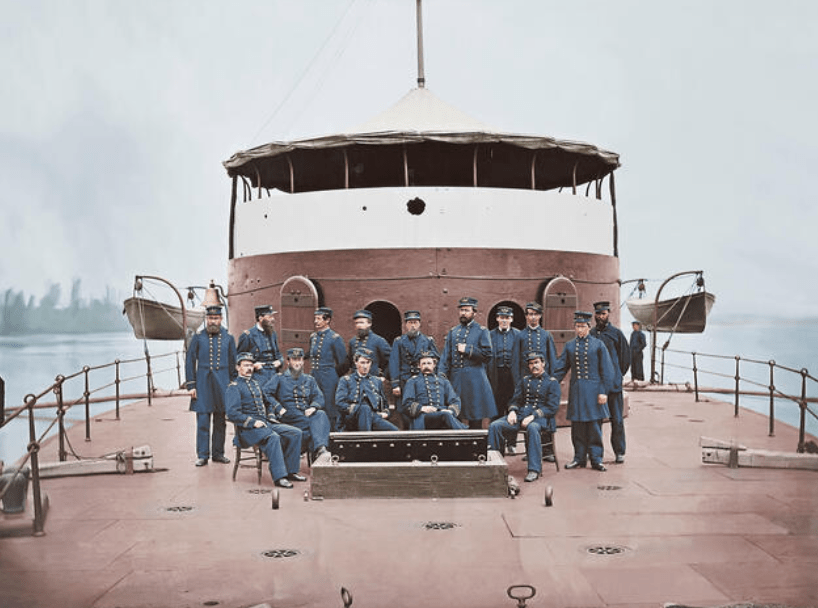
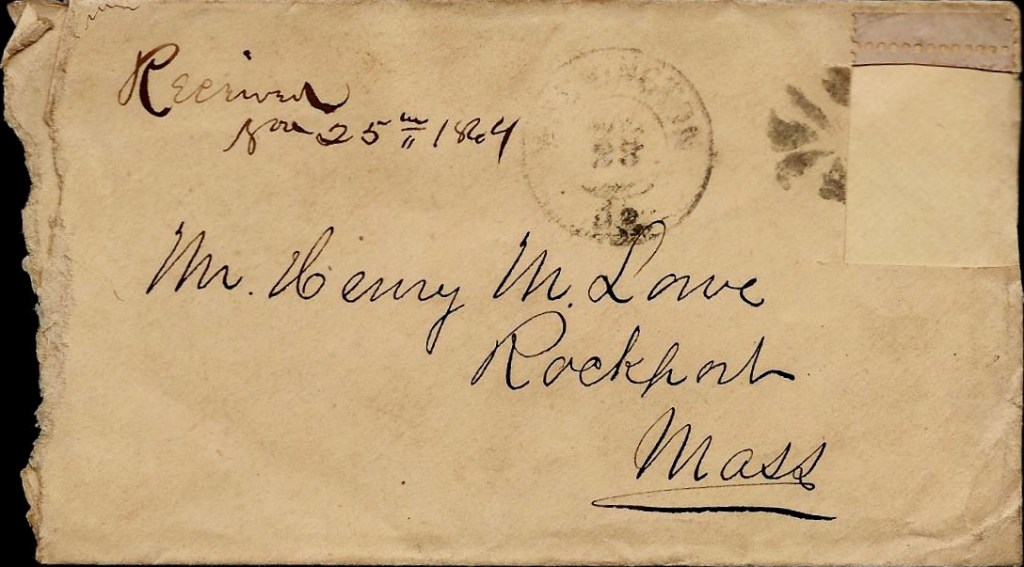


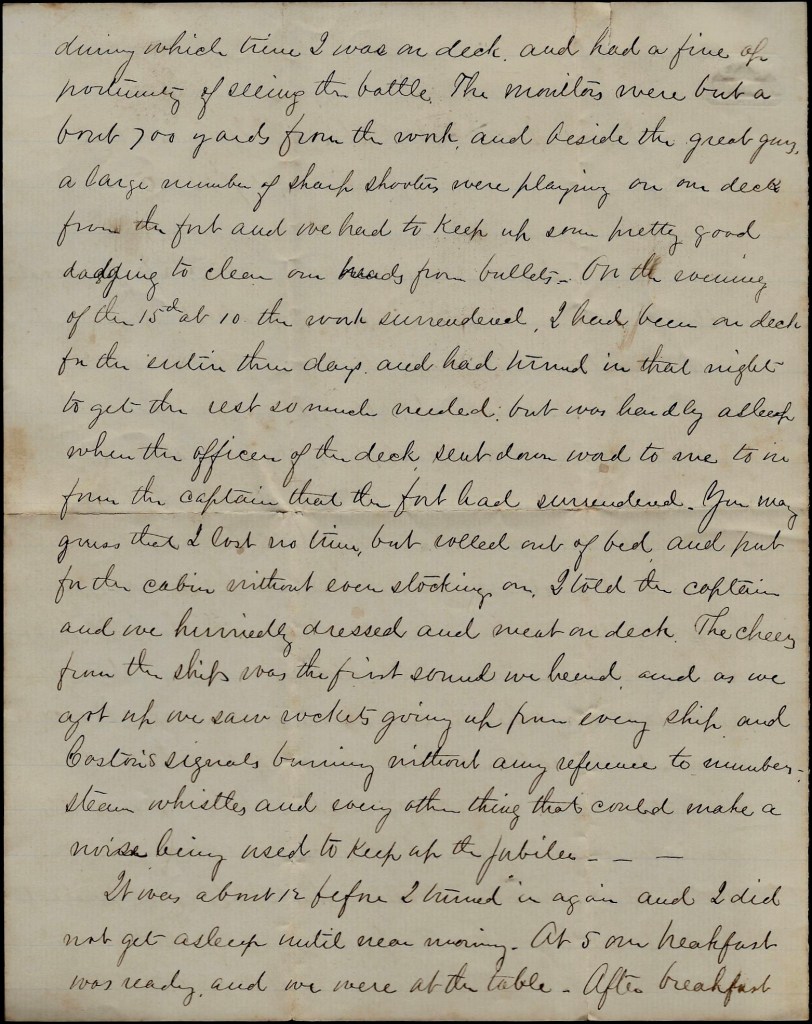


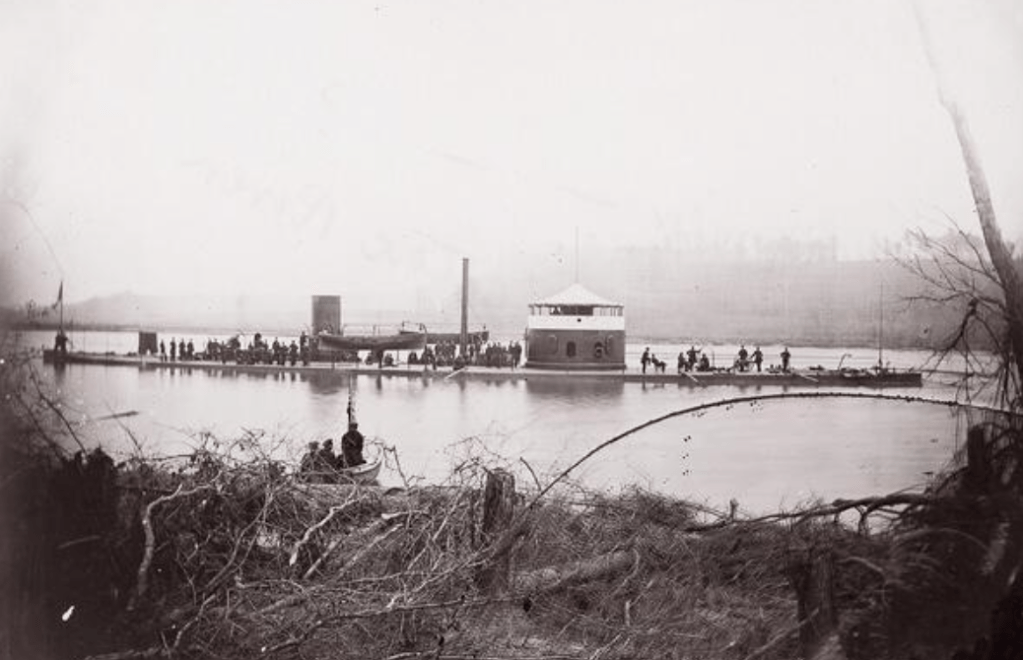


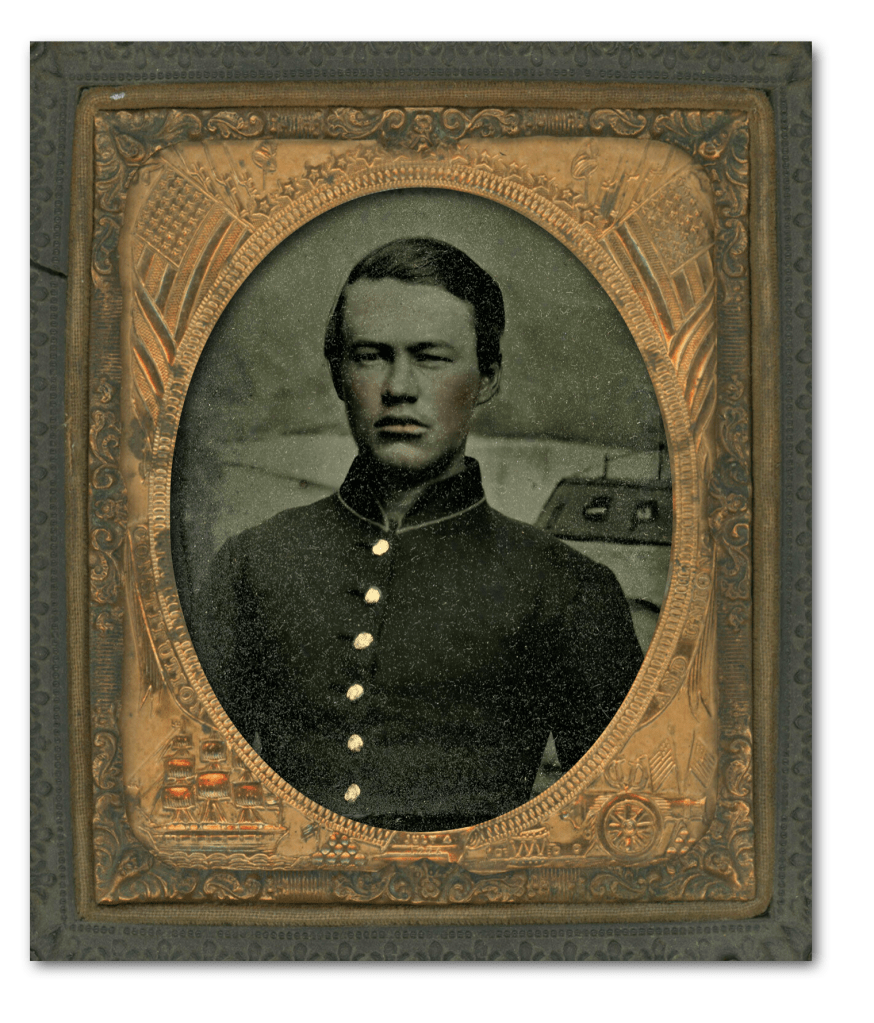
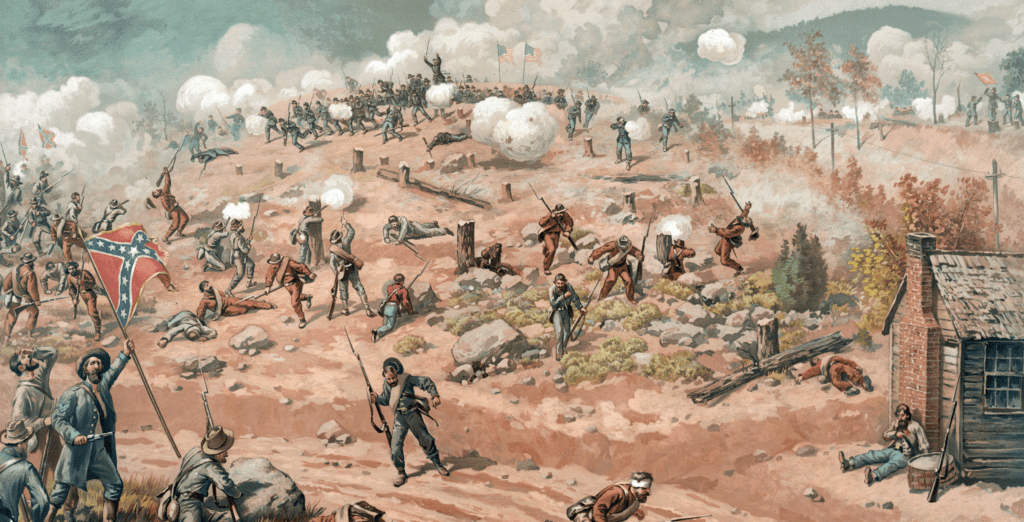

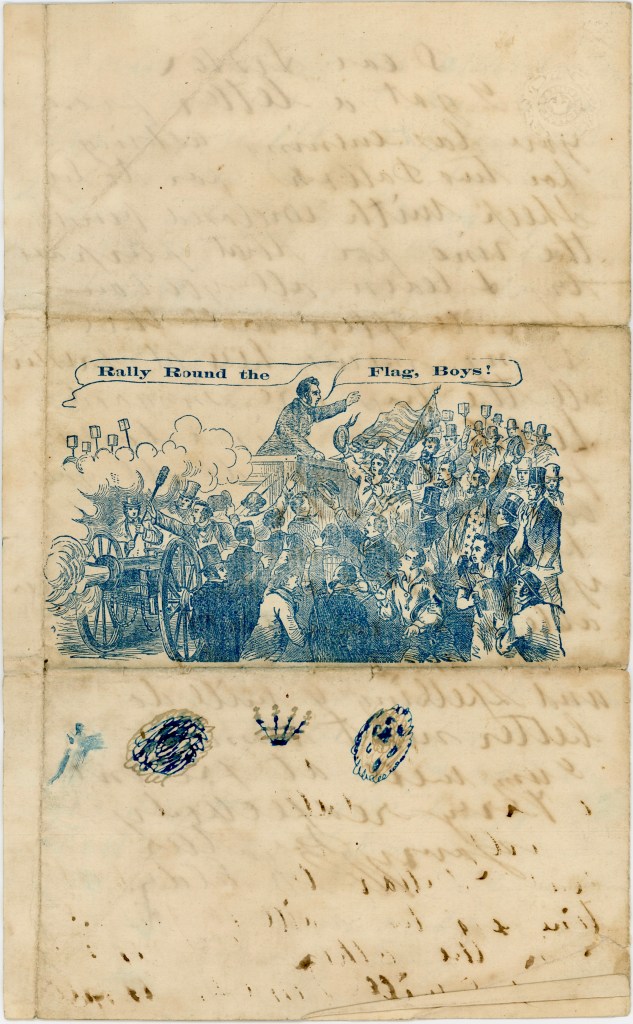
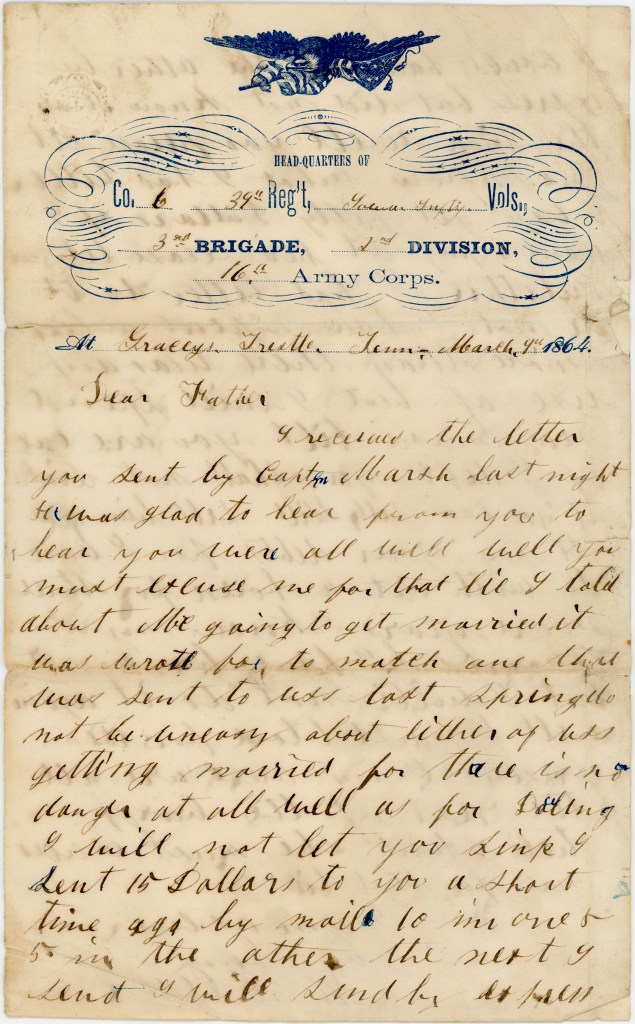
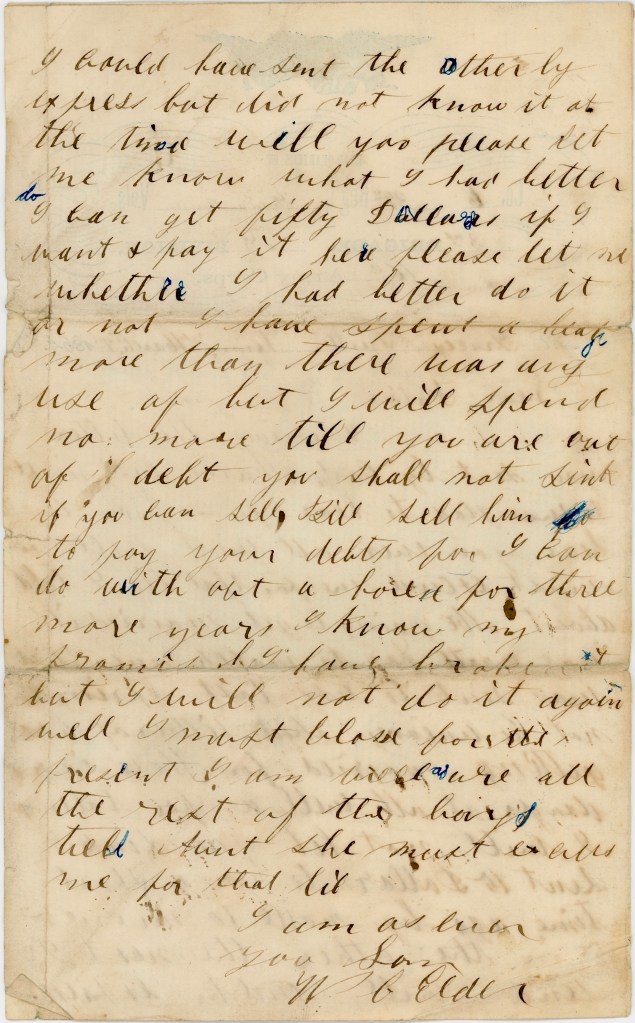
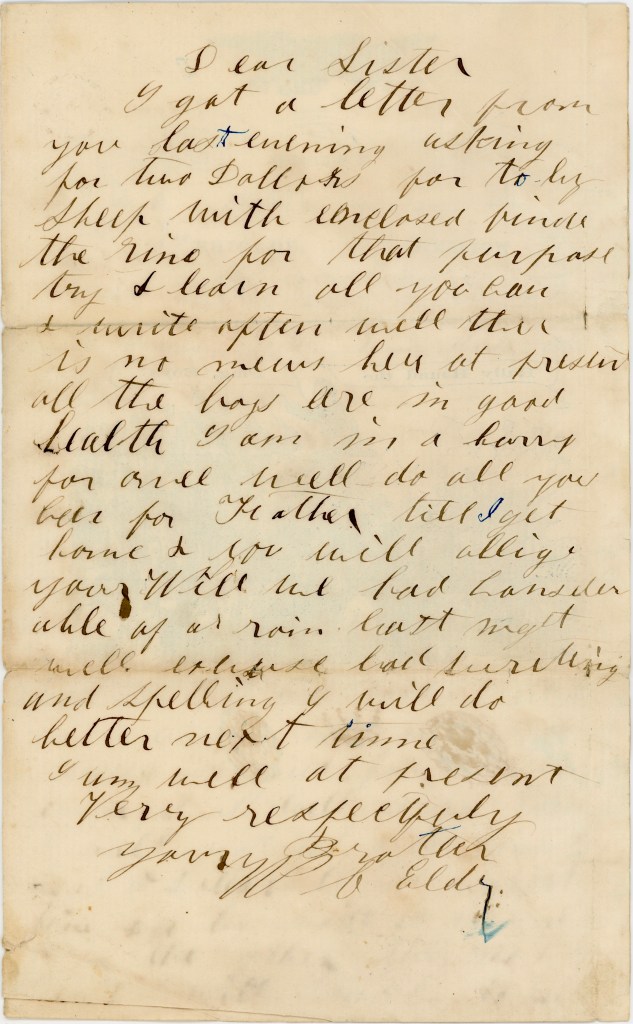


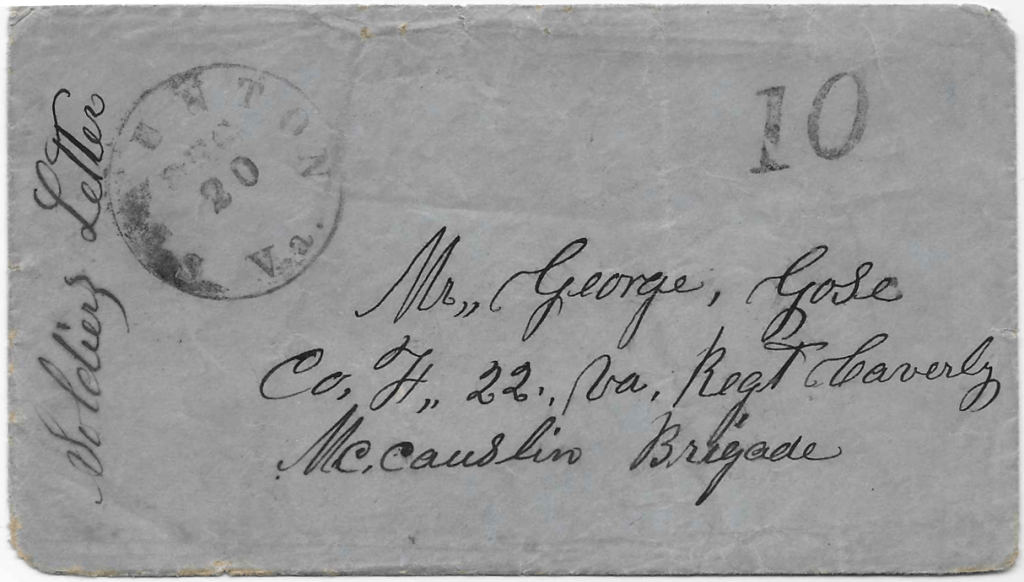


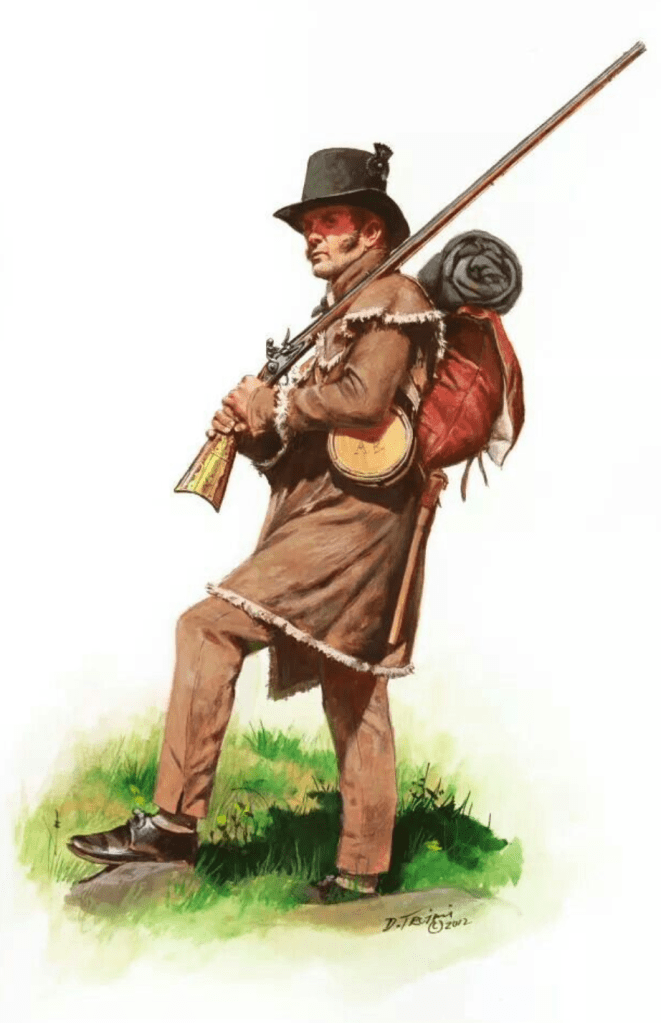


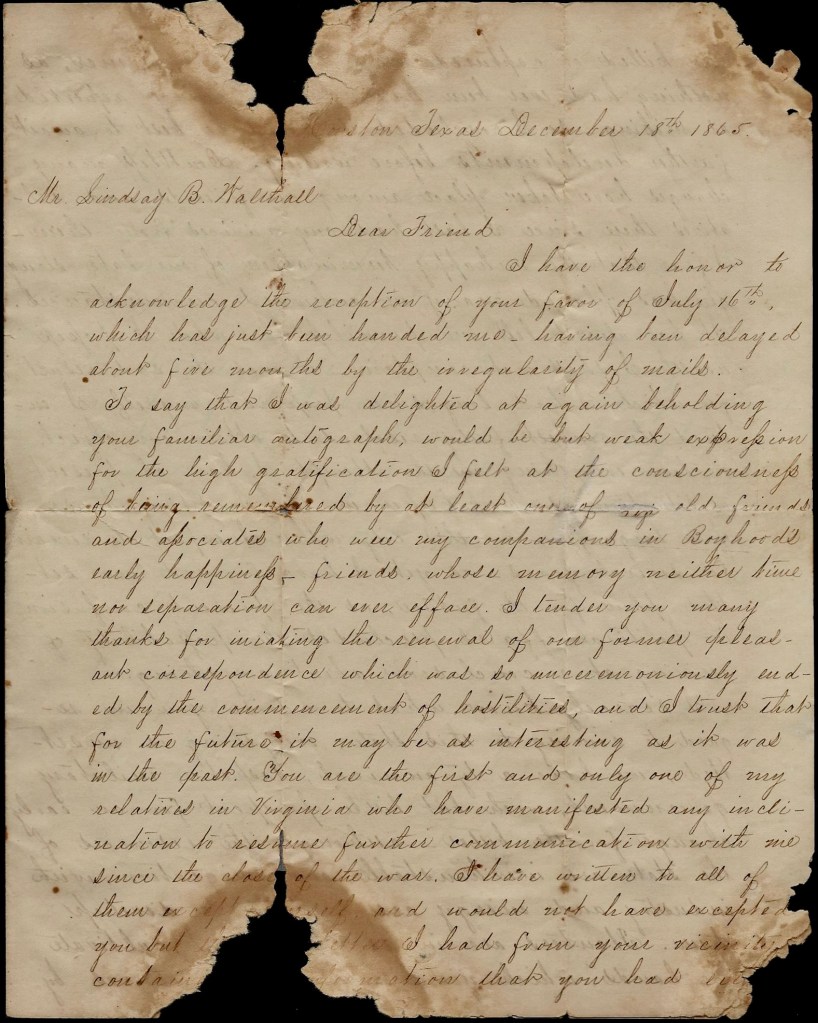
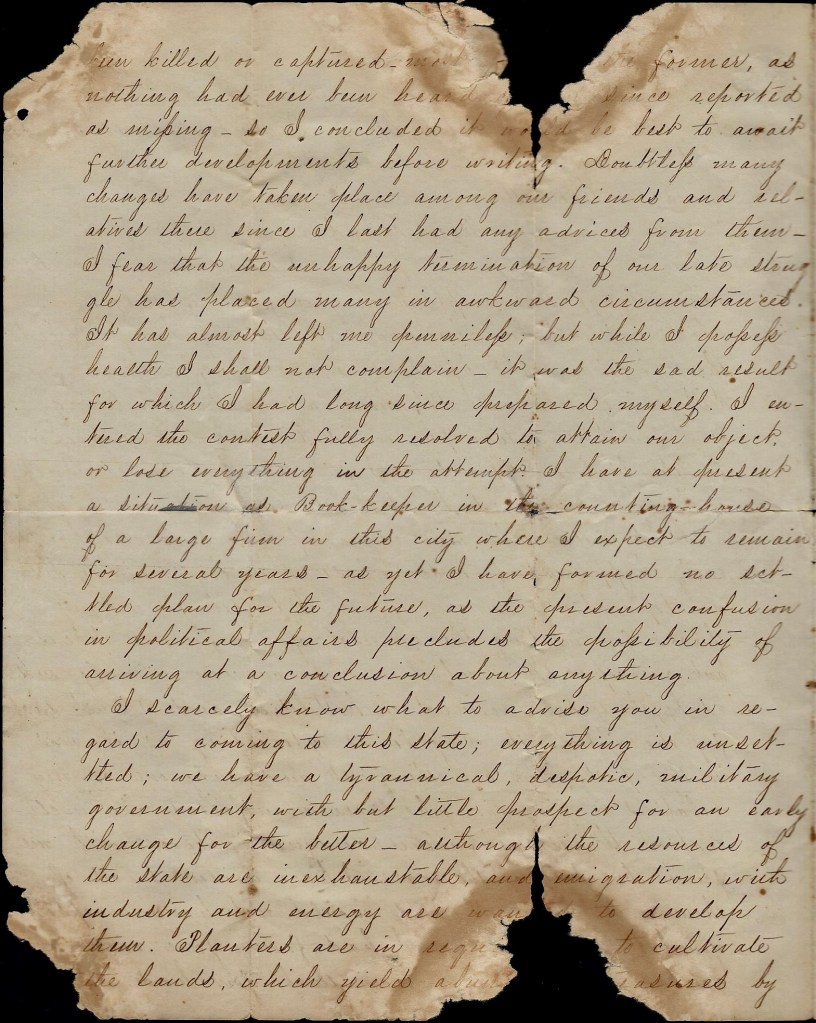
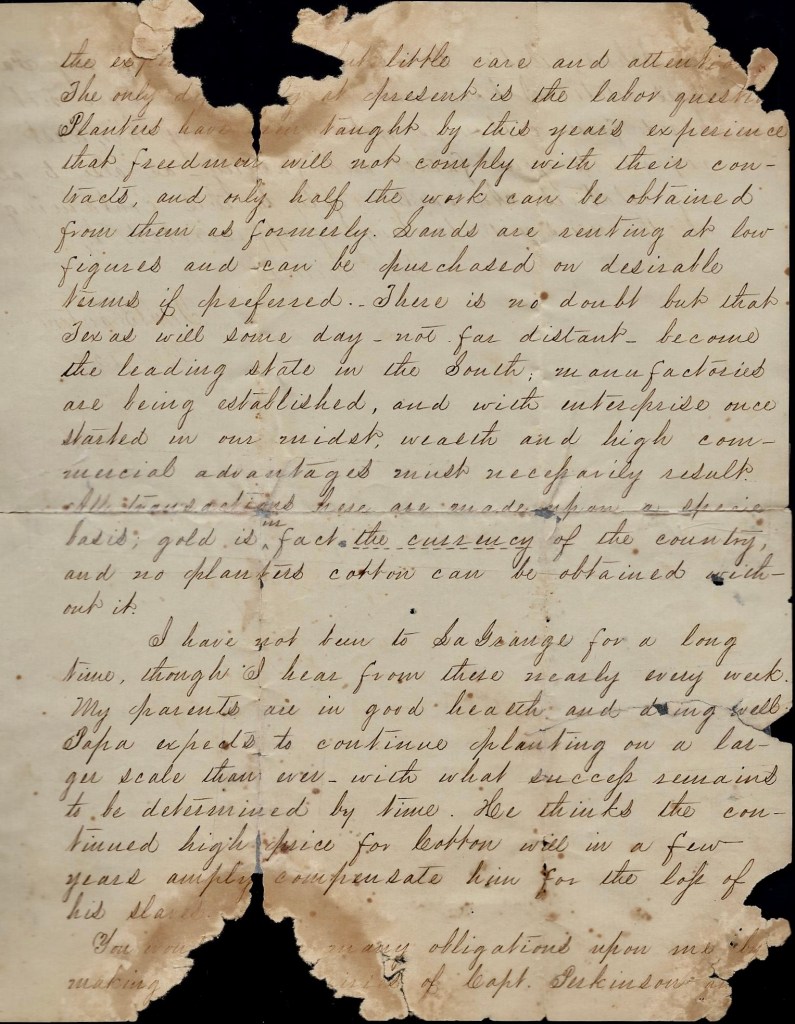

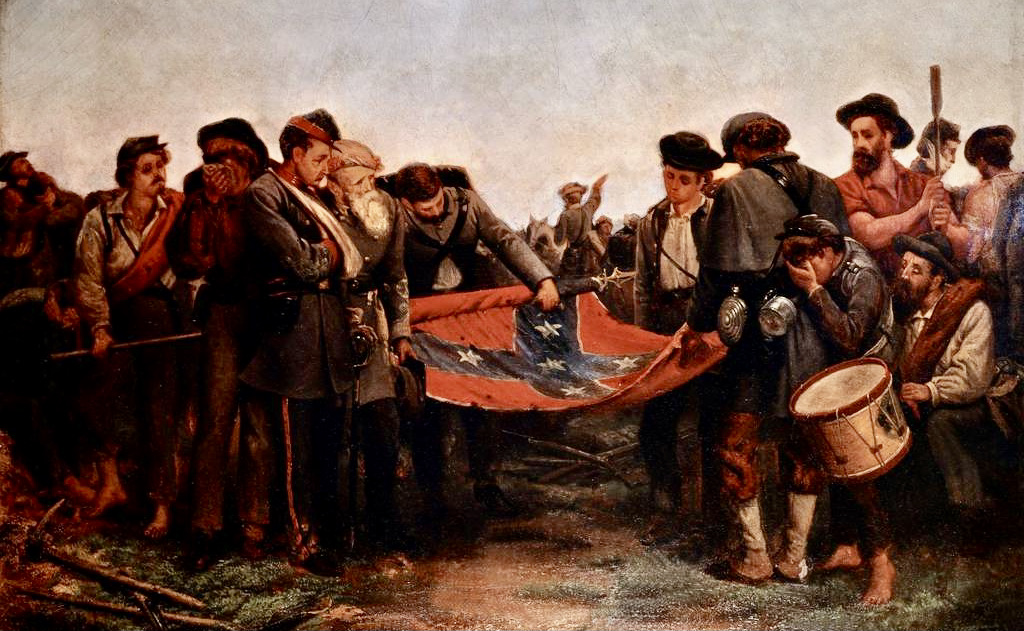

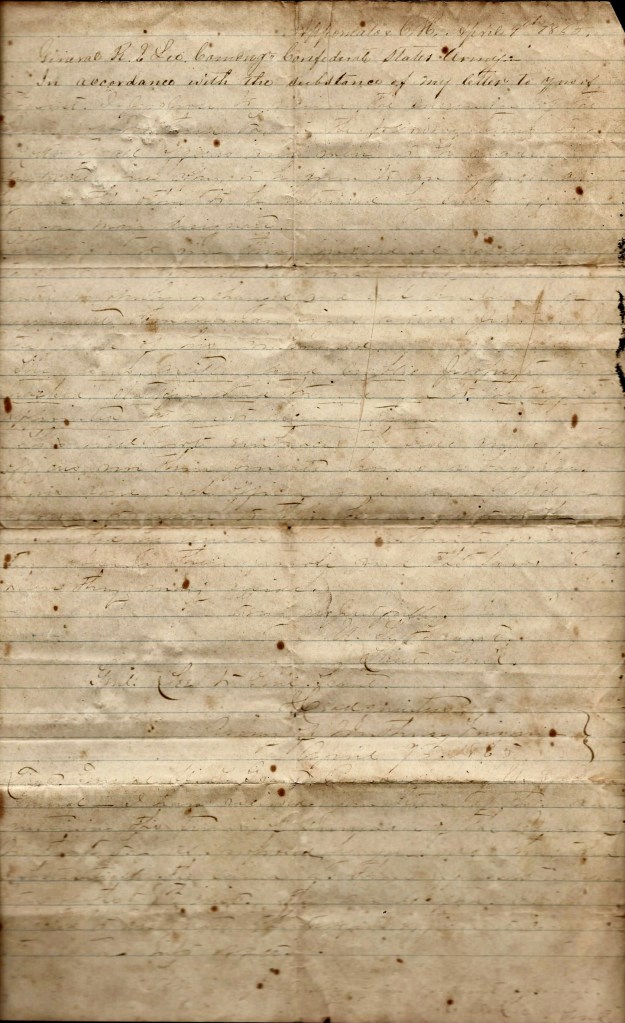


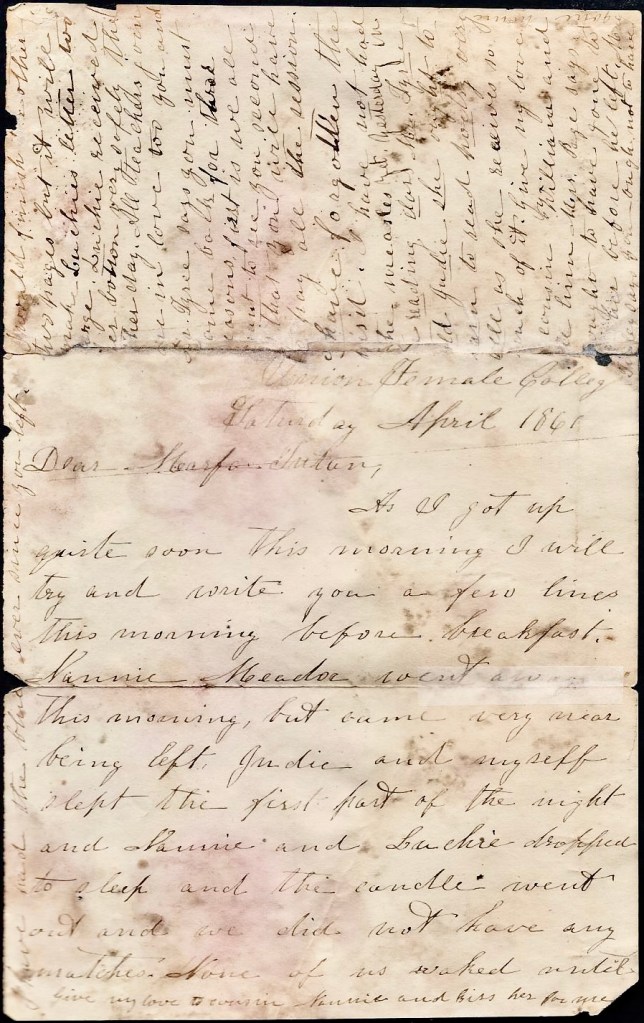
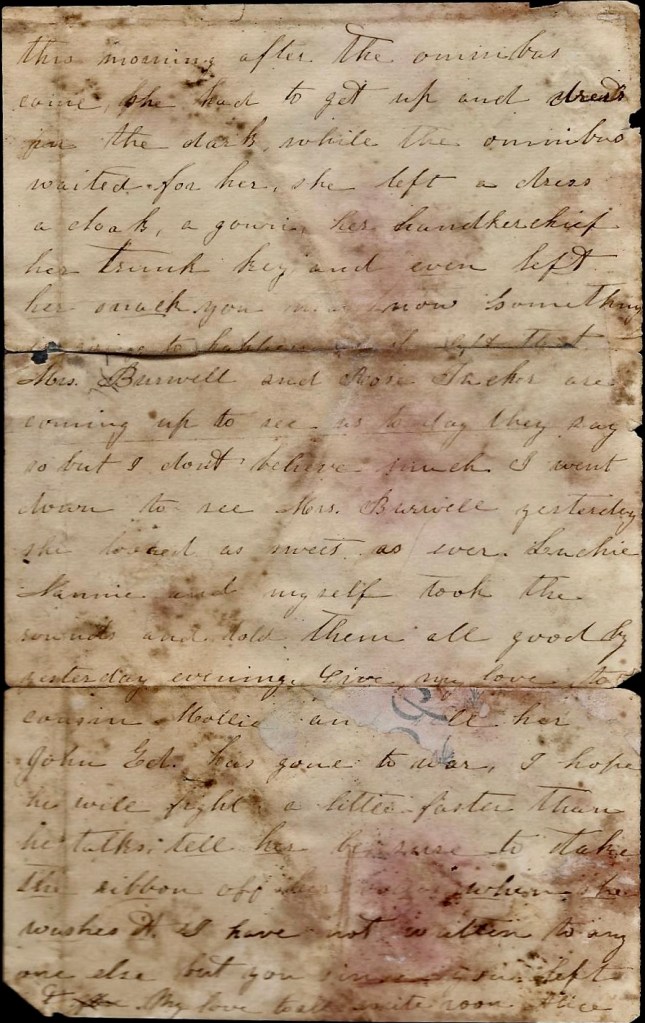

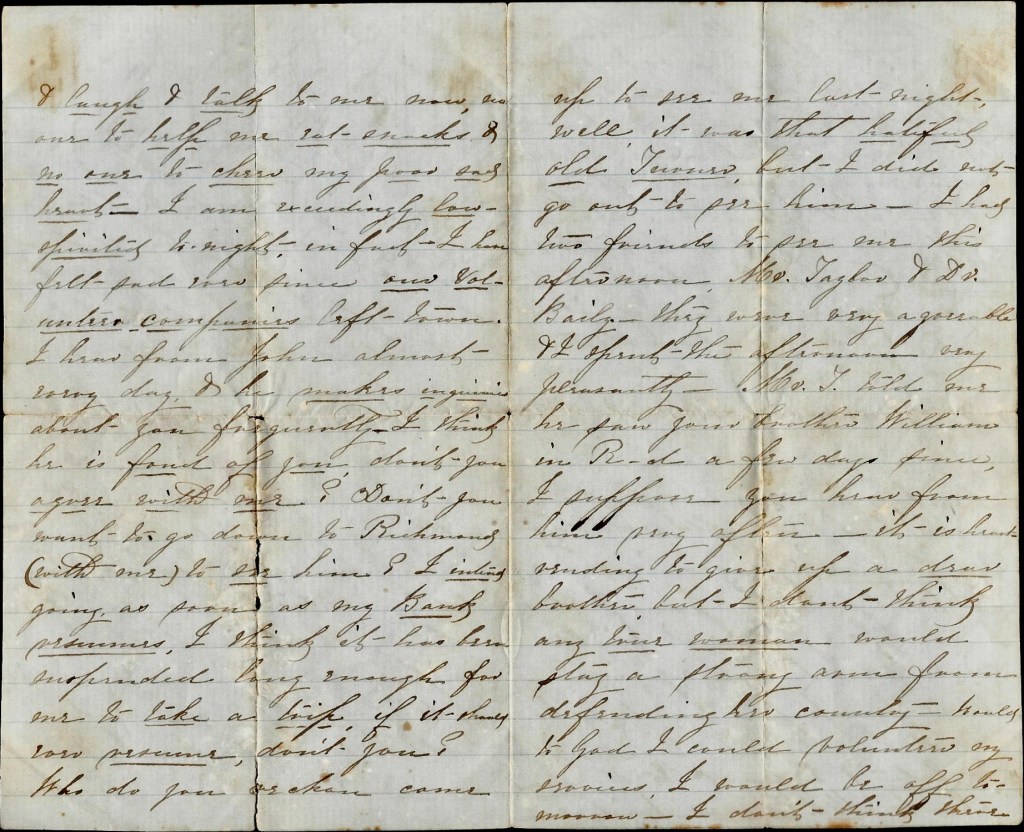
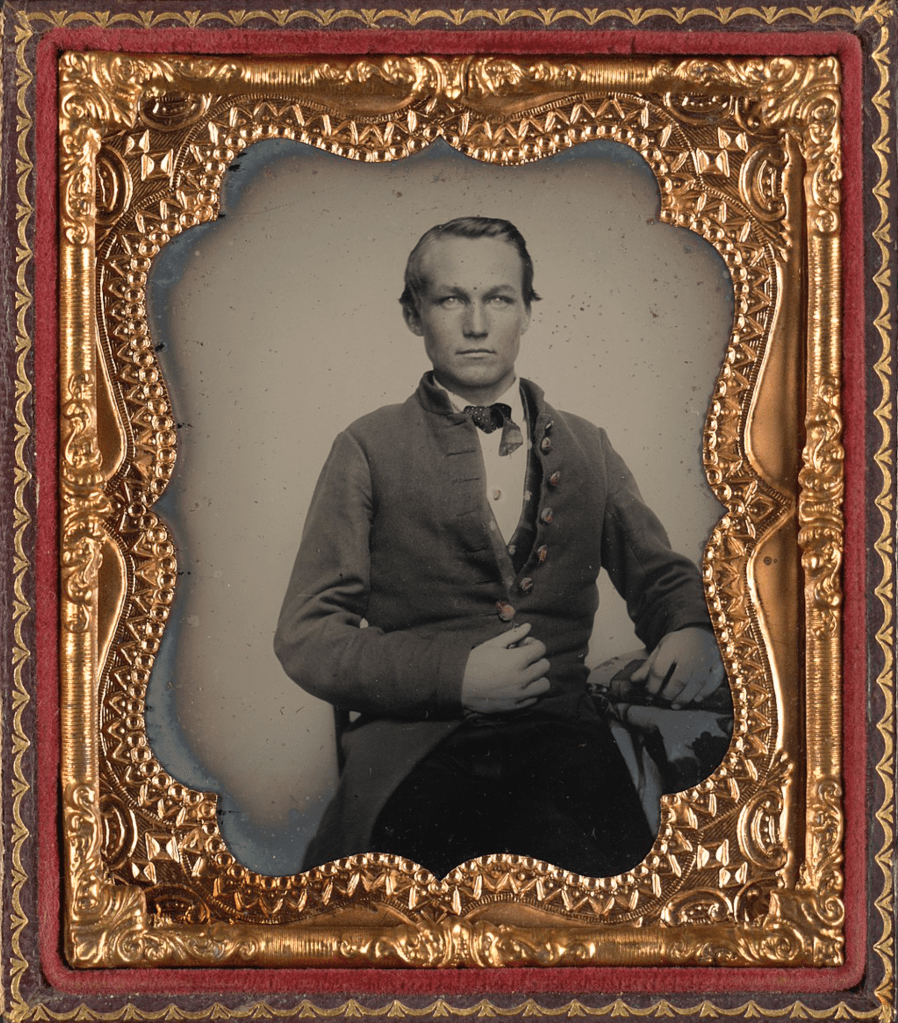

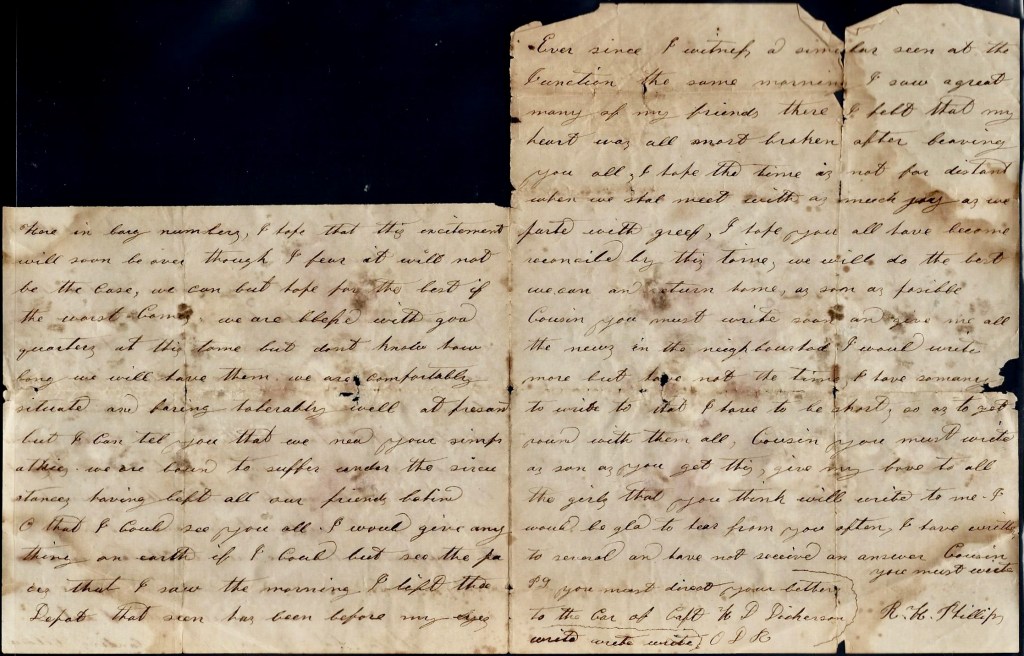


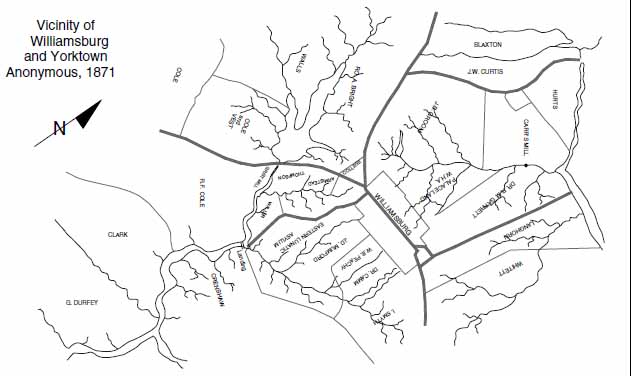
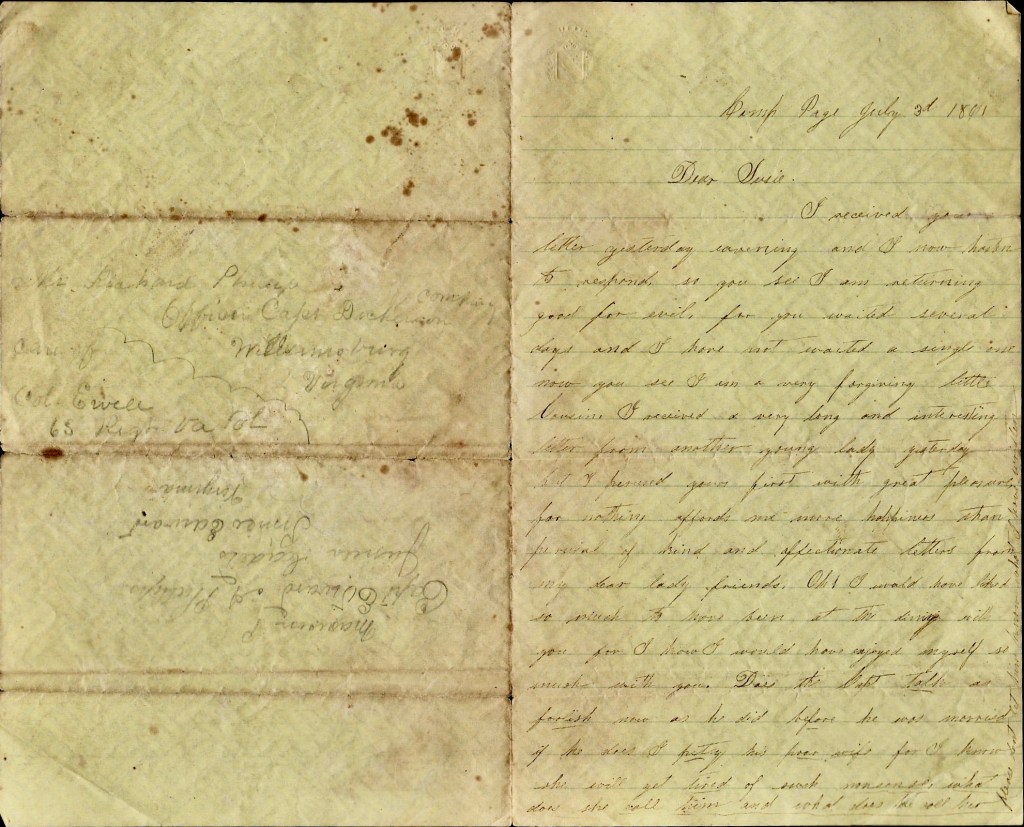
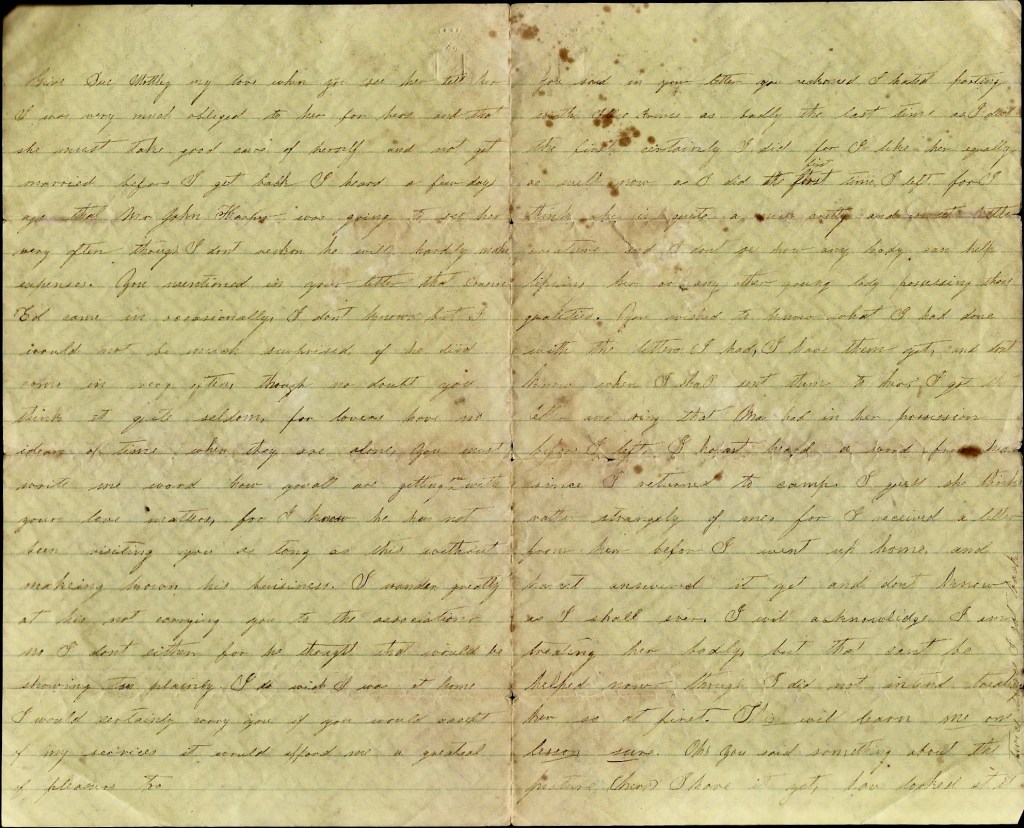

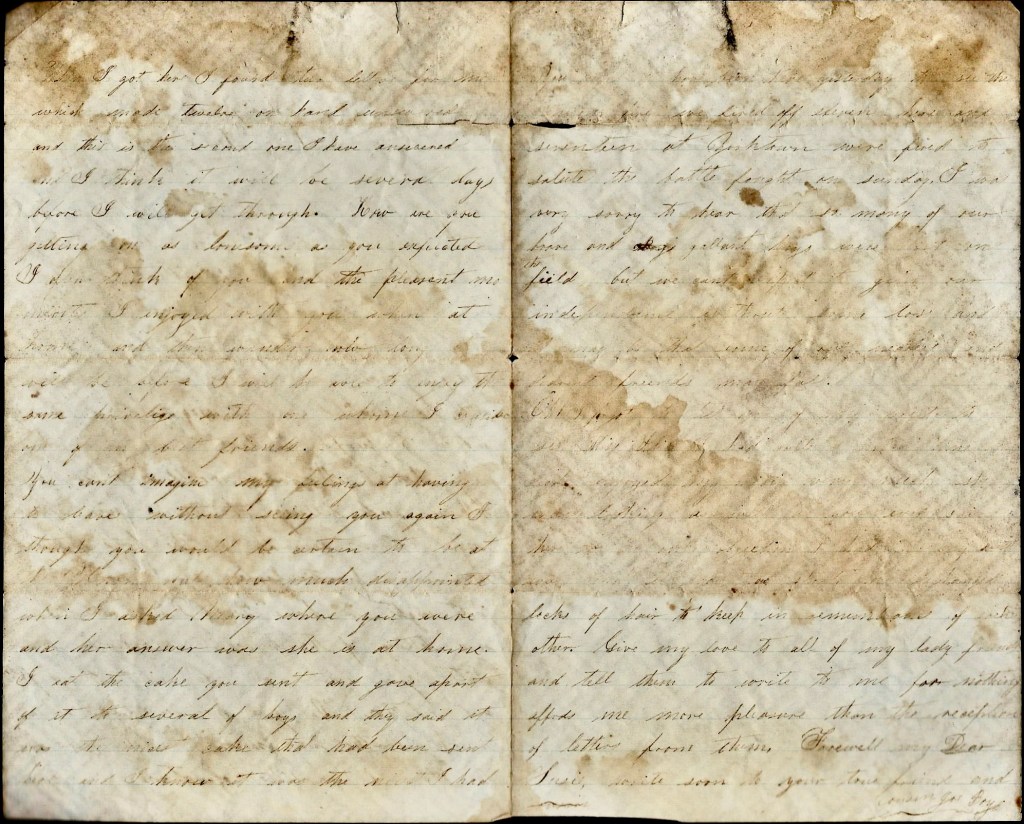

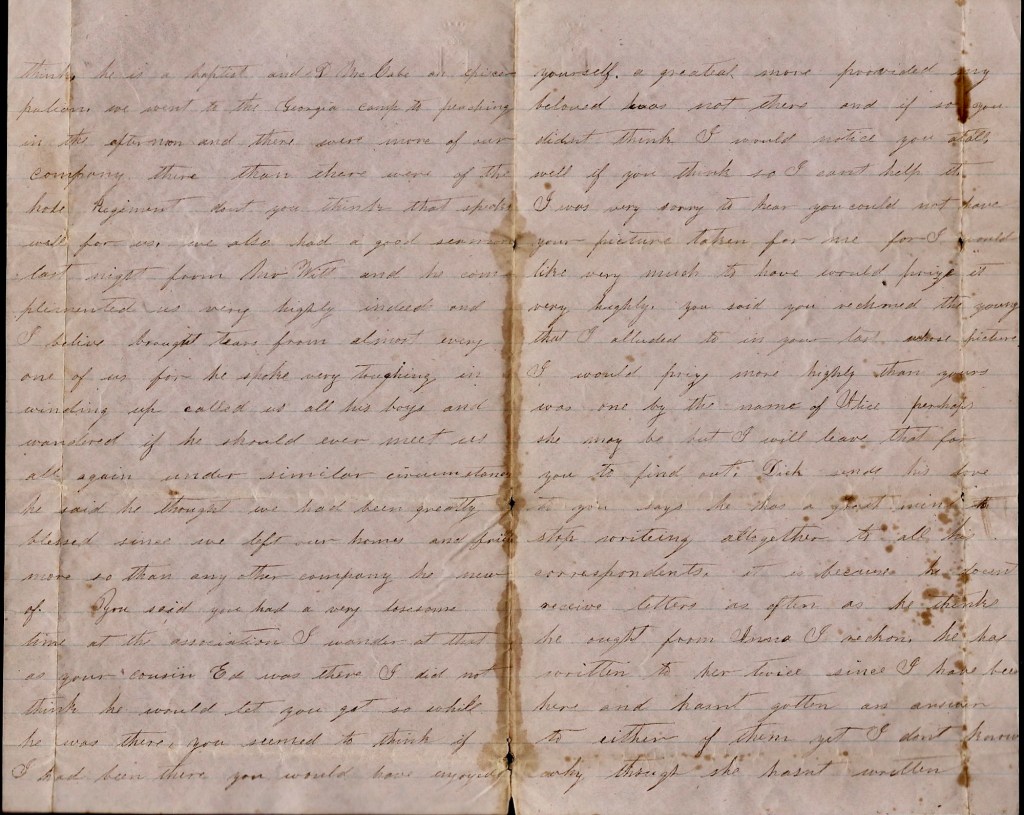

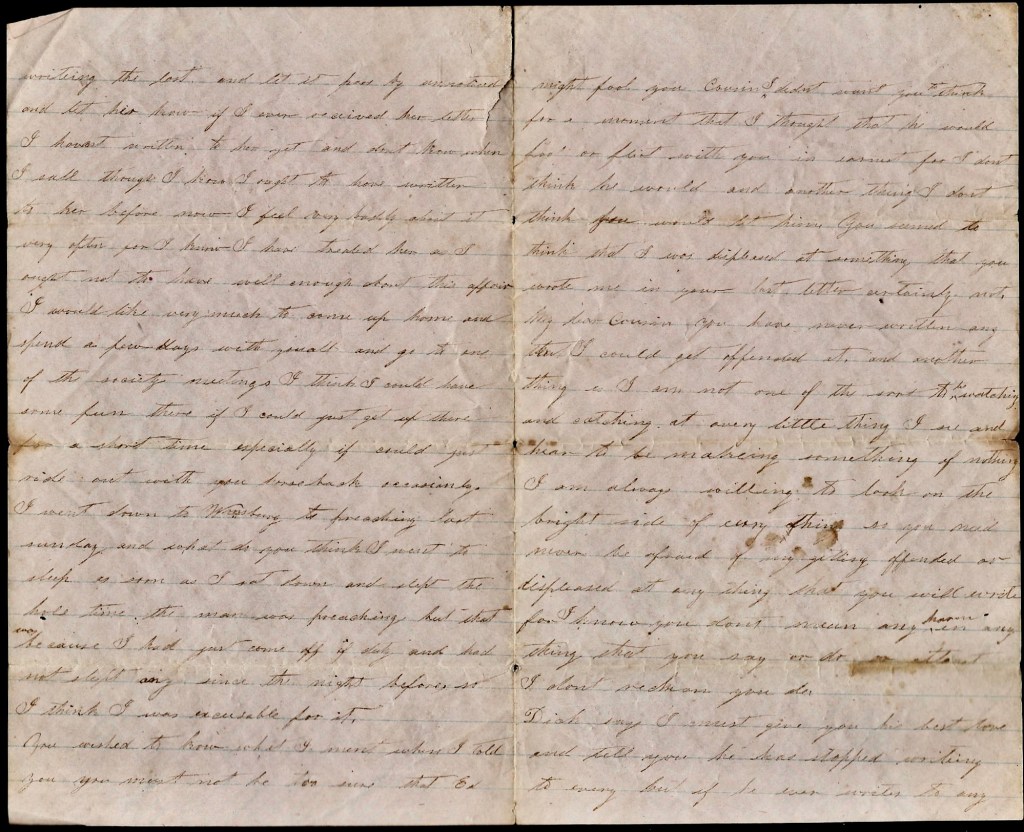
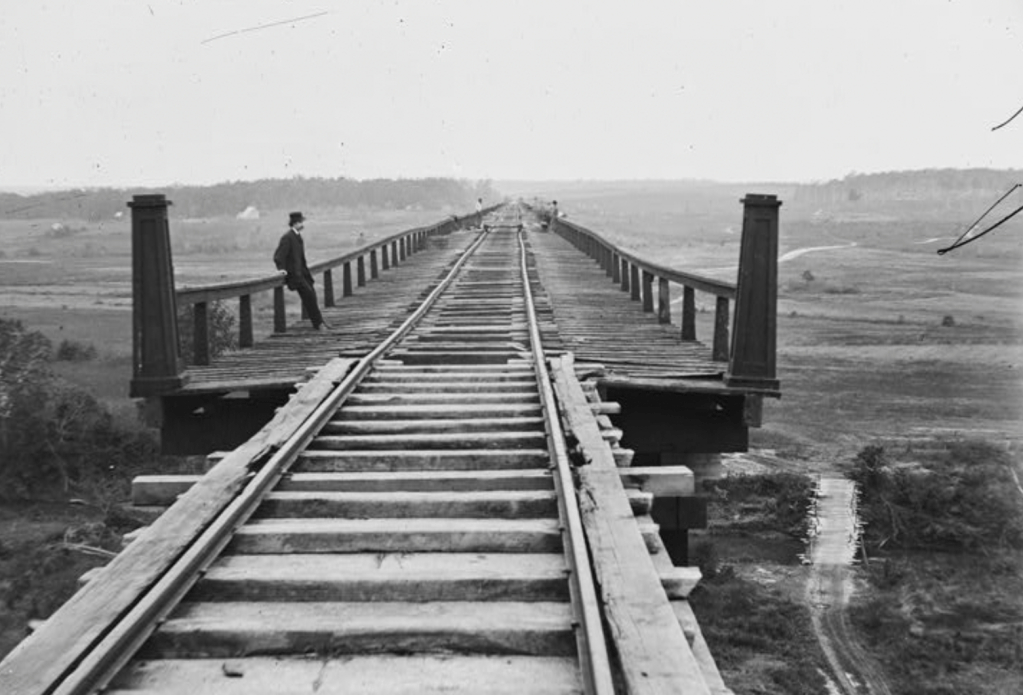


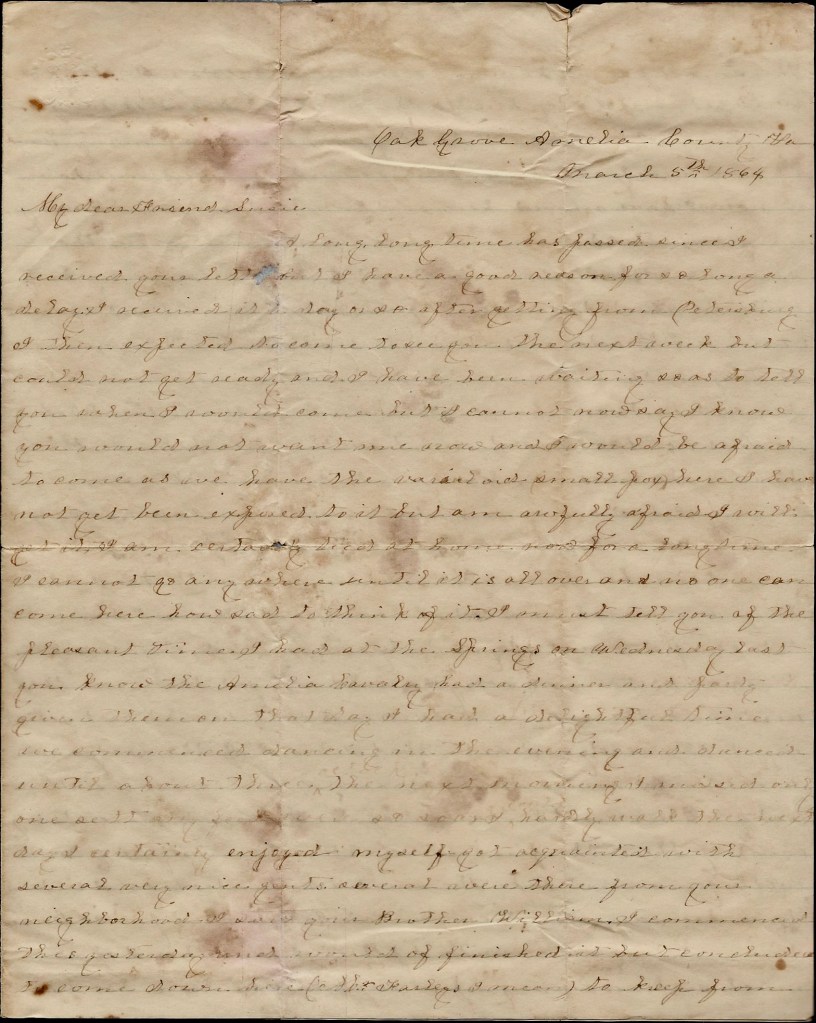
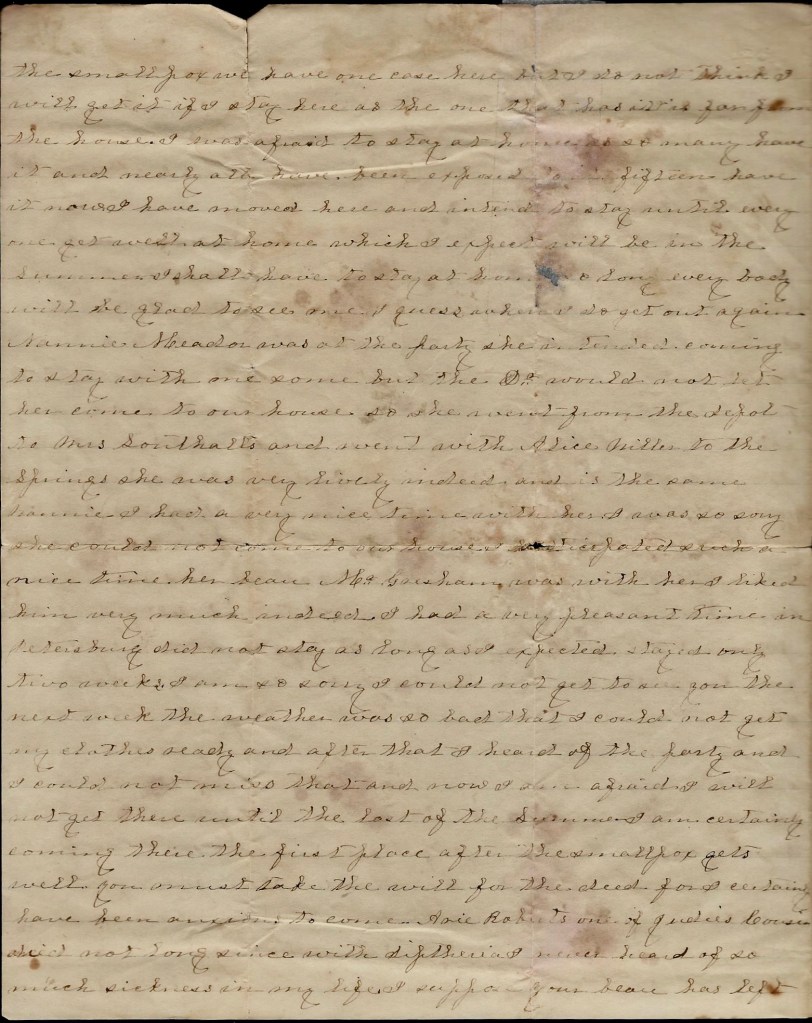
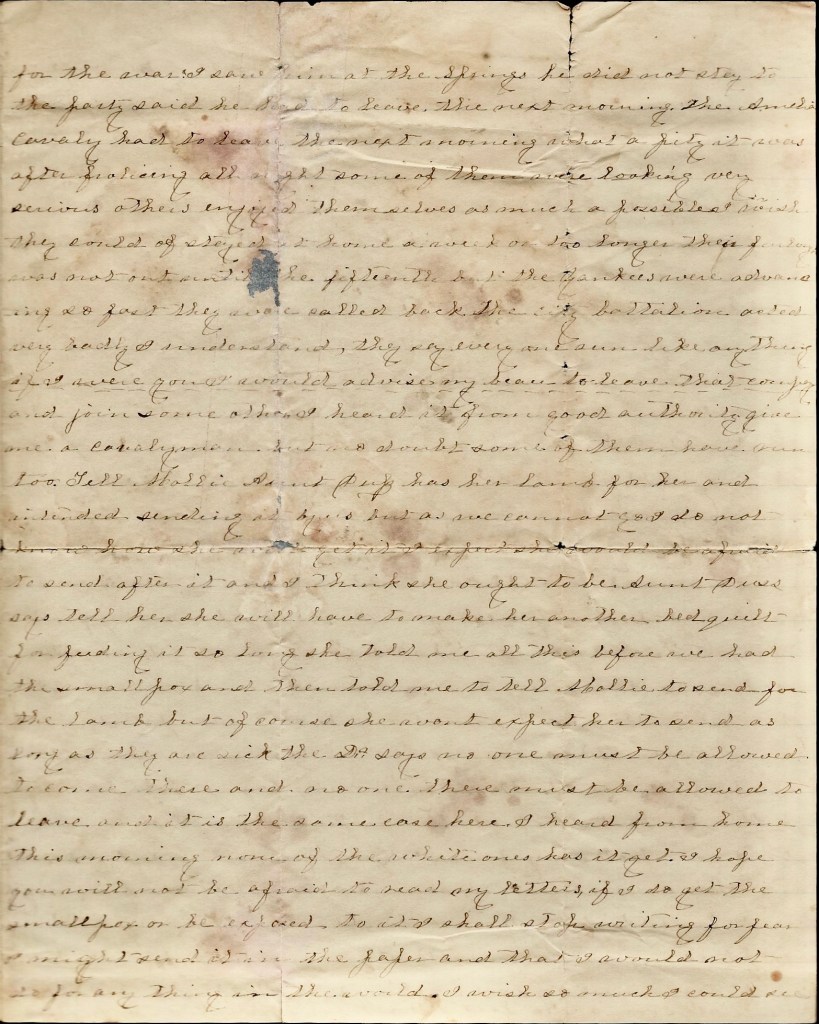
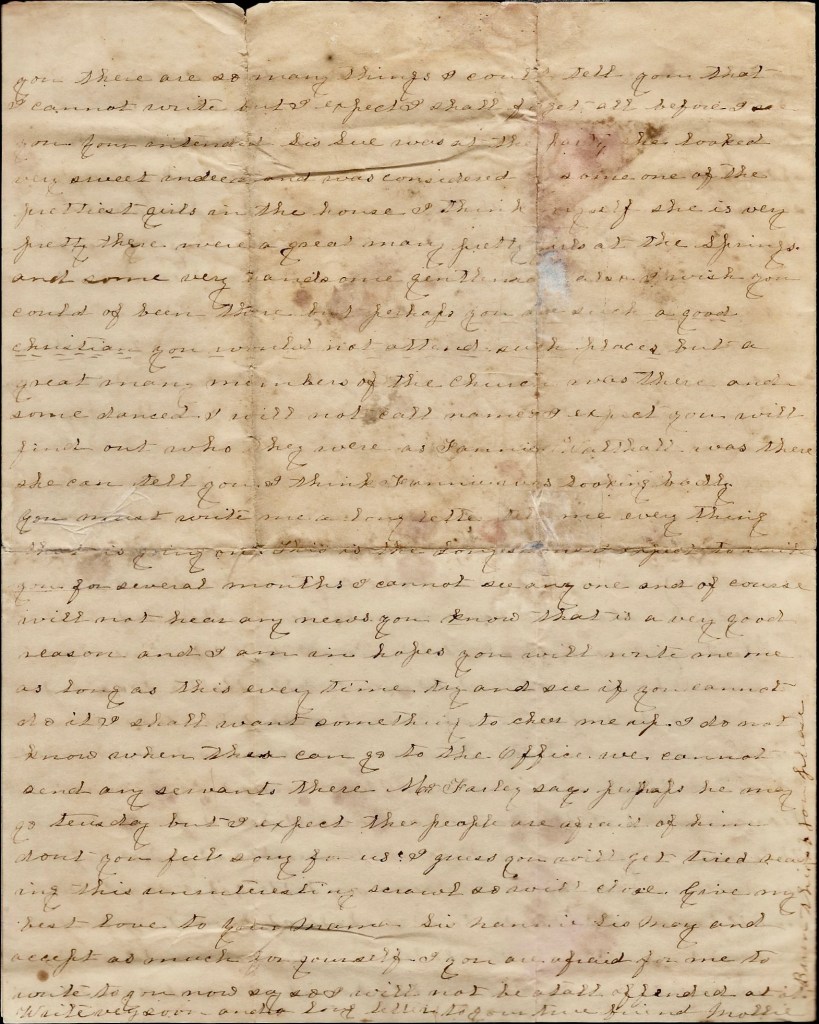
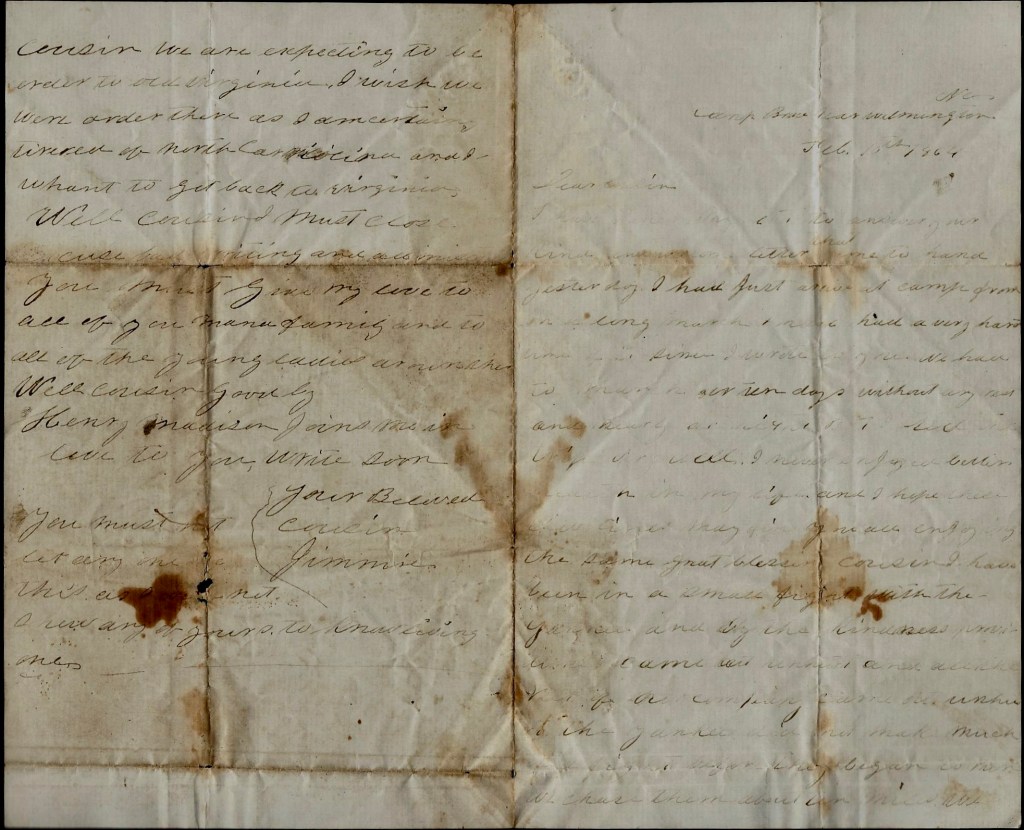

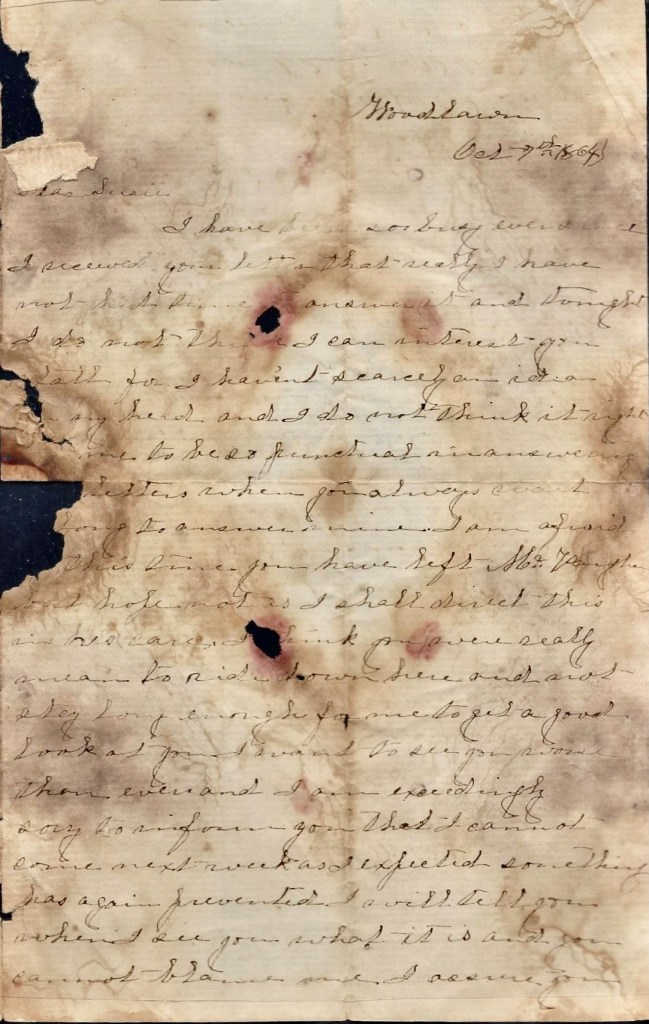
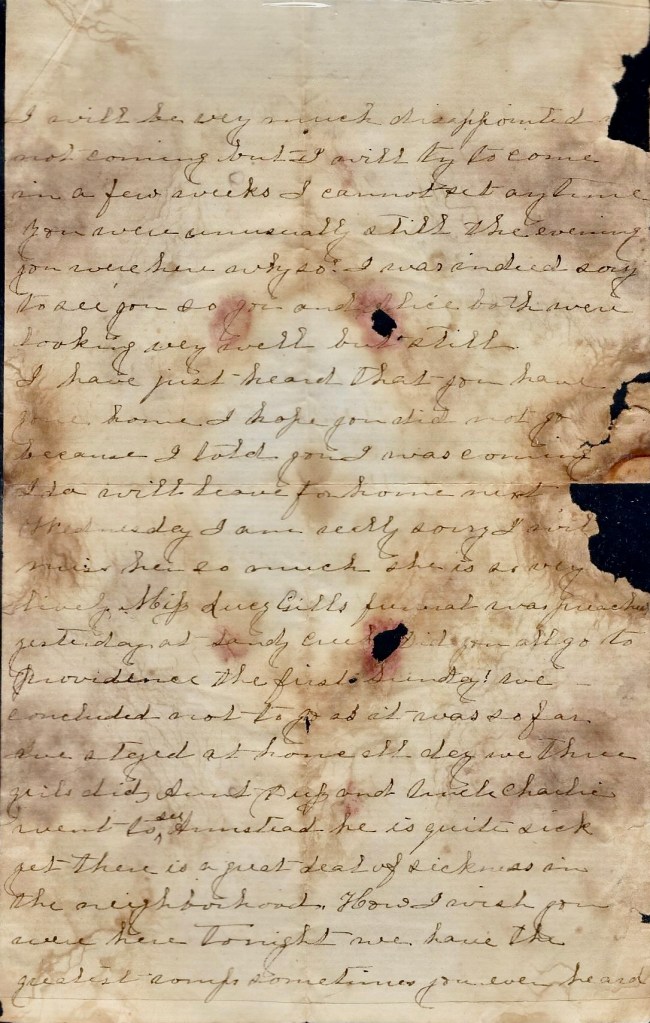
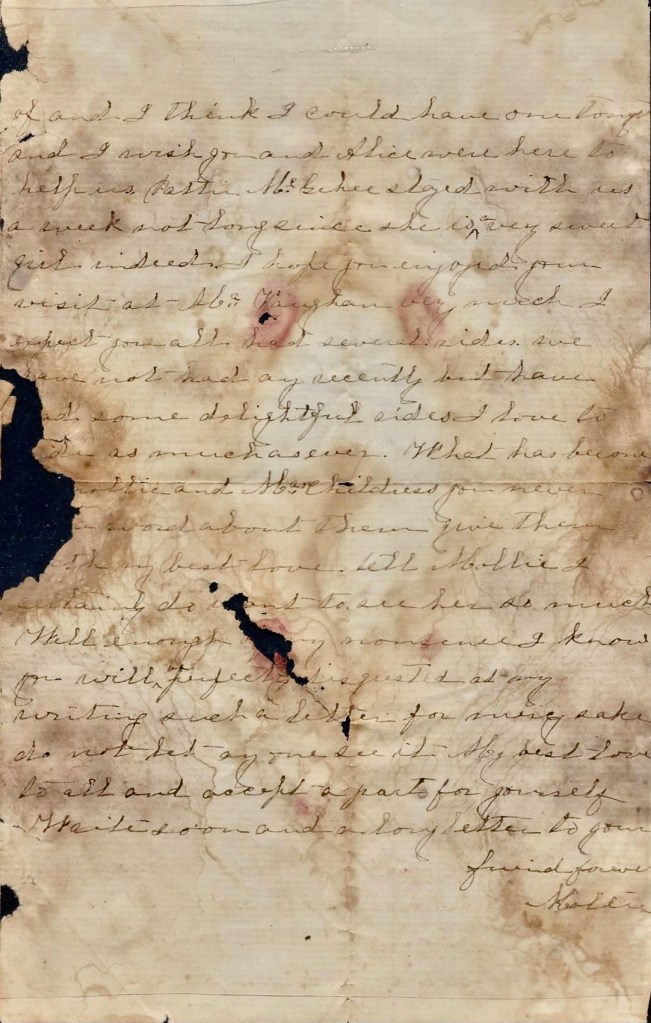
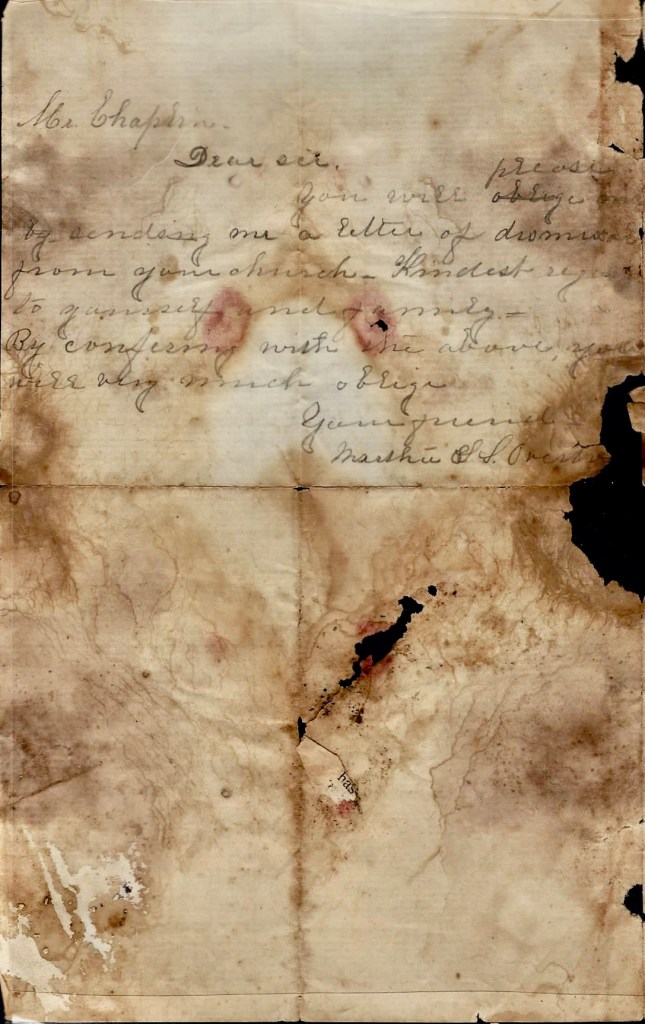
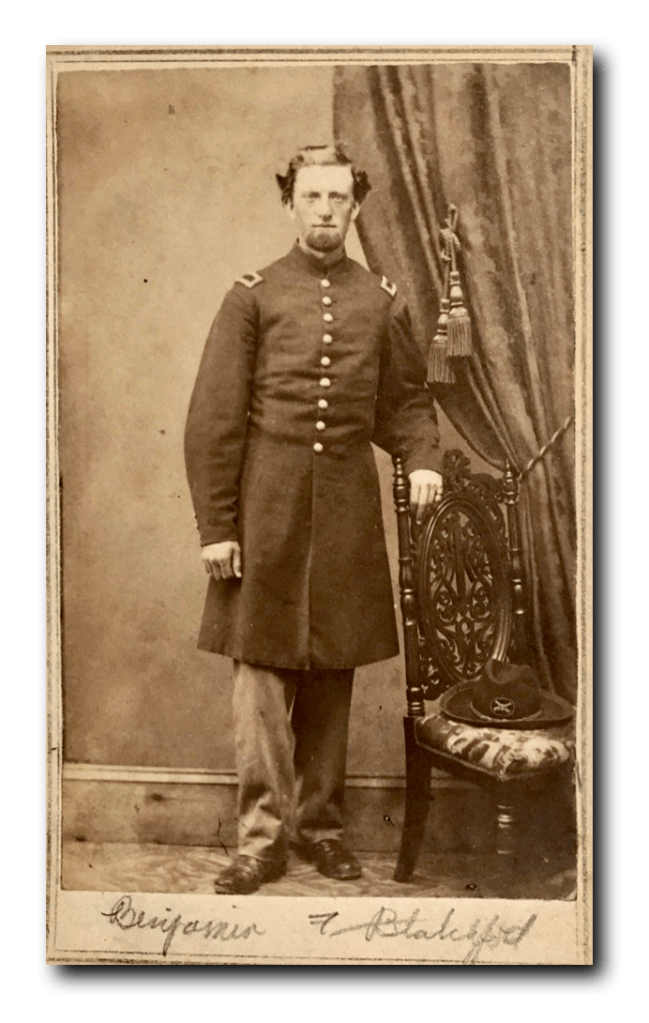


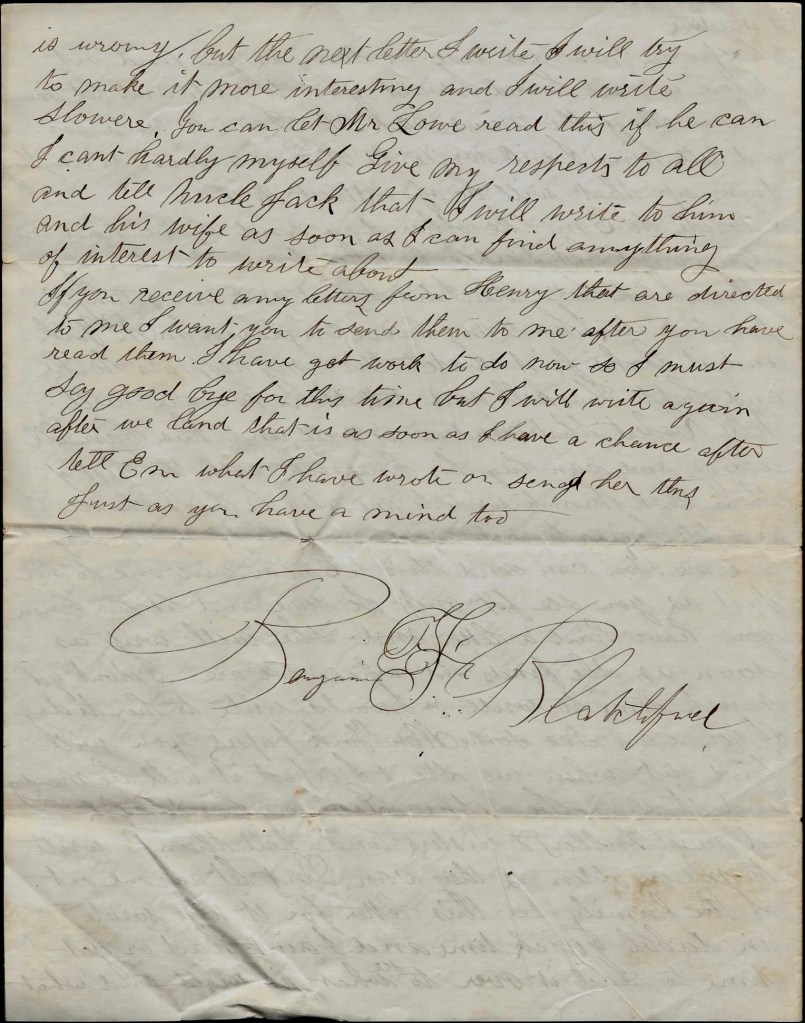



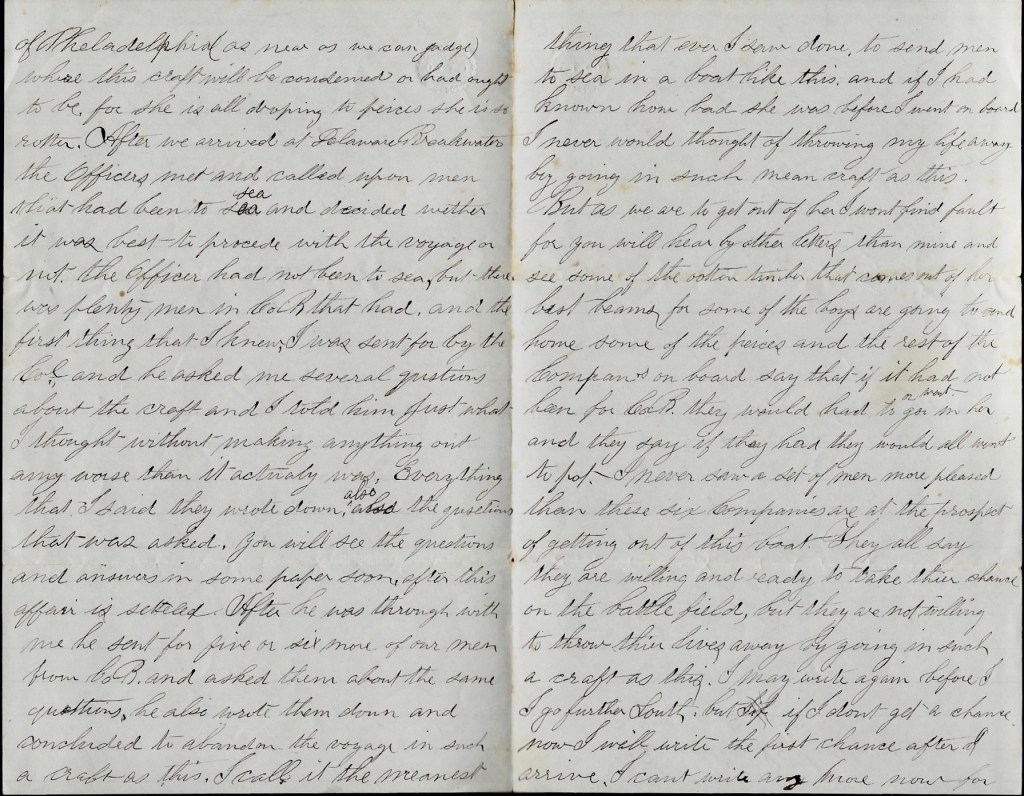
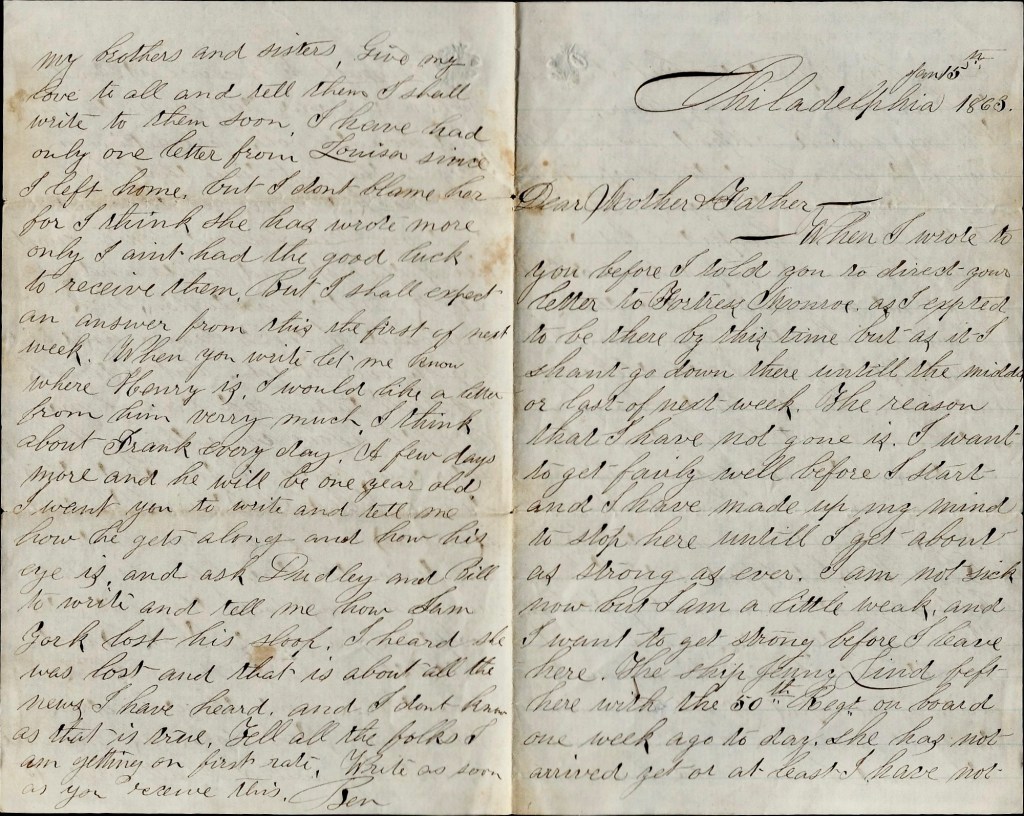


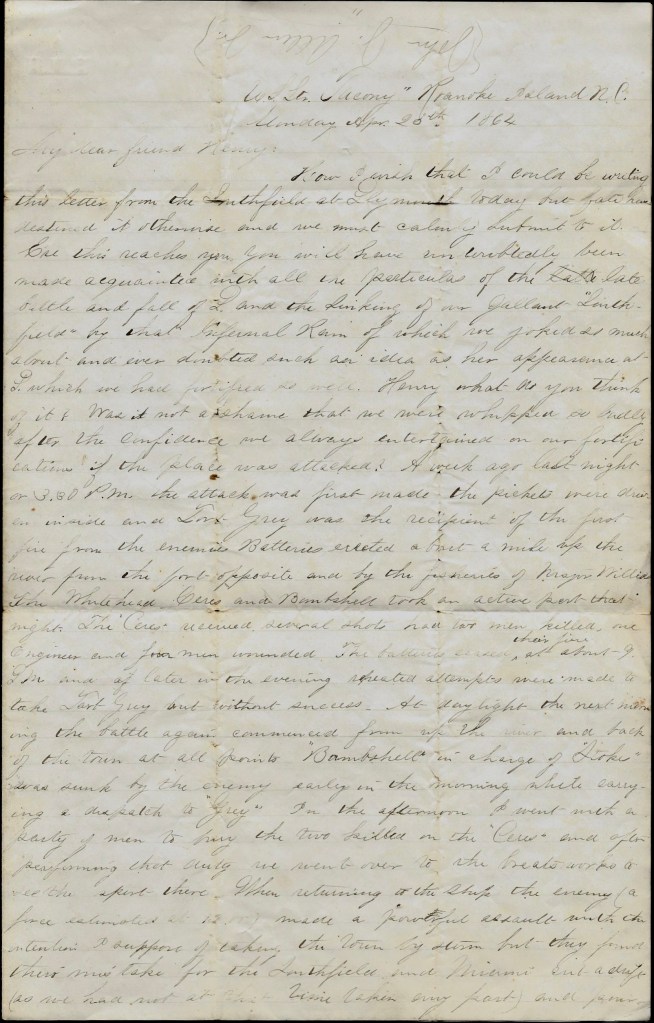


 Spared & Shared 23