All posts by Griff

My passion is studying American history leading up to & including the Civil War. I particularly enjoy reading, transcribing & researching primary sources such as letters and diaries.

1862: James B. Robbins to A. W. B. Stewart

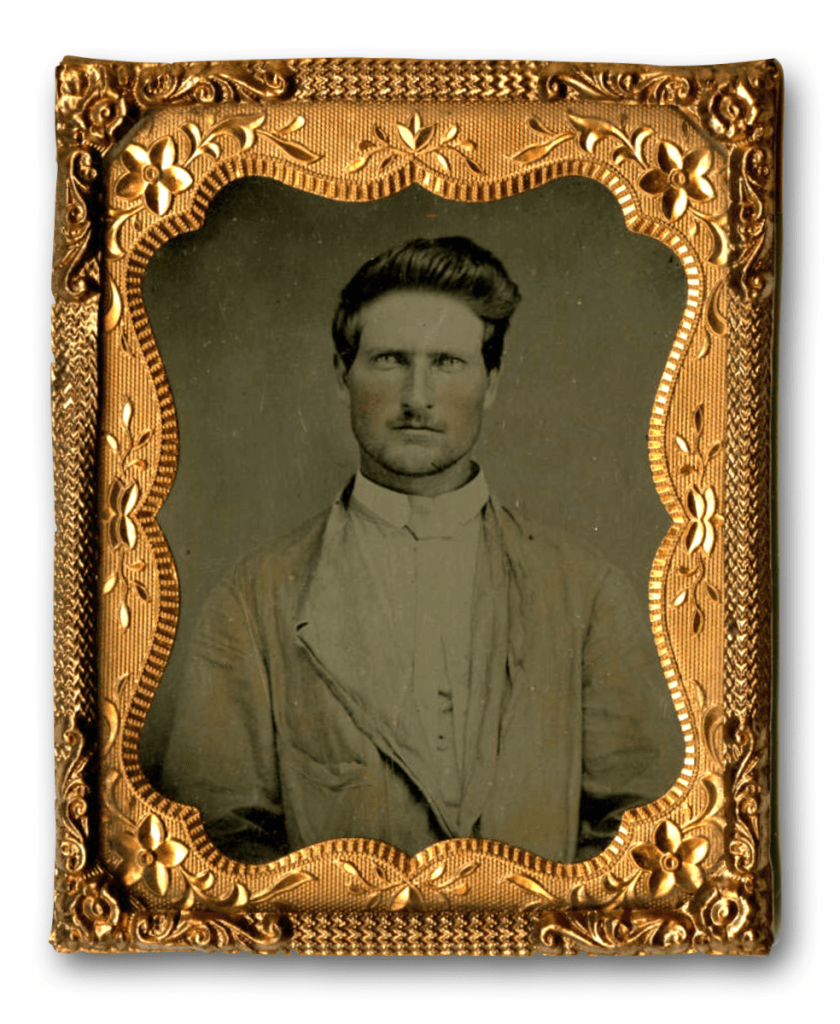
Unidentified Confederate
(Alabama Dept. of Archives & History)

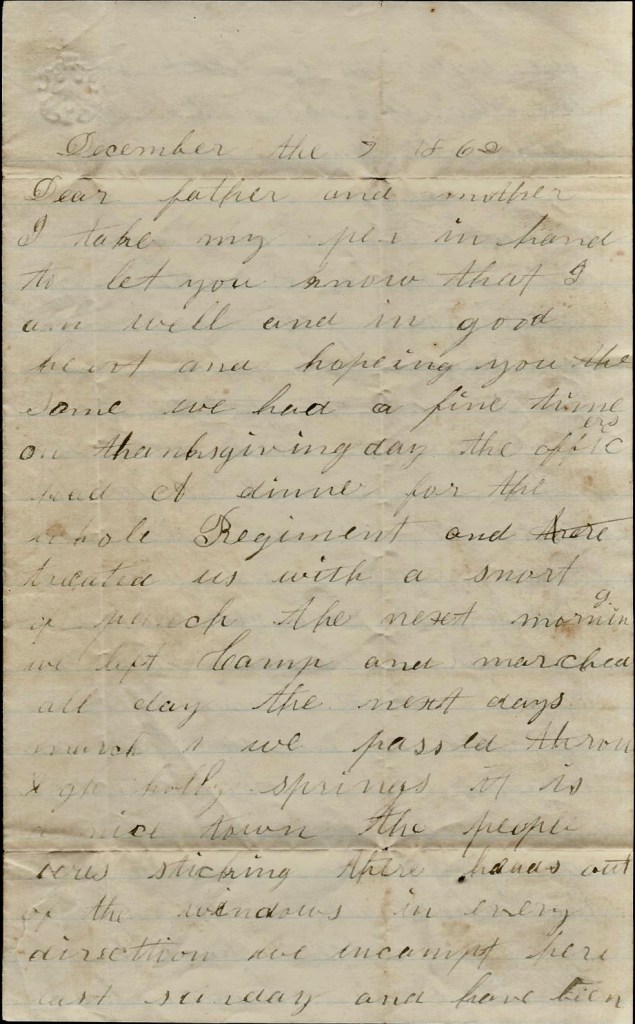
This letter was written by Pvt. James B. Robbins of Co. E, 25th Georgia Infantry. James enlisted in the regiment on 5 April 1862 and was take prisoner at Marietta, Georgia, on 19 June 1864. He died of pleurisy at Camp Douglas, Illinois, on 6 January 1865.

Company E was organized in Henry county, Alabama. It was successively designated 3d Co E, and 2nd Co. K, 25th Georgia Infantry. They were originally known as the “Irwin Invincibles” and did not join the 25th Georgia until they were ordered from west Virginia to Savannah, Georgia in mid-January 1862.

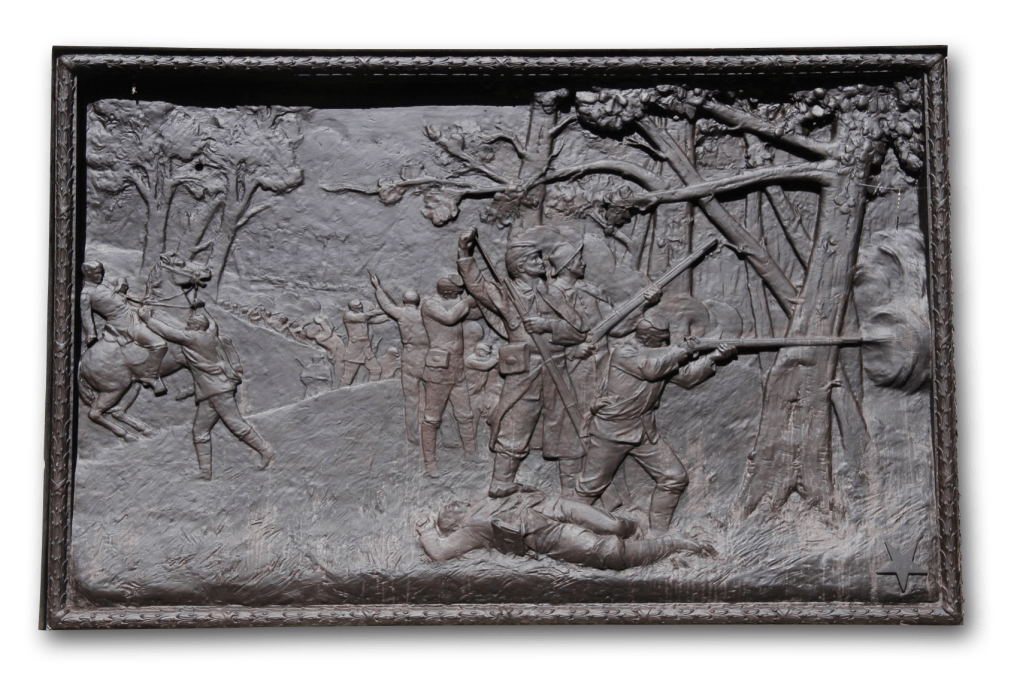
In his letter, James mentions “a right smart little fight in South Carolina” that took place “this week.” He is referring to the Battle of Pocotaligo that was fought on 22 October 1862.

James wrote the letter to his brother-in-law, A. W. Benjamin Stewart.

The Battle of Pocotaligo
From Frank Leslie’s Illustrated Newspaper

Transcription

Camp Causton’s Bluff [near Savannah, Georgia]
25th Georgia Volunteers
October 25, 1862

Mr. A. W. B. Stewart
Dear Brother,

I this evening seat myself to write you a few lines in answer to yours that has just come to hand which give me much pleasure to hear from you and to hear that you was all well. Ben, you don’t know how much good it did to me to read your letter. I had been looking for a letter from home some time. I’m sick now and have been very sick. I tell you, it looked like taking the old fella off to the old peach orchard, but my time hadn’t come then, but I don’t know how soon it may come. I’m mending now as fast as I can. I can sit up the most of my time.

It is very sickly here now but I hope the sickness will soon be over here for this season. There is several of our boys here in the hospital but none dangerous. They are all able to knock about.

They have had a right smart little fight in South Carolina this week. Our loss killed and wounded was 55—15 killed and 40 wounded. Our regiment got back from there last night. They weren’t engaged. It was all over when they got there. We are looking for it here every day. There has been right smart cannonading round here for two or three days but no damage done yet.

Ben, I have nothing of importance to write you—only I want to see you all mighty bad. But I don’t know when that time will come. I should like to be there to take another bate of fish with you and rather than miss, I would take it in venison. We could get fish and oysters a plenty here if we could have time to fish for them but there is so many sick, it keeps well to do the camp duty. They have to keep up camp guard and picket and drill three and four times a day. But I han’t been able to drill any this fall. I have been sick nearly ever since I was at home.

[Charles J.] McD. Stewart has got a chill on him now. Ben, you must [excuse my] bad writing and spelling. So nothing more this time only I remain yours, — J. B. Robbins

to Mr. A. W. B. Stewart

1857: Howard Everett Seeks Runaway Slave

Portrait of Howard Everett from a 1977 Liberty, MO. Newspaper

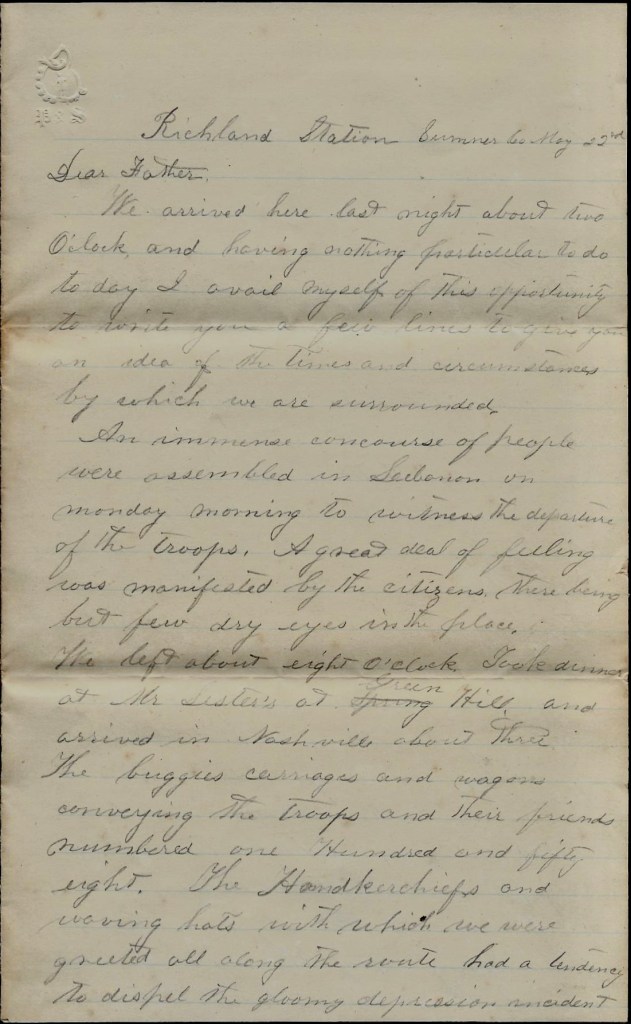
This Runaway Slave Notice was penned by 64 year-old Howard W. Everett (1793-1877), a native of Halifax county, Virginia, moved to Kentucky when he was young and then relocated again to Clay county, Missouri, in 1818 with his wife of three years, Sarah Ann Waltrip. In addition to being a farmer, Howard was ordained a Cambellite Preacher and started numerous churches in Northern Missouri.

It does not appear that Howard was always a slave holder. In the 1830 US Census, he held no slaves. In the 1860 US Census, he held only two middle-aged slaves. Howard wrote this notice from Richland which is now Missouri City—a consolidation of three villages, St. Bernard, Richfield, and Atchison. From 1850 to 1861, Richfield was probably the largest hemp market above Lexington.

Most likely this notice was a draft handed to the publisher of a local newspaper.

Transcription

Runaway from Richfield

About the first inst., a negro man named Granville, 24 years old, about 5 feet 9 or 10 inches high, rather heavy set, square shoulders, not very dark complexion, weighs about 165, had on when he left a blue blanket coat, brown [ ] pants, otter cap flat top lined with silk stuffed with cotton, boots with grain side out, perhaps an old cotton vest. Limps a little. I will pay any person who will bring him to me at Richfield, Clay county, Mo. February 5th 1857

— Howard Everett

1864: Sick Furlough Pass issued by Thomas G. White

This pass was written by Thomas G. White who enlisted in April 1862 for the duration of the war in Co. F, 3rd Battalion Light Artillery (a.k.a., the Chesnut Light Artillery). He was made a Second Lieutenant in the unit in June 1862 and detached as Commissary for the Battalion in March 1863. Beginning in January 1864, he began to sign the rolls as 1st Lt., commanding the company. Company F took part in battles around Charleston, shooting artillery rounds at Union gunboats and soldiers, and disbanded after the evacuation of Charleston.

Lt. White wrote the pass 1 for Wilson Roe (1804-Aft1864) of Edgefield District, South Carolina. The pass gives Wilson’s age as 52 but according to census record, he was even older. In the 1850 US Census, he was enumerated in the household of his brother, Simpson Roe [Rowe] and his birth year was given as 1804. Wilson’s brother Simpson also served the Confederacy as a private in Co. D, 14th South Carolina Infantry.

Confederate soldiers of the ‘Palmetto Battery’ in Charleston, South Carolina, 1863. This photograph was taken by George S. Cook, one of the most renowned photographers of the Confederacy. (Photo by Archive Photos/Getty Images)

Transcription

Camp Robertson, Wilton [S. C.]
April [ ] 1864

The bearer here of private W. Roe of Capt. F. C. Schulz’s Co. F, [3rd] P. B. L.A. [Pametto Battalion Light Artillery], aged 52 years, 5 feet 10 inches high, dark complexion, grey eyes, grey hair, and by occupation a farmer, born in Edgefield district, and enlisted at Camp Chesnut on the 26th of February 1863 to serve for the period of the war, is hereby permitted to go to Edgefield, District, State of South Carolina, he having received a sick furlough for sixty days from the [ ] day of April to the [ ] day of [ ] at which period he will rejoin his company at Camp Robertson or wherever it may then be or be considered a deserter.

Subsistence has been furnished to said private W. Roe to the 20th April & pay to the 31st of December 1863.

Given under my hand at Camp Robertson this [ ] day of April 1864.

— Thomas G. White, Lieutenant Commanding, C. S. A.

Camp Roberson, Written Jan, 1864


1 A pass would have been required for a soldier returning home on a furlough of any kind. This particular pass happened to be for a sick furlough. The pass offered the bearer protection from being arrested as a deserter. Pvt. Roe’s pass (above) did not have the actual dates filled in so it may have only been a draft or a copy kept by the company. The language in these passes was pretty standard. Here is another one I found online issued by the same company:

The bearer here of private John Driggers of Capt F. C. Schultz Co. F. Palmetto Light Artillery, age 46 years, 6 foot 1 inch high, dark complexion, black eyes, black hair, by occupation farmer, born in Sumter District and enlisted at Camp Hayward on the 15th April 1862 to serve for the period of the war is hereby permitted to go to his home in Charleston District, State of South Carolina, He having received a furlough from the 13 day of January to the 23 day of January 1864, at which point he will rejoin his company at Camp Roberson on wherever they may be or be considered a deserter— Subsistence has been furnished to the said private to the 20 of January to the 31 October 1864, given under my hand at Capt Roberson on this 13th day of January 1864. F. C. Schultz Capt. Charleston District.

1862-63 DIARY OF FREDERICK HAMMERLY, CO. B, 12TH ILLINOIS INFANTRY

A sixth plate tintype of an unidentified member of the 12th Illinois Infantry, famously known as the 1st Scotch Regiment. He’s wearing the early-war state-issued tunic cut from gray fabric with blue cuff facings, six button front, and the Scotish tam or bonnet widely worn by the regiment. (This image was sold on WorthPoint)

[Insert bio (yet to be written)] of J. Frederick Hammerly, born 1834 in Koenigreich, Wirtemberg, Germany. Came to America on 3 October 1852.

This is the second diary of J. F. H. I have transcribed. It is identified as “Vol. 3” but Vol. 2 is missing. The first diary may be found here:

1861-62 Diary of Frederick Hammerly, Co. B, 12th Illinois Infantry

Frederick’s brother, Jacob Hammerly, enlisted on 25 August 1861 in Co. B, 12th Illinois Infantry. Drowned 15 September 1861 Residence place give: Amboy, Illinois.

Transcription

J. Frederick Hammerly. Bought at Corinth, Mississippi, October 10th 1862

October 1862

October 10, 1862. Friday. Yesterday and ever since the 2nd, it has been very warm but today it is raining and growing cold. Fires feeling very comfortable.
October 11 & 12. Saturday & Sunday had been very cold for the Sunny South this time in the year. Prisoners are being paroled ever since the 6th. Received two letters—one from Mr. Brigham, another from (Mich).
October 13 Monday had been quite cool last night but it’s now warm. Sent a letter to Michigan
October 14. Tuesday. Weather fair. We are on duty every other day since the [2nd] Battle of Corinth doing Provost or Picket Duty.

October 15 & 16. Wednesday & Thursday. Nights are cold. Guards are surrounding the fires. Received a letter from New York.
October 17 Friday. Moved our camp northeast of Corinth. I am on Camp Guard.
October 18 Saturday. Weather fair. Received a letter from M. B.
October 19. Sunday. Cold nights and warm days. Guarded prisoners. Sent a letter to Rushville.
October 20. Monday. I came off from guard this morning. The guards we relieved let a prisoner run away, consequently the orders were strict. Had a frost this morning.

October 21. Tuesday. Has been quite windy today. Sent a letter to George. Saw Charlie Dykeman in the 21st Missouri. They are talking of going home.
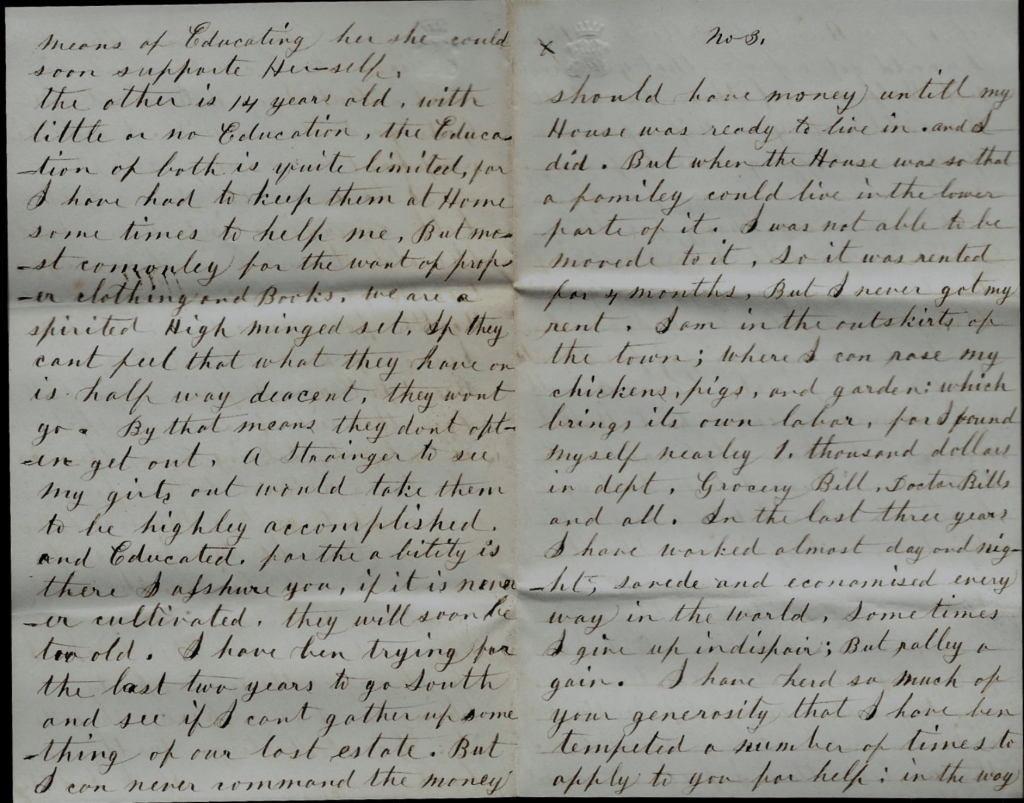
October 22. Wednesday. I am on camp guard. It is very warm. The 21st Missouri left Corinth for home before daylight. Co. K of our regiment have orders to take charge of artillery. Sent a letter to Helena, Arkansas. Received a letter from George.
October 23. Thursday. Weather warm. Our stove feels comfortable this evening.
October 24. Friday. Moved our camp a few rods in order to let them build a fort. Commenced clouding up before sundown. Had a very cold night. Co. K is going to stay.
October 25. Saturday. It is a very cold day—cold enough to snow. 4 o’clock it snows like blazes. Cold enough to freeze. Am on Provost Guard.
October 26. Sunday. Very cold this morning. The ground is covered with snow and frozen hard. Come off from guard this morning at 10 o’clock. Sent a letter to brother.
October 27. Monday. Had a very heavy frost this morning. Suffered much from cold last night. The troops are breaking down houses like everything. The breastworks are growing fast in front of us. I went on Camp Guard this morning. Received a letter from Mother.
October 28. Tuesday. Weather warmer. Came off from guard at 9 o’clock this morning. Heard from [brother] Martin through Glick. Sent a letter to Conrad mother, to sister Katie, a third to M. Page.
October 29. Wednesday. Weather growing warmer. Am on guard.
October 30. Tuesday. Had a frost last night but is warm today.
October 31, 1862. Corinth, Mississippi. Am on guard. It is warm. Had muster for inspection in general. Received a letter from George.

A sample of Frederick’s handwriting

November 1862

November 1, 1862. Saturday. It is quite warm today. Had a letter from Ch. Alf[red].
November 2. Sunday. It had been cloudy last night. This morning it is quite foggy. Troops are on a move ever since 2 o’clock this morning. Their destination is reported to be Bolivar. 11 o’clock a. m. It is now real warm. Have been on guard camp.
November 3. Monday. Had been warm today. Sent a letter to George and one to New York enclosed.
November 4, 1862. Tuesday a.m. on Provost Guard. It is real warm today noon. Sent a letter to Ch. Alf.
November 5. Wednesday. It is getting cold. This evening the wind is blowing big guns. Many have to hold their tents down. The dust blowing through our tent. The night it commenced raining. It did no rain much. Received a letter from M. Northway.

November 6. Thursday. Had been very cold this morning. A fresh breeze blowing all day. Was on ordinary fatigue.
November 7, 1862. Friday. The wind is again blowing heavy guns. Received a letter from Lew Roff.
November 8, 1862. Saturday. Am on Provost Guard. More hopes of leaving here. Drawed a pair of socks and one overshirt. Sent a letter to Benton Barracks to Martin.

November 9, 1862. Sunday. Corinth, Tishomingo Co., Mississippi. It has been warmer today than its been for weeks back although last night was a severe one. The ground was white in the morning with frost. Went as an escort to help bring Trover of Co. C.
November 10, 1862. Monday. Has been quite pleasant today. Went on the sick report. Had several chills last night.
November 11, 1862. Tuesday. Windy towards evening.
November 12. Wednesday. Rained nearly all last night and part of today. Cloudy this evening. Took medicine three times today.
November 13. Thursday. Was cloudy and frost this morning but now it is clear and warm. Received a slip from Martin.

November 14, 1862. Friday. Weather fair and pleasant. Sent a letter to Cousin Fred.
November 15. Saturday. Weather fair. Sent a line to Martin. After sundown, received a letter from him and another from R. M. Brigham.
November 16. Sunday. Went on Camp Guard this morning. Has been real warm last night. Looks like rain.
November 17. Monday. It is sprinkling at intervals, warm and calm.
November 18. Tuesday. It’s cloudy all day. Commenced raining several times. went after rails about 3 miles out.

November 19. Wednesday. Rained this morning. I was on Provost Guard. Cloudy nearly all day.
November 20. Thursday. Has been cold and windy last night. The majority of Companies C & B went off guarding a train of wagons to some place. Has been clear and cloudy today. The artillery had a shooting match today. Some thought it an attack.

November 21. Friday. Clear, cloudy, cold and windy.
November 22. Weather clear and warm. Was on Water Fatigue.
November 23, 1862. Sunday. Weather fair. Helped get some wood. Sent a letter to Brother John and Martin.

November 24, 1862. Monday. Weather fair. Had review yesterday. Received a letter from sister Maria. Another from C. Alf. Hammerly told me of the unexpected death of cousin William. Sent a letter to M. North [?]
November 25, 1862. Tuesday. Clear and cloudy alternately but cold all day. Received intelligence of a forage train being captured. Also of our correspondence between here and Columbus being cut off. No train came in the night. Am on Camp Guard. Received a letter from Rushville, Pennsylvania.
November 26, 1862. Wednesday. Weather clear and cold. Rumors afloat of the rebels again advancing on here with the intention to siege it. The road is fight again and a train left here for Columbus this afternoon.

November 27, 1862. Thursday. Had been very cold last night bu it is warm today. Had Battalion drill.
November 28, 1862. Friday. Weather cold, clear, and cloudy. Sent a letter to Ch. Alfred. Another to Rushville.
November 29, 1862. Saturday. Weather fair. Received two Watchman’s. Sent a letter to No. 2. N. Y. had a regimental drill.
November 30, 1862. Sunday. Weather warm and cloudy. Looks like rain. Noon, sprinkling now. I am on patrol. Sent a letter to Mr. Brigham.

December 1862

Capt. Henry Willard Allen of Co. G, 7th Illinois Infantry was shot by Sergt. John Myers on 3 December 1862. According to Hammerly’s diary, the captain died three days later, 6 December 1862.

December 1, 1862. Monday. Weather wintery.
December 2, 1862. Tuesday. Had a cold rain last night. Today it is quite cold. Rains and snows at intervals.
December 3, 1862. Wednesday. Weather fair. Am on camp guard. One of the 7th Illinois shot a captain while discussing politics.

December 4, 1862. Thursday. Commenced clouding up early this morning. Part of three companies—B included—went to guard a train of wagons to LaGrange. Had several small rains through the day.
December 5, 1862. Friday. Had a considerable rain last night and snowed nearly all the forenoon. 4 o’clock p.m., seems to be clearing off. One of the 7th Illinois shot a Captain [Henry W. Allen of Co. G, 7th Illinois].
December 6, 1862. Saturday. Had a very cold night. Froze hard. I am on provost patrol today. I am guarding the Sergeant [John Myers] of the 7th Illinois who shot a Captain [Henry W. Allen of Co. G] in a quarrel. The Captain died this morning.
[Sgt. John Myers was hung for his crime on 28 April 1864.
December 7, 1862. Sunday. Weather clear but cold. Had a very cold night. Had general review.
December 8, 1862. Monday. Weather fair. Sent a letter to No. 1 N. Y. The detailed guards came back tonight from LaGrange. One of Co. I was shot through both legs by an accidental discharge of a musket on the cars. Drawed a pair of boots.
December 9, 1862. Tuesday. Weather warm. Have been out 10 to 12 miles foraging.
December 10, 1862. Wednesday. Corinth, Mississippi. Another warm and comfortable day. Had Battalion Drill. Sent a letter to Mo.
December 11, 1862. Thursday. Had been very warm today. Helped get some fire wood.
December 12, 1862. Friday. Weather warm, cloudy and sprinkling at intervals. Went down to Glendale with a telegrapher on a handcar. Received a letter from Martin. Another from Charles Dykeman (Mo.), a third from N. Y. No. 2. Co. I man who had been shot through the legs had them both amputated (is alive).
December 13, 1862. Saturday. Had been very warm and comfortable but windy. This evening looks like rain. wind increasing. Several detachments left here for Iuka.
December 14, 1862. Sunday. Corinth, Mississippi. Another warm and fair day. Had some rain and considerable wind last night. Wrote a letter to Mich. and received a letter from Bithe and a paper from W. Bingham.
December 15, 1862. Monday. Had several rain storms today mixed with heavy winds. Is quite warmer. More rain towards night. Is growing cold. Am on guard.
December 16, 1862. Tuesday. Weather clear and cold. Received a letter from Cousin Fred. An attack on Jackson, Tennessee is talked of tonight.
December 17, 1862. Wednesday. Had been real cold last night and is clear but cold today. Co. I man who was shot through both legs and amputated coming back on the cars from LaGrange was buried today. His sister, the Captain’s wife of the company, had been here to attend to him. 1

1 The soldier who had both legs shot accidentally while returning to Corinth from LaGrange was wagoner Jacob W. Butt (1842-1862) of Princeton, Illinois. His sister was Alice Butt, was married to William D. Mills (1838-1906), Captain of Co. I, 12th Illinois Infantry.


December 18, 1862. Thursday. Corinth, Mississippi. Weather clear but fresh. I am on patrol. Sent a letter to Mo.
December 19, 1862. Friday. Weather fair and nice today. Three companies of our regiment with the 90th Illinois and others—also some artillery—left last night for somewhere, supposed to harass the Rebels marching on Jackson, Tennessee. They say they are fighting there. The 9th Illinois and 31st Ohio came back with a lot of prisoners from Alabama. No train, no news tonight.
December 20, 1862. Saturday. Weather fair, nice and warm. Am on Provost Guard. Considerable excitement here on account of Jackson being taken by the Rebels. Had strict orders in regard to the last group of prisoners. A mounted infantry company was organized.
December 21, 1862. Sunday. Corinth, Mississippi. Weather fair. Received about one hour in the guard house of Corinth for the complaint of letting a prisoner off. This evening they are moving all Commissary and Quartermaster goods to the main fort. The question–What’s Up? No news tonight.
December 22, 1862. Monday. Had been real warm today. No attack has been made on this place yet. Our forces whipped the Rebels at Jackson the day before yesterday. No reliable news from there has as yet been received although tis only 50 miles from here. A train left for the North but not come back. Today we were put on half rations.
December 23, 1862. Tuesday. Another [day] like summer. Two trains came in with two days mail and some papers. Also the most of the troops that had left this place a few days previous. I am on Provost Guard.
December 24, 1862. Wednesday. Had some rain early this morning but cleared off towards non. Another train came in tonight but only from Jackson. No news and no mail. We have splendid weather. Sent a letter to Peters.
December 25, 1862. Christmas. Weather like summer. Our half rations are felt. Those who have money can have whole. The same are buying their whiskey. Many are having their drinking sprees. This has been a hungry Christmas. A train from Jackson again but no news.
December 26, 1862. Friday. It commenced raining this morning about 9 o’clock and rained most all day and all night. Capt. Sharp—a secesh—got away last night.
December 27, 1862. Saturday. Had considerable rain again today. This evening it cleared off and clouded up alternatively. No news at all. Am on Provost Guard. Drawed a pair of pants.

December 28, 1862. Sunday. Had a real pleasant day today. Had company inspection. A train from Jackson arrived but no news.
December 29, 1862. Monday. Another warm and nice day. No news yet (cut off yet). Am on patrol.
December 30, 1862. Tuesday. Rain almost all day and the biggest part of the night.
December 31, 1862. Wednesday. Clear and cold. Two trains arrived from Jackson
.

January 1863

January 1, 1863. New Year’s Day. Corinth, Mississippi. Weather has been very warm and agreeable all day. Cut off yet, consequently no news. Living on half rations ever since the 19th. Such a Christmas & New Year’s I never saw!
January 2, 1863. Friday. Had been very windy and clouding up alternatively and [rained] hard all last night. Several regiments left for places unknown—some say to Pittsburg Landing. Co. G went on picket and on Camp Guard.
January 3, 1863. Saturday. Rained much all night and considerable today. The Tennessee River must soon be rising. It is pouring down in torrents this evening.

January 4, 1863. Sunday. Cleared off this morning and proved to be very fine day. Had company inspection this morn. Received a big mail tonight over which was great rejoicing. The mail was carried over the burned and destroyed bridges. Vicksburg is said to be ours sure. Received a letter from Rushville. Another from John Amboy. Third and fourth from camp near Fredericksburg. What a splendid moonlight night!
January 5, 1863. Monday. It is cloudy and windy today. The few papers came in last night was sold for one dollar apiece. According to papers, Burnside is whipped.

January 6, 1863. [No entry]
January 7, 1863. Wednesday. Air cold but clear and sunshine. a large train of provisions arrived here last night. Sent a letter to Alford.
January 8, 1863. Thursday. Weather fair but chilly. Martin arrived tonight. Am on patrol.
January 9, 1863. Friday. Weather fair but is clouding up this eve. The long roll beat today. After we had fallen in, we were dismissed. Sent a letter to Benton Barracks with $1.

January 10, 1863. Saturday. Had some rain last night. Had been very comfortable all day. Some cloudy. Heard heavy thunder all night. Sent a letter to Rushville.
January 11, 1863. Sunday. Looks like spring. Am on Headquarters Guard. A small mail arrived here. Drawed a dress coat, a pair of pants for [John] Griffin, [coat] $6.70; [pants] $3.05.

January 12, 1863. Monday. Weather fair like spring. A train with provisions from Pittsburg Landing arrived here. Had Battalion drill. A letter from Conrad.
January 13, 1863. Tuesday. Warm but windy. Some cloudy. Draw whole rations again.
January 14, 1863. Wednesday. Commenced raining early this morning and it rained hard all day and all night too.
January 15, 1863. Thursday. The rain turned into snow this morning. Snowed most all day but partly melted. am on Provost Guard. Guarded the sharpshooters hospital. Sent a letter to John Church and brother George.

January 16, 1863. Friday. Snowed and blowed the bigger part of today. Found George. Camp of the 72nd Ohio.
January 17, 1863. Saturday. Cleared off last night. The sun shines nice this morning.
January 18, 1863. Sunday. It is clouding up again. the mail consisting of 4 letters came to the regiment, very unfrequent and small. Am on Provost Guard. The snow is melting.
January 19, 1863. Monday. Commenced raining early this morning. Rained all day and part of the night. The snow is gone.
January 20, 1863. Tuesday. It is cloudy, chilly and damp. Rains at intervals. Was detailed for Train Guard. Was dismissed.

January 21, 1863. Wednesday. Is cloudy, damp and the streets are very muddy. Went on Headquarters (Paymaster) Guard, Our paymaster came in this evening.
January 22, 1863. Thursday. Has cleared off this morning and it looks again like spring. This evening at 5 o’clock an expedition left here for Pittsburg Landing or Hamburg Landing.
January 23, 1863. Friday. Cloudy today but warm. went on picket [but] a few hours after were relieved. Got marching orders with three days rations in our haversacks. Ready to start early in the morning.

January 24, 1863. Get our breakfast by candlelight and ready to start. Marched down i town, stacked arms in front of the Corinth Music Hall. About 9 o’clock we left town as a rear guard of a forage train to Hamburg. About noon it commenced raining and rained till after midnight. Arrived at Hamburg about sundown. The train was loaded through the night.
January 25, 1863. Sunday. Left Hamburg about 8 o’clock. Halted about an hour on the hill back of Hamburg, took a different road, arrived at Corinth two hours after dark. Was cloudy and windy but did not rain. We had plenty of mud to tramp through.
January 26, 1863. Monday. Early this morning the 7th Illinois and 81st Ohio were loaded on the train to Hamburg. Had some rain and much wind this afternoon. The paymaster paying the 90th Illinois.
January 27, 1863. Tuesday. Rained much last night. Today is cloudy, damp and chilly.
January 28, 1863. Wednesday. It is cold and cloudy. Was on Fatigue [Duty] last night until 11 o’clock to help unload a train from Hamburg Landing. Snowed some last night. Sent a letter to Cincinnati, Ohio, with $1 D. C.
January 29, 1863. Thursday. Whether fair. Rather windy. Am on Provost Guard. Cut off again below here and Jackson. A train only stove up!
January 30, 1863. Friday. Corinth, Mississippi. Weather fair. were paid for two months. Received a letter from Michigan.
January 31, 1863. Saturday. Weather nice and fair. Had monthly inspection. It sprinkled some on Dress Parade. Voted for to stand by the government. Martin received a letter from Ch. Church.

February 1863

February 1, 1863. Sunday. Drawed blouse and forage cap. Rained last night and part of the day today. It’s warm. Sent $50 to Mr. Bingham by Lieut. Cook and $5 to Martin.
February 2, 1863. Monday. weather clear and comfortable. Turned cold and cloudy towards night. Am on Patrol.
February 3, 1863. Tuesday. Had been very cold last night but cleared. First US Infantry leaves this morning for Vicksburg. Co. G takes their places at Fort [Battery] Williams.

The Memphis & Charleston Railroad facing west with Battery Williams on the left and Battery Robinett on the right.

February 4, 1863. Wednesday. Corinth, Mississippi. Had been cold last night. Came off from Patrol. Is growing colder this morning. Five o’clock p.m., the ground is covered with snow and it snows like everything. went after nails to fix our tent.
February 5, 1863. Thursday. Considerable snow fell last night. Is very cold this morning. Moved our bunks and altered the looks of our tent. Received a letter from Ch. Alf.
February 6, 1863. Friday. Was detailed for taking off condemned horses and mules to Henderson. Went 15 miles and stayed over at a plantation. Quite a number of mules gave out. Had a hard time of it. Was freezing cold.

February 7, 1863. Saturday. Corinth, Mississippi. The snow is melting fast. Went through Purdy. Is a very fine town. Arrived at Henderson after sundown. Got left behind with three more. Stayed over at the telegraph office.
February 8, 1863. Sunday. Slept pretty cold last night. Now waiting for the train from Jackson. Had breakfast with some teamsters. 4 o’clock the train has come and is going. Arrived at Corinth after dark. Up in camp I am. Heard of another fight at Fort Donelson. The rebels whipped. The snow seems to have disappeared from all places but Oh! so windy
February 9, 1863. Monday. Weather moderate. Looking again like rain this evening. Considerable trading done in town. The Adams express is open again. A lot of Christmas boxes received here but everything is spoiled in them.

February 10, 1863. Tuesday. It is very muddy today and is raining at intervals. Two trains arrived from Jackson, Tennessee. Got a check from our money sent by Lieut. Cook.
February 11, 1863. Wednesday. It is very warm today but muddy yet. Am on Camp Fatigue. went after rails for the regimental bakery. Got stuck several time [in mud].
February 12, 1863. Thursday. Rained last night and had two or three showers today. Thundered hard. It is growing cold this evening.
February 13, 1863. Friday. Cleared off last night. Is growing warm. Was detailed to guard a train. Went after wood beyond Chewalla, 11 miles from Corinth on the Memphis & Charleston Railroad.Had been very warm. Sent a Valentine.

February 14, 1863. Saturday. Corinth, Mississippi. Thundered and commenced raining early this morning. Was a rainy day. This eve it thundered hard and heavy dark clouds approaching.
February 15, 1863. Sunday. Weather damp and cloudy. Am on patrol. Rained and thundered hard tonight. Only one letter for the [entire] regiment.
February 16, 1863. Monday. Weather damp and cloudy. Commenced raining on Dress Parade. Our Colonel was going to have us meet at Headquarters in regard of their being the anniversary of the surrender of Fort Donelson [but] on account of the weather it was postponed. Received a letter from Cincinnati.
February 17, 1863. Tuesday. Weather damp and cloudy. Rained last night and this evening it is again raining. Sent $5 to O. A letter to 21st Mo.

February 18, 1863. Wednesday. Corinth, Mississippi. Rained much last night. Today it is damp and cloudy. Went after wood beyond Burnsville.
February 19, 1863. Thursday. Weather damp, windy and cloudy.
February 20, 1863. Friday. Clear but awful windy. Growing warm and nice. The roads are getting dry. A nice moonlit night.
February 21, 1863. Saturday. It commenced to raining this morning early. It’s been raining all day. Am on patrol. A detail left horseback for the Shiloh.
February 22, 1863. Sunday. It is very cold today. The wind is rising. Very dark this evening. Big guns were fired today in honor of Washington’s Birthday. Sent a letter to Chicago with $30.

February 23, 1863. Monday. Corinth, Mississippi. It is rather cold this morning but looks like clearing off. In p.m., the sun shines and the sky is clear again. Sent off a letter to Mich. and to Church and George. A third to Ohio with $2.
February 24, 1863. Tuesday. Weather fair. P. M. is warm and nice. Evening clear and moonshine. Am on camp guard. Received a letter from George and another from N. Y.
February 25, 1863. Wednesday. Commenced raining early this morning. Thundered hard. Considerable rain fell.
February 26, 1863. Thursday. An immense sight of rain fell last night and today it is raining continually. 5 p.m. it looks like clearing off. Am on Provost Guard. Signed the payrolls for two months pay.
February 27, 1863. Friday. Corinth, Mississippi.Today it has been warm and nice. Sent a letter to Ch. Alf.
February 28, 1863. Saturday. Weather fair. Some cloudy in a.m. Considerable wind. Had general muster. Am on camp guard.

March 1863

March 1, 1863. Sunday. Weather had been fair and warm today.
March 2, 1863. Monday. Weather warm and clear and cloudy and windy part of this afternoon. Sent a locket to Katie Henrick.
March 3, 1863. Tuesday. Corinth, Mississippi. Weather fair. Some windy. What a splendid moonlight night. Send a letter to Jim Dy. Amboy Martin to his. 200 Rebels were brought in. Am on camp guard.
March 4, 1863. Wednesday. Weather fair. Nice moonshine. The capture of the Indianola and the Queen of the West is talked of and believed here. Received $4 of the $5…[See The Indianola Affair]

March 5, 1863. Thursday. Weather is cold and cloudy. Snows lightly. Got two months pay.
March 6, 1863. Friday. Weather changeable warm, cold, sunshine and rain. Am on Provost Guard.
March 7, 1863. Saturday. Corinth, Mississippi. Weather the same as yesterday, Considerable rain fell last night. Thundered hard. Sent a letter to Rushville and to Cincinnati, Ohio.

March 8, 1863. Sunday. Weather cloudy but warm; sunshine at intervals. Had an awful hailstorm this evening. Received a letter with negative note paper. Sent off a letter to Brigham.
March 9, 1863. Monday. Cleared off last night. was quite fresh this morning. Went to Chewalla after wood. One car ran off the track.
March 10, 1863. Tuesday. Weather cloudy and considerable rain. Rained much last night. Sent a letter to Chicago
.
March 11, 1863. Wednesday. Corinth, Mississippi. Weather clear but is rather fresh and windy.
March 12, 1863. Thursday. Weather about the same as yesterday. Am on Camp Fatigue. Sent a letter to Cincinnati.
March 13, 1863. Friday. Weather fair and very nice. Received a letter from Cincinnati.
March 14, 1863. Saturday. Weather warm and nice. Went on extra patrol this afternoon. Received a letter from George’s wife.
March 15, 1863. Sunday. Commenced clouding up early this morning. Looks like rain. Went on weekly inspection.
March 16, 1863. Monday. Corinth, Mississippi. Weather like spring. It cleared off this morning. Sent a letter to George. Another to Cincinnati…
March 17, 1863. Tuesday. Weather fair. very warm all day. Am on patrol. Had two shows and two balls in town.
March 18, 1863. Wednesday. It’s very warm today.
March 19, 1863. Thursday. Very warm—yes, hot. was beyond Glendale as guard to a wood train. Received a letter with S. C. from Cincinnati, Ohio.

March 20, 1863. Friday. Weather fair. Sent to Chicago to Hilton for books to Philadelphia.
March 21, 1863. Saturday. Corinth, Mississippi. Weather warm. Like summer. Am on Paymaster Guard to Chandler.
March 22, 1863. Sunday. Weather foggy, windy and damp. Received a gold pen from Chicago.
March 23, 1863. Monday. Is raining mostly all day, Went after some medicine. Sent to Philadelphia $1. S. C.
March 24, 1863. Tuesday. Weather foggy, damp, and rained at intervals. Received a letter from Michigan. Am on forage guard.
March 25, 1863. Wednesday. Has cleared off but is pretty chilly all day. I received news of being detailed to escort prisoners to Alton, Illinois. Much pleased. A fair show for a short furlough.
March 26, 1863. Thursday. Memphis, Tennessee. Left Corinth at 8 o’clock this morning on board the cars for Memphis. Arrived at 8 in the evening. Have 21 Union prisoners to guard. marched them through the streets up to the Memphis Prison. Took our quarters n the same building. It is growing cold and a change of weather is eminent. Hear of Rosecrans fighting. Are anxious of further news.
March 27, 1863. Friday. Commenced raining this morning and had several thunder showers through today. Not much news from Rosecrans nor from below here. The 190th & 130th left this eve. for Vicksburg. Slept cold last night.
March 28, 1863. Saturday. Memphis, Tennessee. Had a heavy rain storm last night. Is cloudy and damp but warm. Slept comfortable last night. About sundown we marched our prisoners to the landing but as the boat could not leave before Sunday morning, we had to counter march them back to the same place.Two of them threw their shackles off, consequently they were put in the cell. One of them escaped but the secret police brought him in after two hours. Hear of the morning train being cut off by a rebel raid near Moscow.
March 29, 1863. Sunday. The wind blew big guns last night. Is growing very cold. This morning it looks cloudy and may snow. Later, it is snowing and raining. 8 o’clock a.m., our prisoners are safe on board the boat, Mary Forsyth. 11 o’clock, she is pushing out. Later, are going a pretty good speed.

March 30, 1863. Monday. On board the steamer Forsyth. Slept about two hours upon two barrels. Had the colic all day ad last night. Tuesday arrived at Cairo about 3 o’clock a.m. Left at 8 a.m. Stopped at Cape Girardeau at 4:30 p.m. and met an old acquaintance.
March 31, 1863. Tuesday. Slept sound and comfortable on some bags of wheat.

April 1863

April 1, 1863. Wednesday. Is nice and clear today. arrived at St. Louis at 3:30 o’clock p.m. [Robert] Donnelly and myself arrested three persons (passengers of the Mary Forsyth) who were suspected of having stolen money on their persons. Stayed over night at [ ]field’s Barracks. Pretty hard place.

Hammerly’s Diary

1861: Edward H. Spooner to Trueman Gardner Avery

March of the 7th New York Regiment down Broadway (New York Digital Collections)

This letter was written by Edward H. Spooner (1838-1888), a native of Wampsville, near Syracuse, New York. His parents were Dr. [Stillman W.] Spooner (1802-1880)—was one of the original abolitionists, and Lucretia Lydia Thorpe (1813-1888). Edward taught school for a year or two before coming to New York prior to the Civil War where he practiced law in partnership with his cousin, Trueman Gardner Avery. He soon married Frances (“Fanny”) Bush, the heiress of Dr. Ralph Isaacs Bush (1779-1860), making him independently rich.

Edward was counsel for the American News Company when it was formed which was later purchased by the firm Beadle & Co. (publisher of Beadle’s Monthly). In the New York City Directory for 1860-61 he was listed as a lawyer with an office at 4 New Street. His name appears continuously in the directories until 1882, with the exception of 1864-65 to 1866-67, inclusive, when he lived in Madison county, New York, and 1868-69, although his address was not always the same. From 1863 to 1881 he lived in Brooklyn, after which he moved to New Jersey, and in 1887-88 he lived in Plainfield. From the Registry of Voters in Brooklyn, we learn that his birth year was 1838. He left a wife and a son named Robert (b. 1865) when he died in 1888. Obituary notices in The New York Tribune, March 30, 1888 and the Plainfield Daily Press, March 29, 1888.

Edward wrote the letter to his cousin, Trueman Gardner Avery (1837-1914), the son of Jared Newell Avery (1803-1880) and Cornelia Benham (1808-1877) of Wampsville, Madison county, New York. Avery was prepared for college at the Oneida Conference Seminary; was graduated from Hamilton College in 1856; studied law with Judge Israel Selden Spencer at Syracuse; afterward at the Albany Law School where he was graduated LL. B.; was admitted to practice in 1859; practiced in New York City; removed to Buffalo in 1860; soon gave up the law for mercantile pursuits. He is a member and a trustee of the First Presbyterian Church; a Republican in politics; a director of the Merchants’ Bank; a trustee of the Fidelity and Guaranty Company; a trustee of the Buffalo Orphan Asylum; president of the board of trustees of the Buffalo General Hospital; a life member of the Buffalo Fine Arts Academy, of the Buffalo Society of Natural Sciences, of the Young Men’s Association, and of the German Young Men’s Association; president of the Niagara Frontier Landmarks Association; and a Son of the American Revolution.

As far as I can learn, neither of the correspondents served in the military during the Civil War.

[Note: This letter is from the personal collection of Richard Weiner and is published on Spared & Shared by express consent.]

Transcription

Addressed to Truman G. Avery, Esq., Counsellor at Law, Buffalo, New York

4 New Street, New York
May 1, 1861

Dear Cousin TGA,

Your letter reached me in due time & was read with great pleasure though its patriotic sentiments did not in the least surprise me. It was to be expected from one who loves his country as I know you do & I am glad to hear that you have enlisted though I hardly hope that you will be called upon to suffer the hardships that I know are attendant upon a soldier’s life.

I had a strange dream the other night. What do you suppose it was—that I had gone to the war & at the first battle met Frank 1 fighting on the other side—that we concluded we would not hew each other to pieces & so with locked arms stepped one side & enjoyed a pleasant chat while our comrades continued to fight. Don’t you think we did sensibly? A matter of fact, however, I do not believe that Frank will enlist for the Southern treason. But my dream illustrates the horrors of civil war in which cousins & brothers are likely to meet each other in deadly conflict. But this I think is much exaggerated. Peoples sympathies seem to lean very much to the land of their birth & so very few born North will fight for the South & vice versa. Therefore, I would not put arms in the hands of any of the [border?] State men. They cannot be trusted until there is no chance for successful rebellion.

I met J. O. Benett a few days since. He was warlike enough & said he had offered to take charge of Uncle David’s business if he wanted to go to the war as Major. I thought it a very good joke for I should as soon expect Uncle David would turn pastor as soldier. A gentleman who is afraid to walk through Buffalo 5 Points in the evening—Uncle David will admit it—would not hurry to face the music of bullets and shells. I do not know after all but you will have to go for the credit of the family. Do you hear anything of Henry?

As to business, I am doing something. But I think law is not going to be very good with anybody here for the next year & I expect to do a small, but I hope increasing business.

This is May 1 & there is due from you $15.62 rent & I suppose you will be very glad to have your liabilities here cease. I made a small fortune today on the furniture I bought of you which I sold in order to “raise the wind.” I sold your desk for $9, stone for $5 and the biggest thing was your chair & my two small chairs for $1. The things ought to bring more but the 2nd hand dealers won’t pay any more; and besides, this war has upset things that such goods are a drag and many law offices will be without tenants the coming year. Mr. Wheeler has the office where we were. I could have had it for $100 but did not feel that I can afford to pay any more than I am paying here $60. Law offices are renting very cheap, Soldiering may be the best business going next year.

My love to Uncle & Aunt & hope I shall see them next time I am at [ ].

Very truly yours, cousin Edward H. Spooner

Later,

I have just come from the City Hall where I got my certificate as Notary Public—not worth very much however, in this building as there are now 4 notaries it it. When I found two of the County Clerks defending secession and maintaining the novel doctrine that Jeff Davis is not a traitor & cannot be punished according to law for anything he had done, I told them that if that were so, he would be punished contrary to law. In such cases, if there is no law, we will have to extemporize a little. But there is law enough & if Jeff Davis ever gets into our hands, he will find it out. Amen say you to that.

As for my enlisting like everyone else, I felt that all should respond to the country’s call if necessary, & those who were adapted should volunteer. Even unadapted to the rough work of a soldier as I know myself to be. I went so far as to present myself to the 7th [New York] Regiment on the invitation of one of the captains with whom I am acquainted. Butthose who joined were required to remain for two years & not wishing to play soldier in time of peace, I declined to enter into the arrangement & have concluded to fight the opposing counsel only for the present.

“This going to war is no child’s play & is something much more wearing & burdensome than either of us ever endured. I have no desire to go and regret it afterward. However, I would have gone in the [New York] 7th for the war only as that is the crack regiment of the Nation & each man in it is a hero—at least with the ladies.”

— Edward H. Spooner, lawyer, New York City

This going to war is no child’s play & is something much more wearing & burdensome than either of us ever endured. I have no desire to go and regret it afterward. However, I would have gone in the [New York] 7th for the war only as that is the crack regiment of the Nation & each man in it is a hero—at least with the ladies. And besides, I am acquainted with a number of young men in it & would have had plenty of company though probably soldiers are never lonesome for the lack of it.

Father, it seems, has been urged to go as surgeon. If I was a doctor, I would go in that capacity in a moment for [just think] how a surgeon could improve himself with so many subjects to experiment upon. If I went to war, I should want to take my own surgeon with me. I expect army surgeons cut and slash at a great rate.


1 Franklin (“Frank”) Newell Avery (1840-1864) was Trueman’s younger brother. He died on 19 November 1864 in the military hospital at Keatchie, Louisiana. After the Battle of Mansfield (Sabine Crossroads) on April 08 1864, Keatchie College was converted into a hospital. Many Confederate Soldiers were treated there and the ones that died were buried in this cemetery. There are a number of unmarked graves, some graves marked with a “CSA” headstone, some with only bricks or stones. A number of Union soldiers were also treated in this same hospital.

1865: Charles Henry Bell to Licetta Bell

Capt. J. Leroy Bell, Co. G, 11th New Hampshire Infantry wearing Lincoln Mourning Band (1865)

These letters were written by Charles Henry Bell (1842-1898), the son of James Bell (1792-1864) and Rebecca Fletcher (1800-1883) of Haverhill, Grafton county, New Hampshire. Charles was single and working as a house painter when he was drafted on 31 May 1864. I can’t find him in military records but he indicates on his letterhead that he was a member of the “1st Division Sharpshooters.” His letter suggest that the regiment was being recruited as most of the veterans had mustered out by the time of these letters.

After he was mustered out of the service, he married Ann Allissa Willoughby (1847-1926) and lived in Boston where he returned to house painting. He wrote the letters to his older sister, Licetta Bell (1840-1902), living in Boston at the time. Licetta never married and lived many years with her older sister Calista Bell who was married in 1848 to Rev. William McPherson.

In one of his letters, Charles mentions his cousin Jacob Leroy Bell who was Captain of Co. G, 11th New Hampshire Infantry.

Addressed to Miss Licetta Bell, No. 9 Dwight Street, Boston, Mass.

Letter 1

Camp 1st Division Sharpshooters
January 9, 1865

Dear Sister,

I thought that I would write you a few lines to let you know where we are. We have got our camp nearly all cleared off now so that it begins to look a little more like home. Egan [?] and me have got our tents [ ] done except some new men that just come last night and will [ ] here their tents up for me shall all help them and it won’t take long to get them done. We have yet only about 75 men now but they are going to fill us up to 100 in a few days and then we shall have target practice every day and by spring shall get to be quite good shots for we have improved a great deal since we were organized. And now when we get short of rations, we go out and shoot some wild turkey or squirrel but we have got them pretty well thinned up now for there has been so many after them.

The regiment got some more recruits last week and they were all foreigners but they are a better lot of men than the ones they sent before for them can understand english and the others could not.

I wonder why that John don’t write, I have written to him several times but don’t get any answer so that I shall quit writing to him now for awhile at least.

How does Henry Mitchel? I suppose that he is enjoying the honeymoon now and I wonder if it is as grand as the honey that we got one night by moonlight when we was on the raid. I went to taste a piece in the dark and there was a bee in it that showed his contempt for the Yanks by stinging me on the tongue. But a thing that is not worth fighting for is not worth having.

I don’t hear of any news except the report that the Pay Master is coming soon and that is good news if it is true for we have not been paid for 4 months now and a [ ] from him would be very acceptable.

When does Capt. Leroy Bell intend to come back to the army. His camp lays about 3 miles from us now. We lay outside of the rear line of works near the Jerusalem Plank Road, He will know where that is for his regiment laid there in the camp quarters that ours built. Please remember me to him.

Give my love to all the folks. Your affectionate brother, — C. H. Bell


Letter 2

Camp 1st Div. Sharpshooters
May 1st

Dear Sister,

I was very glad to receive a letter from you and to know that you had received some of my letters at last for I heard that you had not any of you heard from me. I was very anxious to hear from you. I do not see why my letters were delayed so long on the road and was very sorry to learn that you had been so anxious about me for I was well all the time but I came very near going to Richmond on the first day’s fight, for the Rebs drove us out of the woods in rather a hurry and I had to make my legs do their duty for I had made up my mind not to be taken prisoner. But we soon made them run faster than they made us for we opened our artillery on them and the Old 3rd Brigade charged at the same time and they left in a hurry.

We are under orders to march again and shall probably start in the morning. I don’t know where we are going. Some say that we are going to march over land to Fairfax and others say that we are going to City Point to take transports for Alexandria but we shall know by tomorrow night. I think that it won’t be long now before we are home again for there is nothing more to do now and they won’t keep the whole army long. I had as leave stay here now until fall for so many of the boys get sick that go home in the summer.

Please give my love to all. Your affectionate brother, — C. H. Bell

1864-65: Merritt L. Pierce to Proctor & Huldah (Reed) Proctor

A post-war CDV of Merritt L. Pierce

These letters were written by Merritt L. Pierce (1842-1869), the son of Proctor Pierce (1811-1874) and Huldah Ann Reed (1816-1872) of Morrisonville, Schuyler Falls, Clinton county, New York. Merritt was 22 years old when he enlisted on 31 August 1864 at Troy as a private in Co. L, 1st New York Engineers. His decision to join the Engineers was clearly a last minute decision. Just days earlier he intended to enlist in the Navy but found the lines too long to wait in. Less than a year later, he mustered out of the regiment as an artificer on 30 June 1865 at Richmond, Virginia.

Merritt died of consumption (tuberculosis) in 1869 at the age of 28 but not before marrying Mary S. Mead (1845-1922).

Earlier in the war the 1st New York Engineers were used primarily building breastworks but by late 1864 and 1865 they were attached to Gen. Butler’s Army of the James and performed other tasks such as building corduroy roads, dredging the Dutch Gap Canal, building pontoon bridges, &c.

[Note: After publishing three of Merritt’s letters, I was contacted by Carolyn Cockrell who informed me that Merritt was her maternal 2nd great-grandfather and that she had many more letters to share and a couple of diaries. Those materials (scanned in black & white) are being added to this virtual digital archive over time.]

Letter 1

Morrisonville [New York]
August 18th, 1864

Cousin Ed[gar B. Reed],

I guess you think I am a mean lazy fellow for not writing to you. I will own that I am lazy about writing letters & I am very much ashamed of it too. I most always wait 4 weeks or more unless I sit down and answer them as soon as I receive them. I received your letter some days since [and] was pleased to hear from you & know you were all right, although I was quite certain you would keep yourself all right.  

I am well today & I am enjoying myself fine. I helped Geo[rge Pierce] work at his house this a.m. & have been blackberrying this afternoon. I picked about 6 quarts in an hour & a half & then picked some that I do not make any account of because they have gone where all good things go to. I ate enough so that my stomach did not growl for more.  I’ll warrant you had better hurry home & take your share of the good things while they are going.

There is not much news to write this time. The girls are all right but very lonesome on the account of your absence, so I think you had better hurry home & not be the cause of so much distress. We have fine times boat riding this summer. Every Saturday night we meet at Morrisonville & take a boat ride.  We have gay times you might as well believe. They talk of having a Sunday School celebration next week on Wednesday. We think of taking a boat ride on Lake Champlain. It is not decided at what place we shall go, but it will be in some grove on the lake shore, so you had better hurry home & enjoy the good things while they are going. There is going to be a camp meeting week after next & one the next week after. One is to be held at West Chazy & the other just above Keeseville.

Well Ed, what do you think of the draft? I think the old fellow has made a loud call & I don’t know but it is time I was doing something for Uncle Sam to help him out of his difficulty. I think every able man should be at his post. I think I shall, for one. There is a chance to enlist in the Navy now & I think I shall enlist there. Silas Moore & Elvin [Moore], Joseph Canfield & Will Beckwith 1 say they will enlist if I will. Our town quota is 33; 14 have enlisted. I think we shall have a draft in spite of all we can do & I don’t care much if they do—the quicker the better.  

Well, I must close for it is getting late.  Write soon or hurry home. Yours Truly, — Merritt

1 Will Beckwith was the brother of Lucius Reed’s wife.


Letter 2

New York [City]
August 27th, 1864

Dear Parents,

I am well & doing well—though perhaps you might think I was not doing as well as I would be at home, but I am satisfied with my lot so far. I have not enlisted yet but expect to tomorrow. We arrived here Friday p.m. 4 o’clock [and] went directly to the office of the marshal to get our papers made out & enlist but could not as there were some two hundred ahead of us. So we just looked up a stopping place (which is the Erie Hotel) & took supper. [James] Mattocks then left us & went to his brother-in-law’s in Brooklyn. We saw nothing of him until next day when we met him on Broadway.

Will [Beckwith] & I called on D. Herrick & Bellina Buck. 1 They were much pleased to see us & would have invited [us] to their homes if their families had been there. They were in the country visiting. Billina says he is acquainted with the commanding officer of the receiving ship & will fix our matter all right. Mr. Herrick introduced us to a Mr. Gilbert who gave us much information in regard to enlisting & also our duties in the navy. Mr. Gilbert has a son in the navy. He enlisted only a few days ago & without his father’s leave. He is only 18 years old. Mr. G. says he shall try & get him out & give him a chance to enlist for more bounty. Mr. Gilbert is a member of the Baptist Church & has been deacon so of course we think the information we get is reliable. 

Will & I have been thinking of taking a trip to Australia or California, but I think it not for the best. I saw 2 bars of silver which arrived here day before yesterday from Australia which was worth two thousand dollars.  

I wish I had time to write & tell you what I have seen since I came to this city & I have not seen half of it yet. If I had had more money, I should have seen more of it, but I have to be sparing as I do not know for certain as I can get through tomorrow. We get the U.S. bounty which is one hundred. We get 33 down [and] the rest within the year. Father will get my bounty at Plattsburgh when the papers reach there.

I did not see Eddy [Reed] at Poughkeepsie but sent the letter Uncle Lucius [Reed] sent by me to the college, but I was certain he had gone home. I went to church this a.m. & shall go again this evening. I did not attend a Baptist church as it was too far to walk.

You can tell Mr. Emery [that] Almond is all right & doing well. He borrowed some money of the doctor [Mattocks] which he will pay as soon as he gets his bounty. He thinks New York the largest city he ever saw. He says tell his folks not to worry about him. Tell Eddy he had not better enlist yet—wait and see how we like it.

Give my respects to all who inquire. I cannot tell you where to direct a letter yet but will write soon. Excuse mistakes & poor writing as I have written in a hurry. This from your son, — Merritt

1 Bellina Buck was born 1824/25 in Troy and died 4 Mar 1872.  In 1860 he lived in 3rd district 8th ward of New York and worked as a postal clerk.  Residence in 1857 was 26 King St; 1868, 79 Morton St in Brooklyn.  1850 census and 1870 census list occupations as railroad conductor and liquor store respectively. His death record lists his occupation as a salesman. He was married in August 1850 to Sarah Jane Derry in NYC. He is listed among the members of Lodge 523, Masons. His name is also spelled Belina, Bellini, and Bellina.  [Source: Chuck Cockrell]

A letter from 1846 penned by Merritt’s father, Proctor Pierce, informs us that Bellina Buck was a descendant of Proctor’s “Uncle Buck” who lived 60 miles southwest of Chicago at that time. The letter is archived in the Clinton County Historical Association and reads as follows:

Chicago, Illinois
October 15, 1846


My dear Wife,

Six weeks have now passed since I left home and I have traveled three thousand miles. I have visited all the cities and towns on the way and am now in the city of Chicago. Uncle Timothy is keeping the Vermont Temperance House. Tomorrow I intend leaving town for the purpose of visiting Uncle Buck, living  about sixty miles southwest.

Now I have a word to say to the boys. Tell George to be a good  boy and mind his grandpa and grandma and likewise Merritt. I have not yet concluded to  return home this fall. My money is going some and as business is brisk and wages high, I shall  probably go to work and earn more. I think the best business in these parts is doctoring and preaching funeral sermons. This is a beautiful country—the face of it consists of vast prairies, some of them twenty miles square, destitute almost of trees but possessing a soil the most  fertile that can be found in the Union. They are, however, tilled very poorly and consequently in a great many instances no more than two-thirds of a crop is yielded. Then the tillers consider they have an abundant harvest. The method which they pursue in breaking up the prairies is  as follows: They have a tremendous plough of about twelve feet in length with a land side (board) four feet and a mold board having a regulating wheel. It can go into the ground but  about two inches, but it turns over a furrow of from 18 to 22 inches in width. On this sod they go along with a hoe, give it a little hack, and put in the corn, kick a little dust over it, and leave it till husking. The weeds often get ahead of the corn and sometimes in the fall they are much  the higher.

They pursue much the same barbarous method with their wheat, but as the soil is rich, it springs up thick and smothers the weeds. The fact of it is the farmers, before they came here, were puffed up with the idea that things would grow on the prairies without much labour and they have not labored much accordingly, but I think they will come to that in a little while. There are perhaps five hundred loads of wheat coming in daily on an average and among all the farmers who bring them in, it is rare to see a respectable looking man. They look more  like Arabs. Some of these have built tolerably fair houses, but the most of them live in log cabins through the sides of which you can see the stars. Their living is pretty uniform, consisting of potatoes, bacon, johnny cake, milk and sometimes coffee. Very often you will find in the log cabins (if you drop in at night) two or three dogs, a flock of ducks, sometimes  a pet pig. I lodged in one of them and was surprised in the night to hear a dozen biddies crowing in the loft.

I come now to speak of the dress. This by no means consists of broadcloth and silk, but of the coarsest homespun. The Norwegians are coming in by the hundreds and farming large settlements. Many of the people in this region are moving still farther West, some of them going even beyond the Mississippi and a few to the Rocky Mountains. The country  between this and the Mississippi in a northwesterly direction is made up of prairies and a few  groves. The land along the Mississippi is very hilly and the climate very unhealthy. There is a town within four miles of it on the edge of Wisconsin with only one house inhabited. The  rest are deserted on account of sickness. It is the town of Parish. The fact is, sickness has raged over the country to a great extent and the great mass of people present a sickly appearance. You will meet people in the streets and in the country in great numbers who look almost like corpses so pale and thin are they. A man who presents a healthy appearance here is soon noticed by the pale-faced, ague-shaken, fever-scorched natives, and marked as one who will soon be a victim to the climate.

I must now conclude, although the half is not told. I will reserve the rest for the next letter. With this I remain your affectionate husband, — Proctor Pierce


Letter 3

Addressed to Proctor Pierce, Morrisonville, Clinton county, N. Y.

Troy, New York
August 31st 1864

Dear Parents,

I am in Troy at present but expect to leave here tonight for New York. We have enlisted for the town of Argyle, Washington County. We get 800 dollars down besides the U.S. bounty which is 100 dollars. We enlist[ed] in the Engineer Corps, Co. I where Saff[ord Taylor] is. Billina introduced us to the gentlemen from that town as honest, upright men, men of his acquaintance. We thought it the best thing we could do. I understand the draft is put off but it does not make any difference with us—we are bound to enlist. Almon [Emory] has enlisted with us. We could have got him a place to work if he wished to do so but he preferred to go with us. We shall deposit our money in the 2nd National Bank Plattsburgh. You will do the best you can with it. We shall send our clothes by express to Plattsburgh. William [Beckwith] & I are at Edgar’s store. Shall take dinner with him today. I am well & enjoying myself first rate—better than I shall when get to fighting I presume. Please not to borrow any trouble about me.  I will write again soon. From, — Merritt


Letter 4

Hart Island [New York]
September 4th, 1864

Dear Parents,

I am well & doing well—like soldiering very well so far. It rains today & I should be lonesome if there was not plenty of company. There has been a perfect rush since I have been here. There was fifteen hundred left here yesterday for New Orleans. They were substitutes. I saw that little butcher from Plattsburgh—the one we had so much deal with. He went with the subs. There was 8 hundred arrived here last night.  

I wrote you a letter while in Troy stating what my intentions were. We mustered into service that same day (Wednesday). Edgar [Reed] got a release for us & we stopped with him all night. We reported next morning at 10 o’clock, stopped there (marshal’s office) the rest of the day & night. Took cars next morning for New York, arrived there at one o’clock. Took boat for Hart Island at 5, arrived there at half past 6. There was 130 of us soldiers on board the boat. We was marched from the wharf to the barracks which is only a short distance. There we answered to our names as they were called. Then we marched to the department of Co. A where we stayed all night.

Next morning we were routed at 5 o’clock and marched around to the surgeon’s office & vaccinated. Then went to breakfast. Then marched to quarters [of] Co I where we are now. I do not know how long we shall stay here. I hope not long. I am anxious to get to my regiment and company. There is two hundred going to leave today. I did not learn where they were going.  

I have enjoyed myself first rate since I came here. Have had no duty to do since I came here. I went in swimming yesterday in Long Island Sound. I enjoyed it gay. We bore inspection this morning. No fault found with me.  

Will [Beckwith] & I are sitting on our bunk leaning on our knapsack with a board on our knees (guess what we are doing). Almon [Emory] is lying in his bunk eating cheese. He is enjoying himself first rate. He says tell his folks he is all right. He has not been sick a minute. Neither has Will or I.  

I wish you could look in here a minute if it would not make you nervous. Some are writing. Some are playing cards. Some reading, playing flute & some making all the noise they can. I notice a good number reading their testaments. There are some very hard boys here & some very good. I think they are as good looking a set of men as I ever saw.  

Hart Isle is 25 miles from New York between Long Isle and Connecticut and a very pleasant place. I expect to work tomorrow. I don’t know [what] it will be but digging dirt & hauling it, I guess. I don’t feel bad about it as [I] want something to do. Well, I don’t know as I have anything more to write this time. I should like to have you write soon as I don’t know how long I shall stay here. I had the marshal send my money by express to Plattsburgh. Write soon & oblige. From your son, — Merritt

P. S.  I have seen nothing of Eddy. I would advise him not to enlist. He is not strong enough.

Direct [to] Hart Island, N. Y.


Letter 5

Hart Island [New York]
September 9th 1864

Dear Parents,

Edgar Reed (1845-1866) of Morrisonville, Clinton county, NY, was Merritt’s cousin. He enlisted in the 1st New York Engineers on 5 September 1864.
(Find-A-Grave)

I am well & think I am doing well. Have not worked an hour since I left home. Edgar [Reed] arrived here last Tuesday night. He came in company with some 300 men. He had to sleep on the barrack’s floor the first night. Since that, he has bunked with Will & I.  I never saw a fellow more pleased than Ed was when he found us & I must confess I was pleased too.

We are having gay times here—have nothing to do but visit, sing, go in swimming, play, & eat our grub which is nothing extra. We have bread & coffee for breakfast. For dinner we have bread, beef soup with some beans in it, sometimes rice. We have the same for supper. We call for plum pudding & pie but it don’t come. I don’t buy but very little of the sutlers. They ask such prices for their trash. Many of the soldiers pay out more than their wages every day to the sutlers. They ask 75 cents per pound for butter & everything else in proportion. I have not tasted butter since I left Troy & I don’t mean to while I am here.

We expected to leave here yesterday morning but was disappointed. We don’t know the reason, but I think we shall go this afternoon or tomorrow. We are detailed at Ft. Schuyler. Billina says we shall stay there until our time is out. It was through his influence that we got detailed. Billina is a big bug among the officers. He has been here twice since I have been here. The last time he came here he stayed all night with the officers. I saw him twice. He said if things did not go right, just let him know and he would make it right.  So, you can see we are not without friends. Billina is acquainted with Gen. Dix and many other officers. Edgar says he is a free mason of high degree & that is what tells the story.

If we are detailed at Ft. Schuyler, we can get a furlough to go home once in the course of the year & we can go to New York quite often. I should just as soon go to our corps as far as I am concerned but I thought you would much rather I would stay here as I should be in no more danger than I would be at home. I received those things you sent by Eddy—was much pleased to hear from you. You no need to have sent the Bible. Eddy has one & that would be sufficient for us all. Our packs are heavy enough without carrying anything unnecessary, but if we stop at the fort, we shall not have to carry knapsacks. They have Testaments to give away at the post office so that all who want them can have them.

Edgar is sitting by my side. He says tell them I am all right & enjoying myself first rate. Will [is] the same. Almon does not like to have us leave him, but I don’t think we can keep him with us. I cannot give him a very good recommend[ation]. He is very wild & reckless, plays cards & gambles. He has lost some of his money in betting. I have talked to him as well as I know how but it does no good. It is good thing that he sent his money home.

I had a little bad luck last night. I lost my diary with 6 dollars in it. No great loss but it was all I had. I am all right. Billina says when you want anything just call on me. He offered to lend me some money, but I expect to receive the one third of my U.S. bounty in a day or two. Please excuse mistakes for there is so much confusion here I can hardly hear myself think. There was 400 men arrived here tonight, 600 last night. Our barracks floor was covered with men last night & so it will be tonight. 

No more, from your son, — Merritt


Letter 6

Camp near Petersburg [Virginia]
September 19th [1864]

Cousin Billina,

I left Hart Isle rather unexpected. We were called up the next day after you left Hart Isle & signed the payroll, received our pay & the next morning were shipped on board a transport bound for City Point. From there we were sent to Bermuda Hundred, from there back to City Point & from there to the front of Petersburg where we are now.

I should have liked to have stopped at Ft. Schuyler for the reason that my parents would have felt more at ease concerning me, but as for myself I am well suited where I now am & so are the other boys. We are having easy times, fare much better than we did at Hart Isle. We thank you for the interest you took in our welfare while there & shall ever remember your kindness towards us.  

I would like to know if you have received that money I borrowed of you. I have not heard from home since I left there, consequently I do not know whether they have received the letters I sent them or not. I have written home since I came here & shall receive an answer soon.

Our camp is only one mile & a half from Petersburg. We can see the steeples from here quite plain. The trees about our camp are marked with minié and cannon balls which looks to me as if there had been some fighting here. I think the engineer service the best branch of service in the army. We have no picket duty to do, we are always protected by infantry, we have good tents to sleep in & much better rations than infantry. We have potatoes, onions, soft bread, beef, salt or fresh pork, hard tack, & whiskey twice a day (that is if we want it). The regiment are in good health excepting one or two. As for me, I never enjoyed better health in my life.

Edgar & William send their best respects to you & I the same. I shall be glad to hear from you soon,  yours truly etc., — Merritt Pierce

Direct [to] 1st NY Engineers Co. L, 10th Army Corps, Va.


Letter 7

Camp six miles from Richmond [Virginia]
October 3rd, 1864

Dear Parents,

I received a letter from you a few days ago. Should have answered it before if I could. I was much pleased to hear from you. It seemed to me as if I never should hear from home again. Edgar was almost beside himself. I am well and doing well, still. My health is as good as need be—much better than it was at home. Edgar & Will have been some unwell, but they are better now & are here with the regiment.  

The work we have to do is not hard or I might say we make easy work of whatever we have to do. We are at work today on a breastwork. Will & I have been splitting stakes & sharpening them. Ed has carried a few rails into the work—just enough to say he has done something. I think Ed is going to stand it first rate. He will get tough as bear in a short time.  

I know I could not stand the exposure at home that I do here without taking cold. I have seen what you would call hard times since I left camp near Petersburg. Ed & Will stopped at headquarters of the regiment as they were unwell, but I went on with the regiment.

“I got there just in time to see the Rebs skedaddle. I saw hard sights while there that morning, I can tell you. I saw what I hope I shall never see again. I have read of the horrors of war but never could realize what it was.”

Merritt L. Pierce, Co. L, 1st New York Engineers, 3 October 1864

We marched nearly all night then stopped for a short time to rest, eat breakfast, then crossed the James River & marched about 2 miles & a half further to a fort which had been taken by our troops that morning. I got there just in time to see the Rebs skedaddle. I saw hard sights while there that morning, I can tell you. I saw what I hope I shall never see again. I have read of the horrors of war but never could realize what it was.

I was in no danger until about 9 o’clock in the afternoon when the Reb gunboats opened on us a perfect storm. We retreated back a short distance out of range of them. We stopped there a short time, then marched into a field & camped for night. It rained that night & the next day quite hard & I had nothing but my rubber blanket with me. A young fellow in our company & I found an old bed tick which we made a tent of. We then split some rails & laid the soft side up for a bed, then spread our rubber over us & took our rest.  

Well, I must stop for it is time to go to work. You will excuse mistakes, poor writing & dirty paper, etc. for I am sitting on a pile of rails with my tin plate to write upon. Why did you not write about my bounty? You did not say whether you had received it or not. I want you should send me some cayenne pepper in the next letter you write. I want a small quantity to put in my whiskey. Ed & Will wish for some too. You can send a little at a time in your letters.

I don’t want you should borrow any trouble about me at all. I feel safe—perfectly safe—for I have a Friend that will never forsake me while I trust in Him & my trust is in Him. There is not one tenth the danger here there is in the infantry.

Goodbye. Write soon & oblige. From your son, — Merritt


Letter 8

An ink and pencil sketch of Chaffin’s Bluff on the James River thought to have been drawn by Sgt. John A. Bland of the 34th Virginia Infantry when occupied by the Confederates.

Camp near Chaffin’s  Bluff
October 9th [1864]

Dear Parents,

I received a letter from you a few days ago. Was much pleased to hear from you. I should have written before but Edgar had just wrote home & I knew you would hear from me. I am well today & am enjoying myself first rate. I had to drill a short time this morning & expect to drill again this afternoon. We have easy times yet but I expect to see some hard times before this fall campaign is over.

I think this fall will wind up rebellion in Virginia, if not though the South. The Johnnie’s are deserting all the time. There was 6 deserted last night from a reb gunboat into our lines. They said they were sick of fighting for no pay at all. Besides they had poor clothes & poor feed. I have seen many Johnnies after they had been taken prisoners. Some of them were quite well dressed & some of them had not enough to cover them.

Edgar wrote in his letter that our right flank had been turned & we were ordered to retreat. Well, it was a mistake about the Rebs flanking us. They tried it hard but were repulsed, drove 9 miles & lost 500 of their men which we took prisoners. We retreated a short distance from where we were & camped. We still remain in the same place. It is a very good place for a camp. It is on dry ground & good water not a great way off. There is a strip of woods on the north & west side of us which breaks the wind off very much. We are about one mile & a half from [the] James River.

I presume you will read about the battle at Chaffin’s Bluff & the taking of Ft. Harrison. I was there in less than an hour after it was taken & saw some of the fighting. I worked on the fort the night after it was taken in the morning. 

Well, who do you think I saw here the other day. Doc Mattocks [and] Mr. Wood from Chazy & Mr. Bowen of Saranac. I was glad to see them. You might as well believe Doc M. & Mr. Wood slept in my tent the night they were here. Ed & I sent 40 dollars by him home. He will let Uncle Lucius [Reed] have it & you will get 20 dollars of Uncle L. when Mattocks gets home. William is getting better. He has been quite sick. Hiram Ketchum was very sick but is some better now. He has gone to the hospital. I rather you would not tell Mrs. Beckwith’s folks about it for it would only make them feel bad & they could not do them a bit of good.

Edgar stands it well, but I am afraid for him sometimes. He is so light & small. I think if he can get detailed at Ft. Schuyler, he had better go. He just received a paper from home. They wrote a few lines to him in the paper & ask[ed] if he would go to Ft. Schuyler if they (Billina) could get the chance. He don’t know what to do about it. I advise him to go by all means.

I am very well suited here but I begin to feel the confinement some. I have enough to eat—such as it is. I have what you would [call] hard feed but I grow fat every day. I am as fleshy as I ever was. You would scarcely know me. I have let my whiskers grow all over my face. Orderly says fall in for drill. I’ll finish when I get through. If you could only see me sometime when I am right dirty you would think me a Nig sure.  

I was surprised to hear about Albert Shaw’s taking what did not belong to him. Don’t believe it. Tell [my brother] Frank I got his letter & it was just the best thing I have seen for a long while. I was glad to hear he was helping Father. Tell him to keep on doing so. I don’t want Father to sell my colt for less than 125 unless he think it for the best. I want you to keep my letters at home. I have no good pen & no good place to write. Am writing on a newspaper. Almon well.  

Write soon. Your son, — Merritt


Letter 9

Camp near Chapin’s Bluff, [Virginia]
October 15, 1864

Dear Parents,

I received a letter from you last night. Was glad to hear from you. I wrote you a letter day before yesterday but as I have received a letter & Ed is going to write, I thought I would write you a few lines. I was on guard when Will brought me the letter. It was about 9 o’clock. I was walking my beat when Will came up and said, “Here is a letter for you.” I said to him, “All right, I am glad, but where is your letter?” “Haven’t got any & it’s too bad,” said he, [adding,] “Should write & tell them if they cannot write more often, they need not write at all.” He felt quite bad. I sat down by a fire which was on my beat & read my letter aloud to him. It seemed to revive his spirits & make him feel quite well.

I was on guard yesterday for the first time [when] Ed & myself were together. He walked one beat & I another. We met on the corner as often as we chose. We would stop and talk a few minutes and then go on. It is not hard to do guard duty if it is pleasant & last night was a beautiful night. There was not a cloud to be seen & the moon shone bright. We are relieved once after we have been on two hours. We are on two hours and off 4. That makes us go 8 out of 24 that we are on duty. Then we have the next 24 hours to ourselves. But we expect to be detailed out tonight as there is a great amount of work to do. But perhaps we shall not. I hope not for I like to take my ease as well as any fellow.

I saw Will Bibwell today. He came into our camp & stayed about an hour. He is in a hospital about two miles and a half from here. He had been up to his regiment & was on his way back. He looks healthy. Says he enjoys good health. Will Beckwith & Alman [Emery] are on guard today. John Hunter is at work to the front today. I see him every day. Sometimes I am at work with him. His tent is about 4 rods from mine.

We are having first rate times now. The weather still holds dry which makes it very pleasant. We expect to see Richmond this fall. Our boys are just driving the Johnnies every time. Day before yesterday we took two forts, two line of works, & 500 prisoners. Three hundred passed here. The Johnnies are deserting all the time. Three passed through our camp yesterday. They are fine-looking fellows.

Well, guess I’ll stop & take a snooze so as to be in readiness for an emergency. I think I am writing too often. It won’t be any variment at all if I don’t quit it. I am well. So are the other boys. I think my money is safe where it is but how long did Father let it for & what interest doe he get? I sent 20 dollars by Mattocks home. You will get it of Uncle Lucius [Reed]. All send their respects to you. This from your son, — Merritt

Write as often as convenient.


Letter 10

Camp near Chaffin’s Bluff
October 19th [1864]

Dear Parents,

I have received no answer from my last letter yet but expect to soon. I received two papers night before last—was pleased to get them. I am well this morning & in good spirits. Ed has gone out to the front to work today (he is in no danger). Will is at work cleaning out the streets. He is working like a good fellow. He is only about 2 rods from me now.

The streets are not like Beckwith & Mason Streets. They are about 12 rods long & 2 rods wide. The tents are built on a line & quite close together. There are 4 rows of tents which makes 3 streets. Each row is a company. There is only 4 companies here now. They are centered about in one place & then in another just as they are wanted. The headquarters are here now.  

Ed, Will, Almon & myself tent together now. We fixed up our tent yesterday so that it is quite comfortable. Each of us draw one piece of tent cloth. We button them together & stretch them over a pole which is placed in two crotches. This makes a tent 4 ½ feet high, nearly 6 feet wide at the bottom & 10 feet long. I fixed Ed & myself a bunk yesterday out of some old boards which I took from a house lately vacated by the Rebs. The boards were about the right length to lay cross ways in the tent. So I took the boards & laid them in the tent, raising them up from the ground about 5 inches. Then I got some pine boughs & dry leaves [and] placed them upon it. Then I spread one rubber blanket over the bunk. At night we spread one blanket over the rubber. Then we have one blanket & rubber to spread over us. The rubber keeps out the dampness. We usually put on our overcoats to sleep in. I have slept warm every night since I have been with the regiment excepting one night & then it was impossible for I had nothing with me but my rubber. We were on light marching order. Ed & Will were not with us then—lucky for them that they were not. I stood it first rate.

I have been well since I left home & I am very thankful for it too. I have not missed a single roll call since I joined the regiment.

The boys that joined companies south left here day before yesterday. I had the privilege to join Company I or any other I chose but I prefer this company & this place for all South Carolina. I should like to see Saff[ord Taylor] but I am afraid of the climate. Those in the regiment that have been there say they would not go there on any account. Will B[eckwith] was quite a mind to go & I don’t know but he would if Hiram Ketchum had been well. Hiram is sick in the hospital. I think he will stay with us when he comes back.  

We have got the best orderly sergeant in the regiment. His name is Charles Webber but he don’t look nor appear like Steve Webber’s son Charles. Our orderly is pleasant, agreeable, & obliging. He thinks everything of his company & his company thinks everything of him. He has served two years in the army as private.

We have a fine colonel. Smart as steel. He don’t let his men go into danger if he knows it. His name is [Edward W.] Sorrell [or Serrell].  

Well, I will stop & eat my dinner.  Then I’ll finish this letter.

I have just finished my frugal meal of beans & hard tack & I feel a little better. It is quite pleasant today—wind west, some clouds, about such weather as we have north the first of September. It holds dry yet—roads good. Fine time to march. There was a charge this morning out at the front but it is still now. We expect a battle soon. A good many think we  shall have winter quarters in Richmond this winter, but I guess not.  

Well, I must close for now. I want you to write often & write all the news. The papers are a great deal of company for us. We look for letters every night or papers. We get our share or at least the boys think so. I want a pair of knit gloves to handle my gun with. I think you can send them one at a time in a paper. Will & Ed want a pair, no particular hurry. I want a fine comb—so does Ed & Will. We want to keep the animals off our heads. The recruits brought some here with them, consequently left a few here. We don’t want our shirts, butter, etc. until we get into winter quarters. I have signed for a blouse & a pair of boots. Will get them next month. Sold my boots for one dollar. They were good for nothing in the mud.

I can’t write all I want to in this. — Merritt

I thought when I began to write that I should not write one sheet full but somehow when I get to writing I don’t know when to stop. I was speaking about the recruits bringing lice here. Well, they stopped some time at City Point & those animals are plenty there. I mean to keep clear of them if I can.

I saw [An]twine Martino yesterday. He was here in camp most all the p.m. He came out to get some things at the sutlers which is a short distance from here. He knew me at first sight. [He] was glad to see us. The 118th is about two miles from here. Almon [Emery] & a fellow by the name of [Alfred J.] Hewitt has gone over there this afternoon. This Hewitt is relation to the Hewitts in Peru. He is from St. Lawrence County [and] is a fine fellow too. He is in our company.

I can hear our gun boats bang away once in a while which makes me think that war is going on. The news is that [Philip] Sheridan has gained another victory. It seems to me that rebellion must go down & go so low that it won’t come up again.

I put in a vote for Old Abe the other day. I thought it was my duty to do so. I could not vote for McClellan on the Chicago platform. I could not vote for a man that the Rebs would cheer for they have done it & say if he is elected, they will have their rights & I don’t know what rights they want unless it is secession. They have had every other right offered them. Enough of this.

How are you getting along? Is Frank [Pierce] helping Father still?  Tell him to keep the rifle in good trim for we shall want to take a hunt next fall.

It seems as if it were only a day since I left home. Time passes very rapidly in the army. [I] only think I have been in the U.S. service one month & a half. Ten months & a half more & my time is out. That is if my life is spared. Death is certain no matter where we are—at home or abroad. We cannot escape it. My prayer is may I be prepared to meet it.  It is not all of life to live nor all of death to die. If we live as we should, death will be a welcome visitor. Oh, what a pleasure to leave this sin cursed world & enjoy the presence of that Savior who died for us. I know it is natural for us to cling to life, but I ask where is the enjoyment? We look forward & expect to find something that will satisfy, something that will give us true enjoyment, but does it ever come, unless we trust in Jesus? In Him dwelleth all fullness. What more can we ask than to dwell with Him. He can satisfy. None other can.

I see a great deal of wickedness in camp—more that I expected. It is [a] hard place for a young person. Edgar [Reed] is getting to [be] quite a different boy. He reads his Bible often & appears very thoughtful. The letters he gets from home are having an influence on him. He does not associate much with the other boys—especially those that are vulgar. Edgar & I sleep together & are together most of the time. Tell his folks not to worry about him. It is my opinion that the climate will agree with him. He don’t look like the same boy he did when I saw him on Hart Isle. He is quite fleshy for him, has a good complexion, & feels first rate.

Will [Beckwith] is sick or terrible well all the time. He tells of every bad feeling he has & every good one. He will tell you he feels bully & then in ten minutes he will tell you he feels very mean & so it goes all the time. Ed calls him the old man; he is so notional.

Well, I must stop, or I never shall get through. All send their respects to you.  I write with a lead pencil because I have no pen & ink. Ed’s ink is most gone & we want to save it to write on envelopes. If you can read this, I will write with a pencil. If you can’t, I will write after this with ink.

Accept much love from your son, — Merritt Pierce


Letter 11

Camp on Chaffin’s Farm
October 25th [1864]

Dear Parents,

Yours of October 18th was received last night. I also received a paper night before last with a fine comb in it. Also, a letter 2 days before I received the paper. I was very glad to hear from you & hear you were well, but I was sorry to hear you were so troubled about me. Now for pity sake, don’t borrow any more trouble about me. It is time enough when trouble comes to feel bad. I had rather go through one fight than to hear of your feeling as bad as I think you did when you wrote last. If you must feel bad, don’t write to me about it.

You ask what it means for me to be handling a gun. Well, it means just this: that we must have something to defend ourselves with in case the Rebs should cut off our retreat & then again there must be a guard kept. There are 9 men on guard constantly & of course they must know how to use them properly. I have been on guard 3 times since I joined the regiment. I was on guard yesterday. We go on at eight in the morning & come off at eight next morning. I was on first relief, no. 3, that is, I took my post in front of the guard house at eight, walked my beat two hours. Then I am relieved four hours. The four hours I have to myself, but I must remain near the guard house. Today I have to myself. So, on the whole, I don’t think it very hard to be on guard. I got about 4 hours sleep last night. I slept on the ground with nothing over me. I spread my rubber down by the side of the guard house & near a small fire. Then I put on my overcoat & lay down without a sign of a covering over me & took a fine snooze.

Now don’t borrow any trouble. I don’t know why it is, but I can stand as much again exposure & not take cold here as I could while at home. I think I am getting tough as a bear. I wish you could see me just as I am now. I think you would open your eyes & say “I want to know if this is you.” But you can imagine how I look in my suit of blue, my face all covered with whiskers so can scarcely see my eyes. I am full as fleshy as I ever was. Think I would weigh over 150.

Eddy don’t much as he did when I saw him on Hart Isle. He is quite fleshy for him & he looks quite like a French boy I think. I don’t suppose he would thank me for the compliment as he has got to Lieutenant’s Clerk (company clerk). He will be with us all the same & it will be much easier for him to remain as he was for it will clear him from camp duty.

Will is still on the sick list. I think he must be homesick for he has a great deal to say about home & the good things he used to have. He told me this morning that he felt pretty well & guessed he would not go to the doctor but the first chance he had he started for the doc tent. By going before the doctor, he gets put on light duty which is much easier than to go to the front or work on the road. When a person gets put on light duty they work about camp—clean the streets, scour rusty guns, fetch wood for the guard, etc.

John Hunter has been sick for few days past but is better now. He was on light a day or two, but he goes to work with the rest of the company now.   You wished me to speak of J. Hunter in my letters. I will write a few words about him every time I write.

Will received a letter from Hiram Ketchum last night. He is still sick in the hospital. His disease is pleurisy. He was some better when he wrote but was very weak.

Well, I don’t know as I have anything more to write this time. I am some tired & quite sleepy so you must excuse mistakes. I notice them after I get through but then it is too late to correct them. I thank cousin Clelu for the compliment she gave me in regard to letter writing, however I don’t feel vain about it.

Tuesday night. I have just received a paper from you with two cakes of sugar. I divided one of them with the boys & the other I shall keep for future use. Ed has got two letters & a paper. Will has also got a letter. The boys feel gay. Almon looks quite sober & says he don’t see why his folks don’t write. Ed is almost frantic with joy. He says “got a letter from Grandpa too.” Allow me to be judge & I should say that he was perfectly happy.

We have not received the medicine yet, likely we shall soon. You need not send me anything until I send you word. We may remain here 4 weeks & perhaps not 2 days but likely we shall stay here some time.

The weather is fine here—have not had any rain to speak of in two weeks.  The nights are rather cold, but the days are as warm as September. Well, I must close for it is about time for roll call. Please write soon. This from your son, — Merritt


Letter 12

Camp on Chaffin’s Farm
October 30th [1864]

Dear Parents,

I received your letter of October 23rd yesterday. Last night I received 2 papers with those meats that Frank [Pierce] sent me. Tell him that I am very much obliged to him. I receive all the letters & papers that you send & they are not molested either. Ed received a pocket handkerchief in his paper yesterday. He was very much pleased with it.

You ask what it means that I am on guard. Every regiment in the army is obliged to keep guard. We are in no danger here at all. We have no picket duty to do whatever & we shall not be put into the ranks either. I see you are bound to borrow trouble & I don’t see as there is any use of my saying anything more to you for you will have you own way.

I am quite well today. Yesterday I had a headache caused by a foul stomach. I have eaten too much fat meat since I came here for my own good, but I don’t like the soup we get here at all but the pork I relish first rate. I seem to require something hearty, but the old soldiers say it will not do to eat much. I think I shall buy some cheese & butter of the sutler. I have bought some & it makes our bread & hard tack go much better. We have bought some condensed milk to put in coffee & I can tell you it is quite an improvement. The sutler charges big prices but I think more of my health than I do of money. Butter is 75 cents per pound; cheese, 50. It is a good article, however. Other things are as high in proportions, but we don’t buy much beside cheese & butter.

Have you sent Billina [Buck] that 20 dollars I borrowed of him? I wrote you while on Hart Isle about it but have received no reply to it. If you have not sent it to him, send it without delay. Has [James] Mattocks got back yet?

I began this letter early this morning, but I had to stop & get ready for inspection, but it did not take me long as my gun & equipment were in good order.

Thomas Kirby 1 came here this afternoon & I had a good visit with him, but the poor fellow has seen hard times. He had just come out of a hard fight—only 3 of his company escaped, the rest were killed or taken prisoner.  Lester Moore is taken prisoner. The 96th [New York] regiment are most all taken & a good share of the 118th regiment. I have not time to give you the particulars. You will undoubtedly get the news before this reaches you.  

There has been a fight in the direction [of] Petersburg. We have not heard the particulars but there has been a victory won there.

Well, how are you all tonight. Well I hope & enjoying yourselves but I am afraid you are lonesome & are thinking too much of an absent one. It is an assurance most dear to know they miss me at home, but Mother don’t dwell too much on my absence. I wish that I had some of those nice apples & a pie, but I think Will would enjoy the nice things better than myself.

I think we can get along with our fare. It is much better than most regiments get. We expect to go into winter quarters here or at Fort Monroe. I had as soon stay here but a good many of the boys had rather go to Fort Monroe but however, we shall not go into winter quarters just now.

Well, I must close for it is getting late. Please excuse mistakes & poor writing for I have been cramped up with a poor light & poor pen & several persons talking at the same time. So you need not think strange of this poor disconnected letter.

Give my respects to all inquiring friends & accept much love from your son, — Merritt

I don’t like to have you send my letters away especially some of them for I see too many mistakes.  I would like to have you send me [brother] George’s gold pen if he does not use it.

1 Thomas Kirby served in the 96th New York Infantry. Three of his letters can be found on-line at the SUNY Plattsburgh Special Collections:
https://cdm16694.contentdm.oclc.org/digital/collection/supl/id/17662/
https://cdm16694.contentdm.oclc.org/digital/collection/supl/id/17676/
https://nyheritage.contentdm.oclc.org/digital/collection/supl/id/17651/


Letter 13

In Camp
Sunday, Nov 27th, 1864

Dear Parents,

Yours of Nov 20th was received last night. [I] was pleased to hear from you. The pens were in the letter all right. I also received a paper with the case enclosed.

I am well & am enjoying myself first best. My health is good & I think if I am careful, I shall enjoy the best of health. I am nearly as fleshy as I was before I was sick. My appetite is extra good. I can eat fat pork like an Irishman. We are living first rate now. We have pork, fresh beef, hardtack, soft bread 4 times a week, bean soup, beef soup, coffee, whiskey, etc. (I don’t drink much). We get some things of the commissary on an order. We make out an order of what we want & get the lieutenant to sign it. We can get things in this way much cheaper than we can of the sutler. We can get what we want of the commissary nearly as cheap as we could get them at home. We buy flour, candles (we draw one each week, but we want more), bread, sometimes sugar, etc. We get pepper, salt, vinegar, etc. at the cook house. It costs us nothing but the trouble of getting it. Butter is very high. We pay 45 cents per pound, but it is the first quality—most as good as you make, Mother.

I wish you might step into our cabin some evening & see us fry pancakes. I am chief cook but not bottle washer. I mix up the batter & fry my share, then Ed[gar Reed] & Will [Beckwith] fry theirs. I had rather poor luck once or twice at first frying up the batter but now I get them so they are very nice. I made a short cake this morning & Will said it was bully. Ed did not get up in time to get his share, so I fried him three large pancakes. Ed bought some beef steak this morning & we are going [to] have it for dinner. I am bound not to starve when I can get plenty.

I can live very well & save a part of my wages. The 10 dollars you sent me came safe. I was sorry that I was obliged to send home for money but thought it for the best. You know I lost 6 dollars on Hart Isle. I bought a rubber blanket & overcoat which cost me 4 ½ dollars & sent you 20 dollars, so you can see that I have not used a great deal. Then I lent 5 dollars to a fellow that lost his knapsack & all that was in it. His name is [Alfred J.] Hewitt—a fine fellow he is too. He promised to pay me some time ago but the money that he received from home was state money & would not pass here, so he sent it back & has not heard from it yet. I shall get my pay on payday if not before. The government owes me most 50 dollars or will in a day or two. Well, I must stop & eat my dinner for I feel somewhat hungry.

It took us some time to get dinner & quite a while to eat it. It was three o’clock before we got it ready & then it took about an hour & a half to eat it. [We] then went out in the woods & cut some wood for the night which used up the day. It is now about 7 o’clock. There is a good fire in the fireplace. The light shines all about our cabin, so bright that we can see to read quite plain. I think it is splendid. We brought the brick about one third of a mile to build it with. I hired a mason to build it & it smoked very bad. We stood it a day or two & then I went at it & tore it most all down & built it up to suit me & it goes like a kite. They tell me I beat the mason all out. Besides laying it up so it does not smoke, it is layed up in better shape. I don’t mean to brag any about it, but I do feel a little proud about it.

We have a nice little cupboard to put our dishes on & a table to eat on & write on. Perhaps you would like to know how we come by all these things. I will tell you how I got the boards for the cupboard. I was detailed to draw brick for the officers to make fireplaces from an old house about one mile from camp. When I got my brick loaded, I just took the boards out of the stair way [and] put them in the wagon for my use.

We get a great many things out of the houses that the Rebs have been drove out. We have got a nice little hatchet & two sharp axes in our house. We can keep them as long as we please. The engineers have privileges that infantry don’t. We have shovels, pickaxes, axes, nails, spikes, etc. that we can get to use for our own benefit. I think I hit the nail on the head when I enlisted for the engineer service.

Well, what are you doing & what are you doing & what is the news in the town of S[chuyler Falls]? You wrote me some news in your last letter & it was the best news I have heard for a long while & this is it:  that you had been able to go to church. I was very happily surprised to hear of it. If you only could get your health once more I would give ten bounties if I had them. I was glad to hear that Father was better. [I] hope he is entirely well by this time. How is Frank [Pierce]? Tell him I want to hear from him again. I like his letters very much indeed. I would like some more gum. The gum he sent me was beautiful.  

Well, guess I had better stop writing on this sheet or you will be bothered to read it. I have just come in from roll call. It is just 8 o’clock now.  Guess I’ll write a few lines more.


Letter 14

In Camp
December 7th [1864]

Dear Parents,

I received your letter night before last, [and] was much pleased to hear from you. You did not date your letter, but I saw by the envelope that it was mailed Nov 29th. I am well & enjoying myself first rate. It rains today quite hard & looks like a heavy rainstorm.  [Cousin] Ed is in the orderly’s tent writing. Will is on guard today. He has a good beat to walk, for when it rains, he can go under cover. He has just come in from off his beat. He has now 4 hours to himself. He is sitting beside me mending his pants. There is a pine-knot in the fireplace burning slowly which makes our tent warm & nice. I imagine if you could look in for a moment you would think we’re seeking comfort by the whole-sale.

I am very glad that I stopped here instead of going to S. C. & I am glad that I came into this regiment for all of any other. John Hunter says he had rather serve in this regiment one year than 3 months in the infantry & I think just so too. My duty is very light at present. Will, John H., [Christopher] Soulia and myself are on the same detail yet. It makes it very pleasant for us to be together. We chop a short time, then sit down & visit a while, sometimes smoke, then go to work. This Soulia that is on the same detail is a Frenchman & yet he is very much of a Yankee. He makes me think of Frank Gadson very much. He has lived with a Mr. Clark for 14 years. Mr. Clark lives in the west part of Peru. I have heard Father speak of the Clarks often—those men that keep so many sheep. Well, I must stop & get my dinner.

I have been to dinner & have made John H. a good visit & certainly I feel better. John Hunter is well & is enjoying himself first rate. We have fine times visiting back & forth. His tent is about 8 rods from mine on the same side of the street.

There are a great many troops massing in here now.  We think there is going to be a move before long if the roads don’t get too bad, though it is rather late to do much in Virginia. The officers are making all preparations for winter quarters here. Today they have several men on detail digging a well. There is a fine spring of water about one third of a mile from here, but it is too far to go in bad weather. There is a regiment of cavalry encamped about 15 rods from here. There is a splendid band of music attached to it & I enjoy it very much. They play for an hour at a time. Last night they played beautifully. Will and Ed are trying to sing & I declare the music don’t charm me a bit. Will makes a noise like a chipmunk & Ed like a drone-bee so you may imagine the beautiful chords.

Ed says I must stop & shave him. I tell him he must give his face a good soaking or I can’t shave him.  Well, I have taken Ed’s very coarse beard off & I think he looks quite like a gentleman. Ed has just received a letter from home. Its date is Dec. 3rd. I expect that a box of things will be along soon. Now don’t send all the good things you have for we don’t need them. We are living very well for soldiers. I think we live the best of anyone in our company & it don’t cost us one half as much as it does them for candy & the like that they buy at the Sutlers.  We don’t buy anything except butter apples, sweet potato, &c., & we buy sparingly of these things.

Well, how do you do tonight? I would like to make you a visit & tell you what I have seen in Old Virginia, but I expect to see much more than I have seen yet & when I get home, I will tell you all about my travels & escapes if I am spared to do so. I was glad to hear that Father was better.  Tell him to be careful & not work any. I think he is able to live without work. He can do chores when he feels like it, but he must not try to work. Tell Frank I eat the gum he sends & it is very nice. You ask me if [I] would like a night cap. I thank you very much. I think I can get along without. If I ever get to be an old woman, I’ll have one made. Now mother I want you to be careful & not overdo & get sick. I am afraid you borrow trouble about me & you must not. It will not do. I wrote a letter to George & Em last Sabbath & presume you will see the letter. Well, I must close. Write often & write all the news. Tell me all that is going on. My respects to all & much love to you. From your son, — Merritt


Letter 15

Sabbath afternoon
December 18th, 1864

Dear Parents,

Yours of December 11th was receive night before last. [I] received one from [brother] George too. I was very glad to hear from you all. George wrote me a good long letter. He gave me lots of information & it was just the kind I wanted to hear. Tell him to write another just like it (only not exactly like it) & I shall be much obliged to him. It does a fellow good to hear all that is going on. Things which seem but trifling to you are very interesting to me. I received a letter a few days ago from you. I will answer both of them now.

I am quite well & am enjoying myself first rate, but I declare I think if I was at home I could [be] enjoying myself better or full as well certain sure. It is quite warm today—wind northeast & cloudy. Yesterday was a very warm & pleasant day. It seemed more like June than December. We have had two right cold days since we have been here & that is allThey all say (those that have been here) that it has been unusually warm & pleasant.

There are but few details out today. Most of the boys are in camp. Will [Beckwith] is fetching water from the spring for the cooks. Ed[gar Reed] has been writing to someone, I don’t know who. He has just gone to fill up the canteens with water.

Frank Regan is just asleep on his bunk. F.R. is a young man that tents with us. He is not just such a young man as I wish he was, yet on the whole I take him to be a fine fellow. He has been in the infantry service 2 years so he must understand camp life pretty well. He is quite an intelligent person, very much like Nell—only more man-like. He is a good cook—tasty, free-hearted, and always willing to do his part. I would not have taken him in with us but for certain reasons. There were certain persons that wished to come into our tent & I did not like to refuse them and have them in the tent. I would not do it any how & then too we have been getting a good number of recruits & are likely to get more & I knew if we should get many more that we would had have to take one person into our tent for we have four pieces of tent cloth. I think we shall get along first rate together.

I am still on the wood detail. [I] still like it well as ever. I like it because there is no one to oversee us. We work when we choose & sit down when we choose. Some days I don’t chop longer than two hours in the course of the day, but I have to be in the woods from eight until twelve & from half past on until half past four.

Well, the band has begun to play & I can hardly think what to write. I wish Frank [Pierce] could hear them play. I think he would look wild. How is Frank getting along now days? I expect he will be quite a gentleman by next fall. Tell him if he will be a good boy & help Father you will buy him a nice shotgun, one that will kill a partridge 10 rods every time if the Old Daddy holds it right.

Well, I shall expect that box along by the last of this week. We shall have great times over it I expect. I am glad you did not [pack] a great deal of good stuff for I am afraid we should eat too much.

I was very much surprised to hear the news about Joseph Canfield getting married & that George Bradford is going [to] marry Miss Amarilla Canfield. What will happen next, do tell.

Well, I must close my letter for it is getting quite dark. Excuse mistakes. Write often & oblige. Give my respects to all who inquire & accept much love form you son, — Merritt

Sunday evening after roll call. Have been having a fine sing with some of the boys. Two of the fellows here were Methodists & fine young men. Enclosed you will find [a] book for Frank. Frank Regan is writing his name in it. You will find two pieces of stone which were blasted out of Dutch Gap Canal. Frank is drawing a picture of our cabin in the back part of Frank’s little book. The book was given me by the Christian Commission today. Good night.


Letter 16

Jones Landing on the James River

Camp near Jones’s Landing
January 4th, [1865]

Dear Parents,

Yours of December 25th was received day before yesterday. It found me well with the exception of a very bad boil & I am not rid of it yet but expect to be in a day or two. I think it is the meanest one I ever had. I have not had the privilege of sitting down this year & I think it a hard case. Well, the mean thing broke last night & I feel 50 percent better today. I think I shall go to work tomorrow. I have not done any duty for 6 days past & two days I lay flat on my back.

My ink is so poor that I can’t use it.  I must finish my letter with a pencil.  

We are having fine weather here now but rather cold for this place, but it is much warmer than New York weather. I think you have had very cold & rough weather of late. [I] hope it will [be] more pleasant the rest part of the winter.

The box came all right. The shirts are just the thing. They will do good service. Your butter is very nice. I let some of the men have a little just for a taste & they said it was splendid. The mittens are just the fit & just the sort. I would not take 2 dollars for them. I would like a pair of socks but am in no hurry for them. You can send them by mail. The cake is very nice. It is as good if not the best I ever tasted. Tell Mrs. [Harriet Broadwell] Mead I am greatly obliged to her for the sugar she sent me. I am much obliged to Frank [Pierce] for the sugar he sent me. I will try & do him a favor some time. Tell him to help Father all he can & oblige me. I am sorry Father is so troubled about his breath. I wish he might find something to help him.

You wished me a pleasant Christmas & a happy New Year. I thank you very much & wish you many of them. I worked all day Christmas on our tent & New Year’s Day I lay in my bunk for the least exercise put me in much pain. I do not complain of my lot. Many were worse off than myself. I think I have been wonderfully prospered since I have been in the army. I have not had a cold since I have been here & I have been very much exposed many times.

Well, I would like to see you all tonight first rate & have [a] good visit. [I] think we should enjoy it much. I don’t think it will be any damage to me coming down here. I shall know how to prize the privileges of a home & good society.

Well, the boys are raising perfect Cain here tonight. Some are singing, some telling stories, some playing cards, some fifing & drumming & dancing. Will [Beckwith] is trying to write but he says it is hard work. There [is] so much confusion. Mr. [John] Hunter is well & is enjoying himself first rate. He is writing home tonight. Ed[gar Reed] is about somewhere. [I] guess he is in the other tent.  

Well, I must close for this time. I will write again soon. Much love to all. Good night. This from your son, — Merritt.


Letter 17

Camp near Jones Landing
February 1st [1865]

Dear Parents,

Yours of January 22nd was received January 30th (night before last). I received a letter from George [Pierce] today & one from Mark which were very acceptable. I can tell you I think George writes very interesting letters indeed & so do you. You seem to think of everything that is interesting & just what I want to her. I was very glad of the money Frank [Pierce] sent me. It was just what I wanted but I thought more of the letter he wrote than the money. Tell the young gentleman he writes a very, very interesting letter. I can’t say too much in praise of it.  

You need not send me much money for we expect to be paid soon. I had one dollar left when I received the money you sent me so I shall be provided for a while yet.

I am quite well except some cold & a sore throat, but I think I shall get over it soon. The White’s Elixir you sent me is just the thing. Will [Beckwith] is well.  He is sitting by my side writing a letter home. Ed[gar Reed is] well also & seems to enjoy a soldier’s life first rate. Mr. [John] Hunter is well—just got better of his cold.

I took cold working on the bridge. It is a very bad place to work on the account of taking cold. Most all the men have taken cold since we have been at work there. We are building the draw to the bridge now [and] shall get through in a day or two. I don’t know where we shall go when we leave here, probably not to headquarters though.

We have had some very cold weather since I wrote you, but it is pleasant now. Today has been a splendid day as ever I saw—warm as summer. I think Father would like to live here. It is so much more mild here than it is [in] New York. There has not been two inches of snow here this winter put it all together, but we have had plenty of mud & that is what I hate.  

Well, I must close for it will soon be time for taps & then our lights must be put out & all noise cease. If you don’t read the letters I write with a pencil readily, I will write with a pen. You must excuse mistakes for I have written this in a hurry. We had to work til dark tonight. Tell Frank I will write him a letter in particular when he sends me his picture.  I shall be much pleased to see him. Well, Mother, I have been in Uncle Sam’s service 5 months yesterday, my time most half out. What do you think of that. I must repeat the same old story. I think the war will end soon.

Much love to you all. Good night. From—Merritt


Letter 18

Camp near Jones Landing
February 10, [1865]

Dear Parents,

Yours of January 30th was received yesterday. Was glad to hear from you. The 25 cents came all right. I was greatly obliged to you for it. Will try & do you as good a turn sometime. I am well & am enjoying myself as well as possible under my present circumstances. I have been on drill today with some 20 others of the company. We are nearly through with the bridge & I don’t know what we shall do next or where we shall go. There is some talk of building a dock near the bridge. If they do, we shall stay here some time but I hope we shall leave here soon for I don’t like to stay where there is so many together.

Will is well & so is Edgar [Reed]. Mr. [John] Hunter also. I went to meeting last night (near Jones Landing). Heard a good sermon. It made me think of home some. I wish you could hear the colored people talk in meeting. It is very interesting indeed. I went to the meeting in company with a young man by the name of Whitney. He is a very fine young man. He is from St. Lawrence county. He wishes me to go out there & buy a farm near him. I tell him I’ll see about it.

Well, I must tell you that I have quit chewing & smoking tobacco. I found that I was forming a habit that there would be great difficulty in breaking off from & if I should make a practice of using it, it would cost me quite a little pile beside being a damage to my health. It costs me some struggles for I love it dearly. You know it use to make me sick to chew tobacco. Well I can chew it all the time now & it don’t seem to affect me at all.

Well you seem to think my picture looks quite like myself. I am glad you think so for I was afraid you would think that I looked wolfish. I think you are having a cold winter up in New York. Well it will soon be spring & the birds will sing pleasant songs (look on the bright side). Father wishes to know if there are any birds here. There are a few. Plenty of crow & turkey buzzards here.

I saw a boat load of prisoners from Richmond last Sabbath. There were 1100 of them & they looked as if they had not long to stay. They were the most disconsolate looking fellows I ever saw. Some of them dressed in grey; some in blue. All were very ragged. Some of them had their clothes patched with old socks.

I received a letter from Soff last night. He was well. He likes stopping in South Carolina first rate. He says a good many of the recruits are sick. Well, I must stop for the present. I will write again soon. Goodbye.

From Merritt

I received a letter from Frank in yours. It was very interesting indeed. I was sorry he was disappointed in getting his picture taken. I will excuse all mistakes. Tell him I can read it without any trouble.


Letter 19

Broadway Landing; Pontoon Bridge over Appomattox River

Camp near Broadway Landing
[Sunday] March 19, [1865]

Dear Parents,

I have a few moments to spare this afternoon & I think I will improve them in writing you a few lines. I have just finished my dinner. It consisted of a small piece of pork, a cup of coffee, and some hard tack. I have got so I like the Government rations first rate and they agree with me well. I have not tasted butter since I ate the last you sent me which was 4 weeks ago. Many of the boys are sick since pay day just in consequence of eating too much,

I went to church this forenoon at Point of Rocks Hospital (it is nearly a half mile from our camp). I heard a very good sermon indeed. After church I went & made Charlie Ford a visit. He was very glad to see me, He knew me at first sight. I did not know him—he had grown much since I saw him last. He is looking well. I think he will soon get his health.

Well today is a most beautiful day—clear, warm & pleasant, wind north. The birds are singing sweet songs. I forget for a moment many times that I am in a land of war and deadly strife. If I listen but a moment, I hear the roar of cannon which reminds me of where I am, but I am so use to hearing the noisy things that I don’t mind them in the least (I must stop. There is an inspection).

Inspection is over and no fault found with the company excepting one of the men had his pants rolled up & the Captain told him not to come on inspection again in that condition. Ed has gone to Burmuda [Hundred] after the mail, This is his job every day. It is an easy one too—much better than laying pontoon bridges, but I have got so I like it very much. It is about a half mile up the river where we lay the bridge & we go there in small boats. Each boat carries about 20 men & such times as we have, racing to and from the bridge is a caution. We construct a bridge & take it up in the forenoon and one in the p.m. It took us just 40 minutes to lay the bridge yesterday p.m. and it is much further across than the bridge at Morrisonville. What do you think of that?

Well, we are expecting to leave here soon, but where we shall go, it is impossible to tell but it will be somewhere with a pontoon train. I think I had rather be a Pioneer than an Engineer. Don’t think there is as much danger in laying bridges as there is in building breastworks, & as for taking up bridges, I don’t calculate we shall have any of that to do for I think we shall whip them (the Rebs) every time. The fact is, the Johnnies are getting discouraged & think there is no hope for them. They are deserting very fast now & very soon they will have a chance to desert as fast as they are a mind to. The Army will soon be on the move for Richmond. They are moving on the left of our lines now. I know that Father will laugh at what I say but I can’t help it. I must tell you what I think about matters and things.

Well, to change the subject, I wish I was at home this afternoon. I imagine what I should do. One thing I would do, that’s certain, & that would be to play and sing a few tunes in the parlor where I used often to go for a few moments to enjoy a little harmony & pass time away. I enjoyed that much better than I enjoy a game at cards. I have not played a game in some time. Guess I had not better play anymore. But I get so lonesome once in awhile for a little amusement & it comes so handy to have a game.

Now Mother, if you think I had better not play, I’ll quit for I can do it as easy as I did using tobacco, According to my manner of thinking, I have not got a great many bad habits for a soldier boy that is exposed to temptations on every hand. I have the privilege of attending meeting every evening now. We have very interesting meetings indeed. The house is much larger than our meeting house & it is crowded full every night. The house is but a short distance from here (about as far as the red house is from ours). It is most time to get ready for church. I don’t have to fix up much for I have not got the fixings to put on—just black my boots & brush up a little & then I am ready for church.

Well Ed has just come in with the mail. I must go and see if there is any mail for me. Indeed, I have got a letter & what do you think I found in it—a picture of Frank P’s, a good picture it is too. Will says tell Frank it is first rate. Ed says so too & of course it must be so. I have shown it to several & they all say it is a young Pierce. Good night. I’ll finish some other time.

Monday morning. I am well. Have just got my breakfast & I feel fine. It is a very beautiful morning. The air is cool & refreshing. My cabin door is open and it seems like summer to look out and see the sun shining so pleasantly. Edgar went to City Point on Friday last. Sent him money home. I sent $50 dollars with his. You will get it from Uncle Lucius. Well Ed goes on duty today. One of the drummers is going to carry the mail hereafter. I went to church last evening. Heard a very excellent sermon. The text was, “The wages of sin is death.”

Well time and paper bids me stop writing. Please send me a little linen thread. The gum Frank sent was nice. I should like to [hear] from George. No more. From — Merritt


Letter 20

Camp near Hatcher’s Run
April 1st [1865]

Dear Parents,

Yours of March 23rd was received today. [I] was very glad to hear from you. I also received a pair of socks. I do not need them much for I have been very careful of my socks & they are quite good yet. However, I am much obliged to you for them.

Well, I presume you will be some surprised at the heading of this letter. I did not go to North Carolina as was expected. The order was countermanded & we were ordered to the left of Petersburg. [We] had a long march. [We] started in good season Tuesday morning & marched until dark. [We] marched 26 miles (what think you). The next morning [we] started on & marched until noon where we camped until yesterday morning. It rained hard Wednesday night & Thursday all day [but] cleared off Friday morning. Friday morning about 10 o’clock we were ordered to Hatcher’s Run with a part of the train. Before we got there the train was ordered back to camp & we to the front to make a corduroy bridge in place of a pontoon. It is about two miles to Hatcher’s Run. We got there about 11 o’clock & worked hard all day & until 12 o’clock at night when we started back to camp. It was a dark night & we had hard work to find the way back, but we got back safe at last.

Well, this morning I got up bright & early [and] went to work at my tent [and] fixed it up so it is quite comfortable. Then [I] washed my clothes & mended them & now I have seated myself to write you a few lines to let you know that I am well & feeling first rate.

Well, Mother, I have been obliged to witness battle scenes again. The wounded are coming in from the front all the time. I have been up to see them once or twice. The depot is but a few rods from camp where all the wounded are taken from the ambulances & put on board the cars & taken to City Point (18 miles from here). I am thankful that I am not in the infantry. I am glad we are a pontoon company. We have our knapsacks & haversacks carried which is quite an item, I can tell you. Ed[gar Reed]—the scamp—had to come out here with us but he stands it pretty well.  

A part of the company is back at Broadway Landing. I had the privilege of staying if I chose. There was 20 from our company wanted, so the orderly says sick, lame, & lazy fall out. I was a little lame but could not see staying back. Ed was one of the brave boys. Will [Beckwith] came with us too. He is well but says he is pretty much used up.

Well, it is getting late & I must close. The Johnnies are coming in in quantities every day—prisoners & deserters. I can hear musketry constantly. Grant is going to Richmond before long.

Have you received the money that I sent home & the clothes? I have found a good blanket & overcoat, so I am all right for clothes. I received that one dollar you sent me. Tell Frank [Pierce] I miss his letters very much, but I take a look at the [photograph of the] boy often. Much love to you all. Goodbye. Write soon & oblige. I [will] write more next time if I have time. Direct as before.

1850: Thomas Larmuth to William Hunter

This letter was written by 23 year-old English native Thomas Larmuth (1826-1866) who seems to have been paying for his sight-seeing excursion of the United States by performing various jobs in which he could apply his skill as an engineer. In this particular letter he wrote to his former acquaintance, William Hunter (b. 1818), an English-born millhand at the Hamilton Corporation, a cotton textile mill in Lowell, Massachusetts.

How Thomas might have looked in 1850

Gleaning any kind of information about Thomas from US census records proved impossible due to his mobility but I fortunately stumbled on his identity from an article published on the internet pertaining to Leopold Larmuth (b. 1855), an ear surgeon who grew up in Manchester, England. It seems Leopold’s grandfather was named Thomas Larmuth (1797-1873) and he lived in Salford, Manchester, where he was the proprietor of his own machine manufacturing firm (eventually the Tobleben Iron Works). This Thomas Larmuth had three sons who acquired the skills of their father—James Williams (1821-1902), Thomas (1826-1866), and Matthew Henry (1831-1908). James and Matthew continued to work for their father producing boilers, steam cranes, rock drills, and many kinds of machines using in manufacturing.

Thomas Larmuth, however, decided to see America before settling down in Cheetham, Lancashire, England, to work at the family trade designing and manufacturing machinery. In the 1851 UK census, he was still living with his parents but in 1853 he married Rachel Adelaide Taylor (1831-1911) and by 1861 had moved his growing family to Frodsham in Cheshire. After the 1861 UK Census, Thomas disappears from public records and his family speculates that he returned to America where he worked in the Confederacy as an engineer. A member of the family claims to have found a death notice stating that he drowned in the Mississippi river on 17 January 1866. His wife, who made a living as a pianist, was left to raise their five children back in England.

From the Manchester Courier, Saturday, 5 May 1866. Courtesy of the The British Library Board and supplied by Gwyneth Wilkie, author of the article about Leopold Larmuth.

Transcription

Addressed to Mr. William Hunter, Hamilton Corporation, Lowell, Mass.
Postmarked Mobile, Alabama, January 2, 1850

Mobile, State of Alabama
January 1st 1850

Mr. William Hunter, dear friend,

It is now so long since writing to you that where to begin or how to pen this is rather more than I can tell. Since leaving your happy roof, I have traveled over the greater portion of the United States and am now wending my way back into Massachusetts through the states of Georgia, North and South Carolina, and from thence to Washington and on to New York.

Since leaving you I have been all through the southern and western states. I was engineering on the Ohio river, also running a locomotive on to the Mexican Gulf from New Orleans, at the present time am working repairing steamboats in Mobile. I have lived amongst Indians, Spaniards, French, Creoles, Dutch, and every other nation that is represented in this country.

There has been only one letter sent to me from my friends since leaving you and I feel very anxious to receive some. I have written two letters to you and also one to Mr. Stott but have never heard whether they reached their destination. One I wrote in Michigan; the other two were written in Kentucky.

We have everything here very comfortable at this present time. We have all the doors and windows open, the ladies all go out in the evening without any bonnet, the gentlemen wear nothing but a light dress coat. Last evening being New Year’s eve, the ladies and gentlemen all turned out in fancy costume and made such a display that I never saw equal before. 1 This morning a party of us took a walk in the country out to see the orange trees and flowers of all descriptions growing at this season of the year. Makes one feel very comfortable after feeling one of your cold winters.

You must excuse me for being so abrupt as it is my intention to write home so wishing you and Mrs. Hunter a happy and prosperous New Year, I remain yours truly, — Thomas Larmuth

P.S. Give my kind regards to Mr & Mrs Stott. Also to all enquiring friends. If you have anything to communicate, be kind enough to write to me. Post Office Mobile, Alabama

1 Thomas was probably referring to the callithumpians who caused a large commotion in the streets. Often they were masked or costumed revelers making noise for an official occasion.

1855: Clarissa Dwight Marsh to Sarah (Whitney) Marsh

How Clara might have looked in 1855

These letters were written by Clarissa (“Clara”) Dwight Marsh (1834-1899), the daughter of Henry Marsh, Jr. (1797-1852) and Sarah Whitney (1796-1883). Clara’s father was an 1815 graduate of Williams College and lived in Dalton, Massachusetts from 1821 to 1840 where he was a lawyer, a merchant, a farmer and wool grower, and a wool dealer and manufacturer. In 1840 he moved with his family to Pittsfield, Massachusetts, where he lost his savings with the failure of the Ashuelot Manufacturing Company. In 1843 he went to Racine, Wisconsin, in 1846 to Sandusky City, Ohio, and in 1850 to St. Louis, Missouri, engaging in the mercantile and produce business. He died of cholera in June 1852 but had managed to put three sons through Williams College and afforded his daughters, Clara, and Elizabeth (“Lizzie”) Willard Marsh (1829-1882), some outstanding educational advantages as well. 

Lizzie “was educated at Maplewood, Pittsfield, Mt. Holyoke and Bradford Seminaries, and spent her life in teaching. She had a school in St. Louis and at Batavia, Illinois, and afterwards taught in private families in Pittsfield, Mass., Batavia, N. Y., and Hudson, Wisconsin. At the latter place on Lake St. Croix she made her home with her life-long friend, Susan (“Sue”) Ellen Lockwood (1830-1915), the wife Charles Wendell Porter and the daughter of Judge [Samuel Drake] Lockwood of Batavia, Illinois. She died at Hudson, Wisconsin, on 23 April 1882.”

Clara attended the Cooper Female Academy in Dayton, Ohio, in the early 1850s. She married Samuel Watkins Eager, Jr. of St. Louis, Missouri, in May 1857.

From these letters we learn that Clara and her older sister Lizzie were teachers at the newly opened Batavia Institute—a private academy that was chartered on 12 February 1853 by 13 men, including Rev. Stephen Peet, the Congregational minister, Elijah Shumway Town, Joel McKee, John Van Nortwick, Dennison K. Town, and Isaac G. Wilson of Batavia, Illinois The building’s central part, which still stands in Batavia at 333 South Jefferson Street, at Union Avenue, was constructed in 1853–1854 of locally quarried limestone at a cost of $20,000. The architect Elijah Shumway Town designed the building in a Greek Revival style.

The Batavia Institute as it looked in 1864.

Letter 1

Batavia, [Illinois]
September 11th 1855

My dearest Mother,

It is just two o’clock & therefore I imagine you are now seated at the dinner table. Do the vacant places remind you of your wandering children? I told “Sue” [Lockwood] a few minutes ago that I would like very much to see my dear mother.

I have no doubt that Henry gave you our “few lines” written in the cars so that you know of our journey so far. We soon after reached Sandoval where Mr. Spooner rechecked our baggage and introduced us to Mr. DeWolf, the conductor of the train coming north. There was very little to see except boundless prairie and the road was straight and level and not particularly smooth. At Decatur we saw Mr. Hawley a moment. Lizzie had the sick headache all the afternoon but read all the time.

We got to Wapella about seven o’clock and got a very good supper, and I was hungry enough to do it justice. Lizzie’s tea did her good and she felt much better. We changed cars there and Mr. DeWolf put us in the care of Mr. Johns (a Decatur man) who was very polite to us. And now what a road we had, jolting and bouncing till I thought there would be not one breath left me, and really I never was so well shapen. I got quite out of patience and was glad enough to reach Mendota and change to a smooth, delightful track.

Presumably the same “forlorn…little old depot” at Batavia where the Marsh sisters arrived and waited for wagon transportation to the Lockwood residence on the west side of the Fox River. This Depot was built in 1854 and was moved to its current location in the 20th Century.

We got here about four o’clock and it was not light, and it seemed rather forlorn in the little old depot but we sat down and laughed and made the best of it for a half an hour when the man got a buggy-wagon and a driver from the “tavern” and we rode up here and roused them up a little before five. I had slept “more or less” in the night but have been sleepy ever since (Lizzie is sleeping now). We left all but two trunks at the depot and they will be sent tomorrow, I suppose, to where we are to board.

About nine this morn, we went with “Sue” to see about board and also went into the school building [Batavia Institute] which seems very pleasant. We expect to go to Mr. Town’s to board and hope to like it. The room is upstairs & has two windows and a good sized closet and bed, washstand, table and chairs, and an ugly carpet compose the furniture. But it looked clean and comfortable. We shall pay each $3 a week and have lights & towels furnished and have to get our washing done somewhere else. It will be cheap I imagine, however. The room is heated by a furnace. We could have had the parlor and a bedrom off it by paying $4 (each) but we cannot afford it.

The walk to school will be short (about as much as one square in the city—perhaps two) and we shall come to our dinner, I suppose. I imagine we shall have plenty of time to sew and read, and I do mean to improve it. With the prospect of seeing you in Chicago, I do not mean to be homesick. The family here are as cordial and pleasant as ever and it is worth everything to have nice people to visit. “Sue” is a real good friend.

Yesterday was very warm indeed and today would be were there not so much air stirring. Lizzie will write tonight or tomorrow, I guess. One of the teachers—Mr. Horton [Norton?] has just come to see us. Goodbye dearest mother. Love to all. From Clara


Letter 2

[Batavia, Illinois]
Wednesday morning [10 October 1855]

Mr. Norton was here in the afternoon so that Lizzie could not write & she was too sleepy in the evening. She is just ready to start for school & I do not have to go this morning.

Lizzie will write so it will go tomorrow and you must wait for her letter that is to go in the box she says. She forgot all about the steel clasp to be put on the work box for Julia, and will you get one or get Mrs. Topping to do it, and while you are about it, please get one for me.

Lizzie thinks it would be a good plan for you to let us have your bureau as it is so inconvenient to get along without one; if Waldo thinks it is worthwhile to send it up. I suppose the freight on it would not be very much.

It is rainy this morning and seems dull enough. They are waiting for this letter and so I must stop. We feel much better for a good nights sleep. Goodbye with love from us both. Your affectionate Clara


Letter 3

Batavia, [Illinois]
October 12th 1855

My own dear Mother,

I got up this morning before Lizzie went to school and dressed myself & after she had gone, I combed my hair through (sitting in the rocking chair) and fixed it up so it would do.

The Doctor has just been here and says unless I get worse, I shall not need him anymore. He says I must be very careful. Lizzie has come home from school & is writing too.

I read some this morning & since sinner, Alice [Mason] has been sitting here with her sewing.

I was disappointed that you did not tell us you were settled in your letter. I hope all will “end well.”

Dear Mother, I have been very thankful that I have had patience given me to bear my sickness as well as I could. It has been very trying to be out of school so long. But I think I can submit cheerfully to the will of my Heavenly Father and I trust He will give me strength to endure all.

I must stop for I am getting tired & the doctor told me not to write today.

My best love to dear Waldo. I hope he will enjoy “Rackensack.” 1 Yesterday was Charlie’s birthday. I wish I could have written him. Goodbye dear, dear Mother. With love now and ever, from your affectionate, — Clara

1 Waldo Marsh apparently was a member of the Rackensack Club in St. Louis. “Rackensack” was an old Indian name for the Arkansas River. I’m not sure what the club’s purpose was.


Letter 4

Batavia, [Illinois]
October 15, 1855

My own dear Mother,

You will rejoice with me that I am so much better. I came down stairs yesterday afternoon and stayed to prayers, having my tea in Miss Mason’s room while the rest had theirs. I have taken a little walk in the yard this morning and it seemed delightful to breath the fresh air once more. How grateful I am to be gaining my strength though it comes rather slowly. I am going to have a ride after dinner if Lizzie does not change her mind at noon. The wind blows much more than it did yesterday, but it is very pleasant & sunny.

I am writing down in Miss Mason’s parlor and Alice has been here with her sewing till now she has gone to dress. I dressed myself entirely this morning though I had to sit down between times & to comb my hair. If I am as well, I shall try to go to school tomorrow. I shall be so happy when I am strong and feel bright again. My head aches a little but I think it will pass off. I do hope we shall have pleasant weather yet for some time. I am glad to have Lizzie relieved from the weight of care she has had. She has been a very kind & excellent nurse, but I have often thought how nice it would be to have Mother here. I shall be greatly disappointed if we do not hear from you early this week. It seems so long to have to wait till friday. Can you not possibly find or take time to write twice a week at least occasionally to do so?

I hope you are settled by this time and pleasantly situated. Have you heard from Racine at all. We wrote to Clara long ago and got no answer.

Dear Mother, I am very anxious to hear about my class in Sabbath School. Will you find out for me who has taught them & whether Fannie Post has then now? I would like to know too if the school is filling up. How very much I should like to hear dear Mr. Post preach again. 1 Give much love to them all.

I was exceedingly sorry to hear of the death of. Mrs. Wheelock Allen of Sheboygan. What a severe affliction it must be to the Rice’s. Mr. Blackford told Sue Lockwood in Chicago. I suppose you will hear particulars from Mrs. Studley. She did not hear much & I did not remember exactly what she did hear.

Lue and Anna [Lockwood] called here Saturday and Lizzie went with them to see Miss Stowe. They enjoyed their trip to Chicago very much.

I am anticipating a great deal of pleasure in going with Lizzie to visit Miss Mason. She says she is coming out after us so as to make sure of having the visit. If I am well enough, we shall probably go. I shall hope to see Aunt & Maggie & Uncle Robert.

Miss Mason and Alice have been exceedingly kind to me & have materially helped Lizzie in her watchful care. Indeed, Hattie and Rossy have done their share of kindnesses and I am sure I shall never forget them. I hope you will meet them this winter.

Mrs. Town too has been very kind and all have been willing to do. Warner Town 2 went five miles to get me some ice last Wednesday and it has not all melted yet. You cannot think how much ice has been to me; meat and drink and comfirt. The few days I could not get any were enough to make me prize it doubly when I did have it.

I had a little cold chicken (or rather a little piece of one) & a very nice baked potato with thick cream on it and a little toasted bread for my dinner yesterday; and it tasted very good. I have not much appetite & am to be kept on rather low diet for awhile, I suppose.

Warner [Town] has just brought me a letter from Cousin Robert which being unexpected was most truly welcome. Do thank him very much and tell him it shall be remembered among the ten I now have on hand which have accumulated in my illness. I got Mary Peck’s daguerreotype on Saturday and as it is a very good one, it is a very great pleasure. I did not expect to write so long a letter but I guess it won’t tire me.

Lizzie has just come from school. I have been watching for her this half hour & find she stayed to “correct compositions.” Goodbye dear, dear Mother. Do write to us often. Your letters are so much comfort. Love, love ever from your own affectionate, — Clara

After dinner, my dear brother Waldo,

I thought I must write a few words to you so that you will be sure I have prized your parts of the letters. I had some codfish fixed with cream and potato for my dinner like all the rest & went out to the table to get it. You can imagine how glad I am to be up and about though if I am not careful, I stagger when I walk alone. I feel quite encouraged & if I do not have a relapse, think I shall do bravely.

I am glad you are fixed at “the rooms” and hope you will find it very agreeable all winter. Where do you eat now? I wish you and Mother could have meals together. I am very glad that Charlie is looking better & hope he will learn a great deal. Are you any more busy now?

I think Hattie Naylor had quite a narrow escape. Give my love to her and Sophy. I hope you will call there frequently & will you go occasionally to see my friend Ginnie Stephenson? Have you been to see Fannie Post? You will I hope.

Please tell Henry my next letter shall be addressed to his lordship. Remember me to each member of the “Rackensack Club” and dear Waldo, accept ever the warm love of your affectionate sister, — Clara

Lizzie sent a quantity of love to all as she hurried off to school.

1 Rev. Truman Marcellus Post (1810-1886) was invited to take charge of the Third Presbyterian Church in St, Louis in 1847. He was “unwilling to live in a community in which slavery existed. He finally accepted the invitation on the express condition that his letter of acceptance should be read publicly, and then the question of renewing the call be submitted to the people. In this letter he stated that he regarded holding human beings as property as a violation of the first principles of the Christian religion, and that while he did not require the church to adopt his views, he thought every Christian should be alive to the question of slavery; and as for himself, he must be guaranteed perfect liberty of opinion and speech on the subject, otherwise he did not think God called him to add to the number of slaves already in Missouri. The church heard the letter and unanimously renewed the invitation, where upon Professor Post, in the fall of 1847, became the pastor of the Third Presbyterian Church of St. Louis, limiting the engagement to four years, in the hope he might be able to return to the college at the expiration of that period. But at the close of the alloted term, the church with great unanimity voted to become a Congregational Church, and chose Rev. Mr. Post as its pastor, a position which under the circumstances he was constrained to accept, and which he held uninterruptedly until his resignation, which took effect January 1, 1882. Under his pastorate the church prospered, and became the rallying-point for opinions that later became potential in the great Civil War. During that period Mr. Post did not forbear to assert the supremacy of those principles of personal liberty and responsibility which he had brought with him from New England, but did so with so much courtesy as well as courage, the he commanded the entire respect of a congregation and community of widely differing opinions.” Rev. Posts’s daughter was Frances (“Fanny”) Henshaw Post (1836-1916). She married Jacob Van Norstand (1830-1895).

2 Ebenezer Warner Towne, Jr. (1839-1907), was the son of Bible Society Agent Ebenezer Warner Towne (1802-1892) and Sophia A. Hawkes (1813-1874) of Batavia, Kane county, Illinois.


Letter 5

[This letter was written by Clara Marsh to Samuel Watkins Eager, Jr. (her future husband)]

Batavia [Illinois]
November 22, 1855

My very dear Sam,

It is late but I cannot help writing a short time. I received the paper you sent since tea, & was struck with one idea in the notice of Bishop Hopkin’s lecture, for it is one of which you have often spoken—viz: “mutual confidence.” I have no fear that you, dearest, will fail in that respect, or indeed in any other; and I shall strive not to be found wanting. I often feel what I cannot express, but it seems to me now that I never shall again find it impossible to speak to you my various thoughts. Help me to become worthy of your love and I cannot but be happy. Are you sure I can add to your happiness after all my errors?

I have been writing to Henry & probably you ill see the letter. Would you rather I had not said what I did? Tell me truly now. I had a letter from Sarah Hunter on Monday and she urges me to visit them soon and I may go in next week. You will love her a little for my sake, won’t you? You pity us in our disappointment that Mother is not here this evening.

It was some time before I could really feel submissive and I almost cried, but that would not do in the cars; still I feel that infinite love and wisdom cannot err and I can “trust a Father’s love.” God is good. My dear Sam, will you not use your influence with Henry that the solemn warning conveyed by the awful scenes of November 1st may be heeded. I am sure he must feel deeply. Still I fear he may seem to treat the matter with indifference. Oh! it is my earnest prayer that dear Waldo and Henry may by this mysterious Providence be brought back into the fold of the Good Shepherds; that they may be once more the professed followers of the Savior.

And for cousin John, must we give up all hope? Can he not be saved? To you I speak thus. When we can do nothing to rescue (apparently) we can pray. Blessed privilege. Let us improve it. I have enjoyed so much the last two Sabbaths in reading the “course of Faith” that I hope to read it again with you some of these days that may come.

Lizzie has fallen asleep over her book and we must retire. Good night love.

Friday eve. Ten o’clock. Dear Mother is here safely and I am very thankful. A few moments since I finished reading the long, long precious letter which she brought. I cannot sleep without thanking you for it. I cannot possibly “burn it.” You did not mean that, did you? And more than that, Lizzie is now reading it with my permission. I could not refuse, and if at first you think I might, you will in the end say I did right to show it to so good a sister (I hope so at least). I shall not say anything I wish tonight for I may disturb dear Mother if I sit up late. I have been quite excited and my thoughts jostle one another too often to be recorded.

I have asked our Heavenly Father to bless us and help us to love one another, adding an earnest petition for entire submission to the divine will. God bless you this night, dearest. The moon is most beautiful and truly “the Heavens declare the glory of God.” He watcheth over all, however distant from those they love. He will keep you and me and us all I trust in His care. Dear, dear Sam, I am yours when He permits. Good night love!


Letter 6

[This partially transcribed letter was written by Clara Marsh to Samuel Watkins Eager, Jr. (her future husband)]

Saturday eve., 7:30 o’clock
November 24, 1855

All the day, dearest Sam, my thoughts have been with you and many of them would have been penned could I have done so consistently.

Now it is eight o’clock and I have been downstairs singing the last half hour as I had promised Mr. French at tea to that effect. Charles Town played the melodeon and we all sang a few set pieces. Mr. French is very fond of it and is a good bass singer. We often sing after prayers on Sabbath evening. And as I am upon the subject, I may as well say that I often wish we had a piano in our room & especially now that Mother is here. I can only practice by going up to the Institute on Saturday, so my poor books are unopened from week to week. Yes indeed, I do like “Katy darling” and I would sing it for you tonight, dearest, with a great deal of pleasure were I permitted though I am quite hoarse having a very sore throat which I hope to cure with a cold water bandage.

I am so glad that you have thought you would like to hear me play once more. we will hope to sing together many a song of praise.

Mother and Lizzie are in the other room and I have come in here by myself to have a talk with you; and if I jump from one subject to another, you will excuse for I really cannot arrange my ideas they come in such crowds.

Mother has just left me and as she kissed me at my request, the tears came welling up, but I cannot permit them to fall anymore—to hinder me. I have been reading some parts of your dear little letter (do send me word I may keep it) and have been talking with her. She says we have her entire approval and sees no reason why we cannot make each other happy if we make up our minds to strive to do so. She says we need to exercise great forbearance each toward the other for neither of us are perfect. Let us pray each day for a gentle forgiving spirit, for lowliness of mind, for the “charity that thinketh no evil.”

Mother sends a particular remembrance to you and be assured, dearest, she thinks very highly of you as she always has.

I feel that after a stormy and weary tossing on the billows, I have reached a peaceful haven. I am calm and trustful and happy and we will remember that often. The bitter draught has healing power. Shall not the bitter experience teach us a useful lesson and will not the memory of the bright hour cast more joy over present happiness. Let us have no fear of the days to come for now to distrust the love and kindness of our Heavenly Father would be sin, as indeed in any event, for the promises are sure and God cannot err. It is my desire to love Him supremely but you must not tell me I have attainedm for I too often wander far away and oh! how many times I tremble lest I should be but a child of God in name.

Oh for faith! Faith to believe that our names will be written in “The Lamb’s book of life.”

Dearest, will you get your Testament now (before you finish this letter( and read the 4th Chapter of Hebrews, marking the 1st, 11th, & 16th verses. The first verse came so vividly to mind that I have just found and read the whole chapter….

I hope for a letter from you tomorrow. Shall I really see you in the Holidays? I can hardly believe they are coming so soon. May we have the pleasure of meeting one another then. I must go to school. God bless thee dearest, now and ever, prays your loving, — Clara

1855: Elizabeth Willard Marsh to Sarah (Whitney) Marsh

How Lizzie might have looked in 1855

These letters were written by Elizabeth (“Lizzie”) Willard Marsh (1829-1882), the daughter of Henry Marsh, Jr. (1797-1852) and Sarah Whitney (1796-1883). Lizzie’s father was an 1815 graduate of Williams College and lived in Dalton, Massachusetts from 1821 to 1840 where he was a lawyer, a merchant, a farmer and wool grower, and a wool dealer and manufacturer. In 1840 he moved with his family to Pittsfield, Massachusetts, where he lost his savings with the failure of the Ashuelot Manufacturing Company. In 1843 he went to Racine, Wisconsin, in 1846 to Sandusky City, Ohio, and in 1850 to St. Louis, Missouri, engaging in the mercantile and produce business. He died of cholera in June 1852 but had managed to put three sons through Williams College and afforded his daughters educational advantages as well.

Lizzie “was educated at Maplewood, Pittsfield, Mt. Holyoke and Bradford Seminaries, and spent her life in teaching. She had a school in St. Louis and at Batavia, Illinois, and afterwards taught in private families in Pittsfield, Mass., Batavia, N. Y., and Hudson, Wisconsin. At the latter place on Lake St. Croix she made her home with her life-long friend, Susan Ellen Lockwood (1830-1915), the wife Charles Wendell Porter and the daughter of Judge [Samuel Drake] Lockwood of Batavia, Illinois. She died at Hudson, Wisconsin, on 23 April 1882.”

From these letters we learn that Lizzie and her younger sister Clarissa (“Clara”) Dwight Marsh (1834-1899) were teachers at the newly opened Batavia Institute—a private academy that was chartered on 12 February 1853 by 13 men, including Rev. Stephen Peet, the Congregational minister, Elijah Shumway Town, Joel McKee, John Van Nortwick, Dennison K. Town, and Isaac G. Wilson of Batavia, Illinois The building’s central part, which still stands in Batavia at 333 South Jefferson Street, at Union Avenue, was constructed in 1853–1854 of locally quarried limestone at a cost of $20,000. The architect Elijah Shumway Town designed the building in a Greek Revival style.

Clara attended the Cooper Female Academy in Dayton, Ohio, in the early 1850s. She married Samuel Watkins Eager, Jr. of St. Louis, Missouri, in May 1857. Three months prior to her marriage, Clara received the following Valentine from Samuel:

I am dead in love, I’ll flee with thee
By night or day, by land or sea
Then come along, but just to prove the matter
Tie a white ribbon, to your window shutter
Which shall by me be that fair warning
As I pass by, tomorrow morning
In haste, your Valentine.

The Batavia Institute in Batavia, Illinois, as it looked about 1864

Letter 1

Addressed to Mr. Waldo Marsh, Care of Leach and Goodrich, Saint Louis, Missouri

Batavia [Illinois]
Wednesday evening, September 19, 1855

My very dear mother,

This is the first time I have seated myself in “peace and quietness” to write to you. I wrote you a few words on the cars and again a half a sheet before school in the morning when I was expecting every moment to hear the bell ring for school. We are sitting in our room but we both have shawls on as tis very chilly. I have on my merino dress and my thick hose.

We had a tremendous storm yesterday and last night which I think must be the equinoctial. I got very wet coming home from school but put on dry clothes immediately and it did me no harm. Clara has not very much to do as yet. Today she only gave our lessons so she has been quite a lady of leisure. I have to go up to school (that is start) about half past eight—come home at twelve—go back at one and get home again about half past four.

Thursday morn. I do hope we shall have either warmer weather or a fire soon. I am afraid we shall make the Mason’s twice glash [?] This is really gloomy and chilly. What are you doing this morning? Have you heard anything from Charlie? I think I must work a pair of slippers for him before Christmas. Would it not be a good idea? I am intending to be very industrious and hope to accomplish very much. I have not made much of a beginning yet but intend on Saturday to make my arrangements.

Last Saturday I went up to Sue’s early in the morning and fitted two dresses for Miss Eddy! What do you think of that? She could not get anyone here and had been twice to Aurora and been disappointed in one who promised to come. I was very glad to be able to be of service in that way and was very thankful to succeed in making them fit nicely. Miss Eddy left on Monday for Jacksonville. We will miss her very much. She is very lovely, I think.

I think I shall not send this letter till we hear from you. You must write us very often without waiting for our letters.

Twice “we teachers” have had to stay to arrange recitations and rules &c. and I did not get home till after tea. We have breakfast at seven, dinner at half past twelve, and tea at six. I get up about six. Is that early enough?

Lizzie’s Sketch of their boarding room

I will give you a little plan of our room. The house fronts the north. From the east window we can see the cars pass on the other side of the river which runs nearly south. 1 is the washstand, 2 the table, 3 and 4 trunks, 5 the register which does not warm our room as yet, 6 our couch whereon we court “tired nature’s sweet restorer, balmy sleep.” Before you visit us, we will have a rocking chair for your benefit. The Institute is directly west of us about half a square’s distance. My pet Dick hangs by this east window on the side next the table and over the table my little colored engraving. The table is pretty much covered with books. We want a stand for our work. A bureau would be very comfortable but I think we can get along very well without.

Miss Mason continues as charming as ever. She has just been up here to tell us we must not stay in the cold but come down to their room. There is a thumping big apple on the window [sill] Miss Alice gave me. Miss Sadie is very pretty. She has such an animated face—very bright eyes and curls that are particularly pretty. I hope you will see her some day. We are already beginning to say what shall we do when they go away. Clara went up to Judy Lockwood’s after school. They are sick there still. Anna and the baby are quite sick. The Judge better. Sue says there is some prospect of their getting a girl tomorrow. I do hope they may.

I have not seen any of the Batavia ladies yet. I don’t know as they ever make any calls. It will save us the trouble of returning them if they do not. How I wish, dear mother, I could come in and sit with you this eve. What have you been doing all this time? How often have you seen Henry and Robert? If they don’t come to see you often, I shall not own them. Letters are very apt to be delayed at Chicago. You will, I hope, get ours more regularly than we do yours. Is the box fairly off yet? I hope it will go safely.

How is Waldo? Did Mrs. Topping finish my tidy? Do you see her often? Love to all my friends. Remember me to Mr. O. P. Best love ever from your own, — Lizzie


Letter 2

Batavia [Illinois]
September 28, 1855

My very dear brother [Waldo],

Yours and mother’s letters came to us yesterday as I just remember I told you they shortened our faces several degrees and made me feel finely. What should we do when away from home without letters—they are real feasts to us.

Well, I have just come up from dinner and a very good boiled dinner too. We are certainly very fortunate in having so good and pleasant a boarding place. I intended writing you this morning but did not ever make a beginning as I have been nearly all this time waiting on Clara. She is not any better today though I don’t know as she is any worse. I sent for the doctor this morning but he had gone to Geneva—was to be back at noon so I shall expect to see him here before long. I think Clara has some sort of a fever though I am not able to tell whether it is chill fever or not. She seemed to feel somewhat better yesterday though her head ached and went up to school and gave our Music lesson. When I came home from school, she had gone to bed again and seemed to have a little fever. Still she did not feel any worse.

I dressed and went up to see her a little while and found her on the sofa with a chill or rather the fever after a chill. When I came home, I thought some of sending for a doctor but we finally concluded to wait till morning. Mrs. Town and I have given her medicine and as Mrs. Town has used Homeopathy a long time and been in the habit of administering this medicine herself. I think we have done pretty well for her. I thought early this morning that she was better for she seemed to sleep so nicely all night but about nine the fever came on her again and she has gelt pretty badly all day. I can’t discover that she had really had a chill at all but I remember when I was sick the chills were hardly discoverable at first and I am inclined to think that Clara has chill fever. I do hope she won’t be sick long for she can hardly spare the time and ’tis quite unfortunate to be sick away from home.

She seems to feel a little “blue” though she does not mean to. You know she has had such a horror of chills and thus in naturally somewhat easily depressed. I do hope she will soon feel better. If we were at home, I should not feel so anxious.

Have you heard from Charlie since we left home and has he been sick anymore? It must be four weeks since he went out to Kirkwood. Perhaps he is at home today. You must write us how he gets along there and what you think of the school. I am glad Henry, Robert, and the others have the prospect of such pleasant quarters for the winter. I think it will be very pleasant for all hands. I am very glad you called on the Naylors. I wish there were more pleasant ladies to call on. You must call on Fanny Post when she comes.

I received a St. Louis paper from Mr. Eager today and Miss Mason brought me up two Republicans that were sent to her from Chicago. I have only glanced at them yet as I have been so busy. Shall enjoy them by and by. They look very natural.

The latest Chicago papers say that Sebastopol is taken. Shall I believe it or not? Have you written to Dwight lately? If you have not, will you not write hm a good long letter while you are having so little to do? Tell mother my canary does not sing though he chirps a great deal.

I hope mother will not get lonely anymore than she can help. She must go out every day and see her friends. I am glad Cousin Mary is coming home so soon. How are they all at Mrs. Allen’s now? How comes on the railroad? Has Mr. Goodrich given up going East this fall? Have you called on Mrs. Field ever? I think you ought as you have been invited there two or three times. If you call, give her my love and tell her there is a baby here just as old as hers but not one half as pretty. That seems quite like flattering, does it not, but it was not intended as such.

I’ve had a letter from Miss Eddy the other day. She gave quite an account of putting her jaw out of joint gaping. She said the suffering was dreadful for a few minutes till a gentleman had sufficient presence of mind to pull it into its place. I will write again on Monday how Clara is. Best love to mother and for yourself. From your sister, — Lizzie


Letter 3

Batavia [Illinois]
Monday morn., October 1, 1855

My dear mother,

I am taking time in school to write to you as promised for I am sure I cannot finish any out. I told Miss Mason this morning that I should like to be able to divide myself into three parts and distribute myself around where I was needed as I wanted to fill my usual place in school, give lessons to Clara’s scholars, and take care of her besides. I gave one Music lesson—rather a brief one as you can guess—at recess and shall give one after school this noon.

And now for Clara. The doctor came Saturday afternoon and again Sunday afternoon. He said Saturday he thought she had an irregularly intermittent fever and that she must be content to be quiet several days. Sunday she seemed to feel better in the morning and I bathed her in tepid water and rubbed her well. About noon she seemed to feel worse and had some chill symptoms though I could not discover that she really had a chill but she had fever again all the afternoon. Dr. Lord said yesterday that he thought there were chills there and he hoped they would come out and shew themselves as there seemed to be now a tendency to low fever. This morn Clara seems rather better. Says her head aches less than it has at any time since last Tuesday.

I stayed at home with her all day yesterday but went to church in the evening leaving her with Alice Mason. Miss Sarah Mason is with her this morning. I think she won’t be able to be in school again this week certainly but hope she will next week. Dr. Lord said he wanted to cure her as quick as possible as she was such an important personage. I like what I have seen of him very much.

Noon. At home. Clara wants me to tell you to tell Henry that she was so much obliged to him for his letter and the pamphlet and will write as soon as she is well enough. You must all write often for letters seem to do Clara so much good. She says tell mother I was very thankful to get some ice yesterday as I couldn’t get any Saturday. Miss Mason says she has been lying very quietly all this morning. She seemed to have considerable fever this noon but has not had anything like a chill today. She sat up about an hour last evening ad rather more than that Saturday afternoon.

Dr. Lord said he would be here soon after dinner. Clara sends love to you all and hopes you won’t any of you get sick.

If I don’t write tomorrow you may conclude she is improving. I will write at any rate if I have time but I am kept pretty busy as you can guess. Best love to all from your own, — Lizzie


Letter 4

Batavia [Illinois]
October 3, 1855

My dear mother,

I am writing once more in school as I can’t find any other time very well. I wish I could get a letter from you this noon but I shall not begin to expect one till tomorrow and shall not be very much disappointed if I do not get one till Friday, I think Clara is better today than yesterday….She sits up every morning long enough for me to make the bed…I give her a bath and a good rubbing as often as she feels inclined ad have taken a great deal of pains to keep the air in the room pure and not too warm.

I had quite a headache yesterday and the latter part of the afternoon felt quite sick and could hardly stay in the schoolroom. When i went home, I lay down a little while and then I got up again. I felt so uncomfortable I lay down a second time and dropped asleep and felt much better for it. I did not go down to supper at all and went to bed as soon as I got Clara fixed for the night. My head aches considerably today but I hope I shan’t feel as badly as yesterday afternoon. I leave Clara in the care of the Masons while I am at school. They are very kind and she gets along very well…

Clara wants me to ask you, mother, to go to Balmes [?] and Webers and pay $1.25 for some books he sent to her last winter. She sent to Chicago for them and could not get them and so sent to St. Louis. She will send you the money as son as she is able to give the girls their books and collect the money. Waldo will, I dare say, give you this amount…

At home. Noon. The Dr. had been here when I came home. He told Clara he thought she was getting along but she must be very careful. She is sitting up now for the first time in the day since last Friday. It really seems right pleasant to see her up. One of the girls brought her a beautiful bouquet this morning. I brought it down to Clara at recess but after admiring it a little, she sent it out of the room. She said the [ ] was so fragrant. So Miss Alice is enjoying it for us both. Miss Sarah Mason went to Chicago last night. Will come back again tonight. She is going to get a [ ] and make over her bonnet and so I sent ffor [ ] for Clara and I and intend bringing our [ ].

Sue Lockwood was here a little while day before yesterday. They are all better up there. Monday was a real rainy day. Yesterday and today have been beautiful. Clara got a Springfield paper this noon. I wish Waldo would send me some papers occasionally. I have read Harper’s for October. I think I must make some arrangements for getting the monthlies regularly. I am sure I can’t be without them all winter…

Love to all friends. You must write very often. Best love to Waldo and Charlie. Clara sends love to all. Thank Mrs. Topping for doing my tidy. Love ever, from Lizzie


Letter 5

Batavia [Illinois]
Friday afternoon, October 12th 1855

My very dear mother,

Your letter and Waldo’s came this noon. I have been sure I should get one every day this week and have been everyday disappointed. I took so much pains to write you every other day last week. I am sure you might have written once extra, And in your letters you do not say anything about more than one letter from me.

You see I am quite out of sorts and must give vent to any ill humor, but I had expected so much sympathy from your home letters and had to so without. I don’t think you realize what a time Clara has had or how sick she has been and how much I have had on my hands. I hope Clara is going to get along, but it is very slowly as yet. I do hope she will be able to go up to school early in the week. It is very unfortunate for the Music scholars but I am very thankful things are not worse and that she has not had typhoid fever.

You do not say why you did not go to Mrs. Stalling’s. Mr. Eager in his last letter said you were going to Mrs. Norris’. Did you think of it? I think it would be very nice idea for you to come up here for a time if you did not stay all winter. I think it would be a very good idea for you to board a month in St. Louis. By that time you could finish fixing up Charlie for his winter. Then you might come up here and stay till the holidays, go with Clara to Racine, and if it was best, stay there a while or come back here or go to St. Louis as you and Waldo thought best. It seems too much to pay $35 a month when you could board here or at Racine for so much less. I wish Waldo would write what he thinks of it. I was afraid it would have been quite lonely here for you but then we would have some nice times. I don’t doubt you would find it pleasanter at Racine than here.

You did not say whether you went out to Mr. Post’s or not. Have you seen Miss Fanny? You have not said one work of Mrs. Topping in either of your last letters. I hope you will send Dwight’s letters soon. How is cousin Mary? Was there any particular reason for Mrs. Allen’s and Mattie’s return? Does Mary bring any Pittsfield news? Have you heard at all from Northampton?

The Mason’s are expecting to go into Chicago next week. We shall miss them very much indeed. Miss Mason says as soon as they are fully settled, she is coming out some Thursday to take us back on Friday to spend the Sabbath. I can’t stay over the Sabbath but Clara might. It is very pleasant to have them so cordial and kind. I am sure I don’t know what Clara would have done without them for they have taken the whole care of her in school hours.

The State Fair at Chicago came off this week and very many people went in to attend it. The weather has been most lovely. Mr. and Mrs. Town went in on the four o’clock train Wednesday morning and came home on the eleven o’clock train at night but it did not get here till one, making quite a long day, was it not? Sue and Anna Lockwood went in Thursday with Mr. Merinden [?]. Mr. M has not been at his [church] to preach yet but hopes to in a few weeks. How I should love to hear Mr. Post. Is he well and looking well? How comes on his chapel?

You do not say anything about the box. Has it gone?

I must tell you how Miss Mason had her English straw fixed this fall. It is [ ] and trimmed with bombazines. There are five or six narrow folds around the front and twice as many over the center of the bonnet. The cape has three or four of the same narrow folds. It is very pretty and I thought you might like yours fixed so. I have not touched mine yet. Indeed, I have not done any sewing since I have been here. I have not done any thing for the last three weeks hardly.

Give much love to Mary and to all my friends. Seems to me it is very strange that Charlie should have been at home and you not mention it. Who is Perry? Do you think he is improving any? Best love to Waldo, to cousin Robert and Henry. Tell Robert I enjoyed his letter very much and shall answer soon. Love ever from your own, — Lizzie