My passion is studying American history leading up to & including the Civil War. I particularly enjoy reading, transcribing & researching primary sources such as letters and diaries.
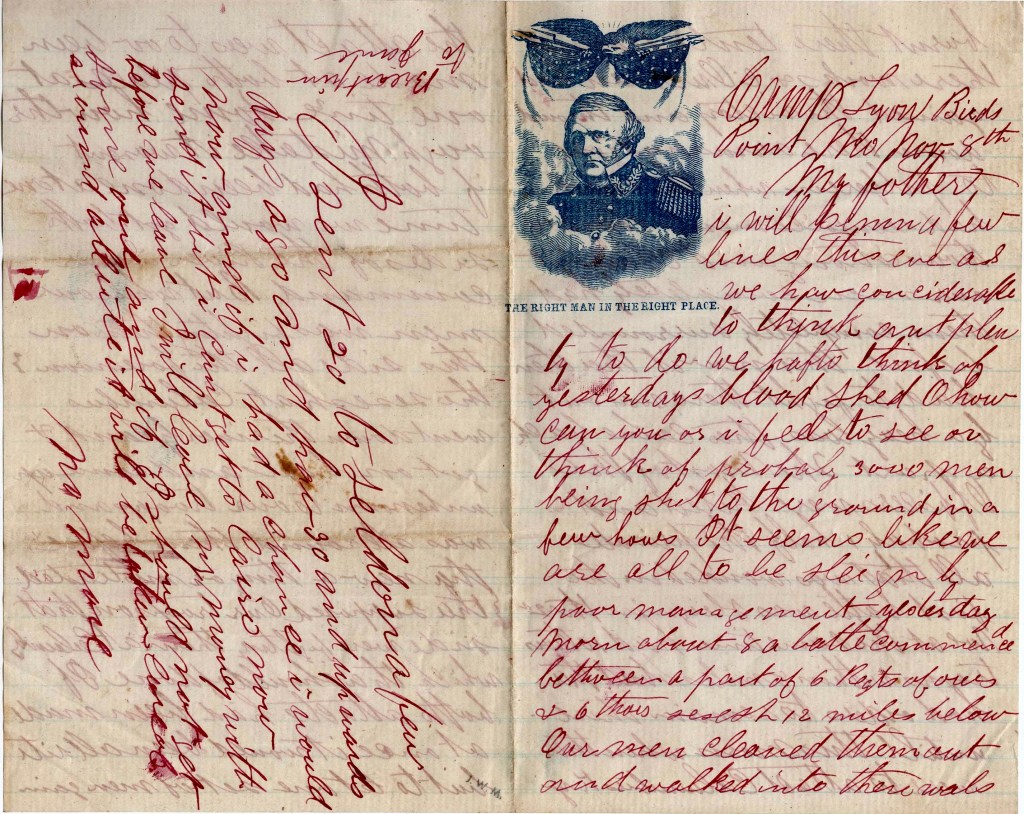
This letter was written by an unidentified soldier from Birds Point, Missouri, and describes the 7 November 1861 Battle of Belmont. Several regiments left from Bird’s Point to participate in the battle, most of them Illinois regiments, but the author does not give the name of his regiment. The signature page of the letter seems to be missing.
Though the content clearly describes the Battle of Belmont, it isn’t clear that the author actually participated in the battle himself though I suspect his regiment did. It may be that he was on detached duty or was unfit for service at the time of the battle.
The author datelined his letter from Camp Lyon and there were several Illinois regiments encamped there at the time.
The Battle of Belmont.Published 24 April 2024, MA Economics
T R A N S C R I P T I O N
Camp Lyon Bird’s Point, Missouri November 8, [1861]
My father,
I will pen a few lines this eve as we have considerable to think out, plenty to do. We have to think of yesterday’s bloodshed. Oh how can you or I feel to see or think of probably 3,000 men being shot to the ground in a few hours. It seems like we are all to be slain by poor management.
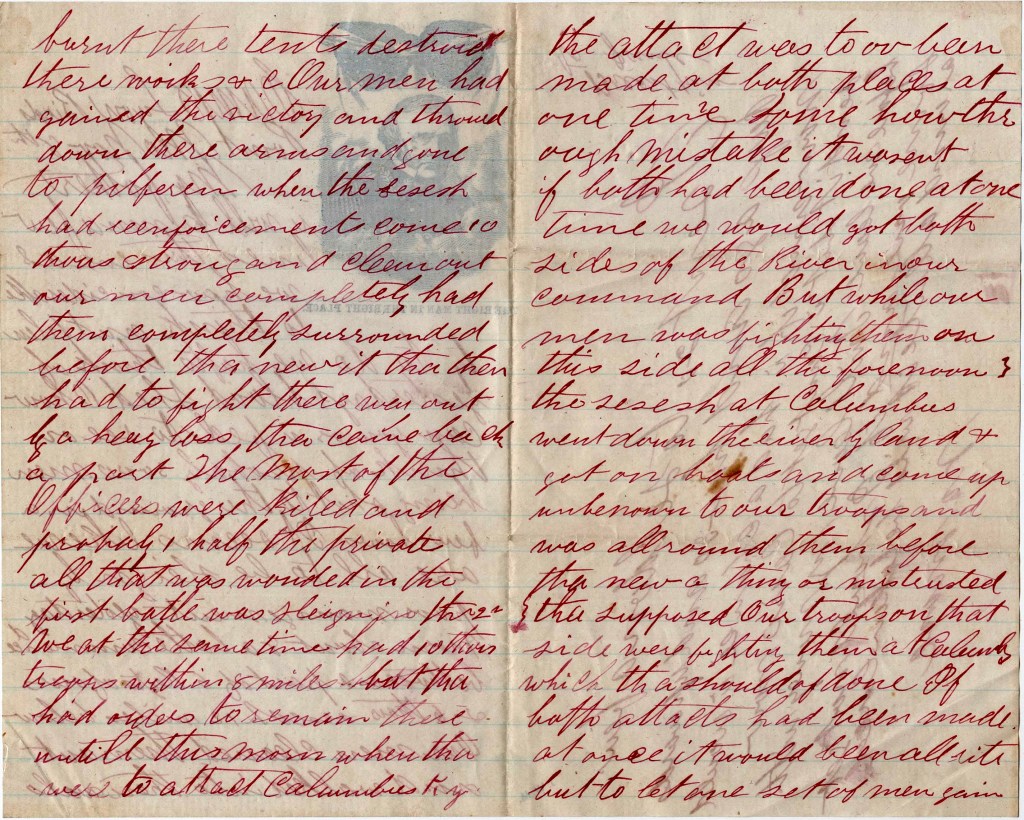
Yesterday morn about 8, a battle commenced between a part of six regiments of ours and six of their secesh 12 miles below. Our men cleared them out and walked into their walls, burnt their tents, destroyed their works and out men had gained the victory and throwed down their arms and gone to pilfering when the secesh had reinforcements come ten thousand strong and cleaned out our men completely. Had them completely surrounded before they knew it. They then had to fight their way out by a heavy loss. They came back apart. The most of the officers were killed and probably half of the privates. All that was wounded in the first battle was slain in the 2nd.
We at the same time had 10 thousand troops within 8 miles but they had orders to remain there until the this morn when they were to attack Columbus, Kentucky. The attack was to of been made at both places at one time. Somehow through mistake, it wasn’t. If both had been done at one time, we would got both sides of the river in our command. But while our men was fighting them on this side all the forenoon, the secesh at Columbus went down the river by land & got on boats and come up unbeknown to our troops and was all round them before they knew a thing or mistrusted. They supposed our troops on that side were fighting them at Columbus which they should of done. If both attacks had been made at once, it would been all right, but to let one set of men gain [page missing?]
I sent 20 to Seldon a few days ago and have 30 and upwards now and if I had a chance I would send it but I can’t get to Cairo now before we leave. I will leave my money with someone and if I should not get around all right, it will be taken care of. No more.
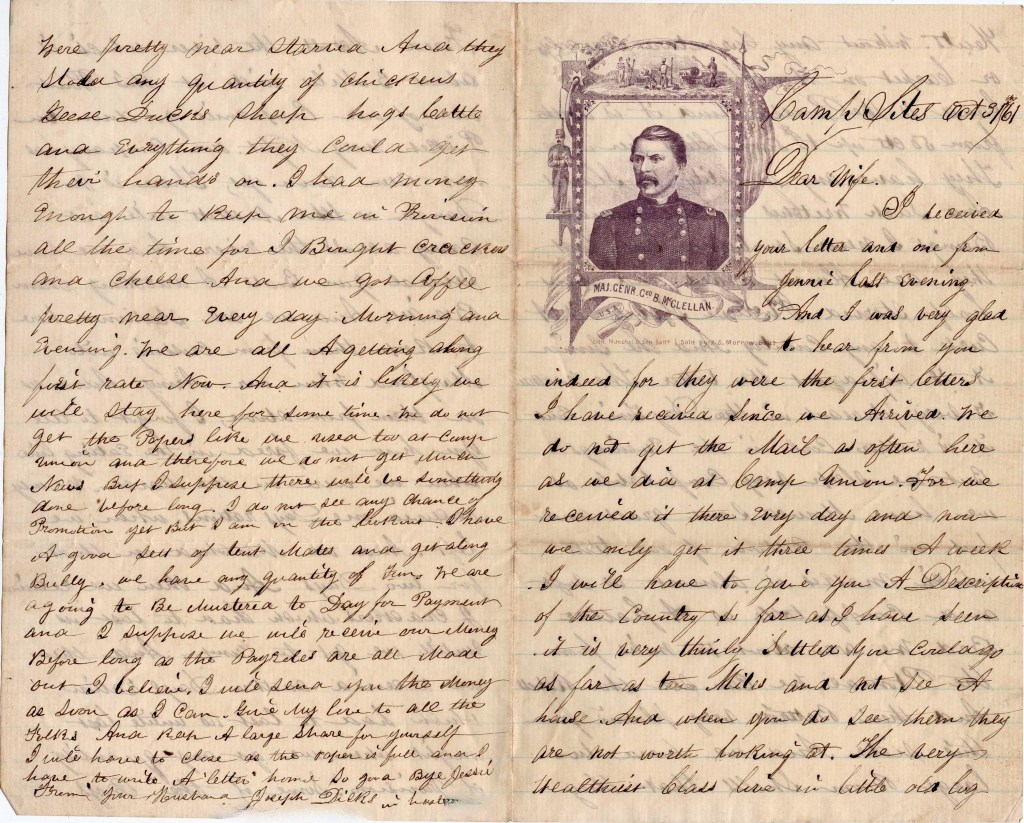
This letter was written by Joseph Dicks (1837-1910), the son of James Dicks (1807-1887) and Mary Coffin Lytle (1814-1881) of Nether Providence township, Delaware county, Pennsylvania. He wrote the letter to his wife, Jessie Matlack (Worrall) Dicks (1838-1927) while serving in Co. K, 26th Pennsylvania Infantry. The couple were married in 1859 and had their first child in 1860 but he died in infancy. Jessie was pregnant with her second child at the time of this letter in late October 1861.
Muster rolls inform us that Joseph enlisted on 4 June 1861 and served his entire three years as a private in Co. K, 26th Pennsylvania. He mustered out at Philadelphia on 18 June 1864. After the war he became a dry good salesman in Chester, Pennsylvania.
T R A N S C R I P T I O N
Camp Sites [near Budd’s Ferry, Maryland] October 31, 1861
Dear Wife,
I received your letter and one from Jennie last evening and I was glad to hear from you indeed for they were the first letters I have received since we arrived. We do not get the mail as often here as we did at Camp Union for we received it there every day and now we only get it three times a week.
I will have to give a description of the country so far as I have seen it, It is very thinly settled. You could go as far as ten miles and not see a house. And when you do see them they are not worth looking at. The very wealthiest class live in little old log huts without any furniture scarcely or carpet on the floor. And the land is the poorest kind. It is worth from 50 cents up to 50 dollars per acre. They have any quantity of slaves—and such wretches to call human being I never saw before. In fact, they are almost naked and about half starved. I believe slavery is a curse to any country and the sooner it is wiped out, the better.
The weather is very pleasant in the day time but it is rather cool in the evenings. But we sleep very comfortable as we have mowed some grass and put [it] in the bottom of our tents which makes it almost as soft and comfortable as a feather bed.
We are about one and a half miles from the Potomac. We can see the Rebels and their batteries very plain from this side and we have [had] two large bomb shells that they fired across the river which is about three miles wide at this point. One of our companies go down on picket every night. Our company has not been down yet. There is no danger as their muskets will not carry across the river and we have several gunboats a watching them besides. And we are stationed here to keep them from crossing into Maryland when our army advances on them from above.
I forgot to tell you how we fared in the eating line when we were on the march. We only received one days rations when we left and we marched on that for two days and then we received two crackers which had to last us until we got to camp. And then we received another day’s rations which had to last us until last night when we got any quantity of provision. Some of the boys were pretty near starved and they stole any quantity of chickens, geese, ducks, sheep, hogs, cattle and everything they could get their hands on. I had money enough to keep me in provision all the time for I bought crackers and cheese and we got coffee pretty near every day, morning and evening. 1
We are all getting along first rate now and it is likely we will stay here for some time. We do not get the papers like we used to at Camp Union and therefore we do not get much news but I suppose there will be something done before long. I do not see any chance of promotion yet but I am in the croakers. I have a good set of tent mates and get along Bully. We have any quantity of fun. We are a going to be mustered today for payment and I suppose we will receive our money before long as the pay rolls are all made out, I believe. I will send you the money as soon as I can. Give my love to all the folks and keep a large share for yourself.
I will have to close as the paper is full and I hope to write a letter home. So goodbye Jessie. From your husband, — Joseph Dicks
In haste.
1 The 26th Pennsylvania marched to Budd’s Ferry, Maryland, on 20 October 1861 as part of General Joseph Hooker’s Brigade, having previously been at Camp Union near Bladensburg. They marched in company with Sickles’ Excelsior and the 2nd New Jersey Brigades. They remained at Budd’s Ferry until 1 April 1862.
The following letter was written by Pvt. Joseph H. Caldwell (1829-1897), a former clerk from Roxbury who enlisted on 24 May 1861 to serve in Co. F, 1st Massachusetts Infantry. He was wounded on 29 August 1862 during the 2nd Battle of Bull Run and eventually transferred to the Veteran Reserve Corps (117th Co. 2nd Battalion) where he served out his time, being discharged on 24 May 1864. Joseph’s younger brother, Josiah Caldwell (1834-1903), also enlisted the same day and served in the same company.
Joseph wrote the letter to his wife, Esther A. (Boles) Caldwell (1836-1924) with whom he married in 1854.
T R A N S C R I P T I O N
Camp Union 1st Massachusetts Volunteers Bladensburg October 20, 1861
Blessed wife,
I received your very kind epistle yesterday and rest assured my love, I was extremely happy in reading it. I have made up my mind to write short letters but to write oftener, but remember I shall expect you to do the same.
There is nothing very new in or about the camp except yesterday three of the 1st Michigan Vols. died with the Typhoid fever. Josiah [Caldwell] is some better and I think will be able to resume his duties this week.
My own dear precious one, what would I give to spend this Sunday with you. I trust that ere many Sundays pass we shall pass the day in peace and love together. Oh my precious soul, how hard it is to be so far away from those that are dear to us. Do you not think so love? One thing you said in your letter about keeping your letters, I destroy them all for the reason that they would not be for my credit to have them seen but I do hope and pray that I shall receive letters which will contain no allusions to the past for I should like to do as I see others—sit down and read letters over and over again. They would be highly appreciated by your poor old hubby.
I received two notices in your last about the 1st which shows the estimation in which the regiment [is] held. It is a source of gratification to us to know that we are held in such high esteem by our distant friends. I suppose, darling, you will receive a letter dated Thursday. Well, I shall write often and you must do the same. I fear you think me mean in not forwarding my miniature but I cannot do it until they get ready to go home. I expect every day to send it and it worries me as much if not more than it does you in having it here. But my love cannot blame for you know it is of no advantage for one to keep it. Do not fear. I shall remember you darling in Nov.
I received from Lieut. [George E.] Henry a letter sent by Lieut. [William H.] Sutherland. I am sorry I ever received it. It was too hard. But it was written before I explained to you the many affairs. But one thing in it, how can a man receiving only $13 per month send $40 home? Perhaps he gambles. The 11th [Massachusetts Infantry] have the name of it and in our regiment it [gambling] is punishable by confinement in the guard house and fined. The 11th Regiment is a miserable concern. How under heaven’s [name] do you expect Edgar got to Richmond? I heard he gave himself up to the Rebels. Damn such a man. Esther, I shall look out for myself for your dear sake but I shall do my duty. I cannot—it is impossible for me to act the coward. But rest easy. I shall come out all right and these poor arms shall again embrace the form of his beloved wife. Bless you for your dear words in your letter and believe me your faithful, devoted husband, Sealed with a kiss. — Joseph
This letter was written by Myron T. Little of Co. H, 106th Pennsylvania Infantry that was organized and commanded by Col. Turner G. Morehead. It was first called the “Fifth California,” being part of of Col. Baker’s California Brigade, but later was one of the four regiments composing the Philadelphia Brigade. The 106th joined Col. Baker’s Brigade just prior to the disastrous Union defeat at Ball’s Bluff.
Myron informs his friend Wesley that he was in Co. H, but he must have been transferred into Co. F when the regiment became the 106th Pennsylvania because that is where he appears in the muster rolls which show his enlistment on 14 August 1861.
Myron was taken prisoner on 15 August 1863 (estimated) and died on 3 June 1864 in Andersonville Prison. He was buried there, grave No. 1588.
Census records reveal that Myron was the oldest son of at least 12 children born to Joseph Bloomfield Little (1820-1908) and Louisa C. Armes (1821-1898) of Forks, Sullivan county, Pennsylvania.
T R A N S C R I P T I O N
Camp Observation December 15, 1861
Friend Wesley,
It is with pleasure that I take this opportunity of addressing you for the first time since I was from home, Sam Black [Co. F] told me some time ago that you wanted me to write to you. I did not for want of money to pay the postage with but we have now got our pay and I just thought that I would write a few lines to you. We are all well at present and I hope that this will find you the same.
Last Thursday night at about 10 o’clock we were all routed out in quick time for a march for Conrad’s Ferry, a distance of about 8 miles. Well there was four companies of us started down the river that night. We went about 5 miles that night when a halt was ordered and the Colonel said he would ride down to the ferry and see what was up. The Lieutenant Colonel Curry [said] we was to turn into a corn field and lay down and keep quiet until his return. We did not dare to build fire for fear the rebels could see it from the Virginia shore. We had nothing but our blankets and therefore we came darned near freezing to death and there we lay until morning when we was ordered back off the hill a short distance to wait for further orders and lay there until about noon today when we started back for camp. All I can find out that was going on was that the rebels was gathering on the opposite side of the river and we was to be there in that case to help the river pickets to keep them back. Whether I am correct or not, I know not. I only heard so but not from any officer so I do not put any dependence in it.
We lay there in suspense for fear we should not be called out in time for any of the fun—if there was any to be had—but there was none to be had so we was all disappointed. This was the second time we was disappointed on the same route but the first time I think it was best. The way it was, we could not get across the river and I am afraid if we should of got across, there would not been a great many left to tell the tale. But for all that, we all wanted to get across and try our old muskets. 1
Now for a little local intelligence. First I want you to take care of the girls and that good too for I expect to come back some time and I want them taken good care of, to be delivered unto me for I wat some pretty girl out of the lot.
I expect you had gay old times there at the Institute. I should liked to of been there for my share of the fun but I was in a place where I expected there would be some fun in making the rebels run. But they made our fellows run and that wasn’t much fun for us. But I expect it was fun for them.
I have gay old living down here. We had for the last three days anyhow. It was raw pork and crackers what we would despise up there but everything is palatable to a hungry soldier. But we do not live that way in camp but that don’t go bad to us poor devils when we are pretty hungry. I shall have to stop for want of time and room. Give my best respects to the folks in general—the girls especially. I remain your friend, — Myron Little
Bakers Brigade Morehead’s Regiment Company H Adamstown, Maryland
1 Myron is probably referring to the Battle of Ball’s Bluff in which part of the regiment participated.The battle took place on 21 October 1861 near Leesburg, Virginia, and resulted in the death of Col. Edward D. Baker.
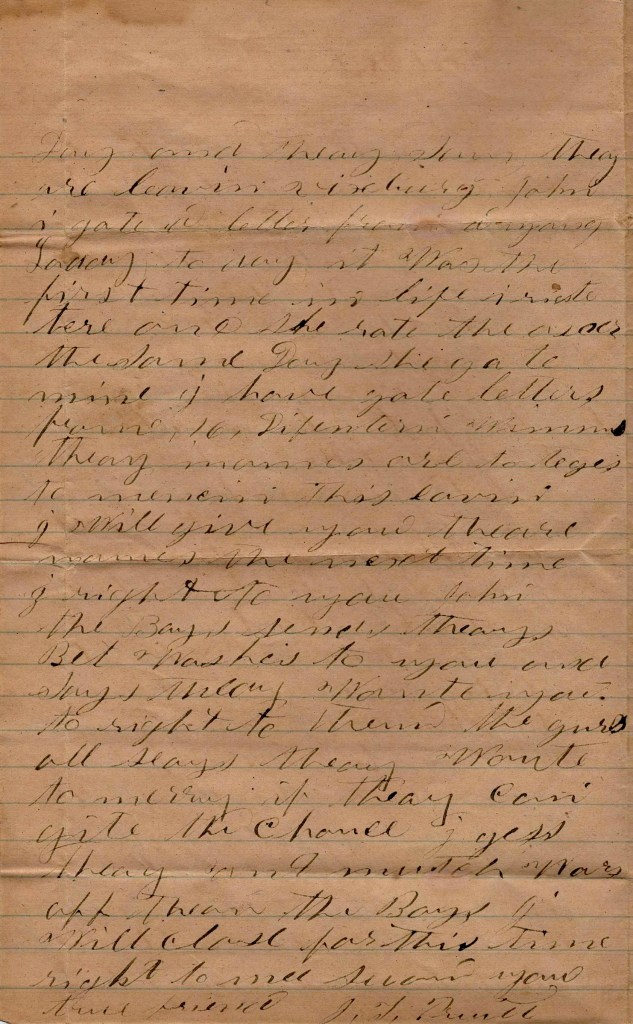
These two letters were written to friends and family back home by James T. Pruitt and Elijah B. Hughes—members of Co. F, 31st Mississippi Infantry while encamped at Snyder’s Bluff overlooking the Yazoo River in 1 March 1863. The 31st Mississippi was organized a year earlier using the 6th Mississippi Infantry as its nucleus.
James T. Pruitt (1840-1918) was born in Lawrence county, Alabama, but was living in Pontotoc county, Mississippi when he enlisted in the 31st Mississippi. He married Frances J. Cypert (1841-1907) in 1865. Elijah B. Hughes (b. 1845) was the son of John Hughes (1799-Aft1860) and Mary Parker (1800-1845) of Cambellton, Itawamba county, Mississippi.
This letter is a good example of two soldiers from the same company sharing a sheet of stationery during a time when it was scarce in the Confederacy.
T R A N S C R I P T I O N
Snyder’s Bluff March 1, 1863
Dear old friend,
I seat myself to drop you a few lines to inform you I [am] well, hoping when these few lines come to hand they may find you enjoying the same blessing. John, I han’t got anything of importance to write to you. We have been running about a good deal since I saw you. It looks like we have to do all the running about. I don’t think we will get in any fight here soon. We are 15 miles above Vicksburg on the Yazoo river. They are preparing for the enemy. We are ready for them any time they come. There was a Yankee came across the river today and they said they are leaving Vicksburg.
John, I got a letter from a young lady today. It was the first time in my life I wrote her one. She wrote the answer the same day she got mine. I have got letters from 16 different women. Their names are too tedious to mention this evening. I will give you their names the next time I write to you.
John, the boys send their best wishes to you and says they want you to write to them. The girls all say they want to marry if they can get the chance. I guess they ain’t much worse off than the boys. I will close for this time. Write to me soon. Your true friend, — J. T. Pruitt
March 1st 1863
Dear brother,
I seat myself this evening to pen you a few lines to let you know that I am getting along. I am well and doing as well as could be expected under the present circumstances that are around me at this time. I have just got well. I have had the chills and fever. We had to march from Jackson here in the mud and water and it made me sick. But I think that I am about straight now.
I received your kind letter yesterday and it gave me great satisfaction to hear from you and to hear that you was well. B. F. H. is well. He is on guard now at this time. He has been sick also but is improving as fast as could be expected. I received a letter from home about three weeks ago. They wrote to me that sister Elizabeth was very sick. I have not heard from home since that time but I have wrote home since that time. I sent my letters by Redden Stephens 1 while I was at Jackson, Miss. We stayed there about two weeks, I believe. Direct your letters to Vicksburg when you write to me—if you ever write any while I stay here at this place. Give my best respects to all the boys. Tell D. C. and Samuel Stephens that if they don’t write to me, that I will treat them with the same respect. My time is up and so is my paper. John, please answer this.
Your brother until death, — E[lijah] B. Hughes
to J. B. Hughes
1 Redden Byrd Stephens (1826-1891) was a farmer in Itawamba, Mississippi, who had probably visited the encampment of the 31st Mississippi while at Jackson.
This letter was written by Edward M. Brown of Co. E, 21st Ohio Volunteer Infantry. He was 22 years old when he enlisted on 29 August 1861 to serve three years. He was appointed Corporal on 17 July 1863 and taken prisoner at the Battle of Chickamauga on 20 September 1863. He died at Andersonville Prison on 2 October 1864 after a year’s confinement.
Edward wrote his letter from the company encampment at a guard post placed near a bridge on the Nashville & Decatur railroad between Elk River and Decatur, Alabama. Co. I was stationed at Elk River, Co. K at Decatur Junction, and Co. E four miles up the road from the Junction. The Headquarters of the regiment was at Athens, Alabama, at this time.
T R A N S C R I P T I O N
Fort Brewster, Swan Creek at RR Bridge July 25, 1862
Friend John,
After some delay on account of having orders to be ready to leave in five minutes for the last 6 or 8 days. Yet I have not forgotten you nor never will John. I am well, also the boys in our company, and in good spirits. We are as yet at the RR bridge having good times under the circumstances, although as I said, we have been under marching orders for several days and that is one of the hardest ways of camp life—to be on suspense.
The weather is fine. We get rain every few days now. That makes it more pleasant in cooling the air. We are feasting as usual. We have all that is good for us to eat such as peaches, green corn, berries, &c. &c. and milk at 25 cents a gallon. You spoke of [Wilson S.] Musser. 1 He is well now. I told him about what Harley said and he laughed and said that he had written last to home and never received one from Harley a joke on Harley, ha ha ha. Wilson [Musser] has been unlucky for the last four or five months. Has been poorly most of the time but is quite hearty now and cheerful. Is well liked in the company.
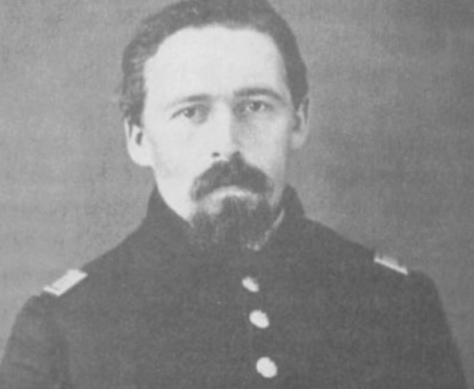
Samuel Fletcher Cheney (1829-1911)
S[amuel] Hull is hearty and most of the boys from our parts. We are looking for our Lieutenant S[amuel] F[letcher] Cheney of Defiance who is at home on furlough. Also [Finlay] Britten and Warts of Hicksville. We are waiting patiently for their arrival, expecting to hear some good news from there. But supper is ready and I will finish afterward. Supper over. Had corn, coffee, and hard bread. And while eating, the train passed and Lieutenant S. F. Cheney came. On that account, I will not finish tonight. Boys are in swimming now and I must go in also as this is the hour appointed for swimming.
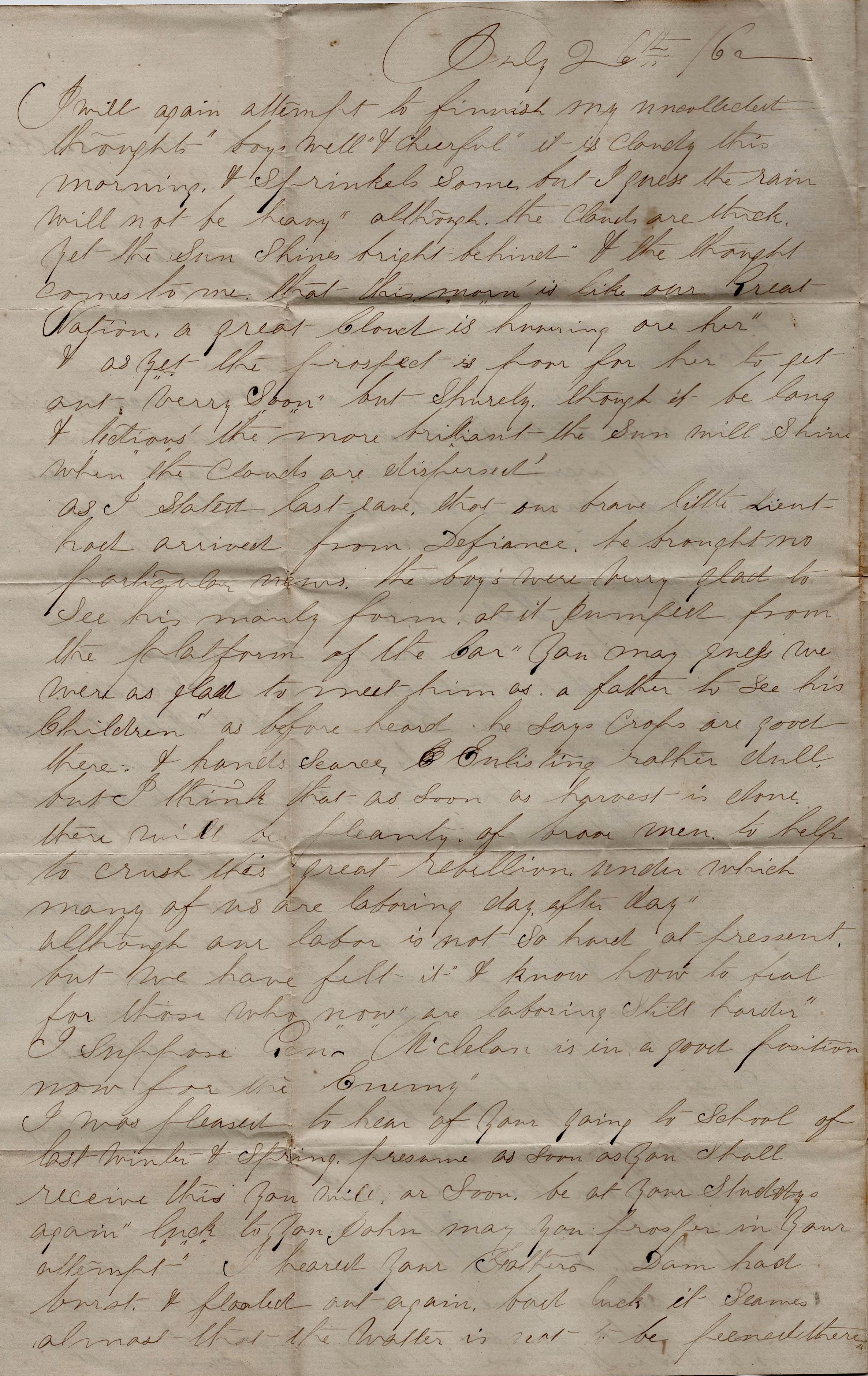
July 26, ’62. I will again attempt to finish my uncollected thoughts. Boys well and cheerful. It is cloudy this morning and sprinkles some but I guess the rain will not be heavy although the clouds are thick. Yet the sun shines bright behind and the thought comes to me that this morn is like our great nation. A great cloud is hovering over her and as yet the prospect is poor for her to get out very soon. But surely though it be long and tedious, the more brilliant the sun will shine when the clouds are dispersed.
As I stated last eve that our brave little lieutenant [Cheney] had arrived from Defiance, he brought no particular news. The boys were very glad to see his manly form as it jumped from the platform of the car. You may guess we were as glad to meet him as a father to see his children. As before heard, he says crops are good there and hands scarce. Enlisting rather dull, but I think that as soon as harvest is done, there will be plenty of brave men to help to crush this great rebellion under which many of us are laboring day after day. Although our labor is not so hard at present, but we have felt it and know how to feel for those who now are laboring still harder. I suppose General McClellan is in a good position now for the enemy.
I was pleased to hear of your going to school of last winter and spring and presume as soon as you shall receive this, you will—or soon be—at your studies again. Luck to you, John. May you prosper in your attempt. I heard your father’s dam had burst and floated out again. Bad luck. It seems almost that the water is not to be feared there.
It is now almost time for the morning train to come. There, I just heard the whistle some 4 miles south of here. The boys are in front of my little bush cot jumping, but the ground is rather hard, although the excitement must be kept up in some way—sometimes in jumping, running, wrestling, &c. as we have not much reading matter here. Sometimes get a paper. Sometimes can get some interesting book—[the] life of some of our old soldiers that have parted this life long, long ago.
The moral feeling in camp is about “as usual.” I have not heard a sermon in about eight months, yet, as ever, I am trying to live so that if my maker calls me, I can go with joy and not grief. I will be glad when they will come—when peace will again cover our beautiful land. When (soldiers), friends, and loved ones can enjoy the word of our heavenly master according to the dictates of our own conscience, none daring to molest or make us afraid. John, don’t you think it would be pleasant to arise Sabbath morn, dress and go to Sunday school and church, where the word of God is preached in its purity? Surely it would be. But not withstanding all these privations, I am willing to stay [and] endure the privations of a soldier’s life as long as needful and reap the rewards in some future day—that is, if I am permitted to live through. And that I trust to God, the father of all good.
The train just passed going towards Athens. Had some cannon on board. Capt. [Lewis E.] Brewster and Sergeant [George T.] Squire came after, having been at Huntsville on business.
The sun is beginning to shine. The air is cool and pleasant now and has been for several days. The weather is cooler there this summer than has been for many years. The thermometer has not been over 95 degrees since we have been here which is the 9th of May and Lieutenant Cheney said it stood at that in Defiance one day when he was there. And there is a cool breeze blowing most of the time which we do not have or so much so in Ohio.
The corn is coming out well since the rain we have had of late, so we have all we want to use. Can stand on the peak of some hill and see corn for miles. As for cotton, it is late for the time of the season but will produce a tolerable fair crop. It is in bloom now. There is not much of it raised this season. The so-called Pres. Davis ordered the planters to not plant more cotton than they wanted for their own use but put in plenty of grain to help the army. The wheat was nothing of importance, but here the corn will be very good and as Davis said, it will help the army—-but the USA instead of the CSA.
But fearing I am wearing your patience with my unconnected thoughts, I will close by saying remember me to all with respect. Hoping to hear from you soon. I remain yours truly, — E. M. Brown
Co. E 21st Regt. OVI USA, 9th Brig. 3rd Div., in care of Capt. S. B. Brewster, via Nashville TN.
1 Wilson S. Musser was 19 when he enlisted in Co. E, 21st OVI on 29 August 1861. He was killed on 31 December 1862 in the Battle of Stones River.
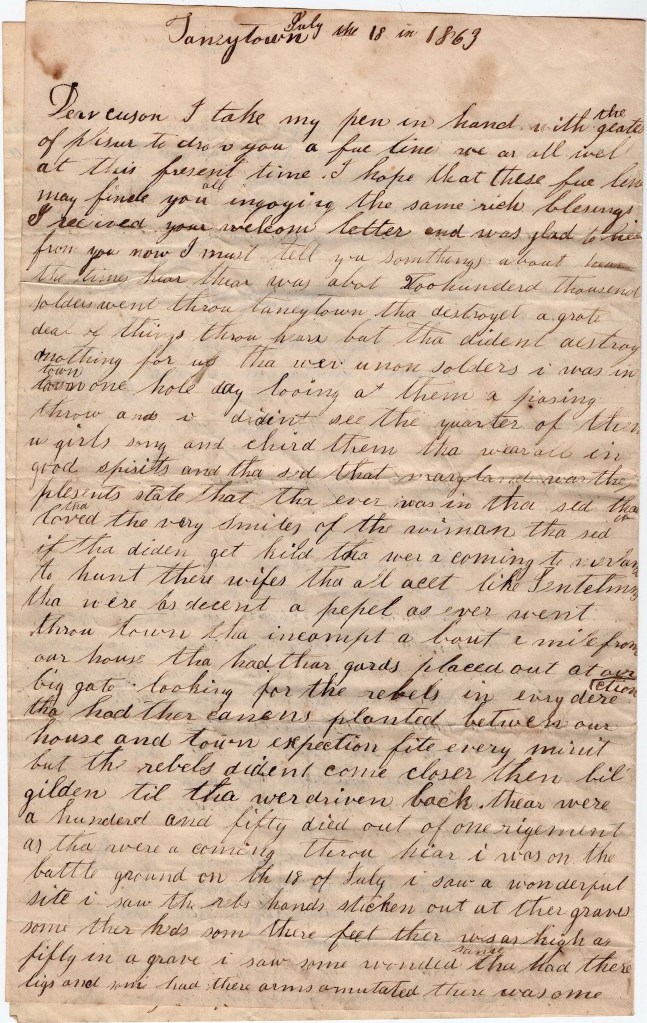
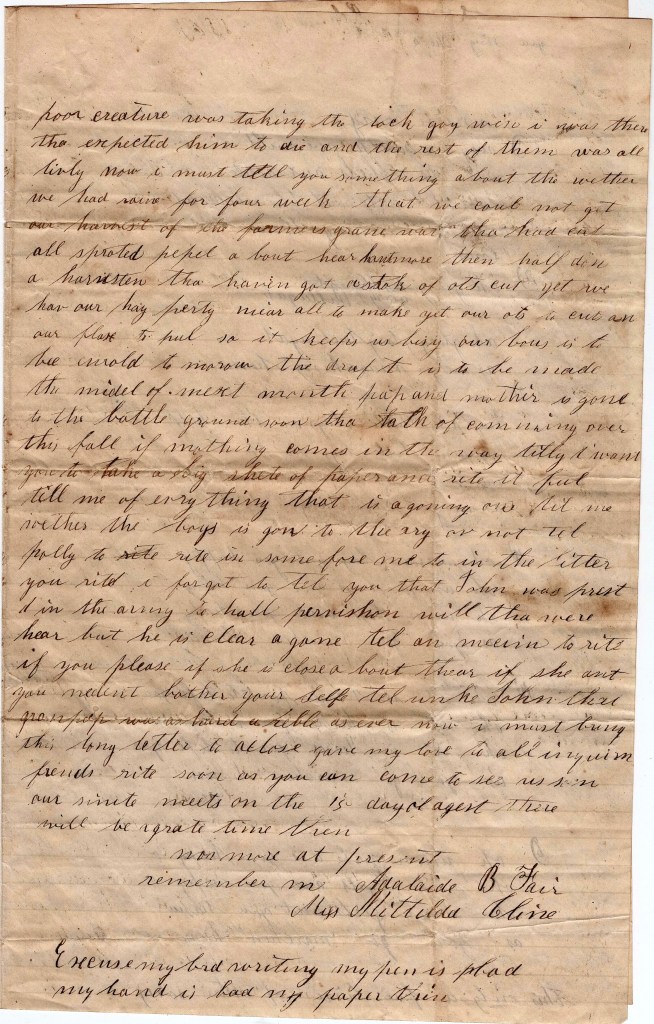
The following letter was written by 18 year-old Adalaide Barbara Fair (1845-1912), the daughter of Charles T. Fair (1810-1888) and Elizabeth (“Eliza”) Slaybaugh (1815-1887) of Taneytown, Carroll county, Maryland. Adalaide was married in 1869 to Thomas Angell (1838-1906). Adalaide’s husband served in Co. G, 3rd Maryland Potomac Home Brigade from April 1862 to April 1865.
Adalaide wrote the letter to Matilda (“Tilly”) Cline (1836-1922), the daughter of John Kline (1800-1882) and Maria Magdalena Slaybaugh (1804-1866) of Menallen township, Adams county, Pennsylvania. Tilly was married in October 1863 to Jacob Crum (1836-1922).
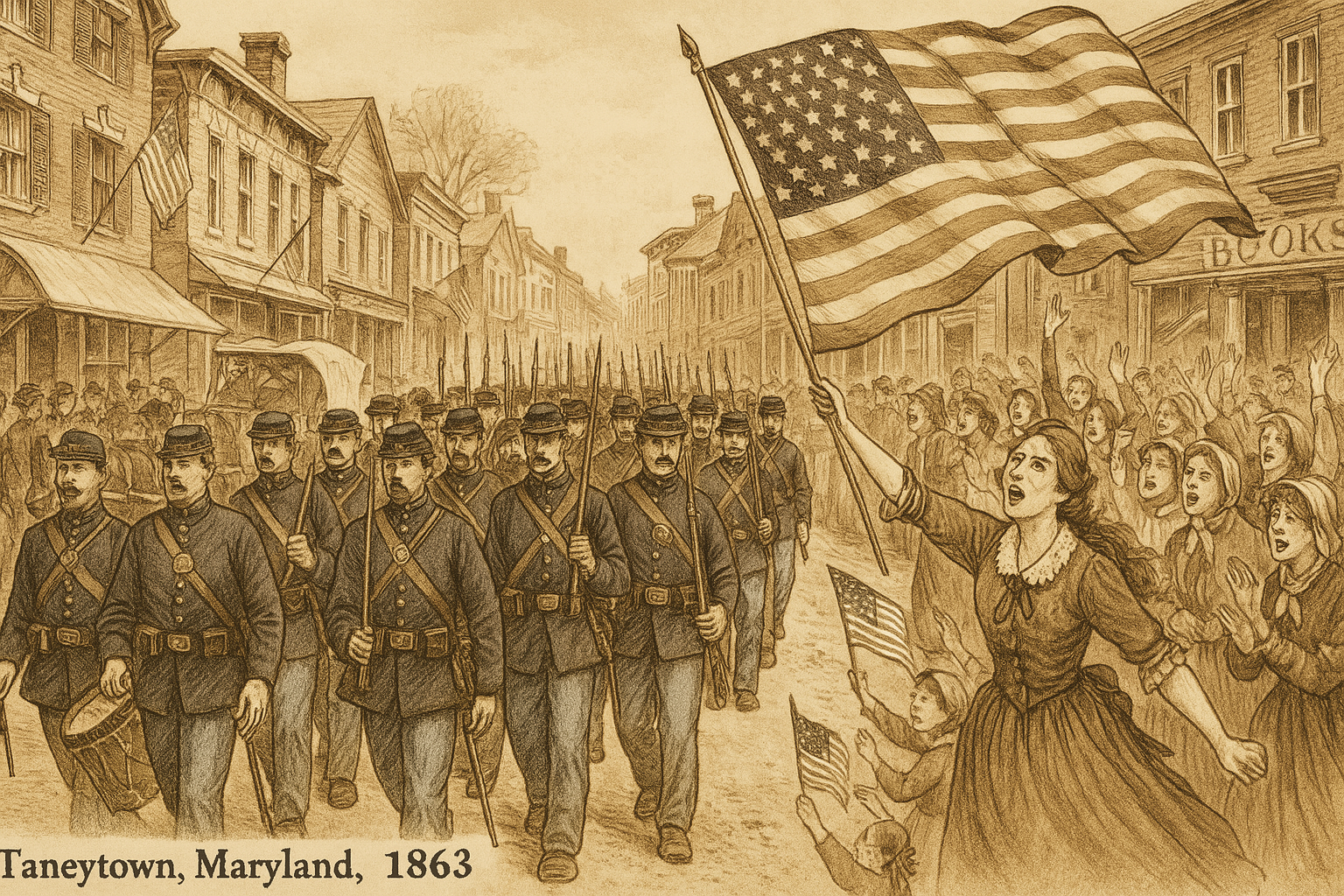
Adalaide’s letter offers a detailed and poignant account of the movement of Union troops through the village of Taneytown, Maryland, located approximately 13 miles south of Gettysburg. Moreover, she recounts her visit to the Gettysburg battlefield, where she observed the hastily dug graves of Confederate soldiers, their remains partially exposed due to the relentless rains of the past few weeks.
“Oh Union boys, ain’t you happy, as you go marching home?”
T R A N S C R I P T I O N
Taneytown [Carroll county, Maryland] July 18, 1863
Dear Cousin,
I take my pen in hand with the greatest of pleasure to drop you a few lines. We are all well at this present time, I hope that these few lines may find you all enjoying the same rich blessings. I received your welcome letter and was glad to hear from you.
Now I must tell you something about the times here. There was about two hundred thousand soldiers went through Taneytown. They destroyed a great deal of things through here but they didn’t destroy nothing for us. They were Union soldiers. I was in town one whole day looking at them a passing through and I didn’t see the quarter of them. Us girls sang and cheered them. They were all in good spirits and they said that Maryland was the pleasantest state that they ever was in. They said that they loved the very smiles of the women. They said if they didn’t get killed, they were a coming to Maryland to hunt their wives. They all acted like gentlemen. They were as decent a people as ever went through town. They encamped about a mile from our house. They had their guards placed out at our big gate looking for the rebels in every direction. They had their cannons planted between our house and town expecting a fight every minute but the rebels didn’t come closer than Bill Gilden till they were driven back.
There were a hundred and fifty died out of one regiment as they were a coming through here. I was on the battleground on the 18th of July. I saw a wonderful sight. I saw the rebs hands sticking out of their graves, some their heads, some their feet. There was as high as fifty in a grave. I saw some wounded. They had their legs and some had their arms amputated. There was one poor creature was taking the lock jaw when I was there. They expected him to die and the rest of them was all lively.
Now I must tell you something about the weather. We had rain for four weeks that we could not get out harvest off. The farmers grain war___, they had eat all sproted [?] people about here. Han’t more than half done a harvesting. They haven’t got a stack of oats cut yet. We have our hay pretty near all to make yet, our oats to cut, our flax to pull, so it keeps us busy.
Our beaus is to be enrolled tomorrow. The draft is to be made the middle of next month. Pap and mother is going to the battle ground soon. They talk of coming over this fall if nothing comes in the way. Tilly, I want you to take a big sheet of paper and write it full. Tell me everything that is a going on. Tell me whether the boys is gone to the army or not. Tell Polly to write in some for me too in the letter you write. I forgot to tell you that John was pressed in the army to haul provision while they were here but he is clear again. Tell Aunt Maria to write if you please if she is close about there. If she and you needn’t bother yourself. Tell Uncle John that Grandpap was as hard a pebble as ever. Not I must bring this long letter to a close. Gove my love to all inquiring friends. Write soon as you can. Come to see us soon. Our Sinod meets on the 15th day of August. There will be a great time then. No more at present. Remember me. — Adalaide B. Fair
To Miss Matilda Cline
Excuse bad writing, My ped is bad. My hand is bad. My paper thin.
The following letter was written by Charles H. Bayles of Co. H, 43rd Ohio Infantry who enlisted on 9 December 1861 to serve three years. He was a lowly private when he wrote this letter shortly after the Battle of New Madrid in March 1862. He was promoted to corporal in September 1863. In July 1864, while at Tuscaloosa, Alabama, he requested authority to raise a cavalry company of 40 or 50 men in the regiment who were willing to continue to serve but were having difficulty remaining foot soldiers. This request was apparently denied. He remained with the regiment and was promoted to Sergeant before mustering out on 13 July 1865 as a veteran.
Charles’ letter gives a summary of the artillery dual on 13 March 1862 between Pope’s army and the Confederate gunners at New Madrid— a duel that lasted for most of the day. Meanwhile, Pope’s infantry were slowly advancing their trenches in the normal pattern for a formal siege, slowly getting closer to the Confederate defensive lines. That night the Confederate defenders of New Madrid abandoned the town and withdrew to Island No. 10.
Map of New Madrid and Island No. 10 on the Mississippi River.
T R A N S C R I P T I O N
Patriotic stationery used by Charles to write his letter. Features McClellan on horseback with the quote, “Stand by me, and I’ll stand by you.”
Missouri March 16, 1862
I thought that I would write a few lines today. It is Sunday today. We had a fight at New Madrid the 13th of March. We placed our battery on a ridge about a half of a mile from their fort. Our troops entrenched all night of the 12th and early in the morning of the 13th, our battery 1 commenced firing upon the enemy at day break. Our troops marched down at 2 o’clock at night. At morning it commenced. They commenced firing upon us. The firing was kept up all day long. They killed eight of our army and wounded 8. They cut part of their town down to get range on us. We throwed shells into the fort. It is thought that we killed 2 or 3 hundred of the Secesh. They throwed them from the gunboats into the river as fast. We killed them about one hundred was found in their entrenchments. They had some guns 12 feet long, besides four or five gunboats. I should thought that they would never left such a fort as that.
The firing was kept up from daylight till dark and then the firing ceased. Our infantry laid back a half a mile from our battery. The cannon balls struck all round us. We was in a small piece of woods. They steered at us. The cannon balls cut trees a foot through right in two. They throwed shells at us and balls and canister shot. The ground was covered with cannon balls. Our Lieutenant-Colonel’s horse was shot through the body with a piece of shell. The Lieutenant shot holding him by the halter. There was not one of our company hurt at all but the cannon balls whizzed through the air like thunder. They dropped on our right and on our left. A cannon ball struck one of the boys in the company to our right in the breast. It cut him in two. The firing ceased at night.
Our company was sent out on picket at night. The next morning we calculated to go into them again but that same night they left the town. Everything was left. About 20 cannons was left in the fort. They had a strong fort.
I will write the particulars next time. Direct to Cairo, Illinois. 43rd [Ohio] Regiment, — Charles Bayles
To B. Bayles
I guess the war is about to a close.
1 This was probably the 11th Ohio Independent Light Artillery Battery that was attached to Pope’s Army.
The following letter was written by James M. Covert (b. 1842) who enlisted at Venango county as a private in April 1861 in Co. C, 10 Pennsylvania Reserves (39th Pennsylvania Volunteers). At the time of his enlistment, he was described as a 5 foot 8 inch tall, blue-eyes, dark-haired shoemaker from Butler county, Pennsylvania. He reenlisted in December 1863 and was taken prisoner at Bethesda Church on 30 May 1864. After his exchange, he was transferred to the 191st Pennsylvania to finish out his enlistment.
I could not find an image of James but here is a tintype of Joseph Alvin Weaver (1839-1910) who also served in the 39th Pennsylvania Regiment and was in the fight at Dranesville. The image was taken on the day of his enlistment in 1861. (Ancestry.com)
T R A N S C R I P T I O N
Camp Pierpont [near Langley, Va.] December 26th [1861]
Dear Sister,
I received your letter and was glad to hear from you and to hear that you were all well. I am well at present, hoping these few lines may find you enjoying the same blessing.
Since I wrote to you we have had a little fight. On Friday last we started–that is the 3rd Brigade and the Kane Rifle Company [“Bucktails”] with Easton’s Battery of 4 cannon, and three or four companies of artillery. We were out 12 miles. That was where we was to get the forage. We [had] three and a half companies of the 10th [Pennsylvania Reserves] Regiment with the wagons. Then we went on to Dranesville where we was attacked by the rebels. They had four regiments of infantry, 4 pieces of cannon, [and] 700 cavalry. We fought for one and a half hours, They retreated, leaving the dead and wounded on the field. We killed 160 of them. I do not know how many wounded or how many prisoners we took.
The Battle of Dranesville, Va., December 20th 1861, was little more than a skirmish but was cited as the first Federal victory of the war on Southern soil. The action itself centered around the intersection of the Georgetown and Leesburg Pikes.
We only lost 7 men, 48 wounded. They took 2,000 bushels of corn & things too numerous to mention. We took also 70 guns & overcoats and blankets without number. They never got so completely routed since the war began in so short a time. The first shells they throwed was at out regiment & never touched a man. John West [?] is well. Looks stout as any man in the company.
You must not be so down hearted as you say you are. Let things to come be right and all will be well. Do not fret yourself about your misfortune. It will not make it any better cheery. Do not let your spirits go down. If folks laugh, let them laugh. It does not hurt you. Make this life as happy as possible and try and secure your place in the next.
The weather is getting pretty cold here. We had a dull Christmas. One day here is just like another one. I hope the rebellion will be put doen ere long. I got a letter from cousin Jacob [ ]. They live in Jefferson City. They are all well at present. They looked for an attack on that city pretty soon. I will close my letter by sending my respects to Mr. and Mrs. Jennings and yourself. Goodbye, — J. M. Covert
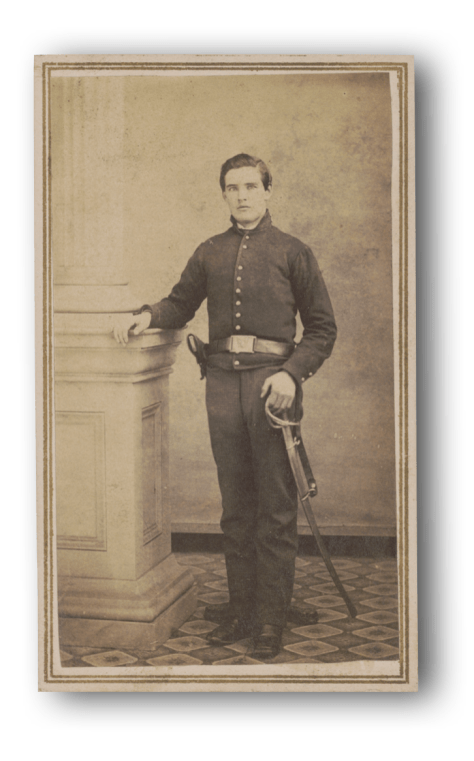
I could not find an image of Samuel but here is a cdv of James S. Bendle of the 6th Michigan Cavalry (LOC)
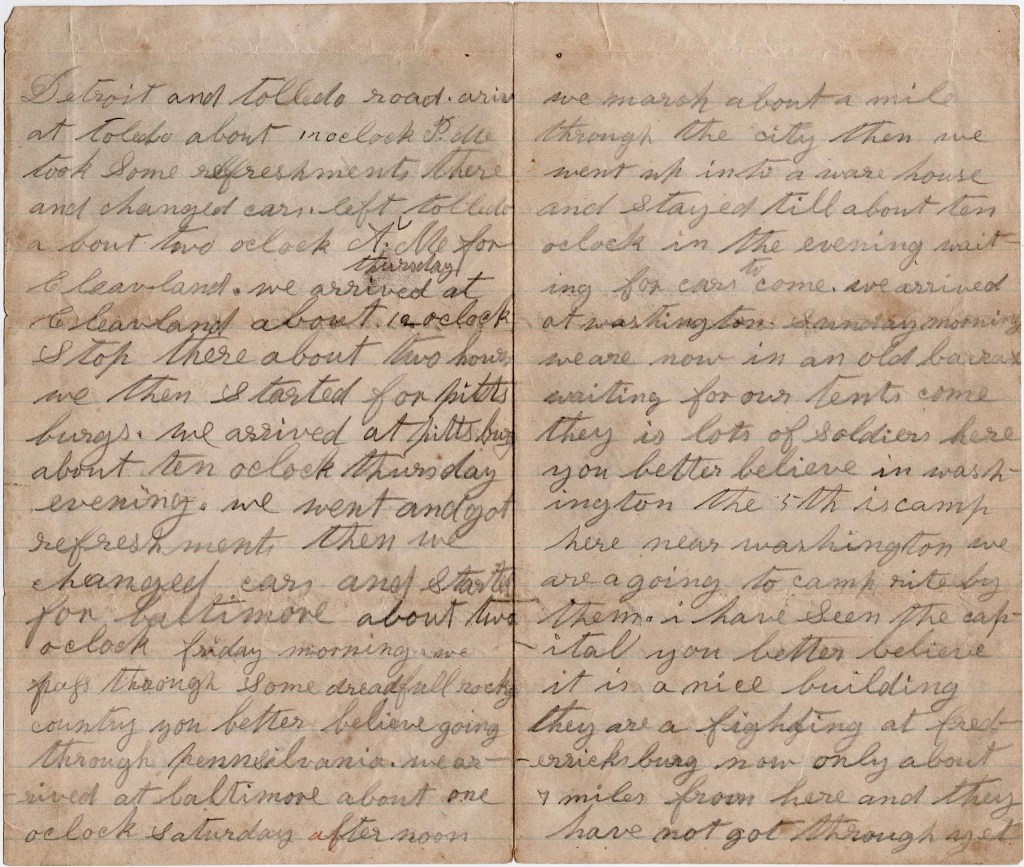
The following letter was written by Samuel Sherburne (1841-1864) who enlisted as a private in Co. D, 6th Michigan Cavalry on 22 October 1862 at Byron, Michigan. He was taken prisoner and sent Richmond where he died of chronic bronchitis at General Hospital on 12 April 1864. The regiment was assigned to what became the Michigan Brigade during the early part of the Gettysburg Campaign in June 1863. It saw its first actions under General Custer at Hanover, Hunterstown, and Gettysburg. Armed with Spencer Repeating Rifles, the 6th provided superior firepower against the lightly armed Confederate cavalry.
T R A N S C R I P T I O N
Washington D. C. December 14, 1862
Dear Brother,
I thought tonight I would write a few lines & let you know where I be and that I am well and I hope these few lines will find you the same.
We started from Gand Rapids Camp Kellogg at 5 o’clock a.m., marched over to the jail and got some prisoners, and then we marched down to the depot and got aboard of the cars. Left Grand Rapids at 10 o’clock a.m., arrived at Detroit Junction about 7 o’clock p.m., then we went onto the Detroit & Toledo Railroad. Arrived at Toledo about 12 o’clock p.m.. took some refreshments there and changed cars, left Toledo about two o’clock a.m. for Cleveland. We arrived Thursday at Cleveland about 12 o’clock. Stopped there about two hours, then started for Pittsburgh about ten o’clock Thursday evening. We went and got refreshments, then we changed cars and started for Baltimore about two o’clock Friday morning. We passed through some dreadful rocky country, you better believe, going through Pennsylvania.
We arrived at Baltimore about one o’clock Saturday afternoon. We marched about a mile through the city, then we went into a warehouse and stayed till about ten o’clock in the evening waiting for cars to come. We arrived at Washington Sunday morning. We are now in old barracks waiting for our tents to come. There is lots of soldiers here, you better believe, in Washington. The 5th [Michigan Cavalry] is camped here near Washington. We are a going to camp right by them.
I have seen the [U. S.] Capitol. You better believe it is a nice building. They are a fighting at Fredericksburg now, only about 7 miles [more like 50 miles] from here, and they have not got through yet. Col. [Francis William] Kellogg says we shall have our pay as quick as we get camp. There is not hardly a man in our company got any money but I have got money yet and have had all the while. Tell mother she must not maker herself any trouble about me for I may live all through the war and arrive home once more. I shall stand my chance amongst the rest to not get killed. You must be good to mother and help her all you can.
The cars run over a soldier yesterday here. They run over his legs and arm, He was drunk adn there was one died on the cars. I cannot think of any more at present, Give my love to all the girls. So goodbye. — Samuel Sherburne