My passion is studying American history leading up to & including the Civil War. I particularly enjoy reading, transcribing & researching primary sources such as letters and diaries.
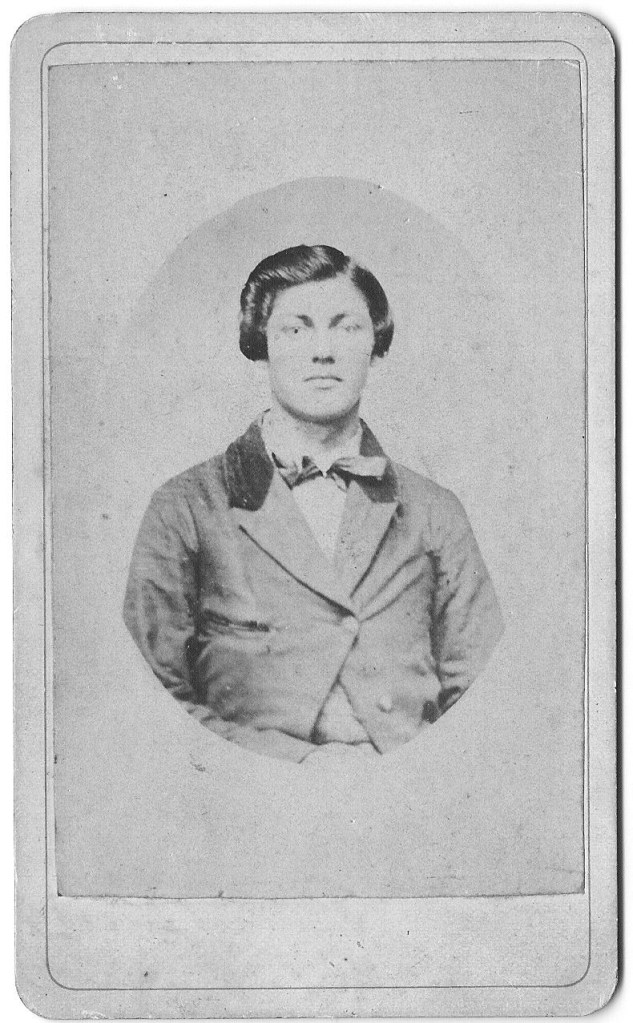
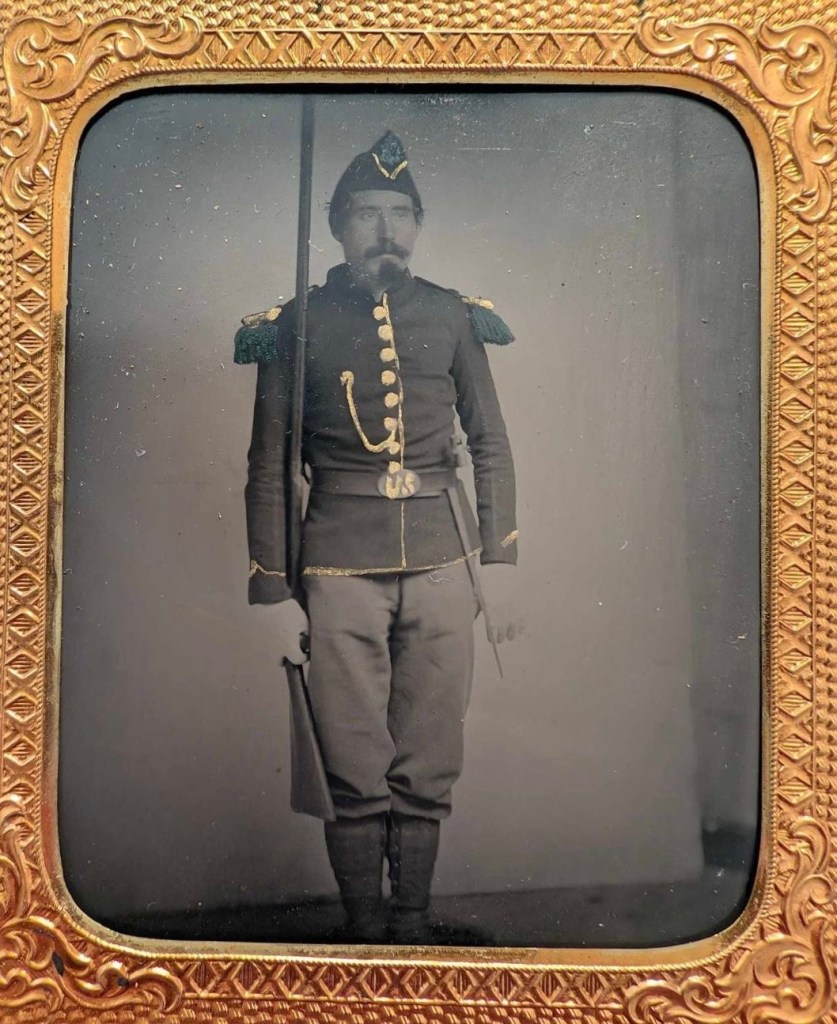
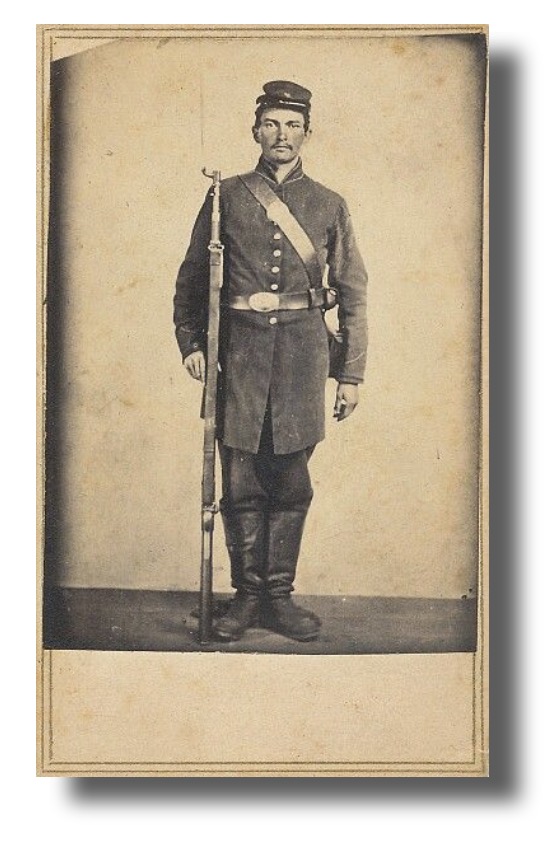
An unidentified member of Co. F, 34th OVI (see unit designation on blue-tinted fez). Cowan’s Auctions.
The following letter was written by John “William” Knight (1842-1903), the son of John K. Knight (1817-1897) and Mary Davison (1819-1843) of Williamsburg, Clermont county, Ohio. William was 19 when he enlisted on 27 July 1861 as a private in Co. A, 34th Ohio Volunteer Infantry (OVI). He was killed in William W. Loring’s attack on Fayetteville, Virginia (now W. Va.), 10 September 1862, and was buried in Charleston, W. Va.
The 34th OVI (Piatt’s Zouaves) wore an Americanized Zouave uniform that consisted of A dark blue jacket with red trimming, a pair of sky blue baggy trousers with two stripes of red tape going down vertically, a pair of tan gaiters, and a red Ottoman styled fez with a blue tassel. The uniform lasted at least until 1863 based on photographic evidence.
Transcription
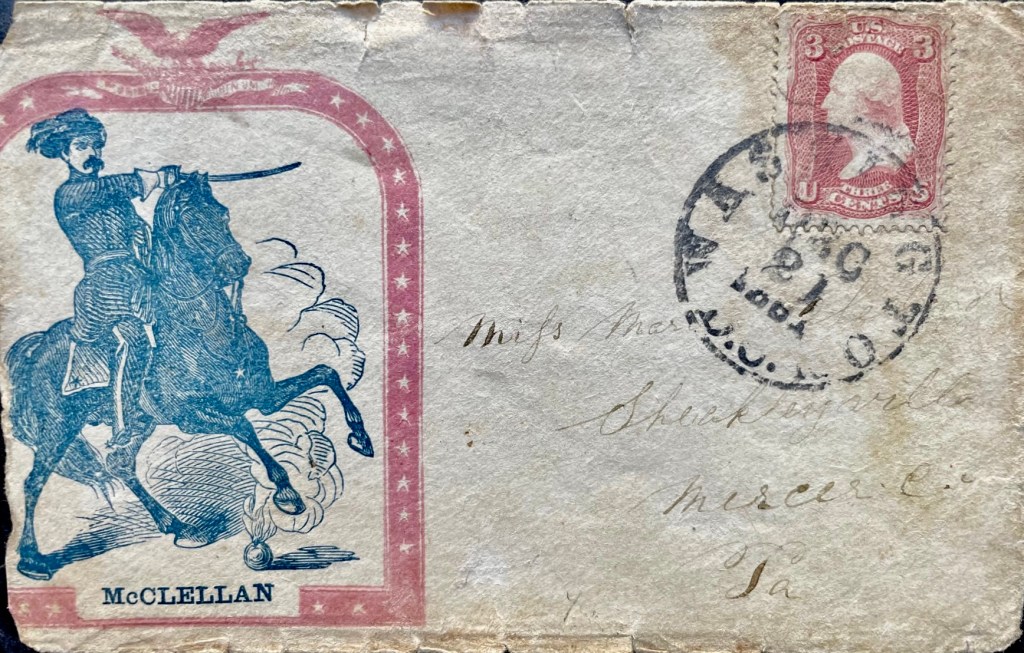
Addressed to Miss Martha Knight, Williamsburg, Clermont county, Ohio
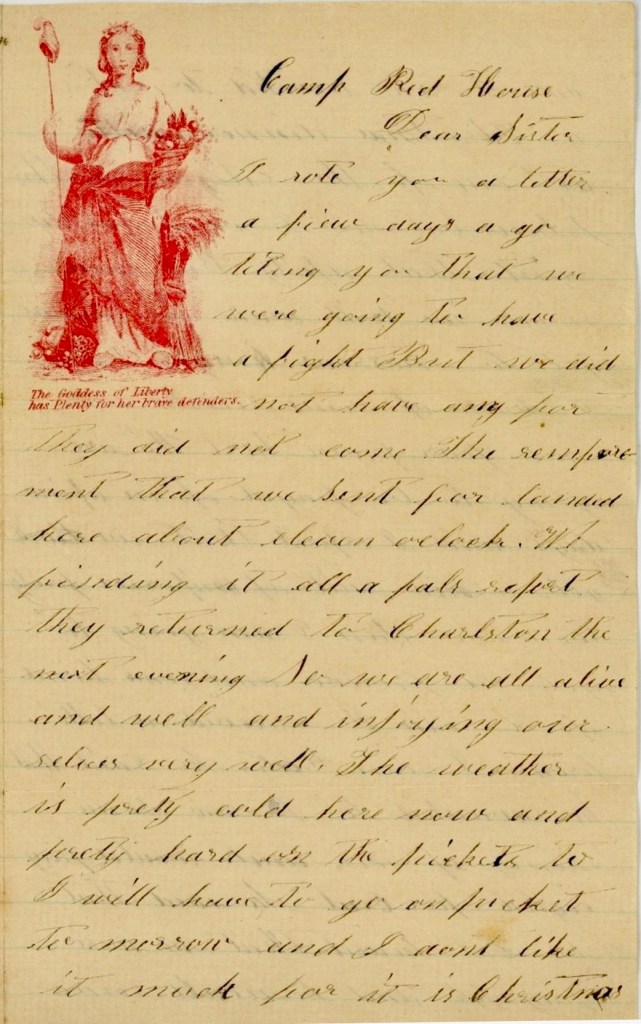
Camp Red House 1 [December 24, 1861]
Dear Sister,
I wrote you a letter a few days ago telling you that we were going to have a fight but we did not have any for they did not come. The reinforcement that we sent for landed here about eleven o’clock. We finding it all a false report, they returned to Charleston the next evening. So we are all alive and well and enjoying ourselves very well.
The weather is pretty cold here now and pretty hard on the pickets too. I will have to go on picket tomorrow and I don’t like it much for it is Christmas and I was invited to eat a Christmas dinner at one of the citizens of this place. But now I won’t get to. Ain’t that a pity? But never mind. We will make the turkeys get tomorrow night for I know of some secesh ones not far from here.
We are going to be paid off in a few days and I expect that we will get a new suit of uniform pretty soon and hen I am going to get a furlough and come home if I can. I received a letter from Irvin Heeter. He said that he wanted to borrow some money of me and would pay right percent. He said that he had heard that we were paid off and he needed some for a while and could not get a hold of it there. I guess that I will let him have it and then Father will not be troubled with it and Irv is as honest as the day is long. I had said something about telling him when I was there last and he said he’s like to have it. I had forgotten it when I wrote to you about sending it home. No more at present. Write soon. From William
To Martha
1 Camp Red House was located on the left bank of the Kanawha River near Winfield, or Putnam Court House, Virginia (now W. Va,)
The following letter was written by Henry Chandler Ware (1836-1895), the son of Chandler Ware and Mariah Crofut of Wilmington, Windham county, Vermont. He enlisted on 12 August 1862 in Co. E, 11th Vermont Infantry (1st Vermont Heavy Artillery) and served until 24 June 1865. “He was one of the best soldiers ever sent from this town,” according to his obituary. He was married to Mary Jane Boyd (1841-1906) and had three children by the time he entered the service.
Also adding a note to the end of this letter was Henry Wallace Warren (1840-1908) of Co. D, 1st Vermont Heavy Artillery (same regiment as Chandler’s). Both soldiers addressed their letters to Henry W. Warren’s younger brother, Roelzo Sanford Warren (1843-1921).
The 1st Vermont Heavy Artillery was Vermont’s largest regiment, with a total of 2,320 officers and men. It was originally organized as the 11th Vermont Infantry Regiment but was quickly converted to heavy artillery. Company E was originally assigned to Fort Totten in the circle of forts surrounding Washington D. C. In mid-November 1862 it was moved to Fort Slocum. They remained at their post until May 1864 when they were sent to Virginia to participate in Grant’s Overland Campaign as infantrymen.
Transcription
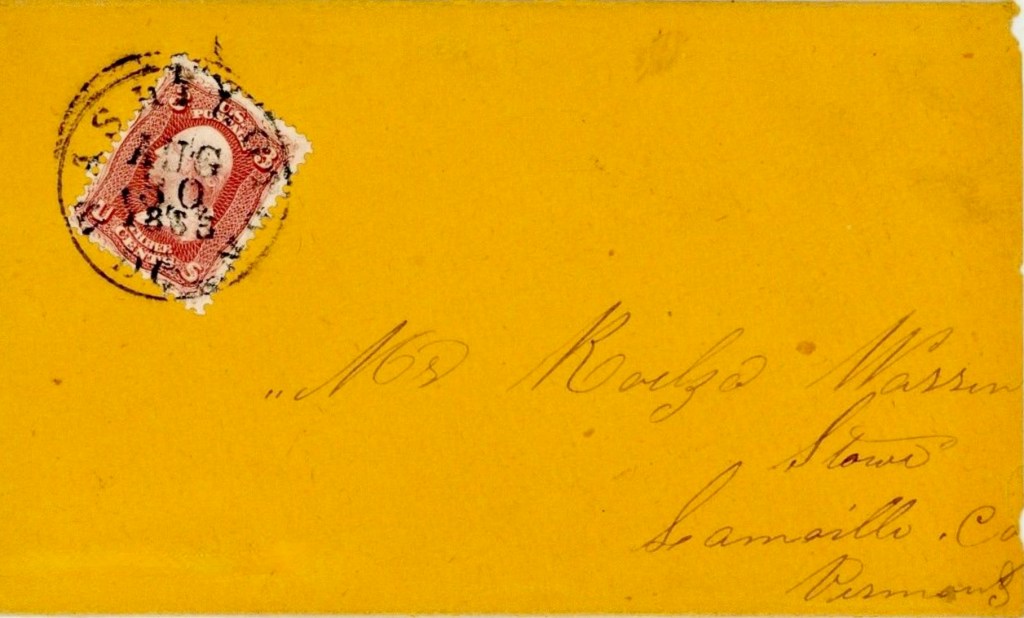
Addressed to Mr. Roelzo Warren, Stowe, Lamoille county, Vermont
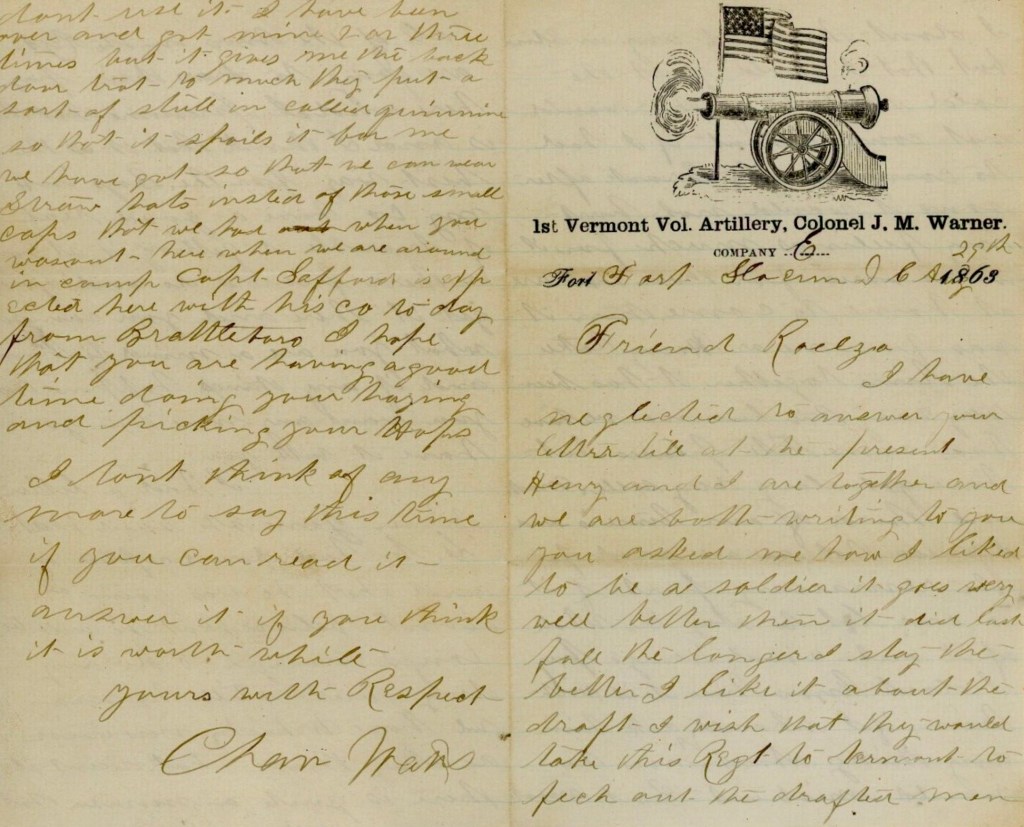
1st Vermont Volunteer Artillery, Col. J. M. Warner Co. E, Fort Slocum, D. C. August 29th 1863
Friend Roelzo,
I have neglected to answer your letter till at the present. Henry and I are together and we are both writing to you. You asked me how I liked to be a soldier. It goes very well—better than it did last fall. The longer I stay, the better I like it.
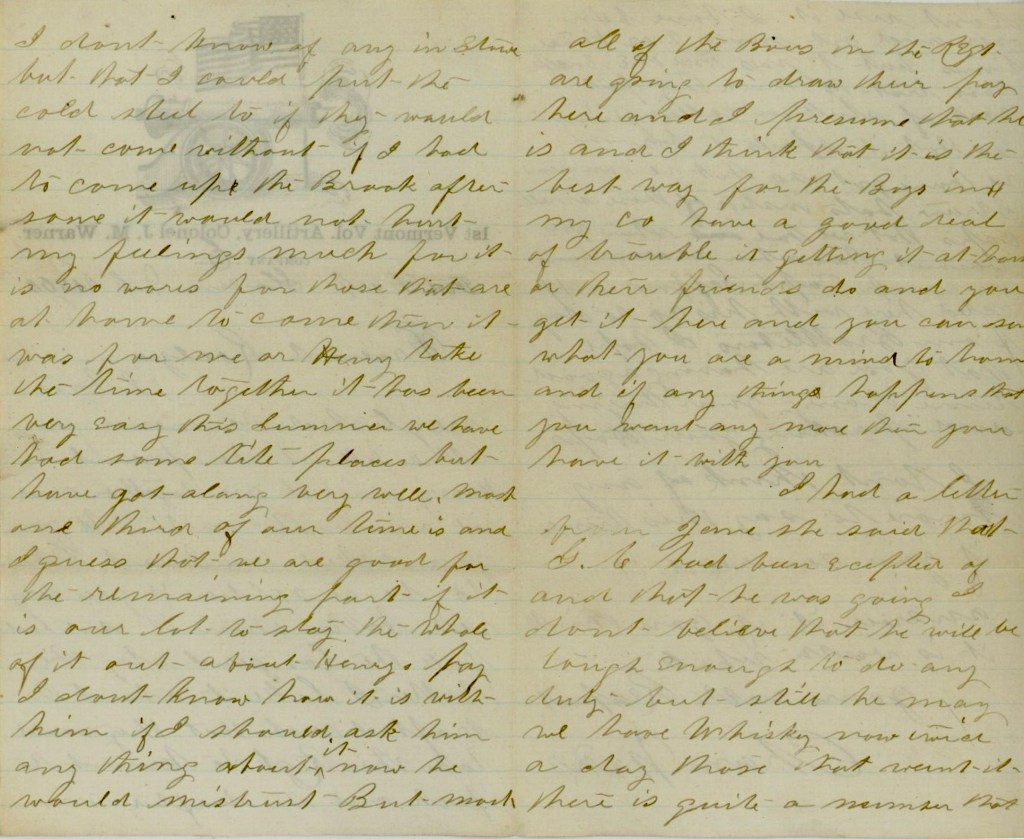
About the draft, I wish that they would take this regiment to Vermont to fetch out the drafted men. I don’t know of any in Stowe but that I could put the cold steel to if they would not come without if I had to come up the brook after some. It would not hurt my feelings much for it is no worse for those that are at home to come than it was for me or Henry. Take the time together, it has been very easy this summer. We have had some tight places but have got along very well. Most one third of our time is [up] and I guess that we are good for the remaining part if it is our lot to stay the whole of it out.
About Henry’s pay, I don’t know how it is with him. If I should ask him anything about it now, he would mistrust. But most all of the Boys in the regiment are going to draw their pay here and I presume that he is and I think that it is the best way for the Boys in my company have a good deal of trouble getting it home, or their friends do, and you get it get here and you can. So what you are a mind to home and if anything happens that you want any more, then you have it with you.
I had a letter from Jane. She said that G. C. had been accepted of and that he was going. I don’t believe that he will be tough enough to do any duty but still he may. We have whiskey now twice a day—those that want it. There is quite a number that don’t use it. I have been over and got mine two or three times but I gives me the backdoor trot too much. They put a sort of stull [?] is called quinine so that it spoils it for me.
We have got so that we can wear straw hats instead of those small caps that we had when you was out here when we were around in camp Capt. Safford is expected here with his company today from Brattleboro. I hope that you are having a good time doing your haying and picking your hops.
I don’t think of any more to say this time. If you can read it, answer it if you think it is worth while. Yours with respect, — Chan. Ware
Fort Stevens August 29th [1863]
Brother Roelzo, kind sir,
I take my pen in hand to write a few lines to you. I am well at the present time and I hope this letter will find you enjoying the same health and the rest of the folks. The Stowe Boys are well with the exception of Bill. It looks a little like rain today and I hope it will make out before it gets through for we have not had any rain here for some time that has done any good.
I think we shall have to stay our time out. I can’t think of much now to write home this time but will try to do better next time About the war news, I can’t tell you. I presume you know about the war [more] than I do. If you get any news about anything, write and tell me. This from your brother, — Henry Warren
Tell my folks that I am well and that that Battery &c, have got here. Tell Father Cheney’s folks that Henry said today that Bill is not as well as he has been or was when…
The following letters were written by Arthur Kelty Cleeland (1844-1862), the son of John Cleeland (1811-1909) and Elizabeth (“Betsy”) Morrison of Portersville, Butler county, Pennsylvania
It was the 3rd of September, 1861, when 17 year-old Arthur enlisted as a private in Co. F, 83rd Pennsylvania Infantry. He died at Harrison’s Landing, Virginia, on 5 August 1862. His remains lie under grave no. 47 in Section of the Glendale National Cemetery.
“The 83rd Pennsylvania was officially organized in the late summer of 1861 after the Union defeat at the Battle of First Bull Run and was composed of men from northwestern Pennsylvania. The regiment arrived in Washington City on September 20, 1861, where they received their uniforms and old Harper’s Ferry firearms. On October 1, the regiment crossed the Long Bridge into Virginia, spent a few days at Arlington Heights, and then moved a few miles west to Hall’s Hill where they joined the Third Brigade of General Fitz-John Porter’s Division of the Army of the Potomac. New Springfield rifles replaced the old firearms. The 83rd trained and drilled for five and a half months at Hall’s Hill during the winter and early spring of 1861-1862.” (Source: Amos Judson, History of the 83rd Regiment Pennsylvania Volunteers, 1865).
The 83rd Pennsylvania was a participant in the Peninsula Campaign and fought in the Seven Days Battles, most notably at Gaines’ Mill on 27 June 1862 where they suffered significant casualties. Many men not suffering casualties fell ill during the campaign—one of whom was Arthur.
[Note: The following letters are from the personal collection of Greg Herr and were offered for transcription and publication on Spared & Shared by express consent.]
Letter 1
October 15, 1861
Dewar Parents,
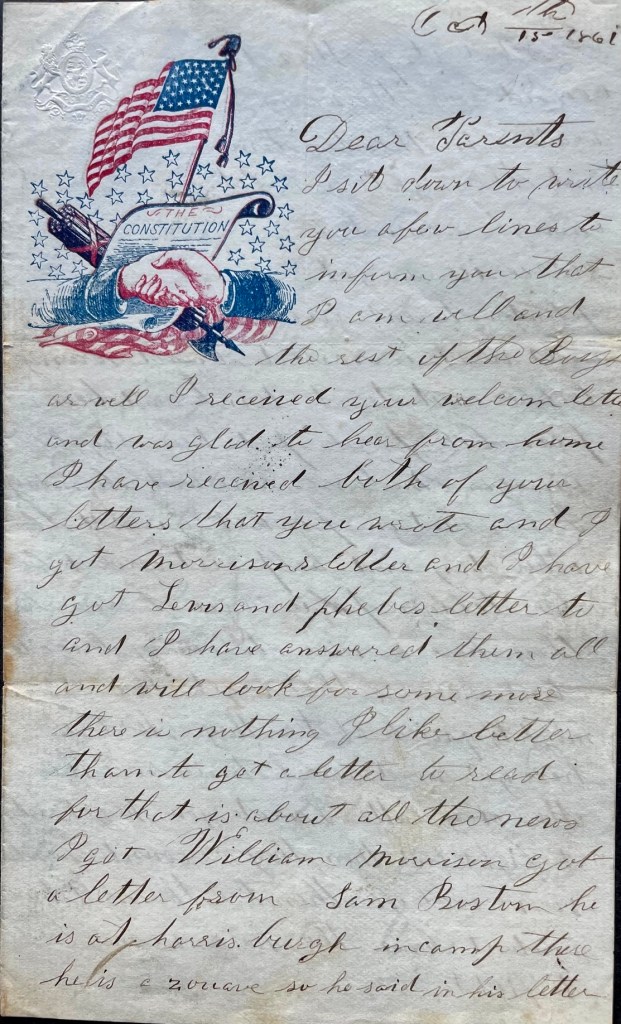
I sit down to write you a few lines to inform you that I am well and the rest of the boys are well. I received your welcome letter and was glad to hear from home. I have received both of your letters that you wrote and I got Morrison’s letter 1 and I have got Lewis and Phebe’s letter too and I have answered them all and will look for some more. There is nothing I like better than to get a letter to read for that is about all the news I get. William Morrison got a letter from Sam Boston. He is at Harrisburg in camp there. He is a Zouave, so he said in his letter.
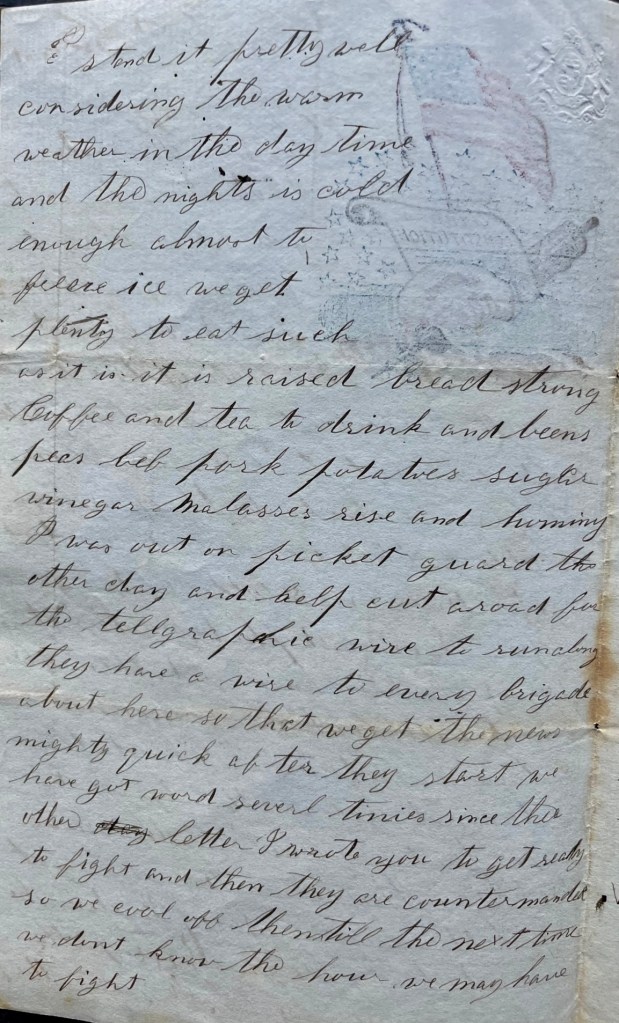
I stand it pretty well considering the warm weather in the day time and the nights is cold enough almost to freeze ice. We get plenty to eat, such as it is. It is raised bread, strong coffee and tea to drink, and beans, peas, beef, pork, potatoes, sugar, vinegar, molasses, rice, and hominy.
I was out on picket guard the other day and help cut a road for the telegraphic wire to run along. They have a wire to every brigade about here so that we get the news mighty quick after they start. We have got word several times since the other letter I wrote you to get ready to fight and then they are countermanded so we cool off then until the next time. We don’t know the hour we may have to fight.
Wm. Morrison Cleeland wearing his VRC Uniform
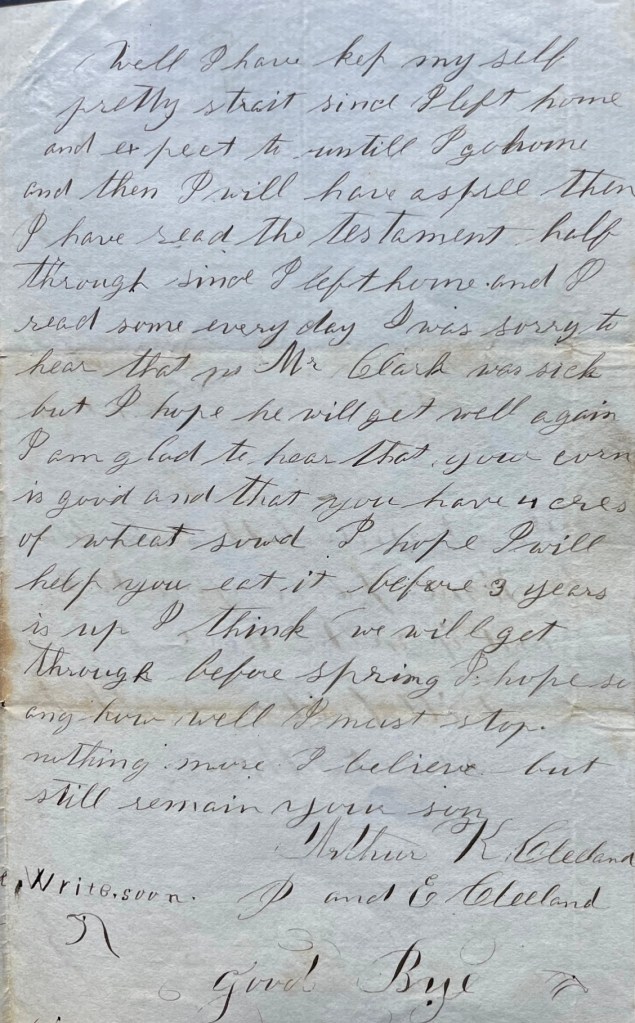
Well, I have kept myself pretty straight since I left home and expect to until I get home and then I will have a spree then. I have read the testament half through since I left home and I read some every day. I was sorry to hear that Mr. Clark was sick but I hope he will get well again. I am glad to hear that your corn is good and that you have 4 acres of wheat sowed. I hope I will help you eat it before three years is up. I think we will get through before spring. I hope so anyhow. Well, I must stop. Nothing more I believe but still remain your son, — Arthur K. Clelland
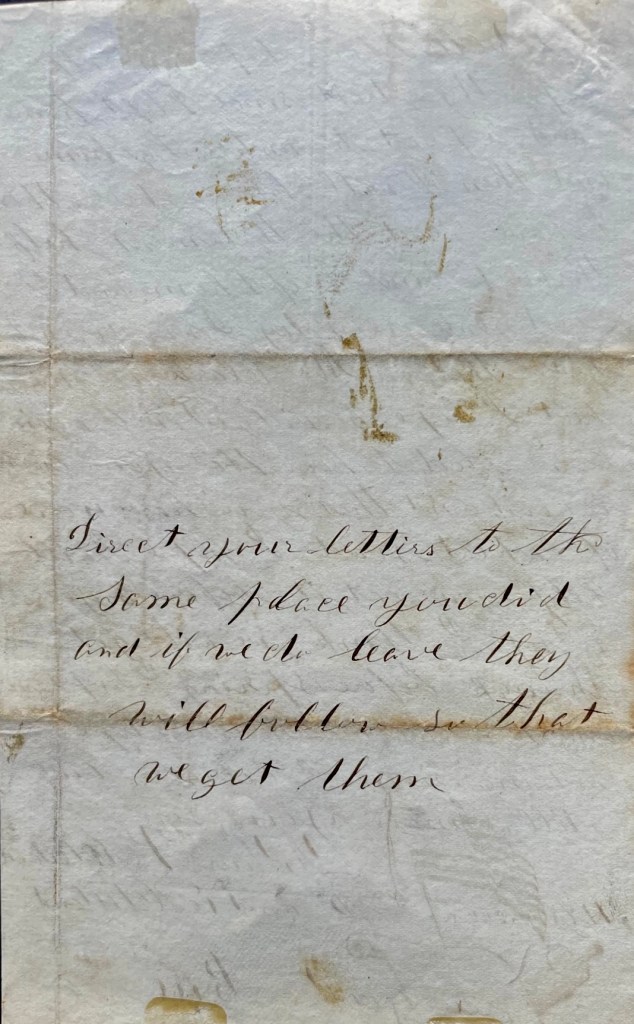
Write soon. Goodbye. Direct your letters to the same place you did and if we do leave, they will follow so that we get them.
[to] J. and E. Clelland
1 William Morrison Cleland (1838-1920) was Arthur’s older brother. He too served in the Union army—enlisting in Co. G, 155th Pennsylvania Infantry in August 1862. He was transferred to the VeteranReserve Corps in July 1863 after he injured his right foot leaping off a railroad car.[See William M. and Arthur K. Cleeland]
Letter 2
Dear sister,
I received your kind letter the 20th of this month which I perused with much pleasure. Well, Maria, here is the stars and stripes a little plainer that that flag of yours. You must try and raise better flag than that. Well, we are still here yet and how long we will stay, I don’t know. I am well and in good spirits and feel like fighting very much. The company was all measured the other day and I measured 6 feet and one inch. I stretched one inch and a half since I left home. Tell [brother] Morrison that I am the biggest man.
Well, that news about Fort Sumter being taken and Charleston being bombarded I guess is not so (but I wish it was). Yesterday we had a big review of about 75 thousand men of war besides about 25 thousand spectators. I tell you, it was a sight to see about 100 thousand all in one field of 6 or 7 hundred acres. Well, nothing more about that.
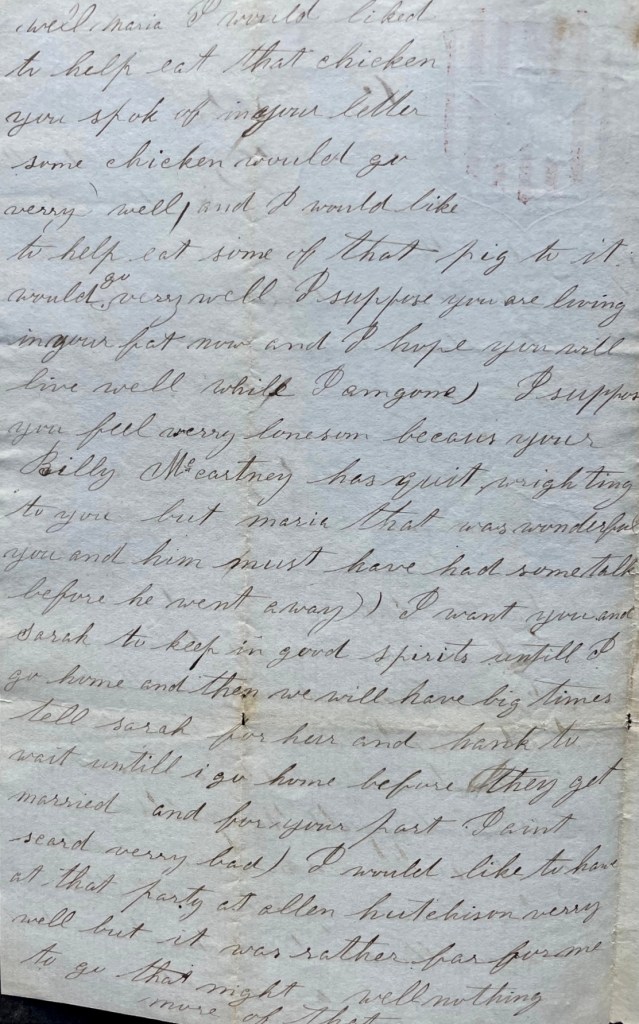
Well, Maria, I would liked to help eat that chicken you spoke of in your letter. Some chicken would go very well and I would like to help eat some of that pig to it would go very well. I suppose you are living in your fat now and I hope you will live well while I am gone. I suppose you feel very lonesome because your Billy McCartney has quit writing to you. But Maria, that was wonderful. You and him must have had some talk before he went away. I want you and Sarah to keep in good spirits until I go home and then we will have big times. Tell Sarah for her and Hank to wait until I go home before they get married and for your part, I ain’t scared very bad. I would like to have [been] at that party at Allen Hutchinson’s very well but it was rather far for me to go that night. Well, nothing more of that.
Well, [we] have not got our pay yet but expect to get it this week and we are to get a new suit of Zouave uniform this week and then we will be about right. When I get my money, I will get my picture taken and send it home to father and mother. I expect I will get it taken on copper plate and then I can send it in a letter and it won’t cost much.
That poetry you composed done very well considering who done it. Now I will write a few lines in poetry shape. This is the first verse.
Home again, home again From a foreign shore, And oh, it fills my sole with joy To meet my friends once more.
Here I dropped the parting tear To cross the ocean foam, But now I am once again with those Who kindly greet me home.
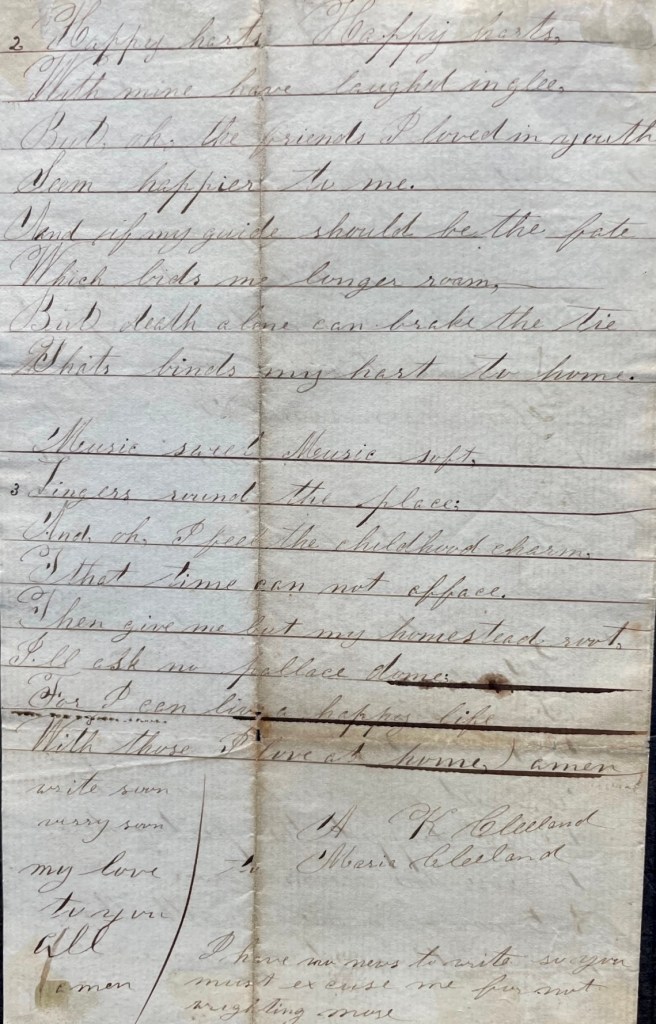
2. Happy hearts, happy hearts With mine have laughed in glee, But oh the friends I loved in youth Seem happier to me.
And if my guide should be the fate Which bids me longer roam, But death alone can break the tie That binds my heart to home.
3. Music sweet, music soft, Lingers round the place, And oh, I feel the childhood charm That time cannot efface. Then give me but my homestead root I’ll ask no palace dome, For I can live a happy life With those I love at home. Amen. 1
— A. K. Cleeland
[to] Maria Cleeland
Write soon. My love to you all. Amen. I have no news to write so you must excuse for not writing more.
1 “Home again, Home again, from a foreign shore” was a tune composed by Marshall Spring Pike (words & music) in 1850. It was published in Boston but dedicated to Lizzie C. Oakes of Charleston, S. C.—the city that Arthur was sorry to hear had not been bombarded.
Letter 3
McLane’s Regiment Camp at Hall’s Hill December 18, 1861
Dear Sister,
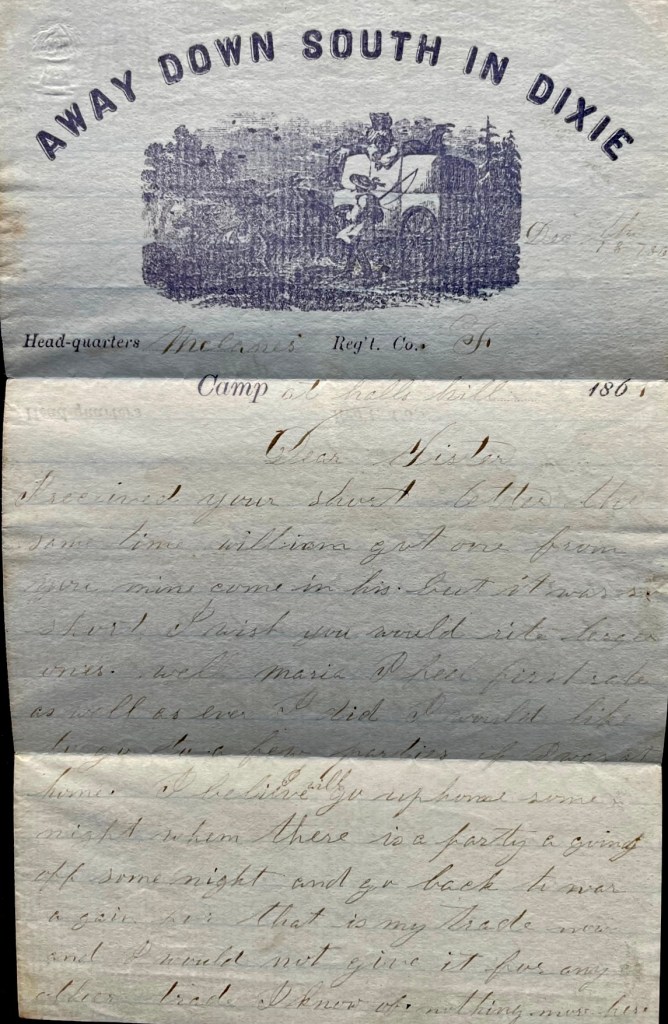
I received your short letter the same time William got one from you. Mine come in his but it was so short I wish you would write larger ones. Well, Maria, I feel first rate as well as ever I did. I would like to go to a few parties if I was at home. I believe I will go up home some night when there is a party a going off some night and go back to war again for that is my trade now and I would not give it [up] for any other trade I know of. Nothing more here.
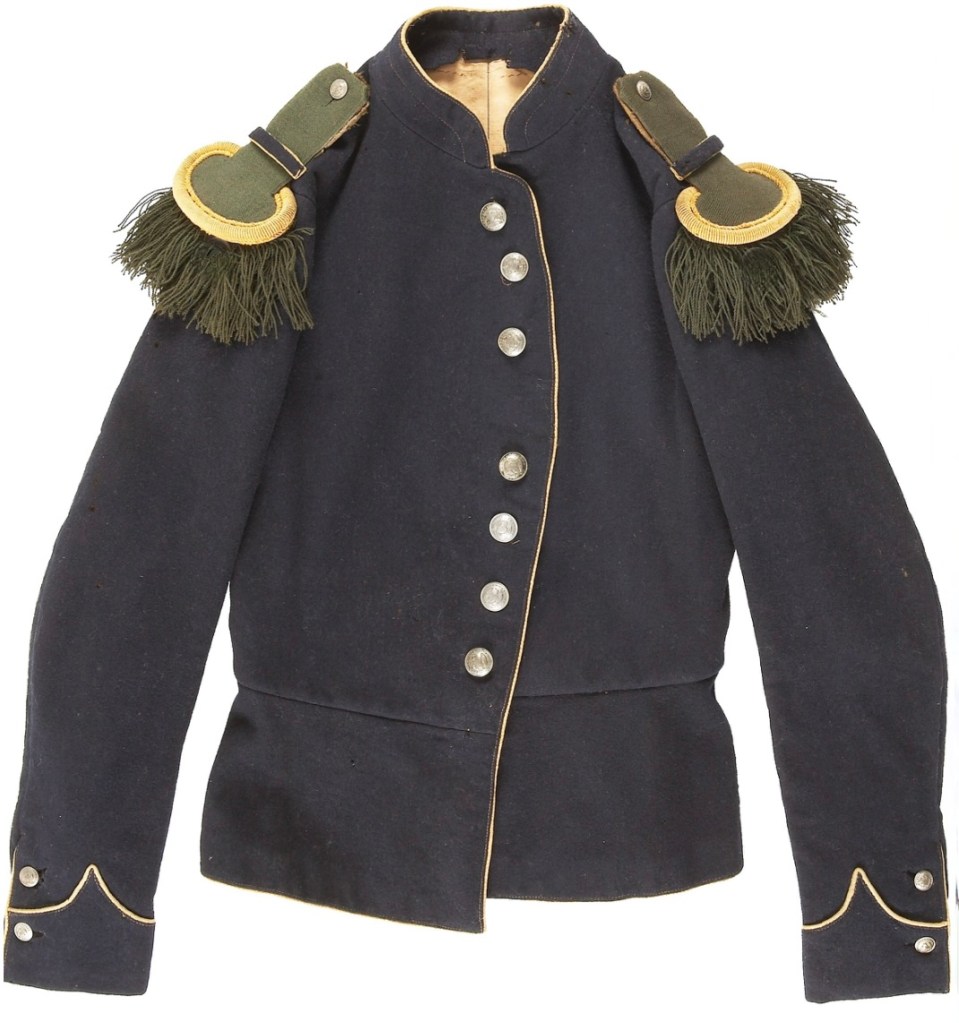
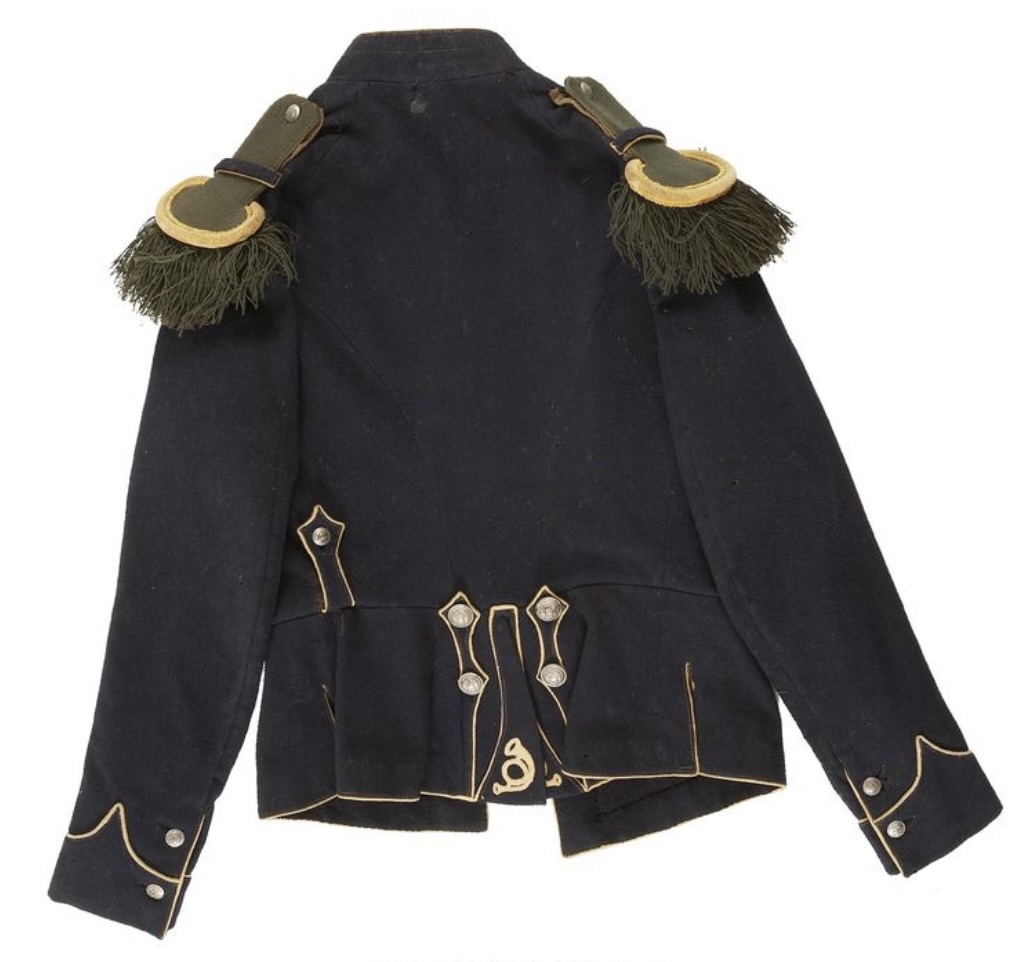
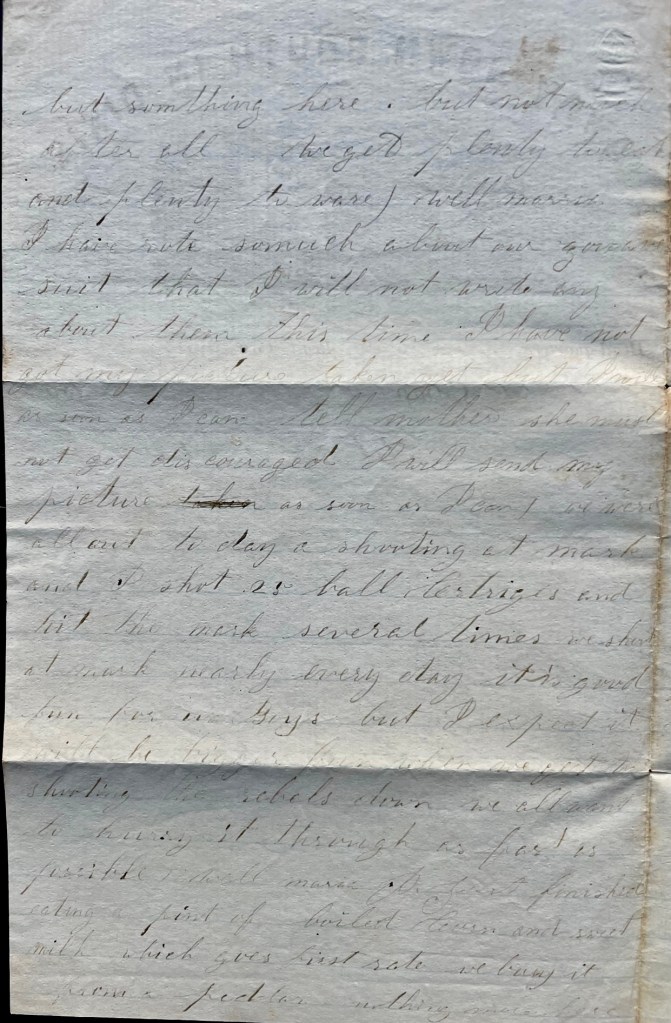
But something here—but not much after all. We get plenty to eat and plenty to wear. Well, Maria, I have wrote so much about our Zouave suit that I will not write any about them this time. I have not got my picture taken yet but I will as soon as I can. Yell mother she much not get discouraged. I will send my picture as soon as I can.
The French Chasseur Jacket issued to the 83rd Pennsylvania in 1861-62.
We were out all day a shooting at mark and I shot 25 ball cartridges and hit the mark several times. We shoot at marks nearly every day. It is good fun for us Boys but I expect it will be bigger fun when we get to shooting the rebels down. We all want to hurry it through as fast as possible.
Well, Maria, I just finished eating a pint of boiled corn and sweet milk which goes first rate. We buy it from a pedlar. Nothing more here.
But maybe I can write some more here. Well, Maria, I have shaved all my whiskers off but a few on the point of my chin and they are one inch long. The weather is very nice and warm. We have got a little stove in our tent and it keeps us all warm. I think we can winter here first rate.
Well, Maria, Bill Ayers is bothering me so that I can’t write and I just told him to wait until I got done writing and then I would pay him off but he is gone now and I will finish my letter. We are all Bad Boys in this tent and we are all well. Nothing more, I believe. But write soon and write a big letter. Now I have to drill. Goodbye. I remain your brotther, — A. K. Cleeland
[to] Maria Cleeland
Letter 4
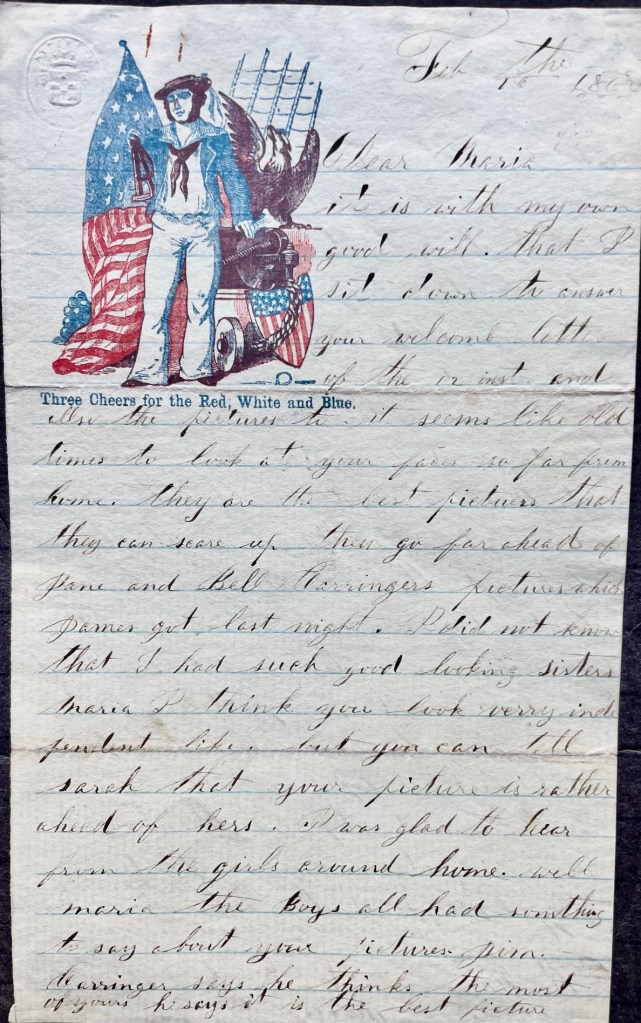
Letterhead Image on Arthur’s Stationery
McLane’s Regiment Camp at Hall’s Hill December 23rd 1861
Dear Parents,
I take pleasure in writing you a few lines to let you know how I am getting along. I am well and hope these few lines will find you in the same state of health. The rest of the Perry boys is well at present.
Well, father, we had a big review the 21st of this month. We had our new suits on and it looked very well. There was about 12 thousand infantry and two thousand of cavalry and 3 or 4 thousand of artillery and all together made quite a show and one of our United States Senators presented to our regiment a new flag which was a nice one and he presented one to Colonel Black’s regiment. We was reviewed by Gen. McClellan. We marched in columns before him once in common time and once in double quick time. We have big times here.
Well, mother, I have sent you my picture. It got it taken sitting. I thought it would look better for I seen some that was standing and they [were not very well taken so I got mine taken sitting. You will take notice to my whiskers on each corner of my chin. I have shaved off but a little on my chin. I did think they would not take but they did. You will see my hat and plume on my knee and my watch chain on my side and you will see fight in my eye, This is our dress coat and hat.
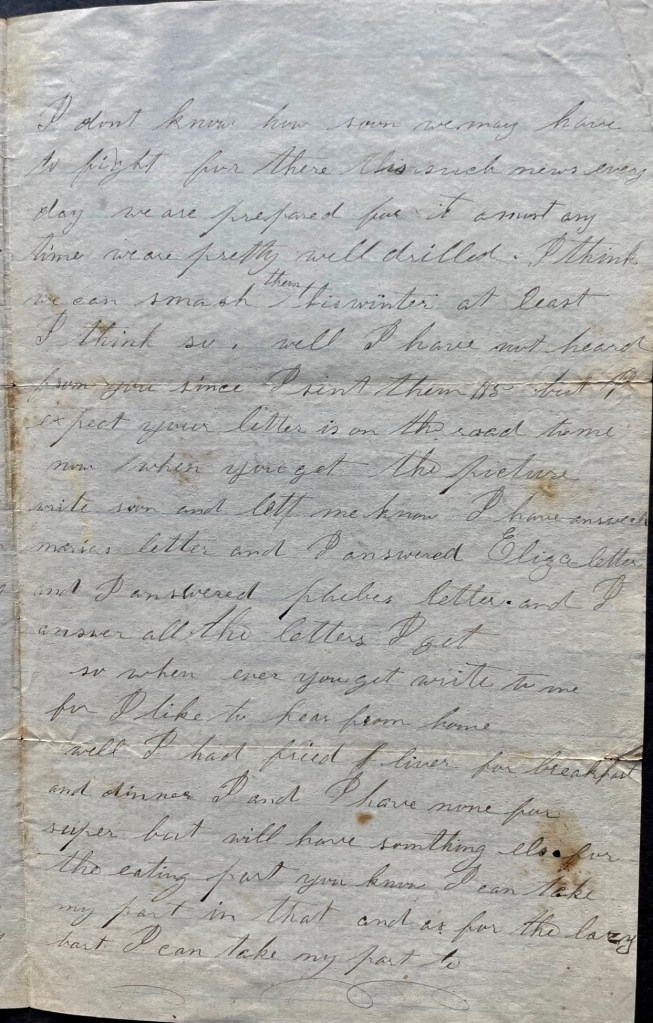
I do not know how soon we may have to fight for there is such news everyday. We are prepared for it amost any time. We are pretty well drilled. I think we can smash them this winter—at least I think so. Well, I have not heard from you since I sent them $5 but I expect your letter is on the road to me now. When you get the picture, write soon and let me know. I have answered Maria’s letter and I answered Eliza’s letter and I answered Phebe’s letter and I answer all the letters I get. So whenever you get [one], write to me for I like to hear from home.
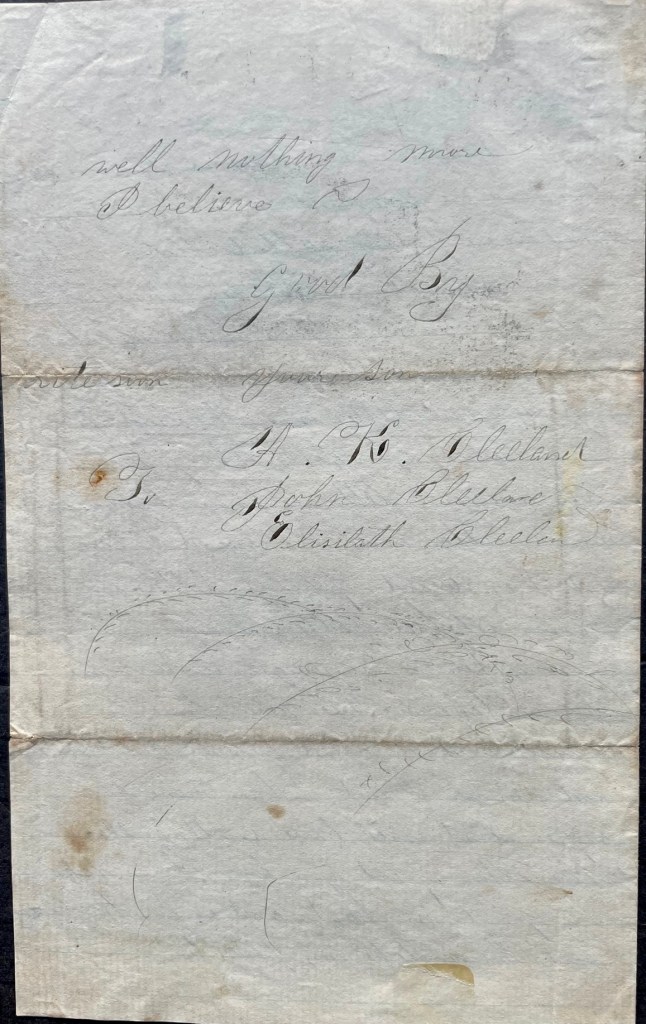
Well, I had fried liver for breakfast and dinner. I have none for supper but will have something else for the eating part. You know I can take my part in that and as for the lazy part, I can take my part too. Well, nothing more I believe. Goodbye. Your son, — A. K. Cleeland
To John Cleeland and Elizabeth Cleeland
An image of an unidentified member of the 83rd Pennsylvania wearing the French Chasseur Jacket (Doc Krausz Collection, shared on Civil War Faces)
Letter 5
February 16th 1862
Dear Maria,
It is with my own good will that I sit down to answer your welcome letter of the 12th inst. and also the pictures too. It seems like old times to look at your faces so far from home. They are the best pictures that they can scare up. They go far ahead of Jane and Bell Carringer’s pictures which James got last night. I did not know that I had such good-looking sisters. Maria, I think you look very independent like. But you can tell Sarah that your picture is rather ahead of hers. I was glad to hear from the girls around home. Well, Maria, the Boys all had something to say about your picture. Jim Carringer says he thinks the most of yours. He says it is the best picture.
Well, I am well indeed. I fill first rate. I never had such good health before. I believe I could eat about a bushel of good things. The Boys is all well.
The weather is pretty cold today. I was on guard last night and I came off of guard this morning at 9 o’clock. Well, Maria, I have 7 letters to answer today and tomorrow and I will have [to] cut them off short by the tail. I will write Sarah a few lines on the other half sheet and then I will have to answer that letter Slemens wrote. It is an old buster. When you write, I want you to tell me how much your pictures cost. I was sorry to hear that Clinton was sick but I hope he will get better. Well, I must stop. I thank you very much for the picture. You must excuse me for not writing more for I will send two more home besdies this. Nothing more. I remain your brother, — A. K. Cleeland
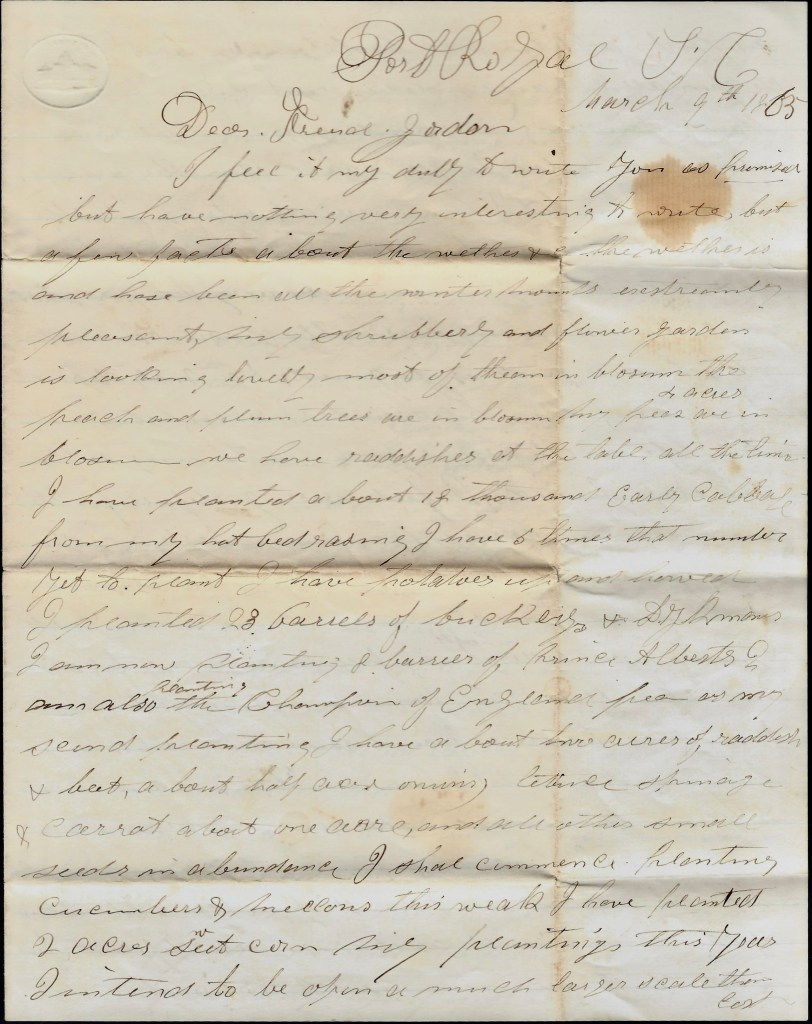
I believe the following letter to have been written by William S. Cloke (1812-1894), a native of England, who was residing in Marlboro, Monmouth county, New Jersey and working as a storekeeper prior to the Civil War. He was married to Emma Philpot (1816-1898) in 1834. There are too few clues in the letter for me to confirm the author’s identity. Readers are referred to the Port Royal Experiment for more information about the government operated plantations at Port Royal Island.
Whomever it was that wrote this letter appears to have been employed by one of the largest plantation owners on Port Royal Island, whom he referred to as the “doctor.” Though not named, the wealthy physician may have been Dr. William I. Jenkins, a Beaufort planter whose real estate value topped $40,000 and whose personal property exceeded $90,000 at the time of the 1860 Census. His Beaufort home was confiscated and turned into a hospital during the Federal occupation.
Transcription
Port Royal, South Carolina March 9, 1865
Dear Friend Jordan
I feel it is my duty to write you as promised but have nothing very interesting to write but a few facts about the weather &c. The weather is and has been all the winter months extremely pleasant and shrubbery and flower garden is looking lovely. Most of them in blossom. The peach and plum trees—4 acres—are in blossom. We have radishes at the table all the time. I have planted about 18 thousand early cabbages from my hot bed raisings I have 5 times that number yet to plant. I have potatoes up and hoed. I planted 23 barrels of buckeyes and [ ]. I am now planting 8 barrels of Prince Alberts and also planting the Champion of England pea as my second planting. I have about two acres of radish & beet, about half acre onions, lettuce, spinach, and carrot about one acre, and all other small seeds in abundance. I shall commence planting cucumbers and melons this week. I have planted two acres sweet corn [ ] plantings this year. I intend to be open a much larger scale than last as my additional profits will be 5 percent over all. I raise independent of $50 for [ ] standing wages. Therefore, I shall raise open a trifle larger scale that the Jersey gardeners, but I have every advantage, plenty of the best manure from the entrenchments free, and all the help I need and everything as pleasant and convenient as any reasonable person can wish.
All I have to find is judgment. You may depend it is one of the pleasantest occupations of my life. All I ask is good health myself, family & friends. I feel very grateful for the many kindnesses you have bestowed upon my family, hoping yourself, lady, and family will long enjoy health and happiness. I never was better in health, being free from many trials and difficulties that formally was my lot to bear. You will please as you pass my house let my family know that I have written to you as I have not written to them this month. Also remember me to all friends as I have no enemies that I am aware of (I hope not). I suppose I must give you a little account of the contrabands as it is so very different from what the Jersey men used to anticipate by saying that freeing the Negro would overflow the North when the fact is, although after taking Savannah and Charleston, we and the planters generally would be good to get thousands more for our small island, the northern planyer cultivates three times the amount of acres that the southern planter did and plants different articles that requires more help. One thing surprises me—the negro just from bondage is indolent, independent, and very much more ignorant than I expected them to be. I have a hard task to teach them to perform their work in a proper manner.
The Dr., my employer, is a very sociable and reasonable man. I have sole control of all management with no hindrance. We have the best of living and I joined in the best society. The Dr. and myself & General Litchfield were out dingle horse riding together on Sunday. I have visited several islanders & find some uninhabited but very fine plantations not under cultivation at present. I have many offers of large wages. I had one where [ ] to superintend and raise vegetables, any amount of acres of good land and half the produce finding nothing myself and my board. Found in all probability I could raise from five to 6 or 8 thousand dollars the half of which would belong to me. It is a great temptation but I cannot leave the Dr. as he is so honorable a man and he promises to satisfy me if my percentage is not sufficient and I feel quite safe under his promises and I can stay with him as long as I think fit as he owns the plantation and the other planters leave from the government yearly and no certainty how long that will last. At the same time, I know in justice to myself and family I ought to accept an offer that would if I were at all fortunate make me in one year I raised last year four thousand dollars for the Dr. open a small scale to what I now have the opportunity of doing. I have a good early start and plenty of good cleared land to plant. I shall probably get $1,000 as I am and feel I have done my duty by the Dr.
I hope you will answer this part of this letter and give me your opinion upon the subject. Perhaps I shall read yours to the Dr. as he often reads his friends’ letters to me and I have never received one letter outside of my family since I have been here. Excuse the scribbling. Your sincere friend, — W. S. Cloke
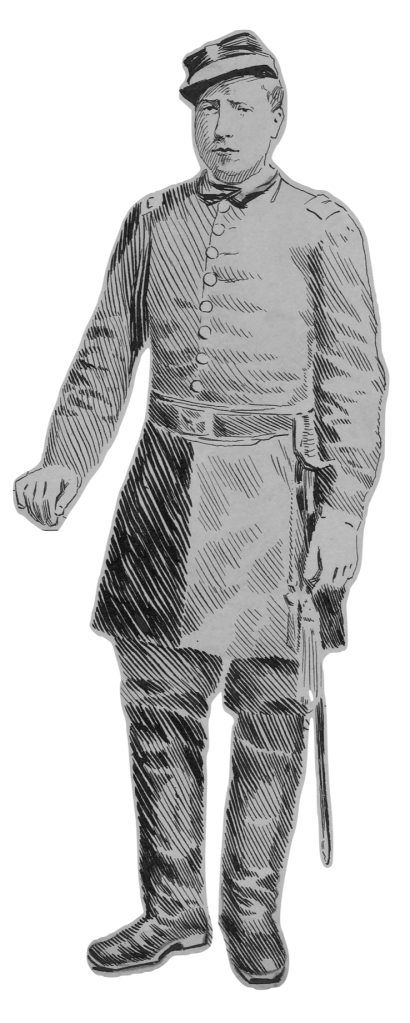
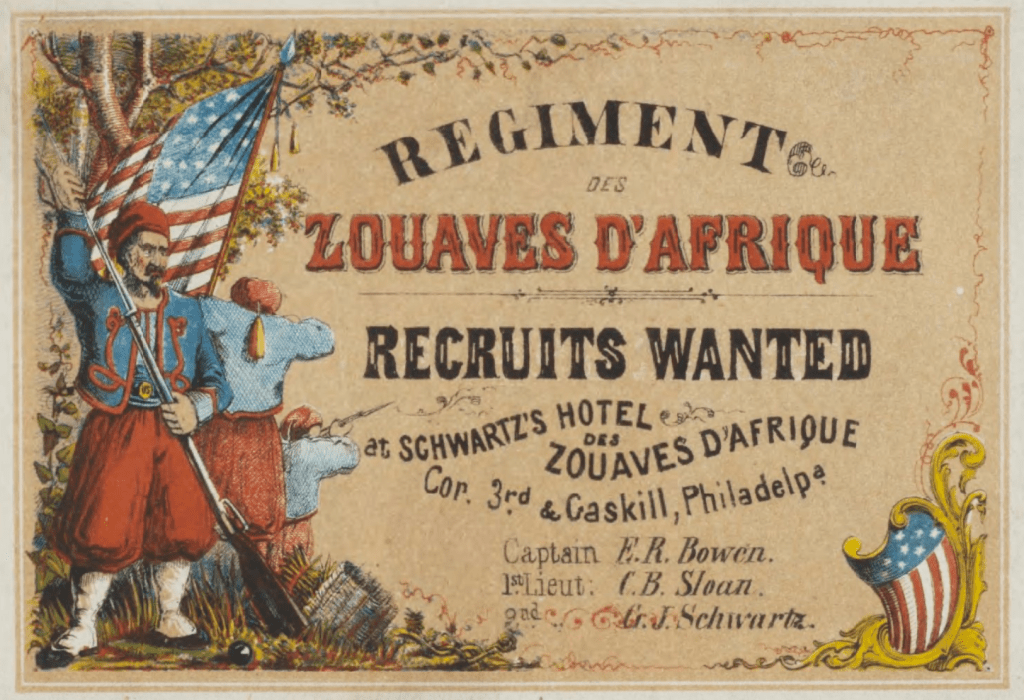
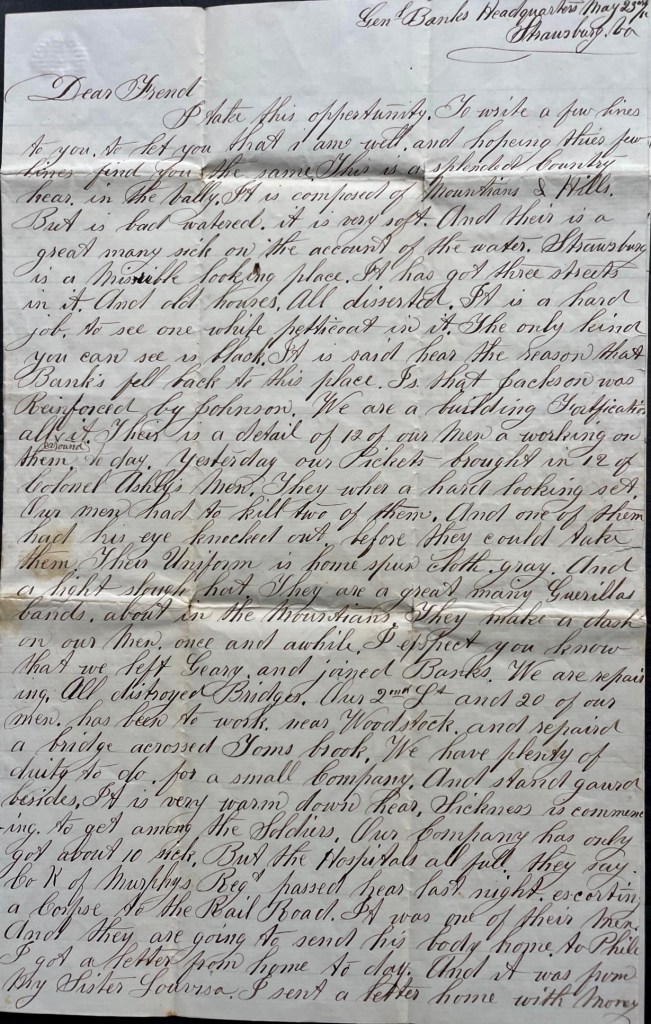
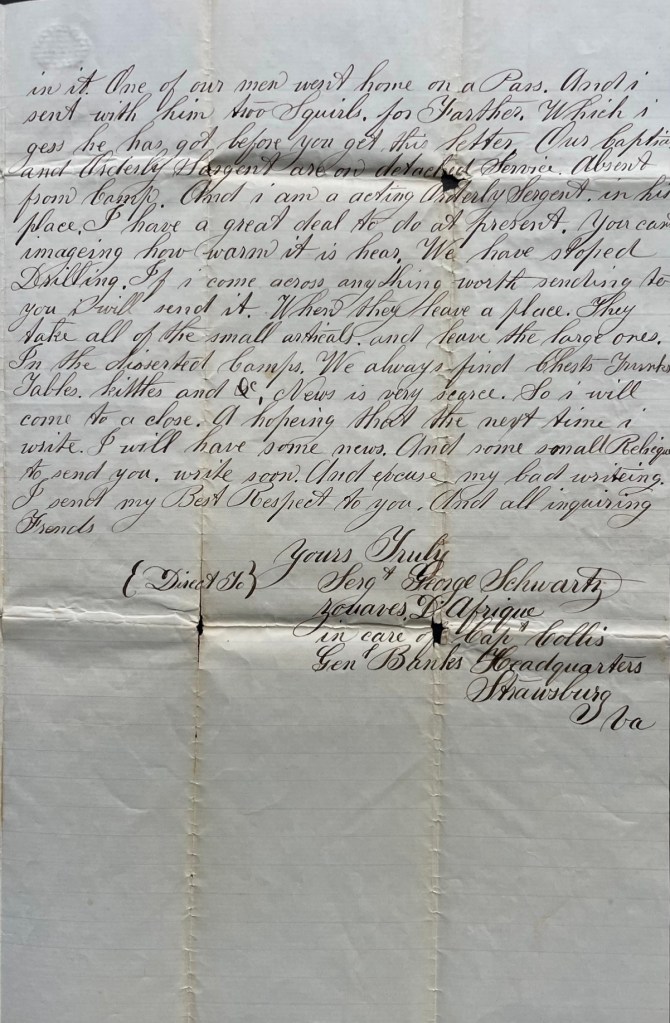
The following letter was written by George J. Schwartz (1842-1910), the son of Michael Sylvester Schwartz (1815-1894) and Margaretha Beck (1823-1859) of Philadelphia, who first enlisted in 1861 as a private in Co. C 18th Pennsylvania Infantry (3-months) and then reenlisted in the 114th Regiment, “Collis Zouaves,” or “Zouaves d’Afrique” as Captain of Co. G. After he was seriously wounded during the Battle of Chancellorsville in May 1863, he was mustered out of the service. He was active in Keystone State politics and veteran’s organizations after the war. He can be found in business directories as a jeweler and a piano maker. His story is illustrated with an engraving that pictures him during the war, two post-war photographs and his sword. He was married in August 1863 to Anna Shaw Allen (1844-1929) of Philadelphia.
The 114th Pennsylvania Regiment was conceived by Charles H. T. Collis, an Irish immigrant who settled in Philadelphia and subsequently emerged as a distinguished lawyer. Initially, Collis organized a modest company, dubbing them the “Zouaves d’Afrique,” which served while attached to various other regiments. This unit participated in significant military engagements during the 1862 Shenandoah Valley Campaign, the Battle of Cedar Mountain, and the Battle of Antietam. The “Zouaves d’Afrique” garnered considerable admiration for their discipline and effectiveness in combat, leading to the decision to establish a full-sized regiment, designated as the 114th Volunteer Infantry. Similar to other Zouave regiments formed in major American cities, the 114th enlisted a number of immigrants who were veterans of European conflicts; however, the majority of its troops were American-born citizens from Philadelphia and its surrounding areas.
In the winter of 1862, the regiment fought in the Battle of Fredericksburg. They joined a counterattack by Robinson’s brigade of the III Corps to help General George G. Meade’s division. When the Zouaves struggled against the Confederate line, Colonel Collis took the regiment’s colors and encouraged the men. Their counterattack stalled but eventually pushed back the Confederates, saving a Federal artillery battery. For his bravery in this battle, Colonel Collis received the Medal of Honor in 1893.
Carl Röchling’s painting depicting the 114th Pennsylvania Infantry during the assault on Prospect Hill at the Battle of Fredericksburg, December 13th 1862
Transcription
[This letter is from the private collection of Greg Herr and was offered for transcription and publication on Spared & Shared by express consent.]
Gen. Banks Headquarters Strasburg, Virginia May 23rd 1862
Dear Friend,
I take this opportunity to write a few lines to you to let you [know] that I am well and hoping these few lines find you the same. This is a splendid country here in the Valley. It is composed of mountains & hills but is bad watered. It is very soft and there is a great many sick on the account of the water. Strasburg is a miserable looking place. It has got three streets in it and old houses—all deserted. It is a hard job to see one white petticoat in it. The only kind you can see is black. It is said here the reason that Banks fell back to this place is that Jackson was reinforced by Johnson. We are a building fortifications all around it. There is a detail of twelve of our men a working on them today.
Yesterday our pickets brought in twelve of Colonel [Turner] Ashby’s men. They were a hard-looking set. Our men had to kill two of them and one of them had his eye knocked out before they could take them. Their uniform is home spun cloth gray and a light slouch hat. There are a great many guerrilla bands about in the mountains. They make a dash on our men once and awhile.
I expect you know that we left Geary and joined Banks. We are repairing all destroyed bridges. Our 2nd Lieutenant and twenty of our men have been to work near Woodstock and repaired a bridge across Tom’s Brook. We have plenty of duty to do for a small company and stand guard besides.
It is very warm down here. Sickness is commencing to get among the soldiers. Our company has only got about 10 sick but the hospitals all full. They say Co. K of Murphy’s Regiment passed here last night, escorting a corpse to the railroad. It was one of their men and they are going to send his body home to Philadelphia.
I got a letter from home today and it was from my sister Louvisa. I sent a letter home with money in it. One of our men went home on a pass and I sent with him two squirrels for father which I guess he has got before you get this letter. Our Captain and Orderly Sergeant are on detached service, absent from camp, and I am acting Orderly Sergeant in his place. I have a great deal to do at present. You can’t imagine how warm it is here. We have stopped drilling. If I come across anything worth sending to you, I will send it. When they leave a place, they take all of the small articles and leave the large ones in the deserted camps. We always find chests, trunks, tables, kettles, and &c.
News is very scarce so I will come to a close a hoping that the next time I write, I will have some news and some small relic to send you. Write soon and excuse my bad writing. I send my best respects to you and all inquiring friends.
Yours truly, — Sergt. George Schwartz, Zouaves D’Afrique in care of Capt. Collis, General Banks Headquarters, Strasburg, Va.
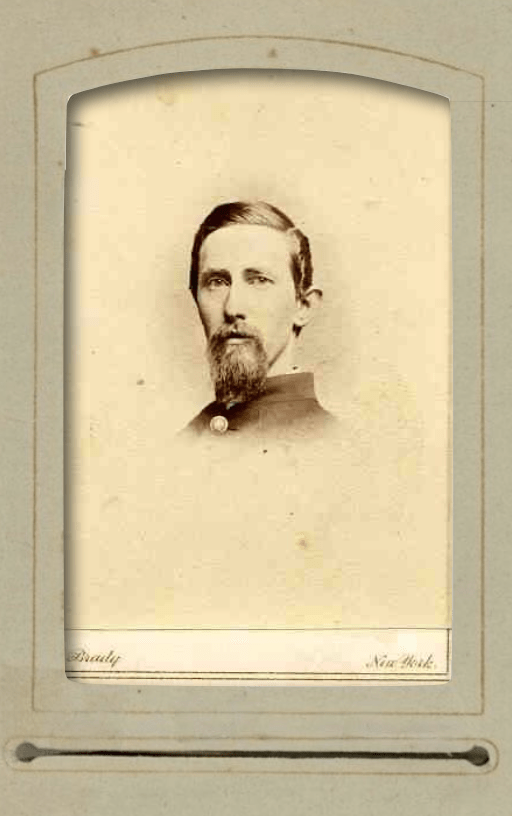
I could not find an image of Alden but here is a cdv of Tristam M. Paige who served in the same company (Dave Morin Collection)
The following letter was written by Alden F. Ballou (1842-1863), the son of Henry Ballou, Jr. (1818-1904) and Alzada Ballou (1820-1902) of Richmond, Cheshire county, New Hampshire. Alden was married to Mary B. Fisher on 25 August 1862 in Keene, just days before he enlisted for 9-month’s service in Co. I, 16th New Hampshire Infantry. Though Alden was mustered out with his company on 20 August 1863 after 11 months service, he died in Chicago on 2 September 1863. From the widow’s pension record we learn that Alden’s death was attributed to “fatigue & chronic diarrhea.” He had been in the Marine Hospital in New Orleans for some time but was redirected to Chicago on his way home where he died in the “Soldier’s Home” less than one hour after his arrival.
A deeper dive into the Pension file informs us (per Sgt. Rufus Freeman) that Alden was part of a detachment of sharpshooters detailed on the gunboat Estrella on Red River near Alexandria, Louisiana, in mid-May 1863 when he contracted the measles and was confined to the boat for 12 days. He was then returned to Fort Burton on Atchafalaya river where he was determined unfit for duty on 29 May 1863 and sent at last to the Marine Hospital in New Orleans. He arrived there on 16 June, 1863, according to the Surgeon in charge.
The Soldier’s Home in Chicago where Alden Ballou died less than an hour after his arrival on 2 September 1863.
Transcription
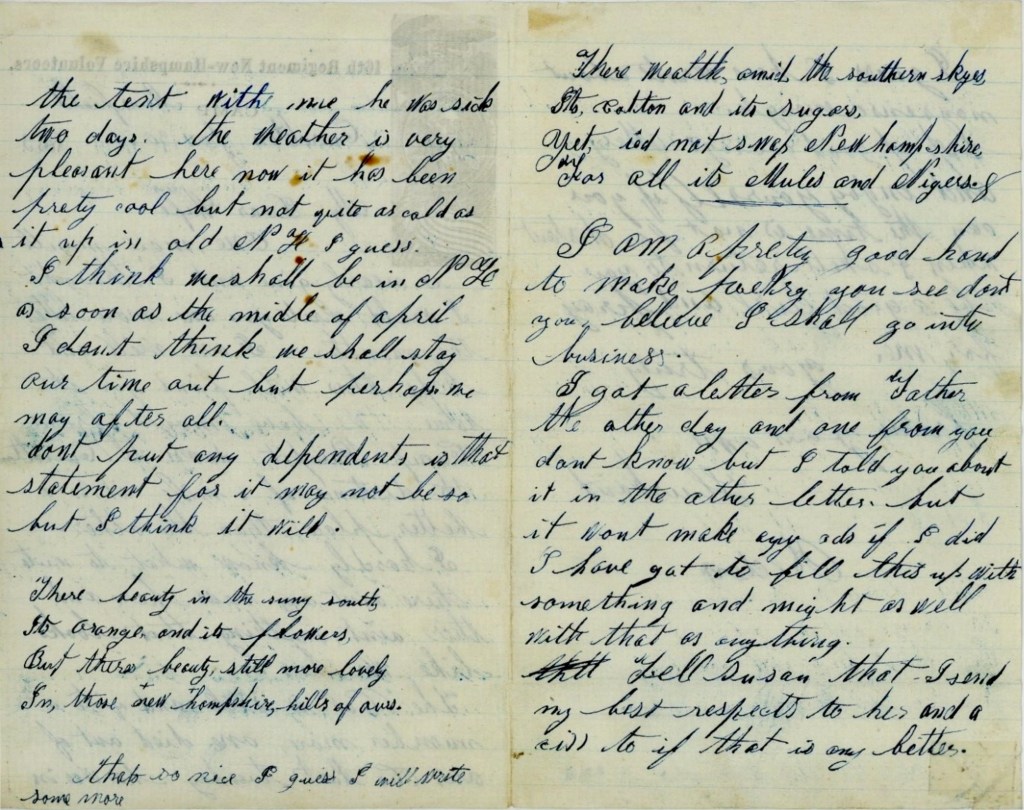
16th Regiment New Hampshire Volunteers Camp Mansfield Carrollton, [Louisiana] [Friday] January 30th 1863
My dear wife,
One more month is nearly gone and I thought I would write you one more letter this month. I am well and hope this will find you the same. We have moved from Camp Parapet down to Carrollton the distance of a mile. It is a better place than the other.
I hardly know what to write. There ain’t any news here and there ain’t anything that looks like war here. The Colonel is sick and quite a number more. One died out of our company last Tuesday [27 January 1863]. He was in the tent with me. He was sick two days.
The weather is very pleasant here now. It has been pretty cool but not quite as cold as it [is] up in old New Hampshire I guess. I think we shall be in New Hampshire as soon as the middle of April. I don’t think we shall stay our time out but perhaps we may after all. Don’t put any dependence on that statement for it may not be so, but I think it will.
There’s beauty in the sunny South It’s orange and it’s flowers, But there’s beauty still more lovely In those New Hampshire hills of ours.
That’s so nice I guess I will write some more.
There’s wealth amid the southern skies The cotton and its sugar, Yet I’d not swap New Hampshire For all its mules and niggers.
I am a pretty good hand to make poetry, you see. Don’t you believe I shall go into business?
I got a letter from Father the other day and one from you. Don’t know but I told you about it in the other letter but it won’t many ads if I did. I have got to fill this up with something and might as well with that or anything.
Tell Susan that I send my best respects to her and a kiss too if that is any better. I guess I have wrote about nonsense enough. Keep up good courage, Mary, and enjoy yourself if you can. The time is not far distant when I shall return to you. Be a good girl and pray for me. Yours truly. From your own husband, — Alden
Letter 2
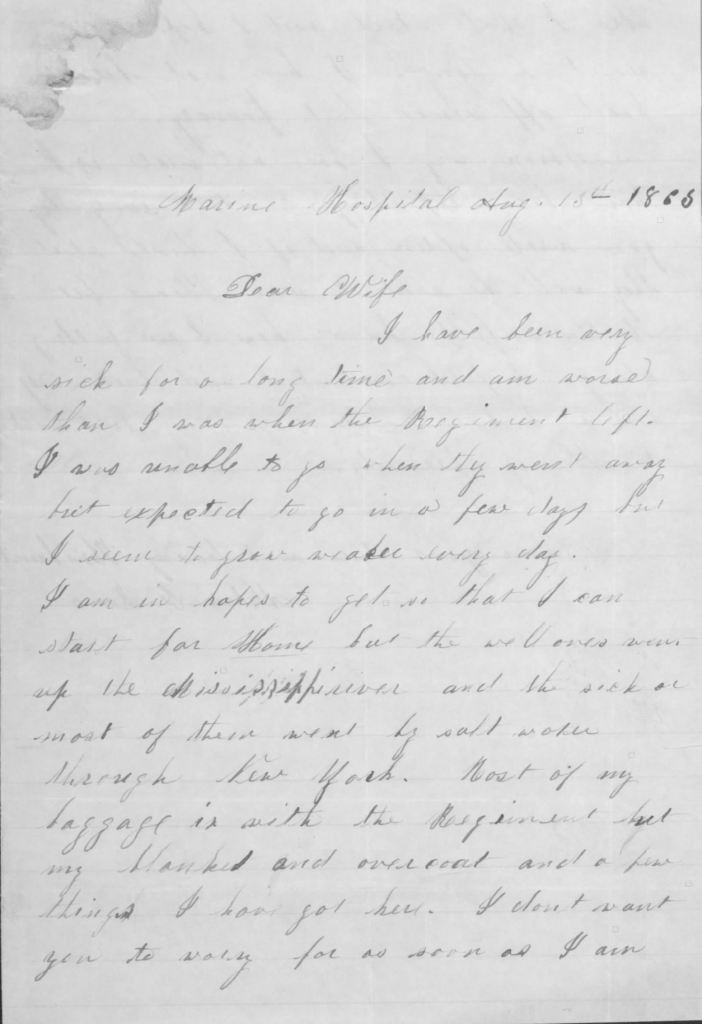
[Editor’s Note: This letter is from the Widow’s Pension File and it was handwritten by Mary B. Ballou, Alden’s widow. She claimed it to be a copy of the last letter she received from her husband. She did not want to send the original to the Pension Office for obvious reasons.]
Marine Hospital [New Orleans] August 13th 1863
Dear wife,
I have been very sick for a long time and am worse than I was when the regiment left. I was unable to go when they went away but expected to go in a few days but I seem to grow weaker every day. I am in hopes to get so that I can start for home but the well ones went up the Mississippi river and the sick—or most of them—went by salt water through New York. Most of my baggage is with the regiment but my blanket and overcoat and a few things I have got here. I don’t want you to worry for as soon as I am able, I shall start and I hope that won’t be long. I have not been paid off since last January. One reason why I have not wrote is I have been expecting to start every day. You write often and if I should start, they will be sent to me. Please let brothers folks know how I am getting along. I feel contented and don’t worry and as I have no news, give my best wishes to all my friends. From your true and loving husband, — Alden F. Ballou
The following letter was written by William Matthew Ratcliff (1833-1864), the son of William Ratcliff (1801-1895) and Lucinda Buckley (1809-1892) of Liberty, Sullivan county, New York. William was a graduate of Union College and Albany Law School in Albany, New York. He served as a lawyer and clerk for the Board of Supervisors for Sullivan County from 1857-1858. He was elected a Judge for Sullivan County on January 1, 1862. Yet, to serve his country, William joined the 143rd New York in August 1862, was commissioned 1st Lieutenant of Co. A, and was made the regimental adjutant in February 1863. He participated in the skirmishing at Suffolk and later at Lookout Valley. He was in the Battle of Chattanooga and at Dallas, Georgia. He was killed in the Battle of Peachtree Creek on 20 July 1864.
Adj. William M. Ratcliff, 143rd New York Infantry
“On July 20th, while attempting to cross Peach ‘Tree Creek, the 20th Corps was furiously assaulted by hard pressed southern forces seeking to break out of the relentless iron cordon that was enveloping them. The 143rd, having established itself on a slight elevation covered with dense underbrush, was hit three times, but refused to give ground. Failing to force back the 20th Corps, the rebel forces now began an orderly retreat toward Atlanta. The victory was not obtained without a price, for “while encouraging the line” Adjutant William Radcliffe “was shot squarely in the front of the neck and killed instantly.” He was “Beloved by everyone,’ wrote the bearer of these sad tidings, Hezekiah Watkins. “Just as I was sitting here,” continued Watkins, “a German officer of the 82 Illinois Regiment, Captain Bruen, remarks: ‘I loved that man more than anyone else in this army’ and his testimony is the testimony of everyone who knew him. If possible his body will be embalmed and sent home, if not he will be buried here with those who loved him so well.'” [page 18, Brass Buttons and Leather Boots; Sullivan County and the Civil War, by Dr. Nathan Weiss.]
Likewise, a diary kept by Isaac Jelliff of the 143rd New York contained the following entry for 20-21 July 1864—the day that Adjutant Radcliffe was killed:
July 20th Wednesday. Hot. Marched forward at 7 A.M. Crossed Peach Tree creek & passed through the Breastwork put up last night by 2nd Div. Grary – Halted behind price of woods – artillery drill – took place for short time. No loss on our side. Marched little further & rested in woods – took dinner. Heavy picket firing in front all A.M. and about noon more rapid fire and charging – Four wounded carried by – 4 P.M. still lay in woods 2nd Div. have passed by – 4 ½ heavy firing with musketry & cannon. Loud yelling – fight increases – We ordered forward in double quick. Went short distance in woods & formed line. E. & W. moved a little forward, down the slope from ridge – bushes thick. Rebels got close to us on right we thought another line of battle in front of us – thought the rebel firing was of our men. We ordered not to fire. Did not till after many of 143rd – been killed or wounded. Rebels came close to our Regt. Our line moved about 8 rods back to the ridge and reformed. The fight became desperate. Firing rapid the 143d lost the most of their men on the first line…The rebels used many explosive balls – when they would strike a bone they would burst and tear a terrible hole in the part struck.In the engagement the 2nd Division was forced back to a line with 1st Div. The battle was hard along the center line. And loss heavy. 1st Div. held its ground. Many rebels were killed & many left on field. Three killed within 2 rods of our line. One of them hit by John Wales of Co. “A”. Regt. behaved well. All feel deeply the loss of Ratcliff. He died at his post. A true soldier. A noble office.One Ball through the Flag Sergt. Morgan’s carried it. His conduct was very commendable —A perfect soldier. The right wing was heavily exposed & suffered most...
July 21 ThursdayHot.All quiet this A. M. Our pickets advanced – many dead rebels still laying in woods in front of us.Ratcliff’s body is to be embalmed and sent home. Busy bringing dead. McWilliams Co. “A” died last night. Rec’d notice H.C. Lybolt Co. B. Entered Hospt. Genl. No General engagement today. Wrote home. The 31st Wisconsin joined our Brig. 750 strong.“
There is an epitaph on Ratcliff’s gravestone that was written by him in an article prior to his death. It says; ‘There is something worse than to pay heavy taxes to support the Government – it is to have no Government, and there is something even better than to live – it is to fall in defense of all that makes life valuable.’”
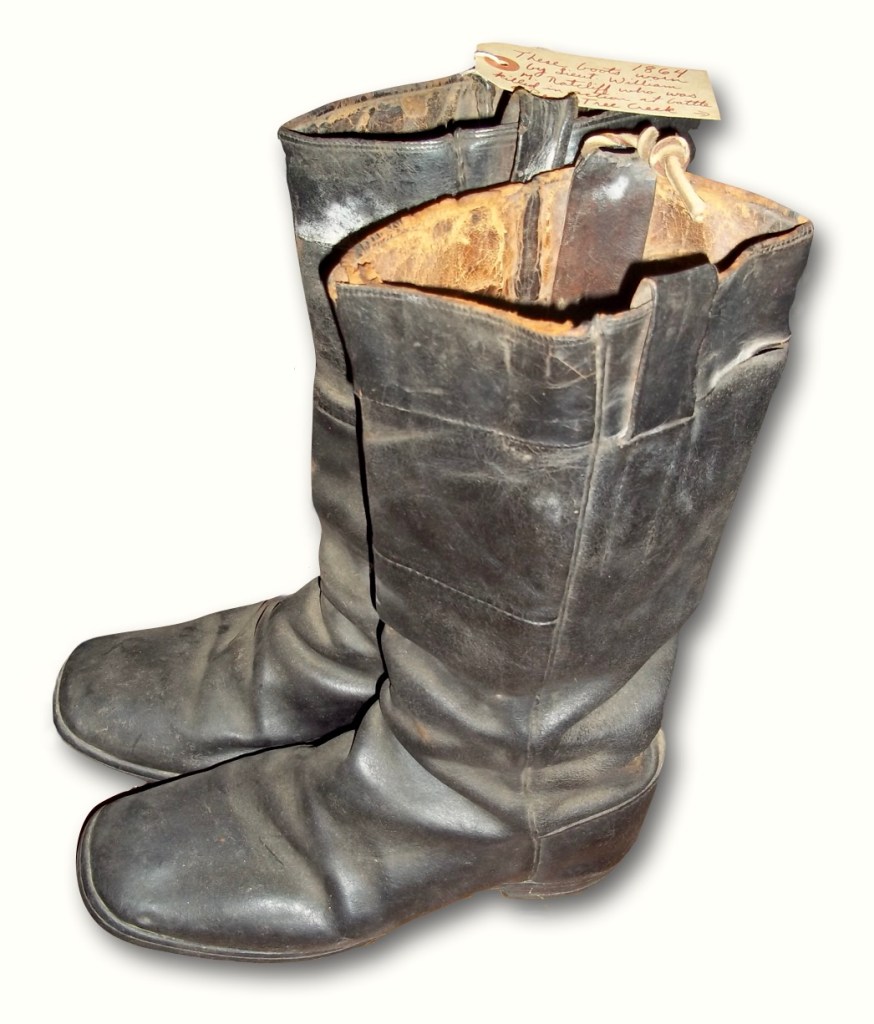
The tag on this pair of boots reads, “1864, these boots worn by Lieut. William M. Ratcliff who was killed at Battle of Peach Tree Creek” See “They Died with their Boots On.” [Museum Village]
William wrote the letter to Elias Champlin (1810-1881) of Liberty, Sullivan county, New York.
Transcription
Camp 143 Regt. N.Y.S. Vols. Near Upton Hill, Va. January 22, 1863
Elias Champion, Esq.
Dear Sir,
Yours of the 15th inst. came to hand last Tuesday while doing picket duty about eight miles from camp on the Orange & Alexandria R. R. Since returning to camp, I have carefully examined the amount of Mrs. Buckley and have also consulted the boys whom she boarded. Her claim, according to the figures sent to me, is too large. The bill as returned and certified to by me allows her all that she ought to ask, and I am satisfied with all that she is entitled to. Because the government is to pay it, there is no reason that it should be larger than if coming from a private citizen. I do not in the least suppose that you know anything of the correctness of her account.
We have had a few days of cold weather, but it has turned off warmer and I am afraid the rainy season has commenced, as it is getting time and we have had two days steady rain and it is still cloudy. The health of the regiment is generally good. The second death in the regiment at camp was Thomas Abberley—a member of our company who died [at Upton’s Hill] on the 13th inst. Captain [Ira] Dorrance [of Co. E] lost a man two or three days ago. Altogether we have sent six men from our camp to the hospital at Washington. Of these, three have returned to duty, one regularly sent back, and two skedaddled from Convalescent Camp and joined us because they fared better in camp with the regiment than at the Convalescent Camp.
We have exchanged our old muskets for the Springfield Rifle, considered the best piece in the service. The Colonel [David P. Dewitt] effected the exchange without going to our Brigadier and he was much surprised to learn that we had them, as we are the only regiment in the brigade furnished with them.
How is the Fire Co.? I must make arrangements with someone to keep me up on dues. Remember me to all friends. Yours very truly, — Wm. M. Ratcliff
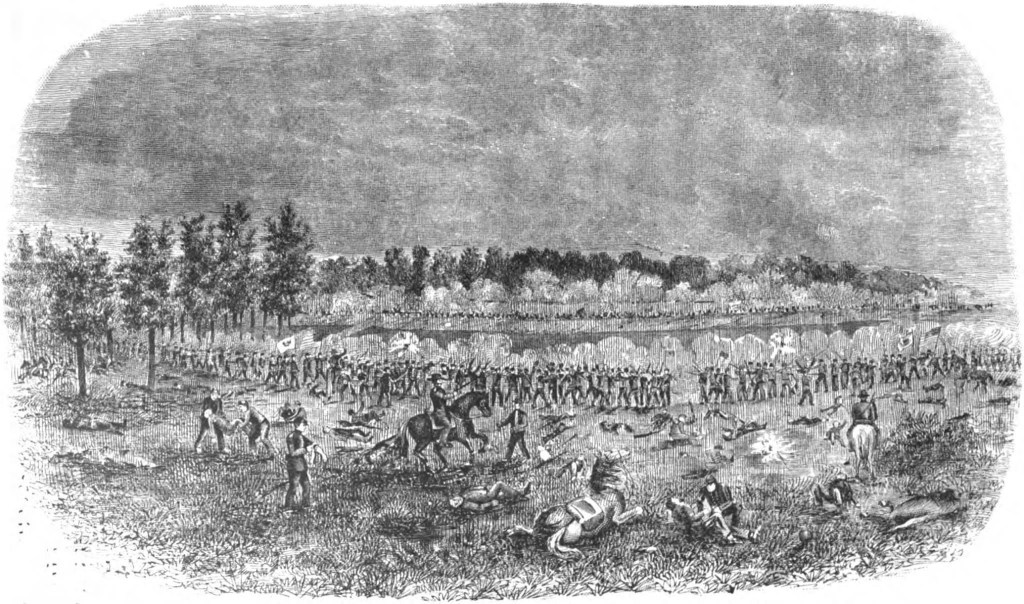
The following brief letter was written by Pvt. John L. Henry who mustered into Co. K (later transferred to Co. I) of the 123rd Ohio Volunteer. Infantry (OVI) in September 1862. Joining him in the same company was his older brother William B. Henry. The letter was penned in Winchester, Virginia, where the regiment was garrisoned under the command of Gen. Milroy from early March until June 1863 when they were attacked by Gen. Ewell’s columns in the 2nd Battle of Winchester on 13 June. After fighting two days, Milroy abandoned his fortifications and retreated but more than 2400 Federals were taken prisoner. For the Henry brothers and the 123rd OVI, the 2nd Battle of Winchester was their first engagement. William was wounded on the 15th and died on the 18th at Winchester. John was taken prisoner on the 15th and paroled a month later. He survived the war, mustering out at Camp Chase on 12 June 1865.
2nd Battle of Winchester, June 13-15, 1863
Transcription
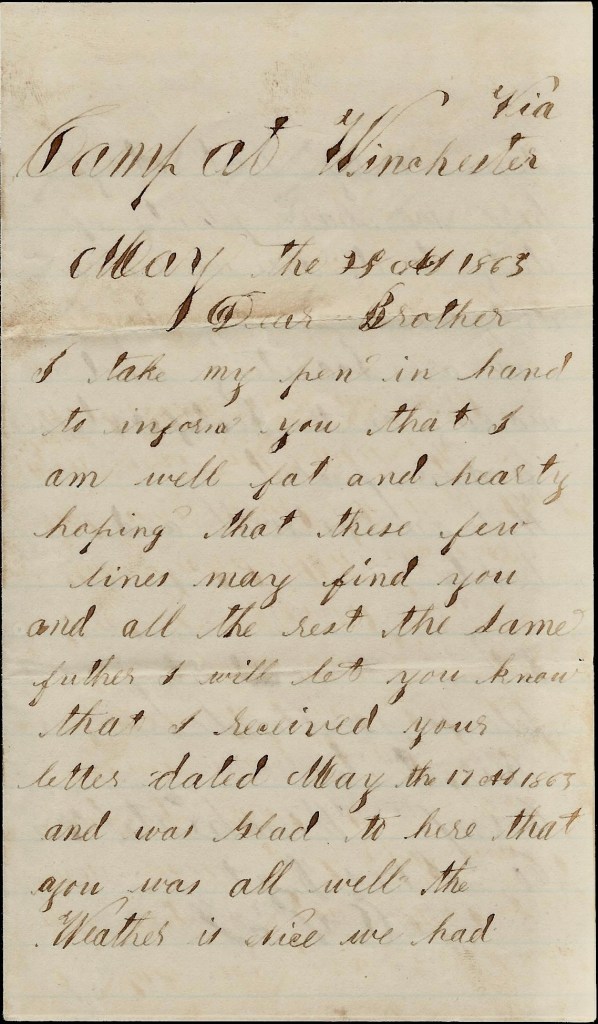
Camp at Winchester, Va. May 28th 1863
Dear Brother,
I take my pen in hand to inform you that I am well, fat and hearty, hoping that these few lines may find you and all the rest the same. Further, I will let you know that I received your letter dated May the 17th 1863 and was glad to hear that you was all well.
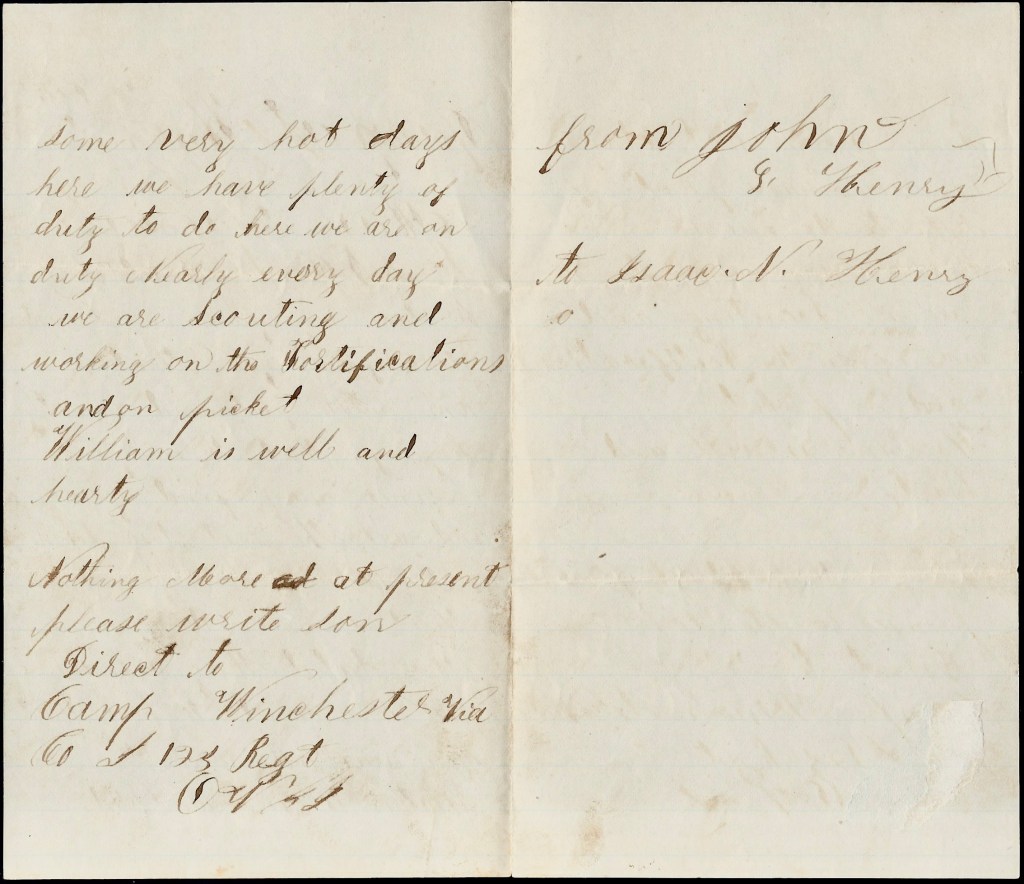
The weather is nice. We had some very hot days here. We have plenty of duty to do here. We are on duty nearly every day. We are scouting and working on the fortifications and on picket. William is well and hearty.
Nothing more at present. Please write soon. Direct to Camp Winchester, Va., Co. I, 123rd Regt. O. V. I.
The following letter came to me for transcription identified as having been written by William (“Billy”) Pooley (1839-1864), wgo served as a private in Co. A, 127th Illinois Infantry. He was Killed on 7/28/1864 at Atlanta, GA. The letter was only signed “William” and it was written to his brother “Eber.” There is a surname following Eber’s name and though one might construe it to be Pooley, I don’t believe it is. There are a number of reasons why I don’t think this letter was written by William Pooley of the 127th Illinois Infantry.
First and foremost, William fought in the western theatre for most of the war and because he was beloved by his company and killed in the fighting before Atlanta, his comrades eulogized him and never once mentioned his being taken prisoner in 1863. Further, they claimed he was with the regiment all of the time and fought in all of the battles until his death. Second, William had no brother named Eber that I could find. He did have a brother named John—a name that appears in the letter—but John served in the same company as William and would not have been at home farming in 1863 as he indicates. Third, the writer expresses concern for “Horace,” an apparent comrade in his company (or regiment), and there was only one Horace in the 127th Illinois but he was a Lieutenant in another company so I doubt seriously this was who he referred to.
So if it wasn’t William Pooley, who wrote the letter? The date and circumstances of the letter suggest to me that it was written following the author’s exchange as a prisoner of war who was captured during the Battle of Chancellorsville. Though he doesn’t give his location, most likely he wrote it from a paroled prisoners camp in Virginia or Maryland, where Union POWs were billeted until their exchange could be negotiated and they were allowed to return to their regiments. Also, if he was in Virginia or Maryland, his suggestion that farmers would be planting “up there” suggests his home was in a location much further north, like New York or one of the Northeastern states—not “out there” in Illinois. In my opinion, William was probably among the roughly 4,000 Union troops taken prisoner at the Battle of Chancellorsville and taken to Richmond.
I could not find an image of William but here is a CDV of William Knickerbocker who served in the 123rd New York Infantry.
Seeking help on my Spared & Shared Facebook page, Rose Lynn Beyke correctly deciphered William’s surname as Tooley (not Pooley) which led me to his identity as William Tooley (1840-1865) writing to his younger brother, Eber Tooley (1842-1914). William and Eber were the sons of Cyrus F. Tooley (1802-1880) and Sophronia (“Mary”) Lumbard (1804-1891) of Granville, Washington county, New York. William’s older brother, Horace Tooley (1836-1864), also served in the same company as William, which was Co. K, 123rd New York Infantry. William and Horace enlisted together on August 19, 1862. Horace survived Chancellorsville but was wounded in action on 25 May 1864 and died near Dallas, Georgia, on 8 June 1864. His remains are in the Marietta National Cemetery (Plot A, 449) William was captured in action on 3 May 1863 at Chancellorsville and paroled but was killed in a late-war skirmish on 10 April 1865 at Aiken’s Creek near Raleigh, North Carolina. His remains are in the Wilmington National Cemetery (Plot 2, 739).
The 123rd New York Infantry entered the Battle of Chancellorsville as part of the 2nd Brigade, 1st Division, of Slocum’s XII Corps. Here is a roster of the soldiers in Co. K of that regiment with a brief description of their service. Though I have not read it, apparently Sgt. Rice C. Bull of the 123rd New York Infantry taken prisoner at Chancellorsville and left an account of it in the book, “Soldiering, the Civil War Diary of Rice C. Bull.”
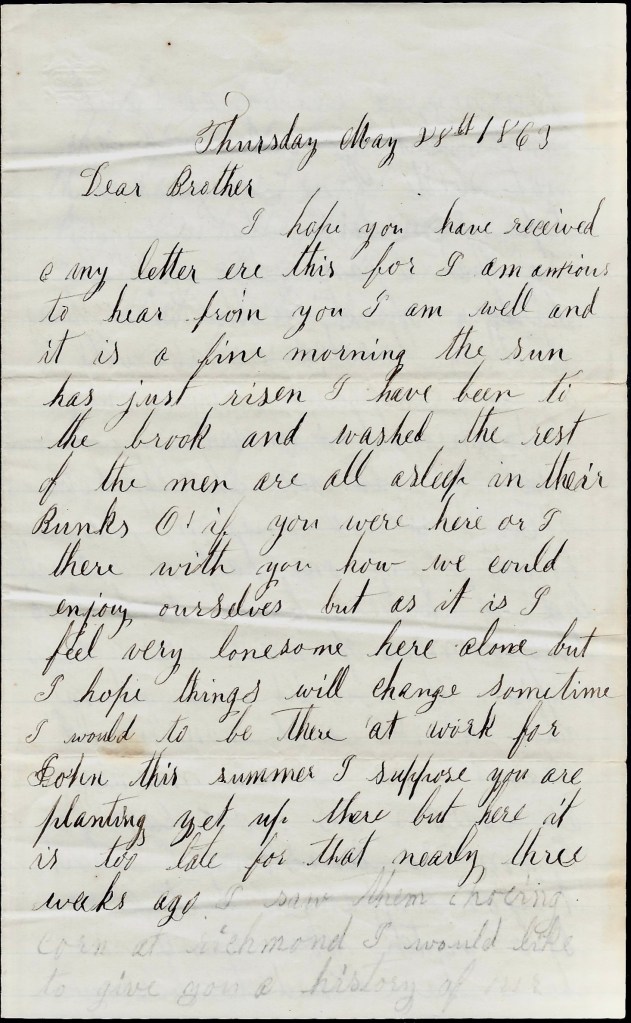
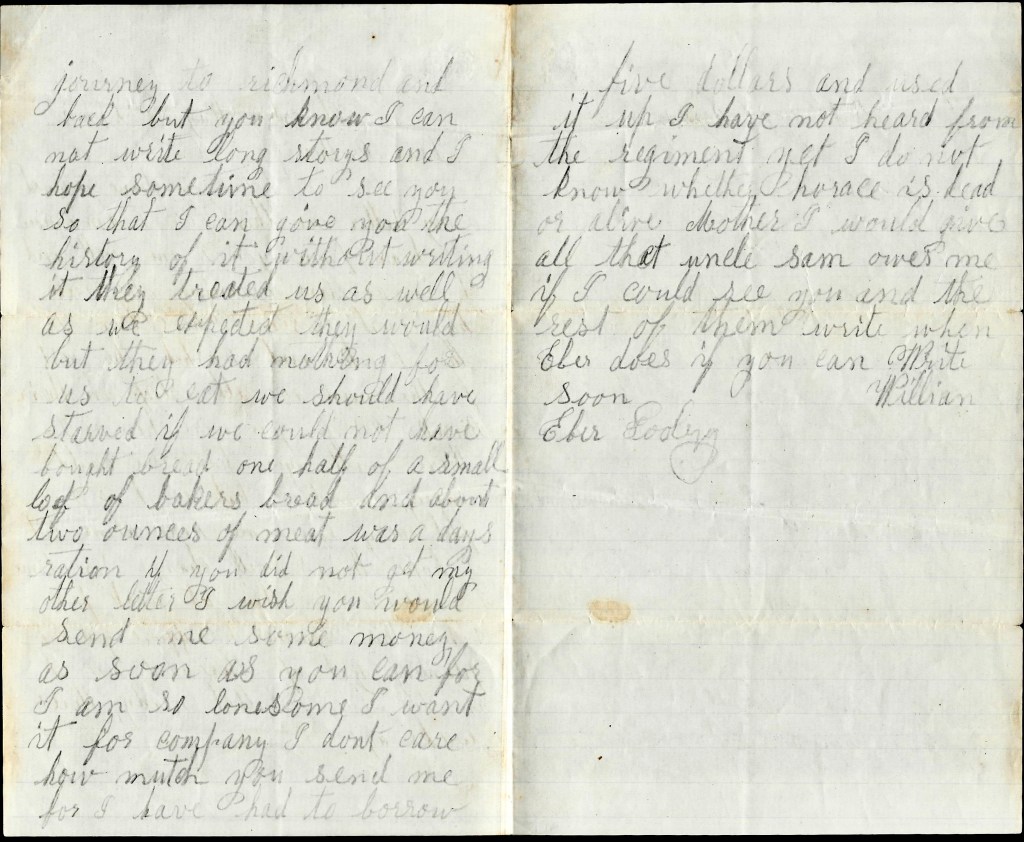
Transcription
[Paroled prisoners camp, Alexandria, Virginia] Thursday, May 28th 1863
Dear Brother,
I hope you have received my letter ere this for I am anxious to hear from you. I am well and it is a fine morning. The sun has just risen. I have been to the brook and washed. The rest of the men are all asleep in their bunks. O! if you were here or I there with you, how we could enjoy ourselves. But as it is, I feel very lonesome here alone. But I hope things will change sometime. I would [like] to be there at work for John this summer. I suppose you are planting yet up there. But here it is too late for that. Nearly three weeks ago I saw them hoeing corn at Richmond.
I would like to give you a history of our journey to Richmond and back but you know I can not write long stories and I hope sometime to see you so that I can give you the history of it without writing it. They treated us as well as we expected they would but they had nothing for us to eat. We should have starved if we could not have bought bread—one half of a small loaf of baker’s bread—and about two ounces of meat was a day’s ration. If you did not get my other letter, I wish you would send me some money as soon as you can for I am so lonesome I want it for company. I don’t care how much you send me for I have had to borrow five dollars and used it up.
I have not heard from the regiment yet. I do not know whether Horace is dead or alive. Mother, I would give all that Uncle Sam owes me if I could see you and the rest of them. Write when Eber does if you can. Write soon. — William
The following letter was written by Capt. William Wesley Hull (1829-1897) of Co. H, 17th Illinois Infantry. Hull mustered into the regiment in May 1861 as a 1st Sergeant but was commissioned as Captain in April 1862.
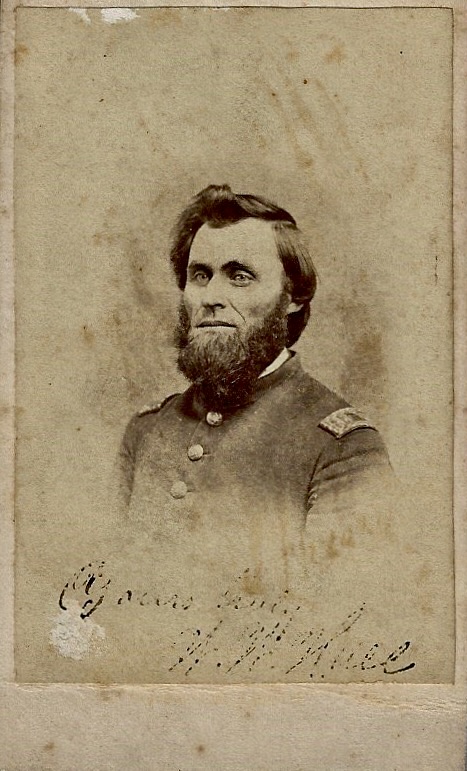
Capt. William Wesley Hull, Co. H, 17th Illinois Infantry(courtesy of Chris Bryant)
According to Hull’s obituary, he was born in Ohio and came to Fulton county, Illinois, with his father, Phillip Hull, in 1858, settling in Lewiston. When the war broke out, Captain Hull volunteered as a private in the 17th Illinois volunteers, and for gallant services on the field was promoted to the captaincy of company H in that regiment in 1862.” [The Chicago Chronicle, 17 August 1897]. Genealogical records inform us that his father was Phillip Hull (1795-1884) and his mother was Sarah McCracken (1801-1884). He was born in Zanesville, Muskingum county, Ohio. He was married to Mary Ann Messplay on 15 December 1862. After the war, Capt. Hull returned to Fulton county where he farmed and remained active in Republican politics.
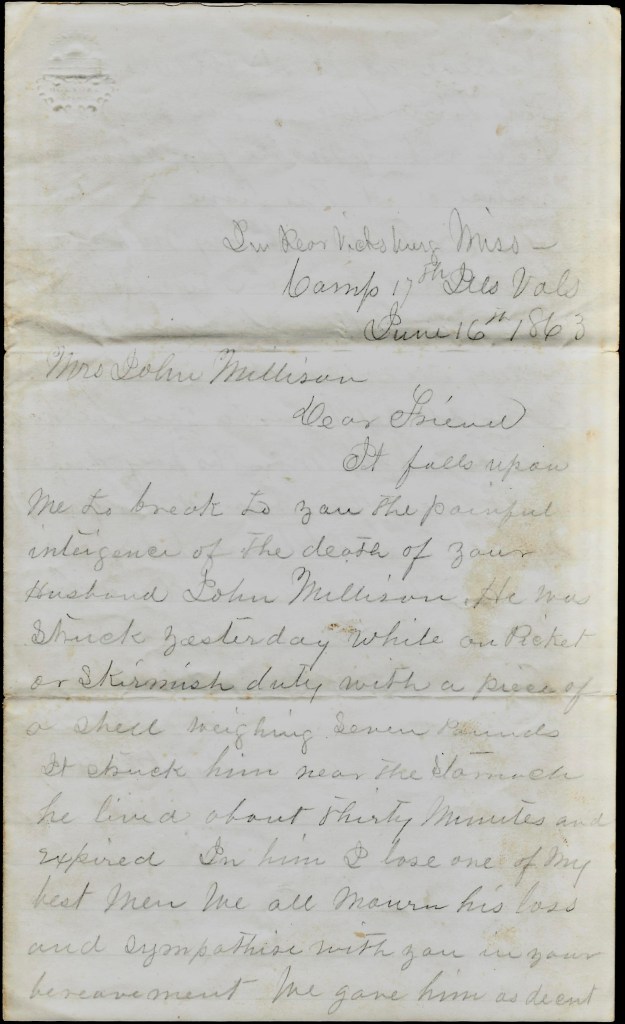
Hull’s letter was addressed to Margaret (VanPelt) Millison, the widow of Pvt. John Millison (1828-1863). Private Millison served under Hull in Co. H and met his demise on June 15, 1863. At the time of his mortal injury on the picket line near Vicksburg, Millison was 35 years old. He left behind a wife and four children to bear the weight of his loss. His remains were never returned home, as he lies buried in Section G (Grave 4520) at the Vicksburg National Cemetery. Hull’s correspondence exemplifies the nature of letters that captains were frequently called upon to write. It is understandable that Hull described Millison’s injury with such graphic detail; after a year of penning similar missives, he recognized that widows often sought to understand the “particulars” surrounding their husbands’ deaths. Had he omitted this level of detail in his initial letter, he would likely have been compelled to write a follow-up at a later date.
Transcription
In rear Vicksburg, Mississippi Camp 17th Illinois Vols June 16th 1863
Mrs. John Millison,
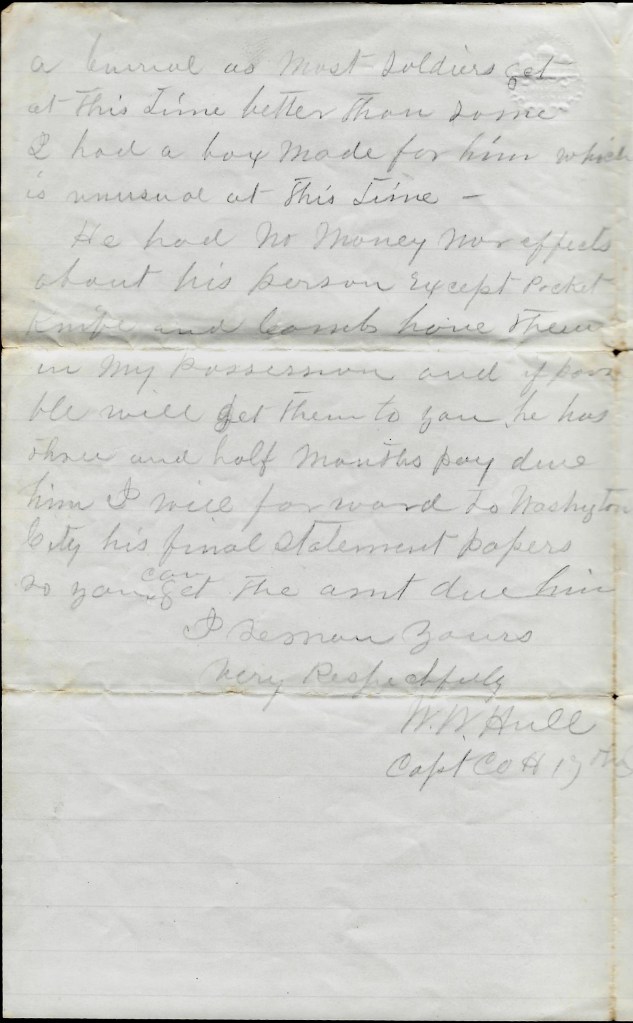
Dear friend, it falls upon me to break to you the painful intelligence of the death of your husband, John Millison. He was struck yesterday while on picket or skirmish duty with a piece of shell weighing seven pounds. It struck him near the stomach. He lived about thirty minutes and expired. In him I lose one of my best men. We all mourn his loss and sympathize with you in your bereavement. We gave him as decent a burial as most soldiers get at this time—better than some. I had a box made for him which is unusual at this time.
He had no money nor effects about his person except pocket knife and comb. Have them in my possession and if possible will get them to you. He has three and a half months pay due him. I will forward to Washington City his final statement papers so you can get the amount due him.
I remain yours very respectfully, — W. W. Hull, Capt., Co. H, 17th
1st Sergt. W. W. Hull, Co. H, 17th Illinois Infantry






















 Spared & Shared 23