Category Archives: 16th Maine Infantry

1863: Daniel Franklin Houghton to Mary Ann (Houghton) Greene

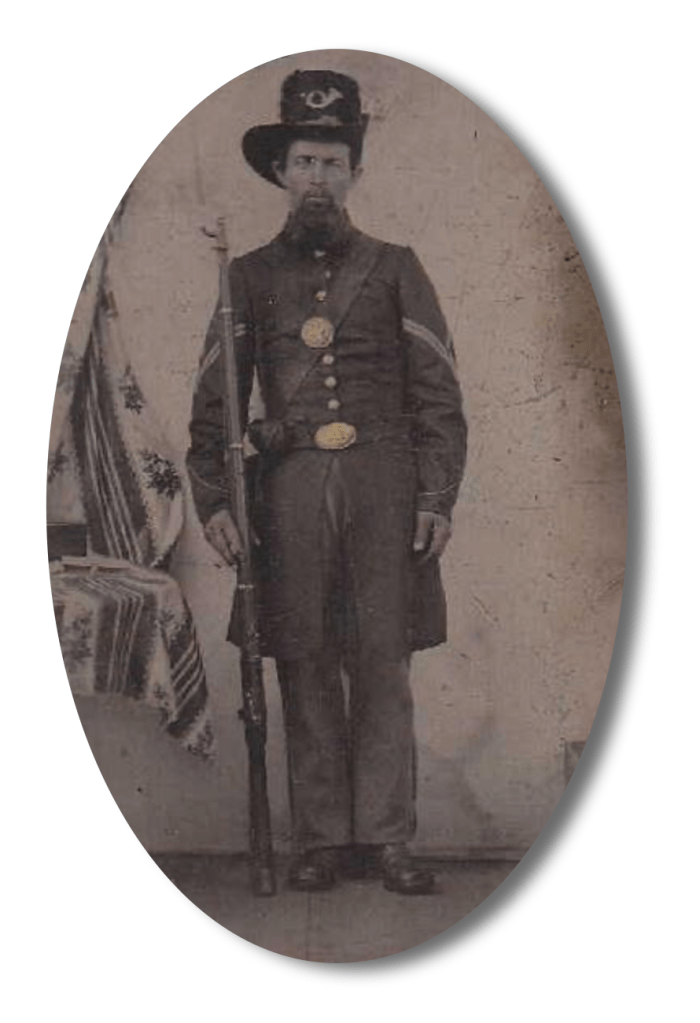
I could not find an image of Daniel but here is Corporal Alonzo Smith of Co. G, 16th Maine Infantry. He was wounded at Fredericksburg too. (Taj Patel Collection)

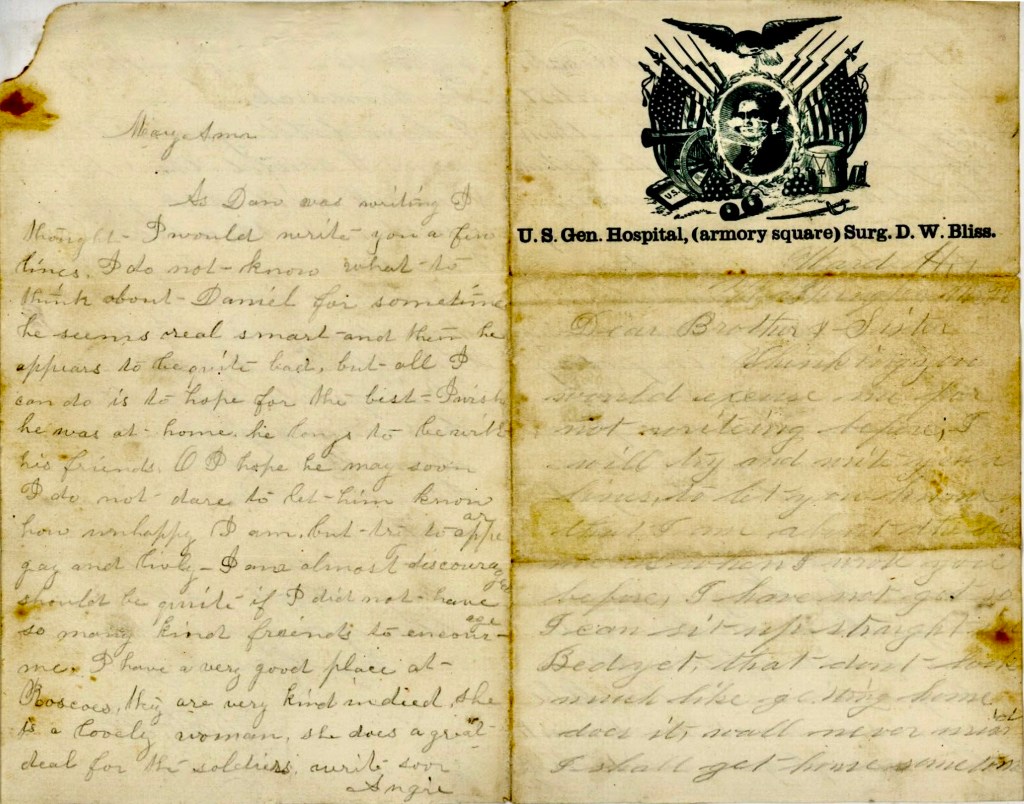
The following letter was written by Daniel F. Houghton (1841-1889), the son of Abel Houghton (1796-1890) and Elizabeth Parlin (1803-1881) of Weld, Maine. Daniel enlisted when he was 21 years old as a corporal in Co. E, 16th Maine Infantry on 14 August 1862. Daniel was severely wounded during the Battle of Fredericksburg on 13 December 1862 and to save his life, his left leg was amputated. He was discharged for disability on 15 May 1863. A history of the regiment reveals that during the Battle of Fredericksburg, its first engagement with the enemy, the 16th Maine, “unskilled and untrained though we were, to us belongs the credit of bull-dog fighting, until 54 percent of our number were killed or wounded.”

Adding a note at the end of Daniel’s letter was “Angie” whom I believe was Mary Angelia Leavitt (1841-1896), Daniel’s fiancé. The couple were married on 3 May 1866 in Weld, Maine, and they had at least eight children born between 1867 and 1883.

The letter was addressed to Daniel’s older sister, Mary Ann (Houghton) Greene (1828-1906) who married William K. Greene (1821-1889) in 1862.

For a great short video, see “Redemption of the Blanket Brigade: 16th Maine at Fredericksburg.”

Transcription
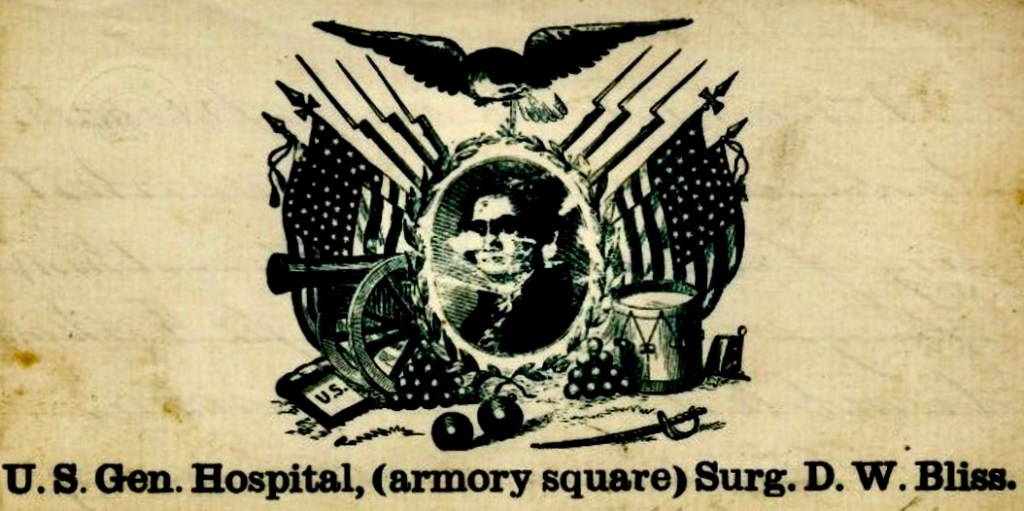
Rare patriotic letterhead labeled US General Hospital (armory square) Surg. D. W. Bliss

U.S. Gen. Hospital (armory square)
Ward H, Washington
[April 1863]

Dear Brother & Sister,

Thinking you would excuse me for not writing before, I will try and write you a [few] lines to let you know that I am about the same as when I wrote you before. I have not got so I can sit up straight in bed yet. That don’t look much like getting home, does it? Well never mind. I shall get home sometime. It would be very pleasant to be sent home and amongst my friends. I often think of you all & I hope I shall be able to see you soon.

There is but a very few here now that was here when I came here. There is new ones coming in here almost every day, We have some Union citizens here now from Virginia. They were taken prisoners & so exchanged.

Roscoe’s folks are all well. Mr. Cory is smart [ ] boy. He is in here with me quite often. Angie is well but she says she won’t write until some of you write to her. I guess she is getting to be homesick. I have told you all the news I could think of & now I will ask you a few questions & then close.

1—Is sleighing all gone there?
2—How does your leg hold out?
3—How does your stock look this spring? I presume it is quite high there? Has Minnie gone home yet? How does all your folks do? There I guess that will do.

Please write soon. May God watch over & bless you & your family. My love to you all, — D. F. Houghton

Mary Ann, as Dan was writing, I thought I would write you a few lines. I do not know what to think about Daniel for sometimes he seems real smart and then he appears to be quite bad, but all I can do is to hope for the best. I wish he was at home. He longs to be with his friends. Oh, I hope he may soon. I do not dare to let him know how unhappy I am, but try to appear gay and lively. I am almost discouraged. Should be quite if I did not have so many kind friends to encourage me. I have a very good place at Roscoe’s. They are very kind indeed. She is a lovely woman. She does a great deal for the soldiers. Write soon, — Angie

1865: James Thomas Dakin to Louisa (Estabrook) Dakin

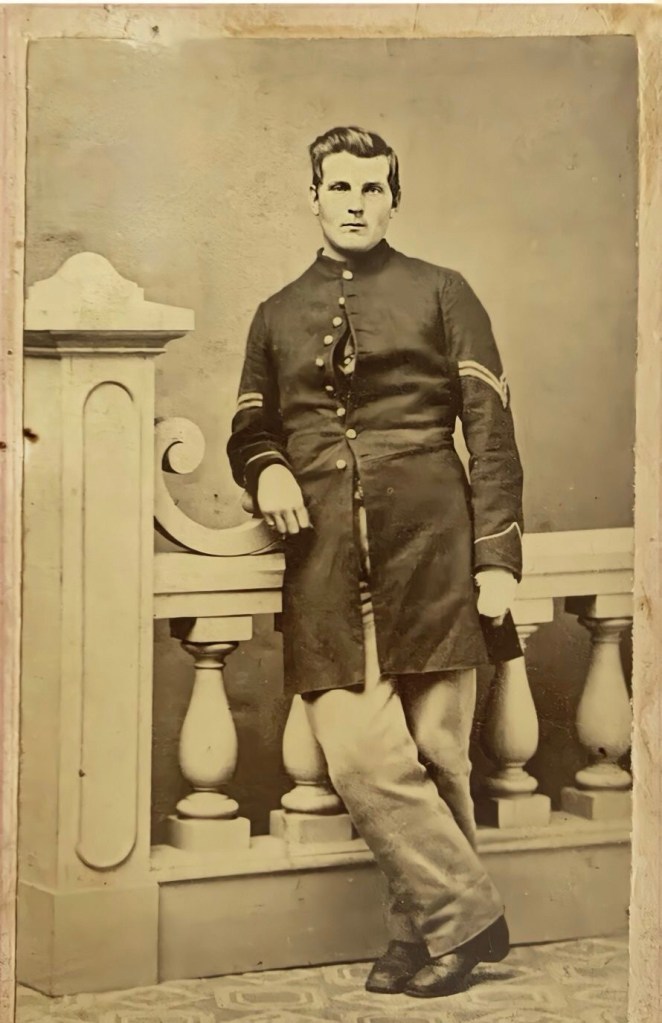
I could not find an image of James but here is one of James Parson of Co. D, 16th Maine Infantry. He was taken prisoner at Weldon Railroad and died at Salisbury Prison (Peter Pett Collection)

This letter was written by 43 year-old James Thomas Dakin (1821-1886), a farmer from Amity, Aroostook county, Maine, who was drafted into the army in the fall of 1864 and served in Co. G, 20th Maine before transferring to Co. K, 16th Maine Infantry in December 1864.

James wrote the letter to his wife, Louisa Estabrook (1817-1884), the aunt of George Franklin Estabrook (1845-1865) who death was disclosed in this letter.

To read more letters that I have transcribed by members of the 16th Maine Infantry and published on Spared & Shared, see:

Albert Church Brown, Co. C, 16th Maine (38 Letters)
William Henry Broughton, Co. D, 16th Maine (1 Letter)
John F. Robinson, Co. E, 16th Maine (1 Letter)
John H. Fraine, Co. G, 16th Maine (8 Letters)

Transcription

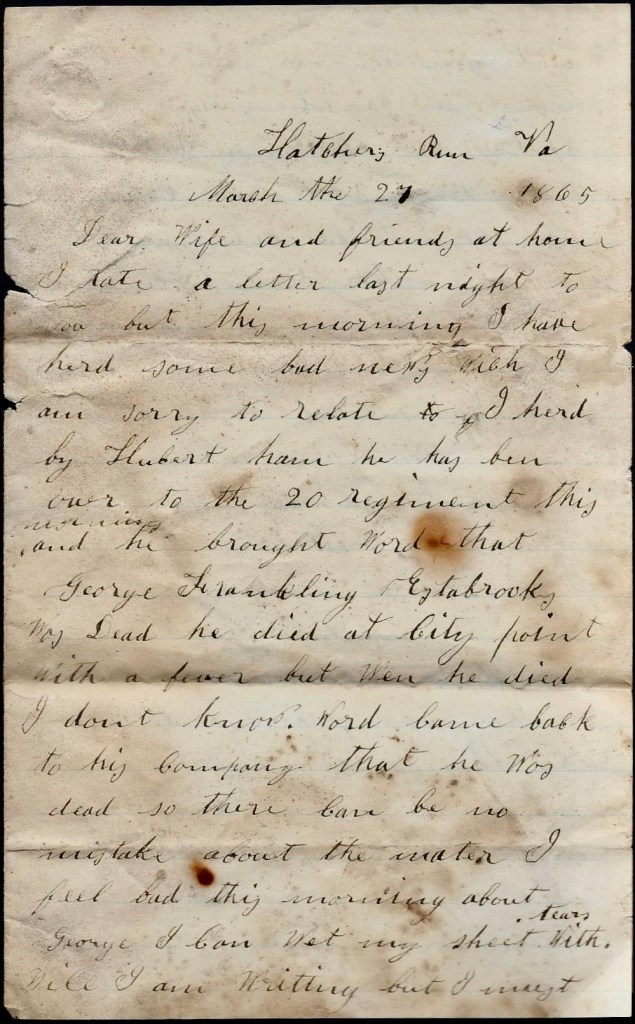
Hatcher’s Run, Virginia
March 27, 1865

Dear wife and friends at home,

I wrote a letter last night to you but this morning I have heard some bad news which I am sorry to relate. I heard by Herbert [J.] Ham—he has been over the 20th [Maine] Regiment this morning—and he brought word that George Franklin Estabrook was dead. 1 He died at City Point with a fever but when he died I don’t know. Word came back to his company that he was dead so there can be no mistake about he matter. I feel bad this morning about George. I can wet my sheet with tears. I am writing but I must not give away to my feelings here. You can tell [your brother] George what I have told you. I was a going to write to him but I thought I would let you or some other one tell him so I have told you all I know about the matter so I will stop.

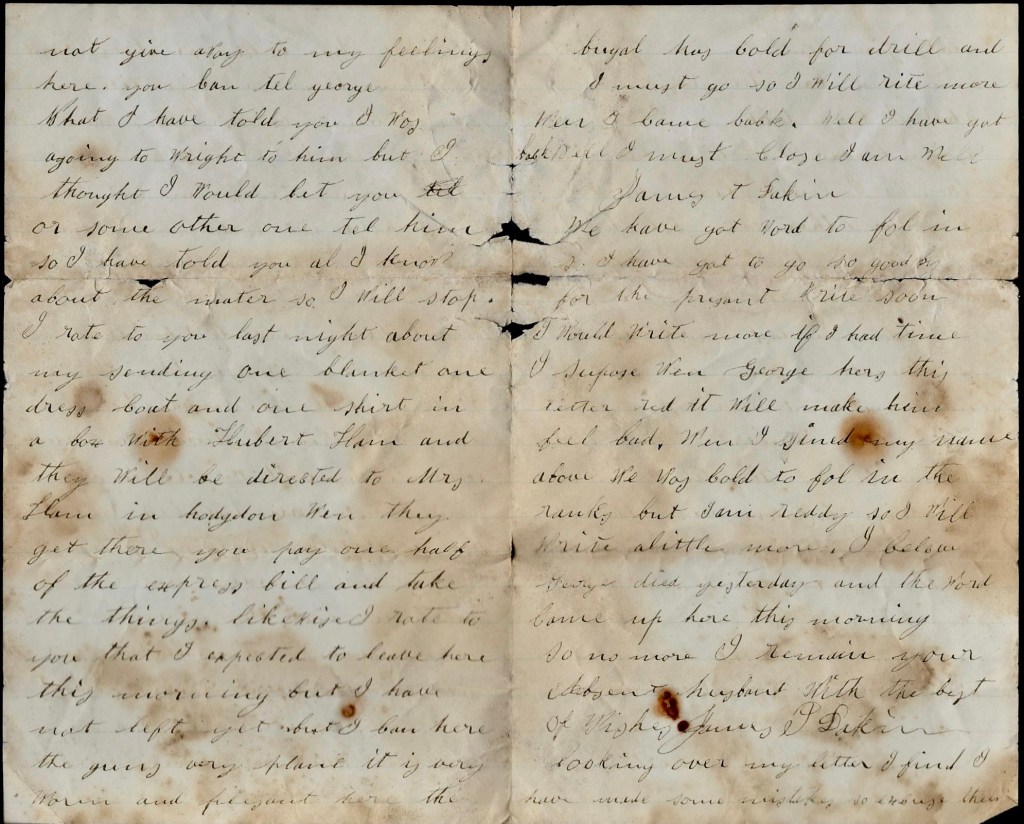
I wrote to you last night about my sending one blanket, one dress coat, and one shirt in a box with Herbert [J.] Ham and they will be directed to Mrs. Ham in Hodgdon. When they get there, you pay one half of the express bill and take the things likewise. I wrote to you that I expected to leave here this morning but I have not left yet but I can hear the guns very plain. It is very warm and pleasant here. The bugle has called for drill and I must go so I will write more when I come back.

Well, I have got back. Well, I must close. I am well. — James T. Dakin

We have got word to fall in so I have got to go, so goodbye for the present. Write soon. I would write more if I had time. I suppose when [your brother] George hears this letter read, it will make him feel bad. When I signed my name above, we was called to fall in the ranks but I am ready so I will write a little more. I believe George died yesterday and the word came up here this morning. So no more. I remain your absent husband with the best of wishes, — James T. Dakin

Looking over my letter I find I have made some mistakes so excuse these.


1 George Franklin Estabrook, Jr. (1845-1865) died on 21 March 1865 and is buried in Arlington National Cemetery, Section 13, Site 9700. George was the son of George Frederick Estabrook (son of Hammond and Catherine Estabrook) and Frances Ann Estabrooks. He enlisted in the 20th Maine Infantry Volunteers, Co. H. He fought at the Battle of Gettysburg—saving Little Round Top—along with his uncle Glazier Estabrook and two cousins, Jewett Williams and Albert Hartford Williams. He was 19 years old when he was killed in the Civil War. Before his death, he was promoted to Sergeant.