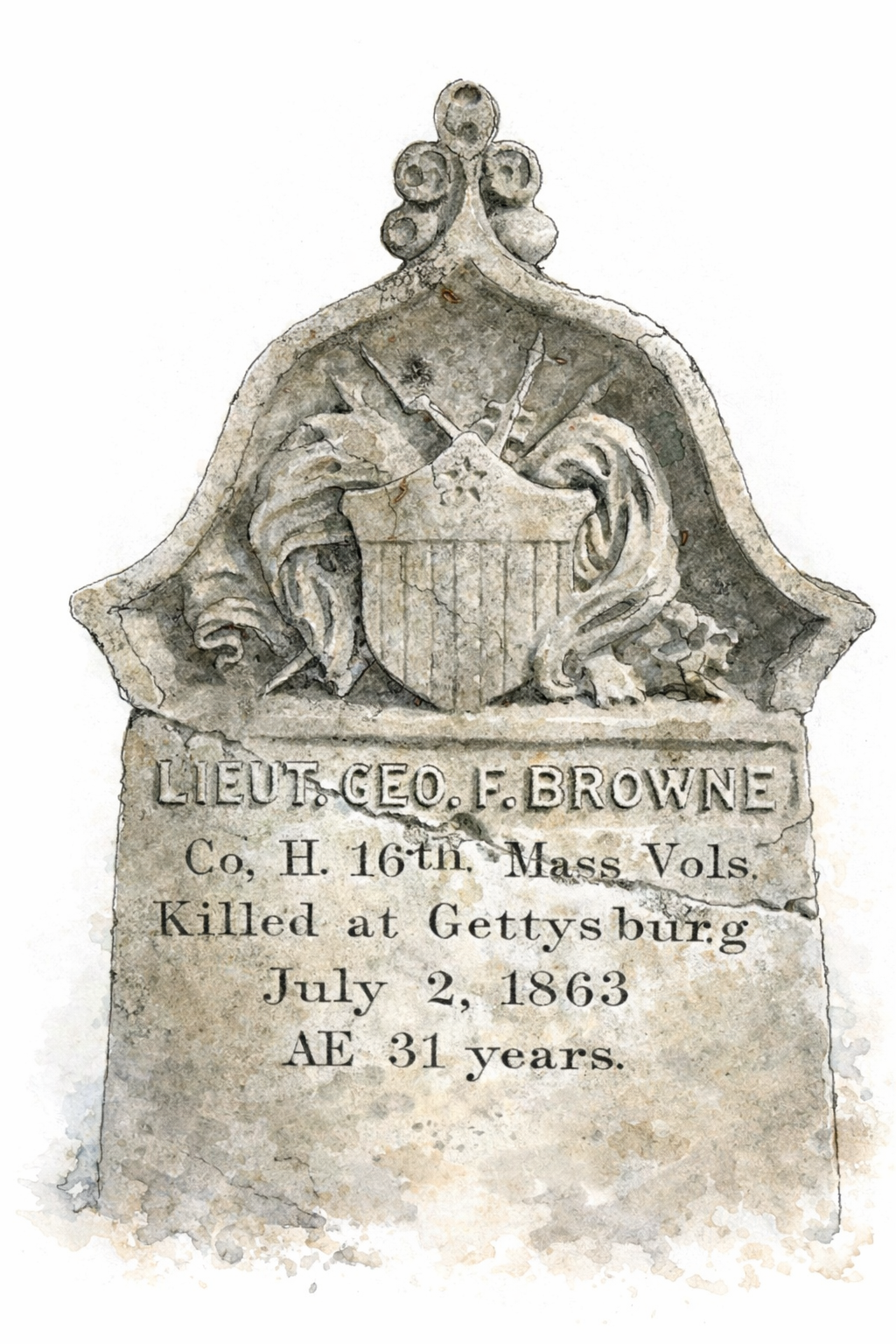
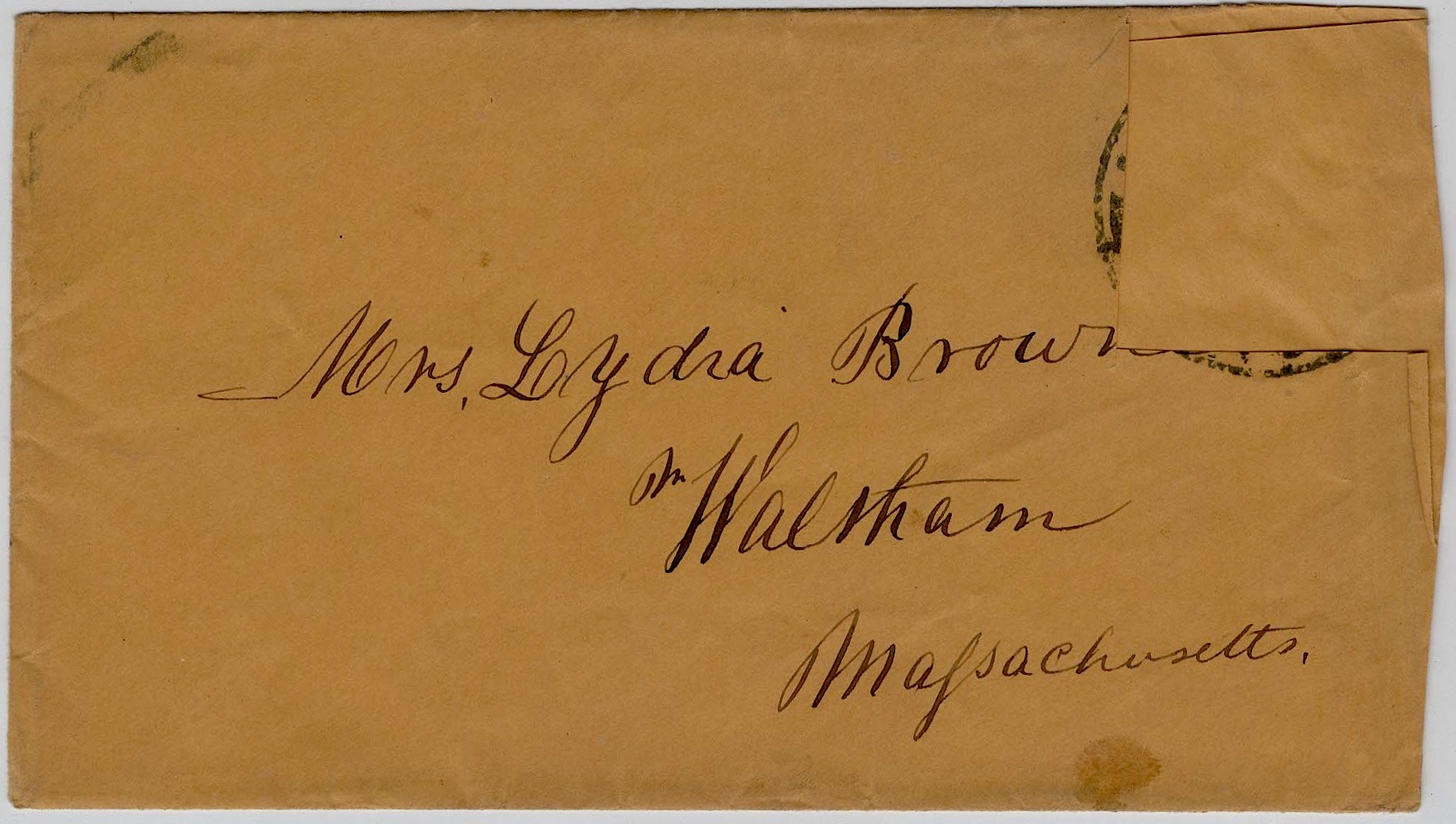
The following letter was written by George Foster Brown (1833-1863) who on 29 June 1861 mustered into Co. H, 16 Massachusetts Infantry, and was KIA on 2 July 1863 at Gettysburg, Pennsylvania. He wrote the letter to his widowed mother, Lydia (Sawtelle) Brown (1797-1885) of Waltham, Massachusetts. His father, Aaron Brown, died in 1853. Serving with George in the same company was his brother, CharlesL. Brown (1840-1863).
The Massachusetts brothers, George and Charles Brown, were both mortally wounded at Gettysburg, July 2, 1863. “On July 21, 1863, residents of the town of Waltham, Massachusetts gathered at the First Methodist Society to comfort a widowed mother of two local young men who had perished on a distant battlefield in Pennsylvania. It was an impressive and touching service, conducted by members of the Masonic order, augmented by a solemn organ and choir. George F. Brown had enlisted at the same time with his brother, and was also mustered into Company H, but at the rank of sergeant. It was something of a miracle that the body of Lieutenant George F. Brown had been found. Lieutenant George F. Brown of Company B, had been shot through the brain and foot. Charles found himself posted at the Daniel Klingle place on the Emmitsburg road. It was nearly 7 p.m. on July 2, 1863 and the enemy was closing in from two directions at once, the 18th Mississippi approaching from the south, and the 10th and 11th Alabama from the west. In the merciless crossfire Charles was struck in the shoulder and in two other unspecified spots. While Mr. Greene was busy making arrangements for the recovery of George’s body, Charles unexpectedly took a sudden turn for the worse. He succumbed on the morning of July 11. Now Mr. Greene stayed on to ensure both men were embalmed and transported to Waltham, where they could be properly honored and mourned. Both local heroes had rendered their “last full measure of devotion” to their country.” [Sources: Waltham Sentinel, July 24 and 31, 1863; Diary of Charles L. Brown, Massachusetts Historical Society, uncovered by author Greg Coco, whose collection resides at the Gettysburg National Military Park, Box B-10.]
T R A N S C R I P T I O N
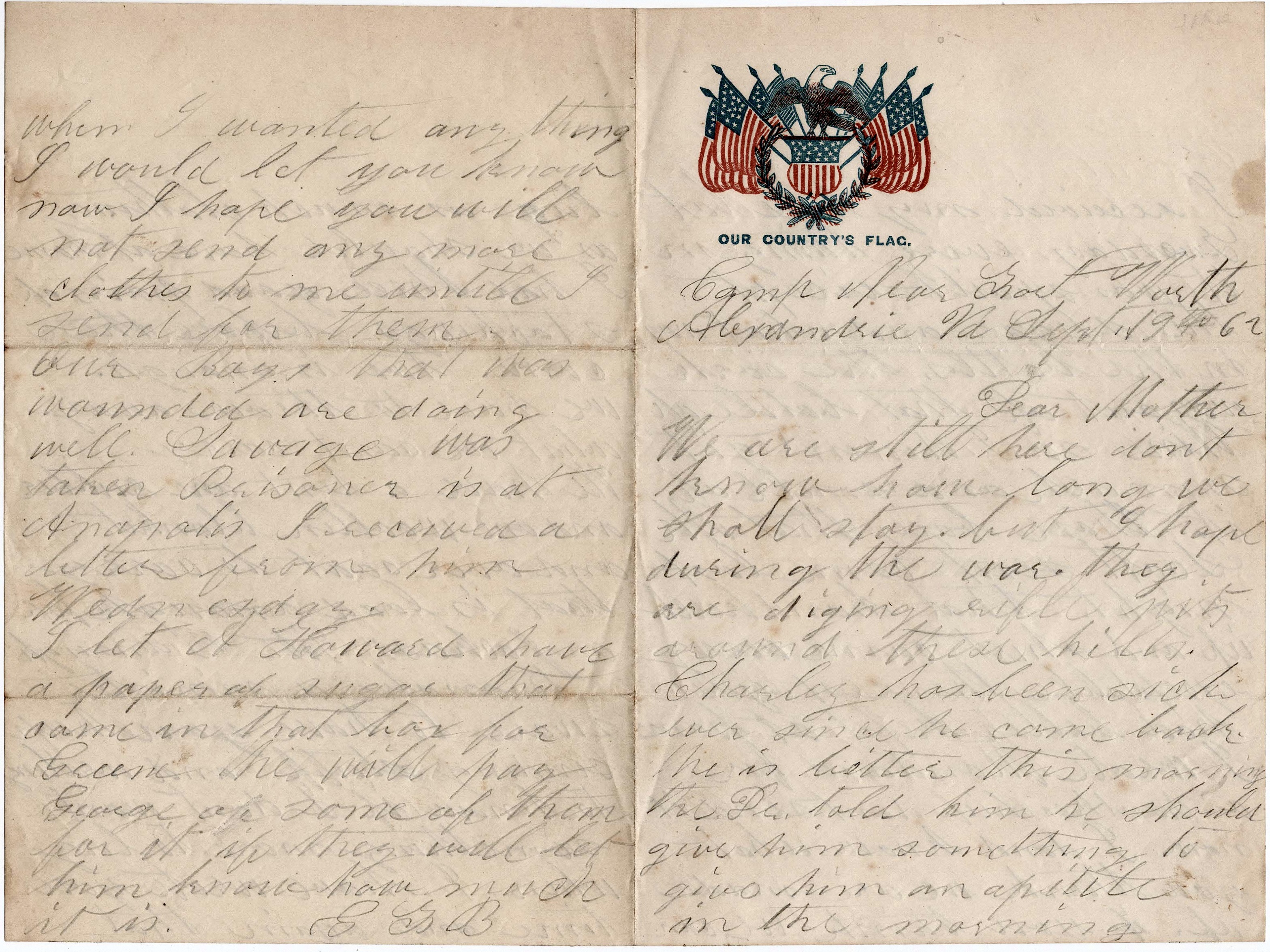
Camp near Fort Worth Alexandria, Virginia September 19, 1862
Dear Mother,
We are still here. Don’t know how long we shall stay but I hope during the war. They are digging rifle pits around these hills. Charley has been sick ever since he come back. He is better this morning. The Dr. told him he should give him something to give him an appetite in the morning.
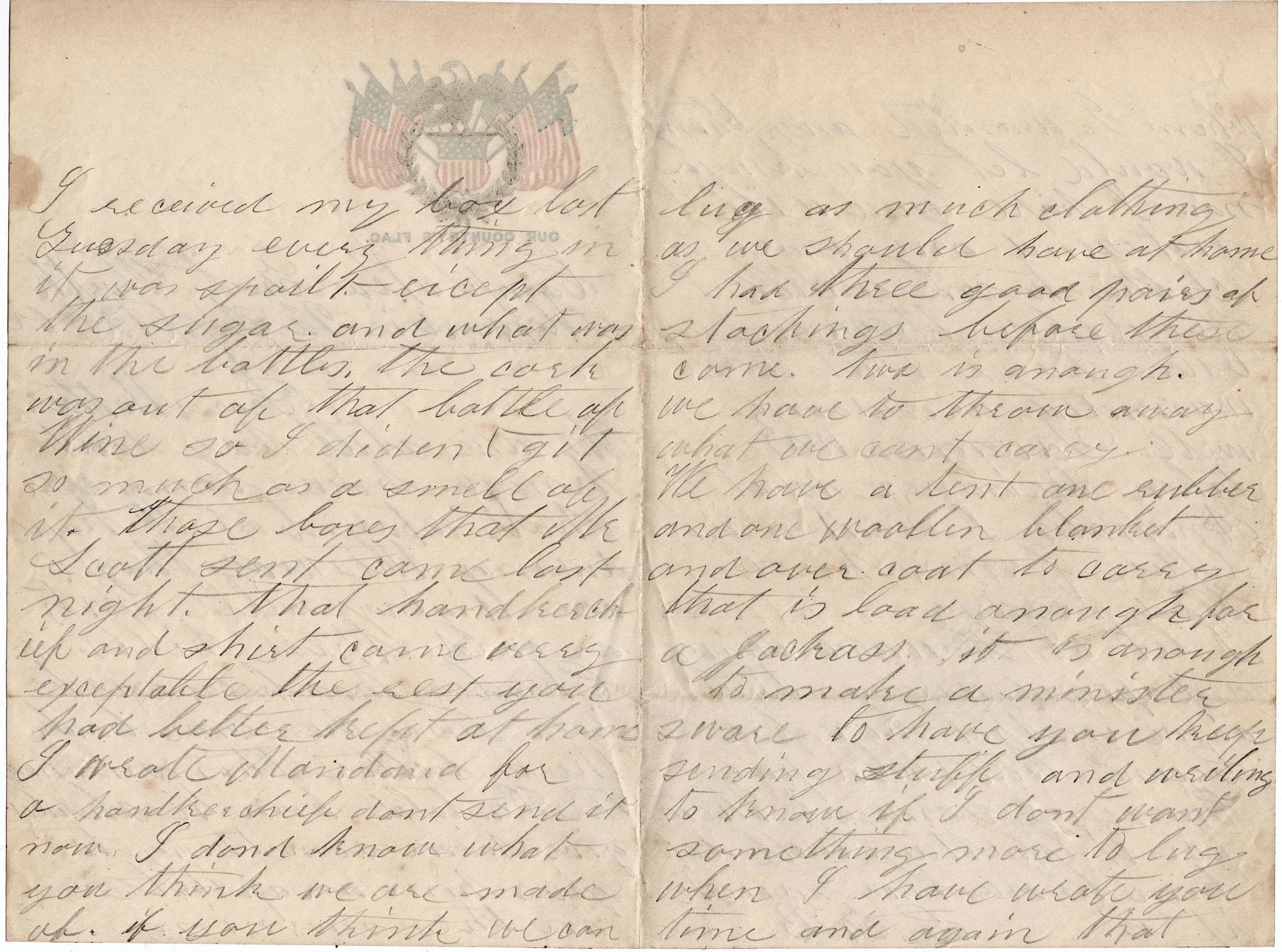
I received my box last Tuesday. Everything in it was spoilt except the sugar and what was in the bottles. The cork was out of that bottle of wine so I didn’t get so much as a smell of it. Those boxes that Mr. Scott sent came last night. That handkerchief and shirt came very acceptable. The rest you had better kept at home.
I wrote [sister] Mandana for a handkerchief. Don’t send it now. I don’t know what you think we are made of if you think we can lug as much clothing as we should have at home. I had three good pairs of stockings before these came. Two is enough. We have to throw away what we can’t carry.
We have a tent, one rubber and one woolen blanket and overcoat to carry. That is load enough fora jackass. It is enough to make a minister swear to have you keep sending stuff and writing to know if I don’t want something more to lug when I have wrote you time and again that when I wanted anything, I would let you know. Now I hope you will not send anymore clothes to me until I send for them.
Our boys that was wounded are doing well. Savage was taken prisoner [and[ is at Annapolis. I received a letter from him Wednesday. I let Howard have a paper of sugar that came in that box for Greene. He will pay George off some of them for it if they will let him know how much it is. — G. F. B.
I can safely attribute the following letter to Samuel “Otis” Sawyer (1839-1908), a carpenter in Cambridge, Massachusetts, at the time of his enlistment on 2 July 1861 as a private in Co. A, 16th Massachusetts Infantry. He mustered out of the regiment on 27 March 1864 after nearly three years service. The letter mentions another soldier—John Wilson—who also served in the same company from Cambridge.
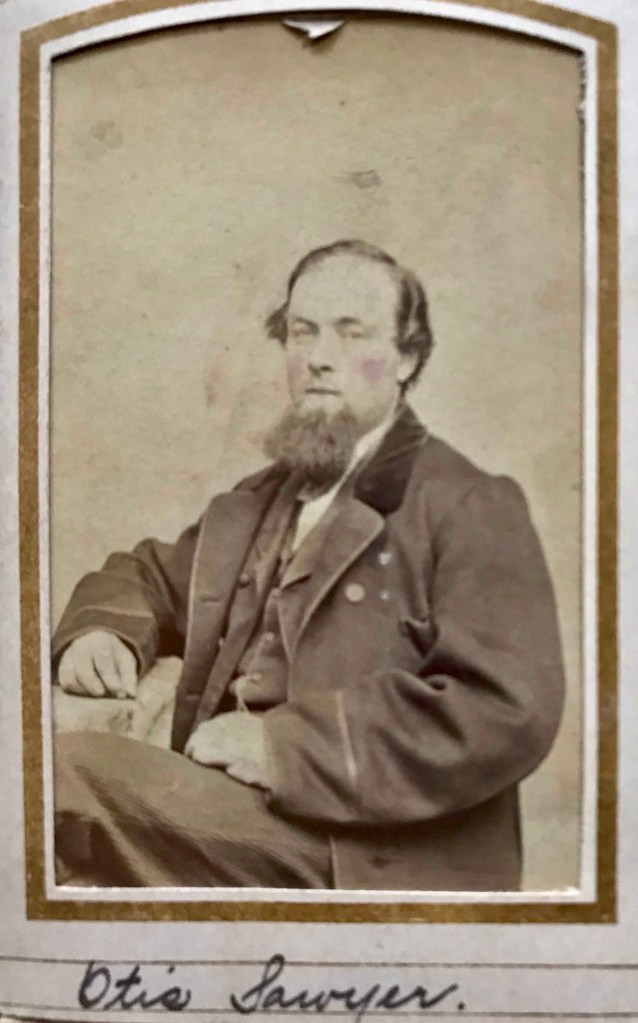
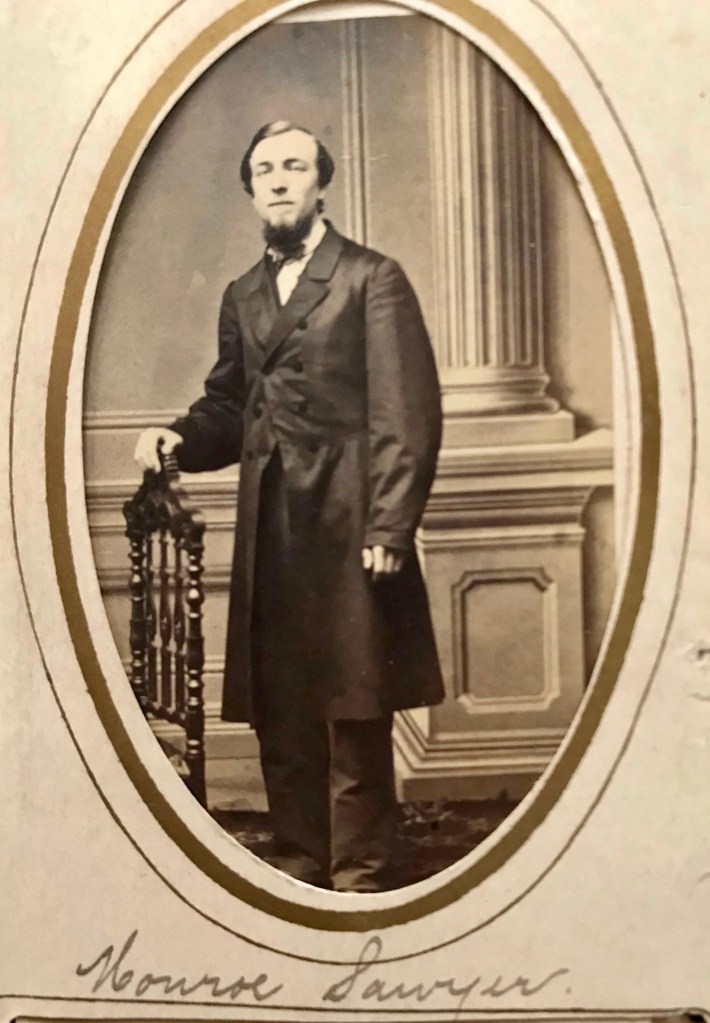
Otis was the son of Samuel James Sawyer (1816-1854) and Eleanor Dodge Morgan (1816-1890) of Exeter, New Hampshire. He wrote the letter to his younger brother James “Monroe” Sawyer (1841-1863), a clerk living with their widowed mother in Cambridge at the time. As a matter of curiosity, Otis survived the war as a soldier but his younger brother James, who never enlisted, was fatally stabbed on 18 August 1863 by Edward Owens and James Farris while defending two women in August 1863. He died of his wounds three days later. Otis married Mary E. Marston (b. 1845) in December 1866.
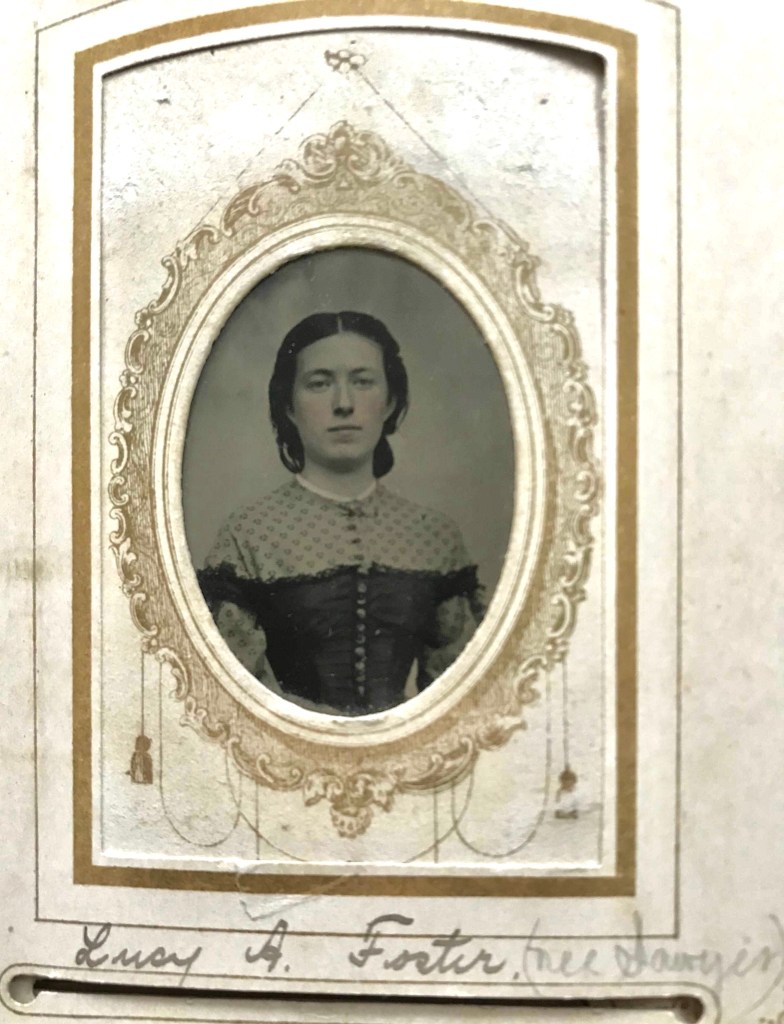
Otis and Monroe (who were both called by their middle names) had a younger sister named Lucy Ann Sawyer (1845-1900) who married George Henry Foster (1844-1906) of Cambridge. Lucy’s first-born, Lilliam Monroe Foster (1867-1945) kept a family photo album that included the pictures below of her mother and two uncles, Otis and Monroe.
This remains the only Samuel Otis Sawyer letter I have found via an internet search. In his recent book, “The Men of the 16th Massachusetts: A Civil War Roster and History,” Alden Ellis, Jr. informs us that the 16th Massachusetts was “one of a few Massachusetts regiments whose history was not recorded. From 1861-1864, it was deeply embroiled in the operations of the Army of the Potomac. Suffering from a lack of skilled leadership and later from horrific living conditions, the 16th saw heavy casualties. Of more than 1300 men, 112 were killed in battle, 360 were wounded and 52 died from their wounds. Disease claimed 115 and 65 were taken as prisoners of war, 32 of them dying in Confederate prisons. Another 344 went home afflicted with wounds or disease as disability discharges.”
Otis SawyerMonroe SawyerLucy (Sawyer) Foster
See also some letters by Asa Smith of Co. K, 16th Massachusetts that I transcribed and published just last month on Spared & Shared. 1862: Asa Dennis Smith to his Family.
Transcription
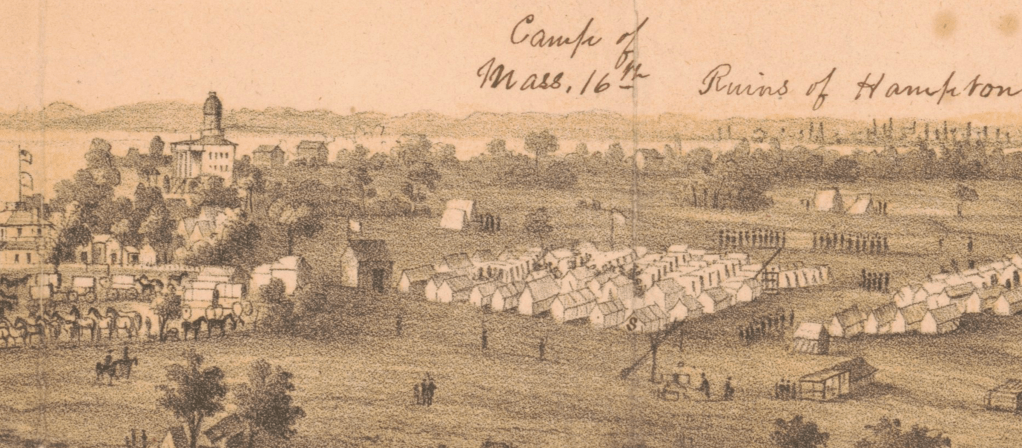
The camp of the 16th Massachusetts at “Camp Hamilton” near Fortress Monroe in the winter of 1861-62.
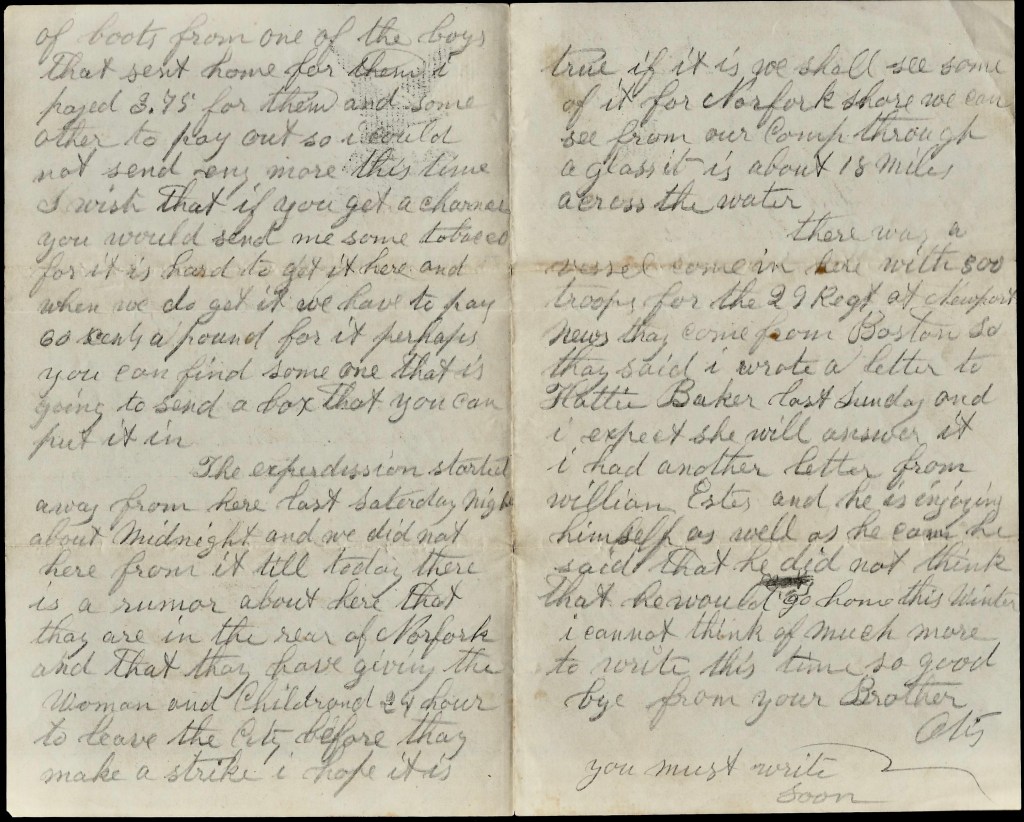
Camp Hamilton, Fortress Monroe January 17, 1862
Dear Brother,
I received the box that you sent me and found everything in good condition. I gave John Wilson the things that you told me to and he told me to tell you that he was much obliged to you and he sent his best respects to you.
Tell Mother that I am much obliged to her for the quilt and the rest of the things. I shall send 15 dollars in this letter for you to do as you think best with it. I would send more but I bought a pair of boots from one of the boys that sent home for them and some other to pay out so I could not send any more this time. I wish that if you get a chance you would send me some tobacco for it hard to get it here and when we do get it, we have to pay 60 cents a pound for it. Perhaps you can find someone that is going to send a box that you can put it in.
The expedition started away from here last Saturday night about midnight and we did not hear from it till today. There is a rumor about here that they are in the rear of Norfolk and that they have given the women and children 24 hours to leave the city before they make a strike. I hope it is true. If it is, we shall see some of it for Norfolk shore we can see from our camp through a glass. It is about 18 miles across the water.
There was a vessel come in here with 500 troops for the 29th [Massachusetts] Regt. at Newport News. They come from Boston so they said. I wrote a letter to Hattie Baker last Sunday and I expect she will answer it. I had another letter from William Estes and he is enjoying himself as well as he can. He said that he did not think that he would go home this winter.
I cannot think of much more to write this time so goodbye from your brother, — Otis
You must write soon. I sent two pictures that was taken out of Hampton the night of the fire and a cotton ball by the Captain. I wish you would let me know if you got them [when] you write.
In 1971 an article entitled “Asa Smith Leaves the War” appeared in American Heritage Magazine detailing the story of a Union soldier, Asa Dennis Smith (Co. K, 16th Massachusetts Infantry), who received a grievous facial wound on June 30, 1862 at Glendale/Frayser’s Farm and, after being refused medical help was left for dead but somehow managed to survive. The article was based in large part on Smith’s handwritten autobiography (which I have not been able to locate) and details his determination to survive in spite of what was believed to be a mortal, and untreatable wound. Later in life he even became a physician himself, practicing in Boston and Dorchester.
The following extract comes from the American Heritage article:
“…. I turned my head to the right to speak a word of defiance in the ear of Corporal William E. Eldridge, and before it was turned square to the front something hit me. It felt as though an immense timber had struck me end first, with great force. It was not painful; but seemed to partly daze me. I did not fall, but dropped my rifle and put my hand to my chin, and found that it felt as though torn to pieces. Lieutenant Meserve saw me and told me to go to the rear as soon as possible. From the direction that die ball came, I am of the opinion that it was fired by one of the sharpshooters in the trees.
I started for the yd Corps field hospital, which was established in the Willis Church, a small building on the Quaker Road (so called) leading to Malvcrn Hill. It was but a short distance in the rear, and the nearest way was through the wood and was marked by small hospital flags at intervals. On my way I found two or three small, coarse towels which evidently had been thrown away by some soldier, and used them to try to staunch the hemorrhage, which was quite severe. On arriving at the field hospital station, I found several surgeons busily at work, with men wounded in apparently about every conceivable manner. The operating tables were made from the seats of the church, placed upon empty beef or pork barrels.
I got a seat beside a young rebel who was shot in one foot and waited for a time, but as nobody came to my assistance I went outside and found D. Harris Clark of Co. B, who was on detail and was an old acquaintance. He found a young New York surgeon and prevailed upon him to attend to my case. Upon his coming (as I could not talk) I made him understand that I wished to know if I would recover, upon which he shook his head and said, “Doubtful.” And, after a short interval, “I have seen men recover who were hurt as badly as you are.” This was not very encouraging; but somehow hope was strong and I made up my mind to try for it. The surgeon took a bandage and, passing it under my chin, pinned the ends together on the top of my head, and said, “This is all I can do for you now.” Then he ordered Clark to take my equipment oil and get a board and lay me upon it alongside the church, which he did, using my cartridge box and haversack for a pillow.”
Five of Asa Smith’s letter were acquired recently by Richard Weiner who has made them available for transcription and publication on Spared & Shared. There is some excellent content within the letters—particularly the last letter written from a hospital two weeks after his injury, conveying the optimistic spirit and fortitude which was responsible for his survival and his being able to establish a future life marked by a high level of accomplishment. I agree with Richard, his story would make a great movie.
Camp of the 16th Massachusetts in “Camp Hamilton” near Fortress Monroe
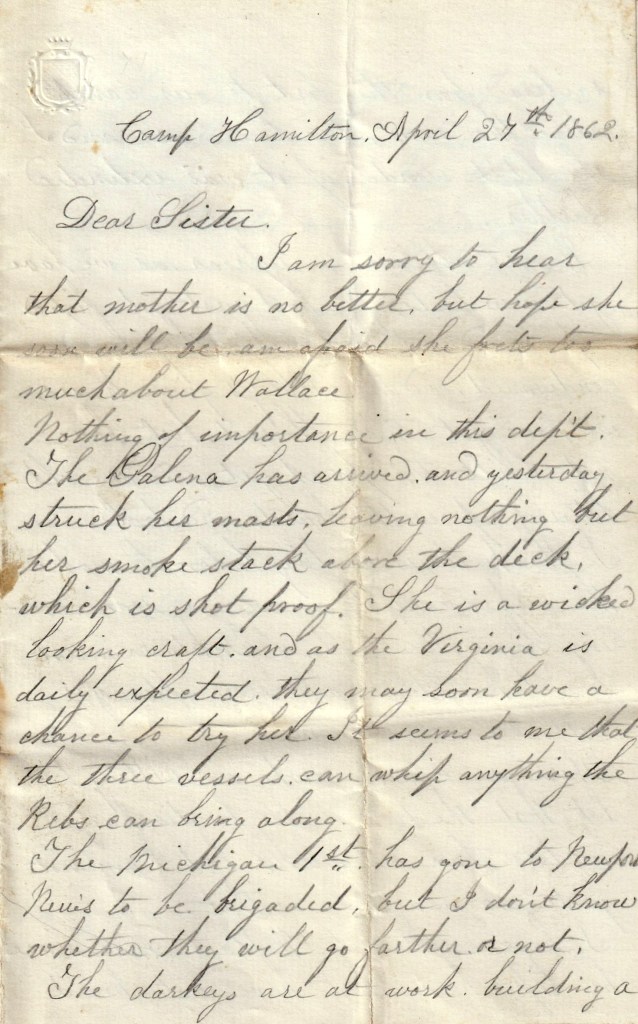
Camp Hamilton April 27, 1862
Dear Sister,
I am sorry to hear that mother is no better, but hope she soon will be. Am afraid she frets too much about Wallace. 1 Nothing of importance in this department. The Galena has arrived and yesterday struck her masts, having nothing but her smoke stacks above the deck, which is shot proof. She is a wicked looking craft and as the [CSS] Virginia, is daily expected. They may soon have a chance to try her. It seems to me that the three vessels can whip anything the Rebs can bring along.
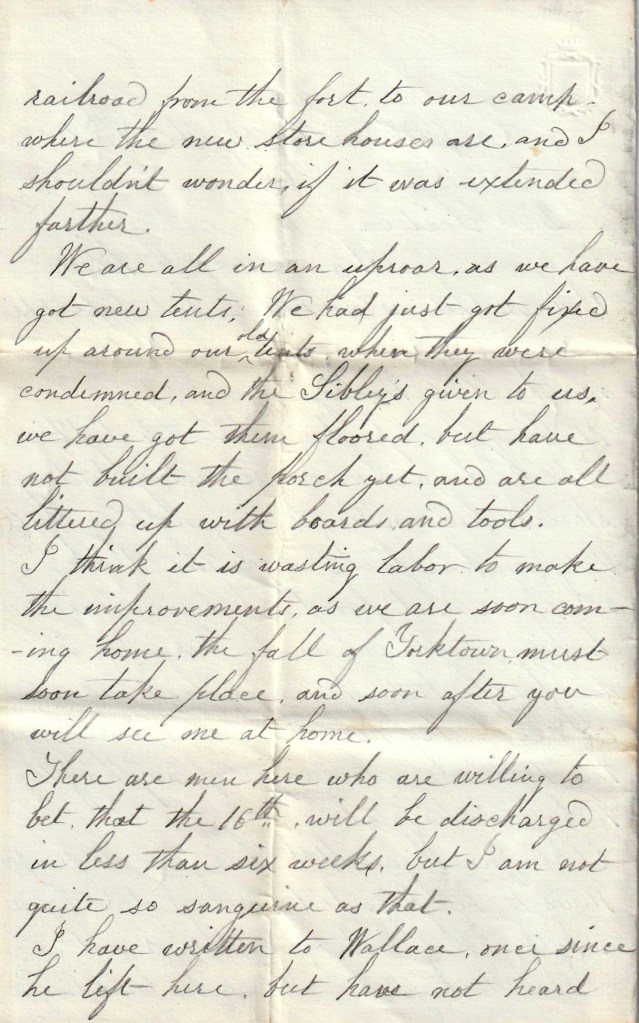
The Michigan 1st has got to Newport News to be brigaded but I don’t know whether they will go farther or not. The darkies are at work building a railroad from the fort to our camp where the new store houses are and I shouldn’t wonder if it was extended farther.
We are all in an uproar as we have got new tents. We had just got fixed up around our old tents when they were condemned and the Sibley’s given to us. We have got them floored but have not built the porch yet and are all littered up with boards and tools. I think it is wasting labor to make the improvements as we are soon coming home. The fall of Yorktown must soon take place and soon after you will see me at hoe.
There are men here who are willing to bet that the 16th will be discharged in less than six weeks but I am not quite so sanguine as that. I have written to Wallace once since he left here but have not heard from him excepting what you have written. We hear firing every day but no great move has been made as yet. It would not be strange if they were waiting for Banks and McDowell to come nearer before they strike.
Wounded men are brought to the Chesapeake Hospital nearly every day and a few prisoners have been brought to the fort. Never fear but “Little Mac” will come out all right. Give my love to mother and all the rest of the folks and excuse the looks of this.– Asa D. Smith
I reckon there is enough on the card.
1 William “Wallace” Smith enlisted in the 22nd Massachusetts Infantry on September 17th, 1861 and the two brothers exchanged letters about the soldier’s life. Some of Wallace’s letters to Asa, as well as a few from the family at home to Asa, are available in the Gilder Lehrman Collection 13742.
Letter 2
Gosport Navy Yard May 12, 1862
Dear Mother,
Here I am in Dixie, safe and secure. We left camp last Thursday and went on board a steamer where we staid until the next morning when we went back and pitched tents again feeling blue, you may believe. I was detailed on guard and if I ever wanted to be out of the army, it was then. In the afternoon our boys started for the boat to escort the body of our late comrade, but before they had gone half way there, orders came to pack immediately and they were sent back. I went to the Officer of the Guard, Lieut. Flagg, and got released from that duty and got ready for the tramp, and in less than 15 minutes we were on the way to the fort where we embarked on board the Nelly Baker, the old Nahant boat. We lay on board all night and kept crossing and recrossing the [Hampton] roads till we landed at 7 in the morning near Willoughby’s Point where we expected to [ ] as the Monitor and 4 war vessels had been shelling Sewall’s Point during the afternoon and the Rip Raps had kept up a steady fire all the evening.
We immediately took up the line of march for Norfolk (Gen. Wool with Generals Mansfield and Weber being with us). We pushed on at an awful rate. It was very hot and dusty so you could hardly see 20 feet at times, and soon the boys began to throw away overcoats, blankets, and oftentimes knapsack and all its contents, and for two or three miles the sides of the road were lined with cast away property, but I had left everything I wanted to spare in the old camp and hung to mine, though it seemed as if I should drop sometimes. I believe nothing but pride kept me in the ranks. But anyway, I stuffed my hat with leaves and pressed on. A great many fell out and one sergeant of Co. A was sun struck but will probably recover.
We passed a deserted cavalry camp early in the morning and were told that they left it about three hours before. We expected a fight which did a great deal toward keeping up our pluck, and some tall walking was done. After marching several miles the cavalry reported the bridge burned and we had to countermarch a considerable distance to take another road but we pushed on at no time stopping to rest over 10 minutes until within three miles of the city when the word passed down the lines, “a battery ahead to be carried,” and the order was given to “unsling knapsacks” and pile them up on the side of the road.
The lightening us of our load and news of a battery started us a nearly a double quick but soon a clearing showed us volumes of smoke—a sign that they were leaving, and when we came in, not a “Secesh” was to be seen. The 20th New York entered first and planted their colors on the ramparts. The 16th was the 3rd regiment to enter. We found the works strong but there was no regular ditch in front so they could have been easily stormed. They are said to be between 5 and 6 miles long & to mount 92 guns. Part of the barracks were burned but they did not wait to finish the job nor even to spike a gun.
Col. Powell T, Wyman, 16th Massachusetts
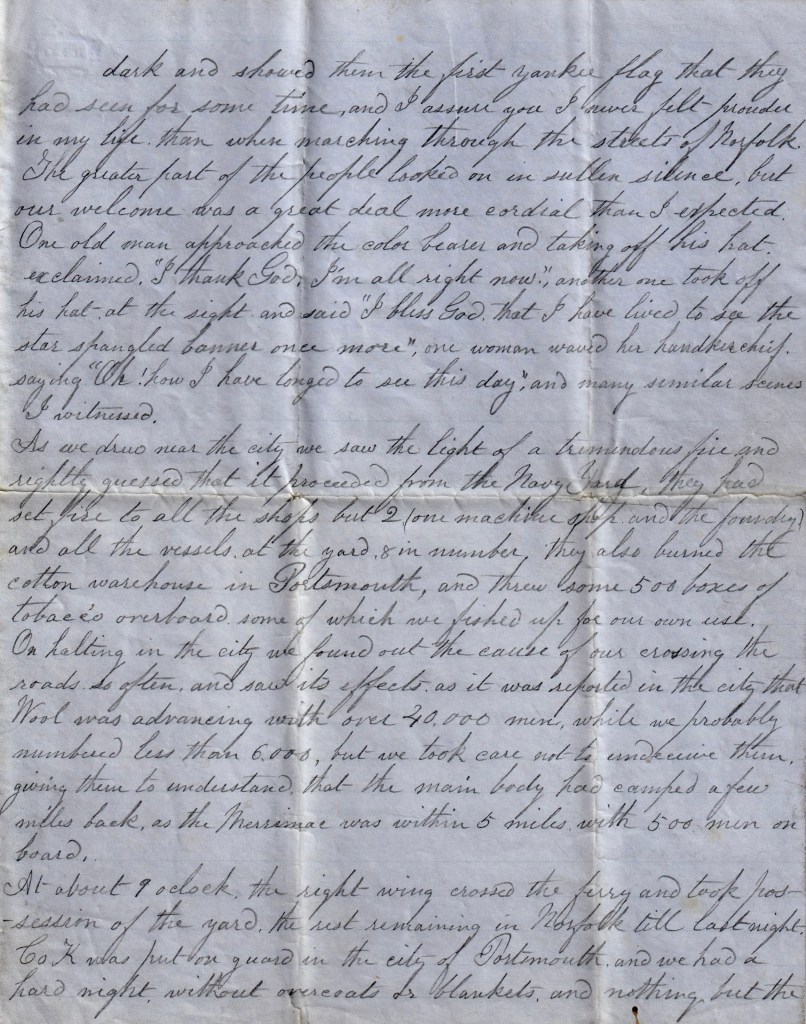
We stopped here and rested and each man made a dipper full of coffee as we had had nothing but hard tack and cold water for about 36 hours and at length the 16th started for the city. Col. [Powell T.] Wyman claiming the honor by right of seniority, we entered it a little before dark and showed them the first Yankee flag that they had seen for some time, and I assure you I never felt prouder in my life than when marching through the streets of Norfolk. The greater part of the people looked on in sullen silence but our welcome was a great deal more cordial than I expected. One old man approached the color bearer and taking off his hat exclaimed, “I thank God I’m all right now.” Another one took off his hat at the sight and said, “I bless God that I have lived to see the star spangled banner once more.” One woman waved her handkerchief saying, “Oh! how I have longed to see this day,” and many similar scenes I witnessed.
As we drew near the city, we saw the light of a tremendous fore and rightly guessed that it proceeded from the Navy Yard. They had set fire to all the shops but two (one machine shop and the foundry) and all the vessels at the yard, 8 in number. They also burned the cotton warehouse in Portsmouth and threw some 500 boxes of tobacco overboard, some of which we fished up for our own use. On halting in the city we found out the cause of our crossing the roads so often, and saw its effects as it was reported in the city that Wool was advancing with over 40,000 men while we probably numbered less than 6,000, but we took care not to undeceive them, giving them to understand that the main body had camped a few miles back, as the Merrimack was within 5 miles with 500 men on board.
At about 9 o’clock the right wing crossed the ferry and took possession of the yard, the rest remaining in Norfolk till last night. Co. K was put on guard in the city of Portsmouth and we had a hard night without overcoats or blankets and nothing but the pavements for a bed. Ater sweating so through the day, it seemed as if we should freeze and we are no better off now as our knapsacks have not arrived and our tents are at Old Point. We had not got the first relief posted before we heard a crash and soon found a gang with some boxes in the street. We charged on them when they scattered leaving us 4 boxes of flintlock guns, 1 of sabers, and 1 of cartridge & cap boxes. We also found two buildings occupied by the rebels as commissary stores which we took possession of and yesterday we fed on secesh ham and hard tack, and during the night we found several soldiers. They are the worst dressed men you ever saw.
About 5 yesterday morning we heard a loud report which proved to be the blowing up of the Merrimac. Three of her crew were brought here—two of them Lowell men. The rest landed at Craney Island and were taken by the garrison to Richmond. They say they could not get out nor touch us without shelling their own cities so they blew her up. They say that the Monitor used her up badly.
Yesterday 4 men-of-war came up and anchored between the cities, broadside on. They were greeted with cheer on cheer from the citizens, and during the day the American flag was hoisted on a great many private houses.
Last night Co. K was on patrol and ordered all citizens indoors at 8:30 o’clock. The watchmen objected to going but were told their term of service had expired. The streets were travelled all night. What little sleep we got was on the sidewalk in from of the Ocean House. A flag of truce from Gen. Hager came down last night to the Colonel who commands this side of the river. I hear that Gen. Viele is to command here. I forgot to state that Old Abe came round every boat at the fort and bid us God speed. Co. H is at Craney Island.
We have no certain news since Thursday. How is Wallace? I hope this may find your health improved. Can’t tell half the news. We make it too fast. Direct as usual to the fort. Send me 1 dollar if handy. Suppose we have taken at least 200 cannon and any quantity of other stuff. Am first rate. Love to all, Asa.
Letter 3
Camp near Fair Oaks June 20th 1862
Dear Mother,
I intended to have written before but was unable and am taking my chance now, only on picket reserve. I have received but one letter from you since we left Suffolk but got a paper yesterday. Did you receive that note?
I got a line from Wallace yesterday. He has joined his regiment. He was at White House when the 29th landed, only two or three days before our arrival. I suppose before this reaches you, the papers will have notified you that we have smelt powder but I will tell you our movements as well as I can.
Sunday afternoon [15 June 1862] we had a smart thunder shower and in the midst of it, the Rebs made a dash at our pickets and took a captain and forty men. Some two or three were killed, including Gen. Sickle’s aide. We were under arms and stood through the shower formed in line of battle. Again at three the next morning we were turned out by skirmishing on the pickets toward our left and several times since Sunday they have thrown a few shells amongst us, but without doing much hurt. On Wednesday the 18th at about 10 o’clock, the bugle sounded (the signal for a general alarm) and the whole Army of the Potomac was under arms. After standing in line about an hour, we were dismissed with orders to fall in at half past three, ready for action.
At the appointed time we formed and marched to the line where the 69th New York were picketing where we found Gen. Hooker & Grover, and were ordered to deploy in the woods between the Williamsburg road and the railroad, and drive in the enemy’s pickets as far as it would be safe in order to find out the chances for taking artillery through.
We started in with good relish, well pleased at the chance of meeting some rebels, and as for myself, I had a curiosity to know how I should feel under fire. After going a short distance through a very thick wood, we came to a swamp where we waded above our knees in water. We soon pushed through and very soon after the firing began on the left and in a few minutes became general along the whole line. We advanced so rapidly that we could not keep their cover, but left as quick as possible, and here they met their greatest loss, our boys raking them terribly. We were so eager that we paid little attention to cover, and before long we received a whole volley probably from their reserve which took off some of our boys. But we pushed them through the woods clear to their rifle pits although we suffered badly.
It was at the time of the volley that I first thought of cover, a son of Dr. Sherman of Waltham, and a number of our company falling dead within five feet of me. There were four of us standing in a small open space when a dozen or more bullets whistled by us and he fell, shot in the mouth. I got behind a stump and the others behind trees and watched for a chance to return compliments, the rebels all bring hid, and for the first time I felt mad. We kept our position and when one showed himself, we fired. But soon the order came to fall back and we slowly retreated. We were obliged to leave our comrade where he fell as it would have been death to have approached him but it seemed hard although we knew he was beyond surgical aid.
Our loss in this skirmish of 3/4 of an hour was 18 killed, 25 wounded, and 11 missing—more than the 1st Regiment lost at Williamsburg in ten hours of skirmishing. Lieut. Rogers of Co. F was instantly killed and Capt. Donovan of Co. D is missing. The loss in my own company in killed—Orderly Sergeant Charles F. Coburn, & Private Robert Sherman; in wounded Gregg. Smith, James Leverton, and Henry J. Miller (neither of them dangerously); and missing Joseph Corrigan. Both of our dead were left where they fell, it being impossible to bring them off. The death of Sergt. Coburn is a great loss to us as he was a general favorite.
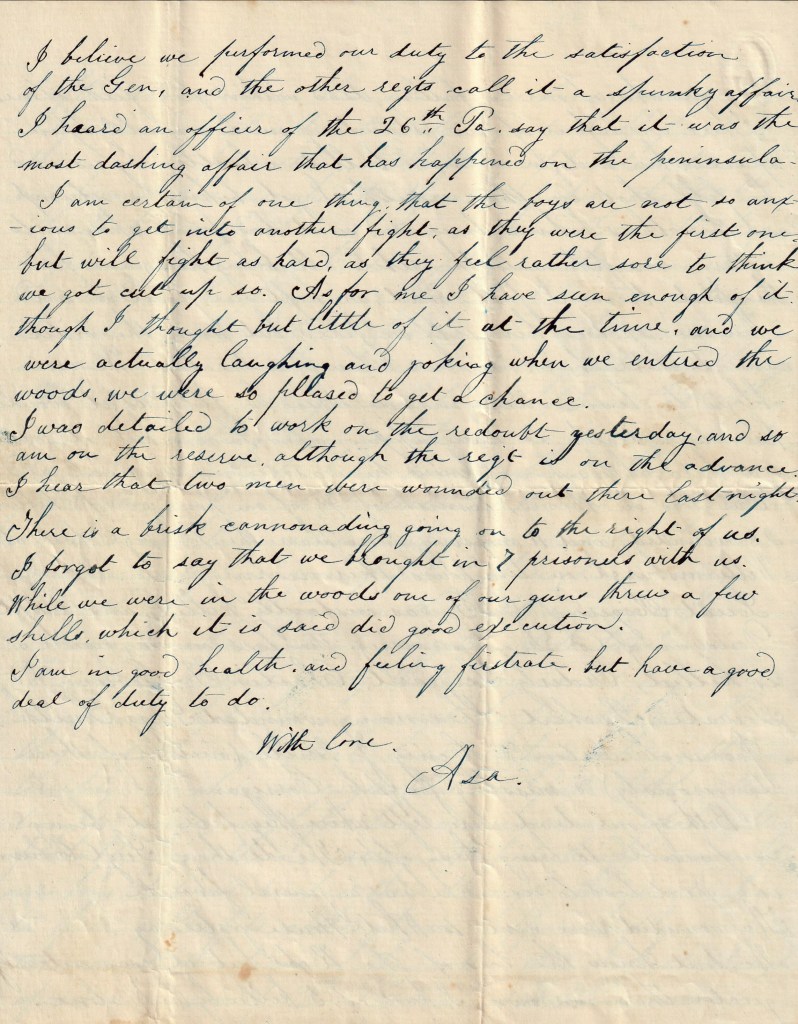
The wounded were sent to White House yesterday, We don’t know the loss of the Rebs but it was certainly greater than our own. I know of 5 killed by Co. K alone. I believe we performed out duty to the satisfaction of the General and the other regiments call it a spunky affair. I heard an officer of the 26th Pennsylvania say that it was the most dashing affair that has happened on the peninsula.
I am certain of one thing—that the boys are not so anxious to get into another fight as they were the first one but will fight as hard as they feel rather sore to think we got cut up so. As for me, I have seen enough of it though I thought but little of it at the time and we were actually laughing and joking when we entered the woods, we were so pleased to get a chance.
I was detailed to work on the redoubt yesterday and so am on the reserve, although the regiment is on the advance. I hear that two men were wounded out there last night. There is a brisk cannonading going on to the right of us. I forgot to say that we brought in 7 prisoners with us. While we were in the woods one of our guns threw a few shells which it is said did good execution. I am in good health and feeling first rate but have a good deal of duty to do. With love, — Asa
Letter 4
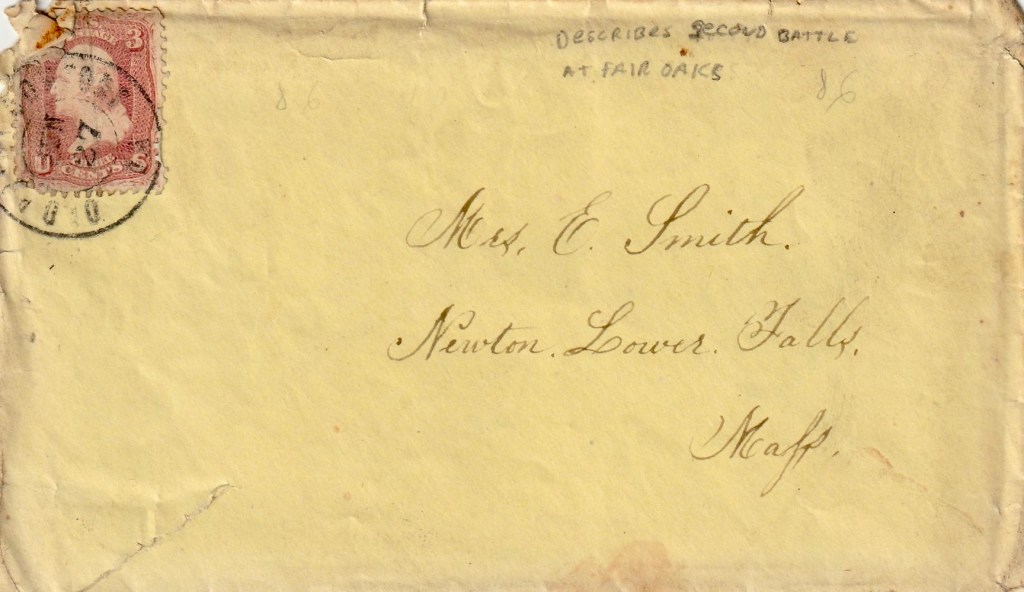
Addressed to Mrs. E. Smith, Newton, Lower Falls, Massachusetts
Fair Oaks June 27, 1862
Dear Mother,
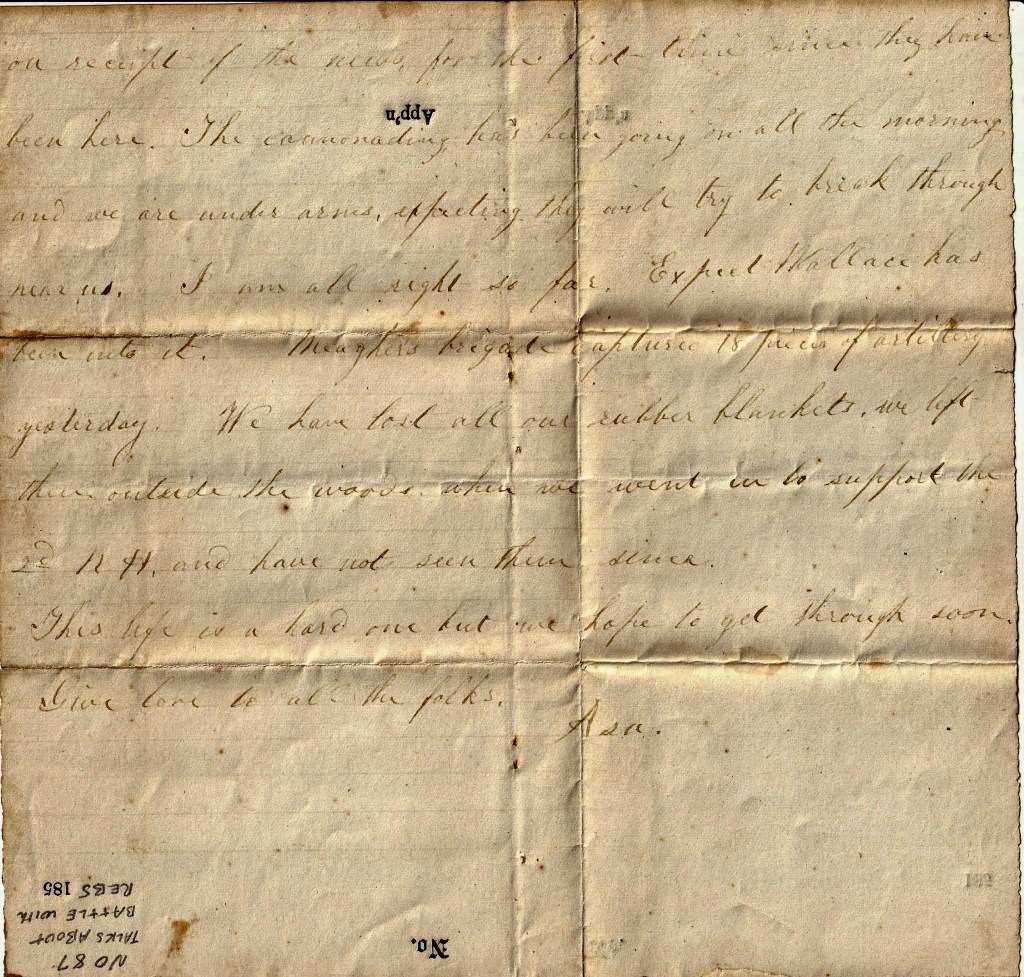
There was a fight here day before yesterday. The attack was made by our division and Kearney’s was also engaged. We got possession of the belt of woods in the front of us. My company was not engaged but was under fire a good share of the day. Seven companies were in the fight, and the loss of the regt was 26 in killed, wounded, and missing. Lieut. Flagg was wounded in the arm. Keyes was hit in the head by a shell but it did not explode and only stunned him. The 1st [Massachusetts] lost 86 in killed, wounded and missing. The 11th had 20 wounded.
The enemy attacked of General [Fitz John] Porter yesterday and dispatches were read to us last night stating that he had turned their left and whipped them at every point. The bands played on receipt of the news for the first time since they have been here. The cannonading has been going on all the morning and we are under arms, expecting they will try to break through near us. I am all right so far. Expect Wallace has been into it. Meagher’s Brigade captured 18 pieces of artillery yesterday, We have lost all our rubber blankets. We left them outside the woods when we went into support the 2nd New Hampshire and have not seen them since.
This life is a hard one but we hope to get through soon. Give love to all the folks. — Asa
Letter 5
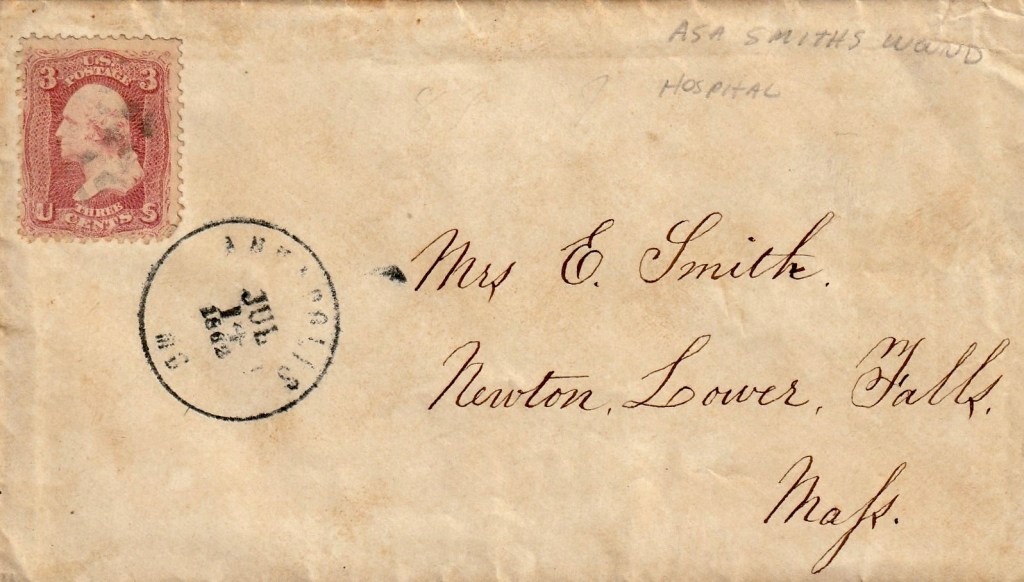
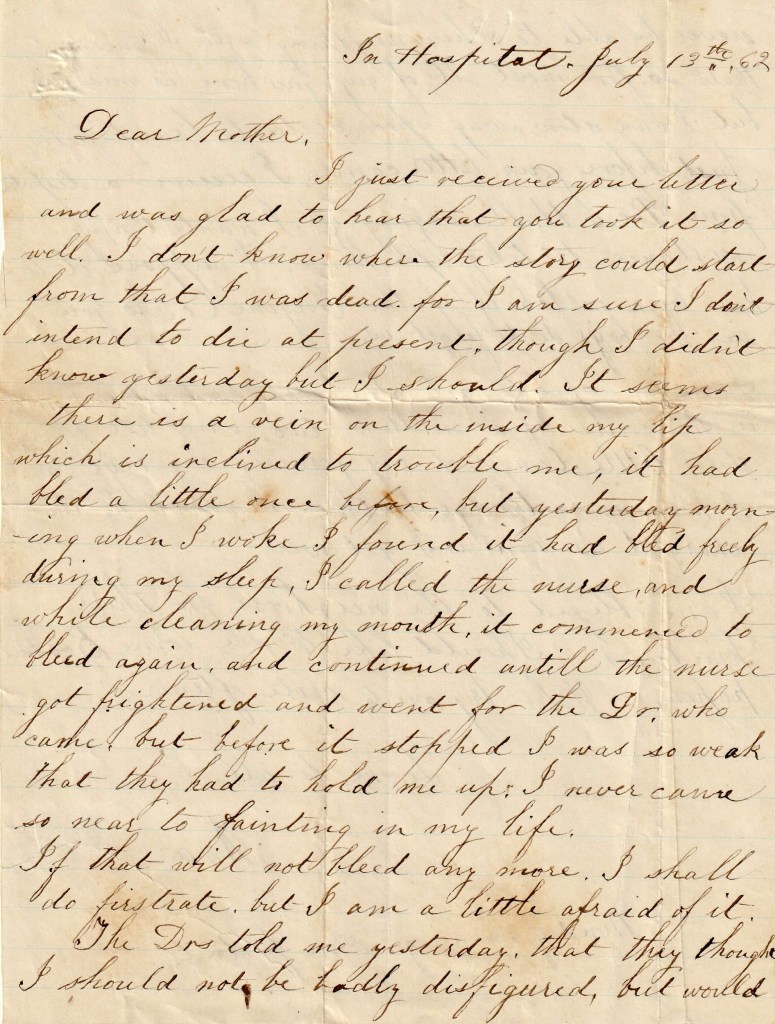
In hospital July 13, 1862
Dear Mother,
I just received your letter and was glad to hear that you took it so well. I don’t know where the story could start from that I was dead for I am sure I don’t intend to die at present, though I didn’t know yesterday but I should. It seems there is a vein on the inside my lip which is inclined to trouble me. It had bled a little once before but yesterday morning when I woke, I found it had bled freely during my sleep. I called the nurse and while cleaning my mouth, it commenced to bleed again and continued until the nurse got frightened and went for the doctor who came, but before it stopped I was so weak that they had to hold me up. I never came so near to fainting in my life.
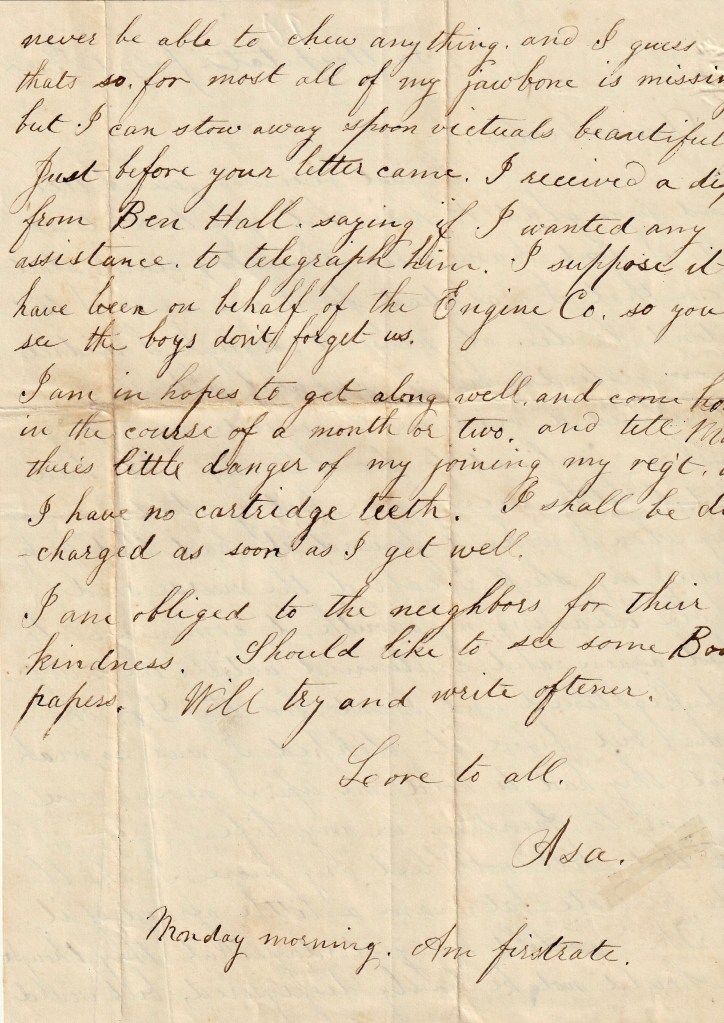
If that will not bleed any more, I shall do first rate but I am a little afraid of it. The doctors told me yesterday that they thought I should not be badly disfigured but would never be able to chew anything and I guess that so for most all my jawbone is missing but I can stow away spoon victuals beautifully.
Just before you letter came, I received letter from Ben Hall saying if I wanted any assistance to telegraph him. I suppose it has been on behalf of the Engine Company so you see the boys don’t forget us.
I am in hopes to get along well and come home in the course of a month or two and tell M. there’s little danger of my joining the regiment. I have no cartridge teeth. 1 I shall be discharged as soon as I get well. I am obliged to the neighbors for their kindness. Should like to see some Boston papers. Will try and write oftener. Love to all, — Asa
Monday morning. Am first rate.
1 Despite his severe injury, Asa retained his sense of humor. Here he reassures his family he won’t reenlist given that he no longer has teeth with which to bite open a cartridge to load his musket.Medical records reveal that Asa was admitted to the hospital at the Naval Academy, Annapolis, Maryland, on 4 June 1862 with a compound fracture of the lower jaw. The treatment consisted of the removal of that portion of the jaw lying between the molars of the opposite sides. The secondary hemorrhage described in this letter was arrested by the application of ice. He recovered and was discharged on 27 July 1862 with very little disfiguration. In 1866 it was reported that the bone had reunited though he was still unable to masticate solid food. The disability was considered total and permanent.
The following letter was written by a soldier named “Henry” serving in the 16th Massachusetts Infantry. This regiment saw heavy casualties during the war. Of more than 1300 men, 112 were killed in battle, 360 were wounded and 52 died from their wounds. Disease claimed 115 and 65 were taken as prisoners of war, 32 of them dying in Confederate prisons. Another 344 went home afflicted with wounds or disease as disability discharges. If Henry was from Boston, as I think he was, he was probably a member of Co. A, or Co. F.
Henry wrote the letter to his friend, Jerry Norris—a clerk employed by Augustus Hardy working at 3-4 Charlestown street in Boston. Hardy’s business was “doors, sashes, and blinds.”
A calling card distributed by Augustus Hardy. His business was at 3-4 Charlestown Street in Boston, opposite the Boston & Maine Railroad Depot.
Transcription
Fort Beauregard 1 Munson’s Hill, Virginia November 1st 1862
Friend Jerry,
After a very long interval, will endeavor to write you a few lines to let you know that I am still alive and well hoping this will find you the same. I have received several letters from you since I last wrote. I can’t give you the dates but one I received was dated September 2nd. It had been going the rounds of the army.
There is no news here. About ten days ago at dark we received orders to get ready to march in light order and ready we got and started, we not knowing where. We marched about four miles to this hill. The regiment is camped inside of the work which is circular. This is the hill that the rebels got last fall and where they had the quaker guns. We have a battery of artillery with us. We are in shelter tents and it is mighty cold nights.
What we are here for is more than I can tell. We are having a better chance here to drill the recruits than if we were back in camp. If they would send up our Sibley tents and knapsacks, we could live a little more comfortable than we are now. I would have wrote from here before if I could have got paper, &c. About that dollar, send me half in stamps and half in money and I will get a likeness taken for somebody.
It is utterly impossible for me to make out a letter. Tell Tom Beverly 2 that I have received a letter from Charley Putnam. 3 He is in the 1st Wisconsin Vols., Co. I, 3rd Division, via Louisville. He is in a hospital there having been wounded in the neck at Chaplin Heights [Hills], Kentucky. 4 He wants him to write to [him] He is a very patriotic youth. If you find out what regiment Sam and Ebe are in, let me know.
The weather is getting very cold here and we feel it more keenly. I should think you would feel lonesome this winter bumming around alone. You will have to stay at home the nights that you ain’t on Eden Street and knit or sew for the brave soldiers. It is a good time for you now to commence to live a good, moral life now that you have no Engine and Bummers to lead you away. You surely can’t be lead away by the weaker sex and they are the only thing to be feared now.
I do hope you will be able to weather it through this winter. You may have the pleasure of having either me or some other boy home for a while this winter if we stay here. We have got no new officers yet and don’t know when we are a going to get any. Once in a while we meet some of the (40th) Regiment—that is, the Chelsea Company, now H. [The] 1st [Massachusetts] is not a Chelsea company now. If you could only see the old men and muckers we are getting, you would be disgusted with the company and everything else—all perfect strangers to us and probably always will. It is reported that we have got 30 state prison birds in the regiment’s recruits. How true it is, I can’t tell.
You will please excuse my sending this letter without prepayment but the truth is, I have no money or stamps. Please write as soon as you get this and send the stamps.
Forgive all negligence and delay. My love to everybody and particularly yourself, — Henry
[to] J. Norris, 3 [ ] to Charlestown Street, Boston, Mass.
Care of A[ugustus] Hardy, Esqr.
1 Henry’s letter refers to the circular fort atop Munson’s Hill built by the Confederates in the summer and fall of 1861 as “Fort Beauregard.” I’ve not seen this particular fort referred to as “Fort Beauregard” previously. Once the Federals occupied late in 1861, they named it Fort Munson. Fort Beauregard generally refers to the fort built by the Confederates near Manassas Junction. He also mentions that it was the site of the quaker guns that General Joseph E. Johnston had planted there to make the fort appear much stronger than it really was. See “All the World is Laughing,” by Walter Coffey.
2 Believed to be Thomas Alexander Beverly (1835-1915), a native of Scotland, who was working as a boilermaker in Boston in 1861 when he married Elizabeth O’Neill (1837-1864). By 1870, Thomas had relocated to Kossuth, Manitowoc county, Wisconsin.
3 Frank Charles (“Charley”) Putnam (1842-1913) was the son of Simeon Waters Putnam (1818-1882) and Phebe H. Spear (1821-1849). Charley was going to school in Hingham, Sheboygan county, Wisconsin, at the time of the 1860 US Census. He was enumerated as an 18 year-old in the Charles Rogers residence.
4 The Battle of Chaplin Hills was known by its more popular name, the Battle of Perryville.
View of Union Soldiers of the 16th Massachusetts Volunteer Infantry Regiment Parading Along a Street After Their Return From Fighting in the Civil War in Cambridge, Massachusetts (1865).
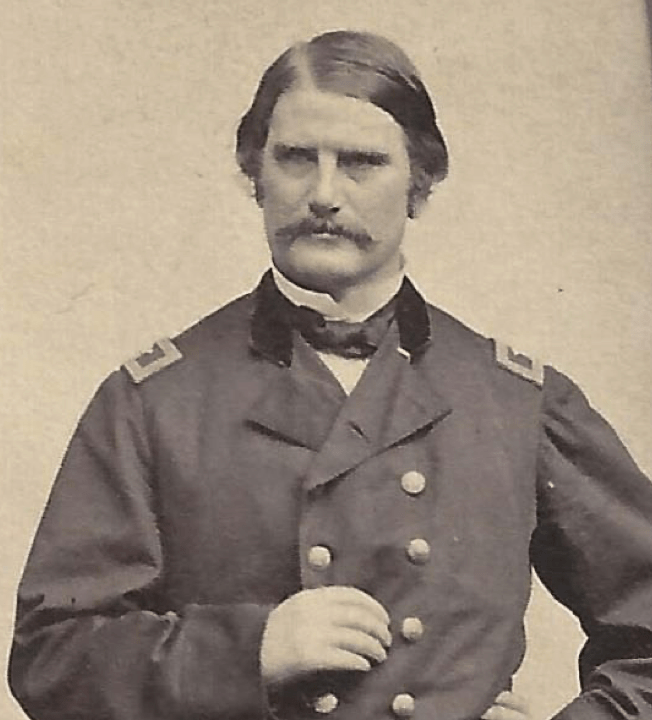
This letter was written by Dr. William Johnson Dale. Born in 1815, he was sent to North Andover, Massachusetts—his mother’s ancestral home—for schooling at Franklin Academy. He later went to Andover and graduated from Harvard in 1837 and then Harvard Medical School. He married Sarah Frances Adams. A physician in Boston, he was significantly wealthy by 1860 when he was practicing medicine in Boston. During the Civil War, he joined the service, rising to the rank of Brigadier General where he served as Asst. Surgeon General of the US, and following the War, became Surgeon General of Massachusetts. For these services he held the title of General for his lifetime. After the war, he returned to his ancestral roots of North Andover, purchasing the old Johnson farm, which had been in his family since 1637. Here he developed a model farm specializing in milk production.
William Johnson Dale
Dr. Dale wrote the letter to Dr. Albert H. Blanchard of Sherborn, Massachusetts.
The letter pertains to an apparent attempt by Abbie M. (Leland) Taber (1839-1926) of Sherborn, Massachusetts, to obtain a widow’s pension for the service of her husband, Thomas Taber (1835-1864), a corporal in Co. E, 16th Massachusetts Infantry when he was taken a prisoner-of-war on 26 November 1863 during the Battle of Mine Run. . The pension file shows evidence that Thomas enlisted as a private on 13 July 1861 and that he died at Andersonville Prison on or about the 9th of October, 1864 from “scurvey and want of food and proper treatment” while in the hands of the Rebels. Abie was married to Thomas on 18 October 1858 at Sherborn and together they had two children, Frank (b. 1859) and Willie (b. 1861).
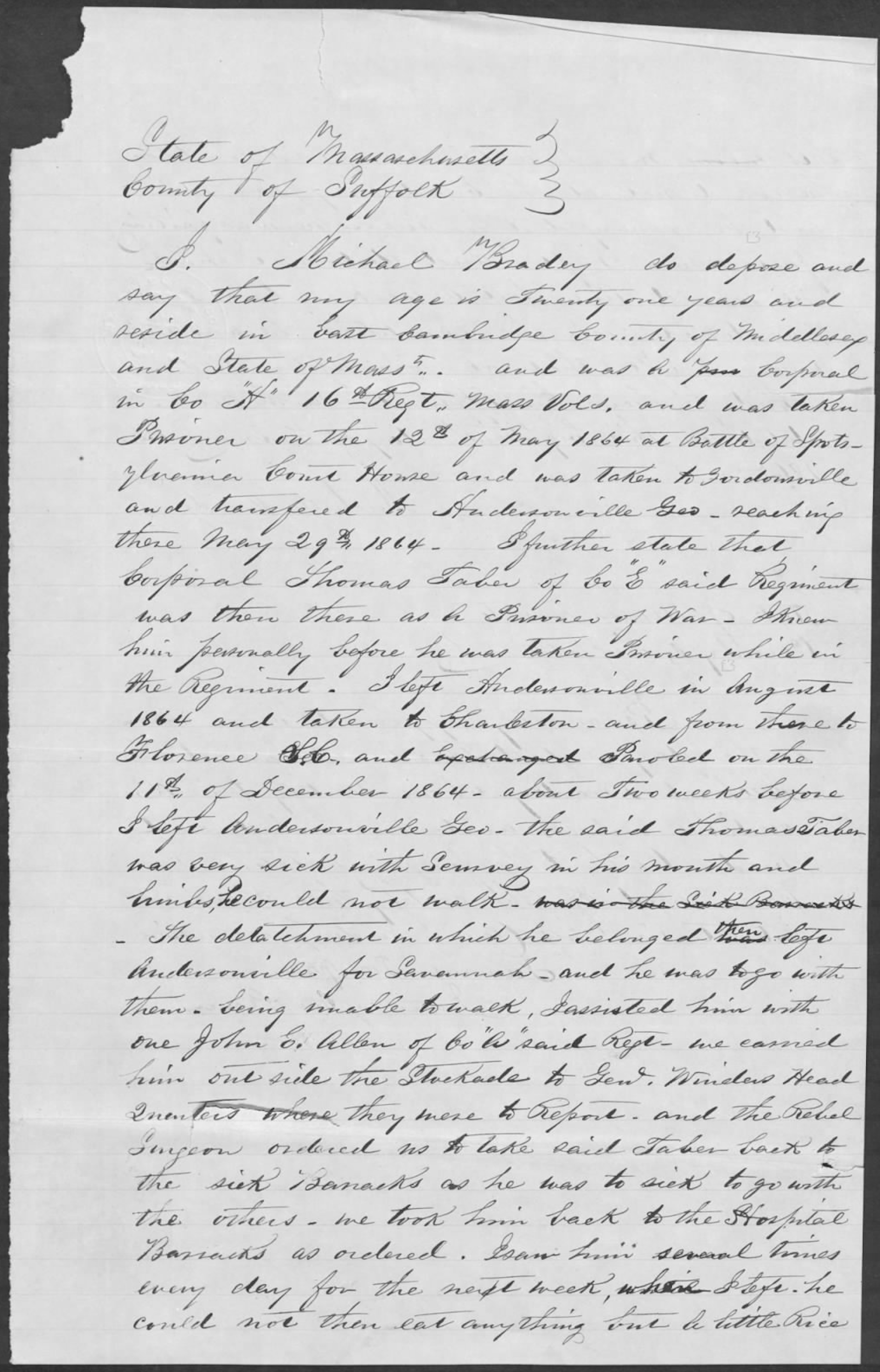
Thomas’s death seems to have been confirmed by a statement given by a comrade who was confined in Andersonville Prison named Michael Brady. His sworn testimony is presented beneath the transcribed letter in the event anyone is interested in the details of Thomas’s death.
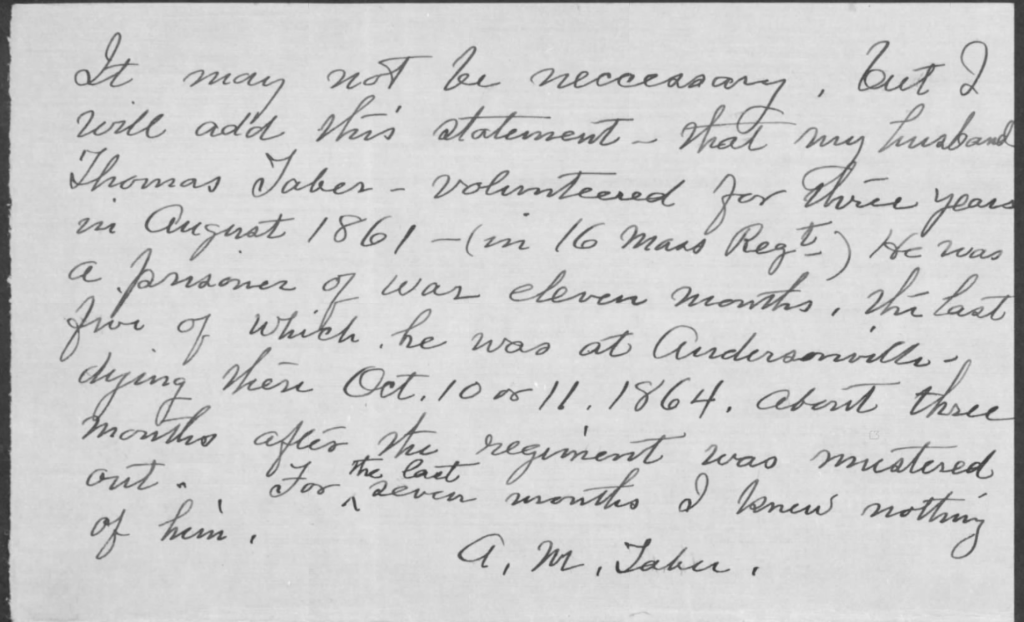
This short note to the Pension Office which was included in Abbie’s application hints at the frustration, anxiety and anguish she must have experienced in the long silence from her husband: “It may not be necessary but I will add this statement—that my husband Thomas Taber volunteered for three years in August 1861 (in 16th Mass. Regt). He was a prisoner of war eleven months—the last five of which he was at Andersonville, dying there October 10 or 11, 1864, about three months after the regiment was mustered out. For the last seven months, I knew nothing of him.” [Widows Pension File]
Transcription
Commonwealth of Massachusetts Office of Surgeon General, Boston January 7, 1865
A. H. Blanchard, Esq. Sherborn, Massachusetts Dear Sir,
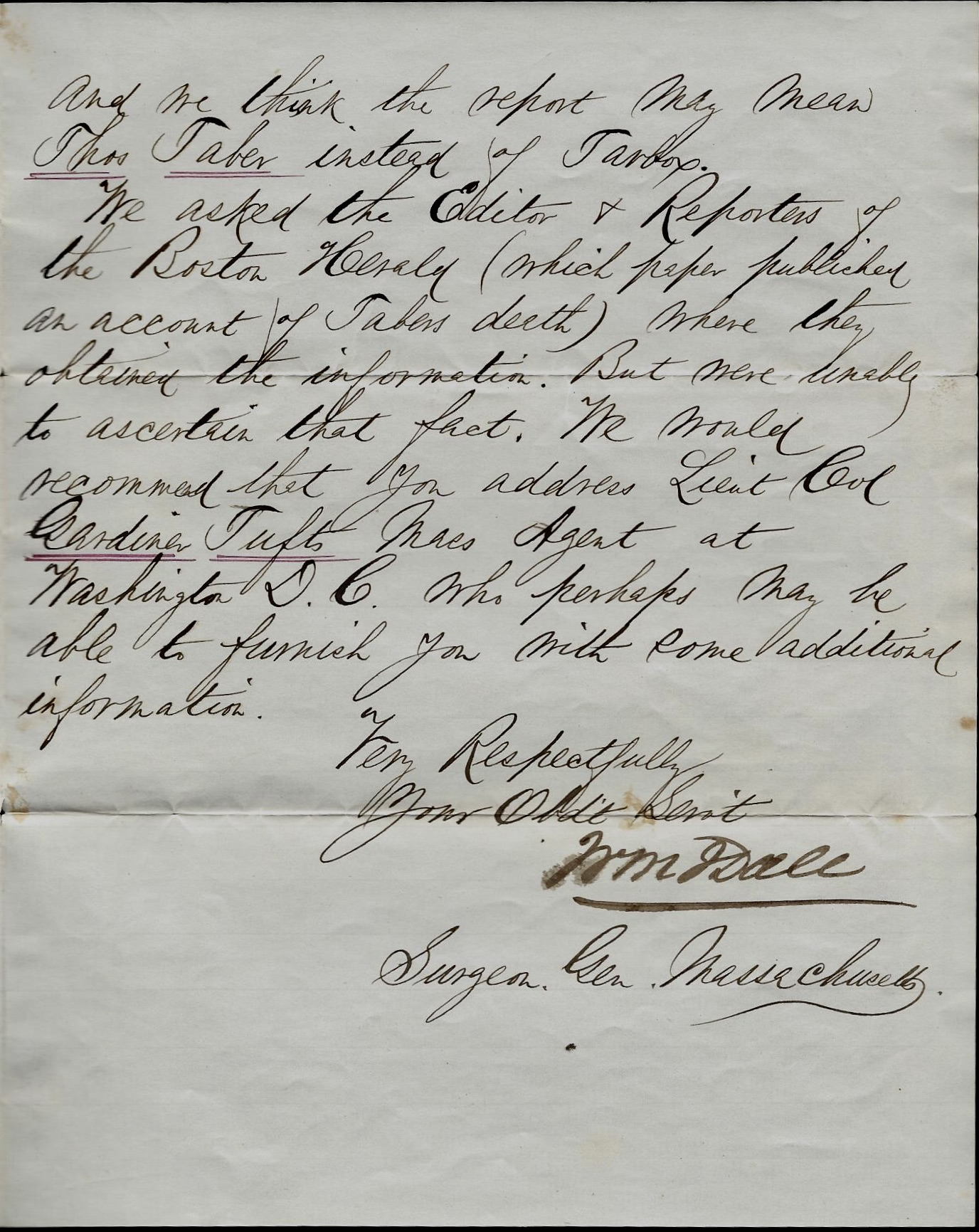
I have the honor to inform you in answer to your communication of December 14, 1864, a memo of which we put on file, that we have a report of the death in Rebel Prison at Andersonville, George, of Thomas Tarbox, Co. E, 16th Mass. Vols. October 19, 1864. We have examined the muster in rolls of Co. E, 16th Regiment on file in the Adjutant General’s Office and find that there is no such name as Tarbox on those rolls. we regret to inform you that in our opinion this name is wrongly reported by the exchanged prisoners who furnished our agents with the information and we think the report may mean Thomas Taber instead of Tarbox.
we asked the Editor & Reporters of the Boston Herald (which paper published an account of Taber’s death) where they obtained the information but were unable to ascertain that fact. We would recommend that you address Lieut. Col. Gardiner Tufts, Mass. Agent at Washington D. C. who perhaps mat be able to furnish you with some additional information.
Very respectfully your obedient servant, — Wm. J. Dale, Surgeon Gen. Massachusetts













 Spared & Shared 23