Category Archives: Camp Hamilton

1862: Charles Robinson Johnson to his wife Nellie

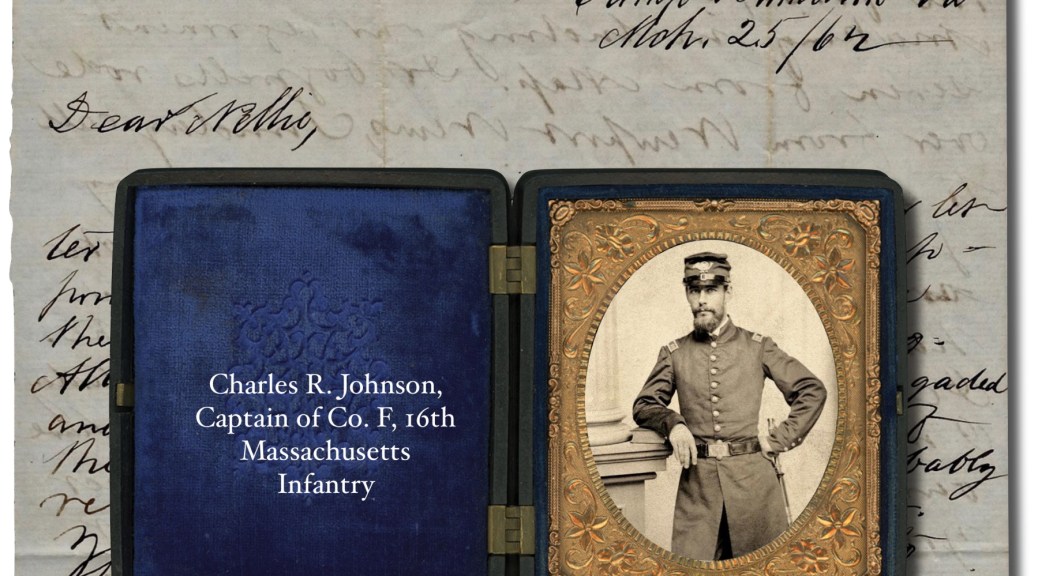
The following letters of mid-March 1862 were written just before and after the Naval Battle between the CSS Merrimack and the USS Monitor in Hampton Roads, Virginia. The second letter also refers to the 500 seat theater erected out of timber constructed by the 1st Delaware Regiment at Camp Hamilton where they had been posted since the previous October.

I was at a loss as to the author’s signature but I was pretty certain he must have been an officer in one of the many Union regiments gathering around Fort Hamilton (near Fortress Monroe) in March 1862 in readiness for McClellan’s Peninsula Campaign. I asked Artificial Intelligence (AI) to identify a Union officer who had a relative named Austin and a correspondent he termed “Dear Nellie” who would have been posted at Camp Hamilton in March 1862? Within seconds, I was told that it was written by Capt. Charles Robinson Johnson of Co. F, 16th Massachusetts Infantry (nicknamed “The Iron Sixteenth”). It also told me, “His collection of wartime correspondence includes a series of letters addressed to his sister, whom he affectionately called “Dear Nellie (Ellen Johnson). In March 1862, the 16th Massachusetts was stationed at Camp Hamilton, a massive Union staging ground located near Fortress Monroe in Hampton, Virginia. His younger brother was Austin Irving Johnson (1847–1920), whom he frequently mentioned in his updates back home.”

I thought this was incredible so I went to check it out. Turns out the wartime correspondence AI referred to was the collection I transcribed and published seven years ago. See—1861-63: Charles Robinson Johnson to Nellie. Charles R. Johnson (1836-1863) was a 25 year-old Boston merchant when he received his commission in July 1861. He was wounded at Chancellorsville on 3 May 1863 and again on 2 July 1863 at Gettysburg. He died due to wound complications on 17 July 1863 at Lexington, Massachusetts. The only thing AI had wrong was Nellie’s identity—calling her his sister. It was actually Charles’ wife, Ellen (“Nellie”) Shepard Albree (1838-1906)—the mother of his young boy, Charles Berkley (“Berk”) Johnson (1859-1925) who is mentioned occasionally in the letters.

These letters may have been previously published in their entirely in a book published in 2015 under the title, “If I am alive next Summer’: The Civil War Letters of Captain Charles Robinson Johnson of the 16th Massachusetts Infantry,” edited by Albert C. Eisenberg and Michael Hammerson. ISBN-13: 9780788456497

Letter 1

Camp Hamilton, Virginia
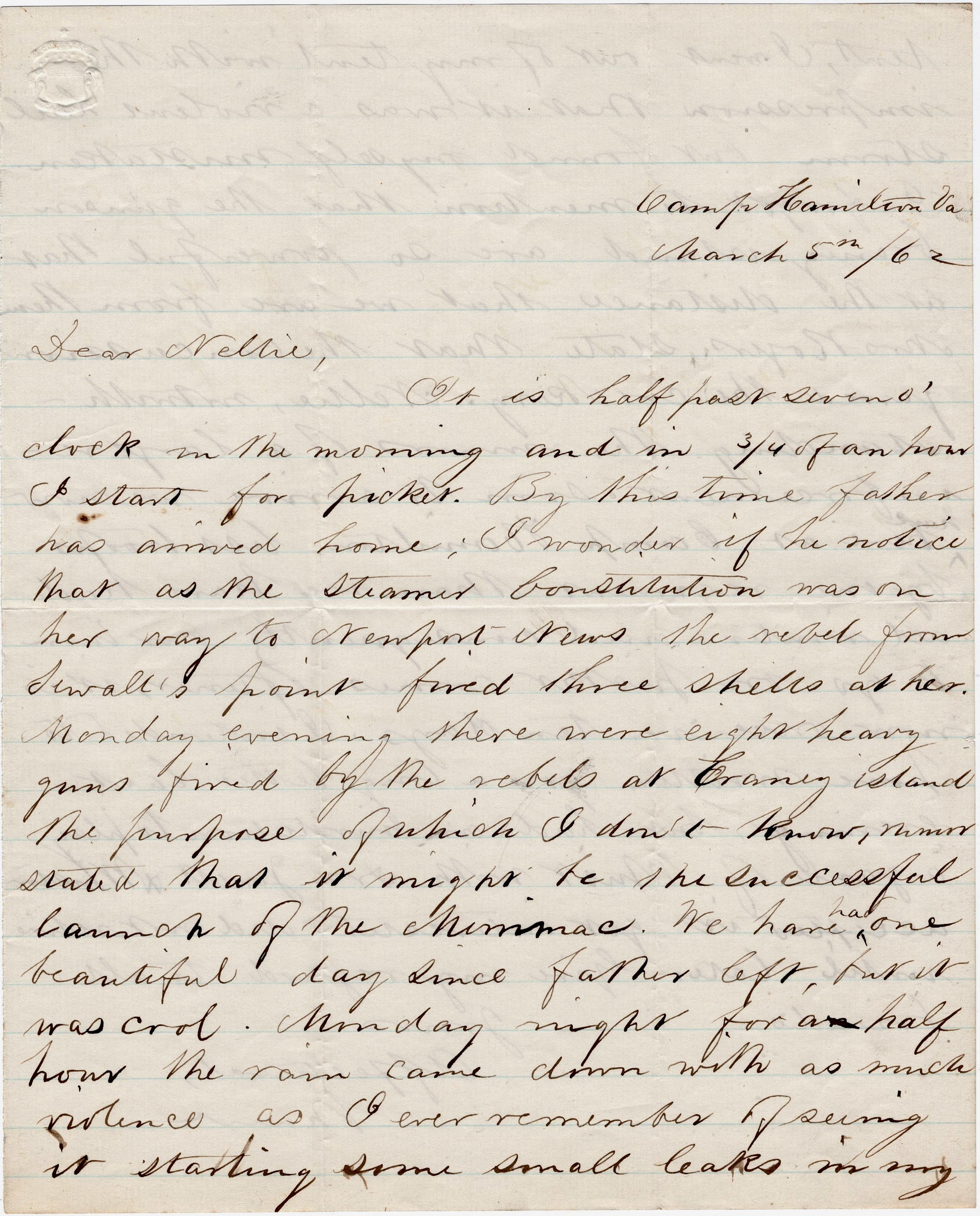
March 5, 1862

Dear Nellie,

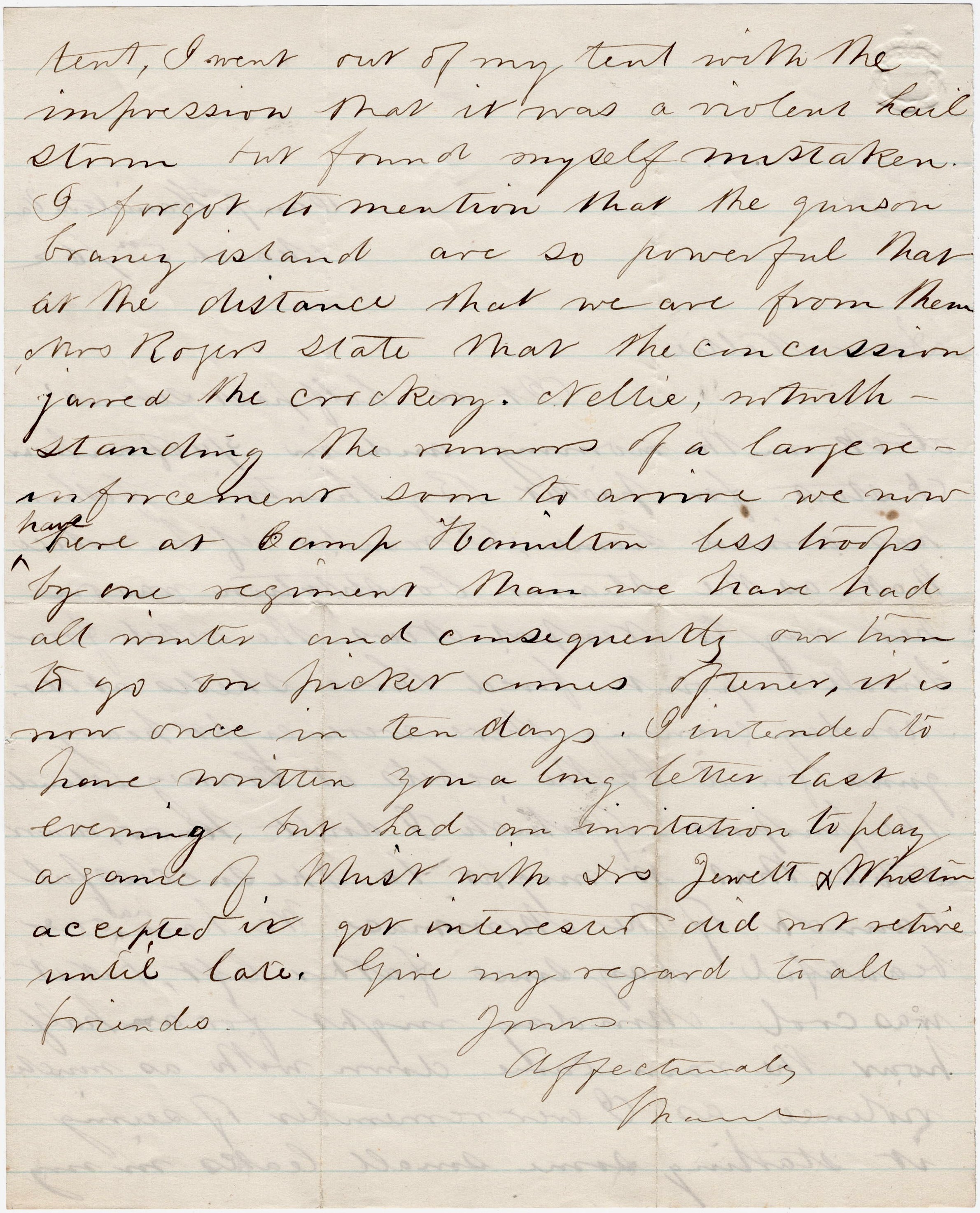
It is half past seven o’clock in the morning and in 3/4 of an hour I start for picket. By this time father has arrived home. I wonder if he noticed that as the steamer Constitution was on her way to Newport News the rebel [guns] from Sewall’s Point fired three shells at her. Monday evening there were eight heavy guns fired by the rebels at Craney Island, the purpose of which I don’t know. Rumor stated that it might be the successful launch of the [CSS] Merrimack.

We have had one beautiful day since father left, but it was cool. Monday night for a half hour the rain came down with as much violence as I ever remember of seeing it, starting some small leaks in my tent. I went out of my tent with the impression that it was a violent hail storm but found myself mistaken. I forgot to mention that the guns on Craney Island are so powerful that at the distance that we are from them, Mr. Rogers state that the concussion jarred the crockery.

Nellie, notwithstanding the rumors of a large reinforcement soon to arrive, we now have here at Camp Hamilton less troops by one regiment than we have had all winter and consequently our turn to go on picket comes oftener. It is now once in ten days. I intended to have written you a long letter last evening but had an invitation to play a game of Whist with Drs. [Charles C.] Jewett & [Edward Andem] Whiston, accepted it, got interested [and] did not retire until late. Give my regard to all friends. Yours affectionately, — Charles
Letter 2

Camp Hamilton, Virginia
March 16, 1862

Dear Nellie,

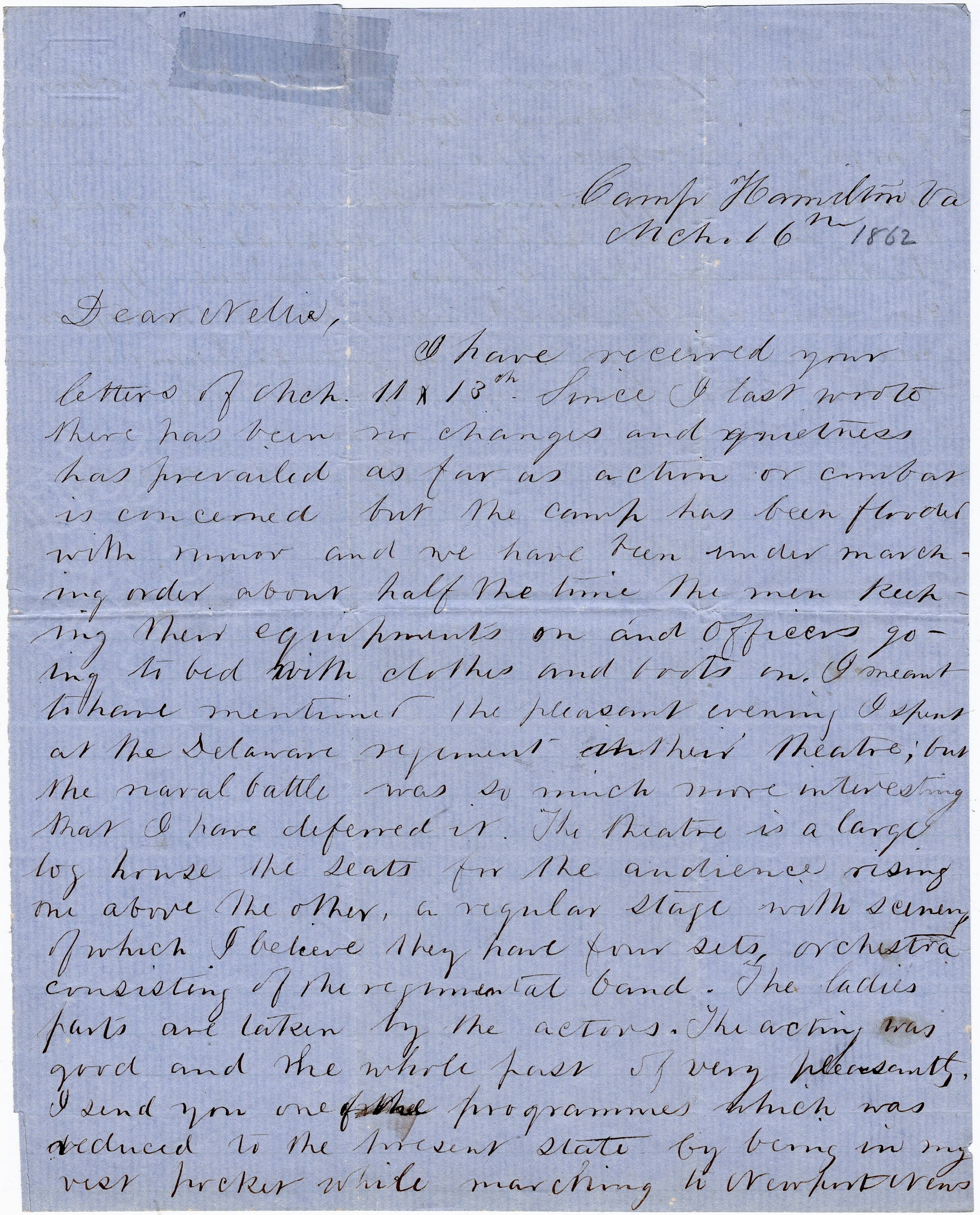
I have received your letters of March 11th & 13th. Since I last wrote there has been no changes and quietness has prevailed as far as action or combat is concerned. But the camp has been flooded with rumor and we have been under marching orders about half the time, the men keeping their equipments on and officers going to bed with clothes and boots on.
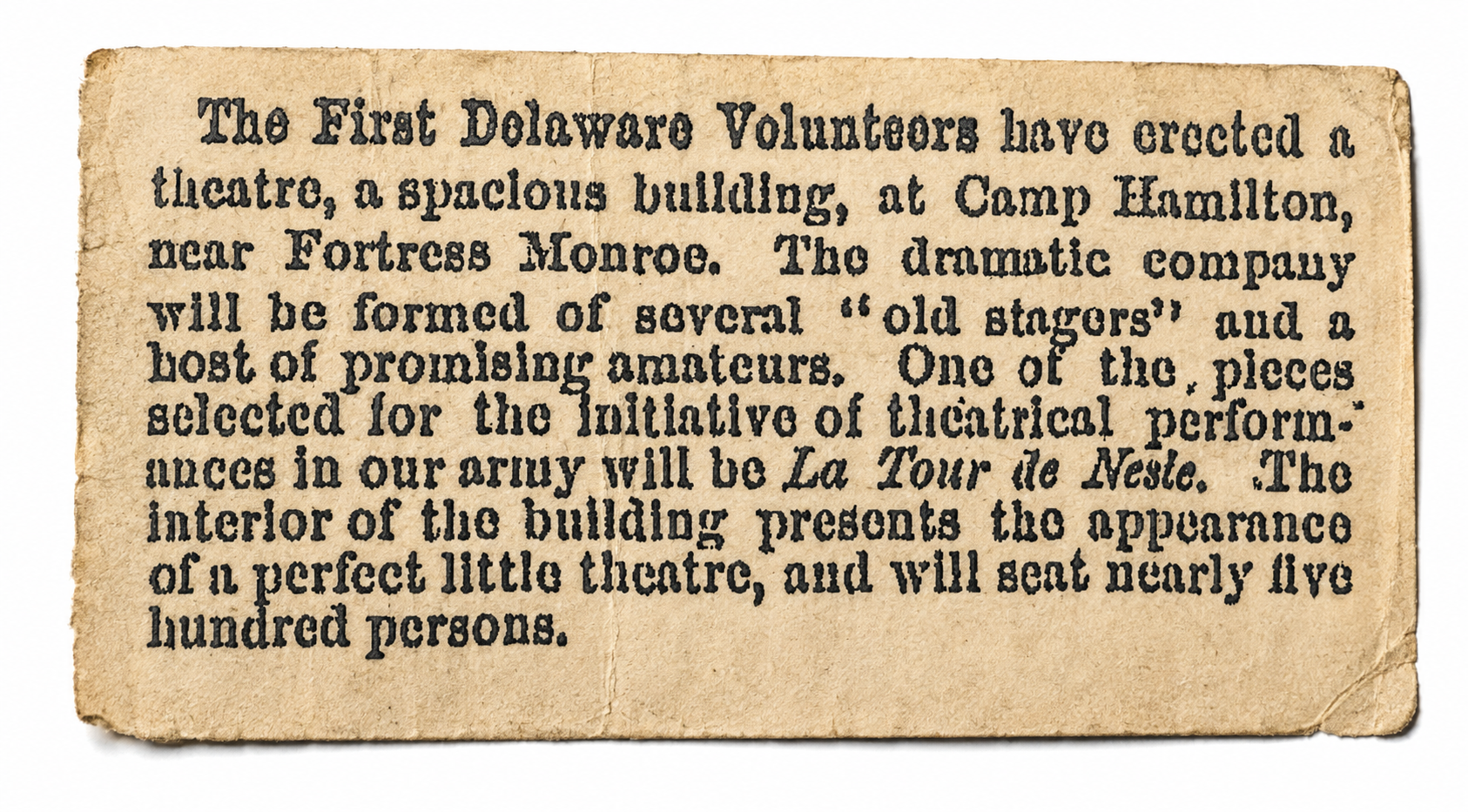
From The Evening Post, New York, 5 February 1862

I meant to have mentioned the pleasant evening I spent at the Delaware regiment and their theatre, but the naval battle [between the Monitor and Merrimack] was so much more interesting that I deferred it. The theatre is a large log house, the seats for the audience rising one above the other, a regular stage with scenery of which I believe they have four sets, orchestra consisting of the regimental band. The ladies parts are taken by the actors. The acting was good and the whole passed off very pleasantly. I send you one of the programmes which was reduced to the present state by being in my vest pocket while marching to Newport News.

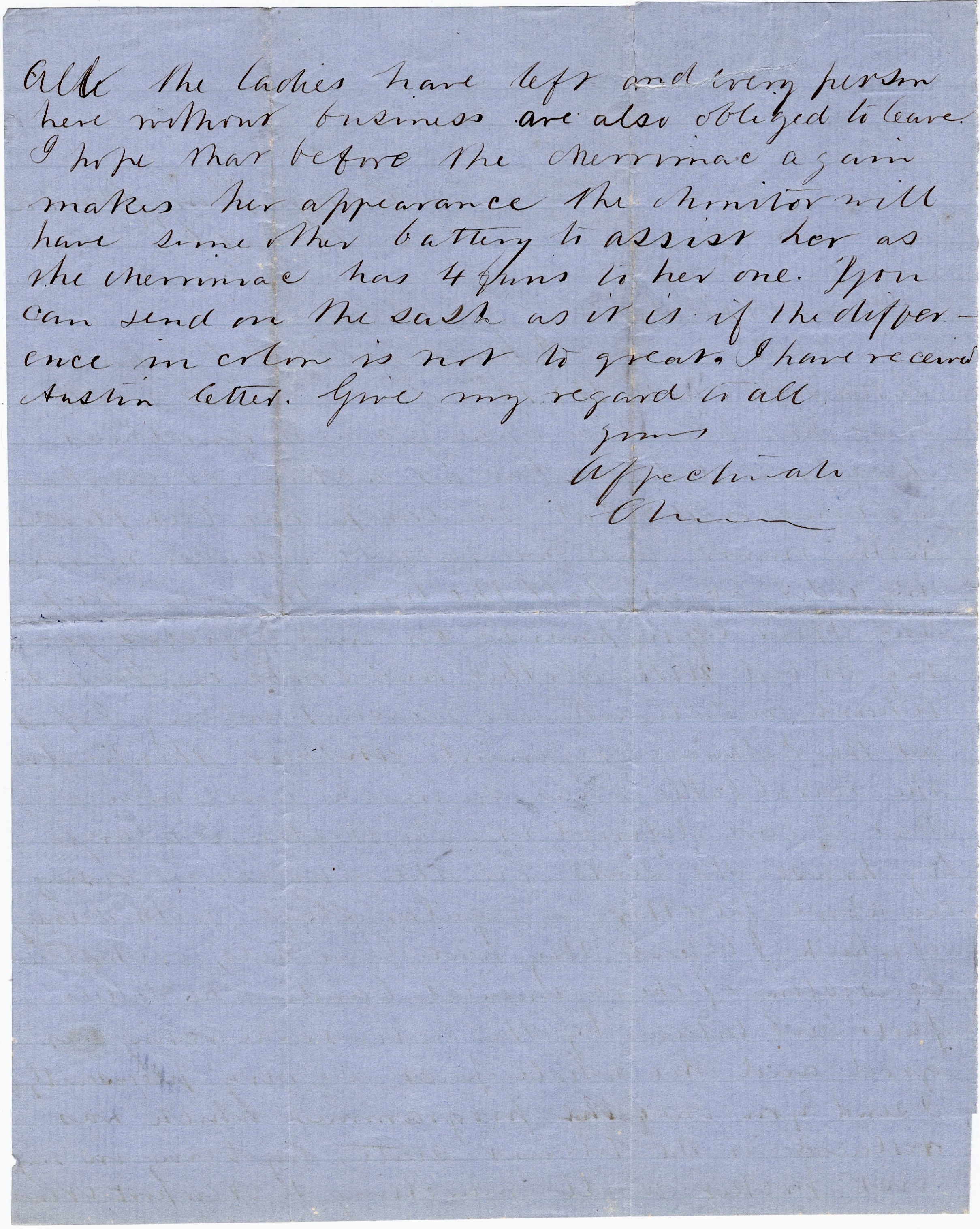
All the ladies have left and every person here without business are also obliged to leave. I hope that before the Merrimack again makes her appearance, the Monitor will have some other battery to assist her as the Merrimack has four guns to her one. You can send on the sash as it is if the difference in color is not too great. I have received Austin’s letter. Give my regard to all. Yours affectionately, — Chas.
1862: Abel Hartley Comstock to Mary D. Rozell

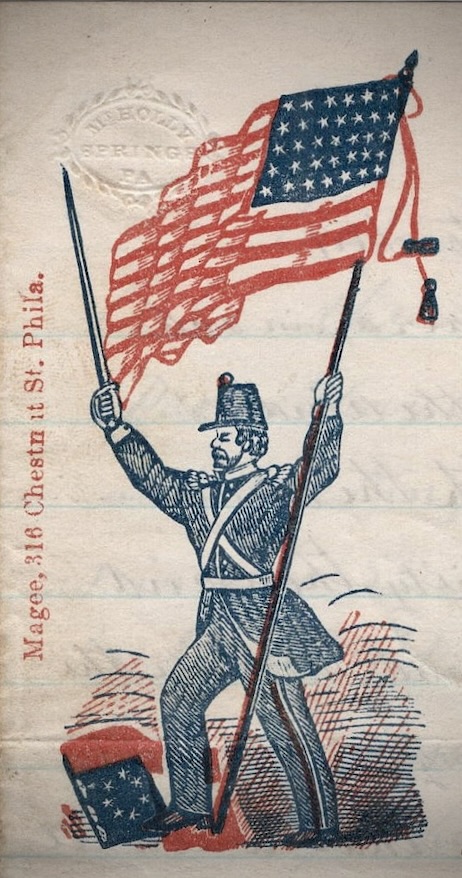
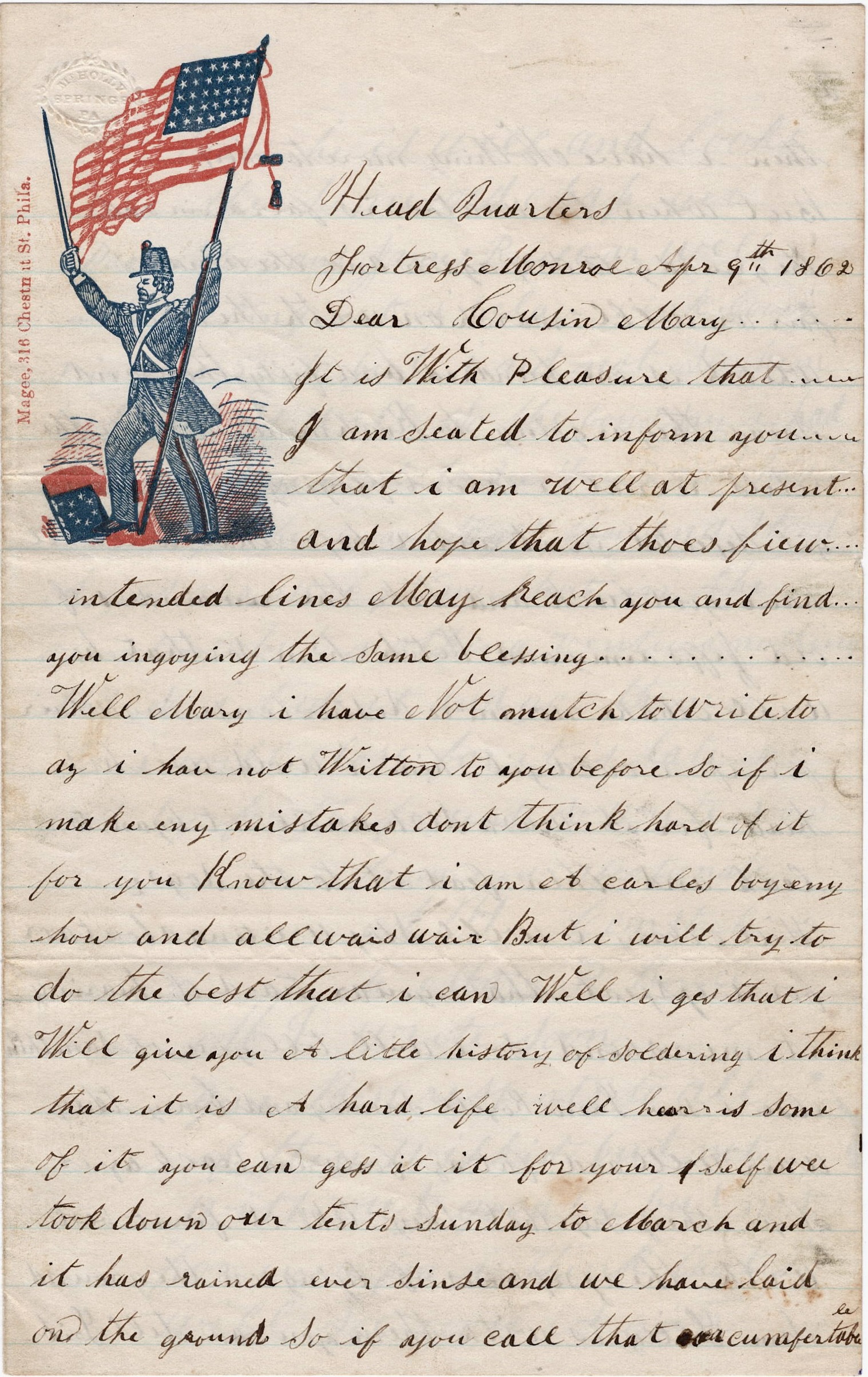
Abel’s letter was written on patriotic stationery

The following letter was written by Abel Hartley Comstock (1840-1926), the son of Isaac Dailey Comstock (1809-1900 and Eliza Rozell (1812-1879). He wrote the letter to his cousin, Mary D. Rozell.

Abel enlisted in Co. K of the 11th Pennsylvania Cavalry (108th Volunteers)—sometimes called “Harlan’s Light Cavalry.” He served from 31 August 1861 to 1 September 1864.

The 11th Pennsylvania Cavalry was ordered to Fortress Monroe, Virginia, in mid-November 1861 and they remained there on duty at nearby Camp Hamilton until May 1862. Comstock’s letter speaks of the arrival of infantry at Camp Hamilton as McClellan began his build up for launching the Peninsula Campaign.

Abel was a poor speller and I have corrected most of it so it could be read more easily but left a sentence or two spelled as he wrote it.

See also—1862: Pardon Edgar Covey to his cousin Mary

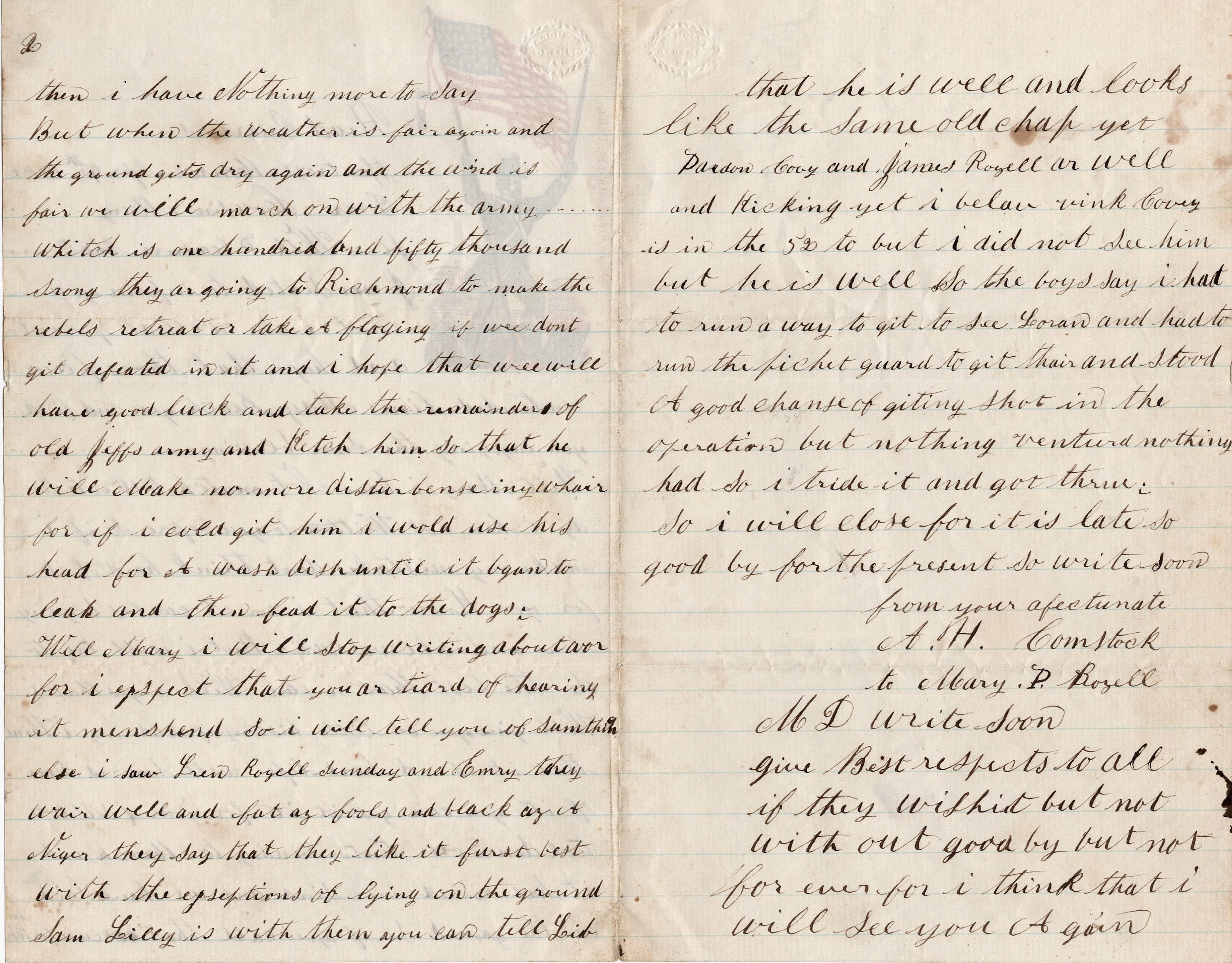
T R A N S C R I P T I O N

Headquarters Fortess Monroe
April 9th 1862

Dear Cousin Mary,

It is with pleasure that I am seated to inform you that I am well at present and hope these few intended lines may reach you and find you enjoying the same blessing.

Well, Mary, I have not much to write today. I have not written to yo before so if I make any mistakes, don’t think hard of it for you know that I am a careless boy anyhow and always were. But I will try to do the best that I can.

Well, I guess that I will give you a little history of soldiering. I think that it is a hard life. Well here is some of it. You can guess at it for yourself. We took down our tents Sunday to march and it has rained ever since and we have laid on the ground so if you call that comfortable, then I have nothing more to say. But when the weather is fair again and the ground gets dry again and the wind is fair, we will march on with the army which is 150,000 strong. They are going to Richmond to make the rebels retreat or take a flogging if we don’t get defeated in it. And I hope that we will have good luck and take the remainder of Old Jeff’s army and ketch him so that he will make no more disturbensing whair for if I could git him I wold use his head for a wash dish until it began to leak and then fead it to the dogs.

Well, Mary, I will stop writing about war for I expect that you are tired of hearing it mentioned. So I will tell you of something else, I saw Lew Rozell Sunday and Emry. They were well and fat as fools and black as a nigger. They say that they like it first best with the exceptions of lying on the ground. Sam Lilly is with them. You can tell Lib that he is well and looks like the same old chap yet.

Pardon Covey and James Rozell are well and kicking yet. I believe Vink Covey is in the 52nd too but I did not see him. But he is well, so the Boys say. I had to run away to get to see Loran and had to run the picket guard to get there and stood a good chance of getting shot in the operation but nothing ventured, nothing had, so I tried it and got through.

So I will close for it is late so goodbye for the present. So write soon. From your affectionate [cousin] — A. H. Comstock

To Mary P. Rozell

M. D. Write soon. Give my best respects to all if they wish it but not without goodbye but not forever, for I think that I will see you again.

1862: Pardon Edgar Covey to his Cousin Mary

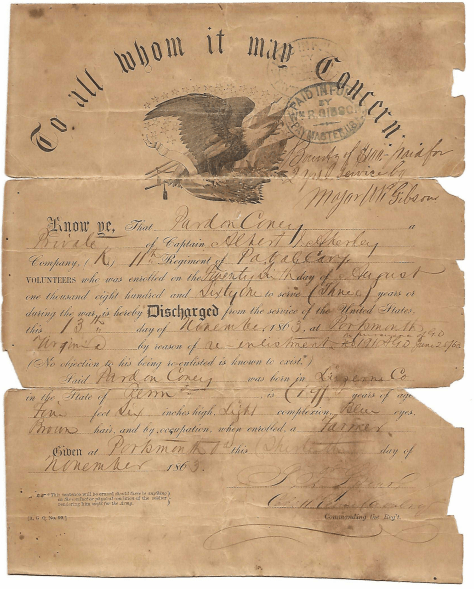
The following letter was written by Pardon Edgar Covey (1843-1896), the son of Almeron Covey (1813-1903) and Mary Ann Sisco (1817-1896) of Abington, Luzerne county, Pennsylvania. Pardon enlisted in Co. K of the 11th Pennsylvania Cavalry (108th Volunteers)—sometimes called “Harlan’s Light Cavalry.” He served from 25 August 1861 to 13 November 1863 according to his discharge papers, though the company muster rolls say he served until 1865.

The 11th Pennsylvania Cavalry was ordered to Fortress Monroe, Virginia, in mid-November 1861 and they remained there on duty at nearby Camp Hamilton until May 1862. Covey’s letters speaks of the arrival of infantry at Camp Hamilton as McClellan began his build up for launching the Peninsula Campaign.

Pardon Covey’s Discharge Papers

Transcription

Camp Hamilton, Virginia
March 23, 1862

Dear Cousin,

I take the present time to answer your kind letter to let you know that I am well and hope this may find you the same. It has been quite unpleasant for the last few days but it is looking more now like good weather now. It looks like spring for the green grass is springing up fast and soon will be good feed for cattle. What few farmers that is left here has commenced planting potatoes and making garden. It looks like May with us. The leaves putting forth their leaves and the flowers is blooming on every bush.

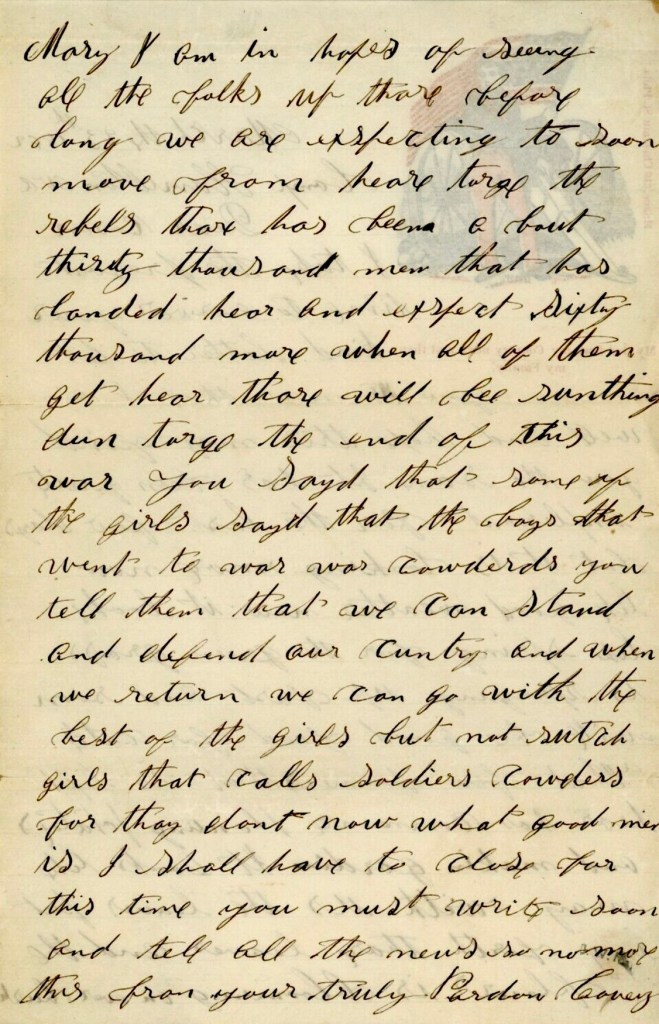
Mary, I am in hopes of seeing all the folks up there before long. We are expecting to soon move from here toward the rebels. There has been about thirty thousand men that has landed here and expect sixty thousand more. When all of them get here, there will be something done towards the end of this war.

You said that some of the girls said that the boys that went to war was cowards. You tell them that we can stand and defend our country and when we return we can go with the best of the girls but not such gurls that calls soldiers cowards for they don’t know what good men is. I shall have to close for this time. You must write soon and tell all the news. So no more. This from yours truly, — Pardon Covey

1862: Samuel Otis Sawyer to James Monroe Sawyer

I can safely attribute the following letter to Samuel “Otis” Sawyer (1839-1908), a carpenter in Cambridge, Massachusetts, at the time of his enlistment on 2 July 1861 as a private in Co. A, 16th Massachusetts Infantry. He mustered out of the regiment on 27 March 1864 after nearly three years service. The letter mentions another soldier—John Wilson—who also served in the same company from Cambridge.

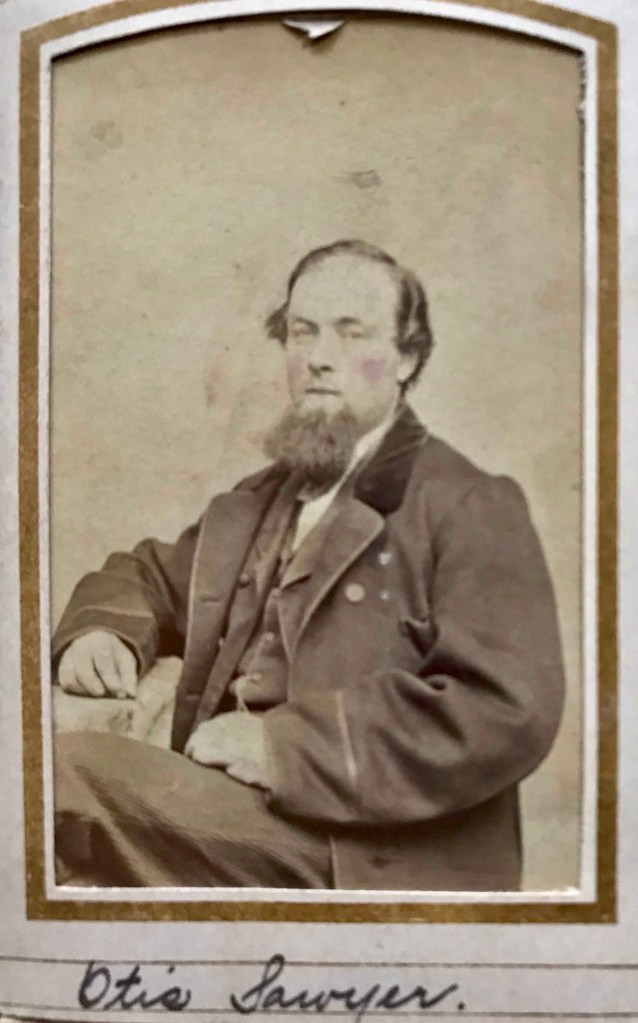
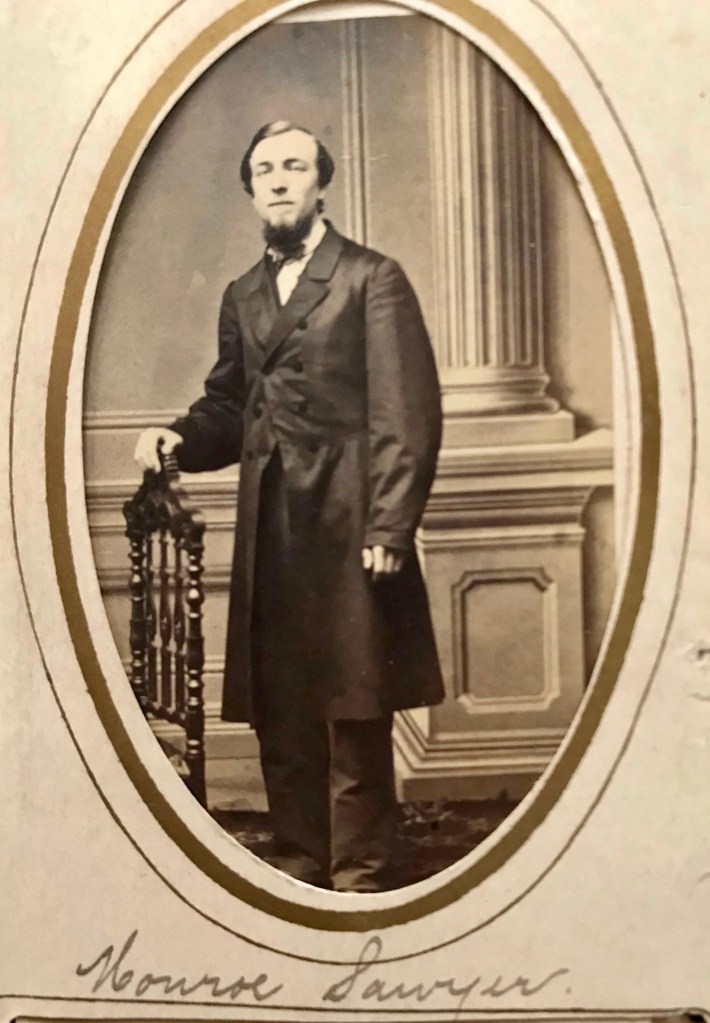
Otis was the son of Samuel James Sawyer (1816-1854) and Eleanor Dodge Morgan (1816-1890) of Exeter, New Hampshire. He wrote the letter to his younger brother James “Monroe” Sawyer (1841-1863), a clerk living with their widowed mother in Cambridge at the time. As a matter of curiosity, Otis survived the war as a soldier but his younger brother James, who never enlisted, was fatally stabbed on 18 August 1863 by Edward Owens and James Farris while defending two women in August 1863. He died of his wounds three days later. Otis married Mary E. Marston (b. 1845) in December 1866.

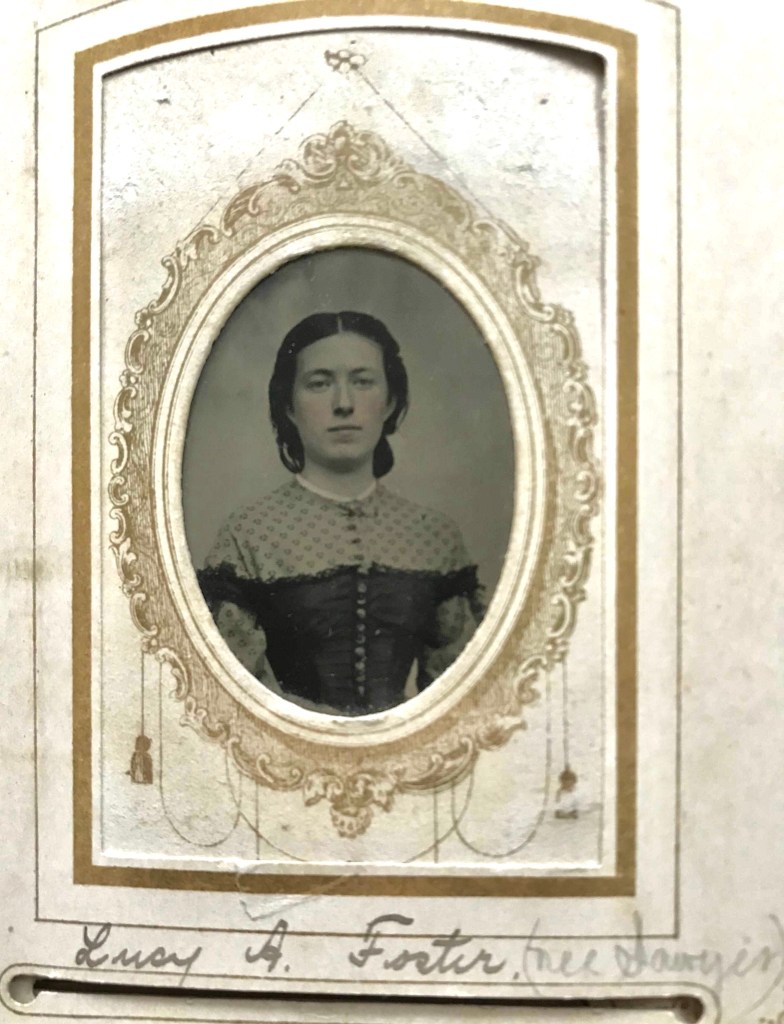
Otis and Monroe (who were both called by their middle names) had a younger sister named Lucy Ann Sawyer (1845-1900) who married George Henry Foster (1844-1906) of Cambridge. Lucy’s first-born, Lilliam Monroe Foster (1867-1945) kept a family photo album that included the pictures below of her mother and two uncles, Otis and Monroe.

This remains the only Samuel Otis Sawyer letter I have found via an internet search. In his recent book, “The Men of the 16th Massachusetts: A Civil War Roster and History,” Alden Ellis, Jr. informs us that the 16th Massachusetts was “one of a few Massachusetts regiments whose history was not recorded. From 1861-1864, it was deeply embroiled in the operations of the Army of the Potomac. Suffering from a lack of skilled leadership and later from horrific living conditions, the 16th saw heavy casualties. Of more than 1300 men, 112 were killed in battle, 360 were wounded and 52 died from their wounds. Disease claimed 115 and 65 were taken as prisoners of war, 32 of them dying in Confederate prisons. Another 344 went home afflicted with wounds or disease as disability discharges.”

See also some letters by Asa Smith of Co. K, 16th Massachusetts that I transcribed and published just last month on Spared & Shared. 1862: Asa Dennis Smith to his Family.

Transcription

The camp of the 16th Massachusetts at “Camp Hamilton” near Fortress Monroe in the winter of 1861-62.

Camp Hamilton, Fortress Monroe
January 17, 1862

Dear Brother,

I received the box that you sent me and found everything in good condition. I gave John Wilson the things that you told me to and he told me to tell you that he was much obliged to you and he sent his best respects to you.

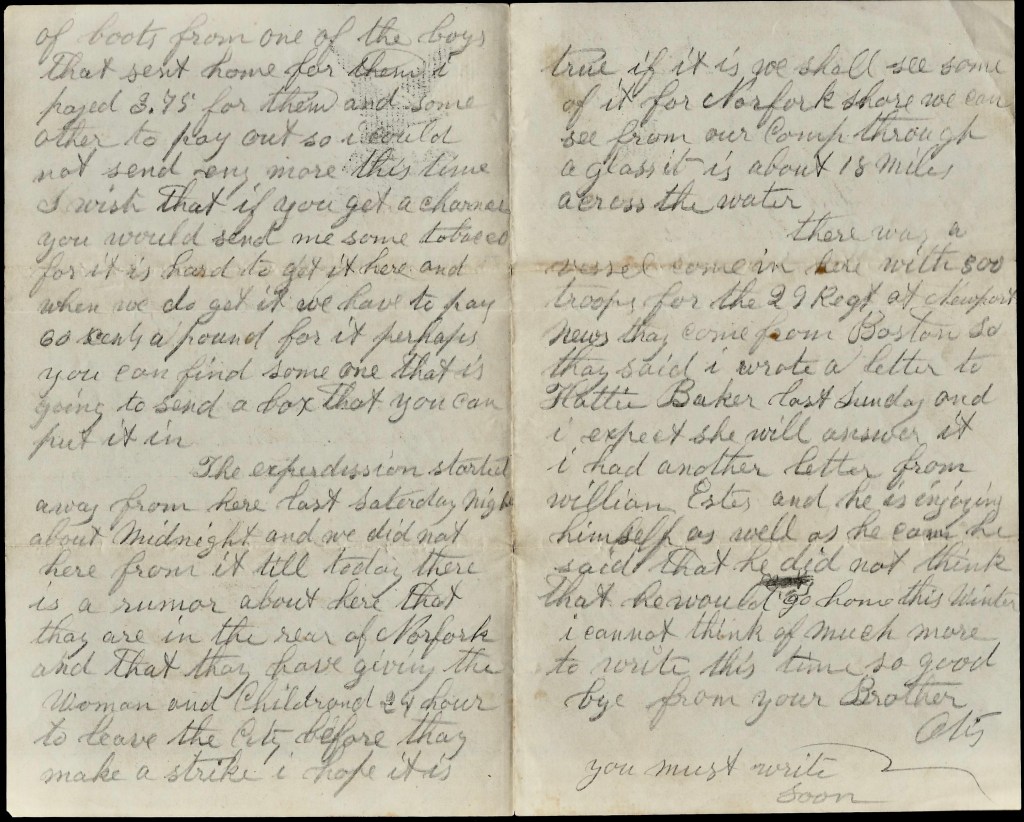
Tell Mother that I am much obliged to her for the quilt and the rest of the things. I shall send 15 dollars in this letter for you to do as you think best with it. I would send more but I bought a pair of boots from one of the boys that sent home for them and some other to pay out so I could not send any more this time. I wish that if you get a chance you would send me some tobacco for it hard to get it here and when we do get it, we have to pay 60 cents a pound for it. Perhaps you can find someone that is going to send a box that you can put it in.

The expedition started away from here last Saturday night about midnight and we did not hear from it till today. There is a rumor about here that they are in the rear of Norfolk and that they have given the women and children 24 hours to leave the city before they make a strike. I hope it is true. If it is, we shall see some of it for Norfolk shore we can see from our camp through a glass. It is about 18 miles across the water.

There was a vessel come in here with 500 troops for the 29th [Massachusetts] Regt. at Newport News. They come from Boston so they said. I wrote a letter to Hattie Baker last Sunday and I expect she will answer it. I had another letter from William Estes and he is enjoying himself as well as he can. He said that he did not think that he would go home this winter.

I cannot think of much more to write this time so goodbye from your brother, — Otis

You must write soon. I sent two pictures that was taken out of Hampton the night of the fire and a cotton ball by the Captain. I wish you would let me know if you got them [when] you write.