
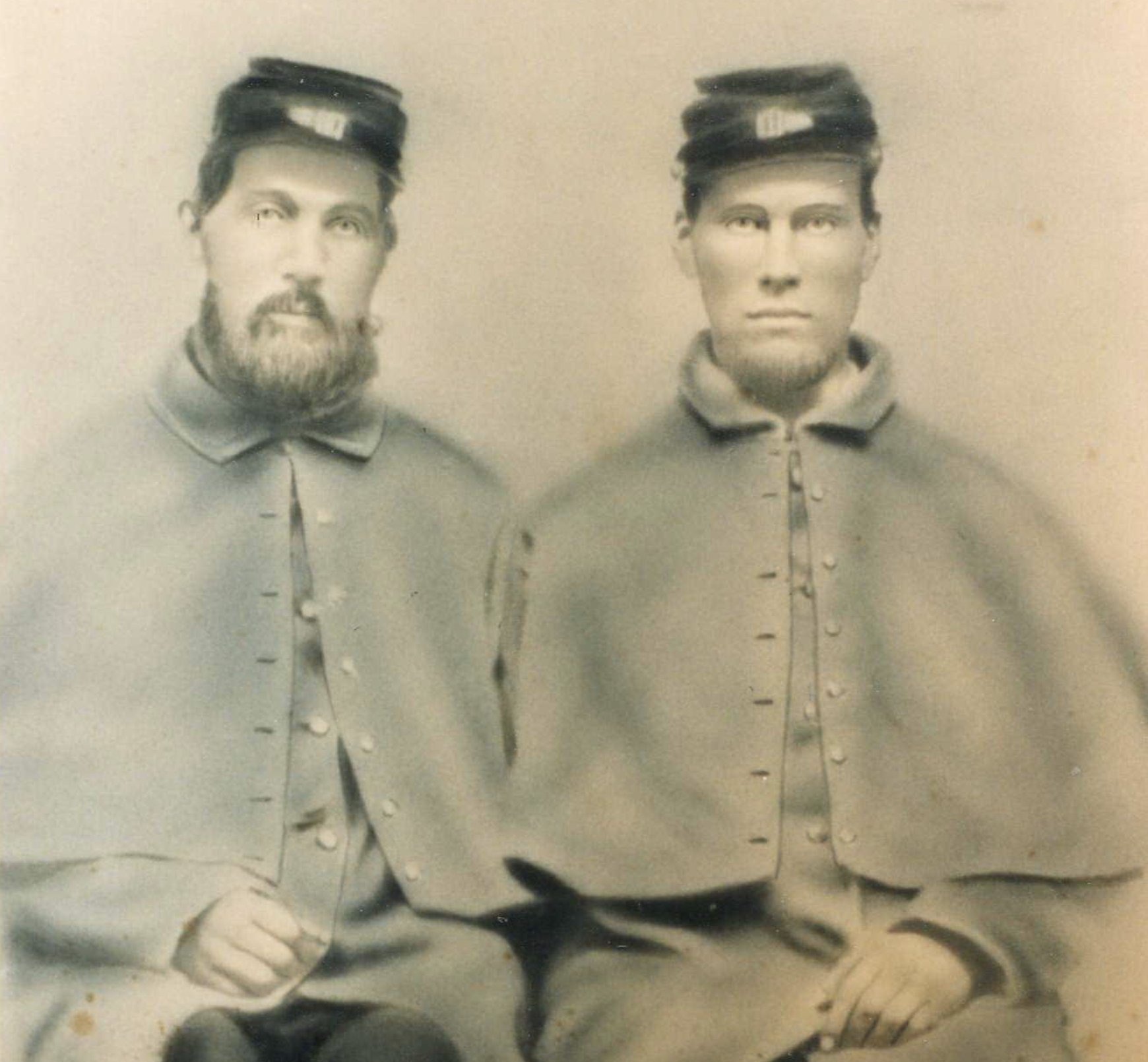
The following letters were written by Simeon Terry Miner (1839-1902) of Geonoa, Cayuga county, New York, while serving as a private, in Co. F, 16th New York Heavy Artillery. He had previously served in Battery I of the 3rd New York Light Artillery. He reenlisted in the 16th “Heavies” in January 1864, imagining perhaps that he would only see garrison duty in some eastern seaboard fortress but Grant broke up this large regiment and chose to use them as infantrymen and in the summer of 1864. He mustered out with the company on 21 August 1865, at Washington, D. C. Simeon was the orphaned son of Edson T. Miner (1804-1848) and Eliza Ann Rich (18xx-1845). He wrote the letters to his cousin, Alice Avery, of Genoa.
In July, 1864, seven companies of the 16th New York Heavy Artillery were assigned to the 2nd brigade, Terry’s (1st) division, 10th Corps, and two companies to the 1st brigade, 3d division, same corps. On Aug. 9, 1864, when Gen. Butler called for volunteers to cut the Dutch gap canal through the peninsula in the James river near Farrar’s island, with a view to outflanking the enemy’s batteries and the obstructions in the river, Cos. A, B, C, F, G and K responded, and 600 men were selected from them to perform the perilous task. During the progress of the work, they were exposed to the enemy’s fire, and only protected themselves by throwing up the dirt from the canal as fast as possible, living in “gopher holes” along the river bank. They were withdrawn after several of the men had been killed and wounded, though Maj. Strong still continued in charge of the work and Maj. Prince in command of the battalion.
In Oct., 1864, seven companies were heavily engaged with Terry’s division at Darbytown road, sustaining a loss of II killed and 54 wounded, and in the action at the same place a few days later lost 13 killed and wounded. From July 27 to Dec, 1864, when the regiment was before Petersburg and Richmond, it sustained constant small losses, aggregating 30 killed, wounded and missing. From Dec, 1864, Cos. A, B, C, F, G and K served in the 1st division, 24th corps, and another detachment in the artillery brigade, same corps, engaging with some loss at Fort Fisher, the Cape Fear intrenchments. Fort Anderson, and near Wilmington, N. C. In July, 1865, the various detachments of the regiment were united and on Aug. 21, 1865, commanded by Col. Morrison, it was mustered out at Washington, D. C.
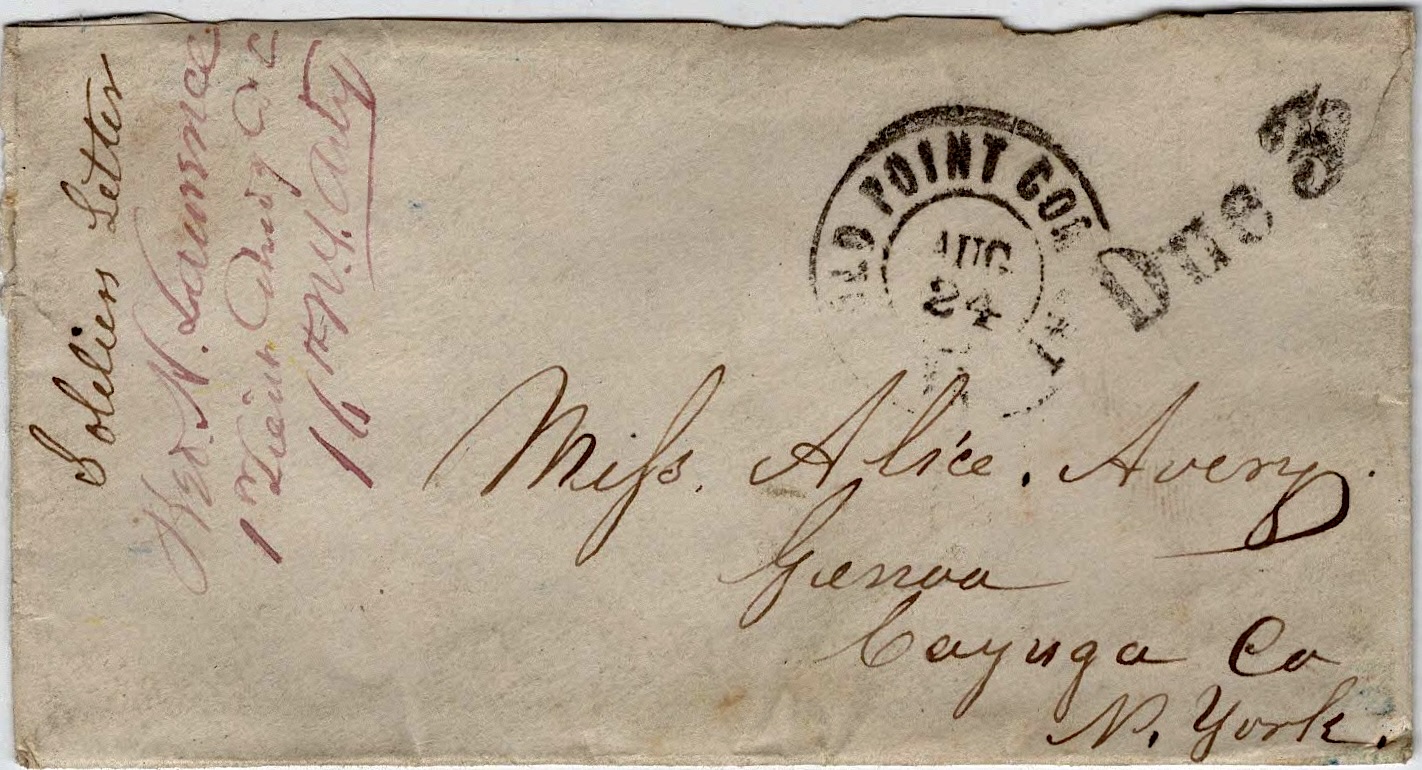
Letter 1
Front Line of Defenses
Near Bermuda Hundred
August 20th 1864
Cousin Alice,
Your welcome letter of the 12th was received this morning. You are mistaken about our position. We are not in front of Petersburg but are with Butler’s Army about six or seven miles from that place, but can hear all the artillery firing. Our position is on the extreme right of Butler’s line of works. The fleet lies in the James river close to us. The Rebs’ works are about 500 or 600 yards in front of where we now camp.
The regiment has been badly split up since I wrote you last. Six hundred of our men have been away doing Engineer duty, leaving only about 250 here. We are in one of the extreme outposts away in front of the main lines of works—nothing between us and the Rebs but our picket line. (The batteries on our right have just opened fire.)
Take a map of the James river and find Turkey Bend. Just above it you will find a place called Dutch Gap. Close to this gap the river makes a sharp bend to the south. On this bend our (Butler’s) works commence and run by zig zag south till they come to the Appomattox. You will notice these works run in a line parallel to the Richmond & Petersburg road which the rebs have to keep strongly guarded or our force will sever one of their main lines of communication, but they have still one more line left—it is the Danville road.
A heavy battle was fought day before yesterday on the north side of the James. It was very heavy. We could hear the cannons & the musketry. The smoke was very plain to be seen. We could not see the lines of battle but could plainly see the bursting shells. We are afraid our men were driven back but have no news to be relied upon. The people at home know more than we do. We know nothing—only what we can see and hear. If we hear heavy firing, we know nothing of the result till northern papers announce it.
We are led to believe from accounts that reach us from home that there will be difficulty in enforcing the draft. Many of our men are very much disheartened by the present military condition and if they could by any means get clear of the army, nothing could induce them to reenter the army—not even force. The rank and file, or those I have heard speak, are very bitter on the present Administration and it is my opinion the present head of the government could not get one in four of the votes of the New York and New England troops. Such is their dislike of the present Cabinet and its doings. Nothing but a change will satisfy them. Many begin to talk of giving up the contest as a bad job. Grant is fast losing the confidence of the men. There is too much President making.
Last night there was very heavy [firing] at Petersburg. We don’t know the cause.
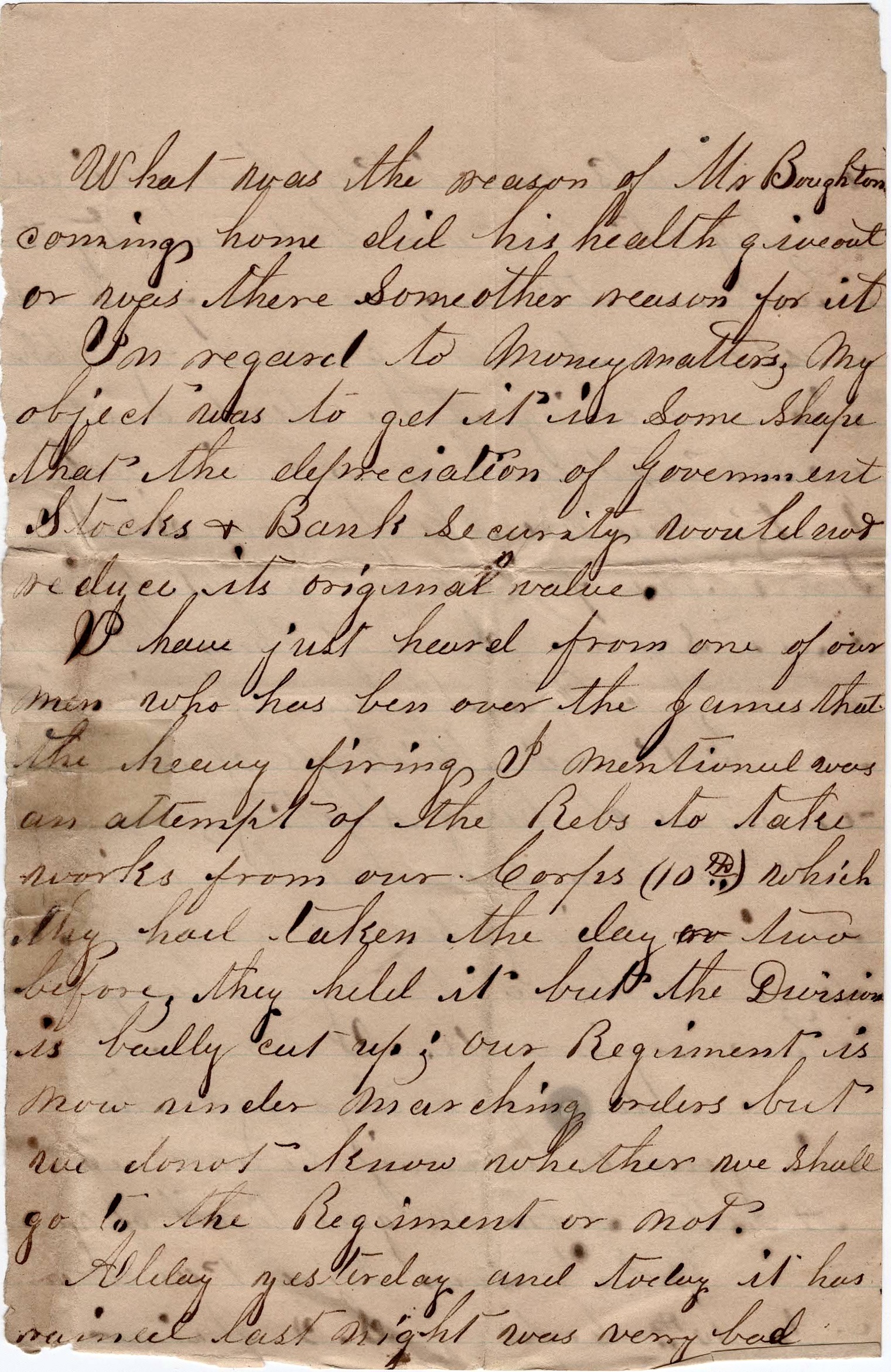
What was the reason of Mr. Boughton coming home? Did his health give out or was there some other reason for it?
In regard to money matters, my object was to get it in some shape that the depreciation of Government stocks and Bank security would not reduce its original value.
I have just heard from one of our men who has been over the James that the heavy firing I mentioned was an attempt of the Rebs to take works from our Corps (10th) which they had taken the day or two before. They held it but the Division is badly cut up. Our regiment is now under marching orders but we don’t know whether we shall go to the regiment or not.
All day yesterday and today it has rained. Last night was very bad. Our tents consist of two pieces of light canvas buttoned together. These are thrown over a pole and fastened to the ground by stakes. In marching, these tents are taken apart and each man carries half a tent. These are the famous shelter tents. The pieces are about five feet square. Some of them linen—others of cotton. The canvas is about the heft and thickness of two thicknesses of heavy sheeting.
Our men have lost two killed besides having several wounded. I have not heard the number from other regiments. I wrote to Orlando a few days ago. Tell me in your answer if he received it. A letter from me goes to all of you. Write soon. Direct as before & to the 10th Corps. — S. T. Miner



Letter 2

With 10th Corps in Field
October 30th 1864
Dear cousin Alice,
Your welcome letter of October 23rd I received this morning. I was glad to get it. Today is Sunday and quite a gloomy one too (although the day is bright) if reports be true. Report has it that Grant has lost heavily and has been repulsed. The loss is said to be eight thousand. If that be so, things look pretty black for us in this quarter. Wherever we advance we always find an equal number of Rebels. We are all getting sick of this, I tell you. Although the armies seem to meet with some success in other parts, the reverse seems to be the case here. What the reason is, I cannot tell.
If Grant is defeated, the price of gold will again go up and we have the contest prolonged for another year. The disloyal faction will come out boldly with their operations and sooner or later, I fear we must give in. I have got the blues like thunder over such prospects as our men talk over. What little U.S. stock I have, I shall sell. I think the value is steadily reducing and I am shaky in my faith. I hardly know what to do. If the present financial policy of the government is continued, repudiation must come we all fear. We are becoming States Rights men, as regards money matters. Just think of it, a dollar will hardly buy a man enough to make a respectable lunch from, and more of the same kind coming everyday. This the government has to pay full price of gold for. This course, if persisted in will smash us sure.
The men of McClellan ideas are feeling quite fine over our defeat. This Army was also engaged and obliged to retreat although the loss was not as heavy as on the south side of the river. You people at home do not fully understand the feeling in the Army. The men are fast becoming “Peace at any price.” More than two-thirds of our regiment follow that cry. Honor and patriotism have actually played out with a large portion of them. The only thing that keeps man here is the feeling for their friends at home. I fear the election of Lincoln will cause a great deal of bad feeling & desertion.
You say you wish you could take a peek at me. You would find me sitting in a little tent not high enough to stand in, with a portfolio on my knee writing to you. We have a small fireplace in one corner which keeps us quite comfortable. Our bed consists of pine boughs spread on the ground and covered with a rubber blanket. The nights are quite cold, many times have quite heavy frosts.
How do the people feel toward the soldiers? Our men think the office holders only want them for a handle, then will kick them aside after rising. The late frauds in soldiers’ votes goes strongly to confirm the idea. My opinion is that it is but little more than politics that keeps the war going. Rich contractors playing their points to rob the men of the Army supported by the Administration on the one side and gold gamblers sustained by Democratic papers and men on the other.
I really wish I could be with you to enjoy your big bin of apples & potatoes for I really need something of the kind to keep me healthy and cannot get it. I guess you will pronounce this a genuine Copperhead epistle so I’ll not write anymore this time but wait till I hear further from Grant’s repulse. Do not neglect to write to me because I feel pretty blue on government affairs.
Write soon. Direct as usual. — S. T. Miner


Letter 3
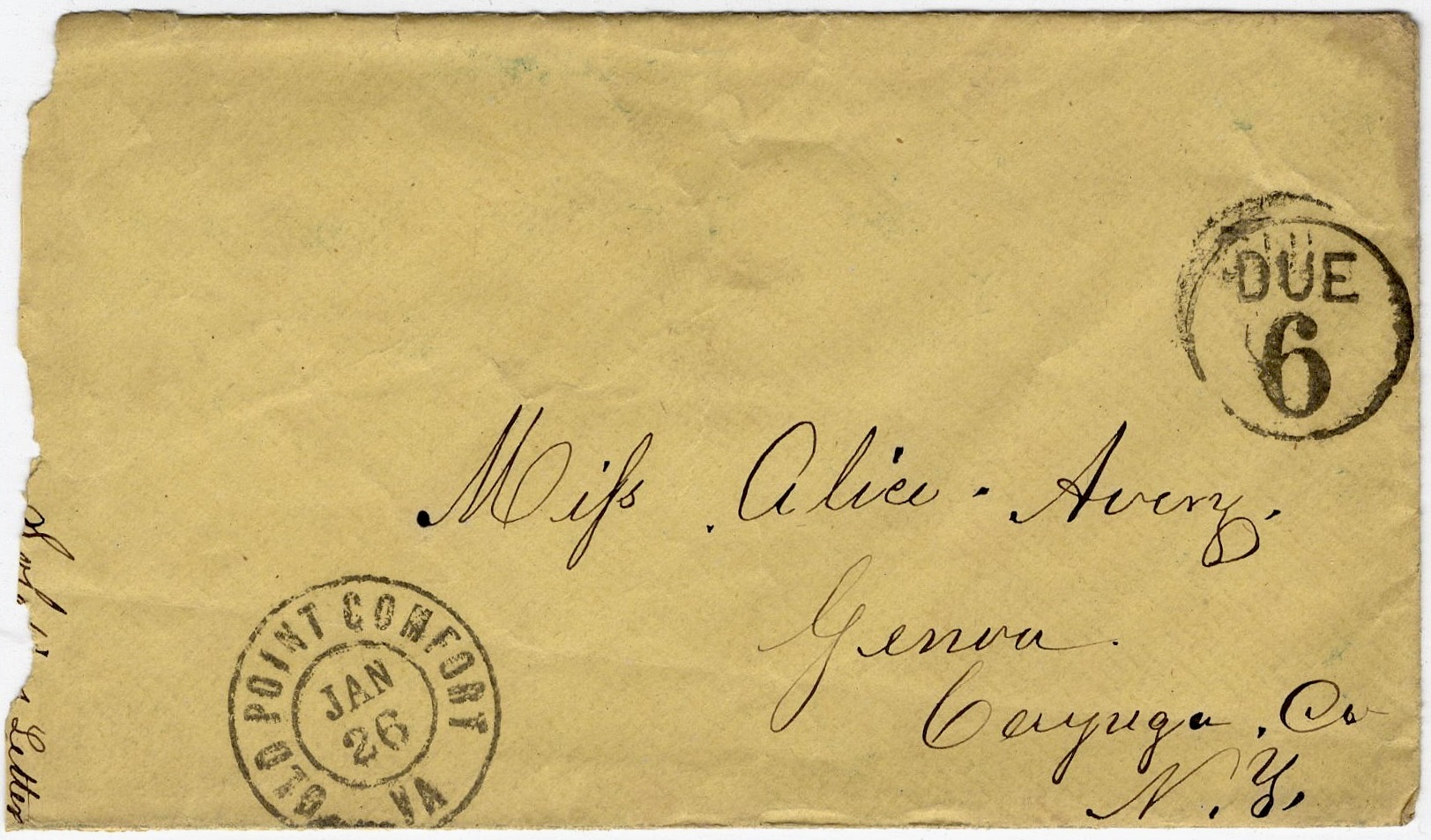
Camp 16th New York Artillery
Near Fort Fisher, N. C.
January 17th 1865
Cousin Alice,
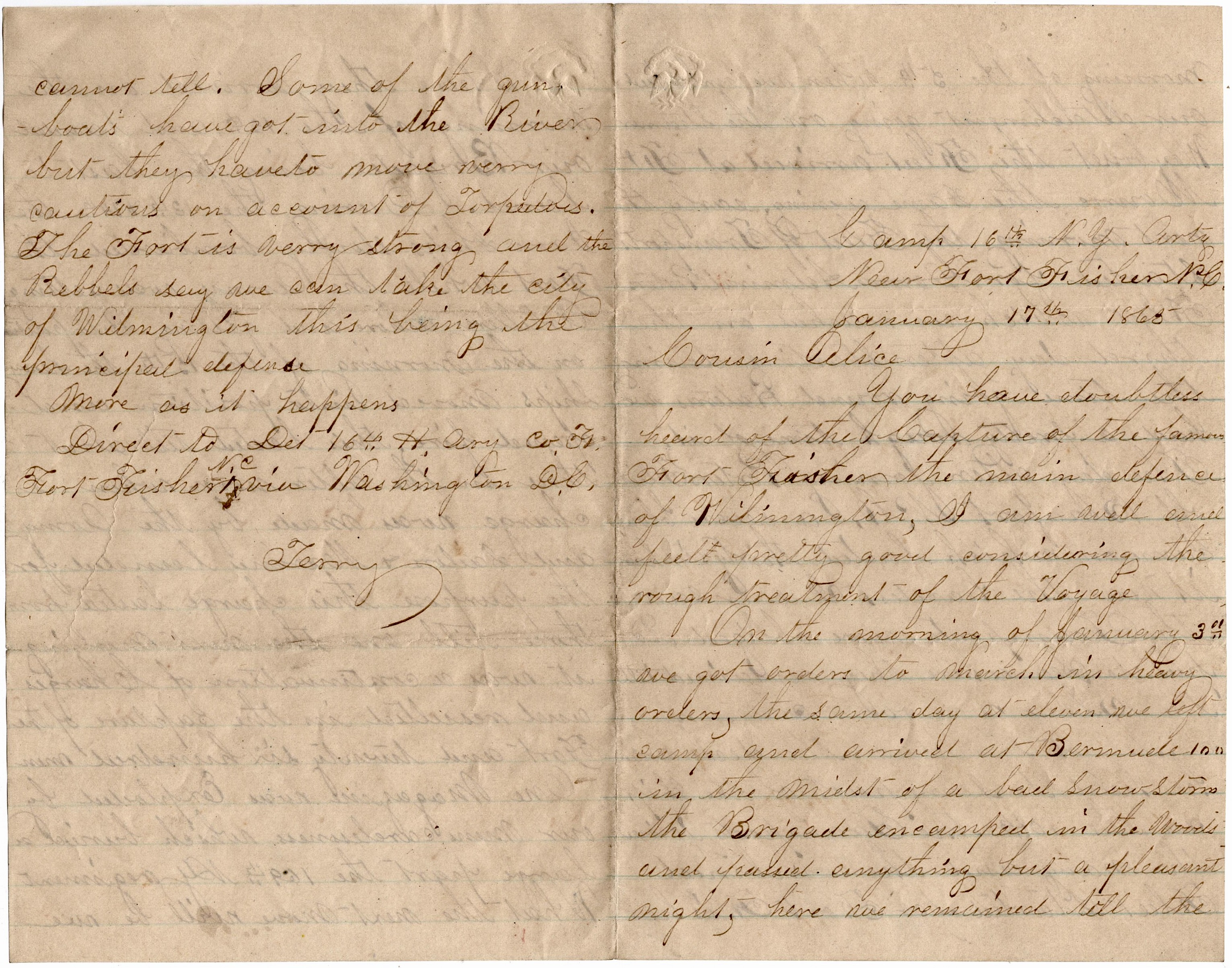
You have doubtless heard of the capture of the famous Fort Fisher, the main defense of Wilmington. I am well and feel pretty good considering the rough treatment of the voyage.
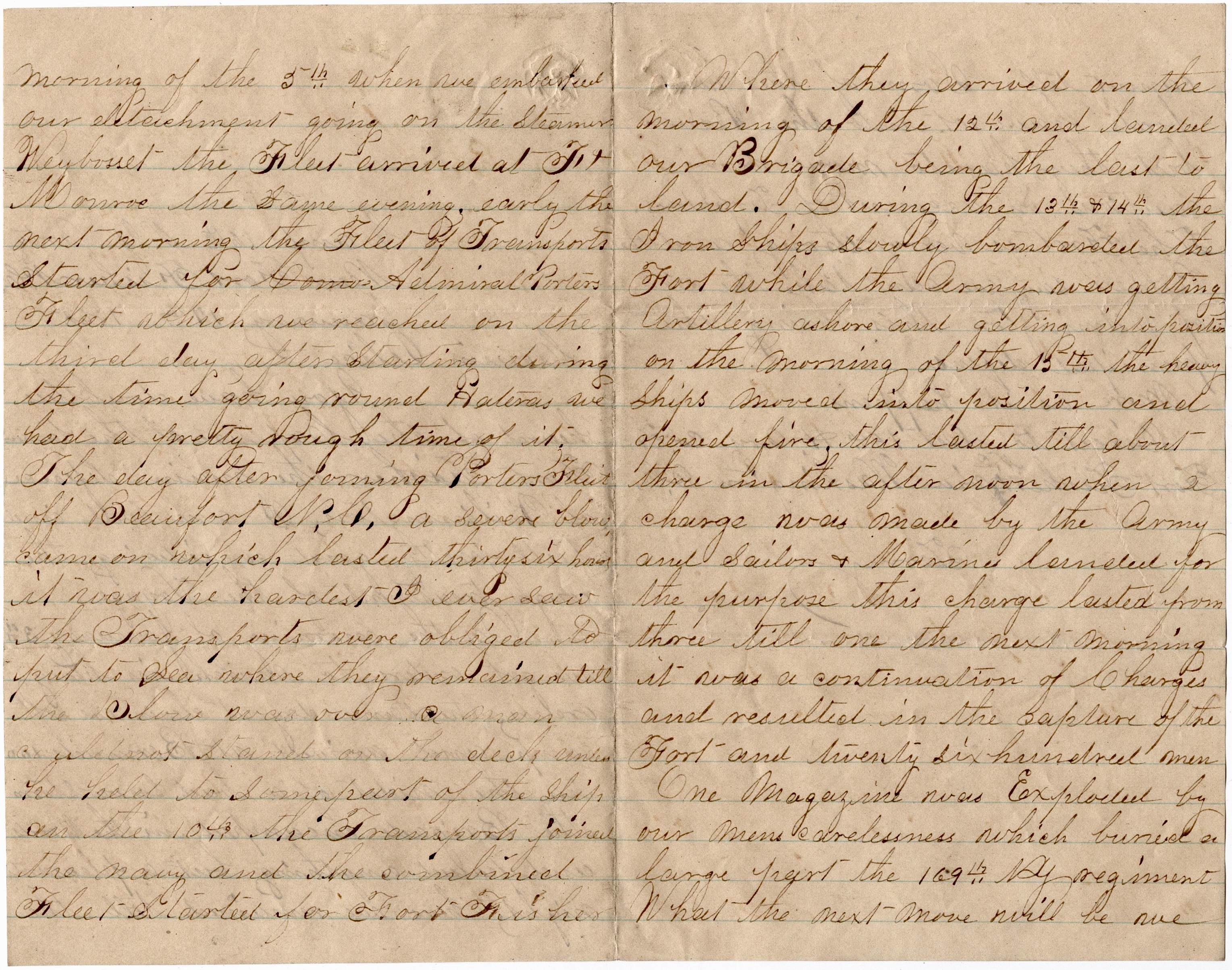
On the morning of January 3rd, we got orders to march in heavy orders. The same day at eleven, we left camp and arrived at Bermuda 100 in the midst of a bad snowstorm. The Brigade encamped in the woods and passed anything but a pleasant night. Here we remained till the morning of the 5th when we embarked, our detachment going on the steamer Weybosset. The Fleet arrived at Fort Monroe the same evening. Early the next morning the Fleet of Transports started for Admiral Porter’s Fleet which we reached on the third day after starting. During the time going round Hatteras we had a pretty rough time of it.
The day after joining Porter’s Fleet off Beaufort, North Carolina, a severe blow came on which lasted 36 hours. It was the hardest I ever saw. The transports were obliged to put to sea where they remained till the blow was over. A man couldn’t stand on the deck unless he held to some part of the ship.
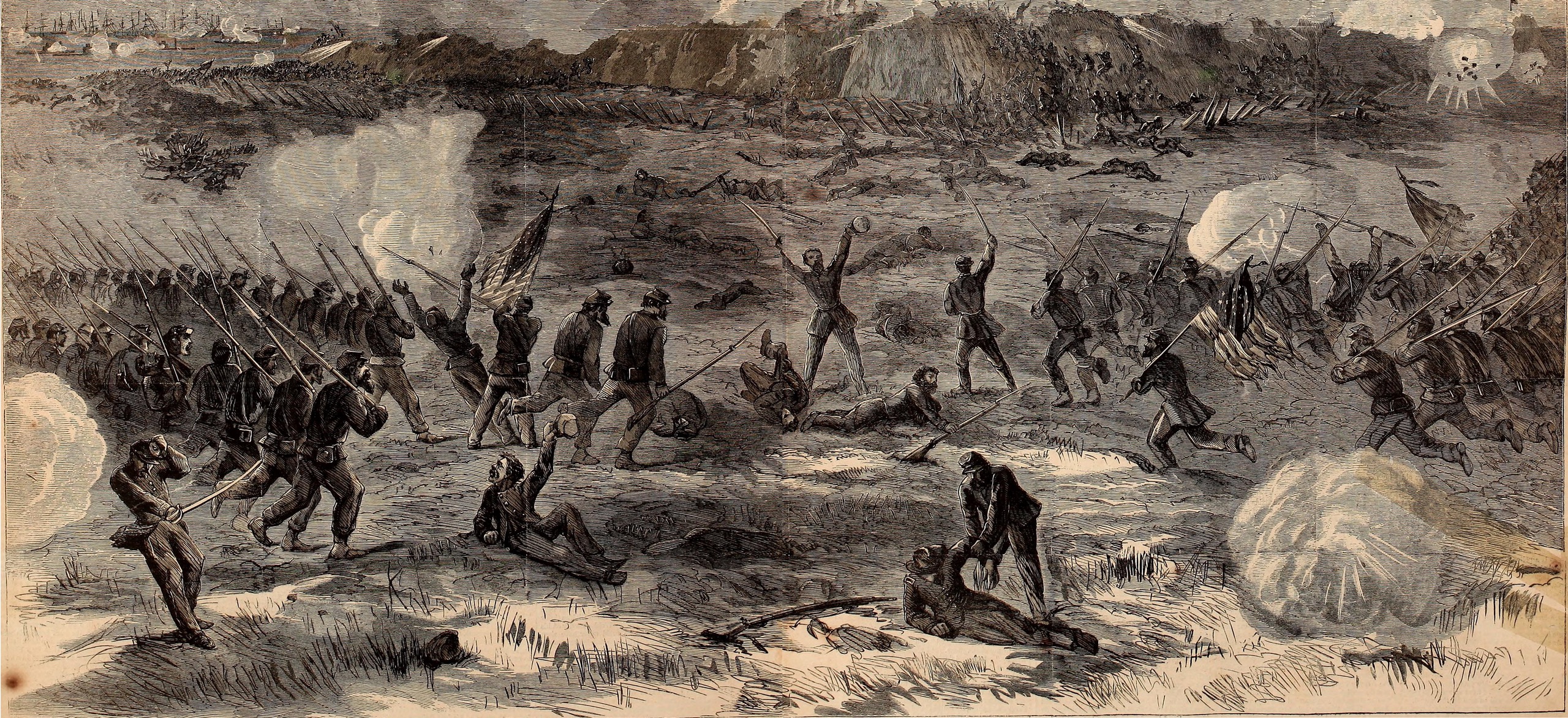
On the 10th the transports joined the Navy and the combined fleet started to Fort Fisher where they arrived on the morning of the 12th and landed, our Brigade being the last to land. During the 13th and 14th the Iron Ships slowly bombarded the Fort while the Army was getting artillery ashore and getting into position. On the morning of the 15th, the heavy ships moved into position and opened fire. This last till about three in the afternoon when a charge was made by the ARmy and sailors & marines landed to the purpose. This charge lasted from three till one the next morning. It was a continuation of charges and resulted in the capture of the Fort and 2600 men. One magazine was exploded by our men [through] carelessness which buried a large part of the 169th New York Regiment.
What the next move will be, we cannot tell. Some of the gunboats have got into the river but they have to move very cautious on account of torpedoes. The Fort is very strong and the Rebels say we can take the City of Wilmington, this being the principal defense. More as it happens.
Direct to Det. 16th Artillery, Co. F, Fort Fisher, N. C., via Washington D. C.
— Terry
 Spared & Shared 23