
The following letter was written by Rev. Edward Brown Furbish (1837-1918), the son of Dependence Hart Furbish (1806-1882) and Persis H. Brown (1803-1872) of Portland, Cumberland county, Maine. Edwards was married in October 1862 to Grace Harrison Townsend (1840-1914).
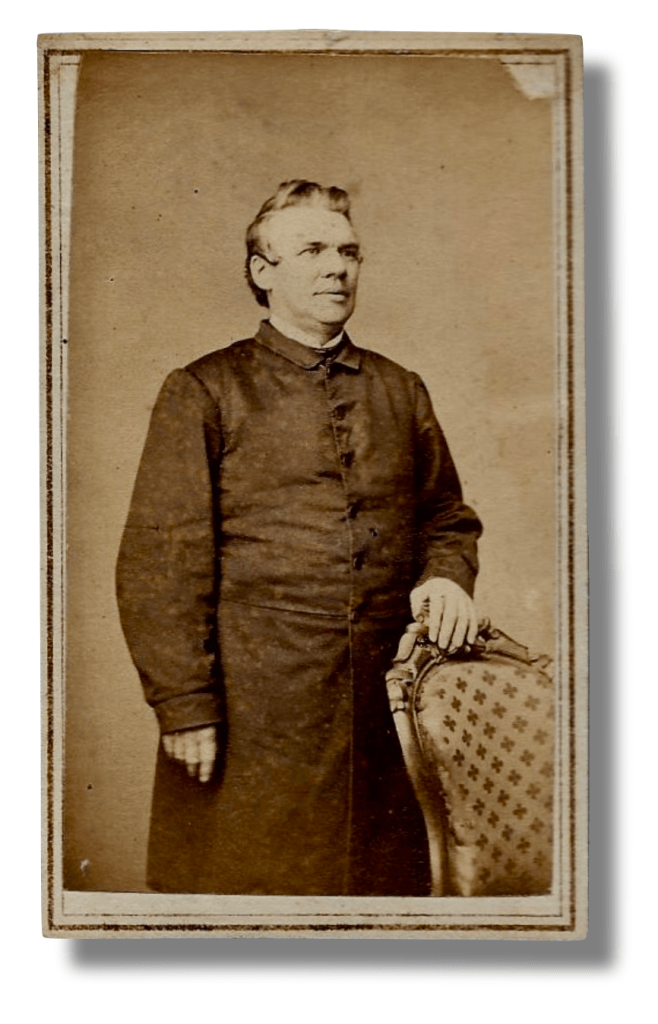
An 1860 graduate of Yale College, Edward was 25 years old when he volunteered to serve as the chaplain of the 25th Maine Infantry in September 1862. Organized at Portland, Maine, the regiment was mustered for nine months service and sent to Washington D. C. in mid-October. The regiment served garrison duty in the defenses of Washington, D.C., October 18, 1862, to March 24, 1863. Moved to Chantilly, Virginia, March 24, and on picket duty there until June 26. (Temporarily attached to XII Corps, Army of the Potomac.) Moved to Arlington Heights June 26, then ordered home June 30. The 25th Maine Infantry mustered out of service July 10, 1863.
Among the duties an army chaplain was frequently called upon to perform was to write letters informing loved ones at home of the death of their husbands, sons, brothers or fathers. In this letter, Edward refers to the death of “Mr. Kimball.” This was no doubt Isaac Kimball (1839-1862) of Casco, Maine, who enlisted on 29 September 1862 at the age of 23 to serve in Co. F, 25th Maine Infantry. Isaac died of typhoid fever in the regimental hospital on 24 November 1862. Isaac worked as a boatman just prior to his enlistment, probably in the lumber business.
Transcription
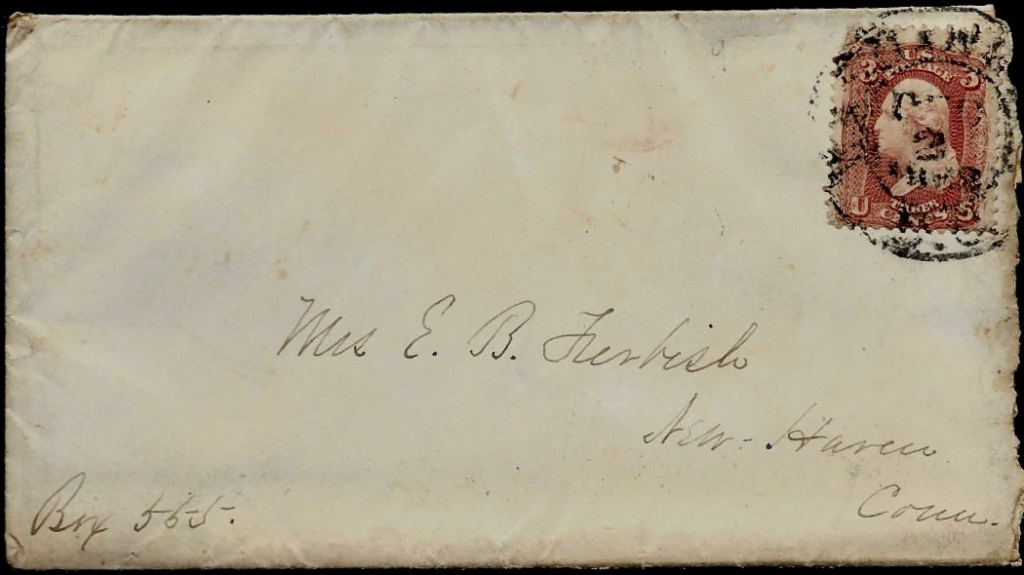
Arlington Heights
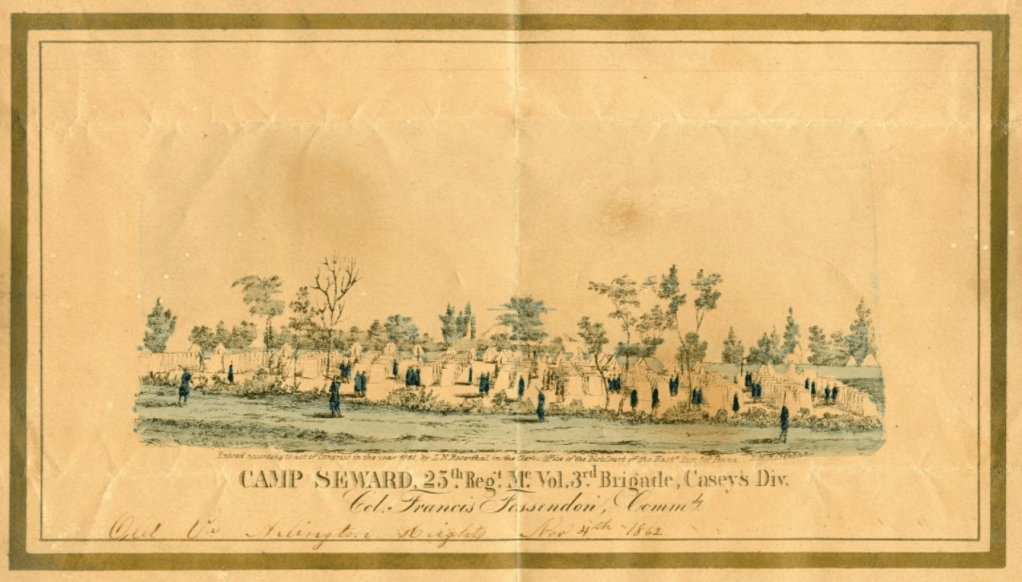
Camp Tom Casey
December 1, 1862
My own Gracie,
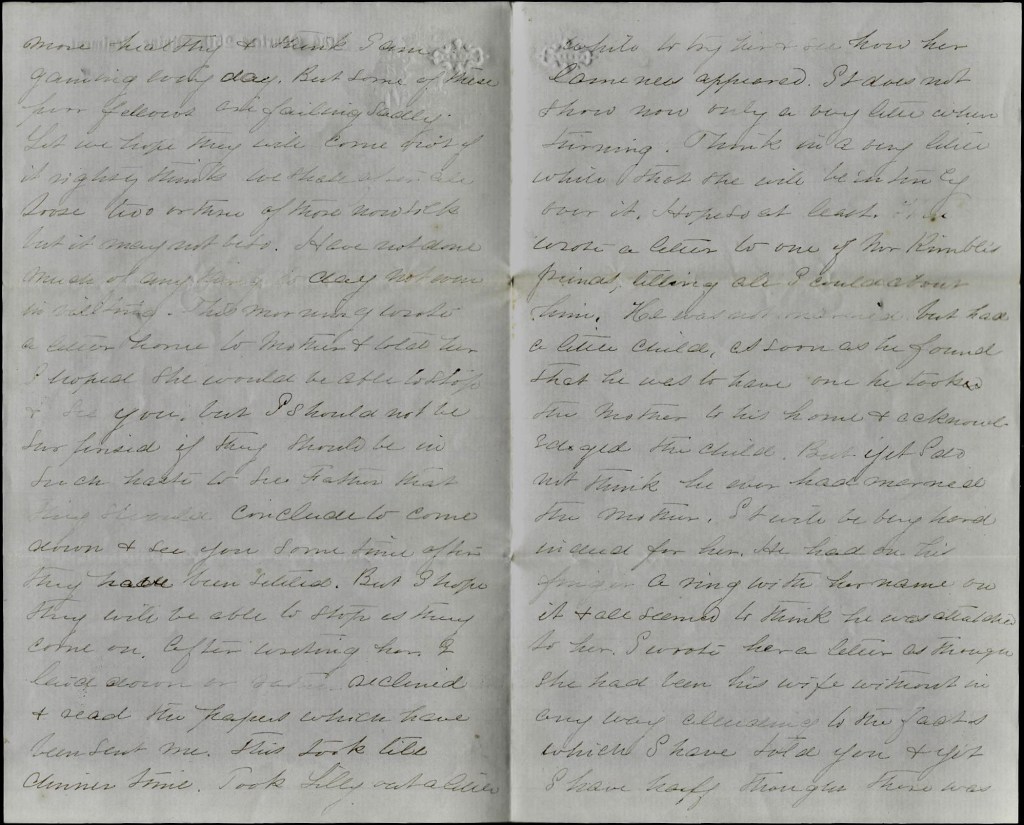
No one would think it was the first day of December here who has lived in New England. It is warmer & milder here than it can be with you. We keep a little fire in our tents, but only a little. It is like our early Spring or Fall days. The grass about my tent has looked quite green, but I will think not thrive much longer. I am now in the Chapel Tent among the sick. There are but two who are dangerously sick here, and one may die. That is why I am here tonight. Do not know how long I shall remain. I am very well indeed. Have never felt more healthy & think I am gaining every day. But some of these poor fellows are failing sadly, yet we hope they will come out of it. Think we shall after all lose two or three of those now sick, but it may not be so.
Have not done much of anything today—not even in visiting. This morning wrote a letter home yo Mother and told her I hoped she would be able to stop and see you, but I should not be surprised if they should be in such haste to see Father that they should conclude to come down and see you sometime after they have been settled, but I hope they will be able to stop as they come on. After writing her, I laid down—or rather reclined—and read the papers which have been sent me. This took till dinner time. Took Lilly out a little while to try her and see how her lameness appeared. It does not show now—only a little when turning. Think is a very little while she will be entirely over it. Hope so at least.
Then I wrote a letter to one of Mr. Kimble’s friends telling all I could about him. He was not married but had a little child. As soon as he found that he was to have one, he took the Mother to his home & acknowledged the child, but yet I do not think he ever had married the Mother. It will be very hard indeed for her. He had on his finger a ring with her name on it & all seemed to think he was attached to her. I wrote her a letter as though she had been his wife without in any way alluding to the fact which I have told you & yet I have half thought there was another whom he loved more perhaps than the Mother of his child which may have deterred him from marrying. He had no relatives other than a brother’s wife. All the rest of the family had died as suddenly as he. The notice in the paper was that he had no relatives & yet he left a child & the mother. What a comfort it would be if she could only bear his name & feel that the one she loved was in the sight of the world her husband. She will have a hard path to walk in this life. Hope she may meet her lover in heaven, or at least may here be comforted.
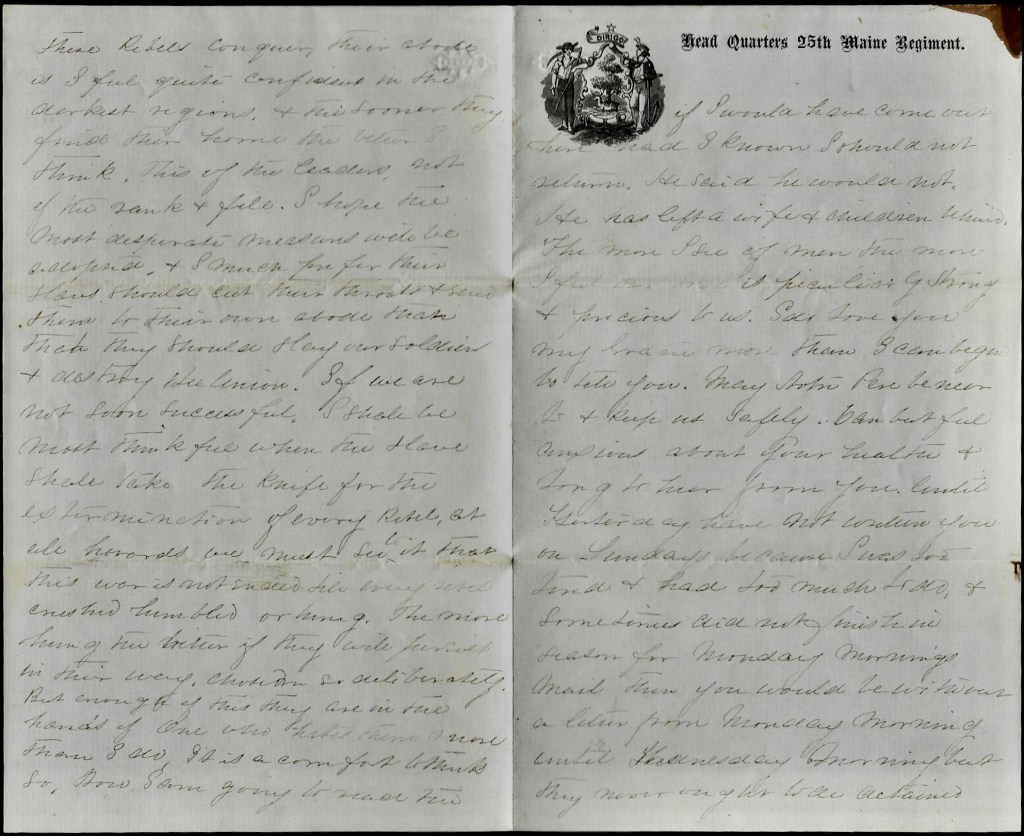
There are a good many sad hearts here in this world who do not know enough to seek comfort from the Source of all blessings, but it is given unto us. Dr. True asked me tonight if I would have come out here had I known I should not return. He said he would not. He has left a wife & children behind. The more I see of men, the more I feel our love is peculiarly strong & precious to us. I do love you my Gracie, more than I can begin to tell you. May Notre Pere [Our Father] be near us & keep us safely. Can but feel anxious about your health & long to hear from you. Until yesterday have not written you on Sundays because I was too tired & had too much to do, & sometimes did not finish in season for Monday morning’s mail, then you would be without a letter from Monday morning until Wednesday morning, but they never ought to be detained longer than that. I write every day & have excepting Sunday’s so you ought to receive six letters a week. Last week I think I only sent five letters. Will it do if hereafter I only send them once in two days or four a week? Think after all it will be difficult to refrain from writing as it will be for you to do without them & so the letters will come to you as usual I presume.
Do not know why letters the first of the week are detained unless it is that they mail last of all the soldier’s letters & only then when there is time & as there are more letters written Sunday than on any other day. Presume that our mails are laid over in Washington one day sometimes. When I can, [I] send the letters to you by a friend going to the city & he drops them in & then they go in the mail first sent & do not wait to be distributed until the last. Feel quite confident your letters have all reached [me].
The Second & Third Brigades of Casey’s Division have been ordered to go into winter quarters. The First will doubtless be removed. All whom I see think our regiment very highly favored in every respect. These opinions come to me out of the regiment.
There is nothing new to write. Everything goes on well. I do hope [General] Burnside will not go into winter quarters till he has Richmond & slain enough Rebels to make it pay to rest a while. It has taken a great burden off my mind in coming out here. I envy no one at home while the war lasts. Of two evils, we must choose the least. It is better to fight to the death than let these Rebels conquer. Their abode is I feel quite confident in the darkest regions & the sooner they find their homes, the better I think. This of the leaders—not of the rank & file. I hope the most desperate measures will be adopted & I much prefer their slaves should cut their throats & send them to their own abode than that they should slay our soldiers & destroy the Union. If we are not soon successful, I shall be most thankful when the slave take the knife for the extermination of every rebel at all hazards. We must see to it that this war is not ended until every rebel is crushed, humbled, or hung. The more hung the better if they will persist in their way, chosen so deliberately.
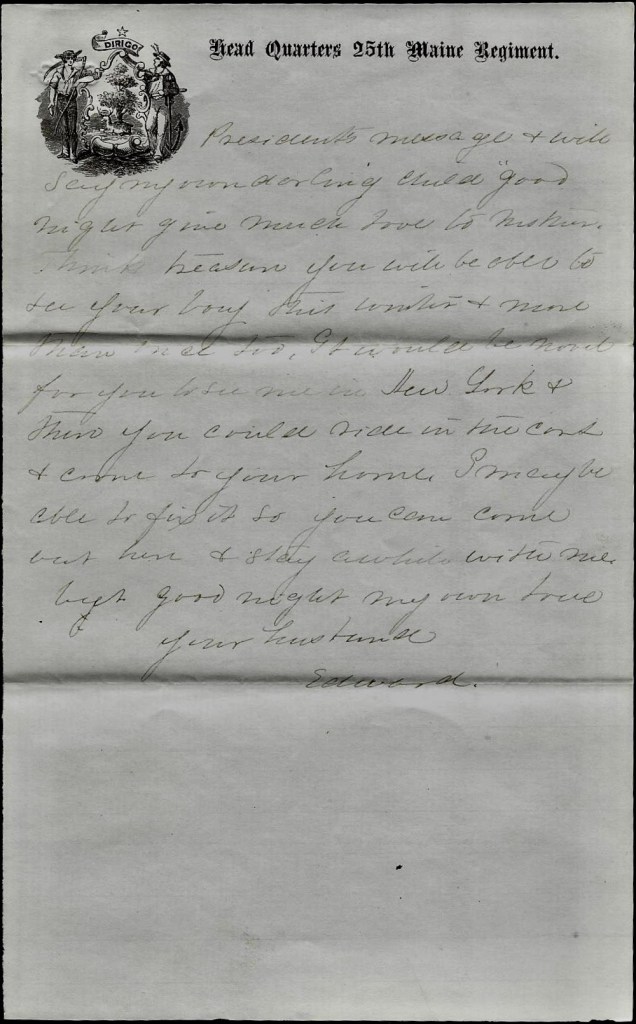
But enough of this. They are in the hands of the One who hates them more than I do. It is a comfort to think so. Now I am going to read the President’s Message & will say my own darling child, “good night.” Give much love to Mother. Think you will be able to see your boy this winter & more than once too. It would be novel for you to see me in New York & then you could ride in the cars and come to your home. I may be able to fix it so you can come out here and stay awhile with me. Good night my own true. Your husband, — Edward



 Spared & Shared 23