Category Archives: 25th Maine Infantry

1863: John Oliver Quinby to Olive (Hampton) Quinby

The following letter was written from Camp Tom Casey in mid-February 1863 by John Oliver Quinby (1827-1911), a musician in Co. E, 25th Maine Infantry (9 months 1862-63). He was born in 1827 at Minot, Maine, and married first Mary Pendexter in 1848 and had two children: Sarah F. Quinby (b. 1850) and Mary (died in infancy). After his first wife’s death, John married Olive A. Hampton (1834-1910) in 1853. In 1860, the couple were living at Westbrook, Maine, where John was enumerated as a shoecutter. Their children at that time, included the aforementioned Sarah, as well as Isabel (age 5).

Quinby volunteered in late September 1862 and mustered out with his regiment on 10 July 1863 after 9 months. About 1870 he moved his family to Malden, Massachusetts.

Back in 2018, I transcribed a letter by another member of the same company from Camp Tom Casey in March 1863. It was written by William Roberts to his sister. See—1863: William Roberts to Marietta Roberts.
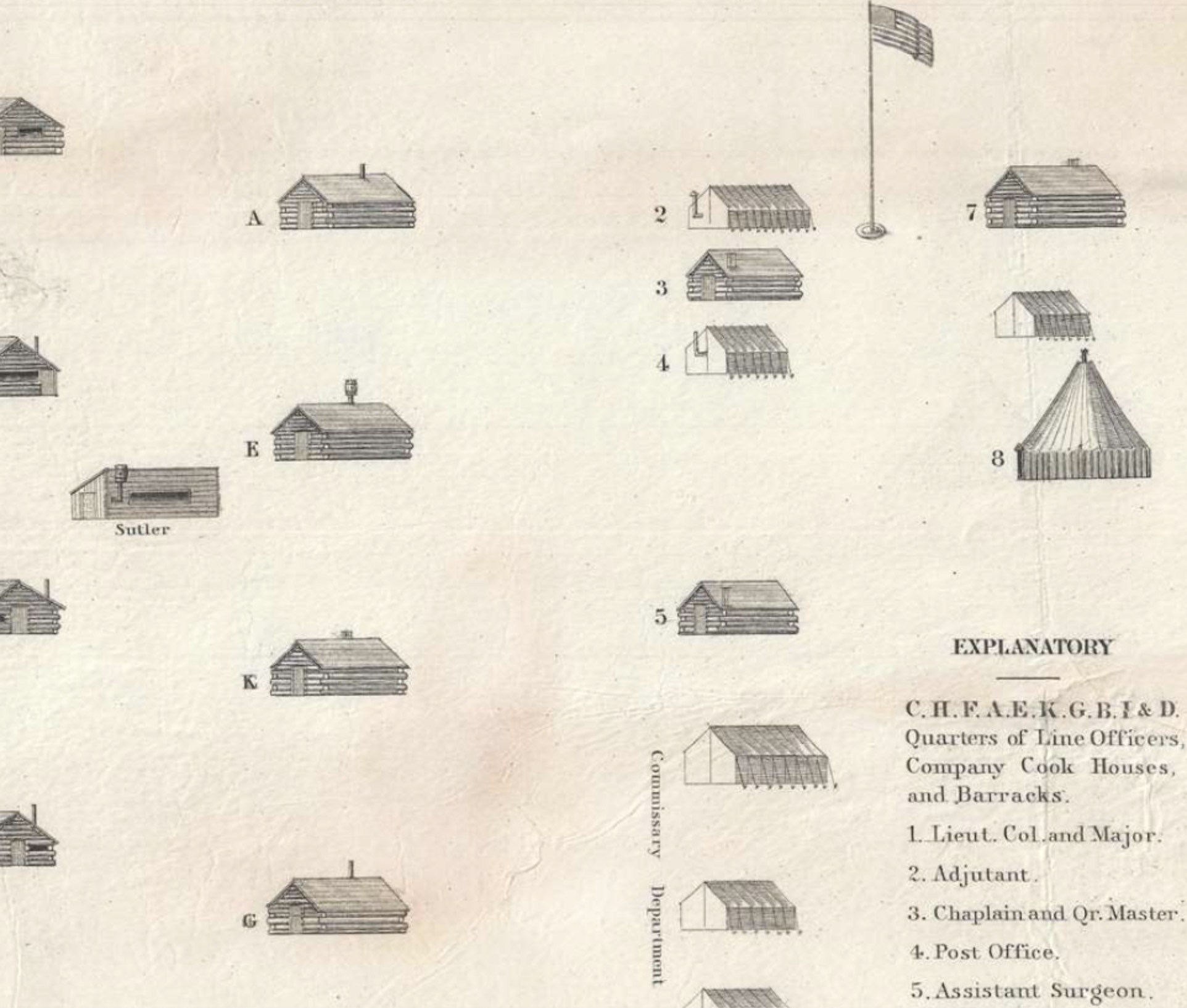
Portion of “camp map” printed by E. Evans depicting the encampment of the 25th Maine at “Camp Tom Casey,” Arlington Heights, Va. during winter of 1862-63.

T R A N S C R I P T I O N

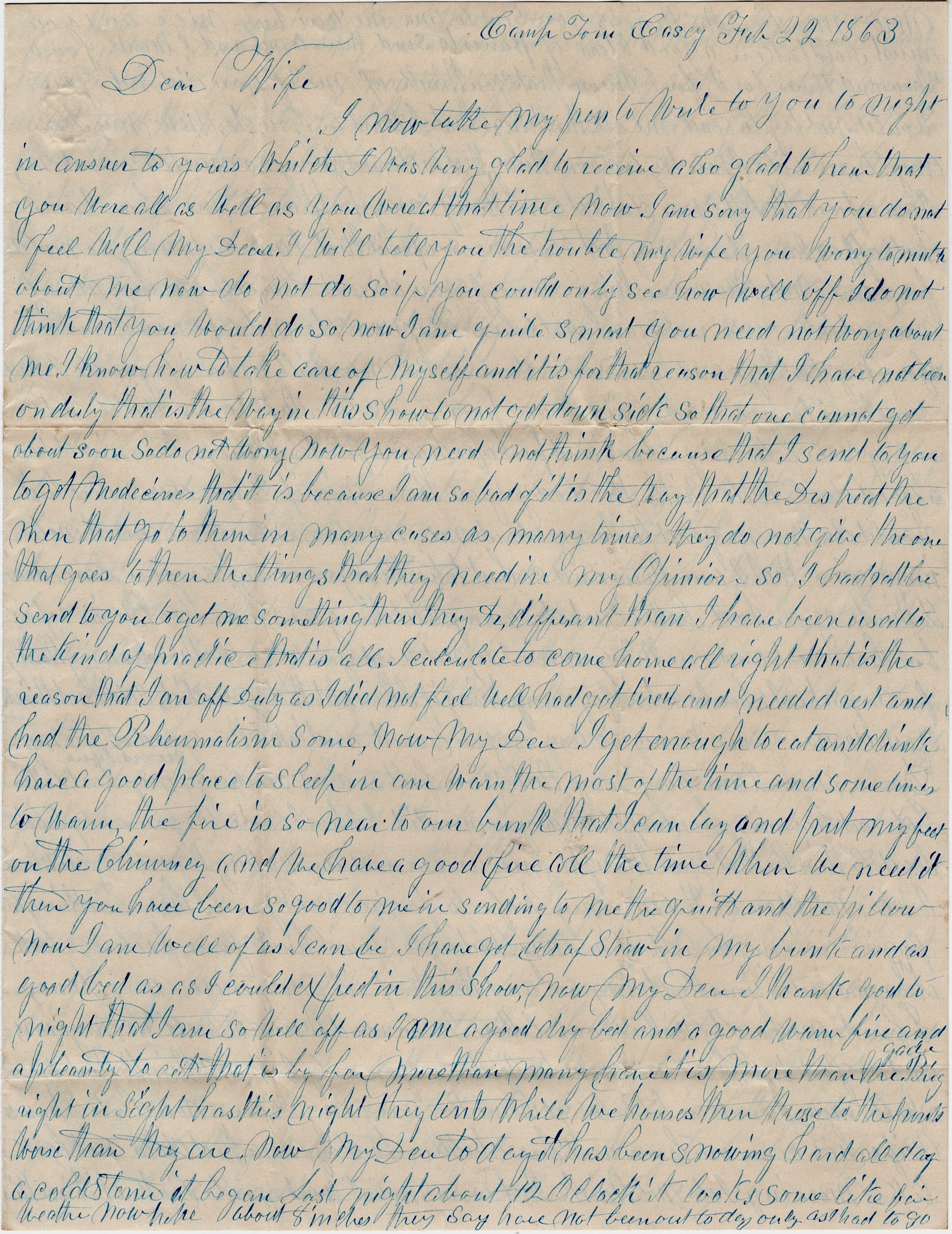
Camp Tom Casey
February 22, 1863

Dear wife,

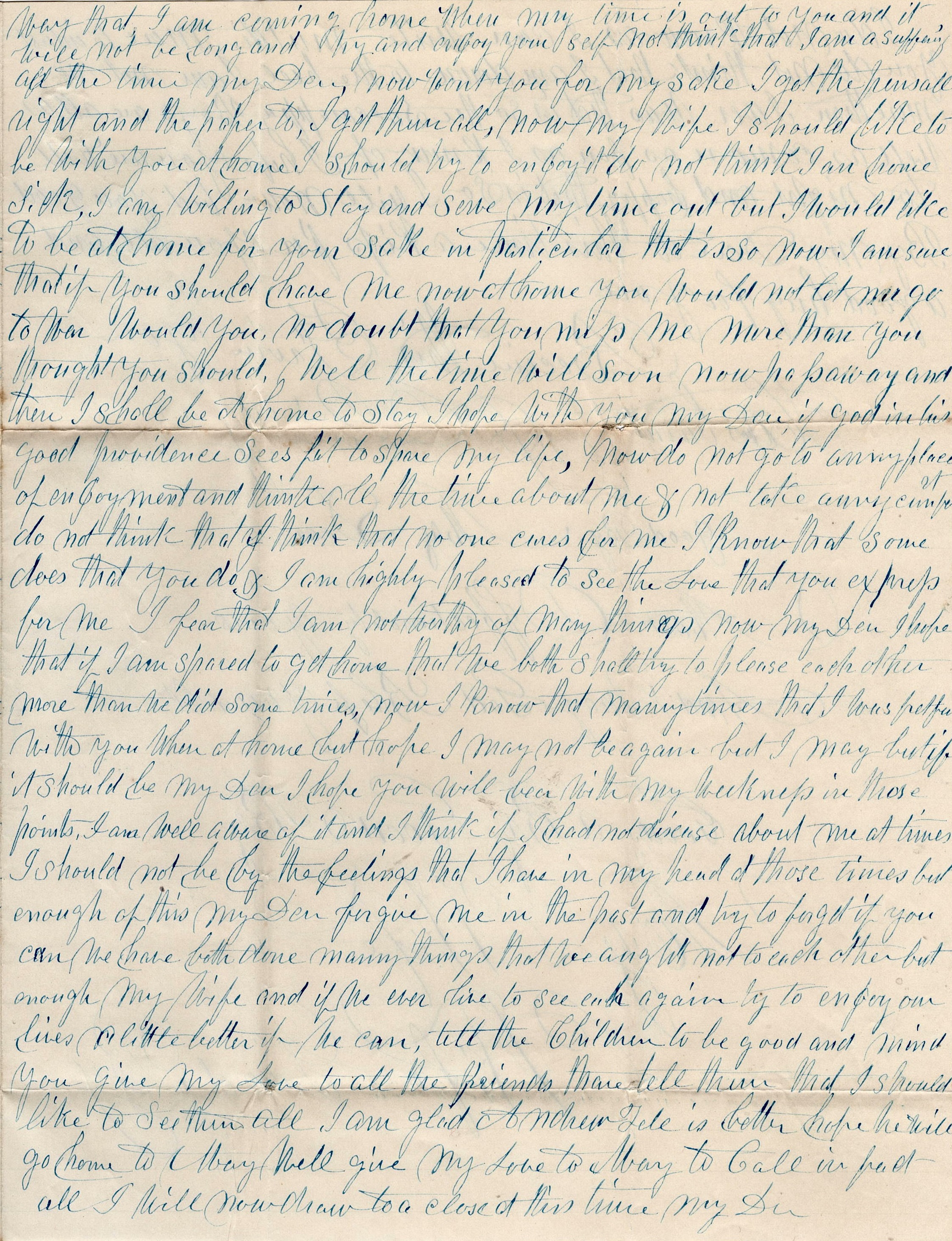
I now take my pen to write to you tonight in answer to yours which I was very glad to receive. Also glad to hear that you were all as well as you were at the time. Now I am sorry that you do not feel well, my dear. I will tell you the trouble, my wife. You worry too much about me. Now do you not do so? Now I am quite smart. You ned not worry about me. I know how to take care of myself and it is for that reason that I have not been on duty. That is the way in this show—to not get down sick so that one cannot get about soon. So do not worry now. You need not think because that I send to you to get medicines that it is because I am so bad off. It is the way that the doctors treat the men that go to them. The things that they need, in my opinion. So I had rather send to you to get something than the doctors [who will give me] something different than I have been used to. That is all.

I calculate to come home all right. That is the reason that I am off duty as I did not feel well. Had got tired and needed rest and had the rheumatism some. Now my dear, I get enough to eat and drink, have a good place to sleep in, am warm most of the time and sometimes too warm. The fire is so near to our bunk that I can lay and put my feet on the chimney and we have a good fire all the time when we need it. Then you have been so good to me sending to me the quilt and the pillow. Now I am well off as I can be. I have got lots of straw in my bunk and as good bed as I could expect in this show.

Now my dear, I thank God tonight that I am so well off as I am—a good dry bed and a good warm fire and plenty to it. That is by far more than many have. It is more than the Brigade right in sight has this night. They tents while we houses. Then those to the front are worse than they are. Now my dear, today it has been snowing hard all day a cold storm. It began last night about 12 o’clock. It looks some like fair weather now here. About 8 inches, they say. Have not been out today, only to get the things you sent to me. They were very nice and you must have taken a good deal of pains to send them to me and I thank you a thousand times for it for I know that you think of me. If you did not, you would not try to send me all the things that I want as you do.

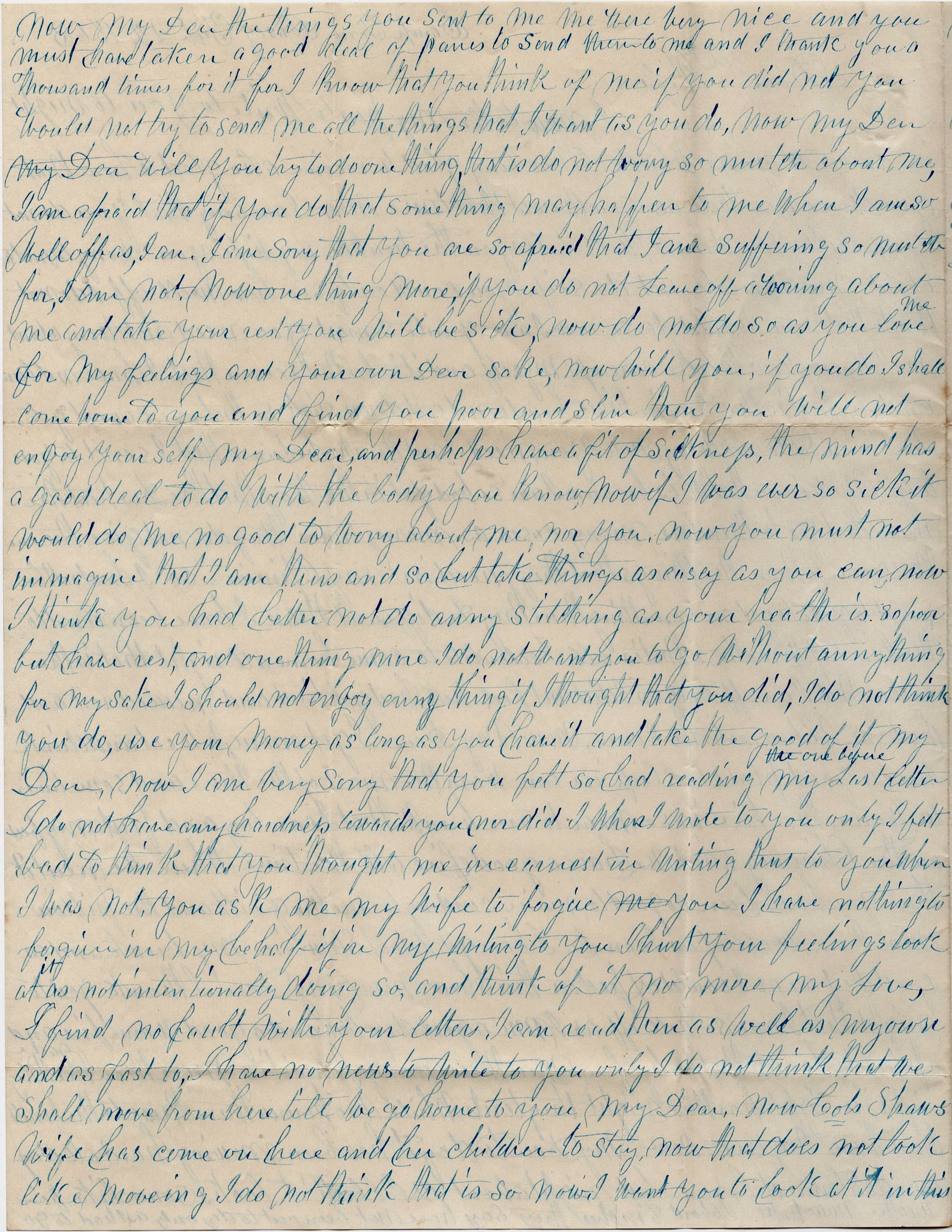
Now, my dear, will you try to do one thing—that is, do not worry so much about me. I am afraid that if you do that, something may happen to me when I am so well off as I am. I am sorry that you are so afraid that I am suffering so much for I am not. Now one thing more, if you do not leave off worrying about me and take your rest, you will be sick. Now do not do so as you love me for my feelings and your own dear sake, now will you? If you do, I shall come home to you and find you poor and slim. Then you will not enjoy yourself, my dear, and perhaps have a fit of sickness. The mind has a good deal to do with the body, you know. Now if I was ever so sick, it would do me no good to worry about me, nor you. Now you must not imagine that I am thus and so but take things as easy as you can.

Now I think you had better not do any stitching as your health is so poor but have rest, and one thing more, I do not want you to go without anything for my sake. I should not enjoy anything if I thought that you did. I do not think you do. Youse your money as long as you have it and take the good of it, my dear. Now I am very sorry that you felt so bad reading the one before my last letter. I do not have any hardness towards you, nor did I when I wrote to you—only I felt bad to think that you thought me in earnest in writing that to you when I was not. You ask me, my wife, to forgive you. I have nothing to forgive in my behalf. If in my writing to you, I hurt your feelings, look at it as not intentionally doing so, and think of it no more, my love. I find no fault with your letter. I can read them as well as my own and as fast too.

I have no news to write to you—only I do not think that we shall move from here till we go home to you, my dear. Now. Cols. Shaw’s wife has come on here and her children to stay. Now that does not look like moving, I do not think. That is so. Now I want you to look at it in this way—that I am coming home when my time is out to you and it will not be long. And try and enjoy yourself [and] not think that I am suffering all the time, my dear. Now won’t you for my sake?

I got the pens all right and the paper too. I got them all. Now my wife, I should like to be with you at home. I should try to enjoy it. Do not think I am homesick. I am willing to stay and serve my time out but I would like to be at home for your sake in particular. hat is so. Now I am sure that if you should have me now at home, you would not let me go to war, would you? No doubt that you miss me more than you thought you should. Well the time will soon pass away and then I shall be at home to stay, I hope, if God in His good Providence sees fit to spare my life. Now do not go to any place of enjoyment and think all the time about me & not take any comfort. Do not think that I think that no one cares for me. I know that some does, that you do, and I am highly pleased to see the love that you express for me. I fear that I am not worthy of many things. Now my dear, I hope that if I am spared to get home, that we both shall try to please each other more than we did sometimes. Now I know that many times that I was fretful with you when at home but hope I may not be again, but I may. But if it should be, my dear, I hope you will bear with my weakness in those points. I am well aware of it and I think if I had not disease about me at times, I should not be by the feelings that I have in my head at those times. But enough of this, my dear. Forgive me in the past and try to forget it if you can. We have both done many things that we ought not to each other but enough, my wife, and if we ever live to see each other again, try to enjoy our lives a little better if we can.

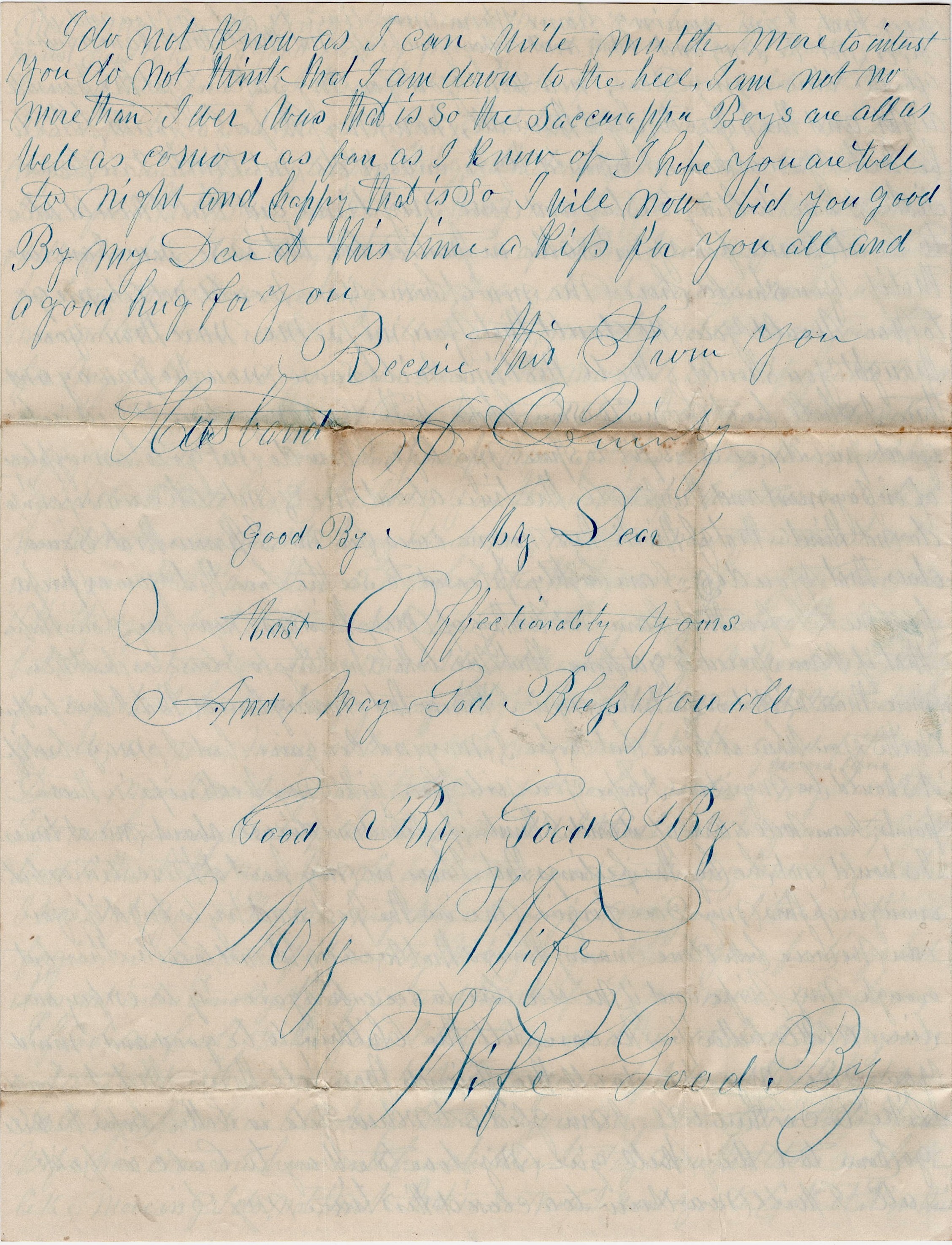
Tell the children to be good and mind you. Give my love to all the friends there. Tell them that I should like to see them all. I am glad Andrew Tell is better. Hope he will go home to May. Well, give my love to Mary, to Call, in fact all. I will now draw to a close at this time, my dear. I do not know as I can write much more to interest you. Do not think that I am down to the heel. I am not—no more than I ever was. That is so. The Saccarappa Boys are all as well as common as far as I know of. I hope you are well tonight and happy. That is so. I will now bid you goodbye, my dear, this time. A kiss for you all and a good hug for you. Receive his from your husband, — J. O. Quinby

Goodbye my dear. Most affectionately yours and may God bless you all. Goodbye, goodbye, my dear wife, goodbye.

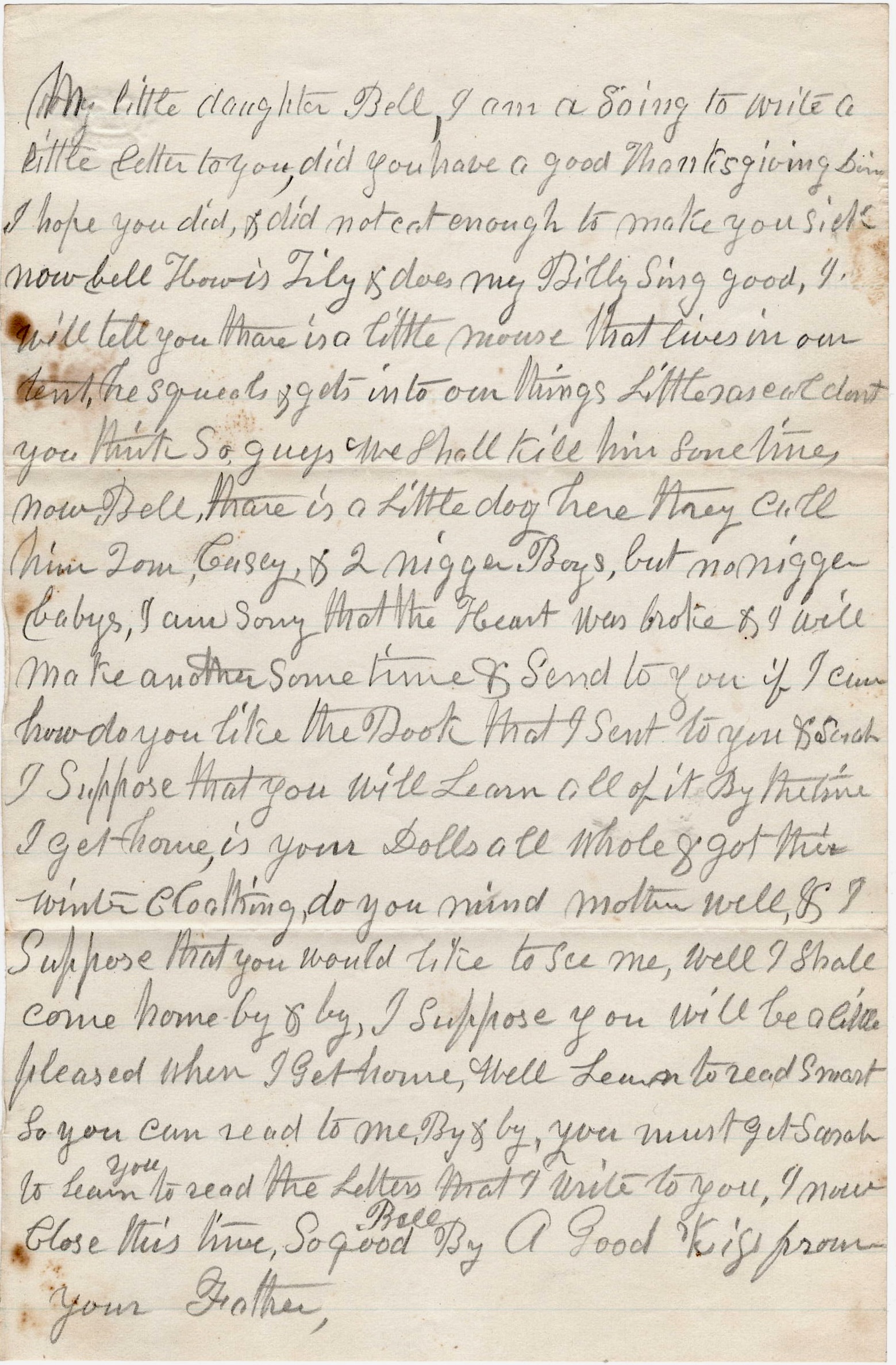
My little daughter Bell. I am a going to write a little letter to you. Did you have a good Thanksgiving dinner? I hope you did and did not eat enough to make you sick. Noe Bell, how is Tilly and does Billy sing good? I will tell you there is a little mouse that lives in our tent. He squeals & gets into our things. Little rascal, don’t you think so? Guess we shall kill him sometime.

Now Bell, there is a little dog here. They call him Tom Casey & two nigger boys, but no nigger babies. I am sorry that the heart was broke and I will make another sometime and send to you if I can. How do you like the book that I sent to you & such. I suppose that you will learn all of it by the time I get home. Is your dolls all whole & got their winter clothing? Do you mind Mother well &c.? I suppose that you would like to see me. Well I shall come home by & by. I suppose you will be a little pleased when I get home. Well learn to read smart so you can read to me by and by. You must get Sarah to learn you to read the letters that I write to you. I now close this time. So goodbye Bell. A kiss from your father.
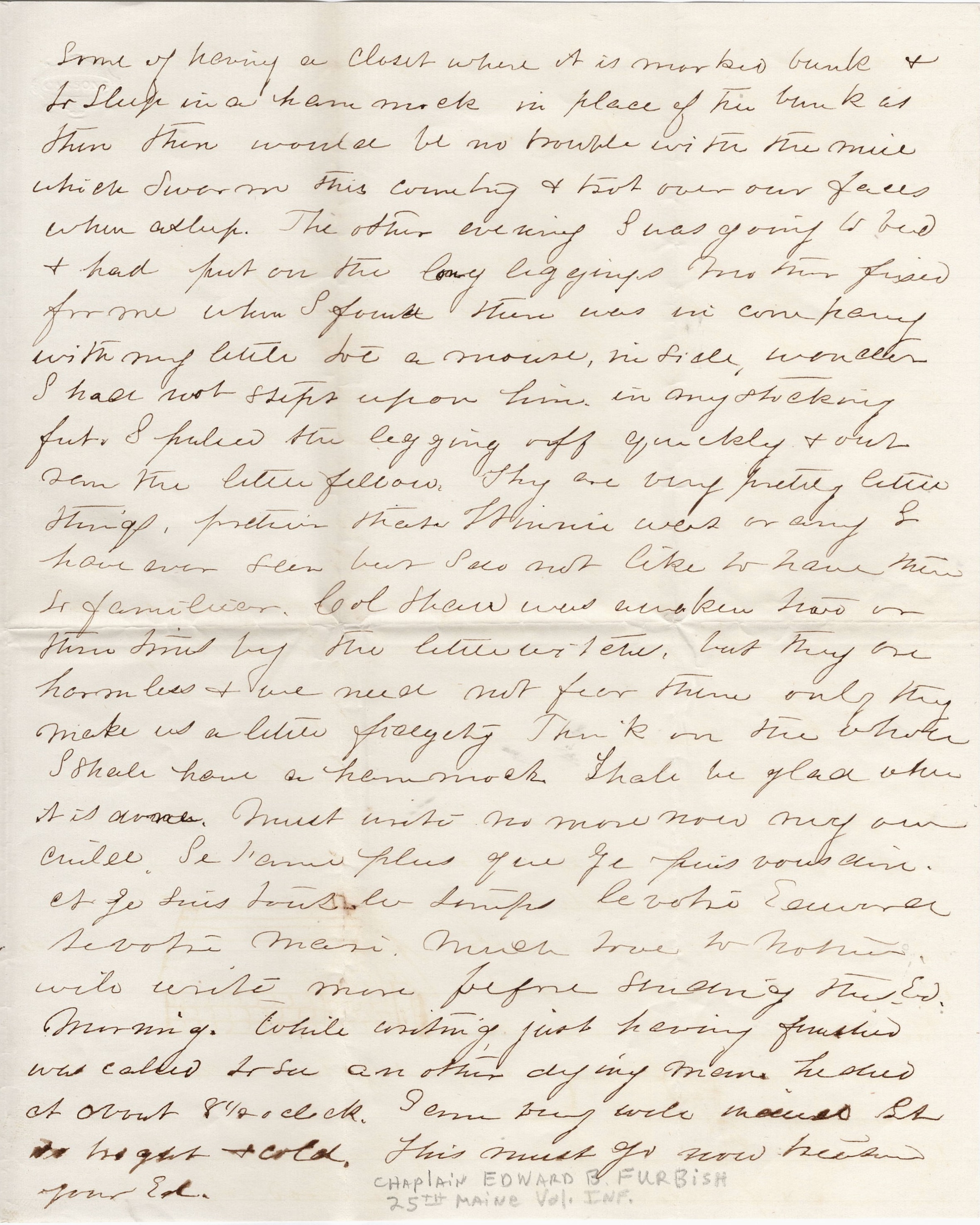
1862: Edward Brown Furbish to Grace (Townsend) Furbish

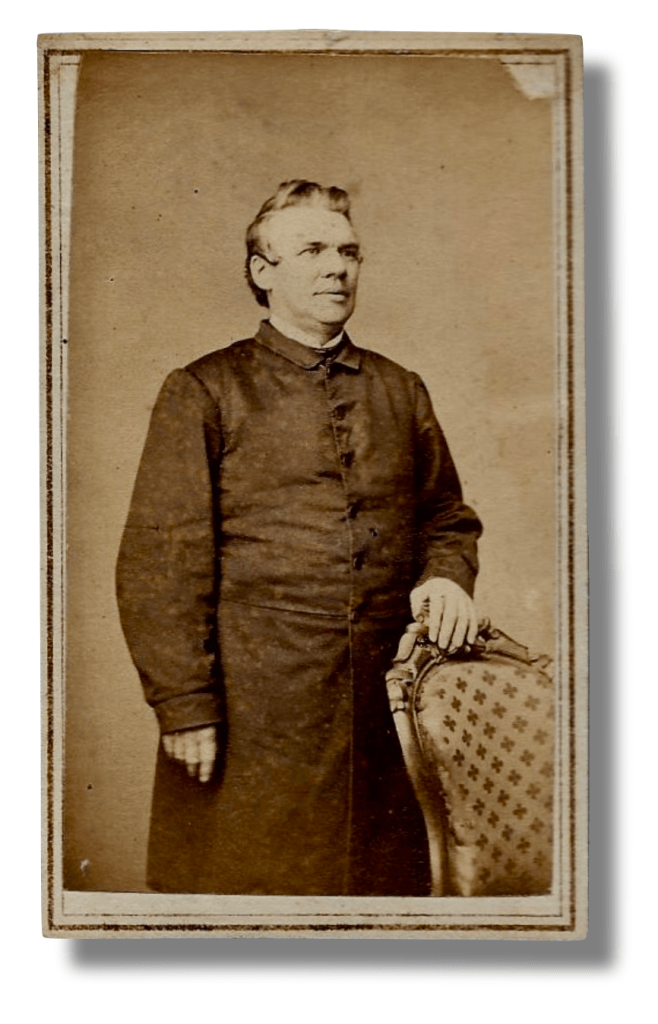
The following letter was written by Rev. Edward Brown Furbish (1837-1918), the son of Dependence Hart Furbish (1806-1882) and Persis H. Brown (1803-1872) of Portland, Cumberland county, Maine. Edwards was married in October 1862 to Grace Harrison Townsend (1840-1914).

Rev. Edward Brown Furbish

An 1860 graduate of Yale College, Edward was 25 years old when he volunteered to serve as the chaplain of the 25th Maine Infantry in September 1862. Organized at Portland, Maine, the regiment was mustered for nine months service and sent to Washington D. C. in mid-October. The regiment served garrison duty in the defenses of Washington, D.C., October 18, 1862, to March 24, 1863. Moved to Chantilly, Virginia, March 24, and on picket duty there until June 26. (Temporarily attached to XII Corps, Army of the Potomac.) Moved to Arlington Heights June 26, then ordered home June 30. The 25th Maine Infantry mustered out of service July 10, 1863.

Among the duties an army chaplain was frequently called upon to perform was to write letters informing loved ones at home of the death of their husbands, sons, brothers or fathers. In this letter, Edward refers to the death of “Mr. Kimball.” This was no doubt Isaac Kimball (1839-1862) of Casco, Maine, who enlisted on 29 September 1862 at the age of 23 to serve in Co. F, 25th Maine Infantry. Isaac died of typhoid fever in the regimental hospital on 24 November 1862. Isaac worked as a boatman just prior to his enlistment, probably in the lumber business.

Transcription

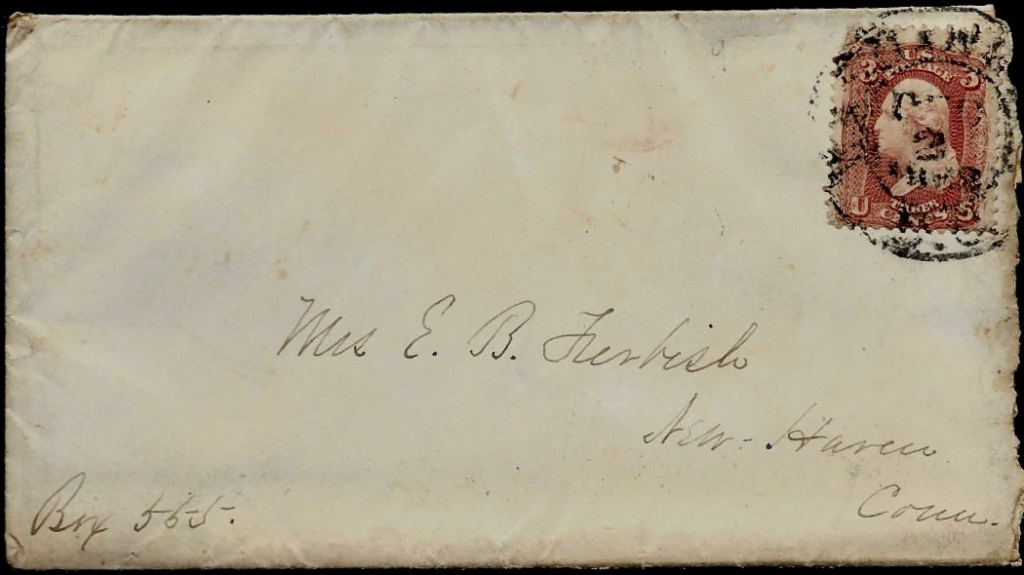
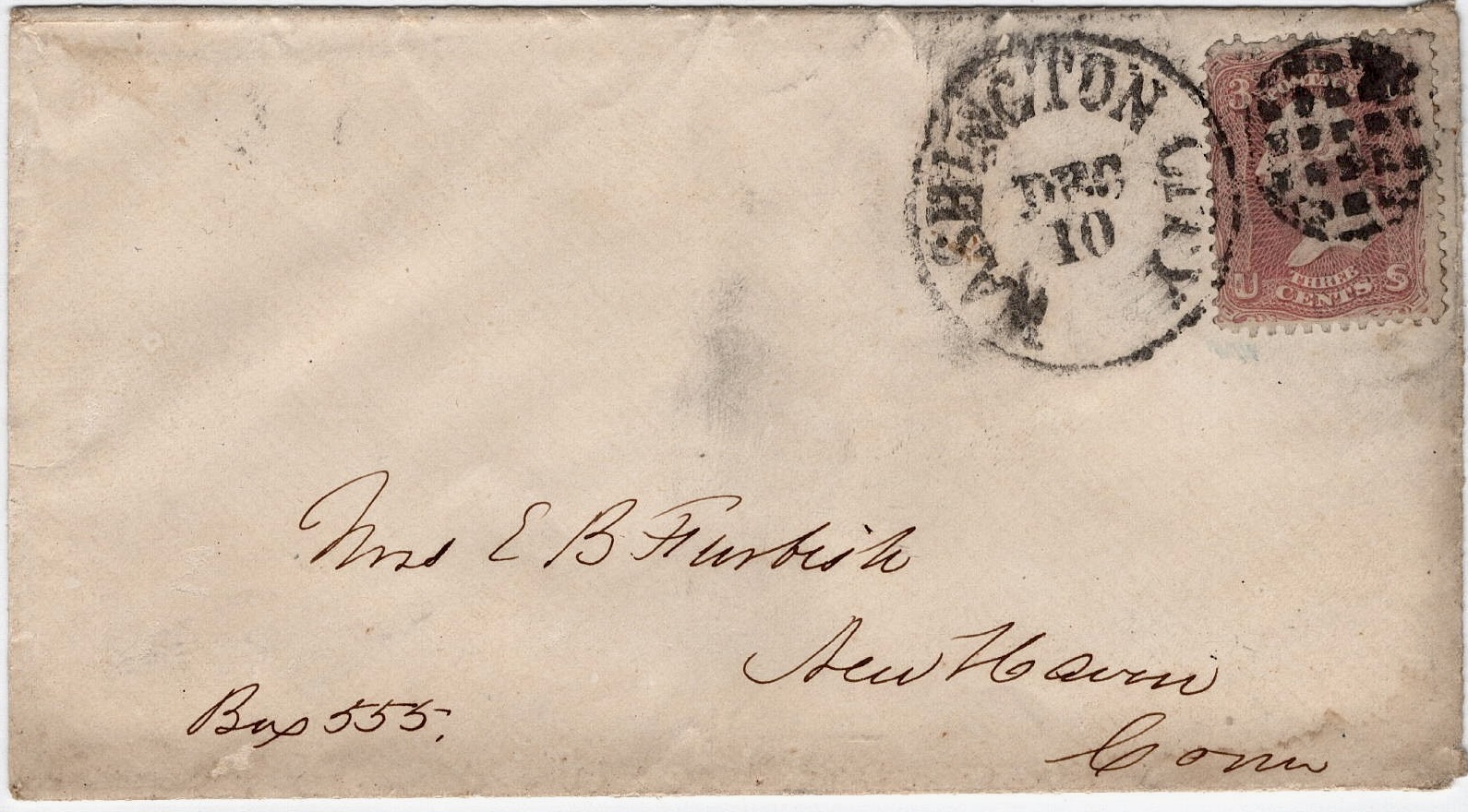
Addressed to Mrs. E. B. Furbish, New Haven, Connecticut

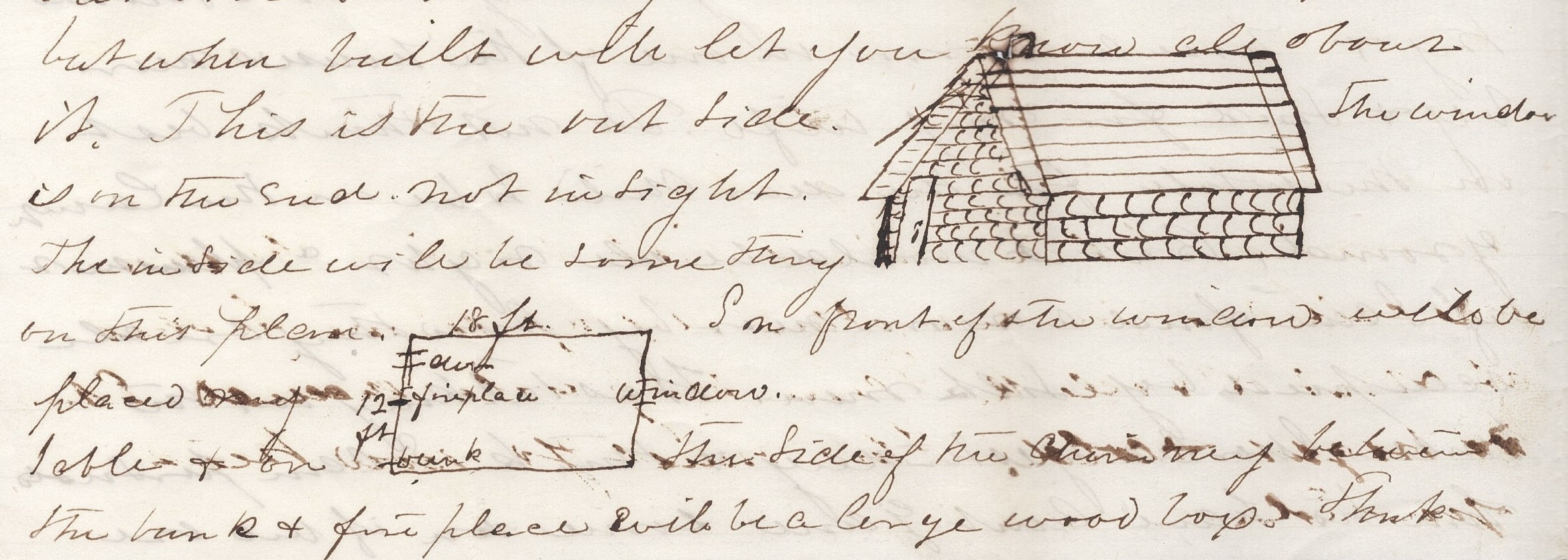
Arlington Heights
Camp Tom Casey
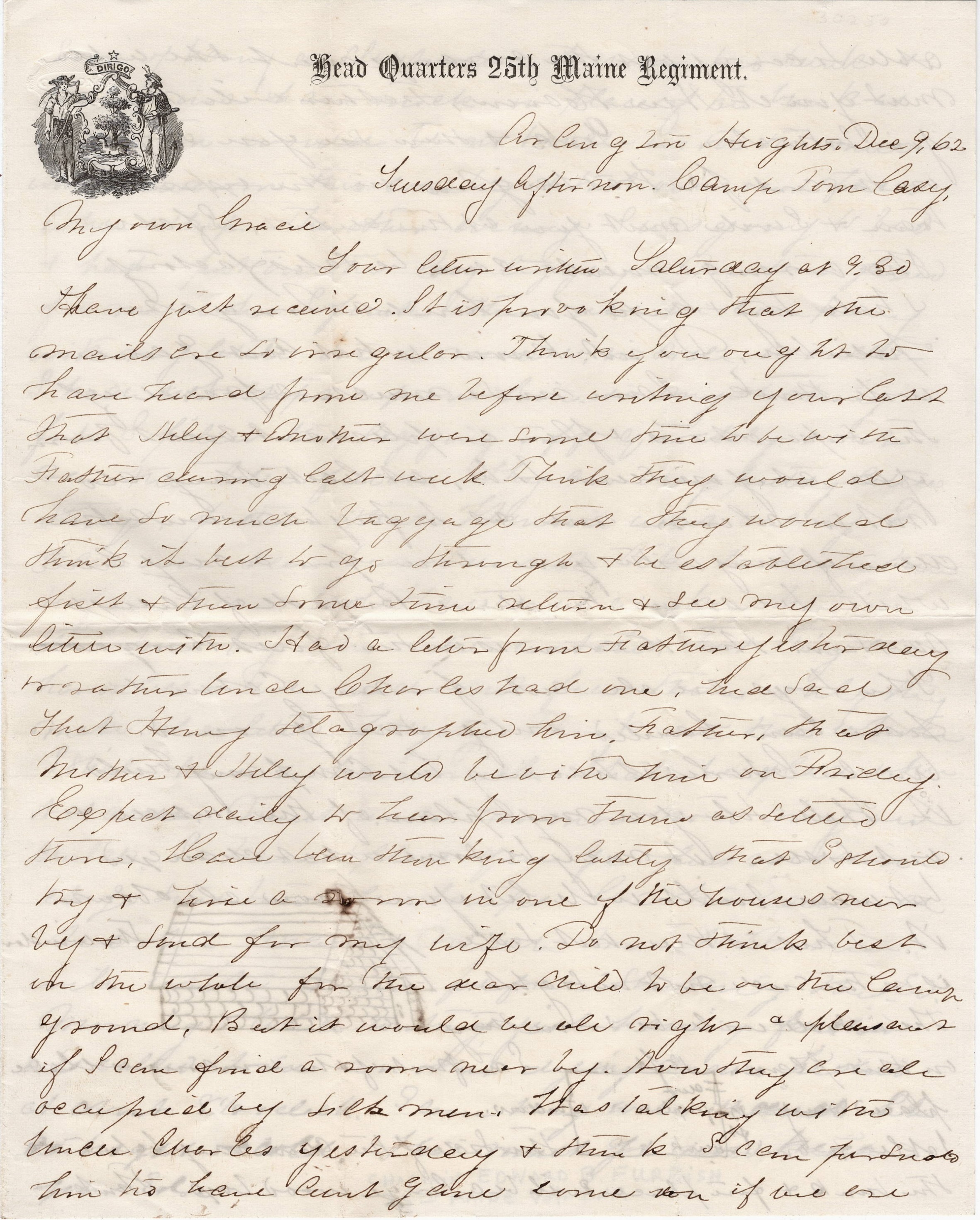
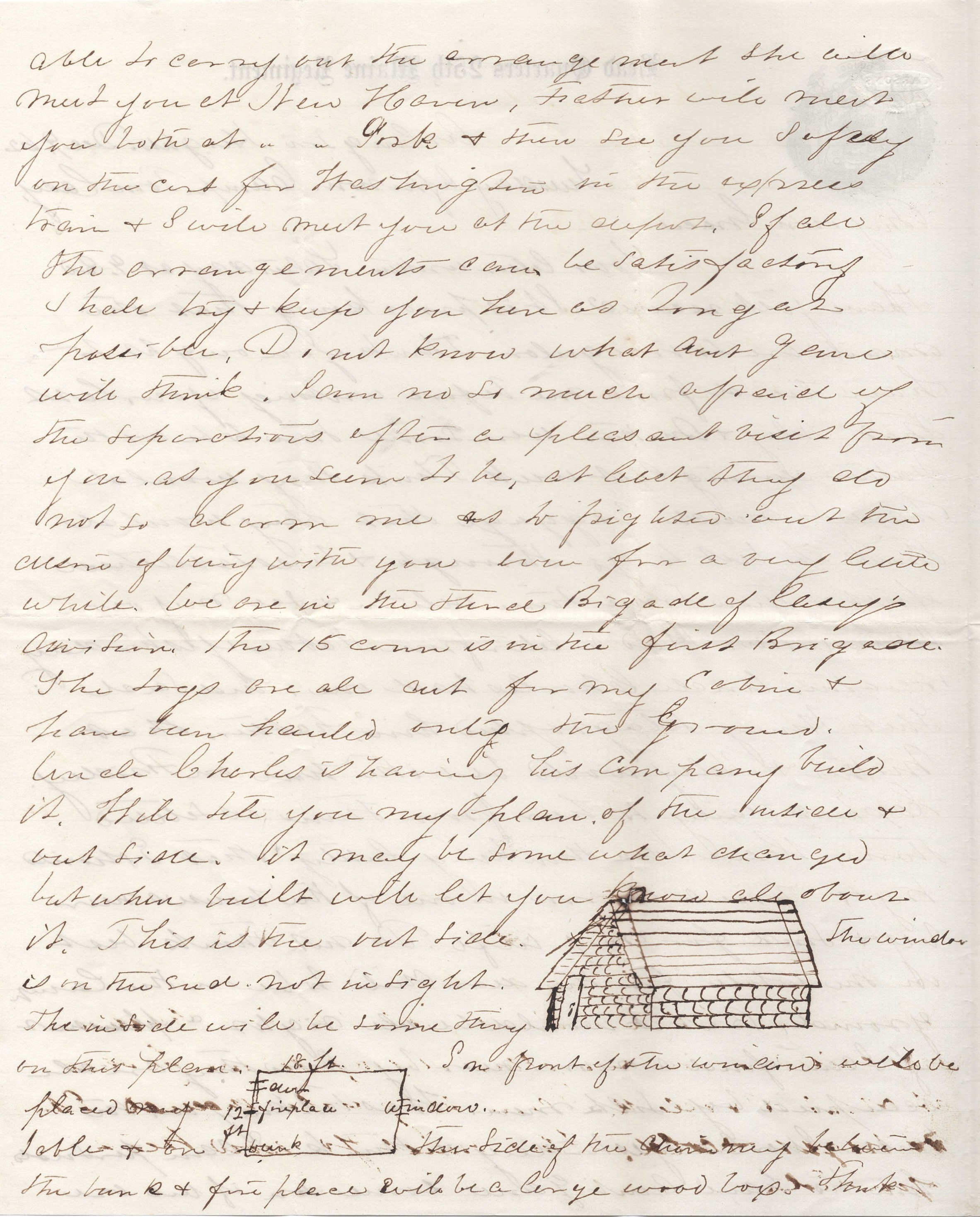
December 1, 1862

My own Gracie,

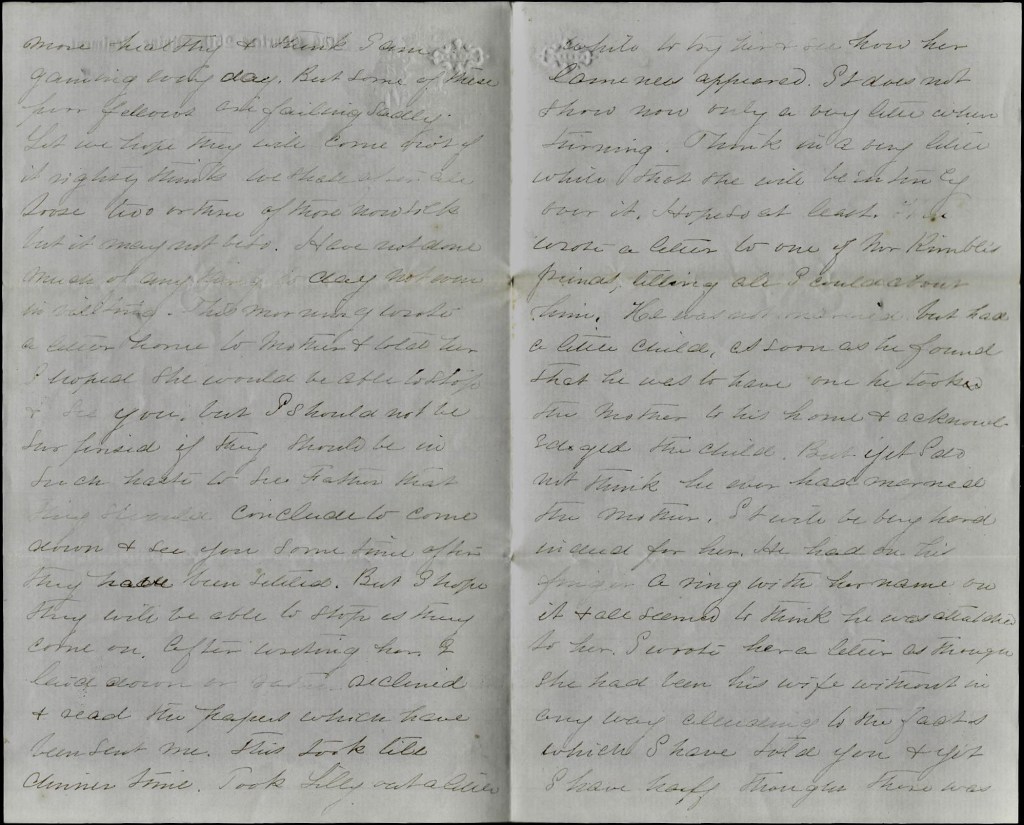
No one would think it was the first day of December here who has lived in New England. It is warmer & milder here than it can be with you. We keep a little fire in our tents, but only a little. It is like our early Spring or Fall days. The grass about my tent has looked quite green, but I will think not thrive much longer. I am now in the Chapel Tent among the sick. There are but two who are dangerously sick here, and one may die. That is why I am here tonight. Do not know how long I shall remain. I am very well indeed. Have never felt more healthy & think I am gaining every day. But some of these poor fellows are failing sadly, yet we hope they will come out of it. Think we shall after all lose two or three of those now sick, but it may not be so.

Have not done much of anything today—not even in visiting. This morning wrote a letter home yo Mother and told her I hoped she would be able to stop and see you, but I should not be surprised if they should be in such haste to see Father that they should conclude to come down and see you sometime after they have been settled, but I hope they will be able to stop as they come on. After writing her, I laid down—or rather reclined—and read the papers which have been sent me. This took till dinner time. Took Lilly out a little while to try her and see how her lameness appeared. It does not show now—only a little when turning. Think is a very little while she will be entirely over it. Hope so at least.

Then I wrote a letter to one of Mr. Kimble’s friends telling all I could about him. He was not married but had a little child. As soon as he found that he was to have one, he took the Mother to his home &  acknowledged the child, but yet I do not think he ever had married the Mother. It will be very hard indeed for her. He had on his finger a ring with her name on it & all seemed to think he was attached to her. I wrote her a letter as though she had been his wife without in any way alluding to the fact which I have told you & yet I have half thought there was another whom he loved more perhaps than the Mother of his child which may have deterred him from marrying. He had no relatives other than a  brother’s wife. All the rest of the family had died as suddenly as he. The notice in the paper was that he had no relatives & yet he left a child & the mother. What a comfort it would be if she could only bear his name & feel that the one she loved was in the sight of the world her husband. She will have a hard path to walk in this life. Hope she may meet her lover in heaven, or at least may here be comforted.

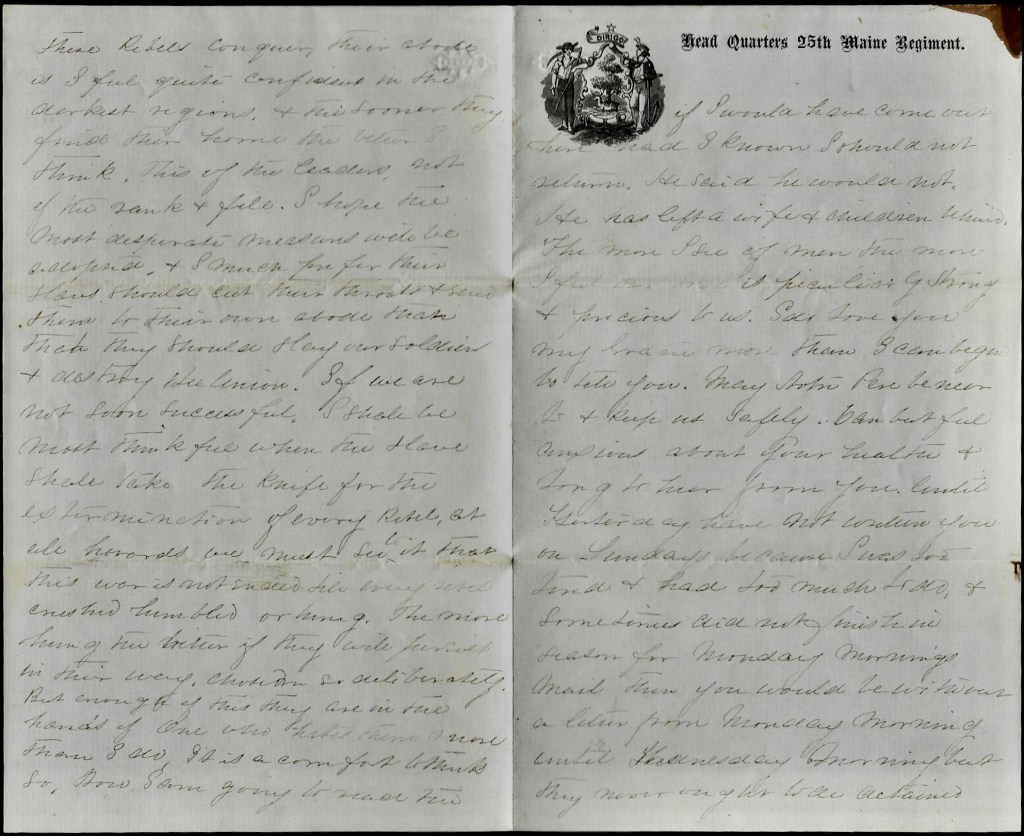
There are a good many sad hearts here in this world who do not know enough to seek comfort from the  Source of all blessings, but it is given unto us. Dr. True asked me tonight if I would have come out here had I known I should not return. He said he would not. He has left a wife & children behind. The more I see of men, the more I feel our love is peculiarly strong & precious to us. I do love you my Gracie, more than I can begin to tell you. May Notre Pere [Our Father] be near us & keep us safely. Can but feel anxious about your health & long to hear from you. Until yesterday have not written you on Sundays because I was too tired  & had too much to do, & sometimes did not finish in season for Monday morning’s mail, then you would be without a letter from Monday morning until Wednesday morning, but they never ought to be  detained longer than that. I write every day & have excepting Sunday’s so you ought to receive six  letters a week. Last week I think I only sent five letters. Will it do if hereafter I only send them once in  two days or four a week? Think after all it will be difficult to refrain from writing as it will be for you to  do without them & so the letters will come to you as usual I presume.

Do not know why letters the first  of the week are detained unless it is that they mail last of all the soldier’s letters & only then when there  is time & as there are more letters written Sunday than on any other day. Presume that our mails are laid over in Washington one day sometimes. When I can, [I] send the letters to you by a friend going to the city & he drops them in & then they go in the mail first sent & do not wait to be distributed until the last. Feel quite confident your letters have all reached [me].

The Second & Third Brigades of Casey’s Division have  been ordered to go into winter quarters. The First will doubtless be removed. All whom I see think our regiment very highly favored in every respect. These opinions come to me out of the regiment.

There is nothing new to write. Everything goes on well. I do hope [General] Burnside will not go into winter quarters till he has Richmond & slain enough Rebels to make it pay to rest a while. It has taken a great  burden off my mind in coming out here. I envy no one at home while the war lasts. Of two evils, we must choose the least. It is better to fight to the death than let these Rebels conquer. Their abode is I feel quite confident in the darkest regions & the sooner they find their homes, the better I think. This of the leaders—not of the rank & file. I hope the most desperate measures will be adopted & I much prefer their slaves should cut their throats & send them to their own abode than that they should slay our soldiers & destroy the Union. If we are not soon successful, I shall be most thankful when the slave take the knife for the extermination of every rebel at all hazards. We must see to it that this war is not ended until every rebel is crushed, humbled, or hung. The more hung the better if they will persist in their way, chosen so deliberately.

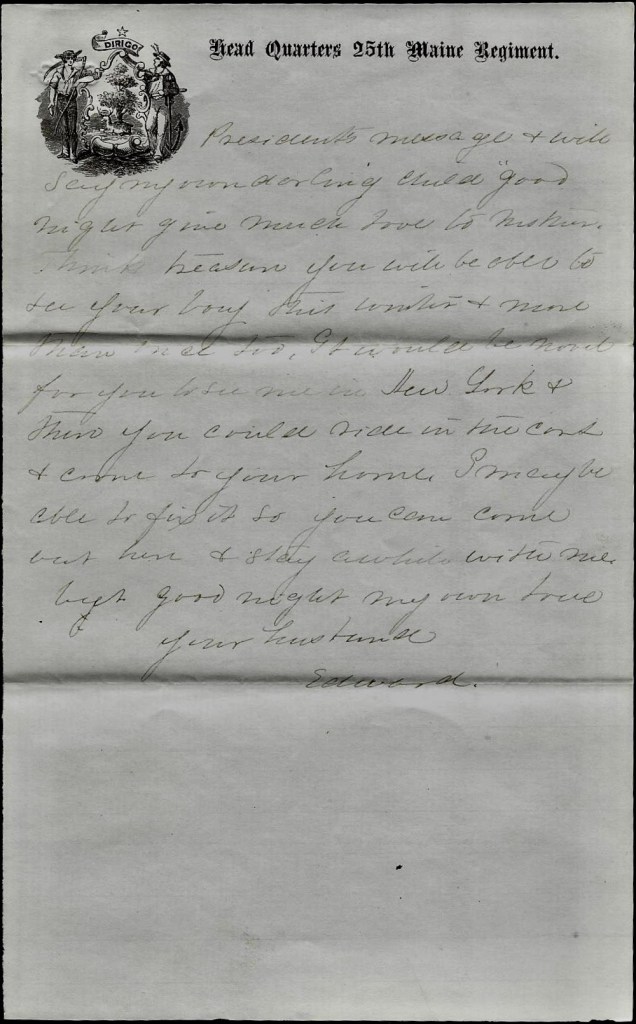
But enough of this. They are in the hands of the One who hates them more than I  do. It is a comfort to think so. Now I am going to read the President’s Message & will say my own darling child, “good night.” Give much love to Mother. Think you will be able to see your boy this winter & more than once too. It would be novel for you to see me in New York & then you could ride in the cars and come to your home. I may be able to fix it so you can come out here and stay awhile with me. Good night my own true. Your husband, — Edward

1862: “Lewis” to “Hattie”

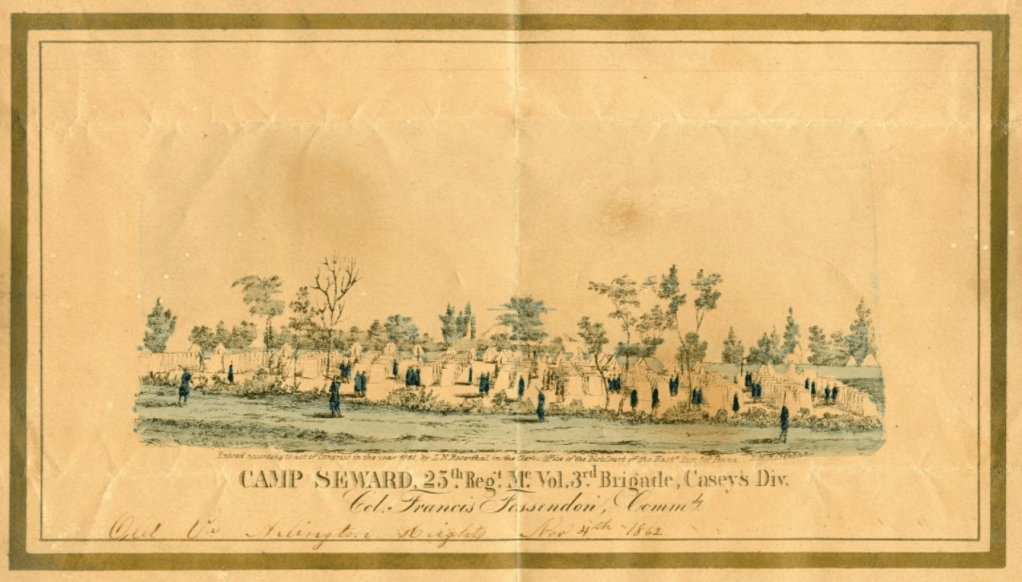
I cannot make out the surname of this soldier whom I believe served in the 25th Maine Infantry. This regiment mustered into service on 29 September 1862 for nine-months’ and was stationed at Camp Seward, Arlington Heights, Virginia, on November 4, 1862. The camp, located across the Potomac River from Washington, D.C., provided defense fortifications for the city during the war. Camp Seward was named for William Seward, Lincoln’s Secretary of State and former rival for the presidency.

The print below is one of many that Rosenthal’s Lith., a printing company in Philadelphia. made of Civil War encampments. This one is signed L. N. Rosenthal. Louis was one of four brothers in the company. They were pioneers in chromolithograph printing. Soldiers probably could buy prints that showed their regiment.

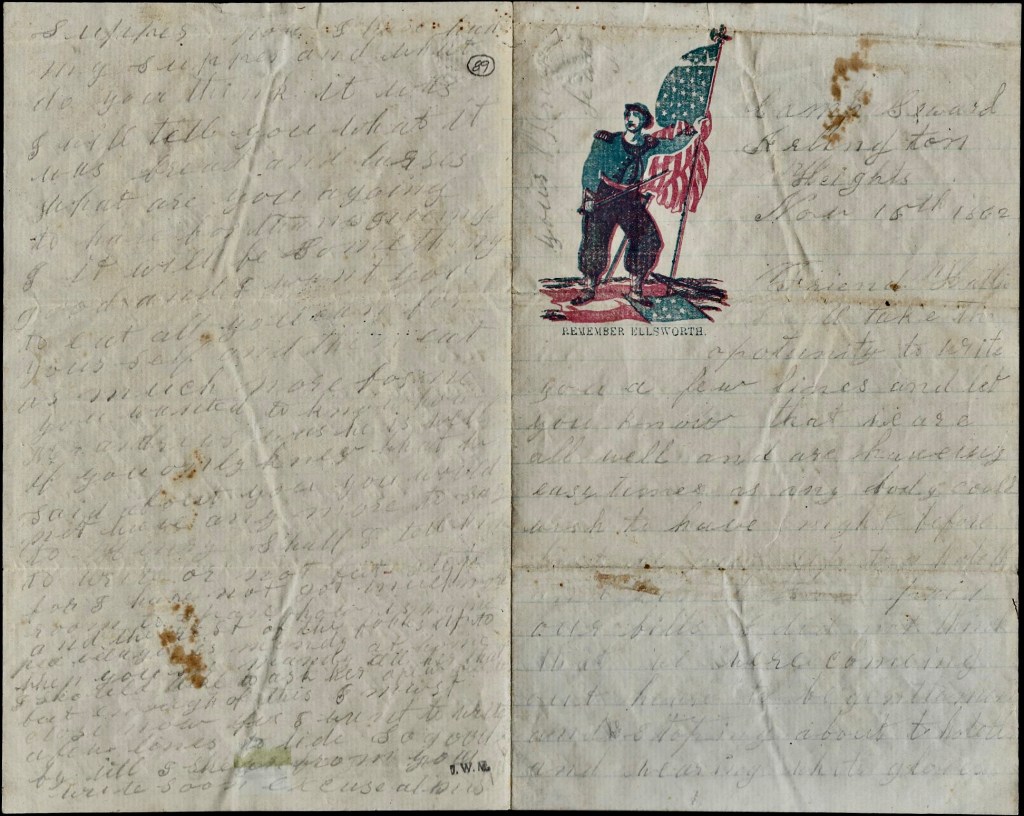
Transcription

Camp Seward
Arlington Heights
November 15, 1862

Friend Hattie,

I take this opportunity to write you a few lines and let you know that we are all well and are having easy times as anybody could wish to have. Night before last we went up to a hotel and we [ ] paid our bills. I did not think that we were coming out here to be gentlemen and stopping about to hotels and wearing white gloves and such things as them. I thought that we were coming out here to fight. But we are having high [times], growing fat, ugly and black.

But how do you get along down in Soddom? You said that you had quite a party and I am glad to hear that parties are not quite all stopped yet. But Hat, to tell you the truth, I have not seen but one white girl since we have been out here—or at least what I call white. The rest of them are paddies and dutch girls. I was over to Washington and I saw one Northern girl and some talk with her. She belong in Bangor and had a brother sick in the hospital in this city. But enough of this.

Who do you think came to our camp today? It is Bill Noyes. 1 He says that he is a going back to his regiment pretty soon and that they have seen some good times and some hard ones, but he looks well now and he says when they heard from the regiment last, they had about one hundred and fifty members.

I must get my supper now for the rest have all got theirs and I shall lose it if I don’t go after it. So good [bye] till after supper.

Now I have had my supper and what do you think it was? I will tell you what it was—bread and [mo]lasses. What are you a going to have for Thanksgiving? I [hope] it will be something good. And I want you to eat all you can for yourself and then eat as much more for me. You wanted to know how Mr. Andrews was. He is well. If you only knew what he said about you, you would not have anymore to say to Henry. Shall I tell him to write or not? But [I must] stop for I have not got much more room to spare. How is Maine and the rest of the folks up to Pea [?] Village. Is Mandy at home? When you see Mandy, tell her that I should like to ask her a few questions. But enough of this. I must close now for I want to write a few lines to Lide. So goodbye till I hear from you. write soon. Excuse all [mistakes].

Your friend, — Lewis [ ]


1 There were two soldiers by the name William Noyes who served in Maine Regiments that may have been the one referenced in this letter. One was William S. Noyes (1840-1911) of Saco, York county, Maine. He enlisted on 24 June 1861 as a private in Co. C, 5th Maine Infantry. He was taken prisoner at First Bull Run and confined at Richmond for a time. He then served as a hospital steward in 1862. The other William Noyes served in Co. E, 10th Maine Infantry. He was wounded on 9 August 1862 at Cedar Mountain, Virginia. He gave his residence as North Yarmouth, Maine.