Category Archives: 3rd Maine Light Artillery

1864: William Nelson Lane to his Parents

The following letter was written by William Nelson Lane (1843-1924), the son of William Henry Lane (1804-1882) and Lavina Wakefield (1809-1877) of Brownsville, Oxford county, Maine. In his letter, William mentions his older brother Simeon Pease Lane (1841-1921) who served in Co. H, 20th Maine Infantry.

William was 21 when he enlisted on 1 March 1864 as a private in the 3rd Maine Light Artillery. He survived the war, mustering out of the service on 1 September 1866. William was a farmer; his composition and spelling suggest a limited education.

When William wrote this letter from their encampment near Petersburg, the 2rd Maine Light Artillery had only recently joined the 9th Corps. Until 9 July 1864, they had been stationed at Camp Barry in the defenses of Washington D. C. Their commander was Capt. Ezekiel R. Mayo. During the siege of Petersburg, the battery participated in the 9th Corps’ infamous effort to mine and then blow up the Confederate defenses on 30 July 1864—just ten days after this letter was penned.
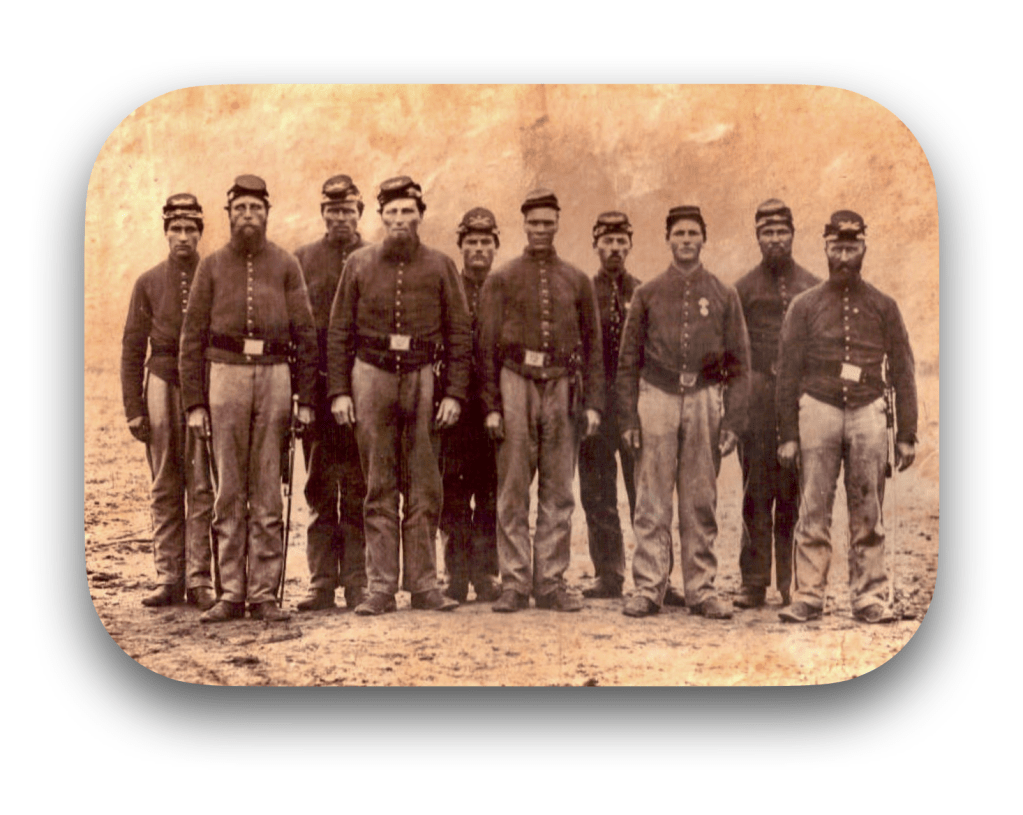
The boys of 3rd Maine Light Artillery in 1865 (Maine Memory)

Transcription

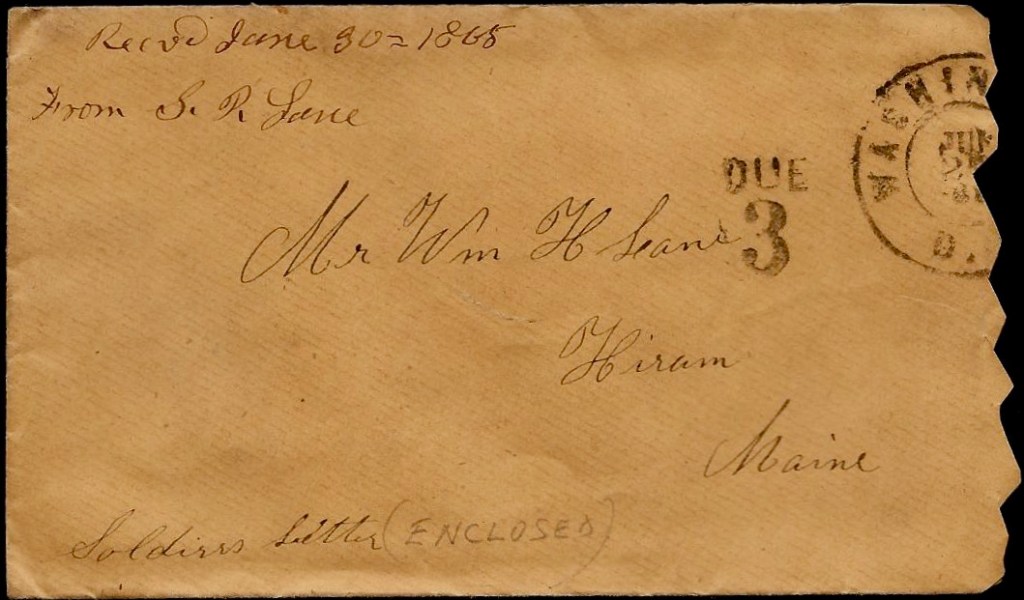
Addressed to Mr. Wm. H. Lane, Hiram, Maine (letter mismatched with envelope)

Near Petersburg, Virginia
July 20, 1864

Dear Parents,

As I received a letter from you and was glad to hear from you and to hear you was well but father, I am sorry to hear that you are not well. I am well today and I hope these few lines will find you the same.

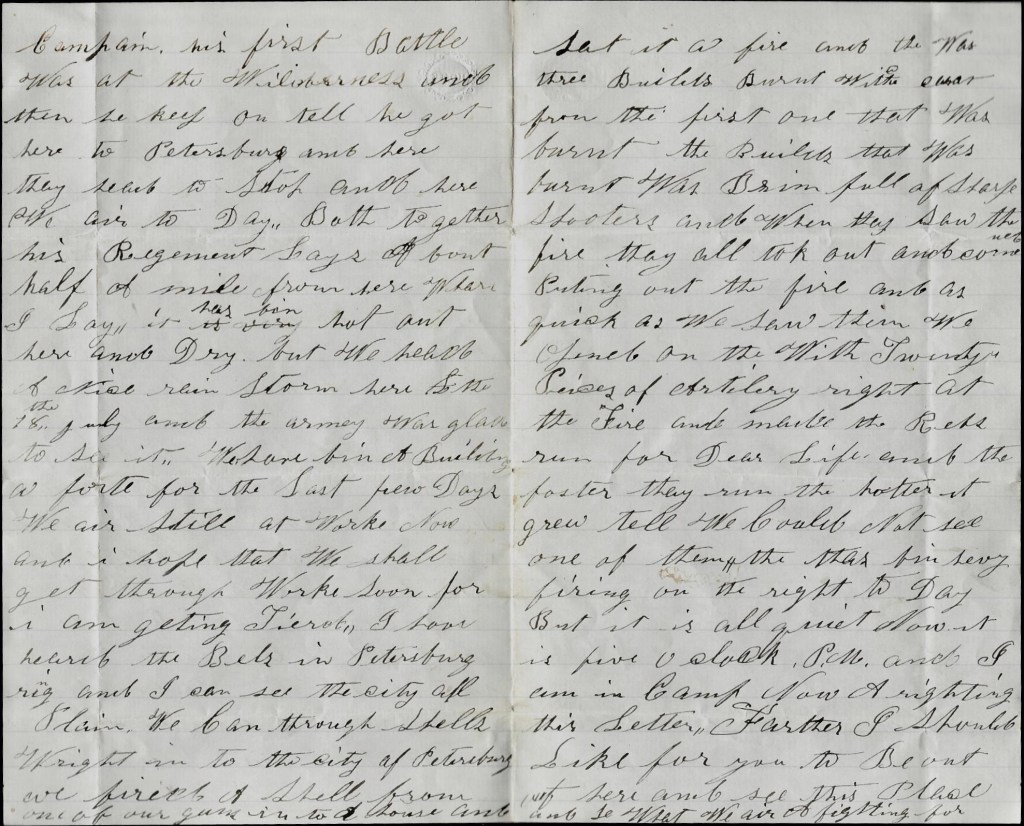
I saw Simeon yesterday and he as well then and he looked very well. But he said that he should like to be to home and see the folks. But he said that as long as the war [is going on and he is] so far away from home, he must be contented where he is. He has seen hard times since he left home. He has been in every battle since Grant’s [Overland] Campaign. His first battle was at the Wilderness and then he kept on till he got to Petersburg and here they had to stop and here we are today, both together. His regiment lays about half a mile from here where I lay,

It has been hot out here and dry but we had a nice rainstorm here the 18th of July and the army was glad to see it.

We have been a building a fort for the last few days. We are still at work now and I hope that we shall get through work soon for I am getting tired. I have heard the bells in Petersburg ring and I can see the city all plain. We can throw shells right into the city of Petersburg. we fired a shell from one of our guns into a house and set it on fire and there was three buildings burnt [that caught fire] from the first one that was burnt. The building that was burnt was brim full of sharpshooters and when they saw the fire, they all took out and commenced putting out the fire and as quick as we saw them, we opened on them with twenty pieces of artillery right at the fire and made the rebels run for dear life. And the faster they run, the hotter it grew till we could not see one of them. 1

There has been heavy firing on the right today but it all quiet now. It is five o’clock p.m. and I am in camp now a writing this letter. Father, I should like for you to be out here and see this place and see what we are a fighting for. Father, I received the money that you sent me and it come in a good time, you better believe.

I am in hopes that we shall get paid off soon for I want some money to buy something to eat. I do not get enough to eat out here and if we could only get paid off it would do us some good. We can et anything out here we want if we have money to pay for it.

I have no more news to write today. Write as soon as you get this. From your son, — Wm. N. Lane

Direct your letters to Mr. Wm. N. Lane, 9th Corps, 3rd Division, 3rd Maine Battery, Washington D. C.

Write soon as you get this letter. W. Nelson Lane


1 This shelling probably occurred on Saturday, July 16, 1864 as I journal entry written on that day by Charles Campbell, a civilian in Petersburg, reads: “The shelling today as usual. In afternoon heard the fire bells ringing twice, probably on account of houses set on fire by shells.” [See—Charles Campbell Journal, July 1864]

1865: James Chesman Littlefield to Jennie S. Russell

This letter was written by James Chesman (“Chester”) Littlefield (1845-1926), the son of Samuel Littlefield (1817-1901) and Louisa Watson (1806-1856) of Cambridge, Somerset county, Maine.

Chester enlisted at the age of 18 as a private in December 1861 in the 3rd Maine Light Artillery. On March 1863 he was transferred into Co. M, 1st Maine Heavy Artillery where he was serving at the time of his reenlistment as a veteran in January 1864. In February 1864 he was transferred back to the 3rd Maine Light Artillery where he served until his discharge on 1 September 1865.

We learn from Chester’s letter that he was assigned the duty of being one of four mule drivers in his battery. Typically each battery had 4 guns, each pulled by six horses or mules harnessed in tandem, the driver riding one of the mules nearest the limber and steering the animals with reigns and a whip. Horses, being less skittish and more manageable, were strongly preferred over mules but by this point in the war were more difficult to come by.

When the 3rd Maine Light Artillery was reorganized and sent to the field in the spring of 1864, they were attached to the 9th Army Corps and placed in line on the Petersburg battle front. They were one of the batteries heavily engaged in the Battle of the Crater in July. They were relocated to the defenses at City Point, Virginia, in late October and remained there until early May 1865 when they relocated to Washington D. C.

Chester wrote this letter to his cousin, Jennie S. Russell. He did not marry her after the war but possibly married another maternal cousin named Ada L. Watson (1855-1880) in August 1870.

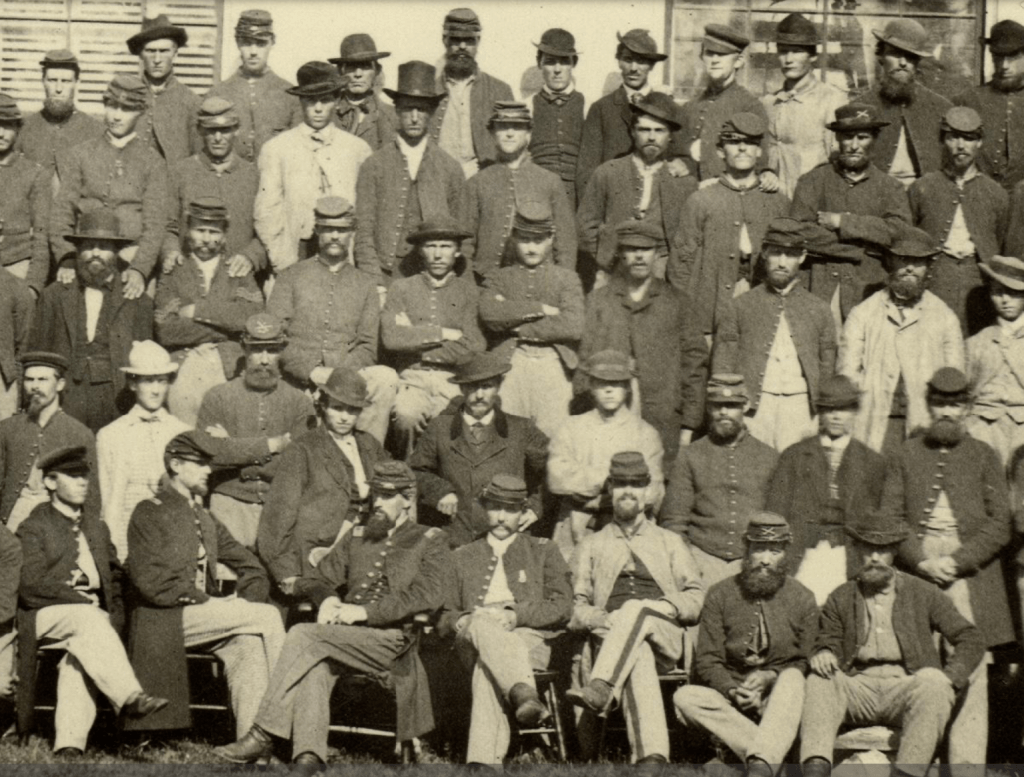
An unidentified Gun Crew from a Maine Light Artillery Regiment

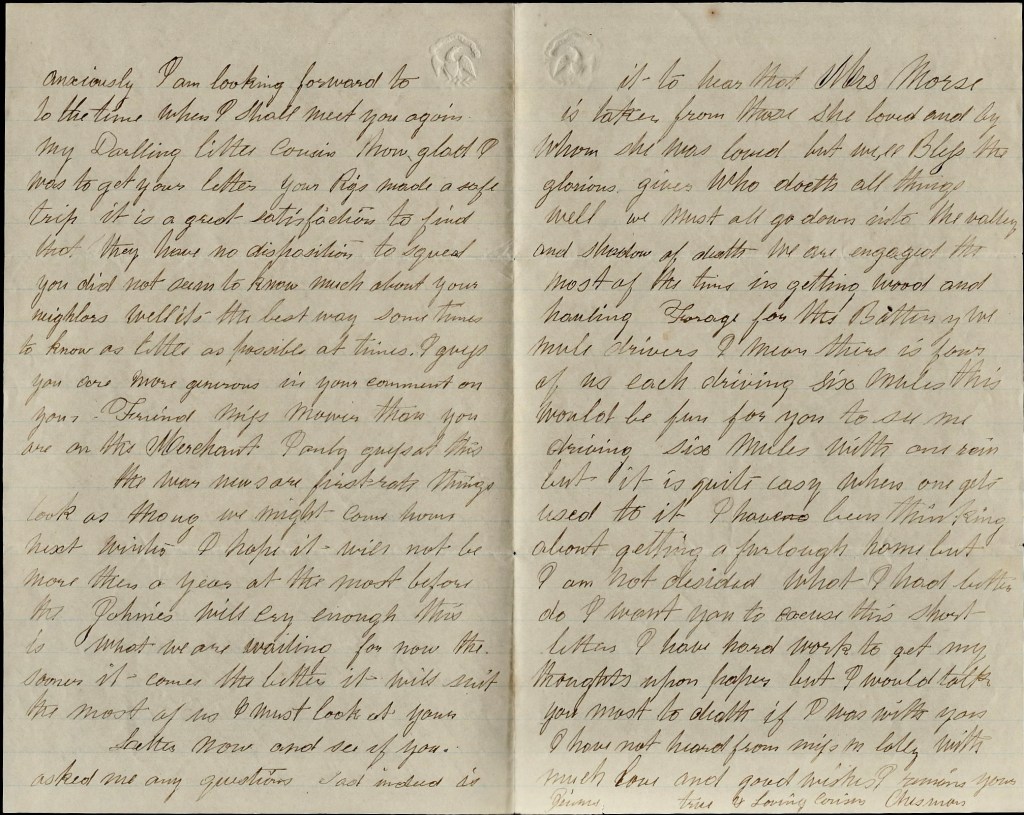
Transcription

Addressed to Miss Jennie S. Russell, Cambridge, Maine

Camp 3rd Maine Battery
In the Defenses of City Point, [Virginia]
February 28, 1865

My dear cousin,

I am glad to have the opportunity of writing to you in answer to your kind letter of the 19th. I was glad to hear that you was well when it left you as it found me. The weather is fine here now. It begins to look like spring here now. The birds begin to sing and the sun gets nearer to us so we feel it more sensibly. I wish you might run over here and see me one of these fine days. It would be such a treat for you to be rid of the snow and to think of seeing the birds hopping about in the branches in February. Wouldn’t it be a treat for you, Jeannie? and what a treat for me to have you by my side once in awhile when the weather is fine.

Oh Jennie, how anxiously I am looking forward to the time when I shall meet you again. My darling little cousin, how glad I was to get your letter. Your pigs made a safe trip. It is a great satisfaction to find that they have no disposition to squeal. You did not seem to know much about your neighbors. Well, the best way some times [is] to know as little as possible at times. I guess you are more generous in your comment on your friend Miss Mower that you are on the Merchant. I only guess at this.

“The war news are first rate. Things look as though we might come home next winter. I hope it will not be more than a year at the most before the Johnnies will cry enough. This is what we are waiting for now. The sooner it comes, the better it will suit the most of us.”

— Chesman Littlefield, 3rd Maine Light Artillery, 28 Feb. 1865

The war news are first rate. Things look as though we might come home next winter. I hope it will not be more than a year at the most before the Johnnies will cry enough. This is what we are waiting for now. The sooner it comes, the better it will suit the most of us.

I must look at your letter now and see if you asked me any questions. Sad indeed is it to hear that Mrs. Morse is taken from those she loved and by whom she was loved but we’ll bless the glorious giver who doeth all things well. We must all go down into the valley and shadow of death.

We are engaged the most of the time in getting wood and hauling forage for the Battery—we mule drives, I mean. There is four of us each driving six mules. This would be fun for you to see me driving six mules with one rein but it is quite easy when one gets used to it.

I have been thinking about getting a furlough home but I am not decided what I had better do, I want you to excuse this short letter. I have hard work to get my thoughts upon paper but I would talk you most to death if I was with you. I have not heard from Miss M. Lolly.

With much love and good wishes, I remain your true and loving cousin, — Chesman

Shortness of time

How swiftly times passes away. It seems but a day since it was winter. But spring and summer will have passed. Then comes winter again with its drifting snows covering the fields and trees with its white robes. Then another year will have rolled away. When I think of this, I ask myself the question, have I improved well my time for the last year? Have I tried to gain any good….[self introspective musings in pencil for a half page]