
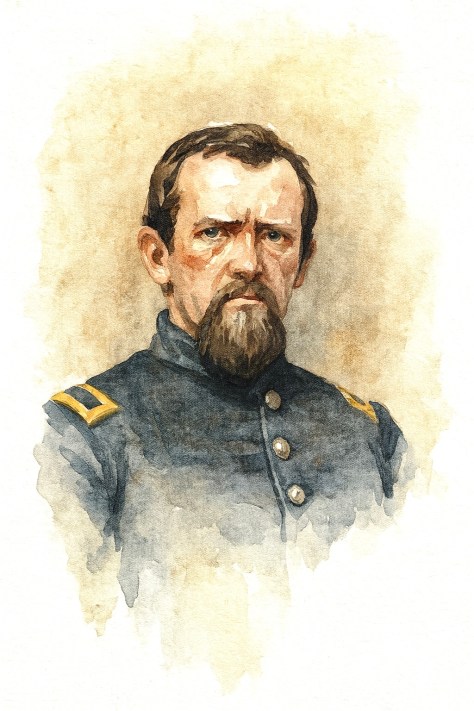
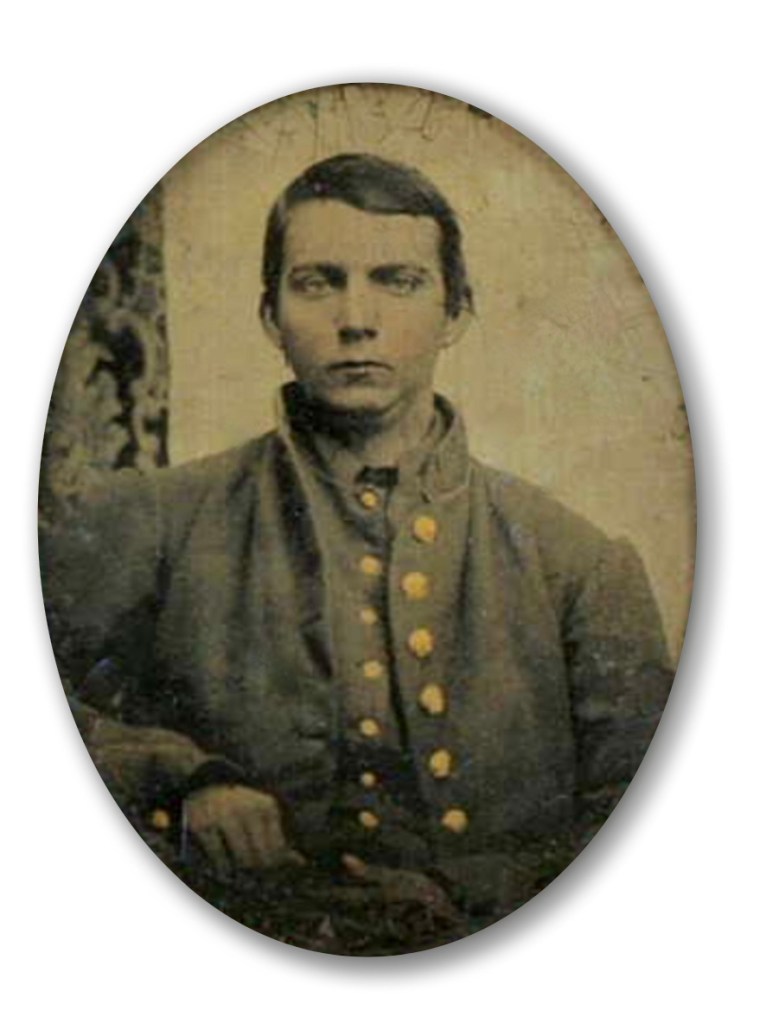
The following letter was written by David M. Moore (1833-1907), the 29 year-old son of Samuel Moore (1802-1863) and Jane Mariah McGaughey (1810-1887) of LaSalle county, Illinois.
David enlisted on 25 September 1861 at Waltham, Illinois, and was mustered into Co. A, 64th Illinois Infantry—“Yate’s Sharpshooters”—as a sergeant in November 1861. He was later commissioned a 2nd Lieutenant of the same company and survived the war.
David’s letter was addressed to one of his sisters. It contains content describing the actions of the 64th Illinois at the Battle of New Madrid, Missouri, and Island Number 10. Specifically, on 12 March 1862, four companies of the regiment including Co. A, conducted a night attack on the Confederate right, driving back their pickets and drawing attention away from other units. They then were tasked with supporting the large siege guns below New Madrid as Union forces captured the town.
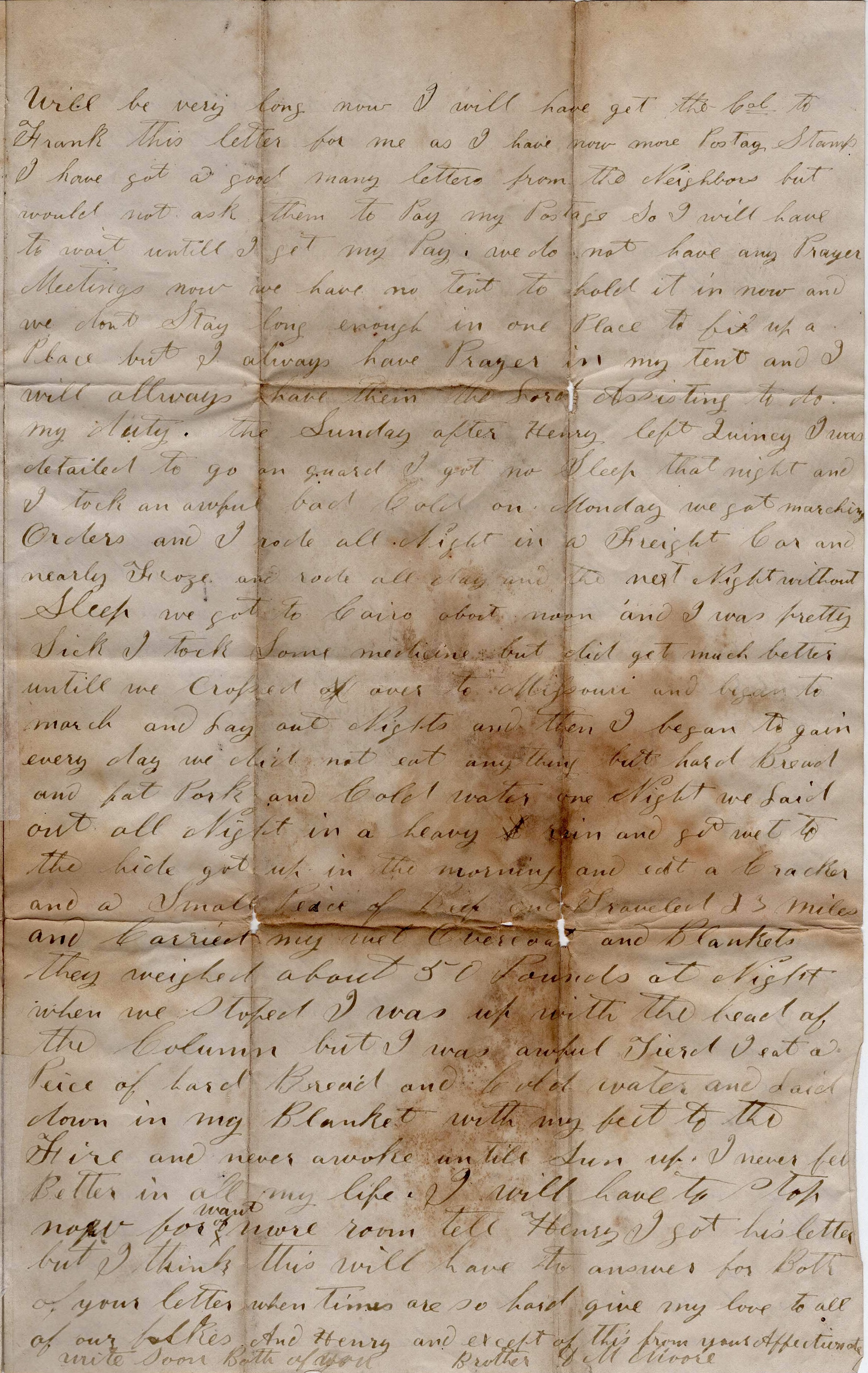
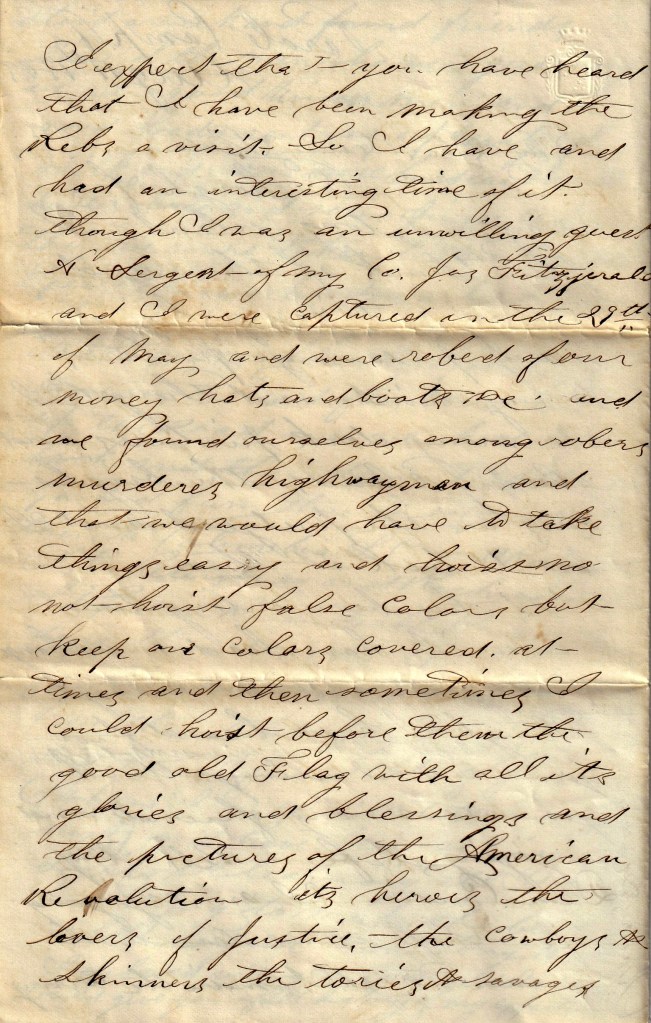
T R A N S C R I P T I O N
Camp near new Madrid, Missouri
Thursday, March 27, 1862
My dear Sister,
I received your welcome letter this forenoon. I was laying in my tent reading over some old letters I had and it surprised me some when I broke it open and found it was from you. I believe this is the first letter I ever received from you. And this will make the first one I ever wrote to you. And I will try to write to you as long a one as I can to you but I won’t promise to fill up this whole sheet, but will do the best I can.
In the first place. I thank the Lord I am well and have been enjoying good health ever since I left Cairo. I feel as well now as ever I have since I went into the service. I suppose you would like to know how I like the life of a soldier by this time. Well, I don’t like it very well nor never have since I left home, but I am becoming kind of reconciled to it now. I like active service a great deal better than I did laying around camp. There is not so much rowdiness among the boys. They lay down and go to sleep when night comes.
We are now down in the land of Secessia where nearly every man is a Rebel against Uncle Sam. In fact, there are scarcely anybody here but women and Negroes. There is a great many large plantation houses that are entirely deserted. They have left nearly all their furniture in their houses. Their horses and cattle and mules and hogs are all roaming over the country and starving to death. I never seen such destruction in all my life as this war makes. The country was ravaged by the rebel army and what is left, the union army take themselves. The country will not get [over] it for twenty years to come.
You will see that I made a mistake in commencing this letter on the wrong page but I guess you can make it out. You say you miss Poor Oliver at home. Well, I expect you do, for I know I do, but his troubles are all over now. His spirit has gone home to rest as he used to tell Henry and me when he was sick. He wanted to go home it was all he talked about. Well, we have all got the same narrow road to travel .and if we are only faithful to grace already given, we have the promise that we shall have a home in heaven that is a glorious and blessed promise. And it matters little whether we die amid the roar and din of a battlefield or at a calm and peaceful home in the land of peace. So as we live prepared to die, I feel that I love my savior. But I do not love him half as much as I want to. I feel that I am a very unprofitable servant. But I am still as determined as ever to die striving to do His blessed will. He has preserved me thus far through many privations and from the dangers of the battlefield.
On the night of the 12th of this month, at midnight, when we marched out to attack the enemy and draw his attention while the men erected a battery close to the town, I did not know whether I should ever see the light of another day. But blessed be His name. He delivered me out of their hands and cheered me through the dark and dangerous wood [through] which we advanced. And also on the 13th—the day of the battle—when the missiles of destruction were flying in every direction. Every day His mercies are showed forth towards me. Oh pray for me that I may live humble and grateful in His sight everyday. But then I know you will and always do.
You say you miss me at the old school house. Oh, I miss the old schoolhouse, and all of you, and hope and pray that the time may soon come when we can all meet in the old schoolhouse. And that we may all be enabled to praise God more perfectly than we have ever done before.
I am sorry to hear that Henry’s health is so poor since he got home from Quincy and hope he will not expose himself until he gets better. I wish you would try to persuade mother not to worry herself so about me. She has an idea that things are a good deal worse than what they really are and that I am suffering from all sorts of privations and dangers and that this is a sickly country. Where we are now quartered is a nice and healthy place on a sand ridge. There is no swamps near us.
We are now quartered in a large apple and peach orchard. We are put here to protect two pieces of heavy artillery planted here to keep the Rebels from retreating from Island #10 where our fleet of gun and mortar boats are now fighting them. They are in a terrible bad fix. They cannot get up or down the river. I hope they will soon give up the war and return to their allegiance once more and let us return to our homes in peace. I am sure I have seen enough of war to satisfy me on all points.
[Cpl.] Arthur Ames joined us last night. He has got well again and is able to do duty once more. [Capt.] Luther Ames is well and Tommy and Sim[eon] Call are both well. We have been put on our allowance since we have been here but we have plenty to eat now and will after this. It was in account of their taking all the teams to haul the heavy artillery from Cairo to this place. But now all the teams are busy hauling provisions. There is a great army here—between forty and fifty thousand men. But it could be increased to a hundred thousand in five days. The next point they are making for Fort Randolph as soon as the Island is taken and I don’t think that will be very long now.
I will have get the Colonel to frank this letter for me as I have no more postage stamps. I have got a good many letters from the neighbors but would not ask them to pay my postage so I will have to wait until I get my pay. We do not have any prayer meetings now. We have no tent to hold it in now and we don’t stay long enough in one place to fix up a place. But I always have prayer in my tent and I will always have them, the Lord assisting to do my duty. The Sunday after Henry left Quincy, I was detailed to go on guard. I got no sleep that night and I took an awful bad cold on Monday.
We got marching orders and I rode all night in a freight car and nearly froze and rode all day and the next night without sleep. We got to Cairo about noon and I was pretty sick. I took some medicine but did [not] get much better until we crossed over to Missouri and began to march and day and nights and then I began to gain everyday. We did not eat anything but hard bread and fat pork and cold water. One night we laid out all night in a heavy rain and got wet to the hide. Got up in the morning and ate a cracker and a small piece of beef and traveled 23 miles and carried my wet overcoat and blankets. They weighed about 50 pounds. At night when we stopped, I was up with the head of the column, but I was awful tired. I ate a piece of hard bread and cold water and laid down in my blanket with my feet to the fire and never awoke until sun up. I never felt better in all my life.
I will have to stop now for want of more room. Tell Henry I got his letter but I think this will have to answer for both of your letters when times are so hard. Give my love to all of our folks and Henry and accept of this from your affectionate brother, D. M. Moore.
Write soon both of you.





 Spared & Shared 23