

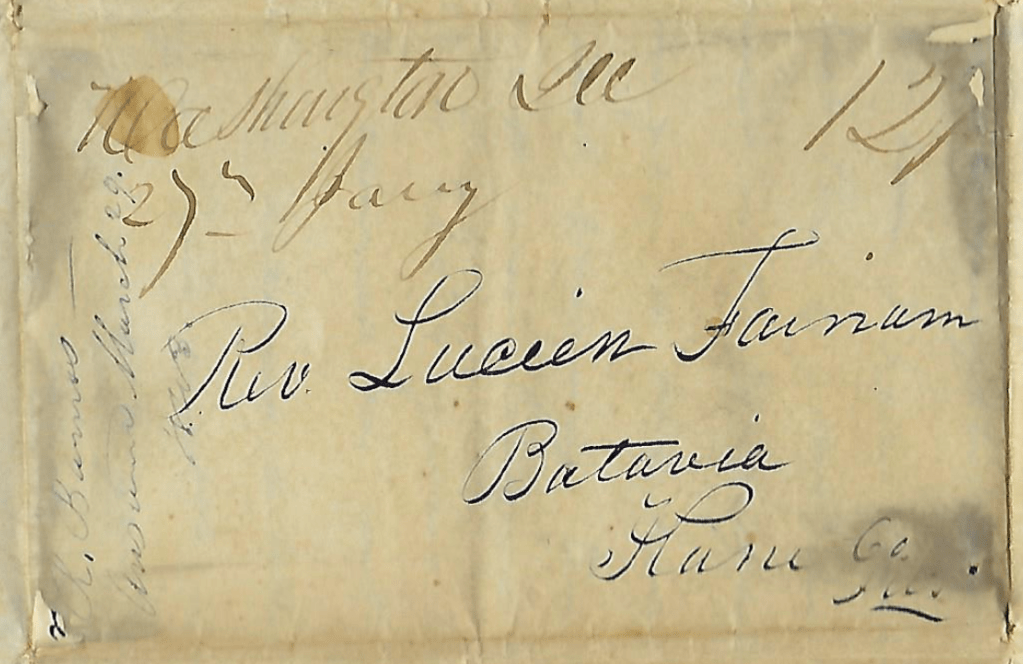
These letters were written by Elizabeth (“Lizzie”) Willard Marsh (1829-1882), the daughter of Henry Marsh, Jr. (1797-1852) and Sarah Whitney (1796-1883). Lizzie’s father was an 1815 graduate of Williams College and lived in Dalton, Massachusetts from 1821 to 1840 where he was a lawyer, a merchant, a farmer and wool grower, and a wool dealer and manufacturer. In 1840 he moved with his family to Pittsfield, Massachusetts, where he lost his savings with the failure of the Ashuelot Manufacturing Company. In 1843 he went to Racine, Wisconsin, in 1846 to Sandusky City, Ohio, and in 1850 to St. Louis, Missouri, engaging in the mercantile and produce business. He died of cholera in June 1852 but had managed to put three sons through Williams College and afforded his daughters educational advantages as well.
Lizzie “was educated at Maplewood, Pittsfield, Mt. Holyoke and Bradford Seminaries, and spent her life in teaching. She had a school in St. Louis and at Batavia, Illinois, and afterwards taught in private families in Pittsfield, Mass., Batavia, N. Y., and Hudson, Wisconsin. At the latter place on Lake St. Croix she made her home with her life-long friend, Susan Ellen Lockwood (1830-1915), the wife Charles Wendell Porter and the daughter of Judge [Samuel Drake] Lockwood of Batavia, Illinois. She died at Hudson, Wisconsin, on 23 April 1882.”
From these letters we learn that Lizzie and her younger sister Clarissa (“Clara”) Dwight Marsh (1834-1899) were teachers at the newly opened Batavia Institute—a private academy that was chartered on 12 February 1853 by 13 men, including Rev. Stephen Peet, the Congregational minister, Elijah Shumway Town, Joel McKee, John Van Nortwick, Dennison K. Town, and Isaac G. Wilson of Batavia, Illinois The building’s central part, which still stands in Batavia at 333 South Jefferson Street, at Union Avenue, was constructed in 1853–1854 of locally quarried limestone at a cost of $20,000. The architect Elijah Shumway Town designed the building in a Greek Revival style.
Clara attended the Cooper Female Academy in Dayton, Ohio, in the early 1850s. She married Samuel Watkins Eager, Jr. of St. Louis, Missouri, in May 1857. Three months prior to her marriage, Clara received the following Valentine from Samuel:
I am dead in love, I’ll flee with thee
By night or day, by land or sea
Then come along, but just to prove the matter
Tie a white ribbon, to your window shutter
Which shall by me be that fair warning
As I pass by, tomorrow morning
In haste, your Valentine.

Letter 1
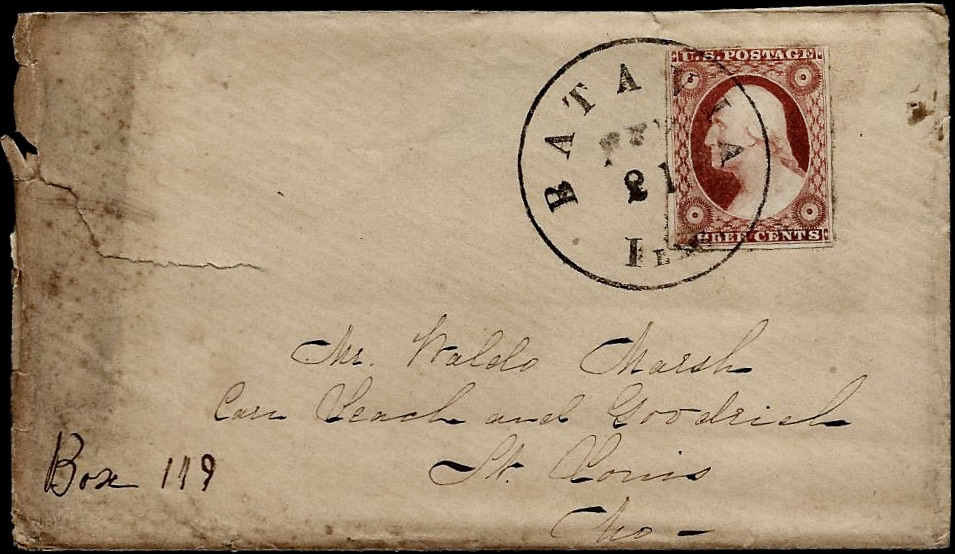
Batavia [Illinois]
Wednesday evening, September 19, 1855
My very dear mother,
This is the first time I have seated myself in “peace and quietness” to write to you. I wrote you a few words on the cars and again a half a sheet before school in the morning when I was expecting every moment to hear the bell ring for school. We are sitting in our room but we both have shawls on as tis very chilly. I have on my merino dress and my thick hose.
We had a tremendous storm yesterday and last night which I think must be the equinoctial. I got very wet coming home from school but put on dry clothes immediately and it did me no harm. Clara has not very much to do as yet. Today she only gave our lessons so she has been quite a lady of leisure. I have to go up to school (that is start) about half past eight—come home at twelve—go back at one and get home again about half past four.
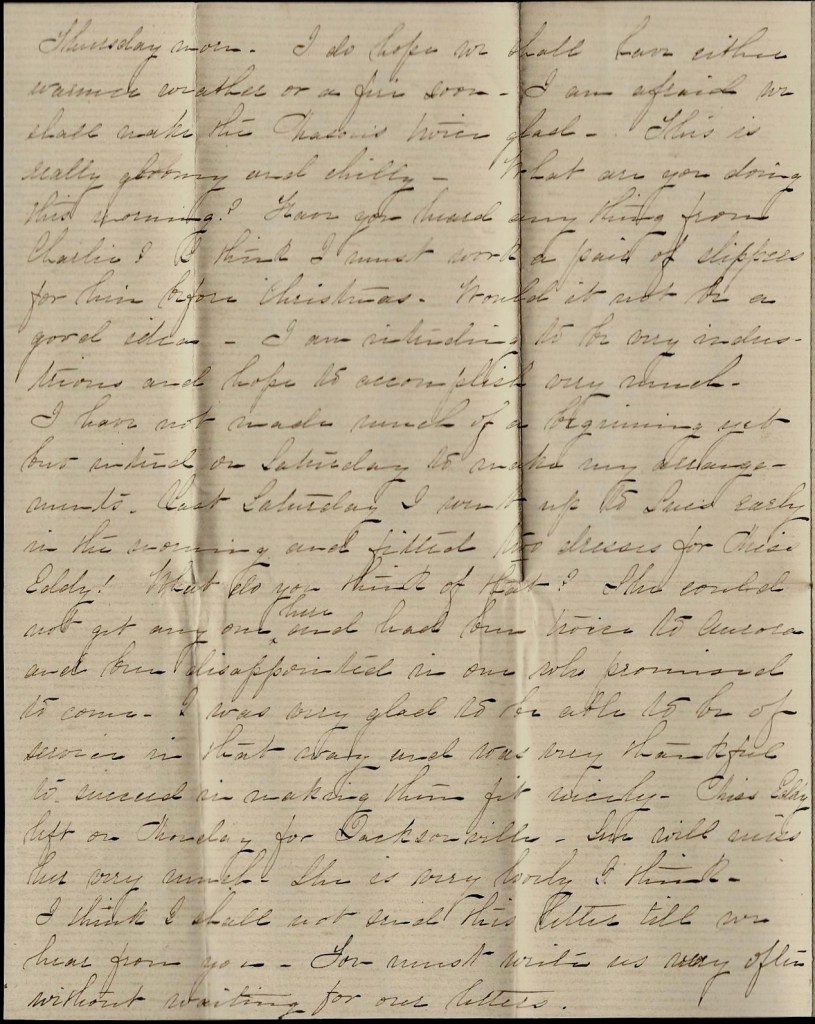
Thursday morn. I do hope we shall have either warmer weather or a fire soon. I am afraid we shall make the Mason’s twice glash [?] This is really gloomy and chilly. What are you doing this morning? Have you heard anything from Charlie? I think I must work a pair of slippers for him before Christmas. Would it not be a good idea? I am intending to be very industrious and hope to accomplish very much. I have not made much of a beginning yet but intend on Saturday to make my arrangements.
Last Saturday I went up to Sue’s early in the morning and fitted two dresses for Miss Eddy! What do you think of that? She could not get anyone here and had been twice to Aurora and been disappointed in one who promised to come. I was very glad to be able to be of service in that way and was very thankful to succeed in making them fit nicely. Miss Eddy left on Monday for Jacksonville. We will miss her very much. She is very lovely, I think.
I think I shall not send this letter till we hear from you. You must write us very often without waiting for our letters.
Twice “we teachers” have had to stay to arrange recitations and rules &c. and I did not get home till after tea. We have breakfast at seven, dinner at half past twelve, and tea at six. I get up about six. Is that early enough?

I will give you a little plan of our room. The house fronts the north. From the east window we can see the cars pass on the other side of the river which runs nearly south. 1 is the washstand, 2 the table, 3 and 4 trunks, 5 the register which does not warm our room as yet, 6 our couch whereon we court “tired nature’s sweet restorer, balmy sleep.” Before you visit us, we will have a rocking chair for your benefit. The Institute is directly west of us about half a square’s distance. My pet Dick hangs by this east window on the side next the table and over the table my little colored engraving. The table is pretty much covered with books. We want a stand for our work. A bureau would be very comfortable but I think we can get along very well without.
Miss Mason continues as charming as ever. She has just been up here to tell us we must not stay in the cold but come down to their room. There is a thumping big apple on the window [sill] Miss Alice gave me. Miss Sadie is very pretty. She has such an animated face—very bright eyes and curls that are particularly pretty. I hope you will see her some day. We are already beginning to say what shall we do when they go away. Clara went up to Judy Lockwood’s after school. They are sick there still. Anna and the baby are quite sick. The Judge better. Sue says there is some prospect of their getting a girl tomorrow. I do hope they may.
I have not seen any of the Batavia ladies yet. I don’t know as they ever make any calls. It will save us the trouble of returning them if they do not. How I wish, dear mother, I could come in and sit with you this eve. What have you been doing all this time? How often have you seen Henry and Robert? If they don’t come to see you often, I shall not own them. Letters are very apt to be delayed at Chicago. You will, I hope, get ours more regularly than we do yours. Is the box fairly off yet? I hope it will go safely.
How is Waldo? Did Mrs. Topping finish my tidy? Do you see her often? Love to all my friends. Remember me to Mr. O. P. Best love ever from your own, — Lizzie



Letter 2

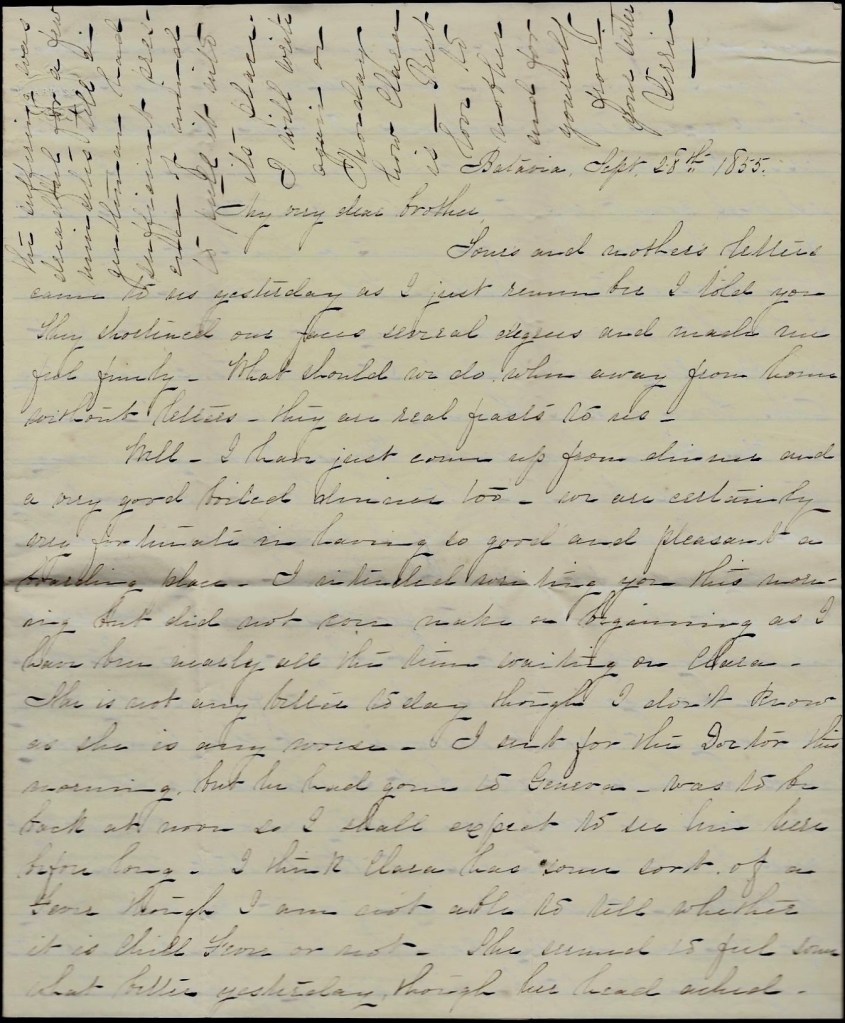
Batavia [Illinois]
September 28, 1855
My very dear brother [Waldo],
Yours and mother’s letters came to us yesterday as I just remember I told you they shortened our faces several degrees and made me feel finely. What should we do when away from home without letters—they are real feasts to us.
Well, I have just come up from dinner and a very good boiled dinner too. We are certainly very fortunate in having so good and pleasant a boarding place. I intended writing you this morning but did not ever make a beginning as I have been nearly all this time waiting on Clara. She is not any better today though I don’t know as she is any worse. I sent for the doctor this morning but he had gone to Geneva—was to be back at noon so I shall expect to see him here before long. I think Clara has some sort of a fever though I am not able to tell whether it is chill fever or not. She seemed to feel somewhat better yesterday though her head ached and went up to school and gave our Music lesson. When I came home from school, she had gone to bed again and seemed to have a little fever. Still she did not feel any worse.
I dressed and went up to see her a little while and found her on the sofa with a chill or rather the fever after a chill. When I came home, I thought some of sending for a doctor but we finally concluded to wait till morning. Mrs. Town and I have given her medicine and as Mrs. Town has used Homeopathy a long time and been in the habit of administering this medicine herself. I think we have done pretty well for her. I thought early this morning that she was better for she seemed to sleep so nicely all night but about nine the fever came on her again and she has gelt pretty badly all day. I can’t discover that she had really had a chill at all but I remember when I was sick the chills were hardly discoverable at first and I am inclined to think that Clara has chill fever. I do hope she won’t be sick long for she can hardly spare the time and ’tis quite unfortunate to be sick away from home.
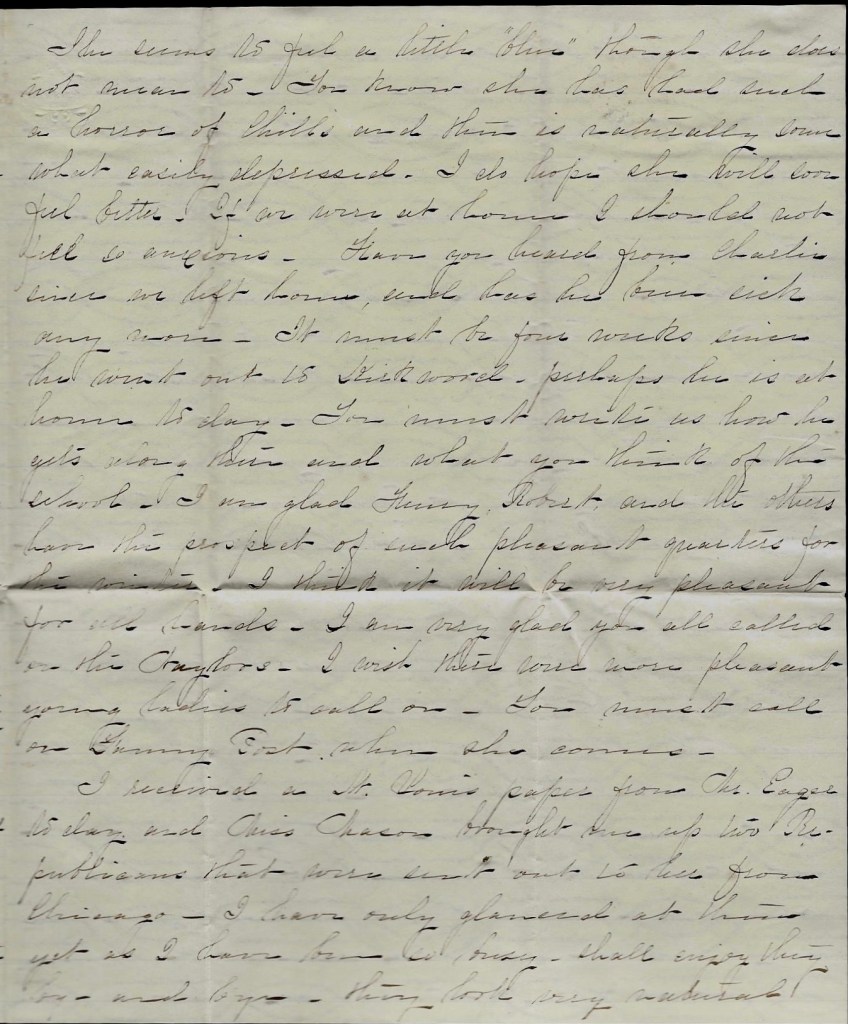
She seems to feel a little “blue” though she does not mean to. You know she has had such a horror of chills and thus in naturally somewhat easily depressed. I do hope she will soon feel better. If we were at home, I should not feel so anxious.
Have you heard from Charlie since we left home and has he been sick anymore? It must be four weeks since he went out to Kirkwood. Perhaps he is at home today. You must write us how he gets along there and what you think of the school. I am glad Henry, Robert, and the others have the prospect of such pleasant quarters for the winter. I think it will be very pleasant for all hands. I am very glad you called on the Naylors. I wish there were more pleasant ladies to call on. You must call on Fanny Post when she comes.
I received a St. Louis paper from Mr. Eager today and Miss Mason brought me up two Republicans that were sent to her from Chicago. I have only glanced at them yet as I have been so busy. Shall enjoy them by and by. They look very natural.
The latest Chicago papers say that Sebastopol is taken. Shall I believe it or not? Have you written to Dwight lately? If you have not, will you not write hm a good long letter while you are having so little to do? Tell mother my canary does not sing though he chirps a great deal.
I hope mother will not get lonely anymore than she can help. She must go out every day and see her friends. I am glad Cousin Mary is coming home so soon. How are they all at Mrs. Allen’s now? How comes on the railroad? Has Mr. Goodrich given up going East this fall? Have you called on Mrs. Field ever? I think you ought as you have been invited there two or three times. If you call, give her my love and tell her there is a baby here just as old as hers but not one half as pretty. That seems quite like flattering, does it not, but it was not intended as such.
I’ve had a letter from Miss Eddy the other day. She gave quite an account of putting her jaw out of joint gaping. She said the suffering was dreadful for a few minutes till a gentleman had sufficient presence of mind to pull it into its place. I will write again on Monday how Clara is. Best love to mother and for yourself. From your sister, — Lizzie


Letter 3
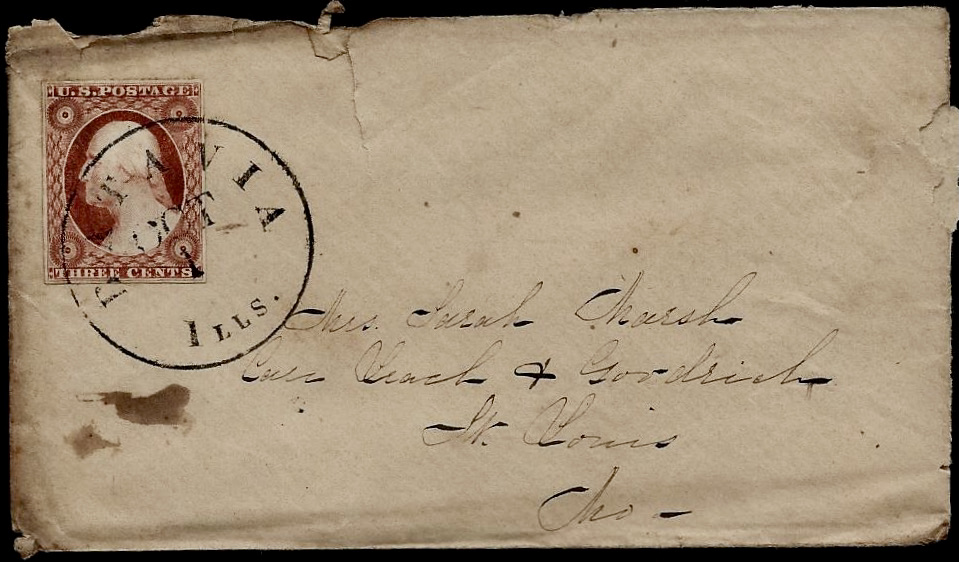
Batavia [Illinois]
Monday morn., October 1, 1855
My dear mother,
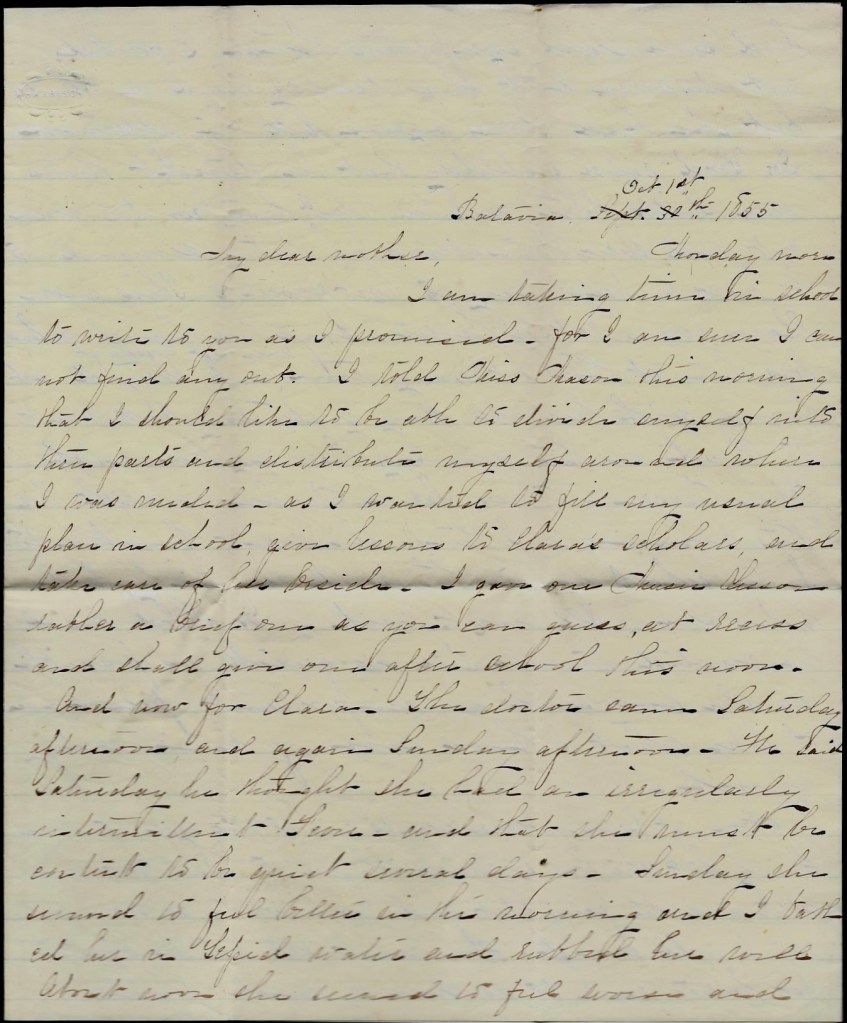
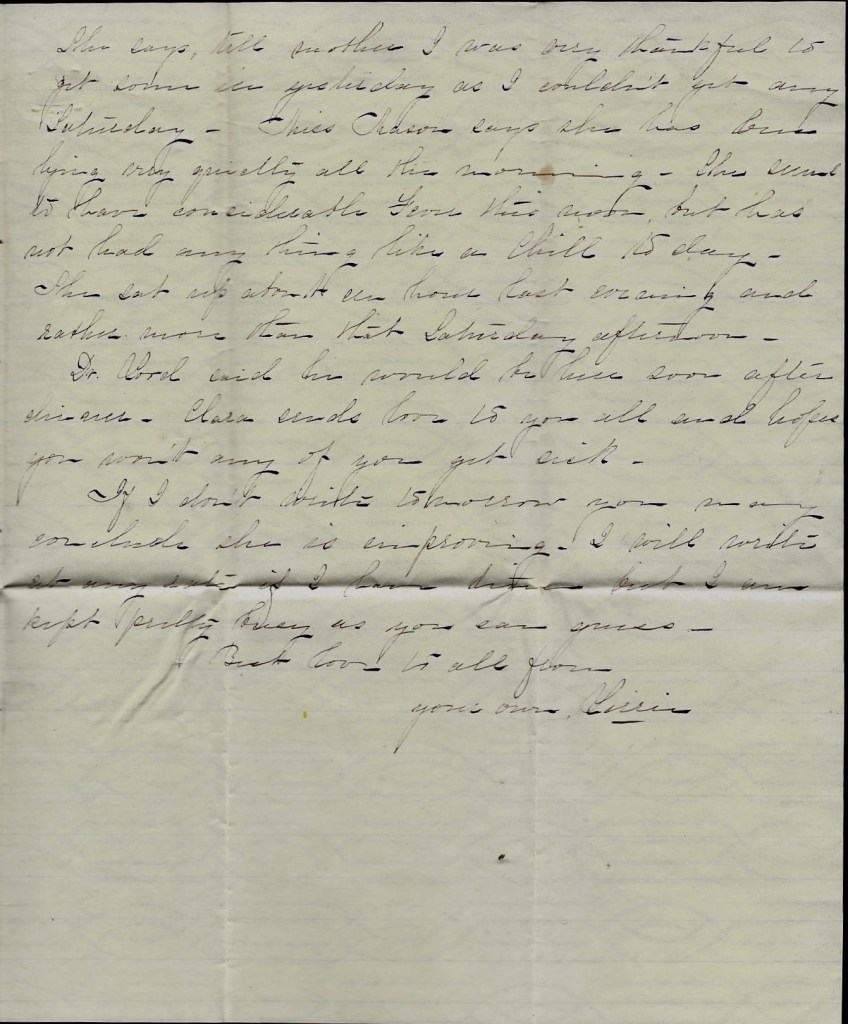
I am taking time in school to write to you as promised for I am sure I cannot finish any out. I told Miss Mason this morning that I should like to be able to divide myself into three parts and distribute myself around where I was needed as I wanted to fill my usual place in school, give lessons to Clara’s scholars, and take care of her besides. I gave one Music lesson—rather a brief one as you can guess—at recess and shall give one after school this noon.
And now for Clara. The doctor came Saturday afternoon and again Sunday afternoon. He said Saturday he thought she had an irregularly intermittent fever and that she must be content to be quiet several days. Sunday she seemed to feel better in the morning and I bathed her in tepid water and rubbed her well. About noon she seemed to feel worse and had some chill symptoms though I could not discover that she really had a chill but she had fever again all the afternoon. Dr. Lord said yesterday that he thought there were chills there and he hoped they would come out and shew themselves as there seemed to be now a tendency to low fever. This morn Clara seems rather better. Says her head aches less than it has at any time since last Tuesday.
I stayed at home with her all day yesterday but went to church in the evening leaving her with Alice Mason. Miss Sarah Mason is with her this morning. I think she won’t be able to be in school again this week certainly but hope she will next week. Dr. Lord said he wanted to cure her as quick as possible as she was such an important personage. I like what I have seen of him very much.
Noon. At home. Clara wants me to tell you to tell Henry that she was so much obliged to him for his letter and the pamphlet and will write as soon as she is well enough. You must all write often for letters seem to do Clara so much good. She says tell mother I was very thankful to get some ice yesterday as I couldn’t get any Saturday. Miss Mason says she has been lying very quietly all this morning. She seemed to have considerable fever this noon but has not had anything like a chill today. She sat up about an hour last evening ad rather more than that Saturday afternoon.
Dr. Lord said he would be here soon after dinner. Clara sends love to you all and hopes you won’t any of you get sick.
If I don’t write tomorrow you may conclude she is improving. I will write at any rate if I have time but I am kept pretty busy as you can guess. Best love to all from your own, — Lizzie

Letter 4
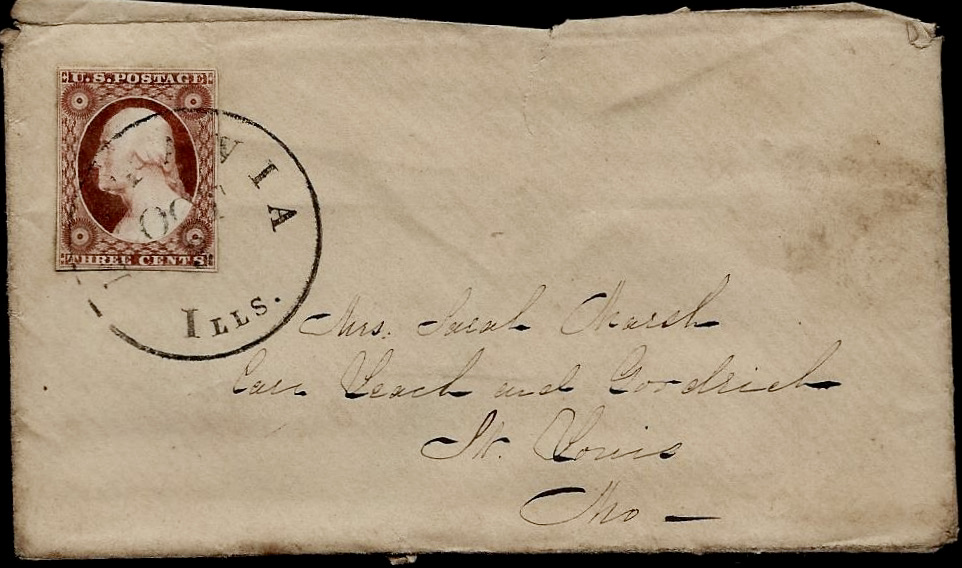
Batavia [Illinois]
October 3, 1855
My dear mother,
I am writing once more in school as I can’t find any other time very well. I wish I could get a letter from you this noon but I shall not begin to expect one till tomorrow and shall not be very much disappointed if I do not get one till Friday, I think Clara is better today than yesterday….She sits up every morning long enough for me to make the bed…I give her a bath and a good rubbing as often as she feels inclined ad have taken a great deal of pains to keep the air in the room pure and not too warm.
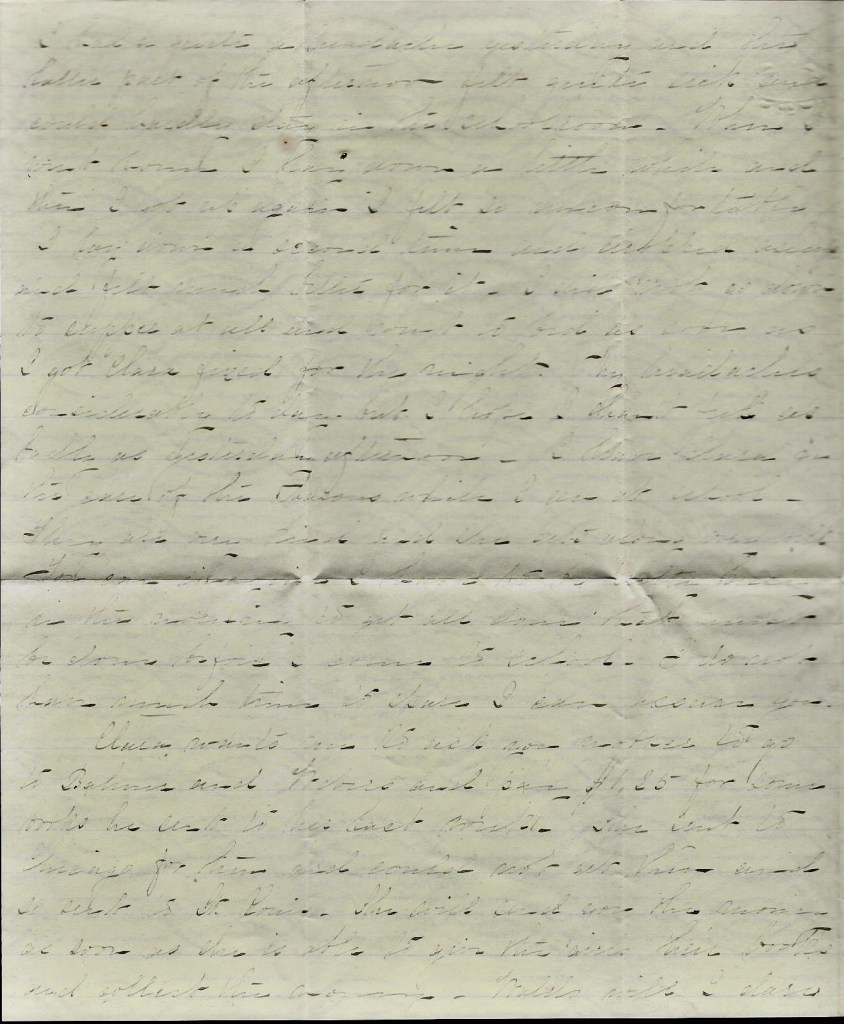
I had quite a headache yesterday and the latter part of the afternoon felt quite sick and could hardly stay in the schoolroom. When i went home, I lay down a little while and then I got up again. I felt so uncomfortable I lay down a second time and dropped asleep and felt much better for it. I did not go down to supper at all and went to bed as soon as I got Clara fixed for the night. My head aches considerably today but I hope I shan’t feel as badly as yesterday afternoon. I leave Clara in the care of the Masons while I am at school. They are very kind and she gets along very well…
Clara wants me to ask you, mother, to go to Balmes [?] and Webers and pay $1.25 for some books he sent to her last winter. She sent to Chicago for them and could not get them and so sent to St. Louis. She will send you the money as son as she is able to give the girls their books and collect the money. Waldo will, I dare say, give you this amount…
At home. Noon. The Dr. had been here when I came home. He told Clara he thought she was getting along but she must be very careful. She is sitting up now for the first time in the day since last Friday. It really seems right pleasant to see her up. One of the girls brought her a beautiful bouquet this morning. I brought it down to Clara at recess but after admiring it a little, she sent it out of the room. She said the [ ] was so fragrant. So Miss Alice is enjoying it for us both. Miss Sarah Mason went to Chicago last night. Will come back again tonight. She is going to get a [ ] and make over her bonnet and so I sent ffor [ ] for Clara and I and intend bringing our [ ].
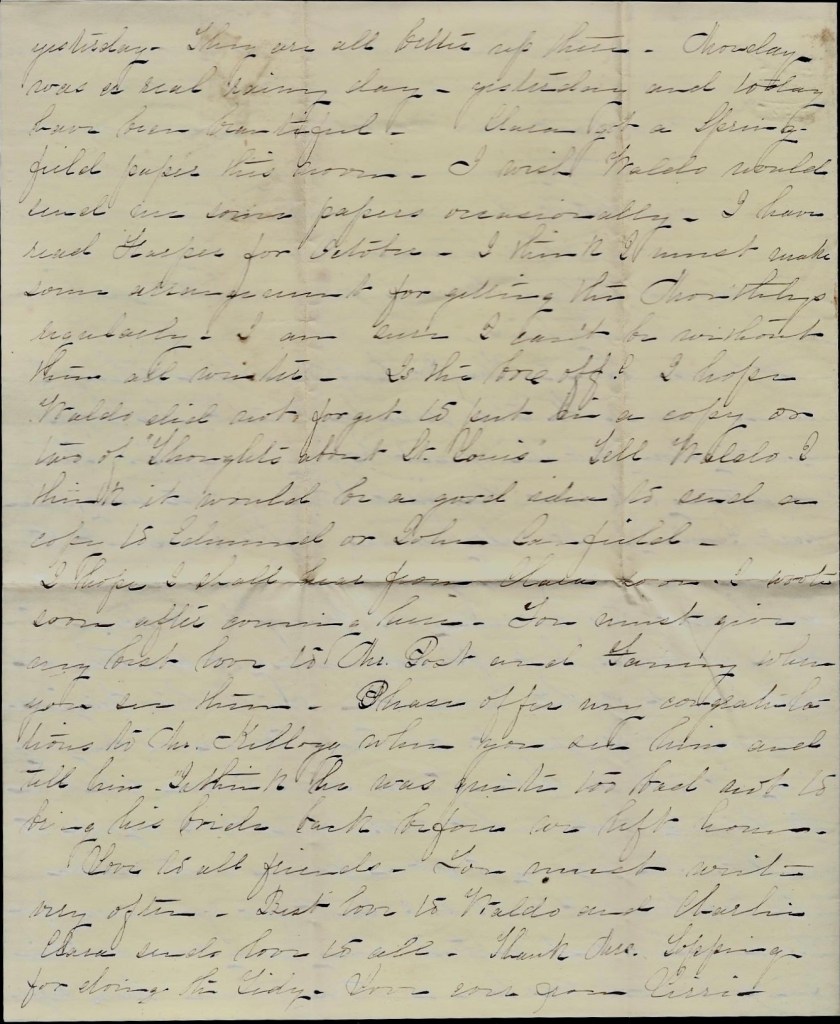
Sue Lockwood was here a little while day before yesterday. They are all better up there. Monday was a real rainy day. Yesterday and today have been beautiful. Clara got a Springfield paper this noon. I wish Waldo would send me some papers occasionally. I have read Harper’s for October. I think I must make some arrangements for getting the monthlies regularly. I am sure I can’t be without them all winter…
Love to all friends. You must write very often. Best love to Waldo and Charlie. Clara sends love to all. Thank Mrs. Topping for doing my tidy. Love ever, from Lizzie


Letter 5
Batavia [Illinois]
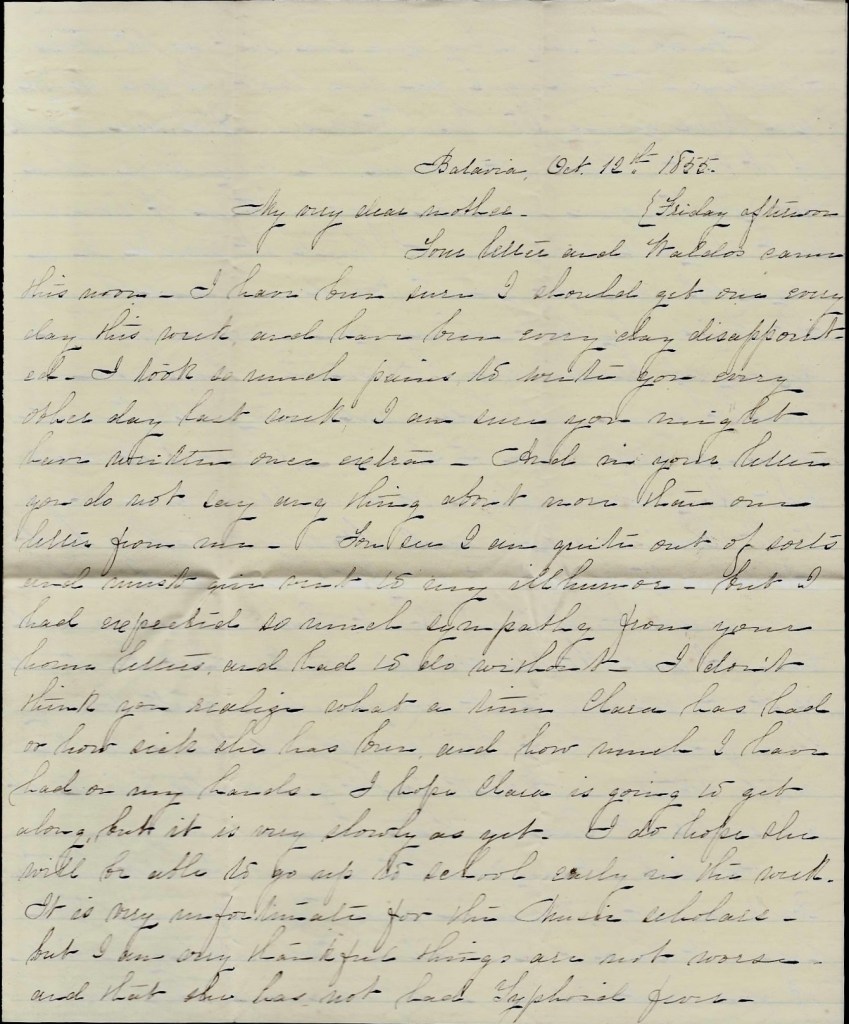
Friday afternoon, October 12th 1855
My very dear mother,
Your letter and Waldo’s came this noon. I have been sure I should get one every day this week and have been everyday disappointed. I took so much pains to write you every other day last week. I am sure you might have written once extra, And in your letters you do not say anything about more than one letter from me.
You see I am quite out of sorts and must give vent to any ill humor, but I had expected so much sympathy from your home letters and had to so without. I don’t think you realize what a time Clara has had or how sick she has been and how much I have had on my hands. I hope Clara is going to get along, but it is very slowly as yet. I do hope she will be able to go up to school early in the week. It is very unfortunate for the Music scholars but I am very thankful things are not worse and that she has not had typhoid fever.
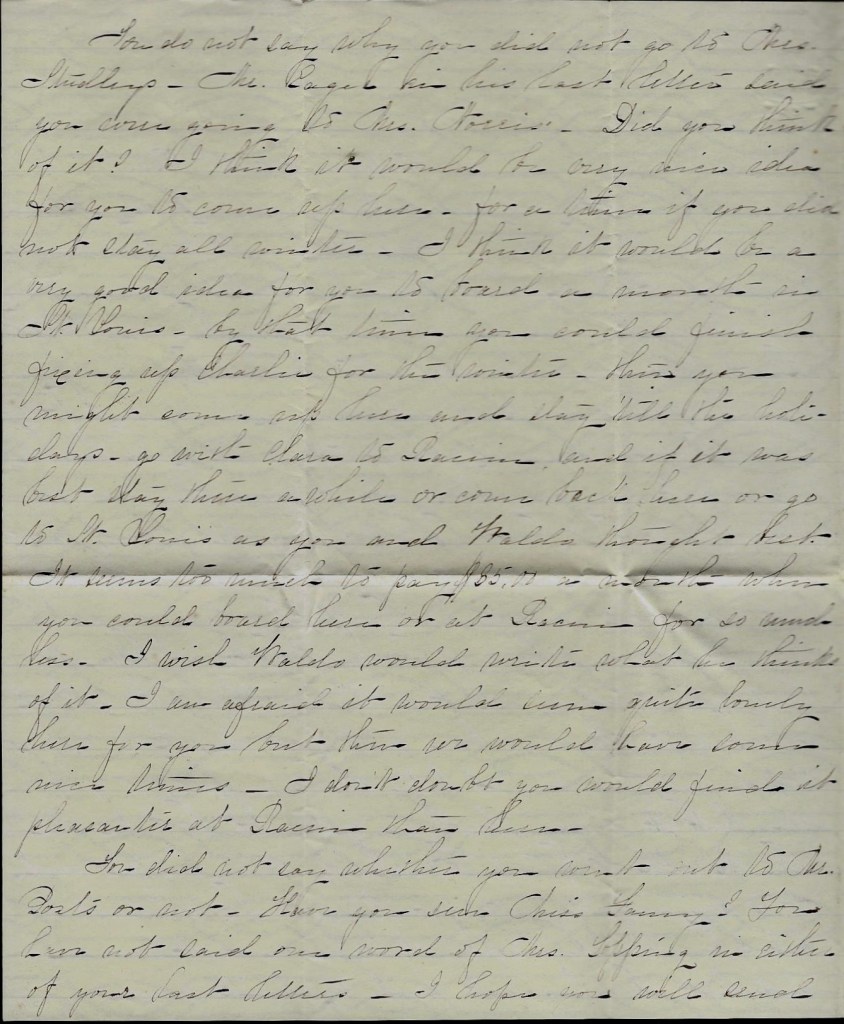
You do not say why you did not go to Mrs. Stalling’s. Mr. Eager in his last letter said you were going to Mrs. Norris’. Did you think of it? I think it would be very nice idea for you to come up here for a time if you did not stay all winter. I think it would be a very good idea for you to board a month in St. Louis. By that time you could finish fixing up Charlie for his winter. Then you might come up here and stay till the holidays, go with Clara to Racine, and if it was best, stay there a while or come back here or go to St. Louis as you and Waldo thought best. It seems too much to pay $35 a month when you could board here or at Racine for so much less. I wish Waldo would write what he thinks of it. I was afraid it would have been quite lonely here for you but then we would have some nice times. I don’t doubt you would find it pleasanter at Racine than here.
You did not say whether you went out to Mr. Post’s or not. Have you seen Miss Fanny? You have not said one work of Mrs. Topping in either of your last letters. I hope you will send Dwight’s letters soon. How is cousin Mary? Was there any particular reason for Mrs. Allen’s and Mattie’s return? Does Mary bring any Pittsfield news? Have you heard at all from Northampton?
The Mason’s are expecting to go into Chicago next week. We shall miss them very much indeed. Miss Mason says as soon as they are fully settled, she is coming out some Thursday to take us back on Friday to spend the Sabbath. I can’t stay over the Sabbath but Clara might. It is very pleasant to have them so cordial and kind. I am sure I don’t know what Clara would have done without them for they have taken the whole care of her in school hours.
The State Fair at Chicago came off this week and very many people went in to attend it. The weather has been most lovely. Mr. and Mrs. Town went in on the four o’clock train Wednesday morning and came home on the eleven o’clock train at night but it did not get here till one, making quite a long day, was it not? Sue and Anna Lockwood went in Thursday with Mr. Merinden [?]. Mr. M has not been at his [church] to preach yet but hopes to in a few weeks. How I should love to hear Mr. Post. Is he well and looking well? How comes on his chapel?
You do not say anything about the box. Has it gone?
I must tell you how Miss Mason had her English straw fixed this fall. It is [ ] and trimmed with bombazines. There are five or six narrow folds around the front and twice as many over the center of the bonnet. The cape has three or four of the same narrow folds. It is very pretty and I thought you might like yours fixed so. I have not touched mine yet. Indeed, I have not done any sewing since I have been here. I have not done any thing for the last three weeks hardly.
Give much love to Mary and to all my friends. Seems to me it is very strange that Charlie should have been at home and you not mention it. Who is Perry? Do you think he is improving any? Best love to Waldo, to cousin Robert and Henry. Tell Robert I enjoyed his letter very much and shall answer soon. Love ever from your own, — Lizzie






 Spared & Shared 23