Category Archives: Antebellum Massachusetts

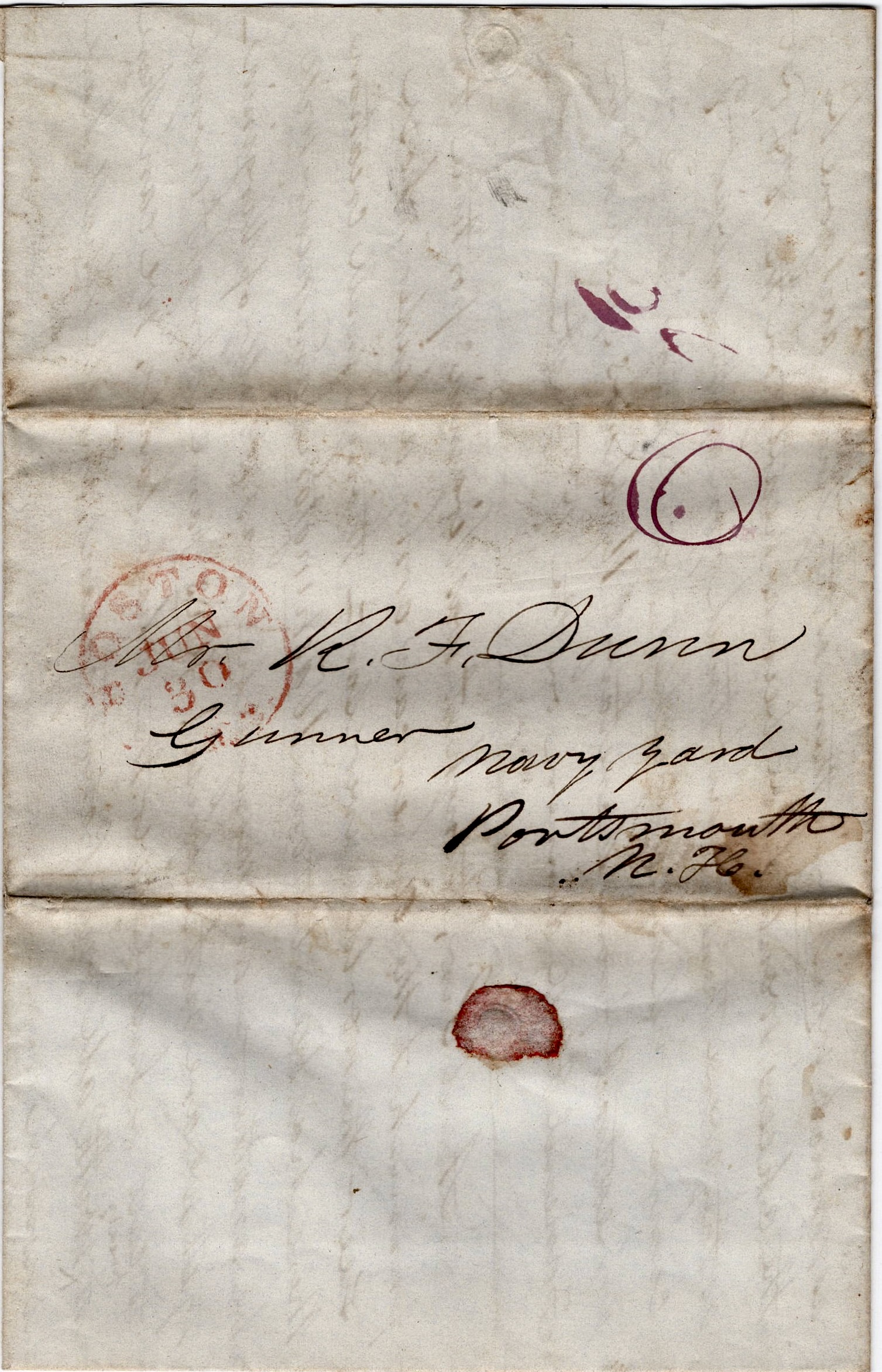
1843: Nehemiah Nelson to Richard Fletcher Dunn

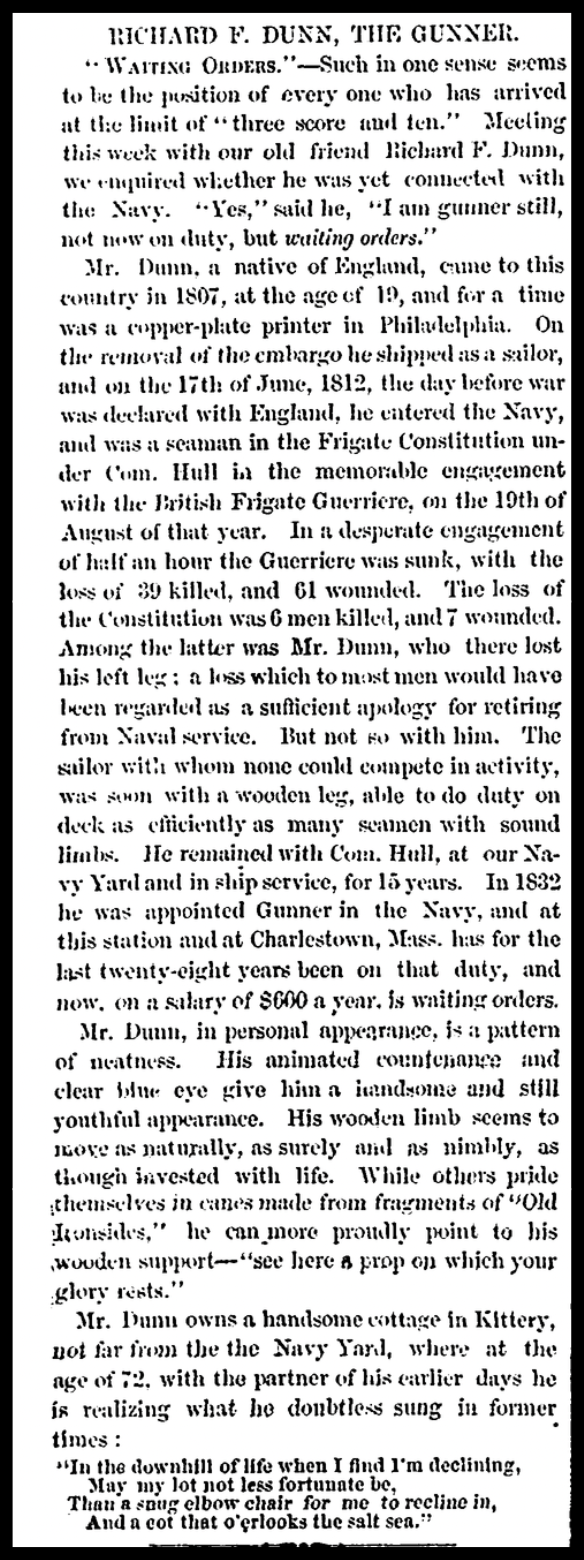
The author of this letter is believed to have been Nehemiah Nelson (b. 1806-1861) who kept a grocery store at 41 Commercial Street in Boston. He wrote the letter to Richard Fletcher Dunn (1788-1863), a native of Northumberland, England, who came to the United States in 1807 and worked as a copper-plate printer in Philadelphia until joining the merchant service in 1809 (with a fraudulent certificate of citizenship).
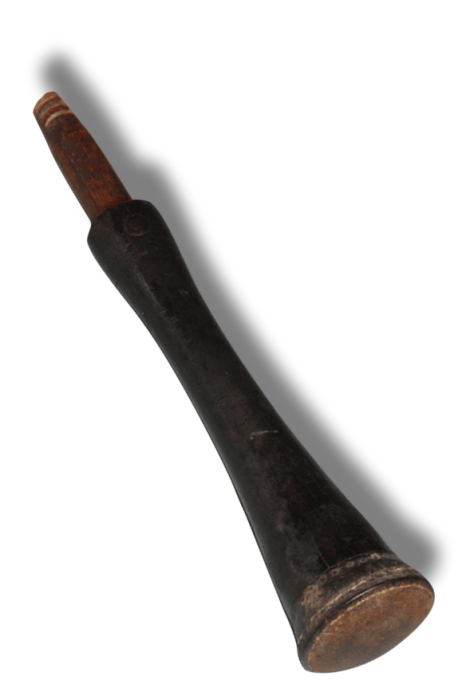
One of the artifacts proudly displayed by the Portsmouth Historical Society’s museum is Richard Fletcher Dunn’s artificial leg. Nelson’s letter informs us the leg was made by Southworth Howland.

He then signed up for the US Navy and participated in the War of 1812, serving aboard the USS Constitution under the command of Capt. Isaac Hull. He was on board during the engagement with the British frigate HMS Guerriere on the 19th of August 1812—an engagement that last more than half an hour resulting in the sinking of the HMS Guerriere and the loss of 39 crew members killed and 61 wounded. The USS Constitution, on the other hand, suffered little damage, thus earning her the nickname “Old Ironsides.” She suffered the loss of only 6 crew members and 7 wounded. Among the latter was Dunn who lost his left leg, blown off by a cannon ball.

Though lesser injuries might have warranted retirement from the service of his adopted country, Dunn remained steadfast in his commitment to the Navy, ultimately serving at the Kittery Navy Yard. He continued to serve under Capt. Hull (later Commodore Hull) at the Navy Yard, performing his duties on a wooden leg “as efficiently as many seamen with sound legs.” According to the 1860 US Census, he was still listed at Kittery, York County, Maine, with his occupation recorded as “Gunner, USN.” When inquired that year about his ongoing connection with the Navy, he replied, “Yes, I am gunner still, not now on duty, but awaiting orders.” He passed away on 1 February 1863, and his widow, Mary F. (Dixon) Dunn, died in 1872. They are buried in Eliot, Maine.
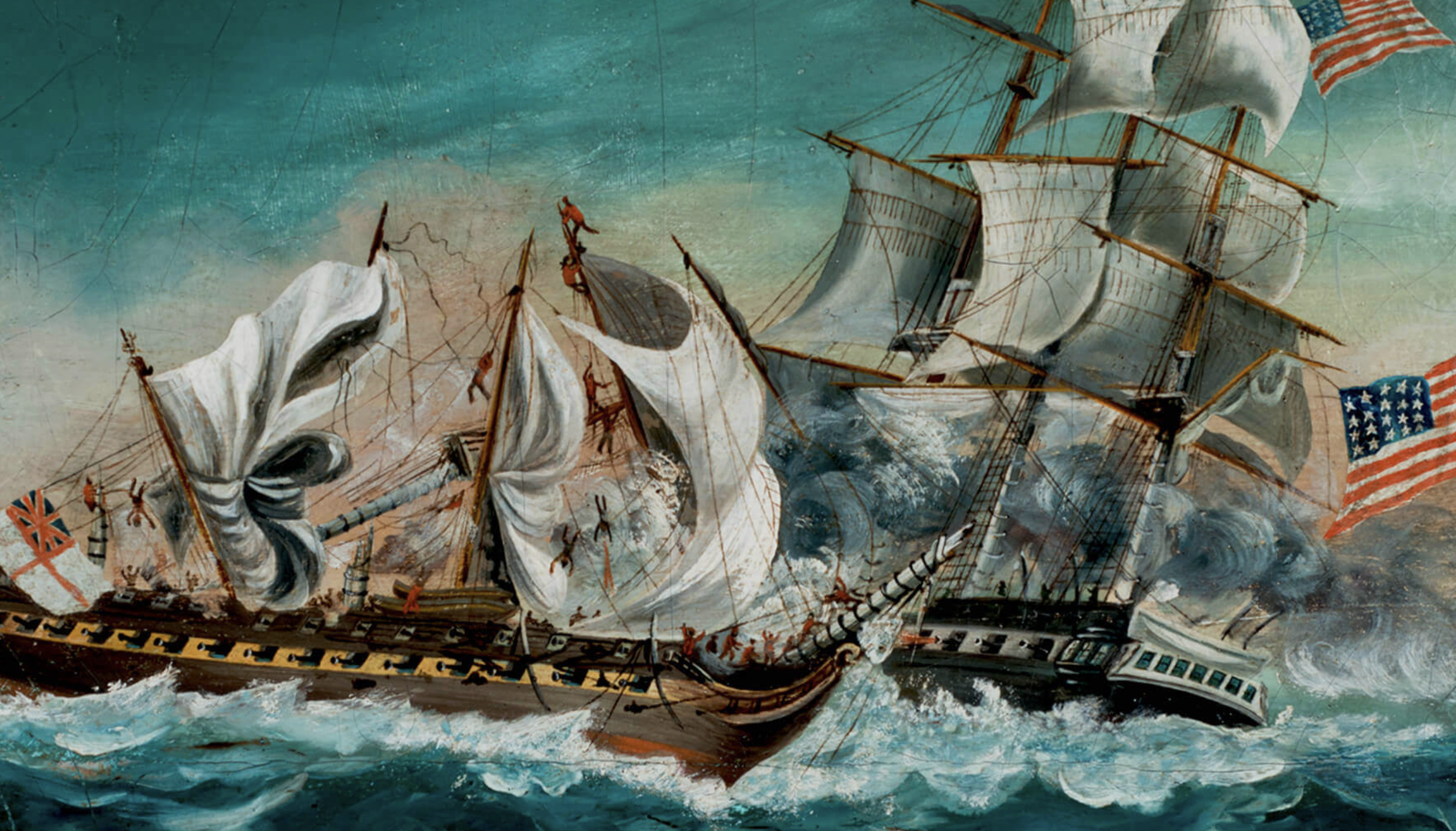
The USS Constitution battles the HMS Guerriere on 19 August 1812.

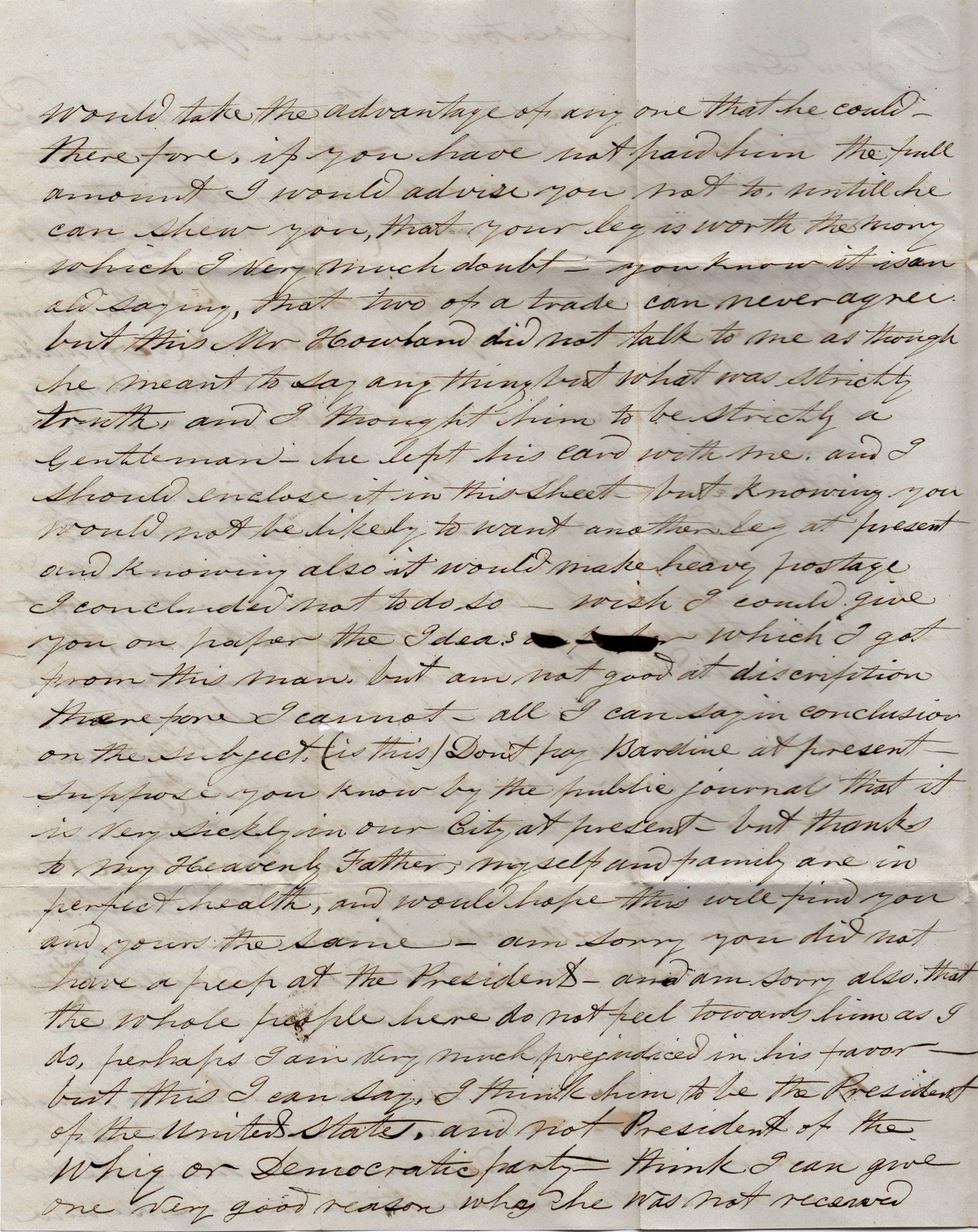
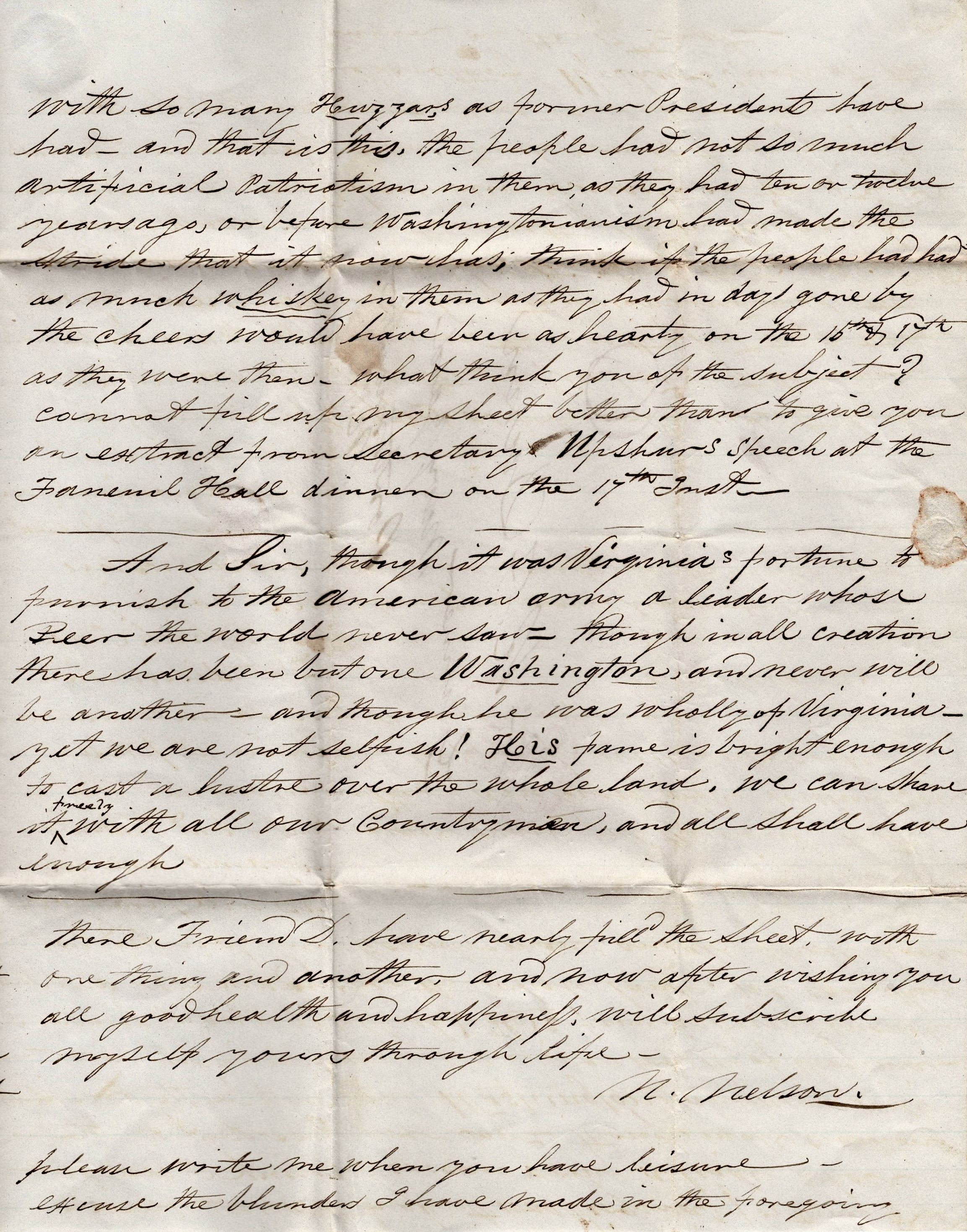
T R A N S C R I P T I O N

Boston [Massachusetts]
June 29, 1843

Friend Dunn,

Yours of the 7th inst. was duly received and I was very glad to know that you took the remarks which I made in my last in the spirit in which they were made (viz) in all kindness. You said a letter from on the 22nd inst. but I had nothing worth relating. But this morning I am big with an important subject (viz) wooden legs.

A person came into my store this morning and asked if I knew Mr. Jones who was once in the Custom House. I told him I was well acquainted with him. Said he, I made his wooden leg. That led to a conversation about you and Mr. Bardine, and from what this man said, I should think Mr. Bardine was anything but a gentleman. You will understand me, this person did not talk harsh of him, but gave me a history of him for a number of years back.

In the first place, he remarked that Bardine was very poor, so much so that he got people to subscribe various sums and got this man (whose name is Southworth Howland 1 ) to make him a leg which he did and charged him $25 for it. Well, when he came for the leg, he brought only $20 and said he had collected only that sum, but would get the balance since Bardine told him to sue for the balance. But Howland thought it would cost more than it would come to so he let him run. And many other things he told me which makes me think that he—Bardine—would take the advantage of anyone that he could. Therefore, if you have not paid him the full amount, I would advise you not to until he can show you that your leg is worth the money which I very much doubt.

You know it is an old saying that two of a trade can never agree but this Mr. Howland did not talk to me as though he meant to say anything but what was strictly truth, and I thought him to be strictly a gentleman. He left his card with me and I should enclose it in this sheet, but knowing you would not be likely to want another leg at present and knowing also it would make heavy postage, I concluded not to do so, Wish I could give you on paper the ideas which I got from this man, but I am not good at description—therefore, I cannot. All I can say in conclusion on the subject is this. Don’t pay Bardine at present.

Suppose you know by the public journals that it is very sickly in our City at present. But thanks to my Heavenly Father, myself and family are in perfect health, and would hope this will find you and yours the same.

Am sorry you did not have a peek at the President [John Tyler] and am sorry also that the whole people here do not feel towards him as I do. Perhaps I am very much prejudiced in his favor. But this I can say, I think him to be the President of the United States and not the President of the Whig or Democratic party. Think I can give one very good reason why he was not received with so many huzzah’s as former Presidents have had and that is this—the people had not so much artificial patriotism in them as they had ten or twelve years ago, or before Washingtonianism had made the stride that it now has. Think if the people had had as much whiskey in them as they had in days gone by, the cheers would have been as hearty on the 15th and 17th as they were then. What think you of the subject? 2

Cannot fill up my sheet better than to give you an extract from Secretary [Abel C.] Upshur’s [Secy. of Navy] speech at the Faneuil Hall dinner on the 17th inst.

“And Sir, though it was Virginia’s fortune to furnish to the American army a leader whose peer the world never saw, though in all creation there has been but one Washington, and never will be another, and though he was wholly of Virginia, yet we are not selfish! His fame is bright enough to cast a luster over the whole land. We can share it truly with all our countrymen, and shall have enough.”

There, friend Dunn, have nearly filled the sheet with one thing and another, and now after wishing you all good health and happiness, will subscribe myself yours through life. — N. Nelson

Please write me when you have leisure. Excuse the blunders I have made in the foregoing.


1 Southworth Howland (1775-1853) learned the house carpenter’s trade but, being “an ingenious and skillful workman and was often called on to do jobs not entirely in the line of his trade. One of these was to alter and fit an artificial leg, imported from England by a neighbor; but he found it easier to make a new one, with such improvements as gave satisfaction to the wearer. His success became known, and during the next forty years he was called on to furnish artificial limbs for a large number of men and women residing in all parts of the United States, no other person manufacturing them in this country, so far as known, for many years after. He was a man of decided convictions and was prompt and fearless in defending them.”

2 This is a reference to the Washingtonian movement that was in full swing in the 1840 as were many other “ism’s.” The Washingtonian movement evaporated within a few short years. They became embroiled in the politics of the day. They were a victim of their own decision to support the elimination of all drinking in the US in that era through the temperance movement.

The Portland Journal, June 23, 1860

1840: Ransom Baldwin Moore to Nelson Noble

This letter was penned by Ransom Baldwin Moore (1818-1880), the son of Charles Moore (1783-1846) and Uretta Vernon (1788-1855) of Saratoga county, New York. An obituary informs us that Ransom came to Troy in 1837 where he engaged in the dry goods business at No. 9 Cannon Place. He 1843 he entered into partnership with E. & H. Merriam, book and stationery dealers, who, under the firm name of Merriam, Warren & Co., carried on business. H. B. Nims bought out Merriam in 1853 and partnered with Moore until 1869 when Moore retired.

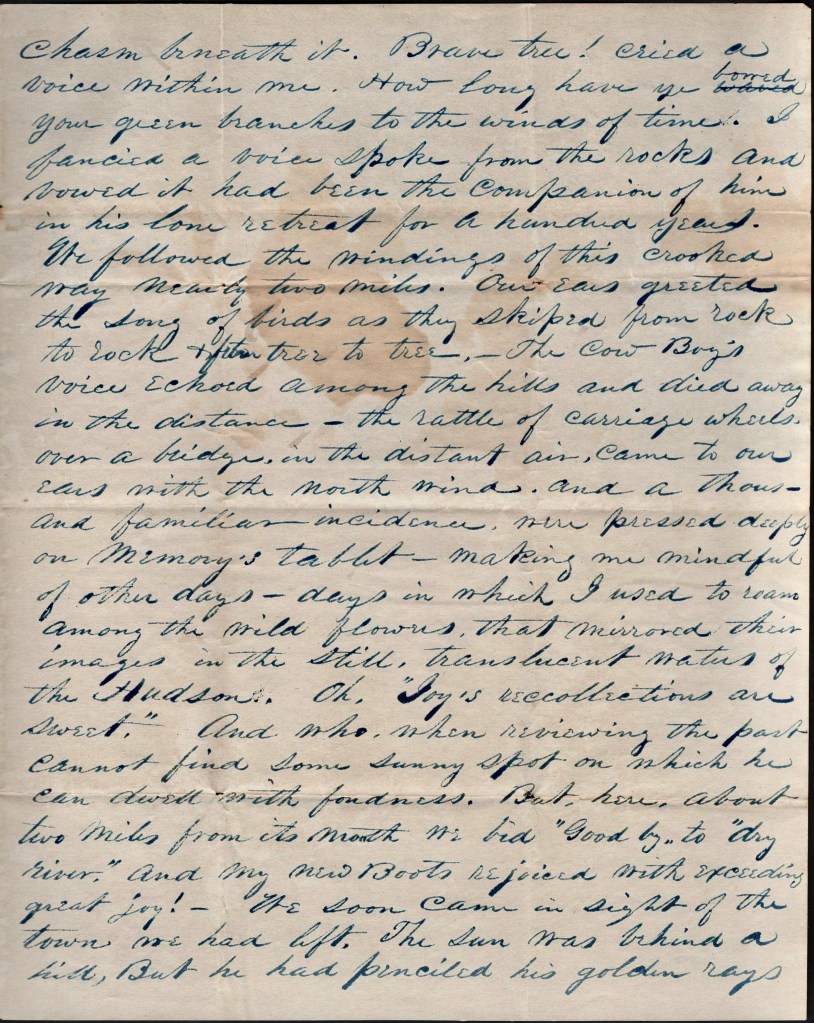
Ransom’s letter, written when 21 or 22 years old, provides a detailed account of a hike to “Dry River,” prompting me to investigate the significance of this location, as my Google searches returned no relevant results pertaining to a site near Troy, New York. However, upon examining historical newspapers, I uncovered an article from the American Traveller dated 15 March 1836, which referenced a “singular ravine often called the Dry River” located on the west side of the Hudson. Additionally, an article from 1849 discussed the “deep gorges of Dry River” situated north of West Troy. Perhaps this is the area where Ransom and his companion hiked.

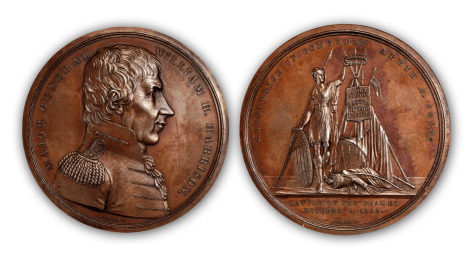
The letter was written on stationery that advertised the sale of a medal commemorating the service of Gen. William Henry Harrison (then a candidate for the Presidency) and the Battle of the Thames, 5 October 1813, during the War of 1812.

The actual bronze medallion depicted in the advertisement.

Transcription

Troy [New York]
June 1, 1840

To N. Noble, Esqr.,

After taking tea with a friend in West Troy, we mutually agreed to take a tramp to “Dry River.” Each obtained a cigar—these being ignitedm we put off. As we proceeded in the main street we were nearly suffocated with dust, which was caused by the rapid whirl of omnibuses & vehicles. However, we soon passed from this “durance vile” to a more pleasant and delightful course.

The wind blew gently from the North which was truly refreshing and enlivening. “the wavy fields” of grain and delicious odor from “verdant hills” and “flowery vales,” threw a halo of beauty and delight upon all we looked upon. As we approached the entrance of the “Dry” Stream which we were about to ascend, I saw a field of clover—green, rank, and thrifty. It sent forth “fragrance delectables.” As I beheld it, I had :immortal longings” within me. And for what? is the inquiry. Not for death that I might be buried there. But to be buried in such a place when dead. But after all, I think it of little consequence when one is buried after life is rendered up.

Our course was westward. When we had gone about half a mile, we turned to the north, proceeded a short distance and then entered “dry river.” Now, we lost sight of the pleasant and undulating scenery, the beholding of which had given me new life, and had filled my soul with new imaginings. We soon entered among the rocks whose steep, craggy and sombre heights shut out much of the resplendent light of day’s all glorious ring. As we continued our winding course, we lost sight of the pleasant landscape over which we had just passed.

A large giant like tree attracted my attention. It waved its bows on the verge of a precipice, as if unmindful of the awful chasm beneath it. Brave tree! cried a voice within me. How long have ye bowed your green branches to the winds of time. I fancied a voice spoke from the rocks and vowed it had been the companion of him in his lone retreat for a hundred years.

We followed the windings of this crooked way nearly two miles. Our ears greeted the song of birds as they skipped from rock to rock and from tree to tree. The cow boy’s voice echoed among the hills and died away in tyhe distance. The rattle of carriage wheels over a bridge in the distant air came to our ears with the north wind, and a thousand familiar incidents were pressed deeply on memory’s tablet, making me mindful of other days—days in which I used to roam among the wild flowers that mirrored their images in the still, translucent water of the Hudson.

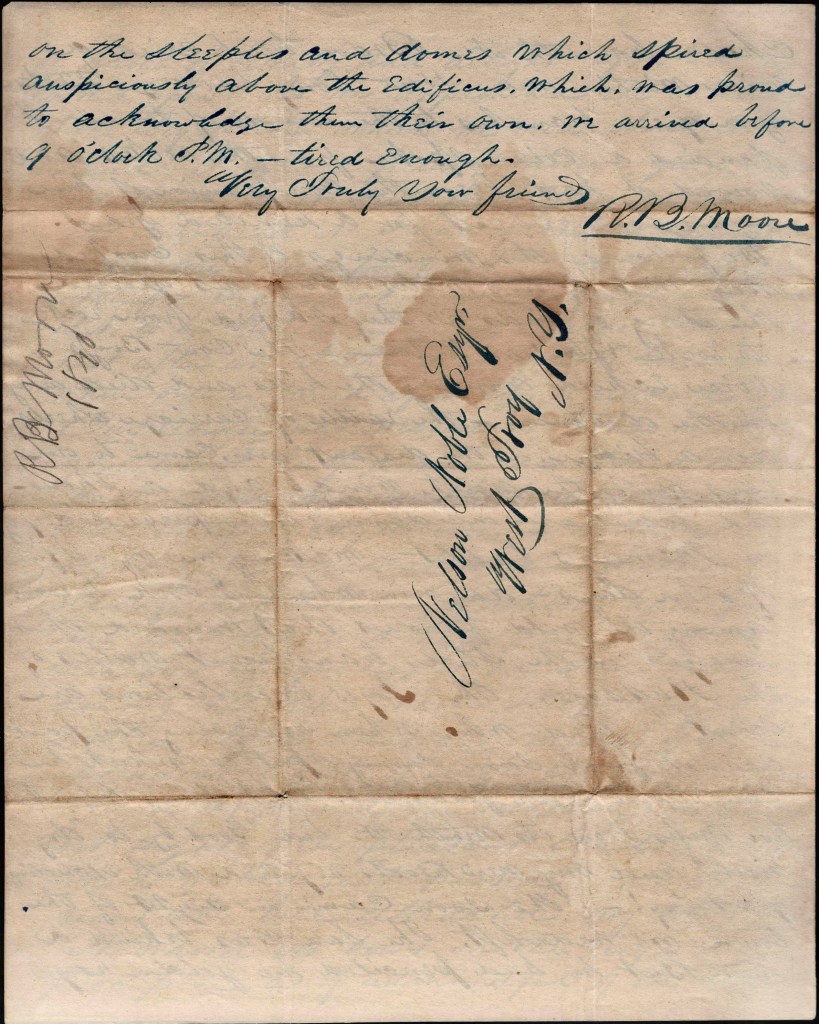
Oh, “Joy’s recollections are sweet.” And who, when reviewing the past cannot find some sunny spot on which he can dwell with fondness. But here, about two miles from the mouth, we bid “goodbye” to “dry river,” and my new boots rejoiced with exceeding great joy! We soon came in sight of the town we had left. The sun was behind a hill but he had enciled his golden rays on the steeples and dome which spired auspiciously above the edifices, which, was proud to acknowledge them their own. We arrived before 9 p’clock p.m. tired enough.

Very truly your friend, — R. B. Moore

1851: Charles Mulligan, Jr. to Millard Fillmore

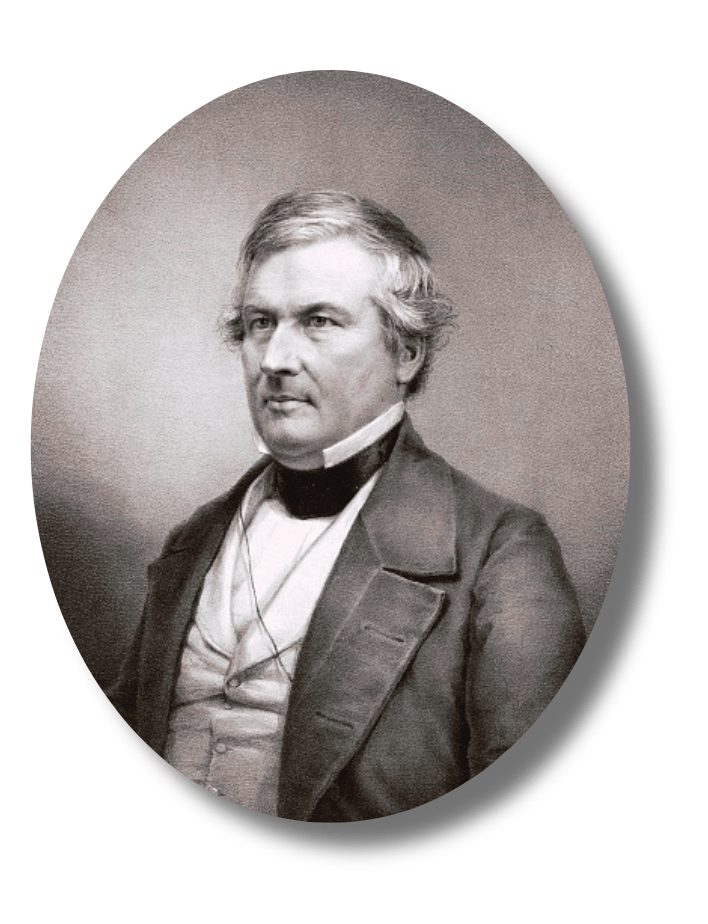
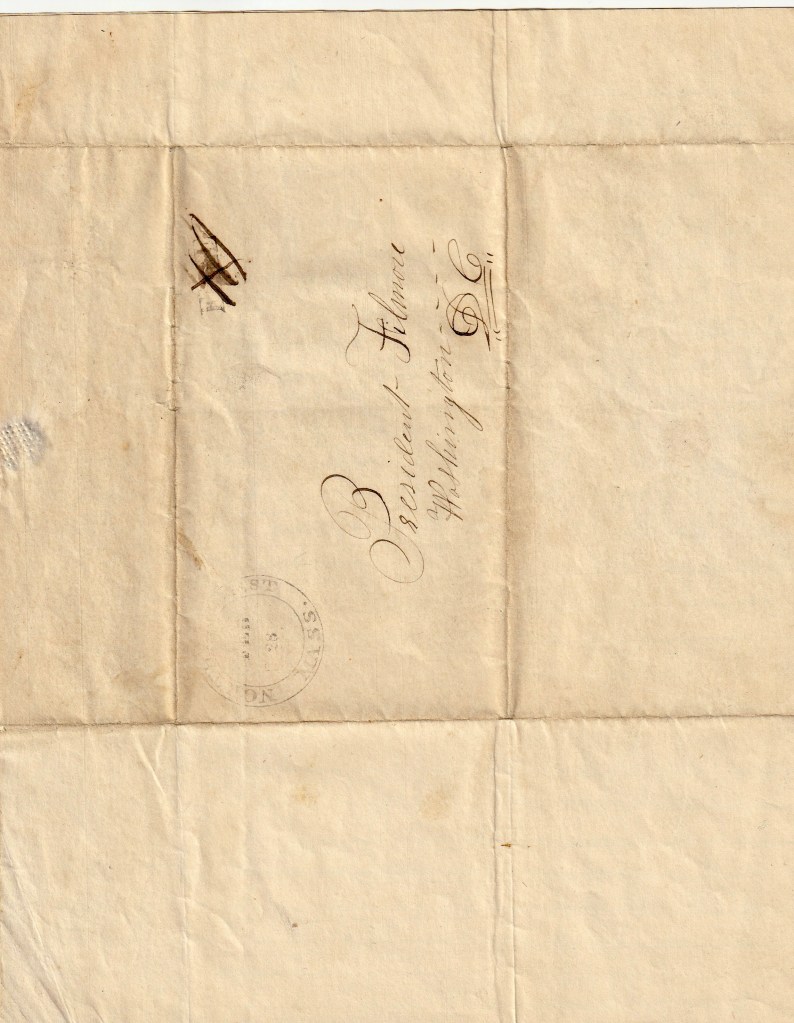
President Millard Fillmore

The following letter was penned by a self-professed “well wisher” of President Millard Fillmore who advised him that his life was in danger. There were men of “true steel,” he warned the President, who opposed the Chief Magistrate’s stated political position in support of the recently passed Compromise of 1850—with its odious Fugitive Slave Law—and his avowed determination to enforce it with the full force and might of the federal government. Though he personally opposed slavery, Fillmore “had no sympathy for the slave, for free blacks, or for the northern whites who did have sympathy for the slave.” 1 Fillmore’s defense of the omnibus bill was rooted in his belief that it was the only possible way for the Union to be preserved. He rightfully predicted that it would appease the Southerners but he miscalculated the firestorm it would cause in the North. Where once the average Northerner heard little and cared less about slavery, suddenly it became everyones business and an incendiary topic.

In Amherst, Massachusetts, where this letter was mailed (if not written), the majority of the Whigs shifted their allegiance to the Free Soil Party platform and joined in passing a series of resolutions that included an outright rejection of the notion that citizens should be compelled, by the Constitution, to engage in slave catching or suffer a penalty in failing to do so. A plethora of court cases challenging the law throughout the major Eastern seaboard cities dominated the papers and the daily citizen chatter on courthouse steps.

I have searched without success to find any citizen by the name of Charles Mulligan, Jr.—not only in North Amherst but in Massachusetts—who may have actually been the author of this letter. It is my conclusion that the name was fabricated and that the letter, offered to the President under the pretense of coming from a friend, was actually written by someone who opposed the President. The alleged threat of spies, looking for an opportunity to kill the President if he did not back down from his position in support of the Fugitive Slave Law, was not real, in my opinion. I believe it was only a rather crude and ineffectual attempt to intimidate Fillmore. 

Whether Fillmore took the threat seriously or not is difficult to say. No American President had been assassinated up to that date though there was a half-hearted attempt on Jackson’s life in 1835. It seems he took it seriously enough to send the letter back to the deputy post master of N. Amherst asking him if he knew who mailed it. Curiously, he wrote this enquiry in his own hand.

[Note: This letter is from the personal collection of Richard Weiner and was transcribed and published on Spared & Shared by express consent.]

Transcription

Amherst [Massachusetts]
February 26th 1851

President Fillmore
Dear Sir,

Excuse the liberty I take in addressing to you these few lines & take me if you please to be your well wisher while I say to you that I accidentally became aware that it is a notorious fact that by a private meeting in this vicinity, thy life is deliberately premeditated in case you say one word more in favor of that (as they call it) black slave till 2 & accidentally, as I before said, I find it to be a notorious fact that eight able-bodied men of true steel (as men) have been chosen to leave for Washington City tomorrow morning as spies to lay in wait for your life in case another move is [made] to favor slavery & only write you this short epistle that you may look out for them.

Yours very respectfully, — Charles Mulligan, Jr.

[docketed at bottom of letter in Fillmore’s own hand]

To the Deputy P[ost] M[aster] at North Amherst

Sir, Can you inform me who wrote the above. Respectfully yours, — Millard Fillmore

Washington City, March 2, 1851


1 Millard Fillmore: The American Presidents Series: The 13th, by Paul Finkelman, page 102.

2 I don’t understand the use of the word “till” here unless there was actually a slave named “Till” who was subject to the Fugitive Slave Law. I could not find any reference in the newspapers that would clear up this confusion. I’m inclined to believe that the author left out a word or two inadvertently.