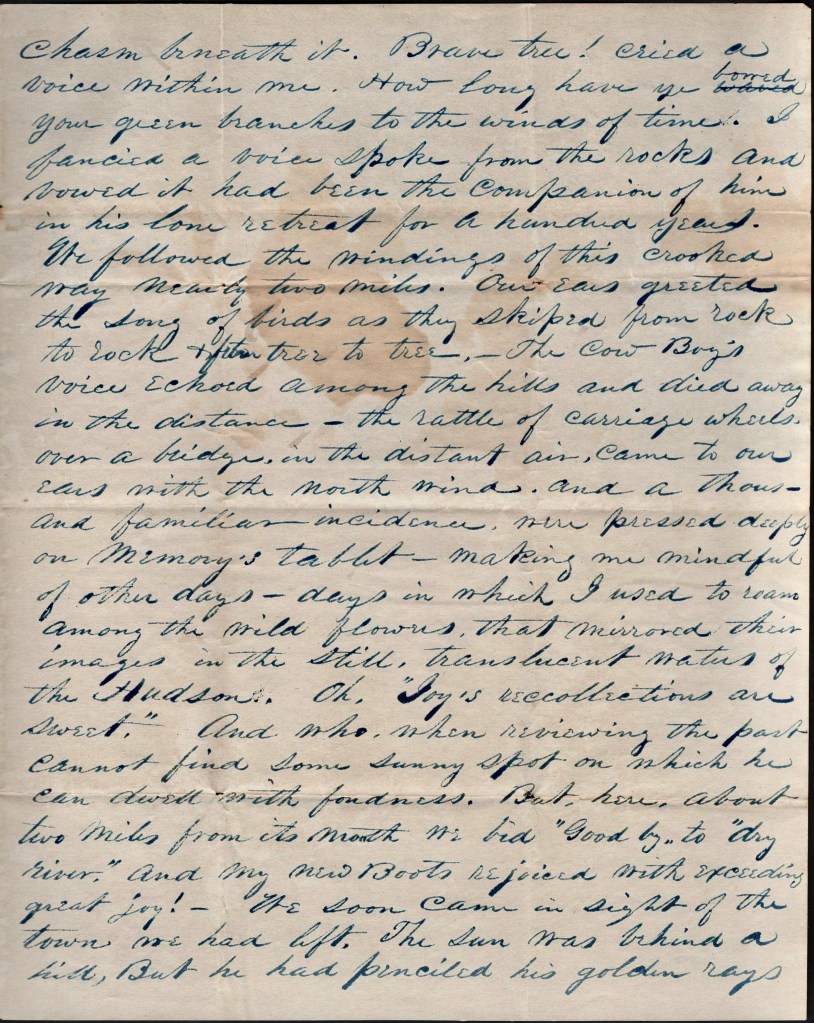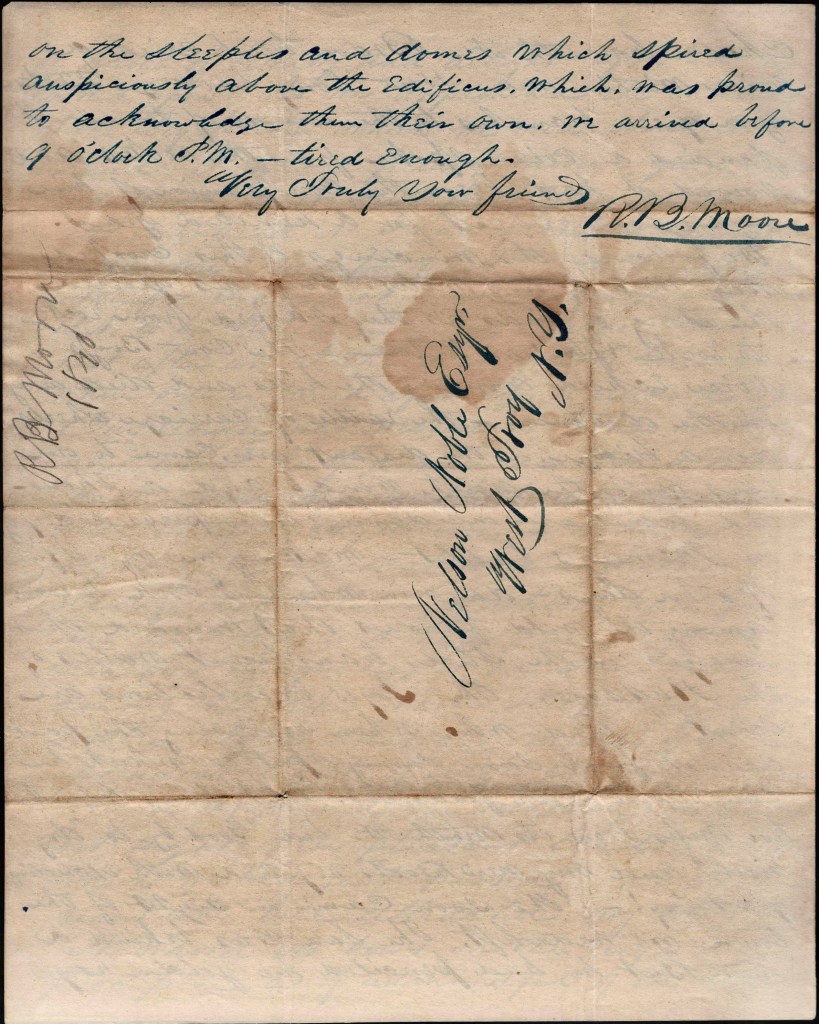
The following letter was written by Robert H. Goodell who had clerked for Joseph S. Bates & Co. in Cincinnati until he was appointed postmaster at Franklin Furnace, Scioto county, Ohio. He wrote the letter to his younger brother, Gaylord George Goodell, in response to a letter Gaylord sent him, datelined from Cazenevia, New York, on 27 April 1840. That letter, published on Spared & Shared 1 years ago, speaks of politics and asks Robert for his opinion on the presidential candidates and on the question of slavery:
“You wish to know what your brothers think of politics. David is a hot Whig; Edwin an administration man; Dwight’s mind is not fully made up yet, I think, but at Town Meeting he voted the administration ticket more somebody wanted he should than anything else. Nothing exceeds the enthusiasm expressed here for [William Henry] Harrison. There is nothing to be heard but log cabins & old cider. Last week there was a county convention at Morrisville which was attended with great display. Each town carried its log cabin — some drawn by 6 horses & some by 8 — with a barrel of old cider attached to the stern & 3 or 4 coon skins nailed to the side. The diner was composed of pork and beans with cornbread & old cider which they carried with them for it would have been extravagant to have bought a dinner these hard times. It is said to have been the greatest collection of people ever known at Morrisville. Each town dined in its log cabin. Such a display of flags I never before saw. Each wagonload had its flag with a motto of some kind relative to Harrison. Although I am in favor of Harrison in preference to Matty [Martin Van Buren], yet there are others that I should prefer. People act so much like cursed folks that I am disgusted with anything that bears the name of political. It appears to be the whole business parties to frame thunderbolts vulcan-like & hurl them against each other with Herculaneum strength. Please write what you think of abolitionists. They are getting a third party here.”
In response, Robert informs his brother that he considers slavery an evil but think the abolitionists do the slaves more harm than good by their fanaticism, causing the Southern slaveholders to tighten their control of their human property. He thinks the only viable solution is for Congress to outlaw slavery, to compensate the slaveholders for their lost property, and to export the Blacks from the United States. To emancipate the slaves without compensating the slaveholders, he considered robbery and would take up arms with the slaveocracy even against his own state if need be.
1 See 1840: Gaylord G. Goodell to R. H. O. Goodell on Spared & Shared 8.
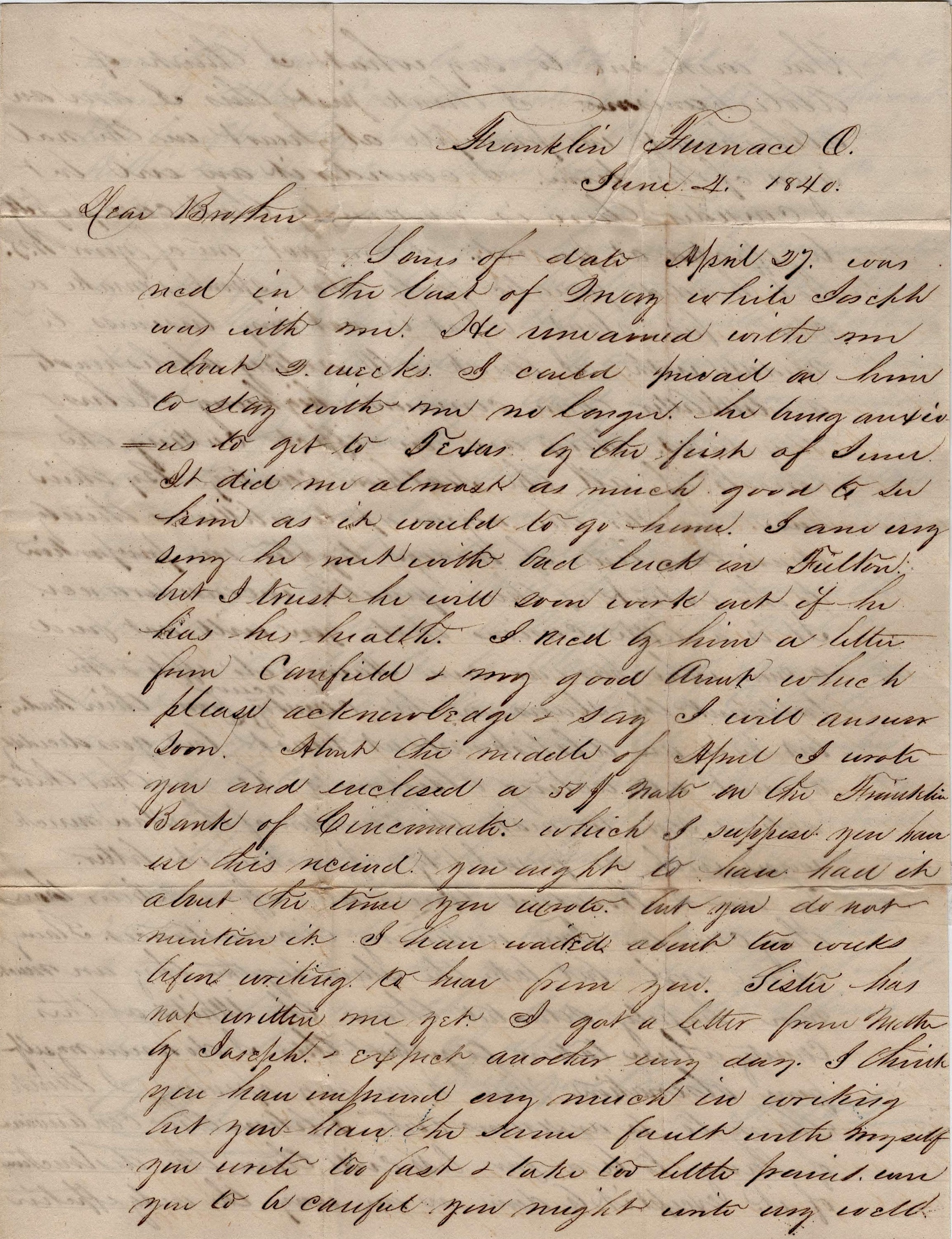
T R A N S C R I P T I ON
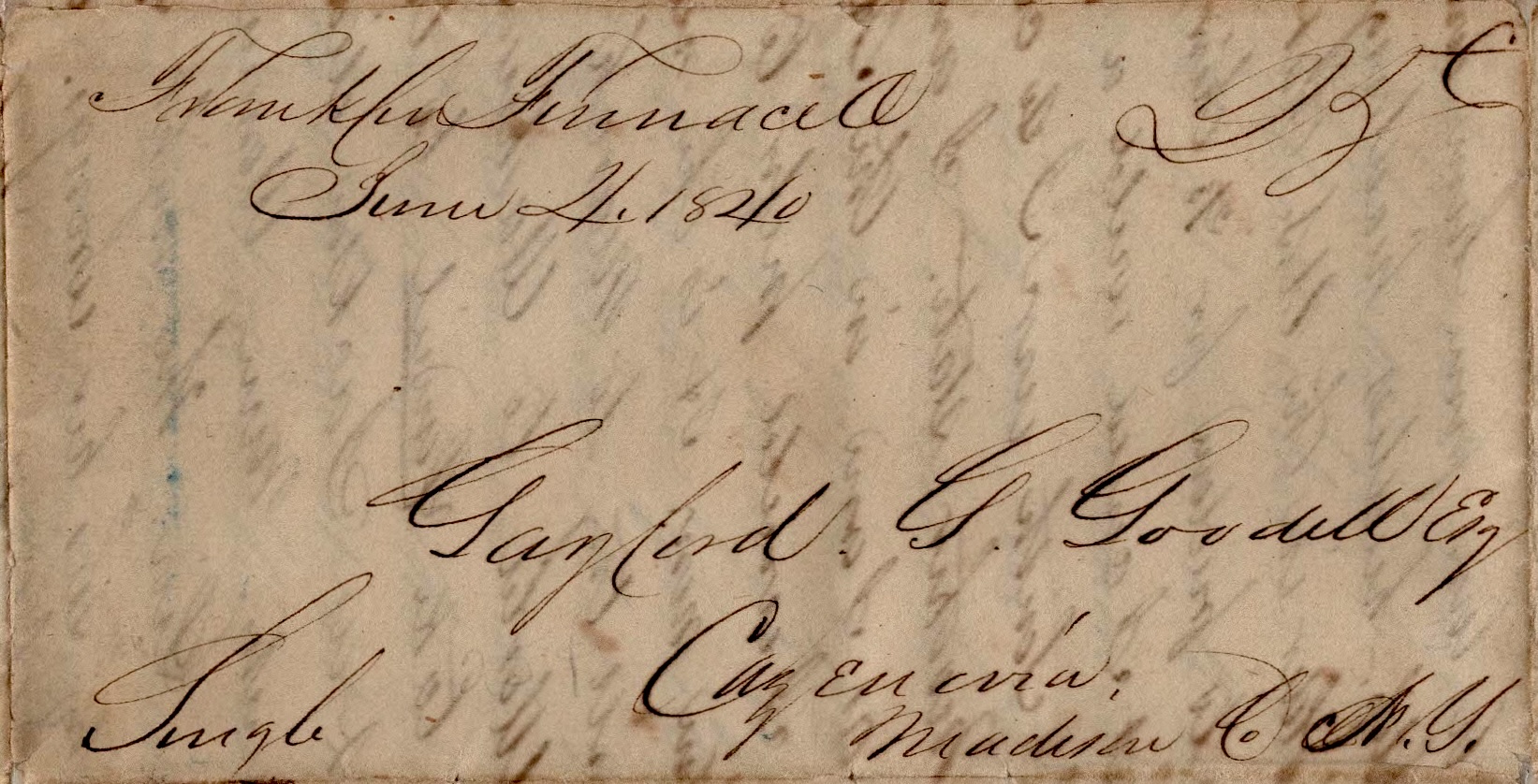
Franklin Furnace, [Scioto county] Ohio
June 4, 1840
Dear Brother,
Yours of date April 27th was received in the last of May while Joseph was with me. He remained with me about two weeks. I could prevail on him to stay with me no longer, he being anxious to get to Texas by the first of June. It did me almost as much good to see him as it would to go him. I am very sorry he met with bad luck in Fulton but I trust he will soon work out if he has his health. I received of him a letter from Canfield & my good Aunt which please acknowledge & say I will answer soon. About the middle of April I wrote you and enclosed a $50 note on the Franklin Bank of Cincinnati which i suppose you have ere this received. You ought to have had it about the time you wrote but you do not mention it. I have waited about two weeks before writing to hear from you. Sister has not written me yet. I got a letter from Mother by Joseph. Expect another every day. I think you have improved very much in writing but you have the same fault with myself—you write too fast & take too little pains. Were you to be more careful, you might write very well.
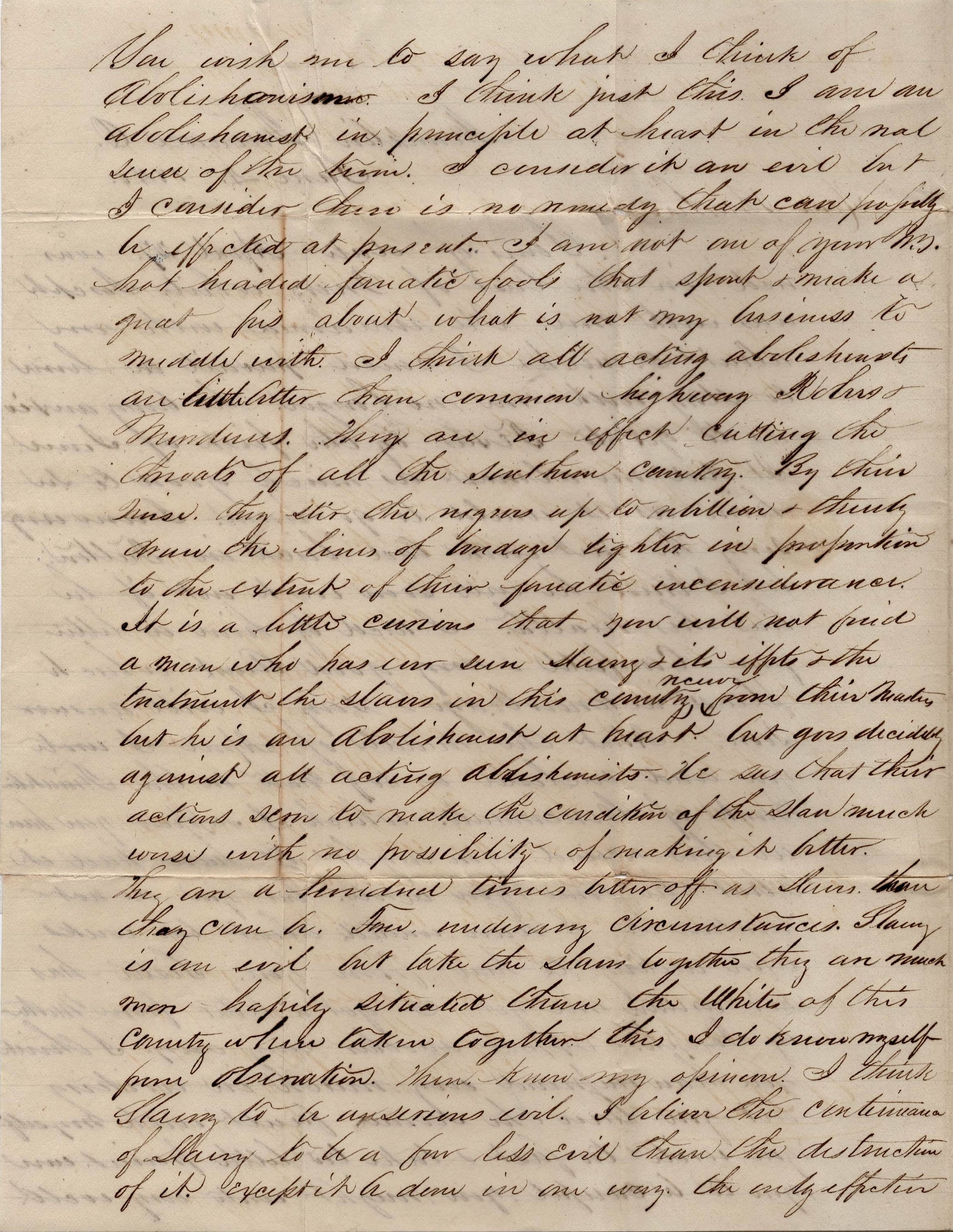
You wish me to say what I think of Abolitionism. I think just this. I am an abolitionist in principle at heart in the nat[ural] sense of the term. I consider it [slavery] an evil but I consider there is no remedy that can possibly be expected at present. I am not one of your N. Y. hotheaded fanatic fools that spent & make a great fuss about what is not my business to meddle with. I think all acting abolitionists are little better than common highway robbers & murderers. They are in effect cutting the throats of all the southern country. By their noise, they stir the negroes up to rebellion & thereby draw the lines of bondage tighter in proportion to the extent of their fanatic inconsiderance. It is a little curious that you will not find a man who has ever seen slavery & its effects & the treatment the slaves in this country receive from their masters but he is an abolishionist at heart, goes decidedly against all acting abolitionists. He sees that their actions seem to make the condition of the slave much worse with no possibility of making it better. They are a hundred times better off as slaves than they can be free under any circumstances.
Slavery is an evil but take the slaves together, they are much more happily situated than the Whites of this country when taken together. This I do know myself from observation. Then, know my opinion. I think slavery to be a serious evil. I believe the continuance of slavery to be a far less evil than the destruction of it except it be done in one way [and] the only effective way that can ever be adopted—that is, to leave it to Congress. When Congress thinks it a greater evil than it is a benefit, they will buy all the slaves with the public money and send them from the country.
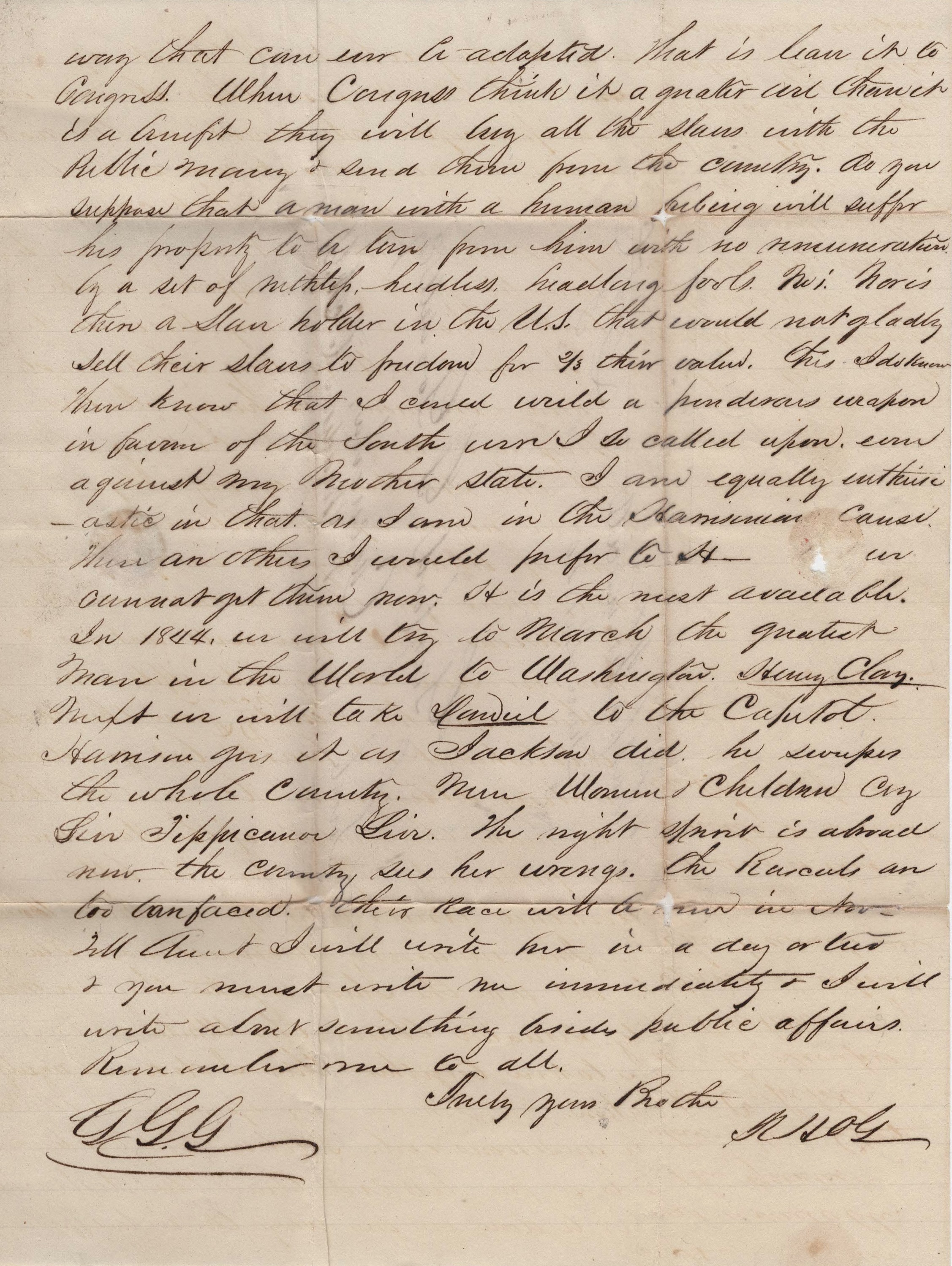
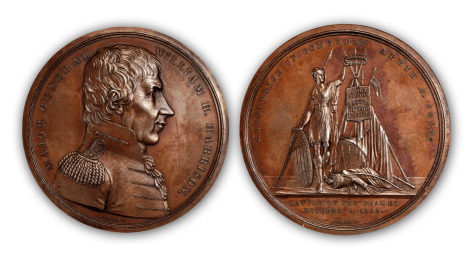
Do you suppose that a man with a human being will suffer his property to be turned from him with no remuneration by a set of ruthless, heedless, headlong fools? No! Nor is there a slave holder in the U. S. that would not gladly sell their slaves to freedom for two-thirds their value. This I do know. Then know that I could wield a ponderous weapon in favor of the South were I called upon even against my mother state. I am equally enthusiastic in that as I am in the Harrisonian cause. There are others I would prefer to Harrison, [paper torn] cannot get them now. Harrison is the most available. In 1844, we will try to march the greatest man in the world to Washington—Henry Clay. Next we will take Daniel to the Capitol. Harrison goes it as Jackson did. He sweeps the whole country. Men, women and children cry, “Live, Tippicanoe, live!” The right spirit is abroad now. The country sees her wrongs. The rascals are too Vanfaced. Their race will be over in November.
Tell Aunt I will write her in a day or two & you must write me immediately & I will write about something besides public affairs. Remember me to all. Truly your brother, — R. H. G.
to G. G. G.