Lt. Alfred Bergen Hutchinson of 5th N. J. Vols. (AI sketch drawn from tiny image on Ancestry.com)
These letters were written by Alfred Bergen Hutchinson (1840-1921), the son of George A. Hutchinson (1810-1885) and Ida Van Nest Bergen (1813-1851) of Trenton, Mercer county, New Jersey. Alfred enlisted on 19 August 1861 in the 5th New Jersey Infantry and was promoted through the ranks to 2nd Lieutenant of Co. D. When Alfred first enlisted, he entered in Co. E with his brother-in-law, Captain Henry Harrison Woolsey (1836-1864).
The 5th New Jersey Volunteer Infantry Regiment was organized at Camp Olden, Trenton, New Jersey, in July 1861, and was mustered in on August 22, 1861. It participated in a number of important engagements, including the Battle of Fair Oaks, Seven Pines, Malvern Hill, Second Battle of Bull Run, Fredericksburg, Chancellorsville, Gettysburg, the Wilderness, Spotsylvania Court House, Cold Harbor, and the Siege of Petersburg.
Alfred wrote all three letters to his younger sister, Sarah M. Hutchinson (1842-1897). Many more of Hutchinson’s Civil War letters can be found in the Special Collections of Chapman University. See Hutchinson & Woolsey, 1861-1888.
Letter 1
Addressed to Miss Sadie M. Hutchinson, Trenton, New Jersey
Camp near Falmouth April 14th, 1863
Dear Sister Sadie
This is a charming spring morning & I imagine I can see you all at Homedell walking about the yard, or some of you sitting in the house with windows hoisted. How I would love to be with you enjoying this splendid weather.
Last week we had a Grand Review. President Lincoln came down & reviewed several corps at the same time. I would give a great deal to have you see such a review. Although I have seen several Grand Reviews, it does not fail to awaken the ideas to the grandeur & vastness of the event. It takes hundreds of acres to give enough room for the troops. The ground is rather uneven & as far as we could see were the troops & flags—a perfect sea of men. You would hardly think there were so many men in the United States. The column passes the President by divisions front—that is, two companies abreast. In this way, regiment after regiment passes & hours are consumed or nearly a day passes & the one who reviews them is tired waiting for all to pass.
Your interesting letter came last night but I had been expecting it several days. You said you expected to hear of our moving every day. Your expectation will soon be realized for we are under marching orders. Our orders came this morning. Every officer & man are to carry eight days rations with them. What do you think of that? The men are ordered to leave nearly all their clothing with the Quartermaster & carry their rations in their knapsacks. The officers are to leave their extra clothing also & to carry their rations the best way they can.
The whole cavalry force left yesterday & also some infantry. It is expected that these forces will get in the rear of the enemy & then we will attack them in front. I hope we may be successful & capture & destroy the whole rebel force in Virginia. As we go out again, I feel the danger we must be subjected to, but God is my shield. I know if we call upon Him, He is ever ready to hear. His eye is upon us at all times, in prosperity and adversely, in security and in danger.
My chum, Lieut. Flannigan, will send on the order & his discharge & wishes father to draw his state pay & send it on by Adams Express. Put it in an envelope and direct it to Lieut. J[ohn] M. Flannigan, Co. K, 5th New Jersey Volunteers. Even if we move, the express company will keep it all safe until he calls for it. He wishes it sent without delay. Harry is well.
Now, dear sister, I must close. Give unbounded love to all the dear ones and I am as ever your own brother, — Alfred
Letter 2
[Camp near Falmouth] June 6th, 1863
Dear Sadie,
Yesterday our usual quiet was disturbed by receiving orders for a march. We packed up & the regiment formed line, then stacked arms in readiness to march at a moment’s notice. At night we received orders to take in our arms and be ready to move at daybreak in the morning. Morning came but we did not go & here we are now, waiting & not knowing what moment we will go.
Yesterday afternoon heavy cannonading was raging along the Rappahannock & our troops are crossing again. A part of the 6th Corps is over this morning. I hope & pray that we may meet with better success this time than heretofore. The crossing seems to be conducted about the same way it was last time. Part of the troops above and part below Fredericksburg. Now and then a cannon booms forth today showing that something is going on & that either one part of the other is not quite satisfied with the proceedings. I dare say we will cross in a day or so.
Hutch and Breasley were over here yesterday but they left rather abruptly upon hearing the army was on a move. When they left camp in the morning, all was quiet & their orders must have come in suddenly & must have started in a hurry for one of our men who had been over to the 6th Corps came home a little after noon & said the 6th Corps was crossing the river. Then Hutch and Breasley started in a hurry. They said their men did not want to go into another engagement & if called upon to go, threats of stacking arms were made as they think their time is out. They seem to think they will not go home before the 15th of June. Conn was well.
We were paid off a few days ago. I sent $80 home by Col. Cook, $30 to repay Marianna for that she sent to me by Harry. The $50 to be invested by father as he thinks best. Harry received encouraging news from Thirza a day or two ago. I sincerely hope she will continue to improve & if she goes out to Homedell, no doubt you all will soon be about again. I fear I will not be able to get home very soon as leaves of absence are not granted at all. However, perhaps after this move they will grant leaves again.
There is an establishment near our camp where they take Ambrotypes. Nearly all the officers of our regiment went over tis morning to get their pictures taken. I had mine taken. They are rather inferior work yet is it a pretty good picture after all, only I look so cross. A stranger would think me very ill-natured from my picture. I will send it on to you.
I received a letter from Annie V. C. yesterday. Harry is well. Before you receive this, we may be fighting desperately, or we may be in Richmond. With unbounded love to you all, I remain your loving brother, — Alfred
Letter 3
Brandy Station, Virginia January 2nd 1864
My dear sister Sadie,
Your delightful missive reached me this evening. It gave me great pleasure to hear that my loved ones at home were well and that they were all enjoying themselves to so great an extent. I think you all must have had a regular jubilee on Christmas. You certainly had presents in profusion. How I would have enjoyed being with you. I have been so very busy of late that I have hardly had time to eat or sleep. But today my most confining labors ceased. You know I am recruiting officer for Vetran volunteers. I gained fifty men & you ought to have seen the heaps of papers it took to muster these men. It seems to be absolute foolishness to make so many rolls, &c., but it had to be done & I did it. I feel richly remunerated for when I took the rolls up to the Division Headquarters today, I was highly complimented. The mustering officer said they were the most complete & neatest & best papers that had been made out in our whole division. I wrote nearly all CHristmas day but had time to partake of dinner for we had roast turkey. Almost all the officers were out of camp so Simon & I sat down and layed to & the proportions of Mr. turkey diminished perceptibly.
We live high on buckwheat cakes & sausage. We have everything necessary for our housekeeping apartment—bake iron, dutch oven, &c. Yesterday (New Years) we intended keeping open house, but we did not have satisfactory arrangements so we had New Years by ourselves until after dinner which was roast turkey again. After dinner, all the officers of our regiment excepting one, procured horses & away we went, a fine squadron of cavalry on a high horse to make calls. After dark we found ourselves in the camp of the 14th New Jersey, a full three miles from home. In every tent we visited, we were warmly received although it was utterly cold without & we were treated generously with hot punch, whiskey raw, whiskey sour, gin, brandy, cake, candy & varieties—especially of the drinking order. We had a grand old time. The fun was not in riding back to camp after midnight though. The roads were in a miserable condition, so rough that we were compelled to let our horses alk slowly the greater part of the distance & we all came near freezing. In fact, I did freeze one of my little toes.
The weather has not moderated yet for as I write, the ink freezes in the pen before it is transcribed on paper. I called on Gen. Mott the evening before he returned. He was pleasant & hospitable, more so than I ever knew him to be before. He gave me a synopsis of his visit home & all the news he possessed concerning Homedell. He had a tedious journey back, so many detentions. Col. Sewell is in New Jersey having been detailed as Superintendent of the drafting operations. I understand his headquarters are at Trenton. You must get a view of him. All of our men who reenlisted as veterans have gone home on furloughs of 35 days & we are somewhat lonesome. Six of my company have gone.
I judge from accounts reviewed that Conn is still favored with a goodly portion of your friendship, if I am forbidden to say love. He must have a lingering hope of retaining your heart yet or he would not continue his attempts. You say Ellie looks bloming this winter. How I would love to see her. Does she seem to have pensive moments at times while at our house? And you imagined she was thinking of me? Perhaps, could you look upon me at times, you might imagine the same thing & if you judged that I was with her in spirit, you would not be very far wrong. Ellie will not always be so reserved. When I come home to stay, she will change, I doubt not.
An order came out a few days ago stating that supernumerary officers could get a leave of absence of 35 days providing they would signify in writing their willingness to serve three years longer/ I think I might be called supernumerary now as I have only four men for duty, and receive the leave. But three years is too long a time to suit me to remain in Uncle Sam’s service, although 35 days at home just at this time is really a tempting bait. I will accept ten days leave in February & not bind myself further.
Sunday afternoon. I have just been re-reading your last letter & I must confess it makes me feel somewhat sober to contemplate the many pleasant times you are enjoying these holidays & here I sit missing all the fun. However, I am not cursed with a despondent or melancholy nature, than Providence, & am looking on the sunny side of events & let come what will. I’ll be gay & happy still.
It is quiet in camp today—too cold for preaching, but I have a stock of good religious papers on hand which afford a diversion of the mind from wars & rumors of wars, and besides, they are interesting, profitable, and pleasurable. So you see I am not entirely destitute. When does Harry expect to return. I hope (for his good & his wife’s) not this winter.
Sadie, will you please send me a ccatalogue of music for the pianom with the address of the firm. I want to send for some pieces to present to some of our mutual friends. It would be most desirable if you could procure one, from some firm in Philadelphia. I received a letter from Emily New Years day & took it as a precious present & the only one. In future I will be able to write oftener as the rush of business has subsided. I close by wishing you all a Happy New Year. Ever your fond brother, — Alfred
The following letters and diaries were written by George Ellis of Warren, Massachusetts. He was married to Sarah Ann Smith on July 8, 1856. At the age of 25, he enlisted from Monson, Massachusetts, leaving behind his occupation as a fabric dyer in one of the town’s woolen mills. With a heavy heart, he bid farewell to his wife and three children as he took up the musket. Regrettably, the scant information we possess about George is derived from the widow’s pension application submitted by his wife.
George enlisted on 21 June 1861 at Springfield to serve three years in Co. E, 10th Massachusetts Infantry, driven no doubt by a deep sense of duty. He was killed in action on 12 May 1864 at Spottsylvania Court House while courageously carrying the colors, a testament to his bravery and commitment to his fellow soldiers and his country. The last words to his beloved wife, scribbled on a piece of paper ripped from a journal the evening before the fateful battle, were filled with reassurance: “Don’t worry for me for I shall come out all right,” a poignant reminder of his unwavering hope and the profound love he held for her amid the chaos of war.
Spottsylvania Court House, May 12, 1864, where George Ellis lost his life. “The Fourth Brigade, to which the 10th Massachusetts was attached” held the rifle pits captured by Hancock’s men early in the morning and the Rebels were “determined to retake at whatever cost, and for 23 continuous hours they were subjected to the most terrific fire of musketry. The tight of the 10th Massachusetts was close to the Rebel right, both fighting over the same works, only a few feet of space intervening. The Rebels charged repeatedlt on the position held by the 10th. Sometimes the fighting was so close that the muskets of the enemy were knocked aside, and in some instances wrenched from their hands….A heavy rain was falling all the time to add to the discomforts of the position, adn all day and all night the 10th was under a murderous fire. Probably there never was a battle where the bullets flew so thick.”
[Note: These letters and diaries are from the collection of Matt Snihur and were made available for transcription and publication on Spared & Shared by express consent.It should be noted that some letters have portions missing due to the removal of patriotic images, and attempts were made to reconstruct incomplete sentences, though not always successfully.]
Letter 1
Medford, Massachusetts July 21, 1861
Dear Wife,
As I am now at leisure, I write you a few lines. We had a good time on the trip from Springfield to Boston. It was 7 o’clock when we arrived in the city & then we had to march 5 or 6 miles to our camp. It was 10 o’clock & very dark when we got in. We had no provision made for us with the exception of our tents. No supper, no straw, no nothing but the bare ground to lay on. About 12 o’clock there came a very heavy shower. We were so tired & sleepy that we lay & took it. You can imagine my feelings but they were no worse than almost all the rest, I assure you.
We got up in the morning & took a view of our situation. All eyes was wandering in all directions. We stayed around on the [camp ground] until 10 o’clock when an enquiry [revealed that] there was no breakfast for [us but] they would give us some [dinner. Not] wishing to wait until noon, [to sit and] suffer, half of the regiment [passed the] guard and scattered in all directions. I went with the rest first to Medford and then to Boston. I saw many sights that I never saw before but what interested me most was Bunker Hill Monument. I went on the top of it.
They sent out officers after them and got most of them back before night. We have now got some wells dug and cooking stand up so we now fare as well as expected. Our situation is a very pleasant one. We are within one mile of Medford in sight of Boston, Charlestown, and many other places. The monument is in plain sight with the Stars and Stripes waving from its top. Our camp is very near the salt water [and it] comes up within 5 rods of our [camp. We] go into it swimming every [ ] day that much. All the fault [I can see] is our tents. They are about large [enough for] 6 men but there are 20 packed in and we have to lay spoon fashion. The Colonel [H. L. Eustis] says if we stay here long he will get some more.
In the tent that I am in, all but five are foreigners—some English, Irish, Scotch, & the rest I know not what they are. I have laughed myself faint to hear them jabber & see them perform. I never knew before what kind of people this world was composed of. We are visited daily by hundreds of spectators. There is another camp about one and a half miles from here. I have not seen it yet but they say it is a pretty hard set. This is said to be the best camp in the State. One thing is certain, we have got the best Colonel [Henry Shaw Briggs]. I have never heard him speak a cross word to a man.
The US Belt buckle worn by George Ellis while serving in Co. E, 10th Massachusetts Infantry.(Matt Snihur Collection)
We are now fully equipped for war. We have got some good [guns] and shall use them when we go [ ]. We are to go just as soon as [they] get a ship to carry us. I should [not] be at all surprised if we [leave in] one week.
I saw a large man of war in Boston that had just come from the South. It looked savage, I tell you. There has two small vessels passed within 100 rods of our camp since we have been here. They are curiosities to us country boys. The band is playing to call us out on drill. What would folks [have] said one year ago to see such a parade of men on Sunday. We know no Sabbath here. I saw Mrs. Green when we came through Palmer.
Ann, rest assured I think of you & children & shall know more fully how to prize a wife and family when I get home.
N. B. Be sure and write as soon as you get this. Direct to Medford, Massachusetts, 10th Mass. Regt., Co. E.
Ever yours, — George Ellis
Letter 2
Washington D. C. July 29, 1861
Dear wife,
I improve hte first opportunity I have in writing to you. Thursday morning, 25th inst., we pulled down our tents and at [ ] p.m. bid farewell to Old Medford. We went by rail to Boston [and] at 4 o’clock we went aboard the steamers, five companies on each boat, and the third boat took a part of our horses. I went on the Ben Deford and a fine boat it was too.
We let the two boats pass us the first night & then we had a race. We got ahead and took the lead and kept it until we arrived here. The first night out I felt first rate & slept first rate. But the next day I felt as though there was something in my stomach that did not belong there. But I laid on my back most of [the day which] kept me from vomiting [ ] voyage I felt as well [ ] but some of the boys [ ] all the way. I feel that [ ] not. There was many boys [and some] men which I saw looking [at their] girls and wives daguerreotypes & [from their] looks I guess they wished themselves back home. I am glad that I did not bring yours & children with me for it would have made me home sick to have seen them.
We were allowed on deck all the time & we saw many sights to attract our attention after we got out of sight of land, such as whales, swordfish, and porpoise, schools of Mackerel, &c. I had a revolver & enjoyed myself much shooting at them. We were out of sight of land two days and that is longer than I ever wish to be again. I shall never make a sailor, I’ll bet. I think I have seen all the salt water I ever wish to see.
[ ] pleasant voyage with the [ ] Saturday afternoon about 4 o’clock [ ] heavy shower. It rained [ ] wind blew a gale. I heard [someone] ask the Captain if he did not think we were in danger of being [capsized]. He laughed at them and told them [it was] nothing but a gentle breeze. [We saw] many suspicious looking sailing vessels on the way but by putting on a full head of steam, we soon left them far behind. We got stopped by a man-of-war in the Chesapeake Bay but as soon as we told them where we were going, they let us pass. It was a U. S. steamer looking for southern pirates.
In coming up the Potomac river, all the officers of the boat expected to be fired into every minute. We went within quarter of a mile of where the rebels had a battery two weeks ago. They have fired into several boats while coming up the river. The river is about three quarters of a mile wide.
We arrived in Washington Sunday p.m. 1 o’clock. We landed at the arsenal about one mile from the Capitol. I have not been to it yet but it is in plain sight. The City of Washington is not as large as I expected. Neither is Alexandria, All the cities are small and old. Every house on the Virginia side looks as though it had been built 100 years.
I am now writing under a tree close to the Potomac exactly opposite on the Virginia side—our troops are camped there—are one hundred and eighty thousand. As far as I can see up the river and down it is nothing but tents, tents, tents. At the last battle [Bull Run] our troops were driven back. They are now digging trenches so that if they have another engagement, they can have these for protection. The enemy is but 4 miles from their camp and we expect an engagement at any moment. Just below us is the bridge into Virginia which [ ] by the northern troops [ ] the right is the Washington Monument. It is not finished yet.
Ann, I can give you but a faint idea of all these things. Everything is so different from Old Massachusetts. When we arrived here it was the same as when we went to Medford. No preparations for us. We got our breakfast in the boat & had nothing served out to until the next day noon. They gave us $2.50 aboard the boat but it being Sunday, it was almost impossible to buy anything. What we did get, we had to pay ten times what it was worth. For just putting a piece of our own bread on top of their stove, they charge ten cents and for one pint of warm water with a little meal the same. It is now 5 o’clock and we are to march.
Tuesday morning 8 o’clock. We started from the Arsenal just after a heavy shower. The streets were knee deep with mud & it was awful hot. We marched two miles & come to a halt with a knapsack of 40 pounds weight on our backs, our clothing was wet through with sweat; many of them were so faint that they had to be carried. We made another halt in front of the President’s House, remained half an hour, and then marched to our camp. It was dark and oh heavens! how it did rain. But we got up our tents the best we could and some got under them & some did not. Some laid out in the rain but it did not get wet much because they were wet through with sweat.
This morning for breakfast we had a small piece of salt pork apiece. Myself and a half dozen others went out & got some wood, built a fire, took our pork on a stick and held it over the fire. I ate all that was allowed to me with a good stomach. It is not the government that is to blame for this. There is plenty of provisions here for us if our officers would get it for us. But as long as they can get all they want, it is all they care. I have just been down to a brook & washed myself. I shall take just as good care of my health as I can. There are some here that will not [survive] if they do not keep themselves cleaner. There is a slave plantation about 8 rods from where I am not writing.
The orders have now come to pull down our tents and go nearer the City of Washington. It is each man for himself & I guess the Devil will have us all before long. Ann, I am not sorry that I came. It is just what I expected. Write to me soon. Direct to Washington D. C., Massachusetts 10th Regt., Co. E. Give my respects to all, — George Ellis
Captain Frederick Barton and the NCO’s of Co. E, 10th Massachusetts Infantry pose with their Newfoundland mascot. This photo was taken at Camp Brightwood, Washington DC in August, 1861. (MOLLUS Collection – Volume 117, Page 6013)
Letter 3
Washington D. C. September 16, 1861
Dear wife,
Yours of the 12th inst. has just reached me. I am glad that you have got moved and are right smart. I was surprised to receive any money from you as we have been paid off and I have sent you $20 by Mr. Wilcox to Springfield and he will send it by Express from there to Warren. Write me when you receive it.
It was the happiest day this regiment ever saw when they were paid. Officers as well as privates could not get three cents to mail a letter or get a paper of tobacco. I hardly expected that I should get so hard up as to hunt around for old segar stubs to smoke but I did it two weeks ago. I reckon I shall keep a little money by me now for such necessities. Before the regiment were paid there was not a peddler that dare come on the ground. The boys arms had grown mighty long and their fingers pretty nimble. But now that we have money, they are plenty enough.
I have no news in particular to write. I see a Republican every week and see that you get the news in Massachusetts before we get it here. We have got our three forts nearly finished. 1 This regiment was at work on one of them when the fight was on the other side of the river. I could hear every discharge of cannon and almost see them. The Colonel told us as soon as we got the forts done we would try and give the Old 10th a chance. We work right smart I reckon on them now. I think there is but little prospect of this regiment ever being called into active service. It has the name of being the best regiment about here and in all probability we shall be kept here to guard the Capitol. It is my opinion that in two months from this date, those rebels will surrender. Two or three more good battles will teach them their folly. With the forces that we have and winter coming on, they cannot resist us. Wonder if Father still thinks this war will last three years?
This month is the sickliest in the year in this climate. Co. I (West Springfield) hae lost three. Co. C (Northampton) one four with a very short time. The hospitals are full. It is the Typhus fever that takes them off.
We had a funeral here day before yesterday. Buried him here on the camp ground. It would be odd for you to go to a funeral out in an open field and see each man armed with a rifle or sword with a brass band and a dozen drums. When he was lowered in the ground, the company fired three round of cartridges. You say that you have got dreadfully tanned and look old. If you could see my old face you would think tanned. The skin on it [is] as thick as on a person’s heel and I guess about as dirty.
My health is good. I presume after cool weather comes, the health of the regiment will be better. There is no use thinking of going home before spring so I keep it out of my mind as much as I can. But I would like to see that little devil Walter and hear him talk. I am glad if he is good to mind you and hope he will grow up to honor and respect his parents. It don’t hardly seem as though I were father or husband it has been so long since I have heard the names called.
Capt. Frederick Barton (1841-1908) of Co. E, 10th Mass Infantry
In regard to the time that I was sworn into the service, I have just been to Capt. [Frederick] Barton. He gave me the enclosed which you can show to certify the time. I have heard that you could receive pay from the State from the 21st of June. Father can find out how much you are entitled to draw and you put him up to it and see to it that he gets every cent of it for it won’t be amiss to have a few dollars laid aside to commence housekeeping again. As I said before, get all you can and I will be as saving as possible. And I dare say, we can commence in the spring in good shape.
This is the greatest country for works and bugs that I ever heard of. We have to sleep on the bare ground and the other night after one of the boys had lain down for the night, he felt something under his head. Thinking it was a rat, the boys got up to catch him. They all got around his knapsack to grab it when on raising it, there lay an Ader two and a half feet long. The other night a bug crawled into one of the boys ears while asleep. It set him crazy and took three or four men to hold him while they turned something in to kill it.
There has adozen or more had their fingers shot off. All have been shot in their hands. They are dreadful careless here and it is a wonder that half of us are not shot before this time. One of the boys got a finger shot off this afternoon. We think nothing of having a bullet shot through our tent. We have got so used to guns and firing that I don’t think the rebels would scare us much. I hope this regiment will have a little brush before we get home and see how we shall perform.
I suppose that you begin to have cool weather in Massachusetts by this time but it is hot enough here yet. We have not begun to think of fall yet. When it comes cold, we shall have to build barracks or move farther south. I have had my photograph taken but have not received it yet. I expect it soon and will send it to you. Keep up good cheer and be right smart and I will take care of myself I reckon. Time passes swiftly with me here and it will be but a short time before I shall be at home. Yours ever, — George
1 The 10th Massachusetts spent most of their time constructing Fort Massachusetts (later renamed Fort Stevens) which was near Camp Brightwood where they camped in the summer of 1861.
October 4 [1861]—Friday. I went on picket at the little store this side of Graves. I was sick in the night with the colic.
October 5—Returned from picket & stayed in my tent in the afternoon.
October 6—I did nothing but stay in my tent as it was Sunday.
October 14—Went on Grand Guard Duty near the fort.
October 15—Went to camp and did nothing till dress parade in the forenoon.
Letter 4
Camp Brightwood Washington D. C. October 23, 1861
Dear wife,
Yours of the 18th inst. came duly to hand. I sent you a view of this camp but it was disfigured by numbers and folding. I will send you another. Keep this choice and I will get it framed when I get home.
We have been under marching orders the past three days and it has rained all the time. Inside our tents it is all mud and our blankets and clothing are all wet. It makes it very unpleasant and unhealthy to have such weather as this. Every little skirmish over the river and we are put under marching orders for three or four days. We came very near going down the Potomac where the Rebels have attempted to blockade. There was fifteen steamers in readiness for this brigade but the government saw where they could use them to a better advantage. The Rebels have got a good place for miles on the river where they could sink every steamer that comes into Washington but they have not done any great damage as yet. It is my opinion they will get almightily troubled if they don’t keep away from the river. We must and will have that open.
It seems to me that McClellan is rather slow in his movements but there are a great many things to be taken into consideration. When I think it all over, I am forced to the conclusion that he knows better how to manage affairs than myself and I for one am willing to be guided by him. It is quite certain that this brigade will remain this side of the river. We may be called out to be away a few days at a time but this ground will be our home. If there is any hard fighting near by, we may see it. But if not, this regiment will have no great victories to brag over when we get home. I still hold to it that we shall see Massachusetts in the spring for I believe that before long McClellan is going to wade in—and deep too. There must be a great deal of fighting and some dreadful hard struggles next month. But how much better to be careful and thus save many valuable lives and be more sure of victory.
You tell me to keep up good courage. I am bound to do that, and to see it through if my services can render any assistance. I am sick of camp life and its rough usages, but still I feel as I always have felt, that it is my duty to be here. As regards the danger of a battlefield, I have no fear in the least. You may perhaps think that I have got reckless and careless but it is the hard usages, the many careless and dangerous positions we are placed in. But still we cherish the same affection for home and friends that we have always had.
If you can get some pictures taken on paper or leather so you can send in a letter, send them. Don’t try to be saving. Anything that will tend to comfort your wants, get them and make yourself as comfortable as you can under present circumstances. I shall probably get some more money the first of the month when I will send you some more. It is amusing as well as provoking to be cooped up 16 of us in a little tent in such weather as this. Sometimes they are all pleasant and laughing, and sometimes all mad and swearing. For a week past, the boys have been raising the very Devil. We have had several fights in camp and the boys have stole pretty much everything they could get their hands on including a barrel of ale from the sutler. He is a Jew and the boys are learning him Yankee tricks. The next letter I hope to hear that you are comfortable and everything as favorable as circumstances will permit. Yours ever, — George
[Editor’s Note: The following scrap of paper is undated but I’m going to presume that it was written at this time while the 10th Massachusetts was at Camp Brightwood. I will change its location chronologically if I discover later that it was written at a later date.]
Dear wife,
Yours of the 18th inst. has been received (p. m.). Here I sit in an old church eight miles from Washington on picket guard. We came out this morn and shall probably get back into camp sometime tomorrow. This is the farthest…..regular and it has also been used for a school house but the pickets have now taken it for their quarters. Notice was given that there would be a meeting here at 4 o’clock p. m. They had gathered from all quarters (as I supposed) to hear a prayer but they were disappointed for no minister came. The congregation consisted of four women…..them here. I would like to give you a faint idea of this old chapel [and] also an imperfect portrait of myself sitting in the pulpit writing on this sheet but it useless for me to attempt. Therefore I will not try.
Lt. [Wallace A.] Putnam is here with us. We had a chicken pie for dinner. He hired a nigger to make us a right smart one for $1.50. She sent it up this evening……quite a play with them and almost wished that I had one at home to play with. One thing is quite certain—if I were independently able—my business would be to run slaves into Canada. I dislike niggers as bad as anyone, but the more I see of slavery, the more I dislike it.
Monday morning. I have been up to a hotel (about two miles) this morn….
Letter 5
Norway Heights Camp Brightwood Washington D. C. January 13th [1862]
Dear wife,
Yours of the 10th instant came to hand. The pictures are in good shape. I am pleased with them, I assure you, We were paid off today and I will send you some money by express as soon as I get a chance to send it to the city (probably this week). I have got well but cannot having the horrors most of the time to see how this war is managed. I have written you a few of y ideas but cannot give you all until I see you. I do not know what this government is coming to. One thing is certain—something must soon turn the scale or we are ruined.
We were paid off in [ ] but they are at a [ ] per cent and it will [ ] for that has no special [ ] and that cannot [ ] demand notes. The inhabitants here are in worse shape than at the North for you have small Bank Notes and here it is a fine for a person to have a Note of smaller denomination than five dollars. These Treasury Notes are not a lawful tender, only for government trade, so you can see in what shape we are as far as money is concerned.
Again, we are no nearer the end of this trouble (comparatively speaking) than we were two months ago and every day is an unnecessary delay and so long as McClellan is nosed around by military officers, we must expect it.
[ ] a glance how [ ] used first all of our [ ] generals are receiving [ ] and it is not for [ ] to push forward and [ ] for they are getting the [ ] they cannot get elsewhere. Not only this, but half of them are in favor of slavery and will not do anything to injure that institution. Until Congress passes an act to abolish slavery, we might as well stop where we are. Again comes the Division and Brigade Generals who receive large pay. It is not for their interest to push forward for by so doing, they will soon cease drawing their salaries. And next there is 600 Colonels who are getting $218 per month. It is not for their benefit to close this up and throw themselves out of a job. And then the thousands of other officers who are now getting $[ ] month who at home [ ] them would get but [ .] Again there are hundreds [ ] friends hanging around [ ] to get a few more favors [ .]
Many a man is making a great fortune by getting government contracts and again we never can prosper so long as there is so many secession spies in our midst. The Rebels have communication with us every day and know all of our movements just as well as we do. They are caught almost every day at it. Some of them get no punishment whatever. Others get shot up and few days and then by taking an oath are let loose to go at it again. Such is the management of affairs. And who can blame a soldier for having the horrors. The boys swear that if [rest of letter missing]
MARCH 1862
March 7, 1862—Missed roll call & got excused by Lieutenant.
March 10—Left Camp Brightwood at 7 o’clock. It commenced raining. Went over Chain Bridge. Encamped with division on Prospect Hill. Laid on the ground. It rained in evening. Cleared off cold. Suffered some.
March 11—7 o’clock, cool but pleasant.
March 12—Wrote to wife. Received letter from wife. One of the Rhode Island Regiment killed. Our provisions came.
March 13—Wrote to Tom. Commenced raining in p.m.
March 14—Left Prospect Hill in morn and marched to Chain Bridge. Encamped. It rained all night.
March 15—Rained all forenoon. Started back to camp 7 o’clock p.m. Went by way of Georgetown. Rained hard. Mud knee deep. Had an awful time. Got into camp about midnight & soaking wet.
March 16—All the boys lame. Went over to [see] Uncle Ned.
March 17—Pleasant in morning. Went over to [see] Uncle Ned.
March 23—Sick. Green took my place [on Provost duty]. Very sick all night.
March 24—Sick. Excused from duty.
March 25—Wrote to wife. Marched just below toll gate. Was ordered back to camp at night. I went and stayed with Uncle Ned. Was sick.
March 26—Marched in morning. Stopped in street near Navy Yard. Embarked on boat 7 at night. Stayed there all night.
March 27—Started & went to Alexandria. Lots of boats here. Started down river at 11 o’clock. Was some sick but staid up on deck.
March 28—We are in Chesapeake Bay, Hampton Roads. Very pleasant. Arrived at Fortress Monroe 1 o’clock p.m. Run boat up to Hampton. Remained until 4 o’clock. Marched four miles and encamped. It commenced raining at dark & rained all night. I slept down in a swamp. Got wet through—this the 29th.
March 30—Got up in morn, cold & stiff. Some of the boys came down and we built up a hut. I wrote to my wife yesterday.
March 31—Felt better this morn. Sent letter to Harvey.
March 31—Captain Fred [Barton] took command of company.
APRIL 1862
April 1 [1862]—Was sick. Got excused from all duty by the doctor. Weather warm and pleasant.
April 2—Weather cool and cloudy. Felt better but got excused from duty by the doctor. Received a letter from wife and one from [ ]ville. It rained hard in the night.
April 3—Sun shone bright in morn.
April 4—Marched in morning at 8 o’clock. went near Newport News. Marched up the river. Stopped to rest at 1 o’clock. Rebels have been here. I found a secesh letter. John Dunn killed a hog. Marched on near Warwick and encamped in pine woods. I was very tired and sick.
April 5—Weather pleasant. Marched out of woods at 6 o’clock. Commenced raining. We now had a forced march. Stopped at 1 o’clock to rest. Marched on one mile and drew up in line of battle. Deployed two companies as skirmishers. In p.m., marched on again near a battery. They are now shelling it 5 o’clock near by. At dark we were ordered to Warwick Court House. Encamped at 10 o’clock. Our regiment went down into the swamp on picket guard.
“Warwick Court House consists of a small brick school house building, for the Courts, a little jail of less size & one other building, perhaps for a bank. There was one old, dilapidated wooden dwelling house nearby. This is what occupies one clearing. The interval lands in that vicinity are beautiful. The apple trees & peaches are in blossom, and the trees are leaving. As soon as the rains are over the ground gets settled. I expect it will be pleasant here…” — Oliver Otis Howard, April 24, 1862.
April 6—Very pleasant in morn. Our regiment went out to build bridges. Came back to jail at 4 o’clock and encamped all night.
April 7—Weather cool. Wrote to wife. Commenced raining in p.m. Gen. McClellan here this p.m. Very cold & rained like hell all night.
April 8—Very cold. Rained all day. The roads are almost impassable. We have nothing to eat. I hear a great deal of swearing. Cold rain all night.
April 9—Weather cold & rainy. Nothing for us to eat.
April 10—Was out on guard yesterday & today. Sun came out.
April 11—Wrote to Daniel Woodworth.
April 12—Warm & pleasant.
April 13—Warm & pleasant. I went off to a house and got six ears of corn. Boiled it. We had no breakfast or dinner.
April 14—Very warm. I wrote to Harvey. I was sick all day. Did not go on dress parade. Received letter from H.
April 15—Weather hot. Went on inspection at 4 o’clock. No music is allowed in any of the camps.
April 16—arched towards the batteries at 9 o’clock. At noon we hear the cannon nearby. Do not feel very well but am bound to go with regiment. Our company went on picket & I came back to camp sick.
April 17—The regiment left camp at 3 o’clock this morn. I did not go. Felt very faint and weak. Got my knapsack carried & went on and joined the company. Got there just at dark. Received a letter from wife. Was up all night on guard.
April 18—Warm & pleasant. Felt much better.
April 19—Went down and saw batteries. Wrote to wife. Felt well. Commenced raining at 4 o’clock. Were called into line of battle at 8 o’clock & stood all night. It rained all night.
April 20—It rains. Am cold and wet in a.m.
April 21—wrote to wife.
April 22—Wrote to Tom Keith. Skirmished in forenoon. Came back to Warwick in our old camp.
April 23—Received a letter from Mrs. Hen[ry] French died. Provision scarce today.
April 24—Worked on corduroy road. Co. E went out on picket.
April 25—Remained in camp. Wrote to father. Our company came in from picket tonight. Commenced raining tonight.
April 26—Rained all day.
April 27—Cloudy all day. Wrote to Harvey. New recruits came.
April 28—Out all day [working] on corduroy [roads]. Pleasant today. Received a letter from wife. Was called out in night. Stack arms.
April 29—Weather very hot. Co. E building corduroy road.
April 30—Weather cloudy & wet. Was on guard. Rhode Island Regiment broke [illegible].
April 31—Rained all day. Mustered this morning. Came off guard this morn.
MAY 1862
May 1 [1862]—Went out on back road on picket with J[ohn] Squires & [Albert] Witherell. Reported flag-of-truce. No firing this afternoon. Post No. 2.
May 2—I came in from picket, Wrote to wife. Received a paper.
May 3—Went over to river with Scott & Cad. Saw lots of rebels. Heavy firing from 4 o’clock all night. Mortars, I guess.
May 4—Sunday. All quiet this morn. 12 o’clock orders to fall in. We are all packed up. Orders countermanded. Reported evacuation. God damn shuck works. I wish the rebels all in hell. Wrote to Jack Morgan. Marched from 4 o’clock until 9 o’clock the whole line rebel batteries. Encamped in a plowed field. The enemy fled just before us destroying ammunition &c. Commenced raining at midnight. Got pretty thoroughly wet.
May 5—Marched at 7 o’clock. Raining. Mud knee deep all the way. Came near a fort. Line of battle. Got down just after surrendered. Saw 150 prisoners. Lots of wounded. Rained all night. A tough time. Rebs held a fort just ahead of us.
May 6—Sun shone warm. Went skirmishing. Saw lots & lots of dead rebs. Went to a fort evacuated last night. They are burying dead and carrying off the wounded this morning. At noon marched down to Fort Magruder & encamped. Went out on the battlefield in afternoon. Horrid. Terrible. Brought in lots of prisoners.
May 7—Went up to Williamsburg to get some tobacco. Streets full. Saw lots of wounded rebels. Very warm and pleasant today. Went out and saw them bury the 8th New Jersey [soldiers]. More prisoners.
The 8th New Jersey entered the battle with 889 men, and approximately 200 were either killed or wounded during the engagement. In the larger context of the battle, Union casualties were estimated at 2,283 (with 456 killed) and Confederate casualties at 1,560, according to the American Battlefield Trust.
May 8—Warm & pleasant today. Wrote to wife and Harvey. Received letter from Tom. Went around and saw the wounded. Orders to march at 3 o’clock with four days rations, Countermanded.
May 9—Called out at 4 o’clock. Marched at 6.30. Very hot. Where the Devil we are tonight, I don’t know. Encamped in a rye field. The road strewed with wagons and horses. The hardest march I ever had. Sick during the night.
May 10—Warm and pleasant. Marched at 7 o’clock. Encamped at 3 o’clock. Very pretty farms all along. Wrote to wife. [ ] all day.
May 11—Out on patrol all day. Saw the lancers. [Probably the 6th Pennsylvania Cavalry or Rush’s Lancers] Warm and pleasant. Boys remained in camp to rest. A great deal of cheering at night.
May 12—Warm & pleasant. Was out on patrol. Went over to a plantation. Lots of niggers. Very tired at night.
May 13—Warm and pleasant. Marching orders. Marched from 7 o’clock until 12.30 at night. New Kent Court House. Got but one hours sleep.
May 14—Commenced raining 10 o’clock. Our regiment went on outpost picket. Rained all the afternoon. Called in 5.30 a.m.. Now waiting. Went back & stayed with reserve. Rained all night.
May 15—Went out on picket. Rained all day. Went up and saw the enemy pickets. Retreated back midnight. Rained all night.
May 16—Signs of clearing off. Raining on picket at reveille. Rebs evacuated their position. We came back 1.5 miles. The division passed us at 9 o’clock. Got rations & marched on to the brigade.
May 17—Warm and pleasant. Felt rather lame & stiff. Twenty miles now from Richmond/ Received a letter from wife. Marched 6.5 [ ]east of main road. Went out skirmishing forenoon. At noon we went on to right. Encamped on a beautiful place.
May 18—Beautiful morning (Sunday). Wrote to wife. Dress parade.
May 19—Warm & pleasant. Rained from 8 until 12. Came up to the railroad & camped. Now ahead of the division. There is a bridge burned just above here so we stop over night. Signal Corps is here.
May 20—Warm & pleasant. Went out to a house on the main road on picket. Started 7 o’clock at night. Rained while we were out. Got into a house for shelter.
May 21—Rainy in morning. Left knapsacks. Went down near river. Was there when the flag went across. Went over on picket. Keyes came. Gen. McClellan came over. Received a letter from Springfield. Was relieved from guard & came back to regiment at 9 p.m.
May 22—Very hot in forenoon. A very heavy shower & hail in p.m. Wrote to Springfield. Pontoon bridges went along.
May 23—Pleasant this morning. Marched with all the division 2 o’clock. Encamped over night.
May 24—Rained all day. Marched down to support artillery. Drove the rebs. Came back.
May 25—Warm & pleasant. Feel like an old man. Marched at 10 o’clock. Stopped to rest where the fight was yesterday. All divisions here in field, 1.30 o’clock moed off to left. Regiment encamped. I went on picket at 4 o’clock. At dark, went down in swamp. Slept cold. Unwell all night.
May 26—On picket in swamp. Received a letter and paper from wife. Rained all night. Very wet.
May 27—Wet and cold. Sick. Came into camp. Sun came out in afternoon. Heavy firing. Musketry at night. Butcher Smith from Palmer Cavalry [Anderson Troop or 15th Pa. Cavalry].
May 28—Warm and pleasant. Our regiment out scouting. Shelled. Rained in afternoon.
May 29—Warm and pleasant in morn. Marched two miles at 7 o’clock. Co. E on picket. I went out on picket in p.m. Wrote to wife.
May 30—Warm and pleasant in a.m. Rained in p.m. Rebs drove in Casey’s pickets 4 and then tried to flank left. A good deal of firing left of me.
May 31—Very wet all night. Fight commenced just after noon. We pickets retreated back before dark. I did hear rifle all night.
JUNE 1862
June 1 [1862]—Came off pleasant. Our regiment in rifle pits at 7 o’clock. Battle commenced just ahead of us. Pretty hot work up there. 9 o’clock fighting stopped afternoon. Gave [Frank] Cadwell $10 to send home. Laid in the fort at night. Got dreadful [ ] at nothing.
June 2—Heavy firing on the right.
June 3—Moved into new pits. Went upon old camp.
[missing pages]
June 18—Sick. Chills all forenoon. Very lame & stiff. A battle at the right in p.m.
June 19—Firing all night. File firing this morn just through the swamp. Felt old. Weather warm. Another company came and relieved us. We went into camp. My head commenced to ache.
June 20—Sick all day [with] headache. Weather very hot. Bill Butterworth came to see me.
June 21—Sworn into service one year. Very hot. Letter wife. Sick headache all day.
June 22—Picket firing at 4 o’clock. A heavy skirmish before dark. Picket firing all night long. I did not sleep any. Sick. Sent to doctor this morn. Inspection this afternoon.
June 23—Felt a little better today. Had a good wash all over.
June 24—Very heavy rain last night. Marching orders this morn. Our pickets advanced. We expected a fight. All quiet.
June 25—Rained hard last night. Our brigade marched up the road. Musketry for two hours. Afternoon heavy artillery. They are at it hot up in front. Our regiment has been into it.
June 26—Our regiment digging rifle pits all night. Firing all night long. Our regiment came in this morn. Received a letter from wife. Wrote to wife. Afternoon firing on the right.
June 27—Firing all day. Heavy. Our regiment to Savage Station. Ordered back and over the railroad. I followed the regiment down to the station & came back to our old camp & stayed over night. Received a letter Springfield & Cadwell.
June 28—Don’t feel any better. George Porter, Lewis & Harris are here. Stayed here until 5 o’clock, then went to Savage Station. Found some of the boys. At 8 o’clck we were ordered to our regiment. Marched to near where we encamped when we crossed the Chickahominy. Did not sleep one wink all night.
June 29—Before light, marched & found regiment. Cavalry had a skirmish just as we got up. Co. E in front of regiment. I joined the regiment towards night. Ordered to march. Marched all night. Never suffered so much in all my life. Awful horrible time. We camped after light.
June 30—Warm & pleasant. But three-fourths mile of James River. Laid out in an open field all day. It is scorching hot. Just before night, our regiment too off knapsacks & went off, I don’t know where. The Captain left me to guard the knapsacks. Am sick.
JULY 1862
July 1 [1862]—Regiment has not got back 6 o’clock. It did not come back today. I laid on the knapsacks sick. The regiment has been in a fight [at Malvern Hill]. [Sgt.] Charles McFarlane is killed. Everybody is on the move. At night, teams all going down river.
July 2—Feel much better. The regiment came to knapsacks at light. Went down river to [Harrison’s] Landing. It commenced raining 6 o’clock morn. The whole army retreated. Such marching, raining, mud. We are all on one field close to the river. It has rained all day long. Oh! such a looking set of men. Mud and sposh. Mud & sposh.
July 3—Very cloudy but no rain. I have just been to the river. Full of vessels and steamers. General movement in all directions. Saw the 32nd Massachusetts. 4 o’clock we were ordered to move. Marched through oh such mud. Went until 9 o’clock, stopped in an open field. Was routed before daylight by picket [firing].
July 4—Warm & pleasant today. Received a letter and paper from wife. A good deal of firing all around. In the afternoon all brigades moved. Our company [too]. I went forward picket. I got up from midnight until light. Chopping to the left of us all night. Did not sleep scarcely any all night.
July 5—Warm & pleasant. Went over to a house foraging. The owner—a Major with the Rebs. Got some meal [for] hoe cakes. A regiment chopping all day. Got relieved by Co. G at 4 o’clock. Our camp moved into woods. Had a small drink of whiskey.
July 6—Routed up at light. Warm & pleasant. Marched around all days and got about one mile. Encamped in a swamp—a very low, mean place. Chopping all day and night up in front of us.
July 7—Routed up at light. [James L.] Scott & [Edward] Potter on fatigue all night. Wrote to wife. Received and answered a letter from [Frank] Cadwell. Very hot today. Went and worked on fort all night. Had a hard night of it.
July 8—Did not get relieved until 7 o’clock. Very hot today. Moved our tents in different position. Very sleepy all day. Washed in brook. Went over to a spring for water.
July 9—Wrote to Springfield. Very hot. Mustered at 5 o’clock p.m.
July 10—Very hot. Had a good wash. Raised our bed off of the ground. Went in search of Bill Butterworth to Kearney’s Division. Did not find him. Commenced raining at five o’clock. Rained all night. Promotion to corporal.
July 11—Rainy all day. Inspection of arms at 4 o’clock.
July 12—Warm & pleasant. Had the shakes last night. Was very sick all night. Very weak today & headache.
July 13—Received a letter from wife. Hot. Feel better today. Did not sleep but little at night.
July 14—Very hot. Had a good wash. Saw a lot of cavalry go out on advance. Feel much better today.
July 15—The hottest day yet. A very heavy shower at dark. Sent a letter home by Wm. Lewis. Inspection at 10 o’clock by Gen. Keyes.
July 16—Dreadful hot. Out to work on a fort all day. Alvy [Alvah] Phillips went home. Fatigue party got whiskey twice. A very heavy thunder shower 5 o’clock.
July 17—Received a letter from Father. Found water in the well. A heavy shower all night. Had a general cleaning of streets.
July 18—Received a letter from Emma Jones. Rained all day.
July 19—Received a letter from [Frank] Cadwell. Cloudy today. General Inspection by [ ] officer.
July 20—Sunday. Warm & pleasant. Received a paper from Springfield.
July 21—I received two papers. Was out on fatigue all day digging sinks and burying hides, &c. Received a letter from Springfield. A box of hospital supplies came.
July 22—Cloudy all day. Did not feel very well.
July 23—Our company went out with F, G, & H on advance picket. Commenced raining at 5 o’clock. My beat was at midnight. Cleared off.
July 24—All routed up at 4 o’clock. Relieved and went to camp at 10 o’clock. Very hot all day. Saw Austin Sholes.
July 25—Hot. Went to the river & washed. Got some molasses. Had some cakes. Received two letters yesterday. One from [ ] and one from Springfield. Also two papers.
July 26—Rained at 5 o’clock. Did not feel very well today.
July 27—Hot today. Inspection at 7 o’clock in morn. Saw Bryson from 15th Regiment. Our regiment went on picket at 5 o’clock.
July 28—Came into camp this morn. Received a letter from wife. Went on cattle guard near river. Had considerable work to do. Very tired at night.
July 29—Went to Landing three times. Went up to camp and drew rations. Got an order yesterday of 1.00 from Lt. on Bryant.
July 30—Very hot.
July 31—Went down to the river three times. Went up to regiment. All under marching orders.
AUGUST 1862
August 1 [1862]—Rained all night. Artillery firing at midnight. Our gunboats quelled them. Wrote to wife.
August 2—Butchered this morn. Received a letter from [Frank] Cadwell & [Tom] Keith & two papers from wife. Got paid off this morn $26. Wrote to Tom Keith.
August 3—Went to General Hospital to carry letters to Charles Hall. Came up by the side of the river. Was on guard last night. Rained most all day.
August 4—Went after cattle. Saw George Burroughs. Got some potatoes & onions.
August 5—Wrote to [Frank] Cadwell. Cannonading up in front. Our brigade went up there.
August 6—Went up to camp. Was on guard at night.
August 7—Troops came back. Got my pants and short washed.
August 8—Wrote letter to Springfield. Received paper.
August 9—Went up to camp. Scott came to see me.
August 10—Marching orders.
August 11—Killed one beef. Teams carrying knapsacks with teams to Landing all day. Went bathing twice today. Expect to march any moment. Drew two days rations.
August 12—Very hot this morning. Went down to landing with teams after rations.
August 13—Drew 8 days rations. Went up to camp in morn. Went carried knapsacks to landing. Wrote to wife. Received paper. Sent $20 to wife by Express.
August 14—Reported back to my company.
August 15—Cloudy and wet this morn. Orders to march. Great fun putting up in ages. Remained in camp all night.
August 16—Marched at 4 o’clock. Very dusty but cool. Marched until 7 o’clock and encamped. Felt first rate at night.
August 17—Cool last night. Routed at 3 o’clock. Marched at 6. Our division scouted towards the Chickahominy. No teams. Many good looking houses. Crossed river on pontoons just before dark. Very dusty. Have marched 20 miles today. Encamped just across the river. All very tired and dirty.
August 18—Up at light. Halted two hours near where slept. Marched through woods. Very slow in the forenoon. All the afternoon most double quick. Very dusty all the way. Came by Grist Mill and Hill. Encamped at 8 o’clock at night. Passed Williamsburg at 5 o’clock.
August 19—Tuesday. Up at light. Marched three miles. Waiting orders. Remained here all day. Troops passing us all day. A court martial in 36th. Stragglers.
August 20—Up at 3 o’clock. Marched at 4. Marched through Yorktown at 8 o’clock. A small & old place. Well fortified. Halted just through the village. Saw the old Revolutionary earthworks. Went on two miles in peach orchard & encamped all day and night. York River nearby. Went bathing. General muster at 6 o’clock. The boys catch crabs, clams and oysters. A beautiful view here of the bay.
August 21—Fished crabs. The boys brought in lots of hens and geese.
August 22—Detailed by Provost. Rained all the morning. Received a letter from wife and Tom [Keith]. Went out on duty to a house three miles. Arrested two colonels 36th arrested [?]
August 23—Slept under a work bench last night & feel first rate this morn. Wrote to wife and Father. Received a letter from wife. Went into camp for rations.
August 24—Rained all night. Slept under the house. Peck’s Division passed this morn. Cold and wet all day. Went to Provost Marshall with teamsters.
August 25—Cold and cloudy. Provost Marshall here. Slept in the house.
August 26—Warm and pleasant. Wrote to Tom Keith. Went hunting this morn. Killed a turkey buzzard. Went into Provost Marshall with two cavalry.
August 28—Rained all night. Cool and cloudy this morn. Ordered to our companies. Left Nottingham afternoon.
August 29—Marched at 7 o’clock a.m. Provost Marshall got rations at Yorktown. Went bathing in river. Went aboard boat just as dark. Remained out in river all night.
August 30—Have not moved this morn. Waiting orders. I feel a little seasick. Started at just 12 o’clock. Got into the Bay at 5 o’clock.
August 31—Sunday. Sailed all night. Rained all day. Passed Aquia Creek at 1 o’clock. Passed Mount Vernon at 6 o’clock. Also Fort Washington, Arrived at Alexandria at dark. Went past and stopped over night. River is full of boats.
SEPTEMBER 1862
September 1 [1862]—Hauled up to wharf and unloaded in forenoon. Marched almost to Fairfax Court House. Rained very hard all the way. Marched until 11 o’clock at night.
September 2—Came back to near Alexandria in forenoon. Marched upon hill. Waiting orders. went back near Alexandria. Started for Chain Bridge 2 o’clock. I marched to Georgetown [and then] fell out. Stopped overnight near Arlington.
September 3—Went on to Chain Bridge. Found regiment in forenoon. Drew rations from Ft. Ethan Allen. Encamped here over night.
September 4—I received letter from wife. Went bathing in Potomac. Dress parade in evening. The rest of the brigade came here.
September 5—Marched in afternoon. Crossed Chain Bridge and through Tenleytown. Encamped at 9 o’clock. Co. E went on picket. Very tired.
September 6—Marched at light. All very tired and lame. Very hot. Marched 6 miles and encamped over night.
September 7—Inspection at 8 o’clock. Got well rested up.
September 8—Wrote to wife. Received a letter from wife.
September 9—Marched at 8 o’clock. A forced march to Seneca Falls [on Maryland side of Potomac]. Halted near Potomac at 1 o’clock. Remained here all night.
September 10—Marched at 8 o’clock. A forced march to Poolesville [Maryland]. Halted at 3 o’clock p.m. Very tired. Went into village. Bought box mustard. An old dilapidated town. Regiment moved nearer [Monocracy] river at dark. Our company went on picket.
September 11—Stole sole potatoes. Boys killed a hog. Rained in afternoon. Rained all night.
September 12—Orders to join the regiment. Started at 7 o’clock. Went through Barnsville. Caught up with regiment. Was sent down to Provost. Got supper and breakfast at house. Firing all day ahead of us [by Stonewall Jackson attacking Harpers Ferry].
September 13—Saturday, Joined regiment at 7 o’clock and marched. Crossed a river. Halted on a hill at 11 o’clock. The prettiest scenery that I ever saw. Firing of artillery [heard.] Received a letter from Tom [Keith]. Moved into woods and remained all night.
September 14—Sunday. Marched at 6 o’clock. Went through Edwardstown. B&O Railroad here. Pretty town & pretty girls. Halted at Jefferson and got rations after dark. Then marched until 10 o’clock. Heavy firing all day long [at Crampton’s Pass of South Mountain]. Caught six prisoners [in] haystack. Got up with teams and artillery and stopped over night. South Mountain just ahead.
September 15—Artillery firing early. Drew three days rations. Regiment marched at 6 o’clock. Our company on ammunition guard. Went through Burkittsville. Saw prisoners & wounded. Halted on side hill three hours. Here the battle of yesterday. Lots of dead and wounded rebs. Went on over the hill. Halted. The regiments gone on. We halted. Remained under hill all night.
September 16—Remained here all day. Artillery firing all day. Marching orders all night. Remained all night, I on guard.
September 17—Started at 5 o’clock through Brownsville towards Harpers Ferry. Teams all in a move. Halted at 10 o’clock. Five miles from Harpers Ferry. Heavy artillery firing this morning [from Sharpsburg]. Went on to within 1.5 miles of Harpers Ferry. Ordered back same way through Brownsville, Rohrersville. Halted three hours. Brigade went ahead. We went in at 8 o’clock. Very dark. One team ran off a bridge. Halted at midnight. A battle [was] raging all day [at Sharpsburg]. Tired almost to death tonight.
September 18—Ordered on at 7 o’clock. Went near battle ground. Saw great many wounded. Saw McClellan on the road. Halted at 10 o’clock. Couch’s Division gone ahead. Recruits came. Con[stantine] Hebert joined us. Stopped over night at Keedysville. I went through the village. Saw a great many wounded. Heavy shower at 4 o’clock.
Keedysville, Maryland (Civil War Trails)
September 19—Artillery firing this morn. Got to Sharpsburg at 3 o’clock. Went over the battlefield. Dead horses by the hundreds. Terrible sights all along road. Went into the houses at Sharpsburg. Every house struck by shells. Help carry two dead rebs out. Got a razor and other things. Rebs left here last night. Encamped here over night.
“The field was strewn with everything that they needed and all anyone had to do was to walk about and help himself. But what an introduction to the embryo soldier that terrible field of Antietam must have been! Had he cherished any delusive fancy as to the romance of war, the rapidly swelling bodies of lately active, thinking men must have reduced him to the hardpan of solid facts with sickening haste.” [Regimental History, page 137]
September 20—Our brigade off at 1 o’clock. We started at 8 o’clock. Went fast and over the battlefield through Bakersville. Teams went up near reb pickets. Loaded teams with hay. Came back and through Fairplay. Went to cross roads. Saw lots of Penn. State Militia. Citizens have been to battlefield. Wrote to wife this morn. We started for division 9 o’clock p.m. Gave them 20 rounds of ammunition. Did not start back until light. Did not sleep any all night. Got back to cross roads at 8 o’clock.
September 21—Sunday, Smith’s and Slocum gone up to reinforce Couch. Hundreds of Pennsylvania State Militia gone down to battlefield. Went up near division. In p.m., ordered back near cross roads. Encamped over night.
September 22—I went to Hagerstown. Did not get any corn. Came back to cross roads at night. Division teams got up here. Got some preserves from Orderly. A present of a towel. Potter came here. Encamped here overnight.
September 23—Received a letter from wife. Moved about two miles this p. m. We camped near our regiment overnight.
September 24—Raining this morning. Unloaded ammunition into new teams and sent the old ones back to Washington. The regiment moved into the woods. We remained here overnight.
September 25—We moved about quarter mile. Mustered [for pay] by Colonel of 36th.
“The 25th was a significant day since then we mustered for pay, and pay certainly was needed. The men were in a woeful plight in the line of clothing. Many were shoeless and shirtless and the officers not much better.”
September 26—Sent for some new clothing. Troops have gone to drilling. Wrote to wife.
September 27—Saturday. Went with Skid off in country. Went up cutting corn in p.m. Some of the boys got pretty drunk. Received a letter from wife.
September 28—Wrote to Lo. Clark.
September 29—Teams were brigaded off. Boys stole lots of apples tonight.
September 30—On ground this morn. Went over to headquarters guard.
OCTOBER 1862
October 1 [1862]—Nothing of any importance.
October 2—Company returned back to regiment. Burial of one of the Artillery.
October 3—Inspection by President Lincoln. Saw him and Gen. McClellan. Strict orders read to us.
October 4—On division guard. Got 1.00 order on Bryan.
October 5—Came in from guard. 37th Massachusetts [Infantry] joined our Brigade.
October 6—Wrote to wife. Received a letter from her & [erased]
October 7—Wrote to [erased]
October 8—Regimental drill in afternoon.
October 9—Nothing of importance.
October 10—Went on guard. Received letter and paper from wife. Rained all night tonight. I was excused from guard.
October 11—Saturday. Came off guard this morn.
October 12—Sunday. Attended religious services. Saw Dwight Parsons in 37th Mass. Rained all night tonight. Weather very cool.
October 13—Cold and rainy. Gave Bidwell Palmer journal. Scott & Skid on guard todsay. Express boxes came tonight. Niggers had a little fight.
October 14—More Express [boxes] this morn.
October 15—Went on guard.
October 16—Came off guard. Got two dollars of tickets. Had a good time all afternoon. Boys had good time generally. Horrid cold night.
October 17—Felt rather blue all day.
October 18—Warm & pleasant. Marching orders 3 days ration. Marched at 6 o’clock p.m. until 2 o’clock [a.m.]. Encamped near Elias Spring. Went through Williamsport.
This image from Harper’s Weekly, November 8, 1862, shows troops passing under the Canal at Hancock. (Hancock Museum)
October 19—Sunday. Pleasant this morning. Marched at 7 o’clock up the Potomac. Halted at 5 o’clock near Hancock. Beautiful scenery along the river.
October 20—Very cold last night. Like to froze to death. Could not sleep. 36th [New York] boys on a drunk [all] afternoon. Went to the lock. Heavy stonework. Many of the boys went into town. Went on guard to Colonel’s headquarters. Marching orders at midnight.
October 21—Marched 1 o’clock this morn. Team overturned. A man killed. I marched until almost light. Lay down under a haystack. Scott [too]. Slept two hours and went on. Soon caught up with regiment. Halted near Fair View Inn. Those left in the old camp joined us. I feel mighty blue this morn. Rested until noon and moved. Went down the river. Baggage and rations came. Received a letter from wife & Clark. Received two papers from Springfield. Very cold & rained tonight.
October 22—Very cold & windy. Scott & Skid over the river on picket. Cavalry captured Reb picket. Fixed up bunk in good shape.
October 23—Marching orders at midnight. Left camp at light this morn. Went up on turnpike & halted. Headed toward Clear Spring. Went back into camp we left. Gave out four days rations. Expected to march in morn. On guard tonight.
October 24—Came off guard this morn. Wrote a letter to wife. Went over to 37th [Mass.] at night with Scott.
October 25—Done some washing today. Went over canal to the river.
October 26—Sunday. Very lonesome today. Received a letter from wife & [erased]. Rained all day. Very cold & disagreeable.
October 27—Marching orders. Left camp at 7 o’clock morn. Went up on [turn]pike, stacked arms. Marched to Indian Spring. Also to Clear Spring. Beautiful scenery at Fair View inn. Got to Williamsport at 4 o’clock p.m. Saw reb pickets just over river. Went just through town & encamped. Very cold. Came near freezing night.
October 28—Inspection and review. Went on guard at Gen. Deven’s Headquarters. Was sick all night.
October 29—Very pleasant today. Marching orders at noon. I went with brigade wagons. Encamped on old ground Downsville. Put up general’s tents. Got some whiskey.
“Some would have liked to know what the ten days’ trip had amounted to, above an object lesson of Washington county geography, with actual observation of the river fords at Williamsport, Cherry Run and Hancock and the excellent breaking in that the new 37th Massachusetts had. .The boys of the latter organization thought we were pacing them as a trial of their speed, but they found out that it was the regular step of the brigade and that they were coming on finely. Nothing could be more cordial than the relations between the two regiments, and well they might be, since we were from the same section of the state and did not Colonel Edwards get his first lessons among the men of the Tenth?” [Regimental history, page 145]
October 30—Got relieved from guard. Received letter from Tom [Keith]. Wrote to him. Marching orders. Give out rations. Was up almost all night.
October 31—Routed up at 3 o’clock. Marched at light down the river. Went through Bakersville. Also Keedysville & Rohrersville. Encamped just outside town.
NOVEMBER 1862
November 1 [1862]—Marched at light. Came over battlefield at South Mountain. Went through Burkittsville. Arrived at Berlin [6 miles below Harpers Ferry] in afternoon. A pontoon [bridge over the Potomac river] here. Also railroad and canal. Can hear artillery firing. [Probably the Battle of Unison in Louden county, Va.] Halted just below town by side of the river. Our company mustered to night. Received a letter from wife. Encamped on side hill.
November 2—Remained here on hill. Artillery firing most all day.
November 3—Marching orders. Marched at noon. One day’s rations. Went through Berlin. Crossed Potomac on pontoon [bridge]. Went through Lovettsville and several small towns. Halted over night 10 miles from Berlin.
November 4—Up before light. Marching orders. Marched at 8 o’clock, Went 15 miles. Artillery firing all day. A beautiful country all the way. Halted over night near Union. Shenandoah Valley just over mountain.
November 5—A pleasant morning. Marched 6 or 8 miles in round about course. Encamped near brook over night. Wet and rainy all night. Our regiment ordered on picket. Went out a ways and was ordered back.
“Well, we got rid of going on picket and it happened this way. There was a long fence near where we stopped for the night and soldiers always like to find a good dry fence, the rails’make such a beautiful fire to cook coffee by. Well, the Second Rhode Island and the 37th Massachusetts got into trouble over the fence and from words they came to blows and had quite a little time for a while. Our Regiment had just got started for picket when the General sent for us to come back and sent the Second Rhode Island instead to pay for fighting.” [Regimental History, page 147]
November 6—Marched at 7 o’clock. Boys rallied on secesh house and gots lots of hens, turkeys, &c. Encamped at night White Plains Station near the Manassas Gap Railroad. Boys rallied in sheep big time. Cars run for the first time.
“Camp was pitched at about 3.00 p. m. and just before dark, in searching for water, these inquisitive Yankees found a large flock of sheep in a cleared field, evidently placed there with the hope that they might escape the eyes of marauding soldiers. It was not to be, for the slaughter began at once. The smell of of blood soon brought other men to the scene and in a very brief time there was nothing of that flock left except their pelts. Though some of the men found a whiskey distillery near and others found certain hogs which were exceedingly tasty, and though the camp may have had some other designation, the prevalence of sheep while here forever fixed it in the memories of the boys themselves as “Camp Mutton.” Perhaps no such general carnival ever was participated in by officers as well as men. Though the irate owners hastened to headquarters to complain and though orders emanated thence to cease the slaughter, it was too late, for the work had been done. It is said that some companies of the Tenth had as many as ten sheep on the coals at one time; the odor thereof filled the air and a man coming over from the camp of the 37th, eating from a full leg of lamb, said that Colonel Edwards had ordered all of his men to grease their guns with mutton tallow. For the first time in three months a train of cars was run up from Alexandria.” [Regimental History, page 148]
November 7—Weather very cold. Commenced snowing. Boys got hold of sheep, hogs, &c. Rations mighty short. Wrote to wife. Snowed all day.
November 8—Weather pleasant. Snow melted today. Mighty hard up for rations. Wrote letter to [erased].
November 9—Marched with teams at 7 o’clock. Went to New Baltimore 6 miles. Encamped on Bull Run Mountains. Can see all God’s creation. A beautiful scenery of country.
November 10—Artillery firing below us. McClellan, Burnside and other generals and staff visited all the regiments.
November 11—The boys are very dissatisfied with the removal of Gen. McClellan.
November 12—Went over to [ ] Regt. Missed roll call at noon. Received two papers from wife.
November 13—Appointed as corporal.
November 14—Very pleasant today. Received a letter from Springfield.
November 15—Saturday. Went to Warrenton. Had a pass. Tried to find 34th. Got back at dress parade.
November 16—Sunday. Marched this morn at 9 o’clock. Encamped at Catlett’s Station in the Orange & Alexandria Railroad.
November 17—Marched at 7 o’clock morn. Came cross lots most of way. Marched about 15 miles. Encamped at 5 o’clock.
November 18—Marched before light. Came cross lots all the way. Marched about 12 miles. Encamped two miles from Stafford Court House. Now about 8 or 9 miles from Aquia Creek.
November 19—Rained all day. Went on as Corporal [of the guard] for the first time. Co. E got court martialed.
November 20—Came of guard in morn. Wrote to Tom Keith. Rained all day. Moved camp up on hill.
November 21—Received paper from wife. Drew rations. Half starved.
November 22—Cleared off this morn. All the regiment went on picket. Moved our position near night.
November 23—Wrote to wife. Weather came off pleasant. Relieved from picket at noon.
November 24—Very cold last night. Went on guard this noon on ammunition train.
November 25—Came off guard this noon. Battalion line at 3 o’clock. The Major [Parker] drilled the regiment. He got balked and dismissed the regiment. Called them out the 2nd line. Gave many wrong orders. Sent home some things by Palmer.
“For the 25th, there is a record of a battalion drill under Major Parker in the afternoon. For some reason matters became so involved that he was obliged to dismiss the exercise with the command, to the several company officers, to take charge of their respective bodies of men. All this, in sight of visitors from all over the brigade, was quite disheartening to many, but the men went off the field in so hilarious a mood that Colonel Eustis was attracted by the sound and, ascertaining the cause, ordered the companies out again and proceeded to put them through a course of drill in which there were no errors whatever. To the list of officers under arrest was added Lieut. Wallace A. Putnam of Company E, whose offense was in having refused to obey the order of the Colonel in regard to certain barefooted men. It appears that Lieutenant Putnam, then in command of the Company, on account of the lack of shoes had excused some of his men from drill; this coming to the ears of the Colonel, he ordered the Lieutenant to take the men and with them bring wood from a pile left by the Rebels, until he directed him to cease. Considering the command as an unreasonable one, under the circumstances, the officer flatly refused to obey and was at once placed under arrest.” [Regimental History, page 152]
November 26—Received a letter from wife. 1st Mass. Cavalry passed here. [William] Birnie from Springfield came [“with boxes of underclothing, etc. from the friends at home”]. Lt. [Wallace A.] Putnam put under arrest. Clough ordered to be broke by Colonel.
November 27—Thanksgiving. Weather pleasant. Received letter [erased]. Formed square & prayers today.
November 28—Birnie went home this morn.
November 29—[erased]
November 30—Sunday. Paid off $46.
DECEMBER 1862
December 1 [1862]—Started for the 36th <ass. at retreat. Laid in pine woods.
December 2—Saw 16th & 11th Connecticut, 36th & 21st Mass. Saw lots of old acquaintances. Got back to camp at 8 o’clock p.m.
December 3—Wrote to wife. Sent $10.
December 4—Marched at 8 o’clock. Came by Stafford Court House and across railroad. Encamped near Potomac Creek. Marched about 10 or 12 miles today.
December 5—Marched at light. Halted at noon in woods. Commenced raining. Ordered to move to a new camp. Went one mile. Commenced snowing. Snowed all night. Horrible cold.
December 6—Slept very cold last night. Moved my tent in better position. Snow did not go off today. Cold.
December 7—Sunday. Built fence around tents. Received letter and paper from wife.
December 8—Very cold.
December 9—Wrote a letter to wife. Buried one of Co. K.
December 10—Had a lot of rations given out. Orders to be in readiness to march.
December 11—Marched at 5 o’clock a.m. Arrived near Fredericksburg at 9 o’clock. Heard artillery all the way. Halted in bank of [Rappahannock] River below Fredericksburg. [2nd] Rhode Island charged across the [lower pontoon] bridge at 5 [p.m. as the sun was setting]. We followed close behind them. Went out a few rods & [formed] line of battle. 2nd Rhode Island [skirmish] picket, we behind them. I was on guard over houses. Got a belly full of delicacies.
December 12—Wednesday. Lots of other troops came over this morn. Picket firing early. Heavy artillery on right in morn. Rebs shelled us hard in afternoon. We moved up our batteries and silenced them and took position of the heights at dark.
December 13—Thursday. Cool and cloudy this morn. Hot artillery and rifle firing [on the] left. 10 o’clock, still hotter on the right. Lots of reinforcements came to us, Got shelled hard. Killed one [of the] 37th. Toward night went out to the left. Got the [damnation?] of all shelling. One of our boys got hurt. Also 7th. After dark came back to hospital. Very hard fighting both right and left almost all day.
This has been a terrible day to the Army of the Potomac. We (i. e., the army as a whole) have been fighting all day and have accomplished nothing, except to lose thousands of men killed, wounded and prisoners. General Sumner commanded on the right. His troops charged the works on Marye’s Heights four times, only to be driven back each time with fearful slaughter. General Franklin commanded on the left and part of his troops and General Meade’s Division from the center (commanded by Hooker) were fighting on the left. * * * About three o’clock in the afternoon, our brigade was sent down to the left to support some batteries there. The Rebels had a beautiful range on our batteries, both in front and left flank. Their shells burst over us, in front and all around us, and struck in the ground around without bursting. * * * About nine o’clock the firing ceased and our brigade fell back and got a good night’s rest. [Regimental History, page 158]
December 14—Got up at light. Moved down to [pontoon] bridges. Received a letter from Tom [Keith]. Laid here all day. Went to bed.
December 15—Routed up at 2 o’clock a.m. Marched up to front at 4. Took position in the road. All quiet until 3.30 p.m. Our battalion shelled. Small pines. The retreat back across commanded at dark. We marched towards the [pontoon] bridge at 10 o’clock. Went down to river and halted. A cavalry fired into our own regiment. Our regiment was the last across. Felt much better after we got over. Went down river 1 mile and laid down. The rain began to pour in torrents. Remained here half hour & up again, Marched up the hill through mud. Encamped in woods at light. Wet through and most tired to death. Laid down in mud to sleep.
December 16—Got up at noon, wet and cold. Received paper from wife. Felt mighty hard this p.m. Put up a tent. Went to bed early.
December 17—Feel rather blue this morn. Write to wife. Sent $5. Weather cold & snowed some.
December 18—Routed up before light. Charles Roberts here to see me. Packed up at 8 o’clock morn. Laid here until 4 o’clock afternoon. Marched two miles. Went on picket. Laid in pine woods over night.
December 19—Got up early. Weather pleasant. Got relieved at dark. Went out in open field. Halted. Got into camp about 9 o’clock.
December 20—Sunday. Taken sick with piles. Lt. Col. Parsons came back, Inspection and Dress Parade today.
December 22—Sick all day & night. Took a walk out to an old lady’s. Hired Hazelton to do washing.
December 23—Sick last night & all day.
December 24—Sick but felt better p.m. William Nelson here today.
December 25—Christmas. Went on guard. Albert Wheeler & Moore here.
December 26—Received letter from wife containing the news of the death of my much loved and respected friend, Tom Keith.
December 27—Nothing.
December 28—Sunday. Jack to see me.
December 29—On guard. Fatigue.
December 30—Jo Clark here. Sent some things to wife.
December 31—Played all day and half the night. This is the close of the old year. Goodbye. Farewell.
The 1863 Pocket Diary of George Ellis, Co. E. 10th Massachusetts
[In camp near White Oak Church]
January 1, 1863—Feel first rate this morn. Received box from this morn. No drill today. Wrote to wife. Received letter from Springfield. Ed Knight took command of company.
Friday 2—Played all day & half the night. Received paper from wife.
Saturday 3—No drill today,
Sunday, January 4, 1863—On guard but worked hard. Built our bunk over anew. Shub[ael] Winslow in with us. Very pleasant all night.
Monday 5—Came off guard at 10 a.m. Bought picture of Wheeler.
Tuesday 6—Went to the 36th Massachusetts & 11th and 16th Connecticut. Saw lots of old acquaintances. Went on river bank to City. [Corp.] Jesse Pricket went with me. Rained in afternoon.
Wednesday, January 7, 1863—Played with Monk [?]
Thursday 8—Very cold this morn.
Friday 9—Went on guard. The regiment out on picket.
Saturday, January 10, 1863. Came off guard this morn. received letter from wife. Wrote to her. Rained afternoon and night.
Sunday 11—On guard today. Sent paper to father.
Monday 12—Came off guard this morn. Regiment came off picket.
Tuesday, January 13, 1863—Nothing of importance.
Wednesday 14—Sent to New York for Harpers weekly.
Thursday 15—Sent diary home to wife.
Friday, January 16, 1863—Marching orders. Very cold tonight. Expect now to go on Monday.
Saturday 17—No drill today. Wrote to Springfield [erased]. Received letter and paper from wife.
Sunday 18—Jack here to see me. Two Northampton gents here. Very cold tonight.
Monday, January 19, 1863—[no entry]
Tuesday 20—Marched at noon. Crossed railroad above Falmouth. Encamped near dark in piece of woods. Rained all night. Almighty tired.
Wednesday 21—Rained all night. Marched before light. Awful going. Mud and rain. Halted near river 10 o’clock a.m. Moved p.m. new camp.
Thursday, January 22, 1863—Rained all night. Encamped on top hill. Packed up at 9 o’clock. Continued. Went over the river. Saw Rebs. Rain. Mud. Mud. Rained all night.
Friday 23—Routed up at 3 o’clock. Marched into open lot. Halted. Each company on piece of a battery. Started back for camp at 10 o’clock. I went to 36th [Mass] & 11th Conn. Got back 5 o’clock. Almost tired to death.
Saturday 24—Fixed up our bunk today. Feel pretty old and stiff.
Sunday, January 25, 1863—Received letter from wife. Wrote to her. Company inspection in morning.
Monday 26—General inspection of Brigade.
Tuesday 27—Stormed all day.
Wednesday, January 28, 1863—Rained all night. Snowed hard all day. Feel discouraged and homesick.
Thursday 29—Nothing of importance.
Friday 30—Snow went off some. Dreadful muddy.
Saturday, January 31, 1863—Got an axe.
FEBRUARY 1863
Sunday, February 1—Scott’s Father came here. Liked him very much.
Monday 2—[no entry]
Tuesday, February 3, 1863—Near froze. Stormy. Went up to citizen’s house eve. Chimney burnt out this eve.
Wednesday 4—Mr. Scott went home. Coldest night this year. Came near freezing.
Thursday 5—Cold. Snowed all day.
Friday, February 6, 1863—Rained all day.
Saturday 7—Built a new bunk. Worked hard all day.
Sunday 8—Went out on picket 9 o’clock. Left Wing as reserve. Very pleasant today.
Monday, February 9, 1863—Very pleasant. Went down on bank [Rappahannock] river. Rebs would not talk with us. Received paper from wife.
Tuesday 10—Went on the road as guard. Very warm and pleasant. Boys got tobacco & letter from Rebs.
Wednesday 11—Commenced snowing this morn. Came in to camp from picket. Rained all afternoon. Received letter from wife. Also one from Springfield.
Thursday, February 12, 1863—Washed clothes this morn. Wrote towife.
Friday 13—Wrote to Springfield.
Saturday 14—[no entry]
Sunday, February 15, 1863—Co. E on camp guard. Rained all day. Received letter from Cadwell.
Monday 16—Wrote to Mumford.
Tuesday 17—Snowed all day and night. Furloughed men got back.
Wednesday, February 18, 1863—Rained all day.
Thursday 19—Never so homesick as today. Have had the horrors. Stormed all day.
Friday 20—Feel pretty blue.
Saturday, February 21, 1863—Snowed all night.
Sunday 22—Washington’s Birthday. Artillery fired a salute. Snowed hard all day.
Tuesday, February 24, 1863—Received letter from wife. On detail for Dr. & Lt. Colonel.
Wednesday 25—Co. E on home guard. Received Palmer paper from home. Weather very pleasant. Wrote to wife. Rained some in night.
Thursday 26—Came off guard. Rained hard.
Friday, February 27, 1863—Went to Hooker’s Headquarters. Weather cloudy. Mud three feet deep. The [Observation] Balloon came here and came down near our camp.
Saturday 28—Mustered this morning.
MARCH 1863
Sunday, March 1 [1863]—Rained. Received letter from wife and Mumford.
Monday, March 2, 1863—Very warm and pleasant. Rained some tonight.
Tuesday 3—Showers today. General inspection 3 o’clock p.m.
Wednesday 4–[no entry]
Thursday, March 5, 1863—Received letter from Springfield.
Friday 6—Sent for my watch by Sgt. Kingsley.
Saturday 7—Boys went home on furloughs. Went out on picket. 9 o’clock. Rained most all day. Went on bank of river at dark. Stayed in a barn over night.
Sunday, March 8, 1863—Rained this morn. Talking all morn with rebs. Got relieved at 12 o’clock. went back. Received paper from wife. Stayed in woods over night. Rained hard in night.
Monday 9—Moved down near river 4 p.m. Very pleasant all day. Moved down to barn at dark.
Tuesday 10—Went back to brook before light. Snowed all forenoon. Got relieved at 10 o’clock a.m. Mighty tired.
Wednesday, March 11, 1863—Stragglers went on guard. Received letter from wife.
Thursday 12—Company E on guard.
Friday 13—Brigade drill afternoon. Cold & windy.
Saturday, March 14, 1863—General inspection afternoon. Received paper from wife.
Sunday 15—Inspection at 10 o’clock. Stormed all night.
Monday 16—Cold and snowy this morn. Visited Potter in the eve. Heard the long roll at 12.
Tuesday, March 17, 1863—Received letter from wife. Artillery firing in afternoon.
Wednesday 18—Wrote to wife. Battalion drill in afternoon. Furloughed men got back.
Thursday 19—Battalion drill afternoon. Received two papers. Visited Potter in eve.
Friday, March 20, 1863—Snow storm.
Saturday 21—Wrote to Sergt. Kingsley.
Sunday 22—Stormy. Co. E on guard.
Monday, March 23, 1863—Came off guard this morn.
Tuesday 24—[No entry]
The 7th Louisiana Infantry, part of Hay’s’ Louisiana Brigade, wore this distinctive uniform and were often called the “Louisiana Tigers.”
Wednesday 26—Half of regiment went on picket. I was on the river bank. 7th Louisiana [of Hays’ Brigade] on the other shore. Rained some in night.
Thursday, March 26, 1863—Got relieved at 10 o’clock by Co. F. Went back in hollow as reserve. Very cold. Snowed some.
Friday 27—Cool but pleasant.
Saturday 28—Rained very hard. Got relieved at 10 o’clock a.m. Received letter from Springfield.
Sunday, March 29, 1863—Very cold and windy.
Monday 30—Received letter from wife.
Tuesday 31—Snowed all night. Rained all day. Wrote to wife.
APRIL 1863
Wednesday, April 1, 1863—[no entry]
Thursday 2—Fast day. Inspected by [Major] Gen. [John] Newton.
Friday 3—Inspection by Jo. Hooker. Warm & pleasant.
Saturday, April 4, 1863—Cold & windy. Dress parade.
Sunday 5—Snowed & blew hard all night. Co. E on guard. Stormed.
Monday 6—Came off guard. Played ball afternoon. One of the 2nd Rhode Island buried. Received paper from wife. Received my watch.
Tuesday, April 7, 1863—Battalion drill morn. Ordered review by President countermanded.
Wednesday 8—Review by the President. Received a letter from wife.
Waud’s sketch of President Lincoln and Gen. Joe Hooker reviewing the ARmy of the Potomac at Falmouth on 8 April 1863.
Thursday 9—Inspection by Gen. [John] Newton. A lady visited with the general.
Friday, April 10, 1863—Wrote to wife & Mumford. On fatigue today. General muster by Col. [William H.] Browne.
Saturday 11—Visited Bent Barrett in morn. Scott & Foster on a pass. Received paper from wife. Division review by a Major General.
Sunday 12—Regiment out on picket. Stationed at the old mill. Rained all night.
Monday, April 13, 1863—Pleasant but cold. Pitched quoits all day. On guard tonight.
Tuesday 14—Warmest day this spring. Marching orders in camp. Received letter from wife. My post in cornfield. Night commenced raining 12 o’clock. Marching orders countermanded.
“The Tenth received orders on the 14th to be ready to advance on the following day with eight days’ rations in knapsack and haversack and with twenty extra rounds of cartridges. Up to this time the weather had been fine, the roads seemed settled and the men were pronounced in their admiration for the new Commander. But on the 15th the windows of heaven were opened and the floods descended. Our Regiment was just coming off picket and the men received a wetting, second to none in their lives. From one o’clock in the morning until late at night, the rain continued to fall and the ensuing mud warned Hooker to suspend his movement till dryer times. The late tour of duty on picket was near or on the old Washington farm, then held by the Fitz Hughs, all of whom except the wife, two daughters, and an eighteenyear old son were in the South, two sons in the army. They claimed to have inherited the plantation from General Washington. Our Massachusetts men were interested in learning that the apple orchard on the place was from a Boston nursery and a northern piano was a source of music in the parlor.” [Regimental History, page 176.]
Wednesday 15—Relieved by 1st. L. I. at 10 o’clock. Rained hard all day and night. Slept all afternoon. Got $2 order of sutler.
Thursday, April 16, 1863—Cloudy. Joe Hooker passed here. Col. [Henry L.] Eustis got back.
Friday 17—Visited Frank Winter in a.m.
Saturday 18—Very warm and pleasant. Match game of ball. Co. E beat Co. K & Co. F.
Sunday, April 19, 1863—Company E on guard. Warm & pleasant.
Monday 20—Great game ball. 36th [New York] and 10th [Massachusetts]. Draw game—20 apiece. Rained most all day.
“In the midst of so much warlike preparation it was a relief to find the boys of the Tenth and those of the 36th New York playing a game of baseball and all must have quit good natured, since the game itself was a draw.” [Regimental History, page 177]
Tuesday 21—Address by Gen. [Charles] Devens. Devens took leave of this Brigade. Weather cold and stormy. Received a letter from wife.
Wednesday, April 22, 1863—Wrote to wife. Expect certainly to march at daylight tomorrow morning. Inspection by brigade inspector.
Thursday 23—Rained all last night. Rained all day. Slept most of the day.
Friday 24—Rained all day. Received paper from wife.
Saturday, April 25, 1863—Pleasant. Signed pay rolls. Match game between 7th and 2nd.
Sunday 26—Brigade dress parade.
Monday 27—Got paid this morn $48.
Tuesday, April 28, 1863—Sent $40 to wife by Express. Broke camp and marched at 3 o’clock. Stayed over night near the [Rappahannock] River [“in a sheltered ravine”]. Rained and very foggy day and night.
Wednesday 29—Picket firing 4.30 [a.m.] We were routed up. Moved down in the road 7 o’clock. Stayed here all day. Saw troops [Brooks’s Division of the 6th Corps] cross [the river at Franklin’s Crossing]. Commenced raining at 4:30 p.m.
Thursday 30—Laid side road all day. Saw artillery duel just before dark. Bridges and troops shelled by rebs. A splendid sight from the hill.
MAY 1863
Friday, May 1, 1863—Laid still until 5 o’clock p.m. Formed line of battle on river. Moved to lower bridge after dark. Came back to old camp 9 o’clock p.m. Received letter from wife.
Saturday 2—Packed up at 7 o’clock morning. Commenced shelling on the left. Both sides kept it up for two hours. All [of the 1st Corps] returned back on left across the river. We moved to left early in morning. Crossed over pontoon [bridge] at 9 in the evening.
Sunday 3—In Fredericksburg at light. Moved a mile above. Got shelled. Heights taken before noon [principally by the 7th Massachusetts and the 36th New York]. The 10th [Massachusetts] engaged the enemy at 3 p.m. Relieved before dark by Col. Dare Devil [Henry L. Eustis]. We [were in the] 2nd line all night. All feel good.
Monday, May 4, 1863—Wrote to wife. Occasional artillery all day. Rebs got all of us surrounded and opened on us 2 hours before dark. We all got out at Banks Ford. Got safely over the river at 2 o’clock a.m.
“Casualties in Company E — Wounded, Corp. James Wm. Turner, ankle, slight; Charles M. Hall, breast and side, mortally; Edmond Dunphv, jaw, severe; Dwight E. Bassett, left arm, severe; James Walsh, leg, slight.”[page 188]
Tuesday 5—Routed up before light. Marched down river and rested. Hottest day this year. Drew rations. Heavy rain came on 5 p.m. Rained hard all night.
Wednesday 6—Rained all day and night.
Thursday, May 7, 1863—Rained all day and night.
Friday 8—Orders to pack up at 8 p’clock morn and marched all over God’s creation & encamped back of and half mile from old camp. Feel tired and blue. Bad news from all quarters.
Saturday 9—Received paper from wife. Wrote to wife.
Sunday, May 10, 1863—Inspection at 10 o’clock a.m. Dreadful hot today. Wrote to NY
Monday 11—Dreadful hot.
Tuesday 12—Dreadful hot.
Wednesday, May 13, 1863—Dreadful hot all day.
Thursday 14—Rained most all day. Received letter from wife. Furloughed men went home. Feel blue and homesick.
Friday 15—Inspection and dress parade. Went over to Corps Headquarters.
Saturday, May 16, 1863—Match game ball. 10th [Mass] & 62nd [NY]. Drew 7 days rations.
Sunday 17—Wrote to wife. Received a letter from wife. Very hot today. Inspection at 8 a.m.
Monday 18—[no entry]
Tuesday, May 19, 1863—Went out on picket. I was at Smoke Hill, our old camp. Went to my old bunk.
Wednesday 20—Very hot all day. Went out on post at 4 o’clock p.m.
Thursday 21—Dreadful hot all day. On post at midnight.
Friday, May 22, 1863—On post at 6 o’clock this morn. Came in from picket. Got into camp at noon. Dreadful not. Received letter from wife.
Saturday 23—Moved into a new camp. Hottest day this summer.
Sunday 24—Inspection this morn. Wrote to wife. Received two papers.
Monday, May 25, 1863—Put up a shade for bunks. Cool and cloudy. Worked hard all day.
Tuesday 26—[no entry]
Wednesday 27—Received letter from wife. Took a walk in evening.
Thursday, May 28, 1863—Went to Falmouth on a pass.
Friday 29—Wrote to Miles Miller.
Saturday 30—On guard today. Officers all on a bumb.
Sunday, May 31, 1863—Came off guard this morn. Regimental inspection. Wrote to wife.
JUNE 1863
Monday, June 1 [1863]—[no entry]
Tuesday 2—Brigade drill in afternoon.
Wednesday, June 3, 1863—Brigade drill in afternoon. Played ball in forenoon.
Thursday 4—Marching orders routed. Up at 3 o’clock. Packed up & stood in line 12 hours. Drill in afternoon. Saw the Governor of Indiana [Oliver P. Morton].
Friday 5—Our artillery [opened] on rebs at 4 p.m. Drove the rebs from rifle pits and 2nd Division crossed at 5 o’clock. Wrote to wife. All quiet all night. We kept packed up all night.
Saturday, June 6, 1863—Very hot. Left camp at 9 o’clock this morn & marched down to bank of [Rappahannock] River. But one division across all day & night. Siege guns threw a few shell across. Heavy shower at 5 o’clock in afternoon.
Sunday 7—Remained on flat all night. Cold and chilly all night. Went across the river after dark. Dug rifle pits until day light.
Monday 8—Came back across river at 4 o’clock. Laid on flat all day. Received letter from wife.
Tuesday, June 9, 1863—Wrote to wife. The rebs shelled us at 5 o’clock p.m. One of Co. G hit in breast. Laid quiet all night.
Wednesday 10—Very quiet all day. Went over the river at 5 o’clock p.m. Went to the front as skirmishers. One of Co. G shot through the leg. Rebs shot at us smartly.
Thursday 11—Got relieved from front at 7. Rebs shot while being relieved. Went down by rifle pit and rested. Received letter from wife. Laid on flat all night.
Friday, June 12, 1863—Moved down to the left in morn. Our position behind [a] stone house. Out in rifle pits all night.
Saturday 13—Got relieved at daylight. Went behind stone house. Wrote to Father. Crossed back over river at midnight. Rested up on the hill. Rained in torrents all the evening. 10th [Massachusetts] last regiment to cross. Not a shot fired.
Sunday 14—All troops got back safely. Marched up near old camp & from there to Stafford Court House. Marched again at 10 o’clock at night. Went all night long. Tired almost to death.
Monday, June 15, 1863—On the march at light this morn. Tremendous hot all day. arrived at Dumfries at noon. Encamped on a hill close to town.
“The day was terribly hot and the long stay in camp had unfitted the men for long and hurried marching, hence the amount of straggling was unusual and the footsore victims, when they did come up were pitiable objects. The hardships of that day are yet discussed by the survivors. Some have said that it was the most trying march of the Army of the Potomac. The ambulances were soon filled with men who were sunstruck or near it ; every available bit of shade was seized upon; nor wras the falling out confined to men from the ranks, since the fierce rays of the sun beat right through shoulder straps that, in some cases,, bore eagles upon them. The sight was appalling, but still the march was onward.” [Regimental history, page 201]
Tuesday 16—Routed up and marched at midnight. Halted at 7:30 in the morning. Halted at Wolf Run Ford [on the Occoquan] at 12 p.m. Arrived near Fairfax Station [18 miles from Alexandria at] 6 o’clock. Suffered much by heat & dust. Laid here all night.
Wednesday 17—Remained here all day. All the 36th New York arrested [claiming their 2-year enlistment period had expired]. Tremendous hot. I am sick.
Thursday, June 18, 1863—Up at 4 o’clock. Marched to Fairfax Court House. Arrived at Fairfax C. H. at 9 o’clock. Hottest day this year. Saw reb wounded & prisoners. Remained here all day and night. Rained most all night.
Friday 19—Received letter from wife.
Saturday 20—Laid quiet all day. Saw a lot of prisoners. Rained all day.
Sunday, June 21, 1863—Sworn into service two years [ago] today. Wrote to wife. Rained all day. Heavy artillery firing.
Letter 6
Fairfax Court House, Virginia June 21st 1863
Dear Wife,
I should have written to you several days ago but we have been on the skedaddle all the time and I have been quite unwell. We left our position on the Rappahannock one week ago last night and all of [us] got across the river safe and sound but it was by the providence of God as he caused it to be very dark and the rain to pour in torrents at the time. I think had it not been so, our loss would have been heavy. I felt greatly relieved when we left that slaughter pen, I assure you, and I hope & pray that we may never see those heights again. Were I at home with a map, I would show to you our zigzag rout that brought us here but I cannot tell you by writing.
I thought that I had seen hard and dusty marching before but I can say with truth that the past week has been the most tedious of my life. But I feel better now and we are having a rain which is doing much good.
As regards the rebs, their movements or ours, you know just as much about it as I do. I wish all the rebs would go into Maryland and Pennsylvania, yes, and into New York and then it would wake the North up to their duty. We (the 6th Corps) are now on the ground where the First Bull Run battle commenced. Two years of hardships and hard fighting and here we are, driven back to the very spot where we commenced. Ann, we are all discouraged out. Who can blame us? No other army but this would ever [have] borne up under repeated failures as we have. Gen. Hooker’s Headquarters are close to our camp. No one cheers him or care to see him around. Everyone speaks very disrespectful of him. How can we fight with any spirit much more to ever gain any victory with an incompetent General at our head. Were it not for you and my children, so help me God, I would desert this service even at the risk of my life. But the thoughts of the little ones at home and their dependence on me is all that restrains me.
Two years ago today this regiment was sworn into service and just one year from today, we are free. But it is a long time ahead. Very many will never see it and those that do will in all probability undergo everything but death. It makes me so mad to see how all the old troops are banged and jammed around while most of the new ones are laying in forts or doing Provost Duty in cities. Lots of regiments are going home now everyday who got $200 for coming out here who have never seen a rebel.
We are now 20 miles from Washington. Why don’t they send out the 34th Massachusetts and all the rest of those $200 men (who never saw a reb) into the field and let some of the old troops rest up? I saw George Burroughs day before yesterday but he had a lady with him so I dar not speak to him. If he had been alone, I should. I have not heard from Miles yet. Your letter of the 14th I have received. I send you back Mrs. Keith’s letter. Glad you sent it me. I supposed she had paid you that money. Please send me in a few dollars as soon as you receive this. Those stamps which you sent I got wet and they are spoiled. I hear sharp cannonading today. There is a battle raging and I am flad I am not there. I expect we shall catch it in a few days. Tell Flora and Walter that I think of them most of the time. Write often, Yours ever, — George
Monday 22—Moved our camp 10 rods. Received a letter from wife.
Tuesday 23—100 of us went to Fairfax Station. Went as guard for railroad trains. Arrived at Gainesville at noon. Enjoyed the ride much. Got back to camp at 7 o’clock. Have rode and traveled 60 miles.
Wednesday, June 24, 1863—Marched at 2 o’clock in afternoon. Arrived at Centerville at 5 o’clock. Encamped very near the town. Pleasant and healthy place here.
Thursday 25—The troops [Hays’s brigade of the 22nd Corps] that have been here all winter are going off this morn. We took one of their old camps. Got fixed up in good shape. Heavy cannonading at dark. Went to bed early. Rained.
Friday 26—Routed up & packed at 3 o’clock. Marched at 7 o’clock in the morn. Crossed the railroad at Herndon’s Station [on the Alexandria & Leesburg railroad]. Arrived at Dranesville 7 o’clock. We have been 20 or 25 miles.
Saturday, June 27, 1863—Routed and marched before light. Crossed Broad Run at 10 o’clock. Crossed the Potomac [on pontoon bridges] at 3 o’clock p.m. at or near Edward’s Ferry. Halted two miles from Poolesville.
Sunday 28—Packed up and marched at 3 o’clock. Went on the old rout through Poolesville. Arrived at Barnestown at 9 o’clock. Halted close to Sugar Loaf Mountain. Passed through Hyattsville 4 o’clock. Halted two miles beyond all night.
Monday 29—Routed up at 3 o’clock. Marched at 10 o’clock as rear guard [for the 6th Corps]. Crossed the Baltimore & Ohio Railroad twice. New Market and half dozen towns. Left the regiment—fell out at midnight. Marched 24 miles.
Tuesday, June 30, 1863—The 36th New York left us at Westminster. Caught up with the regiment at 6 o’clock. Got rations and marched at 7 o’clock. arrived at Westminster 1 o’clock. Pretty towns and country and girls. Reb cavalry here last night. Camp two miles from Manchester and one and a half from Germantown.
JULY 1863
Wednesday, July 1 [1863]—Wrote to wife. Rained most all night. Camped in the woods. Marched at 8:30 evening on the Baltimore & Gettysburg road. Marched all night long.
Thursday 2—Fell out at 3 o’clock this morn. With Provost Marshall guard all day. Got away and found regiment at dark. Laid in line of battle all night. Hard fighting most all afternoon.
Friday, July 3, 1863—Routed up at light. Marched all around 500 times. Acted as a reserve. Terrible artillery & musketry. I saw 5 flags & hundreds of prisoners.
Saturday 4—Routed up before light. Went out on front line battle. Skirmishing but just in front. At night our regiment on skirmish line. Rained hard all night.
Sunday 5—Got relieved at 7:30 o’clock. Rained. Rebs have evacuated. We start on in pursuit at 8 or 9. Came across the battlefield. Horrible. Came past reb hospitals. 6,000. Caught up to rebs. Halted all night. Rained.
Monday, July 6, 1863—Routed up at 3.30 o’clock. Marched half mile. Rested all day. Marched at 6 o’clock through Fairfield. Rested. Marched at 8 o’clock. Passed Emmittsburg [Maryland] at midnight. Halted one and a half mile beyond. Rained all night.
Tuesday 7—Up at light. Drew rations. Passed Stockton Furnace & other towns & went up mountain. Terrible hard march. Rested all night. Top [ ]. Rained all night.
Wednesday 8—Up at light. Wrote to wife. Marched to Middletown. Halted at 1.30 o’clock for rations. Cannonading in mountains. Remained at Middletown all night. Near starved.
Thursday, July 9, 1863—Marched at 7 o’clock this morn. Arrived at Boonsboro 11.30. Halted on top of hill near town. Received letter from Father. Laid here on hill all night.
Friday 10—Up at light. Marched through Boonsboro & five miles on pike to Hagerstown. Halted near Funkstown. Cavalry skirmish all day. Remained in clover all night.
Saturday 11—Received letter & paper from wife. Remained here in lit all day. Packed up to go on picket 6 p.m. Did not go. Remained here all night.
Sunday, July 12, 1863—Marched early in morning. Went through Funkstown. Halted just across river. Hottest day this year. Went on two miles. Joined 5th Corps. Rained. Senator Wilson here. Very sharp skirmish.
Monday 13—37th dug rifle pits all last night. Rains all night & now. Received letter from wife. Wrote to wife. Rained all day. Went on picket at 4 p.m. 46th Mass. came near here.
Letter 7
[Near Williamsport, Maryland] Monday morning, July 13th 1863
Dear wife,
Your letter of July 7th was received this morning. I was not surprised at all to hear of Augusta’s death for I have expected it for some time. I would like to write much concerning her death and give consolation to you and Father and Mother, but the firing of musketry is quite sharp—not more than a quarter of a mile in front of me ad I being in the 2nd line of battle, I know not how soon I shall be called upon. You know where she died and how she was buried, but thousands of soldiers have fallen that their parents know not of their last hours or their resting place. But I must write fast.
I was greatly surprised to hear from Lo[well] among the thousands of dead, wounded and prisoners of rebs I have expected to hear from or see Lowell. I know not why it was but I firmly believed that he was with them. You tell him for me now that he has got home if he don’t stay there, he is a damn fool. And if I ever see him or hear of him out of Massachusetts, I never will own him. Why has he never written home? Is he crazy? He is an odd chap to make the best of him.
But to my whereabouts and situation. I will send you a map I have marked with an “x” a few of the places that we have been at and near Williamsport “xxxxx” are where our corps now are. There are corps to the right and left of us and I have all reason to believe that all the rebs this side of the [Potomac] river are completely surrounded and a more demoralized set of beings never lived that the rebs are—hid in the woods, barns, and every place they could. And we have picked up hundreds and I think thousands. And when we catch up with them, they throw down their guns and run to us by the dozens.
The map that George enclosed with an “x” marking key points along the regiment’s route into Maryland and Pennsylvania to Gettysburg and then back to the Potomac River near Williamsport marked with “xxxxx” (their present location, under the orange diamond).
Yesterday I was on the advance. We drove them out of Funkstown and took our position where we now are. At noon yesterday a part of our troop left us at Funkstown and went up towards Hagerstown. I heard smart fighting but I guess with nothing but reb cavalry. After we got here yesterday afternoon, a part of my brigade went out on picket. They were going through a wheat field when up jumped a lot of rebs and gave them a volley, wounding nine. Our boys charged on them and 42 rebs and two or three officers threw down their guns and gave themselves up. This is about the way they have done all along their retreat. You have no idea of the prisoners and wagons we have taken. All of them this side of the river are in close quarters and I believe would gladly give themselves up if they dared. But a soldier cannot do as he pleases. It is just as their officers say and they may give us a desperate fight yet. If they do, we will give them Gettysburg No. 2 and cause them to cry as they there, “The old Army of the Potomac is after us, run boys run!”
We are all tired out and poor as sharks but we have good news to cheer us up. We have whipped them once and if it is a possible thing, we will annihilate Lee’s army before we get through with them. Vicksburg has fallen and if we are successful here, this rebellion is closed. We have suffered everything mortal man could for a month past but Old Lee must surrender or we will follow him and fight him so long as there is a dozen of us left.
Many of us have not seen our new commander (Meade) yet but all are satisfied with him. I have got so used to the boom of cannon and the bursting of shells and the buzz of bullets that I don’t care anything about them. I had just as leave be to the front as the rear, Occasionally there is a bullet comes buzzing near me as I am now writing, but I have no fear for no man dies until his time comes and mine is not coming yet for many years. Yours, &c. &c. — George
Tuesday 14 [1863]—Acted as a reserve all night. Rebs all gone this morn. All of us gone after them. Arrived at Williamsport 3 o’clock. Rebs have all got across the river. Remained here all night.
Wednesday, July 15, 1863—Up at light. Marched to Boonsboro. Camped just beyond town. It has been tremendous hot.
Thursday 16—Up at 3 o’clock. Took lead of corps. Arrived near Berlin 1 o’clock. Visited the 46th Massachusetts. Remained here all night. Rained all night.
Friday 17—Rained hard. Wrote to Father.
Saturday, July 18, 1863—Remained here all day and night.
Sunday 19—Marched at 7 o’clock morning. Went to Berlin & crossed on pontoons. On same road we ent before. Went 8 miles. Halted for night. Large barn burnt last night. It has been terrible hot today.
Monday 20—Wrote to wife. Marched this morn at 10 o’clock. Co. E rear guard for Brigade. Marched 8 or 9 miles. Halted over night. Boys rallied on sheep. Remained here all night.
Tuesday, July 21, 1863—Rested here all day & night. Officers went home after company inspection. Washed shirts &c. Very nice & cool day.
Wednesday 22—Marched at 1 o’clock afternoon. Went through Union. Halted near stone bridge and the gap in the mountains where we did last year.
Thursday 23—Marched early in the morn. Halted 2 hours at Rectortown. Stayed over night at Barber’s Crossroads. Got in at 10.30 o’clock night. Went 18 or 20 miles today.
Friday, July 24, 1863___Up at light. Marched without breakfast. went to Manassas Gap. Meade’s Headquarters & railroad. Rested here three hours. Hot, hot. Went back to Barbers Crossroads. Halted 9 o’clock on road too Warrenton. Been 18 or 20 miles.
Saturday 25—Up at light. Marched at 7 o’clock. Went through Orleans. Arrived 1 mile from Warrenton at 2 o’clock. Camped over night. It has been tremendous hot.
Sunday 26—Washed clothes & body. Went up on hill and took a view of Warrenton. Boys rallied on beef. Remained here all day and night. Inspection at 6 o’clock.
Warrenton, Virginia, during the Civil War.
Monday, July 27, 1863—On guard today on spring. Received two papers from wife. Rained some—day and night.
Tuesday 28—Relieved from guard this morn. Wrote to wife. Drew pants. Boys brought in lots of beef.
Wednesday 29—Letter from wife.
Thursday, July 30, 1863—Sick. Went to Dr. Excused.
Friday 31—Sick. Went to Doctor. Excused.
AUGUST 1863
Saturday, August 1 [1863]—Feel better today. Wrote to wife for a box. Went to large brook washing.
Sunday, August 2, 1863—It is tremendous hot. Moved camp quarter mile.
Monday 3—Fixed bunk up from ground.
Tuesday 4—A terrible rain in afternoon. Blew all tents flat to ground. Everything sopping wet.
Wednesday, August 5, 1863—Part of our regiment on patrol.
Thursday 6—Received a letter and paper from wife.
Friday 7—Wrote to wife. A detail out on patrol.
Saturday, August 8, 1863—Nothing.
Sunday 9—Nothing
Monday 10—Nothing
Tuesday, August 11, 1863—Nothing
Wednesday 12—Nothing
Thursday 13—Dress parade tonight.
Warrenton, Virginia
Friday, August 14, 1863—Wrote to wife. Went with Gid to Warrenton. Saw soldier in 6th Maine shot. [Probably Thomas Jewett, 5th Maine] Reported capture of Signal Corps. Got back to camp at 4 o’clock.
Saturday 15—Some of the brigades moved. Part of our regiment on patrol.
Sunday 16—[no entry]
Monday, August 17, 1863—Wrote to Father. Received letter from wife. God paid off $69.73. I [was] on guard for paymaster.
Tuesday 18—Went on picket, Signal Corps.
Wednesday 19—Went off in mountains scouting. Went on post at sundown. Took dinner at Gaskins.
Thursday, August 20, 1863—On post all day and night. Went down and washed.
Friday 21—Got relieved at 6 o’clock. Received letter from wife. Received paper from Springfield. Walter is badly hurt.
Saturday 22—Wrote to wife.
Sunday, August 23, 1863—Preaching this afternoon.
Monday 24—Sold pipe to Chase.
Tuesday 25—Very cold & rainy all night.
Wednesday, August 26, 1863—Gt my watch cleaned. Received two papers from wife.
Thursday 27—Went out on patrol. Took dinner at Mrs. Couches.
Friday 28—[no entry]
Saturday 29, 1863—Wrote to Father. Sent $20. Received letter from wife. Stofford.
Sunday 30—Brigade inspection at 10 o’clock. Brigade dress parade.
Monday 31—Wrote to Father. Sent $20. Mustered this morn.
Letter 8
Camp of 10th Massachusetts Vols. August 31, 1863
Dear Father,
Enclosed is $20. I also sent you 20 last Saturday and will send you 10 more in a few days. We have just received marching orders. Don’t know where to go. The guerrillas are among us here all the time and capture some of the boys every day. After taking all things valuable, they release them.
We have not received any conscripts yet. All that come to this army go to the other corps. I have received my box. Everything was good. Hoping you will receive this. I remain your son, — George Ellis
10th Reg. Mass. Vol. Co. E
SEPTEMBER 1863
Tuesday, September 1, 1863—[no entry]
Wednesday 2—Went out beyond picket. Got milk.
Thursday 3—Wrote to father & wife. Sent $10. Received letter from father, $5 and paper from Springfield.
Friday, September 4, 1863—Received a letter from Clark.
Saturday 5—[no entry]
Sunday 6—Reg’t inspection this morn. Received a letter from wife. Wrote to Clark.
Monday, September 7, 1863—Went outside picket for milk. Sent paper to Matilda.
Tuesday 8—[No entry]
Wednesday 9—[no entry]
Thursday, September 10, 1863—Went up to Warrenton.
Friday 11—[no entry]
Saturday 12—Foot race. Hazelton won. Heavy blow and rain in p.m.
Sunday, September 13, 1863—Inspection this morn. Sent a paper to father.
Monday 14—[no entry]
Tuesday 15—Wrote to A. J. Morgan. Broke camp and marched in p.m. Marched to near Sulphur Springs. Camped at 8 o’clock at night.
Wednesday, September 16, 1863—Marched at light. Went past the Springs. Nothing left there but a few houses. The large hotel was burnt. Waded the Rappahannock at noon. Camped on Stone House Mountain at 8 o’clock at night.
Thursday 17—Under arms before light. Received letter & photograph of wife. Commenced in afternoon and rained all night.
Friday 18—Heavy rain storm.
Saturday, September 19, 1863—Went out on picket. Sent $25 to father. My post near Nigger’s house. Had a chicken supper.
Sunday 20—Remained on picket. Went around lots some. Lived high. Plenty potatoes.
Monday 21—Remained on picket. Chased sheep all forenoon. Received letter from Clark.
Tuesday, September22, 1863—Went to citizens with coffee. got relieved from picket in p.m. Feel mighty lonesome in camp.
Wednesday 23—Very cold last night.
Thursday 24—[no entry]
Friday, September 25, 1863—Received letter from wife.
Saturday 26—Wrote to wife.
Sunday 27—[no entry]
Monday, September 28, 1863—Very pleasant today.
Tuesday 29—Went to Culpeper with Gid. Rode back with Bent.
Wednesday 30—[no entry]
OCTOBER 1863
Thursday, October 1, 1863—Had marching orders at dark. Packed up. Left camp at 11 at night. went direct to Culpeper. Marched all night. Took railroad towards Washington.
Friday 2—Arrived at Rappahannock Station at 9 o’clock today. Got breakfast & off at 11. Rained in torrents. Camped below Bealton Station at 3 o’clock. Rained in torrents. Left Wheaton’s Brigade at R [ ].
Saturday 3—Marched at 8 o’clock. Pleasant. Arrived at Catlett’s Station at noon. Left Shaler’s Brigade at Catlett’s. Arrived Bristoe Station at 5 o’clock. Went into camp here.
Sunday, October 4, 1863—Put me up a shanty. The cavalry all left. Went out on picket at noon.
Monday 5—Cold last night. Received a letter from wife.
Tuesday 6—Wrote to wife.
Wednesday, October 7, 1863—Come in from picket at 12. Received a letter from wife.
Thursday 8—Rained today.
Friday 9—[no entry]
Saturday, October 10, 1863—[no entry]
Sunday 11—Sent relics and papers to wife.
Monday 12—Had marching in evening. Have worked on tent all day. Had the toothache all night. Sent paper to Springfield. Sharp artillery near night.
Tuesday, October 13, 1863—Marched at 3 o’clock this ornate. Halted at Catlett’s Station 9 o’clock. Arrived at Warrenton Station noon. Laid here in lines of battle. Commenced to retreat at 3 o’clock p.m. Marched all night.
Wednesday 14—Regiment rested till 3:30 this morn. Got breakfast near Kettle Run. Arrived at Maassas a 10 o’clock. Arrived at Centreville at 4 o’clock. Camped here over night. Sharp artillery firing [ ].
Thursday 15—Marched at 9.30 o’clock. Camped near Chantilly. Hard fighting to left of us. Old man Barton came to see us. On guard tonight. Wet, rainy. Rations came up.
Friday, October 16, 1863—Boys are digging rifle pits.
Saturday 17—Received a letter from wife. Wrote to wife. Pleasant all day. Packed up at dark. Stood in line of battle 2 hours. 38th Massachusetts came to us today.
Sunday 18—Stood in line [of battle] two hours morn.
Monday, October 19, 1863—Tremendous shower at light. Marched at 7 o’clock morning. Arrived at Gainesville at 6 o’clock. Rebs dashed on our cavalry. Good deal of excitement at 8 o’clock. Rested quiet all night.
Tuesday 20—Left Gainesville at 8 o’clock. Passed through Buckland. Arrived at New Baltimore at 3. Went to my old bunk on hill. Left there at dark. Camped near Warrenton at 10.
Wednesday 21—Moved camp this morning. Laid here all night.
Thursday, October 22, 1863—Fixed my tent in good shape. Marched at noon all the Division. Camped on the 7th Mass. old ground. Went out on picket at dark. Post on the Salem Turnpike.
Friday 23—Received letter from wife. Commenced raining near night. Passed a most miserable night.
Saturday 24—Rained all day. Came in from picket at noon. had the toothache all night.
Sunday, October 25, 1863—Inspection this morn. 18 of Co. E went up in the woods at night. Had a big fire.
Monday 26—Put me up a stone chimney. Read two papers from wife. Wrote to wife.
Tuesday 27—[no entry]
Wednesday, October 28, 1863—[no entry]
Thursday 29—[no entry]
Friday 30—Received letter from wife.
Saturday, October 31, 1863—Rained today. Very cold & windy tonight.
NOVEMBER 1863
Sunday, November 1—Birthday today. 28 years old. Brigade inspection. Wrote to Jo Clark.
Monday 2—[no entry]
Tuesday, November 8, 1863—Wrote to wife.
Wednesday 4—Sick today.
Thursday 5—Received letter and paper from wife. Sick all night.
Friday, November 6, 1863—Very windy today. Two of the 4th Vermont here.
Saturday 7—Marched this morn at light. Arrived at near Rappahannock Station 3 o’clock. Formed in 2nd line of battle. Supported two or three batteries. Moved to the right 4.30 o’clock. Had a good view of the charge. [See Second Battle of Rappahannock Station] Laid here all night. Lame and sick.
Sunday 8—Moved to left before light. Halted and got breakfast. Very lame and sore this morn. Troops crossed the river. Went up to railroad bridge and crossed at 2 p.m. Camped in the forts commanding road. Laid here all night.
Monday, November 9, 1863—Co. E on picket at 11 o’clock. Packed up things in afternoon. Went back across the river. Went up to fort & rifle pits today. Went down to Kellys Ford. Laid here all night.
Tuesday 10—Laid here all day. Got some rations here. Feel pretty sick today.
Wednesday 11—Received letter from Jack Morgan.
Thursday, November 12, 1863—Left Kelly’s Ford. Went up to Rappahannock Station. Crossed over the river. Went down four or five miles. Camped near the 3rd Corps.
Friday 13—Wrote to wife. Went over to Corps Headquarters.
Saturday 14—Heavy rain this eve.
Sunday, November 15, 1863—Our troops crossed the Rapidan. Rained hard all night. Cleared off at 10 o’clock.
Monday 16—Brigade inspection 10 o’clock.
Tuesday 17—[no entry]
Wednesday, November 18, 1863—Received letter from wife & Clark.
Thursday 19—[no entry]
Friday 20—Inspection by Russian officers.
Saturday, November 21, 1863—[no entry]
Sunday 22—[no entry]
Monday 23—Got paid off in morning. Wrote & sent $5 to wife. All the regiment drunk all last night and today. Express came today.
Tuesday, November 24, 1863—[no entry]
Wednesday 25—[no entry]
Thursday 26—Marched early morning. Sinner of two hard tack. Teams troubled us. Hitch hike all the evening. Crossed Rapidan at 10 o’clock. Camped near river bank.
Friday, November 27, 1863—Routed up at light. Cold. Guarded the [Germanna] ford all day. Moved in woods near night. Heavy battle two miles from us. [See Battle of Mine Run] Artillery firing until late eve. Camped in woods all night.
Saturday 28—Marched at 2 o’clock this morn. All the corps went down river. Halted for breakfast 8 o’clock. Skirmishing in front of us. Rebs took a position ona bluff. Enemy held us here all day.
Sunday 29—Mount Hope Church. Marched to rear at light. Went clear round on the left flank. Halted at a church near railroad. Cavalry skirmishing front of us. Rebs in our rear shelling train. Firing all around us. Camped 7 o’clock.
Monday, November 30, 1863—Got up before light. Rebs have made a stand in front. Sharp artillery right at 10. Our boys skirmishing. Relieved by 2nd Corps after dark. Rebs shelled us before dark. Never came nearer a fight than today.
DECEMBER 1863
Tuesday, December 1, 1863—Got up this morn near Gov. Warren’s Headquarters. Laid here all day. Very cold. Went out on picket at dark/ 2nd Corps commenced retreating. I was on post from 9 to 12.
Wednesday 2—Left the picket line at 2 o’clock in the morn. Came as rear guard to Rapidan. Crossed at 10 o’clock at Ely Ford. Halted near river for dinner. Marched again at noon. Halted at 7 o’clock. 27 miles today.
Thursday, December 3, 1863—Marched this morn to old camp. All of [us] very still and tired. Bunked on the ground we left.
Friday 4—Received a letter from wife. On guard tonight.
Saturday 5—Wrote to wife. Sent $5. Received letter and two papers from wife. Very cold at night.
Sunday, December 6, 1863—Dreadful cold today.
Monday 7—Wrote to Jo. Clark.
Tuesday 8—Brought logs for a house.
Wednesday, December 9, 1863—[no entry]
Thursday 10—[no entry]
Friday 11—Commenced building a bunk.
Saturday, December 12, 1863—Worked in bunk all day.
Sunday 13—Finished up the bunk. Rained very hard last night.
Monday 14—Received letter from wife.
Tuesday, December 15, 1863—Wrote to wife. Corps review by Russian officers.
Wednesday 16—[no entry]
Thursday 17—Rained all day.
Friday, December 18, 1863—Two soldiers executed. I went and saw them. One of them was not shot dead. Belonged to 2nd and 5th Vermont.
Letter 9
[Partial letter describing the military execution by firing squad of two Union soldiers in the VI Corps. This execution took place on 18 December 1863. The soldiers executed were George E. Blowers of the 2nd Vermont and John Tague of the 5th Vermont. Both of them had been found guilty of desertion.]
…and all of them belonged to the 6th Corps. It is rather tough to dig a man’s grave, sit his coffin near it, and then sit him on it and march a squad of soldiers up to within 10 yards and fire a volley of bullets. I will tell you how this was conducted.
It was out in an open field. They rode on their coffins to the grave, got out and stood erect until their sentences were read. One of them took off his hat, threw it upon the ground very spiteful acted mad. They then knelt upon their coffins. One [George Blowers] appeared much affected and cried but the other [John Tague] was firm and unmoved. A sergeant went up and pinned a badge over the heart of the one that was crying as a mark to shoot at but when he stepped [up] to pin it on the other, he took it and dine it himself. 24 men were then marched in front. Ready! Aim! Fire! The one that was crying fell of his coffin after being shot and cried out so he could be heard by all present, “Oh dear me!” He then put up his hand motioning for them not to shoot him again.
The other one patted his hand on his heart when ready to be shot, the same as to say shoot me, God damn you, and I believe he thought it [but] he did not say it. He was spunky and gritty, I tell you, but he died quick. The other one, I don’t know whether he died of the effects of the bullets or whether the Dr. bled him to death. I saw enough of such shameful actions and went away utterly disgusted. They were not blindfolded nor neither were their hands tied. It is not right to shoot men but I say shoot them in a proper way and not murder them. I long to get home so I can tell you all about such things which I have seen. 1 Yours ever, — George
1 Here’s another description of the execution: “Meanwhile, over in the camp of the 2nd Division, 6th Corps, a dual execution occurred, this one for Private John Tague and Private George Blowers. As always, the division assigned to carry out the killings formed up in a three-sided box facing the graves. The soldiers who observed the execution stood at “order arms” for about one hour until two ambulances drove onto the site, bearing the condemned men and their coffins. One of the soldiers in line, Private Wilbur Fisk, wrote, “It seemed as if some horrible tragedy in a theater were about to be enacted, rather than a real preparation for an execution.” The most alarming thing about it was the behavior of John Tague, who, as the orders of execution were being read, threw his hat onto the ground in bold defiance. Two chaplains stepped to the sides of Tague and Blowers, bade them kneel, and delivered a prayer. After that, the sergeant of the guard conducted them to their coffins and made them kneel again. He put two massive rings around their necks which suspended targets on their chests. (By now, authorities had realized that the firing squads needed to be coaxed into taking a kill shot.) Strangely, this execution contained no reserve. That is, no one expected the prisoners to live beyond the first volley. Two platoons of men faced each prisoner, and the prisoners were not blindfolded. Private Fisk recorded the final moments:
Blowers had been sick, his head slightly drooped as if oppressed with a terrible sense of the fate he was about to meet. He had requested that he might see his brother in Co. A, but his brother was not there. He had no heart to see the execution, and had been excused from coming. Tague was firm and erect till the last moment, and when the order was given to fire, he fell like dead weight, his face resting on the ground, and his feet still remaining on the coffin. Blowers fell at the same time. He exclaimed, “O dear me!” struggled for a moment, and was dead. Immediately our attention was called away by the loud orders of our commanding officers, and we marched in columns around the spot where the bodies of the two men were lying just as they fell. God grant that another such punishment may never be needed in the Potomac Army.
This was Private Fisk’s first execution. Like many who witnessed such tragic scenes, he never forgot what he saw:
I never was obliged to witness a sight like that before, and I sincerely hope a long time may intervene before I am thus called upon again. . . . These men were made examples, and executed in the presence of the Division, to deter others from the same crime. Alas, that it should be necessary! Such terrible scenes can only blunt men’s finer sensibilities and burden them the more; and Heaven knows that the influences of a soldier’s life are hardening enough already. . . . I have seen men shot down by scores and hundreds in the field of battle, and have stood within arm’s reach of comrades that were shot dead; but I believe I never have witnessed that from which any soul shrunk with such horror, as to see those two soldiers shot dead in cold blood at the iron decree of military law.” [Tales from the army of the Potomac (Blog).
Saturday 19—Received letter from Jo. Clark. Received two papers from wife. Bought picture of Hazelton. Done washing. Very cold.
Sunday 20—Inspection in morn. Wrote to wife.
Monday, December 21, 1863—Fixed the chimney. Very cold.
Tuesday 22—[no entry]
Wednesday 23—Very cold all day. Snowed last night.
Thursday, December 24, 1863—Very cold.
Friday 25—Sent paper to wife.
Saturday 26—Monk got canteen. W. went to Corps Headquarters in eve.
Sunday, December 27, 1863—5th Vermont went home. On fatigue duty. Cold and stormy. Received letter from wife. Wrote letter to Jo Clark
Monday 28—Rained hard all night. Wrote to wife. Sent paper to Tilly.
Tuesday 29—Wrote to A. J. Morgan. Received diary from wife. Old Veterans sworn in.
Wednesday, December 30, 1863—Very pleasant today.
Thursday 31—Rained hard all day. Mud, mud 3 feet deep. Officers and men all drunk this eve. A perfect hell here. Resolved this night that whiskey shall never make a fool of me and that I will be temperate and steady in all time to come as I have been the past 14 months. I am utterly disgusted. If whiskey is allowed in this army one year longer, it will be ruined.
Letter 10
Camp 10th Regt. Mass. Vols. April 18, 1864
Dear Wife,
Yours of the 13th inst. was received this evening. I will answer on receipt of all your letters as I have of late. We are having a few days of fine weather but the mountains are covered with snow yet. You have no idea what a beautiful scenery it is. I have looked at them so much that they appear as natural to me as the mountains at home. Every day that is pleasant I wander off in some high piece of ground and gaze all around the country. It makes me feel sad many times but it is the best way that I can pass off the time. I feel very uneasy much of the time. Two months appears a much longer time to me now than eight did last year. I thought when I got to be a 9-month’s man, my time was almost [gone], but it looks long to [me] now, I assure you.
We had a review today by Gen. Grant. It was the first time that I have ever seen him and I like his looks much better than I expected. He rode through our camp this afternoon but no one cheered him. Let Little Mac ride through any camp and the boys would hullo so they could be heard for miles. I have a McClellan Badge which I will send in this. I wish you to keep it as a keep sake. It is my opinion that Grant will find a little smarter general in Lee than he has ever had to deal with before. If the Rebs stand and fight us here, we have got to have twice as many men as they have or it is no use. They have chosen their own positions across the Rapidan and are at work there every day as busy as bees building earth works. They have all the advantage of us. But I hope we shall be successful. But by so being, many a Father and near relative must lay low.
In one week (and perhaps less) you will hear of lively times here. All the surplus baggage has been sent to Washington and everything indicates a movement in a few days. I saw but one lady today—the wife of some big general, I presume. All citizens have been sent off and we are all soldiers here now. Women and citizens have always been a curse to us and I am glad they are gone. I shall carry a pretty light knapsack when we march, I tell you. I don’t intend to worry myself with a big load as I have heretofore. Scott wore my overcoat home on furlough and left it at his Father’s so I can get that when I come home. He showed me a letter that his Father wrote giving his opinion of his marriage. The old man thought the boy little knew of the responsibilities of married life and by what he wrote of war widows, I reckon he has had something to do with them himself. I will tell you the whole story when I get home.
Oh Ann, how I long to tell you of my adventures—where I have been—what I have seen, &c. &c. I know they will interest you. Oh what a comfort we will take together. If some of these Vets who get married don’t wish themselves in hell before three years are out, then I’ll lose my guess. What a fool a man is to leave a wife that he loves. Some of them have told me this already. One of the boys gave me a picture of a wife dreaming of her absent husband. It is a most beautiful representation and never have I seen anything that reminded me of home as that does. Were I not hard-hearted, I know it would bring tears in my eyes. As it is, it makes me feel very sad every time I look at it, so I think that I will send it to you.
In this patriotic print, a northern woman at home dreams of her husband leading a battle charge, waving a large U.S. flag. A companion print to The Soldier’s Dream of Home, the image stresses home front support for the war with a poem at the bottom that reads: “Ever of him who at his country’s call, / Went forth to war in freedom’s sacred name, / She thinks in waking hours: and dreams are all, / Filled with his image, on the field of fame. / She sees her hero foremost in the fight, / Bearing the glorious banner of the free; / Triumphing o’er the traitors boasted might, / Then home returning crowned with victory.”
Here this sheet is written over and I have not answered one word of your letter but I will not write another sheet for the envelope will be too full. Tell Flora that I will answer hers in my next to you. Thank you for the postage stamps. To regards your photograph, I think it a very very poor one. You cannot want anything of it. I can see some of your features in it but your dress looks most miserable. Good night. Yours ever, — George
Letter 11
Near Spottsylvania Court House Wednesday, 2 o’clock, May 11th 1864 1
Dear wife,
I am all right yet. 124 killed & wounded in this regiment & 16 missing.
Bill Skidmore 2 hit in the head but will not die. Don’t worry for me for I shall come out all right.
Fighting is going on now. Keep up good spirits. I will write again in a few days. — George Ellis
1The regimental history informs us that May 11th was spent mostly by Grant’s army in preparing for another battle, There was reconnoitering of positions and attendant skirmishing, more or less, along the whole line. The 10th Massachusetts was relieved on the picket, which “was at the same time the skirmish line, early in the morning, moved to the left and took position that had previously been occupied by General Wheaton, and lay in this position all day. The afternoon was rainy, and the night that followed was dark and dismal, the clouds were thick, and the rain still fell. Preparation had been going on all day and into the night for the battle of the morrow.”
2 William J. Skidmore was listed among the casualties of the 10th Massachusetts during the period of May 5th to May 11th, 1864. His wound was “scalp, slight.”
Charles H. Bickford (1841-1863) was 22 years old when he was killed at the Battle of Chancellorsville on 3 May 1863 while serving in Co. B, 2nd Massachusetts Infantry. Charles was the son of Josiah Bickford (1821-1866) and Sylvia Jane Gleason (1821-Bef1860). As noted in the letter, Charles and his sister Georgianna Bickford (1852-1931) were living with their uncle, James Milton Alden (1808-1896), the husband of Anna Bickford (1810-1890), in Boston’s 1st Ward at the time of the 1860 US Census. Georgianna would later marry Cassius C. Hunt (1844-1914) in 1873.
James Alden wrote the letter to the chaplain of the 2nd Massachusetts Infantry, Rev. Alonzo Hall Quint, seeking particulars on Charles’ death at Chancellorsville and where he might be buried.
I could not find an image of Charles H. Bickford in uniform but here is one of him when he was a young man. The picture was possessed by his sister Georgianna and is now in the Library of Congress.
Transcription
Rev. A. H. Quint, Chaplain, 2nd Mass. Regt., Stafford Court House, via Washington D. C.
Boston [Massachusetts] May 19, 1863
Rev. A. H. Quint Dear sir,
My nephew Charles H. B. Bickford, Co. B, Massachusetts 2nd Regiment, is reported killed May 3rd. That is all I have been able to learn. I would be very thankful to you if you would write me the particulars if not too much trouble, where he was buried and whether by his friends or the Rebels. His father, Josiah Bickford is in the 41st Regiment. His sister, 11 years old, lives with me & so did Charles till he was old enough to go to work. Their mother not living, his little sister would as well as his aunts and myself be very much obliged if you would give us what information you can.
Address James Alden, care of T. C. Bacon & Co., Boston, Massachusetts
P. S. If the Captain of his company or someone would send his things by Express or any way to me, they would much oblige his sister. — J. A.
The following letters were written by Pvt. John W. Lund (1837-1863) who enlisted on 18 September 1861 at Sodus, Wayne county, New York to serve in Co. C, 8th New York Cavalry. He was killed on 9 June 1863 in the fighting at Beverly Ford, Virginia.
John’s parents were English emigrants John Lund (1797-1875) and Helen Lund (1799-1854) of Sodus. At the time these letters were written, John’s father was employed as a shoemaker in Pultneyville.
Assault on Beverly’s Ford Road: Morning Attack of the 8th Illinois Cavalry at Brandy Station Keith Rocco
Letter 1
I could not find an image of John but here is one of Charles H. Beach who served in Co. F, 8th New York Cavalry. (Andrew German Collection)
Washington December 16, 1861
Dear Father and Friends,
I now take my pen in hand to write a few lines to you that I ought to have done before but have not been able for I have been in the hospital most of the time that we have been here. I caught a very bad cold before we left Rochester and I did not feel very well on the way here. We left Rochester two weeks ago last Thursday. We was two days and most of the third nights on the way. When we arrived here, we was taken to a large house what they called the soldier home and gave us some dry bread and coffee and our bed was the soft side of the floor but I did not stay there but one night. The next day I broke out with the measles and had to go to the hospital and the next day there was two more came with the same complaint. One of them was from Marion and the other from Williamson. It was rather a hard place for there was no one there that cared whether we lived or died but two of us got out alive. But the one from Williamson was brought out a corpse. His name was Elijah Dumalt. When we came away, he appeared to be getting along very well but the next news we got he was dead. He died last Friday and on Saturday he was laid in the ground. But they expect his folks will have him sent home. There was one soldier died the next day after we got here. He was taken with the measles soon after we left Rochester. He belonged to Company D from Seneca Falls.
But we are in camp and I feel pretty well. We are encamped about one mile from Washington. We live in canvas tents with about fifteen of us in one tent. We have no furniture except our beds and they cover all of the floor when they are spread out, which is a ground floor. Each tent has to do their own cooking so we are all cooks and take turns in cooking. All we have to cook is beef, pork and beans, potatoes, and rice with all the tea and coffee that we want. We have no table to eat on. We take our plate and sit down on a stick of wood or anything that we can find. We have no stove to cook with. We drive down two crotched sticks and lay in a pole, build our fires and hang on our kettles. We don’t bake our bread. We have the nest kind of baker’s bread dealt out to us every day. This is the way that we live and a pretty coarse way too.
There has been a great deal of talk about our being discharged and it is not decided yet whether we shall or not. We have not got our horses yet, nor anything to defend ourselves with if the enemy should make an attack on us. If we get discharged, we shall soon be home.
The weather is very pleasant here. We have not had any snow or rain since we have been here. But I must stop. Excuse poor writing for I write with a piece of board across my knee and sit on a stick of wood. From your well wisher, — J. W. Lund
Write as soon as you get this. Direct to J. W. Lund, Washington D. C., 8th New York Cavalry, Co. C.
Letter 2
Camp Selden January 5, 1862
Dear Brother,
I now take the opportunity of writing a few lines to you to inform you that I have gone to try the soldier’s life but I find it is rather a hard life. But I think we shall get discharged by the first of April if not before. I enlisted the 19th of September. We was in Rochester about two months. Then we left for Washington. We are encamped about three miles from the Capitol. I have been sick most of the time since we have been here, I caught a very bad cold before we left Rochester. I had to go to the hospital the next day after we arrived here with the measles with a number of othres. Some eight or nine have died since we have been here but I had the good luck to get out alive. I have got to be tough and hearty now and feel first rate.
We live in canvas tents. They are round with a center pole in the middle. They are about sixteen feet in diameter without any floor except the ground. We have a small stove in the center and our beds around hte outside which is the extent of our furniture. But we have got a floor in our tent. We went about two miles and tore down a board fence and laid us a floor so we are a little better off than the rest. Our beds consist of one tick apiece and one blanket. But the good folks of Sodus got up a lot of blankets so the Sodus boys got an extra one. We have to go down in the woods and scrape up leaves to fill our ticks.
We have our rations dealt out to us every two days so we have to make calculation to make them hold out, but we get enough to eat, such as it is. Pork and beans, beef, potatoes, rice, tea, sugar, and coffee with the best of baker’s bread. There is fifteen of us in a tent so you can judge we are pretty thick. We have to take turns in doing our cooking. We don’t have any table to eat off of. We take our plate and sit down on our beds to eat. We cannot afford to have a table for lumber is scarce. The cheapest that we can get in worth four dollars a hundred.
We have had very pleasant weather since we have been here. There was about one inch of snow fell last night—the first we have had this winter, but it is thawing very fast today. New Year’s Day was more like the Fourth of July than anything else. It was warm and dusty.
I received a letter from Pultneyville a few days ago and they said that you was not coming out till next spring. I think you will have work enough to do next summer. I want you to put up a house for me if I don’t come back. i have got the cellar wall and the underpinnings up. The cellar is 16 by 24. That is the size of the wing. The upright is 18 by 26. I paid 25 dollars for the laying of the wall. I have got the frame and most of the rough lumber. I shall cover it with pine siding. It is a balloon frame and will want to be sided up as soon as it is up. I can get fine siding for 15 dollars a thousand all ready to put on. If I don’t get back by spring, I will write the particulars but I must stop for I have got to get dinner. So no more.
Letter 3
Camp Selden Washington D. C. February 17th, 1862
Sister,
I now take the opportunity of writing a few lines to inform you of my whereabouts and what abouts. We are on Camp Selden yet and I think we shall stay here until we get our discharge. I received your letter last Saturday which was long looked for. It was the third letter than I have had since we have been here. I had about made up my mind not to write any more. It does me a great deal of good to hear from you. I am in good health now except a very bad cold which I have had for a few days. But I have got about over it now. But there is a great deal of sickness in the regiment. There has forty-five died out of this regiment since we have been here. The physician that we have had did not know anything about his business. He got his discharge last week and left. Te Colonel has resigned his commission. He resigned to save his being throwed out. He found out that he would not bear inspection. He would go down town and get so drunk that he would have to be helped off his horse when he came in camp. I think we shall not want any other colonel for we are having so many union victories that they will whip the Sout out before we get ready to fight. There has been seven regiments ordered over the river. They have been waiting for the mud to dry up. One regiment that was encamped close by us has gone over today.
We may be back in Rochester in the course of twenty days. There will be something done with us before long but you must not look for me for it is uncertain when we shall come. We are enjoying ourselves now. We have got a cook stove in our tent so we can do our cooking in the tent.
I shall not begrudge the time that I have spent in war if we get back this spring for I have seen many wonderful things and places. I have been through the Capitol. It is a small house in Washington covering three and a half acres of land. The United State Patent Office is another wonderful institution. It is about as large as the Capitol. Besides a great many other wonderful places too numerous to mention. But I must stop for this time.
From John W. Lund.
Direct to J. W. Lund, Washington D. C., 8th N. Y. Cavalry, Co. C
You must not forget to put the letter of our company on.
Letter 4
Edwards Ferry March 13th 1862
Sister, I now take the time of writing a few lines to you to let you know that I am yet alive and well. I received your letter and was glad to hear from you. We have had quite a change since I last wrote. We received orders last Saturday about noon that we was to move that night for Poolesville, Maryland. So we had to move around to get our provision ready. We had not time to cook. We put up raw pork and bread. We left our camp at four o’clock. We had to march six miles. Then we got aboard of the canal boats and went up the river to Edward’s Ferry about thirty miles from Washington. Poolesville is five miles back from the river but we did not go there. We stopped at Edward’s Ferry and pitched our tents. We was about two days on the way. The canal follows the Potomac river up on the Maryland side.
We received orders the same day that we landed that we was going to be put on the towpath of the canal to guard the canal and keep the rebels from cutting breaks in it so we was equipped with carbines and the next day three companies went down the river and three went up ten miles each way. The other stayed at Edward’s Ferry. There is but nine companies in our regiment now. One of our companies left and has gone into the artillery service. Co. C, H, and I went down the river. We arrived here last night and pitched our tents but I do not know as there is any name for the place. I have not heard of one yet. Edward’s Ferry is about three miles from Ball’s Bluff. You will remember the battle that was fought there where there was so many of the northern men killed. I with a few others went up there last Tuesday to take a view of the place. The rebels has all left there. They have left Manassas Junction which is a few miles from here. They left Leesburg last Friday which lays about five miles from Edward’s Ferry. There is not a rebel within thirty miles of here. They are falling back very fast. We hear that the war will not last but a short time now.
But I must stop for this time for the mail will soon be gone. Direct to J. W. Lund, Poolesville, Maryland, 8th N. Y. V. Cavalry, Co. C
Excuse poor writing and bad spelling for everything is done in a hurry.
Letter 5
Stevenson’s Depot Charlestown, Virginia April 23, 1862
Brothers & Sisters & Friends,
I now take my pen in hand to write you a few lines. I expected to have been bak to Sodus by this time when I last wrote but we have got some prtty smart officers in our regiment. They keep us guarding canals and railroads for their large pay. The 7th and 9th have been discharged and we would have been if our officers had not played smart. I can say that I am tough and hearty and enjoy myself on small wages. We are now guarding the Baltimore & Ohio Railroad from Charlestown to Winchester, Virginia. We left the canal about three weeks ago and went to Harper’s Ferry. We was there one week. We then had to march about thirty miles to where we are now encamped at Stevenson’s Depot, five miles from Winchester. We are living in a large house that a secesh has left and is in the rebel army. We are in a secesh country but they are all in the army except old men, women, boys and negroes, and the negroes are running away very fast.
We have pretty good times by going out into the country and calling on the women about dinner time and taking dinner with them. They use us first rate until we begin talking against their army. We then have to make tracks.
Most of General Jackson’s army was raised around here. He was drove from here a few weeks ago. You have probably heard of the Winchester Battle. He is about thirty miles from here now and pretty well surrounded by the Union troops. They took sixty-one of his cavalry prisoners a few days ago and sent them to Washington. They stopped here as they went down the railroad. Our duty is not very hard. Each company has to guard three miles of the road. There is eight detailed out of each company a day to guard three miles. Each company is encamped at the center of their beat. We have to march over the road once every six hours, four of us going each way, making a march of three miles at a time. We come in about every third day. I am on today and so I thought I would write. I received your letter of April 8th while we was at Harper’s Ferry. I have not received a letter from Holland. I would like to hear whether you had any trouble in collecting those notes of Mallory. If you did, I would send you money to make the payment to Smith. Let me know in your next letter.
Virginia is a very fine country. There is a great deal of wheat sown and it looks fine. Peaches and apples are all in blossom. Wages are very high. They offer one dollar per day steady work until harvest and twenty shillings through harvest. If we get discharged, most of our regiment would stay and go to work.
Letter 6
Patriotic Heading on John’s Stationery
Harper’s Ferry, Virginia May 27, 1863
Brother & Sister,
I now take the opportunity of writing a few lines to inform you that I am well and in the land of the living although I am pretty sore and lame with the effects of a long retreat. Last Saturday our regiment was ordered to Winchester to reinforce General Banks who was retreating from Strasburg, that the enemy was after him on double quick. We arrived at Winchester on Saturday night about the time that Banks came in. They were very much cut up and lost a great many of their supply wagons. [See First Battle of Winchester, 25 May 1863]
Everything was quiet through the night but at daylight on Sunday morning, the enemy commenced throwing shells into the town. We made a stand on the outside of the town and kept them out until about eight o’clock when we found they were too strong for us. They were about 30,000 strong and we had but about ten. We had to retreat on double quick, every man for himself. The bullets flew around our heads like swarms of bees. I saw out our captain fall with a great many others. I believe our Lieutenant Brown is safe. He is in Maryland, up the river from us. The rebels chased us about five miles, throwing the bomb shells after us. They are not very pleasant things to have bursting over one’s head.
We met about six thousand coming to reinforce us five miles out of town but it was too late. They had to retreat. We marched about forty miles that day. Arrived at Harper’s Ferry about eight o’clock. We lost all that we had. A great many threw their guns away. I lost my satchel and all the clothes I had. I had some pictures taken that I intended to send to you. I sent one to Lucy the day before we went to Winchester but the rebels has got the rest. We have made a stand on Bolivar Heights one mile from the Ferry. We have been reinforced thirty thousand so if they come here, we will give them fits and if they do not come soon, we shall follow them.
I received your letter yesterday. Was glad to hear from you. Tell Bill Cowley that I did not buy that land of him. I set the fence where the man staked out the line that I bought off it. He has not got as much land as he expected. It is his loss, not mine. He will be some older before I move the fense.
Letter 7
Relay House, Maryland July 17th 1862
Brother and Sister and Friends,
I now take the opportunity of writing a few lines in answer to the letter received from you last Friday. I had been looking for one a long time before it come. I wrote to Lucy about two weeks ago about the time we arrived here from Harper’s Ferry. I stated in it that we expected our horses by the first of July and sure enough, they came—horses for five companies only—A, B, C, D, and E are mounted and equipped with new sabers and revolvers, We have got a fine lot of horses and good equipments. All we want now is to get our horses trained. Then we will go and see the rebeks again. There is four companies to be mounted yet. They expect their horses every day. When they get them, we shall probably move o Baltimore or Annapolis to drill as the drilling ground is too small here for the regiment to drill on.
We have given up all hopes of coming home now until the close of the war as they have made a call for so many more men and many of us may never get home alive. Our quartermaster was sent home a week ago in a coffin. He appeared to be as tough as any of us but he was taken with the brain fever and died in less than a week. He lived a few miles south of Newark. There is quite a number sick in the hospital with the scarlet fever but we have got a good doctor and they are getting along first rate. We may die in the hospital or we may be cut up by the rebels and we may get through all safe. We cannot tell what will be our fate. But we must take things as they come.
Among all the good things, we have got a new colonel. He took command of the regiment yesterday. He was a captain of the regular army. He appears to be a very fine man. His name is Davis. You stated that I was needed at home to be getting along with the house. I would like t be there but I suppose that I am needed more here. I would like to have the house put up and enclosed this summer if no more in order to save what is done. I would risk but what Holland could put it up to suit me. I intended to put it up plain and cheap for sale or o let, but as things are now, I do not think I can afford to have it done for thirteen dollars a month is a slow way of making money. If Charles Munson wants that lumber, he can have it for just what I paid. I paid 4 dollars a thousand. I do not think that I would like to lend it to him.
We did not have much of anything to do on the Fourth of July. We did not leave camp. It was rather a dull day to us, but I must close for this time. If we leave here soon, I will let you know. The Relay House is within nine miles of Baltimore and 31 miles of Washington. I am tough and hearty and weigh 155 pounds. That is as heavy as ever I weighed so you can judge whether soldiering agrees with me or not. Yours truly, in haste. — J. W. Lund
Letter 8
Hagerstown, Maryland September 27th 1862
Brother & Sister & Friends,
I now take the opportunity of writing a few lines to you, the first that I have had in a month. I wrote to Lucy a week ago but it was written on horseback. You have probably seen it. We have once more come into camp for the purpose of recruiting up our horses as they are pretty badly run down and we have got to have a new supply of team horses and wagons, harness and drivers as the Rebs captured all we had at Harper’s Ferry. I think that I wrote all the particulars in the letter that I wrote to Lucy about our escape from the ferry. We left some thirteen of our boys and Lieutenant John [W.] Brown in the hospital who are prisoners. Some of them are from Sodus—Morrill [D.] Seymour, teamster, William Shavor, Eli Allen. But we have had their places filled up with new recruits since we came here and we expect a number more from York State before we leave here.
Our 2nd Lieutenant is all the officer that we have now. Our captain supposed that he was exchanged when he came to us but he was only paroled and cannot be with us until he is exchanged. But our 2nd Lieutenant is a good officer and is liked much better than the 1st. His name is Fred Clemons from Palmyra. Brown is a good officer in camp where there is no danger of cannon balls, but when we are on the advance of the enemy, he is found towards the rear of the company instead of being where it has tried a man’s courage.
Since we have left the Relay House, we have got a colonel who is not afraid of anything that comes before him. If it had not been for him, we would have been prisoners now and the rebs would have been riding our horses. The old traitor, Col. Miles, would not give his consent to let us leave the Ferry but Col. Davis took leave and left after dark the night before he surrendered. We have been in a number of skirmishes and made some charges on the rebs and have not lost but one man. We lost him the night we left the Ferry. Some of our horses have been wounded.
John Brown was taken very sick the Sunday that we left the Ferry as he expected there was going to be a battle that day and he wanted to get out of it but he is a paroled prisoner now. Our doctor arrived here last night. He said that as soon as Brown was paroled, ge got up and took his valice on his back and started for Frederick on foot, some 18 miles. He got over his sickness pretty quick. He also brought the news that Eli Allen was dead and buried. He died very sudden. His folks has probably heard of it. He wanted to be sent home but as there was no one to look after him, he was buried in the lonesome hole of Harper’s Ferry.
But I must stop for the want of paper. The report is now that we are going to be McClellan’s body guard when we start again. From — J. W. Lund
Letter 9
Belle Plains, Va. December 11th 1862
Brother & Sister,
Again I take the opportunity of writing a few lines to let you know that I am well and in the land of the living yet. I should have written before now but it is rather an inconvenient place here to write and have put it off. I think I have received all of your letters although some have been rather late. I wrote a few lines to Lucy some time last month. We were then in Warrenton but our headquarters are now at Belle Plains. It is about 5 miles from Fredericksburg. We are now doing picket duty on the Rappahannock below Fredericksburg. We have not had any fighting since we left Warrenton but we are expecting a large battle in a few days as there is any quantity of rebs on the other side of the river. We have exchanged papers with their pickets and traded sugar and coffee for tobacco as it is a scarce article with them and tobacco with us. I don’t know as I can write anything about the war as you know more about it than we do here. It is not very often that we get a newspaper without our friends send them to us. I received a paper from Lucy last week but I could scarcely get a chance to see it for the whole company had to see it.
We have had some snow here and very cold weather but it is quite pleasant now—but not very pleasant soldiering for we have not had as much as a shelter tent since we came into Virginia. But hard fare will not kill what is left of us or we should have been dead long ago. You wrote that John Balch said he was sick of a soldier’s life. He has not seen any of it yet. Let them follow the 8th Cavalry where they have been for the past three months and they will know something about soldier’s life. I suppose their regiment is exchanged. They will probably have a chance to try it. We have not got a commissioned officer in our company yet. Our Captain and 2nd Lieutenant have got sick of it and resigned, going home and left us. If John Brown is at home, he had better stay there damned coward will get booted out of the company if he comes back. Our Captain is not much better, but our 2nd Lieutenant was a bully boy. We regret losing him but he resigned on the account of his health.
But I must stop for this time. Susan must read this for an answer to her letter and I will write her another time. We are yet the 8th New York Cavalry in Gen. [Alfred] Pleasonton’s Brigade, Gen. Sumner’s Corps. We expect to get home by next spring. I think I shall come on a furlough if not a discharge. From — J. W. Lund
Letter 10
Belle Planes, Va. January 4, 1863
As I received your letter last night and found paper and stamp, I thought it must be answered. We are now encamped at Belle Plains where we intend to make our winter quarters, We have been here since the Battle of Fredericksburg with the exception of one week we left here last Sunday night on a cavalry raid with Gen. Averell’s Brigade and returned last night. Our first trip was to Warrenton about 45 miles from here. We made a charge into the town the night before New Years. We found a small force of the reb’s cavalry in town but they left as soon as they found we were coming. We cheated them out of their New Year’s dinner that the citizens was getting up for them and took it ourselves. We made some heavy charges on their fresh meats and bee hives and left the next morning for Catlett’s Station and so round home. We expect to go on another in a day or two. I cannot think of anything more to write today so it will be rather a short letter for this time.
I received a letter from Lucy a few days ago and a paper which I shall have to answer in a few days. I would liked a piece of your roast [ ] but it is impossible as we are soldiers now but I hope we shall be out of it by the next Christmas Day that comes round.
We have now got shelter tents and have built log shanties. Some are pretty well sheltered from the weather now. It is just warm and pleasant but I must close for this time as the boys have got a dish of pork and beans for dinner and they are almost ready. I would like you to send me some postage stamps as they are very scarce here. From yours truly, — J. W. Lund
Letter 11
Camp near Stafford Court House March 2, 1863
I again have the opportunity of writing a few lines in answer to your last letter which was duly received. We have now left our winter camp for good, arriving here about a week ago. But we do not expect to stay here but a short time. We have had another raid after the reb General [J. E. B.] Stuart but as usual, he has got through safe and sound. Last Thursday morning about 1 o’clock, news came to camp that our pickets had been driven in and we was to saddle our horses and prepare for a chase. Of course we crawled out, saddled our horses and got into line. The order was given by twos, march. The column then moved although it was so dark that we could not see our file leader. We could only hear them splashing in the mud for we had just had a very bad snow storm and it was just thawing out so that mud is no name for it. But at daylight we arrived at Gen. Averell’s Headquarters where we joined his brigade with the rest of Pleasanton’s and twelve pieces of light artillery. We then started up the Rappahannock to cut off the rebs retreat.
Averell’s Brigade was to drive them and Pleasanton’s was to cut their retreat but Mr. Stuart was too smart for us. He had captured one squadron of the 11th Pennsylvania Cavalry who was on picket and got out of our reach with the exception of a few of his rear guard who were captured. We arrived in camp on Saturday night with our horses pretty much played out.
You stated in your last letter that you expected to leave Father’s place and if I was there you could help me build my house and live in it. I don’t think that I shall be there but if Father will advance a hundred and fifty dollars for me, you can put it up and finish a part of it so that you can live in it. I will try and pay you for the work as fast as Uncle Sam pays me. He is owing us four months pay now which we expect this month. If you undertake it, I will send you thirty or forty dollars in advance and you will have to hire some. I will send you fifty dollars in this letter which is due on the place and the interest I will send by the time it is due. But I must stop for this time.
You must write as soon as you receive this for I shall want to know whether it has gone through safe or not. And let me know whether Father can let me have the money or not. Most truly, — J. W. Lund
Letter 12
Camp near Stafford Court House March 28th, 1863
Brother & Sister & friends,
I now take the opportunity of writing a few lines in answer to your letter of the 15th. I have just returned to camp from the company who are on picket about fifteen miles from camp. We expect them in tonight as the 8th Pennsylvania has gone out to relieve them. I do not have any picket duty to do as I now belong to the regimental supply mule train. I have thought some of coming home this spring on a furlough but as we cannot get a pass for longer than 10 days, I thought it would not pay so I have given it up. I think it will be about 18 months before I shall come, if I should be so lucky as to come at all for I do not see as the war is any nearer to a close than it was a year ago.
We have expected our pay before this time so that I could have sent you some more money but we have been disappointed. You stated that you thought Smith could let me have the money. There is, I believe, one hundred dollars due on the land yet. If he will let you have two hundred and give a deed and take a mortgage of three hundred on the place for about three years, I think it would work. If not. let it go to the devil. If the fences wants any repairs, do it and charge it to myself. About that picket fence, if Bill will let it stand until I come back, I will make it right with him. If he will not, you can move it.
I would like you to find out whether there is a young man around there by the name of William Shavor who belonged to this company. He was taken prisoner at Harper’s Ferry. I have understood that he was discharged. If you find him, ask him if he remembers of my lending him five dollars at that Relay House. If he does, tell him that I have appointed you collector and he can pay it to you. Have you got Bill Mallory’s notes collected yet? I guess not. No such good luck as that. I have got through taking notes.
I received Susan’s letter with the postage stamps but the hymn book I have not received yet. Someone has probably got it that it will do more good than it would me. The letter that you sent before the last with the comb in I have not seen it yet. They are the first that has missed coming. So I must close for this time. Yours truly, — J. W. Lund
Letter 13
Potomac Station, Va. May 16, 1863
I suppose that you are now looking for a few lines. I will therefore try and write a few. We are now encamped at the Potomac Station on the railroad running from Acquia Creek to Falmouth about three miles from Falmouth. I am enjoying the best of health although it is getting pretty warm weather here now for a York stater. I suppose that you have read of the great battle that Old Joe [Hooker] has been having but probably it has not all been true. I suppose that he is claiming a victory but I cannot see it. He made a good beginning by crossing the river and drawing the rebs out of their breastworks but there he stopped. Their reinforcements came on and Old Joe made tracks back across the river. We can now see long trains of ambulances carrying the wounded from the rebel army. That does not look much like a victory on our side. I have given up all hopes of ever whipping the South back into the Union for I cannot see but they can stand the war as well as the North.
The 17th and 27th & 33rd New York Regiments started for home yesterday morning, their time being out. In about sixteen months you may look for the 8th New York Cavalry—what is left of them. We had about ninety in our company when we left Rochester but we now report about thirty and half of them are new recruits.
But I received your letter which stated that Father said he would furnish the material to put up the house. If he will accommodate me to have it put up this summer for I think it will be about two years before I could do it myself. If I should never come home he will have to take the house for his pay. You wanted to know how I wanted it done. I have almost forgot myself for the style of work and material. You can take the widow Mrs. Collins’. I think that I calculated the windows the same size as hers. I think you can tell where the windows and doors are coming by the mortises in the foundation, if they are not rotted out. The cellar stairs I intended to go down out of the buttery, the same as Mr. Smith does for patrons.
It will suit me if you do not get it exactly as I intended it if you can make it work. If you undertake it, I want you should let me know how you want to do it. You can do it by the day or take it by the job and how much. I will send you forty dollars in this letter which you can have in advance if you do it. If not, I want you should salt it down for me. I do not want no man’s note for it. I think that I have wrote all that I can think of at present. — J. W. Lund
A few lines to Louisa.
Miss Louisa, it was with pleasure that I read those few lines which you wrote me. I did not think that you was so far advanced in writing. I think it was done well. I should like to be there to some of your celebrations. I think you are having pretty nice times. You must go to school and study. Get a good education. It is what will make you great when you are a grown up. I will send you and CHarley a little book to read from the Army of the Potomac. So no more. You must write again. From — J. W. Lind
The following letters were written by Edward H. Wade (1836-1897), the son of Amasa Dwight Wade (1795-1870 and Nancy A. Wait (1798-1859) of Northampton, Hampshire county, Massachusetts. Edward wrote the letters to his younger sister, Ellen Nancy Wade (1838-1887), while serving as a corporal in Co. F, 14th Connecticut Infantry.
Edward was working as a printer in Northampton when he enlisted as a private in the 14th Connecticut on 8 August 1862. He was promoted to corporal in early February 1863 and survived the war, mustering out at Alexandria, Virginia, on 31 May 1865. Following his discharge, Edward returned to Northampton, Massachusetts, and resumed his career as a printer.
[Edward’s account of the Battle of Chancellorsville. April 28th the regiment moved with the army on the Chancellorsville campaign, in which it saw hard service and lost seriously. At night, May 2d, it was sent with the brigade to the right to check the enemy and hold the ground after the disaster of the Eleventh Corps.]
Monday morning [4 May 1863]
Dear Ellen,
How can I write? Here I am beside the dead and wounded and I don’t know what to write. I sent you a letter Saturday and told you that need not worry about me that we should probably not go into the fight. But the rebels were strongly reinforced from Richmond that day, and so about 4 o’clock we had orders to go right off. We started and went right up to the point where our forces were fighting hard. We was not needed there, and so we went a little to the right in a field of woods. Here we staid all night and about once an hour, the rebels would fire a terrible volley into us. At one o’clock at night, however, they stopped and we had a chance to sleep about two hours.
Before we knew it, the Holy Sabbath sun dawned upon us. Oh, I cannot write about this day’s proceedings as I a want to—it was too horrible to relate. But I must let you know how it was.
We had just got up, and begun to make some tea, when all at once the rebels came down upon our Brigade and fired into us most terribly. We stood our ground well, and fired into them about a dozen times each when we had to retreat for they would have captured us all in 5 minutes if we hadn’t. Then the firing commenced from both sides and it was sad to see them fall on all sides of us. We formed again in a line and went into it once more, and give them all they wanted. We fought them hard and they got the worst of it all day. But think of the thousands killed today. While you at home are in the sanctuary worshipping God, you little imagine that we are on the bloody field of battle fighting.
I can’t write—tears are in my eyes. The 20th C. Volunteers are all cut up. Twelve of my best friends from New Britain were in it and eight are killed. Oh God, when will it be over with. We have had two wounded in our own company but 10 are missing and we cannot find any sign of them. The firing stopped [ ] o’clock last night and they have not commenced as yet this morning. Whether they will or not, I can’t tell. I think there will be more fighting yet but I don’t believe this regiment will go in again for they are badly cut up. I don’t know as I will have a chance to send this today. If I can’t, I will write again. Don’t fear for me. I am all right so far, Goodbye, — Edward
I can send this now so goodbye. I will write again soon.
Letter 2
Camp near Falmouth Va. May 21st 1863
Friend Nellie,
For as such I take the liberty to address you for I have heard your brother, who is a dear friend of mine, speak of you so often that I feel as though I had been acquainted with you for years, you must pardon me for thus intruding upon your time and attention. I should not have presumed upon the thought of writing to you but with the consent of your brother by whom I feel proud to be called friend. Yes, he is one whom anyone might feel proud to call him friend, and of whom any young lady might feel proud of as a brother. And I am glad to say that he is one who faithfully discharges his duties both to his God and his country, and the prayer of his humble friend is that he may be spared through all the trials and dangers of a soldiers life to return to his dear father and sisters and once more bring joy and happiness to their now lonely fireside. But if God should not see fit to reunite you on earth, may you all live so that at the judgement day you may meet an unbroken family around the mercy seat of God on high and may I be so happy as to be permitted to witness your joy. Such is the prayer and hope of your humble friend, — L. F. Norton
[In different hand]
Dear Nell: — Such are the remarks of a kind friend of mine who sat at my side this morning while I read part of the letter which I received from you last night, written on your birthday. After I read what I chose, he took a sheet of paper and asked what I wanted he should write to you. I told him anything he chose, when he took this sheet and wrote what is on it. It is very flattering to me, I think, but of course it is all the truth—it must be. Hain’t I a love of a feller! The writer is a mighty good fellow, and is now acting Orderly Sergeant of the company. I was not much acquainted with him in Connecticut but since we have come out here, we have tented together, and are now fast friends. I hope we may both live to return home, withal he may be enabled to visit us at our home, and then we will have a good old fashioned time. I calculate if I ever get home to have a good many friends who are with me here to make me a visit. I want to show you what the 14th is composed of and the first to visit me will be Lucius F. Norton.
Well, what shall I write to you about this time? I wrote to you the first of the week but I got a good letter from you last night and I cannot but answer it this morning. We are now in our new camp but probably shall not be here a week from today. Our Corp have orders from Gen. Hooker to do guard duty on the railroad running from Falmouth to Acquia Creek. We expect to go every day but we do not know the exact day we shall go. I hope it will be a good job for I am getting tired of this life while we are having such hot weather. We have to drill in the morning and afternoon and I think it is a little too hot for such work.
How do you think I look this morning? Well. I am loafing around the camp barefoot, shoes off, and pants and thin blouse on. We drew some nice summer blouses the other day and I got one of them. It is tremendous hot and I don’t know what we shall do this summer. We have drawn new knapsacks, blankets, overcoats, and shirts, and in fact everything that we lost—except Hepze. 1 I never shall see one that will equal her. I don’t feel reconcided at all. On the contrary, I am afraid it is wearing upon me. If I was sure that my loss would be her gain, I should feel a little better. But we know that the rebels hain’t got no hard tack nor coffee and so the poor little girl will have to suffer and perhaps die in the “Sunny South.” Tell Jennie not to mourn but keep up good courage. I suppose she is anxiously waiting for the 52nd to come home, ain’t she?
Remnant of the 14th Connecticut Battle Flag
Oh, the [blue] trefoil [badge] has come and suits me to a charm. I thank Mrs. Stone very kindly indeed for making it and I hope that all our friends will be rewarded greatly. When you get time, please make the others. I have placed it on my cap and it looks first rate—tip top—capital good! I am very glad and amply repaid in knowing that my letters reach you safely and that you think so much of them. I simply do what I consider my duty and I am glad that you appreciate my kind efforts.
But I have got to go to drilling now, and must close till night. I guess I will write another sheet. I will say that the envelopes came all right and shall be used. I last night got a Flag of the Union for which I thank you kindly. I shall mail you a Chronicle in the morning. Goodbye.
Thursday evening. Well, it is evening and I will now write you a few more lines. I have been made glad this afternoon in receiving a letter from our cousin Marietta at Florence. She writes a capital good letter and I shall answer it soon although I don’t know whether to direct it to Easthampton, Florence, Northampton, or Pugs Hole. Which is it? Won’t you let me know in your next? Ellen, I have had the best cup of coffee tonight that I ever drank. I want you and Jennie to try it and see if it isn’t beautiful. Fill your cup with coffee, then put in a piece of butter about as big as a walnut, then some milk, then break an egg, and put it in. Then sweeten it to your taste. Put in the old crusts and go ahead a drink it down. By jolly, ain’t it good! If eggs weren’t 80 cents a dozen, butter 70 cents a pound, and sugar 18 cents, a soldier even might enjoy himself. But no, it won’t do for them to enjoy themselves. They must be content with salt pork and hard tack. Well, it will all come out right after a while.
“The [Rappahannock] river is very narrow, and, if you believe it, the rebels and our men go in the water to bathe together. They enjoy themselves first rate and both parties are of the same opinion—that if they could decide this war there never would be a man shot.”
— Edward H. Wade, Co. F, 14th Connecticut, 21 May 1863
We now have to go on picket every other day and that with our guard and fatigue duty make it hard for us. We do not go now where we did before the recent battle. Where we go, however, is close to the [Rappahannock] river’s edge and the rebels are on the opposite side doing the same business that we are doing—picketing. The river is very narrow, and, if you believe it, the rebels and our men go in the water to bathe together. They enjoy themselves first rate and both parties are of the same opinion—that if they could decide this war there never would be a man shot. Some of our men went over to their side the other day, eat dinner with them, and then swam back. You can make up your minds that not much ill-feeling exists between two parties when such things can be done by these same parties. Then think of these same men going into battle together and shooting each other down—not because they want to, but because they are obliged to do so by their commanders. Nell, don’t you think it is high time that such a war should be stopped. I would as soon go across the river and make those men a visit as to go to the 37th Massachusetts or 20th Connecticut.
I have heard that Oliver is all right and glad am I to hear of it. Our two men who are missing have been heard from. They are paroled prisoners at Annapolis, Maryland. They were taken prisoners and have been paroled and can no longer fight till they are exchanged. There are seventeen of them that belong to this regiment. Most of the regiment that are here are well. A few are ailing. One has passed away this afternoon. He was a Sergeant. While over the river, he caught a hard cold which resulted in the Typhoid Fever of which he died today. He was an excellent soldier and beloved by his comrades and friends. But he has gone and friends must mourn but not without hope, for he was a devoted Christian. Such are the scenes we pass through on our onward march. God grant that when our turn shall come, we may be prepared to go even if it is on the battlefield.
I suppose Minyon’s folks are in deep affliction. It will be a sad blow to Alanson and Alfred. If I mistake not, it was four years today since we laid our mother in the grave. How many times I have thought of it the past week, I cannot tell, but her sickness and death has been in my mind lately a great deal. I wish I was where I could visit her grave occasionally. But dear Ellen, I know you will not forsake that sacred spot. Visit it often. Place fresh flowers on her grave and keep the grave in nice shape. Is that rosebush alive yet?
But I declare, Ellen, it is time I was to bed. Tomorrow I am to be on guard and I must have a little sleep. I will try and write again in a week. I wrote to Ivy a few days since and also Dwight. I am glad to hear that he still continues in his good resolution. I am sorry that father is not very well but I hope he will be careful of his health and soon be entirely well. Don’t forget to tell me Marietta’s address. Give my love to Jennie and your new friend Mrs. Stone. I shiould be glad to make her acquaintance and will if she will only come down here. But I cannot come there—that is certain. Give my kind regards to all the neighbors and tell them I am as well as ever and tough as a log. I saw a good notice in the paper about Edward B. Strong. I suppose that means Esther’s boy. How heroic he must be. Poor George Perigo. He is gone. We are losing friends fast on all sides. God grant that we may meet them safe in Heaven. Excuse all mistakes, Answer soon. And accept with great love. From your affectionate brother, — Edward H. Wade, Co. F, 14th Reg. Conn. Vols. Washington D. C.
Friday morning. It is a lovely morning and I have just had my breakfast. We had boiled potatoes and pork, and some more of that bully coffee. I declare, isn’t it good. It is 6 o’clock and I can imagine you in the garden making some flower beds or tending the garden. I would like to be with you but you will have to get along without me this year. Perhaps I will be with you next fall to help pull the cabbages and turnips.
We are going to have another hot day. I wish you would send me a half dozen needle fulls of thread, and a needle or so. I lost all mine, you know, at Chancellorsville. Our cavalry are doing dreadful damage to the rebel [ ] down south and I hope will continue so, and my earnest wish is that this wicked war may be wound up speedily. Write soon and give me all the news. Yours lovingly, — Edward
1 Possibly a dog mascot adopted by the company.
Letter 3
Louden Mills near Rapidan River, Va. Sunday, Sept. 20 [1863]
Dear Nell,
I now seat myself to answer your kind letter that I haven’t received lately. We do not get any mail at all now. Why, I cannot tell. Since writing last, we have moved from Slaughter Mountain and are nearer the rebels by 5 miles than we were then. We left that morning about 9 o’clock and came right here. We expected that the rebels would open a fire upon us, but they did not. We halted in a lot but before we had time to put up our shelter tents, it commenced to rain and you can just believe that it did rain for about an hour. It then slackened and we put up our tents, but we had no more than got them up when it commenced again and it rained hard and steady all night.
Now I come to a sad part of my letter, but it must be told. Friday, two men belonging to the 14th Regiment were shot for the crime of desertion. 1 They were two of the new men and were brought here about 6 weeks ago, but deserted in two days after they came here. They were found dressed in rebel clothes and after they had had a court martial, were sentenced to be shot on Friday, Sept. 18th in the presence of the Division to which they belonged. I did not wish to see it, but I could not help myself. At 3 o’clock in the afternoon, the whole Division, containing 12 regiments of infantry and two batteries of 6 guns each, were marched into a large open lot. Here we formed a hollow square. About 4 o’clock the guards who were detailed to shoot these poor men came marching along slowly, the two prisoners in the middle of the guard, and the 14th Band playing a funeral dirge. They reached the graves where the coffins were placed by the side of them. The Officer of the Guard then read the sentence of the court-marshal to the prisoners. The Chaplains of the 12th New Jersey and 14th talked and prayed with them and bid them a last farewell. The Officer of the Guard then stepped to them, tied a white handkerchief over their eyes, and shook hands with them, each on his own coffin. He then went to his guard, and gave them these orders: Ready, Aim, Fire! Owing to the terrible storm the night before, the powder in the guns was very wet and only two guns out of the twenty went off. One of the men was only shot in the arm and the other slightly in the head. But they must be shot, and so they fired again, and they had to shoot 12 different times before the poor men were killed. Oh it was dreadful to see the agony the poor men were in. One of them got off from his coffin, took off his handkerchief from his eyes and wanted to shoot himself, he was in so much misery.
After they were pronounced dead, the Division had to march past them and look at them. They were mangled terribly and I hope never to see another such a sight. The men were young—one of them being 22, the other 18. One of the men was a substitute, and the other—a nice looking young man of 19 who was unable to pay his $300—was drafted and had to come. This is what comes of the [ ] of the North, for if they would have been brave enough to come, there would have been no need of a draft, and no substitutes to hire, and there would have been two men more in the Union army.
But I will stop writing on this subject for it makes me sick at heart. When will the North open their eyes and see their danger. Well, we moved our camp from the wet lot to the woods and yesterday our Brigade were detailed to come out on picket and we are the outposts. The Rebel cavalry are close to us on picket also, and ew can talk to them if we choose. I don’t hardly think we shall fight here for the Rebels have a large force here, or across the river rather. They have got an excellent position and have got their rifle pits dug so that if we fought them, we should have to run a great deal of danger and I don’t believe that our Generals will be so foolish as to undertake to get them out of their rifle pits just now. We must flank them or they will give us fits. But I don’t know what they will do althoigh I hope they won’t try it in here.
I am very well. We had a cold night last night and fall is fast coming upon us. I guess we should have to stay here one winter more but I hope not. How do you all do? Oh, I wish I could see you and have a good talk. Wouldn’t our tongues go for a while? I bet you one thing is certain, if I am around here next winter, I shall get a furlough if it is possible. Oh, in my last letter I sent home a picture of a friend of mine who belongs to our company and who is now at home after conscripts. His name is Danford J. Davis. 2 Please save it for me for I want to keep it safe. Capt. [Samuel A.] Moore is going to give me his when he comes back and I shall then send that home. I wish I could get where I could have mine taken.
But I must close. The mail has come and brought me a letter from Marietta. None from you yet. I hope to hear from you soon. Give me all the news. Give my love to all the neighbors, to father and Suzy and Dwight and Olly. Excuse all mistakes and answer soon. I suppose Jennie has got my letter before this, has she not? I would write to Mr. Gus if I had time and could write as I wanted to and give him a description of the shooting of of those two men but it would take more time than I have to spare and I guess I will let it go. Tell father to give my love to Mr. Axtell and tell him I would like to hear from him. And give my love to all the neighbors. From your brother, — Edmund H. Wade
1 The two men from the 14th Connecticut executed on 18 September 1863 were Edward Elliott and George Layton.Their execution were described: Of all the executions, the ones that killed Privates George Layton and Edward Elliott produced the most irritation. It took several tries for the ill-prepared firing squad to deliver the killing blow. The two soldiers, Layton and Edwards, had the shortest terms of service of any of the condemned men. Both had mustered into the ranks of 14th Connecticut on July 18, 1863. Elliott was a twenty-two-year-old draftee and Layton (sometimes written as Laton) was a twenty-year-old substitute who often went by a fake name (either George Joy or Charles Eastman). Late in the afternoon, the 3rd Division, 2nd Corps, formed up to witness Elliott’s and Layton’s deaths. Major General William French, who normally commanded the 3rd Corps, held temporary command of the 3rd Division’s execution proceedings. What historians know about the debacle comes from The Valiant Hours, a memoir written by Private Thomas F. Galwey of 8th Ohio. According to him, the firing squads botched the execution horribly. When all was ready, the two firing parties took position in front of Layton and Elliott. At a command from the provost marshal, the squads pulled their triggers. The first volley struck one of the two deserters (Galwey did not say which one), wounding him slightly. He fell over, bleeding on his coffin. The other condemned man did not receive a scratch. In fact, after he heard the volley, he broke loose from his pinion and snatched the handkerchief from his eyes. Galwey remembered, “A murmur of mingled pity and disgust ran through the division. Most of the pieces had only snapped caps. Here was either wanton carelessness in the Provost Guard or a Providential interposition to save the lives of the men.” General French fumed at the firing squads’ failure. He ordered the un-wounded deserter rebound and re-blindfolded and instructed the squads to reload. In a few minutes, a second volley rang out, but with no different result. This time, the firing squads wounded the injured man a second time (but did not kill him), and they completely missed the un-wounded man, driving him—as Galwey described it—“into a paroxysm of fear and trembling without even hitting him!” Now, an audible groan passed through the division, revealing the soldiers’ abhorrence of the proceedings. Galwey narrated the conclusion: The left-hand squad fired once more, killing the wounded deserter, for he fell back upon his coffin and never stirred again. But the right-hand squad only wounded the unhit man at the next volley. He continued to struggle to free himself of his pinions. The guns had evidently been loaded the evening before and become wet from the rains which fell during the night. The Provost Marshal now brought up his men, one by one, and made them pull the trigger with the muzzle almost touching the unfortunate devil’s head! But strange to relate, they only snapped caps, the victim shivering visibly each time. At last the Provost Marshal himself, drawing his revolver, placed the muzzle at the man’s head and discharged all the barrels of it! This finished the man and he fell over into his coffin and never moved again. General French rode up. As we could plainly see, he was indignant at this clumsy butchery. Artists representing the New York newspapers or magazines made on-the-spot sketches of this horrid affair.” [Source: Tales from the Army of the Potomac, April 21, 2016.]
2 Danford J. Davis was from Berlin, Connecticut. He was killed in the Battle of Morton’s Ford in February 1864.
Letter 4
Reconnoissance at Morton’s Ford by Alfred Waud (LOC)
I must write you a few lines, sad as I feel. Oh, Ellen, yesterday was a sad, sad day for the 14th Regiment. I mailed you a letter Saturday morning and stated to you that we were to go on a reconnoissance. We started at 8 o’clock and after marching 2 miles, came to the Rapidan. We did not cross for about an hour, and finally our Division—the Third—were ordered to ford the river, which was four feet deep. Oh, how cold it was! Then before we got to the top of the bank, we had to go about ten feet in mud 2 feet deep. Oh, it was dreadful. But this was but the commencement.
We had just crossed the river, and then had to run about a half mile up a steep hill to get out of the range of the enemy’s guns as they could shell us easy where they were. As it was, they threw a few shells into us, killing a few men. One of the shells hit one man in the centre of the body, cut him in two, threw his head, one leg, and his gun 30 feet in the air. Well, we got by there, and after going another half mile, stopped at the foot of a high hill. Right ahead of us, about a half mile, were the enemy heavily entrenched, and between them and us, at the top of the hill, were 3 large houses all together—in fact, a large Southern plantation. 1
We lay there all the rest of the day, and as near as I can learn, we were going to retreat again across the river, as soon as it became dark. But about 5 o’clock, while we were busily getting our coffee, the enemy threw a few shells right into our midst and immediately sent out skirmishers. We did the same, but they drove them back, and just at dusk, they sent out two Brigades to drive us back and take us prisoners. Our General immediately sent out the 39th New York, but after they had got to the top of the hill, the rebels fired a charge into them and they—like a pack of fools—broke and run. Upon this, the Gen. came down to our Brigade commander in an awful rage and says, “General, for God’s sake, give me the 14th Regiment up here. They wont run!”
So Col. Moore, started us off. We got as far up as the houses, but within 300 years of the houses on the right hand side, when the order was given to take those houses at any cost, oh! how the old 14th charged. Then those houses were full of rebels and the enemy were 6 to l of us, but forward was the word, and we went ahead, the enemy firing their bullets into us like hail. Dozens by dozens fell on our side, and when we came within about 40 feet of the houses, we had but three captains, and 30 or 40 men with us. But we kept on, and finally went into one of the houses. About the same number of rebels were there, but they would not surrender, and neither would we, and then we had a hand to hand fight. But finally the rebels run off, and by this time the 1st Brigade relieved us, and we went to work carrying off our dead and wounded.
Capt. Frederick Bartlett Doten pf Co. F, 14th Connecticut, was taken prisoner At Morton’s Ford and sent to Libby Prison. He wears the blue trefoil Corps badge on his chest.
Now for our loss in that terrible hour’s work. Oh, Ellen we have lost dreadfully. Our major is wounded. Two captains have each lost a part of their hand, one Captain had a ball shot through his foot, our fine Capt. Fred B. Doten is a prisoner in their hands, two lieutenants are wounded, and as for enlisted men, non-commissioned officers, and privates over one hundred and forty are either killed, wounded and missing. Just think of it, dear Nellie. We went into the fight with 350, and we have come out with just over half the number. Every company has lost one or more sergeants, and our company has lost my chum and bed fellow, Sergeant Myers. He was shot through the side, and probably died on the field. He was a noble soldier and the tears start when I think of his poor family. Co. I lost four sergeants, Co. C three, 2 Co. F two, and so [on] through all the companies.
But there is no use in enumerating our loss. It is over and we are back to camp—a little band of broken-hearted men. I am now alone in my tent, both of my tent mates being shot. Charles Scovill, Corp. is wounded and gone to Washington. Oh, it is lonesome, lonesome, and no mistake and I am broken-hearted.
Why I was not shot is a mystery to me, but it is the goodness of God. One bullet came along and hit me on the left foot, but its force had been spent and did me no damage, although my foot aches once in a while. We have lost in our company 12 men and our captain. But I have got to write to the friends of some of the boys who are wounded and must stop. I will write again soon. I feel bad though that it don’t seem as i f I could write a line. I could go to bed and cry like a child all day if it might do any good. I am well as can be expected, although I have got a bad cold. But do not worry for I shall be well soon. I will write again soon. Please let Lucy read this. Thank God I am well. Goodbye. From — Edward
The following letter was written by John Milton Richard (1843-1864), the son of Samuel Richard (1800-1882) and Christiana Denniston (1809-1891) of Buffalo township, Butler county, Pennsylvania. John and his younger brother, Robert Quillan (“Quill”) Richard (1845-1864) both enlisted in August 1862 to serve in Co. H, 139th Pennsylvania Volunteers. Neither survived the war. Robert was killed on 5 May 1864 in the Wilderness, and John was killed at Fort Stevens two months later. The Rolls of the Adjutant General inform us that Orderly Sergeant John M. Richards was killed on the skirmish line before Washington D. C. on 12 July 1864—his loss most assuredly felt deeply not only by grieving parents but by Susan (Schuster) Richard who had married John on 31 July 1862, just before he marched off to serve his country.
This letter was datelined from the encampment of the 139th Pennsylvania near White Oak Church some two weeks after the Battle of Chancellorsville where the regiment suffered heavy casualties—123 men killed and wounded. They went into the fight on the Union left as reserve elements, waiting and watching as other regiments overran the Confederate entrenchment above Fredericksburg, and then were brought into the fierce fight at Salem Church. They were finally forced back across the Rappahanock river at Banks Ford on the night of 4 May 1863. Their failure of success, he wrote his mother, appeared to be leadership. “I’m sorry to say that our leading officers (generals) cannot win laurels of fame and distinction on this so called Grand Army of the Potomac for they have the means & also the men to do it if they only will.” [See also—1863: Jacob W. Strawyick to Andrew Strawyick]
It should be noted that John spelled his surname “Richard” but he was carried on the muster rolls as “Richards.” His headstone in Battleground National Cemetery (stone #40) also bears the name Richards.
A company of the 139th Pennsylvania Infantry (LOC)
[Note: This letter is from the private collection of Bryan A. Cheeseboro and was made available for transcription and publication on Spared & Shared by express consent.]
Transcription
Camp near White Oak Church, Virginia Sunday morning, May 17th 1863
Dear Mother,
It has been some time since I wrote to you. But this morning I seat myself in the attitude of a fellow on the ground floor of my tent, to let you know that we are both in excellent health. The weather here is very warm now. Part of our company is out on picket. Quill nor I did not go as it was not my turn, and I do not go now for I have enough to do in camp.
I have been looking for a letter from home for several nights back. The last we received was one that Martin wrote which I answered. I have not had one from Lee for near two weeks but still look earnestly every mail for a letter from someone from home. You cannot imagine how bad we feel without getting any letters from home. I lost all my things over on the other side of the river.
Matthew Greer of the 137th Regiment Pennsylvania Volunteers, ate supper with us last night. He is well. They expect to leave for home this week. John Allen—Lizzie Atkinson’s man—has been here several times. William Bickett also. They are all hearty but tired of soldiering. I am not. I never got at anything that I enjoyed so well or rather that enjoyed with my health as the life of a soldier. I do not like the way that some of our leading officers use us and arrange things sometimes, but all in all, I am proud to say I am a soldier of this grand army—the Army of the Potomac. But [I’m] sorry to say that our leading officers (generals) cannot win laurels of fame and distinction on this so called Grand Army of the Potomac for they have the means & also the men to do it if they only will.
I will put a couple of small cards in this for Allie and Mary. You can see how they are directed for each one. I wrote George a letter yesterday. I want him to answer it. I hear that James Sedgwick is dead. Is it true or not? I received a letter from John McClosky a few days ago. I also received one from his sister in Clarion. She sent me John’s address in a letter that Sue Delo wrote for I asked Sue to get it for me and the next day she got a letter from John stating he was in Pittsburgh. So she sent me his address. It was a very nice, polite, as well as an interesting letter and she appeared to think that I had done a great deal for John for he wrote to her to that effect. I will close with my love to Father, Mother, Sisters, Brothers, and all inquiring friends. From your Son, — J. M. Richards
Co. H, 139th Regiment Care of Lieutenant [James J.] Conway 1
Direct the letters in that way, or if the “H” is made plain, you need not put Conway’s name at all. Write soon. — J. M. Richards
1st Sergeant, Co. H, 139th Regiment Penna. Vols. 3rd Brigade, 3rd Division, 6th Army Corps, Grand Army of the Potomac
Write soon. Farewell for this time. Goodbye. Kiss Allie for me.
1 James J. Conway was promoted from Lieutenant to Captain of Co. H, 139th Pennsylvania on 21 July 1863 shortly after the Battle of Gettysburg where the 139th helped turn back the Confederate assault on Little Round Top. He was later wounded in the Battle of Cold Harbor on 2 June 1864—a severe wound of the thigh which kept him out of action for a time.
The following two letters were written by Arthur (“Art”) Tappan Wilcox (1834-1902), the son of Capt. Franklin Wilcox (1797-1867) and Julia Ann Wilcox (1802-1859) of Lorain county, Ohio. He wrote the letter to his older brother, Lucien (“Lute”) Henry Wilcox (1830-1880).
Arthur Tappan Wilcox
Art was living in Sandusky, Ohio, at the time of the 1860 US Census. In 1861 he graduated from the law school at the University of Michigan and married Julia Morehouse soon after. That same year he enlisted into military service and was elected 2nd Lieutenant of the 7th Ohio Volunteer Infantry (OVI), Co. E. He was promoted to Captain of Co. D for bravery and meritorious service. He participated in these battles: Cross Lanes, Virginia, where he was captured by the enemy and confined to various prisons; Dumfries, Virginia; Chancellorsville, Virginia; Gettysburg, Pennsylvania; Lookout Mountain and Missionary Ridge, Tennessee; and several battles in the state of Georgia. He mustered out of the 7th OVI on July 6, 1864. Soon, he reenlisted and became Colonel of the 177th OVI. On June 24, 1865, Colonel Wilcox was mustered out with regiment at Greensboro, North Carolina.
After the war was over, Wilcox resumed his work as a civil engineer. He worked on the construction of railroads, including the Union Pacific and the Canada Southern. A publication of the University of Michigan Alumni Association reports that Arthur Tappan Wilcox contracted yellow fever while working on bridges in Central America. He died of the disease at Port Limon, Costa Rica, on October 24, 1902. A biographical sketch of Arthur T. Wilcox which appeared in the book Itinerary of the Seventh Ohio Volunteer Infantry, 1861-1864 closed with this statement about Colonel Wilcox: “He was a zealous officer and a brave man.” [Source: Sandusky History]
[Note: These letters are from the private collection of Brent Reidenbach and were transcribed and published on Spared & Shared by express consent.]
Letter 1
Camp Dumfries, Virginia January 7th 1863
Dear Lute,
I have a little matter of business I wish you would attend to for me as I suppose you can do so easier than Mr. Wilbor. I wrote to him soon after sending my money to send $161.25 to Mr. Ralph Plumb of Oberlin for Capt. Shurtleff. Today I had a letter from Capt. Shurtleff saying that he had been advised by Mr. Samuel Plumb that the money had never been received. I ought to have directed the money sent to Samuel Plumb but still that should make no difference as all packages coming to Ralph Plumb are opened by him. They are brothers but Ralph is away in the army somewhere. Shurtleff’s solution is this—“The express agent at Oberlin is an old scamp & has probably stolen it.”
Mr. Wilbor has undoubtedly a receipt from the Express Co. & I wish you would get it and look into the matter. The sum is rather too large to lose—especially when it costs so much to live as it does here in the army. If necessary, go down to Oberlin & see Mr. Plumb and I will pay expenses.
We are still lying here quietly & I hope may remain so. The weather yesterday was decidedly rainy looking but has cleared off cold and we are feeling quite a touch of winter. Ed wrote to me sometime to try & get Gen. [Orlando B.] Willcox’s endorsement to a recommendation for his promotion. I wrote to Shurtleff & he says Gen. Willcox endorsed it without hesitation so you can tell him when you write to him.
Capt. Giles Waldo Shurtleff, Co. C, 7th OVI (OberlinCollege Archives)
Shurtleff thinks they had a warm time at Fredericksburg but says the horror of the fight was nothing compared to the suspense of lying with 50,000 men two days in Fredericksburg directly under the rebel guns, before recrossing, & he cannot conceive why the rebels allowed them to remain undisturbed.
We hear today that Rosecrans has gained a victory & taken Murfreesboro. Heaven grant it may be true. Also that our people are gaining ground at Vicksburg with every prospect of success. May that be true too. We need something to make amends for our want of success in Virginia.
Write to me, you and all the rest. So long as we are quiet you will hear from me quite often. There is a prospect of our staying here some time, unless the Confeds “come down on us” and make us “light out” which would be very uncivil on their part. But still, good as the prospect is of remaining, it don’t need more than half a dozen words from Headquarters to spoil all our great calculations.
I don’t reckon any of us will be sorry when the US brand wears out of our skins. It will be sort of pleasant to own one’s self again, if the property isn’t very valuable.
I must close up. Goodbye. Love to your wife and mine, Lottie and Father and the rest. Remember me to Capt. and Mrs. Parrish. Yours truly, — Art. T.
Letter 2
Camp near Aquia Landing, Virginia Friday, May 15th 1863
Dear people at home,
George is writing to Clara, & I will put in a line to you though It can be nothing more, as it is already nearly meal time. I should have written again before this, but have been detailed on a Court of Inquiry nearly all the week, to examine into the conduct of a New York Officer charged with cowardice at Chancellorsville. It was a mixed up mess & we only got through last night.
We are all getting rested up & fel in good spirits, despite the non success of our movement south of the Rappahannock. I shouldn’t wonder if Gen. Joe [Hooker] is sorry he didn’t stay the other side of the river—especially since Stoneman’s report has come in. I can’t help thinking that we might have hung on a day or two longer & possibly given the story a better ending, though I will admit that individually, I felt more comfortable on the north side of the river. Our wounded have been mostly brought this side of the river. Our missing boys are not yet accounted for altogether. One of them, Sergt. Allen, we hear from some of the wounded who were paroled, was sent to Richmond as a prisoner, unhurt. The other, Brayton B. Williams, 1 I can hear nothing of.
Lee Raymond is in Ward I, Armory Square Hospital, Washington D. C. Please inform his mother. [Henry T.] Benton 2 is in some hospital there but I have not heard from him.
George says the money I sent got through safe. Write to me somebody. The mail is ready & I must stop. Love to all, — Art
1 Brayton B. Williams was taken prisoner at Chancellorsville on 3 May 1863 and returned to duty in mid November.
2 Henry T. Benton was wounded in the left knee at Chancellorsville on 3 May 1863 and discharged for disability on 7 March 1864.
The following letter was written by James Dion, a native of Quebec who emigrated to the United States and enlisted as a private in Co. D, 2nd Vermont Infantry on 13 August 1862 and served until 21 April 1865.
A post war tintype of James Dion
During the Battle of Chancellorsville, the 2nd Vermont was part of the Vermont Brigade led by Col. Lewis A. Grant in Albion Howe’s 2nd Division of John Sedgwick’s Sixth Corps. It was the 6th Corps that drove Jubal Early’s troops from Marye’s Heights on 3 May 1863—the day before this letter was penned. Only two Mississippi regiments, the 18th and 21st, under Brig. Gen. William Barksdale (1,200 men and eight guns) defended the rebel entrenchments.
After attacks on the flanks were repulsed, Sedgwick boldly decided to attack the center of the line—hard and fast—believing the lightly held, though strongly fortified position could be overrun if his men fixed bayonets and did not stop to reload as they charged up the slopes. He arranged for the assault to be made in three lines, the first composed of the 7th Maine, and two battalions of the 21st New Jersey and the 33rd New York. The 2nd Vermont was in the second line along with the 6th Vermont and the 26th New Jersey. The third line included the 3rd Vermont, 6th Vermont, and the rest of the 21st New Jersey.
In fifteen to thirty bloody minutes in the late morning of May 3, Sedgwick’s troops achieved their objective but lost 1,100 men in the process. This letter was written from the camp of the 2nd Vermont the morning after the battle before the regiment was marched out on the Orange Plank Road into the Wilderness where lead elements of Sedgwick’s Corps had met resistance at Salem Church the evening before.
We learn that in taking the rebel works, many of Early’s men left behind their knapsacks that were plundered by the 6th Corps. James’ letter informs us that he recovered the rebel stationery from a “napesaque” left in the earthworks.
Though written in French, fortunately James’ letter is short enough—and simple enough—that I can make out most of it, more or less.
This letter was provided to me for transcription and publication on Spared & Shared by Sherrie Westmoreland, who is his 3x great granddaughter. She informs me that James was married to Mary Ann Monney, a Swiss immigrant. Her father, Pierre (Peter) Monney was shot and killed at the Battle of Spotsylvania where James was also shot—twice—and taken prisoner. He then survived imprisonment at Andersonville.
Transcription
Fredericksburg, Virginia May 4, 1863
Dear woman, I am writing you a few lines to let you know that I am in good health and I hope my letter finds you well as it leaves me. Dear woman, we were in battle four days. Yesterday our regiment charged bayonets on a rebel fort and we took it. They were taken quite quickly without time to take their knapsacks and I found this paper that I took out of a knapsack.
Much respect to all the family. Kiss Emma for me. Farewell. I kiss you with all my heart. I don’t have time to write at length. I don’t have the time. Farewell.
The following letters were written by Lucius E. Bidwell, Jr., (1833-1864), the son of Lucius E. Bidwell, Sr. (1806-1852) and Mary M. Barnes (1808-Aft1865) of Middletown, Middlesex county, Connecticut.
He lived in Middletown, and worked as a painter until he enlisted in Captain Elijah W. Gibbons’ famous Co. B of the 14th Connecticut Volunteers (the “Nutmeg Regiment”) in July of 1862. He was wounded at the Battle of Fredericksburg and survived, but died late in the war, in the Wilderness of northern Virginia May 5, 1864. His burial place is unknown, but a Cenotaph was erected in his name at Indian Hill cemetery in Middletown. On February 17, 1864, the local Middletown newspaper The Constitution published a letter from Bidwell that details his experiences fighting Confederate soldiers.
The first letter in this small collection provides details of the Battle of Chancellorsville. The regiment was held in reserve for the most part until Sunday, May 3rd, when they went into action and suffered several casualties, though no one was killed.
[Most of these letters were provided from the collection of the Senft Family for the express purpose of being transcribed and published on Spared & Shared.]
Letter 1
Camp near Falmouth, Virginia May 8th 1863
Dear Brother,
I suppose you have heard of the battle long before this and that your brother Lucien has come out all right again which I suppose is goo news to you all but I tell you what it is, I barely escaped with my life each battle. I have had the leaden pills whistle about my head like hail stones in fly time. I have had them come so close as to blow my hair and make me wink and blink considerable and I have had shells burst at my feet, over my head, and had pieces of them graze my clothes. We call them soap blubbers out here. I had rather have a million bullets rattle about my head than one shell to burst over my head. They make quite a little noise, I tell you.
But I am one of the favored ones, I guess. The bullet is not cast yet for me. I hope not at least for it is not very pleasant to have one of them hit a fellow. I don’t see how I have escaped without a scratch three times and was in such a shower of shells and bullets too each time, and all three battles I have had comrades shot by my side. There was two wounded, one each side of me, and so it was at Antietam 1 and Fredericksburg 2 and this last battle, and I have escaped without a scratch.
It was about as bloody a battle as Fredericksburg. It was a five days fight. We were in a line of battle with our rifles loaded and kept ready for them four days and nights. Some nights we were on our feet with our pieces half cocked with the expectation of being called to the rifle pits to relieve the poor fellows who had been in them fighting hard for two or three days. But we were finally obliged to fall back across the [Rappahannock] river again. We went into the fight last Saturday night about 6 o’clock right under one of our batteries of half a dozen guns which kept firing all night. The night was a very dark night and the flash from the big guns kept the woods we were in illuminated about all night. If it was not in battle, it would have been a glorious sight to look upon and the roar of the [guns] was deafening I tell [you].
But about five o’clock in the morning the rebels broke through our lines and caused great confusion. Most of the whole army scattered and fled like sheep for a mile or so and made another stand and threw up earthworks at the entrance of a piece of woods and there we made out to keep them at bay until Thursday night about midnight [when] we packed up and got ready to start about three o’clock in the morning. It was very dark and rained quite hard all the day before and all night and oh! I tell you what, it was a little muddy about that time. We had to wade through mud up to our knees most of the way.
I never shall forget that night. It was awful dark and we had to march through a thick wood for about three miles to the river. It was awfully muddy. We were obliged to whisper to one another and the officers gave out their orders in whispers. If the rebs had known of our movement at the time, we would have had quite a hard time getting away. I tell you, they would have hurried us all the way, but we were so still about it that they knew nothing of it until we were about a;; across the river in safety. But as soon as thy found it out, they sent a few shells after us but done no harm. If we had reinforcements that night we would have been alright but the rebs were too strong for us. Our Brigadier General [William] Hays was wounded I believe very bad. He is now at Washington, they say.
We are now at our old camp again once more but I don’t think we shall stay here a great while. I think by what I can learn that we shall soon march towards Washington to recruit for we are of no use here now for most half of this army’s time are out. Some of them who enlisted for two years are up and some—and a great many for 9 months—are up, so it will make the army quite small. I hope they will get out of this hole anyhow for I think the Army of the Potomac have the most [Rebel] force to contend with and the most difficulties to surmount than any other army of the Union. We are trying to fight our way to Richmond and the rebel army that we are opposing are endeavoring to push their way towards Washington so that makes it the most desperate. I had rather be in any other army than the Army of the Potomac at the present time.
I believe I will close this letter for I guess it is long enough you will [be tired] read[ing] if you have not already, all about the battle and our retreat. It is a glorious day today. The whole regiment has gone out on picket duty yesterday adn have not arrived yet. I went with them but I had a very bad cold and did not feel like laying out all night for it was stormy and so I loitered behind until the regiment passed by and then went back to camp.
We call Mr. [Robert] Russell old Gob’s eye. I will tell you one of his mean tricks and then you can judge for yourself what sort of an animal he is. Day before yesterday (I mean yesterday morn), we had fresh meat dealt out to us and Gob’s eye cut it up and dealt it out to the company. I was still under my blanket and had my shoes off ( I had a bad cold) and so I asked one of my tent mates by the name of Joe Slater—A Dutchman, a good fellow too—if he would not get my ration with his. He said he would because we had often done so before but Russell was very cross that morning and told Joe that I must come and get myself if I wanted it. But Joe told him that I was not very well and wanted him to get it for me. But old Job’s eye told him that if I [was] too sick to come after it, I was too sick to eat it. I heard every word of it myself and I sung out to stick my ration of meat into his own guts and go to the Devil with it. So I went without. That is the way he accommodates his companions. He has got to be a complete hog and if ever we both get home together, I will treat [him] as I would a hog. I never had so much hatred for a human being in my life as I have for that man. Every time I lay my eyes on him, I can [hardly] keep from laying my hands on him.
Mother said in her letter which I received last night that our captain was at Mrs. Broatch’s but Mrs. Broatch was not at home and that Mrs. Russell did not tell him that you lived in the next house. Capt. Townsend said if he had known it, he would have called and seen you and Mother says that Mrs. Russell said that the Capt, said he hoped he should see Robert Russell with stripes on soon. I think he does but not to wear them in our company. If the Capt. gets him promoted, it will be to get him out of this company. The Capt. don’t like him any better than we do.
I meant to have stopped some time ago but I shall have to now for want of paper. I send you and all my best love. Your brother, — L. E. Bidwell
Dwight Davis send his respects and Johnny is all right and sends his best regards to you. Priest was hit in the shoulder. George Hubbard is well and safe.
1 On September 17, 1862, the regiment’s first action was at the Battle of Antietam. The regiment traveled along the flank and entered the East Woods, passing through Mumma’s orchard and cornfield toward the confederate line. The green troops performed well, but casualties came from confederate fire and accident; including a case of an exploding shell of Company D which killed 3 and wounded 4. In total, 21 men were killed and 88 wounded and 28 missing.
2 In the course of Battle of Fredericksburg, 10 men were killed, 92 were wounded and 20 were listed as missing, among the dead was Lieutenant Canfield and Captain Gibbons of Company B and the Lieutenant-Colonel Perkins was wounded.
Letter 2
Camp near Falmouth, Va. May 23, 1863
Dear Mother,
I have just seated myself under beautiful shade a few yards from our log huts and the band is playing a few yards off [from] where I am seated writing and it sounds beautifully echoing through the woods. Oh, it is such a lovely day that I cannot help enjoying it as much as I possibly can. But Mother, the thought that this cruel war is still going on almost makes it impossible for me to enjoy myself even here in this beautiful grove of pines and a plenty to eat and good spring water to drink right in our camp and a splendid band of music to enliven us.
There is another band in our brigade—the 12th New Jersey Regt.—has got a very good band too. It is camped next to our regiment. They left their homes about the same time we did but never was in any engagement till the Battle of Fredericksburg last fall. They were a full regiment them and they number most three to our one now. We number about 350 men in our regiment but they are not all on duty. A good many are sick but not very sick. It is not very sickly here. It seems to be the dysentery that troubles the men more than anything else. I have it a great deal but not very bad as to keep me from duty.
A great many play off and go to the doctor and get excused so they won’t have anything to do all day but to sit around and eat their rations all day because they are so lazy. But that is a thing I never done yet and never mean to. I am willing to do my duty and my whole duty if I suffer by the means. And Mother, I can say—and speak the truth too—that I never had to be punished the least at all since I have been out in the service of my country and have always been on good terms with the commanders of the company of which I have the honor to be a member.
I thought a great deal of our noble Capt. E[lijah] W. Gibbons, our first captain. 1 And we have got an excellent one who has filled his place—Capt. [James L.] Townsend, a very young men about twenty-one or two years old, but he is a very fine young man and we all like him very much indeed. He belongs in Cromwell, I believe. He was very sorry that he did not know that my home was so near when he called to Mrs. Broatches. He said he would have been happy to have called on you if he had known of it. He is a very handsome young man. He makes a fine appearance out on drill. He is beardless.
I received a letter from you Thursday night and one from Augustus Friday night last night. He said that Cyrus Priest’s 2 mother wanted him to write to me to know where he is that she had not heard from him lately. I asked the captain if he knew where he was and he said that he is at Potomac Creek at a hospital there and that he was down there day before yesterday and seen him and that he was doing very well, as well as circumstances would admit. He says that the ball is still lodged in his shoulder. I forgot which shoulder it is but the ball has not been extracted yet it is under his shoulder blade somewhere. I intend to go down to see some of the boys myself in a day or two, if can get a pass to do so. It is about five miles down there.
If I do go down, I will write and let you know how they are getting along so that you can send word to his Mother. The Captain says it is a very bad wound. It being almost time for dress parade, I shall be under the obligation of bringing this letter to a close by sending my best love to you and all the rest of my friends and hope and pray that this will find you enjoying good health.
I subscribe myself your affectionate son who lives in hopes of soon seeing his Mother and all the rest of his dear friends again before long, — Lucius E. Bidwell
P. S. I received your picture in your last letter and was very much pleased with it. I think it looks very much like you but I don’t think it looks so much like you as one you had taken some time ago. I was a going to send mine home but the man that took them has gone away now after the battle. There is one at Falmouth but I will have to wait until I get some money now before I have it taken.
1 Capt. Elijah W. Gibbons was mortally wounded in the Battle of Fredericksburg.
2Cyrus S. Priest (1840-1891) was wounded in the Battle Chancellorsville on 3 May 1863. He was transferred to the 159th Co., 2nd Battalion Veteran Reserve Corps on 14 September 1864 and discharge 5 July 1865.
Letter 3
Camp near Falmouth, Virginia May 28th 1863
Dear Brother,
I again take my pen in hand to answer your last letter which I received a few days ago. William Murdock has arrived here in camp last night. I was very much disappointed when I found that he had not got the letter paper which I sent for. I should think he might have brought it for he brought a valise full of things for the boys. I received a letter from Mother by him enclosed in which was two or three sheet letter paper and envelopes, and a postage stamp. Mother says he told her that he had nothing to carry everything in but it seems he did have something to put the paper in.
Did he tell you all about our hardships or didn’t he have time to say much. I should like to have some letter paper sent out to me by the mail if it did not cost too much to send it. In that way we can get plenty of paper out here but it is very bad paper, It is so thin that the pen cuts through.
I wrote to Mother last week that we were packing up but it was a mistake of mine. The Major who is now in charge of the regiment gave orders to have the boys take off the roofs of their huts which were of tent cloth so as to let the air circulate through the huts. That was all.
But while writing this before I could not finish it. We have had real orders to pack up everything. What is it for? I don’t know but we are all packed up ready for a march and when we had got all through packing up, we were ordered to fall in for drill so we are out near French’s Headquarters resting in the shade until Major comes who has been sent for by Gen. French for him to come to his presence. I put the bottle of ink into my pocket and my paper in my cartridge box and I did not know how long we must remain before we began to drill so I thought that I would try and finish this letter so I can send it tomorrow. I expect a letter from you tonight and a trumpet. I have asked you to send me the Hartford Times instead of the Sentinel and Witness. I believe I must close this letter for I guess that we will fall in very soon for drill. So goodbye for the present
From your brother, — Lucous
To his brother Augustus
P. S. Since writing the above, we have unpacked our things but we are under marching orders yet. We are liable to be ordered to march at any moment. I think as near as I can learn, that we intend to fall back. The commissary stores have all been removed but where, I do not know. I guess the rebs mean to cross the river to attack us. I will write more soon.
Letter 4
Camp near Falmouth, Va. May 31st 1863
Dear Brother,
I am now on picket and as I have plenty of time to myself, I thought I would spend it in writing to my friends in Middletown. I sent a letter to Mother yesterday and I told her about our being called out under orders. We were under arms most all day and they called the roll every hour but nothing has transpired to disturb using more than that. What it was for, I cannot tell but I suppose the Rebs were moving about rather more than common and that they thought they might so well to be on the safe side and keep one eye open. The Rebel Gen. Lee has made a proclamation or something of the kind that he intends to make a raid into Maryland again so we hear, but I guess the rebels know best what they intend to do, but the pickets that we have just relieved say that they should think by the appearance of things that the rebs were moving or getting ready to evacuate. We have stricter orders now than we have had before. It seems that Gen. Lee has given out orders to his men not to fish anymore in the river and we have received orders to that effect too. So it has knocked our fishing all in the head. A good many of the pickets used to catch a good many fish while on picket, but there is a small brook running close by our camp which has got some eels and rough in it so that we can catch a few once in awhile if we have small hooks and lines. You said you would send me some if I wished for any. I should like to have you send me some very much. I would like to have you send very small hooks—the smallest you can find—and a very fine line. I suppose you can send them in a letter.
The rebel pickets seem to be very shy for we cannot see any of them only now and then, one in the bushes on the other side of the river. It is something uncommon for we have always seen plenty of them before. I should not be surprised if they were leaving this part of the state in order to make a dash somewhere. Gen. Lee would like to crush this Army of the Potomac if he could but he has not done it yet. We still hold our old position. They don’t seem to like the idea of attempting to drive us from here. We have just as good a position to defend ourselves as they have on their side of the river and that is not all. We would like to have them try it on for we could have a better advantage and stand a better chance if they should attack us than we would by crossing the river and attack them. I am afraid that we will not have so good luck as to have them so that, but we will probably know what is going to be done in a few days. It cannot be possible that we will remain idle much longer. I wish to thunder we could make a dive right straight through to Richmond and make a clean thing of it.
You seem to have been disappointed in the news from Vicksburg. It seems that the New York papers still tread in their old line of story telling. I tell you what, Gus, I don’t place much confidence in what the papers say. But still I think that Grant will finally capture the place. I am in hopes of hearing of its capture now every day. I believe I must close this for it will be my turn to go on post in a few moments and watch the gray backs on the other side. Hoping this cruel war will soon be over, I subscribe myself your affectionate brother, — L. E. Bidwell
Letter 5
[This letter by Lucius was found on the internet transcribed by someone else and I add it here for information purposes only.]
In camp on north side of Rapidan Feb. 7, 1864
My Dear Mother—
Our Heavenly Father has again saved your son Lucius safely through another battle and one of the worst kinds of a battle too. It was a night fight. Yesterday morning about 5 o’clock we were routed out of our beds with the orders to pack up and fall in. We took up our line of march for the River Rapidan at about nine o’clock in the morning and reached the river about an hour after. We crossed the Rapidan by fording it about noon. We had to ford it, it was up to our breasts and it was a very rapid stream, so much so that if we had accidentally slipped, we would have been carried down stream, and stood a very good chance of finding our graves at the bottom thereof. But as far as I know there was no accident of the kind happened, only now and then one would slip as he was crawling up the opposite bank, which was very steep, but no serious harm was done to my knowledge, but givng them a good dunking, and wetting their cartridges. The water was very cold—it makes a fellow’s feet and legs ache, I tell you! But go it, we must follow our leader through fire and water. The regiment known as the Garbaldi’s Guards, a New York Regiment composed of Dutch, Irish, and Italians refused to wade because they said it was too deep. But General Hays, knowing of it, jumped from his horse without saying a word, and left his horse this side of the river and waded across to the other side, picking out good footing, and then waded back after his horse. They saw that he got over safe, so they finally plunged in, and arrived safely on the other side. I tell you what he is – a regular tiger! I suppose you have heard of him before. He is in command of our Division, and goes by the name of ‘Fighting Ellick’. He rides along the line of skirmishers with his hat in his hand, cheering the men on, crying, ‘Give them hell boys give them hell.’ He is an old tiger, he is most always a little tight when there is fighting going on and then he is in his glory.
He thinks the Old 14th is about right he is always pressing us up. He was with us in the thickest of the fight crying out ‘give ‘em hell, 14th–Bully for you! Bully for you, go in, boys, go in 14th!’ and so on–the balls flying around his head like hailstones without flinching in the least. He is a regular dare devil!
We marched to a hollow facing the rebels breast works, and remained there until about 5 o’clock within rifle shot of their rifle-pits. They sent a few shells over to us, but most of them passed over harmless. But two or three took effect, killing three or four and wounding several. They had only fired several shots when it was ascertained that the Rebs had …a solid line of battle advancing on us. We were ordered to advance. The bully 14th taking the load, and charged at the double quick time. They met us half way and poured an everlasting fire into us which caused us to waiver for a moment, and with a deafening yell we made a rush, pouring a volley of blue pills into them which they won’t soon forget and put them to flight, and drove them to their rifle pits.
By this time it was dark as pitch, we could not see our foes until we met them face to face, some shot at one another and knocked each others brains out with the butt of the musket. We were fighting in squads most of the night, each man for himself.
Company B and G were on the left and met a stronger party of Reb skirmishers but we charged on them with our little rifles and with deafening yells, we loaded and fired and drove them back to their rifle pits. We then sculked under the cover of darkness to within a few rods of their rifle pits and then popped away at them until we were sent for to go and support our boys on the right, for the Rebs were trying to flank us.
We went it on the double quick over fences and ditches, we charged on a cluster of two or three houses which were full of Rebels. They swarmed in great numbers around the building, firing from the windows and around the corners and out houses, but we made a rush on them, driving them like sheep dragging their wounded along with them. The houses were full of them. We, and some of the others smashed in the doors, which were closed and fastened, and rushed in and some of the rebels grappled with us. We soon overpowered, but strange to say we took only one prisoner. They made their escape out the windows before we were aware of it. They then retired behind their breastworks, and we stretched out a long line of pickets, and remained so until we were relieved about one o’clock in the morning by the 1st Division and recrossed the Rapidan on a sort of bridge which was built. The rest of the troops recrossed the river again soon after.
The Rebs never molested them after we left. It was a daring undertaking in leading this dividsion over there into such a nest. I don’t know why we were not all captured, for we numbered only three thousand men. It must be the Rebs did not know how strong we were after dark or they would have come down on us in a strong body and showed us into the river and cut us all to pieces, but we got off very well after all.
I think the Rebs felt the weight of our bullets before we parted with them. We had no artillery to support us on that side of the river. We, all alone, with only our rifles. I don’t know the exact number of killed and wounded yet. They say we might have lost over one hundred. Our Color Sergeant Cody, was brought into camp and buried by the Regt. with the band. He was a noble fellow and fell doing his duty. One of my tent mates, a fine young man, was shot through the breast. He is a sailor and a native of Germany. I thought a great deal of him. His name is Harrison.
James Ingles was hit on the leg, and a man named Winks in our camp, and another German, was shot through the head (named Stinall) and another tent-mate of mine was hurt in the ankle. Our Major was slightly wounded in the leg. Capt. John Broaht, I hear, had his finger shot off, but I have not seen him yet. I hear he is detailed to go after the recruits but I don’t know how true it is. I must stop for room. Lieut. Russell is all right; he was very brave during the fight. I will write more soon.
So I will bid you good bye for the present and subscribe myself your affectionate son—Lucius Bidwell.
P.S. Since I began this , we have returned to our old camp. After being on picket 24 hours. After we arrived from the fight. McCluskey is unhurt and very well and sends his respects to you and all. Tell Mrs. Rogers that I guess she will have the pleasure of beholding us again after all. Give all the neighbors our love….
The following letter was written by Weldon Edwards Davis (1838-1863), the son of Edward (“Ned”) Davis (1806-1895) and Rebecca (“Becky”) O. Pitchford (1812-1900). Weldon grew up on his father’s plantation, “Lake O’ the Woods,” some 15 miles south of the city of Warrenton, Warren county, North Carolina. Weldon’s station in life as the son of a wealthy planter family combined with an above average education received at the University of North Carolina (A. B. 1861) no doubt resulted in his election as Third Lieutenant of Co. B (the “Nat Mason Guards”), 30th North Carolina Infantry, when they were organized in August 1861. His rise in rank did not take long. By late September 1861 he was promoted to 2nd Lieutenant and by the first of May 1862 to 1st Lieutenant. When Capt. William C. Drake resigned his commission on 10 December 1862, Weldon was elevated to command of the company, though he would not receive his official commission until 13 June 1863. Company records suggest that Weldon commanded his company as early as the summer of 1862 (at Malvern Hill) in the absence of his captain. He remained the captain of his company until he was cut down in the fighting at Kelly’s Ford on 7 November 1863 with a shattered leg that resulted in his capture, amputation, and death in Douglas Hospital in Washington D. C. on 22 November 1863.
The digitized transcript of the following letter can be found with many others of the Davis family in a collection housed at the Wilson Special Collections Library at UNC entitled, “Rebecca Pitchford Davis Letters, 1855-1899.” The collection does not state where the original letters may be found except to say they were “in private hands in 1955.” The type-written transcripts were donated to the library in 1958 by Blanche Egerton Baker who is credited with having performed them.
Normally I do not post transcripts performed by others, especially when I cannot verify the accuracy of the transcript against the original handwriting, but as a courtesy to a Spared & Shared follower and a descendant of Weldon’s parents named Betsey Brodie Roberts who kindly provided me with a PDF of family letters, I have decided to post three of Weldon’s letters—one of them describing the Battle of Chancellorsville and the other two from before and after the Battle of Gettysburg. Historians will recall that the 30th North Carolina joined the 2nd, 4th, and 14th North Carolina regiments in a brigade led by Stephen D. Ramseur and they had the honor of leading Stonewall Jackson’s flank attack on Hooker’s army at Chancellorsville.
Betsey informs me that the original letters are “still in Chapel Hill” but they do not appear to be digitized. I found a partial transcript of the Chancellorsville letter that was published on page 150 in a book entitled, “Mama, I am yet still alive: A composite Diary of 1863 in the Confederacy” by Jeff Toalson. I could not find evidence that the other two had ever been published. Betsy also informs me that some of the family letters may have been published in 1956 in the book, “Rebel Boast” by Manly Wade Wellman but I could not verify that.
Letter 1
Camp near Fredericksburg, Va. May 14, 1863
Dear Ma,
I wrote to you the day after I got back to camp from the battlefield and will now write according to promise, fearing that letter may not have reached its destination. We left the battlefield Wednesday the 6th inst., about 3 o’clock in the evening and marched back to our same old camp (about fifteen miles) without ever stopping to rest. For a good part of the way the rain was falling almost as hard as I ever saw it, and the mud was almost half leg deep a great part of the way.
Our regiment had 29 killed and about 125 wounded; don’t know how many of them have since died. Our Brigade carried into the fight a little over 1400 men and nearly 700 of them were killed, wounded and taken prisoners. Fortunately the number of killed was small compared to the number of wounded and most of the wounds were only slight.
From the jacket cover of William Thomas Venner’s book
Our Brigade suffered more than any I have heard of. We were in the hottest of the fight for nearly four hours and twenty minutes. Saturday night the Yankees threw up a breastwork and then cut down the trees for fifty yards all along in front of it. Sunday morning [May 3rd] we had to charge that breastwork over the tops and logs of those trees, and in that charge we suffered heavily. The Yankee flag was flying over the works until we got in about 40 yards of it, and then it got away from us. But I think our regiment killed many a Yankee in their retreat from that place. Their dead lay scattered through the woods for over two hundred yards. At that breastwork I witnessed a circumstance that I had never heard of before. There was a brigade of our men on our left who came to the works just before we did, and when we came up, that brigade was on one side, and a Yankee brigade on the other side of the works, and each man would stoop down to load his gun and then poke it over the top to shoot, then dodge back to load again, nothing between them but the thickness of the works.
Bob and Amos Williams stood up well all through the fight and both came out without a scratch. Ben Davis was taken sick late Saturday evening and did not get in the fight. If I had known the fighting was going to end Sunday evening I could have saved sugar and coffee enough to have lasted me a month or two. We got some of the nicest soap you ever saw and many of the boys supplied themselves with writing paper for some time to come. I didn’t even save a streaked cotton shirt as many as there were and bad as I needed them.
None of the wounded of our company have died since Sunday that I have heard of. All were sent to Richmond the Saturday after the fight. I went nearly all over the battlefield after the fight and I feel confident there were ten Yankees killed to one of our men. Can’t say anything about the proportion of the wounded. Yankee papers and Confederate papers may say what they please, but our army knows we have whipped them this time for they have seen it to their own satisfaction and there can be no doubt of it for we were two days on the field and each and every man could see for himself.
But for the hard rain Tuesday, we could almost have ruined the Yankee army. Our army formed three sides of a square and the river the fourth side. The Yankees were in there and the shot and shell from our artillery could meet in the centre. We had everything ready to begin upon them Tuesday when the rain fell in such torrents as to break it up and that night they skedaddled across the river.
Tell Pat I have safely passed through one more fight and intend to come home before the next one if I possibly can. There doesn’t seem to be much chance for it now though.
As ever, your affectionate son, — Weldon
I will send three Yankee letters I picked up on the field, more because they came from Yankeedom that for their contents, There may be a little extra postage on them. Your son, — Weldon
Letter 2
Carlisle, Pennsylvania June 28, 1863
Dear Ma,,
Your letter of June 3rd came to hand this morning, being the first mail we have received since leaving Fredericksburg. I was very glad indeed to get it too for it seems to have been so long since I had heard from home. I wrote to you from Hagerstown, Maryland, but don’t know that you will ever get that letter or this one either, for there is no regular mail and I gave it to a citizen who promised to send it to Winchester.
Our progress from Fredericksburg to Carlisle has been a series of complete victories, so easily won that we have not yet fired a gun. It is only 18 miles from here to Harrisburg and I hear that the Pennsylvania militia are preparing to meet us there. I never saw our army in finer condition for fighting in my life. Everybody seems to be in good spirits: there are but few sick ones, though some have sore feet.
The people about here are the most surprised that you ever saw. They say they thought nearly all the southern soldiers were killed long ago and the rebellion about to be crushed. Little did they think three weeks ago that their state would be invaded at this time. We are now quartered (that is, three North Carolina brigades) 1 in the old U. S. Barracks just in the edge of town. They consist of seven or eight buildings, each about one hundred yards long, and each containing about fifty or sixty rooms, besides numerous other smaller buildings. This place reminds me very much of Chapel Hill.
Saw Tom today. He is well. Said he wrote home only two or three days ago. There is so much news to tell that I never can think of writing it all. Hope I may be able to get home after awhile and give it all then. There is no danger of our suffering for anything to eat in this campaign for I have seen more wheat that I ever saw in all my life together before. There is very little woodland about here and the whole face of the earth is almost one big wheat lot with large clover and grass lots scattered here and there.
When I wrote home from Hagerstown, I only found out about fifteen minutes before dark that there would be an opportunity to send a letter next morning so I had to write mostly in the dark, and it was so dark that I could not make out the words after I had written them which will account for the bad writing.
Bob Williams says to tell his folks that he is all right, well and hearty as ever, and so am I with the exception of a cold and slight headache. When you write to any of us, just mention the company, regiment, brigade, division, and corps, Winchester, Virginia. I have a nice little Yankee portfolio with just as much paper as I want but it is all small like this sheet.
Nothing more at present. As ever your son, — Weldon
1 Hokes, Steuart’s, and Ramseur’s Brigades.
Letter 3
Hagerstown, Maryland July 8th 1863
Dear Ma,
Your letter of the 3rd inst. came to hand while we were in Carlisle, Pennsylvania. It seems that you had no idea at that time that we were going to Maryland so soon. Well we knew nothing of it either. A few days before starting we learned the army was going to start somewhere pretty soon but where to, we could not tell. The Yankee prisoners taken at Gettysburg say that they did not know we had left Fredericksburg until the 12th. We had gotten to Front Royal in the Valley [and] had been on the march eight days. I wrote home from Hagerstown before [but] don’t know though that you ever received my letter. From there we went into Pennsylvania for the purpose of collecting horses and cattle. Our army went to within 18 miles of Harrisburg, [but] hearing that the Yankees were collecting in our rear, we were forced to turn back [and] met them at Gettysburg on Wednesday the 1st of July—the anniversary of the Malvern Hill fight—and whipped them again. Took ten thousand prisoners. Also took their hospitals with all their wounded. The dead Yankees lay over the battlefield almost as thick as they did at Chancellorsville.
The Yanks retreated to the foot of the mountains where they made another stand, and their position was such a strong one that we could do nothing with them. I am afraid rather lost by it. There were two wounded in our company—Bob Williams slightly on top of his head, and Lieut. Loughlin’s brother, slightly through the leg just above the knee. Wharton Green was wounded very badly; also Lt. Mosely of the 12th. All of our neighborhood boys escaped unhurt except Bob Williams. Gus Kearney was killed. The 12th Regiment actually clothed itself in honor this fight. Three regiments of their brigade were taken prisoners, but the 12th kept fighting, would not surrender, and by itself held the line marked but for their whole brigade.
During the fight our wagon train went to the rear for a place of safety but went too far and a few Yankee cavalry made a dash on them, run off the Guard, and destroyed thirty or forty and carried off a few others. Our baggage wagon was among those destroyed so I have lost all my clothes again. They have sent for the mail to go off. I have time to write no more.
As ever, your son, — Weldon
P. S. I wrote a letter while at Carlisle but have had no chance to send but will send it now though it is out of date. — Weldon
Capt. Weldon E. Davis is buried in Arlington Cemetery

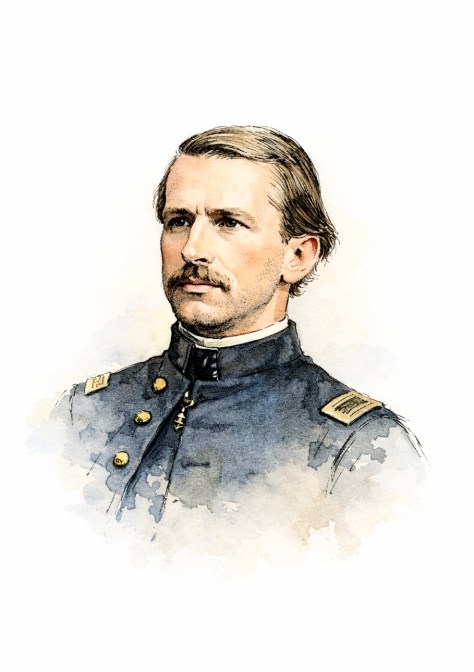
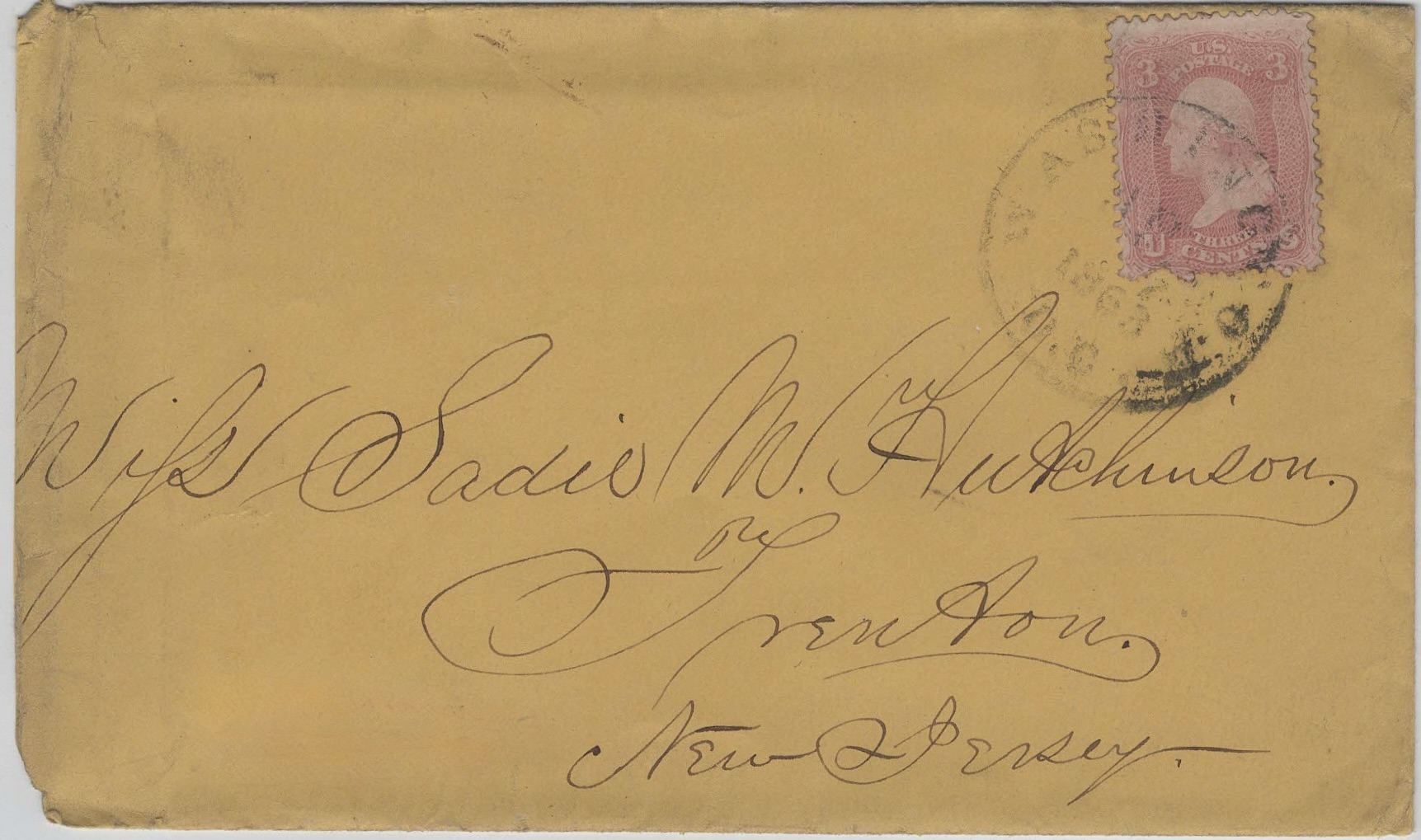
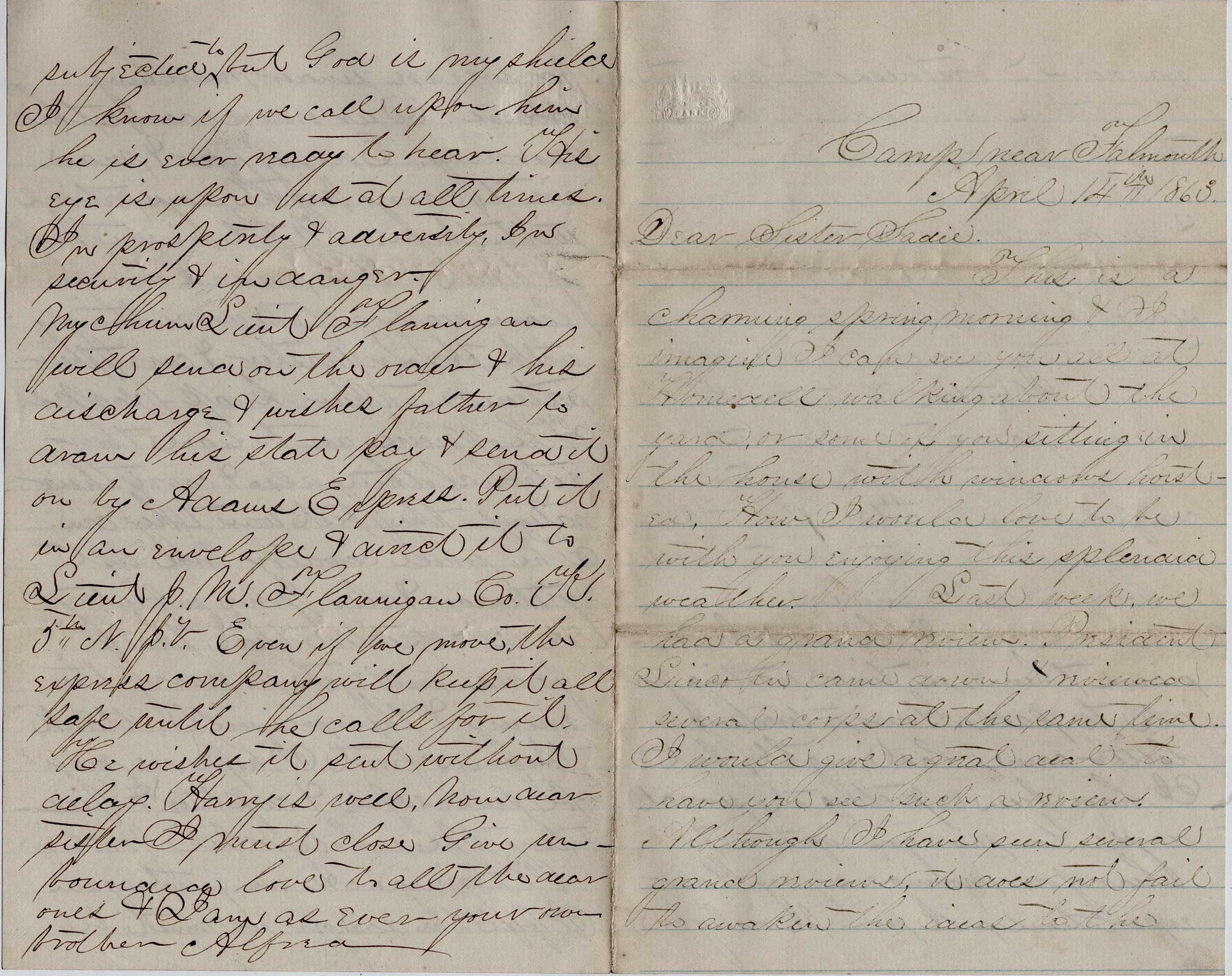
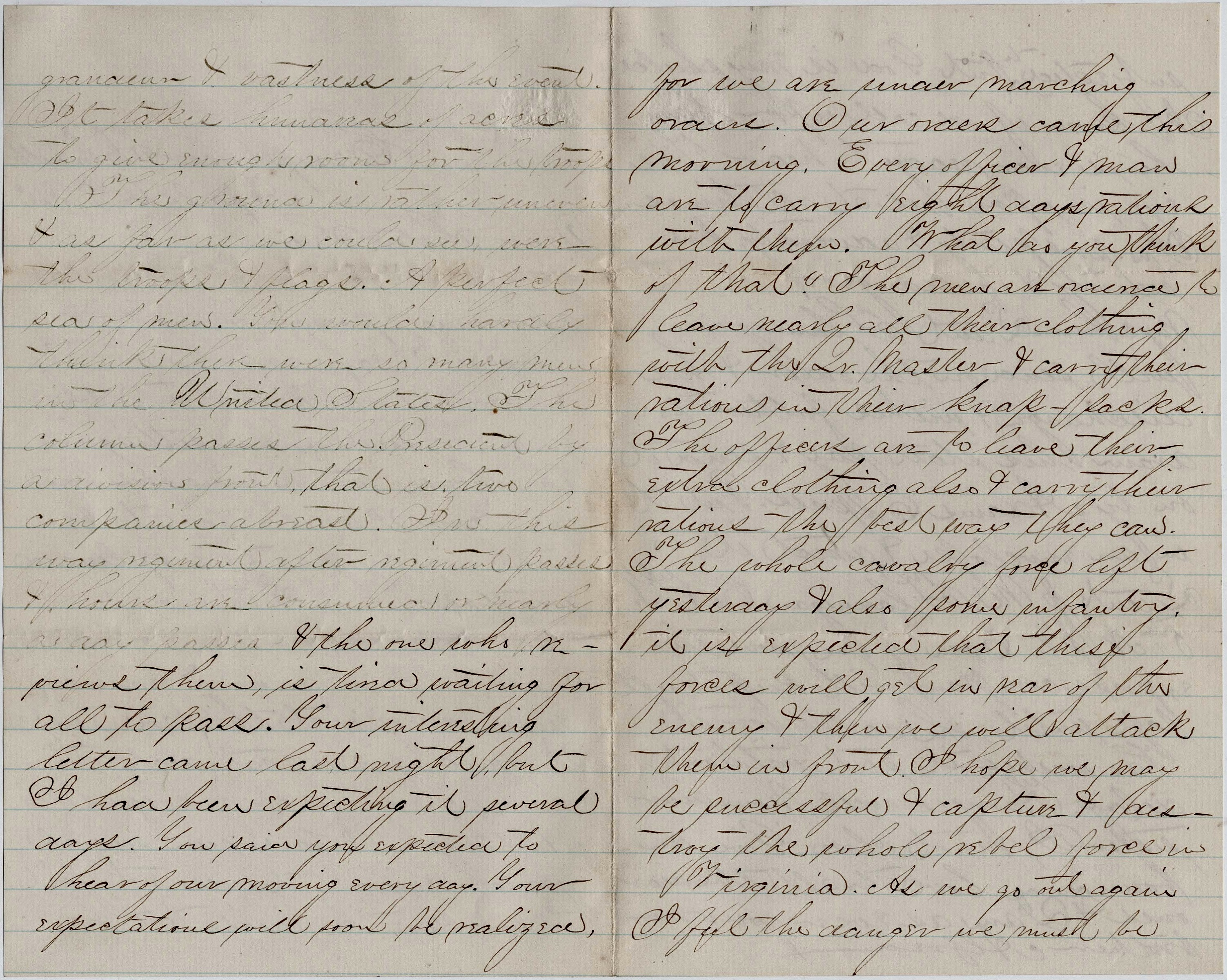
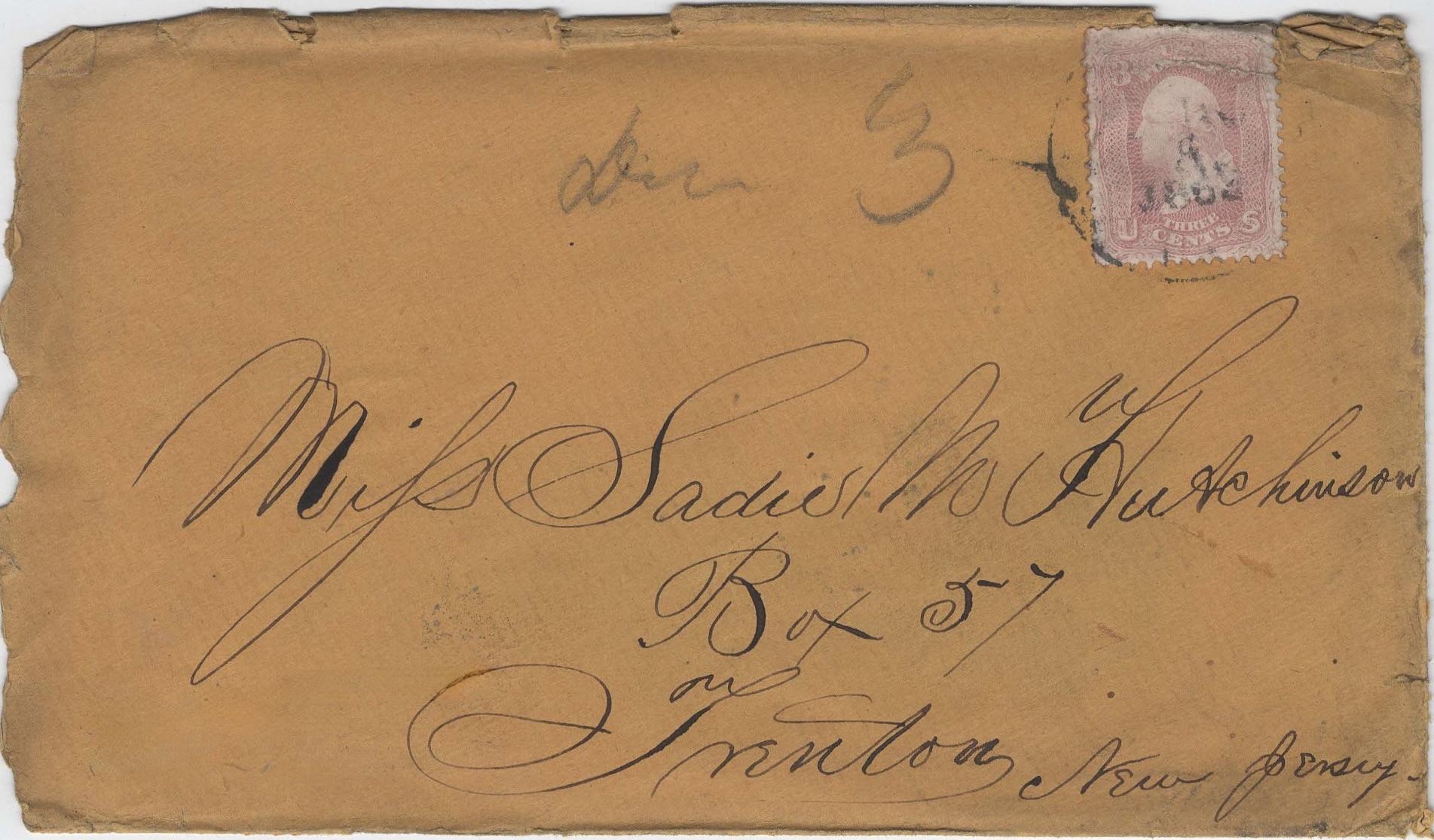
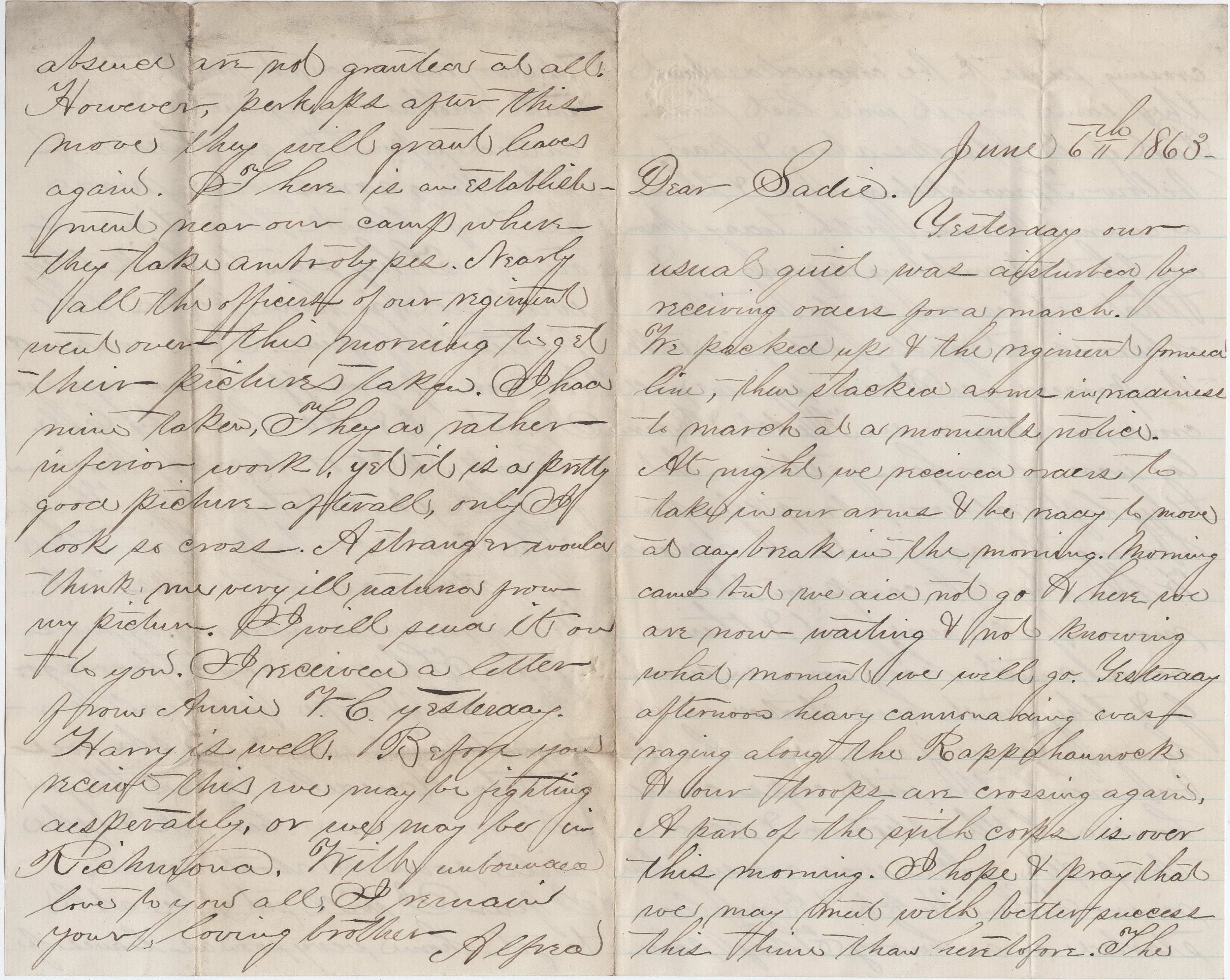
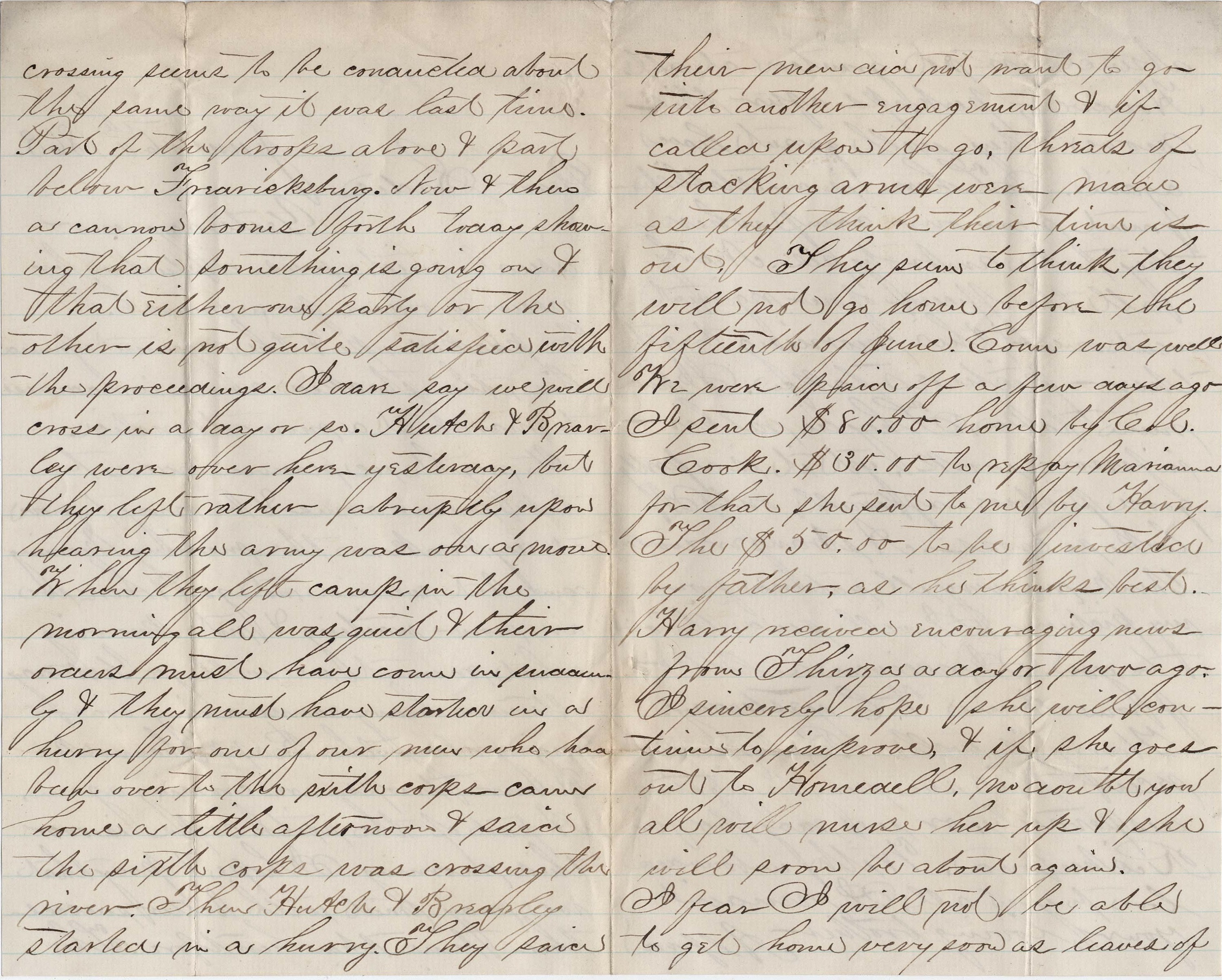
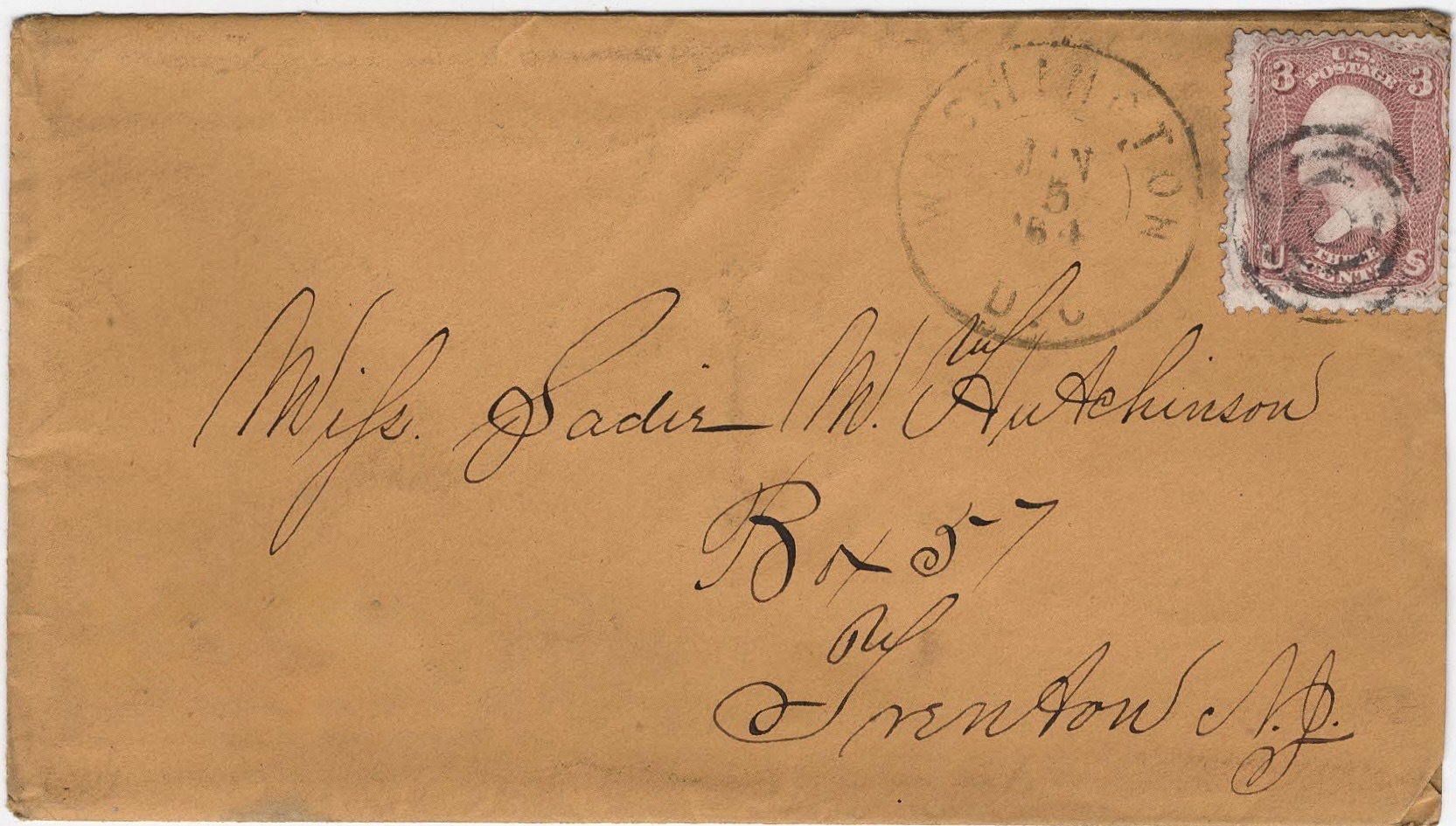
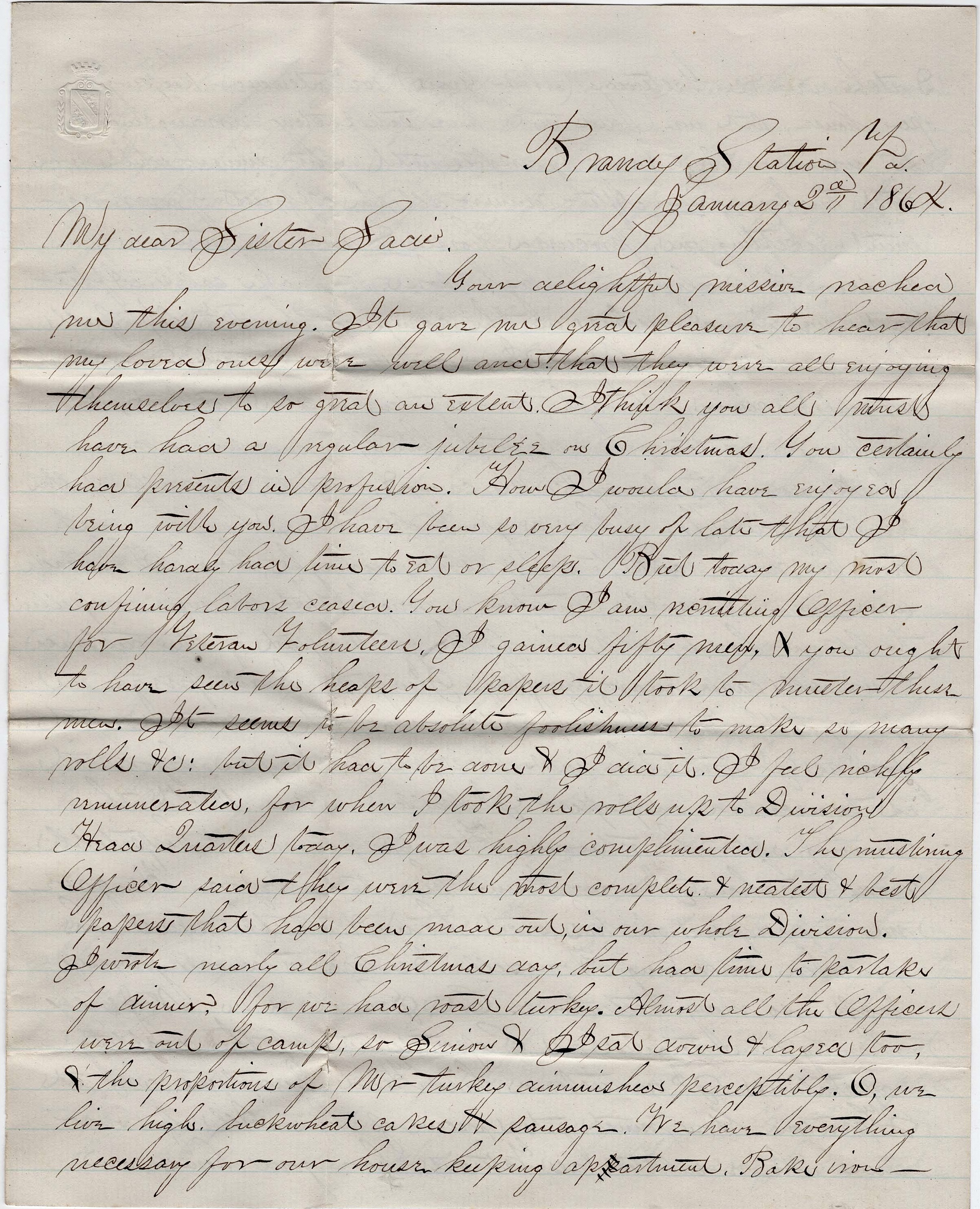
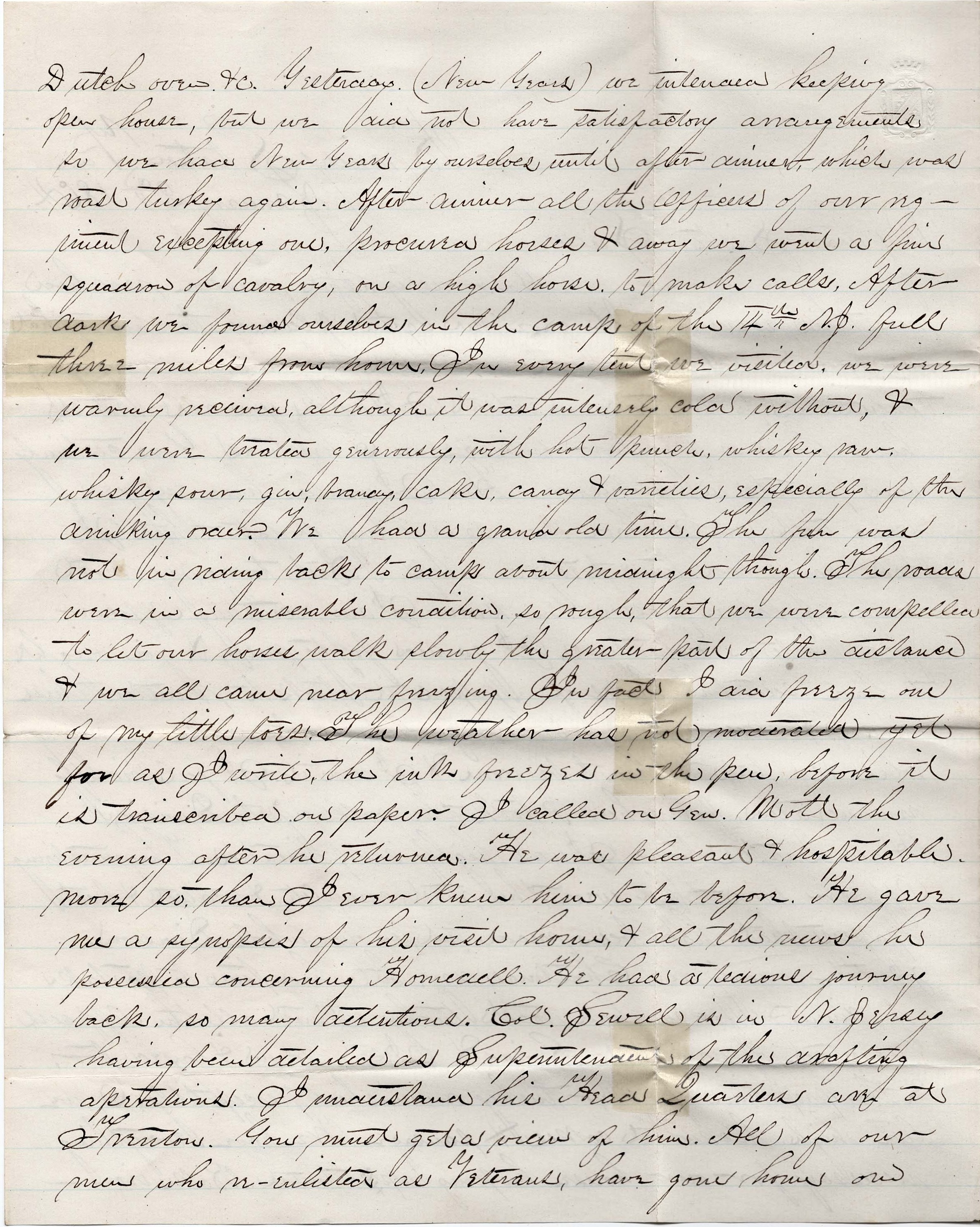
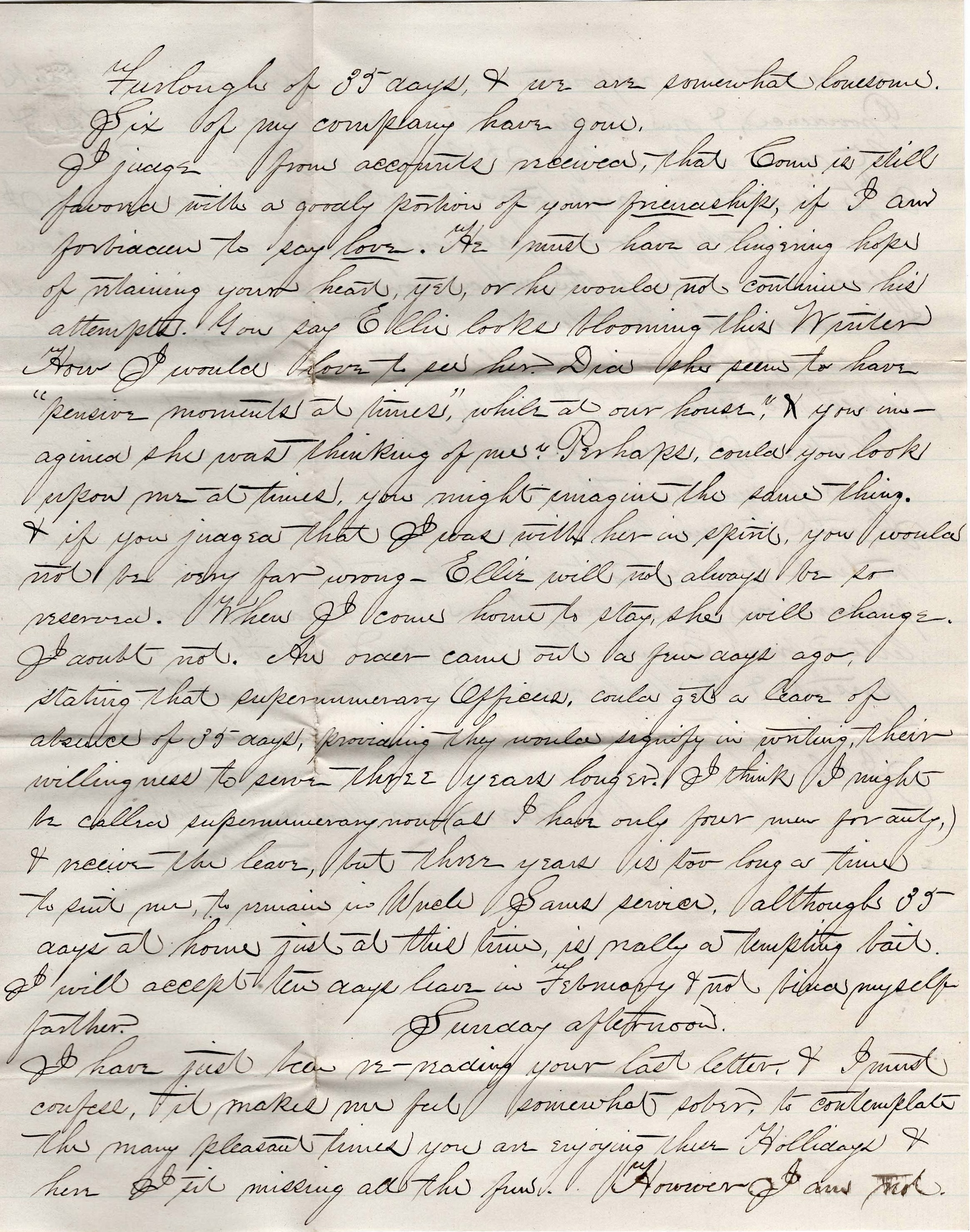
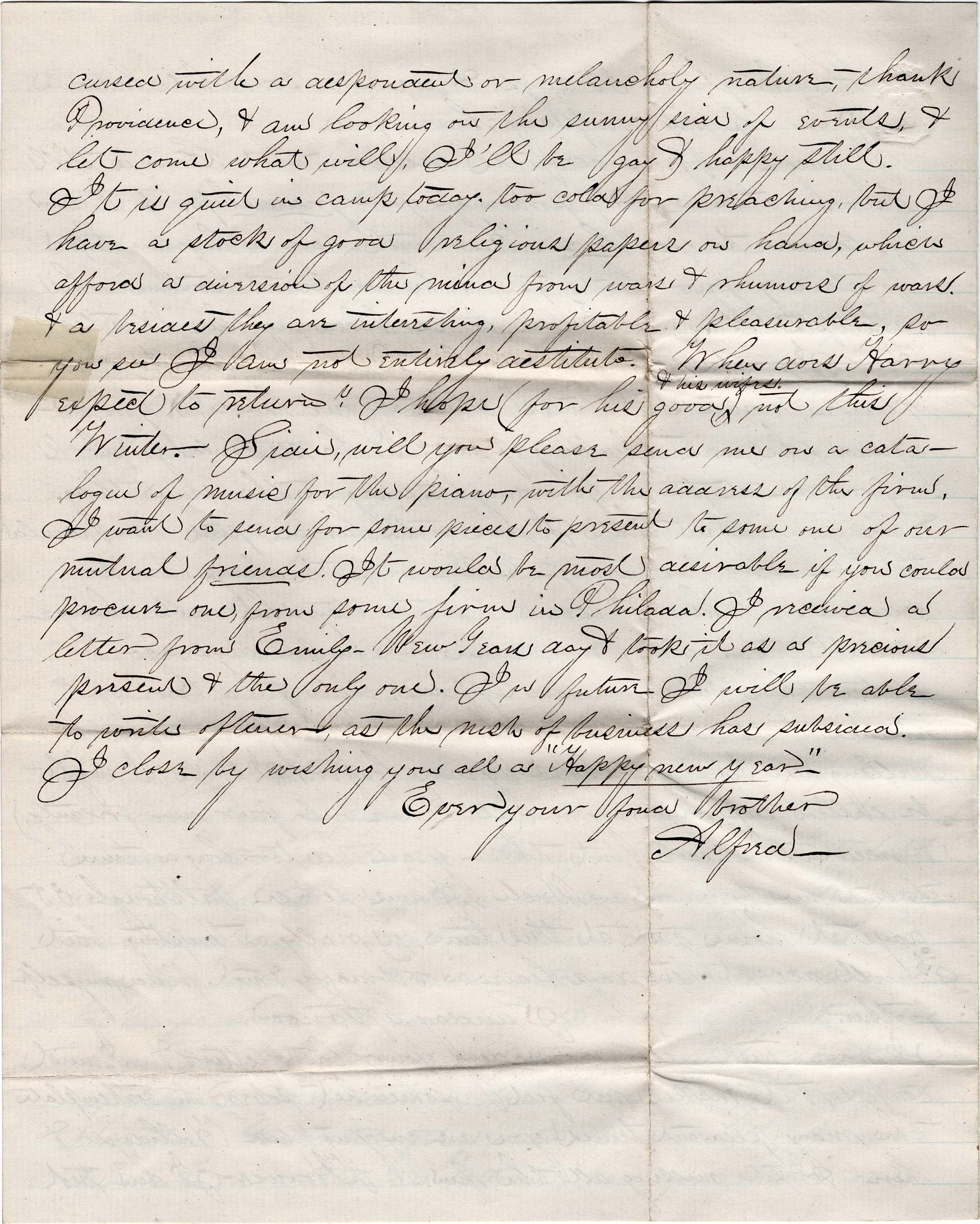

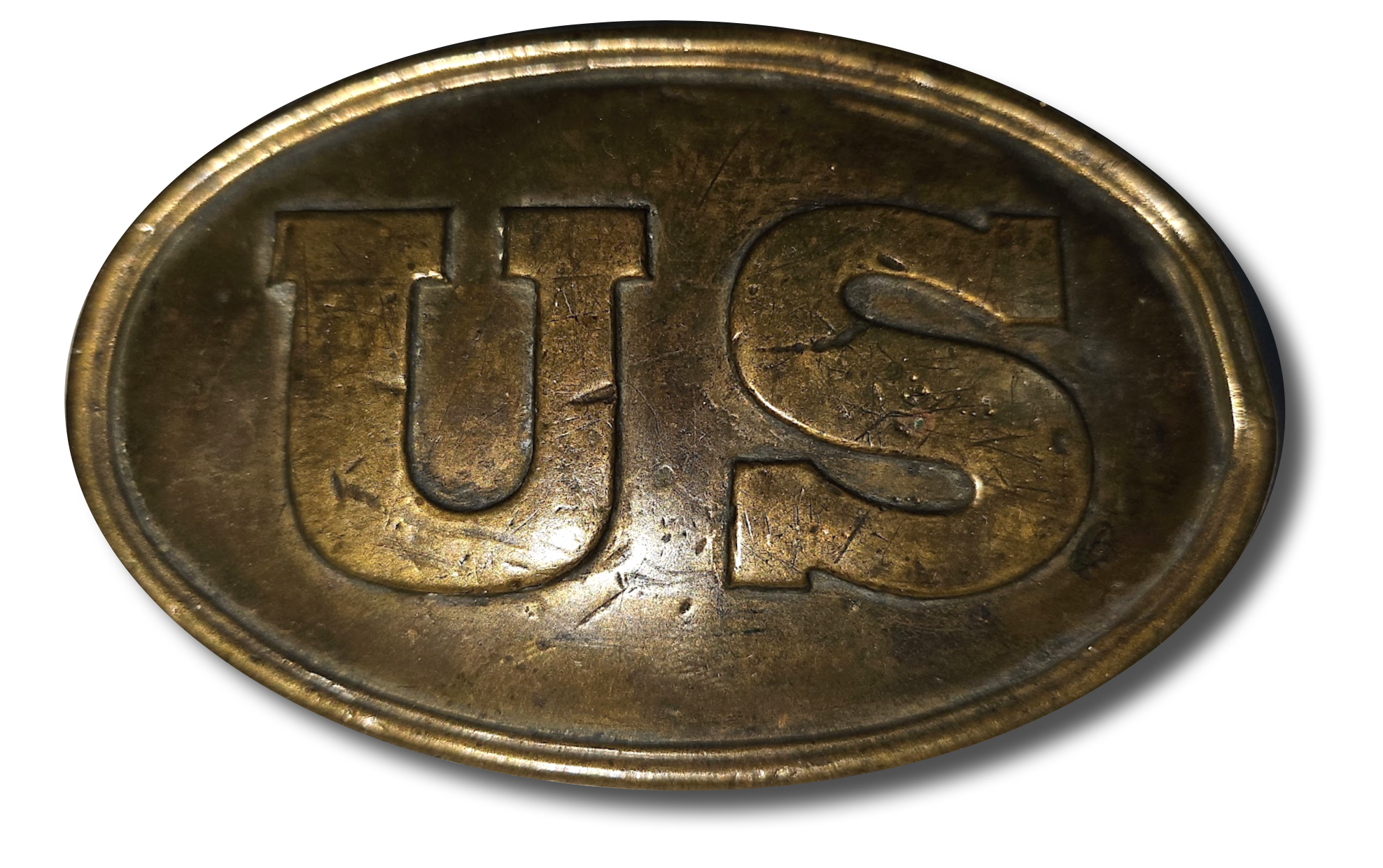

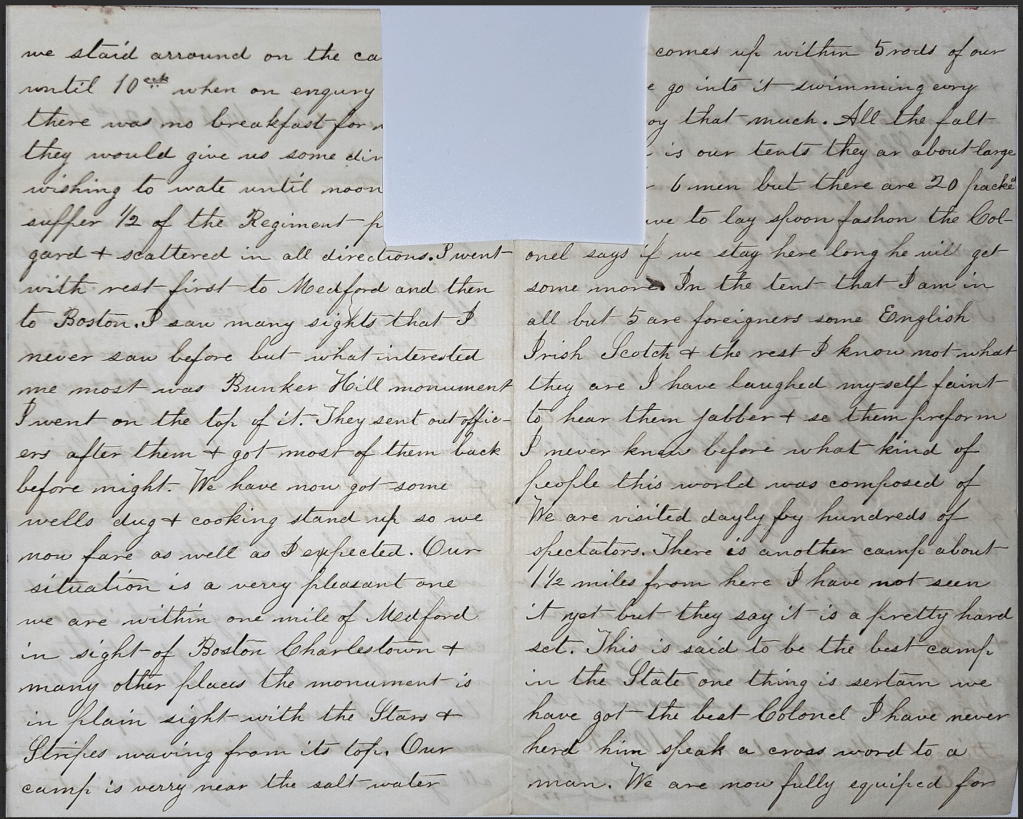
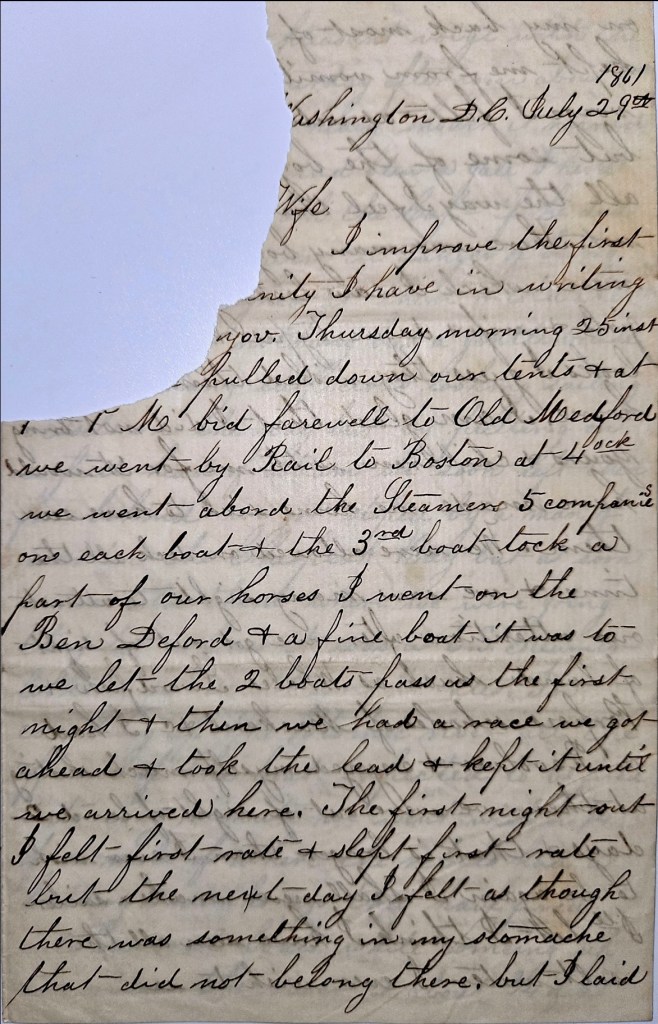
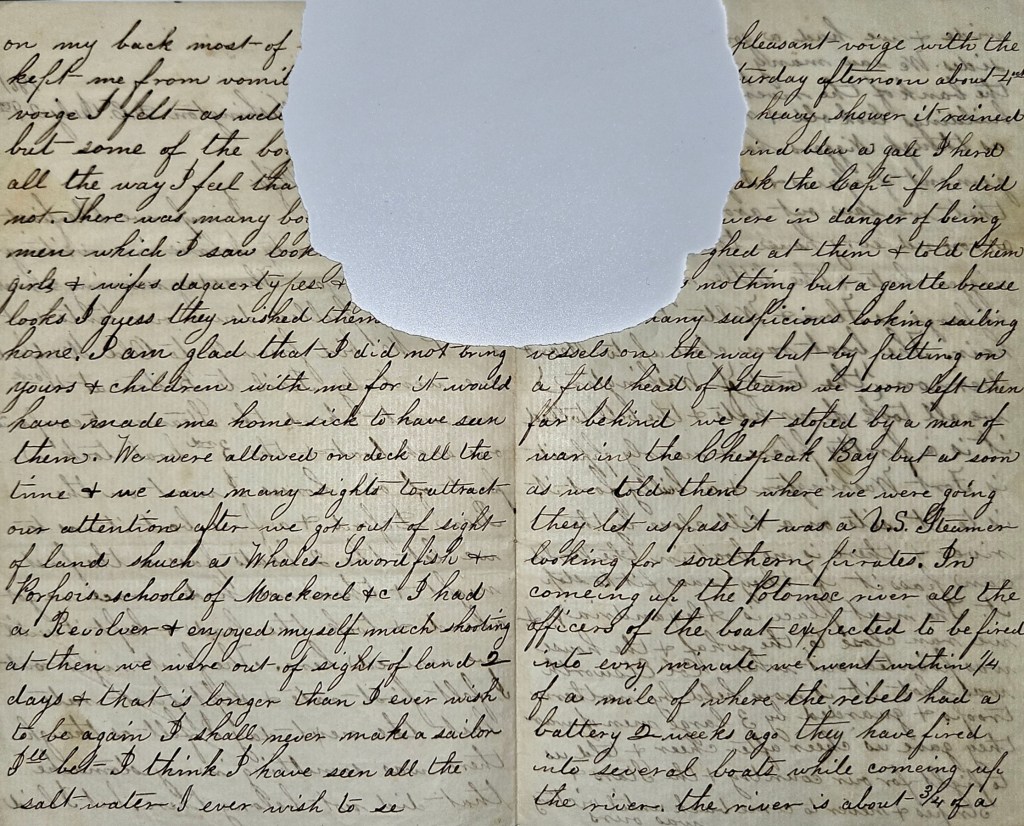

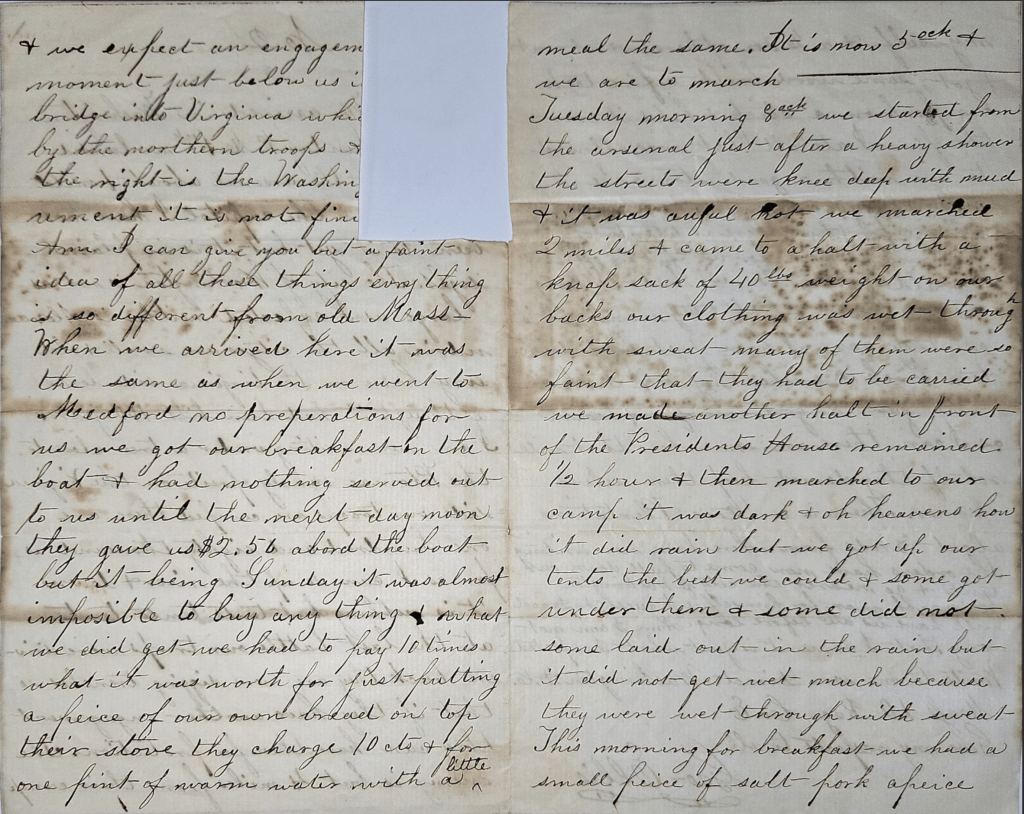


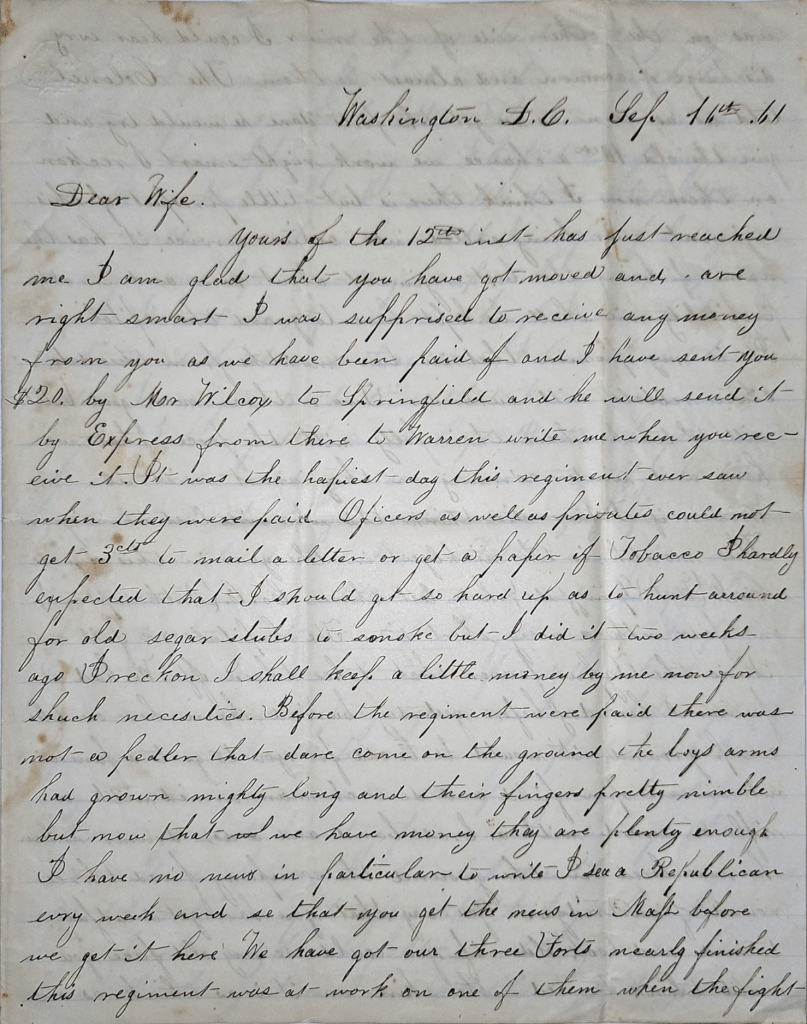


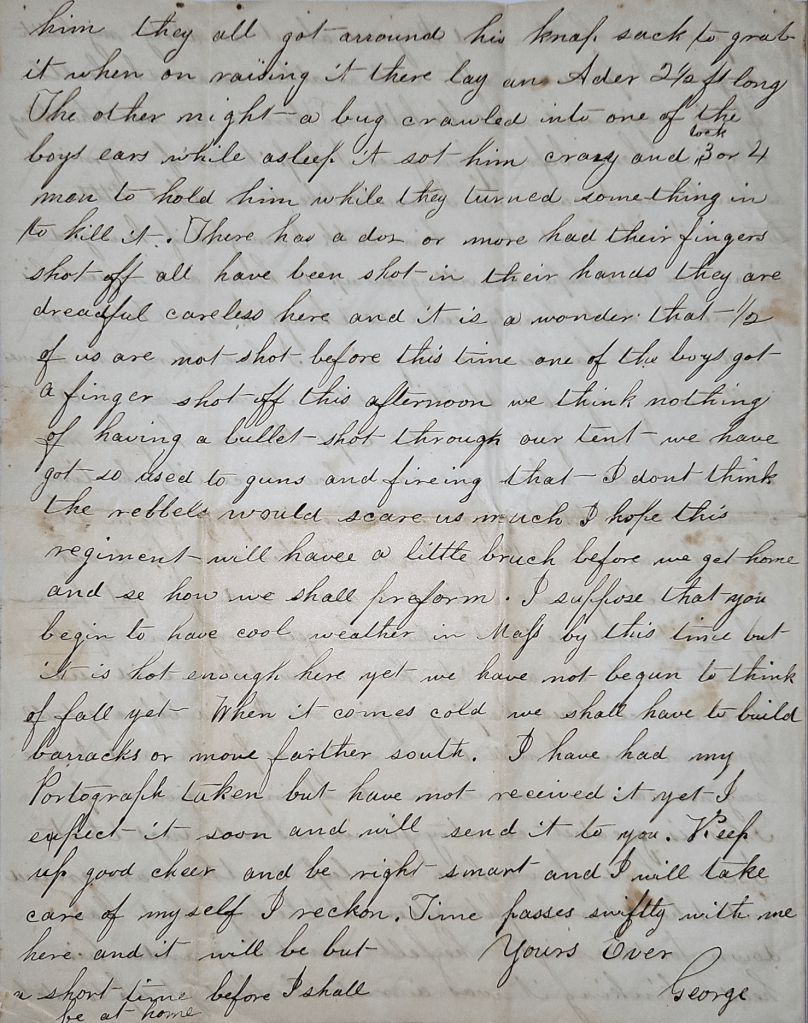
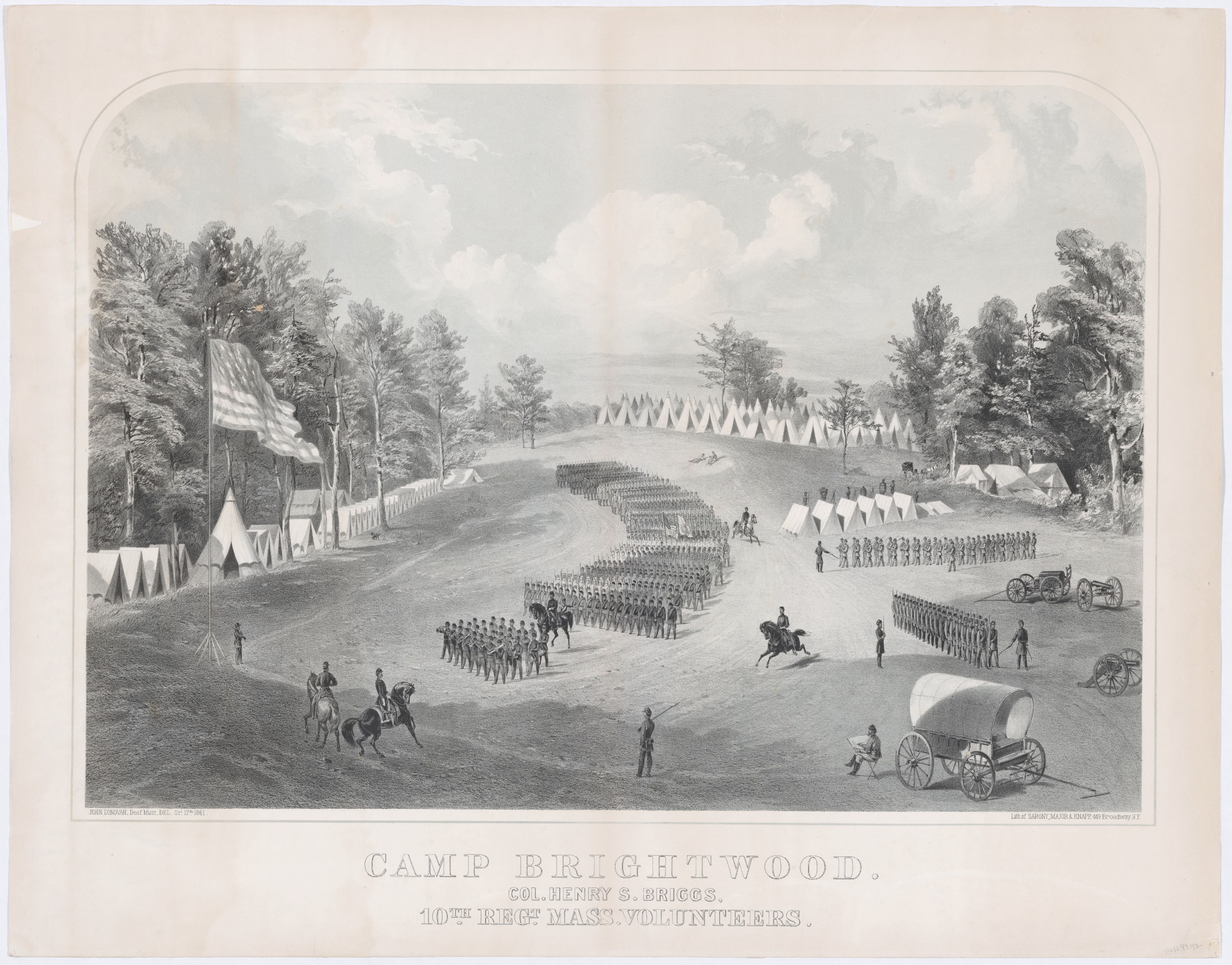
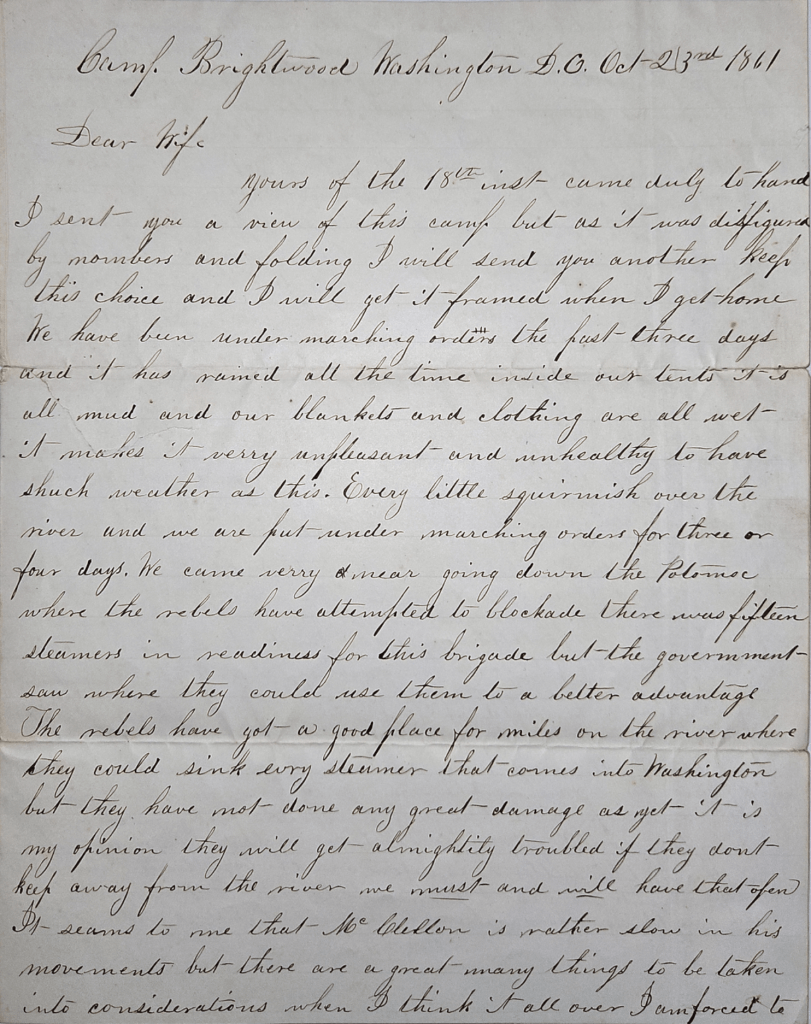
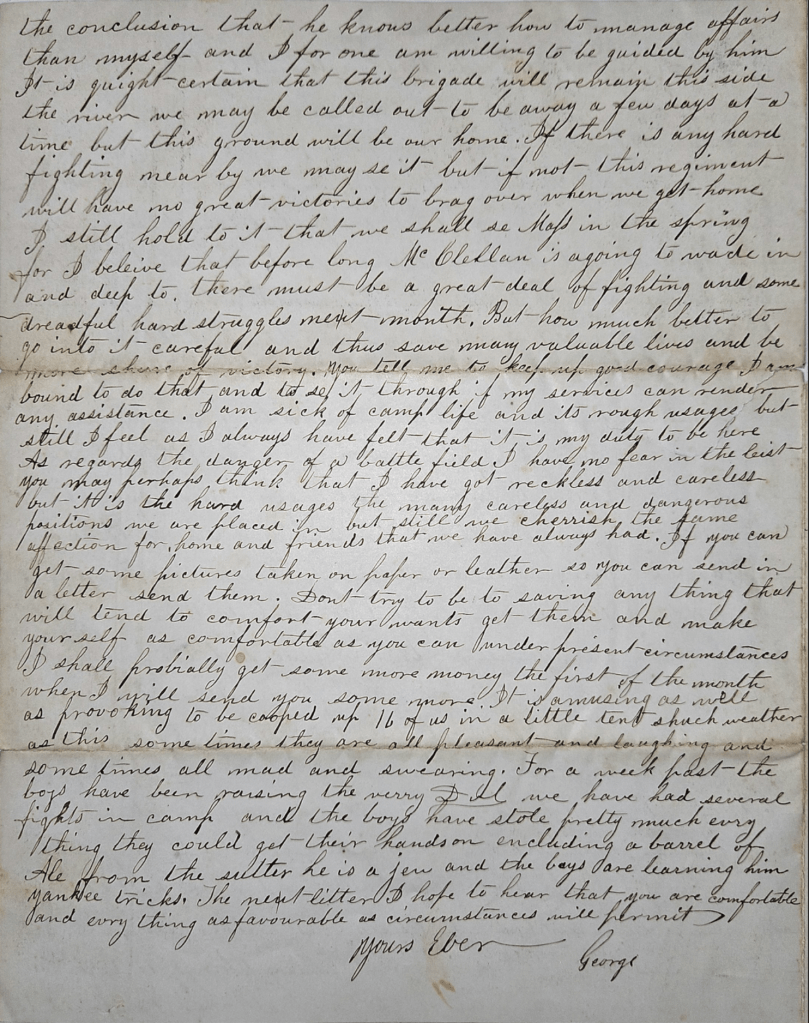

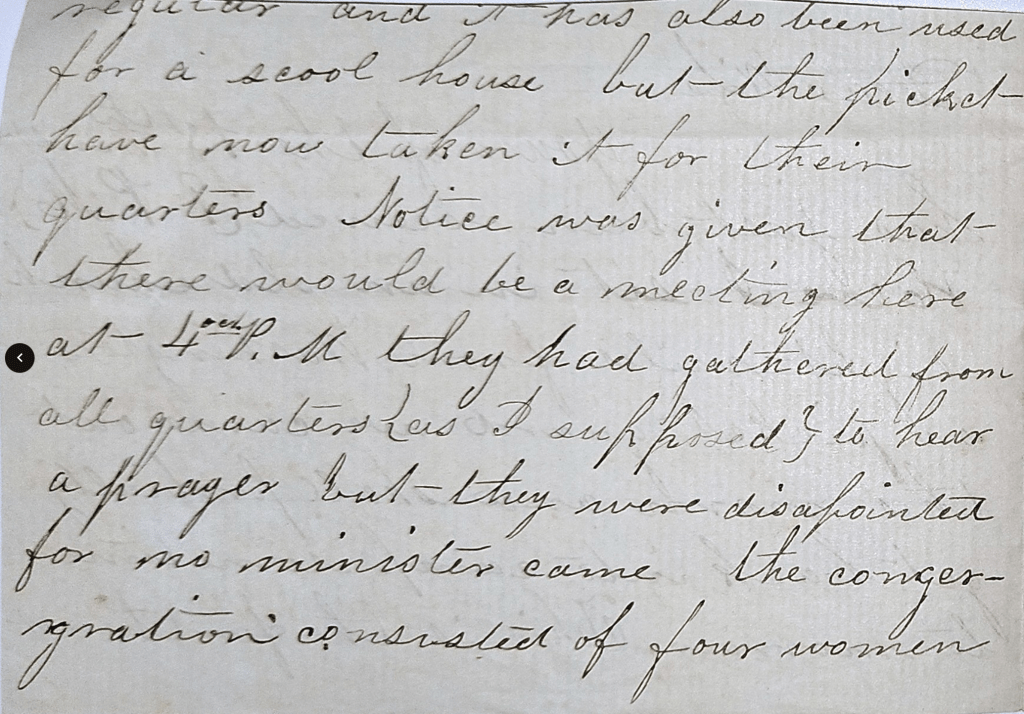


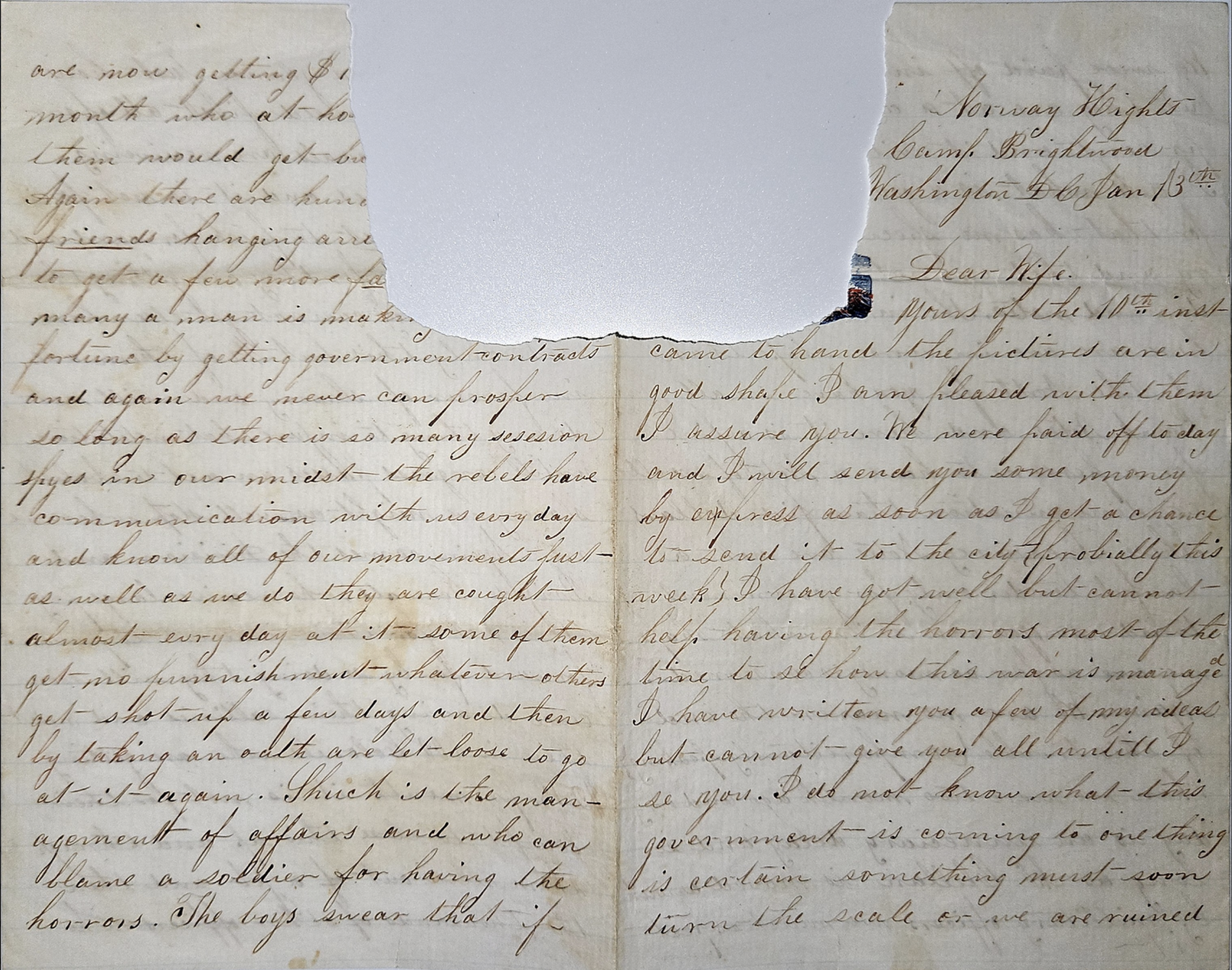
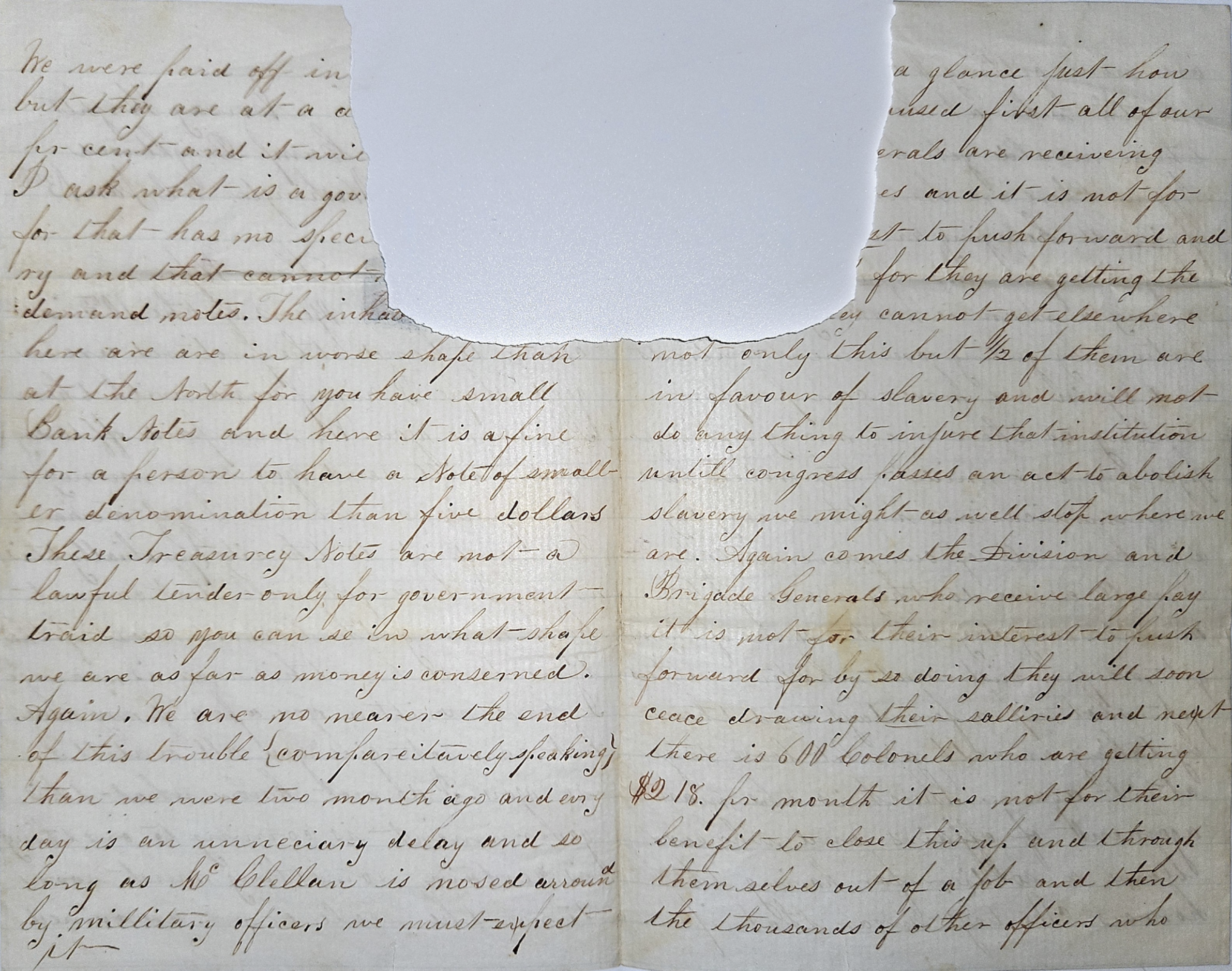

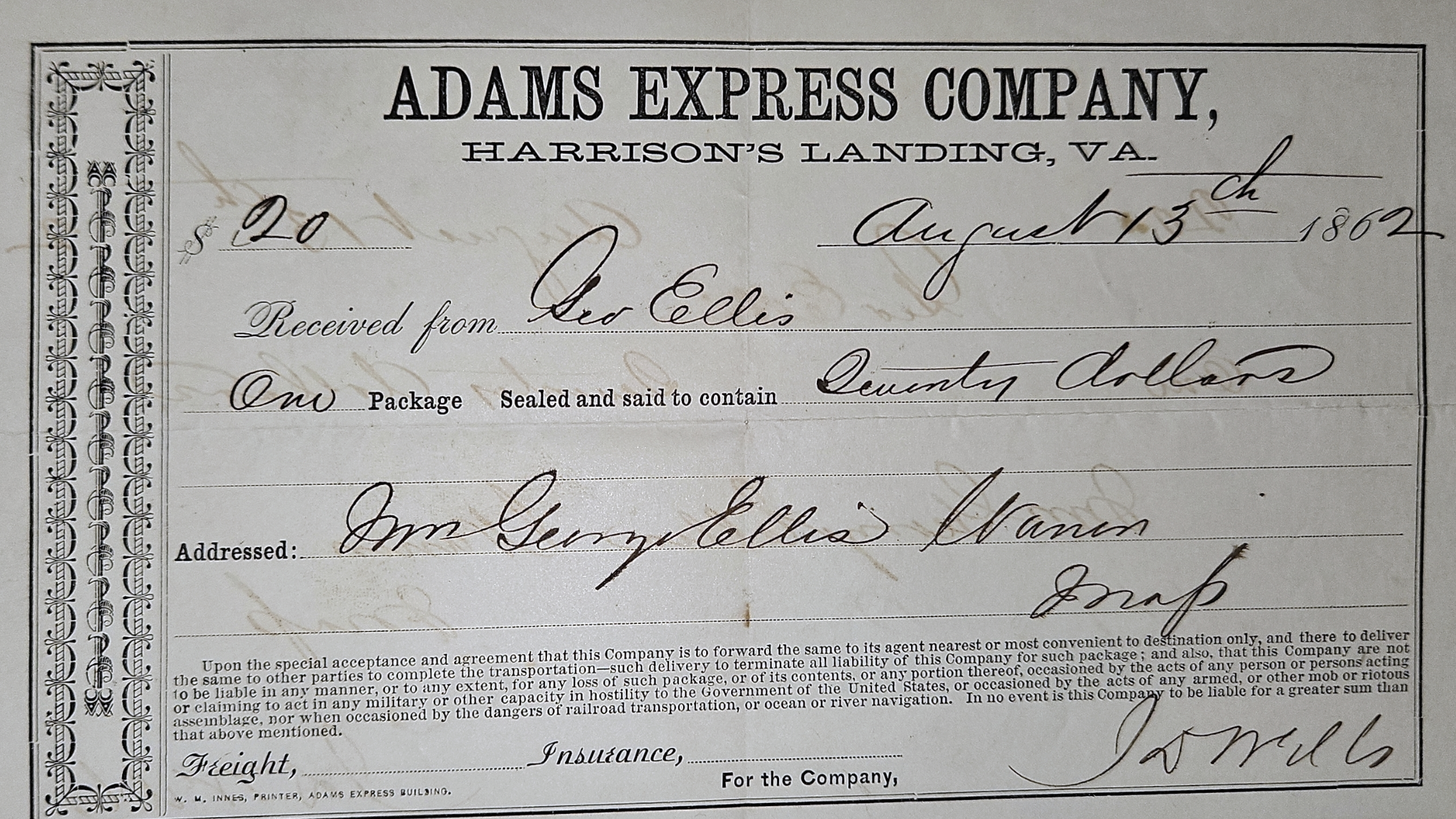


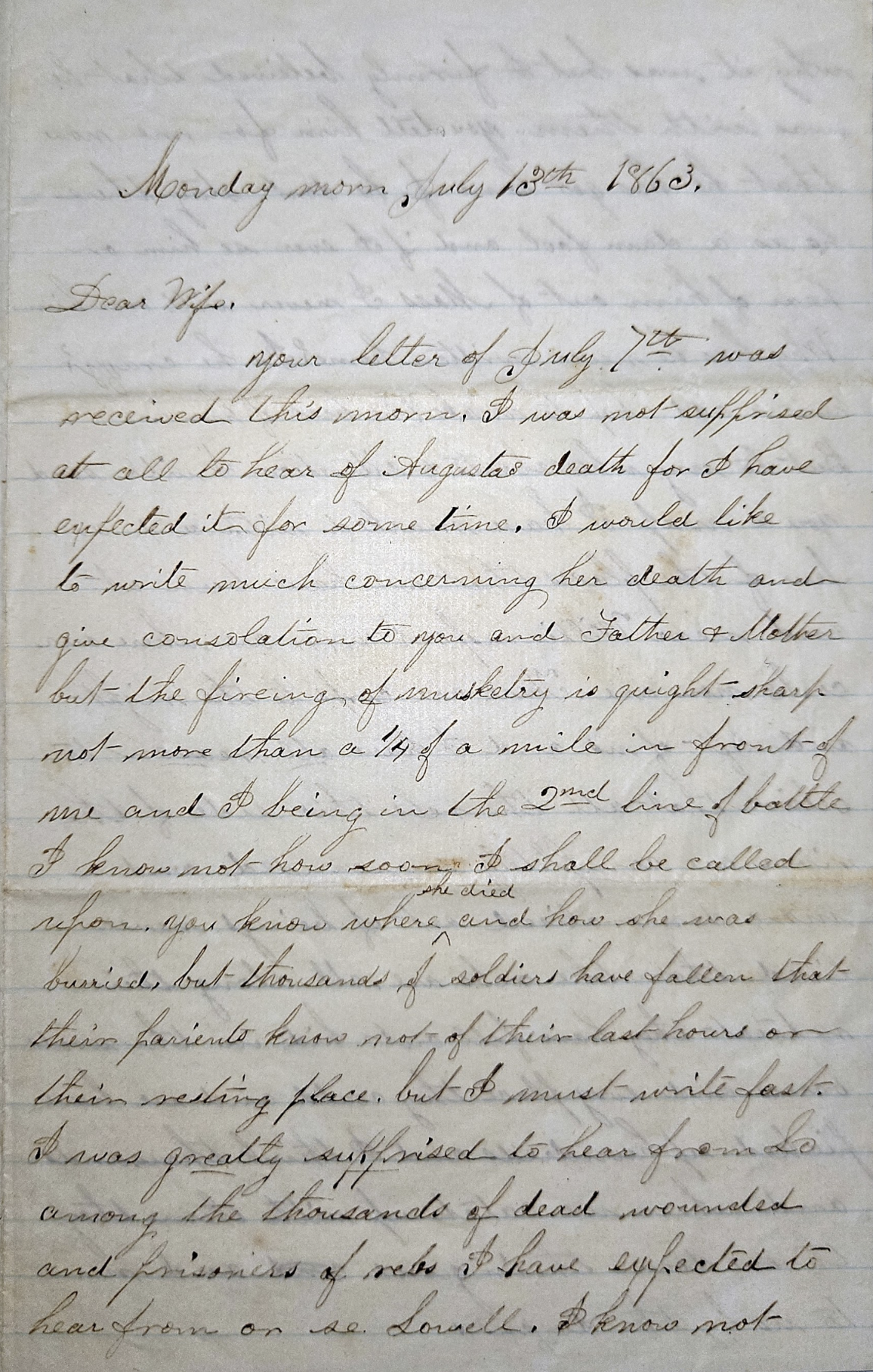

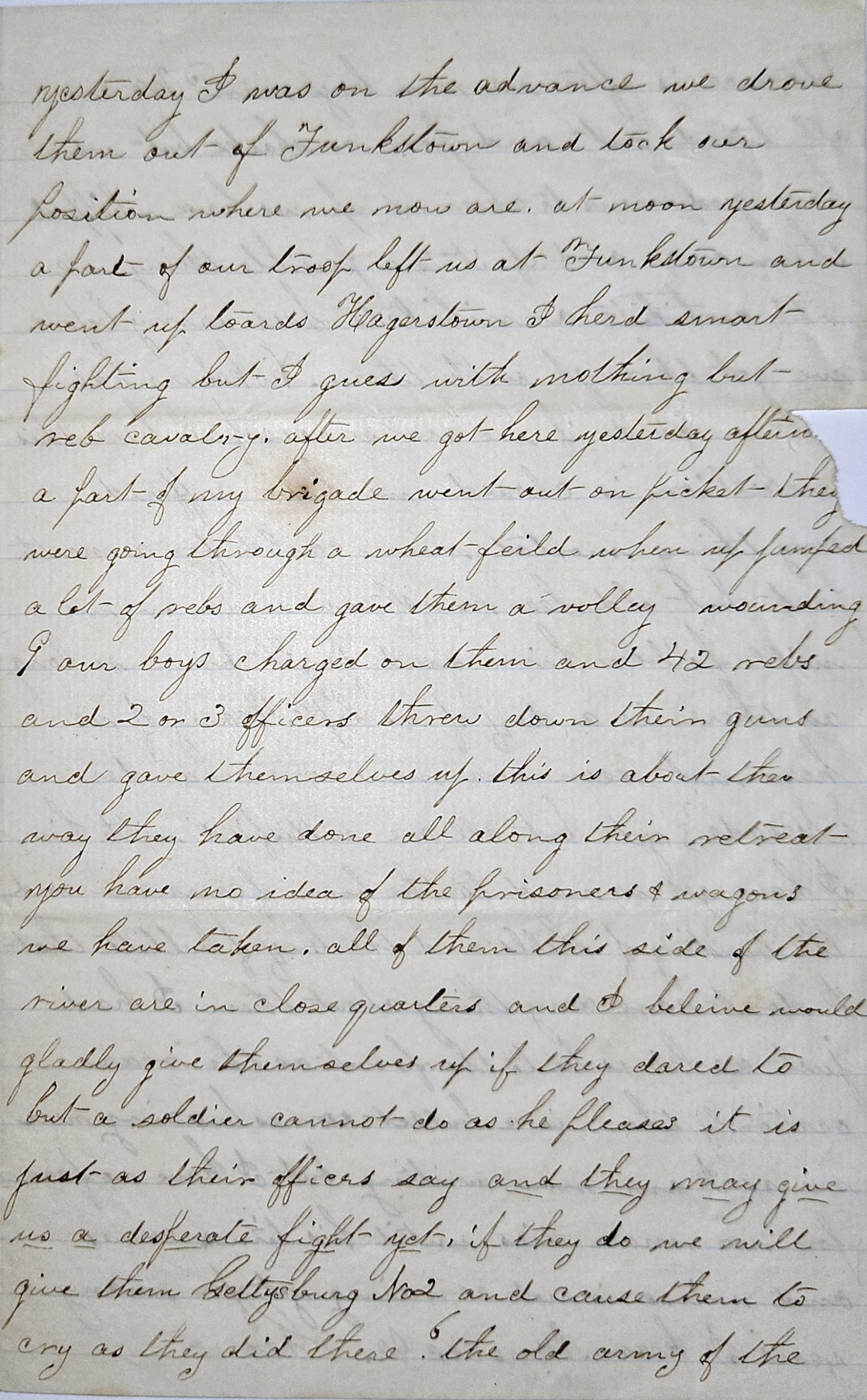
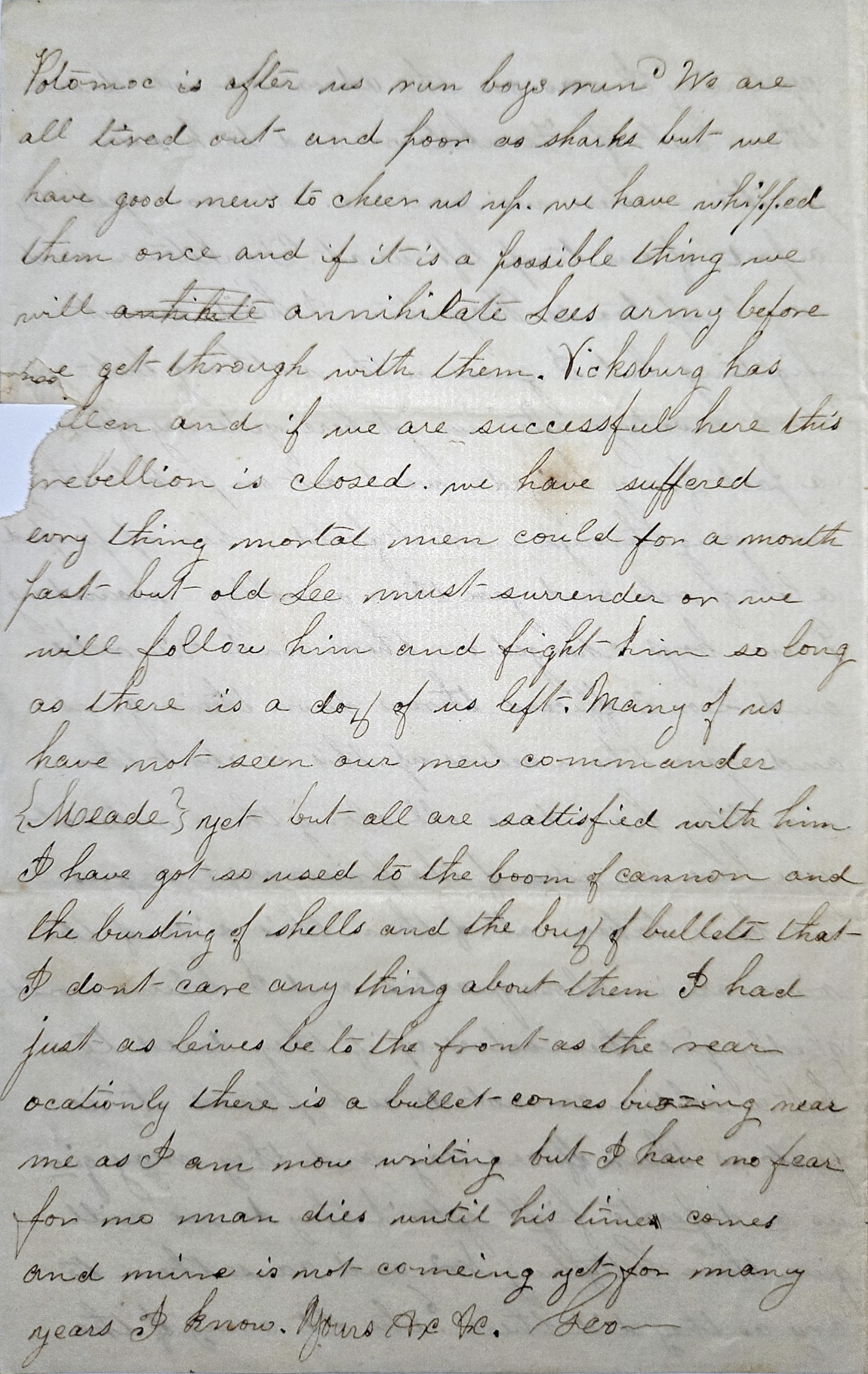


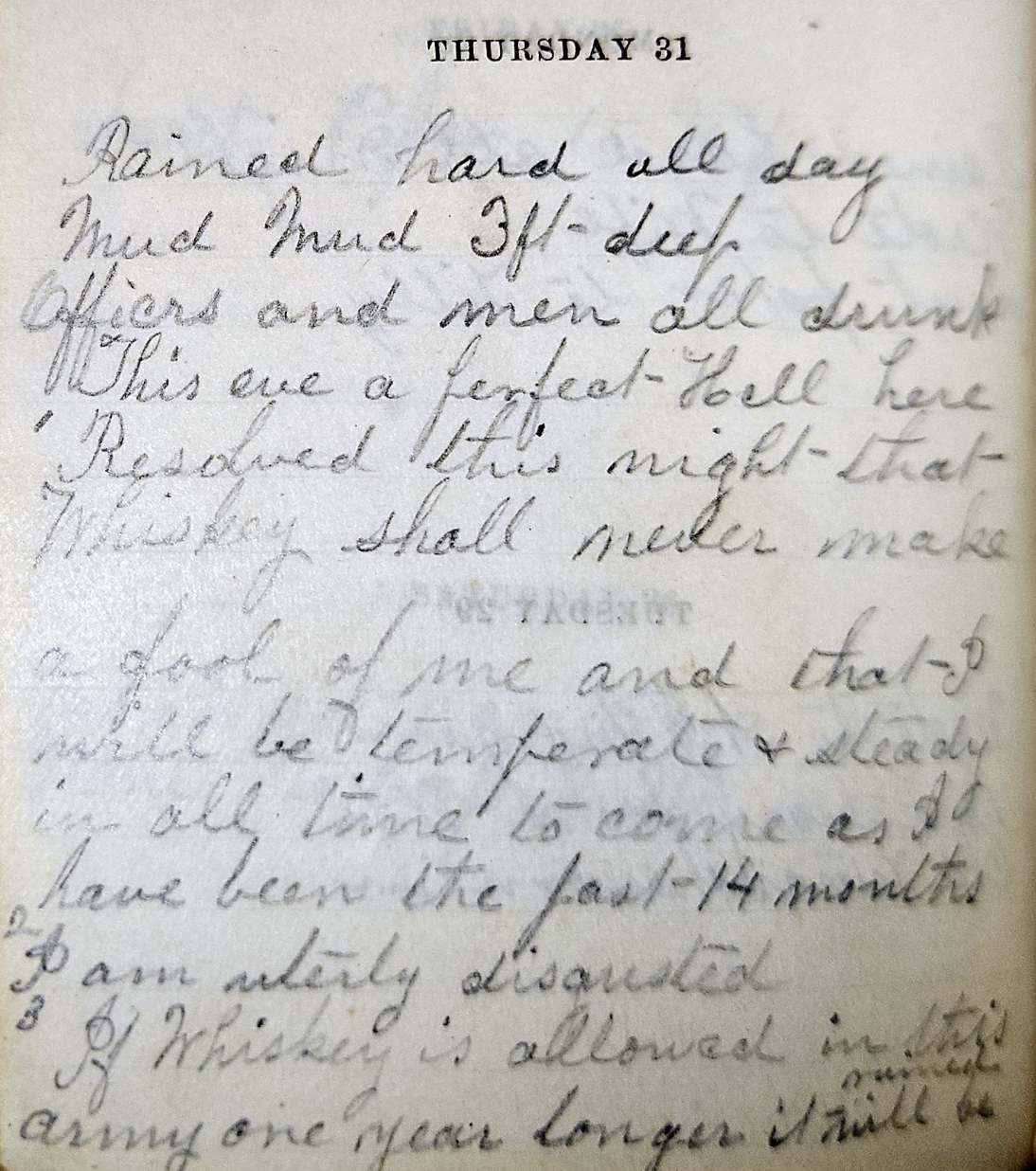
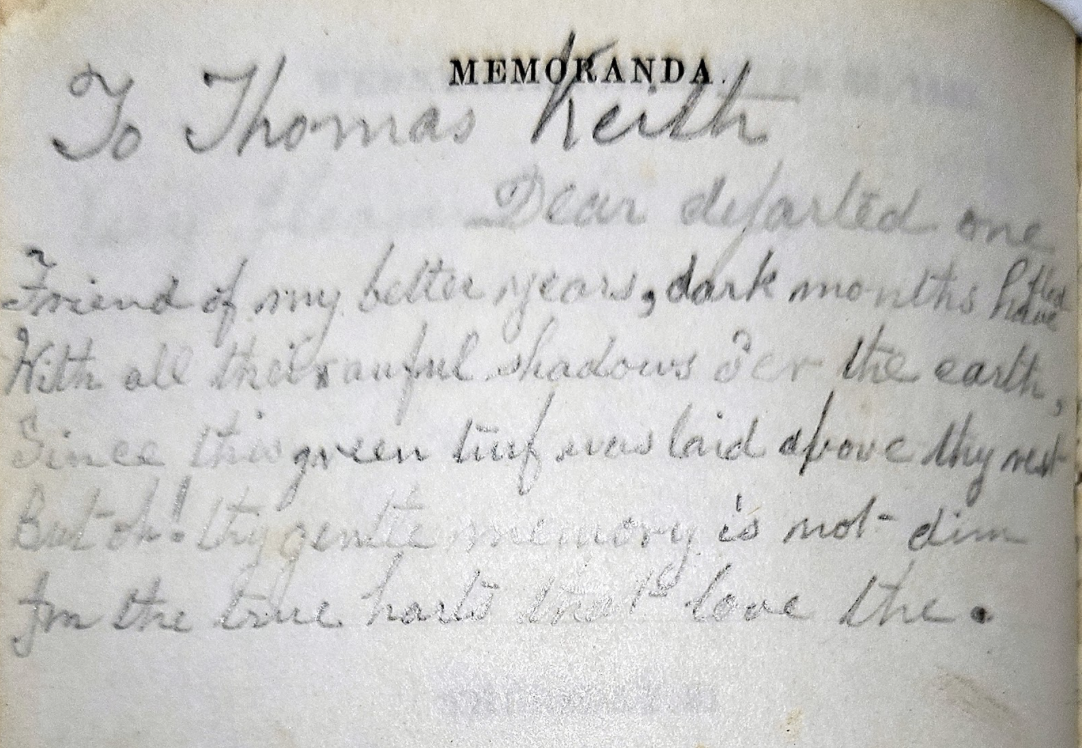


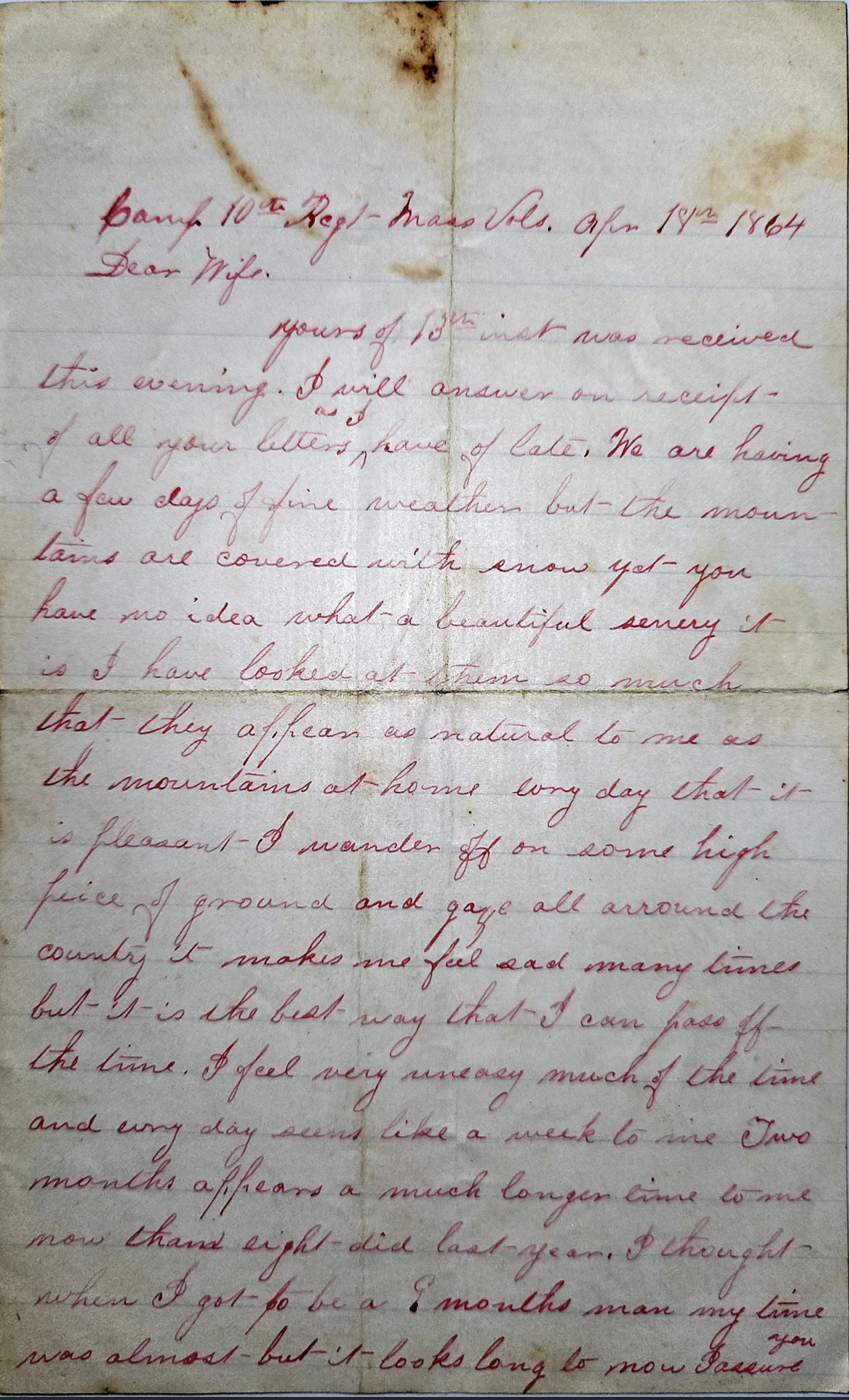


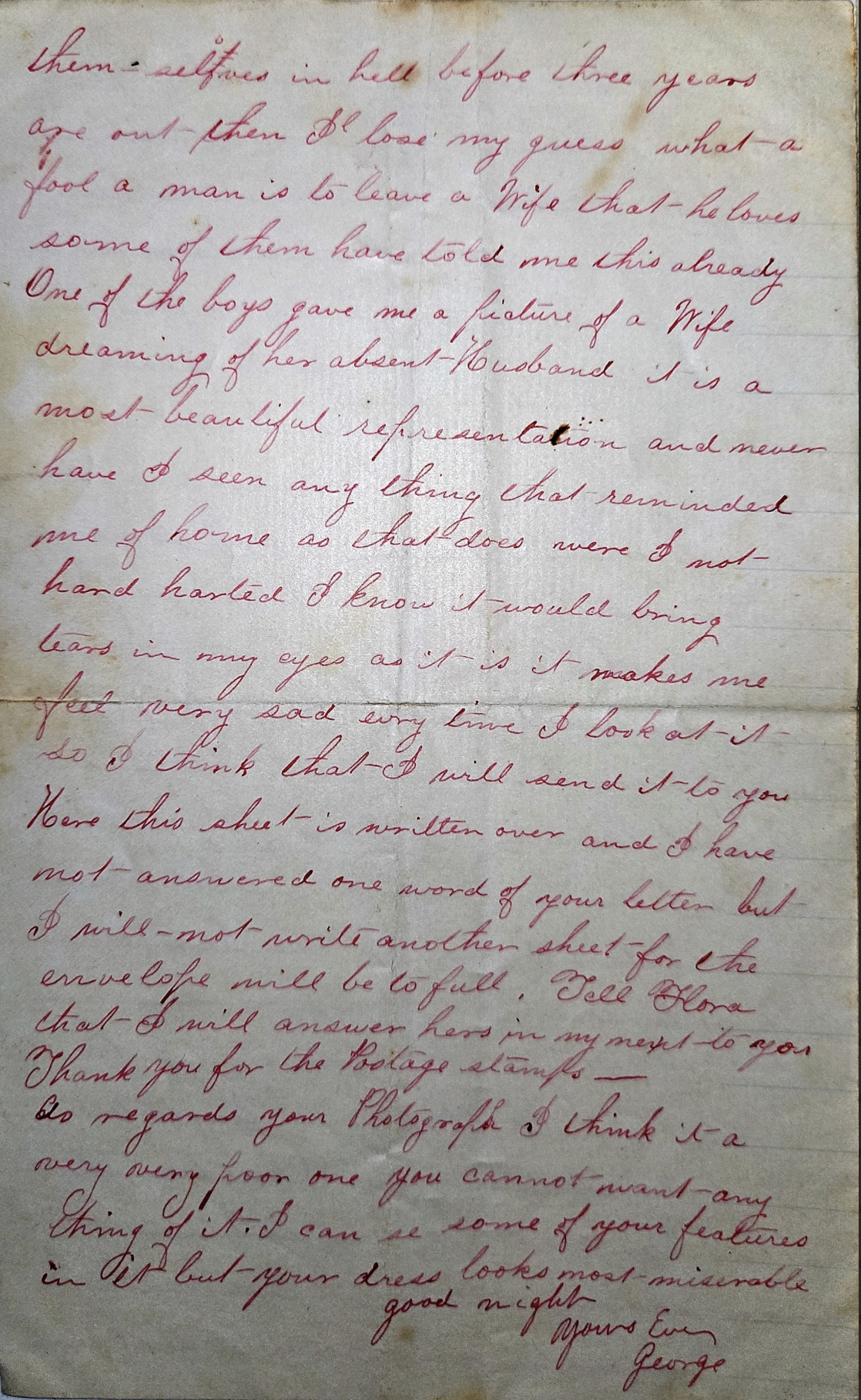


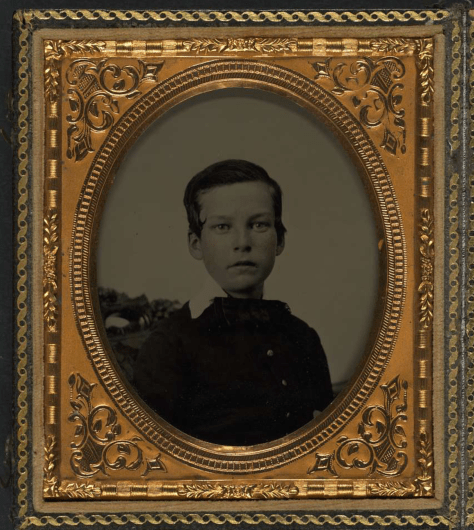

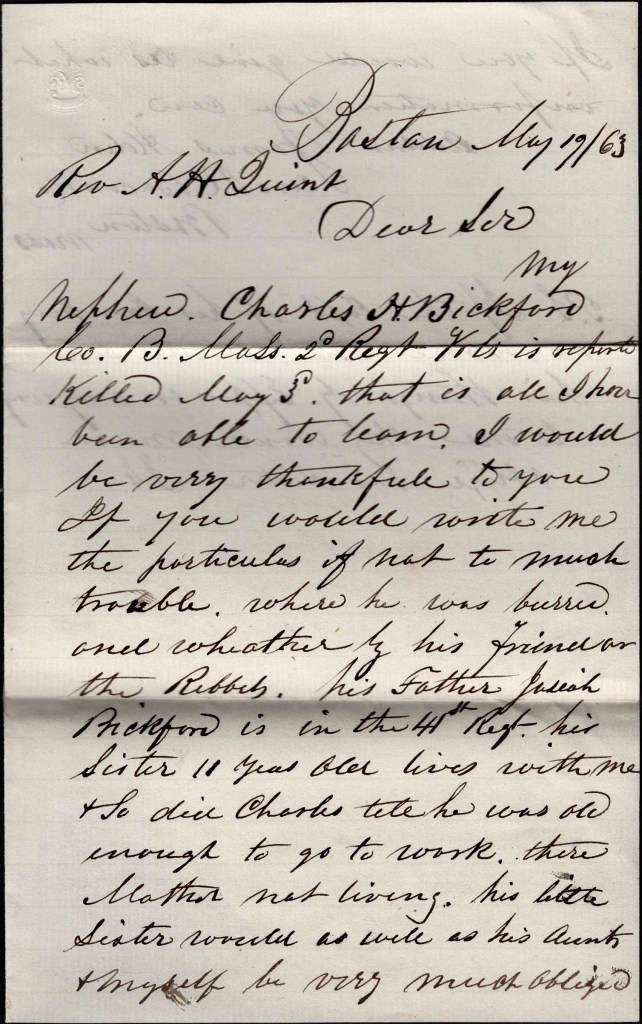
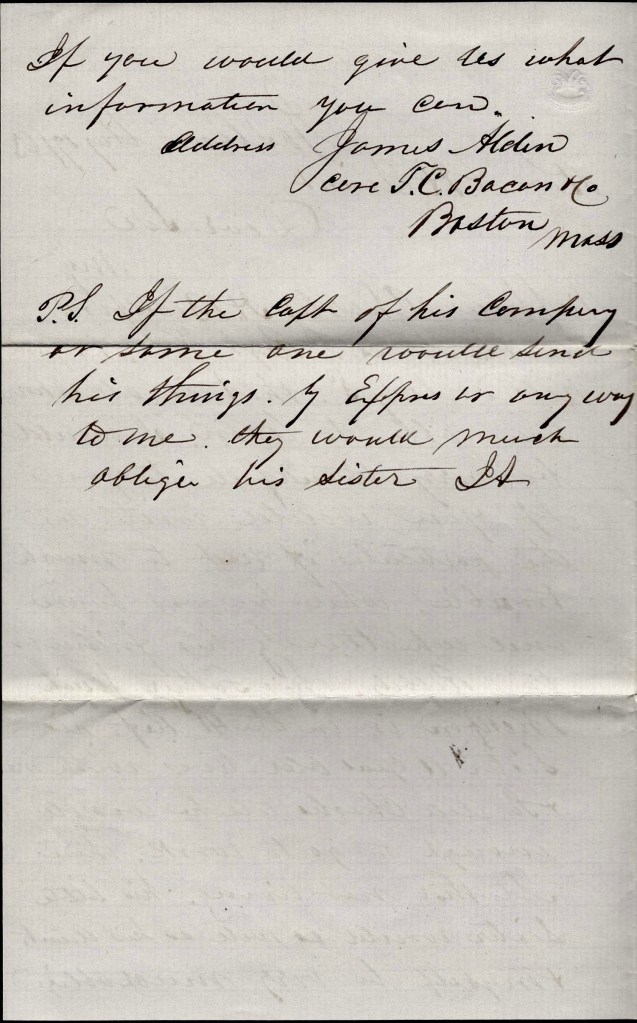

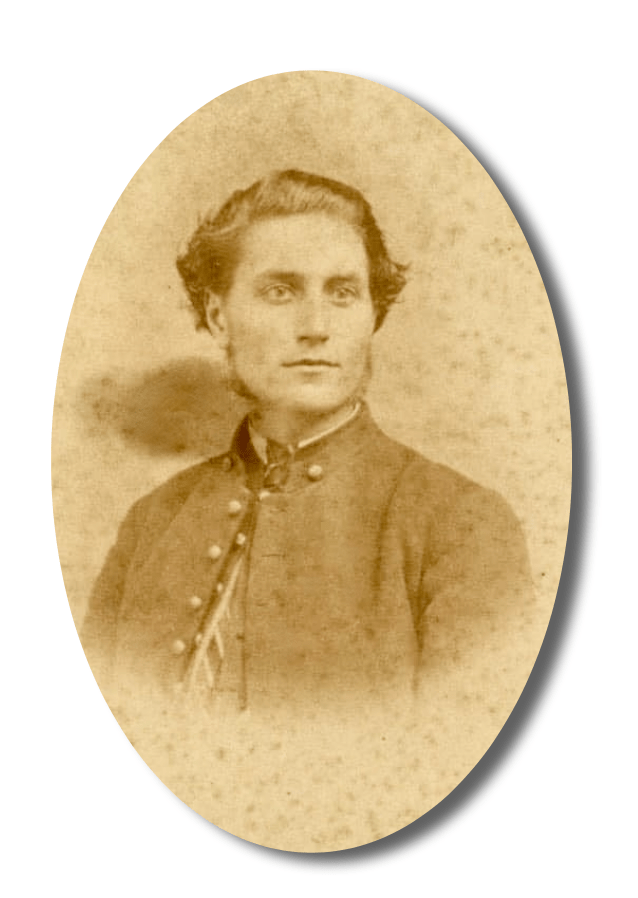

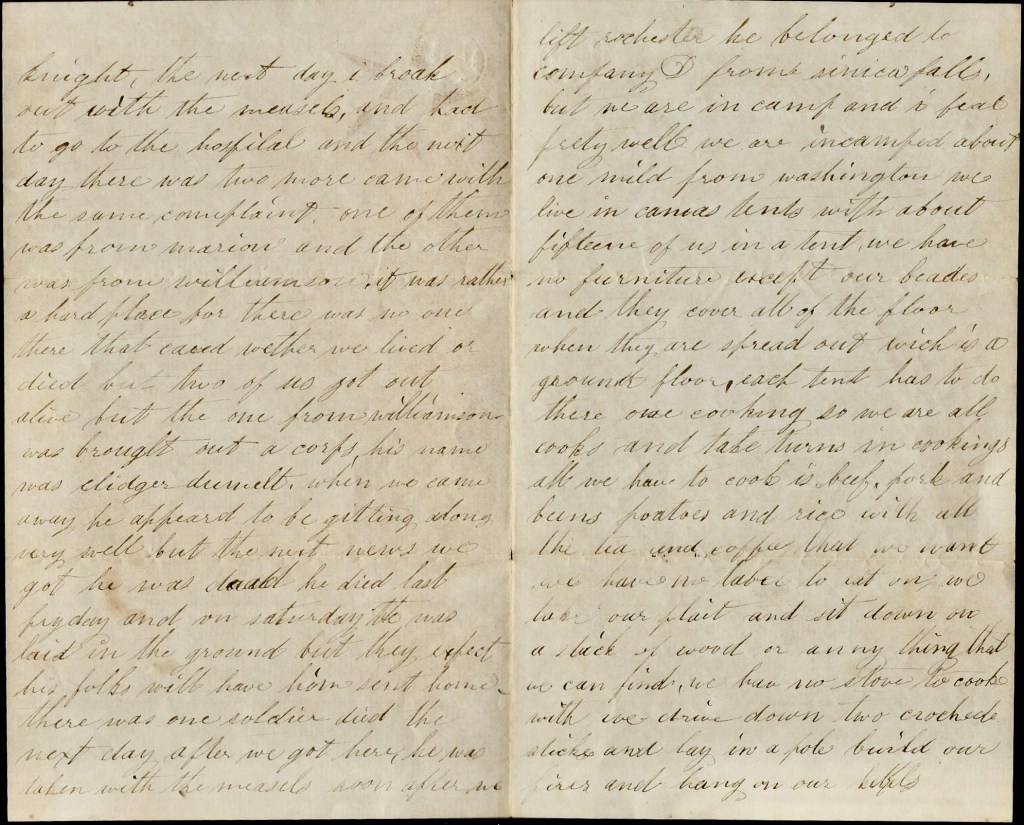
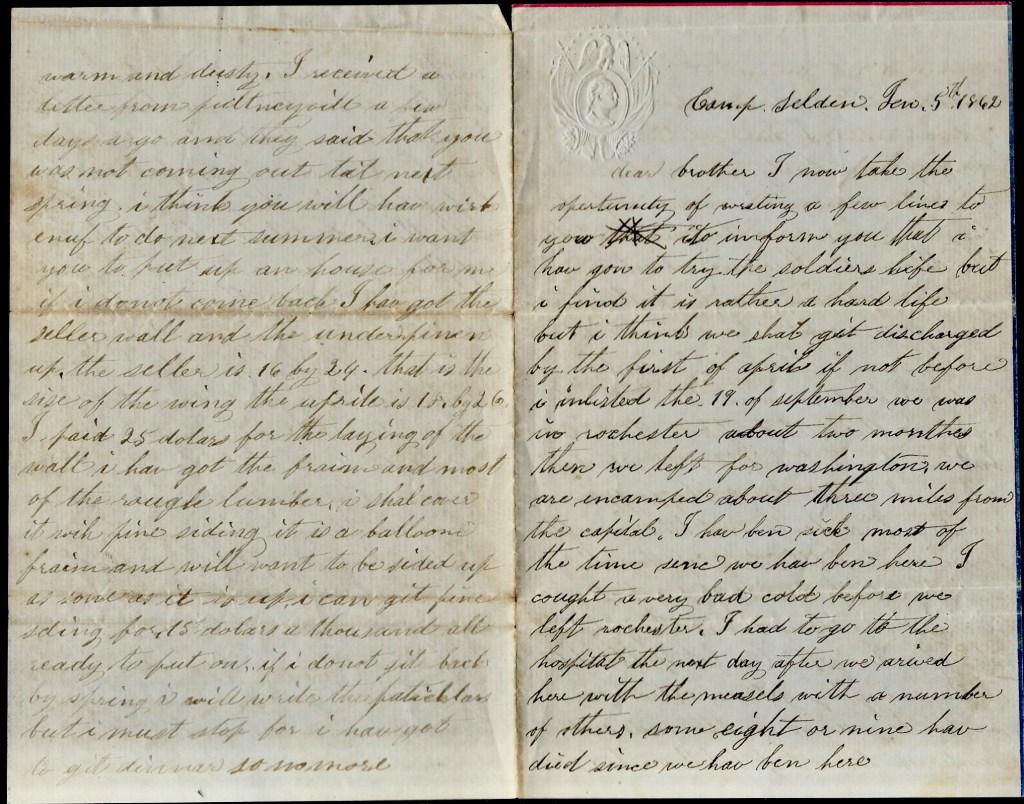
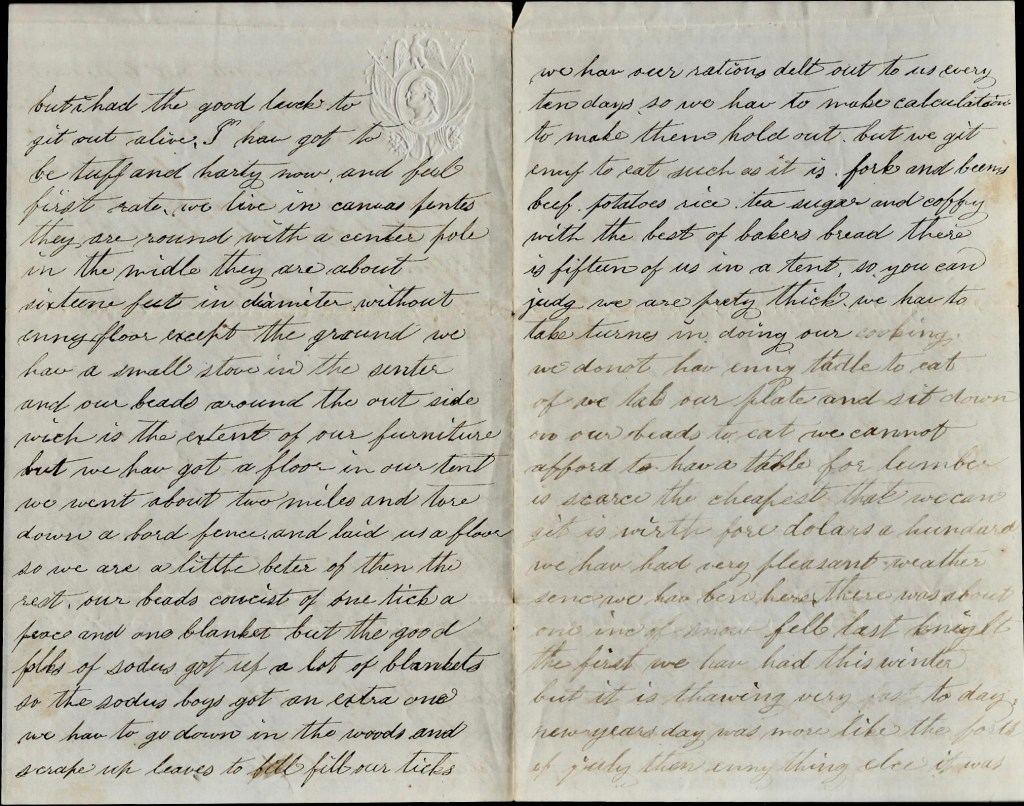
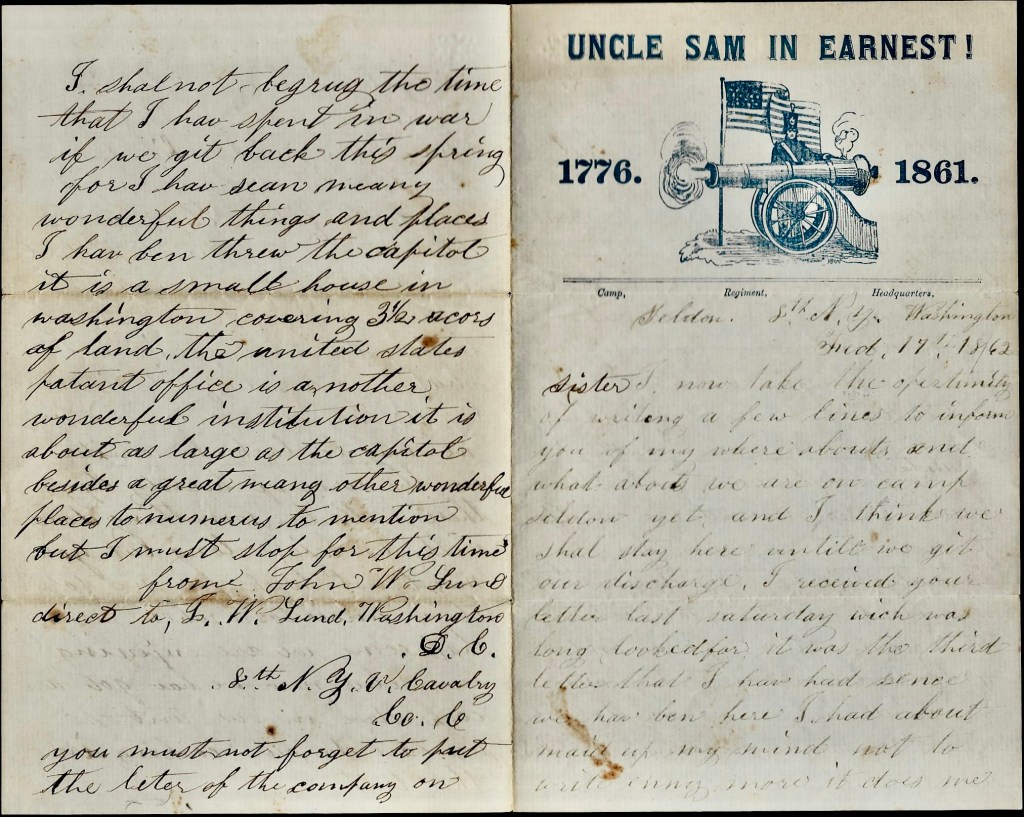

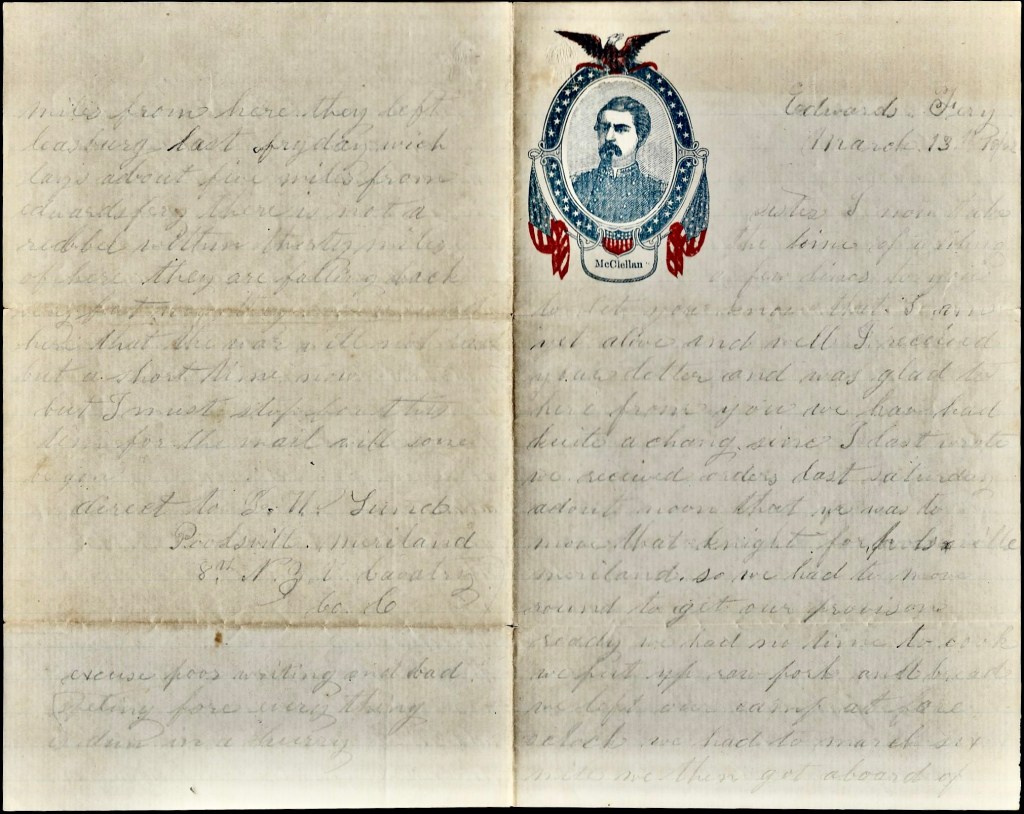
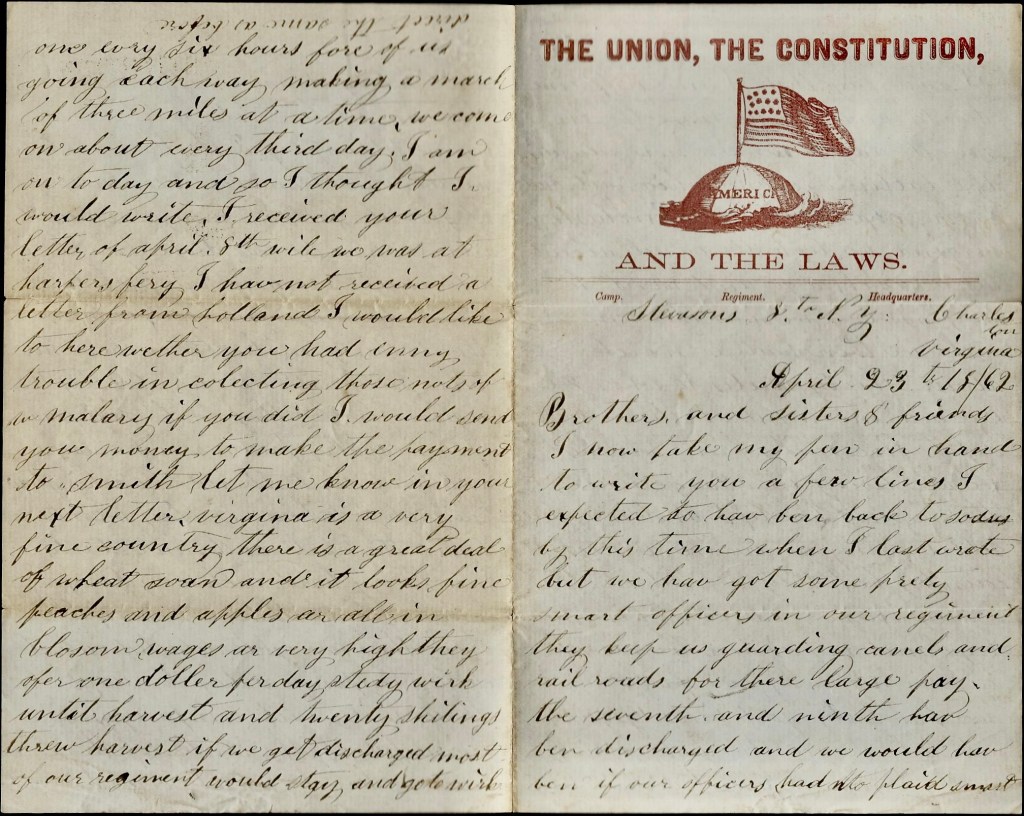
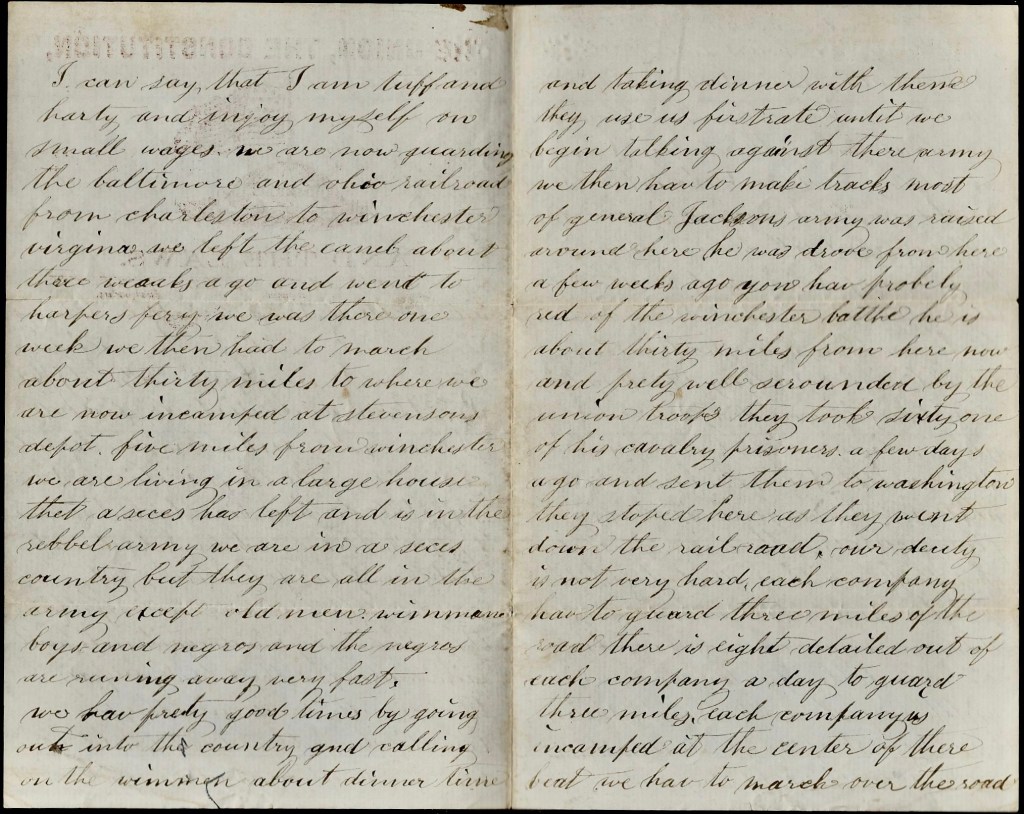


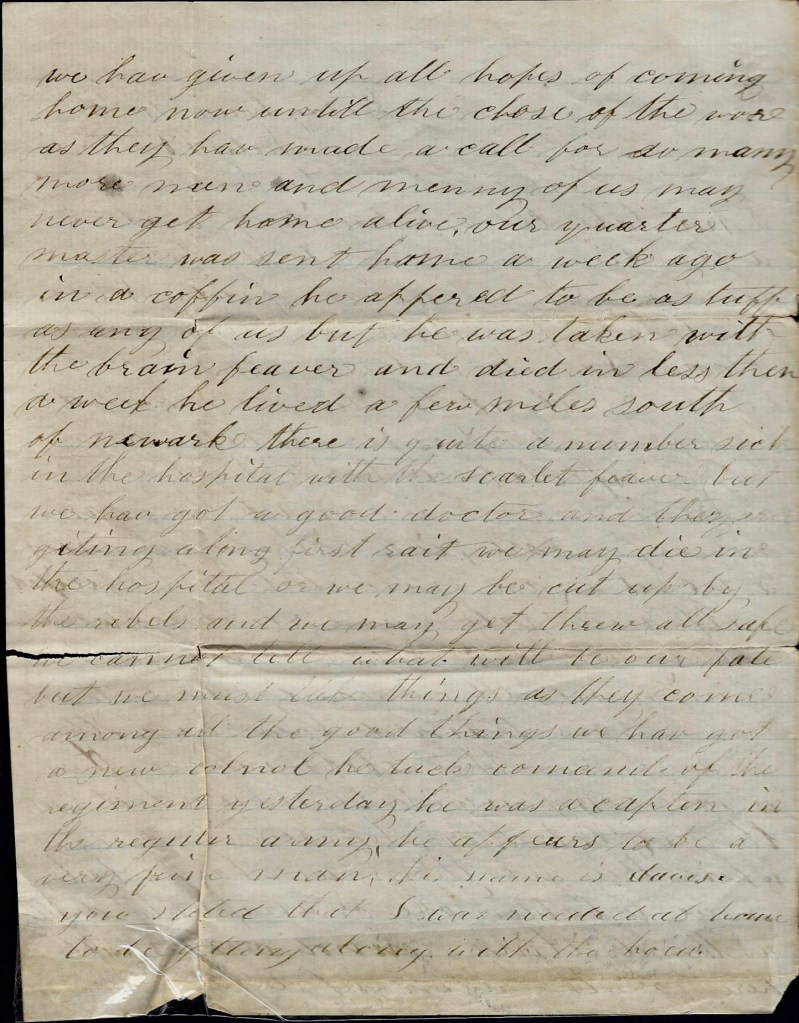

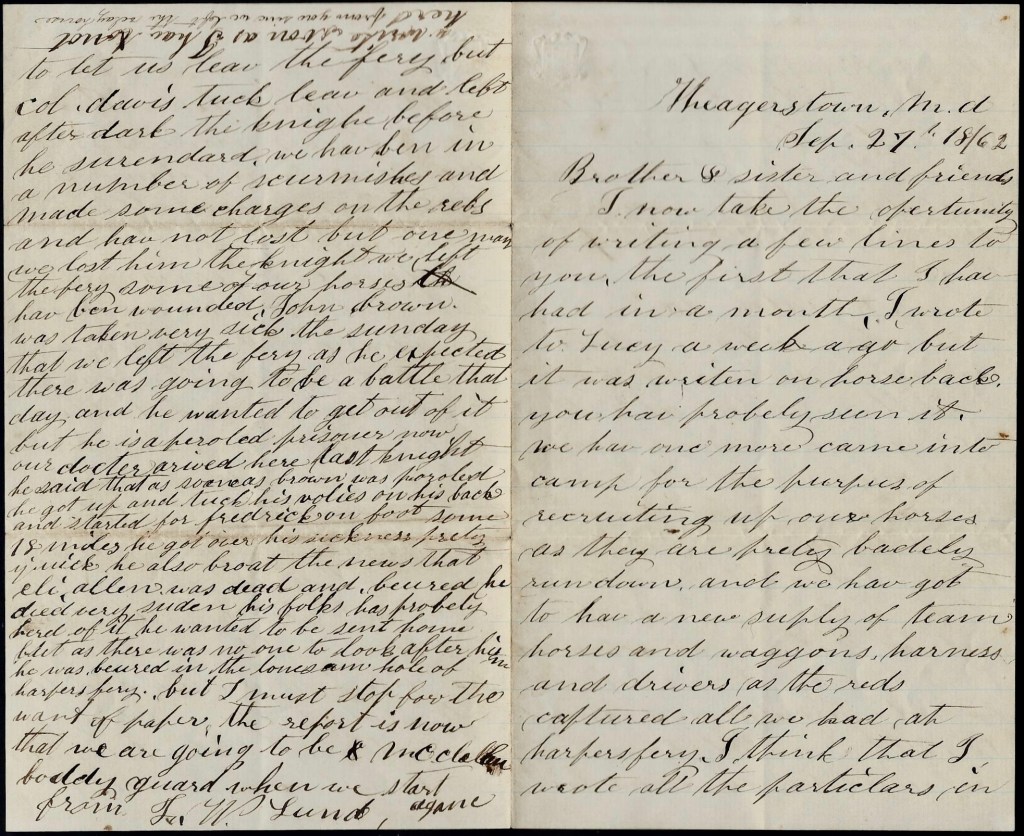



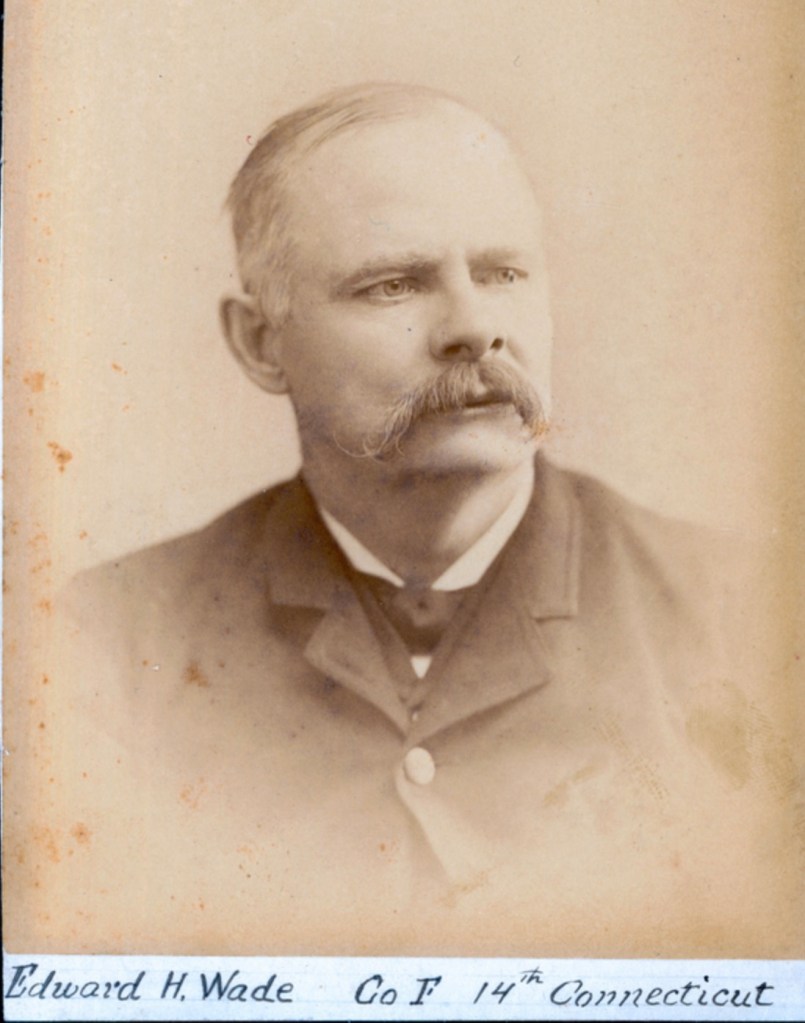

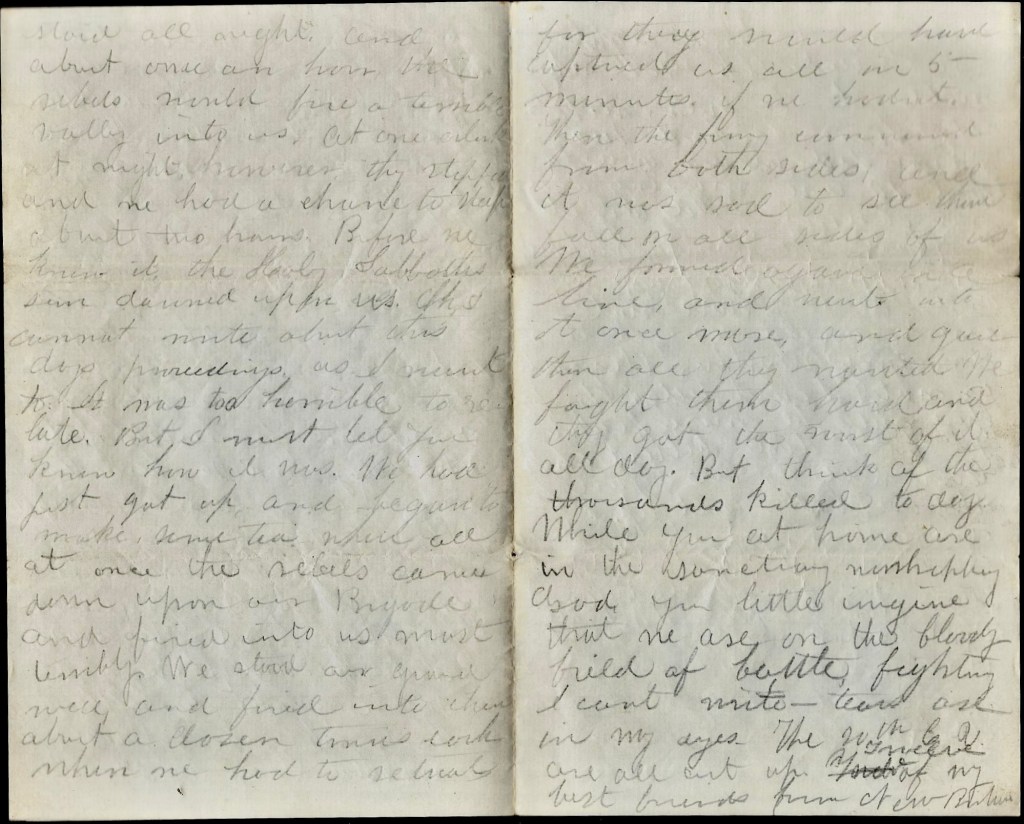


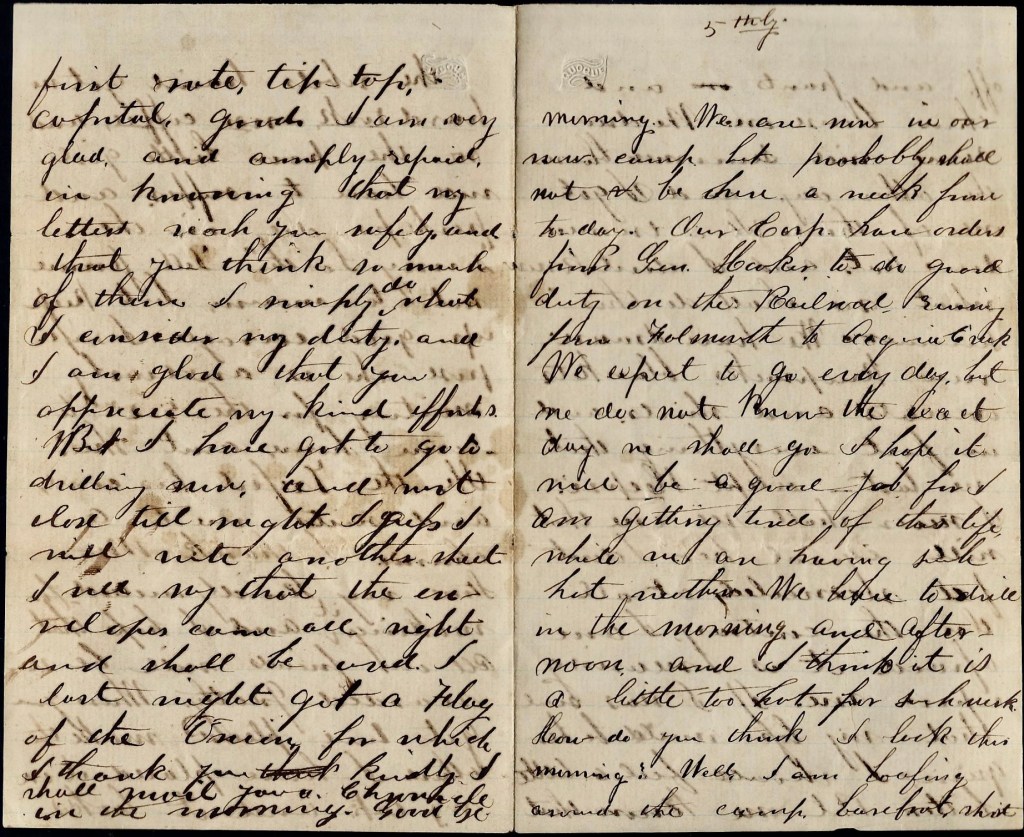

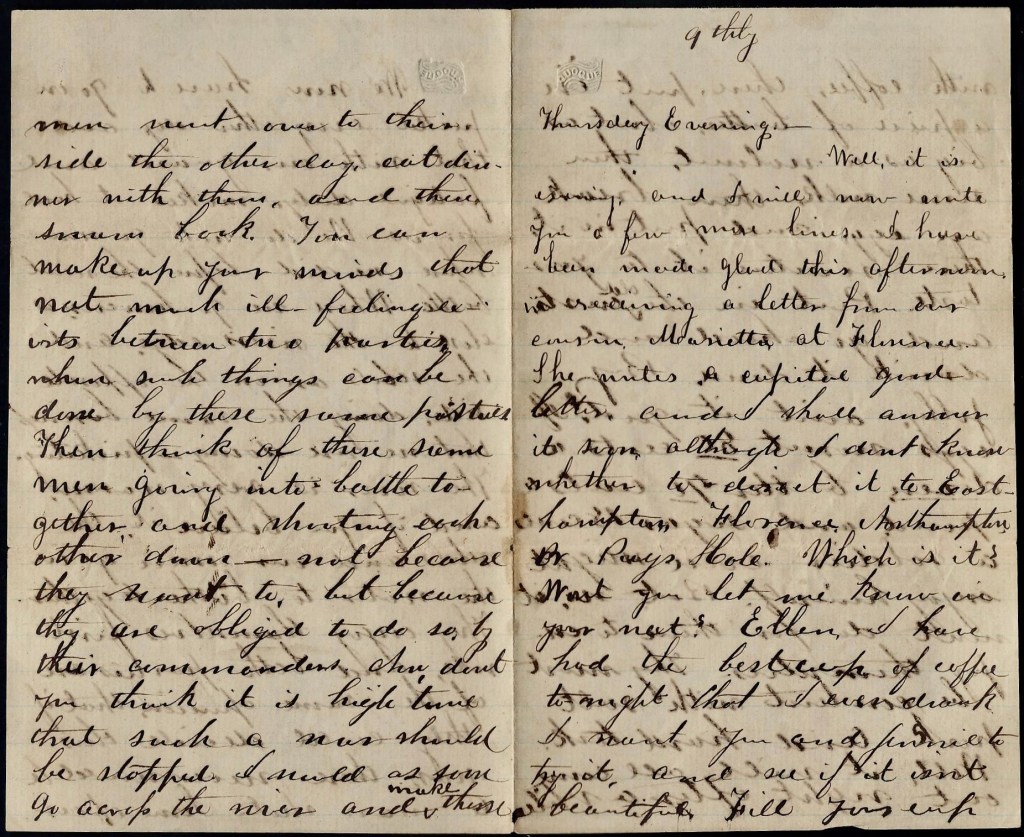

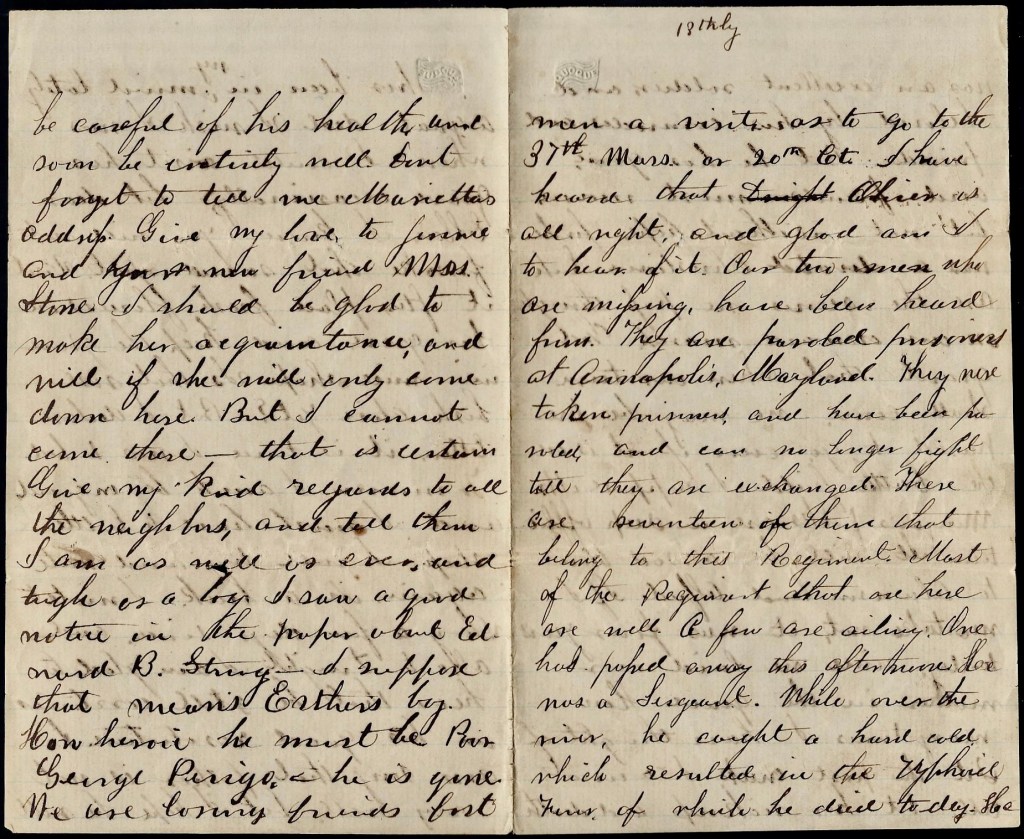
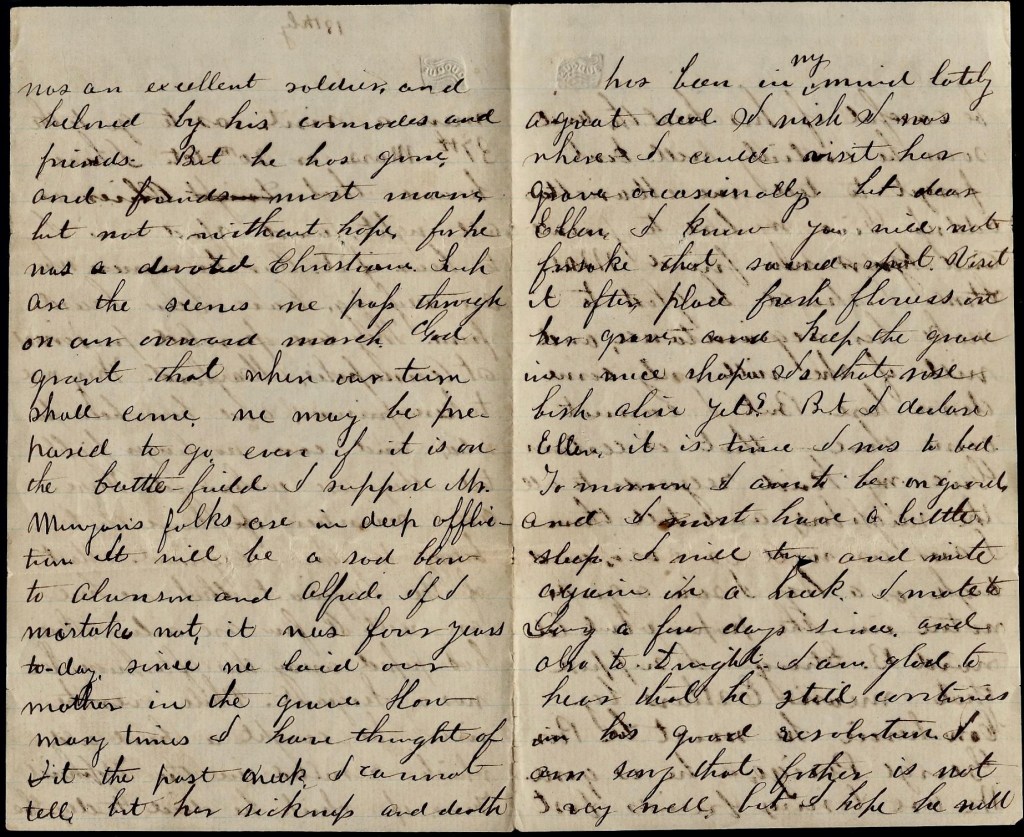
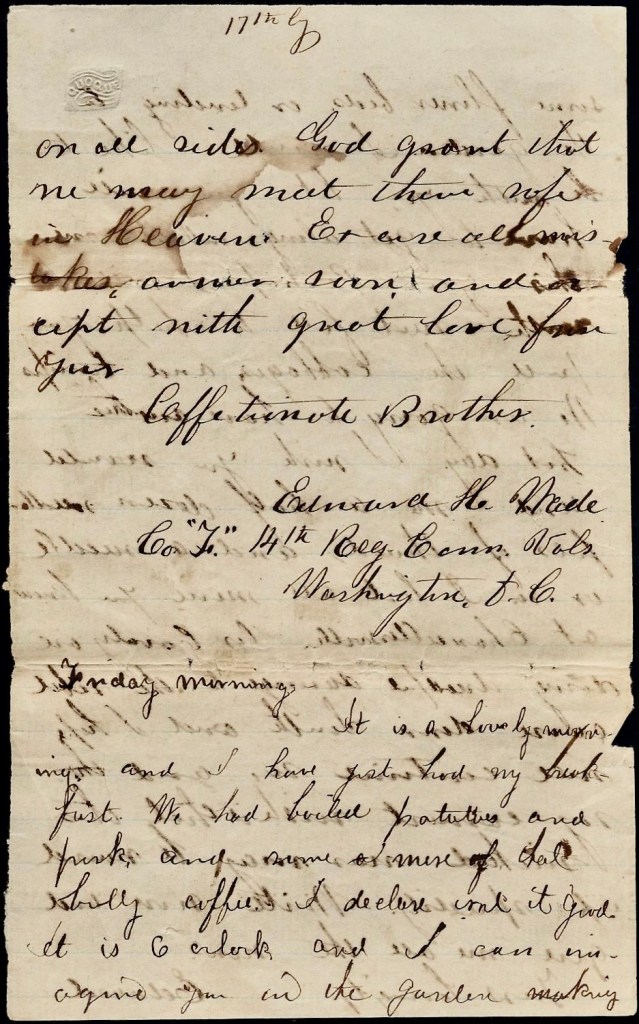


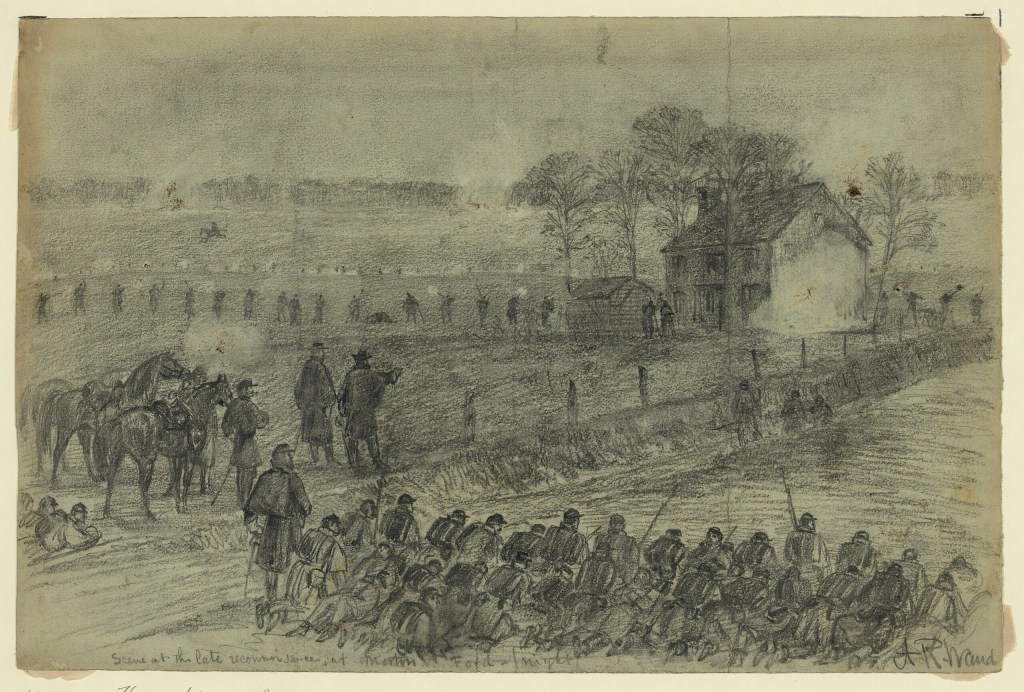
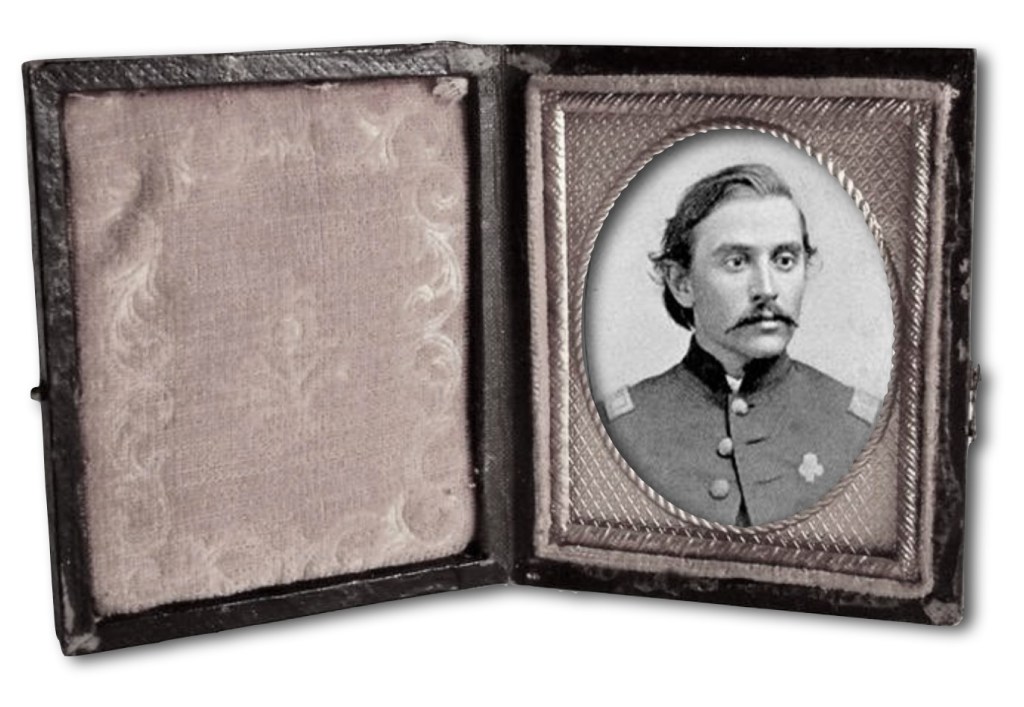


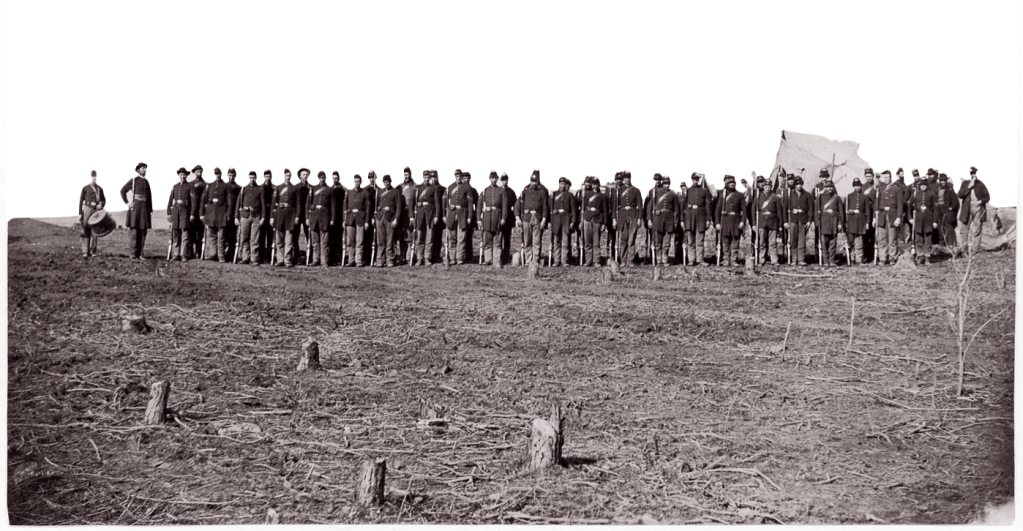
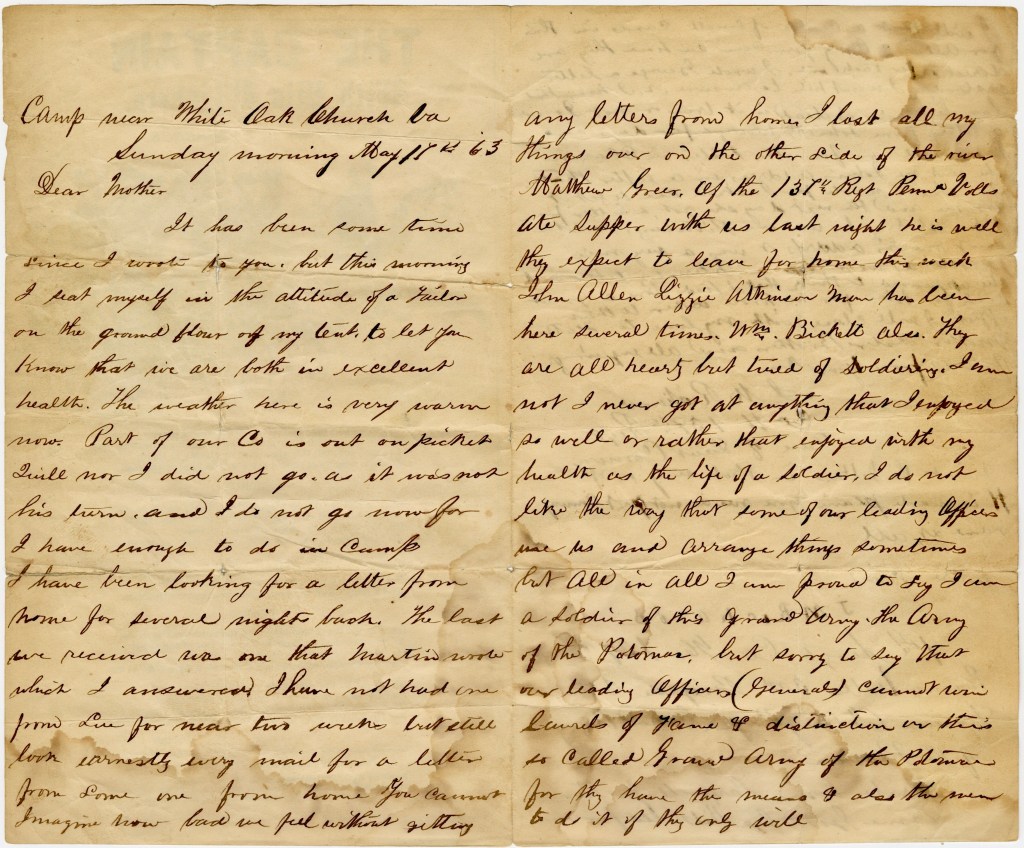

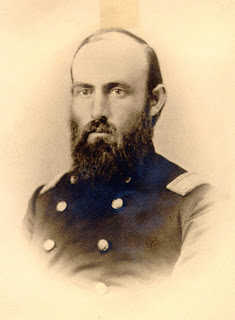
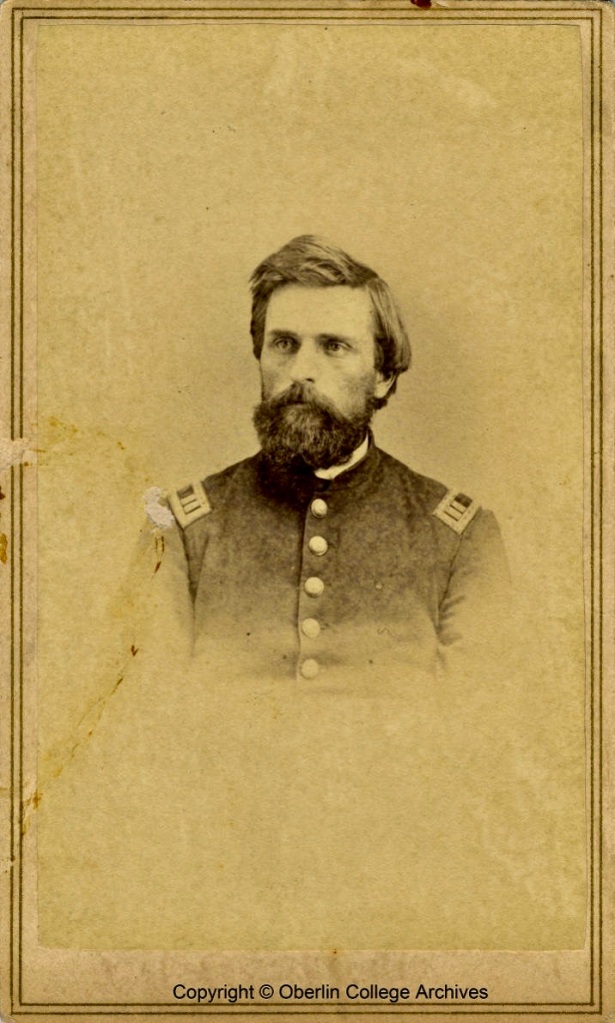
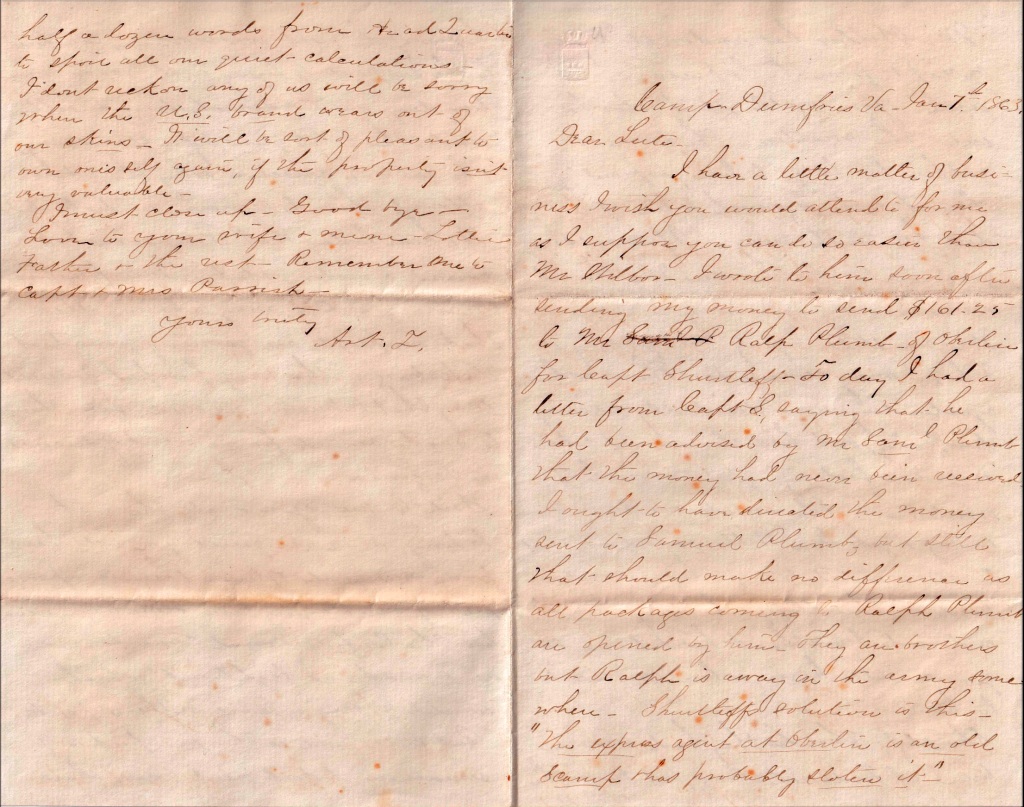
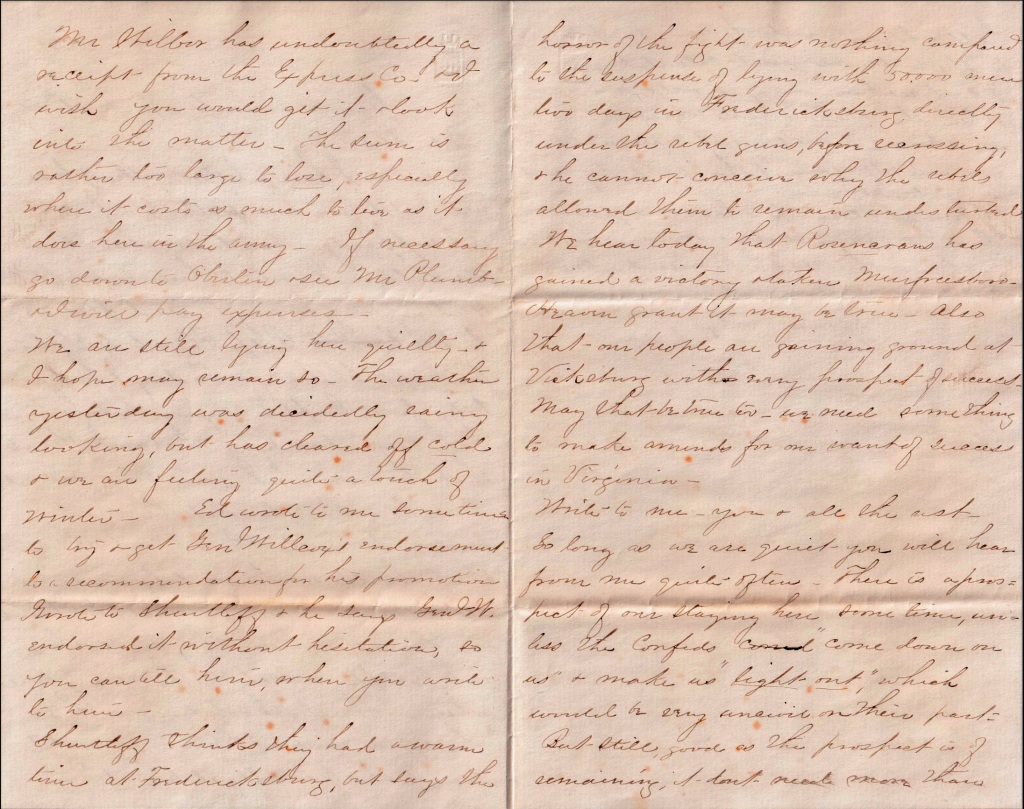
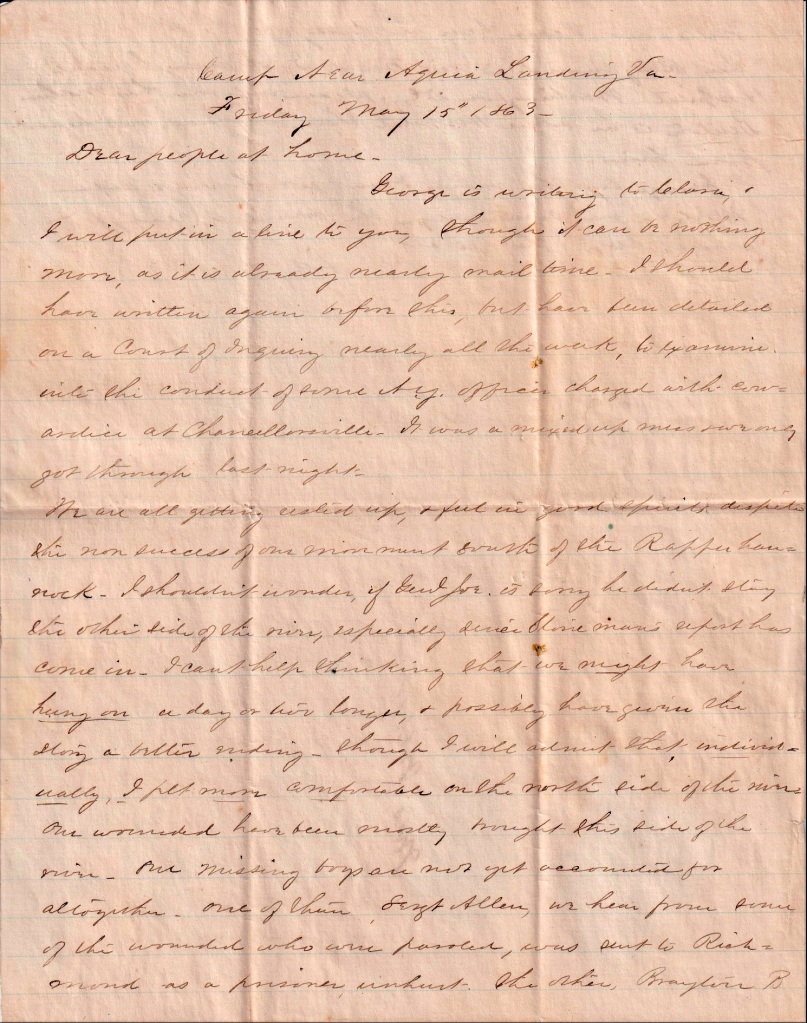
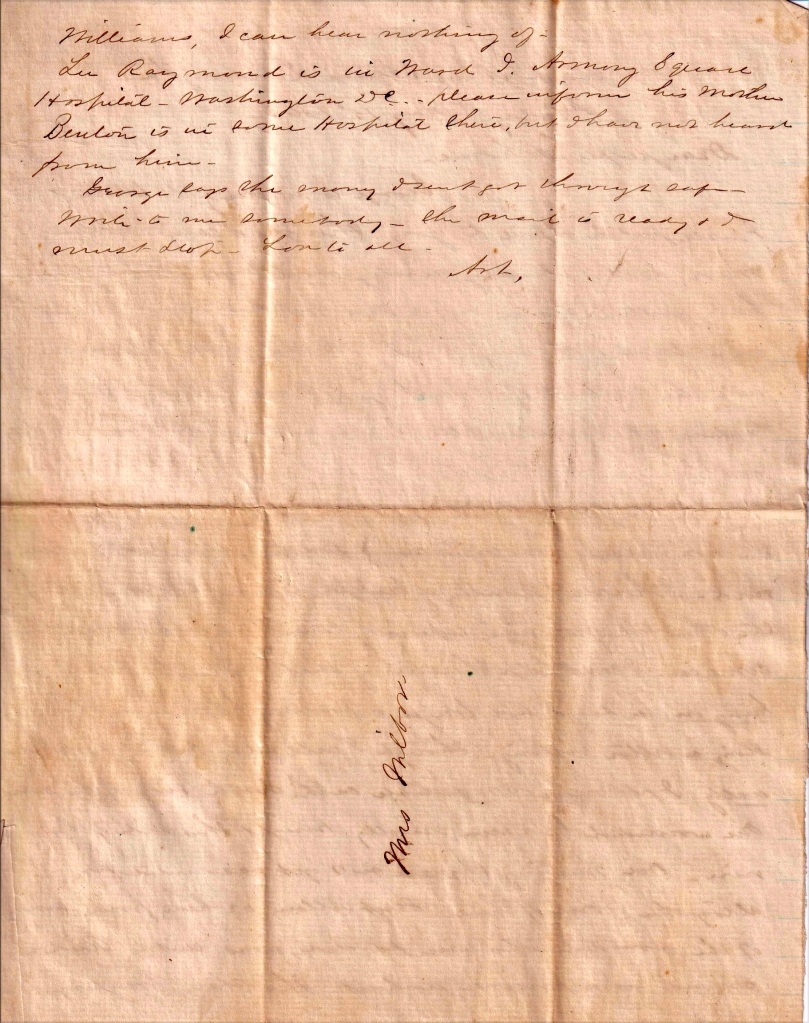


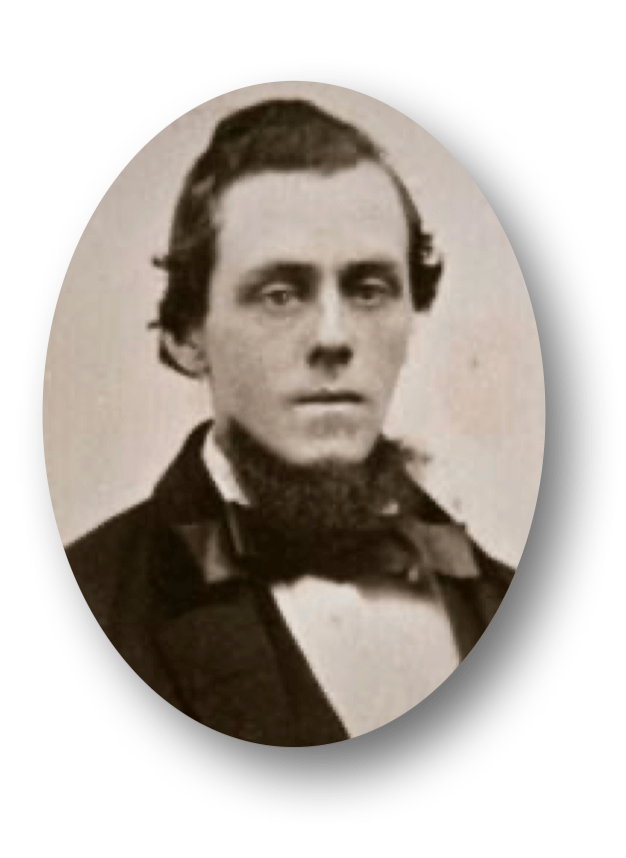
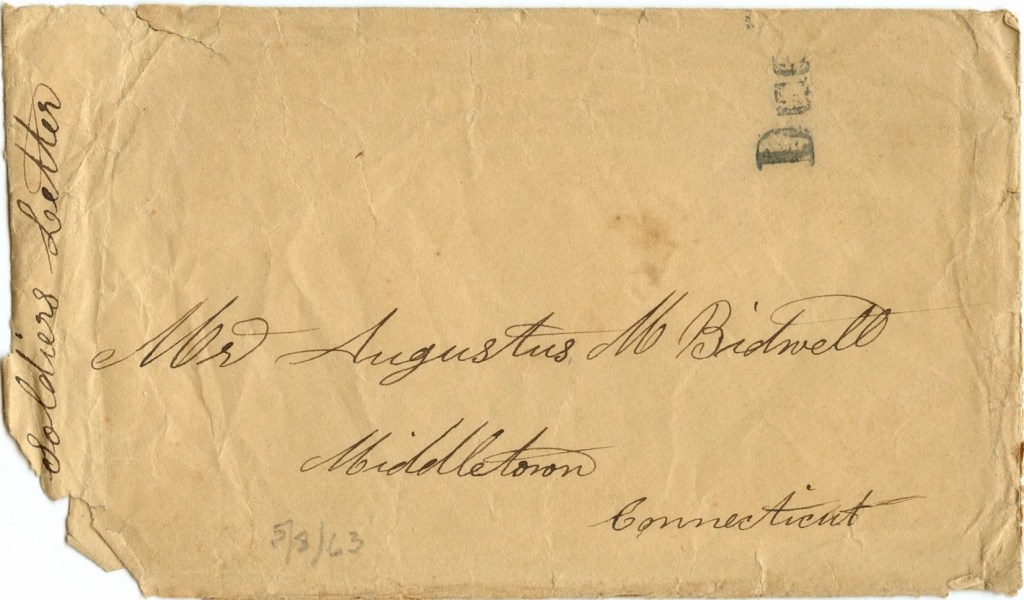
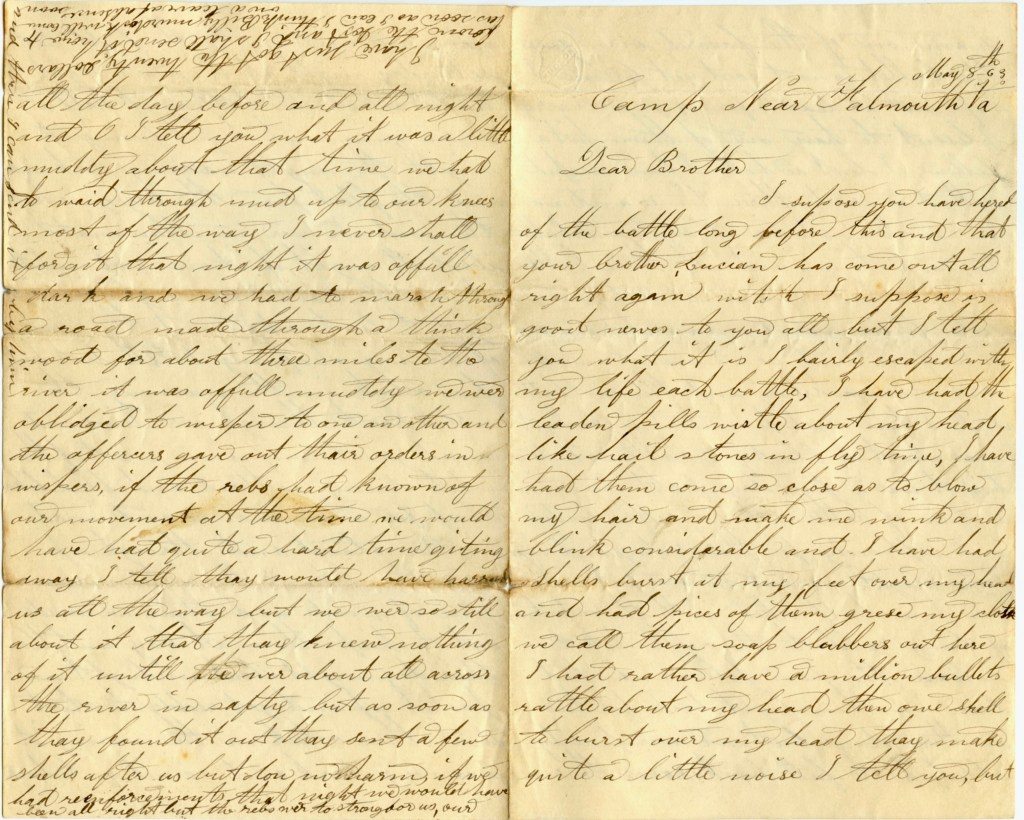




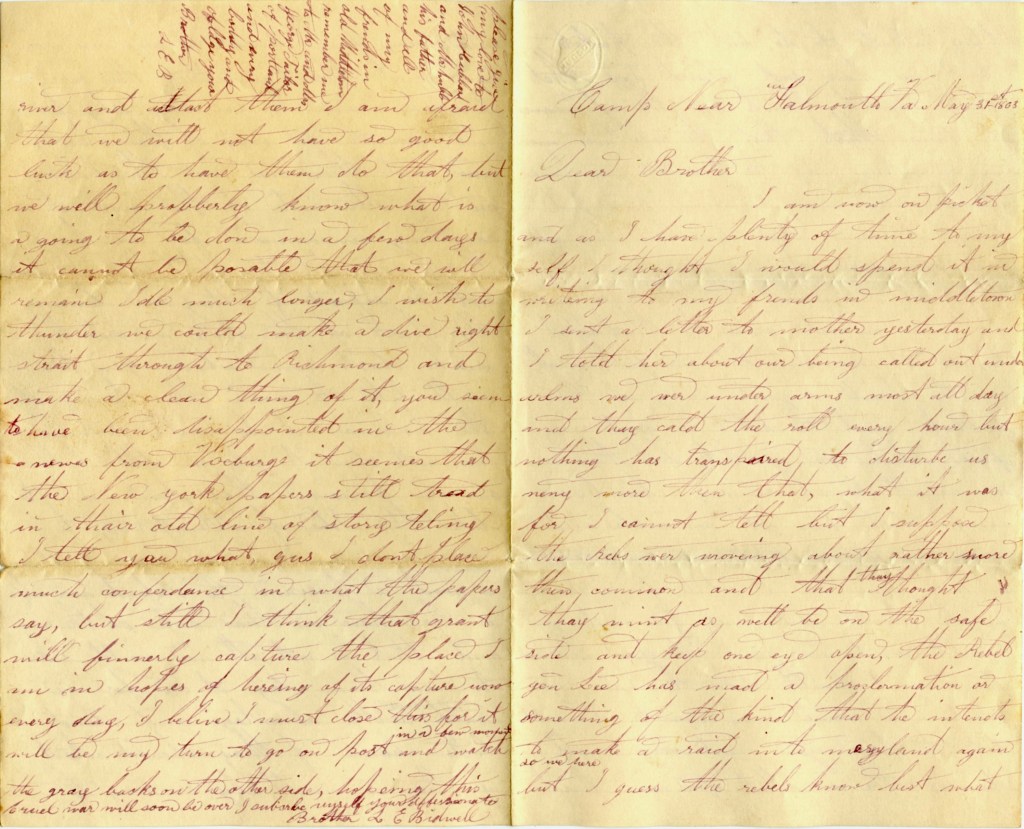
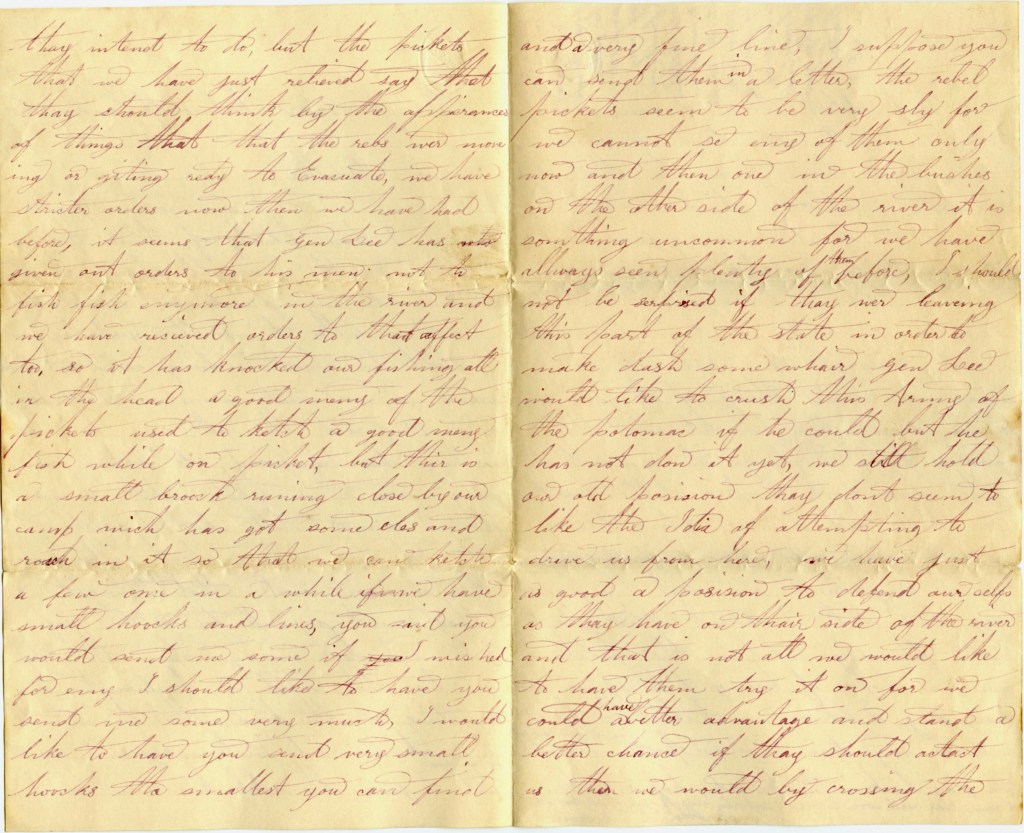

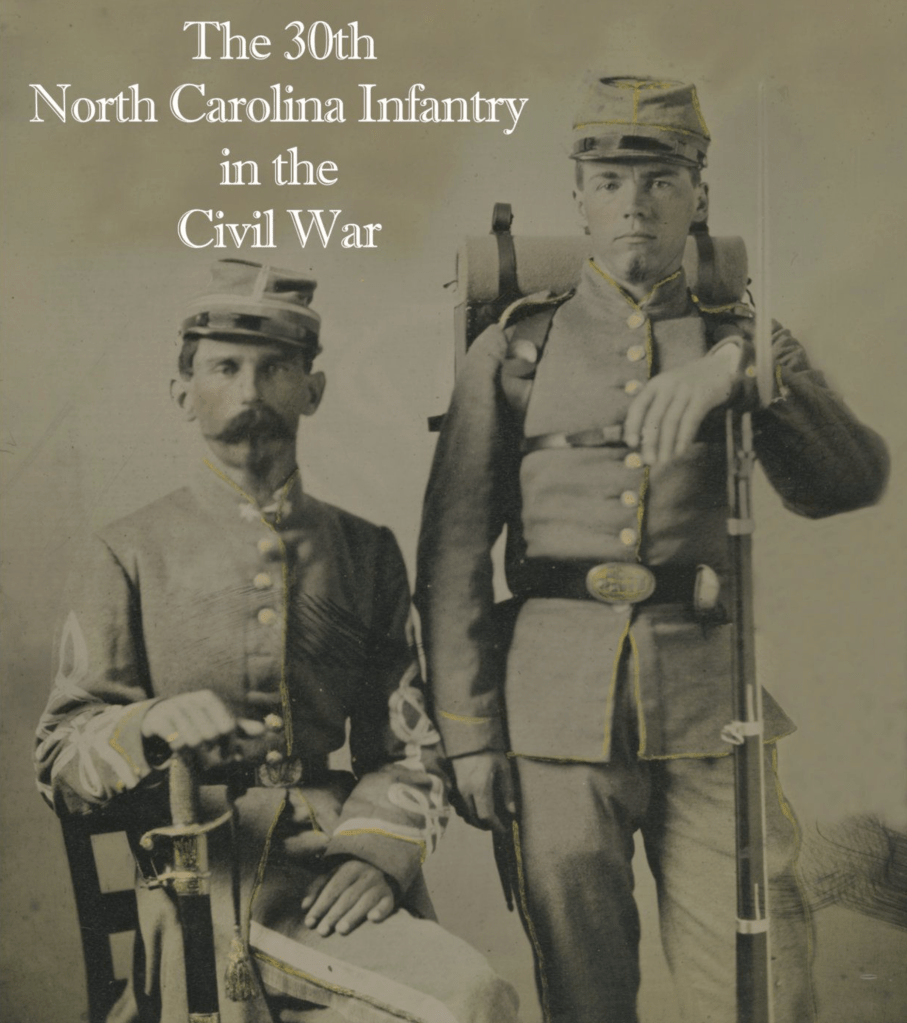

 Spared & Shared 23