The following letters were written by John T. Burke (1837-1863), the eldest son of Thomas Burke (1799-1879) and Mary Burke (1806-1877) of Irondequoit, Monroe county, New York. Muster rolls inform us that Sgt. John T. Burke enlisted on 10/15/1861 at Smithland, Kentucky. On 1/6/1862, he mustered into Co. K, 20th Kentucky Infantry. He was killed January 3rd, 1863 at the Battle of Stones River, Tennessee, and is buried at Stones River National Cemetery.
The 1860 US Census identifies John T. Burke’s occupation as a “Nurseryman.” His earliest letter is written from Commerce, Missouri, in December 1860, where he is working as a teacher. A later letter of 25 June is written from Blandville, Kentucky, and here John indicates that he is going to go into partnership with another in a “nursery and orchard business.” He further described the wild landscape of Kentucky stating that “I am going away from here. The country is so wild I cannot go from one house to another without getting lost….”
Returning to Commerce, John enlisted with a Battalion of Home Guards in the early months of the war, only to resign because “I thought it was better to give up my office than to have to act with men that I was ashamed of their deeds even though they were for the Union.” Backtracking once again, John headed to Kentucky and enlisted in the 20th Regiment Kentucky Volunteers. The new regiment suited John, and he describes much related to the general life of the regiment and the soldier, and the politics of regimental officers. One of his more notable letters was written from “3 miles east from Corinth in the woods, May 19th 1862.” In it, John described skirmishing and ultimately taking possession of Corinth, noting the plunder they recovered after the hasty Confederate retreat.
John’s younger siblings were George S. Burke (ca 1839-1931) and James Burke (ca 1843-?) also served in the war. George Burke enlisted as a private on 8/5/1863. On 8/5/1863, he mustered into New York 14th Heavy Artillery. He transferred out on 10/10/1863 and on 10/10/1863, he transferred into “C” Co. New York 1st Vet Cavalry. He was Mustered Out on 7/20/1865 at Camp Piatt, WV, after receiving promotions to Sergt 11/1/1863 and 1st Sergt 3/1/1865. James Burke was 21 years old when he enlisted as a private on 8/12/1863 at Rochester, NY. On 10/10/1863, he mustered into “C” Co. New York 1st Vet Cavalry. He was Mustered Out on 7/20/1865 at Camp Piatt, WV after receiving promotions to Corpl 7/1/1864 and Sergt 9/1/1864.
Letter 1
Commerce, [south of Cape Girardeau, Missouri, on Mississippi River] December 4 [1860]
My dear Parents, Brothers & Sisters,
Your letters of the 12th and 21st came to me together about an hour ago (it is now 8 o’clock at night). I have been back in the country or likely I would get them sooner. I have been waiting to hear from you or I would write before now. You may be sure that I do not forget you. Although among strangers, I often dream of home and sometimes lay awake quite a while before I find out that I am a thousand miles away from it. I have got so used to making myself at home everywhere, and taking things easy, that I have to stop and think before I can make myself believe that I am in Missouri on the banks of the mighty Mississippi instead of on the Little Genesee.
Tell Bernard that I think I can learn a good deal about geography and make it interesting if he will read all he can about the States, rivers and towns that I mention in my letters and the rest of my brothers and sisters if they like. For instance, in coming here, I passed through Buffalo, along the south shore of Lake Erie to Cleveland in Ohio, thence to Indianapolis—the capitol of Indiana, thence to Terre Haute, then on to St. Louis and down the Mississippi. Let [him] find out on the map and in the georgraphy [book] how long the lakes and rivers are, how large the cities, and how the States are bounded. This will be all useful to them in after life. I wish they would all pick up what information they can these long winter evenings and not spend them in popping corn and idle talk. Get their chores done up early and let me see they can do something for themselves without my watching and driving them.
I expect to see some of them able to write me a letter before spring if they try hard this winter. Even if they do not do as well the first time as others have done, after a hundred trials, they need not be discouraged nor ashamed. I think t’will be able to read it and will not show it to anyone else. I have often told them in substance before what I have now written and I think it took very little effect. But constant dropping will wear a stone, so I’ll not despair of having a brother to succeed Lincoln yet, or a sister not prepared to move in any responsible society—even in the White House. Let them remember that the President elect was a flat boatman, a rail splitter, and brought up in the woods. Now he is the people’s candidate for the highest office in the world. Hard study has done it all.
But I must leave lectures and Presidents to tell that I am getting tougher, stronger, and healthier every day. When I got here, I was hardly able to ride a horse six miles. Now I could kill a mule or walk seventeen miles as I did yesterday and not tire. I had a few hard shakes [of the ague] last month, but I shook them off.
We had what you would call fine weather for November. The ground froze about three inches on the 24th. We had snow the 23rd, 24th and part of Sunday, the 25th. Last week was fine until Sunday when we got a little more snow and frost that went away yesterday. Today was clear and cold and bracing, healthy weather. I am beside a comfortable fire in a fore place at Reynold’s Hotel in Commerce. I am nearly through with the trees. Had very little trouble with them although these folks are rather slow. I have hardly made up my mind yet as to what I will do this winter. I will write again in about ten days and let you know.
Have patience till then and do not tire the postmaster. I wish I could send this letter by telegraph but I cannot so bidding you all a good night, I remain your affectionate son and brother, — John
As quick as the Banks out here stop breaking, I will send Jim his money. In the meantime, I will talk to Bob Toates, — J. T. B.
I got the papers. Glad you sent them.
Letter 2
Commerce, Missouri April 15, 1861
Dear Parents,
I have been anxiously waiting for a letter ever since March. I received that book you sent me and expected a letter but got none. I knew that you were to move the first of April and I thought you would tell me where to [direct].
I am afraid you have no good news or you would sent it. Let me know the worst. Tell me how you are all getting along. How and where is George and Sis? I receive my paper regularly. The mail boat brings it every Tuesday. If I get a letter from you tomorrow, I’ll answer it immediately and send you all the news I can pick up.
My health is first rate. This country and school teaching agree first rate. This is the finest Spring I ever saw. My school will be out in two weeks. Can I do anything at home to earn my salt? If not, I think I had better stay here until fall. I have better wages and easier work than ever I had at home. Summer has almost commenced. The woods are full of flowers and covered with green.
We are thinking about planting corn this week.
Give my love to all. Where is Jimmy Peacock? Who is selling for George this year? I will write you a longer letter in a few days. Your affectionate son and brother, — John
Letter 3
Blandeville, Kentucky June 25, [1861]
My dear Parents and Brothers & Sisters,
I would write oftener but the mail comes here only once a week. I am in good health and high spirits. This is the finest climate I ever was in. The summers are longer than our; not much warmer. There is hardly any frost in winter, finest kind of a fruit country. Very early apples are ripe, blackberries also ripe. The principal forest trees are hickory, oak, ash, cypress, poplar, and butternut. The soil is light colored, very fine and rich. We use rain water to drink. Well water is impregnated with mineral. A good farmer and I think a nice that has a darn nice daughter offered to take me in as partner in the nursery and orchard business.
People are 50 years behind the times here. They raise hardly anything but corn, tobacco, and wheat. Have nothing to eat but bacon, hot biscuit, hoe cake, molasses, and string beans. No butter nor beef. Horses and mules are small. Cows and hogs look like deers. There are plenty of quails, turkeys, squirrels, ducks and fish, and some deers. Landis worth from twenty to thirty dollars an acre improved, five to twelve timbered. There is a farm of seventy acres here—twenty-five improved and a log house on it for 15 dollars an acre, 2 miles from the Mississippi and 8 from Cairo, Illinois. No barns in this country. I am going away from here. The country is so wild I cannot go from one house to another without getting lost.
Give my respects to all enquiring friends. Your affectionate son, — J. T. Burke
Letter 4
Commerce, Missouri July 16 [1861]
Dear Parents,
You spoke in your last about sending me money. I’ll tell you what you can do if youy wish to be patriotic and help your country, and make me a nice kind of a present. Send me a large revolver and some Minié ball cartridges by express via Cairo. If it should be stopped as contraband at Cairo, I can easily go down to Gen. Prentiss and get it. I cannot buy one here at any price. You may sell that cow if she will buy one. My health is first rate. Yours affectionately, — J. T. Burke
Commerce, Missouri
By Express via Cairo. Charges paid in advance.
Letter 5
Addressed to Thomas Burke, Esq., Rochester, New York
Paducah, Kentucky October 18, 1861
Dear Parents,
I have neglected writing to you longer than I ought to have done. But you must always take it for granted that I am safe unless you have positive information to the contrary. My health is first rate. I could not get along with the Major commanding the Battalion of Home Guards that I was in and I resigned. I thought it was better to give up my office than to have to act with men that I was ashamed of their deeds even though they were for the Union.
I came in here from Cape Girardeau and joined a Kentucky Regiment just organizing. The boys are the most respectable set of soldiers I have yet seen. Nearly every one [are] farmers. I have a good prospect of fighting my way up again. When we elect our officers, I expect to be Captain or Lieutenant of the Kentucky boys. I will go home some time this winter and tell you all about the wars. I have been in several skirmishes but no big battles yet. Have not received a scratch yet. Both parties seem a little scared of each other and confine themselves to skirmishing between outposts and scouting parties.
We have 8,000 troops in this camp, well fortified. Tell George not to enlist at present. When I get settled here, I will send for him if there is any prospect for a fight. But he would soon get tired of lying in camp doing nothing and losing his health. If he wants to try camp life, let him take a blanket and sleep out doors with wet feet a few nights. He had better come on and join the army.
Give my respects to all enquiring friends. Your affectionate don, — John
J. T. Burke, Paducah, Kentucky
Letter 6
Paducah, Kentucky December 13, 1861
Dear Parents, Brothers & Sisters,
I still live! I suppose you will be glad to hear it or rather to see it. I have nothing much to say—only just I thought I would rather send you a letter so that you would not bother the Post Master too much for nothing. I changed my boarding house today. I am boarding with a family. Have only one daughter about as big as Sis. She got on her tip toes today, brushed my coat off and made herself very useful. I have no doubt she will help to make me quite comfortable this cold winter. She is now sitting by my side sewing away as fast as she can, full of fun and mischief. You must not tell Winnie about it. You know it would make the poor girl feel so bad after having the measles.
We have lots of measles in the company. Tell me where George is if you know. Tell Annie to be a good girl, mind her book, go to school/ Tell Sis to keep her beaus on hand until the war is over, then marry a soldier is she can get one.
Make Jim and Barnard mind their books, feed the calves, and be good boys. Give my respects to all inquiring friends. My love to yourselves. — John
How would you like my likeness in a uniform to hang up? — J. T. B.
Letter 7
[partial letter, undated]
I must quit telling my adventures until we are all seated around the fire after the war. It brought the tears in spite of me when I read your letter saying that George was gone. I would have sent for him sooner but I wanted to get well settled myself first. I was boasting to some of the boys today that I was going to send for my brother but his haste has disappointed me and all my fond dreams have vanished in thin air. He is gone alone. He will get along very well if he can only make warm, true friends. I came here almost a perfect stranger. Now I have friends that will stand by me till death parts us. If he can only do that, he will be all right. He has the easiest and most comfortable place in the army, and the least exposed to wet and cold which kills more than the enemy. They never have to work except in battle and that comes very seldom. Then we all want to labor and do deeds of daring.
I might have been Lieutenant in an artillery company but there is not enough liberty to run over the country and see the folks in it to suit me. I am kept pretty busy drilling the company, straightening up their business and scouting all the time, but I will make it pay before long.
My health is first rate. I weigh 170 pounds and still gaining. I am afraid that the pilot bread we sometimes have to eat on the march would go rather hard on father’s gums and lying out one or two nights soon set him shaking with ague. I think on the whole Uncle Sam had better take the will for the deed. If the war lasts until warm weather, I would like to have him try it a month or so to see how he would like it and to brag a little out of the old stock.
If you pass your time as anxiously as I think you do, I believe there would be a better chance for father to live ten years in the army than out of it. Fretting will wear you out sooner than the war. Give my respects to all inquiring friends. I am going home to have a sleigh ride with some of the girls this winter if we are not kept too busy. Why do not Sis and Jim and Bernard write to me? I know little Annie would if she could. Send me a paper. Your affectionate son, — John
Letter 8
Camp Buell, Smithland, Kentucky January 3rd 1861 [1862]
Dear Parents,
I received yours of the 23rd December today. I was very glad to get it. I began to think there was something wrong about my letters; it was the first I received since coming here.
I have had some ups and downs here. I came here in Capt. Waller’s Company [with] 126 men. It being more than the number allowed by law for one company, 42 men were taken from it, twelve from another, and 47 that came with Col. Bruce from Lexington to make one full company. To divide the officers, it was proposed and we agreed that the man receiving the highest number of votes should be Captain and the next highest 1st Lieutenant. All parties agreed to that in the morning. When we came together to vote in the afternoon, the Lexington men, thinking they had the largest party and that they could carry every office, proposed to ballot for all officers. We agreed to that. The voting commenced. They saw the 42 from Waller’s Company and 12 from the others going for me to a man. Knowing that would best them, they kicked up and claimed to have more men and so forth. The Colonel decided the election void until the decision of the military board at Frankfort. My certificate of election went up to the Colonel let each Captain keep his own men until the decision of the board. In the meantime, Col. Bruce, Lieutenant-Colonel Hanson, Major Buckner, and the 5 captains that came from Lexington worked against us. The decision came to hold another election [and] by that time my opponent had 61 men and all the judges on his side. We were beat, of course, and would not vote at all. I could have been 1st Lieutenant if I would only humble myself to ask it. But my temper was up. I told them my opinion of them in a few words. They expected that being Captain before and having better chances that I would not go in the ranks. But I stepped into the ranks. They tried to have me take the place of Sergeant but I will notr have it.
I am going to stay with them and give them more trouble than they bargained for. After the election there was an alarm in camp. The troops turned out. The boys would not go under anyone but me. Since that time, we have our own kitchen, draw our own provisions, take one end of the company [and] do nearly as we want to. We have some friends working for us. We have some hopes of getting out of the scrape yet. The officers of our company are not very smart and I have hopes of crowding them out before the war is over. We have determined to do our duty as Union soldiers but we are going to give our officers their pay for swindling us. Our Captain cannot drill well and hired a drill master. The boys call me Captain and have not done a thing until told to by me. They call the Captain “Mac.”
Our clothing is a very dark blue. The Lexington a grayish blue. We call them graybacks. Whenever one of them comes near our tents, we make him march double quick home. They are getting sick of their trade and talk of making me 1st Lieutenant but I think I can do better after a while. I have a fine time at present [as] a private in the ranks. Receive all the respect from the men that they used to give me when I was their captain. They do everything I tell them to—wait on me and day they will stand my turn at guard or anything else.
I got a letter from George a few days ago. I am going to answer it tomorrow. Does George weight 175 or 115 pounds? I am glad that George is satisfied with his place. A great many of the soldiers wish themselves home again. I am too busy watching my Captain now to think much of sleigh riding or the girls. Capt. Waller talked of claiming me back. I sent word to him that if he got me back, I would take an old musket and drive him out of camp. He has not said anymore about it.
Our camp is the muddiest and most uncomfortable I ever saw. [It’s] on a side hill nearly as slippery as soap hill. I got my paper today—the second one I have received. The troops are not doing much. We have been expecting a movement so long that we do not pay any attention to it. Who is poor Bridget? Where is Winnie going to school? I am living in a tent. We dig a ditch in the tent, cover it with bricks, make a chimney outside and have a first rate fire. Makes the ground dry and warm. I will write again soon. How is the Irish Brigade filling ip? It will do some good fighting, but I would rather command the Hunters of Kentucky. Give my respects to all inquiring friends. I cannot get a likeness taken here. Direct to J. T. Burke
Letter 9
Camp Lytle near Bardstown, [Kentucky] February 3, 1862
Dear Parents,
It is nearly night. We just received orders to prepare to march in the morning. We were on drill. The boys cheered thinking they were going to Bowling Green to indulge in a soldier’s luxury—a fight. I so not know where we will go. I thought perhaps I would not have a chance to send to you in a week or two after his. I am in first rate health and spirits. I like a move noq better than anything could happen. Staying on one places tires me more than marching.
My love to Jim, Bernard, Sis, and Annie. In haste. Your affectionate son, — John
I got a letter from George and answered it.
Address J. R. Burke, 20th Regiment Kentucky Volunteers, Louisville, Kentucky
Letter 10
Camp on the side of a knob or mountain 400 feet high 12miles from Munfordsville and about 14 miles east of the Great Mammoth Cave of Kentucky on the Nashville & Louisville Turnpike in Greene County near Green River, February 22, 1862, waiting in a cotton house for the orders to march to Nashville or somewhere else, anxiously looking for the paymaster, sitting comfortably beside a sheet-iron stove, looking out once in a while to see the rain pour down in torrents.
Dear Parents, Brothers & Sisters,
It is not long since I wrote to you but I suppose a letter from the seat of war is never unwelcome from me. You get the principal news from Kentucky in the papers as soon as I do. We expected to have a hard time taking Bowling Green but that job is over. Nashville is our next place, I suppose. The 19th was the hardest day I ever marched. The morning drum aroused the weary camp at five, in a muddy valley surrounded by hills 300 feet high. T’was cold and rainy all day, swelling the mountain torrents so that streams across the road filled my boots to the top three times with cold water during the day. We marched 19 miles (that is, those who could keep up), [then] pitched our tents on the mud in the rain. I made a bedstead of staves laid crosswise on two rails and slept soundly on wet blankets. I thought it would lay me up but I am just as good as new now.
You must excuse me for writing on this old paper. It is the back of a map George sent me from Washington. Paper is scarce and it rains too hard to go to the sutler’s for any. We drink sassafras tea in our company half the time. The boys like it better than coffee. My love to all. Your son and brother, — John
Address to J. T. Burke, 20th Kentucky Regiment, Louisville, Kentucky.
Letter 11
Three miles east from Corinth in the woods May 19th 1862
My dear little brother,
I received your neat, well written letter of the 4th along with Mother’s. I wrote to Mother last night. I meant to write to you about noon but we were called out. I brought my paper. I have nothing to do but write with the paper on my cap, sitting under a tree.
Three companies of the regiment are 200 yards in front shooting at the secesh, and the secesh firing at them. We would go on but I think the rebels have cannons hid on the other side. We have cannons just behind us. I must jump at that. I have been looking for rain. There it is, but the noise is the thunder of cannon. The lightning is the flash and the rain ir iron. Shot and shell are whizzing in every direction. Three pieces of bursted shells are near me. Now our bog guns open. Their slacken fire. Our men are all lying or sitting. A lot of them near me seem to be trying to crawl under a log. Their noses make holes in the ground. Others are joking and laughing at the fun. There—a shell from our side has burst in a farm house they have been firing from. The rebels are scattering. The skirmish is over. It is dark. I must stop.
Morning, 20th May. It rained hard last night. I kept dry under a shed covered with bark. My rifle got damp. I just came in from firing it at a red-shirted rebel. He returned fire so we took two trees and we went to work shooting across a field. After firing 4 or 5 times each when one of us fired, the other step out to take a pop at him while loading. So I played a Yankee trick on “Old Red” as the boys call him. I took a musket that lay near by [and] shot at him. Thinking my gun was unloaded, he showed himself, cocking his piece. I fired, he dropped his rifle, shook defiance at me with his left hand, but his right hung harmlessly by his side and off he walked looking sulky as a mule.
We are now relieved by the 1st Kentucky.
In camp, May 21st 1862. I am almost alone. I did not feel right this morning and the regiment marched out leaving me asleep. I must write to George my next chance and then to Annie. I wrote to Mother three or four days ago. I would like to have you and Annie write to me again soon. I do not know whether this will be delayed or not. Letters from came are sometimes stopped at Pittsburg [Landing].
Tell me what you are doing, how the crops look, how old are you and Annie? Did you write those letters with your own hands? If you did, they are a credit to you. Excuse the mistakes. Shells cut the tree over my head while I wrote. My love to all. Your brother, — John
At daylight, news came that our men were inside the works and Corinth evacuated, the wild huzzas of the Union regiments in front soon confirming the rumor. It was the most pleasing information I ever heard. We soon “fell in” and “forward march” and we did march. I can easily keep up when rifles are pointed at every [ ] that shows himself, but yesterday morning I had to take the double quick several times. We went through several fields and down a narrow road, cut through the thick woods and dense undergrowth, crossed a small stream where we had fought all Wednesday, passed a few graves—that is, places where men are laid on the ground and a pile of dirt thrown over them in a hurry. A turn brought us in sight of the trees cut down, tops laid towards us and Beauregard’s earthworks deserted.
The cheers of the 22nd Brigade at sight of the place would make you put your fingers in your ears (I know Annie this will tire you but it will interest Father, Jim and Bernard). Pursuing the road about 500 yards through the fallen timber, we entered the first line of defense. This was halfway up ridge from the creek. 200 yards further, on top of the slope, we crossed another line or ditch. We were now within their camps. At first, everything seemed to be destroyed by fire and axes. The next camp the destruction was not as complete. Tents, camp stools, cots and scattering commissary stores were piled up, but our cavalry did not give them time to finish the work of burning. On the whole, they made a very good retreat.
The soldiers gathered a lot of molasses, sugar, flour, and black-eyed peas, some camp stools, skillets, and other plunder too numerous to mention. We returned to the old camps this morning loaded with booty. The boys are now baking biscuits out of the flour. It is a great treat to us after eating so much hard bread/ Tell me how to make loaf bread and to bake pork and beans. I captured an oven and want to use it to advantage.
Write to me often, Annie. Go to school regularly, study hard, be a good girl all the time and be assured that I will answer every letter. Do not get anyone to write for you. I would not take such letters out of the post office. I do not want any such bogus scrip. I remain your affectionate brother, — John
Readers wanting to know more about the 113th Illinois may want to dig into this 561 page book published in 2009. I have it in my library and found it quite comprehensive.
The following letters were written by George Cook (b. 1841) of Crete, Will county, Illinois, who enlisted 1 October 1862 as a private in Co. A, 113th Regiment Illinois Volunteers. He mustered out of the regiment in June 1865.
George wrote most of his letters to his older brother, Thomas Cook (b. 1838) of Crete. They were the children of William Cook (1810-1890) and Elizabeth Atkinson (1803-1863).
These letters are from the personal collection of Ryan Martin and were offered for transcription and publication on Spared & Shared by express consent.
[Editor’s Note: the header image is a picture of the 113th Illinois taken in Memphis.]
Letter 1
Memphis, Tennessee December 15, 1862
Thomas Cook,
Dear brother, I now take my seat to pen you a few lines to inform you that I am well, hoping these few lines will find you the same, and Father and Mother I hope are well and getting along with your fall work well. I should have wrote to you before but I have not had time.
We left Memphis on the 26th of November on a march and we have been marching ever since. Well, in the first place I will say that the roads are very muddy and it has been hard traveling. It never snows here in winter but it rains most awful sometime. I know December is their winter month so it is in the middle of winter here and about two feet of mud to sleep in. But that’s nothing.
In the second place I will say that in addition to the mud, we have some awful hills to climb which is good work for the mules and makes very slow traveling. Six miles a day is a hard day’s march and take till ten o’clock at night to do it at that.
We went from Memphis to Germantown—a very pleasant town—but we left it mostly in the shape of ashes. Then we left and went down into Mississippi after Price and his army. Price was encamped on the Tallahatchie River but when we got there, the bird had flown and burned the bridge so we could not follow him. But we went to work and built a bridge in three days so as to cross the river. Then our men had a little brush with him and we took three hundred prisoners. Now Price has gone to Vicksburg and we did not follow him any further.
We went from the [Talla]hatchie River to Holly Springs, the hilliest road ever you see, but Holly Springs is a very handsome place when you get there. But everything is going to rack [and ruin]. The soldiers destroy everything—they burn houses and fences and crops and all—everything. There is not 80 rods of good fence in the whole country.
We went from Holly Springs back again to Memphis, but how long we shall stay here I cannot say. I think not long. I think we shall go down the river to Vicksburg in a few days. We came back yesterday, the 14th of December, making a trip of 18 days. As for me, I stand the marching very well but there was about half of the regiment that give out. The hardest part is after marching all day in a heavy rain with your supper of crackers in your pocket to have them all spoilt with the wet and have to lay down in the mud without any supper. But mud makes a soft bed to sleep on.
The country out here is all timber and very heavy timber too, from one end to the other. Wherever I have been, it is one vast forest—no openings at all—nothing but trees and stumps. All the large plantations have been cleaned up by the colored people. Some of the large farmers have as many as two or three hundred slaves on their plantations. There was one day 140 slaves left one man and came into our regiment and came with us to Memphis—quite a loss for the man. But then it could not be helped.
Levi [James] and Darton [?] are well and stand soldiering very well. [Sgt.] Henry Case has been sick ever since we came here but he is getting better now. He did not go with is on our march. He stayed in the hospital in Memphis. He is getting better fast.
When you get this, please write. Direct your letters to George Cook, in care of Capt. George R. Clark, Co. A, 113th Regt. Ills. Vol. , Memphis, Tennessee.
If you put these directions on your letters, I will get them. Now I want you to be sure to write and write soon and tell me how you all get along with your work. How near you have got through husking corn and how you get along with plowing and how George Hill gets along with his work and tell me if you have thrashed and how your grain turned out and how you get along with shelling corn and how all the folks get along. I want to hear some news. I am so lonesome here. Tell George Hill to send me a few lines too and let me know how he makes it go. Tell me if you have had any snow yet. I get along very well. Money is no good here for you cannot buy anything with it—not even postage stamps. I have offered ten cents for a postage tamp to put on this letter but could not so I have to send it without and you will have to pay it yourself. Tell me how Mother gets along with her work and if her health is good. Tell Mother that I should like to have her mince pie to eat. Tell her that I think I shall be home in time to have some of the strawberries next summer. Give my respects to George Hill and my love o Father and Mother and keep some for yourself. Please write, — George Cook
To Thomas Cook
Letter 2
In front of Vicksburg State of Louisiana January 25, 1863
Dear Brother,
I now seat myself to write you a few lines to let you know that I am still able to eat my allowance, hoping you are the same. When I wrote to Father last, I was at Napoleon, State of Arkansas. Now I am in Louisiana in front of Vicksburg. We landed here on the 22nd. The weather is very rainy and muddy. We are at present engaged in digging a canal to as to get out gunboats below Vicksburg. We have thrown up breastworks and planted our cannons so as to defend ourselves for we are in reach of the enemy’s guns. They throw two or three shells everyday but have done no damage yet though they come very close to us. We have a good view of the City and we can see their boats as they run up and down the river. Our guns put a hole through one of them yesterday. Then the enemy gave us a few shell but done no damage.
We are getting new troops everyday. The officers say that it will take about three weeks to dig this canal. I am gaining strength every day since we left the boat. I received your letter on the 24th with the stamps in it. All was safe.
When we was in Vicksburg before, I came across Orin Alford. [Orrin T. Alfred, Co. I, 13th Ill.] He is [in] the 13th Illinois Regiment. This is the first fight he was in. He is 3rd Sergeant of his company. Also Anson Tuttle [Tuthill] is in the same company with Orrin. He ia a large stout fellow. I had a long talk with him yesterday.
We have to work night and day almost, Sundays and week days all the same. No difference. I tell you, there is not much fun in it as some folks think there is. I wish that Dan Hewes [Hughs?] was in my place about two weeks and see how he would like it. I think he would have a belly full of it. I know that if I was home again, I would wait for a draft before I would go a step. This is all I have time to write at present. Write soon and tell me all the news and what kind of times you have. Write long letters for they are the only comfort I get here. I send my love to Father and Mother and you give my respects to George Hill and tell him to write a few lines to me. I think Father done well with his horse. — George Cook
We have no snow here yet. It is muddy all winter long. The ground never freezes at all. We are ten hundred miles below Cairo—pretty well down in Rebeldom. I think when we take Vicksburg, that our fighting will be done in the West. What they are doing in the East, I do not know for we cannot get hold of a paper to read. We just have been ordered out to go to digging in that old ditch again and I must hurry up and eat my dinner which is a plate of beans with nothing to it.
Write as often as you can for we can get your letters better than you can get ours. I shall write as often as I have a chance if I live and if I die. May God bless you all. Goodbye.
Letter 3
[Expedition to Rolling Fork, Mississippi, via Muddy, Steele’s and Black Bayous and Deer Creek]
Headquarters 113th Regt. Illinois Vols. Young’s Point, Louisiana March 28, 1863
Thomas Cook,
Dear brother, I received your letter last night and was very glad to hear from you but was very sorry to hear that Mother is sick. I am glad to hear that the rest are all well. I am well at present though I have had some hard times since I last wrote to you. I should have wrote home before this for I should have got your letter had I been in camp but we have been on a march for 11 days. We was ordered up on the morning of the 17th of March at about 4 o’clock in the morning with one day’s rations in our knapsacks and our blankets on our shoulders and [told] to leave all the rest of our things in camp. So with out guns and 40 rounds of cartridges in our cartridge boxes, we started under cover of a heavy fog.
We marched four miles when we got on board of the steamboats and started up the river. The swift-footed steamers soon brought us to land 15 miles up the river. Everybody was wondering where we was going to and what we was going to do up here with only one day’s rations along with us. Gen. Stuart went on shore, looked around a spell, and then ordered the boats to lay to for the night.
Well in the morning our grub had run out. Gen. Stuart ordered us to go on up the river to see if we could get anything to eat. We run up the river about 15 miles and landed at a handsome plantation. Here our company was ordered to go ashore to kill some beef. We killed one cow and a lot of sheep and started back to the rest of the boats. We got there about 5 o’clock, having been all day with[out] a mouthful of anything to eat. We got there about dark. [Received but] a chunk of beef with[out] anything to [go with] it—no salt, no pepper, no bread.
The next morning after making our breakfast out of beef again, we started to march through the woods. We went about one mile when we came to some more boats in the woods—a funny place for steamboats to be—but the water was high and had run through a ravine about like that seventy. Here we stayed all night with nothing for supper. In the morning we got another day’s rations of crackers. These all went up for breakfast. We went on board the boats and run up the Black river about twenty miles. This is the finniest river you ever saw. The water looks like ink—black as a nigger’s face. Well we landed a little before dark and marched about two miles to where we camped.
There was a large plantation. Corn was up about a foot. The Negroes never thought of us coming out there. Here we had to lay down without any supper but I was about starved out and so I went into a nigger hut here. They was roasting a chicken which I confiscated with a large Johnny Cake and made out a good supper.
The next morning we got another day’s rations of crackers and started on a march. We marched on quick step all day till about 4 o’clock in the afternoon when we troops was attacked by the Rebels. We was thrown into line of battle and ordered to advance. The you ought to have seen the coats and blankets go scattered in every direction. Here I lost my blanket. We soon put them to flight and after running through the woods after them for about two hours, we brought up in the road again. Here we soon learned that the rebels was about ten thousand strong [and] about 5 miles in our advance. This was a stunner and we made up our minds that we had better retreat.
Here we was without anything to eat and within five miles of a large force so off we started on a quick retreat, We went till ten o’clock when we lay down to rest. Here is commenced to rain and it rained good and strong. We have no such rains up North. We killed a hog and roasted it over the fire in the morning for breakfast when we started on in the mud and water and rain. Here my boots failed to keep me dry for every step I went in over the tops. In this style, we paddled all day lay down in the mud at night and slept sound as a brick, the rain falling all night.
The next day we got about near to where we could get some more hard crackers which was grabbed at and no grumbling. In the afternoon, the sun came out fine and we partly got our clothes dry. At night we made our beds and expected to get a good night’s sleep but our pickets were drove in and we was ordered to fall into line of battle. In this way, we stood all night. The next morning we marched on board of the boat again. Here I lay down and liied to slept myself to death. Here we got some pies and some butter and after running round two days, we got back to Young’s Point on the night of the 27th and here I got your letter. What we will do next, I do not know.
Vicksburg is not taken yet nor is it likely to be taken yet awhile. The Rebels have shelled us out of the canal so it is a failure as I always thought it would [be] after so much labor and so many lives been lost by sickness by being down in this swamp. They talk about starving out the Rebels. If some of these big bugs would come down here and see some of the plantations on the Black river and all through the South stocked with cattle and hogs and chickens, geese and turkeys—every plantation is stocked with poultry, and the woods and fields are [ ] with cattle and hogs. They talk about living off of the enemy and eating them out of house and home. They have not see the corn cribs that line the roads wherever you go. We may feed our army horses at their corn cribs and feed our soldiers on their stock, and still there is stock enough in the South to feed both armies and keep them a going for years yet. They have got corn enough to make corn bread and they have got meat enough to eat. The Southern army lives better today than the Northern army. Every place we go to, every plantation has ten or twelve nigger huts on it and in every hut on the plantation, you will find from one to two barrels of molasses and sugar. Why the other day I went into an old log hut. It looked some like John Cole’s blacksmith ship. In this I found one barrel of salt, three barrels of the best salted ham, one barrel of molasses, and one of sugar and a barrel of sides ad a bout 15 bushels of potatoes. The old reb himself was in his nice house with about a hundred slaves around him. I got a canteen of sides and a handful of salt. This was all that we must touch. A litle while after this, we was attacked by the enemy and then our Generals say, “Well Boys, we will soon starve them out.”
Capt. [George] Clark has come back. He has been promoted to Major. He did not bring the other companies with him adn he says that he thinks that we will all go to Springfield in a little while. If we do, I shall come home as soon as we get there.
You said in your letter that George Shipley was going to get married. Write and tell me if she is good looking or not. Tell him when you see him that I wish him a happy life and if I was home, I would dance at his wedding. He had better wait till I come home but it is getting dark and I must close. Write soon. Tell George Hill to write. Give my respects to all. Much love to all—to Mother, to Father, and to yourself. I trust Mother will be [better] when you get this. I think Father is going in on trading horses.
Letter 4
On the Field in the Rear of Vicksburg Headquarters 113th Regt. Ill. Vols. June 14, 1863
Thomas Cook,
Dear brother, I once more take the opportunity of writing you a few lines to let you know that I am well at present. Hoping these few lines will find you the same.
We are now laying on the field in the rear of Vicksburg digging rifle pits waiting for the rebs to give up their arms and come with us to Chicago. But they do not like the plan very well. How long they will hold out, no one can tell. It can’t be very long though. I think we will be in Vicksburg by the 4th of July at the furthest calculation. Gen. Grant says that he can take the place in three hours but he does not want to lose so many men and Grant knows what he is doing. We have lost men enough now. There is one or two gets killed every day while on duty.
The young man that I slept with all winter was killed yesterday. 1 He was a corporal and we had just gone upon the works to help to move a gun. I was standing close by his side and we was looking across through a hollow at the Rebel’s stockade when the bullet came, hitting him in the left side, cutting his inwards and lodged inside. When the ball hit him, he staggered forward onto his face and rolled over on his back. [That’s] when he said, “Boys, I am killed.” He lived about half an hour after he was shot. So they are getting picked off one at a time through the lines.
I wrote you the other day a few lines with a lead pencil. I do not know whether you would get it or not and if you did, maybe you could not read it. Levi James 2 was wounded in the fight. He has gone to Memphis to the hospital. The other Thornton boys are all well.
Write as soon as you get this and tell me all the news—how you get along with your farming. Tell me where Father is. You said nothing about him in your last letter and what he is doing, Tell him to write a few lines too. And George Hill—how he gets along with his work. I wish I was there to help you with your work. Tell me all about Mother and where she is buried and what was the matter with her. Forgive me if I do soil this sheet with a few tears for I can’t help it. I will say no more. Tell me if you have heard from Uncle Oats lately and if you know where John Oats is. There is a great many Ohio troops came down here lately and if I knew what regiment he was in, I might find him.
Much love to all. — George Cook
To Thomas Cook
1 Possibly William Ferrell of Chicago who served in Co. A with George. The roster states that he was killed on 14 June 1863 at Vicksburg, Mississippi.
2 Levi H. James (1844-1912) was the son of George B. James.
Letter 5
Corinth, Tennessee [Mississippi] August 12, 1863
Thomas Cook.
Dear brother, I once more take the pleasure of writing you a few lines to let you know that I am well as this leaves me, hoping this letter will find you the same.
Our regiment has gone to Corinth to recruit up a little, There is out of our five companies, 164 sick in the hospital. I am in the hospital as nurse for the sick. There is two men in our company fit for duty. The rest are all sick. This is a good healthy place and a handsome country. Apples are 5 cents a dozen, and peaches all you want for nothing. Milk and butter scarce. Plenty of watermelons as large as you can lift.
We got our last pay before we left Vicksburg. Did you or Father ever get the money I allotted home? When you wrote, you never said anything about it and I never heard whether you got ot or not. When you write, let me know and how much you have received. Write and tell me how you get along with your harvesting. I suppose you have got all through with [it] long ago.
This is a great country for potatoes. They grow very large and they raise a great deal of corn in the South. Out at Jackson in Mississippi, I rode through one field of corn in one plantation [where] there was ten thousand acres in it—quite a small field.
There is some talk of making cavalry out of us and if we stay down here, I hope they will. But there is a good show for our coming up North before long.
How do you get along with the draft up North? I suppose the boys are getting a little scared again. I do not think they will draft much in Illinois. Every regiment in the field now is almost from Illinois. Write and tell me what kind of teams you have got. I suppose that Father has got through going with the horse and is at home now. If we come up North, why of course I will come home. I can get a furlough here and come home if we do not go North but it will cost a little too much for me.
This is all I have got to write this time. Write soon. Write all the news. Give my love to Father and keep a share for yourself. Tell Father to write a few lines in your next. Levi James has got his discharge. I think he will lose his arm. I saw him at Milliken’s Bend as we came up the river. Martin Pierson is in the hospital and so is all the Thornton boys.
— George Cook
Direct your letters as before to Memphis to follow the regiment. — George Cook
Letter 6
Corinth, Mississippi September 16th [1863]
Thomas Cook,
Dear brother, it is with pleasure that I take my pen in hand to write you a few lines to inform you that I am well as this leave me hoping it will find you the same. I had a hard sick spell which took some of the flesh off of me but I am coming up again. I received your kind letter this morning and was glad to hear from you and that you was well and getting along with your farming so well. You say that oats and wheat are good. I am glad to hear it. I have not seen a good crop of wheat or oats since I left home. The South is the place to raise corn. I rode through one field that had two thousand acres in it—a good patch for our troops to take care of this fall to feed their teams over this winter.
You said that potatoes are small this year. There is plenty out here and large ones at that. I should like to have been at the show at Thornton with you but I am many miles away. I think I could have rode the mule. I have rode a good many since I have ben in the South and never got throwed yet.
I heard that Miss Young is married. She wrote me a letter in June that she was going to be married and wanted me to tell Levi of it and to talk with him and not think it strange. I wish I could have a good talk with you. I could tell you a good deal about them. I don’t blame her for marriage though I think she might have got a young man. She married just to spite Levi. Levi showed me all her letters she sent to him and she sent him her picture and he broke it as soon as he got it. He was glad she was married. I think that her and Levi was promised to each other. Please say nothing about this to anyone for Levi told all about her and showed me her letters as a secret and would not have it known for anything that I had said a word. I could tell more about them but I guess I will not at present for he never told [Martin] Pierson a thing or showed him a thing. Levi gave me her picture. I have had it ever since last winter. I saw Levi as we came up the river to Memphis. He was at Milliken’s Bend in the hospital. His arm was very bad.
You say that Orrin Alfred is at home. I saw Orrin at Jackson about two months ago. He looked well. He married a girl in Missouri at Rolla. Alvey Parks was at Vicksburg also but I did not see him. Charley Wilder from Thornton saw him out there. You say that Clark Holbrook knocked old man Gray down. Clark is getting smart in his old age. I should think that if he feels so much like fighting, that he would come to the war and knock a little. It would do him good. A few such men and we would whip the South. I think Clark is married, ain’t he? You said that Father was in Chicago and got 20 dollars from me. We have ben paid up to the 1st of July and they say that we will get no more pay till the 1st of January. You talk as thougfh you was a going to housekeeping this fall. I hope you will send me a piece of the wedding cake. I wish I was out there to shivaree you a little. I would make you think the South was coming. But pray, where is the bride going to be?
I should like to have you send me yours and her picture so I can see what she looked like/ I got a letter from Father the other day and answered it Write as soon as you get this and tell me the news and please send me some postage stamps. Give my best respects to all who may enquire after me and tell them that I am all right yet. Write and tell me how the draft is getting along in your part and what they think about the war and when it will close. There is a great many of the South coming over and joining our side. There is two or three regiments at Corinth.
Give my love to Father and keep a share for yourself. Direct your letters to Corinth, Mississippi. Co. A, 113th Regt. Illinois. — George Cook
Letter 7
Corinth, Mississippi October 4, 1863
Thomas Cook,
Dear brother, I received the letter from Uncle and Aunt that you sent to me and was very glad to hear from them and that they were all well and was glad to hear from you. I had been looking for a letter some time from you and one from Father. I see that John Oats has got to be Lieutenant. I received a paper from you on Thursday last and was very glad to get it as papers here are very scarce, the Union soldiers having pulled down all printing establishments that had Southern principles. Our Colonel has returned from the North. He looks as if the North agreed with him and I have no doubt but what it would agree with some of the rest of us if we could only get up there. The Colonel has got command of the post at Corinth. He took command on the first of October. So you see that there is a good chance for us to stay here a spell yet. I expect that the regiment will move into town and do Provist Guard duty this winter.
I am still in the hospital doing duty [as nurse]. I am well and able to eat my allowance at present. We have plenty to eat and of that, what is good we have good bread and plenty of potatoes though they are rather small, plenty of ham and beans without end. Onions by the bushel. We have pie for supper, tea and coffee. We have been very scarce of water. Yesterday it rained all day and filled the cistern up so we have plenty at present to use. The hospital is close to the regiment so that I can see the boys every day. The boys from Thornton are well. They have good frame barracks to live in this winter if they do not have to leave them and tramp round again as we did last winter. We have plenty of clothes to wear. I just have drawn a new suit throughout. There is a good deal of stir here just now about the pending battle. They are sending out all the troops that have been lying here through the summer to reinforce Rosecrans at Chattanooga and troops from Vicksburg are passing through here every day [and on] every train of cars from Memphis. There is going to be a hard fought battle somewhere near Chattanooga this fall.
Our old Army Corps is coming here to Corinth to garrison the place and let the Eastern army catch up with us. They have got a long way behind in their fighting. I guess that we will have to and take Charleston for there has not been any battles here of late. All that is done in the East at Charleston, Fort Wagner, and Morris Island, Fort Sumter, and those places that they have been cracking away at ever since the war has begun. I hope that this fall will finish up all the fighting so that the soldiers can get home in time to help to do the spring work. But I am afraid it will not.
Rosecrans is falling back into Tennessee again. He had a fight with Bragg [at Chickamauga] and got flaxed out and had to fall back with heavy losses. This is discouraging. I believe that there is one thing sure. and that is this—that this war would close in 30 days if a Brigadier General did not get anymore pay than a private. It is the pay our head generals is getting that is keeping this war up so long. Stop their pay and then the war will stop—and in a hurry too. THe war would play out quick. But as long as men are getting $25 or 30 dollars a day for doing nothing and all the whiskey they can drink, they are not in any hurry to close the war. They are making too much money out of the government. They say that it takes a long while to settle a national affair, and so it does. But what is the use of 75,000 able bodied men sitting on their marrow bones for twelve large months and not do a stroke of anything? I know that the South could have been whipped long ago if they had only gone ahead instead of standing still and drilling and digging ditches that never did nor never will do them a cent’s worth of good—just killing the men off and that all the good it does.
A man with a strap on each shoulder and a bar across it can get a furlough home but a private can’t come it. Yet they must wait another year first and then they will see about it. I suppose that you have made a great improvement since I was at home and taken yourself a wife. I wonder if you heard any tin pans and cow bells and leg chains jingle round the house about that time when you was spliced [married]. Write and tell me when you was married and who married you.
They are raising negro regiments as fast as they can. They have got four or five here in Corinth. They will do guard duty and take a good deal of work off of the soldiers’ hands.
Write as soon as you get this and tell me if you have thrashed yet and if you have, how much grain you had. I expect that you are busy plowing now and it will soon be cornhusking time. It wil soon be winter. We had a frost last night. They days are very warm and fine but the nights are getting chilly and cold. The Rebs made a raid last night and burnt a railroad bridge between here and Memphis. This may stop the mail a few days but not long. There are some rumors that the Rebs are laying back in the woods thinking of making an attack on this place but I guess that there is not much danger at present. We are prepared for them. Let them come.
Our regiment drew new guns last week. They are good ones so the Reb had better look out how close he comes to one of us. We had good meetings out here—preaching every night, and there is some good preachers too. I heard one old man—a Johnny Rebel—preach one Sunday. He was as good a preacher as I ever heard. I dread the coming of winter more than I think I would up North. Up there it freezes up and you have sleighing. Here it never freezes up hard enough to hold a man up and it is rain instead of snow and knee deep in mud all winter. A person is all the time wet and has wet feet and is all the time chilly when he is out.
I heard that Jane Hughs was married. Tell me whether it is so or not. If so, who she married. I have not heard a word from Levi James for two months. I wish you would tell me if he has got home yet. I expect that John Hood is about as good as married. I understand that he runs that old buggy upon the ridge very often to see you know who—I mean the girl that lived with brother Smith’s last winter and in the spring when she went home. She wrote Levi a letter which I had the honor of reading. She said that Crete was a very hard place and that she was glad to say that there was one good family living in Crete and that was Dr. [Samuel] Hood’s. She said that they always showed her the kindest attention and always tried to make her feel at home and she said that John was a fine man and that John wanted to enlist and go to fight for his country so bad but his Father could not spare him. He had such a large farm to work and John had to tend to that and he felt very bad over it.
Levi was sick at the time he got this letter and it made him a little made and he asked me to answer it for him which I done to the best of my ability. And it is the last letter ever I wrote to her and the last one I shall write though I got one the other day from her and Lydia. Well Levi furnished pen and ink and a sheet of paper somewhat larger than this and at work I went filling the sheet full and more too. I told her my experience from the earliest period of my existence up to the present moment. I gave her my views on politics and on the present war and a man’s duty to his country in her hour of danger. What if Dr. Hood has got a large farm? He has got Tom and Sam, two of the best men in the town. I told her that Mr. Hood when the draft was talked of so strong, found time to spare John to let him go into Chicago and draw out rotten sausages into the flat and then go home and tell round the lie that his Johnny had got to be clerk in a hardware store and as soon as the danger of the draft was over, Johnny found time to go home again. She didn’t like the way I talked about my politics and I guess she didn’t like the way I talked about John. And in the next place, there was too much for her. And what kind of an answer do you think I got? Well, sir, she went to work and got a Chicago Times paper and clipped it in two, sent me the one half and Levi the other with a note complimenting me on being such a good politician and that if I had a mind to write her a sheet all about the war, that she would het it printed in the Chicago Times. Well, as I did not wish to disgrace myself by having a piece of my writing come out in a Copperhead paper, I concluded that I would not write any more letters to young girls so that put an end to my writing there. Now if John wants to enlist so bad and his father had got such a large farm that he can’t spare him, I will exchange places with him. He may com out here and soldier and I will come home and take care of the place. I know that I should feel very bad if I was at home and couldn’t enlist and I suppose he does the same. You can tell the Dr. that if John wants to enlist, send him down here and I will make the change with him for one year. I could take care of the girls if nothing more. 1
This is about all that I can find time to write and my sheet of paper is very nigh full. I trust that the neighbors are all well. Crete has made quite a change since I left. Everybody is getting married very fast. Has Harvey Myrick got married to the Allen gurl yet? It is about time.
Give my best respects to all you may enquirer after me. Tell them that I am all right. Tell Father to write. He has not answered my last letter yet. Maybe he did not get it. Write soon. Wrote long letters. Write often. Much love to all and a good share for yourself. Tell Father to write. From your brother, — George Cook
Write soon.
1 This long paragraph refers to Dr. Samuel Hood (1815-1908) and his son, John James Hood (1840-1926) of Crete, Will county, Illinois. Public records show that John Hood never served in the Civil War. Dr. Hood’s other sons were Thomas Hood (b. 1852) and Samuel Hood (b. 1853).
Letter 8
Chewalla, Tennessee November 4, 1863
Dear Father,
I take my pen in hand to pen you a few rough lines in an awful hurry in answer to your welcome letter which came to hand on the 3rd. I was glad to hear from home and to hear that you are all well. I am well of course. So are all the Thornton boys.
We are at present at Chewalla doing picket duty on the outside post, and I had a great time with two guerrillas. They came to my post and wanted me to pass them through the lines. They said that they had deserted the Rebel army. I would not let them in and then they wanted to sneak back into the woods. Then I told them that they could not go. Then they was going anyhow so I cocked my old gun on them and made them stand in the middle of the road till the Sergeant of the Guard came. Then we marched them into camp and turned them over to the commander of the post. He sent them to Corinth for winter quarters.
This is a lonesome place. Not much of anything going on. Our barracks are half a mile from the Memphis & Charleston Railroad. There is no trading to be done—only with the few citizens that come to our lines. The women folk come to the lines two days in every week—Tuesdays and Saturdays. These two are trading days. Their produce is a few chickens which look as if the war had some effect upon them. They in general are more bones than meat. They fetch in some butter and a good deal of butter milk worth 30 cents a pound. And they fetch in some potatoes which is worth one dollar and a half a bushel. And they sometimes fetch in a few eggs. Some of the eggs are fresh and some have chickens in them. We get the one with chickens in as cheap as those without. We trade them salt and pork sowbelly, rice, flour, coffee, and such things as these which we have left of our rations. Yesterday I traded 30 pounds of flour for two bushels of potatoes. I made a good trade. I have got the pot on boiling and I am going to have a good dinner out of potatoes, pepper, salt, [and] a piece of corn bread that I paid a dime for. But last night the mice eat about half of it up so the corn bread part will be scarce. A piece of sow belly, a cup of water, will make my dinner and it is a meal good enough for a king or old Abe Lincoln himself.
This is about all that I have to write unless it is something on the war. I think that the war must soon close or there will be a great suffering in the South amongst the poor folks. There is a great many already suffering. Very few raised anything this summer and the few that did raise any have had them most all destroyed so that they are dependent upon our lines for their support. They have hardly any clothes to wear. Most all go bare footed. They have poor houses to live in. All the good ones have been burnt to the ground in the beginning of the war and the folks had to move into the nigger shanties. Things in the South look rather scanty at present and Jeff Davis thinks so too, I guess. He is already hunting a mouse hole to crawl out of and I think he had better for there is hundreds of his own men that would shoot him if they had a good chance.
Letter 9
Memphis, Tennessee May 20, 1864
Thomas Cook,
Dear brother, I take great pleasure in again penning you a few lines in answer to your welcome letter which came to hand this morning by the due course of mail. I am glad to hear that you are all well. I am well and cheerful and am constantly thinking of the good time coming when this cruel war is over when I can come home again and see all my old friends. That time, I trust, is not far distant for I believe that Grant will be successful in taking Richmond. And when we get Richmond, I think that it will about close up the war.
We are having good times now in camp. But that will soon be over for we are under marching orders. How soon we will move or where we do not know. The weather here is very warm.
Well Thomas, one year ago yesterday we was fighting at Vicksburg and yesterday we was fighting over a keg of beer. Thomas, tell me in your next letter how far you live from Peotone.
I think that the fall that Mary had must have of been a fall from grace. But you have not told me who the father of the child is. Give my respects to George Hill and tell him to write to me. Give my well wishes to all who may enquire after me. My pen is very poor so you will excuse me from writing anymore at present. The boys from Thornton are all well. Write soon and direct as before, — George Cook
The following letter was written by Edward G. Mabry (1839-1864), the son of Joel Mabry (1787-1840) and Sarah McKinzie (1802-1886) of Posey township, Washington county, Indiana. He wrote the letter to his brother, Joel Mabry. He mentions someone named “Wood” in his letter whom I believe was his older brother, William Woodford Mabry (1829-1892). He had another brother named James S. Mabry (1832-1863) who died in the service from pneumonia in 1863.
Edward wrote this letter while serving in Co. H, 66th Indiana Infantry. It was datelined from Corinth, Mississippi, in mid-May 1863. Edward did not survive the war, however. He died on 21 August 1864 at Rome, Georgia.
Corinth, Mississippi
T R A N S C R I P T I O N
Corinth, Mississippi May 13, 1863
Dear Brother,
I take the pleasure to send you a few lines to let you know that I received your letter a few days ago. It found me in good health and I hope when these few lines comes to hand, they may find you all in good health.
We are well at this time. I got a letter from Wood. He was well. He is at Helena, Arkansas. He wrote that he was to try and get a furlough and come to see us. I would be glad to see him.
Well, I will tell you about [our] tramp we have taken down in Alabama which was about ninety miles from Corinth. We was gone eighteen days you know. We saw some good old times. We saw some Rebels but they would not stand fire. The cavalry and them had some fighting but we did not get at them. We found them at Little Bear Creek. We run them to Town Creek. We formed a line of battle three times. When we got to Town Creek we got there late in the evening. We shelled them some and commenced in the morning at half past five o’clock the next morning and continued till 3 in the evening and by that time we had a pontoon bridge across the creek [and] we went over. They left the 10th Kansas Jayhawkers. When we came back, they burnt all the houses eight miles wide and captured all the negro and all the mules and all the horses. They destroyed all the cotton that they could not fetch with them. We swept everything clean. That is the way to do it.
You wrote that you was not going to set yourself up for a target for them to shoot at. Well I am up for them and I think it is every man’s duty that is able. I think the backbone is broke now. I don’t think they can hold out much longer. I think that I will be at home against the 1st of November.
We was all paid off up to the 1st of March which was four months—52 dollars. I sent home forty dollars. I got a letter from Charles last month. They are all well. He wrote he had got him a duck. Well, I must bring to a close. I still remain yours so write soon, — Edward G. Mabry
I could not find an image of Rob but here is a cdv of Christian Hedges who served as the captain of Rob’s company.(Iowa Civil War Images)
These letters were written by Robert (“Rob”) M. Kepner (1838-1929), the son of Samuel Kepner (1811-1862) and Elizabeth Haslet (1815-1845) of Marengo, Iowa. Rob was “a young Iowa farm boy when he enlisted in Co. G of the 7th Iowa Infantry. On October 4th [1862], the second day of the Battle of Corinth, the regiment was fighting near Battery Powell. With the regiments on either side of them retreating, the 7th held their ground until ordered to fall back and the brigade reformed around them. Sometime during the desperate fighting Robert was shot in the face. Robert kept up an active correspondence with his younger sister but he always avoided the gory details that might frighten her. When he mentioned his wound he as often as not made light of it. He broke the news by telling her, “I have got a slight introduction to something less than a pound of Sesech lead in the face. I was struck by a miney (sic) ball in the left cheek just above the mouth—the ball striking the bone and glancing, lodged in the back part of the cheek, making rather an ugly, though not very painful wound. I am doing finely, and you need not feel the least uneasiness about me.”
There were several hospitals in Corinth, as well as the larger hotels and warehouses, which had been pressed into service to treat the wounded. Oddly, because his wound was not serious, Robert was sent to Pittsburg Landing and then put on a steamboat headed north. The boat docked at Mound City, Illinois and the wounded were off-loaded into the massive Mound City Naval Hospital. “There is about 1500 hundred sick and wounded in this one building here. I shall be perfectly sound in a week or two. I don’t think I shall be badly disfigured by the scratch, there will be a small scar, but as I had not a great deal of good looks to spare, I cannot say as this has helped my looks in the least.”
On November 10th, Robert, no worse for his ordeal, wrote to his sister again to assure her he was again “doing finely” and had returned to his regiment at Corinth.” [Source: Shiloh National Military Park]
Rob wrote some of his letters to his sister, Ellen Elizabeth Kepner (1842-1923) who would later (1866) marry James Henry Mead of Marengo, Iowa. Mead served in Co. E, 24th Iowa Infantry during the Civil War. It should be noted that Rob had a brother named Daniel S. Kepner (1840-1862) who was killed in action at Antietam while serving in Co. A, 14th Indiana Infantry. It should also be noted that though all the records I have found on Rob show his name to be Robert, for some reason he signed his named “Robbin” on this letter.
[Note: These letters are from the private collection of Greg Herr and were offered for transcription and publication on Spared & Shared by express consent.]
Letter 1
Bird’s Point [Missouri] [Mid] November [1861]
Dear Sister,
I received your letter today and was glad to hear from home once more but sorry to hear that Father is not so well. I am enjoying a reasonable portion of health at this time though I have felt somewhat down in spirits when I studied over the disaster that followed the Battle of Belmont. 1 However, it is not quite so bad as I stated in my other letter as many supposed to be killed were merely taken prisoners though that is pretty near as bad.
I had a letter from [brother] Dan [14th Indiana] a few days ago. He was well and he thought perhaps they would come to Kentucky pretty soon. It is rumored that our regiment will go to St. Louis in a few days to recruit. I think they will go from there to some point in Iowa as they cannot recruit out of there own state, they might about as well send us home as we are of no account till our companies are filled up again. There is only about 50 men in our company and only 25 of them fit for duty.
I wrote a letter about three weeks ago and sent some $15 dollars in scrip to Father but I have had no account of it yet. I begin to feel a little uneasy lest it has been miscarried or been detained in some other way. I want you to write whether you have got it or not that I may feel satisfied on the point.
It seems to be a noted fact that out of 12 of our boys who went to the hospital, but one or two have come away. John Zahast is still there and is not any better. He would not stand the trip were he to start home.
But I believe I have not much more to write. Therefore, I will bring this short epistle to a close but remain your affectionate brother till death. — R. M. Kepner to Miss E. E. Kepner
1 “The battle of Belmont was a bloody day for the Seventh. The regiment went into the fight with eight companies, number 410 men, Two companies-K and G-being detached as a fleet guard, were not in the fight. The regiment lost, in killed, wounded, and missing, 237 men. It was on this field that the gallant and lamented Wentz fell, with many other brave officers, viz: G. W. S. Dodge, 2d Lieut. Co. B; Benjamin Ream, 2d Lieut. Co. C; Charles Gardner, 2d Lieut. Co. I. Col. Lauman and Major Rice were both severely wounded, as were also Capt. Gardner, Co. B; Capt. Harper, Co. D; Capt. Parrott, Co. E; and Capt. Kitteridge, Co. F. It was in this fight that Iowa officers and soldiers proved to the world that they were made of the right kind of material, and added to the luster of our young and gallant State. On the evening of the 7th of Nov., 1861, the shattered remnant of the Seventh Iowa arrived at Bird’s Point, remained a few days, and were then ordered to Benton Barracks, St. Louis, Mo., to rest and recruit. This terminated the first battle of the Seventh Iowa.”
Letter 2
Steamboat Landing, Tennessee March 19th 1862
Dear Sister,
I now avail myself of a few moments spare time to write to you. Although I have wrote several letters within the past month, I have not sent them yet as I expected to get some postage stamps but have failed to do so which will account for my send them unpaid.
I am enjoying reasonably [good] health just now—better than I did when we left Fort Donelson. I received your letter of the 2nd of this month some time ago but I have failed to answer it until the present time. There is not very much going on here. There is a good many troops congregated at this place. We are now about one hundred and fifty miles above Fort Henry on the Tennessee river and about 30 miles below Florence, Alabama.
There has been some fighting around in the neighborhood since we have been here but nothing very serious. I believe that I have given you about all that I can think of at present. I am sorry to tell you that John Brown fell overboard a few days ago and was drowned. Every effort was made to save him but he sunk to rise no more before a boat could get to him.
I will try to write again in a day or two. No more from your brother, — Robert Kepner
To Miss Mary Kepner
Letter 3
Pittsburg Landing, Tennessee March 20th 1862
Dear Sister,
I sit myself down on the ground to pen you a few lines this morning which is very beautiful and spring-like. The trees—some of them—are in full bloom and the flowers begin to appear. But our situation is such that we do not appreciate the beauties of nature nor hardly welcome the return of spring. We came off the steamboat on which we had been living for the past week yesterday and are encamped on a high bluff on the bank of the river. It is a very pleasant place and reminds me very much of the bluffs of Indiana.
The 8th Iowa Regt. came up here a day or two ago and I had the pleasure of seeing Dan Talbott and the rest of the boys from that neighborhood. They were all well and hearty except Thompson. He does not look quite as well as he use to. He says that he likes the war over the left.
I do not know as I can think of much more to write as it is about the same thing over with us except the different scenes in the country that we travel over, and there is not anything in them either to interest or amuse. The inhabitants mostly all leave their homes as we approach and every thing that is of any use to the soldier is then carried off or destroyed leaving the country entirely waste.
But I will bring this to a close hoping it may find you all enjoying the blessing of health. From your affectionate brother, — R. M. Kepner
to Miss Elly Kepner
N. B. You must not blame me for sending this unpaid as we cannot get any postage stamps down here. Yours, — Rob
Letter 4
Camp at Monterey, Mississippi May 8, 1862
Dear sister,
I received your ever welcome letters on yesterday and was truly glad to hear from you and to hear that you was all pretty well. I am enjoying a pretty good share of health at this time. In fact, I have been in good health for some time.
We still remain in camp about 6 miles from Corinth and I think we should have made a move on that place before now had it not been for the recent heavy rain which have made the roads impossible for artillery or wagons. 1 I cannot say as to whether there will be much of a fight there or not but rumor seems. to indicate not as it is pretty generally reported here that the secesh are evacuating the place. But if they have not, I think they will pretty soon under an escort of Gen. Halleck’s. I think they will get liberty to make a tower in some of the northern states unless they take a trip south pretty soon.
Our Division was reviewed on yesterday by Gen. [Thomas A.] Davies. The commander, General Halleck was also present on his old bay horse. I tell you, it was quite a lively time and beat any 4th of July you ever saw. There was twelve Battalions of infantry and four of cavalry and to a looker on, they presented a truly grand appearance. I was not [there] myself as I was on duty but then I was where I could see the whole performance and enjoyed it much—better than if I had been in.
We are having it pretty rough now being on duty every other day and sometimes every day. The days down here are very warm and the nights cool so that we can sleep pretty comfortably. But I have nothing more to write this time so I will close by hoping that this war will be speedily ended and I have the unspeakable joy of meeting you all at home is the wish of your sincere brother, — Rob M. Kepner
to Miss E. E. Kepner
1 “On May 4 and 5 torrential rains pelted the area, turning the roads into ribbons of mud. A number of bridges were swept away by normally placid streams turned into raging. torrents.” Source: Siege and Battle of Corinth.
Letter 5
Camp near Corinth, Mississippi June 2, 1862
Dear Sister,
I received your letter a few days ago and was very glad to hear that you were all well. I am pretty well at this time notwithstanding the weather is very warm and we have been marching around considerably. We are a few miles south of Corinth now, the rebels having evacuated the place. Our forces are in pursuit of them but do not know whether they will overtake them or not. It seemed to have been the plan of the Commanding General to have attacked the rebels about the 30th or 31st of last month. As it was, however, our forces occupied Corinth on the morning of the 30th, the last of the rebels having left early on that morning. I am unable to say what their intentions were for leaving the place as they were pretty strongly fortified and appearances indicated that they had no lack of anything to eat. There was great quantities of flour, sugar, and molasses that was scattered over the ground. They seemed unwilling that we should enjoy the benefit of these luxuries without some difficulties.
There is a great deal dissatisfaction manifested among our soldiers on account of the secesh leaving here. Everyone is disappointed in not having a fight. We had made long preparations and done everything with the calculation of having a fight that it seemed almost a disappointment that we should not have. Besides, we will undoubtedly have to make long and forced marches in pursuit of them which will cause a great deal of suffering and cannot find scarcely any water in this section. Some citizens of Corinth who still remain seemed highly rejoiced when our troops marched in. They were unable to give up any reason for the rebels leaving the place. they stated that it was generally befeared that this fight would have decided the fate of the C. S. A. There is a flying report that the rebels are making for Richmond. If that is the case, there will be a call for one or two of our divisions to be sent there.
But I will bring my letter to a close sincerely hoping that we have fought our last battle. Your affectionate brother, — Rob
Letter 6
Camp in the field near Corinth, Miss. Sunday, June 8th 1862
Dear Sister,
As I thought you would be anxious to hear from me as often as possible, I have taken the present Sunday morning for doing so. I have nothing strange or important to write as the war seems pretty near dried up in this section. We are near a small town by the name of Booneville about 30 miles from Corinth. We have to move our camp about every day and progress a little farther into the South. Everything is so quiet here that you would hardly suppose that a rebel army had so recently been routed and scattered over the country.
The weather is pretty warm though we have had no real hot weather as yet. Health is pretty good among the soldiers at this time.
I should like very much to be at home a few days about this time but I expect it will be some time before I am granted that privilege. There is several of the boys of our company who were sick in the hospital have been sent to Keokuk. I almost wished I had been one of them. I think if I should get that near home, I would make an effort to get the rest of the way. I may get home pretty soon and again, it may be some time but I hope the time will be short until I can again greet all the friends at home. It is just harvest here and when I see the yellow grain shocked in the field, it makes me think of the god spread plains of Iowa. I would willingly change my musket for to follow the reaping machine though I never used to like the business.
Our present camp is in one of the beautifulest little groves you ever saw and it makes me think so much of a [Methodist] camp meeting to see the tents and soldiers scattered around in all directions. I only wish it was camp meeting instead of the present reality but I shall meet affairs as they come and close for this time. From your true and affectionate brother, — Robbin Kepner
to Miss Elly Kepner
N. B. Give my love to grandpa and ma Mead. — Rob
I send you some very patriotic verses. Them’s my sentiments exactly.
This letter was written by Benjamin F. Stalder (1841-1906) who entered the service in Co. A. as a private in the 63rd Ohio Infantry in August 1861. He transferred to Battery C, 3rd Michigan Light Artillery on 16 January 1864. He wrote this letter from Corinth, Mississippi, in April 1865 while serving in the artillery.
Benjamin was born in Chauncey, Athens county, Ohio. His parents were Andrew James Stalder (1814-1896) and Mary Frances (“Fanny”) Schoonover (1816-1869). He wrote the letter to his aunt, Jane Acton (b. 1823), the wife of Stephen Action. Her maiden name was Schoonover.
I was uncertain of the year this letter was written until I read of the marriage of Wealthy Springer which took place in August 1864. Therefore, this had to have been written in April 1865.
Transcription
Corinth, Mississippi April 3rd 1865
Dear Aunt,
I received your letter of the 25th on April the 1st and was glad to hear from you. I had almost the notion to believe that you was not a going to answer my letter but when I would think back a while of when I was at home, it would appear as though nothing could stop you from answering.
We have been to work for three or four days back a building log shanties and now we have them done and we have the nicest camp that you ever seen. The boys of Co. A is well and I and them have a good time together. We are camped within about twenty yards of one another. They have log houses built and they keep them clean and as nice as the most of families keep their houses.
Aunt, a soldier’s life is a good and happy life in one way of speaking, but in another sense of the word, they are the [most] sinful set of people that ever lived. What a man don’t know, he can learn if he will soldier about one year.
Well, Aunt, when I wrote to you and said that I had a notion of deserting, I was a writing just to see what I could write and to hear your opinion about deserting. Aunt, I would rather have the papers state of death than to have them state of me a deserting. I know that there is plenty of people in Chauncey that think I would desert, but I am a going to disappoint them for once, and for the advice you give, I thank you for it, and also Mahala. Aunt, tell Mahala that I know all of the good girls is waiting for the return of the soldiers. I know of two that is a waiting that I always respected as Ladies and one of them lives in Chillicothe and the other you can guess as well as I can tell you. But I don’t know as as either of them care a cent about me but one keeps up a correspondence with me and has ever since I left Ohio. But that don’t make me feel as though she cares about me,
It is a good idea for to keep the soldiers in good spirits if you all want this war to close but there has not anything made me feel very bad since I left home. It is true that Weath Springer is married. 1 But alas, I guess that I can weary through if I don’t hear of it too often. Ha ha ha harah. Aunt, trouble and me has not met yet in this world and I hope that I may never meet it in the next. But some times when I get to thinking, I fear that I shall some day see trouble for I have been a very bad boy in my time. But I have for some time back listened to advice of my friends to home and hear a good more than you think I have perhaps. But I know that it was your desire that I should do better when I left home and before and after friends in that little town of Chauncey appeared to take an interest in my welfare and farther days. But I was too self-conceited to hear to my own brother or sister.
Aunt, I can see my folly when my mind reflects back on my boyish days when I had ought to been a doing something for myself instead of running the streets and doing anything that I first thought of, let it be good or bad. I can see all of my faults as well as any man or better. But I’m resolved to do better the rest of my days to come. I think when a man pays as dear for his foolishness as I have, he will try and do better the rest of his life, let it be long or short. I have often heard it said that experience was the dearest education that a man ever bought and I believe it—at least it has been so in my case.
Well, Aunt, I thought about half of the time while I was writing this letter that I was a talking to you. It appeared so to me because I was writing just what I thought. Aunt, I went down town the other day and got my picture taken but it was not a good one for it was so near night that he could not take it very good. But I will send it to you anyhow.
Well, I guess that I have wrote a good deal more than you can read or anybody else so I will close for this time by saying goodbye. Give my respects to Mahala. Tell her that I guess that she would not like to see me any better than I would her. So goodbye. — B. F. Stalder, 3rd Michigan Battery, Corinth
[to] Aunt Jane Acton
1 Wealthy Ann Springer (1843-1927) was married on 18 August 1864 at Athens, Ohio.
Private Louis Hottowitz and another member of the 17th Missouri or “The Western Turner Rifles” holding their Colt revolving rifles. (Bruce Hermann Collection)
The following letter was written by James Ferdinand Mallinckrodt (1842-1925), the son of William Hermann Mallinckrodt (1810-1895) and his wife Louise (1817-1897) of St. Louis, Missouri. Ferdinand enlisted in the 17th Missouri Infantry as a corporal in 1861. The 17th Missouri Volunteer Infantry Regiment was formed at St. Louis in August 1861 by the St. Louis Turner Society, a German-American athletic and social organization. Under the leadership of Charles Stiefel and Frederick Leser, the St. Louis Turnverien placed its meeting hall in the hands of General Lyon, the Union military commander in St. Louis, and Col. Sigel, a former German officer. A new regiment known as the Western Turner Rifles was quickly recruited to serve for three years composed primarily of German-American officers and enlisted men from St. Louis who had previously served 90-day enlistments from May to August 1861 with the First, Second, Third and Fourth Missouri Regiments. These units fought under Brigadier General Lyon and Sigel at the capture of Ft. Jackson in St. Louis, the relief of St. Genevieve, Missouri and later in the summer at the battle of Wilson’s Creek.
Ferdinand would be promoted to Sgt. in Co. H, and then following the Battle of Ringgold, Georgia, and in winter camp, promoted to Lt. in Co. C by the commander Col. Cramer (pretty tragic end to that guy). He also eventually did a tour on recruiting duty in St. Louis.
After the war, Ferdinand embarked on an eclectic career as a machinist, draughtsman, and scientific model-maker. He also styled himself a literary figure, publishing several pamphlets and frequent letters to the editor, and corresponding with famous authors. In 1915 he removed to Salt Lake City to live with his brother and nephew; he is not thought to have been a Mormon.
Ferdinand sent this letter to his sister, Cecilia D. Mallinckrodt (1845-1873).
Transcription
Addressed to Mr. H. Mallinckrodt, St. Louis, Missouri
Corinth, Mississippi October 2, 1863
Dear Cecilia,
What do you think of the heading of this letter?! Corinth, Miss! Now that Wilhelm has just left here, his regiment is ow in camp at Pocahontas only 16 miles back on the railroad. Day before yesterday evening, we stopped about 15 minutes there coming through and if it had not been for your letter of the 10th ult. announcing his arrival at St. Louis, and which I received at Vicksburg as we were embarking, I would have been left by accident and hunted up the 9th Illinois. On the 28th at 8 p.m. we arrived at Memphis. Lt. Neun, going on furlough, I gave him a letter for you which you will have by this time I think. On the 30th, we arrived out here at Corinth at 10 o’clock at night, having had a dreary, rainy day—a continual. drizzling rain during our whole trip from Memphis. We are today in the Seminary Barracks and tomorrow at light we move out to Camp Davis where we expect to lie in camp for some time. I understand, though, we have nothing positive yet that the 16th Army Corps, which has been mostly idle here for 18 months, is to reinforce Rosecrans while we (the 1st Corps) takes their place in guarding the railroad from Memphis to this place, and from here to Tuscumbia which part of the road is to be repaired and put in running order.
There were some soldiers from the 1st Missouri Artillery here this morning who knew some of our officers, being “Turners” by whom I heard the 9th Illinois & Col. [Augustus] Mersy mentioned very favorably in their descriptions of the 2nd Battle of Corinth, &c., which of course interested me very much.
The barracks in which we lie, called the Seminary Barracks, because they include a building once a seminary but now used as a hospital, are nearly surrounded by a long line of breastworks, including within their area perhaps some 15 or 20 acres. The different points in the line are forts in which there are mounted about 10 or 12 heavy guns in all. From my little experience during the Siege of Vicksburg, it seems to me that these works could not withstand very much battering and especially are they rendered defective on the west side by a height 300 yards rising, however, no higher than the fort’s own location, but in such a manner that an enemy might approach under cover of it to its top and there establish himself with a few heavy guns and batter down our works. Forts are visible in all directions.
Corinth is a little town about like Pilot Knob. Now that you have Wilhelm at home, you certainly have a good source of information about Corinth—better than I could possibly be. Capt. Wilhelm came back from furlough yesterday and reports that nothing is done yet about drafting and we will most probably be consolidated. In that case, I would most probably come home, which I would be glad to do. Well, more about that when the time comes. I am quite well as ever. Give my love to all and William. To King’s and Ewald’s. Your brother– Ferdinand
Small image of the author discovered pasted on inside cover of Fred’s Vol 4 Diary
[Insert bio (yet to be written)] of J. Frederick Hammerly, born 1834 in Koenigreich, Wirtemberg, Germany. Came to America on 3 October 1852.
This is the third diary of J. F. H. I have transcribed. It is identified as “Vol. 4” but Vol. 2 is missing. The first two transcribed diaries may be found here:
Frederick’s brother, Jacob Hammerly, enlisted on 25 August 1861 in Co. B, 12th Illinois Infantry. He drowned on 15 September 1861. Residence place give: Amboy, Illinois.
[Note: The Hammerly Diaries are from the collection of Greg Herr and are published on Spared & Shared by express consent.]
First page of Fred’s Diary. Bought at Amboy, Lee County, Illinois, April 6, 1863, Vol. 4
Amboy, April 8th 1863. I am home on a short furlough. Have to leave tomorrow night. The following are short sketches of the 12th Regiment and myself from the time I joined it until this present day.
The 12th Regiment was organized August 1, 1861. Jacob, Martin & myself joined the regiment August 28th at Birds Point. Went to Belmont August the 31st. Came back to Birds Point September 2nd. Arrived at Paducah (Ky) September 7th 1861. Left the 15th of January 1862 for the 11 days’s expedition. Came back January 25th.
Left for Fort Henry February 5th 1862. The fort was bombarded and taken the 6th. We left Camp Heiman (opposite Fort Henry) February 12th and arrived at or near Fort Donelson on the 13th. The bombardment of the Fort commenced early in the morning of the 13th. It lasted until the 15th. The 16th they surrendered. Left Fort Donelson February 22nd. Arrived at Clarksville (Tenn.) in the night on board the [steamer] Memphis. Arrived at Nashville February 27th 1862 on board the [steamer] Woodford. Got back to Clarksville March 1, 1862.
Arrived at Paducah (on the Savannah Expedition) March 7th. Stayed a few hours and arrived at Savannah March 11th 1862. Landed and camped at Pittsburg Landing. March 17th and 18th. The battle of that place was fought April 6th & 7th, 1862. General C. Smith died at Savannah of a fever April 20th, 1862. Left Pittsburg Landing April 29th. Corinth was evacuated May 30th. Battle of Iuka September 19th. Battle of Corinth October 3rd-4th 1862.
April 1863
On board the Mary Forsyth on the way to Alton, April 1st 1863. Wednesday. Weather nice and clear today. Arrived at St. Louis at 3:30 o’clock p.m. Donely and myself arrested three passengers who were suspected of having some stolen money and property on their persons; nevertheless nothing was found. Stayed over at the Scofield Barracks. Pretty hard place.
Friday, April 3rd 1863. Arrived here at Alton, Illinois, after dark. The 77th Ohio is doing Provost Duty here. The prisoners we brought up (deserters) were made secure.
Saturday, April 4th, 1863. Arrived here to George’s. Amboy, Lee county, Illinois, this morning early—before sunrise. Left Alton yesterday at 8 a.m. Stayed at Bloomington from 5 p.m. until 10 p.m., then took the Illinois Central to Amboy. Had to pay full fare from Alton to Amboy.
April 10th, 1863. Amboy, Lee county, Illinois. I had started last night but made up my mind to wait for the next train. Left today about noon. Arrived at Bloomington an hour before dark. Stayed over until 4 o’clock the next morning. Had a rather short but a good visit. Wished to stay a few weeks longer.
April 11, 1863. Alton. Saturday. Weather windy and chilly. Left Bloomington at 4 a.m., arrived here about noon. Got through on a soldier ticket. Left Amboy yesterday the 10th about noon. arrived at Bloomington before supper. Stayed at the American House. Saw Mary Carl there as waiter.
Sunday, April 12th 1863. Rather windy and chilly. Have hardly enough clothes with me. We have to wait for a boat until tomorrow. The 77th Ohio Volunteers tell us that three of the prisoners got out one night. Two of them were caught 15 miles out. The other escaped. A rebel female spy is there imprisoned. 1
1 “There are also accounts of Confederate spies in Middle Tennessee. One of the most infamous female spies associated with Nashville was Clara Judd. The Annals reported that she traveled from Nashville to Louisville with the purpose of acquiring quinine and other medicines for the Confederacy, but her true intent was to pass Union Army information to Confederate raider John Hunt Morgan. Judd’s information on Union troop strengths and locations along the Louisville and Nashville Railroad helped Morgan lead successful raids. When the Union Army learned of Judd’s involvement, she was arrested and sent to a military prison in Alton, Illinois.”[See Spying & Smuggling…” by Rob DeHart]
April 13th, Monday. St. Louis. Weather damp and cloudy but changed to a misty warm day. Arrived here at 11 a.m. Took dinner at a saloon. Found Herman Schuh, an old schoolmate, at the drugstore, corner of Chambers and Broadway in St. Louis. Had a short and good visit. He informed me of his two brothers and Jacob Hall’s whereabouts. Left St. Louis at 6 o’clock p.m. on board the Mary Forsyth—the same boat we came up on from Memphis.
April 14th, Tuesday. On board the Mary Forsyth. Weather cold and rainy. Laid over most all last night. This morning the boat run aground past some island. I thought it would wreck. However, no damage was done. Co. D of the 4th Missouri Cavalry which are on board this boat. their captain arrested three sergeants, one corporal, and one private. They were left under guard at Cape Girardeau.
April 15th 1863. On board Mary Forsyth. Laid over last night at Price’s Landing. Rained a considerable last night. About daylight just as they were getting up steam, one of the steam pipes bursted and created quite a scare. No one was hurt. Had the accident occurred when all the steam was up, many lives might have been lost. Arrived at Cairo at 11:30 a.m. Found Paul G. Shuh. Had ta two hours good stay with him. Weather cloudy and clear, chilly and warm. Arrived at Columbus [Ky] just dark. Like to see Mr. Plummer but have no time. The 128th Illinois and some Marines are doing Provost Duty here.
April 16th 1863. Thursday. On board the Mary Forsyth. Weather more fair than yesterday. Must have went quite a distance last night. Unloaded and loaded lots of freight at Perrickville below New Madrid. The 28th Iowa [Infantry] is at that place. 3:30 o’clock p.m. passed the steamer Hope. She was aground. Later, we are passing an immense sight of boxes, barrels, sacks, &c. They say it is the cargo of the steamer Hope (and so it was).
April 17, 1863. Memphis. Arrived here before daybreak. Were too late for the train to Corinth. Our transportation was not made out in time. It is growing very warm. Went out to see the boys of the 46th Illinois Volunteers. Found them all well. Had a few hours visit with them. Weather is very warm today. Went to the theatre this evening but did not get the worth of my money. Mosquitoes are rather bad this time in the year.
April 18th 1863. Saturday. Corinth, Mississippi. Left Memphis at 7:30 a.m. and arrived at Jackson about 2 o’clock p.m. At Corinth after dark. It is quite warm today. Considerable anxiety is felt in regard to the expedition that left this place a few days ago. The 12th [Illinois] too had been out to reinforce the Glendale troops last Thursday. A few guerrillas made a dash at that place. They however were driven back to their main whole beyond Iuka where quite a number of our men are busying them. Martin had three letters for me—two from Christian, one from Mother, received one from John M., Rushville, [Pa.].
April 19th 1863. Sunday. Corinth, Miss. It is very warm today. We are receiving a variety of news (mostly bad) about our expedition at Bear Creek. Our men have lost heavy and are on retreat to this place. A company of the 9th Illinois [was] taken, several killed including a Captain, and more wounded. The 10th Missouri Cavalry badly cut up and two pieces of artillery taken. 2 Such and other news is current.
2 The 9th Illinois Infantry was ordered to be mounted in March 1863. “They were mounted on mules by 20 March 1863 and by mid April, they were pressed into service as scouts throughout northern Alabama and southern Tennessee. In one of their first cavalry operations, the “Bloody Ninth” of Illinois found themselves in a definite pickle near Chattanooga, as Company D was captured, on 17 April 1863. The regiment suffered 5 wounded and 59 captured; during the skirmish at Lundy’s Lane, Alabama. The Ninth reengaged the enemy near their previous position on 19 April; and within fifteen minutes of skirmishing, they had driven the enemy off their position.“
April 20th 1863, Monday. Corinth, Miss. I am on picket today. The most of the troops are out on an expedition beyond Iuka. Reinforcements were sent out from here and other stations (between here and Jackson) last night and this morning. Troops are coming in constantly. Numerous rumors are afloat in regard to the eminent contest beyond Iuka. Several trains loaded with troops went out to reinforce our men. 4 o’clock p.m. were relieved by the 27th Ioa from Picket Guard. Soon after I was detailed as Provost Guard. Weather warm and comfortable. Two more trains with troops come in this evening.
April 21, 1863. Tuesday. Corinth, Miss. It is warm this morning but is clouding up. Later, it thunders and rains hard. Afternoon, it is raining yet. Today we hear better news from the Bear Creek Expedition. Not much has been done excepting some skirmishing. Capt. Cameron of the 9th [Illinois] was killed and only a few wounded. Our men are checking the rebels at every point. This news needs to be confirmed.
April 22, 1863. Wednesday, Corinth, Miss. Weather warm. Am on fatigue [duty]. Nothing reliable yet from the expedition that left this place. It is rumored and believed that Vicksburg is taken.
[April 23, 1863] Thursday. Weather fair, nice & warm. Nothing more about Vicksburg. Sent a letter to Mother [and] one to George. Martin to Katie Conder.
April 24th 1863. Friday. Today it is nice warm weather. I am on Provost Guard. Can’t hear nothing from Dodge’s forces nor from elsewhere. Am very anxious to hear from Vicksburg.
April 25, 1863. Saturday, Corinth, Miss. Had been warm all day but cloudy this evening. It thunders and will soon rain.
April 26, 1863. Sunday. Got some rain last night. This morning it thunders and rains very hard. Am on Provost Guard. Sent a letter to Mr. Bear Received a letter from Philadelphia.
April 27, 1863. Monday. Had several severe thunder and rain showers last night. Today it is cloudy and raining at intervals.
April 28, 1863. Tuesday. Corinth, Miss. Weather cloudy. Afternoon, clear. Sent a letter to Michigan.
April 29, 1863. Wednesday. Weather comfortable and warm. Am on Provost Guard. About 200 negro women and children arrived here and marched out to the corral. 3
3 The contraband camp (also referred to as the “contraband retreat” and “contraband corral”) was a tent city that was first established in the fall of 1862 on the Philips farm and placed under the supervision of Chaplain James M. Alexander of the 66th Illinois Infantry. by mid-1863, it resembled a small town, complete with a church, commissary, hospital, frame and log houses and gridded streets. [See Contraband Camp at Corinth by National Park Service]
April 30, 1863. Thursday. Weather fair. Had been chilly this morning. The moon shone as bright as day last night. Had monthly inspection (muster for pay) today. Sent a letter to Philadelphia.
May 1863
May 1, 1863. Friday. Corinth, Miss. Am on Camp Guard. Received a letter from Charles Dykeman. It is rumored that a detachment from Grant’s army has been successful in tearing up the railroad below Jackson, Mississippi. Also burning the Iron Works at Jackson.
May 2, 1863. Saturday. Weather warm and fine. Are working hard to get our barracks finished. Afternoon. The Dodge’s Expedition is coming in. The 9th Illinois, Co. D (40 men) taken [prisoners]. Only two or three killed and wounded as far as known, lost one cannon. Scattered the rebels. Had been at Florence.
May 3, 1863. Sunday. Corinth, Miss. Had rained last night but has cleared off again and is comfortable today. Sent a letter to Alfred. On Provost Guard in morning.
May 4, 1863. Monday. Weather hot. The moon shone very bright all last night. Washed off in a creek. Sent a letter to Ch. Dykeman. Another to Mass. A third M. N.
May 5, 1863. Tuesday. Another cloudy and cool this morning. Had a small shower last night. Am on Camp Guard. Sent a letter to Rushville, Pa. One to Clark P. Roff, Marine Hospital, Chicago.
May 6, 1863. Wednesday. Corinth, Miss. It is cold today. Our butter is getting hard. The barracks are going up one after another. Charles Peterson left for home this morning. I sent with him [money] Martin sent 30 dollars. Ten dollars to Mr. Mingle for shoes.
May 7th 1863. Thursday. Weather real cold. A fire feels good.
May 8th 1863. Friday. Cold this morning. Went on Headquarters Guard. Is growing warmer. Afternoon. The rest of the 9th [Illinois] came in with a lot of prisoners belonging to [Brig. Gen. Philip D.] Roddey. Good news from Hooker’s Army. No mail tonight owing to the burning of a mail packet at Island No. 8. Several passengers perished in the flames. Others badly burned. Among them were several on their way to visit their sick and wounded children at Memphis.
May 9th 1863. Saturday. Was quite chilly this morning but turned [out] to be quite a warm day. A few more prisoners arrived this day with some of the 10th Missouri Cavalry. Continued good news arrived here from Hooker’s Army. The same from Vicksburg.
May 10, 1863. Sunday. Weather fair and comfortable. Had weekly inspection and dress parade this evening. There must be good news. The troops are cheering all around here. The Ohio Brigade left for Memphis, perhaps to Vicksburg. A dispatch was read on the color line of Stoneman’s taken Richmond. 75 men from the 12th [Illinois] are detailed after lumber to a mill at Red Sulfa Springs. After reveille. The 70th Illinois are having another great cheering and playing by Gen. Dodge’s Brass Band. An officer read a second dispatch (telegraphic) to the 9th [Illinois] stating and confirming of Stoneman’s entering Richmond [and] also the capture of Lee’s train and a large portion of his army by Gen. Hooker. This news is most too good to believe and as we had such news once or twice before, it is doubted by many. I feel rejoiced. I think it true. We shall son have this rebellion crushed and be on our way to the Prairie State and again in peace. The 7th Illinois is having a great time, They have a splendid fire. It is after ten o’clock p.m. I understand they have marching orders.
May 11th 1863. Monday. Weather warm. Got up this morning at 4 a.m. Got breakfast. Left a little after sunrise. Arrived at the sawmill at 4 p.m., loaded (had about 25 teams) and went back about 3 miles. Then camped on a plantation. Could not sleep on account of flies and wood ticks on some other animals.
May 12, 1863. Tuesday. Had been warm all day. Got up and had breakfast early and left before sunup. Arrived at Corinth about noon. The capture of Richmond is as yet confirmed (must be true). Also the taking of Vicksburg is reported again but the night papers say nothing about it. The boys say the town was illuminated last night. The 7th [Illinois] left. Received a package from Philadelphia.
May 13th 1863. Wednesday, Corinth, Miss. Weather warm. Worked hard cutting timber for another shanty for myself and two or three more. the papers this evening are not saying a word f the capture of Richmond. It is doubted by most everybody now. From Vicksburg we have no reliable news as yet.
May 14th 1863. Thursday. weather warm—yes, hot part of the day. It looks a little like rain this eve. The taking of Richmond has turned out to be a hoax. Nevertheless some important move has been made.
May 1863 – “A Camp Meeting with a Purpose”: At the moment this photograph was taken in the yard of the Verandah House, General Lorenzo Thomas was addressing Corinth’s Union garrison. With arms stacked, the soldiers gathered about an improvised stand sheltered with canvas, listening to a speech “upon a burning question of the hour – the employment of colored troops in the field.” [Page 155, Volume II, Miller’s Photographic History of the Civil War.]
May 15, 1863. Friday. Corinth, Miss. Weather warm. Is very dusty. Adjutant General [Lorenzo] Thomas arrived here yesterday and today he made a speech in front of Gen. Dodge’s Headquarters to all the troops of this place. Afterward he reviewed us. He said in his address that his main object of his coming here was to organize and encourage everyone to sustain the organization of the negro into regiments for the U. S. service for it was the wish of the President and Congress to do so and all loyal men will undoubtedly be in favor of all this. He stated that he oganized ten regiments of this class on the Mississippi and that they make good soldiers—that they are vigilant and ready to apply to every call of their duty; that he had been an eyewitness of it in an engagement on one of the gunboats on the Mississippi. He expressed himself with heart full of wisdom and a man of feeling could not help but say that he spoke in favor of the welfare of this nation, the love of the Constitution, and the establishment of peace and Union forever.
Dr. Florence Cornyn entered the service as a surgeon but preferred fighting and was given command of the 10th Missouri Cavalry to the disappointment of his Lt. Col. William Bowen who thought he should have had the command. Bowen later killed Cornyn.See entry for 11 August 1863.
After he took his seat, Gen. [“Uncle Dick”] Oglesby was called upon. He arose and made a very interesting and important speech. He said he was in for arming the blacks and to use every instrument to hurt the rebels no matter whatever. A year ago he was against the arming of the blacks but now, said he, “I am in favor of not only of the arming them, but of the President’s emancipation proclamation to cripple slavery forever. After this, Gen. [Grenville M.] Dodge and Col. [Florence] Cornyn of the 10th Missouri Cavalry made some short remarks. After they had finished, the band struck up a few patriotic tunes and we were ordered to fall in for review. It was most awful dusty. It looked as like the chariots had come down in a mass of clouds. There [were] quite a few of the soldiers grumbling about the negro organizations. They can not shake off prejudice against the unfortunate blacks which have so long been oppressed by the unfeeling and inhuman whites.
May 16th 1863. Saturday. Felt quite chilly last night on Patrol but is warm again today.
May 17, 1863. Sunday. Corinth, Miss. Weather fair and warm. Sent a letter to cousin Fred. Gen. Grant has no doubt possession of Jackson, Miss. Took it today.
Monday the 18th and Tuesday the 19th, we moved into our new barracks made of our own hands. We have our hands full doing guard, fatigue, and duty and building houses for ourself. Martin and myself have moved into our house 12-12. This evening we have to put in a door and window yet and do some patch work. Then we shall be ready (after we have a table and a few chairs or stools) to receive company. Received a letter from M. North, a paper from cousin Fred. Martin from Katie Conder. Vicksburg is not taken yet but Jackson, Miss is. War news is not very encouraging. Would like to hear from Brother Alfred. A member of our company who was wounded at Fort Donelson and since once or twice been reported dead, arrived here last night.
May 22, 1863. Friday. Weather warm and streets dusty. Yesterday we had a small shower and more water would be acceptable. This night it looks some like rain. Yesterday morning I was relieved from Provost Guard.
May 23, 1863. Saturday. It is most awful warm. It may rain before night. Am on patrol. Ha a small shower. Did not do much good. Received a letter Mass. Another from Maine.
May 24th 1863. Sunday. Weather very warm. Rain is wanted very much. It looked like rain this morning but has cleared off again. Had dress parade. had the new colors (flags) out. Cheering news came in from Vicksburg. Perhaps Grant has possession of it by this time. Received a letter from cousin Lucie. States that Brother Ch. Alfred reported among the missing. In a letter to C. Camp the same is stated. Received another from Brother George. A third from Ch. W. Peterson. A price list from Mingle.
May 25, 1863. Monday. Weather as yesterday. Vicksburg reported again to be ours. Hope so at least. If not taken yet, it soon must fall. Martin sent a letter to Mr. Church.
May 26th 1863. Tuesday. Weather warm, hot and dusty. I am on Camp Guard. An expedition left here today noon consisting of mounted infantry, cavalry, and one battery of artillery—a force maybe some three thousand strong. Their destination is unknown as yet. Received a letter from Brother John. Another from Alfred on his way from Richmond paroled.
May 27, 1863. Wednesday. Corinth, Miss. It is cooler today. It sprinkles some this evening. Received a box of boots and shoes from Amboy. Sent a letter to N.
May 28th 1863. Thursday. Weather warm and cloudy. I am on Headquarters Guard. Received a letter from Mingle. Sent one to Rushville. Enclosed one to Alfred. Nothing reliable has been heard from the expedition that left here the 26th inst.
May 29th 1863. Friday. Weather cool and cloudy. Fixing for rain. 5 o’clock p.m., had quite a storm here. The dust has disappeared. More rain we want. Sent a letter to Michigan. Another to Dubuque. A third to Paul S. A fourth to Herman S.
May 30th 1863. Saturday. Weather comfortable. Some cloudy and airy. I am on Camp Fatigue grubbing and clearing the color line. Today it is a year when this place (Corinth) was evacuated. I remember the mysterious movement we made.
May 31st 1863. Sunday. Weather clear and cloudy, quite warm but airy. The expedition that left this place the 26th inst. has come in with 60-70 prisoners 3-400 mules and horses and maybe one hundred negroes. The rebels followed our men up to the Tennessee River opposite Hamburg Landing. The gunboats shelled the rebels this morning after our men had left Hamburg Landing. Some think they will attempt to cross the river. Our men burned a large amount of property at and around Florence, Alabama. There were about 8 to 10 of our men wounded and killed.
June 1863
June 1, 1863. Monday. Weather cloudy but warm. I am on Forage Guard. It looks some like rain this eve. Received a letter from Michigan. Received Amboy Times.
June 2, 1863. Tuesday. Had quite a rain shower this morning. There is considerable stir here this morning. Some of the forts (Batteries) have been taken up by fresh artillery who arrived here last night and this morning. Some are looking and talking about an attack on this place. Jackson, Tennessee, is being evacuated. This artillery speaking of above is said to be from there. Letters from the North state the firing of cannons all over saluting the taking of Vicksburg on May 28th or 29th. Many refugees came in from Jackson last night. More are expected.
June 3rd 1863. Wednesday. Weather warm and clear. Went on Provost Guard. Two trains arrived from Jackson.
June 4th 1863. Thursday. Weather cool and cloudy. Commenced getting cold early this morning about the same time clouding up. It is now raining hard three o’clock. Quite chilly too. Buel’s Batteries left this morning, destination unknown. It is rumored that our brigade with exception of this regiment is under marching orders. We don’t care and if we had to go. 4 o’clock pm. We are having a very hard shower. Many trees are blowing down, It is very cool.
June 5th, 1863. Friday. Weather cold and overcoat feels comfortable this morning. It is windy and cloudy. Went on Provost Guard. Afternoon. It is now again real warm. The 9th Illinois, 81st Ohio, and Buel’s Battery—also they say the 122nd Illinois—has left for Pocahontas and other stations (between here and Grand Junction). Many think that we soon will follow them. This eve it is real warm. Went to the Corinth Theatre as guard.
June 6th, 1863. Saturday. Weather cloudy but comfortable. Received marching orders. Expect to leave tomorrow morning. It is believed we are going to Grand Junction. We hate to leave our new quarters (shanties) on which we laid out so much work. Afternoon. The 50th Illinois relieved our regiment from Provost Duty. The boys have all come up and we are getting ready for a move tomorrow. Sent a letter to cousin Cinda.
June 7, 1863. Sunday. Got up pretty early this morning. Had roll call. Packed up. Breakfasted and are ready to march. At 8 o’clock a.m. we all fell in and marched down to the depot. About ten we left on board a train and went as far as the Tuscumbia Bridge to where the road was finished. we unloaded and stayed until 4 p.m. when Companies A, B, C, E, & F marched up to Pocahontas on the railroad track, a distance of 2.5 miles. Companies D, H, I, and K were left to guard the Tuscumbia Bridge. A few companies of the 57th Illinois and two pieces of artillery were relieved and went back on the train to Corinth. Our quarters are on a side hill east of the town of Pocahontas near the railroad. A fort on the opposite side is commenced and will within a week be finished.
Bissell’s Engineer Regiment of the West
Six companies of [Josiah] Bissell’s Engineer Corp is encamped here also. The 9th Illinois Infantry (mounted now), the 81st Ohio, and Buel’s Battery, a company of Home Guards (Tennesseans) and some of the 18th Missouri Infantry (now mounted). This place is noted for their loyalty. I went on Camp Guard this evening. It looks some like rain.
June 8th 1863. Monday. It cleared off last night but this morning it is again getting cloudy. Later. We had several small showers all through today. I was relieved at 6 p.m. All the tents we had were pitched yet a number of the boys are sleeping in the open air. Received an Amboy Times.
June 9th 1863. Tuesday. Prospects for much rain. I with a number of others guarded our company trains to get our camp equipments from the Tuscumbia Bridge. Five miles by the wagon road. Commenced to rain at 8 o’clock a.m. and rained nearly all day and came down in great river through the night.
June 10th 1863. Wednesday. Pocahontas, Tennessee. One shower follows another nearly all through the day at intervals. The sun comes out very warm. Our teams made two trips and got mostly all of the equipment. Received a letter from Charles Dykeman.
June 11th 1863. Thursday. Weather cloudy and windy. Had several small showers. I went on picket this morning. A small scouting party went out ad came in again this eve reporting a small force of guerrillas towards Ripley.
June 12th 1863. Friday. Pocahontas, Tenn. It cleared off last night and is very warm this morning. I bound a few bundles of wheat in a field near the picket line belonging to a loyal citizen, Had some dew berries. Got relieved by the 81st Ohio at 9 o’clock a.m. Bathed in the Hatchie River (creek). Afternoon. Three of us went out to help bind wheat in the above mentioned field. A large scouting party with two pieces carried a message for us to come to camp. Companies A and B had marching orders. Packed up and waited at the depot nearly two hours. Went back to camp again with orders to keep myself in readiness until further orders.
June 13th 1863. Saturday. Pocahontas, Tenn. Weather fair and quite warm. Our train from the Memphis yesterday a rebel raid between Memphis and Germantown is reported. Both today’s and yesterday’s train arrived and went through to Corinth for the first time since the evacuation of Corinth. I. W. Camp arrived. Also Corp. Hawk. The Quartermaster’s negro drowned. A negro less and gone to h_ll is the tune of several of Co. C’s and B’s brutes.
June 14th 1863. Sunday. Weather hot. Went on Fatigue to help build an oven. Worked until p.m. when I was ordered to report to my company. They were just falling in. Had no trouble to pack up. Arrived at headquarters. Instructions were given, viz. to Companies A, B. & C to post and guard the Hatchie Bridge 1.5 miles from town. Yesterday’s raid between Memphis and Germantown is counterdicted. Yesterday’s scouting party came in late this evening with 12 prisoners, some contraband and refugees.
June 15th 1863. Monday. Pocahontas, Tenn. Weather fair. Had been quite chilly last night on picket. I relieved at 8 this a.m. Cos. A’s and B’s camp equipments were brought out here. Are fixing up quarters upon a steep hill called Ray’s Hill [Ray’s Bluff]. A fort [see Big Hill Pond Fortification] is laid out and we soon will have our hands full of guard and fatigue duty. More trains than common are running back and forth. Our rations are short right after we left Corinth, Miss.
June 16th, 1863. Tuesday. It is very hot today although an overcoat felt comfortable last night on picket. The fort here is progressing slowly. The ironclad car and engine attached went through a small bridge between Grand Junction and Jackson (on a road lately evacuated) killing two men and wounding one. The latter died this morning. This happened yesterday. Set a letter to Clark C. Puff.
June 17th 1863. Wednesday. Pocahontas. Weather very hot this forenoon. This afternoon it rains much. This evening it rains hard. A prospect to rain all night. Went to work on the fort. Sent a book and letter to Mother.
June 18th 1863. Thursday. Weather hot, clear and cloudy. I went on picket again.
June 19th 1863. Friday. Weather hot. I was relieved at 7 this morning. Six of us went scouting through the country. Went as far as the [Stephen A.] Hurlbut’s Hatchie fight [of last October]. Saw many marks of shell and shot. Had some plums and many dewberries. Blackberries are abundant and soon will be ripe. Received a letter from cousin Fred.
June 20th 1863. Saturday. Weather cloudy and I am on fatigue [duty]. Sent a letter to Ch. W. Peterson.
June 21st 1863. Sunday. Weather fair. Rather hot this afternoon. I went on picket this morning. Received a letter from George Hammerly’s wife and Amboy Times.
June 22, 1863. Monday. Had been real cold last night. My toes were cold. Is cool and airy all day. The 9th Illinois had been out again and came back with a loss of some thirty killed, wounded and taken [prisoner]. They also lost their baggage. Nevertheless they brought in 26 prisoners, among them are three officers. Sent a letter to cousin Fred, another to Jacob Holly, Received one from Joe Kelley.
June 23rd 1863. Tuesday. Ray’s Hill near Pocahontas, Tenn. Weather fair and comfortable. I am on picket (bridge guard).
June 24, 1863. Wednesday. Commenced raining early this morning. It rains hard yet. I think it will rain all day. Later. Such violent rain I hardly ever saw, It continues to rain tonight. All of the boys out were sent to camp. Sent a letter to Michigan. Another to George. A third to Charles Dykeman.
June 25, 1863. Thursday. Weather cloudy. Sprinkles at intervals. The Tuscumbia [river] has risen 8 foot and continues to rise. Our cooks will have to move before the water washes them out. I am on picket.
June 26, 1863. Friday. Rained some last night. Is cloudy and hot this forenoon. Nothing has been done on the fort since Tuesday on account of the weather. Our cooks moved this morning. The water is over their fireplaces.
June 27, 1863. Saturday. Ray’s Hill near Pocahontas, Tenn. Weather hot, warm and cloudy. Had some rain.
June 28, 1863. Sunday. Weather very hot and cloudy. It may rain again. This evening and tonight it is raining considerable. I went on picket again. Tonight it rains like the blazes.
June 29, 1863. Monday. Weather windy but warm. Drawed soft bread—the first since we left Corinth.
June 30th 1863. Tuesday. Weather hot. This is the first day it did not rain any since the 23rd. Received a letter from S. Vorthway and an Amboy Times. I am on picket (bridge guard). We done picket duty for the engineers. Had muster for pay.
July 1863
July 1, 1863. Wednesday. Ray’s Hill, Pocahontas, Tenn. Weather very hot. Had some rain and thunder this evening. Martin received a letter from S. C.
July 2, 1863. Thursday. Weather very hot. I went to work on Fort Flood (the fort here). Sweat like a teamster. Had a sunshine shower this afternoon. This evening it is raining again. Stirring news arrived here in the Memphis Bulletin. Rosecrans is pressing the rebs. the siege of Vicksburg progressing. The rebs under Lee advancing on Harrisburg, Pa.
July 3d 1863. Friday. Weather not. Sweat runs freely. Rained much this afternoon and is much cooler. I am on picket. The mosquitoes are thick and are much annoying us. The boys not on duty were all summoned and sent with a sergeant of the 18th Missouri to the other side of the river where the said sergeant saw (as he reported ) 15 to 20 rebs surround a house where there were some of our boys. They turned out to be three or four from our boys and a few citizens after pork. The 4 companies below under Maj. [James R.] Hugunin’s command too were arr____ by the rumor. Received a letter from Ch. Dykeman.
July 4, 1863. Saturday. Ray’s Hill, Pocahontas, Tenn. Weather very hot all day. Salutes of big guns were fired at Pocahontas and Corinth. I have a severe headache nearly all day. Tonight it seems to be increasing. Hear of Rosecrans’ success. Glad of it.
July 5th 1863. Sunday. Weather hot this forenoon. This afternoon rained some and turned cool and windy. Hear of Gen. Foster (the S. C. forces) taking Richmond, Virginia. The rebel Gen. Smith—his forces is rumored to be driven back by the militia. I am on picket (bridge guard).
July 6th, 1863. Monday. Weather hot. Some air is astir though. Considerable rain fell this afternoon and tonight. The river has fell to its almost normal depth. Sent a letter to Mother and Alfred’s mother, to Brother John. Received one from the former.
July 7th, 1863. Tuesday. Weather wet, warm and cloudy. Mosquitoes are driving us out of our tents. I never saw them so thick. I am about half eat up by the barbarians. At 12 o’clock M. a salute was fired of 13 guns in honor of the taking of Vicksburg on the 4th inst. with 25,000 prisoners and a large amount of arms. Sent a letter to Luther D. Wolf.
July 8, 1863. Wednesday. Fort Flood, Pocahontas, Tenn. Weather hot. Mosquitoes awful. Had some rain. I am on picket guard. Richmond is invested by Gen. Foster too but not taken as reported. We pray it may soon be.
July 9th 1863. Thursday. Weather very hot. Had only a slight rain today. Helped bury Ed[ward F.] O’Neill [of Dwight, Illinois]—a member of our company. My heart was much suppressed. Had artillery drill for the first time this eve. The surrender of Vicksburg with 31,000 prisoners and any amount of arms is no longer a doubt. Good and encouraging news is received from all quarters. A letter to New York.
July 10th 1863. Friday. Weather exceedingly hot. Was detailed on picket (bridge guard). Done picketing duty for the engineers. They are cutting and hauling timber back of our camp for the [Memphis & Charleston] railroad. Had a small shower. Fighting mosquitoes is all we can do.
July 11th 1863. Saturday. Weather very warm but misty sky. Several of us got a pail-full of blackberries some distance from this camp. Gen. Meade’s forces (late Hooker’s) took—according to rumors—nearly a full 30,000 prisoners. great anxiety is felt in regard to that army. Great and hard fighting was to take place there (in Penn.) yesterday or today. Mosquitoes are playing all night and day.
July 12th 1863. Sunday. Fort Flod [Flood], Ray’s Hill, Pocahontas, Tenn. Weather misty. Rather warm. Good news is continuing. We are much rejoiced of it. The news of the capture of Port Hudson is awaited daily. Mosquitoes so thick and bothersome that I am hardly able to write these lines. Martin sent a letter to Ch. Church. Am on guard in the fort.
July 14th 1863. Tuesday. Weather cool. Sky misty. Nevertheless the mosquitoes are as thick as usual. I am on picket.
July 15th 1863. Wednesday. Weather comfortable. Some cloudy. The news of port Hudson’s surrender today is confirmed with 5,000 prisoners. Received a miscarried letter from Mother.
July 16th 1863. Thursday. Weather cool and cloudy. Afternoon warmer. I am on picket. The 9th Illinois arrived with about 40 or more prisoners from Jackson, Tennessee.
July 17, 1863. Friday. Weather cloudy. Rather warm. Had been chilly last night. Sent a letter to Mass. to L. Northway. Received one from Mich.
July 18, 1863. Saturday. Fort Flodd [Flood] Ray’s Hill near Pocahontas, Tenn. Weather warm. Some cloudy. The papers today being the news of a desperate riot in New York City, Boston, and one or more other northern cities. In New York over 100 rioters are reported killed and many wounded. Gen. Lee crossed the Potomac and escaped Gen. Meade. We thought so. Am on picket (bridge guard).
July 19, 1863. Sunday. Weather cloudy. Hot and airy. Attended weekly inspection.
July 20, 1863. Monday. Weather clear and cloudy, hot. Some guerrillas burned the Big Muddy Bridge last night. The 9th Illinois went after them. The trains were delayed a few hours. Fort Flodd [Flood] is finished.
July 21, 1863. Tuesday. Weather cloudy. Clear this afternoon. Had a heavy rain early this morning. The news in the paper is that Charleston, S. C. is ours. Received an Amboy Times.
July 22, 1863. Wednesday. Fort Flodd [Flood], Ray’s Hill, Pocahontas, Tenn. Weather hot. Partial cloudy. The Memphis Bulletin of today reports Morgan’s forces partly taken. The rest scattered and demoralized. It too gives an estimate of rebel losses during the first week of July thus: Prisoners at Gettysburg 25,000; at Vicksburg 32,000; at Helena 2,000; at Port Hudson 7,000; total 66,000. Artillery pieces 250; small arms 75,000. I inscribed a head board over [Edward] O’Neill’s grave. Received a letter from Rushville.
July 23, 1863. Thursday. Weather warm. Yesterday Co. F came here to assist us; only 10 men instead 16 are drilling artillery. They don’t have any other duty but artillery.
July 24, 1863. Friday. Weather very warm. I am on picket guard (timber g.). An attack on Columbus, Kentucky is talked of. Pitched new tents. Turned the old ones over. Martin and I have one to ourselves. We made a floor, writing desk, stool, and bench.
July 25th 1863. Saturday. Weather clear and cloudy. Sunshine and rain. This evening one of our company who lives in Corinth came here. He told us that last Thursday one of the 1st Tennessee Cavalry (Scouts) 4 was shot by order of the court martial. He had deserted there and was caught lately (acting as spy to the rebel army) near Pocahontas.
Execution of Civil War deserter Alex J. Johnson, soldier in Company D of the 1st Alabama Cavalry in Corinth, Mississippi, circa 1863. (Chicago History Museum)
4 This should be the 1st Alabama Cavalry (not Tennessee). The deserter was Alex J. Johnson who enlisted as a private in the 1st Alabama Cavalry, Co. D on 1 June 1863 at Glendale, Mississippi. Eighteen day later, he deserted while on picket duty.
July 26th 1863. Sunday. Fort Flodd [Flood], Ray’s Hill, Pocahontas, Tenn. Weather cloudy. We had a few showers this afternoon. The state of New York threatens disobedience to the government. What will come next? The forces from here went out again. The Corinth and Grand Junction forces are to join them. Their destination is Ripley where there is a rebel brigade whole.
July 27th 1863. Monday. Weather warm. I am on bridge guard. [John] Cook and [William] Fox went home on a furlough. Received a letter from George’s wife.
July 28th 1863. Tuesday. Weather fair. Had been chilly last night. Martin and I started to Corinth but Col. [Augustus L.] Chetlain disapproved our pass. Bad luck to him. Received a delayed letter from George’s wife. One from P. G. Schuh.
July 29th 1863. Wednesday. Weather cloudy and windy. Very comfortable. Thunder p.m. Sent a letter to Michigan. One to P. G. Schuh. Another to Ch. Dykeman.
July 30th 1863. Thursday. Weather warm. Some cloudy. Went on Timber [guard] at bridge. The noon train today was fired on (from Memphis) by some ambush assassins. One soldier was killed, three wounded. The murderers fled after the first volley. The New Orleans Era states the rejoicing of that city over the reopening of the Mississippi. The arrival of the Imperial from St. Louis marks an epoch in the history of our country and is the first fruit of those great victories which have given back to the Nation its most magnificent highway of commerce. Let it be written down not alone on paper, but in the hearts of a grateful people, and let it be told to posterity as one of the memorable events of these memorable weeks that on the 16th day of July 1863, the steamboat Imperial, having without obstructions or annoyance, passed down the Mississippi River and steamed up to the levee at New Orleans.
From the Memphis Bulletin, July 30th, Military execution yesterday. A. H. Johnson paid the dreadful penalty of his crimes. He was the second one of the family who paid this debt during the short space of one week. Last Thursday his brother was executed at Corinth for desertion and yesterday Johnston met his doom for the same offense. He was a citizen of Tippah county, Miss. and had deserted from one side to the other two or three times.
July 31st 1863. Friday. Fort Flodd [Flood], Ray’s Hill near Pocahontas, Tenn. Weather cool and comfortable. This p.m. we had a very hard shower mixed with hail and heavy winds. Attended monthly inspection. Yesterday’s and today’s papers conforms the capture of Morgan and his whole force on Sunday last by Gen. Shackleford.
August 1863
August 1, 1863. Saturday. Weather cool and cloudy. Rain this afternoon. The canons we heart about noon at Pocahontas were fired to raise a body drowned in the Hatchie. He was a member of Buel’s [Battery I, 1st Missouri Light Artillery] Battery. Today it is just two years since this regiment was organized. The 1st of next August, Uncle Sam will have to discharge us. I received a letter from D. Wolf.
August 2, 1863. Sunday. Fort Flood near Pocahontas, Tenn. Cloudy and warm. I am on picket. Our foraging party from this place was fired into by 9 or 10 guerrillas five miles from here while on their way home. No one was injured. This happened yesterday. Send a letter to Rushville, Pa.
August 3, 1863. Monday. Weather hot and some cloudy. Ten of us went out scouting through the country where they were fired into last Saturday. Stopped in many houses. Found them rather poor. Got dinner in one. Found some loyal, some lukewarm, and some hard secesh. The women all use tobacco. We heard three guns and afterwards understood it was the salute over the drowned man’s grave. He was the only child of the nurserer, Mr. Adwards from Lee, Lasalle county, Illinois.
August 4th 1863. Tuesday. Weather hot and cloudy. Rains at intervals. I am on guard (Viadet.)
August 5th 1863. Weather cloudy and warm. Thunders much. The forces have come back with few prisoners.
August 6th 1863. Weather cool, cloudy and rainy. Much wind. Sent a letter to George. One enclosed to Chicago, on to brother Ch. Alfred.
August 7th 1863. Friday. Fort Flood, Ray’s Hill near Pocahontas, Tenn. Weather cool and windy. Cloud. Some rain. The Memphis Bulletin of today has it (through some sources) that Rosecrans was within fifteen miles of Savannah (Georgia). Received a letter from Ch. Dykeman. Martin one from Charles Church. Signed the pay rolls. The steamer Ruth burned to the water. Over two millions of greenbacks was burned.
August 8th 1863. Saturday. Weather clear and cloudy and comfortable. I am on picket. Tonight about 10 o’clock the pickets at Pocahontas fired 8 to ten shots. Nothing more is heard—a false alarm!
August 9th 1863. Sunday, Weather very warm and sultry. I read two chapters of Life of J. C. Fremont’s [biography]. Mosquitoes are not quite as thick as they have been. Them little gnats are bad in the morning.
August 10th 1863. Monday. Weather clear and cloudy. Calm and breezy. Hear distant thunder. I am on fatigue. This afternoon I finished the Life of J. C. Fremont. It is quite an interesting work—more so that I first anticipated.
August 11th 1863. Tuesday. Fort Flood near Pocahontas, Tenn. Weather very warm—hot but breezy. Much thunder. This afternoon it sprinkled some. It rains hard this evening. Lightening and thunders hard. The body of Col. Cornyn arrived at Pocahontas this p.m. from Corinth on its way home. He has been shot yesterday by the Lieut. Col. [Wm. Bowen] of his own regiment (the 10th Missouri Cavalry) at the court martial office while said Lieut. Colonel was having his trial. We hear that a large portion of his regiment attempted to hang the Lt. Col. but an additional detail of patrols and guards quieted the place. Cornyn had been a very active Colonel. He is much blamed for insulting his Lt. Colonel. He struck him in the face several times when the other shot him thee times. Died soon after. Received a letter from Mother and an Amboy Times.
August 12th 1863. Wednesday. It rained much last night. This morning it is foggy and cool but now it is hot and cloudy. I have a fever today. A small foraging party of the Engineer Corps were fired into yesterday by Salstreet’s Guerrillas. It resulted in the killing of two of Salstreet’s men. None was hurt of the Engineers. Today thy found in going over the grounds another dead rebel. I am on the sick list.
August 13th 1863. Thursday. Weather fair. I had a very restless night last night. This afternoon I feel much better. The doctor gave me some powders.
August 14th 1863. Friday. Weather hot. I had several attacks of fever this afternoon. I could not write this evening. I am not much better. We had general inspection today. Received a letter from Ch. W. Peterson.
August 15th 1863. Saturday. Weather comfortable in the forenoon. Rather hot at p.m. Rained towards evening.
August 16th 1863. Sunday. Weather very hot. I am much better. News is very scarce. Sent a letter to Mother.
August 17th 1863. Monday. Weather very hot. I am almost well. I did not hear of any news at all. Sent a letter to Michigan.
August 18th 1863. Tuesday. Weather very hot. The news is that the 9th Illinois and Inf. A who went out a few days ago with 6 days rations had a fight with a force below Ripley. They have sent in a few prisoners today.
August 19th 1863. Wednesday. Weather cool and comfortable. I am on picket again. Three trains of troops passed by here from Corinth, probably to reinforce the 9th [Illinois] below Ripley. Buel’s Battery practiced target shooting.
August 20, 1863. Thursday. Fort Flood near Pocahontas, Tenn. Weather cool this a.m. Warm and sultry this p.m. Rained at intervals.
August 21, 1863. Friday. Weather warm and sultry. Rained much this evening. The 9th Illinois Infantry and other forces under Lieut. Col. Phillips destroyed an immense quantity of railroad stock at Grenada, Mississippi. Co. A of the 90th came in today. I went after medicine for Martin late this evening. He has the bilious colic.
August 22, 1863. Saturday. Weather cool this a.m. Rather hot this p.m. The Chicago Tribune states an engagement of the eastern armies but without result. The news though seems to be encouraging.
August 23, 1863. Sunday. Weather hot. Sweat flows freely.
August 24, 1863, Monday. Weather very hot. It thunders hard this evening and looks like rain. The 90th Illinois came in this morning from their Grenada trip They brought about 40 prisoners and 400-500 negroes. The latter are to be sent to Grand Junction to fill up the negro regiment there.
August 25, 1863. Tuesday. Fort Flood near Pocahontas, Tenn. It rained some last night and soon after turned real cold. I was on picket and got cold ties. We were instructed to keep a good look out for something is expected between Corinth and Grand Junction. It was quite cool all day. Aday or two ago the negro vedettes between Farmington and Corinth were attacked but they reported the guerrillas with considerable haste. Sent a letter to cousin Cinda. Another to Philadelphia, Received one from P. G. Schuh.
August 26th 1863. Wednesday. It has been quite cold last night. Under two blankets. I slept rather cold. This forenoon was cool. Afternoon quite warm. Martin and I went to Pocahontas. Got a picture and sent it to P. G. Schuh to have him take it to Germany. He calculated to start before the 5th of September. We went to see Sorall of the 9th Illinois. The 3rd Michigan Cavalry passed through Pocahontas on their way to Corinth. The paymaster is there. The engineers left on two trains for Vicksburg or Natchez. Sent a letter to Ch. Peterson.
August 27th 1863. Thursday. Pocahontas, Tenn. Weather cool. I slept cold last night. I am on picket (bridge guard). We had artillery practice at our fort.
August 28th 1863. Friday. It had been chilly but moonlight last night. This a.m. we had a very chilly and uncomfortable rain. It is quite pleasant this evening. A battery of negroes passed here from Corinth on their way to Memphis or elsewhere. Received 52 dollars—4 months pay. Received a letter from Michigan.
August 29th 1863. For Flood near Pocahontas, Tenn. Weather cool. Nine of us went out into the country to get our haversacks filled with apples. They are getting scarce. We went over the battlefield. I saw 17 or 18 graves in one line—headboards over all of them. One of Co. C by the name of [Jacob] Spies of the 46th Illinois Infantry lies buried there. 5 I am on bridge guard tonight in a sick one’s place. Mosquitoes are nearly played out.
5 Pvt. Jacob Spies (1843-1862) , a native of Germany and residing in Freeport, Illinois, when he enlisted on 29 October 1861. He was killed in action near Hatchie, Tennessee on 5 October 1862.
August 30th 1863. Sunday. It had been cold but nice moonlight last night. My toes get very cold. It is chilly all day although the sky is clear. Had weekly inspection. After retreat, orders were given to all in the company to be ready for any emergency at any moment’s warning. Rebel news have Charleston in our possession. Sent a letter to Ch. Dykeman.
August 31st 1863. Monday. Weather warmer but had been chilly again last night. I am on picket. Our chaplain visited us yesterday and gave us quite a good sermon. He has I understand to oversee the cultivation of about 1,500 acres near Grand Junction and has charge of many contraband. We were mustered for two months pay. Sent a letter to Mr. Tickner and another to Mr. Brigham. The engineers got back. They got as far as Memphis. [See The Contraband Camp at Grand Junction, Tennessee]
September 1863
September 1, 1863. Tuesday. Weather has been comfortable. Last night was not as cold as it has been. One of our boys from Corinth has been with us yesterday. He confirms the finding of the Iowa soldiers hanging to trees near Corinth to have been hung by citizens in retaliation for the deserter [Alex. J.] Johnson who has been executed there.
September 2, 1863. Wednesday. Weather comfortable. Last night after 11 o’clock a musket was heard nearby at Pocahontas. The alarm bugle sounded & the discharge of a cannon followed. Not taking time, everyone made a jump into the street to see what’s up. Another big gun and another. Get ready boys! It was all still nothing but the fire of some building. We all retired. This morn. we heard that someone set the negro quarters on fire back of Turner Hotel. Set a letter to George and another to Mr. Brigham. Received one from brother John and another from Emma Way.
September 3, 1863. Thursday. Weather comfortable. I went to town, heard that 200 guerrillas effected an entrance into Corinth and killed 5 soldiers in the Seminary Hospital. How they got in or out, I did not learn. The story is reliable. Sent a letter to Luther D. Wolf. Received one from Schuh.
September 4, 1863. Friday. Weather comfortable. I am on guard. The rebel raid into Corinth is untrue. Only some of the pickets were fired on. Sent a letter to Michigan. Another to New York.
September 5th 1863. Saturday. Weather comfortable through the day. I felt the cold considerably last night. A fleet of ironclads from England for the C. S. A. is reported in the papers on the way. Sent a letter to N. Y. Answered.
September 6th 1863. Sunday. Weather comfortable. Rather hot part of this afternoon. I went to Pocahontas with the company books.
September 7th 1863. Monday. Fort Flood, Pocahontas, Tenn. I am on guard. Two young fellows—residents of this vicinity—enlisted in our company today. Received a letter from Chicago. 6
6 The Company roster indicates the two “young fellows” were probably John and Joseph Kennedy of Pocahontas, Tennessee.
September 8th 1863. Tuesday. It has been warm all day. Last night was warmer than common. Received a letter from Rushville; another from Vicksburg and an Amboy Times. Alva Griswold [of Lee county, Illinois] went home on a furlough. I sent 71 dollars.
September 9th 1863. Wednesday. Weather comfortable. Pawpaws are plenty. I found them good to my taste for the first time. Sent a letter to brother John, Amboy.
September 10, 1863. Thursday. Weather hot. I am on bridge guard. Had a pleasant night.
September 11, 1863. Friday. Weather hot and dry. The papers are containing but little news. Oh how anxious we are to hear the fate of Charleston. Burnside is reported to have taken Knoxville. Two more boys have enlisted in our company. There is much talk here that McArthur is going to have our regiment in his Division. The general belief is that we will leave for Natchez within two weeks. Co. E with our Captain left here after supper on an expedition or scouting. I sent a letter to Tarolott, Amboy.
September 12th 1863, Saturday. Ray’s Hill near Pocahontas, Tenn. Weather warm. It looked like rain this p.m. It thundered much. Yesterday’s scouting party came in safe this afternoon not losing or receiving many injuries. Had quarters and ordnance inspection. Received a letter from cousin Fred. Sent to New York.
September 13th 1863. Sunday. Weather hot. I am on bridge guard today. Not a pass is allowed to be issued. They are looking for an attack on Middletown some distance to west of Pocahontas. The 122nd Illinois is there.
September 14, 1863. Monday. Weather hot. I went to Pocahontas. Three companies of the 9th Illinois are out. A dash from Johnston’s cavalry is expected. The trains are running regular. Sent a letter to Philadelphia.
September 15, 1863. Tuesday. Weather very hot. All is quiet. It looks like rain this eve. Received a letter from Mr. Brigham. Another from Philadelphia.
September 16, 1863. Wednesday. Weather rather warm but windy. This afternoon it sprinkled some. This evening it rained. Col. Hess’s men took about 40 of Roddey’s rowdies prisoners yesterday near Dicinto [Desoto, MS?] . Sent a letter to Emma N. W. Another to John W., A third to Chicago.
September 17, 1863, Thursday. Fort Flood near Pocahontas, Tenn. Weather cool and breezy. Sprinkled several times. Had general inspection.
September 18, 1863. Friday. It rained after dark. Soon after it changed to a dark, windy and cold night. It has been cold and wind, partial cloudy all day. Had a slight frost this morn. I am on guard. Some of the boys are building fire places already. A large train of negro troops passed here this evening on their way to Corinth.
September 19th 1863. Saturday. It has been cold. Last night we had a fire for the first time this season. The sky is clear but cold. Overcoats are worn all day. Today is a year since the Battle of Iuka.
September 20th 1863. Sunday. Weather cool and clear. This morning the ground was white with frost. The cotton crop is a failure. Much hurt. I sent a letter to Ch. Alfred to Annapolis, Maryland.
September 21, 1863. Monday. Fort Flood near Pocahontas, Tenn. Weather hot and dusty and clear. I sweat much today. Last night I froze nearly. Give companies of the 1st Alabama Colored Regiment passed here on their way to relieve four companies of our regiment at the Tuscumbia Bridge 1.5 miles below ere. This evening they came up on the cars and are going to camp at Pocahontas. We received orders this evening to move up there by tomorrow. I heard a company of negroes are going to relieve Companies A, B, and F. We hate to leave only for such a short distance but a move on a large scale is expected to follow soon.
September 22, 1863. Tuesday. Right after breakfast we packed up, struck tents and an hour afterwards had everything ready for shipment but not until three o’clock p.m. when a train came and relieved us from our anxious waiting. Arrived at Pocahontas at our old camping place. we had but just time before night set in to pitch tents and get supper. Weather had been comfortable. Also nights are some warmer that they have been.
September 23, 1863. Wednesday. Weather clear and comfortable. I am on fatigue [duty and] part of the time helping Martin fixing up in the tent. Received a letter from Philadelphia.
September 24, 1863. Thursday. Pocahontas, Tennessee. Weather clear and warm. The 9th [Illinois] scouts brought in two armed guerrillas. The papers state that Rosecrans is whipped [at Chickamauga].
September 25, 1863. Friday. Weather smoky but cleared nice. Moonshine this evening. I went on Show guard. Had much trouble to keep the rowdies out notwithstanding the 12 guard. Several S___ came in under the tent. The negro guards were fired on last evening at the Tuscumbia [bridge] where four companies of our regiment were relieved last Monday. Rosecrans had a hard fight in George the 19th inst. but is not whipped.
September 26th 1863. Saturday. Weather warm and comfortable. What a nice moonlight night.
September 27, 1863. Sunday. Weather warm—yes, hot and dry. Considerable talk about our leaving here is in progress. Everything indicates a move southeast of here. Three large train with wagons, mules, beef cattle &c. passed by here to Corinth. Everyone talk about the marching orders this evening and many are preparing to go this week. Today we drawed the Springfield rifled musket (brand new). They are a splendid gun but I preferred my old Enfield.
September 28, 1863. Monday. Pocahontas, Tenn. Weather warm and dry. I am on picket. Found many muscatine’s, pawpaws and some grapes. A negro got run over at the station. He died soon after.
September 29th 1863. Tuesday. Weather some cloudy but warm and very dusty. Three trains with troops, covered wagons, and camp equipage passed by our line last night. This morning we hear the 13th Illinois passed by here. Several extra trains passed by during today loaded with troops, wagons, mules, &c. Some of our sick were sent to Corinth. Received a letter from Chicago and New York. Martin from Katie C.
September 30th 1863, Wednesday. It rained nearly all day and tonight looks much like it.
October 1863
October 1, 1863. Thursday. It rained much last night and the biggest portion of today. Cleared off late this p.m. I am on picket at the railroad. Saw the 13th [Illinois] pass by but did not recognize any on I knew—the train went too swift. Four trains with troops passed during the day and one at night. Gen. [Peter Joseph] Osterhaus was on one of them, It is thought all of Sherman’s forces are to be concentrated at Corinth. The 11th Army Corps is reported to be marching from Louisville to Chattanooga. Another Shiloh is expected there. Received a letter from Philadelphia.
October 2, 1863. Friday. Pocahontas, Tenn. Weather clear and warm. Large trains of troops passing continually. Four companies of the Engineers are to leave tomorrow eastward.
October 3rd 1863. Saturday. Weather clear and warm but how cold I slept last night. The train from Corinth was four hours behind on account of a bridge being burned (by guerrillas) between here and Corinth. Also the telegraph wire was cut in several places between Grand Junction and Corinth. Three trains passed here from Corinth—the 57th Illinois on one and a Missouri Battery on the other. The first was empty. An orderly from the 57th fell off, got run over and expired on the spot. He belonged to Co. F. 7 We hear 4 more killed of the same regiment between here and LaGrange. Sent a letter to Mr. Brigham.
7 The Orderly who was killed when he fell off and was run over by the train was George W. Tyner (1833-1863) of Tiskilwa, Bureau county, Illinois. The company roster says of him, “1st Sergt. Died from injuries received while in line of duty.”He was a mechanic by trade and mustered into the regiment on 26 December 1861. The details of his death are not stated in the pension records; his wife Mary received $8 per month commencing from the date of his death on 3 October 1863.
October 4, 1863. Sunday. Rather windy and cool, clear and cloudy. I am on Provost Guard (supernumerary). The 9th Illinois came in today with two prisoners. They had a fight yesterday losing one man who belonged to the 109th Illinois. Was much thought of by all who knew him. They threatened to shoot one of the prisoners in retaliation but the guards were informed to keep outsiders away. Three trains with troops went to Corinth. Received a letter from George. Sent a letter to Upham.
October 5th 1863. Monday. Pocahontas, Tenn. Weather clear and cool. Had a gig frost last night. No person is allowed to go outside of the lines. From 3 to 4 trains of troops passed to Corinth. The 59th Indiana and 18th Wisconsin were some of them. Gen. Blair passed by here on his way to Corinth. Received a letter from Mother.
October 6th 1863. Tuesday. Weather cool and rain at intervals. Is warmer this evening. I am on provost guard. Two trains with troops passed by this eve. The 9th Illinois went out.
October 7th, 1863. Wednesday. Weather cool and partial cloudy. Two trains passed with troops this p.m.
October 8th, 1863. Thursday. Weather warm and fair but real cold last night. I am on provost guard. Sent a letter to cousin Fred. Martin to H. C.
October 9th 1863. Friday. Weather clear and warm. I am not well. Took a dose of oil. The train from the West is 4 hours behind owing to the retreat of the 9th [Illinois] They have twenty killed and wounded. 9 wounded came in on the train. Our arms stood on the color line all day. Tonight we expect to fall out. Alva Griswold has come back from a furlough. Brought me two watch and chains.
October 10, 1863. Saturday. Pocahontas, Tenn. Weather fair. This morning before daylight we fell in. Our arms were stacked all day. The 9th [Illinois] are fighting yet and falling back. Troops from LaGrange are reinforcing them. Four trains with troops went to Corinth today. Went on the sick report and sent a letter to R. R. Landon.
October 11th 1863. Sunday. Another partial cloudy day. I went to the hospital. The trains are behind time but arrived safe. the fight at Salem (on the east of LaGrange) is reported as a sharp one. Cannons and small arms could be heard at LaGrange. Gen. Sherman and the train he was on is reported captured. Late this evening our regiment received marching orders to be ready in a half hour. Over two hundred teams (wagons) belonging to Sherman’s Corps arrived here this eve. Also a brigade to guard them. They camp opposite our hospital. Our regiment is not to march until tomorrow morning at 6 o’clock.
October 12th 1863. Monday. Weather cool, cloudy and windy. Rains at intervals. The regiment will not go at all. Gn. Sherman is not a prisoner but come very near to it. The 13th Regulars with the aid of a few volunteer companies in the 60th Indiana whipped and drove the rebels about 8,000 strong. Sherman took advantage of the Fort at Collierville. Col. [Jesse L.] Phillips [9th Illinois Cavalry] is reported killed in a fight at LaGrange. The new brigade are doing picket today.
October 13th 1863. Tuesday. Weather rather damp, cloudy and rainy. I am getting better. Sherman passed by on his way to Corinth. The news near Collierville is contraband.
October 14, 1863. Wednesday. Weather cold and chilly. Rains much. I shall be able to leave the hospital tomorrow. Col. Phillips is not killed but had many close calls. Received a letter from Mr. Tichner. Tells of cousin Fred’s being drafted.
October 15th 1863. Thursday. Weather cool this a.m. Rained some. This p.m. it cleared off. It is warm.Nearly a whole division came in this eve. Chicago Battery is in camp close to our hospital. Lieut. Whaley and Sergt. Parker came to see me. They look hearty.
October 16, 1863. Friday. Weather clear and warm. I left the hospital this morning.
October 17, 1863. Saturday. Weather misty and cloudy but warm. The 9th [Illinois] sent in a few more of their wounded. They have been fighting last near Tallahatchie. [John] Brough is elected Governor of Ohio. Has over one hundred thousand majority over Vallandigham (the arch traitor). Three trains with troops passed to Corinth. Sent a letter to George and to Clark Roff.
October 18, 1863. Sunday. Pocahontas, Tenn. Weather fresh clear and cloudy. The 9th Illinois came in today with a few prisoners. Sent a letter to Mother. Gov. Curtin is again elected by 20-30,000 majority [in Pennsylvania].
October 19, 1863. Monday. Weather warm and clear but had been awful cold last night. I am on the sick report yet. Took emolsion three times today. Guerrillas have again disappeared on the road—for awhile at any rate. Received a letter from Michigan.
October 20th 1863. Tuesday. Weather cloudy and windy. The moon shines nice tonight. Sent a letter to Cal.
October 21st 1863. Wednesday. It rained hard last night after bed time. Damp and rainy all day. Sent a letter to Emma N. W.
October 22, 1863. Thursday. Weather cloudy and windy. Partly warm. Received two months pay. Clothing bill settled. 23 dollars were coming to me. The Ohio Brigade came in foot. Sent a letter to Philadelphia. To New York. To J. L.
October 23rd 1863. Friday. Pocahontas, Tenn. Weather cold and uncomfortable. I feel miserable today. The Ohio Brigade left for Corinth on the noon train. Sent (bilder) Mich. Received one from Chicago.
October 24th 1863. Saturday. Weather cold. Had a very cold night. Froze ice and my toes. Is some warmer this eve. and moon shines brighter. Sent a letter to Nashville.
October 25th 1863. Sunday. Clear and fair this p.m. Cloudy and growing cold. Warm again towards night. The moon shines bright.
October 26th 1863. Monday. Rather cold this morning. This p.m it is clear and warm. I am on picket. Received the unexpected news of Rosecrans’ removal.
October 27th 1863. Tuesday. Rather warm. Had battalion drill. Received marching orders this evening. Expect to leave within two days. Commenced making a chimney but quit it.
October 28, 1863. Wednesday. Pocahontas, Tenn. Weather fair. It is quite still about the marching orders. This eve the 9th [Illinois] got orders to beard at 10 o’clock tomorrow.
October 29, 1863. Thursday. Rather windy. Rained some this evening. I am on provost guard. Received orders to be ready early this morning. Sent home $50. martin $40. For express $1.50.
October 30, 1863. Friday, Rained much last night and blowed big guns. Is growing colder. We are getting ready. Expect to leave every minute. The regiment started about 1 o’clock p.m. amidst a heavy and cold rain. It rained hard all day. I with many of the guards left for Corinth on the freight train. Helped water the train and wood up. We arrived at Corinth about 5 o’clock whilst raining. This evening it’s growing colder.
October 31st 1863. Saturday. I and two more of the company stayed overnight with Will Doan. Slept with them or Co. C. I was a very cold night. I most awfully hate this cold weather. How I longed and wished for termination. Groswold and I went out to our old quarters. They are in some places worse and in some better.as we left them. I am now seated in the Engineer’s Quarters writing these lines. it is cold and the fireplace feels good. Our regiment and the 81st are camped outside the picket line. The passenger train did not leave for Iuka. They say that a battle is in progress. My watches have not come yet.
November 1863
November 1, 1863. Sunday. Weather some cold. Grew warmer this evening. The regiment is outside the picket yet. The Engineers have marching orders too. Bissell’s Engineers came in from Iuka last night and think to stay at Corinth. They will be the only white troops there. The rest are colored. Stevens’ Division is expected there today.
November 2nd 1863. Monday. Near Burnsville. I and two others stayed in our old barracks last night. Kept a large fire in one of the fireplaces. The regiment came in this morning. Had no time for breakfast before we joined it. Marched on the east side of Corinth where we halted about two hours. Started about ten and marched by Glendale about 4 p.m., halted nearly an hour, got some coffee, when we marched within 2.5 miles of Burnsville. I went on picket. Had been a comfortable day to march. Rather warm though.
November 3rd 1863. Weather cloudy but warm. Had been warm last night. It looks some like rain. Co. B and two other companies went as rear guard. Stopped every few minutes of account of the teams. Our knapsacks were hauled. Arrived at Iuka before dark. Saw the front of a store inscribed J. G. Hammerly, brother. I do not know why I do not get more letters.
November 4th 1863. Wednesday. Weather warm. Stayed at Iuka all day. Washed some clothes and bathed. Iuka is a much prettier place than I thought last year. Has great water privileges.
November 5th 1863. Thursday. This morning it commenced to rain after breakfast. Last night when we went to rest, it was clear. It rained all day and part of the night at intervals. We left Iuka about 8, marched outside and laid over until noon. Arrived as tired mud hens at Eastport before dark and camped in the valley leading to Iuka. Gen. Dodge’s whole Division is coming. He and his staff already arrived. This evening late we received orders to keep in readiness for a march at any moment’s warning. A heavy detail of fatigue went to the landing. Left a shirt and a vest at Iuka and yet my knapsack is heavy.
November 6th 1863. Friday. Eastport, Alabama. We crossed the Tennessee this morning and are now rested on a plantation a few rods from the river. Camped about three miles out. The 111th Illinois put in our brigade. The 122nd [Illinois] stayed at Eastport. ([William] Calwell shot himself).
November 7th 1863. Saturday. Weather warm. The roads are getting nice. Guerrillas captured some of our advance teams. We marched about 15 miles today, keeping the river valley. I am on picket this evening. The 9th Illinois mounted infantry came though our lines with 15 mules and horses. The 66th Illinois Birge’s [Western] Sharpshooters joined us at Burnsville marched through Waterloo.
November 8th 1863. Sunday. Marched about 15 miles today. Roads are middling good. My knapsack was nearly bushing me. Was a rather warm day. Camped on a large plantation. The planter has three sons in our army. His name is Townsley. Have plenty to eat.
November 9th 1863. Monday. Camp Comfort, Alabama. Weather fair. The night was colder than common. Marched from seven to eight miles. Went through Lauderdale—a town with a large cotton factory on Shoal Creek. The bridge was burned, Crossed on footboards. Have plenty of everything. There is plenty of forage. Our brigade marched in the rear of the division.
November 10, 1863. Tuesday. Camp near Lexington, Alabama. The ground and the water in our canteens was frozen. We burned many rails. Marched about 18 miles. Had splendid roads. Good and plenty of water. Passed some nice farms. Saw the cotton factory or fire at Lauderdale before we left.
November 11th 1863. Wednesday. Camp in the woods (Tenn.) Weather fair today, The ground was heavy frost. Today we went about 20 miles, passed a town on Sugar Creek named Tin hook, marched left in front, expected an attack from Roddey. We have a big fire of logs and sticks. My bed consists of two rubbers, an overcoat, and all my wearing apparel.
November 12th 1863. Thursday. Camp at Pulaski [Tenn.] It is warm. The roads are in splendid traveling condition. Marched through a splendid valley. Passed many nice plantations. Arrived at Pulaski, Tenn. this a.m. at 11 o’clock. Marched through town in style. Is a very nice and large town. It resembles Clarksville much. Maybe as large or larger. Marched 6 miles. Our brigade talks of staying here. A rumor has Corinth taken. This evening we hear of starting with a wagon train to Columbia to get provision for this place.
November 13th 1863. Friday. Weather fair and warm. Our regiment, the 2nd Iowa, and some mounted guards left for Columbia in about 200 wagons from 4 to 6 men in each wagon. Many a hog, goose, and chicken were slain on the road. We are passing through a beautiful country—the heart of the South. Passed through Lynnville. The 50th Illinois is there camped on a rich plantation. The rails, hay and fodder of all kind suffered much. The people are mostly rank sesesh. Have six miles to Columbia yet. Our front was fired on but no damage done.
November 14th 1863. Saturday. Commenced raining before daylight. I am on picket. Our breakfast was soaked with rain. Passed through Columbia—a fine Southern city. The road is macadamized all along from Pulaski to as far as we went (as far as Nashville). The citizens are losing turkeys general all kinds of eatables yet. We are now camped 2.5 miles from Smith’s Station where we are to wait for supplies from Nashville. It is cloudy yet but warm. We got a mail tonight. I got two letters. One from R. M. Brigham, one from New York, Got news of Meade hipping the rebs on the Rappahannock.
November 15th 1863. Sunday. Weather cloudy, clear and warm. Commenced loading teams today. Have plenty of fresh meat, potatoes—sweet and Irish. Received a letter from Mother. Another from George. A third from M. N. Way.
November 16th, 1863. Monday. Camp near Columbia. Weather cloudy but warm. I am on fatigue. The wagons are all loaded and tomorrow we will leave for Pulaski. This is the third night we are here. Our camp is within a few rods of the Weatherford Creek. Columbia is on the Duck River. The news of the last fight in Virginia is encouraging.
November 17, 1863. Tuesday. Left our boys early this morning. The teams had all forded the Duck River before 11 o’clock. Camped about 12 miles from Columbia and 18 to 20 miles from Pulaski.
November 18th 1863. Wednesday. Camp between Columbia and Pulaski. Weather clear and warm. Left camp early and arrived at Pulaski before sundown. I am foot sore and tired. Got three more letters. One from Johnny. Clark Roff, Katie C.
November 19th 1863. Thursday. Camp this morning on a hill overlooking Pulaski from the east. Have no tents and are not allowed to take but a few rails. We will wish ourself away from here.
November 20th 1863. Friday. It commenced raining early this morning. Our stall containing 7 of us has 9 rubber on its roof. It does shed water but the whole front is open. Sent a letter to George and to Mother.
November 21st 1863. Saturday. Weather foggy. Rain at intervals this a.m. Cloudy this p.m.
November 22nd, 1863. Sunday. Weather fair. Some windy. I am on picket northwest of the town. Got instructions not to go in any house now. Not allowing privates to enter any residences. Sent a letter to Parker. Express Pocahontas to Adams.
November 23rd 1863. Weather windy and cloudy. Got relieved at guard this morning. The 9th Illinois brought in some fifteen rebs yesterday and today 15-20 more arrived. Received marching orders this pm. to be ready to go to Richland, 7 miles from here.
November 24th 1863. Tuesday, Pulaski, Tenn. It commenced raining last night. Left camp this a.m. about 9 o’clock. Marched 6 to 7 miles. Rained hard all the time. Every time we pull up sticks, i rains. How sick I am if such living (and more of having two pair of pants soiled in the mud and I am in it. A fight with the bullies, ha.ha.
November 25th 1863. Wednesday. It cleared off yesterday afternoon and today it is nice and clear weather. Saw the eclipse of the moon las night. Pulled up sticks and are now viz. Company’s A, B, C, & F, 11 miles south of Pulaski guarding both a bridge and a tunnel. Our houses are as at Pulaski, [made] of rails.
November 26, 1863. Thursday. Tunnel bridge 13 miles south of Pulaski. Weather fair. Had been very cold last night on picket. Expect to be relieved at 3 this p.m. Later. I am relieved and this evening we are to work by candlelight at our board shanty.
November 27th 1863. Friday. Weather fair. Slept warm and sound in our half-finished shanty last night. Had much straw. The news from Gen. Dodge’s headquarters is that Bragg’s army is defeated by Sherman, Hooker and Grant [at Chattanooga].
November 28th 1863. Saturday. It thundered and lightened and rained hard last night and rained nearly all day. I am on fatigue. Our shanty is waterproof. Slept with my clothes off—the first time since we left Pocahontas (Tenn) and a sound sleep it was. Sherman’s dispatch to Dodge dated November 26th is: “We defeated Bragg completely on the Missionary Ridge. Our troops are pressing closely.” A Rebel spy has been hung by Gen.Dodge at Pulaski a day or two ago.
November 29th 1863. Sunday. Camp 9 miles south of Pulaski. It rained at intervals last night and grew cold. Slept very cold and uncomfortably. This morning early it snowed a little and afterwards cleared off. Cold and chilly all day. Our mess got a load of brick and built a chimney. Passed by Brown’s place. the out houses are all torn up and some destroyed. have commenced at the dwelling. Two sewing machines and any amount of fine furniture are laying around in pieces. Brown 8 is said to be in the C. S. A. His overseer and family with a few tenants are yet living there. How I hate to see property destroyed. Our officers have forbidden to pass any more lumber through the lines. Our chimney is done. I am on picket, detailed at 3 p.m.
8 This was probably the plantation of Thomas Brown on the west side of Richland Creek, about two miles southwest of Midbridge and near where Sanders Road us today. The Tunnel Hill contraband camp was sited on the Thomas Brown plantation less than a mile east of Tunnel Hill.
November 30th 1863. Monday. Weather clear but cold. Last night was a severe one. Had a large fire on the reserve. Laid down to sleep. Woke up half frozen. We only get mail twice a week. Grant took 10,000 prisoners, 40 pieces of artillery, and a large amount of small arms at Chattanooga.
December 1863
December 1st 1863. Tuesday. Tunnel bridge 9 miles south of Pulaski. Weather clear and cold. Brown’s houses are now fast growing into shanties at this and two or three other detachments, His dwelling will be out of sight within a few more days. Brown is according to what citizens say, a son-in-law to Gen. Pillow.
December 2nd 1863. Weather clear, cool and dry. ([James B.] Nesbitt left the company on a detail). I am on picket at three p.m. Sent a letter to R. M. Brigham.
December 3rd 1863. Thursday. Weather fair and warm. Had been a moderate night on picket. Three o’clock p.m. I am relieved. Weather warm. A detail from this place who went out this morning come in with negroes and horses to work on the bridge. The 9th Illinois stopped here with a Major and 41 other secesh prisoners which they took west of here. The major was on his way to inspect Roddey’s men.
December 4th 1863. Friday. Camp Tunnel bridge. Weather fair and warm. Three o’clock p.m. I am on picket again. Sent a letter to E. N. Way.
December 5th 1863. Saturday. Had a pleasant post. The night was cold. The sun rose with the clouds. Rained some this a.m. Is clear this p.m. Not enough men in camp for all the picket posts. A detail went after more horses. They took 2 days rations with them and then went out foraging. Some are helping the engineers. Heard of John Morgan’s escape.
December 6th 1863. Sunday. Weather springlike. A mail come in. Nothing for me. No news at all.
December 7th 1863. Monday. Weather fair and warm. Air damp this p.m. Hear of Gen. Burnside capturing Gen. Wheeler with eight thousand prisoners and 40 pieces of artillery. At 3 o’clock p.m. I am on picket. The boys who left Saturday came in with a number of horses, mules and negroes.
December 8th 1863. Camp Tunnel Hill. Tuesday. Weather wet and damp. Commenced raining before daybreak and rained all day. Was relieved at 3 p.m. Received a letter from Michigan.
Wednesday 9th 1863. Weather cloudy and damp.
December 10th 1863. Thursday. Weather clear and cloudy. Was detailed to go mule back scouting. A false report of some 4-500 rebs within 4 miles of here caused the whole camp to stay up last night. This morning, nothing can be heard. All is quiet. Gen. Dodge with staff and body guard passed here going to Athens.
December 11th 1863. Friday Tunnel Hill. Weather cloudy but warm. Cleaned up in front of our quarters. Graveled our doorsteps.
December 12th 1863. Saturday. Cloudy and rain at intervals.
December 13th 1863. Sunday. Rained all day. Thundered much—a sign for cold weather. The mule squad came in tonight.
December 14th 1863. Monday. Weather wet, camp and rainy. Growing cold. Received 2 months pay late this p.m. A Company d’ Afrique was mustered in at Camp Richland. Sergeant [Norton W.] Campbell of Co. G is Captain.
December 15th 1863. Tuesday. Weather warm. Partial cloudy. I went to Richland (Camp Chetlain). Went on picket.
December 16th 1863. Wednesday. Weather rainy.
December 17th 1863. Thursday. Weather wet and damp.
December 18th 1863. Friday. Weather cold and clear. Froze hard. Sent a letter to Syracuse to Rice & Co., Received one from Alfred. The engineers commenced putting up [ ] for the bridge.
December 19th 1863. Saturday. Tunnel Hill. Weather cold and clear. The ground is froze hard. I am on picket this p.m. Co. F drawed mules to be mounted. Hope they won’t mount us. Sent a letter to Alfred, Philadelphia, Pa.
December 20th 1863. Sunday. Weather clear but very cold. Thaws some this p.m. Was relieved at 3 p.m.
December 21st 1863. Monday. Weather clear and cold. Sent a letter to cousin Fred. Another to Michigan. A large ring around the moon tonight.
December 22nd 1863. Tuesday. Today it is warm like summer. Went on picket at 3 p.m.
December 23rd 1863. Wednesday. Tunnel Hill. Had been warm all night until 4 a.m. when in a moment the heavens were covered with clouds. Looks like snow this p.m. [Martin] Clink is going to start for home in the morning. Received a letter from Pocahontas and Amboy Times.
December 24th 1863. Thursday. Weather fair, warm and nice. Much talk about reorganizing this regiment. Clink left for home. so did [Joseph] Cullison. I sent $20. Martin [sent] $50.
December 25th 1863. Friday. Today it is Christmas. Biscuits and pies are plenty. Many went to hear Col. Chetlain’s speech at Richland. Tomorrow he will address us and tell all about the reenlistment. I am on picket this p.m. Weather cloudy.
December 26th 1863. Saturday. Tunnel Hill. It commenced to rain early this morn. Rained nearly all day.
December 27th 1863. Sunday. Weather wet, muddy and rainy. Captain [Henry] Van Seller is appointed recruiting officer of veteran troops. Is scouting now and made a short address here in regard to it. No doubt those that reenlist will go to Springfield next week.
December 28th 1863. Monday. Weather rainy, damp and muddy. Was out to help hunt a rebel mail but did not find it. Col. Chetlain was here and explained the reenlistment, &c. to us.
December 29th 1863. Tuesday. Tunnel Hill. Weather clear. Freezing cold. Received a letter from Emma.
December 30th 1863. Wednesday. Weather clear this a.m. Cloudy this p.m. Went on picket this p.m. Drawed clothing.
December 31st 1863. Thursday. Rained considerable last night. Had a good fire. Rained nearly all day. This evening it snows and blows big guns. Is growing awful cold. Col. Chetlain had been here explaining the reenlisting again. He thinks the regiment will get ready to go to Springfield next Sunday or Monday.
January 1864
New Years Day. Tunnel Hill, Tennessee. Weather cold all day. Captain [Henry] Van Sellar swore a number of Veterans into the service. Snows.
January 2nd 1864. Saturday. Weather cold and windy.
[January 3rd] Sunday. Weather very cold. Rains and snows at intervals. Col. Chetlain’s farewell address was read here by Lieut. Vanhorn. I went on picket. Promised to join the veterans. A portion of Sherman’s troops passed by here (92nd Illinois Regiment mounted).
January 4th 1864. Monday. Tunnel Hill. It rains much. Is cold. Muddy too.
January 5th 1864. Tuesday. Weather cold. Snows some. Freezes hard. My enlisting papers were brought in. Took a notion not to sign them. Received a letter from George.
January 6th 1864. Wednesday. Weather very cold. Roads rough and hard. I am on picket.
January 7th 1864. Thursday. Weather severe. Sows much. The ground is covered with snow. Snows hard this eve. Had a hard night on picket.
January 8th 1864. Friday. Weather cold. Received a letter from R. M. Brigham. Syracuse. Three from Mother. Sent one to George to Nashville.
These letters were written by Norton William Campbell (1835-1868), a carpenter from Duquoin, Perry county, Illinois, who entered the service as a sergeant on 20 April 1861 at DuQuoin, Illinois, to serve three month in Co. G, 12th Illinois Infantry. After this brief stint, he reenlisted on 1 August 1861 to serve three years in the same company and regiment (the “1st Scotch Regiment”). At the time of his enlistment, he was described as 26 years old, standing 5 feet 7 inches tall, with brown hair, blue eyes, and a dark complexion—a native of New York State. In the 1850 US Census, 16 year-old Norton was enumerated in the farm household of William Campbell (1806-1874) and Catharine Wilson (1808-1886) of Pinckney, Lewis county, New York. I can’t find a biographical sketch or obituary for Norton to confirm if these were his parents or not; his war letters mention only his mother and state that she was living in Sauk county, Wisconsin, in 1861. By the time of the 1860 US Census, Norton had relocated to Perry county, Illinois, where he was enumerated in a boarding house and working as a carpenter.
Of Norton’s service in the 12th Illinois, I have been unable to find very little information save what we learn from the letters themselves. The Chicago Daily Tribune of 17 April 1862 lists Sergt. Norton Campbell as one of fifteen members of Co. G being wounded in the Battle of Shiloh. In that same newspaper article, Joel Grant (1816-1873), the chaplain of the 12th Illinois reported that, “Most of the losses [to the regiment] occurred the first day. The first attack upon us was made by a large force of rebels, whom, as we viewed them through the timber, we thought might be our own troops. While we were endeavoring to satisfy ourselves on this point, they poured a deadly volley upon us, that dispelled our delusion, and brought us at once into the realities of war.”
Indeed, Norton’s Letter 16 informs us that he was wounded wounded at Shiloh but it must have been a mere flesh wound: “The wound I got at Pittsburg has got well but it leaves a nice scar.” He also informs us in that same letters that following the Battle of Shiloh, he was in command of his company because all of the commissioned officers were either wounded or sick.
Norton wrote the letters to his friend, Sarah Ann Rinehart (1843-1879), the daughter of Samuel Rinehart (1820-1899) and Harriet Eunice Reed (1823-1849) of Louisville, Clay county, Illinois. We learn from Norton’s letters that four years previous to the war, he and Sarah—who would have only been about 14 at the time—had a relationship but that it grew distant when he moved away. Clearly he was attempting to rekindle that relationship when he began to write her while in the service. We don’t have any of Sarah’s letter to Norton so we can only surmise from the content of Norton’s letters that she doubted his sincerity from the beginning of their war-time correspondence and only grew more and more convinced that he was either not the love of her life, or that she was unwilling to wait longer for the war to end before taking a husband. Though subsequent letters were probably exchanged between them, Sarah Ann chose to marry John Wesley Young (1845-1879) in Clay county, Illinois, on 22 February 1863. The Youngs lived in Clay County, Illinois, where John labored as a farmer until 1870 when they moved to Independence county, Arkansas. They had several children all of whom (at least five) died as infants. Sarah died on 16 February 1879 giving birth to her sixth child, Thomas Jefferson Young (1879-1946). Two days later, Sarah’s husband died and the orphaned child was raised by his uncle Joseph Henry Young. I could not find an account of Thomas’s death but the timing suggests he died of a broken heart or suicide.
This CDV was found in the Library of Congress (what a stroke of luck!). It shows Norton wearing the Tam o’Shanter style cap of the 12th Illinois Infantry. He has signed the verso indicating his rank as Captain in the 110th USCT. He was discharged from the 12th Illinois to accept a commission as Captain of Co. F, 110th USCT (formerly the 2nd Alabama Colored Infantry) late in 1863.
Addressed to Miss Sarah Reinhart, Indianapolis, Indiana
Camp Defiance, Cairo, Illinois June 20, 1861
My Dear Friend Sarah,
I received your welcome letter. I was glad to hear from you yet i did not know whether you would write to me or not as I had neglected writing to you for so long. But Sarah I am well and hope this will find you the same. I am one of Uncle Sam’s boys now and we see some rough times in camp life and some pleasant times but the time will be soon when we will be called into battle and we are all ready and anxious to get at the traitors that have dishonored our country and caused all this trouble and many of us no doubt will die on the battlefield. But if it should be my lot, I know it will be in a good cause. I love the stars and stripes and I will help to protect it. I love Liberty and Union and I want it just as our forefathers handed it down to us and we will have it so. And Sarah, if this war last three years or 10 years, I will be in it all the time if I am alive and able for I love my country.
But Sarah, I should love to see you but I cannot get away now. If I could see you but one hour, it would be some satisfaction to me. I could explain all the reasons that I have not seen you for nearly four years. It was not because I did not want to see you nor because I had forgotten you but I have not. No, Sarah, if I am not with you my heart is, and I shall live in hopes of seeing you yet once more. We was happy in each others company, for we loved each other. It is so still. I can say my heart in not changed. The beautiful face I love so stand up on it and will ever be my guiding start in the hours of peril and danger.
And Sarah, if I should never be permitted to see you again, may God bless you is my prayer. But I know you have plenty of friends to keep you like a lady as you are and had I thought that I could [have] taken care of you as I ought, I should’ve been with you long ago. But I have done well in the last two years and may yet live to see peace and enjoy it once more.
We are under marching orders now but we don’t know where we will go to and we will probably stay here six or seven days yet. We think we will be sent to Missouri near St. Louis. When I wrote to you, I was in Camp Bissell, Caseyville, Illinois, but we left the next day. After I wrote you, we went down to the Missouri River on the steamer Louisiana to Cairo where we are now. Cairo is well fortified & the whole southern Confederacy could not hardly take it. But I must close.
I will get my likeness taken and I will send it to you soon. I will write often and hope to hear from you often and let me be where I may, I shall always remember you with kindness. I remember all the past. They are as yesterday to me. God bless you. My respects to your friends. Write soon. From your long absent lover or friend, — Norton W. Cambell
Camp Defiance, Cairo, Illinois, 12th Regiment, Company G, In care of Capt. Brookings
Letter 2
Camp Defiance Cairo, Illinois June 28, 1861
Dear Sarah,
I am pleased to hear from you and that you was well. I am well and hope this will find you the same. I was of a company of three hundred that was out on a pleasure excursion yesterday up the Mississippi River and at Birds Point. There are two thousand of our troops at Birds Point in Missouri opposite of Cairo. We had a pleasant trip and enjoyed our ride very much.
Col. John McArthur, 12th Illinois Infantry—“as fine a man as lives.”
We expect an attack on Cairo soon now from the traitors. I am in the 12th Regiment under Colonel John McArthur—as fine a man as lives. This regiment will son be sworn in for the war or three years and then we will get a furlough home for a week or ten days and I shall try and come to Indianapolis if possible and go to Clinton too if possible. I shall be in Cairo till after the Fourth of July. There will be a Grand Ball here on the Fourth and we expect to have a good time in general on that day.
Sarah, I will send you my likeness in this letter and you will please keep it in remembrance of me for if I do not see you in the next three weeks to come, I may never see you. My likeness looks black but it is because I am sunburnt and tanned very bad but it is part of a soldier’s life. You must excuse this letter for I have to sit down on the ground and any way to get down to write and it is blotted up so that I am ashamed of it but you can read it maybe. If you can’t—if I ever see you down here—I will read it for you.
Sarah, you appear to think that since we parted in Clinton, I have found someone that I loved and had forgotten you. You say you have a god chance to marry. Now I say, if you love anyone and want to marry them, do so. I could not blame you and I would love to know that you was happy with someone. There is no knowing where I will be when this war is over but God bless you. My best wishes are with you. I hope to hear from you often. We will not have much fighting to do till after Congress on the Fourth of July.
I will close. Hoping to hear from you soon and Sarah, let me go where I may, I shall always remember you with pleasure and I hope I can see you before we start South. But no more. Give my respects to your friends and please write soon.
This from your long absent, — Nort
— Norton W. Campbell, Camp Defiance, Cairo, Illinois, 12th Regiment, Company G in care of Capt. C. H. Brookings.
Goodbye
Letter 3
Camp Defiance Cairo, Illinois July 6, 1861
My Dear Sarah,
I received your ever welcome letter and was glad to hear from you. I am well and hope you are enjoying the same blessing. The 12th Regiment has not been sworn in for three years yet but I think we will be tomorrow. The Fourth passed off very pleasantly here and general good order through the whole camp and the celebration of the Fourth will long be remembered in Cairo. In the morning at sunrise they fired a salute of 36 guns from the six different batteries and noon and at sunset the same. In the afternoon, there was a brigade review of all the troops.
We marched through the main streets of the city and then took to the parade ground in the evening. They had some splendid fireworks and speeches and everything went off quiet and nice. And if we had of been in Virginia and had the chance, we could of done some of the best fighting on that day that was ever done. The troops here are anxious to get a chance at the traitors and if we ever do get at them, we will conquer or die. And Sarah, every time I put a cartridge in my gun, I will think of you for if you are making cartridges, make them of good powder and lead and we will make good use of them if we ever get the chance—and I hope we wll.
I read the President’s Message this morning and I suppose you have saw it before this and it suits me to a hair and I think he will soon put us where we will have some work to do. But I think Jeff Davis is trembling in his boots now and would give all he ever had if he never had spoke of secession. But that do us. We want to torture him to death before we quit. we want to show them that breaking up this government is not as easy as they imagined it would be. The stars and stripes shall be my banner as long as I live and I will help to maintain it.
And Sarah, God bless you. You are a lady and cannot fight but I am glad to hear that you love the Union enough to make cartridges for the soldiers and while you are doing so, remember that there is none in the army that loves you whose heart is with you and his country, and I would love to see you now but whether I shall ever have that pleasure or not, I cannot say now. But if I live to see this war settled, and peace once more, then I will see you. I can only say God bless you wherever you are and if I ever done wrong by you, I hope to live to make all right with you again.
My mother lives in Wisconsin, Sauk county, in White Mound. She was well the last I heard from her. She seemed proud to know she had a son that loved his country and was not afraid to fight for his rights. She bid me go and do my duty like a man. God bless my mother. I will fight for my liberty and hers and do my duty.
Sarah, I am sitting in the woods in a beautiful shade and writing this letter on a log. I got out of the camp so that I could be all alone for awhile to write to you and while I am sitting here, the past hours that I have passed with you years ago are fresh in my mind. Not a word has been forgotten by me and if I have not wrote to you as often as I should nor have not come to see you as I said I would, still I have not forgotten you. I have always thought of you and remembered you. You have been near my heart and I have always been in hopes that [I could someday] take care of one so worthy as you are of a good and kind husband. I have tried hard to lay up something to take care of you with so that I might be worthy of you but I have had a good deal of bad luck in the last four years. But still I am now pretty well to do in this work. I have laid up about two thousand dollars and when I volunteered, I had me a nice house about half finished and everything comfortable and was in hopes that I should see better days. But I shall have no pleasure till we have peace once more. Only in serving my country to put down this rebellion and that I will do with pleasure. And I will take pleasure in writing to you often as I can and hope that I shall still live to see you again.
If you think I care nothing for you, I can’t help it now. I can only speak for myself and you can judge for yourself. If I should fall on the battlefield, you shall know it. If I live, you shall see me. I am prepared for whatever my fate may be. God will protect the right. The star spangled banner—long may it wave o’er the land of the free and the home of the brave.
But I must close and hope you will excuse this pencil writing. It is better than none. You say you got my likeness. Keep it in remembrance of me. I have yours yet but it is at home locked up in my trunk. You will please give my best wishes to Mr. and Mrs. Hebble 1 and I hope to hear from you soon.
The health of the men here is generally good. There has been but very little sickness in the camp yet the weather is very warm here. But no more. May God bless you is all that I can say. Whether I can come and see you when I get a furlough home or not, I cannot promise now but if possible, I will. So goodbye. I remain yours truly, — Norton Wm. Campbell
Camp Defiance, Cairo, Illinois. 12th Regiment, Company G
1 In the 1860 US Census, 16 year-old Sarah Ann Reinhart (1843-1879) was enumerated as a servant in the household of John W. Hebble (1823-1871) and Hannah Hagan (1829-1911) who were innkeepers in Indianapolis. The Hebbles were married in 1846 and came to Indianapolis from Pennsylvania in 1855 and engaged in the hotel business near the Union Station Depot. They later were the proprietors of the Germania Hotel (still standing today and called the Slippery Noodle Inn) at South and Meridian Streets. The Hebble’s had two boys, Benjamin Mursa Hebble (1854-1902) and George M. Hebble (1860-1932)—the latter known as the “blind musician.”
The Germania Hotel (later called the Tremont House), and now called the Slippery Noodle Inn in Indianapolis. The Hebbles were once proprietors of the Germania Hotel.
Letter 4
Camp Defiance Cairo, Illinois July 29, 1861
Dear Sarah R.,
I arrived in camp the 26th and everything was exciting for they look every day for an attack on Cairo and Birds Point. There is fifteen thousand secessionists within 15 miles of Birds Point and there is only five thousand troops in Cairo at this time but we are ready and willing to try them. They may not make the attack just now but we have good reason to believe they will soon. There will be more troops here in a few days.
We had quite an accident on the Illinois Central Railroad the day I came to Cairo. Two passenger trains run off the track. One tipped over and was torn all to pieces. The other was not broke up so bad. There was about 60 of our men in the one that was broke up the worst. I had just stepped out of the car on the platform of the other car not more than a minute before the car upset but there was no one killed but some badly bruised. It was the greatest wonder in the world that half of them was not killed. It was about 60 miles from Cairo.
Sarah, I received your letter and your likeness and I thank you a thousand times for it. I have it on my bosom and will wear it there for your sake. Whether we shall ever see each other again or not, I cannot tell. When I was there with you, I could not think of half I wanted to say to you and I was sorry that I could not stay longer with you but I was happy while I was there but I can’t say that I am now. But I will try and enjoy myself the nest I can and if I am spared till this war is over, I will see you again and make a longer visit.
Please give my respects to Mr. & Mrs. Hebble and those other folks—I forget their names, and try to enjoy yourself the best you can. You have got such a good place to stay at that you can’t help but be contented. I think Mrs. Hebble is such a good, pleasant woman. It seemed like home to me. You must be good to her for I know she is good to you.
But I must close for this time. I can’t hardly write here, the boys make so much fuss in the camp. But I will write soon again and hope to hear from you soon. So God bless you. No more this time. From your own, — Norti W. Campbell
Camp Defiance, Cairo, Ill., 12th Regt., Company G, in care of Capt, C. H. Brookings
Letter 5
Camp McArthur Cairo, Illinois August 11th 1861
Dear Sarah R.,
I received your letter this morning and was very sorry to hear that you was sick but I hope by the time this reaches you, by the help of the kind hand of Providence, that you will be restored to health again. I would be glad to be with you and comfort you in your hours of trouble and afflictions but if I cannot be with you, my whole heart is and my best wishes are for your good and God bless you, Sarah. I wish I could say that I was well but I cannot. I have been sick with the typhoid fever for two days and it is all that I can do to sit up to write to you. I thought I would not tell you that I was sick, I could not help but write to you, The doctor thinks I am better today and I hope I shall soon be up again and in fighting order.
A few days ago we were ordered to go to Cape Girardeau in Missouri as soon as possible. We heard that the town was attacked and was in danger and we started with one thousand men and got there that evening at 4 o’clock and was all disappointed for everything was quiet, There is three thousand of our troops stationed at that place now and it is considered safe. We stayed till the next day at 11 o’clock when we got on the boat and returned to Cairo again. We all enjoyed our trip very much and would of felt better if we had of had chance of a fight, but I think we will have one before long and I hope I shall be able to be with them.
Cairo is safe now and we have no fears of an attack now. With the fortifications and breastworks that we have now, we can hold the place against forty thousand rebels.
But I must close. Give my respects to all of the friends. I know Mrs. Hebble will take good care of you while you are sick. Please write soon ad may God bless you, Sarah, and protect you and restore you to health. No more. Write soon. This from your ever affectionate, — Nort
Norton W. Campbell, Camp McArthur, Cairo, Ill 12th Regiment, Company G. in care of Capt. Guy C. Ward
Letter 6
When Grant took occupancy of Paducah, Kentucky in September, he placed the 12th Illinois in garrison of the Marine Hospital (depicted above) and commenced the construction of earthen fortifications around it.
[Note: This letter was written by Pvt. William J. Dingle of Sullivan, Moultrie county, Illinois, who enlisted at the age of 28 at Decatur on 6 August 1861 to serve three years in Co. B, 41st Illinois Infantry. He was described as a a 5′ 8″ tall, dark haired, blue-eyed carpenter.]
Paducah, Kentucky September 30, 1861
Miss Reinhart,
Yours of a recent date is received. Norton W. Campbell is stationed at Smithland in this state. I saw him some eight days since in this place. He was quite well.
Yours respectfully, — W[illiam] J. Dingle
Letter 7
Addressed to Miss Sarah Reinhart, Indianapolis, Indiana; forwarded to Martinsville
Camp Smith 1 Smithland, Kentucky October 27, 1861
Dear Sarah R.,
I received your letter of the 14th and was glad to hear from you and I answer it with pleasure. I am well and hope this will find you enjoying the same good blessing and hope you will excuse this pencil writing for I had no pen handy.
Sarah, the last time I wrote to you I was sick at Birds Point. I was pretty sick for a short time and I got a furlough to go home. I went home and stayed till I got well and then returned to Birds Point. Since that time I have been moved around considerably though I have never been in any battle yet. I am now in Smithland, Kentucky. We have a beautiful camp, are getting the place well fortified, and we are in hopes that we may yet have a chance at the rebels.
We are getting tired of this kind of soldiering. There was a small fight 25 miles above here on the Cumberland River at a place called Eddyville day before yesterday. The gunboat Conestoga and three company of infantry went up from Paducah and surrounded the rebels, killed 15, and took about 50 prisoners and captured many horses and mules and quite a number of guns and routed them without the loss of one man. [See Federal Expedition to Eddyville and skirmish at Saratoga, Kentucky]
But Sarah, it will come our turn to have a battle some of these days and then you shall hear from us. But Sarah, I have no reason for not writing to you—only my own carelessness and shiftlessness. I have not wrote to anyone for a long time and I am ashamed of it for it was not because I did not want to hear from you or because I do not love you for Sarah, you are the idol of my heart. I wear your likeness on my bosom everyday and wherever I go, it shall go. And if I fall on the battlefield, your likeness shall be with me to the last moment.
Mr. J. B. Clintner was here yesterday from Clinton. His folks were well. He saw your likeness on my breast and said you looked as natural as life and I would like to see you this day to tell you all, but I have to wait and hoe for the best. We are all pretty hearty here now and I feel better than I have for several years. We have plenty to eat and plenty to wear and plenty of money and when mine gives out, I have got more to home and hope to live through this war and be permitted to see you again.
Sarah, please give my love to all the Hebble family. I often think of them. If I ever come across any of your Indiana friends, I shall be glad to make their acquaintance. I hope to hear from you son. May God bless you, Sarah, and watch over you for my sake. Mr. [William J.] Dingle is here in Smithland in the 41st Regt. Illinois. He is well and sends his love to you. No more. Please write soon. This from your affectionate, — Nort
Norton W. Campbell
Direct to Camp Smith, Smithland, Kentucky, 12th Regt. of Illinois Volunteers, Company G, in care of Capt. Guy C. Ward
1 Camp Smith was located at Smithland, twelve miles above Paducah at the junction of the Cumberland and Ohio Rivers.
Letter 8
Addressed to Miss Sarah Reinhart, Martinsville, Morgan county, IndianaPostmarked Dead Letter Office, Postage Not Paid
Camp Smith 1 Smithland, Kentucky November 19, 1861
Dear Sarah,
I have just received your welcome letter and I hasten to answer it and I am glad to hear that you are well and I am glad that I can say that I am enjoying good health and we have everything to make us comfortable for this time of the year. We have got a beautiful place for a camp and the best fortifications in the West. The troops here are very healthy and look as well as any that I have ever seen.
We have never been in a battle yet but don’t know how soon we will have to try our courage for there is fifteen hundred rebels only fifteen miles from here and we look for an attack now every hour. We have only seven hundred troops here but we can whip ten times our number with the fortifications we have got here and I would be glad to see them come for we have got some Yankee pills here that don’t set will on a secessionist’s stomach and we will give them such a dose that they will be sorry they ever rebelled.
But Sarah, though I am in the army where everything is exciting and hundreds of friends around me, yet I have never forgot you nor the happy hours and months that we passed so sweet and lovingly together. I often think how happy I should be if I could be with you and our country in peace once more but as long as there is rebellion, I must be separated from you though I love you and your very name is sweet to me.
But I also love my country and can you blame me for if we can’t have peace, how can we be happy? But things will not always be so. I look forward for better and happier days. God bless you Sarah. I would love to see you but it is impossible to get a furlough now. If I could, I would come and see you if I could not stay more than one hour. If I can, I will come and see you at Christmas but I will not make any promises for I don’t know where we may be by that time. But let me be where I may, I will always love you and I believe I shall be spared through this war to return to my friends and see many happy days with those I love.
Please give my respects to Mrs. Hebble and all of the family and I will be glad to hear from you often. And may God’s best blessing and kind hand watch over you and protect and comfort you in all your hours of trouble through life and may He yet make you happy with the one you love. So God bless you. No more. Write soon. This from your affectionate — Nort
Norton W. Campbell
To Miss Sarah Reinhart
1 Camp Smith was named after Union General Charles F. Smith under whom the earthworks were built at Paducah.
Letter 9
Addressed to Miss Sarah Reinhart, Martinsville, Morgan county, Indiana
Camp Chetlain 1 Paducah, Kentucky December 6, 1861
Dear Sarah R.,
I am well at present and hope you are enjoying the same God’s blessing. I am in Paducah now where I shall probably stay till the fleet is ready to go down the Mississippi River. Then I hope I shall be able to go with them and make them such a visit as they deserve in Dixie land and let them know that the stars and stripes cannot be trampled upon as easy as they imagine nor this government broken up as easily as they thought for our boys here are in good health, and when they get among the secessiers they will make them think that so many tigers have been let loose among them to do the will of God and slaughter and rid the world of those black-hearted rebels that have and are still trying to break up the best government that the world ever knew.
Uncle Sam has got the boys to do the work and before they quit, the stars and stripes will wave over all these United States as they have in days gone by and no man will dare to pull it down or molest it. But Sarah, I may not live to see this war ended, nor live to see you again. But I can trust in God and hope for the best and if I fall on the field of battle, it will be an honorable death and you can say that Nort lost his life like a soldier in defense of American liberties and rights.
I would love to come and see you now but I cannot. The commander of the Western Division has given orders that no more furloughs nor leave of absence be given to neither soldiers nor officers so you see that it is impossible for me to get away but if I cannot see you, I can write to you and hear from you and let me be where I may, I will always remember you as one that I love and respect and as one that I have passed many happy days with and hope to be happy with you again. But if we never meet again on earth, I hope we may meet in heaven where parting is no more. I would love to be with you at Christmas. You say you are going to have a party. If I could be there to dance with you, I know we would enjoy ourselves. But as I can’t be, I hope you will enjoy yourself and whilst you are dancing, think how many hours we have enjoyed ourselves in the same way and with such company as Mrs. Hebble, you can’t help but be happy for she is such a good woman. And please give my respects to Mr. and Mrs. Hebble and all of the family. I hope to hear from you soon.
I have not seen your friend in the Indiana 11th yet but will go and see him in a few days. Everything is quiet around here at present. But i must close. The weather is rather cold here just now but we are pretty well prepared for it. Please write soon.
— Norton W. Campbell
To Miss Sarah Reinhart
Direct to Paducah, Kentucky. Camp Chetlain, Co. G, in care of Capt. G. C. Ward
1 Camp Chetlain was named after Augustus L. Chetlain, the Lt. Colonel of the 12th Illinois.
Letter 10
Camp Payne Paducah, Kentucky December 15, 1861
Dear Sarah,
I received your letter and was truly glad to hear from you and that you was well. I am well at present and hope this will find you the same. You said you had not heard from me yet. I am rather surprised at that for I have written you two letters before this and you say you have not received none from me yet. I am sorry for that this has been so, but I hope you will get this. You need not think that I do not write for I will write as often as I can. I love to write to you and I love to hear from you and I would love to see you but I am deprived of that pleasure and probably shall be for a long tome yet.
You said if we was here next spring, you would come down and see me. Sarah, I would be glad to see you at any time and you shall find me a gentleman wherever you meet me. I will not write much this time for I don’t know whether you will get this or not, but if you do, I will write more next time.
Please gibe my respects to Mr. and Mrs. Hebble and all of the family.
We expect a fight here within 48 hours. Our pickets were run in last night but we are ready and will give them the best we have got in the shop. I will send you the Union Picket Guard every week with pleasure and hope you will get this. So, hoping that I shall live to see you again, I will close. Please write soon. No more. This from your own, — Nort
Norton W. Campbell
to Miss Sarah Reinhart
Camp Payne, Paducah, Kentucky Co. G, 12th Illinois Vols. in care of Capt. Guy C. Ward
Letter 11
Camp Payne Paducah, Kentucky December 23, 1861
Dear Sarah,
I received your letter and was glad to hear from you and that you was well. I am well and hope this will find you enjoying the same good blessing.
The troops here are all pretty healthy and feel pretty well and are all anxious to move on Columbus [Kentucky]. We all feel confident that we can give them a good thrashing. When I wrote last, I thought we would soon have a fight but the rebels got word and left their camp where they were resting so quietly and it was well for them they did. But everything is quiet here now. Our troops were reviewed here last week and made a fine appearance. They are pretty well drilled and will fight like tigers if they ever get a chance.
Sarah, I should love to spend New Years with you for I know I should enjoy myself, but as I can’t be with you, I hope you will enjoy yourself. I shall not have much of a New Years here. I don’t think there will be anything doing here more than any other day but I live in hopes of seeing better days after the war is over. But till then, I shall be obliged to put up with whatever may happen me and do my duty as a soldier,
There is nothing new to write. Please give my respects to Mr. and Mrs. Hebble and to your friend Miss Ellen. As it is late, I will close hoping to hear from you soon. And may God bless you and protect you for my sake. This from your soldier boy, — Norton W. Campbell
Letter 12
Paducah, Kentucky January 9, 1862
Dear Sarah,
We have just received orders to march at three o’clock this day and I think we are going to Columbus [Kentucky] but I don’t know for certain. I received your letters from Indianapolis and Germantown. I am well and ready for the fight. How it will turn out, we can’t say but hoping all for the best, I will close for I am in a hurry.
My love to all. I will write as soon as I can again. So God bless you. No more from — Nort
Letter 13
Addressed to Miss Sarah Reinhart, Martinsville, Morgan county, Indiana
Camp Payne Paducah, Kentucky February 3, 1862
Dear Sarah,
The last time I wrote to you I told you we was expecting to fight. We started from Paducah on the 15th of last month—six regiments of infantry and two batteries of light artillery, and nearly one thousand cavalry. The whole force was about eight thousand commanded by General Smith. Our expedition, I think, was to keep reinforcements from Columbus [Kentucky] going to help Zollicoffer at Mill Springs.
We marched 30 miles to Mayfield and then nearly last through Murray and Farmington and to the Tennessee River, 14 miles from Fort McHenry where the rebels have an army of about twelve thousand and well fortified and we all thought that we was a going to attack that fort, but we was disappointed. Nearly every house that we passed was deserted for they were all secesh through that part of the country and as soon as they heard we was coming, they left as fast as possible.
We was seven days in marching to the Tennessee River and on the 8th day we started back towards Paducah and when we found we was not a going to get a fight, you could of heard the boys curse and swear for two miles. But we could not help it and we came back. We marched 125 miles and worse roads and a muddier time, I never saw. We had to march in mud ankle deep for two days and waded a great many places in mud and water up to our waist, In fact, it was as hard a march as has been made in this war. We was gone just eleven days and we rested two days of the time. We had to burn some wagons and a good many tents. The roads was so bad they could haul them and had some horses and mules drowned.
I stood the march well till the last two days when I got so lame that I could not walk. I sprained my ankles and then by marching, they swelled and pained me very bad. They are not hardly well yet, I am well excepting that we have to start on another expedition tomorrow and there will be a large force start this time. There has nine regiments came here today and there is still more coming. There is 8 gunboats here going with the expedition and this time we will get a fight.
Look out for good news soon. We will start tomorrow morning, I think certain. The river has been very high here and our camp has been nearly under water for a week which makes it very disagreeable. The water is falling now.
But I must close for this time. I can only say God bless you, Sarah, till I see you and I hope to live to see you again. Please give my love to Mr. and Mrs. Hebble and all of the family and write soon, Send to Paducah.
I got a letter from Mother. She is well and sends her love to you. I would of wrote sooner but we have been so busy that I could not. But no more. I will write again as soon as I can. Do God bless you, Sarah. No more this time. Write soon. Pleasant dreams to you from N. W. Campbell
To Susan Reinhart
Letter 14
Nashville, Tennessee February 28, 1862
My dear friend Sarah,
I received your letter yesterday and was pleased o hear from you. I am well and still amongst the living. Our regiment has been kept moving for the last two weeks. We left Paducah on the 5th of this month and took Fort Henry and Fort Heiman on the 6th, and on the 12th day we started for Fort Donelson where we arrived at 12 o’clock that night.
On the morning of the 13th, the battle commenced and lasted till the morning of the 16th when the rebels surrendered unconditionally and we marched into the fort at 10 o’clock a.m. I need not write all the particulars of the fight for you no doubt have had it through the papers before now. Our regiment was in the hottest of the battle on Saturday, the 15th, and 31 of our brave men of the 12th Regiment were killed and one hundred wounded. I did not get hurt at all but my comrades were shot by my side. But God bless them—they fought like men though they were nearly worn our for sleep and food.
“February 15th. This is the day I long shall remember. This morning at day break, a high discharge of musketry was heard. For a moment it ceased. When it again was heard, it was heavier and still heavier it growed as we formed in line. It was a steady crackling when we marched as reserve back of the Illinois 9th and 41st. As the 41st gave way, we—or a part of our regiment—had to take their places. Companies A and B were thrown out as skirmishers to the extreme right to receive the fire and to test the strength of the enemy. We soon found the enemy as thick as Juniper berries concealed in the bushes, and in the act to growl upon us. We then opened the fire on them but soon their fire proved to be too heavy for us (for as we now hear, there were two regiments concealed there) and a retreat was ordered by Capt. Fisher of Co. A. A little before, our captain [Hale] said, “Boys, let us show the cowards that we are 9 months in service.” A few seconds after, he fell motionless to the ground. Seven more of Co. B followed him, I could hear Capt. Fisher’s command and consequently retreated with them. The next on my left was shot in the leg (since amputated), the second was shot in the arm, the third was killed. The three next to my right escaped as I—unhurt.” From the Diary of Frederick Hammerly, Co. B, 12th Illinois Infantry
We were four nights without sleep or tents, and two days and nights without anything to eat and part of the time the ground was covered with snow and it was very cold and we were not allowed to have a bit of fire so you may know that we suffered some but we would of stood it for weeks, or whipped them out of Donelson.
We took 17 thousand prisoners and their arms, and two generals—Buckner and Johnson. Pillows and Floyd was there but they got away and took away several regiments of rebels. They went through Clarksville running for life and telling the people to burn their houses and property and run for the damn Yankees were coming and they run in every direction. But we will give them a bigger scare than that before long.
On the 20th and 21st, there was a great many people at Donelson to see the battleground. Governor [Oliver P.] Morton was there and Governor Yates of Illinois was there. On the 22nd, we went to Clarksville, the town nearly deserted. The rebels had built a nice fort there but it done them no good. Clarksville is a beautiful place. On the 27th we started for Nashville and got here at 12 o’clock at night and we are still on the boat. I don’t know whether we will get off today here or not. The rebels are about thirty-five miles from here fortifying and they are said to have one hundred thousand troops and more coming from Columbus [Kentucky]. They have evacuated Columbus.
I got off from the boat today and went round and took a look at the city of Nashville and it is a beautiful place. I was at the State House—it is a beautiful building—and I was at President James Polk’s house—or his widow’s house. I was at his grave—it is a beautiful place—but still Nashville [is] dead. Every building nearly is shut up and it seems like Sunday. The railroad bridge and the suspension bridge are both burnt and destroyed by the rebels. Coffee is worth one dollar and fifty cents a pound here, and flour twelve dollars a barrel, and boots 18 to 20 dollars a pair, and everything else according. So you can judge whether the southern people have long faces or not. But I tell them they are the ones that caused it and they must stand it and I wish they would all starve and if they don’t, we’ll run them into some corner and shove them into the Gulf. And they begin to wish too that they had not got up this row. The people around here think that the war will be over in less than eight weeks and I think a few more Fort Donelson battles and it will soon be over too.
“Just tell that gal that don’t want to wait for a soldier that she should not be in a hurry—that soldiers will be in good demand after this war [even] if they are crippled.”
Sgt. Norton W. Campbell, Co. G, 12th Illinois Infantry, 28 February 1862
You said you drank a glass of beer and made a speech for me when you heard we had taken Fort Henry and I think Donelson is worth two glasses. And if I could be with you, I would make you a speech but I still think I shall live till this mess is over and then I will have a good time. And you just tell that gal that don’t want to wait for a soldier that she should not be in a hurry—that soldiers will be in good demand after this war [even] if they are crippled. But that is all right, Sarah. I hope you will excuse me for not writing sooner for we have been moving so I could not write. I shall be glad to hear from you soon and often.
“I have wore your likeness on my breast all the time and shall wear it till this war is over, if I live…”
Please give my love to Mr. and Mrs. Hebble and to all. You said you let the printer have my letter to publish but I don’t know what I wrote that he wanted to print. I got no relics that I can send you but a sprig of cedar that I got on the spot where our company fought. I sent a piece of it home and a piece o my brother. I got a nice sword from a secesh captain and I shall keep it to recollect Fort Donelson.
You spoke of a ring you wanted to send me to wear in honor of Fort Henry. I have wore your likeness on my breast all the time and shall wear it till this war is over, if I live, but if you wish to send a ring in a letter, it will be safe. And if I live, I will bring it to you again. But I must close. We have just received orders to start back down the river again. Please write soon. Direct to Paducah. I will write again as soon as I can. So no more. God bless you. Write soon. Yours now and forever. From your soldier boy, — Nort W. Campbell
Letter 15
Addressed to Miss Sarah Reinhart, Martinsville, Morgan county, Indiana Postmarked Cairo, Illinois on 5 April 1862
Pittsburg [Landing], Tennessee March 30th 186
My dear Sarah R.,
I am well and hope this may find you the same. Sarah, I wrote you a short time ago that we would leave here in two days and that I would not get a chance to write to you for some time again but for some reason unknown to me, we are here yet and I understand that we will not leave here for some 8 or 10 days and I hope to hear from you before I leave here. 1
The weather is very pleasant and warm here and the troops begin to feel like going into another battle and I think our next battle will be at Corinth, Mississippi—only twenty-five miles from here. I hear that the rebels has over eighty thousand troops at Corinth now but such little squads as that had better leave before we get there and I think they will for they are about played out in this country and our troops have got Island No. 10 on the Mississippi River and I think that the war is nearly on its last legs and we will soon be home.
Everything is quiet around here and Sarah, I would love to be with you now. It seems like an age since I saw you. But whilst I have been away from you, I have been doing my country service. But often have I thought of you and I often think of the happy hours we passed in Clinton. Nothing has clipped my memory from the first hour that I saw you till now, but circumstances known only to myself has kept us from being happily connected together. But hoping there will yet be time to make amends for the past, I will still live in hopes and hope our last days may be our happiest and that we may forget the past and look only to the future.
So God bless you, Sarah. I hope to hear from you soon. Please give my move to Mr. and Mrs. Hebble and all the family. I will close by saying God protect you. Please write soon. Direct to Paducah. No more. Yours with respect. Your soldier boy, — Nort Wm. Campbell
to Miss Sarah Reinhart
1 According to Lt. Col. Augustus L. Chetlain, “During the three weeks we were in camp [at Pittsburgh Landing prior to the Battle of Shiloh], our men suffered from diarrhea and dysentery, caused by having to use surface water taken from shallow wells.” Chetlain himself was taken with dysentery and sent to Paducah on 5 April 1862—the day before the battle—leaving senior Captain J. R. Hugunin in command of the 12th Illinois (Major Ducat already sick in Paducah). Upon hearing of the battle, Lt. Col. Chetlain attempted to return to the battlefield only to have his horse shot out from under him and then left on foot to lead the regiment for four hours. See “The Recollections of Seventy Years.”
Letter 16
Monterey, Tennessee May 7, 1862
[Dear Sarah,]
I just received your letter of the 22nd and was glad to hear from you and your friend, Mrs. Hebble.
We are 8 miles from Corinth now. The whole army here is moving on to Corinth and Beauregard has a large force there and making preparations to receive us but it will be a death stroke to the rebels. We go to conquer certain. We move slow but sure. General Halleck is here in command and the troops have confidence in him. And Sarah, before this reaches you, we will probably have another hard and bloody battle and be in possession of Corinth.
We have had several skirmishes with the rebels since we started but we drive them wherever we find them. Part of our force is within five miles of Corinth now.
The late Battle of Pittsburg [Landing] was a hard battle and such sights as I saw on the field I never want to see again. But I take things as they come in this war. I run a narrow escape myself for my life but it is alright. I shall be in this fight at Corinth though I am not well nor have not been since the first of April. I am pretty weak but I am better than I was and hope I shall feel well when the battle comes off.
Our company has not got a commissioned officer with it. They are wounded and sick and I shall have to lead the company in the fight. Whether I shall fall or not, I do not know but think I shall come out safe. This will not be as hard a fight as the Pittsburg [Landing] fight for the infantry. It will be more of an artillery fight. The woods and roads are completely strewn with rebel knapsacks and tents and clothing and a great many other things that the rebels threw away on their retreat from Pittsburg showing that they were in a hurry and we will soon give them another big scare.
Fear not for me, Sarah. God will protect me in the fight. The wound I got at Pittsburg has got well but it leaves a nice scar. But that is alright. I would love to see you and talk to you now. God bless you. It seems an age since I saw you. But Sarah, I often think of you and in the hour of battle, you are not forgotten, but were consolation to me. I think that Yorktown and Corinth will soon be in our hands and then I think the war will soon close and then I will come and see you and till then, God bless you and your friends.
My love and best regards to Mr. and Mrs. Hebble and all of the family. I will write as soon after the battle as possible. It is almost impossible to get a letter here for some reason. This is the first letter from you since the battle. But I must close and Sarah, if I never meet you on earth, I hope to meet you in heaven. God bless you. Fear not for me. Write soon. I suppose you will soon be in Indianapolis. That is a beautiful place. No more from your soldier boy, — Norton W. Campbell
Letter 17
Camp near Corinth, Mississippi June 21, 1862
Dear Friend Sarah R.,
I received your letter and was glad to hear from you. Well, I will say that Corinth was evacuated on the 29th of May and we followed the rebels till we could see nor hear nothing more of them. We returned to Corinth where we are now and from all appearances we will stay here for two or three months.
We had a hard march through Mississippi and suffered considerable for water. The roads were awful dusty and the weather very warm but our men kept up good spirits and done well. we will probably not have any more trouble in this part of the country with the rebels.
We have a very pretty place for our camp and the troops are in good health and glad to have a chance to have a little rest.
You say I do not write often. Well I wrote to you the 27th of May and again after the evacuation of Corinth but I suppose you did not get them. Sometimes I don’t get your letters till they are nearly a month on the way. But I suppose it was because we was moving around so much. You don’t think the war will be over soon but I guess you are getting downhearted. You must cheer up; hope for the best. I don’t think it will last much longer and God knows I wish it would not. But if the war lasts two years longer, I shall stay if I am alive and needed. I love to fight these butternuts. I want revenge. They have killed some of my best friends and came near getting me. And whenever I get a chance to fight them, here’s at them as long as I live if needed.
But still I would love to see you and many others. I would love to be with you the Fourth of July but it is not so that I can. But my heart is with you if I am not and God bless. Keep up good spirits and if McClellan does a good job at Richmond, I think the war is about done. Give my love and best respects to Mrs. Hebble and all the family and please write soon. God bless you all. No more.
From your friend, — Norton W. Campbell, command of Co. G
A sixth plate tintype of an unidentified member of the 12th Illinois Infantry, famously known as the 1st Scotch Regiment. He’s wearing the early-war state-issued tunic cut from gray fabric with blue cuff facings, six button front, and the Scotish tam or bonnet widely worn by the regiment. (This image was sold on WorthPoint)
[Insert bio (yet to be written)] of J. Frederick Hammerly, born 1834 in Koenigreich, Wirtemberg, Germany. Came to America on 3 October 1852.
This is the second diary of J. F. H. I have transcribed. It is identified as “Vol. 3” but Vol. 2 is missing. The first diary may be found here:
Frederick’s brother, Jacob Hammerly, enlisted on 25 August 1861 in Co. B, 12th Illinois Infantry. Drowned 15 September 1861 Residence place give: Amboy, Illinois.
Transcription
J. Frederick Hammerly. Bought at Corinth, Mississippi, October 10th 1862
October 1862
October 10, 1862. Friday. Yesterday and ever since the 2nd, it has been very warm but today it is raining and growing cold. Fires feeling very comfortable. October 11 & 12. Saturday & Sunday had been very cold for the Sunny South this time in the year. Prisoners are being paroled ever since the 6th. Received two letters—one from Mr. Brigham, another from (Mich). October 13 Monday had been quite cool last night but it’s now warm. Sent a letter to Michigan October 14. Tuesday. Weather fair. We are on duty every other day since the [2nd] Battle of Corinth doing Provost or Picket Duty. October 15 & 16. Wednesday & Thursday. Nights are cold. Guards are surrounding the fires. Received a letter from New York. October 17 Friday. Moved our camp northeast of Corinth. I am on Camp Guard. October 18 Saturday. Weather fair. Received a letter from M. B. October 19. Sunday. Cold nights and warm days. Guarded prisoners. Sent a letter to Rushville. October 20. Monday. I came off from guard this morning. The guards we relieved let a prisoner run away, consequently the orders were strict. Had a frost this morning. October 21. Tuesday. Has been quite windy today. Sent a letter to George. Saw Charlie Dykeman in the 21st Missouri. They are talking of going home. October 22. Wednesday. I am on camp guard. It is very warm. The 21st Missouri left Corinth for home before daylight. Co. K of our regiment have orders to take charge of artillery. Sent a letter to Helena, Arkansas. Received a letter from George. October 23. Thursday. Weather warm. Our stove feels comfortable this evening. October 24. Friday. Moved our camp a few rods in order to let them build a fort. Commenced clouding up before sundown. Had a very cold night. Co. K is going to stay. October 25. Saturday. It is a very cold day—cold enough to snow. 4 o’clock it snows like blazes. Cold enough to freeze. Am on Provost Guard. October 26. Sunday. Very cold this morning. The ground is covered with snow and frozen hard. Come off from guard this morning at 10 o’clock. Sent a letter to brother. October 27. Monday. Had a very heavy frost this morning. Suffered much from cold last night. The troops are breaking down houses like everything. The breastworks are growing fast in front of us. I went on Camp Guard this morning. Received a letter from Mother. October 28. Tuesday. Weather warmer. Came off from guard at 9 o’clock this morning. Heard from [brother] Martin through Glick. Sent a letter to Conrad mother, to sister Katie, a third to M. Page. October 29. Wednesday. Weather growing warmer. Am on guard. October 30. Tuesday. Had a frost last night but is warm today. October 31, 1862. Corinth, Mississippi. Am on guard. It is warm. Had muster for inspection in general. Received a letter from George.
A sample of Frederick’s handwriting
November 1862
November 1, 1862. Saturday. It is quite warm today. Had a letter from Ch. Alf[red]. November 2. Sunday. It had been cloudy last night. This morning it is quite foggy. Troops are on a move ever since 2 o’clock this morning. Their destination is reported to be Bolivar. 11 o’clock a. m. It is now real warm. Have been on guard camp. November 3. Monday. Had been warm today. Sent a letter to George and one to New York enclosed. November 4, 1862. Tuesday a.m. on Provost Guard. It is real warm today noon. Sent a letter to Ch. Alf. November 5. Wednesday. It is getting cold. This evening the wind is blowing big guns. Many have to hold their tents down. The dust blowing through our tent. The night it commenced raining. It did no rain much. Received a letter from M. Northway. November 6. Thursday. Had been very cold this morning. A fresh breeze blowing all day. Was on ordinary fatigue. November 7, 1862. Friday. The wind is again blowing heavy guns. Received a letter from Lew Roff. November 8, 1862. Saturday. Am on Provost Guard. More hopes of leaving here. Drawed a pair of socks and one overshirt. Sent a letter to Benton Barracks to Martin. November 9, 1862. Sunday. Corinth, Tishomingo Co., Mississippi. It has been warmer today than its been for weeks back although last night was a severe one. The ground was white in the morning with frost. Went as an escort to help bring Trover of Co. C. November 10, 1862. Monday. Has been quite pleasant today. Went on the sick report. Had several chills last night. November 11, 1862. Tuesday. Windy towards evening. November 12. Wednesday. Rained nearly all last night and part of today. Cloudy this evening. Took medicine three times today. November 13. Thursday. Was cloudy and frost this morning but now it is clear and warm. Received a slip from Martin. November 14, 1862. Friday. Weather fair and pleasant. Sent a letter to Cousin Fred. November 15. Saturday. Weather fair. Sent a line to Martin. After sundown, received a letter from him and another from R. M. Brigham. November 16. Sunday. Went on Camp Guard this morning. Has been real warm last night. Looks like rain. November 17. Monday. It is sprinkling at intervals, warm and calm. November 18. Tuesday. It’s cloudy all day. Commenced raining several times. went after rails about 3 miles out. November 19. Wednesday. Rained this morning. I was on Provost Guard. Cloudy nearly all day. November 20. Thursday. Has been cold and windy last night. The majority of Companies C & B went off guarding a train of wagons to some place. Has been clear and cloudy today. The artillery had a shooting match today. Some thought it an attack. November 21. Friday. Clear, cloudy, cold and windy. November 22. Weather clear and warm. Was on Water Fatigue. November 23, 1862. Sunday. Weather fair. Helped get some wood. Sent a letter to Brother John and Martin. November 24, 1862. Monday. Weather fair. Had review yesterday. Received a letter from sister Maria. Another from C. Alf. Hammerly told me of the unexpected death of cousin William. Sent a letter to M. North [?] November 25, 1862. Tuesday. Clear and cloudy alternately but cold all day. Received intelligence of a forage train being captured. Also of our correspondence between here and Columbus being cut off. No train came in the night. Am on Camp Guard. Received a letter from Rushville, Pennsylvania. November 26, 1862. Wednesday. Weather clear and cold. Rumors afloat of the rebels again advancing on here with the intention to siege it. The road is fight again and a train left here for Columbus this afternoon. November 27, 1862. Thursday. Had been very cold last night bu it is warm today. Had Battalion drill. November 28, 1862. Friday. Weather cold, clear, and cloudy. Sent a letter to Ch. Alfred. Another to Rushville. November 29, 1862. Saturday. Weather fair. Received two Watchman’s. Sent a letter to No. 2. N. Y. had a regimental drill. November 30, 1862. Sunday. Weather warm and cloudy. Looks like rain. Noon, sprinkling now. I am on patrol. Sent a letter to Mr. Brigham.
December 1862
Capt. Henry Willard Allen of Co. G, 7th Illinois Infantry was shot by Sergt. John Myers on 3 December 1862. According to Hammerly’s diary, the captain died three days later, 6 December 1862.
December 1, 1862. Monday. Weather wintery. December 2, 1862. Tuesday. Had a cold rain last night. Today it is quite cold. Rains and snows at intervals. December 3, 1862. Wednesday. Weather fair. Am on camp guard. One of the 7th Illinois shot a captain while discussing politics. December 4, 1862. Thursday. Commenced clouding up early this morning. Part of three companies—B included—went to guard a train of wagons to LaGrange. Had several small rains through the day. December 5, 1862. Friday. Had a considerable rain last night and snowed nearly all the forenoon. 4 o’clock p.m., seems to be clearing off. One of the 7th Illinois shot a Captain [Henry W. Allen of Co. G, 7th Illinois]. December 6, 1862. Saturday. Had a very cold night. Froze hard. I am on provost patrol today. I am guarding the Sergeant [John Myers] of the 7th Illinois who shot a Captain [Henry W. Allen of Co. G] in a quarrel. The Captain died this morning. [Sgt. John Myers was hung for his crime on 28 April 1864. December 7, 1862. Sunday. Weather clear but cold. Had a very cold night. Had general review. December 8, 1862. Monday. Weather fair. Sent a letter to No. 1 N. Y. The detailed guards came back tonight from LaGrange. One of Co. I was shot through both legs by an accidental discharge of a musket on the cars. Drawed a pair of boots. December 9, 1862. Tuesday. Weather warm. Have been out 10 to 12 miles foraging. December 10, 1862. Wednesday. Corinth, Mississippi. Another warm and comfortable day. Had Battalion Drill. Sent a letter to Mo. December 11, 1862. Thursday. Had been very warm today. Helped get some fire wood. December 12, 1862. Friday. Weather warm, cloudy and sprinkling at intervals. Went down to Glendale with a telegrapher on a handcar. Received a letter from Martin. Another from Charles Dykeman (Mo.), a third from N. Y. No. 2. Co. I man who had been shot through the legs had them both amputated (is alive). December 13, 1862. Saturday. Had been very warm and comfortable but windy. This evening looks like rain. wind increasing. Several detachments left here for Iuka. December 14, 1862. Sunday. Corinth, Mississippi. Another warm and fair day. Had some rain and considerable wind last night. Wrote a letter to Mich. and received a letter from Bithe and a paper from W. Bingham. December 15, 1862. Monday. Had several rain storms today mixed with heavy winds. Is quite warmer. More rain towards night. Is growing cold. Am on guard. December 16, 1862. Tuesday. Weather clear and cold. Received a letter from Cousin Fred. An attack on Jackson, Tennessee is talked of tonight. December 17, 1862. Wednesday. Had been real cold last night and is clear but cold today. Co. I man who was shot through both legs and amputated coming back on the cars from LaGrange was buried today. His sister, the Captain’s wife of the company, had been here to attend to him.1
1 The soldier who had both legs shot accidentally while returning to Corinth from LaGrange was wagoner Jacob W. Butt (1842-1862) of Princeton, Illinois. His sister was Alice Butt, was married to William D. Mills (1838-1906), Captain of Co. I, 12th Illinois Infantry.
December 18, 1862. Thursday. Corinth, Mississippi. Weather clear but fresh. I am on patrol. Sent a letter to Mo. December 19, 1862. Friday. Weather fair and nice today. Three companies of our regiment with the 90th Illinois and others—also some artillery—left last night for somewhere, supposed to harass the Rebels marching on Jackson, Tennessee. They say they are fighting there. The 9th Illinois and 31st Ohio came back with a lot of prisoners from Alabama. No train, no news tonight. December 20, 1862. Saturday. Weather fair, nice and warm. Am on Provost Guard. Considerable excitement here on account of Jackson being taken by the Rebels. Had strict orders in regard to the last group of prisoners. A mounted infantry company was organized. December 21, 1862. Sunday. Corinth, Mississippi. Weather fair. Received about one hour in the guard house of Corinth for the complaint of letting a prisoner off. This evening they are moving all Commissary and Quartermaster goods to the main fort. The question–What’s Up? No news tonight. December 22, 1862. Monday. Had been real warm today. No attack has been made on this place yet. Our forces whipped the Rebels at Jackson the day before yesterday. No reliable news from there has as yet been received although tis only 50 miles from here. A train left for the North but not come back. Today we were put on half rations. December 23, 1862. Tuesday. Another [day] like summer. Two trains came in with two days mail and some papers. Also the most of the troops that had left this place a few days previous. I am on Provost Guard. December 24, 1862. Wednesday. Had some rain early this morning but cleared off towards non. Another train came in tonight but only from Jackson. No news and no mail. We have splendid weather. Sent a letter to Peters. December 25, 1862. Christmas. Weather like summer. Our half rations are felt. Those who have money can have whole. The same are buying their whiskey. Many are having their drinking sprees. This has been a hungry Christmas. A train from Jackson again but no news. December 26, 1862. Friday. It commenced raining this morning about 9 o’clock and rained most all day and all night. Capt. Sharp—a secesh—got away last night. December 27, 1862. Saturday. Had considerable rain again today. This evening it cleared off and clouded up alternatively. No news at all. Am on Provost Guard. Drawed a pair of pants. December 28, 1862. Sunday. Had a real pleasant day today. Had company inspection. A train from Jackson arrived but no news. December 29, 1862. Monday. Another warm and nice day. No news yet (cut off yet). Am on patrol. December 30, 1862. Tuesday. Rain almost all day and the biggest part of the night. December 31, 1862. Wednesday. Clear and cold. Two trains arrived from Jackson.
January 1863
January 1, 1863. New Year’s Day. Corinth, Mississippi. Weather has been very warm and agreeable all day. Cut off yet, consequently no news. Living on half rations ever since the 19th. Such a Christmas & New Year’s I never saw! January 2, 1863. Friday. Had been very windy and clouding up alternatively and [rained] hard all last night. Several regiments left for places unknown—some say to Pittsburg Landing. Co. G went on picket and on Camp Guard. January 3, 1863. Saturday. Rained much all night and considerable today. The Tennessee River must soon be rising. It is pouring down in torrents this evening. January 4, 1863. Sunday. Cleared off this morning and proved to be very fine day. Had company inspection this morn. Received a big mail tonight over which was great rejoicing. The mail was carried over the burned and destroyed bridges. Vicksburg is said to be ours sure. Received a letter from Rushville. Another from John Amboy. Third and fourth from camp near Fredericksburg. What a splendid moonlight night! January 5, 1863. Monday. It is cloudy and windy today. The few papers came in last night was sold for one dollar apiece. According to papers, Burnside is whipped. January 6, 1863. [No entry] January 7, 1863. Wednesday. Air cold but clear and sunshine. a large train of provisions arrived here last night. Sent a letter to Alford. January 8, 1863. Thursday. Weather fair but chilly. Martin arrived tonight. Am on patrol. January 9, 1863. Friday. Weather fair but is clouding up this eve. The long roll beat today. After we had fallen in, we were dismissed. Sent a letter to Benton Barracks with $1. January 10, 1863. Saturday. Had some rain last night. Had been very comfortable all day. Some cloudy. Heard heavy thunder all night. Sent a letter to Rushville. January 11, 1863. Sunday. Looks like spring. Am on Headquarters Guard. A small mail arrived here. Drawed a dress coat, a pair of pants for [John] Griffin, [coat] $6.70; [pants] $3.05. January 12, 1863. Monday. Weather fair like spring. A train with provisions from Pittsburg Landing arrived here. Had Battalion drill. A letter from Conrad. January 13, 1863. Tuesday. Warm but windy. Some cloudy. Draw whole rations again. January 14, 1863. Wednesday. Commenced raining early this morning and it rained hard all day and all night too. January 15, 1863. Thursday. The rain turned into snow this morning. Snowed most all day but partly melted. am on Provost Guard. Guarded the sharpshooters hospital. Sent a letter to John Church and brother George. January 16, 1863. Friday. Snowed and blowed the bigger part of today. Found George. Camp of the 72nd Ohio. January 17, 1863. Saturday. Cleared off last night. The sun shines nice this morning. January 18, 1863. Sunday. It is clouding up again. the mail consisting of 4 letters came to the regiment, very unfrequent and small. Am on Provost Guard. The snow is melting. January 19, 1863. Monday. Commenced raining early this morning. Rained all day and part of the night. The snow is gone. January 20, 1863. Tuesday. It is cloudy, chilly and damp. Rains at intervals. Was detailed for Train Guard. Was dismissed. January 21, 1863. Wednesday. Is cloudy, damp and the streets are very muddy. Went on Headquarters (Paymaster) Guard, Our paymaster came in this evening. January 22, 1863. Thursday. Has cleared off this morning and it looks again like spring. This evening at 5 o’clock an expedition left here for Pittsburg Landing or Hamburg Landing. January 23, 1863. Friday. Cloudy today but warm. went on picket [but] a few hours after were relieved. Got marching orders with three days rations in our haversacks. Ready to start early in the morning. January 24, 1863. Get our breakfast by candlelight and ready to start. Marched down i town, stacked arms in front of the Corinth Music Hall. About 9 o’clock we left town as a rear guard of a forage train to Hamburg. About noon it commenced raining and rained till after midnight. Arrived at Hamburg about sundown. The train was loaded through the night. January 25, 1863. Sunday. Left Hamburg about 8 o’clock. Halted about an hour on the hill back of Hamburg, took a different road, arrived at Corinth two hours after dark. Was cloudy and windy but did not rain. We had plenty of mud to tramp through. January 26, 1863. Monday. Early this morning the 7th Illinois and 81st Ohio were loaded on the train to Hamburg. Had some rain and much wind this afternoon. The paymaster paying the 90th Illinois. January 27, 1863. Tuesday. Rained much last night. Today is cloudy, damp and chilly. January 28, 1863. Wednesday. It is cold and cloudy. Was on Fatigue [Duty] last night until 11 o’clock to help unload a train from Hamburg Landing. Snowed some last night. Sent a letter to Cincinnati, Ohio, with $1 D. C. January 29, 1863. Thursday. Whether fair. Rather windy. Am on Provost Guard. Cut off again below here and Jackson. A train only stove up! January 30, 1863. Friday. Corinth, Mississippi. Weather fair. were paid for two months. Received a letter from Michigan. January 31, 1863. Saturday. Weather nice and fair. Had monthly inspection. It sprinkled some on Dress Parade. Voted for to stand by the government. Martin received a letter from Ch. Church.
February 1863
February 1, 1863. Sunday. Drawed blouse and forage cap. Rained last night and part of the day today. It’s warm. Sent $50 to Mr. Bingham by Lieut. Cook and $5 to Martin. February 2, 1863. Monday. weather clear and comfortable. Turned cold and cloudy towards night. Am on Patrol. February 3, 1863. Tuesday. Had been very cold last night but cleared. First US Infantry leaves this morning for Vicksburg. Co. G takes their places at Fort [Battery] Williams.
The Memphis & Charleston Railroad facing west with Battery Williams on the left and Battery Robinett on the right.
February 4, 1863. Wednesday. Corinth, Mississippi. Had been cold last night. Came off from Patrol. Is growing colder this morning. Five o’clock p.m., the ground is covered with snow and it snows like everything. went after nails to fix our tent. February 5, 1863. Thursday. Considerable snow fell last night. Is very cold this morning. Moved our bunks and altered the looks of our tent. Received a letter from Ch. Alf. February 6, 1863. Friday. Was detailed for taking off condemned horses and mules to Henderson. Went 15 miles and stayed over at a plantation. Quite a number of mules gave out. Had a hard time of it. Was freezing cold. February 7, 1863. Saturday. Corinth, Mississippi. The snow is melting fast. Went through Purdy. Is a very fine town. Arrived at Henderson after sundown. Got left behind with three more. Stayed over at the telegraph office. February 8, 1863. Sunday. Slept pretty cold last night. Now waiting for the train from Jackson. Had breakfast with some teamsters. 4 o’clock the train has come and is going. Arrived at Corinth after dark. Up in camp I am. Heard of another fight at Fort Donelson. The rebels whipped. The snow seems to have disappeared from all places but Oh! so windy February 9, 1863. Monday. Weather moderate. Looking again like rain this evening. Considerable trading done in town. The Adams express is open again. A lot of Christmas boxes received here but everything is spoiled in them. February 10, 1863. Tuesday. It is very muddy today and is raining at intervals. Two trains arrived from Jackson, Tennessee. Got a check from our money sent by Lieut. Cook. February 11, 1863. Wednesday. It is very warm today but muddy yet. Am on Camp Fatigue. went after rails for the regimental bakery. Got stuck several time [in mud]. February 12, 1863. Thursday. Rained last night and had two or three showers today. Thundered hard. It is growing cold this evening. February 13, 1863. Friday. Cleared off last night. Is growing warm. Was detailed to guard a train. Went after wood beyond Chewalla, 11 miles from Corinth on the Memphis & Charleston Railroad.Had been very warm. Sent a Valentine. February 14, 1863. Saturday. Corinth, Mississippi. Thundered and commenced raining early this morning. Was a rainy day. This eve it thundered hard and heavy dark clouds approaching. February 15, 1863. Sunday. Weather damp and cloudy. Am on patrol. Rained and thundered hard tonight. Only one letter for the [entire] regiment. February 16, 1863. Monday. Weather damp and cloudy. Commenced raining on Dress Parade. Our Colonel was going to have us meet at Headquarters in regard of their being the anniversary of the surrender of Fort Donelson [but] on account of the weather it was postponed. Received a letter from Cincinnati. February 17, 1863. Tuesday. Weather damp and cloudy. Rained last night and this evening it is again raining. Sent $5 to O. A letter to 21st Mo. February 18, 1863. Wednesday. Corinth, Mississippi. Rained much last night. Today it is damp and cloudy. Went after wood beyond Burnsville. February 19, 1863. Thursday. Weather damp, windy and cloudy. February 20, 1863. Friday. Clear but awful windy. Growing warm and nice. The roads are getting dry. A nice moonlit night. February 21, 1863. Saturday. It commenced to raining this morning early. It’s been raining all day. Am on patrol. A detail left horseback for the Shiloh. February 22, 1863. Sunday. It is very cold today. The wind is rising. Very dark this evening. Big guns were fired today in honor of Washington’s Birthday. Sent a letter to Chicago with $30. February 23, 1863. Monday. Corinth, Mississippi. It is rather cold this morning but looks like clearing off. In p.m., the sun shines and the sky is clear again. Sent off a letter to Mich. and to Church and George. A third to Ohio with $2. February 24, 1863. Tuesday. Weather fair. P. M. is warm and nice. Evening clear and moonshine. Am on camp guard. Received a letter from George and another from N. Y. February 25, 1863. Wednesday. Commenced raining early this morning. Thundered hard. Considerable rain fell. February 26, 1863. Thursday. An immense sight of rain fell last night and today it is raining continually. 5 p.m. it looks like clearing off. Am on Provost Guard. Signed the payrolls for two months pay. February 27, 1863. Friday. Corinth, Mississippi.Today it has been warm and nice. Sent a letter to Ch. Alf. February 28, 1863. Saturday. Weather fair. Some cloudy in a.m. Considerable wind. Had general muster. Am on camp guard.
March 1863
March 1, 1863. Sunday. Weather had been fair and warm today. March 2, 1863. Monday. Weather warm and clear and cloudy and windy part of this afternoon. Sent a locket to Katie Henrick. March 3, 1863. Tuesday. Corinth, Mississippi. Weather fair. Some windy. What a splendid moonlight night. Send a letter to Jim Dy. Amboy Martin to his. 200 Rebels were brought in. Am on camp guard. March 4, 1863. Wednesday. Weather fair. Nice moonshine. The capture of the Indianola and the Queen of the West is talked of and believed here. Received $4 of the $5…[See The Indianola Affair] March 5, 1863. Thursday. Weather is cold and cloudy. Snows lightly. Got two months pay. March 6, 1863. Friday. Weather changeable warm, cold, sunshine and rain. Am on Provost Guard. March 7, 1863. Saturday. Corinth, Mississippi. Weather the same as yesterday, Considerable rain fell last night. Thundered hard. Sent a letter to Rushville and to Cincinnati, Ohio. March 8, 1863. Sunday. Weather cloudy but warm; sunshine at intervals. Had an awful hailstorm this evening. Received a letter with negative note paper. Sent off a letter to Brigham. March 9, 1863. Monday. Cleared off last night. was quite fresh this morning. Went to Chewalla after wood. One car ran off the track. March 10, 1863. Tuesday. Weather cloudy and considerable rain. Rained much last night. Sent a letter to Chicago. March 11, 1863. Wednesday. Corinth, Mississippi. Weather clear but is rather fresh and windy. March 12, 1863. Thursday. Weather about the same as yesterday. Am on Camp Fatigue. Sent a letter to Cincinnati. March 13, 1863. Friday. Weather fair and very nice. Received a letter from Cincinnati. March 14, 1863. Saturday. Weather warm and nice. Went on extra patrol this afternoon. Received a letter from George’s wife. March 15, 1863. Sunday. Commenced clouding up early this morning. Looks like rain. Went on weekly inspection. March 16, 1863. Monday. Corinth, Mississippi. Weather like spring. It cleared off this morning. Sent a letter to George. Another to Cincinnati… March 17, 1863. Tuesday. Weather fair. very warm all day. Am on patrol. Had two shows and two balls in town. March 18, 1863. Wednesday. It’s very warm today. March 19, 1863. Thursday. Very warm—yes, hot. was beyond Glendale as guard to a wood train. Received a letter with S. C. from Cincinnati, Ohio. March 20, 1863. Friday. Weather fair. Sent to Chicago to Hilton for books to Philadelphia. March 21, 1863. Saturday. Corinth, Mississippi. Weather warm. Like summer. Am on Paymaster Guard to Chandler. March 22, 1863. Sunday. Weather foggy, windy and damp. Received a gold pen from Chicago. March 23, 1863. Monday. Is raining mostly all day, Went after some medicine. Sent to Philadelphia $1. S. C. March 24, 1863. Tuesday. Weather foggy, damp, and rained at intervals. Received a letter from Michigan. Am on forage guard. March 25, 1863. Wednesday. Has cleared off but is pretty chilly all day. I received news of being detailed to escort prisoners to Alton, Illinois. Much pleased. A fair show for a short furlough. March 26, 1863. Thursday. Memphis, Tennessee. Left Corinth at 8 o’clock this morning on board the cars for Memphis. Arrived at 8 in the evening. Have 21 Union prisoners to guard. marched them through the streets up to the Memphis Prison. Took our quarters n the same building. It is growing cold and a change of weather is eminent. Hear of Rosecrans fighting. Are anxious of further news. March 27, 1863. Friday. Commenced raining this morning and had several thunder showers through today. Not much news from Rosecrans nor from below here. The 190th & 130th left this eve. for Vicksburg. Slept cold last night. March 28, 1863. Saturday. Memphis, Tennessee. Had a heavy rain storm last night. Is cloudy and damp but warm. Slept comfortable last night. About sundown we marched our prisoners to the landing but as the boat could not leave before Sunday morning, we had to counter march them back to the same place.Two of them threw their shackles off, consequently they were put in the cell. One of them escaped but the secret police brought him in after two hours. Hear of the morning train being cut off by a rebel raid near Moscow. March 29, 1863. Sunday. The wind blew big guns last night. Is growing very cold. This morning it looks cloudy and may snow. Later, it is snowing and raining. 8 o’clock a.m., our prisoners are safe on board the boat, Mary Forsyth. 11 o’clock, she is pushing out. Later, are going a pretty good speed. March 30, 1863. Monday. On board the steamer Forsyth. Slept about two hours upon two barrels. Had the colic all day ad last night. Tuesday arrived at Cairo about 3 o’clock a.m. Left at 8 a.m. Stopped at Cape Girardeau at 4:30 p.m. and met an old acquaintance. March 31, 1863. Tuesday. Slept sound and comfortable on some bags of wheat.
April 1863
April 1, 1863. Wednesday. Is nice and clear today. arrived at St. Louis at 3:30 o’clock p.m. [Robert] Donnelly and myself arrested three persons (passengers of the Mary Forsyth) who were suspected of having stolen money on their persons. Stayed over night at [ ]field’s Barracks. Pretty hard place.
This letter was written by Augustus Charles Barry (1829-1917) of Wyanet, Bureau county, Illinois, while serving as the captain of Co. K, 57th Illinois Infantry. He was mustered into the regiment on 26 December 1861 and resigned his commission on 20 June 1862 after six months service.
I could not find an image of Barry but here is one of Linas van Steenburg who also served as a captain in the 57th Illinois Infantry
At the time of the 1860 US Census, Augustus was enumerated as a boarder in the household of station agent David T. Nichols of Wyanet, Illinois. His occupation was given as “attorney of law.” He was the son of John and Eunice (Sweet) Barry of Brookfield, Madison county, New York. He was married to Catherine Ettie Miller in May 1867 and she may have been the “Dear Friend” to whom this letter was addressed. While many of his siblings settled around Elgin, Illinois, Augustus eventually moved to San Francisco, California where he died in 1917.
The 57th Illinois Infantry was raised in the fall of 1861 and was composed of five upstate companies and five from downstate—a situation that was ripe for discord among the leaders of the organization if not the men. The Colonel and Lt. Colonel did not get along and officers below them were often compelled to pick sides in this confrontation. Though he does not say so in his letter, perhaps Augustus resigned in part because of the growing antagonism among the officers. He was long gone from the regiment by the time charges of cowardice were levied against Col. Silas D. Baldwin by Lt. Col. Frederick J. Hurlbut with specifications that dated as far back as the Battle of Fort Donelson in which the 57th Illinois barely even participated. Since he was no longer a member of the regiment, Augustus was not called upon to testify but he appears to have been strong friends with the Lt. Col. and the Regimental Surgeon suggested he may have sided with the prosecution. To read more on the Court Martial of Col. Silas D. Baldwin, readers are referred to Richard P. Dexter’s JSTOR article, “Col. Silas D. Baldwin: Guilty or not Guilty? A Case of Command Influence?”
[Note: This letter is from the private collection of Greg Herr and is published on Spared & Shared by express consent.]
Transcription
[Camp near Corinth, Mississippi] June 5th 1862
Dear Friend,
I wrote you a few words some time ago when I was in the hospital. At that time I had not received a word from you but soon after I got quite a number of letters which ’tis needless to say has been a fund of enjoyment for a long time.
I am gaining slowly but hope soon to take the field. I would not let our surgeon [Dr. James Zearing] send me back to the river but followed close to the regiment and am now in the old camp formerly occupied by Generals Price & Van Dorn and more recently by our forces. The rebels left their tents just as they had used them and left a large quantity of provision, camp equipage, &c. The provision was partially destroyed although we found a large quantity of sugar and molasses of the finest quality all right. Our men have have moved out about fifteen miles to a place called Danville and we got a report this morning from a deserter that some five miles further on at a place called Boonville the rebels have made a stand in strong force and will probably offer our forces battle—especially if they are commanded by Beauregard. I hope they will give us one more square stand-up fight and then I think they will be fully satisfied to go home and call the war a mistake on their part.
I would have come home two weeks ago but I had made a solemn promise that I never would come to Bureau County again sick if I could help it. I want to have a visit next time when I am in good health.
This is one of the finest camping grounds I have seen situated on a ridge of hills affording a fine view of the country to the south and west. Corinth is a very pretty village with quite a number of houses built in good taste surrounded by trees. Beauregard burned the railroad depot and some large storehouses around it which gives that part of the town rather a desolate appearance. I suppose a vast amount of property was destroyed. The storehouses were filled with provisions and ammunition beside the public square had been filled with military stores of every kind and burned with almost everything valuable in the town.
I think of offering my resignation and shall certainly do so if I don’t improve a good deal in ten days from now. I am just able to ride in an ambulance and shall follow the regiment tomorrow. If I could take part in one more good sharp fight, I could leave the service with a clear conscience and I don’t know but I could now. I don’t want you to understand that I want to risk my life but there are certain things that we estimate higher than life. I have heard it said that the troops who fought at Pittsburg [Landing], fought for their own safety and it required more courage to deliberately attack the enemy. I don’t believe it, but just for my own satisfaction I have often thought I would like to try it before I left the service.
We have had a great deal of sickness in our army but much less than the rebels. They have suffered fearfully as shown by their daily reports found in Corinth after they left and also by the reports of all the deserters from their camp. It is getting very warm and the sickly season will soon be here. I almost dread going further south for the cypress swamps of Southern Mississippi will sweep off more of us than Beauregard and all his rebel crew. I sincerely hope that the war will soon terminate so that we can come home without being sneered at even by our enemies.
Give my kindest regards to you family and write as often as you can. Yours truly, — A. C. Barry

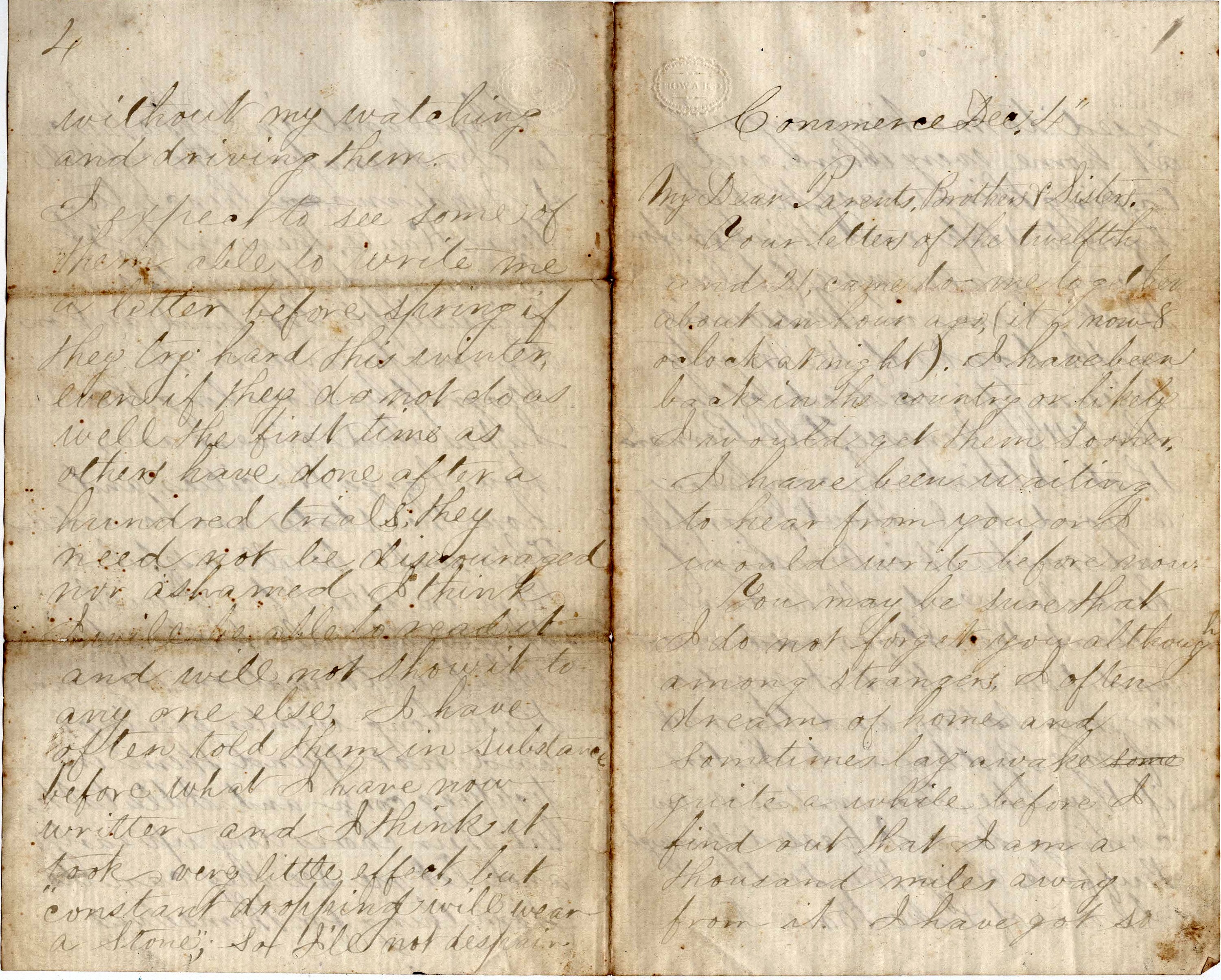


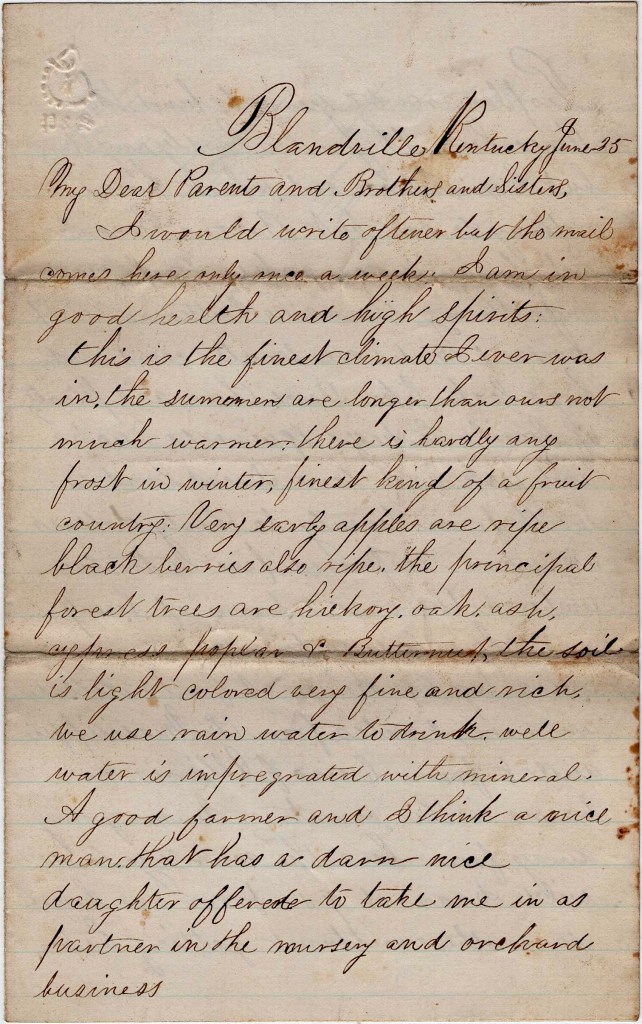
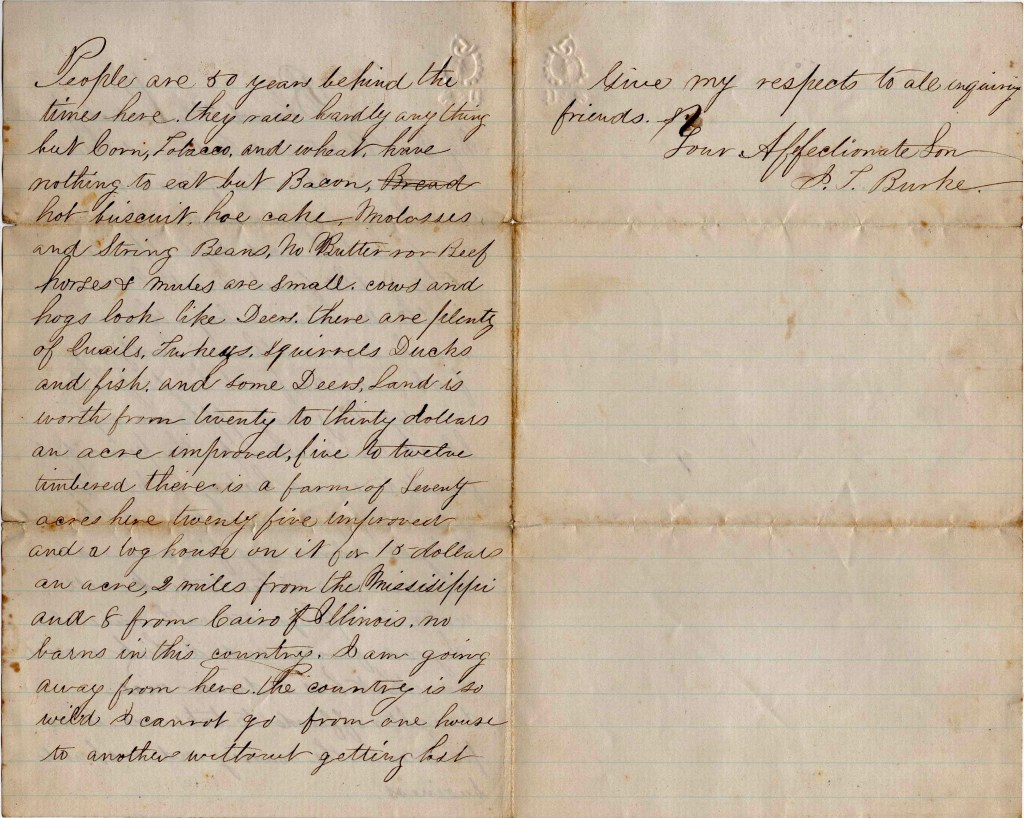
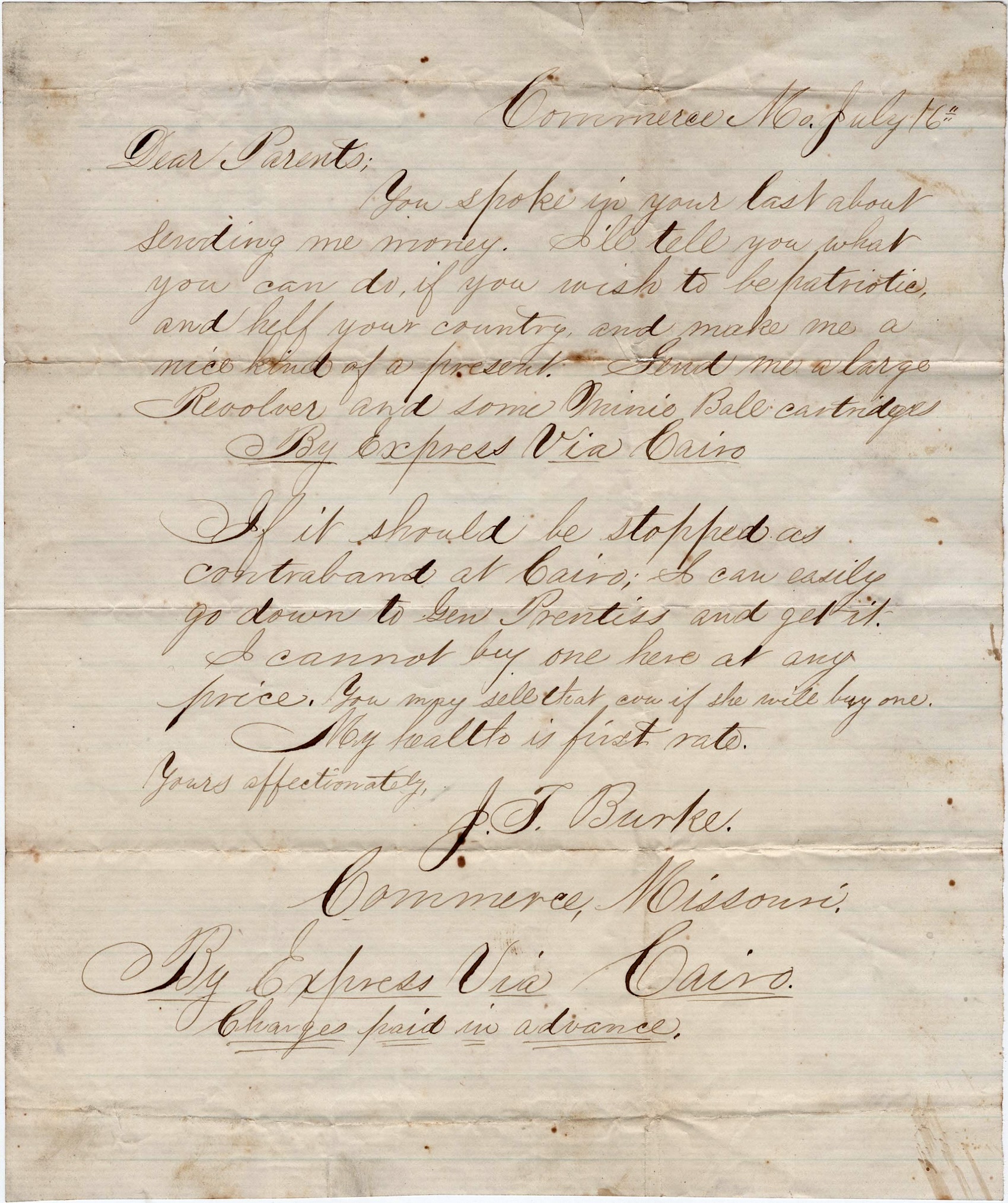
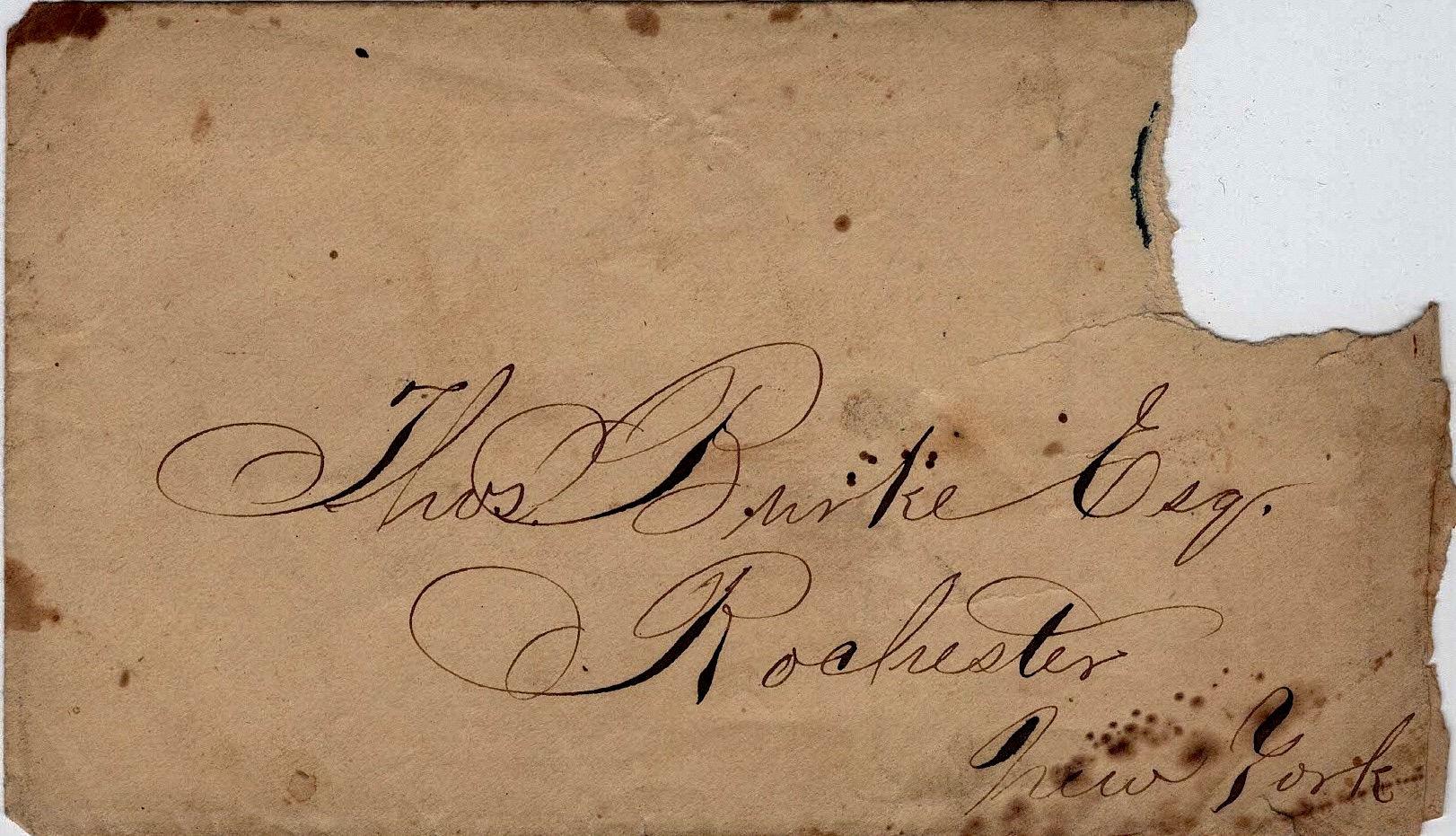
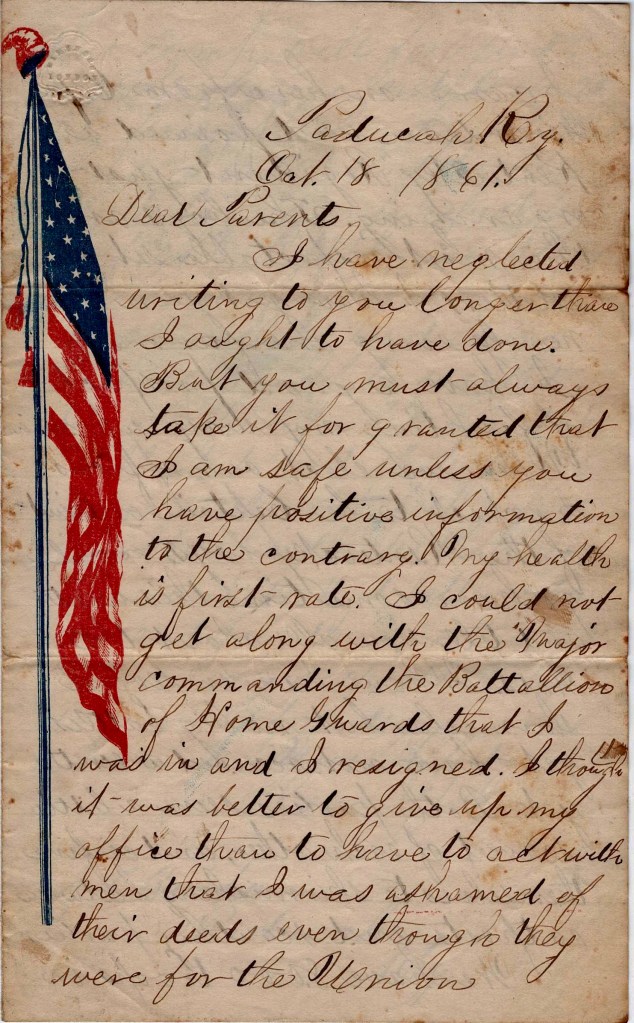

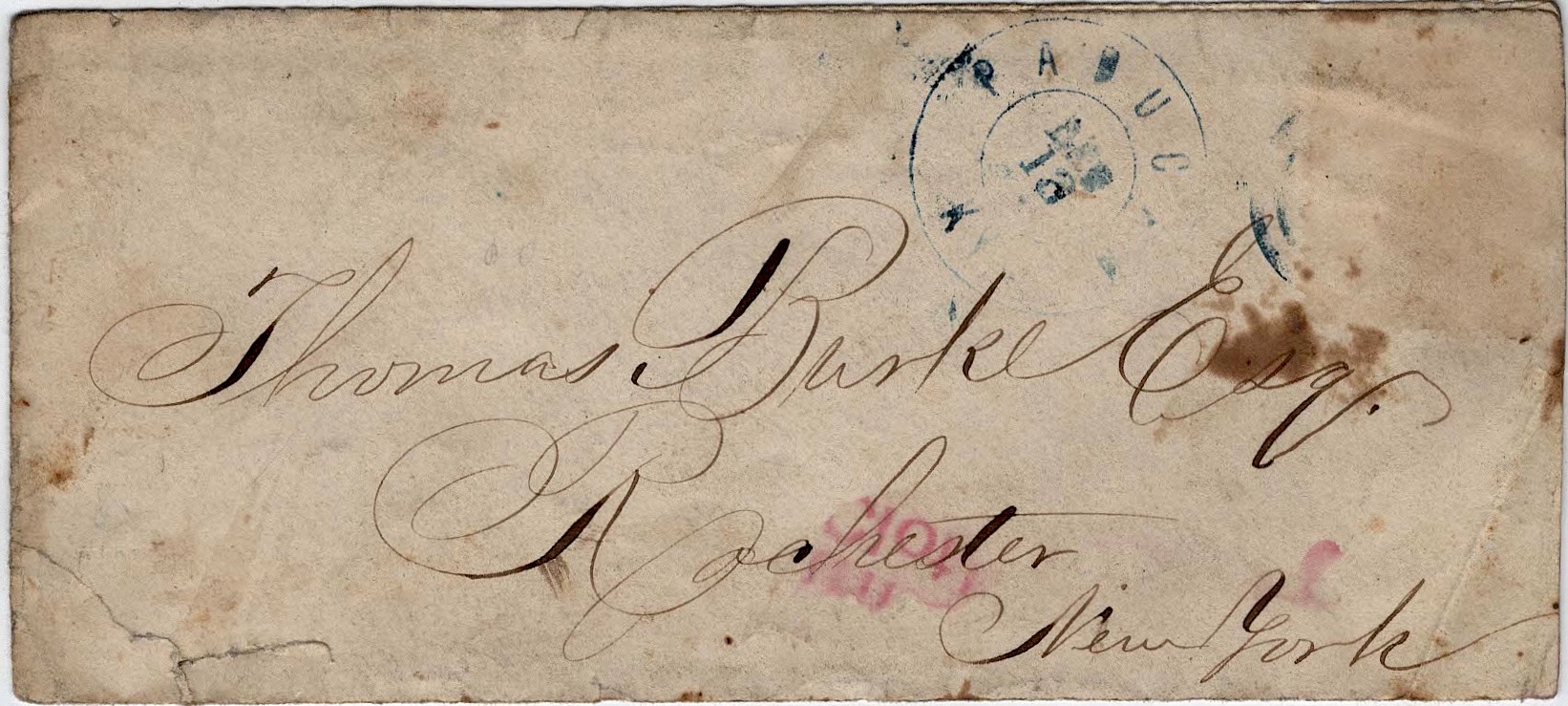
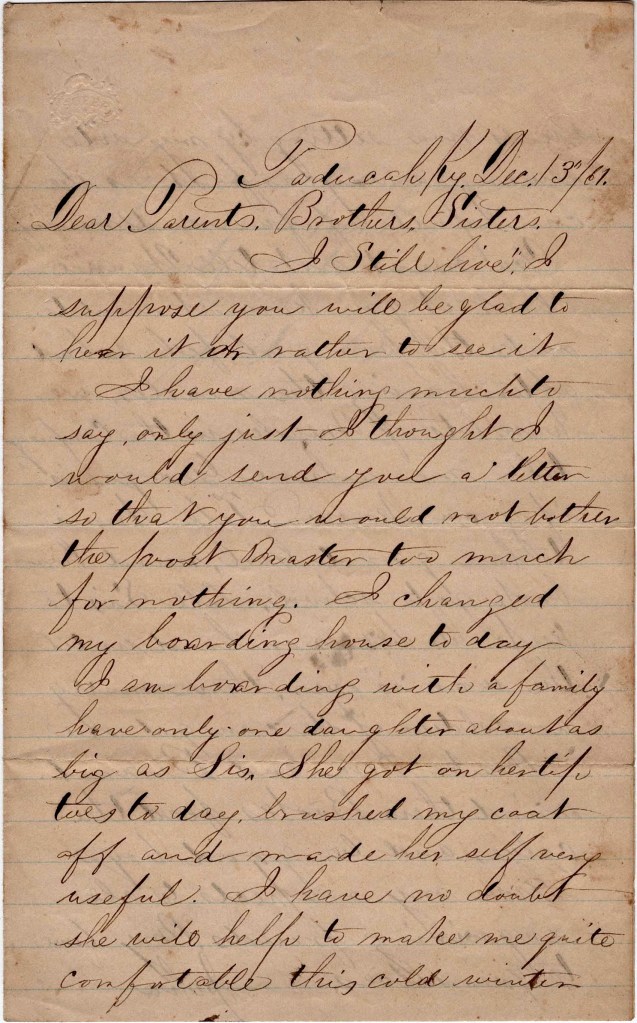
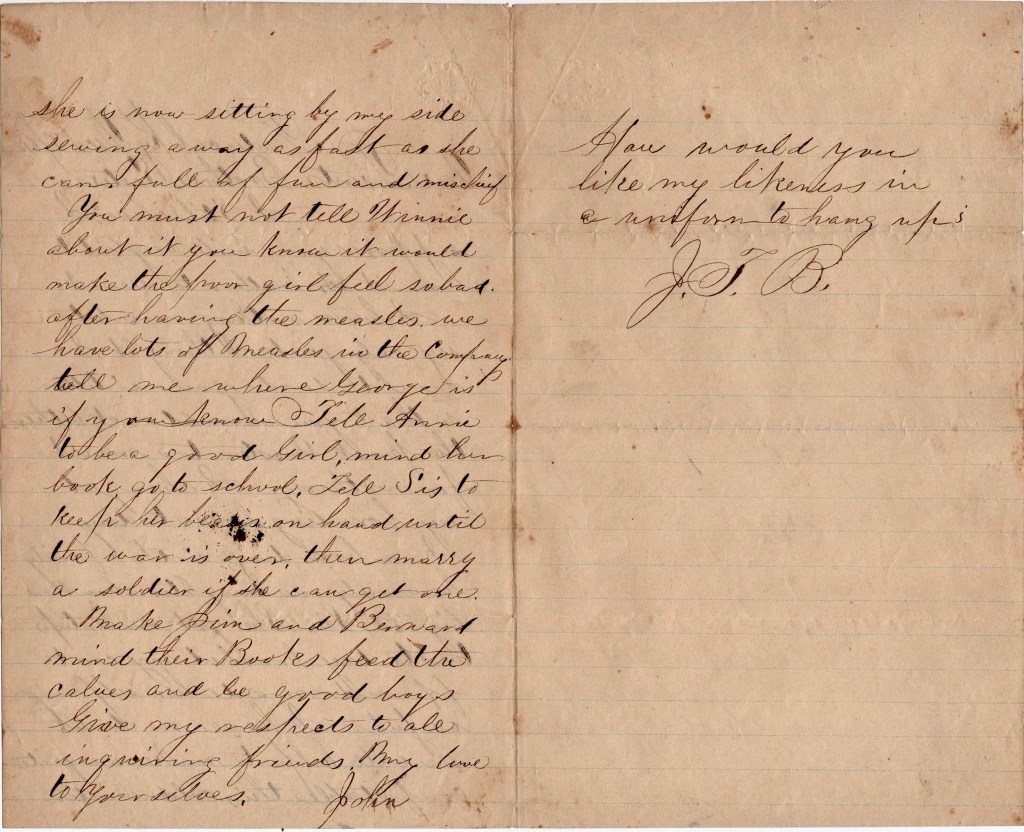
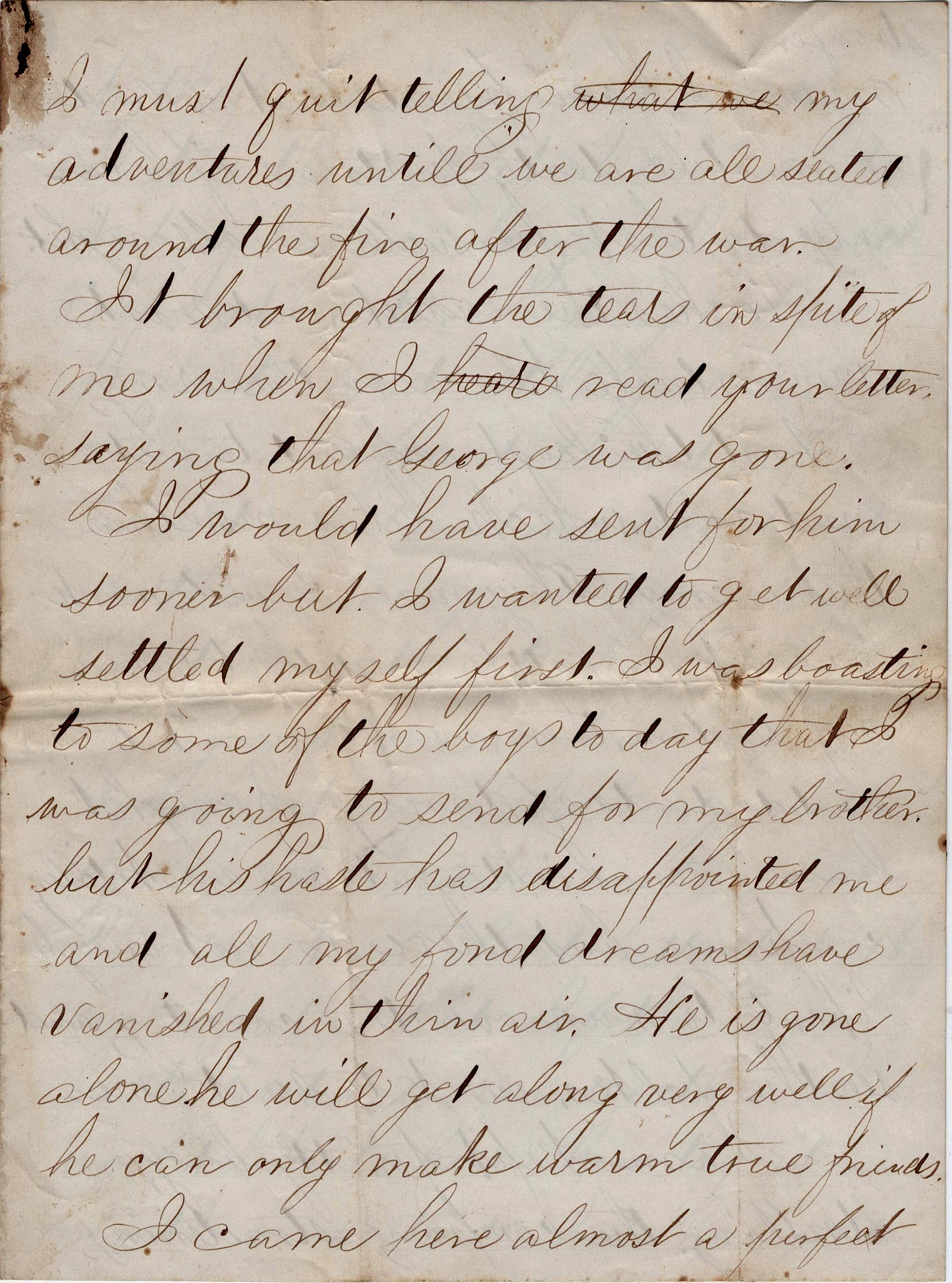
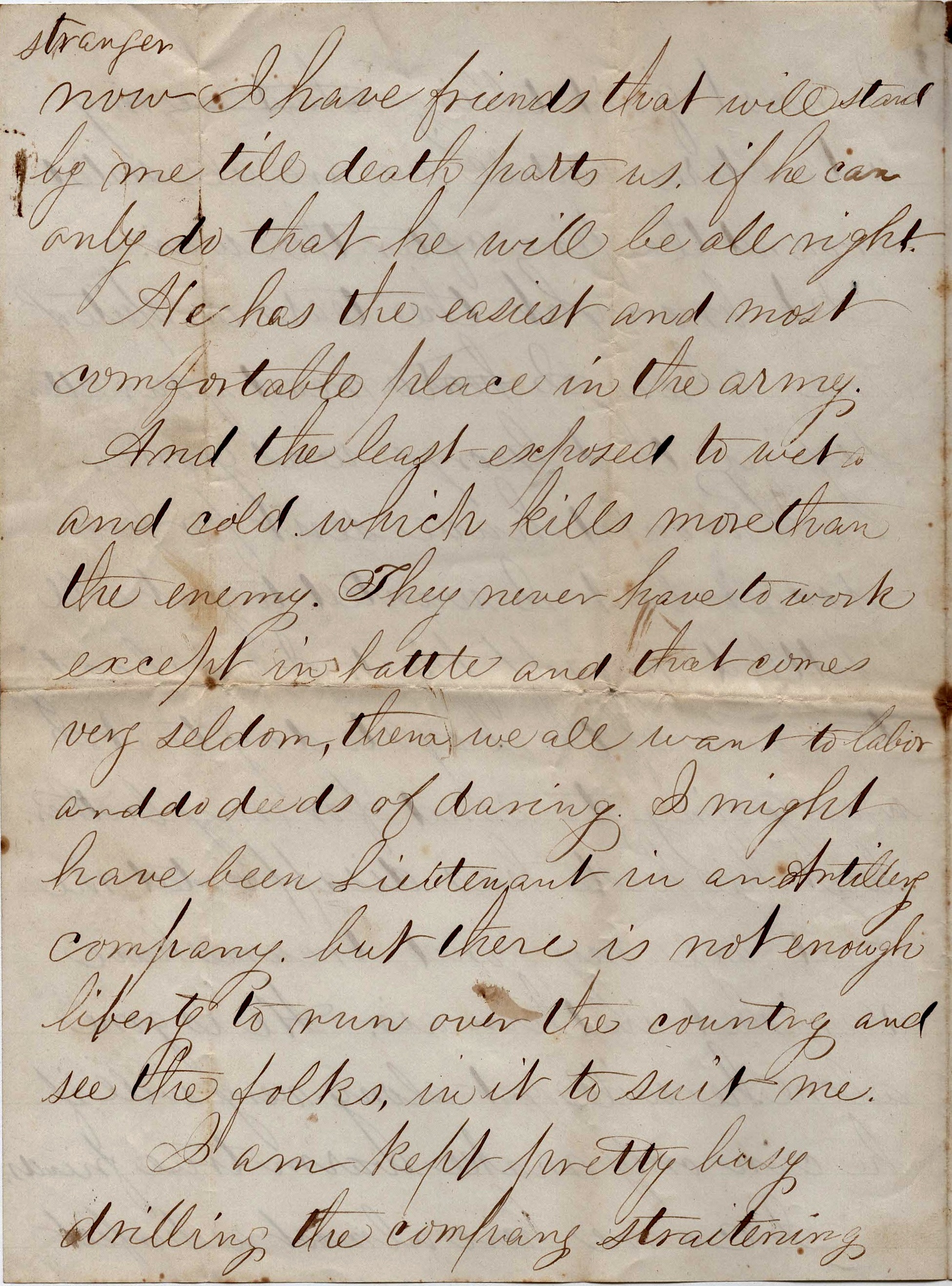
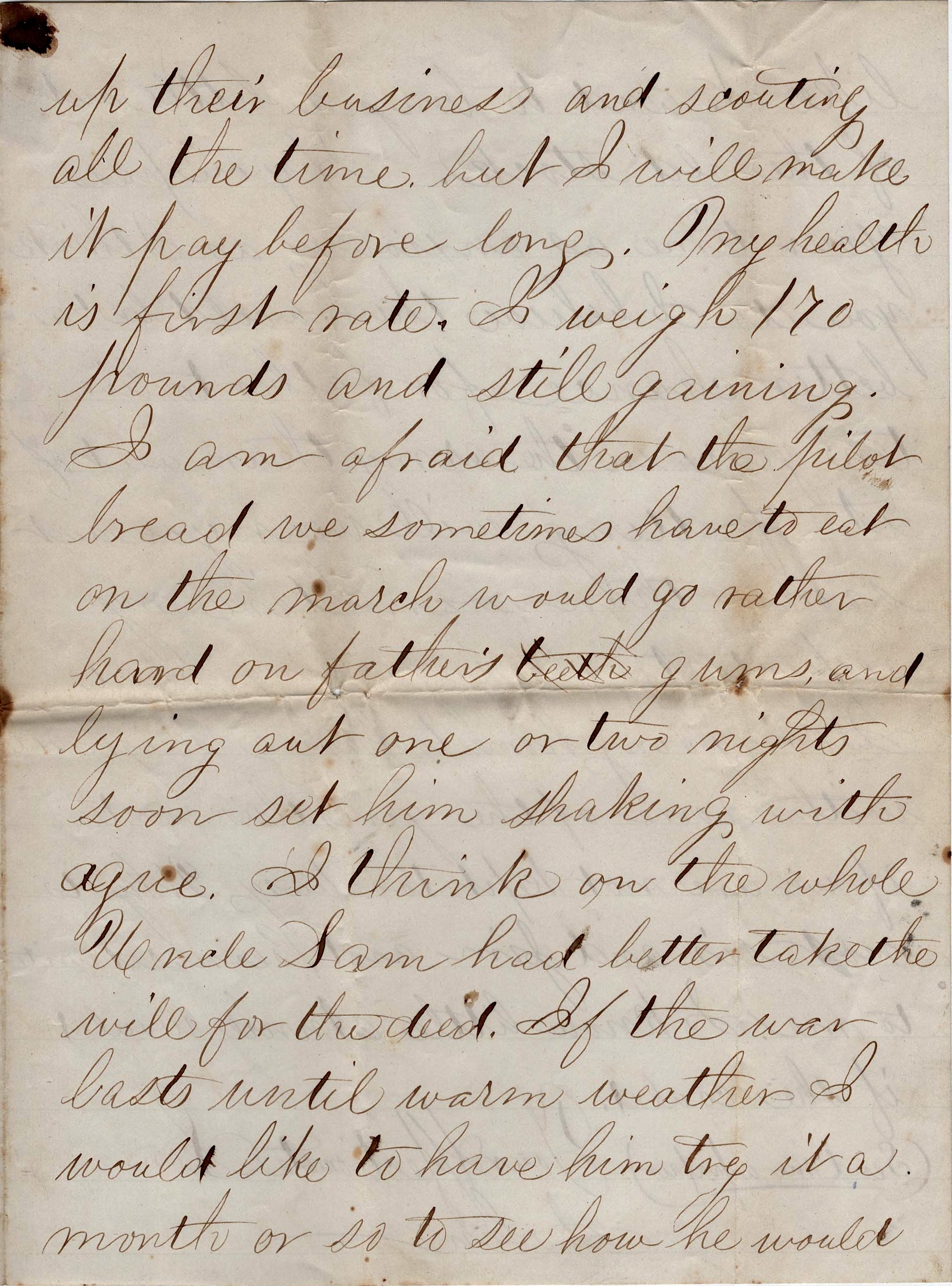
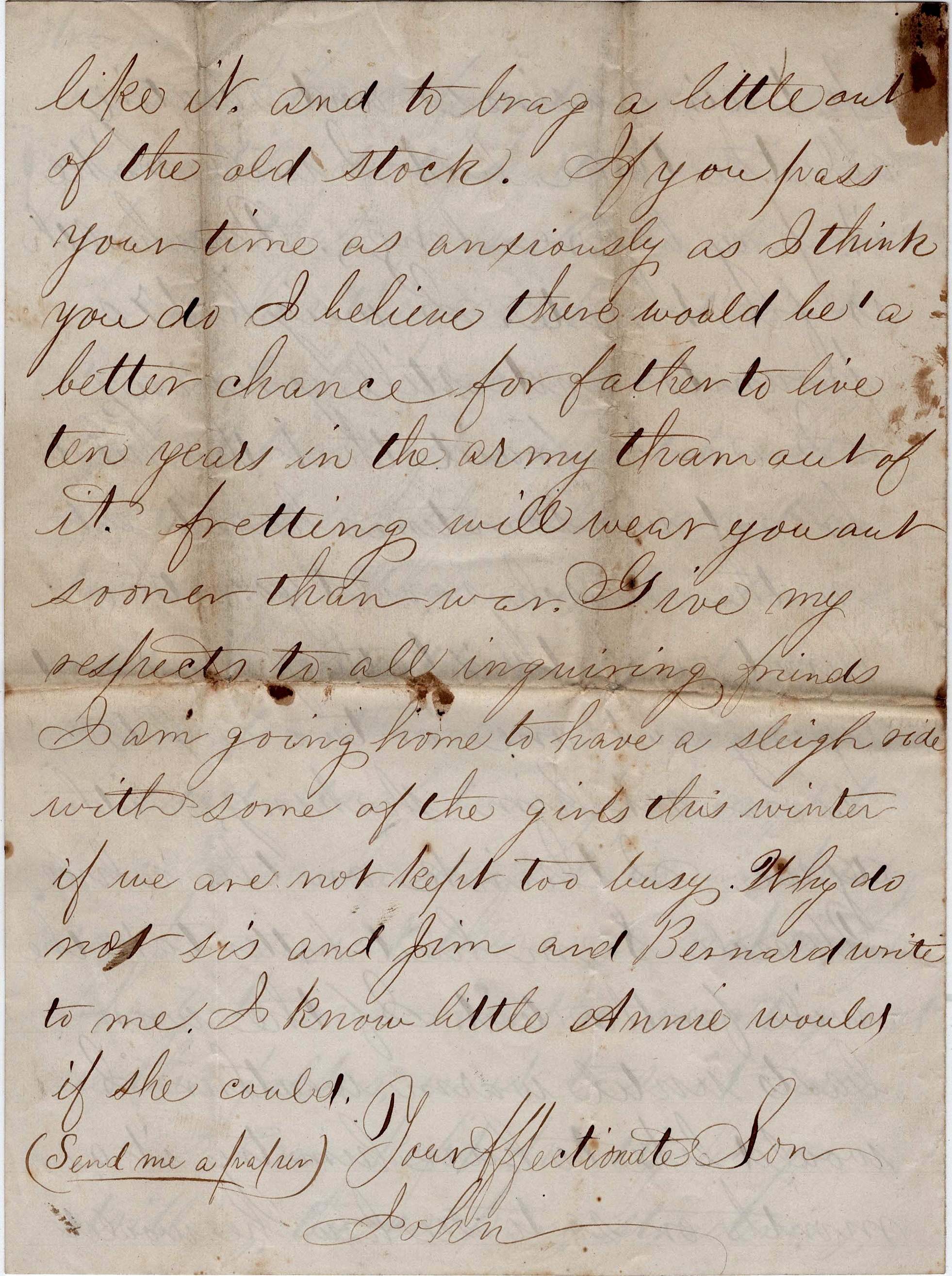
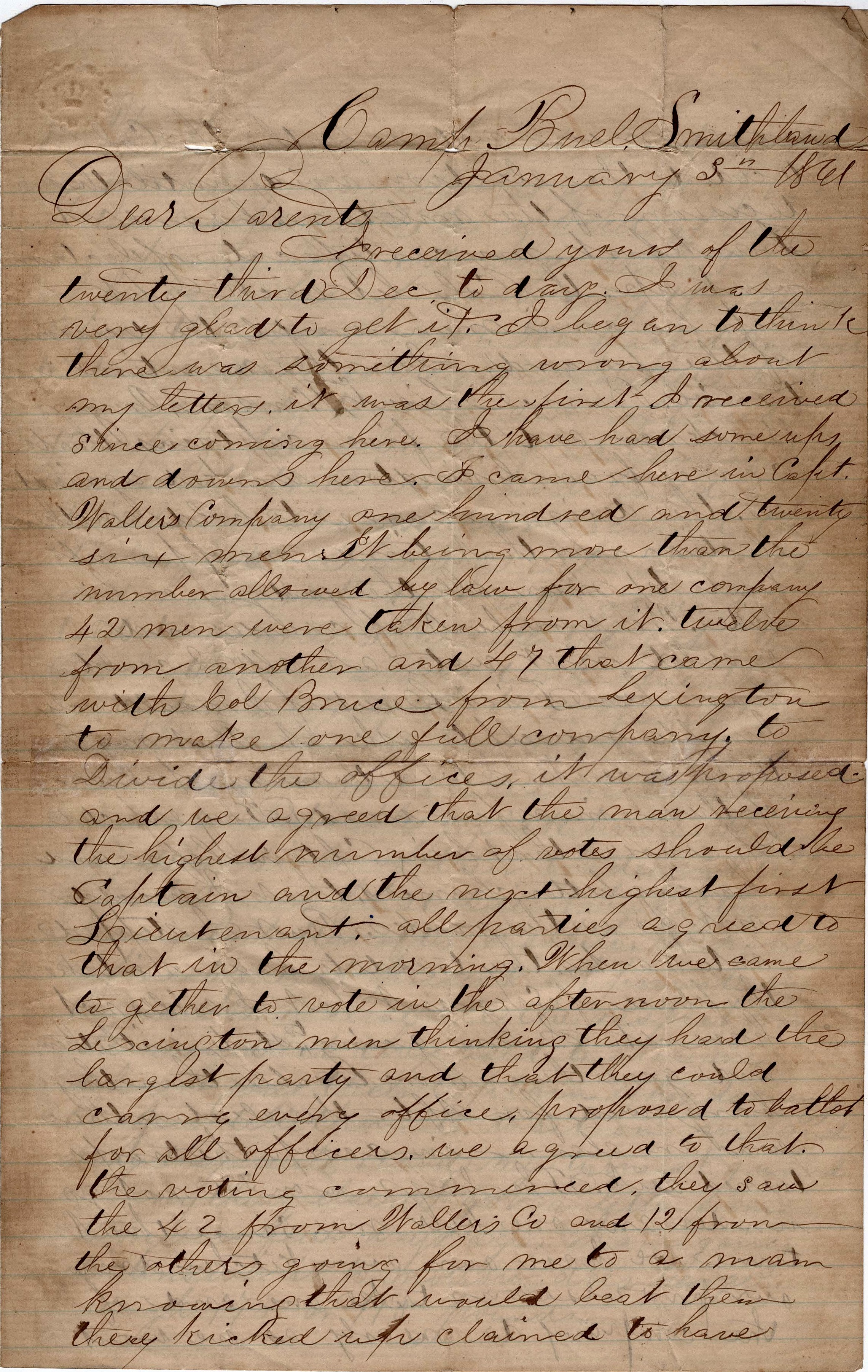


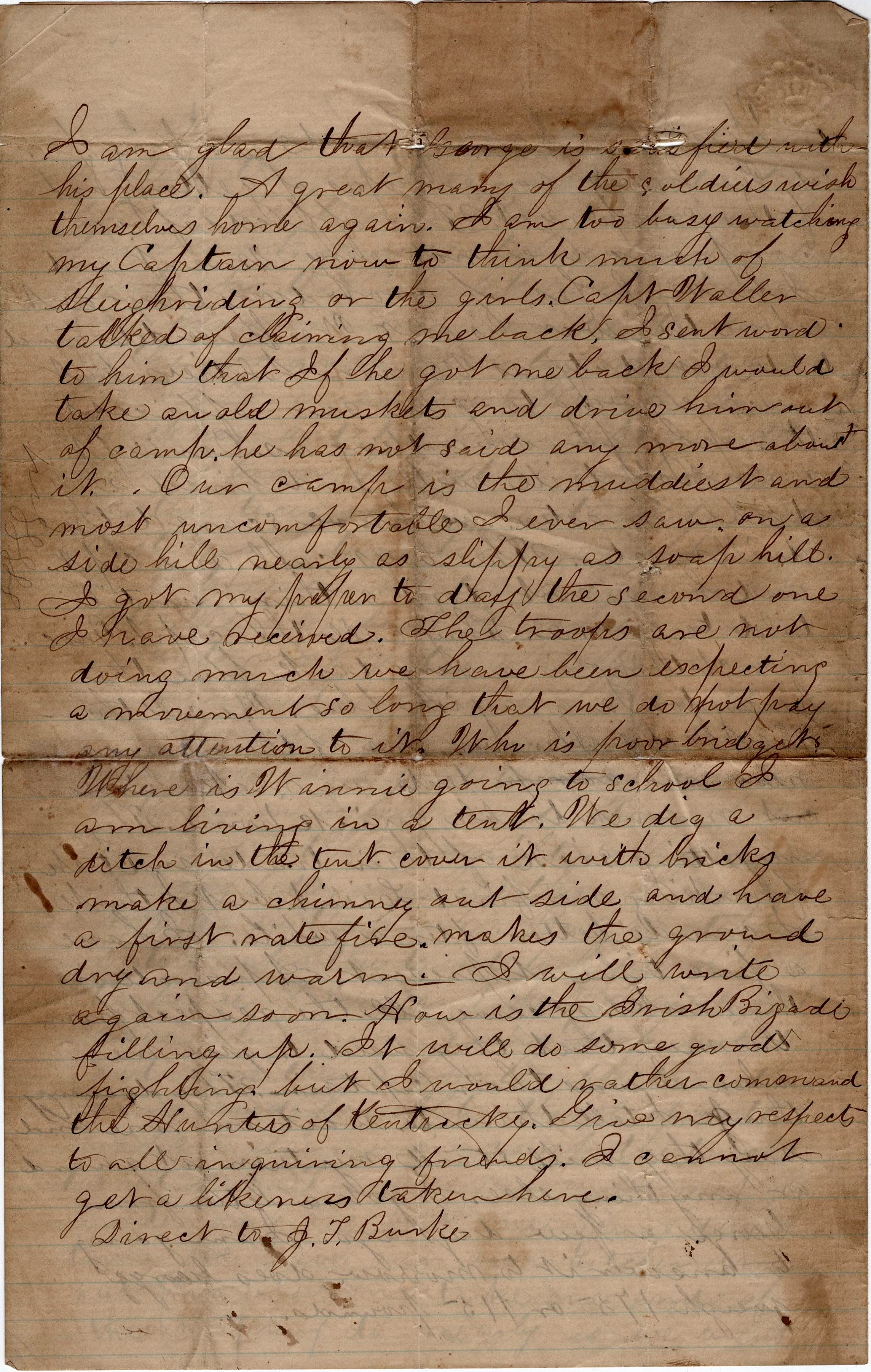
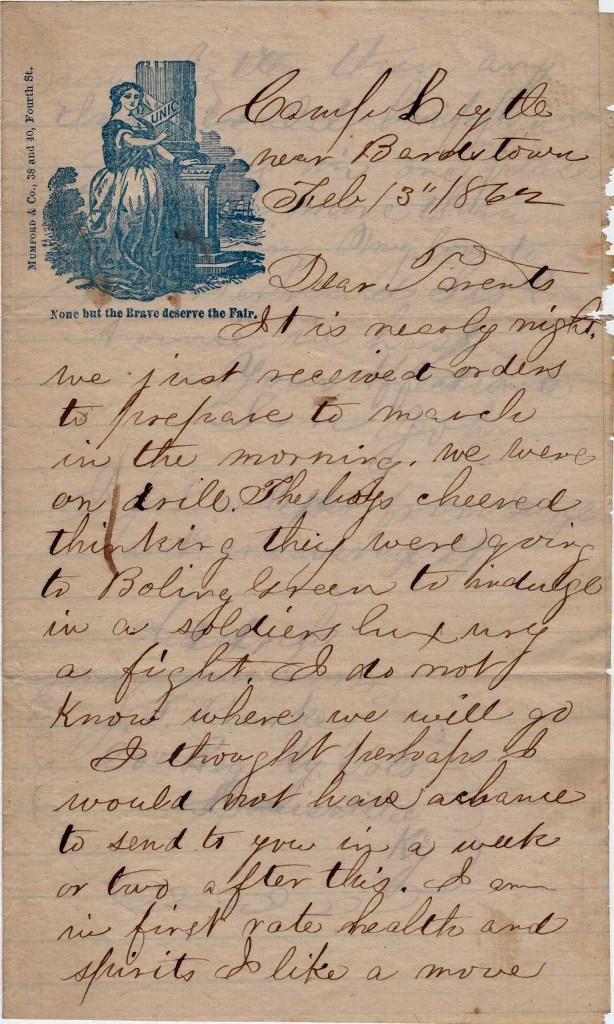
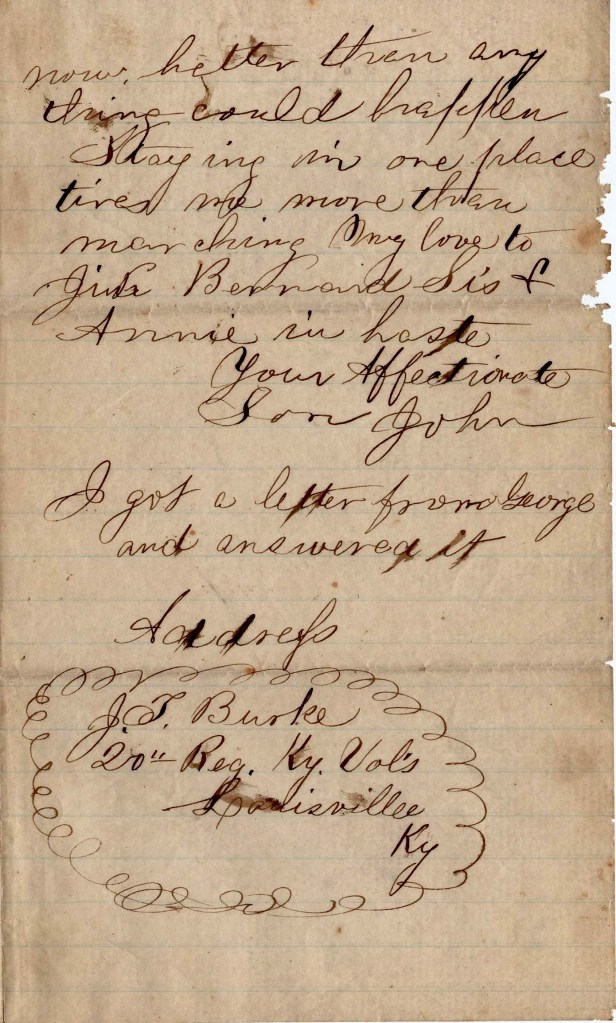
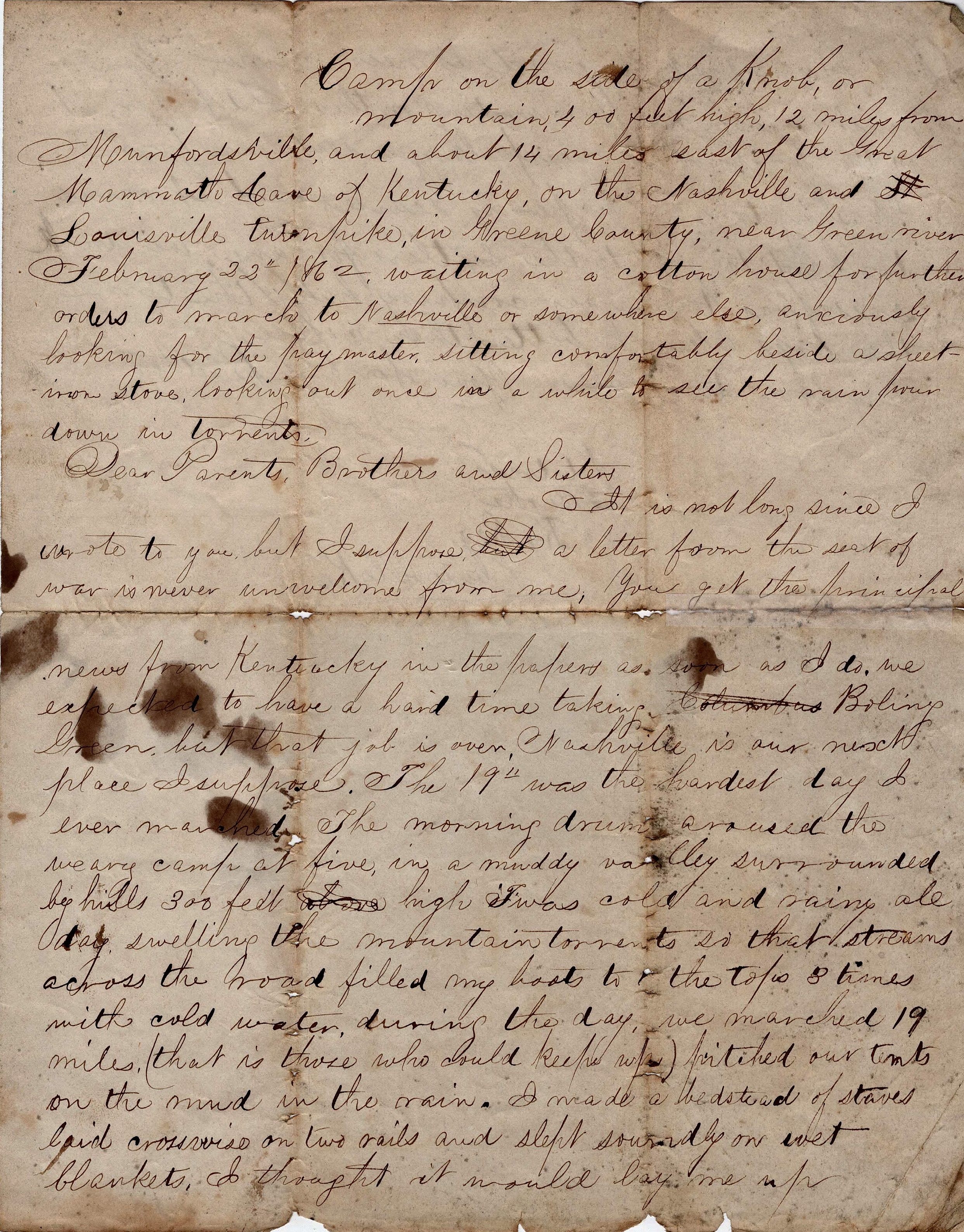
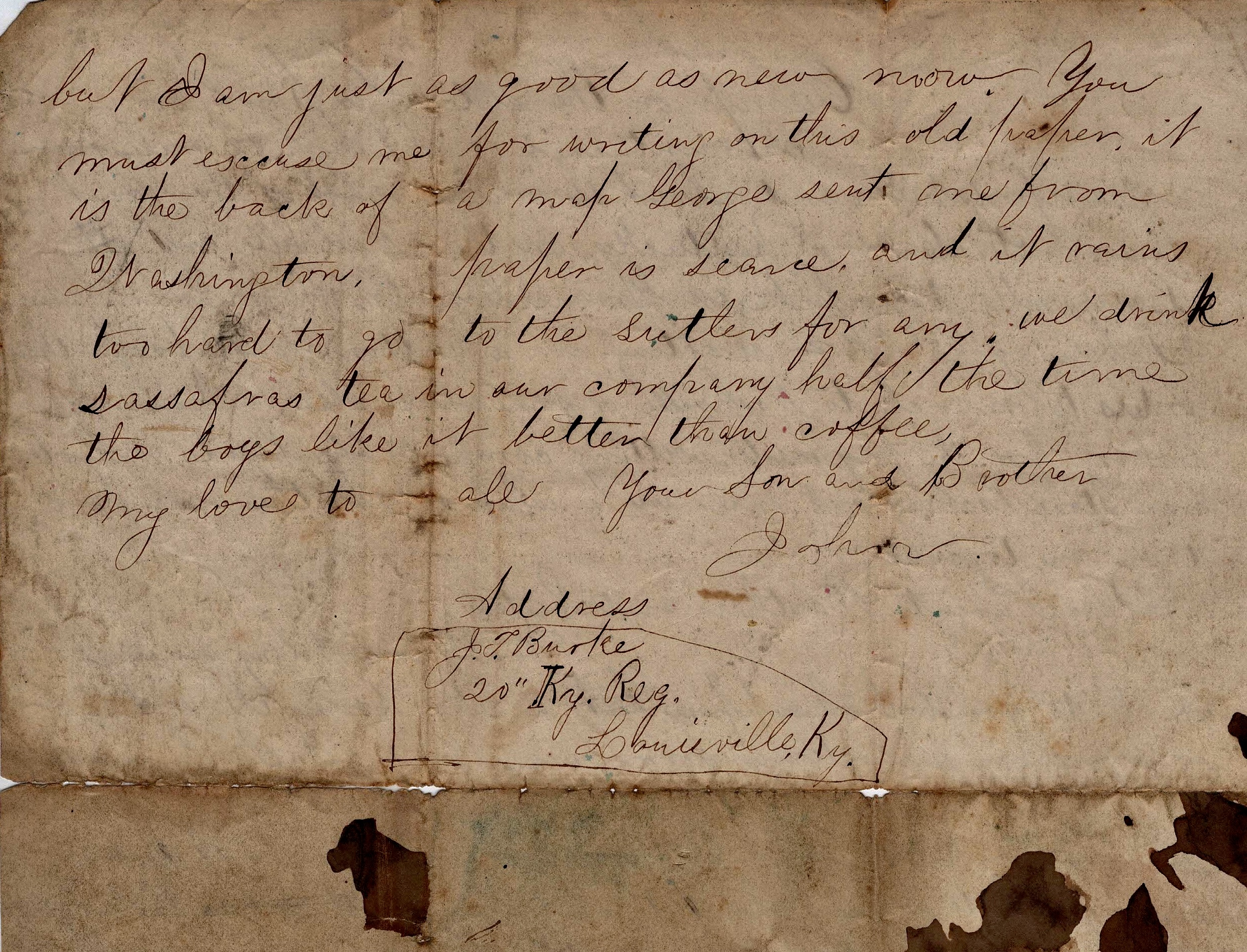
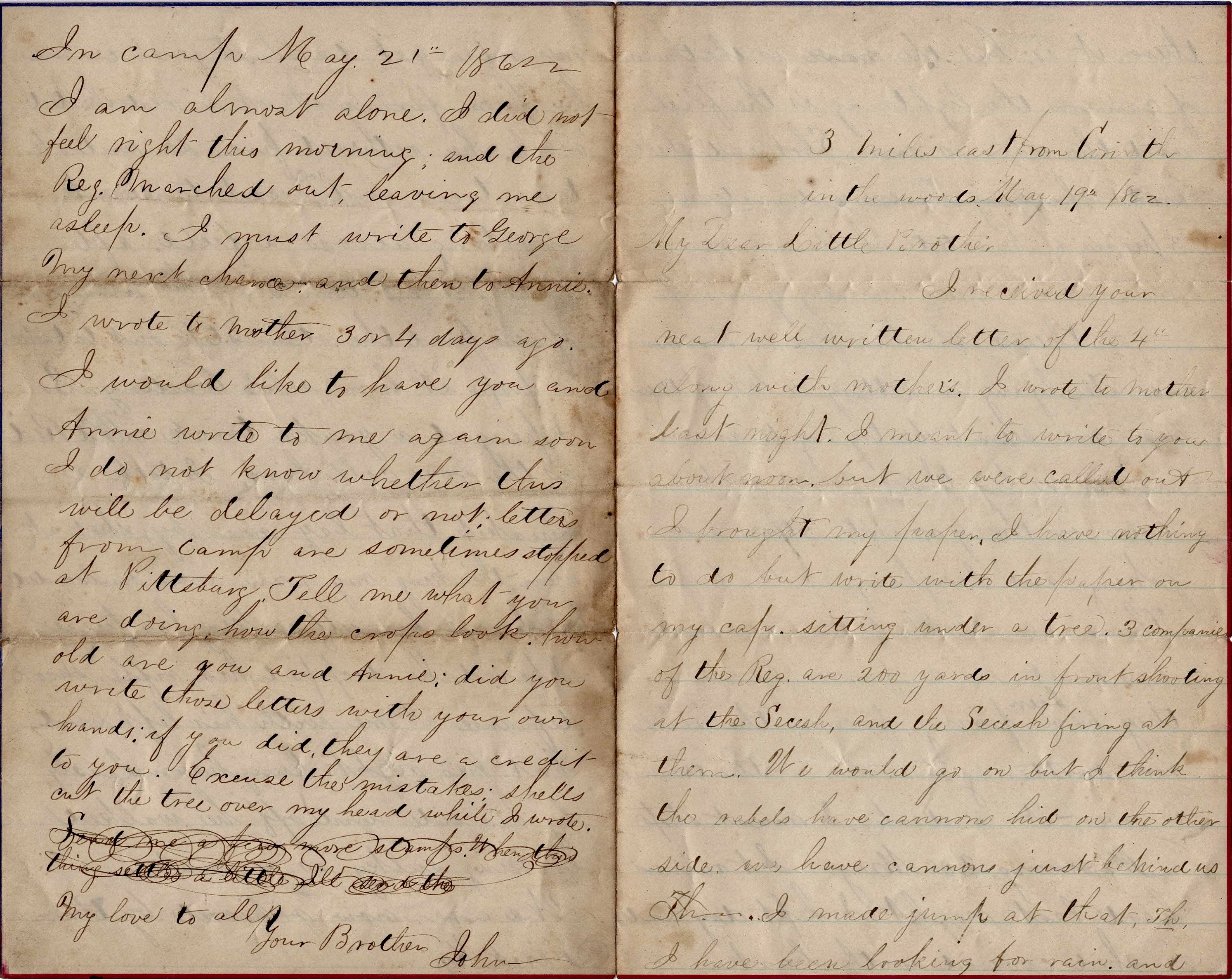
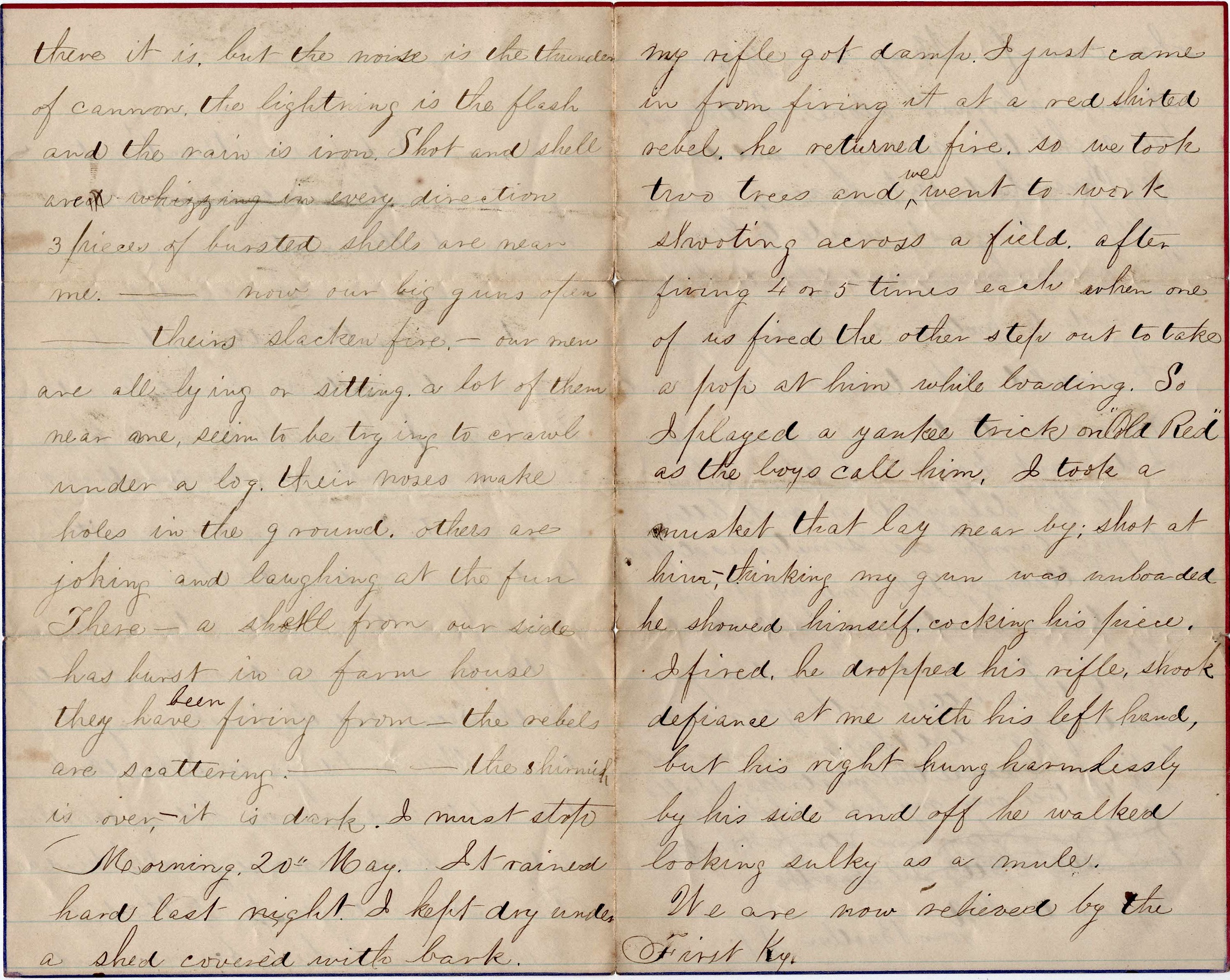
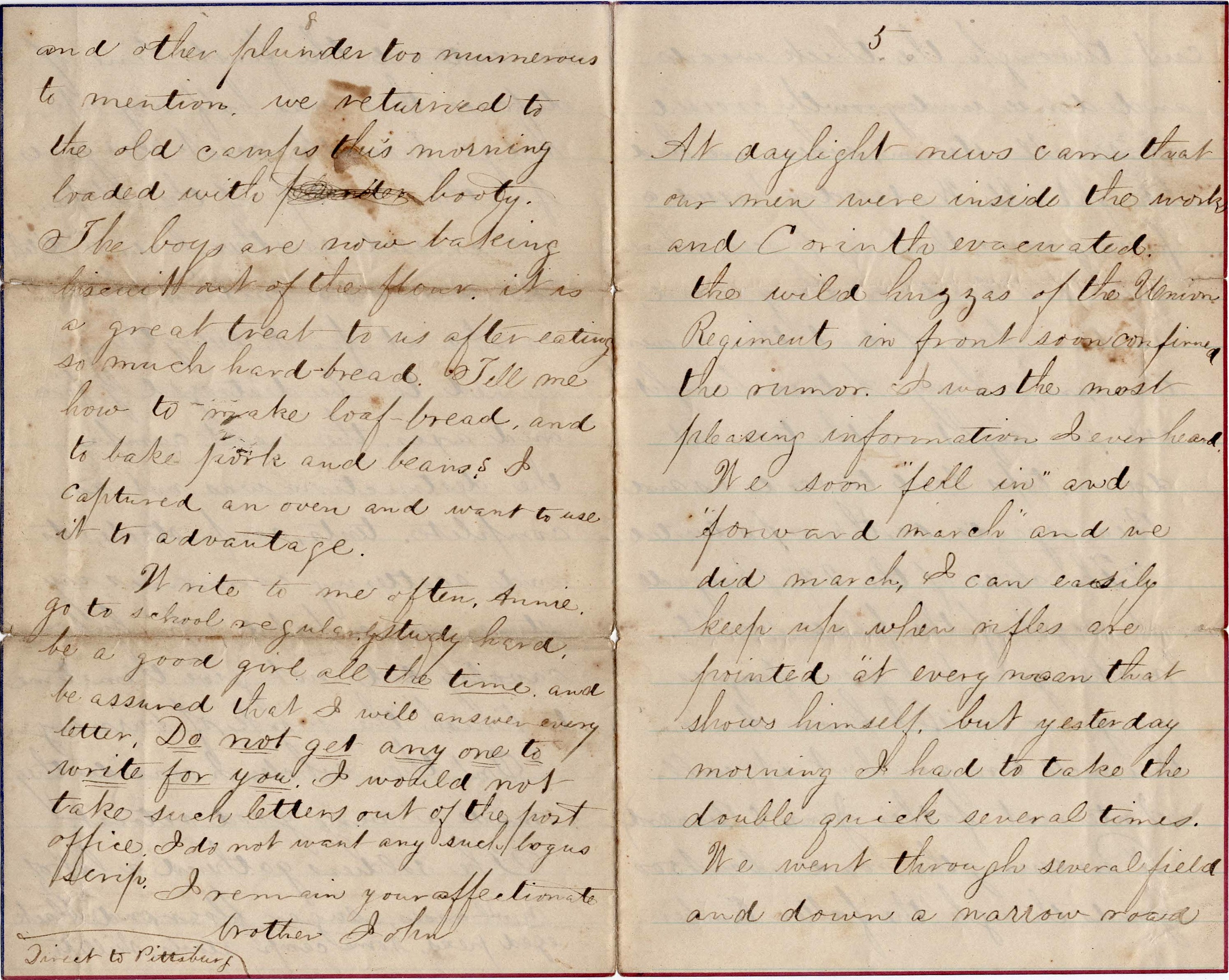
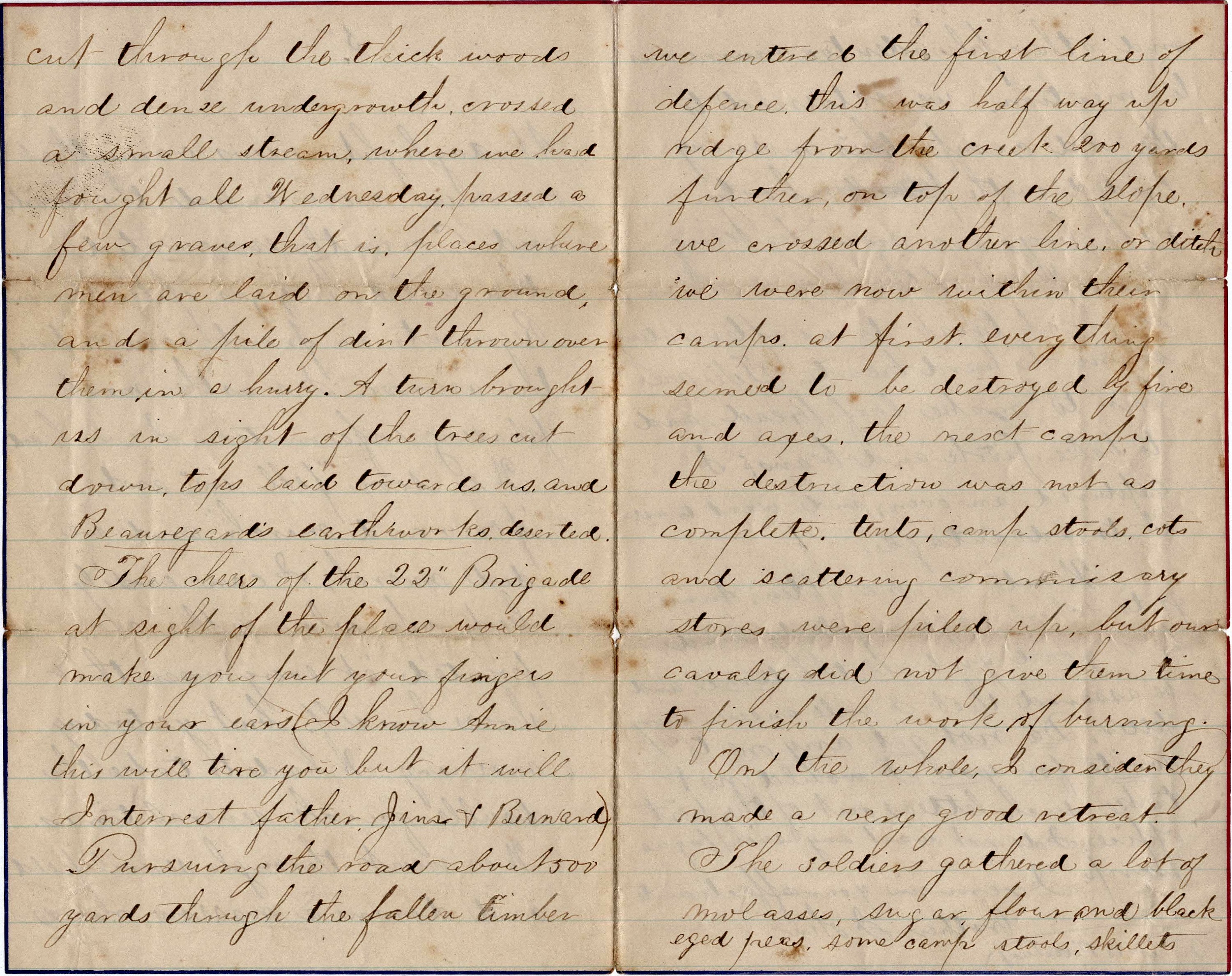

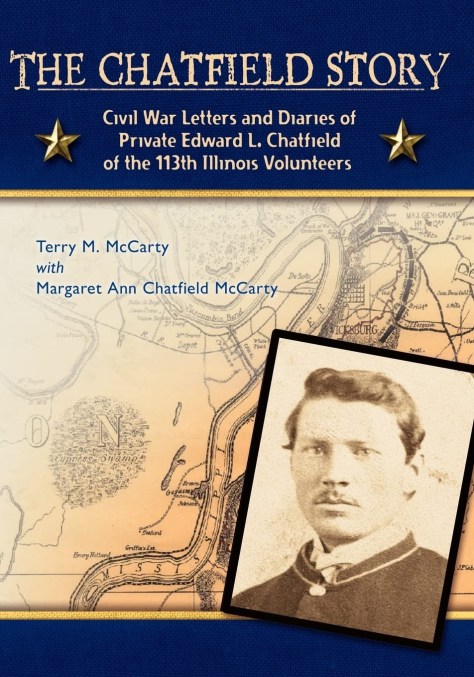
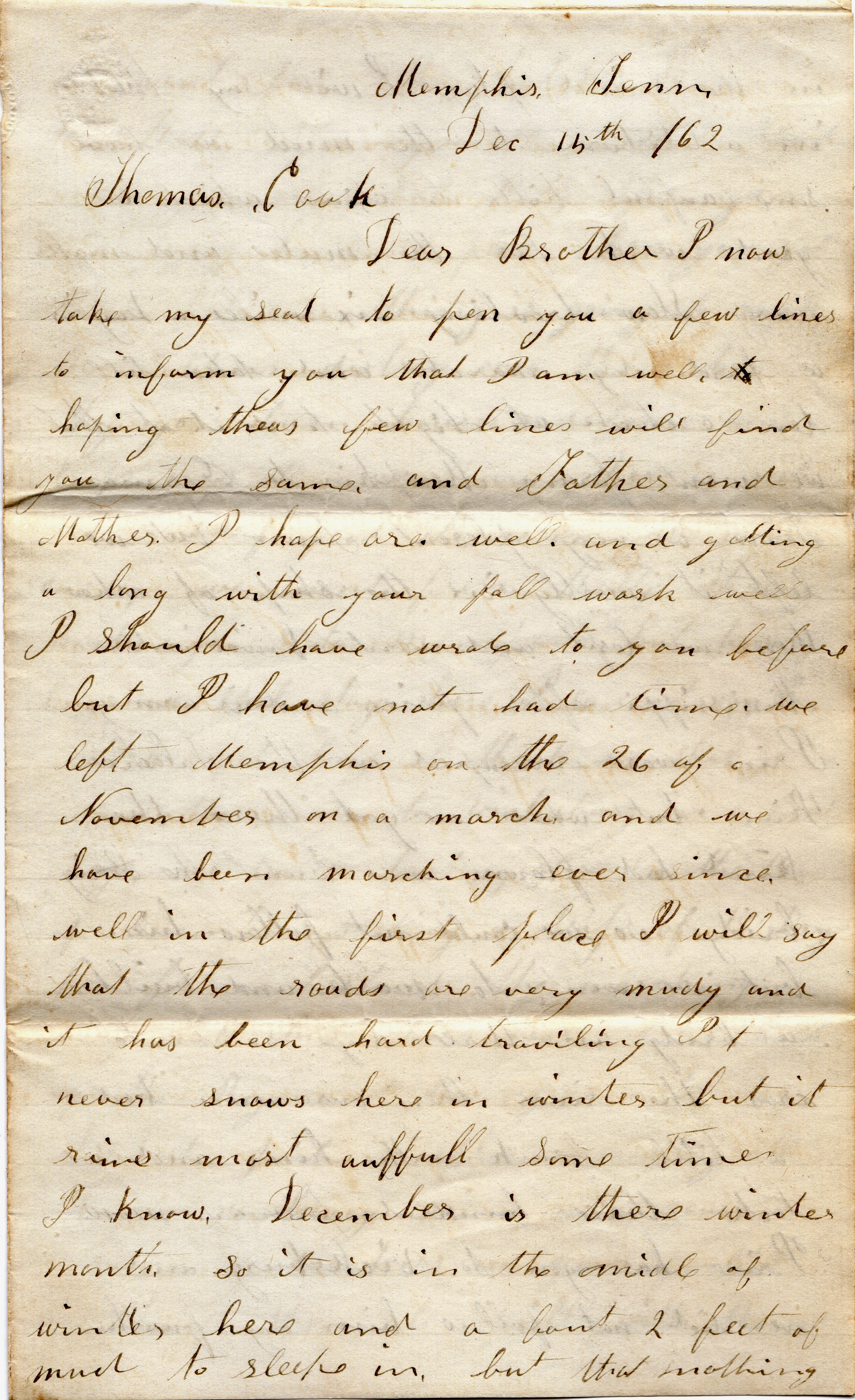


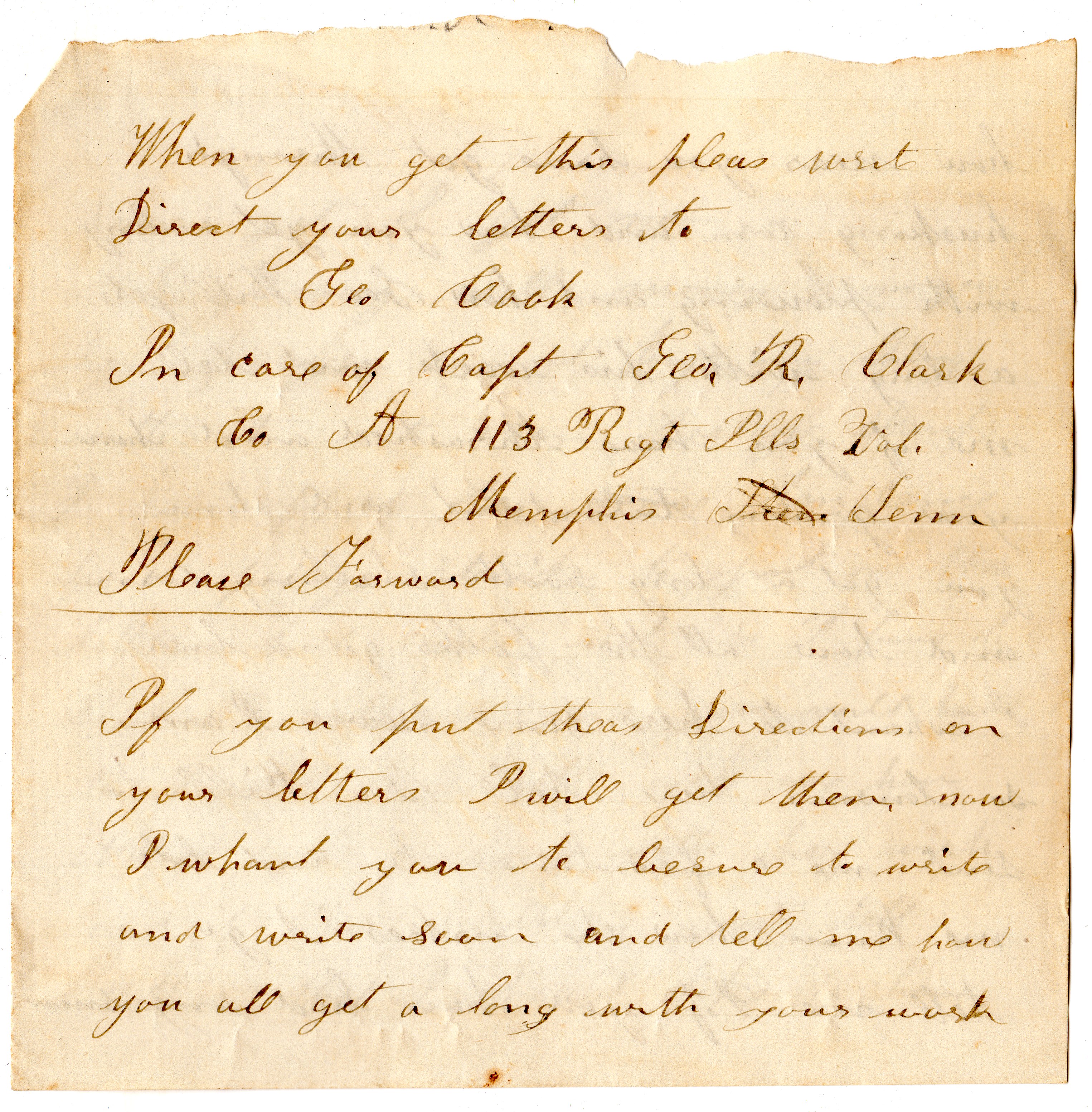
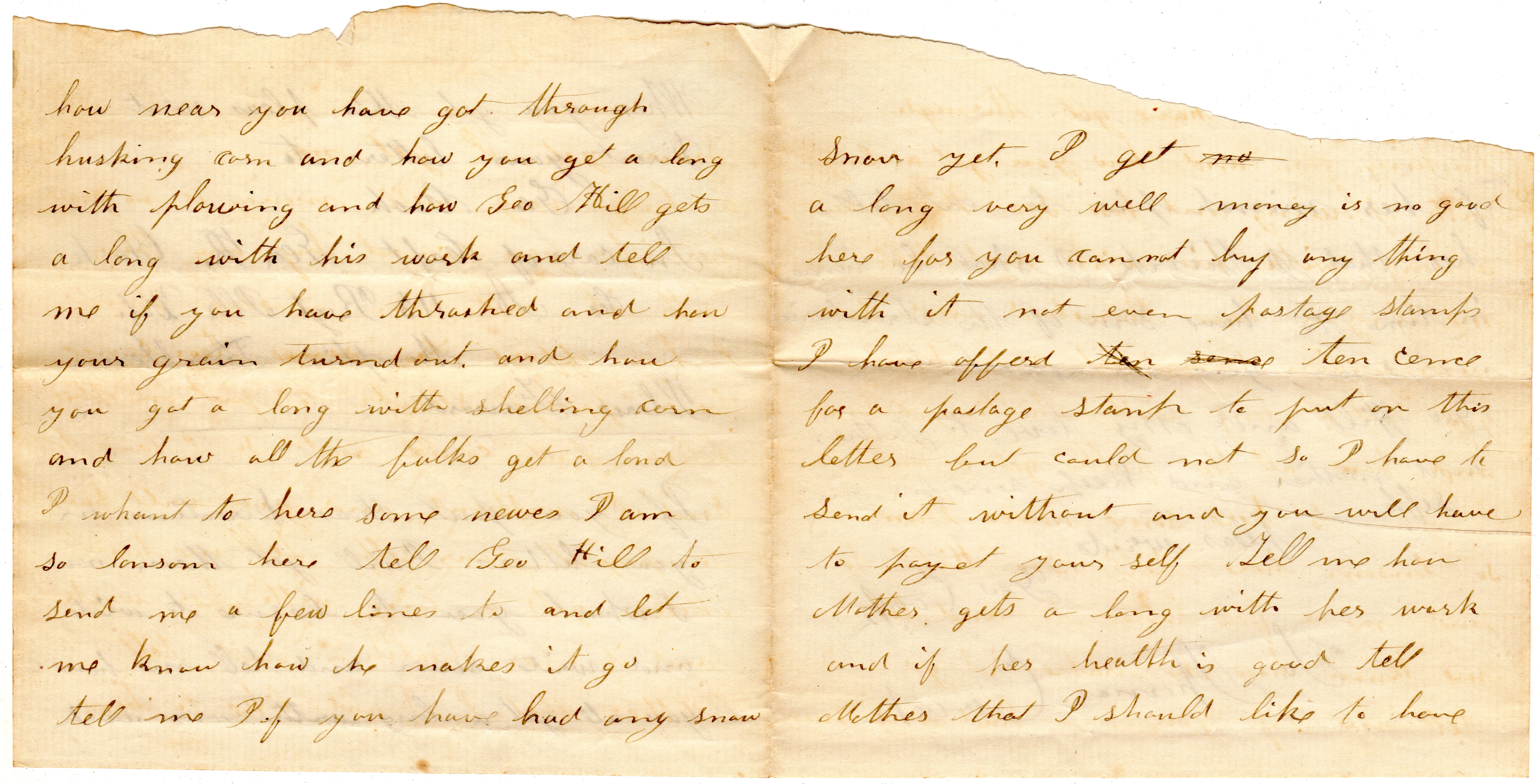
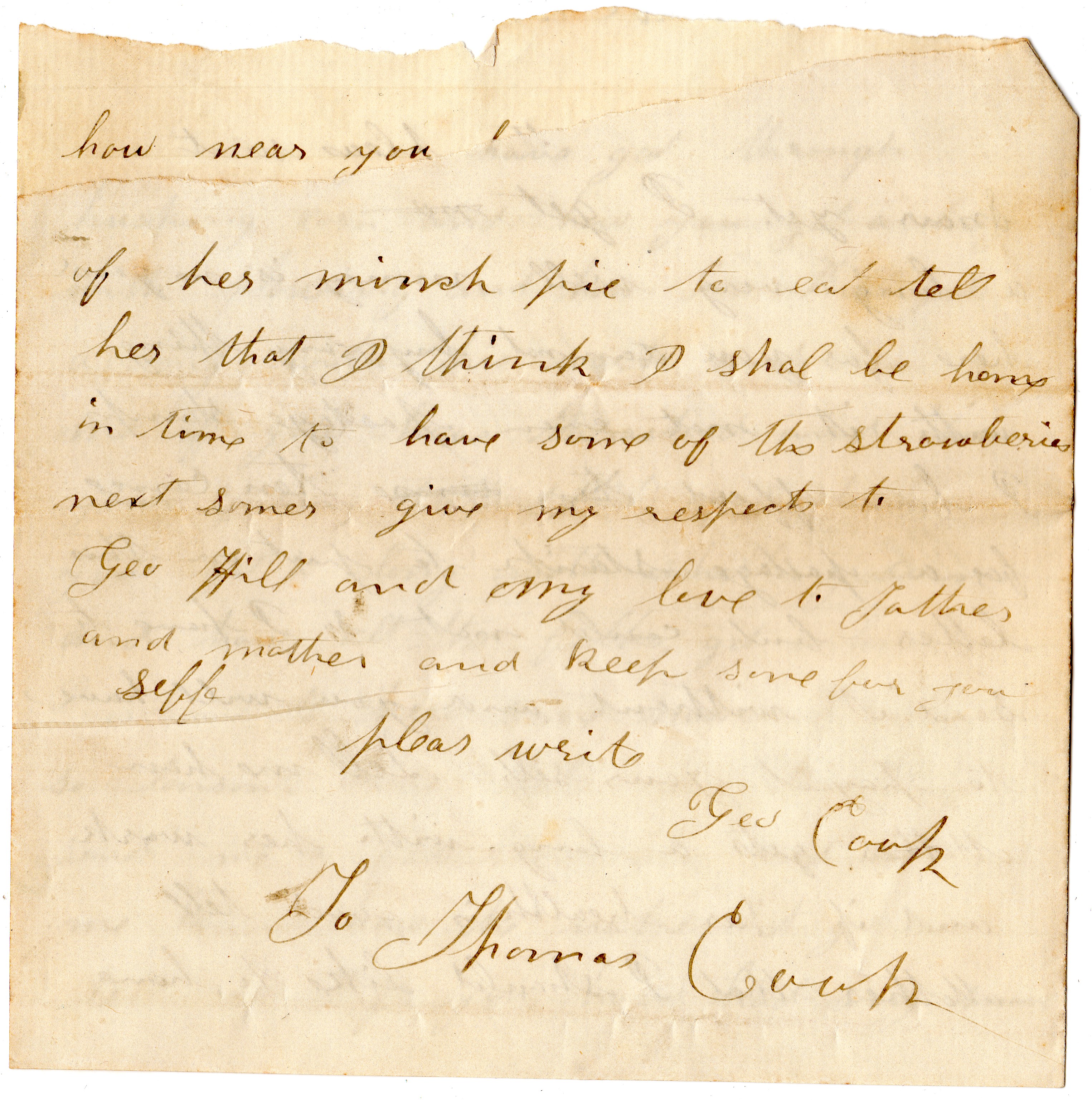
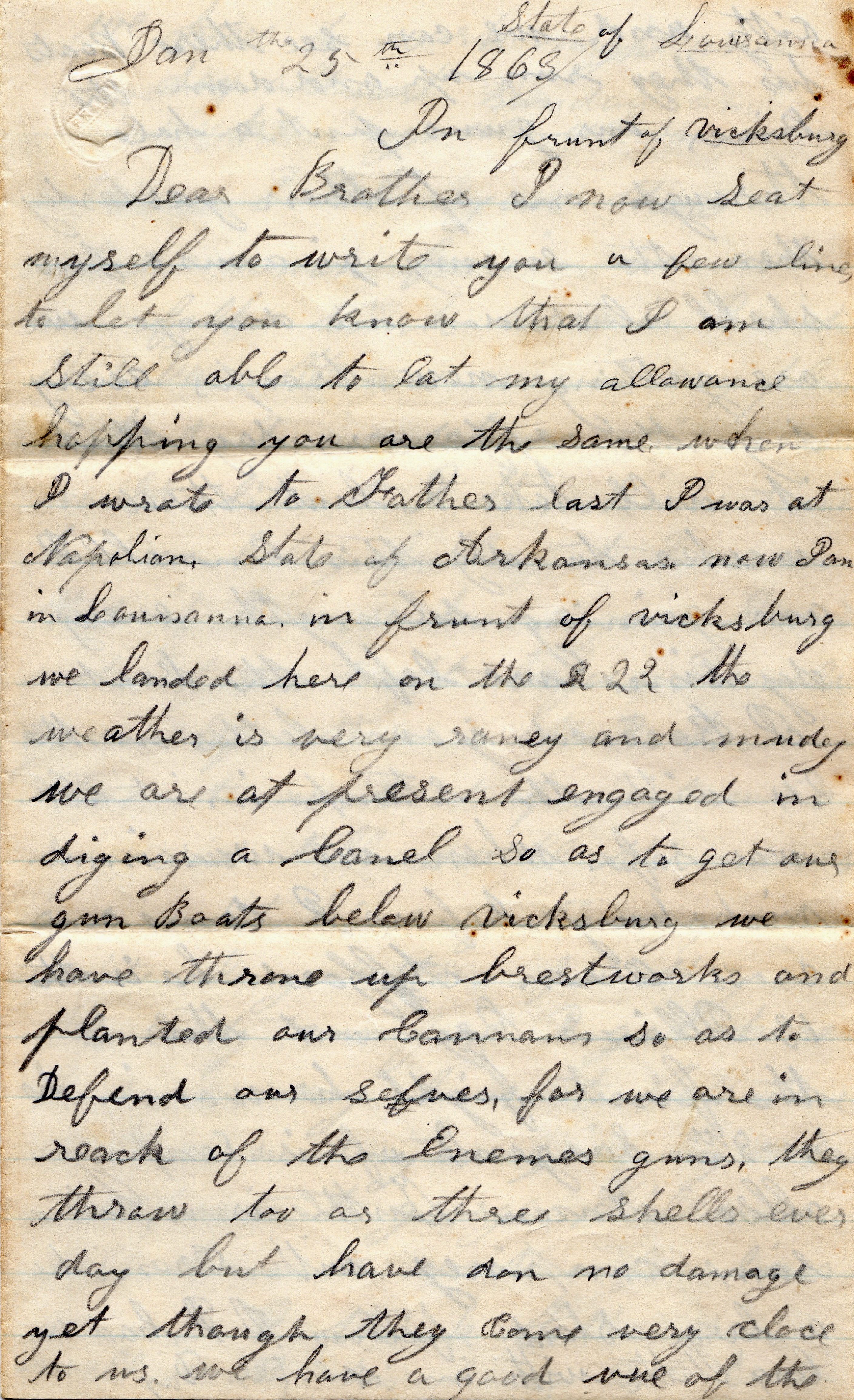
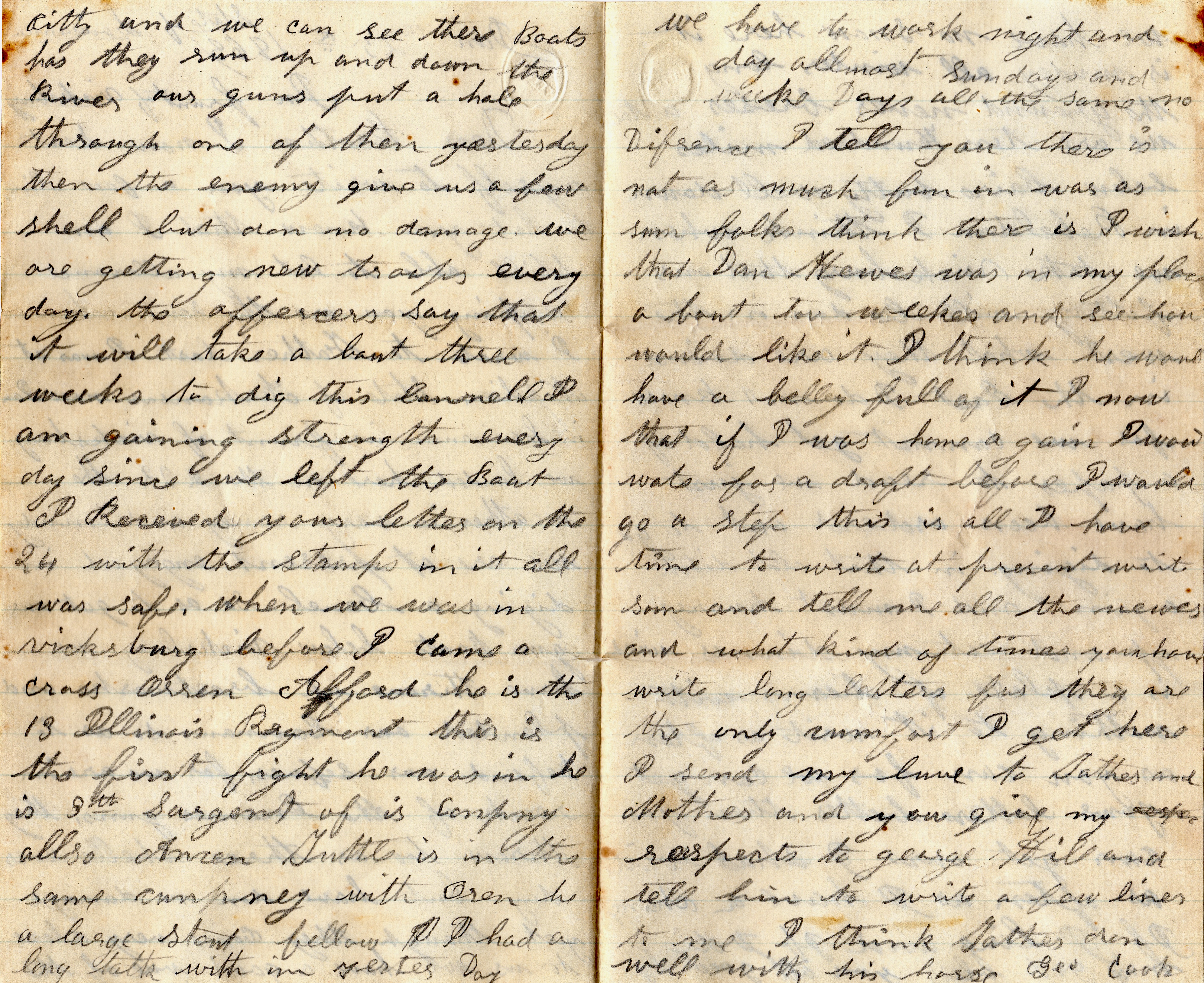

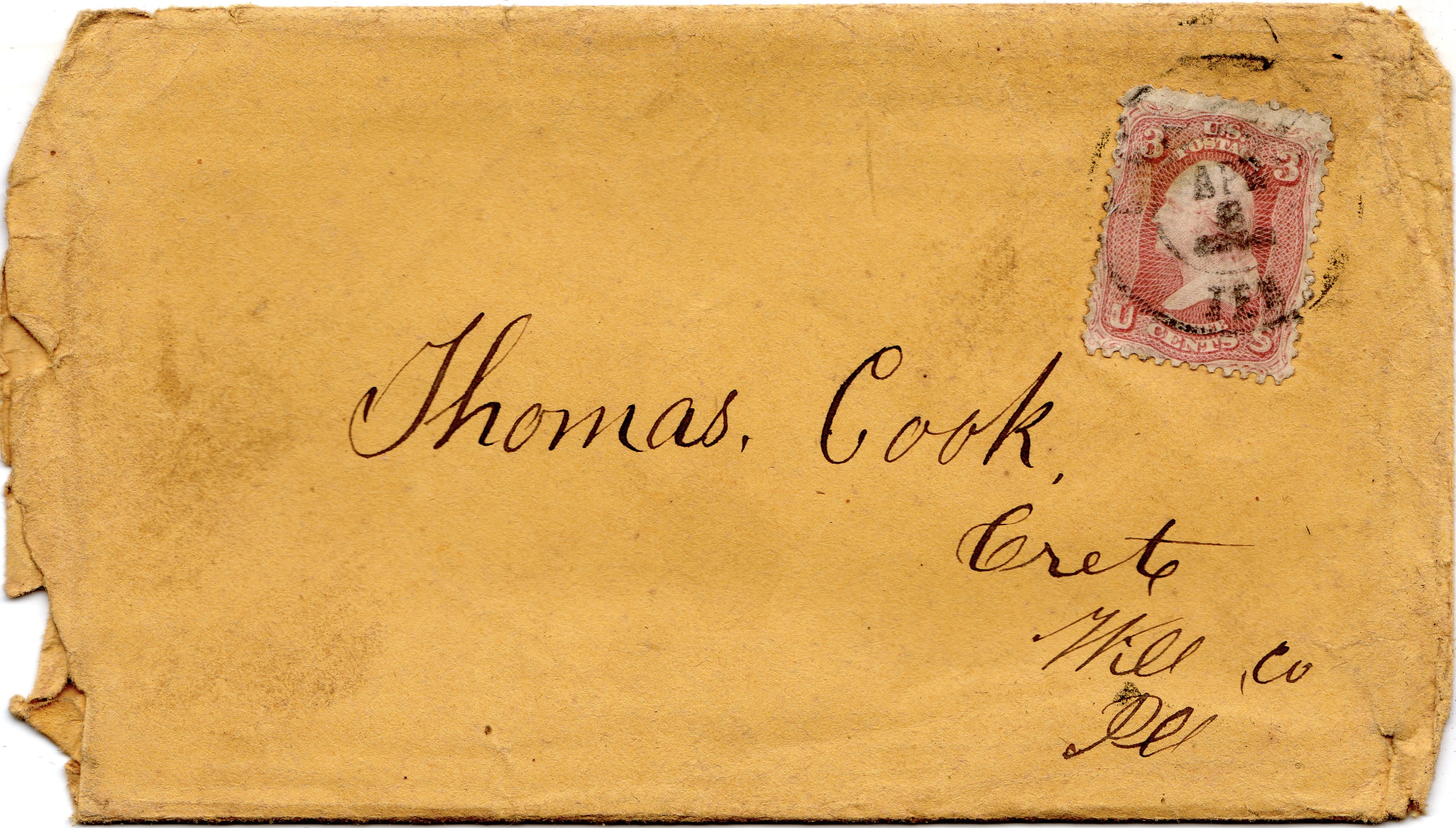


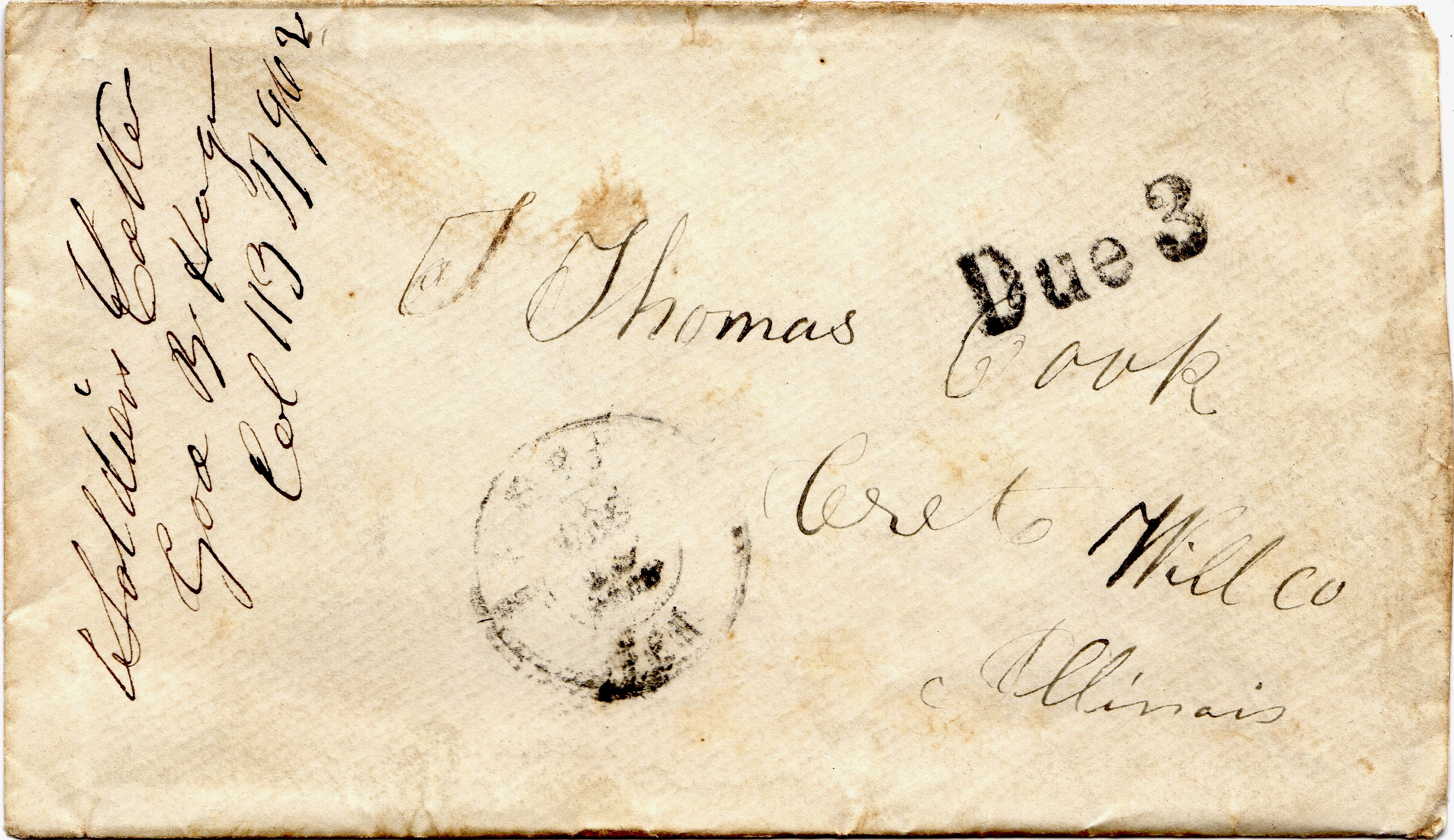
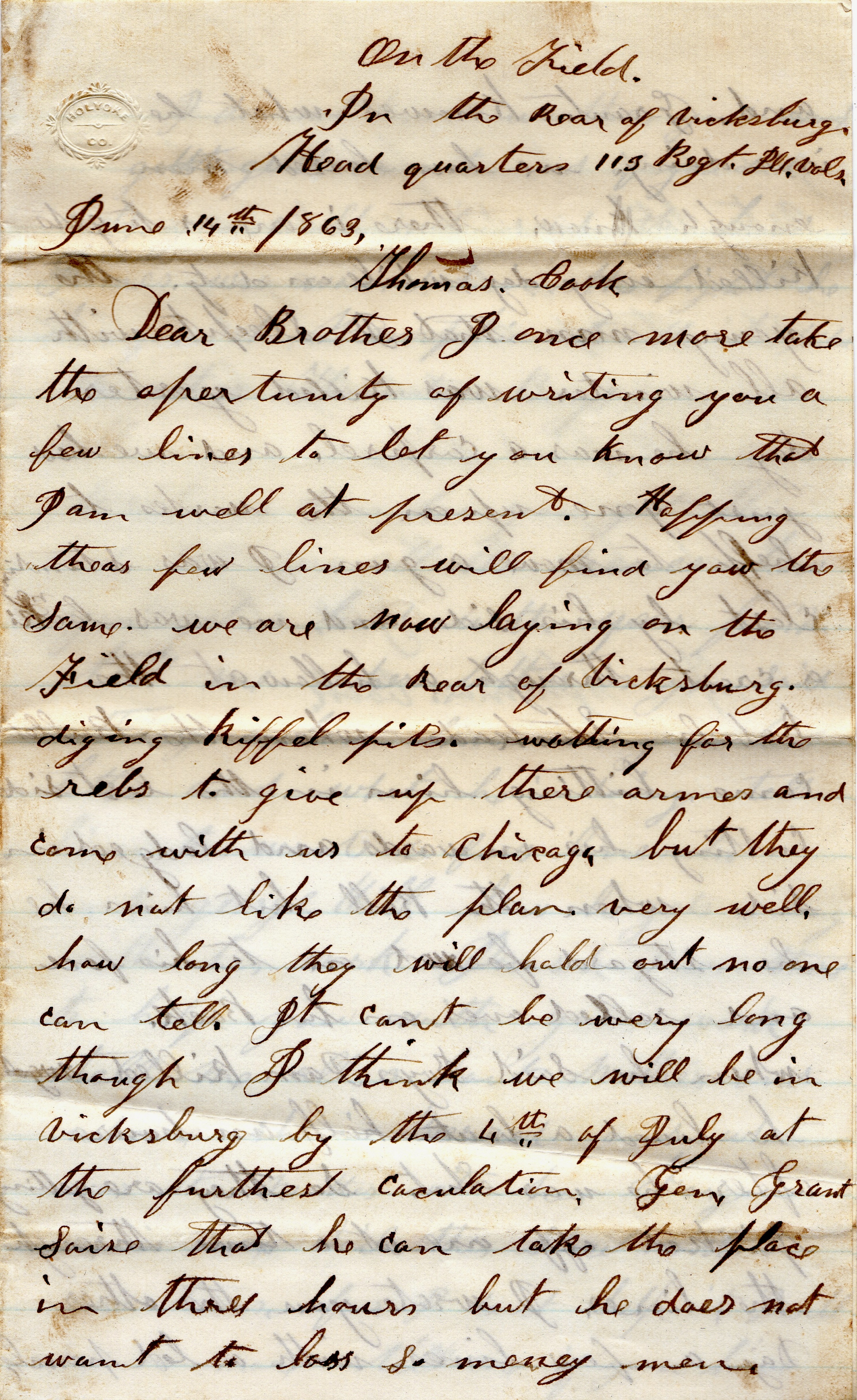
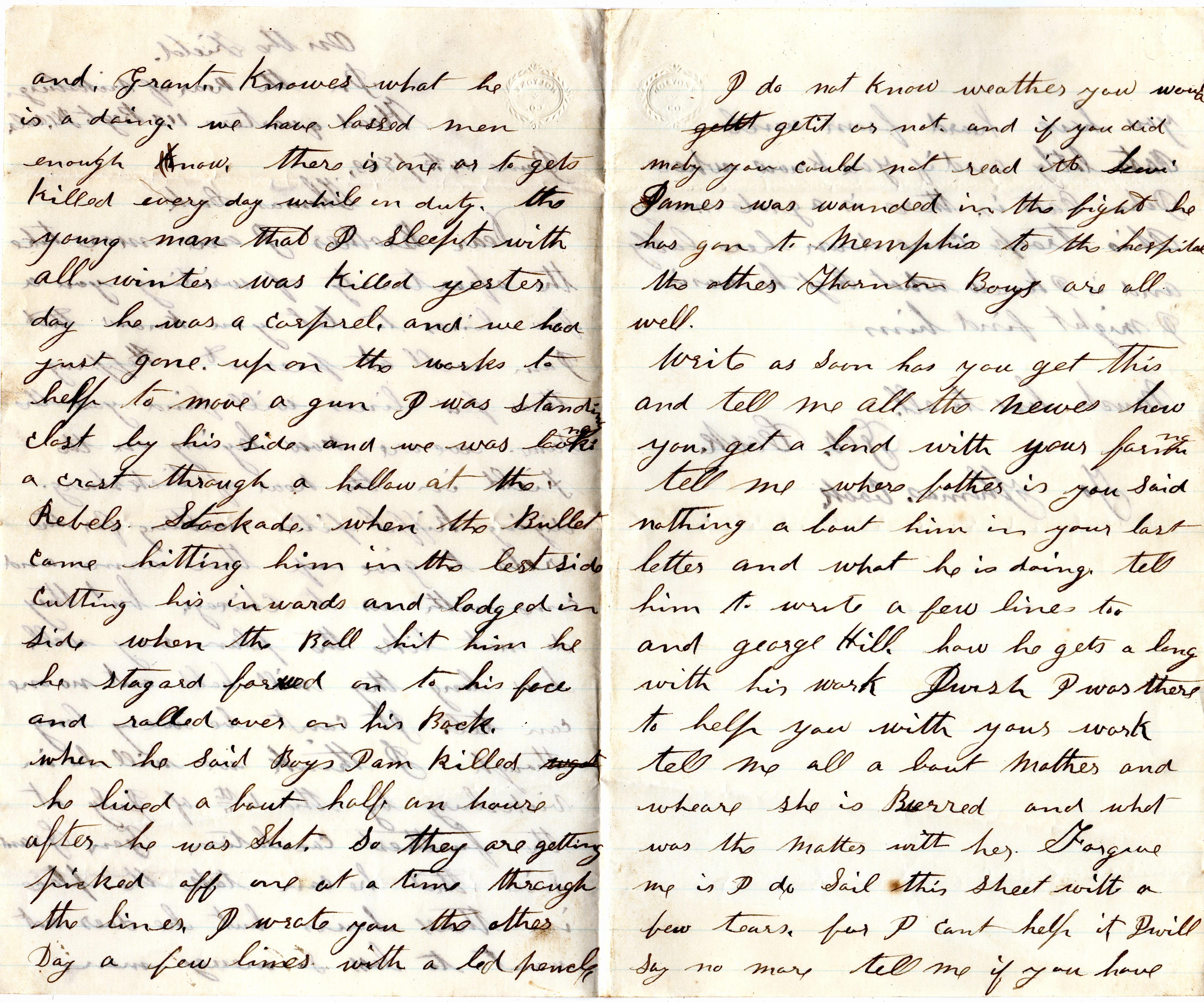
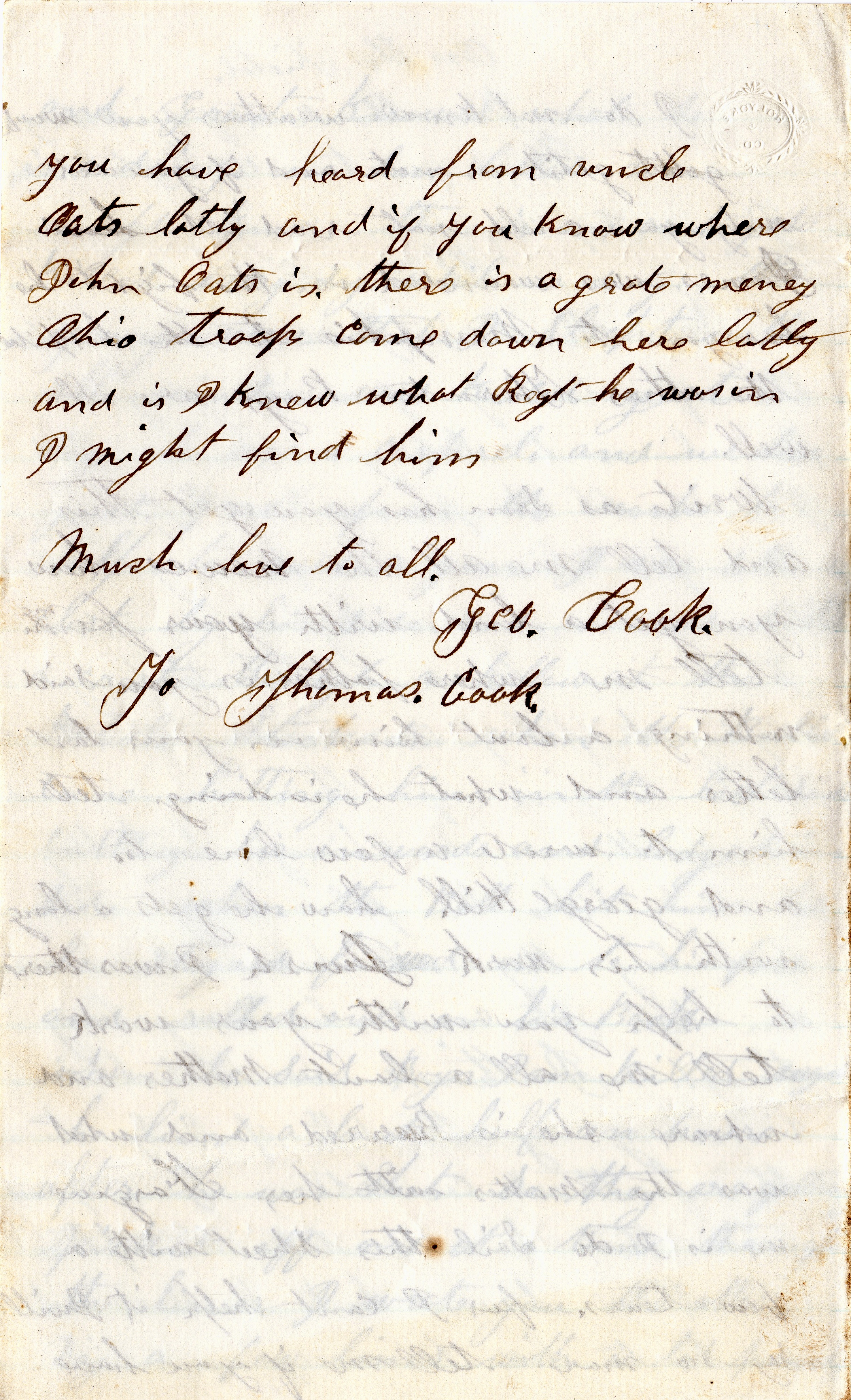



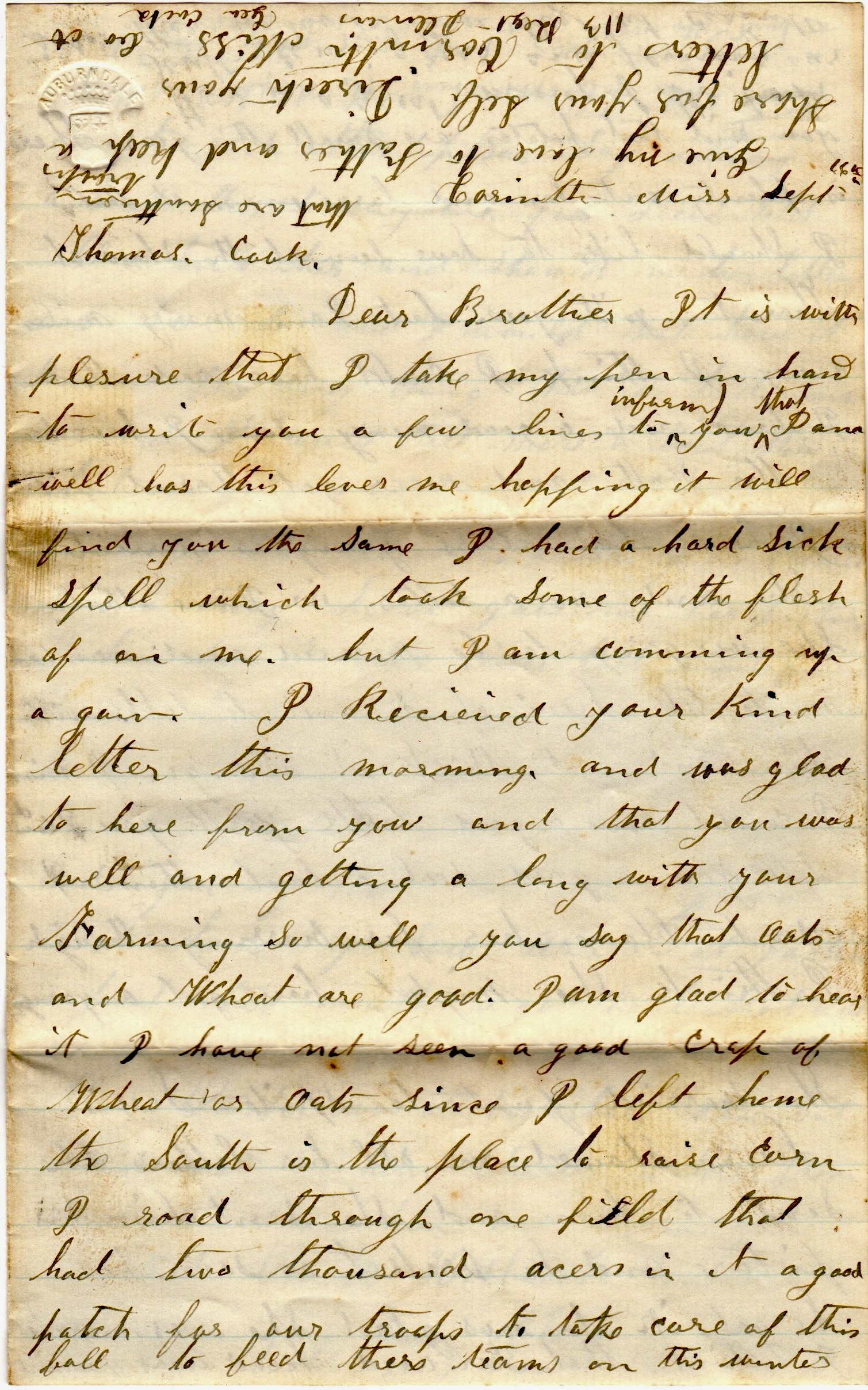

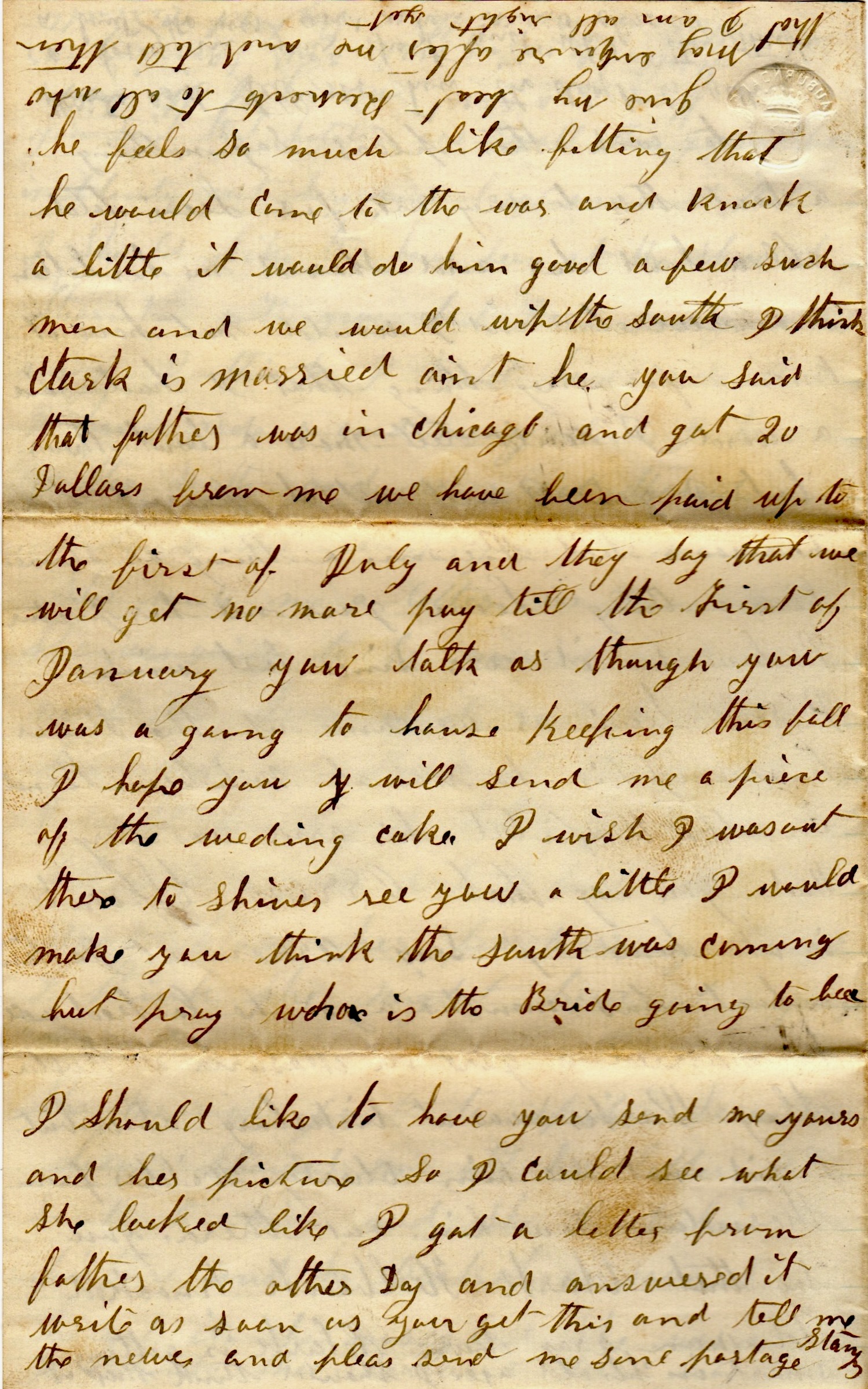

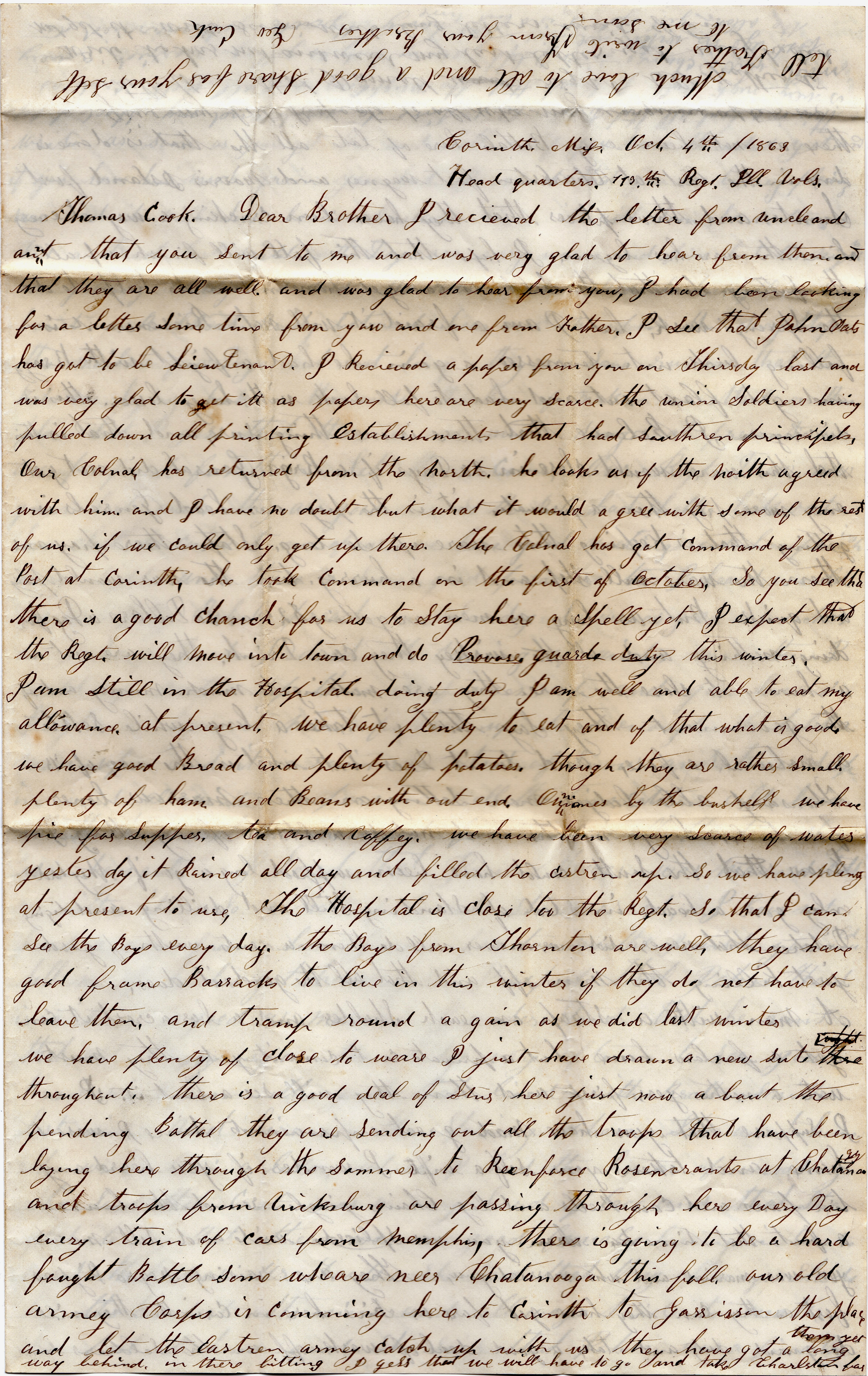

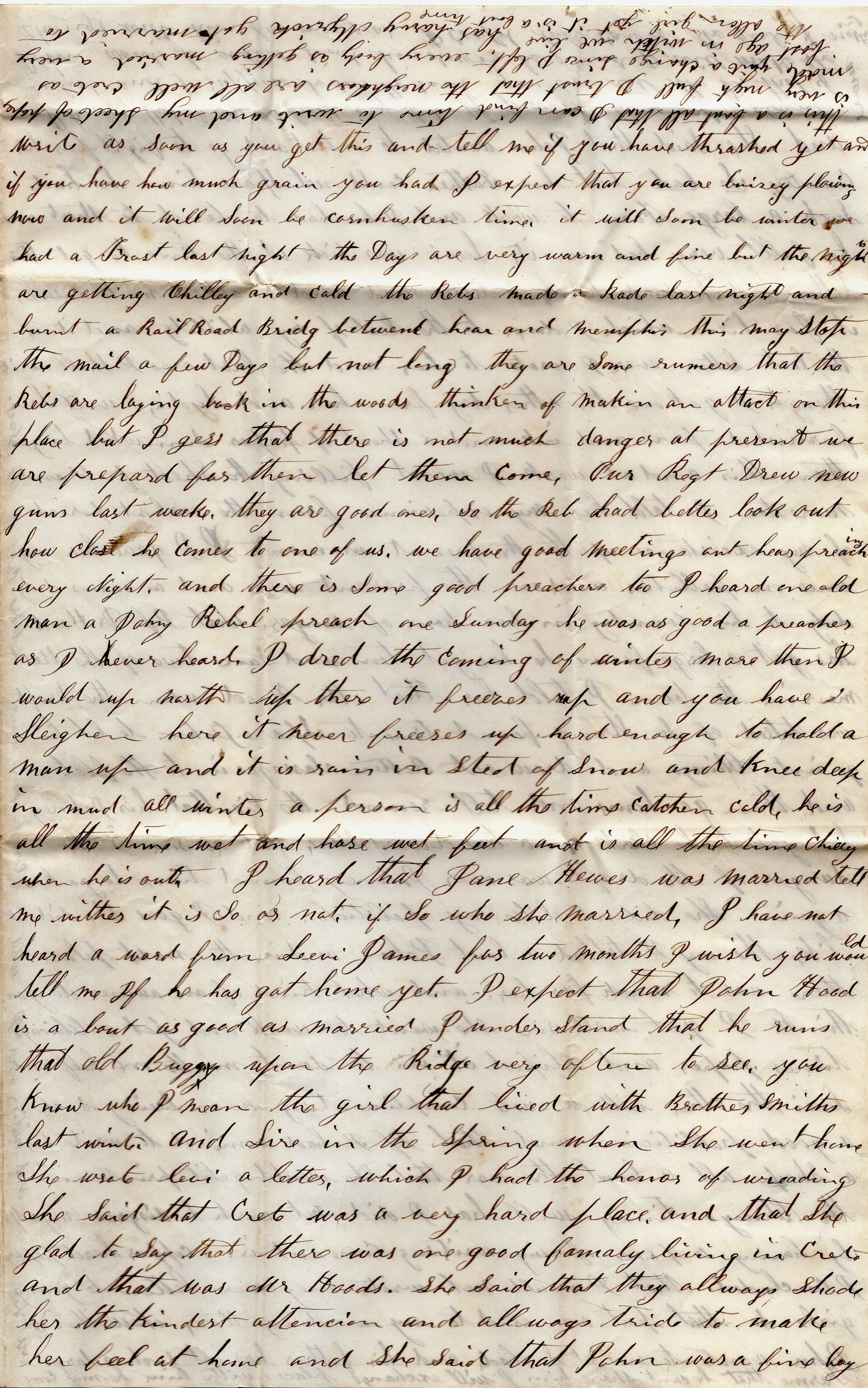
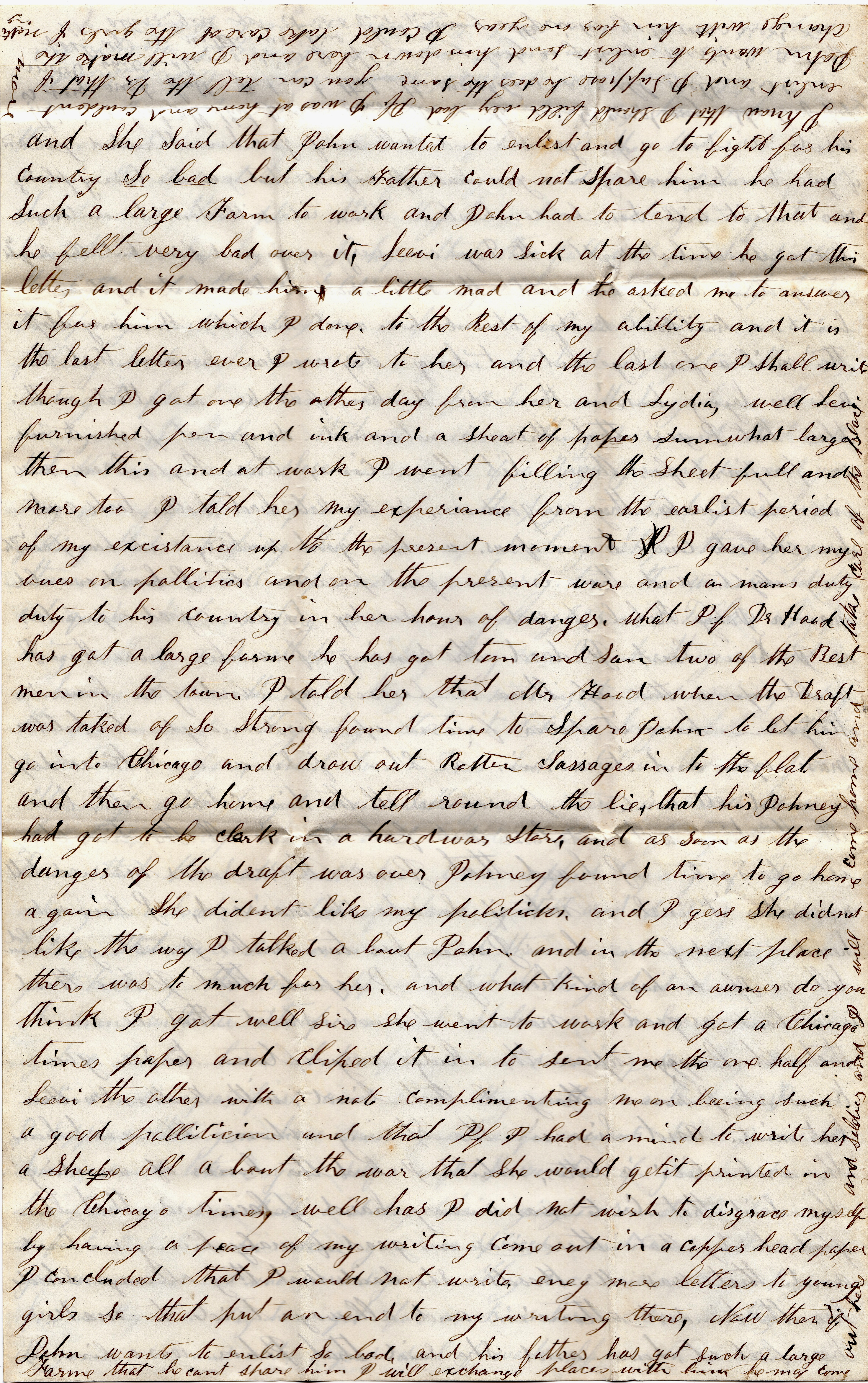

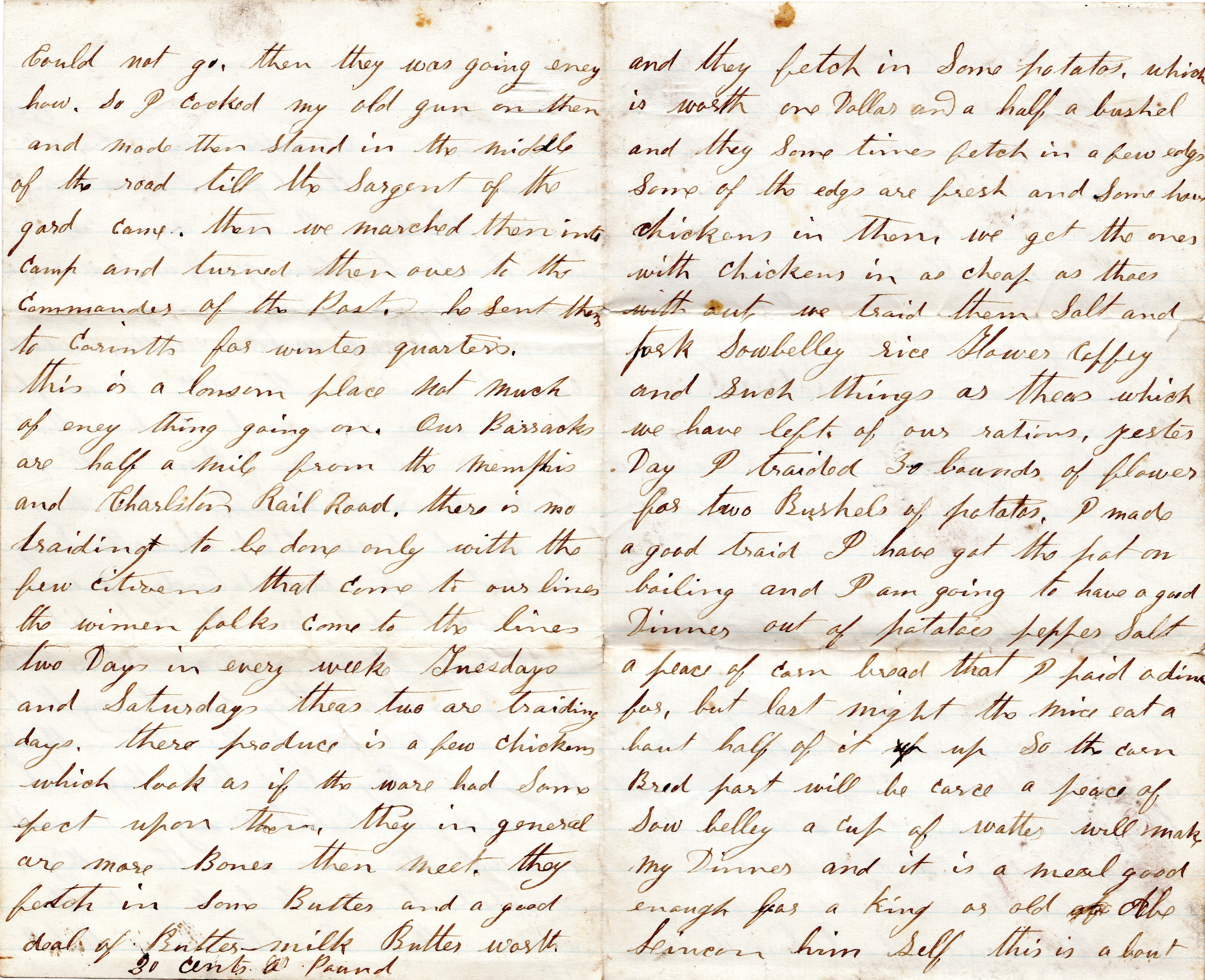


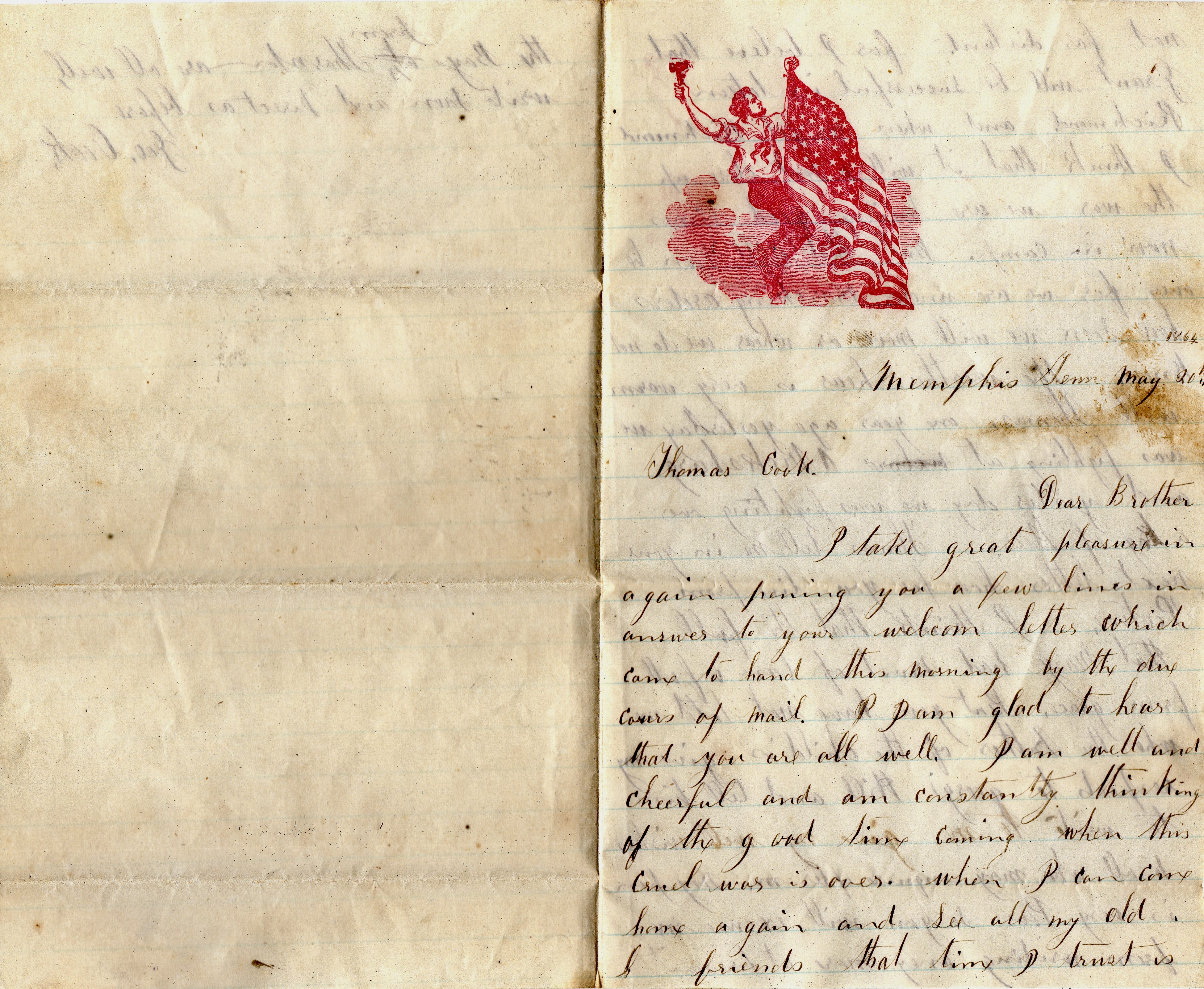

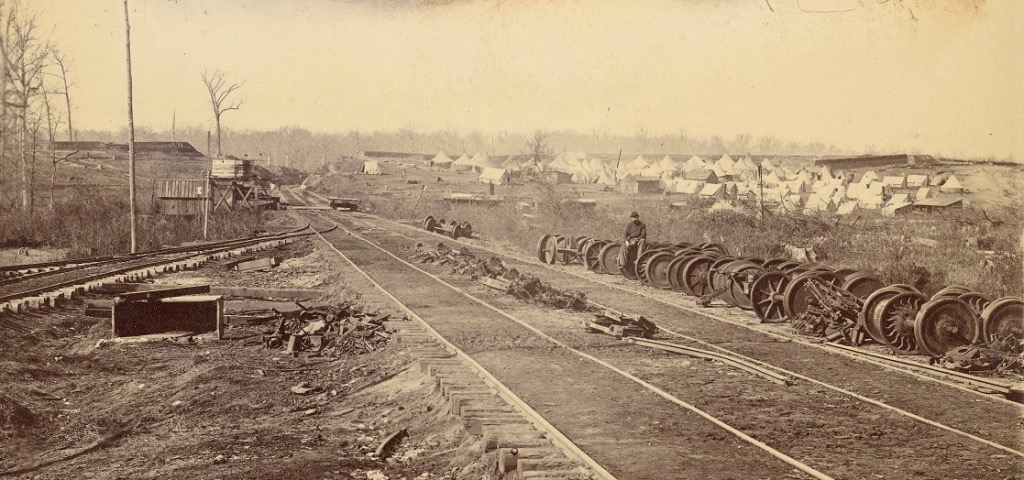


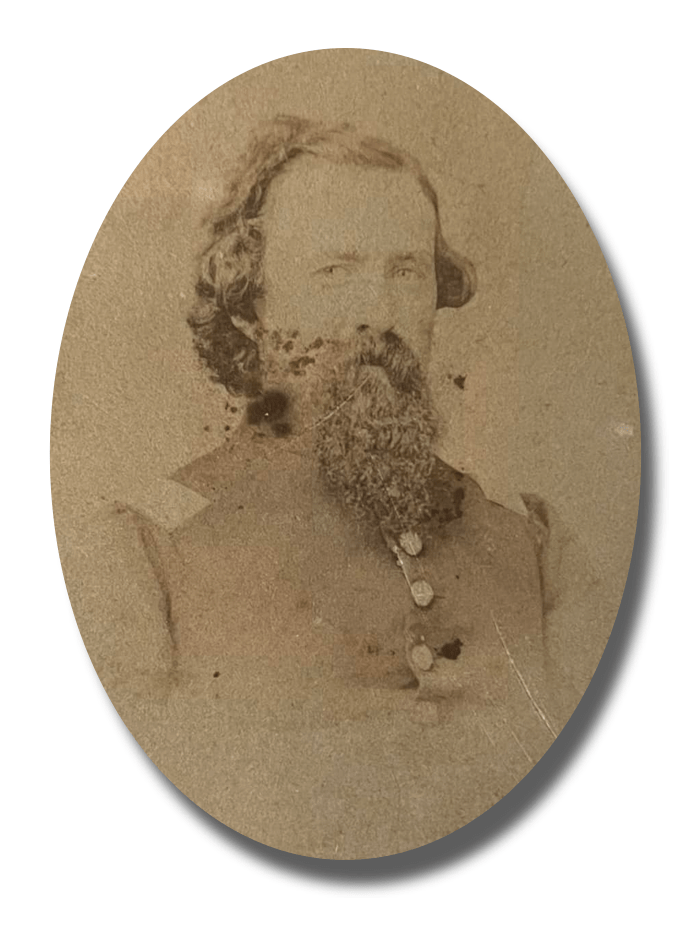
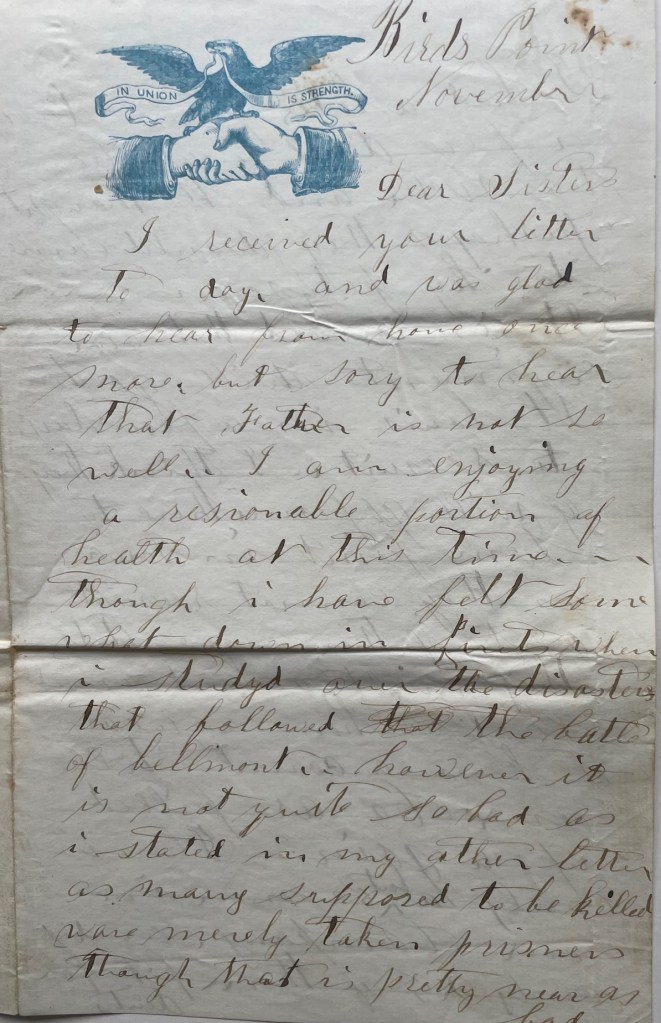


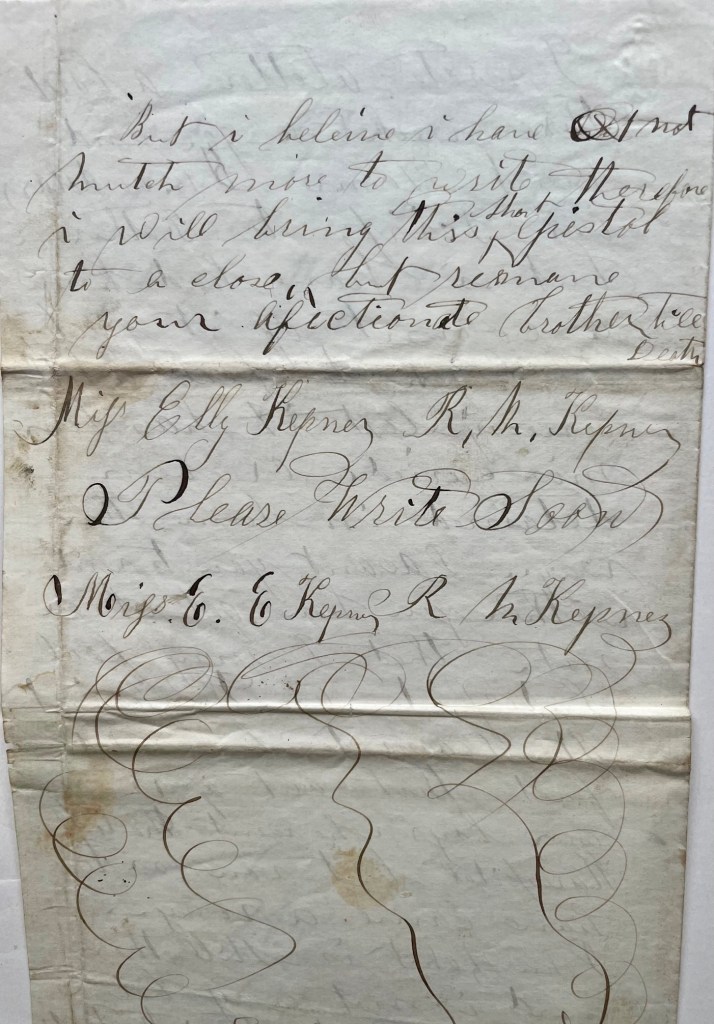
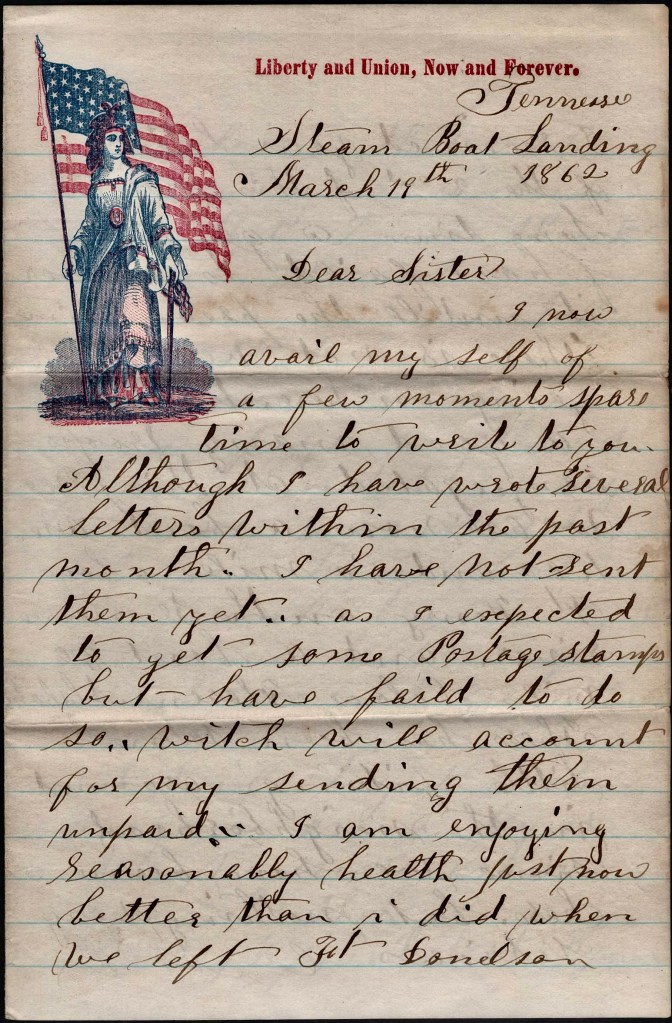
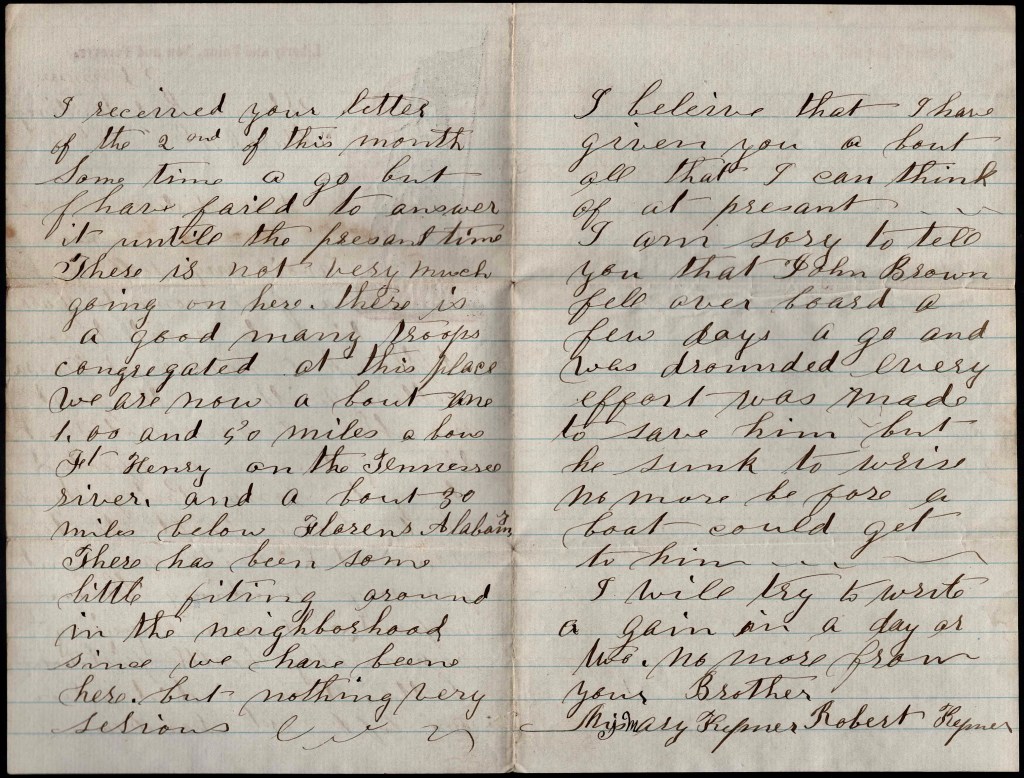
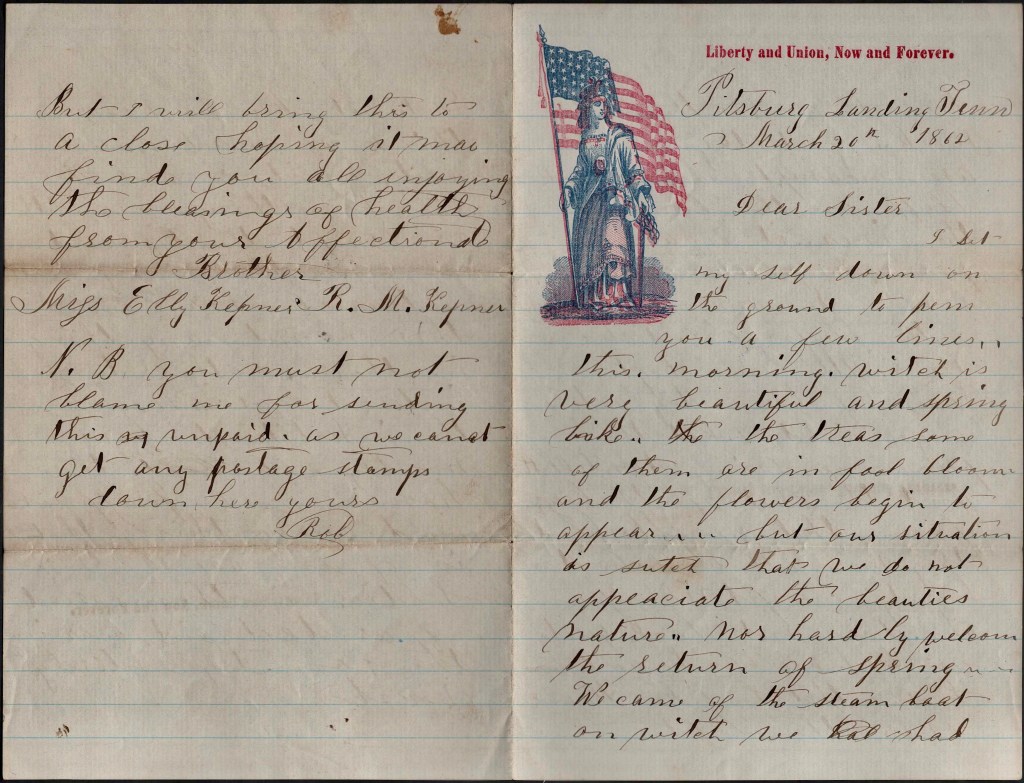
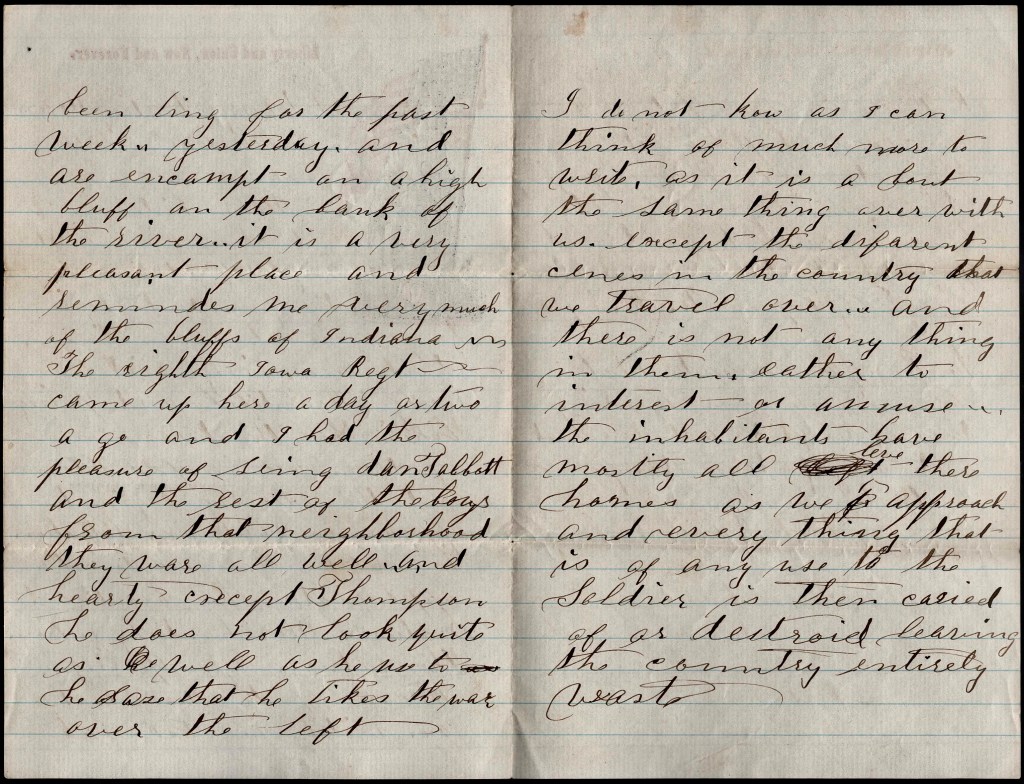
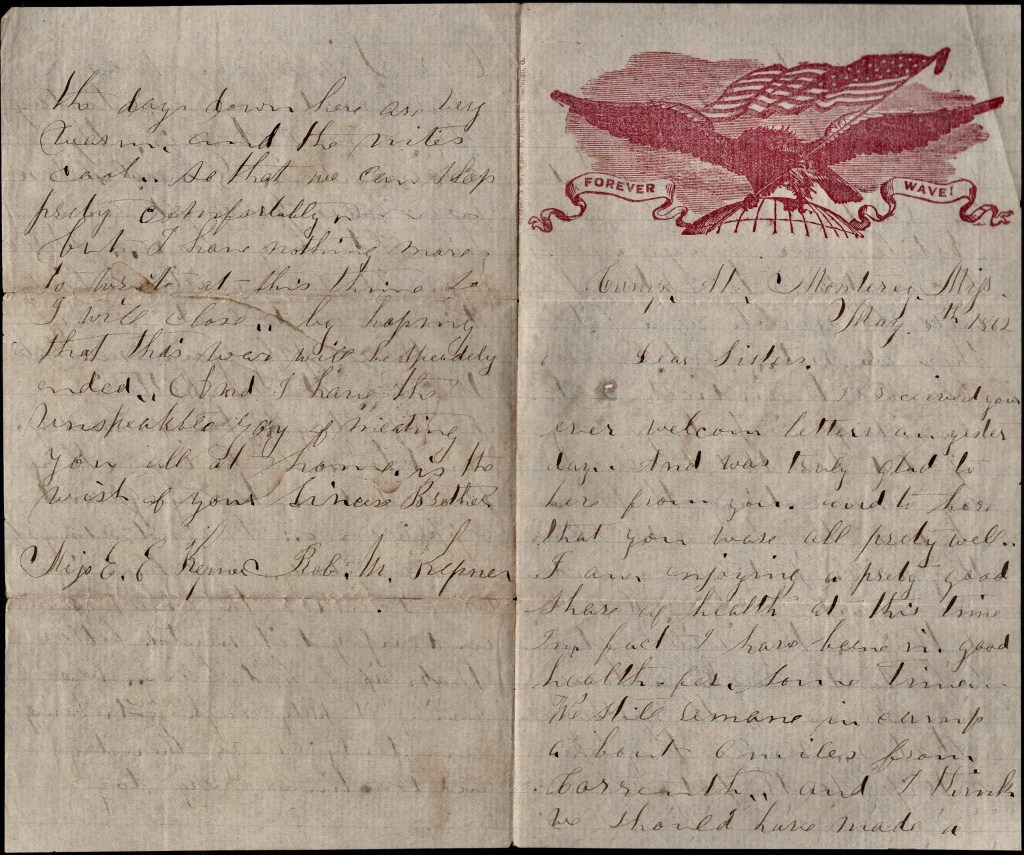

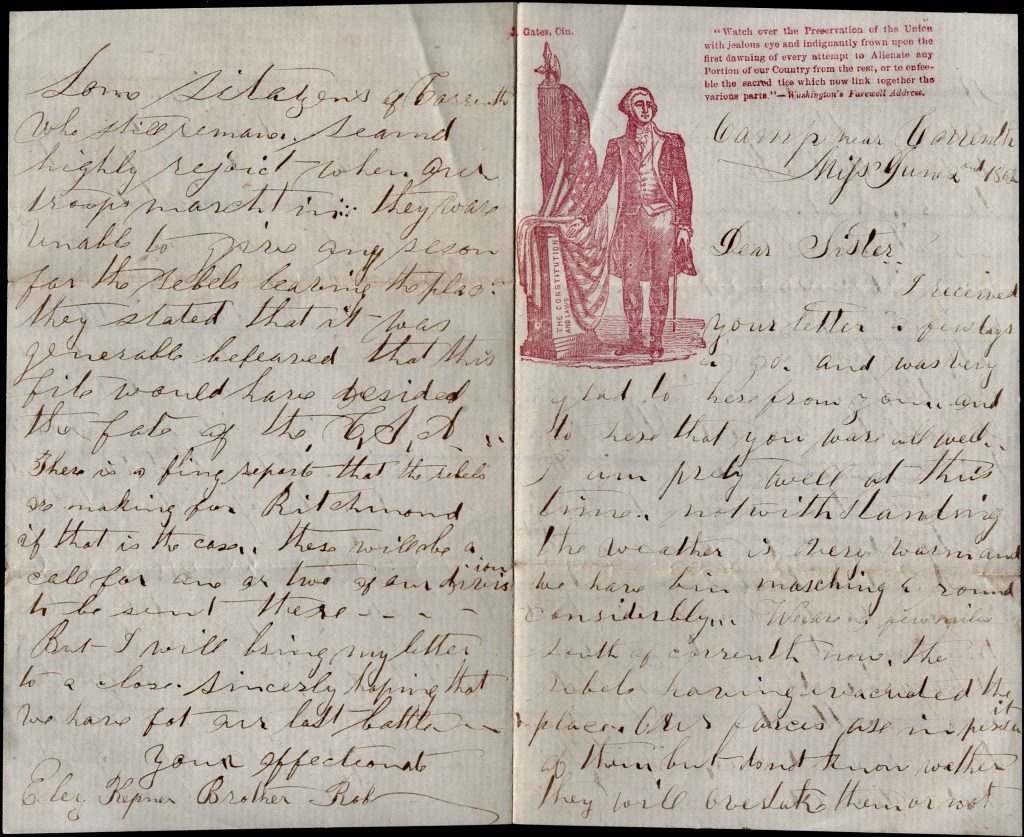




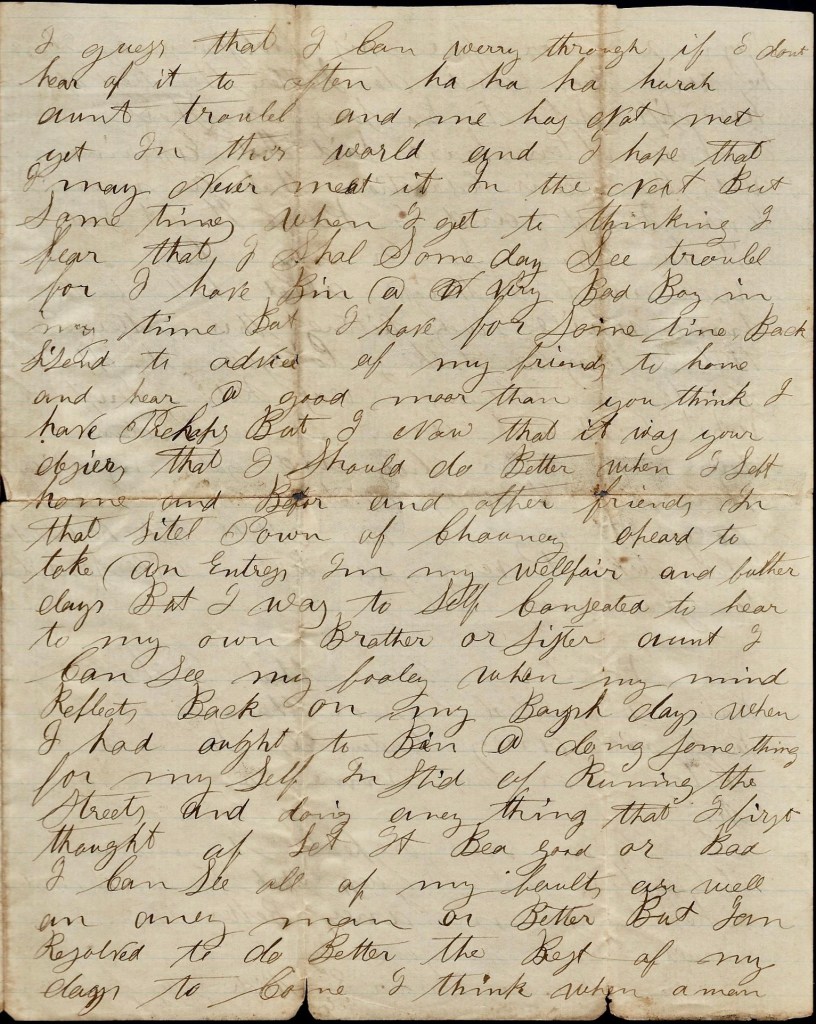


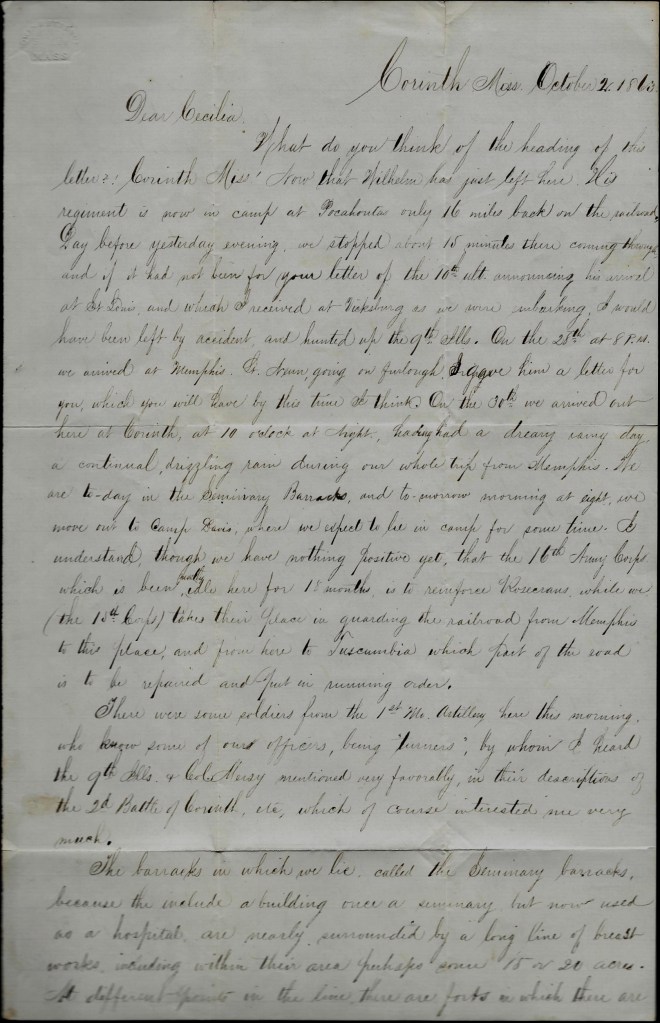

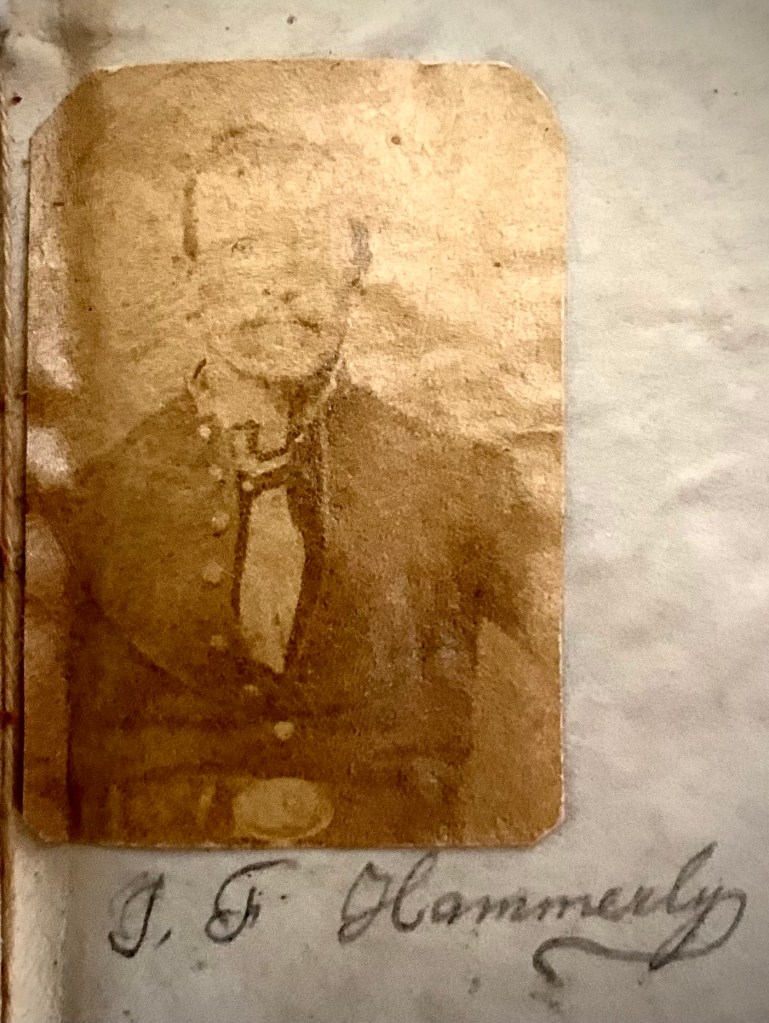


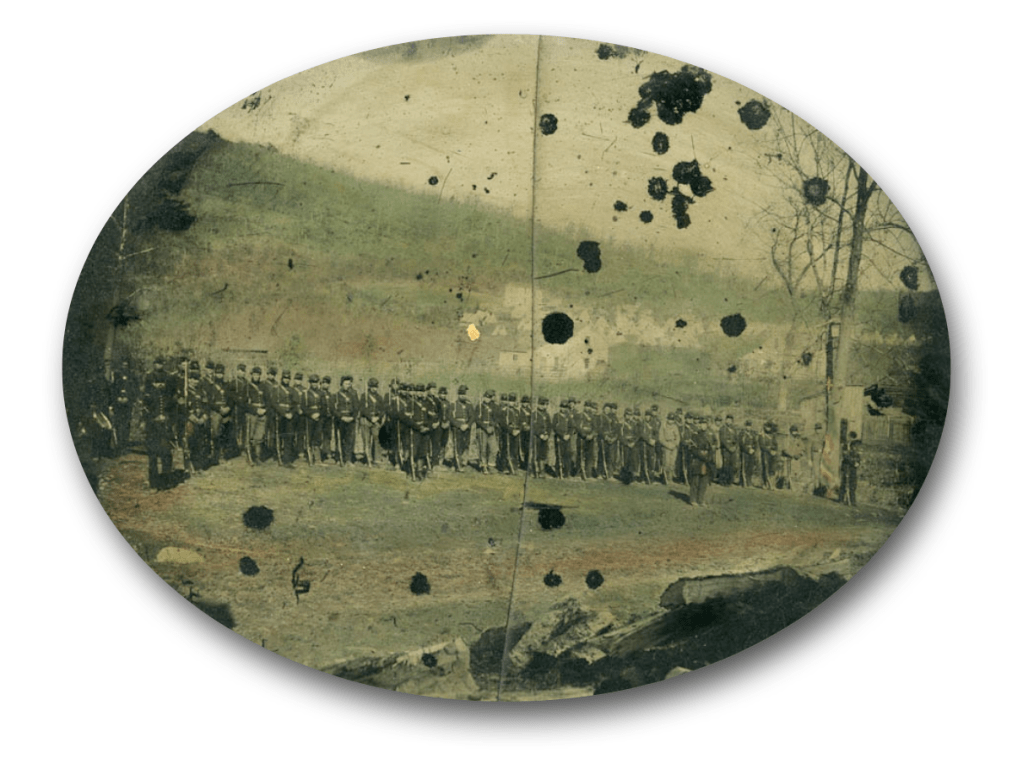


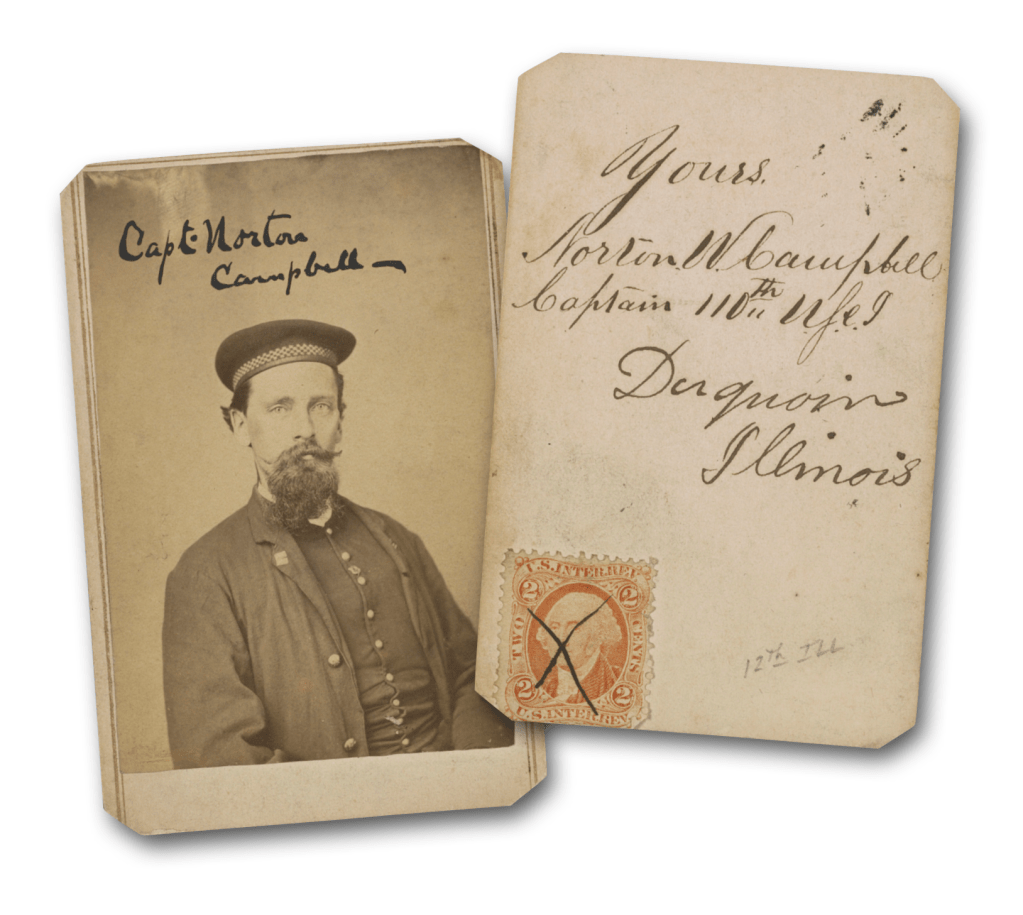

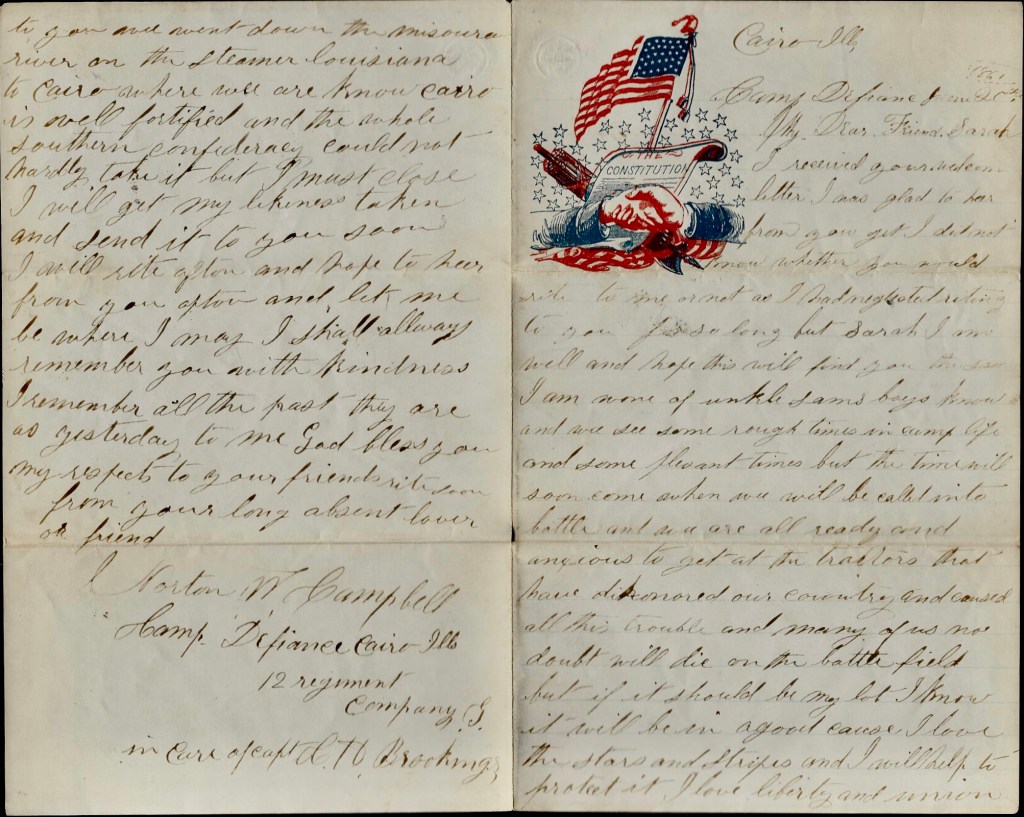
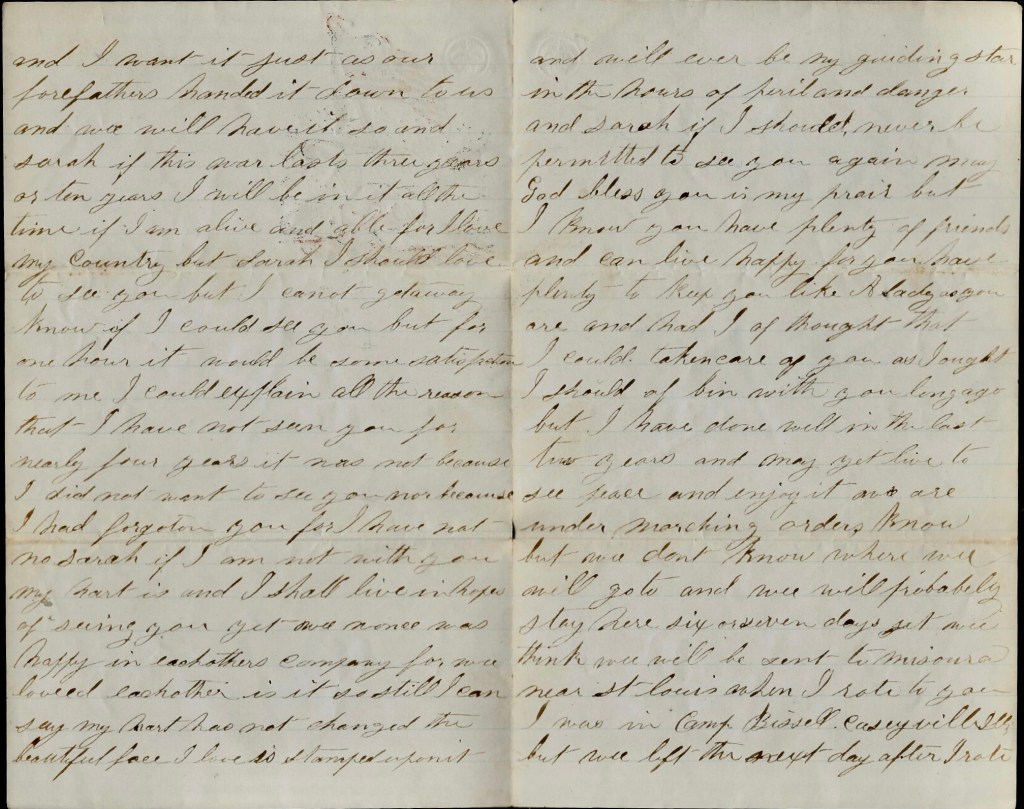
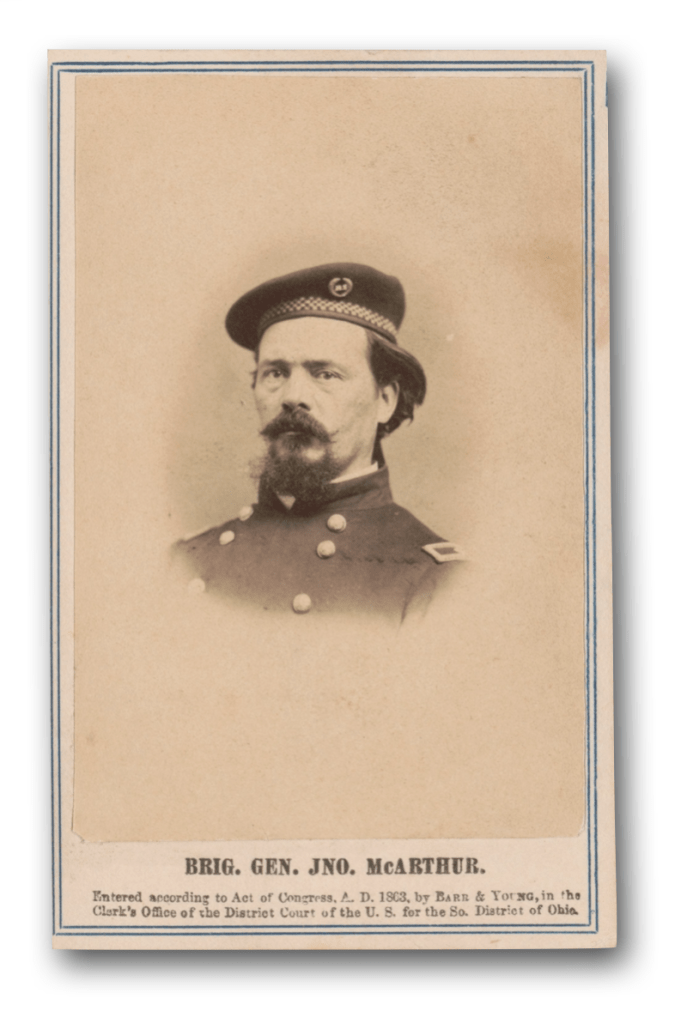




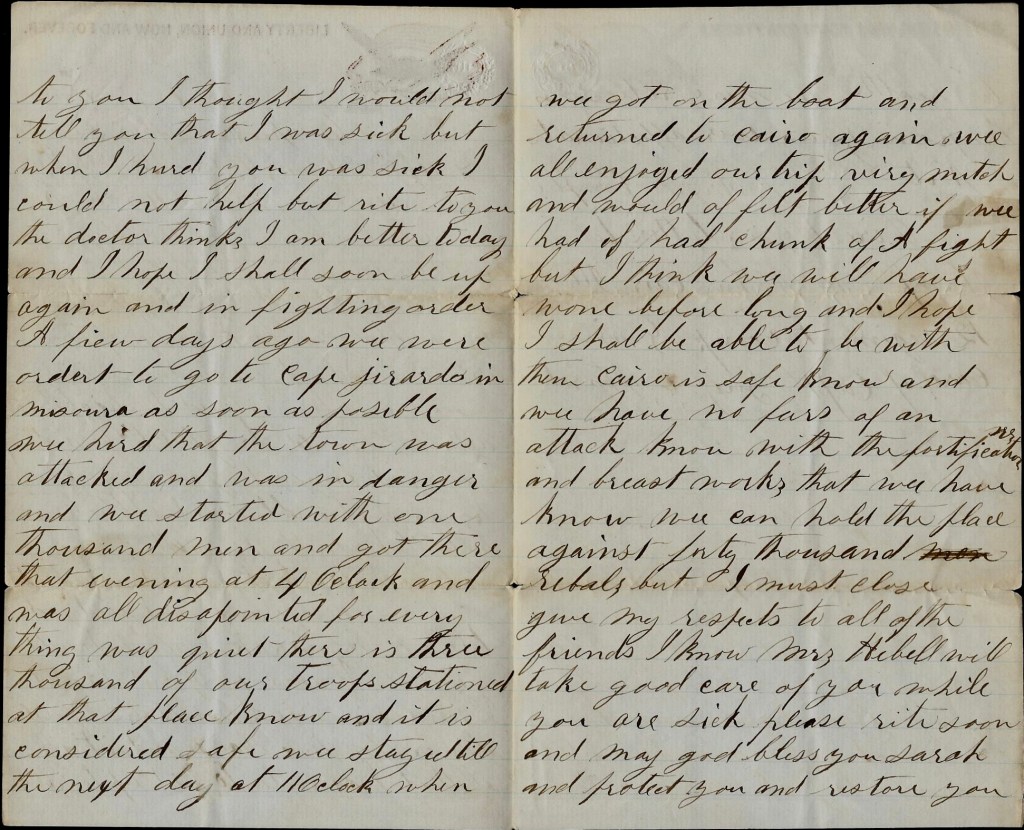
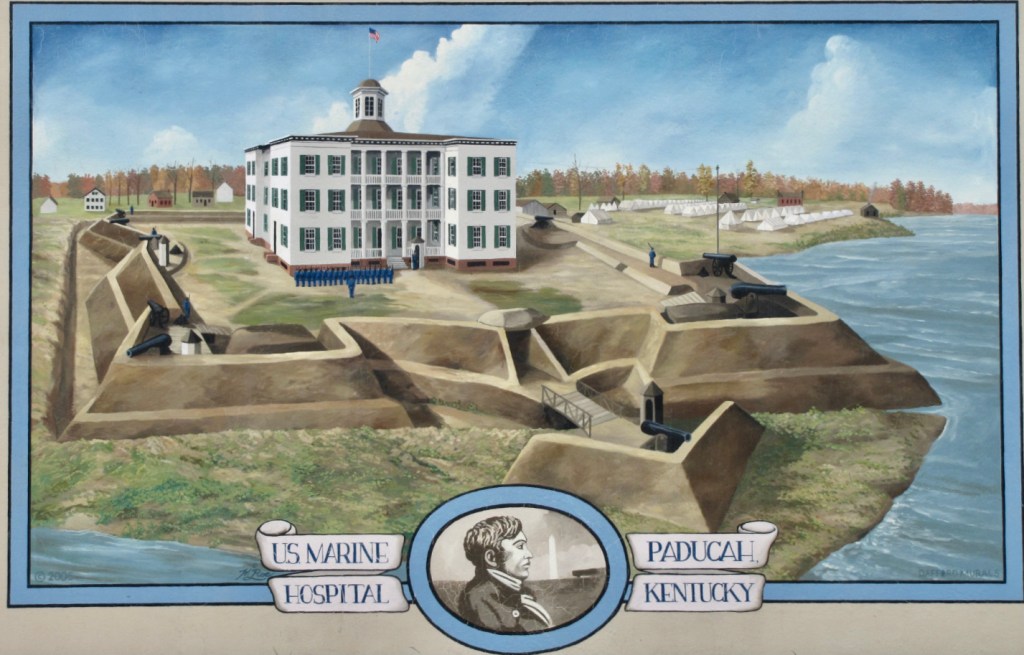
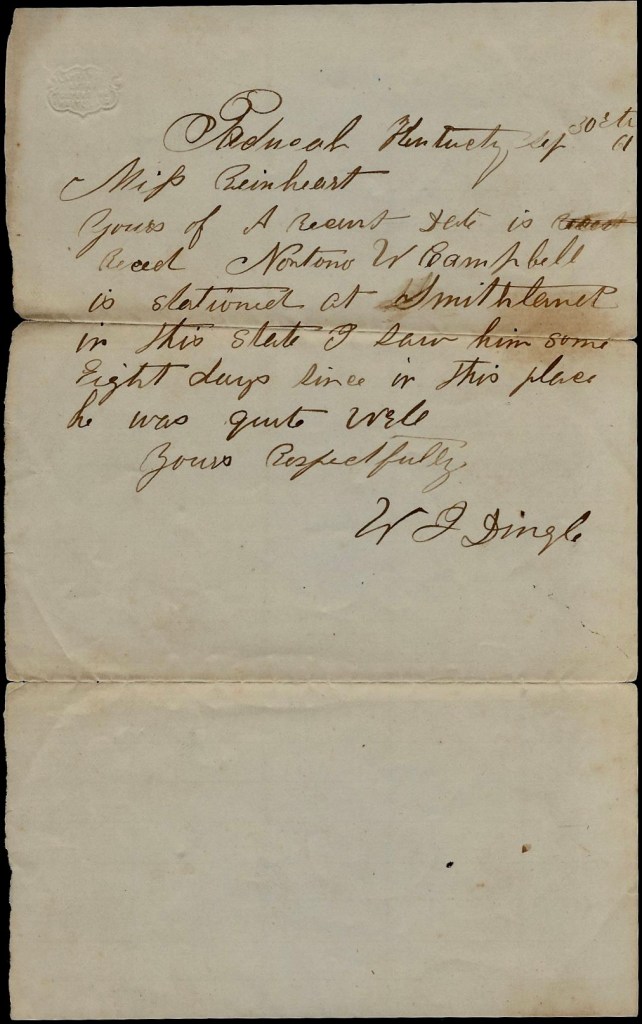
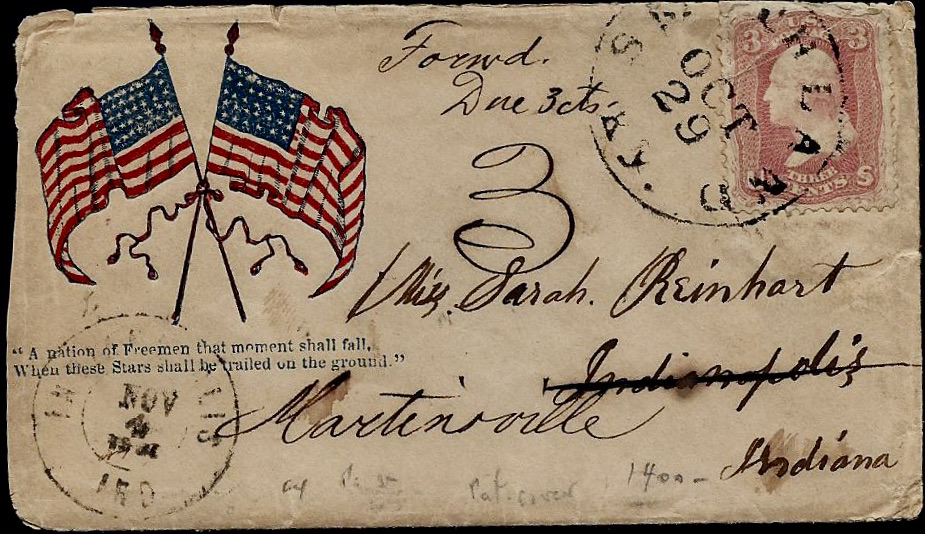


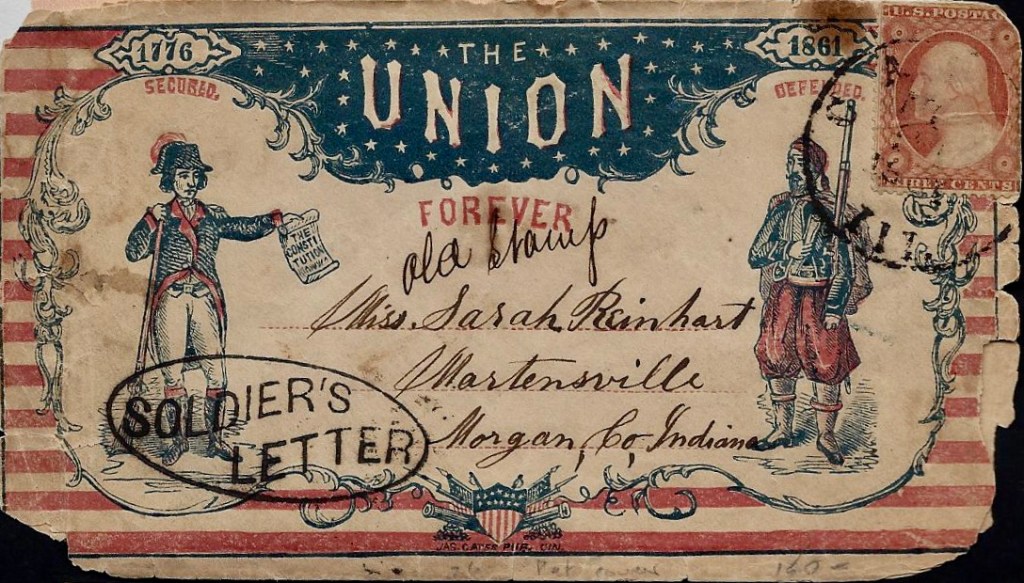


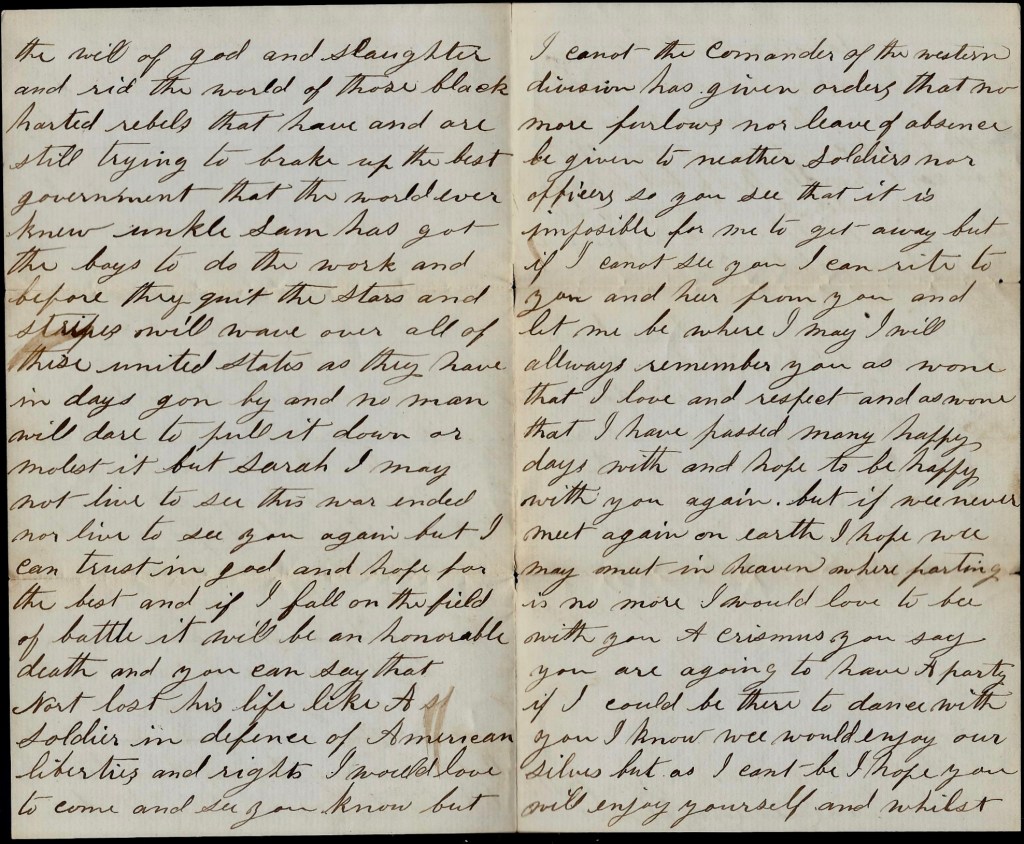
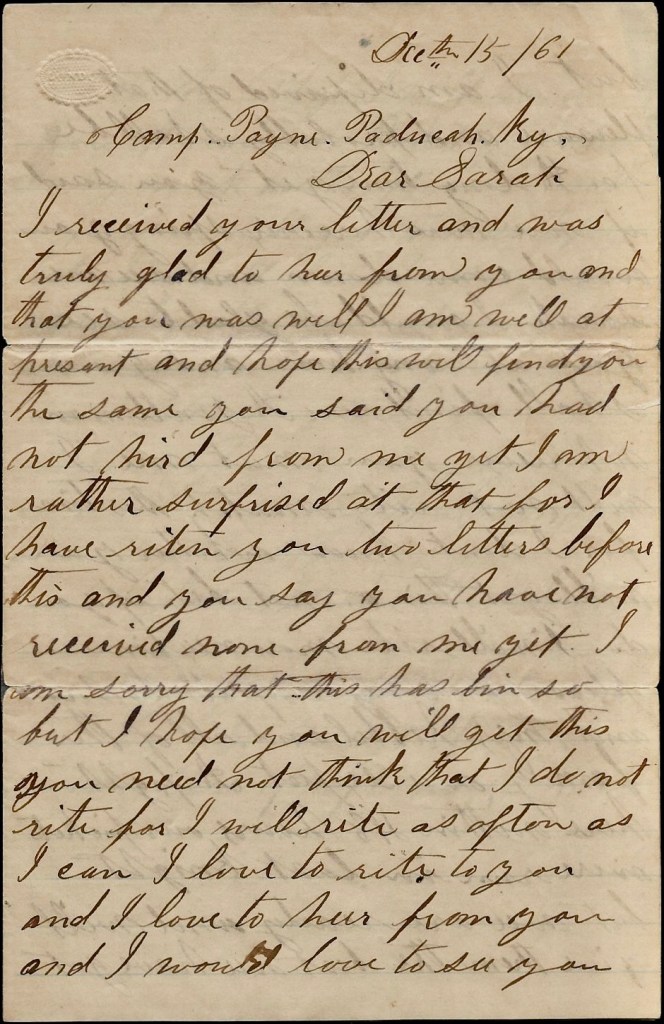







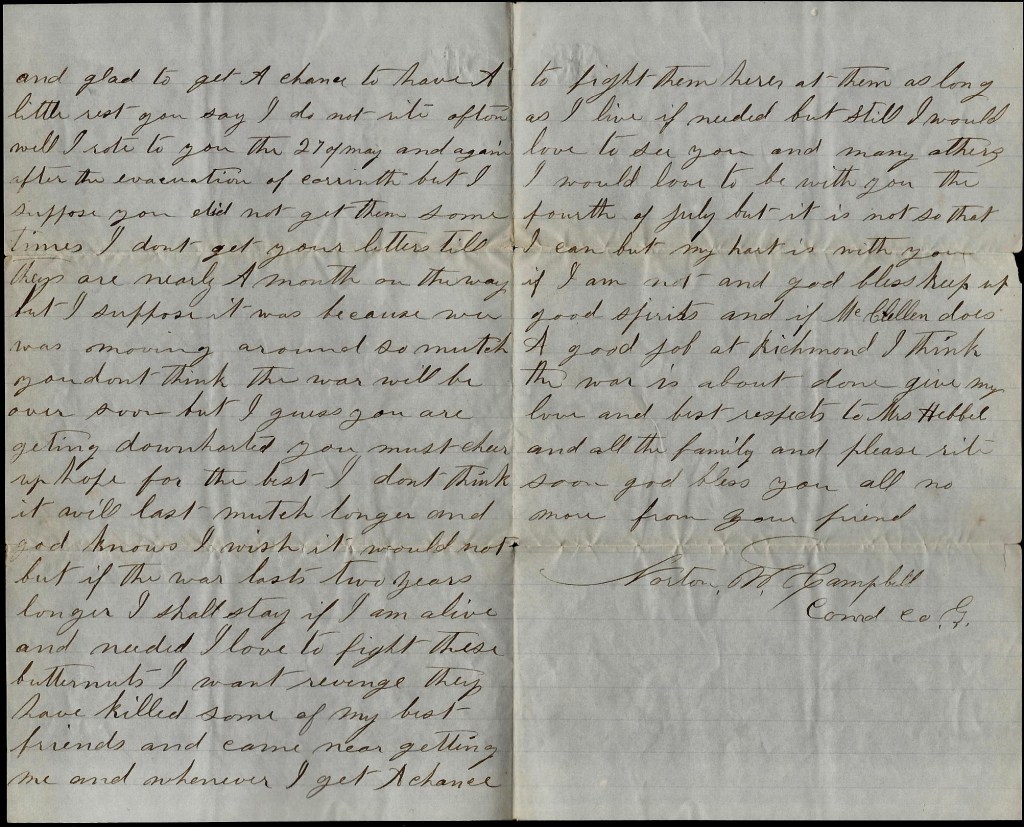

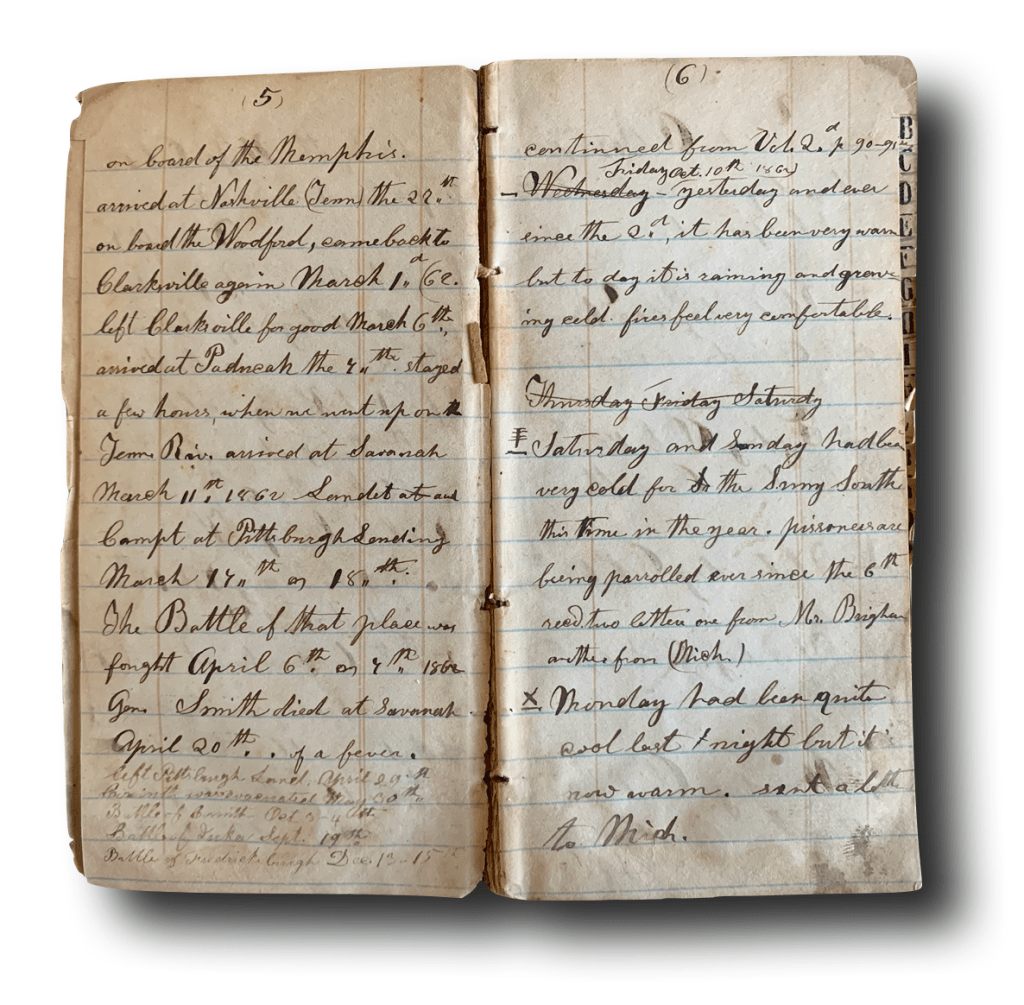

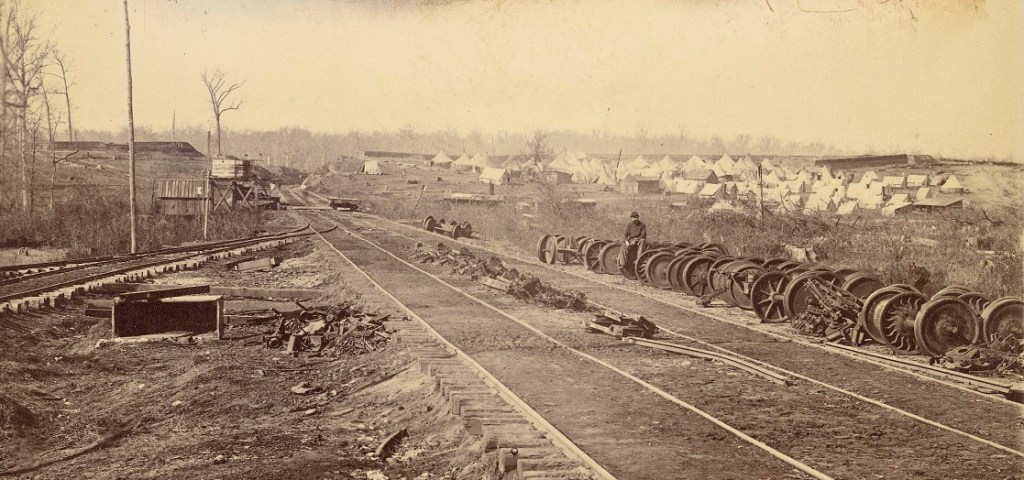
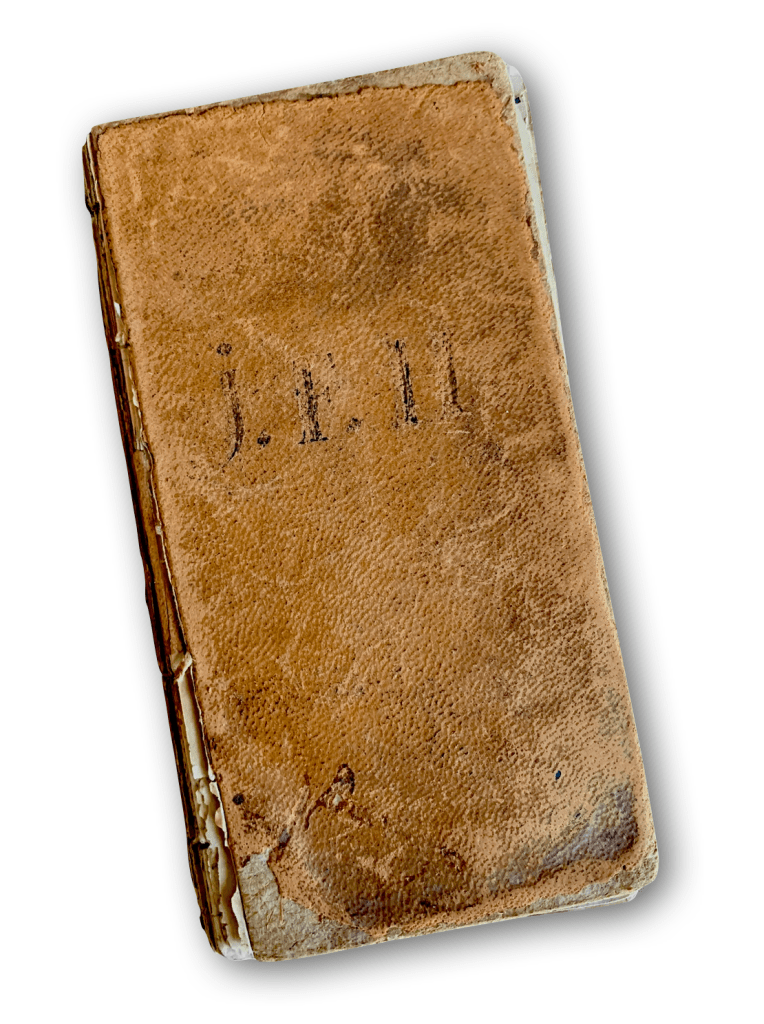


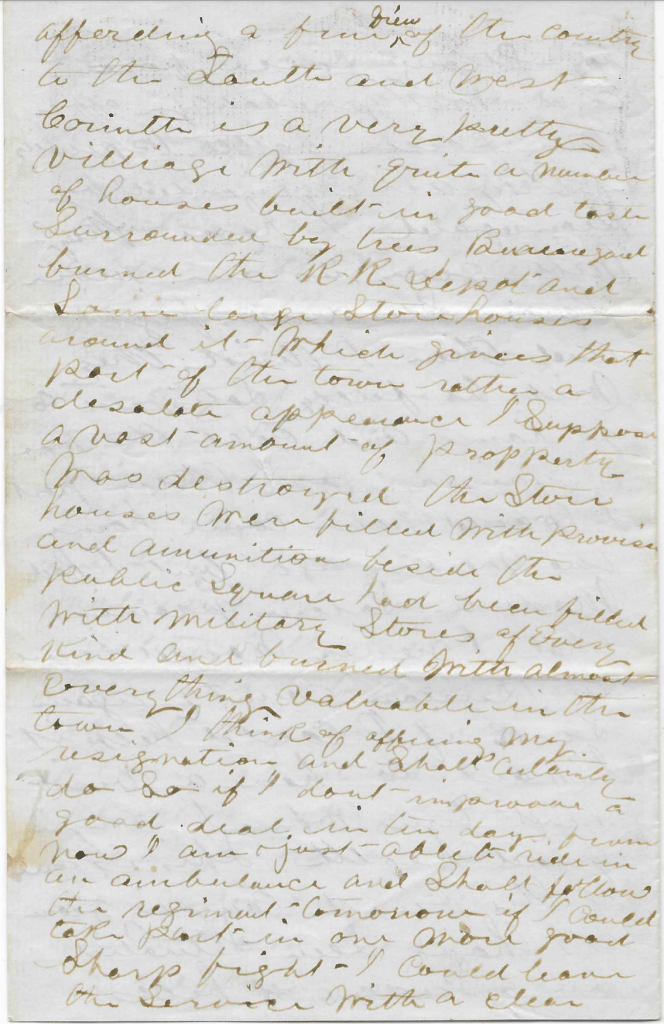
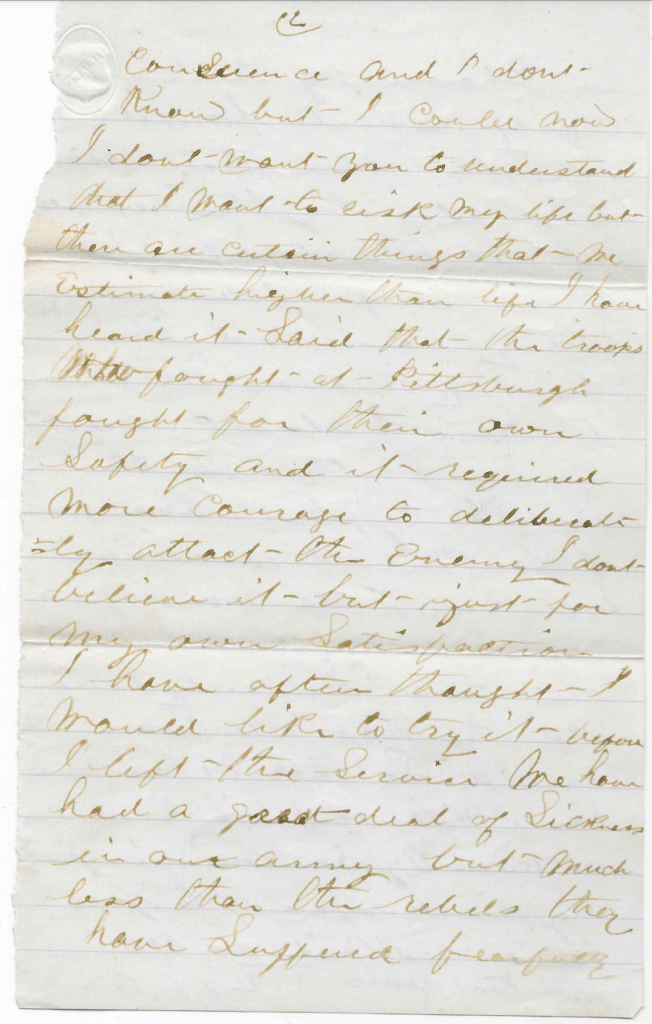

 Spared & Shared 23