Category Archives: Fort Pulaski

1862: George Washington Cone to Jennie Bradt

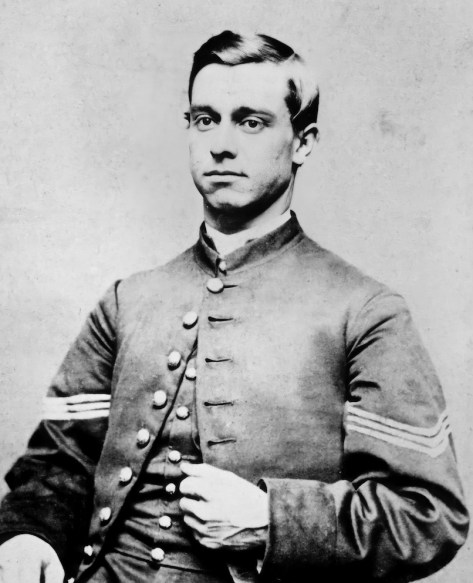
George Washington Cone, Co. B, 7th Connecticut Infantry

This letter was written by George Washington Cone, Jr. (1840-1911), the son of George W. Cone (1806-1882) and Nancy A. Cone (1812-1852) of Utica, Oneida county, New York. George may have been working in Connecticut at the time the Civil War began because he first enlisted in the Co. B of the 1st Connecticut Infantry (3 months) and then reenlisted in Co. B, 7th Connecticut Infantry, entering as a corporal and mustering out as a sergeant.

After the war, in 1866, he married Helen Augusta Louisa Cole (1846-1925) and worked as a carpenter in Herkimer, New York, for a time and then relocated to Springfield, Missouri. He died in 1911 and was buried in Fordland, Webster county, Missouri.

George wrote the letter to Jennie Bradt (1844-1915) who married in December 1863 to Delos Curran Dempster (1840-1924 at Herkimer.

T R A N S C R I P T I O N
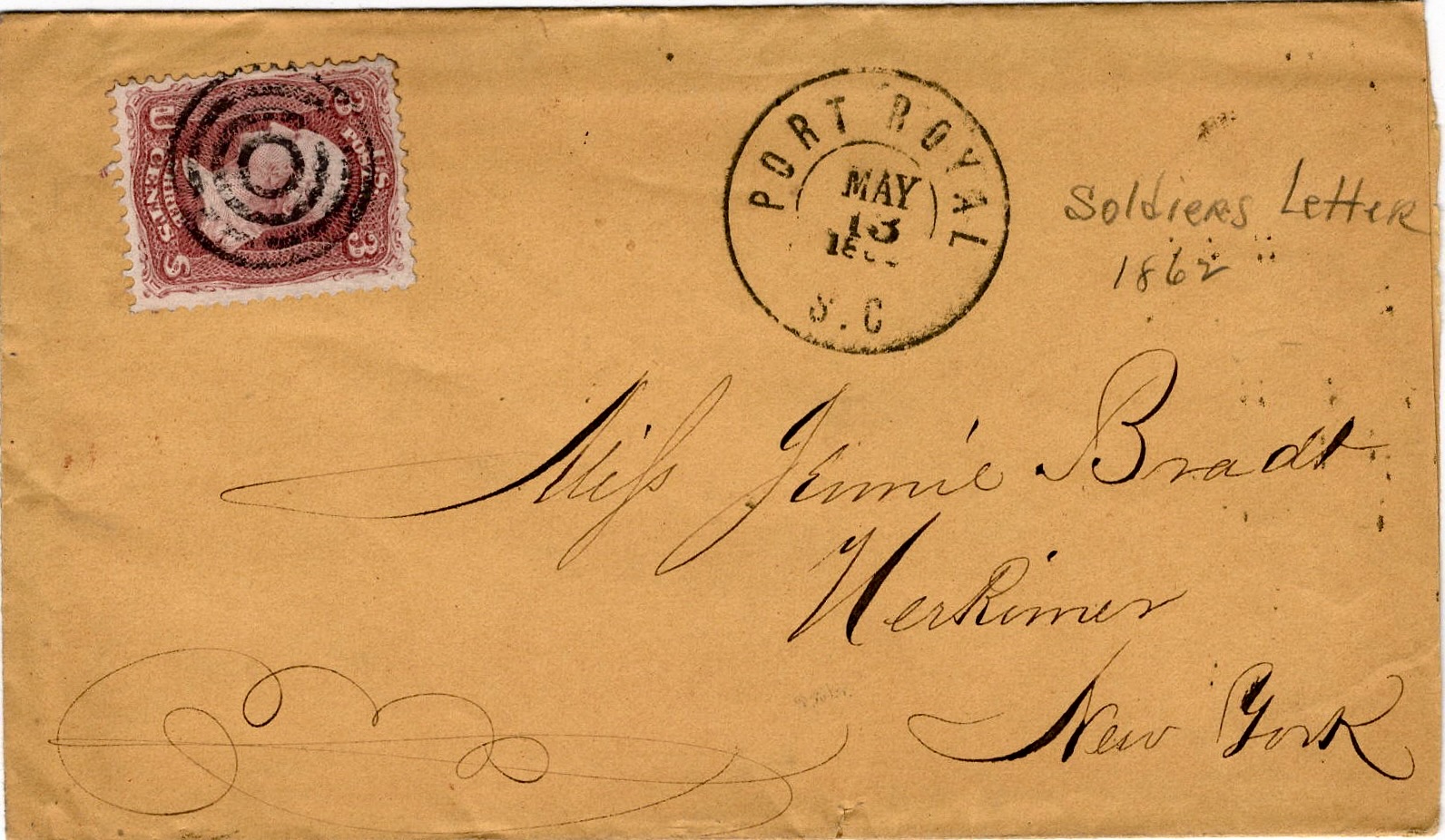
Addressed to Miss Jennie Bradt, Herkimer, New York

Fort Pulaski
May 11, 1862

Friend Jennie,

I now take this opportunity to answer your letter of May the 5th. I received it this evening and was very glad to hear from you once more but was very sorry to hear that your Father is unwell. This is a very lonely evening and I am on guard so I will write tonight when I have time.

A few days after we came into the fort, some of the 3rd Rhode Island Artillery men were working among some shells that had not exploded when one of them burst and killed four of them instantly. It seemed hard after passing through a battle without getting a scratch to get killed so suddenly.

We have got a balloon here now to reconnoiter Savannah City. 1 It went up with a couple of Gents and Ladies the other day. The Ladies make frequent visits to the fort. There is one or more visits us nearly every day. The fact is, before we had stopped firing 15 minutes, some Ladies came down to our Battery. They must have run in order to get there so quick. We have got the fort fixed up pretty well now. The masons are repairing the breaches that we made in the fort. I saw a picture in Harper’s Weekly that was intended to represent the fort but it don’t look a bit like the original. One of our steamboats went up to Savannah with a flag of truce the other day.
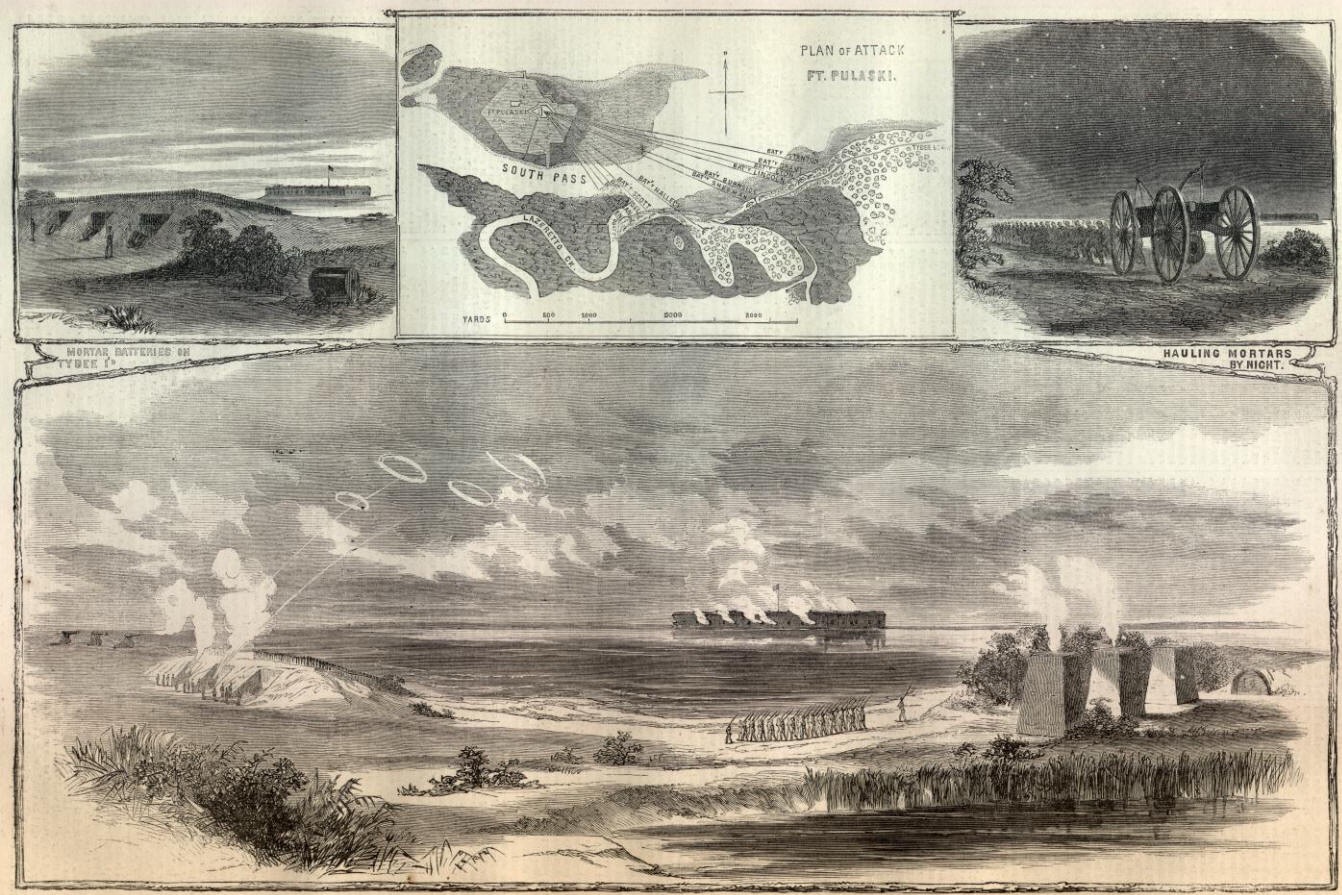
Drawings of Fort Pulaski appearing in the 3 May 1862 issue of Harpers weekly

The weather is very fine here now and our men are enjoying good health with the exception of a [few] cases. You spoke about the letter that I sent to Charles. There was nothing of great importance in the letter so it won’t make any difference for I will write another letter. I am glad that Charley has got a good wife.

You want to know where we are going, I suppose. Our regiment is quartered in the fort at present but whether we are going to garrison the fort all summer, I am not able to say. We expect to help take Fort Sumter before long but it is only a report and it will go with all camp stories. But I think that we shall stop here some time yet. My health has been quite good since I have been here. I had rather fight one or two more battles before I come back but I can’t have any choice.

I have not any news to write at present so you must excuse me this time. Please give my best respects to all of your friends. When you write, please tell me all the news. I remain your sincere friend, — Corp. G. W. Cone

P. S. Direct to Co. B, 7th Regiment Connecticut Volunteers, Port Royal, South Carolina


1 There is no record of balloon observations made in the vicinity of Savannah until after the fall of Fort Pulaski. Sometime in May 1862, aeronautics John Starkweather observed Confederate positions around Savannah.

1863: George T. Conklin to Friend Emma

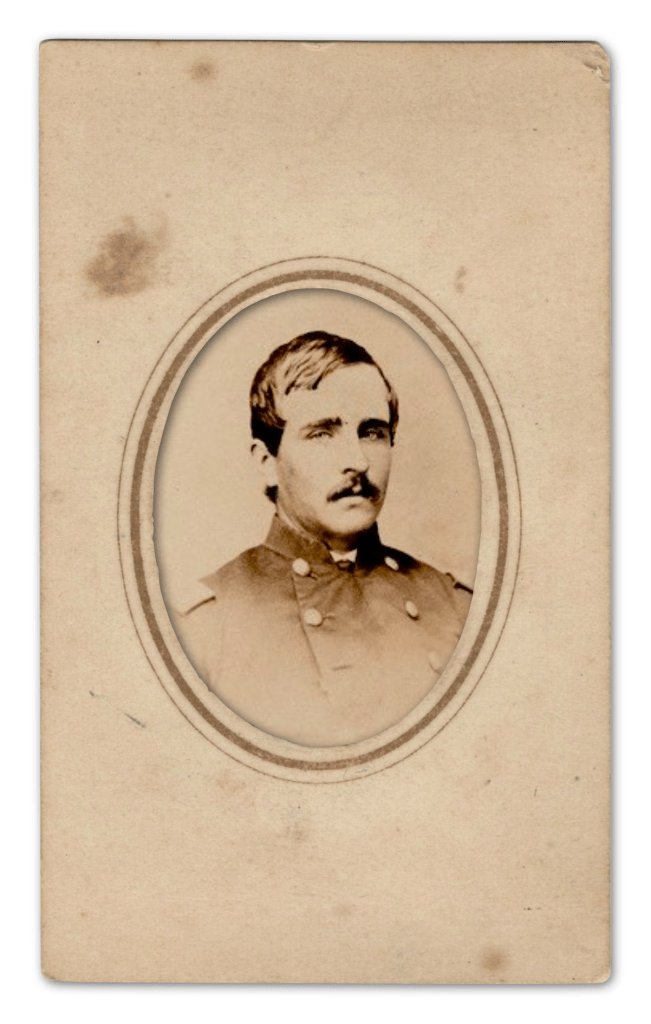
Pvt. Philip Daniel Hublitz of Co. D, 48th NY Infantry

The following letter was written by George T. Conklin (1839-1863) of Co. K of the 48th New York Infantry. The regiment was organized at Brooklyn in September 1861 and participated in Sherman’s South Carolina Expeditionary Corps in the spring of 1862. They began siege operations of Fort Pulaski, Georgia, that led to the bombardment and capture of the Confederate stronghold until May 1863 when this letter was penned.

George appears erroneously in the regimental roster as “George A. Conklin.” That record states that he was 22 years old when he enlisted on 9 August 1861 at Galeville to serve three years. He was initially mustered into Co. D as a private but later transferred to Co. K. That same record states that George was captured in action during the assault on Fort Wagner, South Carolina, on 18 July 1863, and that he died of disease on 11 December 1863. His father made a pension claim in 1879 for his son’s service but there was no other information provided on-line.

The history of the 48th New York says that the regiment (with the exception of Cos. G and I) left Fort Pulaski and were transported to Hilton Head where they were attached to Strong’s Brigade, 10th Corps. In the assault on Fort Wagner, the loss of the 48th was 242 killed, wounded and missing, including Col. Barton wounded and Lieut.-Col. Green killed. The regiment received high praise from the commanding officers for its gallantry in this action. Strong’s Brigade included the Black troops of the 54th Massachusetts. How poignant that George would close his letter with: “And some of us may kiss the sod before long and I might be the first. Is it not enough to make you feel sad?”

T R A N S C R I P T I O N

Fort Pulaski [Georgia]
May 3rd 1863

Dear Emma,

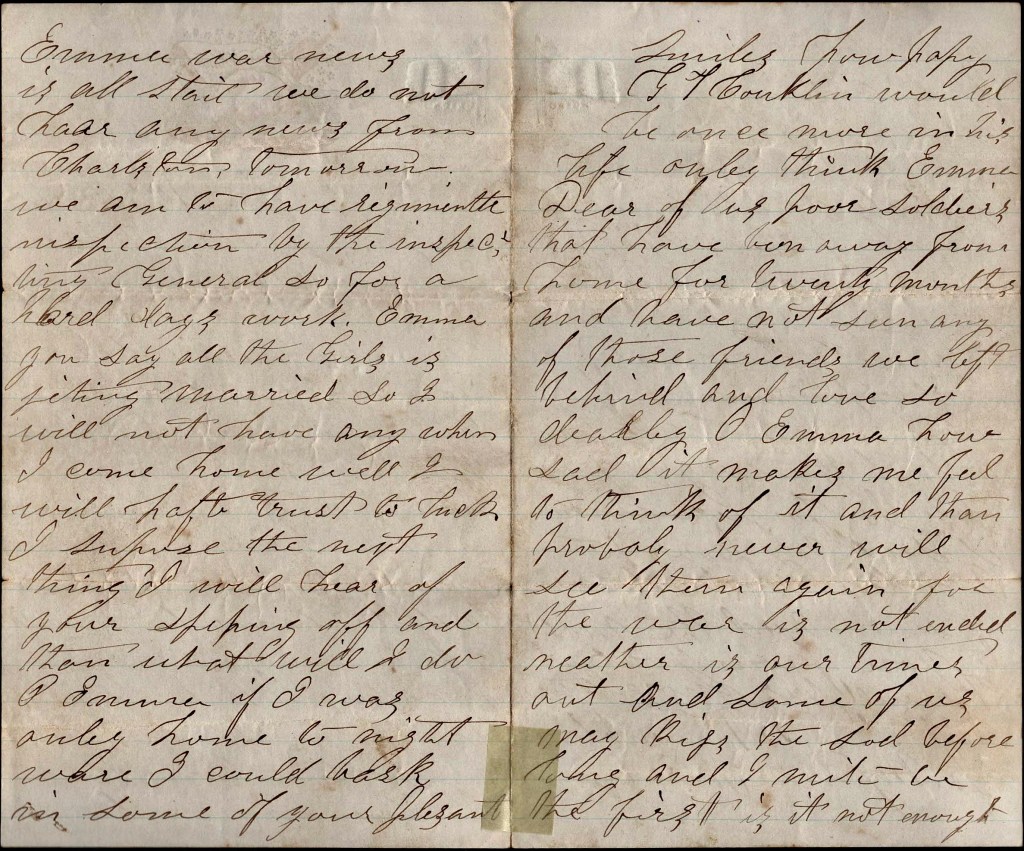
Once more I have the pleasure of answering one of your kind and welcome letters. Emma, I will send you my picture as quick as I can get it taken and I would like to have you to do the same for I would like to see your dear face once more. But would rather see the owner of the picture than the picture itself.

Emma, war news is all stale. We do not hear any news from Charleston. Tomorrow we are to have regimental inspection by the Inspector General so for a hard day’s work.

Emma, you say all the girls is getting married so I will not have any when I come home. Well I will have to trust to luck. I suppose the next thing I will hear of your stepping off and then what will I do? Oh, Emma, if I was only home tonight where I could bask in some of your pleasant smiles, how happy G. T. Conklin would be once more in his life. Only think, Emma dear, of us poor soldiers that have been away from home for twenty months and have not seen any of those friends we left behind and love so dearly. Emma, how sad it makes me feel to think of it and then probably never will see them again for the war is not ended. Neither is our times out. And some of us may kiss the sod before long and I might be the first. Is it not enough to make you feel sad?

Well, Emma, you must tell me in your letter who is getting married. Probably I will know some of them. Well, Emma, I will have to close my short letter. Excuse the writing and spelling and if I have said anything out of the way, I pray you to forgive me. I send my love to Amelia and all my friends and the most to you. From your friend—yes, more than friend, — G. T. Conklin

To my dear Miss Emma

1863: Major William Ames to Col. Edwin Metcalf

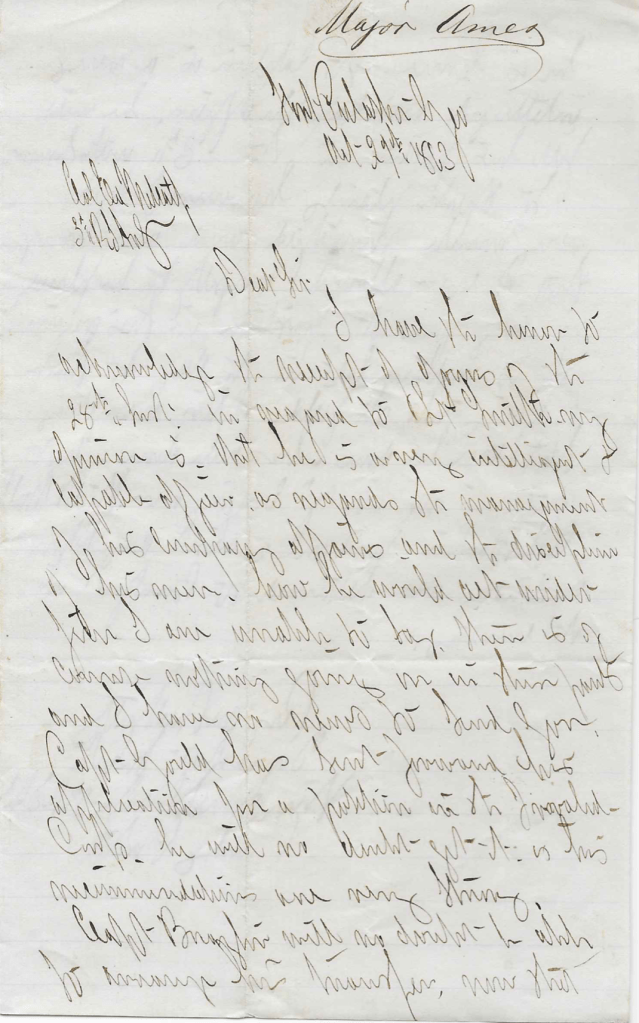
William Ames in his Colonel’s uniform, 3rd Rhode Island Heavy Artillery

The following letter was written by Major William Ames (1842-1914) of the 3rd Rhode Island Heavy Artillery while commanding the post at Fort Pulaski near Savannah, Georgia in late October 1863. William was the son of Samuel Ames (1806-1865) and Mary Throop Dorr (1811-1869) of Providence, Rhode Island. He began his service as a captain in the 2nd Rhode Island Infantry but accepted an appointment to Major of the 3rd Rhode Island in February 1863.

We learn from this letter that William was having second thoughts about having taken the promotion to command a post where the daily routine was quite dull. He did, however, rise in rank to Colonel of the 3rd Rhode Island Heavy Artillery and towards the end of the war he served as Chief of Artillery on the staff of Major General Quincy A. Gillmore. He was brevetted Brigadier General, US Volunteers on March 13, 1865 for “meritorious services during the war.”

William wrote the letter to Col. Edwin Metcalf (1823-1894), a Harvard-educated lawyer and Rhode Island state legislator when he resigned his seat to join the war. Commissioned as Major of the 3rd Rhode Island Heavy Artillery, he immediately made a name for himself and the regiment when he led the first battalion in the battle of Secessionville, SC. Promoted to Colonel and transferred at the governor’s request to command the new 11th Rhode Island Infantry, Metcalf was with the Army of the Potomac only a short time before being recalled to South Carolina. Yellow fever had swept the ranks and claimed Col. Brown of the 3rd RI HA, as well as several other officers, and Metcalf was seen as the one to revitalize the demoralized regiment. He commanded the regiment and served as Chief of Artillery until January 1864, when he returned to Providence on medical leave. He resigned due to illness on February 5, 1864.

Inside Fort Pulaski 1862-3

[Note: This letter is from the private collection of Greg Herr and was transcribed and published on Spared & Shared by express consent.]

Transcription

Fort Pulaski, Georgia
October 29th 1863

Col. Ed Metcalf, 3rd Rhode Island [Heavy] Artillery,

Dear sir, I have the honor to acknowledge the receipt of yours of the 28th inst. in regard to Lt. Smith. My opinion is he is a very intelligent & capable officer as regards to management of his company affairs and the discipline of his men. How he would act under you I am unable to say. There is, of course, nothing going on in these parts and I have no news to send you. Capt. Gould has sent forward his application for a position in the Invalid Corps. He will no doubt get it as his recommendations are very strong.

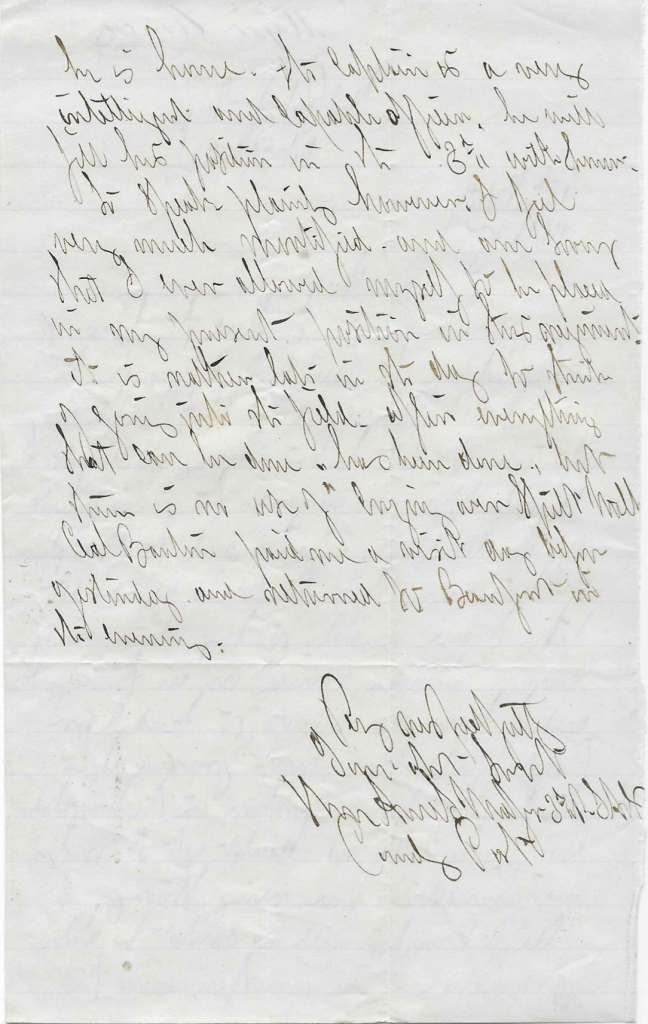
Capt. Boughton will not doubt be able to arrange his transfer, now that he is home. The captain is a very intelligent and capable officer. He will fill his position in the 3rd with honor. To speak plainly, however, I feel very much mortified and am sorry that I ever allowed myself to be placed in my present position in this regiment. It is rather late in the day to think of going into the field after everything that can be done has been done, but there is no sense of crying over spilt milk.

Col. Barton paid me a visit day before yesterday and returned to Beaufort in the evening.

Very respectfully your obedient servant, — Wm. Ames, Major 3rd Rhode Island Artillery, Commanding post.