Category Archives: Fort Richardson

1861: Samuel Dowell to a Dear Friend

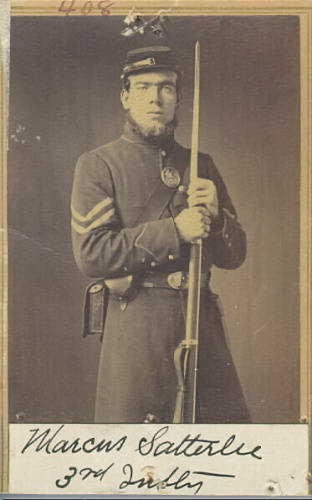
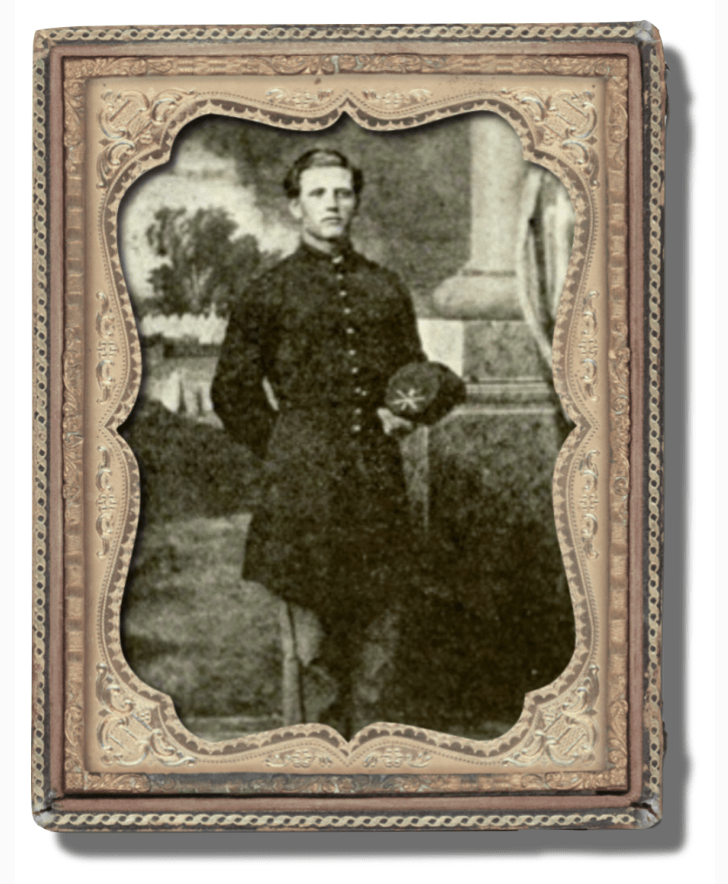
I could not find an image of Samuel but here is one of Marcus Satterlee wearing the uniform of the 3rd Michigan Infantry. (Michigan Digital Collection)

The following letters were written by Pvt. Samuel Dowell (1838-1862) of Co. G, 3rd Michigan Infantry (1st Organization). This regiment was mustered into service on 21 May 1861 and served in McDowell’s Army of Northeastern Virginia until August 1861 and then was attached to Richardson’s Brigade, Heintzelman’s Division, Army of the Potomac.

Samuel was the son of Charles Dowell (1799-1871) and Elizabeth Pool (1797-1860) of Windsor, Eaton county, Michigan. Samuel was killed at the Battle of Seven Pines on 31 May 1862.

Samuel wrote the letters to a dear friend whose name was Amelia Scofield.

Letter 1

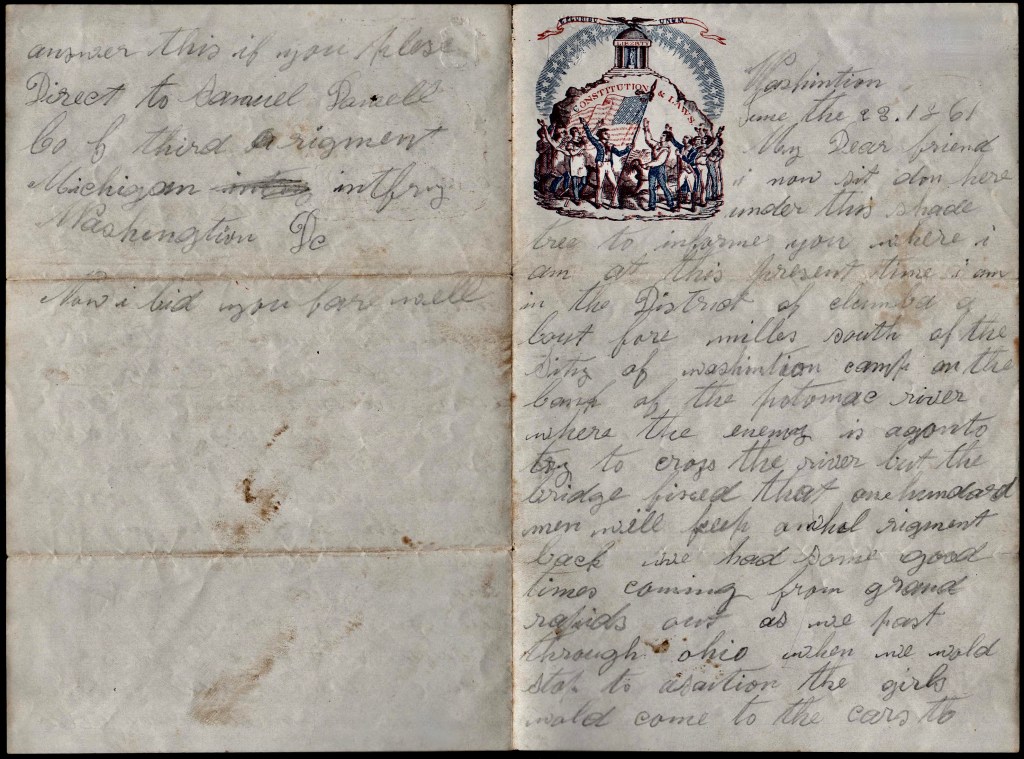
Washington
June 23, 1861

My dear friend,

I now sit down here under this shade tree to inform you where I am at this present time. I am in the District of Columbia about four miles south of the City of Washington camped on the Potomac River where he enemy is agoin’ to try to cross the river. But the bridge [is] fixed [such] that one hundred men will keep a whole regiment back.

We had some good times coming from Grand Rapids out as we passed through Ohio. When we would stop to a station, the girls would come to the cars to shake hands with soldiers and bid them goodbye.

I received your letter when I was in Grand Rapids. I was in the hospital sick with the measles when Till give it to me but I am well now and hoping that these few lines will find you in the same state of health at this time and enjoying yourself, well and happy and merry and that you may have good times there. I would like to see you very well but now I am twelve hundred miles from you. I oft times think of you since I kissed your rosey cheeks. I am so sleepy that I [can’t] think of anything to write now for I was on guard yesterday.

Last night we heard that since we came here that we was all but seventeen of us when we came through Baltimore but there wasn’t a gun fired when we passed through last Sunday morning and arrived at this place in the afternoon. There is sixty thousand troops camped within eight miles of us.

No more at present but I remain your friend forever and I will write to you as often as I can. I send my best respects to you and all of your folks and to all enquiring friends. Please excuse my poor writing. Yours truly, — Samuel Dowell

to Amelia Scofield

Letter 2

Fort Richardson
Northeast Virginia
September 25, 1861

Dear friend,

I take this present time to write a few lines to you to let you know that I am well at this present time and hoping that these few lines will find you in the same state of health at this time and are enjoying yourself well.

I received your letter and was glad to hear from you once more. We are having good times here now and lots of fun and not much fighting. We have lots of music here. They are having a good time a dancing tonight. I am sorry that I did offend you in the last letter that I wrote to you. But you must excuse me for I was so sick that I did not know what I did [write] in the letter at that time.

No more at present. I send my best respects to you and to all enquiring friends and neighbors, — S. Dowell

The Young Soldier Dream
Amelia don’t secede

Kiss me Amelia ere I go
Armed and drilled to meet the foe;
Gun in hand and on my back
A sixteen pounder haversack.
I go, my country calls—adieu
To battle, my darling girl, be true
And come success comes scathe and need
Amelia, Amelia, don’t secede

When on the tented field perhaps
With rations short and shorter naps
With wheel present, advance, retreat
Thou’lt have O heavens at thy feet
Some are persuadingly present
Himself and an establishment
Amelia, no such trifler heed
Though the glitter’t secede

Cling unto thy mother dear
Let no home guards come a near
Dancing [  ] for the eyes
Making light of household ties
Prating of thy woman’s rights
Gallanting thee about o’night
Lest the rose should prove a weed
Basely crimsoned don’t secede

Goodbye Amelia, no regrets
If from balls and bayonets
From trials and battles
Far deadlier is the soup tureen
When badly seasoned than the bare
Of the loudest cannon that can roar
Safe delivery swiftly
Back to ease and the will fly
United then in word and deed
Amelia, dear, we’ll both secede

— S. Dowell

Prayer of the Young Soldier

[ ] of mercy, hear my prayers
Preserve my husband’s life
Cast o’er him thy protecting shield
In this unhallowed strife
Oh guard him in the battlefield
Unscathed through wars alarms
Restore him to his happy home
And his fond parents’ arms.

But if it be thy will, oh God
To take the life that gave
Then let him die where the stars and stripes
O’er his head shall ever wave.
If it be thy will in his country’s cause
My husband should lose his life
If fatherless he his only child
Widowed his wretched wife

Then let his name on history’s page
Be enrolled with the free and the brave
Let him nobly die a hero’s death
And rest in a hero’s grave.

— S. Dowell
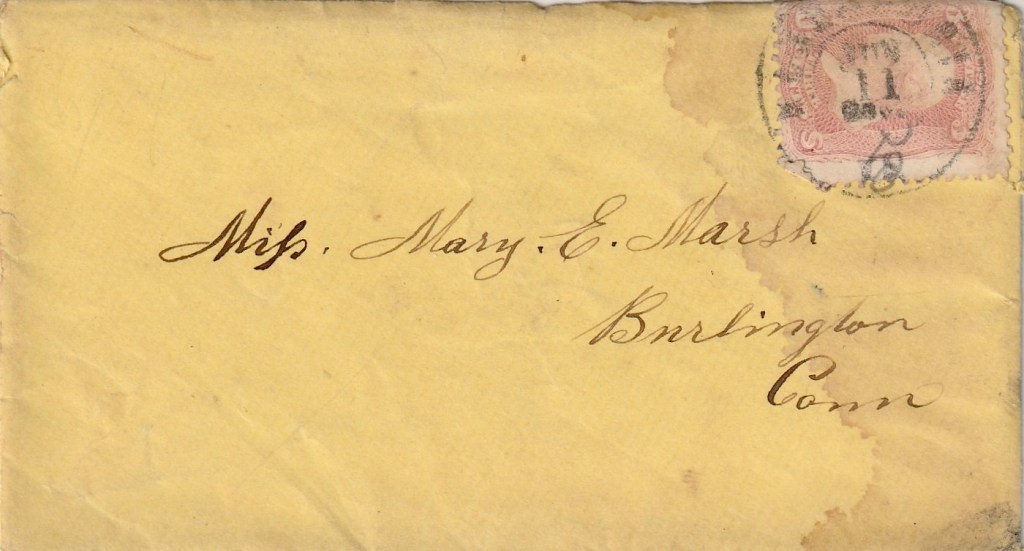
1863: Edgar B. Bennett to Mary E. Marsh

Edgar B. Bennett, 1st Connecticut Heavy Artillery

The following letters were written by Edgar B. Bennett (1842-1918), the son of Smith Bennett (1807-1875) and Susan Snow (1809-1851) of Monroe, Connecticut. He served in Battery K, 1st Connecticut Heavy Artillery. He remained with his battery until March 25, 1865 when he was slightly wounded and taken prisoner during the Battle of Fort Stedman ¹ (in front of Petersburg) and confined in Libby Prison for five days until he was paroled. On April 9, 1865, while on parole, he married Mary E. Marsh (1849-1919), daughter of Lewis and Evaline (Stone) Marsh.

Several years ago I transcribed and published 15 letters that Edgar wrote during the war. See 1863-65: Edgar B. Bennett to Mary E. Marsh. Four of those letters were also written from Fort Richardson—a detached redoubt in Arlington, Virginia, that was part of the defense ring surrounding Washington D. C.

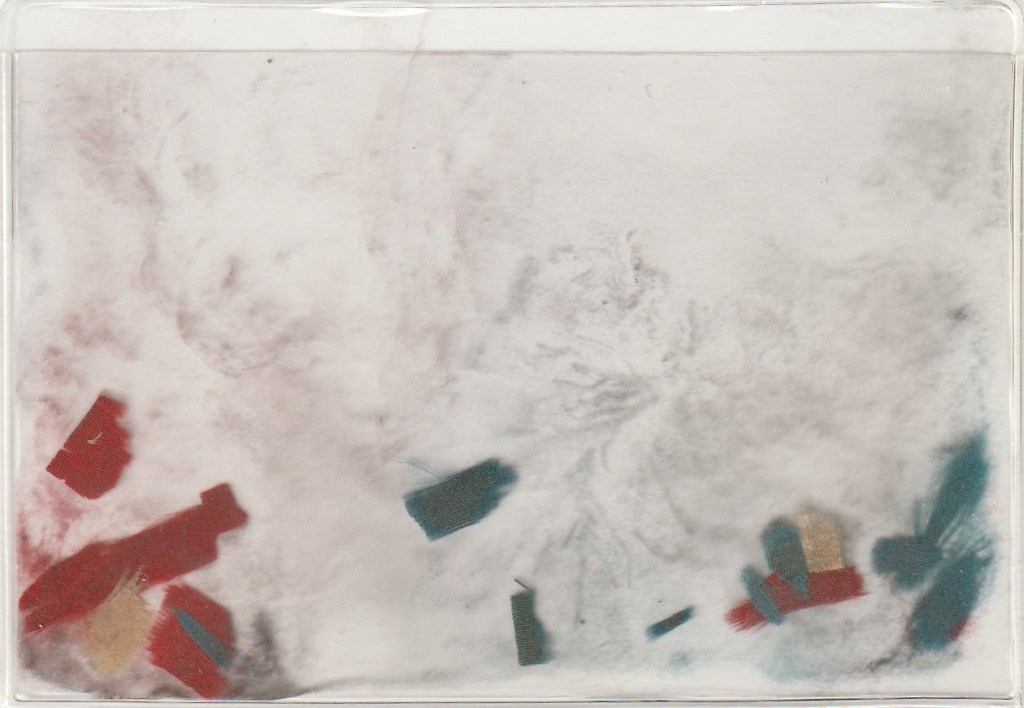
Edgar wrote most of the other letters in 1864 from Redan No. 2 and Redoubt Anderson, fortifications on the Bermuda Hundred line south of the James River, not far from Petersburg, Virginia. Enclosed with many of the letters (including this one) are swatches of silk purported to be cut from the Regimental flag of the First Connecticut Heavy Artillery. The color of the swatches seem to match those advertised in an on-line auction claiming to have hand-written provenance to support it. 

Letter 1

[Note: This letter is from the personal collection of Richard Weiner and was transcribed and published on Spared & Shared by express consent.]

Fort Richardson
June 11th, 1863

Dear Mary,

It is with the greatest of pleasure that I now seat myself to answer your kind and affectionate letter which came to hand today. I was so glad to hear from you and that you were well. I am well and hope this may find you all enjoying the same great blessing. I am glad you have got my last picture. I also sent you some others the next day and I think they must have reached you by this time. There is a great battle progressing on the Rappahannock now.

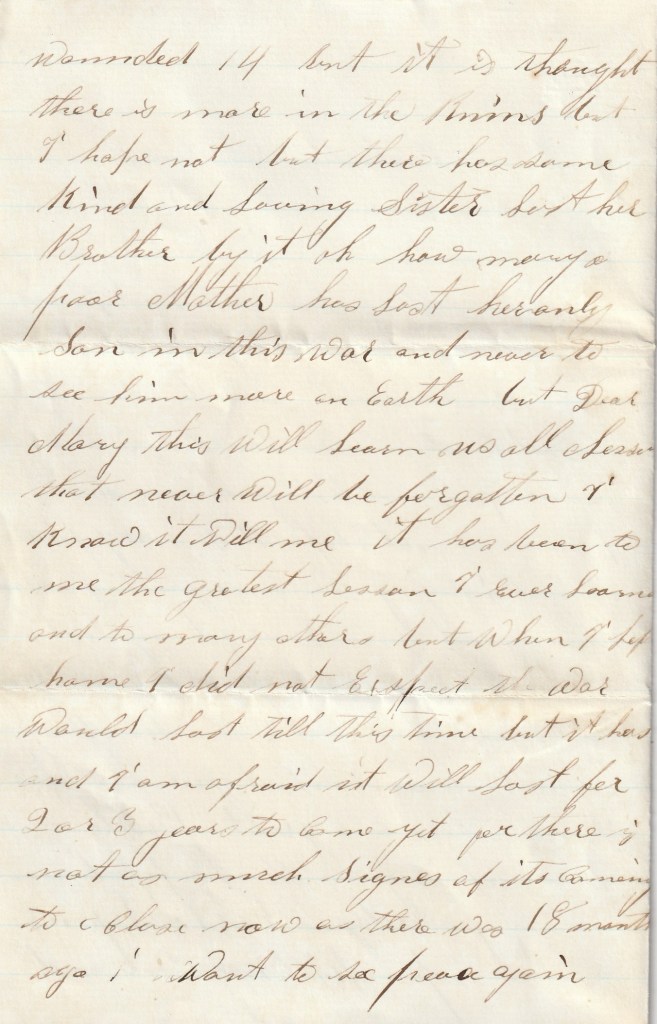
Yesterday Fort Lyons blew up killing 26 and wounded 14 but it is thought there is more in the ruins but I hope not. 1 But there has some kind and loving sister lost her brother by it. Oh! how many a poor mother has lost her only son in this war and never to see him more on earth. But dear Mary, this will learn us all a lesson that never will be forgotten. I know it will me. It has been to me the greatest lesson I ever learned, and to many others. But when I left home, I did not expect the war would last till this time. But it has and I am afraid it will last for 2 or 3 years to come yet for there is not as much signs of its coming to close now as there was 18 months ago. I want to see peace again, but we will not till Abe ——- then there will be some hopes of it. But not till then. But they are getting the Negroes to fighting and I am glad of it. They have now in service 35,800 Negroes so the government will not want so many white soldiers from the North. 

Yes, Mary, next summer I hope to be in Burlington if nothing happens and hope to meet you there. I wish I was where I could call in and see you this eve, but no, I cannot. Mary, I shall always try to be a good boy and if I try, I know I can. 

The weather has been very pleasant this Spring but it changes so often. It is so warm one day [such that] we can hardly stand the heat, and the next it is so cold we want overcoat and mittens.

I have not seen anything planted this Spring here for if they did, it would do them no good for there is too many soldiers here that everything would be stolen from them. There is but one thing we can get that we want that is milk and that is not very plenty and that is two-thirds water. Everything is very high. There has been a few strawberries here but there is so many to pick them we cannot get more than one apiece.  I can’t think of any news at present so I shall have to close.

Give my love and best wishes to your Father and Mother. My most affectionate love to you. I shall remain you true friend, — E. B. Bennett

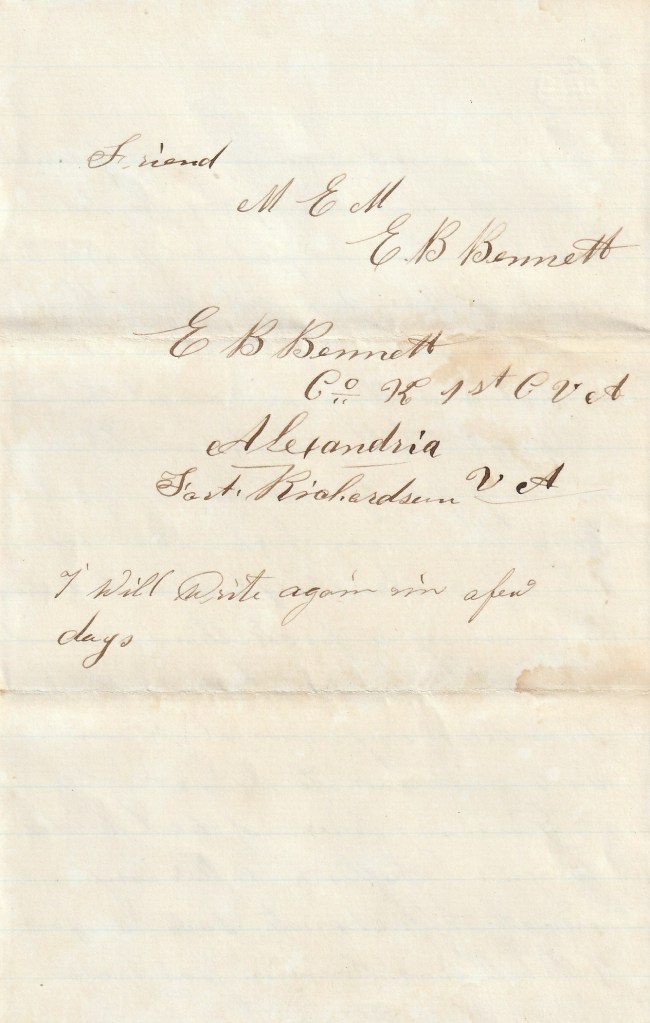
Co K 1st C Vol, Alexandria, Fort Richardson, VA

I will write again in a few days


1 See “Disaster in the Defenses of Washington—the June 9, 1863 Explosion at Fort Lyon,” by Nathan Marzoli published on Emerging Civil War.

Flag fragments

Letter 2

Fort Richardson [Alexandria, Va,]
Friday Eve, August 7th 1863

Dear Mary,

It is with pleasure that i now seat myself to write you a few lines as I have just received your affectionate letter. I was so glad to hear from you. When I wrote to you one week ago tonight, I told you I should go over to Fort Lyons on Saturday the next day and I done as I told you, I went there and was very glad I did for I saw your uncle and a number of others that I knew. your uncle and myself had our pictures taken together so he had one and I have one myself. I would send it to you but they are not good ones for the day was too warm and they were taken in a tent. But if you wish for it, I will send it to you. I had a nice visit with your uncle.

We do not get any news here from the army and we know nothing about it at all. In fact, we don’t get any news at all from any part. It is too warm for the army to move anywhere now. We have not had any rain at all for a long time and it is very warm here. Last Sunday there was 7 men in our regiment was sun struck. One of them died instantly. The others are very feeble. Our doctor was also sun struck and he has not been able to get off from his bed since Sunday and Monday there were 13 sun struck in Washington City. The people here say it is about as warm as they ever knew it to be.

I am well and hope this may find you in the same good health.

Mary, I do not think of any more to write so I will close by sending my love and best wishes to your father and mother, mu kindest and affectionate love to you. I remain your true friend. I hope, dear, we shall all live to meet again once more for I long for the time to come when we may see each other. I will now bid you a happy good night. From your ever loving friend, — Edgar

To Mrs. E. M. from E. B. B.

Co. Km 1st C. V. H. A., Washington D. C.

1862-64: James Liggett, Jr. & Cyrus Spink Liggett to their Parents & Sister

These letters were written by James Liggett, Jr. (1838-1916) and Cyrus Spink Liggett (1834-1908), both sons of James Liggett (1797-1891) and Maria Quick (1803-1883) of Washington township, Holmes county, Ohio. During the summer of 1864, James & Cyrus signed up together to serve 100 days in the 166th Ohio Volunteer Infantry (OVI)—recruited to garrison the forts of Washington D. C. while the old garrisons were sent an infantrymen to the battlefront with Grant’s army.

Mentioned in one of the letters is their younger brother “Tip”—William Henry Harrison Liggett (1840-1863)—who enlisted in the spring of 1861 to serve in Co. H, 23rd Ohio Volunteer Infantry (OVI). Tip’s letters may be found published on Spared & Shared at 1861-62: William Henry Harrison Liggett to his Family.

The 166th OVI left for Washington on 15 May 1864 and were assigned to garrison duty at Fort Richardson, Fort Barnard, Fort ReynoldsFort Ward, and Fort Worth (with regimental headquarters at Fort Richardson), defenses of Washington south of the Potomac River, until September. They participated in the repulse of Early’s attack on Washington July 11–12. Both brothers mustered out on 9 September 1864.


Letter 1

Fort Worth
May 21, 1864

Respected Parents & Sister,

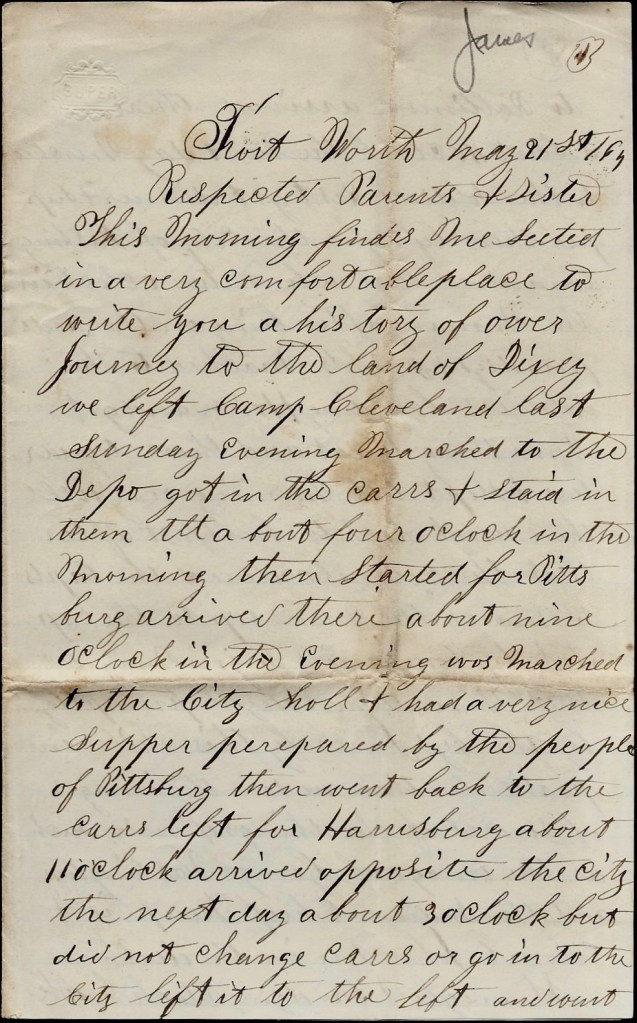
This morning finds me seated in a very comfortable place to write you a history of our journey to the land of Dixie. We left camp Camp Cleveland last Sunday evening, marched to the depot, got in the cars and stayed in them till about four o’clock in the morning. Then started for Pittsburg. Arrived there about nine o’clock in the evening. Was marched to the City Hall & had a very nice supper prepared by the people of Pittsburg, then went back to the cars. Left for Harrisburg about 11 o’clock, arrived opposite the city the next day about 3 o’clock but did not change cars or go into the city. Left it to the left and went to Baltimore. Arrived there about 11 o’clock the next day. Marched to the Soldier’s Rest, got dinner, and supper, then left for the city of Washington. Arrived here about two o’clock in the morning after being on the road four days and three night.

Marched to the Soldier’s Home Boarding House and got something to eat and then to quarters & slept till morning very well. Then went to breakfast. After that the Colonel ordered the captains to march the men up to the Capitol by companies so you may bet that this order was obeyed promptly by the boys. By the bye generally, this child in particular. There we saw the images of several of the things of note such as the image of George Washington and the Indian Chief Tecumseh & Col. Johnson in the death struggle, & the dying Blackhawk—the very bullet hole in his head. Then there is a great many other things that I cannot describe.

The Senate chamber is a very nice place though I cannot give you a description of it. The Capitol is a very magnificent building though the city is a very inferior place to be—the metropolis of this great Nation. Tip used to give us descriptions of this place so that I wasn’t disappointed in not finding any greater show of things than I did.

The White House and the Smithsonian Institute that he used to talk so much about I did not get to visit though intend to visit them when we are returning home, let be the consequence what it may. The City of Baltimore is far the nicest city of the two with the exceptions of the public buildings.

From Washington we marched to Fort Richardson.


Letter 2

Fort Richardson
May 29, 1864

Girt, respected sister,

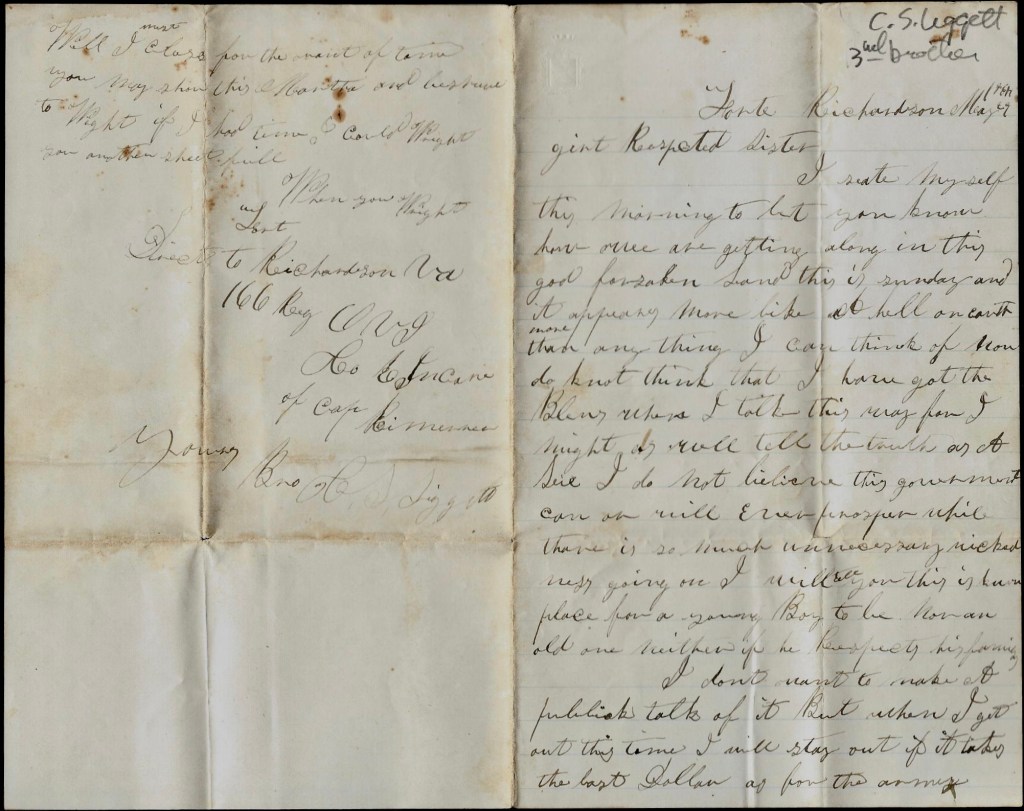
I seat myself this morning to let you know how we are getting along in this God forsaken land. This is Sunday and it appears more like hell on earth than anything I can think of. Now do you think that I have got the blues when I talk this way for I might as well tell the truth as a lie. I do not believe the government can or will ever prosper while there is so much unnecessary wickedness going on. I will tell you this—it’s no place for a young boy to be nor an old one neither if he respects his family.

I don’t want to make a public talk of it, but when I get out this time I will stay out if it takes my last dollar. The army is getting along. I suppose you get more correct news than we do. They say that Grant is within 8 miles of Richmond but you can’t believe one word you hear here.

I wish you could be here and see this country. We are on Old General Lee’s property now and I have not [seen] one rail fence since we have been here. There is hundreds of acres laying here to the commons and no kind of grain being raised scarcely, but all kinds of fruits. We can see Washington every day from here. Oh! how I [wish] you could see the Capitol House and the nice yard and the pool of water with those yellow fish in it. I’ll bet Father would like to see them. Tell him and mother to take the world easy for what they work for, some person will spend in the future.

Well Girt, have written three letters home since I have been here and have not received one. I want you to sit right down as soon as you get this and write me an answer and tell me how they get along, how the children is, and so on. It is probably they did not direct them right.

The boys are all well but myself and I feel some better than I did yesterday. I have got my old disease or rather the camp diarrhea. I will tell you the truth about it. We are starved sick here, out in day after day on two hard tack and a little colored water, cold coffee without sugar or cream. Still the government is not to blame for it but the Quartermaster and the Orderly is to blame for it. I have seen my dogs and your dogs eat more and better than we get sometimes–that is the truth of it. I care not what the rest of the boys says.

Well, I must close for the want of time. You may show this to Martha and [ ]. If I had time I could write you another sheet. When you write, direct to Fort Richardson, Virginia, 166th Regiment OVI, Co. K in care of Capt., Kirnerer

Your brother, C. S. Liggett


Letter 3

Fort Ward
June 12, 1864

Sister Gert,

Your letter of the sixth came to hand in due time and found us in the best of health. I was glad to hear that you were all getting along so well. This is Sunday but it don’t seem very much like Sunday, notwithstanding we was to hear a sermon. It seemed more like going to a political meeting than to church. The preacher’s name is Whiteman—I believe a Congregationalist—and not very much of a preacher.

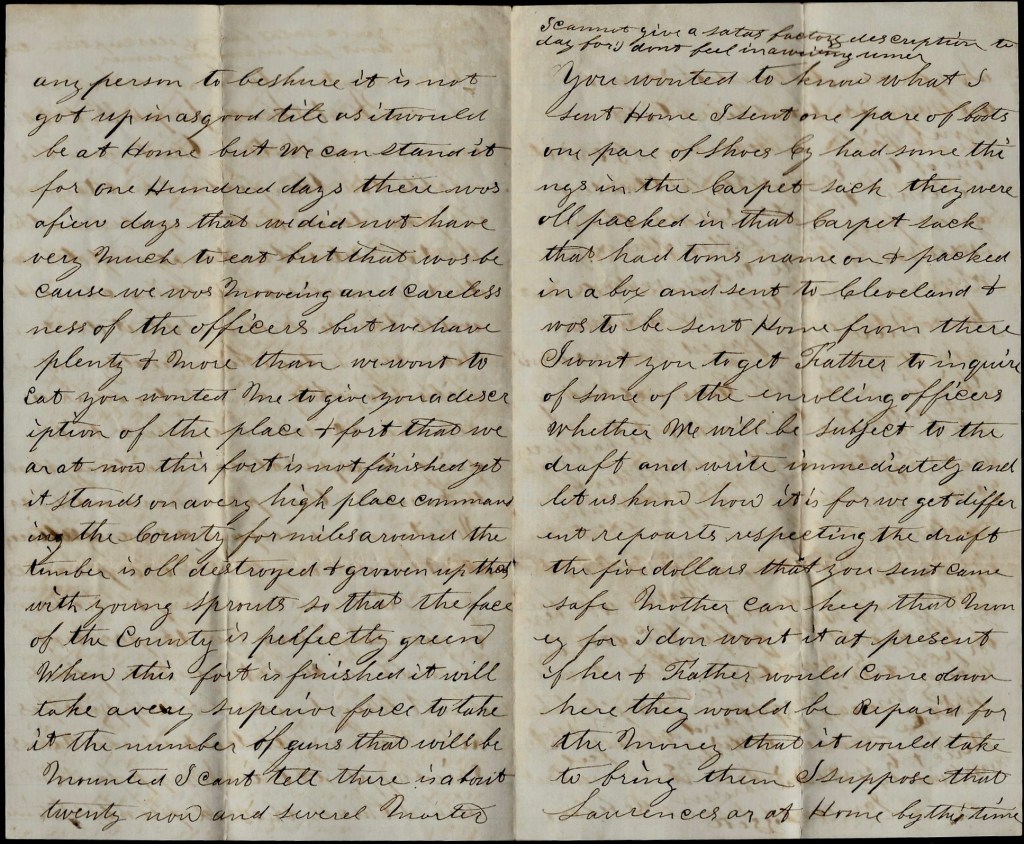
You said you was sorry to hear of our suffering for the want of something to eat. We have plenty of soft bread, pork, beans, potatoes, rice, sugar, coffee, tea and sometimes dried apples and twice a week, fresh beef. I think this is a plenty for any person. To be sure, it is not got up in as good style as it would be at home, but we can stand it for one hundred days. There was a few days that we did not have very much to eat but that was because we was moving and carelessness of the officers but we have plenty & more than we want to eat.

You wanted me to give you a description of the place & fort that we are at now. This fort is not finised yet. It stands on a very high place commanding the country for miles around. The timber is all destroyed & grown up with young sprouts so that the face of the country is perfectly green. When this fort is finished, it will take a very superior force to take it. The number of guns that will be mounted I can’t tell. There is about twenty now and several mortars. I cannot give you a satisfactory description today for I don’t feel in a writing humor.

You wanted to know what I sent home. I sent one pair of boots [and] one pair of shoes. Cy had some things in the carpet sack. They were all packed in that caret sack that had Tom’s name on & packed in a box and sent to Cleveland & was to be sent home from there. I want you to get Father to enquire of some of the enrolling officers whether we will be subject to the draft and write immediately and let us know how it is for we get different reports respecting the draft.

The five dollars that you sent come safe. Mother can keep that money for I don’t want it at present. If her & Father would come down here they would be repaid for the money that it would take to bring them. I suppose that Lawrences are at home by this time so you can all read this and answer it together.

Gert, your Rilla is here. He is, I think, one of the easiest frustrated fellows that ever I saw though I guess pretty fine fellow other ways. Well, I can’t write today worth a cent. When you write, tell me whether Jake Quick has paid Father and how does my [ ] nag look by this time, &c. Tell Father he had better not pitch in too hard. He had better buy some kind of stalk that will make beef in the fall or let them eat the grass. Cows sell here from [ ] & ffty dollars a head.

Panter was here. He has one hundred & fifty cattle on the way for Washington City. You must excuse this letter for I was on picket last night and don’t feel very much like writing. Write soon. Direct to Fort Richardson as before. All well. — James Liggett