Category Archives: Fort Worth

1862: Henry Atwood Breed to Cornelia Bidwell

The following letter was written by Henry Atwood Breed of Co. F, 155th Pennsylvania Infantry. Henry enlisted on 22 August 1862 and was soon after made the Orderly Sergeant of his company by Capt. John Markle. He was later commissioned 2nd Lieutenant of Co. F but discharged on a surgeon’s certificate on 3 October 1863. This regiment was organized at Pittsburg in September and moved immediately to join the Army of the Potomac where they were attached to the 2nd Brigade, 3rd Division, 5th Army Corps. They did not arrive at Sharpsburg, Maryland, until after the Battle of Antietam. Their first engagement was in the Battle of Fredericksburg in mid-December 1862 when Capt. Lee Anshultz of Co. C was mortally wounded, and the entire color guard of the regiment was either killed or wounded in the assault on Marye’s Heights. A regimental loss at Fredericksburg was 68 killed, wounded, and missing.
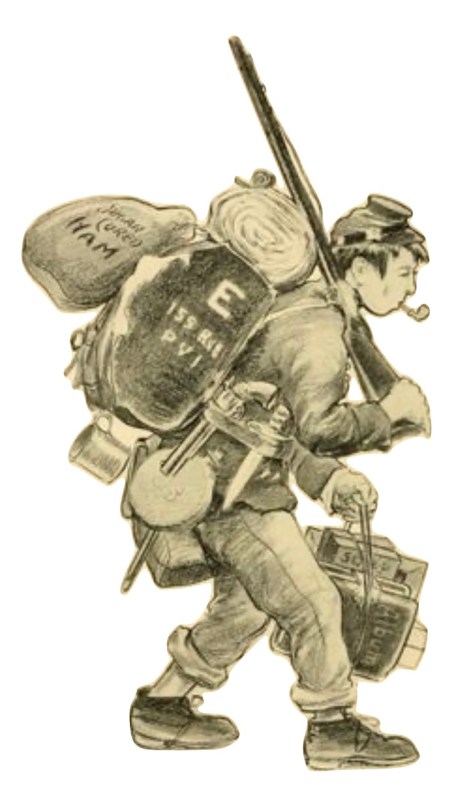
Artist’s sketch of the 155th Penna. Vol. private going off to war.

The 155th Pennsylvania Volunteers were issued standard union attire, consisting of a dark blue forage cap, a 9- button frock/dress coat (thigh length coat) of the same color with blue piping, 4-button dark blue sack coat, and light blue trousers, and brogans. Later in the war, January 1864, they were outfitted in a Zouave uniform. When they were first organized, they were issued surplus Belgian Rifles with sword bayonets. These weapons upon inspection in Washington, D.C. were determined to be unfit for use in battle, by Captain A.T.A. Torbert, USA. The men of Co. K remarked in their history that “The guns were said to kill at 1,000 yards but on examination we found they would not be dangerous to the enemy unless we got close enough to bayonet or club him” The government then issued old style muzzle loader, “Buck & Ball”, Springfield Rifles, more known as Harper’s Ferry Rifles. These weapons only proved to be effective at very close range, not being much use to the combat of the time. After the Battle of Gettysburg, Colonel Cain who had been requesting more effective weapons for his men, collected newer 1861 Springfields from the thousands of dead union soldiers. Which they would continue to use till the end of the war. 

See—1862: Sarah Maria Breed to Henry Atwood Breed, published on Spared & Shared in 2022.

See also—“You are becoming used to the dying and the dead…”—A Pittsburgh Pastor’s Wartime Letter to Lt. Henry A. Breed, by Richarsd Condon published on Civil War Pittsburgh.

See also—1862: Sarah Scott (Dilworth) Bidwell to Cornelia Bidwell, published on Spared & Shared in 2021.

This letter is from the private collection of Greg Herr and was made available for transciption & publication on Spared & Shared by express consent.

T R A N S C R I P T I O N
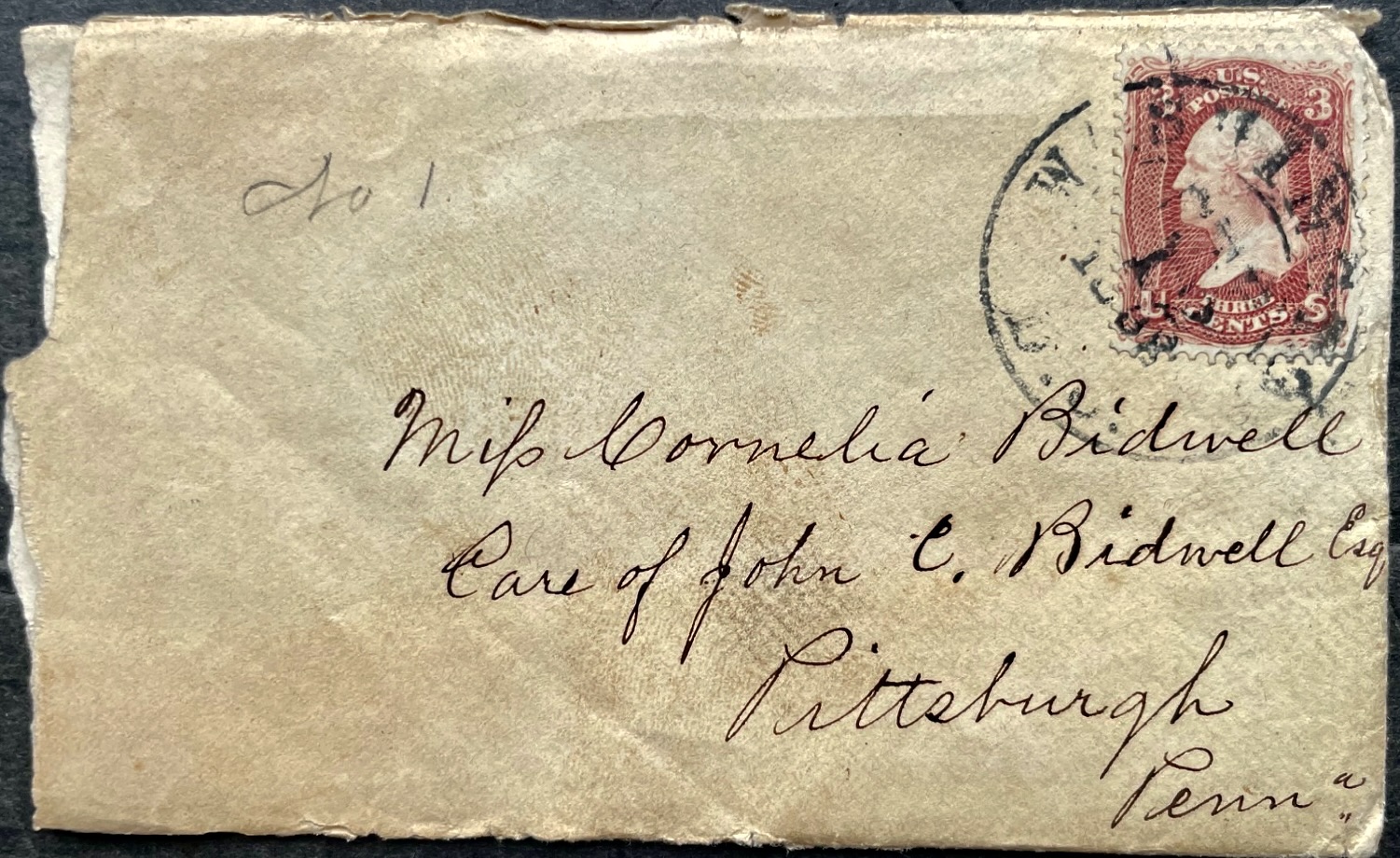
Half a mile from Fort Ellsworth
6 miles from Washington
September 10th 1862

Friend Cornie,

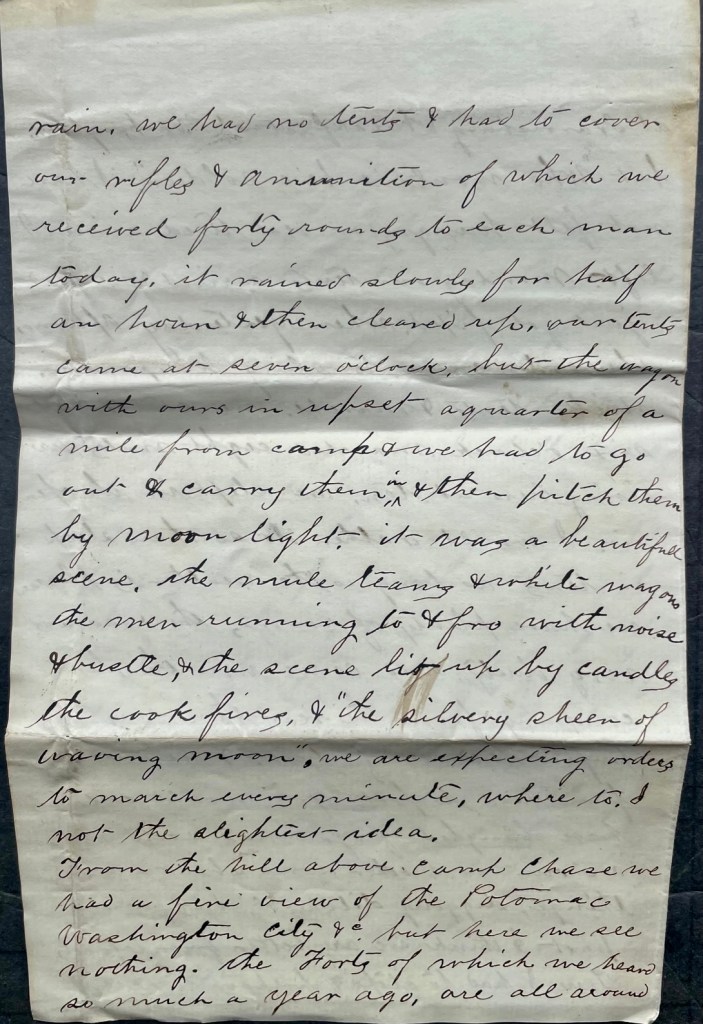
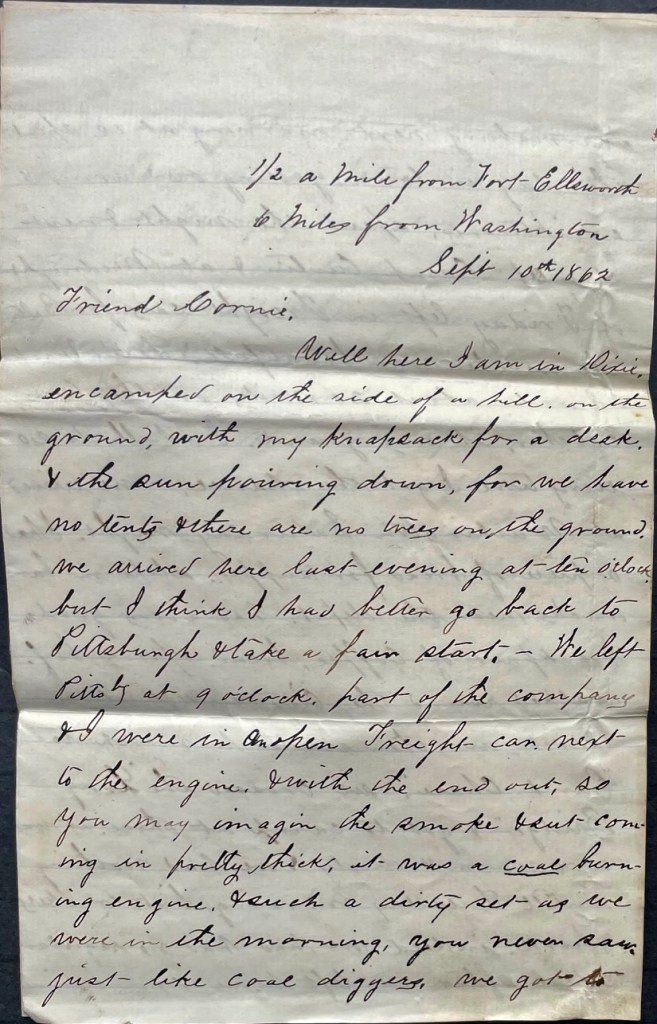
Well here I am in Dixie, encamped on the side of a hill on the ground with my knapsack for a desk, & the sun pouring down for we have no tents & there are no trees on the ground. We arrived here last evening at ten o’clock but I think I had better go back to Pittsburgh & take a fair start.
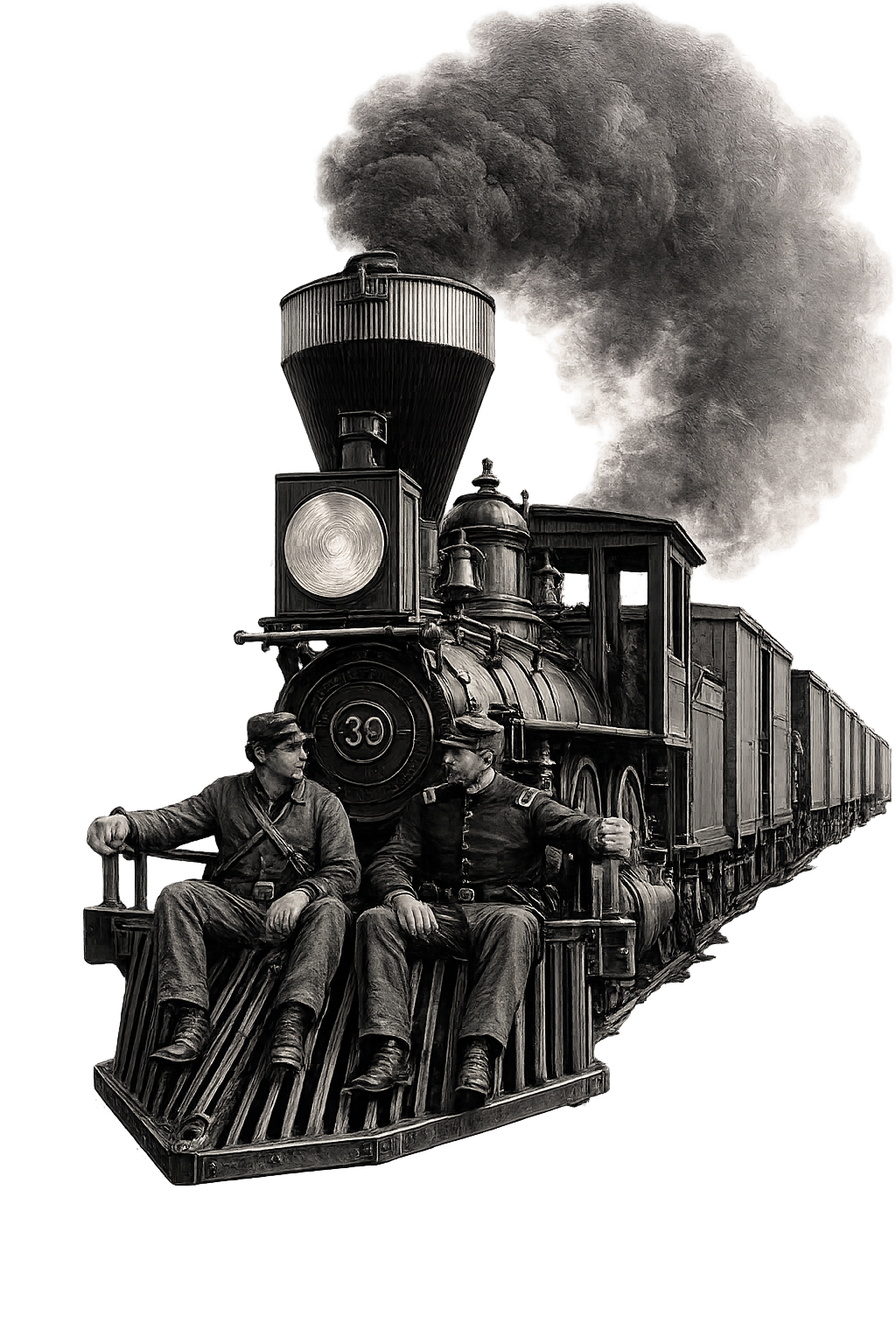
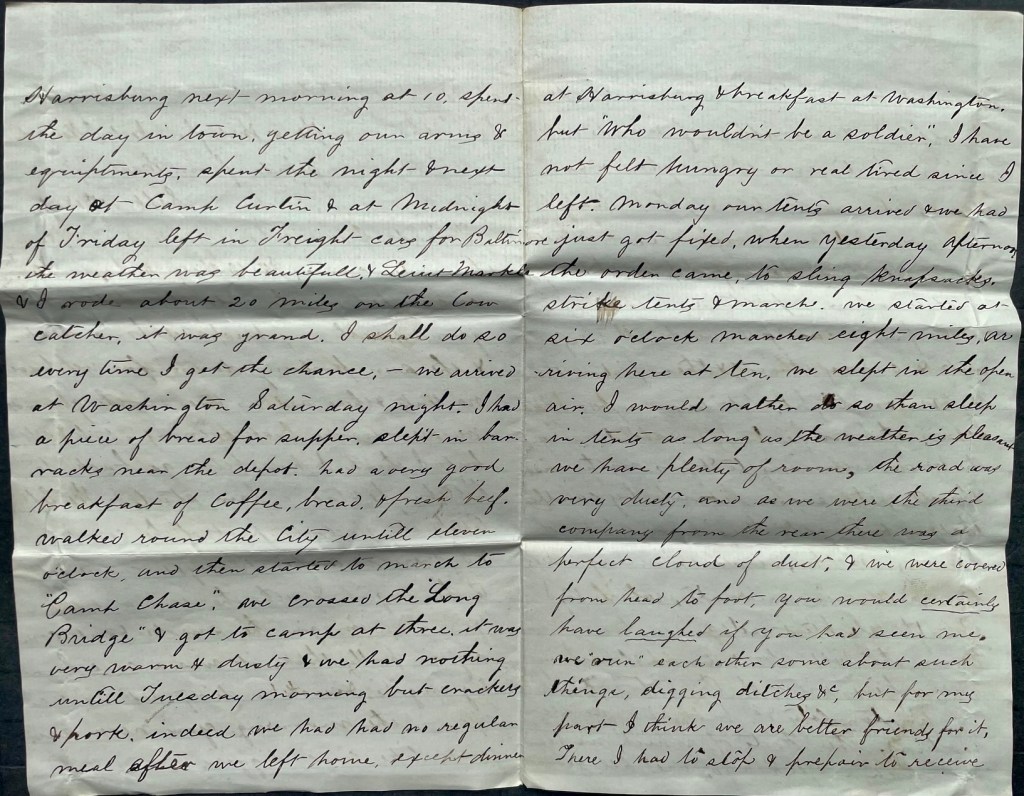
We left Pittsburgh at 9 o’clock. Part of the company and I were in an open frieght car next to the engine, the smoke & soot coming in pretty thick. It was a coal burning engine & such a dirty set as we were in the morning, you never saw. Just like coal diggers. We got to Harrisburg next morning at 10, spent the day in town, getting our arms & equipments, spent the night & next day at Camp Curtin & at midnight of Friday, left in freight cars for Baltimore. The weather was beautiful & Lieutenant [John] Markle & I rode about 20 miles on the cow catcher. It was grand. I shall do so every time I get the chance.

We arrived at Washington Saturday night. I had a piece of bread for supper. Slept in barracks near the depot. Had a very good breakfast of coffee, bread, and fresh beef. Walked round the City until eleven o’clock, and then started to march to “Camp Chase.” We crossed the Long Bridge and got to camp at three. It was very warm & dusty & we had nothing until Tuesday morning but crackers & pork. Indeed we had had no regular meal after we left home except dinner at Harrisburg & breakfast at Washington. But “who wouldn’t be a soldier.” I have not felt hungry or real tired since I left.

Monday our tents arrived & we had just got fixed when yesterday afternoon, the order came to sling knapsacks, strike tents, and march. We started at six o’clock, marched eight miles, arriving here at ten. We slept in the open air. I would rather do so than sleep in tents as long as the weather is pleasant. We have plenty of room. The road was very dusty and as we were the third company from the rear, there was a perfect cloud of dust. We were covered from head to foot. You would certainly have laughed if you had seen me. We “run” each other some about such things, digging ditches, &c., but for my part, I think we are better friends for it.

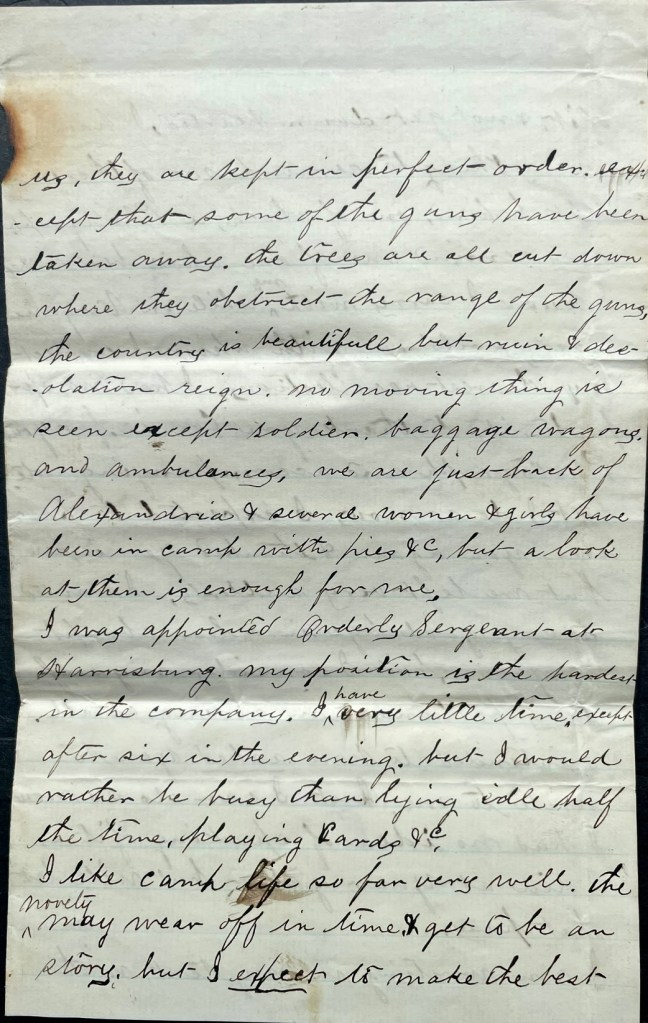
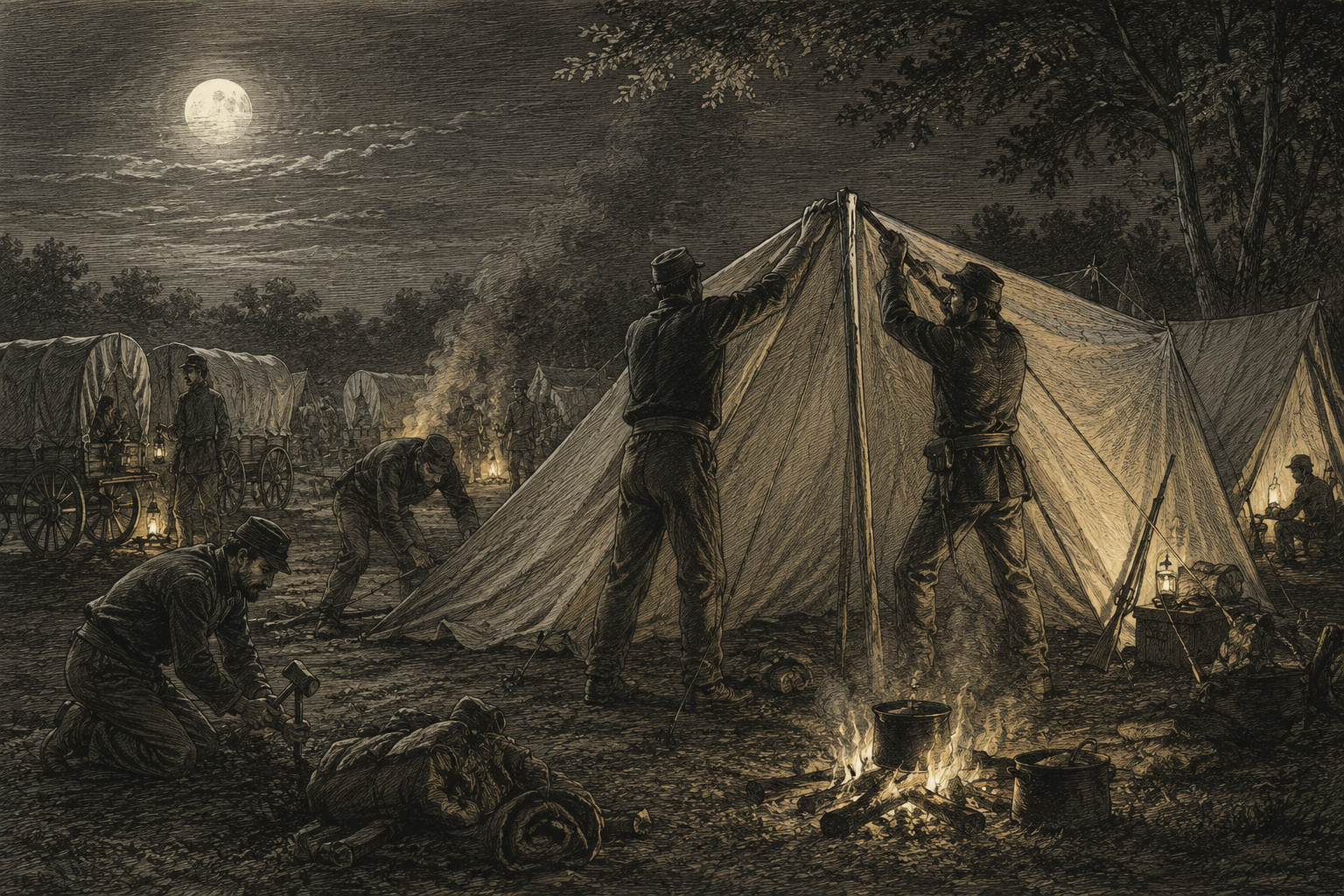
There, I had to stop & prepare to receive rain. We had no tents & had to cover our rifles & ammunition of which we received forty rounds to each man today. It rained slowly for half an hour & then cleared up. Our tents came at seven o’clock, but the wagon with ours is upset a quarter of a mile from camp and we had to go out & carry them in & then pitch them by moonlight. It was a beautiful scene—the mule teams and white wagons, the men running to & fro with noise & bustle & the scene lit up by candles, the cook fires, and the silvery sheen of waving moon. We are expecting orders to march every minute. Where to, I [have] not the slightest idea.
From the hill above Camp Chase we had a fine view of the Potomac, Washington City, &c., but here we see nothing. The forts of which we heard so much a year ago are all around us. They are kept in perfect order except that some of the guns have been taken away. The trees are all cut down where they obstruct the range of the guns. The country is beautiful but ruin & desolation reign. No moving thing is seen except soldier, baggage wagons, and ambulances. We are just back of Alexandria & several womnen & girls have been in camp with pies, &c., but a look at them is enough for me.

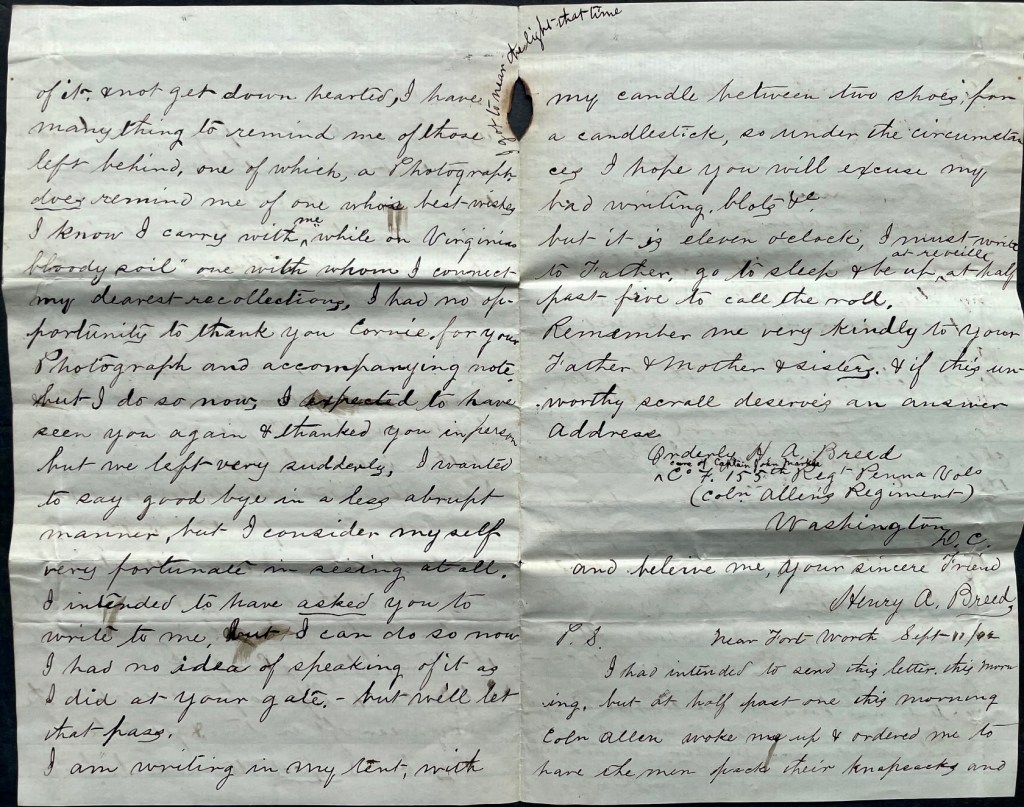
I was appointed Orderly Sergeant at Harrisburg. My position is the hardest in the company. I have very littletime except after six in the evening, but I would rather be busy than lying idle half the time, playing cards, &c. I like camp life so far very well. The novelty may wear off in time & get to be an story, but I expect to make the best of it and not get down hearted. I have many things to remind me of those left behind, one of which—a photograph—does remind me of one whose best wishes I know I carry with me while in Virginia’s “bloody soil.” One with whom I connect my dearest recollections. I had no opportunity to thank you, Cornie, for your photograph and accompanying note, but I do so now. I expected to have seen you again & thanked you in person. But we left very suddenly. I wanted to say goodbye in a less abrupt manner but I consider myself very fortunate in seeing [you] at all. I intended to have asked you to write to me, but I can do so now. I had no idea of speaking of it as I did at your gate, but will let that pass.
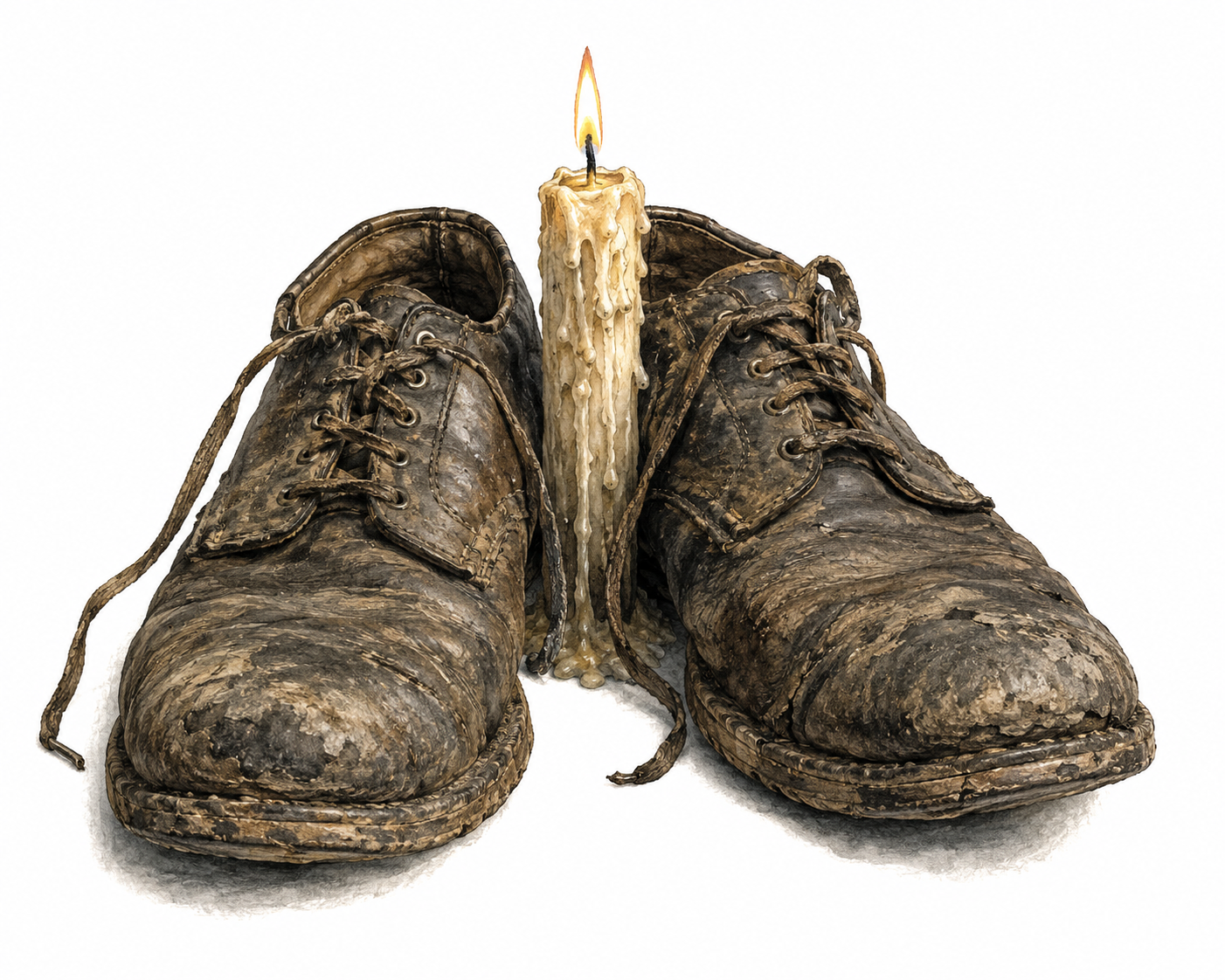
I am writing in my tent with my candle between two shoes for a candstick, so under the circumstances I hope you will excuse my bad writing, blots, &c. But it is eleven o’clock. I must write to Father, go to sleep, and be up at reveille at half past five to call the roll. Remember me very kindly to your Father & Mother & sisters. And if this unworthy scroll deserves an answer, address: Orderly H. A. Breed, Care of Capt. John Markle, Co. F, 155th Regt. Penna. Vols., (Col. Allen’s Regiment), Washington D. C.

And believe me your sincere friend, — Henry A. Breed

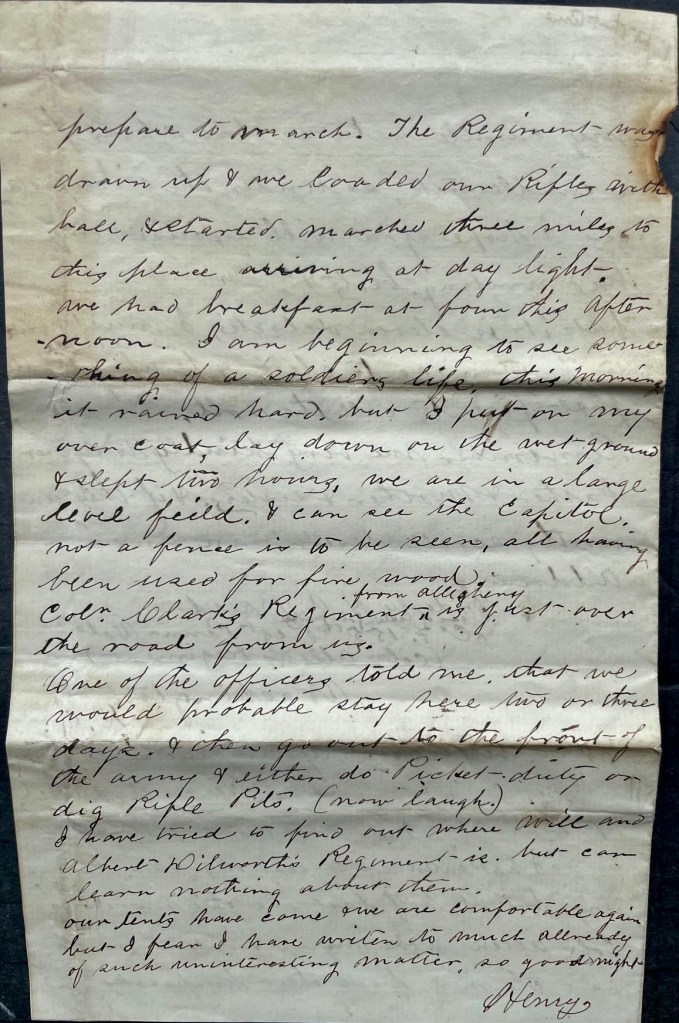
P. S. Near Fort Worth, September 11, 1862. I had intended to send this letter this morning but at half past one this morning, Col. Allen woke me up and ordered me to have the men pack their knapsacks and prepare to march. The regiment was drawn up & we loaded our rifles with ball, and started. Marched three miles to this place, arriving at daylight. We had breakfast at four this afternoon. I am beginning to see something of a soldier’s life. This morning it rained hard but I put on my overcoat, lay down on the wet ground, & slept two hours. We are in a large, level field & can see the Capitol. Not a fence to be seen, all having been used for fire wood. Col. Clark’s Regiment from Allegheny is just now over the road from us.

One of the officers told me that we would probably stay here two or three days & then go out to the front of the army & either do picket duty or dig rifle pits (now laught). I have tried to find out where Will and Albert Dilworth’s regiment is but can learn nothing about them. Our tents have come & we are comfirtable again but I fear I have written too much already of such uninteresting matter, so good night. — Henry
1862-64: James Liggett, Jr. & Cyrus Spink Liggett to their Parents & Sister

These letters were written by James Liggett, Jr. (1838-1916) and Cyrus Spink Liggett (1834-1908), both sons of James Liggett (1797-1891) and Maria Quick (1803-1883) of Washington township, Holmes county, Ohio. During the summer of 1864, James & Cyrus signed up together to serve 100 days in the 166th Ohio Volunteer Infantry (OVI)—recruited to garrison the forts of Washington D. C. while the old garrisons were sent an infantrymen to the battlefront with Grant’s army.

Mentioned in one of the letters is their younger brother “Tip”—William Henry Harrison Liggett (1840-1863)—who enlisted in the spring of 1861 to serve in Co. H, 23rd Ohio Volunteer Infantry (OVI). Tip’s letters may be found published on Spared & Shared at 1861-62: William Henry Harrison Liggett to his Family.

The 166th OVI left for Washington on 15 May 1864 and were assigned to garrison duty at Fort Richardson, Fort Barnard, Fort ReynoldsFort Ward, and Fort Worth (with regimental headquarters at Fort Richardson), defenses of Washington south of the Potomac River, until September. They participated in the repulse of Early’s attack on Washington July 11–12. Both brothers mustered out on 9 September 1864.


Letter 1

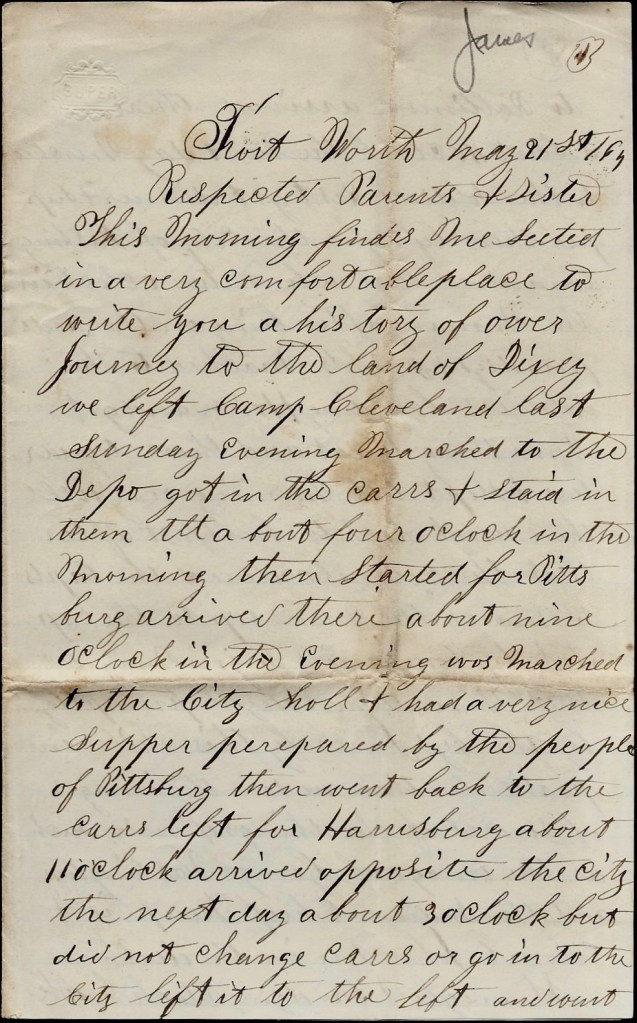
Fort Worth
May 21, 1864

Respected Parents & Sister,

This morning finds me seated in a very comfortable place to write you a history of our journey to the land of Dixie. We left camp Camp Cleveland last Sunday evening, marched to the depot, got in the cars and stayed in them till about four o’clock in the morning. Then started for Pittsburg. Arrived there about nine o’clock in the evening. Was marched to the City Hall & had a very nice supper prepared by the people of Pittsburg, then went back to the cars. Left for Harrisburg about 11 o’clock, arrived opposite the city the next day about 3 o’clock but did not change cars or go into the city. Left it to the left and went to Baltimore. Arrived there about 11 o’clock the next day. Marched to the Soldier’s Rest, got dinner, and supper, then left for the city of Washington. Arrived here about two o’clock in the morning after being on the road four days and three night.

Marched to the Soldier’s Home Boarding House and got something to eat and then to quarters & slept till morning very well. Then went to breakfast. After that the Colonel ordered the captains to march the men up to the Capitol by companies so you may bet that this order was obeyed promptly by the boys. By the bye generally, this child in particular. There we saw the images of several of the things of note such as the image of George Washington and the Indian Chief Tecumseh & Col. Johnson in the death struggle, & the dying Blackhawk—the very bullet hole in his head. Then there is a great many other things that I cannot describe.

The Senate chamber is a very nice place though I cannot give you a description of it. The Capitol is a very magnificent building though the city is a very inferior place to be—the metropolis of this great Nation. Tip used to give us descriptions of this place so that I wasn’t disappointed in not finding any greater show of things than I did.

The White House and the Smithsonian Institute that he used to talk so much about I did not get to visit though intend to visit them when we are returning home, let be the consequence what it may. The City of Baltimore is far the nicest city of the two with the exceptions of the public buildings.

From Washington we marched to Fort Richardson.


Letter 2

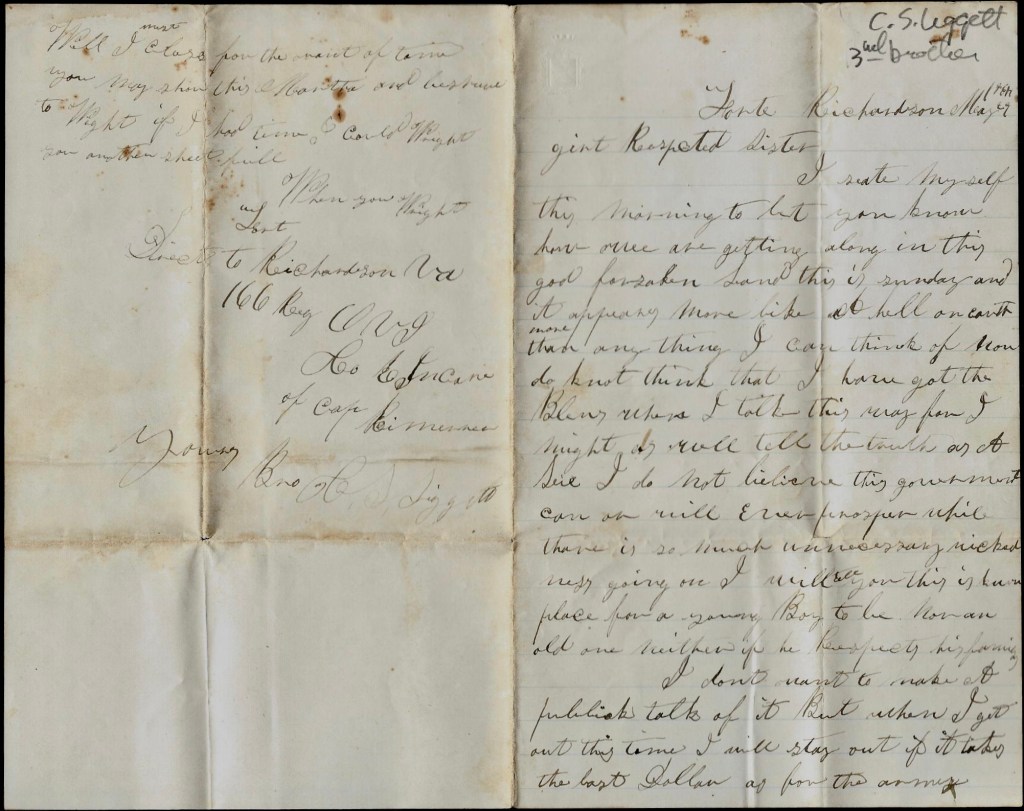
Fort Richardson
May 29, 1864

Girt, respected sister,

I seat myself this morning to let you know how we are getting along in this God forsaken land. This is Sunday and it appears more like hell on earth than anything I can think of. Now do you think that I have got the blues when I talk this way for I might as well tell the truth as a lie. I do not believe the government can or will ever prosper while there is so much unnecessary wickedness going on. I will tell you this—it’s no place for a young boy to be nor an old one neither if he respects his family.

I don’t want to make a public talk of it, but when I get out this time I will stay out if it takes my last dollar. The army is getting along. I suppose you get more correct news than we do. They say that Grant is within 8 miles of Richmond but you can’t believe one word you hear here.

I wish you could be here and see this country. We are on Old General Lee’s property now and I have not [seen] one rail fence since we have been here. There is hundreds of acres laying here to the commons and no kind of grain being raised scarcely, but all kinds of fruits. We can see Washington every day from here. Oh! how I [wish] you could see the Capitol House and the nice yard and the pool of water with those yellow fish in it. I’ll bet Father would like to see them. Tell him and mother to take the world easy for what they work for, some person will spend in the future.

Well Girt, have written three letters home since I have been here and have not received one. I want you to sit right down as soon as you get this and write me an answer and tell me how they get along, how the children is, and so on. It is probably they did not direct them right.

The boys are all well but myself and I feel some better than I did yesterday. I have got my old disease or rather the camp diarrhea. I will tell you the truth about it. We are starved sick here, out in day after day on two hard tack and a little colored water, cold coffee without sugar or cream. Still the government is not to blame for it but the Quartermaster and the Orderly is to blame for it. I have seen my dogs and your dogs eat more and better than we get sometimes–that is the truth of it. I care not what the rest of the boys says.

Well, I must close for the want of time. You may show this to Martha and [ ]. If I had time I could write you another sheet. When you write, direct to Fort Richardson, Virginia, 166th Regiment OVI, Co. K in care of Capt., Kirnerer

Your brother, C. S. Liggett


Letter 3

Fort Ward
June 12, 1864

Sister Gert,

Your letter of the sixth came to hand in due time and found us in the best of health. I was glad to hear that you were all getting along so well. This is Sunday but it don’t seem very much like Sunday, notwithstanding we was to hear a sermon. It seemed more like going to a political meeting than to church. The preacher’s name is Whiteman—I believe a Congregationalist—and not very much of a preacher.

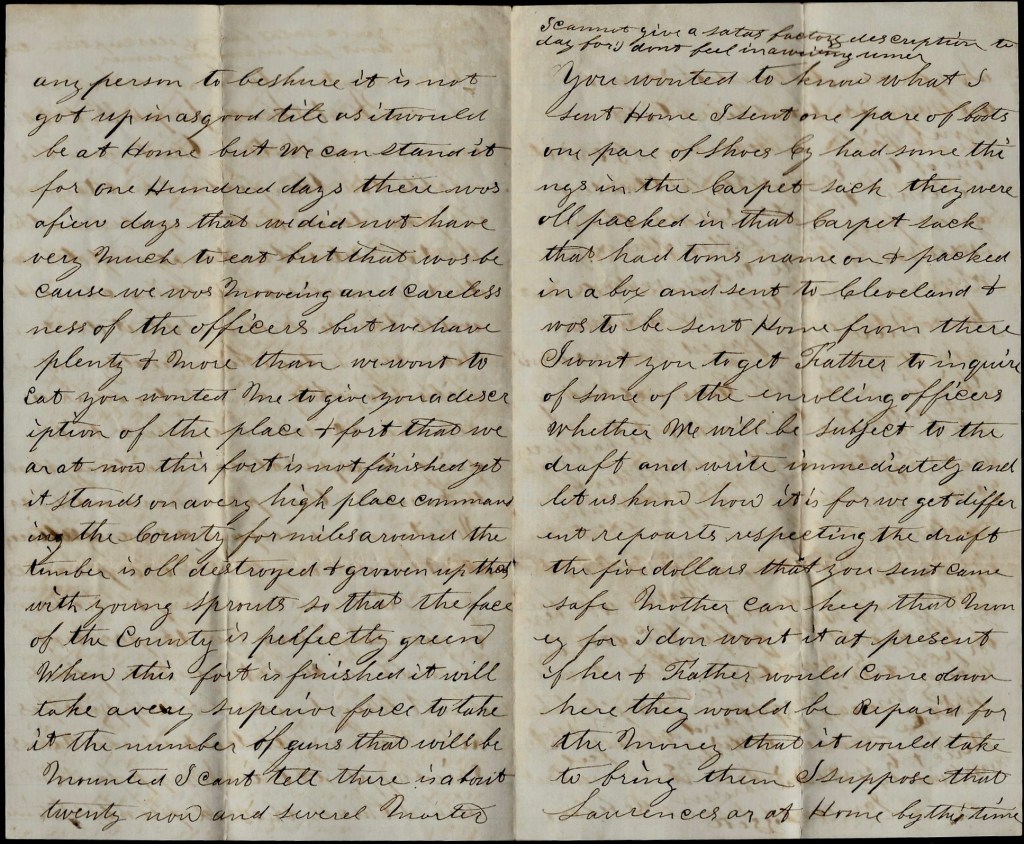
You said you was sorry to hear of our suffering for the want of something to eat. We have plenty of soft bread, pork, beans, potatoes, rice, sugar, coffee, tea and sometimes dried apples and twice a week, fresh beef. I think this is a plenty for any person. To be sure, it is not got up in as good style as it would be at home, but we can stand it for one hundred days. There was a few days that we did not have very much to eat but that was because we was moving and carelessness of the officers but we have plenty & more than we want to eat.

You wanted me to give you a description of the place & fort that we are at now. This fort is not finised yet. It stands on a very high place commanding the country for miles around. The timber is all destroyed & grown up with young sprouts so that the face of the country is perfectly green. When this fort is finished, it will take a very superior force to take it. The number of guns that will be mounted I can’t tell. There is about twenty now and several mortars. I cannot give you a satisfactory description today for I don’t feel in a writing humor.

You wanted to know what I sent home. I sent one pair of boots [and] one pair of shoes. Cy had some things in the carpet sack. They were all packed in that caret sack that had Tom’s name on & packed in a box and sent to Cleveland & was to be sent home from there. I want you to get Father to enquire of some of the enrolling officers whether we will be subject to the draft and write immediately and let us know how it is for we get different reports respecting the draft.

The five dollars that you sent come safe. Mother can keep that money for I don’t want it at present. If her & Father would come down here they would be repaid for the money that it would take to bring them. I suppose that Lawrences are at home by this time so you can all read this and answer it together.

Gert, your Rilla is here. He is, I think, one of the easiest frustrated fellows that ever I saw though I guess pretty fine fellow other ways. Well, I can’t write today worth a cent. When you write, tell me whether Jake Quick has paid Father and how does my [ ] nag look by this time, &c. Tell Father he had better not pitch in too hard. He had better buy some kind of stalk that will make beef in the fall or let them eat the grass. Cows sell here from [ ] & ffty dollars a head.

Panter was here. He has one hundred & fifty cattle on the way for Washington City. You must excuse this letter for I was on picket last night and don’t feel very much like writing. Write soon. Direct to Fort Richardson as before. All well. — James Liggett