Category Archives: Lovell General Hospital, Portsmouth Grove, RI

1863: Thomas Burns to Albert M. Edwards

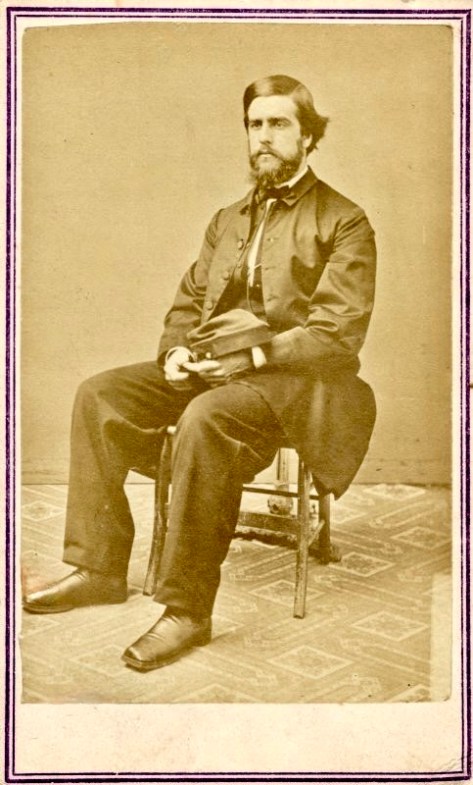
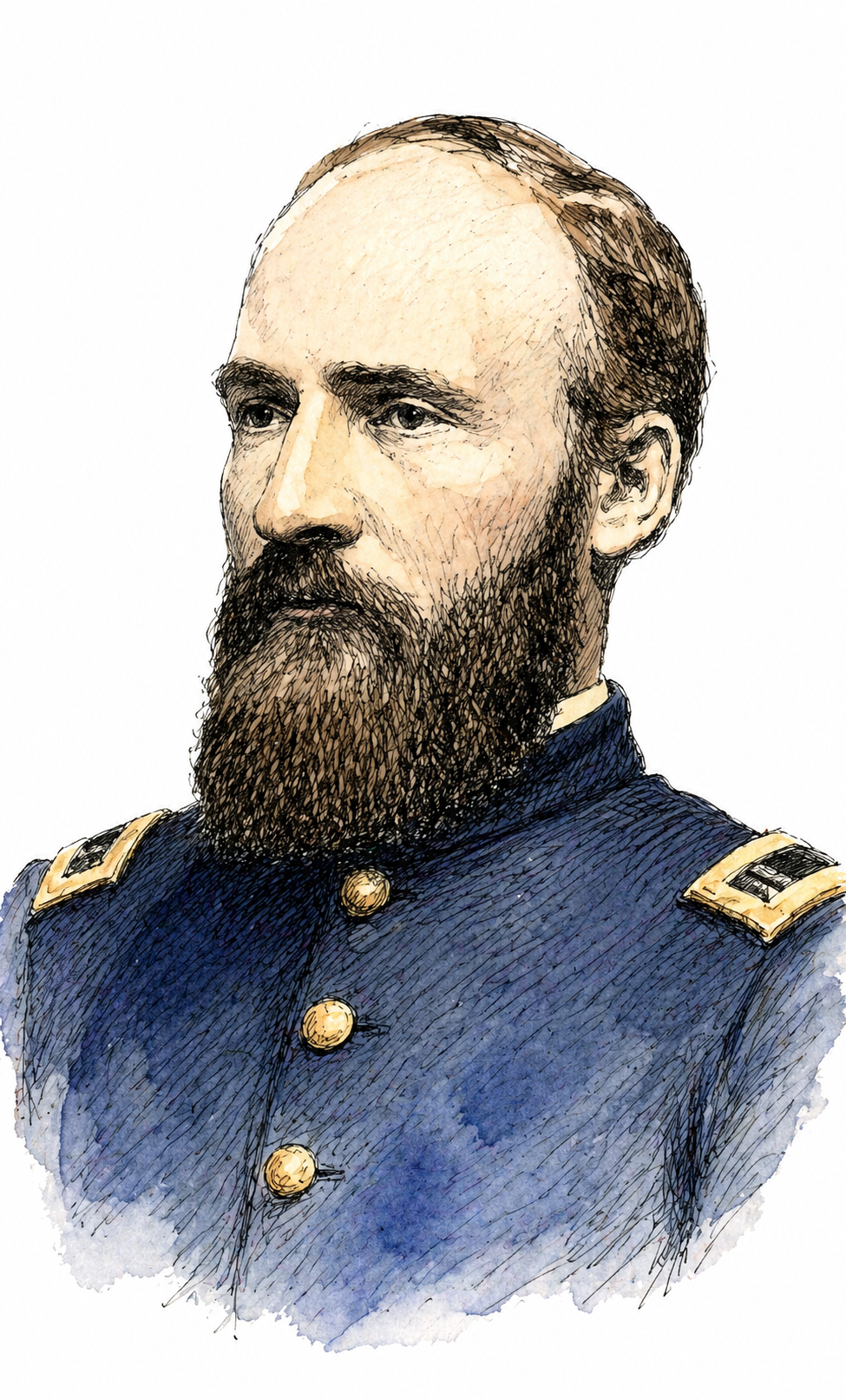
Capt. Albert M. Edwards, Co. F, 24th Michigan Infantry

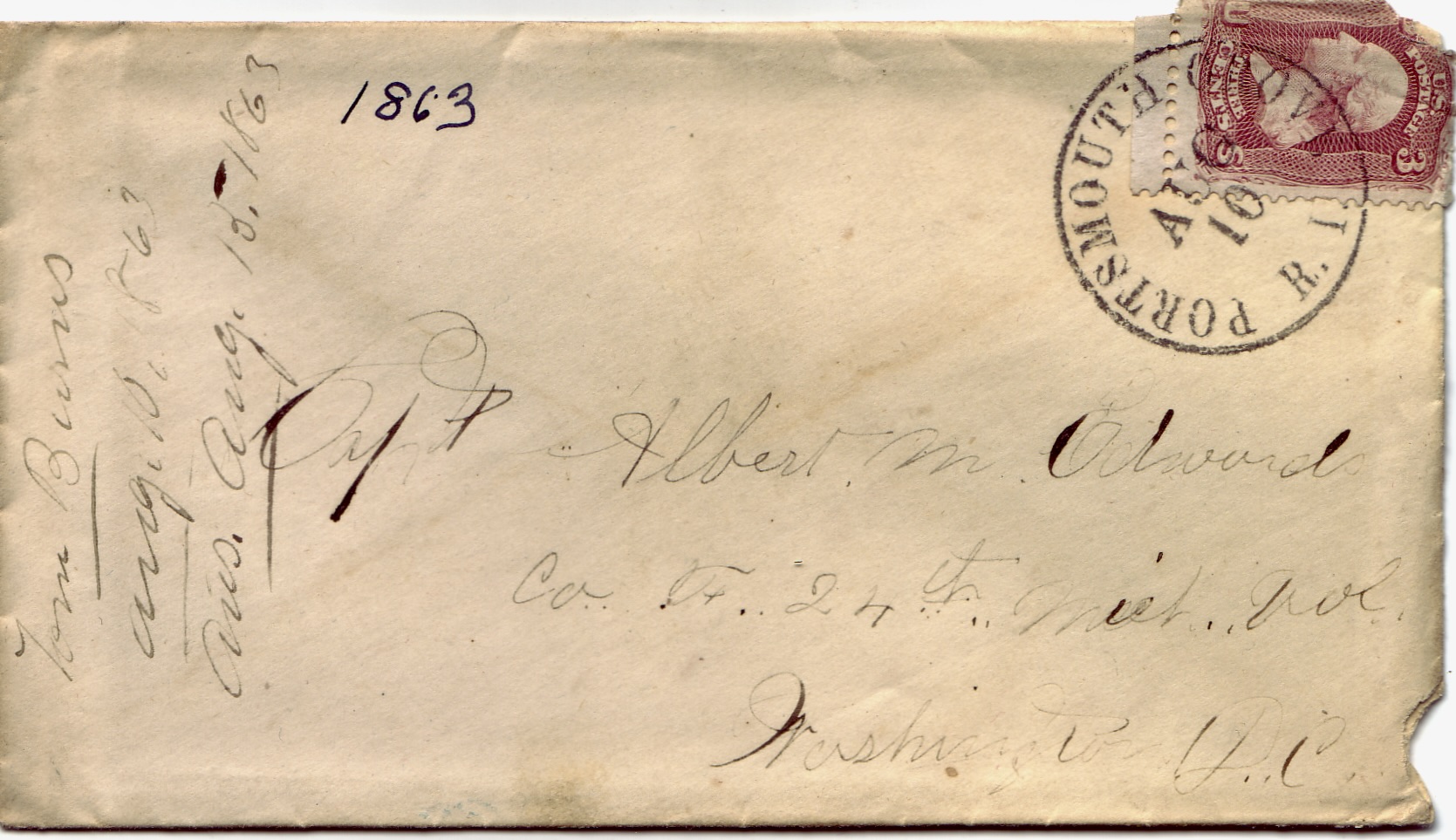
The following letter was written by Thomas Burns of Co. F, 24th Michigan Infantry while at Lovell Hospital in Portsmouth Grove, Rhode Island, in August 1863. Historians will recall that the 24th Michigan Infantry was a part of the vaunted “Black Hat” or Iron Brigade that played a critical role in the 1st day’s fight at Gettysburg, holding the Union line on Seminary Ridge long enough for the Army of the Potomac to arrive and set up a defensive line on Cemetery Ridge. Burns’ letter is directed to his captain, Albert M. Edwards, who led the regiment at Gettysburg after other senior officers were wounded. For his gallantry, he was later promoted to Major, to Lieutenant-Colonel, and finally to Brevet Colonel of the regiment.

Tracing the identity of Thomas Burns was complicated by the discovery that there were two privates by the name of Thomas Burns of Irish ancestry serving in the 24th Michigan—one in Co. E and one in Co. F. The one in Company E appears to have been several years younger and only served in the last year of the war. The one who had this letter penned on his behalf by another soldier in the hospital was probably born in the mid-1830s and may have been the one who was the son of an Irish emigrant named Patrick Burns (b. 1791) who worked as a carpenter in Detroit in 1850. This Thomas Burns died at a Soldier’s Home in California in 1915. He lies buried in the Los Angeles National Cemetery, Plot 26, C-18.

The letter does not reveal whether Thomas’s thumb wound was received in the Battle of Gettysburg or not. He is not listed among any Gettysburg casualty reports that I could find on-line. My friend Dale Niesen subsequently informed me that the Regimental history reports Thomas Burns of Co. F was wounded at Fitzhugh Crossing on 29 April 1863 at the same time that another man from the company was killed during an exchange of fire across the river.

[Note: This letter is from the Dave Ramsey Collection and was offered for transcription and publication on Spared & Shared by express consent.]

T R A N S C R I P T I O N
Portsmouth Grove, Rhode Island
August 17th 1863

Captain Edwards,

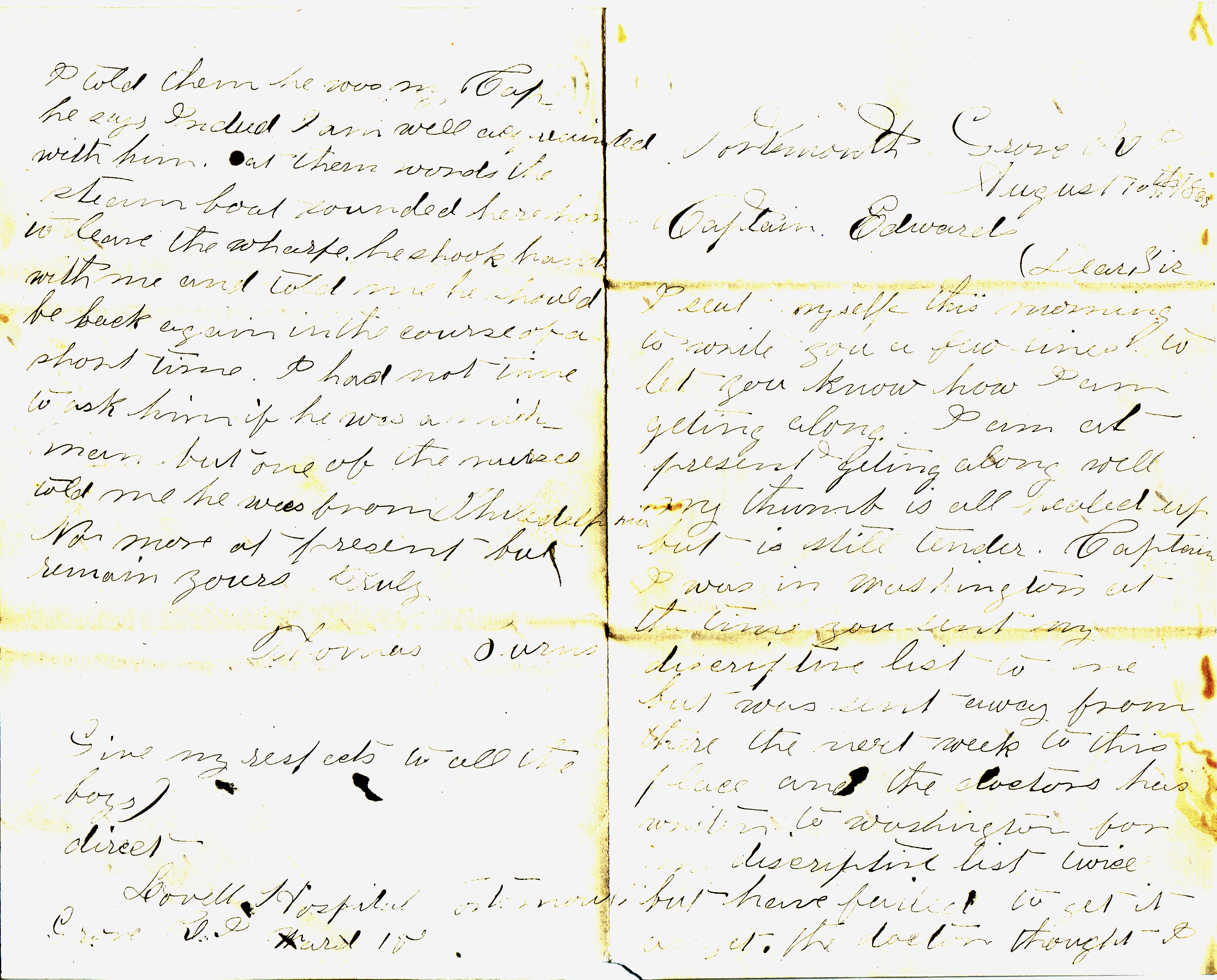
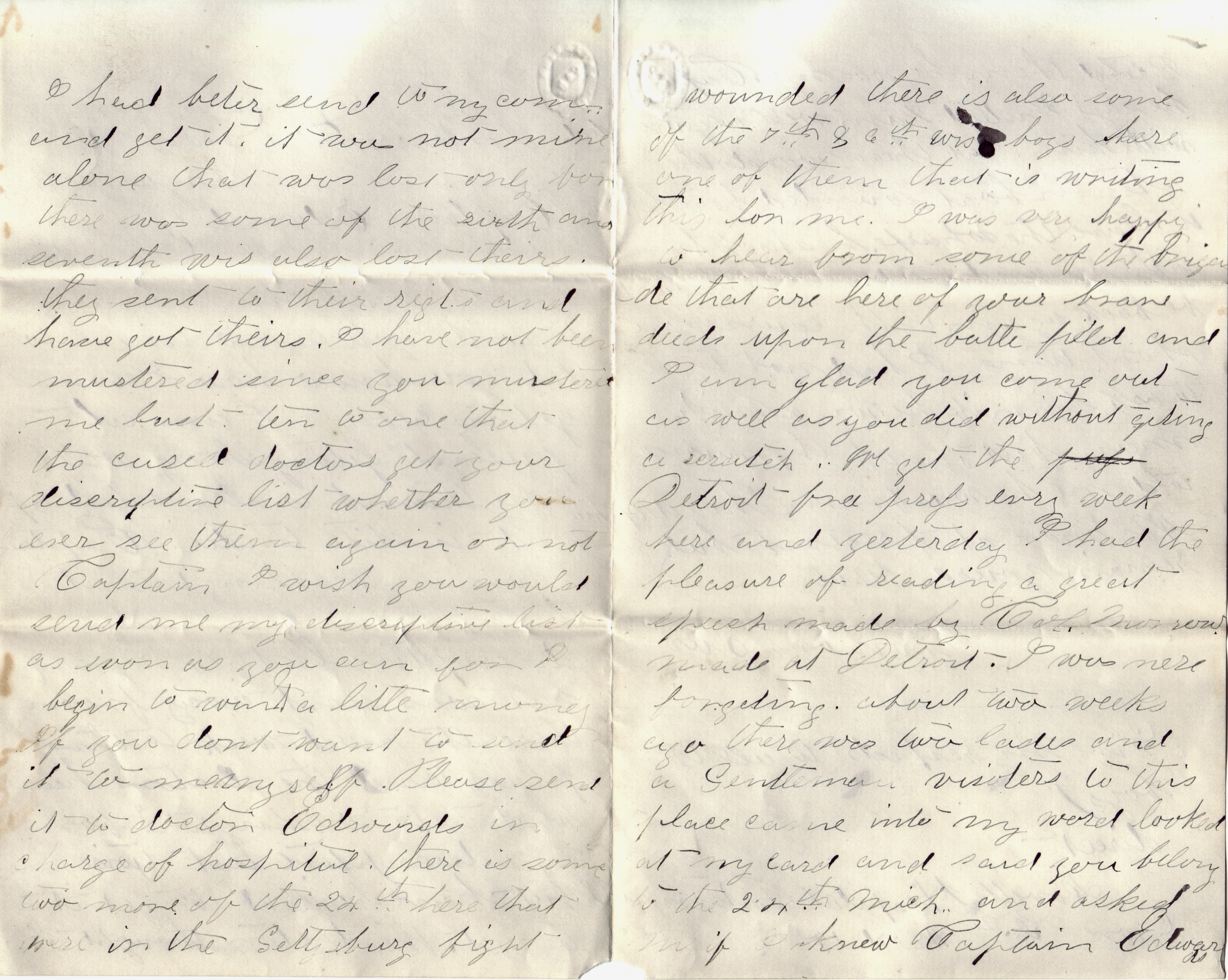
Dear sir—I seat myself this morning to write you a few lines to let you know how I am getting along. I am at present getting along well. My thumb is all healed up but is still tender. Captain, I was in Washington at the time you sent my Descriptive List to me but was sent away from there the next week to this place and the doctors has written to Washington for my Descriptive List twice but have failed to get it as yet. The doctor thought I had better send to my company any get it. It was not mine alone that was lost only for there was some of the 20th and 7th Wisconsin also lost. Theirs they sent to their regiments and have got theirs.

I have not been mustered since you mustered me last. Ten to one that the cussed doctors get your Descriptive List whether you ever see them again or not. Captain, I wish you would send me my Descriptive List as soon as you can for I begin to want a little money. If you don’t want to send it to myself, please send it to Doctor [Lewis A.] Edwards in charge of the hospital. There is some two more of the 24th [Michigan] here that were in the Gettysburg fight wounded. There is also some of the 7th & 6th Wisconsin boys here—one of them that is writing this for me.

I was very happy to hear of your brave deeds upon the battlefield and I am glad you come out as well as you did without getting a scratch. We get the Detroit Free Press every week here and yesterday I had the pleasure of reading a great speech made by Col. Morrow made at Detroit.

I was near forgetting [to tell you that] about two weeks ago, there was two ladies and a gentleman visitors [came] to this place, came into my ward, looked at my card, and said you belong to the 24th Michigan, and asked if I knew Captain Edwards. I told them he was my captain. He says, “Indeed! I am well acquainted with him.” At them words the steamboat sounded here for to leave the wharf. He shook hands with me and told me he should be back again in the course of a short time. I had not time to ask him if he was a Michigan man, but one of the nurses told me he was from Philadelphia.

No more at present but remain yours truly, — Thomas Burns

Give my respects to all the boys. Direct to Lovell Hospital, Portsmouth Grove, Rhode Island, Ward 15
1863: Unidentified soldier to his Mother

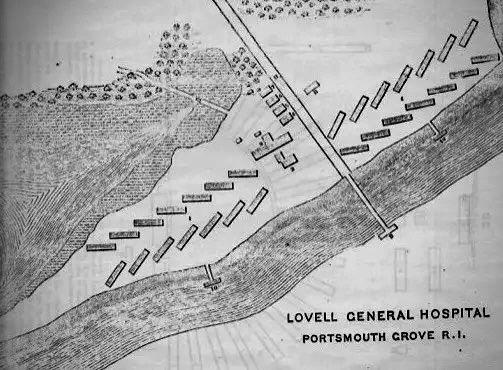
The identity of this soldier has not yet been learned. He was probably from a Massachusetts regiment and it may be that he was wounded in the leg at the Battle of Fredericksburg. The letter provides us with a great description of the Portsmouth Grove Hospital (later Lovell Hospital) in Rhode Island as it appeared in March 1863.

A watercolor of the Portsmouth Grove Hospital with the barracks on either side of the central building (partially hidden by the steamer).

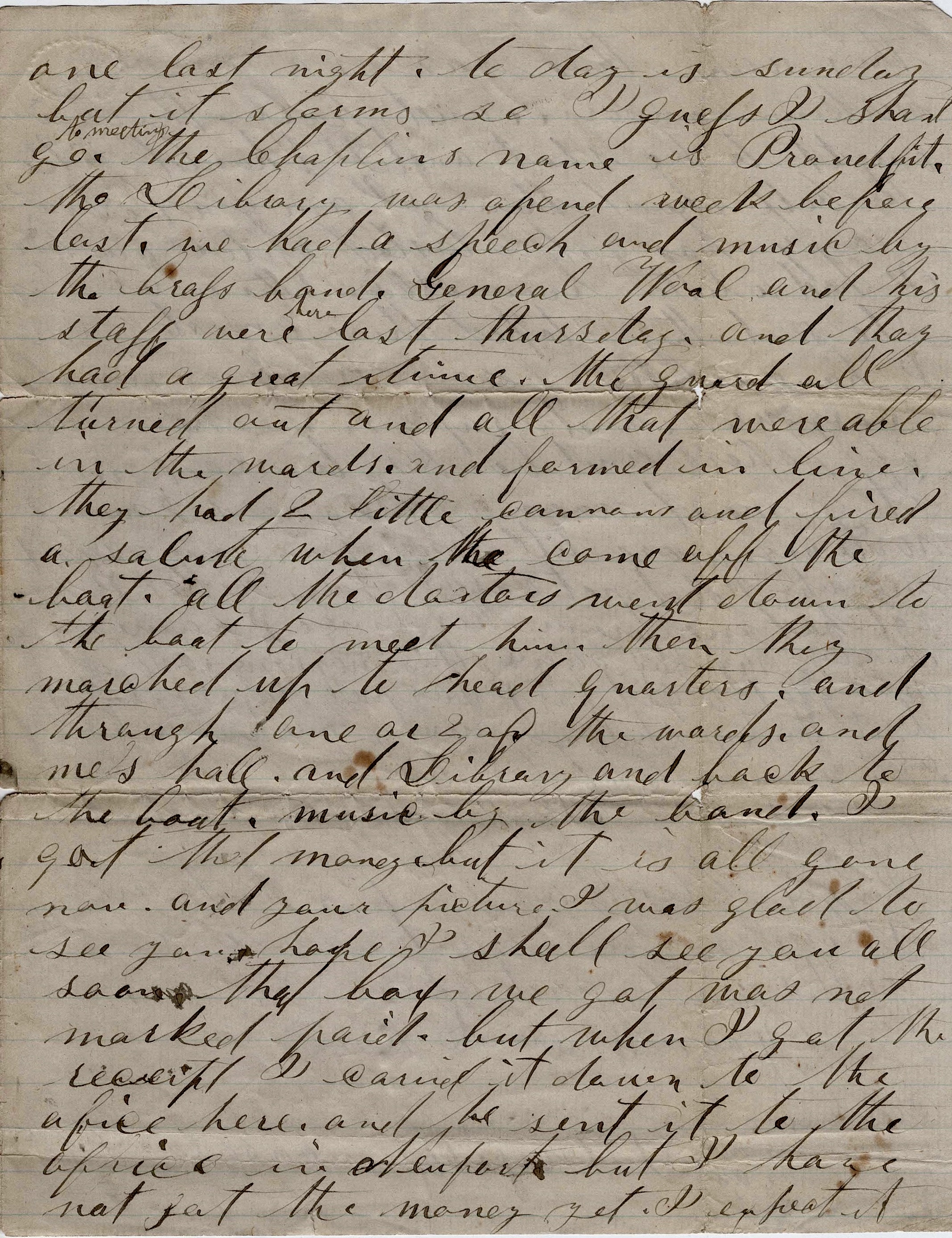
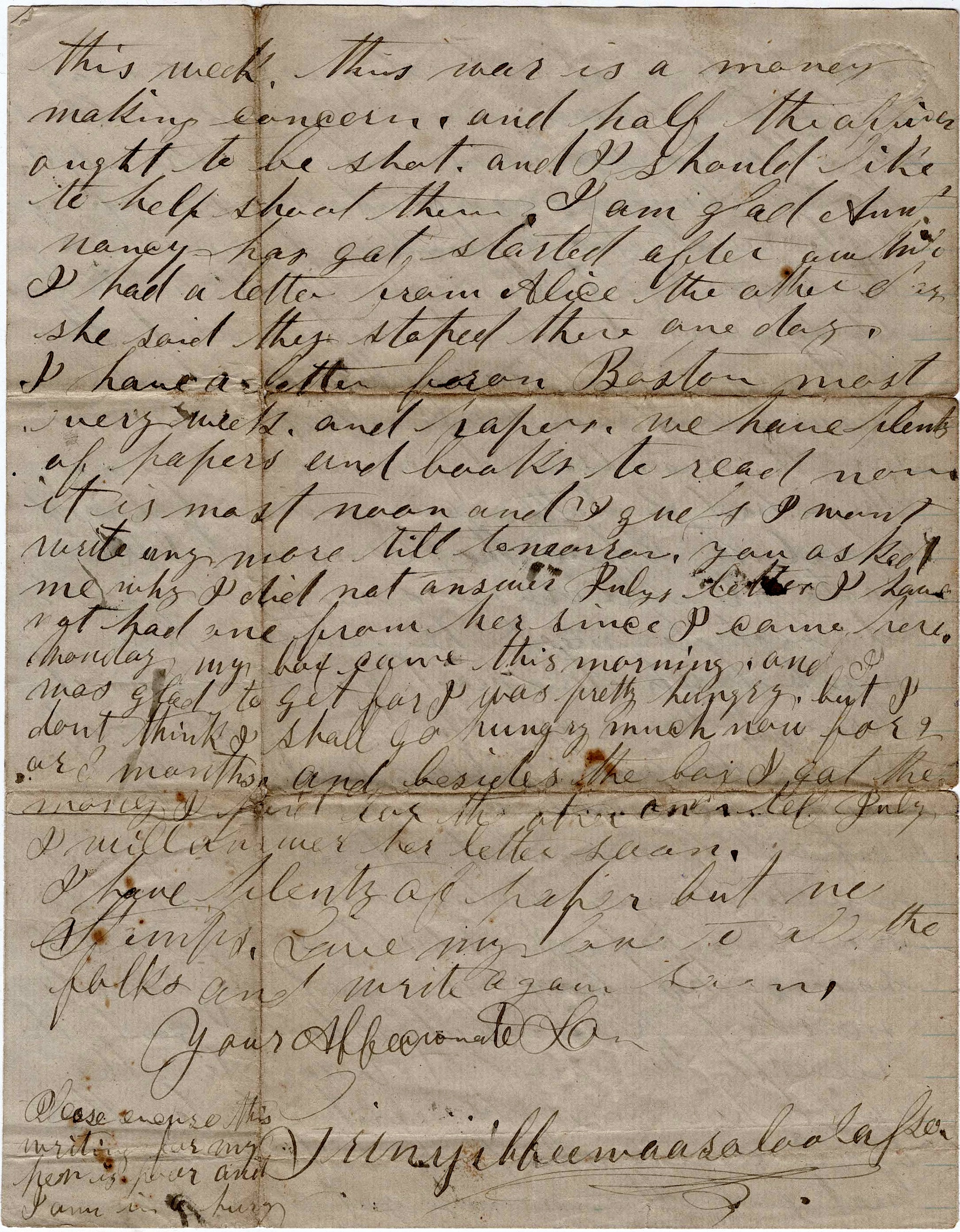
T R A N S C R I P T I O N

Portsmouth Grove Hospital
March 8, 1863

Dear Mother,

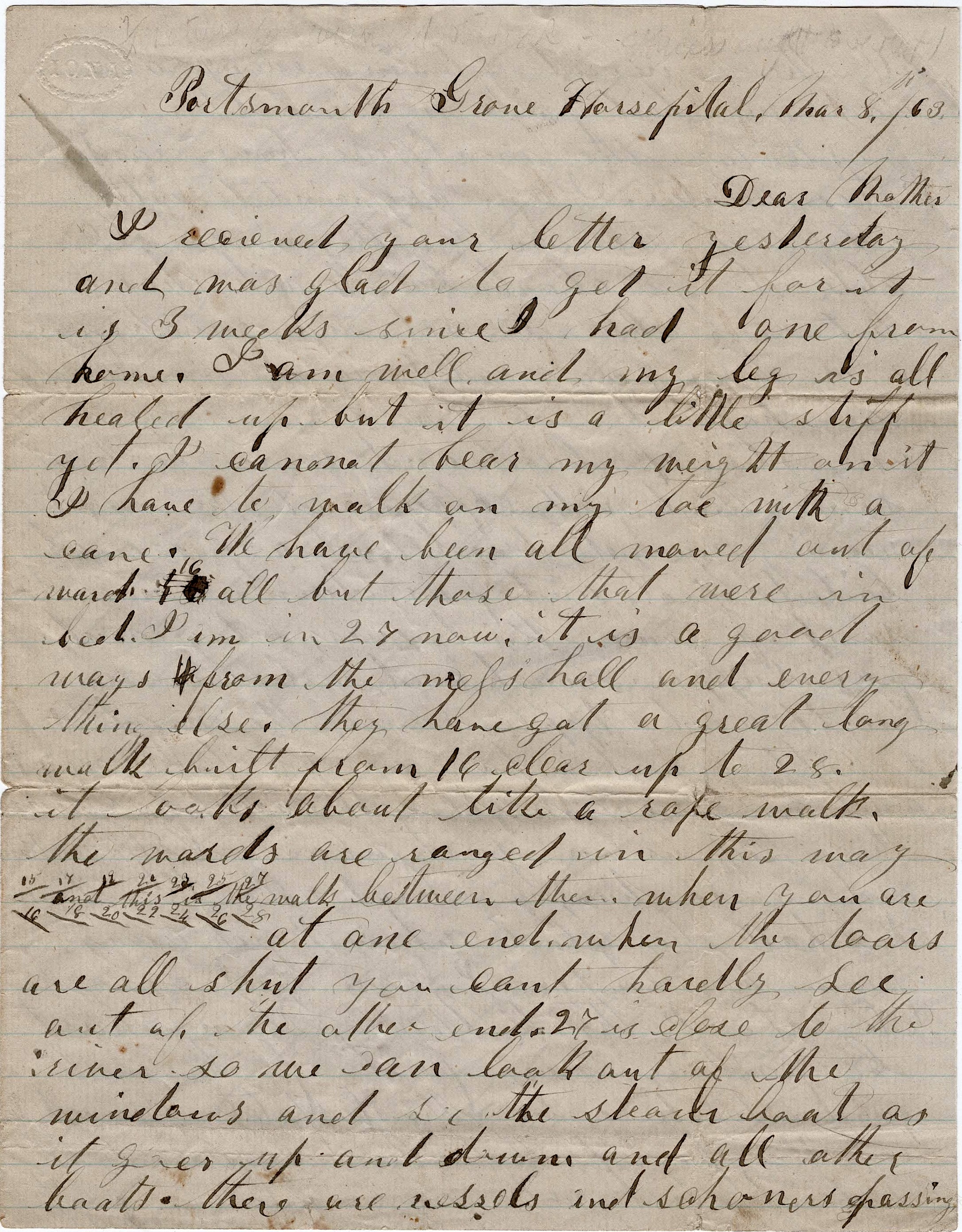
I received your letter yesterday and was glad to get it for it is three weeks since I had one from home. I am well and my leg is all healed up but is a little still yet. I cannot bear my weight on it. I have to walk on my toe with a cane. We have been all moved out of Ward 16—all but those that were in bed. I’m in [Ward] 27 now. It is a good ways from the mess hall and everything else.

They have got a great long walk built from 16 clear up to 28. It looks about like a rope walk. The wards are [ar]ranged in this way [sketch] and this is the walk between them. When you are at one end, when the doors are all shut, you can’t hardly see out of the other end.

[Ward] 27 is close to the river so we can look out of the windows and see the steamboat as it goes up and down and all other boats. There are vessels and schooners passing all the time.

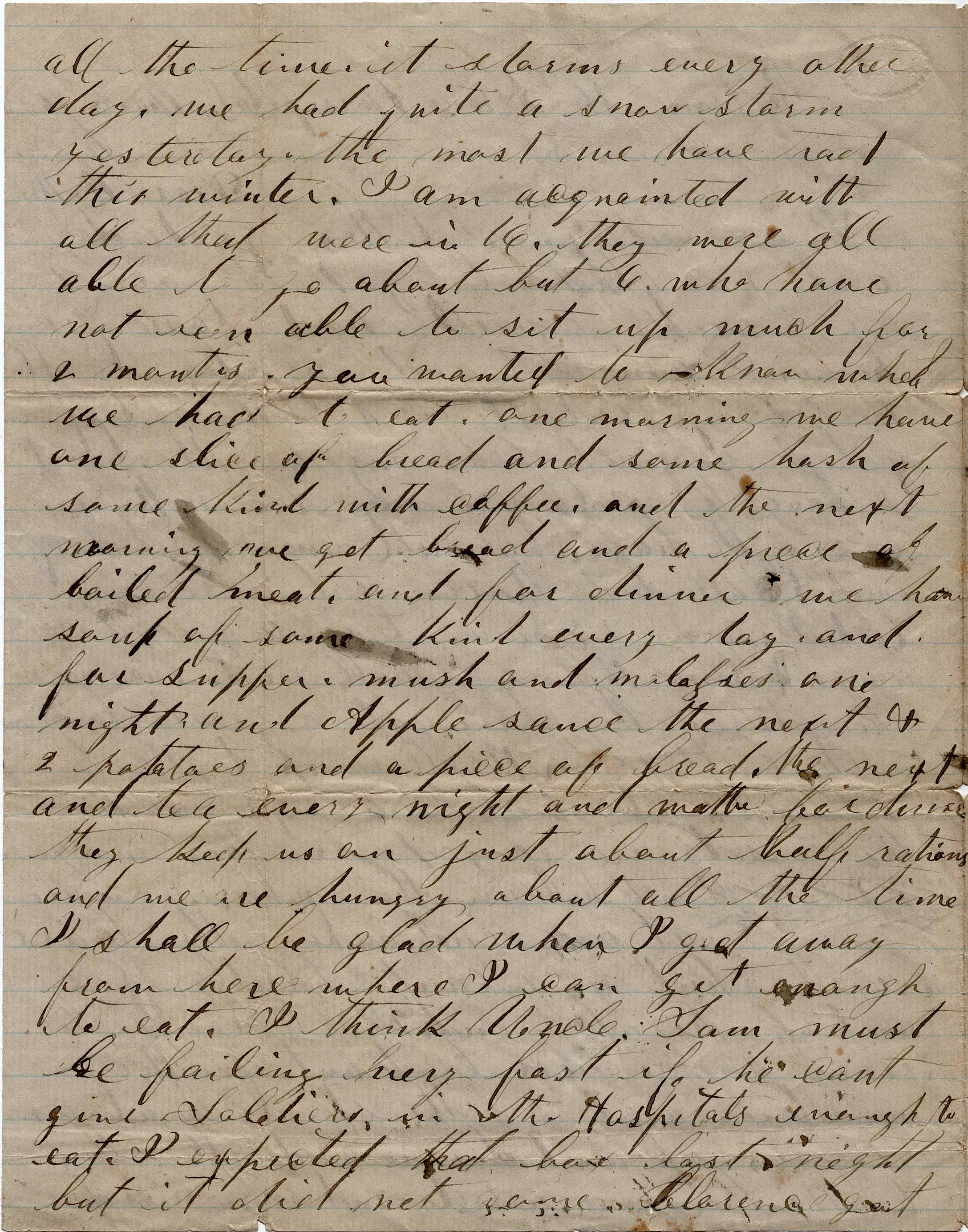
It storms every other day. We had quite a snow storm yesterday—the most we have had this winter. I am acquainted with all that were in [Ward] 16. They were all able to go about but six who have not been able to sit up much for two months.

You wanted to know what we had to eat. One morning we have one slice of bread and some hash of some kind with coffee, and the next morning we get bread and a piece of boiled meat, and for dinner we have soup of some kind every day. And for supper, mush and molasses one night and apple sauce the next, & two potatoes and a piece of bread the next and tea every night. And mother, for dinner they keep us on just about half rations and we are hungry about all the time. I shall be glad when I get away from here where I can get enough to eat. I thinkUncle Sam must be failing very fast if he can’t give soldiers in the hospitals enough to eat.

Alexander Proudfit, Chaplain at Portsmouth Grove General Hospital

I expected that box last night but it did not come. Clarence got one last night. Today is Sunday but it storms so, I guess I shan’t go to meeting. The Chaplain’s name is Proudfit. The Library was opened week before last. We had a speech and music by the brass band. General Wool and his staff were here last Thursday and they had a great time. The guard all turned out and all that were able in the wards and formed in line. They had two little cannons and fired a salute when they came off the boat. All the doctors went down to the boat to meet him. They then marched up to headquarters and through one or two of the wards and mess hall and library and back to the boat. Music by the band.

I got that money but it is all gone now. And your picture. I was glad to see you and hope I shall see you all soon. That box we got was not marked paid but when I got the receipt, I carried it down to the office here and he sent it to the office in Newport but I have not got the money yet. I expect it this week.

This war is a money making concern and half the officers ought to be shot and I should like to help shoot them. I am glad Aunt Nancy has got started after a while. I had a letter from Alice the other day. She said they stopped there one day. I have a letter from Boston most every week and papers. We have plenty of papers and books to read now. It is most noon and I guess I won’t write any more till tomorrow.

You asked me why I did not answer Julie’s letter. I have not had one from her since I came here.

Monday, my box came this morning and I was glad to get it for I was pretty hungry. But I don’t think I shall go hungry much now for two or three months. And besides the box, I got the money. I paid for the other one. Tell Julie I will answer her letter soon. I have plenty of paper but no stamps. Give my love to all the folks and write again soon. Your affectionate son, — Grinyilleewaasaloolasso

Please excuse this writing for my pen is poor and I am in a hurry.

1864: Theodore Hervey Bartlett to Rebecca (Howe) Bartlett

The following letter was written by Theodore Hervey Bartlett (1844-Aft1920), the son of William Bartlett (b. 1799) and Rebecca Howe (1803-1897) of Bolton, Massachusetts. Theodore enlisted in Co. I, 36th Massachusetts Infantry on 23 July 1862 at the same time and in the same company as his older brother, Henry Harrison Bartlett (1841-1921). He was discharged from the service on 8 June 1865 at the expiration of his term of enlistment.

Theodore wrote the letter from the Lovell General Hospital at Portsmouth Grove, Rhode Island, where he appears to have been convalescing from an illness of some kind. He does not indicate how he came to be sent there.

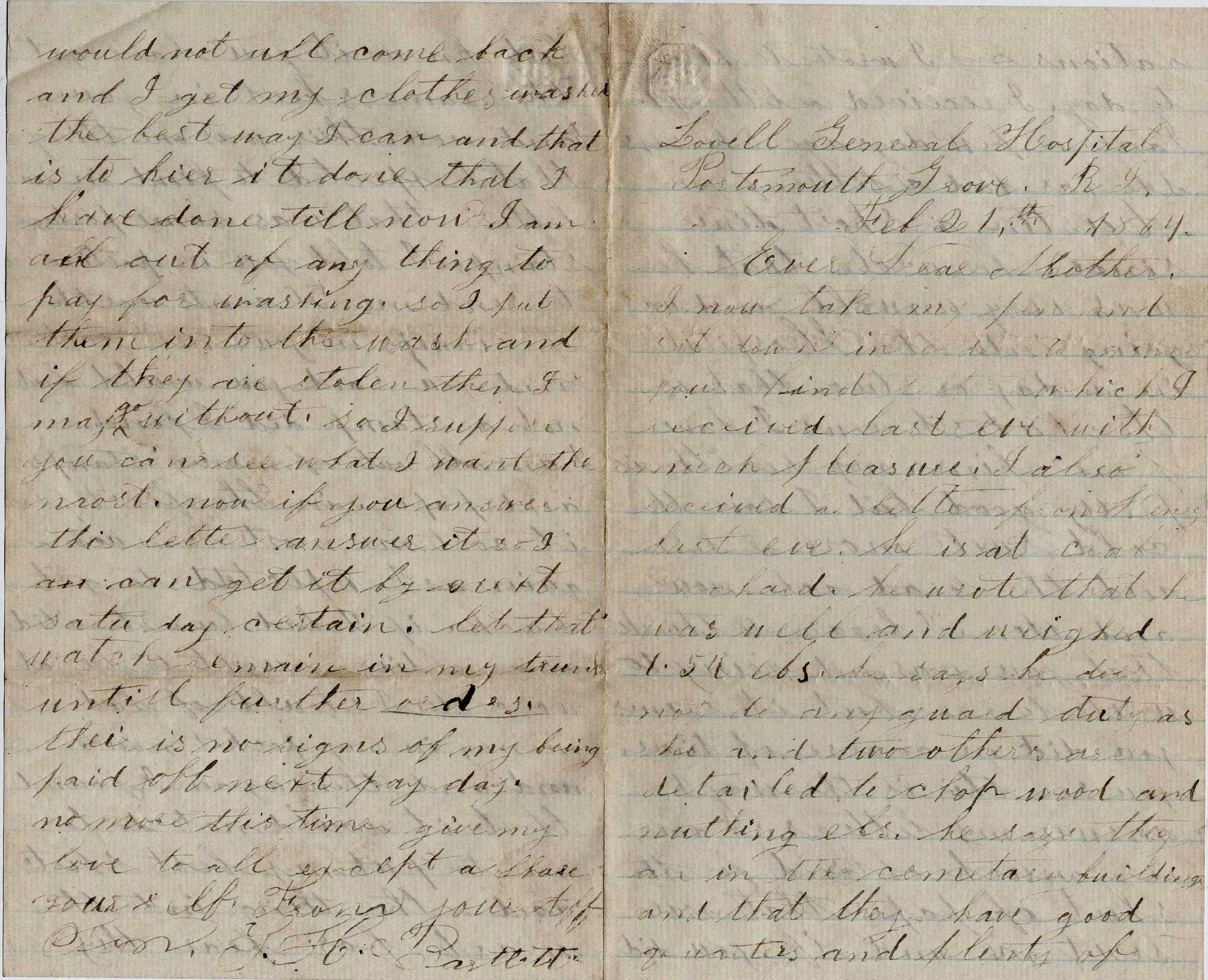
T R A N S C R I P T I O N

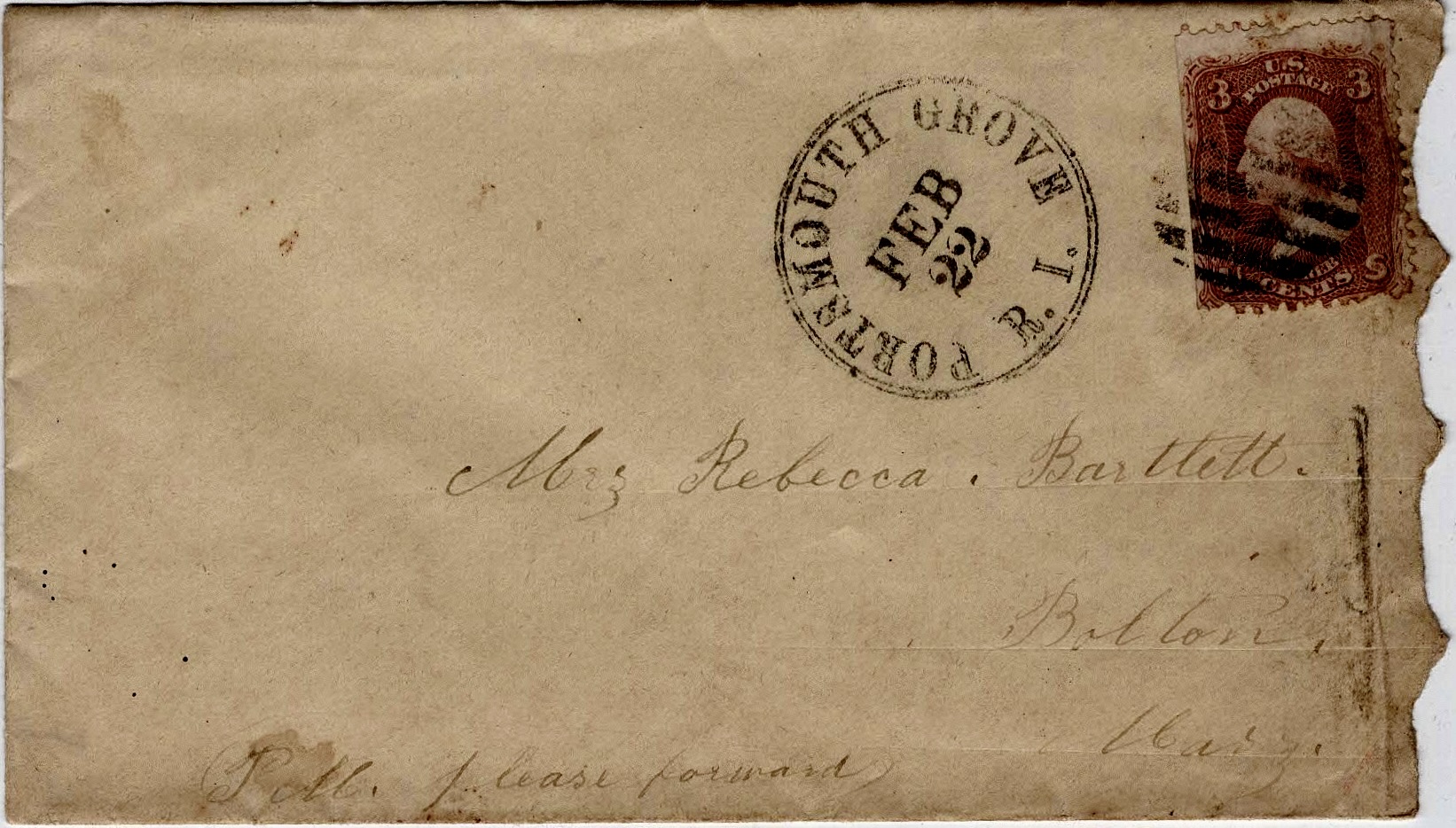
Addressed to Mrs. Rebecca Bartlett, Bolton, Massachusetts

Lovell General Hospital
Portsmouth Grove, Rhode Island
February 21, 1864

Ever dear mother,

I now take my pen and sit down in order to answer your kind letter which I received last eve with much pleasure. I also received a letter from [brother] Henry last eve. He is at Crab Orchard [Kentucky]. He wrote that he was well and weighed 154 lbs. He says he does not do any guard duty as he and two others are detailed to chop wood and nothing else. He says they are in the cemetery buildings and that they have good quarters and plenty of rations. I received a letter from [sister] Jane a few days ago. She says she has had a letter from [brother] Austin a short time since. He wrote that he was very unwell and was going into the hospital in a day or two. That is the latest news I have from him.

My health is pretty good but I have the cold sweats more or less and the headache now and then. I began to think that you was not going to write to me but it seems you did in course of time. You see this is the way I answer my letters. I am very much obliged for the sheet of paper that you sent me and if you did but know it, you have got the same sheet in your hand now.

There was one thing that I expected to find in your letter. That was some postage stamps. I told you in oarticular to send me 50 cents worth of stamps in your next letter and you said you would. But not a stamp did I find. I am all out of money, stamps, and paper. In the first place, it costs me most as much again as I expected to get back. If I had been treated as a soldier, I should of had money in my pocket now. And then again, I found that it would not do for me to put my best shirts and other things into the wash for fear they would not all come back and I get my clothes washed the best way I can and that is to hire it done. That I have done until now. I am out of anything to pay for washing so I put them into the wash and if they are stolen, then I may go without.

So I suppose you can see what I want the most. Now if you answer this letter, answer it so I can get it by next Saturday certain. Let that watch remain in my trunk until further orders.

There is no signs of my being paid off next pay day. No more this time. Give my love to all. Accept a share yourself. From your affectionate son, — T. H. Bartlett

1865: Lemuel C. Sayles to his Sister

This letter was written by Lemuel C. Sayles (1845-1898), the son of Stephen Sayles (1805-1867) and Susannah Douglass (1805-Aft1865) of Glocester, Providence county, Rhode Island. Lemuel enlisted in August 1862 in Co. C, 7th Rhode Island Infantry and then was transferred in September 1863 to the 19th Co., 2nd Battalion Veteran Reserve Corps. He mustered out of the VRC in September 1865. He was married in 1866 to Miss Mary J. Durfee but his life came to a tragic ending in 1898 when he was 54, a suicide death by hanging. [Source: Deaths Registered in the town of Burrillville, R. I. for the year ending 1898.]

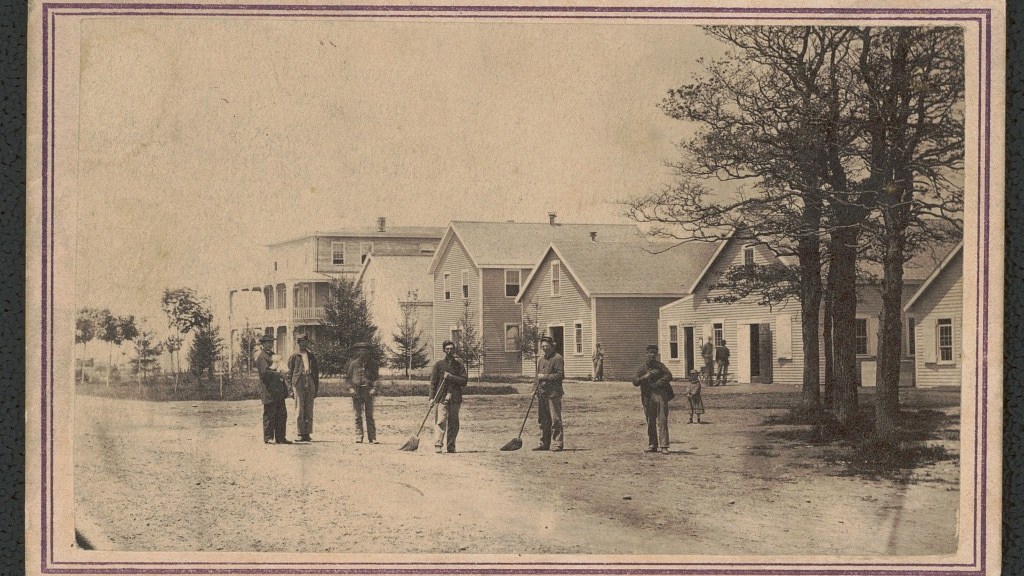
Lemuel wrote this letter from the Lovell Hospital, a repurposed summer estate with 14 pavilions serving as temporary barracks. It was located in Portsmouth Grove, Rhode Island, and received its first patients in July 1862. In its years of operation, the hospital treated 10,593 patients with a mortality figure of 308. The dead were buried in a cemetery on the site. [Source: Rhode Island’s Civil War Hospitals, Frank Grzyb (2012)]

The hospital was disestablished on Aug. 28, 1865, according to the Rhode Island Historical Cemetery Commission website.

Portsmouth Grove Hospital (renamed Lovell) in Portmouth, Rhode Island. There were some small buildings part of the hospital behind the main building. See Lovell General Hospital.

See also: 1863-64: Emor Young to Martha P. (Gleason) Young.

T R A N S C R I P T I O N

Portsmouth Grove
March 3d 1865

My dear Sister,

Your kind letter was received today and I was very glad to hear from you and to learn you were well as this leaves me at present. It is now evening and it has been a very rainy day and is cloudy yet though it does not rain much just now. I thought as I have got through with me work for today, I would answer your letter tonight as I have to get letters from you so will try and be prompt in answering them. I got a letter from Emor Young today and he said that [Harlan] Alonzo Page & Col. Taft had got back with the regiment.

When I was up home, Gilbert Steer was enquiring of me about Henry [Steer]. I wrote to the regiment and found out by Mr. Lawton that he was in the 2nd Battalion Veteran Reserve Corps at Washington. I am sorry to hear that Grandmother has been sick but am glad she is better. Hope her health will continue to mend.

Emor Young, Co. C, 7th Rhode Island Infantry (Rob Grandchamp Collection)

You need not worry about my reenlisting for I have only six months from tomorrow and then I mean to be a free man again. Emor wrote that they had just received news of the fall of Wilmington and they were firing a salute of one hundred shotted guns along our lines at the Johnnies to the pleasure of our men but not so delightful to the rebs, I guess. He says that the rebels were deserting very fast, average about 20, to our Brigade per day. Maybe Col. Taft will get his discharge the same way that Frank Potter did—with a bullet. 1

But I don’t think of much more to write so bidding you a kind good night & hoping to hear from you soon, I will sign my name as ever your affectionate brother. Accept much love, — L. C. Sayles

P. S. After you write to me, go to the post office every other night so as to get the letter I write.

1 Francis (“Frank”) W. Potter of Cranston served in Co. C, 7th Rhode Island Infantry until he was mortally wounded in action at Spottsylvania Court House on 13 May 1864. He died a week later.