The following letter was written by Nelson W. Shephard (1844-1864), the son of Orrin W. Whephard (1818-1888) and Sarah Ann Demming (1820-1897) of Croton, Newaygo county, Michigan. Nelson was born in 1844 near Grass Lake, and had moved to Newaygo County with his parents, Orrin and Sarah. Before heading off to war, Nelson served some time in Jackson State Prison for burglary before heading off to war in August 1862 when he enlisted in Co. C. 26th Michigan Infantry. Although a poor speller, Shephard provided many details about his experiences in the 26th Michigan in letters home to his parents.
Nelson’s wartime experiences would likely have remained unknown were it not for Nancy Crambit, who discovered his letters among her late husband’s possessions, acquired years earlier at a yard sale. Unwilling to retain them, she surmised that someone in Newaygo County might find them meaningful, prompting her to send them to the local post office. For further details, refer to Smithsonian’s website and their magazine article, Mystery Solved: A Michigan Woman Says She Mailed Civil War Letters to the Post Office.
Nelson was taken prisoner at Ream’s Station, Virginia, on 25 August 1864 and was supposedly listed in Belle Isle Prison at Richmond, Virginia on October 4, 1864. He died in the Confederate Prison at Salisbury, North Carolina on December 18, 1864, where he had been joined by other members of the regiment.
Nelson’s lengthy letter presented here captures his regiment’s movements from Fort Richmond on Staten Island to Brandy Station in November 1863 until early January 1864—particularly the Mine Run Campaign. More of his letters can be found here: 1862-64: Nelson W. Shephard to his Parents on Spared & Shared 22.
T R A N S C R I P T I O N
Addressed to Mr. Orin W. Shephard, Croton, Newaygo County, Michigan
Camp near Brandy Station January 1864
Dear Parents,
I thought as I had nothing today I would write you a good long letter and let you know just where we have been since we left the Island, I have kept everything in my diary waiting for a stop and a good chance to write. Now I have got it. You must not think I am getting polite if I do use a great many highflown [highfalutin] words. I shall do my best to give you as good an account of our marching as possible. So I will begin with my diary.
Fort Richmond, Staten Island. Marching orders and we are all packing up bidding our friends goodbye. I am sitting under the old Maple shade trying to make Elenor believe that I will come back again when this cruel war is over but she will not believe it (not I neither). It is about 3 o’clock and away we start for the wharf. After we got all snugged away nicely on board the boat, someone on the dock called for Shep. I went to see who it was and what do you think, there stood Elenor with her eyes full of—–15 inch shells. Who would ever think I would create such love in the heart of a young damsel. She had a basket for me with provisions enough to set up a young bake shop, the bottles of wine, two of brandy—the best kind, and a box of the best cigars which you may bet did not come amiss going down the Bay. She is a good bargain for someone. She is rich. Her Father is a retired merchant from New York City. But we will let that drop and get out of Long Island Sound into Raritan Bay.
As soon as it became dark, it commenced raining and it rained all night. The morning came out clear and pleasant. Our boat had just landed when we were off up the pier for the railroad. We got aboard and started for the Confederacy. We arrived at a place called Red Bank. Here we changed cars and now we off with our caps and [gave] three rousing cheers for the ladies of Red Bank. Now we are off for the Quaker City (Philadelphia) for the third time. That is the place for a soldier to get a warm meal and come in out of the wet. The ladies of the Cooper Shop were made aware of our coming before we left Red Bank and had spent the night in happy preparation to meet us. And when we entered Otsego Street on the morning of the 16th, just three months from the date of our last visit there, hot coffee, sandwiches, and other favors were already awaiting us. In this same cozy, comfortable, inviting retreat the noble women of Philadelphia have fed 500,000 Union soldiers. None ever pass the City without resting here long enough to test the quality of its hospitaliy. Brace and heroic women are here all the long silent nights of the year and while the great City is wrapped in slumber, are nursing cheer for the hearts of us soldiers.
A heavy rainstorm set in as is the uniform custom when we are on the move. We made a [ ] to Baltimore, arriving here at sunset. We were marched through a drenching rain to the Washington depot where we stacked arms and were invited to a warm supper at the Soldier’s Retreat. Here as in Philadelphia, the wandering soldier is fed by the bounty of good, loyal citizens. Goodbye Baltimore for the train is waiting that is to convey us to Washington and we are all excitement with the prospects of a battle at Bull Run and we may have something to do.
Midnight found us at the Capitol and after the usual eight days rations were supplied, we ran down to Alexandria and remained in the cars until daylight when finding that it would be impossible to leave before noon, we scattered about among our old friends and the familiar places of other days to spend the chill hours of the morning. I went to one of my old friends. They got me up a first rate dinner of roast chicken, ham and eggs and other table stuff so that it seemed quite home like. There has been little change in this place since we left it in April last for Suffolk. It is only a step from the broad Potomac and its cty of pleasure and plenty to the bald, shapeless fields of barrenness and desolation. An hour after dinner we were on our way.
Here we are at Fairfax Station. You have probably heard a great deal about this place. I will describe it to you. There is a farm house and two barns, a warehouse and a Nigger (negro) Church. The house—if it might be so called—is riddled like a sieve. Bullets of all sizes from a Minié ball up to a 32-pounder cannon just so with the rest. We get off the cars and file to the left. A few minutes march brings us to the camp of the 3rd and 5th Michigan Regiments and we are encamped with the Veterans of the Potomac Army. Familiar faces are here and familiar voices greet us from the old Battalions of the Peninsula and Rappahannock. It is a capitol place and we will stop here tonight.
The sun rises clear this morning and with it comes marching orders to report to the Second Corps at Centreville. We have eight days rations on our backs. It is our first marching since we left the Peninsula in July. It tries the endurance of the boys but we are bound not to make a two days march of it to Centreville and at sundown we are in the 1st Brigade, 1st Division, 2nd Army Corps. This brigade is commanded by Colonel Miles—a fighting corps and a fighting brigade, so we never mind. The march is a hard one over the hills this warm, sunny day, but we shall find brave, warm hearts to welcome us, I tell you, there was nothing too good for us. The soldiers that was here even went so far as to take our knapsacks off for us and cook our supper just because we were Michigan boys. They said they were not afraid to fight anything with a Michigan regiment at their side. I tell you, my dear parents, it looks hard to see some of the regiments here that come here with from 900 to 1,000 fighting men now dwindled down to from 30 to 60 and 100 men. Still they are just as eager for fight as they were the first day they enlisted.
Now about Centreville, you have undoubtedly heard of that. There was once a Centreville, the home of wealth and pride. But now there is 5 old dilapidated houses, a couple of old barns all shot to pieces, some poor widows with a lot of fatherless little brats that bawls out, “Go to Hell!” or “Damned Yankees!” every time we go by. There they are tonight to do it.
It is Monday morning and raining like the devil. It is not the pleasantest stimulus to one’s patriotism to pack up and march through the mud and slime of this region in rainy weather, but marching orders, when they may be met cheerfully, are obeyed mechanically and at 9 o’clock a.m. we are over the pontoons that span Bull Run and are marching amid the wrack and ruin of the first and second battles of the same name. This favorite battle ground of the Rebels looks lonely enough in a rainy morning like this. There is so much in all these rude graves—whitened and exposed skeletons of men and animals, broken gun carriages, fragments of shells and muskets scattered around through the tall weeds that have spring up everywhere as if to make the desolation more complete that we are quite ready for another battle to see if we could not make up for what we have lost in these two heavy battles. But we shall not have a chance for General Lee left here this very morning. His campfires are still burning bright. He made up his mind that it would not pay him to fight father Meade.
There is prospects of a fight before night. All the sick are ordered to the rear. We keep in steadily without rest until noon when we halt at Manassas Junction and get us some dinner. Then we start for Bristoe Station—the scene of the late brilliant fight—and encamp for the afternoon and night. Lee still keeps falling back as we advance and we spend a quiet night here in preparation for an advance in the morning.
The sun roses bright and clear. Hardly a cloud to be seen as we strike our tents on Tuesday and amuse ourselves in the chilly morning by fording Broad Run. Into the water waist deep with a furious current the boys plunge with the good humor only known to army life and tramp with wet feet and wet pants and warm hearts for three miles. Then another plunge through the same stream, only deeper than before. Then three miles more marching and to the right and left until to our astonishment, we are suddenly standing face to face with the inevitable Broad Run which here and everywhere else is much broader than we care about finding it.
You can talk about your high life, and having a good table to sit down to, but first in rank of the delicacies and luxuries of a soldier’s life, I will place the pleasure of fording on a frosty morning the small rivers of Virginia called Runs. Such is our agreeable introduction to the Army of the Potomac. All the way up from Fairfax, there is enough of rural charm to make a royal old land of this but the miserable culture of the land, bald ignorance of the people and rude ways of building in this region is a sorrowful exposition of Virginia civilization. It wants a change from the long-haired cadaverous, rickety, blatant high-born chivalry, which the war is dispelling as fast as possible. Send some of our Northern farmers down here, some Northern schools, and free labor with a little Yankee enterprise and his country would come to something. It is just as handsome land as I ever saw in my life but it is not tilled. They do not plough more than three inches deep and the land is running out. They can hardly get a living off of it. They plant one kernel of corn in a hill and that will not hardly raise enough to keep the Niggers.
But let that go for her we are at Warrenton—-a beautiful little town. Well, here we are in camp. I have just been out after some persimmons, a kind of apple that grows wild here. They are very sweet and nice. I wish I could send you some. They are so good. Tonight the brass band is playing. It sounds delightful. They are playing Home Sweet Home. I wish I could see it night after night. The strains of the band from Division headquarters have charmed us to sleep, making us forgetful of the rainy days and weary marches. How fast the time goes while we are in camp. We pass the days and weeks in every way peculiar to camp life and if it was not for a new month or pay day or marching orders, we wonder at the unconscious flight of time.
November 7th finds us at the end of rest and pleasure on the march to the Rappahannock. The Rebs have steadily fallen back before the advance of our army until now he disputes the passage of the river with long lines of entrenchments on both sides, thought sure we [would] not try him there, but he got caught asleep. Gens. Sedgwick and Sykes and French carried their works by the bayonet and took 2,000 prisoners and six cannons. Tonight we are in a beautiful place to rest from the fatigue of the days march. It was the hardest march I ever had in my life.
Sunday we cross the river and push on after the Rebs. Our cavalry fought them until after they crossed the Rapidan River while we bring upon the pleasant slopes of Mountain Run. The Rebels have sought refuge behind his breastworks on the Rapidan. Today’s rain and bottomless roads make further progress impossible and we rest among the pines of Mountain Run until Thanksgiving when we are off for the Rapidan and cross at Germania Ford without opposition. The scenery at this point is beautiful beyond anything I have seen in Virginia. French’s Corps was less fortunate than ours, made a most desperate fight before they could gain a safe position on the other side. Custer’s Cavalry done some tall fighting that day. We were all over by night.
Friday and Gen. Lee has fell back to a strong position at Mine Run. Early in the morning we are after them, drive in their pickets up to within a mile of their main line and the day is spent in brisk skirmishing. We are camping at Locust Grove tonight. We have stayed here two days and now we are off for the left. Every few minutes a shell will go screeching over our heads and burst with as loud of a report as the cannon itself. They are shooting railroad iron and chunks of everything that is heavy enough to shoot. Shelling, sharpshooting and skirmishing and reconnoitering are the order until Sunday morning the 29th [when we] dropped down to the left of the line at White Hall Church.
Our Brigade is thrown in the advance and forming into a strong skirmish line. We advance under Col. Miles. We drive the enemy pickets clear up to the breastworks when we are ordered to halt in full view of their line of battle. We had to charge on them. They held a piece of woods on the right of their forts. There was almost double our number. I felt kind of ticklish you can bet but I would not back to charge across the open field for 80 rods exposed to a raking fire of musketry from the woods and shell from the batteries is not a very enviable job—not for me anyway. We are in rifle range of their forts. This charge cost us some noble blood and dear human life. The Rebels that were here were no marksmen or there would have been hundreds more of us killed.
Now we are back here in winter quarters taking all the comfort imaginable. I will give you a list of what we have to eat. Hard bread, soft bread, coffee, tea, sugar, pork, beef, rice, beans, sauerkraut, dried apples, molasses, and lots of other little notion. Oh dear, I am getting so tired. I shall have to stop. From your Nelson Shephard
The following letter was written by Robert Reid Hemphill (1840-1908), the son of Rev. William Ramsey Hemphill (1806-1876) and Hannah Smith Lind (1808-1895) of Abbeville, South Carolina. He first entered the service in June 1861 as a private in the 7th South Carolina Infantry. He was made the orderly for Gen. M. L. Bohnam and was present at 1st Manassas. In June 1862 he transferred to Co. G (“the Marshall Riflemen”), 1st South Carolina (Orr’s Rifles) where he eventually rose in rank to Sergeant Major (May 1864) in William McNeill Whistler’s unit, Orr’s Rifles, McGowan’s Brigade, Wilcox’s Division, Hill’s Corps, under General Robert E. Lee. He was wounded at Chancellorsville and at Gettysburg on 3 July 1863, taken a POW at Falling Waters on 14 July 1863 but exchanged soon afterwards, and surrendered at Appomatox.
Robert’s letter gives us a good Confederate account of the Mine Run Campaign conducted in late November—early December 1862 in which Meade attempted to cross the Rapidan river and surprise Lee’s army but delays in river crossings and bad weather confounded his plans and he wisely withdrew before fully engaging with the Confederates who were well-fortified in breastworks.
Robert graduated from Erskine College in 1859 and married Eugenia Cornelia Brewton of Spartanburg county in 1870. He later served in the state legislature and became a judge.
Union troops at Germanna Ford during the Mine Run Campaign
[Note: This letter is from the personal collection of Greg Herr and was offered for transcription and publication on Spared & Shared by express consent.]
Transcription
Camp near Orange Court House, Va. December 5th 1863
Dear Brother,
I received a letter from you by Neal Johnson but I was then away down the River in line of battle and consequently could not answer it with my usual promptitude. We had a hard time when on our tramp. It was very cold and we suffered most tremendously. In fact, I never had such a hard time. The weather was so cold that water would freeze in our canteens and on a man’s whiskers almost as soon as it touched. On Sabbath evening we were formed immediately beside a battery which would make us jump every time they fired. The Yankee skirmishers advanced till they could easily have picked us off in our breastworks but they didn’t fire but a round or two. We worked very hard building breastworks & if the Yankees had come on us, they would have met with a great defeat. We pursued them about six miles but they succeeded in getting across the [Rapidan] River. When we were fortifying, I found a white-handled knife—not much account but I will try to send it home & have a new blade put in it.
I am sorry that you lost the cow. Jack will go down to Richmond after the boxes in a few days & I know I will be glad when it does come as I am anxious to get something to eat that I can relish. I am tired of beef and unshortened bread. George Chiles has returned & is now messing with us. He brought a cook with him and at present we are doing very well—not having quite so much drudgery. A cook will pay very well sometimes.
Tell Sis Grier that I have been expecting a letter from her for some days. I have an interesting incident to relate to her. It will be very gratifying to her. She also promised to write as soon as I got here. Rather slow I think. I hate to make so many calls on you but I think John Simpson will be along at Christmas & would bring a supply of provisions. It would do well enough to put in a little meal or flour by way of variety. Also get a few goobers from Thom. Fair. I will leave the other articles to the judgement of the family, feeling assured that you will satisfy me. I came near starving last winter & I intend to try to guard against such suffering. You will have to excuse me.
What became of “this is the kind of corn we raise at ‘our house’?”
What about Brothers? Tell the folks at home to not interfere with things that don’t concern them. Next time they must refer to the English Grammar & Dictionary before they start another petition up to Gen’l Lee. The Gen’l received it and sent it down to Capt. Prato for his decision. I notice some names to it that were complaining when I was at home. I don’t see why Mother and Bella ever signed it knowing that Brothers in an unaccommodating speculation. He was not reported for extortion as the petition says, but so many complaints were sent on to members of Co. G in letters from home that Prato ordered him to report. If any more petitions are sent here about Brothers “asidulously laboring” “incalculating” services “volunteerly” rendered, we will indict the crowd for “murdering the King’s English.”
Old Andy ought to put two n’s in cannot. The President of the D. W. F. C. says that he (Brother) supplied “shoes too of a better quality than is furnished, &c.” He ought to take out the is and substitute are.
Love to all. Write soon & a long letter. Affectionately, — Robt. R. Hemphill
I want a pair of gloves as soon as I can get them.
I could not find an image of Peter but here is one of Elisha Underwood who served as a private in Co. B, 152nd New York Infantry.
The following diary was kept by Peter Wandell Tallman (1832-1897), the son of Ebenezer Akin Tallman (1775-1860) and Maria Wheaton (1801-1889) of West Schuyler, Herkimer county, New York.
Peter enlisted in Co. E, 152nd New York Infantry in August 1862 and had been in the service for over a year when he began keeping this diary following the draft riots in New York City where the regiment was assigned temporary duty to maintain order. At the time of his enlistment he was described as a 29 year-old carpenter/joiner with brown eyes, dark hair, and standing at 5 and a half feet.
The 152nd New York Infantry was recruited in the counties of Herkimer and Mohawk and mustered into the U. S. service on 15 October 1862. The regiment left on the 25th and was stationed in the defenses of Washington until the succeeding April, when it was ordered to Suffolk and assigned to Terry’s-brigade, Corcoran’s division, 7th corps. After sharing in the defense of Suffolk, it served under Gen. Keyes on the Peninsula and in July was ordered to New York city during the draft riots, remaining there until October, when it joined the Army of the Potomac and was assigned to the 1st brigade, 2nd (Webb’s) division, 2nd corps. In this command it shared in the Mine Run campaign, being engaged at Robertson’s tavern. In the Wilderness campaign it fought in Gibbon’s division, 2nd corps and was active in all the series of battles ending with the surrender of Lee at Appomattox. Its heaviest losses occurred at the Wilderness, Spottsylvania, North Anna river, Cold Harbor, first assault on Petersburg, Weldon railroad, Strawberry Plains, Reams’ station and Boydton plank road. Its losses during the whole campaign amounted to a total of 303 killed, wounded and missing. Its last battle was at Farmville two days before Lee’s surrender.
[Note: This diary is from the private collection of Greg Herr and was made available for transcription and publication on Spared & Shared by express consent.]
October 1863
We left New York City for the battlefield. We went by boat and cars to Fairfax Station. Sergeant Lackey fell from the cars, hurt himself badly. We moved upon the hill, layed all night, got breakfast, started on the march.
17th, Saturday, 9 o’clock, we were at Fairfax Court House. Halted half hour. Started on. Warm and muddy. Marched all day. Encamped on the Old Battleground. Saw the fighting places. Lots of bones and the signs of the old battles.
18th, Sunday. We packed up ready for a march but did not move. Lay all day in the woods. At night our Colonel had neither rations or tents go. I made him coffee and the boys got hard tack. We built him a tent and made comfortable for the night.
19th, Monday. 6 o’clock. We started and marched to the railroad to take a battery. The Johnnies left before we got to them. 9 o’clock, a halt. Then marched to theJunction. Halted. Got dinner at 1 o’clock. N. Eckler found a pocket book with $1.85. Then moved away, halted for the night.
20th, we start on the march 8 o’clock. We waded a stream 50 feet wide, 2 feet deep. 10 o’clock we waded it again. Our adjutant fell in, horse and all. There was a frost this morning. 1 o’clock we crossed mountain. Run on a dam. Some of the men waded it. 2 o’clock we marched through Gimadge [?], halted. I roasted a piece of fresh meat again for the march. We are near Cedar Run Mountains. We have crossed the river 3 times. We are at Ourfan [?] now. Crossed the crick or river and marched on till 7 o’clock. We encamped for the night in the woods—a nice place.
21st October. We lay in the woods in sight of the battlefield of 4 days ago. We got all ready for the march but did not go. I went to look over the fighting ground. I helped a cavalry man bury his brother that was killed in the fight. Pretty rough, I thought. We did not move camp.
22nd—Lying still yet. 11 o’clock. We were all drawn up in line to see a deserter drummed out of camp. He had his head shaved and then marched at the point of the bayonet all through the division, then sent to hard labor for 18 months. So ended the day.
23rd—We march all day. I was detached to drive team. It was 6 mules—a very good team. 8 o’clock night we went and took a stack of hay for our teams. It rained hard.
24th—A cold morning. We got breakfast. Parked near Warrenton. 8 o’clock we started for Gainsville. Got there at 3 o’clock. It rained all day and all night. It was cold weather.
25th—Sunday morning. We lay at Gainsville. 10 o’clock not loaded yet. I went to the sutler’s apples 5 cents apiece. Tobacco 8 dollars a plug. Onions 10 cents apiece. 11 o’clock, we loaded and started back. Passed through Buckville, New Baltimore. Got to camp at 8 o’clock.
26th—I don’t feel well. Went to the company. I traded the team for a gun. Lay in camp all day. I saw the boys of the 121st.
27th—We lay in camp near Warrenton—a pleasant day.
28th—In camp. A fine morning. I went to the 121st. Saw all the boys that I knew. Came back and had dress parade. I have the diarrhea hard today.
29th—In camp. We go on picket today. I was put on picket at 8. A pleasant night.
30th—A cloudy morning. We are cracking walnuts.10 o’clock we started for camp. Got dinner. 1 o’clock, we was called up in line to see a man shot. He died like a sister.
The soldier executed by firing squad was John Roberts of the 15th Massachusetts Infantry. His crime was desertion.
31st—We lay in camp. We mustered for pay. I had ham for dinner. Hard tack for supper.
November 1863
November 1, 1863—Warrenton, Sunday, we had inspection. A very pleasant day. We drew 4 days rations. I made Penny Royal Tea for supper.
2nd—We had Division Drill.
3rd—I went to the village of Warrenton. I got biscuits off a wench. Payed 4 cents apiece, pickles 2 cents apiece. I got a beef heart for a half dollar.
4th—In camp. We had Brigade Drill in the afternoon.
5th—In camp. Drilled all day. We are just learning to drill.
6th—I am on guard for the first time since I have been a soldier. I stood in front of the Colonel’s tents.
7th—We started on a march. We marched all day. 4 o’clock at Kelly’s Ford, Moved in the woods encamped for the night. We have had a hard march, double quick half the time. It was a hot day. We are one mile from the Rappahannock river. We have marched 27 miles.
8th—Sunday morning, we started on the march at sunrise. Marched to the river, halted. I got a canteen of water from the river and made coffee. 8 o’clock we crossed the river and halted on the hill. Then started for the Johnnies. Take some prisoners. They left their camp just as they were getting breakfast, Marched till 4 o’clock. Halted for the night. I am on picket post 100 yards apart after they were doubled. In the night, two prisoners came in the morning.
9th—We are on picket yet. Got our coffee. It rained all day. 4 o’clock we started for camp. It was a cold night. Froze some.
10th—7 o’clock we are on a march. We passed two mills—saw mill and grist mill. They were on Bear Creek. 9 o’clock a halt in the woods. 10 o’clock we all saw a lone star in the heavens. It was a very pleasant day. It was a great wonder to all present. We marched on till we came to a rebel camp. We pitched our tents in their old camp. We are in sight of the Blue Ridge. It is all covered with snow. It is the first we have seen this fall.
11th—We are in camp fixing our tents to wait till the railroad is fixed to this place. Our shanty is one that was built by the Johnnies. There is six of us in one shanty. We had a beef heart for supper. It was good, I reckon.
12th—In camp. I done my washing. We heard the news of our last fight. It was a complete victory.
13th—In camp. I made two brooms to clean camp with.
14th—I went out to discharge my gun. I shot the largest woodcock that I ever saw. I had his for supper. The captain and I went a hunting. I shot a fox squirrel. He was a large one. I gave him to the captain.
15th—Sunday. It rained all day. We had a general inspection.
16th—In camp. A pleasant day.
17th—We drew our pay. I done my washing. We got our pay after dark. I have the diarrhea very bad.
18th—I am on picket half a mile from camp. There came to us a very nice cat. She was black and white.
19th—I came from picket and I wrote two letters home.
20th—In camp. Our company is out drilling. I stayed in camp. ad the shits. I couldn’t drill.
21st—In camp. No signs of a move yet. A wet day.
22nd—Sunday. In camp. I am sick. I was excused by the doctor.
23rd—In camp. I was sick. We got marching orders.
24th—The bugle sounded at 3:30 o’clock to pack up for a march. We all got up. Had a can of oysters for breakfast. The struck tents and started. Marched 3 miles. It rained and was muddy as usual. At daylight we turned round and moved back. We were presented with a new Lieutenant in camp. I went to the sutler’s of the 15th Massachusetts and got something. Nothing new today.
26th—At half past 3 o’clock we were roused by the sound of the bugle. All got up and got ready for the march. At daylight, I was detailed as a special pioneer. I had an axe that would weigh 7 or 8 pounds. I was weak and my load was heavy. Sunrise, we have marched 4 miles, It is a pleasant morn. We moved on and on till sundown. On our march you could see lots of drunken officers—one colonel so drunk that he fell from his horse in the mud. I was to stand guard at night. I had some catsup for supper.
27th—A bright and cold morning. We [were] ready for a start. I am left with the train. We moved on till we came to the bank of the Rapidan river. The troops crossed and are skirmishing now 3 o’clock. We are fixing our camp for the night. Fixeed my tent. Got asleep very quick.
28th—A wet and rainy day. We worked all day in the rain and snow making corduroy roads. Firing all day. Heavy cannonading at dark.
29th—Sunday, we are in the park of the baggage teams. Cold and muddy day. Heavy firing all day. I was on guard at night.
30th—We were in the park yet near the Wilderness ford on the Rapidan. I sold my boots and brought a new pair.
December 1863
1st—Tuesday. The coldest day I ever [seen] in Virginia. I traded overcoats. 9 o’clock we started back so as not to be captured if we got whipped in this charge. We moved back to where we lay when we started the first night. We didn’t sleep much for the rattle of musketry was heavy all night. We got some rations after being out three days.
2nd—We lay in camp. 9 o’clock we started for our old camp. The cavalry is out very strong. We had a hard march all day and got to camp at 8 o’clock at night, tired out I reckon.
3rd—A bright and pleasant morning. Oh God, how our boys feel this morn. We could not start a hundred men if we were to try so we lay in camp till night, then went on picket.
4th—On picket yet. Our tents are struck, ready for a march. We went to camp at night, got a loaf of soft bread. Stayed all night.
5th—We struck tents and started and marched at sunrise. Marched and halted on a hill. 9 o’clock we started on a ways. Encamped and stayed all night.
6th—Sunday. We lay in our camp. We had a fine fire and sat around. It was near Stevensburgh.
7th—We are packed up for a march—where we don’t know. 9 o’clock, all ready for a march. We moved 3 miles, stopped on a hill for winter quarters. Got our tent up. Then had to move again.
8th—I was detailed for police.
9th—I built a shanty for the officers.
10th—I worked on my shanty. We had inspection 1 mile off.
11th—Friday. I worked on my shanty. Got the cover on and fire place started. Tired out and went to bed.
12th—In camp. A dark morning.
13th—Sunday. In camp. We had inspection. I sent for a box of eatables.
14th—In camp. I am on guard. I saw a beautiful rainbow at 10 o’clock.
15th—I did not feel well. Slept most all day. I got two mackerel, cranberries, soft bread, &c. for supper.
16th—In camp. I got an ax, cup, and other things that we wanted.
17th—In camp. I fixed the bunk.
18th—I was on duty in camp.
19th—We all sat around the fire.
20th—Sunday in camp. We had inspection.
21st—We got up some wood in camp. I have the diarrhea.
22nd—A nice day. I went to build a shanty for George Crawford
23rd—John Hentze died at 11 o’clock last night. A cold morn. The first snow that we have had on us. I am detailed as an escort to bury John Hentze.
24th—I am on picket for today. We got lost going to the picket line. Found our line at 12 o’clock. Take our post. I had to stand 4 hours for my part of the duty.
25th—Christmas. A nice morn. I had some hard tack and beef for a Christmas dinner. Pretty good for a soldier. I am on the [ ]. 12 o’clock we are on the grand reserve. Miles and I went to camp about 3 miles. Got back at dark. I had 4 fried cakes that was fried in main. Oh golly, weren’t they good.
26th—On picket yet. I got up some wood for night. Went to sleep. Got up at 12 o’clock and went to the picket post again. Stood 1 hour at 7 o’clock in the morn.
27th—Sunday. On picket yet. 9 o’clock we packed up to go to camp, Got to camp at 12 o’clock. Got dinner and had the toothache like hell. Got made and went to bed.
28th—A wet day. I [got] some cheese and a comb.
29th—In camp looking for a was tub. Got none. Then went to the 125th. Got cheese and cakes.
30th—In camp. I was on duty in camp.
31st—In camp. A wet day. We mustered for pay. I mended my shirts on the last day of the year. I got a pound of butter and soft bread for supper.
January 1864
1st—In camp. A bright morn. Snow 6 inches in camp.
2nd—I was on duty in camp. I wrote a letter home. Had crackers and sausage for dinner. Soft bread for supper.
3rd—Sunday. In cap. We had inspection. I had the diarrhea harder than usual.
4th—In camp. It snowed all day.
5th—I’m on picket. Started at daylight. Went 4 miles. 12 o’clock, we got dinner. I was on guard all the afternoon and night.
6th—On the grand reserve. 4 o’clock we packed up, marched 1 mile, halted in the support again 6 o’clock. A cold night.
7th—A bright morn. We are on the picket line. Some of the boys had their canteens and haversacks stolen. I went on post. It was cold and I had to stand half the time, day and night.
8th—On picket yet. 11 o’clock, we were relieved and went to camp. Got there 3 o’clock, got something to eat and went to bed. 10 o’clock I was called up to report to the ambulance train.
9th—We went to work and built a shanty. Got the body up. Went to the old camp to stay all night. Our shanty was built of basswood—the first I ever saw in Virginia.
10th—Sunday. In camp. I worked on my new shanty. Worked all day.
11th—In camp. I was not well but we finished our shanty. Now we are watching for a stove.
12th—I am on fatigue duty in the camp.
13th—We are at work at our shanty door. That finishes the mansion.
14th—We lay in our shanty all day.
15th—We are in our shanty trying to get breakfast. We got our eats, then helped G Lieut. lay his stable floors. It is ration day. All we got was sugar.
16th—In camp doing nothing at all.
17th—Sunday. I done my washing. A very nice day.
18th—In camp. A rainy day. I wrote a letter to Bhodey. Got a letter from Schuyler.
19th—I am on duty at the Division Hospital. George Crawford died at night.
20th—In camp. I take a team to drive. I went to Brandy Station. I wrote a letter home.
21st—In camp. I change all my clothes.
22nd—We had an inspection of ambulances.
23rd—I done my washing and eat supper out of C. F.’s box. It was good, I tell you.
24th—I went to Brandy Station. Fetched Capt. Fletcher.
27th—In camp. Nothing to do. I mended my shanty. I got my box after it had been robbed.
28th—In camp. I got my boots nailed.
29th—In camp. It is my birthday. I had a good dinner—chickens, sausages, honey, cakes, crackers, jellies, soft bread, tea and sow berth.
February 1864
4th—In camp. We got a new lieutenant. It was [Horatio] Nichols of my company.
5th—In camp. We had a horse race.
6th—Saturday. Our men made a reconnoissance from our camp. I was in camp. I could hear the rattle of the guns in camp. We are ready to meet them at any point.
7th—Sunday. I went to the front to get a load of wounded. I saw the fruits of war.
8th—In camp. I left the team to take off Lieutenant’s horse.
9th—In camp. Nothing to do. Charley Fox was put in the guard house.
10th—In camp. I had a horse race. I received a letter from NY City from a lady acquaintance—one that I saw while in the city.
11th—In camp. G[eorge] Cuppernall got a hump on his back. I shan’t coax him to take it off.
12th—I went to see the 121st Regiment. They lay across the Hazel River.
22nd—I went to the 121st. We had a dance at Corps Headquarters. Vice President was there—[Hannibal] Hamlin.
23rd—In camp. I mended my clothes.
24th—In camp. We signed the pay rolls.
25th—In camp. We got our pay. I won a watch at a raffle—not a very good one but it keeps good time.
26th—In camp. Bought a pair of suspenders.
29th—We mustered for pay.
March 1864
1st—It rained in day and snowed at night.
6th—Sunday. I take the horse to exercise him. He hurt his shoulder. I then went to the signal station and round about to see the country. Came back. Our lieutenant [ ] got his shoulder broken and otherwise hurt. He was top heavy as the fashion is now here. Willard Cole had his watch stolen at 11 o’clock at night by Bion and Pillsbury [?].
7th—In camp. I done my washing—my jacket and pants.
8th—In camp. Wet day. I got some caustic.
9th—I went to Brandy Station. Came back. Drew a pair of drawers and socks. I had the boxing gloves on with the best man in the regiment. Ira Birney got his neck out of joint. He layed out all night.
10th—A rainy day. I read my book through 5 o’clock. The frogs are a peepin—it sounds like spring.
12th—I went to the 26th Michigan Regiment. Came back. Wrote a letter to John B. Crawford.
17th—Saint Patrick’s Day.
18th—We had orders to pack up so as to move at a moment’s warning.
19th—The artillery shot at a target. I got a canteen of whiskey.
20th—Sunday. We had inspection.
21st—in camp all day.
22nd—I got some wood. It was a cold day and stormed all day and night.
23rd—Clear day. The snow 1 foot deep but it thawed all day. I am on guard.
24th—A bright day. I am sick today.
25th—It rained and thawed all day.
26th—In camp. It got a crystal in my watch.
27th—Sunday. We had inspection. A nice day.
28th—In camp. Pleasant.
29th—8 o’clock, I got ready to move to Stoney Mountain. 2 o’clock, I went to my new home. I had a good shanty to go into.
30th—In camp. It rained and snowed all day.
April 1864
1st—A rainy day. I went to see the rebels from the top of Stoney Mountain. I wrote letters home.
2nd—Snow three inches deep. Snowed and rained all day. My horse got away from me.
3rd—Sunday. In camp. Lieutenant went to the old camp.
4th—Snowed and rained all day. I made a washboard and tub.
5th—In camp all day. Rained.
6th—Rainy. I done my washing.
7th—In camp. I mended my clothes, put them away. Had a game of ball. The Lieutenant lost $15 somewhere.
8th—In camp. We played ball. A fine day.
9th—In camp. I wrote a letter home.
10th—Sunday. In camp. The wagons all washed. I killed a horse by the order of Lieutenant.
11th—In camp. A nice day.
12th—Lousy weather. We had some liver for dinner.
13th—I went to the old camp. Got some money.
14th—I went to the cavalry camp. Got a box of tobacco, paper, envelopes, 1 quart of milk, and butter off an old sesech.
15th—A bright day. I got three quarts of milk. We lost the best horse we had. He broke his legs.
16th—A rainy day. I mended my boot.
17th—Sunday. In camp. Rained most all day.
18th—I went to the regiment. Got my pay. Paid my debts. Came back. Bought two geese eggs, 6 hens eggs. We had ham and eggs for supper. Eggs cost 65 cents.
19th—I went on Stoney Mountain. Saw the rebels.
20th—In camp. A cold day.
21st—I helped get a load of wood. We then got milk, eggs, and went back. I wrote a letter home.
22nd—We were to be examined for the ambulance train. I got milk and butter.
23rd—In camp, I got a present of 50 cents.
24th—Sunday. We had inspection.
25th—In camp. I washed my clothes.
26th—In camp. I killed a black snake 6 feet 4 inches, I got my daughter’s likeness and letters. Lieut. Nichols was relieved of command by Lt. Thornburgh.
27th—We had a new mess of men come to our camp.
28th—I went a fishing and frogging. Caught some and eat them. I then went to the train. Got my horse shod. I got a pair of socks. Fixed up bridle.
29th—We had a fire in our camp. One shanty burned. We moved the sick out of camp.
May 1864
1st—Sunday. I read all day.
2nd—Our horses got away from our camp and went through the picket lines and we after them, We got all of them. We were fired [on] by the rebels. No one hurt. I wrote a letter to Brother John Patrick.
3rd—We are all ready for the campaign. 5 o’clock we started. Went to the [ ]. Got there at 8 o’clock at night. Marched all night. I lost my [ ].
4th—On the march yet. 8 o’clock in the morn, ate a can of peaches, bread, and meat ready cooked. 10 o’clock we crossed the river Rapidan. 12 o’clock we are on the battle field of Chancellorsville. Passed the forts and parked for the night. I went to the Chancellor’s house. It was a large one—burnt now. I then went to the train. Went to bed. We could hear the fighting in the Wilderness.
5th—5 o’clock we are ready for march. I did not go with the train. I got two letters while we was waiting. We came on till noon. Get dinner. Crossed the creek. Went through a glass factory but they had made it into a furnace to make shells with but I stopped the fun for it did not take but one match to do the whole thing for them. 3 o’clock we got ice. 5 o’clock we get lost but came back. The old furnace was so hot that had to keep around it. 7 o’clock we got to the rest of the train, We start for the fighting ground. The first to fall was my captain [Washington W. Hulser]. He was carried to the hospital and died before [ ]. He was shot through the neck. He was killed on the 4th of May. I cared wounded till 11 o’clock at night, then went to the hospital. Slept some.
6th—We again start for the fighting ground. We went in the woods. I saw our company. we carried off wounded, worked hard. At 4 o’clock our men fell back. I left a wounded Johnny that we had on a stretcher and had to get. I reckon the rebels came over some of our breastworks but they got back faster than they came for we had 11 cannons loaded with canister shot for them. After they fell back we went up to see them. This was an awful sight for they was laying crossways and every other way. They lost a good many. Well I went to camp after dark and got permission to bury my captain [W. W. Hulser] and sergeant [William] Lackey, and Keter [George T. Kidder]. We had Devine Service by one Elder Steel. We put them all in one grave. It made me think of the burial of Sir John Moore. It was 9 o’clock at night when we buried them.
The Burial of Sir John Moore after Corunna (1817)
Not a drum was heard, not a funeral note, As his corse to the rampart we hurried; Not a soldier discharged his farewell shot O’er the grave where our hero we buried. We buried him darkly at dead of night, The sods with our bayonets turning; By the struggling moonbeam’s misty light And the lantern dimly burning.
No useless coffin enclosed his breast, Nor in sheet nor in shroud we wound him, But he lay like a warrior taking his rest With his martial cloak around him.
Few and short were the prayers we said, And we spoke not a word of sorrow; But we steadfastly gazed on the face that was dead, And we bitterly thought of the morrow.
We thought, as we hollowed his narrow bed And smoothed down his lonely pillow, That the foe and the stranger would tread o’er his head, And we far away on the billow!
Lightly they’ll talk of the spirit that’s gone And o’er his cold ashes upbraid him, But little he’ll reck, if they let him sleep on In the grave where a Briton has laid him.
But half of our heavy task was done When the clock struck the hour for retiring; And we heard the distant and random gun That the foe was sullenly firing. Slowly and sadly we laid him down, From the field of his fame fresh and gory; We carved not a line, and we raised not a stone, But left him alone with his glory.
7th—Saturday morn. We again for the field. Not much fighting this morn. 9 o’clock we had some killed and wounded. 7 o’clock we went to camp and started on a march. 11 o’clock we parked at Chancellorsville.
8th—Sunday. I saw Burnside and 2,222 prisoners. 11 o’clock, I started. 2 o’clock, we are at the church join to the front. I bought a tongue, cooked it, ate it. We marched by Todd’s Tavern. I got a piece of pork at 1 o’clock at night.
9th—We are in the woods. The troops are marching to and fro. 10 o’clock, no firing yet, I saw lots of arms and legs taken off. 1 o’clock, General Sedgwick was killed on the skirmish line. General Wadsworth was killed on the 7th. Well, we encamped for the night.
10th—7 o’clock in the morn we started. Not much firing now. I went in a swimming, cooked apples. 2 o’clock, hard fighting at one time. I would not give a cent for one inch of ground either way for the shells came thick and faster. 10 o’clock at night. They called for volunteers to go back to the field. No one would do that so they got us all in line and detailed 6 of us—two from each end and two out of the middle row. I had to go for I was in the center, Well we went and I had to go front of the skirmishers but we had five other men with us and good men they was. They lead the way till we found the man we were after. We were [with]in one hundred feet of the rebels breastworks, We put him on the stretcher and got out all safe.
11th—I am in camp. 8 o’clock our boys got badly cut [up]—1 killed and 4 wounded in my company.
12th—8 days of fighting. Hard work and all I have to do is what I pick up, I can stand it yet. 7 o’clock we are on the field again. We have 1 division and their one battery playing on them. A pretty good sight to look on.
13th—I am in camp, not well. I am tired out. Hard fighting today. Lots of our boys are coming in wounded, the hardest of all.
14th—8 o’clock in the morn we struck tents and started on a march. 6 o’clock, heavy cannonading close by. 10 o’clock we are at a halt at General’s Headquarters. 7 o’clock we move to the front. Slept in the woods.
15th—Sunday. 7 o’clock we have got to get out of this. Went over. I filled my canteen out of a spring by the side of the river at Myers Bridge. 4 o’clock we are on the road. Got to our teams in camp.
16th—8 o’clock, no firing yet. We start for the front. 4 o’clock we started for the wounded of the 5th Corps. We loaded them in, came back to camp. Slept all night.
7th—In camp. I made a supper, then slept till 4 o’clock. We are ready for a march and waiting orders. 12 o’clock at night we are hitched up waiting. Did not move.
18th—We again start for the front to carry wounded. 10 o’clock, I have carried four off the battle ground. The fighting commenced at dawn of day. Cochran’s Legion charged the rebs. Light loss on our side. The enemy charged on our boys but got repulsed badly at 3 o’clock. 7 o’clock in camp. 9 o’clock we struck tents and marched all night.
19th—We lay still most of the day. At 5 o’clock the rebels made a charge on our train. We drove them off and whipped them badly. Our [loss] 500 killed and wounded [at Harris Farm]. It was the heavy artillery [men used as infantrymen] that fought them in the fight. Philip Ewell was killed—shot through the head. If we had the old troops in there, our loss wouldn’t [be] one quarter that number. This was the first fight that they had. All the stretcher carriers was ordered out to help them take care of the wounded. I had to laughed in spite of the horrible sights that was before me to see how they complained about the fight which lasted but 40 minutes and then to see them grumble about shelter, blankets, haversacks, and all such things, but I reckon that they know better now. Well, we worked till 3 o’clock in the morn. Then went to camp, laid down, slept some.
Men from the 1st Massachusetts Heavy Artillery burying the dead at Harris Farm.
20th—8 o’clock we started for the Division. We lay in the woods all day. I wrote two letters home. At 12 o’clock at night we started our line of march. Passed the Massaponax river and church daylight.
21st—We are on the bank of the North Anna river towards Boling Green. 12 o’clock we halted. I had some onions for dinner. We moved on to Milford Station. Here the cavalry had a fight. They took 86 prisoners. Here we found the body of the guerrilla [John Singleton] Mosby packed in charcoal. He stunk like a carrion. I captured 9 shoulders and two hams for the boys. It come good, I reckon.
22nd—Sunday—8 o’clock. I went in a swimming. Then went a foraging. I saw the boys on picket.
23rd—7 o’clock. We are all ready for a move. 11:30 we have had three hours of hard marching. Halt. 4 o’clock I saw Andrew Gillette, Dodge Fields skirmishing, 6 o’clock cannonading. 5th Corps made a charge. 8:30 the 1st Division charged and found the rebel works. 10 o’clock I went to sleep. Slept all night.
24th—In camp. I made a cigar. It was a good one as I ever smoked. 3 o’clock, we went into action. I carried off 9 men, Worked till 3 o’clock in the morning, then slept.
25th—We are on the field again to get the rest of the wounded. No fighting today. I killed a copperhead snake and a shoat. He was in good order.
26th—Rainy. 12 o’clock I got the first change of clothes since the fight commenced. I wrote a letter home. Came back to the front. 7 o’clock heavy cannonading. Our boys are to charge the works but did not. 9 o’clock we crossed the river. Traveled all night.
27th—We lay back from the river. We have some shells sent over. 1 shell killed two and wounded 4 others. 12 o’clock, we started our march. Passed Concord Church. Sundown at a halt. We made coffee. Marched on till 11 o’clock. Parked. I was on guard. We lost a horse.
28th—On the march again. 10 o’clock our troops were in line of battle 2 o’clock fighting. We have just crossed the Pamunkey River. We encamp for the night. Out of all rations.
29th—Sunday. The troops in line of battle. We went to camp. Got no rations. 3 o’clock we are at the front again.
30th—7 o’clock, no fighting yet. On a march again. We passed a church with a border of graves around it. It was our cavalry. They fought yesterday. Lots of graves lay around there. 11 o’clock we are in action on the Washington Jones farm. I got a pail of flour, picked a handful of strawberries, went to the front, went on the skirmish line, saw the church. the rebels charged our boys at dark. Got badly whipped.
31st—We are to the front. Hard fighting. Last night we got our rations. Heavy fighting now. 7 o’clock. I got a turkey and cooked him. We made two charges. Got repulsed each time. This was a whiskey charge. Lieutenant [Willard A.] Musson was wounded in the thigh.
June 1864
1st—Skirmishing now, 1 killed 8 wounded. Heavy skirmishing all day. The rebels charged on Burnside’s Niggers. Got badly whipped. 9 o’clock at night, we started eastward, passed mills all on fire. Gaines mills and the old church.
2nd—7 o’clock in the morn. We have marched all night and on yet. I saw 512 prisoners that Burnsides took last night. 9 o’clock we are at a rest. 11 o’clock we are now for a fight. Had fighting 4 o’clock. I went to the rear. It rained and hailed very hard for a short time.
3rd—We made a charge. It was the worst one yet. 4 o’clock, I am caring for wounded. Most tired out. 4 o’clock the rebels charged on our boys and got drove back. N[icholas] O’Brian was killed of my company. I cared for wounded till 11 o’clock at night. This is Cold Harbor fighting ground.
4th—Some firing at 6 o’clock. 12 o’clock heavy cannonading till 5 o’clock. 7 o’clock I got some tobacco for the boys. I paid $.50 a plug. I am on the road all night. Rainy.
5th—Sunday. 7 o’clock we received orders to go to the front and stay there. Rather a hard place for a man that has no gun. 11 o’clock I fetched the aide-de-camp off the field, wounded mortally. He belonged to Gen. Owen’s staff. 1 o’clock we lost one of our stretcher carriers killed, 8 o’clock we are watching one of our boys departing this life. 9 o’clock they open on us with the most terrible fire of all the war. I was a half mile from the line of battle and more shot and shells passed over me than I ever had before altogether. I lay flat on the ground side of a big cherry tree, four of us there. Soon they opened a cross fire [and] I had to get from that [place]. I went in an earthwork nearby. Our sergeant dropped in behind me. His horse was instantly killed not a moment after he lay down behind me. The shower lasted three quarters of an hour. After the firing was over, we started to the front. Not a man was hurt there but there was a good many [hurt] at the rear around where I was.
6th—A fine morn. I went on the skirmish line for sport. Got a good gun and made some good shots. One we saw went to his long home after I fired at him. I shot a while and then a man got wounded by my side. We carried him to the rear. 11 o’clock I went out again. They showed me a man that was a long shot. None of our guns would reach him. I fired at him 3 or 4 times but couldn’t reach him so he stood there and popped away at us. He had a Sharps rifle. Soon I got tired and went to sleep.
7th—A cloudy morn. We hold the same ground. I went on the skirmish line again. Went to the same place. There he was again so I went and got a Sharp Shooter and he came with me. I showed him and he said I might try him, so I took the gun and they watched. I pulled and he came towards me, crawled about a little, and they said I had better give him another so I pulled again, there was no more balls came from that place today. 1 o’clock I went to the camp, washed a shirt, wrote a letter to sis, stayed in camp all night. We sent a flag of truce to the Johnnys to get permission to bury our dead, The boys on both sides were glad to meet each other for they shook hands and talked together like old friends.
8th—All quiet this morning. 1 o’clock, I have one of General [Joshua Thomas] Owen’s orderlies on the stretcher. Heavy cannonading.
9th—We received orders to stay in the front line of battle. Nothing but to murder the men. Well, I dug a hole in the sand and it caved in three times but I got it fixed and covered it over so it was as safe as I could be. I slept in my pit all night.
10th—In the morn we had to carry Elisha [K.] Smith off the field—shot through the head mortally wounded. I then came back and got breakfast, 10 o’clock we carried one of Co. G wounded. The rebels has just commenced to shell us with mortars, They do a great deal of damage, 12 o’clock, I had a man die on the stretcher. Shelling all the afternoon. I saw Henry [ ] yesterday. He came to visit me 10 o’clock at night.
11th—I came to camp. Done some washing. I had a sore foot. 7 o’clock cloudy.
12th—Sunday. I am a going to the front again. 11 o’clock all quiet. Some killed and wounded this morning. 5 o’clock everything is getting ready for a move. Started at dark. Moved a ways and halted till 12 o’clock. Started on march all night.
13th—We marched across the Chickahominy at 2 o’clock. Passed churches, stores, and some fine buildings. I rode till 4 o’clock, then footed it till 11 o’clock at night. Then slept till morn.
14th—In getting breakfast, all quiet this morning. Now ew lay in sight of the James River. 5 o’clock we halted at Sweeney’s Landing. The trrops crossed at 6 o’clock on transports. 9 o’clock went to bed. Slept all night.
15th—In went in swimming. 11 o’clock I crossed the river. On the south side 3 o’clock, we are passing a nice country. The people are all gone leaving good crops and nice dwellings. A hard time. I know how I should feel about such times as this. 4 o’clock, we [passed] a nice church and halted. All out of rations and hit weather and dusty marches. We marched till 3 o’clock in the morn. I was on guard.
16th—Sunrise heavy cannonading. We are lying still till 5 o’clock. Got our rations one day. Now in front of Petersburg. We charged the rebels. Our losses heavy and not much gained. I cared wounded till 3 o’clock in the morn.
17th—8 o’clock got rations. Heavy cannonading. I wrote. We laid still all day. The rebels made a dash at night and failed.
18th—Sunrise, all ready for a charge. The rebels leave as our boys advance. Our loss light. A ball passed through the stretcher, threw the thigh of a man siting close by it. We put him on the stretcher and carried him off. We made another charge, got repulsed. Our losses heavy. Our Corps lost 200 men. We couldn’t get our wounded. After dark the wanted the stretcher carriers to go and get the wounded. Some went. I wouldn’t go. One got killed and then they were satisfied.
19th—Sunday—Skirmished all day and shelled them at night. I laid in the woods all day. The lead flew over us plenty. Not much damage on our side.
20th—Cannonading all the while and skirmishing. I get 2 lb. sugar. We were relieved. We marched two miles for the night.
21st—We are again for the front. We marched 5 miles. Got the Petersburg Plank Road. I got some string beans. We got our place at night and lay under shot and shells.
22nd—We advanced our brigade. The rebels gave us plenty of fights and big ones at that. 5 o’clock the rebels made a charge, drove our men back. Took 1800 prisoners, 76 out of my regiment, among them was two captains, two lieutenants, and my chum Charley Brown, along with others of my company was taken, but our men rallied and drove them back a ways, but they got 4 cannons after they spiked though it was whiskey done this also.
23rd—We advanced and took our works and 160 prisoners and got our wounded off the field so all they got was a sore victory at last. Our brigade got relieved and taken out of the pits. They are a sorry set of fellows as ever looked on. This is the first time that the 2nd Corps was ever whipped. All was not whipped this time but if the rebels had had courage enough, they might have taken the whole corps for they were demoralized. We picked a place for the night. I saw a whippoorwill and two young ones.
24th—We are in the woods yet. 8 o’clock the enemy are a shelling us heavily. No damage. 2 o’clock, we were relieved and marched 2 miles. Encamped for the night. I have carried 206 wounded off the field since the 4th of May. I shot a guinea hen and cooked him after dark, eat him also. The provost guard was after me but no one had seen me.
25th—I wrote two letters home. It is very hot today. The mail has gone out. I went and washed myself all over. We are lying still. The rebels made an attack. Got badly whipped.
26th—Sunday. In camp. I got a letter. A few drops of rain. How much we suffer for rain.
27th—A very warm day. 12 o’clock, we started on a march. Lots of men were sun struck. We went 3 or 4 miles and halted. One brigade went on picket. Our brigade encamped for the night, I slept in a barn.
28th—In camp yet. I am not out today. Our regiment is not out so I don’t go. I made a portfolio. Wrote three letters and so on.
29th—In camp. It was a cold night. 11 o’clock I got some corn, ground it in a coffee mill, and made a [ ]. Stewed green apples and made a good dinner. 3 o’clock we are getting ready to march. The orderly shot himself accidentally. I helped him to the hospital, then went with the troops. I saw John Parks and lots of others that I knew in the 2nd New York Heavy Artillery.
30th—We mustered for pay.
July 1864
1st—In camp. A hot day. We slept most of the day.
2nd—We moved in the woods. I saw the 121st. They were in good spirits.
3rd—Sunday, I built a bough house in the woods. I lost my cup and canteen.
4th—A cloudy morn. A few drops of rain. I spent the day in writing off my memoranda book. It was a hard job.
5th—A warm day. I have the old fashion diarrhea today but I have written all day and I glad that I have done it.
6th—In camp. I got a letter from S. C. Skull. I answered it.
7th—In camp. A cool morn. McCammon shot himself in the toe.
8th—Heavy shelling this morning. I went to the train. Got my knapsack and came back to the front and mended my shirt. I took one that I brought from home to mend the other with.
9th—In camp. Some shelling this morn.
10th—Sunday. Here we got a loaf of soft bread and some onions. He had a good dinner.
11th—All quiet along the lines except the [ ] gun. 2 o’clock we got orders to pack up but we didn’t move.
12th—The troops worked all day and all night. Marched at daylight and marched all day.
13th—We are in camp ready for a march. Moved two miles. Encamped for the night.
14th—We dug a well. It was the hardest digging that I ever saw but we got good water. I done my washing in the afternoon.
15th—In camp. A cool morn. There is an order to stop all whiskey in the army but it will fail, I reckon. I went to the 5th Corps to see Henry Downs but he was wounded and gone to the rear.
16th—In camp all day. Our men are building a fort.
17th—Sunday. In camp. We are to have inspections.
18th—In camp. I mended my pants.
19th—In camp. A rainy day. I slept most of the day.
20th—In camp. I reading all day.
21st—In camp. A cold morning.
22nd—5 o’clock we started and moves three miles. Encamped for the night. Heavy musketry on the right.
23rd—5 o’clock we moved and made camp. We dug a well 10 feet deep.
24th—Sunday, in camp, We had inspection.
25th—In camp. A cold and rainy day.
26th—In camp. 4 o’clock p.m. we started on a march. We marched all night. At12 o’clock we crossed the Appomattox river, kept on and crossed the James River at daylight. There was heavy firing, some from the gun boats.
27th—Our forces charged the enemy at 8 o’clock. Captured 8 cannon and they fought all day. [See: First Battle of Deep Bottom]
28th—Our forces maneuvered around all day. We lost some prisoners.
29th—A hot morning. I went in swimming in the James River. 5 o’clock all ready for a march back to Petersburg. We marched all night. I lay down side of the road with two of our boys that was tired out. We lay till daylight and all hands was started by the explosion of the rebel’s fort by Burnsides. [See: Battle of the Crater]
30th—We are shelling the enemy heavy. We got possession of their fort but couldn’t hold it. It was the niggers and the only reason we didn’t hold it was the officers [were] cowardly and run back so we lay there all day and at 6 o’clock at night we got 5 days rations and ordered to march. We went to one of our old camps and I laid down and slept all night.
31st—In camp. I done my washing. A hot day.
August 1864
1st—We moved back to our old camp. I was relieved from the ambulance train. I was very glad of it for I was tired of it and didn’t like it.
2nd—I reported to the company for duty. We had inspection in the regiment.
3rd—I went to the ammunition train, got 40 rounds of ammunition for my gun. I have a carbine rifle. I got my hair cut. We drew codfish, one ration. We had a general inspection.
4th—In camp. We drew clothes. I got a knapsack. It was a small one—a nice one.
5th—We are up at 3 o’clock, stood in line of battle till daylight. In camp all day.
6th—I was on fatigue. We dug a well.
7th—Sunday. I went a whortleberrying, I got a quart and made them in a pudding. It was a good one too.
8th—In camp. I washed my pants.
9th— I was on fatigue.
10th—I was on fatigue. All I done was to cut 6 poles and carry them out and then lay in the shade all day.
11th—In camp. We had a new sergeant. It was Thomas Buck.
12th—In camp till 4 o’clock. Then we started for City Point. Got there at 10 o’clock at night. Laid all night. Rosell Woodhull joined the company. [Woodhull had been wounded on 12 May 1864.]
13th—I went in a swimming. 10 o’clock we went on board of the steamers and went down the river and anchored till 10 o’clock at night. Then we went up the river to Deep Bottom or Dutch Gap.
14th—At daylight we disembarked and went on the bank and bot breakfast. I missed my sugar. McCameron stole it but got catched at it. After breakfast we went to the front and maneuvered a while, massed and made a charge. It was the worst place I ever saw to make a charge against the enemy so we got repulsed and fell back to a creek and lay there till dark. Then we got out the best way we could. We lost some prisoners—some that didn’t go as far as some others at that. I had three good shots with my rifle. I saw the 88 South Carolina Regiment’s flag fall, man and all. That was the dearest shot that I ever made but came out all right after all. I made another shot after I had fell back a ways—pretty dear one, but all right. Then left for the ditch. the rebels shot my gun from my hand but I stopped and picked it up. the balls flew like hail—that is, if I know myself. So we fell back and formed a regiment. Our company all present. We lay down and slept. It rained all night. [See: Second Battle of Deep Bottom]
15th—We got breakfast and then we got 50 rounds of cartridges. 2 o’clock, the 10th Army Corps came to us, niggers and all.
16th—We lay in the woods till 5 o’clock. Then we went to the breast works. Lay all night.
Peter’s Diary entries for August 17th through 23, 1864
17th—We lay at the works all day. The rebels sent a flag of truce to get permission to get the dead body of one of their generals [Brig. Gen. Victor Girardey] that was killed yesterday. I went on picket at 9 o’clock at night.
18th—A warm day. I am on picket. Got the command of the post. Not much firing in front of us. 3 o’clock, the rebels charged on our left five times and got repulsed every time. They came on in five lines of battle and then couldn’t get through. Then they tried ours and the skirmish fire was two strong for them. We fired about 40 rounds apiece. They wounded some of our men that was getting green corn. At 9 o’clock we were relieved and came to the works. Then we moved back to our old works.
19th—We lay in our works that we built in July. It rained all day.
20th—I went to the train and got 80 rounds of cartridges. Came back and went a fishing but didn’t get any. It rained most of the time. We had two recruits to our company. At dark we commenced our march back towards Petersburg. Marched all night.
21st—We lay in our old camp. Eat breakfast and then we had to go to the front. Stayed all day, then marched towards the Weldon Railroad. We encamped near the railroad for the night. Lay all night.
22nd—9 o’clock, we are in the woods. I went after whiskey. It took me all afternoon. We lay in the woods all night.
23rd—I got a beef heart and cooked it. I wrote a letter home. 12 o’clock on fatigue. We went past the Aiken’s House. Lay most all day, then we went back and marched for the railroad. We went near the station and camped for the night near the station.
“Aiken House, in front of Petersburg, Va., near headquarters Army of Potomac” photographed by John Reekie, Feb. 1865.
24th—We got to the railroad at 8 o’clock. 10 o’clock we went on picket at Ream’s Station. I stayed on picket all day.
25th—7 o’clock we went to the regiment. They lay in the cane field. Then we advanced up on the road and the cavalry had a fight to our left and got drove in. Then we formed in line of battle and drove them rebels back. Then our brigade was drawn off and sent back to the stations. Our regiment was sent out for support for the skirmishers. 3 o’clock we lay behind the railroad. Then we were called up and we had to take the worst of the enemy’s fire. Here we lost some good men as ever shot a gun. Here we stood and fired into them till we were surrounded on three sides. Then we went every man for himself. Well, if there wasn’t some tall running then, I don’t know. Some of our regiment went to the woods and some to the breastworks but the rebels had our cannons turned on us and was driven back when General Miles came up and rallied the men, formed a line, and let them have a few rounds. And then the rebels left over the works again. Some of our men went out to the railroad three times. I went down the works to stop the men from firing at our men. Quite a panic now. At 6 o’clock, the rebels are on one side of our works and we on the other. Such a mass of men I never saw as it takes to break our lines and they did it but they left heaps of dead on the field. They lost more than we did for they came onto us and then they tried it the fourth time before they done it. It was the sorest victory that they ever got. Our adjutant [Alfred R. Quaiffe] got taken prisoner after he had got back to the works. He might as well got out as the rest of us and if ever I wished for darkness, I did then. Well, after dark, we fell back and marched all night. It rained and lightning very sharp. All the reason that we got whipped was bad generalship. Our lines wasn’t in no shape for such a fight, but some of the Johnnys say that they got the worst of it and I know they most [did]. [See: Second Battle of Ream’s Station]
26th—We lay side of the road and slept awhile. Then we moved and went into a camp. Stayed all night.
27th—I done my washing and wrote a letter and went on picket.
28th—I am on picket. It is just two years today since I enlisted. I saw some of the Ohio boys that knew Bingham’s folks. Saw some that I knew when I was out there. Mande Bingham is a major in the cavalry. Ben a Lieutenant.
29th—On picket today. I am sick but got to stand it.
30th—On picket yet. 10 o’clock, we left the line, came to the fort on the Jerusalem Plank Road, encamped in the fort at night. We went on fatigue but didn’t work. Came back to camp.
31st—In camp. We mustered for pay. We have six months pay due us. The Major took my rifle gun from me for his own use and made me draw one. I got a good one. At dark, we went on fatigue. Worked all night.
September 1864
1st—We are in camp. We had pancakes for breakfast. We lay here all day. 5:30 o’clock we was ordered to pack up but we didn’t go. At dark we went on fatigue.
2nd—We are all ready for a move but we didn’t go. We had four men come back from the hospital. It was J[ames] W. Maxwell, J[oseph] Notgrass, [Kendrick] R. Mattison, N[elson] Fort.
3rd—We are on fatigue chopping. 17 hundred of us chopped all day and came to camp at night.
4th—In camp. A wet morning. We had inspection. I wrote a letter to home. It is Sunday today.
5th—We were on fatigue today. We went to camp at 6 o’clock and packed up. Moved one mile and worked all night on breast works.
6th—We are on fatigue. A wet orning. We worked all day. It rained all night.
7th—We oved back to our old camp that we left before we crossed the James river the first time. Pitched tents and slept a while, Then went on fatigue. I didn’t work much.
8th—In camp. A pleasant morn. It was a cold night last night. I was on fatigue all the forenoon. I wrote a letter in the afternoon.
9th—In camp. All quiet this morn. 10 o’clock, all packed for a move. We moved a mile or so and encamped for the night.
10th—In camp, Cold nights. I went to the train, got two blankets. Let [Rosell] Woodhull have one. I saw 60 prisoners.
11th—Sunday. A pleasant morning. I am on guard today. we had a tempest of wind today.
12th—in camp today. Not very well. I got a letter from the widow Hulser in regards to the [ ] note.
13th—I went to get boards to build a bunk with. I wrote a letter to Miss. Hulser. Saw Andrew Gillett and so forth.
14th—On fatigue. Started at 5 o’clock. We got breakfast. Worked all day. Came to camp at night.
15th—In camp. Ready for inspections. I wrote a letter to my girl.
16th—In camp. 9 o’clock all packed ready. Laid in camp all day. At night we moved up the breast works. Laid all night.
17th—We went to work chopping timber. The rebels stole 2500 head of cattle yesterday from us. Our cavalry followed them and got whipped and 500 of them captured.
18th—Sunday. We went to work on the railroad sinking it so that the enemy couldn’t shell the cars. Worked all day.
19th—In camp all day. At night I went on picket. We got up to sign the pay rolls. Didn’t draw it though.
20th—On picket. A nice morning. Andrew Bridenbecker is an officer. He is on picket with us. 10 o’clock, signed the pay rolls. Came to camp.
21st—Daylight, we are ready for fatigue. Heavy cannonading and some musketry. We went on fatigue. I didn’t work much. I went to the front line. Got a vest and came back to the woods.
22nd—On fatigue again. I went to the 10th Corps and got some pies. Came back to the work. We were to work on the railroad. I can’t do much work as I am a soldier. Came to camp. Got my pay and paid my debts. Got shaved and so forth.
23rd—Sultry weather to work on a railroad.
24th—On fatigue. 9 o’clock there is a grand salute along the lines. It is in honor of Sheridan’s victory in the Valley. Charles Wample came to see me. I went with him to see Waite and stayed some time. I saw the troops moving. I went to camp, packed up, and moved a ways. Sundown, everything is on the move. Can’t tell where we are going.
25th—Sunday. We lay in the front line of works before Petersburg. At 10 o’clock we moved and made a camp. At 9 o’clock we moved a mile or so and went in a fort.
26th—In the fort. It is a warm morning. I am sick today. We lay in the fort. It is Fort Haskell, right in front of Petersburg.
Fort Haskell in front of Petersburg, Va.
27th—A hot day. I am sick today. It didn’t do any good.
28th—In the fort. I am sick today.
29th—In the fort today. All packed up on the outside of the fort. There was heavy shelling last night. I wrote a letter home.
30th—In the fort. I wrote a letter to N. J. Davis. We had an election. Mc[Clellan] had 20 majority.
October 1864
1st—We left Fort Haskell at dark. We moved to the left. We went in the works, I found a quarter pound of tobacco. 11 o’clock, we moved to the right. It rained and we got all muddy &c. At night we halted till morning.
2nd—Sunday morning. We were in the works. I got a pair of drawers of Lieut. Bridenbecker. I threw my old ones away. I wrote two letters. There was heavy fighting yesterday. It was General Warren’s Corps that done the fighting.
3rd—In the works. I went to the ambulance, Got my overcoat back. I was on a watch picket tonight.
4th—We lay in the works. Part of our company on picket. At night we moved to the left. We had hot shelling.
5th—We lay in the woods. I got a letter from Phoebe J. Bradbury and one from my girl. I got a pair of boots of George Marienous [?] I gave him 4 dollars. At night we moved to the right. Laid in the pits all night. I drew a pair of drawers and socks.
6th—I am on guard near Fort Nichols.
7th—In camp all night. I went on picket. We got lost and if we didn’t have fun, I don’t know.
8th—On picket on the reserve. At daylight Henry Cartridge got wounded in the heel. I took him to the rear. He belonged to the 170th New York. I then went back to the reserve. In the afternoon there was sharp shooting on both sides. I took one of the rifles sighted at 130 rods [715 yards], made three shots, and I couldn’t do anymore for the Colonel in command would have split his sides a laughing to see two of the rebels tumble but it wasn’t no fun for me I can assure you. At night we were relieved. I was glad of it.
9th—Sunday. We had inspection. I got a pair of boots from home. I sold a pair to R. Woodhull for 5 dollars. I wrote a letter to N. J. Davis.
10th—In camp. It is a cold morning. A white frost—the first we have had this fall. My mouth is very sore. Others the same.
11th—A nice morning. We lay in camp all day. At night there was heavy shelling.
12th—In camp all day. At night I went on picket. Stayed all night and all day.
13th—In camp all day.
14th—In camp. I had the toothache and tried to have it pulled but we couldn’t get it. I bought a pair of suspenders, done my washing and so on. The Johnnys say that they are a going to blow us up. Let it come. We are ready for them.
15th—I am on guard today. It is nice weather.
16th—Sunday. We had inspection. Clinton Starling came to see us. He is a gay fellow.
17th—In camp. We had regimental inspection by Capt. Curtis. I received tickets to vote. I voted for Abraham Lincoln. He is my man. At night I went on picket. [James] Wesley Maxfield’s gun bursted the first shot. It was a pleasant night.
18th—On picket today. We were relived at night.
19th—In camp. We drew rations. We got fish. One third of our men had to be up all night.
20th—I am on guard today. There is a rumpus in camp. Andrew Bridenbecker got a black eye.
21st—In camp all day. A man carrying a log on his shoulder for stealing a canteen of whiskey.
22nd—On picket. We were relieved at night.
23rd—Sunday. In camp. We had inspection.
24th—In camp all day. At night we moved and maneuvered all night. Stopped at Fort Bross.
25th—We got breakfast and fixed a shanty. Stayed all night.
26th—A fine morning. We are a getting ready for a long march and a fight. We have 8 days rations to carry. We started at 2 o’clock on a march, Halted at 9 o’clock. We laid down till 2 o’clock, then we got breakfast.
27th—We started on a march to the enemy’s works, assaulted and drove the enemy from their works. We deployed as skirmishers—our regiment. The rebels falling back till 2 o’clock, then we were in line of battle and advanced again on the enemy. They run again. Then it rained a hard shower but we advanced on them and had to lay down on the side hill and if it wasn’t a bad place, then I don’t know for the rebels had a battery so as to play the whole length of our brigade and there we lay for half an hour or more. Very few was hurt. Then we got orders to get up and we double quicked around the hill and came on the top of it. Our regiment and the 59th [New York] Regiment was left to support the battery on the hill. 5 o’clock Captain [Willard] Musson was shot dead by a cannon shell. It passed through his body, tore his heart clear from him. Half past 5, the enemy closed around our men and the Third Division gave way. On came the rebels after our battery but didn’t get them. Then Gen. [Thomas W.] Egan advanced on them and drove them off. Then they threw up little works and laid till dark. Then we commenced falling back, leaving our dead and some wounded on the field. At 9 o’clock at night, it rained hard and was cold. I lay down by the fence and slept awhile. Then we marched all night. [See: Battle at Boydton Plank Road]
28th—We got breakfast and marched all day and at night I was on picket in front of our brigade. It is a cold night. This fight was at Hatcher’s Run or on the [William] Burgess farm. One of our company boys * that was in the fight said that was his grandfather’s house so he ands I went in the house and he got his own likeness and his uncle’s and his family’s record out of the bible. All that I took from the house was a canteen of molasses that was made on the farm. It most looked rather hard to him. The house was riffled of everything. It was a splendid house.
* In his book, Richmond Must Fall, Hampton Newsome informs us on page 241 that the relative of William Burgess who served in the 152nd New York of Rugg’s Brigade, was likely Burgess’s grandson, Andrew W. Burgess of Watertown, New York. Andrew claimed to have retrieved the family record, some photographs, and a small powder horn of his own making that was still in the Burgess home.
29th—On picket, A nice morning. I went to camp to get breakfast. I was on picket all day. I wrote a letter to mother at night. We packed up and marched to the Avery House. Camp for the night.
30th—We lay in camp all day. I was not very well today. Tired out is all, I guess.
31st—We mustered for two months pay. We moved 3 times today and at night we go to the front. Well, this is the last day of October and we have eleven and a half [months] to serve Uncle Sam yet. Well, we have got the most of our time served but thanks to God for his mercies in sparing our lives this far. I hope I shall be spared to go home to those that I left in tears long ago. Now it is night and I am going on picket tomorrow. I am well and hoping to come home. This goes home tomorrow so good night. All is well.
The following letters were written by Edward Ruthven Brush (1836-1908) who came to the 2nd Vermont Infantry with draftees and substitutes in the fall of 1863 and was assigned to company H. Though he entered the regiment as a private, it was not long before Edwin was commissioned an Assistant Surgeon. He was with the regiment until 15 July 1865.
Edwin was the son of Salmon Brush (1804-1887) and Sarah Lovegrove (1817-1890) of Cambridge, Vermont. He graduated from the University of Vermont in 1858 and succeeded his father as a medical practitioner in his hometown. He was married to Amy Fletcher (1835-1915) in 1860.
Letter 1
[Note: This letter is from the private collection of Greg Herr and was transcribed and published on Spared & Shared by express consent.]
Camp Vermont October 7th 1863
Dearest one,
Having arrived at my place of destination, I hasten to write you thinking you would be anxious to hear from me. We left Long Island Thursday evening October 1st on board the U. S. transport Forest City. It was very calm and pleasant when we started and continued so until the next day about noon when the wind commenced blowing and continued to blow until the next day so that we had a pretty rough time that night. But it did not prevent my sleeping that night, except when the ship would come up with an extra jerk when it would wake me up. Some of the boys were pretty sick about that time but strange as it may seem, I was not sea sick in the least.
I got cold on the island and for a day or two my lungs were quite sore. The wind stopped blowing the next day and it was very pleasant again so that I was on deck most all day Saturday. We were going up the Chesapeake Bay. We had to go to Portsmouth to leave some New Hampshire boys off whom I shall speak presently. I was on deck when we went up by Fortress Monroe. It is a very formidable fort. There were quite a number of gunboats laying in the harbor near there. We went by some points of interest on our way up. There was the place where the Merrimack came out from Norfolk and attacked our fleet and sunk some of our boats, and the boys in the fort were expecting she would come down and attack them. But just at that time the Monitor made its appearance and drove the Merrimack back to Norfolk where the rebels blew her up when Gen. Wool took the place. What remains of her lays near the shore above Norfolk in sight of where we were at anchor.
Norfolk and Portsmouth are quite pleasantly situated one on either side of the James [Elizabeth] River, nearly opposite each other. There are some very good buildings in them but they seemed quite deserted. There seemed nothing going on except what government was doing (the effects of war). Amy, when we were coming up the Bay, I could not help thinking how happy I should be if I was on a passenger boat and you with me. If you had been with me, I should have enjoyed myself very much indeed. It was so warm and pleasant.
We landed the New Hampshire boys a little after noon Saturday and started on our way down the bay immediately. We had to go down to the mouth of the Potomac river where we arrived in the night and had to anchor our boat and stay until Sunday morning when we started up the river for Alexandria. There was a cold wind all day Sunday so that I did not go on deck much that day, but was on deck some of the time but did not have a chance to see as much as I should have been glad to see. I just got a glimpse of the tomb of Washington but did not see enough to say anything about it.
I promised to tell you about the New Hampshire boys. Well there were about three hundred and sixty aboard the vessel. Out of them, there were some thirty or forty New York roughs who were taken to New Hampshire by substitute brokers. There were a set of thieves, robbers, and pick pockets and they went into the army for that purpose and we expected to have a pretty rough time when we started from Boston. And we were not disappointed either. They did not meddle with Vermonters as much as they did with Maine and New Hampshire boys for two reasons. First, we did not have much money with us and they knew it. Secondly, we posted a guard in front of our bunks and gave what little money we had to our Captain or took care of it otherwise. But they would [go] to a man’s bunk when he was asleep and rifle his pockets or they would get a crowd around, pull his hat off, pull him around generally, and in the scrape, would take what money they could find. They took one hundred and fifty dollars from one man and from that down to five or ten from others. There was more or less fighting as long as they remained on the boat. But you may be sure of one thing—that men never left a place when those that were left were more pleased than we were when they left us. The boys did not hardly know what to do they were so pleased to get rid of them. I did not write you about them before we left because I thought you might feel concerned about me.
We arrived at Alexandria Monday night where we received our arms and equipments. We stayed in Alexandria over night and the next morning we started for our regiment. We came to Culpeper (which is about sixty miles from Alexandria) on the railroad where we arrived about two o’clock p.m. From there we marched to here which is about 12 or 15 miles from Culpeper. We arrived here a little after dark, hungry and tired. I expected to be pretty lame today but had a good night’s sleep and got up feeling quite well this morning.
The [Vermont] Brigade came here day before yesterday to do picket duty so you see they are pretty well in the front. The country we came through was anything but beautiful—no fences, not much growing except weeds. In fact, if I had not known that I was on the sacred soil of Virginia, I should have thought I was in a wilderness. But then I suppose I am not. We are in sight of the ruins of a house that the boys tore down yesterday to built their tents of. I believe after they had got it nearly torn down, Col. Grant put a guard around it but the guard did not prevent the boys from getting what they wanted to make themselves comfortable. They believe in taking what rebel property they want for their own use. I stayed with Hack last night. As soon as I got back here, he took me to his tent, got me a good supper, and I went to bed. I have been assigned to Co. H. Uncle Joseph is out on picket so I have not seen him yet.
The cavalry is not far from here. I hope to get word to George that I am here so he will come and see me. My darling, I want to see you so much. I love you more than I ever thought I did. Do you know how much I love you> You must write as often as you can. It does so much good to receive one of your letters. They are all so kind. You do not know how happy I should be if I could only be with you as I used to be. I think I should try and be better to you than I used to be. You must be careful and [not] work too hsard. Kiss our little darling for me and think I am kissing you for it. Hack sends his respects. Give my love to all the folks. I must stop writing for this time. From your own darling, — Edwin
To my dearest one.
Direct to E. R. Brush, Co. H, 2nd Regiment Volunteers, Washington D. C.
Letter 2
Camp near Brandy Station December 4th 1863
My dearest one,
You undoubtedly think it is a very long time since you last heard from me. Well, it is but it is not my fault. I would have written if I could but we have been out on an expedition the last week and have neither received nor sent out any mail. So you see that you have had a letter since I have. I am looking for a letter from home today as there is a large mail at headquarters and our post master is getting it as fast as he can.
We started from here one week ago yesterday—it being Thanksgiving Day—and crossed the Rapidan [river] that night, both tired and hungry. For my Thanksgiving supper, I had har tack, coffee, and raw pork instead of roast turkey, chicken pie, &c. with which I suppose you was stuffed to your utmost capacity. You do not know how much I pitied you too when I thought how uncomfortable you must have felt and would have gladly taken some of your eatables if I could have done so and thereby have relieved your stomach of some little part of its load which I think I would have made you feel easier as well as myself.
The next morning we got breakfast very early which consisted of coffee, raw pork, and hard tack and started again on our way. We traveled very slowly, being in the rear of the army, until just at night when we came up to support the 3rd Corps who were engaging the enemy where we remained until about two o’clock in the morning when we again took up our line of march and marched until daylight when we stopped for breakfast. We had some potatoes for breakfast. After breakfast we again started and marched until we came to a pine grove where we formed in line of battle and remained there until the next morning which was Sunday when we moved into a clearing where we lay in line of battle until some time in the night when we moved off through the woods in front of the rebel line.
It was very cold and they would not let us have any fire as they expected to attack the enemy the next morning and did not want them to know it as if they had have known it they could have shelled us very much as we were in good range of their batteries and the woods where we were filled with troops. But in the morning they found that they could not get at the rebs without a great sacrifice of life, there being a brook and swamp to cross which the water was five or six feet deep, and after we crossed that, we had quite a distance to go under fire, and as it was not practicable to leave the woods in the day time, we remained there until dark without any fire.
At dark the troops commenced moving off and they all left except the pickets. The 3rd Regiment was on picket and I was with them so I remained until the next morning when we moved about two miles where we remained until 3 o’clock the next morning when we commenced to fall back and reached here yesterday afternoon, tired and hungry. I did not have a hard tack for two days and should not have had anything if they had not have killed a beef as our wagons could not get to us. My horse did not have anything to eat from Wednesday morning about 2 o’clock until last night at dark. Take it all around, I think we had a pretty rough time of it. It rained all day Saturday when we lay in the pine woods but it cleared off just at night and has no trained since.
I do not know what the move amounted to unless it served to prevent the rebs from reinforcing any other place which I think it probably did. We did not have much fighting to do except what the 3rd Corps did on Friday when they made an attack on the enemy and drove him back and a little that was done by the 2nd Corps the same day. I see by the papers that the rebs claim that they drove the 3rd Corps back several miles but the fact is that the rebels left in such a hurry from their entrenchments that they did not even stop to bury their own dead. I saw some dead rebs the next day as we were going along.
The country that we passed through was mostly woods. A good deal of it was second growth pine. The land had evidently been cultivated some time as we could see where the rows had been. They had probably exhausted the land in raising tobacco and then left it to grow up to scrub pine. Vermont farmers would not call that very good farming, I think.
I feel very well today. I find some difference between riding and going afoot and carrying a load on one’s back. We have been having some very cold weather the past week but I have managed to sleep warm, having plenty of blankets. But some of the boys have suffered a good deal and it has been very hard for the sick riding in the ambulances. But all have done as well as could be expected.
Amy, you do not know how much I have thought of you these past few days. If I could see you a little while, how happy it would make me feel. If I could have one good kiss from you every night, I could endure almost anything. I have been afraid you were worrying about me by not hearing from me which makes me feel bad because I do not want you to worry about me at all as I am not in much danger of rebel bullets. I have just got a paper from home. I must close.
From your darling husband, — Edwin
To my dearest wife Amy
How is our darling one. I hope she is well. Give my love to all our folks. Hope you are well. Let me know all about Thanksgiving; where you were, &c. — Edwin
I could not find an image of Andrew but here is a painting of Pvt. John N. Nichols of Co. K, 32nd Massachusetts Infantry (Kevin Kilcommons’ Collection)
The following letters were written by Andrew J. Lane, Jr. (1841-1925), the oldest son of Andrew Lane (1818-1899) and Susan S. Simpson (1820-1894) of Rockport, Essex county, Massachusetts. Andrew had two brother who are mentioned in these letters—Ivory Lane (1842-1869) and Leverette Lane (1844-1929). His younger siblings included Horace (b. 1847), Franklin (b. 1852), John H. (b. 1855), and Susan (b. 1857).
Andrew enlisted on 27 November 1861 as a private in Co. D, 32nd Massachusetts Infantry. He was promoted to corporal prior to his being wounded at Shady Grove Church Road on 30 May 1864 and he was discharged on 1 December 1864. According to the regimental history, Company D was recruited in Gloucester, and was almost entirely composed of fishermen and sailors and had a reputation for unruliness. It was commanded by Captain James P. Draper. The late Adjutant-General James A. Cunningham was First Lieutenant, and Stephen Rich, Second Lieutenant.
[Note: There are reportedly sixty letters in this collection that I will be adding to this webpage as I get them transcribed.]
To read letters by other members of the 32nd Massachusetts Infantry that I have transcribed and published on Spared & Shared, see: Luther Stephenson, F&S, 32nd Massachusetts (1 Letter) Edmund Lewis Hyland, Co. F, 32nd Massachusetts (1 Letter) William Litchfield, Co. F, 32nd Massachusetts (4 Letters)
Letter 1
Interior of Fort Warren in Boston Harbor
Fort Warren, [Boston Harbor] December 5, [1861]
Dear Father,
I take this time to write you a few lines to let you know that I am well and hope you all are the same. I like it up here first rate now. The first day we came up here, we hadn’t much to eat. They marched us in and we scambled and get a piece of bread. That’s all we had. Dipped that in a pail of tea. That’s all we had that night. We have good grub now—corned beef and beans. We have got good places to sleep. Got a sack filled with straw. We lay in the fort. Have a fire all night. There is four companies up here now. We don’t drill much yet. We have to stand guard. We have to stand 3 days in a week; go on two hours then stay off 4 so that makes 8 hours out of 24.
There is about 1200 prisoners up here we have to guard. That is all we have to do. There is all kinds of prisoners here. Some of them are dressed up as nice as any gentleman you ever saw, Some looks like the Old Harry [the Devil]—Hatteras prisoners. I was on guard last night. I have seen Slidel & Mason. 1
No more at present. Give my best respects to Johnny and tell him I wish he could see us up her and see the rebels. I don’t know but we shall stay here until the war is over. If I find out that we are, I shall send home after some things. I suppose we shall know before long. Give my love to all the folks. No more at present. — Andrew Lane
Direct your letter to me Coo. D in 1st Battalion, car of Capt. [James P.] Draper.
1 Fort Warren at this time was occupied as a depot for Confederate war and state prisonersduring the winter of 1861-62. In February 1862, a detachment of prisoners from Fort Donelson were sent to Fort Warren— “mostly long, gaunt men, given to wearing sombrero hats, and chewing tobacco. With this party came Generals Buckner and Tilghman.“ [The Story of the 32nd Regiment, Massachusetts Infantry, by Francis J. Parker, Colonel]
Letter 2
Fort Warren [Boston Harbor] April 6th 1862
Dear Father,
I take this opportunity to write you a few lines to let you know that I am well. I received a box last Sunday by Joseph Sewall. The pillow case fits pretty well but it full large.
They put us through drilling now. Our parade ground is dry and hard and in good order now but it snowed last night but it’s gone now. It is my turn to go on guard tomorrow.
I was on guard a week ago last Saturday night and was laying on the bench asleep [when] one of the fellows came in and said the garrison was alarmed. I springed up and grab my gun from the rack. She was all loaded and capped. When I got out, there was all the company drawed up in a line of battle. I couldn’t think what was the trouble. I thought the prisoners had risen [up] or the [Confederate ironclad] Merrimac had come. Come to find out it was done to see how quick the men would be on hand. Most all our fellows were in their bunks asleep with their boots off. They were all equipped, fell in and out on the parade ground in line of battle in 4 and a half minutes, all ready for a fight. Some of the companies were longer than ours. All 6 companies were out in 6 minutes. It was work, I tell you.
I don’t know of anything about so I must close. I am going to put some rings in and you can do what you please with them. Give one to John, one to Frank. Give Mary Wade Smith one. Do what you have a mind to with the rest.
[Joseph H.] Wingood is going home tomorrow, he expects, so I will send it by him. From your son, — Andrew Lane
Write all the news.
Letter 3
Fort Warren May 21st 1862
Dear Brother,
As I have plenty of time I thought I would write I am well, live and kicking and hope you all are the same. I received your letter last night and was glad to hear from you for I haven’t heard from home since [Joseph] Wingood came back.
You stated in your letter that Alexander was dead. What was it that ailed him? I received a letter from Solon last week. He didn’t say anything about the prospect down there. I guess it ain’t much.
We was paid off two months pay last Wednesday. We was paid up to the first of May. We have drawed more pants. There was new hats came for us last night. It has been hot up here inside of the fort drilling in the middle of the day.
Caleb Farr was up here last Monday with a load of sand. I was on guard outside and went down [and] board of him two or three times. He thought the war would soon close. Everything looks nice up here now. The grass looks green and forward around here. I shall be home on a furlough in about a week from next Monday if nothing happens. Bane will be at home the first of next week. I expect his turn comes before mine does. I don’t know of anything more to write now so I must close now.
Write soon. Tell Ivory to write. From your son, — Andrew Lane
Give my best respects to Rob and all the folks.
Letter 4
Fort Warren [Boston Harbor] May 26, 1862
Dear Father,
I take this time to write you a few lines to let you know that I am well. We had orders come for us to be in Boston at 3 o’clock this afternoon to go to Washington. All six companies is going. Major Parker came down here last night at 2 o’clock. Our cooks are cooking 3 days rations. I am packing up some boxes to send home. Look out for them. Tell Mother to keep cool—not to fret about me for I shall do the best I can. This is quick notice for us, I tell you. They say that Gen. Banks has been cut to pieces and the rebels are advancing onto Washington.
Give my love to all the folks. We are getting ready for to go so no more this time. So goodbye. I will write as soon as I get there and tell you all the news.
From your son, — Andrew Lane
I haven’t got time to write any more. Have good courage for I have got [it]. Don’t worry about me. Goodbye. Bane [Vane? Cane?] was coming home tomorrow. I was coming next Thursday but orders some so we can’t. 1
1 After months of garrison duty at Fort Warren, most of the members of the 32nd Massachusetts were “glad to be out of jail, some said—glad to be moving to the front; all desiring to see that actual war for which they had passed through long and careful training, and anxious as new troops can be, for a share in the realities of the campaign.” [The Story of the 32nd Regiment, Massachusetts Infantry, by Francis J. Parker, Colonel]
Letter 5
Camp at Washington D. C. Wednesday afternoon, [May 28th 1862]
Dear Father,
I take this time to write to you. We have just arrived here about 4 o’clock. We have been on the road since Monday afternoon. We haven’t stopped but twice since we started and that was in Philadelphia yesterday and got some dinner there [after which] we started again. We left our muskets in Boston and got Enfield rifles in Fall River. When we was at Philadelphia, we heard that there was a mob in Baltimore so we loaded our rifles.
We was accepted in Philadelphia tip top. We got into Baltimore at light this morning and marched through the same street that the Old 6th was attacked. We had no trouble. Flags was flying all around. They took us in and gave us a good breakfast. They cheered us all the way along. We are all hoarse cheering so much. I tell you that everything looks splendid out this way. Grass is almost high ready to mow. Peas all podded.
We had a good time coming out. We come from Fall River to Jersey City in a steamer. She had berths enough to accommodate 1,000. We are here close to the White House in a building. We are going to stop here to guard Washington. There is 8,000 troops here now [and] 5,000 more expected tonight. These are going off tomorrow. We are going about a mile and a half to the other part of the city on the Potomac to relieve troops to go South.
I can’t write anymore this time. I shall write again son. Direct your letter to Washington D. C., 32nd Regiment Infantry, Mass. Vols., Co. D.
Write to me soon and let me know how things are. I think this is a the nicest place in the world. — Andrew Lane
Letter 6
Washington [D. C.] Monday, June 23rd 1862
Dear Father,
As I have plenty of time this morning, I thought I would write you a few lines to let you know that I am well and hope all of you are the same. I haven’t heard from you for some time now.
It is warm here. They say we are about to leave here. I think we shall go this week for the officers are packing up their things. They say we are to go to Alexandria. That is about fifteen miles from here. We are going there to guard a railroad track but it is hard telling where we are going. We ain’t doing anything where we are now. Our captain is gone on to Boston with a prisoner.
There was a lieutenant-colonel died in the city and out regiment had to go to escort him to the depot. He was way up by the White House. We had to march about five miles. There was a band there. We marched reversed arms—that is, under our arm, butts up. They all thought up in the city that we was Regulars. They told our officers that it was the best regiment they had seen for they were all young fellows.
When we first got here, we had rather poor grub but have better now. All of us Rockport fellows are all in one tent together. I think we shall leave here this afternoon or tomorrow for I just heard the Colonel tell the sergeants to get their things together so I think we are going right off.
I suppose you will begin haying before long now. I don’t know what to think of this war. I don’t think it will close very soon for they don’t seem to be doing anything as I can see. They don’t print anything in the papers here. I think we shall have to see some fighting before we get out of this.
There is seventeen hundred men to work on the Navy Yard making shells. 1 I don’t think of anything more to write so I must close now. When you write, direct to Washington to be forwarded to 32nd Regiment.
From your son, — Andrew Lane.
1 Members of the 32nd Massachusetts would have had an opportunity to view these activities at the Navy Yard from their encampment at Camp Alexander. The camp was pitched on a high bluff overlooking the eastern branch of the Potomac.
Letter 7
Camped somewhere, don’t know where Somewhere near Fairfax [Virginia] June 27th 1862
Brother Joe,
As i have got time now, I thought I would write you a few lines to let you know that I am well and all the rest of the Rockport boys and I hope all of you are the same. We are all of us in one tent together. we have moved since you heard from me last. We had orders to start last Wednesday which [we] did. We started in the morning and marched with our knapsacks on, the brigade train in the rear, 20 of them with six mules each. We had a good cool day to march. We arrived here about 5 o’clock in the afternoon. We came through Alexander. We are about three miles beyond Alexandria.
There is a lot of regiments here. The 99th Pennsylvania, some Indiana Regiment and [the 10th] Rhode Island, and they keep coming all the time. There is a regiment just came. There ain’t but two houses to be seen [and] them are all riddled to pieces. Everything looks deserted out here and everybody gone. Our army has cut all the wood around as far as you can see. Large oaks [have] been cut off here. We are about twenty miles from Washington. I think they are afraid that Jackson would come around this way and try to get into Washington—that is the reason we came here.
The Bloody 69th New York is here and a lot of batteries of artillery. They are practicing here now. They have got 6 horses to a piece. They go around here like lightning, fire, then off again.
When we came through Alexandria, I saw the house where Col. Ellsworth was shot. The house was all ripped to pieces. They say the same flag is flying that he put up there. I saw Henry Robinson the other day before we left and [illegible] and McLain’s brother. They belong to the 14th Mass. Regiment. If you only had such land as there is here to clear up, you would never work on that Dennis pasture—I bet you wouldn’t—for here it is level as a house. There is not a rock to be seen and mellow loam. But anyone wouldn’t want to live here, I shouldn’t think.
We belong to a brigade now—Sturgis’s I believe. I don’t know how long we shall stop here. I expect we are leaving now. I must close. Give my love to all the folks. Tell [illegible] to be good boys. Direct your letters to Washington to be forwarded to 32nd.
From your brother, — Andrew Lane
Letter 8
Fortress Monroe Laying on board Steamer Hero awaiting orders July 2nd 1862
Dear Father,
I take ths time to write you a few lines to let you know that I am well and hope you all are the same. We had orders come last Sunday night for us to report in Alexandria on Monday and Monday morning we pitched our tents and started and marched to Alexandria—the distance about six miles. We waited there until sundown for a transport when we started for Fortress Monroe—the distance about 200 miles. We anchored in Hampton Roads at nine o’clock last night and went to the wharf this morning and [are] waiting for orders. I think we shall go to Richmond to reinforce McClellan as there is lots of regiments on the way.
Saturday and Sunday before we left, the cars was running night and day bringing troops from Harper’s Ferry to go on to Richmond. There is any quantity of steamers loaded with troops. I never began to see so many steamers and vessels and gunboats as there is here in the Roads loaded with everything. There is six lays here loaded with horses, some with cannon, some with wagons, and a great many with hay if we shall go up the James river.
I haven’t got much time to write for the mail is going off now. I will write as soon as we arrive at our destination. The officers don’t know where we shall go and we may stop off at Fort Monroe yet. We can’t tell. 1
If you write to me, direct to Washington to be forwarded to 32nd Regiment and it will come where we are. I must close now. Write to me soon. From your son, — Andrew Lane
1 “We arrived at Fort Monroe early on the 2d of July, and reported to General Dix, commanding that post. Here we heard of the seven days fighting across the Peninsula, and found the air full of exciting and contradictory rumors as to the incidents and result of the battles. Even General Dix had no precise information as to the whereabouts of General McClellan, but he knew that he wanted more men and wanted them quick, and we were directed without disembarking to proceed up the river until we found the army. Facilities were provided for cooking the necessary rations, and early in the afternoon, after receiving repeated injunctions to take 42every precaution against falling into the hands of the enemy, we weighed anchor and steamed away up the James. Our heavily-laden boat could not make the distance by daylight, and we passed the night at anchor in the river, with steam up and a large guard on duty, and with the early dawn were again underweigh, in search of the army.” [The Story of the 32nd Regiment, Massachusetts Infantry, by Francis J. Parker, Colonel]
Letter 9
Harrison’s Landing Sunday, July 6th 1862
Dear Brother Joe,
I take this time to write to you to let you know where I am. All of us Rockport boys are all well—the same as we was when we left home. I wrote hime when I was at Fort Monroe.
We landed here the 3rd of July. I tell you, it looked dark when we landed. The army was on the bank of the river. They had retreated back from Richmond to here and the rebels followed them back and was fighting. When we landed we got eighty rounds of cartridges and started up, the mud up to our knees. I never saw such a time in my life there. The men was laying dead and wounded, horses and mules laying dead, and the shells bursting around. We went up to the edge of the woods. I thought we were going right into a fight. I felt just like it. We was drawn up in line of battle at the edge of the wood and halted. Just through this woods was a large field and they took the rebel battery by a charge. They was on the retreat. That was never known to be done before. 1
We stopped there until night when we moved away to the right in the woods and there we stopped. We have been here ever since. This division we are in is the 3rd Reserve. The army and two reserves have gone on before us but I don’t know how far they have gone. There is three regiments in this division that is cut up bad—the 9th Massachusetts, and a Pennsylvania Regiment. We are laying back for them to recruit up. I wish you could see the 9th Massachusetts Regimental flag all riddled to pieces with bullets. The men are all Irish. They only had two officers left in their regiment. They say the rebels fight like the devil. They would come up and put their hands on our cannon when they was firing grape and canister into them and our fellows would put in double charges of grape and canister and mow them down like grass. They all say here that they killed 5 rebels where they killed one of ours.
You folks at home that think that a half dozen men can go through the South had better come out here and try them. They ain’t no cowards. The men say that our batteries would cut regiments down and they would close up again and come steadily on. They wouldn’t flinch a bit for the bullets, but when they come to a charge bayonet, they leave.
There is regiments arriving here all the time now. The Maine 5th was drawn up in line of battle behind us that first day we came but I didn’t have a chance to go and see them but I saw one [illegible] and Steve Parker’s and the fellows are in. He sas the boys are all right but Benson for he is wounded and expects to be taken prisoner. The Maine 5th has gone on the advance. It was cut up pretty bad.
I don’t know what to think of this retreat that McClellan has made. They say that he done it to let Burnsides and Pope come in behind them to Richmond. The fellows say that the rebels are drunk—full of whiskey and gun powder. They [illegible] full of it.
When we come up the river, I saw the Cumberland and Congress that the Merrimac sunk. The Monitor lays off here. She took a rebel gunboat yesterday. All we had to eat the first day or two was hard bread and pork. Now we get beef, bread and coffee. I don’t know how long we stay here. We pitched our tents last night. I think we shall stop here some time yet. Direct your letters to Washington D. C., 32nd Mass. Volunteers. Write to me. — Andrew Lane
We are 16 miles from Richmond now. We are close to the James River. Give my love to all the folks.
1 Col. Parker had the following to say of the regiment’s arrival at Harrison’s Landing on the James river: “At the head of the wharf a mass of men were striving to pass the guard, hoping to get away on the steamer which had brought us. Passing them, we looked for the road up which we were ordered to move “direct.” In every direction, and as far as we could see, the soil which twenty-four hours before had been covered with promising crops of almost ripened grain, was trodden into a deep clay mud,—so deep and so adhesive as, in several cases, to pull the boots and stockings from the soldiers’ feet, and so universal as to have obliterated every sign of the original road. Everywhere were swarms of men in uniform, tattered and spattered with mud, but with no perceptible organization, wading through the pasty ground. On and near the river bank were open boxes, barrels, casks, and bags of provision and forage, from which each man supplied himself without the forms of requisition, issue, or receipt. Everywhere too were mule-wagon teams struggling in the mire, and the air resounded with the oaths of the drivers, the creaking of the wagons, the voices of men shouting to each other, the bray of hungry mules, and the noise of bugle and drum calls, with an accompaniment of artillery firing on land and water. To all these were added, when we appeared, shouts, not of hearty welcome and encouragement, such as we might naturally have expected from an overtasked army to its first reinforcement, but in derision of our clean dress and exact movements—warnings of terrible things awaiting us close at hand—questions as to how our patriotism was now—not one generous cheer.
Officers and men alike joined in this unseemly behavior, and even now when we know, as we did not then, the story of the terrible days of battle through which they had passed, and the sufferings that they had patiently endured, we cannot quite forgive their unmannerly reception of a recruiting force. Through all this we succeeded in finding General Porter’s headquarters, and by his direction were guided to a position a mile or more distant, and placed in line of battle with other troops in face of a thick wood, and then learned that we were assigned to the brigade of General Charles Griffin, division of General Morell, in Fitz John Porter’s, afterward known as the Fifth army corps. As soon as we were fairly in position our Colonel sought for the brigadier. The result was not exactly what his fancy may have painted. On a small heap of tolerably clean straw he found three or four officers stretched at full length, not very clean in appearance and evidently well nigh exhausted in condition. One of them, rather more piratical looking than the others, owned that he was General Griffin, and endeavored to exhibit some interest in the addition to his command, but it was very reluctantly that he acceded to the request that he would show himself to the Regiment, in order that they might be able to recognize their brigade commander.
After a time however, the General mounted and rode to the head of our column of divisions. The Colonel ordered “attention” and the proper salute, and said: “Men, I want you to know and remember General Griffin, our Brigadier General.” Griffin’s address was perhaps the most elaborate he had ever made in public. “We’ve had a tough time men, and it is not over yet, but we have whaled them every time and can whale them again.” Our men, too well disciplined to cheer in the ranks, received the introduction and the speech, so far as was observed, in soldierly silence, but months afterward the General told that he heard a response from one man in the ranks who said, “Good God! is that fellow a general.” We all came to know him pretty well in time, and to like him too, and some of us to mourn deeply when he died of the fever in Texas, after the surrender.
The officers of our Field and Staff found in the edge of the wood just in front of the Regiment, a spot somewhat drier than the average, and occupied it, but not without opposition. A long and very muddy corporal was gently slumbering there, and on waking, recognized his disturbers by their clean apparel as new comers, and thought they might be raw. Pointing to an unexploded shell which lay near him on the ground, he calmly advised the officers not to stop there, as “a good many of them things had been dropping in all the morning.” His strategy proved unsuccessful, for he was ranked out of his comfortable quarters and told to join his regiment. After all, the day passed without an engagement, and the sound of guns gradually died away, until near evening, when the Brigade was moved about two miles away and bivouacked in a wood of holly trees, the men making beds of green corn-stalks, and going to them singing and laughing.” [The Story of the 32nd Regiment, Massachusetts Infantry, by Francis J. Parker, Colonel]
Letter 10
Harrison’s Landing July 12th 1862
Dear Father and Mother,
I take this time to write to you to let you know that I am well and was glad to hear that all of you were. I received your letter and paper yesterday and was pleased with them. We are laying back in the woods where we landed at first. We have pitched our tents at the edge of woods. It is a pleasant place, I tell you.
There is a plantation here that we are on. The night we came here the corn was up to our shoulders just as far as you could see. They turned in three thousand head of cattle into it the night we came here. I tell you they went into it good. It looked too bad to see them eat that corn. That is the drove that follows the army for them to eat and when they retreated back, they came in before the army. That is the biggest drove that I ever saw. You tell Joe that I should like for him to see them and pick him out a pair of steers for there are some of the best looking cattle I ever saw in my life. They have ate the corn all up and they have moved them over across the street into another corn field.
A recruiting poster for the 32nd Massachusetts Infantry in mid-1862
I don’t think it is so hot here as it is at home. We haven’t done the first thing since we have been here yet but I think we shall move soon. We are back as a reserve. The advance troops are out three or four miles beyond us. They are building forts and entrenchments and I think we shall have to go out and help them. The 5th Maine Regiment is out there. I and [Sylvanus B.] Babson, 1 [Joseph] Sewall, and Pickney went up there the other day to see the boys. We saw [Otis] Wallace & [Charles M.] Coburn and some more fellows. They was glad to see us. [Stephen] Perkins is taken prisoner [or] shot—they don’t know which, for he went out after his knapsack after the regiment had fallen back [and] they never saw him since. Scraper left his regiment before the fight commenced. They haven’t seen him. I saw a sergeant in his company. He says he hopes he never will come back. He thinks he has deserted.
Yesterday Otis [Wallace] and Coburn & Thomas was over here to our camp all day. It rained a little. They look just the same as ever. Some of our boys are gone out after some hogs. We saw four or five over the other side of the plantation and they went into the woods and they have gone to shoot them. Bane is gone with them. I don’t know whether they will get them or not. If they do, we shall have some fresh pork.
I like it out here tip top. It was a hard sight the first day we landed to see the stragglers down at the landing. I should think there was 10,000 that had lost their regiments. The mud was up to our knees and they was laying about in that—dead, wounded, and tired. I thought we was going right into a fight for the rebels threw shells over where we were. Killed horses but they took [their] battery in a short time after that.
Continued [sheet]
I don’t think there will be any more fighting until cool weather and they get more troops here. I think that Burnsides and Pope will get in the rear of them. Fort Darling is about 15 miles up the river from here and they say the gunboats are going to shell them out—that there is a slew of them here. I saw the Monitor that day we landed. The talk is here that they are drafting. I hope they will. That will bring them out. You tell Ivory not to think of going to war for if he knows when he is well off, to stay at home. I suppose if they draft, you and he will hope to stand a draft. But if you are drafted, don’t you come. I didn’t know but if they drafted that Ivory would be for coming in someone’s place for the rebels are careless. They will fire right at anyone’s face.
Old Abe & McClellan was here the other day reviewing the army. It was about 10 o’clock at night when he went by us. They cheered him good. It was so dark that we could not see him very well.
If you could only see the horses and mules there is here, I think your eyes would stick out some. I don’t see any grass out here. All wheat & corn. Fields of wheat that you can’t see the ends of them. I think you are right into the haying now. I heard some time ago that the grass was winter killed bad.
When we came up the James river, we saw the Congress and Cumberland that the Merrimac sunk. Their masts was out of the water.
Tell Ive [Ivory] mind not get cut by that machine when he is mowing. Tell Susan to be a [good] girl. How is Old Fide. He alive yet? Tell John to spread swaths. Write soon. — Andrew Lane
1 Sylvanus Brown Babson was 21 years old when he enlisted on 22 November 1861 as a private in Co. D, 32nd Massachusetts Infantry. He was promoted to sergeant in 1863 and was killed in action at Laurel Hill, Virginia, on 10 May 1864. He was one of the “Rockport Boys.”Babson was the son of Isaac & Mary (Whitman) Babson. He was married to Lucretia N. Sargent on 26 January 1864.
Letter 11
Harrison’s Landing August 2nd 1862
Dear Parents,
I received your letter and two papers last night and was glad to hear that you was well. I am well and all the rest of the Rockport boys. I wrote a letter to you the other day stating that I and [Sylvanus B.] Babson was detailed for extra guard and we are there yet but expect to come up the first of the week. We went up to camp yesterday and signed the pay rolls and was paid off with two months pay.
We had quite an exciting time night before last. Just after 12 o’clock, the rebels opened fire upon us with shot and shell came where we was fast and [I] think they had a crossfire upon us. And as we was right on the bank [of the James River] and they was on the other bank, both about the same height, and all the army stores & provisions was there, I think they tried to destroy it. 1 We had five tents pitched on the edge of the bank. I and Vane had a shelter tent made of our rubber blankets a little one side from the rest. We was both asleep. The first thing I knew was that I heard something go over us—sounded like a rocket when it starts. I gave Vane a pull and out we went. And they was a coming right along, I tell you. Some of the fellows ran one way and some the other but there was a gang of us laid down flat in a little hollow place. Some went about ten feet beyond, some went into the bank behind. Some burst right over our heads. I expected every moment to get one in the back of the neck. There was four fellows that had been fishing come along close by us and stopped. One says to the other, “This is a dangerous place.” They started to come and lay down where we was [and had] just started when a 12 lb. shot struck where they left, sent the dirt all over us. Then the gunboats opened fire upon them and some siege guns that our folks had planted on the bank. But our fellows soon got the range of them and they left. They fired at us I should [think] an hour. It did not hurt any of our fellows. It killed one fellow a short distance from us. Cut him in two. They shelled the camp away back. There was one shot went through two tents up in our camp but did not hurt anyone.
The boys picked up 4 shots in the morning around our camp. They killed and wounded about twenty men—mostly Pennsylvania and New York men. They killed and wounded eight or ten horses.
Yesterday afternoon about 2,000 troops went across the river and burned eight houses and some small barns. They set them just before dark. They burned most of the night. They came back about 12 at night. This morning they have gone over again. They are cutting away the woods in front of the plantation and have gone away back in ythe woods a scouting. I don’t know how they will make out for they say that there is 40,000 or 50,000 troops above here across the river.
Oh, that night there was seven of our gunboats drawn up ready for the young Merrimac and ram as they was seen up the river. Some think that the firing was to draw the gunboats down but they did not come as there was two already down.
The way I look at it, I think we are pretty well bagged for they [are] in front and behind and all around. If they don’t do something soon, we shall have to cut our way out or surrender up. I call this war a real humbug. It is all a money-making business for the officers but the privates has to take it. I don’t blame the boys for not enlisting. If they knew as much as I do now, they wouldn’t. I pity professor if [he] comes out here where he can’t get a lunch and get only 4 small hard bread and a piece of pork. You tell them to come as an officer and then they can have anything they want—green corn and good hot loaves even. You folks don’t have no idea of this war. I pity Calvin Pool if he goes in the ranks. If a man is sick here, they don’t mind anything about him. I want to see all the men we can have out here and put this thing through and go home, but I wouldn’t enlist if I was at home and knew as much as I do now if they gave me five hundred dollars bounty. You may think by this that I am pretty sick of it. The thing of it is they don’t try to put it stop.
You said something about a box. If you have sent one, write how you sent it and how directed too. They send everything here by Adams Express. Write soon and tell me about it. Write all the news. — Andrew Lane
I enclose a twenty dollar note in this letter. You can use it if you want it or put it in the bank. Give my love to all the folks. Here is a little shiner for sister—one dollar. Tell her that is better than a nigger.
1 Most likely Andrew was detailed as a guard at the quartermaster stores on the banks of the James River. According to the regimental history, “eighty men and three officers were at one time serving as guards over the quartermaster’s stores, on the river bank. It was while they were there, that enterprising John Reb. brought some field pieces down to Coggins’ Point, just opposite to us on the James, and opened fire about midnight, first upon the shipping in the river, and afterward upon our camps. Two of the officers of our detached party, after the freshness of the alarm had passed, were sitting in their shelter tent with their feet to the foe, watching as they would any pyrotechnic display, the flash of the guns, and the curves described by the burning fuses, when one of the guns was turned and discharged, as it seemed, directly at our friends, who, dodging at the same moment, struck their heads together and fell, each under the impression that the enemy’s shell had struck him.
It was on this occasion that Colonel Sawtelle, the officer in charge of the transportation—our quartermaster said he was the only regular officer within his experience who could do his duty and be civil too—emerged from his tent at the sound 53of firing and stood upon the bank gazing silently and sorrowfully upon his defenceless fleet, among which the shells were exploding merrily. Soon his silence broke into a shout to his superior, “Look here Ingalls, if this thing isn’t stopped pretty quick, the A. P. is a busted concern.” In the regimental camp a half mile away, the shelling did no serious damage, but produced some commotion. One of the officers complained that every time that he got comfortably settled for sleep, a shell would knock the pillow out from under his head; in emulation of which story, a sailor in D Company declared that he slept through the whole affair, but in the morning counted twenty-three solid shot piled up against his back, that hit but had not waked him.” [The Story of the 32nd Regiment, Massachusetts Infantry, by Francis J. Parker, Colonel]
Letter 12
Near Arlington Heights September 3, 1862
Dear Parents,
As we have stopped marching this morning and have got our mail once more, I will try and write you a few lines to let you know that I am well and I was glad to hear that you were. Now I have began, I don’t know what to write.
Anyway, it looks good to see Washington once more for we can see the Capitol all plain from where we are now. I should think it was about 6 miles off. I think we shall stop here for awhile and get rested and recruited up as General Porter rode through our lines this morning and they cheered him. He says now, “Boys, you are going to have a good rest,” so I think by that we are going to lay by for a spell and let them 300,000 take a turn. Porter’s Corps is pretty well used up. Some of the regiments can’t muster only 2 or three hundred men. His Corps done most of the fighting on that retreat from Richmond and it is pretty well used up.
There was fifty men in our company this morning. We haven’t got nary officer. Our lieutenant was taken sick the other day and has gone to Alexandria. A lieutenant from Co. G has got charge of us now. All of our Rockport boys stand it tip top and are well.
I suppose you hear and read and know more about [more] things than I can tell you for I can’t hear nothing. Haven’t seen a paper for twenty-two days since we left Harrison’s Landing and we have been going ever since. For a week past, we have been trying to catch Jackson but haven’t yet and don’t think we will either. He is a smart one. We haven’t had much of a brush with him but some of them has by what I have seen and I don’t think our folks got any the best of him by the loads of wounded that I see them hauling off the battlefield. Our whole army was after him. We have been all through Bull Run and everywhere else. We expected to attack him every day. We kept in the woods so we couldn’t keep the track of him. He would fight one day here, then that night he would start. The next day you would expect to have a great battle [and] the first thing we would hear, he has attacked somebody else 15 or 20 miles ahead. [Then] away we would go there [and] when we got there, [it would be] all over and don’t know where he is. So that is the way that they have kept us a going night and day, rain & shine. I tell you what, it is rough.
I haven’t seen a Southerner left on a plantation on the whole march—all niggers. Every [man] is in the Southern army, I expect. I thought I used to be tired sometimes when I was at home, but I wasn’t. I tell you what, let a fellow get a good soaking, then march 13 or 20 miles over this country. He won’t feel very nice. If men should live to home as we do out here, not much to eat, and nothing part of the time, hard bread and water the rest, then lay down in a puddle of water to sleep when you you could get a chance [and that wasn’t very often. For all that, I haven’t had cold feet first rate but I expect better times now. I hope that they will close this thing up pretty soon. Oh, if you could only see the property that has been destroyed in this war—cars blown up, engine stove up, provision strewn around.
Our new companies are down to Alexandria. They are coming up to join us now. They have found out where we are as one of the captains has been here. We haven’t had a chance to shoot our small guns at the rebs but we came pretty near if we had been nigh. We laid on a hill and the rebs was down across a hollow in the edge of the woods. They seen us on the hill and they put the shot and shell into us until Griffin’s Battery—the one that we was supporting—opened on them. There was a squad of graybacks showed themselves out of the woods when our battery put some shell among them. They left quick, you better believe. They killed 4 out of our brigade and wounded several but none of our regiment. But the regiment on the right of ours. They have took some of our regiment prisoners what couldn’t keep up. All I can say is that we have been lucky. There is plenty of new recruits in these forts here but they belong to New Jersey.
The letter I got from you was dated August 24. I couldn’t have wrote today if I hadn’t got this paper. I will write as often as I can but I don’t expect that will be very often. Some of us will manage to keep you posted. I must close now so goodbye. I feel tired. I expect to have some sleep.
— A. Lane
Letter 13
[Beginning of letter is missing. It was written probably sometime during the last full week of September 1862 following the Battle of Antietam.]
…these new fellows are sick of it already. I was talking with some of the 20th Maine that came just as we left Washington. He said if he had his bounty with him, he would burn it up. I told him he would have a chance to spend his bounty—that is all the satisfaction they get out of us. That shuts them up. We tell them they are paid for it and they have got to do the fighting.
Calvin Pool don’t look so slick as the first time I saw him at Arlington Heights. N. Burnham looks tough as any of them. You say you expect they will draft. I hope they will. I hope they will draft Young Allen Smith and Charley Pool and some others I know of.
How is the second crop and apples? You didn’t say anything about them. How is Ivory? Is he warrish? How did George & Charles get clear from going? You tell them boys at home if they knew when they are taking comfort, they are now at home. Out here you don’t know where you are or where you are going or what you are going to have to eat, nor where you are going to lay at night. Turned out nights at all times. Get your sleep when you can and when you lay down to sleep, you can’t sleep much on the hard ground. You have to do our own cooking. I have got a quart dipper that I do all my cooking in—make coffe, boil potatoes, squash meat, beans.
The 5th Maine was in that fight Sunday night back at Middletown but Otis and them boys come out all right. I don’t know whether they was in the big fight back at Sharpsburg or not. I haven’t found out. I expect they was.
Bane and Sewall went on picket last night [and] haven’t come off yet. All the Rockport Boys are well. Our company is small now. All we have got is 54 now. They are all strewn about sick. Capt. Draper has resigned and gone home. Lieut. Rich has command of the company now.
Tell Mother that she needn’t worry about me if she don’t hear from me for some time for we are marching about so much that there ain’t no chance to write and if there was, there [ain’t] no chance to send it. I will write as often as I can. I should think some of you would write as often as every Sunday. I get a letter about once a month.
We have just drawn some fresh beef. I am going to have some for supper. I wish I had a piece of your short cake too. I must close now. Give my love to all the folks. Write soon. We have got three months pay due. — A. Lane
Letter 14
Warrenton, Virginia November 15, 1862
Dear Parents,
I write you a few lines to let you know that I am well and the rest of the boys are [too]. Since I wrote to you last, we have been on a march. We left Sharpsburg the 30th October. We came here last Sunday. Have been here a week. When we was at White Plains, we had a snowstorm. Since we have been here, we have been reviewed by McClellan and by Porter. Burnside [now] has command of the Army and Hooker has the Corps that Porter used to. So we are in Hooker’s Corps now. We are waiting here for clothes. The cars run here to Warrenton.
I received your letter & paper and the other bundle yesterday. I was glad of them. I don’t think we shall be paid off until January for I see by the papers that there ain’t no money in the Treasury. We haven’t seen anything of the rebs this time. The advance had a little skirmish with them at Snicker’s Gap. We held that Gap two days, They say the rebs are at Culpeper. I don’t know where we are a going. Some think we shall go to Richmond but I don’t know nor anybody else.
I must close now for the mail is going out now. I guess you had better send some money. Give my love to all the folks. From your son, — Andrew Lane
Letter 15
Camp of Potomac Creek about 5 miles from Fredericksburg, Va. November 28, 1862
Dear Parents,
I take this time to write a few lines to let you know that I am well and hope you all are the same. Yesterday was Thanksgiving—the driest one I ever saw. We have been laying here a week now and our supply train hasn’t got up with us until last night so all we have had for six days was 14 hard bread. The day before Thanksgiving we had a half cracker dealt out to us. So I turned out Thanksgiving morning with nothing to eat. All we had the day before a half hard bread so I didn’t have no breakfast. So we waited [and] expected it would be here every moment but dinner time came—nothing to eat. The regiment was almost starved. You could hear the regiments holler “Hardtack!” all around but there wasn’t any to be had. So just at supper time the train came up. We had 15 given us apiece and some fresh meat and coffee. So we made out to have some supper. That was the hungriest I ever was in my life. All we had was one day’s grub in six.
I and [Joseph] Wingood is in one tent together. He had money but couldn’t buy anything. There is a large army here with us. We ain’t reserve now. We are in the 3rd Army Corps in the middle so if there is any fighting to be done now, we shall have to go in. As we have got Hooker for a leader and he is a fighting man, I feel tip top. I have got [as] good health as I ever had and look as well, so they tell me, but there is a great many sick. There was a fellow in our company died last night—Henry Pew, Jr. of Gloucester—with the chronic diarrhea. It is pretty tough laying around on the frosty ground. There is two fellows over here from the 35th Regiment—one of them I know [named] Sol Grimes. He says they lay about two miles from here. Wingood has gone over to see Burnham and the rest of the boys.
I received your bundle last night and was very glad of it. In two days more, we shall have 5 months pay due us. One year ago yesterday I enlisted. I hope they will settle this thing up so I shall be free once more. You won’t catch me into another scrape like this, I’ll bet you. I thought when I enlisted it would be settled up before this time, but I can’t see any prospect of its closing now.
Our mail has just come and one of our fellows has just handed me three letters. I am glad to hear that you are all well. We have had heavy rains here. The roads are hub deep with mud but yesterday was as pleasant a day as I ever saw. We are close to Aquia Creek where we landed when we came from Harrison’s Landing. We have traveled this road over three times. All the Rockport Boys are well. Give my love to all the folks. Write often. Accept this, — A. Lane, Jr.
They have just got the cars running from Aquia Creek now.
Letter 16
[Note: At some point in time, someone attempted to darken the ink of the handwriting and actually made it slightly more difficult to decipher the words and names. Contains a description of the Battle of Fredericksburg.]
Camped in our old camp about 3 miles from Fredericksburg December 19th 1862
Brother Leverett,
I received your letter last night and was glad to hear from you. We are all well. We have been in a tough old fight, I tell tell. But the Rockport boys come out all safe. We did not have any killed in our company. We had five men wounded. Our regiment went up on the charge bayonet. The rebels are on a hill entrenched and they can’t be drove out very easy as there is a clear field in front of them for half mile that we had to cross. 1
Our army had to fall back. We stayed in Fredericksburg two nights. It was directed we fell back in the night to this side of the river. Then we was ordered to our old camp. We just got in when we was ordered to go on picket. We have been on picket two days. Come off last night. I haven’t had a chance to write before since the fight and haven’t got much [time] now. I will give you the details some other time about the battle when I have more time. 2
There ain’t any snow here now. It is good weather. You must break Fanny in this winter in the sleigh.
We have build us a log hut that we live in out here. I wish you could see us. I see John Knowlton that day we went on picket. He is loafing about here. I expect you had pretty good times down East last fall. What is Ivory doing? I don’t hear anything about him. Tell him I want him to write and tell me the news. I see all the Rockport boys in the 55th Regiment last Thanksgiving Day. They was over to our camp. They looked tip top then. They was in this fight and I haven’t heard how they come out. Scraper [?] said that Crofert [?] Holbrook was wounded. Bane [?] just told me that he was over there yesterday afternoon and the Rockport boys—part of them—was left behind on guard.
You ask father to inquire of the expressman if there is any sight to get a box out here. If there is, to send me one. I want a pair of boots & some shirts. Our sutler has got boots but he asks $8 dollars for them. I heard that boxes were put through now. If that is so, I want one. I want some sugar & tea and something to eat. The mail is going so I must close now. — A. Lane
1 From the regimental history: “We recall the terrific accession to the roar of battle with which the enemy welcomed each brigade before us as it left the cover of the cut, and with which at last it welcomed us. We remember the rush across that open field where, in ten minutes, every tenth man was killed or wounded, and where Marshall Davis, carrying the flag, was, for those minutes, the fastest traveller in the line; and the Colonel wondering, calls to mind the fact that he saw men in the midst of the severest fire, stoop to pick the leaves of cabbages as they swept along. We remember how, coming up with the 62d Pennsylvania of our brigade, their ammunition exhausted and the men lying flat on the earth for protection, our men, proudly disdaining cover, stood every man erect and with steady file-firing kept the rebels down behind the cover of their stone wall, and held the position until nightfall. And it was a pleasant consequence to this that the men of the gallant 62d, who had before been almost foes, were ever after our fast friends. Night closed upon a bloody field. A battle of which there seems to have been no plan, had been fought with no strategic result. The line of the rebel infantry at the stone wall in our front was precisely where it was in the morning. We were not forty yards from it, shielded only by a slight roll of the land from the fire of their riflemen, and so close to their batteries on the higher land that the guns could not be depressed to bear on us. At night our pickets were within ten yards of the enemy. Here we passed the night, sleeping, if at all, in the mud, and literally on our arms. Happily for all, and especially for the wounded, the night was warm. In the night our supply of ammunition was replenished, and toward morning orders were received not to recommence the action.”
2 The 32nd Massachusetts was brigaded with the 4th Michigan Infantry and a few years ago I helped my friend George Wilkinson create a website entitled, Crossing Hell on a Wooden Bridge to showcase his large collection of 4th Michigan letters and diaries. One of the letters in this collection written by the Major of the 4th Michigan describes the movement of the battalion at the Battle of Fredericksburg in which both the 4th Michigan and 32nd Massachusetts were a part:
“About 1 p.m. the order came for our division to fall in. In a few minutes we were ready. Our regiment led — Lieut. Col. G. W. Lombard commanding — and in less time than I can write it, we were on our way. We hastily crossed the bridge, while our batteries on the hills this side of the river, threw shot and shell over our heads that screamed through the air like so many demons. But on we pressed, following our gallant leader, until we reached the main street running parallel with the enemy’s front. As we turned from this down the street leading to the front, their artillery — previously planted — opened upon us, and it seemed as though we were to be annihilated there. But it was of no use, on we went, following our brave Colonel (J. B. Sweitzer, as brave a man and officer as ever drew a blade or pulled a trigger), commanding our brigade, and our gallant Lieut. Colonel following closely upon him, with sword waving high over his head, cheering us forward.
But the brave 4th, taking a double quick and with a cheer, rushed forward with the spirit and enthusiasm which they only can do, hardly needing the encouragements which their officers gave them. Close behind came the brave and heroic 9th Massachusetts, and they followed by the 32nd Massachusetts, while the brave New York 14th, commanded by Lieut. Col. Davis — and for the last 18 months we have fought beside — brought up the rear. To march down those streets was like walking into the jaws of death. Shot, shell and bullets came crashing through our ranks, but not a man flinched but pressed forward, eager to get to the front where they might revenge themselves upon the enemy. We filed to the right around an old brick yard and proceeded to the extreme right, where we unslung our knapsacks and everything else that might impede our progress. And then, filling our canteens from a brook that was running near, we lay on our faces to escape the storm of lead that was hurled against us.
After resting for a few minutes, our colonel asked permission of our brigade commander to advance, but he wanted us to wait a few minutes. He asked him three times and the last time, in going to him, one of the 118th Pennsylvania, thinking he was going to leave us, drew his piece to shoot him. But before he had time to think, the soldier was seized by a squad of our men, disarmed, and I fear would have suffered for his folly only for the interference of our officers.. The order was then given to load. Every ball was rammed carefully home, guns capped, and we stood ready for the order forward.
About this time, General Humphrey led in his division in person accompanied by his entire staff, and bravely did they advance while the brave fellows fell by scores in almost every rod of the road. The sight was horrible and one I hope I may never see again. But — brave fellows — on they marched, bearing their breasts to the leaden hail that was poured into them. We moved our brigade to the left again and on the center. In a few minutes, all being ready, our brave Sweitzer, accompanied by his aids, Lieut. Cunningham, Plunket and Yates — as brave young officers as the world ever saw, and all [of] them mounted — rode to our front. The brigade lay at the feet of a small hill but not low enough to protect them, unless by lying down. We had to rise this little ascent, then cross an open space, but slightly ascending for some 25 or 50 rods. Then there was a small mound, as such as one as they build their fences on in Virginia, and the enemy some 30 rods from that protected by a strong stone wall, while the hills beyond were covered by their cannon. This open space the rebels swept with shot, shell, and cannister, while the musketry seemed almost to sweep everything before it.
As Col. Sweitzer rode to our front, and saw the energy and determination that was depicted on the countenances of his brave command, he took off his cap and waving it high above his head, in his clear and distinct voice, gave the command, “2nd brigade, forward — double quick — march.” With a cheer, we started — the brigade commander taking the lead. As we reached the crest of the hill, the leaden and iron hail was awful, and many a brave man fell. But quickly closing up our broken ranks, we marched into that terrible fire, and in a few minutes reached the little mound earth — fell behind it upon our faces — to escape the terrible fire we were exposed to. Our officers were everywhere, where their duty called them, and encouraged everyone by their own example. In a short time we were ordered to relieve the regiment on our front. As they fell back, our men took their places, and we opened fire on the enemy. And the men were ordered to keep down as much as they could. But as they became more and more excited they would get up and take deliberate aim as though they were shooting squirrel.
I was acting as Lieutenant Colonel, and had charge of the right wing. Captain Jeffords, of Company C, was acting Major, and had the left wing, while our brave and gallant Lieutenant Colonel had the center, commanding the whole. I cannot speak too highly of him — this being his first effort in taking the regiment into battle under his immediate command. But by his cool bravery and heroic bearing, he won the admiration of all — both officers and men — and the 4th need have no fears while under his command. He had established a name as a military man that will always follow him. And Captain Jeffords, although young in years, the prospect before him, if his life is spared, will be the envy of men older in military science and arts of war than he is. He is all we can wish for. Brave to a fault — cool in battle, he too is one of our favorites and the one that the boys will stick to.
The line officers all were heroes. Captains French, Hall, Lamson, Parsons, McLean, and Loveland. Lieut. Allen, commanding company G; Lieuts. Robinson, Gilbert, Vreeland, Gruner, Theil, Bancroft, and Rogers — all were everywhere where duty called them and acted nobly. But what shall I say of our lamented Adjutant, James Clark. But lately promoted to a Lieutenancy in the regiment and Adjutant of the regiment in full, and this being the first engagement he had been in as a commissioned officer, he was everywhere present, and by his cheerful voice encouraging his comrades on. He was the personification of heroic daring and cool bravery. After the action became general he came up on the right to company D of which he used to be a member, and smiling to his comrades and associates, says, “Boys keep your front ranks filled,” Sergeant Chester Comstock was between him and me. One of the boys told him to keep down, or so he would be hit. The words were hardly out of his mouth when a musket ball struck poor Jimmy on the third button of his overcoat, glanced to the left and went directly through him. He fell over toward where I was lying, and with a smile upon his countenance, he yielded up his young life without a struggle or a groan. I detailed four men from Company D to carry him to the rear, and put a guard over him, to protect his body from the robbers that follow in the wake of an army for no other purpose that to pillage the dead. Brave boy, although dead to us, your memory will live in our breasts. Kind and affectionate, to all, and by his gentlemanly ways he had won the respect and admiration of the whole regiment. I wish I had the pen to write his eulogy, but it is written in the hearts of all who knew him.
And what shall I say of Fred Wildt? He too, was instantly killed — shot nearly in the same place that poor Jimmy was. He was First Corporal in Company D, and one of the best and neatest soldiers in the regiment, ever ready to do his duty, which was always done cheerfully and willingly, and one who kept the neatest and cleanest equipments in the company. Brave boy! He too, has yielded up his young life upon his country’s altar. He too was carried to the rear and today Fred Wildt and James Clark lie side by side in Fredericksburg. Captain J. W. Hall, with the company and Chaplain of the regiment, Rev. Mr. Seage, buried them on a pretty little knoll in separate coffins, making their graves with a carved head board in order to find them again if necessary. Sleep on, brave soldiers and comrades, and while we who are left to fight our battles will revenge your death, sad hearts will be at home. Fathers and mothers, brothers and sisters will mourn your loss. But it will be consoling to them to know that they died brave and facing the enemy. How will this end? Am I not to lose all these brave and patriotic young men of Ann Arbor who left with me one year ago last May? I hope not. But it seems as though fate was against me. John Fisher was slightly wounded, but will be around in a short time. These are all the casualties in Company D. All the rest are here and well. I wish I could make mention of all this company, but suffice it to say they all did bravely. At last, night closed the scene, and the tired hosts of either army laid down and slept almost within hearing distance. The living laid down with the dead, and thus they slept. All night long could the groans of the poor wounded and dying soldiers be heard, as he wore the weary hours away in pain. One poor fellow belonging to 28th New Jersey was shot through both hips, and his groans for help were heart-rending. Our orders were to hold the position at all hazards. We were almost entirely out of ammunition, but about 12 or 1 a.m., that came, and we filled up anew, so as to be ready in the morning to renew the contest.
Sunday morning at last dawned upon us. The rebels during the night had dug some pits for their sharp-shooters, and if one of our men showed his head a dozen bullets would be after him. And thus they lay all the Sabbath, targets for each others sharpshooters. On that evening the regiment was relieved and fell back to the city, where they remained until about 3 a.m. on Monday, when the Division recrossed the river, being the last of the Grand Army of the Potomac to leave Fredericksburg….” — Major John Randolph, 4th Michigan, December 17, 1862.
Letter 17
Same old camp 1 January 3rd 1863
Dear Parents,
I received your letters and paper last night and was glad to hear from home. I am well and so are the Rockport boys. We have just had a hard march. The orders came in camp Tuesday noon for us to have three days rations and be ready to march in an hour’s time. So we packed up and got our rations and started. We couldn’t imagine where we were a going as the army was not on the move—only two of our brigades. One other division was with us. We started on the road leading to Warrenton. We marched until 10 that night when we halted for the night in the field, having marched 20 miles since 1 o’clock. It rained and the roads were muddy and bad. As it was my misfortune, I had to go on guard so I did not get any sleep. We were not allowed to kindle any fire. We had to go without our coffee.
We started at daylight and advanced 10 miles to Morristown without seeing the enemy as as part of our party had took another road and come here and had seen nothing, we were ordered back. It now being 12 o’clock and we being 30 miles from camp, we started. It began to snow and we thought we were going to have a storm. We reached our old camp at 7 o’clock having traveled 30 miles in 7 hours—the most we ever done, but we were pretty well used up when we got there.
Col. George L. Prescott—a “Bully man.” (Heritage Auctions)
Our Colonel [Francis Parker] has resigned and gone home. The Lieut. Colonel [George L. Prescott] has command and a bully man he is too. He says, “Now boys, I want you all to try and get in camp tonight for I am going to muster you for pay in the morning and you shall have your whiskey after you get in,” and he done all he agreed to. There was some of the boys gave out [and] he let them ride his horse and he carried their gun for them. That is more the Colonel ever done.
The object of our expedition was to capture Stewart’s Cavalry as they say about 20,000 had crossed a ford but as we did not see anything of them, I guess they had recrossed again. And as we was out, I heard that they had made a dash to Alexandria and captured two of our regiment and killed a lot of our cavalry and captured a lot of our wagon train enroute for Centreville.
You wanted that I should state how bad I was off. I ain’t very bad off. I have got 2 shirts. Them I have on. The shirts that we draw are those white cotton shirts. The shoes are poor for they [are] nothing [but] old rags.
1 “After the disastrous attempt upon the heights of Fredericksburg, the Regiment had remained in their old camping-ground near Stoneman’s Switch, in the neighborhood of Falmouth.Excepting the reconnoissance to Morrisville and skirmish there, with that terrible march on the return when our brigadier, Schweitzer, led his “greyhounds,” as he termed them, at such a terrific pace for twenty-five or thirty miles, nothing occurred to break the monotony of camp life. The night of the 31st December, 1862—that of the march above alluded to—was extremely cold, and the men, in light marching order, without knapsacks or necessary blankets, compelled to fall out from inability to keep the pace, suffered terribly from exposure, and many lost their lives in consequence.” [The Story of the 32nd Regiment, Massachusetts Infantry, by Francis J. Parker, Colonel]
Letter 18
[Contains a good description of Burnside’s Mud March]
Camped in our old camp January 25, 1863
Dear Parents,
I thought I would write you a few lines to let you know that I am well. I received your letter last week stating that there was a box about to start. I haven’t received it yet.
We had marching orders last Friday but did not start until Tuesday. We left camp Tuesday afternoon and marched about a mile and a half and camped for the night. It came up a rain storm. Rained all night. The next morning we started with mud over our shoes. We marched about 4 miles then camped and there we stayed until last night. We came back to our old camp. It has stormed all the time we have been gone.
We was to try a flank movement but Burnsides got stuck in the mud. Our brigade and others left our guns and went to work and cut trees and logged the road all the way so as to get our artillery back for they was stuck. They had to have 12 horses on a piece. We carried all the fences that the farmers had to make roads of. You would laugh to see them march a brigade up to a fence, then charge on every man with a rail on his back. I tell you, they take down the fences. It ain’t no use to tell about moving for they can’t.
Yesterday we signed the pay rolls for 4 months pay [to be] paid off tomorrow, I expect. The fellows say that there is a lot of boxes down to the depot. We shall get them soon. I didn’t take no peace on this last march thinking about them boots going over my shoes every step. When we got back, somebody had carried our house off and we have got to go to work and make another. I am on Police today. Been cutting wood for the officers. I expect today is Sunday but I shouldn’t know as it was.
I should like to see J. Graham just now. I expect he will be here today or tomorrow. The Rockford boys are well and anxious for their boxes. I must close now for they are after me to work. I will write again soon as I get the box. Accept this from your son, — Andrew Lane
Letter 19
Camped in old camp January 28, [1863]
Dear Parents,
I take this time to write you a few lines to let you know that I am well. Mr. Marshall arrived here on Monday afternoon but his boxes were down to Falmouth but he went up to our headquarters and saw our Major and he started a six mule team off after them and they came about dark. We was building our house that afternoon so we just got her up that night in time. I gave him an invitation to stop with me which he accepted. He stopped here until about 9 o’clock when he and Cobson went over the the 35th. We was paid off Sunday night. Four months pay [or] 32 dollars, so we had a good chance to send it home by him. He took money for most everyone in our company. I had a fifty dollar bill so I gave him that to take home so if I get out, I shall send home.
I opened the box and found everything good in it and enough of it. I tried on the boots. They fit tip top. Yesterday I went down to the brook and had a good wash. Then stripped off my old shirts and socks, drawers, and put on new ones from head to foot. I feel like a new fellow. I think I shall gain a streak off of this box. That kettle is just the thing. When you nailed the box up, you drove a nail and it went through the side but I can stop that I guess.
You tell Susan that I tried her cake first one. It went good. Her molasses drops I haven’t tried yet. You return my thanks and best wishes to Mrs. Henigher for her cake. The same to Mrs. Smith for her cake and tea. I had a pot of her tea last night for supper. It was very nice. Tell Aunt Margret that the fish halibut is the best I ever tasted. Everything in th box was nice and just what I wanted. To mother and Susan, tell them they shall have a new dress when I get home and I expect to one of these days if nothing happens. It rained all night last night. It is snowing now today so it is nasty enough around here.
Oh, them stockings knocks all. I put on that long legged pair and they feel like stockings. My legs use to feel cold with them short legs on and no pants on. I guess I can stand it now.
We can’t move very soon now for it is storming and the mud is up to our ankles anywhere here. They say here that we are going to shift camp ground nearer to wood. I hope not now we have got our house built. There ain’t but two of us in it now. Yesterday Wingood went off on provist Guard over to General Griffin. If they like him over there and he does his duty, he won’t come back to the regiment again. It is a good berth—don’t have to go into any fights & get used better than we do. All they have to do is to go out on patrol twice a day and pick up stragglers that is out of camp. He is got a good place. I must close now.
So goodbye, — Andrew Lane
Letter 20
Camp near Falmouth, Virginia February 14, 1863
Dear Parents,
I received your welcome letter tonight and was glad to hear that you were all well. I am well and the rest of the boys are the same. There is two hundred men detailed out of each regiment in our brigade. They went last Monday. They have gone, as I understand, about fifteen miles from here to a place called U. S. Ford. They [say] that our pontoons was left out there when we got stuck in the mud and they are building a road to get them back. I have been to work over to Gen. Switzer’s Headquarters building him a log house and a stable. He is home on a furlough and is going to bring out his wife when he comes back.
I don’t know what to think about our staying here. The Army is all leaving here. The 9th Corps has gone. I see a train start today loaded going down to Aquia Creek to take transports. They were ordered to report at Fort Monroe. They have been going now for ten days. The 33rd [Mass.] left about a week ago. Sigel’s Corps is going too. I think that they will all but this center division and they will either stop here and hold this place, or evacuate itor go nigher Washington. This thing is kept still for I don’t see anything about it in the papers. They are going up the Peninsula or to North Carolina. It is hard telling wher they are going to but time will tell.
Our Colonel is home on a furlough. They grant furloughs to privates [now]. There is one gone from our company to Gloucester. His name is James Murphy. He stops at Barnard Stanwoods when he is at home. There was two out of our company discharged the other day—Isaac Manwood and Carliss Stanwood [who] lives at Rockport. I heard that the high school gave an exhibition and tableaux. One of the tableaux was the boys in the 32nd Regiment receiving their boxes, some of them eating apples, one with a piece of salt fish, another trying on his boots. I should like to see the performance.
I heard that Ivory was down on the long beach hauling seaweed. He thought that was tougher than it was standing guard out here. Tell him I would like to swap with and let him try and see when it rains. He has somewhere to to go for shelter but out here he would find none. He would have to stand it wet or cold and lay down in the water that would come up to his hips.
There was five fellows came and joined the company [who have] been off sick. I don’t know those fellows that you told of in your letter. The weather out here is fine—warm for winter. The fellow in the tent with me had a ox come this week and has another on the way. I received a letter from Leverett last night which I will answer soon. I wish you had the oak timber that has been cut out here for fire.
Last Sunday I had them beans bakes for breakfast. They was nice. I baked them in the fireplace. They feed us better now [that] Hooker is in command than they used to. My rations of candles is about burnt out so I must close. Write often. Write all the news. From your son, — Andrew Lane
Letter 21
Camped near Falmouth, Virginia March 7th [1863]
Dear Parents,
I received your welcome letter yesterday and was glad to hear that you was well as I am and the rest of the boys are. Capt. Rich came back last night. I haven’t seen him yet to speak to him. Our brigade has been on picket this week. They came in yesterday. I didn’t go for I was on guard over to General Headquarters the morning they went. I don’t know of any news to write. The furloughs of this regiment is stopped for the present. Our Colonel is under arrest for breaking his furlough. So is the Major. A captain has command now. They say this regiment is disgraced and I think it is.
I received a letter last night from George Simpson. He says the folks are all well. He says that they are going to draft down there. He says that the won’t stand it. He says there will be war at home. All the folks say so. Some of these folks would look pretty [sorry] if we had to be called home to put down a war. I am glad that law has passed. It serves them all right. I want to see everybody come and whip this thing out. There ain’t no use in keeping us out here three years. I want to see this thing put through. Then go home. I hope that some of them fellows I know of in Rockport will have to come. They have been blowing long enough. Let them come out and try it. I hear that they can’t hire no substitutes. They have to come themselves. It is raining here today. That fellow that is in the tent with me—his name is Charles Parsons. He belongs to Manchester. He is about my age. He has a carpenter’s trade. He is a pretty good boy. We was mustered the first of the month for pay but I don’t think we shall be paid very soon. If we don’t, I shall want a little money.
Tell sister I have eat them molasses drops. They were very nice. Tell her to be a good girl and keep the the dishes clean. It is all dull times here now. I don’t know of anything to write now. I will try and write more next time. I must close now and get ready for inspection. So goodbye. Write soon. From your son, — Andrew Lane
Letter 22
Camp near Falmouth, Virginia April 10, 1863
Dear Parents,
I received your welcome letter and was glad to hear that you were all well as I am, as usual, and the rest of the boys. I expect [Sylvanus B.] Babson will be home on a furlough soon for he had a letter come stating that his mother was sick and his furlough has been sent into Hooker’s [headquarters].
We was reviewed last Wednesday [8th] by Father Abraham and staff, his wife, and two sons were there. His sons were about the same as Frank and John. They rode a pony. They looked nice. The biggest one had a cavalry suit on. His wife was in a carriage with four horses on it with a company of lancers for guard. It was the best review I ever was on. He had acres of staff and guard with him. Them are regular government suckers. Old Abe looks rather poor. He don’t look as well as he did at Harrison’s Landing. He looks pale now. 1
The weather is pleasant and the roads are getting dry. I expect every day when we will move but I don’t see anything that looks like it yet. Where we went on review, we could look over to Fredericksburg [and] could see the rebel camps, enough of them, and could see their fires in the woods.
Solomon Pool was over here to see me about three weeks ago. He looks about the same as ever. He says he is third sergeant and is on the staff of the 1st Army Corps General but I don’t believe it the same time for he didn’t look so to me for he didn’t have hist stripes on and he wasn’t dressed up enough to be on a General’s staff for they have to look pretty well. Besides he had an old plug for a horse. Stephen Perkins and Henry Ferrel that used to drive team for Preston was over here to see [me] the other day from the 5th Maine. They are in camp at Belle Plains about ten miles from here.
We haven’t been paid off yet and I don’t know when we shall be. The last of this month we shall have six months due.
You stated in your letter that if I would like to get acquainted [with] Underhill and E. Young [but] I don’t know of any New Hampshire Battery about here. If he ain’t in this Corps, I shouldn’t be no more likely to see him for this army covers a great many miles. It is about like me being in Rockport and he is in Essex. We don’t have no chance to go about for there is a Provost Guard that picks up all who is out of camp. This army has cut 33 square miles of heavy oak wood since they have come in this camp. We have cut and burnt some of the handsomest White Oak timber as ever grew. If it was in Massachusetts, it would be as good as gold.
That likeness of sister’s looks natural. I think she has grown tall since I came away from home. If we are here when we get paid off, I think I shall have mine taken as there is a place about a mile from here where they take them.
I don’t think I ever was do heavy as I am now in my life. I think I would weigh about 180 now. I don’t know of any news to write so I will close now. I want you to write often and tell me all the news. — Andrew Lane
Accept this.
1 Noah Brooks, journalist for a Washington paper wrote that President Lincoln reviewed “some sixty thousand men,” representing four infantry corps. Brooks accompanied Lincoln’s party, and recalled, “[I]t was a splendid sight to witness their grand martial array as they wound over hills and rolling ground, coming from miles around . . . The President expressed himself as delighted with the appearance of the soldiery . . . It was noticeable that the President merely touched his hat in return salute to the officers, but uncovered to the men in the ranks.”[The Lincoln Log]
Letter 23
In camp near Falmouth [Virginia] April 10, 1863
Dear Parents,
I take this time to write you a few lines to let you know that I am well and hope this will find you the same. We drew eight days rations the 14th and would have moved but yesterday it rained all day and night as hard as I ever saw it but it is a pleasant day to day. I expect we shall be on the move in a few days now. There was 15,000 cavalry went out the 4th and they was reinforced by 20,000 from Washington. Where they have gone, I don’t know, but I expect they will make a raid somewhere.
We was paid off today with four months pay and I am going to send fifteen dollars in this letter and some more at some other time for I am afraid to risk too much in one letter. I don’t know of any news to write.
Sol[omon Pool] was over to see me the other day again. I saw a letter he had from his father. By that letter he is not doing much in his store. He is on the move. He wants to come out here. He wants to know the price of pork out here for he had 20 barrels on hand. He wanted to know the price of apples and the price of land. There is land enough here but God only knows who owns it for there ain’t nobody lives here. And pork, the U. S. buys by thousands so he wouldn’t do much with pork here for this country is full of wild hogs. You can’t get along the roads for them. He had better stay at home. He thought he could set up a shop outside the lines. If he done that, Johnny Reb would grab him quick. These fellows at home have curious ideas about the army out here. They have no idea at all. Our pickets g oout 4 miles in the woods away from camp on picket.
I don’t think [Sylvanus B.] Babson will get [a furlough] now as we are about to move. My candle is getting low and I must close now. I want you to write often [even] if I don’t, for I don’t expect I shall have much chance when we move. Accept this from your son, — Andrew
Letter 24
Camp near Falmouth [Virginia] April 19, [1863]
Dear Parents,
I am well and we haven’t started yet. I heard last night that our cavalry took 3,000 prisoners yesterday at Gordonsville. I don’t know whether it is true or not. I enclose fifteen dollars more in this letter. You send me some post[age] stamps when you write for we can’t get any here.
There is nothing new to write so I will close. Accept this.
— Andrew Lane
Letter 25
In camp near Falmouth [Virginia] April 25 [1863]
Dear Parents,
I received your letter today and was glad to hear from you and to hear that the folks are all well as I am and the rest of the boys are. We haven’t started yet. It has stormed now for three days. Today is pleasant. The peach and cherry trees are in blossom here. We have just received orders to go on picket in the morning for three days. I hope we shan’t have so hard a time as we did before. There is one hundred and fifty cases of the small pox in our division in the 3rd Brigade in the 20th Maine Regiment. They have moved the regiments away from the brigade. 1
I heard there was five or six in our brigade in the 4th Michigan Regiment but I don’t know whether it is true or not. The 20th Maine did lay about as far from our brigade as from our house to David Smith’s. They have moved them about as far as it would be from our house to John Groves.
We have got to carry 380 men on picket and that will take about every man. Our company has got 42 men left. We are color company now. I haven’t heard anything more about them prisoners. I guess there wasn’t anything in that report. The cavalry is out yet. They haven’t come in yet. I don’t know any news to write.
Our Lieut. Colonel has command again. Our Colonel is under arrest yet. He ain’t allowed outside the limits of the regiment. Rather tough for him. I must close now for the drum has beat for taps—that is, put out lights at nine o’clock.
— Andrew Lane
1 “In the spring of 1863, members of the 20th Maine Volunteer Infantry were vaccinated against smallpox while serving with the Army of the Potomac near Fredericksburg, Virginia. Something went terribly wrong, and dozens of solders in the unit came down with a virulent form of the deadly disease.” The regiment was unable to participate in the Battle of Chancellorsville in April-May 1863, due to a quarantine prompted by a tainted smallpox vaccine that had been issued to the unit’s soldiers.To read more on The 20th Maine’s Quarantine Experience with Smallpox, readers are referred to an article posted on the National Museum of Civil War Medicine on 17 April 2020.
Letter 26
[After the battle of Chancellorsville, the whole army retired to its old position about Stafford Court House and Falmouth, on the Rappahannock, opposite the City of Fredericksburg. The 32d Massachusetts was detailed to guard duty along the railroad from Acquia Creek; half of the command under Lieutenant-Colonel Stephenson being posted at or near the redoubts on Potomac Creek, guarding the bridge; the remainder, or right wing, under Colonel Prescott, posted south of Stoneman’s Switch.]
In camp on Potomac Creek May 21 [1863]
Dear Parents,
As I have time to spare this morning, I thought I would write you a few lines to let you know that I am well and hope these few lines will find you all the same. I haven’t received any letter from you since before we started that time across the [Rappahannock] river. Since I wrote last, our regiment has been detached from the brigade and is now guarding the railroad between Stoneman’s Switch and Potomac Creek Bridge. It is a good place if we can only stay here this summer and I think we shall be likely to as there has got to e somebody stay.
Our regiment relieved the 35th New York Volunteers. They went home yesterday, their time being out. The 2nd Maine went yesterday. The talk is here that our Corps is going to do guard duty around Washington and Baltimore as our Corps is very small. The most of our Corps has gone home. There was all of one division (the 2nd) all 9-month’s men. They have gone—all but two regiments—and there are quite a number of regiments gone from our division. They have got to do something with it as there ain’t 10,000 men left in it out of the 40,000 there used to be. There is a great many men leaving this army—2 year’s men and 9-month’s. I think they will draft before long.
We live tip top down here. We have got those big wall tents and stoves to cook with. If we can stay here through the summer, I shall have some hopes. The 35th has been here ever since the Army came here [and] haven’t moved.
Sol was over yesterday to see me. He has been sick for about a week back.
All the Rockport boys are well. [Sylvanus Brown] Babson has been promoted sergeant. The weather is warm and pleasant here now. Our company is on guard today—24 men, 3 corporals, 1 sergeant. It didn’t take me. Our company has to go on guard once in five days. I don’t know of any news to write so I will close now. Write often. Accept this from — Andrew
Letter 27
In camp on Potomac Creek May 23 [1863]
Dear Parents,
I improve this time to write you a few lines to let you know that I am well and was glad to hear that you all are well. I received your letter and papers night before last and I was glad to hear from home.
I was on guard last night. We are fixing up nice here, setting out trees around our camp. It use to be think pines here but the Army cut it off last winter. The cut the stumps high out this way. They don’t bend much when they shop here. While we was gone out this time, it caught a fire and burnt all over.
You stated in your letter that [brother] Ivory had gone to Amesbury to work in a mill. I should think that was a poor place for him in a mill. He will be sick again, be all stuffed up and have the tissick [dry cough]. I should think you would want him to help you this summer. What was his notion of going over there? Is there anybody over there that he knows or went with him? What pay does he get?
You told about throwing away knapsacks. If I only had all the blankets and overcoats that was threw away, I shouldn’t want to be worth any more money. Overcoats cost 9 or 10 dollars apiece. The roads was full of them. Some of the old farmers would yoke up a pair of bulls and follow us up until they got a wagon load of blankets. I expect after this every Reb will have one of our coats on. I didn’t throw away my coat but I did my blanket.
I don’t know of anything new to write. I should like to have a pair of gingham shorts. Write often. Write all the news. From your son, — Andrew Lane
Letter 28
[“On Thursday afternoon, May 29th, orders were received to break camp and move to Barnett’s Ford. The left wing moved promptly, but the right wing, owing to the temporary absence of Colonel Prescott, did not march until after nightfall…At Hartwood Church the two wings of the Regiment were again united, and moved on the following day past Barnett’s to Kemper’s Ford. Mrs. Kemper and her daughter were the only inmates of their mansion, Mr. Kemper being “away,” which meant in the rebel army, and of the swarms of servants which no doubt once made the quarters lively, there remained only two or three small girls and an idiot man. Our stay here was one of the bright spots of army experience. The location was delightful and the duty light. We had a detail on guard at the ford and pickets along the river bank; opposite to us on the other shore, and within talking distance, were the rebel pickets, but no shots were exchanged, and all was peaceful and quiet. We had extended to the family such protection as common courtesy demanded, and when we were about to leave, a few of the officers called to say good-bye, and found the ladies distressed and in tears on account of our departure, or the dread of what might come afterwards. They told us that ours was the first Massachusetts regiment that had been stationed there; that they had been taught to believe that Massachusetts men were vile and wicked; “but,” said one of them, “we have received from no other soldiers such unvarying courtesy and consideration; we have discovered our mistake, and shall know how to defend them from such aspersions in the future.” Promising in reply to their urgency that, if taken prisoners and if possible, we would 162communicate with them, we took our leave, with the impression that it was well to treat even our enemies with kindness.”—The Story of the 32nd Regiment, Massachusetts Infantry, by Francis J. Parker, Colonel.]
Camped at Kemper’s Ford June 1, [1863]
Dear Parents,
I improve this time to write you a few lines to let you know where I am. I am well and hope those few lines will find you the same. Our railroad guard played out quick. We was there ten days. Just got things fixed up so as to live when we had to move. Our division was ordered to picket the Rappahannock from Falmouth to the Rappahannock Station that is near Warrenton. The 9th [Massachusetts] is at Barnett’s Ford, the 62nd Pennsylvania Regiment & 4th Michigan is at Kelly’s Ford. 1 Our regiment has to picket about three miles along the river. The river ain’t very wide here. The rebel pickets on the other side—cavalry—came here the day before yesterday and I went on picket as soon as we arrived. I came off last night. The rebs didn’t know what to make of our coming. I guess they thought we were going to cross for they flew around and doubled the posts. Everything is all quiet as yet. We don’t shoot nor they don’t.
The morning I went on [guard], the next post to me after they was posted, the rebs called out for them to come down close to the river and have a chat. Said they wouldn’t shoot. They asked our fellows if they had any papers to exchange with them. They asked what the news was and what regiment. They said they belonged to the 2nd South Carolina Cavalry. In some places our posts are as near as from our barn to the gate. Can throw a stone across easy.
The reason we had to leave the railroad was because our division is so small. They had to have all the men. The 91st Pennsylvania relieved us. It is all the regiments there was left in our 2nd Division in our [Fifth] Corps now—ours and the Regulars, and theirs is small for there is a great many that has served their five years and they have been in about every fight. They haven’t been recruited any.
I am sorry we left the railroad for I was in hopes to stay there this summer. But it is hard telling. You will be in one place one day and somewhere else the next. I think we shall stop here some time if we don’t get drove off. I think Hooker is a little afraid of their crossing and attacking him.
I must close now as the mail is going soon. Write soon. write all the news. How is the mill doing now? Has it paid out anything since I came away? Our orderly sergeant is dead. He died the 11th of the month.
The Rockport boys are all well. Accept this from your son, — Andrew Lane
1 For a good article on The Fords of the Rappahannock, readers are referred to an excellent article by my friend, Clark B. Hallpublished by the American Battlefield Trust.
Letter 29
In camp at Aldie, Virginia June 25 [1863]
Dear Parents,
As I haven’t wrote for so long, I now write you a few lines to let you know where we are. We haven’t had a mail or had a mail go for ten days. Our [Fifth] Corps is here supporting the cavalry. We was up to the front in that cavalry fight and drove the rebs through the Gap. I don’t know where the rest of the army is. We are about 25 miles from Centreville [and] about the same from Harper’s Ferry. We held Manassas Junction Gap 3 days, went through Bull Run to Centreville, then here.
We have evacuated the Rappahannock. We have had a tough time of it coming here. There was a good many men sunstroke. Our regiment has just come off picket tonight and they say there is a mail going at 9 o’clock so I write these few lines. I must close now. Write soon. Accept this from your son, — Andrew Lane
All the Rockport Boys are well.
Letter 30
[“On the 29th of June 1863, the 32nd Massachusetts Infantry, now under the command of Lieutenant Colonel George Prescott, was ordered to Gettysburg, where they finally arrived on July 2nd after a three-day march. Despite the long trek, the unit felt fairly rested, as marching eleven miles a day was a relaxing stroll compared to the thirty miles that many regiments were often forced to travel on a forced march. As they approached Gettysburg, the 32nd would have heard panicked rumors about Lee’s latest breech into Union territory, and then heard the distant echo of cannon, followed by the solemn reports about the first day of battle. July 1st had been extremely challenging for the Union. Despite inflicting heavy casualties on the attacking Confederates, the Union army had taken a severe blow on the ridges west of town and had been pushed completely out of Gettysburg and onto the hills south of the borough. Hearing the news of the costly July 1st fight, the Massachusetts men would have felt the high stakes of the impending day’s battle and the significance that any role they might play in it would carry: Should Lee secure a major victory on northern soil, northern morale and political support for the war would surely plummet. Furthermore, if Lee were able to break through the Union lines at Gettysburg, there was no other Union army to block a potential Confederate march on Washington. [Charles] Appleton [od Co. G] and his comrades understood that they may be joining the only force that stood a chance of stopping Lee’s army from marching straight to the northern capital, and the 32nd needed to be ready to help halt them at all costs.
On July 2nd, Lee sought to attack the Union’s left flank, anchored at Little Round Top, simultaneously with an attack on the Union right flank, on Culp’s Hill. From there, he hoped to roll up the Union line and oust the Federals from their commanding defensive position atop Cemetery Hill. Just prior to the attack on Little Round Top, General Daniel Sickles had, without orders, decided to advance his 3rd Corps from its original position atop Little Round Top out onto what he considered the more easily defensible (yet far more exposed) ridgeline along the now famed Peach Orchard. In doing so, he had stretched his lines so thin that he created a gap in the Union left flank. Confederates under General James Longstreet threatened to exploit this gap and punch through the Union line. As one of the more rested Union regiments, the 32nd, along with the rest of Lt. Col. Jacob Sweitzer’s brigade of Barnes’s division, was called upon to plug that critical hole in the Union left along a “stony ridge” bordering George Rose’s Wheatfield around three o’clock in the afternoon. Accompanying them was none other than their old rivals-turned-friends, the 62nd Pennsylvania.
The Pennsylvanians’ familiar presence likely provided comfort and a needed morale boost to the 32nd as they faced off in what would be some of the most brutal fighting of the day. As the Confederates began their attack late that afternoon, the 32nd advanced into the Wheatfield, where they received a staggering blow from the 2nd, 3rd, and 8th South Carolina regiments under Major General Joseph Kershaw, which felled large chunks of the 32nd’s line within mere minutes. However, not long after this first blow, the Union line to the right of the 32nd, made up of the 62nd Pennsylvania and the 4th Michigan, began to crumble and retreat. Fearing that they would be cut off from the main Union line if they did not retreat from the overwhelming Confederate tide, these soldiers felt they had no choice. However, their retreat left the 32nd essentially abandoned by its fellow comrades. Panicked and pressured by the heavy small-arms fire of Kershaw’s approaching forces, the 32nd began to turn and fall back. According to the regimental logs, an unnamed Lieutenant Colonel saw the 32nd starting to flee and ordered the men to stand their ground. An officer’s orders had to be followed: Disobeying could result in public shaming and a court martial, or punishments ranging from a brand on clothing to execution, in rare cases. Despite the charging column of Confederates closing in in the lone Massachusetts men, the regiment dutifully reformed and marched back into the bloodied Wheatfield to counter the Confederate attack.
The unsupported Massachusetts men suffered their heaviest casualties of the war in the four hours of fighting in the Wheatfield. The blood of friends and foe spattered across the wheat, now flattened by repeated advances and retreats from both sides. Bodies of friends and comrades co-mingled together, littering the ground around the regiment, and the pitiful cries of the wounded were only drowned out by the incessant rifle fire and roar of the cannon as the Wheatfield changed hands six times during the battle. At 8 o’clock that evening, the 32nd mercifully received an official order by General Sykes to retreat behind Little Round Top. As the bloodied Massachusetts men caught their breath and began to account for friends and comrades, they discovered a shocking 81 men killed, wounded, or missing–more than a third of the regiment’s 227 men with whom they entered into the battle.” —From Charles Appleton, Company G, 32nd Massachusetts Infantry, Killed at Gettysburg, the final footsteps of Gettysburg’s fallen.]
Map of the fight in the Wheatfield by Col. Jacob B. Sweitzer’s 2nd Brigade of the 1st Division, Fifth Corps, Army of the Potomac, on 2 July 1862.2nd Lt. William Patterson f the 62nd Pennsylvania remembered that just before the fighting commenced, the Wheatfield was “covered with the plumage of waving grain, ready for the harvest, and when twilight gathered over its surface the ripening stalks were trampled into the earth and dyed with the blood of the blue and the gray, and when the light of the moon cast rays over this gory plain, it revealed scores of the pale, upturned faces.” [See Civil War Times, August 2021]
Camped at Middletown, Maryland July 9th 1863
Dear Parents,
As I have a few moments to spare this morning, I improve it by writing a few lines to you to let you know that I am alive. I received your letter & papers last night. I suppose you see by the papers that we have had a hard battle at Gettysburg. We fought the 2nd of July. Our regiment went in the fight with 252 men and lost about 100. We had 90 killed and wounded. 1 We got flanked by a brigade of [South Carolina & Georgia] rebels. There wasn’t but 3 regiments of our brigade in [the fight]. The 9th Massachusetts was detailed away on the right to act as skirmishers. They never lost any men. The 4th Michigan hasn’t got but 90 muskets now. They lost their colors and so did the 62nd Pennsylvania lose one of their colors. Our regiment is the only one that brought out their colors.
William H. Wentworth of Co. K, 32nd Massachusetts. (Michael R. Cunningham Collection)
I tell you, the bullets flew like rain in front and behind for we was flanked. They came up so nigh that I could strike them with my musket. The men fell like grass. Our company was lucky. We only had one wounded. Company G carried in 18 and lost 12 out of the 18.
We had a hard forced march. The rebels retreated and we are following them up. There will be a big fight at Antietam, I think. We are about 20 miles from there. We lost a great many men as well as the rebels. I haven’t got much time to write as I expect to start soon. You need not send them shirts if you have not. All the Rockport Boys are well. They say that Vicksburg is gone up.
After we get through of this, I will write all the particulars about the battles.
Accept this, — Andrew Lane
George Hale Nichols (1843-1864) was a college student when the Civil War erupted. He planned to follow his family members into a career as an educator. Nichols mustered into Co. K, 32nd MA Infy. He was taken prisoner at Gettysburg on July 2 and died of disease as a POW in Richmond, VA on 27 March 1864. (Michael R. Cunningham Collection)
1 Official post-battle figures state that 78 out of 227 officers in the 32nd Massachusetts were killed or wounded in the Battle of Gettysburg.Sweitzer’s Brigade officially lost about 30% of its strength (427 out of 1423) but one regiment, the 9th Massachusetts, was only lightly engaged in skirmish duty near Wolf’s Hill, while the other regiments were caught in the maelstrom of the Wheatfield.See also—Stumbling Across Civil War History-Part 2.
Letter 31
In camp near Warrenton [Virginia] July 28, 1863
Dear Parents,
As I have time this morning, I improve it by writing a few lines to you to let you know where we are. I am well but about played out after the march we have had. We have been marching now for the last 60 days. We have marched 600 miles in that time and the boys are ragged and about used up. All the Rockport boys are well.
We are in camp about two miles beyond Warrenton. We came here yestrday about noon and have pitched our tents. The whole army is in camp around here. The 1st Corps is at Warrenton Junction. The 8th Massachusetts was with them. We crossed the river at Berlin on a pontoon. We have been following the Blue Ridge along.
The other day we went into the mountains at Manassas Gap. It is ten miles through the Gap and the hardest road I ever saw. We had to climb hills, then go through sloughs. The rebels held the Gap. The 3rd Corps was in the advance of ours. They met the rebels about 3 o’clock and began the ball when our Corps came up behind and formed in line of battle and advanced up to the 3rd Corps and formed on their right. The 3rd Corps kept driving the rebs. When they opened on our fellows with a battery, we advanced into a piece of woods for about a mile but could not find any rebs. The 3rd Corps drove them through the Gap and as far as Front Royal so our Corps did not get engaged. We was out of rations and had to go back. From there we came here. How long we shall stay here, I don’t know.
We are getting clothes today. We received a mail this morning—the first we have had for a long time. We haven’t had any go before this. I received your letter and was glad to hear from home. Joseph Sewall left us last Wednesday to go home for to get conscripts for our regiment. Our Major, one Captain, one Sergeant, and 8 men went from our regiment. I think he will have a chance to come home.
About that letter, I wrote that letter at Middletown, Maryland. Just as I had finished, we had orders to pack up and start. Just as we was leaving the field I saw a little ragged boy standing by the barn. I gave it to him and told him to post it. There was a stamp on it when I gave it to him. He must have pulled it off. I didn’t much expect he would put it in.
I pity them conscripts if they come in this army. Half of them will die before winter if they march them. These months are the hottest part of the year out here. We may stop here some time yet and recruit up and have them conscripts join. We want about five hundred in our regiment to make our complement of men. I received them stamps in the other letter and this. Write soon and tell us the news. Accept this. — Andrew Lane
Letter 32
Camped near Beverly Ford 1 August 27, 1863
Dear Parents,
Having a few leisure moments to spare, I thought I would improve them by writing a few lines to you to let you know that I am well as usual and am getting fat.
We are having pretty easy times of it now. There is a great many sick in the regiment at present. They seem to break our with sores—the scurvy some say it is. Our company is in good health. We haven’t any sick in our camp. Our Colonel has gone home on a sick furlough. Capt. Cunningham is in command of the regiment. Company C come back to the regiment yesterday. They have been gone ten months on detached service. I am glad they had to come back for they have had an easy time of it. They haven’t been in any fights. 2
There was five men to be shot yesterday in our division in the 3rd Brigade. They dug their graves yesterday morning. They was to be shot between the hours of twelve and four in the presence of the division. They are to be hot close to our camp. They have prolonged their time until Saturday. They came out as substitutes in the 118th Pennsylvania Regiment [and] then deserted. It will serve them right if they can’t take a joke. There was 200 came out for the 12th Massachusetts [and] they have all deserted but about fifty. So you see thy have got to do something to stop such things. They are a damn sight more plague than they are good for it takes all of the regiment to guard them. I hope we shan’t have any if they are like them. The conscripts are good enough but the substitutes are the worse. 3
The execution of five deserters in the 5th Corps, sketch by A. R. Waud
I received your letters and papers last Sunday and was glad to hear that you was all well. That handkerchief was just what I wanted as I didn’t have any. You wanted me to try and get a furlough. There ain’t no such thing as getting a furlough now. Furloughs are played out. There are men here sick—just alive—and [they] can’t get home. I don’t see how you get along withIvory and Leverett both gone. I suppose Frank is big enough to go to market this summer.
There is good news from Charleston. We get papers every day from Washington so we get the latest news. The cars runs within two miles of our camp. How do you direct a letter to Ivory? If I knew, I would write to him. How does John Knight like soldiering down South? There was talk here about our going to Charleston but I don’t think there is anything in it. How does the Dennis Pasture shell out this fall?
I don’t know any news to write. All quiet on the Rappahannock. Write soon and tell us all the news. — Andrew
1 The camp at Beverly Ford was described by Sergt. Spalding in a letter home as the cosiest he ever saw: “Our camp is in a forest of young pines, planted since our arrival. It looks beautifully, especially in the evening. I went out a little way from our camp last evening to take a bird’s-eye view of it. How cosy it looked with the lights from our tallow candles glimmering through the trees from nearly every tent, which seemed almost buried in the green foliage that surrounded it. Our camp is laid out in streets, one for each company. At the head of each street is the captain’s tent, which is surrounded by an artificial evergreen hedge with an arched entrance, with some device in evergreen wrought into or suspended from the arch—as, for instance, Company K has a Maltese Cross (our corps badge). Company I, of Charlestown, has the Bunker Hill Monument. Company D, of Gloucester (fishermen), has an anchor, &c., &c. But our tented cities, be they ever so comfortable and attractive, are short-lived. We build them up to-day and pull them down to-morrow. We may be quietly enjoying our quarters to-day, and to-morrow be twenty-five miles away. Such is a soldier’s life.” [The Story of the 32nd Regiment, Massachusetts Infantry, by Francis J. Parker, Colonel]
2 Company C (Captain Fuller) had been detailed since 12 October 1862 to serve as a guard to the reserve artillery. They were detached from the regiment for ten months!
3 The new recruits from the City of Philadelphia filling the depleted ranks of the 118th Pennsylvania included 109 drafted men and substitutes. They left Philadelphia on 22 July 1863 and 50 of them deserted before they could even get them to the regiment at Beverly’s Ford. “Because desertion undermined the discipline of soldiers and military authority, army commanders decided to set an example to potential deserters and chose soldiers of foreign birth to do so. These men could not defend themselves and there was little sympathy for them. For this reason, five immigrants, men who could barely speak English, were court-martialed, convicted, and executed for desertion in August 1863. These men were George Kuhne, 22, of Hanover; John Folaney, 26, of Italy; Charles Walter, 28, of Prussia; Gion Rionese, 20, of Italy; and Emil Lai, 30, of Prussia.” (See Civil War Immigrant Executions)
Letter 33
On picket near Cedar Mountain Sunday, September 20, 1863
Dear Parents,
I received your welcome letters last night and was glad to hear that you was all well as I am.
Since I last wrote, we have advanced across the Rappahannock and are now camped about two miles beyond Culpeper and the Rapidan. The rebels are fortifying the other side of the Rapidan. The rebels have been fooling us having a strong picket on the Rappahannock. Gen. Meade sent out a reconnoissance of cavalry and the 2nd Corps and they skirmished to Culpeper and didn’t find a heavy force. When the whole army advanced, they left the railroad in good order so the cars followed us up.
Sol Pool was over to see me at the other camp. He said that the cavalry had orders to start the next morning so he was in the reconnoissance. The 1st Maine Cavalry boys [are] out in front of [us] now doing picket to the river.
Here where we are on picket is a house—a real nice place in a grove of oaks. He has got a farm of 600 acres, so the old nigger says that is here. They deserted the house before we came here. There is furniture in and bedding in the house. Our fellows have got nine cane seat chairs out in the fields sitting around and beds. They have tore everything all to pieces. I tell you, we are living high out here. There [is] apples, corn, cabbage, beets, squash, potatoes, watermelons, sweet potatoes out here. That’s what we had yesterday for dinner.
The boys tear houses down to get boards to build tents of. This man had about twenty slaves. He carried them off with him to Richmond. He left two old servants and one old man. Letters that we found show that he has got five sons in the reb army—one a Major [and] he was killed at Gettysburg. Two that is Colonels and one a quartermaster.
We came through Culpeper. There was nobody there. The stores was all cleaned out and houses all deserted. I don’t know whether we shall advance and have a big fight or not. It kindy looks as though we are going to stop here for awhile as we have got a good position. The army is up and down the river fifteen miles long.
I will close now as I don’t know nothing new to write. From, Andrew
Letter 34
Camp of 32nd [Massachusetts] Near Brandy Station [November 1863]
Dear Parents,
I have neglected writing before now because we have been on the move most all the time. We came here last night. We have been doing picket duty the other side of the river about ten days. We joined the Corps last night. We crossed at Kelly’s Ford. We lay in the woods between Kelly’s Ford and Brandy Station. The other two divisions of our Corps that has been laying here have laid up and made houses. It looks like winter quarters but I don’t see it yet. I think Old Meade is going to make a forward movement across the Rapidan toward Richmond. We have been carrying eight days rations this fall. Supposed to have them on hand all the time. The other day they didn’t issue rations—for three days they went. Every time the General went by they would all cry out, “Hard tack!” That made them mad so they gave us a hard tack drill.
They inspected us last night and found out the men didn’t have any rations. They are going to give us eight days more. The government thinks the men has rations enough but they don’t. You’ll see in the papers that the army draws potatoes. The last time we drew, we drew one potato to a man, two spoons of beans, 1 spoon full of molasses, and two of rice. I call that hell of a mess—not one thing or the other. Somebody is making money out of this war. No wonder it lasts. Thank God I haven’t got but one year more to serve. I guess I shall live through it if I don’t get shot. I am well and the rest of the boys.
That fight that we had at Rappahannock Station, we was there but not engaged. Our Corps was on the left of the 6th. They were engaged. We advanced in line of battle across a plain field. They shelled us. I saw two shells burst in the 18th Massachusetts—killed and wounded some. The shell just went over our heads. We moved to the left under cover of the woods.
We expect to be paid off now every day two months pay.
When we get in a place where I think we shall stop, I think I shall send for a box. Have a pair of shirts & drawers and a pair of boots if I don’t get them before. I shall buy a pair of the sutlers if they bring any and they suit. I received your letter last night and was pleased to get it. I begin to think you had forgot me altogether.
I suppose you though the same of me but tell the truth, I had no paper nor envelopes nor there wasn’t any in the company, nor none to be had. There ain’t been no sutlers in the army since we retreated from Culpeper. They have got the railroad in running order again. The Rebs tore up the track, burnt the sleepers, and carried off the [?] so our fellows had to lay a new track.
Excuse this. From your son, — Andrew
Letter 35
[Contains a good, albeit brief, description of the Mine Run Campaign.]
Camp near Bealeton Station, [Virginia] December 13, 1863
Dear Parents,
As I have a few leisure moments to spare, I thought I would improve them by writing a few lines to you to let you know that I am well and hope these few lines will find you all the same.
Since you heard from me last we have been on a hard march. We didn’t have much fighting. The rebels took up a position on a range of hills and fortified themselves. We was ordered three times to charge them and take the hills. The last time we moved to the right with the intention of flanking them but they found out that there was a large brook between them and us that was from three to six feet deep and it was a very cold day and water would freeze the moment it struck. We didn’t have to go and we was glad we didn’t. If we had went, what of us hadn’t got killed would have froze to death. It was a hard look to see them cannon looking at us in the face.
We are back across the Rappahannock all safe once more. We have gone into winter quarters. We have got a stavin house built. We are doing picket duty along the railroad now. I think I could have a box come. I think I should get it. I want a pair of shirts. I don’t want any under shirt. A pair of drawers, socks, a pair of good, thick calf boots with an extra top, No. 9. Put in a pail with some butter, some tea & sugar. We ain’t been paid off yet and I don’t know when we shall be.
I think we shall stop here if nothing happens this winter. Send the box by Express and get a bill of it. I haven’t anything new to write so I must close. Excuse this. From, Andrew
Letter 36
Camp of 32nd Regiment Bealeton Station [Virginia] December 25 [1863]
Dear Parents,
I now take this time to write you a few lines to let you know that I am well. I received your letter last night and was pleased to hear that you were all well.
Today is Christmas and I have just come off of picket and there is quite excitement here in camp about reenlisting. If the regiment can get two-thirds of the men for duty to reenlist, they are to go home as a regiment for thirty days furlough. Our company has to get thirty in order to go. They have got 26 so far and I think they will get the other four and the regiment will go home soon. The old men & conscripts that don’t reenlist are to be transferred to some other regiment or form a battalion here. The most of our old company have reenlisted. Of the Rockwood Boys, E. Pickering, W. Pickering & J. Wingood [have] but I can’t see the reenlisting although it may be a good thing as we have got about 11 months more to serve and in all probability this next summer will be hard fighting and we shall have more men and I think they will settle it up. You see if I don’t reenlist, I have got to go through just as much as they and get nothing for it. And if the war was settled, then they would have 11 hundred dollars where I get nothing. But to serve three years more—there ain’t money enough coined to hire me to. I don’t think I shall reenlist. I think I shall run my chance to come home next fall whether I get anything or not.
Those fellows that enlist—if they enlist and serve three years, their pay and bounties will amount to over two thousand dollars. That is more than a man can make at home. But then he is got to suffer for it. Babson will be here Sunday night. I don’t know what he will do. Henry Dennis Jr. wrote to me and told me if I reenlisted too late from Rockford, he would give me ten dollars out of his own pocket. I wrote him back and told him we had no idea of enlisting. It is tough on us. I don’t know what is best.
I expect you will hear of our company being in Gloucester in a few weeks but I don’t think I will be with them. Write soon and let me know what Father [thinks[. I will do what you think best.
— Andrew
Letter 37
Camp of the 32nd Regiment Bealeton, Virginia January 5, 1864
Dear Parents,
I take this time to write a few lines to let you know that I am well and hope these few lines will find you all the same. I received the first box last night and was much pleased. Everything was in good order. The boots fit well. They are just what I wanted. They all say that have seen them that they are the best pair they have seen since they have been in the army. I have got a new suit this morning from head to foot. Now I shall lay back and take comfort. There is about two inches of snow here now and looks like more.
There was twenty-eight of our company mustered yesterday for three years more. I couldn’t see it—-the three years. All the old ones that is here have reenlisted but seven. There is nearly three hundred reenlisted in the regiment and are coming home on a furlough soon. I don’t think there will be any sight for me to come home this winter as the furloughs are stopped. Only those who enlist can go. If there is any sight to come, I shall. If not, 11 months will soon slip away.
Of the Rockport Boys enlisted, there is J. Wingood and the Perkings—that is all. It is hard. I should like to go home with the company but I can’t reenlist. I and Babson are all the Rockport [Boys] that are here that haven’t enlisted. It is too late now to…. [rest of letter missing]
Letter 38
In camp near Bealeton Station [Virginia] January 26, 1864
Dear Mother,
I received your welcome letter today and was glad to hear that you all was well as I am am are are getting fat—weight 180 now. I suppose you would feel bad to see the company and not see me with them but I can’t help it. I don’t feel like reenlisting for three years more and what is more, I shan’t. I did not come for money and now I shan’t reenlist for money. I have made up my mind to stay the rest of my time and then if I am alive, I shall return home. If this don’t last but 90 days, I am glad of it. Then I shall get home the sooner, but those that reenlist will have to stay. Mother, if I had any thoughts of reenlisting, I would been one of the first to put my name down. I would not reenlist now anyhow now that the company has gone home.
If them fellows get the bounty and get home as soon as I do, all right. Mother, I don’t want you to think you are to blame for my not enlisting. You are not. I expect they will have a good time at [home] but when they come back, the will feel blue.
It don’t make any odds to me whether they stay to home to recruit or not, I shan’t come. I expect to join the company when it gets back. If I get killed before my time is out, all right. If not, I shall come home to stay. Secretary Seward don’t know any more about this war than I do. I have seen enough of this paper talk about the rebs giving up but I can’t see it yet.
I have done what I think best. I want you to keep up good courage. This summer will soon slip away. From your son, — Andrew
Letter 39
In camp near Bealeton, Va. February 28, 1864
Dear Parents,
I now improve this time to write you a few lines to let you know that I am well. I received your letter & papers last night and was pleased to hear that you were all well. The order came last night for our Corps to have three days rations and be ready to start this morning. It is ten o’clock now and they haven’t started yet. The orders are to be ready at a moment’s notice. I don’t have any idea where we are a going.
I am here on cattle guard yet. All the rest of the fellows have gone back to the regiment that was detailed when I was and the old fellows [veterans] have come back but that corporal and he is not coming back so I think I shall stop now. I like it here. We don’t have much to do. We kill twice a week now, seven cattle at a time, and those don’t take us but an hour. It is a good place for anyone to practice. It cuts the hide all the same.
The regiment came back last Monday. The boys look well but feel blue. They don’t seem like the same fellows [as] they did before they went home. I didn’t hardly know them—they was dressed up so. I went up to sign the pay rolls the other day [and] the captain wanted me to enlist. I told him I couldn’t see it. There is some more of them coming home.
They raised the old boy in Baltimore. the provost marshal had to get them out of the city. They went into them Jew’s shops, pulled the shoe cases onto the floor, then jumped into them. Then they threw the clothing out into the streets in among the boys. Some of them got silks worth a hundred dollars. The provost marshal took and arrested some of them, then come on to Washington and arrested some more. He took Corp. [Charles S.] Davis from our company. 1
I had a letter from Ivory the other day. He told me he was going to leave the mill [and] that he was coming home.
We was paid two months pay the other day and have two month more due. I put ten dollars in a letter about the time the Regiment started. You never stated whether you received it or not. I don’t know of anything new to write, therefore I will close for I am going up to the regiment now to see the boys. We lay a mile and a half from the regiment by ourselves in the woods.
From, Andrew
1 Charles S. Davis was a mariner from Gloucester, Massachusetts. He received a severe wound in the the right elbow at Laurel Hill, Virginia, on 12 May 1864 and was discharged for his wounds in April 1865.
Letter 40
In camp Bealeton Station [Va.] March 27 [1864]
Dear Parents,
I take this time to write you a few lines to let you know that I am well and hope these few lines will find you the same. I am here on cattle guard yet but I don’t know how long we shall stop here as they have reorganized the Army. They have put the 1st Corps with the 5th Corps. They are not going to have but three Corps in the ARmy this summer.
It has been very stormy here of late so we can’t move very soon. Old Grant went to the front the other day. We had a big snow storm here last week. It was about six inches deep on a level. It is all gone now. The mud is up to one’s knees now. Farr came back last Sunday. He says he was down to the house and you were all well.
We was paid off last Sunday. I shall enclose twenty-five (25 dollars) in this letter and run the risk whether she goes or no.
There ain’t nothing new to write about so I will close. Write as soon as you get this and let me know if you received it. I sent 10 dollars in a letter before [but] you never told me whether you received it or not.
From, Andrew
Letter 41
In camp near Bealeton Station April 9, [1864]
Dear Parents,
I take this time to write you a few lines to let you [know] that I am well and hope these few lines will find you all the same. I received your letter the other day and was pleased to hear from you and to hear that you received the money all right. We had a very heavy rain storm here last night. It is very muddy here now. Capt. Burdett, the Brigade Quartermaster where we are here, leaves tomorrow [and] the Quartermaster of the 3rd Brigade takes his place. I don’t know if he will send us to our regiments or not when he comes in command but I don’t think he will.
There is a talk here about our Corps moving to the front to Culpeper but I don’t know whether there is any truth in it or not. They say the Invalid Corps is going to relieve our Corps and they are going to guard the railroad. We have to kill [cattle] three times a week now.
I don’t have any news to write as everything is quiet along the lines.
Who bought John Grover’s land? I see by the Gloucester paper that it was to be sold at auction.
The storm last night washed away three bridges between here and Washington so there is no trains run today. One of the bridges was Bull Run Bridge. As I know of no news, I will close. From, Andrew
Letter 42
Mount Pleasant Hospital Washington [D. C.] June 4th 1864
Dear Parents,
I take this time to write you a few lines to let you know how we are getting along. We have had a hard time of it. I got wounded on the 30th of May in the right side—not bad—only a flesh wound. It went in and struck a rib and glanced out. We was transported to the White House [Landing], then took a steamer for Washington. Arrived here today. Walter Johnson was killed just before I was hit.
We lost about twenty-five or thirty that night. It was about eight miles from Richmond near Mechanicsville.
I must close now as the mail is about to leave. We haven’t had no chance to write before as we have had no mail leave. I will write again soon and let you know where I shall stop. So no more this time. From, Andrew
Letter 43
McDougall Hospital at Fort Schuyler in New YorkHarbor
McDougall Hospital [at Fort Schuyler] 1 New York [Harbor] June 12, 1864
Dear Parents,
I take this time to write you a few lines to let you know where I am and how I am getting along. I arrived here yesterday from Washington. There is almost a thousand of the slightest wounded sent here as Washington is full of badly wounded. I am getting along tip top. There is some talk of sending the wounded to their own states but I don’t know whether there is anything in the rumor or not, but I hope there is.
This is a pleasant place. Here we can see the steamers & vessels pass and get the salt air.
I should like to have you send me a little money, 2 or 3 dollars, as I haven’t got any money. If I had stopped in Washington a few days longer, I would have been paid off. I don’t [know] of any news to write so I will close. If they don’t transfer [us] to our own states, I will try for a furlough if they give any. I haven’t had any letter from home since we started on the march.
Accept this from Andrew
Direct your letters to Fort Schuyler, McDougall Hospital, Section A, War 4, New York Harbor.
1 Fort Schuyler (McDougall) Hospital was located on the East River. It was “formed like a wheel, the hub being headquarters and the spokes extending into wards for patients.” It housed approximately 1600 patients.
Letter 44
Fort Schuyler July 21 [1864
Dear Parents,
I take this time to write you a few lines to let you know how I am getting along. I arrived here Tuesday noon. The doctor came around this morning. He thought I was pretty well. They talk here of sending a squad to the front the first of the week. I don’t know whether he will send me or not.
There is a chance to get detailed here now as there are plenty of citizens here to clear the draft. I tell you, it makes me feel homesick to get back here but I shall soon get over that.
My side is healed now. It don’t run any now. They live here now about the same as they did before I went home.
I see the Government has called for 500,000 more men. I think Ivory was lucky to go for one hundred days as he would be pretty likely to be drafted. I don’t know any news to write so I will close.
Direct to Section C, Ward 1, Fort Schuyler
From, — Andrew
Letter 45
Fort Schuyler, McDougall Hospital July 31, [1864]
Dear Parents,
I take this time to write you a few lines to let you know that I am well and hope these few lines will find you all the same. I haven’t gone to the front yet and don’t know when I shall go. I see by the papers they are fighting out there again. I hope they will get through before I get there. I see by the papers the 8th Regiment has gone to Washington. There was about three hundred sick and wounded came here the other day. The hospital is near full now. I don’t know any news. — Andrew
Letter 46
Fort Schuyler, New York Harbor August 9, 1864
Dear Parents,
I take this time to write you a few lines to let you know that I am well. I received your welcome letter yesterday and was glad to hear that you are all well.
There was three hundred wounded arrived here last night from the front. They was wounded in that charge before Petersburg [see Battle of the Crater]. There is quite a lot of Massachusetts men among them but none of them that I know. 1 The hospital is full here now. I expect they will be for sending off a squad this week to the front. I guess Farr didn’t think that he would be sent back so quick.
I wrote a letter to Ivory the other day. I didn’t know where he was but I direct to Washington. I haven’t had no answer from him/
We have had plenty of rain here since I have been here. The crops look well in this state. They have had more rain here than in Massachusetts. We have had five heavy rain storms since I come back here.
I don’t know of any news to write so I will close for this time. Accept this from, — Andrew
1 Most of the Massachusetts regiments were in Brig. Gen. James Ledlie’s Division who led the charge the charge into the Crater. These regiments were the 21st, 29th, 56th, 57th, and 59th Massachusetts who were all brigaded with the 100th Pennsylvania “Roundheads” under the command of Brig. Gen. William F. Bartlett.
Letter 47
McDougall Hospital Fort Schuyler [New York Harbor] August 17, 1864
Dear Parents,
I take this time to write you a few lines to let you know that I am well and hope these few lines will find you the same.
It is a very heavy rain storm here today. It commenced this morning and rained until noon and raining now.
I don’t hear anything about their sending any to the front very soon. It is rather [poor] living here but I don’t care how long I stay here for I think that they will have a big fight out there before long and I ain’t anxious to be there. They haven’t done much since I left and it is time now for them to do something if they are going to this fall. I hope they will take Richmond before I go back.
I should like for you to send me a Gloucester paper once in awhile.
They have transferred all of those that came last that was able to go to their own states. When you write, tell me how you direct a letter to Ivory. I don’t know any news so I will close for the present. Accept this from, — Andrew
Letter 48
McDougall Hospital Fort Schuyler [New York Harbor] August 23, 1864
Dear Parents,
I take this time to write you a few lines to let you know that I am well. I received your letter today and was sorry to hear that Mother was sick. I am sorry [too] that you sent that box for I don’t think I shall get it here. If it comes here, I don’t think the doctors here would allow anyone to eat anything but what they allow him and I make out pretty well now for something to eat. It is better than it was. We have got a new doctor in charge of the hospital. He looks out better for the men than the other one.
I had a letter from Ivory the other day. He like it out there but he is on guard every other night. He thinks that is rather rough. He is afraid he won’t go to Washington before his time is out.
I see by the paper that Joseph Sewall has gone back to the regiment. I see by the papers that our Corps has moved and got possession of the Weldon Railroad. They had a hard fight. I can’t think of nothing more at present so I must close. From, — Andrew
Letter 49
McDougall Hospital, New York August 26 [1864]
Dear Parents,
I improve this time to write you a few lines to let you know that I am well. I received the box this morning. The chicken & meat was spoiled. It smells very bad. All the rest of the things were good. That camphor scented the cakes so they taste of it but nothing too hurt. I am sorry about the meat. It has been so long on the way way this warm weather. They opened it down to headquarters but I don’t think they took anything out as the box was full. They don’t allow the boys to eat apples here but they did not trouble mine. Everything is quiet here. I don’t know of any news here so I will close. Accept this, from Andrew
Letter 50
McDougall Hospital, New York September 4, 1864
Dear Parents,
I improve this time to write you a few lines to let you know that I am well and hope these few lines will find you all the same.
We had a general inspection here the 2nd of this month. He was a regular officer. I don’t know where he was from. He was a sharp one. He straightened the boys arms and legs for them. He is going to give the hospital a cleaning out. He recommended some for the Invalid Corps [but] most for the front. They are going Monday. There is three to four hundred of them. I heard about his coming so I managed to be out of the Ward when he came around so he never took my name at all. So I am all right for another while. If I had been in, I should been a victim sure for he took some of their names that their wounds wasn’t fairly healed up.
It is quite a rain storm here today. I expect they are shivering there at home for fear of this draft. I suppose it will come off tomorrow.
I see by the papers that Atlanta is taken. That is a death blow to the rebels.
I don’t know anything new to write so I will close. From, — Andrew
Letter 51
Fort Schuyler, New York September 8, 1864
Dear Parents,
I improve this time to write you a few lines to let you know that I am well. I received your welcome letter today and was pleased to hear that Mother was getting better. You stated that she thought I was poor. I did lose some flesh when I first came back but I have gained since. I am fat now and never felt better than I do now.
Now about the box. The camphor only scented some of the small cakes on the top of the box. The loaf cakes were all right. They are very nice. I have just been eating a piece of fruit cake. It is fresh and nice.
I guess Ivory don’t like to be have his company broken up that way but they will do what they please with them. That is a pleasant place up there where he is in Maryland. I don’t understand what he means by those blockade runners without he means deserters smuggling goods across the river. I think that’s what he must mean.
I see by the papers that you have offered the colt for sale.
It must be pretty hot at Petersburg by our company letter by them getting sunstroke. It is cool and nice here. We have had a heavy rain storm for three days but it has cleared off pleasant today. I don’t know any news so I will close for the present.
From your son, — Andrew
Letter 52
McDougall Hospital September 23, 1864
Dear Parents,
I improve this time to write you a few lines to let you know that I am well and hope these few lines will find you all the same.
We had a general inspection here last Friday for men to the front and Invalid Corps and discharges, but they never got me. There was a new lot came here last night from the front—about three hundred. Most of them was sick with the diarrhea. They look bad. I think a great many of them will die—they are so weak that they can’t stand alone.
I received your papers last week and was pleased with them.
We have got a new surgeon in charge here now. He is a regular and a sharp one too. My time is getting so short now I don’t think that they will send me away although they may as they want men out there. I am in hopes they will let me stay here the rest of my time. My time is getting short now—it flies off fast now.
There is a sergeant belongs to the 22nd [Mass.] Regiment. His time is out in about a week. He was wounded the same day that I was. My descriptive list is here so if I am here when my time is out, it is all right. I don’t know of any news to write so I ill close. Accept this, — Andrew
Letter 53
Fort Schuyler, New York October 6, 1864
Dear Parents,
I take this time to write you a few lines to let you know that I am well and hope these few lines will find you the same. I see by the papers that our division has had some hard fighting. I am glad I was not there. I had a letter from Ive [Ivory] last week. He says he is getting fat. His captain says he is going to have them home in time to vote but I don’t believe he will.
They have got a big paper here. Tells when all of hte Massachusetts regiments time of service is out. It says the 32nd is out the 18th of December but if I am here, I shall. But if I stop here, I will get discharged from my Descriptive List which says my time is out the 2nd of December. But you see they have averaged the time of the companies so they can’t get home until the 18th of December. I hope I shall be here until my time is out but I can’t tell what day they may send me off.
There is going to be some tall fighting this month, I think, before election. Then they won’t do much after election. I don’t know when we shall get paid off. They owe me seven months now. I don’t know any news so I will close. Accept this, — Andrew
Letter 54
Forrt Schuyler, New York Harbor October 12th 1864
Dear Mother,
I take this time to write you a few lines to let you know that I am well. I received your letter this morning and was pleased to hear that you were all well. As I haven’t heard from you for so long, I thought that you must be sick. I am here doing first rate. There is nothing the matter with me. I am on duty here. I have got charge of a Ward here. There is fifty beds in it and they are full now. We had a new lot come here Saturday night. Some of them are very bad with the diarrhea. I don’t think they will live long. There is three with their legs off. They are doing well.
I don’t have anything to do but to see that everything is kept in order and keep count of the clothing and see that the men have something to eat. I have got six men under me that does the work. I can get plenty to eat now and plenty of clothes to wear. I don’t wear any under clothes of my own. I am fat and feel first rate. There ain’t nothing that I want now. I don’t want you to worry about me for I have got a soft job now.
We have got two stoves in the ward. We keep them going night and day. We have got a real nice doctor in this ward. He told me that I would not go back again if he could help himself so there is no trouble.
We expect to get paid next week. My time is getting short—only fifty days more. That won’t be long slipping by. I don’t know of any news to write so I will close. Write soon. From, — Andrew
Letter 55
Fort Schuyler, New York Harbor October 23, 1864
Dear Parents,
I improve this time to write you a few lines to let you know that I am well and hope these few lines will find you all the same.
There is talk of transferring all Mass. men to their state so to give them a chance to vote in the coming election. I expect we shall be transferred to Readville Hospital, from there to get furloughs to go home and vote. The doctor took our names yesterday. I expect we shall start the first of the week but we can’t tell when we shall go, if we go at all.
I see by the New York papers today that the Army of the Potomac is going into winter quarters and Lincoln has called for three hundred thousand more men, the draft o commence the fifteenth of next month, but I don’t know whether it is true or not.
I haven’t heard from Ive [Ivory] very lately. I expect his time is near out. I don’t know any news to write so I must close. If we go, I will write as soon as we get there and if we don’t, I will write. So no more at present. From, — Andrew
Letter 56
U. S. Hospital, Readville, [Massachusetts] October 26 [1864]
Dear Parents,
I take this time to write you a few lines to let you know that I am well. I came here yesterday from New York. There is quite a lot of my company here. I saw Wingood & Parsons and quite a number of others here.
I thought when we got here we would have furloughs, but they don’t give any now. They may next month so I don’t know as I shall get home now but I am in hopes to vote in the election. I had a letter from Ive [Ivory] the other day. He expects to start for home the first of the month.
I don’t like it here as well as I did in New York. I wish I had stopped there now. The six regiments [of] one hundred day’s men are here. They expect to be mustered out tomorrow. I don’t know of any new to write so I will close.
Direct to U. S. Hospital, Readville, Mass. Ward 32.

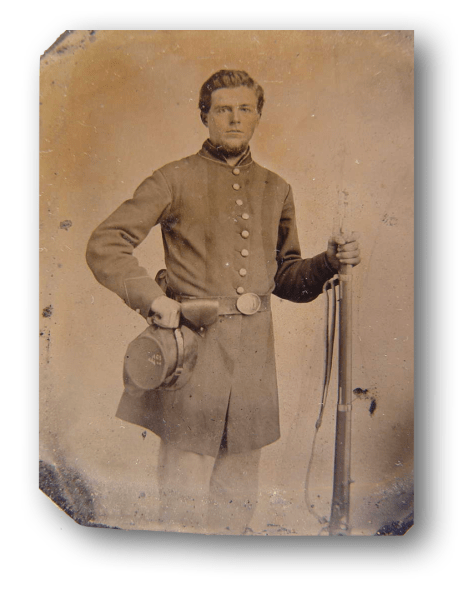

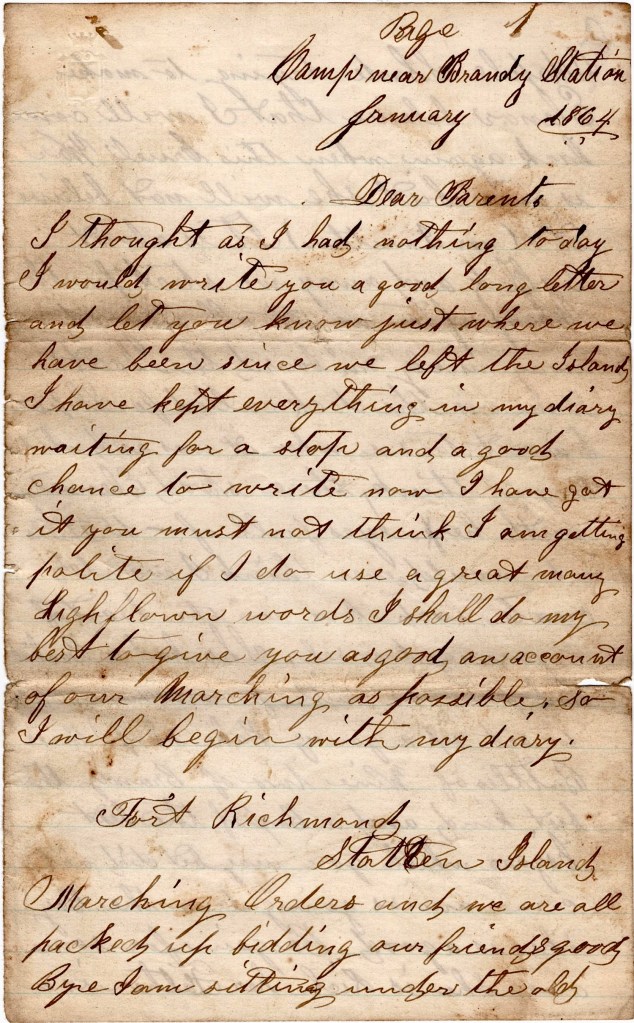
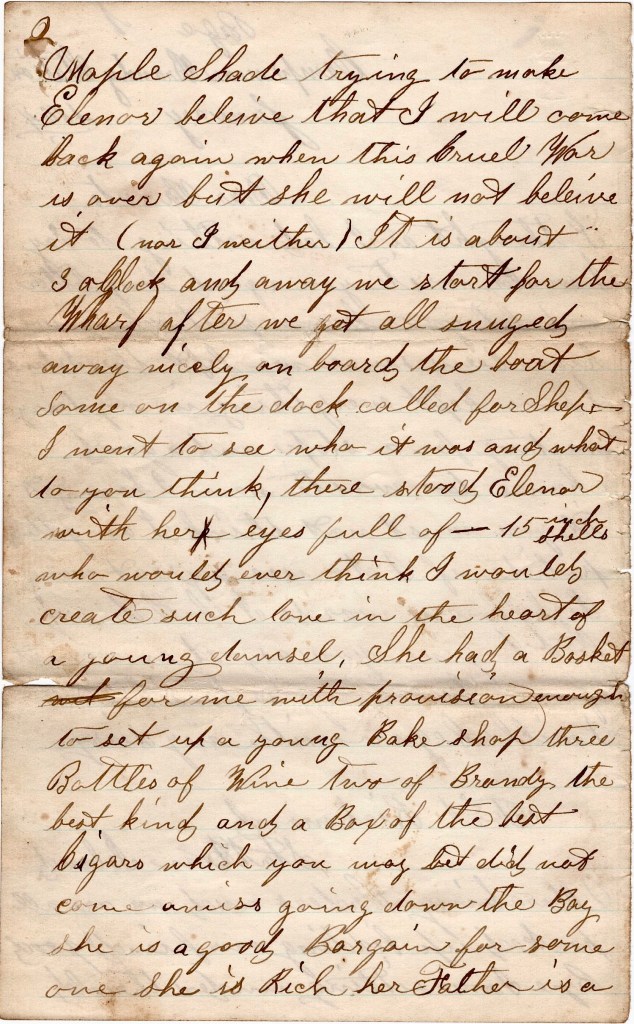
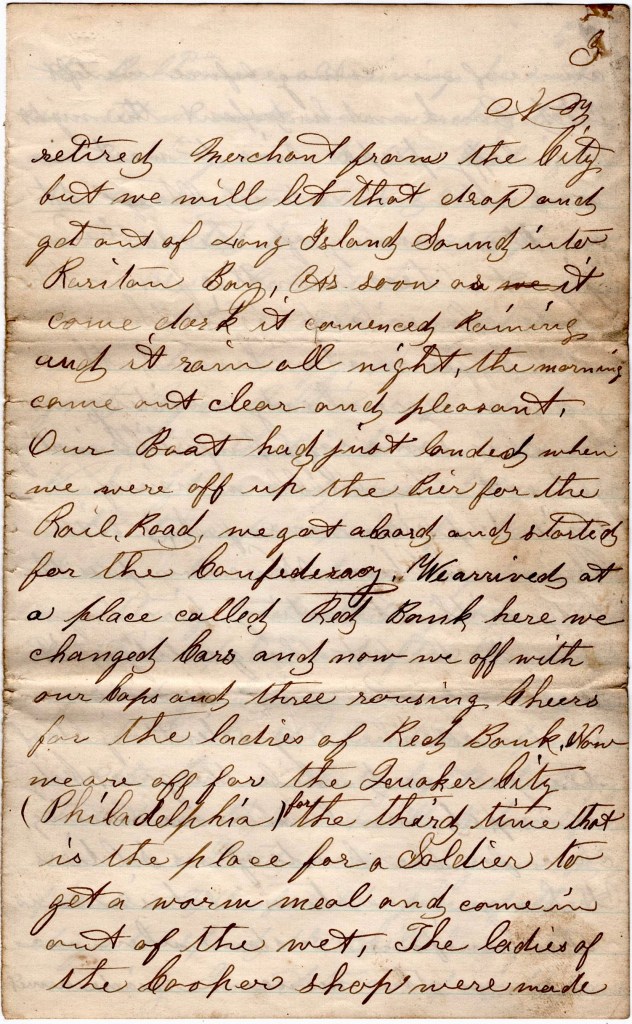
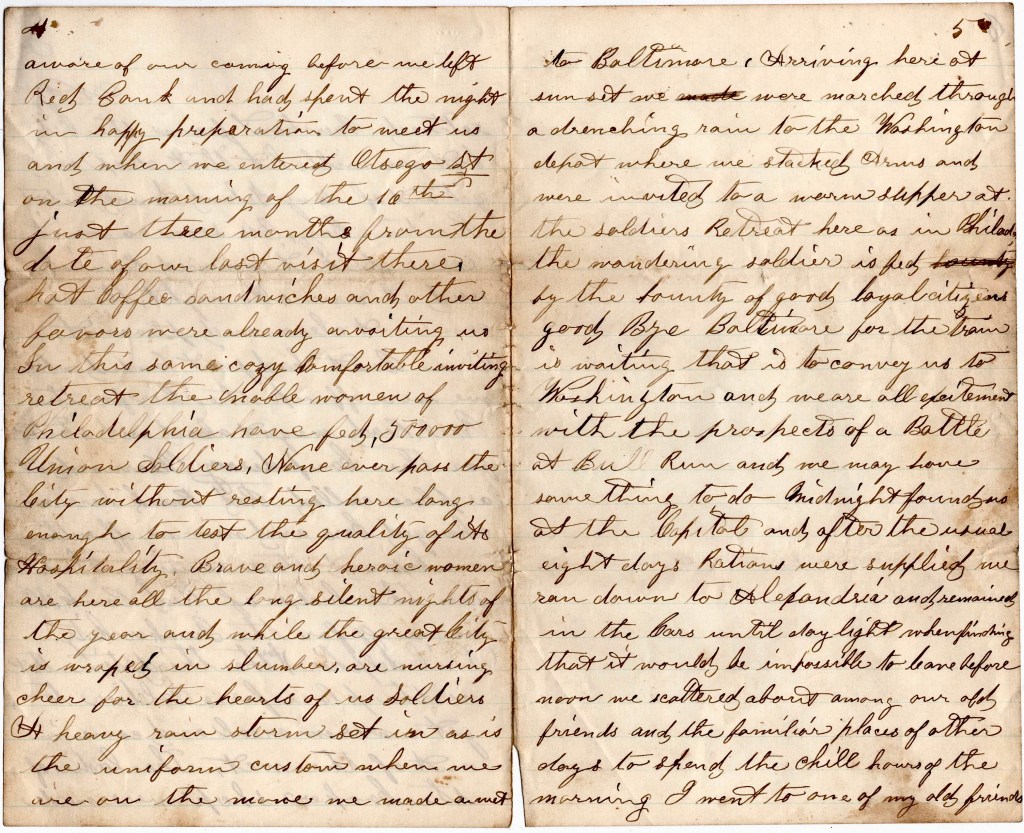
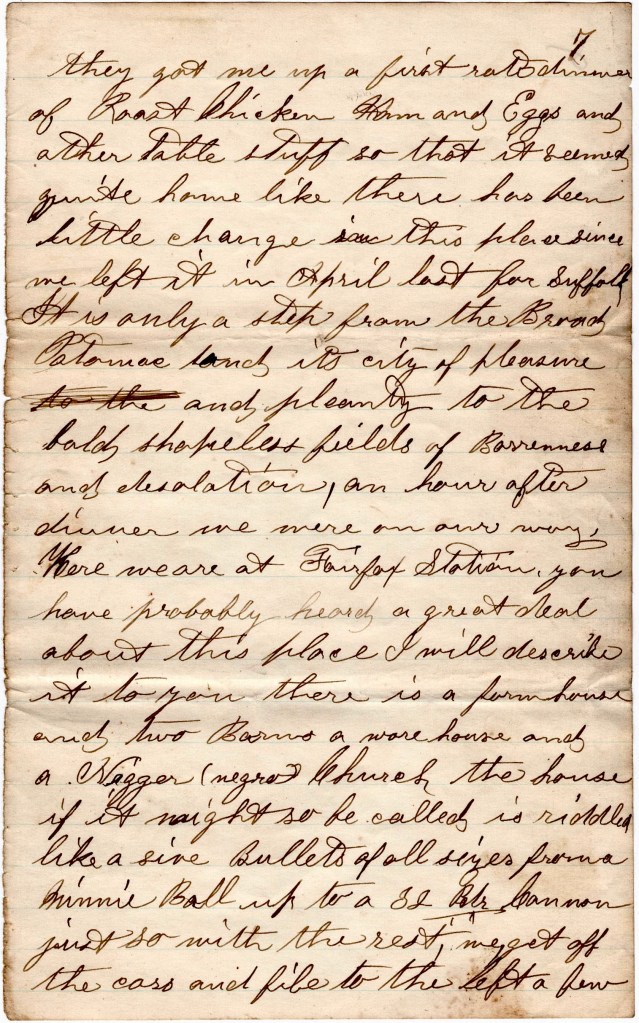

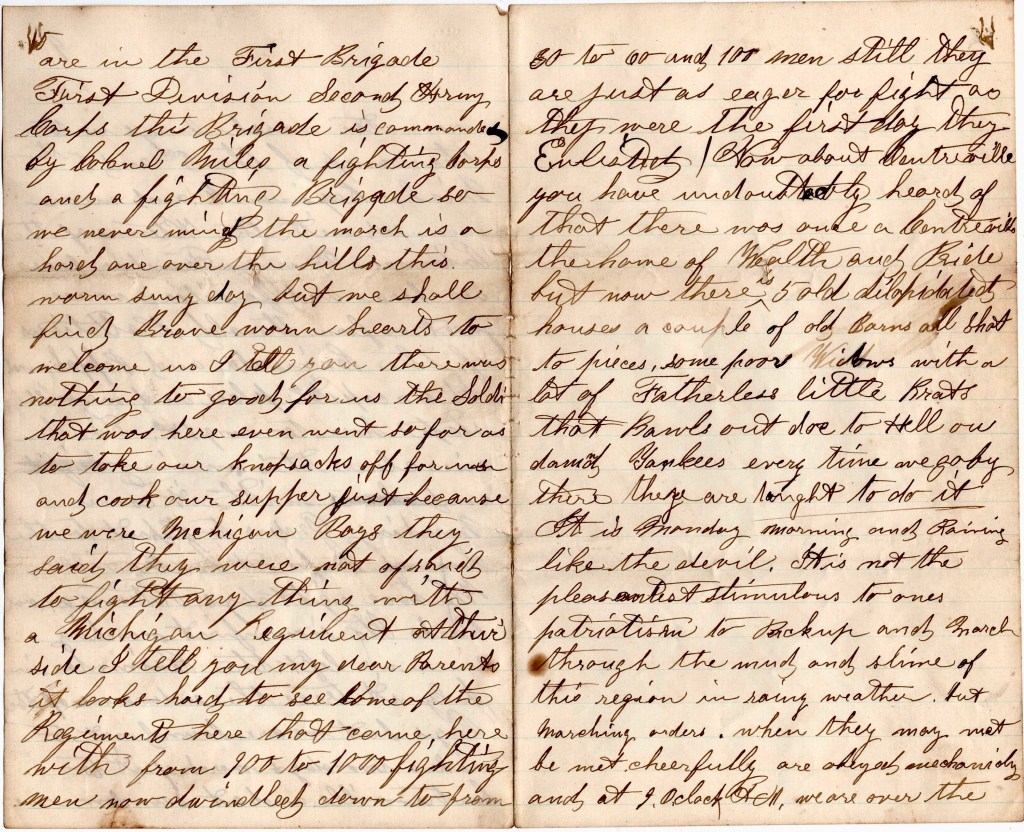

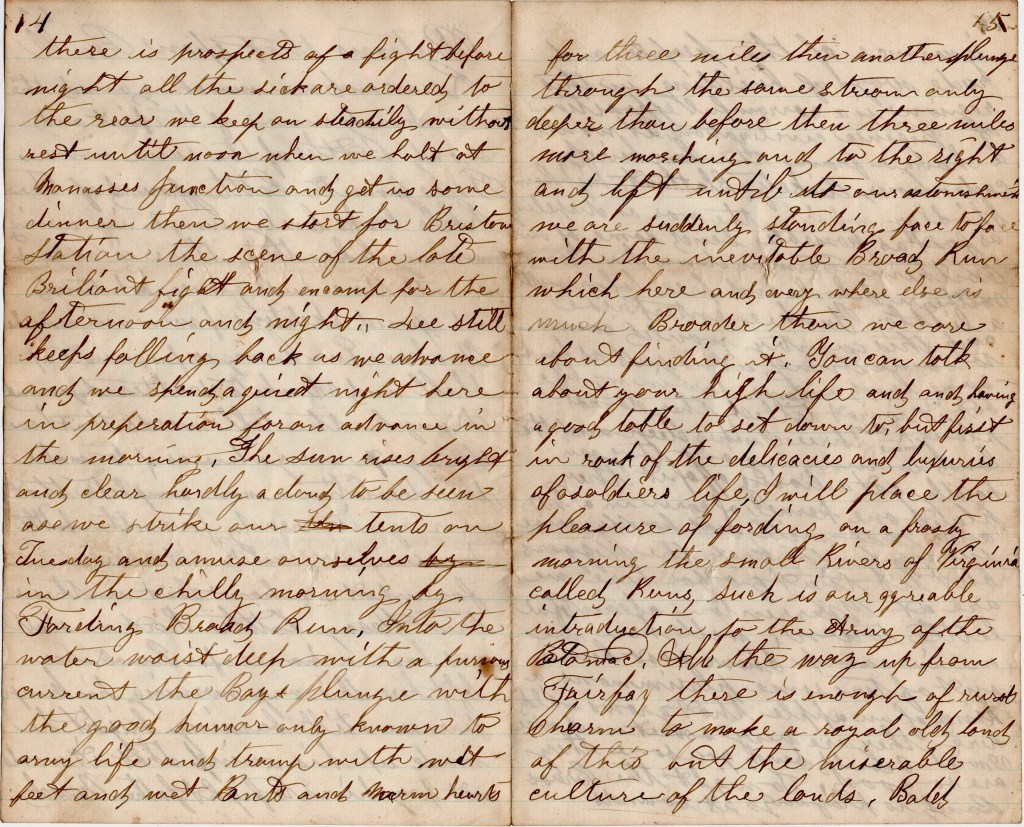
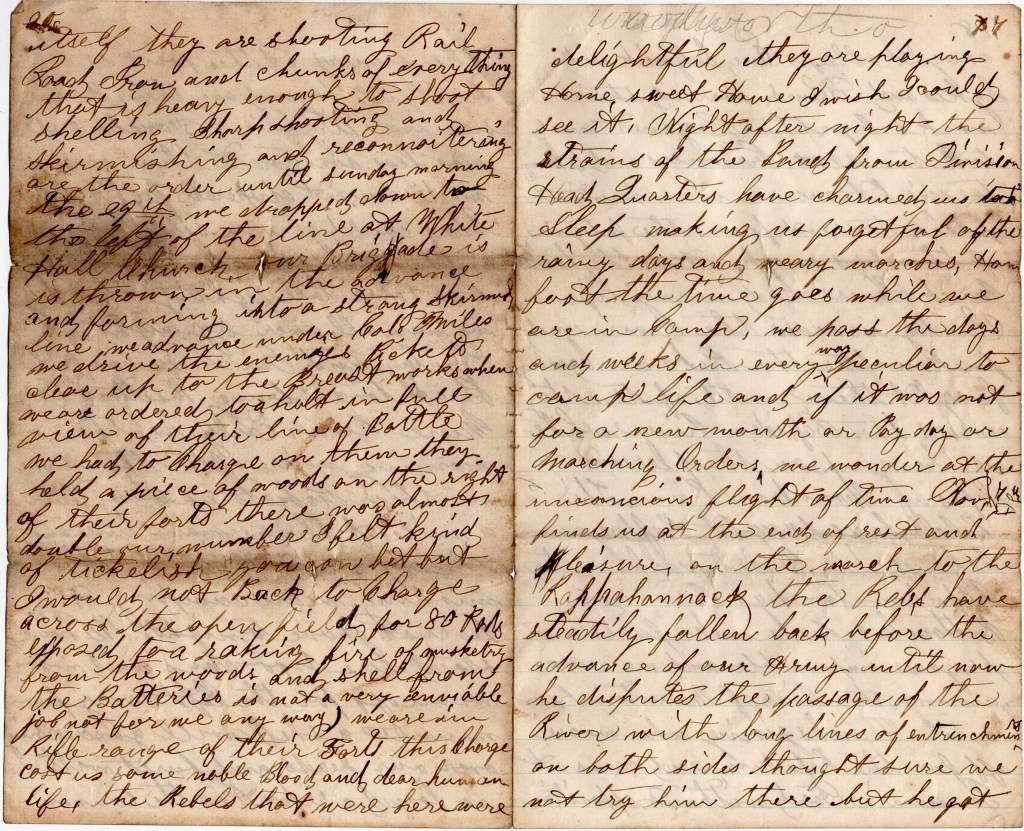
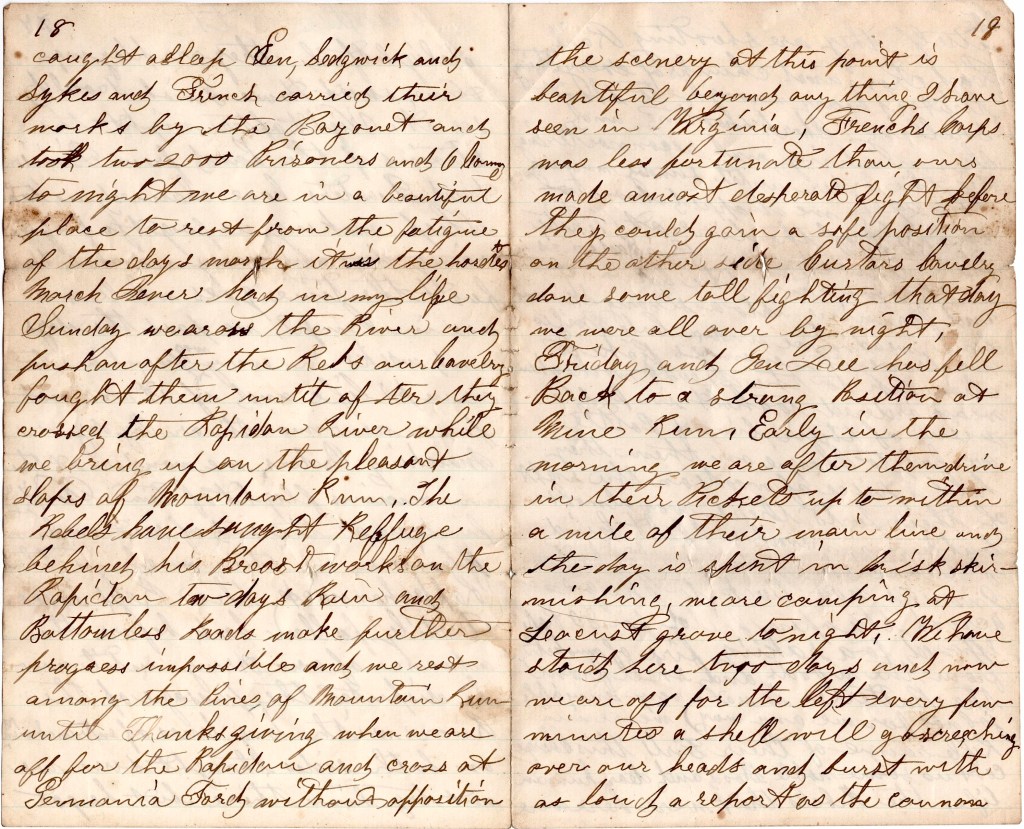
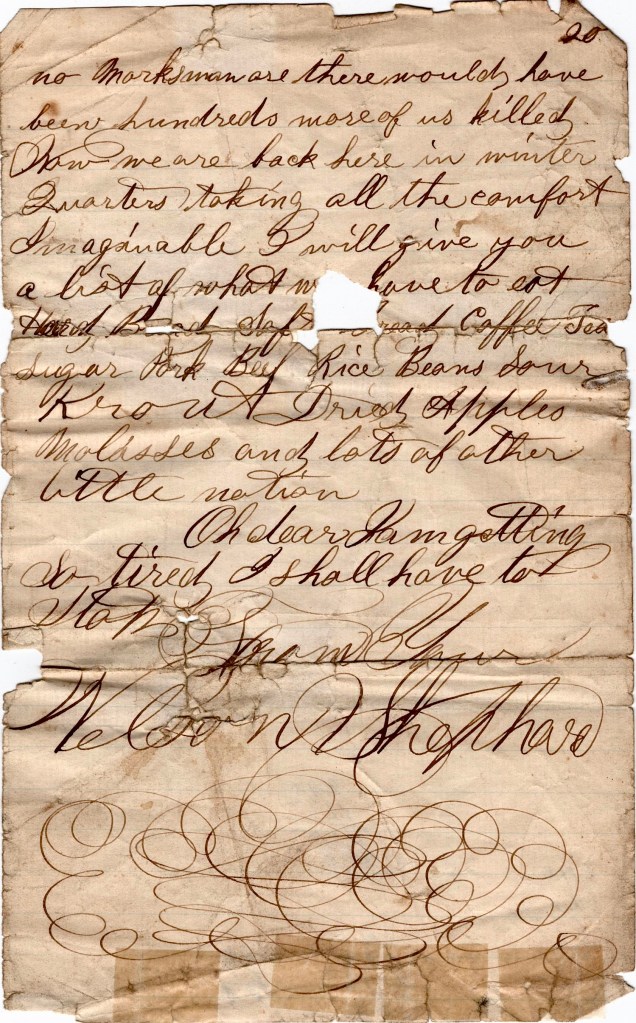
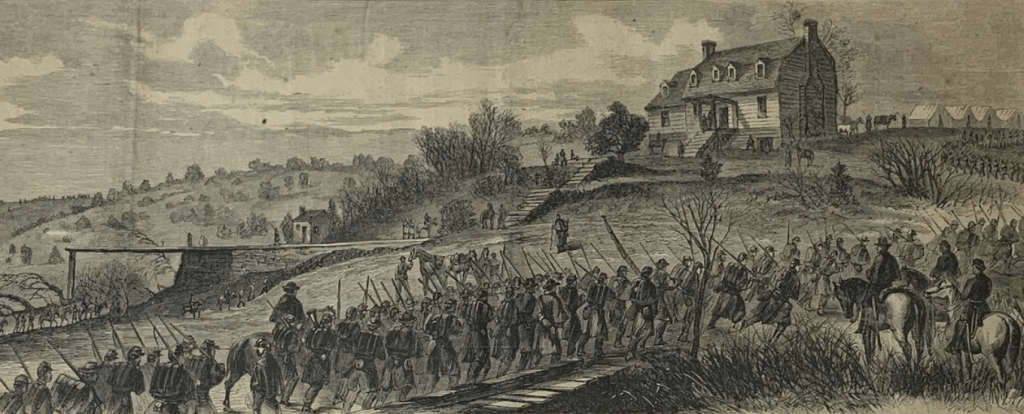
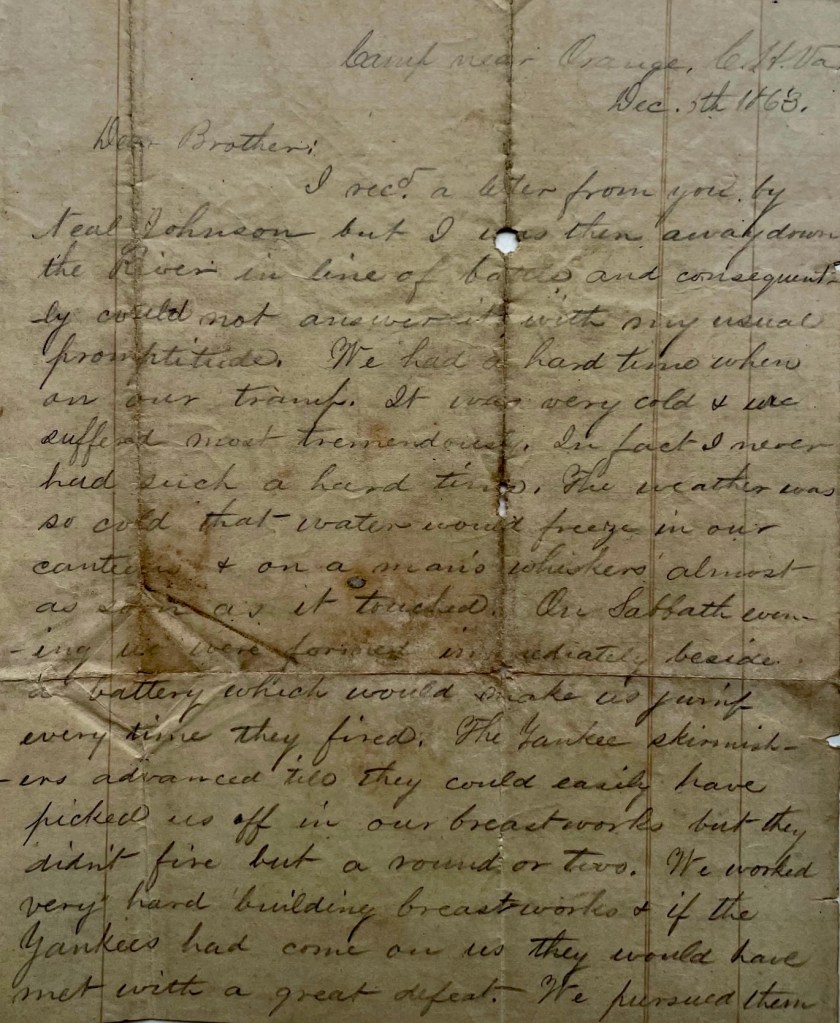
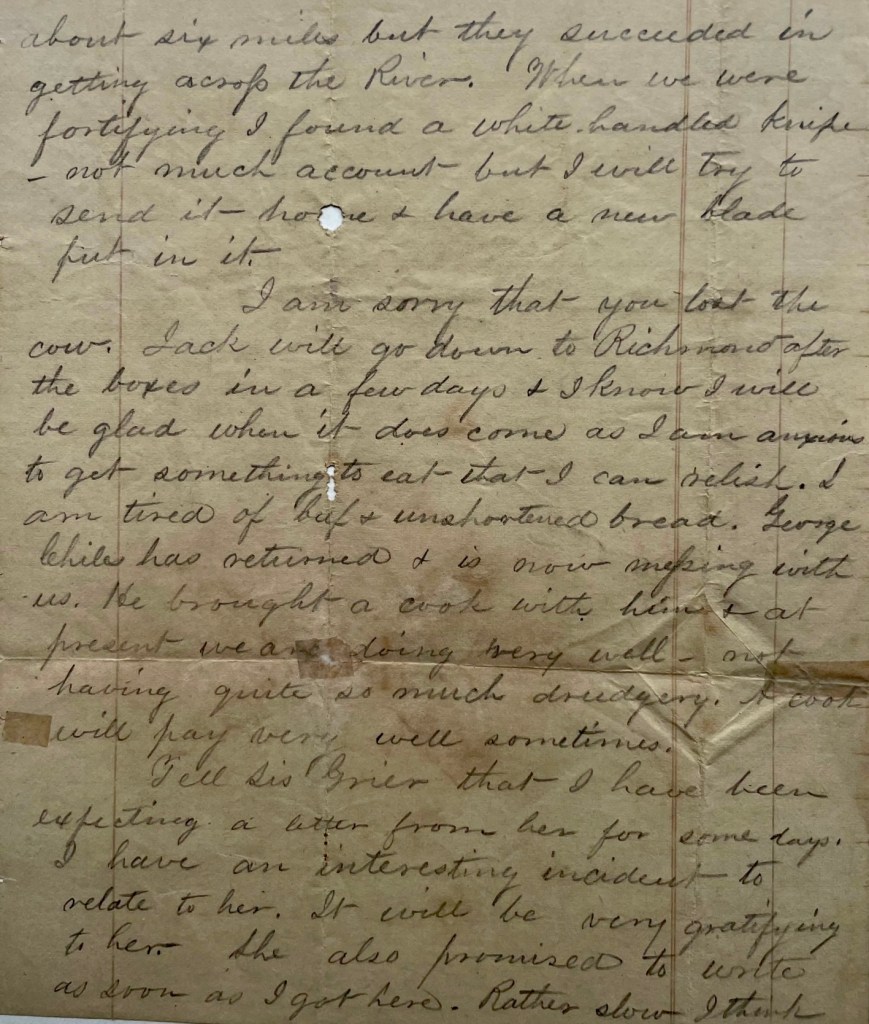


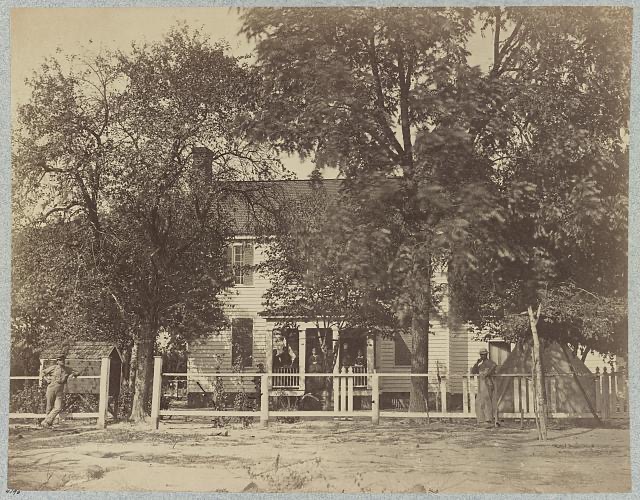
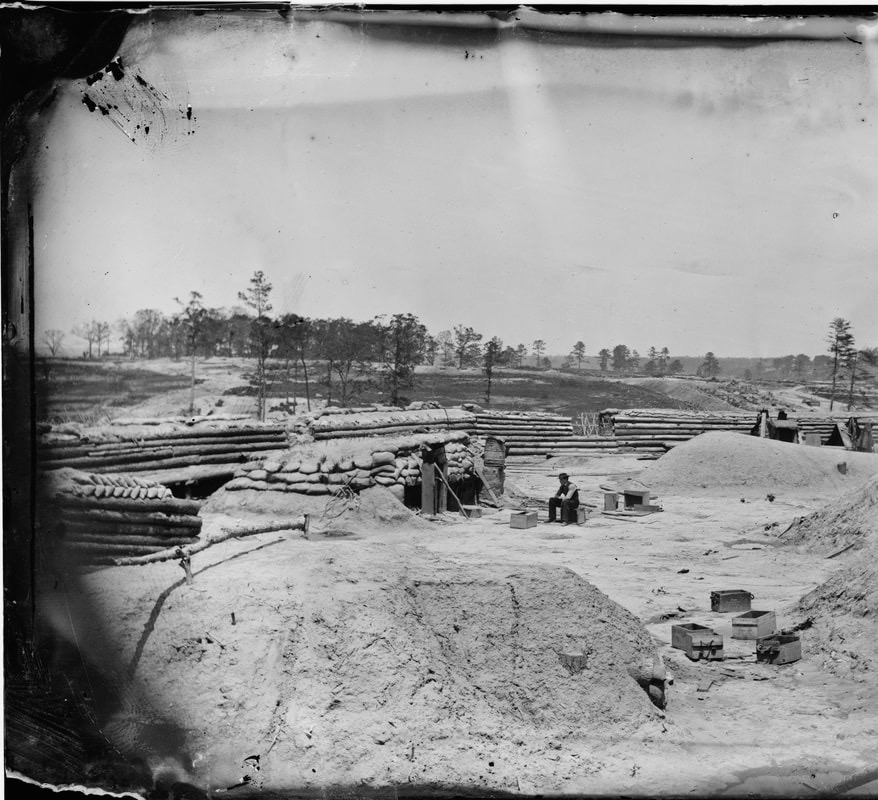

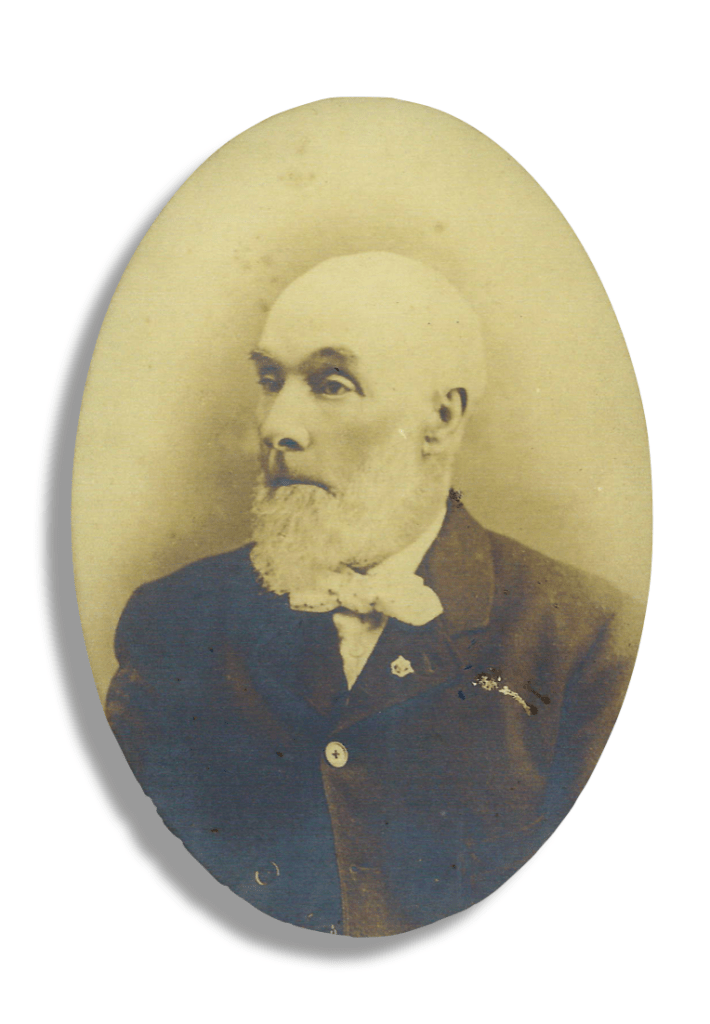


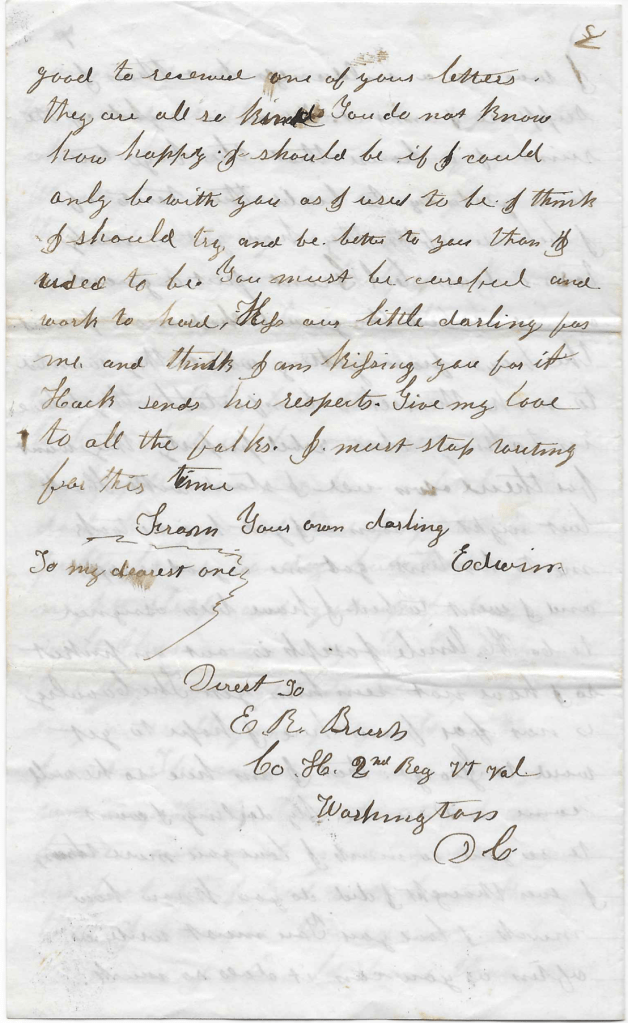


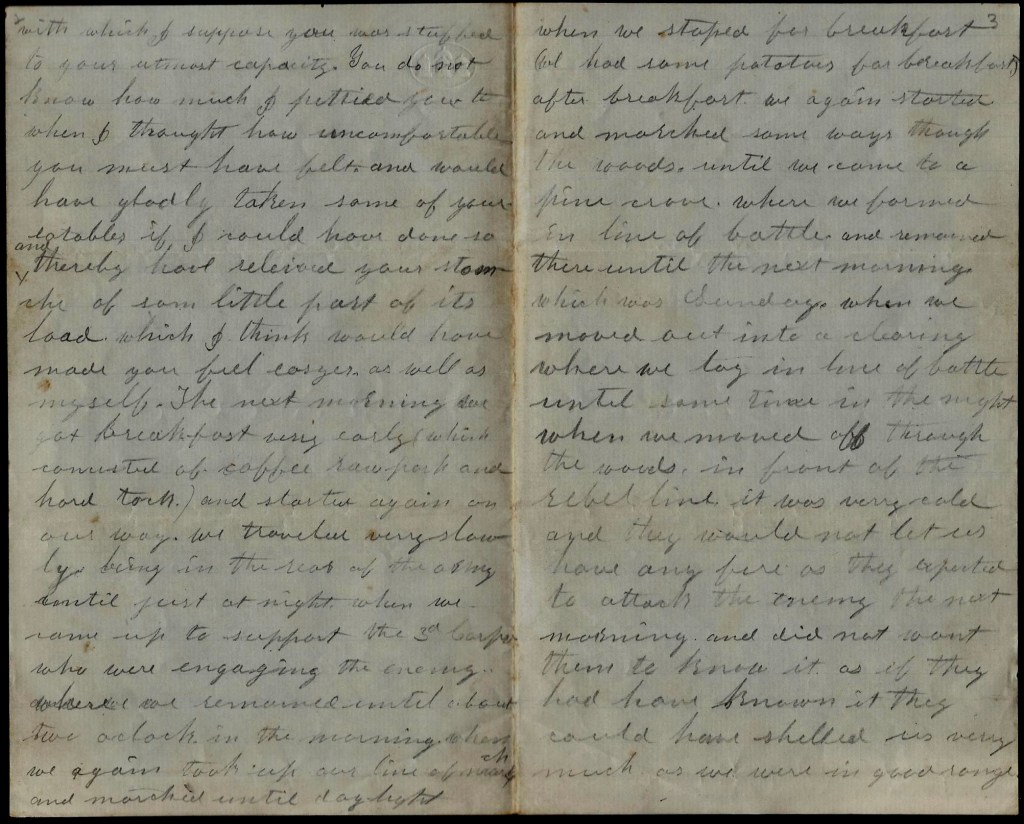
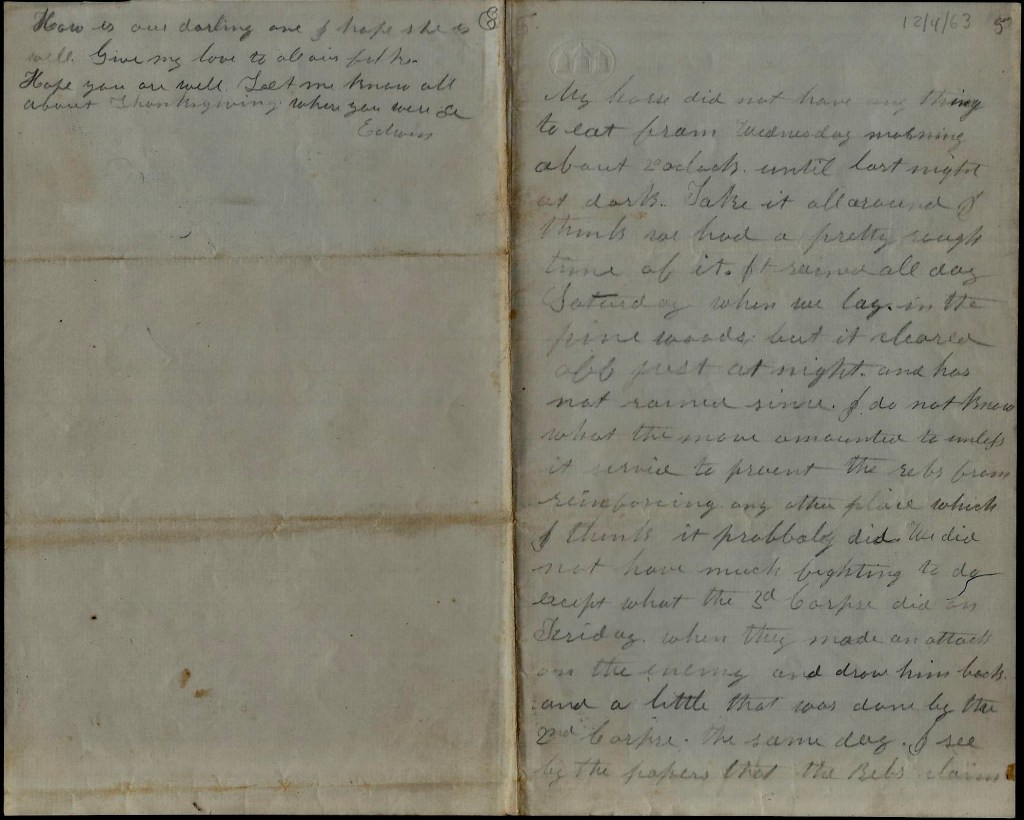


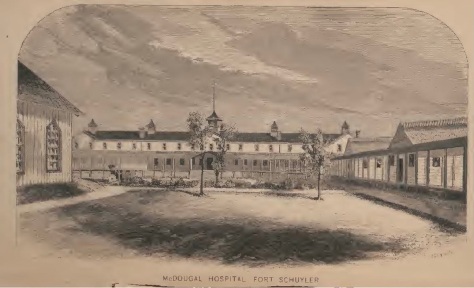


 Spared & Shared 23