The following letter was written by Ephram Marsh (1842-1917) who served in Co. H, 104th Ohio Infantry. Ephram enlisted on 2 August 1862 and mustered out 17 June 1865. He was married in 1870 to Mary L. Wuchter (1850-1939) after the war.
Ephram may have been an orphan. He was enumerated in the 1850 US Census in the household of Daniel Waggoner of Franklin township, Summit county, Ohio. In the 1860 US Census, he was enumerated as a 16 year-old farm laborer/boarder with the Samuel Warner family in Green township, Summit county, Ohio. Neither the Waggoner’s nor the Warner’s appear to be relatives of Ephram’s.
T R A N S C R I P T I O N
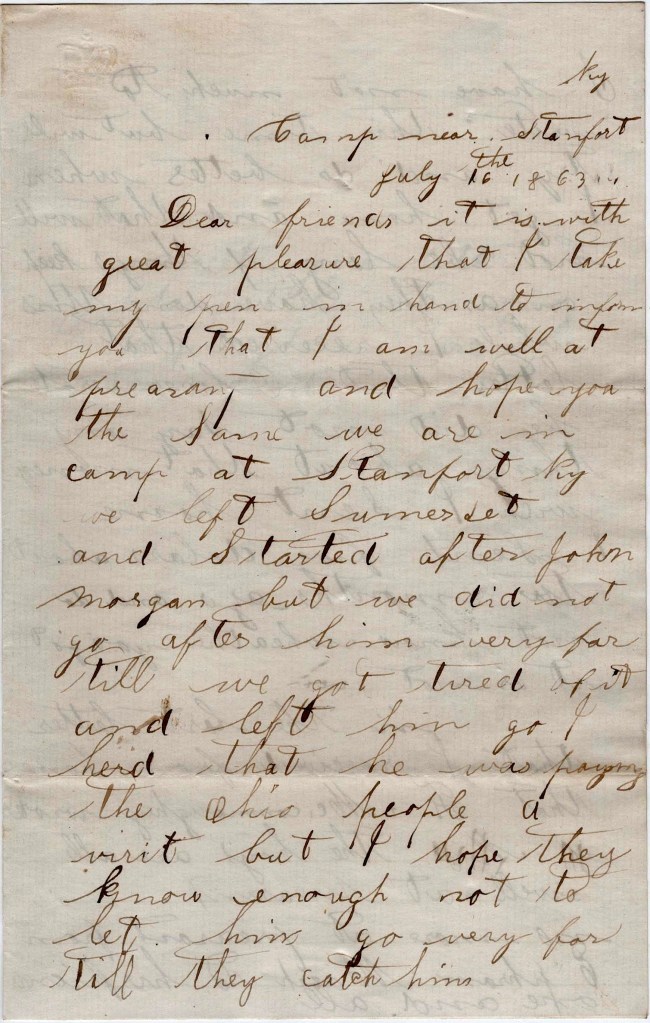
Camp near Stanford, Kentucky July 16, 1863
Dear Friend,
It is with great pleasure that I take my pen in hand to inform you that I am well at present and hope you [are] the same. We are in camp at Stanford, Kentucky. We left Somerset and started after John Morgan but we did not go after him very far till we got tired of it and left him go. I heard that he was paying the Ohio people a visit. I hope they know enough not to let him go very far till they catch him.
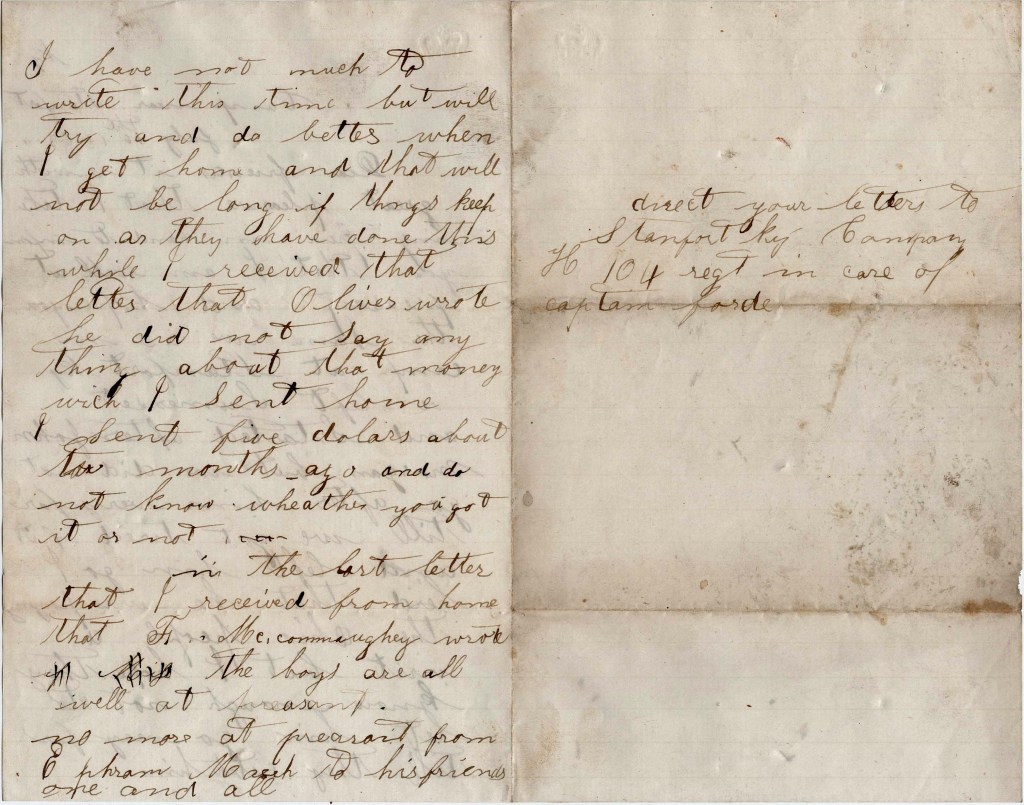
I have not much to write this time but will try and do better when I get home and that will not be long if things keep on as they have done this while.
I received that [letter] Oliver wrote. He did not say anything about that money which I sent home. I sent five dollars about two months ago and do not know whether you got it or not in the last letter that I received from home that F. McConnaughey wrote.
The boys are all well at present. No more at present. From Ephram Marsh to his friends, one and all. Direct your letters to Stanford, Kentucky, Company H, 104th [Ohio] Regiment in care of Captain Ford.
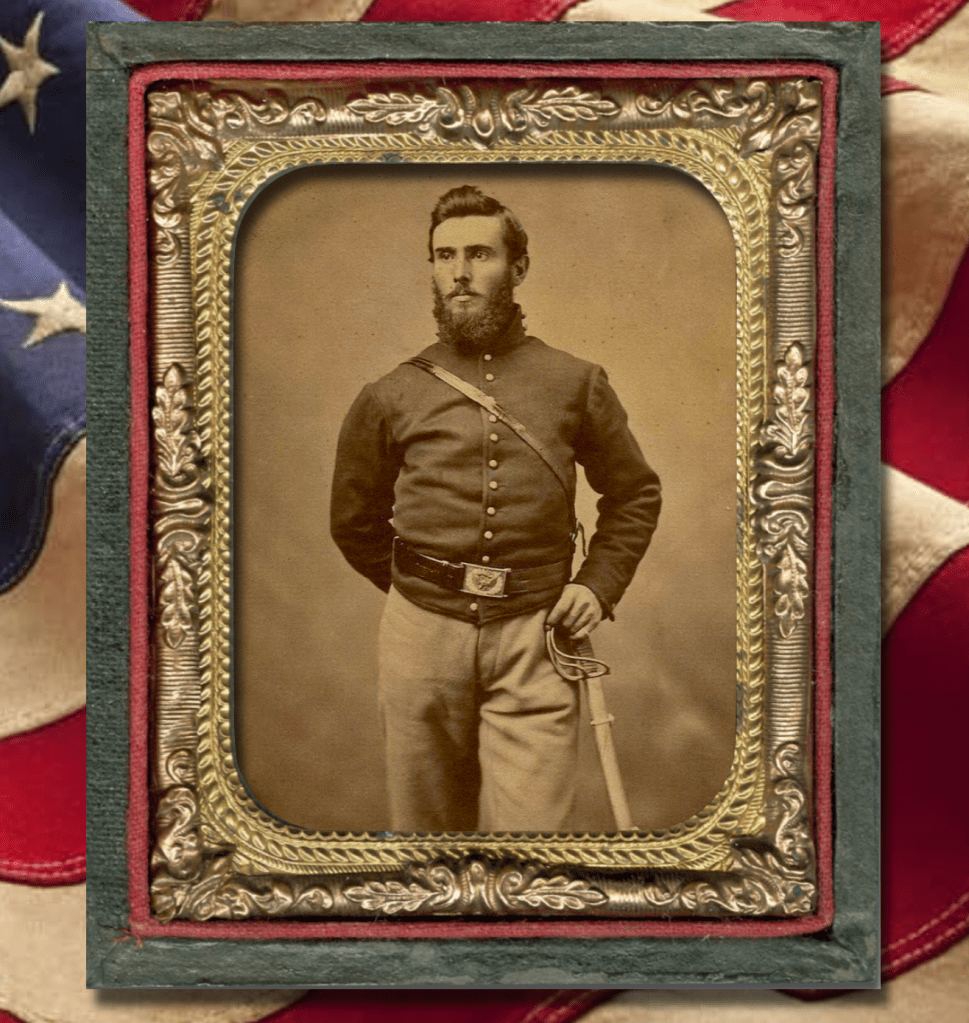
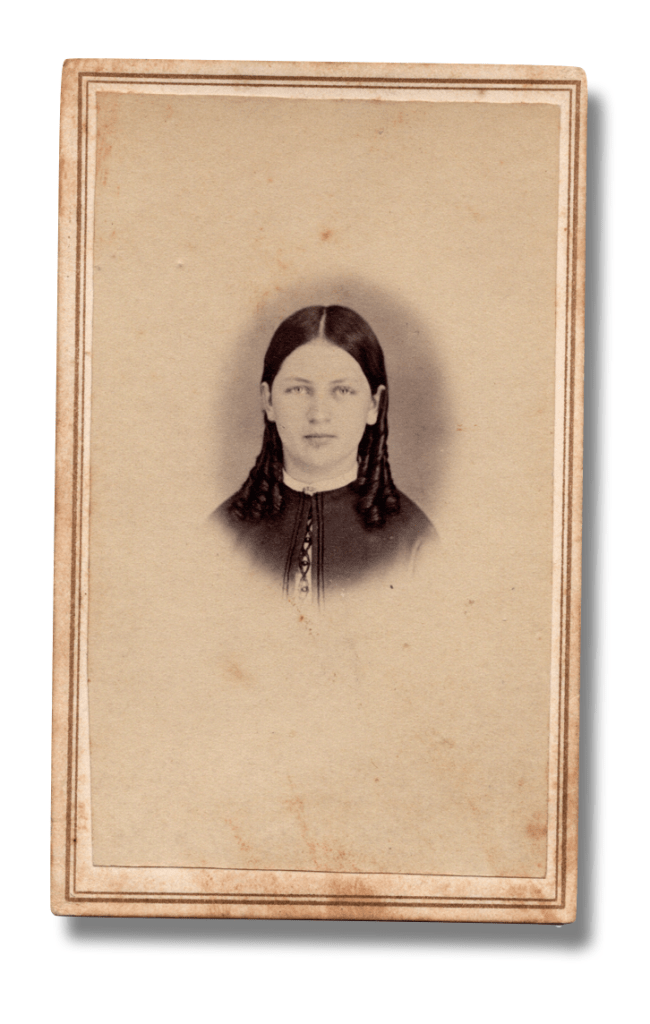
I could not find an image of Hiram but here is one of Isaac Lorenzo Peirce of Co. B, 2nd Ohio Cavalry. Isaac was mortally on 13 September 1864 while on picket duty near Berryville, Virginia.
The following brief letter was written by Hiram Rober (1842-1863) of Stark county, Ohio. Hiram mustered into Co. A, 2nd Ohio Cavalry in mid-August 1861 to serve three years. According to the State Records of the 2nd Ohio Cavalry, Hiram was shot in the chest in a skirmish two miles from Lick Creek Bridge on the road to Blue Springs (now Mosheim) in Greene county, Tennessee in October 1863 just a few weeks after this letter was written in late July 1863. He was originally buried at Blue Springs but later reinterred in the Knoxville National Cemetery, grave no. 1686.
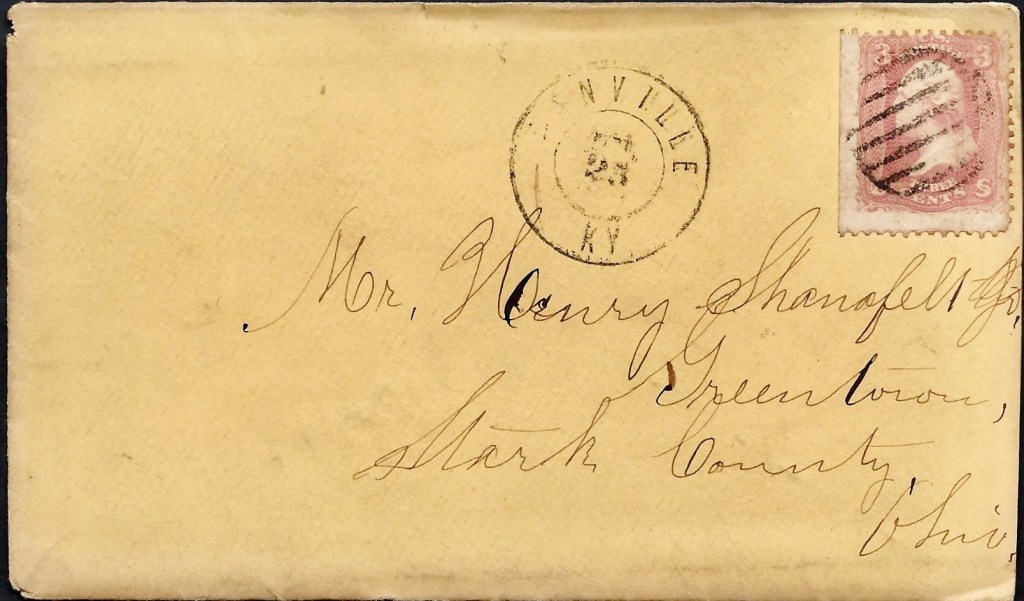
Hiram wrote the letter to Henry Shanafelt, Jr. of Greentown, Stark county, Ohio, asking his friend, “What do the folks up there think of Morgan’s raid?”
Transcription
Hen,
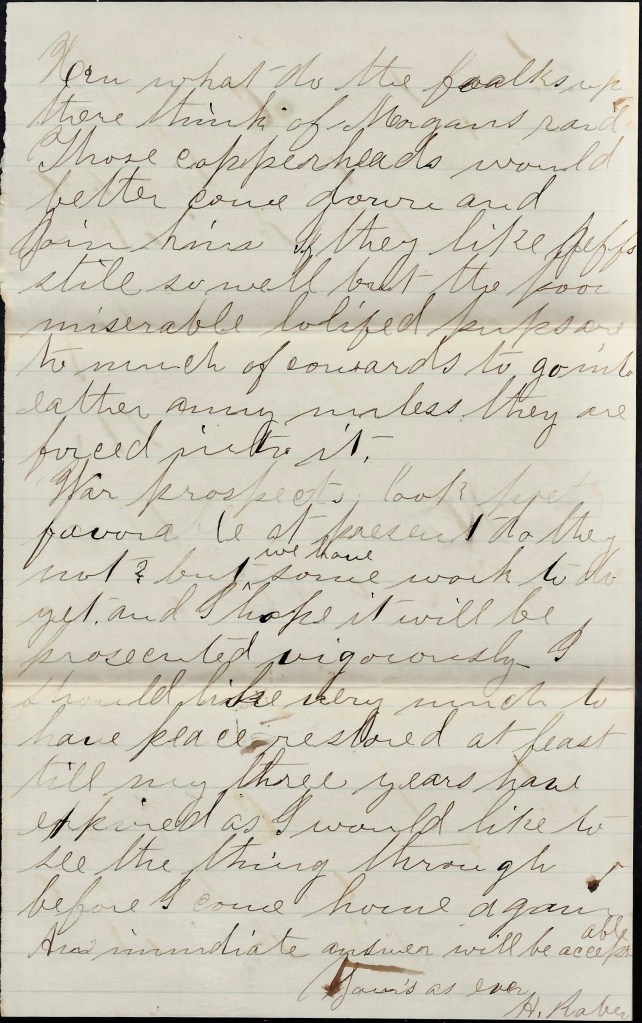
What do the folks up there think of Morgan’s raid? Those Copperheads would better come down and join him if they like Jeff’s style so well. But the poor miserable low life pups are too much of cowards to go into either army unless they are forced into it.
War prospects look pretty favorable at present, do they not? But we have some work to do yet and I hope it will be prosecuted vigorously. I should like very much to have peace restored at least till my three have expired as I would like to see the thing through before I come home again. An immediate answer will be be acceptable. Yours as ever, — H. Raber
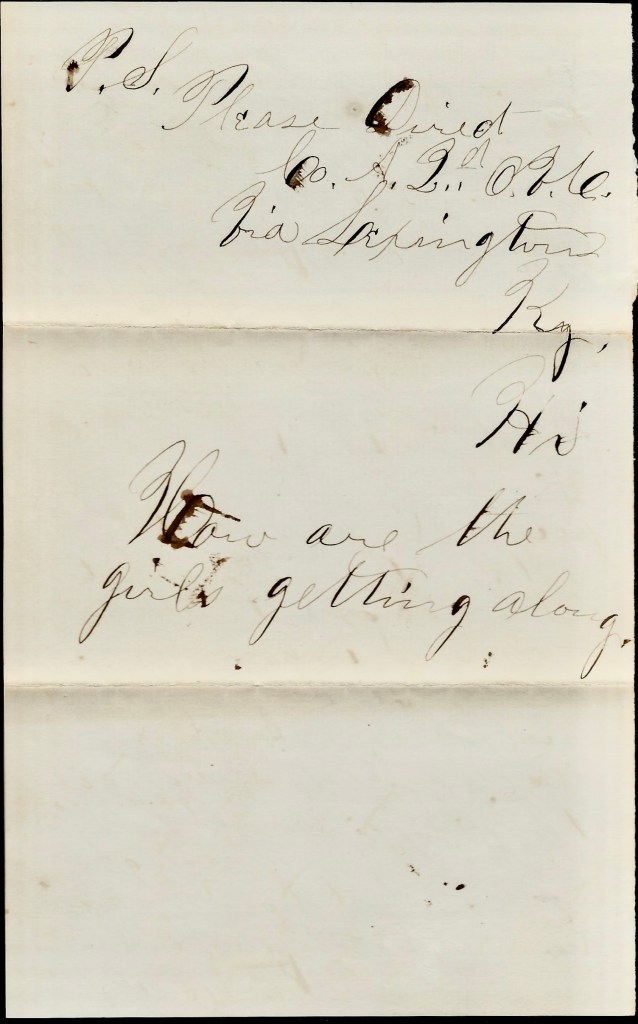
P. S. Please direct to Co. A. 2nd O. V. C., via Lexington, Kentucky
The following letter was written by Thomas Ebenezer Turner (1843-1927), the son of Moses Turner (1821-1904) and Rebecca T. Pressley (1823-1903) of Lebanon, Boone county, Indiana. Thomas married Elizabeth Malcenia Stephenson (1845-1905) in August 1867. During the summer of 1864, Thomas served 100 days in Co. K, 132nd Indiana Infantry. He later became a Presbyterian clergyman.
From Thomas’s letter we learn that he was attending school at Indiana University in Bloomington, Indiana. According to their school archivist, Stephen E. Towne, in June 1863, just prior to the date of this letter, “amid a wave of organized and murderous draft enrollment resistance throughout Indiana and neighboring states, a large body of armed men accosted a draft enrollment officer in Indian Creek Township, in the southwest corner of Monroe County, and seized his enrollment lists. Military authorities sent a force of over one thousand troops—infantry, cavalry, and artillery—to Bloomington to arrest the perpetrators. The troops billeted in the town among welcoming pro-war Republicans (town Democrats, many of whom had soured on the war effort, later complained that the troops had been drunk and disorderly) for several days and arrested more than a dozen men for draft resistance before marching into Greene and Sullivan counties to enforce the draft law. The violence of the war reached into every Indiana community.”
Thomas’s letter also speaks of Morgan’s raid through Southern Indiana and of the volunteers from Boone county who rode out after him but came home disappointed. “The boys were pretty smartly outed because they did not get a chance at him,” he wrote his friend.
Indiana University before the Civil War
Transcription
Addressed to Sallie McQuiston, Morning Sun, Preble county, Ohio
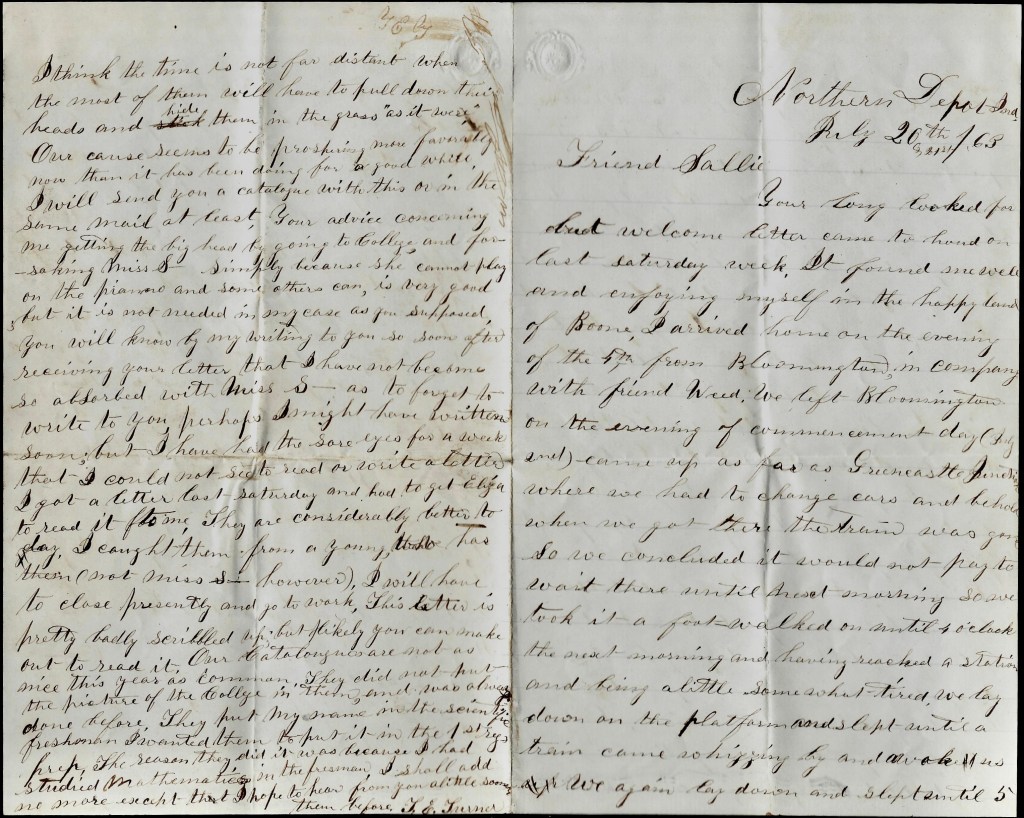
Northern Depot, Indiana July 20th 1863
Friend Sally,
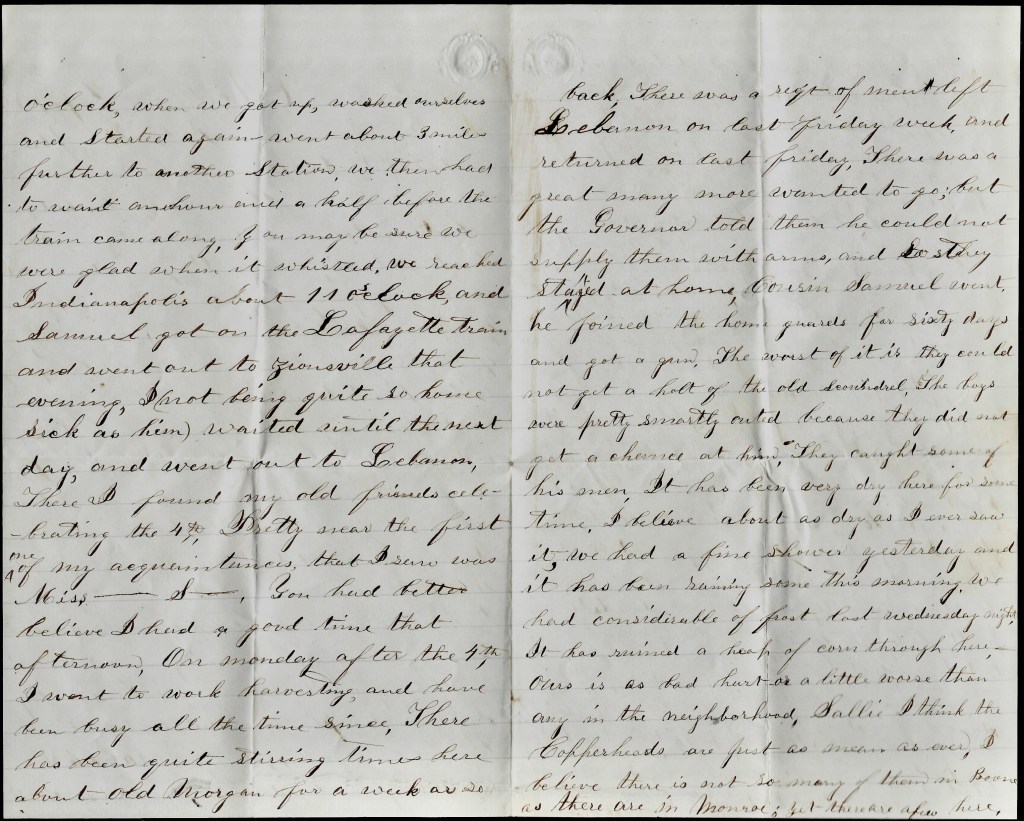
Your long looked for but welcome letter came to hand on last Saturday week. It found me well and enjoying myself in the happy land of Boone. I arrived home on the evening of the 4th from Bloomington in company with friend Weed. We left Bloomington on the evening of commencement day (July 2nd), came up as far as Greencastle Junction where we had to change cars, and behold! when we got there the train was gone. So we concluded it would not pay to wait there until next morning so we took it a foot, walked on till 4 o’clock the next morning, and having reached a station and being a little somewhat tired, we lay down on the platform and slept until a train came wizzing by and woke us. We again lay down and slept till 5 o’clock, when we got up, washed ourselves and started again. Went about three miles further to another station. We then had to wait an hour and a half before the train came along. You may be sure we were glad when it whistled. We reached Indianapolis about 11 o’clock and Samuel got on the Lafayette train and went out to Zionsville that evening. I (not being quite so homesick as him), waited until the next day, and went out to Lebanon.
There I found my old friends celebrating the fourth. Pretty near the first one of my acquaintances that I saw was Miss —— S——-. You had better believe I had a good time that afternoon. One Monday after the 4th, I went to work harvesting and have been busy all the time since.
There has been pretty stirring times here about old Morgan for a week or so back. There was a regiment of men left Lebanon on last Friday week, and returned on last Friday. There was a great many more wanted to go but the governor told them he could not supply them with arms, and so they stayed at home. Cousin Samuel went. He joined the home guards for sixty days and got a gun. The worst of it is they could not get a hold of the old scoundrel. The boys were pretty smartly outed because they did not get a chance at him. They caught some of his men.
It has been very dry here for some time. I believe about as dry as I ever saw it. We had a fine shower yesterday and it has been raining some this morning. We had considerable of frost last Wednesday night. It has ruined a heap of corn through here. Ours is as bad hurt or a little worse than any in the neighborhood.
Sallie, I think the Copperheads are just as mean as ever. I believe there is not so many of them in Boone as there are in Monroe, yet there are a few her. I think the time is not far distant when the most of them will have to pull down their heads and hide them in the grass “as it were.” Our cause seems to be prospering more favorably now than it has been doing for a good while.
I will send you a [School] Catalogue with this or in the same mail at least. Your advice concerning me getting the big head by going to College and forsaking Miss S—- simply because she cannot play on the piano and some others can, is very good but it is not needed in my case sa you supposed. You will know by my writing to you so soon after receiving your letter that I have not become so absorbed with Miss S—- as to forget to write to you. Perhaps I might have written sooner but I have had the sore eyes for a week that I could not see to read or write a letter. I got a letter last Saturday and had to get Eliza to read it to me. They are considerably better today.
I will have to close presently and go to work. This letter is pretty badly scribbled up but likely you can make out to read it. Our Catalogues are not as nice this year as common. They did not put the picture of the College in them and was always done before. They put my name in the 1st Year Prep. they reason they did it was because I had studied mathematics in the Freshman. I shall add no more except that I hope to hear from you a little sooner than before. — T. E. Turner
The following letter was written by Flora Angeline Brooks (1851-1947), the 12 year-old daughter of Thomas Martin Brooks (1803-1881) and Sarah Brown Chenowith (1808-1865) of Paris, Edgar county, Illinois. Flora wrote the letter to her brother James Allen Brooks (b. 1844). She also mentions her brother Henry Erastus Brooks (b. 1847). Flora married Rev. John C. Ely (1849-1920), a Presbyterian Minister. They were married in 1887 and later moved to Kentucky.
At the time that Flora wrote this letter, her brother James was serving in a home guard militia under the command of Capt. Mitchell Campbell Lilley (1819-1897) based out of Columbus, Ohio. Early in the war, Lilley served as Captain of Co. H, 46th Ohio Volunteer Infantry (OVI), but ill health forced him to resign from active service in January 1863 and return to Columbus where he took command a home guard militia for the duration of the war.
Flora’s letter contains some interesting news. She informs her brother of the competing Fourth of July celebrations hosted in Paris by both the Republican Party and the Democratic Party—the latter being predominantly composed of citizens with southern-leaning sympathies who she refers to as “butternuts.” According to a thesis by Scott Parkinson published in 1988 who studied the effects of the Civil War in Edgar county, “anti-war feelings did not come to a boil until late in the war” as the war dragged on in what was traditionally a Democratic, mostly southern-bred population. “In early February 1864, the growing agitation erupted into violence for the first time as Copperheads and furloughed soldiers clashed in Mattoon, Illinois, in what is known as the ‘Mattoon Incident.’ The editor of the Paris Times blamed the incident on Copperheads belong to the subversive secret society (Knights of the Golden Circle).” A similar event occurred in Paris later in February 1864 when soldiers of the 12th and 66th Illinois skirmished with Copperheads trying to seize an arsenal of weapons in the town.
Flora also mentions the turn out by organized home militia units to confront John Hunt Morgan as he made his raid through southern Indiana, Illinois, and Ohio during July 1863. She also describes the celebrations in Paris, Illinois, upon hearing the news of the surrender of Vicksburg—a great letter written 160 years ago this month.
[Note: This letter is from the personal collection of Greg Herr and was transcribed and published on Spared & Shared by express consent.]
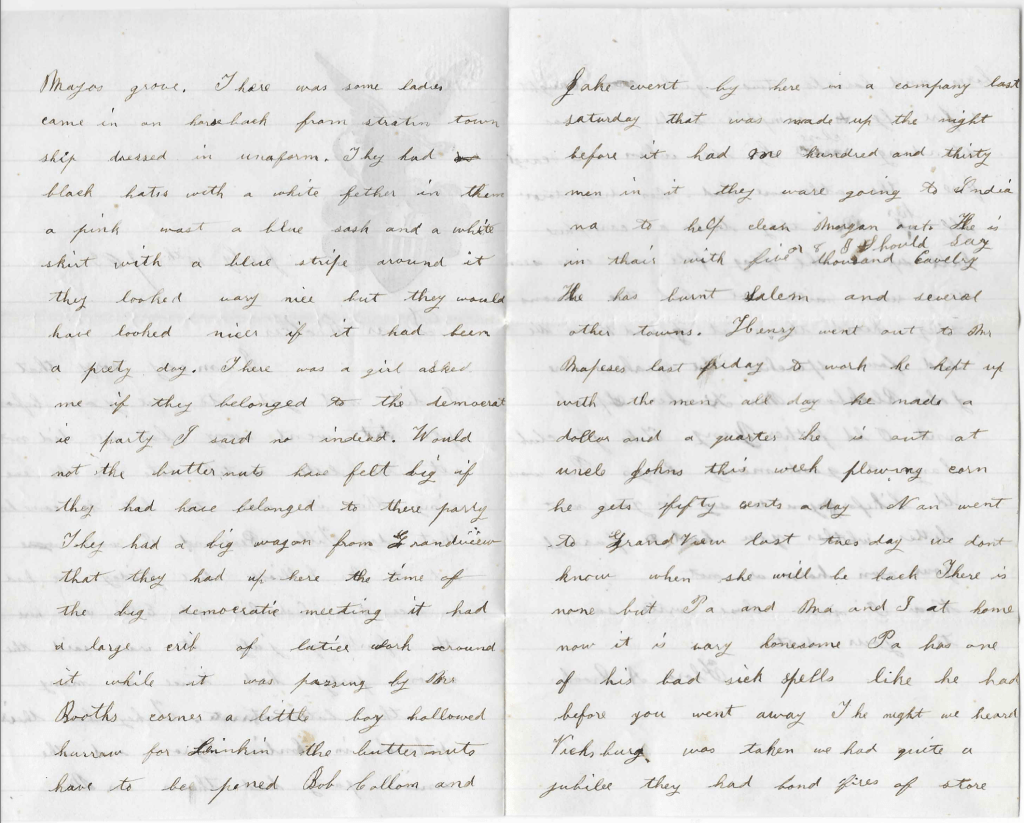
Transcription
Addressed to James A. Brooks, Columbus, Ohio, Care of Capt. M. C. Lilley
[Illinois] July 13th 1863
Dear Brother,
I am very sorry that I did not get to see you before you went away but we did not get the letter until late in the evening. Then it was too late to come home that day. Tilla Beaver and I were out to Mr. Elliott’s last Friday. We had a nice time. Charlie and Ellie were here the Fourth of July. It was said the Union Party had twice as many as the butternuts. They had their picnic in Conley’s Grove and the Union Party had their in Mr. Mayo’s Grove. 1
There was some ladies came in on horseback from Stratton township dressed in uniform. They had black hats with a white feather in them, a pink waist, a blue sash, and a white skirt with a blue stripe around it. They looked very nice but they would have looked nicer if it had been a pretty day. There was a girl asked me if they belonged to the Democratic Party. I said no indeed. Would not the butternuts have felt big if they had have belonged to their party. They had a big wagon from Grandview 2 that they had up here the time of the big Democratic meeting. It had a large crib of lattice work around it. While it was passing by the Booth’s corner, 3 a little boy hallowed, “Hurrah for Lincoln!” The butternuts have to be pissed.
Bob Collom and Jake went by here in a company last Saturday that was made up the night before. It had one hundred and thirty men in it. They were going to Indiana to help clean Morgan out. He is in there with five—or eight I should say—thousand cavalry. He has burnt Salem and several other towns.
Henry went out to Mr. Mapeses last Friday to work. He kept up with the men all day. He made a dollar and a quarter. He is out at Uncle John’s this week plowing corn. He gets fifty cents a day. Nan went to Grandview last Tuesday. We don’t know when she will be back. There is none but Pa and Ma and I at home now. It is very lonesome. Pa has one of his bad sick spells like he had before you went away.
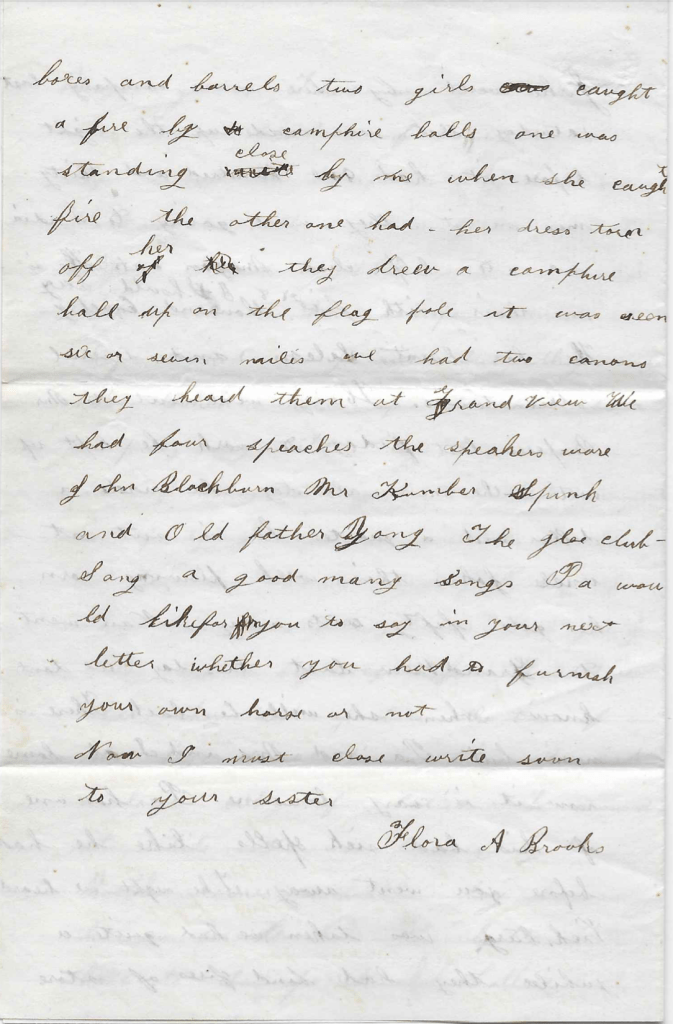
The night we heard Vicksburg was taken we had quite a jubilee. They had bonfires of store boxes and barrels. Two girls caught a fire by camp fire balls. One was standing close by me when she caught fire. The other one had her dress torn off her. They drew a camp fire ball up on the flag pole. It was seen six or seven miles. We had two cannons. They heard them at Grandview. We had four speeches. The speakers were John Blackburn, 4 Mr. Kimber, [Solomon] Spink, and Old Father Young. The glee club sang a good many songs.
Pa would like for you to say in your next letter whether you had to furnish your own horse or not. Now I must close. Write soon to your sister, — Flora A. Brooks
1 “Mayo’s Grove” was probably the wooded block of ground between East Court and East Wood streets that Colonel May donated to the city. A school house was later built there.
2 Grandview is a small community some eight miles southwest of Paris, Illinois.
3 Walter Booth (1823-1881) kept a dry goods store in downtown Paris. He was a prominent citizen of the town, reelected to the town council many times and twice elected mayor.
4 John Widener Blackburn (1825-1894) was a lawyer in Paris, Edgar county, Illinois. He is mentioned in this letter to Abraham Lincoln.
This letter was written by William (“Willie”) Taylor Humphreys (1844-1873), the son of John Alsop Yarborough Humphreys (1802-1873) and Rebecca Delph Carpenter (1820-1848) of Bardstown, Nelson county, Kentucky. Willie’s maternal grandparents were Samuel Carpenter and Margaret Slaughter. Willie’s siblings included Margaret (b. 1842), John S. (b. 1843), Samuel (b. 1846), and Thomas J. (b. 1847), all of whom are mentioned in his letter.
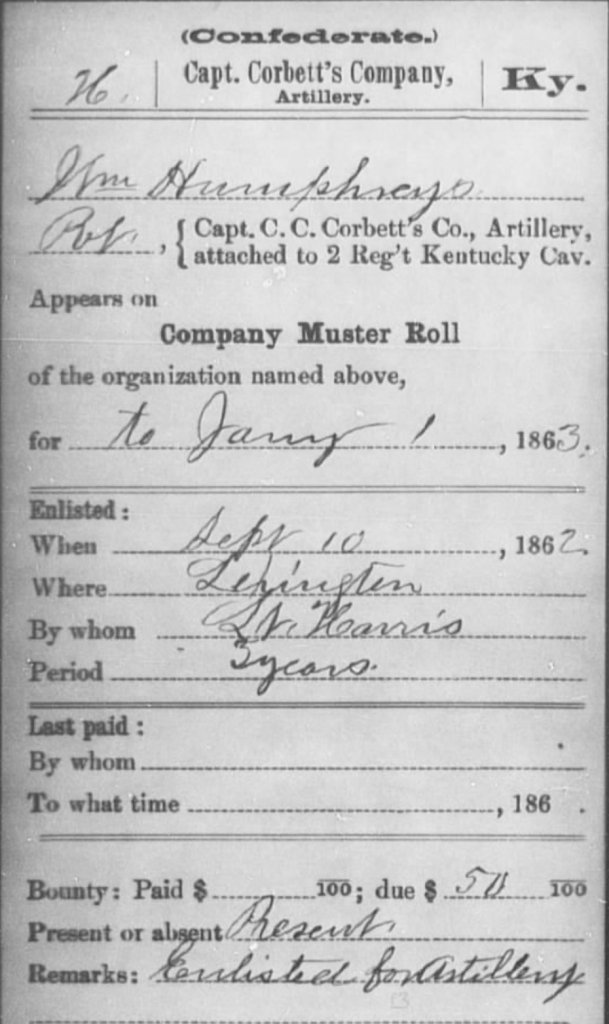
Willie enlisted in September 1862 in Capt. C. C. Corbett’s Company of Light Artillery that was attached to the 2nd Regiment of Kentucky Cavalry. This battery may have broken up before the summer of 1863 but it’s likely the remnants continued to ride with Morgan’s Kentucky Cavalry Squadron on its raid through Indiana and Ohio in July 1863. In the letter, “Willie” described his hairbreadth escape from capture by hiding out on the river bank for two days, swimming across the Ohio at night with the aide of a fence rail, and then outrunning Union pursuers in West Virginia as he walked 200 miles to get back to Confederate lines.
Willie’s enlistment in Capt. C. C. Corbett’d Company of Artillery
Willie wrote the letter on 30 September 1863 from Demopolis, Alabama, where he had joined his uncle—James Slaughter Carpenter (1840-1915), who was originally a member of the Orphan Brigade, a native of Bardstown, Kentucky. Carpenter served in the 9th Kentucky Infantry until detached to serve as principal clerk in the commissary subsistence department of Major Thomas K. Jackson under General Albert S. Johnston.
On January 1, 1863, from Ringgold, Georgia, James Slaughter Carpenter wrote to James Seddon, Secretary of War, seeking an appointment to the position of Asst. Commissary of Subsistence. The letter provides a good synopsis of his service up to that date. It reads in part:
“I am a Kentuckian by birth and have been in the service eighteen months, during which period I was ten months principal clerk of Major Thos. K. Jackson, Commissary Subsistence.”
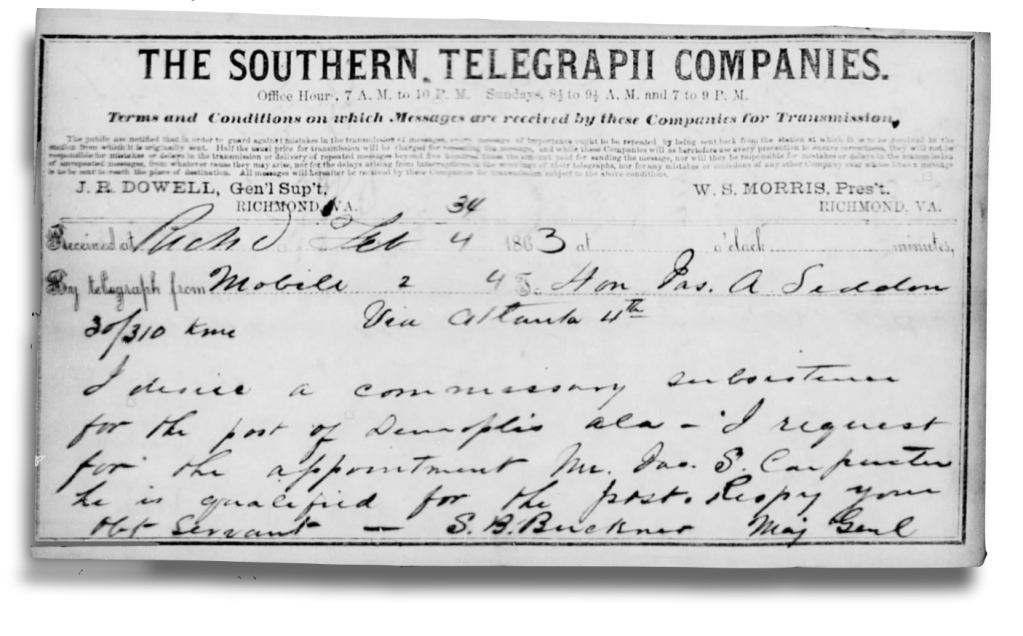
Two months later, Maj. Gen. Simon B. Buckner sent a telegram from Mobile to the Seddon requesting the appointment of Carpenter. It read:
“I desire a commissary subsistence for the post of Demopolis, Ala. I request for the appointment Mr. Jas. S. Carpenter. He is qualified for the post. Respectfully your obedient servant, — S. B. Buckner, Maj. Gen’l”
Maj. Gen. Simon B. Buckner’s Telegram to Secretary of War Seddon
[My thanks to Daniel Crone for helping to confirm Willie’s identity and his connection to Morgan’s Raid.]
Transcription
Office of Subsistence Demopolis, Alabama September 30, 1863
Dear Pa,
I am here with Jim Carpenter who is commissary of the post at this place. I am having a very nice time. Plenty of everything to eat and a good house to stay in. The people around here are very wealthy and of course have plenty of pretty daughters & if it was not for seeing soldiers, I would not know the war was going on. The Capt. has plenty of good clothes & I supply myself from his wardrobe as I had to leave all my clothes in Ohio.
I wrote to you just after I crossed the Ohio river when I told you I thought I was safe but I was bushwhacked on my road when I got [with]in about fifty miles of our lines. There was some 12 or 15 of them fired on me from the bushes [with]in about 30 yards from me. I was standing still at the time & I cannot imagine how they come to miss me, but I was not hurt at all—only one ball passed through my coat. I was too fast on foot for them after they missed their aim. I was going along not thinking about them as the citizens all told me I was clear out of danger. There was 9 of us when they fired on us. The rest were behind [me] and they caught six of them and killed them. I escaped with the loss of a fine pair of boots which I abandoned in the retreat.
I laid on the banks of the Ohio for two nights & days thinking of the awful task before me—that of swimming the river, which after two days and nights deliberation and starvation, I concluded to risk my chances on a rail & swim the river which I accomplished in about twenty minutes. I would have surrendered had it not been for you, for I know you would have been almost distressed to death to hear that I was in prison. Poor Capt. [James] McClain 1 was drowned in crossing the river. I wrote to you that he escaped but it was another man.
We have given the Yankees an awful whipping at Chattanooga. Our Kentucky Brigade lost very severe. I have not heard the loss yet. John Wisotzki 2 just just left here yesterday. He is clerking in the Adjutant General’s Office of Gen. Joe Johnston’s. He promised to send this letter through for me. Farewell. Yours, — W
Dear Brother John, Sam, Tom & sister Maggie,
I have been through the different departments of the Confederate Army since I saw you all last and thank heaven I am well and in better spirits than ever I was. This place is full of beautiful young ladies & all are as rich as cream & you know Jim’s partiality for the ladies & he has just any quantity of good clothes. I have not been here long enough to have me some made for you know I do not like to go to see the young ladies with my soldier clothes. I have found it a military necessity to appropriate the Captain’s broad & gray cloth and ruffled shorts.
They do not call a man wealthy in this country if he has not got about a thousand negroes & two or three plantations. There is more corn raised in this county than any place I have ever been. Jim and myself have just returned from the country. We have been out to Col. [James Innes] Thornton’s, a relative of Mrs. Slaughter’s. He is very wealthy & has three beautiful daughters. 3
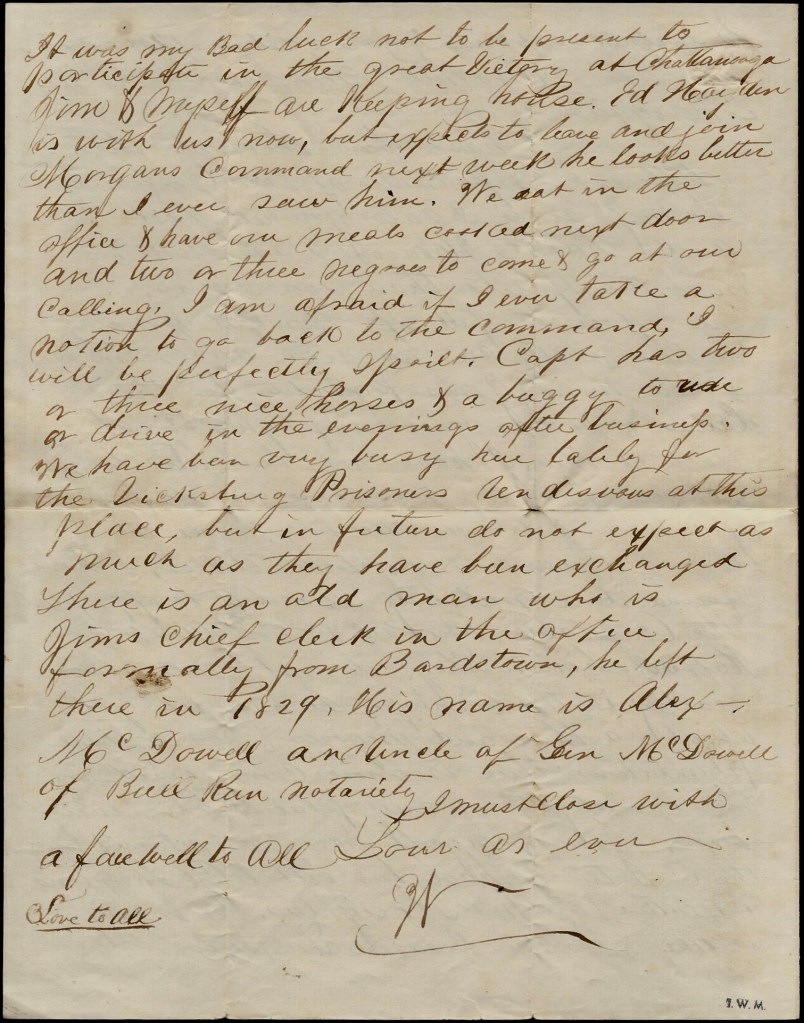
It was my bad luck not to be present to participate in the great victory at Chattanooga. Jim & myself are keeping house. Ed Hayden 4 is with us now but expects to leave and join Morgan’s command next week. He looks better than I ever saw him. We eat in the office & have our meals cooked next door and two or three negroes to come & go at our calling. I am afraid if I ever take a notion to go back to the command, I will be perfectly spoilt. Capt. has two or three nice horses & a buggy to ride or drive in the evening after business.
1885 Gelatin Photograph of Alexander Keith Marshall McDowell (UK Libraries)
We have been very busy here lately for the Vicksburg prisoners rendezvous at this place but in future do not expect as much as they have been exchanged. There is an old man who is Jim’s chief clerk in the office formally from Bardstown. He left there in 1829. His name is Alexander McDowell, an uncle of Gen. [Irvin] McDowell of Bull Run notoriety. 5
I must close with a farewell to all. Love as ever, — W
Love to all.
P. S. I walked across Western Virginia a distance of 200 miles to our lines.
[in a different hand]
I will keep Willie with me all winter if I can. I am doing first rate. Don’t be astonished if you would hear of my marrying some rich planter’s daughter. I am very anxious to hear from you. Write if you can. Love to all. — J. S. Carpenter
1 Capt. James McClain (1837-1863) served in Forrest’s 3rd Tennessee Cavalry (Co. A) until 1862 when he was promoted and transferred to the 10th Kentucky Partison Rangers as assistant commissary of subsistence. He drowned while trying to cross the Ohio river during the Ohio Raid at Buffington Island.
2 John Wisotzki served in Co. B, 1st (Butler’s) Kentucky Cavalry. He enlisted at Chattanooga on 11 November 1862 and was immediately detailed as clerk by Gen. Joseph E. Johnston. John gave his residence as Jefferson county, Kentucky. In 1865 he was described as 5 and a half feet tall with brown hair and hazel eyes.
Catherine Marshall Thornton (1842-1870)
3 Col. James Innes Thornton (1800-1877) was born in Fredericksburg, Virginia, educated at Washington College, and came to Huntsville, Alabama where he practiced law and served as Alabama’s 3rd Secretary of State. He then purchased his 2600 acre plantation “Thornhill” in Greene county, Alabama, that was worked by 150 slaves. Col. Thornton did not support the was philosophically but gave financially. His youngest daughter, Cathrine Marshall Thornton (1842-1870) was no doubt one of the “young ladies” Willie spoke of.
4 Edward Mortimer Hayden (1835-1872) was a native of Bardstown, Kentucky, who enlisted a private in Co. D, 18th Mississippi Volunteers in the summer of 1861. He was taken prisoner at Elizabethtown, Kentucky, in November 1862 and sent to the military prison at Aton, Illinois until paroled and exchanged at City Point, Virginia, on 1 April 1863.
5 Judge Alexander Keith Marshall McDowell (1806-1892) purchased a plantation in Demopolis, Alabama, in the late 1830s. After the Civil War—in 1868—he sold out in Alabama and relocated to Cynthiana, Kentucky. Judge McDowell’s daughter, Louise Irvine McDowell (1840-1915) was probably one of the “young ladies” that Willie referred to in his letter. She married in 1869.









 Spared & Shared 23