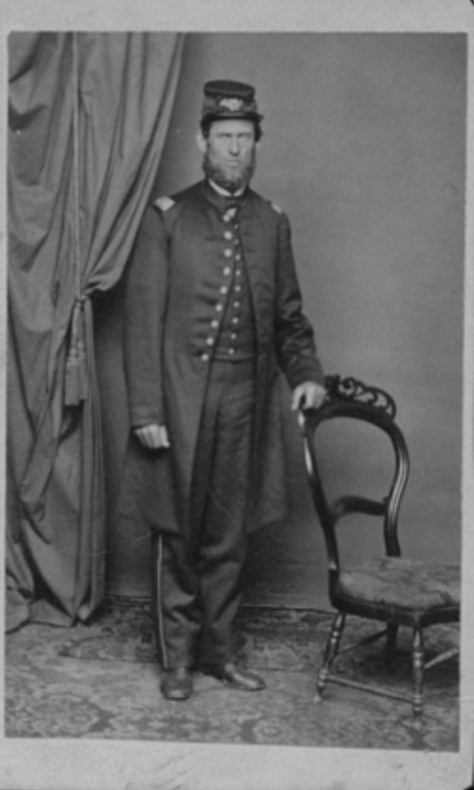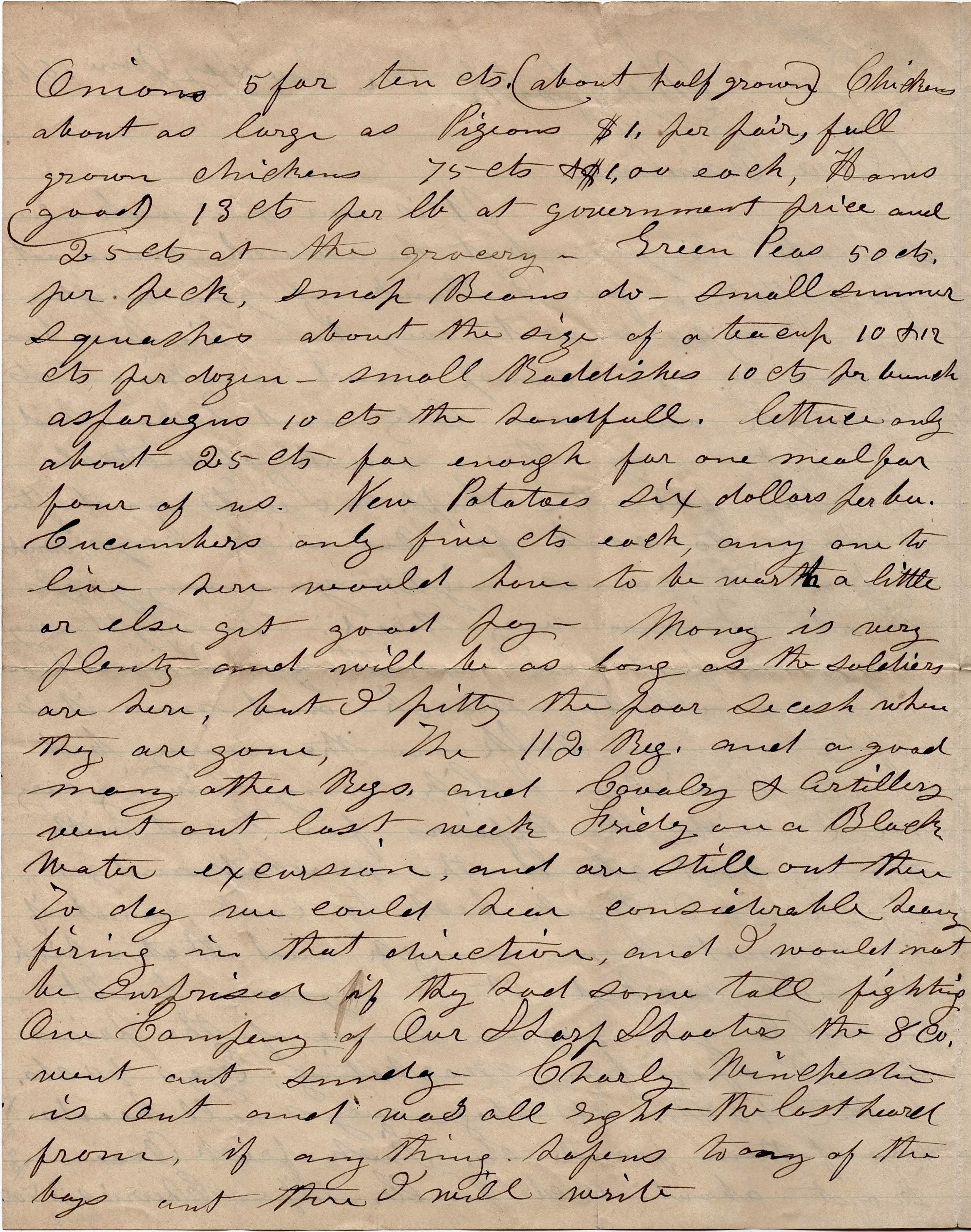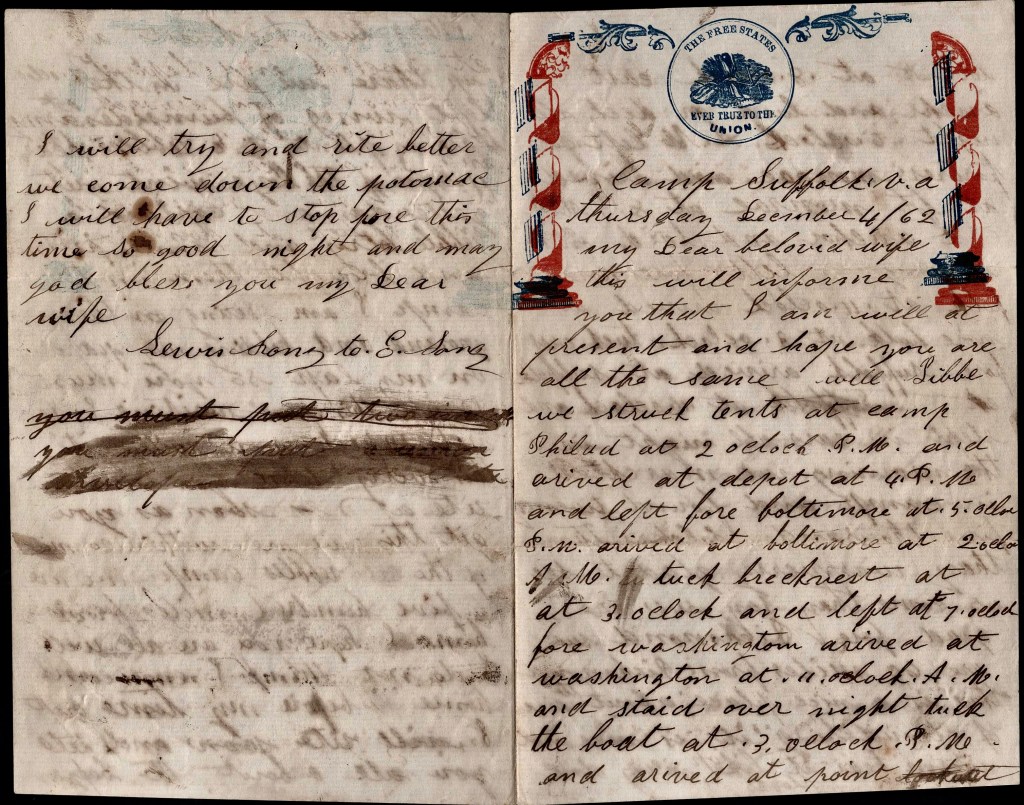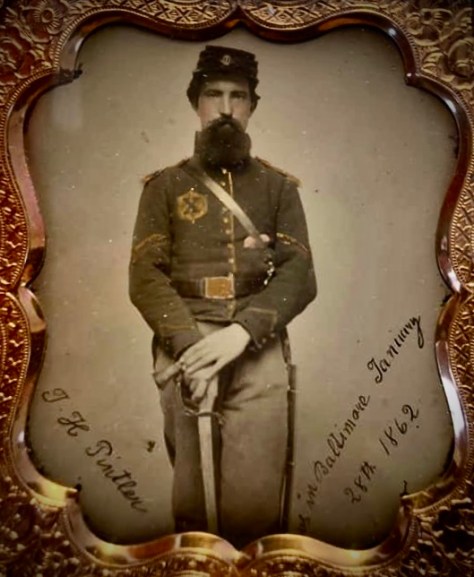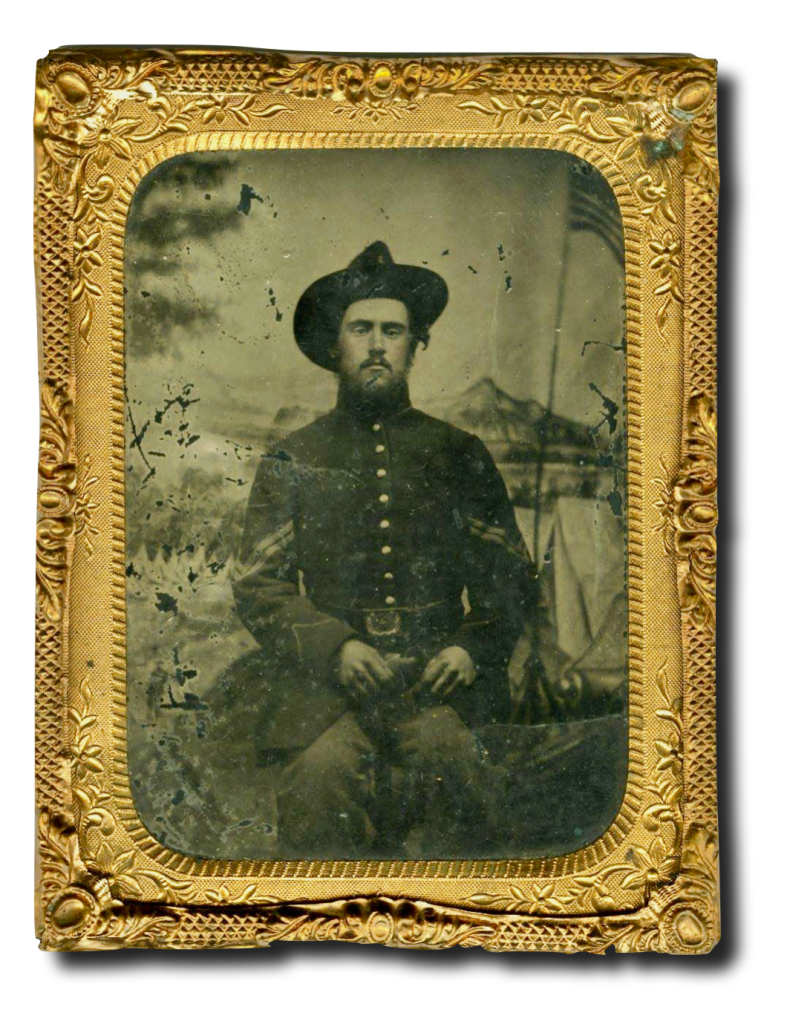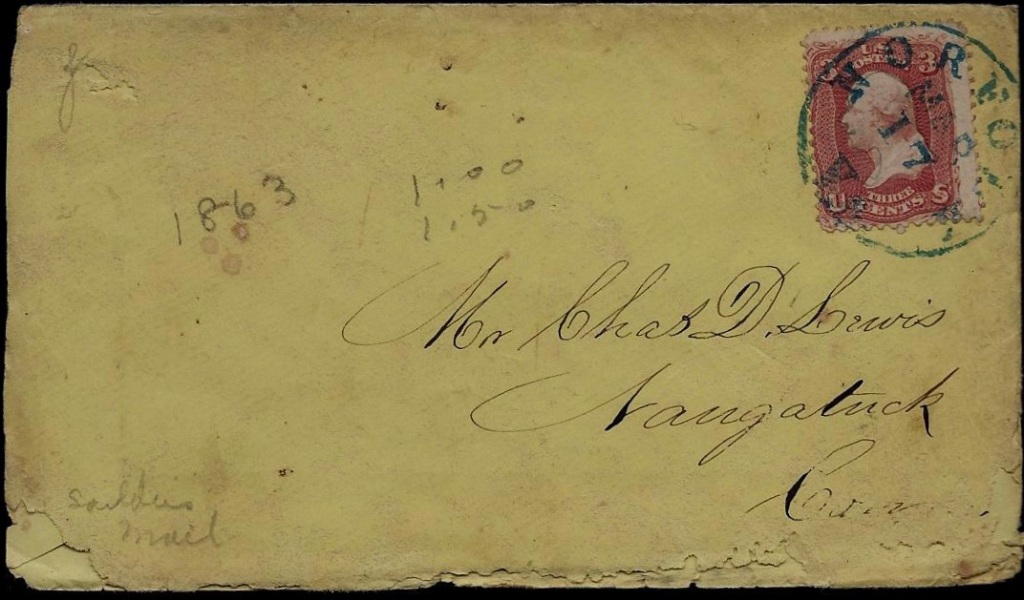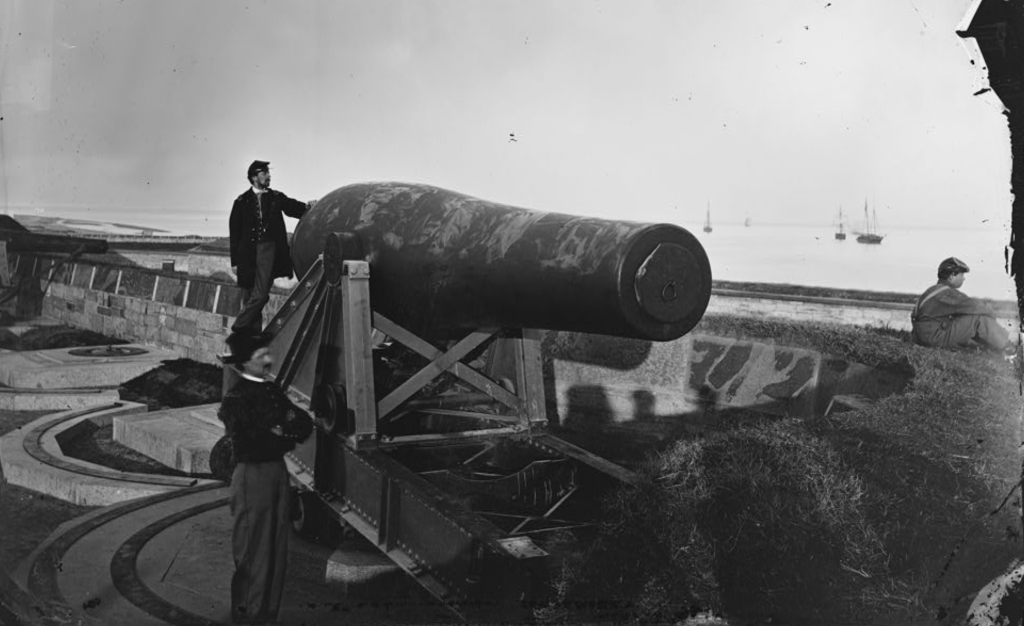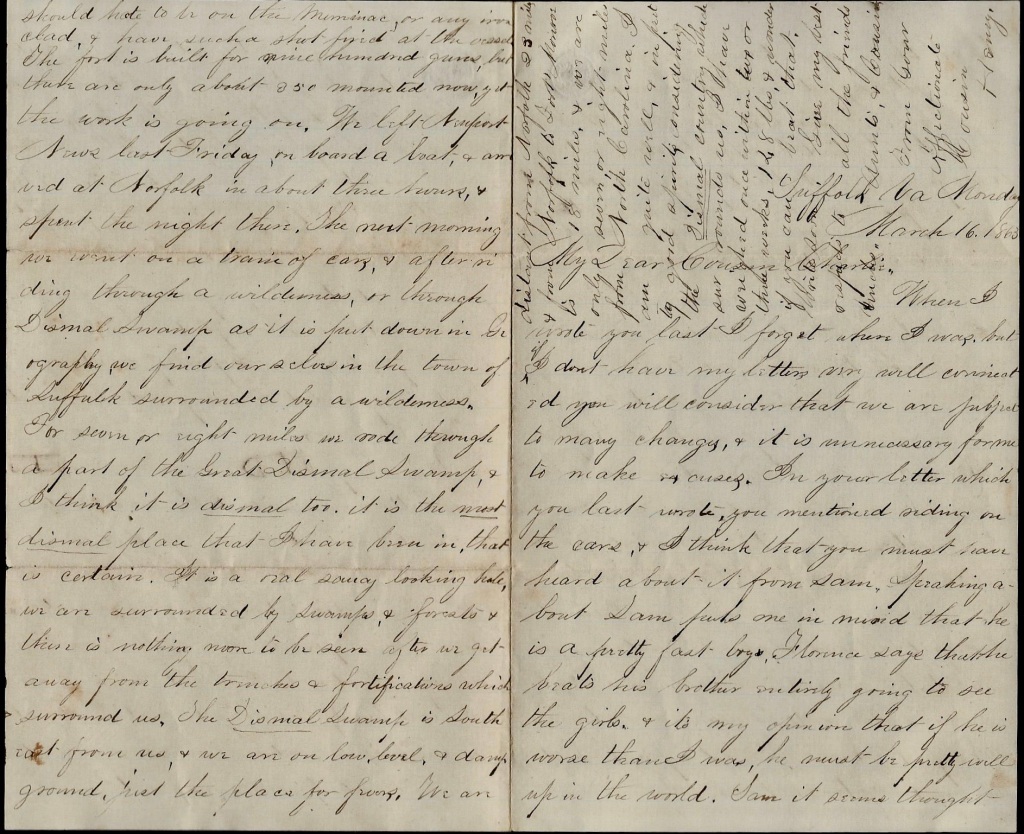
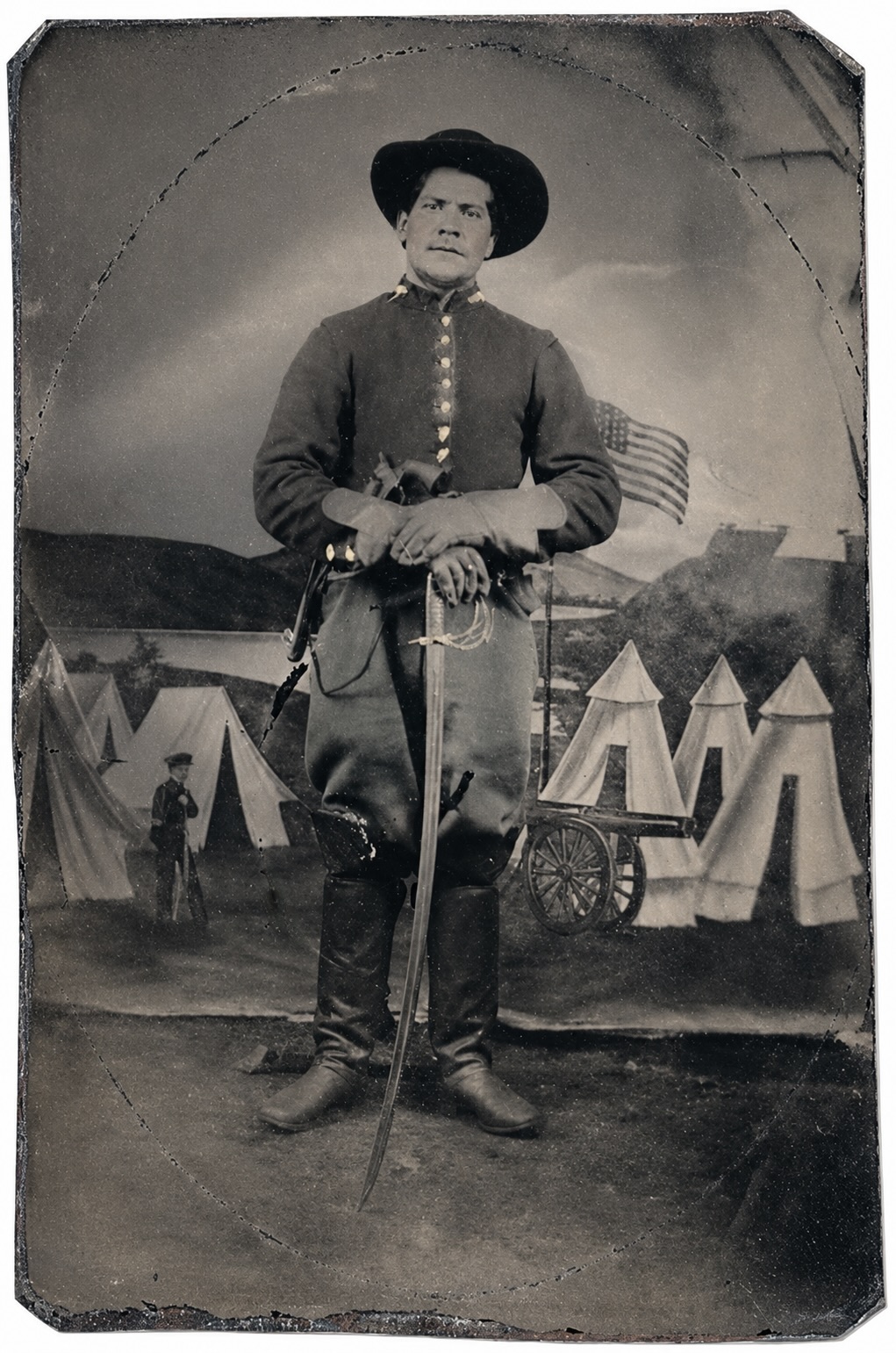
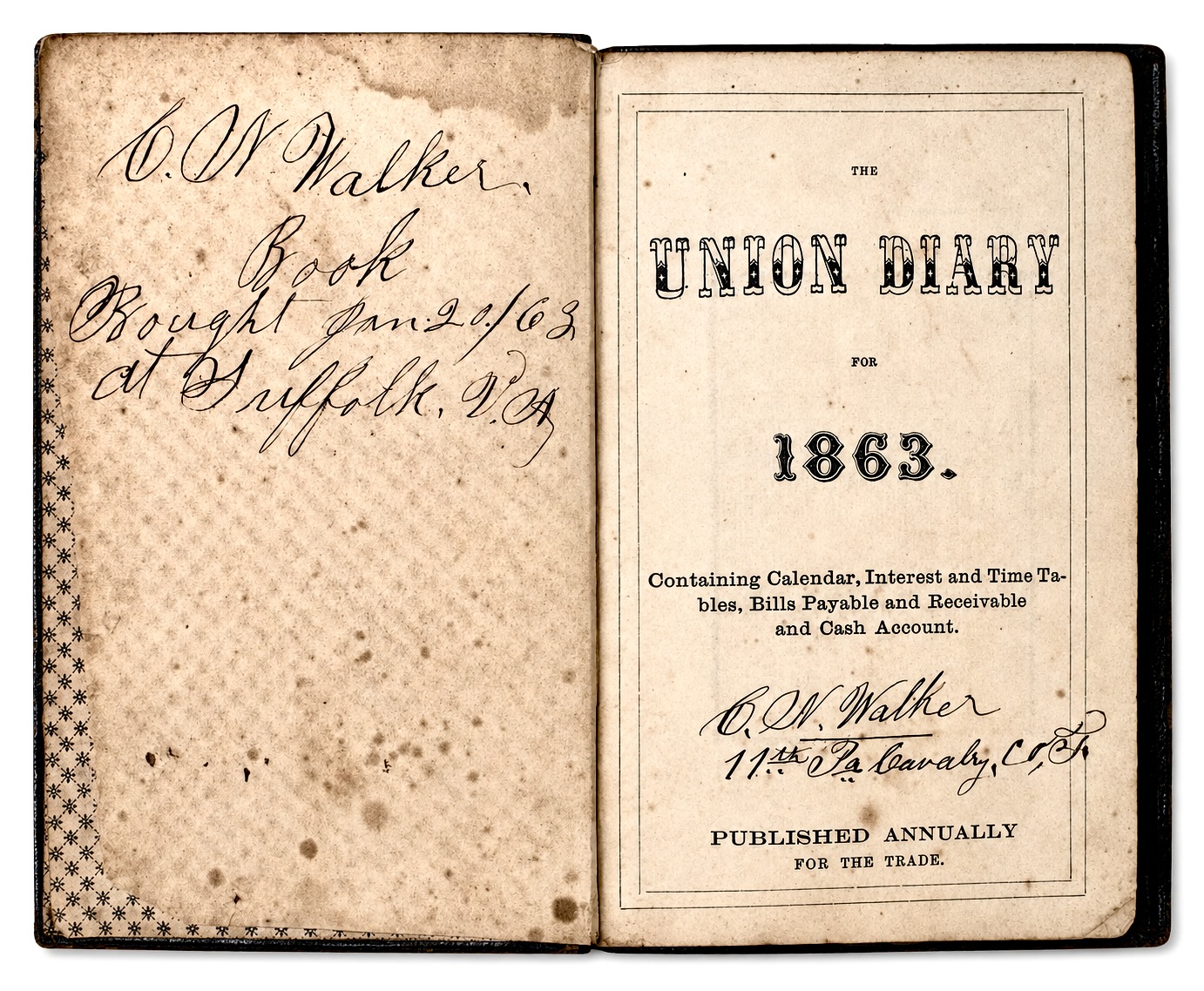
The following pocket diary was kept by Charles N. Walker (1842-1913) while serving in Co. F, 11th Pennsylvania Cavalry. He served three years, from August 1861 to August 1864. He was the son of Delanis Walker and Catherine Keeney of Towanda county, Pennsylvania.
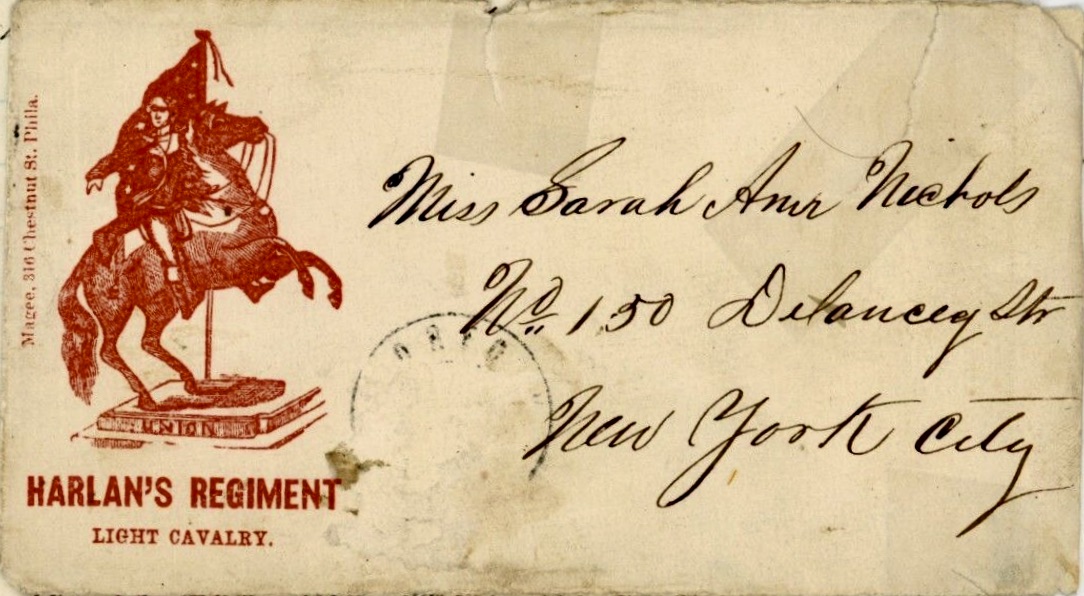
The 11th Pennsylvania Cavalry was organized at Philadelphia as an independent regiment, “Harlan’s Light Cavalry” originally. Most of the men serving in Co. F were recruited from Tioga county, Pennsylvania, or across the state border in upstate New York.
See also the 1863 Diary kept by Jared Fuller of Co. A, 11th Pennsylvania Cavalry. It was transcribed and published on Spared & Shared in May 2023.
Walker’s diary is from the collection of Don Andrew and was made available for transcription and publication on Spared & Shared by express consent.
Transcription
January 1863
Tuesday, 1—Staid in camp all day. Was quite unwell.
Monday, 5—Went to the hospital sick.
Tuesday, 20—Drew five dollars sutler tickets. Bought this book, a portfolio cost one dollar. Am still in the hospital but able to go to town. Wrote to G. F. Ellison.
Wednesday, 21—Stayed around the hospital all day. Wrote to H. A. Guernsey. News of the capture of Arkansas Post and 3,000 prisoners. Wrote to Lydia Giles.
Thursday, 22–Rained nearly all day. Received a letter from Al and Annie Thompson. Wrote to Al. Phil Andrews came to the hospital today sick. No mail tonight.
Friday, 23—Bought a Waverly [Advocate] and read it all day, Nothing else to do. Am still in hospital. Eat 6 eggs for my supper and so did Paul Rimple and Bis[hop] Borden.
Saturday, 24—Received a letter from Em. Answered it and wrote Ike Townsbery. Went up to camp. Received an [Wellsboro] Agitator from Sate.
Sunday, 25—Received a letter from Juke. Answered it and wrote to W. E. Calkins. Stayed to the hospital all day. Very nice day. Enos Ackerly Co. He got a furlough for 20 days.
Monday, 26—Returned to camp today. Green, Co. D, 7th Confederate Cavalry was paroled and went away from the hospital.
Tuesday, 27—Signed the pay roll for four months pay. Rained nearly all day. Very muddy.
Wednesday, 28—Still rains. The paymaster did not come today but is expected tomorrow. It is raining very hard tonight. Coffee, rice, and bread and molasses for supper.
Thursday, 29—Went out on a scout at midnight and returned in the morning. Received pay at night. the whole regiment went out to fight the rebs.
Friday, 30—In camp all day. Fight going on at the Deserted House. Our troops come off victorious. All in camp.
Saturday, 31—Got my likeness taken. Very busy times about town. Greenbacks are plenty. Am on light duty yet. Received a letter from Em & Mother.
February 1863
Sunday, 1—Wrote a letter to Em. Went on company inspection. Got my likeness taken and sent it to Juke. Sent $5 to Ma.
Monday, 2—Went and saw J. Brady. he is well. Had an oyster supper. No news of importance.
Tuesday, 3—Snowed all night. Very cold. Went out on a scout to Holland Corners. Snow about 8 inches deep. No mail today. Rather tough scouting.
Wednesday, 4—Still very cold. Have sat by the fire all day. The snow has not yet gone off. Capt. gets leave of absence for 7 days. get me a pair of boots.
Thursday, 5—Capt. went home today. Still cold. No news of importance.
Friday, 6—Received a letter from Juke. Rained all day. Very muddy going. News of the blockade at Charleston being raised.
Saturday, 7—Received a letter from Em. Lieut. Palmer is officer of the day. Still muddy. Had the toothache all day.
Sunday, 8—Dress parade at ten a.m. Went to town. Wrote a letter to Em. Very nice day. Everything quiet.
Monday, 9—Detailed for police duty today. Very nice day. the Boys played ball nearly all day. received a letter from Sarahan. Bought a Frank Leslie [Illustrated].
Tuesday, 10—Dress Parade at 8 a.m. without arms. Went on a scout to Holland Corners. Did not get back until 10 o’clock at night.
Wednesday, 11—Wrote to Sarahan & Juke and sent a paper to Jane. Very nice day.
Thursday, 12—Detailed for regiment guard and picked out for orderly for Lt. Col. [George] Stetzel for one day. No mail today. Very nice day. Phil Andrews was put in the guard house today.
Friday, 13—Stayed around camp all day. received a letter from Al.
Saturday, 14—-Went on a scout to Carrsville. Had a good time.
Sunday, 15—Had a tooth pulled. Went to church. Received a letter from home. Wrote to Al and Ma. Sent a Waverly [Advocate] to Em.
Monday, 16—Stayed in camp all day. No news of importance.
Tuesday, 17—Rained all day. Stayed in camp. Capt. [Benjamin B.] Mitchell returned on the evening train.
Wednesday, 18—Detailed for fatigue. Rained all day. No news tonight.
Thursday, 19—No news of importance. Rained nearly all day.
Friday, 20—Doct. Borden & Mr. Far came down to see us. Got my horse shod.
Saturday, 21—Went out on a scout to Carrsville. Was on stable guard. Doctor and Mr. Far went on a scout with us. Received a letter from Lydia and a likeness from Juke.
Sunday, 22—Snowed some last night. Rained all day. Wrote to Ma. No news of importance.
Monday, 23—Doctor Borden goes away today. Sent a letter to Ma by him. Middling cold.
Tuesday, 24—Still cold. No news of importance today. Received three [Wellsboro] Agitators from Sate.
Wednesday, 25—Started on a three days scout this day at 3 p.m. Co. F, H, & D under command of Lt. Col. Stetzel. Marched 12 miles to Big Fox Church.
Thursday, 26—Marched to Gatesville and from there to Sunbury, distance of 30 miles. Stayed all night at Sunbury. Am orderly for Lt. Col.
Friday, 27—Received letter from Em and Jennie. Started for camp at sunrise. Went in advance to buy chickens for the Lt. Col. Arrived at Suffolk at 4 p.m. Was alarmed at 9 o’clock. Went out to the pickets but there was no show.
Saturday, 28—Mustered this morn at 9 a.m. by Col. Dodge, Am on stable guard today. Somewhat rainy. received a letter from Juke. Wrote to Jennie.
March 1863
Sunday, 1—Wrote to Juke. Rained nearly all day. No news of importance.
Monday, 2—Rained today. received a letter from Ma and Al. No news today. The ram Indianola captured by the rebs at Vicksburg by the Queen of the West.
Tuesday, 3—Co. F went on a scout to Carrsville. I was in the advance guard. the whole regiment went out to Franklin at midnight.
Wednesday, 4—Wrote to Al. Was on regiment fatigue chopping wood. the regiment came back tonight. they captured three prisoners.
Thursday, 5—Very nice day. No news of importance.
Friday, 6—Co. F went on a scout to Carrsville. Had a good time.
Saturday, 7—Received a letter from C. N. E. Calkins and H. A. Guernsy.
Sunday, 8—Wrote to Alice Bishop. Borden returned today from home. Thomas Depu came with him. Received a letter from Em & Olive. Received a kerchief from Ma.
Monday, 9—Went and saw Jerome today. Marched through town on review by Gen. Peck. No news. Tonight 4 companies on a scout.
Tuesday, 10—Rained all day. No news of importance.
Wednesday, 11—Was on regimental guard. Middling cold day. Co. H was on a scout to Carrsville. Corporal Smith, Co. K, was shot through the head by a guerrilla near Deserted House.
Thursday, 12—Nothing new today. Went on drill. Made two charges. Very nice day.
Friday, 13—Co. F & D went on a scout to South Quay. Drove in the pickets and returned safe and sound.
Saturday, 14—The 9th Army Corps has arrived at this place. No other news. Very fair day.
Sunday, 15—Wrote o Ma. Went to town. Inspection at 9 a.m. Dress Parade at sundown.
Monday, 16—Co. F received orders to get to Norfolk to relieve Co. M. Started at 2 and arrived at 12 o’clock.
Tuesday, 17—Stayed all night near Norfolk. Today the various details were made. I came to the city as orderly. Am orderly for the Provost Judge. Wrote to Warren.
Wednesday, 18—Went up to camp today and served two summons. one on James Street. The other on East Wide Water Street, No. 147. Went to the theater at night.
Thursday, 19—Went to the jail three ties with orders. received orders to return to camp. Snowed some.
Friday, 20—Snowed last night and all day. Went to the city on detail with three days rations. The weather being bad, we were sent back. Corporal D[avenport] and 5 men.
Saturday, 21—It has cleared up some today. the snow is going off. It was about 8 inches deep.
Sunday, 22—Went and took a ride with William Tompkins. Went to church in the evening.
Monday, 23—Went out to Kempsville on picket. Went to Prince Ann Court House on a scout. Bought two dozen eggs. Wrote to Ma.
Tuesday 24—Returned to camp. Received a letter from Jennie & Ma. Very nice day. Went to the city.
Wednesday, 25—Received a letter from Juke. Answered it same day.
Thursday, 26—Went to the city with the captain. Received orders for a scout. Went as far as Kempsville and stayed all night.
Friday, 27—Marched through the county of Prince Ann and picked up all the arms we could find. Saw some very nice young ladies. Stayed at Kempsville.
Saturday, 28—Marched through the county of Norfolk picking up arms. returned to camp in a drenching rain.
Sunday, 29—Received a letter from Al & Alice. Have a very bad cold. Fixed up my stable. Rather a cold day. There is two men here from Bradford visiting the Boys.
Monday, 30—Detailed with 4 of the Boys and Corporal Davenport to report to the Lt. Col. of 173rd Pennsylvania. Went to Prince Ann Court House. Stayed at Kempsville.
Tuesday, 31—Nothing of importance.
April 1863
Wednesday, 1—Did not get fooled today. Middling cold day. Have a very bad cold. Nothing new.
Thursday, 2—Went to the city with Captain. Very nice day.
Friday, 3—Wrote to Al. No news. Cold and rainy.
Saturday, 4—Went to the city and got my horse shod. Cold and windy today. Lay in the house all the rest of the day. Received a letter from Em.
Sunday, 5—Cold, snowy and wet this morning. Wrote to Jennie.
Monday, 6—Went on a scout to Blackwater. Marched over 50 miles.
Tuesday, 7—Wrote to Sate. Went to town and to the Express Office. News of the capture of Charleston, S. C.
Wednesday, 8—Detailed on fatigue. Building bake oven. Pay rolls came tonight. Went to the city with the team.
Thursday, 9—On fatigue. Got pay today. Lieuts. [David] Tears & [Philip] Palmer were here.
Friday, 10—Went to town. Bought a new neck tie and a pair of suspenders and 50 cents worth of stamps. Wrote to Em. Sent Ma $5. Went on a scout to Hodge’s Ferry.
Saturday, 11—Received a letter from Ma. Went on picket 10 miles from the city.
Sunday, 12—Still on picket. Got my meals to a neighbor’s house.
Monday, 13—Went to Sleepy Hole on a scout. Came into Norfolk with a dispatch. Staid in and Lyman Cole went out in my place.
Tuesday, 14—Went to the city and got my horse shod. Nothing new.
Wednesday, 15—Nothing new.
Thursday, 16—Went to Deep Creek with the Captain. Got wet. Sent Ma $45 by Express.
Friday, 17—Went up to Great Bridge with John. Put under arrest. Staid all night.
Saturday, 18—Came from Great Bridge with Irvine Arnot [Irwin Arnet].
Sunday, 19—Received a letter from Ma.
Monday, 20—Went out to David’s Mills on picket.
Tuesday, 21—Went out to the neighbors to see the girls.
Wednesday, 22—Nothing new.
Thursday, 23—The same. Received a letter from Juke.
Friday, 24—Went over to Mr. Peak’s and saw Martha Jane Brown. She is same.
Saturday, 25—Wrote to Juke adn staid around the church the rest of the day.
Sunday, 26—Went on a scout in the country to the Nansamond [river], breaking up boats.
Monday, 27—Went out riding with Miss Emily Howell. Had a very pleasant ride. Received a letter from Alice & Ma.
Tuesday, 28—Went up to Mr. Taylor’s and got acquainted wit htwo very nice young ladies.
Wednesday, 29—Came to camp with morning report. Baily went out in my place. Received a letter from Em & Alice. Wrote to Alice. Thunderstorm in the evening.
Thursday, 30—Went on a scout to northwestern branch, distance of 25 miles from camp. Captured a horse.
May 1863
Friday, 1—-Went to the [blacksmith’s] shop. Got my secesh horse shod. Before wrote to Em. In the evening, Sergt. [George W.] Tooker returned to the company. Today Charley Clark and Turner went to jail.
Saturday, 2—Went to Kempsville on picket with Corporal [N. M.] Davenport.
Sunday, 3—Came in from picket by way of the plank road.
Monday, 4—Stayed in camp all day. News of Gen. Hooker’s advance.
Tuesday, 5—Received a letter from Dora Howcell. Got me a Waverly [Advocate]. Went to the city on a pass. Went a fishing and did not get a fish.
Wednesday, 6—Wrote to W. E. Calkins. Rainy today.
Thursday, 7—Went to the city at night.
Friday, 8—Went to the city & got my bit fixed. Received a letter from Al.
Saturday, 9—Captain went to Old Point. Went to the city.
Sunday, 10—Drove the team up to Great Bridge for Ben received a letter from Alice. Very warm and pleasant.
Monday, 11—Picnic party went up the river from Portsmouth. Wrote to Al. Started on a two day’s scout. Went to Great Bridge and staid all night.
Tuesday, 12—Scouted about 30 miles out. Got some corn and ham. Returned to Great Bridge. Staid all night there.
Wednesday, 13—Returned to camp today. Very warm.
Thursday, 14—Received a letter from Em. Wrote to Ma. Thunderstorm in the afternoon. Moved stables &c.
Friday, 15—Went to the city.
Saturday, 16—Received a letter from Eugene Herring [Co. H, 45th Pennsylvania] . He is at Acqua Creek.
Sunday, 17—Went to the city and visited the burying ground. Called on Miss Nickels in the evening.
Monday, 18—Went on a scout to Blackwater. Fine day. Rode about 50 miles.
Tuesday, 19—Went to the city and got my horse shod. The Reverend Mr. Whittaker called on us in the afternoon. Played a game of ball with us.
Wednesday, 20—Nothing new. Went out calling in the evening.
Thursday, 21—Wrote to Em and Eugene Herring.
Friday, 22—Stayed around camp all day. Went in Mr. Ive’s field and got all the strawberries I could eat.
Saturday, 23—Went over to Portsmouth to attend a picnic but there was none there. Very warm day.
Sunday, 24—Inspection in the morning. Went out to see the gals in the afternoon.
Monday, 25—Went into the country after some men. Did not get them. Wrote to Alice.
Tuesday, 26—Wrote to Juke. Very nice day. Received a paper from Jennie.
Wednesday, 27—Received letters from Al, Alice, and Juke.
Thursday, 28—Stayed around camp all day. Very warm day.
Friday, 29—Went to the city in the daytime. Went and saw the girls at night.
Saturday, 30—Cleaned the yard up and went to the city.
Sunday, 31—Went out in the country 4 miles to church. Had a good sermon. Very warm day. Went out in the evening to see the girls.
June 1863
Monday, 1—Wrote to Al. Nothing new.
Tuesday, 2—Went to the city with A[delbert] D. Keeney. Received a letter from Eugene Herring.
Wednesday, 3—Received a letter from Em. Large fire in Norfolk in the evening. Went down to Mr. Nichol’s. In the evening, mounted drill.
Thursday, 4—Went to the city with the team. Stayed around camp the rest of the day. Mounted drill in the afternoon.
Friday, 5—Bishop Borden came to see us today. Stayed all night. I went to the city in the evening.
Saturday, 6—Bishop went to Suffolk today. Very nice day. Pay rolls came today. Signed the pay roll. Went on a scout.
Sunday, 7—Stayed at Great Bridge last night. Went out in the country about 20 miles. Returned to camp.
Monday, 8—Wrote to Em & Jennie.
Tuesday, 9—Some of the Boys went to Great Bridge and stayed all night.
Wednesday, 10—Went on a scout by way of Great Bridge. Stayed all night at the bridge.
Thursday, 11—Started for camp. Received orders to return on a scout. Did so. Went to Shingle Landing.
Friday, 12—Marched all night. Arrived at Blackwater at daylight. 77 officers got away from one of our boats and we are trying to cut them off.
Saturday, 13—Corporal July [?], H. C. Palmer, and myself went to arrest Mr. Baum. He ran into the woods. Received a letter from Ma and Al.
Sunday, 14—Went with Lieut. [Philip A.] Palmer after Baum. He was away but the ladies said he would be in in the morning.
Monday, 15—Mr. Baum gave himself up. Went up after him. One of the young ladies played on the piano for us. Mr. Baum came to the city.
Tuesday, 16—Went into the country with Lyman & Wilson Cole. Sergt. Ward came out with orders to gather up horses. Received a paper from Jennie.
Wednesday, 17—Marched through the country picking up horses. Came to Great Bridge at night.
Thursday, 18—Returned to camp today. Brought 81 horses in and turned them over to the quartermaster. Very warm and dusty.
Friday, 19—Went to town and got my horse shod. Received a letter from Alice. Wrote to Ma.
Saturday, 20—Received marching orders to join the regiment.
Sunday, 21—Co. K, 1st New York Rifles came to relieve us. Wrote to Ma, Juke, Alice and Al. Went to the city with the captain.
Monday, 22—Packed up . Went to the city. Joined the regiment at Portsmouth. Saw Emily Howell. Staid all night in Portsmouth.
Tuesday, 23—Took the boat for Yorktown. Arrived in the afternoon. Encamped for the night.
Wednesday, 24—Took the boat for White House [Landing]. Moved as far as West Point [on the York River] and anchored for the night.
Thursday, 25—Landed at the White House and started on the road for Hanover Court House. Captured some rebel pickets. Staid in the country.
Friday, 26—Moved on to the Court House. Captured a wagon train and 75 prisoners. Had a small fight.
Saturday, 27—Returned to the White House on the opposite [side] of the river safe and sound. Co. B’s 1st Sergeant [Richard McFarlan] was killed [at South Anna River, Va. on 26 June 1863].
Sunday, 28—Moved across the river and encamped on the bank of the [Pamunky] river.
Monday, 29—Wrote to Mam Al, and Juke and Emily Howell.
Tuesday, 30—Lay around camp all day. Received a letter from Ma.
July 1863
Wednesday, 1—Started on a scout. Crossed the river at the White House and marched through the county of King William.
Thursday, 2—Resumed the march, stopping to camp on Mr. Taylor’s farm. Co. F on picket.
Friday, 3—Lay around all day waiting for the infantry to come up. One of Co. A was tried for highway robbery. He stole $16 and four watches.
Saturday, 4—Went to Hanover Court House. Was orderly for Gen. Getty. the command went to the junction but got drove back. Co. F lost two horses killed.
Monday, 6—Stayed at the court house about two hours, then came to the White House. Arrived about 1 o’clock this morning.
Tuesday, 7—the division returned today. Busy all day carrying dispatches. Orders to start at daylight for Yorktown. News of the fall of Vicksburg on the 4th.
Wednesday, 8—Started at daylight. Am now at New Kent Court House writing with secesh ink.
Thursday, 9—Stair all night near Barhamsville. Started at three in the morning and stopped about three miles from Williamsburg and stayed all night.
Friday, 10—Started at three a.m. and marched to Yorktown. Arrived about 4 o’clock and encamped for the night.
Saturday, 11—Stayed at Yorktown all day. Carried several dispatches. Received a letter from Al.
Sunday, 12—Started from Yorktown and marched to Bethel. Stopped for dinner and then the Gen. came on to Hampton with his staff.
Monday, 13—The command moved on to Hampton and stayed there all night.
Tuesday, 14—Took the boats for Portsmouth. Arrived in a drenching rain. Stayed all night near Portsmouth.
Wednesday, 15—On the go all day carrying dispatches for the General.
Thursday, 16—Returned to camp. Put up the picket rope and tents. Co. F came in from picket.
Friday, 17—On stable guard. Wrote to Ma. We helped the boys raise the tent.
Saturday, 18—In camp all day. No news of importance. Received a letter from Emily Howell.
Sunday, 19—Detailed for orderly for Gen. Getty. Expected Gen. Foster to review the troops. He did not come. Saw Emily Howell.
Monday, 20—Gen. Foster came this morning. Grand Review today. Returned to camp.
Tuesday, 21—Detailed for regiment guard. Rained all day and night. Got some wet. Wrote to Sate.
Wednesday, 22—Came off guard this morning. The company worked on the stable.
Thursday, 23—Worked all day on the stable.
Friday, 24—Worked all day on the stable. Orders for a scout in the morning. Received a letter from Ma.
Saturday, 25—Started on a scout. Marched through Suffolk and camped about 3 miles the other side of Suffolk on the Edenton Road.
Sunday, 26—Renewed the march at daylight, Co. F in the advance. Marched to Gatesville and encamped for the night.
Monday, 27—Renewed the march at daylight. Marched to the Chowan river opposite Winton. Crossed the river in steamboats and moved on to Murfreesborough and camped for the night.
Tuesday, 28—Started at daylight and marched on the road towards Jackson. Arrived about three p.m. Found the rebels in a strong position. Had a small fight. Moved back 7 miles and camped.
Wednesday, 29—Moved back to Murfreesborough and encamped for the night.
Thursday, 30—Marched back to Winton, crossed the river and camped for the night. C. F was on picket.
Friday, 31—Started again at daylight and marched about 15 miles and encamped for the night.
August 1863
Saturday, 1—Started again at daylight and went to South Quay and Franklin. Moved back towards Suffolk and camped about 3 [miles] below Hollin’s corners.
Sunday, 2—Started at daylight, I Company under command of Major Stratton and moved towards camp. Went through Suffolk and arrived in camp at 8 in the evening. Received lettersfrom Ma and Al.
Monday, 3—Lay around camp all day. Move camp in the morning.
Tuesday, 4–Moved camp today.
Wednesday, 5—Co. F on picket. Wrote to Ma, Al and Jake. No news. On stall guard.
Thursday, 6—Co. F came in from picket. Received pay.
Friday, 7—Moved camp today. Worked on our house. On detail fixing the bridge.
Saturday, 9—Went to Bowers Hill and got a load of shingles. Received a letter from H. A. Guernsey.
Sunday, 9—Stayed in camp all day. Fixed up my bunk. Wrote to Emily Howell. Sent a paper to Jennie.
Monday, 10—Went on picket to Bower’s Hill, Stood post at the crossroads beyond the church. Received a letter from [ ].
Tuesday, 11—Came down to the railroad near deep creek to relieve the mounted rifles to go in a scout.
Wednesday, 12—Went to a neighboring house and got my meals. Stood picket up the railroad. Received a letter from Sate & Aunt Sallie.
Thursday, 13—Got dinner at one of the neighbors. Rained all night. Slept in a barn.
Friday, 14—Very nice day. Got my breakfast at a house. Wrote to Ma.
Saturday, 15 through Monday, 17—no entries.
Tuesday, 18—Still on picket. Went into camp today with some lumber. Drew me a new pair of pants. Received a letter from Em.
Wednesday, 19—Wrote a letter to Sate. Nothing new on picket.
Thursday, 20—no entry.
Friday, 21—Relieved from picket today by Co. G. Arrived in camp about 2 p.m.
Saturday, 22—Received orders to start on a scout at 1 p.m. Wrote to Em Started and went to Suffolk and stayed all night.
Sunday, 23—Started with companies K & L. Went to Windsor and from there to Noony [?] Came back to Windsor and stayed all night.
Monday, 24—Started at 8 a.m. Came to Deserted House. Stayed there about 4 hours, then came into Suffolk and stayed all night.
Tuesday, 25—Left Suffolk at 9 a.m. and moved back to the mill 7 miles. Lieut. Palmer and myself came into camp. Received a letter from Juke.
Wednesday, 26—Went toNorfolk with Lieut. Palmer and [ ]. Stayed there all day. Returned to camp and wrote to Em
Thursday, 27—Went to Deep Creek with P. A. P. and from there to the regiment at the mill.
Friday, 28—Went and got fodder for my horse. Received a letter from Emily Howell.
Saturday, 29—Went to Suffolk on picket. Got me a stove of P. A. P. Bought a jug of brandy.
Sunday, 30—Returned from picket. received a letter from Al & his wife & one from Em.
Monday, 31—Was mustered for pay. Nothing new.
September 1863
Tuesday, 1—Am 21 years old. Returned to camp with P. A. P. Went and saw his wife. Wrote to Al and Juke.
Wednesday, 2—P. A. P. went to Norfolk. I worked on his house.
Thursday, 3—Worked for P. A. P. He went and got his wife. Received a paper from Em.
Friday, 4—Worked for P. A. P. Wrote letters to Em Alise & Emily.
Saturday, 5—Worked for Lieut. Palmer. Nothing new. The regiment still out.
Sunday, 6—Went to South Mills at night. Not very pleasant ride.
Monday, 7—Returned from South Mills. Arrived about three p.m. very tired.
Tuesday, 8—Finished P. A. P.’s house. Company F returned to camp today. Wrote to H. A. Guernsey.
Wednesday, 9—Wrote to Clary. Received a letter from Emily, Most of the boys puking by eating cheese.
Thursday, 10—Was on stable guard.
Friday, 11—Detailed to help work on the stable. Worked all day in the woods.
Saturday, 12—Went to Bowery Hill to see Capt. Mitchell. Weeks went to Norfolk.
Sunday, 13—Turned a canteen and haversack into Sergt. Cummins.
Monday, 14—Went to Deep Creek on fatigue detail. Getting roofing. Received a letter from Em. We went out in a scout. Started at 8 o’clock in the evening.
Tuesday, 15—Went to South Quay and returned to the mill below Suffolk. Stayed there all night.
Wednesday, 16—Day at the mill all day. Went up to the dodgers camp and got a stove.
Thursday, 17—Returned to camp today One of Co. A was shot for robbery.
Friday, 18—Finished our house today. Put up our stove. Wrote to Em. Dress parade at 7.30 p.m.
Saturday, 19—Very rainy today. Went out to Bowers Hill to cook for Capt. Mitchell.
Sunday, 20—Middling cold. Am at Bowers Hill. Received a letter from Jennie & Walker.
Monday 21—Was relieved from picket by Co. C. Wrote to Al and his wife.
Tuesday, 22—Cos. F, G, and H moved out to the mill near Suffolk on detail for a month. Am cooking for Capt. & Lieut. Fay.
Wednesday, 23—Fine weather. The boys are building stables. No news.
Thursday, 24—Fine day. Nothing new.
Friday, 25—Wrote to Aunt Sallie. Lieut. Tears went out after beef.
Saturday, 26—All quiet today.
Sunday, 27—Went to Suffolk and got some lumber to fix my stable.
Monday, 28—Lay around all day. Capt, Mitchell went after beef.
Tuesday, 29—Wrote to Anna Wiswell. Nothing new.
Wednesday, 30—Have a very bad cold. Played chess with some of the boys.
October 1863
Thursday, 1—Signed the pay roll. Received a letter from Em and a paper from Jane.
Friday, 2—Lieut. Tears went into camp. Capt. Mitchell is playing the aggreable to the ladies. Wrote to Ma and Helen Calkins.
Saturday, 3—received pay in the evening. Co. F went on a scout.
Sunday, 4—Capt. and Sergt. Smiley went into camp. Received a letter from Alice.
Monday, 5—Wrote to Alice. No news of importance. Watched the boys play cards nearly all day.
Tuesday, 6—Lay around camp all day.
Wednesday, 7—Cap. Mitchell is Officer of the Day. Went the rounds with him at night.
Thursday, 8—Went to all the picket stations today. Received and agitation from Ma.
Friday, 9—Nothing new today. Am feeling quite well. Had a social game of Euchre with Captain, Lieutenant Tears, and sutler.
Saturday, 10—Let the sutler rode any horse to Suffolk with the Captain. Sent after lottery tickets.
Sunday, 11—Preaching in camp today. Nothing else new.
Monday, 12—Capt. is Officer of the Day. Went the rounds with him at night. Received a letter from al and Jennie.
Tuesday, 13—Had a long talk with Capt. about commercial permits.
Wednesday, 14—Wrote to Al. Received a letter from Juke.
Thursday, 15—Received lottery tickets. Wrote to Juke a.m. Nothing new.
Friday, 16—Received a letter from Jane. Capt. is Officer of the Day.
Saturday, 17—The telegraph wire was put up to here today. No other news. Three wagon loads of refugees came in today.
Sunday, 19—Wrote to Jane. Very pleasant day.
Monday, 19—Went to Suffolk with Major [George T. Cornog & Capt. There was a train of cars from Norfolk loaded with ladies going south—500 of them.
Tuesday, 20—Lay around camp all day. No news today. Had a roast of beef for dinner.
Wednesday, 21—Capt. is Officer of the Day. Tonight wrote Juke, the other letter being lost. Wrote two sheets full.
Thursday, 22—Flag of TRuce came to Suffolk asking permission to assist the ladies over Black Water. Permission was granted. Orders to fall back &then countermanded.
Friday, 23—No news of importance. Received a letter from M. E. Calking & Hellen.
Saturday, 24—Wrote to N. E. C. and Hellen. Received a letter from Sate.
Sunday, 25—Warren Golden has gone to Washington to work. Nothing else new.
Monday, 26—Started to Norfolk on the handcar with Capt. after box. Boots arrived about 4 p.m. Stayed all night. Went to the theatre.
Tuesday, 27—Got up this morning. Ate a hearty breakfast. Went and sat for my photograph. Got the noots. Returned to camp on the hand car.
Wednesday 28—Bought me a pair of boots. Gave $10 for them.
Thursday, 29—Received letters from Em, Alice, and Al and Alices’s photograph.
Friday, 30—Received my photographs tonight and a letter from H. A. Guernsey. Wrote to Aunt Sallie. Sent my photograph to Vira.
Saturday, 31—Mustered for pay. Wrote to Al & Alice. Sent them my photograph. No news.
November 1863
Sunday, 1—Went and took a ride with Sergt. Crandall. No news of importance. Caught a rebel Lieutenant and private in our rear.
Monday, 2—Orders to return to camp. Packed up everything and started and the order was countermanded.
Tuesday, 3—Went to a corn field with Sergt. Lamb and got corn for my horse. Wrote to Sate answering hers and Em’s both.
Wednesday, 4—No news. Capt. is Officer of the Day. Tonight went the rounds with him.
Thursday, 5—Went to Sleepy Hole with Capt. to communicate with the gunboat but it did not come. Received a letter from Ma and Jennie & paper.
Friday, 6—Well I have got one day ahead of time so I will fill up for Wednesday by saying that we are all alive.
Saturday, 7—Spent the day in reading and taking care of my horse, Went to the sutler shop in the evening and ate oysters out of a wardish [?]. Had a good time.
Sunday, 8—No mail for poor me today. Spent the day in thinking of the absent and wrote to H. A. Guernsey.
Sunday, 9—Capt. Mitchell went to Norfolk on the cars.
Tuesday, 10—The rebs came into Suffolk and captured one wagon and two teams and seven men. We chased then ten miles on the [ ].
Wednesday, 11—Received marching orders to return to camp.
Thursday, 12—Started for camp. Arrived about two p.m. Received a letter from Al & Alice.
Friday, 13—Finished the Captain’s mess box and a few other trifles.
Saturday, 14—Helped Cummins lathe the Captain’s house. Worked hard all day.
Sunday, 15—Detailed for patrol. Went to Norfolk at night and searched for runaway.
Monday, 16—Came in from patrol and started out again on a scout. Went to Kempsville and stayed all night.
Tuesday, 17—Started at daylight. Went to Prince[ss] Ann Courthouse and got the county records and returned below Kempsville and stayed all night.
Editor’s Footnote: Charles’ entry of 17 November 1863 is a curious one. He states that he “went to Prince Ann Courthouse and got the county records.” Yet I found that according to “local lore, a clever county clerk packed all of the precious deed and court record books into a covered wagon and hid them in the Great Dismal Swamp, returning them only after the fighting had ended.” You may choose to believe Charles’ account or the local lore theory.
Wednesday, 18—Returned to camp today. Wrote to Jane. Have a very bad cold. Was on stable guard.
Thursday, 19—The veteran soldiers started for home today. Sent Ma my old letters and some raw cotton. Traded horses.
Friday, 20—Got my new horse shod adn wrote to Alice. Very nice weather.
Saturday, 21—Helped Sergt. [ ] on the Captain’s house. General police day. The boys cleaned up the street.
Sunday, 22—Worked all day for the captain and got his chimney and plastering all done. Wrote to Al and lady in the evening.
Monday, 23—Was on stable guard.
Tuesday, 24—Came off stable guard and lay around all day.
Wednesday, 25—Went off to Col. Spears’ Headquarters and he talked to the company about Lieut. Tears.
Thursday, 26—Received pay. Also the news of Bragg’s defeat and the capture of 10,000 prisoners [in Tennessee].
Friday, 27—Went of picket near Portsmouth with Lieut. Murray. Had a good time.
Saturday, 28—Returned from picket. Received a letter from Ma.
Sunday, 29—Cold and rainy today. Write to Ma. Sent her and Jane my photo. Also $10 to Ma.
Monday, 30—Wrote to Juke last eve. Went on picket near Portsmouth. Middling cold day. Told the wood haulers for wood to keep fire.
December 1863
Tuesday, 1—Got one day ahead of my time. Was on drill Monday. Received a letter from Juke and answered it the same eve.
Wednesday, 2—Came in from picket and went on brigade review in the afternoon. Quite tired when night came.
Thursday, 3—Was on regiment fatigue all day. Received a letter from Aunt Sallie containing one from Vera with her photograph. Wrote to Vira in the evening.
Friday, 4—Started on a three days scout at two o’clock last night. Arnot Andress and myself went to Great Bridge and from there to Northwest river & back to Great Bridge and stayed all night.
Saturday, 5—Went from Great Bridge to Norfolk and waited there until three p.m. Returned to camp. Received a letter from Alice.
Sunday, 6—Lay around camp all day. Nothing new.
Monday, 7—The rest of the veterans went to the fort to get their pay and bounty. Was on regiment guard.
Tuesday, 8—Relieved from guard. The veterans returned tonight. Five more went home.
Wednesday, 9—Lay around camp all day. Nothing new. Some of the boys pretty tight [drunk].
Thursday, 10—Went on mounted drill. Had a gay drill. Weeks was on picket. On regimental fatigue. Worked on the church.
Friday, 11—Am on regimental guard. Received a letter from Al and lady. Wrote to Aunt Sallie.
Saturday, 12—Weeks was on picket. I lay around camp all day.
Sunday, 13—Company inspection in the morning. Reading of orders. Went on regimental guard at night. Em was married.
Monday, 14—[Isaac?] Pickering returned today. Fetched me two shirts and a vest a letter from Jane. Wrote a letter to Alice.
Tuesday, 15—Lay around camp. Nothing new.
Wednesday, 16—Was on regimental guard. Some of the veterans came back. Weeks went to town. Received a letter from Em & Sate.
Thursday, 17—Weeks on guard. Received a letter from Miss Julia Arnot. Wrote to Al & Jennie. Wrote to Em. Sent her $5.
Friday, 18—I am on stable guard.
Saturday, 19—Came off stable guard. No news of importance. Camp is quiet and we expect the boys home.
Sunday, 20—Went on picket at Bower’s Hill. Cooked for Capt. The veterans returned today.
Monday, 21—Telegraph dispatch to come into camp immediately. Returned to camp. Scout went out. Orders to be ready at a moment’s notice to reinforce them.
Tuesday, 22—Went and got some shingles for our house. Worked on our house all day. Wrote letters to Jane and Julia Arnot. The Boys have gone to the theatre.
Wednesday, 23—Packed up and went to Suffolk for a month.
Thursday, 24—Fixed up my bunk and lay around all day.
Friday, 25—Was on picket near Suffolk.
Saturday, 26—Came in from picket.
Sunday, 27—Was on fatigue. On stable guard at night. Had a grand Christmas dinner sent from Alba.
Monday, 28—Came off stable guard.
Tuesday, 29—Wrote to Juke.
Wednesday, 30—Went on picket.
Thursday, 31—Came in from picket. No news.