Category Archives: The Immortal 600

1864: William J. Bailey, Jr. to Jane Eliza Bestor

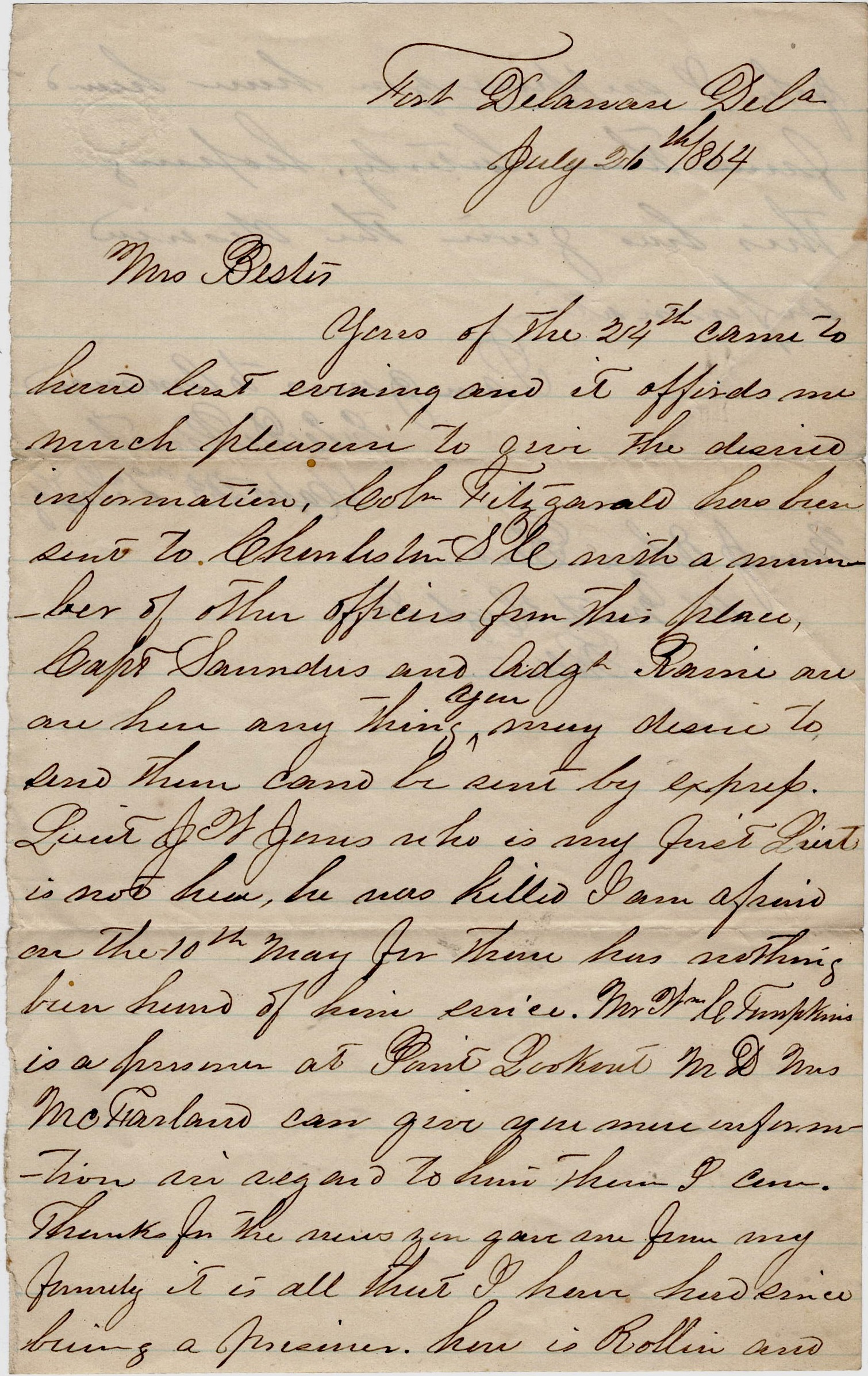
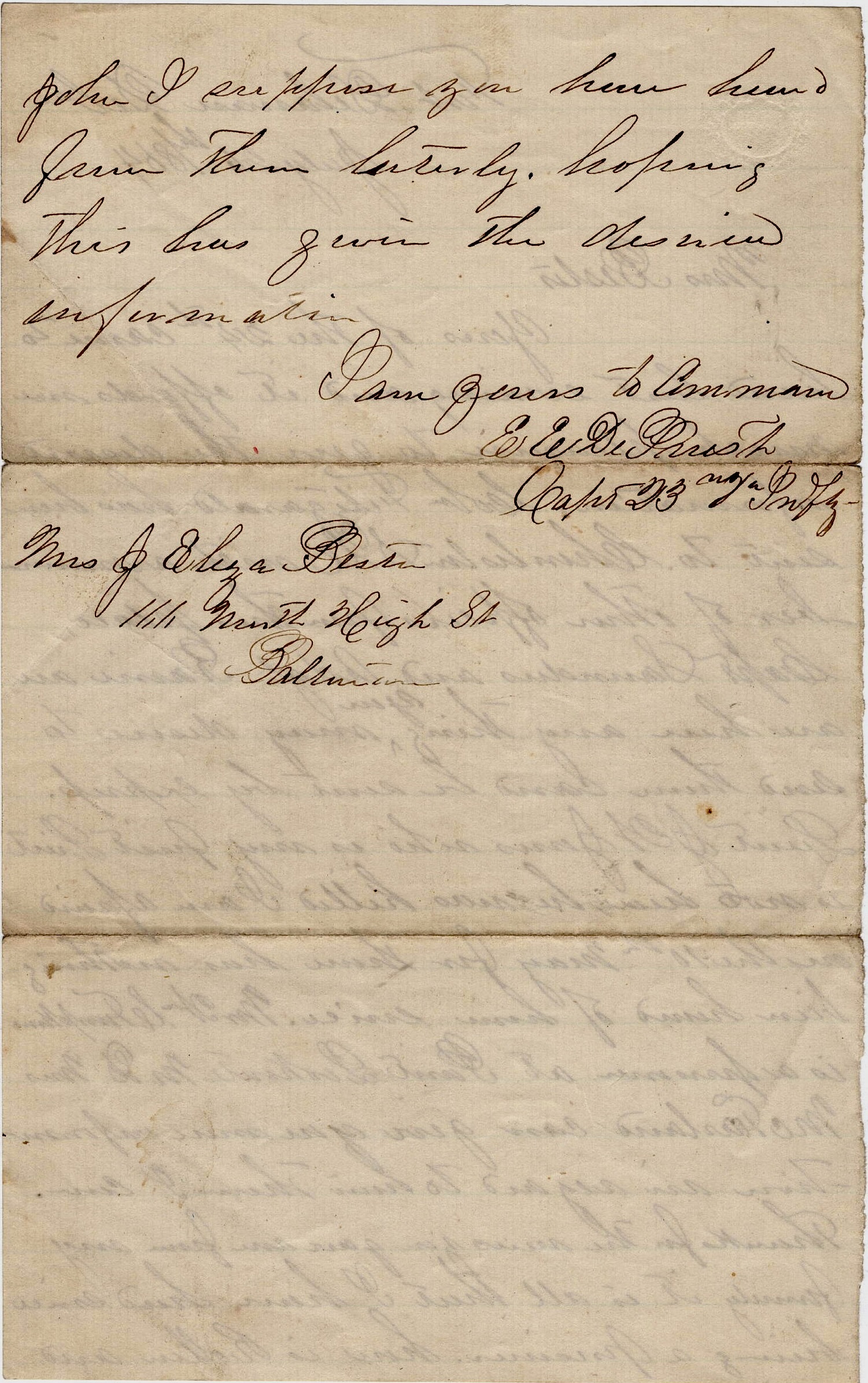
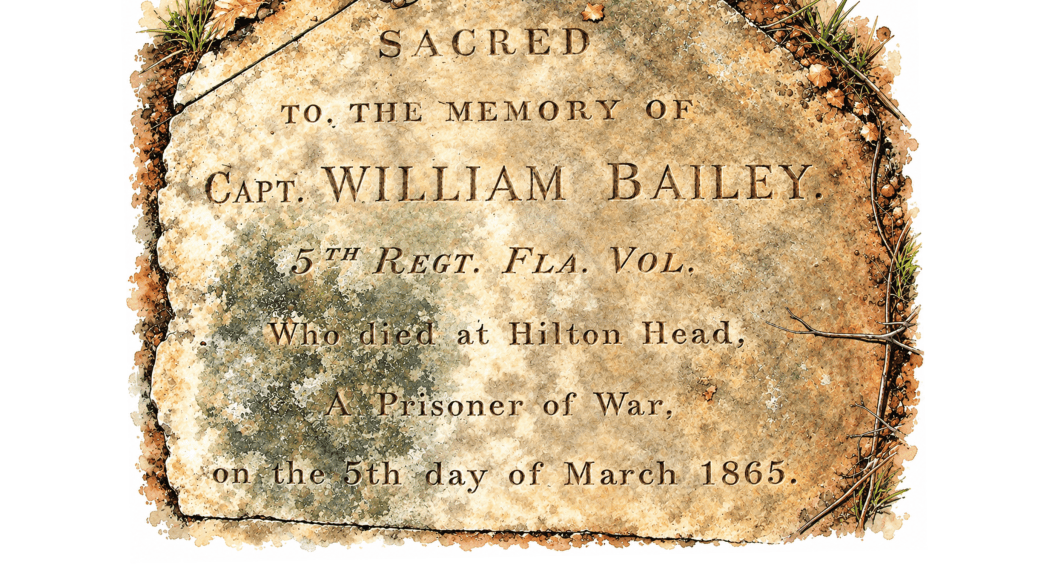
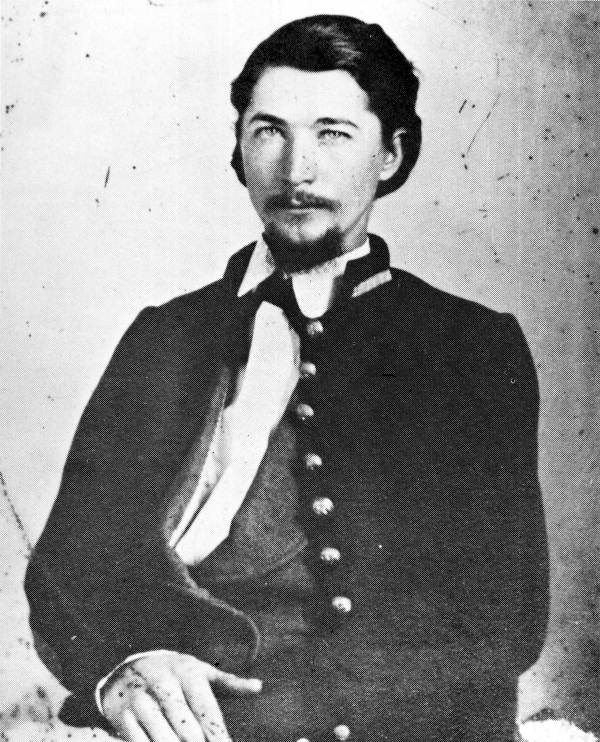
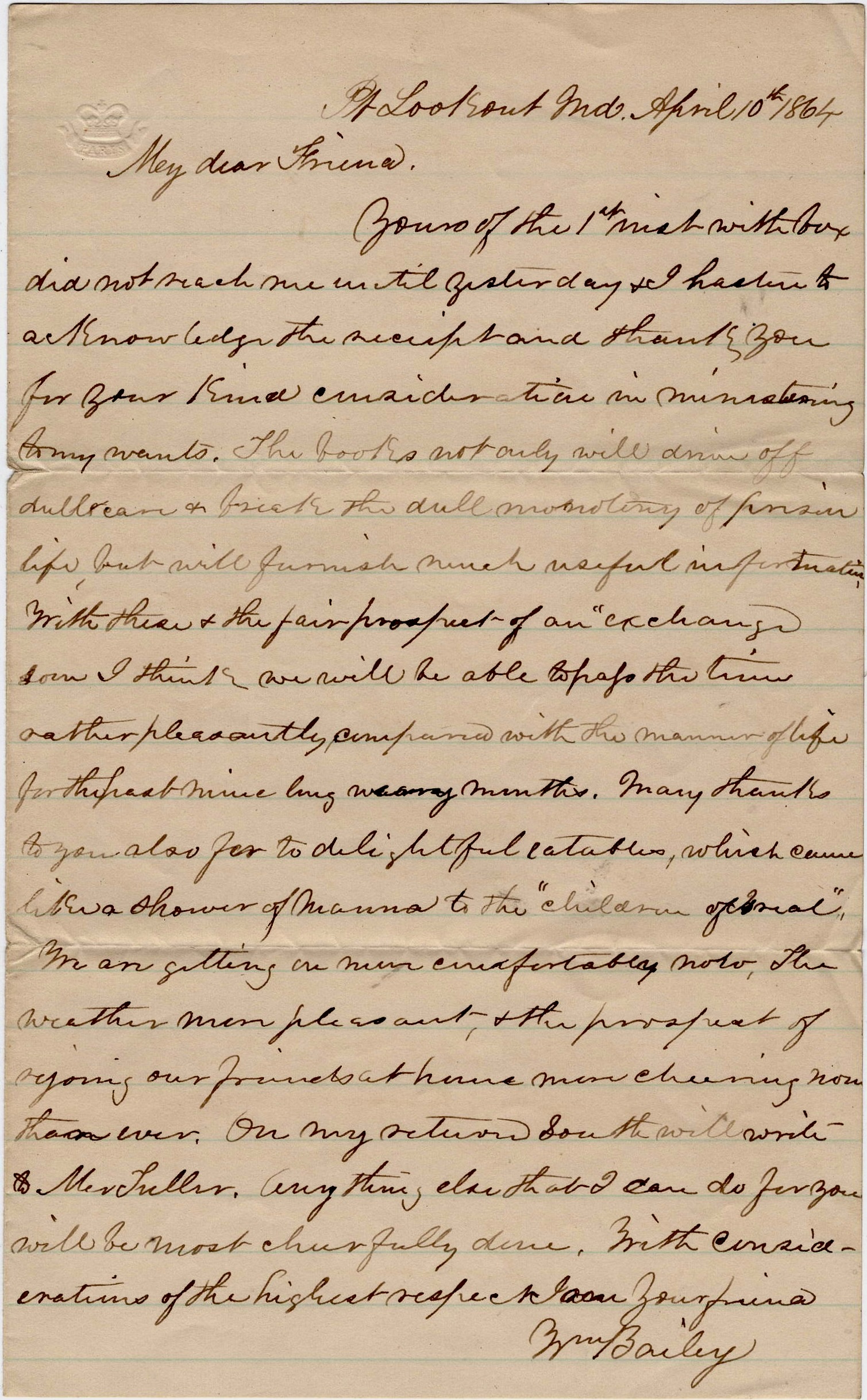
The following Prisoner of War letter was written by Capt. William J. Bailey, Jr. of Leon county, Florida. Early in the war he commanded the Aucilla Guards at St. Marks but when the 5th Florida was organized early in 1862, he joined that regiment as Captain of Co. G. Bailey led his company through some of the most brutal battles of the war—2nd Manassas, Sharpsburg, Fredericksburg, Chancellorsville, and was with his regiment in Lang’s Brigade at Gettysburg where he was wounded and taken prisoner in Longstreet’s sunset attack on the Union Left July 2, 1863. He spent the latter half of 1863 and most of 1864 imprisoned at Fort Delaware. History records his having been selected on 20 August 1864 as one of the “Immortal 600” Confederate officers that were used as human shields on Morris Island during the siege of Charleston. Bailey was reported to have been bounced between several prisons including Fort McHenry (Baltimore), Johnson’s Island, Point Lookout, and Fort Delaware.

In November, 1864, some 200 of the 600 were removed to a prison on Hilton Head Island where they experienced conditions similar to those they did on Morris Island. Prisoners were driven to “catching and eating dogs, cats and rats,” according to Lt. Peter B. Akers. Here, Bailey’s health became so broken by wounds and confinement that he wrote a poignant letter to the Union authorities dated December 25, 1864. Realizing that he would die in prison if not exchanged soon, he sought a parole of 60 days to return home and effect an exchange. For this special consideration, William gave his word of honor to distribute whatever the Union authorities wished (within reason) to the Federal prisoners in the South. The request was denied and Capt. Bailey died of inflammation of the lungs on March 5, 1865. He left a wife—Maria Bolling (Baker) Bailey (1836-1885), and four children born between 1855 and 1861. [Source: The Immortal 600 at Gettysburg.]

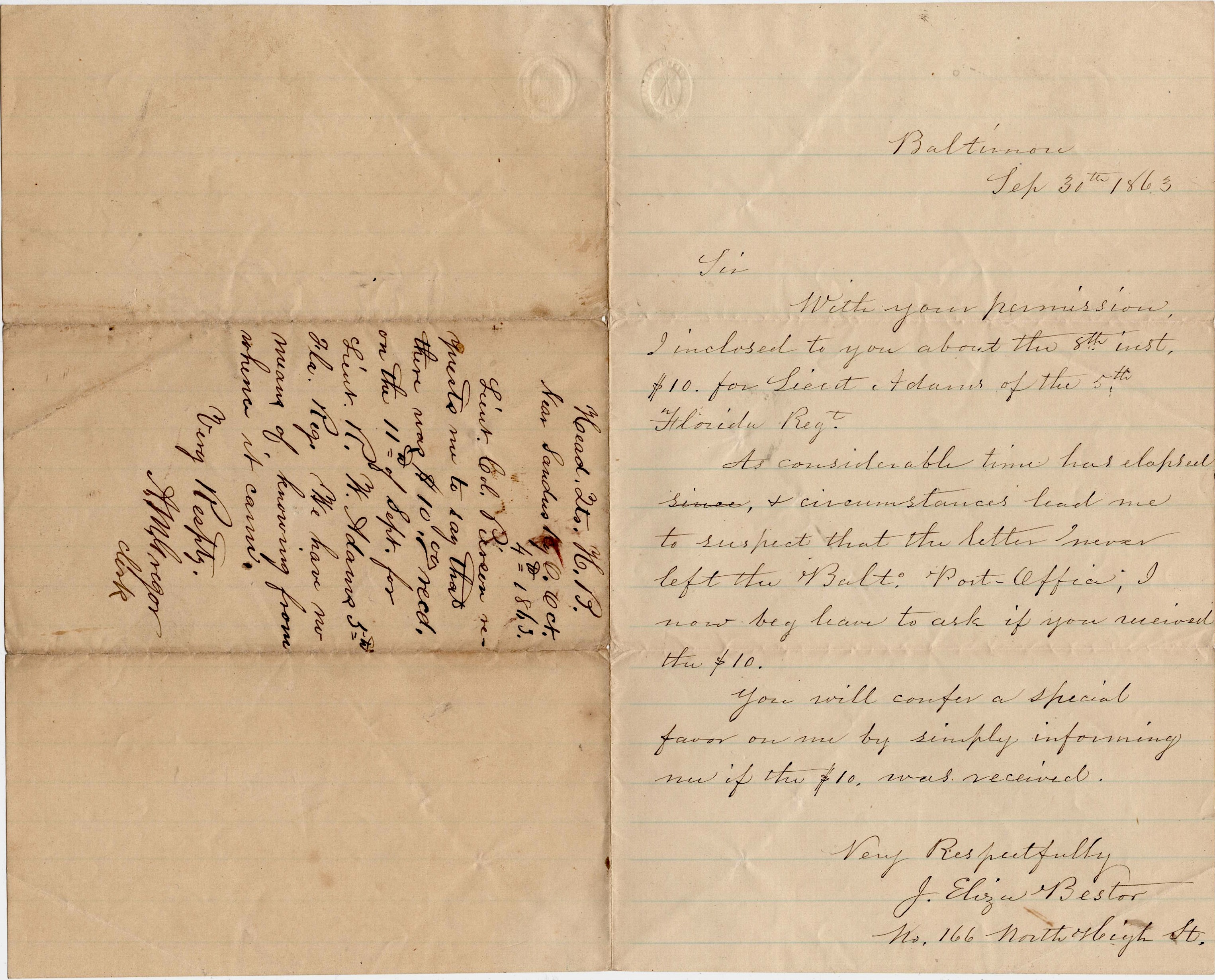
Bailey wrote the letter to Jane Eliza (Brown) Bestor (1820-1885), the wife of John Rollin Bestor, Sr. (1813-1867). This Baltimore couple had twin sons who served in the Maryland Guard that became Co. B, 21st Virginia Infantry. She seems to have corresponded with numerous Confederate officers seeking information about her sons. The Bestor brothers letters have been transcribed and may be found at 1861-65: The Bestor Brothers of Baltimore.
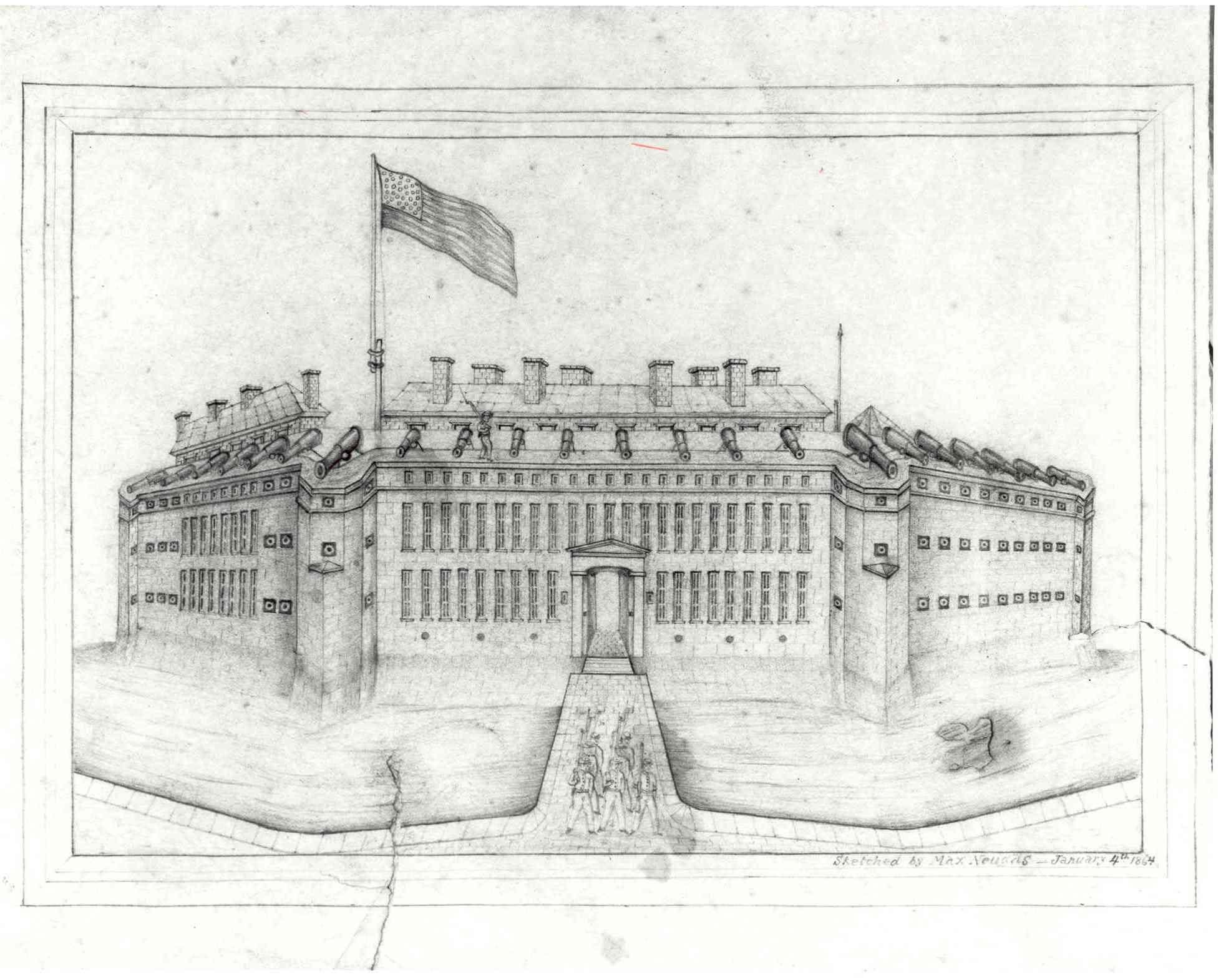
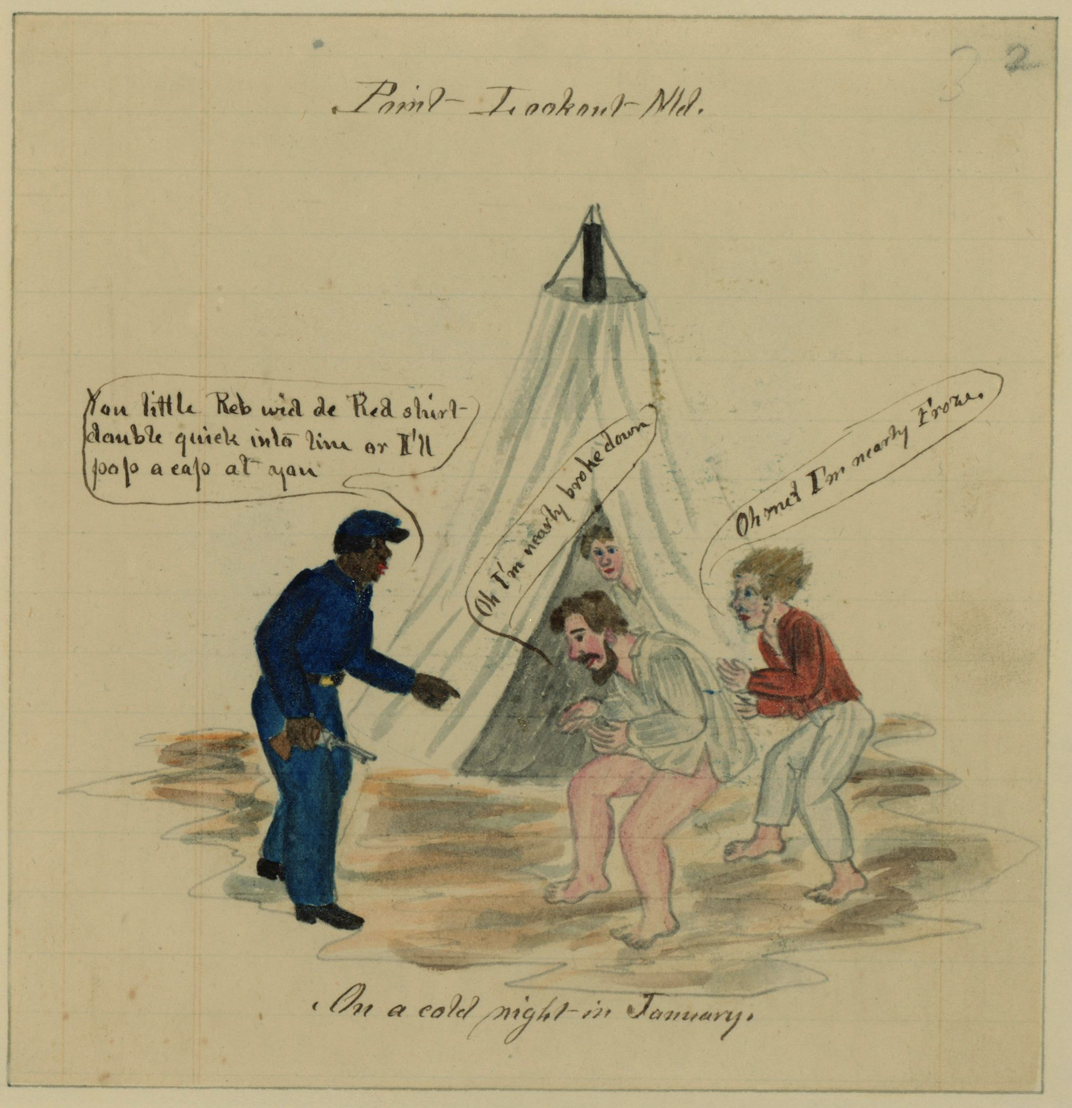
Confederate prisoners at Point Lookout, Maryland, were quartered in tents rather than barracks, and guarded by Black troops in 1864. These tents were in poor condition and often lacked stoves to keep them adequately heated during the winter. When combined with the lack of blankets and clothing, prisoners experienced widespread suffering from the cold. [Source: Inside a Civil War Prison Camp: Sketches from Point Lookout.]

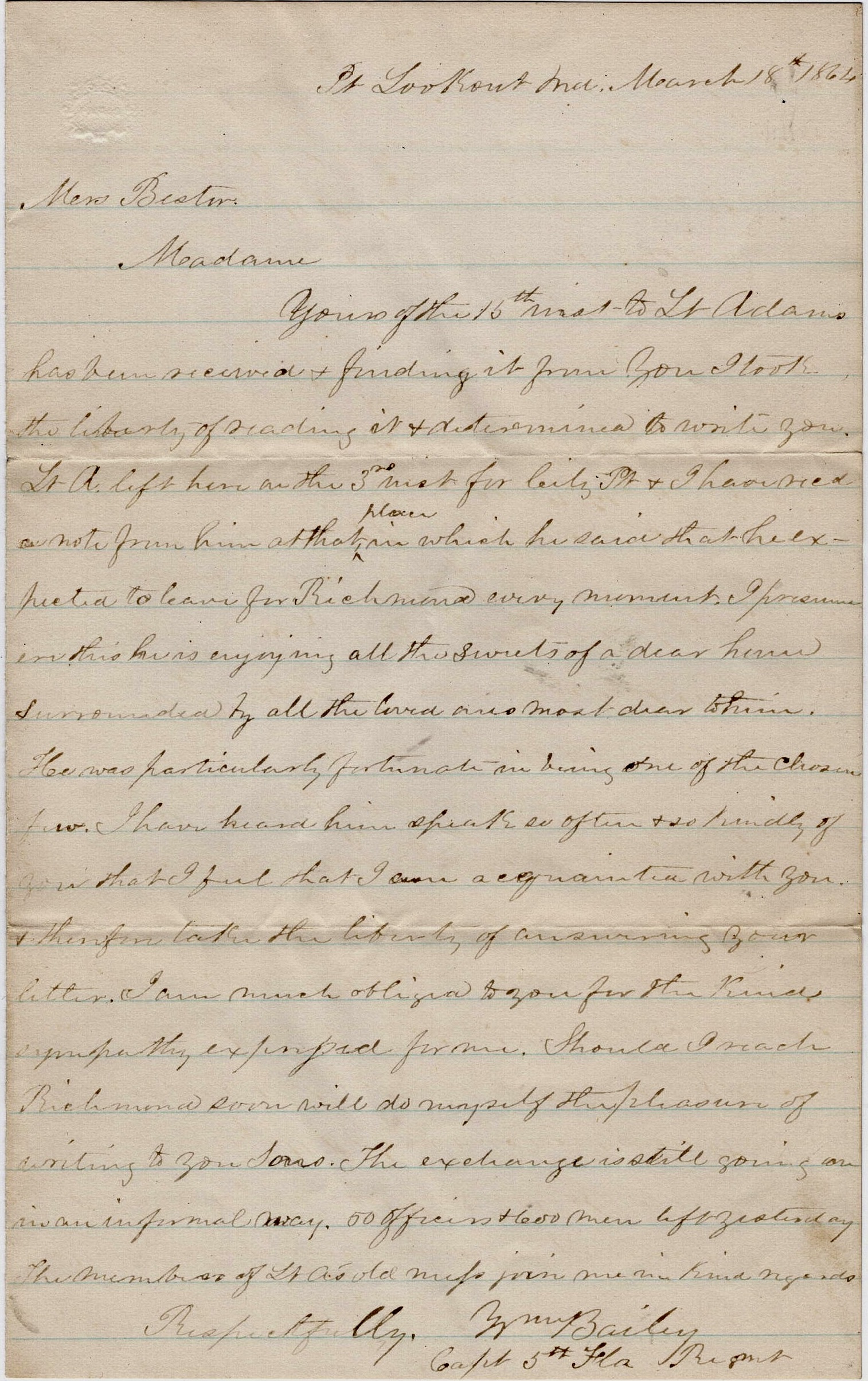
T R A N S C R I P T I O N

Pt. Lookout, Maryland
March 18th, 1964

Mrs. Bestor,

Madame. Yours of the 16th inst. to Lt. Adams 1 has been received & finding it from you, I took the liberty of reading it & determined to write you. Lt. A. left here on the 3rd inst. for City Pt. & I have rec’d a note from him at that place in which he said that he expected to leave for Richmond every moment. I presume in this he is enjoying all the sweets of a dear home surrounded by all the loved ones most dear to him. He was particularly fortunate in being one of the chosen few. I have heard him speak so often & so kindly of you that I feel that I am acquainted with you & therefore taken the liberty of answering your letter. I am much obliged to you for the kind sympathy expressed for me. Should I reach Richmond soon, will do myself the pleasure of writing to your sons. The exchange is still going on in an informal way. 50 officers & 600 men left yesterday. The members of Lt. A.’s old mess join me in kind regards.

Respectfully, — Wm. Bailey, Capt. 5th Fla. Regmt.

1 Possibly 1st Lt. Samuel F. Adams, Jr of Co. E, 45th North Carolina Infantry. He was taken prisoner during the retreat from Gettysburg, held at multiple camps, and transferred to Point Lookout, Maryland. He was officially exchanged on 6 March 1864.

1863: William Wilcox Hulbert to his Uncle Alfred

Lt. William W. Hulbert, 4th Georgia Infantry

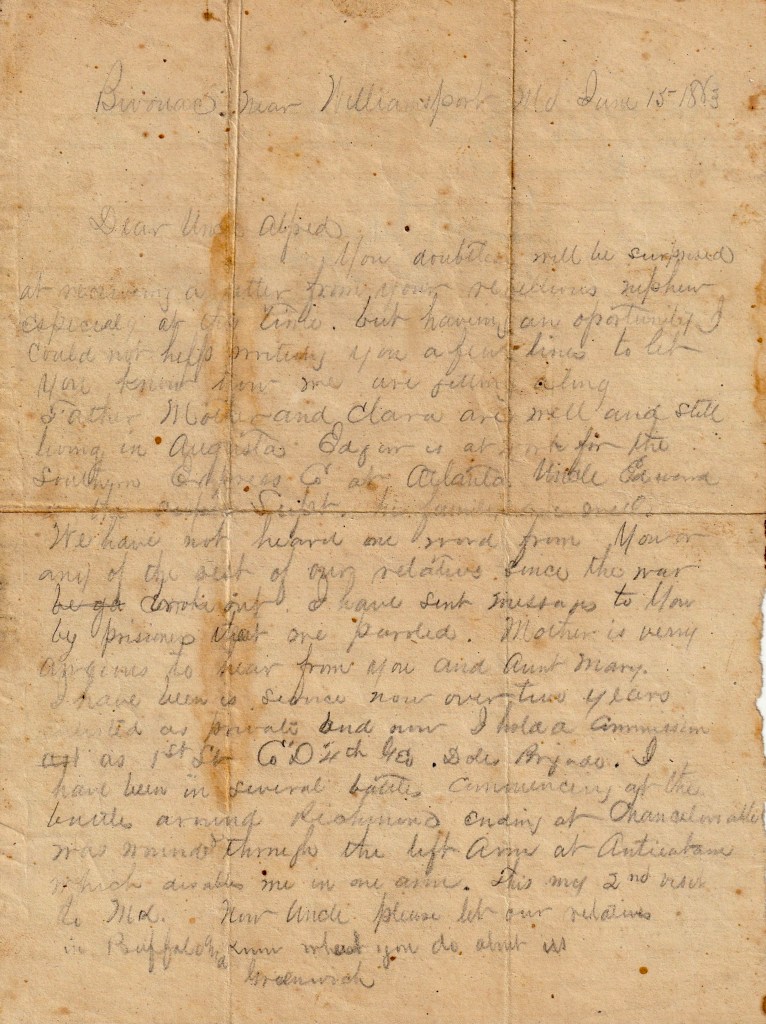
This mid-June 1863 letter was written by Lt.  William Wilcox Hulbert (1838-1911) of Co. D, 4th Georgia while passing near Williamsport, Maryland, on the Gettysburg Campaign. The letter, which is signed “your affectionate but rebel nephew,” represents a communication between Hulbert, who was originally from Connecticut, and his Northern relatives. Flush from their victory in May at the Battle of Chancellorsville (at which Hulbert was promoted to 1st Lieutenant), Lee’s Confederate forces were on the move northward. Williamsport, which is just south of the Pennsylvania border, offered Hulbert yet another chance to send a letter without having to mail it across enemy lines. This campaign would culminate two weeks later at the Battle of Gettysburg, in which Hulbert’s unit fought. 

The 4th Georgia Infantry had one of the most illustrious records of any Confederate unit, fighting at 24 battles from Seven Pines all the way to Appomattox Court House (see History of the Doles-Cook Brigade by Henry Thomas). Lieutenant Hulbert himself had a particularly distinctive war history. After being captured at Spotsylvania while in command of the sharpshooters of his 4th Georgia Infantry, he became one of “The Immortal Six Hundred.”  These 600 Confederate officers refused to sign a loyalty oath to the North so that they could be paroled and consequently languished in prison. On 20 August 1864, angered by Southern treatment of Union prisoners, the North deliberately chose the 600 to be taken to Morris Island, at the mouth of Charleston harbor, where they served as a human shield to the Union forces of Gen. John Foster who were under attack by Confederate forces. After suffering through 45 days on Morris Island, the weakened survivors were sent to Ft. Pulaski where they continued to be mistreated and starved. Hulbert was paroled on 15 December 1864. The Immortal 600 continue to be honored for their adherence to principle under the most adverse circumstances (see The Immortal 600, Surviving Civil War Charleston and Savannah by Karen Stokes, or The Immortal Six Hundred, A Story of Cruelty to Confederate Prisoners of War by Maj. John Ogden Murray.

Jacket Cover to Karen Stokes’ book, The Immortal 600

William was the son of Abijah and Maria Wilcox Hulbert. The family moved from Berlin, Connecticut, to Atlanta, Georgia, when William was a young man. Before the war, he began his career with the Express Company where he remained throughout his entire life except for the four years he passed in the Confederate Army. When the began, Hulbert was running messenger into West Point on the Atlanta and West Point Railroad. The West Point Guards was one of the crack military companies of the state before the war, and when Georgia cast her lot with the seceded states, the West Point Company tendered its services. Within a short time that company found itself in the Fourth Georgia Regiment, which was attached to the Doles-Cook Brigade, one of the first bodies of Georgia Troops to go to the front in Virginia.

[Note: This letter is from the personal archives of Richard Weiner and is published on Spared & Shared by express consent.]

Transcription

Bivouac near Williamsport, Maryland
June 15, 1863

Dear Uncle Alfred,

You doubtless will be surprised at receiving a letter from your rebellious nephew—especially at this time, but having an opportunity, I could not help writing you a few lines to let you know how we are getting along. Father, mother, and Clara are well and still living in Augusta. Edgar is at work for the Southern Express Co. at Atlanta. Uncle Edward is the express superintendent. His family are well. We have not heard one word from you or any of the rest of our relatives since war broke out. I have sent messages to you by prisoners that are paroled. Mother is very anxious to hear from you and Aunt Mary.

I have been in service now for over two years. Enlisted as private and now I hold a commission as 1st lieutenant, Co. D, 4th Georgia—Dole’s Brigade. I have been in several battles commencing at the battles around Richmond, ending in Chancellorsville. Was wounded through the left arm at Antietam, which disables me in one arm. This my 2nd visit to Maryland.

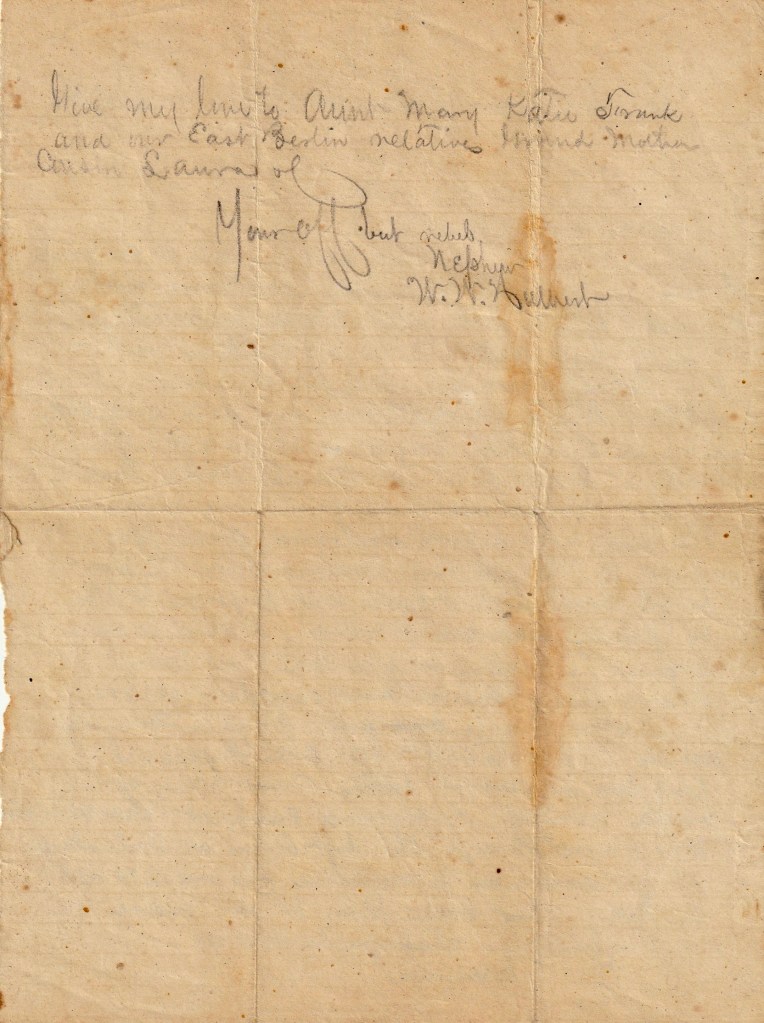
Now uncle, please let our relatives in Buffalo and Greenwich know what you do about us. Give my love to Aunt Mary, Katie, Frank, and our East Berlin relatives, Grandmother, Cousin Laura, &c.

Your affectionate, but rebel nephew, — W. W. Hulbert.