
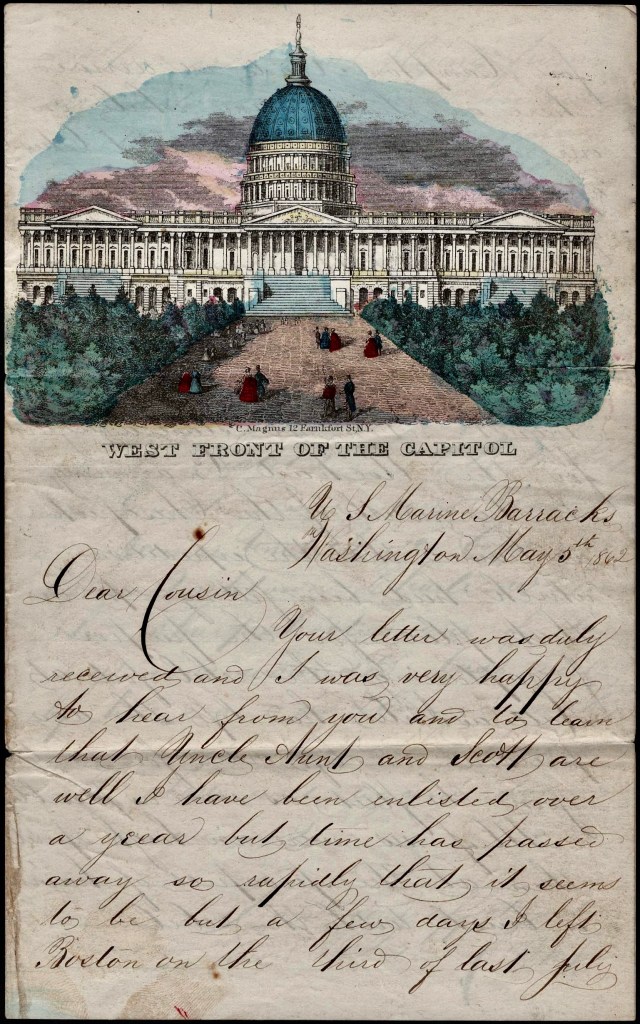
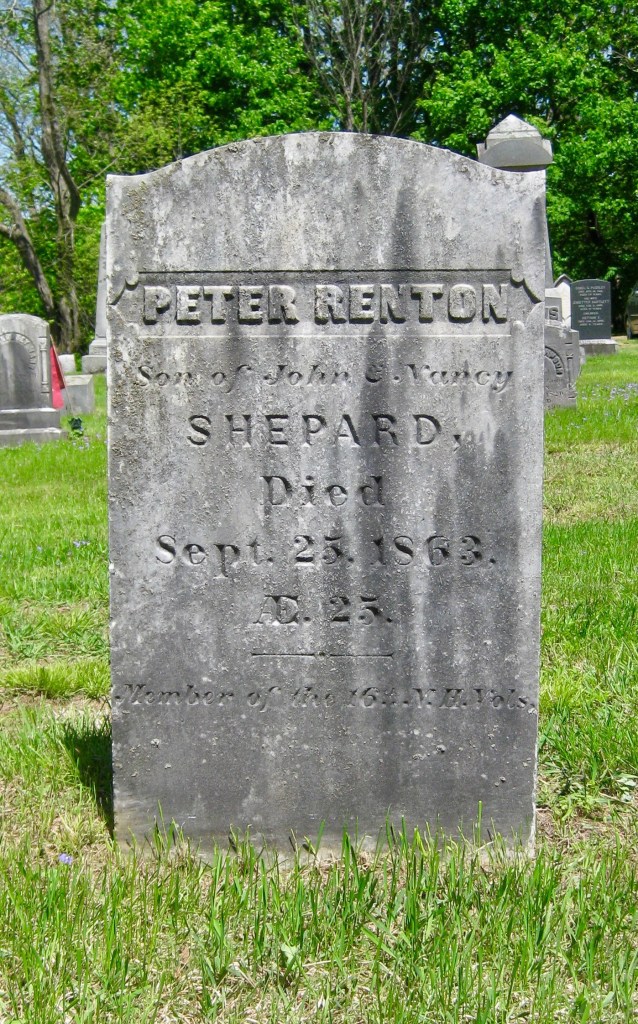
The following letter was written by Peter Renton Shepard (1839-1863) who enlisted in the US Marines on 2 May 1861 and served aboard the USS Susquehanna. When he enlisted he gave his birthplace as Canterbury, New Hampshire, and his residence as Boscawen. He further stated that he was single and was employed as a farmer. Muster records claim that Peter deserted from the service—which may be true—but cemetery records in Boscawen reveal that he died of “fever” on 25 September 1863 and his headstone informs us that he mustered into Co. E, 16th New Hampshire Vol. Infantry on 7 November 1862.
Peter was the son of John M. Shepard (1804-1874) and his wife Nancy (1807-1889) of Boscawen, New Hampshire.

T R A N S C R I P T I O N
U. S. Marine Barracks
Washington, May 5th 1862
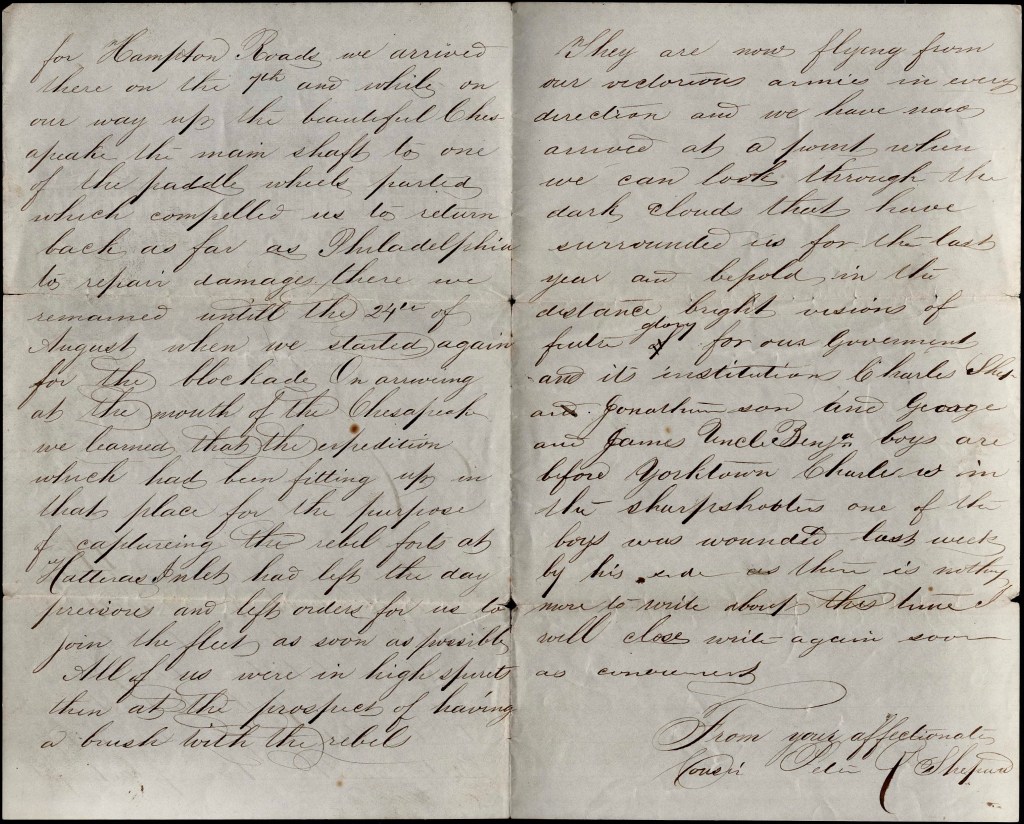
Dear Cousin,
Your letter was duly received and I was very happy to hear from you and to learn that Uncle, Aunt and Scott are well. I have been enlisted over a year but time has passed away so rapidly that it seems to be but a few days. I left Boston on the 3rd of last July for Hampton Roads. We arrived there on the 7th and while on our way up the beautiful Chesapeake the main shaft to one of the paddle wheels parted which compelled us to return back as far as Philadelphia to repair damages. There we remained until the 24th of August when we started again for the blockade.
On arriving at at the mouth of the Chesapeake we learned that the expedition which had been fitted up in that place for the purpose of capturing the rebel forts at Hatteras Inlet had left the day previous and left orders for us to join the fleet as soon as possible. All of us were in high spirits then at the prospect of having a brush with the rebels.
They are now flying from our victorious armies in every direction and we have now arrived at a point where we can look through the dark clouds that have surrounded us for the last year and behold in the distance bright visions of future glory for our Government and its institutions. Charles Ship and Jonathan’s son and George and James—Uncle Benjamin’s boys is in the sharpshooters. One of the boys was wounded last week by his side. There is nothing more to write about this time. I will close. Write again soon as convenient.
From your affectionate cousin, — Peter R Shepard

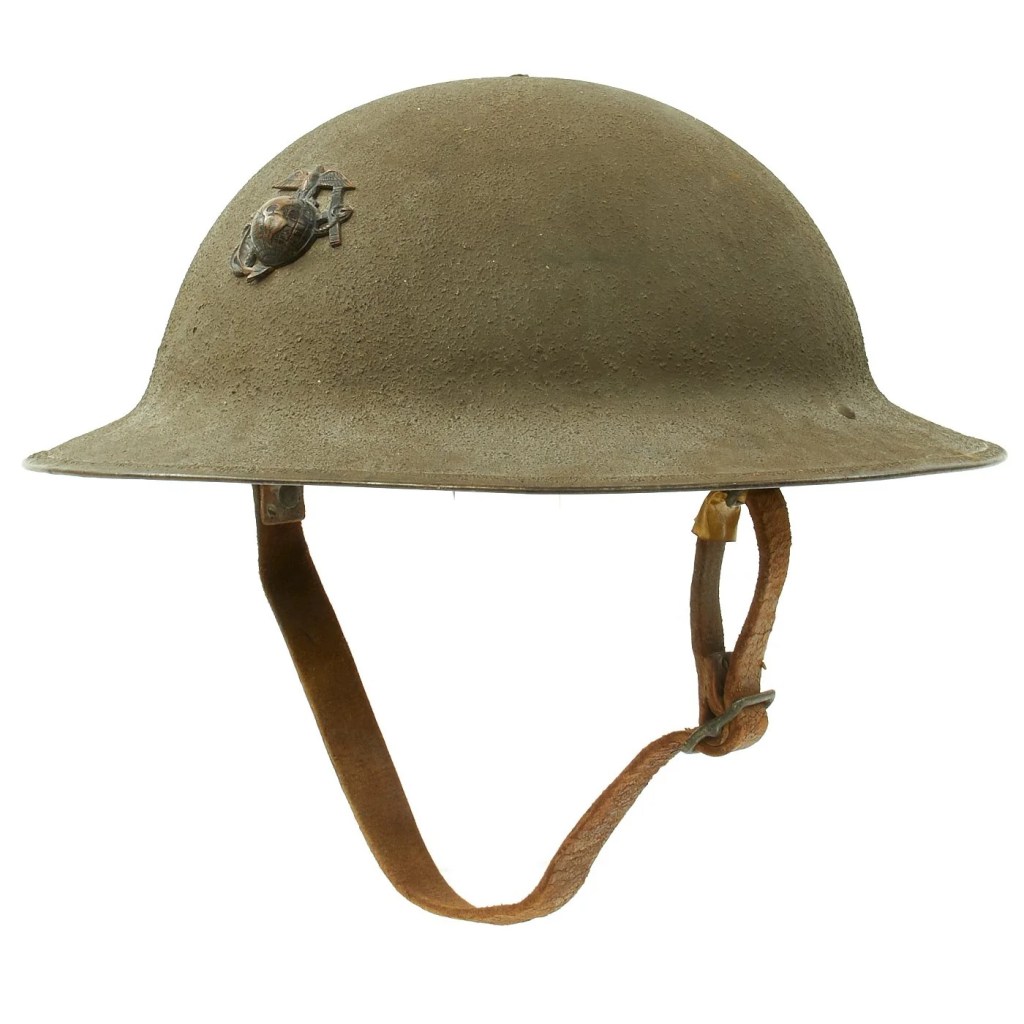
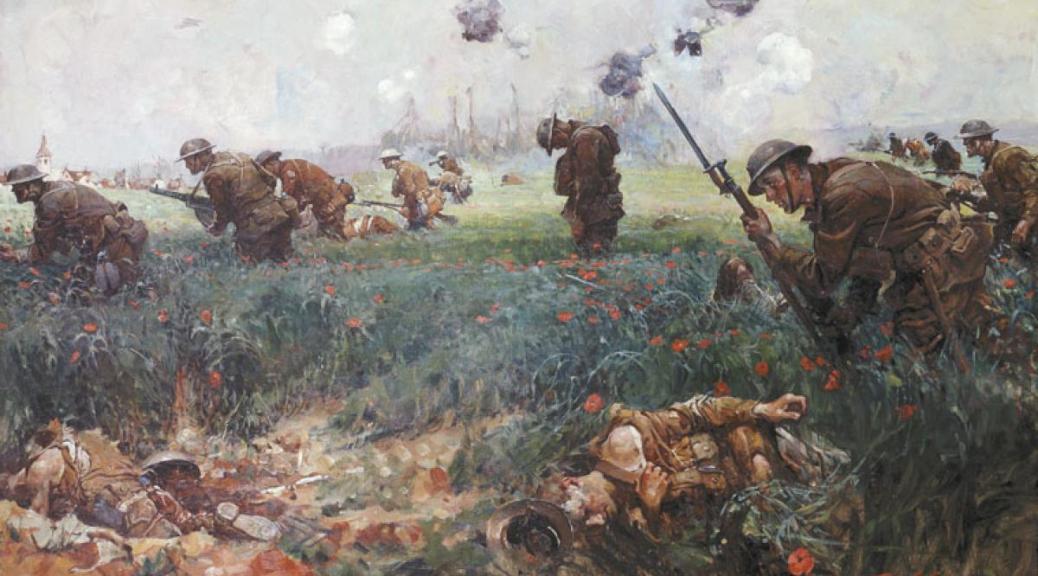
The following 45 letters are from an incredible collection of nearly 130 letters written by William (“Billy”) Blackshear Moore (b. 1895), a U. S. Marine Officer during World War One. Billy Moore was a 2nd Lieutenant when he wrote the letters presented here but he later rose to Captain in the 97th Company and was the Regimental Liaison to the 6th Marine Regiment Headquarters Company, 4th Marine Brigade, 2nd Division, American Expeditionary Forces (AEF) and Army of Occupation. He hailed from Texas and was a Princeton graduate where he starred in football and track. There are many newspaper articles extolling his athletic accomplishments. While deployed in France, Billy was awarded the French Croix de Guerre with gold star, the Distinguished Service Cross and the Navy Cross. The DSC and NC were awarded for his heroic actions on 6 June 1918 at the historic Battle of Belleau Wood under extraordinary circumstances. I do not know of any other complete archive of letters from such a decorated officer available in private hands. We are indebted to Kevin Thomas for making these letters available from his private collection for transcription and publication on Spared & Shared.
Billy meticulously chronicled his experiences in a series of letters to his parents, demonstrating his unwavering dedication to his duty. From the intense emotions of battle to the heart-wrenching losses, he vividly portrayed his journey from the ship ride to France in late October 1917 to the Occupation duty in Germany in May 1919. His accounts are filled with gripping details of his encounters, the hardships of trench life, and his remarkable acts of heroism, which have been documented in various publications, solidifying his legacy as a true wartime hero.
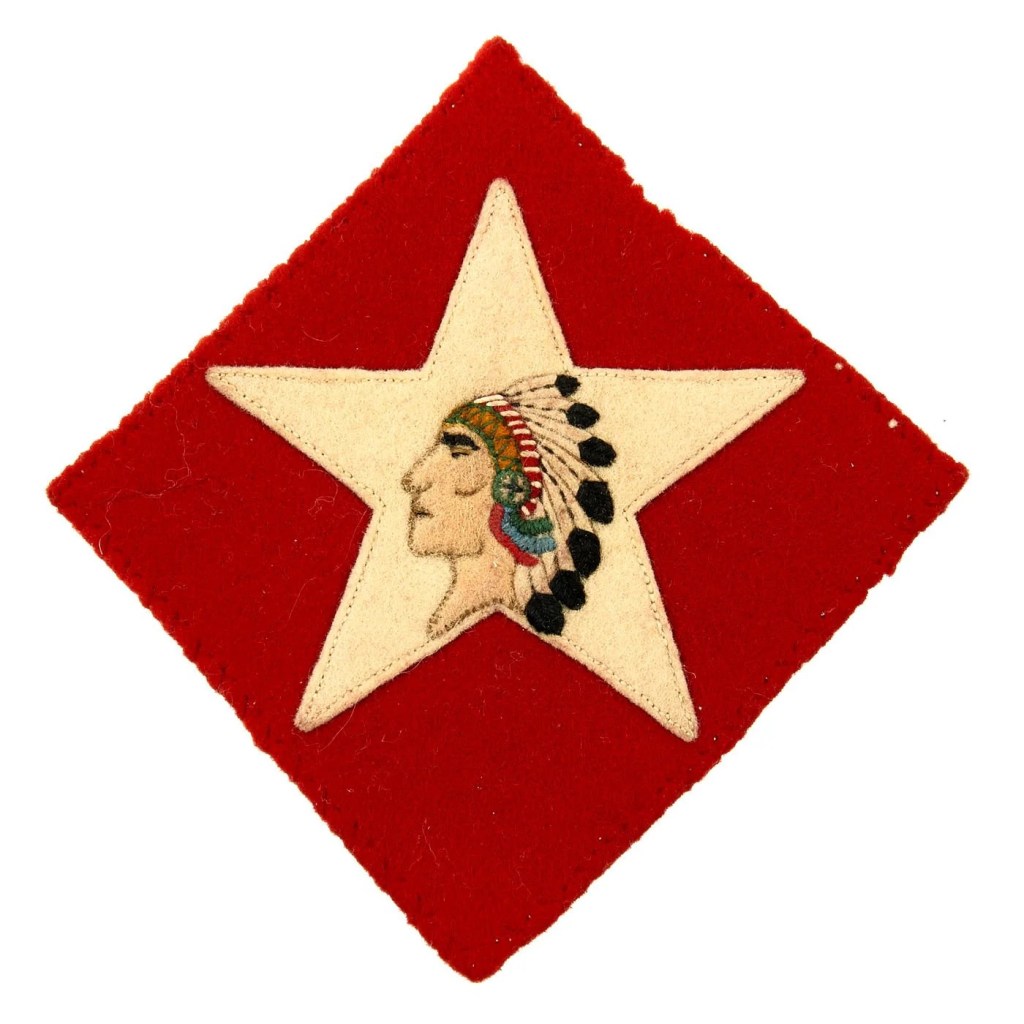
He describes being cited for “new” awards and great details leading up to and the ceremony where he received the Distinguished Service Cross. He writes on the day of the armistice and what Marines were doing and how France was celebrating. He describes amazing occupation duty details, locations, and shares his thoughts on the Germans. He provides context as to the creation of the 2nd Division Indian head insignia and what the colors on the patches mean—simply amazing stuff for a collector of USMC or historian.
The material presented here offers a fascinating firsthand account of the thoughts and experiences of a young Marine officer during World War I. The letters, often written on YMCA letterhead, Knights of Columbus, Red Cross, 2nd Division Indian Head, Third Army of Occupation, or any available paper, provide a continuous and detailed source for those interested in primary historical documents. The author describes battles as they unfold, or within hours to days after they occur. The abundance of content and letters begs for transcription into a book accompanied by historical commentary or for direct use as a primary historical source documenting the journey of a Marine officer who participated in all USMC campaigns in France, received numerous decorations, and survived to share his story. Interestingly, there was a point when he was mistakenly reported as deceased in newspapers back home. He even got a “Dear John” letter as the girl he was going to ask to marry him married another man.
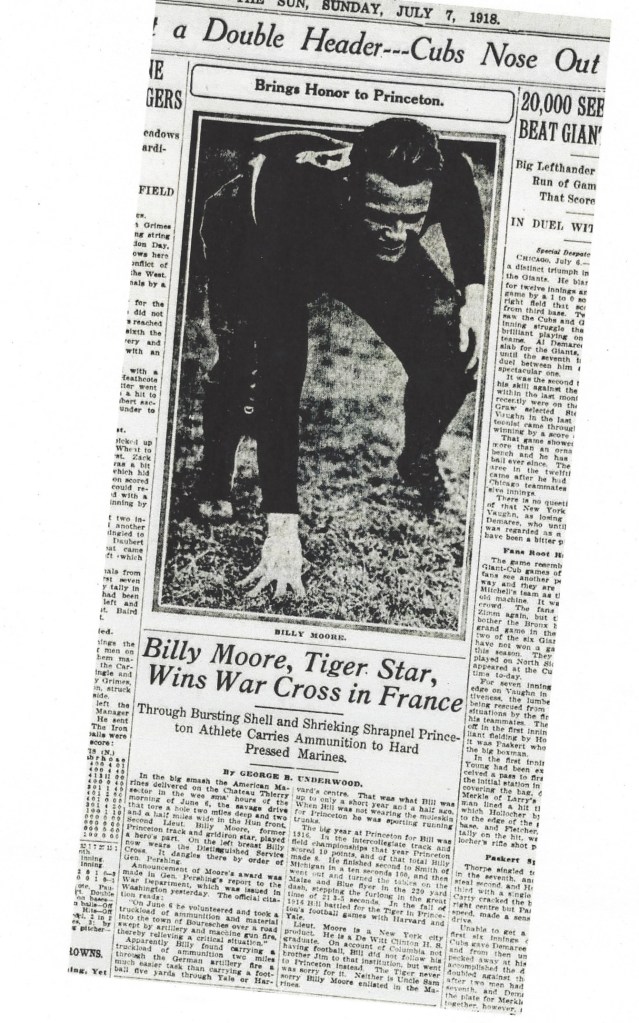
Though he disliked the duty, Moore was in a unique opportunity to be a censor for the 6th Marine Regiment working in the Headquarters and was able to censor his own mail! As a result, Moore pushed the envelope a bit, revealing a little more detail about things that you would normally not see in WWI letters including what he witnessed of superior officers, some troop movements, and soldier accounts and decisions. He even admitted to his parents that reading everyone’s mail, as a censor, was how he got to know his men!
During occupation duty in Germany after the armistice was signed, he was assigned as billeting officer for the Regiment and was able to go all around Germany in his motorcycle and sidecar that seems to have served him very well “squatting on the Rhine” as he describes it. At one point he was asked to write the Regimental history during the war, but while playing exhibition football in Germany he sustained a leg injury that set him back. Though interesting and worthy of publication, I have only transcribed those letters up to the armistice on 11 November 1918.
Many of these letters are very fragile as they were written on wood-pulp paper supplied by the YMCA to servicemen in Europe and they have become almost too brittle to handle.
Service Timeline:
Entered service July 5 1917 at Brooklyn New York.
Marine Barracks Quantico Va July 28 to Oct 25 1917.
Sailed for France Oct 25 1917; attached to 97th Company, 6th Marines.
Bordeaux, Nov 1917 to Jan 1 1918.
Training area Vosges Jan to Mar 1918.
Woëvre Sector near Verdun Mar 14-27 1918.
1st Corps School, Gondrecourt Mar 27-Apr 28 1918.
Woëvre Sector Apr 28 to May 15 1918.
Aisne-Marne Defensive (Château-Thierry) June 1 to July 4, 1918
Aisne-Marne Offensive (Soissons) July 18-22, 1918
Marbache Sector Aug 1-20 1918
St Mihiel Offensive Sept 12-21, 1918
Promoted 1stLt Sep 6 1918
Meuse Argonne Offensive (Champagne) Oct 6-13 1918, (Argonne Forest) Nov 1-11, 1918
Army of Occupation, Germany November 1918 to June 1919
Promoted Captain March 5, 1919
Returned to US June 10, 1919
Marine personnel office NY June 12 1919 until discharged July 9, 1919

Chapter 1—“You have a son in France”
Chapter 2—“Somewhere else in France”
Chapter 3—“Their one great hope”
Chapter 4—“We have made history”
Chapter 5—“When God & country call”
 Spared & Shared 23