Category Archives: War of 1812

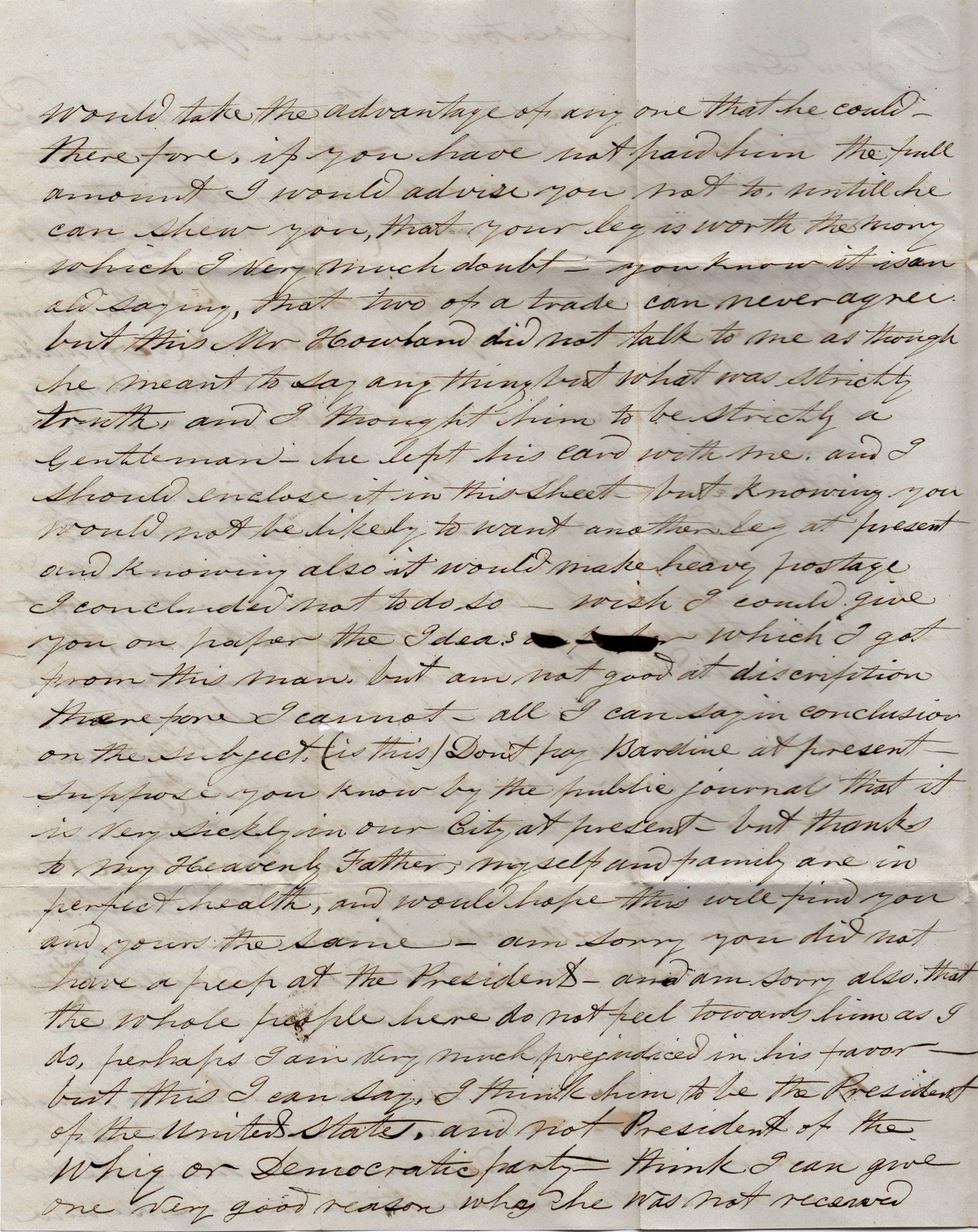
1843: Nehemiah Nelson to Richard Fletcher Dunn

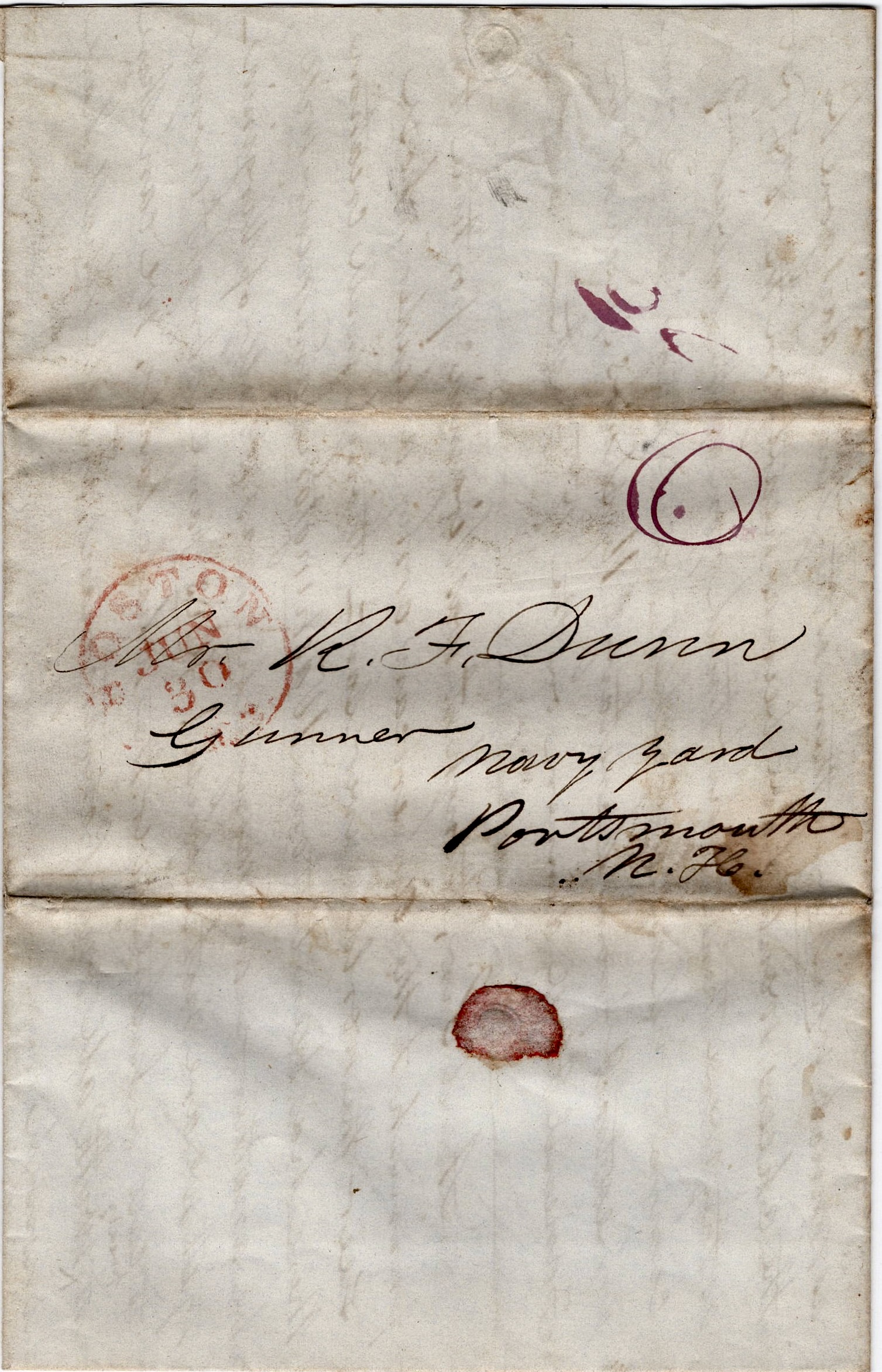
The author of this letter is believed to have been Nehemiah Nelson (b. 1806-1861) who kept a grocery store at 41 Commercial Street in Boston. He wrote the letter to Richard Fletcher Dunn (1788-1863), a native of Northumberland, England, who came to the United States in 1807 and worked as a copper-plate printer in Philadelphia until joining the merchant service in 1809 (with a fraudulent certificate of citizenship).
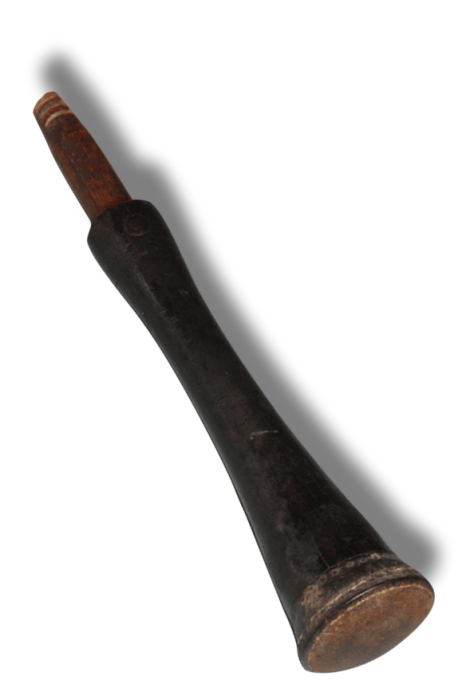
One of the artifacts proudly displayed by the Portsmouth Historical Society’s museum is Richard Fletcher Dunn’s artificial leg. Nelson’s letter informs us the leg was made by Southworth Howland.

He then signed up for the US Navy and participated in the War of 1812, serving aboard the USS Constitution under the command of Capt. Isaac Hull. He was on board during the engagement with the British frigate HMS Guerriere on the 19th of August 1812—an engagement that last more than half an hour resulting in the sinking of the HMS Guerriere and the loss of 39 crew members killed and 61 wounded. The USS Constitution, on the other hand, suffered little damage, thus earning her the nickname “Old Ironsides.” She suffered the loss of only 6 crew members and 7 wounded. Among the latter was Dunn who lost his left leg, blown off by a cannon ball.

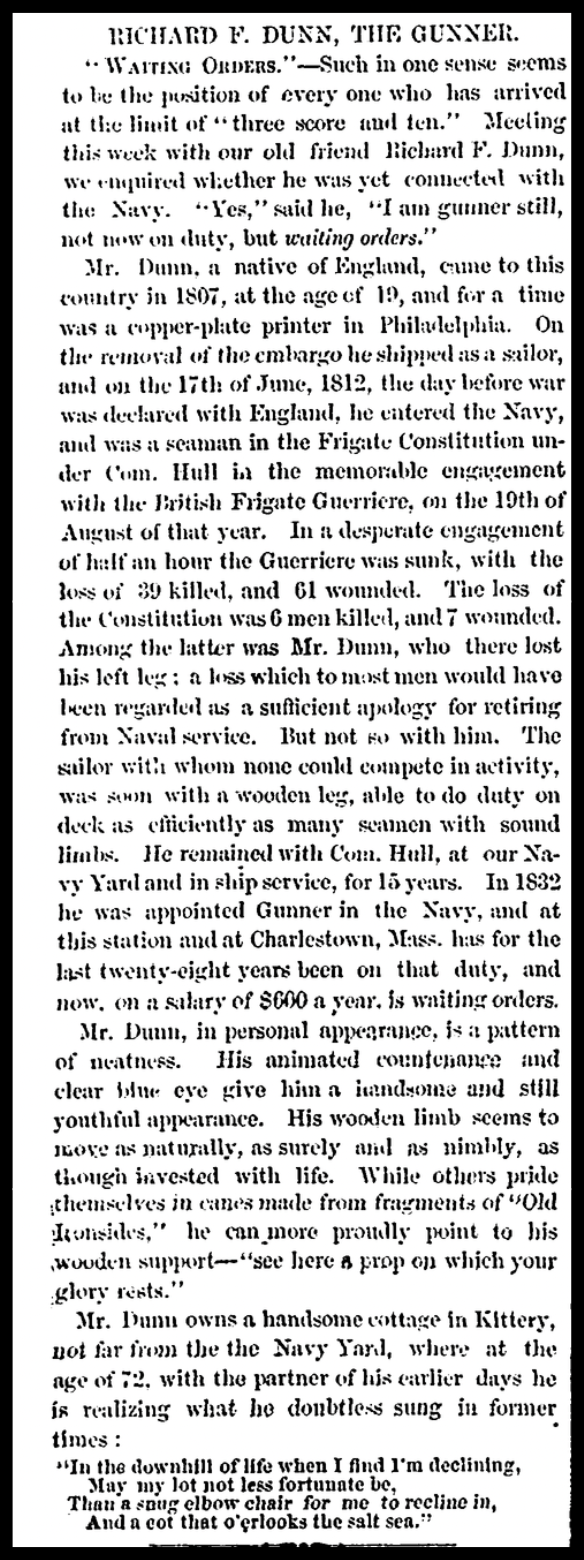
Though lesser injuries might have warranted retirement from the service of his adopted country, Dunn remained steadfast in his commitment to the Navy, ultimately serving at the Kittery Navy Yard. He continued to serve under Capt. Hull (later Commodore Hull) at the Navy Yard, performing his duties on a wooden leg “as efficiently as many seamen with sound legs.” According to the 1860 US Census, he was still listed at Kittery, York County, Maine, with his occupation recorded as “Gunner, USN.” When inquired that year about his ongoing connection with the Navy, he replied, “Yes, I am gunner still, not now on duty, but awaiting orders.” He passed away on 1 February 1863, and his widow, Mary F. (Dixon) Dunn, died in 1872. They are buried in Eliot, Maine.
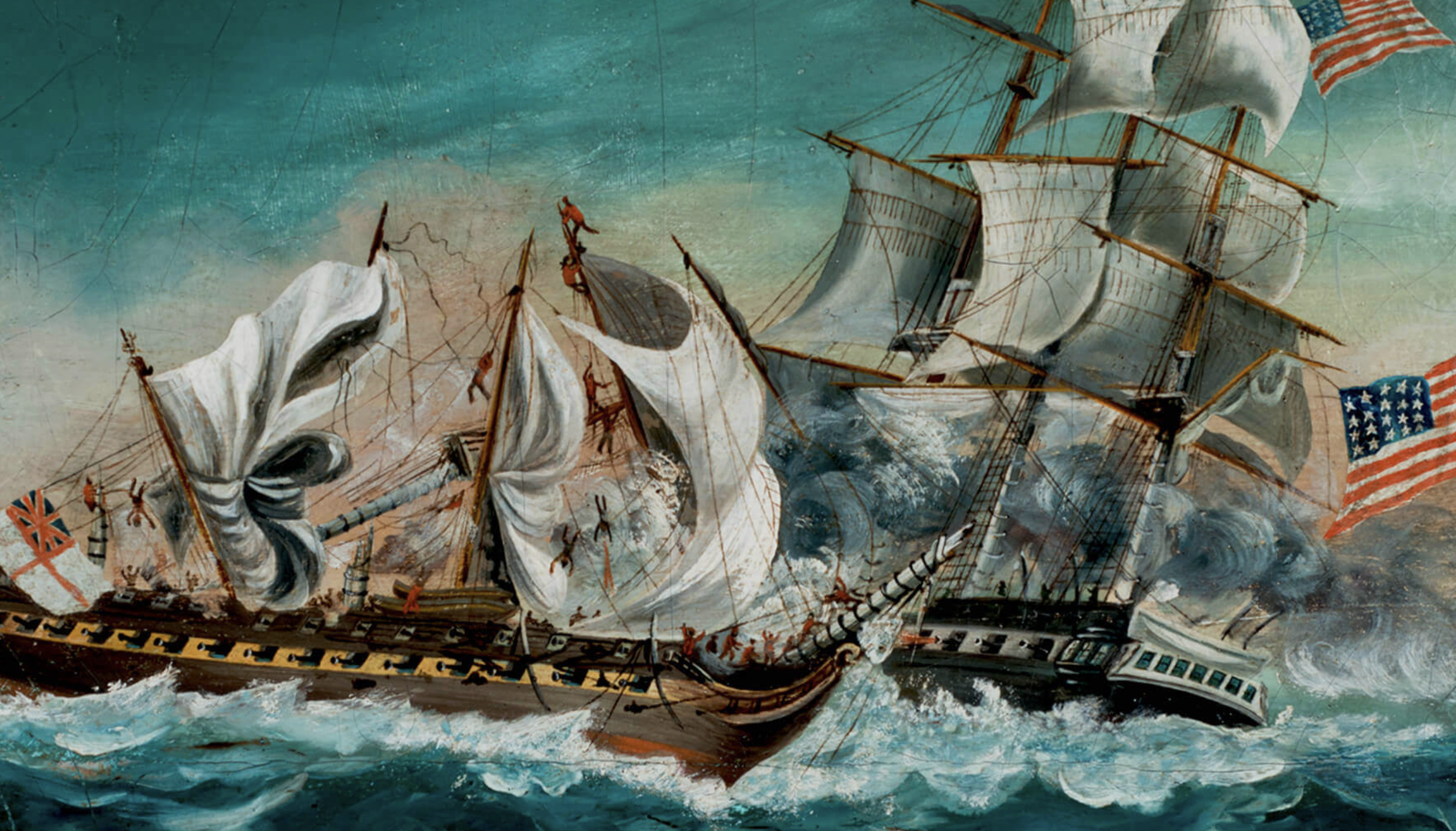
The USS Constitution battles the HMS Guerriere on 19 August 1812.

T R A N S C R I P T I O N

Boston [Massachusetts]
June 29, 1843

Friend Dunn,

Yours of the 7th inst. was duly received and I was very glad to know that you took the remarks which I made in my last in the spirit in which they were made (viz) in all kindness. You said a letter from on the 22nd inst. but I had nothing worth relating. But this morning I am big with an important subject (viz) wooden legs.

A person came into my store this morning and asked if I knew Mr. Jones who was once in the Custom House. I told him I was well acquainted with him. Said he, I made his wooden leg. That led to a conversation about you and Mr. Bardine, and from what this man said, I should think Mr. Bardine was anything but a gentleman. You will understand me, this person did not talk harsh of him, but gave me a history of him for a number of years back.

In the first place, he remarked that Bardine was very poor, so much so that he got people to subscribe various sums and got this man (whose name is Southworth Howland 1 ) to make him a leg which he did and charged him $25 for it. Well, when he came for the leg, he brought only $20 and said he had collected only that sum, but would get the balance since Bardine told him to sue for the balance. But Howland thought it would cost more than it would come to so he let him run. And many other things he told me which makes me think that he—Bardine—would take the advantage of anyone that he could. Therefore, if you have not paid him the full amount, I would advise you not to until he can show you that your leg is worth the money which I very much doubt.

You know it is an old saying that two of a trade can never agree but this Mr. Howland did not talk to me as though he meant to say anything but what was strictly truth, and I thought him to be strictly a gentleman. He left his card with me and I should enclose it in this sheet, but knowing you would not be likely to want another leg at present and knowing also it would make heavy postage, I concluded not to do so, Wish I could give you on paper the ideas which I got from this man, but I am not good at description—therefore, I cannot. All I can say in conclusion on the subject is this. Don’t pay Bardine at present.

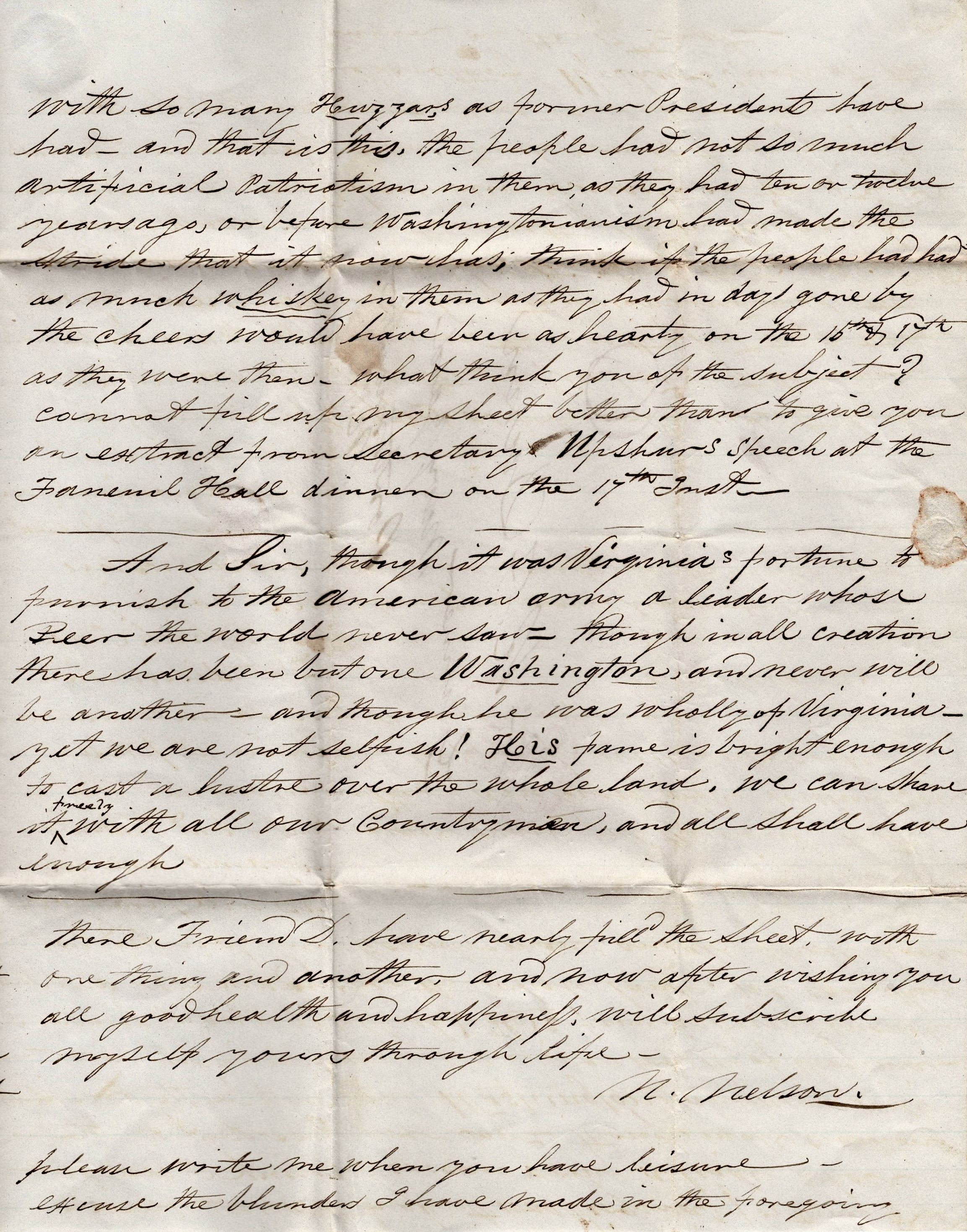
Suppose you know by the public journals that it is very sickly in our City at present. But thanks to my Heavenly Father, myself and family are in perfect health, and would hope this will find you and yours the same.

Am sorry you did not have a peek at the President [John Tyler] and am sorry also that the whole people here do not feel towards him as I do. Perhaps I am very much prejudiced in his favor. But this I can say, I think him to be the President of the United States and not the President of the Whig or Democratic party. Think I can give one very good reason why he was not received with so many huzzah’s as former Presidents have had and that is this—the people had not so much artificial patriotism in them as they had ten or twelve years ago, or before Washingtonianism had made the stride that it now has. Think if the people had had as much whiskey in them as they had in days gone by, the cheers would have been as hearty on the 15th and 17th as they were then. What think you of the subject? 2

Cannot fill up my sheet better than to give you an extract from Secretary [Abel C.] Upshur’s [Secy. of Navy] speech at the Faneuil Hall dinner on the 17th inst.

“And Sir, though it was Virginia’s fortune to furnish to the American army a leader whose peer the world never saw, though in all creation there has been but one Washington, and never will be another, and though he was wholly of Virginia, yet we are not selfish! His fame is bright enough to cast a luster over the whole land. We can share it truly with all our countrymen, and shall have enough.”

There, friend Dunn, have nearly filled the sheet with one thing and another, and now after wishing you all good health and happiness, will subscribe myself yours through life. — N. Nelson

Please write me when you have leisure. Excuse the blunders I have made in the foregoing.


1 Southworth Howland (1775-1853) learned the house carpenter’s trade but, being “an ingenious and skillful workman and was often called on to do jobs not entirely in the line of his trade. One of these was to alter and fit an artificial leg, imported from England by a neighbor; but he found it easier to make a new one, with such improvements as gave satisfaction to the wearer. His success became known, and during the next forty years he was called on to furnish artificial limbs for a large number of men and women residing in all parts of the United States, no other person manufacturing them in this country, so far as known, for many years after. He was a man of decided convictions and was prompt and fearless in defending them.”

2 This is a reference to the Washingtonian movement that was in full swing in the 1840 as were many other “ism’s.” The Washingtonian movement evaporated within a few short years. They became embroiled in the politics of the day. They were a victim of their own decision to support the elimination of all drinking in the US in that era through the temperance movement.

The Portland Journal, June 23, 1860

1813: C. R. G. to T. L. H.

I have not conducted an exhaustive search on the identity of these correspondents who are identified only by their initials. But I transcribed the letter because I found the content interesting.

The letter includes a discussion of two events affecting Charleston and the State of South Carolina. The first part of the letter pertains to the calling out of the state militia in both Rhode Island and in South Carolina in response to the United States declaring war on Great Britain in June 1812. Apparently, the author had previously held a commission with the militia in Rhode Island that he believes should exempt him from service in South Carolina where marching off into the country and camping in the swamps would most certainly result in his inglorious death. As part of that discussion he reveals the current efforts by South Carolina’s Governor, Joseph Alston, to strengthen the state’s militia laws and levy hefty penalties upon those who fail to report for duty. Period newspaper accounts of the Governor’s support for a doctrine that would enable him to declare martial law in time of peace caused South Carolinians to express “surprise, indignation, and horror at the revival of this question in this free country. Before we consent to put it at issue, let us tear up the History of the Revolution, cancel the memory of the achievement of our Fathers, and burn the Declaration of Independence, for they will but shame our degeneracy and satirize our unworthiness.” [Charleston Courier, September 15, 1813]

The second part of the letter shares news of some of the disastrous impacts of a hurricane that pummeled Charleston during the evening hours of Friday, August 27, 1813. Locals referred to it simply as “The Gale.”

“Although brief, the cyclone was fierce, “one of the most tremendous gales of wind that ever was felt upon our coast,” with a constant deluge of rain. For six hours, wind blew at hurricane force, driving in the storm surge at midnight. The rush of water equaled the horrific flood of 1752; the high water mark was reported to have been eighteen inches higher than during the “great gale” of 1804. By morning, the fast-moving storm had traveled up the coast. The litany of damage was familiar. In every part of the city, trees were uprooted or snapped. Buildings had blown down, fences washed away, animals lost or drowned. Water and wind had wrecked some houses and damaged many more, toppling chimneys and tearing away roofing…The wharves and docks were a “melancholy scene of distress, of vessels crushed on against the other, or thrown up high and dry.” Commercial losses were heavy, but, as the Charleston Times remarked, “had it not been for the present state of things, that left little merchandise and less shipping here, the loss would have been immense.” The “state of things” was the War of 1812…By far the most expensive single loss was the New Bridge across the Ashley River, completed in July 1810 at an estimated cost of $175,000.” [Source: 1813 Cyclone]

T R A N S C R I P T I O N

[Charleston, South Carolina]
August 28, 1813

T. L. H.,

I expected ere this to have had the pleasure of seeing you in Providence but having some very important business still unfinished, I shall be obliged to sacrifice my inclination to my interest and incur that risk of health which this climate presents in a very formidable aspect to strangers. At this season of the year, the danger of traveling from the city by land, or even of remaining one night in the country, is to such as are unaccustomed to the climate, extremely great. To give you an instance, of 64 back woodsmen in the U. S. service stationed near Savannah, 62 were either numbered with the sick or the dead, and of 100, 60 had died. The climate is more destructive than the sword and its victims fell without glory. An exposure by ,e to such a foe would probably be both fatal and inglorious.

In June a detachment of 450 were ordered to march into the country from Charleston, and we may expect that order soon to be repealed. It is in the power of Providence friends to exempt me from a liability to such a call, But I am almost afraid to trouble them on such an occasion. I am already under too many obligations to request another. I plead no merit of my own. But if a near relation animated by patriotism, bravely sacrifices his life in the achievement of his county’s liberties; that country may evince in a manner grateful to the feeling of his offspring, the sense it entertains of such services.

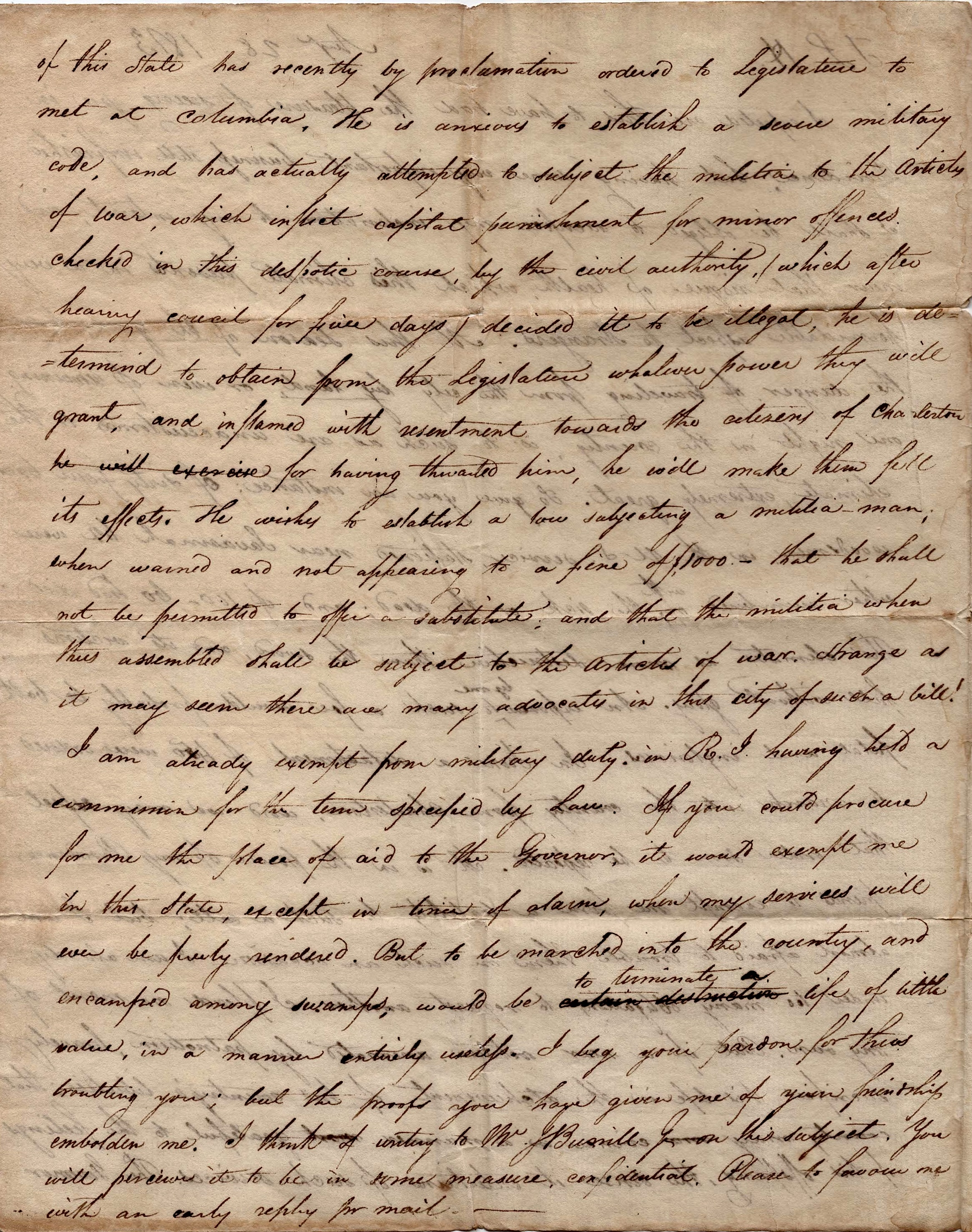
The Governor of this state has recently by proclamation ordered the Legislature to meet at Columbia. He is anxious to establish a severe military code and has actually attempted to subject the militia to the Articles of War, which inflict capital punishment for minor offenses. Checked in this despotic course by the civil authority (which after hearing council for five days) decided it to be illegal, he is determined to obtain from the Legislature whatever power they will grant and inflamed resentment towards the citizens of Charleston for having thwarted him. He will make them feel its effects. He wishes to establish a law subjecting a militia man, when warned and not appearing to a fine of $1000 that he shall not be permitted to offer a substitute and that the militia when thus assembled shall be subject to the articles of war. Strange as it may seem, there are many advocates in the city of such a bill!

I am already exempt from military duty in Rhode Island having held a commission for the time specified by law. If you could procure for me the place of aide to the Governor, it would exempt me in this state, except in time of alarm, when my services will ever be freely rendered. But to be marched into the country and encamped among swamps, would be to terminate a life of little value, in a manner entirely useless. I beg you pardon for thus troubling you, but the proofs you have given me of your friendship embolden me. I think of writing to Mr. J. Busvill Jr. on the subject. You will perceive it to be in some measure confidential. Please to favor me with an early reply per mail.

This city was last night visited by the most tremendous gale storm I ever experienced. The wind was at Northeast and the damage sustained incalculable. All the wharves are in ruins. The tide was one or two feet higher than ever before known. The beautiful new bridge was in a great degree swept away. The shipping in the harbor much injured and the large ship Canton is sunk. It is feared the sea island cotton adn rice crops are materially injured by the tide and those of corn &c. by the wind. Many chimneys are blown down. Capt. Cross’ house escaped without injury.

Be pleased to make my affectionate regards to your amiable family, and accept the assurances of my esteem and friendship. — C. R. G.

1828: Orange Merwin to Daniel H. Gaylord

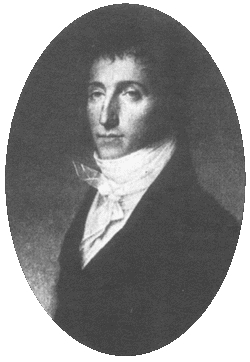
The following letter was penned by Orange Merwin (1777-1853) in February 1828 while serving in the 20th US Congress as a Representative of Connecticut. Merwin was born near Milford, in Litchfield county, where he attended the common schools and “engaged in agricultural pursuits” until 1815 when he won a seat in the State House of Representatives and later in the State Senate. He was a member of the committee charged with redrafting the state constitution during that time. In 1825 he was elected to the 19th US Congress and served through the 20th. After leaving Congress he returned to Connecticut and resumed farming. Merwin wrote the letter to his friend, Daniel H. Gaylord (1776-1831) of Milford, Connecticut.

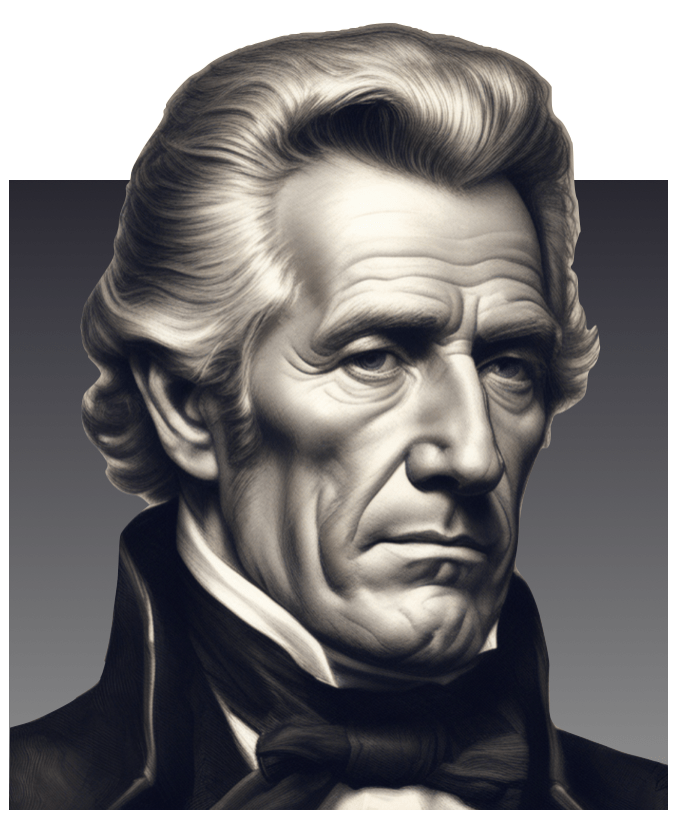
Andrew Jackson—one man’s “murder, tyrant, or monster,” another man’s “hero, patriot, or benefactor.”

Merwin’s letter expresses considerable frustration by the lack of progress in the business of Congress over the previous ten days occasioned by the political speeches on the House floor by representatives of the two political parties for or against the Democratic candidate Andrew Jackson who would win the Presidential election later in the year against incumbent John Quincy Adams. “A long time was spent in debating whether Congress were bound to pay for a negro slave who was pressed into the public service at New Orleans during the late war [War of 1812] and was injured.” The debate transformed into a spectacle of speeches either eulogizing or vilifying the character of Andrew Jackson, the so-called “Hero of New Orleans,” completely sidelining any meaningful discussion of the bill at hand.

I can’t find any evidence that Congress ever made a decision on the Bill, but even if it had awarded compensation, it’s important to recognize that any compensation would have been awarded to the slave owner for his financial injuries, not to the slave for his physical injuries. Many of the slaves who were pressed into service by Andrew Jackson in the defense of New Orleans were promised their freedom so they fought fiercely and suffered grave injuries or even death. But once victory was secured, Jackson not only ordered the black troops out of New Orleans because they frightened the white residents, he reneged on his offer to free them and ordered them returned to their slave owners. [See Enslaved Soldiers and the Battle of New Orleans by the Tennessee Historical Society.]

In the letter, Merwin refers to the slave as “Cuff,” which was a common ethnic slur referring to a male negro in the early 19th Century.

Transcription

Washington
February 12th 1828

Well Sir,

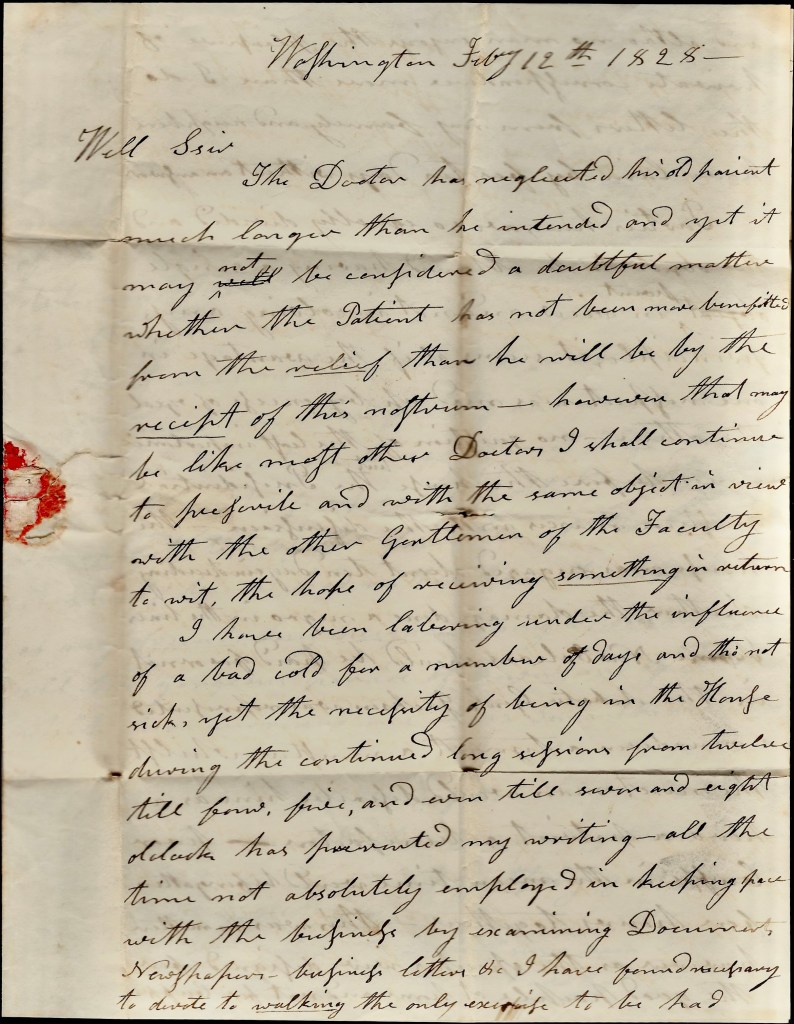
The Doctor has neglected his old patient much longer than he intended and yet may not be considered a doubtful matter whether the patient has not been more benefitted from the relief that he will be by the receipt of this nostrum—however that may be like most other doctors, I shall continue to [ ] and with the same object in view with the other Gentlemen of the Faculty to wit, the hope of receiving something in return.

I have been laboring under the influence of a bad cold for a number of day and though not sick, yet the necessity of being in the House during the continued long session from twelve till four, five, and even till seven and eight o’clock has prevented my writing—all the time not absolutely employed in keeping pace with the business by examining documents, newspapers, business letters, &c. I have found necessary to devote to walking the only exercise to be had and although no man enjoys the pleasure of private correspondence more than I do, the letters from my family and neighbors have lain by for ten days without an answer.

New York Commercial Advertiser, February 26, 1828

Parties here are so equally divided and the object to be obtained having a single point in view and not involving any principle, it seems as if the vantage in one respect was made up by excess of zeal in the other. No question of the least importance comes before the House but the Presidential question mixes with the discussion. The House was engaged about ten days in deciding whether the damage done a negro in the lines before New Orleans should be paid for or not. In the debate, Gen’l Jackson was represented a murderer, a tyrant, a monster, whilst the next man would describe him as a hero, a patriot, a benefactor. Poor Cuff in the meantime would be forgotten for hours together. This was no matter, however, as the speeches were designed for the good people at home and not for Cuff.

February 13th. This is the third time I have attempted to write you a letter. I think I shall now make out to finish it without interruption as it is scarcely day break and the idle habits as well as visiting formalities of this place will prevent an early call and I am determined not to forfeit my new title even though I sustain it at the loss of some necessary sleep.

What will not ambition do? —voluntarily exile a man from his family and friends that he may have a seat in Congress—not satisfied, not get up late and rise up early to obtain and seek the approbation of his friends. Well, this is just as it should be. I had rather have the approbation of my friends, my neighbors, my townsmen, than all the gorgeous parade of power and of place which have surrounded me—yes sir, and the recollections of this kind will long continue when the offices which I now hold shall cease to exist, and be lost to all value except the manner of their attainment.
Respectfully your friend

P. S. Tell Alvent I hope he has long since been keeping house and riding in the mud and hub to Bridgewater after—council

1814: Patrick R. Wybault to Major Thomas Melvill, Jr.

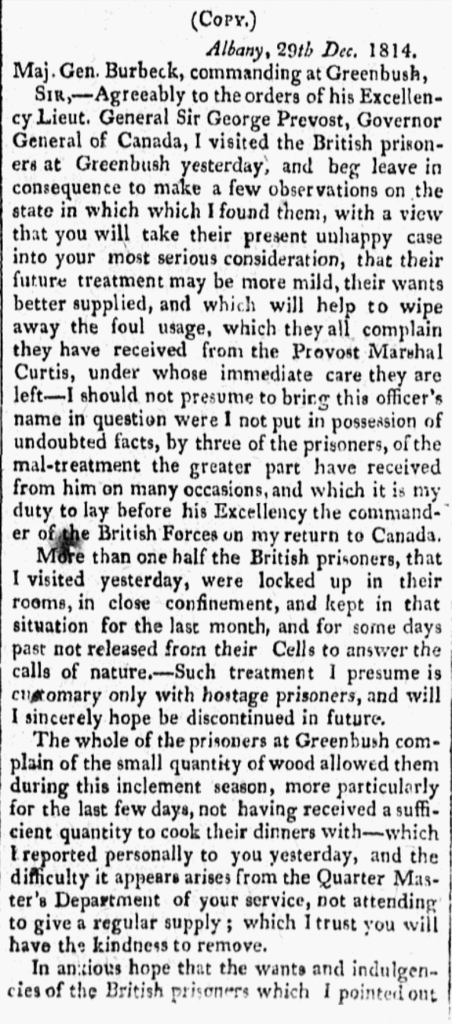
The following War of 1812 letter was written by Patrick R. Wybault, Deputy Assistant Commissary General—a British agent dispatched by Sir George Prevost, Governor General of Canada, to observe and report on the treatment of British officers being held as Prisoners of War in Pittsfield, Massachusetts, and elsewhere.

Maj. Thomas Melvill, Jr. (1776-1845)

Wybault’s letter was addressed to Major Thomas Melvill, Jr. (incidentally also uncle of Herman Melville) who was the Deputy Marshal and Agent for Prisoners in Pittsfield, Mass. In the letter, dateline 23 December 1814 from Pittsfield, Gen. Wybault, profusely thanks Melvill for his multiple kindnessess to his British prisoners. This is not surprising, given that Melvill purposely strove to be hospitable to his prisoners, e.g., even letting them go off the prison grounds at times to work as paid employees around town. For that matter, his efforts were so successful that some British military leaders were concerned that some of their captured officers would prefer staying in America rather than return to their military duties.

The conditions Wybault found at Pittsfield were considerably at odds with those found at Greenbush (see footnotes). The captured POWs were initially kept in a barracks at Pittsfield, then in two barns at the rear of the Cantonment on North Street. Expecting another 1,500 prisoners, Melville, workin with little or no funds from the national government, enlisted Captain Hosea Merrill, a lumber dealer and builder, to construct new quarters. Until they were ready, measures were taken to maintain the prisoners in Cheshire and Stockbridge.

[Note: This letter is from the personal collection of Richard Weiner and was transcribed and published on Shared & Shared by express consent.]

Transcription

Pittsfield [Massachusetts]
23rd December 1814

Sir,

Having been informed by several of the British officers stationed at Cheshire on their parole, that there is no longer any accommodation for them in that village, they have inconsequence applied to me to be removed to Stockbridge where there are only a few stationed at present. I have in consequence to request you will allow the seven British officers whose names I have mentioned to you this morning, to proceed and take up their quarters at Stockbridge, should it not interfere with your public arrangements and am led to suppose it will not as Captain Free of the Indian Department has obtained your permission to proceed to Stockbridge in consequence of there being not sufficient quarters at Cheshire.
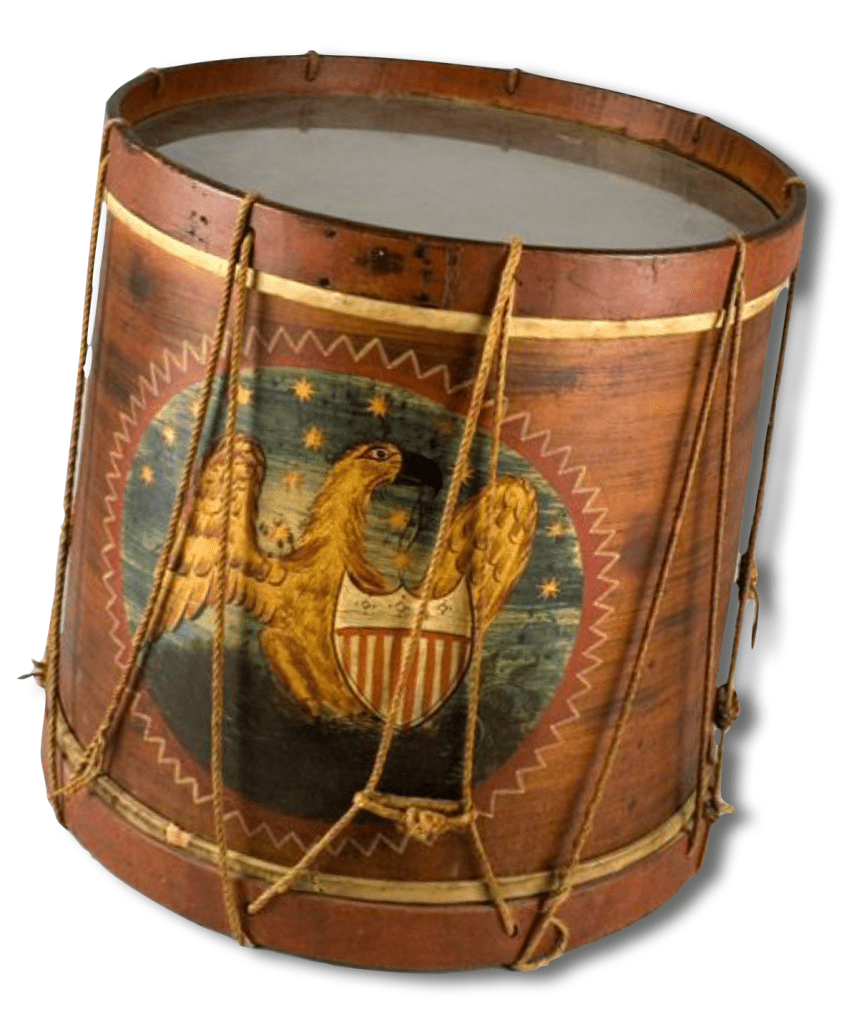
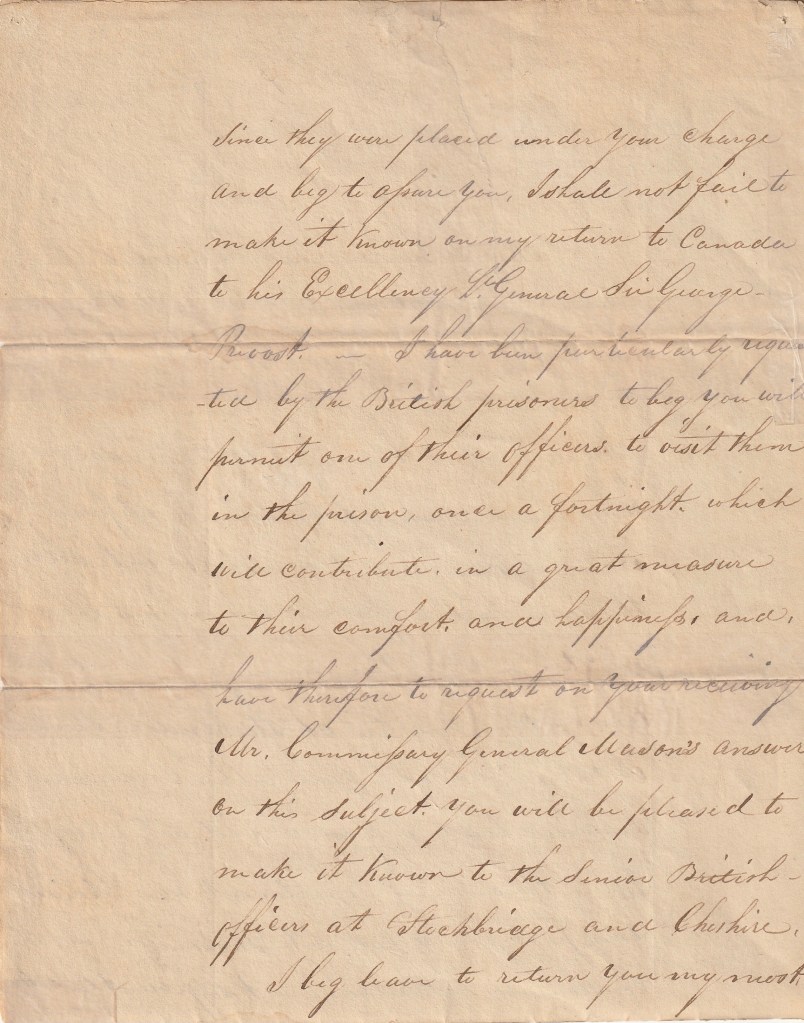
The British Prisoners of War here now in this depot have expressed to me the many obligations they all feel under for the humane and kind treatment they have received since they were placed under your charge and beg to assure you, I shall not fail to make it known on my return to Canada to his Excellency, Lt. General Sir George Prevost.

I have been particularly requested by the British prisoners to beg you will permit one of their officers to visit them in the prison once a fortnight, which will contribute in a great measure to their comfort and happiness, and , have therefore to request on your receiving Mr. Commissary General Mason’s answer on this subject. You will be pleased to make it known to the Senior British Officers at Stockbridge and Cheshire.

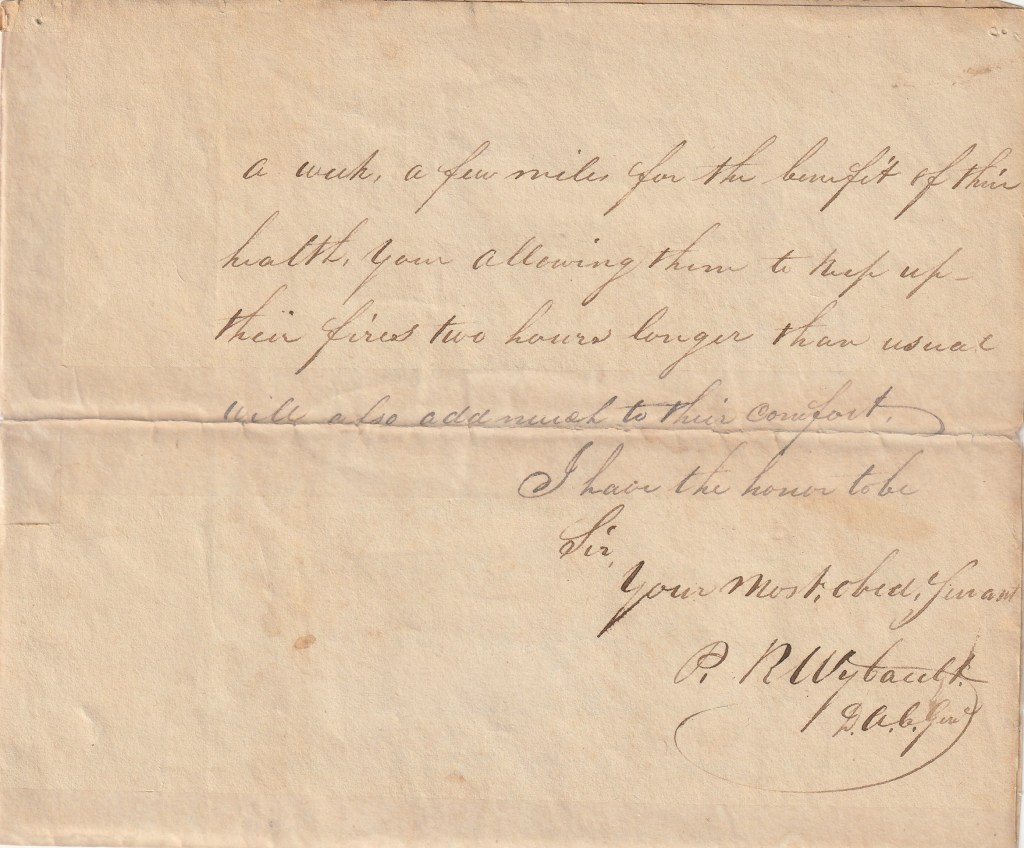
I beg leave to return you my most sincere thanks, as also to Col. [Simon] Larned for the permission you have granted to British Prisoners in allowing them to march into the country once a week a few miles for the benefit of their health. Your allowing them to keep their fires two hours longer than usual will also add much to their comfort. I have the honor to be, sir, your most obedient servant, — P. R. Wybault, D. A. C. Gen’l

From the Dedham Gazette, 20 January 1815

1812: John Stark Edwards to Ebenezer Benedict

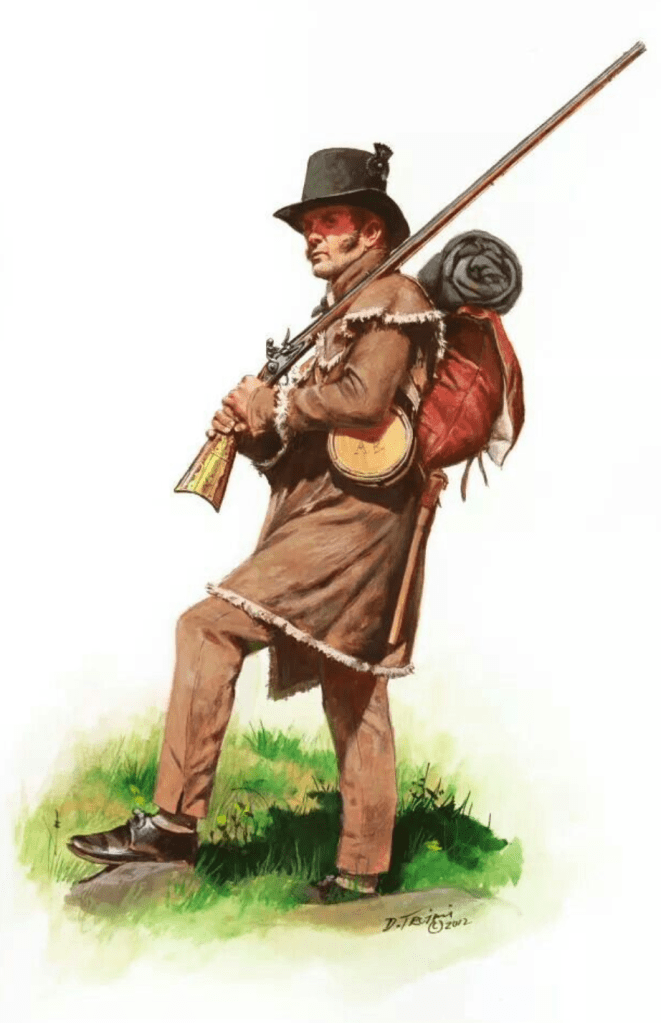
Don Troiani’s Painting of a western militiaman in the War of 1812 era.

The following letter was written by John Stark Edwards (1777-1813), a native of New Haven, Connecticut. He was the grandson of Princeton President Jonathan Edwards and the son of Pierpont Edwards—the founder of the Connecticut Land Company that settled the Western Reserve of Ohio. After graduating from Princeton in 1796 and earning his law degree, John Stark Edwards left New Haven for the Northwest Territory to take charge as sales agent of his father’s lands in the Reserve. He arrived in Warren, Trumbull county, Ohio in 1799 and was one of the first lawyers to settle in the Reserve.

In March 1811, Edwards was commissioned Colonel of the 2nd Regiment, 3rd Brigade, 4th Division of the Ohio Militia. When news of General William Hull’s surrender at Detroit in August 1812, reached those living in the Reserve, it caused great excitement and the settlers feared they might expect raids by the British and Indians. Many settlers fled in panic to the South and to the East. This letter was written at the time of that excitement, ordering men of his command to join Capt. Daniel Dull to a point near the Huron river where Camp Huron was built.

The Roll of Capt. Ebenezer Benedict’s Company is available on the web but it does not include the names of those privates mentioned in this letter. Two of the privates names, Jacob Earl and Robert Freeman are listed among the those on the Roll of Capt. Daniel Dull’s Company. See also Roster of Ohio Soldiers in the War of 1812.

John Starke Edwards Home in Warren, Ohio

Transcription

Warren [Ohio]
September 26th 1812

Sir,

I am ordered by General [Simon] Perkins to detach from the regiment under my command seventy-two men including officers—each private to furnish himself with a blanket & knapsack, and to be clothed & prepared for a winter campaign. Your proportion of that number will be five privates to make up which Jacob Earl, Robert J. Freeman, & Joseph Netterfield & Levi Benedict who are now on duty will be taken. The other one will be taken from the privates of your company highest on the class rolls that have not been discharged. If he is now on duty, you will return his name to me forthwith but if at home, you will muster him at Warren on Saturday next by ten o’clock a.m. prepared to march to Huron, there to join the company under the command of Capt. Daniel Dull.

With respect, yours &c. — John S. Edwards, Col. Commanding
2d Regt., 3rd Brigade, 4th Division Ohio Militia

[to] Capt. Ebenezer Benedict

1813: William Harrison, Jr. to Jordan Harrison

This letter was written by William Harrison, Jr. (1780-1827), the son of William Harrison (1740-1819) and Margaret Jordan (1747-1831) of Williamsburg, Virginia. He wrote the letter to his brother, Samuel Jordan Harrison (1785-1842).

Type of uniform the Lynchburg artillerists might have worn in 1813

In his letter, datelined from Lynchburg, Virginia, in late March 1813, William informed his brother of rumors of a British invasion into Virginia and of the recent departure of an artillery company from Lynchburg to Richmond where troops were being amassed to confront them should they advance up the James River. The artillery company was led by Capt. James Dunnington who served under Col. John H. Cocke from 22 March to 22 August 1813 at Camp Holly (or Camp Holly Springs) which was located northwest of Malvern Hills near the junction of Newmarket Road and Long Branch Road.

In the spring of 1813, the British were preoccupied with fighting Napoleon’s army in Europe so they had limited resources available to devote to fighting the Americans. At this point in the War of 1812, the British Navy’s primary objective was to blockade American ports and interrupt trade, hoping to impact the American economy and diminish public support of “Mr. Madison’s War.” In February 1813, the British Navy began patrolling the entrance to Chesapeake Bay, intercepting merchant ships entering or leaving the bay, and conducting land raids which entailed burning and looting.

British Raid On Chesapeake Bay in War Of 1812 Painting from Patuxent River Naval Air Station in Maryland of the U.S. Navy.

Transcription

Lynchburg, [Virginia]
3 Mo. 24. 1813

Dear Brother,

Not having written to thee for some time, I fear thou mayest have thought that something has been the matter amongst us. This, however, has not been the case for we have all been favored with health and to inform thee that we are still well is the first object of this letter.

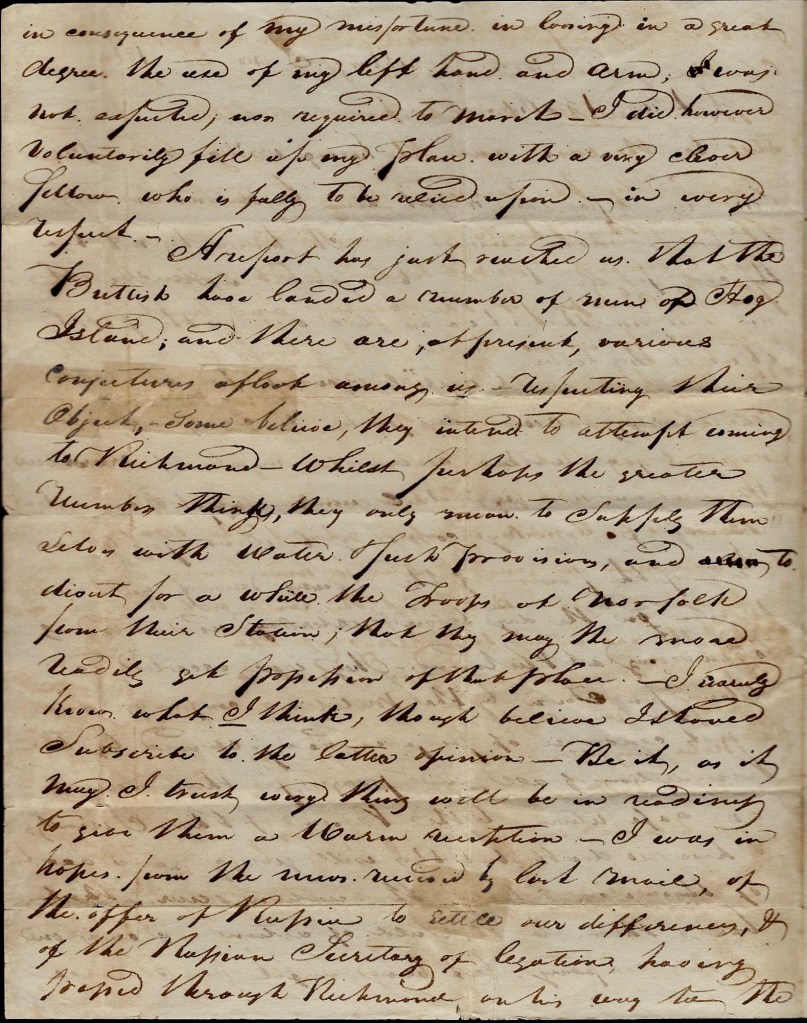
Our little town has been all bustle and anxiety for several days past inconsequence of having to part with a considerable number of our relations and most intimate friends. Capt. [James] Dunnington’s Company of Artillery consisting of between fifty and sixty of the flower of the young men of Lynchburg march on the day before yesterday under orders to rendezvous at Richmond. They were escorted a distance from town by the militia company and a vast concourse of people, and followed by the benedictions of all, and prayers, for their travels and safe return to the bosom of their friends. I have no doubt but they will give a good account of themselves should the occasion occur that brings them to the field of action. I was one of this company but being unfit for service in consequence of my misfortune in losing in a great degree the use of my left hand and arm, I was not expected, nor required, to march. I did, however, voluntarily fill up my place with a very clever fellow who is fully to be relied upon in every respect.

A report has just reached us that the British have landed a humber of men on Hog Island and there are at present various conjectures afloat among us respecting their object. Some believe they intend to attempt coming to Richmond, whilst perhaps the greater numbers think they only mean to supply themselves with water & fresh provisions and to draw out for awhile the troops of Norfolk from their station that they may the more readily get possession of that place. I hardly know what I think, though believe I should subscribe to the latter opinion. Be it as it may, I trust everything will be in readiness to give them a warm reception.

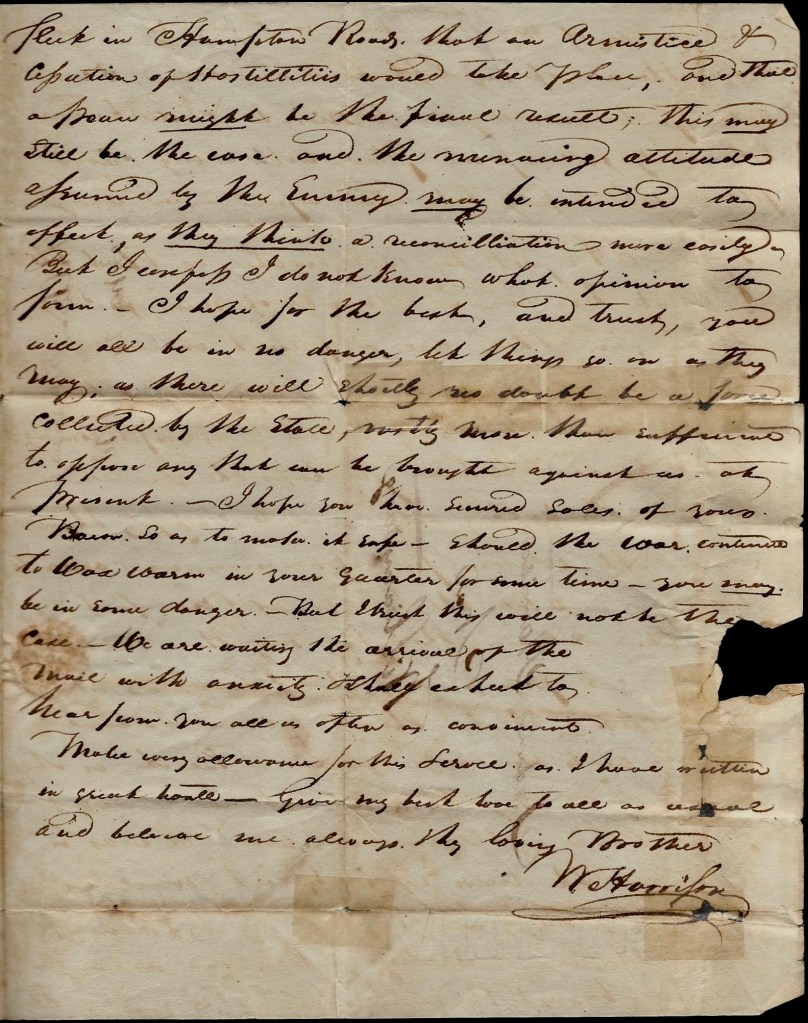
I was in hopes from the news received by last mail of the offer of Russia to settle our differences & of the Russian Secretary of legation having passed through Richmond on his way to the fleet in Hampton Roads that an armistice & cessation of hostilities would take place. and that a peace might be the final result. This may still be the case and the menacing attitude assumed by the enemy may be intended to affect, as they think a reconciliation more easily. But I confess I do not know what opinion to form. I hope for the best and trust you will all be in no danger, let things go on as they may, as there will shortly no doubt be a force collected by the state, vastly more than sufficient to oppose any that can be brought against us at present. I hope you have secured souls of your borough so as to make it safe. Should he war continue to wax warm in your quarter for some time, you may be in some danger. But I trust this will not be the case. We are waiting the arrival of the mail with anxiety. I shall expect to hear from you all as often as convenient.
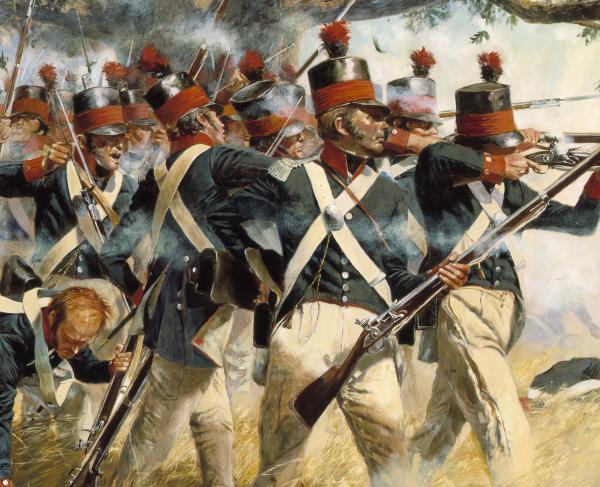
Make every allowance for this service as I have written in great haste. Give my best love to all as usual and believe me always thy loving brother, — W. Harrison

1814: John Mix to Enoch Foote

This letter was written by a Revolutionary War Soldier named John Mix (1753-1817) of New Haven, Connecticut. John’s biography was published in 1886 and includes a length description of his activities during the Revolutionary War as a Lieutenant of Marines, including his capture and imprisonment on the famous Prison Ship Jersey in New York Harbor for six months.

The biography does not say much about John’s activities after the American Revolution, simply stating that “in business, he was unsuccessful, and in 1808 he removed to New York and again engaged in trade, but gave it up at the breaking out of the War of 1812. From this letter we learn that at the age of 60, he was still engaged in supporting his country in the disposition of arms on behalf of his state. A search of newspapers from the period reveals that John had been servings as Quarter Master General for the State Militia of Connecticut until he resigned in November 1814.

The letter was addressed to Gen. Enoch Foote who served as a Connecticut militia officer before and during the War of 1812. Enoch was tasked by the Governor to maintain a militia to be called out on short notice to protect the coastal region between Stratford Point and Black Rock, thus protecting Bridgeport itself.

While researching this letter, I stumbled on an interesting article appearing in the “Today in Connecticut History” under the title, “July 2: Connecticut Refuses to Fight in War of 1812.” Good story.

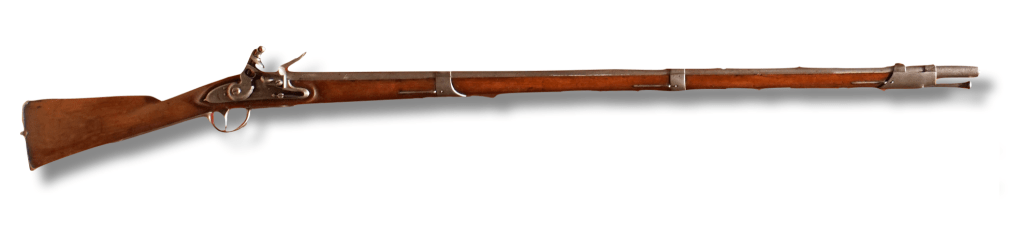
The guns provided were not identified but may have been the 1795 Model Springfield which came with a detachable bayonet.

Transcription

Addressed to General Enoch Foot, Bridgeport, [Connecticut]

New Haven [Connecticut]
April 27, 1814

General E. Foot, Sir,

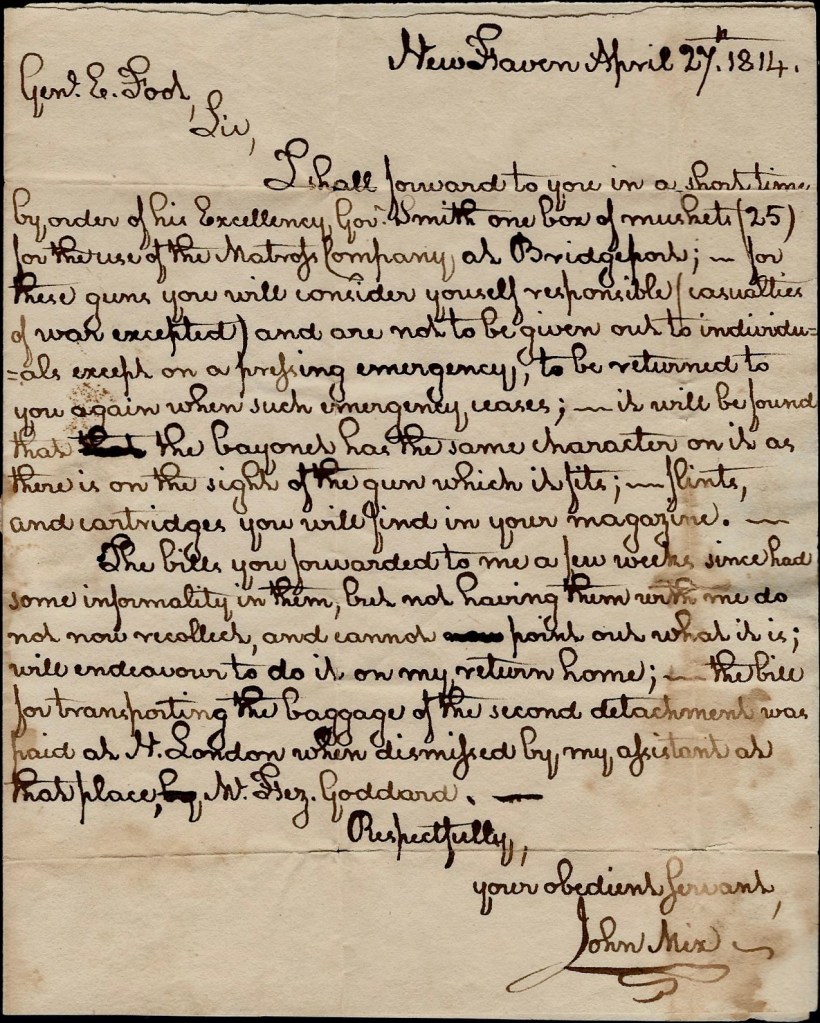
I shall forward to you in a short time by order of his Excellency, Gov. [John Cotton] Smith, one box of muskets (25) for the use of the matross [artillery] company at Bridgeport. For these guns you will consider yourself responsible (casualties of war excepted) and are not to be given out to individuals except on a pressing emergency, to be returned to you again when such emergency ceases. It will be found that the bayonet has the same character on it as there is on the sight of the gun which it fits; flints and cartridges you will find in your magazine.

The bills you forwarded to me a few weeks ago since had some informality in them, but not having them with me, do not now recollect and cannot point out what it is; will endeavor to do it on my return home. The bill for transporting the baggage of the second detachment was paid at New London when dismissed by my assistant at that place by Mr. Hez[ekiah] Goddard.

Respectfully, your obedient servant, — John Mix

to General Enoch Foot, Bridgeport

1813: The Death of Thomas Flint, Jr., 33rd US Infantry, War of 1812

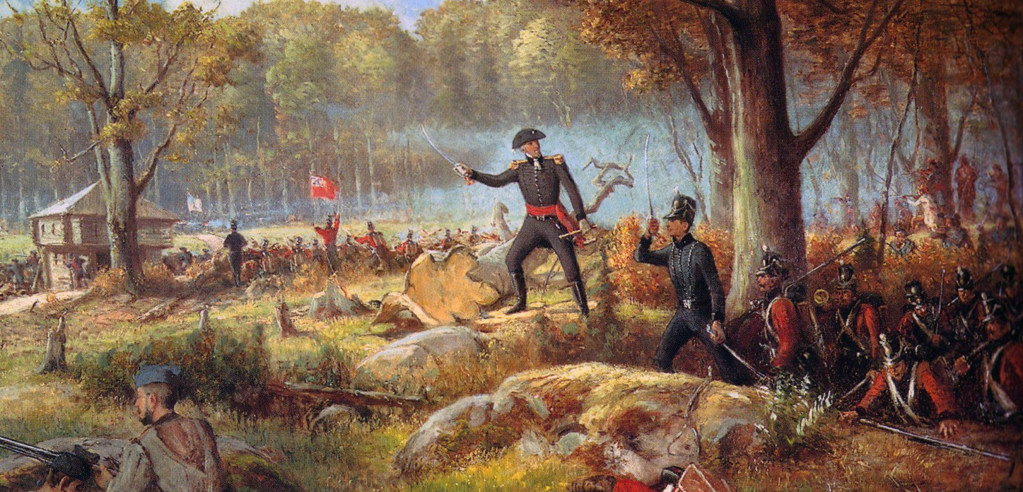
These incredible War of 1812 letters pertain to Thomas Flint, Jr. (1793-1813) of Farmington, Franklin county, Maine, who enlisted on 11 May 1813 in the 33rd U. S. Infantry as a musician. He was described as standing a little over 5 and half foot tall at the time of his enlistment. He died of illness and exposure on 5 November 1813 after participating in the Battle of Châteauguay that was fought on 26 October 1813 between a combined force of British/Canadian forces and Mohawk warriors and an American force of 2600 regulars—there were 321 officers and men of the 33rd US Infantry in the fight. The battle was pretty much a draw but resulted in the British troops (most French Canadians) turning back the Americans preventing the capture of Montreal. Few men were actually killed or wounded in this encounter which historians now consider little more than a skirmish.

In the first letter, Thomas writes his parents in June 1813 of his arrival at the encampment in Saco, Maine, as the regiment is being formed. In the second letter, written from Chateaugay, Franklin county, New York, details of the Battle of Châteauguay in Canada are revealed as well as the death of musician Flint. The details are provided by John Tilton Luce (1793-1877) who grew up with Thomas Flint, Jr., in Farmington, Maine. Thomas’s remains were reported to have been buried at “Four Corners” which was the location of the American camp at Chateaugay, New York.

Thomas’s parents were Dr. Thomas Flint (1767-1854) and Sarah Bassett Norton (1767-1833).

Letter 1

Saco [Maine]
June 4th 1813

Dear Parents,

I take this opportunity to inform you that I have arrived here and have been exceeding well ever since I left home. We reached here on Sunday, the 30th day of May, all in good spirits and so we have remained until this moment. We have very good accommodations and victuals accordingly. We belong to the first company in the regiment and have the finest officers that ever you saw. Our captain’s name is [Noah] Haley. Our colonel visits us every day. Our surgeon is a very fine, accommodating man by the name of Groves and finally we flatter ourselves up with the notion that we have gained the good will of our officers and companions.

We started from home on Tuesday the 25th of May and came as far as Uncle Jerry’s where we stayed that night, and Wednesday morning we started and came down to Uncle Russ’s and took breakfast. From then we proceeded to Baker’s Mills where we found that our company had left us and likewise had 1 hour the start of us. However, we made the best of our way to Augusta where we were entertained that night on the expense of the officers and on Thursday about noon we started for this place and proceeded on through Hollowell and Gardner and stopped in Litchfield at Mr. Stevens—a tavern keeper.

We started on Friday morning and passed through Bowdoin and Topsham and stopped in Brunswick near the college and from thence we started on Saturday morning and passed through Freeport, North Yarmouth, and Falmmouth and stopped at the rendezvous in Portland where John and myself were provided for at Bosson’s Tavern. And on Sunday afternoon we started from Portland and passed through Scraborough and arrived at Sac at five o’clock. We were accompanied by the colonel to the meeting house where it has been our place of abode ever since. So since we came from home we have passed through 18 towns, viz: Farmington, New Sharon, Rome, Belgrave, Sidney, Augusta, Hollowell, Gardner, Litchfield, Bowdoin, Topsham, Brunswick, Freeport, North Yarmouth, Falmouth, Portland, Scarborough, and Saco.

All of the soldiers, which is about five hundred, are completely uniformed but the uncommissioned officers and musicians clothing has not come on yet, but is expected this morning. I have the opportunity to send a letter by Mr. Gotham Sewel who I saw pass this morning forty or fifty rods off and very well knew him. We have not received our money yet but expect it from Boston within a few days. I have but a little todo and am very well contented. I have likewise met with some bitter Federalists who wish for an insurrection among ourselves. Mr. Sewel is now waiting for this letter so I remain your affectionate son, — Thos. Flint


Letter 2

A painting depicting the Battle of Châteauguay on 26 October 1813

Chateaugay [Franklin county, New York]
November 7, 1813

Dear Friend,

With deep regret and sore of heart I take up my pen to inform you of the most direful accident that ever befell your amiable family which is the death of your amiable family which is the death of your beloved son, Thomas who has left us and gone we hope to a better world where there shall be no more death nor separation of friends, where sorrow and sighing shall flee away. The task to write the melancholy scene, sickness and death of your son is more than I can bear and am greatly [indebted] to Sergeant Harding—an intimate friend of your sons—for his assistance in the same.

The first of your son’s sickness was at Burlington where he and myself were taken with the [ ] was followed by the jaundice. As to your son, we recovered a little from our indisposition as he mentioned in his last letter dated at Burlington when ordered to march to this place which we soon obeyed. We arrived at Chateaugay [New York] on the 16th of October where we stayed about 12 days during which time your son was rather unwell and not capable of doing much duty, yet he kept up a good heart and never shrunk from his duty when called to do it.

On the 21st of October we marched for Canada and had a very tedious and tiresome march. We had to ford the river Châteauguay on the 22nd of October. the water was very cold, being some ice in the river. We then passed on to the town of Caughnawaga where we stopped all night and there we had to lay on the cold ground without any tents or anything but our blankets. The next day we marched on through the woods and came to the First British settlement which they had abandoned and the guards were given off by the Light [Chairs?] who killed five Indians and taken one prisoner.

We stayed in this place three days constantly alarmed by the firing of the pickets and then orders came for us to march accordingly on the 25th inst. At about five o’clock p.m., we marched out of the encampment and crossed the river Châteauguay which we had again to wade. After we had crosse the river, we reached onto a plane where we received orders that no man should make any noise or even speak a loud word on pain of being punished. We then went softly on the way. This journey I have never been so much fatigued. We had several streams to cross during the night. We marched about 5 miles and in the morning we proceeded on our way and passed the British encampment which was on the opposite side of the river. We continued our march on through the woods about two miles further when the A Brigade and artillery [ ] which had marched on that side of the river with a part of the Light [Chairs?] began the attack on the guards. We fired and then ran. The Tenth Regiment marched on about a mile further and then they began a brisk fire and at the same time we were about abreast of them and were surrounded by the savages who kept continually firing at us and picking us off. Likewise the fire from the other side of the river of the British and Indians were directed at us and the balls flew very thick—the air being continually filled with the noise of these engines of death.

But your son still kept his firmness of mind and appeared to be quite undaunted. The action on the other side of the river continued about half an hour when the British and Indian force took to flight and loud huzzahs from the Tenth which was followed by the whole army took place. The Tenth Regiment had one man killed and five wounded. In our regiment there was sixteen killed and missing and a great many from the other regiments.

After the action was over, we were marched into the woods and a part of the army crossed the river and returned to the old British encampment. But your son remained with the company on the same side of the river as in the action and in the night the British and Indians made a desperate attack on us in which many were slain but we hope and still believe by the most correct reports that we double paid them. In the morning the whole of the army crossed the river that had not crossed the night before and your son returned free from wounds and in good spirits. We had orders immediately to march to Chateaugay [New York] where we arrived on the 2d day of November and went into the woods and built us some huts of logs and covered with hemlock boughs.

On the 2nd of November your son was taken unwell but not as but that he kept about the encampment. On the 3rd he grew rather more unwell and looked very yellow and pale. On the fourth day month he took a puke which operated very hard. In the afternoon of the same day I was called upon to do the duty of an orderly to the Brigade Major. He observed that I was going away, called to me, and said, “Luce, I think that I shall never see you again,” and observing at that time that he wished me to take care of his paper, which I promised to do but you must guess the situation of my mind on such an expression from my friend [paper creased—illegible]…obliged to give him to the care of the rest of the musicians. The next morning I heard that he was carried out of his tent in his blanket and at about nine of he clock a.m. I went to see him and found him quite bereft of his senses. My duty being such as compelled me to leave him to his nurses until about three of the clock when I returned to see him again. I spoke to him but he made me no answer and did not know me at all and appeared to be quite deranged laying in a dull or drowsy position.

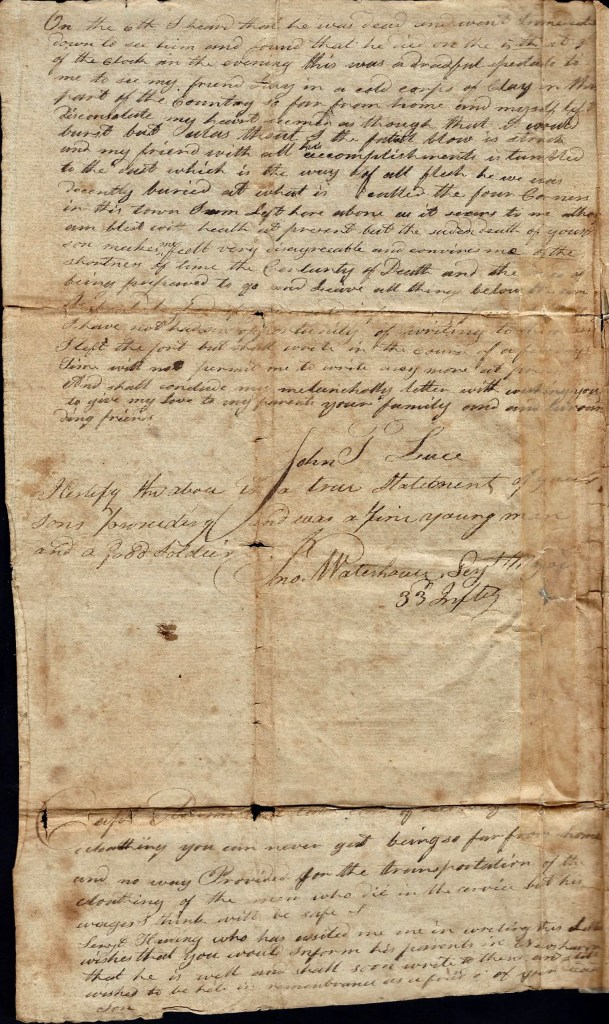
On the sixth I heard that he was dead and went immediately down to see him and found that he died on the 5th at 9 o’clock in the evening. This was a dreadful spectate to me—to see my friend lay in a cold corpse of clay in this part of he country so far from home and myself left disconsolate. My heart seemed as though that it would burst but alas thought I, the fatal blow is struck and my friend with all his accomplishments is tumbled to the dust which is the way of all flesh.

He was decently buried at what is called the four corners in this town. I am left here alone as it seems to me although am blessed with health at present but the sudden death of your son makes me feel very disagreeable and convinces me of the shortness of time, the certainty of death, and the ned of being prepared to go and leave all things below to [illegible].

I have not had an opportunity of writing to home since I left the fort but shall write in the course of a few days. Time will not permit me to write any more at present and shall conclude my melancholy letter wit wishing you to give my love to my parents, your family, and [ ] friends.

— John T. Luce

I certify the above is a true statement of your son’s passing and was a fine young man and a good soldier. — Jno. Waterhouse, Sergt. Major, 33rd Infantry