The following letter was written by John Smith, the son of John Gardner Smith (1797-Aft1860) and Nancy B. Case (1801-1880) of Norwich, New London, Connecticut. John wrote the letter to his sister, Rebecca Ann (Smith) Morrarty (1838-1937) who married John Mikel Morrarty, Jr. (1831-1903) in 1854.
John Smith enlisted on 5 September 1861 and mustered as a Corporal in Company D, 8th Connecticut Infantry on 21 September. He was slightly wounded in the head in action at Antietam on 17 September 1862. He was reduced to Private, date not given, and mustered out at the end of his term of enlistment on 20 September 1864.
Serving with John in the same company was his brother-in-law, John M. Morrarty. He was away from the regiment for a time due to illness and was later transferred to the veteran reserve corps. He reenlisted on 6 Mar 1865 as a private, Co B, 2nd Regt, US Volunteers for another year.
Patriotic letterhead, “The House that Uncle Sam Built” (with slave labor)
Transcription
Moorehead City, N. C. April 20, 1862
My Dear Sister,
Last night I received your kind letter & I am very glad to hear that Mother arrived safe home. We are well—that is, John M[orrarty] & I—for a great many are sick & several are dead in our regiment. You know that I wrote in one of my letters that the 8th Regt. had been sent ahead of all the rest of the Division to take undisturbed possession of Moorehead City which we did—the regiment split to pieces. Co. E was sent to Beaufort, Co. I & F were sent to Carolina City. Co. D & K are now in Moorehead City, & Co. G. B, H. C. & A are over across the Sound on the same island that Fort Macon is on. The last five companies have a skirmish with the Rebels every day & drive them into the fort. Capt. Sheffield of Co. H is mortally wounded—the ball striking him in the pit of his stomach and coming out of his backbone. A private in the same company was wounded in the hip.
We have just completed a fine breastwork and mounted 6 mortars in position under the fire of the heavy guns of the fort. Col. Edward Harland is sick and the Major is in command of the five companies on the island.
Capt. J. Edward Ward is in command of this post in Moorehead City. The Lieut. Col. resigned & the Major, I suppose, will be promoted to Lt. Col. & Capt. War will be promoted to Major. He is as brave, noble, & efficient officer & is well worthy of his office.
If you will send me 1 dollar’s worth of postage stamps, I will be much obliged to you. I have told you a lie. I told you that I was well but I have got the neuralgia in face. Tell Mother to excuse me this time & I will write next mail. I have no postage stamps. Be sure and send them.
Your poetry was read and reread and placed on file until next week. Corporal H. N. Livermore, Co. D, died of typhoid fever & E. J. Comstock, C. D, of the same. They were both from Lebanon & Deacon McCull knew them both. I will now draw my letter to a close so goodbye from your affectionate brother, — John Smith
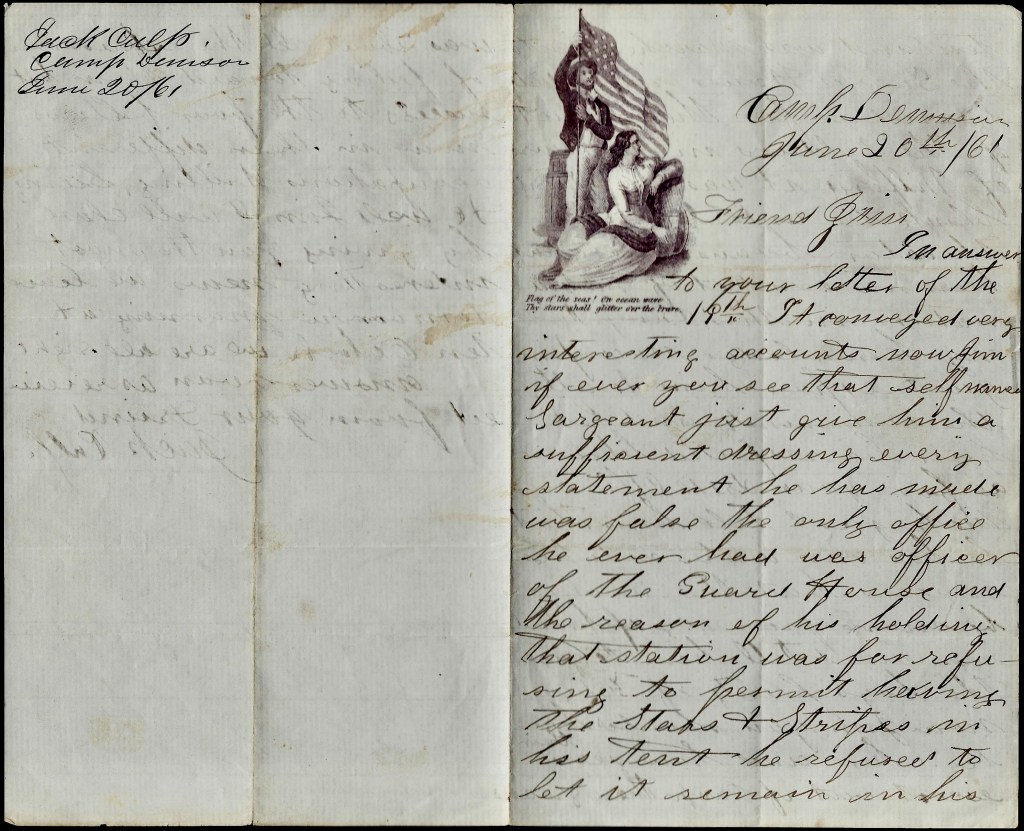
I believe this letter was written by Andrew Jackson (“Jack”) Culp of Co. F, 8th Ohio Infantry (3 months). Theregiment was organized 29 April through 2 May 1861 at Camp Taylor near Cleveland (and was mustered into service for 3 months on 2 May. Its nine companies were composed of men from northern Ohio, with Co. B representing the Hibernian Guards. The 8th Ohio was transferred on 3 May to Camp Dennison, near Cincinnati where they remained until June 22, 1861. Many of the soldiers in the regiment reenlisted for three years but it doesn’t look like Jack did.
Transcription
Camp Dennison June 20th 1861
In answer to your letter of the 19th, it conveyed very interesting accounts. Now Jim if ever you see that self named sergeant, just give him a sufficient dressing. Every statement he has made was false. The only office he ever had was Officer of the Guard House and the reason of his holding that station was refusing to permit having the Stars & Stripes in his tent. He refused to let it remain in his tent and was marched into the Guard House immediately. And as for the conduct of the soldiers in the town of Milford, it was all a point blank lie unless he was actor because there has been no conduct of such a nature in this camp to my knowledge. Now Jim, just expose him to all the community and let him be respected likewise.
As for your drill officer Mok, just tell him that he has our wishes as to his success but they would be more friendly if he had remained. Tell him to give the boys plenty of fatigue. Now Jim, you should have been here and have seen their escort out of camp. Three groans was about all the expression of feeling toward them. But success to the four fellows now in their different occupations—drilling, lying, &c.
Well Jim, I will close by giving you the most interesting news. We leave tomorrow morning at ten o’clock. We are all right. Answer soon as received. From your friend, — Jack Culp
The following letter was written by a soldier I believe was named “Theodore M. H.” and written to a woman in called “Bine” which may have been short for Sabina. It was datelined from Camp Dennison on 8 September 1861. Camp Dennison was a Federal Army training camp located in the town of Germany, Ohio, sixteen miles northeast of Cincinnati. George B. McClellan, a major general in the Ohio militia, chose Germany as the site for a camp. The camp was named for Ohio Governor William Dennison.
Camp Dennison was strategically located near Cincinnati, the Ohio and Little Miami Rivers, and the Little Miami Railroad. The rivers and railroad provided quick transportation from various parts of Ohio and surrounding states. The presence of troops at Camp Dennison also provided Cincinnati with soldiers to protect this important manufacturing city from Confederate attack. Camp Dennison encompassed more than seven hundred acres of land.
The camp hosted 75,000 to 100,000 soldiers traveling to and from the war. Since the soldiers only stayed for a short time, my only chance of identifying them was to look for regiments stationed at the camp in early September 1861, particularly those composed of German-Americans from Cincinnati. However, I couldn’t find anyone who fit that description by that name.
Transcription
Camp Dennison, September 8th 1861
Dearest Bine Mine,
I have been looking very strong for a letter from you last week but now it is Sunday and I feel very lonesome and disappointed because I did not get the letter you ought to [have] sent me. Now Bine, I want you to answer my letters the same day you receive them hereafter for they are the only thing that gives me any pleasure. And if you knew how anxious I am to get a letter from you, I know that you would not disappoint me. Now, if I do not get two letters at the very least from you this week, I shall in the future take the same time to answer yours that you do mine. Next to yourself, and your letters, that old pipe is my most loved friend and consequently I could not think of locking it up. But I think it would be policy to lock Bine up to keep her from running away. Why what would I do if you were to? If such a thing happens, I hope the first secessionist I meet will shoot me, for when I loose you, I will have lost all incentives to live. But this can never happen and I will not dwell on it for it gives me the blues to even think of it.
There was one of two things that I wanted to receive as a present from you but have got them from a different source. One was a needle case, the other a testament. The needle case was presented to me by a young lady from the country, the other case by some of the girls of our town. The testament was given to me here at the camp. I am afraid I do not study it enough to do much good—not one-eighth so much as I would read it if Bine had given it to me for then I would have studied it for the sake of the giver.
Will Hopkins was down yesterday to the mill with the wagon and came up to the camp and wanted Julius and I to go out home with him. As Julius wanted to go so bad to see Emaline Combs, I consented provided the Lieutenant would let us off and I went and asked him if he would let us off. He said that if we went, he could not let us go home for some time and as I wanted to see you worse than the folks in the country, I would not go (much against Julius’ will).
We had preaching today by Mr. [Samuel] Yourtree. 1 There was about three thousand there. It was the poorest sermon I ever heard but he made up for his lack of preaching by the prayer which was the most eloquent and patriotic I ever heard. There will be prayer meeting this afternoon at four o’clock and if I do not go down to Milford this afternoon, I think I will go.
Will Hopkins said the folks were coming down this week when I will get some more of the good things to eat. I will write the rest when I get yours.
Yours, Theo. M. H.
1 Samuel Livingston Yourtree (1817-1880) was a Cincinnati pastor of the Methodist Episcopal Church.
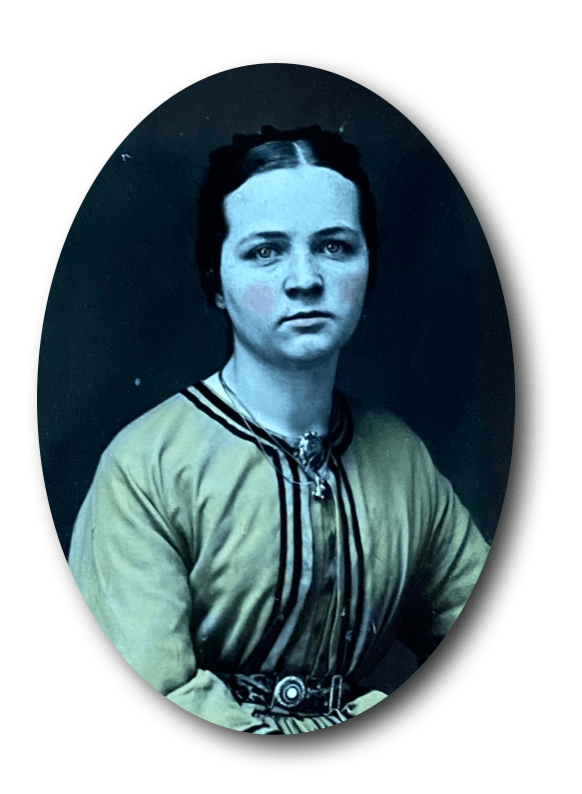
How Nannie might have looked (Bob Celli Collection)
The following letter was written, I believe, by 16 year-old Nannie Margaret Bolton (b. 1847), the daughter of John Bolton (1817-1887) and Elizabeth Preston Smith (1821-1904). It was only signed “Nannie” but she is the only Nancy living in the vicinity of the neighbors mentioned in her letter; she was also referred to as “Nannie” or “Maggie.” In 1880, Nannie was still single and enumerated in her parents’ residence in Washington County, Tennessee. Sometime after 1880, the Bolton family moved to Randolph County, Missouri.
Nannie’s letter speaks of the 8 September 1863 fight at Telford’s Depot and Limestone Station near the family’s residence near Limestone, Washington county, Tennessee. [See Brisk Fight with the Johnnies: The 100th Ohio at Limestone Station by my friend Dan Masters, published on 16 August 2020.]
It should be noted the letter was certainly written in early 1864 but the dates are not correct.
[This letter is from the private collection of Steve Blume and was transcribed and published on Spared & Shared by express consent.]
Transcription
Limestone, [Washington county] Tennessee February 30th 1864
Yours bearing date October the 10th 1863 came to hand yesterday—the first mail we have had for near five months. We have been very uneasy about you and Uncle Jimmy, not knowing whether you skedaddled or stood your ground. Good Lord, Uncle, we have went through the flint mill since I last wrote you.
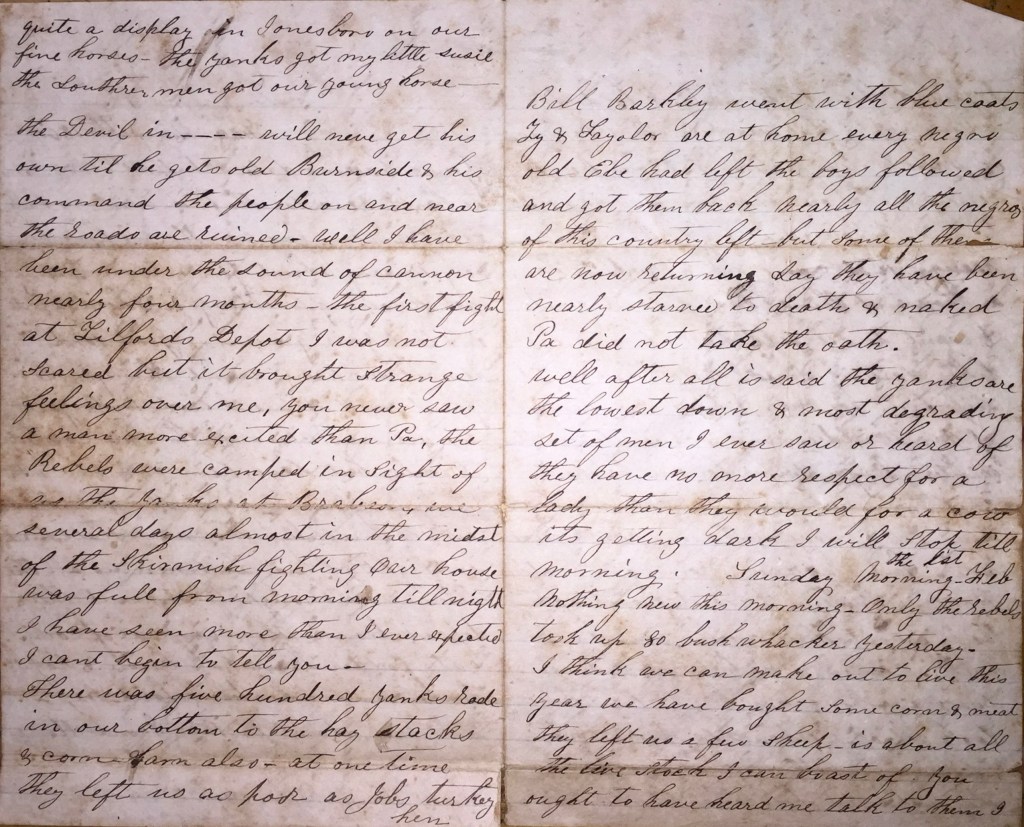
“The Devil in [Hell] will never get his own til he gets old Burnside & his command. The people on or near the roads are ruined.”
—Nannie M. Bolton, citizen, Limestone, Tenn., 30 February 1864
We are now clear of the blue coated Devils but have been over run with them for four long months. They treat us shamefully. They were stationed in sight of us and near us all the time—near enough to commit their depredations. They [took] every ear of corn, oats, fodder, bran, hay, bacon & hogs, turkey and chickens, lard soap, and even down to Pa’s grind stone. Our horses also. We have two old broke down rips. Aunt Alses, if you was here, I think we could make quite a display in Jonesboro on our fine horses. The Yanks got my little Susie. The Southern men got our young horse. The Devil in [Hell] will never get his own til he gets old Burnside & his command. The people on or near the roads are ruined.
Well, I have been under the sound of cannon nearly four months. The first fight at Telford’s Depot 1 I was not scared but it brought strange feelings over me. You never saw a man more excited than Pa. The Rebels were camped in sight of us; the Yanks at Brabson’s & we several days almost in the midst of the skirmish fighting. Our house was full from morning till night. I have seen more than I ever expected. I can’t begin to tell you. There was five hundred Yanks rode in our bottom to the hay stacks and corn [ ] also—at one time they left us as poor as Job’s turkey hen.
Bill Barkley went with blue coats. Ty & Taylor are at home. Every negro old Ebe had left the boys, followed and got them back. Nearly all the negroes of this country left but some of them are now returning. Say they have been nearly starved to death & naked. Pa did not take the oath.
Well, after all I said, the Yanks are the lowest down & most degrading set of men I ever saw or heard of. They have no more respect for a lady than they would for a cow. It’s getting dark. I will stop till morning.
Sunday morning, February 1st. Nothing new this morning—only the rebels took up 80 bushwhacker yesterday. I think we can make out to live this year. We have bought some corn & meat. They left us a few sheep is about all the livestock I can boast of. You ought to have heard me talk to them. I jawed them to the last. I told a Lieutenant that was here that he was of much less notice than our free negroes & that our free negroes was a credit to him. I poured it on to them pretty heavy. Just come up & I will tell you a thousand things that I can’t write.
I want to see Jeff so bad. Bless his little darling soul. I know he is sweet. Kiss him for me.
I have seen several of my Middle Tennessee acquaintances this winter. Major [John] Minor 2 for one. He spent a couple of weeks with us. I had like to have fell in love with him. He is a nice man.
Gen. [Alfred Eugene] Jackson’s 3 command is at Rogersville, Tenn. I heard from Capt. Berry about three weeks ago. He was well. Cousin Josiah Conley did not lose anything much but his horses. Took all of Ellison Thompson’s grain & horses and then ribbed his house. They just used Loflands up. They left & went to Virginia. Jennie [Lofland] is married to Jim [Horace] Baldwin. They used our good old Union friend Uncle Jerry Gibson about up. They was camped at the old place about ten days on the knob hill. The place is ruined, rail burned up, and timber cut down. Scarcely a tree left standing on the knobs.
Seven of Mr. Morrow’s negroes gone, his fencing nearly all burned up, and some of ours all next the road. Dr. [Alexander] Brabson 4 ruined. They day our folks retreated from Blue Springs, I never heard such shooting in my life. Our folks made a master retreat, crossed the long bridge just at dark. I never want to hear the like again. I got so used to cannons and guns that I did not mind it much. Five southern men run a thousand Yanks. They owned themselves that the rebs were the best fighters. I could write you a week of our troubles here but have not got space and paper is scarce in these diggings.
Mr. Miller says tell you he wants all the damned Yankees killed. We are all well and doing the best we can. William Henry Russell & his cousin has been spending the winter among the kin. Leesburg is dried up. Old Mrs. Sweet is still kicking. Old Jennie Cowan is dead. Bob Cowan out bushwhacking. Manuel Klepper gone with the Yanks.
I have not heard from my old spark since the middle of September. I hope he is still able for duty. You & Aunt Alses write to us soon and often. Pa says you must consider this letter [from] him and me both. It is such a task for him to write. As ever, your nice, — Nannie
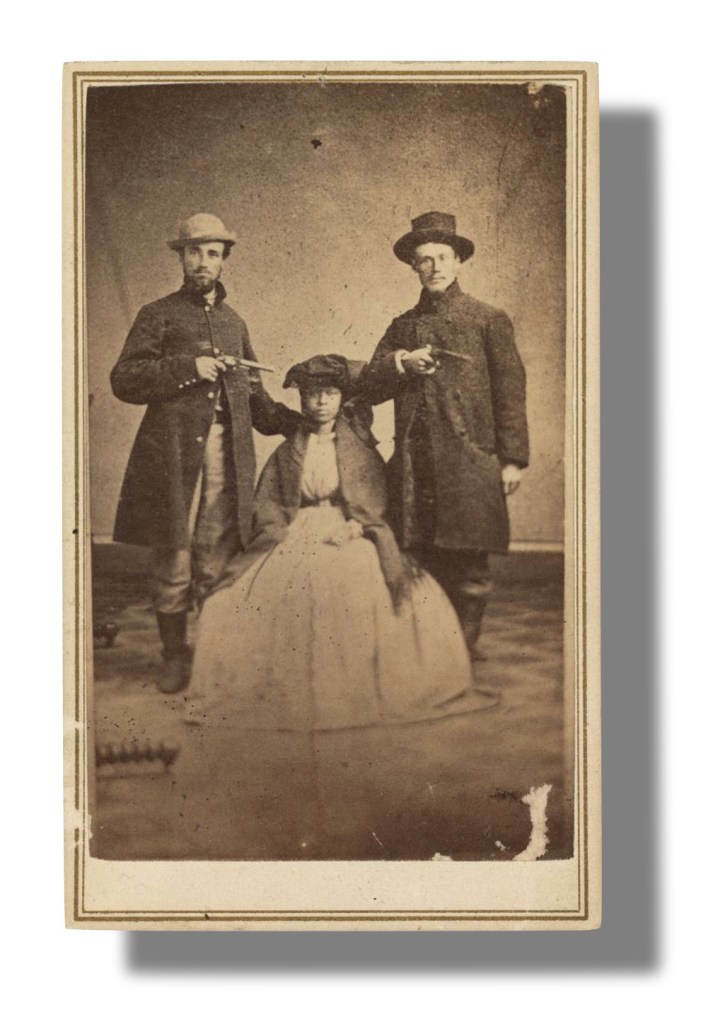
Private Abraham Hoofnagle, Co. K, 100th Ohio Infantry. Captured at Limestone Station and survived imprisonment only to perish in the explosion of the Sultana April 27, 1865
1 Tilford [Telford] is a small station on the railroad between Limestone and Jonesboro. The community was first called Brabsontown, later Millwood, and continued so for many years. It was not until 1855, when Colonel George Whitfield Telford, a state senator who operated the Telford Manufacturing Company, donated about four acres of land to support local operations of the East Tennessee and Virginia Railroad, that the name Millwood was changed to Telford Depot. During the Civil War, citizens of this part of Washington County voted to secede from the Confederacy, but they were unsuccessful in persuading others to do so. The independent nation called “Bricker’s Republic” soon fell into relative obscurity. A Civil War battle took place in Telford on September 8, 1863, when the 100th Ohio Infantry clashed with the Confederate-aligned Thomas’ Legion just east of the depot. The Confederate force was supported by 4-Howitzer artillery unit commanded by General Alfred “Mudwall” Jackson. In the fight at Telford Station and Limestone, the 100th Ohio Infantry was overwhelmed by a much large force while guarding the railroad there and after a couple of hours of fighting, the Captain of Co. B, told his boys to make a break for it, but 240 men were captured.
2 Probably Major John Minor of Co. E, 10th Tennessee Cavalry (DeMoss’).
3 “Unlike most generals of the conflict, Brig. Gen. Alfred E. Jackson lacked any formal military training and had never donned a uniform, but was a farmer who owned 20 slaves prior to the Civil War. Jackson received his disparaging nom de guerre, the moniker “Old Mudwall,” by troops under his authority. Some men under the Tennessean’s leadership routinely complained to headquarters with statements accusing Jackson of being unfit for command to pointing out how the farmer turned brigadier had only commanded 20 slaves prior to the war. For much of the war, Alfred Jackson did little to gain the confidence of his men. He was known to discipline officers in the presence of enlisted men — chastening actions that a slaveholder would openly practice — but such harmful conduct toward military personnel was crippling to morale and esprit de corps of the entire unit, and it was shunned by veteran soldiers and grads of West Point and VMI.” [Civil War Talk]
4 Dr. Alexander Brabson (1805-1888) lived in the Limestone area of Washington County, Tennessee. After attending medical school in Kentucky, he returned to his home to open a general practice. In addition to his duties as a physician, Brabson owned and operated a flour mill. He was married to Emily Maria Stephens (1817-1885). The 1860 Slave Schedule shows he owned 6 slaves.
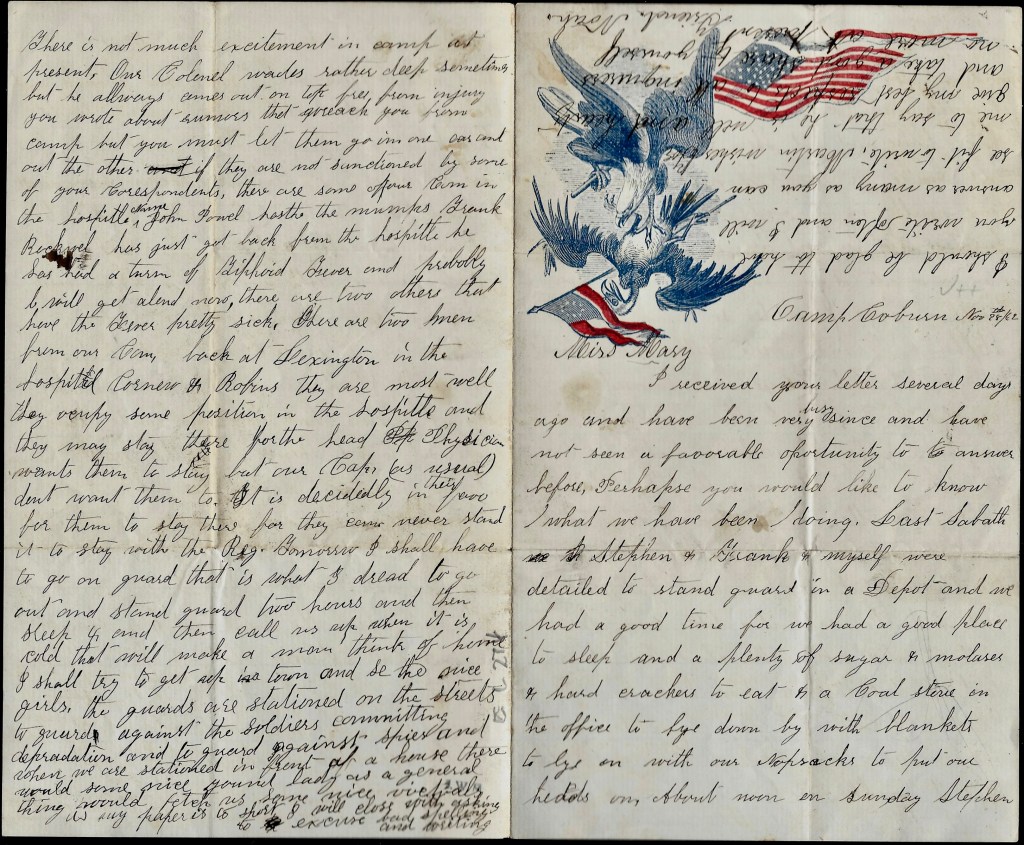
The following letter was written by Noah Merriam (1840-1927) of Linn, Wisconsin who enlisted as a corporal on 15 August 1862 in Co. C, 22nd Wisconsin Infantry—sometimes called the “Abolition Regiment.” Noah was taken a prisoner with some 200 others of his regiment in action at Thompson’s Station, Tennessee, on 5 March 1863 by Bragg’s Cavalry forces under Van Dorn but was exchanged after spending less than a month at Libby Prison. He mustered out on 12 June 1865.
Noah was the son of Allen Merriam (1797-1879) and Permelia Hutchins (1800-1871) of Linn, Walworth county, Wisconsin.
Transcription
Camp Coburn [Kentucky] November 28th 1862
Miss Mary,
I received your letter several days ago and have been very busy since and have not seen a favorable opportunity to answer before. Perhaps you would like to know what we have been doing.
Last Sabbath Stephen and Frank and myself were detailed to stand guard in a depot and we had a good time for we had a good place to sleep and a plenty of sugar & molasses & hard crackers to eat & a coal stove in the office to lie down by with blankets to lie on with our knapsacks to put our heads on. About noon Sunday, Stephen went back to camp (a distance of a mile) and got some beef and coffee and brought it back and went across the road to a slave’s house and got them to fry the beef and make us a cup of coffee and put some milk in it and we had a most luscious supper. And as we sat by the stove and ate our supper, it made us think of home firesides so much so that Stephen & Frank wrote letters home most all night while I lay and snoozed my regular four hours.
In the morning we bought a gallon of molasses and took it to the other boys in the mess. The other spare time aside from other duties we have been raising our tent with sods and building a stone fireplace which we have now fully accomplished and it makes it a little more like live as it is rather cool weather about these days.
Last Wednesday we had the extreme pleasure of eating a piece of wedding cake in remembrance of Skiler & Claire’s wedding but it would have given us more of we could have witnessed the said scene.
Frank M. Rockwell (right) of Co. C, 22nd Wisconsin Infantry, who is mentioned in this letter. (LOC)
For our Thanksgiving we listened to a short address from our Chaplain and pork and beans, good health and prosperity to be thankful for. Now there are nine in the tent, two of which are playing checkers (C. Beaure & [A.] J. Howe), three writing (E[zra W.] Button, J[ames] Weter, and your honorable servant), four are sick (C. Densmore with a cold, T[heron] Aiken with the mumps, D[wight] Allen a cold, J[ames] Holcomb with a fever, taken sick last night) but none dangerous. T. Merriam is a looker on the cry of letters has now come and Frank goes out to get them from the mess. Dwight gets one, Button three, Aiken one, Frank one, Weter one, N[oah] none. W[illiam] Bright sits in front of me eating hard crackers and beef. Seems to be happy. Martin [F. Ross] has just got back from the town and has brought a gallon of molasses. That makes us look sweet, you know. I wish all those nice gals that we left behind us could step in and see us. We would enjoy good smack, I’ll bet (please excuse the liberty but this is the fact).
There is not much excitement in camp at present. Our Colonel wades rather deep sometimes but he always comes out on top free from injury. You wrote about rumors that reach you from camp but you must let them go in one ear and out the other. If they are not sanctioned by some of your correspondents. There are some four in the hospital. John Powell has the mumps, Frank Rockwell has just got back from the hospital. 1 He has had a turn of typhoid fever and probably will get along now. There are two others that the fever pretty sick. There are two men from our company back at Lexington in the hospital. Cornew & Robbins, they are most well. The occupy some position in the hospital and they may stay there for the head physician wants them to stay but our captain (as usual) don’t want them to. It is decidedly in their favor for them to stay there for they can never stand it to stay with the regiment.
Tomorrow I shall have to go on guard. That is what I dread—to go out and stand guard two hours and then sleep 4 and then call us up when it is cold. That will make a man think of home. I shall try to get up in town and see the nice girls. The guards are stationed on the streets to guard against the soldiers committing depredations and to guard against spies, and when we are stationed in front of a house, there would be some nice young lady as a general thing would fetch us some nice victuals.
As my paper is too short, I will close with asking you to excuse bad spelling and writing. I should be glad to have you write often and I will answer as many as you can see fit to write. Martin wishes for me to say that he is well and hearty. Give my best respects to all inquirers and take a good share to yourself. No more at present. Friend, — Noah
1 See letter dated 8 December 1862 by Ezra Wilson Button to Harriett Emery on Spared & Shared 22, where Frank is visited by his father at Camp Coburn.
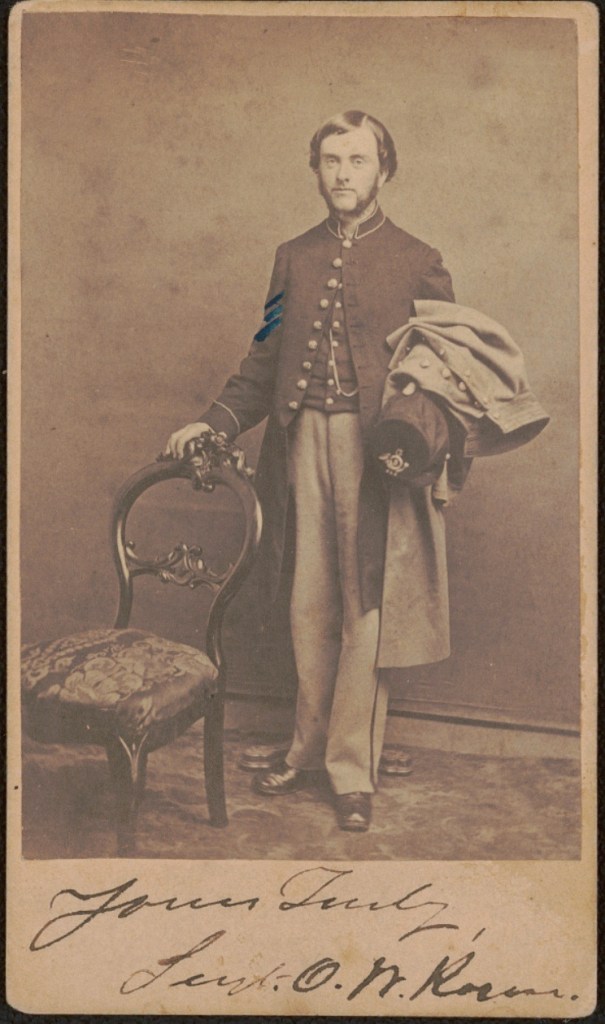
I could not find an image of Samuel but here is a cdv of Oliver W. Rogers who also served as a sergeant in Co. I, 5th Massachusetts Infantry (9-months). Library of Congress.
This letter was written by 25 year-old Samuel Lee Holt (1837-1905), the son of Samuel Holt (b. 1803) and Elvira Estes (b. 1809) of Bethel, Oxford county, Maine. Samuel was working as an engineer in Marlborough, Middlesex county, Massachusetts, in 1862 when he enlisted on 20 August 1862 and mustered into Co. I, 5th Massachusetts Infantry for 9 month’s service on 16 September 1862. He mustered out of the regiment on 2 July 1863. A year later he entered the service again, this time in the US Navy, serving as Acting 3rd Assistant Engineer aboard the USS Honduras in the East Gulf Squadron.
Samuel wrote this letter not long after his arrival in New Bern, North Carolina, where the 5th Massachusetts participated in Foster’s Expedition to Williamston, and later to Goldsboro. They were then on duty at New Berne till June, 1863, when they embarked for Boston and mustered out 2 July 1863.
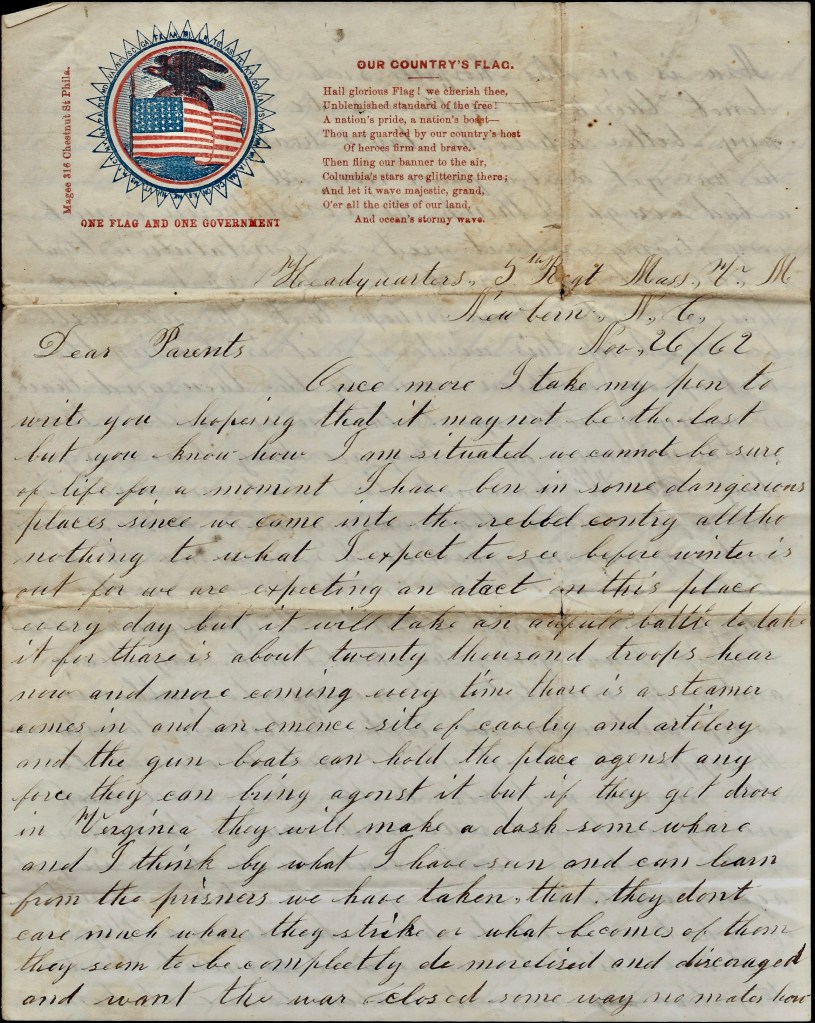
Patriotic stationery of Samuel’s Letter
Transcription
Headquarters 5th Regt. Mass V. M. Newbern, North Carolina November 26, 1862
Dear Parents,
Once more I take my pen to write you, hoping that it may not be the last, but you know how I am situated. We cannot be sure of life for a moment. I have been in some dangerous places since we came into the rebel country although nothing to what I expect to see before winter is out for we are expecting an attack on this place every day. But it will take an awful battle to take it for there is about twenty thousand troops here now and more coming every time there is a steamer comes in, and an immense sight of cavalry and artillery. And the gunboats can hold the place against any force they can bring against it. But if they get drove in Virginia, they will make a dash somewhere and I think by what I have seen and can learn from the prisoners we have taken that they don’t care much where they strike or what becomes of them. They seem to be completely demoralized and discouraged and want the war closed some way no matter how.
Asa is in the hospital sick. I do not think he will ever be any better while he stays here. He has got a slow fever now and a bad cough. I think his constitution is not very strong and it needs a constitution that is fire and water proof to endure what soldiers have to endure. I am in hopes that the war will be closed up this winter for it is killing the best of our northern men by the thousands. There is many a noble spirits that never will see their northern homes again. They are dying here every day.
We have not lost but one man since we left Boston. That was one from our company and was my favorite. His name was [Claude] Grenache. 1 He has worked with me two years in the shop and he said when our company was called that if I was going, he should not stay there. And so he enlisted and we were together in camp and when we left Boston in the steamer Mississippi the first night out, he climbed to the rigging and fell to the deck and broke one leg back, and scull and some of the fibers of his neck. He lived about twelve hours in great agony although he never spoke nor took any notice of what we said to him. He leaves a wife and one child to mourn and lament his loss. They live nearest neighbor to me at home.
I have been out on a brigade drill since I commenced this letter. My duty in camp is very light. I have to go out on brigade drills one afternoon in two days, two hours an afternoon, so I have plenty of time to read and write. But you know I never was much of a hand to write, but I don’t have anything else to busy myself about—only to look round among the rest of the men of the regiment who I find to be made up of good citizens of the Old Bay State—men of good morals and good principles and will do their duty in every respects. And if they are ever called into action, I trust you will hear a good report from them—not that I am bragging because I belong to this regiment, for I did not come here to gain fame or honor or to make money, for I could earn as much at home and save a good deal more. I come because I thought it my duty to come, for I had a good deal of sympathy for those brave men who have come before me. The men who have done the fighting and have stood the brunt of the battle—those are the men who deserve the sympathy of the North. The hospitals are full of them. They are broke down for life, their health are ruined for life, a priceless gem—that which money cannot buy. I know how to appreciate health. Mine is good and I find but few men that can endure more hardship than myself. But I am afraid I shall loose it before my time is out if I should be so fortunate as to dodge all the bullets.
And if I ever get home again, you shall have a long visit from me. I presume things have changed so much that it would not seem like home. Only think, it is seven years since I left the land of my birth. I am surprised when I think of it although as I look back upon this long years, it seems like a pleasant dream. And as I look back upon the scenes of my child[hood], they are as fresh in my memory as though it was but yesterday that I left them. But if I am spared for severn years more, I hope to mend my mistakes that I have made in the past.
I presume you have got your new home all complete by this time and I presume you need it for it is time now that you have plenty snow whistling round your ears. But we have not had but two frosty nights yet. One of them was about a week ago and the other last night.
Please write when you get this for it does me a great deal of good to hear from home and I believe I have written two or three times since I received an answer. Give my love and best wishes to all inquiring friends, if any such there be. Please excuse all mistakes and accept this from your son. — S. L. Holt
Direct to Sergt. S. L. Holt, Co. I, 5th Regiment Mass Vol. Militia, Newbern N. C.
1 Grenache, Claude (1827-1862) — Priv. — Res. Marlboro ; blacksmith ; 32 ; enl. Aug. 20, 1862 ; must. Sept. 16, 1862; died Oct. 23, 1862, on board U. S. transport “Mississippi,” by falling from yard arm.Claude’s wife was Elizabeth d’Aubreville (b. 1840); married in 1856.
The following letter was written by Stephen Stanley Crittenden (1829-1911), the son of Dr. John Crittenden (an early settler of Greenville, South Carolina) and Sarah Maria Stanley. He was educated in Greenville and at Elizabeth, New Jersey. In 1855, he married Eliza Jane Lynch (1838-1865), of Virginia. After her death, he married Sarah A. Bedell (1839-1911.
Crittenden was a planter. He volunteered at the first call for troops, and was elected 1st Lieutenant of a company [Co. G] that became part of the 4th South Carolina regiment under Col. J. B. E. Sloan, and participated prominently in the first battle of Manassas. This regiment and Wheat’s battalion, forming Evans’ brigade, on the extreme left, “commenced the great battle and held the hosts of the enemy in check for two hours before being reinforced. The regiment suffered severely in killed and wounded. The day after this battle Lieut. Crittenden received the appointment of Adjutant in place of the gallant Samual D. Wilkes, of Anderson, who was killed.”
“In the great battle of Seven Pines, in May, 1862. when many of this gallant regiment were killed, Adjt. Crittenden was wounded by a minié ball in the left breast while in front of his command. During his absence because of this wound, Gov. Pickens appointed him Lieutenant Colonel of the 4th Regiment of Reserves then forming for the defense of the Carolina Coast. At the expiration of this service on the coast he volunteered as a private in Gen. Gary’s mounted regiment, Hampton’s famous legion, for service around Richmond. He also served on the staff of Gen. Gary.
After the war Gen. Crittenden returned to planting, but for ten years served in his State Legislature as Representative and as Senator. He was Postmaster at Greenville four years during Mr. Cleveland’s first ad-ministration.” He committed suicide in 1911. [Source: Confederate Veteran]
Transcription
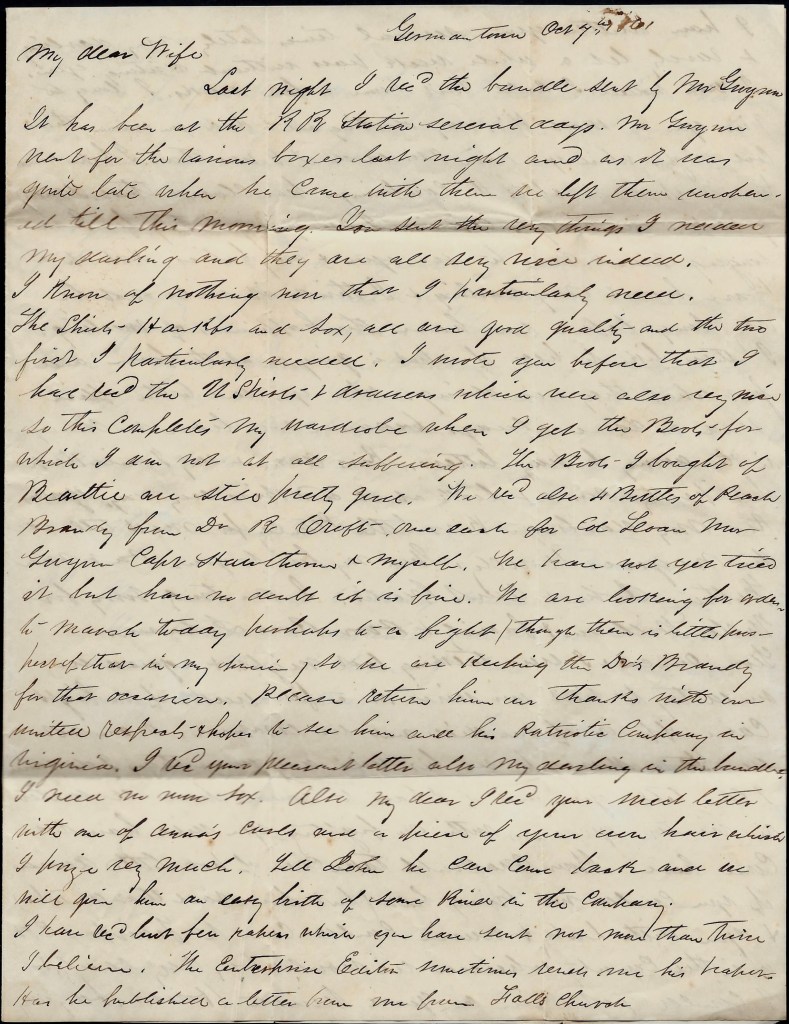
Germantown [Virginia] October 4th 1861
My dear wife,
Last night I received the bundle sent by Mr. Guysen. It has been at the railroad station several days. Mr. Guysen went for the various boxes last night and as it was quite late when he came with them, he left them unopened till this morning. You sent the very things I needed, my darling, and they are all very nice indeed. I know of nothing now that I particularly need. The shirts, handkerchiefs and socks, all are good quality, and the two first I particularly needed. I wrote you before that I had received the undershirts and drawers which were also very nice so this completes my wardrobe when I get the boots for which I am not at all suffering. The boots I bought of Beattie are still pretty good. We received also 4 bottles of peach brandy from Dr. R. Croft, one each for Col. Loan, Mr. Guysen, Capt. Hawthorn, and myself. We have not yet tried it but have no doubt it is fine.
We are looking for orders to march today, perhaps to a fight, though there is little prospect of that in my opinion so we are keeping the Dr.’s brandy for that occasion. Please return him our thanks with our united respects & hopes to see him and his patriotic company in Virginia.
I received your pleasant letter also my darling in the bundle. I need no more socks. Also, my dear, I received your letter with one of Anna’s cards and a piece of your own hair which I prize very much. Tell John he can come back and we will give him an easy berth of some kind in the company. I have received but few papers which you have sent—not more than twice I believe. The Enterprise editor sometimes sends me his papers. Has he published a letter from me from Falls Church?
I have written you several ties lately, my darling, & rarely let a whole week pass without writing you. I wish indeed I could visit home a few weeks. I long to give you a kiss, my darling, and to keep you warm these cool nights which you know I could do if I was there. I hope sometime next month after the campaign has closed that I may get off. One thing is certain, I am going to try for I am longing more & more to see you & my babies. Keep up a brave heart, my darling, and I think it will not be very long before we have the happiness of meeting.
I still like to hear of what is going on at the farm and just what they are doing. When you send to the office, send a dime always because we have no change in the army to pay letters. Kiss Anna & say I will keep her pretty case and look at it and kiss every day. Yours too, my darling. Kiss little Stanley for me & tell all the negroes howdy. Give my love to your Pa & Ma, Father, John and Aunt Curtis. I am truly sorry for Uncle William & family & poor Rosa Johnson.
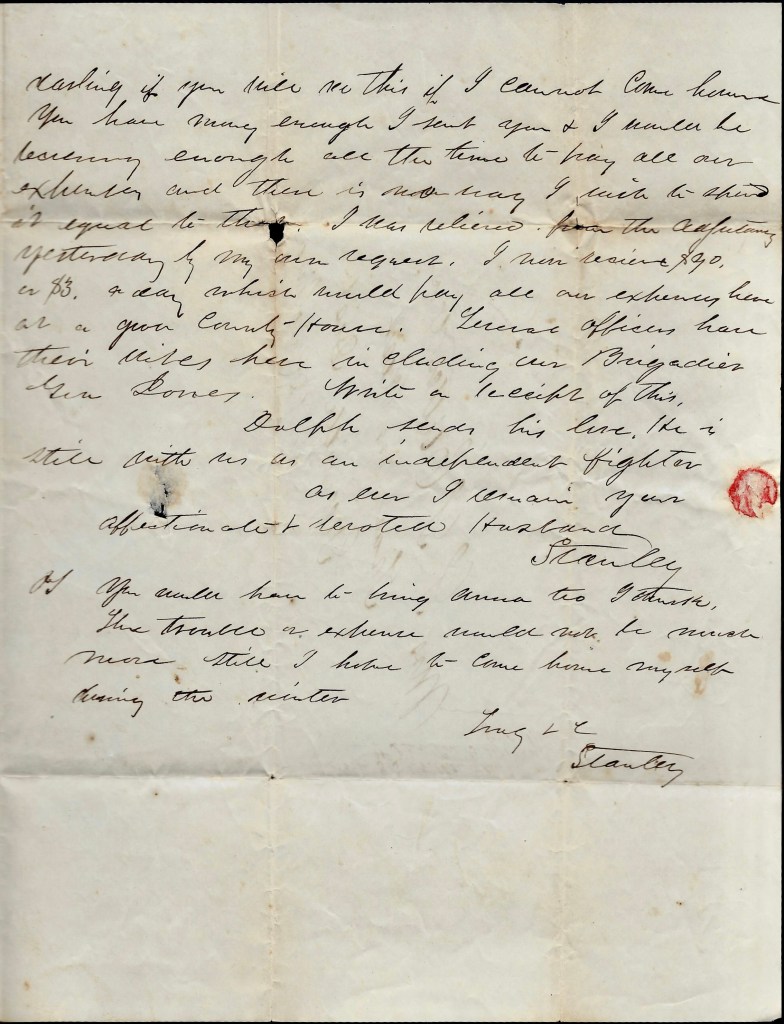
Thomas [W.] Duncan & I were talking last night & agreed we would try to visit our wives in a few weeks if no fight came off or if one did and we escaped. No one, not even Thomas wishes to see his wife any more than I do, I can tell you. and if I have to remain here all winter in winter quarters with no fighting, you will have to come here. Your Ma could take care of poor little Anna if you could not bring her (but how sad that would be) & you with baby & nurse could come to Fairfax Court House or in the county wherever we would be very easily & I could get you a good private house, my darling, if I cannot come home.
You have money enough I sent you & I would be [ ] enough all the time to pay all our expenses and there is no way I wish to spend it equal to this. I was relieved from the adjutancy yesterday by my own request. I now receive $90 or $3 a day which would pay all our expenses here at a good county house. Several officers have their wives here including our Brigadier General Jones. Write on receipt of this.
Dolph sends his love. He is still with us as an independent fighter.
As ever, I remain your affectionate & devoted husband, — Stanley
P.S. You would have to bring Anna too, I think. The trouble or expense would not be much more. Still I hope to come home myself during the winter. — Truly, — Stanley
The following letter was written by James Hervey Edwards (1837-1899), the son of Cader King Edwards (1790-1851) and Ann Payton of Barren county, Kentucky. Family oral history has it that he was called “Honest Jim” by his peers because he lived by the law of iron-clad honesty. Two of James’ brothers are mentioned in the letter: Cephas D. Edwards (1837-1899) and Christopher “Columbus” Edwards (1842-1863), and one sister: Angelina Edwards (1828-1906). Both James and Columbus served together in Co. H, 21st Kentucky Infantry. James survived the war, Columbus did not. Columbus died of chronic diarrhea at a military hospital in McMinnville, Tennessee on 7 July 1863. James mustered out of the regiment at Huntsville, Alabama, on 23 January 1865. He was described as standing just shy of 5’10” with brown eyes and dark hair.
James wrote this letter to his brother who must have been Edward Steele Edwards (by virtue of elimination). Edward (1826-1900) was the oldest child and the head of the family after Cader’s death in 1851.
Edward Steele Edwards and other family members in front of their Barren county family home.
Transcription
Camp Negley near Shelbyville, Tennessee May 26th 1862
Dear Brother,
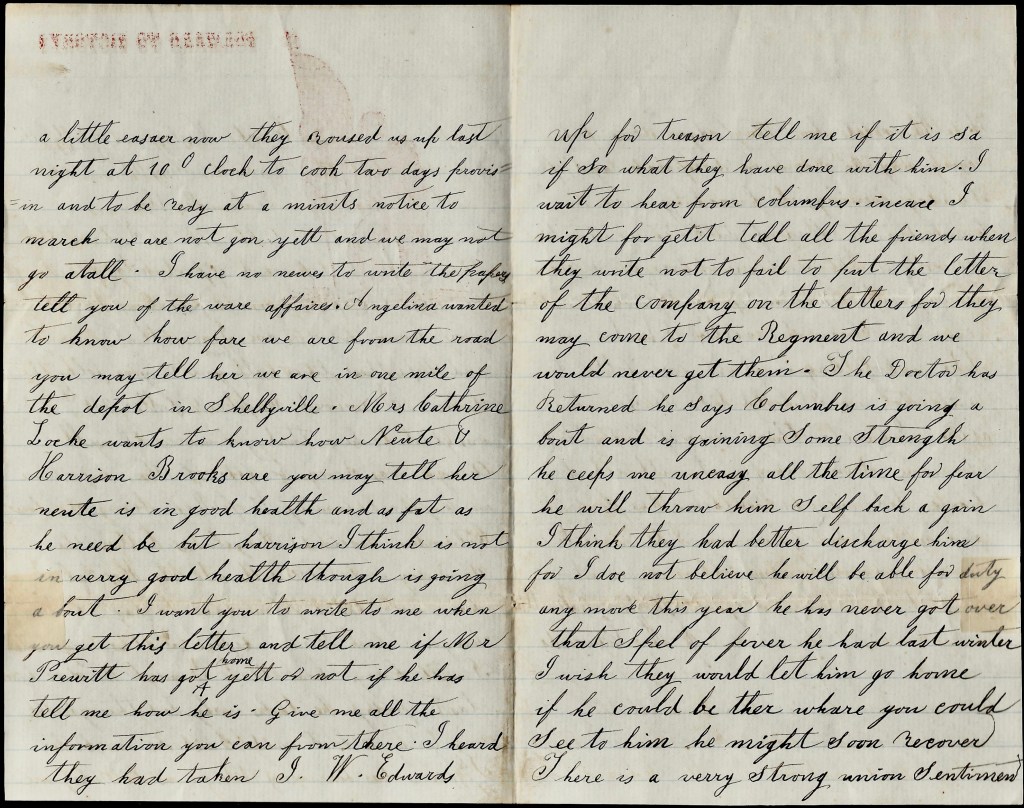
I have the present opportunity of writing you a few lines to let you know how I am. I am well at present and hope these lines will find you and your folks the same. I received Cephas’s letter the 24th & was glad to hear that you were all well though was sorry to hear of the misfortune in Cephas’s family and of Ben being so low. Columbus received Angelina’s letter the same day. He is still at the hospital. I have not heard from him today. The doctor has gone over there. Before I close my letter, I will know how he is. I went to see him last Friday. He looks very bad though he was going about and said he was better. The officers has been very tight on us but they are a little easier now. They roused us up last night at ten o’clock to cook two days provision and to be ready at a minute’s notice to march. We are not gone yet and we may not go at all.
I have no news to write. The papers tell you of the war affairs. Angelina wanted to know how far we are from the road. You may tell her we are in one mile of the depot in Shelbyville.
Mrs. Catherine Locke wants to know how Nute [Newton] & [William] Harrison Brooks are. You may tell her Nute is in good health and as fat as he need be but Harrison I think is not in very good health though is going about. I want you to write me when you get this letter and tell me if Mr. Pruitt has gone home yet or not. If he has, tell me how he is. Give me all the information you can from there.
I heard they had taken J. W. Edwards up for treason. Tell me if it is so. If so, what they have done with him. I wait to hear from Columbus. In case I might forget, tell all the friends when they write, not to fail to put the letter of the company on the letters for they may come to the regiment and we would never get them.
The doctor has returned. He says Columbus is going about and is gaining some strength. He keeps me uneasy all the time for fear he will throw himself back again. I think they had better discharge him for I do not believe he will be able for duty any more this year. He has never got over that spell of fever he had last winter. I wish they would let him go home. If he could be where you could see to him, he might soon recover.
There is a very strong Union sentiment for this state here. The ladies come here every day to see us on dress parade and of Sunday evenings to preaching. We are camped in a bend of Duck River on a high place in the prettiest place I ever saw a regiment stationed at. It is such a shady place, the sun scarcely strikes us the whole day.
Tell your folks to write to me. I would like to see you all. I have nothing more of importance to write. I am in hopes it will not be long till we can see each other. Be sure and write soon. Give my best respects to all who may inquire. No more at present but remain your affectionate brother, — J. H. Edwards
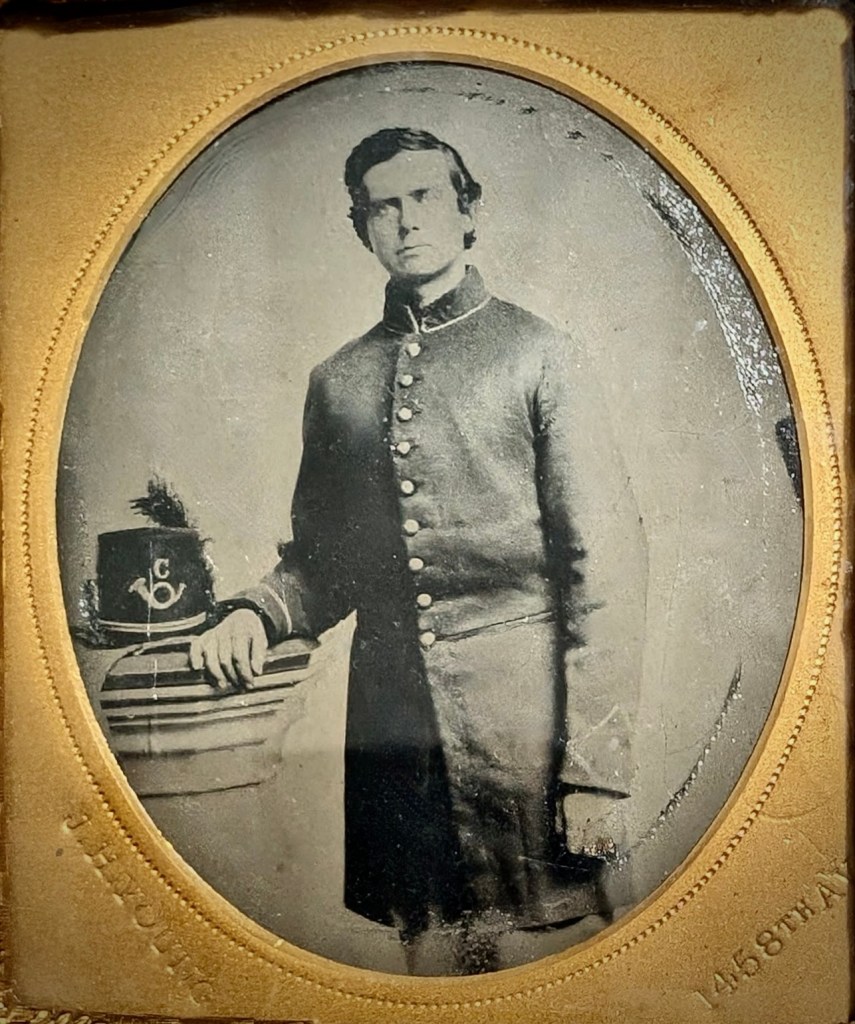
I could not find an image of George but here is Allen Nourse of Co. C, 17th Massachusetts Infantry (Mac Cook Collection)
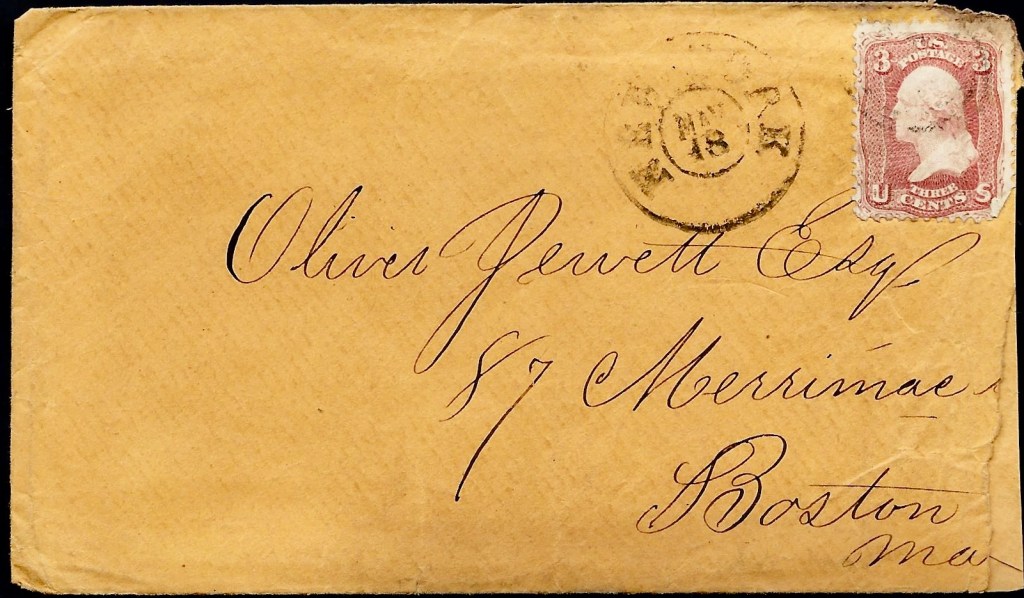
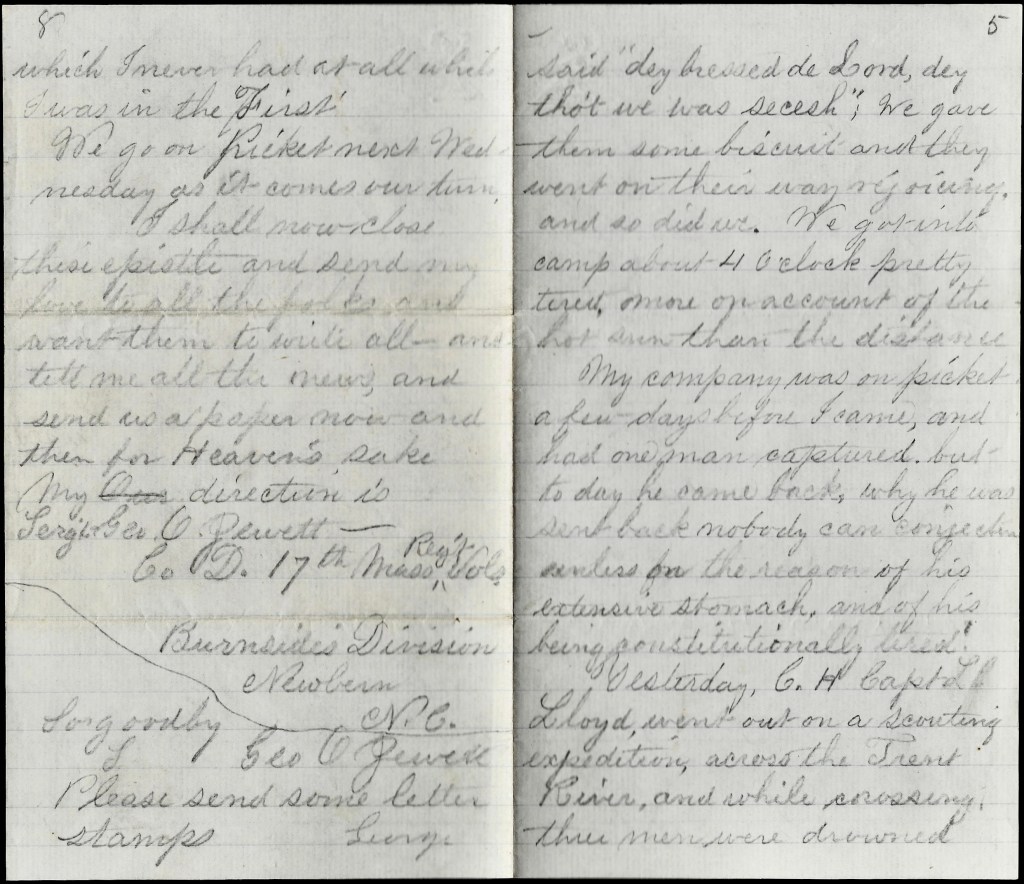
This letter was written by George Oliver Jewett (1837-1929), the son of saddler Oliver Jewett (1805-1873) and Elizabeth Underwood Hubbard (1809-1894) of Chelsea, Suffolk county, Massachusetts. George first entered the service as a corporal in the 1st Massachusetts. He later enlisted in March 1862 as a corporal in Co. H, but was eventually promoted to sergeant in Co. D. of the 17th Massachusetts Infantry. He mustered out in February 1864 and was transferred into Co. H, 13th Veteran Reserve Corps where he served until May 1865.
George’s letter describes his first arrival in New Bern, North Carolina, where he was assumed the duties of a sergeant in Co. D.
Jackson’s House Trent Road 6 miles from Newbern, N. C. May 11, 1862
Dear Father,
I have been three days in camp, having arrived last Thursday afternoon. The Captain, Lieut. Cheever and Lt. Fellows were very glad to see me as well as all the rest of the Chelsea fellows. We arrived at Newbern Wednesday evening at about 7 o’clock and anchored in the stream where we remained all night. The next morning we landed and had to remain in the city about four hours while Lieut. Poor ascertained where our reg’t was stationed. I could not see much of the city as there is a patrol all the time which allows nobody in the streets without a pass, but as far as I saw, it is an extremely pretty place. The streets are rather narrow but they are all shaded by trees on both sides of the way, and forming an arch over the middle of the street which has a fine effect.
Our regiment was found to be about six miles from town, doing picket duty, having been drawn in about 6 miles the day before. They were 14 miles from town a few days ago, but were relieved by the 103 New York Regiment (all dutchmen). My position as sergeant was all ready for me when I arrived and Lieut. Cheever told me to just do my best, and he should not be surprised at all if I obtained a commission—especially as there would probably be a change soon in the regiment which would affect our company.
After it was ascertained where we were to go, we left our knapsacks and other packages at the brigade headquarters in Newbern and marched to camp, passing through numerous encampments, munching our hard bread all the way. On our route we passed a few houses (there are not many in this region), one of which was empty. It belonged to “secesh” so we went in and examined “a few.” There was nothing in the house but a piano all smashed to pieces by some person or persons unknown. We went into the garden and picked a few strawberries and a few roses, after which we trotted on. About 2 miles further on we stopped [at] a house where there was on old lady and her daughter who were civil but didn’t say much to us as they were “secesh,” the daughter’s husband being in the rebel army. Most all the people about here are “secesh.”
A little way further up we met two darkies who were going to run away from us but we told them to “halt” and they did, and when we came up, they were very much frightened. We told them not to be scared as we were Union soldiers upon which they were joyful and said “dey bressed de Lord, dey tho’t we was secesh.” We gave them some biscuit and they went on their way rejoicing and so did we. We got into camp about 4 o’clock pretty tired more on account of the hot sun than the distance.
My company was on picket a few days before I came and had one man captured but today he came back. Why he was sent back, nobody can conjecture unless on the reason of his extensive stomach and of his being constitutionally tired.
Yesterday, Co. H Capt. L. Lloyd went out on a scouting expedition across the Trent River and while crossing, three men were drowned. Their bodies were recovered and brought in last night. There has been considerable anxiety about Co H as they did not return last night so they sent Cos. F and K to find them, but as I am writing, some of Co K’s men have come in and say Co. H is safe and coming along with two prisoners and some muskets.
One of the recruits who came on with me had his one of fingers shot off this morning accidentally. He belonged to Co. F.
The country about here is covered with forest, every tree which contains some kind of pitch, rosin, or other sticky substances. Our camp looks very pretty. The different companies have laid out trees in their company streets so it looks nice and clean. I would like to have you send word to me if Billy Jones has been paid or not ($100). I shall not get paid off for 2 months to come so I shall become quite used to being penniless, but I suppose there’s a good time coming. But I should like a little money to get my flannels washed once in a while, but I suppose I must grin and bear it. I am very well indeed and am always anxious for meal time as I have quite an appetite which I never had at all while I was in the First [Massachusetts].
We go on picket next Wednesday as it comes our turn. I shall now close this epistle and send my love to all the folks and want them to write all – and tell me all the news, and send us papers now and then for Heaven’s sake. My directions is Sergt. George O. Jewett Co. D, 17th Mass Reg’t Vols., Burnside Division, Newbern, N. C.
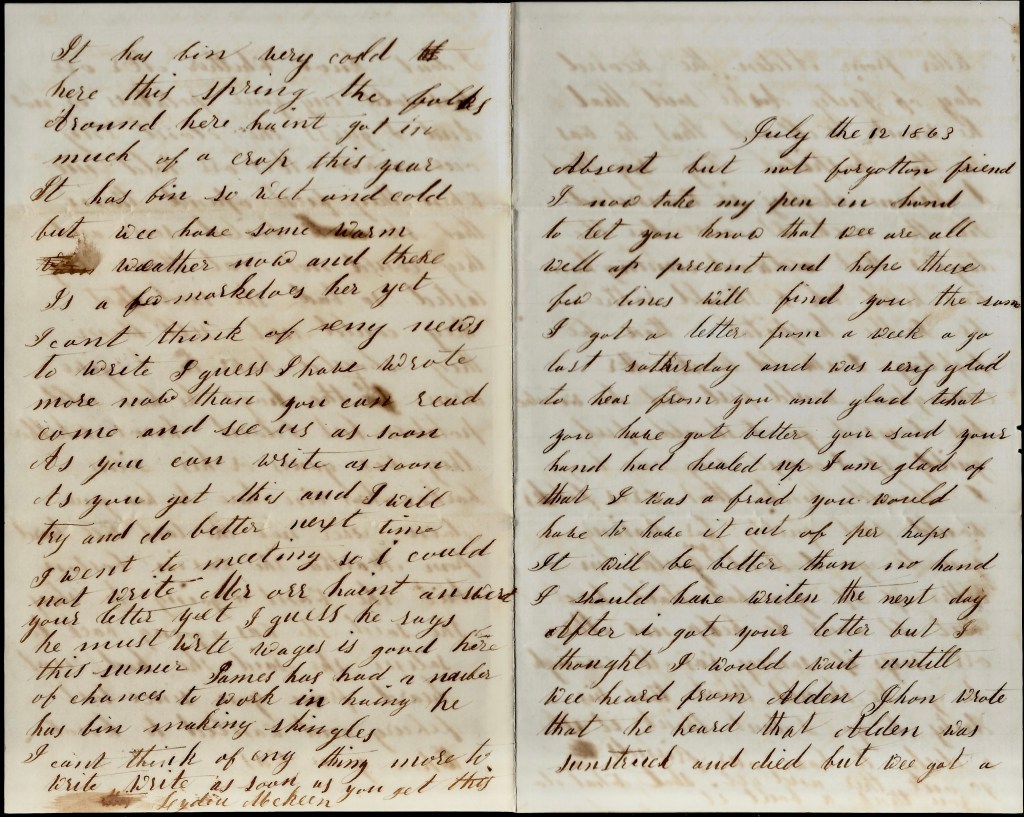
The following letter was written by Lydia (McAllister) McKeen (1838-1933), the wife of James H. McKeen of Patten [post office], Aroostook county, Maine.
Lydia write the letter to Hiram Keay (1828-1907), the son of Thomas Keay and Rebecca Grant of Bowdoin, Maine. Hiram was 34 years old and residing in Island Falls, Maine, when he enlisted as a private in Co. H, 20th Maine Infantry on 29 August 1862. He was transferred to the 2nd Battalion, Veteran Reserve Corps in September 1863 due to the wound he received in his left hand. How of when Hiram was wounded is not stated in the letter but a Return of Casualties in Maine Regimentsat the Battle of Fredericksburg shows that he was “wounded and missing.” Most likely Hiram was still hospitalized from that battle seven months earlier as the regiment did not participate in the Battle of Chancellorsville due to an outbreak of smallpox in the regiment.
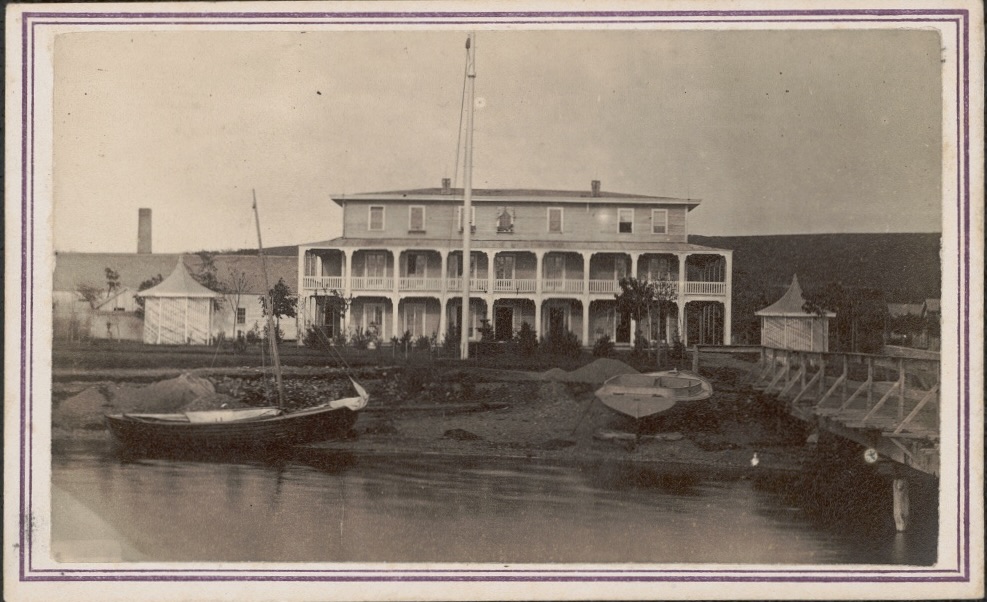
Lovell General Hospital, Portsmouth, Rhode Island, where Hiram Keay was being treated for his hand wound, received in the Battle of Fredericksburg. (LOC)
Transcription
Addressed to Mr. Hiram Keay, Esqr., Ward G, Lovell General Hospital, Portsmouth Grove, Rhode Island
July the 12th 1863
Absent but not forgotten friend,
I now take my pen in hand to let you know that we are all well at present and hope these few lines will find you the same. I got a letter from a week ago last Saturday and was very glad to hear from you and glad that you have got better. You said your hand had healed up. I am glad of that. I was afraid you would have to have it cut off. Perhaps it will be better than no hand.
I should have written the next day after I got your letter but I thought I would wait until we heard from Alden [Cunningham]. I have wrote that we heard that Alden was sun struck and died but we got a letter from Alden the second day of July and he said that he wasn’t well and that he was in the hospital. They say that Hiram Chesley 1 is wounded in the neck. It come in the dailies that Edward Cunningham was killed. 2 Oh, I should rather be in the hospital than be fighting. I should think Mr. Cunningham would feel bad. He wanted his boys to go. I should feel guilty if I coaxed anyone to go. I should think that Orr’s folks would feel guilty for teasing you to go. I think you would [have] been better off if you had stayed here. But it can’t be helped now. Mr. Orr says if Sammy [b. 1845] was old enough to go, he should think t’was his duty to go. I don’t think it is a duty to have our friends go out there and get shot. What do you think about it?
I don’t know whether Mr. [William D.] Orr has sold any of your potatoes or not and I guess they don’t anyone know. Mrs. Orr told me when they first opened them that she boiled some and they could not eat them—they tasted so bad. She said that they could not sell them. They should have to give them to the hogs. He has sold potatoes but I don’t know whether they was yours or his.
Silas Barker has been here. He has gone down river now. The last we heard from Martha she was in Boston but she wasn’t going to stay. She said she a going back to Salem. She said she had not heard from you since last February and wanted to know where you was.
It has been very cold here this spring. The folks around here haint got in much of a crop this year, it has been so wet and cold, but we have some warm weather now and there is a few mosquitoes here yet.
I can’t think of any news to write. I guess I have wrote more now than you can read. Come and see us as soon as you can. Write as soon as you get this and I will try and do better next time. I went to meeting so I could not write. Mr. Orr haint answered your letter yet, I guess. He says he must write. Wages is good here this summer. James has had a number of chances to work in haying. He has been making shingles.
I can’t think of anything more to write. Write as soon as you get this. — Lydia McKeen
1 Hiram H. Chesley, attorney, Louisville, was born in Aroostook County, Maine, September 8, 1844, and is a son of Bela H. Chesley, of Anoka, Minn., a native of Oxford County, Maine. Mr. Chesley served in the late war in Co. H, 20th Maine Volunteer Infantry, and participated in the battles of Antietam, Fredericksburg, the Wilderness, Gettysburg and others. He received a gunshot wound through the neck at Gettysburg, which crippled him for life. He lay paralyzed for eighteen months, entirely helpless, and has suffered untold misery ; not an hour passes until the present time that does not bring its pains. He came to Marion County, Ill., in September, 1865. He there read law, and was admitted to the bar in 1867. In April, 1870, he located in Louisville, where he still remains, engaged in the practice of his profession. He was married, January 23, 1868, to Mary E. Tubbs, daughter of Alva Tubbs (deceased). She was born in Jennings County, Ind.” Excerpt from “History of Wayne and Clay Counties, Illinois 1884
2 Private Edward Cunningham, orderly to Major General Abner Doubleday. A member of Company I, 1st Maine Cavalry, he was a resident of Patten, Maine. Cunningham was killed on July 3 and was buried in the Maine plot in Gettysburg’s National Cemetery. On his body was found a postage stamp, a comb, and $3.95 in cash. (Union Casualties at Gettysburg, by Travis W. Busey and John W. Busey, 1:20)




















 Spared & Shared 23