Category Archives: 17th Massachusetts Infantry

1863: John Quincy Adams Johnston to William Johnston

The following letters were written by John Quincy Adams Johnston (1836-1906)—known to his comrades as “Quince”—who served as 1st Sergeant in Co. A, 17th Massachusetts Infantry. He enlisted in May 1861 at Amesbury and was discharged for wounds on 10 September 1863. He was married to Lucy Stevens Moody in 1857 but she died a little over two years later in 1860.

Quince’s first letter describes the Goldsboro Expedition in December 1862. His 2nd letter concludes with a brief recap of the expedition made with other troops of the 18th Army Corps to the relief of the besieged garrison at Washington, North Carolina. When they engaged the enemy at Blount’s Creek on 9 April 1863, they found them strongly entrenched and finally withdrew and returned to New Bern.

Quince wrote the letters to his brother William Johnston who served in the US Navy during the Civil War.
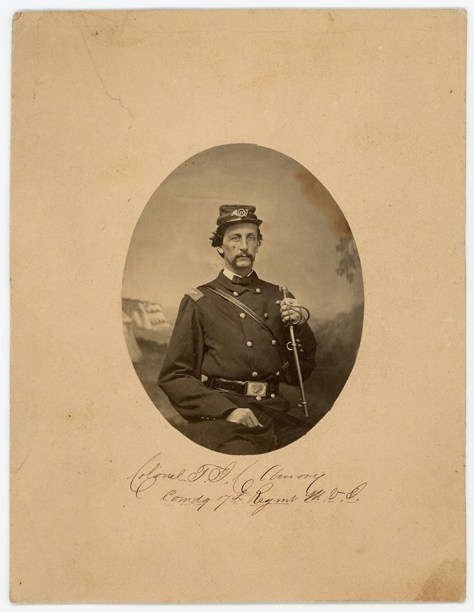
Colonel Thomas Jonathan Coffin Amory, 17th Massachusetts Infantry. Albumen print likely taken at New Berne, N.C. He commanded the 17th Massachusetts Infantry at the time this letter was written in March 1863. (Dale Niesen Collection)

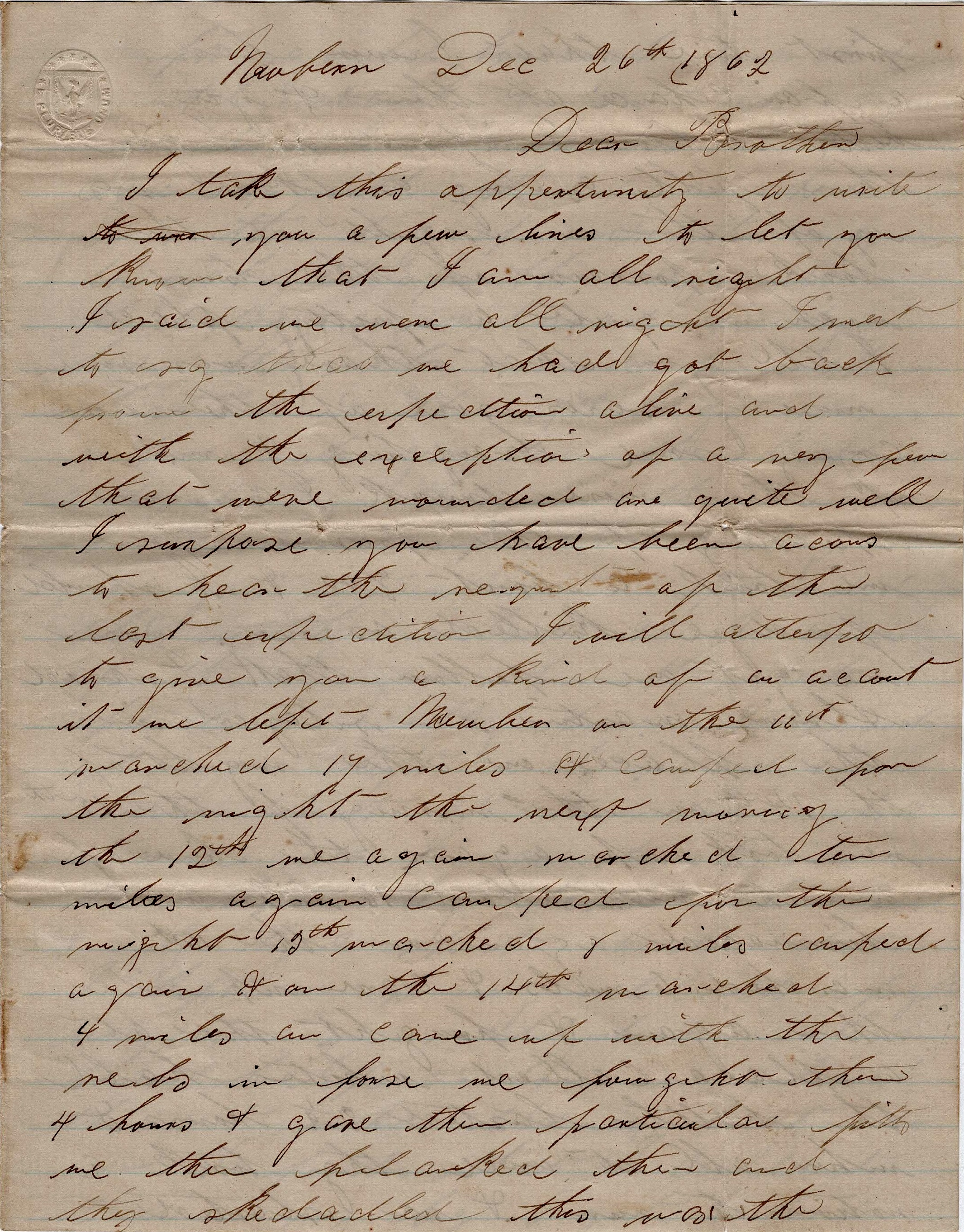
Letter 1

Newbern [North Carolina]
December 26, 1862

Dear Brother,

I take this opportunity to write you a few lines to let you know that I am all right. I said we were all right. I meant to say that we had got back from the expedition alive and with the exception of a very few that were wounded are quite well. I suppose you have been [ ] to hear the result of the last expedition. I will attempt to give you a kind of an account of it.

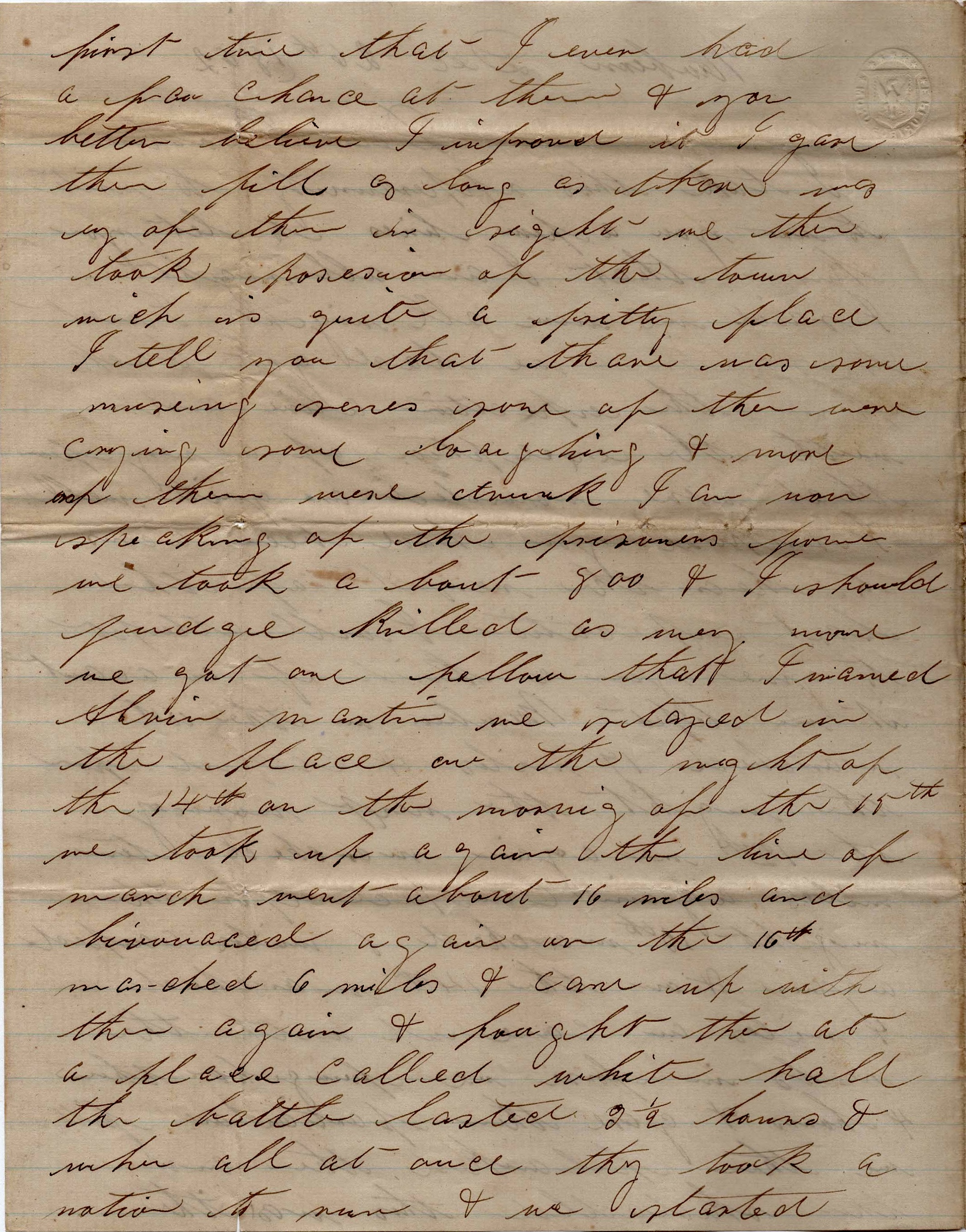
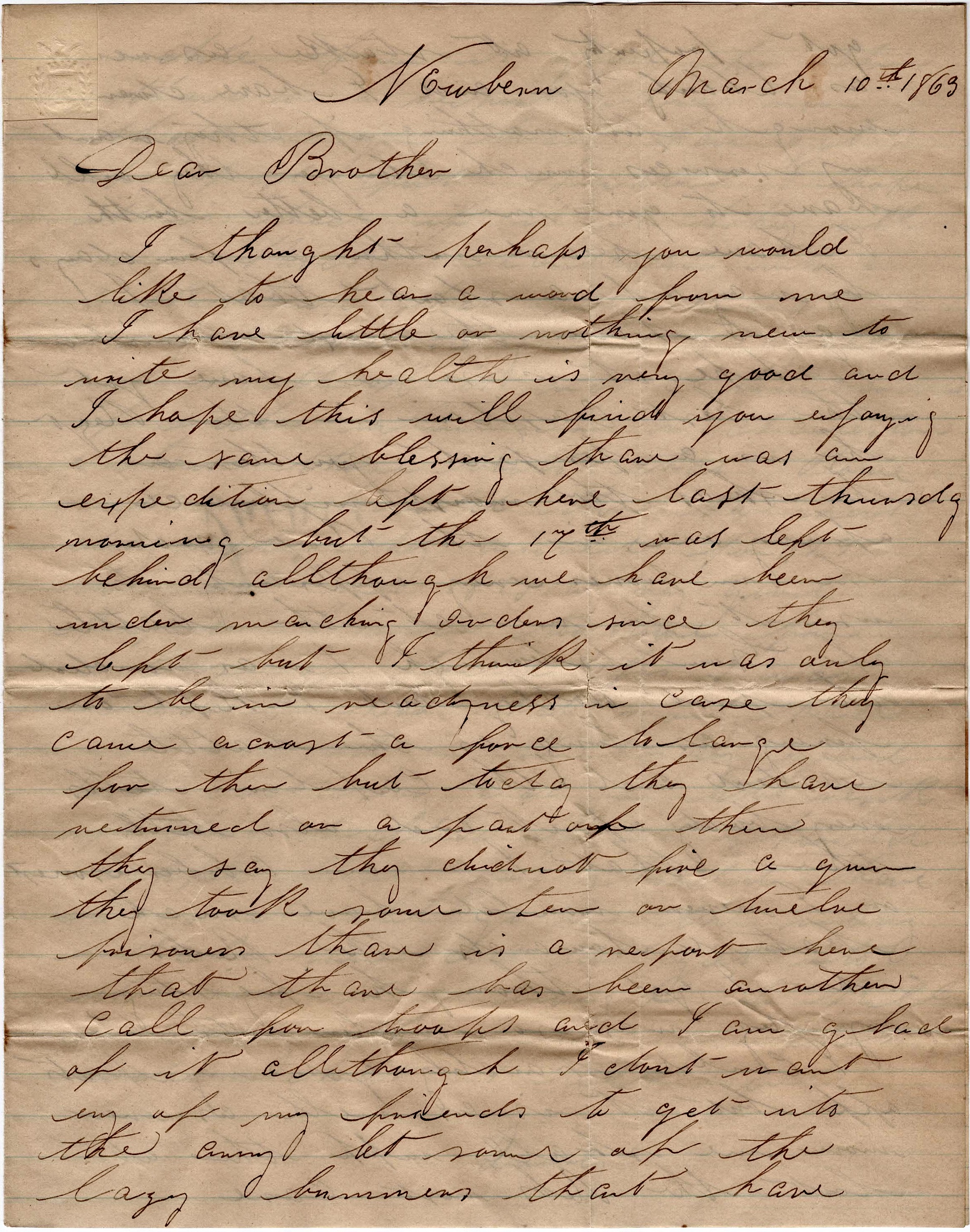
Weleft Newbern on the 11th, marched 17 miles & camped for the night. The next morning, the 12th, we again marched ten miles. Again camped for the night. 13th marched 8 miles and camped again On the 14th marched 4 miles and came up with the rebs in force. We fought them 4 hours & gave them particular fits. We then flanked them and they skedaddled. This was the first time that I ever had a fair chance at them & you better believe I improved it. I gave them pills as long as they was in sight. We then took possession of the town [Kinston, N. C.] which is quite a pretty place. I tell you that there was some amusing scenes. Some of them were crying, some laughing, and more of them were drunk. I am now speaking of the prisoners for we took about 800 and I should judge killed as many more. We got one fellow that I named Alvin Martin.

We stayed in the place on the night of the 14th and the morningof the 15th we took up again the line of march. Went about 16 miles and bivouacked again. On the 16th, marched 6 miles and came up with them again & fought them at a place called White Hall. The battle lasted two and a half hours and when all at once they took a notion to run and we started for Goldsboro. Marched until dark & went into camp.

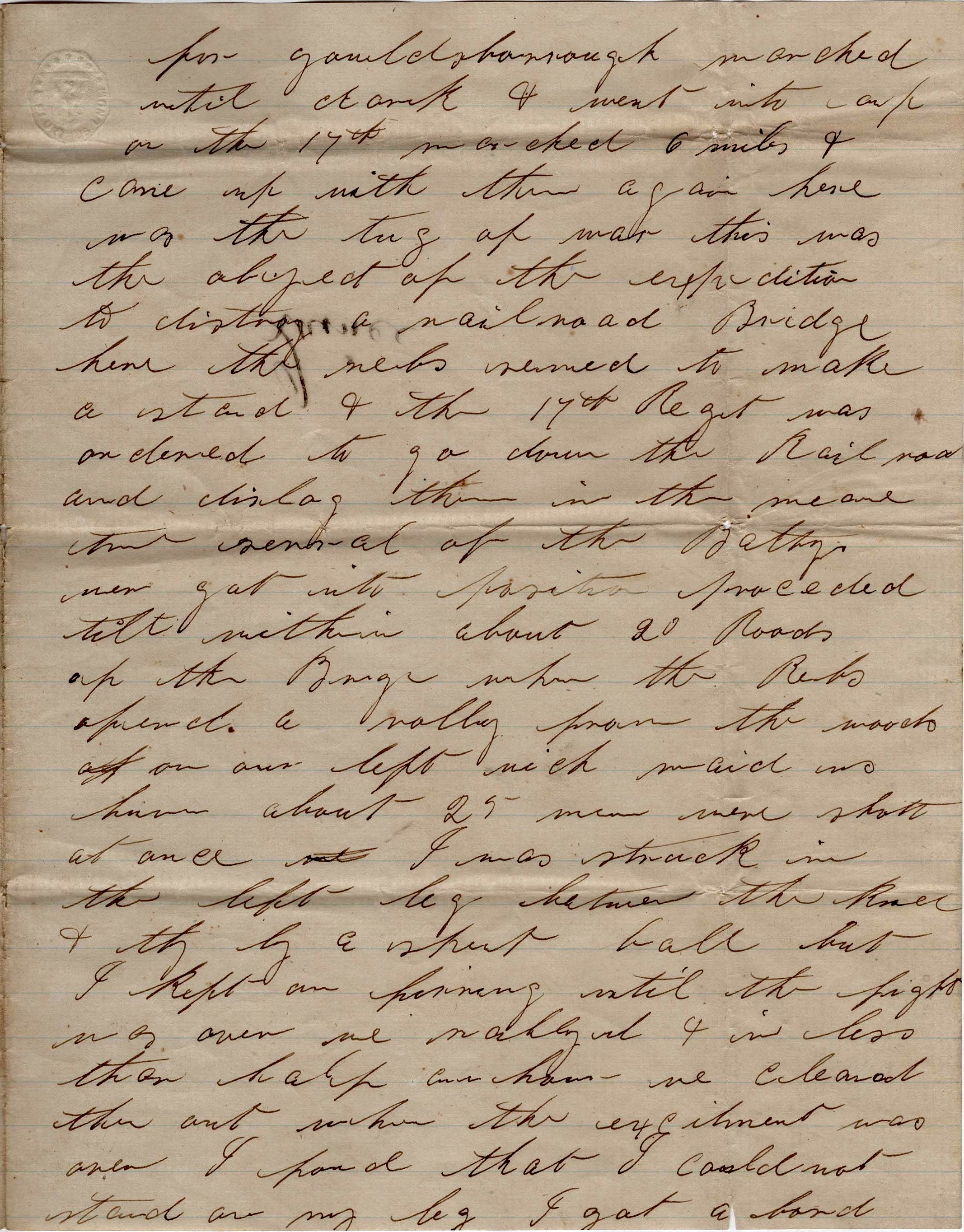
On the 17th, marched 6 miles & came up with them again. Here was the tug of war. This was the object of the expedition—to destroy a railroad bridge here. The rebs seemed to make a stand & the 17th [Mass.] Regiment was ordered to go down the railroad and dislodge them. In the meantime, several of the battery men got into position till within about 20 rods of the bridge where the rebs opened a volley from the works on the left which made us [ ]. About 25 men were shot at once. I was struck in the left leg between the knee and thigh by a spent ball but I kept on firing until the fight was over. We rallied & in less than half an hour we cleared them out. When the excitement was over, I found that I could not stand on my leg. I got a board [rest of letter is missing]

— Quince
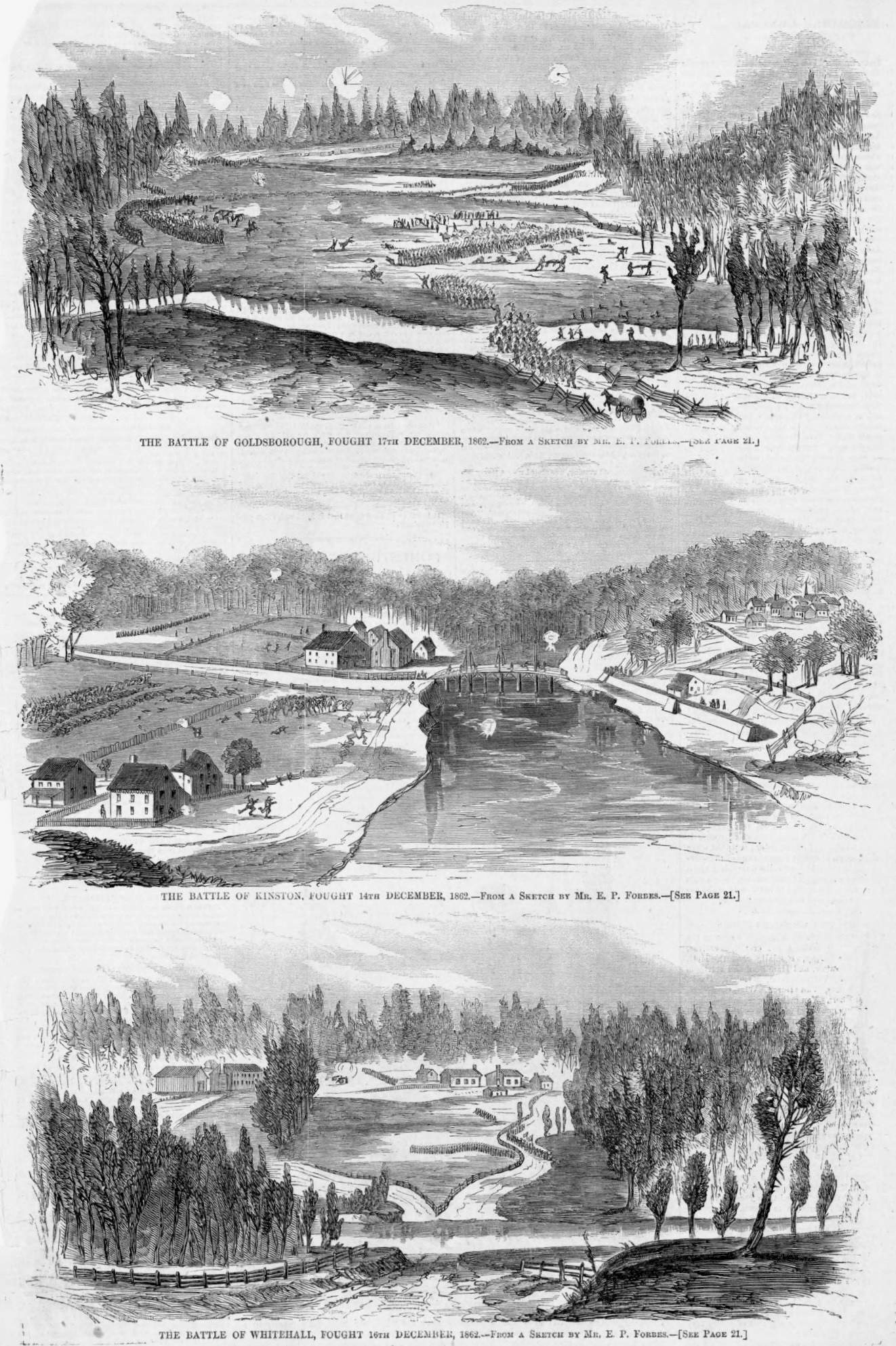

Letter 2

Newbern [North Carolina]
March 10th 1863

Dear Brother,

I thought perhaps you would like to hear a word from me. I have little or nothing new to write. My health is very good and I hope this will find you enjoying the same blessing.

There was an expedition left here last Thursday morning but the 17th was left behind although we have been under marching orders since they left. But I think it was only to be in readiness in case they came across a force too large for them. But today they have returned, or a part of them. They say they did not fire a gun. They took some ten or twelve prisoners.

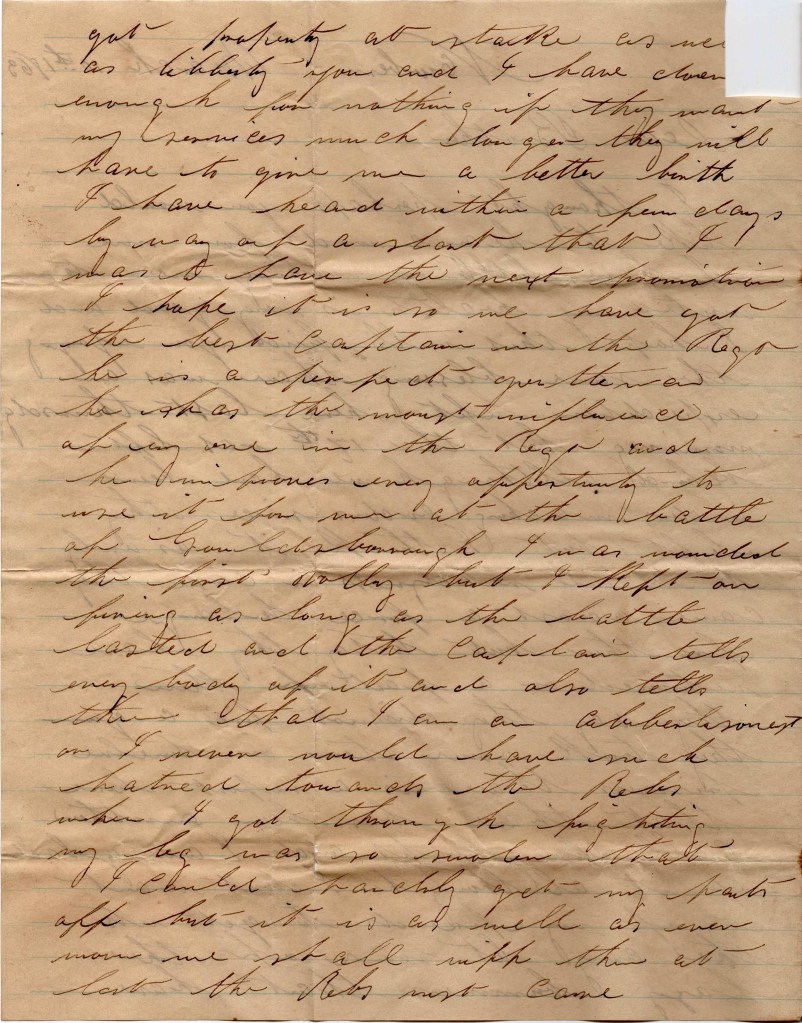
There is a report here that there has been another call for troops and I am glad of it although I don’t want any of my friends to get into the army. Let some of the lazy bummers that have got plenty at stake as well as liberty. You and I have dine enough for nothing. If they want my services as much longer, they will have to give me a better berth. I have heard within a few days by way of a [ ] that I was to have the next promotion. I hope it is so. We have got the best captain in the regiment. He is a perfect gentleman. He has the most influence of anyone in the regiment and he improves every opportunity to use it for [his] men. At the Battle of Goldsboro, I was wounded in the first volley but I kept on firing as long as the battle lasted and the captain tells everybody of it and also tells them that I am an abolitionist or I never would have such hatred towards the Rebs. When I got through fighting, my leg was so swollen that I could hardly get my pants off but it is as well as ever now. We shall whip them at last. The Rebs must come. Uncle Sam is good for them.

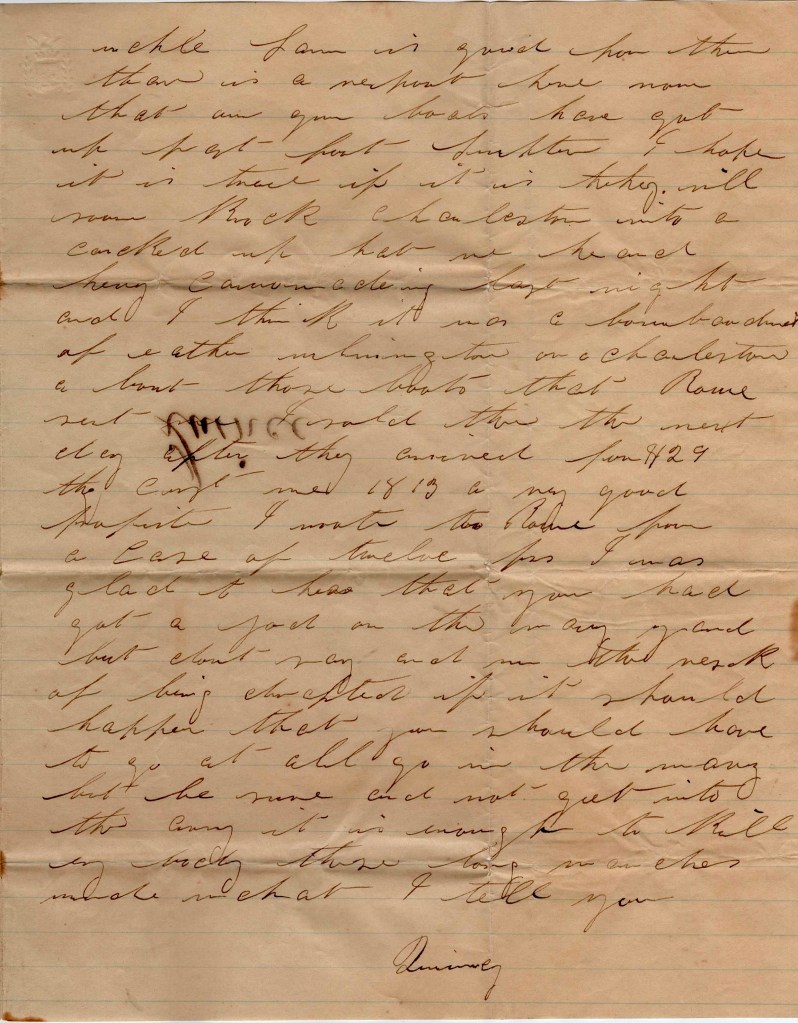
There is a report here now that our gunboats have got up past Fort Sumter. I hope it is true, If it is, they will soon break Charleston into a cocked up hat. We heard heavy cannonading last night and I think it was a bombardment of either Wilmington or Charleston.

About those boots that Rowe sent me, I sold them the next day after they arrived for $29. They cost me $18.13—a very good profit. I wrote to Rowe for a case of twelve pairs. I was glad to hear that you had got a job on the Navy Yard but don’t say in the next [letter] of being drafted. If it should happen that you should have to go at all, go in the Navy, but be sure and not get into the army. It is enough to kill anybody, these long marches made in [ ], I tell you. — Quincy

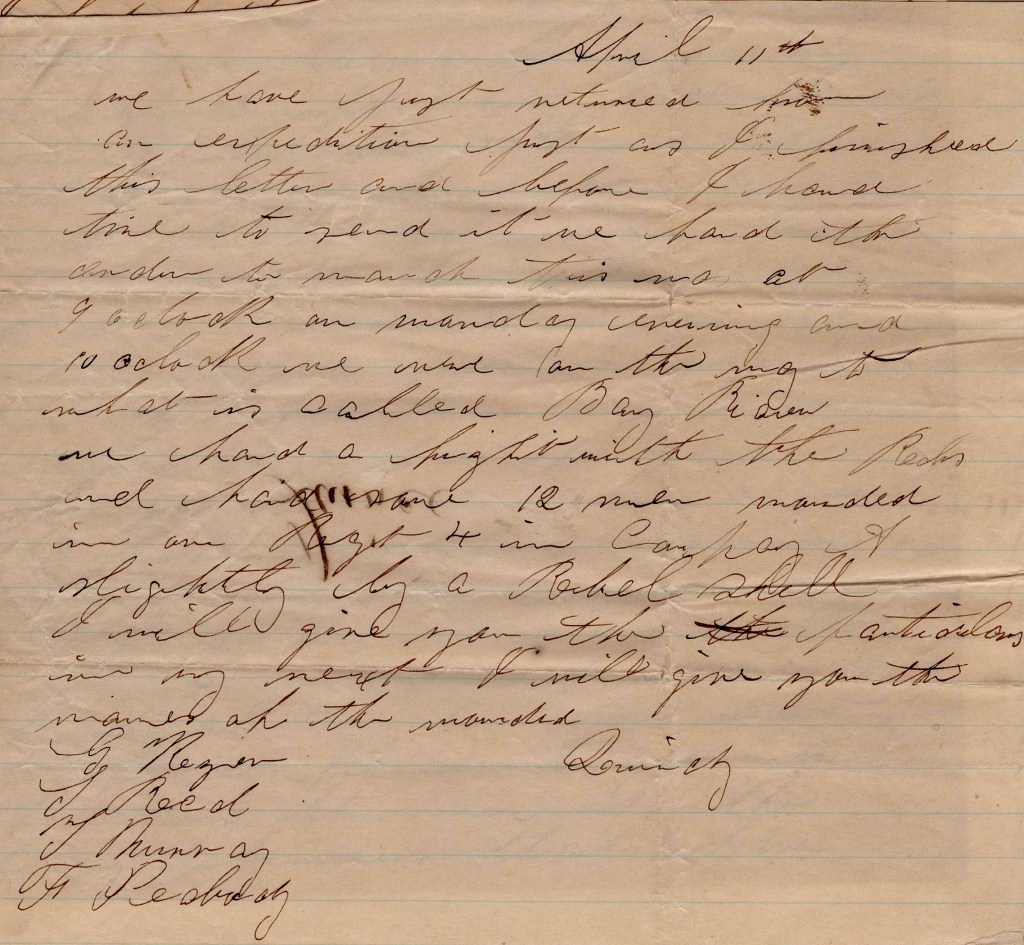
April 11th. We have just returned from an expedition just as I finished this letter and before I had time to send it. We had the order to march this way. At 9 o’clock on Monday evening and 10 o’clock we were on the way to what is called Bay [Blount’s Creek]. We had a fight with the Rebs and had some 12 men wounded in our regiment, four in Company A slightly by a rebel shell. I will give you the particulars in my next. I will give you the names of the wounded [on 9 April 1863]: G. Rezen, S. Reed, T[homas A.] Murray, F[rancis] Peabody

— Quincy
1863: Charles Milton Woodbury to his Mother

The following letter was written by Charles Milton Woodbury (1843-1865) of South Danvers who enlisted at age 18 in May 1861 to served as a private in Co. B, 17th Massachusetts Infantry. He made corporal in February 1864 but died of disease on 8 June 1865 at Fort Schuyler, New York, at war’s end.

Charles was the son of Benjamin Franklin Woodbury and Emily Jane Flower. He mentions his older brother in the letter, Benjamin Franklin (“Frank”) Woodbury (1832-1899).

The 17th Massachusetts spent the winter of 1861-62 near Baltimore, with the exception of an expedition into Virginia, and in the spring of 1862 was ordered to New Berne, N. C. It took part in an expedition to Goldsboro and met the Confederates at Kinston, Whitehall and Goldsboro. From Dec. 22, 1862, to July 25, 1863, the headquarters were at New Berne, with several minor expeditions. On July 25 it embarked in support of a cavalry raid on Weldon, but returned to duty again at or near New Berne. In Feb., 1864, a detail of the regiment had a sharp brush with the enemy at Batchelder’s creek, and in April another detachment was sent to the relief of Little Washington. The battalion spent the winter of 1864-65 near Beaufort, moved to Goldsboro in March, encountering the enemy along the route, and closed its term of service in July, 1865.

Transcription

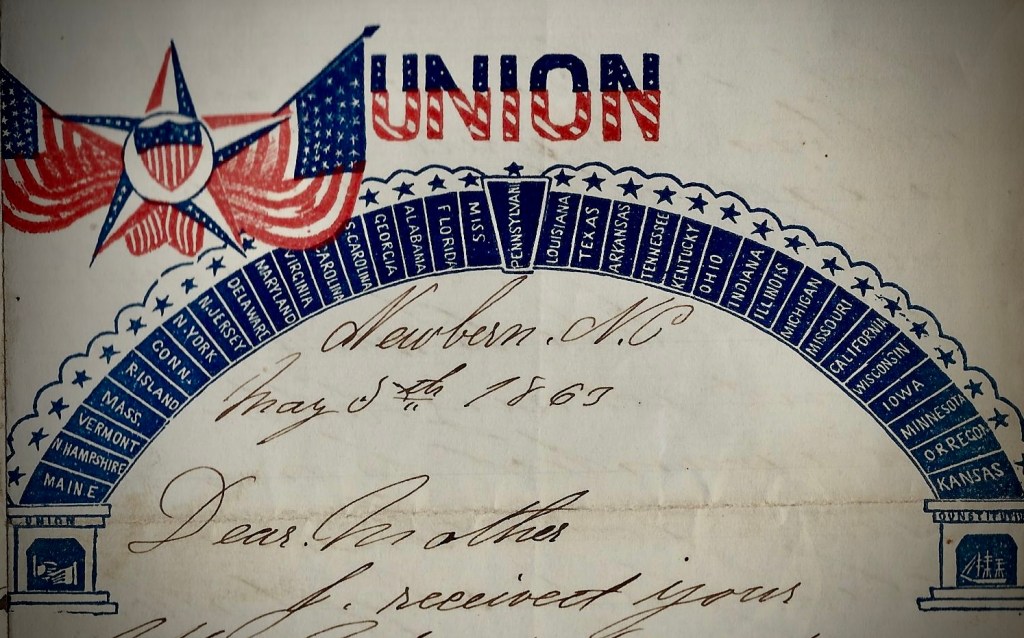
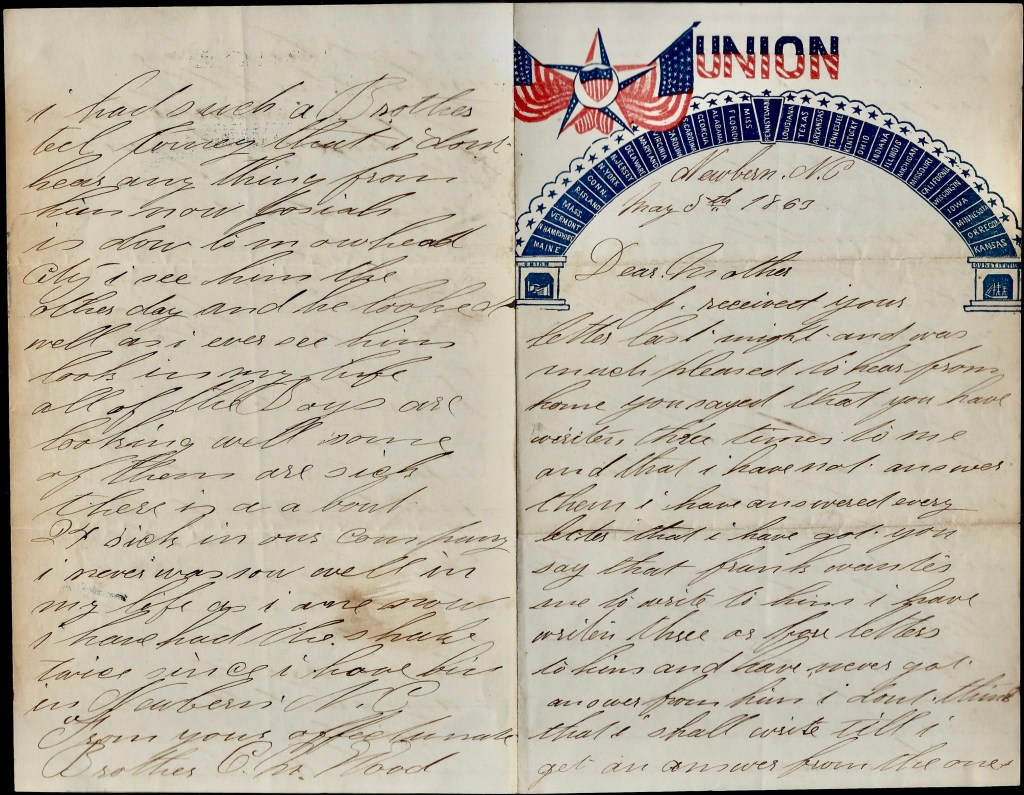
Newbern, North Carolina
May 5th 1863

Dear Mother,

I received your letter last night and was much pleased to hear from home. You said that you have written three times to me and that I have not answered them. I have answered every letter that I have got. You say that Frank wants me to write to him. I have written three or four letters to him and have never got an answer from him. I don’t think that I shall write till I get an answer from the ones that I have wrote. I am willing to write as often as I get letters. I like to write as well as anyone but I don’t like to write when I don’t get any letters.

You wanted to know how we got along on the expedition. We got along pretty well. We don’t stay to home more than three or four days at a time before we have to go on another. We got back from one day before yesterday. We don’t know when we shall have to start again.

Tell Frank to answer to answer them letters that I sent him and I will answer him right away as soon as I get his. I have written three letters to you within a fortnight and have sent you $20 by Fisk. You go and get it if you have not got it. From your son, — C. M. Woodbury, Newbern, N. C.

Dear Sister, I got your letter in mother’s and was much pleased to hear from you. Tell Frank in your next letter that I had forgotten that I [had] such a brother. I am glad that he thought enough of me to let me know I had such a brother. Tell Comey [?] that I don’t hear anything from him now. Josiah is down to Morehead City. I seen him the other day and he looked [as] well as I ever seen him look in his life. All of the other boys are looking well. Some of them are sick. There is about 24 sick in our company. I never was so well in my life as I am now. I have had the shakes twice since I have been in Newbern, N. C.

From your affectionate brother, — Charles Wood.

1862: George Oliver Jewett to Oliver Jewett

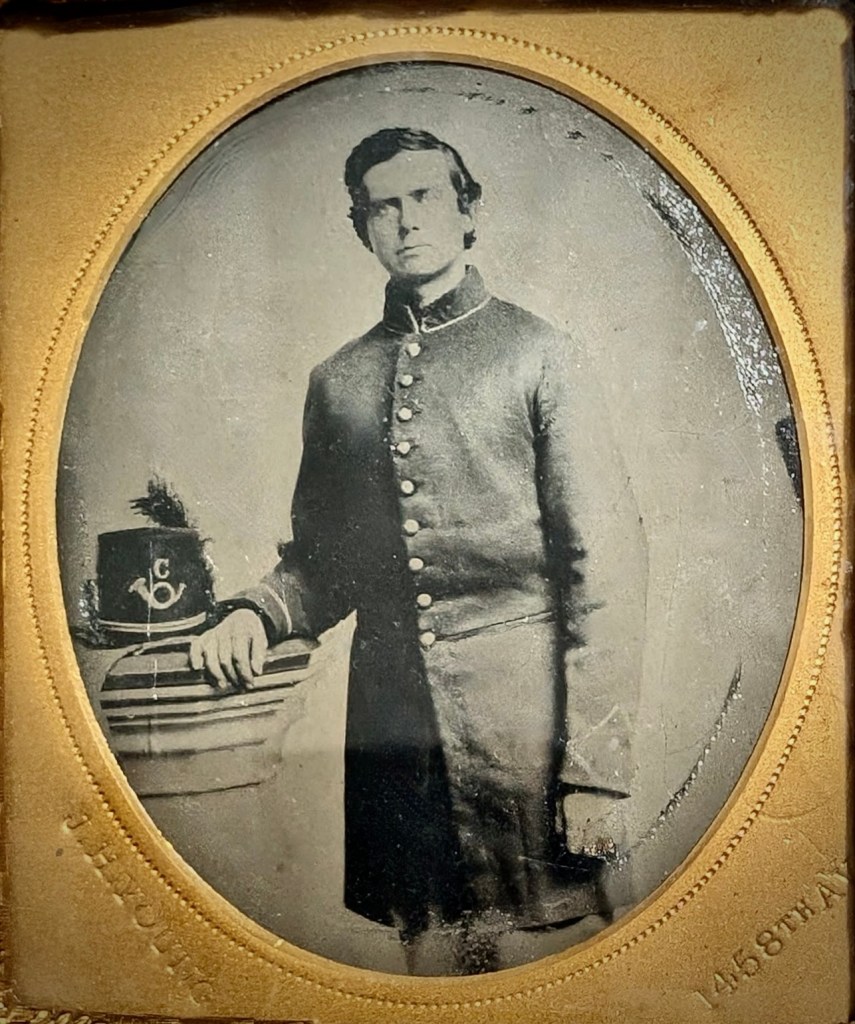
I could not find an image of George but here is Allen Nourse of Co. C, 17th Massachusetts Infantry (Mac Cook Collection)

This letter was written by George Oliver Jewett (1837-1929), the son of saddler Oliver Jewett (1805-1873) and Elizabeth Underwood Hubbard (1809-1894) of Chelsea, Suffolk county, Massachusetts. George first entered the service as a corporal in the 1st Massachusetts. He later enlisted in March 1862 as a corporal in Co. H, but was eventually promoted to sergeant in Co. D. of the 17th Massachusetts Infantry. He mustered out in February 1864 and was transferred into Co. H, 13th Veteran Reserve Corps where he served until May 1865.

George’s letter describes his first arrival in New Bern, North Carolina, where he was assumed the duties of a sergeant in Co. D.

See also—1862: George Oliver Jewett to Elizabeth Underwood (Hubbard) Jewett on Spared & Shared 18.

Transcription

Jackson’s House
Trent Road 6 miles from Newbern, N. C.
May 11, 1862

Dear Father,

I have been three days in camp, having arrived last Thursday afternoon. The Captain, Lieut. Cheever and Lt. Fellows were very glad to see me as well as all the rest of the Chelsea fellows. We arrived at Newbern Wednesday evening at about 7 o’clock and anchored in the stream where we remained all night. The next morning we landed and had to remain in the city about four hours while Lieut. Poor ascertained where our reg’t was stationed. I could not see much of the city as there is a patrol all the time which allows nobody in the streets without a pass, but as far as I saw, it is an extremely pretty place. The streets are rather narrow but they are all shaded by trees on both sides of the way, and forming an arch over the middle of the street which has a fine effect.

Our regiment was found to be about six miles from town, doing picket duty, having been drawn in about 6 miles the day before. They were 14 miles from town a few days ago, but were relieved by the 103 New York Regiment (all dutchmen). My position as sergeant was all ready for me when I arrived and Lieut. Cheever told me to just do my best, and he should not be surprised at all if I obtained a commission—especially as there would probably be a change soon in the regiment which would affect our company.

After it was ascertained where we were to go, we left our knapsacks and other packages at the brigade headquarters in Newbern and marched to camp, passing through numerous encampments, munching our hard bread all the way. On our route we passed a few houses (there are not many in this region), one of which was empty. It belonged to “secesh” so we went in and examined “a few.” There was nothing in the house but a piano all smashed to pieces by some person or persons unknown. We went into the garden and picked a few strawberries and a few roses, after which we trotted on. About 2 miles further on we stopped [at] a house where there was on old lady and her daughter who were civil but didn’t say much to us as they were “secesh,” the daughter’s husband being in the rebel army. Most all the people about here are “secesh.”

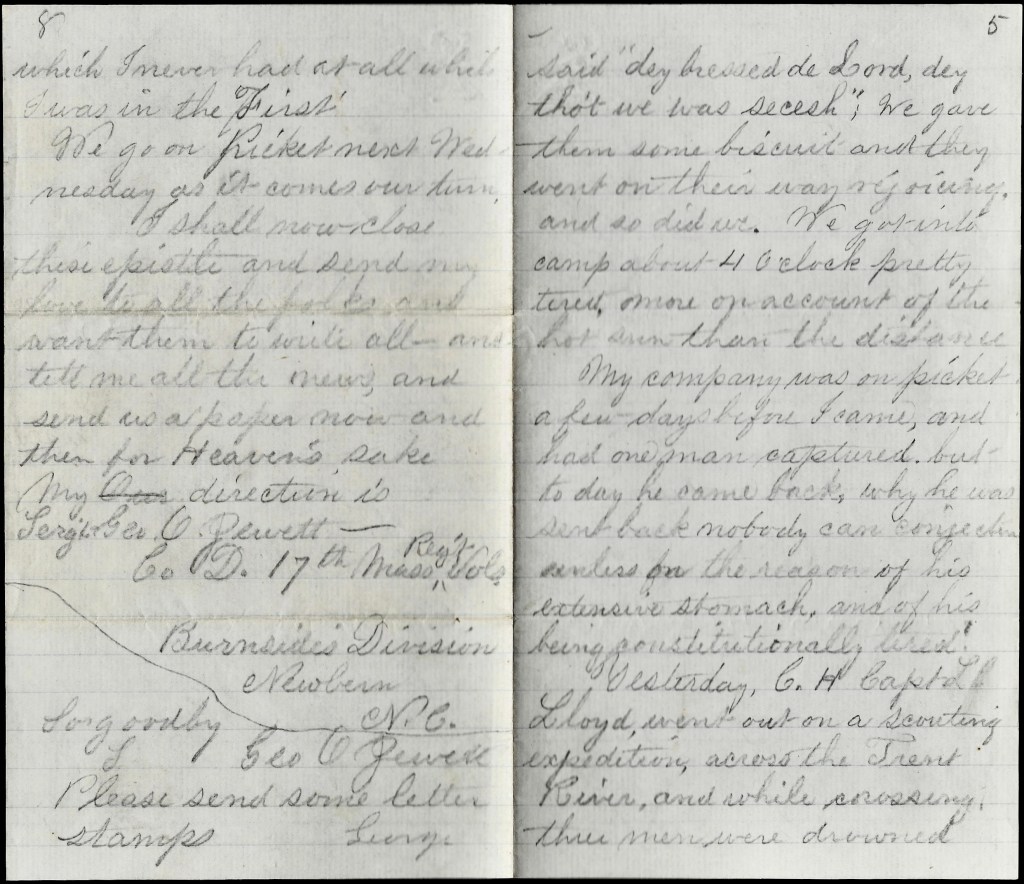
A little way further up we met two darkies who were going to run away from us but we told them to “halt” and they did, and when we came up, they were very much frightened. We told them not to be scared as we were Union soldiers upon which they were joyful and said “dey bressed de Lord, dey tho’t we was secesh.” We gave them some biscuit and they went on their way rejoicing and so did we. We got into camp about 4 o’clock pretty tired more on account of the hot sun than the distance.

My company was on picket a few days before I came and had one man captured but today he came back. Why he was sent back, nobody can conjecture unless on the reason of his extensive stomach and of his being constitutionally tired.

Yesterday, Co. H Capt. L. Lloyd went out on a scouting expedition across the Trent River and while crossing, three men were drowned. Their bodies were recovered and brought in last night. There has been considerable anxiety about Co H as they did not return last night so they sent Cos. F and K to find them, but as I am writing, some of Co K’s men have come in and say Co. H is safe and coming along with two prisoners and some muskets.

One of the recruits who came on with me had his one of fingers shot off this morning accidentally. He belonged to Co. F.

The country about here is covered with forest, every tree which contains some kind of pitch, rosin, or other sticky substances. Our camp looks very pretty. The different companies have laid out trees in their company streets so it looks nice and clean. I would like to have you send word to me if Billy Jones has been paid or not ($100). I shall not get paid off for 2 months to come so I shall become quite used to being penniless, but I suppose there’s a good time coming. But I should like a little money to get my flannels washed once in a while, but I suppose I must grin and bear it. I am very well indeed and am always anxious for meal time as I have quite an appetite which I never had at all while I was in the First [Massachusetts].

We go on picket next Wednesday as it comes our turn. I shall now close this epistle and send my love to all the folks and want them to write all – and tell me all the news, and send us papers now and then for Heaven’s sake. My directions is Sergt. George O. Jewett Co. D, 17th Mass Reg’t Vols., Burnside Division, Newbern, N. C.

Please send some letter stamps. — George

1862: Henry Augustus Cheever to Mehitable (Felt) Cheever

1Lt.& Adjutant Henry Augustus Cheever, 17th Massachusetts Infantry (Memorial History)

This letter was written by Henry Augustus Cheever (1839-1905), the son of Ira Cheever (1798-1876) and Mehitable Gardener Felt (1802-1882) of Chelsea, Suffolk county, Massachusetts. He was captain of the Chelsea Wide-Awakes in the Lincoln Presidential campaign and also served as a member of Co. F, 7th Mass. Vol. Militia before the war. Henry received a commission as a 1st Lieutenant early in the war and was assigned to the 17th Massachusetts where he was appointed adjutant.

Later in the war, Adjutant Cheever was severely wounded at Batchelders Creek in North Carolina, He was wounded on the morning of 1 February 1864 and was taken prisoner but survived the surgery and recovered to return home. He went into the mercantile business after he war but eventually went to work for the Treasury Department and processed pension claims.

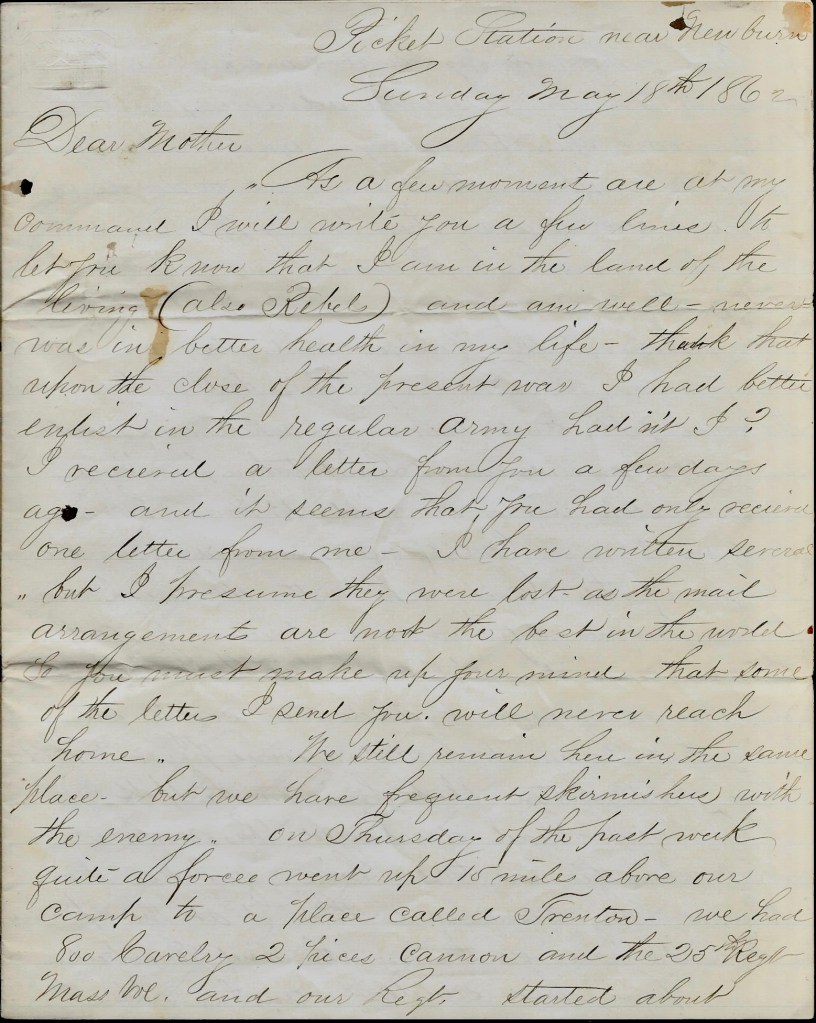
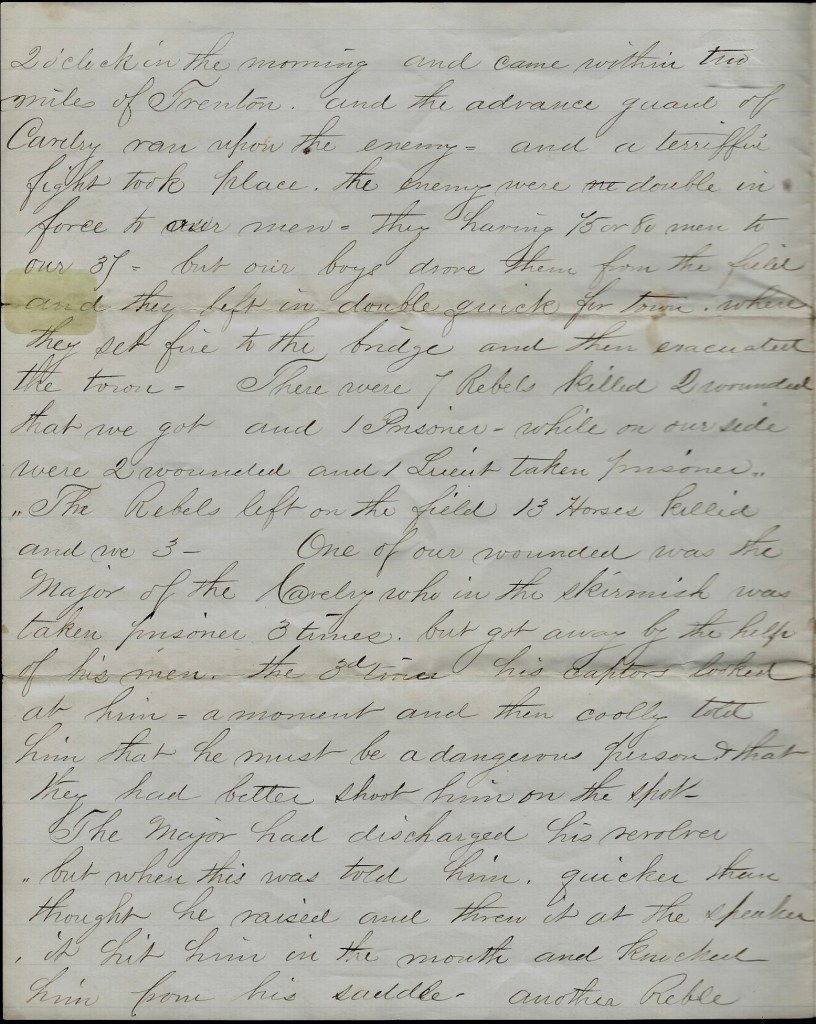
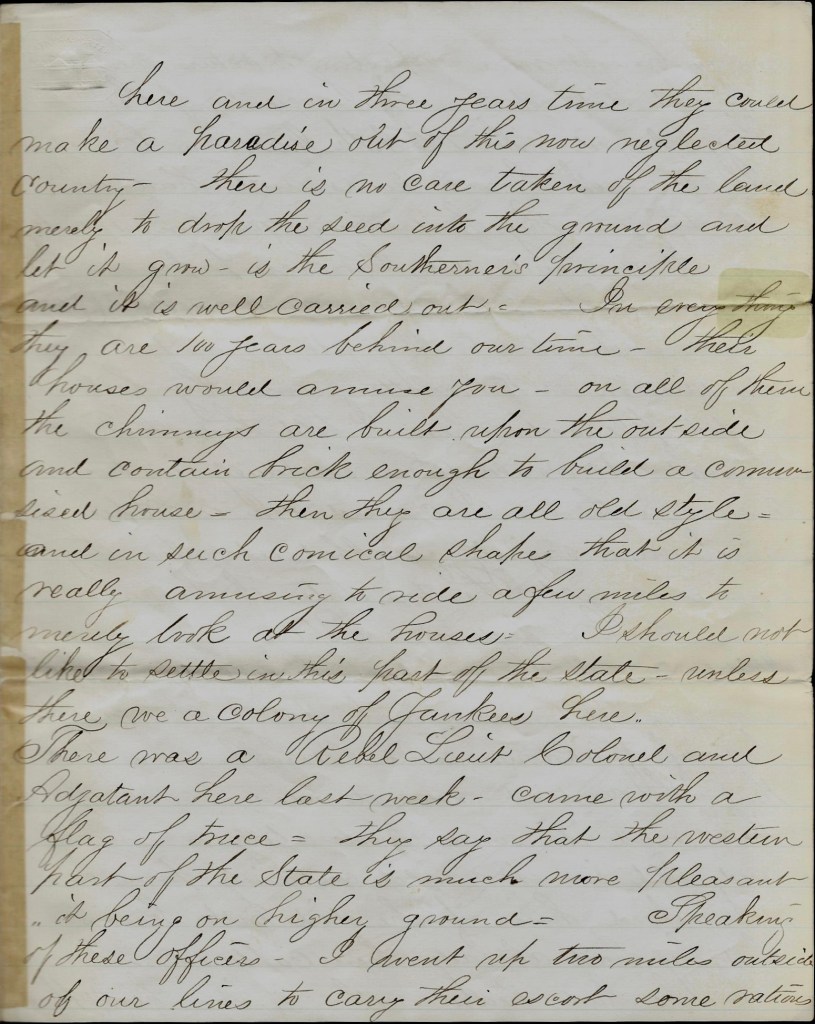
In this May 1862 letter, penned from New Bern after the Union occupancy, Henry tells his mother about the skirmish at Trenton Bridge that took place on 15 May 1862. He also shares his views of the New Bern inhabitants, their customs, farming methods, and the weather in general in the South. He includes some details of a long conversation held with Rebel officers during a flag-of-truce.

Transcription

Picket Station near New Bern, [North Carolina]
Sunday, May 18th 1862

Dear Mother,

As a few moments are at my command, I will write you a few lines to let you know that I am in the land of the living (also Rebels) and am well—never was in better health in my life. Think that upon the close of the present war, I had better enlist in the Regular Army, hadn’t I? I received a letter from you a few days ago and it seems that you had only received one letter from me. I have written several but I presume they were lost as the mail arrangements are not the best in the world. So you must make up your mind that some of the letters I send you will never reach home.

We still remain here in the same place but we have frequent skirmishes with the enemy. On Thursday [15 May 1862] of the past week quite a force went up 15 miles above our camp to a place called Trenton. We had 800 cavalry [3rd N. Y. Cavalry], 2 pieces of cannon, and the 25th Regt. Massachusetts Vol. and our [17th Mass.] regiment. [We] started about 2 o’clock in the morning and came within two miles of Trenton and the advance guard of the cavalry ran upon the enemy and a terrific fight took place. The enemy were double in force to our men, they having 75 or 80 men to our 37, but our boys drove them from the field and they left in double quick for town where they set fire to the bridge and then evacuated the town. There were 7 Rebels killed, 2 wounded that we got, and one prisoner, while on our side were 2 wounded and 1 Lieutenant taken prisoner. The Rebels left on the field 13 horses killed and we three.

One of our wounded was the Major 1 of the [3rd New York] cavalry who in the skirmish was taken prisoner three times but got away by the help of his men. The 4rd time his captors looked at him a moment and then cooly told him that he must be a dangerous person and that they had better shoot him on the spot. The Major had discharged his revolver but when this was told him, quicker than thought, he raised and threw it at the speaker. It hit him in the mouth and knocked him from his saddle. Another Rebel who helped take the Major raised his saber to cut him down, but at this moment one of our captains struck the Rebel with his sword and cut his right arm off so it hung by the skin. In consequence of this, the Major got away. He is a nice man and a very powerful one. All this took place in less time than I have written. The rest of the cavalry and troops were a mile behind the advance guard but we came up on the double quick to give them a volley, but were too late.

I was in command of the Pioneers and was ahead of the regiments and in rear of the cavalry. After we halted three of our companies were sent out to search the woods and C. C. had a skirmish and killed 4 more. After remaining here a while, we started for home, having marched 30 miles in less than 12 hours and through mud and water up to our knees. The object of the expedition was to capture and steal a lot of horses as this department is greatly in need of them. But they got the alarm and took them away.

Father wished to know concerning the people, habits, customs, &c. I should be very happy to inform him but as there are no people here save negroes, I can’t enlighten him much. When the town was evacuated, the people left also. Some few have returned but not many. There are poor whites here but they are far worse than the negroes for they are so lazy that they won’t work and the consequence is that they steal and starve.

The weather is at the present like our July weather. We have frequent thunder showers. I have read and heard tell of a thunder storm in the Southern States but I must confess that my imagination was not strong enough to conceive what a storm could take place. A person must experience one in order to realize the beauty of it. Peaches and plums are fast ripening, strawberries in quantity, only we hardly dare venture into the fields to gather them for fear that the Rebels may pick us up. It is a sad looking sight to look over the broad fields of the plantations and see their barrenness for no one has planted anything save the negroes who only look out for themselves. Let a hundred live Yankees come down here and in three years time they could make a paradise out of this now neglected country. There is no care taken of the land, merely to drop the seed into the ground and let it grow—is the Southerner’s principle—and it is well carried out. In everything they are 100 years behind our time. Their houses would amuse you. On all of them the chimneys are built upon the outside and contain brick enough to build a common-sized house. Then they are all old style and in such comical shape that it is really amusing to ride a few miles to merely look at the houses. I should not like to settle in this part of the state unless there be a colony of Yankees here.

There was a Rebel Lieutenant Colonel 2 and Adjutant here last week came up with a flag-of-truce. They say that the western part of the state is much more pleasant—it being on higher ground. Speaking of these officers, I went up two miles outside of our lines to carry their escort some rations as they brought none, expecting to return the same day but did not. There were 20 of them. They belonged to the 1st North Carolina Cavalry. I was with them three hours and had a jolly time. They had many questions to ask and I answered all that were proper. They are sick of the war and wish it over. They talk it out. They felt anxious to know my opinion on the matter and they felt or acted pleased when I told them tht I thought it would close virtually in two or three months. I carried up 30 papers which were eagerly grabbed at for they cannot get the true state of the case from the Confederate papers.

I gave one of them a New York Herald in which was a editorial which stated the fact that if Yorktown and Norfolk were taken, that the contest was decided. One of them read it and came along to me and told me it would certainly prove so. I asked him if he did not know that they had already been captured? No, he had heard nothing of it. He supposed they were still in their hands. They were very much surprised at learning the fact. When I parted with them, I told them I hoped that if it was my fate to be taken prisoner, I hoped I might fall into their hands for I felt sure the would treat me well. They gave me the prices of their uniforms. Overcoat $35 (worth $5), pants $17 (worth $3), boots $20 (worth $5), coffee 150 and 200 per pound and other articles in the same proportion.

But I must close. Please tell Electa Brown that I will answer her letter very soon. Also convey my compliments to Anna Misley and say I should be very happy to hear from her. If I had any photograph, I would send her one. Also Electa. But I have none and there are no means of having any taken here so I shall have to wait until I arrive in some Northern City. Give my regards to my friends. Remember me to Sarah Young & Fred. Please write soon. From your son, — Hen


1 The name of the Major is never given in this letter but the Regimental roster indicates that the Major at the time was 35 year-old George W. Lewis of Elmira, New York.

2 The Lieutenant-Colonel of the 1st North Carolina Cavalry at the time was James Byron Gordon who later became a Brigadier General in the CSA.