This tag team letter was penned in July 1862 after the disastrous Peninsula Campaign and captures the disappointment and frustration of the majority of the folks at home in the Northeastern states of the Union. The letter was written principally by Charles G. Coffin but a page and a note were also added by George P. Brown and one other whose name was obliterated by a tear in the paper. It is believed that George P. Brown was a “clerk” in New York City and his home in 1862 was on 51st North Second Avenue. I was not able to identify Coffin.
They addressed the letter to their friend, Don A. Pollard in Baltimore. Whether he was a resident of Baltimore or only passing through there on a business trip or for some other purpose is unknown. It is my hunch that the men were either business associates or former college classmates.
Transcription
New York [City] Tuesday, July 15, 1862
D. A. Pollard, Esq. Baltimore,
I received your favor of the 6th current and now propose a kind of answer, but what kind, I cannot tell. To answer a letter properly, one must be in good health & spirits. While I am tolerably well, I am not in good spirits. I am not satisfied with the war prospects in Virginia. I consider the delay in occupying Richmond a most unfortunate matter. Much more of such kind of work or the lack of military talent in the operations on the Potomac and indeed throughout the last nine months of the war on and about Virginia has been one to do as little hurt as possible to the enemy. Such a weak & senile course must lead to ruinous results; nothing less than independence to the rascally South but ill will of Europe super added.
“For my own part, it seems to me that the parties in power have never thought of this war as anything more than a kind of riot. It seems as if they were fearful of hurting the feelings of the Rebels.”
— Charles G. Coffin, NYC Businessman, 15 July 1862
The ill will of Europe I do not value only as it is calculated to subserve the purposes of the rebels. For my own part, it seems to me that the parties in power have never thought of this war as anything more than a kind of riot. It seems as if they were fearful of hurting the feelings of the Rebels. Why had they not called out the 500,000 men that I have talked of so long and have marched without stop or hindrance throughout Rebeldom hanging every leader and his friends as they meet? It is of little use to put a large army on the Potomac to lie 5 months in idleness and then lead them out to be murdered.
Why had not the army been hurled on Manassas, killed & captured half the Rebel army and taken its cannon? Because there was wanted someone who had a spark of generalship in his composition which ours had not. Though I stand alone, my view of the proceedings of all the Generals is that they have been faulty. They have all declined & spurned the advantages that they had within their reach and the victories, so called, have been attended with results but partially favorable. Fremont first always, Hunter next, are the only two who seemed to start right and had they been met with the proper feeling by the Government, all would have been well. For the great lack of military skill, the Nation, notwithstanding its great sacrifices, is drifting towards the abyss of ruin of divided opinion.
I want Congress to remain at its post. I want some one hundred monitors built. I want instructions given to our generals to live on the enemy, kill & capture all they can, and set every negro free, granting a pass & pointing him to the North Star, inflict all the hardships that was will justify or excuse.
And I would hang Mayor Wood, James Wood (bery), Vandamningham, &c. at the corner of every street, and any woman who lent her sanction to the Southern Rebellion should find a dwelling place inside of some prison walls and all foreigners who supported the Rebel cause in any way I would compel to remain 40 miles above the water or leave the country.
I wish I could find some general who has military education with a spark of Napoleonic stir. Then I should have some courage as to results. This matter has made me too mad to write more. We are to have a demonstration today & I hope it will be a rouser. I shall lend my all to kill traitors to the country. All well & remain very truly yours, — C. G. Coffin
Our mutual friend whose name is at the bottom of the last page has kindly allowed me to scratch you one work after expressing my satisfaction that you are in good health and heart, I have to tell you that I do sincerely subscribe to the substance of all Coffin has just written. I have changed my opinion of McClellan. Think he has been much overrated, that he has every quality of the soldier except the very one we gave him most credit for—viz: General. The proof of this I find in the fact that it took him so long to find out that the Chickahominy Swamp was not the best base of operations. By this culpable ignorance, there has been thousands on thousands of lives and millions of property scarified needlessly. But I think I hear you exclaim, how egotistic of me to criticize the military moves of skilled & experienced military men. Perhaps I deserve this, but it is pardonable for us all to have an opinion. Is it not a little singular that the man (General Benham) should in his first movement with an independent command have so egregiously blundered. I should like to hear from you upon these points.
Yours &c. [signature destroyed by paper tear]
July 16, 1862
Friend Don,
Not agreeing entirely with the above, I leave “old time” to determine. The meeting spoken of by G. C[offin] was a big thing. Union Square and Sam Kellingers were full. Probably the most uninteresting news I can write is your work is all up, balances got—and all o.k. Your particular friends D.H. H. & Savage are hearty. Yours truly, — G. P. Brown
G. Coffin desires me to say that the only prominent man enquired after in the crowd of yesterday was John C. Fremont. — G. P. B.
Dr. Alfred C. Hughes (1824-1880) was a born in Wheeling, Virginia, to a prominent family. His ancestors were Irish Catholics who had emigrated to Virginia in the early 1700s, and his father, Thomas Hughes, Sr. (1789-1849), was a veteran of the War of 1812 and a prominent local merchant who invested in lumber yards and steamboats.
Advertisement for Dr. Alfred C. Hughes’ Medical Practice in the Daily Intelligencer at Wheeling newspaper. Dated 24 April 1862
Dr. Hughes, the seventh of ten children, studied medicine at the Homeopathic Medical College of Philadelphia before graduating in 1853. Upon graduation he returned to Wheeling and established a successful practice. Interestingly, assisting him in his practice was his sister Eliza Clark Hughes (1817-1882), a female pioneer in the field of medicine. Eliza commenced the formal study of medicine in 1855, and followed in her brother’s footsteps graduating from the Pennsylvania Medical College in 1860. Dr. Eliza Hughes was among the first female medical school graduates in the country, and was the first female medical practitioner in the state of Virginia. Eliza and the rest of the Hughes family supported the Confederacy and Eliza even had a brief personal correspondence with Confederate president Jefferson Davis. The Hughes’ hometown of Wheeling was predominantly pro-Union, and so the once-influential family quickly became ostracized. Alfred’s doctors practice was eventually forced to close, and in August 1862 Eliza herself was arrested after she refused to take the oath of allegiance to the United States; soon after her arrest, she took the oath and was released. She continued to practice medicine, but was increasingly distracted by the war, and she was eventually summoned to court and charged with slandering a pro-Union woman. Sources imply that her pro-Southern stance during the conflict also resulted in her being ostracized from the Northern medical community, as her name does not appear on all contemporary lists of female physicians. She was the author of Letter 6 and Letter 11 in this collection.
Dr. Alfred Hughes’ southern sympathies became widely known when he brazenly acted as a correspondent for the pro-Confederacy Baltimore Exchange. Hughes’ writings against the Lincoln administration ultimately branded him a traitor and when he refused to sign the Oath of Allegiance, he was arrested at Wheeling on 30 May 1862 and was received on 6 June 1862 at Camp Chase, a Union-operated prison camp in Columbus, OH, where he was held for approximately seven months.
While in prison he did his best to fill the many tedious moments of prison life by crafting many useful household objects and various other personal items typically found in a lady’s toilet. Many of these items can be now found in museum collections today. Hardly reconciled, he remained a captive until Dec. 25, 1862 when he was exchanged for the soldier brother of a Philadelphia physician. After his release, he moved to Richmond, Virginia. His family’s arrival there helped give rise to the belief that he was a peace commissioner sent to the Confederacy’s capitol in order to help end the war. At that time, he was lionized by many in the South and was even elected to the Virginia legislature. He advocated enlistment of slaves into Confederate military service. Among his many patients who he saw both during and after the war was the wife of Robert E. Lee.
Mary Kirby Adrian (1832-1909). Children were Thomas Hughes (1850-1941), Mary Joanna Hughes (1852-1939), Elizabeth Pitts Hughes (1854-1939), and Adrian Hughes (1865-1930).
Dr. Alfred Hughes’ name is the 12th on this broadside. (Wheeling University Archives)
Letter 1
Addressed to Dr. Alfred Hughes, Columbus, Ohio, Care of D. B. Tiffany, Prison Post Master, Camp Chase No. 37
No. 10
Wheeling [Virginia] July 13th 1862
My Dear Friend,
I have felt so sad ever since I received your last letter to think that unintentionally I have given you so much trouble when my only desire is that your mind shall rest perfectly easy is regard to home and all that you hold most dear, knowing that He who ruleth all things will take care of us if we only put our trust in Him and try all that is in our power to do only and all that is right. But knowing my dear Alfred that all of our letters have to be examined and not thinking for one moment but that you would know what I meant and hoping that your imprisonment would not be so hard to endure if good was brought out of it, will have to be my excuse. You know my dear Alfred that there are things that occur in every family that is most unpleasant to have strangers know everything about that necessarily. I cannot recall what is alluded to, therefore it is of no account to you & yours. I am compelled in writing to you to write in such a way that you might understand things that would be unpleasant—especially to me to have strangers know anything about, but I promise this thing shall not occur again. I was so much disappointed that I did not receive a letter from you last evening. I do not know why but I fully expected one. I have not been able to see Mr. McDermot yet. Will send down for him tomorrow and ask him to stop here and will tell him what you have written concerning the papers. Do not, my dear husband, give yourself the least trouble in regard to business matters. Of course I expected some trouble and have not been disappointed but some persons that I expected much trouble from have given me least and vice versa, but I implore you my dear Alfred, as you love me to keep up your spirits as I am sure we will get along.
My health has been improving every day since I have taken the medicine you told me and as I grow stronger I find that things do not trouble me as they did. Delia wants to know if she “bese a label” if you will have her for your girl but that she will not be a “lebel” if it is not for Jeff. I do not want to see you so very bad some times it seems as if I could not possibly bear this separation much longer and God grant that the time may not be much longer.
The last several days has been cool and pleasant here. I was so glad to have it so knowing how you suffer when the weather is hot. The pin and ring that I know you took so much pleasure in making for me I would rather you would keep until you can bring them to me yourself. Mother and Fan say they will write to you soon. All your friends desire to be remembered to you.
My dear Alfred, there is a better day coming for us. It will now always be dark and gloomy. I will send all the late papers in yours trunks and your cotton socks. I have hunted all the old ones up so that I can repair a number I order that you will not have to darn them yourself. You would find it a most difficult thing to do nicely. In fact, it is quite an accomplishment in any lady to be a neat darner and one that very few acquire. Send me word of there is anything I can send to you to make you more comfortable. Would you not like to have your lounging chair to sleep in hot nights? If you would and will send me word, I will send it by Express.
Write soon and write often for I would be glad to receive a letter every day and if it were not for other duties, I would be happy to write you every day. God bless you. Ever truly your wife, — Mary
Letter 2
Addressed to Dr. Alfred Hughes, Columbus, Ohio, Care of D. B. Tiffany, Prison Post Master, Camp Chase No. 37
No. 12
Wheeling, Virginia July 21st 1862
My Dear Husband,
I have just this moment received the four beautiful rings you sent. The two you sent me are very handsome and I shall prize them very much. the lettering is truly most beautifully done. The one that has my Alfred’s name is most especially prized. I sent Mother’s and Hannah’s over to them and I have not yet heard how they fit but I presume they will be just right as mine are.
My dear Alfred, send your mother Eliza theirs as soon as you can. I am afraid they might feel hurt as you have sent me three and not theirs. Mr. Campbell sent me the note that he had written to enquire why you did not receive the intelligence and the answer he received from Camp Chase. I think that you will now receive your paper regularly. Mr. Bell called on me today and paid me 10 dollars and asked me to tell you to send me a blank order on him. I have got a great many papers to send you in the box we send and we will send just as soon as we hear from you what you most require. Do not hesitate, my dear Alfred. Send for anything you need. God bless you. Every truly your wife, — Mary
All is well and send much love to all.
Letter 3
Addressed to Capt. D. B. Tiffany, Prison Post Master, Camp Chase, Columbus, Ohio
No. 14
Wheeling, Va. July 27th 1862
My Dear Husband
I received your letter of the 24th inst. making No. 11 22 last evening and when I got it I do assure you I felt so certain that you were ill that I could scarcely open the letter, and when I come to the part which gave me positive truth that my apprehensions were not groundless, but alas were too true, I had scarcely strength to finish the letter. I felt like leaving everything and going out immediately to see you. But when I come to reflect, I thought I had better wait until I heard from you again.
Now my dear Alfred, do let me know if I shall come out for if you were to be very. ill and not let me know or to not let me come out and do all I could for you, I never, no never could forgive you. I know that it would be very unpleasant to have me exposed to all the different persons that I would have to come in contact wit whilst visiting you, but you know what sacrifices I have already made to have you do right and I am willing to suffer still when I have for its object the comfort of my dear husband. I shall direct this letter to Mr. Tiffany in the hope that you may get it much sooner than you otherwise would. And Alfred, do please answer it immediately for I shall be so unhappy until I receive your letter.
I was also disappointed that you did not tell me what you wished me to send you. Mother wanted me to send the box of honey out to you as she thought if you were not well, it might be good for you but I told her that I would wait until I got an answer to this letter for if you knew that we were going to send it, perhaps you would send for something else. If you need anything, my dear, let me know and then you can send again whenever you need. Do not be afraid of giving me trouble for it hurts my feelings to have you think anything a trouble I could do for you.
I went down to Mr. Shiver yesterday. The dividend due you was $30 which he paid me. He was very polite to me. There were a great many gentlemen present which was very embarrassing at first but at the same time I was glad they were there. He said in regards to his bill which of course I did not speak of, that he had a bill with you that he would make out this week and I could send it to you for you to see and receipt and that he would then pay me the balance due you. I thanked him and withdrew feeling most comfortable that the thing I dreaded was so different from what I had anticipated.
Mother told me to ask you who it was that you had fired to fix the cave and step at the hidrent in the house that Mr. Marshal lives in. Whoever it was has not done it.
Dear Alfred, do write as soon as you receive this for it seems as if I could not wait until I hear from you. Keep nothing from me. If you are very ill, tell me so. I pray God spare you and protect you and bring you home again in safely to your little family.
God bless you. Every your devoted wife, — Mary
Will Captain Tiffany have the kindness to hand this to Dr. Alfred Hughes as soon as it is possible and oblige me. Very respectfully, — Mary A. Hughes
Letter 4
Addressed to Dr. Alfred Hughes, Prisoner of War, Camp Chase, Columbus, Ohio Care of Capt. D. B. Tiffeny, Prison P. M., No. 37.
No. 17
Wheeling, Va. August 7th 1862
I received your letter No. 27 last evening to late to answer and have it go in this morning’s mail. Do not, my dear Alfred, think for one moment that any of us are unwell for I am feeling as well as usual now and I do assure you that the little children never were in better health that at present.
You know, my dear Alfred, that I have many and various duties to attend too. I find that having been sick as long as I have that my work has accumulated to that extent until I scarcely know sometimes what to do first. But you will know there is nothing that could give me half so much pleasure as in writing to except my dear husband that of reading your dear, sweet letters. You have been very kind, my dear Alfred, to write as often as you have done. Continue to do so, my dear, for I could not do without hearing often. Sometimes I send to the office in hope of getting a letter and am disappointed. When such is the case, I am scarcely fit for any of my duties. I imagine that you are ill or are treated so badly that you do not like to write and tell me.
In your letter marked 26 I received the strip that you cut from the Cincinnati Gazette in relation to the exchange of prisoners. I mentioned to you in my last letter my having seen it in several papers. My daily hope and prayer is that you may soon be released and permitted to come home to your family for home is not home without my dear husband.
I cannot imagine what they want to hold you prisoner for. I am sure you have done nothing and they ought to know your word was worth more than those persons that have taken the Oath and say it is not binding nor it is for they do not think I want you to take an oath to support a state when they have failed in making any new state [referring to “West” Virginia] . How you could support a thing which they themselves do not acknowledge, I cannot understand.
I thought that I had told you that Mother and Hannah thought their rings were very handsome. Indeed, they prize them very much. Pinks’ Uncle John went out scouting and when he returned, his friends had retreated and the town was in possession of the opposite party and there he had to stay until he succeeded in getting with his friends again. I think the impression is that he has done so but I ask no questions as you know, my dear, that it is one of my feelings to never ask for more than is told to me.
“I asked our old friend across the way how she would like Will to be drafted. “Oh,” she said, “He would get a substitute.” I told her that I could not ask a poor man to do what I was afraid of doing myself.”
Mary A. Hughes, Wheeling, Va., 7 August 1862
Several of your friends have left to parts unknown. B. O., J. C., J DeB. These are among the numbers. I have heard that last night and night before that several hundred run off to keep from being drafted and the worst of it is that they are the very ones that were all in favor of having other people go to war. It is quite common now to hear of them talk of hiring substitutes. I asked our old friend across the way how she would like Will to be drafted. “Oh,” she said, “He would get a substitute.” I told her that I could not ask a poor man to do what I was afraid of doing myself. Mrs. Dunlop told her in my presence that she hoped that Will and both the Mr. Cran [sons?] would have to go—that she wanted all persons that were in favor of the Union to go and fight for it as her husband was doing. So you see how bitter the feeling is for them, even in their own party towards those who stay at home and say the Union must be restored at all hazards.
How I have run on telling you. what the general conversation is now. I hope this letter will not be considered contraband as I have told you no news. I have heard none to tell.
Write soon and write often. did Judge [George W.] Thompson 1 get the box Mrs. Thompson sent him? If he did, how do you all like the shirts we sent you? I sent you only one as Eliza made a mistake in cutting them and Mrs. Thompson sent the shirt of one of hers back as it was too narrow. She could do nothing with it. we could not get any more material like it so I gave her the shirt of one of yours which I had all done just ready to sew in the sleeves. I am making the other which I will send you the first opportunity.
God bless you and keep you my dear husband is the prayer of your ever true and faithful wife, — Mary
Judge George Western Thompson
1 Judge George Western Thompson “was born in 1806 in St. Clairsville, Ohio, near Wheeling, Virginia. He received his law degree from the University of Virginia in 1837. In 1832 he had married Elizabeth Steenrod, the daughter of Daniel Steenrod, a prominent landowner and businessman. James K. Polk appointed Thompson United States Attorney for western Virginia, serving from 1848-1850, when he was elected to the U.S. Congress, serving from 1851-1852. In 1852 he was elected judge of the 20th district of Virginia. He was succeeded in his Congressional office by Sherrard Clemens, another Unionist who would also have his own differences with the Restored Government. During the secession crisis in Virginia in 1860-1861, Judge Thompson delivered an anti-secession speech in Wheeling which he published as a pamphlet entitled “Secession is Revolution.” He had written to Abraham Lincoln on October 31, 1860 urging him to “secure able and upright men to aid you in executing your well settled & calm resolve to save the Union by a concession which shall not be unworthy of so momentous occasion.” When the Virginia secession ordinance was passed on April 17, 1861, Judge Thompson denounced it.” (See Pierpont’s Bastille—The Trials of Judge Thompson)
Letter 5
Addressed to Dr. Alfred Hughes, Prison No. 3d, Camp Mess No. 37, Columbus, Ohio, Care of Capt. D. B. Tiffeny, Prisoner’s P. M., [Signed by Allison, Commander of Post]
No. 20
Wheeling [Virginia] August 14th 1862
My Dear Husband,
I received your letter No. 32 this morning and immediately proceed to answer it. I think this letter should be No. 20 but if the letter I wrote you on the 12th was the 19th, then I am correct. Sometimes I have been able to keep a copy of my letters to you but whenever I have thought I had not time to copy them and that they might be too late for the same day’s mail, I have sent them just as I first wrote them. No. 16 I. was so fortunate as to have a copy of. After reading Mr. Gray answer in reply to the letter you wrote him, I went and got my letter that I had written to you and read it over and I cannot find one thing in it that would be contraband news. But he might not have liked my opinion as I expressed in regard to the treatment of my dear husband.
I do desire that you should receive all my letter to you. And as it would not give me one particle of pleasure to write in such a manner that I know you would not be permitted to receive them, I therefore always have been careful to avoid anything in my letters to you in the way of war news.
I received the little slip of paper giving the account of the death of a little girl from the chewing of fly paper. I know we have been in the habit of making use of it, but this summer I have not used any of it for with all care where that are little children, they might eat of it and the surest way is not use it or have it in the house.
The order from the Confederate War Department I have read before and will hear say that it will perhaps be best for me to make no remarks about it as I see what you have said in reference to it has been makes out in your letter to me. But I shall endeavor to wait as patiently as possible coming events hoping and praying that all will soon be right.
You say you see by the Intelligencer that some of those who run off to avoid the draft have been brought back and put in the Atheneum. If such be the case, I have not heard of it. I presume it is a mistake. I sent you this morning the New York Herald, Cincinnati Enquirer, and the Baltimore Sun using one of the labels for direction you sent me. I read [your sister] Eliza’s letter she received from you to Mother yesterday. She said she would do as you wished her to do but she thinks—and I agree with her in opinion—that there is nothing that can be of any effect to separate [your brother] Tom 1 from that vile creature but death which she said that she is wicked enough to pray for daily. Give him up my dear Alfred. Be determined to do right yourself and try and think no more about him. I try to control my feelings but when I think of his conduct since you have been taken prisoner, I feel such perfect contempt and despisement for him that I have not language to tell you my feelings and you know it is not my nature to remember wrongs but rather to look them over. But never could I forgive him unless he might be in great want of a friend some day. Then I might be that friend and forgive him all. We think that he has sunk so low as to write you anything that might give you trouble. Never mind him, my dear. There is terrible suffering in store for him for what he has made you and his good old mother suffer for him.
Write soon. Remember me to all. All’s well. God bless you and keep you is the daily prayer of your ever devoted wife, — Mary
1 Thomas Hughes, Jr. (1822-1886). Thomas worked as a merchant tailor in Wheeling, Virginia. He was 42 years old when he married Bessie McEldowney (1834-1875) in March 1864. They had one child together before Bessie’s death in 1875.
Letter 6
Addressed to Col. C. W. B. Allison, Commander of Post Camp Chase, Columbus, Ohio
Wheeling Virginia August 22, 1862
My Dear Brother,
I received the letter you sent me in the envelope containing one for Mary and today she received the one No. 41. Yesterday’s was marked No. 40. She is still getting better. Complains of headache but it is slight. She sat a short time on the chair this morning but seemed glad to get back to bed from weakness. Her appetite seems to improve about fast enough to be natural.
Yesterday Jack Martin came again for me to see Mort Gunther. I left at 7 o’clock. [ ] and returned at 8 p.m. which was 30 miles. I found Aunt laboring hard to get a regular breathing. She breathes so rapid and all the difficulty seems to be on the right side. The lung on the same side sounds hollow and wheezing like she may get along but I have my doubts about her being able to get home soon. Poor old Aunt. I pity her. Her family is broken up and she can’t hear one word about her husband or sons. She don’t know where they are—dead or alive yet. Jack told me he was so sorry you did not continue your business and submit to the powers that are over us all as they physicians in Wheeling had accomplished just what they [were] so earnestly anxious to do and some of them have said that you can never have the power to establish Homeopathy here again and they are determined to put it down or deprive you of your extensive practice. Alas! how depraved and selfish human nature can become when professional men will rejoice over the misfortunes of others. What can we expect from such creatures but that which is evil. There are times that try persons of honor and moral rectitude in a fiery furnace. The only thing for us all to do is to trust to provide for a speedy release from trials and fearful persecution.
Mary say she only hopes you may return home in safety and that there may be a speedy release for all political prisoners.
Did you get the two letters I wrote you and [ ]’s? One thing I forgot to tell you about the Iodine, the bottle containing the yellow powder is marked P_____ and the only Iodine I could find was a small quantity in the medicine case that stands between the door and window. I had enough to answer the purpose but would like to have a small quantity on hand for fear the children might need it….
All send their love. Write soon as you get this. Yours affectionately, — E[liza] C[lark] Hughes
Letter 7
No. 24
Wheeling, Va. August 28th 1862
My Dear Husband,
I slept a little better last night and consequently feel much better this morning. I received your dear letter marked No. 46 yesterday after I had written to you. No. 47 has just this moment come to hand. You do not know how delighted I was to get such a good long letter from y dear Alfred for I was led to expect from what you said in your first letter that you wrote in prison, No. 2, that I would never receive but one page hereafter. In your letter No. 46 Mr. Tiffany wrote me a few lines stating that you had written every day to me and that he could not account for my not getting your letters more regularly. I know that it is not my dear Alfred’s fault that I do not get them as soon as I should, and I am also perfectly well satisfied that it is not Mr. Tiffany’s fault. But you see, my dear, that I have received these two last as soon as I could expect.
Present to Mr. Tiffany my compliments and tell him I shall ever hold him in grateful remembrance for the many acts of kindness shown to my dear husband while held a prisoner and I hope that I may some day have [the opportunity] to express them in a more substantial manner, and if I do, it ill give me great pleasure to do so. And also too Col. Allison and to everyone that has shown any kindness to my dear husband for I have not language to tell you how this separation from you has grieved me. I have felt sometimes that it was almost impossible for me to bear that I could not live and thus be separated from you. But God is just, my dear Alfred, and we are often led to see that the very things we thought the worst for us proves to have been the best for us. But my dear, I hope and pray and fear and pray that ere long we will be permitted to be together again. Forgive me, my dear Alfred, for thinking for one moment that my husband would be so certain of release and be disappointed.
I am still weak and [your sister] Eliza says that hateful thing nervous. You know how it always offended me to be thought nervous that I cannot help but fear that you may still be held prisoner. God grant that they be only fears and that I shall have my dear husband home again soon. All well. God bless you and bring you home soon is the prayer of your devoted wife, — Mary
Letter 8
No. 30
Wheeling [Virginia] September 5, 1862
My Dear Husband,
The letter I wrote you yesterday should have been No. 29. My dear Alfred, I was told yesterday that you would not be discharged and that an exchange could be procured for you but that it was believed you would not be permitted to take your family with you. Now my dear husband, fearing such might be the case and also fearing that you would not accept the exchange under such circumstances, I write immediately to desire you to do so and if you can be permitted to come home and take your family with you, do so for Oh how happy I will be to leave all to go with my dear beloved husband. But if you cannot take us with you, do you go without us? Alfred, my dear one, you do not know how it almost breaks my heart to think of such a thing as separation from you, yet I feel I could better part with you to have you go to a land of freedom that to still be separated from you and have you remain a prisoner as you are. And if I cannot go with you, I can soon join you to there live and die. God will take care of us if we only do right.
My dear Alfred, if there is any thought of such a thing and you would not be permitted to come home, telegraph me and will meet you and travel with you as far as I can for I must see you before you go. The first time I was sick, the hope of going over to see you encouraged me too and helped to make me well in that I was deprived. This time I was sick I wanted to get well before you came home. If I am to be disappointed in this, I must see you before you go and then we can make our arrangements for my coming after you. Do not have one regret to leave Old Wheeling for I do not think unless things should become settled, you could ever live here again. I would have our old comfortable home if I could be certain I should have nothing but a covering over our heads—say, for instance such a house as you now live in. I should leave all—yes—if I had all the wealth of Wheeling. I would leave all rejoicing to be with my dear beloved husband. Home without my dear Alfred is not home.
I must make more sacrifices for the good of my dear husband Alfred. My dear, I would be willing to give my life for your good although I must admit that I passed the entire night before, I could not reconcile myself to part from you. I do not believe I am yet reconciled but I accept it as the best thing that can be done. If I thought you would be better to leave us behind, I could bear it much better for then I would be doing good for my husband. But I do not believe Sao for I think it would be better for us to go with you. If we cannot go, then you must go without us. Try, my dear, to see as I do for I feel if you go way satisfied, it is the best that can be done. I can bear it better.
I think I feel better this morning. I did not sleep last night for I was in so much trouble that I could not. I received your precious letter numbered 54 last evening. I assure you, my dear husband, I feel greatly indebted to you for your kind care for me although I had taken care to provide for the sudden change of weather yet it is very grateful to my feeling to know that my dear husband thus thinks and cares for his wife. God bless you and keep you and bring you home to me right soon is the prayer of your ever true and devoted wife, — Mary
Letter 9
No. 34
Wheeling [Virginia] September 11th 1862
My Dear Husband,
Today I am suffering with one of those terrible sick headaches that I am often subject to. But I am so happy at the reception of your dear letters marked No. 60 and 61 that I should not mind it at all only that I know that it will prevent me from writing a good long letter to my dear Alfred. How happy and light-hearted I feel in comparison to how I felt for several days. I tried to place confidence in the Lord knowing that in the end He would bring everything right but my dear Alfred tells me that I have nothing to fear—that I will be permitted to be with him wherever he goes. How happy & full.
Alfred, you can never know how much I have suffered for some days and feel so happy now that it appears as if I had some dreadful dream and just awoke from it. You were wrong, my dear Alfred, in thinking that the person that told me this was not a friend for they are a true friend to you as well as Judge Thompson and only had your interest at heart, fearing that you might not accept your exchange if you could not take your family. It would be improper to tell you their reasons for thinking and it does not matter if they only prove fears. The friend was the one that gave you the letter they had received from the Rev. Mr. Moore. Now you know, my dear Alfred, they could have no object to either distress or pain me. Coming from almost anyone else, I should not have paid any attention to it. God grant the time will not be long before I will have my dear husband with me. I feel as if it did not matter to me how my dear husband was reunited to me or on what terms except dishonor—that I could not suffer. I can bear being sent from home and all I hold dear to be with my husband & feel just as I have always expressed myself to you in regard to your taking of that oath & would undergo any suffering before I would have you, my dear husband, do what you think wrong.
God bless you, my dear Alfred. Do what you think is right in the end. I will write again tomorrow. God bless you and keep you is the prayer of your ever true and faithful wife, — Mary
Do not, my dear Alfred, be uneasy about me for I am still improving every day. You know it is nothing uncommon for me to have terrible sick headaches sometimes and to have to go to bed and stay until I get relief. I will be alright I hope tomorrow. Remember me to the Judge. God bless you and bring you home soon is my daily prayer. — Mary
Letter 10
No. 36
Wheeling, [Virginia] September 14th 1862
My dear Husband,
This the Holy Sabbath day, the sun is shining bright and beautiful, but we now have no more quiet on the Lord’s Day. It does seem to me that the Holy Sabbath day sis especially selected and set apart for the most noise and confusion. The 14th Regiment is just now leaving here on their way to Clarksburg. It is said they are not needed now but they are fixed up and they thought better to send them out the road until they were needed but as there is six other days in the week, I think it is very strange that they select what ought to be the Holy Sabbath day—the day set apart by our Savior to worship and in prayer to thank Him for His kindness and protection through the week.
I received your dear letter marked No. 63 yesterday evening. I also received the slips you cut from the papers, one on Friday in letter 62 and the other in this last letter. I am much obliged to you, my dear, for them. I will, my dear, try to send you a paper in the manner you speak of. I do think it is not right that you should be deprived of the papers I send you. I have no doubt but they are thrown out at the office here.
My Dear Alfred, I have commenced to read the book, True Christian Religion. I try to read some every day. Tommy has gone through the catechism you gave to me just before you was taken from home. The other children I did not require them to learn to recite but read it to them, I do have them all pray for their dear Father every day, for the Lord to bless him and take care of him, and bring him soon home. My Dear Alfred, do not think for one moment I feel hurt at you for anything you might say for I know that my husband loves me and his only desire is for my good and you, my dear husband, know that I truly and devotedly love you and would do anything to give you pleasure and happiness. I pray God that it will not be much longer that we will have to be separated for I feel as if this separation were almost killing me. Forgive me, my Dear Alfred, but you know how dear you are to me and I am so lonesome and not feeling altogether well. You know how natural it is to become dispirited. I think, my Dear Alfred, that I am still improving and getting stronger each day. My throat is about the same as when I last wrote you. I still am very careful. I went over to Mother’s this morning for breakfast. I think a walk in the pure morning is good for me for I always feel better after breathing the pure morning air. I have felt much better since I received your last several. letters. I was so unhappy at the thought of your being still separated from me that it seemed that I had no heart or interest for anything but I pray God to let this trouble pass from me and to bring you home soon to me. I know that my dear husband has all confidence of being united [with] his family soon.
Mr. Friend was one amongst the first bills I presented after getting well. He told me that he would pay me just as soon as he could but he did not. I would have sent to him several times but hearing that e was sick, I preferred waiting until he was well. On last Monday I saw him pass our house so that I wrote him a note asking him to please to attend to your bill. The next day, Tuesday, his son called and gave me twenty-five dollars and said that his Father would let me have more as soon as he possibly could. Chat Wheat called to ask me to enquire of you if the Rev. Mr. Wheat that is a prisoner at Camp Chase was any relation of theirs. Mr. Tiffany did not take any part of my letter or rather your letter to me. It must have been the letter to your Mother he had reference to, as a part of it was cut out.
Alfred, my dear, write me every day if it is but a few lines for I truly cannot eat my dinner until I hear from you. God grant it will not be necessary much longer to write but that we may soon be united never to separate again in this world is the prayer of your true, devoted wife, — Mary
Letter 11
Wheeling, Va. September 16th 1862
My Dear Brother,
Yours of the 12th inst. was duly received. We have not yet been [ ] to review our bonds. If Norton persists in taking me through, I will do as your letter advises me. Mr. Stansbery did not tell me. He told it at Hans Phillips’ with the request that they would tell me what to expect. Mother says for me to answer your letter for her. She called on Mr. Dulty for the rent. He told her he would pay it next week. If he don’t do, she wants you to tell her if she will. give it to the hands of someone else to sue him. And Mrs. Martin promised to pay as soon as her husband came home, but Mother doubts her and thinks she had better serve her as Dulty ought to be as neither of them have paid a cent. She also wants to know if there is a possibility of you getting home or to be exchanged. She thinks anything is better than a long imprisonment (that is, anything that is honorable). She sends her love and is anxious about your health. Says for you to write her about those business matters as soon as convenient.
I went out last Thursday to see Aunt Cynth. She was very ill, coughing almost every breath. A large swelling has made its appearance on the lumbar vertebrae and one in the right groin. Feet and ankles still much swollen. Her daughter told me she had spit up something that looked like a chicken liver streaked with blood. For her constant cough, I gave Hyoscin which had a [. ] effect on her while I remained there and sat up with her during the night. Today Jack came for me but I can’t go until tomorrow. When I told her what you said in your letter and headset word to her husband, she cried like a child and said for me to send her thanks to you and that she would pray daily for you to be released from your unjust bondage.
For some days past, I have had a kind of a temporary office at home. Walking there and back four times a day has, during the warm weather, brought on an excoriation which produces much suffering. What would some 25 remedies cost to begin on? You might need your [ ] when it would not be convenient to get others. I have about 87 dollars charged and have taken in but a small quantity so I thought I might start out on a small scale if I get the leading [ ] and the other small [ ]…
Last night I woke up and heard Mother crying at the top of her voice and sobbing like a little child. I started up and by the time I got half downstairs she had got over it, being caused by [ ] and I had just got back t sleep when Sing [?] who was sleeping with me waked me by the same crying so I concluded the wailings of mid____ had commenced in our quiet domicile. It seemed to be a strange coincidence for the fault of a hearty supper.
Would you believe it, Marshall Norton called to see Mr. G. during his stay in his sick room and was requested to walk up and see him. B. F. K. ‘s youngest daughter is on a visit there. I see Mr. G on the street. He looks as well as ever he did. Mr. and Mrs. Morgan came up yesterday to get some medicine fr their daughter who is going on a visit of ten day. She has not charged yet. Her Mother is very anxious to have that accomplished….
Your affectionately, — E. C. Hughes
Letter 12
Wheeling, [Virginia] October 5th 1862
My dear husband,
I received your very dear letter marked No. 80 dated October 1st on Friday evening. I was so much pleased and gratified to know that my letters to you had the effect to dispel so much of the sadness that you had so lately been suffering from. I know that I possess very little power of letter writing and therefore I was the more especially pleased to have you tell me that my letters were gratifying to you, my beloved husband. I write only from acute feelings and the strong love I have for you, my precious husband. The deep love I have for you, my own, is of that character that I would be wiling to die for you. I was not entirely conscious of how very dear you were to me until I was thus separated from you and I pray God that we will not be separated much longer. But God in His wisdom doth all things well. Let us, my dear, trust Him.
You ask me in one of your dear letters if I do not think you will be a jewel of a husband [and] that if I promise not to work you too hard, that you will assist me with my word. Indeed, I do think you are truly such and although I am pleased to know that you take pleasure in sewing and mending and in doing anything for your own comfort but when you come home, I shall think you have served sufficient time at such work and will therefore free you from such duties. Can it be possible that Judge Thompson gave you or any of the prisoners the impression that it was his intention to go across into Dixie? When he called to see me, I asked him if he were going south. I cannot remember the precise words he used but they were to the effect that Col. Allison had told him he was free to go where he pleased and that it was his intention to remain at home if the people here would permit him. 1 But I would not want to be uncharitable. His brother-in-law is buried today and I have heard that he would only be permitted to remain here as long as he [his brother-in-law] lived. He then may go South and do as he promised to do. We will only have to wait and see.
Sallie told me that her mother had sent word to Major [Joseph] Darr 2 that her brother was too ill to permit her to come in. He therefore sent someone out there to administer the oath. They did nothing that I know of. Miss Jennie and Kate had to take the oath and a number of others. The next day after those prisoners had been to see them, I gave Jennie and Kate the word you sent. They were much obliged to you and wished to be remembered to you.
I received your precious letters marked No. 81 and 82 both at the same time and you do not know how delighted I was to receive these dear letters and to know that the long expected Judge Hitchcock had arrived at Columbus. I do hope and pray that my dear will be permitted to come home to his family. But my dear Alfred, let us do what we believe is right, trusting the matter in the hands of the Lord, believing and knowing that He knows all things and that whatsoever He doeth, will have been for the best thing for us in the end. I would give all I possess in the world to have you with me.
This reminds me of a conversation I had with Mrs. Thompson. She may be to blame for the Judge conduct. I told her I was willing to give up all to go with you South. She said she was not for she did not expect ever to be able to have so comfortable a home again but that I might for I was so much younger. I told the difference that I had five little children to raise and educate; that hers were all raised and that I was broken down by sickness and though much younger, she was just as able to endure hardship as I. But let us be charitable. My dear, I would much rather have you remain a prisoner than to have you act in any way meanly. Do right and God will bless you and take care of you. Truly and devoted, your affectionate wife, — Mary
God bless you.
1 Judge George W. Thompson was released from prison at Camp Chase in September 1862 without having to take the Oath of Allegiance after arranging for a prisoner exchange.
2 Major Joseph Darr was the Provost Marshal in Wheeling.
Letter 13
No. 53
Wheeling [Virginia] October 13, 1862
My dear husband,
I am so happy to tell you that I feel so much better this morning. I do not feel like the same person. Yesterday I was very ill. The pain in my side was so severe that I could scarcely draw my breath. I suppose that I had taken cold but I find I am not able to bare any exposure at all so I will try, my dear Alfred, to be more than ever careful.
I was gratified so much with the description you gave me in your letter of your prison but it makes me more uneasy about you than ever. This constant hope deferred, this terrible anxiety about you, is so wearing upon me that I feel if you are to remain away much longer, you will fine me but a wreck on my former self. you know that I never was healthy at best of times but this constant trouble is so wearing that it is the mind that weakens the body.
Now, my dear Alfred, I tell you what I want you to do after waiting as long as you. think necessary, then if you do not get released in some way, I want you to let me go on to Richmond to try what I can do for you there. Do not tell me I cannot stand the journey. It is this inactiveness or rather this not trying to do all I can that is distressing to me. Set me to work with a prospect of your release and I am sure I will accomplish it if in the power of woman. Tell your fellow prisoners I will go first to work for you but I will not in my own happiness forget them. tell them to give me a carte blanche of all their wants and as I can have no selfish interest to serve, I will promise to do all that is in my power for their release also. And I am sure my simple promise is of more value than all the declaration of one who seems to have no regard for truth or honor.
Our old friend Mrs. P was over this morning. She told me of something that made it impossible for me to understand Judge Thompson’s course of conduct. One thing is that he—the Judge—wrote the oath for this government [and] that a gentleman told her husband that your lawyer Mr. Wheat, had said that he had the oath as written by Judge Thompson in his office and that they could not understand why he was not willing to subscribe to what he had himself framed. This she only gave as she got it, but what I am going to tell you now, she knows to be true for she heard him herself. The day the Wheeling Convention first met here, her husband wished her to go down to the house and listen to some speaking which she did but when she got there, the convention adjourned to Hornbrook’s Building and their was a debate between Mr. F. Colwell and some other gentleman after which Judge Thompson came in and delivered his charge to the Grand Jury which you remember of seeing in the paper. Then he made a little speech apprising of all that had been done for the preservation of the Union and that it was necessary for the new government to be here for the people of West Virginia ad he closed by saying if it was necessary, he would resign his official position and go forth to join the common ranks. This she heard him say herself. Now what has he meant? What does he now mean? God only knows.
I do not, my dear Alfred, want to be unjust but I cannot be blind. Therefore I must think his conduct is not what it ought to be. It is not necessary for me to say anything. The people here condemn Judge Thompson remaining at home for there are men here drafted that would not come out and join the militia that think he should go to the South and represent them. Judge Thompson got home before his brother-in-law made his will. The bulk of his property was left to Mrs. Thompson; Jim Finney and his daughters without a cent. I have heard several persons condemn this also. God only knows but I would rather be the Miss Finney’s than the Miss Thomson.
Trust the Lord, my Alfred, and all will be right in the end. God bless you is the daily prayer of your every true and devoted wife, — Mary
Letter 14
No. 56
Wheeling [Virginia] October 16, 1862
My Dear Alfred,
I received your dear letter marked No. 90 and dated October 13th yesterday. I was glad to see that my dear Alfred keeps up his spirits and does not allow himself to become discouraged. How many more prisoners are suffering for the same cause—-their love of country, and especially their love of truth. You have no idea how delighted I was yesterday. After I had written to you, my beloved one, I sat down to look over the morning paper to see therein copied from the Richmond Dispatch a correspondence ordered by the Legislature to be published between Governor Letcher and the Secretary of War. Read it, my dear Alfred. I see in the pending negotiations for an exchange of prisoners they intend to make [on] such terms as will prevent the arrest and imprisonment of peaceable citizens. Then they certainly will see to make arrangements for the release of such now imprisoned. And you, my dear, will also see in the same article the demand for the release of Mr. Duskey and Mr. Varner who were prisoners at the Wheeling jail at the time you were held in bondage there and who were placed in irons and sent to the penitentiary a few days after you were sent to Camp. Chase.
I do not give up, my dear Alfred, and sorrow as those who have no hope. If I had done so, I should have been in my grave before now. Bit instead of folding my hands in despair, I try to always look on the bright side knowing and believing that the Lord, the Ruler of the Universe who knoweth even the fall of a sparrow, will if we only place our trust in Him, bring all things right in the end though, my dear, the end does sometimes seem a long way off.
I received your dear precious letter marked No. 91 just this moment and also the note you wrote me after receiving my letter. I am so sad to think my Alfred should be made so unhappy although I was very sick and was truly alarmed, hoping not, but fearing much that I was again having another long spell of sickness. It did seem for a little while that there was nothing but trouble and sickness for me. I should not have written to alarm you but that I told you might depend I was well if I did not tell you I was sick. But thank the good Lord, I am almost well now.
The weather is very damp but I have a fire in my room. The children are all well. Delia has not had even a cold all this changeable weather. My dear, you were mistaken in telling me about having my picture taken. You wrote me to have Delia and Allie taken together and then separately and to have them framed and hung up in the parlor. If it will make no difference to my, my Alfred, I would much rather not have my own taken until I have you to go with me. You were also mistaken about telling me that Mr. Boggs took the paper for I did not even know when Bell Gashorn asked if Mr. Boggs was still there. I sent you three Heralds last week. Mother tales the Press yesterday & sent down and ordered the Herald to be left here every other day for it is almost impossible to get them unless engaged. I got a Herald and Engineer today that I ordered yesterday which I will send you this evening and hereafter you will look for the Herald every other day. And when I hear of anything interesting in another other paper, it will give me pleasure to send it to you.
I will write you, my dear, tomorrow and have written you every day this week. But do not be uneasy about me. I will soon be well and hope to live many very many, years with my dearly beloved husband. Give my kindest regards to your friends in prison—Rev. Dr. Baldwin, Judge Foster, and such others—and tell them they must all vie with each other to see who will make the time pass most pleasant and profitable while held prisoner, hoping sincerely that it will not be long now until they can all join their friends at home. God bless you and all is the prayer of your devoted wife, — Mary
Letter 15
No. 58
Wheeling [Virginia] October 19th 1862
My dear husband,
Your dear letters marked No. 92 and 93 and dated October 15th and 16th reached me yesterday. I assure you, my dear Alfred, the pleasure the reception of your seat letters have me was very great. I appreciate truly and thank you most sincerely for your words of cheer and communication of my desire of trying to do something for the release of your dear self and that of your fellow prisoners. You have no idea my dear, with what fear and trembling I proposed such a thing to you, fearing you might think my schemes were wild and imaginary and that you would think me the very last person in the world to send on such a mission & fully appreciate that the undertaking to one so little used as I have been to traveling alone will be very great. Yet I do not for one moment hesitate and I shall be perfectly satisfied with all the trials and dangers I may have to undergo if my future exertions will prove to be advantageous to you. And if you will always have reason too approve of my conduct, I shall be greatly rewarded for all of my undertakings.
I think it would be better for me to go as soon as I possibly can in order for me to accomplish my mission before the cold weather should set in. The older children I would leave with my Mother and I would either close the house and have Carrie sleep here at night and leave Delia and Allie with your Mother or leave Eliza come down ad keep house—just whatever you think best. One plan, I think, is just as [good] as the other as Marthy is beginning to have company now and Eliza is not much used to keeping house. I do not know but what it might be more safe to close the house. I could make all my arrangements and be ready to leave home in a week at the farthest. The only thing will be the procuring of a passport for that purpose. As I have no gentleman friend that I could ask to do me that favor, I shall have to depend on your advice in the matter or perhaps you can procure me a pass yourself. If not, direct me how to proceed about getting one.
You do not know how the conduct of Judge Thompson has grieved me. It is most painful for me to think about—much more painful for me to write of. Mrs. Goshorn and Delia was down here yesterday and said the Judge was there to dinner yesterday and I saw him pass our house which you know he would have to do both going and coming. Mother was also down here last evening. The Judge had been to see her and asked here to get Tom to write to Baltimore and try and find out if there was not some belonging there who was held a prisoner in Richmond who could be exchanged for you. Beautiful dependence you would have on being released depending on such friends as the above named.
Mother will be over today when I will talk the matter over with her. I am grieved that my dear husband should have to suffer unnecessarily so much uneasiness in regard to my illness but I was truly alarmed. I feared I might be very ill for I suffer on this Sabbath day one week ago very much and thought it better to tell you. But the next day I felt provoked at myself for having done so. I am now almost as well as ever so my dear Alfred, cast all fears aside, trusting in the promises of the Lord who has told us that [for] those who trust Him, He will do all things well. God bless you, my dear Alfred, is the daily prayer of your true and faithful wife, — Mary
Edgar Reed (1845-1866) enlisted in the 1st New York Engineers on 5 September 1864. (Find-A-Grave)
The following letters were written by Edgar Beckwith Reed, son of Lucius M. Reed and Margaret Beckwith. He enlisted in the 1st New York Engineers on 5 September 1864 at Troy shortly before he turned 19. He mustered in as a private in Co. L on 5 September 1864 to serve one year; appointed artificer, 1 May 1865; and mustered out with his company on 30 June 1865, Richmond, Virginia. His uncle, William Beckwith, and his cousin, Merritt Pierce, had enlisted and mustered in 31 August 1864. He contracted malarial fever during the war and died 25 Oct 1866.
Edgar wrote the letters to his friend Mary S. Reed who married his cousin, Merritt Pierce in 1867.
[Note: These letters are from the personal archives of Carolyn Cockrell and were transcribed by her husband Chuck and posted on Spared & Shared by express consent.]
Letter 1
Camp in the field near Varina, Virginia 19 November, 1864
Miss Mary S. Mead Dear Friend,
I received your letter of October 30th in due time and was glad to hear from you. I am always glad to hear from any of my friends at home. Your letter took me by surprise a little, but I do not think that any excuses were necessary for leap year and being in the army is excuse enough I think at any time. It does a soldier good to get letters from friends at home and if they knew how much the soldier enjoys them, they would write more and often.
I should have answered your kind letter before, but my time has been pretty well taken up by my duties so that I could not write before. A soldier does not have a great deal of spare time I can tell you. I have enjoyed soldiering pretty well so far and think I shall continue to like it. My health has been good ever since I enlisted but Merritt [Pierce] and William Beckwith have both been sick, but they are now well and so that they go out to work.
It has been very pleasant her this fall especially through October but for the last few days it has been rainy and has rained here today. Well, it is time for the rainy season to commence but I wish it were not for it makes the mud so deep–too deep to travel with ease.
There is not a great deal going on here now and we call it pretty dull though there is some fighting on the lines all the time. I am sorry that the people of Petersburg are frightened so as to leave their homes. I think that they are frightened unnecessarily. What do you think? Perhaps I am not capable of judging being so far away from the scene of action.
I like to have a person write as they talk for then it seems as if I were talking with them. You say that you cannot go to war but that you can write letters. Well, that is what the soldiers want of you ladies at home to write letters to them. I thank you for your kind letter and hope that you will again write to you soldier friend. I think that you must have had quite a time camping out in the woods so you can imagine something about a soldier’s camping out only instead of good covering overhead he has a shelter tent.
Merritt and William Beckwith wish to be remembered to you and your folks. I have not time to write more now. Remember me to your parents and any other friends I may have. Hoping to hear from you again. I remain your true friend, — Edgar B. Reed
P. S. Direct as before.
Letter 2
Camp of Co. L, 1st New York Volunteer Engineers Near Jones Landing, Virginia January 10th, 1865
Dear Friend [Mary S. Mead],
I received your very welcome letter some time ago and was glad to hear from you. You must pardon me for not answering your letter before, but our company has been on the move, and I have been kept busy at work all the time so I hope you will deem my excuse reasonable.
It has been raining very hard here today accompanied with a great deal of thunder—some difference between here & Clinton County. I guess that you would think it strange to have a thunderstorm in January. We have had a good deal of stormy weather here lately consisting of rain, hail, snow, and very hard winds. I presume that the weather is not so changeable where you are. We have had some very cold weather here and it seemed like the Old Empire State.
Our company broke camp during the month of December & marched to this place which is three miles from our old camp where part of the regiment now is.
You wished to know how I spent Thanksgiving so I will tell you about Christmas & New Years also. On Thanksgiving I did not work any and I had a visitor from the 96th New York Volunteers. I will tell you what we had for dinner: bread, fresh beef (boiled), beef broth, mince pie, cookies, and cheese. We did not see any of those turkeys that so much was said about [up]north. On Christmas I did not my [unreadable] the rest of the [unreadable]. For dinner we had soup, hard tack, and bread, a small assortment for Christmas. On New Year’s I was better prepared as my box had come two or three days before. I had fried sausage, bread & butter, some stewed plums & berries with some of your mother’s [Harriet Boadwell Mead] maple sugar to sweeten them and a piece of fruitcake that my mother made for Christmas but got here for New Year’s. So, you can see how I spent the holidays.
I hope that you are having pleasanter weather now than when you wrote last. I received those papers you sent, and I had quite a laugh over them. I thank you for sending them. I have no time to write more so please excuse this short letter [and] all mistakes and write soon.
My address is 1st New York Volunteers Engineers, Co. L, Army of the James via Fort Monroe, Virginia. Your friend, — Edgar B. Reed
Letter 3
Bermuda Hundred, Virginia March 18th, 1865
Dear Friend,
I received your letter some time ago & was very glad to hear from you. I guess that you will not think I am very punctual about writing but I can’t help it. Since I wrote to you last our company has changed around some. When I wrote last, we were at Jones’s Landing. On the 17th of February (Friday) we broke camp and went back to old headquarters. Lay there just two weeks to a day when we broke camp again & marched to Broadway Landing which is on the river Appomattox 4 miles above City Point and about ½ mile from the hospital at Point of Rocks. Our company is drilling on a pontoon at that place & we expect to take charge of a pontoon bridge there or somewhere else. You will see by this that we have changed considerably. I am carrying the mail for the company now which brings me down to Bermuda and City Point every day, so you see I am on the go most of the time.
We have been having very pleasant weather & now it looks like spring. The grass is getting up and the fields are looking quite green. I suppose that the ground up north is still covered with snow–no signs of grass yet. I see by your letter that you have been having pretty gay times this winter. I think that you made a pretty good beggar for Elder [C. C.] Hart’s donation by the amount that was taken in. I think that you will not lack for singers next summer. I do not see why they should be afraid to let visitors visit the prison at Dannemora, but I suppose it because they are afraid of a raid from Canada. What do you think about it?
There has not been any fighting near here lately, but we expect it will commence any day now that fair weather has commenced again. I expect that we will put an end to this rebellion before next fall & so do all the soldiers that I have heard say anything on the subject. What do you think about it? You will agree with me of course.
Where our company now is near the hospital, we have a chance of seeing a great many sick & wounded men and [they are] very vast. Their burial ground is not far from us & we can hear the roar of the guns (most all of the time) which they fire over their graves. It is a sad sight I can tell you. Everything portends a big fight for the sutlers have all been ordered to the rear and the small field hospitals have all been broken up & the patients all sent to the general hospitals. Point of Rocks is one of those. I am in a hurry for it [to] commence & get through.
Well, it beats all how time flies. It don’t seem as if I had been here over 6 months and was now on the last 6 months, but such is the fact. I guess that you will find this letter very unconnected, but I hope you will excuse it with all mistakes. I have not time to write more. You will want to direct your letters the same as usual.
Please remember me to your folks and write soon. From your friend, — E.B. Reed
Letter 4
Manchester, Virginia April 28th 1865
Dear Friend,
I received yours of the 5th in due time & was very glad to hear from you. I found your letter waiting for me at Richmond when I arrived there on the 20th of this month. Perhaps you may wonder where I have been so I will tell you.
Our company—all but 30 men—left Broadway Landing the 28th of last month with a pontoon train. We were at Hatcher’s Run [un]til the day before Petersburg and Richmond surrendered when we moved to the left of Petersburg and on the morning of the capture found us on the road to Lynchburg with the army in pursuit of the Rebels. We chased them from that time [un]til they surrendered. At the time of the surrender, we were only 5 miles from the place, and we moved near there the next day. The road that we followed runs beside the Southside Railroad & by looking on the map you can see the country that we went through. At Farmville we laid a bridge which enabled our artillery to get at with the Rebs and give them a finishing touch. I had a great time foraging on the route and we all lived well at the expense of the inhabitants. The march was a fatiguing one for we were on the move for 24 days & sometimes it was all night too. But it is over and great have been the results and yet it is all clouded by the events at Washington, D.C. It was a severe blow to the nation, but I hope that all will end well.
I am sorry to hear that you are so poorly off for singers at our church, but the boys will be home in the fall if all things go well & then I shall expect to see the gallery filled. I think you must have had a nice time at those concerts, and I would like to have attended them. In regard to that letter which contained a peach blossom & to which there was no name signed I know that you will not have to look further than Merritt Pierce as the author.
I don’t think you had better save that sugar for me, but I wish you to eat it for me for it may be some time before I see home again—4 months & a few at least. I think that sugar tastes much better in the woods than anywhere else.
I should think that spring was quite early up north by all that I hear. Here you might call it summer though it is not May yet & we have not very warm weather, but it is a coming. I was sorry to hear that the smallpox had closed the Baptist Church & I hope that it will not spread any further. On Thursday night that you said you were to have a party at your house & was so kind as to give me an invite & I thank you very much for it, but I could not go as I was forced to march all day & all night in pursuit of Lee & his army. I will eat some peaches for you as soon as they get ripe. They are now just out of the bloom. I wish they grew up north & then you would have a chance to see plenty of them for I think that they are a delicious fruit, but I must close for want of time to write more.
Please excuse all mistakes & poor writing & write soon as you can conveniently. Yours truly, — Edgar B. Reed
Letter 5
Manchester, Virginia June 5th, 186[5]
Dear Friend,
Yours of May 12th was received some time ago & was very welcome I can assure you. We are still encamped in the same place as when I wrote last and hard to work building the bridge across the river here. There are 3 companies besides ours to work at it with a large infantry detail helping us. We do not expect to get discharged [un]til the bridge is finished and that will take a month yet so that if we are not on our way north by the middle of July, I shall expect to serve my time out. Well, that won’t be long as I have only 3 months longer to stay which will soon pass away.
You say that you read that the 1 year [enlistees] were to be sent home. I don’t think that that applies to this regiment, and I am pretty certain that no 1-year men will be discharged before the regiment is unless their time expires.
I suppose that by this time you have got through house cleaning and that dreaded job is over for I know that it is always dreaded.
June 6th
I was interrupted yesterday when I had got so far, and I did not have a chance to write again. I have changed my quarters since I commenced this letter, and I am now at the headquarters of the regiment, and I was sent up here yesterday forenoon in company with 50 others from our battalion. Merritt is here with me, but he came because I did. He received a letter from you night before last and he would probably have answered it today, but he has gone on guard and now I suppose that he will not write before tomorrow.
I would [have] liked to have been at your house the night you invited me to be for I see by your letter that you must have had a pleasant time. Well, I suppose that I will be at home sometime between now & fall. We have plenty of rumors about going home but we pay no attention to them.
If you was here now you would see ripe cherries, green peas, apples, and all kinds of garden sauce for sale. We have had strawberries but are about gone. So you see that we have things early down here. The peaches are growing fast and if I stay here much longer, I shall be able to eat some as they will be ripe, and you may depend on my going my duty in that line.
But I must stop for I have not time to write more. Remember me to all inquiring friends. Please excuse all mistakes and write soon.
The following letter was written by Pvt. Alpheus (“Alf”) Andrews (1841-1911) of Co. H, 3rd Iowa Infantry. Alpheus was taken prisoner at the Battle of Shiloh (Pittsburg Landing) on 6 April 1862 and was eventually paroled and sent to Benton Barracks in St. Louis to await exchange. It was while at Benton Barracks that he wrote the following letter.
I could not find an image of Alf but here is one of George W. Smith who served in Co. C, 3rd Iowa Infantry (Iowa Civil War Images)
After he was changed he was returned to duty with his regiment and on 15 August 1864 he was transferred into Co. C. until he was mustered out of the service on 12 July 1865 at Louisville.
Alf was the son of Hiram Andrews (1813-1889) and Catherine Schisler (1812-1901) of Springfield, Keokuk county, Iowa.
Alf’s letter, written in mid-July 1862, pertains to the parolees who were being held at Benton Barracks at the time. The War Department had two weeks previously issued General Orders No. 72 announcing that furloughs would not be granted to paroled prisoners and instead sent to one of three parole camps established for their reception. Those from the East would go to a facility near Annapolis soon to be christened Camp Parole. Parolees belonging to Virginia, Kentucky, Ohio, Tennessee, Indiana, and Michigan regiments were ordered to Camp Chase near Columbus, Ohio. The War Department designated Benton Barracks, located near St. Louis, for paroled soldiers from Illinois, Wisconsin, Minnesota, Iowa, and Missouri.
Benton Barracks was the first parole camp to receive large contingents of men. On July 13 Colonel Benjamin Louis Eulalie de Bonneville, commander of the post, reported that 1,167 had just arrived. They reached the camp “without officers and with extraordinary opinions of duties proper for them.” Specifically, the soldiers insisted that the terms of their paroles precluded them from performing any military duties whatsoever. They refused to stand guard duty or to perform garrison duty. Bonneville disagreed, and many ended up in the guard house adorned by a ball and chain. Many did not bother to remain in the camp, opting instead for “French leave” and risking being charged with desertion. On February 1, 1862, Bonneville reported that there were 818 parolees at Benton Barracks and 971 reported absent.
It is sometimes erroneously claimed that the Shiloh prisoners were taken to Andersonville which is impossible as that prison did not begin taking prisoner until late February 1864. From what I can learn, the prisoners were taken to Montgomery, Alabama, before they took the oath and were paroled.
[Note: The following letter is from the personal collection of Jim Petersen and was transcribed and published on Spared & Shared by express consent.]
Transcription
Camp Benton St. Louis, Missouri July 18th 1862
Dear Friend,
As things is very dry and dull here and as I get very lonesome, I have to spend some of my time in writing and as I have to write, I thought that I might as well write to you as anybody else. I have not much to write to you as I have wrote to you once since my release from prison and I did not write much to you that time for I expected to be at home long before this time but we have had a set of officers over us that has been acting the rascal with us ever since we have been back in our lines. We should have been back home long ago if they had of done us justice but they wanted to make something off of us and keep us from place to place now for about 2 months and there was an order come they say from the War Department for us to be garrisoned at Benton Barracks to perform such duty as may not interfere with our parole which I will give you a copy of at the close of my letter so you plainly see that that little thing of coming home is plated out altogether.
We are now at the barracks and they have begun to try to put us on guard they make the details for guards every morning and the boys refuse to go on and they march them off to the guard house and put a ball and chain to their leg. It was detailed yesterday morning but when they come to get me, I was found missing so they did not get any of their jewelry on me.
They say it is a great pity for such boys to act so they tell us to remember that we are from Iowa, to remember that we fought and bled in the bloody struggles of Donelson and Pittsburg [Landing] and won great laurels for ourselves and the State from which we hailed but still all of that will not make us stand guard every day or go to the guards house and wear their French Jewelry from June till eternity. First they find they have a set of [ ] set of Iowa and all to deal with and whenever they feel their rights trampled upon, the Devil is to pay right off. We don’t think that our government wants us to violate our parole and we also believe that the government—owing to the great excess of business now to transact in the War Department—that they are in a great measure ignorant of our case. And as we are dead broke, we have no means of informing them of it. We wrote time and again to the government of our different states concerning it but the officers would stop any letter directed to any governor of any of our respective states. They thought by so doing to keep the thing all in their own hands.
Our camp is now pretty near in a state of mutiny and it would have been long before this time, but we feel that we owe too great a duty to the States from which we hailed to ever be guilty of that and we also feel that we owe our government a great duty and we also feel that one of the greater duties that now involves itself on us is to kill a few of the officers now in charge of us. I think that that would be doing ourselves and government and all parties concerned the greatest service that it is now in our power to do. We all feel that we have been grievously wronged and we will only submit when we have to. They have ordered two hundred balls and chains for us so there is one consolation. There is about 1300 of us and you see that they can’t put us all in at once and those that are out can minister to the wants of those that are in irons. They tell us to submit and we shall have our money and not before but that has played out and we will only submit when we have to. We will freely lose every cent that that is due us which is something over a hundred dollars before we will give in—not that we dread or have any fear of the duty. But we respect our oath and hate the idea of being gulled in any such a way. It was a mercy to us to get to take the oath of parole for we was starting to death as fast as we could. They gave us a piece of corn bread about two inches square and a piece of mule beef about the same size for 24 hours and it was half rotten at that. So you see a man naturally would want to get out of that the quickest way possible.
But that is all over now and we are living very well now. They don’t ask us to go int the field nor I don’t think by the information that I can gain by the papers that there will be any exchange. The paper of this morning said that they would not exchange so I don’t think that it will pay the government to keep us so I don’t think it will be a great while before they will do something with us. I want you to write to me immediately and give me a full account of things in general and tell the rest of them to write to me. I have not heard from any of my friends since the battle. I have not got a letter from you since the battle. I have not got a letter from you since I was home.
Direct as follows: Alpheus Andrews, Paroled Prisoner of War. Benton Barracks, Mo. in care of Captaincies. Albertson
As I told you that I would send you a copy of our parole, I present it to you below a copy from the original.
I do solemnly swear and pledge my most sacred word of honor that I will not during the present war between the Confederate States and the United States of America bear arms or aid and abet the enemies of said Confederate States or their friends either directly or indirectly in any form whatever until regularly exchanged or released.
I could not find an image of either William or Noah but here is one of Josiah Fletcher who served in Co. I, 123rd New York Infantry (Photo Sleuth)
This letter was written in part by Pvt. William M. Hill (1839-1878) and the other part by his brother, Pvt. Noah G. Hill (1843-1902) of Co. K, 123rd New York Infantry. The regiment was mustered into service in September 1862 and served in the defenses of Washington D. C. until October 1862 when they were posted at Sandy Hook, Maryland. Both brothers served through “the whole campaign” and were described as “good & faithful soldiers.” The whole campaign would have included Chancellorsville, Gettysburg, the Atlanta Campaign, and the Carolinas Campaign.
William and Noah were the sons of George W. Hill (1816-Unk) and Jane Foster (1824-1911) of Granville, Washington county, New York.
[Note: This letter is from the personal collection of Greg Herr and was transcribed and published on Spared & Shared by express consent.]
Transcription
October 19 [1862] Sandy Hook Camp
Dear Mother,
I thought I would write a few lines to you to let you know that we are all well here at present and I hope these few lines will find you all the same. I have sent a letter to father but if he don’t get, you must tell him not to enlist for he would not stand it very long. He is not tough enough to come down here for it needs tough men down here.
Tell John I wouldn’t cut that tree down if I had to hear John [ ] to help me. We don’t stand about trees down here. You must write and tell me how you all get along up there.
I suppose you are fixing up for winter. It is cold enough down here to freeze a man to death but we get along very well. That box has not yet come but I think it [will] be here before long. When we get into winter quarters, then you can [send] anything you wish to but what you send now may never get here. I have written a letter to [sister] Ella and put it inside of father’s. I have thought I should enlist into the Regulars and if I do, I shan’t be to home any less than three years anyway but if I don’t, I may be to home sooner. They enlist them out of any regiment. I don’t know but it would be better for me to stay here but if I do go there, it will be some time before you will hear from me again but I shan’t go till I hear from you again. Ask father what he thinks about it and write and tell me what he says.
I had a letter from Eunice and she talked of going West and if she goes, I hope she will have a good time. Tell John to write to me for I would be very happy to have him write a few lines to me. Tell him to write how the colt gets along and tell me how old gray looks.
I have seen Pluck Hall and he is just as fat as a hog. You must write as often as you can. Noah is well and looks very tough. William R. is well and most as hearty as I am. Tell cash to come on for we are waiting for him.
I must now say goodbye for this time. We are to fight any time when they want us to, my dear mother.
From your son, — William M. Hill
Dear Mother, I take my pen in hand once more to let you know that I am well [as] can be expected & I hope this will find you all the same. Your letter that you wrote to me, I hain’t received it yet. Father wrote too. He thought he would enlist but I think he is as well off where he is so you can give him my advice [even] if it is a poor one. It is better than none. The box is coming tonight, I think.
Write and let me know how you all get along & I will do the same. If I am sick, I will write & let you know. This is all just now. Give my best respects to all. I shall have to stop. So goodbye. — Noah G. Hill
The following letter was written by 37 year-old Lavinia M. Snow (1826-1917), the unwed daughter of Capt. Israel Snow (1801-1875), founder of the Snow Shipyard on Mechanic Street in the south end (Snow’s “Point”) of Rockland, Maine. Snow’s Point Shipyard was begun by Captain Israel Snow during the height of the Civil War, 1863. Captain Snow passed the business on to his son and that process continued until 1946, when Snow’s Point Shipyard became the property of General Seafood. Then, in 1957, General Seafood changed hands and the place was taken over by National Sea Products. Finally, in 1991, the yard became property of Rockland Marine, which still operates on the site of the old Snow’s Shipyard.
A biographical sketch of Lavinia was written by Angela M. Keith which states (in part) that, “though Lavinia Snow remained unmarried and childless in her adult life (indeed, she was long referred to by all as “Aunt Lavinia”), she found adventure aplenty prior to her crusade for women’s suffrage, sailing around the world with her family in the 1850s to locales including San Francisco, Panama, London, the Mariana Islands, and China. In August of 1916, at the age of 90, Lavinia asked a reporter from the mid-coast Courier-Gazette to write her obituary and recounted her adventures, along with her doorstep-view of Rockland’s metamorphosis from small fishing village to an industrially-modern hub of ship and rail. Though she received little in the way of formal education, Lavinia loved poetry, news and politics, and was a “staunch supporter of the things that make for individual and natural righteousness.” She greatly admired Abraham Lincoln and was fortunate enough to attend one of his speeches in Illinois in 1857. That she could not vote for him in the 1860 election was a sore spot for her. Lavinia outlived many of her siblings, and died [of pneumonia] on January 12, 1917 in St. Petersburg, Florida.” [See Biographical Sketch of Lavinia M. Snow.]
Lavinia wrote the letter to her Aunt Nancy (Snow) Stackpole (1799-1877), the widow of William Stackpole (1787-1836) of Pekin, Tazewell county, Illinois. Nancy’s husband died in 1836, just four years after the family relocated from Maine to Illinois, leaving her to raise six children. One of her children, William (b. 1827) went to California in the gold rush of 1849 and actually struck it rich. When he returned home to Pekin, he bought up apple orchards and a coal mine and eventually settled in Fairbury. William did not support the war and probably joined the ranks of the Copperheads, as feared in the last sentence of Lavinia’s letter. See William T. Stackpole’s 1849 Journey from Illinois to the California Gold Fields by Dale C. Maley, 2018.
The Capt. Israel Snow home in Rockland where Lavinia probably wrote his letter.
Transcription
Addressed to Mrs. Nancy Stackpole, Pekin, Illinois
Rockland [formerly East Thomaston, Maine] September 8th 1863
Dear Aunt,
I hear nothing from you directly now & but little any other way. Mrs. Wightman mentioned in one of her letters that she had heard through Mrs. Mans that you were sick. This was some time in the summer. I hope you are well & prosperous now. I wrote you last in April and have sent you papers occasionally since when anything of special interest occurred in our town. I write today hoping to get an answer for we are anxious to hear from you.
“The [Copperhead] party in Rockland is made up of a few unprincipled leaders and the ignorant and degraded whom they can control. About six weeks ago, Dr. Rouse—a furious Copperhead—shot a Union man in the street. The excitement was intense for a few minutes & the crowd could hardly be restrained from taking vengeance upon him at once.”
—Name, 8 September 1863
I sent you a paper with the news of the drafted. [My brother] Israel & [brother-in-law] Hiram Hall were drafted but ’twas a mistake about Charlie. The person drafted was Charles W. Stone. The mistake was made at the telegraph Office here. Hiram arrived at Salem the 20th July and got home in season to be drafted. Rockland voted to pay each drafted man who went, or his substitute, $300. Israel & Hiram got substitutes by paying $416 apiece which exempts them for the term of service, three years.
The Maine Farmer, Thursday, 6 Aug., 1863
Have you any patience with this Copperhead Party that has spring up in the North & West to assist the rebels? Were it not for them, I think the rebellion would soon be crushed. The party in Rockland is made up of a few unprincipled leaders and the ignorant and degraded whom they can control. About six weeks ago [on 28 July 1863], Dr. [James] Rouse 1—a furious Copperhead—shot a Union man in the street. The excitement was intense for a few minutes & the crowd could hardly be restrained from taking vengeance upon him at once. He was rescued and taken to the lockup. On his way to Wiscasset the next day, he made his escape from the officer and is over in the British Provinces. Mr. [Cornelius] Hanrahan [1822-1893], though severely wounded, [has] recovered. Some of the Copperheads stood surety for Rouse in the sum of $3,000. They are sure to lose it for he will never dare to come back.
Our fall election takes place soon. We are having mass meetings often. Gen. [O. O.] Howard—the man with the “empty sleeve”—has spoken here. Gen. [Richard] Busteed of New York spoke at Thomaston last week. Thomaston is a Copperhead hole & has been from the first. They voted to pay $300 for each drafted man and keep them at home. Palintic [?] are they not?
You remember the Luman family at the “Point.” Their youngest son Charles has lately been brought home dead. He left here last fall a member of the 28th [Maine] Regiment which went south with Gen. Banks. After the fall of Port Hudson, his time having expired, they came home up the river. Charles was left at Cleveland, Ohio, sick. His father went on to see him but found him dead. Many of the men have died on their return. One was buried yesterday, Morton Snow got through the late battles unhurt. At last account he was in New York to help keep the Copperheads in check during the draft. What a fearful time they had there while the riot lasted! Mrs. Wrightman says they expected worse at Yonkers. The men stood guard day and night at the Armory for two weeks.
Enclosed I send you a photograph of Uncle Israel [Snow]. 2 He had a dozen taken. Himself & daughter Sophia spent ten days with us in June. His health was failing and the doctor thought the trip would benefit him but he grew weaker every day. He went to Thomaston with Capt. Oliver Jordan 3 one day & returned the next but with that exception, not one or two short rides with father, he did not go out. After his return home, he still grew worse until now he keeps his bed all of the time. He will be 92 on the 14th of October but Sophia says he will not live to see it. He takes great interest in the war & seems to want to live to see the end of it. When here he read his paper every morning & nothing escaped his notice or memory. His youngest son Charles has a family in Alabama. They have not heard from them since the war broke out. Sophia spent two years with her brother once and was under Hombs care one day’s journey in going there.
Rockland, Knox county, Maine
I have filled one sheet and have hardly written a word I thought to when I began. we are all as well as usual. I have a boil on my right arm which is very painful. I can do but little with it. It troubles me in writing but I can do that better than anything else so will not mind a little pain.
The “Point” folks are well. I was at Aunt Betsy’s a week ago but didn’t see her. Mary & herself were on the ledge berrying. William calls their baby Emmarella for Emarella Thorncliff. Emmarella was there. She taught their school this summer. She is small like her father. Aunt Betsy is looking for Lizzie to visit her. Uncle Clark cannot do much now & he does not go from home.
Father’s health is good. He is busy all the time. He is agent for the Maine Railway & they are building a schooner & repairing the Jenny Pitts. Charlie has gone to Bangor now to buy timber for her. He will probably go in her when she is done. Hiram will take the Fanny Keating in two weeks. Susan and I think of going the first trip with him. They are keeping house just across the street in the same house they had at first. I hope we shall go to Washington. A. C. Spalding & wife are here on a visit now.
Mrs. Keating is quite sick. She goes out but seldom. Helen is here now. I do not think Mrs. Keating will live through the winter. Her cough is very bad. Luella has a beautiful boy six months old. It has black hair and eyes and white skin & is large and fat. They call it Israel. Uncle Israel saw him when he was here & was pleased with the name.
This has been the warmest summer we have had in some years. Tis now quite cool and fall like. I see by the papers you have had a heavy frost in Illinois. We have had none as yet. We have news frequently from California. They are all well. [Sister] Eliza is teaching yet. Aidella Thorndike they say will be married in the course of a year & come East on a bridal tour. Her intended husband is a native of New York. I knew him in California. Joshua [Thorndike] is in China. He went there with Ebin. I understand that Mr. John Kinnes is in California. Did you give him letters to our folks there? I would like them to see him. I hope you will write soon & tell me all the news. Where is William Kellogg & Henry Wilkey? What is [your son] William doing? I hope he is not a Copperhead.
Your niece, — L. M. Snow
1 Dr. James Rouse (1821-1878) was enumerated as a physician in Rockland at the time of the 1860 US Census. He was a native of Virginia. He was married to Mary Jane Titus. Though he may have fled to Canada to avoid trial, James apparently returned to the States for he was enumerated as a physician in Calais, Washington county, Maine, in the 1870 US Census. A newspaper clipping from the Portland Press indicates that Dr. Rouse was indicted at the October term of the S. J. Court for Knox county for an assault with intent to kill.
2 Capt. Israel Snow (1771-1863) was the son of Elisha Snow (1739-1832) and Betsy Jordan (1740-1834). Israel died on 15 September 1863 in Bangor, Penobscot, Maine, just a week after this letter was written. His daughter Sophia Maria Snow (1799-1881) appears to have never married.
3 Capt. Oliver Jordan (1790-1879) of Thomaston, Knox County, Maine.
I could not find an image of Amos but here is one of John Deed who served in Co. F, 18th Ohio Volunteers (Ohio Memory)
The following letters were written by Pvt. Amos Gorrell (1837-1928) of Co. A, 18th Ohio Infantry. Amos was the son of Amos Gorrell, Sr. (1804-1890) and Leah Wollen (1800-1873) of Ross county, Ohio. Amos wrote the 2nd letter to his brother, Joseph Wollen Gorrell (1839-1914) who later (16 September 1864) enlisted as a sergeant in Co. C, 178th Ohio Vols. He married after the war and eventually moved to Blackwater, Missouri.
Amos does not say how he was wounded (and neither does the regimental roster) but my assumption is that he received the wound to his arm at the Battle of Chickamauga who was fought a couple weeks prior to the date of this letter.
Gorrell wrote the 2nd letter from General Hospital No. 19 which was housed in the Morris and Stratton Building at No. 14 Market Street near the corner of Clark Street.
[Note: The following letters are from the personal collection of Greg Herr and were transcribed and published on Spared & Shared by express consent.]
Letter 1
Addressed to Mr. Amos Gorrell, Hooppole P. O., Ross County, OH
Tullahoma, Tennessee July 31, 1862
Dear friends at home,
I have been waiting for a letter from home for the last month but no letter comes. The last letter that I received from home was dated the 6th of June. And I have come to the conclusion that you have either become very negligent about writing or the mails are miscarried so that I don’t get them. But all the other boys gets letters from home. I write two letters at Athens, two at Fayetteville, and one at Battle Creek and sent 45 dollars home but have not heard from any of them. And I thought I would write again and still live in hopes.
Since I wrote to you last, we have been most of the time on the go as usual. Wereceived an order from Gen. Buell when we was at Battle Creek to go over the mountain to Tullahoma and take possession of the Nashville & Chattanooga Railroad and hold it for the safety of our army demanded it. We left Battle Creek on the 13th and marched over the Cumberland Mountain to Cowan Station on the railroad which took us two days. The weather was pleasant and we got along very well. And as rattlesnakes are plenty in those mountains, we killed two large ones on our last days march. One had 13 rattles and the other 11.
After we arrived at Cowan Station, got supper and laid down for the night. There was an order came to our Colonel telling him that our forces at Murfreesboro had been attacked by the rebels and for us to march immediately to Decherd for there was but a small force there and they expected an attack there in the morning. So we aroused from our beds on the ground, loaded up, and marched to Decherd which was about 6 or 7 miles further. We reached there about two o’clock in the night and stood picket guard from that till morning. This was trying the grit of a soldier pretty well. There was several of the boys give out but I was one of the number that stood it pretty well. We was not molested by any of the rebels that morning and left there the next day and come to Elk Springs where we stayed about a week and built a fortification for the protection of the railroad bridge across Elk River.
Six companies of our regiment left there on last Friday night about 10 o’clock and marched to this place. The other four companies was sent back to Cowan Station the next day. There reason we was ordered off from Elk Springs in the night was an attack was expected at Tullahoma but it was a failure as usual. There is always some of the rebel guerrilla parties lurking about to keep our forces on the look out for an attack but they never attack unless they have a decided advantage.
There was a force of about 1,000 of our men went down to Manchester on last Saturday. They found about 1500 barrels of flour, 1,000 bushels of wheat, and about 10,000 lbs. of pork and bacon which had been stowed away for the support of the rebel army. Our men took possession of it and will hold it, I think. There was a report came up from there on Sabbath morning that our men had been attacked at Manchester and the rebels was trying to get their flour and meat back. Our regiment and two pieces of artillery was ordered to that placed forthwith to fight, not particularly for the Union, but for the flour and meat. We was on board the cars and down there in a short time but the attack was made by a band of rebels only on our outpost pickets. As they had a force much larger that our pickets, they took some 10 or 12 of our men prisoners and dashed off in a hurry, not giving any time for a battle. Some of our men are now in pursuit of the rebels which are encamped down about McMinnville so that is their harboring place. It is to be hoped they (our men) will be successful in catching them.
The dash made upon the men at Murfreesboro (which I mentioned in this letter) I suppose you have got a full account of before this time but I will give you a short sketch of it as we have it here.
There was the 1st Kentucky Battery of Artillery, part of the 9th Michigan Regiment and the 1st Minnesota Regiment at or near Murfreesboro to guard the place as we have some sick soldiers there in the hospital. There was a force of about from 5 to 7,000 of rebel cavalry, or mounted infantry, made a dash in on them in the morning before daylight, taking them entirely on surprise. And as the 1st Minnesota Regiment was about a mile off on the opposite side from which the rebels came in, the rebels took most of the others prisoners before they could get to their assistance. They then dashed upon the 1st Minnesota Regiment and after a short fight, took the regiment prisoners. The part of the 9th Michigan & 1st Kentucky Battery it is said fought gallantly considering the chance they had. I said the 1st Kentucky Battery but there was only four pieces of it there. They shot away all their ammunition and was taken also. There was about 20 of our men killed and 80 wounded. Their loss is not known. This was a good haul for te rebel guerrillas.
Various changes are taking place in our army. Gen. Mitchell is sent off it is said to Virginia. There are various rumors but I don’t know for certain what for, Brig. Gen. Smith has command of the 3rd Division, all the Brigades and Regiments about here are divided into various parts guarding what they have got and several officers of our Brigade are undergoing a court martial for some of the outrage of the 8th brigade at Athens. There is some newspaper correspondents of Gen. Buell’s army that appears to be out of news and have went to gathering up rebel reports about the 8th Brigade and writing them to the papers. But as I belong to this outrageous 8th Brigade & Gen. Mitchell’s Division, I always have a word to say in its favor. There is one thing certain, there is no Division in the army that has done as much hard service and to as good a purpose with so few men as Mitchell’s Division. And as it happens, this 8th Brigade has been in front of the Division all the way through.
Mitchell’s Division captured provision enough at Bowling Green to feed the entire Division one month. After this, they made for Huntsville, building railroad bridges and preparing transportation as they went for the whole Division. Went to Huntsville, took possession of the rebels most important railroad and held it and took 300 or 400 prisoners at the same time. Now they have to be scandalized by some mean correspondents for a small outrage at Athens. And as I was an eye witness to the whole affair, I have a right to tell my story about it. When our regiment first went to Athens, our officers stationed guards all over town and not a cents worth of property was allowed to be touched by our soldiers. But the citizens began to come to our Provost Marshal with a very long smooth face on to get passes, pretending that they wanted to go to mill or to the country to get provisions for their families. They got their passes but instead of going on their pretended business, they went and informed the rebels of our small force, that we had no artillery, and that our regiment was scattered all over the neighborhood and along the railroad for guards and it would be a good chance to drive us from the town. This was told us by prisoners that our men took at Athens but they would not tell their names and when the rebels came in, the citizens gathered up their shotguns, mounted their horses, and assisted the rebels all they could, waving their secesh flags which they had hid under their beds. And when we was reinforced by our Brigade and went back and run the rebels off, our boys (and Col. Turchin, our Brigade commander) was affronted at the course the citizens had pursued and the boys broke open their stores and took what they wanted but did not injure the person of any of the citizens and Col. Turchin did not try very hard to stop the boys from getting what they wanted.
I did not favor the policy myself and took no part in it, not because I regretted to see the property destroyed, but because the innocent had to suffer with the guilty. We have some had boys amongst us no doubt but they are for putting an end to to the rebellion. And Col. Turchin says he can whip more rebels with his Brigade than another other Brigade in the service. Col. Turchin has been court martialed but they could not make anything out against him and he has got a commission as Brigadier General and says he will have no brigade only the one he had before. The colonels of all the regiments that was at Athens are undergoing court martials at Huntsville. I hope they will all come off right. The health of our regiment is tolerably good. My health is very good & all the Hooppole [boys] are well.
Daniel Bishop is dead (as I suppose you have heard). He died at the hospital at Shelbyville on about the 1st of July, I think. I don’t know for certain. I believe his disease was pronounced consumption. Daniel was a fine boy and well thought of in the company by every person. I seen a man that tended to him in the hospital. He said he was perfectly willing to die and died easy and calm as a summer’s morning. I cannot help blaming our officers for the way Daniel was treated. He wanted a furlough to go home and seemed in pretty good spirits as long as he thought there was any prospect of getting homer. But our officers was careless and let him lay in his tent till he was too weak to reach home. But I have no doubt that he is free from all his troubles.
George W. Bishop is unwell. He has never been very well wince he got over the measles. He is trying to get leave to go home. Whether he will succeed or not, I cannot [say]. I fear it is the consumption that is working on him and he[will] go as Daniel went before very long.
We have fine growing weather here at present. Corn is growing fine and has the appearance of a good crop. The railroad and railroad bridges are all repaired between Nashville and Stevenson and the cars are running through every day. Well, I have written all that I can think of at present so no more. But remain yours truly, — A. Gorrell
Write soon. Write often and write great big letters. Direct as before, — Amos Gorrell
Letter 2
Addressed to Mr. J. W. Gorrell, Hooppole P O., Ross county, Ohio
General Hospital No. 19 Nashville, Tennessee October 7th 1863
Dear Friends at Home,
This morning finds me seated in the 2nd Ward of a large hospital which contains between three and four hundred sick & wounded soldiers; most all of them are of the latter class. Some are lying in their bunks unable to help themselves, some hobbling about with canes and crutches, some walking about with their heads tied up, others with their arms in slings, &c. But I believe the most of the wounded are getting along as well as can be expected. Some few in the ward above us has got the erysipelas in their wounds which is a very bad thing. There is no cases of it in our ward yet.
My wound is doing as well as can be expected, I believe. The swelling has most all left my arm and it has been mattering pretty freely for several days. The wound is beginning to heal and I think in the course of a month or so, I will be able to give the rebels a few more rounds from the Enfield rifle.
We are in a place where we are well taken care of. The doctor visits us everyday and our wounds are dressed twice a day. This hospital is kept clean and in good order. I have not heard any reliable news from the regiment since I came here. I wrote a letter to the company several days ago but have got no answer yet. I forgot to tell you in my last letter that I had formed an acquaintance with a man in the 11th Michigan Regiment by the name of Philson [Filson] who says he is a brother-in-law of Uncle John Fouty. He says that Aunt Letty Fouty is dead—died about 18 months ago. He says that Uncle John lives about 15 miles from Fort Wayne. I forget the county in Indiana. He says that he (Uncle John) is now a Methodist preacher and is doing well. He says that he owns a good farm & is in good circumstances. He also says that he is acquainted with a good many of the Gorrells in Indiana. He says there is one by the name of O. I. Gorrell in some Ohio regiment [but] he didn’t remember the number of the regiment. He says that John Gorrell’s son (Huffett) follows public lecturing a good part of the time. He was acquainted with Uncle Jessie Gorrell. Says he still follows preaching. He says there was some one of the Gorrells (he thought it was Uncle Jessie’s son) that was a chaplain in some Indiana regiment and had died in the army. This man (Philson) lives in Michigan close to the Indiana line. He married Uncle John’s sister.
The news about town is nothing of much importance as far as I know. Read the letters from a correspondent of the Chicago Journal on the first page. It is a pretty good description of the scenes on a battlefield. The truth of it, I was eye witness to a good deal of. There has been arrangements made (as you will see in the Union) for the Ohio soldiers at Nashville to vote. I think we will give Brough a good heist although we have been disarmed by the enemy’s bullets (but not without disarming fully as many of the graybacks). I think we will march out an Invalid Corps which will e able to disarm a large number of the able bodied Valandinghamers at the Ballot Box. I have received no letter from home since I came here. Write soon. yours truly, — A. Gorrell
Direct to Hospital No. 19, 2nd Ward, Nashville, Tenn. — A. Gorrell
The following letters were written by Frederick Metcalf (1847-1864) who was mustered in as 2nd Lieutenant of Co. K, 3rd Rhode Island Heavy Artillery on 1 October 1863. He was promoted to 1st Lieutenant on 6 May 1864 and transferred into Co. B on 27 May 1864. “Fred” was serving as the Acting Regimental Adjutant when he wrote the first letter while on special duty at Fort Pulaski.
The second and third letters were written in July 1864 from the encampment of the 3rd Rhode Island Heavies just outside of Fort Welles on Hilton Head Island. Unfortunately for Fred, he did not survive the war. He died of disease at a hospital at Beaufort on 28 August 1864, less than a month after he penned the third letter.
Fred was the son of Providence attorney Edwin Metcalf (1823-1894) and Eliza Spear Atwell (1824-1863).
[Note: These letters are from the personal collection of Greg Herr and were transcribed and published on Spared & Shared by express consent.]
Letter 1
Headquarters U. S. Forces Fort Pulaski & Tybee Island, Georgia February 23rd [1864] 11 o’clock P.M.
Dear Cousin,
I suppose you think, and very justly too, that is about time for that scrapegrace cousin of yours to answer some of your letters—very acceptable they are too him, I assure you—although he takes such a poor way of showing it. If you only knew what a bore and detested thing it is for me to write letters and how many stings of conscience it takes before I can bring myself down to it, you would forgive me I am sure.
We are having a few days of busy life and a little excitement down here in the land of all that is detestable, but I am not allowed to say anything about the movements of the army and so you must be content to know that I do not see as I shall have any chance of going on any of the expeditions, if there are any. And so you see that as I cannot say anything of the movements of the army, there is not much to write of. I might describe the islands to you but they are all the same thing—mud, mud, mud, nothing but mud anywhere except where artificial ground has ben made around the fort. I sometimes go over to Tybee and there there is a little more variety, some trees, &c., but nothing worth mentioning except the light house which the rebels burnt when they left and the old Martello tower, Some deserters come in once and awhile. A sergeant came down from Savannah the other day. e had on a very fair pair of boots. I asked him what they cost and he replied that he paid $125 for having a pair of old legs footed. What do you think they are coming to up there?
I have not heard from Sam since he was here but suppose he writes home much more regularly than I do. I enclose an invitation that I received to a ball at Beaufort. But i assure you that there was altogether a different ball going on not many miles from here that took our attention during the day.
It is getting quite late now and I must go to bed. I have been writing this in my office and by the light of a government candle. A pet kitten has been running all over the table most of the time and I suppose it will be a hard scrawl to read. The sentry on the parapet has just called 11 o’clock and “All’s well.” So goodbye.
Very affectionately your cousin, — Fred
Letter 2
Adjacent to Fort Welles, Hilton Head
Camp Co. B, 3rd Rhode Island Artillery Fort Welles, Hilton Head, South Carolina June 21, 1864
Dear Cousin,
I received yours of the 5th yesterday. It was the first letter I had received for two weeks. It is getting very hot out here. we live with our tents up on all sides to allow the air to come in and then are nearly suffocated sometimes. We have been moving for the week past. Have changed camp four times and that with it raining all the time nearly. One night the Captain and myself had no tent pitched and had to sleep in a guard house the darkies had just left. I could stand [not] that, however, and moved my bunk outside. We are still settled now, however, and are encamped just outside Fort Welles, the captain being in command of the fort. We have also an infantry company under our command—one of the 144th N. Y. Vols. and are instructing them in artillery.
I witnessed the most impressive sight I believe there is in the world last Sunday—I mean a military execution. It was a clear, hot morning. All the troops on the island were formed in a hollow square on a large plain. The prisoner was marched into the centre, seated on his coffin, and there after his eyes were blind-folded, he was shot at a signal from the Provost Marshal. We were then wheeled into columns of companies and marched in review by the corpse. A most impressive spectacle, I assure you, but a soldier has to get used to such scenes. The man deserved it. He was caught deserting to the enemy. 1
I am boarding now at the house of a refugee from Charleston. The fare consists of “bully” beef and potatoes. The price six dollars per week. This is very cheap for down here but would be considered high at home for board and lodgings both. I have paid as high as $40 a month at Pulaski for simply my board. My washing bill is about a dollar and a half a week and my servant I pay $10 a month and yet they talk about an officer’s pay being large. I tell you, “Sis”, an enlisted man as a general thing can save more money than an officer.
Well, I think that I have scribbled about enough—particularly as I was up late last night. The men got some liquor from the Drago & had a little “toot” but they soon found out who was “boss” and kept pretty quiet. We never have any trouble with our men except through liquor and even then they know enough to mind when spoken to.
Give my love to all. Excuse the writing as we have no table yet and this I wrote on my knee.
Ever your affectionate cousin, — Fred
1 The soldier executed by firing squad at Hilton Head would have been John Flood of the 41st New York Infantry. He was executed on 19 June 1864.
Letter 3
Camp Co. B, 3rd Rhode Island Artillery Hilton Head July 31st 1864
Dear Evelina,
I received yours of the 17th instant by the Fulton. Also one from Father. Both very acceptable. I was very glad to hear that you are enjoying yourself so much and dear little Tott. I know it will do her good to be by the salt water. I am feeling rather mean today because I got wet through last night. My tent leaks like a sieve and I awoke about 12 o’clock last night and found a puddle of water on my bed and all over the tent. One of our showers had come up and wet everything. I sleep under a rubber blanket every night now. Gen. Grant has issued an order that officers shall draw no more tents but sleep under shelters—that is, a piece of canvass about 6 feet square.
Everything is quiet here at present. We have a new officer to our company—Remington—late a corporal in the Second. We have plenty of watermelons now but our other fare is very poor. Some beef that Gen. Birney captured in Florida and which we call Florida Venison and it is tough enough, I assure you. This and commissary ham is about all we have.
Our company is still at this old sand heap and the fleas grow thicker every day. They almost poison me with their bites, but that is a petty annoyance, easily born with. I would describe our fort, &c. to you but that is strictly forbidden and you must wait until I get home and then I shall [share] a store of conversation.
Talking about home, from all that I hear, I suppose it will be another year—perhaps two—before I see home again. I tent now with a very gentlemanly young fellow named [George S.] Reed—the senior second lieutenant of our company. Our quarters are about eight feet square. In this small space we have two bunks, two trunks, and one table. The bunks answer for seats. That leaves us just room enough to undress and dress in. So you see I shall learn not to be very dainty when I get home. My bed consists of a bunk made of fine boards, a sack filled with hay, and a couple of blankets. My overcoat serves for a pillow. Sam gave me some sheets when he went home but the last time we moved, they went the way of all such things—even to ruin.
When I left home, I should have thought it hard to have to sleep between blankets, but now I like it and if it does not rain and wet everything, I sleep like a top. It would make you and grandmother groan to see how recklessly everything is thrown away when a regiment moves.
There, I have scribbled nonsense enough. And now, kiss Tott. Give my love to Aunt Mary and Grandmother, and my regards to the Tileston family. Believe me ever your affectionate cousin, — Fred
The following letter was written by 32 year-old Arial S. Noyes (1829-1907), a shoemaker from Haverhill, Massachusetts, who was private in Co. D (the “Haverhill Light Infantry”), 5th Massachusetts in 1861. This three-month militia unit tendered its services to the US Government on 15 April and left for Washington D. C. a week later where they were mustered in on 1 May.
I could not find an image of Ariel but here is an unidentified Sergeant who most likely served in the 5th Massachusetts wearing the 1861 militia uniform. (Dan Binder Collection)
From this letter we learn that the regiment was quartered in the interior courtyard (the “enclosure”) of the Treasury Building on West 15th Street. They moved across the Potomac river to Alexandria, Virginia, at 10:30 p.m. on the day this letter was written—25 May 1861—-where they remained in camp until the Battle of Bull Run in which they were engaged on 21 July and lost 9 men killed and two wounded, including Col. Samuel C. Lawrence. Twenty-three men were taken prisoner.
After the regiment was mustered out of service at the end of July 1861, Ariel reenlisted as as sergeant in Co. D (later transferred to Co. C), 17th Massachusetts and served until the end of the war. He was wounded at Wise’s Creek in North Carolina on 8 March 1865.
Ariel wrote the letter to his older brother, Rev. Daniel Parker Noyes (1820-1888), an 1840 graduate of Yale College and, at the time of this letter, serving as the Secretary of the Home Missionary Society in New York City.
Transcription
Addressed to Reverend Daniel P. Noyes, Bible House, Astor Place, New York
Treasury Department May 25, [1861], 4 p.m.
Dear Brother,
While eating dinner we were ordered to march with nothing but our equipments for immediate action, word having been sent from Alexandria for reinforcements and that they [were] not at it. In 30 minutes we were on our way but were stopped on the bridge 3 miles from our quarters. we returned to quarters and received orders to be ready to march in one hour. At 5 o’clock—as near as I can find out—we go into camp in Virginia. How far I can’t tell but will inform you as soon as I find out. Ten thousand men are to leave tonight. Eight regiments went over the river—though as you will see by the papers before you get this—and a part of them took Alexandria.
I think we shall have hot work soon. But as we stand at the top of the ladder, we shall try to maintain our position on the field of battle, putting ourselves in the hands of Him who ruleth all things. I bid you farewell for a time. I shall not send this till we are on the march. You can inform Sarah that we have changed out position.
Your brother, — Ariel
6 o’clock. Since writing I have received one from you. I have time for but a word. Our baggage is loading. I have more clothing than I can carry. Send me nothing unless I write for it. Rest assured I commend my soul to God, my body to my country if it is so to be. I can’t find out where we are going but you will probably find out about as soon as I do.
This letter was written by Charles (“Charlie”) William Petrie (1843-1913), the son of Lemuel Weeks Petrie (1813-1851) and Rosa Mahala Farrar (1824-1905) of Jackson, Mississippi. He wrote the letter to his older sister, Eva Petrie (1849-1911). After their father died in 1851, their mother remarried to Irish-born Rev. John Hunter (1824-1899), a Presbyterian clergyman, in 1858. During the Civil War, Charles served as a private in Co. A, 1st Mississippi Artillery.
Charlie’s father, Lemuel Petrie, was born in Maine but came to Rankin county, Mississippi, prior to 1840. In 1841 he reported that he owned 1,500 acres worth $4,500. In 1842 Lemuel owned over 2,500 acres worth over $17, 500 plus a brick home worth $2,000. In 1843 he reported that he owned 215 cattle and 49 slaves. In 1847 he owned various assets and 64 slaves in Rankin County, and 60 slaves in Hinds County. Lemuel became a large property owner in Hinds and Rankin county before his early death at age 37. It appears that a substantial amount of his wealth was inherited, or “obtained” from his brothers. At the time of Lemuel’s death his property included two large plantations located a few miles from Edwards, Mississippi, and a smaller one in the same general area. According to an estate inventory taken a few years after Lemuel’s death, there were 76 slaves on the Downey Plantation, 77 slaves on the Baker’s Creek Plantation, and 25 slaves on the Elwood plantation. The total appraised value of the slaves was approximately $134,000. The total appraised value of the three plantations was a little over $143,000.
In 1872, the Lemuel Petrie descendants filed a joint claim with the Commissioner of Claims regarding losses suffered during and after the Battle of Champion’s Hill (May 16, 1863) in Hinds County, Mississippi. A Calvary force of 60 to 70 men, which were part of Ulysses S. Grant’s army engaged in the siege of Vicksburg, camped and set up a hospital on the two plantations belonging to the children of Lemuel Petrie. The Battle of Champion’s Creek was fought partially on one of these plantations.
The initial claim was for approximately $30,000 for a variety of supplies taken by the Union Army. The claim was later reduced to $10,000. This claim represented three-fourths of the total property taken as one fourth belonged to another brother, Charles Petrie, who was not eligible for reimbursement as he was a soldier with the Confederate Army during the Civil War. The Petrie children had inherited the Baker’s Creek plantation and the Downey Plantation which were located near the site of the Civil War battle of Baker’s Creek that occurred on May 16, 1863. The largest claim item was for 56 workhorses and mules. Other large amounts included corn and cotton. A number of witnesses were called before the Commissioner of Claims to verify the amounts claimed by the Petrie children. Of these witnesses, one was the wife of the overseer of one of the plantations, and 8 others were slaves who had worked on the plantations for many years. The claim was substantially reduced by the Commissioner of Claims to approximately $1,300 due to many inconsistent statements regarding the amounts claimed, actions taken by Lemuel’s wife prior to the arrival of the Union Army, and the confederate loyalty of the Petrie’s. The Commissioner found that the workhorses and mules were of inferior quality and that there were fewer than claimed. The claim for cattle was disallowed as the Commissioner determined that the cattle were moved to another county to keep them from the North. All other items were also reduced substantially or eliminated totally. Only one-third ($1,300) of the Commisioner’s adjusted claim value was allowed as the Commissioner found that only Eva Petrie qualified. Eva qualified as she was “too young to entertain any responsible political opinions during the war”. [Compiled by Lawson S. Howland from Fold3 Archives.]
Charlie’s letter speaks of his efforts recruiting free Negroes from the vicinity of Vicksburg to work the family Mississippi plantations near Edward’s Station but does not appear to be sanguine about their productivity without “very close watching.”
Addressed to Miss Eva Petrie, Care of Dr. J. N. Waddell, Oxford, Mississippi
[Vicksburg, Mississippi] January 7, 1866
Dear Eva,
As I owe you a letter & will have an opportunity of mailing it tomorrow, I’ll write a short one though I know of very little to interest you.
I was in Jackson three days since & brought Alice and Rosabel home with me. Rosabel is quite pleased & asks more questions that a dozen lawyers can answer. She says that she don’t know anything to tell you. Alice desires me to say that she received your letter a few days since & will answer it in a short time.
I have succeeded in getting as many Negroes as I wish between those that stayed here and those that are to come from Elmwood. Mr. Ferguson is with me & he thinks we will be able to get a good deal out of them; but it will require very close watching to get much out of them.
I saw Erse while in Jackson and he told me that he had determined not to return to Oxford. I suppose his father has so much money that it is a burden to him and he wishes Erse to stay at home & assist in diminishing the pile, & from all accounts, he is an excellent assistant. Jackson has gotten to be the dullest place you ever heard tell of. There has not been a party there since you left but there is to be a grand Fireman’s Ball tomorrow night. But I expect it will be a failure as everyone seems to fear that there will be too many of all sorts of people there.
James Harding came on and stayed a few days during the Christmas [holiday]. His marriage is deferred for a month or two. He was compelled to leave Texas because the Yankees were set against him by one of his neighbors who told lies on him about mistreating Negroes. I wrote to Herbie about a week since and hope he has ‘ere this gotten my letter. I wish you or him to try to write to me once every week & direct your letters to Bolton’s Depot as I expect to be too busy to go to Jackson very often for some time to come.
I will have to close for want of something to tell you. Alice joins me in love to yourself & Herbie. Write soon to your affectionate, — Charlie

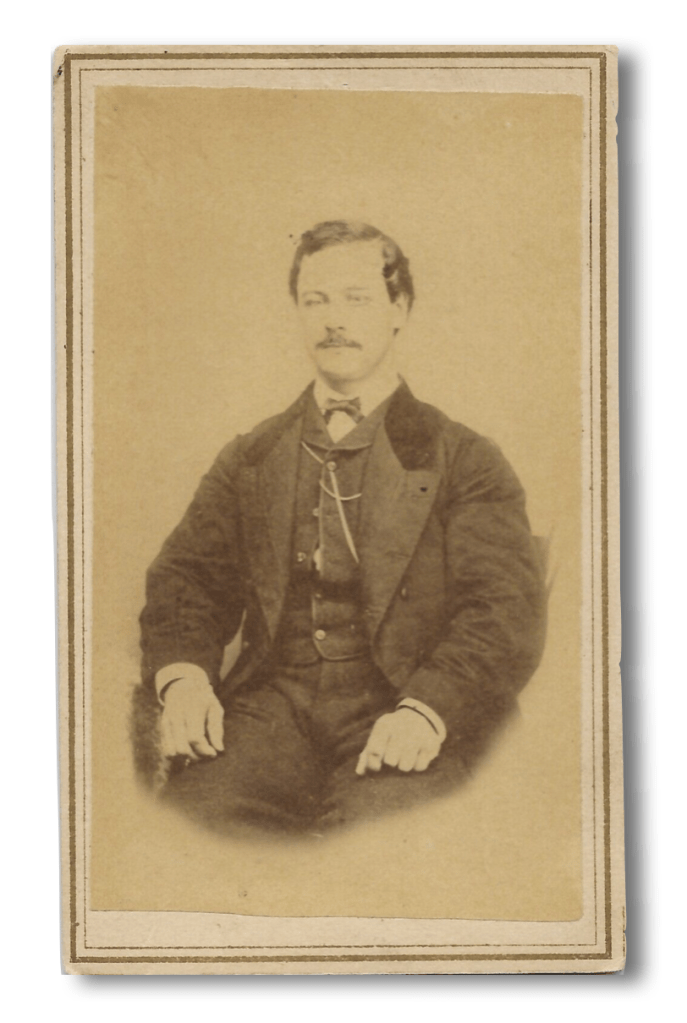

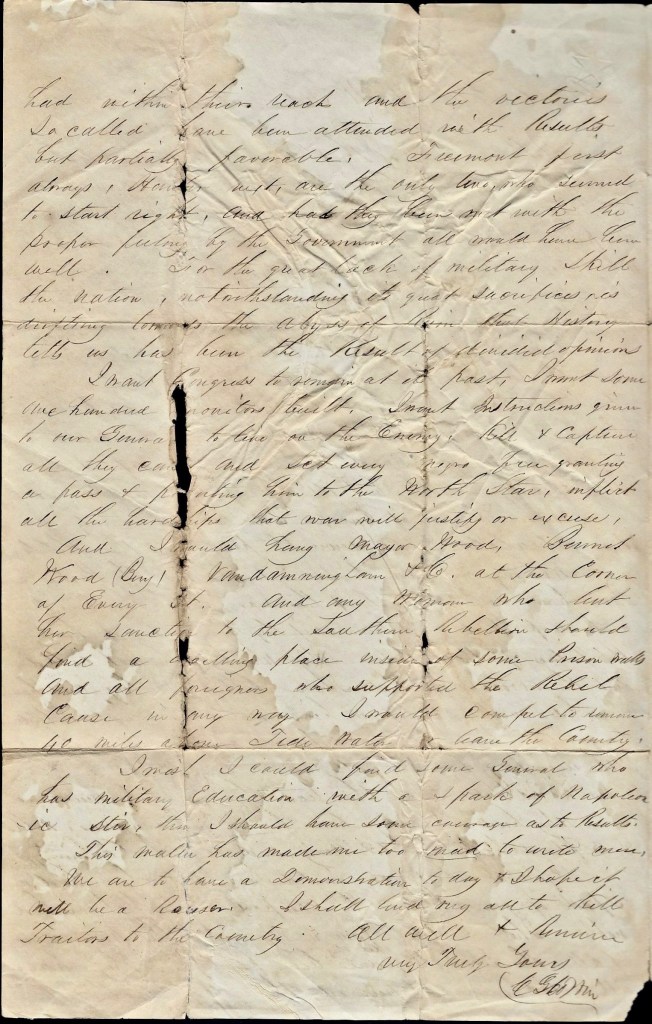
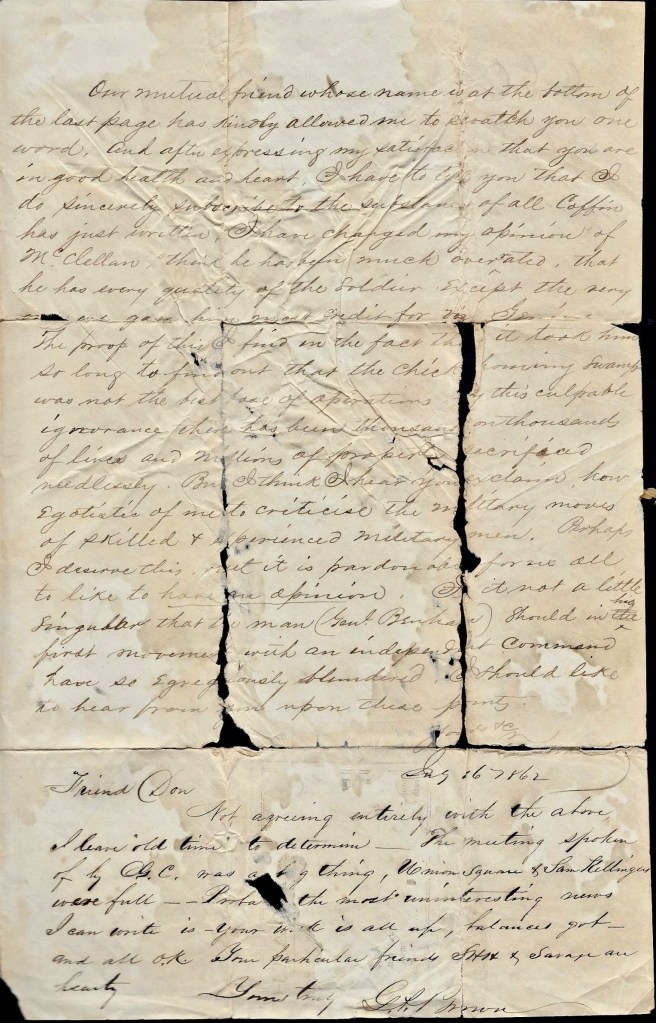
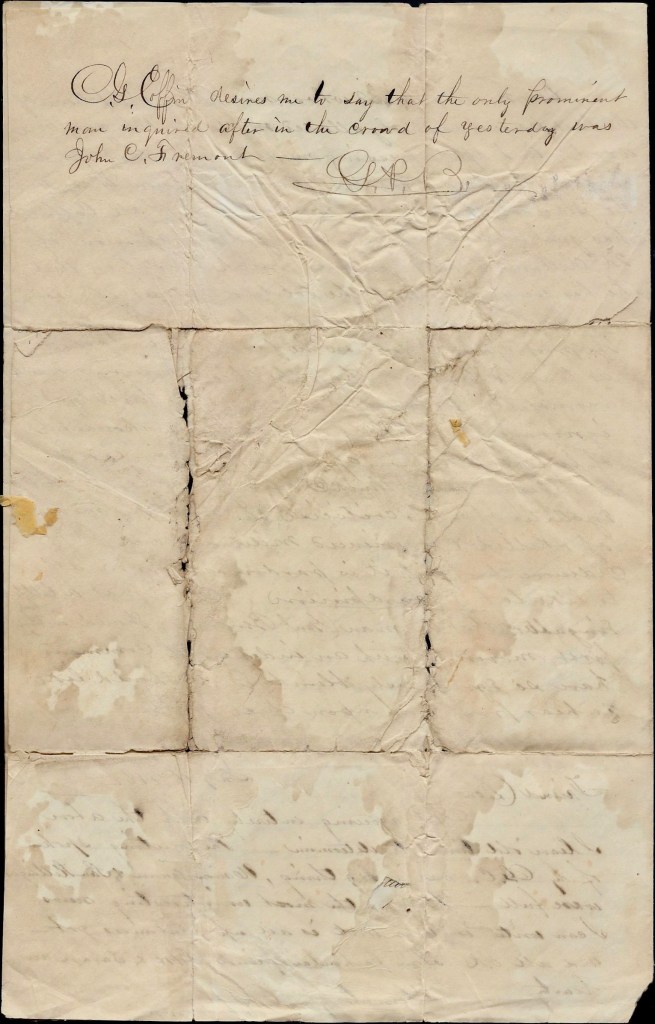
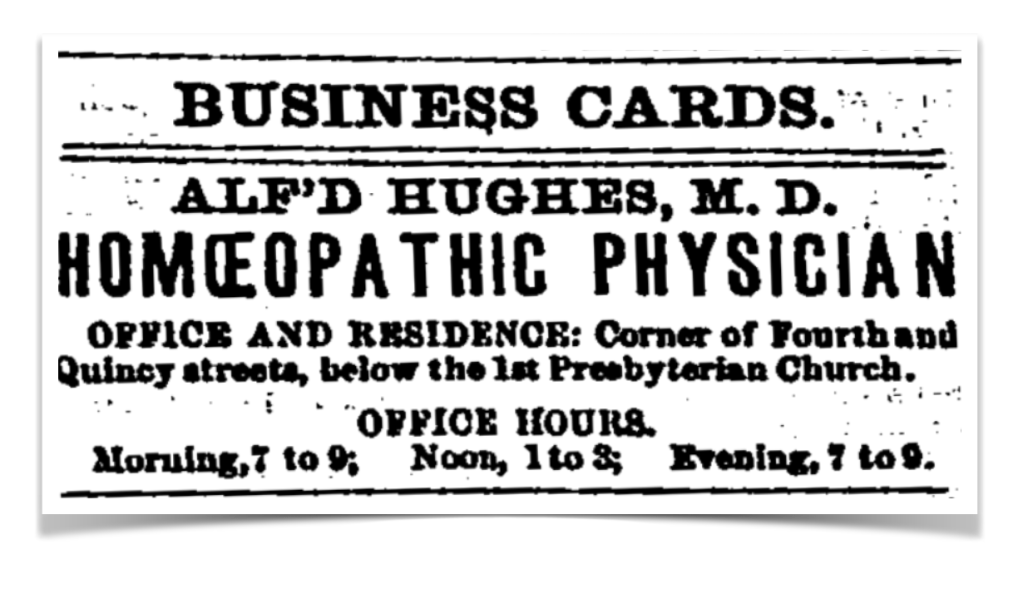
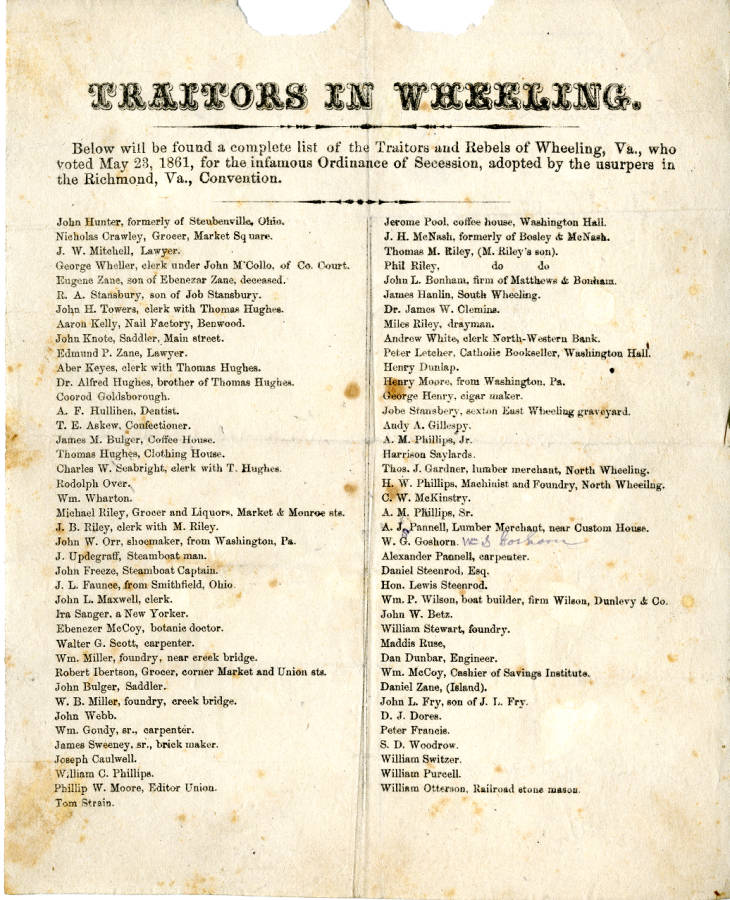
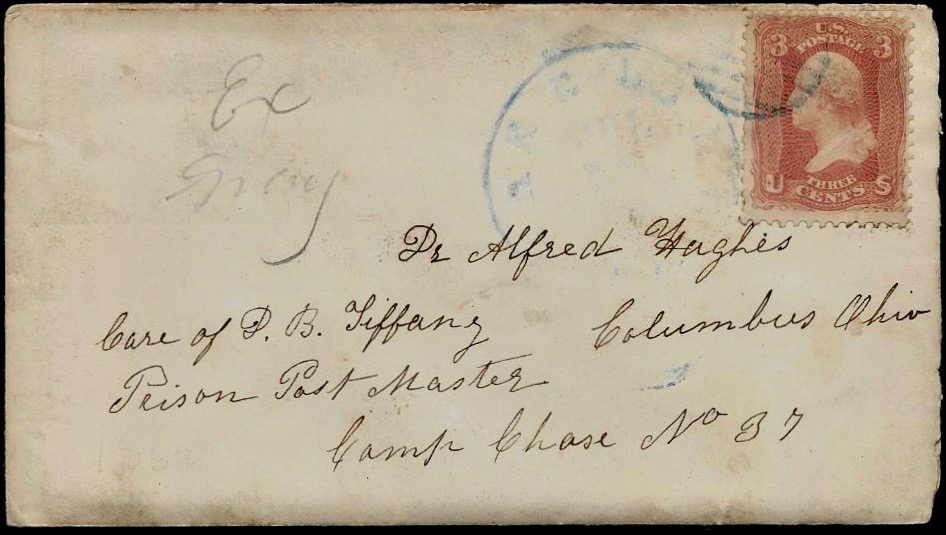
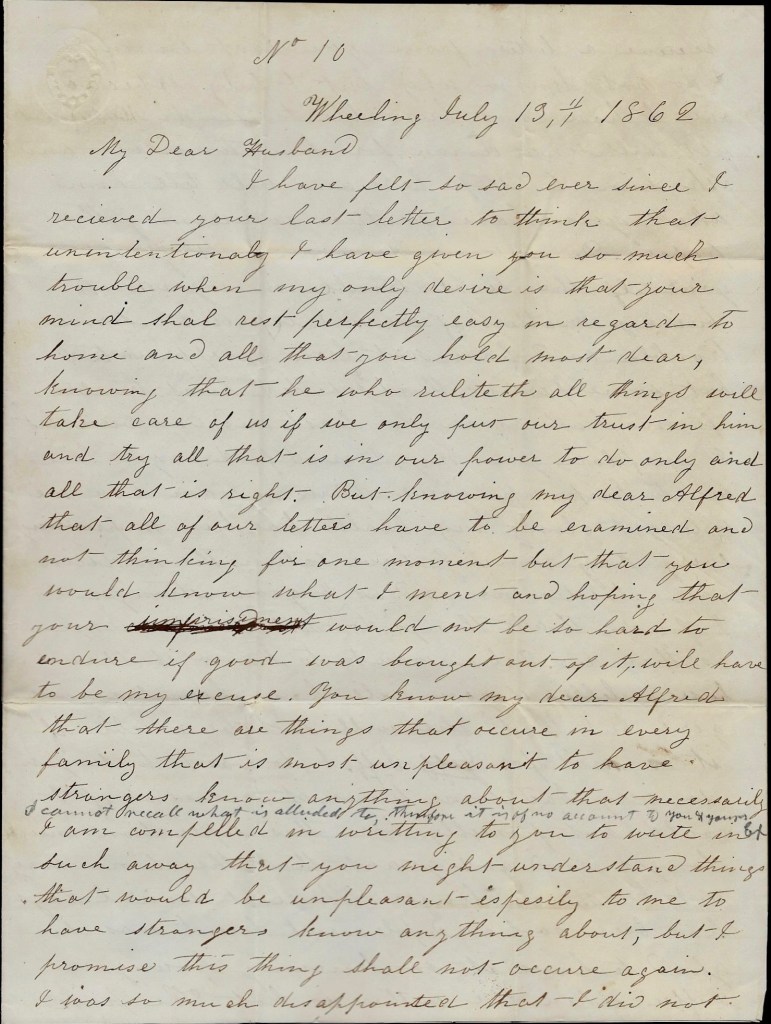
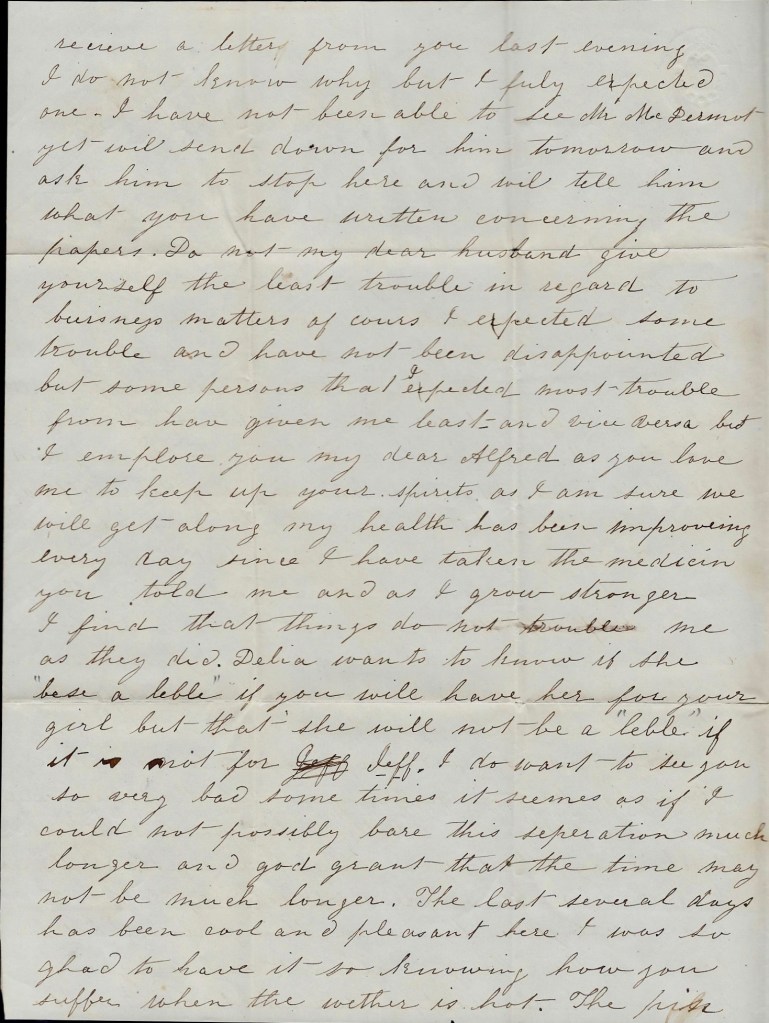
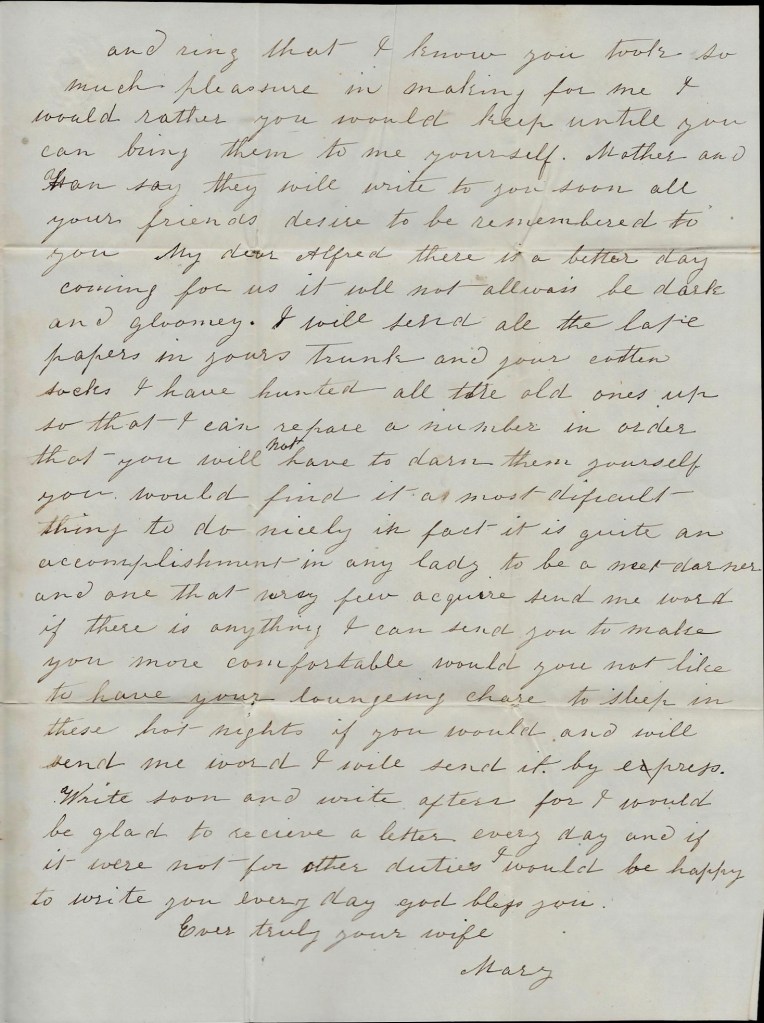


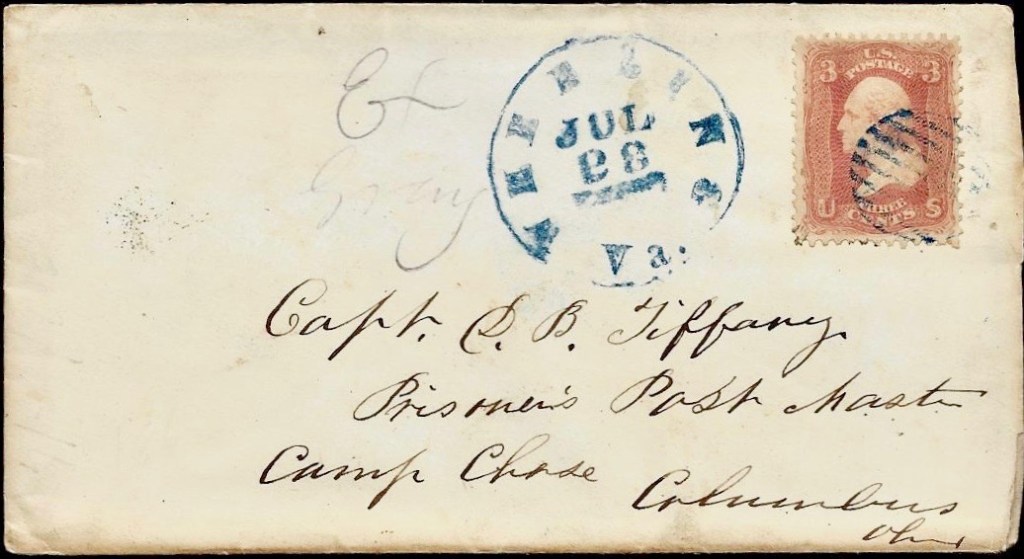
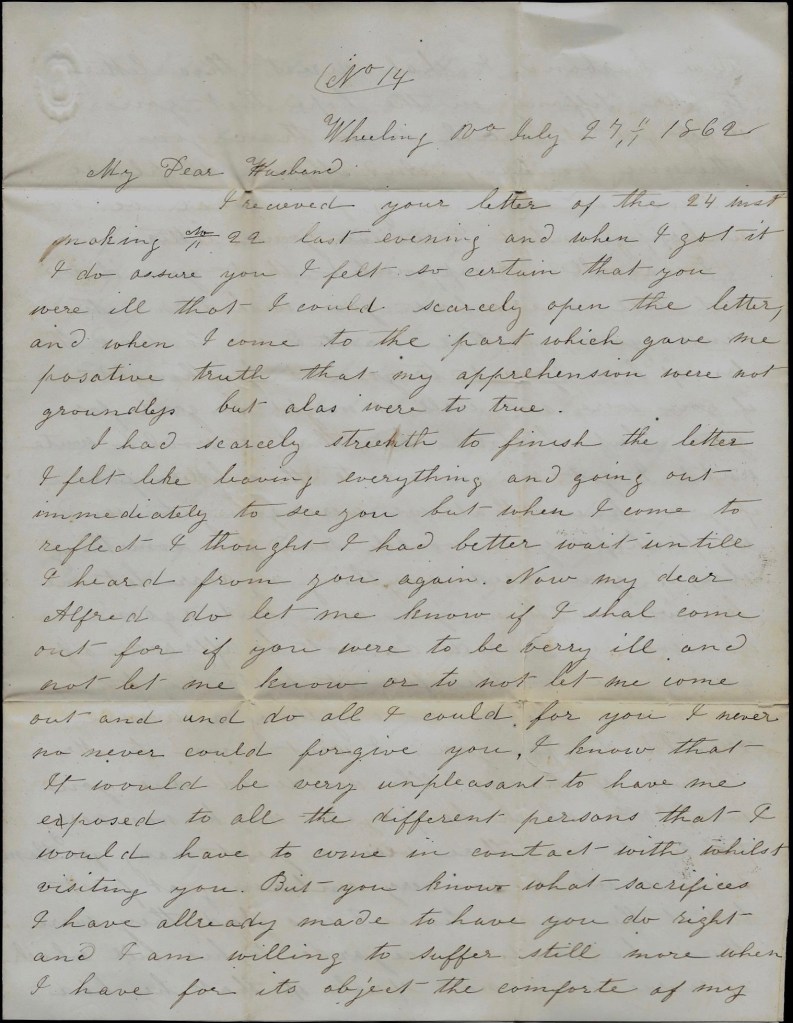
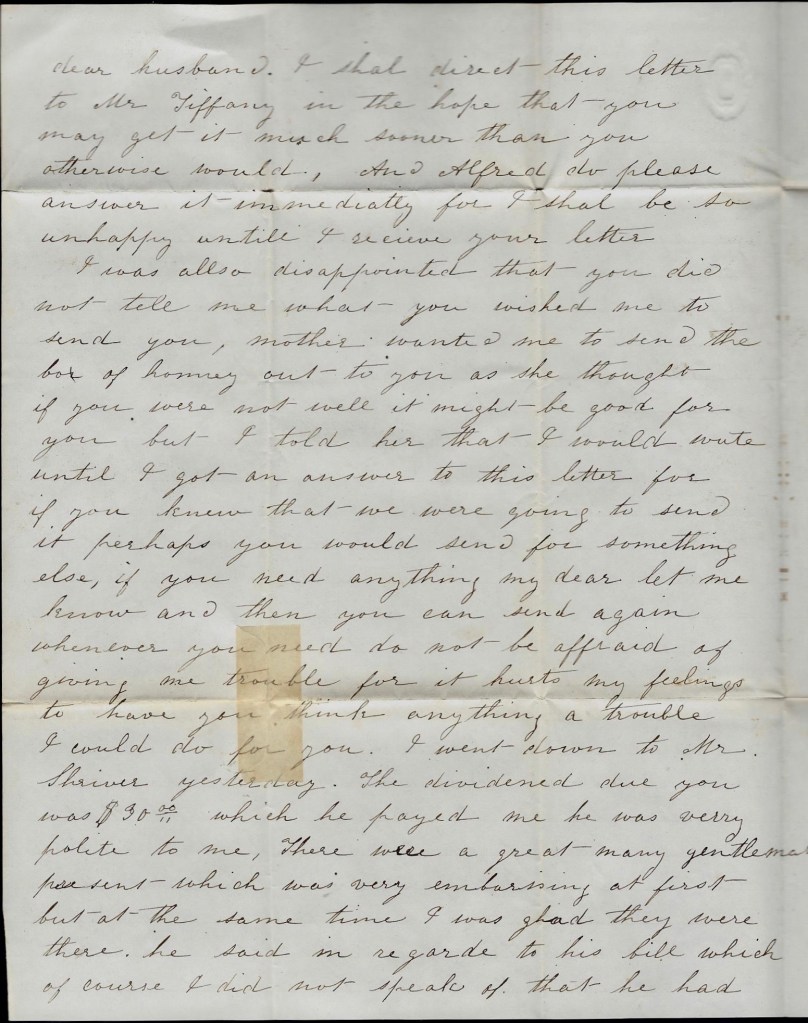

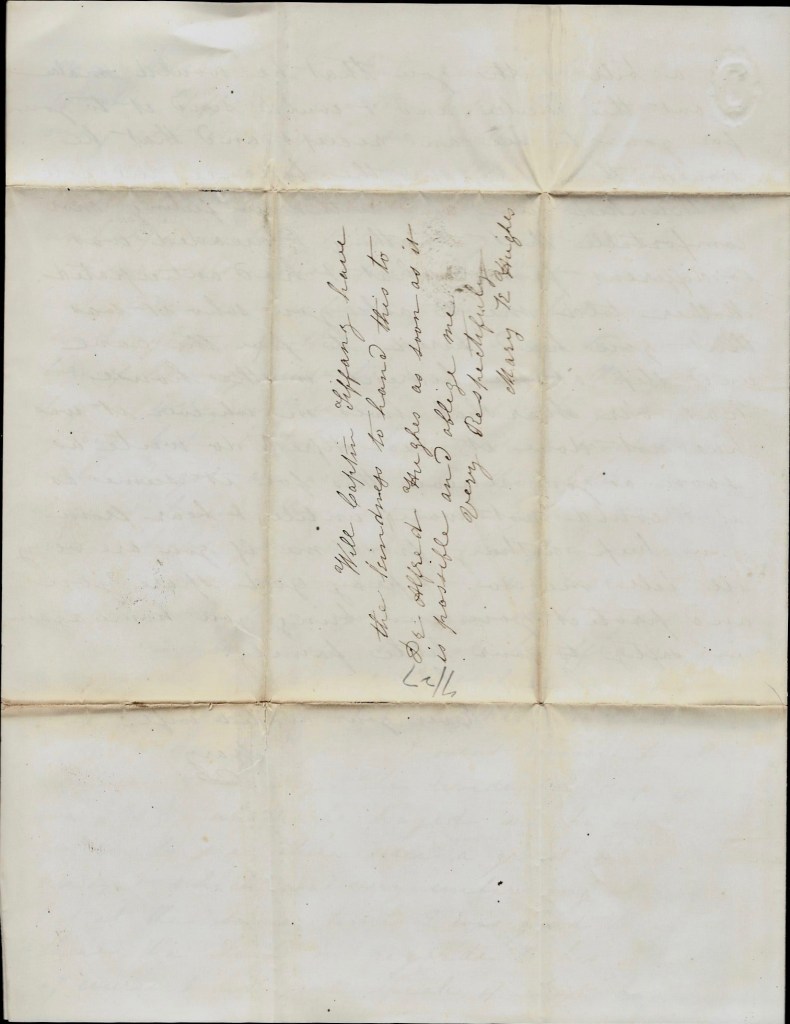
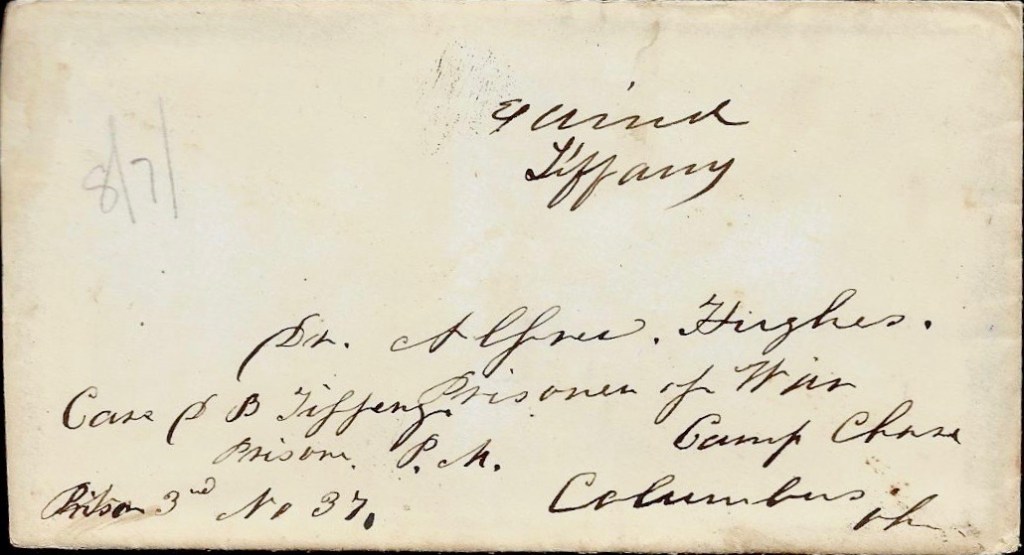
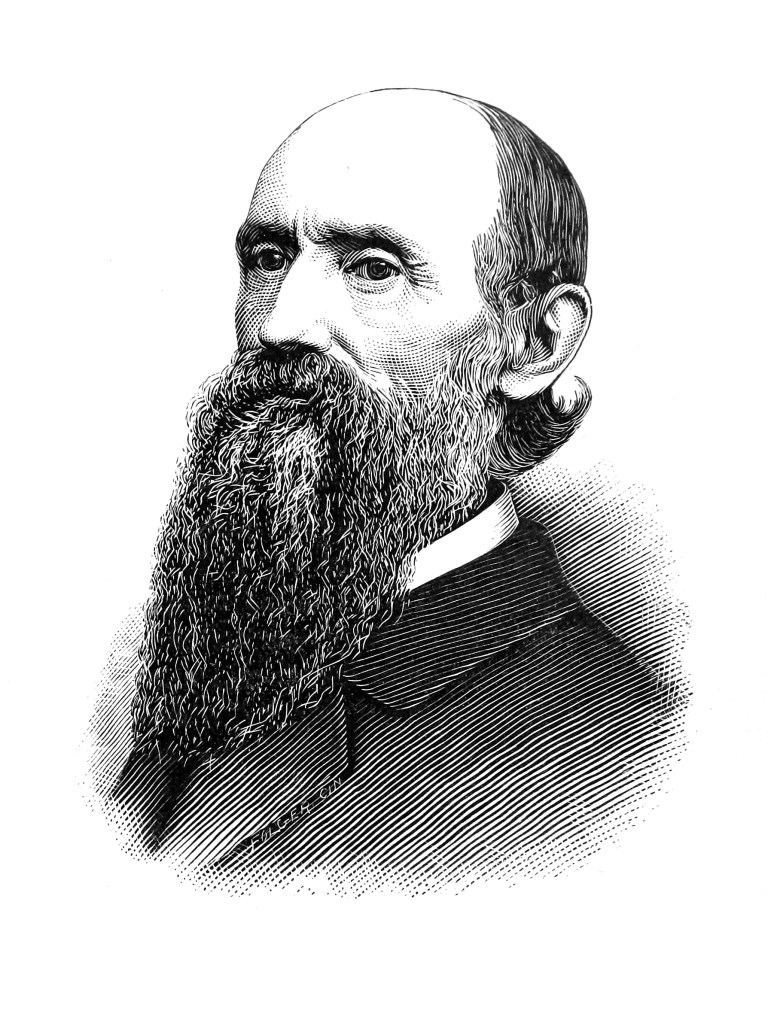
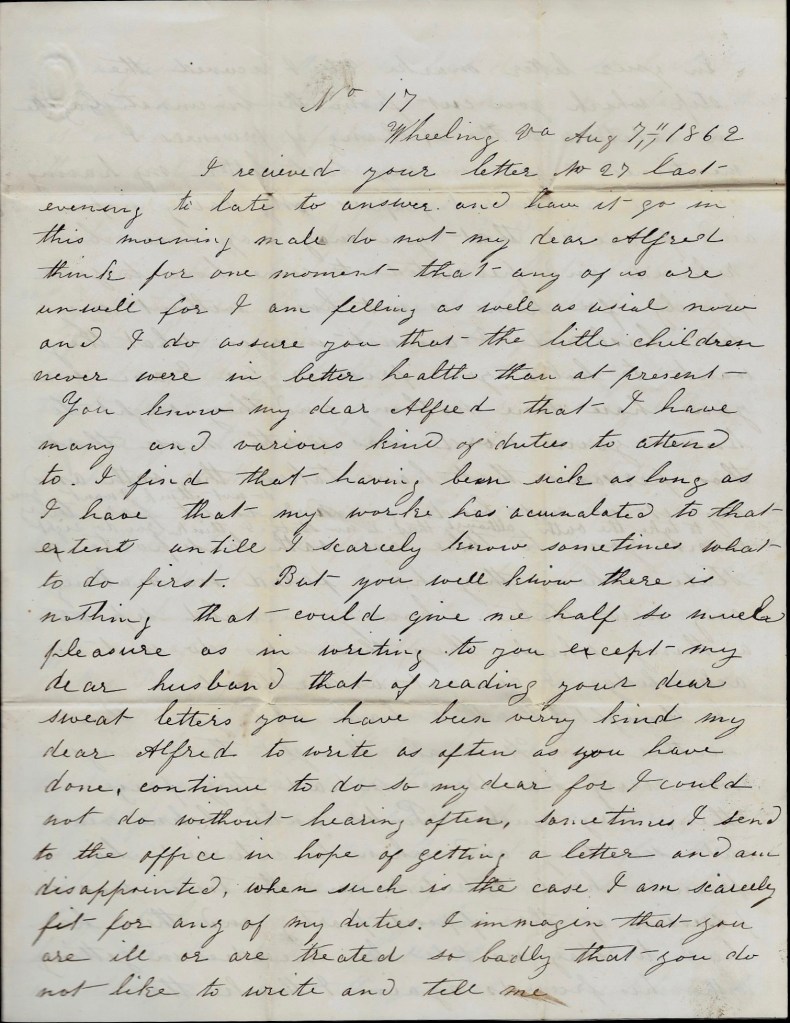
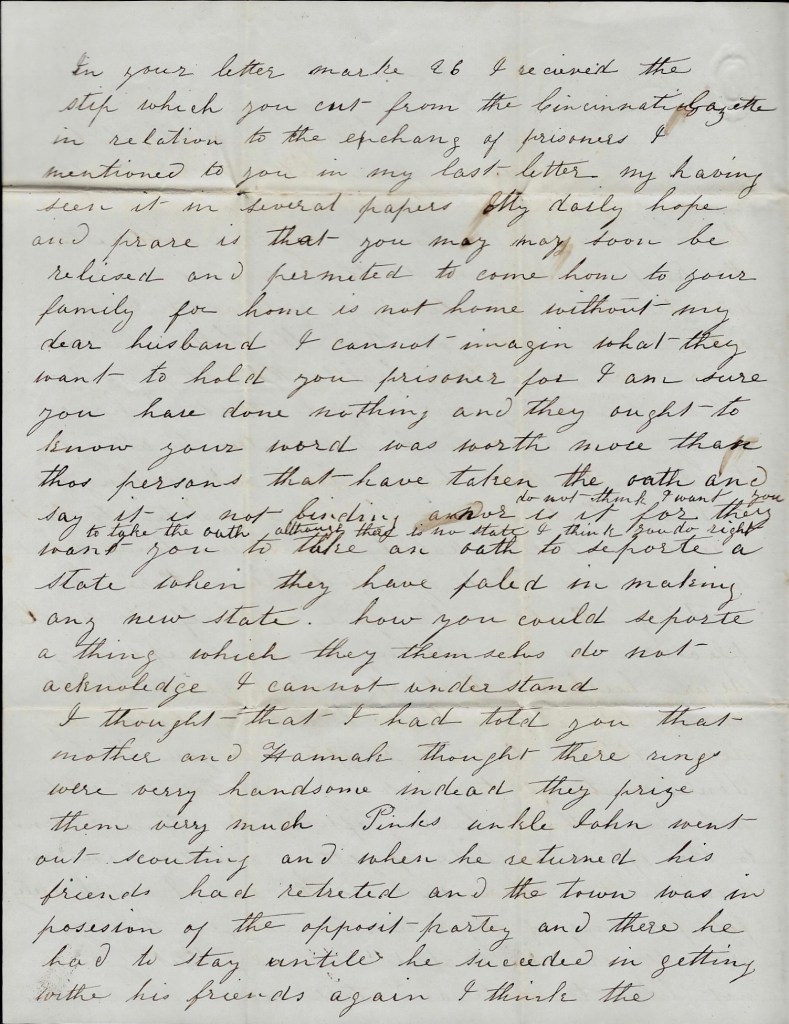
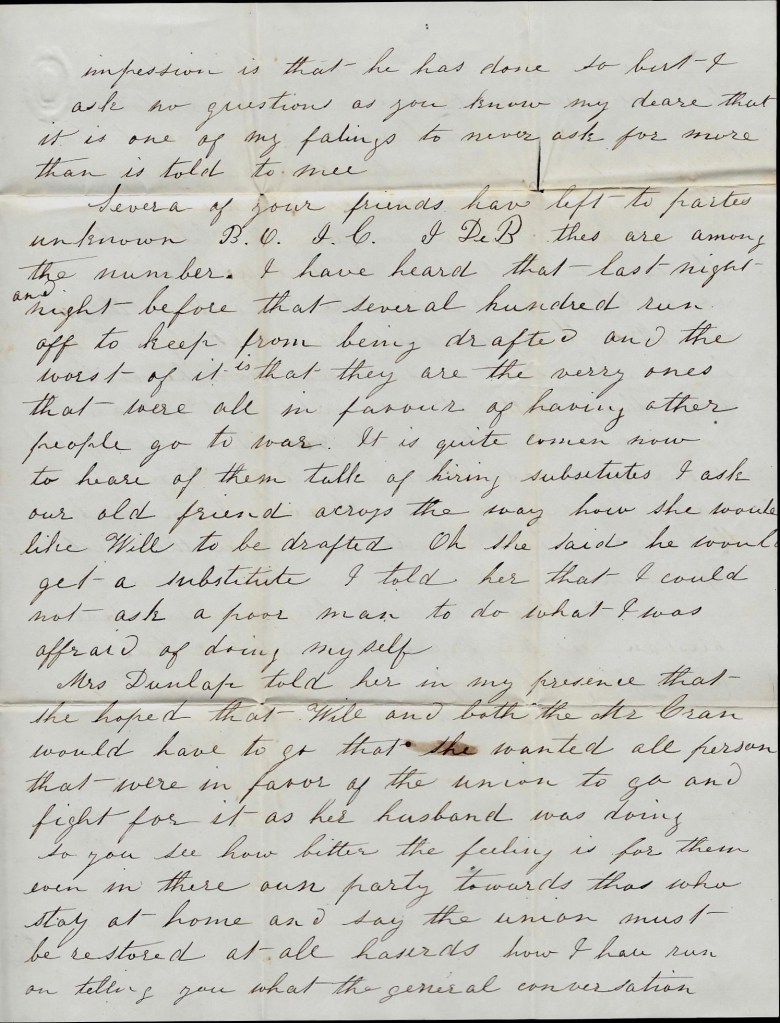

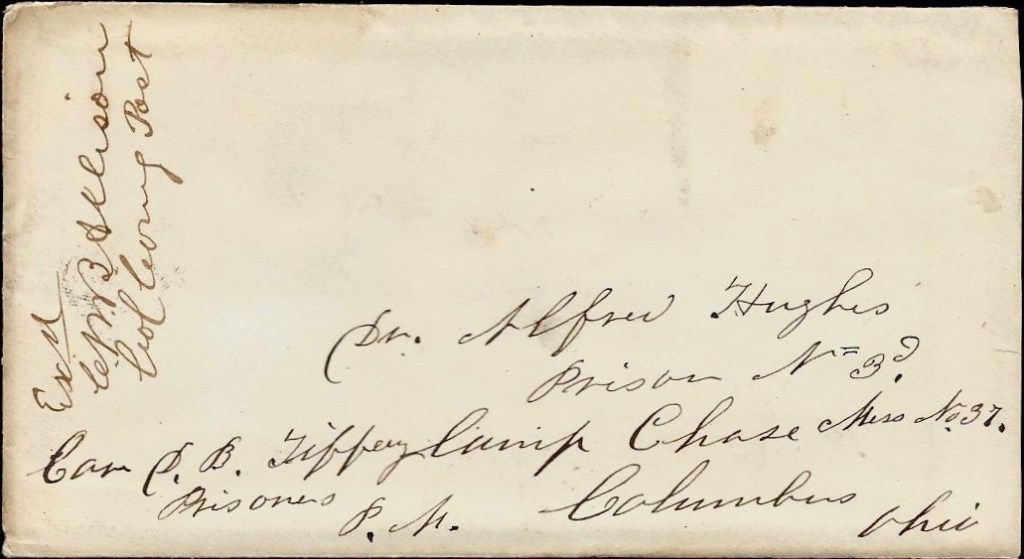
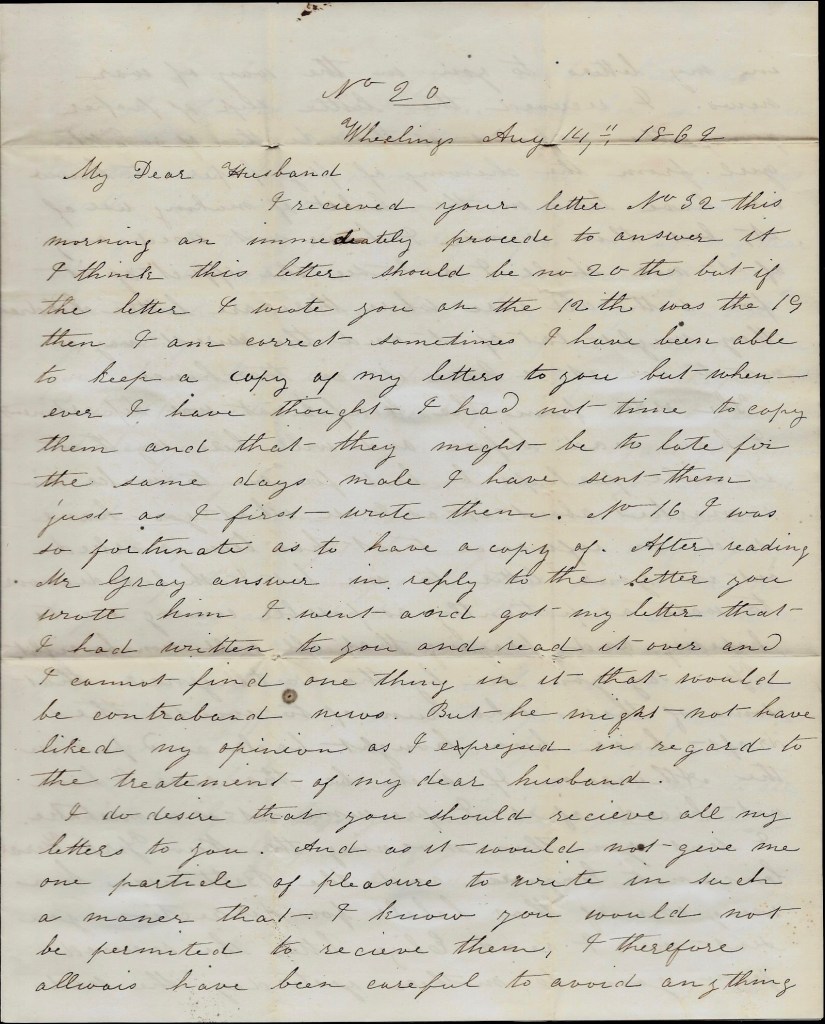
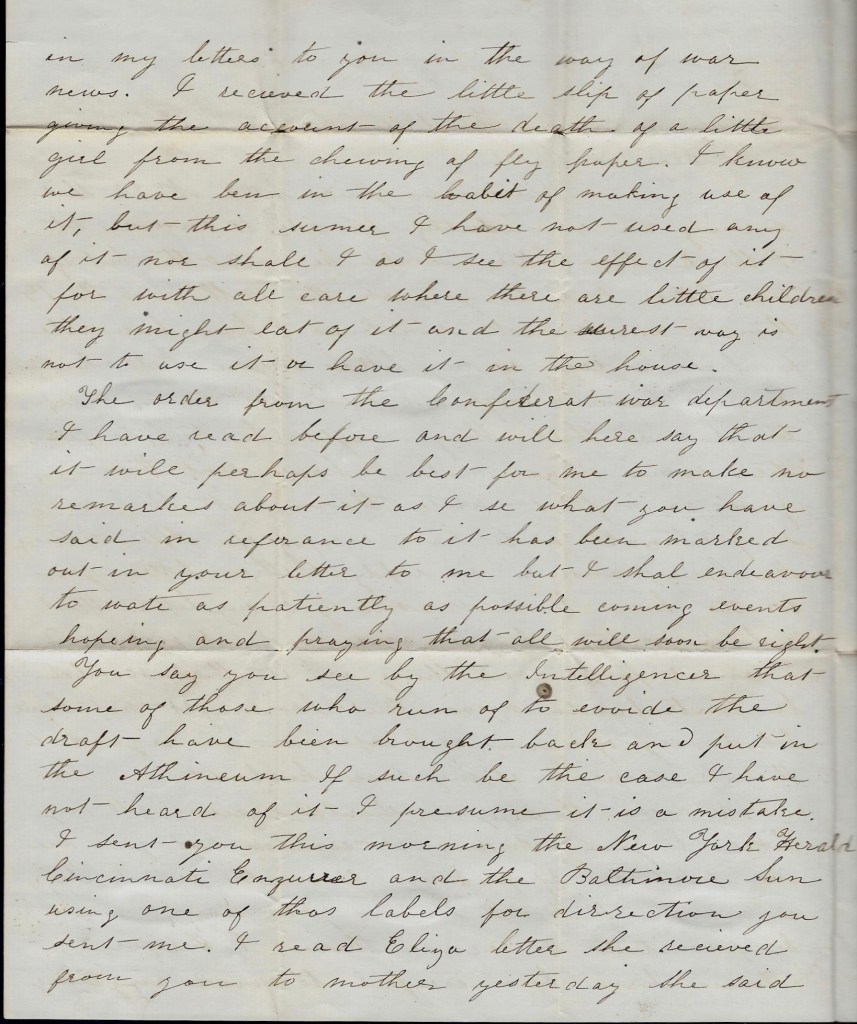
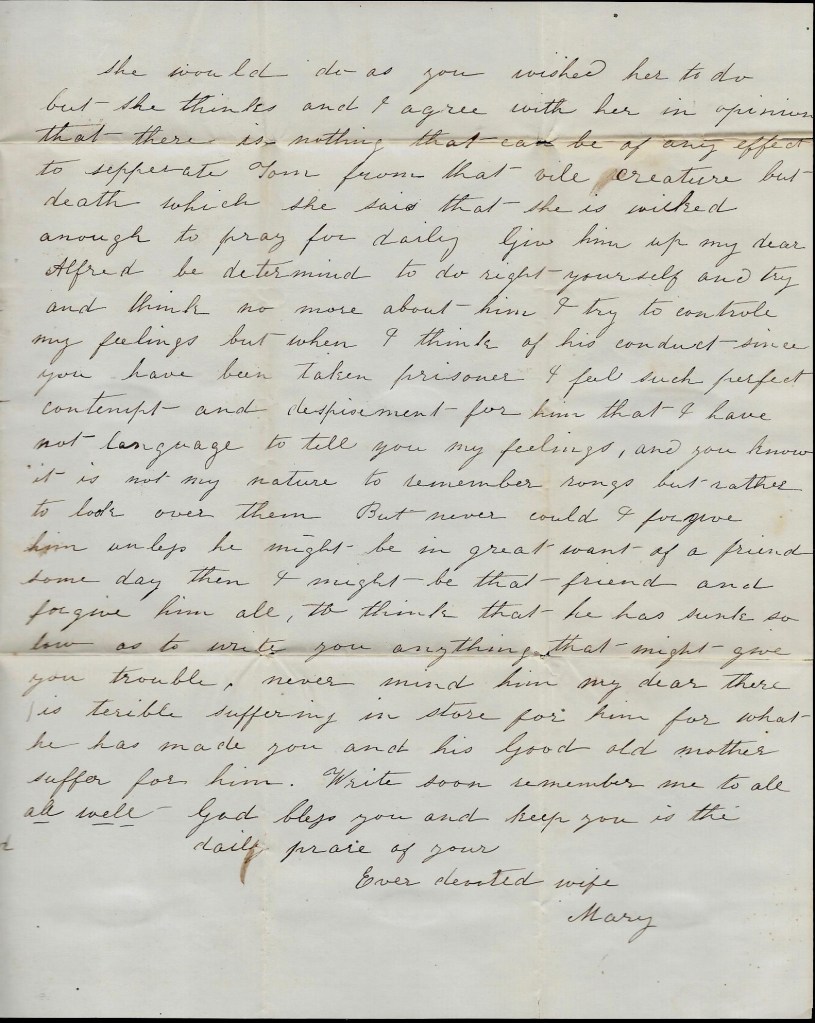
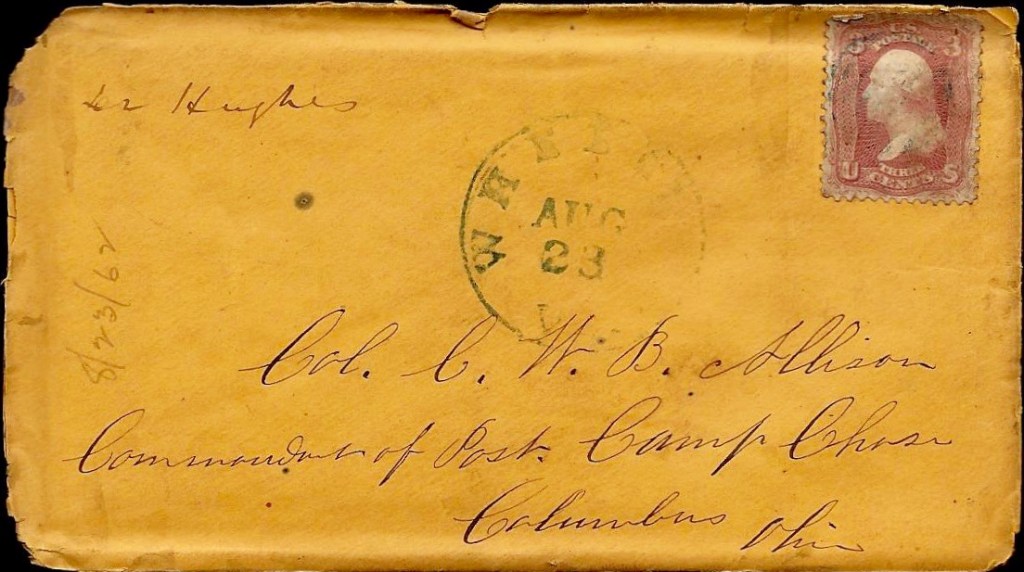
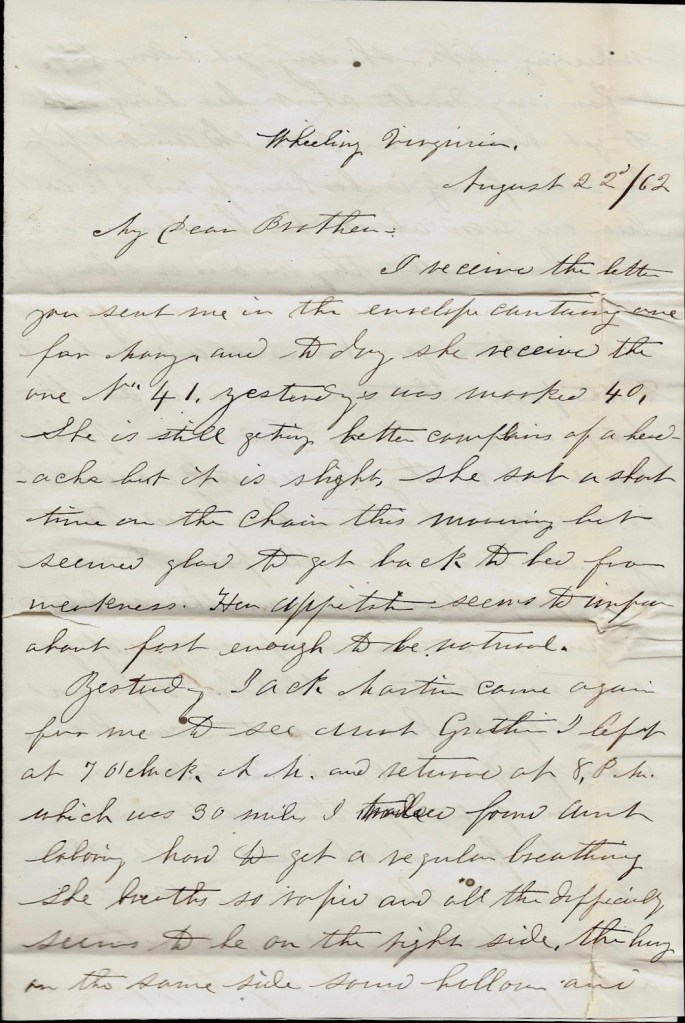
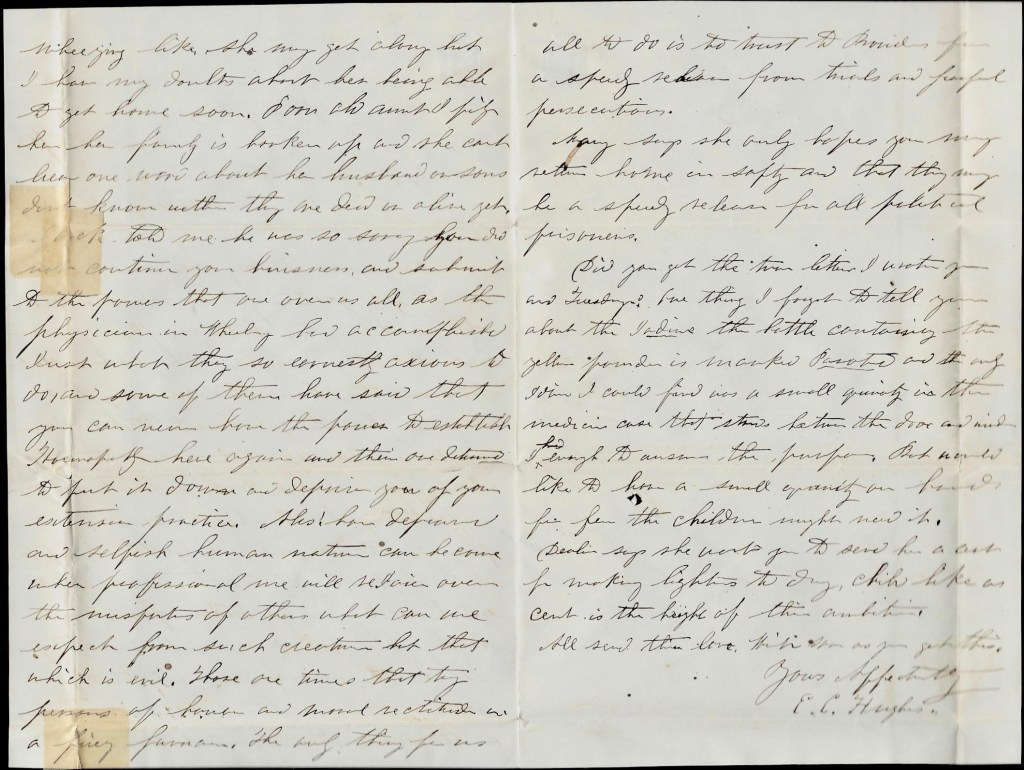


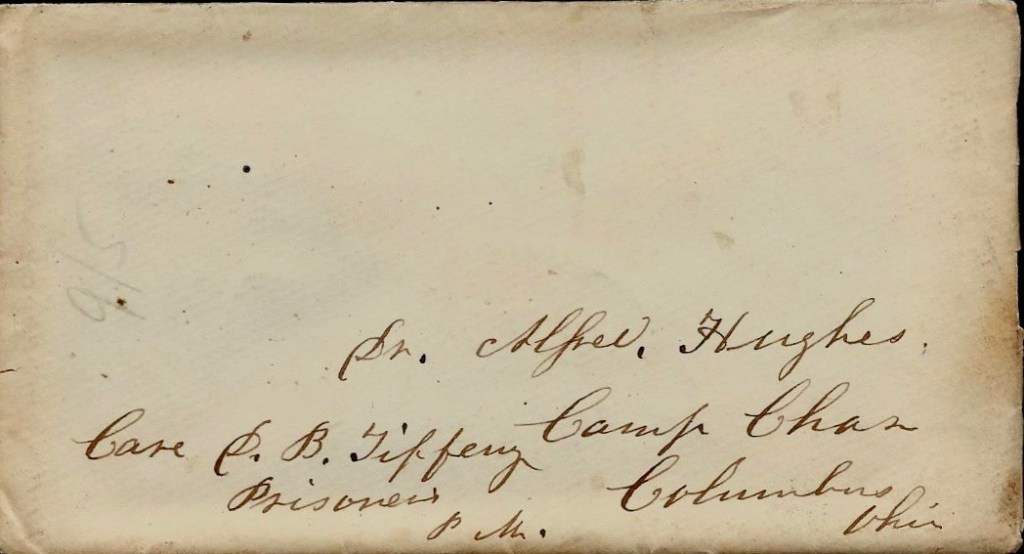
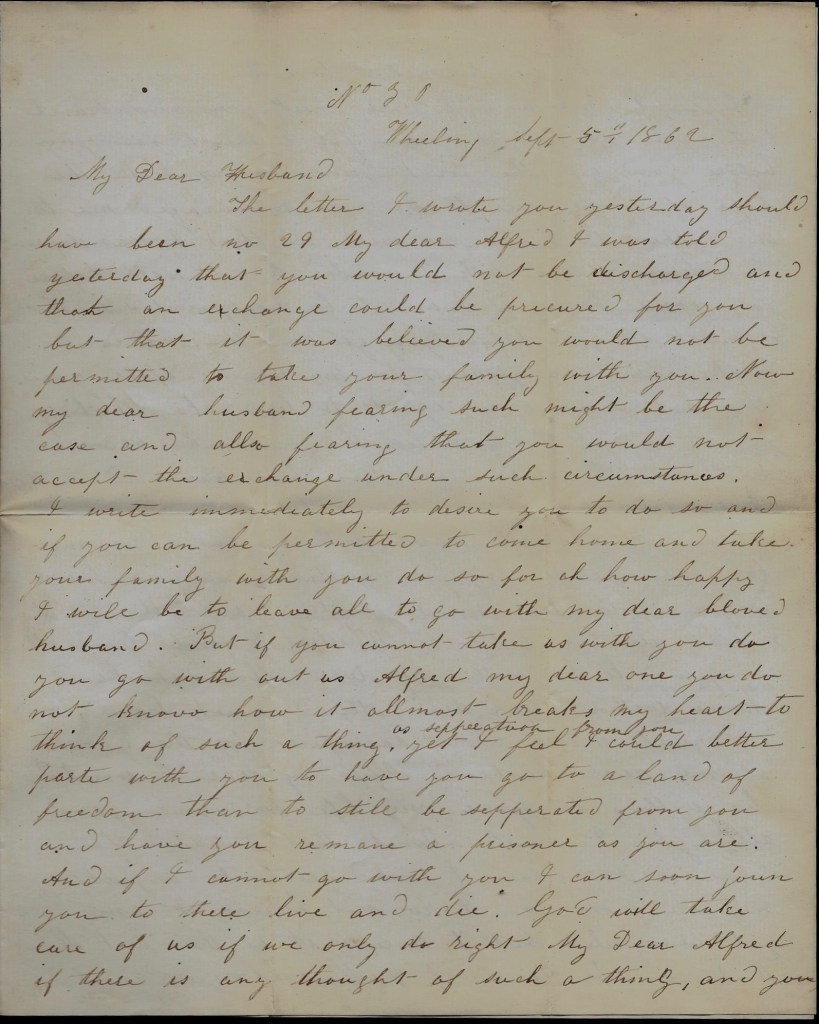
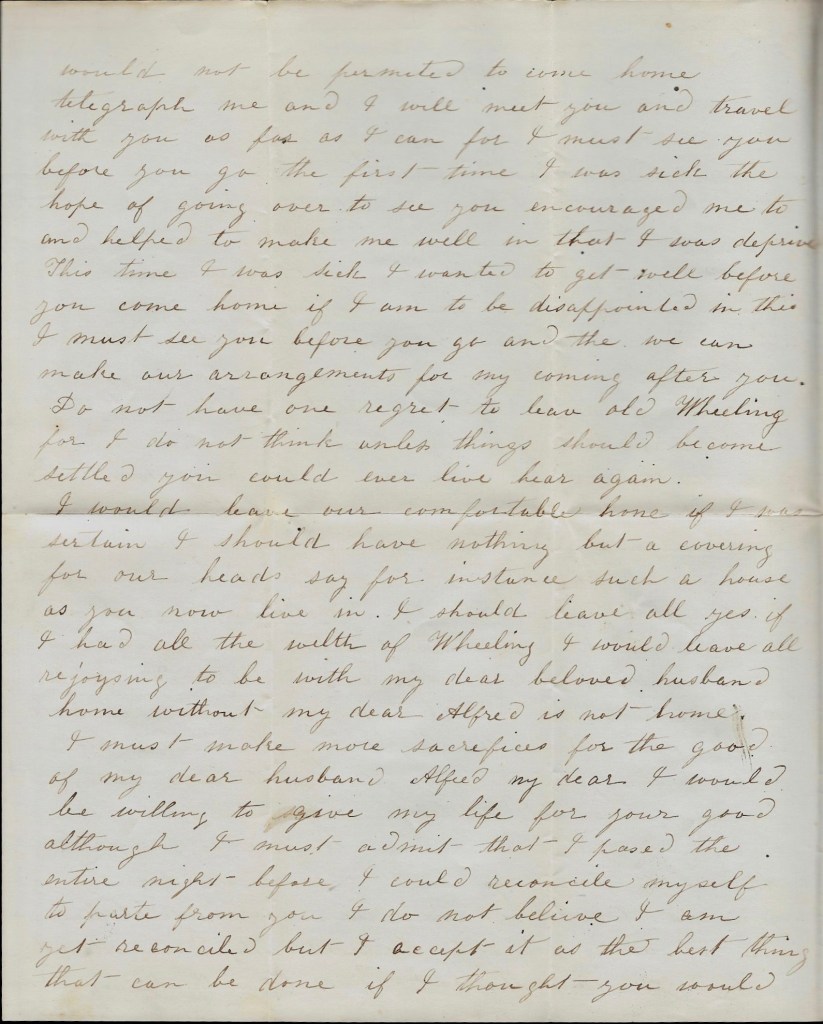

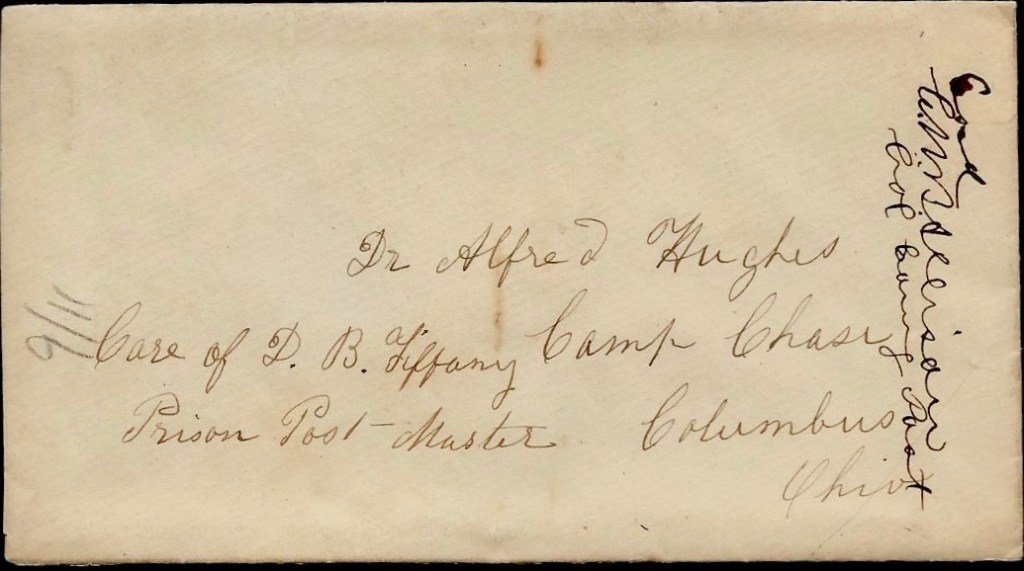
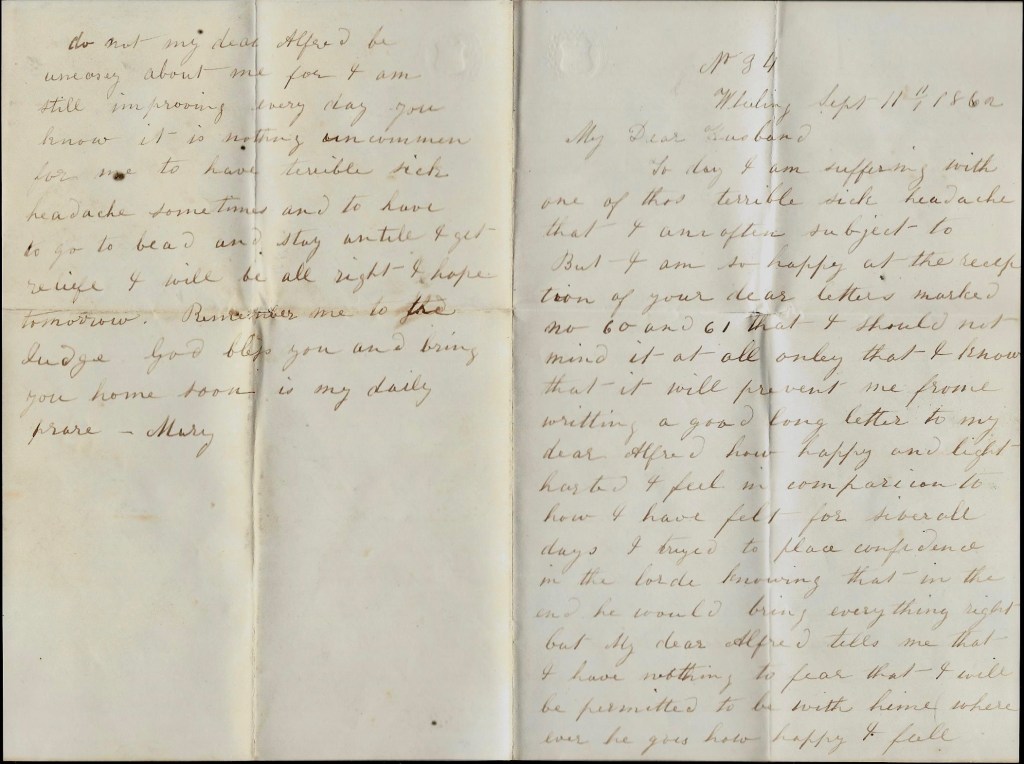
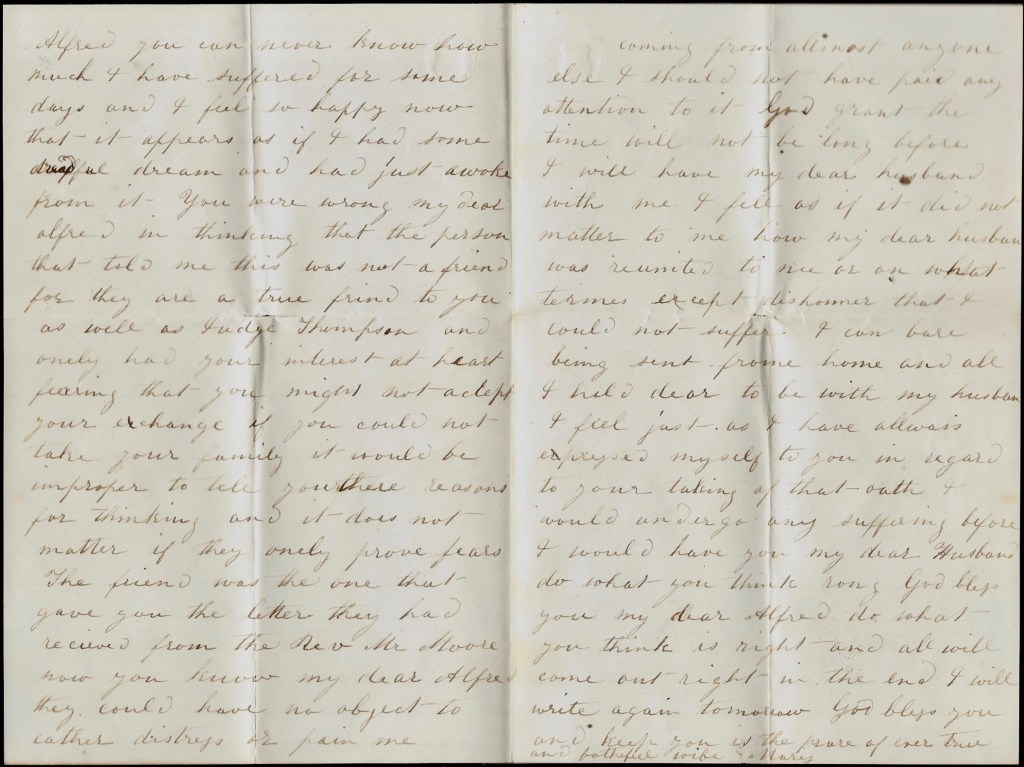
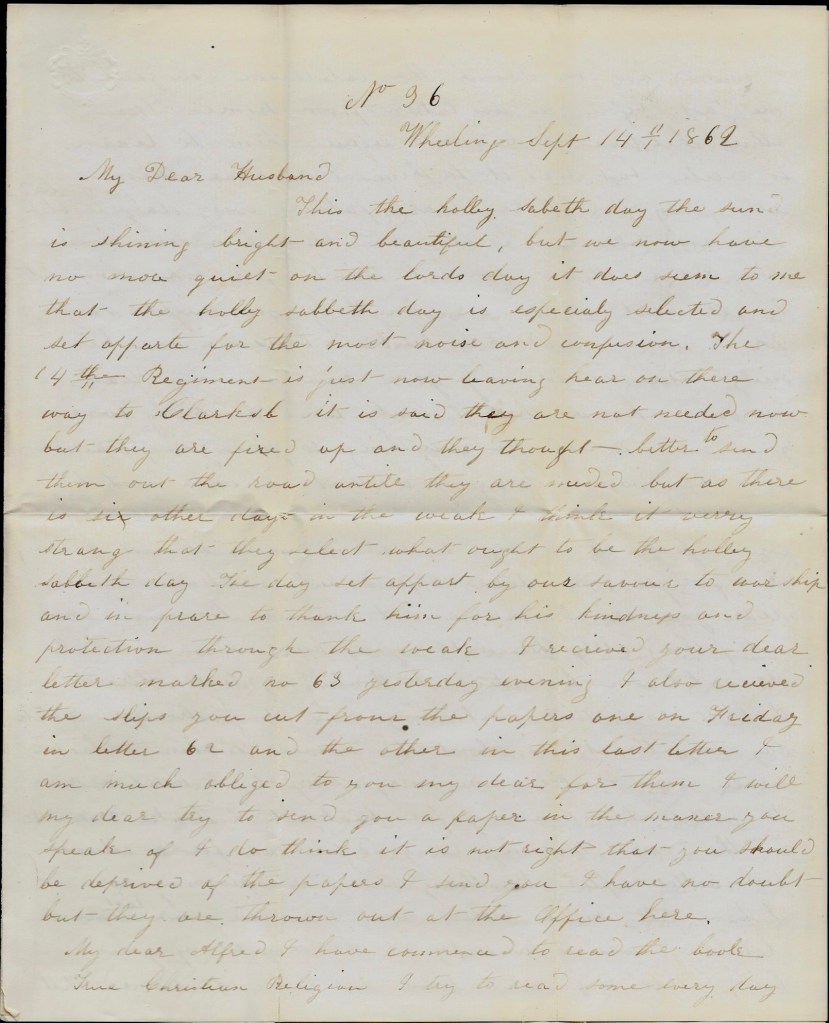
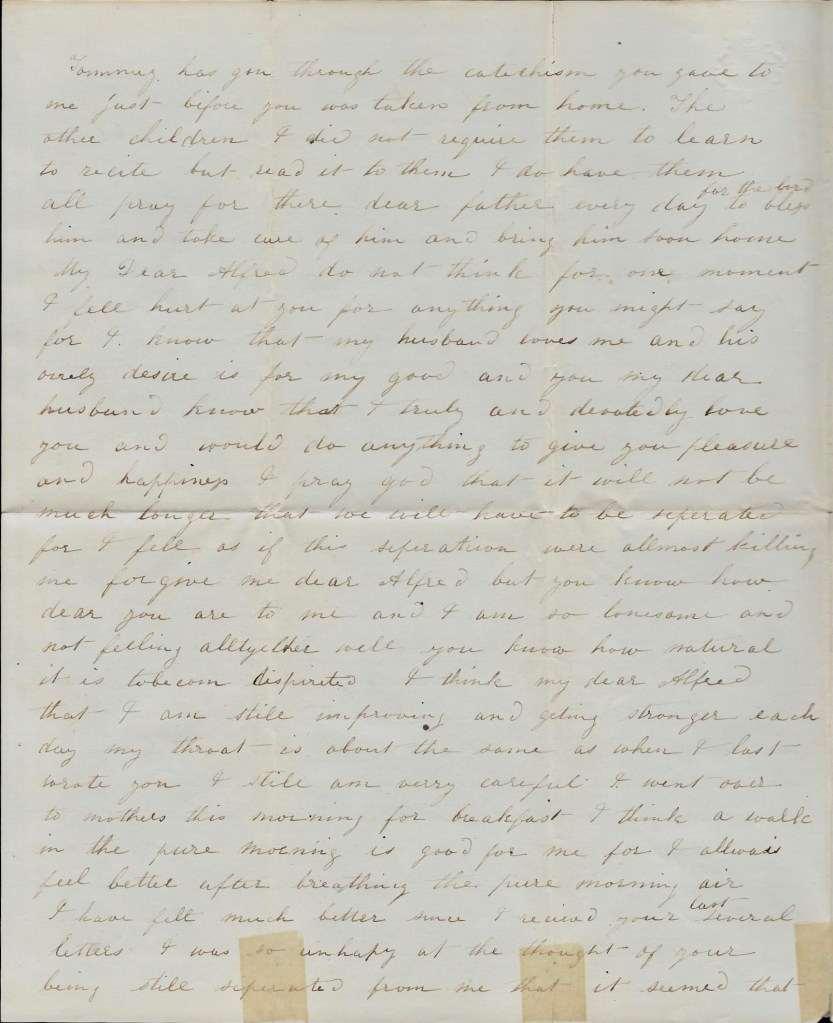


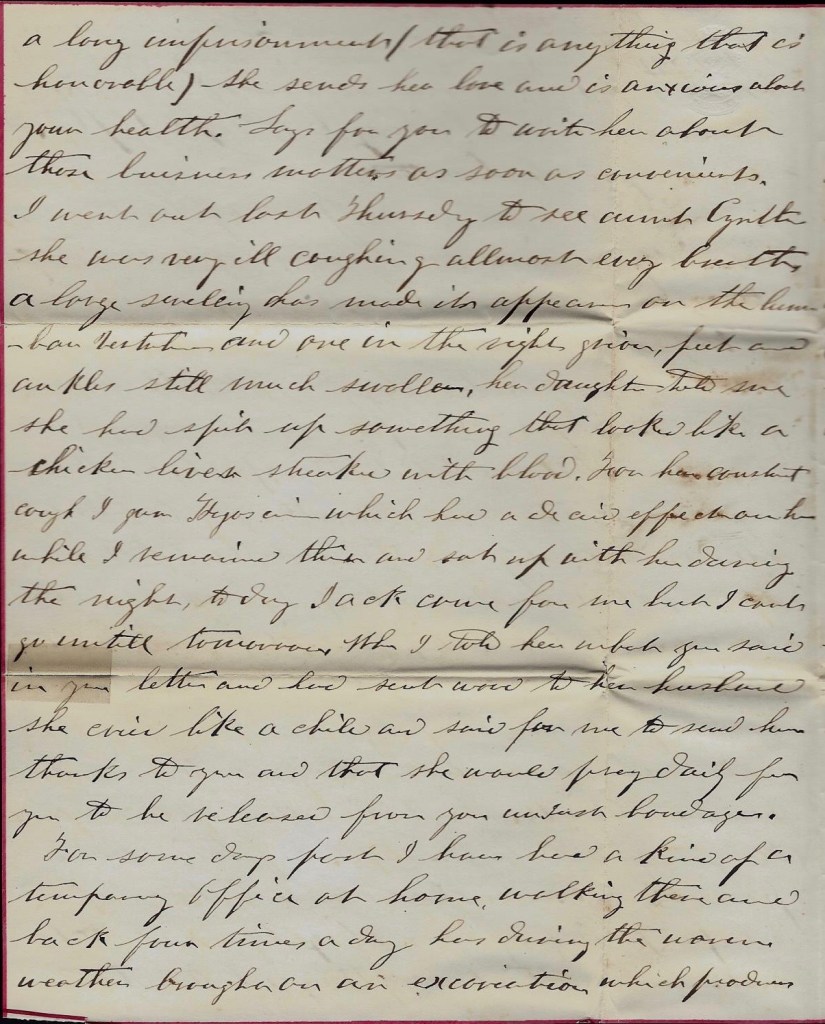
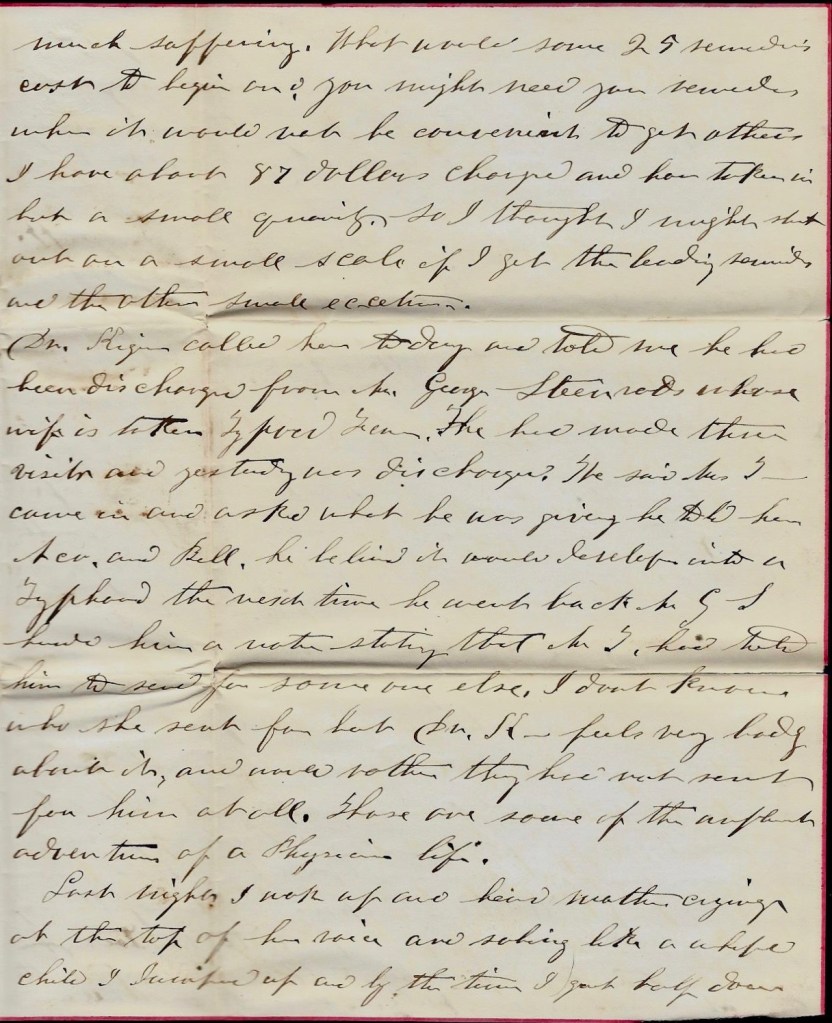

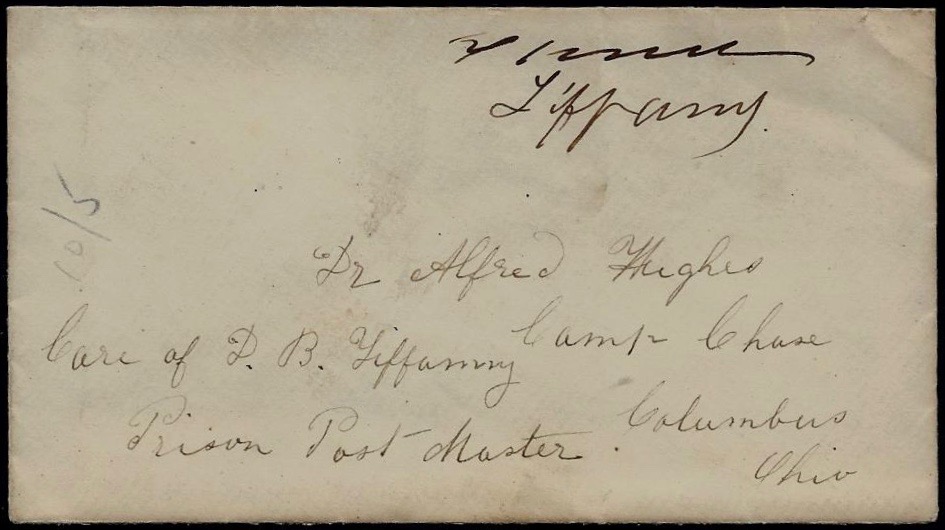
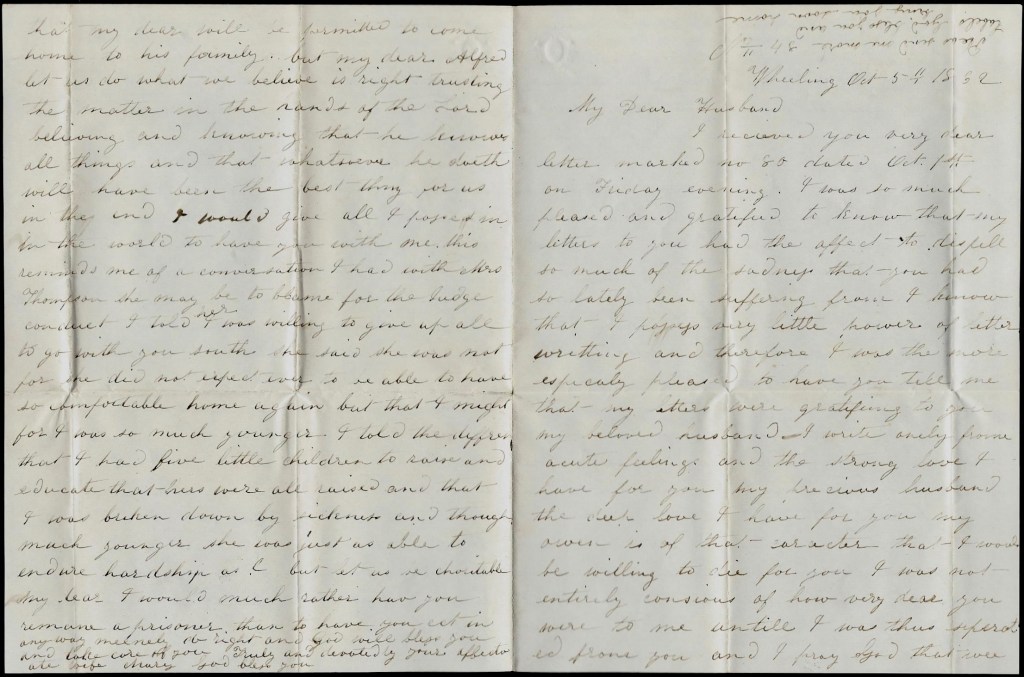
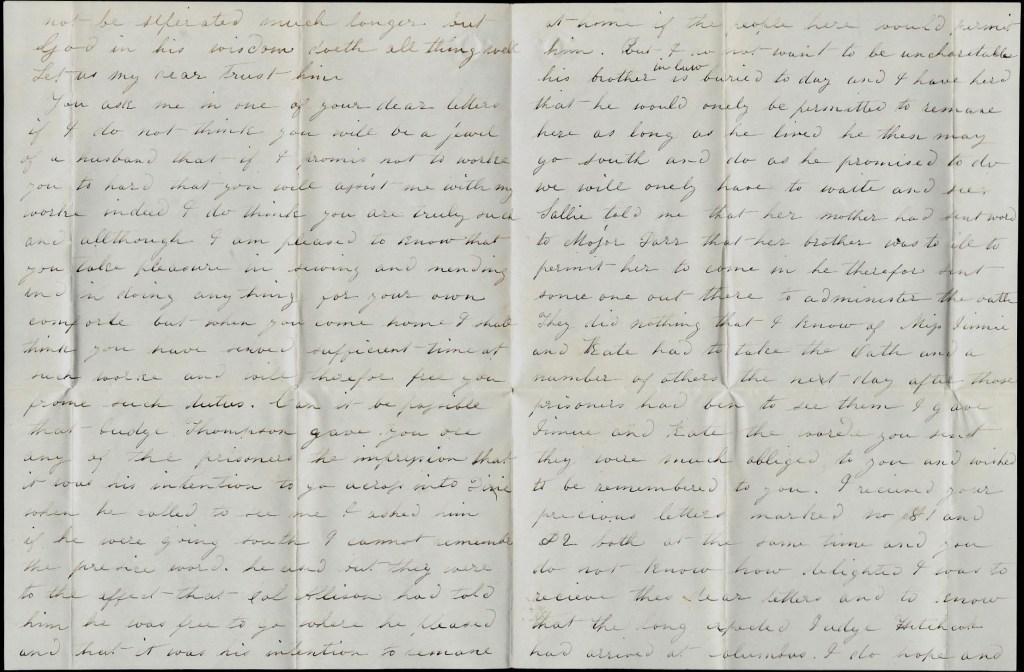
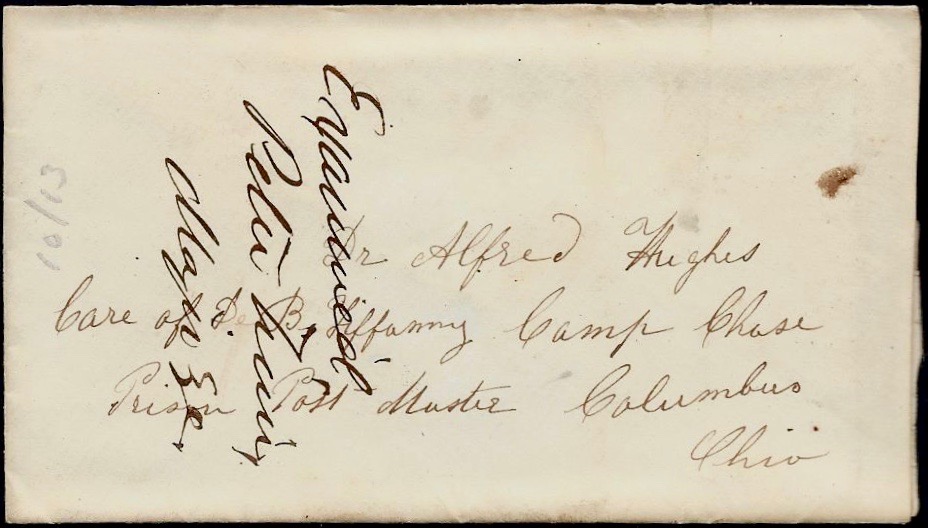

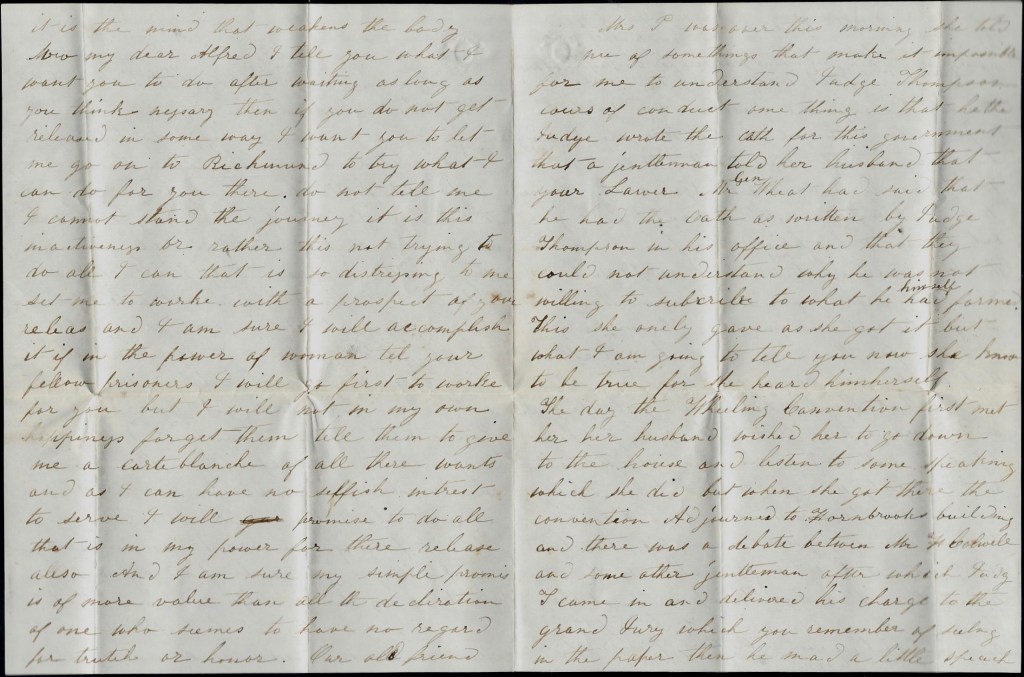
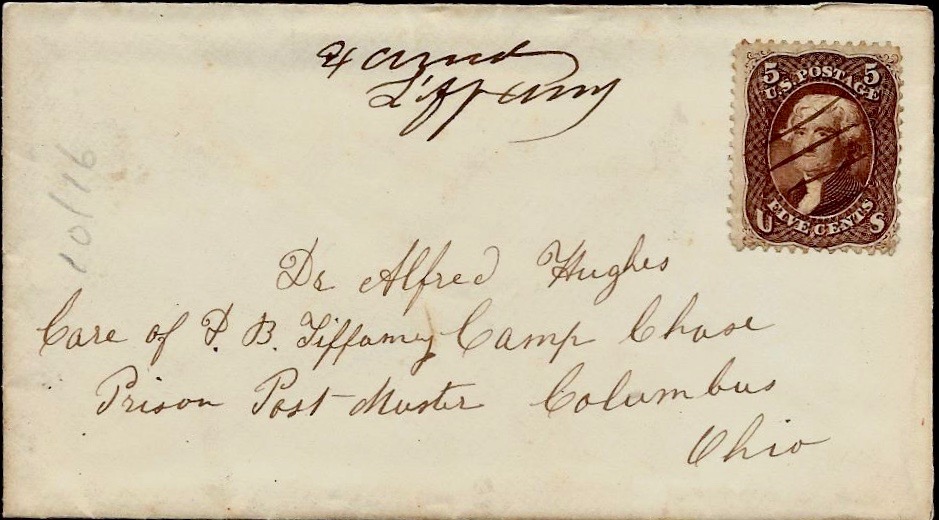
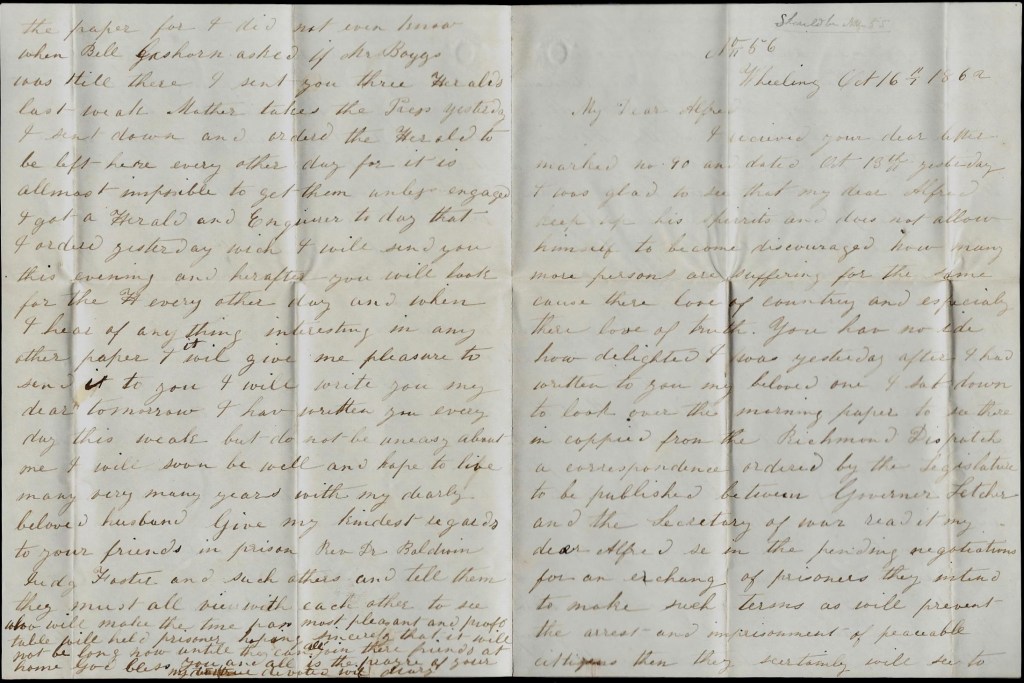


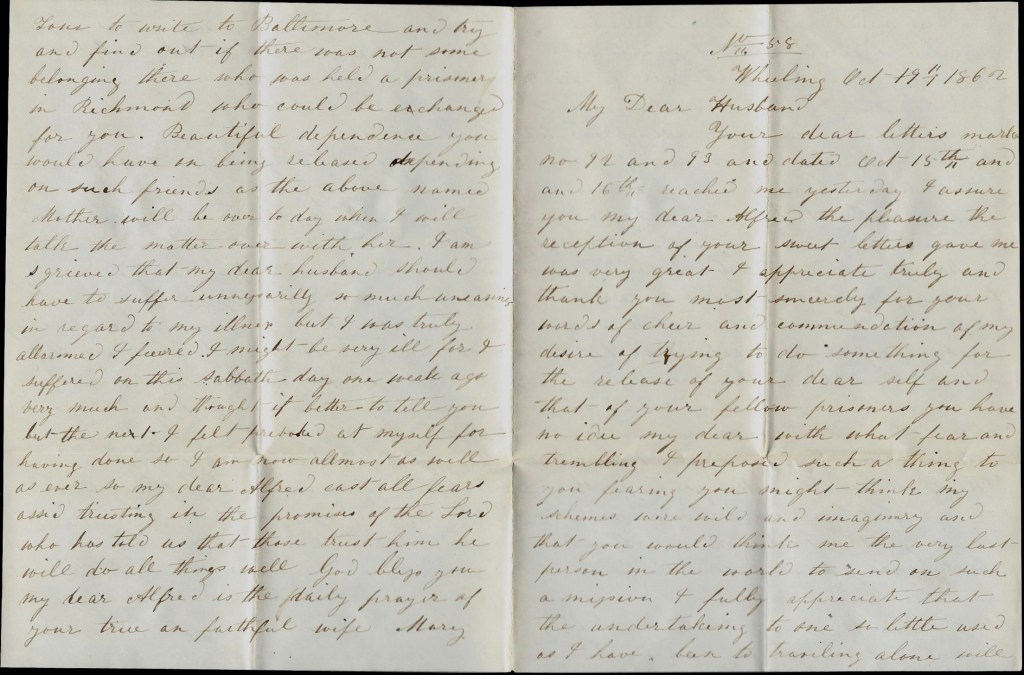
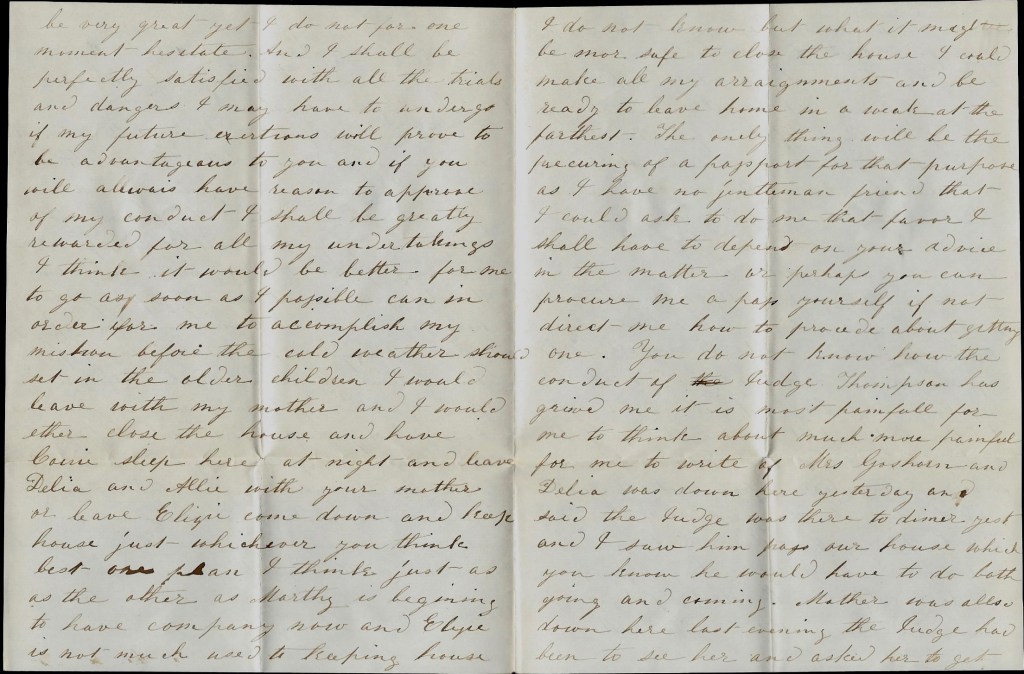
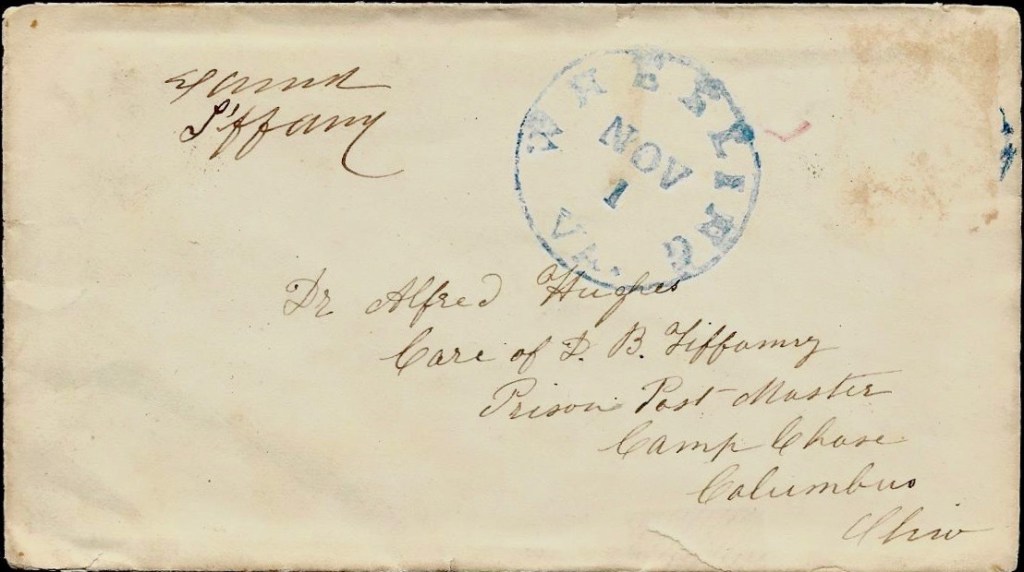

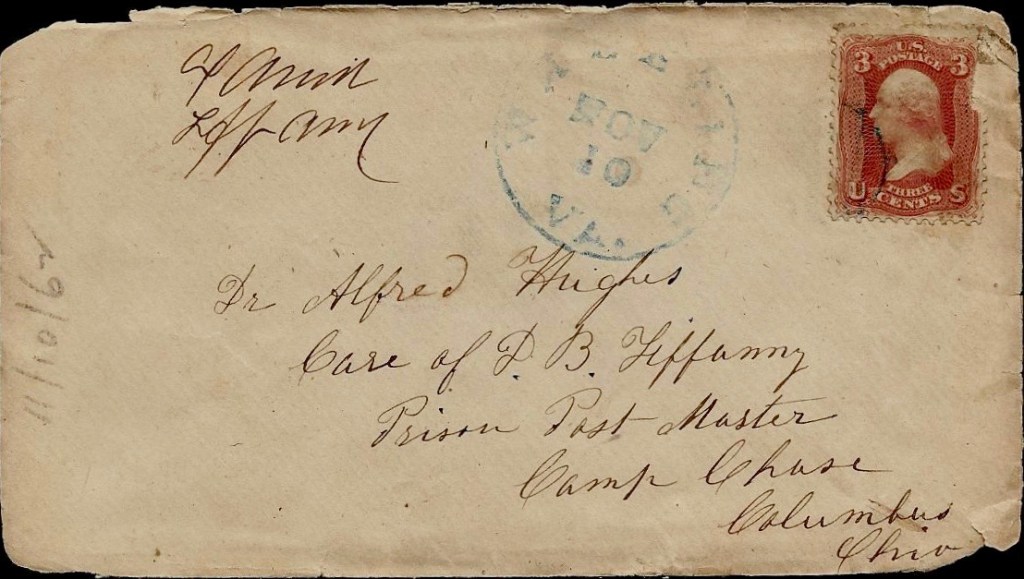

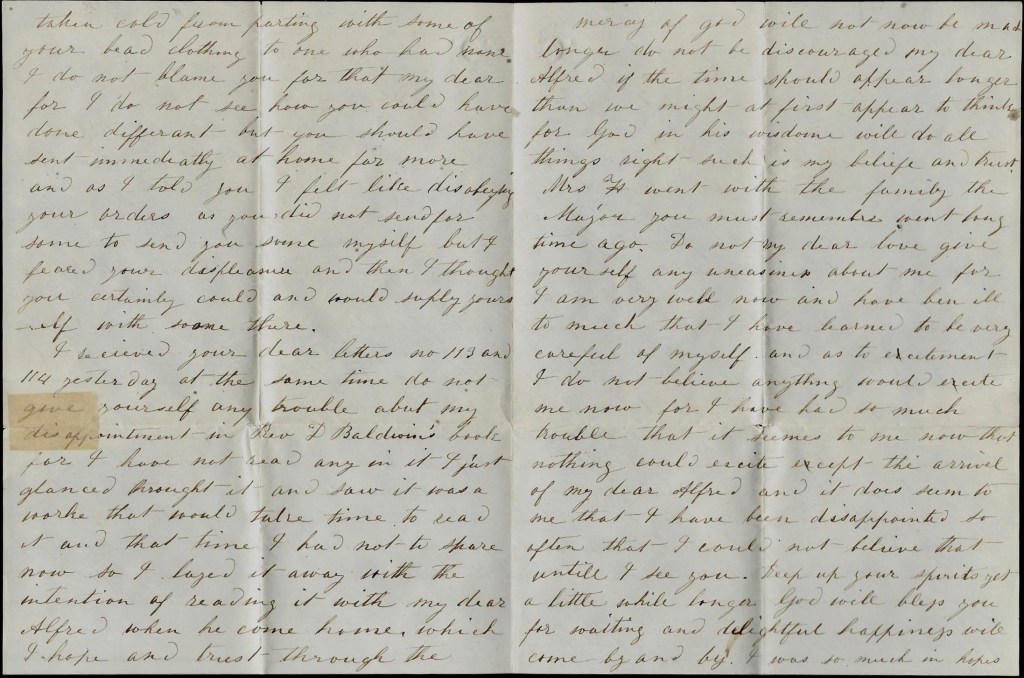
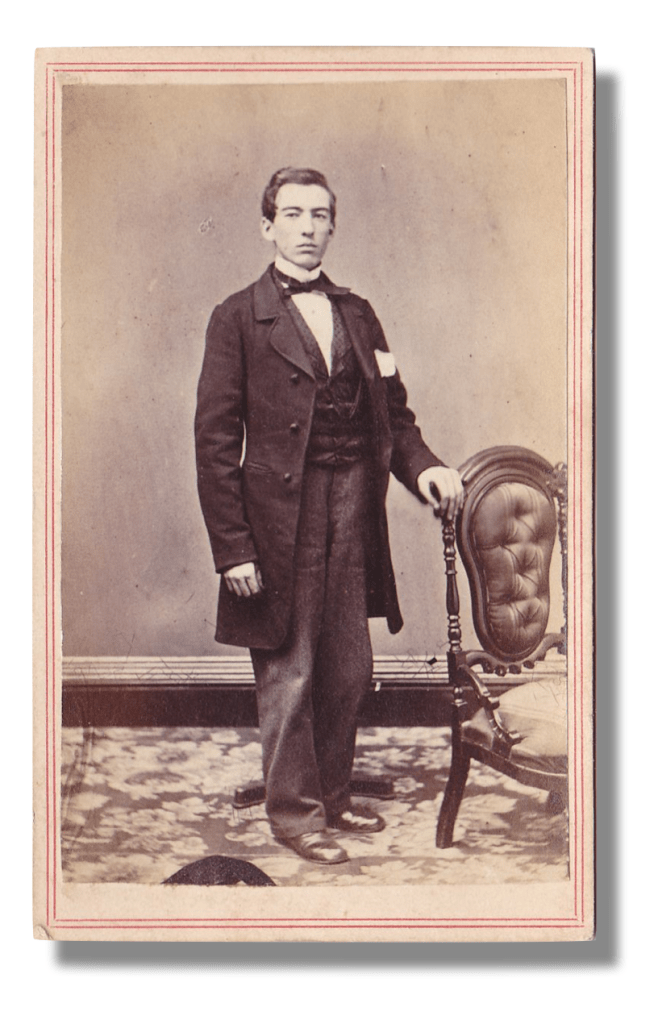


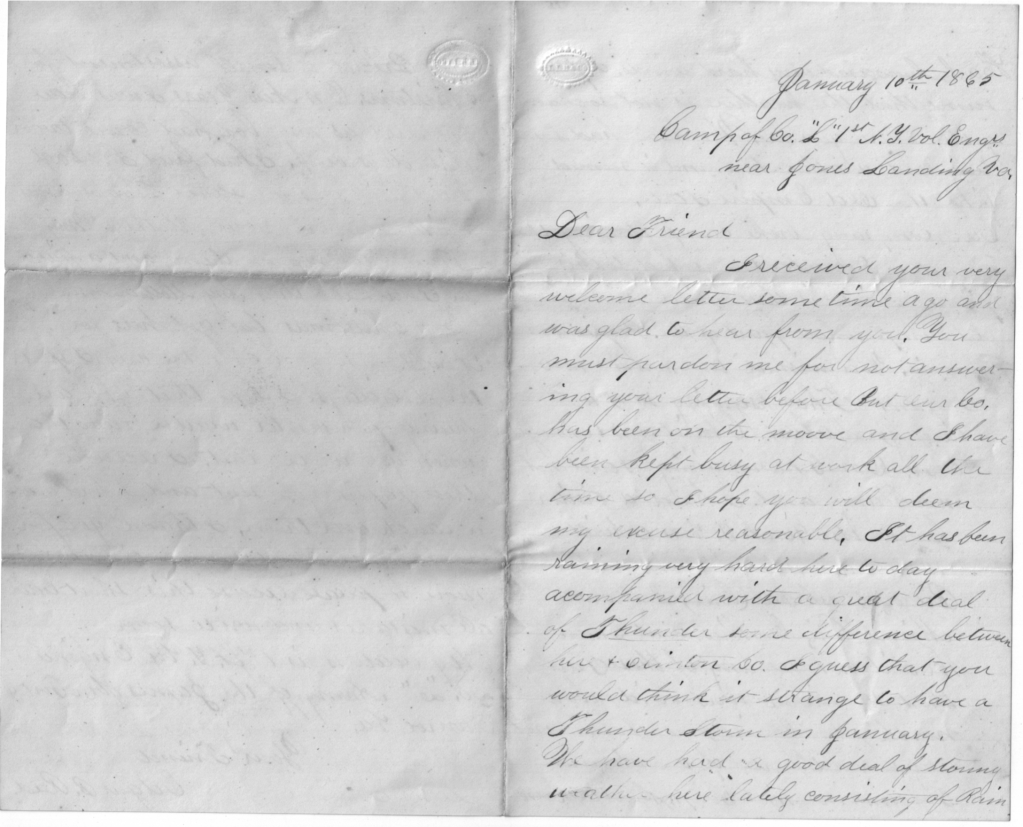
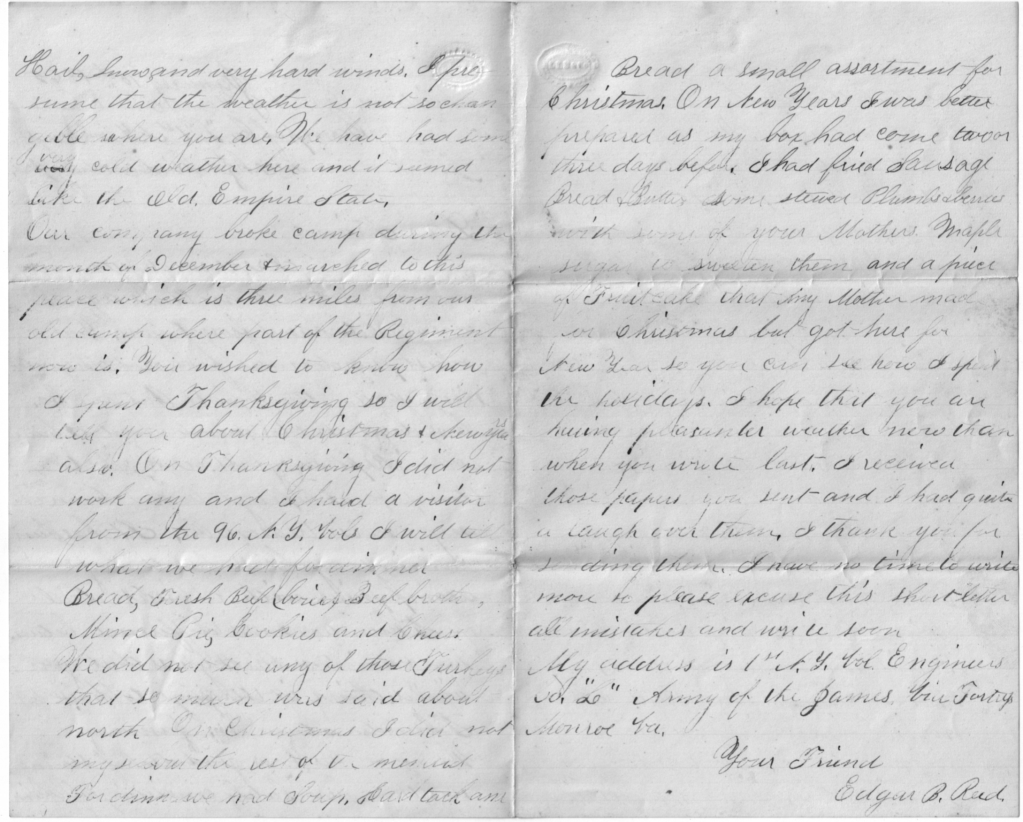
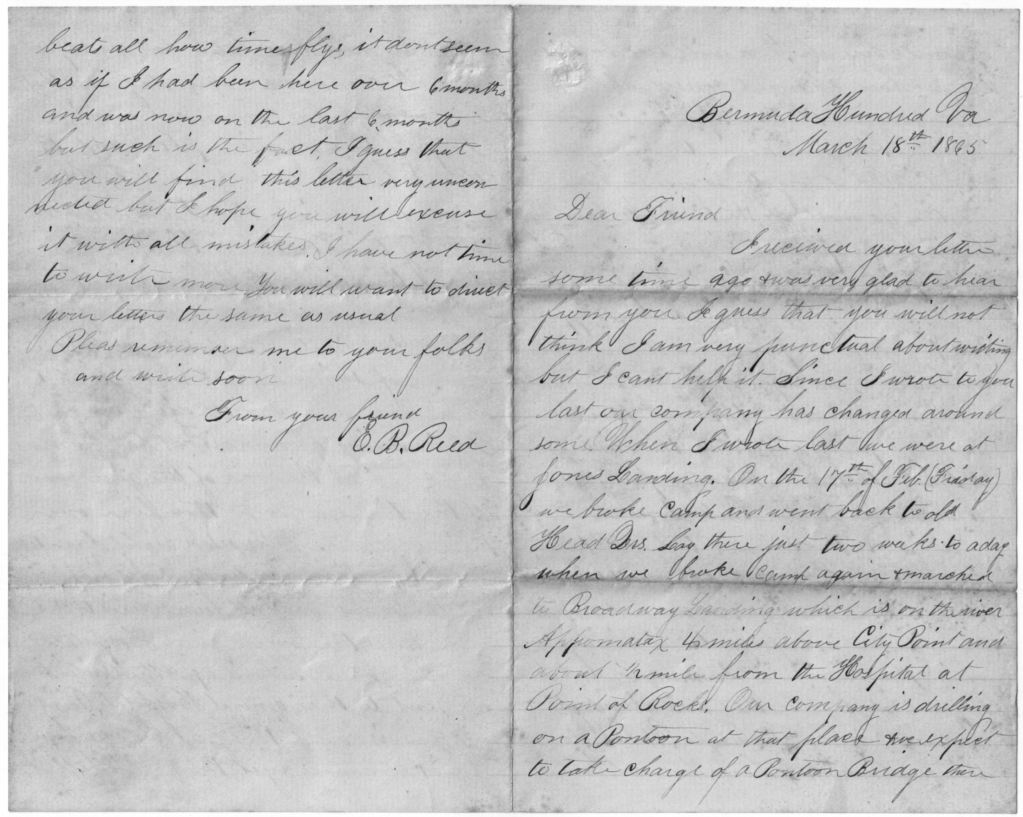
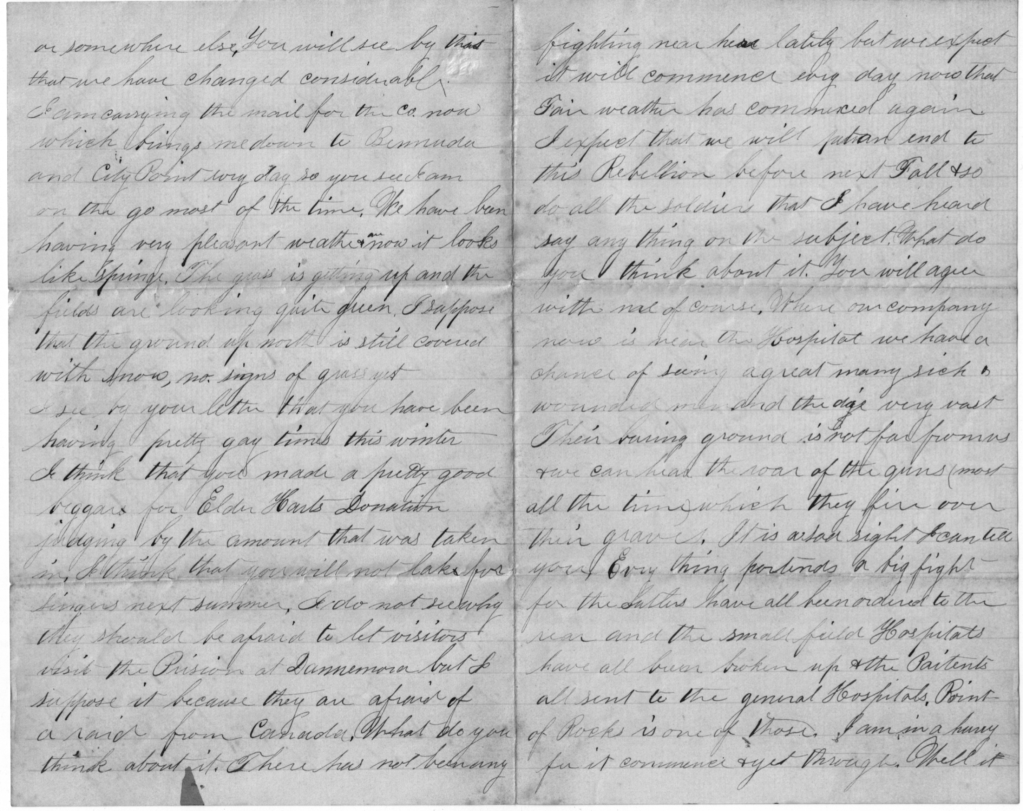
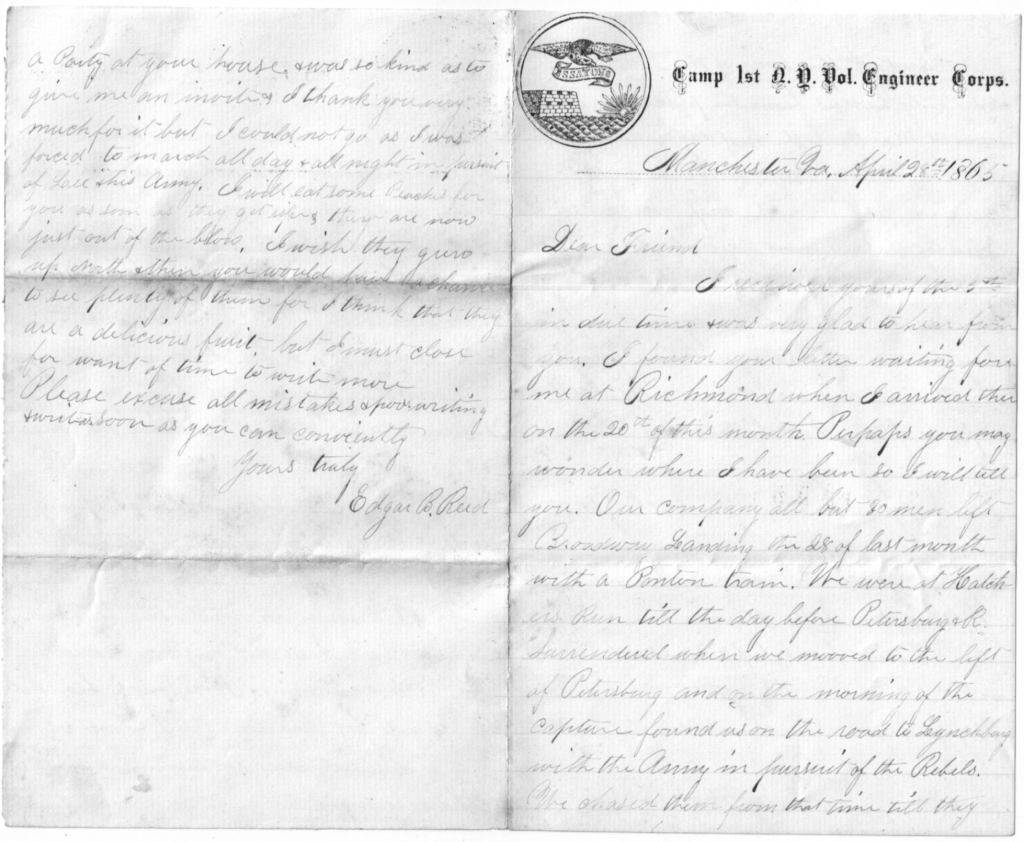
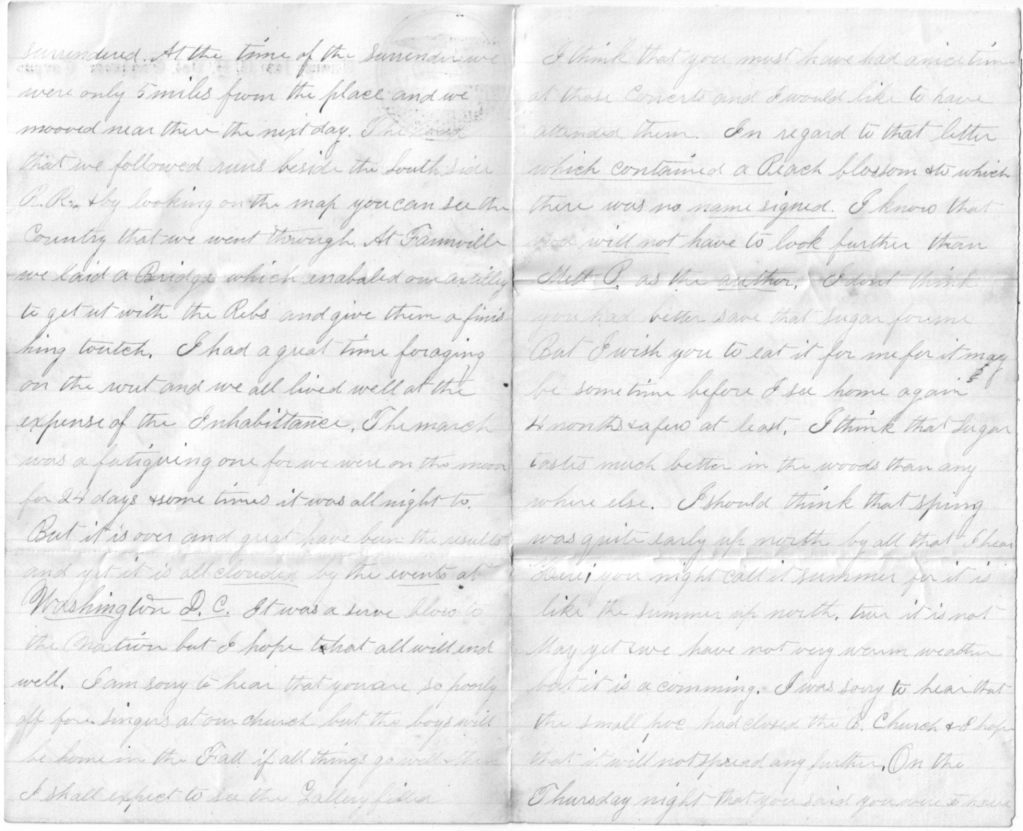
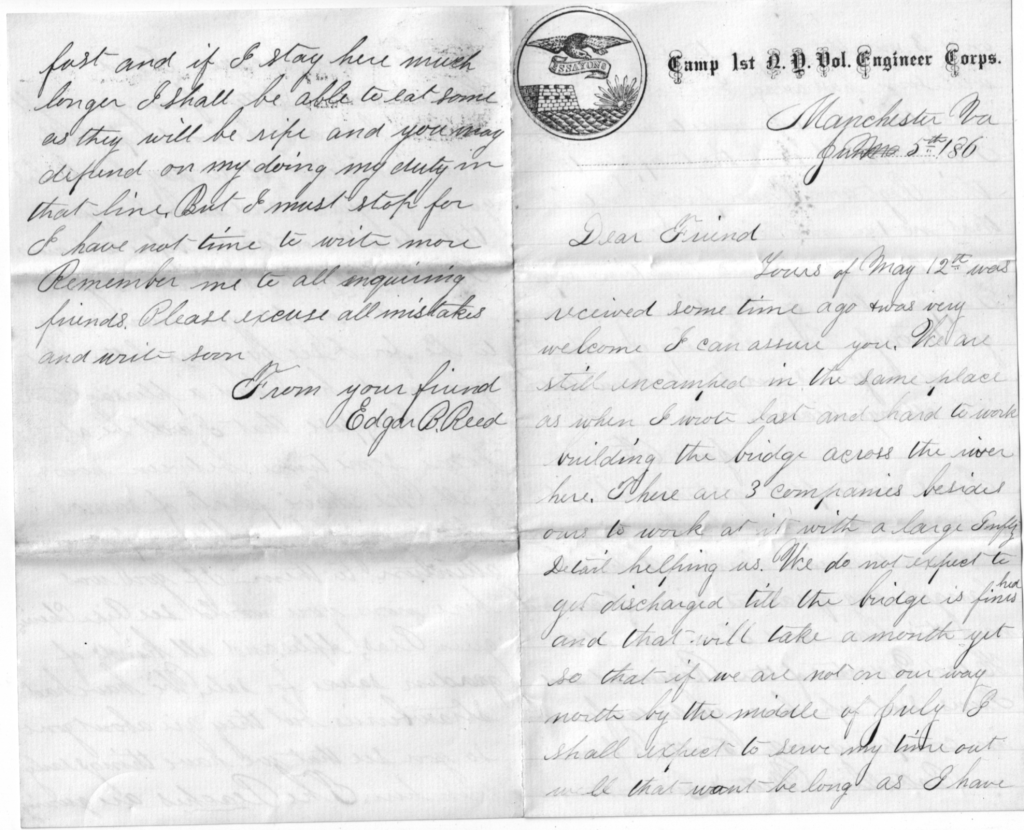
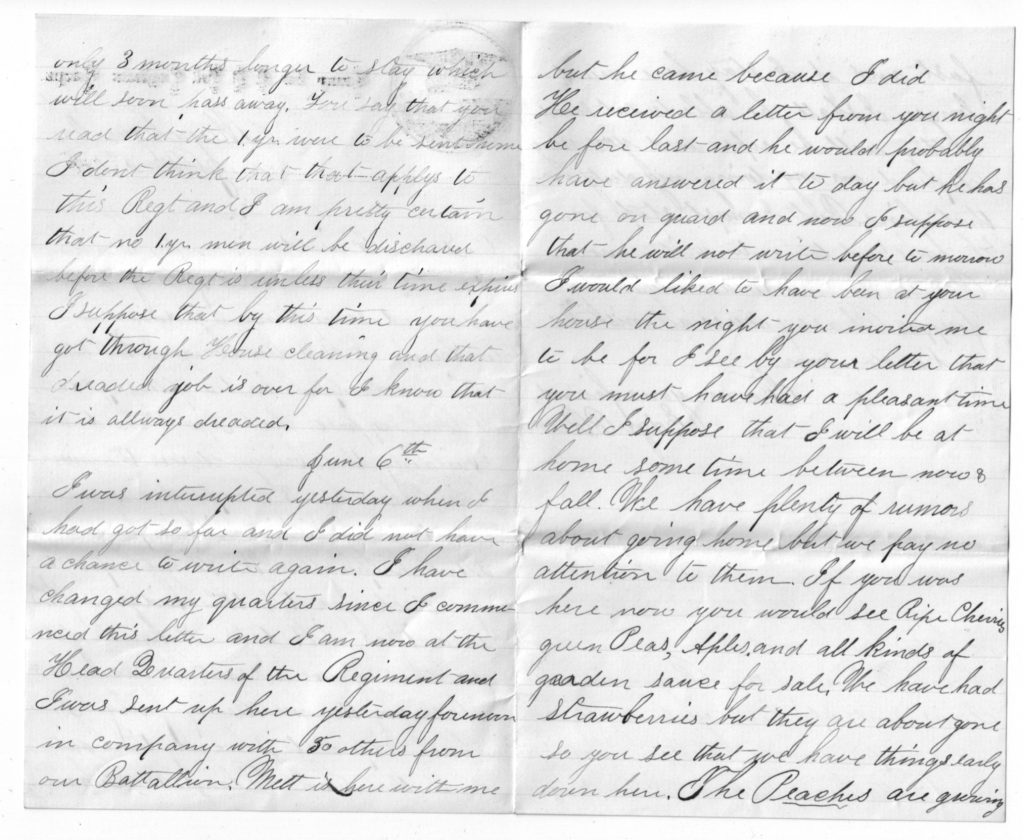


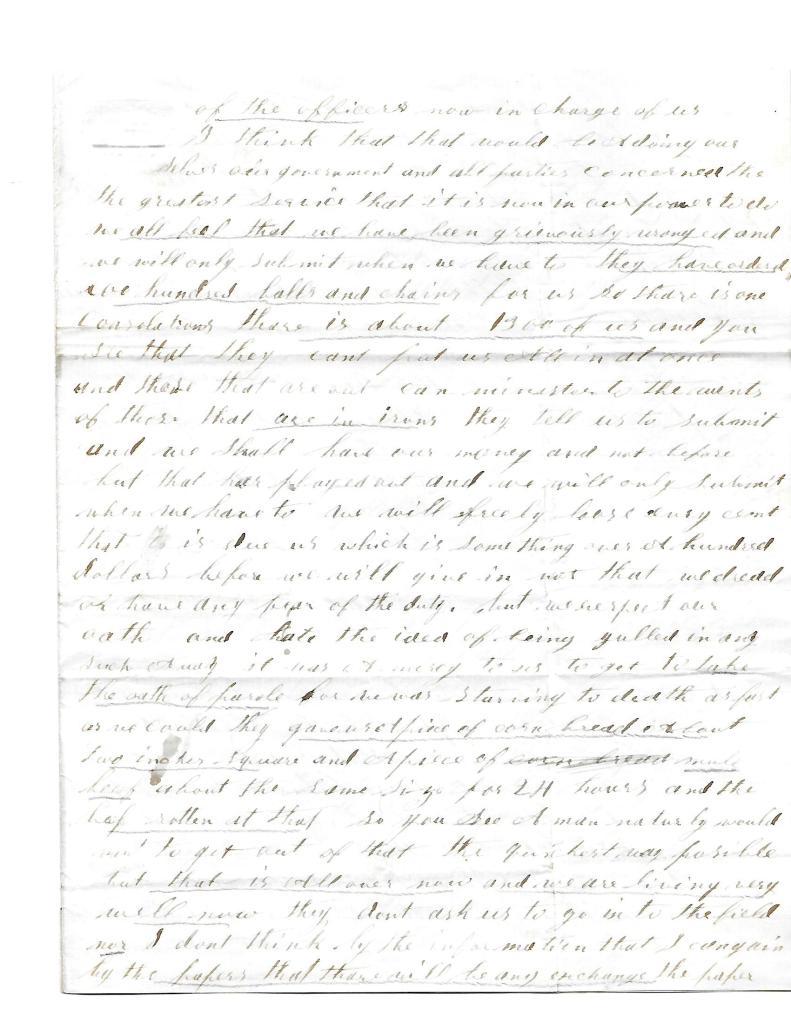

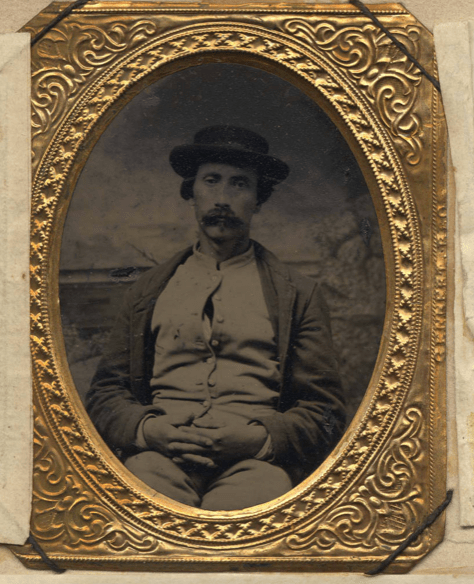


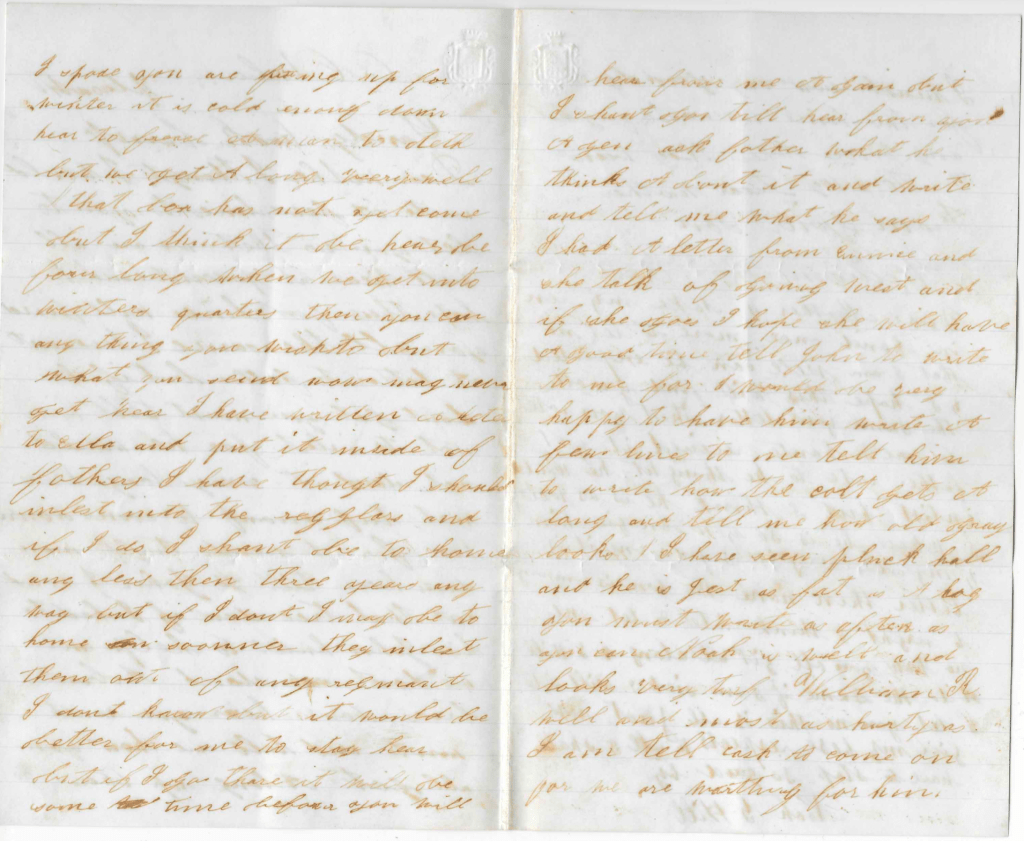


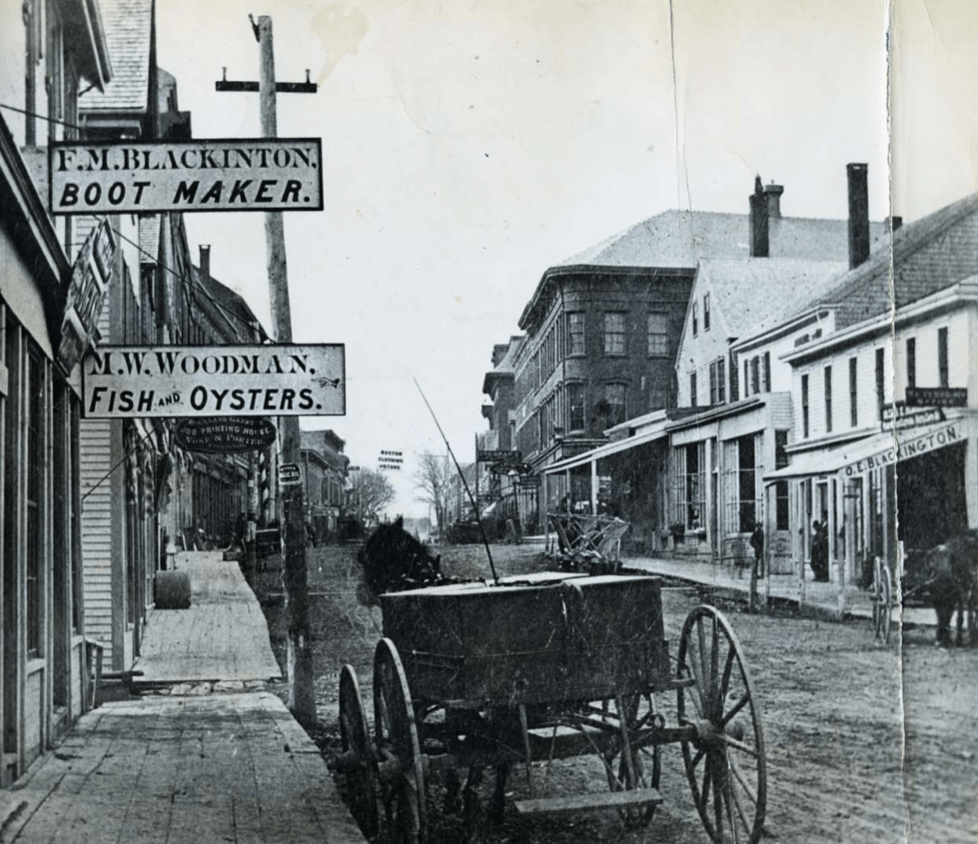
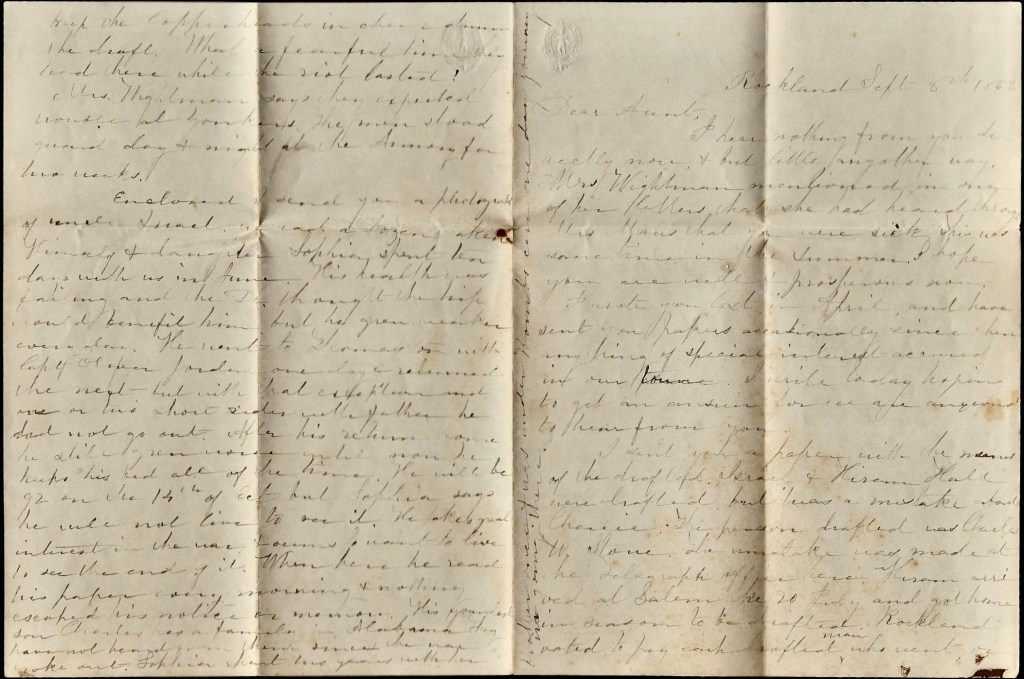

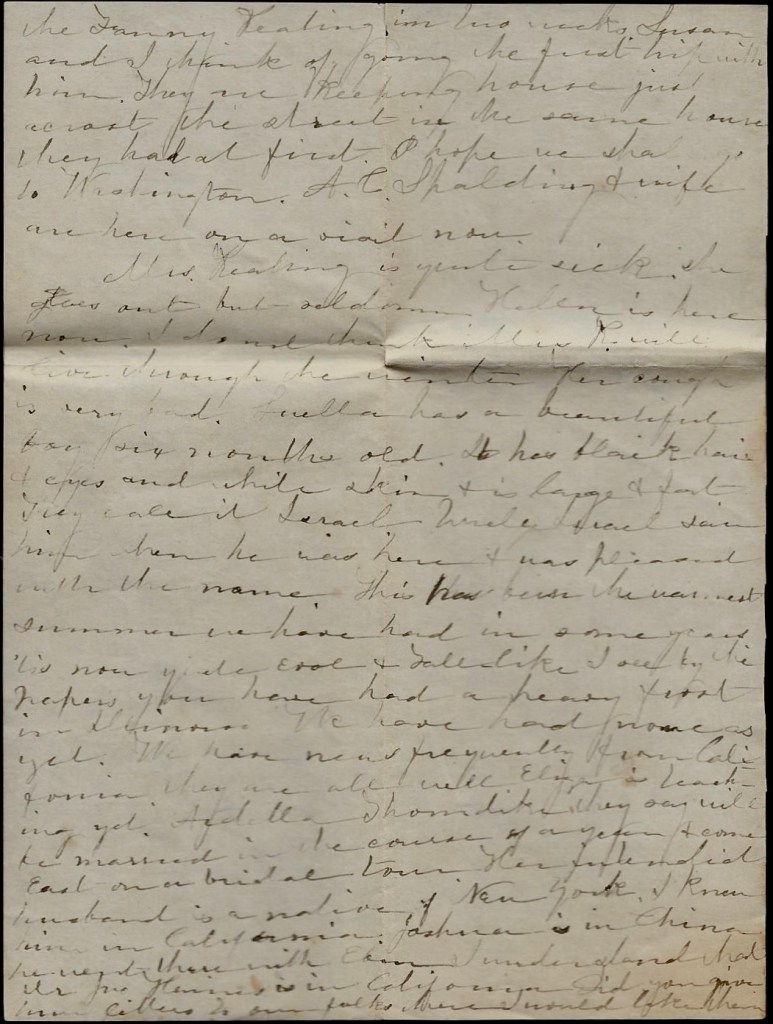
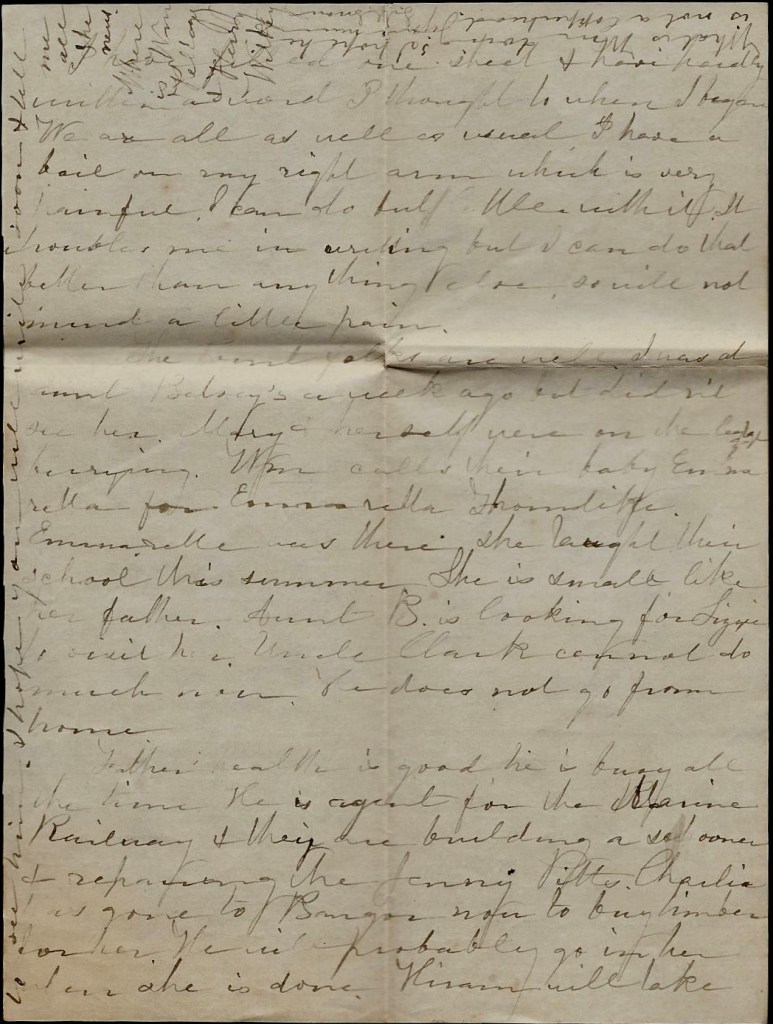
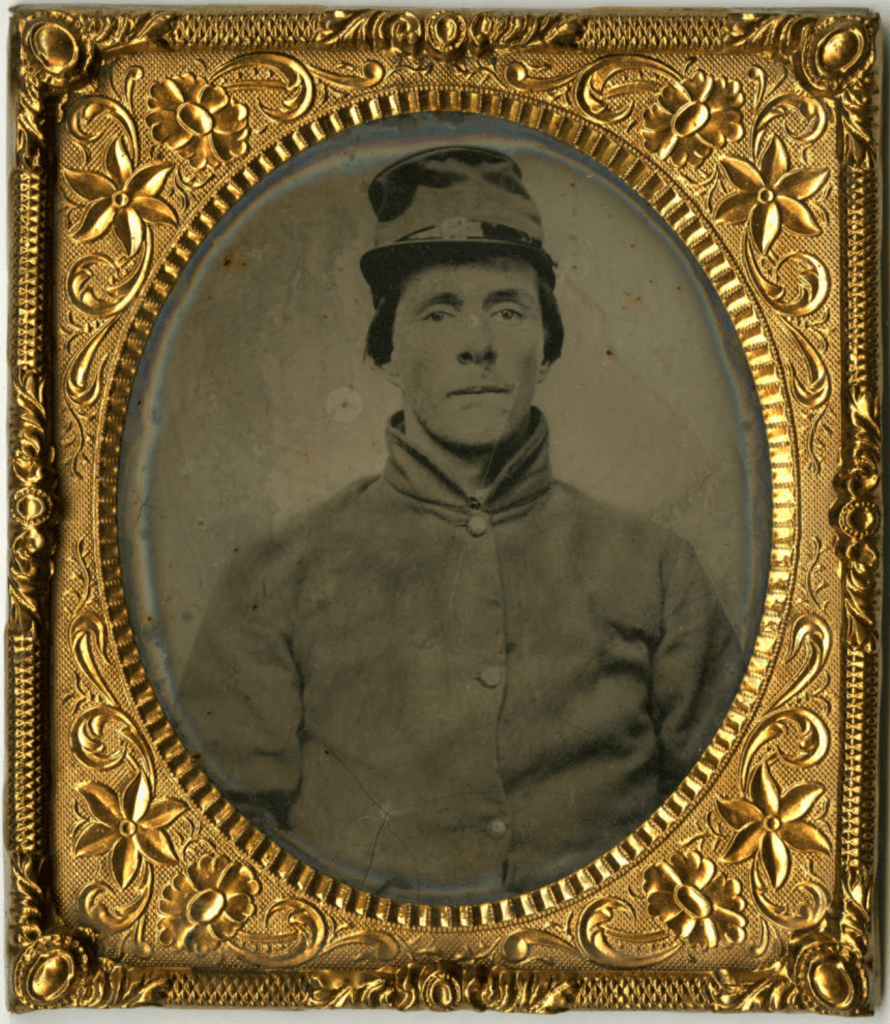
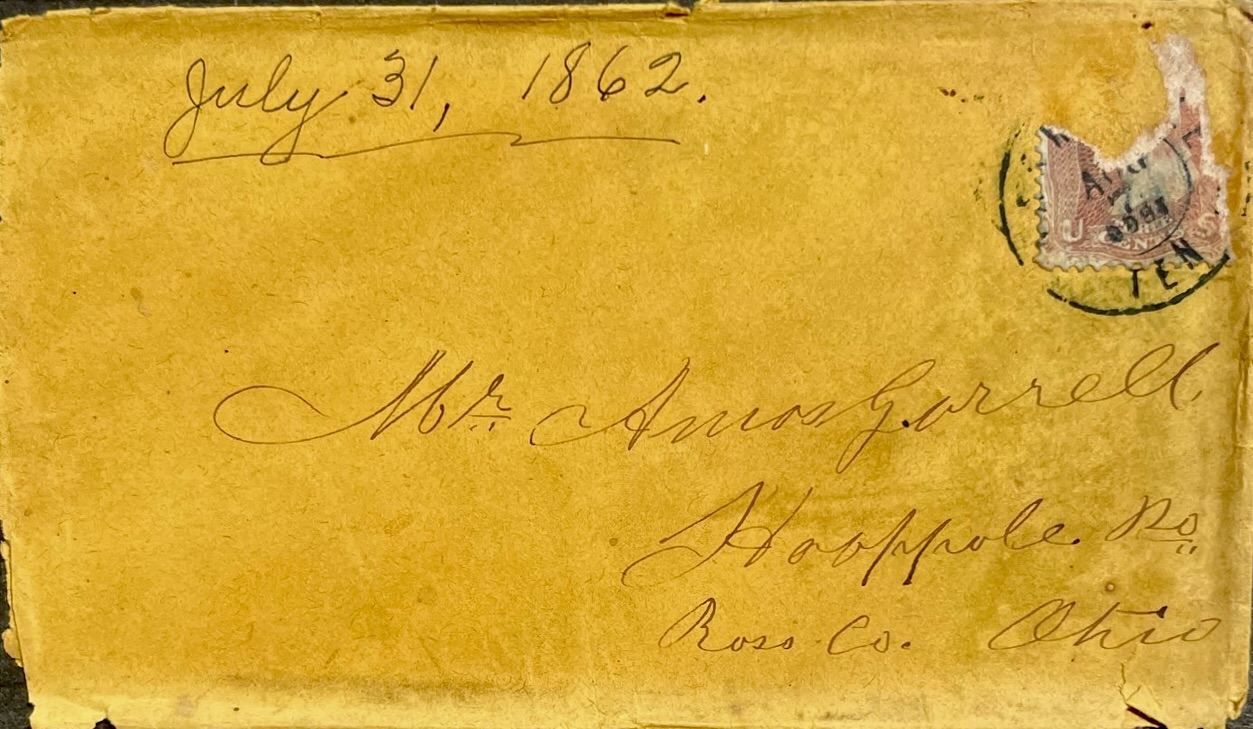

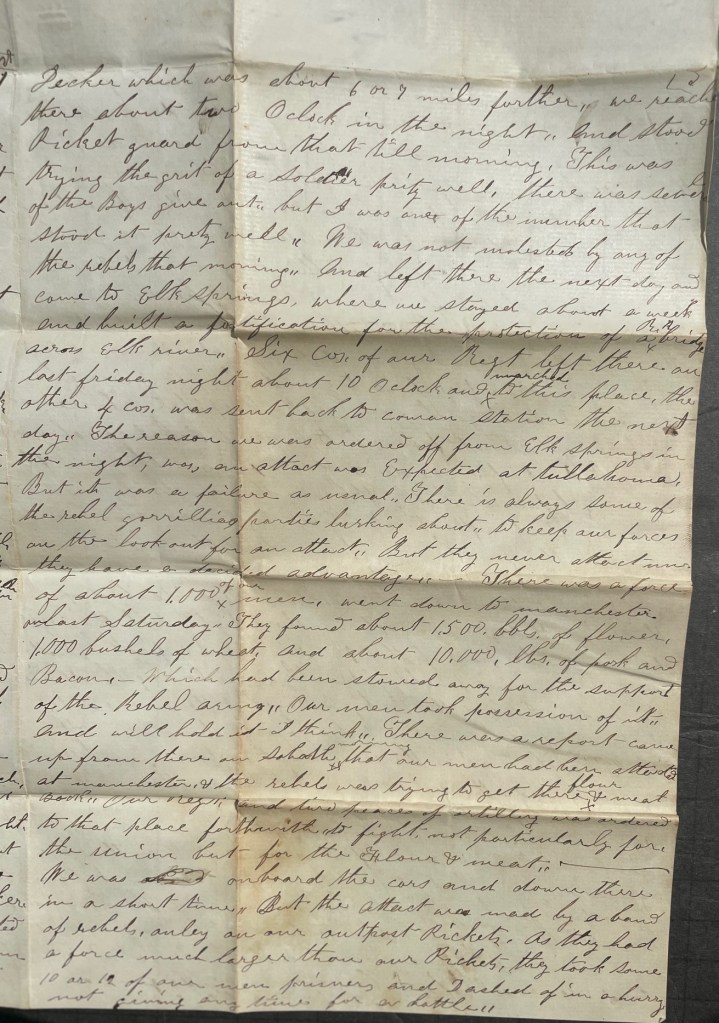






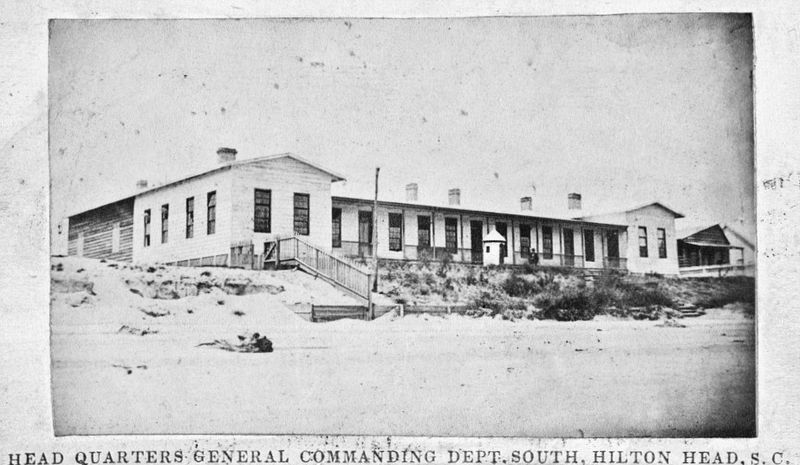


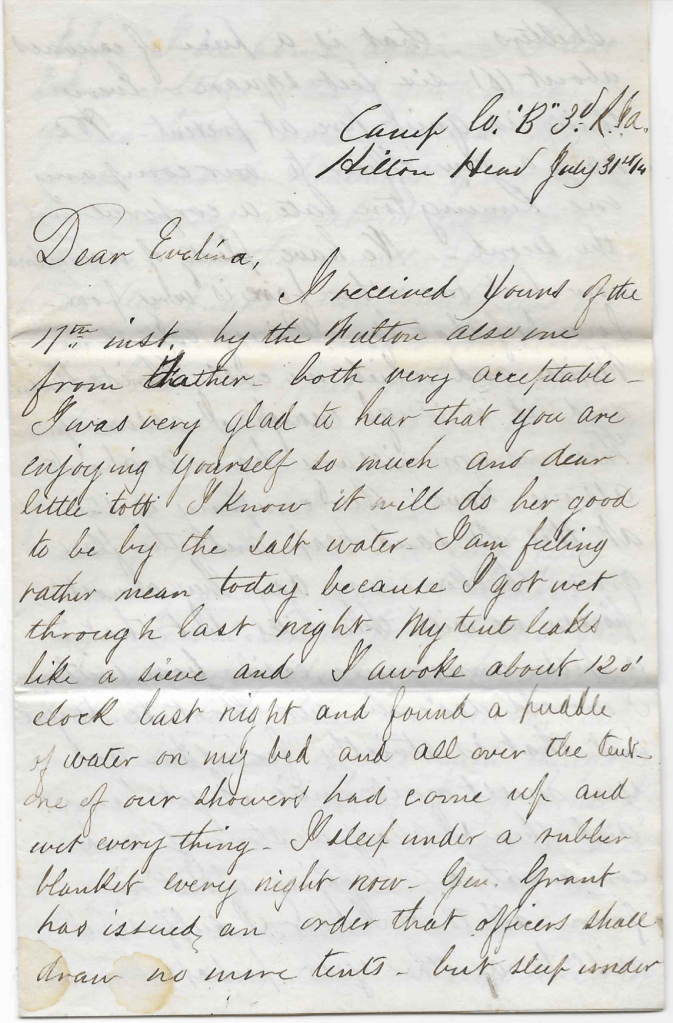


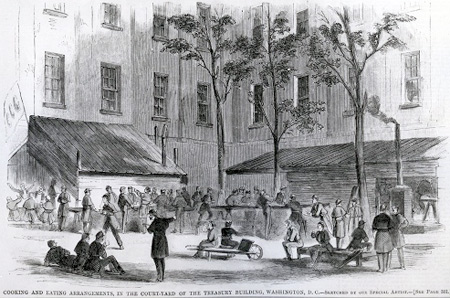

 Spared & Shared 23