I could not find an image of Brooks but here is a CDV of Benjamin Marot who also served in the 66th Illinois Infantry (Photo Sleuth)
The following letters were written by John Chenowith Brooks (1838-1915) to his sister, Amanda Catherine (Brooks) Lilley (1830-1887)—the wife of Mitchell Campbell Lilley of Columbus, Ohio. John and Amanda were the children of Thomas Martin Brooks (1803-1881) and Sarah B. Chenowith (1808-1865) of Paris, Edgar county, Illinois.
John enlisted in Co. E, 66th Illinois Regiment (Western Sharp Shooters) in October 1861. The 66th Illinois was a multi-state regiment—two companies were raised in Ohio, three in Illinois, one in Michigan, and four were organized at St Louis’ Benton Barracks of Missourians and detachments of volunteer candidates sent by recruiting officers from Iowa, Minnesota and other western states, thus forming a regiment that represented every state in the West, a pet scheme of General John C. Fremont. John rose in rank to sergeant and later as a 2nd Lieutenant. Late in the war he was attached to Co. G, 1st Alabama Cavalry (a predominantly white regiment composed of Southern Unionists). He mustered out of the service on 25 January 1865 and soon after attended the Indianapolis Dental College where he graduated and became a practicing dentist in Sullivan and Charleston, Illinois. He married Charlotte Blake (1844-1928) in 1864 and had at least two children.
Letter 1
Camp near Pulaski, Tennessee November 19, 1863
Dear Sister,
It has been almost three weeks since I received your last letter. It has been cruelly neglected but I will assure you it has been from necessity. As you may see by the heading of my letter, we are in Middle Tennessee, about one hundred miles east of Corinth. We marched through [and] were near two weeks on the road, and have been scouting about almost all the time since we arrived here. Our Division of our Corps is here and distributed along this railroad which is being opened through from Nashville to Decatur. I understand that the other two Divisions are on the way here and the 17th Army Corps is to follow.
We have had but three mails since we left Corinth—two since we have been here and one when we got to the Tennessee river. We have but one or two chances of sending mail and then I had no chance to write. I will write this and have it ready. I hope you will accept this explanation as sufficient excuse for my long delay.
I suppose we will stay here or in this vicinity for awhile. So you will address to 2nd Division, 16th Army Corps, via Nashville, Tenn. I hope our communication will be perfected soon so that we may get mail regular.
I am in good health and stood the march fine—better than I thought I would. Our troops are in fine condition. Not a man reports to the hospital from our company.
This is a beautiful country and has once been called rich in the world’s goods, but alas, the destroyer “War” has been here and left his mark. In the place of affluence and wealth is now found desolation and ruin. Out of fifty business houses in this town is not found one that can boast of an occupant.
I was on a scout the other day and seen find dwellings deserted—the finest of furniture left to the mercy of our soldiers. We brought some fine chairs in for the use of our hospital. Please excuse bad writing for I have to write on my knee.
There are a few citizens living here but they are either Union folks who feared not to stay, or those who were too poor to get away. Many of the citizens are coming in and taking the oath of allegiance. Gen. Dodge, commanding, has ordered the citizens to bring in provisions for the soldiers. The consequence is we are living very well just now. The railroad is finished down to Columbia from Nashville, within thirty miles of this place. I must close. Write soon to your brother, — J. C. Brooks
E Company, 66th Illinois Vols., W. S. S., 2nd Division, 16th Army Corps, via Nashville, Tenn.
Letter 2
Camp 1st Alabama Cavalry near Rome, Georgia July 10th 1864
Dear Sister,
I received a letter from you some time ago while in the field, but have forgotten whether I answered it or not. If I have you may thank me for an extra.
Our regiment is now stationed at Rome, Georgia. We left the army in the front about three weeks ago while they were hammering away at Kennesaw Mountains. I have heard but little news from there since. We have heard that Sherman had got into Atlanta and that is all. Our communication might just as well be cut off for all the good it does us in the way of news and mail. I have received but one mail since I have been here. There is a train runs down here every day or two but it hardly ever brings mail. I suppose our mail goes down the army and they neglect sending it back. I hope we may get a regular communication opened soon. If we don’t, I fear there will one boy have the blues some o’ these days. I have enough to do just now to keep me from getting the blues.
Please excuse that big letter on the other side. I guess I must have put more on it than it could dispose og on that side so I had to use both sides.
My health is good—never better. The health of the regiment is good—but very few cases of sickness in our hospital. I sent one of our boys to the hospital this morning for insanity. He had become quite dangerous around where there are so many firearms. He would get up at the dead hour of night and shoot his gun off at some of his imaginary objects.
I haven’t received a letter from home for Lo these many days, but one since I have been in this camp. We have a few alarms here about once per week. Some daring rebel will slip up to our picket post and try a shot at our pickets.
I have been quite busy for the past few days making out company papers, I have enough to keep me busy for some time to come. I have no news of importance so I will close. Write soon to your affectionate brother, — J. C. Brooks, “G” Company, 1st Alabama Cavalry Vols., Rome, Georgia, via Chattanooga, Tenn.
P. S. I have just received orders to have the company ready for a three days scout at 5 o’clock tomorrow morning. We are going over the Coosa river and we will perhaps have a little fight before we get back. if we go as far as is expected, thirty miles south of the river. — J. C. Brooks
Solomon Tesh’s Headstone in Hollywood Cemetery in Richmond, Va.
The following letter was written by Solomon Tesh, a corporal in Co. H, 15th North Carolina Infantry. Solomon enlisted on 15 July 1862 at Raleigh, North Carolina. His muster records indicate that he was wounded in the fighting at South Mountain on 14 September 1862 and shortly thereafter furloughed for 60 days to recuperate. He was with his regiment again in December 1862 and promoted to corporal on 8 April 1863. Unfortunately, Solomon did not survive the war, though he expressed eternal hope that he might, asking his Lord to “give us peace in thine own way & grace to wait thine own time. Thy will be done, not mine.”
Solomon was the son of George Tesh (1796-1872) and Maria Sarah Boeckel (1796-1870) of Friedberg, Davidson county, North Carolina. He was married in 1851 to Phebe Malvina Perryman (1835-1923) who bore him five children—Letitia, Laura, Robert, Benjamin, and Lucy.
Transcription
Fredericksburg, Virginia August 8th 1863
Dear Br. Hege,
I am happy to say I received a few lines from you yesterday by way of your worthy son, in answer to which I will drop you a few stating that I am tolerable well at present. I have been right sick for some two weeks past, as you no doubt have heard, but have about recovered. I am now getting along as well as a poor soldier can expect.
I have good tidings to tell, yet it will be no news to you as you have heard it before now—I mean the reviving influence of the Holy Spirit that has visited our regiment. We have been abundantly blessed in the last month. I hope the God of Abraham, Isaac, & Jacob will continue to bless our poor souls while the body has to suffer so much. We still keep up public prayer in most of our companies, sometimes at one tent and then at another. We meet & sing some old familiar hymns. Then one will lead in prayer. Then we sing again & pray and so on till we get revived. I see more enjoyment sometimes after the day is spent then I do during the day for these things are of more interest to me than all our hard marching or fighting. Yet, if we acknowledge this war as a judgment on us for our sins, it behooves us to suffer our part of the hardships, if possible without murmuring. To do this, it requires much grace. May God help us.
You know, dear Br., that my thoughts often go back to past days spent with you & many beloved Brethren in old Davidson & Forsythe at many places—especially at Friedburg. You know I love the place & those who worship there. And so strong are my affections that Simeonlike, it seems to me that only there I could cheerfully “Depart.” My prayer to almighty God is that I may live to enjoy some of the means of grace in this. If God will fit to bless me with such privileges, I solemnly promise Him to serve Him more fully idea by his grace.
I am indebted to sister Hege for the [ ] of my dear wife’s misfortune. I hoped for some time that in some time it was [ ], but alas, it is so. Hope sister Hege will assist her & drop some word of comfort as any such misfortune must add to sorrow already in divide. It is no small mater to have five little children depending on a poor woman & her husband in the army, now exposed to everything that is hard & dangerous—spiritual & temporal, & at the same time in a condition like here. These things are enough to weigh down my spirit, but turn the thoughts & cry out, “Bless God,” that it is no worse with us. My wife & dear children are still in the interior of the state where they know comparatively nothing of the horrors of war & at last account, we were all alive & had a hope to meet again in this world. And above all things else, I bless God for the hope after death. Then I wish to commend them to the care of their friends, the church & God, with the hope that all things will work together for our good.
But dear Br. & sister, I am running along too lengthy. I hope you will pardon me. You know I love to talk and it is a long time since you & I have been privileged to have a chat. If I was with you to dinner, I think I would enjoy myself & then we could spend Saturday evening pleasantly together.
I have seen a great deal since I am a soldier—much that is heart-rending to look upon. The awful destruction of our once prosperous & happy country, the lands & property of every kind, the many beautiful buildings that I have seen burnt—it looks to me like Old Abe has a poor way to restore the Union & Old Jeff seems to give little hope of any reward like freedom or liberty, so it looks dark for one who always loved a free & republic government. I hope that in some way the curse may be removed ere long. Lord, give us peace in thine own way & grace to wait thine own time. Thy will be done, not mine.
But I must close, dear Br., I hope you will remember when you read this the source from where it comes & will therefore receive it as well meant & overlook all mistakes C. A. is well. The boys are all about except Br. He is not about much. Cont is with us. He is some better. No more now. Your friend, wishing to be claimed as a brother—Solomon Tesh
to his esteemed Br Solomon Hege Fredricksburg Va. August 8th 1863
This letter is written by Andrew Durfee (1840-1865), the son of Stephen Durfee (1812-1886) and Sarah Marshall (1816-18xx) of Fall River, Newport county, Rhode Island.
Andrew mustered into Co. D, 1st Rhode Island Cavalry as a private in mid-December 1861. He was captured at Middleburg, Virginia. where the regiment was badly routed on 18 June 1863, and paroled on 23 July 1863 at City Point, Virginia. He was captured again at Sulfur Springs, Virginia, on 14 October 1863. He spent the next 18 months at Libby and Andersonville, being paroled 27 February 1865 at N. E. Ferry, North Carolina, only to die of pneumonia in the General Hospital in Wilmington, North Carolina within a month.
I could not find an image of Andrew but here is Lyman Aylesworth of the 1st Rhode Island Cavalry. Lyman barely escaped capture at the Battle of Middleburg (VA) on June 17/18, 1863 when most of his comrades were taken prisoner. His family donated his uniform, sword, enlistment papers and other various accoutrements to the Varnum museum in the 1920s. His shell jacket has been recently conserved. — at Varnum Memorial Armory Museum.
Transcription
Camp near Potomac Creek May 12, 1863
Dear Father,
Once more I am in camp. I have escaped the battle without a scar. It was good luck [and] not because we were not under fire. My battalion has had a hard time of it. We were detached after joining Hooker to scout outside of our rifle pits. There was ninety of us drove the Rebs two miles and a half with pistols over the Fredericksburg and Culpeper Road to Ely’s Ford where two regiments of infantry [and] two pieces of artillery was driven back on a double quick. Our runners stationed on the road did not leave their post through all of the firing. The Rebs came in the rear of us afterwards and cut us off but we got away from them and returned with only three wounded.
After returning at night with no food for the horses or men all day, we were sent out again to scout outside of our pickets to see if the Rebs were advancing on the right through the woods and while returning, we came upon our pickets across a ravine. Two of our men went ahead to find a path to get inside the [picket line when] the pickets fired on them and right after, a whole brigade opened on us but [we] all escaped unhurt. Some of our men were dismounted and stood in the woods all night to keep from being shot. The General, it seems, after sending us out, gave the pickets orders not to challenge anybody but fire on anyone they saw—and so they fired on us instead of the Rebs. It was a thoughtless piece of work and ought to cost that general his commission.
The report is that Hooker is again across the river but I do not see it so. But we shall cross again soon. I am well and I hope this will find you and Mother the same. Give my love to Libbie and Lida and goodbye for the present. From your ever affectionate son, — Andrew Durfee
The following letter was written by 43 year-old Mitchell Campbell Lilley (1819-1897), the proprietor of a moderately successful bindery and printing firm in Columbus, Ohio, at the time that civil war erupted in 1861. Having served previously in the Mexican War, and being a member of the local militia, Lilley was quick to offer his service as Captain of Co. H, 46th Ohio Volunteer Infantry (OVI). Ill health, however, forced Lilley to resign from active service in January 1863 but he returned to Columbus to command a home guard militia for the duration of the war.
Mitchell Campbell Lilley
Following the war, Lilley convinced the Ohio General Assembly that deaf students at the state institution for the deaf could be trained in bookbinding skills which enabled him to expand his business and branch out into other endeavors, such as manufacturing and distributing fraternal regalia.
Lilley was married in 1849 at Paris, Illinois, to Amanda C. Brooks. They had 13 children, five of who died in infancy.
The 46th OVI took part in Grant’s first attempt to seize Vicksburg which was to march his army overland from La Grange, Tennessee, following the Mississippi Central Railroad south toward Vicksburg. He imagined that a supply line could be maintained from Columbus, Kentucky, but this proved impossible. Once Grant’s forces had made it as far as 35 miles south of Grand Junction, the large supply depot he had established at Holly Springs in his rear was swiftly and unexpectedly attacked by Earl Van Dorn’s Cavalry, destroying $1.5 million of supplies, capturing the Federal garrison quartered there, and destroying track and bridges. The damage inflicted by Van Dorn’s troopers caused sufficient harm for Grant to withdraw his forces to Memphis and rethink his strategy.
In this letter, Capt. Lilley describes their return to Holy Springs and what they found when they got there.
[Note: This letter is from the personal collection of Greg Herr and was transcribed & published on Spared & Shared by express consent.]
Transcription
Holly Springs, Mississippi December 31, 1862
Dear Wife,
After marching for over a month among the hills of Northern Mississippi, we have settled for a short time here. We were south of here about fifty miles. Our last and most southern camp was the one I wrote from last on the Yachnapatufa and is 30 to 35 miles north of Grenada. We have generally had good roads for the sort, having had dry weather most of the time. The worst roads were from the Tallahatchie to this place. I have seen several Columbus gentlemen since we came up. Mr. Weaver and brother, Mr. Day, Mr. Jones—not Amisy but his cousin, and Mr. Williams.
Holly Springs, January 1st 1863. I wish you all a happy New Year. It came in with a heavy frost here and is as cold as it generally gets here, altogether the coldest day of the season, clear and frosty with a bright sunshine. This is a very pretty location for a town and has some very handsome residences. We had heard that the town was burned but found on reaching here that there had been several of the best blocks burned which were used as Government storehouses—also the depot, and all the necessary buildings usually found around a depot. All the government property here was destroyed and all on account of a fancy man, Col. [Robert C.] Murphy, who was caught for the third time in the same trap. Don’t you think he should be made a Major now when he might be able to surrender his thousands.
Well, talk enough about that. I expect you know more about it than I do. I received your three letters—one from Cairo, Paris, and home—on the 29th, the day we came here, and the first news we have had for over a month. The railroad is being put in running order from here to Memphis and will be done in about three days when we will be able to go to Memphis in about three hours. We expected when we came here to go on to Lafayette on the Memphis & Charleston Road where we were last summer, but we were ordered by Gen. Grant to halt here. I understood the reason to be that he wished to convene a court for the trial of some officers and could not do so without Denver’s Division. 1 The only objection to this place is there is not the abundance of water that we would have had on Wolf River, and would have been within thirty miles of Memphis. Some say we will move as soon as the court gets through with their business.
We are looking for another mail in a few days. John Cryder was to get the wood off our timber was to take down timber. We have had no pay yet—six months due us. Howell has gone to Memphis. Col. Wolcutt is well. So are all our boys. My legs gave out the last two days march and I had to take an old rackabone of a horse with a blanket for a saddle which was a hard way of getting through this world certain. I would not have rode but it was impossible to pull my legs along and I got the cramps in my left foot, with the rest of my troubles. The last day I got a saddle and got along well. Yours, — M. C. Lilley
I will send this by Mr. Taylor of Worthington who has resigned and is going home on the first train. His Captain Crow was dismissed from the service and will probably go soon. There is one way for me to advance in rank. That sets me one notch ahead but you must not put on any airs on that account. When you have enquired into matters and are satisfied, let me know, but I suppose you have before this. But your letters have not come yet.
Beckett wants to make out his report and table room is scarce so I must close. I saw Mr. Wheeler the day we came in. Are you not all mistaken about Riley? Tell Louis to do the best he can. I will helm him as soon as I am able, but can’t tell when we will get any pay. Give my respects to all the friends. I saw Lowrie Rankin at the Tallahatchie River as we went south. He is chaplain of the 113th Illinois. I saw some of the 4th Illinois Cavalry but did not see Mr. Mooberry. Be careful of the little ones. Yours, — M. C. Lilley
1Gen. James W. Denver remained in command of this brigade until about November 23, 1862 when he was given the command of one of the three divisions Sherman’s division was split into. During this period Gen. Denver and his brigade participated in the Siege of Corinth, a march to Memphis, and a brief move south with Sherman toward Holley Springs, December 5, 1862. After returning to Memphis his division transferred to Gen. Hurlbut’s XVI Corps where it was designated as the First Division. Its assignment was to guard 65 miles of the Memphis & Charelston Rail Road. He was preforming this duty when he resigned his commission March 18, 1863. He remained in his command until his replacement, Gen. William Sooy Smith, took command of the division.
I could not find an image of Jared but here is a tintype of William W. Harding wearing the uniform of the 11th Pennsylvania Cavalry. William served in Co. G. He holds a model 1840 heavy cavalry saber and has a colt Model 1860 Army tucked in his belt.(Union Drummer Boy)
This partial year 1863 diary was kept by Jared Fuller (1821-1900) who was 40 years old when he enlisted on 22 August 1861 as a corporal in Co. A, 11th Pennsylvania Cavalry. He was discharged for disability on 25 October 1863 presumably related to the failing eyesight he complained of in his diary.
The 11th Pennsylvania Regiment (108th Volunteers) was organized at Philadelphia by Colonel Joseph Harlan of Philadelphia as an independent regiment under authority of the Secretary of War, known as “Harlan’s Light Cavalry.”Most companies were from Pennsylvania, but Company A was from Iowa, parts of E and F from New York, part of I from New Jersey, and Company M was from Ohio.
In the 1850 US Census, Jared was enumerated in Colchester, Delaware county, New York. At that time, prior to his marriage, he was living in the home of his parents, John Fuller (1780-1856) and Perninah Langdon (1784-1873).
Just before and after his enlistment, Jared resided in Fort Dodge, Webster county, Iowa. He was married in 1854 to Sarah J. Beates (1828-1869) and was the father of four children. When he returned to Fort Dodge after the war, he held several local elected positions including county treasurer and county recorder.
[Note: This diary is from the private collection of Greg Herr and was transcribed & published on Spared & Shared by express consent.]
Transcription
JANUARY
Thursday, January 1, 1863—It is New Years. How oft I have looked forward to this time of the year with bright & joyous hopes but today I look at it with indifference. It is a dark hour for my country.
Friday 2—Still on picket. The weather is beautiful—almost like Spring. Days are sunshine & the nights clear & frosty. I wonder what is stored up in future for me. Time will show.
Saturday 3—We were relieved from picket today. Some excitement in camp that the rebels are approaching in strong force. General Corcoran commanding here. I saw him today.
Sunday, January 4, 1863—Company inspection. This morning the day was uncommonly fine. The 58th Pennsylvania embarked for Newbern, North Carolina. Success attend them.
Monday 5—A body of infantry left Suffolk for North Carolina today. The 13th Indiana Regiment bid farewell to Brigadier Gen. [Otis S.] Ferry. He paid his farewell address & departed for the North.
Tuesday 6—Everything quiet here today. News arrived here by the papers that the gunboat Monitor foundered at sea off Cape Hatteras on her way south.
Wednesday, January 7, 1863—Everything passed off quietly today. Two companies of our regiment wet on a scout toward Blackwater. The companies returned from North Carolina all safe and sound.
Thursday 8—Camp Suffolk. Our regiment is out on a scout, Started this morning. Weather cool with a little rain. No stirring news.
Friday 9—Camp Suffolk, Va. Last night at 12 o’clock news came that our pickets were driven in. Snow fell in the night. Cannon heard toward Windsor. Regiment out yet. All quiet in Suffolk.
Saturday, January 10, 1863—Camp Suffolk, Va. A rainy day. Boys still out. Rumor says the rebels are this side Blackwater from 8 to 15 thousand strong. Two rebel prisoners were brought in at 11 o’clock p.m.
Sunday 11—Camp Suffolk, Va. All quiet all day. Rather cool and cloudy.
Monday 12—Camp Suffolk, Va. Rumors of rebels in force hanging around us. G & K companies go on scout. Weather cold.
Tuesday, January 13, 1863—Camp Suffolk, Va. This morning A & H companies go out on scout. Heavy cannonading heard on James river. Company came in at 9 p.m. Brought in 6 or prisoners—guerrillas.
Wednesday 14—Companies D & E go out today on scout. South rains. Weather warm. All quiet at Suffolk.
Thursday 15—Camp Suffolk. Company B went out on scout. Dull times. All quiet and so much so as to be oppressive.
Friday, January 16, 1863—Camp Suffolk. Rainy day in a Va. camp & its accompaniments of mud.
Saturday 17—Camp Suffolk. Cold & windy but clear. Nothing going on to break the monotony of life.
Sunday 18—Camp Suffolk. Last night was the coldest we have had. Dress parade at 9 o’clock a.m. Company started on a scout 5 p.m. Returned 9.
Monday, January 19, 1863—Camp Suffolk, Va. A fine morning bright but cool. Dress parade at 9 a.m. The day passed quietly away. The papers tonight brings of a victory in Arkansas. 7,000 prisoners.
Tuesday 20—Camp Suffolk. Cloudy wind south east & rather cold. Went on a scout to Holland Corners. The rebels had barricaded the road. Returned at 3 p.m. Another scout got 2 prisoners.
Wednesday 21—Camp Suffolk, Va. Rained all last night. 2 companies went on a scout 2 hours before day light pay master in camp.
Thursday, January 22, 1863—Camp Suffolk. Wet & moist on account of irregulation of pay rolls. No pay yet. Two companies on a scout returned at dark. No rebels found.
Friday 23—Camp Suffolk—Wet & stormy. No scout today. The Army of the Potomac is on the move once more. May the God of Battles be with them.
Saturday 24—Camp Suffolk. Weather still moist but clearing off. A scout of two companies have gone out to North Carolina & the Dismal Swamp. Another of two companies gone on the same.
Sunday, January 25, 1863—Camp Suffolk. Clear & pleasant. All quiet in camp today. Seems quiet like Sunday. All are anxious to [hear] from the advance of Burnside.
Monday 26—Clear & pleasant. Companies A & H returned from North Carolina. Burnsides advance was impeded by the bad roads and storms of last week.
Tuesday 27—Camp Suffolk, Va, Cloudy. A storm is pending. Detailed on camp guard today. Afternoon a furious storm is now raging. No news of importance from the army.
Wednesday, January 28, 1863—Camp Suffolk, Va. Stormed all night. The paymaster in camp. The pay rolls have been signed for 7 months pay. Hooker supersedes Burnside in command.
Thursday 29—Camp Suffolk. Cold & stormy last night. Co. G went on a scout this side of Carrsville. They was fired on by rebels in ambush. Another scout went today. Found rebels at Deserted House.
Friday 30—A force of 7 regiments of infantry, 11th Pennsylvania Cavalry, 2 batteries artillery & howitzers left Suffolk at 10 last night. At 8 this a.m., drove in the rebel pickets after [we] opened on them with all our artillery.
Saturday, January 31, 1863—Deserted House 10 miles from Suffolk. The Battle [of Kelly’s Store] yesterday, was an important affair. The rebels 4,000 strong under Gen. [Roger A.] Pryor was driven across the Blackwater by our force under Gen. [Michael] Corcoran. Our loss was severe.
FEBRUARY
Sunday, February 1—Camp Suffolk. James [A.] Beach was buried today with military honors. He was a brave and gallant soldier & met his death in the discharge of his duty.
Monday 2—Camp Suffolk. Co. A went on scout, Our party went to Carrsville. No rebels here since the battle. Went over the battlefield. The picture was horrible.
Tuesday, February 3, 1863—Camp Suffolk. A terrible snow storm is raging today. It seems quite like an Iowa snow storm. The surgeons report of killed & wounded in late battle is over 100.
Wednesday 4—Camp Suffolk, Weather cold . Snow about 8 inches deep. Rather hard keeping warm. Tonight the moonlight shining on the snow & post would remind one of a colder clime.
Thursday 5—Cold & rainy. Nothing doing today but camp duties & as few of them as can be got along with. Bids fair to be stormy night. No movements now.
Friday, February 6, 1863—Camp Suffolk. Rained all last night. Snow has disappeared & its place supplied with mud. Went to the hospital. Our wounded doing well.
Saturday 7—Camp Suffolk. Cleared off last night. Very disagreeable weather. Nothing going on but Saturday’s police.
Sunday 8—Camp Suffolk. Weather clear and beautiful. Been to church today. Our chaplain preached in town. Subject of discourse—the cross scene.
Monday, February 9, 1863—Camp Suffolk, Va. Weather continues beautiful. Went to Norfolk on pass. Enjoyed the journey much. Williams of Co. A got his discharge. Went on train with me to Norfolk.
Tuesday 10—Norfolk, Va. Weather warm and springlike. Vigorous steps are being taken to organize African regiments in Norfolk & other places.
Wednesday 11—Camp Suffolk. Cold & Cloudy. 2 companies on scout. Drill of the recruits. Eyes still weak. Co. E went to South Quay. Drove in the rebel pickets.
Thursday, February 12, 1863—Camp Suffolk. Weather stormy with cold wind. Two weeks since the battle. The [battlefield] scenes have not faded or lost any of its impression.
Friday 13—Camp Suffolk, Va. Another sudden change this morning. Clear & cold. Wind northwest. Co. A on a scout. Went to Carrsville. Suffered much with my eyes. The rebels not been here for 5 days.
Saturday 14—Camp Suffolk. Clear and cold. Some ice to be seen this morning. Saw the regimental surgeon. Got excused from full duty. Visited 130 New York. Saw my friend John Barager. *
* BARAGER, JOHN K.—Age, 44 years. Enlisted, August 6,1862, at Ossian, N . Y . ; mustered in as private, Co. I, August 16, 1862, to serve three years; appointed corporal, September 3, 1862; wounded, date not stated, at Old Church, Va.; died of such wounds, May 31, 1864; also borne as John K. Barragher.
Sunday, February 15, 1863—Camp Suffolk. Weather begins to assume the appearance of Spring. Dress Parade 9 a.m. Went to meeting in town 11 a.m. No preaching. Went to the negro meeting at noon.
Monday 16—Camp Suffolk, Va. Weather pleasant. 3 companies of cavalry went beyond Carrsville. Drove in the rebel pickets. Two of our men dismounted by wires they stretched across the road.
Tuesday 17—Camp Suffolk, Va. Steady rain & cold withall. A detail from our company went to Windsor. Saw the rebel pickets there. All quiet along the lines.
Wednesday, February 18, 1863—Camp Suffolk, Va. Rained all night & still raining & cold withall. Almost enough to snow. No scout yesterday or today on account of the bad weather.
Thursday 19—Camp Suffolk, Va. Weather still unsettled. Mud knee deep. Our company & two more on a scout. Have not returned yet 9 a.m.
Friday 20—Camp Suffolk, Va. Cleared off this morning. The scout that went out last night returned at midnight. Found no rebs. The 9th Army Corps has arrived at Fort Monroe.
Saturday, February 21, 1863—Clear & pleasant. A battalion under Major [Frank A.] Stratton gone to Elizabeth City & 2 companies on scout. Looks like a storm.
Sunday 22—Camp Suffolk, Va. Snowed all night & this morning it has turned to rain. The anniversary of the day fills the heart of the patriot with hope. The spirit of Washington still lives.
Monday 23—Camp Suffolk. Cold & windy. No mail since Saturday. Two companies on scout. The command under Major [Frank A.] Stratton returned today with some prisoners.
Tuesday, February 24, 1863—Camp Suffolk, Va. Cold & clear. Got a letter from home. Glad to hear all well there. Some of the money sent had been received.
Wednesday 25—Camp Suffolk, Va. Clear & Springlike. Co. A wet on a scout as far as Beaver Dam Church. Saw no rebels. News of the investment of Vicksburg received tonight.
Thursday 26—Camp Suffolk, Va. Dark and cloudy. Threatening a storm. Company Drill on foot in a.m. No news of importance. Rather dull in camp.
Friday, February 27, 1863—Warm & showery like Spring. Scout went out early this morning. An alarm in camp. The cavalry ordered out 10 p.m. Went to the old battlefield.
Saturday 28—Camp Suffolk. The alarm last night was occasioned by a force of rebels showing themselves to our pickets but fled before our troops arrived on the ground. Mustered for pay by Col. [Charles C.] Dodge of the 1st New York [Mounted] Rifles.
MARCH
Sunday, March 1—Camp Suffolk. Rainy during the forepart of the day. Suffering with my eyes. Fear I shall lose their use forever. Cleared off towards evening.
Monday, March 2, 1863—Camp Suffolk. Clear and Springlike. An order issued this morning for grinding sabers. Looks like bloody work. Mounted drill 10 a.m. The Conscription Bill gives hope to the loyal.
Tuesday 3—Camp Suffolk, Va. Weather pleasant. Rather dull in camp. Two companies on scout. Rumors of a raid to be made by our regiment & some mounted infantry on some rebel post.
Wednesday 4—Camp Suffolk. Snowed this morning & rather cold. Our regiment went on scout with two howitzers & mounted infantry. The force returned having made a successful raid.
Thursday, March 5, 1863—Camp Suffolk. Cold last night. Ice froze thicker than I have seen in Pa. The sad news came last night of the loss of another of our ironclads.
Friday 6—Camp Suffolk. Rather cold but pleasant. News from Vicksburg rather conflicting.
Saturday 7—Camp Suffolk,Va. Weather pleasant. The Saturday’s policing on the grounds & preparing for tomorrow’s inspection.
Sunday, March 8, 1863—Camp Suffolk. Warm & showery like Spring. Regimental Inspection 4 p.m. by Major Gen. Peck. Went meeting. Heard the chaplain of 112th New York Vols.
Monday 9—Camp Suffolk. Clear & pleasant. Dress Parade 9 a.m. 4 companies on 5 days scout to North Carolina.
Tuesday 10—Camp Suffolk. Dark and cloudy. Co. A on picket duty for 1 week.
Wednesday, March 11, 1863—Camp Suffolk, Va. Stormed hard all last night with high winds. Went this morning with forage to the South Quay picket station with forage. Cleared off this afternoon.
Thursday 12—Camp Suffolk. Clear and rather cold. All quiet in camp. Evening Co. K returned from a scout. Had one of their men shot by a bushwhacker who made his escape.
Friday 13—Camp Suffolk. Batteries practicing at target. Co. K went out in force to revenge the death of Corporal [Levi] Lewis * by laying waste [to] the country.
* Levi Lewis, born October 16, 1841, was reared on the family farm in Luzerne County, Pennsylvania. The oldest son of Robert S. and Mary Lewis, he had an older sister, Lydia Rugar, and two younger brothers, Robert T. and Car. Levi voluntarily joined Company K of the 11th Pennsylvania Cavalry. Sworn in on September 1, 1861, he was appointed corporal on September 9th and served primarily at Fort Monroe and at other camps in Virginia. He held the rank of corporal until he was killed by a sniper on March 12, 1863, at Suffolk, Virginia. His body and efforts were shipped home to Luzerne County, Pennsylvania, on March 17, 1863.
Saturday, March 14, 1863—Camp Suffolk. Clear & cold for the season and climate. 5 regiments of the army corps arrived here last night. The staff of the 28 N [ ] fetched up in our stable.
Sunday 15—Camp Suffolk. Still cold & dry. More soldiers are arriving.
Sunday 22—Camp Suffolk, Va. The snow is fast melting but oh! the mud. The band is now playing the dead march as the body of Lieut. Moody is being conveyed to the cars.
APRIL
Saturday 11—Camp Suffolk. The enemy have advanced upon us in force, driven in our pickets, and taken some of them. Our regiment went out toward night & engaged them and took two prisoners.
Sunday 12—Enemy seem to be preparing for an attack. No engagement as yet.
Monday, April 13, 1863—Enemy are all around us. A skirmish at noon on the Somerton Road. Enemy fell back.
Tuesday 14—Firing through the night by the gunboats. One gunboat reported disabled.
Monday 20—Camp Suffolk, Va. A gallant dash was made last night by the 89th New York & 8th Connecticut Volunteers across the Nansemond river, capturing 200 prisoners and a battery of guns. Loss small on our side. *
* “You have probably read about our taking the rebel battery the other side of the river, so I shall not need to say much about that. I was there of course. I fired my rifle 3 times. None of the boys fired more times than that, with one of our rifles, but those who had Sharps Rifles fired 5 times. Some of the boys fired none. One man of this company was wounded in his arm and leg but not seriously.” — Henry C. Smith, Co. E, 8th Connecticut Volunteers, 10 May 1863. [See: Henry Cole Smith Letters]
MAY
Sunday 3—Camp Suffolk, Va. Morning bright and beautiful. A large force went out on several roads to reconnoiter. Slight skirmishing on South Quay. Enemy in heavy force on Petersburg Road. Hard fighting. This force commanded by Major General Getty. Enemy driven back. Union loss 200.
Monday, May 4, 1863—Camp Suffolk, Va. As was thought by us yesterday, the enemy evacuated their position here last night and we are now pursuing them and taking many prisoners. [Leander] Chase of A Company, 11th Pa. Cav. took and brought in five prisoners and a sutler’s wagon.
JUNE
Monday 22—Regiment marched from Suffolk to Portsmouth.
Tuesday 23—Went on board transport. Arrived opposite Yorktown about sundown. Anchored in the middle of the river.
Wednesday, June 24, 1863—In York River opposite Yorktown on board transport. 2 o’clock afternoon received orders to move up the river within 10 miles of West Point.
Thursday 25—Arrived at the White House about 10 o’clock. Expecting to disembark. Saddles all stripped for a raid. Rebel pickets driven in. Two taken prisoners. Pickets and scout gone out.
The following letters were written by 37 year-old Sergt. James Edmund Wallis of Co. B, 20th Texas Infantry—often referred to as “Elmore’s Regiment.” The regiment wsa composed of mainly middle-aged men commanded by Col. Henry M. Elmore. It was part of the District of Texas, New Mexico, and Arizona, also known as the Third Corps under Gen. John B. Magruder. The main purpose was to guard the Sabine River and to protect the city of Galveston, Texas. They saw little action until the Battle of Galveston in January 1863 in which they served with distinction.
In the 1850 US Census, 13 year-old J. E. Wallis was enumerated in his father’s residence in Washington county, Texas. His parents were J. Wallis (1801-1865) and Elizabeth Crockett (1790-1866). He was born in Alabama in 1835. In the 1860 Slave Schedules, J. E. Wallis is listed among the slave holders in Chappell Hill, Washington county, Texas, with 13 slaves. He was married in 1860 to Sarah Catherine “Kate”) Landis.
Addressed to Mrs. Kate Wallis, Chappel Hill, Texas
Eagle Grove, [Fort Moore] February 8, 1863 Sunday, 11 o’clock a.m.
Dear Kate,
I drop you a note again this morning by a Mr. Burditt who goes up this evening. I don’t know what to write you. I hain’t any news at all. I wrote you a note on yesterday evening which you will get by mail at the same time you will this, though nothing in it. Everything goes on here as usual—the same old monotony of camp life.
Today we are moving our camp a few hundred yards up on higher ground just in the grove. We went up yesterday & fixed off the ground. We will be about 2 or 3 hundred yards from the railroad but a little higher ground. I hope (that if the war continues) that we may be allowed to stay here & not to move away, as I had rather be in Texas than anywhere else & had rather be on the railroads than elsewhere.The health of the company is pretty good. Some two or three cases of mumps is about all. John has not got down yet. We looked for him on yesterday but did not come, & therefore look for him on today. The Dr. L[ockheart] tells me that he intends boarding his Kate at Capt. Whitaker’s in Houston. They came down to Houston on Wednesday, had to stay over one day at Hempstead on account of missing connection cars. The Dr. came down here on day before yesterday & says that his little boy turned out to be a little girl before he got there. He told me that he saw you at Father’s but could not tell me anything that you said or any word that you sent me.
I have not received any letter from you in a good while—not since you wrote by your Father. I thought probably that you had written but that they were lost on the way. I wrote you on yesterday that there was some talk of putting a stop to our writing letters home. I don’t know whether there is anything of it or not. I merely heard it; so if my letters was to get scarce coming, you will know the cause. Some one give the reason of such a thing was that they was writing too much about what was going on here.
I am making you some presents in the way of jewelry out of some of the sea beans which I will send up to you when I get a safe opportunity. I sent you a lot of beach “pretties” by Mr. Baker who went up a few days ago. Also sent you a letter by him with a couple of rings in it, all of which I reckon you have received before now.
I have not received any letters from Father lately. I hear through the Doctor that the government has pressed my oxen to haul for the government & I hear that the government is pressing corn in Chappell Hill neighborhood.
Well, I must close. No more time to write. Please excuse my hasty manner of writing as i did not know that Mr. B was going until a few minutes ago.
So goodbye. While remain your affectionate husband, — J. E. Wallis
Letter 2
Galveston [Texas] May 6, 1863 Wednesday morning, 8 o’clock a.m.
Dear Kate,
Although not having one of your interesting favors before me to reply, I thought I would write you a line or two this morning though nothing of interest to mention. I look for a letter from you this evening. I received a letter from Father yesterday written on Sunday evening in which he stated that everything was getting along very well in the way of getting me a substitute—that either your Father, him, or Glenn would come down on Wednesday with him. That is, start on that day, and arrive here on Thursday (tomorrow). So I shall be on the lookout for them. But here lately I have been disappointed so often that I will not build my calculations too high for fear of too great a fall.
It is with a great deal of anxiety of mind that I have spent the last few weeks, all the time thinking of home and how soon I would get there & all these sort of things, &c. such as calculated to make a man restless and uneasy and now to be disappointed would be too bad. Don’t you think it would? But such is the fortune of man sometimes.
I don’t know how I will come out getting “Arnold” in, in my place, but as I said before, I have got one or two places in view, & if I fail these two places, I don’t know what I shall do. I have some doubts whether he will ever get here for the reason that someone may offer him $3,000 or $4,000 and then he will of course back out of the present trade. But time will tell the secret yet unfolded to me.
We hain’t any news of importance here. The Great Ball that was set for tomorrow night here comes off tonight. I reckon it will be a grand affair. I learn from John and “Cane” that the supper alone costs $2,000. It is a military affair for the benefit of the General Hospital at the place. Mamie spoke yesterday evening as though she was not going to attend. John and “Cane” were yesterday eve assisting to decorate the ballrooms. I shall not go unless someone would be liberal enough to make me a present of a ticket ($10 or $15, I believe). Then it would be to see—not to be seen—with the clothing that I would have on, as it is a fancy dress ball.
No late war news any further than what you have heard. John Samon’s—Porter King’s substitute in our company, died yesterday morning after a few days sickness. Some say congestion of the brain, some say pneumonia, some say inflammation of the bowels. I have a little of all! I wrote to Porter to tell (on yesterday) Mrs. Samons.
A schooner arrived here a few days ago run in at mouth of Brazos loaded with assorted cargo of hides, 5 days from Yucatan, 6 or 7 weeks since she left the Brazos loaded with cattle. No more this time. Goodbye. While I remain your affectionate husband, – J. E. Wallis
I could not find an image of Edward but here is Sgt. Ransom Y. Hazard who served in Co. B, 137th New York Infantry. (Union Drummer Boy)
The following letter was written by Edward H. Finch (1842-1867), the son of Bryan Finch (1814-1852) and Mary Thorne (1818-1893) of Caroline Centre, Tompkins county, New York. Edward was working as a mechanic at the time he enlisted on 14 August 1862, accepting a $100 bounty from the town to serve in Co. K, 137th New York.
According to county records, Edward was wounded “in hip slightly” while defending Culp’s Hill on 2 July 1863 at Gettysburg. There is an excellent blog article entitled, “Who Lives, Who Dies, Who Tells Your Story? David Ireland and the 137th New York” that was published on 19 October 2016 describing the critical role played by the 137th New York at Gettysburg. It points out that “Just as the 20th Maine under Joshua Lawrence Chamberlain held the Union left flank at Gettysburg on July 2, David Ireland and the 137th New York held the Union right. Yet unlike the 20th Maine, the 137th saw significant action on the final day of battle.” Regrettably and unfairly, Chamberlain and the 20th Maine get most of the publicity when the losses at either end of the Union defenses might have proven equally disastrous.
After Edward recovered from his wound, he returned to the regiment and participated on Sherman’s Atlanta Campaign and later on the march through the Carolinas. Though he dodged death in the war, Edward did not live long after he returned to Tompkins county following his discharge in 1865. Less than two years later, on 22 April 1867, when Edward and his sister, Mary Ellen Finch, were riding home in a wagon from Caroline Centre to their home on the Speed farm, “a flash of lightning struck him on the head and passed down the whole length of his body, tearing his clothes into shreds. The same stroke” set his sister’s clothes on fire and burned the left side of her body very badly before she could put it out. (Ithaca Journal)
The letter was addressed to John Taft (1795-1876), the father of his friend and comrade, 2nd Lieut. William Henry Taft, who had also served in the same company until he died of disease at Knoxville, Maryland, on 31 October 1862. William’s remains were returned home and buried in the family plot at Caroline. See—1862: William Henry Taft to John Taft.
The letter contains a rare reference to Thaddeus Lowe’s Observation Balloon being launched “every day when it is still” on the heights overlooking Harper’s Ferry in late October 1862.
Transcription
Addressed to Mr. John Taft, Caroline Center, Tompkins county, New York
137th New York Vols. Col. Ireland Company K Sunday, November 2nd 1862
Mr. John Taft,
I thought that I would write you a few lines as it was Sunday and I had a few moments to spare. Well, Mr. Taft, we are in the land of the Rebs. I am within sight of them at the present time as I am out on picket duty today and yesterday. We was to be relieved this morning but through some mistake we was not. We are on Bolivar Heights at the present time but we know not how long we shall remain here.
We are under marching orders. We have had orders to have everything in order so that we could lay our hands on them in three moments warning. Our pickets are extended out about two miles from the heights & from our outside pickets it is about one half mile. They are in plain sight. Our Colonel [David Ireland] is afraid of an attack on this place for the reason that the man that that goes up in the balloon on the heights [to] see their movements was up yesterday & he said that they was being heavily reinforced at some place—I cannot think of the name—it is at the west of us.
We have a splendid view of the country here. We can see all over the United States, I was a going to say, but I will take that back, And another thing that is a splendid thing & that is the balloon. He goes up every day when it is still. He goes up about three hundred feet & then they pull him back. 1
Sketch courtesy of A. Lee. Drawing shows Bolivar Heights as seen from Camp Hill. Scattered buildings in hilly country, with a hot air balloon hanging in the sky in the distance.
Mr. Taft & family, I suppose that you were very much grieved to hear of the death of your son [William] but you must stand up under it as well as you can. Think that he died in a good cause for certainly he did. We was all very much grieved to hear of his death as the company thought a great deal of him. He was thought a great deal of as a Lut [Lieutenant] also. Mr. Head’s son [Isaac] died last night. He was taken with the measles in the first place and then he caught a very hard cold and did not live but a short time. We have had very bad luck in our company. There has not been but four men die in the regiment and three of them was out of our company.
There is very [much] cannonading today in the direction of Leesburg. There is supposed to be a very hard battle there this day that came on this ground. There is a great movement of the army in these parts. The regiments that was in camp here was ordered to move off & we was ordered to move on and it is said that the whole army was under a move. It is supposed that there is to be some fighting now. I shall be home by spring I think if my life is spared me till that time.
Mr. Taft, I have heard them talk about the Sunny South but deliver me from this country. It is quite warm here yet. It is warm days and cold nights. I hear that you have had snow in your town. That’s more than I have seen yet. Well, I must close. Excuse this writing as I am writing on the ground. If you think this worthy of an answer, please write soon. — Edward H. Finch
1 According to the Harper’s Ferry National Historical Park, on October 16, 1862, chief of aeronautics for the Union Army Professor Thaddeus Lowe manned a balloon above Bolivar Heights to assist with observations of General Robert E. Lee’s Confederate army. Lowe’s balloon corps marched with a complex contraption consisting of two wagons “with very large high boxes made perfectly air tight.” These boxes held the gas that filled and lifted the balloon. Harley Milborn of the 145th Pennsylvania Infantry noted, “For the last two days they have been inflating it. [T]hey finished last night, and then a few men took hold of the cords to keep it down and they conducted it through our camp.” Hillborn watched for a time, but didn’t observe the end product: “Whether he made any discoveries or not, I do not know.”
In 1860 he was a 20 year old divinity student living on his parent’s farm in Derry Township, Westmoreland County, PA. His parents were John and Nancy (Morrison) Barnett. James mustered into service as Private, Co. K, 53rd Pennsylvania Infantry sometime after 16 September 1861.
Inside cover of Barnett’s Journal
After the Battle of Antietam in September 1862, James was appointed Commissary Sergeant of the regiment and later Quartermaster Sergeant. He passed an examining board and was commissioned First Lieutenant, 10th Regiment, US Colored Troops, and mustered and joined the regiment on 22 November 1863. He was appointed acting regimental Assistant Quartermaster in February 1864, and was acting Brigade Quartermaster (in 1st Division, 25th Army Corps) from June to September 1864. He was back with his regiment from January to April 1865, then detailed again to Brigade staff (in 3rd Division, 25th Army Corps), then at Corpus Christi, TX. From October 1865 to January 1866 he was Brigade Assistant Inspector General, briefly back with his regiment, then in March and April 1866 the Depot Quartermaster at Houston, TX.
After the war, he taught school for a year and was a clerk in a Pittsburgh, PA store. He opened his own store in Johnstown, PA in 1868, then, in 1870, with 2 partners, two more stores, in Derry and Hillside, PA. He ran the Hillside store as sole owner after 1874. At the 1870 census he was living with his parents in Derry Township but by 1880 he was a dealer in general merchandise living in his own place with his wife and 5 children. In 1900 he was ticket agent for the Pennsylvania Railroad, but by 1910, still living in Derry, was the postmaster at Hillside, PA. He’d finally retired completely by 1920.
To read excellent letters by other soldiers in the 53rd Pennsylvania that I’ve transcribed and published on Spared & Shared, see:
[Note: This diary is in the personal collection of Greg Herr and was transcribed and published on Spared & Shared by express consent.]
Transcription
Camp at Harrison’s Landing, August 5th 1862 James W. Bennett, Co. K, 53rd P. V., 3rd Brigade Richardson’s Division, Sumner’s Corps D’Armie
The only image of James Wilson Barnett not in an officers’s uniform so this might be the image he had taken at Harrison’s Landing in August 1862. There is no back mark on the image.
Monday, August 4, 1862—Went down to the artists and got picture taken. Cost $1.00. Were paid off on Sabbath for the two months ending June 30th. Making the fifth payment, sum total one hundred and twenty-three dollars and fifty-five cents ($123.55) I sent home $15. I altogether I have sent home $80 and from various sources have received $30 in addition to the above. Deducting the amount sent home from the sum total leaves $73.50. What I have spent since entering the service on the 16th of September 1861. A rather large sum considering that Uncle Sam has kept me in grub and clothing.
Tuesday, August 5, 1862—The first item of importance that I have to record is my ne memorandum is the taking of Malvern Hill by our forces this morning by portions of Hooker’s and Sedgwick’s Divisions. The cannonading commenced about six a.m. and was very heavy for two hours. The affair was attended with a good deal of loss on both sides. We packed up expecting to be called out but when the news came of the success of the expedition, we felt much relieved. Two hundred prisoners were taken, 5 killed, eleven wounded on our side. Received a letter from Father & one from J. S. this morn. John sent me his pen. Wrote home & to A. F. Sent a gold dollar to father.
Wednesday, August 6, 1862—Are under marching orders today. Went with Ed to the artists. Got his picture taken. I stand behind him leaning against a tree. Gen. French drilled us in Division drill till eight p.m. A few minutes after, orders came to march in ten minutes.
Thursday, August 7, 1862—Marched out within half a mile of Malvern Hill. Remained an hour and marched back to a hill a mile and a half from our fortification where we remained till this morning. After daylight all of our Division left us except the 57th and a battery (Frank’s). All of our troops having gone in except some few regiments that had been left on picket. The sun was scorching hot and we suffered a good deal. In the afternoon most of us left our stacks and sought the shelter of trees.
Friday, [August 8, 1862]—Slept well last night on corn husks. This morn one of the 11th came up. He is one of the released prisoners who came down from Richmond on Thursday. All of the 11th that were taken during the seven days fighting. Orders came near noon for our Brigade to go to camp. Though but three miles, it was a most terrible hot and fatiguing march. The roads were dusty and the heat intense. The men suffered very much. Went to the river to bathe this evening.
Saturday, [August 9, 1862]—Went over to the 11th last eve. Saw several of my old friends. Rob, Roy,Jos. Walkinshow, and others. They were rather the worse for their hardships and were very glad to get back. McNulty, Holther & some more were up here today. They give a sorry account of their captivity and have no desire whatever to try it over. It seems that the rebels are somewhat short of provisions and cannot supply the prisoners with a sufficient quantity of food. All they got daily was half a ration of bread and beef full of maggots, a little soup. This was rather hard fare. And if all the soldiers knew it, would shun capture.
Sabbath, August 10, 1862—This is another very warm day and the flies are as bad as ever. They are an almost intolerable nuisance. There was preaching this morning in the 64th. I did not get there in time to hear the text as I was up assisting to draw rations. It was a good sermon. I received a letter from Mr. J. Culbertson this morning. Everything seems to indicate an onward movement at no distant day. Orders for baggage were read this eve on dress parade. Richmond is again to be attacked in front and rear. God grant that our arms may be successful and but little blood be shed, and that rebellion may speedily be crushed out.
“It does seem a little as though the Peninsula was to be abandoned and the James left to the gunboats entirely. Perhaps it is as well so. It has been and is one vast charnel house where the bones of brave comrades and their rebel foe lie moldering.”
—James W. Barnett, 53rd Pennsylvania, 11 August 1862
Monday, August 11th 1862—Last evening we were told that we would march at one today. This morning we were ordered to pack up all our baggage and carry it out. we did so, only keeping tent and gum blanket. The knapsacks were taken down to the river to be put on transports. Appearances indicate that we are going to make a big move but we don’t know where we are bound for—whether to the rebel city or northward. It does seem a little as though the Peninsula was to be abandoned and the James left to the gunboats entirely. Perhaps it is as well so. It has been and is one vast charnel house where the bones of brave comrades and their rebel foe lie moldering.
Tuesday, August 12, 1862—Last night I was detailed with a squad of nine men to load the knapsacks on the boat. We packed them into and old canal boat which was to hold the baggage of French’s Brigade. It was rather an old hulk and there will be some danger of them getting wet. We got through at midnight. This morning an order came round for roll call every hour, and to be in readiness for marching at a moment’s notice. The sutlers have packed up and left. Everything seems dull and lifeless. All seem to be waiting for the order to march and all too are anxious to get away. This state of uncertainty is what we all dislike.
Wednesday, August 13, 1862—This is a cool pleasant morning—not near so warm as it has been for several days. No more signs of a speedy movement today than were yesterday. This evening copious orders were read on dress parade from which I would infer that we are to make a big march, Some think it will be towards the York [River] and connect our lines with those of Pope. I rather think we will move up the [James] river and attack Richmond in the rear. But whether we move on the rebels or away from them, I don’t think that our movement will be the result of fear. The officers of the 11th came down from Richmond today.
Thursday, August 14, 1862—Was down to see Col. Gallagher today. He is quite unwell. They give (the officers) a hard account of their treatment while in Richmond prison. And the clothes and appearance of each bears out their testimony. Quite a number of them came up to our quarters this eve. Ate supper with the Captain and had a jolly time generally. Our company officers got a keg of ale with which they treated their visitors and also their company. I expect there will be a rather high time in [Co.] K tonight. Some of the officers did not present a very sober appearance on dress parade. Lieut. Weaver is acting Quartermaster—Rice being sick.
Friday, August 15, 1862—The Orderly of Co. G was buried this morning. He died yesterday. A man in Co. H fell over dead. Do not know what ailed him. It was a very sudden death. It is said that we will march at five a.m. It is as yet to us a mystery where. Have been waiting very patiently all day for the order to march. Everything is torn up and in marching trim. I suppose the advance has left ere this and on their way down the peninsula. Our pickets are out yet as far as usual & the Rebs will be apt to be surprised in a day or two to find Harrison’s Landing & the Yankee Army goners.
Saturday, August 16, 1862—At eleven got orders to march. Was in line in a few minutes where we lay for an hour. After fixing up things around our camp in a manner to suit our taste, we “fell in” and took up the line of march.We made frequent swoppegs [?] before getting outside our fortifications, marched four miles at a moderate pace and passed some very fine farms. Halted for the night in a large bottom and side by side to a cornfield. We made good use of our opportunity and enjoyed a good big mess of roasting ears—roasting them on the coals. Oh! Secessia!
Sabbath, August 17, 1862—Started pretty early this morning and made a big day march of 16 miles and through rough, wooded country. Passed by Charles City Court House—a rather dilapidated looking place for a county seat. At dark arrived at the Chickahominy half a mile from its junction with the James River. Crossed it on a pontoon bridge half a mile long. It was solid, noiseless, and a great success. It proves a great benefit to our army. Camped for the night on the point of land between two rivers. One other Division (Slocum’s) is camped on this side.
Monday, August 18, 1862—Moved at eight this morning. Passed through a tolerable looking country. A great deal of timber land but not very heavily wooded. A great [deal] of scrub and underbrush. Stopped for the night on a farm near the James. Strolled around and found a cornfield which was laid under [ ] for a large quantity of roasting ears. They were delicious and formed quite a feast for us. The roads were quite dusty today and made the marching very disagreeable.
Tuesday, August 19, 1862—Left camp at an early hour and marched to Williamsburg where we halted an hour. In the afternoon we marched three miles out from town and camped. Williamsburg is a very pretty rural village and wears the aspect of one of the old provincial towns. The homes are scattered and the streets very much shaded. It is indeed a pleasant place, or rather was before the war commenced.
Wednesday, August 20th 1862—Marched to Yorktown today. Camped near our old camping place. The probability is that we will have to march to Newport News. Kearny and Hooker’s Division are embarking tonight. Go to Burnside.
Thursday, August 21st 1862—Left early this morning and going outside of the Rebel fortifications, took a road leading most of the way between the two lines. Halted three hours at Warwick Court House and got our dinner. Found an orchard not far off and got as many peaches and apples as could carry. Marched five miles further making 16 miles for the day and camped for the night. It was a pretty hard day’s march and very many of the boys gave out. Our company was rear guard and had great difficulty in keeping up stragglers. We were about played out ourselves.
Friday, August 22, 1862—Newport News. Arrived here this morning after a short march of five miles. It rained very hard the last half hour of the march but it didn’t incommode us very much. By the time we got our tents pitched, the rain had ceased. We are camped above the point on a bluff overlooking Hampton Roads. It is a beautiful and pleasant location. This afternoon I sauntered down to the landing which is inside the fortifications and found it to be a very business-like place. There are barracks for several thousand men and a great number of army stores and sutler shops. Franklin’s Corps are embarking today. We will likely go as soon as possible.
Saturday, August 23, 1862—Am on guard today. Our stacks being right on the edge of the bluff. The sea breezes wafted o’er the “Roads” are a luxury well worth enjoying. It is indeed pleasant to sit on the bluff. The salt water foaming on the beach below making music melodious to the ear—the zephyrs playing with the sea air—while the broad expanse of water the shipping on its bosom and the landscape around found a panorama equally grateful and pleasing to the eye. We received a large mail today which had been waiting on us nearly a week. I got four letters—one from home, [ ], M. R., & sister M. J. P. The boys are fishing for crabs in the river today.
Sabbath, August 24, 1862—Orders came to go on board a vessel this morning. Got on the steamship United States about noon—our regiment and the 64th. Gen. French was was on board.
Monday, August 25, 1862—Our corps is getting on board the different vessels as rapidly as possible. Will not get away till morning. The most of the troops will be loaded this evening.
Tuesday, August 26, 1862—Cast anchor at an early hour and steamed down the roads past the fortress and rip raps and our noble ship ploughed her way up the bay. Our boat is very much crowded.
Wednesday, August 27, 1862—Cast anchor last night in the river and today were taken on shore by a lighter. Remained about two hours when we were ordered on board again. Steamed up the river and cast anchor off Alexandria at ten p.m.
Thursday, August 28, 1862—Landed at Alexandria. Marched out to Camp California and camped a short distance from our old camp. The place seems quite familiar. I did not think when we left it last spring that we would return under the present circumstances but such are the fortunes of war.
Friday, August 29, 1862—Got marching orders this morning and ordered to have four days rations. Wallace is quite unwell and is likely to have a hard spell of sickness. Ed. Wils, Hummes, Hols. Horbach, and Blakely are also sick and will have to be left behind. The boys got somewhat rapid today and pitched into some sutlers’ wagons rather roughly, tumpbling the articles out and making way with them. The sutlers were selling their truck at high rates for which there was no excuse & the boys thought they would punish them “instanter.”
Saturday, August 30, 1862—Marched last eve at five. Passed through Alexandria and took the road for Arlington Heights where we arrived about midnight and bivouacked. This morning we marched a mile further to the Georgetown Aqueduct where we again halted and pitched tents. Any number of hucksters came around and the soldiers soon got to relieving them of their loads. While in the midst of them, orders came to march immediately by leaving tents behind. Heavy firing has been heard all day in the direction of Bull Run.
Sabbath, August 31, 1862—Marching to within 3 miles of Centerville last night. This morning came on and took up a position on the heights. The battle yesterday proved very disastrous to our arms. McDowell’s Corps retreated in great disorder to Centerville. I saw several of my old acquaintances that were in the battle. Lieut. Dalby of Hillside was killed. McDowell is severely censured and Pope seems to be played out. There was evidently a want of generalship on our side. The veterans of McClellan’s army covered themselves with glory. There appears to be a good deal of disorder. No fighting today.
Monday, September 1, 1862—Quietude seems to reign today. We are in some doubt as to whether we are to go backward or forward.
Tuesday, September 2, 1862—About midnight we were ordered to “fall in.” Took the back track and about daylight arrived at Fairfax. Marched two miles this side on the Vienna road and camped. The sun came out warm and we enjoyed a fine rest. Porter’s Corps passed us and at three Sumner’s Corps fell in the rear of it. Our Co, K was placed as flankers on the left, marching some 150 yards from the main body.
Wednesday, September 3, 1862—When we arrived at Balls Cross Roads last night, the 53rd with two pieces of Capt. Pettit’s Battery was left to guard the turnpike until the Corps got past. Just when we were ready to start, firing was heard in front and cavalry coming back reported that we were cut off by rebel cavalry from the [rest of the] Corps. The battery and regiment were immediately ordered down the pike on a double quick towards Falls Church. At Upton’s Hill, we took the road to Georgetown, halting soon in a cornfield where we remained till this morning when we marched down to the camp we left on Saturday. We are quite tired and will relish a good rest.
Thursday, September 4, 1862—Left our camp at Georgetown last eve at five. Crossed the aqueduct and proceeded up the river on the chain bridge road. when nearly there the Colonel overtook us and we turned up the hill taking a road which led us back to Georgetown. Then we took the pike for Tennallytown where we camped. The Colonel [John R. Brooke] and Lieut.-Colonel made an inexcusable blunder in taking the wrong road. The men are very tired and footsore. This is a pleasant place. Our whole Corps is here. Fulton came up to see us. We were very glad to see him, not having seen anything of him since last winter.
Friday, September 5, 1862—Marched at three p.m. Banks’ Corps is alongside. Halted for the night one mile from Rockville.
Saturday, September 6, 1862—Marched this morning at eight. Passed through Rockville and met the [wagon] trains coming back as it was reported the enemy were advancing. Went a couple of miles where we were maneuvered about till evening and almost exhausted when we were placed in a strip of wood in line of battle and permitted to rest. Rations are very scarce and we are doing as well as we can on corn and apples.
Sabbath, September 7, 1862—A very beautiful and quiet day. Oh, how I could enjoy a seat with my friends today in the Holy Tabernacle. This evening we drew two days rations of bread which is very acceptable.
Monday, September 8, 1862—Gen. French today received the command of a new Division and Col. Brooke takes command of the Brigade. Lt. Weaver is adjutant.
Tuesday, September 9, 1862—Left Camp Defiance at noon, marched six miles, bivouacking for the night in a clover field—the clover being cut for seed. We used it for beds.
Wednesday, September 10, 1862—Marched three miles today. Bivouacked in a wood.
Lt. Col. Richard McMichael led the 53rd Pennsylvania Vols. after Col. Brooke was promoted to Brigade Command on 8 September 1862.
Thursday, September 11, 1862—Started early this morning and arrived at Clarksburg at one p.m. Our regiment lay in a cornfield. Being out of rations, we eat corn. At dark, [Lt.-]Col. [Richard] McMichael was ordered to take the regiment out on picket. He run us around nearly all night, not being able to find the line.
Friday, September 12, 1862—When we came in this morning, the Brigade was gone. We followed on in the rear. Reached Urbana in the afternoon and camped where a body of Rebel cavalry had been a night or two before on the bank of a beautiful stream where we had the pleasure of a bath.
Saturday, September 1862—Marched at an early hour this morning, passed Urbana, and soon crossed a range of hills when the Monocacy [river], its beautiful valley, and Frederick City, appeared to the view. Crossed the river on the turnpike bridge just below where the railroad crosses. Marched through the town and camped in a clover field beyond. The ladies welcomed us with flags and smiling countenances as we passed along.
Sabbath, September 14, 1862—Was on guard last night. Nearby the inhabitants of it were a fair specimen of secession sympathizers. Marched this morning. Crossed the Catoctin Range and descended into the valley of the same name. The advance of our army was fighting on the next mountain. Towards evening the heights were carried and our Corps was ordered up. We halted for the night at the foot of the hills. Passed quite a number of wounded which was evidence of a pretty hard fight. On our way we met Lt. [Hugh] A. Torrence, Quartermaster of the 11th P. R. C. [40th Penn. Infantry] wounded in the face [at Turner’s Gap] and unable to speak.
Maj. Gen. Israel Bush Richardson led the 1st Division of Sumner’s 11 Corps at Antietam. The 53rd Pennsylvania was in the 3rd Brigade of his Division. He was mortally wounded in the battle.
Monday, September 15, 1862—This morning our Division moved up the mountain supporting Hooker. Cast about awhile for the enemy but found him not. Our Division was then ordered down the mountain on the national pike in pursuit. By ten we arrived at Boonsboro—a pleasant village—an hour behind the enemy. The 8th Illinois Cavalry and a battery of flying artillery took the Hagerstown Road while we turned off on the Sharpsburg Road. About five miles out we hove in sight of the rebel front, formed on a range of high hills. They presented a very bold front. Gen. R[ichardson] got three pieces up and commenced shelling them—a rather hazardous experiment considering our small force. We were formed behind a hill and did not suffer any. Towards eve the army began to come up,
Tuesday, September 16, 1862—Shelling commenced on both sides this morning and continues vigorously Our troops are getting up and into position ready for the expected battle. It seems certain that tomorrow will witness a great battle and a very desperate one. The contending armies are now putting on their armor and burnishing their weapons for the conflict. The loyal and patriot heroes wait with longing for the command of the young and gallant chieftain to move on the traitor horde.
A sample of Barnett’s Handwriting; his entry on 17 September 1862
Wednesday, September 17, 1862—This morning the battle opened on the right. Our Division supporting a battery in front was ordered to the right about seven a.m. We crossed the Antietam creek [at Pry Ford] and marching to the front formed in line of battle—the Irish Brigade in front, Caldwell next, and Brooke in the rear. [Thomas] Meagher and [John] Caldwell soon became engaged hotly. Our regiment was ordered into an orchard and told to hold it at all hazards while the remainder of the Brigade were taken into the action on the left. We did not get firing a single shot during he day. We had two men wounded—Joe Coulter and Toby [Tobias] Sigel. Lieut. John D. Weaver [of Co. K] was mortally wounded & he was very gallant brave soldier—a noble patriot—beloved commander—a martyr in the country’s cause. Future ages will extol you as among the noble band of heroes who left the peaceful pleasure of home and laid their lives a sacrifice at the altar of their country’s freedom. Soon after he was wounded, he said, “Tell my mother that I died as a brave man.” I assisted to carry him back to the hospital and remained a short time with him. His wounds were cleaned and all in human power done for him. Kew and [John] Keenan carried him to Keedysville.
The 53rd was moved from the battery to the right and two companies thrown out on picket. Gen. Richardson was wounded severely in the shoulder by a grapeshot and carried off the field. Although our regiment did not get firing any, we were in pretty hot places at times and at other times the sharpshooters’ bullets whistled uncomfortably near. The storm of battle raged fiercely on the left where Burnside was posted late in the eve., seeming to be one great spasmodic effort of either party to gain the day. When night came on, we arrived at the conclusion that the enemy were practically whipped but they might be rash enough to try it again on the morrow. Many of our generals were wounded and many regiments disorganized.
A map of the Fighting in and around the Sunken Road (“Bloody Lane”) on 17 September 1862. The 53rd Pennsylvania is shown at upper right being detached from the rest of the Brigade and sent to support a battery planted in the orchard of William Roulette behind which his house and barn were filled with Union wounded soldiers. (Map from Antietam, the Soldiers’ Battle)
Thursday, September 18, 1862—This morning there is a lull—pickets skirmishing now and then—but there is no sign of a renewal of the conflict. Both parties seem exhausted. Our lines embrace the greater part of the battlefield and the rebel dead are strewn thick upon the ground.
Historic photo of Roulette Farm taken several days after the Battle of Antietam. Alexander Gardner (Antietam National Park Archives)
The following is Lt. Col. R. McMichael’s Post-Battle Report:
Headquarters 53rd Pennsylvania Camp of Richardson’s Division September 21, 1862
Sir, I have the honor to make the following report of this regiment in the several engagements near this place. On Monday, the 15th ultimo, we arrived in sight of the enemy near Antietam Creek. My command being on the left of the brigade, I was ordered by Colonel Brooke, commanding the brigade, to halt in a cornfield, being then in rear of the 57th New York. We were considerably exposed to the shells from the enemy’s batteries while in that position. Some time afterward I was ordered to march by the right flank and follow the 57th New York. My command was then placed in the second line, in rear of the 69th New York, of General Meagher’s brigade. I remained in that position until the morning of the 17th ultimo, when I was ordered to march by the right flank on left of the brigade.
After crossing Antietam Creek, I was ordered to halt in front of the 57th New York, and have my men load and prime their pieces. Shortly afterward we were again advancing in same order as before, until we came near the scene of action. I was then ordered to form in line of battle on the left of the 66th New York, which was done speedily and in good order. We were then in the second line. While in this position, General Caldwell’s brigade passed through the line of this brigade on the right of my regiment. Shortly afterward we were ordered to advance to the front and take position on the left of the brigade. On arriving there, however, found the enemy, after repeated efforts, had succeeded in piercing the line of the division immediately on our right, leaving us in imminent danger of being flanked. Colonel Brooke at once saw that they must be held at bay at all hazards. Ordering the 53rd to file to the right, my regiment passed down the enemy’s line to the right in perfect order, receiving their fire with entire composure. General Richardson ordered Colonel Brooke to send the 53rd Regiment forward, and hold in check the rebel brigade now on our right and in front; also to hold at all hazards the barn and orchard a short distance in front, the barn being used as a hospital. Steadily, under a shower of musketry, my regiment advanced to the orchard and gained the barn about 100 yards in front of the main line, and, still pressing onward, reached the crest of the hill and drove back the enemy. We moved forward until we formed a connection with General French’s division, and held that position until ordered by Colonel Brooke to support a battery.
While in this position, First Lieut. John D. Weaver, acting adjutant of the regiment, was mortally wounded when nobly cheering the men on to victory. It was here, also, that First Lieut. Philip H. Schreyer was wounded. We were exposed to a murderous fire from the enemy’s batteries during the whole time we were in this position. After we had supported the battery for some time, I was ordered to move my regiment and occupy the ground vacated by the 5th New Hampshire Regiment, in front line, on right of the brigade. I moved my regiment there under a heavy fire from the enemy’s batteries, yet my men behaved splendidly and never once flinched. I sent out my left company (B), commanded by Captain Eicholtz, as skirmishers, to a corn-field some distance in the front. During the balance of the day my regiment was continually exposed to the destructive fire from the enemy’s batteries, yet I had not a man who left his post or went to the rear. My regiment remained in front line until the 19th ultimo, when I was ordered to be in readiness to march, the enemy having retreated.
My loss in killed is 6, including Acting Adjt. J. D. Weaver, who died on the 18th ultimo; wounded, 18; missing, 1. I cannot particularize any of my officers, from the fact that they all did nobly. Capt. S. O. Bull, acting major, ably assisted me during the whole engagement, as also did all the officers of the regiment.
Very respectfully, – R. McMichael, Lieut.-Colonel, Comdg. 53rd Regt. Pa. Vols.
[There are no entries between September 19-29, 1862. The regiment is known to have forded the Potomac River at Harper’s Ferry on 22 September 1862 and encamped the following day on Bolivar Heights, where new shoes and clothing were given to the men to replace the clothing worn since the previous winter.]
Tuesday, September 30, 1862—Drilled this forenoon in company drill. In the afternoon we were brought out in review (Col. Brooke commanding) and formed in “close column” on the heights. Just as we got into line a pelting rainstorm came on but soon after the sun smiled gladly upon us. A salute of 24 guns warned us that some high dignitaries were on hand. In a few minutes “Od Abe” * came riding down the line accompanied by “Mac” and [his] staff. Round after round was heartily given to them as they passed from the enthusiastic soldiers. Ling live “Old Abe” and “Little Mac.” They are the soldiers’ hopes, and the pets of the Nation.
* It has always been assumed that President Lincoln did not leave Washington D. C. until the morning of October but this entry places him in the vicinity of Harper’s Ferry on 30 September and already in company with McClellan. He would spend several more days with McClellan at Grove’s farm (“Mount Airy”) just outside of Sharpsburgduring which time he would gently, but futilely, urge McClellan to take the offensive against Lee’s army.
Wednesday, October 1, 1862—The President looked jaded yesterday. McClellan was bright and full of smiles. This morning they reviewed the troops on Loudon Heights [near Harper’s Ferry]. Everywhere they go they are greeted with great enthusiasm. The President exhibits great interest in the soldiers and they appreciate it. Today we drew new clothes. I took mine to the river, washed and changed from top to toe and having previously shaved and had my hair cut, I feel like a new man. I have got rid of all the “raiments” and I hope to keep clear of them. Our regiment looks much better and have higher spirits since getting the clothes.
Thursday, October 2, 1862—Did not drill any today. Are waiting for inspection. Our brigade has been furnished with new clothes and today are drawing canteens, haversacks, and knapsacks. We are anxiously looking for some of our friends to see us. Cy had a letter from Wallace which is in Washington sick. I believe that I never felt so anxious at any time since I left home to see some of my friends as I have been during the past week. It seems as though we were going away from home again.
Friday, October 3, 1862—A very warm day—quite sultry. I was very much surprised to see T. B. enter our tent accompanied by Robert Elder. I was indeed glad to see them and will enjoy a good long conversation with them. They were out in a militia company and being disbanded at Harrisburg, came down by way of the Antietam Battlefield to see us. It does one good to look on their familiar faces. It brings back past scenes to memory when we mingled together in the peaceful pleasure of good old Elder’s Ridge.
Saturday, October 4, 1862—T. B., Robert, Cy, & I rambled about the forenoon and took a bath in the clear waters of the Shenandoah. I got dinner for them at the boarding house and then went down along to Harper’s Ferry and saw them off on the cars for Harrisburg via Baltimore. I think they were well pleased with their visit. Harper’s Ferry is assuming a more business aspect than it did when we came. Everyone seems anxious to make something off the soldiers and many little shops are starting.
Sabbath, October 5, 1862—This morning we were inspected byCol. Brooke, he having returned to the regiment of the Brigade by Col. Frank and he by Col. Zook. I have been at no preaching today and I do not know where there is any. As yet, we have no chaplain in our regiment and the officers do not seem to care whether we get one or not. Dr. [William B.] Wynne has been promoted to a Major Surgeon and we have got another in his place—a very young and seemingly inexperienced man [Charles William Spayd].
Monday, October 6, 1862—Nothing important transpiring today. It is very hot.
Tuesday, October 7, 1862—Weather continues warm. Men are engaged cutting down the timber on the surrounding heights. Was detailed for fatigue today at Gen. Hancock’s Headquarters. Was engaged fixing up a pine dining arbor for him and putting a pine floor in his tents.
Wednesday, October 8, 1862—On fatigue today again. About 9 a.m. I saw two gentlemen walking along and recognized them immediately as my father and Mr. Altman.
Thursday, October 9, 1862—Went round with father a good deal yesterday showing him the sights. This afternoon I got a pass for myself and John Altman to go along with them as far as Sharpsburg as they expect to go home by way of Hagerstown and Chambersburg.
Friday, October 10, 1862—Left camp yesterday about 4 p.m., crossed the river on the pontoons, found the roads extremely dusty. Stopped for supper sometime after dark four miles from the Ferry. Got a good supper for 21 cents. After we were through eating, an ambulance came along and I got father in it with the baggage. The rest of us walked and came up with him at Sharpsburg. We proceeded to the battlefield last night and bivouacked in a corn field. This morning went to a farm house on the edge of the battlefield and got the girls to make us some coffee. After breakfast we started over the battlefield passing over it from where the left of our Corps fought till where the right of Hooker’s Corps rested. After they had viewed the field of strife to their satisfaction, we started to hunt up some of our acquaintances, leaving their baggage at the toll gate. We went first to the 11th [Pennsylvania], Col. Richard Coulter, and found the boys well. Then to the Reserves and the 56th Pennsylvania and finally we went to the 133rd P. V. and there I found several of my old school mates. I was sorry to [hear] Sammy Gilson was very sick and in the hospital. Unless he is removed from that, he will stand but a poor chance of recovering. We left their camp between three and four, father and Mr. Altman going to Sharpsburg, there to take a hack for Hagerstown, and John and I taking the Harper’s Ferry rod. The Heavens were overcast with clouds and gave abundant indications of rain.
Saturday, October 11, 1862—It commenced raining on us last night about the time we got on the towing path and soon became so dark that we could not see our way. We sat down by the foot of a tree and remained till midnight when we tried it again. We arrived at the pontoon bridge about daylight the preceding morning. We drilled in the afternoon. Today we got the news of the invasion of Pennsylvania and the rebels [JEB Stuart’s Cavalry] being in Chambersburg. It is certainly very daring of them and yet it is more than likely that they will get away safely.
Sabbath, October 12, 1862—This morning I was detailed on picket. After we got out to the main reserve, I lay down and fell asleep. About noon I woke up and found D. Wineland and Joe Landis had come out to relieve John Atman and I. Our fathers had been turned back at Greencastle on account of the Rebel raid and had made their way back to camp. Mr. Altman intends remaining a day or two to take Murray home with him as he is getting his discharge. There was cannonading this forenoon in the direction of Edwards Ferry and the probability is that the Rebels are attempting to effect a crossing back into Virginia.
Monday, October 13, 1862—Father left on the two p.m. train today. I hope he may have a speedy journey home. Nothing of interest transpiring today. [Alexander] Douglass and McAuley were taken up in Bolivar by the Provost Guard. They were taken to Harper’s Ferry and incarcerated. Capt. [Henry S.] Dimm [of Co. I] released them this morning.
Tuesday, October 14, 1862—Am on picket today on the 3rd Relief. Will be on duty from 10 p.m. till 4 a.m. Picketing is quite easy duty the way it is managed now! Each sentinel has to stand guard only two hours in the twenty-four.
Wednesday, October 13, 1862—Nothing of special occurrence occurred today. Came off picket this morning.
Thursday, October 16, 1862—Last night received orders to be ready to march at daylight this morning in light trim with two days rations. Our regiment and the 1st Minnesota took the advance under the command of Col. Brooke. Our Division and a Brigade of Howard’s with the requisite amount of artillery and cavalry followed all under the command of Gen. Hancock. The object was a reconnoissance to Charlestown [Va.] and beyond. About eight our advance cavalry and light artillery came up with the rebel outposts when soon after four pieces were opened on us which were promptly replied to. The artillery duel lasted nearly an hour when the infantry skirmishers from the advance regiments were thrown out and the column advanced slowly to the town encountering no further opposition. We halted outside the town and remained till night in that position. One man was wounded in Co. A. No firing was done by infantry but what was done by the skirmishers from our regiment. There were three regiments of the enemy—all cavalry and one battery.
Friday, October 17, 1862—[part of page left blank as if he intended to write something there later; then began…] At this point we captured a lot of prisoners & decided to parole them. I was detailed to go to the Provost Marshals offices in hotel opposite stone jail (Charlestown, Va.). I was left there without being notified. Became alarmed—looked out of door and saw all guards gone. Looking up street I saw convalescent soldiers & militias in command. I looked down street and saw the Rebel pickets coming. I jumped into street and took to my heels & as I passed a ten or eleven year-old boy pulled off [ ] straw hat, swung it around his head and yelled, “Go it blue belly.” He commenced [ ] and crowded in street behind. I ran until I reached the top of the hill to the tree where John Brown was hung. My regiment was camped on opposite hill. I got to them as soon as possible & found them eating supper. On my way I met Maj. Bull on his way back for me. I avoided the command closing in on me, a safety guard, and gave me courage.
[There are no entries again until October 29, 1862]
The needlepoint cover of Barnett’s “housewife” carried with him in the service.
Wednesday, October 29, 1862—We were not relieved on picket till five o’clock. Marched rapidly into camp and found our Division engaged pulling down tents and packing up, having just received orders to be ready to march in an hour. I was glad to find Cy’s father in camp, he having come at noon and brought some things for Cy & Foster & I. Did not have much chance of talking to him. He brought Cy a pair of boots but they were rather small. I got a can of peaches from sister Martha P. We also got some butter and apple butter.
Thursday, October 30, 1862—Marched last night at eight. Crossed the Shenandoah on a pontoon bridge and proceeded around the base of Loudon Heights and halted for the night two miles from the Potomac & four miles from Harper’s Ferry. This morning we again marched and made about six miles. Camped and pitched our tents.
Friday, October 31, 1862—Our regiment was ordered out on a reconnoissance. Just as the regiment was starting, the Captain directed me to stay and make out a muster roll. They got back by three p.m. without meeting the enemy. I worked busily all day and had the roll ready for mustering by eve.
Saturday, November 1, 1862—Marching orders this morning. Started about ten. Marched eight miles. Bivouacked in a wheat field. A very heavy picket sent out.
Sabbath, November 2, 1862—Our Division took the lead this morning. Reached Snicker’s Gap by noon. Marched up the mountain at a rapid rate and found the enemy hastening up the other side but we got there first & got the position. Our Brigade went up to the summit on the left of the pass and from our picket line had a fine view of the enemy. Sykes’ Division relieved us at dark and we marched down to the Valley and and camped.
Monday, November 3, 1862—Last night several of us went over to Humphrey’s Division to see some of our friends but the lost of them were on picket. This morning Singleton and Tom Davis came over. Both look well. Marched at nine a.m. Reached the splendid farm of a Col. Carter of the Rebel Army (but killed at Malvern Hill) near Ashby’s Gap—a distance of eight miles.
Tuesday, November 4, 1862—Had marching orders this morning.
Wednesday, November 5, 1862—This afternoon we received orders to be ready to march. Started at three. Made a very rapid march of eight miles. Reached an old mill by dark and were sent out on picket (53rd).
Thursday, November 6, 1862—Took up the line of march at an early hour this morning. Crossed the railroad (Manassas Gap Road) at Piedmont and wound round the hills to Rectorville. We halted at two p.m. and pitched our tents. The clouds became very black and the wind rising threatened to bring us some snow. Harry Fulton came over from headquarters to see us.
Friday, November 7, 1862—Quite stormy and snowy today. This is a forsaken looking country—bleak and barren. Today I was ordered to report to the Quartermaster as clerk. It may prove to be worth something and may not.
Saturday, November 8, 1862—Last night we got marching orders. The troops started at the appointed time, 7 a.m., but the train did not get stretched out until four p.m. We had a very tedious march of 11 miles over a bad road and did not get parked till ten at night. Did not get with the regiment.
Sabbath, November 9, 1862—Troops started at seven but the train did not stretch out till eleven. Marched about 8 miles over a hilly country to Warrenton where we camped. reached the regiment about three p.m. Put up our tent. Got supper and went to bed to sleep.
Monday, November 10, 1862—he great event of today was the leave taking of Gen. McClellan. He took his final departure. The cause we know not, but it has caused great sorrow throughout the army. When he rode along the line of troops, McClellan looked sad and yet magnificent.
General George B. McClellan Bidding Farewell to Army of Potomac, November 10, 1862, Watercolor by Alfred R. Waud
Tuesday, November 11, 1862—Gen. McClellan left in a special train for Trenton, New Jersey. All seem to regret his leaving very much yet it may all be for the better.
[No entries November 12-14, 1862]
Saturday, November 15, 1862—Orders came last night to march at seven this morning. Rations were drawn and issued last night. At the appointed hour this morning the column moved. Our trains did not move till ten. Our course lay along the Warrenton Railroad for some five or six miles, when we kept to the right, striking the Va. Central Railroad two miles below Warrenton Junction where we camped for the night. Went a mile to get some rails to make a fire. Got some coffee and retired.
Sabbath, November 16, 1862—Troops started at seven. Trains got started about ten. Marched 14 miles through a barren pine region, thinly populated and abounding in nothing. Camped on a large plantation. Water tolerably convenient. I do not see how the country we came through can support any population whatever. Barrenness reigns supreme.
Monday, November 17, 1862—Column moved at daylight. The 53rd [Pennsylvania] having the advance. Trains started out at the usual time. After having travelled 10 miles, heard quite heavy cannonading in front which proved to be our advance batteries (Capt. Pettit) shelling the Rebels across the river at Falmouth. We went into park two miles from the village and put up for the night, finding it impossible to get to the regiment. Drew the balance of clothing due on estimate.
Tuesday, November 18, 1862—This morning the Quartermaster and Whitney went out to find the regiment while I packed up the clothing and loaded it. They came back in an hour or so and took a team with rations to the regiment. Our train moved on two miles and parked. In the afternoon orders came to draw three days rations at the Brigade Commissary. Two days were taken to the regiment and the remainder left in park. All of the regimental wagons went in except one which was loaded with rations.
Wednesday, November 19, 1862—This morning at daylight, I started to the regiment with the team in advance of the train. Found them lying in front of Fredericksburg and having a good view of it. One day’s beef was drawn and [ ] together with one day’s hard bread. The clothing on hand was also [ ]. None of our troops have yet crossed the river and the Rebels seem to be quite busy in removing supplies &c. from the town. Why they did not cross when the column first came up is a query.
Thursday, November 20, 1862—This has been a dreary, wet day, and very unpleasant. Forage is very scarce and the poor mules suffer very much for want of it. All of our supplies must come from Aquia Creek and the roads are so thronged that it is difficult to get along with a train of wagons. Fredericksburg lies directly opposite us and we have a very good view of it. Our pickets are within hailing distance of the enemy. They sometimes talk together.
Friday, November 21, 1862—Drew fresh beef this morning. Before we were done issuing, orders came to pack up and move to town. The quartermaster started away this morning with all of our teams but one to Aquia Creek for supplies and we have but that one team to do all the moving with. I remained at the camp till dark, went down and fixed up our tent, while Whitney went back for another load. We have things quite nice now. The regiment is comfortably quartered in the town.
Saturday, November 22, 1862—Everything went on swimmingly today till evening. We were issuing rations when orders came to pack up and move all the baggage out of town immediately. With a good deal of hurrying, we succeeded in getting everything packed and loaded by nine, sending the teams out to park. W & I stayed in town with our Co. K. I was expected that the Rebels would shell the place and we thought to stay and see the fun. Col. Brooke took up his quarters in a house preferring that to a tent.
[end of diary]
CDV’s of James Wilson Barnett. He is wearing an officer’s coat in all but one.
This is a wonderful handwritten letter, written on 8 July 1835, by 17 year-old Robert Thomas Corss (1818-1879), who had recently moved to New York to seek his fortune. He wrote the letter to Joseph C. Stone, an acquaintance who lived in Guilford Centre, Vermont. This articulate and tongue-in-cheek letter is of a philsophical nature, regarding how NYC is a place where young, hardworking people can become successful: ” New York is the place…for young men to ruin themselves or to make something out of themselves, just as they choose…” Corss also relates the ongong riots on the (politics, abolition, etc) which raged at the time. He also details what life was like for a young man at the time; long work hours—but still time to have fun. The address leaf has the applicable red postal mark of New York City.
Robert was the son of John and Lucy (Lee) Corss of Leyden, Franklin county, Massachusetts. By the late 1850’s, Robert was working as a broker on Wall Street—a position held until he died single in 1879.
Robert’s letter mentions the riots in New York City that were getting to be commonplace. “There has been so many riots in this place that it is almost impossible for a public day to pass off without some disturbance,” he wrote. The year previous to this letter saw a huge antiabolitionist riot (the Tappan Riot) that lasted nearly a week until it was put down by military force. At times the rioters controlled whole sections of the city while they attacked the homes, businesses, and churches of abolitionist leaders and ransacked Black neighborhoods. But the growing number of Irish immigrants flowing into the city loomed as an even greater threat. By 1835, it was estimated that over 30,000 Irish emigrants were arriving in New York City annually. The conflict between the newly arrived Irish “foreigners” and the so called “native” Americans—those born in the United States—was keenest on the lower east side of Manhattan in the Bowery (Five Points), but fighting occasionally spilled over into other parts of the city.
Scene from “Gangs of New York” (Movie)
[Note: This letter is from the personal collection of Richard Weiner and was transcribed and published on Spared & Shared by express consent.]
Transcription
New York [City] July 8, 1835
Joseph C. Stone, Esq., Dear sir,
I received a paper from you July 3rd and am happy to hear that you have found business; and to you mind I hope. I have had several letters from Leyden recently, and some of them bring very interesting intelligence in regard to the young people, their present and future prospects, &c. I understand they are as usual, very serious, and meeting with more changes everyday in their temporal, as well as spiritual affairs.
There is one happy result in the experience which they profess to go through; as soon as they are brought to see the error of their ways, they become so attached to one another that an offer of the heart & hand is indispensable. And with these two changes secure their happiness in this world, and the world to come. What lovely times! In fact, some of them hardly live to see the error of their ways before they become so deeply impressed with their situation that an offer from the most respectable citizen would not be respected.
I had rather a serious time in getting into business in this place but at last succeeded to my satisfaction. But had it not been for Cephus Root, I hardly think I should have succeeded at all. I was out of business five weeks doing nothing but viewing the infernal great city which is nine miles in length, buildings as thick as they can stand, six or seven stories high, and generally filled with pretty girls. I am in as good place as I could wish to be. There have about thirty clerks and porters and have as much business as they can attend to in the business seasons four months in the fall and four months in the spring, but the summer and winter, we have nothing to do of any consequence. They give each clerk fifteen days in the summer to go in the country. I shall not probably go home till next summer.
The Fourth of July was celebrated in grand style, and passed off without any rioting or disturbance, which was contrary to the anticipation of a great many if the citizens who went into the country to spend the Fourth. There has been so many riots in this place that it is almost impossible for a public day to pass off without some disturbance.
I am engaged in the store from six o’clock in the morning until six o’clock in the evening, when I go home to tea, and after tea, sit down with the ladies and have a chat, and sometimes walk on the battery with them. I have a very good boarding place for four dollars per week, washing included. They live like “pigs in the clover” and have three pretty girls for associates as any man need boast of, and the way I enjoy myself is the right way.
New York is the place, and I wish you was here for young men to ruin themselves, or to make something out of themselves, just as they choose. I cannot [say how] I shall come out, but I am inclined to think at the little end of the horn. I have but two old acquaintances in the city. They are James W. Newton and his brother Ralph. There is another coming, however, soon from Greenfield to try and get a situation. You must come on after you have been in a store three or four years and by that time perhaps you and I will enter into copartnership in the wholesale business.
Remember me to all who enquire and I should be happy to hear from you always and of your prosperity.
Truly your friend & servant, — R. T. Corss, 122 Pearl Street
Andrew A. Harwood sits with his son, West Point Cadet Frank Harwood (1859)
The following letter was written by Andrew Allen Harwood, the son of John Edmund Harwood and Elizabeth Franklin Bache of Settle Farm, Bucks county, Pennsylvania. His maternal grandparents were Sarah Franklin Bache and Richard Bache. He was a great-grandson of Benjamin Franklin, one of the Founding Fathers of the United States, and Deborah Read. He had his early education in local schools.
At the age of 16, Harwood was appointed a Midshipman in the Navy in 1818. From 1819 till 1821 he served in the West Indies on the sloop-of-war “Hornet” in the suppression of the African slave-trade. He was commissioned lieutenant in 1827 serving in the Mediterranean, and at the Philadelphia Navy Yard before being promoted to lieutenant in 1827 when he was appointed to USS Sea Gull, which was the receiving ship at Philadelphia, Pennsylvania. He was detached as special messenger to bring home the ratified treaty with Naples, and from 1835 till 1837 served in the Mediterranean squadron. Two decades of further duty afloat and ashore, including a long assignment with the Bureau of Ordnance and Hydrography, were recognized with Commander’s rank in 1848. During 1852-1855 he made a Mediterranean deployment on the frigate Cumberland.
After 1855 Captain Harwood served in shore posts, among them a tour as Chief of the Bureau of Ordnance and Hydrography in 1858-1862. Promoted to Commodore in mid-1862, he was in charge of the Washington Navy Yard and the Potomac Flotilla until December 1863.
Commodore Harwood subsequently was appointed as a member of the Board of Examiners and Secretary of the Light House Board, remaining on the job in retired status from October 1864 onward. Beginning in 1869, when he was promoted to Rear Admiral on the Retired List, he held legal positions, concluding with a year as the Navy’s Judge Advocate in 1870-1871. During retirement he served as secretary of the light house board, and a member of the examining board from 1864 till 1869, when he was made rear-admiral on the retired list. During the civil war he prepared a work on “Summary Courts-Martial,” and published the “Law and Practice of United States Navy Courts-Martial” (1867).
Harwood wrote this 1832 letter to his first wife, Sarah Anne Wood (1801-1843), the mother of his children. Harwood’s children (still living in the 1850s) included Henry Wood Harwood (1829-1879), Elizabeth (“Bessie”) Franklin Harwood (1831-1892), Franklin (“Frank”) Harwood (1838-1883), and Sarah (“Sally”) Anne Harwood (1843-1911).
Painted by G.H. Preble who was midshipman aboard the United States. He wrote the following on the back of this watercolor, ‘U.S. Frigate, United States, in a gale of wind, 1832, called par excellence the Mycona Gale, being the heaviest gale of wind known in the Mediterranean the last 30 years and causing a rise of tide within the straits of several feet. The French line of battle ship Superbe was lost in endeavoring to weather the gale not having room to wear. The United States escaped the same fate by having room to wear and standing out between the islands of Andrea and Tino.’ (Maine Historical Society)
Transcription
Stampless Cover bearing address: Mrs. Andrew A. Harwood, Care of Henry Wood, Esqr., Newport, United States of America
Frigate United States Tunis Bay December 14th 1832
My dear Sarah,
I am exceedingly well pleased to have any opportunity, however indirect, to write to you, for we have been so constantly on the go for the last two or three months that the chances of communication with home have indeed been few and far between. At present I am told there is a vessel about to sail for Marseilles and I am in hopes this will reach you in time to receive your answer at Mahon before we sail for the Archipelego in the spring.
After leaving Naples, we sailed for Messina (of which you have heard me say so much) and spent a week there very pleasantly—the inhabitants receiving us with much attention and the Consul and his lady opening their doors to us at all hours. From Messina we went to Syracuse where I had an opportunity of revisiting the antiquities which interested me so much in my former cruise and the pleasure of officiating as guide to my fiend Jones and some others who had not been there before.
After a weeks stay at this place we ran over to Malta where we were received with unbounded hospitality and had invitations to dine and for evening parties almost every evening we were there. It would require a special letter for each post were I to attempt to enter into any particulars so that I shall defer a more minute account of our movements from our sailing from New York until our arrival at winter quarters (which I hope will be in a week or two) until the sailing of one our own ships for home when I can may my budget as large as I please.
From Malta we sailed for Tripoli where the ship stood off and on the land until we could settle the differences between our Consul and the Pasha which occupied several days. The people of the town and its neighborhood are at war & the situation of Mr. [Daniel Smith] McCauley and his family has been very unsafe—several shot having passed directly through his house perforating both parlor and bedrooms and scattering the plaster and brick in every direction. I could hardly realize that he had been the husband of your old Philadelphia acquaintance, had so soon got a new wife [Frances Ann Jones, daughter of Hugh Jones of North Carolina] and strayed away with his little flock to so far a country. They were all sent to Malta in the Brandywine where they will stay until the spring at least or perhaps until the war between the Pasha and his rebellious relatives is concluded. You may expect a long account of the various audiences with the great mussulman [Muslims] when I can find leisure for the task.
From Tripoli we had quite a boisterous passage until our arrival at the island of Sicily under the lee of which we found smooth water and better weather for four or five days, when catching a fair breeze we made all sail again and arrived here on the 10th, glad enough to get clear of the pelting of the elements for a few days at least.
Streets of Tunisia
I have just returned from a visit to Tunis where I had the honor to shake hands with the Bey [of Tunis] & the pleasure of stepping from streets inconceivably filthy, dark, and shabby into the American consulate where we were entertained with a sumptuous dinner and found a delightful evening party of ladies to remind us of home and its much regretted comforts. The transition from the elegances to a wretched Italian inn was somewhat hard to realize. Fortunately we had fed well beforehand since we at least escaped a supper which if we may reason by analogy would have been terrific. Four were put to bed in a billiard table. The remaining seven and youre unfortunate husband among the number laid upon lumpy cotton mattresses and between damp sheets in the attic story. I began to wheeze forthwith and would have given a dollar for a bottle of Coxe’s Hive Syrup [for hives or croup], but fortunately my enemy—the asthma—did not make as heavy an attack upon me as I anticipated.
On my return to the ship, we had to cross the salt lake before we came to the Goletta as the castle is called which is situated at the bottom of the bay. We were overtaken by a sudden squall and although the water is not deep, the mud is and we were much indebted to our Genoese watermen who with considerable vociferation shortened sail and at length brought us safe to the castle but refused to carry us off to the ship for her value in gold & so we were obliged to take up our quarters for the night where we could. I was berthed in an improvised bed in the recess in the side of a room as large as a market, having a door towards the street like that of a barn. Boatmen were drinking & gaming at a small table opposite to where we had stretched our tired limbs and two infamous disciples of Orpheus were making war upon those of Morpheus by some obscene attempts at Hail Columbia & Yankee Doodle. Finding, however, we gave neither money or praise, they desisted and towards 10 o’clock to our great delight, all was quiet.
As usual I have attempted to write you an outline of our proceedings and have been betrayed into detail. I shall take a hint, however, from the smallness of my paper to squeeze as much of my important matter as I can in the remaining space. I employ almost all my intervals of leisure in studying Greek and am in hopes to prepare myself nearly for that change of profession which we have both desired so much by the time we return. At the same time, I leave it to the all wise disposition of Providence which has protected me and mine with continual blessing whether I shall leave my present state of life for one more congenial to my altered feelings and views. Pray with me, beloved Sarah, that all things which concern us may be ordered by His governance and righteous in His sight and that our private wishes may not interfere too much in my decision. Jones is assisting me and does not now oppose my views as at first he seemed inclined to do upon the score of my being of greater use in the Navy.
Remember, dear wife, to keep all my plans between ourselves as in all cases it is better to do when they do not concern others who may think me vacillating. For my own part I never felt half so inclined to be energetic in my life. Write by the Havre packet & direct to us. I told you in my last letter by the Concord, to the care of the American consul at Marseilles. Do not neglect any good opportunities which may offer by the Gibraltar vessels. We shall go, if nothing happens to Smyrna in the spring where you may remember excellent carpets are to be had. Mr. Todd, our purser, who is an old housekeeper tells me they are invaluable in nurseries and sitting rooms and wear better than any others. Shall I buy one large or two small ones? I think we can get one the size of our old carpet for about 30 dollars. Rugs which answer for table or sofa covers are also cheap. Let me know the state of our finances. What will be their probable state as I am too poor to purchase anything out of my economy. I shall not be fairly out of debt with great pain for two years at least. But I really believe a good carpet and a quarter cask of good Madeira wine would prove a profitable investment…Kiss our dear children many many times for me. Do not let them forget their Heavenly Father in your endeavors to remind them of their earthly one. In a few days I expect to hear from you for the first time. I trust God has blessed you and yours with health and you with fortitude. I pray He may ever continue to bless you.



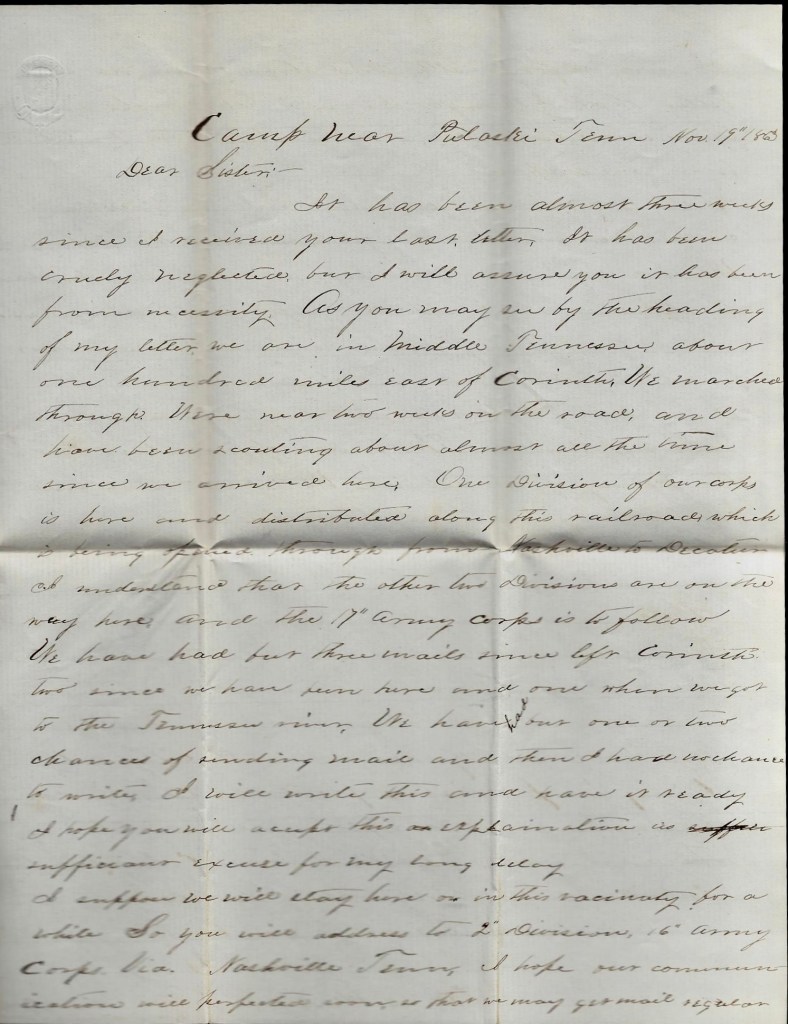
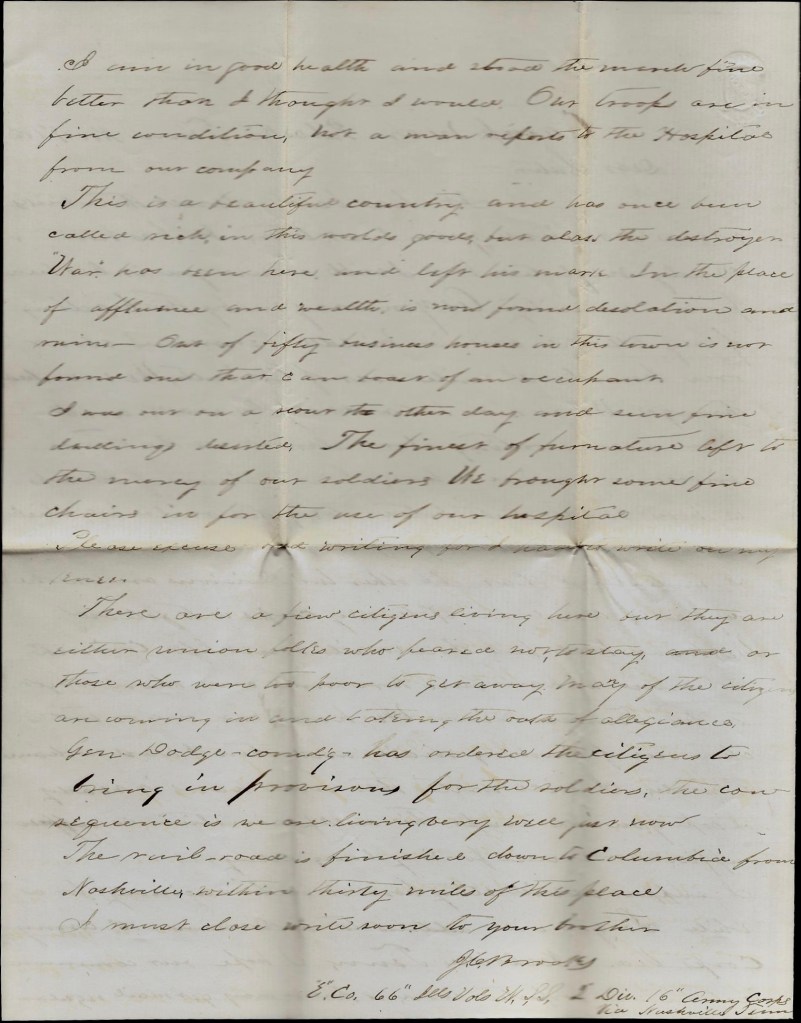
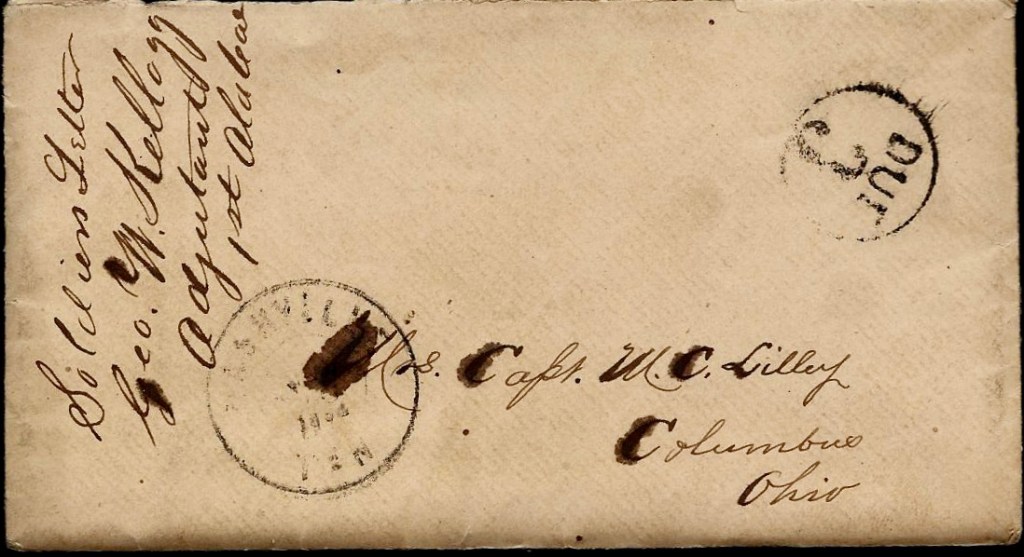

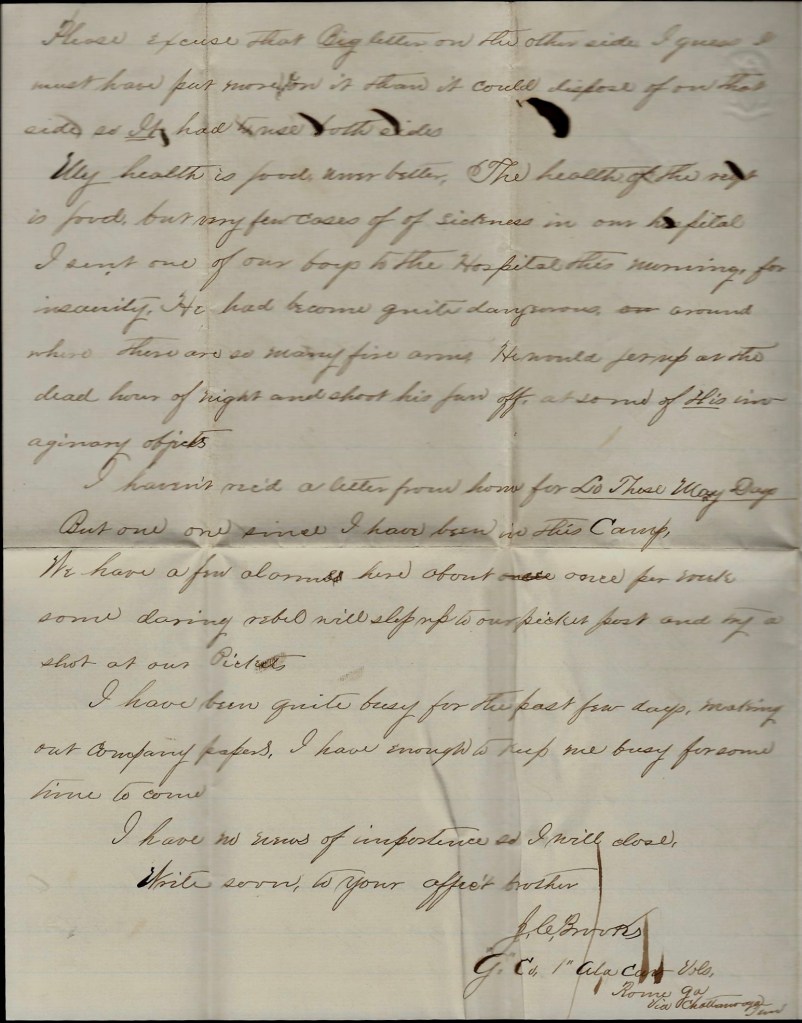
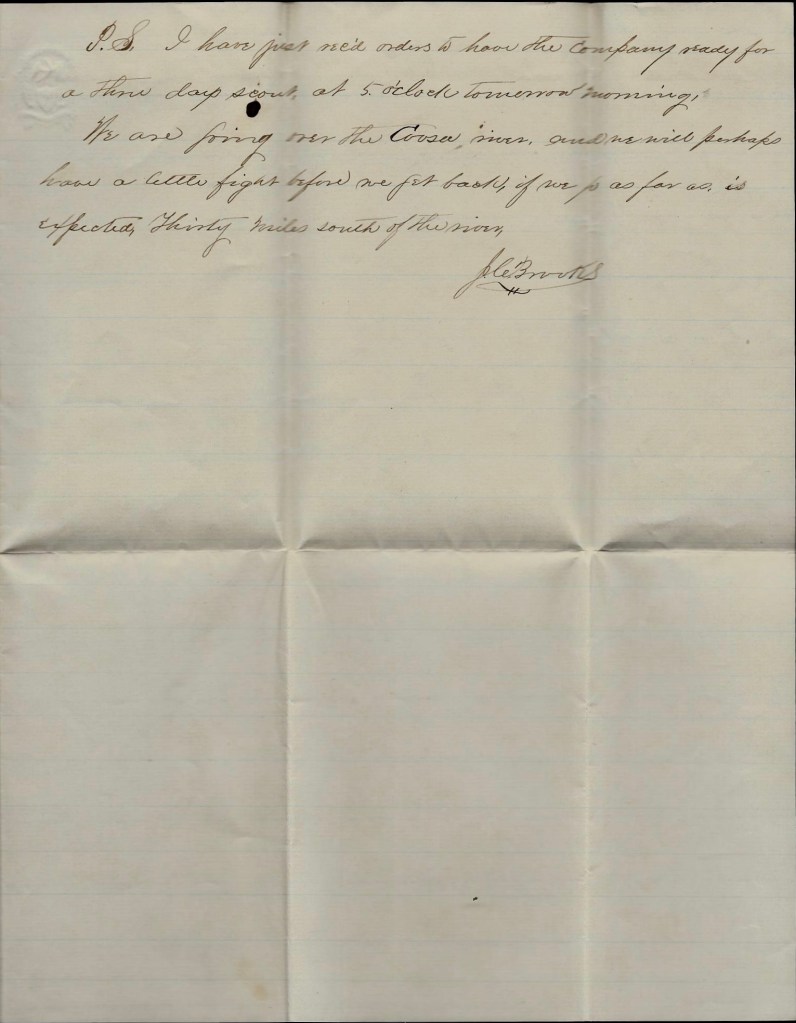
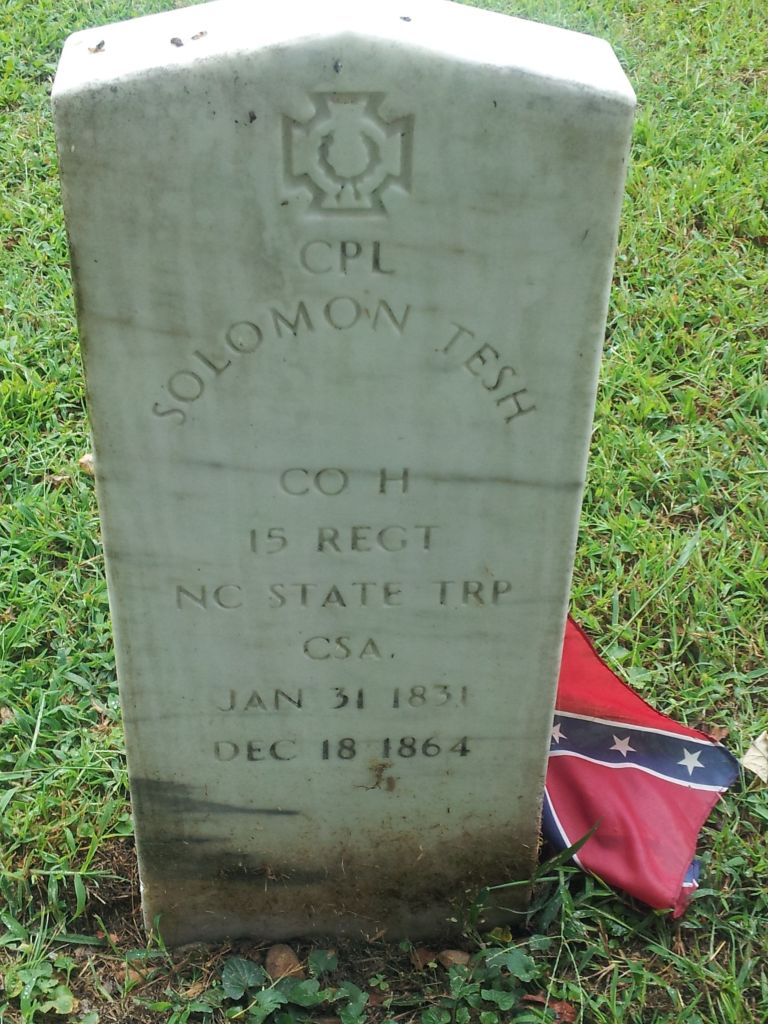
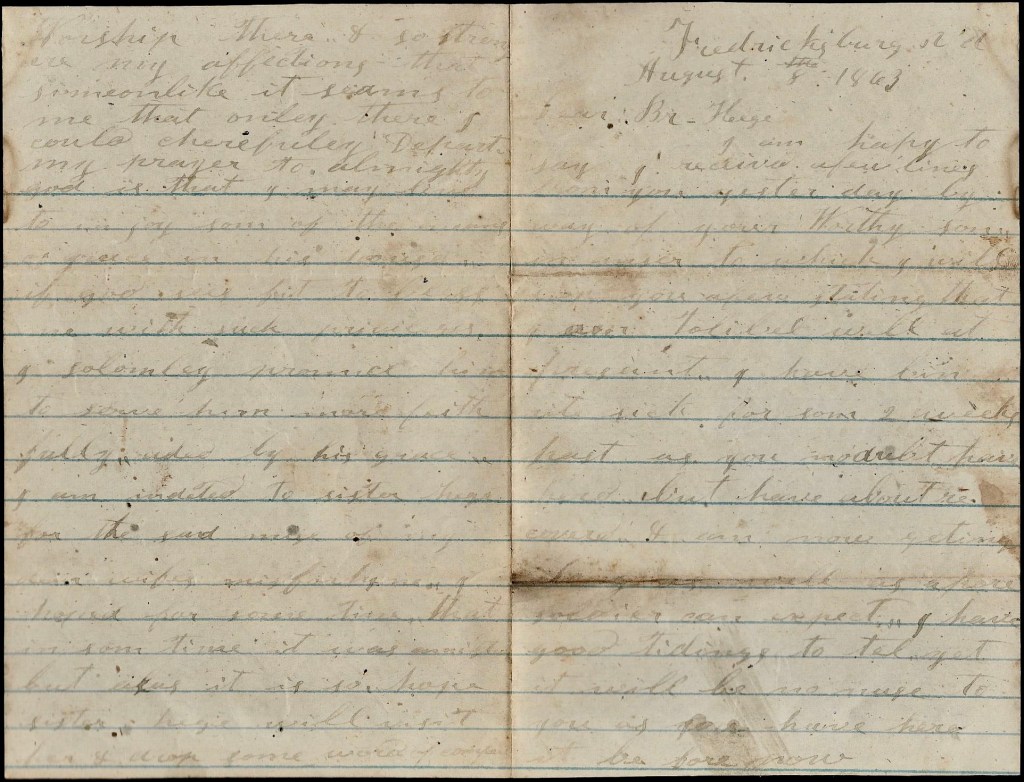
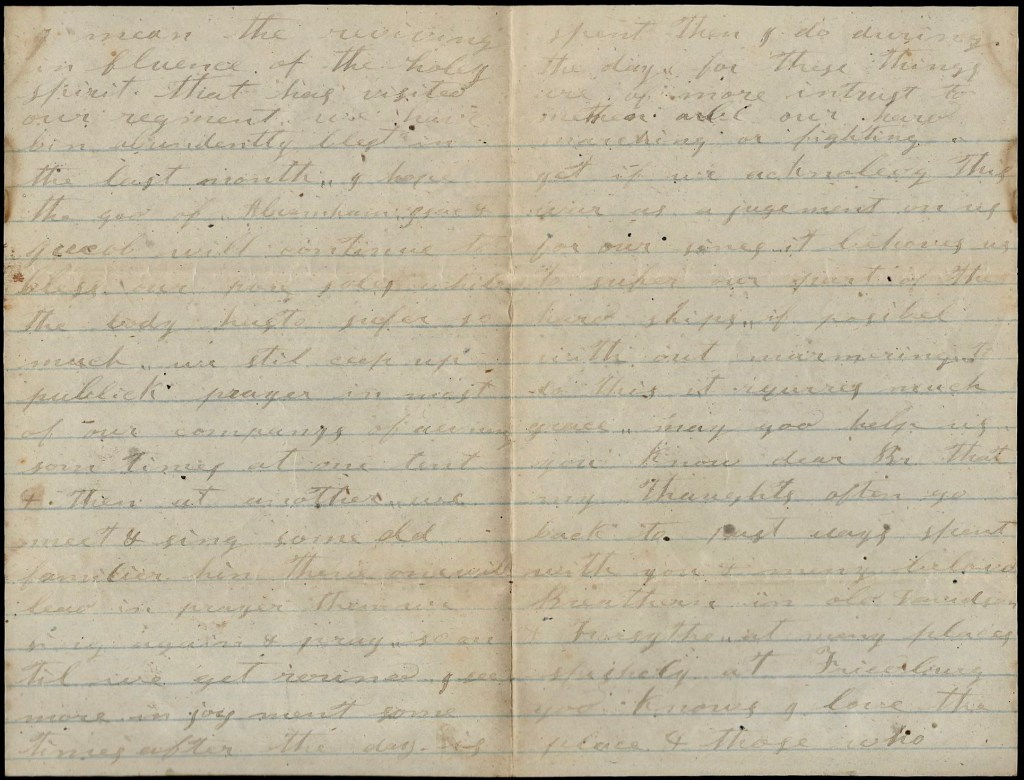

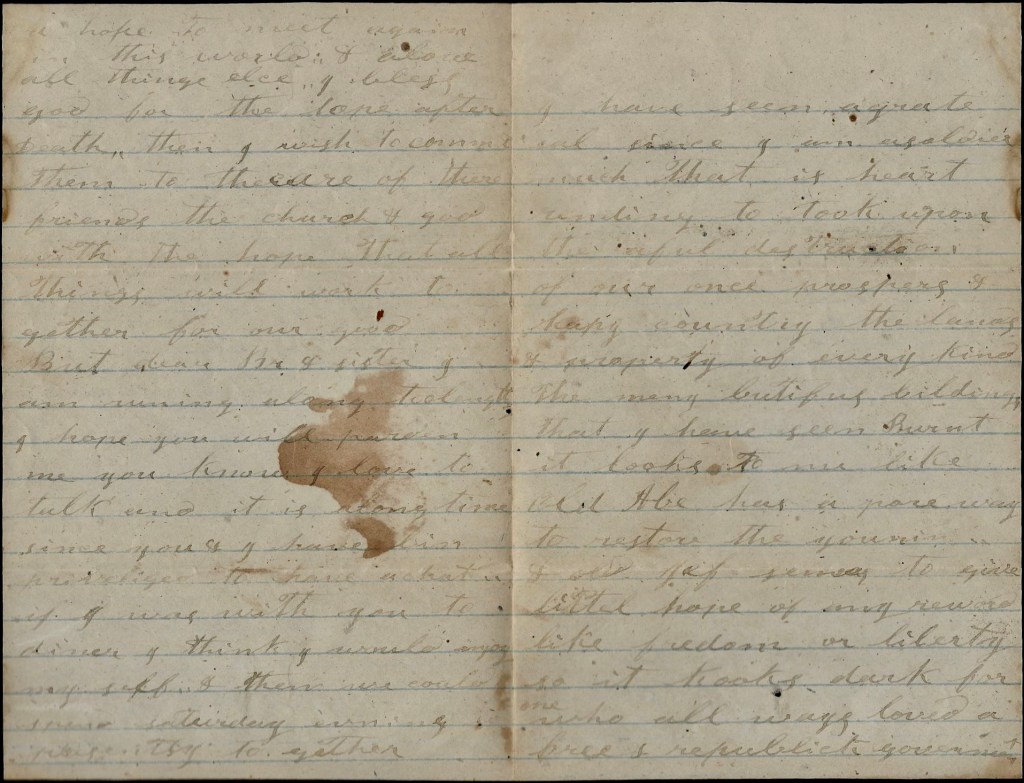

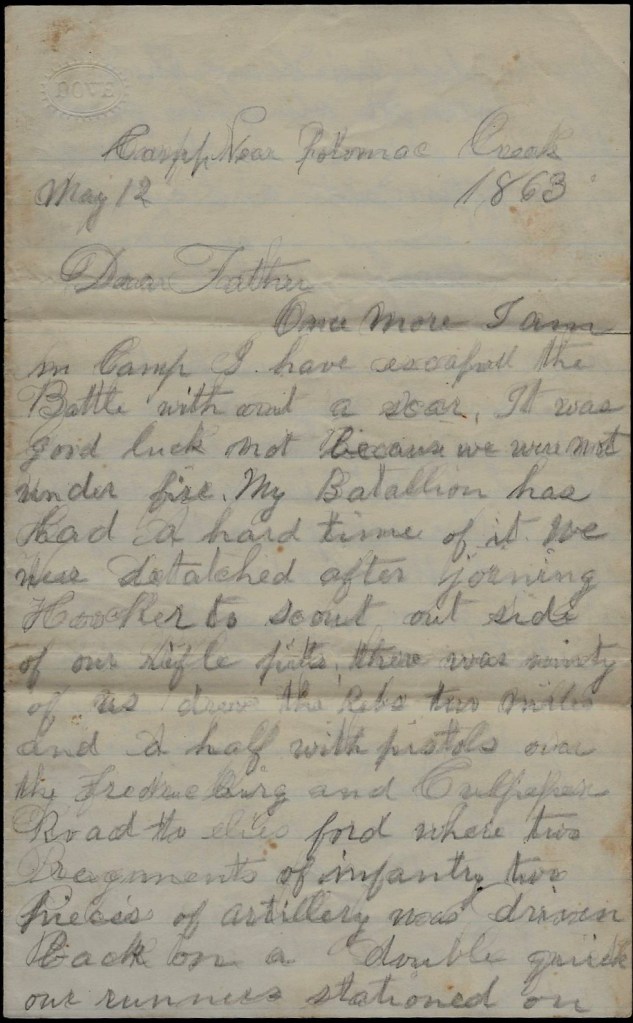
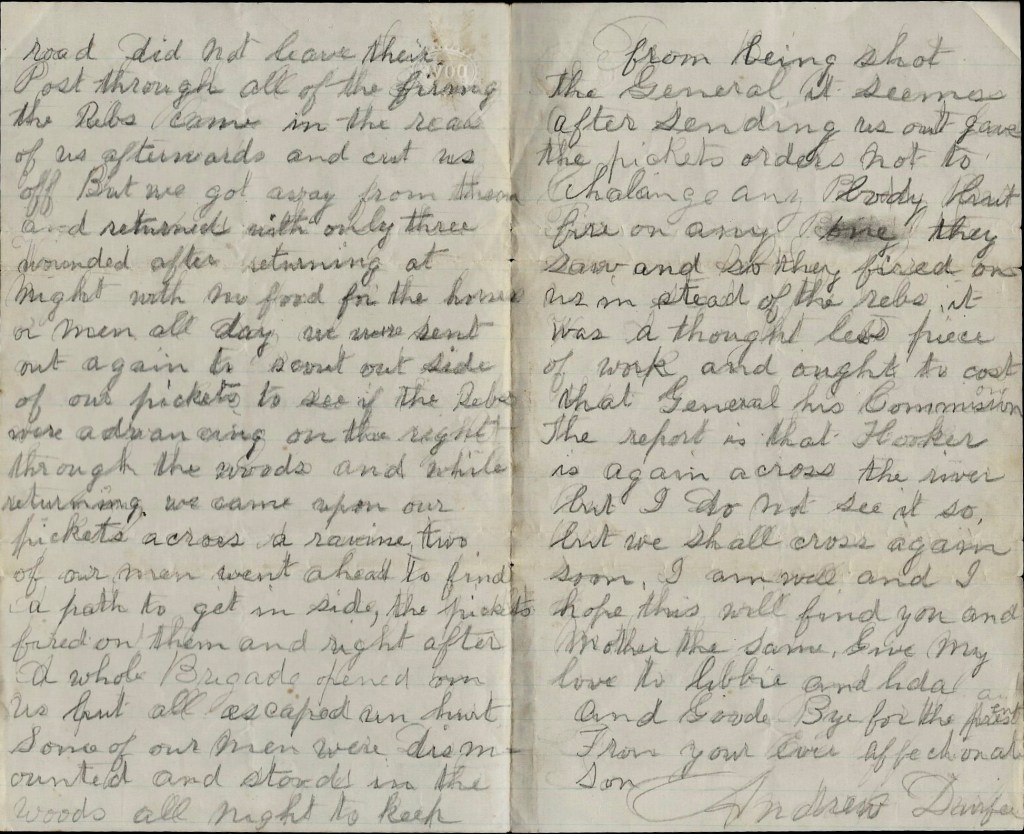
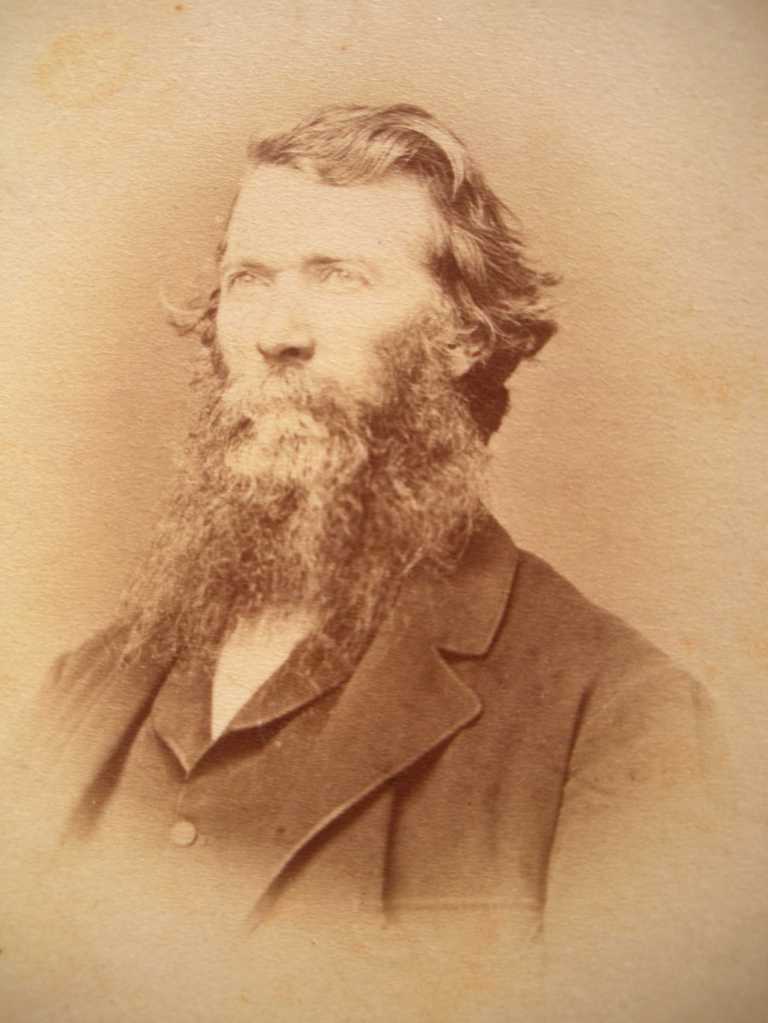
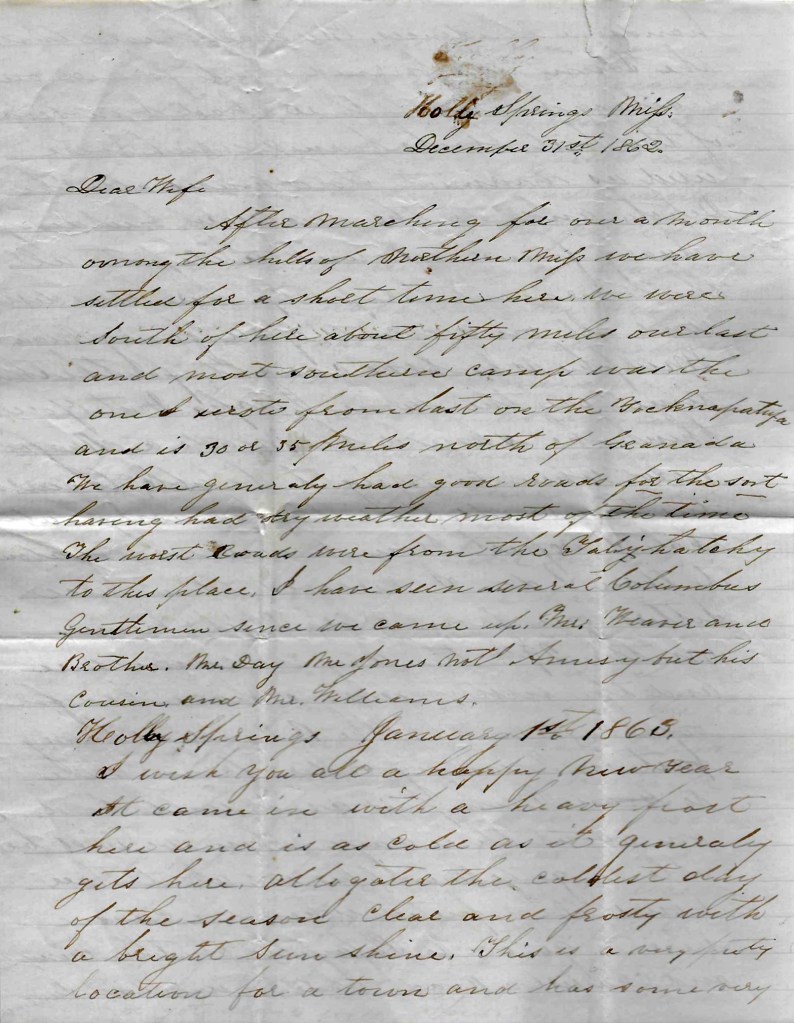

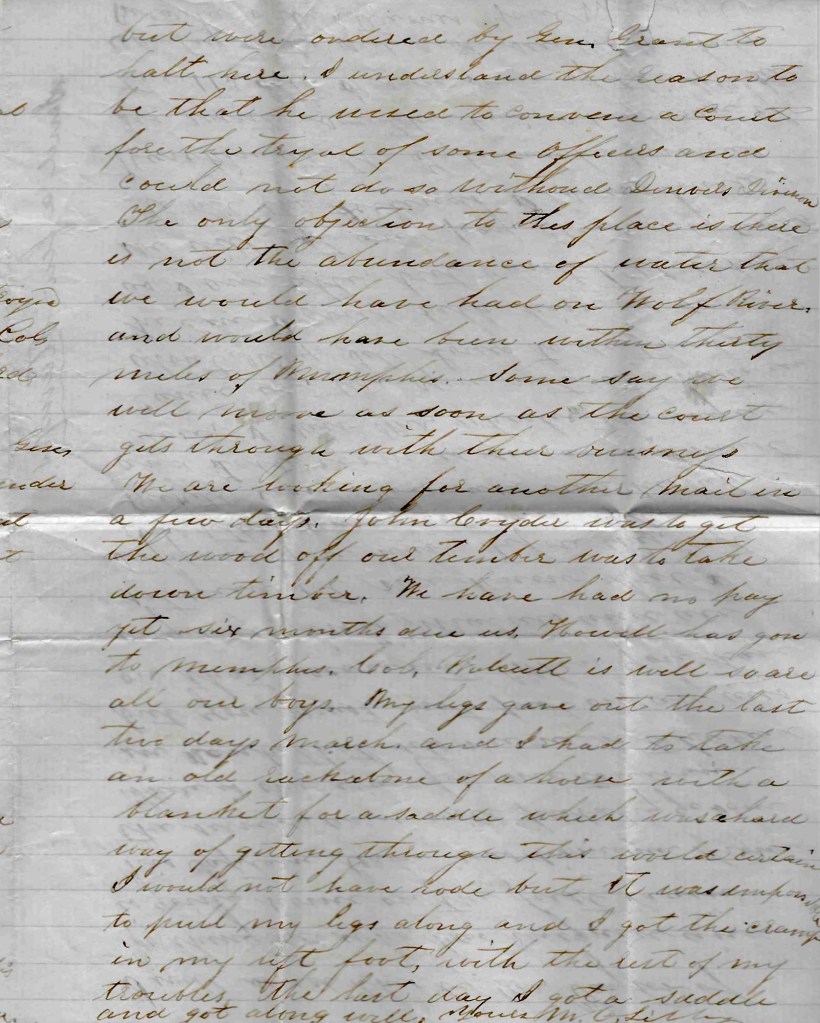
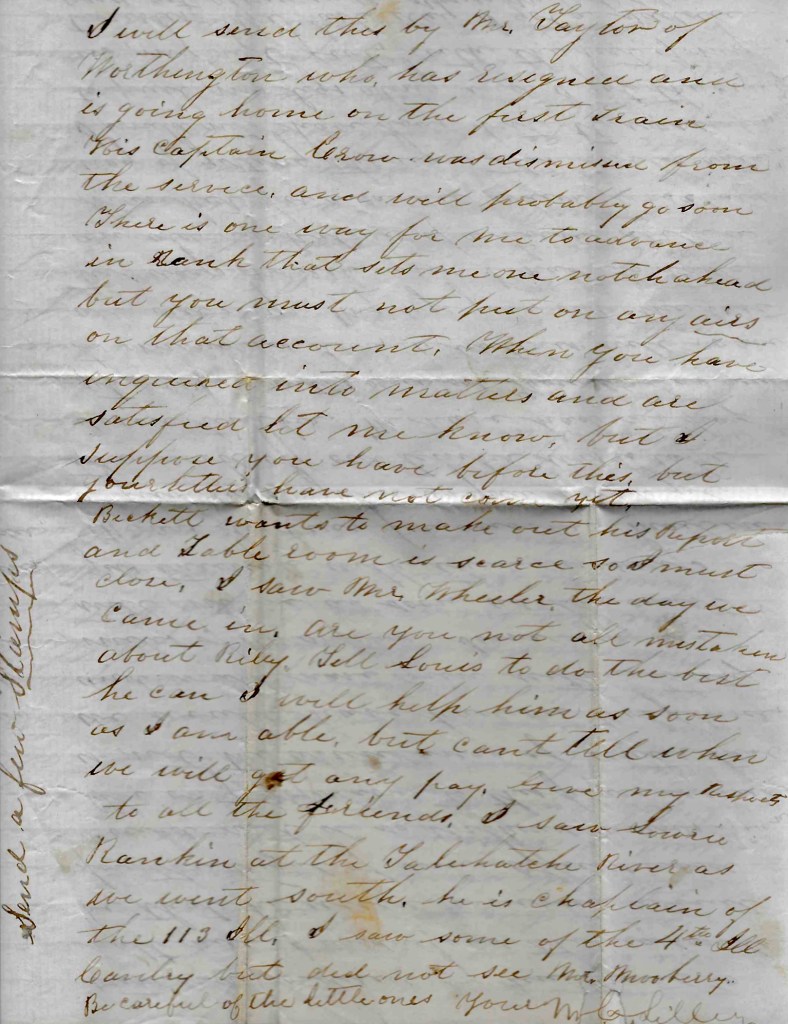





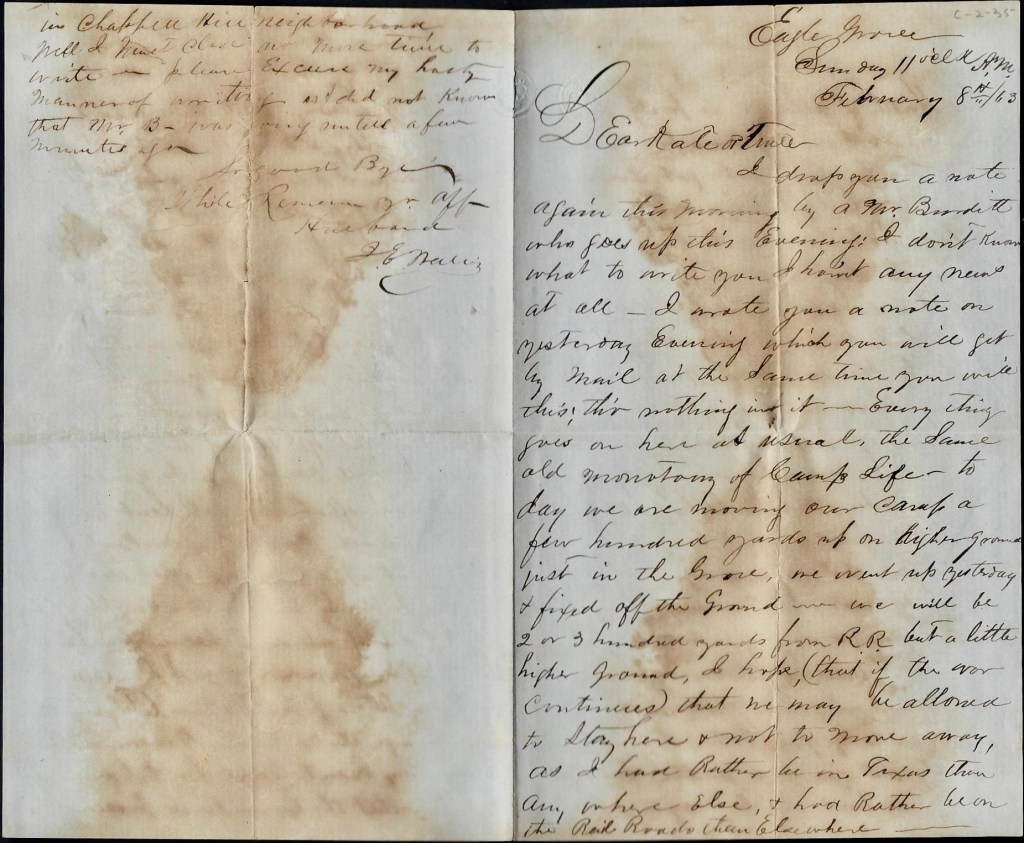
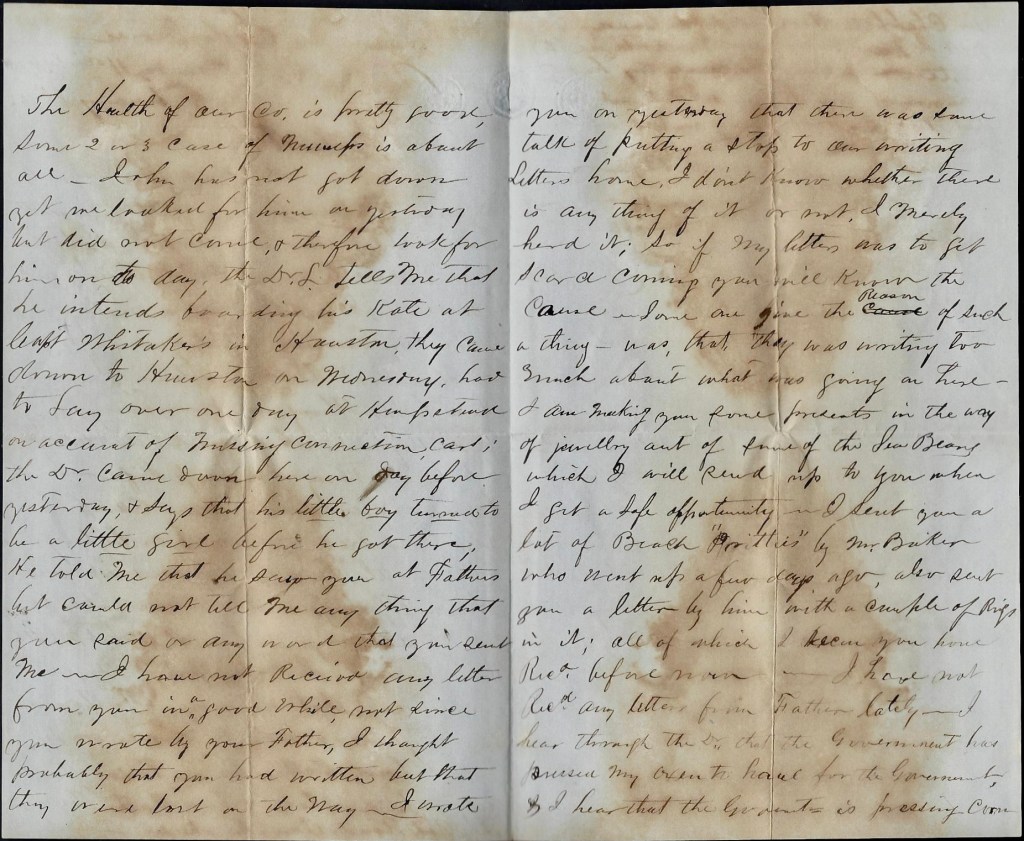


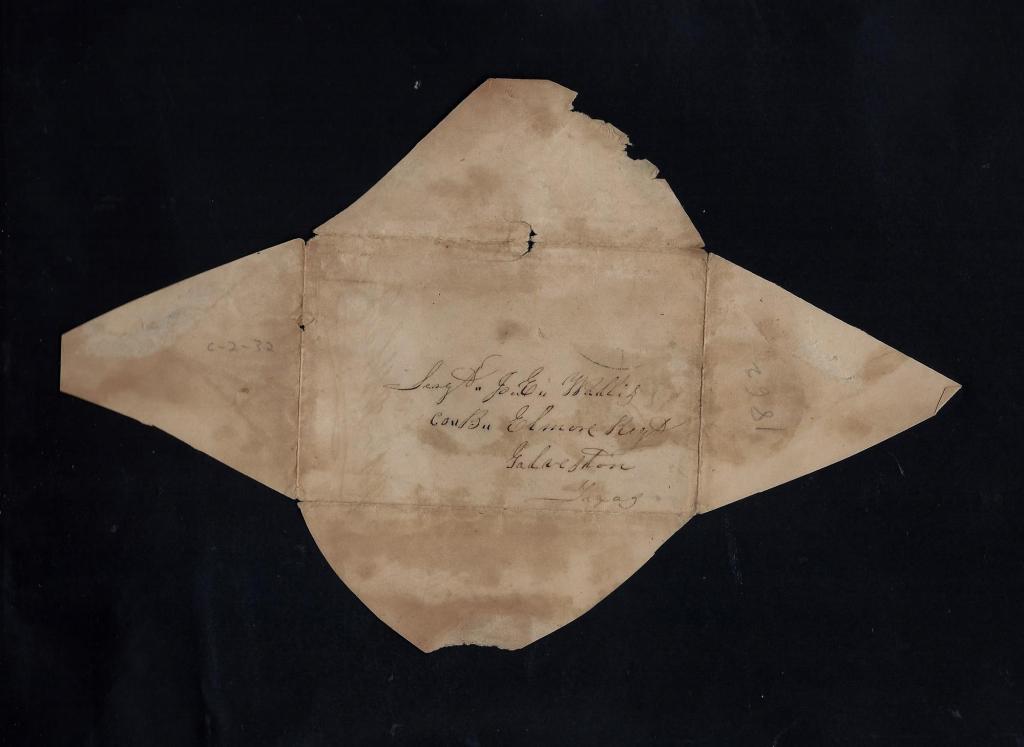


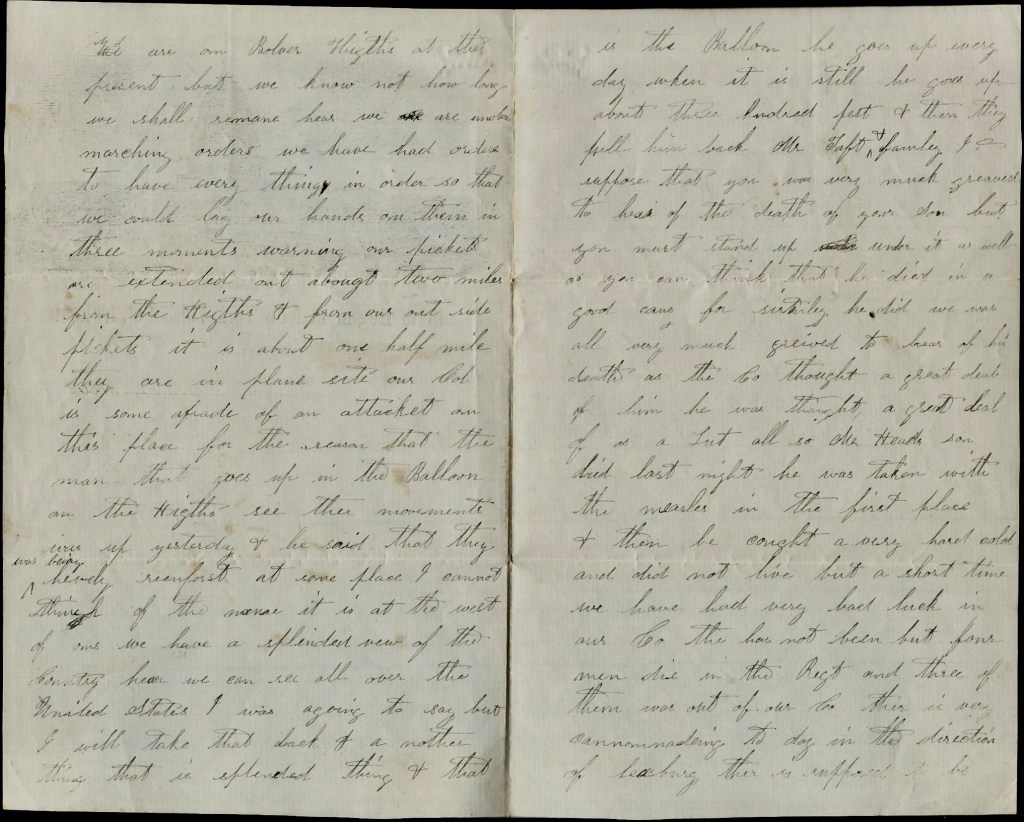

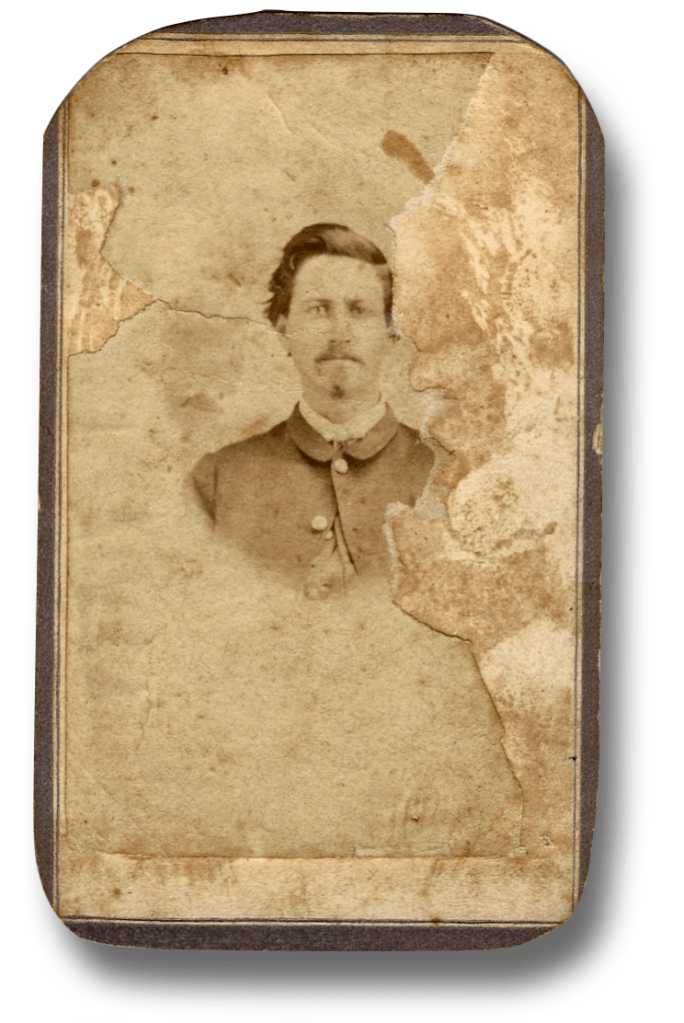
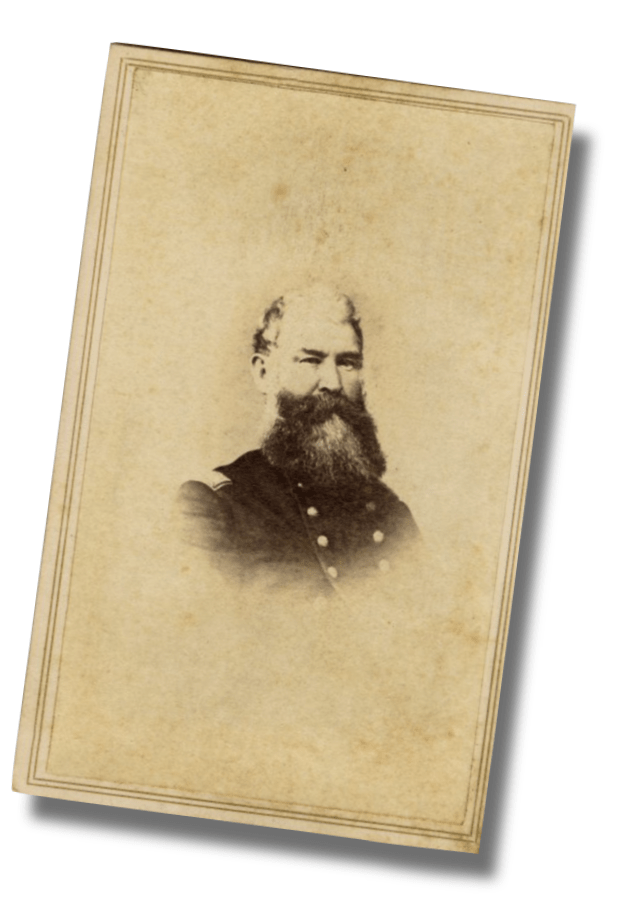




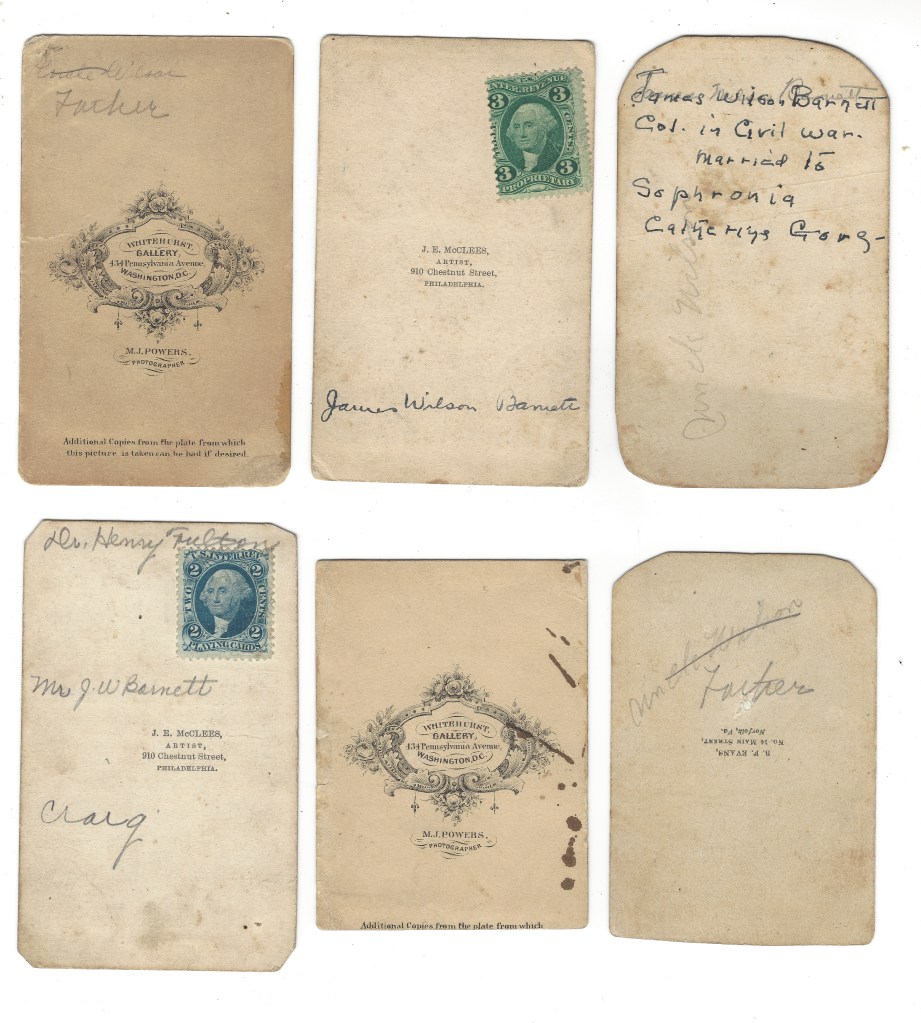

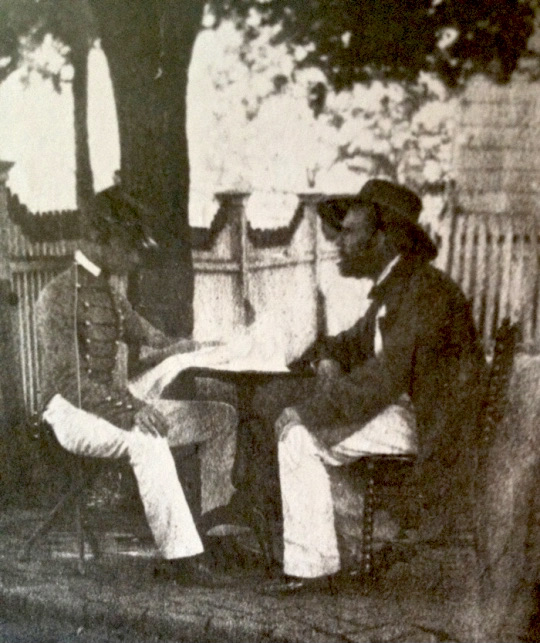


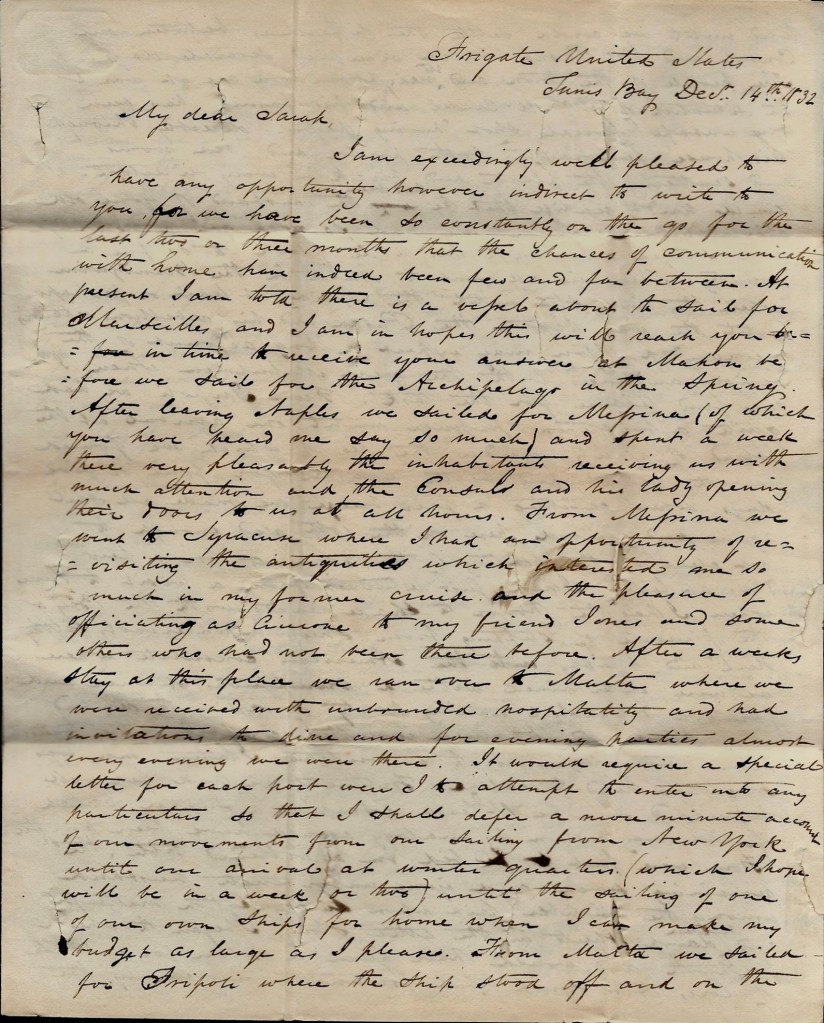

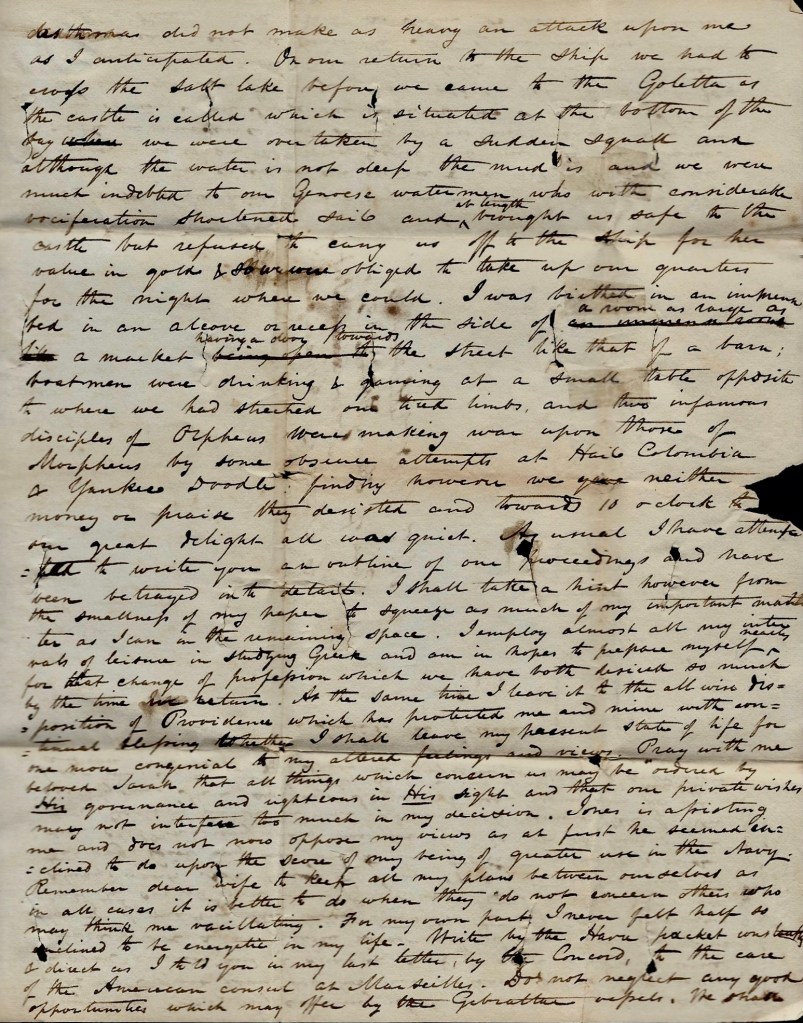
 Spared & Shared 23