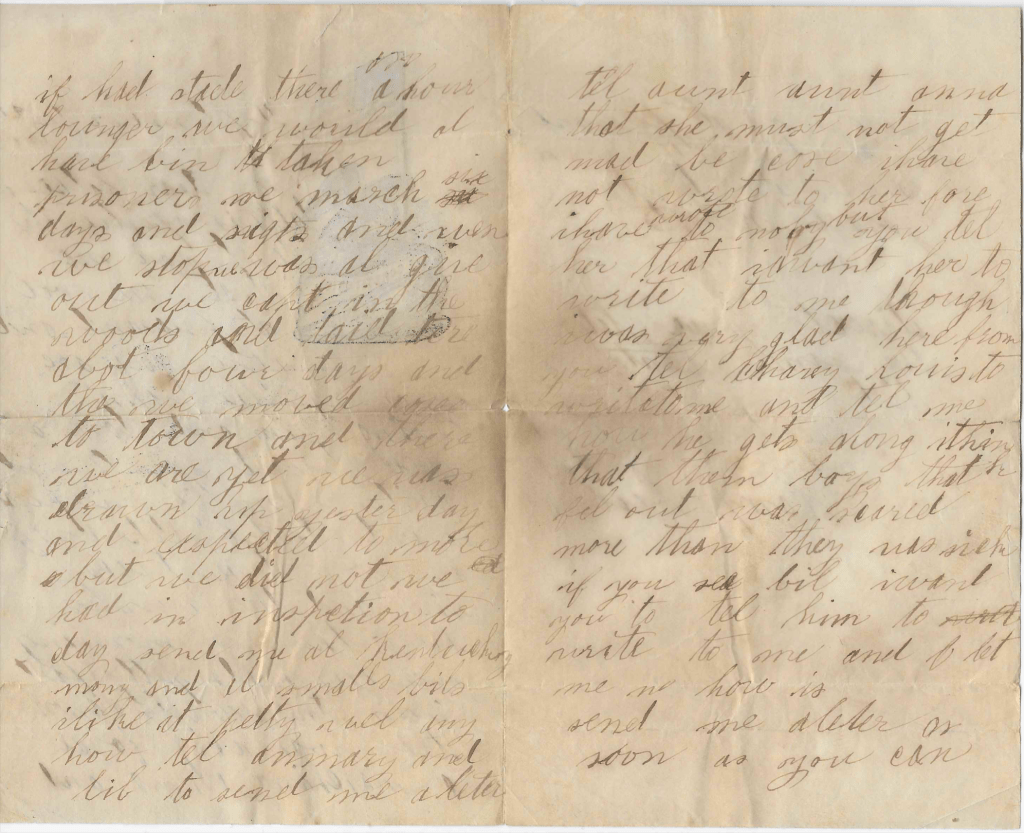
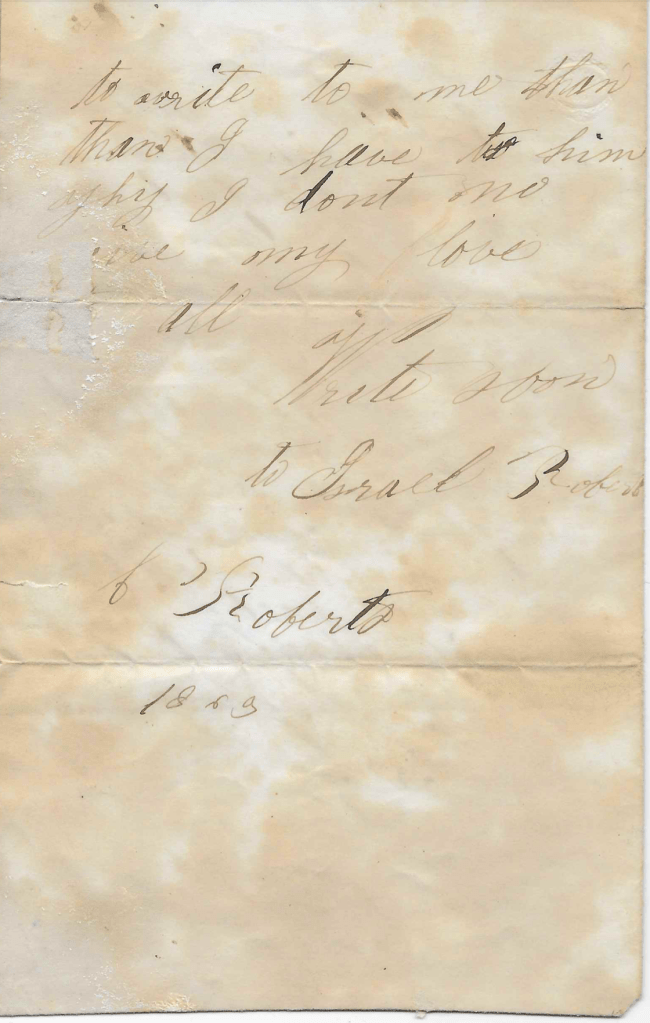
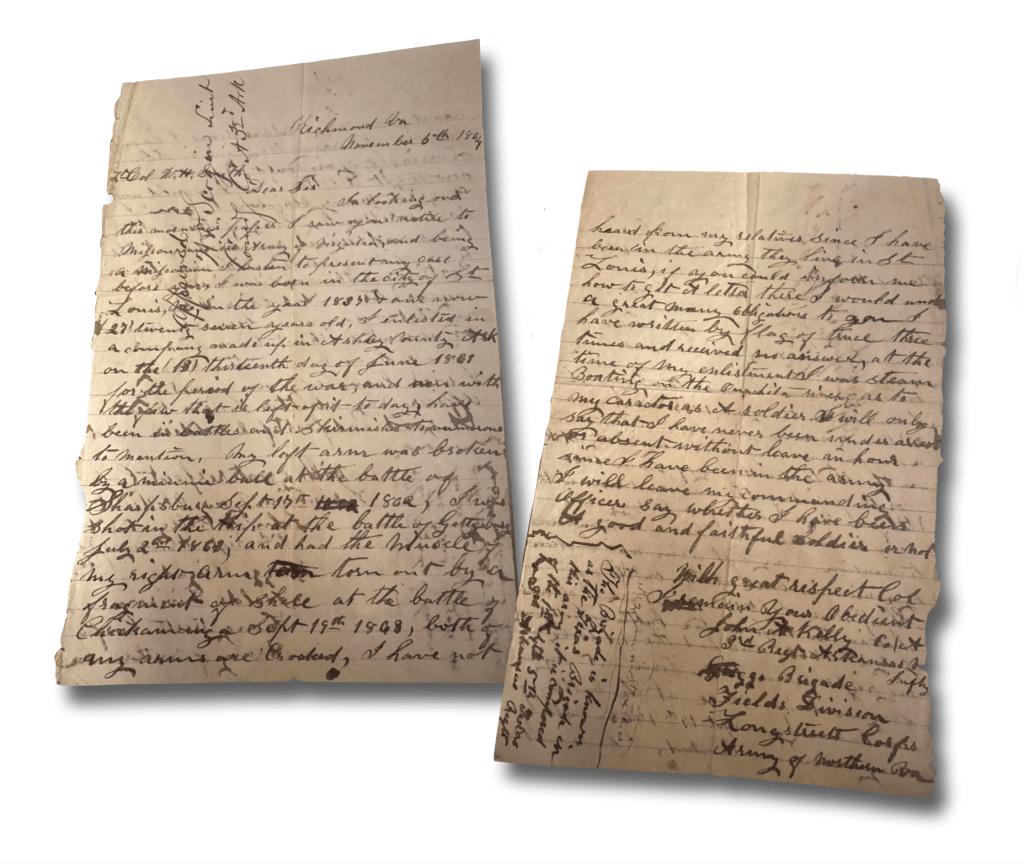
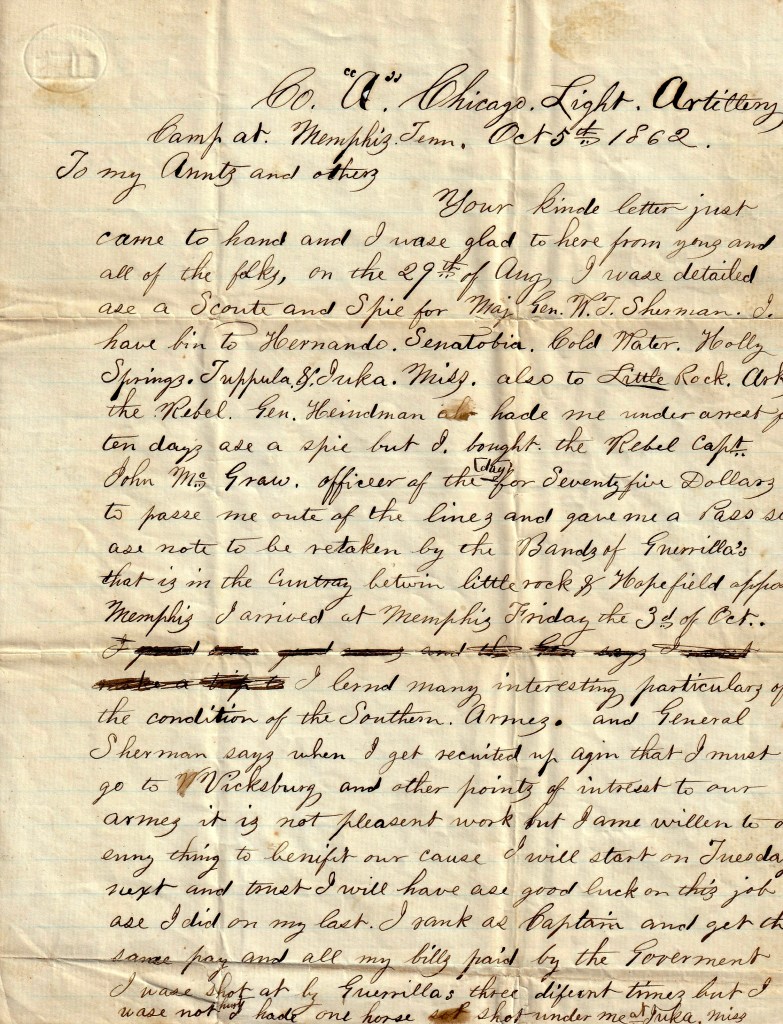
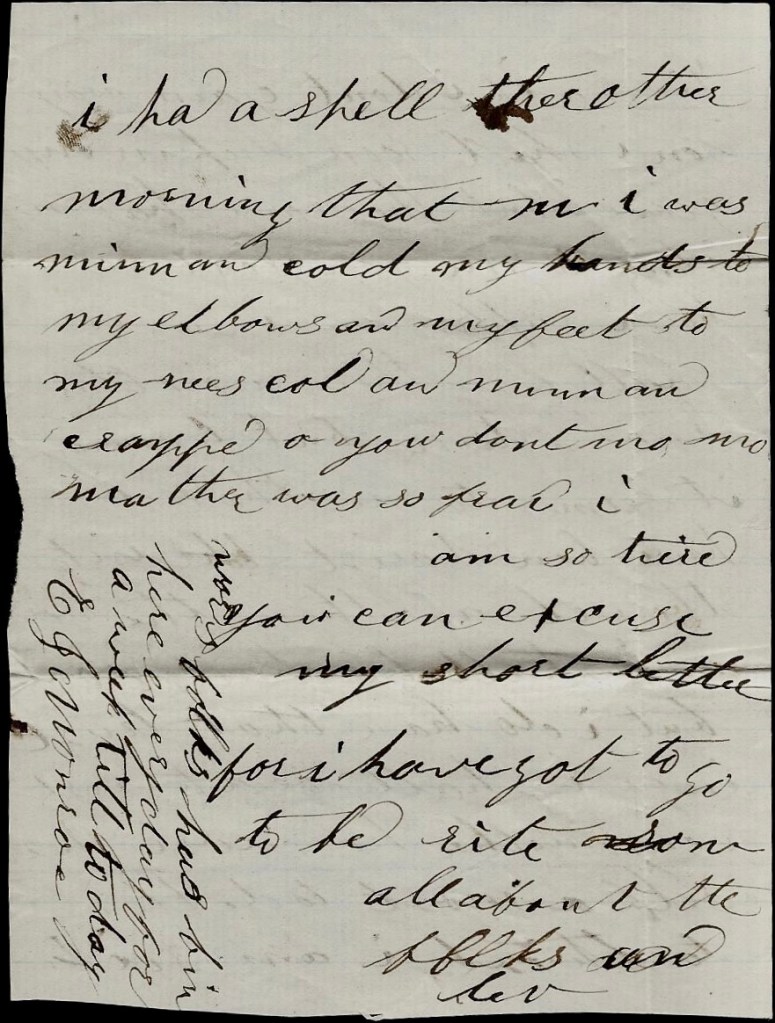
1863: Parole of Honor issued to James H. Chambers, 176th New York Vols

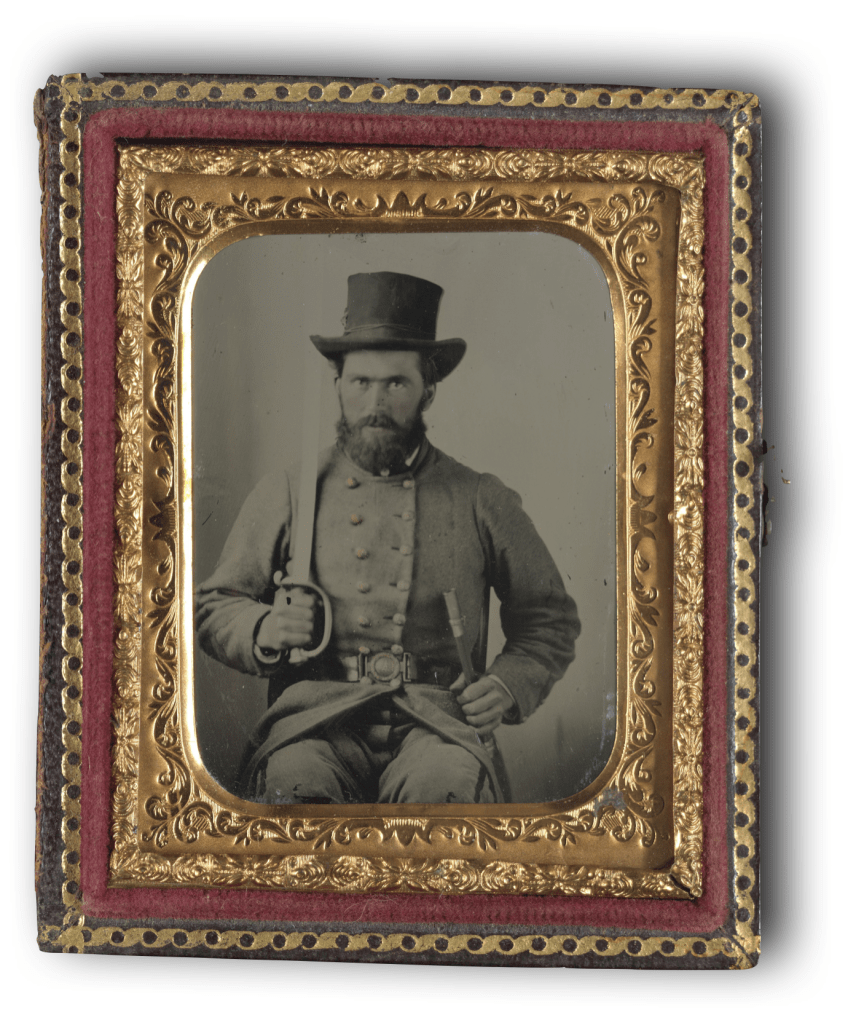
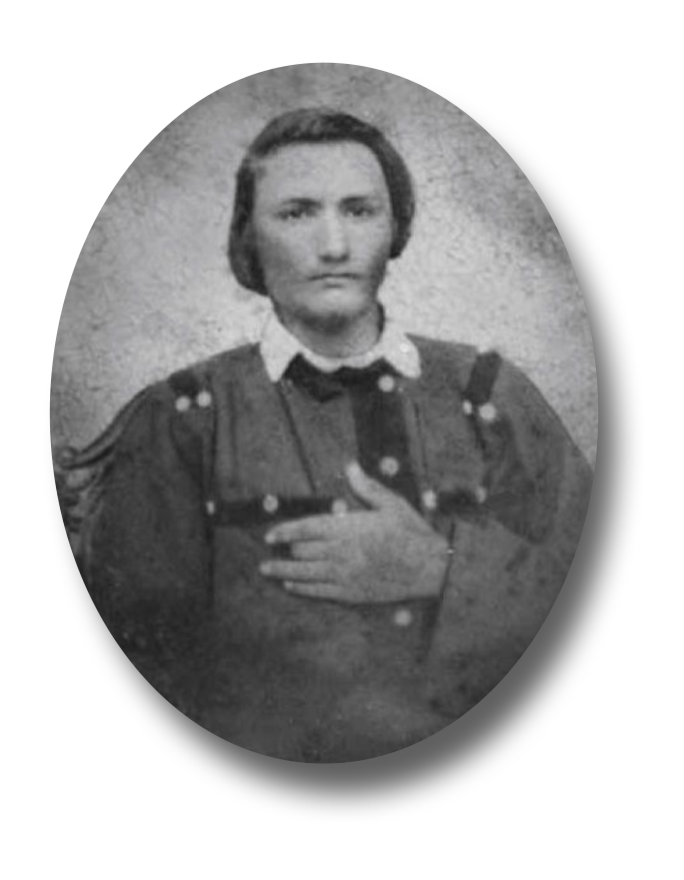
I could not find an image of James but here is a CDV of John H. Tuttle of Co. C, 176th New York Vols. who later rose in rank to sergeant (Photo Sleuth)

The 176th New York Infantry was recruited in the fall of 1862 with the intent of forming a three years regiment. However, failing to get enough soldiers willing to serve three years, they opted to fill out the regiment with men who would sign on for 9 months. It was finally placed into service early in 1863 and was mustered out in November 1863. The regiment spent their term of enlistment in Louisiana where, in June, various detachments participated in skirmishes at Pattersonville, La Fourche crossing, Thibodeaux, Fort Buchanan, Bayou Boeuff and Brashier City. In the action at La Fourche crossing, the regiment was commanded by Maj. Morgan and behaved most gallantly; in the actions at Fort Buchanan, on the Atchafalaya, and at Brashear City, the regiment met with serious disaster, over 400 men being captured. This disaster was not due to lack of bravery on the part of the men. There was no one in command, but the men fought with all the bravery that could be expected. The loss of the regiment in the above actions amounted to 464 killed, wounded and captured or missing.

Given the number of Union soldiers captured and paroled by the Confederates at Brashear City, there were undoubtedly a considerable number of these “Parole of Honor” certificates that were issued but this is the only one that I have seen. It appears to have been folded and carried in the soldier’s wallet for quite some time. The soldier’s name was given as Private James Chambers of Co. C, 176th New York Volunteers—apparently illiterate as he signed it with his mark on 25 June 1863—two days after his capture. By signing the paper, the soldier was released from captivity but pledged not to fight against the Confederacy until “regularly and duly exchanged.” In the regimental roster, James is described:

CHAMBERS, JAMES H.—Age, 43 years. Enlisted, October 30, 1862, at Wallkill, to serve nine months; mustered in as private, One Hundred and Sixty-sixth Infantry, October 31, 1862; transferred to Co. C, this regiment, November 13, 1862; captured in action, June 23, 1863, at Brashear City, La.; paroled and returned to duty, August 17, 1863; mustered out with company, November 16, 1863, at New York City.

The Parole of Honor was attested by Capt. J. B. Whittington, 2nd Louisiana Cavalry—a regiment of mounted volunteers who served for the entire war west of the Mississippi River in the Trans-Mississippi Department. The regiment fought at Georgia Landing, Fort Bisland, Irish Bend, and Brashear City in 1863 and Henderson’s Hill and Mansfield in 1864. Afterward, the regiment fought in minor skirmishes before the Trans-Mississippi’s final surrender on 26 May 1865.

1859-60: Francis Henry West to Emma (Rittenhouse) West

These pre-war letters were written by Francis Henry West (1825-1896), an American businessman, politician, and Wisconsin pioneer. He was a member of the Wisconsin Legislature for three years, and served as a Union Army officer during the American Civil War, earning an honorary brevet to brigadier general.

West was born in Charlestown, New Hampshire. He moved to the Wisconsin Territory in 1845, eventually settling in Monroe, in Green County, in 1846. In Green County, he worked in the lumber industry. In 1853, he was elected as a Democrat to represent Green County in the Wisconsin State Senate for the 1854 and 1855 sessions. In 1855, he was the Republican nominee for Bank Comptroller, but was not successful. In 1859 and 1860, West led two parties of migrants to California as part of a speculative venture to make money selling eastern horses to the California market. His first trip to California in 1859 was a complete bust, losing most of his livestock to anthrax enroute. His second trip was more successful but hardly worth the risk of the journey and the time away from his family. Among the 180 horses driven to California in 1860 were several blooded race horses he hoped to get top dollar for but they did not handle the trip very well and were impossible to sell.

During the Civil War, West served as the Lt. Colonel, then later Colonel, of the 31st Wisconsin Infantry. His wartime letters are also posted on Spared & Shared and can be found here: 1863-65: The Civil War Letters of Francis Henry West, 31st Wisconsin Infantry

Driving horses across the plains to California

Letter 1

Council Bluffs [Iowa]
Sunday, April 15, 1859

My Dear Wife,

We arrived here all right yesterday morning and I was greatly disappointed in not getting a letter from you—especially as most of my boys got letters from home. I am getting very anxious to hear from you and the “varnish Lads & Lasses.”

The trip so far agrees with me first rate. I had the sick headache two days the first of the week since which I have never been better in my life (except the poison I wrote you about). I have slept in camp all but two nights since I started. I am now, however, stopping at a first class hotel by way of a slight change. I sold my land warrant yesterday to Mr. [Dexter Chamberlain] Bloomer, husband of the celebrated Mrs. [Amelia Jenks] Bloomer who resides here. I am getting along with my matters on the trip first rate. If you was a little better provided for at home, I should feel fine. You must rely upon your friends. You can get anything you want at Mr. Chinoweth’s store if George has not got it. You must apply to Fred for money.

I have written Fred a long letter containing all the news. He will show it to you. So. I shall write you no more. Call Lutie and Carry and Eddy and Billy and little sharp-nosed, bright-eyed George up to you and tell them about their Papa.

Affectionately yours, — Frank


Letter 2

Fort Laramie
June 10, 1859

My Dear Wife,

We arrived here last night after tramping up the monotonous Platte Valley for nearly four weeks without the slightest variation in scenery. I have been very anxious to reach here for some time in hopes of hearing from home. I paid a dollar to cross the river on a raft last night and run a great risk of being drowned to get to the Post Office and then found neither letter or paper since which I have felt like crying and swearing alternately. I see no way of hearing from you until next fall. If you receive this by the Fourth of July, write immediately and direct to Placerville (Hangtown) and the letter will get there by the time I do. If you do not receive it so soon, direct to Marysville.

My company are all in first rate health. If you see any of Mr. Shrake’s folks, tell them he is enjoying himself finely. He is out after antelope today. We have scarcely seen an Indian yet. They keep entirely away from the road. Game is also very scarce. I have had but one good says hunt which I will tell you about. Seeing some buffalo on the sand hills about six miles from the road, one morning just as the train was starting out, I sent the train on and with Mr. Shrake and two others and two horses, we started after them expecting to overtake the train at noon. We followed the buffalo back for about ten miles when we cane in sight of an immense herd of at least one thousand. We partly surrounded them and made a charge, shooting in every direction and wounding many but did not succeed in bringing down but one—an immense fellow that would weight two thousand pounds. We then dressed him and loaded our horses with meat and started for the road. By the time we got back to the road, it was nearly night and our train was twenty-five miles ahead. We were hungry and very thirsty—the day being warm and not a drop of water had we seen. We went to the river, took a good drink, and “pulled foot” for camp which we reached at daylight next morning, pretty well used up. You may be assured I have had very little disposition to hunt since.

It seems as though the whole world was on the way to California. There is no end to the big droves of cattle that are going across and three-fourths of all the Pike’s Peak people are going through.

These plains are subject to the most violent storms of any part of the world. We have frequently had to rope down our loaded wagons to keep them from blowing over. We are now in sight of the snow capped peaks of the Rocky Mountains and the remainder of the way I hope there will be diversity of scenery enough to make up for the monotony of the plains. I shall have to go by way of Salt Lake to get provisions. I want to get there the Fourth of July, if possible. We now lack about one hundred miles of being half way from Monroe [Wisconsin] to Hangtown.
I just took a look at my cake for the first time and finding it all right, I put it away again. I shall keep it until I get past Salt Lake. If I could see you and the “Kinder” one in the while, I should enjoy myself first rate. Mrs. Ball get along with her children first rate. You may depend upon it that I shall hurry back as fast as my legs will carry me after I get. through.

Your affectionate, — Frank


Letter 3

Sink of Humboldt 1
Wednesday morn, August 3rd 1859

My Dear Wife,

My company are still all well. Since I wrote you before, we have traveled two hundred miles down the dubious, devious, Humboldt [river] and are now at the sink. On account of heat, mosquitoes, and sick horses, we have traveled it entirely in the night. I have traveled nights and doctored sick horses daytimes until I am so tired out that I sometimes drop asleep as I am walking along the road.

We are now at the commencement of the Big Desert and shall start on to it at noon, expecting to be across to Carson River tomorrow morning when the main part of the journey will be over as it is settled much of the way from there to Placerville. I have lost one horse since I wrote you. It died this morning. This is the hardest year ever known on stock on account of the disease before spoken of. Mr. Ball had to leave his best wagon and nearly all his traps yesterday—his horses giving out. I have to buy everything we use at an enormous price. Yesterday I paid ten dollars for two pounds of horse shoe nails. Three days ago I paid fifty dollars for a barrel of flour and it is now all gone. The great mistake I made was in loading my teams with such a good number of men. I never ought to have taken more than ten men. Then I should not have lugged my horses to death and could have gone right along with one tenth the expense I now incur.

I have bought four horses since I started so that I still have thirty-one left. On arriving at Carson river, I shall put four of my strongest horses onto the cook wagon and rush it through to Hangtown with twenty of the men who will go on foot. I shall remain in Carson Valley with the remainder of the men and horses for a couple of weeks and recruit up before going in. I have now made up my mind to go to Sacramento City in place of Marysville to which place you will please direct your letters in future.

Last week Horace Greeley passed us in the stage. We have seen but few Indians until we arrived here where the country seems to swarm with them. They are very friendly. We have about twenty of them employed at present in cutting grass and bringing it out from the sloughs for our horses. I am so afraid that I shall not get any letters from you when I get to Hangtown that I do not know what to do. I do not think I shall write again until I get to Sacramento.

Your loving husband, — Frank

P. S. Thursday noon on Carson River across the long dreaded, much thought of, long to be remembered desert all right.

Sunday, August 7th. Dear wife, I had sealed up this letter but laying here and having no chance to send it, and having the blues pretty bad, and not being able to think of anything but you and home, I have torn it open again.

We are now on Carson River, one hundred and fifty miles from Hangtown. My horses are too weak to go on and it is death to them to stay here. The disease spoke of before (called “swelled neck”) 2 rages terribly all the way from here to California. It is a blue time for emigrants, Some have lost all of their teams and all have lost more or less. On an average fully one half of all the animals on the road have died. Mr. Ball has lost one half of his horses (five). Last night one of the sorrels that I have had so long died in ten minutes after he was taken sick. I have still got thirty horses but everyone says I will lose half of them before I get through. I can only hope that I will not. I am taking every precaution possible to save them. Mr. Shrake with seventeen of the men have gone on while nine remain with me. We shall probably stay here a week or two. My expenses are enormous at present and will. be for a long time until I can get through and get my horses fit for work and earn something.

My bright and cherished vision of being able to get out of debt once more (and for which I was willing to endure everything) has nearly vanished. Still I may not come out so bad after all. I try and keep up good courage.

Genoa. August 11th. Ninety miles from Placerville. Three more of the largest and best horses dead. I shall go on through in the next four days. I don’t expect to have money enough to get home on.

1 The Humboldt Sink marks the beginning of a very difficult part of the California Trail: the Forty-Mile Desert. During the California Trail’s 1800s heyday, over a quarter of a million emigrants traveling west through the land faced extremely challenging, dry terrain in this area.

2 The highly infectious disease was probably anthrax which can present with a swelling of the neck, chest and abdomen in horses. Death can incur with 24 to 48 hours.


1860

Letter 4

Fort Des Moines
Saturday, April 21, 1860

My Dear Wife,

We arrived here yesterday morning and have concluded to remain for a few days as there is no prospect of grass and hay & corn is very cheap here. We are now five or six days drive from the Bluffs. There is quite a large emigration for California and about half of Iowa is going to Pike’s Peak.

The weather is very dry and it blows a gale all the time. We may stay here a week yet. We can get corn for from 15 to 18 cents and hay for two dollars per ton. We have got along first rate so far and I think we shall make a very quick trip. We had a little bit of a horse race today and got cleaned out of twenty-five dollars.

I find your likeness a great consolation. I wish I had one of all the children. I find it much harder to be separated from you than I had expected—much harder than last year. I hope you are feeling well and will get along all right until fall when I hope to be with you.

Be sure and write as often as possible. Give my love to all the children. Very affectionately yours, — F. H. West


Letter 5

Council Bluffs
May 1, 1860

My Dear Wife,

We arrived here this morning and I was greatly delighted to receive your kind letter of the 15th ult. informing me that you were all well. I have been very well and have not been in a wagon since we started. We have got along very finely so far and have had no inconvenience except from wind and dust which has been bad enough.

The men are all in fine spirits and everything seems to bid fair for a quick and prosperous trip. We have twenty men besides ourselves—fifteen Americans, three Norwegians, and two Dutchmen, and take them on an average. They are a first rate set of men. The grass owing to the dry weather is very poor but I think we shall move on slowly day after tomorrow which will be just two weeks earlier than I left here last year. There has not been any rain here for nearly a year and we have forded all the rivers so far except the Mississippi which has saved us from paying a good deal of toll.

The emigration to Pike’s Peak is nearly as great as it was last year and there is also a very large California emigration. I hear of quite a good many large droves of horses on their way and I am afraid it will ruin the market. The wagons that I got of George prove to be poor things and I am afraid we shake have much trouble with them.

My precious little wife, I hope it will not seem very long until we meet again and I am sure I hope it may never be necessary fr us to part again. Not a day has passed but what I have taken a good look at your portrait and felt how much I worshipped the original. I hope you will try and get along this summer as pleasantly as possible and concur with you in not desiring to cultivate the Kleckner acquaintance. I suppose I shall not hear from you again until I get to Salt Lake which seems a long time.

Tell Louey to see if she cannot improve so much in music as to astonish me when I come home. Write me how you get along about money matters. Give my love to Louey and Carrie and Edith and Willie and George and Susan. And my respects to all enquiring friends. Very affectionately yours, — Francis Henry West


Letter 6

Loup Fork [Platte river]
Sunday eve. May 5, 1860

My Dear Wife,

I write you a single line to let you know that we are getting along finely. We have had two fine showers since we left Omaha and the grass is growing finely. I think we shall be able to go right ahead now. We are now half way from the Bluffs to Ft. Kearney.

We took in another passenger at the Bluffs—a young man that I was acquainted with in Madison. He paid us one hundred dollars fare and works the same as the rest. We could have had plenty of passengers if we could have taken them. We have had a fine time so far on account of weather and roads, The journey so far is nothing to what it was last year.

I hope my dear little wife that you will not neglect to write every week. Give my love to the children. Affectionately yours, — F. H. West

I do not expect to write again for some time. Be sure to write all the business items on news as well as about everything else.


Letter 7

[Within 150 miles of Fort Laramie]
Saturday eve, May 19, 1860

My Dear Wife,

We are all well and getting along finely, considering how poor and backward the grass is. We are now within a week’s drive of Fort Laramie (150 miles). Our horses are looking very well and we feel in good spirits thinking we shall have a easy and quick trip. We are pretty much ahead of all the emigration and have the road all to ourselves. There are a good many large droves of horses on the way which will somewhat effect the California market when they get in.

I do not expect to get a chance to mail this letter until we get to Laramie and perhaps not then, but I could not help writing to you. If I could only hear from you often, how much it would relieve the tediousness of the trip. I want you to write previous to June 15th and direct to Placerville. All after that, direct to Sacramento.

My dear wife, you. do not know how much my mind and heart and very soul is filled with you and I hope if I ever get home again with you, I shall be able to stay there.

Write very often to your affectionate husband, — F. H. West


Letter 8

Ft. Laramie
Friday, May 25, 1860

My Dear Wife,

We arrived here today all right except a smashed wagon wheel. We are now making a raft to float over to Laramie on to get it mended. Am in hopes to get it done so as to leave here tomorrow afternoon.

We have got a first rate lot of men and are getting along finely. Be sure and write very often, my dear, dear wife, and give me every scrap of news—both business and political. Also all the gossip of the day. Tell me what everyone is doing and what all the children say, &c. &c. Also what you learn from Charlestown. You need not expect another letter for some time. I have read your kind letter sent to the Bluffs for the tenth time and kissed your dear sweet likeness for the hundredth time since I started.

You need not be afraid that I shall be drowned in crossing the river for the simple reason that I shall not cross.

I wish you had written me a letter to this place. — Frank


Letter 9

[150 west of Salt Lake City]
June 28th 1860

My Dear Wife,

We are now about one hundred and fifty miles west of Salt Lake City and getting on finely. We are on what is called the central route—a much shorter road that the Old Humboldt Road—and through a much more desert country. We do not strike the Humboldt at all but keep farther south. For the last seventy miles we have found water but once and then only a little brackish stuff in holes. We have in company fifty-six men, two women, and one hundred and fifty horses. We have not arrived in the country where the Indian troubles are yet but are getting very near it. We expect to go through without much trouble. We shall choose officers and effect a sort of military organization tonight.

The Indians burned a stage station a short distance ahead of us yesterday. While a portion of our company were camped within four miles of Great Salt Lake City, an Indian crept up near the guard that was watching the horses and fired at him with a rifle but fortunately missed him. The guard saw him as he raised his gun and fired with his revolver nearly at the same instant, shooting the Indian through and killing him. We suppose he intended to kill the guard, jump onto a horse and escape but he paid dear for his temerity.

I have had a slight attack of mountain fever for the past week but have got about over it at present. We took in another passenger at Camp Floyd—a Dr. Green. He is said to be a first rate physician. We shall probably arrive at Carson Valley in three weeks. I hope my dear one that you are getting along finely and enjoying yourself as well as possible under the circumstances. Devotedly yours, — F H West

29th. While traveling on the desert last night, I strained my instep so that I am unable to touch my foot to the ground. It is very painful. I presume it will be well in a few days. There was a little fight here a few days ago between some Indians and the mail boys. Three Indians were killed. We are so strong, we do not fear them although we keep a good lookout. Loved one, how I wish I could hear from you. — Frank


Letter 10

Deep Creek Station
July 4, 1860

Sweet one,

I write you a single line on this dirty scrap of paper (which is the last paper we have in camp) to let you know that I am still in the land of the living. I am sorry to inform you that we have made but fifty miles headway since I last wrote you. We have been laying over to recruit sick and tired out animals belonging to different members of my company. We are going on today and I am in hopes we will not have to stop again. We have not lost any of our horses yet.

I have under my command sixty-six men with one hundred and eighty horses and seventeen wagons and feel no fear of Indians. The Goshute Indians came down near here yesterday and shot twelve mules & horses and drove off twelve more belonging to the stage company and some other parties but they were not properly guarded at the time.

Everyone about the camp is enjoying perfect health. Do not expect, dear one, to hear from me again for three weeks, but do not let a week pass without writing and be sure and “gossip round” and get every item of news there is and send me. Your loving husband, — Frank

Give my love to the children.


Letter 11

Roberts Creek [present day Nevada] 1
July 12, 1860

My Dear Wife,

I keep violating my promise not to write again until we get to Carson Valley but as we are “laying over” today, I write a line to let you know that we are “all right” although we are not getting along very fast. We have not lost any animals yet and they are looking very well.

The mail came through yesterday from California for the first time for a long while and I will send this hoping it will come through again soon when I can send it on. The stations are all burned down along here but we have had no serious difficulty yet with the Indians. One hundred and fifty miles more will. take us through the country where the warfare exists. We are now four hundred miles from Sacramento (at which place we shall be the first day of August) and two hundred and fifty from Carson Valley.

We had a tremendous stampede a few nights since. The horses (180 in number) dashed through camp tearing up all their fastenings and running over one of our wagons and smashing it up so that we had to leave it. Many of us came near being trampled to death. Many of the boys were much frightened thinking it was an Indian attack. The horses ran up into the mountains and it took us all the next day to recover them.

Be of good cheer, my dear one. I shall be with you again soon. — Frank

1 The Roberts Creek Pony Express Station was built in the spring of 1860. It seems that the station was still intact around May, 1860. After this time it is thought that the station was destroyed by Indians and Bolivar Roberts set out to rebuild destroyed stations and restock them. This time the buildings were better constructed and men left to occupy each one until the Indian troubles were over. On June 16 they met Howard Egan at Robert’s Creek. Robert’s Creek Station was a telegraph station as well as an Overland Stage Station. It was an Overland stop until 1869. The site of the station is now on the Robert’s Creek Ranch owned by Filbert Etcheverry of Bakersfield, California. Peter Damele noted the old Pony Express station, a log structure, has long since been obliterated by the owners. There is a log dugout very near the Express site he described, but no one knows if it is part of the original station or not. Robert’s Creek is 15 miles north of Highway 50.


Letter 12

Sierra Nevada Mountains
July 27, 1860

My Dear Wife,

I was much pleased when at Genoa to receive your affectionate letter of May 27th. we are now one hundred and thirty miles from Sacramento and have camped expecting to remain three or four weeks and recruit up our horses when we shall take them down for sale. There is no post office near here but Mr. Carpenter is going down to Marysville tomorrow where he will buy a small draft of twenty-five dollars and enclose this and forward to you. You can take the check to the bank and get it cashed and it will answer you until you hear from me again.

I shall go down to the City myself in about two weeks. We employ six men to take care of the stock. We have sold one pair of our smallest horses for $450.00.

I am very anxious to get my Sacramento letters and hope to hear no bad news from home. Continue to write very often to your affectionate husband, — F, H. West


Letter 13

Sierra Nevada Mountains
August 12, 1860

My Dear Sweet Wife,

Mr. Carpenter returned yesterday from the lower country bringing me three kind letters from you—one from Placerville dated June 9th, and two from Sacramento, one of June 10th and the other June 16th. You write as though you had sent others to Placerville but they have not arrived. I am very much pained to learn that our pet and pride, Louey, is not well. I do not think you ought to let her go to school. I am afraid you have suffered for want of money this summer. I hope you will have received the little draft of twenty-five dollars that I sent two weeks ago ere this reaches you, I will try and send you more soon. We have no paper in camp. This scrap I tore from one of your sweet letters so you must excuse its appearance. I know, dear one, that you will be very glad to receive even this scrap from your devoted husband.

We have moved our camp since I wrote you last. We are now twenty miles from any house and seventy from any post office and I do not expect to be able to send this until I go myself to Sacramento which I think will be in a few days. We are now located in a beautiful little circular valley near the summit of the mountains. There is plenty of snow within a mile of us in any direction—plenty of strawberries in the valley which is fringed with heavy pine timber and any amount of speckled trout in the cold streams that leap down the mountains. The weather delightful through the day but a little too cold at night. But notwithstanding all the beauties of nature that surround us, the days drag slowly and wearily along with me. I have nothing to occupy my mind and can think of nothing but the best & kindest, dearest woman in the world—your own sweet self—the whole time. I really believe it would be a relief (do not be offended) if I could forget you for awhile.

Shortly after I wrote you before, I was taken very sick and was sick for a week suffering very much. But I have got very well again.

The day after tomorrow I shall take ten horses and start for Sacramento to try the market. Mr. Carpenter is going with ten more too Stockton. The balance we shall leave here in charge of three men. From what we can learn, we are afraid we shall be unable to sell this fall and will have to keep them until next spring.

Harry Carson [Corson?] is with us taking one of the race stock.

My dear wife, I wish you would review your letters after writing them so as to fill up the omissions. You leave out many words and some times whole sentences so that it is impossible to make out your meaning. You told me in one letter that Charlie was married. What Charlie is it or who he is married to is more than I can imagine. Who did Lucretia Deniston marry? What did you hear from Charlestown? What do you hear about Hogans getting along at the mill? Tell me all the news generally. How is Harriet’s health now> I will not write any more, dear one, until I see some chance to mail it. — Frank


Letter 14

Sacramento [California]
September 9th [1860]

My Dear Wife,

I have just received two long expected and very welcome letters from you. It is the first news I have had from home. They came down from Placerville. One was dated June 26th, the other July 5th. I have not received the one from Fred. I ought to receive some of much later date from you by this time.

I wrote you a few days since requesting you to write me at San Francisco. I shall probably leave there for New York before the letter reaches there. The steamers sail on the 5th and 20th of each month. I intend if possible to sell out my horses so as to take the steamer on the 5th of October and I want you to write immediately on receipt of this and direct to New York, Care of Mr. Briggs of the “Brandreth House.” I shall probably go up to Charlestown before going home and I want to be sure and hear from you as soon as I arrive.

My horses have come down from the mountains and looking much better than when I left them. I have fourteen yet to sell which it may take me some time to dispose of as times are very hard here as well as in Wisconsin and all. kinds of property very low. “Emigrant horses” are the only thing in fact that will sell at all. I have sold twelve for twenty-six hundred and ten dollars. My expenses are very heavy necessarily. The horses that I lost would have brought me three thousand dollars.

The State Fair commences next Tuesday and judging from the preparations that are being made, is to be a grand affair. I am very anxious to hear how George is doing. Write me in your New York letter.

I do not think I can take time to go and see any of my cousins in this country. Give my love to all the little ones. My respects to my friends and try and get along the best you can, my dear little wife, until I get home which will be in a very short time if I have no bad luck.

Your very affectionate husband, — Francis H. West


Letter 15

Confidential

Sacramento [California]
September 10th 1860

My Dear Wife,

I have just received your letter of August 6th. I have received none between that date and June 19th. I cannot think it possible that you have neglected to write to me for so long a time. I am very glad to hear that you are getting along so well. I have been very busy since my stock came down from the mountains and it keeps me all the time showing customers horses. I am selling them off very rapidly but at low prices. I have already sold over forty at an an average of $260 per head. If I can sell the balance as well, we shall make about eight thousand dollars clear. Could I have the whole of this as I should have had if I had had any capital to have gone on, it would have paid me first rate, but come to divide it, it don’t amount too much. I have the whole business here to see to.

Mr. Carpenter, on account of some pecuniary difficulty that his brother here has got them into, has had to make his property over to me and keep himself out of sight. I suppose he will sail for home on the steamer tomorrow. This is strictly confidential and must not be mentioned to anyone. Neither must any part of this letter as to when I am coming home or how poor getting along selling horses. I have some little matters that I wish to arrange at home before it is known when I am coming home or that I have got any money, so keep mum.

I expect the balance of my horses will sell very slow, but the State Fair commences here next week when I am in hopes to close out most of them in which case I shall start for home in four or five weeks. In any case, I think I shall force sales so as to start by the first of November. I am the worst troubled to know what to do with the race horses. They are unfit to sell or do anything else with this fall. I guess I shall leave them.

My sweet wife, if I have good luck, it will be but a short time until I shall be with you.

The weather is cool and delightful. I hope I shall receive several letters from you before I start home. I am glad Louise is getting along so well with her music. Tell al the children that I am very anxious to see them.

I sent a business letter to Mr. Ludlow by Pony Express today. Affectionately yours, — F. H. West


Letter 16

Sacramento [California]
September 23, 1860

My Dear Wife,

I have received but one letter from you since June 19th and must conclude that you are either sick or very negligent. I hope the latter, But my dear one, I hope that in a very few days after you receive this you will have a chance to explain the matter to me in person. I expect to sail on the next steamer which goes out on the first day of October and shall probably reach home between the 25th and 28th. I shall have to stop a day at Rochester, New York, to settle with Mr. Carpenter. The very moment you read this, write me at New York, care of J. G. Briggs, Brandreth House.

I have sold out all. but my race stock and shall leave them if I do not sell this week. The State Fair is now in successful operation here. I shall send the second bills of exchange to you by Overland Mail when I start.

I am still in hopes of hearing from you before I start. Say nothing about it. Affectionately yours, — F. H. West

Eve. 23rd. The steamer and Overland Mails are just in but nothing from you. I learn from Dr. Young whose wife thinks enough of her husband to write to him once in awhile, that you were all well on the 21st of last month. You will not receive this in time to write me at New York. I hope the children have not forgotten me if someone else has, — Frank

1865: Sophia Morton (Williams) Harris to Mary (Williams) Brayman

Images of William Chapin Harris and his wife, Sophia Morton Williams—the author of this letter datelined from Hamburg, Erie county, New York, just after the Lincoln Assassination.

This letter was written by Sophia Morton (Williams) Harris (1804-1880), the wife of William Chapin Harris (1797-1885) of Hamburg, Erie county, New York. Sophia was the daughter of Richard Williams (1773-1822) and Sophia Morton (1776-1854).

Sophia wrote the letter to her younger sister, Mary (Williams) Brayman (1816-1886), the wife of Mason Brayman (1813-1895) of Springfield, Sangamon county, Illinois. Mason Brayman began his career as an attorney in New York State but relocated his practice to Michigan in the late 1830s. In 1842, he again relocated his practice to Illinois and while there, in 1845, he compiled the Illinois Revised Statutes, and was also appointed by Governor Thomas Ford to investigate the difficulties between Mormons in Nauvoo, Illinois and their hostile neighbors. When Abraham Lincoln was elected to Congress in 1848, Brayman rented Lincoln’s home while Lincoln lived in Washington. Brayman served as general solicitor for the Illinois Central Railroad from 1851 to 1855.

With the outbreak of the American Civil War, Brayman joined with other railroad executives and secured a military commission. Initially serving as a major with the 29th Illinois Volunteer Infantry Regiment under General McClernand, he was promoted to colonel on April 15, 1862 and command of his regiment. Following the Battle of Fort Donelson, Brayman stopped shaving and grew a beard that would eventually reach his belt. He also had his horse shot out from under him twice. At Shiloh he became a minor hero, rallying his troops by charging between the Union and Confederate lines. During the Siege of Vicksburg he suffered a bout of heatstroke that forced him into garrison duty. By the end of the war he had achieved the rank of Major General and was serving as head of a claims commission in New Orleans. Major General Mason Brayman was the highest ranking Civil War officer to have lived in the Lincoln’s neighborhood. Mason Brayman – 42 years old, served as a Major General with the 29th IL Volunteer Infantry. He lived in the neighborhood two times—once as a renter in the Lincoln Home and once as a renter in what is now called the Shutt House.

After the war, Brayman became the editor of the Illinois State Journal and held that position until 1873 when he moved to Wisconsin. Brayman continued newspaper work until President Ulysses S. Grant appointed him Governor of the Idaho Territory in 1876. After the expiration of his term, Brayman moved to Wisconsin and then later to Missouri.

Transcription

Hamburg [Erie county, New York]
April 18, 1865

My Dear Sister, 

I received your welcome and long wished-for letter last evening and now take my pen to answer it. But dear Sister, how can I write or what shall I say? My heart is nigh to bursting and my eyes are swimming in tears. Our Country’s Protector and best friend is no more. Murdered by a Fiend, a Devil. Was there every anything so horrid before? But I cannot write about it for you know it all as well as we. And as he was your neighbor and friend, I know you will mourn in sadness at his great loss. But sister, his work is done and our Heavenly Father has taken him home, and when I read the piece you sent in your letter about his needing rest, I thought now he has rest eternal. No more cares—no more anxiety—no more sorrow or pain; all is over and he is at rest.

But Sister, I must tell you how I have felt for the past year about him. I have seen such a true semblance between him and Moses and have been so afraid he would not be permitted to see the Canaan—for you know Moses got in sight of the promised land but was not permitted to enter it, that I felt afraid our President would be murdered at or about the time of his second Inauguration, and when he went to Richmond I was very anxious about him. But when he returned safely to Washington and Lee’s Army had gone home and everyone seemed so happy in the near approach of Peace, that I had thought all danger was past. But now I can see he had got to the place Moses had when God took him. He came to the place where God said I have caused thee to see it with thine eyes, but thou shall not go over to possess it. And now I feel to say, O My Father, President Lincoln is dead, and send us a Joshua to lead the people and endow him with wisdom and knowledge that he may lead them as faithfully as Joshua of old.

Oh Mary! what fearful, what responsible times we are living in, and it becomes us all to daily pray, “Lord, what wilt thou have me to do.” But I must change my theme or I shall fill my sheet with this sad subject, and in fact I can hardly think on anything else. I could tell you how our City is draped in mourning and all business is suspended, and the mourners go about the streets, and next Thursday was set apart for our Great Jubilee, and now it is to be observed as a day of fasting and prayer. 

Dr. Velona Roundy Hotchkiss (1815-1882)

You ask who is our Pastor. Dr. [Velona Roundy] Hodgkiss is again our Pastor, and there is none better. His only son [Albert]—a noble young man of 22—died in the Andersonville Prison the past winter from suffering and starvation. 1 It was a great affliction, almost insupportable. Last Sabbath our Church was draped in mourning too when our Pastor Dr. Hodgkiss arose to open the meeting, and when he announced his text, ‘All these are the beginnings of sorrow’, he proceeded but a few minutes before he buried his face in his pocket handkerchief and sobbed aloud, and for, I should think, five minutes, there was nothing heard but sobs. It was truly a mourning congregation, and Sister, if these are the beginnings of sorrow, what will the end be? Oh God, have mercy on us.

Well, I must change my theme and tell you of the sickness and death of Mother Brayman. She was taken with a pain in her stomach but did not think it serious and you know Father Brayman does not like doctors. He have her such medicine as they though best but she died. They had a doctor but it was too late. It was inflammation in her stomach and mortification set in ad relieved her of her sufferings. She was sick only a few days and none thought her dangerous till the day she died. Mell’s wife told me she died happy and said death had no terrors. Mell’s wife said she asked her a short time before she died what message she would send to Mason. She said, tell him I should have been glad to see him once more, but I hope to meet him in heaven. The Old Gentleman felt very bad. Mrs. Emerson was with her when she died and stayed with him a week after. They tried to persuade him to sell his farm (as he had an offer of $55 dollars an acre) and go and live with Mrs. Emerson, but he would not sell or leave his home. He got a woman to keep his house for awhile till Mr. Emerson could get ready and move there. I do not know what bargain they have made but Mr. Emerson has moved there to take care of him. Mrs. Emerson thought it her duty to do so, and besides, Mr. Emerson was thrown out of his business by the bridge being broke down and probably there will not be another built before fall. So the Old Gentleman is very comfortable with Mrs. Emerson.

Four weeks after Mother Brayman died, Deacon Foster died. They were two of the oldest inhabitants. Marion Bird was here to the funeral. She spent three days with me and a week with her Aunt Foster. She says her mother enjoys good health and is very pleasantly situated. Jane and Ada are with me. Ada says I must tell Nell not to forget her amid all the wonderful scenes she is passing through. Abell’s folks are still on the Starring farm and they have reported that Mason gave it to Mason for his name (or Mrs. Brayman has). I visited with her two weeks ago to Joshua Smith’s and I told her the farm was for sale. She did not tell me that Mason gave it to them but said if it was sold they should buy it. Dwight is living to home but Asher is married to a Miss Bruce and lives on his wife’s father’s farm and Mason is going to the Oil regions. You ask if the farm would sell well this Spring. It depends on circumstances. They are boring for oil about two miles from there and if they succeed, the farm will fetch a good price. A company have been on from the East and tried to leave all the land where they thought there was a prospect of getting oil. They think there is no better prospect than in the Gulf on the Staring farm. Mr. Beach came to see me about it and I told him I did not think it could be leased but it was for sale.

I am glad to hear from Fred and of his prosperity. I wish he would write to us. Jane has written him two letters but received no answer to them. She has a letter from Will a short time ago. He was well and happy in the prospect of so soon seeing his friends once more. He says he shall leave there “Number One.” Sister Morgan’s family are well. Albert’s wife has a son six weeks old, both doing well. Sister Hannah and family are well. She was at Sylvina’s a short time ago and Sylvina says she never saw her look so well. She is most as large as I am. Dora is a young woman. She is with her Mother. Theodore is in the City in a store. Helen is still in New York. She has a son.

My own family are well. [My husband] William’s health has not been better for many years. [Our son] Richard [Williams Harris, (1822-1890)] has been very unfortunate. He was bitten by a dog the day before New Years on the first finger on his right hand and the inflammation set in and four weeks after he had to have his finger cut off. For a long time we were afraid it would cost him his life. He lost 30 pounds in three seeks, so you may judge how bad off he was, but he is getting better now and his finger is healing. [Our daughter Sarah] Sylvina [Harris Peek]’s husband, [Harvey Peek] is quite unwell. His health has been poor the past year and I sometimes fear he is going into consumption. [Our son Cyrenus] Chapin [Harris (1835-1899)] and family are well. He has three nice children. Willie, his only son, has been with us the past two years. He is six years old and says he is Grandpa’s farmer boy. The two girls, Hannah and Sophie, are nice children. We had a letter from [our son William] Hamilton [Harris (1830-1899) four weeks ago. He and family were well. They live in Warsaw, Benton county, Missouri. He is still working for the government.

Mary, I told you I would let you know when [sister] Eliza [Williams Morgan (1806-1886)] made me that visit and I will if you keep me posted of your whereabouts. But she has not been here yet. She says if it did not cost her any more to come and see me than it did you, she would come. It only cost her four shillings to visit you and she says it will cost her three dollars for a horse and buggy to come and visit me.

I suppose you have heard of the death of Cousin Julius Morton? He died in Detroit some three months ago—sick one week. I hope you will excuse all mistakes and poor writing for I cannot hold a pen very well. I see by your letter you have heard of my misfortune and so I will explain. Last November I went to the City of Friday to be to our Covenant Meeting in the evening and was going to stay till Sunday to communion. Well I went to Meeting Friday night and Saturday I called on some old friends and in the evening Sylvina came up to Mrs. Booth’s after me. She lives near Sister Morgan’s. We were walking along and had got most to her house when she saw the first thing she see, I was going head first onto the pavement, I do not recollect anything—only I was walking by her side. I struck my face so hard that I broke my nose apart where the gristle joins the bone and cut it open lengthwise and the blood streamed out and I suppose that was what brought me to. Probably I should never come to if the blood had not flown so freely. Two men see me fall and run to me and when they got me up the blood was running off the bottom of my dress. The Dr. said it was a sudden rush of blood to the head in my fall. I hurt my right hand severely. My little finger and the one next to it were put out of joint and the little one is broke apart from the rest and the cord that holds it in the joint is broke so it will never stay in its place. It is stiff. I cannot bend it and the swelling has never left it. I have sometimes wished I had had it taken off but I think now that I will take it to my grave with me.

I shall be so glad to have you and Mason come and see us this Spring. A few more meetings and we shall be gone. Earth is not our home. I feel that my work is nearly done. Did you think our good President was murdered on our dear Mother’s dying day? Our dear good Mother died eleven years ago last Friday, and all that day I had felt gloomy and my mind had run back over the past, and the scenes of my childhood had passed before me, and the image of my loved Mother was with me all that day. I thought of our dear departed Father, of our brothers and sisters dear, and of our children’s home, and I thought of the contrast of the then ad now, and I said surely, this is a changing world. Surely this is not our home. Surely we are only pilgrims and strangers. Our home is beyond this changing world, beyond the narrow bounds of time.

Sister, I don’t know what you will think of my letter or whether you can read it or not. I am not fit to write for I can think of nothing but the scenes at Washington. But I will try to tell you about [brother] Oliver [Hazard Perry Williams] and then will close this. He sold out all he had at North Evans and has bought him a tannery and house and lot at Pontiac some six miles from North Evans and three miles from Angola Station. He thinks he has bettered himself materially and shall do well there. [His wife, Emma [Parthenia (Lake) Williams] has been very sick. We received a note a week ago last Saturday night that she was not expected to live through the night and Sunday [my daughter] Jane and I went to see her. We found her very low and the Dr. said if he could get her through that night, he should have hopes of her. She was better in the morning and for the first time since she was taken the pain subsided in her head. She is now slowly recovering but it will take her a long time to regain hers strength. Jane says I must tell you that she and Abell’s wife had a political battle a short time since. She was denouncing the Administration and Old Abe Lincoln in bitter terms and Jane replied to it. She is a perfect secesh or Copperhead as they are called here, and Mary, all such are now rejoicing at the Assassination of our good President. Now dear sister, farewell. May the best of heavens blessings rest on you and yours is my sincere wish and prayer. Your sister, — Sophia

Mary, do write often to me. I should have written to you long ago if I had known where to direct. Jane wrote to Ada [Sarah Adaline Brayman] Bailhatche but she did not answer her letter. Thanks to Nell [Ella Sophia Brayman] for the bakery. We had crocuses in blossom the 21st of last month and now our garden is beautiful with daffodils, hyacinths, purple, white , pink and straw colored. Violets sweet scented and the Polyanthus. Do write soon, — Sophia Harris


1 Albert G. Hotchkiss was 19 years old when he enlisted in the 8th New York Cavalry. He was taken prisoner on 29 June 1864 and died of starvation in Andersonville Prison two months later.

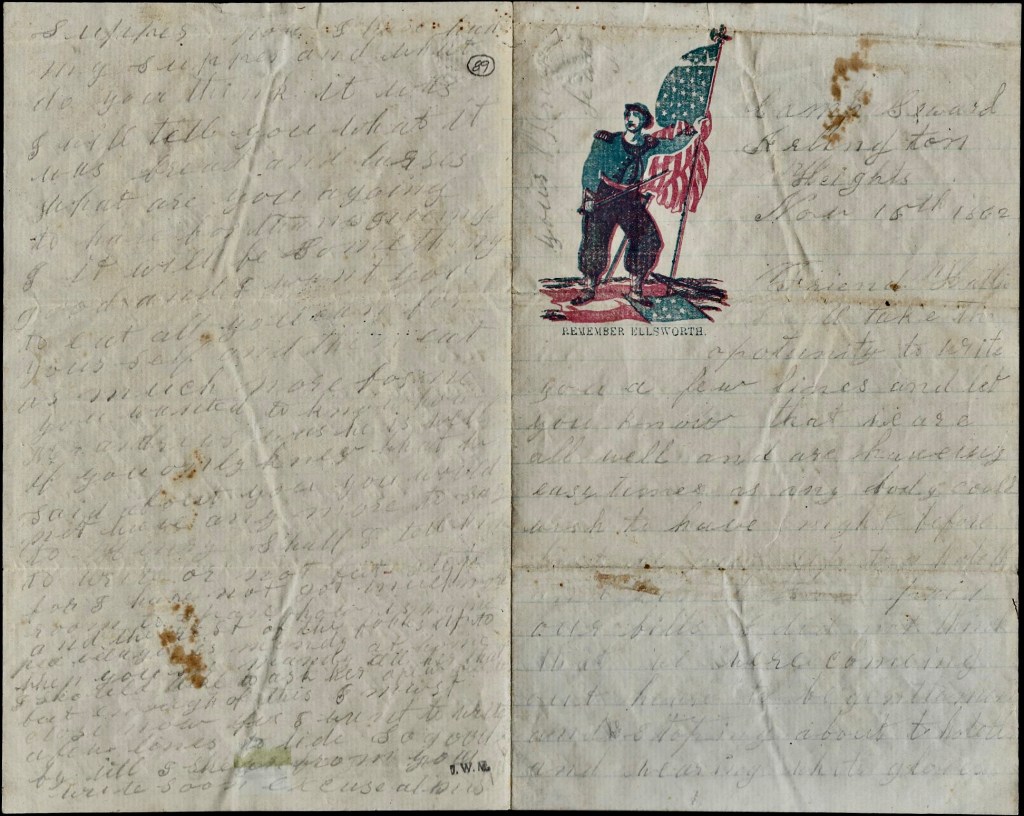
1861: Charles E. Ruch to Alfred Handler

These two letters were written by Charles E. Ruch (1840-1865), the son of Samuel Ruch (1797-1875) and Sarah Rehrig (1807-1847) of Carbon County, Pennsylvania. Charles’ older sister, Hannah Ruch (1825-1899) was married in the 1840s to Gideon Peter (1823-1883) whose younger brothers are mentioned in these letters.

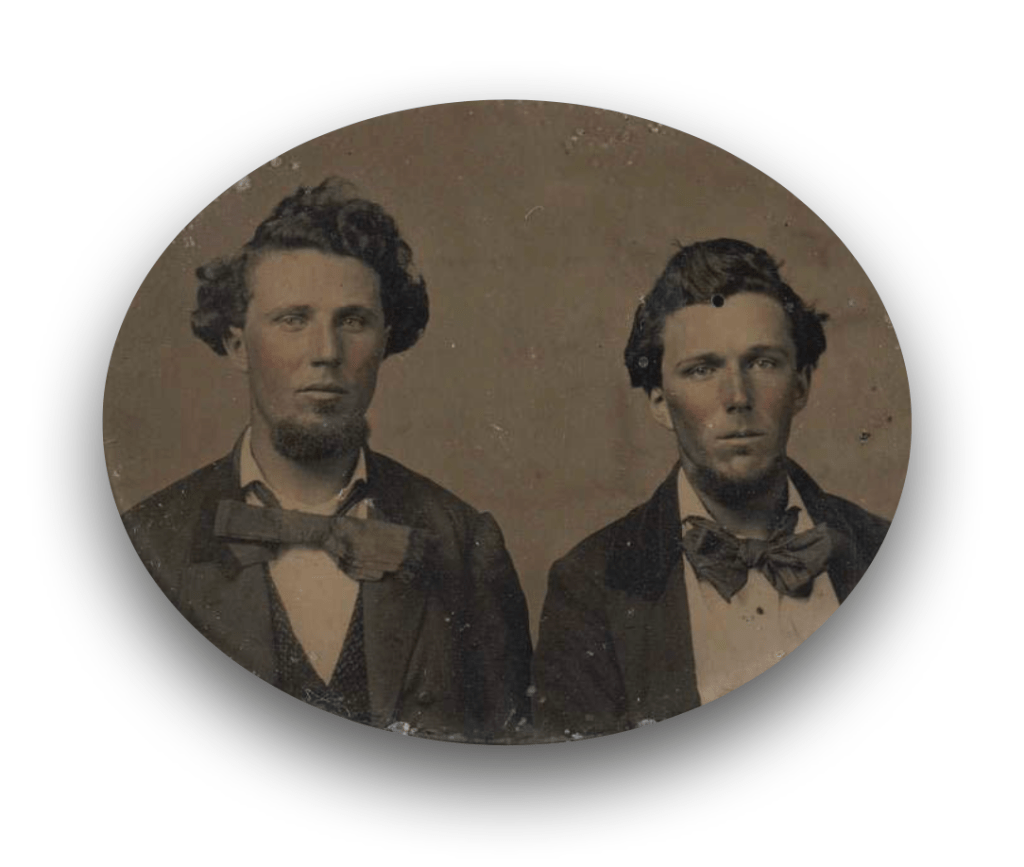
I could not find an image of Charles but here is William Lomison of Co. G, 81st Pennsylvania wearing an early war uniform of the regiment. William was killed in action at Antietam. This image was posted on CW Faces by Ronn Palm from his museum in Gettysburg.

According to muster records, Charles enlisted on 15 October 1861 and was mustered into Co. I, 81st Pennsylvania Volunteers 9the “Fighting Chippewas”) to serve three years. He was described as standing 5′ 8″ tall, with light hair and hazel eyes—a carpenter by trade and undoubtedly with a limited education based on his letter writing skills. Charles was taken prisoner at Reams’ Station in Virginia on 25 August 1864 and was sent to the prison at Andersonville in Georgia. He appears to have been among the prisoners relocated to Salisbury Prison in North Carolina where he died on 17 January 1865. [Another source says he died at Andersonville.]

The 81st Pennsylvania Regiment was recruited under the direction of James Miller, a soldier of the Mexican War, in obedience to an order of the War Department. Six companies were from the city of Philadelphia, and four from the counties of Carbon and Luzerne. Recruiting commenced early in August, and the men reported by squads and companies at the general camp of rendezvous near Easton. On the 10th of October 1861 the regiment proceeded to Washington, and went into camp at Kendall Green. Two weeks later it moved to a camp overlooking the East Branch of the Potomac and the Navy Yard. It was here assigned to a brigade commanded by General Casey, subsequently by General Howard, and known as the First Brigade, First Division, of the Second Corps. With the exception of an expedition to Marlborough, Maryland, as a police force for the preservation of order at the general elections, where the peace was threatened, it was engaged in no active duty until the beginning of December.

[Note: These letters are from the personal collection of William Clemens and are published on Spared & Shared by express consent.]

Letter 1

Washington City
[no date given]

Dear Sir,

I took the opportunity to inform a dew lines unto you that we are all well at present time and in hoping this few lines will find you in the same state of good health & humor. And further, I received your letter on the twelfth of this month and was glad to hear from you. I would have written to you long before but I have no time. I am on duty pretty near every day now. I will write to you every week.

Mr. Alfred, excuse me for this time. I will satisfy you now from this time. I wish I can talk to you about one day. I would tell you much news. I have seen many things. I have seen more since I left that I ever saw in my life.

We have all our clothing and blanket. We have one [pair of] pants and two drawers and two shirts & three coats and one pair of shoes and two pair of summer stockings and one cap. Now I will tell you a statement about bedding. I and Charles Peter and Joseph Peter, & Edwin Rehrin, & William Rernig, and William Hunsicker [are] sleeping together in one tent. The tent is about eight feet long and six feet broad and so on.

Mr. Al H., I wish I can see you or I hope we come back before long. Then I will speak to you. I and Charles Peter [will] come up on your house on purpose for to talk with you. This is all for this time. Excuse me for that poor writing. I have no place for to write nice. Write to me soon. Then I will answer you right away.

If any of you want to write to me, direct your letter to Mr. C. E. Ruch, Washington City D. C., 36th Regiment, Company I, Pennsylvania Volunteers, Col. [James] Miller in care of Captain [William J.] Conner.

So much of your good friend, — C. E. Ruch & C. E. Peter.

Al H. I think Anna Miller and Martha Bernhard is all right. Alfred, I wish you good luck.


Letter 2

Alexandria, Virginia
December 16, 1861

Dear Friend Alfred Hander,

I took the opportunity to inform a few lines unto you that I am well at present and in hoping this few lines will find you in the same state of good health & further I let you know that I received your kind letter the fifteenth day of this month and I was very glad to read it and I found that you was up in Rockport.

Further I let you know that our regiment was on picket guard last week. We was in Munson’s Hill. It is about two miles from our camp[ing] place. I and Joseph Peter and Owen Buck from Lehighton and Israel Youse 1 and William Keck—we five—have got one post. We have got the worst place in the whole lot. Our post was the nearest to the rebels [but] I am not afraid for a rebel.

We are in a brigade now. Our brigade has five regiments—about five thousand men. The name from our camp is Camp California. I must stop writing. It is time to get ready for tresperate [dress parade].

Don’t forget to write and write all the news that you know. Write soon. Write soon. So much from your friend, good friend, — C. E. Ruch

Direction: C. E. Ruch, Alexandria, Va. 81st Regiment P. V., Col. Miller, Company I in care of Capt. [William J.] Conner.

Our regiment has lost the number. It is the 81st Regiment now.

1 There is a work of fiction based upon the service of Israel Youse entitled, “Death & Deliverance: A Young Civil War Soldier’s Journey” written by Keith A. Youse and published in 2007.

1856: William Monroe Pinckard to Thomas Butler Pinckard

This letter was written by William (“Will”) Monroe Pinckard (1837-18xx), the son of Dr. Thomas Butler Pinckard (1793-1860) and his first wife, Catherine Lawrence Vance (1804-1839) of Lexington, Kentucky.
During the Civil War, Will volunteered as a cannoneer in the Washington Artillery of New Orleans. His muster records indicate that he was present for all of the battles of the unit in 1864 and 1865. He mustered out of the service in April 1865.

Will’s letter includes a description of his efforts to sell a slave named Bob in 1856.

Transcription

Addressed to Dr. T. B. Pinckard, Lexington, Kentucky

New Orleans [Louisiana]
March 10th 1856

My Dear Father,

I received your affectionate letter a few days since and did not intend to answer it until I could inform you of the sale of Bob. But it is rather doubtful when he will be sold. I thought I would just write you a few lines now. Since you left, I have tried constantly to sell Bob, have taken several persons round to look at him, but none would offer anything for him. I have taken him to [Joseph A.] Beard when he was selling fifty or more slaves at auction, but he finally said he could get nothing for him. So last Saturday as I saw L. Carman & Co. was going to sell a lot of slaves, I took Bob around to him, limiting him to $600.

After the sale was over, I found he had sold Bob for exactly $600 but the man who bought him was to have him examined and said he would let me know this morning whether he would take him. So this morning I went round and found he would not take him as he said Bob was a “dirt eater” 1 and there was a malformation in his ribs—one leg was larger than the other, &c. So he is still on hand but I will continue to do my best to dispose of him. He is still at “Payne, Steele & Co.” who find employment for & board him.

Joseph A. Beard, Auctioneer, kept his office at 45 Magazine Street in New Orleans

I saw Dr. Smith a few days ago since. He said all were well at the “Pass” [Pass Christian, Harrison county, Miss.], & asked to be remembered to you. He thinks Mr. Toulement will still give the $4,000 and Uncle Ferd & Mr. Harrison say they would by all means advise you to sell immediately. Uncle Ferd says Mr. Harrison is of opinion that it is the best offer you will ever get and told him moreover you had better not delay longer but write to Mr. Sturges and advise him to sell while he can or it might prove to be like Bob—rather hard to get rid of. Most persons seem to be of the same opinion.

In your letter you ask “whether I get any salary?” Yes sir, it amounts to fifty or sixty dollars per month. I always draw money when I want. So far my board has cost me nothing as Aunt Sue would not let me pay. But I don’t intend to stand this any longer as I like to feel independent and I feel able to pay. They have all been very kind to me and I am very much pleased with my situation. I have been invited to some very pleasant parties and have made some very pleasant acquaintances.

I expect you will be surprised to learn Miss Mary Creath is to be married on the 15th of March to a Mr. Wassielle who is a cotton planter on Joe’s Bayou. He has been courting her for the last two or three years and was refused last winter. But there is nothing like perseverance. Dr. Follaine arrived here on Tuesday last and delivered his letter of introduction to Uncle Ferd. In the evening we called on him but he was out. Only saw his lady. He thinks I believe of spending his summer at the pass. Uncle Ferd is very well and as busy as can be. He comes to Uncle Munroe’s about once or twice a month—is doing a large business. I was very sorry indeed to hear of Uncle Philip’s ill fortune. Hope they will not have to give up their house. It seems so hard at this time of life to have to struggle for a living after toiling for so many years. Did Uncle Philip have to give up his tan yard & place in Lincoln?

I have a long letter from Tom today. It contained no news but said they were all well. We have quite a severe winter here but for the past two or three weeks we have had some real spring weather. I think there were a great many orange trees destroyed by the cold. Don’t know how ours have fared.

I believe Maj. Garland was an acquaintance of yours. I sent you the newspapers giving an account of his defaulting the New Orleans Treasury and trying to make his escape. He is now in the Paris Prison awaiting his trial. It is wonderful what men will do for money.

[William Makepeace] Thackeray—the great English author—is now among us delivering a course of lectures. Subject—the “four Georges of England, their courts, &c.” I will go tomorrow evening. The city is full with strangers and has been all winter. 2

I have been very well. Please remember me to Mam Uncle Philip, Aunt Armenia and all relations & write soon to your devoted son, — Will

P. S. Have you seen any of Mr. Christian’s family? I would like to hear from them.


1 “Dirt eating” or “geophagia” was a practice brought to the US by African slaves. I’ll refer readers to a sounder head than mine (see Geophagia) but suffice it to say that many slave owners avoided purchasing slaves known to eat dirt because they believed it made them more vulnerable to disease.

2 Thackeray’s lectures across the south from Savannah to New Orleans were not particularly lucrative. “I wish I had gone to Havana instead of peddling about the petty town in Georgia &c. where I did little more than pay my expenses,” he wrote a friend. [From Augusta to Columbus: Thackeray’s Experiences in Georgia, 1853 ad 1856, by Jane Lightcap Brown.]

1861: Kate (Pinckard) Greenleaf to Margaret St. Clair Pinckard

How Kate and her husband Alvin might have looked at the time of their wedding in 1855.

This letter was written by Katherine (“Kate”) Pinckard (1835-1905), the daughter of Dr. Thomas Butler Pinckard (1793-1860)—a grandnephew of President James Monroe—and his first wife, Catherine Lawrence Vance (1804-1839) of Lexington, Kentucky. After Kate’s mother died, her father married Mary Rothram Harper (1810-1900). Kate was married to Alvin Choate Greenleaf (1829-1866) in January 1855. By 1861 when this letter was written, the couple had one child, Katherine St. Clair Greenleaf (1856-1923). Alvin was the son of Edward Greenleaf (1802-1873) and Mary Jane Allen (1808-1887) who lived near Indianapolis in Marion county, Indiana, where this letter was penned in April 1861.

Kate wrote the letter to her sister, Margaret St. Clair Pinckard (1832-1919) who married James Granville Cecil (1808-1881) in Jefferson county, Kentucky in February 1868.

Transcription

Out at Mrs. Greenleaf’s
April 23, [1861]

My Darling Sister,

I received your most anxiously looked for letter today. Oh how thankful I am you are not here. Never in my life put together did I ever suffer such exquisite torture as I have since the news from Fort Sumter came; for I am living among a set of hungry wolves—I can call them nothing better, who are actually thirsting for the blood of those who are dearer to me than all the world beside, and they all take the greatest delight in letting me know the state of their feelings and insulting me in every possible way. I have prayed most earnestly that Christian forbearance and fortitude might be given me to endure in silence, and feel it was my my Heavenly Father who. was trying me for my good, and so far He has mercifully vouchsafed to hear me and I have with His gracious help been enabled to bear them. But I feel as if it will kill me to have to live so much longer—flesh and blood can’t bear it.

The people have gone perfectly mad. I never imagined savages could be so blood thirsty—Cousin Annie and Will as bad, if not worse than any. All our relations and all the Greenleafs and Espys. So you see, I am in the midst of a hornet’s nest and the worst of it is, here I have to stay, maybe all summer, though I would far rather die this minute if it is God’s will. I am afraid [my husband] Alvin is not doing much in Memphis. I have almost given up all hope of ever having a home anyplace in this world. I would not have one here for I can never live among my enemies and be happy of course, and all whom I once caed for here have taken every means to let me know they stood in that position.

I wrote you and Will not long since and told you Mr. Stringfellow was going as Chaplain with the Greys from here. Cousin Annie told me so. But I am happy to say there was no truth in it. I was there Saturday. He said he expected they would have to leave here, as anyone would be in danger of their life who was known to have any sympathy with the South and he is a true Southerner in every feeling. Oh! it would make the blood boil in your very veins to hear some of them talk. Others are so deplorably ignorant, it only awakens a feeling of perfect contempt. No one is allowed to even wish for peace without danger of being mobbed and if we dare say a word in favor of the South, we are to be hung. There are said to be 9,000 men (I cannot call them soldiers) here now encamped on the fairgrounds and I have heard several say they never in their lives saw such a Godless set of men congregated together. You know they ran the first battle in the Mexican War, but they can bluster and braggard. That is about as much as the people here know about bravery. They have no idea of true, manly courage. The Southerners have that yet to teach them. May the lesson be one they will never forget.

I feel when the struggle comes, I must be with you all down there for if you suffer, I must suffer. And if needs be, die with you. The South has many warm hearts here beating with love and sympathy for her, but they can do nothing but offer up their prayers which in this time of trouble, is our only resource—and a dear one it is.

I went to Mrs. Stewart’s the other day and had a good talk. I just feel like going right to see everyone I hear favors the South, for my heart goes right out to them. Someone gave Katie a Union flag the other day and I told her at first she should not have it, but she begged so hard and I could not explain to her then why I did not wish her to carry it, so I let her have it. As we were going home, she was running along before me and I stopped to speak to Nettie Stewart. I noticed some lady stop Katie and talk to her for some time and when I came up with her, I asked her what the lady said to her. She says, “So little girl, you are for the Union, are you?” “No ma’am,” says Katie, “I am for Bell. My mamma said I should not carry this flag at first, but a little girl gave it to me and I begged her to let me keep it, but I am a Southerner.” “I ain’t for Lincoln,” she always says whenever she hears his name mentioned.

I wrote Uncle Ferd and Will on the 14th and you and Will again on the 18th. I hope dear Will and all I love so dearly will belong to the Home Guard. I have written this in such haste and such a miserable pen, I am afraid you can’t read it, but I am almost crazy so you must make allowances. Katie is very well. I am afraid you will never get it, but hope you may. I shall try and get away from here if I have to walk. With a heart full of love to all you dear ones. I am your loving sister, — Kate

1863: John Pittenger to Mary E. Shafer

This letter was written by John Pittenger, Jr. (1838-1923) of Wayne county, Ohio. He came to Delaware county, Indiana, with his family in the 1850s. He wrote the letter to 19 year-old Mary E. Shafer, the daughter of German emigrants Adam and Eleanor Shafer of Muncie, Delaware county, Indiana. She married George N. Barrow in 1886.

John enlisted in Co. D, 84th Indiana Infantry on 13 August 1862, entering the service as a corporal. He was mustered out on 14 June 1865 at Nashville, Tennessee. According to the Indiana CW Database, John (or Jonathan) was taken prisoner at Chickamauga on 20 September 1863.

After the war he moved to Wayne, Kosciusko county, Indiana, and married Clarissa E. Jones in December 1868. There is another Pittenger to Shafer letter dated 28 January 1863 housed in the William Henry Smith Memorial Library in Indianapolis.

To read other letters I have transcribed by members of the 84th Indiana Infantry, see:

Nathan Hiatt, Co. A, 84th Indiana (1 Letter)
Henry Taylor Semans, Co. A, 84th Indiana (1 Letter)
David Thomas McConochy, Co. H, 84th Indiana (1 Letter)
William Randolph Way, Co. H, 84th Indiana (19 Letters)
George W. Whitzel, Co. H, 84th Indiana (2 Letters)

[This letter is from the personal collection of Rich Condon and is published on Spared & Shared by express consent.]

Transcription

Franklin, Tennessee
May 20th 1863

Dear Miss,

I embrace this privilege of dropping you a few lines in reply to your kind letter of the 7th [which] was duly received and its contents perused with pleasure and I now sit myself with delight to try to drop a few lines in reply which may be of interest to you.

Things is extremely quiet here at present. There has been no picket fighting done amongst the pickets nor any Rebels seen for some time and consequently there is no news of importance and we have been here so long it is getting to be one constant routine of camp scenery every day and nothing new so I hardly know what to write.

You said there was a very fine prospect for fruit. I hope it will do well and I get home to help eat some of it. I think I could enjoy myself very well.

You said you wished I had of been there to of took dinner with you. Well I wish so too but I am too far off to accept of the invitation. I would like to have one dinner like I use to have for a soldier’s fare is not very good sometimes and but few varieties.

I hope this war will soon be over and then I will come down and take tea with you. We will have a good time generally, don’t you think so?

Now it is pretty near night and I will have to close. You must excuse a short and poorly written letter for I have to sit down in my bunk and write on my knee and so you must look over all bad writing. This leaves me well and I hope it may find you the same for health is the greatest blessing the Lord can bestow in us. The other boys is all well. Rueben Pittenger 1 has got with us at last and he looks tolerable well.

Mr. Myers was down to try to get Jacob home and he thought he would when he was here. You had better bet we was all glad to see him. Excuse all mistakes and write soon. Believe me to be your true friend, — John Pittenger

Goodbye.


1 Reuben Pittinger (1838-1864) also served in Co. D, 84th Indiana Infantry but died in the service at the Battle of Kennesaw Mountain in Cobb county, Georgia. He may have been John’s cousin.

1863: Vincent Francis Lilly to his Family

The following two letters came to me for transcription from Jen Foley with the following request:

I could not find an image of Vincent but here is one of Patrick Monaghan of Co. K, 22nd Iowa Infantry. He was wounded in the same battle where Vincent was killed. [Iowa Civil War Faces]

I recently came across your page on Facebook and it’s really amazing what you are doing. Not too long ago I acquired the pension files of my great-great-granduncle, Vincent Lilly, who served in the 22nd Iowa Infantry and was killed at Vicksburg in 1863. The file included a few letters he had written to his mother and brother. I have been in the process of transcribing one letter he wrote to his mother, my great-great-great-grandmother Elizabeth Mills Lilly. The ink is mostly legible and it’s just a matter of trying to read the handwriting. But I have been at a loss as to what to do with the other letters because the handwriting is so faded that I can’t make it out in most places. This is an important piece of my family history and it’s especially important to me to honor Vincent, who was just 21 when he died. His younger brother James was my great-great-grandfather. James was too young to enlist though another brother, Charles, also served in the 22nd Iowa Infantry. Fortunately Charles survived the war and lived on until 1911.

Vincent Francis Lilly (1841-1863) was the son of Francis Lilly (1812-1872) and Frances Elizabeth Mills (1821-1898) of College, Linn county, Iowa. The Lilly family resided in Lancaster, Ohio, until sometime in the 1850s when they relocated to Iowa. Vincent and his younger brother Charles (“Charley”) E. Lilly (1844-1911), enlisted on 9 August 1862 in Co. H, 22nd Iowa Infantry. Charley survived the war, Vincent did not. He was killed on 22 May 1863 in the “suicidal frontal assault” on the Railroad Redoubt (or “Fort Beauregard”) near Vicksburg. Several members of the 22nd Iowa actually made through a ditch of the redoubt, up the side and through a hole blasted in the parapet by Union artillery fire where they fought hand to hand and planted their flag on the ramparts, but they were eventually driven back.

Both of these letters were written from the camp of the 22nd Iowa Infantry as they awaited transports to cross the Mississippi River below Vicksburg in mid-April 1863.

The 22nd Iowa National Flag that flew over Vicksburg on May 22nd, 1863 rests in the basement of the Iowa State Historical Building at  Des Moines, Iowa.  This flag is one of over 200 Civil War battle flags in the Civil War Battle Flag preservation project at the State Historical Society of Iowa in Des Moines.  Due to damage, the flag is not fully unfurled and represents only a portion of its original size.   Pictured above:  Flag preservation staff from Iowa State Historical Society (Sheila and Sarah), 24th Iowa Re-enactor, Terry Folkerts – Iowa Ghost Town Project videographer, Jeffry Burden – 22nd Iowa Infantry historian and editor of Vanishing Footprints, and Kathy Baker, Marshall County Recorder.  Lt. Nick Messenger was the Marshall County Recorder from 1872 through 1880.

Letter 1

Camp near Carthage, Louisiana
April 17th 1863

Dear brother Sam,

We have moved 20 miles below Vicksburg I do not know what we are going to do. It is supposed that we will work our way in the rear of Vicksburg. We have march through this state here. We had been within 6 miles of Vicksburg. This is the beautifulest country I ever seen. The land is level and rich. We are camped in a large cotton field. As we moved down here, the inhabitants leave everything and flee. The most of them burnt their cotton and grain. Most every plantation has a saw mill and cotton gin on. Our boys uses the saw mills to saw lumber for flat boats to cross steams in and to fix the roads with. We are within 5 or 6 miles of 4 or 5,000 rebels that is on an island and they can’t get out and yet we can’t get them for water and swamp, but we are building boats as fast as we can so that we can get at them. They are getting reinforcements from Vicksburg and I think it will make that place easier to take. They do not want to lose the island for they save all the stock that was in this county there and I guess we will fool them.

Well Sam, Charley is detached from our company to a 1st Iowa Battery. He is cannoneer of a 6-pounder. That battery is in our Brigade near the rear. A great many troops are here now. I don’t know how many there is—somewhere in the neighborhood of 100,000. We have plenty of negroes to do our work. We don’t have any fatigue duty to do and are getting lazy as dogs. I seen Charley last night. He is well and likes his exchange very well. They do not have to march; they ride o the cannon [caissons]. We just come here yesterday from Richmond and cut a cross a short bend in the river.

Well, Sam, I guess you can’t get this letter til after the. battle for they have stopped the mail at present and I don’t know whether we can get any or not. They stop our mail….

Yesterday we marched 16 miles and over the prettiest country I ever seen. We are going to stay over here two or three days. A[ddison J.] Booth is well and fat as a pig. He is cook for his mess of 4. John Carmichael and Anderson Purcell is sick. They was left at Richmond. They had the mumps pretty bad but are getting better. They was walking around yesterday morning.

Sam, our regiment has some 50 nigger waiters and we find them awful handy. Sam, A[ddison] Booth commenced to write on this sheet and spill the ink on it so he tore it off. I commenced this letter the 17th. It is now the 18th. It rained last night and is awful muddy this morning. Everything is still except we send the rebels a shell once in a while. We have got them where we want them. Our troops is camped on the island and more going over to camp. There is also several gunboats watching them.

Well, Sam, I forgot to tell you that I am well and enjoying myself very well and hope you are enjoying the same blessing. The 24th [Iowa] is here. I am going to see them so I will have to close for this time by requesting you to write as soon as you get this letter.

P. S. I received the package of papers and book you sent to us. We are going to draw our pay this week and will send it home by James Shrader. No more. This from you affectionate brother, — V. F. Lilly.

Give my love to all the girls.

P. S. Sam, we have marching orders. We have to march at 2 o’clock this morning with 2 days rations in our haversacks and the boys is up cooking. I will enclose $20.00 and Charley will send $20.00 by Jim Shrader. He is coming there. I went to see Charley to get his [money] and it was dark as the devil and muddy as hell. We will have a nice time marching in the dark. No more.

Letter 2

Camp near Carthage, Louisiana
April 21st 1863

Dear Mother,

I received your kind letter last evening and was glad to hear from you. It has been a good while since I heard from you, or I thought it was. Your letter found us well and in good spirits and I hope when these few lines comes to hand, they will find you the same.

Well Mother, I was a Carthage yesterday. That is where the rebels was but they left. We burnt the town and found a great many horses and cattle that they could not take with them. Also a large quantity of cotton and you better believe we had a nice bon fire. We are going to attack Vicksburg as soon as we get in the rear. There is something like 100,000 troops to cross the river and it takes a good while. Our Division commenced crossing today. Our Brigade will cross tomorrow and as soon as we take Vicksburg, we are coming North to tend to the traitors there.

Charley was in our tent last night. He is well and like his change very well.

Well, Mother, things you sent in the box has not come yet. I guess the things that was sent will never get too Co. H. We will draw our pay tomorrow. I will send it home by James Shrader. We expected it three days ago but there is so many troops to pay that it takes a good while to get around.

Well, Mother, I have no news to tell except there is preparations for a big battle and I guess we will have a finger in the pie for we want to put down this rebellion or get whipped for we are tired of soldiering. We have to drill hard every day from daylight till dark and it is awful hard work. We have three hours [off] at noon for it is awful hot. I will tell you the drills we have to perform every day. In the morning from 6 till 8 company drill, from 8:30 till 11 Battalion drill. Brigade drill 11 till 4. Then Division drill till 6 tor 7. Then dress parade and we are willing to quit. In the morning we will cross the river and it tickles the boys considerable.

Well, Mother, I don’t know what to write for there is nothing going on in camp so I will have to close for this time by requesting you to write soon. This from your affectionate son, — V. F. Lilly

Send along love to all enquiring friends. I wrote to Sam the other day and have not had a chance to send it yet so I will put this in it.

They are calling roll for drill. Goodbye for this time. — V. F. L.

P. S. I received two months pay this afternoon but I don’t know how to get it home as James Shrader is not going home till after the battle and we don’t like to risk it by mail. There is no Express Office here so we will have to keep it till we get where we can send it. Mother, please send us some postage stamps and get them here.

Troops is crossing the river as fast as they can cross in skiffs, flatboats, coal barges, gunboats, rafts, steamboats, and everything they can get. Thy have to go by water about 6 miles down the bayou, then cross the river. It is raining now pretty hard. You use to think that Iowa mud was so sticky and hard to clean up. You should see this [mud] when we go out. It will stick to our feet and we have to kick off every step.

Well, I have no more news. Goodbye, — V. F. Lilly

1863-64: The Civil War Letters of Francis Henry West, 31st Wisconsin Infantry

These Civil War letters were written by Francis Henry West (1825-1896), an American businessman, politician, and Wisconsin pioneer. He was a member of the Wisconsin Legislature for three years, and served as a Union Army officer during the American Civil War, earning an honorary brevet to brigadier general.

Francis Henry West, US Biographical Dictionary & Portrait Gallery

West was born in Charlestown, New Hampshire. He moved to the Wisconsin Territory in 1845, eventually settling in Monroe, in Green County, in 1846. In Green County, he worked in the lumber industry. In 1853, he was elected as a Democrat to represent Green County in the Wisconsin State Senate for the 1854 and 1855 sessions. In 1855, he was the Republican nominee for Bank Comptroller, but was not successful. In 1859 and 1860, he accompanied parties of migrants from New York to California.

West joined the Army on August 28, 1862, and was commissioned a lieutenant colonel with the 31st Wisconsin Volunteer Infantry Regiment, which was still being organized in Wisconsin. The 31st Wisconsin was created from two volunteer battalions from Crawford County and Racine. The 31st mustered into service in October 1862 and left Wisconsin in March 1863, traveling to Kentucky via Cairo, Illinois, where they were attached to the XVI Army Corps. They spent the summer of 1863 on patrols and picket duty in southern Illinois, western Kentucky, protecting supply routes along the Mississippi River.

In September 1863, they were ordered to Nashville. Here, their colonel, Isaac E. Messmore, resigned, and, on October 8, Lt. Colonel West was promoted to colonel of the regiment. Through the winter of 1863–64, the regiment was stationed at Murfreesboro, Tennessee, and continued to serve as protection for logistics and supplies. In April 1864, the 31st was attached to the XX Corps and split into detachments to protect a long stretch of railroad lines in Tennessee. In June, the regiment was ordered to consolidate and return to Nashville.

On July 5, the 31st Wisconsin was ordered by General William Tecumseh Sherman to proceed to the front of the ongoing Atlanta campaign. The 31st traveled by train to Marietta, Georgia, and reached its position on the line July 21. The regiment worked on constructing siege fortifications around Atlanta and came under frequent enemy fire due to their proximity to the enemy lines. They did not take part in the actual battle, but were one of the first units to enter the city. The regiment was assigned to provide security in the city and protect foraging operations in the surrounding area.

On November 15, 1864, the XX Corps broke camp and marched out of the city to begin their part in Sherman’s March to the Sea. They advanced without encountering any resistance until ten miles outside Savannah where, on December 9, they encountered two small enemy fortifications. The 31st Wisconsin, along with the 61st Ohio, were ordered to flank the position through a thick swamp. They passed the swamp and charged the enemy, taking the position with light casualties. For their action, they received the compliments of General Sherman. The regiment joined the siege of Savannah, and after capturing the city were assigned quarters there.

On January 18, 1865, the 31st Wisconsin departed Savannah and marched for Purrysburg, South Carolina, at the start of the Carolinas campaign. The regiment proceeded through South Carolina, burning enemy facilities, tearing up railroad tracks, and pushing the enemy’s rear guard toward North Carolina. On March 1, the 31st advanced toward Chesterfield, South Carolina, near the border with North Carolina. They forced a small confederate force to flee north, then stopped in the village. On March 16, the 31st took position on the front line for Averasborough, where they were shelled and took casualties. Three days later, they were in the advance on approach to Bentonville, along with two other regiments, where they encountered significant Confederate opposition and found their flanks exposed. They fell back and formed a defensive position with elements of the XIV and XX Corps. The Confederates attacked their position five times and were repelled in fierce fighting. This was the worst fighting that they saw during the war, and suffered ten killed and forty-two wounded.

On March 24, they reached Goldsboro, North Carolina, where they stopped to rest and re-equip. While the 31st was camped at Goldsboro, Ulysses S. Grant accepted the surrender of Robert E. Lee at Appomatox. On April 10, the 31st marched out to continue their advance toward Raleigh, pursuing Joseph E. Johnston and the remnants of the Army of the South. But before they reached Raleigh, they received word that Johnston had surrendered to Sherman and the war was effectively over.

The 31st was ordered back to Washington, where they participated in the Grand Review of the Armies in May, and West mustered out on June 20, 1865.[2] While in Washington, U.S. President Andrew Johnson nominated Colonel West for an honorary brevet to brigadier general of volunteers for gallant service in the field, effective back to March 19, 1865, the day of their combat at Bentonville. The United States Senate confirmed the brevet on March 12, 1866.

After the war, General West moved to Milwaukee County and entered a partnership—Fowler & West—with James S. Fowler in the grain commission business. He served for six years on the board of directors of the Milwaukee Chamber of Commerce, including two years as president.

In 1873, he was elected on the Reform ticket to represent Northern Milwaukee County in the Wisconsin State Assembly for the 1874 session. The Reform Party was a short-lived coalition of Democrats, reformers, Liberal Republicans, and Grangers. Their signature accomplishment was the 1874 “Potter Law,” 1874 Wisconsin Act 273—named for Republican state senator Robert L. D. Potter—which established a new state Railroad Commission to aggressively regulate railroad and freight fees. In the Assembly, Colonel West served on the Committee on Railroads and the Committee on State Affairs. General West did not seek re-election in 1874.

During Grover Cleveland’s first presidential term, West was appointed United States Marshal for the Milwaukee district. After completing this final public service, Colonel West retired to Alabama, where two of his sons lived.

While on a trip to New York, in 1896, West slipped while attempting to step off of a street car and was severely injured. He was confined to his bed for several days before he was healthy enough to return to Alabama. He died a few weeks later, on March 6, 1896, at Bessemer, Alabama.

Francis H. West and his wife, Emma M. Rittenhouse, had several children. They included, Louise Ellen (1850-1878), Caroline (“Carrie”) (1852-1934), Edith (1854-1940), Susan (1859-1910), Grace (1866-1938), Benjamin F. (1868-1957), and Josephine (1872-1876). [Wikipedia]

To read other letters and diaries that I have transcribed by members of the 31st Wisconsin Infantry, see:

John Sine, Co. F, 31st Wisconsin (3 Diaries)
John A. McClure, Co. K, 31st Wisconsin (Diary & Letters)


Letter 1

Racine [Wisconsin]
February 27, 1863

My dear wife,

We leave for Cairo Sunday morning at eleven o’clock. I am sorry I did not know it when I left home so as to have bid you all a final farewell. I wish my dear wife you would kiss each one of the children and say goodbye to them for me. I find on paying all my bill and subscriptions that I have left barely $5 to start on a campaign with. I do not know what I shall do for money unless you send me some. I suppose I can borrow some for awhile. You must be more particular in directing your letters hereafter. At present, direct your letters to Cairo. Put on 31st Regt. Wisconsin Cols. I have not time to write more today. We shall [go] by way of Freeport.

My sweet little wife, you must find time to write very often to your loving husband. — F. H. West


Letter 2

Columbus, Kentucky
March 4th 1863

Dear Wife,

We left Racine Sunday morning and arrived Cairo on Tuesday morning all right except the loss of one man’s leg who was run over by the cars. His name is [Joshua] Davis and he belongs to Capt. [Robert B.] Stephenson’s Co. Davis on Dr. Roster’s farm. His leg was amputated and he was left at Centralia. On arriving at Cairo, I was ordered to this place where we arrived last night on the steamer Minnehaha.

We camped on the bluffs without tents or camp equipage. Had a rough time as it snowed. Today I am establishing my camp permanently. The Colonel left us for Freeport since which I have run the machine. The Colonel will join us in a few days.

General [Alexander] Asboth is in command here. Today we celebrate the anniversary of the taking of this stronghold from the rebels. I have no idea how long we shall remain here. I am kept on the jump all the time. My health is first rate.

Write often, dear wife, — F. H. West


Letter 3

View of Fort Halleck on the bluff above Columbus, Kentucky

Fort Halleck
Columbus, Kentucky
March 8, 1863

My Dear Wife,

I have not hear from you since I left home. We have drawn our tents and are regularly encamped inside the fort which is simply about forty acres enclosed by a deep ditch and breastwork of earth on which are mounted many big guns. We are on a very high bluff on the bank of the river. There are three regiments inside the fort and two regiments and a squadron of cavalry and a battery encamped on the outside. The fort is in command of Col. Messmore which leaves me in command of the regiment. A part of the regiment has gone as an escort to Paducah and a part under Capt. [Robert B.] Stephenson to Memphis. The people are nearly [all] secesh. I took a scout yesterday back a few miles into the country to see how matters looked. The inhabitants are very sullen and ugly. The mud in the streets of Columbus is from six to sixteen feet deep. Foot soldiers sometimes get mired and have to be pulled out with ropes. I never had any idea what mud was before. It rains most of the time. Quite a number of our men are getting sick. I hope, my dear wife, you will not be so slack in writing hereafter.

Affectionately yours, — F. H. West


Letter 4

Columbus, Kentucky
March 14, 1863

My Dear Wife,

I have just received your kind, affectionate letter of the 5th & 7th. I was beginning to feel very much troubled because I did not hear from you and was just sitting in my tent thinking about it when in passed the post master with your letter. I am sorry you did not send Willie’s letter. Have them all write as you propose. Hope you and little George will not hurt your eyes looking at each other. You never need to wait about sending your letters because you do not know where we are. Send them to the last place where you have heard of us and if we have left, the letters will follow us.

The weather is now very pleasant and the mud drying up very rapidly and we are getting along very pleasantly. Nearly all the forces except our regiment left here yesterday for Ft. Donaldson expecting to participate in a fight with Van Dorn. We wanted to go but were not allowed to. We are liable to have work to do at anytime and feel ready for it.

J. W. Stewart writes me that he has bought Thomas Millman’s place and wants to pay up the mortgage. Says you say there is $20 due on it. I think there is about $50 interest and all due. You had better get Mr. Bloom or someone to figure the interest all up just according to the endorsements and no other way and whatever it is, have it paid. He wants me to send a receipt against the mortgage as I can not discharge it from record. The fact is the mortgage was never put on record and only has to be surrendered up on payment in full. But you need not let them know that as they might not be as likely to pay. So I will enclose a receipt for you to draw the money on and when you get it, you can give up the mort. If they do not like to pay on the receipt, you can let them know that the mortgage is not recorded and it is probable they will pay on that.

I have borrowed thirty dollars of George and spent every cent of it so that I have not a cent of money on hand. Everything costs an enormous price in this country and a little money does not go far. I wish you would send me immediately a fifty dollar draft payable in Chicago or New York to my order.

I want you to keep me well posted up on your money matters and get that note taken up at the Bank as soon as possible. You will have to go personally to see about it and make no delays in any business transactions. You also want to see Mr. Rood frequently and keep posted up as to how he gets along collecting. Mr. Carpenter left notes with different parties in the mines to collect and send the money to the Bank. See if they are sending in any money and be careful not to make any mistake in settling up those mixed up note lists. Keep an exact memorandum of all the money you receive on those lists, who you received it of and when. You had better refer to this letter after so as to not to forget about it.

Have you received a discharge from Madison for the school fund mortgage?

I wish you would get your photograph well taken and send me a copy. And I am sure if you knew how much pleasure the sight of even a piece of paper from you gave me, you would write every day. Give my love to all the children. With fervent devotion, I remain yours, — F. H. West


Letter 5

Columbus, Kentucky
March 17, 1863

My dear wife,

I received yours of the 9th last night. Was very glad to hear that you were well. We are getting along very quietly down here at present. The weather is very fine—only a little to hot for comfort. You may look out for some big news from down the river before many days. I do not believe we shall be allowed to “hand in.” This is probably the most healthy place on the river and on that account I would like to remain here. I hope you will have the shade trees fixed up in good shape this spring and also the vines and shrubbery. You had better have some maples set in place of those elms that are dead or else get some smaller open land elms. I do not see how you will get along without Mike.

Em, I wish you would write to Mother occasionally. I do not need anything to make me comfortable at present except the $50 draft I wrote you about & hope the children will write that promised letter.

I hope my dear wife you will not continue to feel so disconsolate. I am sure I never felt less like being killed in my life. You may depend upon it, I shall come out all right. — F. H. West


Letter 6

Columbus, Kentucky
March 23rd 1863

My Dear Wife,

I have not heard from you since I received Loutie’s letter saying you were sick and of course I am very anxious about you. I hope I shall receive a letter tonight announcing your perfect recovery. I hope Lutie will write very often. She writes a very good letter.

I have no news to tell you. Everything is very quiet here. Col. Messmore has gone to Memphis on some business. I have been in command of the regiment since we left Freeport, Illinois. I am troubled very much with hoarseness and am sometimes afraid my voice will fail me entirely.

We are having a little rain today but the weather is really very fine, the wild plums being in full bloom. We have considerable sickness in camp. One man of Co. A died this morning. I think my own health is rather better than usual with the exception of over strained lungs.

Have you rented those two little bits of land yet? I suppose Mary Ann is with you yet/ I hope she will stay. Write all about all the folks and what they are doing. Affectionately yours, — F. H. West


Letter 7

Columbus, Kentucky
April 3rd 1863

My dear daughter Carrie,

I have just received your welcome letter of March 29th. I am glad to hear that you are taking music lessons and hope you will try and improve all you possibly can. I also expect you will learn to do all kinds of work so as to be of great help to your kind mother who has so much to do to take care of you.

You must be very patient and kind to that little boy that has so many teeth and take good care of him. I am glad you are going to have a nice garden. It makes one’s home so pleasant to have nice flowers and shrubbery. You will have to be very industrious and keep the weeds down. Do not let Dick (the rabbit) get away. I suppose you had a great time on April Fool Days. Did you get fooled any?

We have had nothing but bad winds and dust for a number of days which makes it very disagreeable in our little cloth houses. How would you like to see our hill city made up of little white cloth houses? That is the way we live here. You must be very kind and pleasant to your brothers and sisters and write again soon to your affectionate, — Father


Letter 8

Columbus, Kentucky
March [April] 5th 1863

My dear wife,

I have just received yours of April 1st. You seem to be getting along first rate for which I am very glad. We have had a little excitement in the way of a small scare, but it has about all blown over. Night before last it was reported that a large force were attacking Hickman twenty miles from here. I was ordered to have my men ready with ammunition and rations to start on a moment’s notice for the scene of action. I got them ready and have held them so since, but have had no orders to leave. I think it all a false alarm.

We occasionally lose a man by sickness. We buried one today but generally the health is good. I understand that the remainder of the 22nd have been captured. Have you learned what became of Capt. [James] Bintliff? 1

I am very unpleasantly situated in this regiment owing the peculiarities of our Colonel [Isaac E. Messmore] but I have stood it so far and am in hopes I can continue to stand it. He has the ambition of a Napoleon with ten times the jealousy that Old Dr. Fisher ever had, together with the most sordid avarice. He is perfectly unscrupulous as to means used to further his interests and entirely devoid of all feeling as to the rights or feelings of others. You can judge by this that I have a hard row to hoe. This, however, is all private matter but I cannot help, my dear one, of apprising you of all my troubles.

I have got my quarters fixed up very comfortably and they would be very pleasant were it not for the wind and dust which is very annoying. Quite a number of our men are engaged at all times as escorts to boats going up and down the river and as provost patrol and picket guards in different places.

Give my love to all the children. Affectionately yours, — F. H. West

1 The 22nd Wisconsin saw action at Thompson’s Station March 4–5, 1863 where nearly 200 of the regiment were captured by Bragg’s Cavalry forces under Van Dorn, nearly 18,000 strong. The regiment was then ordered to Brentwood Station on March 8. They saw action at Little Harpeth, Brentwood, on March 25 where the remainder of the regiment were surrounded and surrendered to Nathan Bedford Forrest. They were exchanged May 5, 1863. 


Letter 9

Columbus, Kentucky
April 9th 1863

My dear wife,

It is five or six days since I have had a letter from you. I am sorry you are getting negligent about writing. I learn that the scarlet fever is prevailing at Monroe. I hope our family will escape. Mrs. Messmore & Mrs. Mason came down yesterday and have gone to keeping house in a fine large house that is in the fort. If it was not for leaving so many children at home, you could come down here and stay as well as not. It is not over two days travel from Monroe and a very accessible place. Everything is very quiet in this part of the country at present and we are having a very dull time.
We were paid off yesterday up to the first of March. Enclosed I send you Paymaster’s draft for $300 payable to the order of Ludlow Bingham & Co. Take it down to them and have them give you credit for it. You can certainly take up that note now. It being a government draft, it does not need to have any stamp on it. We are having plenty of wind and dust as usual. I am getting so black and dirty you would not know me from an Indian.

Affectionately yours, — F. H. West


Letter 10

Fort Halleck
Columbus, Kentucky
April 18th 1863

My dear little daughter Edith,

I was very much pleased last night to receive a letter from you. Your describing Freddie as such a funny little boy makes me feel homesick. I would give a good deal to see the saucy little fellow “toddling” around.

I am delighted to hear that Willie is such a nice, industrious boy. He shall have a nice gentle little saddle pony as soon as he gets large enough to take care of him. What does George fin to busy himself about? I suppose he and “Little Dame Crump” keep very busy about something. I hope you make yourself as agreeable and useful as possible as I have no doubt you do. Are you and Mrs. Mosher as good friends as ever?

The weather is very nice and warm here. The trees and shrubs are in full foliage and there are many and beautiful flowers. I think you would like to live here very much. We have chased all the rebels away from here so we do not have any fighting to do at present. We have about two hundred of them that we have captured from time to time shut up in our prison here and a sorry looking set of fellows they are.

Your affectionate father.


Letter 11

Columbus, Kentucky
April 27 [25], 1863

My dear wife,

Why in the [ ] don’t I hear from you. I am getting alarmed, fearing some of you are sick. I also would like to hear of the safe arrival of the money sent you. I am as well as usual but unable to endure much hardship. I hope you are well and are having things fixed up nicely about the house. Have a martin box put up on the barn. I had one put up on a pole by my tent and it was immediately occupied by birds, the singing of which I find very pleasant, tending to turn one’s thoughts from the stern realities of war to bright visions of peace.

George started for home last Saturday. I wish you would get some nice check[ed] gingham and make me a couple of good, full-sized shirts without collars, but buttons for paper collars and send them by him on the first opportunity you have. I do not know as he will go to Monroe or if he does perhaps you cannot get them in time to send by him, but there will be some chance to send before long. I hope you will dry and can a good lot of fruits this summer so that if I remain in the Army you can send me a box of good things once in awhile. It is very difficult to get anything here. Besides, any such thing sent by you would seem much better.
Sunday morning, 26th

I have just received yours of the 21st and feel much relieved. I was getting very uneasy knowing that there was much sickness at Monroe. Do not fail to have the Monroe Sentinel sent to me regularly.
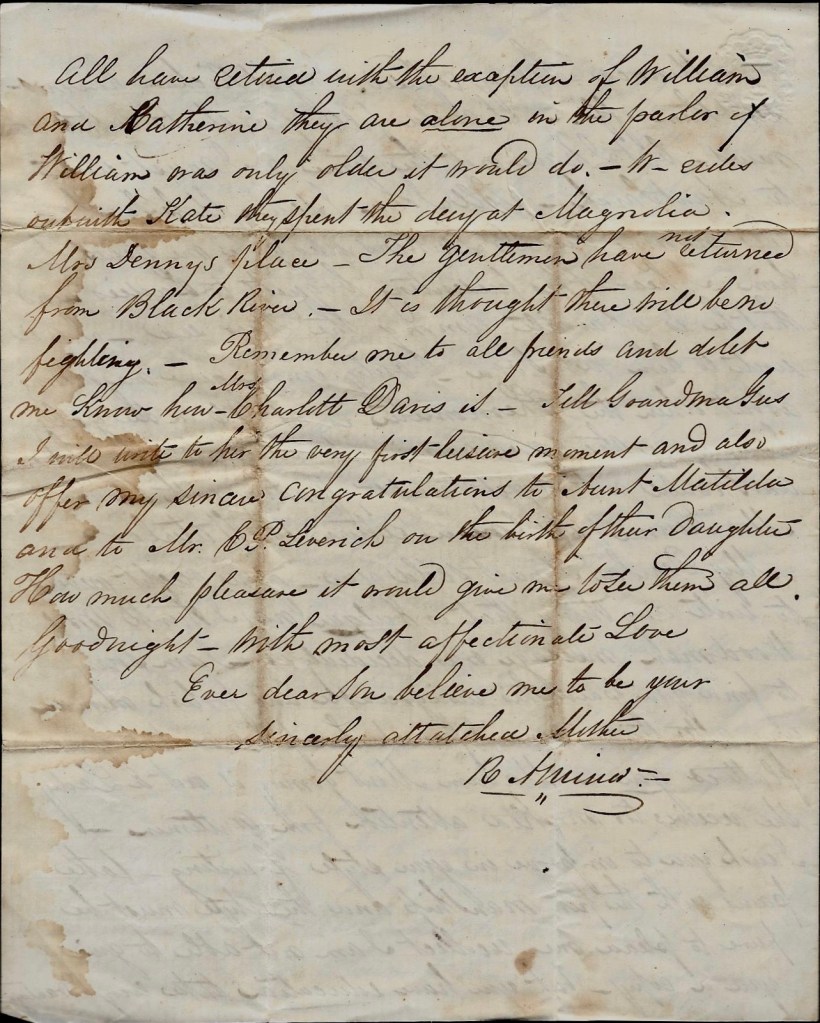
I judge by your letter that you received the $300 although you do not say so as you should have done if you received it. I wish you would send your letters to the office as soon as written. I see that many of them are not mailed for two or three days after they are written.

My proposition to the Dutchman is simply this—he can have the 30 acres by paying $300 down in money and $100 a year for three years with seven percent interest, interest payable annually. The last $300 to be secured by mortgage on the land.

I spent a very pleasant day in the country yesterday. The ten captains of the regiment, Mr. Bartlett and myself, took some saddle horses and ambulances and went out to Clinton, the county seat of Hickman County where the 21st Missouri Regiment are stationed and spent the day getting a good dinner at a Secesh hotel, the landlord of which had an arm shot off while in the rebel army at the Battle of Shiloh. The country about Clinton is beautiful but the inhabitants are the most wretched, shiftless, worthless looking set of white beings I ever saw. They do not seem to be one degree above the idiotic, ragged negroes who are loafing around in perfect swarms doing nothing. A large share of the farms are remaining uncultivated and everything going to destruction. — Frank


Letter 12

Columbus, Kentucky
May 7, 1863

My Dear Wife,

I received yours of 3rd inst. today and was rejoiced to hear from you again. I have never failed to answer your letters on the day that I received them. If you would do the same, we should each get two letters a week. If you would keep a memorandum making a note of everything that happens that you think at the time that you would like to write to me about, and then when you write, look it over and see that you put in all the items, I presume it would keep you from forgetting many things of interest. Your last letter was certainly the onl intimation that I ever had that you received the money sent except that you had paid the note at bank by which I could draw only an inference.

George got back all right a couple of days ago and I was rejoiced to receive my old sweet heart again that I had carried across the plains so carefully. It is quite a comfort although a very poor substitute for the original.

Frank Millman has gone home on a furlough until the 1st of June. You can send those shirts down by him if you do not get a chance before. Get Mike to see him about it. Tell Mike that I expect he will keep everything about right around the house. I hope you will get some of the improved kind of raspberries and strawberries this spring.

Our armies are doing some glorious fighting now. It makes me chafe like a caged hyena to be tied up here and not allowed to take a hand in [it]. I am still of my old opinion that the rebellion will be broken by the first of June.

We have had very cold, rainy weather for a few days back. Have you written to Mother yet? And what are Joe and Ellen about? And how is George Campbell suited with his new place?

We have just heard the terrible news of hooker’s defeat, contrary to our expectations. I can hardly keep from crying. I had such great faith in his success. What in God’s name are we coming to? I am too much depressed to write more. Do write often to your affectionate husband, — F. H. West


Letter 13

Columbus, Kentucky
May 13, 1863

My Dear Wife,

I have not written you for some time for the simple fact that I do not have a thing new to write about. The conflicting war news has kept us somewhat excited lately. Yesterday nearly everybody got drunk on the strength of Richmond’s being taken and so it goes. I am on detached service at present, being detailed on a general court martial in session in this place. It will probably occupy us for some time, during which time I have nothing to do with the regiment.

I am moving my quarters today into a couple of quite comfortable log houses. If it were not for the fleas, mosquitoes, heat, dust, and various other annoyances, I should be in favor of your coming down here. As it is, you are certainly much better off at home although it would be a great comfort to me to have you here. There are seven or eight of the officers’ wives here but it is rater a sorry place for them to stay. I received a letter from Fred today. He talks of coming down here soon.

I received a letter two or three days since. Will answer it soon. I hope little Freddy has got well by this time. Give my love to all the children and tell the boys I will write them a letter some day. — Frank


Letter 14

Columbus, Kentucky
May 18, 1863

My Dear Wife,

As I was eating breakfast this morning thinking what a pleasant house I had, I made up my mind that I must send for you. Just then an orderly came in with your very kind letter of the 10th in which you say you wish to come. You must stay here at least three or four weeks. If Mary will keep house for you, everything will go on just as well as though you were at home. The only trouble will be that you will get sick and tired of staying in this God-forsaken place before you have been here three days and I shall not enjoy your visit so much as I otherwise should knowing how sick you are. Some of the ladies here ride on horse back and some take rides out into the country in ambulances (a kind of stage) and I suppose manage to kill time some way.

Mrs. Capt. Burdick with two little children stops next door to me. The log huts are all close together and there is not a spear of grass to be seen from one of them. I have one large square room for office and sleeping room, and a room across the street for a dining room with a cook and wash room attached. Here my ostler and his wife—a very nice young woman from Darlington—stop, she doing the cooking and washing.

I do not want you to bring any of the children with you. You cannot bring any more than baggage enough for yourself and I want you relieved from all care of children once just to see how it will seem. And I want you to be able to pay proper attention to your own personal appearance which you will not have time to do if you have to rig out children. Besides, we cannot afford the expense of bringing any of the children. The fare down and back for yourself will be about forty dollars.

If you will get Fred to take you to Freeport, you could there take the cars through for Cairo without change of cars or stops. and I would meet you there when we could have a pleasant boat ride down here. Perhaps Fred is coming down and you can coe with him. I must now all about when and how you are going to start and which way you are going so as to make calculations accordingly and you must be sure and be up to time.

I think you had better come soon before the weather gets very warm. I suppose Freddie is old enough to get his own living now. You can start just as quick as you are a mind to—only write at least four days beforehand all about your starting. I hope you will come immediately while there are so many other ladies here. Stop in Cairo at the St. Charles Hotel (don’t forget this).

With unbounded affection, I remain as ever your devoted husband, — F. H. West


Letter 15

Columbus, Kentucky
Sunday, May 24, 1863

Dear Wife,

I have just received your very cool reply to my letter of invitation to you to come down here and am very much disheartened that you are not coming immediately to see me. You say you do not know as you have given me any encouragement that you would come. I will give an exact quotation from your letter which I certainly took as encouragement, “If you cannot come home, I must come and see you.” It is quite certain that I shall not be able to go home until after the war. We have not got long to live anyway and we might as well enjoy ourselves as much as possible while we do live. And I know of nothing that would afford me so much pleasure as a visit from the person that I love more than all the world. Besides, I had taken a great deal of pains and got everything fixed up as nice as possible to make your visit pleasant. And I am so disappointed that you are not coming.

I am going to send George to Cairo tomorrow thinking that possibly on the receipt of my other letter, you may have changed your mind and started. As for the mumps, they never hurt children. You might as well wait because one of them had caught a louse.

We have news that Vicksburg is captured with forty thousand prisoners but dare not believe it at all yet. If it should prove true, which God grant, it will pretty much end the rebellion.

All the ladies of the camp with their husbands have gone out to the woods today to have a picnic. I presume they will have a fine time. I am having a very lonesome day of it all alone. I wish you could have been here to have gone also.

Mrs. Capt. Rogers is going to start down on Monday the first day of June. She will take the cars at Warner so as to leave Freeport on the evening train Monday. Perhaps you can come then. If so, write instantly. Capt. Rogers would have her go by Monroe if there was any such arrangement.

I had supposed that this was quite a healthy place but it is not. It has the reputation of being one of the most sickly places in the South. We have over a hundred sick all the time. I am some afraid to have you come down on that account. It is also the reason I am anxious to see you come early in the season. I wish you would be more particular in dating your letters and not put on simply “April” or “May” as I always want to know what day they are written.

Your affectionate husband, — F. H. West


Letter 16

Columbus, Kentucky
Thursday, June 18, 1863

My Dear Wife,

I was very glad to receive as I did last night your line announcing your safe arrival home and that you found everything all right at home. You left just in the right time. There has been constant alarms that have kept the women frightened ever since. They did not leave any of them until this morning wen they all left under positive orders to do so except Mrs. Stephenson, Mrs. Colwel and Mrs. Dr. Thomas. The Colonel did not go to Washington, the General refusing to let him go at present. Teams are at work night and day hauling up large quantities of provisions and storing them in the old log houses so as to place the fort in condition to stand a siege and every preparation being made about the town for a vigorous defense. Every negro or white man about the town that could carry a gun has been armed and organized into companies. We have received reinforcements from other places.

The rebel generals Forrest and Cheatham are supposed to be advancing on us with a large force. I think they will have a merry time of it before they take us. I have no idea myself that they will try it at present but the general thinks they are sure to. Day before yesterday we sent out 20 of our regiment in cars to make a reconnaissance. When they had proceeded some distance, the train was fired upon by a large force when the engineer immediately took the back track. Not one of our men was hit. They returned the fire and saw some of the rebels fall. Yesterday we sent Companies B & E (Stephenson’s and Mason’s) but they saw no enemy. The cavalry that were sent out while you were here have been repulsed on the Tennessee river with what loss we have not learned. It seems a little more like war here than it did, though not enough to suit most of us yet.

Write often to your affectionate husband, — F. H. West


Letter 17

Columbus, Kentucky
Saturday, June 27, 1863

My Dear Wife,

I have just received yours of the 21st inst., the anniversary of all my past happiness and future joys. I am glad your visit to me is pleasantly remembered. I was fearful it would be otherwise. I was quite unwell for about a week since you were here but am feeling better now than I have done for a long time. Major Olmstead of the 27th Wisconsin is lying very sick in Col. Messmore’s quarters. I think he will die. We sent for his wife today.

It has rained nearly all the time for a week. I wish you had some of it in Wisconsin. Everything is very quiet here just now. We sent another expedition out to look for rebels day before yesterday but they all “skedaddled” on the approach of our boys. They ascertained that our boys of the first expedition in returning their fire killed a captain and one man of the rebel party.

I would like to have seen Edith representing an angel. I think she would come about as near a perfect representation as anything they could be got up on earth. I wonder you did not have “little George” representing a cupid. What part did Lou & Carried take?

You do not say a word about the collecting business. How is Mr. Carpenter getting along with it? You must look out for it sharply all the time. Also look after that Roberts and C__ Murphy notes and save every cent you get so that I can have money enough to start business with in Chicago when I get out of the army, if I want to, and I believe I will if we can sell out in Monroe.

We are going to have a great celebration here on the Fourth [of July]. I hope we can celebrate the fall of Vicksburg at the same time. I am glad the rebels are changing around a little in Pennsylvania. I am in hopes they will stir some of the Copperheads of the North up to a lively sense of their duty.

Did the trees live that Mike set out this spring? I have got my gray horse yet. I wish I could send him home for carriage horse for you. I am under the impression that we shall not remain in this but a very short time longer. We are all very anxious to get away. As ever, — Frank


Letter 18

Columbus, Kentucky
Sunday, June 28, 1863

Dear Wife,

I have just received yours in pencil of last Monday, I am surprised at the perfect fright you seem to be in. Everything is perfectly quiet here now. The Rebels never will occupy this place by force of arms again. As for general apprehension, I see no cause for it at all. In less than three months I believe we shall have driven out or captured every thing in the shape of a large force west of Georgia and the Alleghany Mountains and if the people of the middle and eastern states cannot take care of what is east of these, they are to be pitied. I am far from being discouraged at present.

As for our own regiment being mustered out, that is all a humbug. It is well understood here that it is the best drilled and best disciplined regiment in this district. Things are just as pleasant as every about headquarters. I have been compelled to put Lt. Lewis under arrest for disorderly conduct towards myself. It is generally believed in the regiment that he was instigated by the Colonel.

We are expecting to be sent down the river somewhere tomorrow but have got no orders yet. I shall not send this until I ascertain whether it is so or not. I hope you will continue to be scared if that will make you write very often.

Monday. I have just received yours of last Tuesday. You speak of our own dear little pet boys. Tell them their father expects them to be nice good boys. We have not got any marching orders yet although boats are still held here to take us off if necessary. We are expecting to go down to New Madrid to repel Price who is reported advancing on that place. It is probably all a scare. I still think we shall leave here for some place soon. I am sure I don’t care how quick. I hope you will not worry yourself on my account, my dear kind wife, for I am sure I shall come out all right.

Do the girls improve any in playing on the piano? I am going to write to Lou to see if you continue to wear your curls. If you do not, I shall make a fuss. With the most abiding affection, I remain devotedly yours, — F. H. West

We continue to have heavy showers and it is getting very muddy. I have got no money and unless I can sell y grey horse in a day or two, must send for some. Have you got any on hand?

Monday night. Everything all quiet. No prospect of getting away immediately. No letter from you tonight.


Letter 19

Columbus, Kentucky
July 4th 1863 (morning)

My dear wife,

I have just received yours of last Sunday and have got most of it ciphered out. I do not mean the figures but the writing. If you do not take more pains in writing, you will have to send an interpreter along with them for there is no one in this country that can read them. Now don’t be vexed and say you won’t write anymore but take a little more pains and not leave out so many words.

The expedition that left from the 4th Mo. Cavalry when you were here has been “gobbled up” together with the Lt. Col. commanding. They were defeated on the “Big Obion” with a loss of one hundred and fifty in killed, wounded, and missing.

Everything is very quiet here. We have an immense program for a celebration today. Do not know how it will come out yet. The weather for several days past has been terrible hot. It almost kills me. I will not write any more until after the celebration.

3 o’clock p.m. Have just come back, hot and wearied nearly to death from the celebration which was a grand fizzle. We were marched way down the river for two miles where the grounds had been fitted up and where the loyal citizens of Kentucky were to give us a big dinner and barbeque. After some speaking and singing, we found there was not a mouthful to eat or drink on the ground. Neither was there a Kentuckian present except a few negroes whereupon we suspected there might be an attempt made to take the fort during our absence. The celebration was adjourned after some very denunciating remarks by Col. Messmore on the conduct of the Kentucks and we hurried back home. Several men fell down sun struck and all were much worried. 1

I understood your financial statement very well. You do not say anything about how much money you have on hand or whether you have any or how Mr. Carpenter is getting along collecting. If you have any money, you must send me fifty dollars (a draft) as I cannot sell my horse and it may be some time before we are paid.

I have scolded you so much in this letter that I dare not scold you anymore and I do not believe you need it either. I hope you will keep an exact account of all your receipts and expenditures from the first of July on, starting the account with the amount of money you had on hand in that day.

Do continue to write very often to your fault-finding but very loving and devoted husband. — F. H. West

1 In the diary of Corp. John Sine of Co. F, 31st Wisconsin, his entry for the 4th of July stated: “Attended celebration at Columbus, Kentucky, today. Speech by Col Messmore did not amount to much. Got back to camp a little after noon. Very hot today.”


Letter 20

Columbus, Kentucky
July 5, 1863

Dear Wife,

Owing to a change in post quartermasters, I have been called upon to pay for the horse that I bought immediately. You must send me a hundred as soon as possible (a New York draft). We have not been paid off yet. I have about one thousand dollars due me from the government and individuals in the regiment which I am in hopes to get soon. It is so much hotter than it has ever been before. I am sorry I have ever said anything about warm weather. It is terrible now.

No letter from you yet. Make some arrangement for the money at the bank if you have not got it. In haste, — Frank


Letter 21

Columbus, Kentucky
Sunday, July 5th 1863

My Dear Em,

Although I mailed a letter to you this morning written yesterday, I cannot resist the desire to write you a line today, I am so lonely since you left and think of you so much as the only real true sympathetic friend I have on earth, It does seem too bad that we cannot remain together. The time seemed so short when you were here and so long since you left.

My situation continues to get more unpleasant (if possible) than ever. Unfortunately there seems to be entirely too few officers in the army that seem to have any appreciation for honor, honesty, or even decency. Still I have no thoughts of anything but “standing my hand” until the end. Everything seems to be on the move now and there certainly can be no complaints of inactivity on the part of the army at present and it seems as though the present crisis must result favorably for us. I hope, my dear pet companion, you will write me very kind and very frequent letters I hope.

Give my love to our dear little children and learn them to think a great deal of their papa. Mrs. Thomas, Colwel, and Stephenson still remain in camp. Affectionately yours, — Frank


Letter 22

Columbus, Kentucky
Thursday, July 9, 1863

Dear Wife,

I wrote you a line yesterday that we were celebrating the taking of Vicksburg. Last night it run into a regular row. The soldiers were turned loose into the town and they compelled every one in town to illuminate every pane of glass in their buildings. Those of those of the Secesh that objected, immediately had their buildings riddled. After they had riddled a few whiskey shops and consumed the contents, they became perfectly wild and we had a deuce of a time to get the men back to camp without their destroying the whole town. The whole thing was perfectly disgraceful but the fault was in the general in giving orders to let all the men into the town. Two hundred rebels could have taken the place at any time during the evening.

The men were bound to make up for the nice dinner that they did not get on the fourth. The weather continues excessively hot and many of the men are sick. We have about two hundred unfit for duty at present.

I want you to see Norman Churchill and see if he has or can do anything with that sawmill. I wrote him long ago about it but have never heard from him.

Friday, 10th. We fired a salute today n honor of the taking of Richmond. I hope it will not prove to have been premature but we have celebrated the taking of that place so many times, one cannot help being suspicious. We are having so much glorious new now-a-days one can hardly appreciate it. I think it is time some of our historians commenced writing, “the last days of the rebellion.”

The general sent up to the Fort this morning to have every man “fall in” instantly. I was sick in bed but jumped out and had the long roll sounded and the men in fighting shape in short order. I was really in hopes we were going to have a “little brush” at last but was disappointed. The enemy not showing themselves, the 32nd Iowa were sent out to look for them and have not returned yet. We understand the Rebs have gobbled up two more companies of the 4th Missouri Cavalry. I wish they would let me after them with the 31st. I feel first rate since there was a prospect of a fight. It did me more good than a dose of medicine. I don’t think, however, that there is the slightest probability that they will attack this place. I have not heard from you since yours of July 1st. Why don’t you write?

2 o’clock Saturday morning. As I have to be up all night in command of the firt, I want to kill a little time in writing to you. I have just received yours of the 4th. Our whole force is standing to arms through the night expecting an attack. I do not think there is any danger of our being attacked here immediately, however. The general continues to send small squads out scouting who are not strong enough to sustain themselves and of course are captured.

The 32nd Iowa sent out today arrived too late to assist the two cavalry companies spoken of before. The Rebels killed or captured every man of them and had just left when our force got there as they were all mounted and 2,000 strong. Our force did not pursue them. This was at Union City out on the railroad 20 miles from here…


Letter 23

Columbus, Kentucky
Sunday eve., July 12, 1863

Dear Em,

I did not think I would write to you again so soon but I could not get through the day without writing a few lines. We have had a great change in the weather today. It is as cold as Greenland. I think this is a terrible sickly hole. We have about two hundred sick and only one surgeon, Dr. Thomas. Dr. Galen has gone home sick. Dr. Mason left about the time you did and has not returned. The most interesting thing we have had today was a big “nigger” meeting on the bank of the river under our quarters. Nine of the black damsels were baptized in the river. They out did any Methodist meeting you ever saw in the way of shouting, clapping of hands, &c.

I received a short letter from Mother today. She sent her love to you.

We have five regiments of infantry here at present and a little cavalry and artillery, besides part of a negro regiment. Everything is all quiet. I believe the general intends fitting out an expedition for the interior in a day or two. I hope he will send me out.

Wednesday, July 15th. We have not been “gobbled” yet expect by fleas, and they have done about annihilated me. To every one that was here when you were here, there is now a hundred. Our men are pretty worn out by being called out nights. The old general is very excitable and scary and everytime he hears of a rebel within twenty miles has us out under arms. Col. Messmore is still worse. Between them they have tried to keep up a perfect scare for a week past. They have had very poor success however so far as most of us are concerned. We are always ready, however, to turn out at a second’s warning.

Col. Messmore started for Washington this morning and I have assumed command of the fort. The garrison consists of two full and three parts of regiments. In case of attack—of which I have no hopes—I shall have a fine chance to try myself.

Evening. I have just received yours of the 9th. I am so sorry little Susie has lost her curls. The Adjutant is all right and my right hand man in “running the machine.” Mrs. Holland is here yet but unwell and has to keep a Negress to do her work. Dr. Mason and his wife returned this evening. I have to be up nearly all night every night. It is now midnight and I am just sending out extra guards on the picket line. Have no fears of an attack, however. What glorious news we are getting from every direction. I am afraid you will think I am a prophet. With much affection for you to express. I am, — Frank


Letter 24

Columbus, Kentucky
Sunday, July 19, 1863

Dear Wife,

I received yours of the 12th last night. I forgot to acknowledge the receipt of the handkerchief sent in a newspaper. I suppose the reason I forgot it was that the handkerchief was so small. Since you left, I have roomed alone, the adjutant stopping with the Major. The Major has gone out to Union City today with four companies to see what he can find. THere are just reels enough a raiding around here to keep the general scared to death without being enough so that we can corner them and get up any fight. They are well mounted and in this timbered country it is impossible for infantry to catch them. They simply prowl around and “gobble” any small squad they can find away from the main force.

The weather is quite hot again but the sun does not affect me much as I have got so thin that it shines right through me without making any shadow. I do not know whether I shall be able to get a leave of absence i September or not. Field officers for duty are so very scarce here now, it will be difficult for me to get away.

I hope you will not get slack in money matters again. We must save some to commence business with when the war is over. If we do not get paid by the first of August, you will have to send me some money, but do not send only until I send for it.

Evening. The regiment has got back. No enemy found. Everything dull, hot and tedious. Affectionately yours, — Frank

Do write. Tell about the children and everything else.


Letter 25

Columbus, Kentucky
September 8, 1863

My dear wife,

Yours of last Wednesday has been received. I am very glad that you can find time to write i the middle of the week. You say you were at a party “last night.” Why did you not tell me where it was and who was there and what was said and how the ladies were dressed and all about it? I am sure you might have written a very entertaining letter in that subject along.

The Fort headquarters are turned into a hospital. Dr. [Darius] Mason being sick in one room, the adjutant [James F. Suddith] in another, and the Major—who is very dangerously sick—in another. We telegraphed yesterday for his wife to come immediately. I went to bed day before yesterday not expecting to get up again for a month but it worked off in a fit of sick headache and I am all right again. The weather is as hot as it has been any time this summer.

Wednesday morning. The Major [William J. Gibson] has been given up by the surgeons. I fear he will die before his wife gets here. Still he may recover. The adjutant and Dr. Mason were sent to the Post Hospital this morning. Captains [Edward K.] Buttrick and [Edwin A.] Bottum and Lieuts. [George R.] Peck and Stevens were there before. I think none of them are dangerously sick. I have demanded a court of inquiry to investigate the conduct of the officers in relation to certain charges that have long been made by the enlisted men of the regiment. I have done this in order that the innocent, which includes a very large share of the officers, might be cleared of the stigma, as well as that the guilty—if there are any—might be exposed and punished. There is a terrible squirming among the very small Messmore clique.

It is thought that the Major has Yellow Fever. If so, we may expect a terrible scourging here before we get through with it.

Wednesday evening.

Another victim to this cursed rebellion. The Major is dead. He died at seven o’clock this evening. His wife has not arrived yet. He was a noble hearted man, greatly loved by the regiment who are now mourning. It is dark times for the 31st. I remain, my dear wife, as ever, — Frank


Letter 26

Columbus, Kentucky
Wednesday evening
September 16, 1863

My Dear Wife,

I received a letter from Lou two days ago. It is time I had one from you. The Col. returned last night and the ball will commence now. He is very affable to everyone. He is evidently trying to accomplish by “soft persuasions” what he finds he cannot do by force. The sick are all getting along very well except the adjutant who is quite sick yet.

I suppose you will hear of the burning of the steamer Hope before you receive this. She burnt just up around the bend above here and she sunk when of course the fire was quenched. She was loaded with government horses and stores. I have spent the day on the wreck as one of a board of survey to ascertain the amount of government property destroyed. All below the deck being about one half the cargo is ruined. All above was saved. I think the guerrillas have organized a plan of trying to burn all boats on the river.

Friday morning. The Colonel had a love feast last night inviting in all the officers except myself. He spent half of the night talking to them in a very fine manner persuading them to bury the hatchet and be friends and making all kinds of promises as to how good he would be, winding up with an oyster supper. He completely swallowed more than half of them (I mean the officers—not the officers). He said yesterday he was going to have me arrrested but has not done it yet. I am liable to get a leave of absence any time after the middle of next week although I do not much expect it, and if the Colonel can manage to trump up any charge as an excuse for having me arrested (which is doubtful), I cannot come home if I get one. However, you need not be surprised to see me at home any time after a week.

Affectionately yours, — F. H. West


Letter 27

Columbus, Kentucky
Sunday, September 20, 1863

My Dear Wife,

I received yours of last Sunday on Friday morning immediately after having mailed a letter to you. It was all a humbug about there being any yellow fever in camp. It was only some virulent cases of jaundice. The health of the regiment continues about the same. Why did you not tell me something about what George did about the fanning mill business when he was out?

The prospect of my coming home has pretty much faded out. There is little doubt but what we shall be ordered to the front in a very short time but where to, I have no positive knowledge as yet. As I am the only field officer for duty, of course I would not leave if I could. I wish you were down here now to make me a visit while it is possible to do so but I think it is too late now. Still we may not get off for some time and I may possibly get a chance to go home.

In regard to that land, I do not think I would care to sell less than twenty acres together, however if I go home, I will see how it lies and if it takes all that the timber is cut off of I will let it go. Or you can ascertain and write about it. I am afraid that fifteen acres would not come down low enough to take all that is cleared. Give my respects to Mr. Rutledge when you see him. Also to Mr. Bloom and family. I suppose Allen has moved away.

The Messmore imbroglio has assumed a new feature today. Two days ago I preferred a series of very grave charges against him which entirely overwhelmed him. He has got down on all fours and crawled after me ever since. Today he plead ill health and physical inability to stand a trial and asked me to withdraw the charges and give him a chance to resign which he promised to do immediately and I have done so, but have no confidence in his word that he will do so if he can find any dodge to get out as I shall look after him very closely. 1

Write very often, my loved one, to your own, — Frank

1 In the diary of Corp. John Sine of Co. F, 31st Wisconsin, his entry for Sunday, September 20, 1863 read: “Col. I. E. Messmore made short speech today on dress parade. Said he was going to resign.


Letter 28

Nashville, Tennessee
October 2nd 1863

My Dear Wife,

I received yours of the 24th of September today and am very sorry I was not there to help you about taking care of those grapes, but I expect we will get plenty of another kind of grape soon.

We are still lying here waiting for transportation to Chattanooga but the railroad is entirely occupied in transporting a portion of the Army of the Potomac and we shall have to wait until they are all through before we can go on. General Joe Hooker is here today. He came by this evening as I was holding dress parade and stopped and complimented the regiment very highly and I had a very pleasant chat with him.

We have just got through with a two days rain and as we have no tents, our men have had a very rough time of it lying on the open common. Col. Messmore tendered his immediate and unconditional resignation today and I presume it will be accepted. Seven of our ten captains are sick so that we have but three for duty. I visited the State prison today and also the military prisons where the prisoners of war are kept. They are a hard looking set of customers. A great many of the finest private houses in the City are converted into hospitals. We have about six thousand wounded in the last battle. I went through the hospital today that had two thousand in it who were shot in every conceivable shape and place.

I am stopping at a private house close by camp. The owner is a good Union man and says he does not want to see the war end until slavery is wiped out. He has seen enough of it. There are many getting of the same opinion in this vicinity although many of the prominent men of Nashville are still in the Rebel army and man splendid mansions were entirely abandoned when the Union troops took possession of the city and are now used for government purposes. The government offices are all furnished with the most magnificent furniture I ever saw which had been deserted by Rebels. Everything about the City has the appearance of a great wealth and splendor. I visited the resident of Mrs. Polk today. It is a very fine place.

Excuse this scrawl, my precious little darling wife, and write often to the most homesick husband on earth. — Frank

The Colonel’s resignation has been accepted and he is discharged from the service—thank God.

Col. Messore has not been in direct command of the regiment a day since we left the state. Still he has had enough to do with it to make him generally despised. To call him a dishonest, crave, cowardly poltroon would be a very weak expression for describing him. Saturday morning. The old Third Wisconsin passed through here last night.


Letter 29

Headquarters 31st [Wisconsin] Regiment
Lavergne, Tennessee
Saturday, October 10, 1863

My dear wife,

I had a letter from you last Sunday which is the only one I have received since leaving Columbus. On Sunday night we received orders to make a forced march to this place which was menaced by ten thousand Rebels under Wheeler. I started with the regiment and a section of artillery (the first real marching we have ever done) shortly after midnight and arrived here the next forenoon when we took up fighting position and have remained here ever since without any brush as yet. The Rebs came within two miles of us and then turned off, I suppose concluding that it would cost more to gobble us than we were worth. We have a strong little fort and there were about six hundred troops here before we came that we were sent to reinforce. The Rebs are bushing around in this vicinity quite lively. We are just half way between Nashville and Murfreesboro in the railroad in a most God-forsaken place. There used to be a little town here but it was burned slick and clean long ago.

I am afraid my health is going to fail me. I have been very miserable since I have been here, being unable to sit up but a small part of the time. I am feeling much better today and hope I shall get along all right again. Our regiment is being paid off today. I enclose you a draft for $400 which you must take to the bank and lay up for a wet day.

Give my love to all the children and do write often. You don’t know what a comfort it is here in the army to get letters from loves ones at home. — Frank

I have no time to write anymore now. Acknowledge receipt of draft immediately.


Letter 30

Nashville, [Tennessee]
Friday, October 23, [1863]

My Dear Wife,

I came here last night partly on business and partly to recuperate thinking a few days in town at a good hotel might do me good—especially as I have come to my appetite again. And although I have to pay four dollars per day and have not much but corn meal to eat, still I think I can keep about even with the landlord.

I suppose you have heard of the death of Captain Mason. He died here in the hospital last Saturday night. We did not hear of it at the regiment until Monday when we were perfectly thunderstruck as we had no idea that he was dangerously sick. His body has been embalmed and sent home.

I received orders last night to start tomorrow morning for Chattanooga with my regiment. This morning they are countermanded and I am ordered to report for temporary duty at Murfreesboro where we shall march tomorrow. I shall have to go back to Lavergne tonight. I guess I am getting strong enough to stand it. The 22nd [Wisconsin] is still at Murfreesboro so I shall find friends there. It is not likely we shall remain there long.

I received a letter from you yesterday that was dated back in September. It had been sent to the 21st Regiment and returned. I also received yours stating that you were going to Woodman. I hope you have had a pleasant time. When George was down at Columbus last, I sent him $120 expecting to collect it back out of his sutler accounts on pay day. I only succeeded in getting about 50 of it so far and I don’t believe there can ever be enough collected to pay it all. If anything happens to me before I get it collected, you must make him pay it to you. If we are paid again soon, it may all be collected.

It is raining hard as usual. We are getting some of the delights of soldiering now. Give my love to all the children and accept a great amount for yourself, my own precious darling. From your most devoted husband, — F. H. West


Letter 31

Murfreesboro [Tennessee]
Sunday eve, October 25, 1863

My Dear Wife,

We marched into this place today. Had a very pleasant march, the weather being fine. It being my birthday, I though I must write you a line. I have not seen you lately to ask you how old I am, but I believe I am thirty-eight (quite an old man). Saw Bentliff this eve and some of his men. They are looking finely—much better than my men. Have not seen John Demiston yet.

We are camped in a beautiful place on the bank of Stone River opposite the town. I have taken possession of a beautiful octagon mansion that has been deserted by some rebel who has gone in search of his rights for my headquarters. It is very much like our house—only much larger and very magnificently finished. There is no certainty of our remaining here twenty-four hours. It is a nice place to be allowed to stay in longer. Still we may remain here some time. I am feeling first rate now.

The rebels are raiding around here so that we have to be on the alert all the time and frequently have to turn out in line of battle at night. But no fight yet.

The adjutant is still at home sick, as are quite a number of other officers, and we have still nearly two hundred men back in hospitals.

My all. on earth, do write often. — F. H. West


Letter 32

Murfreesboro [Tennessee]
Sunday, November 8, 1863

My Dear Em,

I received your long letter of last Sunday yesterday. You need not worry about my health as long as I have such fine quarters as I have here but I don’t know how it will be when I have to lay out in the mud and rain again. I find I cannot stand exposure as I used to. If you could come down here and bring some of the children, you would not know but what you were at home. The house is so very like our own. I only occupy the two front rooms and use the balance for hospital purposes.

Yesterday I spent the day with Capt. Woodman of Monroe and Capt. Bintliff exploring the battleground. We found a citizen who showed us where Capt. [Oscar] Pinney [of the 5th Wisconsin Light Artillery] fell. 1 Three of his battery horses lay there yet with their harness still on. [Charles] Adair was buried on the spot. The country seems to be covered with graves for miles. The Rebs did not half bury their dead and in some places their legs and arms are sticking out. I found very many things of great interest and spent the day very pleasantly. While we were out, some Rebs came in between us and our picket lines and captured a six mule team that was out for a load of wood, but fortunately they did not see us. If they had, our chances would have been good for being “gobbled” as they greatly outnumbered us. Still I think we should have given them a good fight.

The other day, some of our men who were out on picket duty on the battlefield kicked an old shell into the fire and sat their coffee pot on it to boil when it exploded and slightly wounded two of them. There were six around the fire and the only mystery is that it did not kill the whole of them.

In regard to Wm. Bloom, Lt. Treat is very anxious to get him back to his company. I received a letter from the Major at Madison today saying he could not well spared him and I shall leave him there at present.

The weather is still quite warm here and if you were here, you could gratify your passion for roses of which there seems to be an endless variety in those gardens not yet destroyed, and many are now in full bloom.

The business part of your letter is not very explicit. Why did you not find out all about what Mr. Carpenter was doing with those mills in hand, and also with the wagon, &c. Fred has never written me anything about the mill business and I expect you to see to it immediately and let me know just what has been done. You must not leave anything unattended to for a moment thinking that I shall come home for there is not more than one chance in twenty that I shall go.

Have you got any wood cut in the woods ready to haul this winter? I am sorry the girls are not getting along better with their music. You must see to them. If you have a chance to send Lou to Charleston, do it. You must “buckle on your armor,” my dear wife and as Father used to say, “Stand heavy” and keep the machine a running all right until I get home again and when that will be, the Lord only knows.

As ever devoted yours, — Frank

1 On December 31, 1862, Captain Oscar Pinney was severely wounded at Stone’s River, Tennessee and died on February 17, 1863 and buried at the Greenwood Cemetery in Monroe, Green County, Wisconsin. 


Letter 33

Murfreesboro [Tennessee]
Friday, November 20, 1863

My Dear Wife,

I have just received your long and very satisfactory letter of last Sunday. In reply to what is to be done with the money in Bank, I would say nothing at present—only to let it alone and add as much to it as possible. I think we will find chances enough to use it by and by. If I could get everything we have got into money, I believe I would go to banking. You say Mr. Carpenter has collected $1,115. Do you mean that he has that much for my share or that much in all? I am glad he has set Pinney at work. I hope they will rush things to a focus. What is being done with the mills that were on hand? Do not fail to acknowledge the receipt of the draft sent you yesterday. You did not acknowledge the receipt of the last one at al except by an incidental remark in a letter from Woodman.

I am glad your own farming has turned out so well. You must look after all little matters as sharp as a weasel. I believe you are improving in that respect and will make quite a financier yet. What has become of Mike? You do not mention him anymore. You must get someone to see that there is no wood stolen from the land west of town. Thomas Millman used to see to it but I believe you said he went to California last spring. I suppose you can get Jimmy Conner or Con Murphey to get your wood and look after the land as they both live right there.

Will Willie have a chance to go to school at Woodman? If I should come home, I could not stand it without seeing him. I am afraid he will get the diphtheria or some other fatal disease by staying up in that sickly place. You do not say anything about Mary Ann or the other girls. Are they staying with you or where are they? How I would like to hear “little agreeable” (Susie) tell some of her funny stories. I suppose Little George continues to be his “Mother’s Delight” yet. Has Freddy got any better health than he had? I expect every day to hear that some of them are burned up by their clothes taking fire. I hope you are very careful about it.

I have received a commission as Colonel but it is of no use as a regiment that has not got as many as 842 men is not entitled to a higher officer than Lt. Col. unless they have him on hand. Consequently I cannot get mustered in as Colonel. We are about fifty men short of the requisite number.

Sunday 22nd. I have delayed sending this until today thinking there might be something new to add, but there is not. I have not made up my mind yet whether to try hard for a leave of absence or not. What do you think about it?

Affectionately yours, — F. H. West


Letter 34

Murfreesboro [Tennessee]
Sunday, December 6th 1863

My Dear Wife,

have just received your long and well written letter of the 1st together with monthly account of expenses. I am not going to scold any more about expenses as I know you get along the best you possibly can. You must get Fred to go down to Clarno and pay your taxes. You had better get him to pay all of your taxes as soon as the rolls are made out. If they are paid before Christmas, you can save 3 percent. The rolls will probably be made out a few days before that time so that there will be time to pay before the 25th. I saw Bryant yesterday on his way to Monroe. He promised to call on you.

Everything continues very pleasant here. The weather is perfectly lovely and we have the gratification of seeing thousands of Butternuts passed to the rear as prisoners. They have been badly thrashed in the late fights. Our sick are gradually recovering and rejoining the regiment. I suppose you gave orders to have the bank pay John Holland’s father the $40 as I directed.

We are now commanded by General Van Cleave who is under General Rousseau at Nashville, whose immediate commander is General Thomas who is under General Grant who is the Chief of all this country. I expect to send a recruiting party home soon when I am in hopes to fill up the regiment so that I can avail myself of the Colonel’s commission.

— Frank


Letter 35

Murfreesboro [Tennessee]
December 9th 1863

My Dear Em,

Your very long letter of last Friday (four lines) has just been received. Even one line letting me know that you are well is a great satisfaction. I have pretty much given up all idea of going home soon. When you wrote me that you had over three thousand dollars in bank, I concluded that with what I sent after that and with what you must have collected afterwards, that it must amount to over four thousand and I had a good many castles conjured up as to what great things I was going to do with that next spring. But since learning the true state of the case, I have subsided—in fact, collapsed, and shall probably keep along as I am for some time to come.

It is excessively [dull] here—no excitement at all. It seems as though it was always going to be our luck to be kept in the rear. But I suppose it is of no use to try to make you. feel bad on that account.

I would like so much to be at home even for two weeks (which is a long a time as I could get anyway) but I know I should feel so much the worse to leave again, the constant dread of which would nearly spoil the visit. It is nearly a year since I have [seen] the children which is longer than I ever was absent before. They must have grown almost out of my knowledge—especially little Fred (I think you said you had such a little boy).

Do you know whether Father has given his Western land to George? I understand he has bought a nice farm adjoining the village of Darlington by which I suppose he must have had some help from home. And by your writing that Fred was out there surveying, I concluded that he was disposing of the land.

The weather continues warm and pleasant with occasional rains. The birds are still singing as pleasantly as they do in our country in the spring. I am afraid I shall never want to winter in a frozen country again.

You ought to require Lou to write me long letters if for nothing else than to improve herself in composition. When I come home, I shall bring a saddle horse for the girls to ride. I suppose Willie is about large enough to take care of one now. Very affectionately your devoted husband, — Frank


Letter 36

Murfreesboro [Tennessee]
Wednesday, December 16th [1863]

My Dear Wife,

I received your very short but kind letter of the 10th this morning. You once wrote that you thought I had forgotten I had any children. I think that you must now have forgotten that I have any or you would occasionally mention them in writing to me. You ought in every letter to tell me of some smart thing that little Fred has done or that “Little Dame Crump” has said. And what that “wonderful” little boy is up to. And how honest Billy gets along. I suppose the young ladies are growing more agreeable, accomplished, and useful every day.

As to going home, if I go at all, it will be in January. I made an application a few days ago for leave o take effect the 1st of January but as I did not take the pains to get the General here to make a favorable endorsement on it, it will not be very likely to be granted. It takes three or four weeks to hear from any such application even if you ever hear from it, which is quite doubtful. If it was not for leaving the children to freeze to death at home, I would rather you would come down here and then we could have a longer visit. Although I am dying to see you, I do not much like the idea of hurrying up there to freeze a few days and have to hurry back again. Ten days would be as long as I could stay anyway and that would not give me time to do any business or make much of a visit.

I suppose you recollect of hearing Mrs. Holland say a great deal about John Parker. He died last night. His wife is here.

The Adjutant, Major, and myself mess and room together and get along as pleasantly as it is possible to under the circumstances but it is becoming terribly dull and monotonous and we are anxious for some move or change. I have to write short, uninteresting letters from the fact that I have nothing to write about unless I continue to tell over and over how much I love my dear little wife at home, and this is all that makes me write at all.

— Frank

P. S. The weather continues quite warm. I think this is about the right climate to live in. And immediately about here is much the finest country I have ever seen in the South.

I suppose you think you saw a great many “niggers” at Columbus but there are a million here for every one there. The whole place is fairly swarming with them. And the sentinels have positive orders not to let another one inside the lines as it is impossible to keep so many here. Besides, hundreds of them have the small pox and it is a great wonder that we do not all get it.


Letter 37

[Murfreesboro, Tennessee]
Sunday, December 20th 1863

My dear wife,

am again under the necessity of writing without having any letter to answer. I believe you like to hear from me often [even] if you don’t think enough of me to write very often. I suppose I ought to consider, however, that you do not have as much leisure time as I do. Since I commenced making an effort to get home, I cannot think of anything else but you and I already count the hours up to the time I shall be likely to go—if I go at all. I feel quite sure I shall be there sometime between the 7th and the 10th of January. I suppose you will get this about Christmas so I will wish you a very Merry Christmas. Tell the children in their great joy on that day not to forget their Father. I wish I could be there to help you fill their stockings on Christmas Eve.

We are losing more men by death lately than we have ever lost before in the same length of time. Four died last week. It seems to be the winding up of the old cases of last summer which are terminating one way or the other. Yesterday Richard Manley—who was in apparent good health—fell dead in the street, cause unknown. He will be buried today. Send word to his mother.

Hoping to see you soon, I remain your devoted, — Frank


Letter 38

Murfreesboro [Tennessee]
Wednesday, December 23d 1863

My Dear Em,

After having mailed my letter last Sunday, I received a letter from you. I now feel quite sure that I shall start home sometime between this and the 5th of January, but cannot tell anything about the exact time and shall be unable to give you any definite notice of my coming as I shall start immediately or receiving the order and I am liable to receive that any day after next Saturday although I do not much expect to receive it before the first of January. So you need not be disappointed to see me any night after you receive this. And you must not be much disappointed if you do not see me at all. But I am expediting an order sending Captain Burns, myself, and six men to Wisconsin to take charge of drafted men in which case the first thing we do will be to go home.

I expect another order to send an officer and ten non-commissioned officers home as a recruiting party but do not know when. It may be tomorrow or it may be any other day within the next three weeks. I shall send Lieut. Treat. Hogans will also be of the party. I hope you anticipate having a good time when I come home as I know I do and I trust our anticipations may be fully realized. I shall not write again unless I find I cannot go.

Thursday. From information just received, I think I shall be able to start home next Tuesday or Wednesday. This will bring me home on Friday or Saturday as it takes four days from here. I ought to have had a letter from you this morning but did not. If I could only be at home tomorrow, what a Merry Christmas we would have. The birds are singing beautifully this morning so you may judge what the weather is.


Letter 39

[Murfreesboro, Tennessee]
Tuesday, December 28, 1863

My Dear Wife,

The whole program “is busted.” I got all ready to start home tomorrow. An order has just arrived saying I must not go as I was the commanding officer of the regiment. I am terribly disappointed. I have been counting the minutes for ten days past when I should be able to see you. I send this by Hogans who will tell you all the news. Write immediately. The Lord only knows when we shall met again.

— Frank

I have sent to Washington for a leave of absence which there is about one chance in a thousand may be granted.


Letter 40

Murfreesboro [Tennessee]
January 1st, 1864

My dear Daughter,

I received a letter from you some time since but did not answer it as I expected to go home but have been woefully disappointed. This however does not prevent my wishing you a very Happy New Year which I have no doubt you will have. As for myself, I do not expect much joy for a year to come, or at least, until the war is over. You must tell me all about your New Years and Christmas presents and what you all did for amusement. I have no doubt you have had very “high times” and I expect you have nearly set your mother crazy. I expected to have gone to the next military post today to a New Year’s party that I was invited to, but it is so awful cold I did not go. The weather has been warm and springlike until last evening when it grew very cold so fast. Several soldiers from an Indiana Regiment froze to death before morning. It seems as though I had never seen a colder day in Wisconsin than we are having here today. Our soldiers who are out on picket duty suffer very much. I am afraid some of them will freeze to death tonight.

I see by the Monroe Sentinel that you have had a school exhibition in our district. I suppose you were on hand as usual to take a distinguished part. How does your mother manage to get along with little George now-a-days? It used to be as much as she could do to “stand it” with him. How I would like to spend an evening lounging on the sofa listening to your playing and singing and have all the other children playing around. Of course I should want to have your mother around not very far off. Hoping that you are very kind and affectionate to your brothers and sisters as well as to your very kind mother.

I am your affectionate father, — F. H. West


Letter 41

Murfreesboro, Tennessee
Wednesday, January 6, 1864

My Dear Wife,

I am very anxious to hear from you but do not expect to before Sunday. I am most afraid some of you have frozen to death as I see by the papers that you have had most extreme cold weather since New Years. It still continues quite cold here. Everything is so very dull here. It is enough to kill a person to stay here. I am in very much the same state of mind now that a certain young man was who was in the pinery some fifteen years ago and who came all the way down to Monroe over horrid bad roads to see a certain young lady that had nearly set him crazy. I feel as though I would travel to the ends of the earth to see that same lady now.

I have just sent another application to Washington for a leave of absence. It will take about twenty days to get an answer. I have but very little idea that it will be granted and shall try hard and not make any calculations on going but you need not be so very disappointed if you should see me the last of the month or the first of February. And you certainly need not be disappointed if you do not see me at all.

I have got the promise of being sent to the front in the Spring if there is any chance for a good, active campaign. I shall not think of leaving the army until it is over. I think I will not send this or write more until I hear from you.

Thursday. It’s cold and snowing today. It is too cold to snow hard. I am afraid you will be buried up in snow. Capt. Burns and Vliet with six sergeants started home today as a detail to bring down drafted men. As there are no drafted men to bring, it only amounts to a leave of absence to go home and have all expenses paid. This was the detail I expected to go on but had to send the papers back and have them made over again with someone else’s name on. It renewed my homesickness to see them starting off. I feel as though I must see you before we start out for the Spring Campaign. There is a bare possibility that my leave of absence may be granted by General Thomas at Chattanooga and not be sent to Washington in which case I might be at home by the 16th or 20th but as I said before, I do not expect to go at all and I only write about it so that in case I should happen to go, you would not think I intended to surprise you and you need not delay writing to me a day at any time on account of supposing I may come home.

Friday. Not getting any letter from you today, I have concluded to send this without waiting any longer. I suppose the trains have stopped running on account of the snow. I hope you have got someone to get wood and keep up fires on. I am sure you will freeze to death in that cold house.

The castle we stop in here is the coldest place I ever was in. There is a large old-fashioned fireplace in every room in the house, in each of which we keep the biggest fire that it is possible to but the rooms are so large and airy that it is impossible to keep warm. We have the whole house to ourselves now. The Adjutant has gone to Nashville to attend a great military ball that was to come off there last night. I don’t think they were able to get any of the Tennessee belles to attend.

I shall expect some very long letters from you soon. Of course you will send your regular monthly statement of accounts the first letter. Also statement about taxes. It is as cold as ever today but there is not snow enough for sleighing. Every third day I have to visit the pickets in a line seven miles long. It is not very pleasant this cold weather.

Devotedly yours, — F. H. West


Letter 42

Louisville, Kentucky
Thursday, February 4, 1864

My Dear Wife,

I arrived here yesterday afternoon all right and put up at the “Gault House” here. I found Maj. Generals Grant, Rosecrans, Hunter, Crittenden, McCook, Stoneman, Commodore Porter and a host of lesser note were stopping so I concluded to stay over a day and draw my pay and see the sights generally. Different bands were serenading about the house nearly all night on account of some of the distinguished guests.

I have drawn my pay to the first of February (3 months) and sent it all in a draft to the Bank of Monroe. It amounted, after deducting for my absence, to $448.31. There is no snow this side of Chicago. Here the mud is knee deep. I shall go to Nashville tomorrow and to Murfreesboro Saturday when I hope to find everything all right. I am sure I shall feel very much better for my visit but it would have been much more satisfactory if I could have stayed a week longer. I would have some photographs taken today but as I have no straps on my coat, I shall let it go.

Hoping to hear very often from my precious wife, I remain as devoted as ever, — Frank

Encourage land sales as much as possible whenever you have a chance. I am going to be very economical myself now to make up for past expenses.


Letter 43

Murfreesboro [Tennessee]
Tuesday, February 9, 1864

My Dear Wife,

I went from Louisville to Nashville on Friday where I remained until Saturday evening when I rejoined the regiment here. I found everything all right except that the regiment is very scattered on detached service of one kind or another. We have only had the one case of small pox—Lt. Fayette—and he has got well. I have been very busy since I got back in getting matters straightened up.

We have all got mustered in our new grades of office so we are all right on that score. The weather is very fine. People are making gardens. There has been no frost since I left. It was to bad that I could not have remained at home a few days longer at least. I was so frustrated that I ever realized that I had got home until the evening before I started back. If I could have remained after that, I should have enjoyed it very much. It seems as though I had hardly set eyes on any of you. And then to think, we never visited one of our friends except at Fred’s. It is a great pity you could not come down here and enjoy this beautiful weather. There are a number of officers wives here now. they appear to have fine times riding round on horseback. If we remain here, you must come down in the spring before the weather gets very warm. The trouble will be, however, that by the time you get your garden made, it will be hot enough to roast eggs here.

Tell Lou to write to me soon. I anticipate so much pleasure with her and I hardly saw her. And then I feel so bad to think that I did not “pet” my dear precious little wife more when at home, but next time I go home it will be for a visit and not on business. Do try and write often to, — Frank

If you come down here, you must bring George as he is so small, he will not cost anything.


Letter 44

Murfreesboro, [Tennessee]
Monday, February 15, 1864

My Dear Wife,

I have just received your long interesting letter of the 7th with vignette of my precious wife enclosed. You have no idea what a fascinating charm the word “wife” has for me. I never see it in print without emotion which causes me to pause and take a second long look at the precious word. I think the vignette a very beautiful likeness but you will excuse me for not returning the photograph for I am in love with that also. I like it on account showing the form.

Everything is quiet here with no prospect of our leaving. There is no case of small pox in the regiment and never has been but one. The officers had a big supper on the occasion of my assuming the “eagles.” Everything went off very pleasantly. Dr. Thomas has just sent for his wife to come down. I think you can come down if we remain here.

I return the deed direct to Judge Dinwiddie. Mark on the real estate book the twenty acres sold, it being “20 acres next the South 10 acres on the South end of the West half of the NE Quarter of Section 25, T1, R7.” Nothing has been done yet in regard to chaplain for the regiment as seven of our captains are absent on duty at present. Elder Morris had made an application. I think I shall tender it too Mr. Fairbanks, however, you need not say anything about it. Keep my memory fresh in the minds of the children.

Our photograph man has moved away so that I do not expect to have a chance to have my likeness taken. I have not heard from the money I sent to the bank yet. — Frank


Letter 45

Murfreesboro [Tennessee]
Tuesday evening, February 23, 1864

My Dear Wife,

I have not written for eight or nine days because I was expecting every day to hear from you. I have had but one letter since I left home and that was dated the 7th. Neither have I heard anything from the money that I sent to the Bank from Louisville on the 4th. I am afraid it is lost.

As there seems to be a prospect for our remaining here through the summer, I have a great mind to go into the cotton speculation. Immense fortunes were made last year in raising cotton on abandoned lands. The cost of raising a hundred acres is from four to five thousand dollars, and an average crop at present prices brings fifteen or sixteen thousand. Of course there is some risk to run from guerrillas and rebel raids, but I do not think the risk very great here. We are about making up a company of four persons with a cash capital of twenty thousand dollars ready only with which we expect to raise six hundred acres of cotton (paying a little of the expense of raising out of the crop). If everything is favorable and crops good, we expect to make sixty thousand dollars. Mr. Colwell is one of the firm and is to do all the business. The rest of the firm are all army officers and of course cannot give the matter any personal attention, and only put in their money and let Mr. Colwell do the work under a salary. We have not fully. determined on the matter yet but expect to decide one way or the other within the next three days as we have to commence operations immediately if we do anything at all. If I go in, I shall have to sell the bonds and scrape up everything to make up my five thousand and get it down here at once, as most of the expense has to be incurred at the outset in buying teams, took, provisions, &c.

The weather has been very fine the past week and I have taken long rides nearly every day out into the country and visited the planters and taken items generally on matters and things. If I remain here you must come down as early as you can prepared for a long visit when we will have a glorious time riding around the country. I have got the nicest saddle horse for a lady to ride you ever saw and John is already fixing him up for you to ride. I tell him that you never ride on horse back but he insists that you will if you come down. So you must bring a riding dress and hat. I can get a side saddle here.

The 22nd [Wisconsin] Regiment is to leave here in two or three days when we shall have to leave our fine quarters here and move up into the fortifications where they now are and live in tents, but if you come down we will go in town and board at some private house. How soon do you think you could leave home and for how long a time? I should not consent to your coming to stay less than six weeks. I don’t know how in the world you could ever get here without someone to come with. I should expect to go as far as Louisville after you, but I don’t know how you would get that far. It takes two days now to get from Louisville here. It is two days and one night’s travel from Monroe to Louisville. Perhaps there will be someone coming down that you can come with.

Wednesday eve. No letter from you yet but I expect one in the morning as I am told a large mail came in tonight. We made arrangements for our cotton speculation today and commence work with fifty niggers tomorrow morning. So you must make calculations on sending me all the money that we can possibly raise. I will write to the Bank folks about it in a few days. You need not mention anything about it in Monroe (I mean the cotton speculation). I wish you would see Mr. Carpenter and ask him to get in all he possibly can as I want to use it all at once in some speculation down here. You need not know what it is. I hope you will sell some more of that land. Write me what you get on the division of you land. The 22nd [Wisconsin] Regt. left here today.

Thursday morning February 25. Yours & Louis’s letter of the 14th I have just received. It seems to take about ten days for a letter to get down here lately.

I will answer Luty’s letter soon. We shall not move into the fortress at present—perhaps not at all.

I cannot get over mourning over my not being able to make more of a visit while at home. I want to see you all worse than ever now. The next time I go home I hope I shall have a chance to visit all my old friends. Don’t fail to tell me all about what you think about coming down and when. Now is the time you ought to be here—it is so very pleasant. But you don’t see how you could leave very early in the spring unless you got Mary Ann to see to everything for you. — Frank


Letter 46

Murfreesboro [Tennessee]
February 29, 1864

My Dear Daughter,

You all seem very slack about writing since I was at home. I have not received any letter since yours of the 14th. I was very glad to hear that Mr. Emerson had got home in such good shape. He had been gone nearly five years. I would rather die at once than to know that I should have to remain away from home so long a time.

There is a general movement of troops in every direction and great activity prevails in all quarters. My regiment is not ordered to move yet but the regiment is being got together—those companies that were stationed at other places being ordered to report to me. We may be sent off to some other place any day. I have been making great calculations for your Mother’s making me a visit but from the enclosed notice which I clipped from the Louisville Journal today, I am afraid she will not be able to get down here. Still, if we remain here, I think I can get her a pass.

The weather has been very unpleasant for a few days. High winds and a great amount of dust until today it has rained all day. I presume we shall have much unpleasant weather now for some time. I am afraid to have you go to Charlestown for fear I shall not see you again for a long time. I want you to ride I horse back every chance you can get so as to learn to ride as I am making calculations on having fine times riding with you when I get home.

I am very anxious to get a letter from your Mother, hoping she will express a desire to come down here immediately. She might come with Capt. Treat when he returned but she must not start without first having a pass from here and I do not want to send one until I know when she wants to come. We have just sent five hundred dollars to Boston to buy a set of silver instruments for the band. When they arrive, we expect to have some very fine music. I [wish] you could be here to take a ride with me out to the plantation and see all the “little & big” niggers at work preparing the “cotton land.” Give my respects to Mr. Emerson. I don’t know of anyone that I would rather see than him.

Your affectionate, — Father

Tuesday morning. I have just received your Mother’s and the girl’ letters of a week ago last Sunday. Will answer them soon.


Letter 47

Murfreesboro [Tennessee]
Wednesday, March 2d 1864

How terribly slow the mails are lately. Your letters are forever coming. I have received but two from home since I left. I am sure you must have written several. Going home has spoiled me entirely. I feel as though I could not live away from you and if you don’t come down very soon and stay with me, I am sure I shall die with a broken heart.

You must not write anything but the most affectionate letters. A cold, formal kind of letter reminds me too much of the first letter that I ever received from a certain young lady long ago.

My regiment has been divided up again today which does not look much like ever getting away from here. Two companies have been put into the forts to man the big guns as heavy artillery and one company—Co. B—is placed on horseback as mounted infantry. They are to scour the country for guerrillas. Lt. Col. Rogers was thrown from his horse this morning and had his face pretty badly jammed up but is not seriously injured.

I have written to the Bank to send me all the money on hand and also to sell 800 hundred of the bonds and send the money. I shall also have to sell the other bonds after awhile in order to carry on the cotton “crop.” I am bound to “make a horn or spoil a spoon.” 1

Friday. I have waited a couple of days in hopes to hear from you and see what you thought about coming down soon—say the first of April with Capt. Treat and Mrs. Stephenson. If I knew that you would want to come, then I would send you a pass. I suppose, however, the Captain could get you a pass on arrival at Louisville. However, you must not come at all unless you think you can leave for a long time as well as not and come put up with very rough camp fare. I presume it would be much more agreeable for you to stay at home. Perhaps you will think you can not leave so early in the spring. You must use your judgement about these matters. Of course it would be a great delight to me to have my precious little wife with me but it would be so disagreeable for you to live here it might seem like selfishness on my part to ask you to come.

The weather is windy and unpleasant lately. I see you are not inclined to write but once a week lately so I shall adopt the same rule, much against my inclination however. — Frank

1 Frank has stated the idiom incorrectly. It should be “to make a spoon or spoil a horn” which is to achieve or accomplish something, even if it ruins something as a result. This of course is an allusion to the former use of cattle horns for making cutlery.


Letter 48

Murfreesboro [Tennessee]
Monday, March 7, 1864

My Dear Em,

I received from Mr. Hogans a precious little note from my precious little wife although written long ago (February 22nd). I was delighted with it because it expressed the deep affection that my darling wife has for her husband.

About one hundred of our new recruits have arrived here at last, as has also Dr. Ball. The Dr. is going to send for his wife soon. I am surprised that you do not say more about coming down. I suppose you could get Mary Ann and Harriet to move up and keep house for you. It is a big undertaking for you to leave home as you are situated and must do as you think best about it, but it seems to me that as we have but so short a time to be together on this earth at the most, that we ought not to be separated a moment that could be avoided. As for the expense, I do not care to save a few dollars at the expense of happiness which ought to be one great object in this life.

The weather for some time back has been wet and unfavorable for farming operations and we have got very little done on our plantation as yet.

Tuesday morning. I have just received yours of the 29th and March 1st. Why don’t you direct to Murfreesboro and not too Nashville? Where time is given on land, I would prefer to give a contract (or bond for a deed as it is called) to giving a deed and taking a mortgage. On mortgages there is no escaping being taxed “out of existence.” I am tired of paying all the taxes in the country which is one reason I am so anxious to sell the land but in this case it cannot be changed now. I also dislike having the payments run so long (four years). Two or three years at the outside is long enough. I want it so it can be closed up some time. As to who does my writing when I am at home, you might have told Mr. Shobor that I did it myself. He can get anyone he chooses to do it making the parties purchasing pay all expenses, which arrangement I made with him when I was home. Recollect that the interest on all dies must be paid annually and always be stated in the notes or contract.

If Mr Foster wants fifteen acres, tell him or Mr. Shobor (or both) to fill up a couple of contracts as he wants it and send them down for my signature. One year is as long time as he will want for payment I suppose. It is long enough for a little amount like that.

I wish you would ask Fred to try and sell those two forty-acre lots in Section 29 in Monroe. He can sell them to some Irishman by trying price $6.25 per acre. John Drumney wants to buy some land. See if you can sell it to him. It is very cheap. I am also anxious to sell any that I have in Section 32 (Monroe) for 12.50 per acre. Sell the large piece at Hurlbut’s for $250 and the small one for $150 if you have a chance. I guess you will think you have got business advice enough for once.

Our Spring Campaigns do not open very favorably so far but I am greatly in hopes we shall come out all right yet. I wish you would not be so saving of paper when you write and do find time, my dear wife, to write very, very often to your devoted husband, — Frank

When I get a letter from you, I count the hours that it will probably be before I get another one. [Rest of the letter is missing]


Letter 49

Murfreesboro [Tennessee]
Friday evening, March 11th [1864]

My Dear Wife,

My heart leapt with joy this morning when the post master handed me one of your familiar envelopes but I was sorely disappointed on opening it to find nothing but a horrid congressional speech. Do not squander any more stationery in sending me such things for I never shall look at them. If you had sent me a piece of blank paper with nothing but you own name on it, it would have been much more satisfactory. If you don’t write oftener, I am going to stop writing entirely and see if I cannot for get you entirely.

Mrs. Dr. Thomas arrived tonight. I have not seen her yet. I am very anxious to hear that you want to come down immediately although I don’t know where you would stay if you did as we commenced moving into the Fortress today and shall all move tomorrow when I shall have to move into my small tent or put up some kind of a little shanty to live in. However, I suppose you would be willing to stay in a tent a few days for the sake of being with your husband. The weather is very pleasant again now and Mr. Coldwell is getting along finely with his plowing.

Saturday morning. I have just seen Mrs. Thomas and she has given me a glowing description (which she is capable of doing) of her visit to you. I hope you [enjoyed it] as well as you could. I am delighted to learn from her that you are anxious to come down. I shan’t have a moment’s happiness until you do. Let someone else see to the garden or let it go entirely (I expect you must think I am getting reckless which is a fact). She tells me that Freddy has had a terrible fall and broken his nose. If you can get Mary Ann to keep house for you, you will be all right. You must have the Bank save you enough money for expenses. I want you to bring me a pair of No, 8 slippers, half dozen pair white cotton socks, 2 handkerchiefs, and a fine comb. Bring a plenty of traps for yourself. You must not try to come alone. I think Capt. Treat will come about the 1st or 10th of April. How good it would have been if you could have come with Mrs. Thomas. She said she would write you today and tell you what to bring. I suppose you will bring George with you and possibly Willie but I am afraid it will make too much trouble and too much plunder to bring more than one. You can do as you like, however.

We have got neither spoons, knives, dishes, bedding or anything else here and consequently not very well provided for keeping many boarders. We can hardly get enough to eat here now o keep soul and body together. Don’t you bring any boy down here without having him fixed up in good shape so that I will not be ashamed of him. It is probable that I will send you a pass in a few days. If you come with [paper torn]

…Don’t lumber up your trunk with anything to eat except what you want for lunch on the road. I wish you had my carpet sack but you can get one. Perhaps you can make arrangements with Mrs. Dr. Ball to come together. Your horse is getting so wild and [ ] that I don’t think you can ride him. I shall expect you to stay a long, long time. I am glad to learn that Mr. [James] Bintliff is made Colonel of the 38th [Wisconsin] Regiment.

Give my love to the young ladies. Miss Louise does not write us often as she promised to. Mrs. Thomas was greatly pleased with the “little dame.” Don’t ever have the boys hair cut short again. I think I have made suggestions enough for once. So hoping my dear little wife will write every day or two that I will know what her arrangements are. I remain her devoted, — Frank

Bring me a long, long-sleeved, lose linen cambric coat or something as near the description as you can get.


Letter 50

Murfreesboro [Tennessee]
Sunday, March 20, 1864

My Dear Wife,

I have an opportunity through the kindness of Capt. Vliet who starts for Madiso today to send you a line which he will mail at Janesville. He will also endeavor while at Nashville to get your pass extended until the 10th of April in which case he will send it to you with this ( sent you a pass yesterday go to March 30th). The Captain has some expectations of returning to the regiment immediately in which case he says he will go out to Monroe and escort you down if you have not [already] got an arrangement to come with Capt. Treat. So I think your chance to come with one of them is good. You must be ready to start on a moment’s notice. If my friend Capt. Vliet comes out to Monroe, you will entertain him the nest you can at our house. He will consult with Capt. Treat at Madison and make arrangements for you to come with one of them. Can’t you get Elizabeth to take care of some of the children while you are gone? I have got everything nicely fixed for you and expect you to bring both boys and stay three months and let everything else go.

Dr. Abbott came last night. I was down at the cars quite certain that you would come with him. You can “farm out” most of the children so as to nearly break up housekeeping for the summer. I received yours of the 12th this morning. Nearly all the officers are trying to get their families down here.

Dart around lively and be on hand ready to start. Charley is still in hospital quite sick with neuralgia. — Frank

If you are not here by the first of April, I shall be badly April fooled.


Letter 51

Nashville [Tennessee]
Friday evening, June 10th [1864]

Dear Wife,

The regiment came in in fine style yesterday about two o’clock and went into camp in their “pup” tents since which it has rained nearly all the time and this afternoon it has fairly poured down, nearly drowning the boys. I have pitched my tent and moved in. We have got fairly established on provost duty. Company B take charge of the military prison. We will all have to work constantly. Mrs. Thomas has not got a house yet. She has got house “on the brain” and does not talk of anything else. I have got perfectly sick of hearing of it. She and Mrs. Stephenson are thinking they will have to go home.

I wish you had stayed a day longer. We had a grand celebration, illumination, &c. at the Saint Cloud last night in honor of the nominations. Gov. [Andrew] Johnson made a speech. Mr. Leeber and Elder Miner came down here today on a Sanitary [Commission] expedition with stores for the soldiers that went from Bruc___. General Wonder left for home this morning. If you had waited a day, you would have had company, but I think you will get along all right.

Tell Billy his gun came through all right. I am going to send it to him if I have a chance. I expect the boys will both want to come back bad enough. Give my love to the girls and tell me all about how you found Little Fred and the Little Dame. I am horrid lonesome since you left.

Affectionately yours, — Frank

If it does not stop raining soon it will ruin the cotton. Mrs. White charged me sixteen dollars for what we stayed there. Pretty steep.


Letter 52

Nashville [Tennessee]
Saturday, June 18, 1864

My Dear Wife,

I have just received yours of Monday announcing your safe arrival home which was a great relief to me. I wish you could send us some of your cool weather for it is hot enough here to kill a person. The men are still laying out with their “pup tents” and many are getting sick. We shall have barracks built in a few days out beyond the prison where there is a fine spring and plenty of shade. There is to be a large [prisoner] exchange camp built there which it is intended at present to place under my command. We shall be fitted out with new guns and equipments and dressed up in fine style for fancy duty—a kind of duty by the way that does not suit my taste at all. I had much rather be out in the field. The Lt. Col. & Adjutant have consolidated their mess with mine with Kate and Jane for cooks (Kate is a first rate cook) and we are living first rate. I wish you had stayed here and had Joe and Ellen made us their visit here. I would like so much to see them but you will certainly be much more comfortable at home this hot weather.

Mr. Caldwell was up yesterday. Says we have got the best cotton there is in Tennessee. The price of everything has gone up so lately that the expenses are enormous and is going to take everything I can rake and scrape to get through with my share. But if it should come out all right, it will bring a “pile.” I enclose a slip from the paper to show you the unpleasant job we had to do yesterday.

I am sorry little Fred did not care to see “his Ma” after she had worried so much about leaving “the poor little fellow.” Why did not Lutie come home with Aunt Nell? What do they say about her? Love to all the children.

Affectionately yours, — Frank

Mrs. Thomas says she has something funny to write you.


Letter 53

Nashville, [Tennessee]
Friday, July 1st 1864

My Dear Wife,

I have just received yours of last Sunday and Monday. I am glad you are homesick and want to come back here again. I think I will get a furlough for John in September so that you can come back with him.

Our big camp arrangement has “busted” are are going to move back near the prison again tomorrow. It is so very hot I am unable to stir at all. It seems as though I Neve could live through three months of such weather. I have heard nothing from Mr. Shobus but am in hopes to as the cotton expenses are so enormous I must have more money. I shall send today to have the other bonds sold. The cotton is growing splendidly, It is knee high and will be in blossom by the middle of the month. We have great difficulty in procuring food for the Negroes at any price.

Capt. [John B.] Vliet [of Co. I] 1 was captured by the Rebs on the 18th of last month since which he has not been heard of. He was near Acworth, Ga., in charge of beef cattle at the time of his capture. Capt. [Edwin A.] Bottums’ [Co. K] resignation was accepted yesterday.

I shall answer every letter that you write instantly so you can have me write as often as you please. I have not heard from Lou since you left. As Willie is the only one that thinks enough of his Pa to send him any word, I send my love especially to him and generally to all the rest. as ever, — Frank

Dr. [James M.] Ball is very uneasy about his family. He has not heard from them since the evening they arrived at Judd.

You have no replaced that photograph you were so kind as to give to Mrs. Murray yet.

1 At the start of the American Civil War, John Black Vliet enlisted as a volunteer and was commissioned captain for Company I of the 31st Wisconsin Infantry Volunteers. He served throughout the war, including briefly visiting Fort Leavenworth, and was taken prisoner of war in 1864. He later escaped, was wounded, and was in early 1865 commissioned as lieutenant colonel of the 50th Wisconsin Infantry Volunteers. After mustering out in August, Vliet started for Lawrence, Kansas. Once there he presented himself to General James Lane and was quickly engaged as chief engineer of the Leavenworth, Lawrence, and Fort Gibson Railroad, later renamed the Leavenworth, Lawrence, and Galveston. By 1870 Vliet was engaged in surveying for the Paola and Fall River Railroad and thereafter he returned to Wisconsin.


Letter 54

Nashville [Tennessee]
Thursday, July 7th 1864

My Dear Em,

I thought I would not write until I got a letter from you but I have got tired of waiting and cannot resist the desire to write any longer. I have not a thing in the world to do and it is so very lonesome out here that I can hardly live. I spend most of my time reading.

The weather is so very warm it is almost impossible to stir. I have not seen Mrs. Thomas since she went to the hospital. Mrs. Stephenson is here in a little tent. The Major is trying every way in the world to get her to go home but it is of no use. She is more amiable and agreeable than ever. I suppose you will have learned by the time this reaches you that Dr. [James M.] Ball has resigned and gone home. He started yesterday morning. He has been running down ever since his wife left. I meant to have sent you. a paper containing an account of the celebration here on the 4th but they were all gone before I could get one. All the troops here turned out in procession. The 31st had the post of honor in the advance and your humble servant being the Senior Officer present took command of the whole.

We wee invited out by the mayor and council of the city who represent that the citizens were all a going to turn out and have a big time. But “nary” citizen showed his rebel head. They were all denned up as still as mice. A paymaster is here to pay off the regiment.

There is a constant stream of wounded and used up men and officers coming back from the front. I am satisfied from what I can learn from them that Sherman’s losses are more than double what they have been reported and that his army is vanishing like dew (this kind of news however is contraband). I have no doubt, however, but that he will succeed in taking Atlanta. The campaign is frightful both here and on the Potomac.

We have a couple of guerrillas to hand tomorrow. It is very unpleasant business. I would much rather kill them in a fight in the woods.

I shall go down to Murfreesboro next week to see how the cotton gets along. The weather seems very favorable for it. We have plenty of fruit now—ripe apples, blackberries, &c., as well as all kinds of vegetables, so we are in no danger of starving here. Gold is getting so very high, or rather paper is getting so very low, that I do not feel as anxious to sell land as I did. I do not want to sell unless I get a big price unless it is some poor price.

Give my best regards to George & Susan as often as you write them. What discoveries did George make in Kansas? How do you feel about coming down here again in the fall? If you come down, perhaps I will go home with you by the way of New Hampshire and get Louise.

Friday 8th. I expected a letter today but I did not get it. Capt. Treat hung the two men this morning according to agreement. Killing men seems to be a very trifling matter now-a-days. Tell Willie to write me a letter. Give my love to all the children and see if you cannot find time to write oftener to your, — Frank


Letter 55

Nashville, [Tennessee]
Monday, July 10, 1864

My Dear Wife,

I have not heard from you for ten days and am getting very much alarmed thinking you or some of the children must be very sick. We are relieved from duty here and ordered to the extreme front, We go by cars on Wednesday. We are assigned to the 1st Brigade, 3rd Division, 20th Corps, Army of the Cumberland—all of which description you must put on the address of your letters in future. The last report I had from our brigade they were seven miles from Atlanta where we are ordered to join them.

Mr. Caldwell writes me that he will have to commence picking cotton in six or seven weeks. My cream horse burst a blood vessel in his head yesterday and has bled until he cannot stand up. He will die of course. I got disgusted with the little black and traded him off for a poor grey a few days ago so I am now about out of a horse.

Tuesday morning. No letter from home yet. Mrs. Stephenson started home this morning. We leave tomorrow. — Frank


Letter 56

Nashville, [Tennessee]
July 13, 1864

My Dear Wife,

I received yours of the 6th this morning. I had become very much alarmed not having heard from you for twelve days. I am almost sorry you were not sick as then I could have excused your not writing for so long. I believe I would rather know that my dear little wife was sick than that she would neglect her husband.

If any man wants that Audrick lot for four hundred dollars inn paper money or one hundred and fifty in gold, let them have it. I do not care about selling any land at present prices and take pay in money that is not worth more than ten cents per bushel although I have every confidence that the money will be good eventually.

Dr. Peter Arndt, Surgeon of the 31st Wisconsin

We are held here a few days for the purpose of running prisoners through to Nashville, large numbers of which are being sent up by Sherman. Nearly all the boys are on the road to Louisville now. As soon as the present rush is over we shall start for the front—probably on Sunday. Mrs. Thomas will go to Darlington. Jane is going to live with Mrs. Caldwell at Murfreesboro. If anything happens to me at the front, you must get Fred or George Campbell to take that cotton contract and come down and see the cotton speculation out for you. It now promises fair to pay from forty to fifty thousand dollars for my share. Mr. Caldwell is here today and says it is all in full bloom. I have paid in $2800 so far and expect to pay in a thousand more as soon as I hear from the bank. That will take us through until we begin to pick cotton and have some ready for market.

I wish Deacon Clinton would pay you that $115 so you could have it to live on. Whenever you get that short, you must call on Fred for what he owes. I send enclosed Dr. [Peter] Arndt’s photograph.

Friday noon. We go at six this evening. I heard from our brigade last night. It was within three miles of Atlanta. I was in hopes to get a letter this morning but did not. William Brown & G___ are here. Goodbye for the present. — Frank


Letter 57

Camp near Atlanta [Georgia]
July 21, 1864

My Dear Wife,

We arrived here yesterday and found a terrific fight going on. We did not get into position in time to do anything. Neither party gained any advantage. Our brigade suffered very much losing about 500. We are busy today helping to bury the dead. We are now in the front line.

We had a bad mash-up on the cars near Kingston day before yesterday in which twelve of my men were wounded and one killed. Two or three others must be dead by this time. Lt. [Byron] Hewett & [Lt. Samuel J.] Hooker [of Co. H] are among the injured.

I received your letter of the 11th this morning. I am sorry you made little George feel bad. Give him my special love. Also give my love to all the other children. I have no time to write now. We shall have a good deal of rough work before we get into Atlanta.

— Frank


Letter 58

Camp in front of last ditch in front of Atlanta
Saturday, July 23, 1864

My Dear Em,

I have just received your very kind note of the 15th. You must not think of coming down here under any circumstances. It would be utterly impossible to get further than Chattanooga and we are nearly one hundred and fifty miles from there. We advanced to this place yesterday, driving the enemy before us. I formed the regiment on a ridge in front of the enemy works (which are immensely strong) under a most infernal screaming of shell and set them to digging themselves into the ground. In a few moments, they were all burrowed in ditches with a los of but three me—one killed & two wounded. These were shot by sharp shooters from the top of a house in the suburbs of the city. Lt. [Alexander F.] Cook [of Co. K] was one of the wounded. The other regiments in my vicinity suffered as little comparatively.

My men behave splendidly. On our extreme left east of Atlanta we suffered a repulse yesterday in which Gen. McPherson was killed, I fear we are going to have a tough time before we get the place. The roar of artillery and the rattle of musketry has not ceased for a moment, day or night, since we joined the army. As I write, the shot are constantly whistling over our heads without doing any damage. We are having it pretty rough but I never felt better in my life. Give my love to all the children and recollect that you are as ever all and everything to me. — Frank

No one at the North has the slightest idea of the immense difficulties we have encountered in conquering this country, or of the hardships our army has endured and is [still] enduring in this campaign.


Letter 59

Camp near Atlanta [Georgia]
Sunday, July 24th 1864

About the time I finished my letter yesterday the Rebs set up a big yell and made a dash on our lines directly I front of our brigade. They were handsomely repulsed with very little loss on our side. My loss was two killed and three wounded—all from Co. E. 1 Since then there has been nothing done except to keep up a constant artillery duel and sharp shooters at work whenever a man shows his head.

Today the Rebs have kept a better playing directly on my headquarters without any effect so far except wounding one Co. C man and killing four horses, all close to my tent. We find it necessary to stick very close to the rifle pits. Company B had a little fun today at the expense of their dinner. Just as the company cooks brought up their dinners and set it down outside the pits, a solid shot struck the kettles and knocked them all too flinders. The boys had a good laugh over it thinking it quite a joke.

We have had to leave all of our baggage behind and our accommodations for living are very limited. Still we shall get along some way.

Monday morning. Everything is perfectly quiet here this morning. I would not wonder if we had to lay here for a month yet. We certainly can not take their works by a direct assault and I don’t think we shall ever try it. We had a good display of fine works last night. At precisely ten o’clock every gun on our line opened on the rebel works simultaneously and kept up the fire for an hour. The night was beautiful and nothing could exceed the grandeur of the fiery shell as they screamed through the air on their way to Atlanta.

Write very often, my dear wife, — Frank

Give my love to all the children. I may not write again for some time.

1 The two killed in action go 23 July 1864 from Co. E were Sgt. Charles H. G. Bailey and Pvt. David A. Coble.


Letter 60

Camp near Atlanta
Tuesday morning, July 26, 1864

My Dear Wife,

Since closing my last letter yesterday morning we have lost but one man—Sergt. [Michael] Van Norman of Co. E, severely wounded by a sharp shooter. Shot through the shoulder. [Lt.] Col. [George D.] Rogers’ nigger Joe got a shot in the mouth knocking his front teeth out and injuring his beauty very much. Capt. [Thomas Eugene] Orton of Darlington (a brother of Harlow Orton of Madison) and one of the 3rd [Wisconsin] Regiment was killed yesterday by a shell and two lieutenants wounded at the same time. I had just been over to the 3rd making a call and had not left the group of officers more than three minutes when the shell burst in their midst.

Everything is comparatively quiet just at present. The weather has been quite cool ever since we came down and the nights are nearly cold making it very uncomfortable with our very scant amount of blankets, many of the men not having any, having thrown them away on the hot march down here.

The Rebs make a dash somewhere on our lines every night but without much effect so far. We have just got orders to be ready to move but don’t know which way yet.

Wednesday morning. We moved half a mile to the left and took a new position last night square in front of the north side of the city. Today a grand move is to be made to try and envelope the whole city. Since yesterday morning nothing but skirmishing, sharpshooting, and shelling has taken place and everything has been comparatively quite. I have had three more men wounded—all from Co. I. I had a message direct from Atlanta yesterday in the shape of a small shell that tore a big hole in the top of my tent. As it is raining this morning, it makes my house rather leaky.

We had a big mail last night and I got several letters but none from home. I believe I shan’t write any more soon unless you write oftener to — Frank


Letter 61

Union earthworks before Atlanta

[Before Atlanta]
Thursday morning, July 29, 1864

My Dear Wife,

Since writing you last we have not changed our position and have lost only one man wounded although we have been shelled continually day and night. I make the men keep close under their works which we have now got made very strong and although the “johnnies” make the earth fairly quake from their forts along immediately in front of us, they do us but little damage. The mens’ “pup tents” which are pitched immediately back of the ditch were terribly riddled yesterday. The extreme right of our Army made an advance around towards the south side of the city yesterday and had a severe fight, repulsing the enemy in three successive assaults [see Battle of Ezra Church]. I suppose by the time you get this, you will have seen Gen. Thomas’s order giving an account of the battles of the 20th and 22nd, showing how badly the enemy were worsted on those days. They seem bound to hold this place at all hazards and as their works are immense and we have not got men enough to surround them, I don’t know how we shall get them out but this I do know, they have got to be got out some way. Our shells have set the city on fire several times.

I gave you the wrong description of the brigade and division that are in. It is the 3rd Brigade of the 1st Division of the 20th Corps. Perhaps this is the reason I do not get letters from you.

Give my love to the children and let me hear from you often. This is the eighth say we have been under constant fire. I begin to feel as though it was time we had a rest. Jo Hooker left us yesterday. Our Corps is now commanded by Gen. Williams.

Affectionately yours, — Frank


Letter 62

Camp 31st Wisconsin near Atlanta
Saturday morning, July 30th 1864

My Dear Wife,

We had a very quiet day yesterday. Very little done except to throw shells into the City. The Rebs kept very still and hardly fired a gun except their sharpshooters who never cease. This morning our skirmishers had a splendid little brush along the whole line of our division, capturing quite a number of prisoners. The 31st [Wisconsin] did beautifully. A squad of them made a dash on the rebel rifle pits and captured and brought in twenty-three prisoners including an officer. I lost but one wounded.

The weather is getting very hot again. We are terribly annoyed by insects. The common housefly swarm about the army in legions [and] a very small insect called a chigger pretty nearly eats us all up alive.

We don’t get a mouthful of anything to eat except hardtack and pork. I am afraid I shall get so poor the surgeons will be unable to tell when a bullet hits me. I have not had a letter from you for over a week. It seems really cruel in you not to write oftener.

5 p.m. I was interrupted this morning by a heavy skirmish in front which with shelling has been kept up all day. We have forced our skirmish lime up to within 150 steps of the rebel forts. Since morning I have had two killed and three wounded. I have just received yours of the 22nd with vignette. I see some ludicrous accounts in the papers of the capture of Atlanta, the character of the country, &c. You need not place any reliance on the newspaper reports that you get from this army. Although we have not yet taken Atlanta, we have thrashed them severely everywhere. Not less than twenty thousand rebels have been put out of the field since we crossed the Chattahoochee.

Sunday morning. Very quiet and so not a person can scarcely catch breath. Do you hear from Lutie yet? Continue to write very often. — Frank


Letter 63

Near Atlanta
Monday morning, August 1, 1864

My Dear Wife,

I write a few lines every morning and send every other day which is as often as the mail goes. We had a very quiet and very rainy Sunday. It came near drowning the boys in the ditches yesterday afternoon. We had a little skirmishing in front in which I had one man severely and one slightly wounded. We are laying quiet here now awaiting events and movements from other portions of the arm that are figuring on either flank. Our line of battle is about twelve miles long and I think we lack at least four miles of surrounding the town. Some moves are now being made that you will hear about soon that will astonish the natives some “I reckon.”

The [bank] sent me a thousand dollars from the bank sometime since which was all we had there after selling the bonds, except about eighty-five dollars which was left for your expenses. I shall have to have more money the last of September but don’t know where it is to come from. You had better write to the Clinton’s and tell them you are out of money on account of the cotton speculation and see if they will not pay that amount due. Gather up every little sum that you can from any source.

Tuesday morning. It rained heavily yesterday and it is cold this morning. Nothing going on but the usual cannonading and skirmishing. I had one man killed and two wounded yesterday. This continual picking off of men without any general engagement is very annoying. Men and officers are getting sick by hundreds. The whole army looks worn out. Dr. Thomas has gone to the rear sick which leaves us with but one surgeon when we need at least three.

We get a mail every day now and everybody gets letters but me. I am in hopes to get at least one soon. Give my love to the children. Your affectionate, — Frank

Don’t write such doleful letters. I am not dead yet although I must say that the chance for going anyway is very fair.


Letter 64

Near Atlanta
Wednesday, August 3rd 1864

I received yours of the 25th last night and was very much surprised to learn of Dr. Young’s arrival. Would give anything to see him. If you see him or Mrs. Young again, please give them my very best respects and tell them I hope to see them soon. Do not forget to alter the address of your letters from 1st Brigade, 3rd Division to 3rd Brigade, 1st Division, and also to put on 31st Regt. Wisconsin Vol. as there is a 31st Regt. from every state.

You speak of meeting me at Murfreesboro. I could get a leave to go to Monroe [Wisconsin] as easily as to Murfreesboro which is between two and three hundred miles from here but a not likely to get one for either place soon. A great many of my officers and men are laying around sick owing to exposure and lack of proper diet. We cannot get even a particle of vinegar, pepper, or anything else but wormy hardtack and salt pork.

Everything is perfectly quiet in front of us today—hardly a shot fired. From the heavy cannonading far to our right we think heavy fighting is going on there. When we first came here we were on the right of the army. The different corps have been gradually moving from the last and passing in our rear and forming on the right until we are now nearly on the left and the army in place of being on the northeast side of Atlanta are now in the north and west sides and running down south parallel with the Macon road which we are bound to have soon.

Thursday morning. All quiet. One man wounded on skirmish line last night. — Frank


Letter 65

Near Atlanta
Friday, August 5, 1864

My Dear Wife,

Everything quiet as usual. Had a day of big expectations yesterday without any results. The whole line was ordered into fighting trim and notice given that at 4 p.m. the right would make a desperate assault to capture the Macon road and perhaps the city, but for some reason the ball did not come off. But I suppose it will ere long. I had one man in Co. A very badly shot in the face yesterday. David Watts’s son of the 22nd [Wisconsin] Regiment (cousin of Capt. Ball’s) was killed yesterday.

I see the papers pronounced this a level, clear country. The fact is it is a very broken, hilly, miserable country, being a succession of sharp hills crowned with scrub, pitch pines and other brush. I have not seen a place inn Georgia fit for a white man to live in. And a more infernal country to fight over could not be imagined. There is one good thing about it, however; the men have plenty of dense shade, otherwise they would be unable to stand the heat. I would not give one good white man for all of Georgia that we have captured so far, for for all the balance of the State unless it is much better.

We are already suffering for a change of diet. I would give anything for even a drink of buttermilk (which I always did abhor). I am getting so poor that were it not for my clothes, I should be invisible to the naked eye.

Saturday evening. We got a big mail this evening and also last evening but nothing for me and I am both provided and disgusted. There is no particular change in affairs yet. We had one more man wounded. It is raining now and bids fair to be a cold rainy night.

Sunday. It is a very pleasant day and very quiet. Hostilities have ceased apparently by mutual consent. There has been three hard fights around on the railroad on our right and nearly opposite us within the last two days in which from the meagre reports that reach us I fear we get the worst end of the bargain. Evening. The mail is in and nothing for me which makes me too blue to write any.

Monday morning. Everybody about headquarters of the regiment even to the last orderly [is] sick. Nothing doing. — Frank

I wish you would jot down the incidents of the day together with your thoughts each evening and mail me every other day.


Letter 66

Near Atlanta
Tuesday Evening, August 9th 1864

My Dear Em,

After looking anxiously for a letter ten days and until I was almost sick abed with the blues on account of not receiving any, I had the joyous good fortune to receive two this evening—yours of August 1st and 2nd. If you knew what an immense satisfaction it gave me to hear from my precious wife, I am sure you would write every day while I am in this God abandoned place.

There has been several pretty sharp battles on the right without much success. I think, however, we are bound to smoke them out ‘ere long. The first ladies I have seen since leaving Chattanooga I saw yesterday standing on the rebel parapets and defiantly waving a rebel flag. We fired a blank cartridge on two of them by way of compliment but this only made them wave the more. We then sent a shell near them when they skedaddled.

The Ponder house near Atlanta was used as cover by Confederate sharpshooters until Union artillery targeted.

Today we have sent about five thousand solid shot and shell into the rebel works and into the City, with what effect the rebels know better than we do. They have not replied to our artillery at all today from which it is conjectured that they are moving their artillery. Their sharpshooters, however, have kept busy. One man in our Co. E had his nose shot off by one of them today (rather a close call).

It rains a great deal lately. I suppose it is occasioned by the great amount of cannonading. My quarters are a few steps in rear of a heavy battery that keeps “booming” away night and day. I have already got so used to it that their firing doe not disturb my sleep at night in the least.

I have not heard from Mr. Caldwell since leaving Murfreesboro on the way here. There is a poor prospect of my going after Lutie unless she should stay until winter or late in the fall when it is probable I might. We have not tasted soft bread or vegetables since leaving Chattanooga. I don’t know how much longer I can stand this kind of diet in this climate with poor water. I am feeling pretty well used up now as are a great many others.

Give my love to each one of my precious little boys and darling little girls and try and appreciate, my own dear loved one, what a great consolation it must be to me to hear from you continually.

As I write, the Rebs commenced throwing us over a few shells just to let us know that they are there yet and not all dead.

Wednesday evening. It has been showery today as usual. We could hear a good deal of fighting around on the opposite side of Atlanta on the railroad last night and this morning. It is reported that we have whipped the Rebs and got possession of the railroad. If this is so they will have to skedaddle soon.

James Van Wagenen of Monroe (Co. B) lost a foot today by an accidental shot. [Regimental record states, “Wounded 11 Aug 1864, Atlanta; left foot amputated. Discharged May 30 1865]

I have just received a letter from Mr. Caldwell. The cotton is doing finely. He will commence picking in two weeks. He has got a gin, the bailing, and rope and everything on hand ready for operations. The expenses continue very heavy. I am just going on duty for the next 24 hours as General Division Office of the Day. During the time I have charge of the skirmish line in front of the brigades (a division). Also general supervision of all matters in the division.

[in pencil]. Thursday morning. Dark, rainy and quiet. Tell me everything that is going on at Monroe and at home and do not write such little pitiful letters.


Letter 67

Near Atlanta
Friday, August 12, 1864

My Dear Em,

It is a fine warm day with a showery appearance. Nothing doing in our immediate front but a gradual noise on other parts of the line. I am quite rheumatic today from the exposure on the skirmish line yesterday in the rain. Lt. [Gilbert N.] Rogers (the [Lt.] Col’s brother), died last night of typhoid fever. I am afraid [Orville] Strong, the Sergt. Major, will go the same way. Lt. [James R.] Raynor is also quite sick. The other officers that were sick are recovering rapidly.

As I expect a letter from you this evening, I will not write anymore now.

Saturday morning. No letter yet. It is very pleasant, very quiet & very dull this morning. We seem to be making very little headway towards capturing the city. Do not try to send any box of traps for it is not likely I shall ever get it if you do. I hope you will put up a good lot of canned fruits and make a good deal of domestic wines so we will have plenty to eat and drink when I come home this winter. I shall want to make up for lost time. Does Freddy learn to talk any?

Sunday morning. No letter yet. I fear you do not direct your letters with enough care. We receive a number every day that are for the 31st Illinois and 31st Iowa &c. From the appearance it is going to be very hot today. We have escaped excessive heat so far very fortunately owing to there being so much rain. There was not much cannonading last night owing to which I could not sleep as well as usual. We have got so used to it that it is like a baby that is accustomed to being rocked in its cradle and wakes up as soon as the rocking ceases.

Love to all the children. Devotedly yours, — F. H. West


Letter 68

Near Atlanta
Tuesday, August 16, 1864

My Dear Wife,

I am going to continue writing to you if I do not get any letters from you for I am certain it cannot be your fault. If you write any letters, I have no idea what becomes of them unless they are sent to Col. West of the 21st Wisconsin. He is now at home in Wisconsin and they may be sent to his regiment and then emailed to him in Wisconsin. This is not very probable, however.

It is getting terrible dull here. On other parts of the line they are maneuvering and skirmishing to get a nearer and better position but we crowded close up to the Rebs works in the first place and have not stirred for a long time. The pickets of our brigade have made a truce with the Johnnies and they do not shoot at each other anymore but occasionally cross over and have a chat or trade a little in tobacco. This is just as well as keeping up a constant firing, which is very annoying and never attended with any “beneficial results” to either party. This skulking around in the brush trying to shoot a man in an unguarded moment is most too much like murder.

The general impression now seems to be that we shall not be able to figure the Rebs out of Atlanta but that we shall eventually have to storm them out. Our line of battle is twelve miles long reaching from northeast of the City around to the west and south and extending six or eight miles along parallel with the Macon railroad. But we are everywhere confronted by the Rebs with heavy works between us and the City. Although it would be attended with great loss, but if successful, we should be able to nearly annihilate the Rebs.

The weather continues showery.

You never write a word about Monroe folks or Monroe gossip, or the gander on the smart or cunning things that the children do, or any of those little things that I like to hear about.

We captured seven hundred Rebs on the right day before yesterday. We are catching little squads nearly every day. I learn this morning that Wheeler has cut our communications near Dalton. If that is so, it may be some time before this reaches you. Yours as devoted as ever, — Frank


Letter 69

Near Atlanta
Thursday, August 18, 1864

My Dear Wife,

I have not written for two or three days on account of our communications being cut by the Rebs and I know nothing about how soon I shall be able to send this. I feel much better on account of not getting any letters from home now that it is impossible to get than I did before the road was cut and had reason to expect them. I presume I shall get a fine lot all together one of these days. It would be much pleasanter to receive them regularly and in due time.

The weather is nearly pleasant—only a little warm. We have had very quiet times for a few days and expected our Corps to march this morning to try our fortunes in some new locality. Our artillery commenced moving out at four o’clock this morning. The Rebs soon discovering what was going on commenced shelling us with all their artillery so furiously that we had to get into “position” again as quick as possible and put ourselves on the defensive. Consequently our contemplated move is postponed for the present. Fortunately the 31st [Wisconsin] sustained no damage this morning if we except a dozen or two of “pup tents” torn up by shells (they being empty, the boys having taken to the ditch). I was on the picket line at the time as General Division Officer of the Day and had the fun of hearing the shot whistle as they flew over from both ways, not knowing which to fear most—friend or foe.

My health is much better now than it was ten days ago. Everyone, however, seems to feel week and miserable in this debilitating climate.

I have never had any letter from Lutie yet. She ought to be ashamed of herself for not writing.

I hear that the guerrillas are committing some depredations about Murfreesboro. I am afraid they will drive Caldwell out before he gets his cotton picked. I should not be surprised if Wheeler got up there again with his force. If he does, we are “gone up sure.” I wonder if I could get George Campbell to come down and spend two or three months in attending to my cotton interest, shipping it to New York, selling it, &c. I do not like to trust so large an interest in a stranger’s hands. If the campaign remains active so that I cannot get a chance to attend to it myself, I must have someone to see to my interest after the picking season is fairly at hand which will not be much before the first of October although we will have to commence picking the early bowls very soon and continue picking a little all the time. From some blunders that have already occurred, I am getting afraid to trust the closing up of the matter to Mr. Caldwell. I don’t know of anyone that I could get to attend to the business (that I would consider fit) unless per chance I could get Mr. Campbell. Of course I should expect to have to pay anyone pretty liberally for such a job. Perhaps. Dr. Arndt will be able to get out of the army and see to it. He will if he can.

Friday morning [19 August 1864]. Everything has settled down into perfect quiet again. This monotony is becoming very irksome. We had a little episode this morning, however, by way of variety. At four o’clock this morning every piece of artillery on our lines opened at the same moment and threw 25 shells each. It must have made a perfect pandemonium in Atlanta. The flash and roar of the bursting shells over the city was perfectly sublime and what made it the more pleasant for us was the Rebels never replied with a single shot.

[In pencil] Saturday evening. We are out of ink. The mail has just got through and everyone is rejoicing. I received four from you of the 6th, 9th, 12th, and Mother’s with your note without any date. Also a bag of currants and a can of jelly. The deeds I have not received. You need not take the trouble to send me any packages as I am not in want of anything more than letters. I had rather have one of your kind, loving notes than forty cans of eatables. I never had a better appetite than at present and eat my hard tack like a veteran.

You speak of sending a short. I have not received it. Do not need it. Could not carry it if I had it. Am not allowed anything but a carpet sack. What land were the deeds for? Please write more at length and explicitly.

This is a cold, dull, rainy day. We expect to move from here very soon. Movements are being [made] constantly on the right with considerable fighting in most of which we are decidedly successful. We are daily losing, scattering men all along the line by stray shot and shell which in the aggregate amount to thousands since we have been here. There is a constant wearing away of the army in this manner that you get no account of up North as they are not killed in big battles.

I am surprised at your confidential note. The reputation of one of the parties has always been very hard. — Frank

I hope you will continue to remain at home and attend to your own affairs as you always done so that not a breath of this horrid scandalous times may pass near you.


Letter 70

Near Atlanta
Monday, August 21, 1864

My Dear Emma,

No mail yesterday. The road reported cut again, however the large lot of letters that I got on Saturday made me feel so well that I can stand it a few days again without any mail. The weather still continues cool and showery. It is so cold sometimes as to be nearly uncomfortable. I am thankful we do not have the hot weather that we had reason to expect. you know it is almost impossible for me to exist when it is very warm. As it is, I am feeling first rate. The greatest hardship is our having to lay here inactive so long. I feel sometimes as though I had rather charge the Rebel works alone than lay here any longer but to get into those [works] immediately in front we would have to have ladders at least forty feet long.

Those currants are splendid. They were so damp that the sack and handkerchief that you put in was colored a bright scarlet and I guess some letters that were in the mail must have got stained some. I don’t know whether it will wash out of the handkerchief or not. Have not opened the jelly yet. We have nine in our mess now—cooks andall—so that any small not of edibles does not last long. We are getting plenty of everything now but vegetables so that we live pretty fair.

A portion of the army has truck off south on a raid for the purpose of conquering the Macon road at some point which I have no doubt they will accomplish.

I wrote Mother a long letter yesterday. Does Luty ever write to you or is she so much engaged in “bossing” her theatricals that she cannot get time. I expect she will be a very important personage when she gets back. I had a letter from George dated. the 8th. He said Charlotte was going East in a week. Did not say how long she was going to stay. If she is coming back soon, it will be a good chance for Leuty to come.

I cannot help thinking of that horrid scandal. I think it is about time you quit patronizing that fancy church. There is no religion enough in the whole church to have one Guinea Nigger. I should rather a hundred times have my head blowed off with a shell than to be in WOC place though I knew there was nothing more than talk. I hear the. mail has just come in. I will wait for the news before writing more.

Evening. I have just received yours of the 15th. Why don’t you write longer letters telling me what everybody is doing and saying? How many shade trees are alive? How the grapes are doing? What our young soldiers are about and how our young ladies put in their time? What you have for dinner, &c.?

I have just learned that we have captured both the railroads south of the east port junction and that the rebels are now taking up the rails from Atlanta to East Point and taking them over to Augusta road to repair that road which they now have possession of, we having abandoned it to make the big flank one around to the right. If we could only have a couple of hundred thousand more troops at once, we could annihilate their whole concern in a very short time and end the war in less than three months. We have got force enough now to occupy the attention of every man they can raise and if we only had two hundred thousand more we could go to Mobile, Charleston, and in the rear of Richmond—in fact, cut the Confederacy all to pieces without opposition. But I fear we will not raise that many out of the whole call for five hundred thousand more as every person North seems to be contriving every plan on earth to avoid going and to diminish their quota by furnishing niggers, cripples, or anything on God’s earth that will count without regard to the service they can perform. The only quick, sure, and cheap way to end the war now is to furnish a big and effective army for a short time where it must terminate in such a way as never to be revived again. If the dallying peace influence is allowed to prevail, it may be years before the war will end, and then only in dissolution in which case each party will have to keep a large standing army costing as much each year as it would to squelch the whole thing now if the means could be vigorously and properly applied. I would be glad to be one of a sufficient number to pay two thousand dollars each to hire two hundred thousand extra men for six months and am sure we would end the infernal war by so doing. As ever, — Frank


Letter 71

Camp near Chattahoochee
Sunday morning, August 28th 1864

My Dear Wife,

I have not written for several days for the reason that I have not had time. Last Thursday night we (20th Corps) quietly pulled up stakes and fell back here to the railroad crossing to hold our communications while the balance of the army took twenty days rations, cut loose from the base, and started off south on a rampage since which we have not heard from them. We arrived here just at daylight in fine shape, the enemy following us up at a very respectable distance. They attacked [William T.] Ward’s [3rd] Division of our Corps yesterday and got handsomely repulsed.

I am stationed out by myself together with Briggs [Bridge’s?] Chicago Battery to guard a very important pass. It is considered a very important, critical and dangerous position. We have been at work night and day since arriving and have built a thousand yards of as strong works as those around Fort Halleck [at Columbus, Ky.]. The weather is perfectly delightful. The health of the regiment has improved very much and the men are in fine spirits.

We took position on the finest cotton plantation I have seen in Georgia, or anywhere else in fact. The mansion stood on an eminence where it was necessary to place the battery, which with all the out buildings, including eight nice large frame houses for negro quarters, I was compelled to destroy—a thing I disliked to do but military necessity overrides everything else. This place like all others had been entirely abandoned by the owner.

I have received one letter from you since arriving here. Also a box of pepper for which I am much obliged although I never use the article and the army is now furnished an abundance of it.

I had one of the worst spells of sick headache last week that I ever had, but got over it just in time to make the move for which I was very thankful. [Lt,] Col. Rogers is quite sick this morning. I am afraid he is going to have a fever.

Mr. Caldwell writes me that I shall have to furnish a thousand dollars more the first of October. You must see Fred and have him pay what he borrowed and scrape in every dollar that you can from any source and have it in the bank subject to my order. I enclose two deeds which Mr. Shoban sent for me to sign. I did not quite like the terms that he made with the parties and have written him stating my terms which if the parties agree to, you are to sign and deliver to deeds, either to Mr. Shobar or the parties as he directs. If they do not comply, the deeds are to be destroyed. I require that for the twenty acres all cash down shall be paid. For the 35 acres that half or more if possible shall be paid down with balance in one year, or possibly a little to remain for two years unpaid as Mr. Shobar can agree with the party. Mr. Shobar will see you about it. I would not sell even in this way did I not want more money immediately to run the cotton business.

The weather has been so cool I am afraid that the cotton is not ripening very fast. We are in such a wild tumult, I find it very difficult to write. All are at work making every kind of defense. The enemy reconnoitered our position last evening but apparently not liking the looks of things, have retired for the present at least.

Give my love to the children. Hoping to hear from you every day, I remain, my dear wife, as ever your very devoted husband, — Frank


Letter 72

Chattahoochee
Monday, August 29, 1864

Dear Em,

I received yours of the 17th & 20th this morning. I received the Ladies Book some days since. Was very glad to get it. I wish you would subscribe for three or four of the best magazines for your own benefit and as fast as you and the girls get through reading them, send them to me.

It looks now as if we might settle down here on the defensive and remain for some time. Everything depends, however, on Sherman’s success south of here. We have not heard from the main army since it cut loose from us. General Slocum commands the 20th Corps now. We are still hard at work on defenses. When we get through, if the enemy let us alone, I expect we shall settle down and die with ennui again. I like active operations much the best. As long as there is any excitement spiced with a little danger, I feel first rate.

The weather continues lovely. Today I have some of my men cutting down a splendid orchard of peach, fig, and many other choice kinds of fruit trees that obstruct our line of fire. We can see a few Johnnies reconnoitering in front, but they have not annoyed us any as yet.

I want you to see if you cannot get that money from the Clinton’s immediately. I must have more money soon. It costs us now fifty cents per lb. for bacon and other things in proportion on the cotton farm. As soon as this campaign is over, I shall try to get up to Murfreesboro. The next two weeks must determine past all doubt whether Sherman is to be eminently successful on the campaign or a whole be a failure.

I hope you will make a good lot of wine and put up a lot of fruit and if you have any grapes, pack away a lot in kiln-dried sawdust and I will help you eat them next winter. I am in hopes to spend the winter with you at home. It is astonishing how cold the nights are here. There has not been a night for a long time that person could keep warm with less than two blankets.

Wednesday morning. I received Lutie’s letter with the few postage stamps (about one fourth as many as I have already borrowed of the boys) yesterday. I wish you would send at least fifty stamps more immediately. Lou seems to be perfectly carried away with her theatricals.

All of our labor here is lost. I have just got orders to fall back a quarter of a mile to a new and stronger position and make new works. I wanted to take that position in the first place and urged it strongly but the generals could not see the advantages of it then but now they see it. And all the consolation I get for the extra work is a remark from General Williams that I had a “better eye for a military position that all of them.”

Affectionately yours, — F. H. West


Letter 73

Chattahoochee River
Saturday morning, September 3rd 1864

Dear Em,

Everybody is excited by the good events transpiring. Day before yesterday a great battle was fought south of Atlanta in which the Rebels were badly whipped and their losses very heavy. Our loss five thousand. This compelled them to evacuate Atlanta which they did night before last, first blowing up their magazines and ammunition trains. This they commenced doing about one o’clock in the morning. It is said they burnt ninety carloads of shells and cartridges, the continual explosions of which led us here to suppose that a terrible fight was going on. Two divisions of our Corps went in and occupied the City at eleven a.m. yesterday. We are expecting to follow today.

Sherman and Hood are supposed to be running a race for Macon. If the northern people would only stand up to the work two or three months longer and furnish one half the number of men called for, we could occupy every inch of the whole Southern Confederacy in the time. From this point of view where we can see how nearly subdued the Rebels are, it seems perfectly awful to see the northern people holding submission conventions and talking about peace on any terms. I think Sherman’s great success must take the wind out of the sails of the Chicago Convention somewhat.

We had a very heavy shower last night. It is clearing off fine this morning. I received a letter from you yesterday dated the 10th of last month. Yours of the 20th received some days since is the latest I have received from you. Do not delay a day in hurrying up all collections and money matters. I must have a thousand dollars by the first of October. If we get the two months now due I can make up half of it here but we do not expect to be paid again for a long time as all the balance of the army here is eight months behind on pay and we have been paid up to the last two months. I have not heard from Caldwell lately.

The health of the regiment has improved lately. [Lt.] Col. Rogers is so as to be around camp a little. We sent some men and a team back to Marietta a few days since and made out to secure a small variety of vegetables together with a few peaches since which we have lived like princes.

Give my love to all the children accepting a large share for yourself, my precious little darling wife. — Frank


Letter 74

Atlanta
Sunday, September 4, 1864

Dear Em,

We marched in here this morning in fine style and spirits. Everyone seemed to feel the highest exultation in marching into a place that had been the object of all their ambition for so long. It is a fine, large city situated on high rolling hills and although there are but few costly buildings, there is such a profusion of beautiful shrubbery that it gives it a very beautiful appearance.

The entire business portion of the City is deserted and everything moved away. There is not a business place of any description “in running order.” In the suburbs, about one half of the houses seem to be occupied—mostly by women and children with some few darkies. I should [think] that about one fourth of the regular inhabitants were remaining.

There is scarcely a house in the City that has not been torn, more or less, by our shells. Still most of them can be easily repaired. Some few were burned. The inhabitants had places fixed like root houses in their yards where they crept in and remained whenever we were shelling the City.

It rained very hard yesterday and last night and we had a muddy tramp of it today. The Rebs built immense fortifications all around the city for us to occupy. We are now stationed on the northeast side of the City in a very pleasant place with plenty of very good houses for all the officers and shanties for all the men. I am afraid we are fixed most too comfortable to be allowed to remain long. We have got no mail for several days. It is reported that the bridge is burned at Stevenson.

It is reported here that our forces are already in Macon and that Sherman has taken a large number of prisoners. The rebellion is pretty well thrashed out in this vicinity. We have just received a big mail but nothing for me. I have got a nice little brick cottage with green blinds for my quarters. It is torn to pieces some by a shell but still very comfortable. If you were only here now, we would keep house in fine style. We are the most pleasantly situated now that we have ever been since being in the service but may have to “pull out” and leave everything before night.

Affectionately yours, — Frank

Monday. The taking of Macon was a hoax of course. Our army is thirty miles south of this.


Letter 75

Atlanta
Tuesday, September 6, 1864

It being as usual a cool, rainy afternoon, I had just laid down in my parlor for a quiet afternoon nap when I was greatly rejoiced by the Orderly’s bring me your letter of the 24th ult. with stamps enclosed. The letter must have had a weary journey being two weeks on the way.

We continue to have drenching showers every afternoon which keeps the air pure and cool. We have had neither heat, dust, or much mud since being on the campaign. The soil is a hard clay that washes off smooth ad clear in a hard rain without making any mud except in low places where cut up by very heavy teams. It is a dreadful lonesome place. I know of nothing so lonesome as a deserted city. Of course the troops are all stationed around the outside in the fortifications.

I have not heard from Mr. Caldwell for three weeks. Rumors say that Wheeler has captured Murfreesboro. If so, goodbye cotton speculation and visions of competency.

We are at work as usual fixing up our new quarters just as though we expected to remain here always. [Lt.] Col. Rogers is still sick. Lt. Lewis has sent in his resignation on account of ill health. The balance of the officers are very well.

Wednesday morning. General Sherman has just issued an order declaring the campaign closed and stating that the armies will remain in or near Atlanta for at least a month for receiving pay, clothing, and to reorganize for a new fall and winter campaign. Since the excitement is all over and we have settled down into quiet, I have become very lonesome and blue. If you could only be here to spend this month with me, how happy I should be. I mean to try hard for a leave of absence but do not expect to get it. If I do, I shall have to spend most of the time at Murfreesboro looking after my interest there. I am feeling a great deal of anxiety and apprehension about it now.

We get no papers or news from the North now. That makes it much more dreary here than it would be otherwise. Give my love to the children. — Frank

Before leaving Nashville, I got another half dozen of those photographs taken which I will send you if you want them to exchange for others to fill your album.


Letter 76

Atlanta
Sunday eve, September 11, 1864

My Dear Em,

We received the first mail today that we have had for about two weeks. I expected several letters from you but received only one—that of August 28th. You speak of sending three deeds. I have received none except two from r. Shobar some time since which are the ones you have reference to perhaps.

We have had a very busy day today. There is a great activity in the army in making every preparation for a fall campaign. We had just got our camp fixed up splendidly. Every man had a nice little shanty and I had spent the whole forenoon in making a minute inspection to see what each man wanted to fit him for the campaign when I received orders to march in fifteen minutes to go into camp in a new position about a half mile distant. Promptly to the time, the men were in line and marched out and abandoned the camp they had worked so hard to build without a murmur. They are all at work again fixing up and will soon have things comfortable. As good luck would have it, there is a magnificent house in rear of the camp which I am using for headquarters. There is a fine carriage and harness in the carriage house so we have nothing to do but hitch up and ride when we want to—that is, we would have provided we had any horses. But the railroad has been cut so long the army is out of forage and we have not got a mouthful to feed our horses on and they can barely browse around enough to keep the breath of life in them if they are not worked any.

I suppose you have seen that Gen. Sherman has taken entire possession of the city for the use of the army and ordered all other persons to leave immediately.

I hear that Rebs have been carrying on with a high hand about Murfreesboro and as I cannot hear a word from Mr. Caldwell, I expect that he is “gobbled.” I have made an urgent appeal for a leave of absence and may possibly get it very soon. In fact, I may get to Monroe before this does. Should I get it (and I expect to), if the Rebs permit, I shall go first to Murfreesboro and see how matters are there and perhaps stop there two or three days to get things in shape id there is any shape to them and then go on to Monroe to stay a few days. I wish I knew for a certainty about it so as to have you meet me in Chicago. If the cotton business is still all right, I may may go to New York. — Frank

You need not be surprised to see me any day after receiving this.


Letter 77

Nashville, [Tennessee]
Thursday, October 13, 1864

My Dear Wife,

As usual I missed connections and had to lay over a day at Indianapolis and did not arrive here until last night. We passed the 43rd at Louisville but did not see any of them. They are expected here today. This city is full of officers waiting to get back to the front but it is not probable there will be any trains through for several days. I wish I had stayed at home a week longer which I might just as well have done.

I was going to Murfreesboro today but saw a man from there who said Mr. Caldwell was coming here tonight so I shall wait until tomorrow when I shall go down and stay until the road is opened. I find he has got a little cotton in store here and considerable more which he is expecting to get through today which if he succeeds in doing, will make enough to cover all outlay. He is still picking with a prospect of getting considerable more so matters are not so bad after all. As soon as I find out more fully the condition of affairs, I will write you again. He lost two loads of cotton within seven miles of here very foolishly and simply by not obeying my instructions which makes it very provoking. The crowd here is intolerable.

Direct to Atlanta when you write. Affectionately yours, — F. H. West


Letter 78

Murfreesboro
Saturday eve, October 15, 1864

My Dear Wife,

I came down here yesterday. When I shall be able to go on [to Atlanta] is more than I can tell, I am very anxious to get back to the regiment again.

I find matters pretty badly mixed up here. Mrs. Caldwell has been sick with typhoid fever ever since I left here. She is now beginning to recover. The Negroes have all been stampeded again and hid in the woods nearly all the time I was gone but Forrest’s men have not been on the place at all and everything is comparatively quiet here now although one man was shot today on the road between here and Nashville. And three were killed within a mile of here a few days since.

The niggers are all back at work again now. We have got cotton enough inside the fortifications here together with what we have in Nashville to cover all of our outlay and if it will stop raining and the Rebs leave us alone, we will soon have considerable more. The weather is very unfavorable and heavy rains have destroyed much cotton that should have been picked before. However, if everything works well hereafter (which is much more than we can expect), we shall do very well after all the pullbacks we have had.

I suppose Lutie is at home by this time. Write me all about the wonderful things she has to tell. Very affectionately, your humble servant, — Frank West

Give my love to all the children.


Letter 79

Murfreesboro [Tennessee]
Friday October 31, 1864

My Dear Wife,

I am still waiting on the blockade, but am very anxious to get through and shall start out in a day or two and try it. My regiment is still in Atlanta and I am told that the whole 20th Corps are building winter quarters there. Ain’t we whipping them beautifully everywhere? Everything looks very flattering for a speedy termination of the war at this time. I just had a letter from Jo Briggs dated the 9th. He said Lutie was to start home the next day so I suppose she is up home now. How I wish I could see her. I am very anxious to get through so that I can get letters from home.

Mrs. Caldewell is getting some better but is still quite low. Caldwell has got about twenty thousand lbs. of cotton baled up fitted up here and if the guerrillas let him alone and he can get the niggers to pick it out of the grass, he may get nearly as much more. Then if he can get it through to Louisville, we shall make quite a good thing of it after all the fuss. We cannot get a pound of it shipped now because the government agent who grants shipping permits has been captured and taken off by the Rebels. So we shall have to run the risk of keeping it here until a new agent is appointed. I am making arrangements to continue the cotton business another year.

Excuse haste and give my love to all the children. As ever, — Frank


Letter 80

Atlanta [Georgia]
Sunday, October 30, 1864

My Dear Wife,

I left Murfreesboro on Sunday and arrived here on Friday after a very hard trip. I might just as well have remained at home fifteen days longer and then have reached here just as soon. I found two letters from you—one of October 14th saying Lou had got. home and that George was sick and one of the 16th saying he had got well again. As I read the last letter first I did not have much chance to feel bad over the first one.

The first trains came all the way through from Chattanooga yesterday. I had to march from Dalton to Resaca 16 miles one day and carry my own baggage so you can judge what would have become of Mrs. Shular’s packages had I attempted to bring them. As I had to camp in an old shed after getting through without supper. I could have found use for the edibles had I been able to get them along that far. On arriving here I found the whole brigade had gone out on a five days foraging expedition some thirty miles east of here. They came in last night with eight hundred loads of corn, some beef, sweet potatoes, several barrels of sorghum molasses, some milk cows, and divers other traps. So you see we are not going to starve right away. This is the third trip of the kind they have made all equally successful.

I find the health and spirits of the men first rate. There is not a sick officer in the regiment.

We are now ordered to send all surplus baggage, sick men &c. to the rear and prepare for an immediate campaign in the very lightest marching order possible. We shall undoubtedly make a break for some place very soon—perhaps not until after election however. Where we are to go is yet a mystery.

I left everything going on very well at Murfreesboro. I have now paid in exactly six thousand dollars to that concern; the others not so much yet. In regard to that five acres of land, I would rather have the money all paid down and not have any bother with papers. I did not bring any blanks of any kind so you will have to send me a deed to sign or blank contracts, whichever way you fix it up. Do you get any offers for your timberland yet? Tell Lou to write immediately. Give my love to all the children and continue to write very often to your worshipping subscriber, — Frank

My own impression is that we shall go to Macon and that we shall not leave until after election. And also that it will be a very rough campaign.


Letter 81

Atlanta, Georgia
Thursday, November 3, 1864

My Dear Wife,

I have just received yours of the last Thursday. I am very glad to hear that you have no more diphtheria in the family. All personal baggage of the officers of the Corps except a change of underclothing together with all books, papers, &c. have been sent back to Nashville (I am going to try and stick to my trunk) preparatory to the approaching campaign or raid. Our brigade was t have started this morning on a reconnaissance to feel for and ascertain the whereabouts of the enemy, but owing to a terrible storm that has been raging for two days, we did not go. I cannot tell now how soon we may start out for good. We shall probably cut loose from all supplies and depend upon the country for subsistence. We shall undoubtedly see rough times and probably bring up on salt water somewhere. If we don’t it the spot we intend to, we may by the resistance of the Rebs reach Charleston.

The worst feature in the whole thing will be the impossibility of hearing from home. The Lord only knows when I shall hear from you again after we start. Continue to write regularly whether you hear from me or not. Perhaps I shall get them sometime. I presume I shall have a chance to write again before leaving. I do not believe now that we shall leave until after election as all the paymasters have just got here to pay off the troops. I was careless enough not to get any rubber clothing when at home and it is impossible to get any here and almost impossible to live at this rainy season without.

You will have to fix up some kind of a verbal contract with Mr. Niles about that land until there is a chance to fix it up permanently. He must pay the taxes this fall. Dr. Arndt expected to have ben mustered out and have gone to Murfreesboro to look after the cotton but he was a little too late in sending in his papers and will have to go along with us. The arrangements made with Mr. Caldwell while I was in Murfreesboro was that the cotton was to be sent to J. G. Briggs at New York, he to dispose of it and hold 2/5 of the money subject to ny order, 2/5 to Caldwell’s order, and 1/5 to Dr. Arndt’s order. No one to have power to draw out any more than his own interest. I have paid in my full share of the stock six thousand dollars. When I left Mr. Caldwell had paid in about forty-three hundred leaving him still about seventeen hundred to pay. Dr. Arndt has paid in twenty-four hundred leaving him six hundred still to pay. This together with what is due from Caldwell it is expected will be paid in making sufficient to finish picking the crop and send it to Louisville and pay the government taxes which are six cents per pound. If [ ] ($15000.) is paid in, it may lack in the neighborhood of a thousand dollars of setting our cotton down free of all charges in Louisville. The company had ten or a dozen horses on hand, one cotton gin, some plows, hoes, harness, &c. on hand. If this property is sold and the avails used in addition, it will make ample means for everything (provided the other parties pay up). There will also be three or four thousand bushels of cotton seed that ought to be worth a thousand dollars.

I am sorry that I shall not be able to help settle the matter up as Mr. Caldwell makes a great many blunders in his accounts, being a very poor accountant. I will send you a copy of his balance sheet to October 22nd, the time I left here, together with as plain a statement as possible of his maters stand so that you will be able to get home one to settle with him if necessary. Give my love to all the children and remember how devoted I remain. Your affectionate husband, — Frank

See Solomon Roth and have him keep my suit of clothes until I know where to have them sent. I wish I had not ordered them as it is quite likely I shall never want them or if I do, not be able to get them. You might as well pay for them at once. I received the Fitzgerald letter.


Letter 82

Atlanta, Georgia
Sunday, November 6th 1864

My Dear Wife,

Corp. Asa Bailey served in Co. G, 31st Wisconsin. He received a pension for his service for a wound described in his pension file as a ruptured left groin, caused “by throwing a cannonball over his head…for exercise and [to] pass time.” (Melissa Hacker Winn Collection)

My present writing is rather unexpected to me especially from this place. At 2 o’clock p.m. yesterday we received orders to match in twenty minutes (the first intimation we had had that we were to leave very soon). The bugle sounded the march at the same time and we started leaving. Nearly everything for want of time to pack up marched out towards Macon three or four miles and camped for the night, not expecting to see Atlanta again for at least six months if at all. This morning the Rebs drove in our pickets and at the same time made such a demonstration on Atlanta which was left with a very small force for defense that we were ordered back on much less notice than we left on, and have now gone into camp exactly in out old position where we may remain a week before starting out again. Of course we were gone long enough to lose everything we left behind on leaving. I hope the next time we shall have a little more notice for preparation. I have not heard from you for some days.

The weather is very rough and cold, as much so as it usually is in Wisconsin at this season of the year. We all expect a very rough time.

Monday morning. Have just received notice to be ready to march at all times on fifteen minutes notice. So not believe we shall start until after election tomorrow. I do not expect to write again before leaving so goodbye. Give my love to all the children reserving an overwhelming amount for yourself.


1864: Aaron C. Young, Jr. to William Young

This letter was written by Aaron C. Young, Jr. (1825-1903), the son of Aaron C. Young (1778-1859) and Mary Pickett (1779-1834). Aaron was born in Hocking county, Ohio, never married, and lived within half a mile of the place of his birth all his life, according to his obituary. During the Civil War, he served in Co. G, 151st Ohio Volunteer Infantry (OVI) for 100 days. Companies C & G were posted at Fort Stevens during Gen. Early’s attack on Washington D. C. and helped blunt the Confederate offensive, saving Washington D. C. from capture.

Aaron wrote this letter from Fort DeRussy which factored into the Battle of Fort Stevens in July 1864. Fort DeRusssy was sited upon high ground on the west bank of Rock Creek to control movement along and across the valley. The fort coordinated its fire with Fort Stevens on the east and Fort Kearny on the west. It was built originally in the shape of a trapezium, armed with 7 guns, and afterwards expanded to mount 11 guns and mortars, including a massive 100-pounder Parrott rifle located at reshaped northeastern angle.

Aaron wrote the letter to his nephew, William Young (b. 1840) who served in Co. I, 159th Ohio National Guard. This regiment was organized at Zanesville and sent to garrison the forts at Baltimore during the summer of 1864. The regiment was activated for 100 days from May through August 1864.

The landscape beyond Fort Stevens from whence Gen. Jubal Early’s men approached the City in July 1864. The house in the foreground was demolished prior to the attack so as to open the field of fire for Federal guns. (War Views No. 1995 E&HT Anthony Real Photo Stereoview)

Transcription

Addressed to William Young, Co. I, 159th Regt. O. N. G., Baltimore, Md.
Care of Capt. [Elliott] Griffith

Fort DeRussy
June 15, 1864

Dear Nephew,

I have just received your favor of the 12th and am glad to hear from you. I have been on detached duty for the last two weeks at the Great Falls, fourteen miles above the city. When we first came here, our regiment was stationed at Fort Sumner, seven miles above Washington on the Potomac. Since then we have moved to Fort Reno, a little nearer the city. Here the main part of the regiment are stationed at present while our company quarters are at Fort DeRussy—still a little nearer. I suppose from what I can learn, we are about four or five miles from the city in a northwest direction perhaps.

We have no chance to go to the city to look around any. The day we got there, I was in a couple of hours. I put in the time looking at the Capitol and surroundings. It is a magnificent structure, but it is no use trying to describe it. Perhaps you will have an opportunity of seeing it for yourself. As we marched through, we passed in front of Old Abe’s house but didn’t see the occupant. We also passed the Treasury Building which is a grand affair.

I must tell you of a dinner that we got in the city. We arrived about nine in the morning and lay round in the hot sun till noon when we were marched up town for dinner. The tables were set in a magnificent hall and the bill of fare for each soldier was as follows—viz: a slice of light bread, a piece of fat middling meat that had been boiled at but not boiled—most of it stunk—and some kind of drink they called coffee but the true nature of which I know nothing at all about and never expect to. I could detect no taste of coffee in it. I considered it the longest range dinner that I had seen. It would kill a man about four hundred yards.

Our fare here consists of beef, bread, and coffee and I don’t feel disposed to complain as long as I can get plenty of that. My health has been pretty good with the exception of a very severe cold that I caught about a week ago. I was pretty poorly for two or three days but I am some better now.

If you should pass through here and have an opportunity seeing me, I should be very glad to see you and whether you do or not please write whenever convenient and I will give you whatever items of news I can. Yours truly, — Aaron Young

P. S. Change the address to Reno instead of Sumner.