The following letter was only signed “Andrew” and addressed to an unnamed brother, but the content reveals that it was written by a member of the 77th Pennsylvania Infantry. This regiment was organized at Pittsburgh on October 15, 1861 and left for Louisville, Kentucky, three days later. They were attached to Negley’s 4th Brigade, McCook’s Command, in General Don C. Buell’s Army of the Ohio. In December, 1861 they transferred to the 5th Brigade, led by Colonel Edward Kirk—events that are mentioned in the following letter. It’s seems probable that Andrew had a brother named Frank who served with him in the same company. The writer had distinctive, beautiful handwriting, which was similar to that of William Andrew Robinson, Captain of Co. E, but he signed his letters, “Will.”
Transcription
Camp Wood, Kentucky Sunday, 15 [December] 1861
Dear Brother,
I wrote to Mother this forenoon and as I had a little more leisure time this afternoon, I thought I would write a few lines to you. Since I wrote you last, we have advanced a little farther towards Ole Buckner. Our regiment was detached from Negley’s Brigade on the 9th and we were ordered to join an Indiana Brigade commanded by Gen. Wood, which were encamped about two miles distant. We remained there until the 11th when we received orders to march (the whole Brigade). All things being ready, we got started about 9 o’clock and arrived to where we now are about sundown which is 14 miles from Nevin and 9 miles from Green river I believe. We were considerably wearied carrying our knapsacks, it being the first long march that we have had.
Our camp is near Bacon Creek. The railroad bridge that crosses it at this place has been burned twice by the Rebels. It has just been rebuilt. It was burned the second time the next night after it was finished which was about ten days ago. There were no Union troops here then. There are now about 10,000 encamped within sight of us.
It is probable that we will march on as far as Green river next week. I suppose we will have to give Ole Buckner a sweep before long. I think the 77th can hoe her row with any of them. We are getting right among the sesau-singers [secessionists] now. Frank went out to get his boots mended the other day and he seen Buckner’s Uncle and he had quite a talk with him. He pretended to be a good Union man of course, but whether he is or not is a question. Buckner owns a farm only 5 or 6 miles from here.
Don’t tell Mother that we are advancing. I did not say anything about it in my letter to her. I seen some of the shabbiest looking houses on our march down here that I ever saw. The natives don’t seem to take any pride in having anything nice around them. The curse of slavery can be seen even here.
I received the Harper’s Weekly you sent me day before yesterday and it was gladly received too, I tell you. You don’t know how glad a soldier is to get letters or papers from home. The sketch of Camp Nevin is not where we were encamped. There were three or four camps included in Camp Nevin. McCook’s Headquarters were about a mile from Negley’s. The weather here for the past week or two has been beautiful—about like September weather at home, no snow. Excuse this short letter. I will write more some future time. My love to all. Your brother, — Andrew
N. B. It agrees with me Bully down here. I weight 155 lbs. in my shirt sleeves.
This letter was written by Harriet (“Hattie”) F. Ogden 1844-1922), the daughter of Rufus Ogden (1818-1896) and Narcissa C. Wilber (1820-1893) of Monmouth, Warren county, Illinois. She wrote the letter to her 1st cousin, Franklin Delos Ogden (1833-1912), the oldest son of Franklin Ogden (1808-1900) and Jane Briggs (1814-1848) of Berwick, Warren county, Illinois. Delos attended Knox College in Illinois in 1853. He was married in 1866 to Hattie A. Lewis (mentioned in this letter).
Though Hattie attempted to shame Delos into enlisting, there is no record that he ever served in the Union army during the Civil War. In the 1863 Draft Registration records, he was enumerated in Lenox, Warren county, Illinois. working as a farmer.
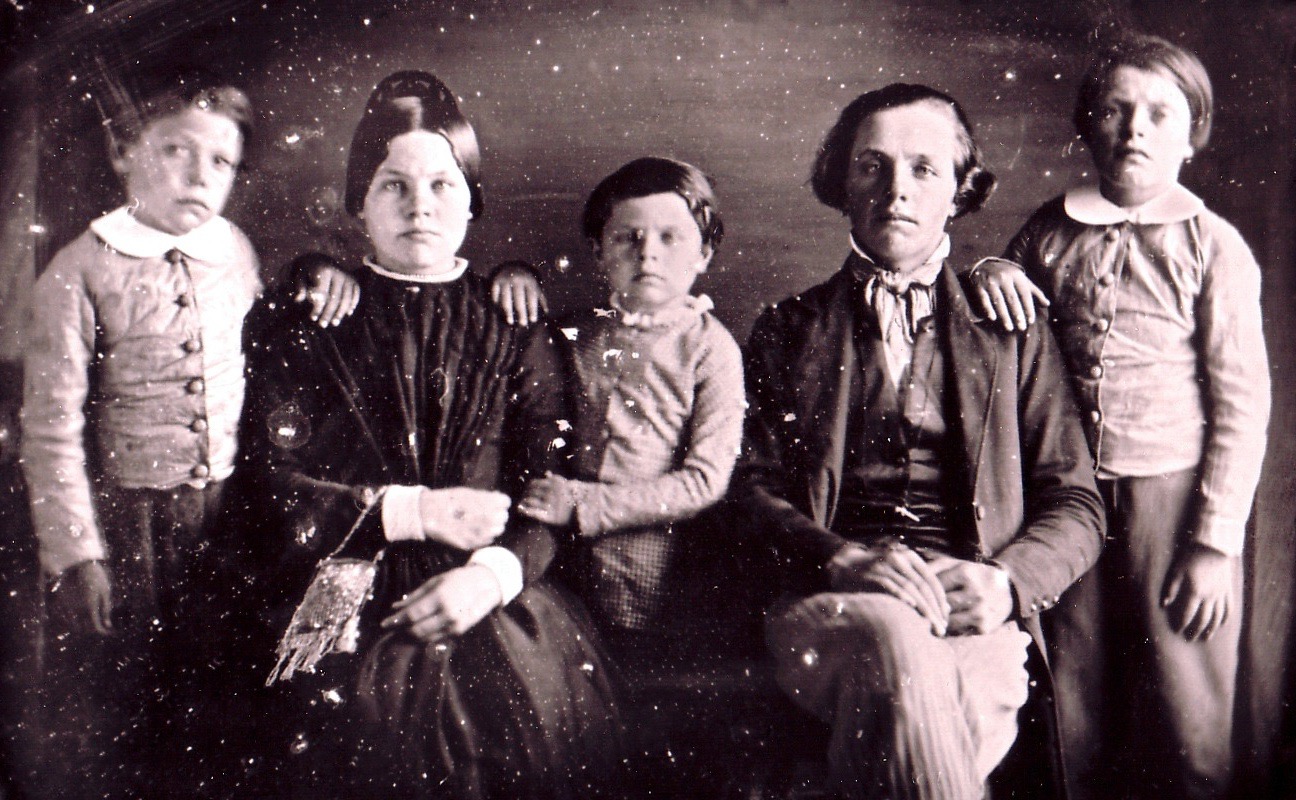
Daguerreotype of the children of Franklin and Jane (Briggs) Ogden, made slightly before the deaths of Allen, Eliza Jane and James in an 1850’s diphtheria epidemic. Only Delos and Albert survived.
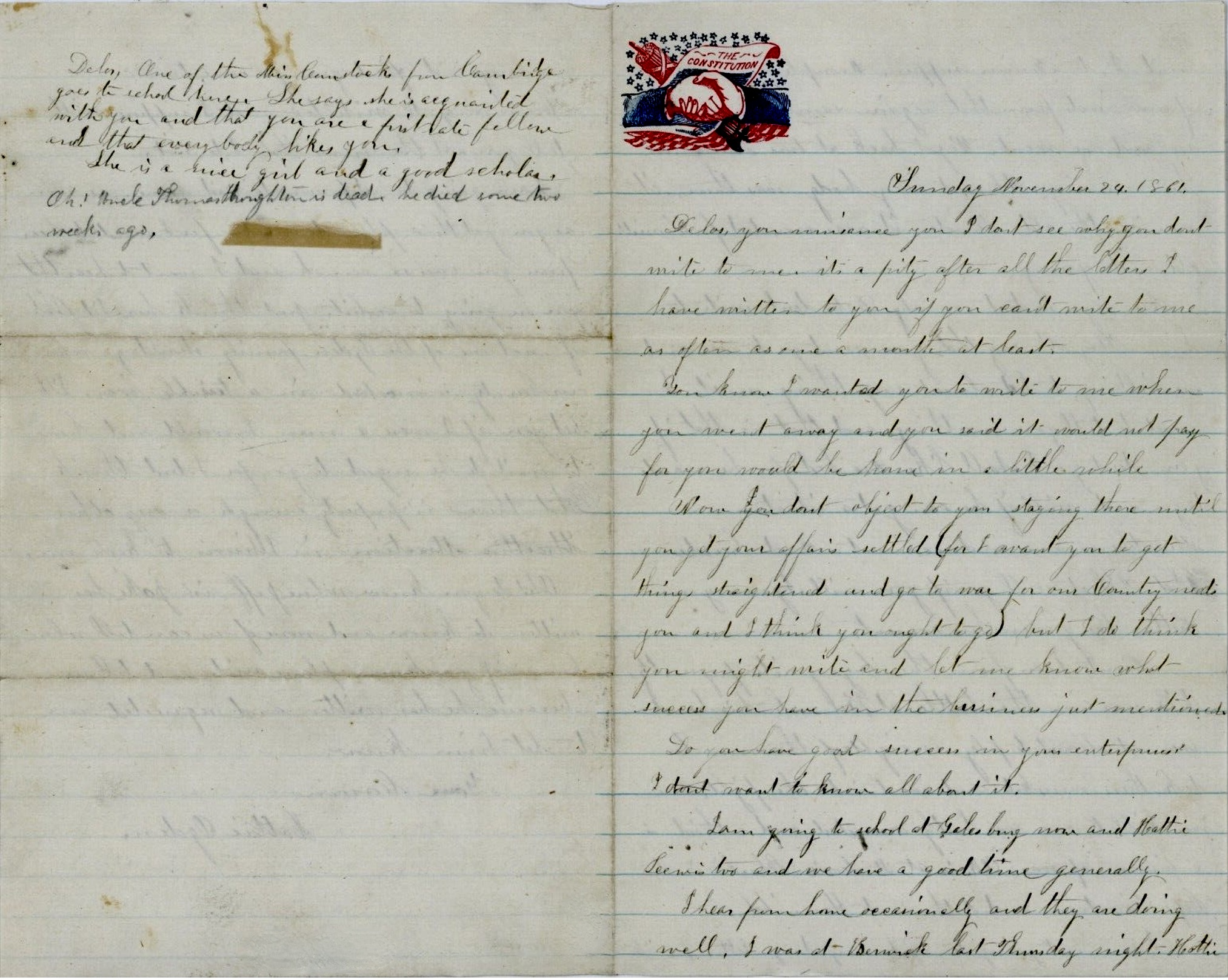
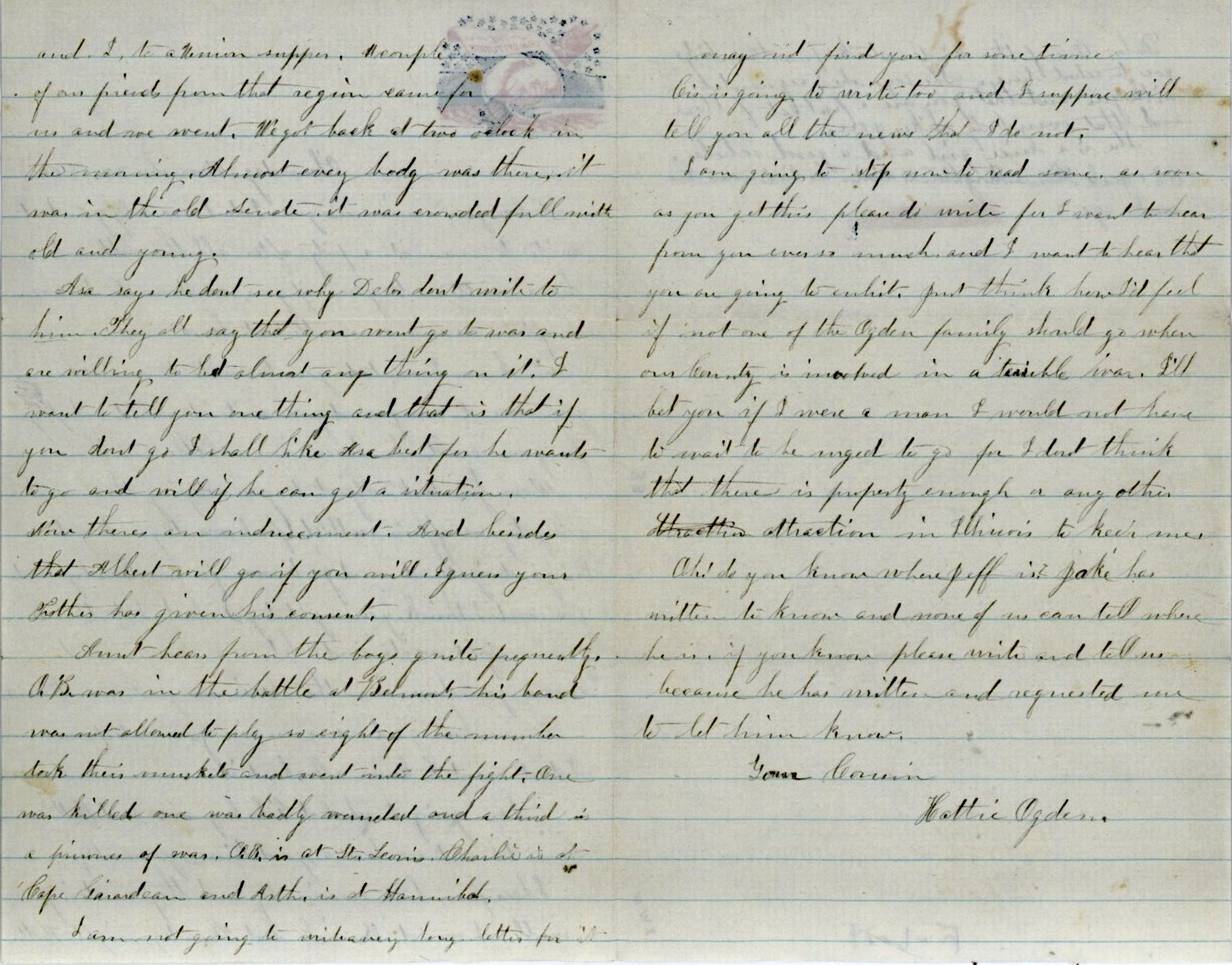
Transcription
Sunday, November 24, 1861
Delos, you nuisance you! I don’t see why you don’t write to me. It’s a pity after all the letters I have written to you if you can’t write to me as often as once a month at least.
You know I wanted you to write to me when you went away and you said it would not pay for you would be home in a little while. Now I don’t object to your staying there until you get your affairs settled (for I want you to get things straightened and go to war for our country next you and I think you ought to go) but I do think you might and let me know what success you. have in the business just mentioned, Do you have good success in your enterprise? I want to know all about it.
I am going to school at Galesburg now and Hattie Lewis too and we have a good time generally.
I hear from home occasionally and they are doing well. I was at Berwick last Thursday night. Hattie and I [went] to a Union supper. A couple of friends from that region came for us and we went. We got back at two o’clock in the morning. Almost everybody was there. It was in the old Senate. It was crowded full with old and young.
Asa [Abraham Matteson] says he don’t see why Delos don’t write to him. They all say that you won’t go to war and are willing to bet almost anything on it. I want to tell you one thing and that is that if you don’t go, I shall like Asa best for he wants to go and will if he can get a situation. Now there’s an inducement. And besides that Albert will go if you will. I guess your Father has given his consent.
Aunt [Ann Ogden Matteson of Galesburg] hears from the boys quite frequently. O. B. [Orville Briggs Matteson] was in the battle at Belmont [on 7 November 1861]. His band was not allowed to play so eight of the number took their muskets and went into the fight. One [John Werst] was killed. One was badly wounded and a third [William W. Sapp] is a prisoner of war. O. B. is at St. Louis. 1Charlie [Frank Mattison] is at Cape Girardeau, and Arthur [Elon Matteson] is at Hannibal.
I am not going to write a very long letter for it may not find you for some time. Sis [Lida Ogden] is going to write too and I suppose will tell you all the news that I do not. I am going to stop now to read some. As soon as you get this, please do write for I want to hear from you ever so much and I want to hear that you are going to enlist. Just think how I’d feel if not one of the Ogden family should go when our country is involved in a terrible war. I’ll bet you if I were a man, I would not have to wait to be urged to go for I don’t think that there is property enough or any other attraction in Illinois to keep me.
Oh! do you know where Jeff is? Jake has written to know and none of us can tell where he is. If you know, please write and tell me because he has written and requested me to let him know. Yours cousin, — Hattie Ogden
1 O. B. Matteson was the appointed band leader of the 7th Iowa Infantry. He was discharged 13 January 1862.
The following letter was written by Hiland Homer Weaver (1832-1915), the son of Hiram V. Weaver (1809-1915) and Minerva Doud (1811-1844) of Niagara Falls, New York. Hiland was married to Harriet (“Hattie”) Aley Johnson (183101908) in 1854 and the couple had at least two children by the time Hiland enlisted in September 1861 as a sergeant in the 3rd Independent Battery, Iowa Light Artillery. He survived the war, mustering our of the service as a 1st Lieutenant in October 1865.
Hiland and Hattie were residing in Beaver, Butler county, Iowa, when the Civil War began. Hattie was most likely staying with her parents in Hillsdale county, Michigan, during the war.
Other quotes from Hiland Weaver’s letters found on line include one written at Little Rock, Arkansas on 10 January 1864 which reads: “…There was a fleet started for here some time ago to come up the Arkansas River and it is over due but the ice I presume has kept it back. I hope it will get here soon if it does not we will lose the most of our horses, they are dying almost daily for want of proper food…think of a horse going five months with only one feed of hay and a good deal of the time but very little grain…I wrote to you about the catching of a spy at this place, he was tried and sentenced to be hanged until he was dead and sentence was executed on Friday…there was a large crowd of soldiers and citizens present, I among the rest, he was hung at three o.c. p.m. in front of the St. John’s College. He was about twenty years of age, smart and good looking, he had some relatives living here at this place, he had been raised here and had attended college several terms in the building in front of which he was executed. Little did he think when attending school that he would be hung on that beautiful ground where he had seen so many pleasant hours but such is the fate of spies when caught. He seemed to be perfectly reconciled to his fate, he died like a man should and for which I respect him. Hattie I can see in an enemy his good qualities as well as in a friend, although sometimes it is rather hard to acknowledge it…I will give you his name it is David O. Dodd…I think I wrote in my last that there was a rumor in camp that Old Price was coming to make us a visit. If it were true I think this cold had whipped him and saved us the trouble and as far as I am concerned I would as soon cold weather would whip him as to have to use powder and lead, and as far as his coming here if I do not see another battle until the rebs come here to fight I do not think I shall ever see another…” [Raynors’ Historical Collectible Auction]
Also: [Camp Union, Sept. 25, 1861]…we have got an order to…march…for St. Louis…the boys are…in a hurry to have a fight…[Camp Heron, Dec. 5, 1861]…we have great times drilling…we have got our guns…[and] are making great progress in drilling…as soon as the rebels find out that the Dubuque Battery is ready for the field there will not be any sesesh in Missouri…[Camp Heron, Dec. 14, 1861 on “Not a star shall fall” patriotic stationery]…there will be a large battle fought near here before long…most of the boys are anxious to have a hand in it…there has been several thousand soldiers through here in the last week. The Iowa 11 and 18 regiment have past here…[Dec. 27, 61 on Washington patriotic stationery]…there is…twenty seven men on the sick list…we have loaded our guns on the cars…we are going to Rolly [Rolla, Misouri?]…about 80 miles from here south west…[n. p., March 14, 1862 on battle of Pea Ridge, eight pages but partial]…the country is all hills… the grass is getting green…it will not come to soon for inhabitants around here where our army has been…it is hard to see the destruction…when an army passes through a country. The houses are torn down for fire wood and the fences are all burnt up…where the hardest of the battle was there was a splendid orchard and the trees were all shot to pieces. There was a large house and barn…and there was not a building…several [had] cannon shots through them. There was a family in the cellar during the two days…the house was filled with dead and wounded…we had to get up and scadadle from Camp Halleck at Cross Hollows…we were enjoying ourselves as well as soldiers could…about nine o’c. at night…the men were in bed when orders came for us to be ready…there was some confusion but we got ready…and we left just in time…[or] we would have been taken…those that showed the white flag in the morning were very much ashamed after the battle…after the battle…our cavalry were running them off. We went into camp on the battlefield…I had a chance to look over the battlefield and…it was too heartrending…there was men with their heads shot off and some shot all to pieces, some [?], some asking for quarters…one of the rebel Lieut. Col. lay on the field with all of his head shot off by a cannon ball. There was…four dead rebels to one of our men…for miles around was filled with dead rebels…it is the hardest thing…to see women and children crying for us not to take the last bit of corn that they have…I cannot see a woman crying and stay around a great while…if our army stays in one place forty eight hours we clean out the country…I this last battle…the Iowa 9 reg. and the Iowa 4 reg and the Iowa 3 reg of cavalry…was very badly cut to pieces…the federal loss in killed wounded and taken will come very near fifteen hundred…[Little Rock, Oct. 16, 1864]…I am tired of running around the country and if Old Abe is reelected…we will have this war brought to a close in less than six months [the war ended almost six months to the day of this letter!]…Old Price is up in Mo. doing his best…we have a large force after him…they will take him…[Little Rock, Oct. 26]…three cheers for Old Abe…[Little Rock, Dec. 11, 1864]…it gives me sad thoughts to know you are in need of money…I never saw a time but once [where] I could not get fifty dollars in our company…I have got forty cents and…tht is far above average…[on rare printed stationery, reading, “Ordnance Office, 1st Division, 7th Army Corps, and post of Little Rock, Little Rock, Ark,” June 5, 1865]…I am shure the war is over…I have been thinking…of going into the regular service but I have not been before the board yet…Gen. Solomon is President of board…[on rare printed stationery, reading, “Ordnance Office, 1st Division, 7th Army Corps, and post of Little Rock, Little Rock, Ark,” June 27, 1865]…now about my going with the Regular Service I do not think I shall…there is too many chances for me to be sent where I could not take my family with me…[Willoughby, Iowa, Nov. 3, 1865]…I thought I would write you a few lines so you would know that I am not dead…and shall start for home in the morning…” [Raynors’ Historical Collectible Auctions]
Apparently several of Weaver’s letters are housed at the Butler Center for Arkansas Studies at Little Rock. See Hiland H. Weaver Collection MSS.08055.
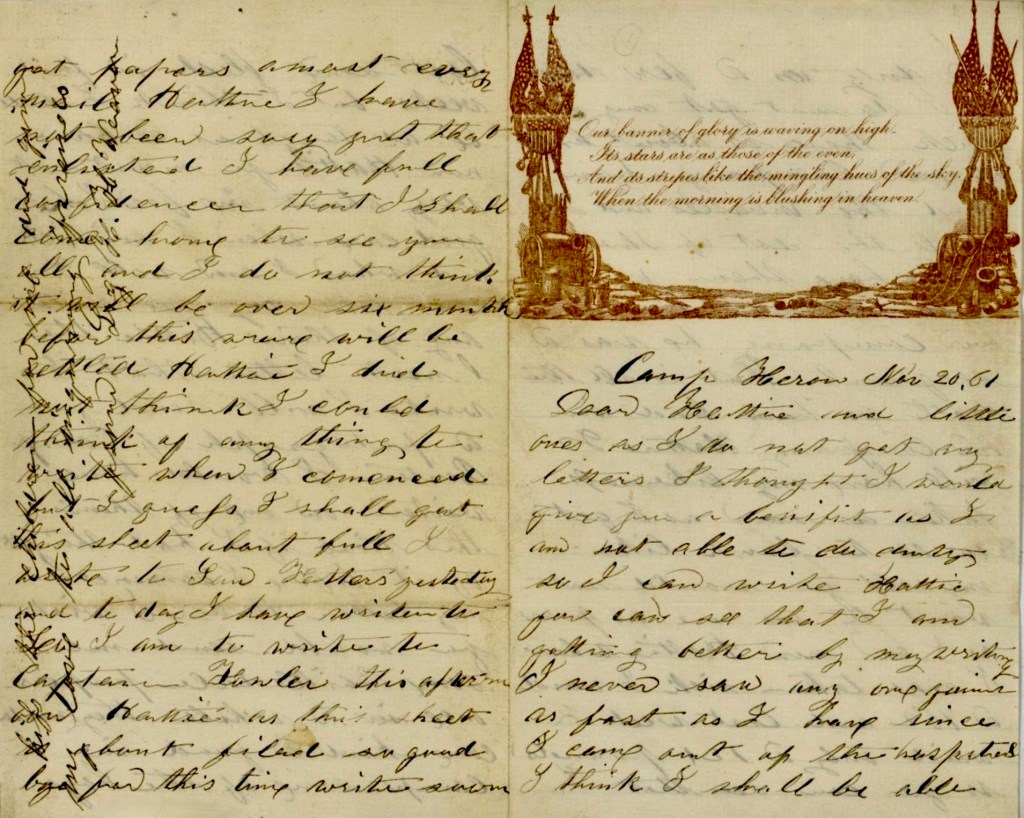
Transcription
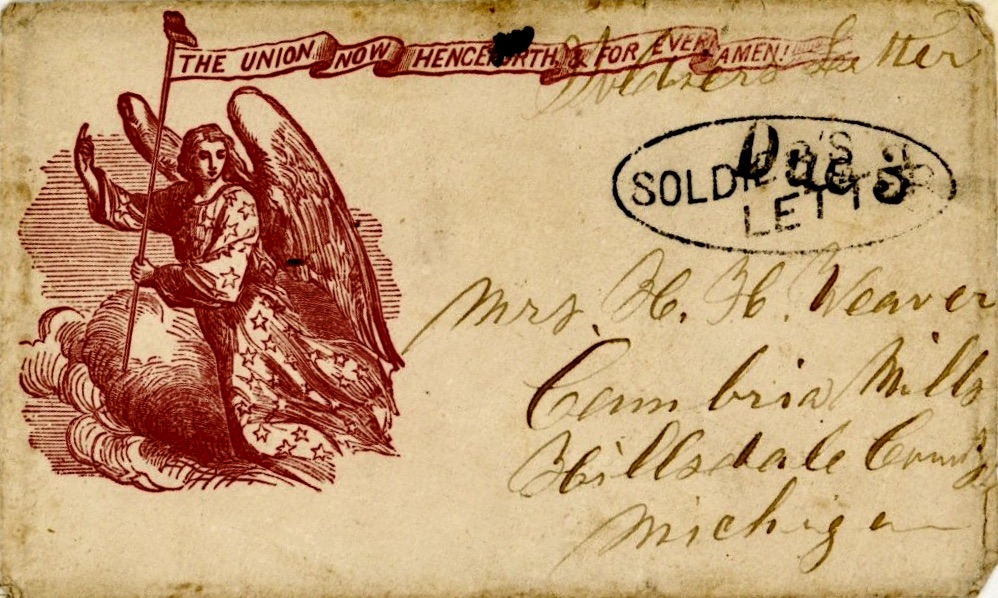
Addressed to Mrs. H. H. Weaver, Cambria Hills, Hillsdale County, Michigan
Camp Herron [Davenport, Iowa] November 20, 1861
Dear Hattie and little ones,
As I do not get any letters, I thought I would give you a benefit as I am not able to do duty so I can write. Hattie, you can see that I am getting better by my writing. I never saw any one gain so fast as I have since I came out of the hospital. I think I shall be able for duty in a few days if I do not get my setback. There is about half of our company have had the measles and I guess the rest of them will have them. We have had one man die in our company. He was a sergeant. That is all the deaths we have had in our company.
Hattie, I will have my likeness taken as soon as I get so as to look like myself. you would not want to see me as poor as I am now. Hattie, when I was taken sick, I weighed 162 and last week I weighed only 121 pounds. So you can see that I lost some flesh in four weeks. But I think I shall be as tough as a bear now.
Hattie, you must not worry about me for I have good care when I am sick and when I am well, I can hold my row with any of them. Hattie, the next letter that I write, I will send you a photograph of Camp Benton. I would have written on one of them this time if I had thought of it before I commenced my letter. Hattie, I wish you would send me some Hillsdale papers once in a while. They would come kind a good in camp. Some of the boys got papers a most every mail. Hattie, I have not been sorry yet that I enlisted. I have full confidence that I shall come home to see you all and I do not think it will be over in six months before this war will be settled. Hattie, I did not think I could think of anything to write when I commenced but I guess I shall get this sheet about full. I wrote to Sam Ketters yesterday and today I have written to Captain Fowler this afternoon.
Hattie, as this sheet is about filled, do goodbye for this time. Write soon. Kiss the childreb for me and give my love to all enquiring friends, from [ ] H. H. Weaver
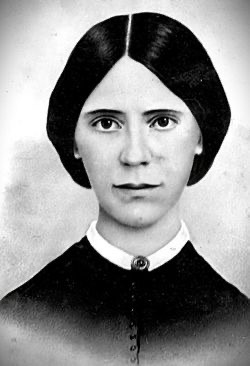
I could not find an image of Alice but here is one of her older sister Jane (1830-1868).
The following letter was written by Alice Corbet Flynn (1836-1909), the daughter of Paul Flynn (1792-1860) and Olivia Smith (1794-1878). Alice married Caleb Dwinell Randall (1831-1903) in 1865 and they had at least three children between 1866 and 1872.
Alice wrote the letter to her cousin, Dudley Chase Smith (1833-1920), the only son of Addison Smith (1784-1846) and Nancy Fitzgerald Hicks (1801-1855) of Shelbyville, Illinois. Dudley raised a company on men in Mattoon, Illinois, and mustered in as 1st Lieutenant, later Captain of Co. B, 14th Illinois Infantry. He served from June 1861 to September 1864. Dudley did not marry until 1885 when he took Mary Bernardine Orme (1856-1931) as his wife and together they had at least seven children.
Transcription
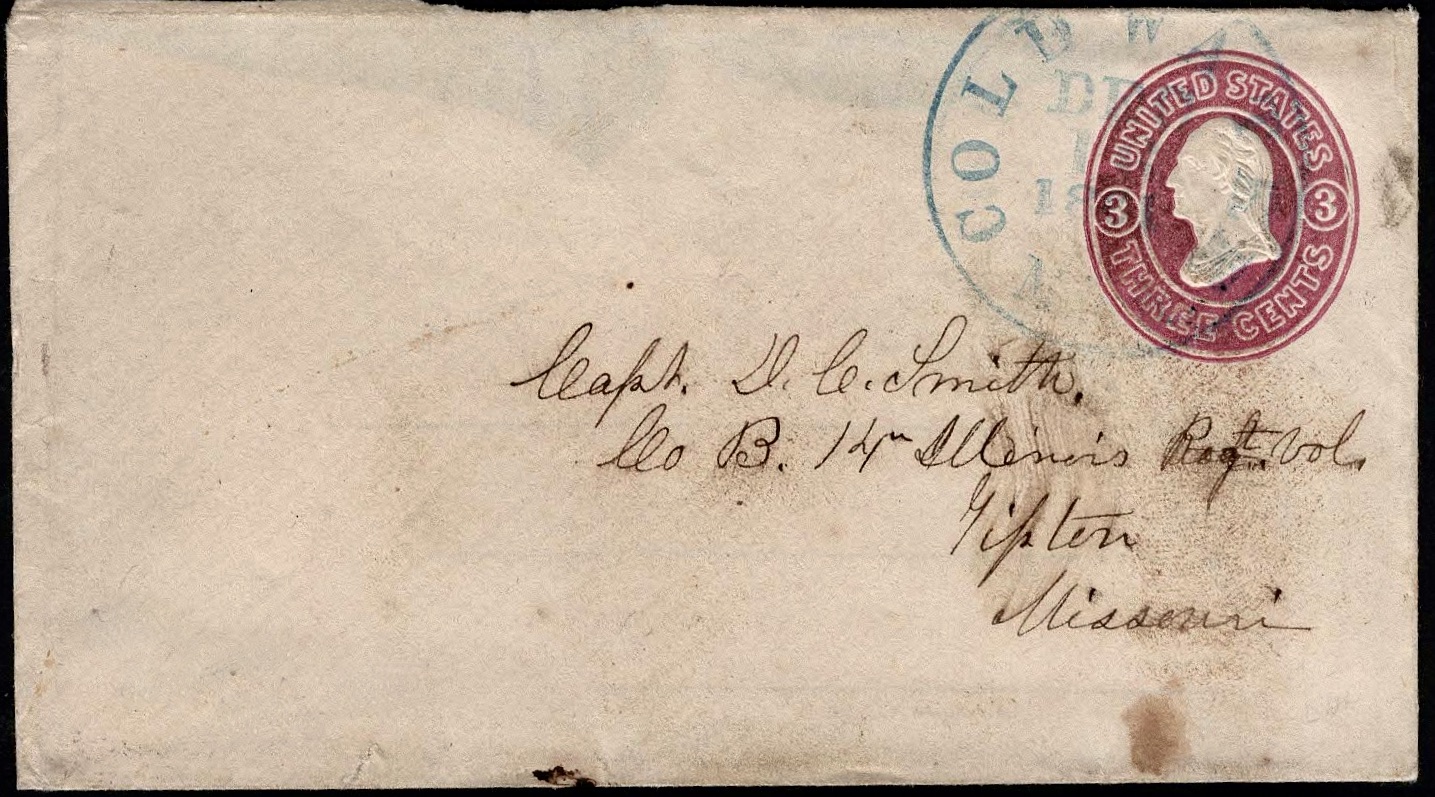
Addressed to Capt. D. C. Smith, Co B, 14th Illinois Regt. Volunteers, Tipton, Missouri
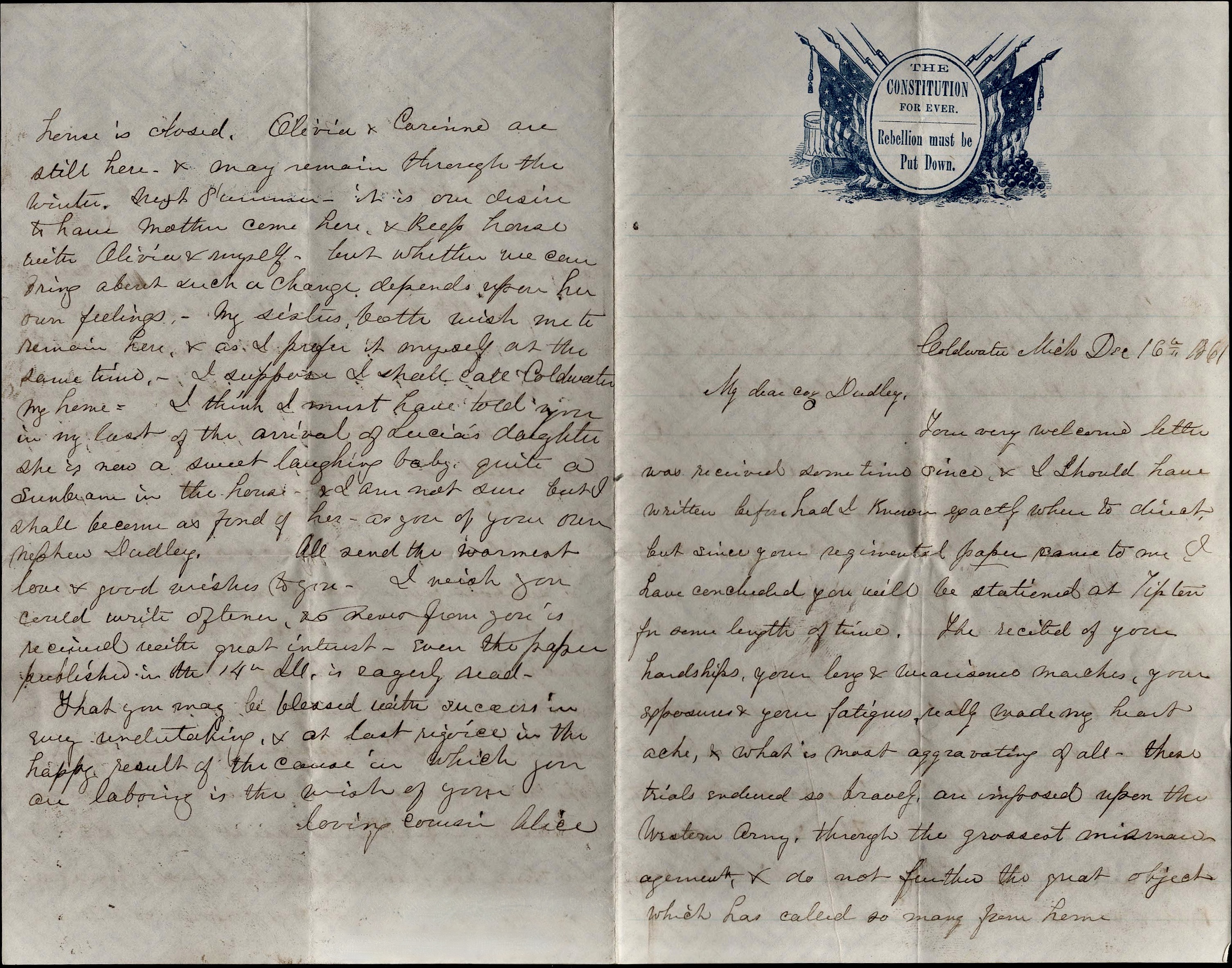
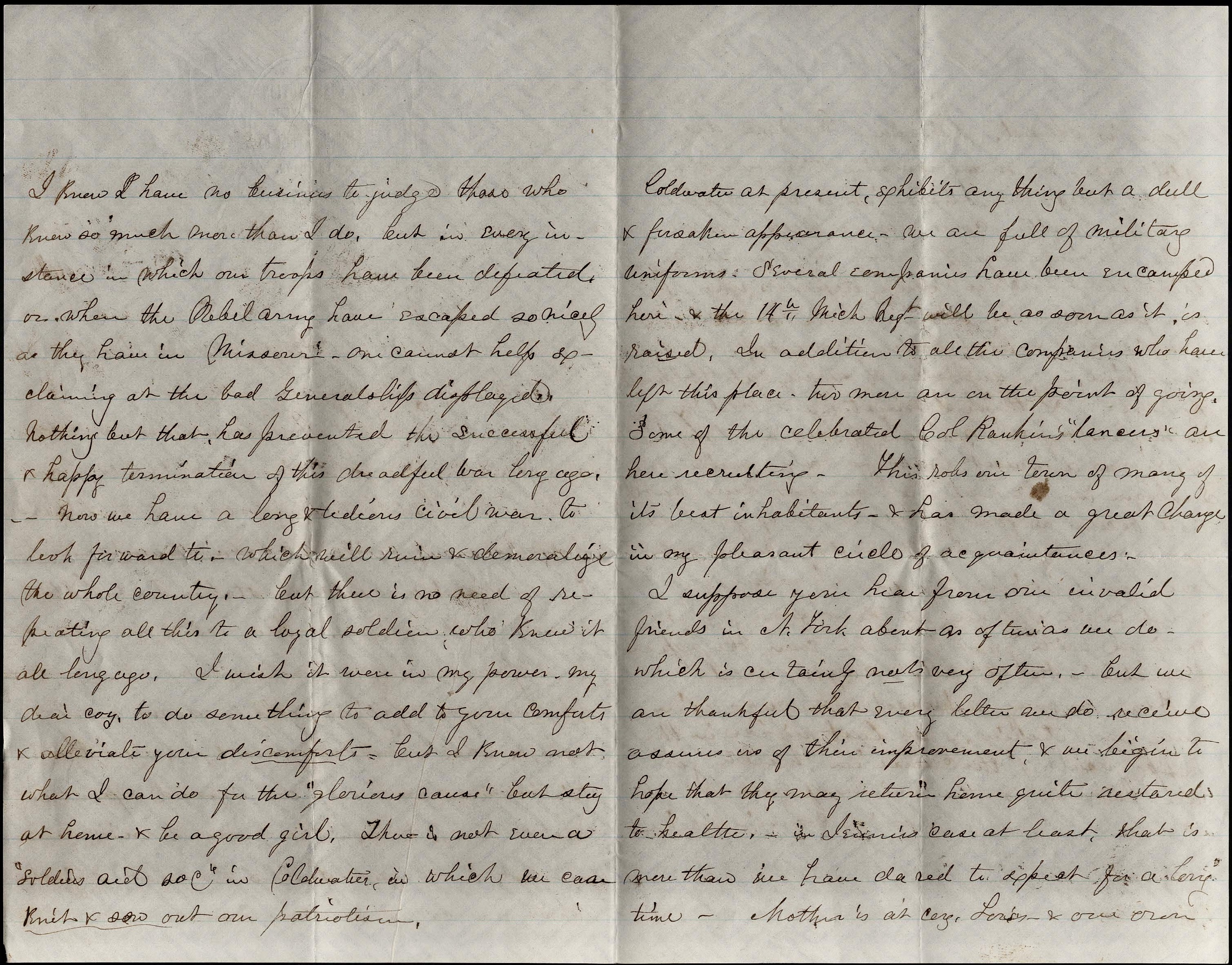
Coldwater, Michigan December 16, 1861
My dear Dudley,
Your very welcome letter was received some time since & I should have written before had I known exactly where to direct but since your regimental paper 1 came to me, I have concluded you will be stationed at Tipton for some length of time. The recital of your hardships, your long and wearisome marches, your exposures and your fatigues, really made my heart ache, & what is most aggravating of all—these trials endured so bravely are imposed upon the Western Army through the grossest mismanagement, & do not further the great object which has called so many from home.
Patriotic letterhead reading, “The Constitution Forever, Rebellion must be Put Down”
I know I have no business to judge those who know so much more than I do, but in every instance in which our troops have been defeated or when the Rebel army have escaped so nicely as they have in Missouri, one can’t help exclaiming at the bad generalship displayed. Nothing but that has prevented the successful & happy termination of this dreadful war long ago. Now we have a long & tedious civil war to look forward to which will ruin & demoralize the whole country. But there is no need of repeating all this to a loyal soldier who knew it all long ago. I wish it were in my power, my dear coz, to do something to add to add to your comforts & alleviate your discomfort. But I know not what I can do for the “glorious cause” but stay at home & be a good girl. There is not even a “soldier’s aid society” in Coldwater in which we can knit & sow out our patriotism.
Coldwater at present exhibits anything but a dull & forsaken appearance. We are full of military uniforms. Several companies have been encamped here and the 14th Michigan Regiment will be as soon as it is raised. In addition to all the companies who have left this place, two more are on the point of going. Some of the celebrated Col. Rankin’s “lancers” are here recruiting. This robs our town of many of its best inhabitants & has made a great change in my pleasant circle of acquaintances.
I suppose you hear from our invalid friends in New York about as often as we do, which is certainly not very often. But we are thankful that every letter we do receive assures us of their improvement & we begin to hope that they may return home quite restored to health—in Jennie’s case at least. That is more than we have dared to expect for a long time. Mother is at coz Lou’s & our own house is closed. [Sister] Olivia [Safford] & [her 2 year-old daughter] Corinne are still here & may remain through the winter. Next summer it is our desire to have mother come here & keep house with Olivia & myself, but whether we can bring about such a change depends upon her own feelings. My sisters both wish me to remain here & as I prefer it myself at the same time. I suppose I shall call Coldwater my home.
I think I must have told in my last of the arrival of Lucia’s daughter. She is new a sweet laughing baby, quite a sunbeam in the house. I am not sure but I shall become as fond of her as you of your own nephew Dudley.
All send the warmest love & good wishes to you. I wish you could write oftener. News from you is received with great interest. Even the paper published in the 14th Illinois is eagerly read.
That you may be blessed with success in every undertaking & at last rejoice in the happy result of the cause in which you are laboring is the wish of your loving cousin, — Alice
1 The 14th Illinois Infantry published a newspaper early in the Civil War to keep the folks at home informed of their movements and ideas. It was edited by E. F. Chittenden of Co. B. The first surviving copy was published on 4 December 1861 at Tipton, Missouri, which may be the issue that Alice received. The name of the paper was changed from “The First Division Proclamation” to the “War Eagle And Camp Journal of the Army of the West” in January 1862.
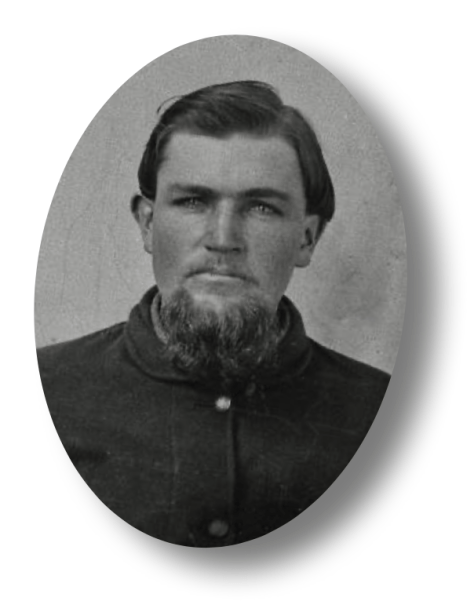
I could not find an image of Eldridge but her is Merrit Hopkins who was also in Co. E, 15th Iowa and also from Keosauqua. (Iowa Civil War Images)
The following letter was written by Eldridge Gerry Black (1843-1862) who enlisted on 14 October 1861 to serve as a private in Co. E, 15th Iowa Infantry. He was mustered into the service on 1 December 1861. He did not survive the war. He was severely wounded in the Battle of Corinth on 3 October 1862 and died of his wounds.
Eldridge had been born in Richland county, Ohio, but was residing in Keosauqua, Iowa, when he enlisted. His parents were William Francis Black (1810-1882) and Hannah C. Cook (1814-1879)
Transcription
Camp Halleck [Keokuk, Iowa] December 13th 1861
Dear Father, Mother, Sister, Aunt, and Brothers
I received yours of the 8th this morning. Sergeant Woodruff brought in a handful of letters this morning among which was yours. I was very glad to hear from you home again. I have looked for father until I have got tired of it. I went to the depot every time I could get permission to go expecting he would come on the cars but was disappointed. I would like very well to go home again and I think perhaps I can. Our captain has given three of our men permission to go home without furlough and I think I can get leave of absence four or five days. I have just spoken to the captain about it and he says I can have a pass next week to go home. By the—-“Fall in for drill!” are the words just now uttered by the Orderly and I must go.
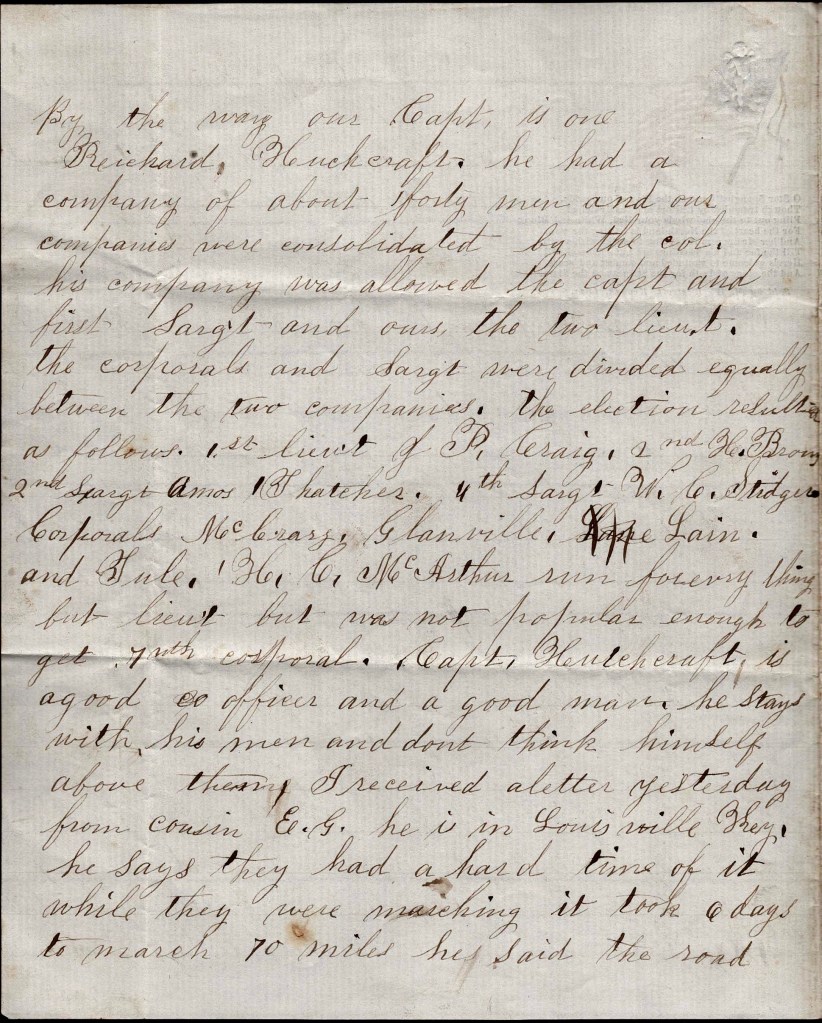
By the way, our captain is one Richard [Williams] Hutchcraft. He had a company of about forty men and our companies were consolidated by the colonel. His company was allowed the captain and first sergeant and ours, the two lieutenants. The corporals and sergeants were divided equally between the two companies. The election results as follows: 1st Lieutenant J. P. Craig, 2nd [Lieutenant] H. Brown, 2nd Sergeant Amos Thatcher, 4th Sergeant W. C. Stidger, Corporals McCrasry, Glanville, Lane, and Tool. H. C. McArthur run for everything but lieutenant but was not popular enough to get 7th Corporal.
Capt. Hutchcraft is a good company officer and a good man. He stays with his men and don’t think himself above them.
I received a letter yesterday from cousin E. G. 1 He is in Louisville, Kentucky. He says they had a hard time of it while they were marching. It took six days to march 70 miles. He said the road had no bottom. They had 75 teams and then had to leave their tents. He said their band wagon broke down on Laurel Hill and left them in a bad fix. He slept three nights without anything under or over him.
James Dunshee was here today. He eat dinner with me and then took me to a Hotel and gave me my dinner so that I got a clean bite again. I would like to write more but I must quit. I want to send it off in the morning. I will direct this letter to Oak Point. As I am going home and will see you all, I will not write the particulars for I can use my tongue better than I can a pen. No more at present. Yours truly, — E. G. Black.
P. S. Frank, as that opossum can go double quick so well, perhaps he would make a good soldier. We want more recruits. you had better send him down.
1 Eldridge had a cousin by the same name who served as a musician in the 15th Indiana Infantry.
The following letter was written by John R. Heafer (1845-1864), the 19 year-old son of John Heafer (b. 1820) and Nancy (b. 1826) who moved with his family from Charleston, Jefferson county, Virginia, to a farm in Bloomington, McLean county, Illinois in the 1850s. John was serving as a private in Co. B, 39th Illinois Infantry when he wrote this letter from Bermuda Hundred in June 1864.
He was carried on the muster rolls as “Hafter” which may explain why he can’t be found under his given name. Unfortunately he did not survive the war. He was killed along with many other comrades in his regiment on 13 October 1864 in the Battle of Darbytown Road. The Union advance was repulsed with heavy casualties and John’s body was left on the field.
John wrote the letter to his sister, Sarah (“Sallie”) Heafer (b. 1844), the wife of William M. Steele, a former soldier in Co. A, 94th Illinois Infantry and a teamster working in Bloomington. He later became a minister..
From the Regimental History of the 39th Illinois Infantry
Transcription
Near Bermuda Hundred June 4th 1864
Dear Sister,
I received your letter of the 25th of May this morning and was glad to hear from you. I have not been well for a few days but am well this morning. I have not had much time to write since we have had so much fighting to do and I have not felt much like either. We had another fight [see Ware Bottom Church] on the 20th of last month. I guess you have heard about it by this time. Our loss was pretty heavy. We had to make a charge on the Rebels rifle pits. We had a skirmish yesterday. We lost 31 men. That makes 250 men we have lost since we have been here. If we keep on that way, we will soon play out.
Lt. Algernon Cox Sweetser of Co. B, 39th Illinois Infantry(LOC)
Lieut. [Algernon Cox] Sweetser was wounded yesterday in both legs. One had to come off. 1 We have some fighting every day now. When the Rebs commence to throw shell over, we all have to skedaddle to the breastworks. The shells burst all over our camp. There was a bullet went through my tent the other day. It hit just where I lay but I happened to be out. This is the first letter I have got from home for some time. I think you might [write] oftener. I expect we will have a big fight here some day. I would like to see Sallie’s baby. I hope she will get along well. I am expecting a letter from Mat every day. I suppose it is pretty dry in Bloomington now. But for all that, I would like to be there. I think I could enjoy myself pretty well.
I don’t feel much like writing today and I will have to go on picket tonight so I will not write much more. Your brother, — John
P. S. My love to all the family and Sallie and the baby. My love to all the friends. — John
Please send some stamps.
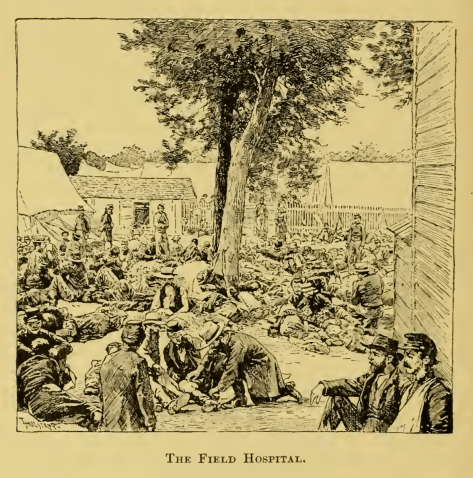
1 The regimental history Lieutenant Al. C. Sweetser of Company B was wounded through both legs. The wound of the left leg was not serious, the ball making merely a flesh wound. The right limb fared worse, the bullet passing through the knee- joint and so disrupting the articulation that amputation at the lower third of thigh became necessary. We shall never forget the courage and fortitude of Lieutenant Sweetser while on the operating-table, or while suffering for long months at Chesapeake hospital by reason of hospital gangrene and the subsequent operations that become necesssary from the necrosis of bone. He came back to the field hospital on a stretcher, calmly smoking a cigar, and after an examination, when told that he must sacrifice a limb, he said, “Well, ‘Doc,’ just go to work, and do the very best you can for me.” Lieutenant Sweetser was a brave and gallant officer.” (pp. 201-202)
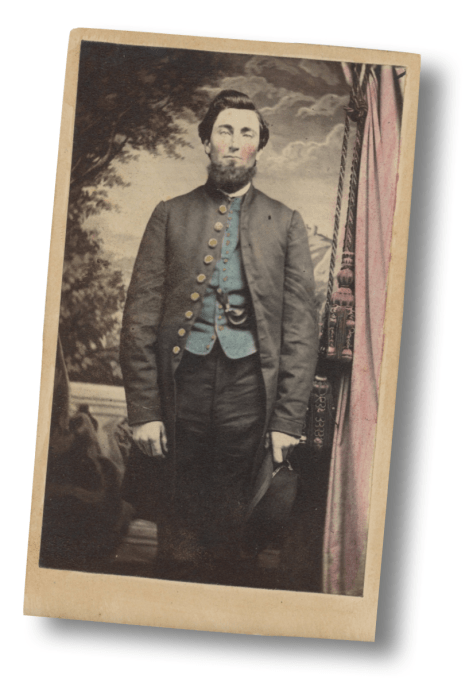
A couple of boys from the 20th North Carolina Infantry
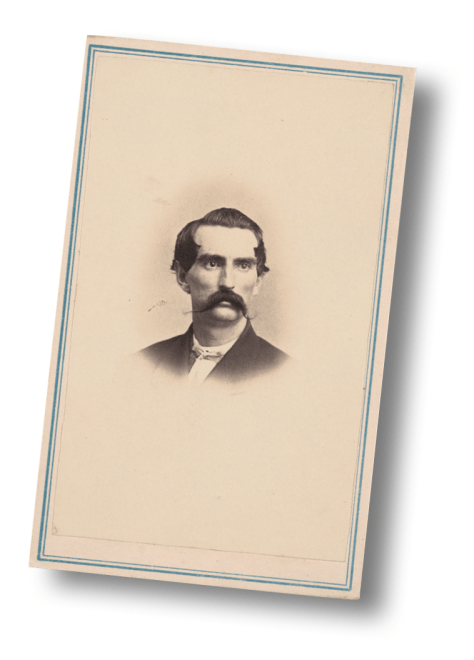
This letter was written by John L. Phifer (1842-1880), who commenced his military service on June 7, 1861, hailing from Cabarrus County, North Carolina, as an 18-year-old private in Company A of the 20th North Carolina Infantry. He had a brief tenure with the Radecliff Battery before attaining the rank of ordnance sergeant in the 20th N.C. in March 1862. By 1865, he held the position of Brigade Ordnance Officer in Johnston’s Brigade, Early’s Division, and had recently arrived or was shortly expected at Camp Pegram. John was the offspring of Caleb Phifer (1810-1879) and Mary Adeline Ramseur (1817-1881) from Concord, Cabarrus County, North Carolina. At the onset of the Civil War, he was employed as a clerk.
This letter is preserved within the Phifer Family Papers, 1859; 1862-1864 at the University of North Carolina, where it has been digitized, though transcription and online posting have yet to occur. The letter’s images were sent to me for transcription by Matt Edwards, who posited that the letter was authored by Capt. George L. Phifer of the 49th North Carolina Infantry. However, I am firmly convinced that the signature clearly reads “J. L. Phifer” rather than “G. L. Phifer.” It is also significant to note that the letter was directed to John’s cousin and has remained with George’s family correspondence within the aforementioned collection.
The letter underscores John’s unwavering dedication to the Confederate cause, while also presenting the unexpected outcomes of a query directed at the soldiers within his Brigade, inquiring, “Should negroes be enlisted in the ranks of the Confederate army?”
Transcription
Camp near Petersburg, Virginia February 22, 1865
Dear Cousin,
Your most welcome communication of February 9th was received and perused with much pleasure. I never for one moment thought it was from you. I had ceased to look for a reply and was regretting that I had written to you, but I am repaid for writing; but I hope you will be more prompt in future. When I looked at the direction, I thought it was from brother Charlie who writes an elegant hand. But I was most agreeably surprised to learn my mistake in glancing at the heading as you have brought to mind the “deer hunt in the mountains.” Permit me to explain what I meant. I spoke to Cousin Anna in a playful manner and said that she was deer enough for me, not meaning or intending that anyone else should think I meant dear for such was not my intention. I meant just what I said—that Counsin Anna was gay and happy, pleasant and very agreeable, full of life and fun, with whom I could enjoy myself and feel as though I was talking to a friend and nothing more. And I am sorry—very sorry—that you should have been so “exasperated” when I was talking for amusement only. I hope Cousin Anna did not construe my words as you did? Was she as much exasperated as you were? If she was, I did not perceive it. Do you think I would make so public an avowal of my love for a lady? If you do, you. know very little of my disposition. I am rather modest and retiring in love affairs. I would almost bet my life that Cousin Anna did not construe my words as you did. I think she is far seeing for that and a little too old to think so. Now, I do insist upon your telling me whether she was exasperated or not? My curiosity is much excited to know and perhaps that will explain some of her conduct towards me which I have never been able to understand.
Permit me to inform you that you are slightly mistaken when you imagine Miss M. Morehead is a particular friend of mine. Did I not tell you last spring about the manner she treated me when at Cousin Sarah Morehead’s. I advance half across the room to shake hands with her, [but] as she showed no signs of recognition, I retreated (in good order) to my seat, I was pretty much demoralized but stood my ground and held my position. Your delicate sense of politeness and good breeding will sustain me in thinking she intended it as she never apologized for it afterwards. I do not know anyone with the “initials W. H. M.” I will find out for you and let you know in my next.
I don’t think our sweet little Cousin Esther will ever make a match with Capt. N. P. Foard. I think if all her relations would let her alone, it might be a match, but there is Bob Fulenwider, Jimmy Gibson, Charlie Phifer, and many other of her cousins who don’t fancy it and are always making fun of him, calling him N. Post Foard and many other nick names. He was called Post at school for being so extremely dull. I am under many obligations to you for giving. or desiring to give me Miss Daisy Gutler for a “sweet heart,” but can’t promise to make any advance towards storming the fair one until the war is over. If she should require much daring and boldness of heart to capture, I must wait until the war ends so that my country does not need my whole time and attention. Perhaps she would not like the disposition you have made of her? Did you get acquainted with Miss Hattie Gilmer of Greensboro? I have had some gay times with her. I came very near falling in love with her; she has grey eyes and I don’t fancy them.
You speak of your ideas being frozen up on account of the cold weather. About that time our brave soldiers were out in the open air without any shelter, fighting and building fortifications to drive back the hated foe. I am much surprised at the ladies showing any fondness for the young men who remain at home, when our glorious country needs their strong arms to defend our homes and firesides, to drive back the Yankees and protect all we hold dear, to keep back the insolent foe from our fair women of the South. I am sorry to know that our people at home are so despondent and gloomy. It has communicated its baleful influences to the troops, which makes them despair of our final success. If they would just say we will not be whipped and be determined to give everything to the cause and country, we will never be whipped.
I think Old Virginia is the best in the Confederacy—at least the people at home are much more sanguine than ours. Why when the enemy have been two or three times over the country with their barns burnt and everything gone to all outward appearances, they wave their handkerchiefs and bid us fight on, fight ever. All they want is to be free from the Yankee rule. I will first cite you a case to let you see how patriotic they are. There lives near Strasburg (in the Valley) a family from whom the Yankees had taken everything. The lady of the house then asked for something to live upon. A barrel of crackers were given her. When our army went down there again, I saw her giving a portion of them to our men saying she believed we certainly would whip such cruel people. Now is not this patriotism in the extreme? If such feeling predominated in the South, the Yankees could never subjugate us.
But such is not the case and on every side can be heard the cry, “We are whipped—better give up and save what we can, &c. &c.” Now I am in favor of fighting so long as our noble Lee says fight. When he thinks our cause as desperate and ought to be given up, I think it time to give up. My plan is to go it blind, let come what may. The only thing that gives me much trouble is the old people and the lovely and devoted ladies of the South, also the helpless children. If these could take care of themselves, I have no fear for myself. As I am uncertain how this war might end. I am rather inclined to be indifferent to seeking one whom I would like better than myself and for whom I would feel more sensibly any injury done to her than to myself. So if you will select me a nice, pretty “sweetheart” from among your many friends who will. be of the same opinion as I have expressed (that is, wait till. the war is over), I will accept your choice. I might tell you of a certain young lady for whom I have the greatest admiration and I believe most of my friends desire me to propose, but as I have said, the war is one objection and I am so very modest that I don’t feel like making the attempt and to be rejected would almost kill me—not quite—so don’t.
You think I had better be quiet? Do you remember the young gentleman I gave you for a “sweetheart” last spring? He has been wounded and gone home and I am afraid he cannot return to the army soon on account of Sherman as his home is in Greensboro, Alabama. I don’t think I will have the pleasure of introducing him to you soon. I shall expect you to not engage yourself until you have seen him. You must tell me how you and Mr. Rogers of Columbia, S. C. are getting along as you seemed to be so highly pleased with him last spring. I think I asked you concerning him in my other letter?
A few days ago our Brigade voted upon the question of enlisting the negroes as soldiers and strange to say the very men who have no negroes voted against it. They have an idea that it will bring the negro on equality with them when at any time a negro desires it, he can sit down and chat with these men as though he were an equal. The brigade voted for the measure by a slight majority. The Georgia troops voted for it almost unanimously and I understand troops from the Gulf States were in favor of bringing the negroes in as soldiers. Gen. Lee is of the opinion that we can make good soldiers of them—at least as good as the Yankee negro troops. Can you tell me any objection to making them fight? Just so we can gain our independence, I care not whether it be done by the aid of negroes or not.
May I not look for an early reply to this letter? Also a long letter of about three sheets or more and you must not think for a moment that I consider your letter as being. dull. If you keep saying yours are dull, I shall consider my own as being extremely uninteresting.
As I thought I could close my letter on half sheet, I began on one but find I cannot finish without crossing the writing. A few nights ago I had almost everything I had stolen from me by an extremely bold rogue. My hat and haversack were taken about two inches from my head. Mother had sent me a considerable amount of provision, such as sorghum, peas, butter, &c. All were taken, not leaving me anything good. I feel the loss very much as we enjoy things sent from home very much. I believe the rogue would have taken my pants from under my head so soundly do I sleep.
I think Cousin Lou Wilson stays at your home. If she does, please give her my love. She and I used to be old correspondents and were until she was married to Major Wilson. Also give my love to your Mother and Father and your little sister Sallie whom I remember as a beautiful little child when I was at your home. How is your brother Phife and is he with the western army or near Winnsboro, South Carolina?
Now if you don’t write soon and a long letter, I will be much disappointed. Can you. tell me of some pretty and sweet songs and the latest music published in Dixie as I promised to select some for a lady friend of mine and I am afraid to rely on my own judgement. I know you will be as tired of reading this as I am of writing for you know it takes some time to write so long a letter. If it was my dear little sweetheart I was writing to, I would not stop short of four sheets or more, but as you are only one of my many dear cousins, I will stop. I am afraid you will go to sleep ere you. finish. With much love, goodbye and keep in good heart as I am, Your affectionate Cousin, –J. L. Phifer
P. S. I heard that [George Washington] Kirk, the renegade, had made a raid near your town. Is it true?
Sgt. Norman R. Gifford, Co. D, 10th New York Cavalry (Kyle M. Stetz Collection)
This four-page letter was penned by a trooper in the 10th New York Cavalry who unfortunately did not sign it though there are a number of possible clues to his identity if more research time were available. The letter was written over a five-day period in June 1863 as the Gettysburg Campaign began to unfold. A reference to the Battle of Brandy Station is made in the first paragraph though he offers no account of it. The last paragraph was written on the day before the Battle of Middleburg in which Col. John Irvin Gregg’s 3rd Brigade engaged three brigades of J. E. B. Stuart’s cavalry.
Transcription
On picket near Warrenton, Va. June 13th, 1863
Dear Brother & Sister,
As I have a little leisure, I will commence another letter even if I did send you one yesterday. I sent you half of a Wash. Chron. that had something of an account of the cavalry fight [at Brandy Station] but I am looking for an official account. If it comes out, I’ll send it.
Yesterday our regiment got two months pay, up to the first of May, and I’ll send you in this letter twenty dollars. I guess you had better take up the $10 note that I gave you, S. S. Southwick, bearing date of May 31st 1862, and a note of $5 that I gave Uncle Isaac Allen the 28th of last August & what there is left pay where you think best.
You wrote that Ross had been paid fifty dollars and that the $10 Joseph left was just paid to Spencer but you don’t say anything about the 16 dollars that the heifer was sold for. Where is that? I want you to reckon up & let me know how much more it neds to pay up all my debts except yours, Harriet, and Aunt Lydia’s, or how much more than enough you’ll have, which ever way it is. And also tell me what the face of your note is, Harriet against me, when it was given and when it’s due. I can buy envelopes here for 25 cents per pack but they are poor ones and so I am going to ask you to send me some more. One package at a time is enough. Send about such quality as this one, only a little larger and they won’t jam up as thinner ones wil. I have paper enough for the present.
I am glad fruit is going to be so plenty again there. So it is here. Cherries and strawberries are ripe here now. I picked my first strawberry today.
I don’t know but you will get sick of hearing the same thing over and over so many times or in every letter I send “that I am well; that I am tough & hearty,” but if I say anything about myself, I have to say that I think I am as fleshy as I ever was and my bedfellow Joseph is tough and fat and says he would not give a cent to feel any better than he now does. William, Joseph, and I a few days ago had as nice a double barrel shot gun of London manufacture & silver mounted as you ever saw, but we had no way to get it home & could not lug it around so we gave it to our captain. If I can ever get hold of an extra revolver, I’ll get it home. T’would make your eye water to see how they will shoot.
Tuesday Morn, June 16th. We are now at Union Mills, four miles from Centerville and 22 from Alexandria. We broke camp at Warrenton Junction yesterday and left there at one o’clock p.m. I don’t know where we are going & I don’t worry about it for I know I shall go with the crowd unless my horse gives out. Yesterday was a very hot day but we marched nearly 30 miles after one. I got hurt some when returning to camp from picket. My horse backed into a ditch and fell on me and caught my right leg under him and the horse could not get up nor I could not get up. It lamed me some but I am about over it now.
I received a letter from you the 14th, No. 35. The laurel grows in dry and in wet soil too but it looks the thriftiest along the banks of a stream. It is now in blossom. I’ll send some home as soon as I can. We do wear our nightcaps, but the nights are not cold now. I would as leave you would have the gray colt as anyone. You need not talk flax to me any more. I read your letter to Joe & took up May’s to read & Joe says now we will get the news. May always write some news that I don’t hear any other way. I never saw anyone improve in writing so fast as May.
It is awful dry here. We have had no rain since we returned from the raid and now the dust flies awfully when we march, but where can, we go in the lots. I bought me a watch this morning—a patent lever Hunter cased, for $9.50.
The news in today’s papers is that the rebs are marching into Pennsylvania. I am glad of it. I hope t’will put a stop to Northern men talking about resisting the draft.
June the 18th, near Aldie. We marched to here yesterday. I think all of the calvary of the Army of the Potomac is here. Pleasanton commands. We are now in the 2nd division, 3rd brigade. The 1st Maine, the 4th & 16th Pennsylvania are in a brigade with us. We have a new brigadier, a brother to Gen. Greggs. At 4 p.m. yesterday we came upon the enemy, gave battle for 2 hours, drove him several miles but with considerable loss. Our regiment was not in. I suppose it’s the rear of the Reb army that have gone north that we have fell in with.
The 18th. I didn’t send this letter because I am afraid the Rebs will get it. I shall wait till the coast is clear.
I have not yet been able to attribute this letter signed by “Oscar” to his sister, “C. J. Emerson” to any particular soldier. It seems apparent that Oscar was serving in the same company with a brother named William and that he possibly had another brother named Joe who served in another regiment. I think there is a strong possibility they enlisted from a Midwestern state because Oscar expresses interest in knowing the names of those killed at the Battle of Shiloh in Tennessee.
Transcription
Newmarket, Va. May 1st 1862
Dear sister,
I received yours of April 16th last night. We have both written since we had any letters from home. I wrote to Pa from Strasburg. We stay only a few weeks in a place but our letters follow along after awhile. I have been unwell for a few days from a severe cold and a slight touch of the jaundice, but I am much better today. William will speak for himself. He is now on drill.
I sent a box of books and clothing home from Strasburg by express thinking they would be worth the expressage at least. If I ever get there, they will be valuable to me. If not, do as you please with them. And if they never get there, they will cost nothing to anyone.
I should enjoy your lectures, society meetings, and public exercises very much and hope soon to be able to be with you once again and enjoy the comforts of friends, home and old associates. You perhaps hear the news and know the progress of the war better than we do. But we hope soon to be no longer needed in the tented field.
Give my love to Libbie in return for hers. I cannot but recur to the time spent at school at H. with pleasure and at times even now my heart longs for liberty to return again to my old associates. You spoke of teaching. Certainly teach even if you get only your board as you will be better prepared to meet life’s stern reality.
I have had no letter from Joe for near two months. I suppose he is at or near Yorktown. We have not yet heard who were killed at Pittsburg Landing. I see I am near the bottom of the page so I must close. Give my best respects to all who inquire and believe me your sincere brother, — Oscar
I could not find an image of Barton but here is Orlando Starkey of Co. C, 39th Illinois Infantry (Al & Claudia Niemiec Collection)
The following letter was written by Barton Smith Walters (1841-1865), the son of William Walters (1814-1890) and Malinda C. Smith (1822-1888) of Minooka, Grundy county, Illinois. Barton enlisted in October 1861 to serve in Co. A, 39th Illinois Infantry. He did not survive the. war, however. The following excerpt was lifted from “The Patriotism of Will County.”
“Barton Smith Walters enlisted in the 39th Regiment at the age of 21, re-enlisted and served faithfully and bravely without any casualty until in May 1863 when he was taken prisoner. He with two others had been detailed to go upon the battlefield and bring in an officer who had been wounded. He was captured with two others, David Hanson and Andrew Sybert, of the same regiment, and they were taken to Andersonville. Hanson and Sybert fell victims to their treatment and were buried in that locality. Young Walters was released before his death, but he only lived to reach Annapolis, where he died April 1st 1865. His remains were brought home and repose in the Channahon cemetery.”
Transcription
Addressed to Mr. William Walter, Minooka, Grundy county, Illinois
Columbian Bridge Sunday, May 4th 1862
Dear Father & Mother,
I now sit down in the shade of an apple tree to write after a march of 7 miles. We are all well but me. I have the erysipelas in my legs but they are now better. I have not seen nor heard from Mike for three weeks. He is at Mt. Jackson. When I saw him last, he was sick but on the gain. Charlie got a letter from Fatha [?] Hunter today. They were all well when she wrote and she had not heard from you for some time.
We are having nice spring weather here now only rather warm for marching. We are soon to have another fight, I think, from the way things are moving. We have two days rations in our haversacks. [Stonewall] Jackson is reported to have been reinforced but we don’t care for that. We want to have the fun of reinforcing him ourselves but the trouble is we can’t get near enough to him. He always runs away. We have the two fighting regiments together—namely 13th Indiana and the bloody 39th from Illinois. We bear a good name wherever we have been but now we are somewhat dissatisfied. Our Brigadier [General] Sullivan has been transferred to the 3rd Brigade of yankees and a yankee—General [Orris S.] Ferry—put over the brave sons of the west. They have gained a name which will live for years after they are laid to moulder in the grave. I have become an old man in my views of the war. I am glad to hear of the several democratic victories throughout my native state, one of the most beautiful lands in the world, and when you ask one of them abolitionists the reason why they were beat in the election and they will answer by saying they have gone to put down the rebellion, but we can rule them in this regiment.
I think our town is gone up when Dick Briscoe can get two officers. I wish you to let me know who are the town officers and if snipe bill or H. H. Randall got any. I have wrote 3 letters in the last two weeks to see if any of them would get through the mail here is uncertain, and if we don’t get any answer, we are not much disappointed. While I write, Earnest Holz is talking about this cursed rebellion. He is my right bower. This is the oldest country in the states. I was talking with a woman last night and she told me that she had lived in the same house for the last 65 years and her 4 sons were in the army and she was surprised when I told her that we had taken them prisoner a week before. When I told her their names, she felt very bad. At first she did not believe it or she would have heard it.
Write as soon as possible. Write like I have—without waiting for an answer. I still remain your affectionate son, — Barton S. Walters