The following letter was written by Sgt. Mander Alvan Maynard (1841-1913) of Co. F, 7th Rhode Island Infantry. He mustered into the regiment on 6 September 1862 and transferred into the new organization on 21 October 1864.
He was the youngest son of Moses William Maynard (1805-1894) and Martha Barnes Brigham (1809-1882) of Worcester, Massachusetts. During the winter of 1861-62 he taught school in Burrillville. The regimental history claims he was with the regiment in the Battle of Fredericksburg but contracted typhoid fever in January 1863 and was sent to hospitals at Baltimore and Portsmouth before rejoining his regiment at Lexington, Kentucky in November 1863. [This letter suggests he was still with the regiment in early March 1863, however.] He mustered out of the regiment in June 1865. In 1866 he married Sarah J. Anthony.
In the 1860 US Census, 18 year-old Mander was enumerated in his parents’ household in Ward 8 of Worcester, Massachusetts. Besides his parents, there was 26 year-old Adda and 23 year-old Malcom, both mentioned in this letter.
I promised you a long letter on this sheet of paper and you shall have it now or as soon as I can finish it. It may take more than one day but I will try to answer the questions in your former letters as fully as possible.
Malcom concludes that Albert M. Smith [of Smithfield, R. I.] is the man I helped off of the battlefield. No sir. He was 2nd Sergeant but got scared before we got to the field and left and instead of his belt &c. being shot off, two men in the company say they helped him take them off. He was not wounded in the least but played it and got discharged. Capt. [Lyman M.] Bennett found out what the matter was and reduced him to the ranks. The person I helped off was William H. Russell 1 and he laid beside me when he was struck by a piece of shell.
The things sent by Lieutenant Hall, I never got. He only came as far as Washington, was taken sick, and discharged. Capt. Goodell sent to him once but when the man called, he [Hall] was so drunk that he knew nothing of the package. Mother writes about sending a box. Don’t ever do so again. While you are waiting for an answer is time enough for a box to come through. You know as well as I how long we shall stay anywhere and whenever the Express Co. will take a box, send it along. You ask what I want. I want three or four handkerchiefs and no more extra clothes to pack around his summer. Butter is always welcome. If you send cake or pies, put them away from all liquids or moisture. If you could send me a pint of good brandy, it is the best thing for the chronic diarrhea of which so many die here. Send me three or four quires commercial note paper and one bunch envelopes to mail. Also a couple of good black pencils. Don’t send any more tea as I have enough to last me two months. A pound of crust sugar would be acceptable. I have the little pail and will try to keep it till I come home.
How is the old flag? Please send me Aaron’s address once more and I will try to write to him. As to my sending a box home by Express, they are all examined and besides, the agent of the Express Co. is sometimes 6 miles off so you need not expect a box from me without someone here is coming on part way at least for if expressed at Washington or beyond, it would not be opened.
I do not think I get all the papers you send but that is not strange for many do not get all their letters and I think I do. That N. O. Delta you spoke of I have not received. We left Falmouth for here Monday, February 9th, and arrived here Wednesday the 11th [aboard the steamer Georgia].
You write that you had a snow storm February 22nd. It snowed and rained here both the 21st and 22nd. Mother writes of my hardships and privations. I do not know as I have been really disappointed since I come out here except in one thing [and] that is our officers. And since Capt. Bennett has left, I can’t find much fault anyway.
As to food, clothing, marches and camps, they are as good as I expected. We do not often have any poor food and if there is any, we manage to get something else. Since I have begun to get better, we lave lived pretty well. We have had our regular meals here; for breakfast—coffee, potatoes and cold meat or beefstake. The latter we have half the time and it is good and enter. For dinner we generally have soup, boiled dish or beans. We have had beans and corn once, cold water or gruel for dinner. For supper, tea and sometimes apple sauce. We have had fresh bread ever since we came here. Last night we had a real milk toast made of this preserved milk in cans. It was very good. We also buy fresh oysters out of the shell for 25 cents per quart and I eat them raw, fried, and stewed. We get eggs at 40 cents per dozen and I boil them myself. Apples 3 for 5 cents—pretty good ones. Oranges 5 cents apiece. Cheese 30 cents per lb. Butter 40 to 50 cents.
My health is improving fast. In pleasant weather I walk out and as the hospital is close to the river (the James), I can see two or three gunboats, 1 monitor, and the wreck of the [USS]Cumberland. They keep a light on her tops nights to prevent other vessels from running into her. Yesterday I walked up to the Negro quarters where we buy our things twice—once in the a.m. and once in the p.m. Tis most as far as Chestnut Street [in Worcester, Mass.]
As to care, I have had as good as any here. I found friends here as I do most everywhere and what anyone has had, I have. So you need not worry about me.
Capt. William Howard Joyce, Co. F, 7th R. I.
Father asks, “Do things here look like home.” No! There are no roads. They drive in one place till they can’t any longer and then drive one side. There is not a fence anywhere within ten miles of where the Army has been and no slatted walls. All the fences they ever had in Virginia were the regular Virginia rail fence and fancy hedges cut down and all burned and let the Army camp a few days near a thick wood and when they leave it, will be thinned out. When we left Falmouth, we had to go two miles for wood and take half green pine then. The teams drew it for us.
He also asks, “Do you like the service as well as you expected?” Yes, nearly. I expected officers who were men too but as a general thing, they are drunk or cross. Our present Capt. [William Howard] Joyce is an Irishman and when not drunk, he is a kind-hearted, good-natured fellow and looks out for our wants. [end of letter is missing]
1 William H. Russell of Dartmouth. Massachusetts, was a private in Co. C. F, 7th Rhode Island Infantry. He was wounded in the Battle of Fredericksburg and transferred to the Veteran Reserve Corps on 12 September 1863. He mustered out of the service in June 1865.
Mander A. Maynard stands at far right in this post war image of veterans.
I could not find an image of Martin but here is one of Ezra Joseph Davy of Co. D, 121st OVI
This letter was written by Martin G. Modie (1840-1911), the son of William Modie (1799-1872) and Margaret Gates (1811-1880) of Chester, Morrow County, Ohio. Martin enlisted as a private in Co. G, 121st Ohio Volunteer Infantry (OVI) in August 1862 and served until April 1865 when he was discharged for disability.
Martin wrote the letter to his brother, George W. Modie (1838-1913) of Company A, 20th Ohio Infantry. George served with the 20th Ohio from October 1861 until July 1865 — nearly the entire four years of the war.
T R A N S C R I P T I O N
Franklin, Tennessee May 3rd [1863]
Dear Brother,
Yours of the 28th was received today. I am well and get along fine. We have to work on the forts here every day. 1 We got up last Friday morning at one o’clock and started out on a skirmish. We drove the Rebs six miles. The cavalry was ahead of us. They killed three or four and took about 25 prisoners.
Col. William Pitt Reid (1825-1879)
Dan Mathew is well and all the rest of the boys I believe. This is a very healthy place here and I expect we will stay here some time. Sam Corwin is here but I have not seen him. He is in the 125th Regiment. When you write, tell me what regiment Frank Gates is in. I forget whether he is in the 3rd or 4th. The 4th in here and the 3rd was but they have left. Dave Breece is well and Emory Wilson [too].
Col. [William Pitt] Reid has gone home. H[enry] Banning from Mt. Vernon is acting as Colonel now. We was mustered last Thursday. We look for our pay for the last of this month. Well, I have nothing of importance to write so I will close for this time. — M. G. Modie
1 Martin does not name the forts but he was likely referring to Fort Granger which was erected in late 1862 and early 1863 under the command of General Gordon Granger. It was located on Figuer’s Hill, northeast of town, overlooking the town, the Harpeth river, and the railroad supply lines.
The following letter was written by Gabriel Andrew Cornish (1833-1850), the 16 year-old son of Jared Bradley Cornish (1810-1849) and Saphronia Louisa Cornish (1806-1880) of Algonquin (formerly called Cornishville or Cornish Ferry), McHenry county, Illinois. We learn from the letter that Gabriel’s father was on his way to California when he wrote the letter in mid-August 1849, having traveled at least as far as Fort Laramie at the confluence of the Laramie and North Platte rivers in present day Wyoming. He was most likely traveling with a party of “49ers” on their way to the gold fields of northern California. If he made it to California—which is doubtful, he didn’t stay for the date of his death is given as 10 October 1849 and he is apparently buried in La Grange, Walworth county, Wisconsin.
Gabriel wrote the letter to his uncle, Rev. John Hamilton Cornish (1815-1878), a native of Lanesborough, Berkshire County, Massachusetts, and the son of Andrew Hiram and Rhoda (Bradley) Cornish. When John was still a child, the family moved to the Michigan Territory, and it was from there that John left home in 1833 to attend Washington College in Hartford, Connecticut (Washington College changed its name to Trinity College in 1845). It was from there that he graduated in 1839 and later enrolled at the General Theological Seminary, though he never graduated from that institution. He moved to Edisto Island, off the South Carolina coast in January of 1840 and began tutoring the children of E. Mikell Seabrook. By 1843 he became a minister, ordained in the Episcopal Church, serving a number of different churches in the Sea Island and Carolina Low-country. By 1846, he had settled down at the St. Thaddeus Episcopal Church in Aiken, South Carolina. He married Martha Jenkins and with her had six children—Rhoda, Mattie, Mary, Sadie, Ernest, and Joseph Cornish. John Cornish died in 1878. [Sources: The Inventory of the John Hamilton Cornish Papers (Mss 01461), Wilson Library, at the University of North Carolina-Chapel Hill.]
Addressed to Rev. John H. Cornish, Aiken, South Carolina. Postmarked Algonquin, Illinois
Cornishville, Illinois August 12th 1849
Dear Uncle,
It is with great pleasure that I received your letter from the twenty-second of July which I have neglected to answer hoping to hear from father from whom we received a letter last Thursday dated Fort Laramie, June 17th. They were all well, in good health and fine spirits. He was eleven hundred miles from home. If you will take a map of Oregon, Missouri, and Upper California, you can trace his route through beginning at St. Joseph, from thence to Grand Island on the Platte river, and from thence to Fort Laramie near the South Pass from whence he wrote. I presume we shall not hear from him again until he reaches the end of his journey.
The letter that we received was blacked all over with fire and had the following hand bill on it, “Recovered from wreck of steamer Algoma burned at the wharf at St. Louis on the morning of the 28th of July 1849. Said boat had a large California mail—a large portion of which was entirely destroyed.” This bill was signed by the P. M. [postmaster]. 1
Peter [Arvedson] and [sister Hannah] Adelia have got a fine little girl about three weeks old. They call her Elsy Sophia. They are both of them smart and so is Grandma and our family. I have not got a very good crop of corn this season so I cannot brag on that but I think I can brag on my flower garden and summer house in which I now sit. It is made of willows tied together at the top and with cucumber vines trained all over them and it is a lovely spot in a hot day. As for my flower beds, they cannot be beat, covered all over with all kind of flowers. Among the most beautiful is the double ladyslipper or chimney pink. It has large blossoms as large and double as a full blown rose of all colors and sizes. When the seed gets ripe, I will send you some if you have not got any. If you was only here, I am sure you would think it is the most beautiful place that you ever see.
I have harvested seven acres of very good wheat. It is all we shall have to depend upon added to Jareds’ and my labor for which we get well paid. We have earned about five dollars apiece through harvest. Grandma lets me have all I can raise on twelve acres and I think what we can raise on that with [what] we can raise by working out we shall be able to get along. I wish you would send me some cotton seed with directions for planting it.
I must now bring my letter to a close as it is getting dark. Give my love to Aunt Martha and kiss my little cousins for me. From your affectionate nephew, — Gabriel
to Rev. John H. Cornish
1 Newspapers reported a fire on 29 July 1849 at ST. Louis aboard the steamboat Algoma which spread to four others steamers including the San Francisco at the waterfront. “The steamers San Francisco and Algoma, “had just come in loaded from the Missouri river. Their freights consisted of tobacco, hemp, grain, bale rope, bacon, and a variety of produce….A large mail, containing letters from California emigrants, was destroyed on the Algoma, but most of the papers and money on the boat were saved with the exception of $4,000. Two lives were lost, one, Capt. Young of the Algoma, and the other a passenger on the same boat.” It was further reported in the papers that after the fire, “a terrible fracas ensued between the firemen and a party of Irishmen, by whom, it is supposed, the provocation was given. Captain Grant, of the Missouri company, during the melee, received a pistol shot which slightly wounded him—The houses of the Irishmen, which was a resort for boatmen, were then assailed and one of them severely stabbed in several places….The fire and subsequent disturbances, coupled by the recent calamities endured by our city, from the [Cholera] epidemic, and the former sweeping and destructive fire [of May 1849 in which 23 steamboats were destroyed at the wharf and 430 buildings of the city burned] has cast a gloom over all our citizens.” [Source: The Cayuga Chief, 9 August 1849]
The following letters were written by William Washington Downing (1827-1908), the son of Timothy Downing (1801-1887) and Rachel Davis (1803-1883) of Pike county, Ohio. William was 34 years old when he enlisted in Co. D, 33rd Ohio Volunteer Infantry (OVI) in August 1861. Given his maturity, he quickly rose in rank to 1st Sergeant of the company and served in that capacity until August 1864 when he was promoted to 1st Lieutenant of Co. E. He mustered out as a veteran of the regiment and as Captain of Co. E, serving a total of nearly four years. After returning from the war, William relocated to Benton county, Missouri, where he farmed and lived out his days.
The flag of the 33rd Regiment Ohio Veteran Volunteers
William’s younger brother, Henry Clay Downing (1844-1862), also served in Co. D with him early in the war but died of disease in August 1862. All of the letters below were written to his younger sister, Sena (Downing) Lightle (1834-1910) whose husband Peter Lightle had also served with William in the same company but was killed during the Battle of Perryville in October 1862.
William was twice married. His first wife was Mary Howard (1827-1854). His second wife was Rachel Hooper (1833-1907). A son by his first marriage, Arlington (“Arly”) Leslie Downing (1848-1929) also served in 33rd Ohio with William. He was recruited in and joined Co. D in February 1864 when he was but 16 years old.
William possessed a noteworthy and engaging style of writing that stood out among soldiers. His expressions were often humorous and unusual. And of all the thousands of Civil War letters I have transcribed, his are the first to document the use of camouflage by Union skirmishers (see letter of June 9, 1864 before Atlanta).
William’s letters are the property of Natalie Stocks who graciously made them available to Spared & Shared for transcription and publication. Sena (Downing) Lightle was her g-g-g grandmother. She inherited the letters of William, his brother Henry, and their brother in law, Peter Lightle, all of the 33rd OH Infantry Regiment, Co. D.
Letter 1
Crow Creek, Alabama August 1863
Dear Sister,
I pen you a few lines this afternoon. My health is very good at present and I hope and trust this may find yourself and little ones well. I am glad that notwithstanding the prevalence of much sickness around you that it has not yet entered our own doors and I trust a kind Providence that it may not. In what respect you favor the eel [?] you speak of is more than I can say, but as it regards the scolding you got from me, it certainly was not as tormenting in its effects as taking the hide off. It was not so intended. At least its effects were very gratifying—it brought you and Rachel both out. I give her a little [scolding] also and at last I heard another tune that pleased me better than Morgan. As to an apology, you need never to have mentioned it because I have got to be one of the best natured individuals in the world.
I am much pleased to hear that the weather god has at last concluded to do like the ladies always does on Crooked Creek—follow the fashions a short space and has given you plenty of rain. I am sorry that the prospect for corn on the old place is so poor. But as plenty of rain has now come, if the fall is favorable as common, no danger but what corn sufficient will be raised to make all the meat that may be required and as bread more than sufficient for another year is already secured. The dwellers around the old point have every reason to congratulate themselves and as the prospect is favorable yet for plenty of turnips and although potatoes may be few in a hill and small at that, yet there may be some cabbage, some plump hens, some parsnips, some beans, some blackberries, some apples, some dried roasting ears [and] all these together—although little of each—will make a pretty large sum. I want you and Rachel to see to it that you help father take care of all and each of these things. If you do, although thousands throughout the country during the dark and stormy days of the coming winter, will suffer the gnawings of hunger, yet our own little ones can revel in abundance. As long as there is anything on the old place to eat, it is my desire that yourself and little ones shall have part of it.
I will write to Henry Soerbach and request him to pay you immediately the money he owed Peter. It is not less than 6 dollars and it may be 8. Ben Lewis says Henry will know as they talked about it often while at the hospital together. Ben has forgot the amount. I guess you will have to lose what Peter’s mess owed him for the calf. Talk with them about it. They all know that they owed him but it is so messed up among hands, none seems to know just how it is. Some says they have paid theirs to some of the rest to pay over. They say they didn’t and the up shot of the matter is I don’t think they intend to pay it at all.
Dear sister, since you asked my advice as to what would be the best for you to do with the money you will get from the government this fall, I will just say that I intend to pay Crist what we owe him and keep the place ourselves. So you can just content yourself where you are. We intend to pay him the greater portion of the debt towards new year, and if you feel so disposed to let us have a part of your money to help save the old place, we will pay it back to you if not well and good. Content yourself and remain where you are anyhow. For safe keeping as soon as you get your money, if you don’t want to use it right away, take it to Emmitt’s. Take a certificate of deposit for it. If he will allow you interest on it until you want to use it, so much the better. If not, leave it anyhow. It will be the safest there. I have wrote you a long letter so l will close by requesting you to write often. I ever remain your true friend and brother, — William
P. S. Don’t read this letter once and then burn it, but ponder well what is written.
Letter 2
Chattanooga, Tennessee December 30, 1863
Dear sister,
In answer to your kind favor of the 20th, I pen you a few lines tonight. I had begun to think that all my friends in Pike county except Rachel had forsaken me. But night before last, I was undeceived. The letters just poured in. I sat for about two hours and read letters and felt as clever as ever Aunt Sallie did in a Methodist lovefeast. You tried to excuse yourself by saying the reason you didn’t write was that there was nothing to write about. I accept no such excuses for there was something to write about. You were all alive and well, were you not? You could have wrote and told me that certainly. And I assure you, nothing could be written that would interest me so much as that. Just let me know that are all are well at home and I can get along very well. Of course I like to hear all of the news, but I want you to make this the last time that, like Macabre, you wait for something to turn up before you write. 1
My health is only tolerable good. A spell of the headache has been bothering me for the last several days, but is better tonight. And to make htings more disagreeable, I have had muster rolls to make out, the monthly return of the company, and a great deal of other writing besides, so that I am about played out in that line. So you will have to excuse all deficiencies in this letter—both of manner and matter.
I hope this may find yourself and little ones well and hearty. Tell Allie to hold on. I will be at home in the summer and will learn him how to husk corn and pull flax and thrash soup beans too. Tell Eva that Uncle Will says she must be a good girl and learn her book and learn how to work so when mother is busy, she can get dinner, wash the dishes, and do up the work like a woman. She must learn how to knit and sew and do all kinds of work—and that she must hurry or Toey will beat her.
There is nothing whatever going on here except a little work being done finishing up the forts and the building of a bridge across the river. The cars don’t yet run nearer than 14 miles of here and the time when they will come nearer, I think, is still distant.
From the tone of your letter, you seem to think that the house I live in would not be just the thing for wet and stormy weather, seeing it is constructed out of material so frail. But I assure you that it is not only comfortable in dry weather, but is not to be grinned at even when it rains and storms either. It is not covered with coffee sacks but a first rate quality of dog tents. One side only is weather boarded with coffee sacks. They don’t keep the cold out very well, it’s true, but then they are better than nothing. But as an off set to this, I have a most charming fireplace. And the crowd around it not being large—consisting of but one individual about my size, I can make a good fire when the weather is cold, and like the Indian, sit close to it. As to the house taking fire and burning up some night while I sleep, there is not much danger from the fact that the chimney runs up to the top of the house and I never yet knew a spark to set a dorg tent afire. Id there any Sparks flying about on Crooked Creek these days or is there not?
What pity the Pike county [Peace] nuts can’t inveigle a lot of poor Devil’s into the Army in their place and let their worships remain at home. They may screw and squirm as much as they please, but their time is coming certain as the 7 year itch, and that never fails once in a lifetime nor never will.
There will be an effort made in a few days to induce the 33rd [Ohio] to go in as veterans but don’t think it will be successful. Ben Lewis made application for a furlough the other day. His papers came back this morning vetoed. The Waverly boys are all well. In fact, nearly everybody here is well. This has been a warm, sunny day but looks now as though the rain would pour before morning.
Well, for fear you will get as tired reading this as I am writing it, I guess I had better stop right here. Write often all the news—especially about the Sparks. Ever your true friend and brother, — William
1 The character Mr. Micawber from Charles Dickens’s novel David Copperfield was famous for his eternal optimism and his personal maxim of “something will turn up.”
Letter 3
Chattanooga, Tennessee January 17, 1864
Dear sister,
In answer to your kind favor of the 1st and 3rd of January, I pen you a few lines this afternoon. My health is very good and I trust when this comes to hand, it may find yourself and little ones well. From all accounts, there certainly never was such a storm ever witnessed in this country as that that begun on New Year’s eve. And it seemed to be a pretty general thing everywhere. It stormed here at the same time nearly if not quite as hard as it did there. But I reckon was not quite as cold. But the citizens say it never was any colder here in the memory of the oldest inhabitants. It is not so cold here now but is yet somewhat winterish.
There is nothing of interest to speak of going on in this region just now except the reenlisted regiments getting ready to go home [on Veteran’s furlough of 30 days]. The 33rd [Ohio] I suppose will get off one day this week.
You advised me not to reenlist. I had come to that conclusion a while back not to do so, but I studied into the matter and felt satisfied in my own mind that another summer would end the war, and as the old enlistment would hold me until fall anyway, I changed my notion and concluded to go in. As Uncle Sam felt good enough to make me a present of four hundred adn two dollars and thirty days furlough, I thought it nothing more than right to accept both. When I get home, we will argue the point.
You finished your letter on the morning of the 4th by the observation that the snow was 4 or 5 inches deep and very cold. Query—which was cold—the snow or the weather? By the way, did the Sparks fly about during the windy weather or is there nothing on the creek anymore that produce a Spark.
Tell Eva and Allie that I will not write them any letters now but I will beat home some of these days to chat with them. The boys are all well. Nothing more. I remain your affectionate brother, — William
Letter 4
Camp in Woods, Georgia 11 miles from Marietta June 9, 1864
Dear sister,
As I have gopt my washing hung out and a leisure moment to spare, I will inprove it by writing a line or two to you to try and straighten your face for as you have wrote several letters to me and had no answer to any of them, I expect you have an awful pout on by this time which I am sorry for but can’t help—unless this makes it all right. My health has been none of the best for a couple of weeks but I am still able for duty. I trust when this reaches it, it may find you all at home enjoying good health and spirits.
After another two weeks fighting among these infernal broken, brushy, scraggly mean hills that belong to a man—I expect fully as mean—by the name of Bradford, the Johnnies concluded the locality was becoming very unhealthy and incontinently left it during the prevalence of a heavy rain the other night and are now sneaking around among the thickets somewhere between here and Atlanta. The rumor is [they are] preparing to dispute our passage of the Chattahoochee [river] this side of that place where it is said Johnston intends to make his last stand, and, if beaten, calculates to surrender his entire army for to retreat further would be useless. This is what rumor says. I hope the jade may tell the truth for once.
You can form some idea of the battlefields of Resaca and this place when I tell you that the thicket in the fallen timber above Moot’s town is not as dense as it is where the two last fights took place although the hills there are a little higher. I leave you to guess what a nice time our fellows had hunting the Johnnies in such a place, who like a pack of wolves were hid behind every tree, log, or stone, and the brush so thick that you could not see a man until nearly on top of him. And wherever the ground was favorable, they had breastworks of logs and earthworks thrown up, and in making our approaches our men several times unwittingly run against them and suffered heavy loss in consequence. This is the way the 23rd [Army Corps] was cut up so badly. The officer in charge of the Brigade, like a fool, run them into it and he might just as well have run them into Hell five at once.
Hazen’s Brigade of our Corps was served exactly the same and suffered accordingly. Here in these two foolish enterprises hundreds of men were killed and wounded and neither of them added one iota towards the defeat of the Rebels. It is a nice job driving the scoundrels out of these places as well as a work of time, but our fellows goes at it like working by the month.
The skirmishers before they start in, breaks a lot of twigs with the leaves on and sticks them all over the front of their persons, being very careful to stick a large bunch in the hat band in front. The idea is to look as much like a bush as possible to fool the Johnnies, each being fixed up in green. They start in walking as though on eggs [but] in a very short time the guns begin to crack and bullets whistle. The Johnnies hang to their thickets to the last moment. But the Yankees, like Old Virginia, never tires and they have to get out of it at last, fast as their legs can carry them. People at home may think that the good work goes on very slow in this direction, if any such there be. They know nothing about what the difficulties are. When you read this, you will have some idea of them. But thank Heaven, we are gaining ground and the further we advance south, the more open the country becomes. And as these difficulties lessen, the more telling will be our blows on the Rebel armies and I think by the time we reach Atlanta and Montgomery, those armies will be about used up and dispersed. And then the end approaches, for just as soon as this and Lee’s army, or either of them, is dispersed, the Confederacy is gone beyond the hope of recovery by Davis, the Devil, or any other man. Mark that, and I am satisfied that four months is ample time in which to accomplish the good work. And if the hard fighting is not over within that time, I miss my guess—that’s all.
Arly is well and lively as a cricket. He sends his love and word to Lily [and says] that he will not write until we get into camp but when that will be, she knows as well as he. The rest of our boys are well except James Hirn. He is complaining.
The weather is showery and very hot but the health of the troops generally is very good. There is more apples, peaches, black band huckleberries here than you ever heard tell of, and all nearly ripe. The people here lives just as the first settlers in Ohio used to. Every family has a set of hand cards for wool and cotton, a spinning wheel, reel and loom. They raise and manufacture near about everything they eat and wear. It is the happiest life people can live and I long for the time to come when I can enjoy the blessing of such a life myself for I assure you, that the din and confusion of the crowded camp as well as the crash and roar of battle begins to worry me—and I feel as though I wanted to be more to myself, or where I will not be disturbed by any noise more harsh than that heard on and around a well regulated farm. Such as are made by domestic fowls and animals or the voices of those I love.
Happy life—how I long for your return once more. How keenly and with what relish can I enjoy your blessings in time to come. Dear sister, I expect I have wrote all and more than will interest you, so I think we had better close for this time by requesting you not to get in the pouts any oftener than once a week if you don’t get any letters from me for I assure you that materials and opportunities for writing letters here are of the most limited character. And if you don’t get letters from me, don’t make it an excuse for not writing on your part. I ever remain your true friend and brother, — William
Letter 5
Camp in Sight of Atlanta, Georgia July 14, 1864
In answer to your kind favor of 26 June that came to hand over a week ago, I write you a line this afternoon. My health is tolerable. Arly is well and hearty. I hope that this will find yourself and little ones well. The lack of something on which to write is the reason I haven’t answered your letter before but Rachel sent us a lot of paper and envelopes so that I can no longer plead that as an excuse. I am glad that something has put an end to your pouting and straightened your face once more. Sorry that the only means that can accomplish that desirable end is likely to do a great deal of damage to the growing crops in Ohio. I do hope that during the continuance of the hot and sultry weather that the process of sweltering and sweating may so work on your constitution that you many at the first good rain that falls like other folks be enabled to rejoice at the prospect of plenty to eat, and not fall away again into your old habit of pouting while everybody else are in good humor.
Joking aside, if the heat at home has been anything like as great as it has here, I pity you and you have the heartfelt thanks of the soldiers for the sympathy you express for us, for this is truly an awful place. This is hardly any cleared land in this whole region of country. It is one everlasting jungle of black jack scrub pines, green briars, thorns and all other kinds of bushes that ever was thought of, and a great many that never was thought of, I believe, all growing in one eternal jumble, and so thick almost everywhere that a bird can’t fly through. Add to all this the face of the earth which contains nary level foot so far as I have yet been in the delectable state of Georgia. But it’s broken up into holes, knolls, three cornered ridges, little knobs, ravines, and gullies—the sides so steep while chasing the Johnnies the first thing we know, sometimes we are at the bottom of them and have to look straight up to see out. It seems as though long ago some internal convulsion of the earth tossed this country from someplace down below, and it don’t seem to have to got used to the change yet. But everything seems out of place and out of shape. Even the stones don’t seem to have yet become accustomed [to] the situation for in the place of occupying a horizontal position like rocks in a civilized country, they stand on end on the corners, the edges, and every imaginable way.
You can form some faint idea from this the difficulties this army has to encounter aside from Johnston’s army on the advance on Atlanta. Our progress thus far has been at times slow, but has been all the time onward until the present time. We have them drove across the Chattahoochee [river] and into the last ditch between the yank and the town. This river is about as wide as the Scioto [river] but deeper. Nearly all of our army except the 14th and 20th [Army] Corps and some cavalry are on the Atlanta side and are now beginning to crowd the Johnnies’ works pretty heavy. Day before yesterday, our Calvary attacked the Rebels cavalry on Cedar Mountain, seven miles east of Atlanta. The extreme right of their lines defeated and drove them off and still holds the mountain. This gives us a position that will eventually force the evacuation of the town or coop the Rebs up in their works which I do not think they will permit as long as there is a chance for them to get away.
Our corps is still encamped on the heights a mile and a half from the river in full view of the steeples and a few houses in Atlanta which as the bird flies is 2 miles, but by the railroad, 8 miles. I think by the 15th of August we will be in town, and by the 1st of September, Grant will have Richmond. This is my private opinion, publicly expressed. From accounts, the Johnnies are stirring them up tolerably lively in Maryland. It will not amount to much in my opinion. It is a raid to obtain supplies more than with the expectation of diverting Grant from his great purpose of capturing the Rebel Capitol. The prospects of the Rebels are now desperate and they know that unless they can gain some important advantage, and that soon, they are ruined forever. They are satisfied and so am I that this is the last year of the war and if they cannot defeat our armies this summer and fall, they never can do it. Hence their reckless dashes and efforts to destroy the yanks. I am satisfied the result will be alright and six months from this time will see the end.
It seems that Saint Val [Clement Vallandigham] did not create as much excitement on his advent into Ohio as might have been expected. The fact is the old sinner, like his chum John Morgan, is just about played out. So much so in fact that neither of them when stirred up will make a stink. For the life of me, I can’t conceive why the lovers of Val should get sick over anything that McClellan could say because there is as little similarity between them as there is between day and night. McClellan is just as upright, honest, and patriotic as they are sneaking, traitorous, and contemptible. Since it is out of the question for the general to be their man for President, yet one consolation remains to them. There is yet balm in Gilead. Frémont still lives and as the abolition butternuts have already taken him to their immaculate bosoms and roll him as a sweet morsel under their tongues, take my word for it, that the Val-ites will do the same, and the postponement of the Chicago [Democratic] Convention is more than presumptive evidence of this fact and that long before the Presidential election, they will be cheek by jowl with the sneaking abolitionists that they have heretofore cursed so much as the cause of the war and all that.
Some may hardly believe this, but I will bet anyone six bits that the peace nuts will hold no convention to nominate a candidate for this election at all, but will all turn a back summer set over the fence and their coats at the same time, and go their death on the pathfinder.
A word or two from the other side and we are done. The Union Convention at Baltimore seen fit in their great wisdom—or more likely the want of it—-to nominate old Abe for another term. He is a bitter pill, you may well believe, for me to take. But as a rational being, of two evils I am bound to take the least and vote for him in preference to Frémont. The nomination for Vice President suits me better. Andy Johnson, I believe, to be one of the best men in the country. He is honest, capable, and better than all, attends to his own business which is more than can be said of Uncle Abe. This will do on politics for a while I think.
The weather here is awful hot. All we have done for a week is cook and eat and try to keep cool. Our pup tents are literally hid in brush sheds over them and brush set up around them. A storm last night mixed matters somewhat and tumbled over the main house. But everything is now in order and time wags as usual. I believe I have wrote all I can think of this time [that] will be likely to interest you, and perhaps more. So I will close by requesting you to write whenever convenient. Ever your true friend and brother. — William
P. S. I received a letter from Malinda the other day. I had no paper, and had to write an answer on a page she had not filled. I trust she will not think hard. It was the best I could do, and also one from father. I had to scribble an answer on a blank side of a leaf.
Letter 6
Goldsboro, North Carolina March 27, 1865
Dear Sena,
I received a couple of letters from you yesterday and you complain that I don’t answer your letters. I have this to say on the subject. If you was in my place, you would I think write as little as I do, if not less. It was nearly two months that we had no communication whatever with God’s country. This I think will be sufficient to explain to you the reason you have had no letters. It is not because I am out of humor with you al all, but simply for the want of an opportunity to write.
We are now in camp but I am so busy making out my returns that I can’t write much so you must be satisfied with short letters for a while at least. I suppose from the tone of your letters that you are having gay times this winter with your turkey roasts and mighty societies and such. We are having gay times down here too but not just in your style. While speaking of parties, I wish to know what kind of party that your preacher and Iowa Kerns had. Who is Iowa Kerns? It seems your preacher is a gay chap, flogging the ladies in this day and age of the world. If he can’t contain himself but must fight, I would advise that a committee of old maids enquire into his case and if as deperate as his actions indicate, theyshould ship the fat gentleman down here and let him fight the Rebels. But if that should not suit him—which is very likely—he could have full swing at the wenches which I conceive would be much more Christian like than whaling the white women in Pike county—because he could not only preach to them but he could at te same time gratify his fighting propensities by thrashing them occasionally as they are used to it and would not mind it much.
We drew a lot of clothing today and our ragamuffins are much improved in looks, you may well believe. We are now drawing full rations. The railroad is completed to town and steamboats come up within 20 or 30 miles and wagons bring the stores from there. As one railroad is insufficient to supply the army that is now here, if Lee does not leave Richmond soon, he will hear such a hullabaloo in his rear as he never heard before in his life.
The mail has been pouring in by the bushel. Yesterday and today I have got more than 30 letters, a nice coat vest, socks, and shirts, and a nice cake of butter. You ought to have seen me wade into it. It come just as my cook took a warm corn pone out of the oven. Oh but it was good.
Maj. Hinson says the young lady didn’t ask for a man to guard her bull. He says someone is likely to be slandered but he hasn’t come to a conclusion yet whether it will be him or the bull. This is all this time. Write often all the gossip going on in the neighborhood. No more but I am ever your affectionate brother, — William
More biographical information on William W. Downing supplied by family descendants.
The following letters were written by Henry Clay Downing (1844-1862), the 17 year-old son of Timothy Downing (1801-1887) and Rachel Davis (1803-1883) of Pike county, Ohio. Henry enlisted in Co. D, 33rd Ohio Volunteer Infantry (OVI) in August 1861 and served until 20 August 1862 when he died of disease at General Hospital No. 14 in Nashville, Tennessee.
He wrote all of his letters to his sister, Sena (Downing) Lightle (1834-1919), the wife of Peter Lightle (1834-1862) who also served in the same company. Also serving in the same regiment was Henry’s older brother, William Washington Downing (1827-1908) who survived the war.
Henry’s letters and the tintype of Sena (Downing) Lightle are the property of Natalie Stocks who graciously made them available to Spared & Shared for transcription and publication. Sena was her g-g-g grandmother. She inherited the letters of Henry, and his brother, William Washington Downing, and Henry’s brother in law, Peter Lightle, all of the 33rd OH Infantry Regiment, Co.D.
Letter 1
Addressed to Sena Lightle, Waverly, Pike county, Ohio
Camp Harris, Elizabeth Town, Kentucky December 13, 1861
Dear sister,
Henry’s sister—Sena (Downing) Lightle
I take my pen in hand to let you know that I am well at present and I hope that this may find you in the same state of health. We received your letter day before yesterday.
We left Louisville on the 9th en route for Elizabeth Town, distance forty-five miles from Louisville. The day we left there was not more than five hundred men able for to march. The balance came on the cars. Our company had to come on the cars to take care of the sick. Peter [Lightle] was sick the fore part of the week but he is about well now. For my part, I have not been sick an hour since [I] have been in the service.
December 14th, we got paid off today. I got $18 and a dime and I am a going to send it all home but $3 which I am a going to keep. I have not much time to write, so no more at present. Yours, — Henry
P. S. You will find enclosed some of our sutler script.
Letter 2
Camp Van Buren [near Murfreesboro, Tennessee] March 30th 1862
Dear Sister,
I take this present opportunity to inform you that I am well and I hope those few lines will find you and yours enjoying the same great blessing. I received your letter of the 19th with great pleasure and I was glad to hear from you. William got a letter from father who says it is as rainy and muddy as ever. We have very nice weather here. It is as warm as summer. The trees are a getting green and the negroes are at work in the cotton fields a breaking down the old cotton stalks preparing for a new crop. It is a very busy time here a building the bridges that the rebels burnt. There are two of them. They are about done now.
I want you to let me know how all the folks are on the creek and tell me how mother gets along. Tell her that I can’t get my likeness taken in this country. I sent her a gold dollar in one of Will’s letters. Pete [Lightle] is a cutting around as keen as a buck. He has cut off his whiskers and he looks just like a hawk. He is a getting fat again.
You say you have had no letters from me. The reason is I had no postage stamps but I sent you word in Will’s letters.
There is a rumor through camp that the paymaster is a coming to pay us off again before we leave here. I have wrote about all there is to write about so no more at present but ever [remain] yours, — Henry C. Downing
Write soon.
Letter 3
Camp Harrison [Shelbyville, Tennessee] April 6, 1862
Dear Sister,
I seat myself this Sunday morning to inform you that I am well and I hope these few lines will find you in the same state of health. I have not got a letter from you for a long time. I would like to hear from home very well. We have not heard whether father got that money I and Will sent him or not and I would like to hear something about it. We have our pay rolls made out again for two more months pay but I do not know when we will get paid off again.
I have been sick for about two weeks but I am nearly well now. We have moved 25 miles further on to another town by the name of Shelbyville. It is a very thrifty town and a good portion of it is Union.
I want you to write and let me know how mother gets along. I want you to let me know how she gets along in every letter you write. I want you to write and let me know how all the folks are on the creek. I have not much more to write so no more at present. Yours, — Henry
Letter 4
Camp Taylor, Huntsville, Alabama May 24, 1862
Dear sister,
I again seat myself for the purpose of penning you a few lines to let you know that I am well at present and I hope that these few lines will find you and yours enjoying the same great blessing. I have not got a letter from you or father for a long time and I do not know the reason unless you do not write. We get papers nearly every week which gives us a great deal of satisfaction for a paper now and then goes with a good relish.
I have been sick for several days but I begin to feel like myself again. When I was at Camp Jefferson, my weight was 140 pounds. Now it is 100 pounds. I have fell off that much since I have been sick.
This is the greatest country for growing garden stuff that I ever saw. We have green peas and beans and cucumbers and all other stuff to eat when we but it. We are a going to draw a new suit of clothes in a few days out and out. This regiment has begun to recruit up again. Since we have been here, any amount of the sick men that has been in the hospital having come up. The 33rd [Ohio Infantry] begins to look like a regiment again. There is but very little sickness in camp now for all it is so hot. We had a very hard rain yesterday and last night—the first for a long time.
Russell Allen says he wants you to write to him. He says he never felt better in his life than he does now. Pete is well and as fat and black as he can be. Will is as black as a nigger. Joab [Davis] got a letter from home the other day and they say that the farm looks very lonesome without I or Will at work on it. For my part, I think we all will be at home before very long. I think if we clean the Rebels out at Corinth, that it will wind the war up. I am in hopes so anyhow.
One of our lieutenants met with a very serious accident the other day while out on picket. He was loading a shot gun for the purpose of shooting squirrels when it went off and the whole charge of 18 pistol balls entered his left side and shoulder which came very near a ending his life. But he is now on the mend.
I want you to write and let me know where Matilda is—how she and the children gets along. I have wrote her letters but never received no answer and you nor father never mention her name. I want you to write and let me know how mother is and how she gets along. Tell her that I try to do as she told me. How Arly does and whether he has got any new clothes or not. I must bring my letter to a close so no more at present but ever [remain] your affectionate brother, — Henry C. Downing.
The long roll has just beat and the whole camp is in a state of the greatest excitement. What the trouble is now, I do not know.
Letter 5
Camp Taylor [near Huntsville, Alabama] June 24, 1862
Dear Sister,
I take my pen in hand to inform you that I am not very well—my back being still very weak yet. But I hope that this will find you in good health.
I got a letter from you today of the 17th of May and I was very glad to hear from you and to hear that you was well. You stated in your letter that you wanted [to] know whether I and Pete [Lightle] got them stamps. well we got them.
The regiment is still at Battle Creek yet. They are expecting a fight there all the time. Gen. Buell’s army is on its [way] there.
Sena, you will have to excuse me for I will have to close. I can hardly write. So no more at present. Yours ever, — Henry C. Downing
The following letters were written by Peter Lightle (1832-1862), the son of Samuel Lightle (1798-1851) and Lear Ford (1802-1870) of Ross county, Ohio. Peter was married to Sena Downing (1834-1910) 1856 in Pike county, Ohio, and had two young children, Evangeline (b. 1858) and Albert (b. 1860) at the time that he answered his country’s call to serve as a corporal in Co. D, 33rd Ohio Infantry. Muster records inform us that he enlisted on 17 August 1861 and served until his death on the battlefield at Perryville, Kentucky, on 8 October 1862. Pension records describe Peter as standing 5’9″ tall with dark eyes and black hair.
On August 27, 1862, Confederate cavalry and artillery attacked Fort McCook which was garrisoned by the 33rd Ohio Infantry, prompting the Union soldiers to retreat under the cover of darkness. The Northern soldiers withdrew to Decherd, Tennessee and then marched to Nashville and Bowling Green, where it rejoined the rest of the Army of the Ohio, which was in pursuit of General Braxton Bragg’s Confederate army. The Northern army then moved to Louisville, Kentucky, where it arrived on September 26. On October 1, 1862, the Army of the Ohio departed Louisville in search of the Confederates, finding them at Perryville, Kentucky. At the Battle of Perryville (October 8, 1862), the 33rd entered the engagement with approximately four hundred men. The regiment had 129 men killed or wounded in the battle, nearly one-third of its total active strength.
Peter’s letters and the family tintypes are the property of Natalie Stocks who graciously made them available to Spared & Shared for transcription and publication. Peter was her g-g-g grandfather by way of his daughter Evangeline. She inherited the letters of Peter, and his brother in law, William Washington Downing, and his brother in law, Henry Downing.(33rd OH Infantry Regiment). All of the letters were written to Peter’s wife, Mrs. Sena Downing Lightle.
Sena (Dowling) LightleEvangeline Lightle
Letter 1
Camp Taylor May 14, 1862
Dear Sena,
I take my pen in hand to let you know that I am well at present and truly hope when this reaches you it may find you all well. I received a letter from you the 12th and was very glad to hear from you but sorry to hear that Albert was sick. I had no time to write to you any sooner. I came in the same day from picket that I received your letter and got my dinner and sit down to read the papers that the boys got from home and the next morning I went on camp guard and came off this morning.
You said that you wanted me to write to you and tell you how I like Dixie but the people in it don’t do so well. We still have a little muss with them now and then but they can’t come in. They think that the Yankees is hard cases and they don’t miss it much. General Mitchell tells us that we have the greatest praise of any other division in the army. I think we will have the rebels all cleaned out of this place pretty soon and then I don’t know where they will go then.
Albert Lightle, b. 1860
I am enjoying myself as well as can be expected. I would like to be at home very well now while Albert is sick but I can’t. I trust that you can get along as well with him as if I was there. I would like to see the children before they forget me. You have told me that Albert was getting a little better and that the doctor told you that he would get along with good care. I trust that you will take as good a care as you can. I think the time won’t be long until I can come home and see you again. I would like to try my hand on a [ ] again but not until the war is settled and then I think I can settle self with satisfaction. For a while there was a great many men that voted for Abraham Lincoln about our town and said they was ready to fight for him, but it takes them a long time to get at it. I think by the time the war is over, they will be ready to gass about it.
I will have to close my letter pretty soon to go on Battalion Drill. It is very warm here now and still a getting warmer. It will soon be harvest [time] here. The wheat is ripe but it is not much of a crop. Tell Clem [James] I would like to hear from him and know whether he is dead or not. I want you to write and let me know how you all are as soon as you get this letter. So no more at present but [remain] yours until death, — Peter Lightle
to Sena Lightle
Please excuse my mistakes and awkward spelling.
Letter 2
Camp near Battle Creek August 17, 1862
Dear wife and children,
It is with pleasure that I take my pen in hand to inform you that I am well at present and truly hope when this reaches you it may find you all enjoying the same blessing.
Now the first thing I will tell you what we are doing. We are fortifying this place. There is about six hundred men at work on it day and night. Our regiment is at work on it today. The reason that I am not at work there was about three corporals out of Co. D [were] detailed and that left Bewn Lewis and myself in camp. We are on duty about every other day and expect to be until we get our job completed and then I think we will have a good time—but not as good as I seen in former days.
Now Sena, it has been one year and two days [and] just about this hour since I took dinner with you and not much prospect getting to eat with you for two more long years. But I will pass the time as fast as possible. As for my part, I would just as leave be here. But them at home is what I look at. But I trust in God that we may all meet again before long and enjoy peace and happiness once more together. I have often thought when I have been on guard by myself that I was not in any danger because I always tried to do my duty as far as I knew how.
Now Sena, I have written you the truth as near as I could. I received a paper from you a few days ago with a few lines in it. I was glad to get it. I have not had a letter from you for about two weeks and I can’t tell the reason for I wrote two letters every week. I want you to write as often as you can for I would like to hear from you once a week anyhow. Please write and tell me how you are getting [along] with the children. I want you to take care of them and yourself until I come home. Don’t work yourself to death because I ain’t at home for I think that what money I send home [should] pretty near keep you.
But I must bring my letter to a close. Please write. So no more at present but remain yours until death, — Peter Lightle
to Sena
Letter 3
Camp on Chaplin Heights October 11th 1862
Mrs. Lightle,
It becomes my painful duty to inform you of the death of your husband who fell in the action of the 8th [at Perryville, Kentucky]. He fell in the discharge of his duty and lived but a few moments. As he lay, I took his hand in my own and his last words were, “Remember my wife.” His loss can, only by yourself, be felt more heavily than the company. Exhorting you to not mourn for what we each and all owe our country, I remain yours respectfully, — J. Hinson, Capt. Co. d, 33rd OVI 1
1 Born in Ohio, Joseph Hinson (1842-1904) enlisted in the 1st Ohio Infantry for three months on 16 Apr 1861. Mustered in as a Private in Company G at Lancaster, Pennsylvania on 29 Apr 1861. Mustered out with his Company at Camp Chase, Columbus, Ohio on 1 Aug 1861. Enlisted in the 33rd Ohio Infantry for three years. Mustered in as 1st Lieutenant of Company D at Camp Morrow, near Portsmouth, Ohio on 27 Aug 1861. Promoted to Captain on 23 Mar 1862. Severely wounded in the left arm on 20 Sep 1863 during the Battle of Chickamauga, Georgia resulting in his arm being amputated. Returned to his Company on 23 Jan 1864. Promoted to Major on 28 Jan 1865 and transferred to Field and Staff (F&S). Promoted to Lieutenant Colonel on 18 May 1865. Promoted to Colonel on 26 Jun 1865, but not mustered. Mustered out with the Regiment at Louisville, Kentucky.
The following letters were written by Don Fernando Johnson (1819-1888), the son of Stephen Johnson (1786-1853) and Electa Noble (1787-1878) of Vernon, Tolland county, Connecticut. At the time of the 1860 US Census, Don was residing in Willimantic, Windham county, Connecticut, and employed as a master carpenter. He was married to Sarah Cordelia Crane (1825-1894).
Johnson’s first letter, written to his mother, refers to the death of his father-in-law, Millen Crane (1802-1863)—the husband of Sally (Bennett) Crane (1807-1886) of Mansfield City, Connecticut. We learn from the letter that Millen Crane contracted typhoid fever while visiting his son, Lt. Alvin M. Crane (1839-1922) of Co. D, 21st Connecticut Infantry, in Portsmouth, Virginia, where Alvin was on Provost Duty. Alvin survived the war but was wounded in the Battle of Drewry’s Bluff in May 1864.
Johnson’s second letter speaks to the progress of the war as Grant’s Overland Campaign began and also refers to the recent Gold Hoax.
Letter 1
Addressed to Mrs. Electa Johnson, Vernon Depot, Connecticut
Willimantic [Tolland county] Connecticut] October 25th 1863
Dear Mother,
The delay of this letter which I intended to have written a week ago was caused by the sickness of Father Crane which you probably heard of by way of Sarah’s letter to Harriet. I have now to announce to you his sudden death. He died last Tuesday, the 20th, about 1 o’clock p.m. His funeral was Wednesday the day after. It was thought not prudent to put it longer time as his disease was such which was considered by the doctor the Camp Fever, or Typhoid of the worst kind.
Lt. Alvin M. Crane, Co. D, 21st Connecticut Volunteers
The circumstances of his sickness and death were these. Alvin was very anxious he should make him a visit to Portsmouth, Virginia, where the 21st was then doing Provost duty, and Father Crane has also been anxious to go. He started in company with some others going to the same place about the middle of September and was gone from home about three weeks. He enjoyed his visit well except one day was confined to his room sick. He with Alvin visited Yorktown, Norfolk, Fortress Monroe, and a number of the hospitals so using his time well. The doctor thought he took the disease whilst there but our folks think he was some unwell before he started as the Camp Fever is not considered contagious by many. He had been unwell since he come home, which was two weeks to a day from the time he died. He was so to be about the house and even work picking up potatoes the Thursday before. He had no doctor before last Sunday which night Sarah and myself watched with him. We found him quite sick though none of us considered him dangerous. He had that day been out of his right mind but was quite rational Monday when we left him, but soon grew worse, and did not have his reason again.
Such are some of the circumstances of his sickness and death. His loss will be much felt by all who had to do with him. He was a good husband, a kind parent, and has ever been a good friend to me. Though it may seemingly ill become me to write out an eulogy at this time, I must say of him to do justice to the departed that he was a man of strong principle and character and had the old sage or philosopher Diogenes lived at this time, he would not have been compelled to go about with a candle in his hand in broad daylight in search of an honest man for no one can rise up and say he was not. And to his great tenacity to what he thought was true and right, I will only quote what was said by the preacher of his funeral discourse: that he was made of that fit kind of material for a martyr.
We are getting on about as usual. I am at work about in the village. Have no help now and doing some repair shingling, &c. We shall look for Harriet now any time Sarah wants to have her come before she commences her school. I have heard nothing from you since Sarah was to B. Write us soon all the news. We are having fine weather now besides beautiful moon light evenings. I must close this hoping this finds you all well. — D. F. Johnson
Letter 2
Willimantic May 22, 1864
Dear mother,
My delay in writing you before may be charged to the account of much visiting back and forward of late, which we were very glad to receive….
What warm weather for the Spring months. It is like summer. The leaves are about as much grown as they usually are the middle of June. The grass has got high enough to make butter lower. The birds sing whilst they busy making their nests. Great big bumble bees to the consternation and astonishment of my wife and Mrs. Bradley fly in and mount the sugar bowl just the same as if it were cheap as of old. The lilac are in full blossom; also the apple trees, filling the air with odorous and fragrancy so pleasing to smell, whilst Johnny Atwood goes barefooted and has blown out in the seat of his trousers. In fact, everything seemingly indicates a forward season.
The war news now most engrosses the attention. About half of it is bogus but enough is known of Gen. Grant’s movements to give the people confidence that he will give the Rebs hell before long. By his management, the result of this campaign is beyond the region of doubt so far as human eye can see.—“Mudsills” are now in the ascendant and will be historical in the admiration and praises of the times to come. But a great deal more blood has yet to flow, but the right must prevail.
The forged Proclamation created universal astonishment all over the country. the perpetrator of that document should be caught and his wind shut off at once. [see Civil War Gold Hoax]
We have the names of some of the Willimantic Boys killed or wounded in the late fights—none that you know. Lieut. [Charles A.] Wood went from this place in the 7th Conn. Vols., married here, [and] is reported killed [at the Battle of Drewry’s Bluff on 14 May 1864]. His parents live in Rockville.
[My brother-in-law] Alvin [Crane] is with Butler before Richmond. They will have some hard fighting to do there. If Harriet is at home, tell her that when Lester wasn’t but three days old, or before he had the whopping cough or a little before, he broke out with the measles. He come very near having the small pox. I guess if I had not known how to doctor no better than most folks do, he would have died if he had had it. But I think it was the itch that saved him as it made him scratch to get along so well so to be so bold a Captain….
The following letters were written in 1862 by 31 year-old Dr. David Williams Cheever (1831-1915), a graduate of the Harvard Medical School where he later taught [see biographical sketch]. Cheever wrote the letters while serving as a surgeon at the Judiciary Square Hospital in Washington D. C. during the summer of 1862. This hospital was sometimes called the “Washington Infirmary.” It consisted of “commodious frame buildings” erected on the square after the burning of the first infirmary in November 1861. The new buildings were opened in April 1862.
In his letters, Cheever mentions a colleague, Dr. Frank Brown—an 1861 graduate of the Harvard Medical School. Brown mentions Cheever in a 16 June 1862 letter I transcribed in 2014 (see 1862: Francis Henry Brown to Charles Francis Wyman) which reads as follows: “Yesterday while at dinner, we received orders for one or two surgeons from our hospitals to proceed immediately to a church near the station to take charge of a large number of wounded from [Gen’l James] Shield’s Division near Winchester. So Dr. [David Williams] Cheever and I hurried our two ambulances with nurses, boys, orderlies of all kinds, instruments, soup, coffee & brandy, & went full gallop for the place. We found on arrival by some negligence our orders had been delivered too late and we had to come back. The wounded had been carried to other hospitals.”
Though President Lincoln and his wife are frequently noted for their visits to various hospitals around Washington D.C. during the war, the specific account written by Cheever in his letter of 27 July 1862 is remarkable for its details on the President’s interactions with the soldiers and his impressions on both President and Mrs. Lincoln.
Dr. Cheever wrote these letters to his wife, Anna C. (Nichols) Cheever with whom he married in 1860.
Letter 1
Washington June 7th 1862
Dear Annie,
Your letter of the 4th I was very glad to get. I will answer business questions first. Please open my letters & send any of consequence only. I should like to have you call on a few of my best patients, as Robinson, Tomey, Hughes, & perhaps Smith, and say I left in great haste, but shall be back before a great while, Tell the Tomey’s, Hughes, & Smith’s that I left my business with Dr. Hodges, No. 50, Chauncey Street. All things if you feel well enough.
Please say to Mother that I have written John to send her a check for $100 which she can pay to Simpson & we can settle the balance when I come home. If she wants to communicate with Simpson, he lives No. 15 Kirkland St. leading out of Pleasant Street. But she had better wait for him to call, perhaps. If you want anything, no doubt your parents will attend to you. Please tell Mother also that if the carpet people press for pay, I will tell John to send her money to pay that also.
I had a letter from John lately. He says they are well and are going to Rockaway on the 18th. He has bought a pony and wagon for his children to ride there. Charles Emerson has left college and joined the New York 7th Regiment which is in Baltimore. So the war takes us all.
On Wednesday p.m. we had an arrival of 225 wounded, all at once, from McClellan’s army, so we had plenty to do & I was busy all the next day dressing wounds, &c. I have about 60 under my care now. Many flesh wounds—four with shattered hands, two shot through the bowels, and two through the lungs. It takes me all the morning to fix them. Besides which, as this hospital is under military law, we have in turn to be what is called Officer of the Day. This individual has to attend to the police of the house, sign passes for patients to go beyond the sentries into the town, put hose who come home after hours or drunk into the guard house, and to make two visits of inspection over the whole house & premises, kitchen, guard, &c.—one about noon and the other after 12 at night. All this besides doing medical duty. So we have enough on that day which comes ever five days.
We have an abundance of everything in way of clothing, lint, food and luxuries for the patients. They have been pouring in the last two days since the wounded came. We have now in the hospital 544 patients. With all these goodies come a host of sympathetic females who want to see and administer to the patriots—many from sympathy, many from curiosity—all kinds, good, strong, strong-minded, & impudent, from Miss Dix down. There are many excellent people. Many also who cannot understand that visitors to a hospital must be restricted to a certain hours—that sick men must have time to eat and sleep and be private sometimes, & not be a menagerie of curious & admirable wonders. The amount of flowers that are daily poured into the building is something astonishing. The wards are constantly fresh with garlands & bouquets of exquisite roses &c.
In all this, people’s feelings are to be appreciated, but it is sometimes overdone. The evening my wounded came into the ward, on looking round I saw a group of men and women giving them lemonade &c. They had got by the guard somehow, and on my asking if they had any friends among them, a young lady—an ethereal creature—replied, “We are all friends!!” in the most benignant manner. I told her I was about to have those men undressed & dress their wounds & perhaps she had better retire, which she did after having bid them all good night.
A good story is told of the wounded in New York. “What shall I do for you my brave man?” said a sympathizing female to one of the soldiers. “I need nothing, madam!” “But do let me do something. Shall I not bathe your brow?” “If you desire to very much, madam, but if you do, you will be the fourteenth woman who has done it before today.”
We have many interesting cases here of sickness and injury—some deaths. The hospital is a good one. Well ventilated and spacious. We have no other news to tell you. The weather now is delightful. I am glad you and the baby are so flourishing. Take good care of yourself. I expect the garden will present a curious appearance by the time I get home. Has the grass come up? or many flower seeds?
Write soon and remember me to Mother. Say that I have so much to do I cannot write to more than one. With much love, your husband, — D. W. Cheever
Letter 2
Washington June 16, 1862
My dear love,
Your letters of the 11th and 13th are received. I am very much obliged to you for them both. I have delayed one day in replying, both because I have been very busy, and because I wished to give the question about my returning a mature consideration. This I have done & have come to the conclusion to stay here. Such advantages as I now have are unequaled elsewhere and I consider it worth the sacrifice of a new family to remain & improve them. I know that you are well willing to endure my absence, and as long as things go on well with you and remain advantageous here, I shall stay up to a certain time. You may, therefore, say to the gentleman that I feel it my duty to stay here just now, and cannot limit myself to return on the 1st of July, though it is not improbable that I may be back early in that month. I am very sorry & have thought a good deal of it, but it is decided now. Don’t tell Mother.
The government is making vast preparations for wounded from the expected battle of Richmond. Yet is may not come. If things become uninteresting, I may be back in two or three weeks after all. I shall not stay after the 1st of August.
On Saturday, you will be glad to learn I did my first operation. It was tying the carotid artery which is ranked among the capital or more important operations, as those are called, who success or failure involves life. I got along very well for a first time and the result promises to be successful. The case was that is a man shot through the neck and face in whom bleeding came on & could be checked in no other way. Two days before, Dr. Page tied the axillary & yesterday one of the other gentlemen amputated and arm, all for secondary hemorrhage., which comes on sometimes when the wound begins to slough.
We work hard. Fortunately a cool day has made us all feel better today. It was very hot Saturday and Saturday evening. To give you some idea of how we are kept moving, I will give you my experience from Friday night to Sunday night.
Friday night at 12, I was called to check the bleeding of this man which I did for the time. Saturday I was called by my boy at 6.30 as I have done every morning, & in order to get through my work, I make my medical visit to a medical ward before breakfast, and my surgical dressing visit in the forenoon. While at breakfast I was called again to my bleeding friend, when we tied the carotid. Then I had to make my surgical visit and dressing to 40, which with the amount of suppuration & heat going on is pretty laborious. I was Officer of the Day also and had to sign papers and all passes for the men who wanted to go out, visit the whole house, and inspect every scullery, ward, water closet & settle rows with the cooks, put the drunks &c. in the guard house, write up a hospital record of my cases, make an evening visit to my wards & wind up the day by making the grand rounds through every room, all round outside, to the guard, &c. after 12 at night.
It was a hot, but moonlight night, & going along to one place, I found the sentinel asleep & succeeded in taking his musket away unperceived & carried it off which is regarded as a great feat. I had another sentinel posted & the sleeper locked up & then went to bed. I was very sorry for the poor devil, but it was my duty to do it. He will be punished somehow. Our guard is growing slack and we are going to have a new one.
Sunday morning at 6.30 again, [worked] hard until near 12 at noon when the weekly General Inspection come, and all the officers go round together, following the head one and inspect and poke out corners and behind beds and blow up and find all the fault necessary. The hospital looks nice Sunday, I assure you, and indeed every day. It is scrubbed and mopped daily. The only difficulty is in getting clothes enough & washed fast enough to change 500 men often enough as many are wounded, &c. The way we use up bandages and supplies would astonish you. 500 loaves of bread, a keg of butter, and a barrel or 30 dozen of eggs every day, and other things in proportion. We have an abundance.
Sunday I was late at dinner because I was called off to do something in the ward. At dinner came an order to send a medical officer with nurses &c., to dress 300 wounded in a church, just arrived. I was sent with Dr. Brown as assistant, but on getting there found only five who had not been removed to other hospitals. Those five I took here and had three in my ward to attend to that evening. Then I went to bed.
Now I am going out for a little walk—first time for two days. I am very well. Love to mother. Yours affectionately, — D. W. C.
Letter 3
Washington June 19, 1862
My dear little wife,
Here we are again, “Officer of the Day” and it is so hard to keep awake until 12 when one is tired that I am going to try the expedient of writing to you. Your welcome letter with the photography came duly to hand. I think one very good and have it pinned up over my table in my chamber. I am very glad to have even this memento of you to look at. I assure you, it is very pleasant to see when one is tired. It makes me feel very easy that you take my absence so bravely & that you are really getting along so smoothly. I trust you will continue to do so while I stay here.
I had a very pleasant letter from your brother Richard offering me any services in his power. I have answered it and also written to Demy [?] about the class supper. I don’t know of any other business that needs attending to now. Please keep me informed of how much I lose in calls, &c. and do not economize but make yourself comfortable.
I was going to tell you in my last of my experience in going to a church after wounded. We received orders to send an efficient medical officer at once with nurses, dressings, &c. to the church to take care of wounded. Dr. Page sent me with Dr. Brown as assistant, and three nurses, surgical fixings, a pail of soup, and one of coffee, &c. in an ambulance. As I have already told you, we found all had been removed but five, but we had a very ludicrous time removing them. We found a crowd extending out into the middle of the street composed mainly of ladies. Two of the patients were very sick. One laid out in front of the altar, one sitting up, and the next laid out on boards & mattresses laid over the tops of the pews. The persistence and wrath of that crowd against their being moved anywhere were astonishing. They wanted them kept there and to stay there & nurse them. All sorts of messes were around, including a huge saucepan with about a gallon of gruel. Wine and brandy were being poured into the sick in great profusion and the soldier who was sitting up with a ball through his arm began to feel so set up that he said he guessed he was well off where he was, and he would stay there.
I had two ambulances, stretchers, and a guard of six men with corporal. Those best off I put in the ambulance and had the two sickest carried up all the way by hand on the stretchers by the guard. The ladies besought me to leave them there for them to nurse all night, but finally yielded to my obedience to my orders, which told me to take all there were left to the hospital. All sorts of luxuries were forced upon the sick ones. Someone shoved a bed pan into our ambulance just as it started and one old lady tried to force upon me a bottle of lemon syrup with a rag stopper. However, off they went at last. I had to stay to see if any more were coming & detailed Dr. Brown to go up with the men on stretchers. Poor Brown! he had a sweet procession of citizens up through the streets of a Sunday afternoon following the cortege.
I stayed there two mortal hours & I answered about 500 questions in that time. There is no doubt these people were very kind & the soldiers have been shamefully neglected somehow. They arrived the evening before by railroad from Shields’ Division & no news of their coming being known, had to stay in the cars all night, or go into the church. All were fed by the citizens and many taken into private houses for the night. You have seen perhaps that the surgeon in charge of them has been dismissed from the service for alleged neglect. It is hard to say whose fault is was.
Congratulate me that I did a grand operation yesterday of amputation at the shoulder joint. It came out well & is thought one of the bigger operations—much more than a common amputation of arm or leg. I had the whole surgical staff to assist and a big fuss generally. There was no alternative for the man but amputation or death—gangrene having extended to within 6 inches of the shoulder.
Today Dr. Brown had a hemorrhage & may tie a big artery soon. So we go. We have received orders to hold all our convalescents & lighter cases ready to send away at any time to make room for others.
Love to all. Yours, — D. W. C.
Letter 4
Washington June 23, 1862
My very dear wife,
Your last letter is received. I was very sorry to learn that you were so disappointed about my staying longer away. Do not be unhappy; I know you will try not to. The time will soon pass when I shall be home again, and I trust we can have a very happy winter if we get things straightened out about a nurse, &c. The baby will have forgot what little he remembers of me ere long. He must change fast also. You have not told me whether he had much trouble in getting his two teeth. You must write all about little affairs which interest me in absence. I am very glad to know that Mother is so comfortably settled & likes her house. It will be very nice for next winter. Even Aunt Elizabeth too is becoming reconciled to it. Do you hear anything of Edwin? I am sure I would not ask.
Take much love, my darling, from me and be very sure I shall be happy with you once more, by and bye. Only think, next week is the 1st of July.
Meanwhile I feel that I am seeing and learning a great deal here. The surgical experience is larger than I could get in any other way. I have some interesting medical cases also, though those are chiefly typhoid, debility, & rheumatism. Nothing particularly new has occurred to me since I last wrote. I have another arm in prospect to operate on in a few days, and some smaller operations. Today we had a ligature of the subclavian artery by Dr. Brown, very well done. And tomorrow he amputates a leg. There are another arm and leg waiting for other gentlemen so you see we have enough to see and do.
We are getting thinned out somewhat now and have been ordered to have all convalescents ready to be sent away at any moment so that we can accommodate at a few hours notice some 300 new patients. As a specimen of the great preparations government is making in expectation of a great battle, the Surgeon General has just informed the Secretary of War that he has ready then thousand of beds in regular & temporary hospitals. They say government will take all the Washington churches.
This great battle may end in a retreat of the Rebels instead of a fight. A few weeks must decide it. They say McClellan is now reinforced by McDowell and others with 50,000 men. The issue cannot run on far into July without a result of some sort.
We see very little of Washington outside of the Hospital. It is the dirtiest place you ever saw. And walking out one of those very mild, delicious summer evenings they have here is changed from a pleasure to a pain by the constant succession of smells at every step. There is no drainage or scavenger departments, and hogs run about under the arches of the Capitol. The air is somewhat miasmatous, and all take precautionary doses of quinine every few days to keep off the chills & fever. We are all very well.
I forgot to tell you that I went to see the Navy Yard the other day. It is particularly interesting in the manufacture of shot, shell, balls and finishing of cannon &c. We saw many big cannons and mortars, like those used on the Mississippi & at New Orleans. We saw 150 pounders swinging round in the air in great cranes as easily as a feather, and noiseless machinery slowly boring and rifling them. We saw a machine which presses musket balls out of cold lead at the rate of some 60,000 a day, and also a like one for Minié balls. Hot shot and shell were being poured out of molten iron into moulds by the hundreds together. Here you realize something of the gigantic scale on which war is now conducted and with what missiles.
The weather here is comfortable. We live well but the cooking is not extra. We have just had a great tin can made to make beef tea in by the gallon—a great things for the patients. Write soon. Give love to all and tell Mother she must read all my letters even if she does not receive any.
Yours very affectionately, — D. W. Cheever
Letter 5
Washington Sunday evening, June 29, 1862
My very dear wife,
Your letters are all received and I have been trying several days to answer them, but have really had not a moment when I did not feel too tired out to write. You may excuse me when you learn that we are temporarily very short handed of surgeons—one having been sent with McClellan’s army and the other, Dr. Brown, having gone to Boston for a week’s furlough to see his wife who is sick. So we have only four to do the work of six, and besides, have to be Officer of the Day every three days. As usual, I take the biggest slice of work, having 5 wards to carry on instead of two, but I have made two amputations out of this little dodge, one of which—an arm—I did yesterday, and the other—a leg—I took off this afternoon. Both are doing well. I may say I lamed them by the work I have done. Within the last fortnight I have taken off a finger, removed three of the bones of the foot, tied the carotid, and done three amputations, one shoulder joint, one arm, and one leg—4 capital operating & 2 or 3 minor ones.
Within the same space of time, other gentlemen here have done 4 amputations, tied two large arteries, and removed sundry fragments of bone, making in all in this hospital 7 amputations and three large arteries, besides lesser operations in two weeks. At all of these I have assisted so you see we have had lively work with surgery, besides receiving 50 new patients who were sick.
Dr. Alfred Haven did his first operation—amputating a leg—three days ago and got along very well. The big boys have got in the way of coming down to criticize the youthful operators, and yesterday I had a distinguished audience composed of the Medical Director of this District, the Medical Inspector, and other dignitaries. One of our number, the next day after his operation was witnessed, was ordered to take charge of another hospital, and yesterday the same compliment was paid to me. But I am very glad that Mr. Page got me kept here where I had much rather stay, for the officer in charge of a Military Hospital has a very laborious time with official and executive duties & less chance & time to practice himself.
Calvin Gates Page, Harvard Class of 1852 (from the 1922 Yearbook).
Dr. [Calvin Gates] Page 1 sends his compliments to you and says that I am not going back until the war is over, or he will put me in the guard house, wives and babies to the contrary notwithstanding (he having heard of the expected event from Mrs. Page). Never fear but I shall be back in August. I thank you very much, darling, for writing so as to make me feel very easy about home. You are a true wife and my little love comme toujours [as ever]. I shall be only too happy to see you again. And I send home your photography with great regret & a protect that I have another at once for I shall miss it very much.
I have had a letter from Aunt Elizabeth today who is tolerable. She wants you to visit her and says everything is ready, &c. I would try to go for a few days if possible & you feel well enough. Also, I advise you by all means to go to New Bedford if you are confident of bearing the journey well, and if it will amuse you. It is steady hot here but I am very well. I am delighted to hear about Mother and Edwin. I have written to her. You must have a funny garden going on. Tell Rauffer not to set you on fire the 4th of July. I have no doubt the baby is very fine now.
We hear tonight of a considerable battle before Richmond which must bring on a general engagement in a few days or end in a retreat. We had two come in today wounded in the skirmish of Thursday. We hear of Dr. Crehove [?] that he has done extremely well and that his officers, he having been displaced by the return of Dr. Revere, were so anxious to keep him that they got him made their chaplain, or really a medical assistant, I suppose, under that name and rank.
Be very careful not to hurt yourself if you go away, and if you anticipate a fatiguing trip to Saugus, do not go. Think how dreadful that would be. With much love to all & the most to you, I remain your affectionate husband, — David W. Cheever
P. S. In the Boston Med. & Surgical Journal for Thursday last (June 26th) is published a letter I wrote Dr. Dale about the hospital. 2 It is published nearly opposite the Adams House. Your brother might get it for you.
1 Calvin Gates Page, Sr. (1829-1869) was a practicing physician in Boston when the Civil War began. He was married to Susan Haskell Keep (1830-1895) and was the father of three children at the time he offered his services as a surgeon at the Judiciary Square Hospital. In August 1862, he was commissioned as Assistant Surgeon in the 39th Massachusetts Infantry and served until mid-November 1863.
2The letter appears below:
Letter 6
Washington July 3rd 1862
My darling love,
Your letter has been received & I believe answered, and tomorrow I look for another. As usual I take the night of being Officer of the Day to write you. Many of our patients being convalescent now, we have not so much to do. Nor have we had any operations since I wrote. One of the gentlemen, however, expects to amputate tomorrow. Dr. Brown, I hope, saw you in Boston. He was to call Tuesday afternoon & will bring me news of you tomorrow or next day. I asked him to call on you.
One of our number who went to the Peninsula returned so we are not so short-handed. Meanwhile, however, Dr. [Calvin] Page has been sent off to the army before Richmond on Tuesday night at an hour’s notice. He wanted me to go with him and tried to have me & I would have given a good deal to be there now, but it was refused on the ground that it would not do to weaken the hospital staff anymore & that I should soon be needed & have more than I could do here. So I was ordered to stay and shall endeavor to do my duty.
We expect to have our hospital cleared of convalescents & to take in at least 300 wounded by and bye. We have now some vacant beds & shall probably receive 50 wounded tomorrow or next day. 1,000 are expected daily.
Dr. [Alfred] Haven, having been the longest in the hospital, was left in charge in Dr. Page’s absence, and in an office requiring no little labor, anxiety & fuss, I am thankful I have not got it. Things go on very well so far. Dr. Page has gone down in the nick of time & will probably find plenty to do. We hope he may be back in a fortnight but cannot tell.
Apropos of having appointment the other day, the morning he was put in charge, we were at the Surgeon General’s Office where we saw the immortal Cole of Boston, bigger than life, and surveying the Great Officials like a Prince. He asked Dr. Haven where he was, and learning of his new appointment, said at once, “Oh yes! We heard of that in Boston, and were much pleased.” “But,” said Dr. Haven, “I was only appointed last evening.” “Well,” replied the never-failing Cole, “Some friend must have telegraphed it then!” Query? When? to Boston and back to Cole in Washington?
Everything is in such an uncertain state about the war, and the air is so full of rumors that it is hard to get at the truth. But everybody fears—and indeed, I am afraid it is too true—that McClellan’s army has sustained a great reverse. It is certain that there have been four days severe fighting, on Thursday, Friday, Monday & Tuesday (yesterday) and that the slaughter has been great on both sides. The killed and wounded cannot but be numbered by thousands & the Great Army has fallen back 10 or 12 miles. How many of these poor devils have been left on the field in the enemies hands we cannot tell.
Dr. Edward Perry Vollum (1827-1902), Medical Inspector in McClellan’s Army of the Potomac during the Peninsula Campaign. McClellan told him just prior to the Seven Days Battles that he could “go into Richmond any day he chose.”
Dr. [Edward Perry] Vollum, the Medical Inspector of McClellan’s army, who had just come from the war and went back Tuesday night taking Page, said, “You will have hot & bloody work and no sleep, night or day.” Through the same source I learn that McClellan told Vollum last week before these battles, & he told us (only one remove, you see), that he—McClellan—could go into Richmond any day he chose. Is it not strange—war is very uncertain. This will prolong it I fear another year, and then comes up the old trouble of [foreign] intervention. So the President’s call for 300,000 more men looks the same way. Yet this evening there are brighter rumors about McClellan’s having gained a victory yesterday. We must wait events. Meanwhile, keep well and contented as you can & wait for your loving husband, — D. W. Cheever
Letter 7
Washington July 10, 1862
My own sweet love,
I do not know that I have anything to say to you this evening except to tell you how much I love you and long to see you. Poor little darling, how lonely you must be sometimes. Wait. Time will soon pass away and then you will have me once more. I miss your photograph very much & think it a pity you took it away before I came home. I believe it is six weeks tomorrow since I left you, walking down Fourth Street. Does it seem longer?
Today we have cool weather after great heat. Most of my 60 officers have got furloughs to go home and have left the hospital so I am waiting for another filling up. Besides, I have given one of my wards to Dr. Brown so that I retain only my original two wards. All this gives me more time. We are kept trotting trying to get our pay. I have been three times and am going again tomorrow. When I get it, I shall send you some.
I sent today a little package by Adam’s Express to you which you may think to be jewelry, but which contains morbid specimens which I wish to keep safe. Please open the cover and see if the little bottles are all right. If not, the contents are to be put in a bottle of alcohol and water half and half. The box also contains dry bones which are safe enough.
I am going to endeavor to make inquiries about Adj. Merriam tomorrow; I have been unable to before. I was sent today to see a sick Rebel prisoner in a private house amid secesh sympathizers. He was quite a good looking fellow but kept very mum.
Tomorrow I expect to have an important operation. Dr. Brown also has one.
My little darling, I am glad you get along so bravely and that people take care of you. I hope you have regular meals & eat enough and that everything goes on quietly in housekeeping & you have no worries or alarms. My own love, take care of yourself for my sake, for you must always love me as I do you, my dear wife. Do not fear our being happy in each other once more. For I love you now then times more than two years ago. You are part of me & my life. Kiss me good night, my dearest love, and dream of me till you have me once ore. — D. W. C.
P. S. Remembrance to all hands.
Letter 8
Washington July 19, 1862
My darling,
Your last dear letter is received. I am afraid I have delayed writing a day or two longer than usual this time but you must forgive me. I am very glad to learn that you continue to throve with the baby. John writes me hoping you may be able to meet them in Saugus. I hope you will not undertake it, for I think it too great a risk to run. I hope you or Mother may have a little visit from Annie.
I am sorry the time has seemed so long to you since I have been away. I too begin to wish for hime and you. And it will be but a very short time now, ere I shall be with you once more. Then I trust we shall have a while of quiet time together. Home will seem very luxurious, I expect.
I have comparatively light work now. So many of our wounded fell into the enemies hands that we exceed in accommodations what we need. Washington is said to have 2,000 spare beds now in its 17 hospitals. We are not full and we have more lightly sick than wounded. Yet something turns up occasionally. Dr. Page amputated an arm on Thursday & yesterday I took off a leg. I do not see prospect of more wounded just now, which is perhaps as well for me as I am coming home.
I have done a pretty good share of work since I have ben here—perhaps my share for this season. Good night my dove. Excuse more, I am so sleepy. Believe always in my passionate love for my dear little wife whom I will soon kiss. Love to all. — David W. Cheever
Letter 9
Washington Tuesday evening, July 22, 1862
My very dear wife,
Your letter of Sunday is received. Fear not that anything will detain me beyond the early part of August. I must wait here long enough to make out my two months so as to draw my second month’s pay. This will end the 2nd of August & I shall then come straight home. This will be in about ten days. Meanwhile, take specially good care of yourself and let me hear often from you. I begin to feel a little anxious to get home to you myself, and with you shall count the days. I shall be very glad to get somewhere where it is not quite so hot, and to have the luxuries of civilized life.
We have comparatively little going on here now though I had to amputate an arm at a few minute’s notice yesterday morning. We learn now, however, that all our wounded in the rebels’ hands are to be given up and forwarded to various hospitals. There must be several thousand of them and I should not be surprised if we were to be filled up with them in the course of a fortnight. This will not affect my course, however. I have today sent my resignation to the Surgeon General to take effect on the 1st of August. I am inclined to think that the rebels have grown more humane or more politic in their treatment of prisoners & wounded. I enclose the Congressional Report of the Atrocities committed at Manassas. These I do not doubt because I have conversed with intelligent people present in that battle & on the field afterwards who represent things quite as bad as the report does.
Congress has at last adjourned and we are freed from a very disagreeable set of visitors. Washington continues as dirty and as uninteresting as ever. Last Sunday afternoon I took a walk over Long Bridge into Virginia. It is a forlorn looking structure about a mile long, partly old and made of earth and bricks, and partly wood and modern. It is none too wide for two carriages to pass each other, and you may judge how it may be adapted for the passage of an army. That part of Washington, the bridge, and the Virginia shore near it, are all poor and wretched and desolate. And it seems strange that so contemptible a locality should have riveted the attention of 20 millions in intelligent people so long, or that so much of money & life should be thrown away to reclaim such a country.
The Long Bridge from the Virginia shoreline; US Capitol at far right. Ca. 1863
From the bridge the view is full of historical objects—Arlington house, Arlington Heights, Forts Albany & Corcoran, and various camps shining far off on the hillsides. Part of the 14th Massachusetts were on guard at the bridge. From here there was also a fine view of Washington, and one could judge what an opportunity the rebels had of contemplating the White House, the Capitol, &c. when they occupied the opposite shores. In the center rises above all the unfinished Washington Monument—a sad example of the incompleteness of the National structure begun by Washington.
There is nothing else new. I hope Mother and John & Annie may be together in Saugus next Sunday. Before long I shall see my dear little wife and baby again. Till then, wait as quietly as you can, my dear love. I hope that we shall have a happy & quiet winter, unaffected by things outside. With love to all. I remain affectionately your husband, — D. W. Cheever
Letter 10
Washington Sunday evening, July 27, 1862
My own love,
As I am Officer of the Day, you will expect the usual letter. I hope to get one from you tomorrow.
Drs. [Alfred] Haven and [Frank] Brown were suddenly ordered to the Peninsula yesterday to take down a party of nurses. We hope they will be back in a few days so we have a little more to do again.
Newspaper drawing depicting Lincoln’s visit to the Depot Field Hospital near City Point, Va. (Courtesy New York State Library)
Yesterday we had a visit from the President & wife. 1 They came in very quietly, dressed in mourning, & the President went round & shook hands with each of the 400 patients. Quite a job. 2
Mrs. L[incoln] is quite an inferior appearing person. The President is tall & ungainly & awkward. His face, however, shows extreme kindness, & honesty, & shrewdness. He went round with great perseverance, & seemed to like to do it, though it must be a tremendous bore. His wife says he will do it at all the hospitals. There are some things comical about him but he has proved himself so far above his party & the time in firmness, honor & conservatism that I do not wish to say a word against him. They had a very plain carriage & attendants.
Today we had preaching in the hospital in the afternoon, which went off pretty well. There are many rumors about Jackson’s being at Gordonsville with a large force, & being about to make a demonstration on Washington. It would not be surprising if they did.
My little dove, do you want to see me? I hope you will have me next Sunday. What will you do? Don’t get too excited & get into mischief. I will try to write again. Yours with everlasting love, — D. W. Cheever
2The hospitals were sometimes part of the afternoon rides taken by Mr. & Mrs. Lincoln. One observer noted: “Mr. Lincoln’s manner was full of the geniality and kindness of his nature. Wherever he saw a soldier who looked sad and ‘down-hearted,’ he would take him by the hand and speak words of encouragement and hope. The poor fellows’ faces would lighten up with pleasure when he addressed them, and he scattered blessings and improved cheerfulness wherever he went.” [Source: Charles Bracelen Flood, 1864: Lincoln at the Gates of History, p. 101.]
The following letters were written by Simeon Terry Miner (1839-1902) of Geonoa, Cayuga county, New York, while serving as a private, in Co. F, 16th New York Heavy Artillery. He had previously served in Battery I of the 3rd New York Light Artillery. He reenlisted in the 16th “Heavies” in January 1864, imagining perhaps that he would only see garrison duty in some eastern seaboard fortress but Grant broke up this large regiment and chose to use them as infantrymen and in the summer of 1864. He mustered out with the company on 21 August 1865, at Washington, D. C. Simeon was the orphaned son of Edson T. Miner (1804-1848) and Eliza Ann Rich (18xx-1845). He wrote the letters to his cousin, Alice Avery, of Genoa.
In July, 1864, seven companies of the 16th New York Heavy Artillery were assigned to the 2nd brigade, Terry’s (1st) division, 10th Corps, and two companies to the 1st brigade, 3d division, same corps. On Aug. 9, 1864, when Gen. Butler called for volunteers to cut the Dutch gap canal through the peninsula in the James river near Farrar’s island, with a view to outflanking the enemy’s batteries and the obstructions in the river, Cos. A, B, C, F, G and K responded, and 600 men were selected from them to perform the perilous task. During the progress of the work, they were exposed to the enemy’s fire, and only protected themselves by throwing up the dirt from the canal as fast as possible, living in “gopher holes” along the river bank. They were withdrawn after several of the men had been killed and wounded, though Maj. Strong still continued in charge of the work and Maj. Prince in command of the battalion.
In Oct., 1864, seven companies were heavily engaged with Terry’s division at Darbytown road, sustaining a loss of II killed and 54 wounded, and in the action at the same place a few days later lost 13 killed and wounded. From July 27 to Dec, 1864, when the regiment was before Petersburg and Richmond, it sustained constant small losses, aggregating 30 killed, wounded and missing. From Dec, 1864, Cos. A, B, C, F, G and K served in the 1st division, 24th corps, and another detachment in the artillery brigade, same corps, engaging with some loss at Fort Fisher, the Cape Fear intrenchments. Fort Anderson, and near Wilmington, N. C. In July, 1865, the various detachments of the regiment were united and on Aug. 21, 1865, commanded by Col. Morrison, it was mustered out at Washington, D. C.
Joseph and Victor Piquet who served together in Co. L, 16th New York Heavy Artillery
Letter 1
Addressed to Miss Alice Avery, Genoa, Cayuga county, New York
Front Line of Defenses Near Bermuda Hundred August 20th 1864
Cousin Alice,
Your welcome letter of the 12th was received this morning. You are mistaken about our position. We are not in front of Petersburg but are with Butler’s Army about six or seven miles from that place, but can hear all the artillery firing. Our position is on the extreme right of Butler’s line of works. The fleet lies in the James river close to us. The Rebs’ works are about 500 or 600 yards in front of where we now camp.
The regiment has been badly split up since I wrote you last. Six hundred of our men have been away doing Engineer duty, leaving only about 250 here. We are in one of the extreme outposts away in front of the main lines of works—nothing between us and the Rebs but our picket line. (The batteries on our right have just opened fire.)
Take a map of the James river and find Turkey Bend. Just above it you will find a place called Dutch Gap. Close to this gap the river makes a sharp bend to the south. On this bend our (Butler’s) works commence and run by zig zag south till they come to the Appomattox. You will notice these works run in a line parallel to the Richmond & Petersburg road which the rebs have to keep strongly guarded or our force will sever one of their main lines of communication, but they have still one more line left—it is the Danville road.
A heavy battle was fought day before yesterday on the north side of the James. It was very heavy. We could hear the cannons & the musketry. The smoke was very plain to be seen. We could not see the lines of battle but could plainly see the bursting shells. We are afraid our men were driven back but have no news to be relied upon. The people at home know more than we do. We know nothing—only what we can see and hear. If we hear heavy firing, we know nothing of the result till northern papers announce it.
We are led to believe from accounts that reach us from home that there will be difficulty in enforcing the draft. Many of our men are very much disheartened by the present military condition and if they could by any means get clear of the army, nothing could induce them to reenter the army—not even force. The rank and file, or those I have heard speak, are very bitter on the present Administration and it is my opinion the present head of the government could not get one in four of the votes of the New York and New England troops. Such is their dislike of the present Cabinet and its doings. Nothing but a change will satisfy them. Many begin to talk of giving up the contest as a bad job. Grant is fast losing the confidence of the men. There is too much President making.
Last night there was very heavy [firing] at Petersburg. We don’t know the cause.
What was the reason of Mr. Boughton coming home? Did his health give out or was there some other reason for it?
In regard to money matters, my object was to get it in some shape that the depreciation of Government stocks and Bank security would not reduce its original value.
I have just heard from one of our men who has been over the James that the heavy firing I mentioned was an attempt of the Rebs to take works from our Corps (10th) which they had taken the day or two before. They held it but the Division is badly cut up. Our regiment is now under marching orders but we don’t know whether we shall go to the regiment or not.
All day yesterday and today it has rained. Last night was very bad. Our tents consist of two pieces of light canvas buttoned together. These are thrown over a pole and fastened to the ground by stakes. In marching, these tents are taken apart and each man carries half a tent. These are the famous shelter tents. The pieces are about five feet square. Some of them linen—others of cotton. The canvas is about the heft and thickness of two thicknesses of heavy sheeting.
Our men have lost two killed besides having several wounded. I have not heard the number from other regiments. I wrote to Orlando a few days ago. Tell me in your answer if he received it. A letter from me goes to all of you. Write soon. Direct as before & to the 10th Corps. — S. T. Miner
Letter 2
With 10th Corps in Field October 30th 1864
Dear cousin Alice,
Your welcome letter of October 23rd I received this morning. I was glad to get it. Today is Sunday and quite a gloomy one too (although the day is bright) if reports be true. Report has it that Grant has lost heavily and has been repulsed. The loss is said to be eight thousand. If that be so, things look pretty black for us in this quarter. Wherever we advance we always find an equal number of Rebels. We are all getting sick of this, I tell you. Although the armies seem to meet with some success in other parts, the reverse seems to be the case here. What the reason is, I cannot tell.
If Grant is defeated, the price of gold will again go up and we have the contest prolonged for another year. The disloyal faction will come out boldly with their operations and sooner or later, I fear we must give in. I have got the blues like thunder over such prospects as our men talk over. What little U.S. stock I have, I shall sell. I think the value is steadily reducing and I am shaky in my faith. I hardly know what to do. If the present financial policy of the government is continued, repudiation must come we all fear. We are becoming States Rights men, as regards money matters. Just think of it, a dollar will hardly buy a man enough to make a respectable lunch from, and more of the same kind coming everyday. This the government has to pay full price of gold for. This course, if persisted in will smash us sure.
The men of McClellan ideas are feeling quite fine over our defeat. This Army was also engaged and obliged to retreat although the loss was not as heavy as on the south side of the river. You people at home do not fully understand the feeling in the Army. The men are fast becoming “Peace at any price.” More than two-thirds of our regiment follow that cry. Honor and patriotism have actually played out with a large portion of them. The only thing that keeps man here is the feeling for their friends at home. I fear the election of Lincoln will cause a great deal of bad feeling & desertion.
You say you wish you could take a peek at me. You would find me sitting in a little tent not high enough to stand in, with a portfolio on my knee writing to you. We have a small fireplace in one corner which keeps us quite comfortable. Our bed consists of pine boughs spread on the ground and covered with a rubber blanket. The nights are quite cold, many times have quite heavy frosts.
How do the people feel toward the soldiers? Our men think the office holders only want them for a handle, then will kick them aside after rising. The late frauds in soldiers’ votes goes strongly to confirm the idea. My opinion is that it is but little more than politics that keeps the war going. Rich contractors playing their points to rob the men of the Army supported by the Administration on the one side and gold gamblers sustained by Democratic papers and men on the other.
I really wish I could be with you to enjoy your big bin of apples & potatoes for I really need something of the kind to keep me healthy and cannot get it. I guess you will pronounce this a genuine Copperhead epistle so I’ll not write anymore this time but wait till I hear further from Grant’s repulse. Do not neglect to write to me because I feel pretty blue on government affairs.
Write soon. Direct as usual. — S. T. Miner
Letter 3
Camp 16th New York Artillery Near Fort Fisher, N. C. January 17th 1865
Cousin Alice,
You have doubtless heard of the capture of the famous Fort Fisher, the main defense of Wilmington. I am well and feel pretty good considering the rough treatment of the voyage.
On the morning of January 3rd, we got orders to march in heavy orders. The same day at eleven, we left camp and arrived at Bermuda 100 in the midst of a bad snowstorm. The Brigade encamped in the woods and passed anything but a pleasant night. Here we remained till the morning of the 5th when we embarked, our detachment going on the steamer Weybosset. The Fleet arrived at Fort Monroe the same evening. Early the next morning the Fleet of Transports started for Admiral Porter’s Fleet which we reached on the third day after starting. During the time going round Hatteras we had a pretty rough time of it.
The day after joining Porter’s Fleet off Beaufort, North Carolina, a severe blow came on which lasted 36 hours. It was the hardest I ever saw. The transports were obliged to put to sea where they remained till the blow was over. A man couldn’t stand on the deck unless he held to some part of the ship.
On the 10th the transports joined the Navy and the combined fleet started to Fort Fisher where they arrived on the morning of the 12th and landed, our Brigade being the last to land. During the 13th and 14th the Iron Ships slowly bombarded the Fort while the Army was getting artillery ashore and getting into position. On the morning of the 15th, the heavy ships moved into position and opened fire. This last till about three in the afternoon when a charge was made by the ARmy and sailors & marines landed to the purpose. This charge lasted from three till one the next morning. It was a continuation of charges and resulted in the capture of the Fort and 2600 men. One magazine was exploded by our men [through] carelessness which buried a large part of the 169th New York Regiment.
What the next move will be, we cannot tell. Some of the gunboats have got into the river but they have to move very cautious on account of torpedoes. The Fort is very strong and the Rebels say we can take the City of Wilmington, this being the principal defense. More as it happens.
Direct to Det. 16th Artillery, Co. F, Fort Fisher, N. C., via Washington D. C.
— Terry
The Assault and Capture of Fort Fisher, January 19, 1865. Harper’s Weekly, February 4, 1865. page 72
The following letter was written by US Navy Assistant Paymaster William Tuckey Meredith (1839-1920) who received his appointment from President Abraham Lincoln in September 1861 and was eventually assigned to serve under “Damn the Torpedoes” Admiral David Farragut aboard the USS Hartford—the Admiral’s flagship.
William was the son of Joseph Dennie Meredith (1814-1856) and Sarah Emlen Scott (1818-1909) of Philadelphia, Pennsylvania. William (or “Willie”) was named after his grandfather (died in 1844) who was a successful attorney and president of the Schuylkill Bank. Willie’s uncle was William Morris Meredith, a Whig, who served as the Attorney General of Pennsylvania and as the 19th US Secretary of the Treasury under President Zachery Taylor.
Willie’s letter informs his mother of a recent passage down the Mississippi to New Orleans and of his return to the Flagship USS Hartford. He tells her of being fired on by Confederate guerrillas near Donaldsonville, Louisiana, and that he is convinced commerce cannot be safely restored simply by capturing Vicksburg and Port Hudson.
USS Hartford officers relax on deck, 1864. They are, seated (front, left-right): Surgeon Philip Lansdale; Ensign W.H. Whiting; and Chief Engineer Thomas Williamson; Standing (rear, left to right): Surgeon William Commons; Paymaster William T. Meredith (holding the rope); Captain Charles Haywood, USMC; Lieutenant H.B. Tyson; Lieutenant J.C. Kinney, U.S. Army Signal Corps; and Ensign G.B. Glidden; And seated (extreme left, rear): A.A. Engineer T.B. Brown.
After the war Meredith would write poetry including the poem “Farragut” memorializing the taking of Mobile Bay by Farragut’s fleet in August 1864.
“Farragut”
Mobile Bay, 5 August, 1864, by William Tuckey Meredith
FARRAGUT, Farragut, Old Heart of Oak, Daring Dave Farragut, Thunderbolt stroke, Watches the hoary mist Lift from the bay, Till his flag, glory-kissed, Greets the young day.
Far, by gray Morgan’s walls, Looms the black fleet. Hark, deck to rampart calls With the drums’ beat! Buoy your chains overboard, While the steam hums; Men! to the battlement, Farragut comes. See, as the hurricane
Hurtles in wrath Squadrons of clouds amain Back from its path! Back to the parapet, To the guns’ lips, Thunderbolt Farragut Hurls the black ships.
Now through the battle’s roar Clear the boy sings, “By the mark fathoms four,” While his lead swings. Steady the wheelmen five “Nor’ by East keep her,” “Steady,” but two alive: How the shells sweep her!
Lashed to the mast that sways Over red decks, Over the flame that plays Round the torn wrecks, Over the dying lips Framed for a cheer, Farragut leads his ships, Guides the line clear.
On by heights cannon-browed, While the spars quiver; Onward still flames the cloud Where the hulks shiver. See, yon fort’s star is set, Storm and fire past. Cheer him, lads—Farragut, Lashed to the mast!
Oh! while Atlantic’s breast Bears a white sail, While the Gulf’s towering crest Tops a green vale, Men thy bold deeds shall tell, Old Heart of Oak, Daring Dave Farragut, Thunderbolt stroke!
T R A N S C R I P T I O N
An envelope addressed to Willie.
U. S. Steamer Monongahela Mississippi River below Port Hudson July 7th 1863
My dear Mother,
I am on my way back to the Hartford after a trip to New Orleans for money & supplies. I left the ship on the 2d, crossed the point and reached the city next morning in the little tug boat Ida. On the way down we were fired into by the rebels but fortunately no one was hurt. It took me until yesterday to get all that I wanted and last night I started to return, the Monongahela and New London acting as convoy for my little tug. All went pleasantly until this morning at 10 o’clock when we were again attacked by artillery & infantry. For some time the firing was pretty severe. We had five men wounded and one killed. Among the former was the captain of the vessel, Abner Reed. He is a very fine gentleman, liked by all. His death unfortunately will occur just as he is recovering from the disfavor of the Department produced by former bad habits. Of course you will not mention this. 1
We have just passed the Admiral on board of the Tennessee and he gives us the intelligence of the taking of Vicksburg & 25,000 prisoners. Port Hudson must soon follow now. Hurrah!
This morning’s experience only confirms me in the opinion that I have always expressed, that as long as this war lasts, so long will the Mississippi be closed to general commerce, the fall of Vicksburg and Port Hudson to the contrary notwithstanding. Even an armed escort to every single steamboat could be of no avail in preventing the enemy from bringing their infantry and light artillery into play behind any part of the levee from New Orleans to Memphis. Commerce will be impossible during the war. I say again, even supposing the country adjacent to the river be occupied by our troops, we can never check these marauding bands who will make their appearance at 10,000 different points.
Baton Rouge. Evening. I change vessels here and will cut this short that I may send it down by the first mail. Let me hear from home. Love to all.
Ever, — Willie
1 Willie clearly gives the commander of the tug as Abner Reed but this surname is either misspelled or other official records are in error for he most certainly was the same Abner Read (1821-1863) who’s career is thoroughly laid out in the following Wikipedia biography—See Abner Read — and whose death is reported as: On the morning of July 7, 1863, Southern forces opened fire on the ship with artillery and musketry when she was about ten miles below Donaldsonville. A shell smashed through the bulwarks on her port quarter [says USS Monongahela] wounding Read in his abdomen and his right knee. He was taken to a hospital at Baton Rouge, Louisiana, where he died on the evening of the next day.“
In an article appearing in the New York World on 20 July 1863 under the heading “On the River,” it was stated that, “Last week there was but one rebel battery on the river below Donaldsonville—now there are three, viz. one three miles below that place; a second at College Point, twenty miles nearer this city; and a third ten miles below and nearer New Orleans than College Point, armed, as represented, with smooth9-pound and rifled 10-pound guns. Scarcely a boat going up or down has escaped a shot from some or all of these batteries. The St. Mary, the Monongahela, all the river boats, tugboats, steamboats, and what not, have been fired at, and some of them have been hit. The gunboat Monongahela, July 8, received six shots, one of which disemboweled her commander, Abner Reed, who has since died, and another man on board was killed. For a quiet river, it is a singular state of things, surely. The levee furnishes a ready-made earthwork, the embrasures are dug, and it is said that negroes are collected on the top of the levee for the gunboats to fire at in return, if they choose. The water is so low in the river that it is almost impossible for the gunboats to fire at the batteries with any effect, while the batteries have every advantage…”



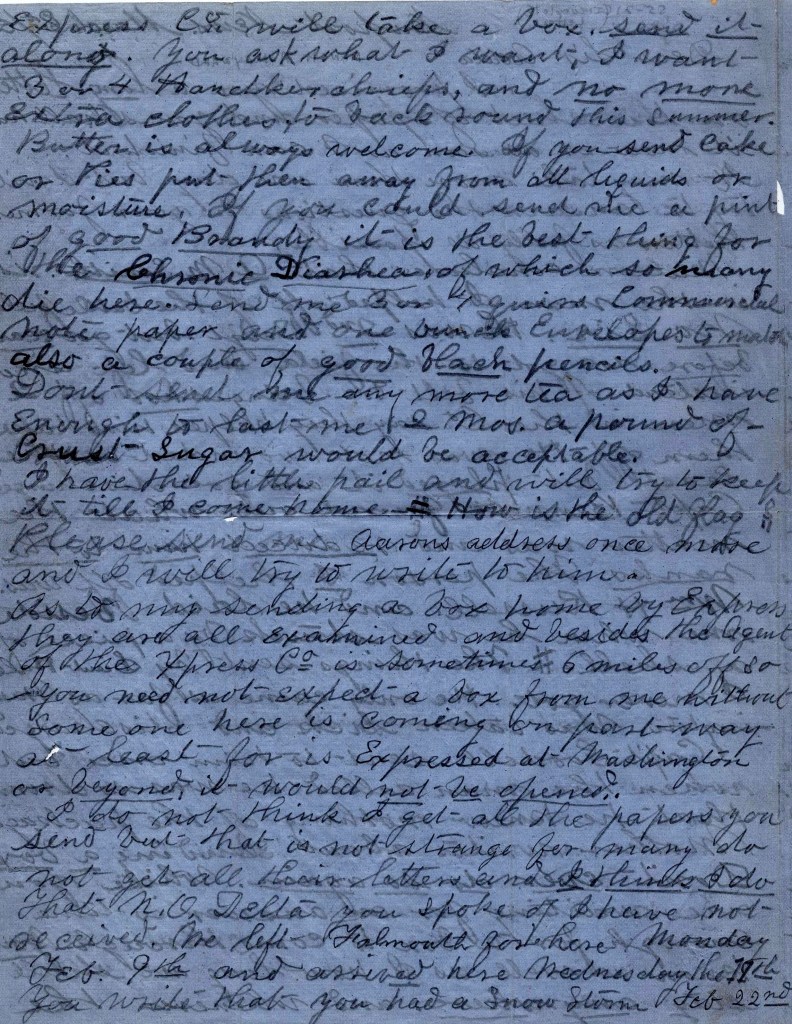
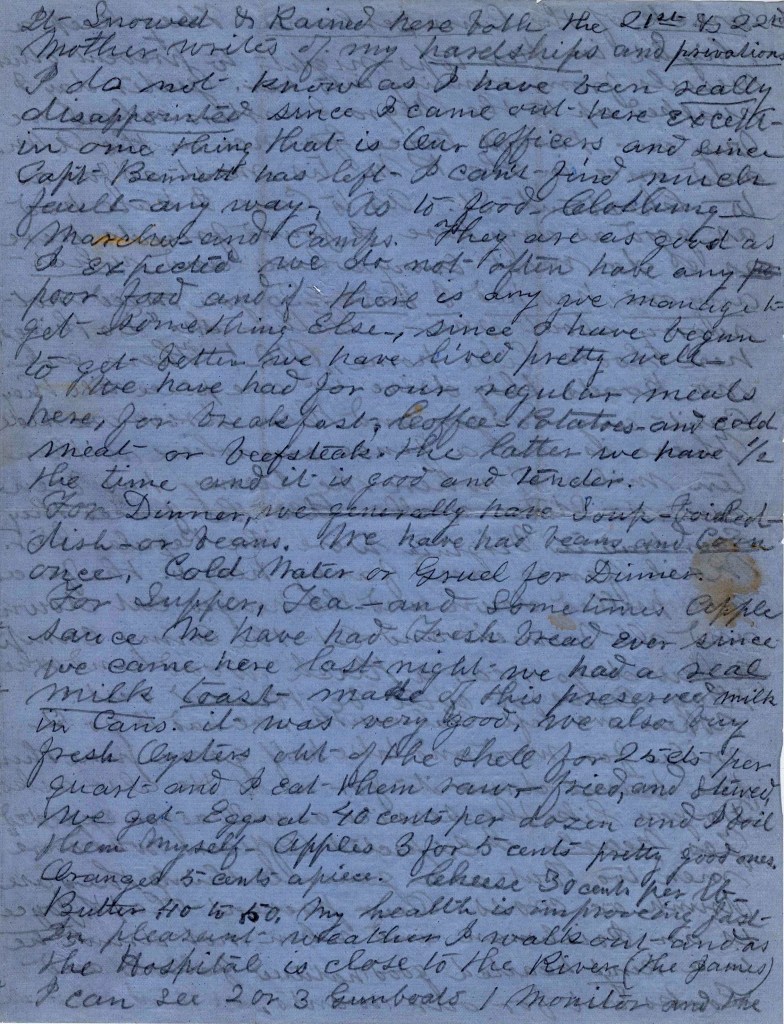

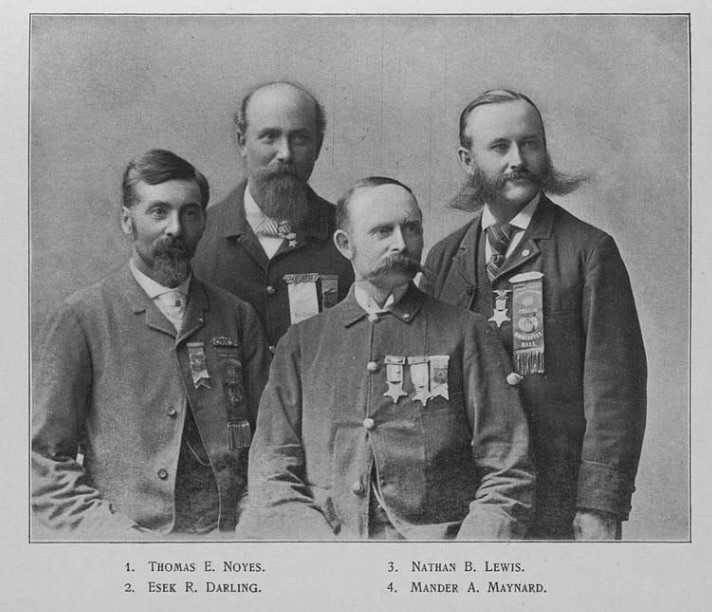
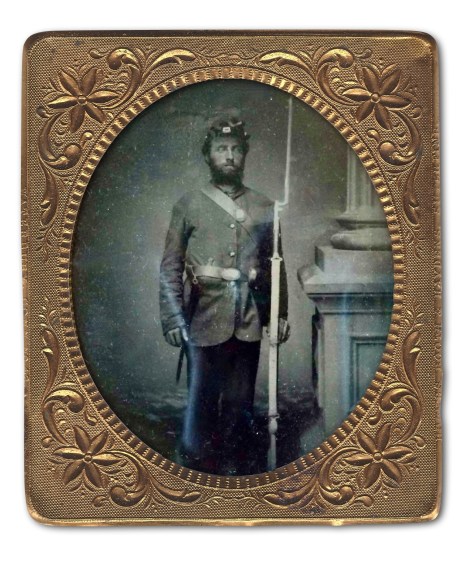
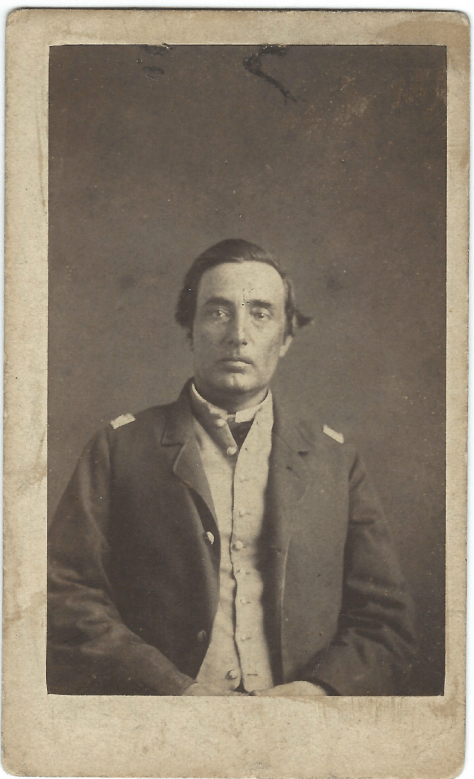
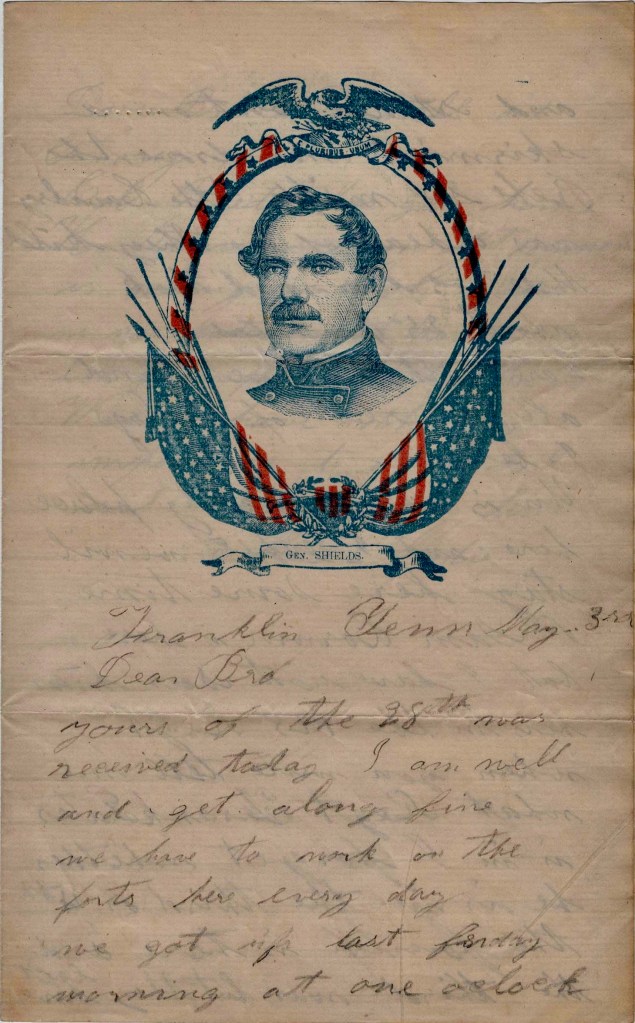
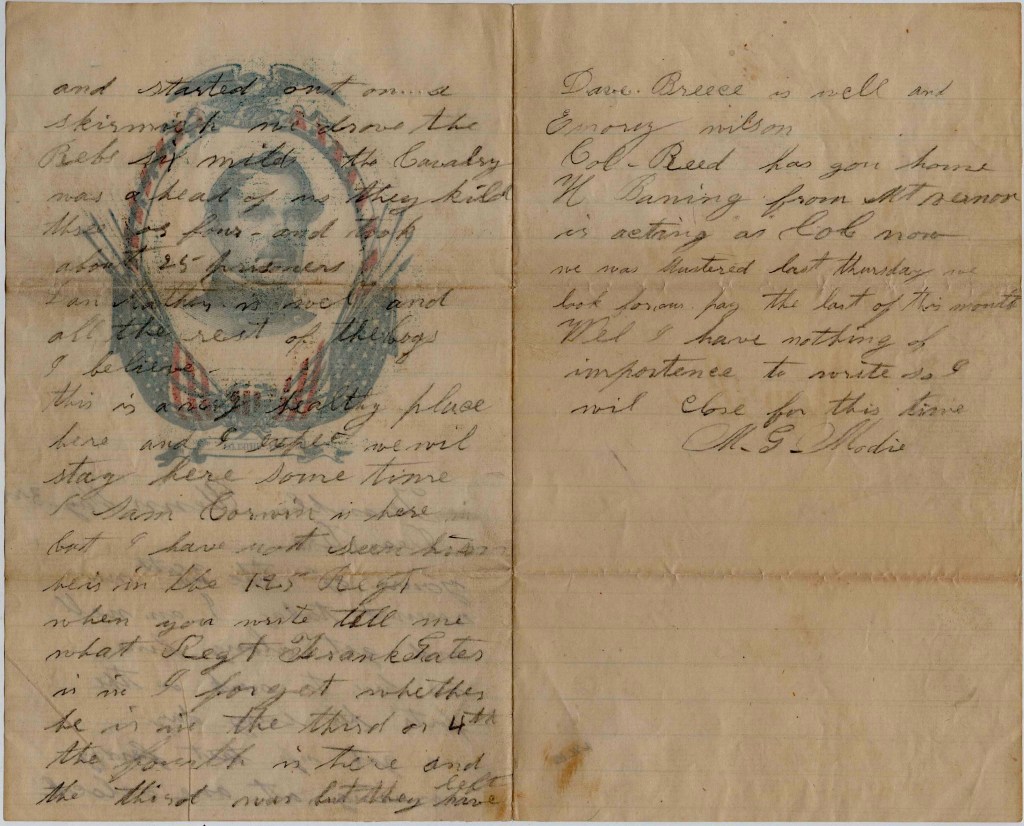
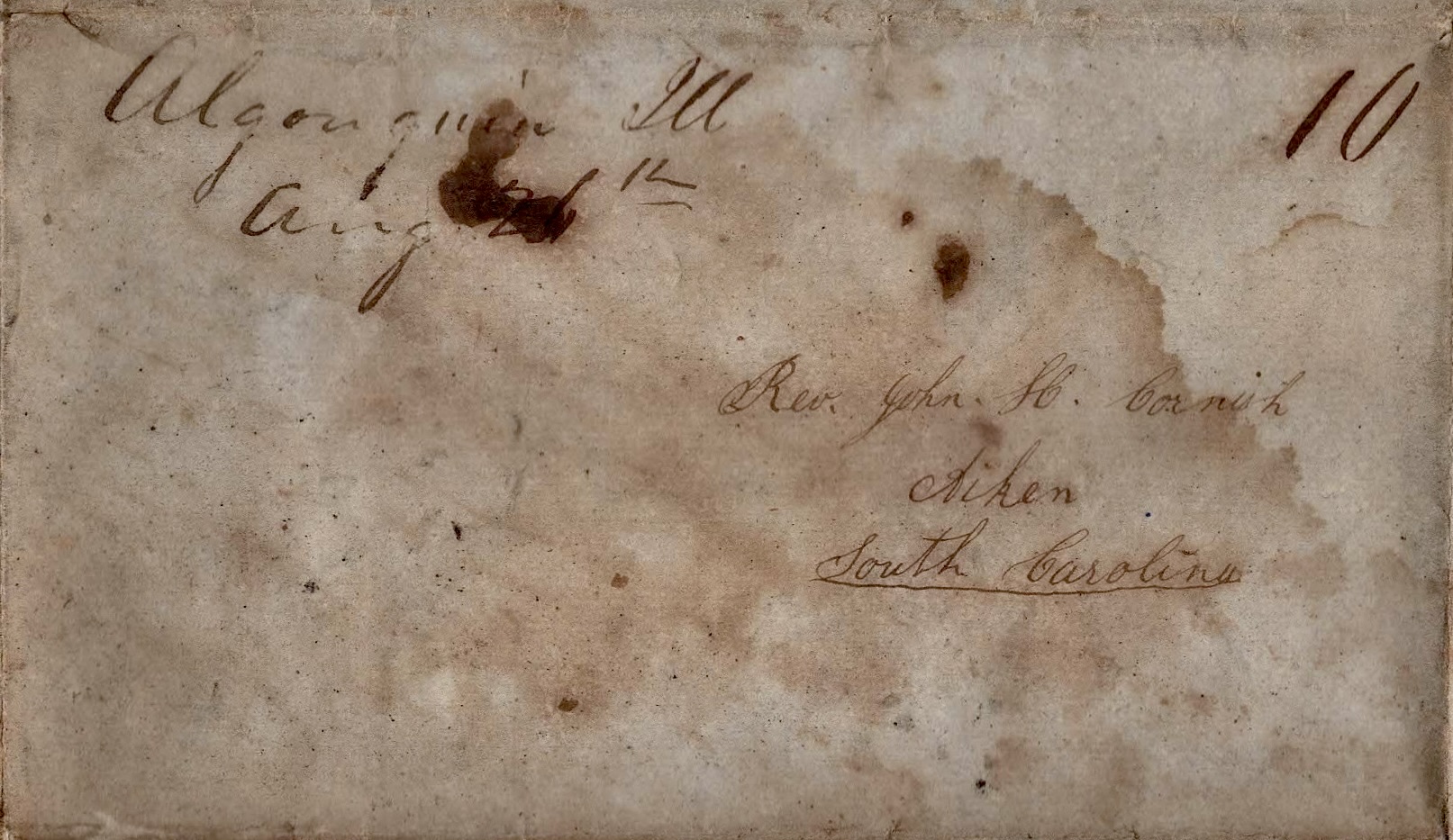
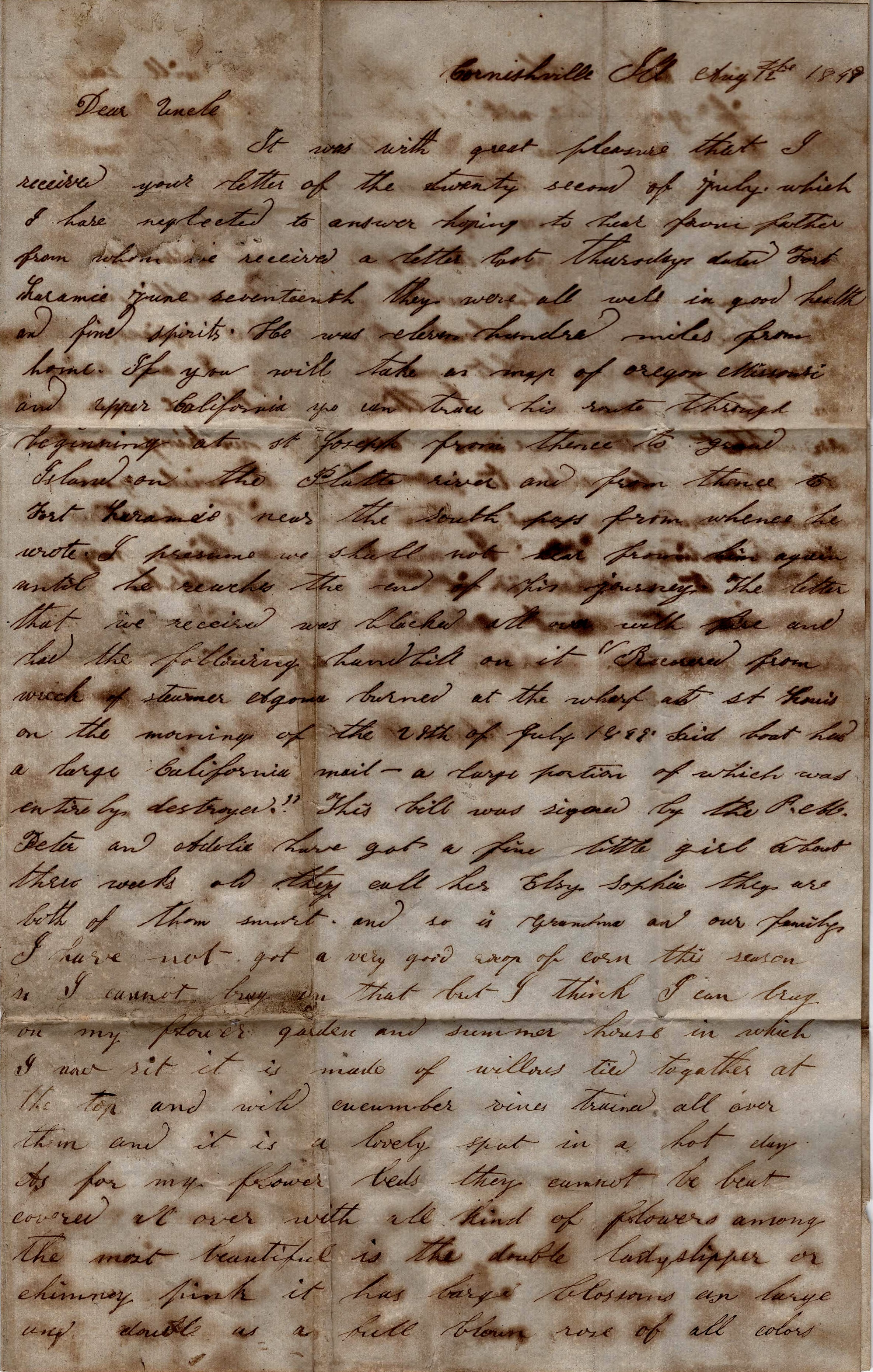
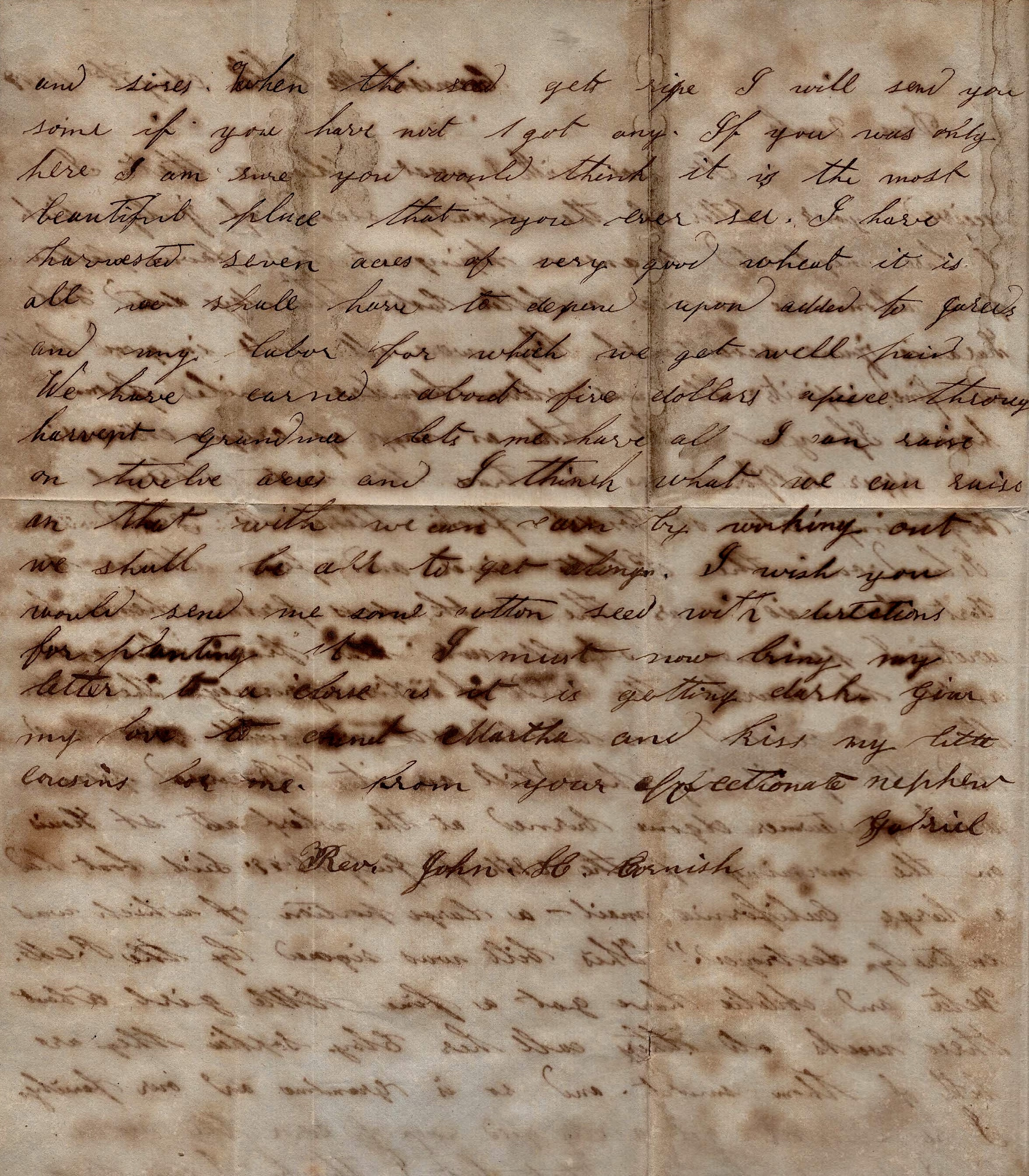

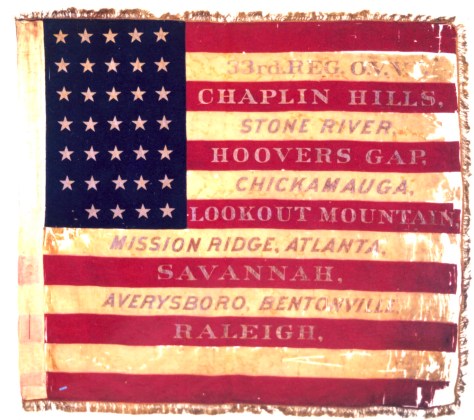
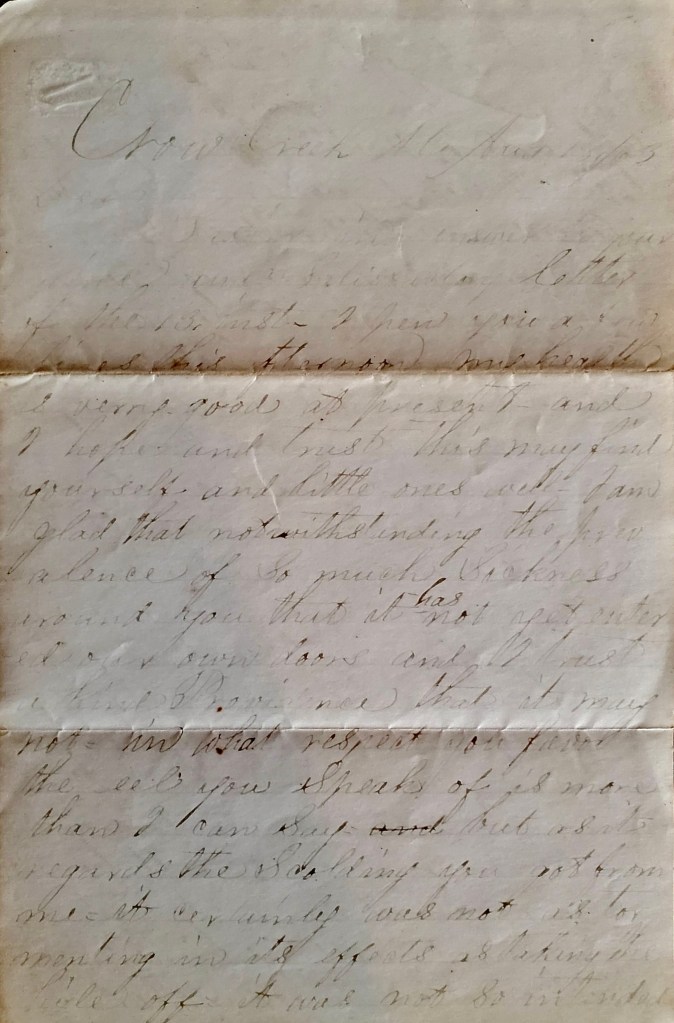
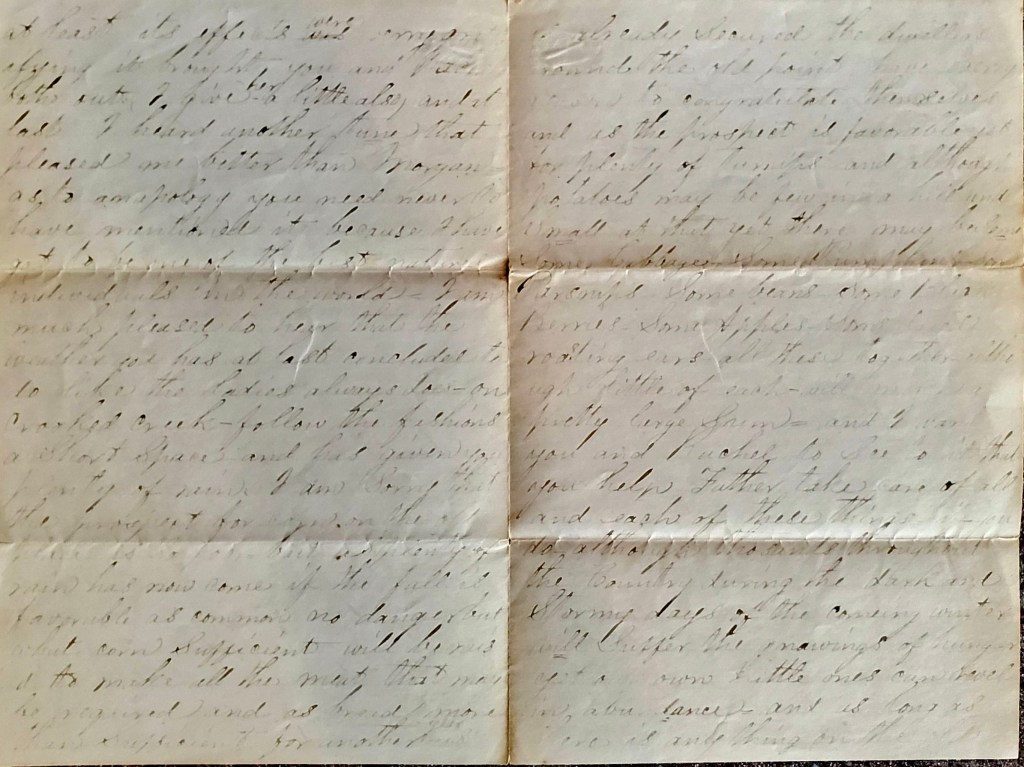

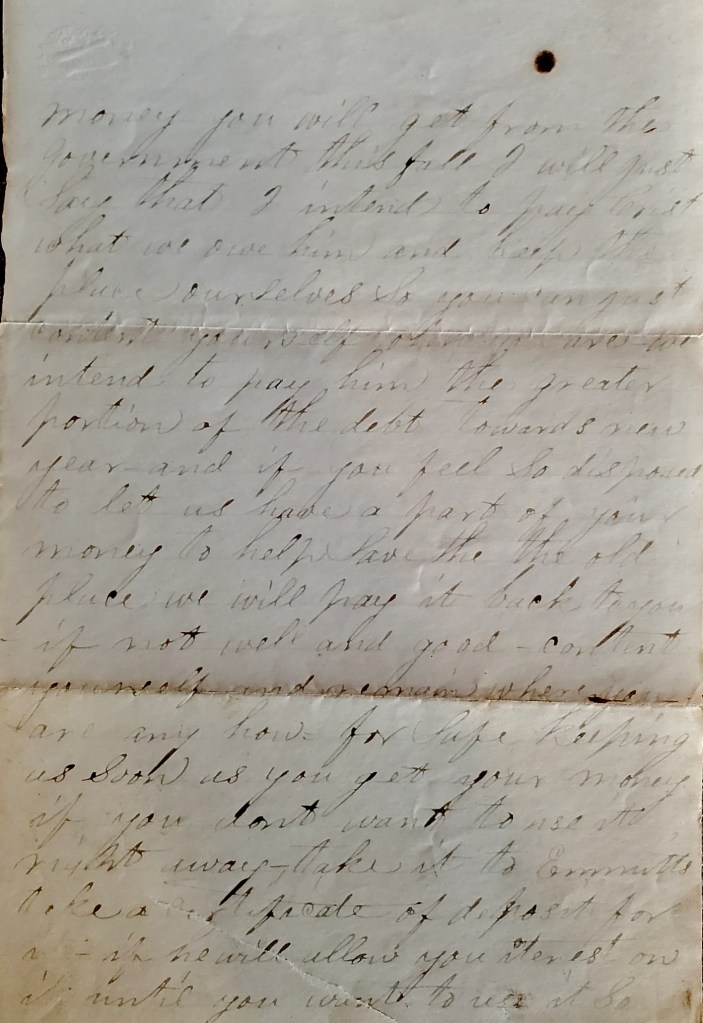
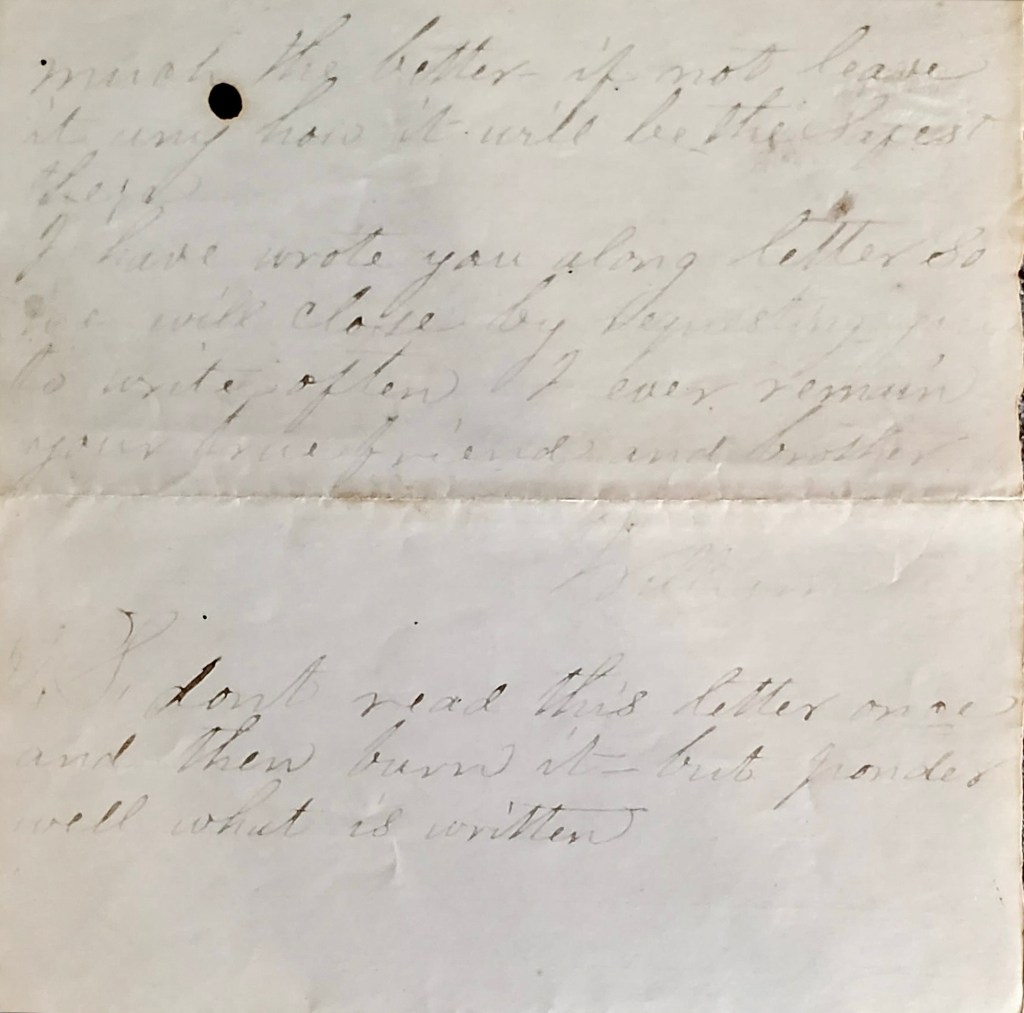


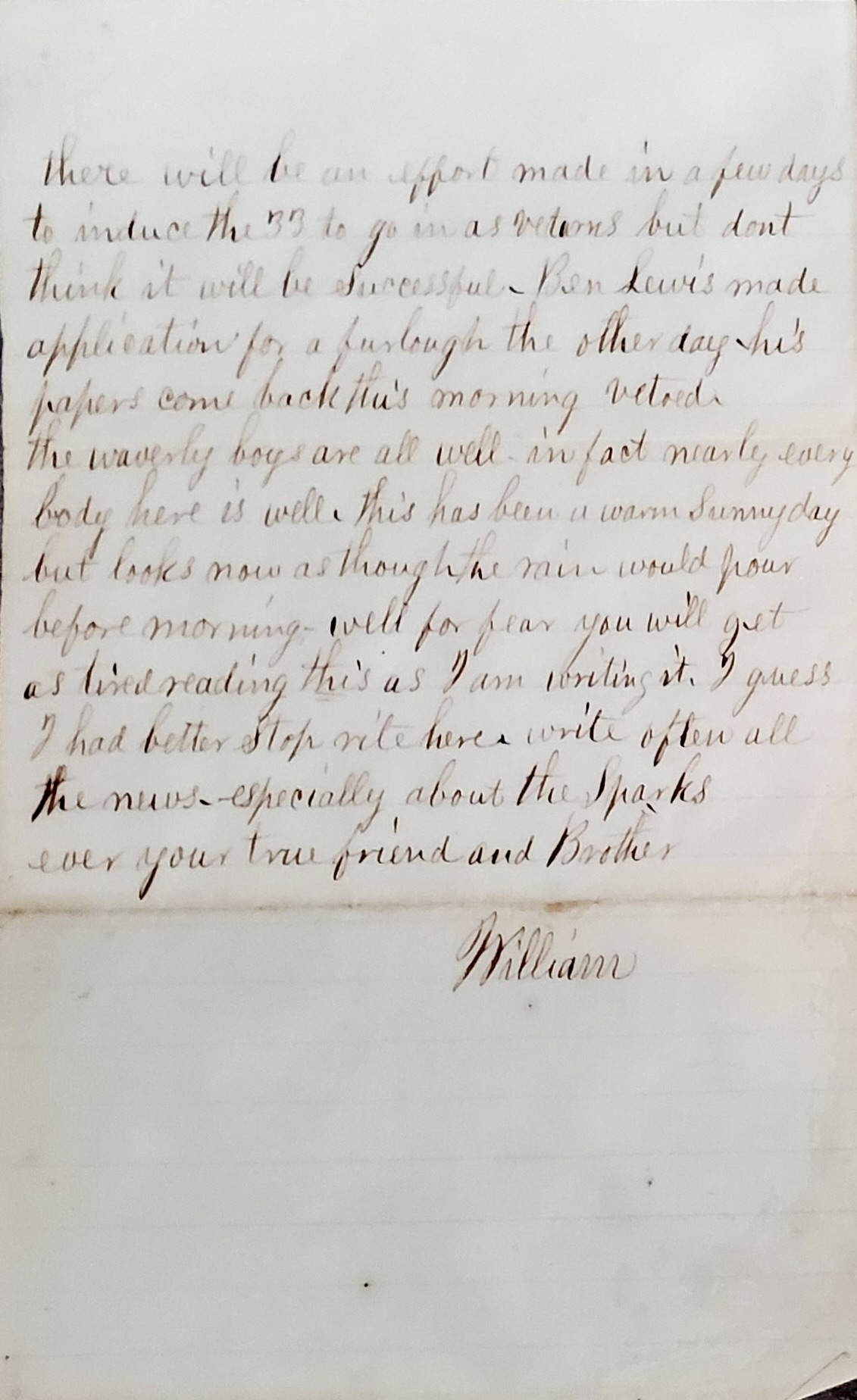

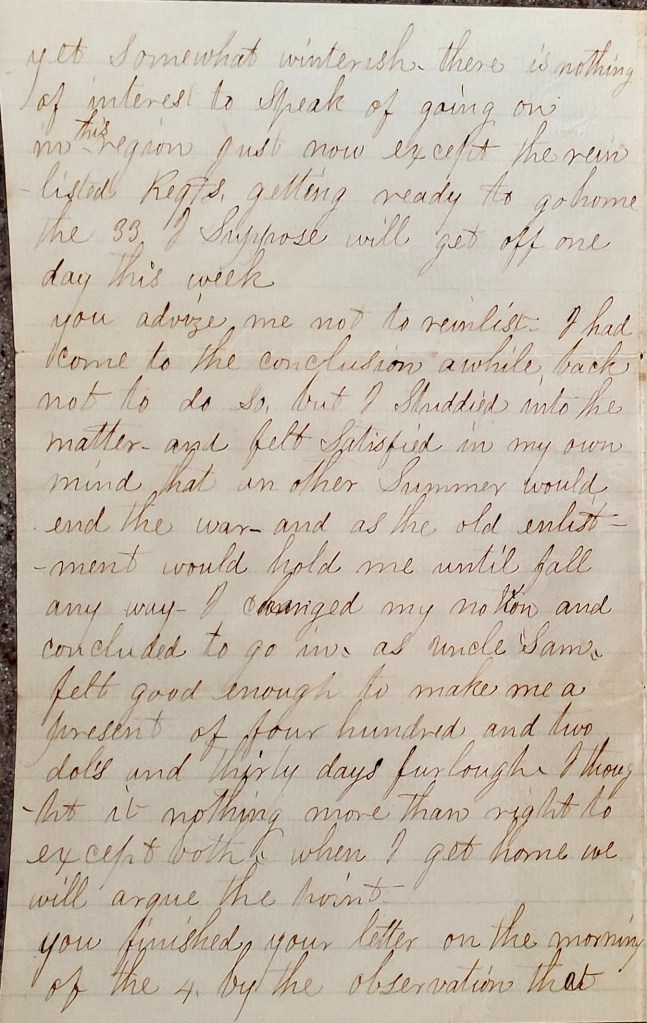

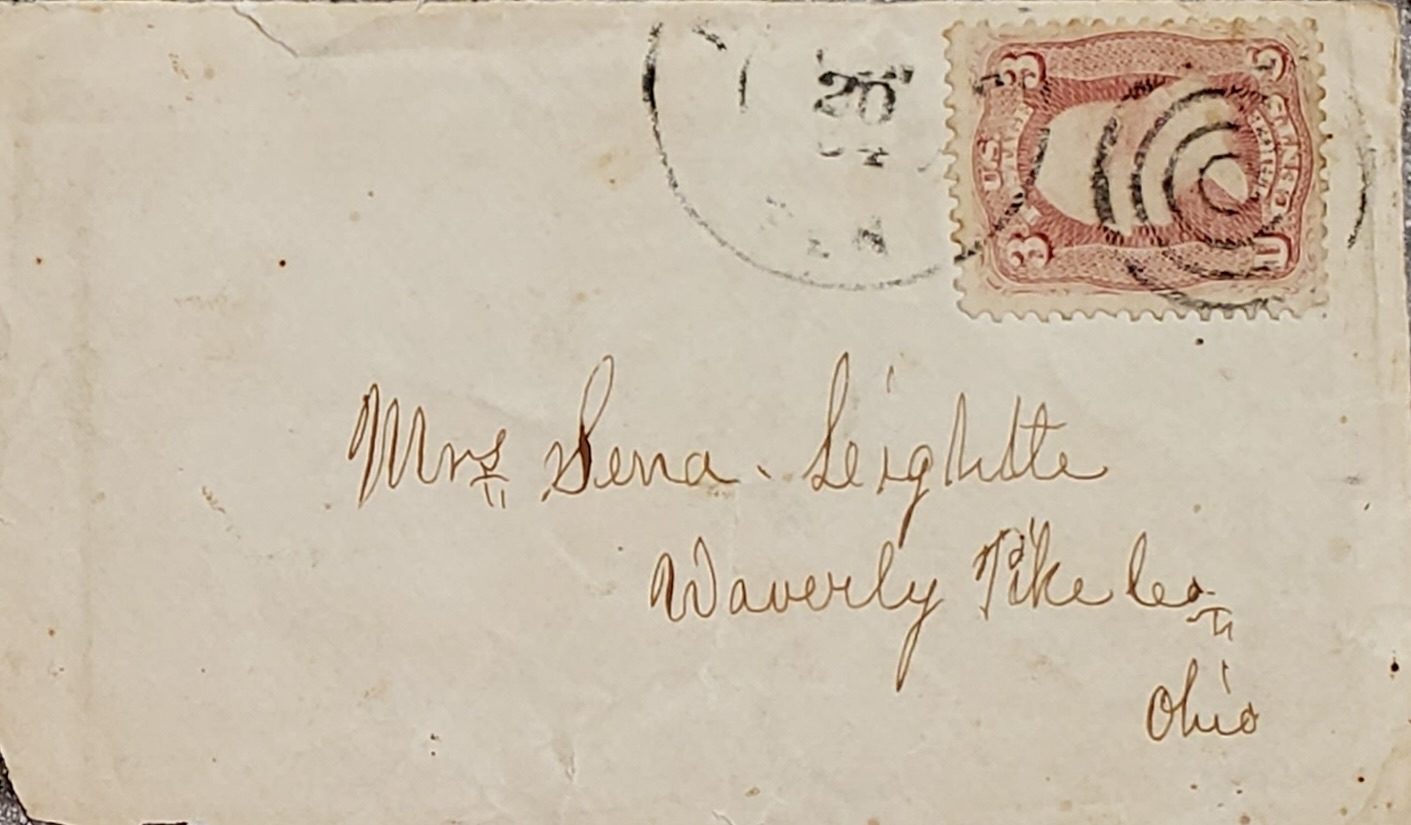
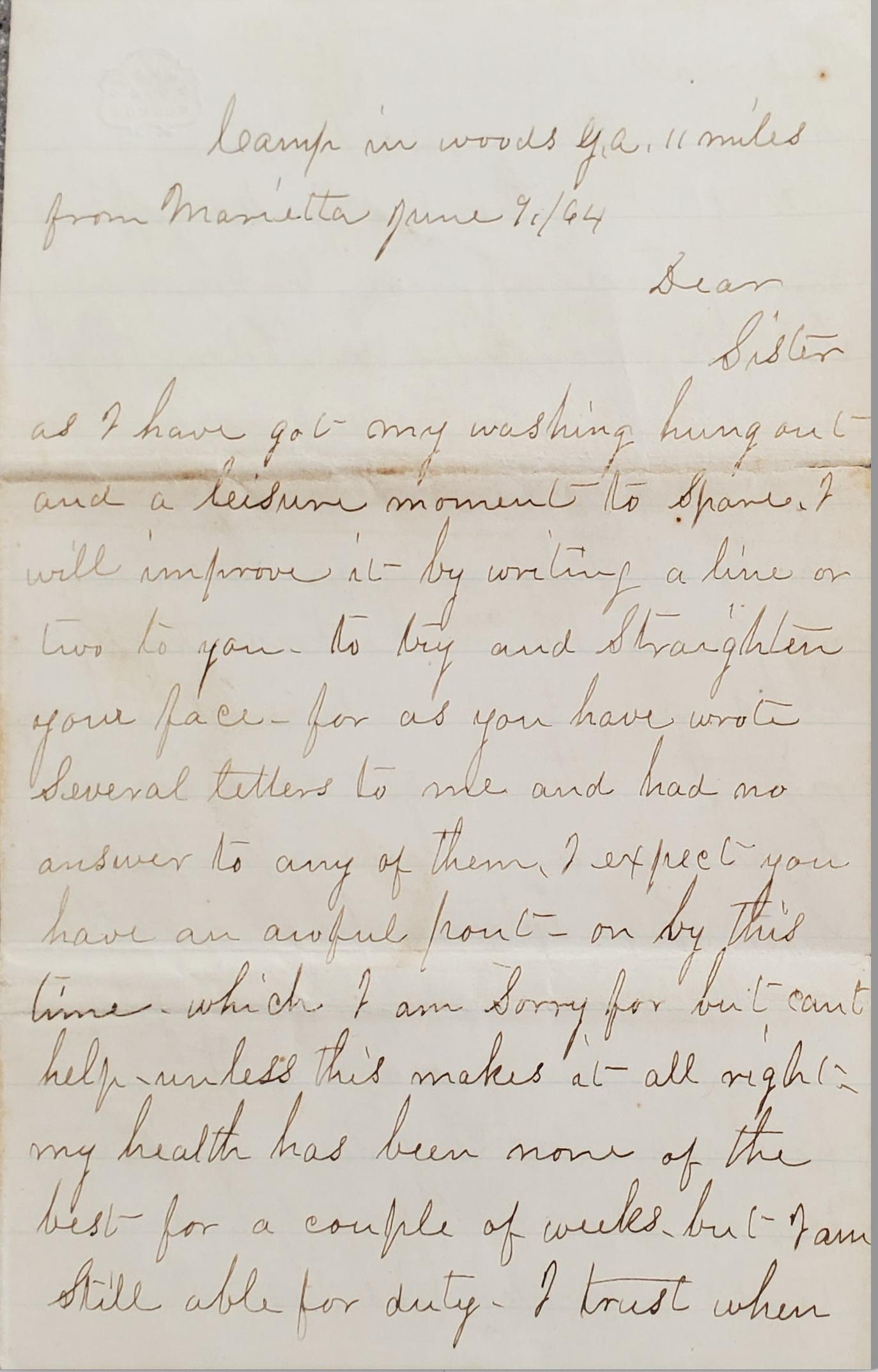
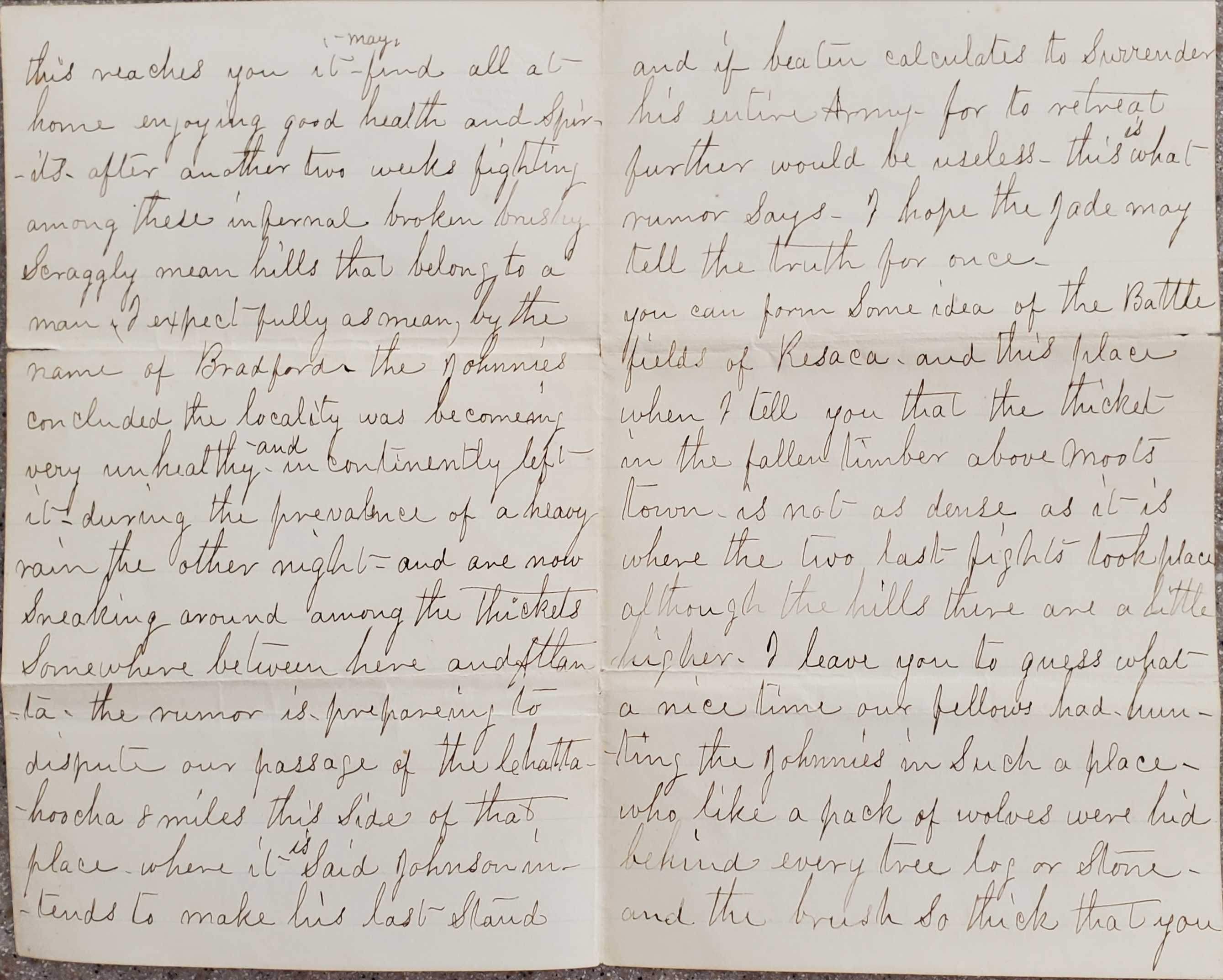
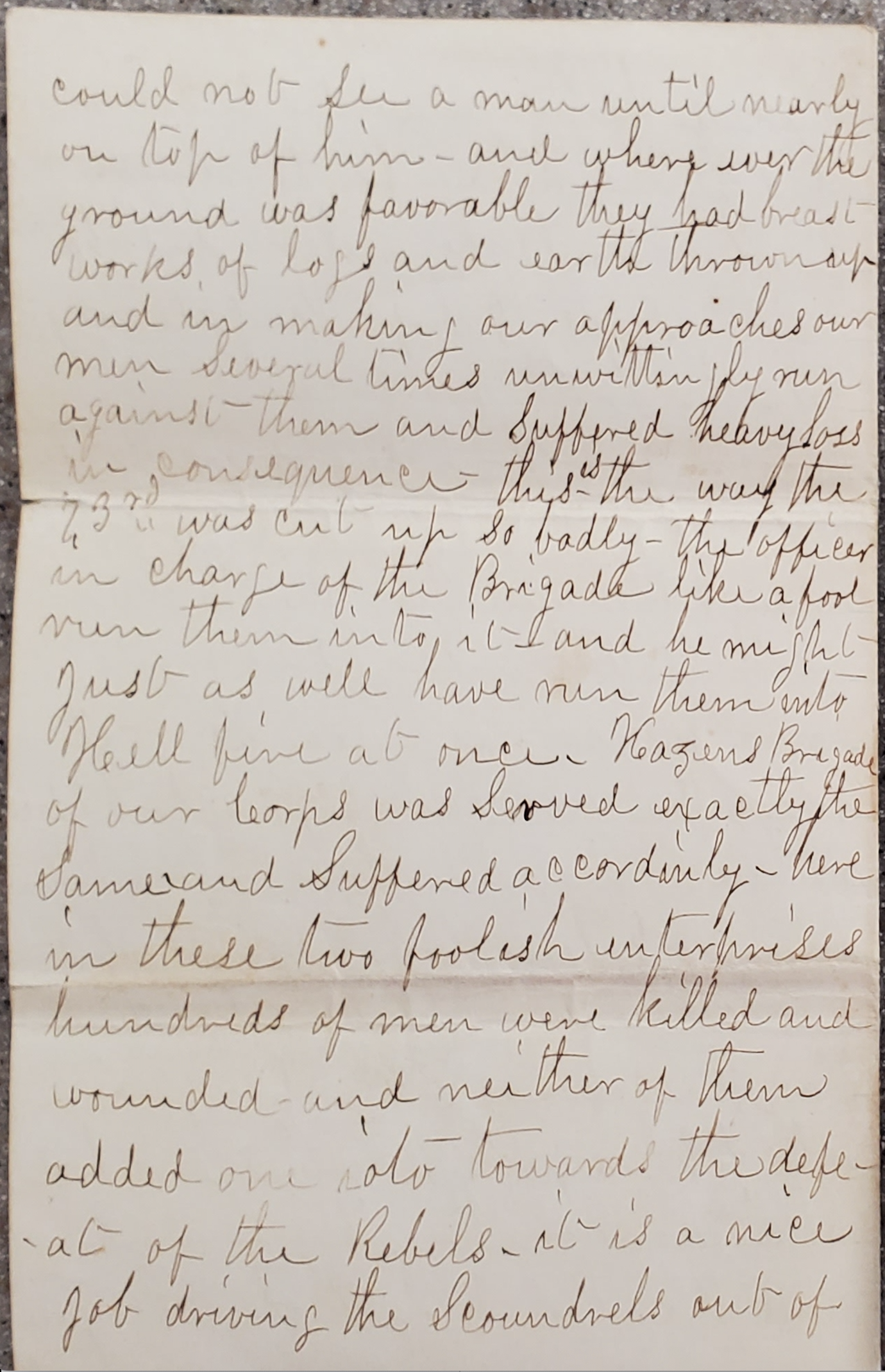
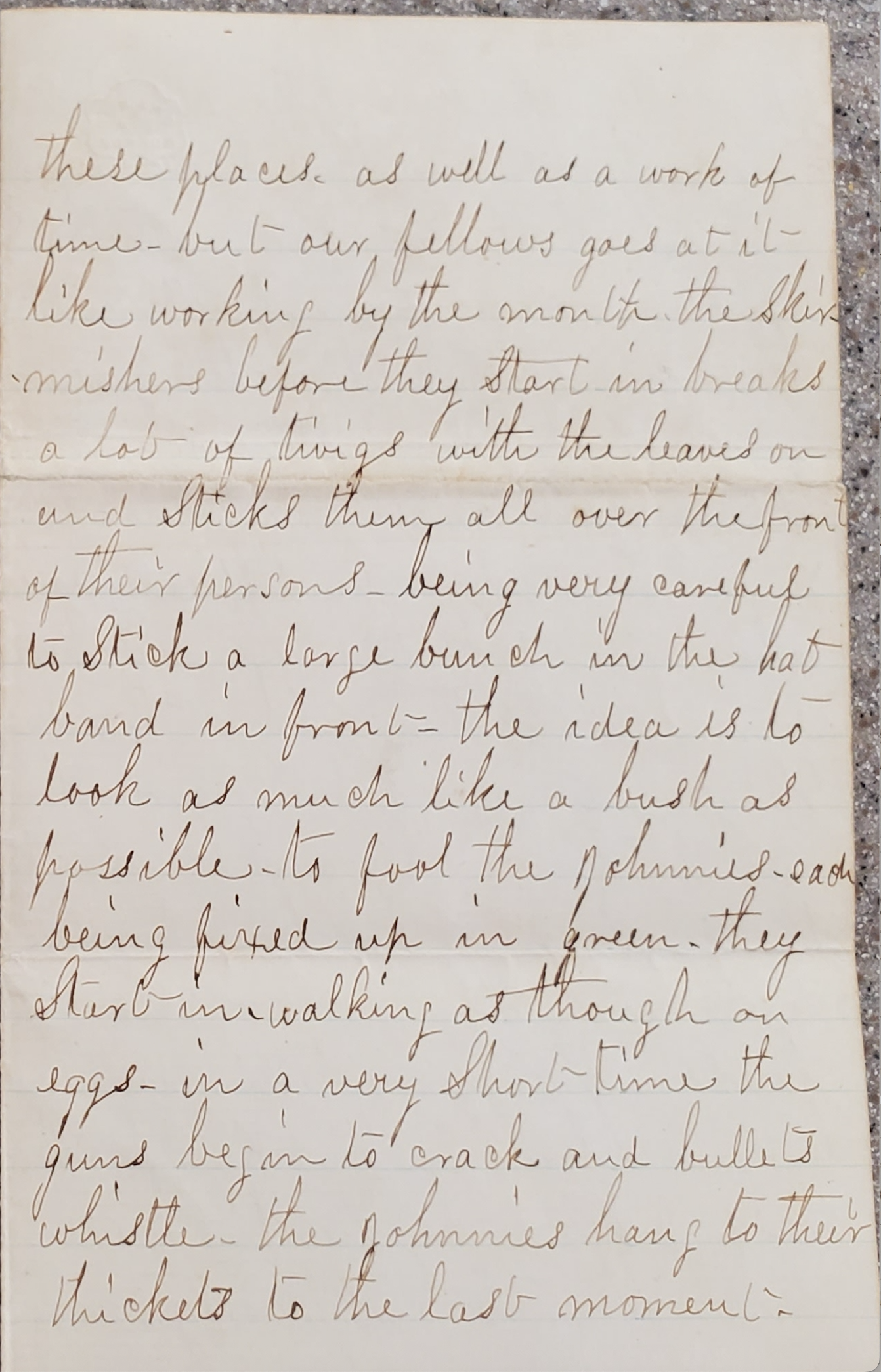

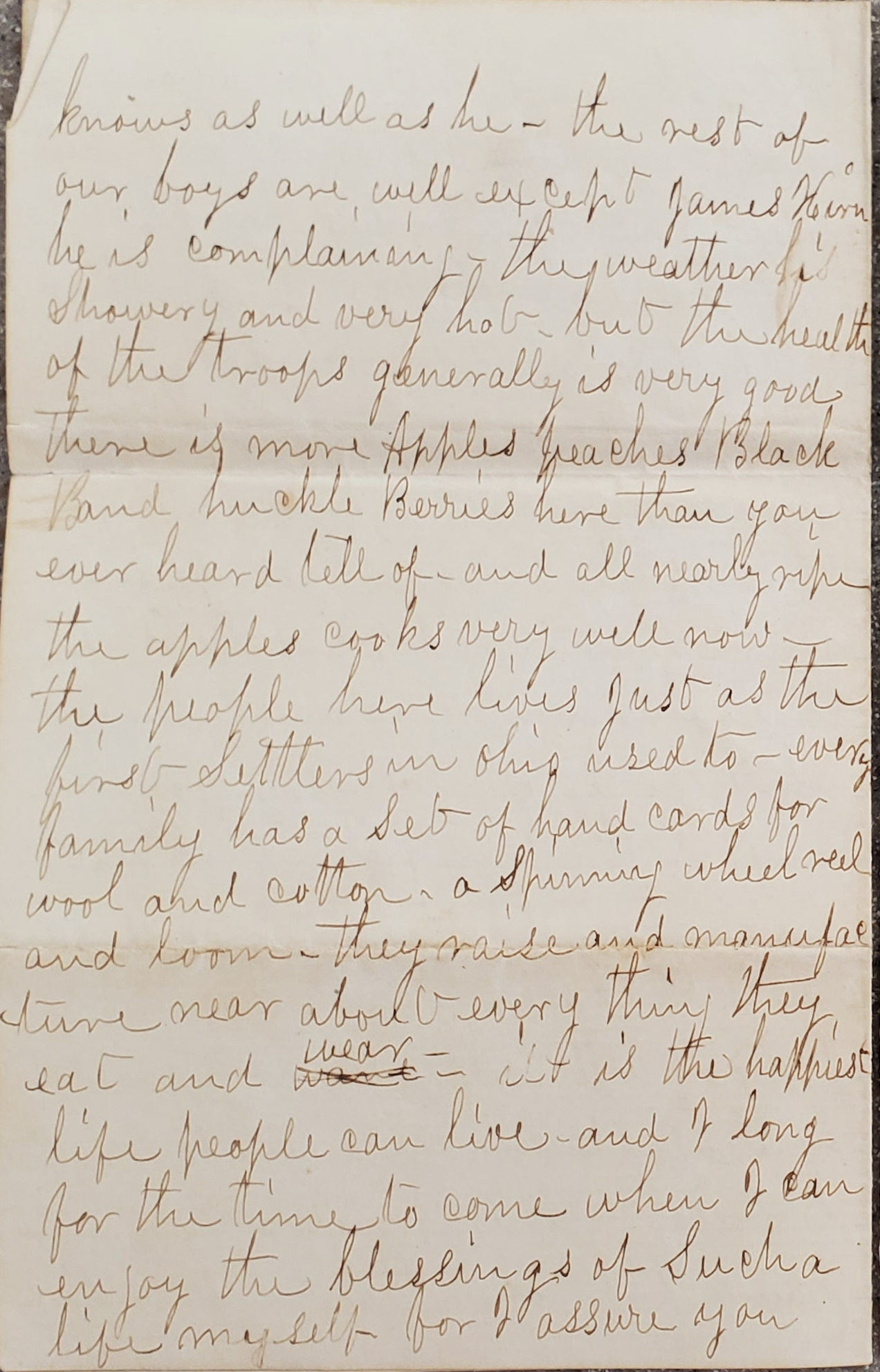
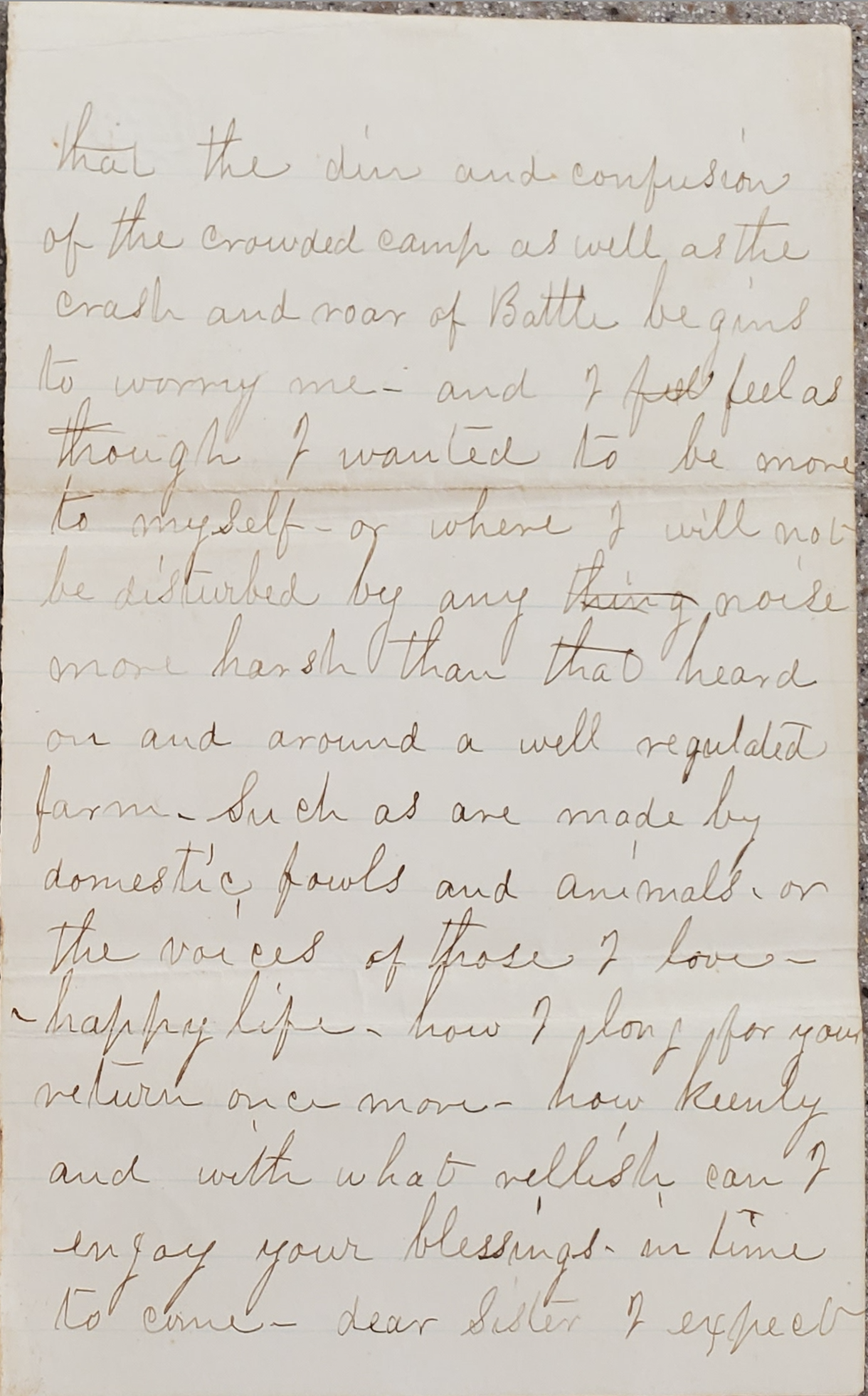


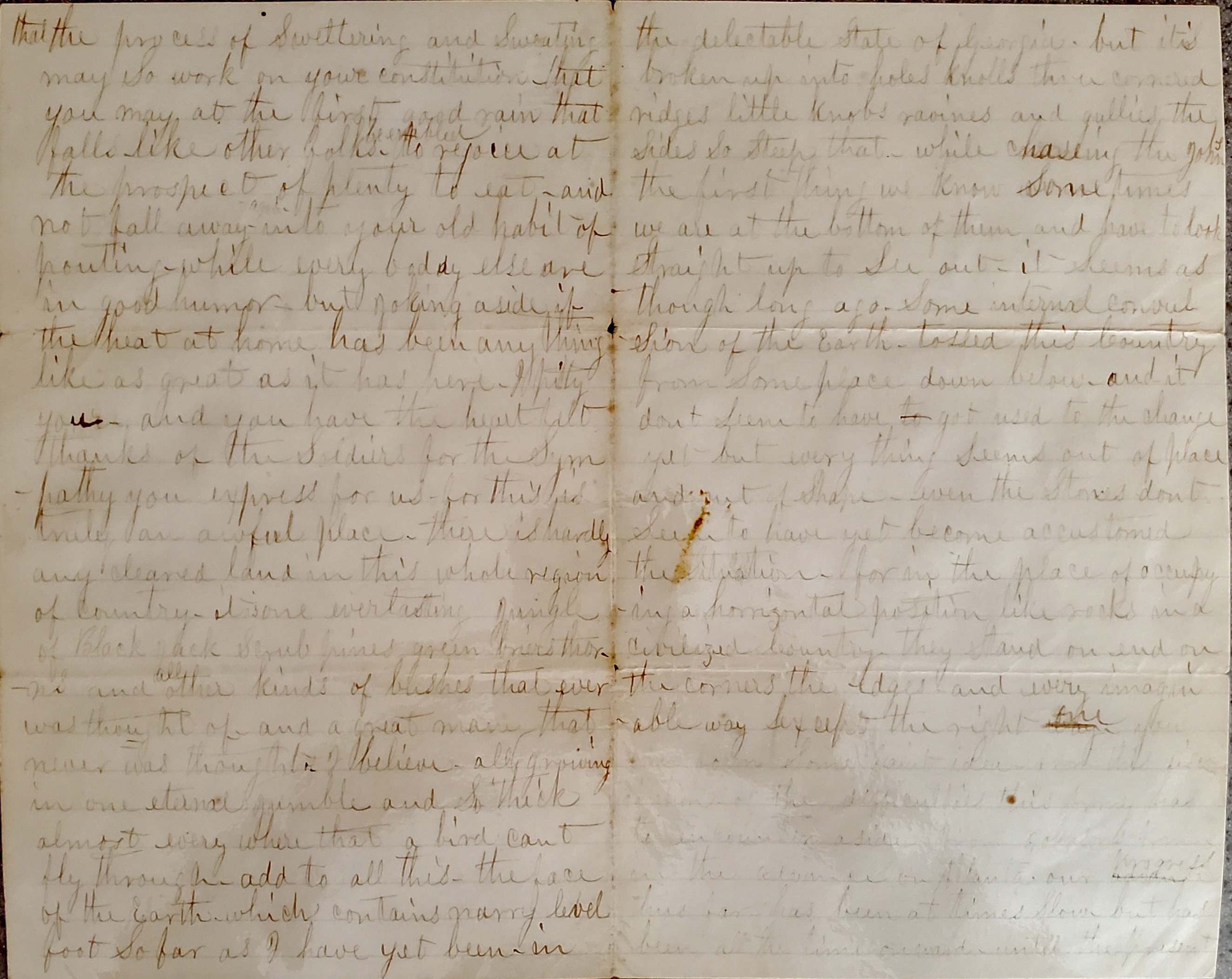

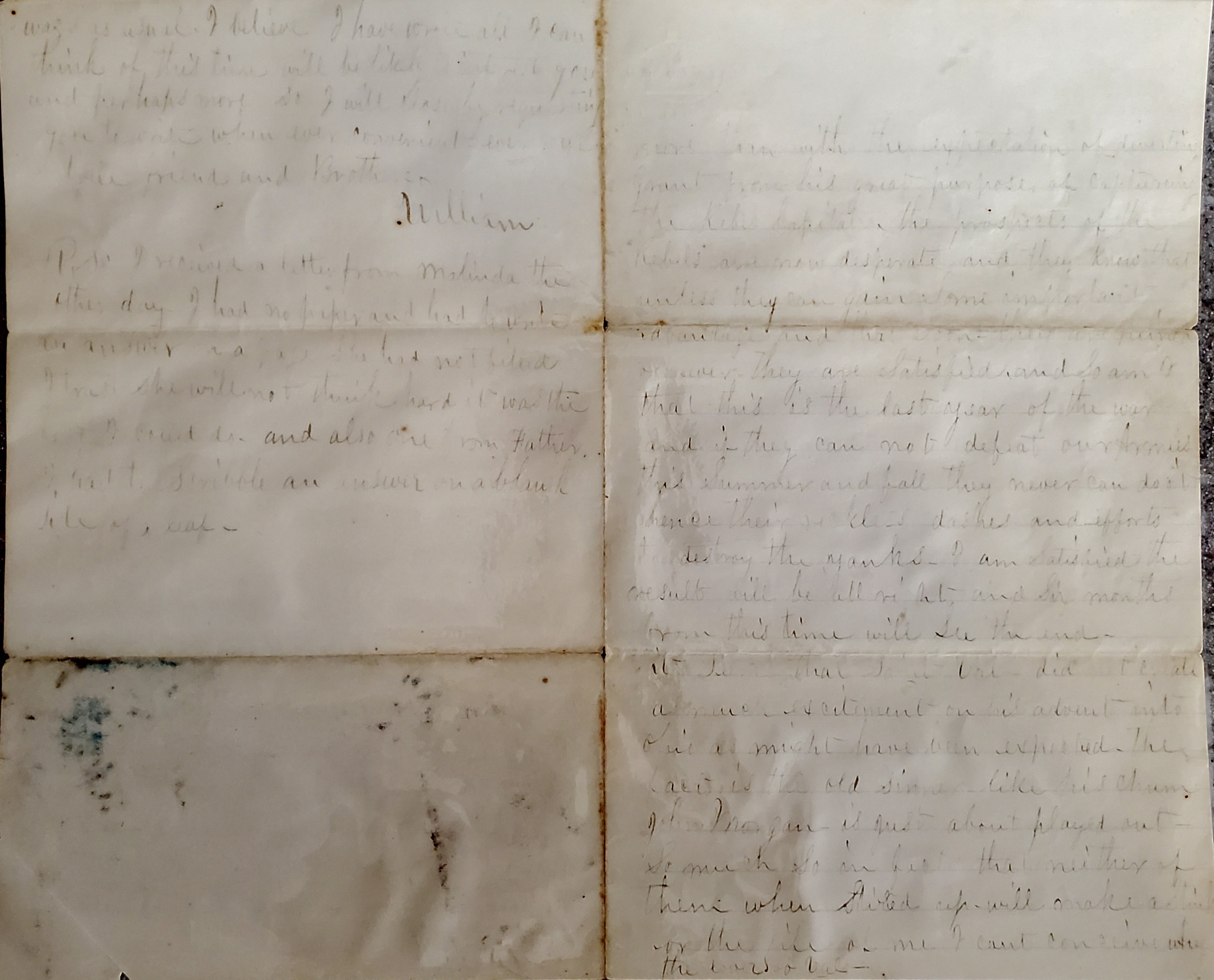
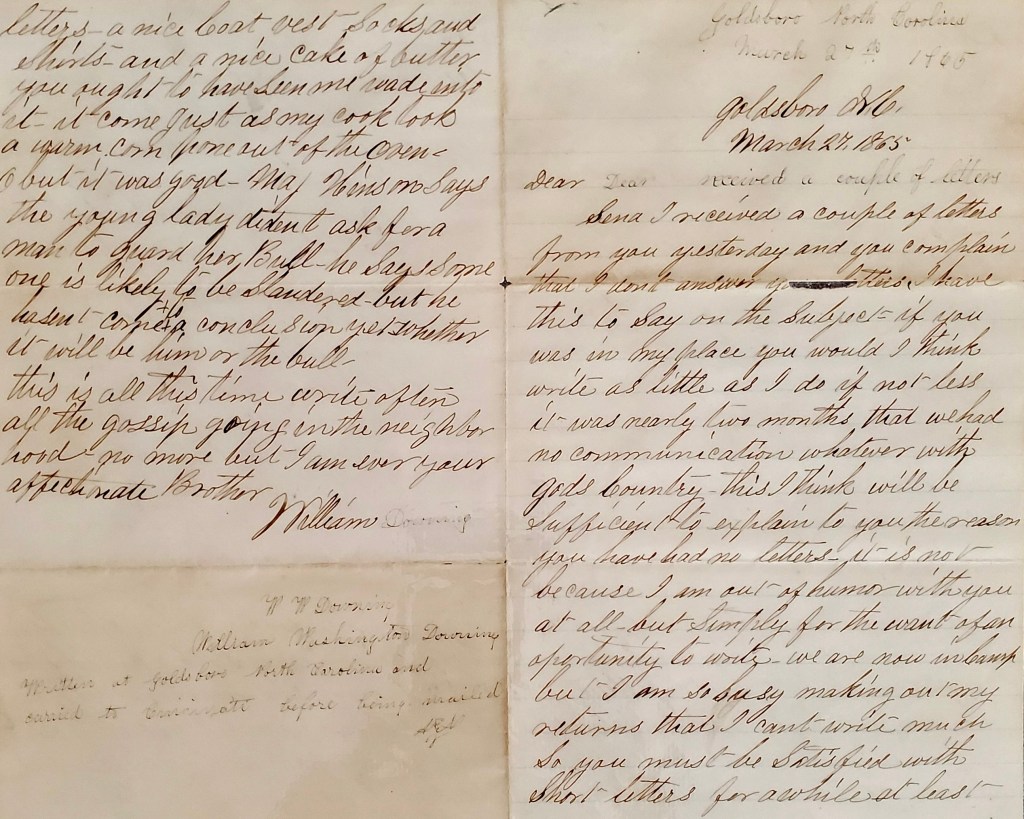
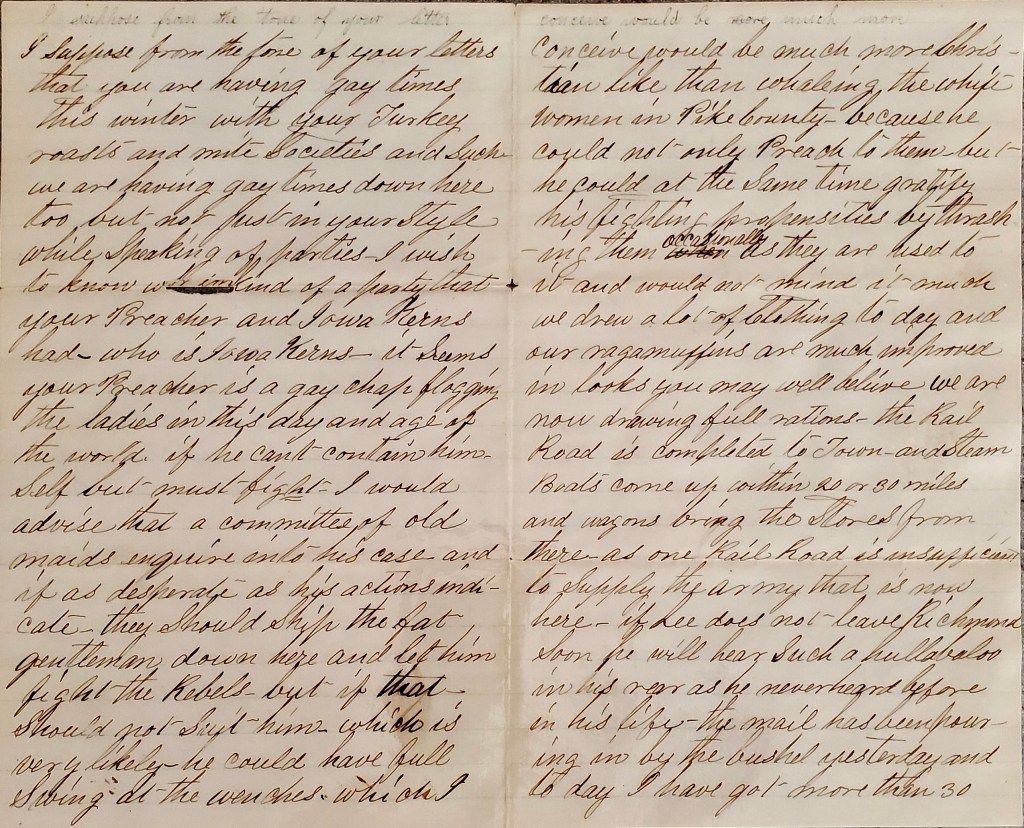

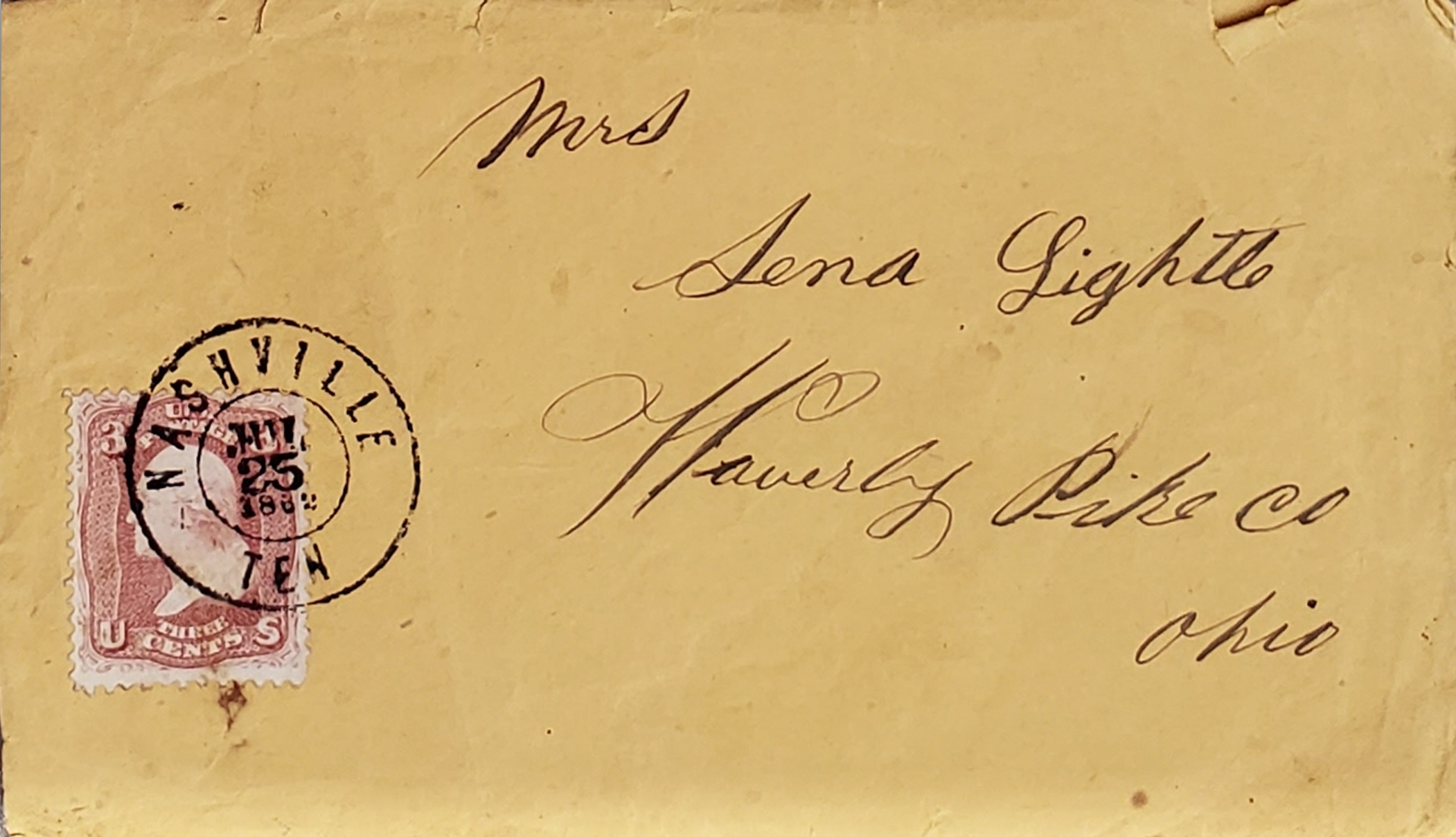
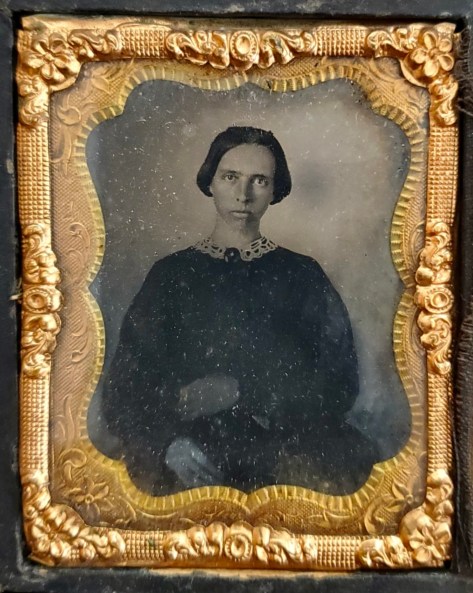
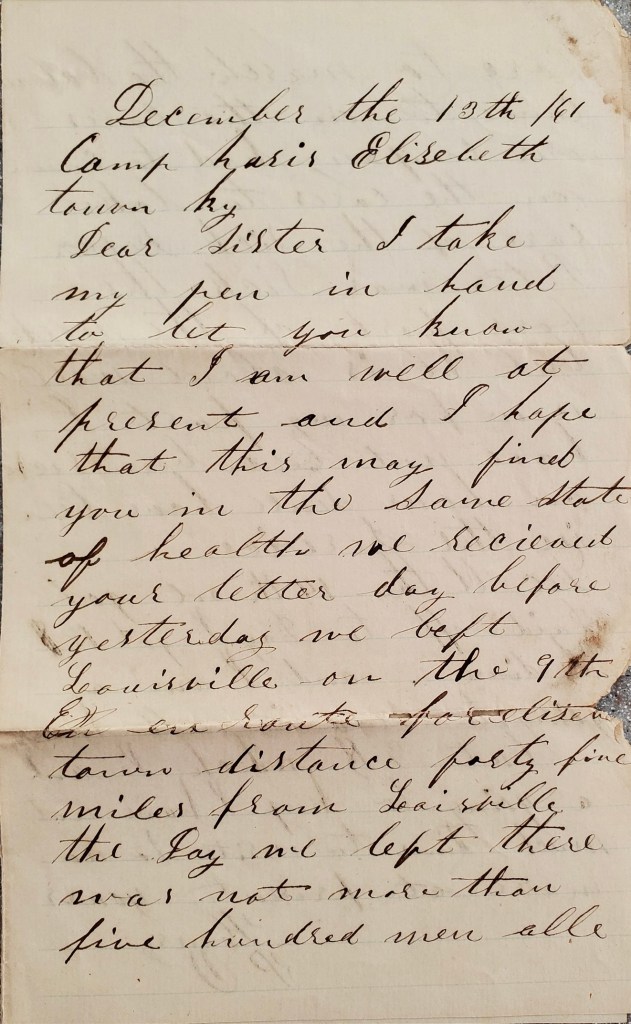
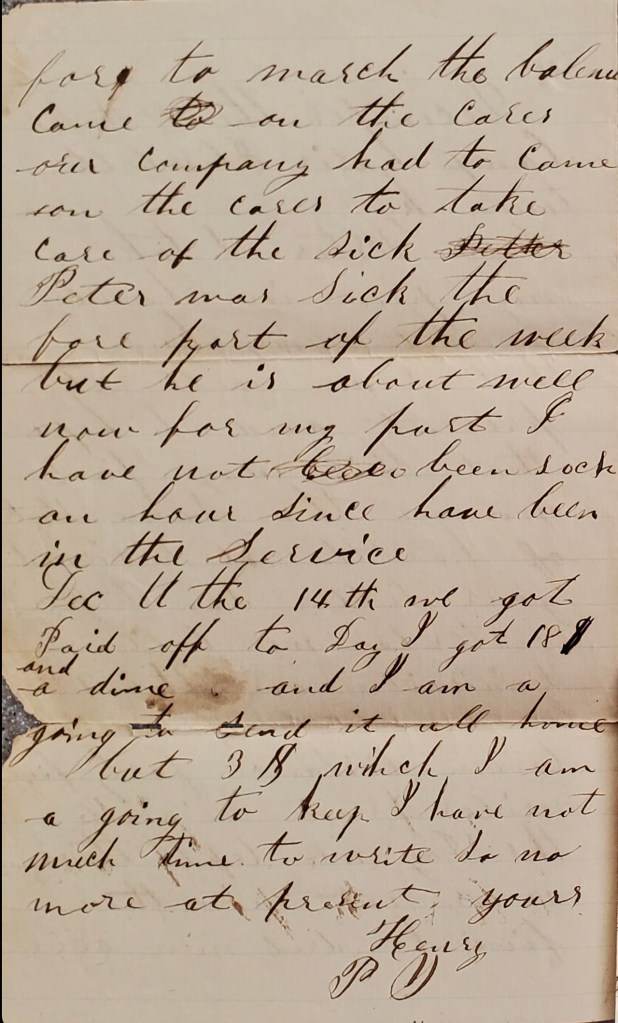
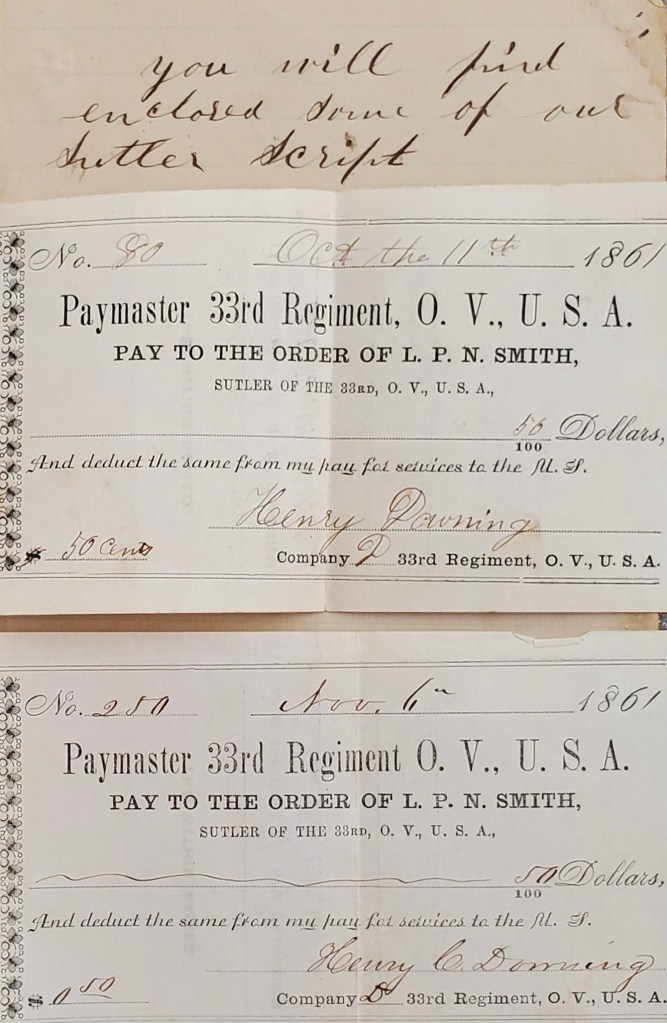
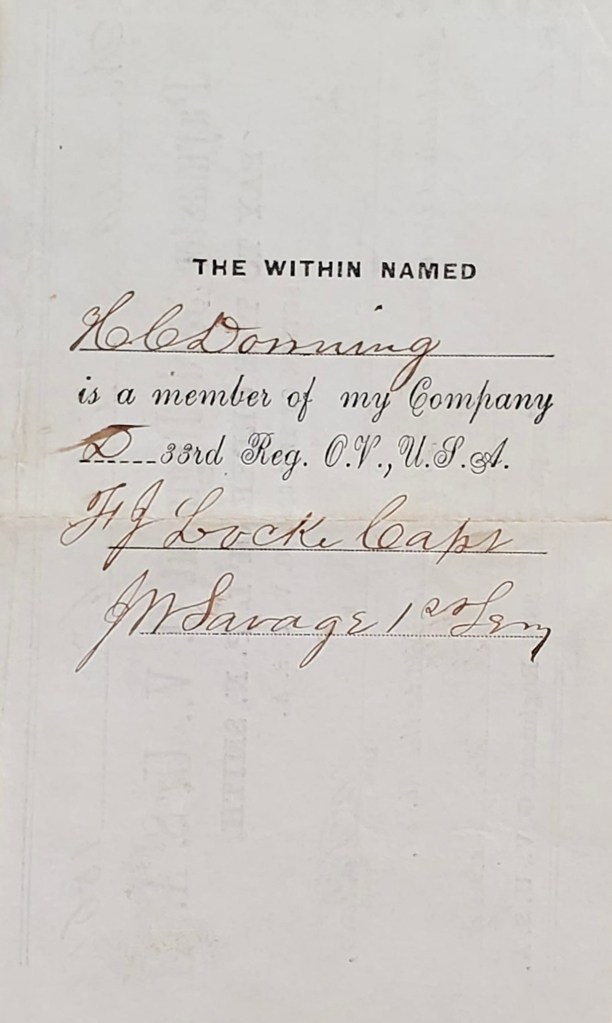
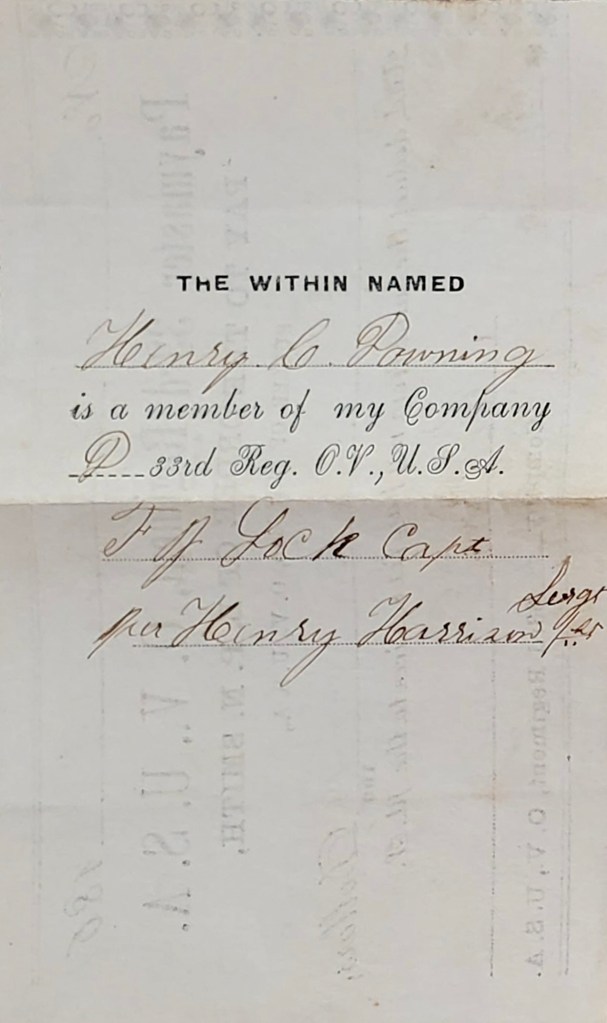

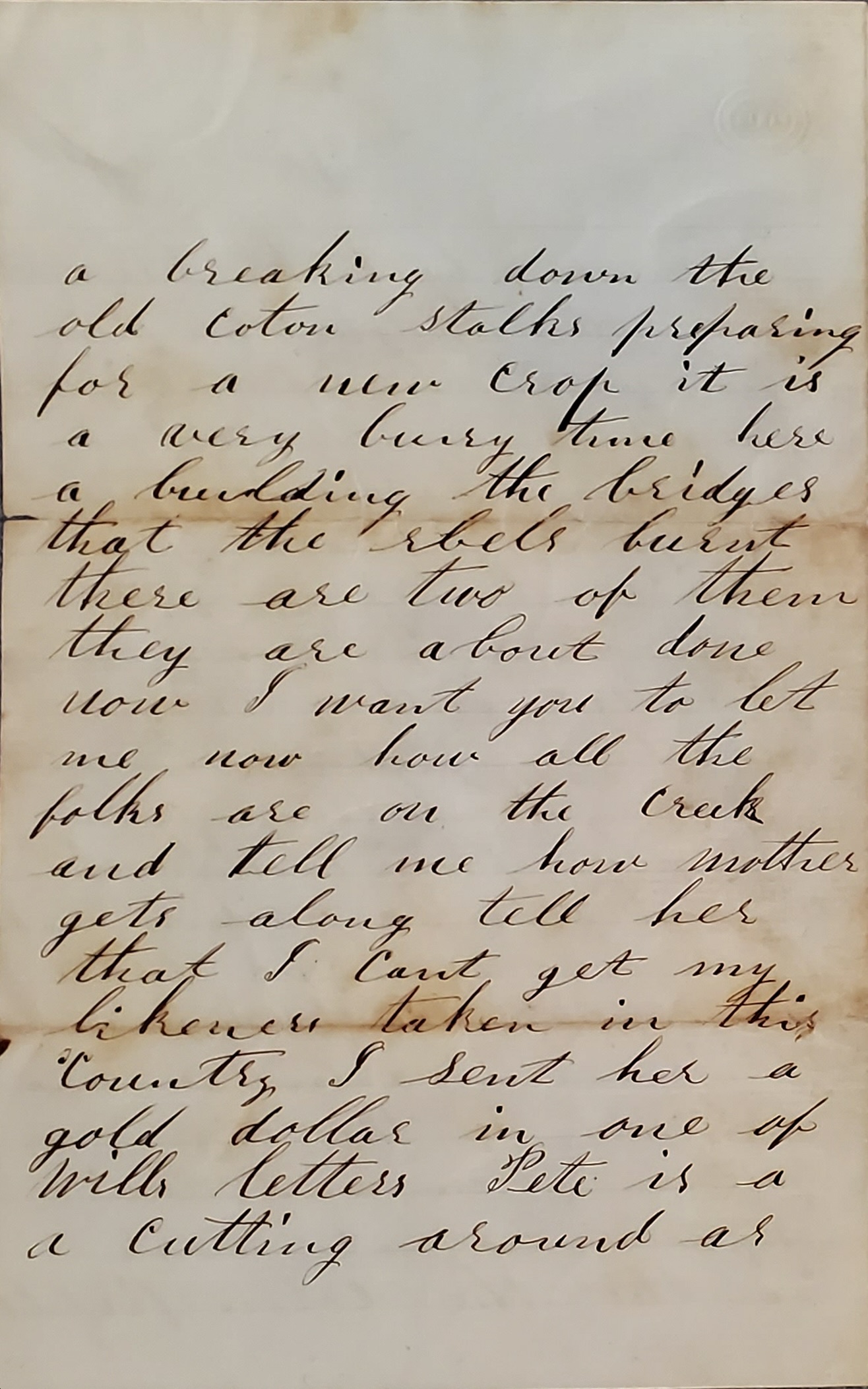


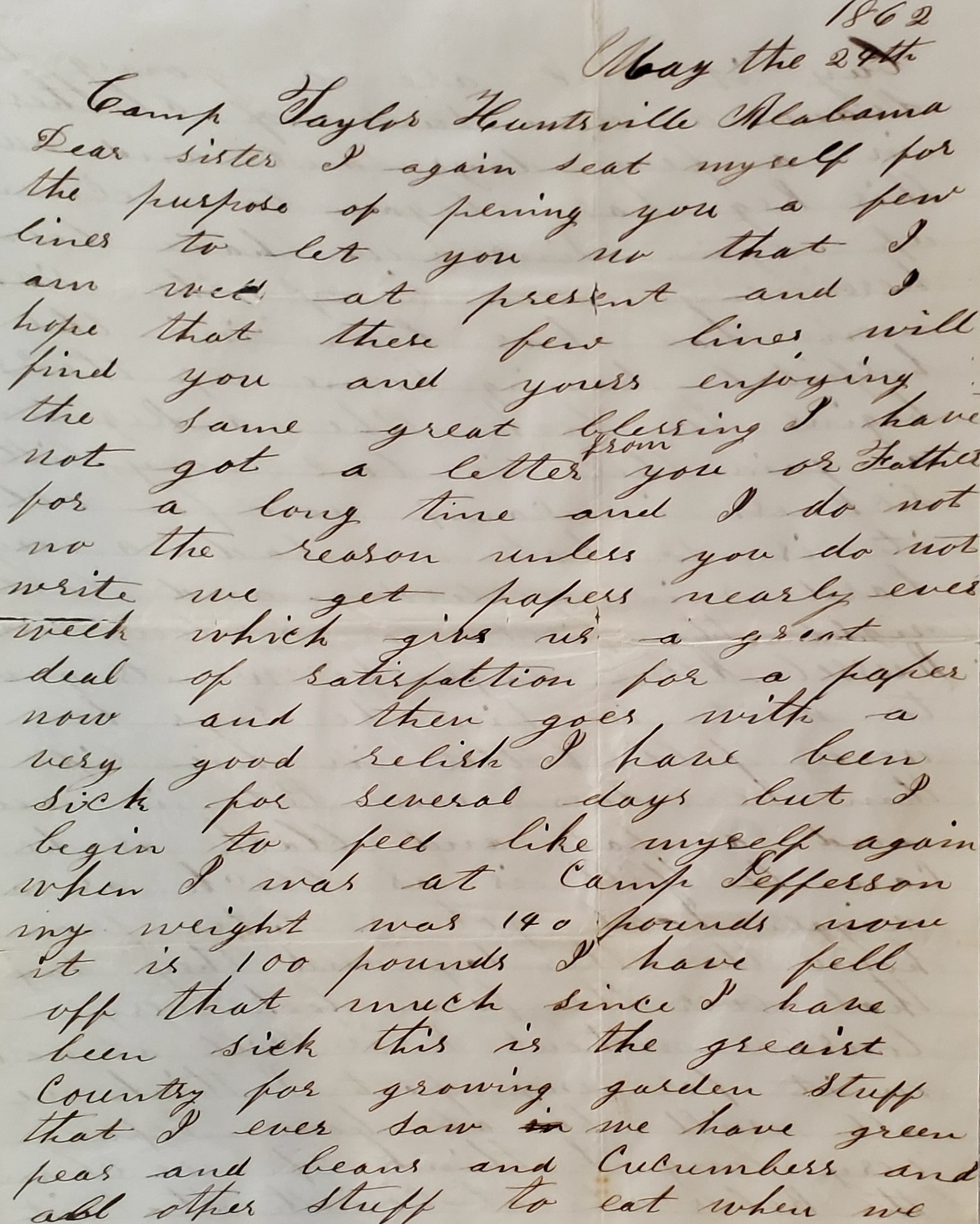
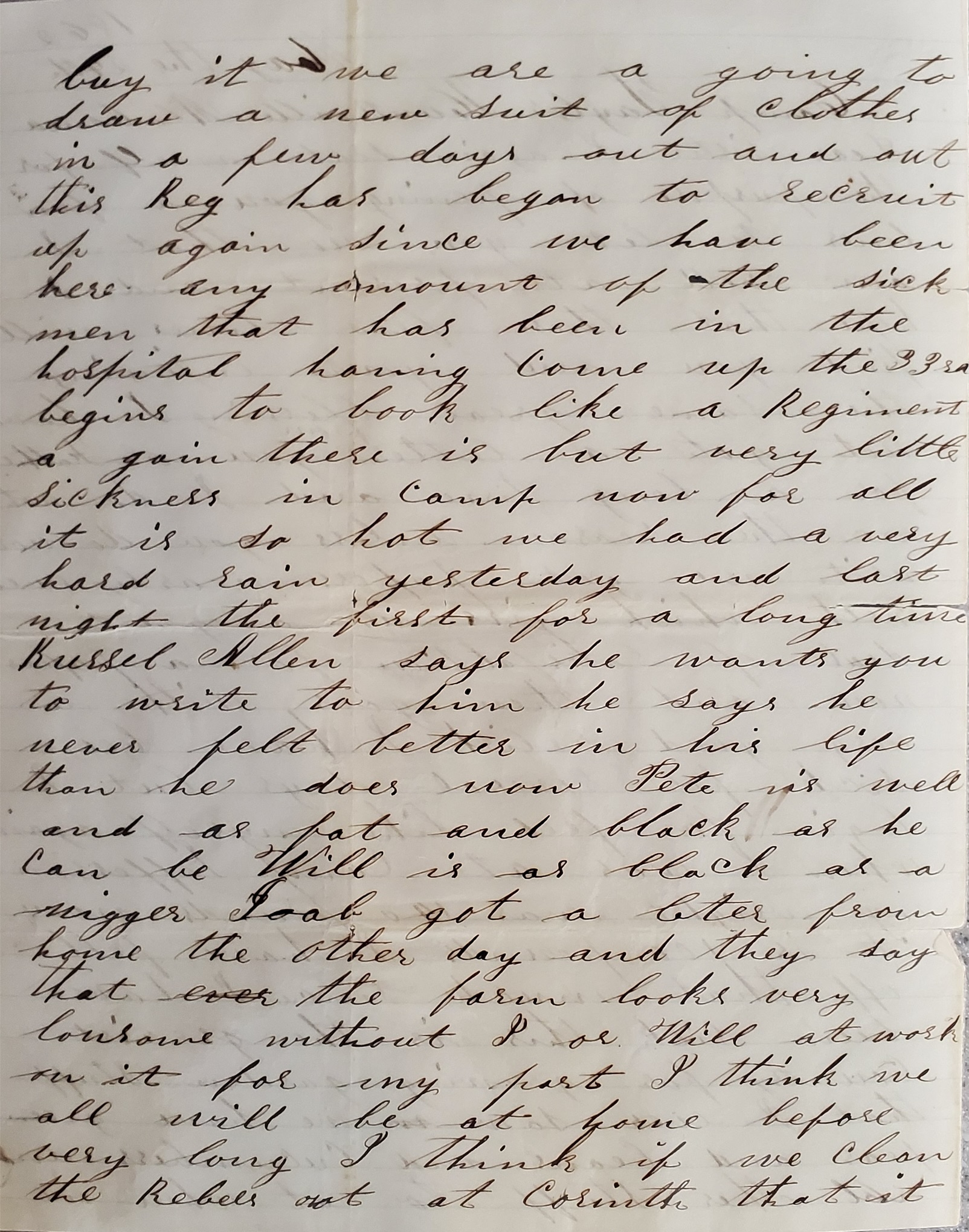


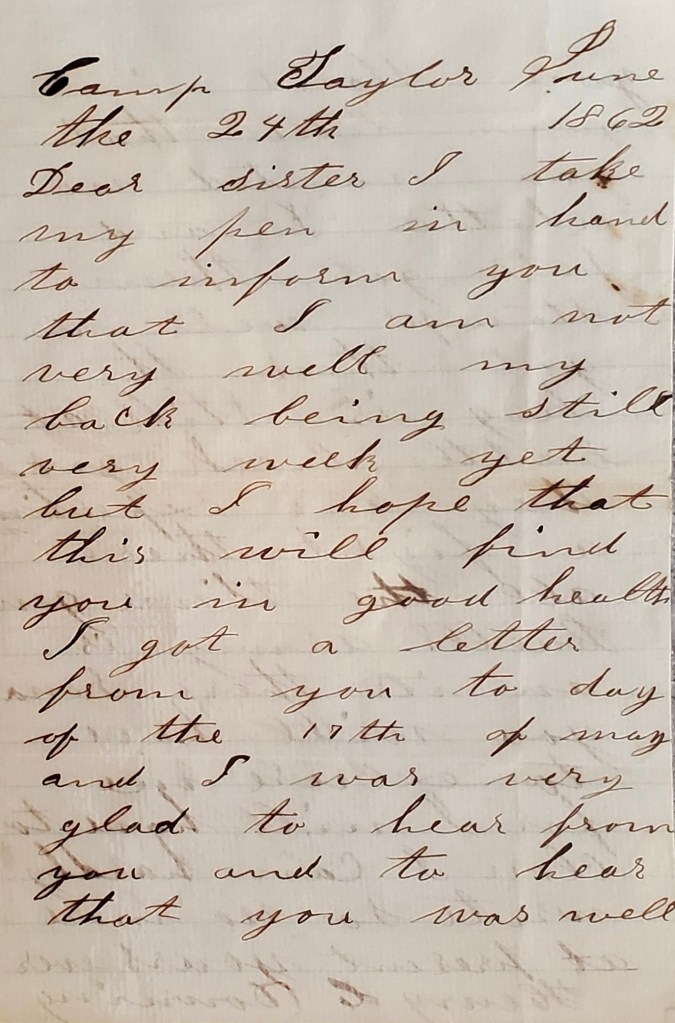
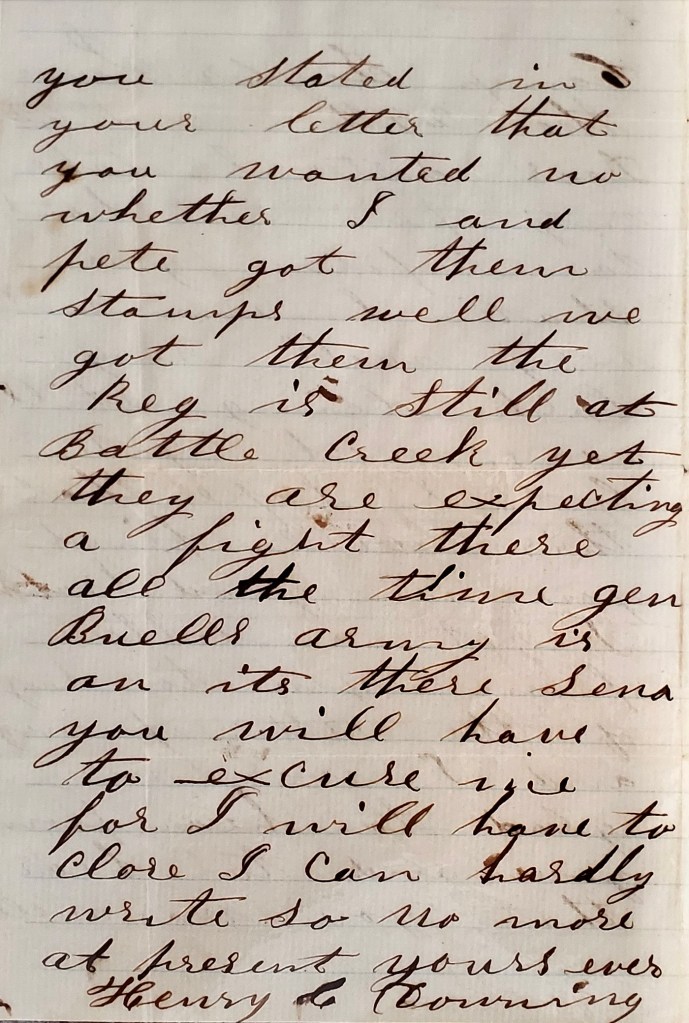


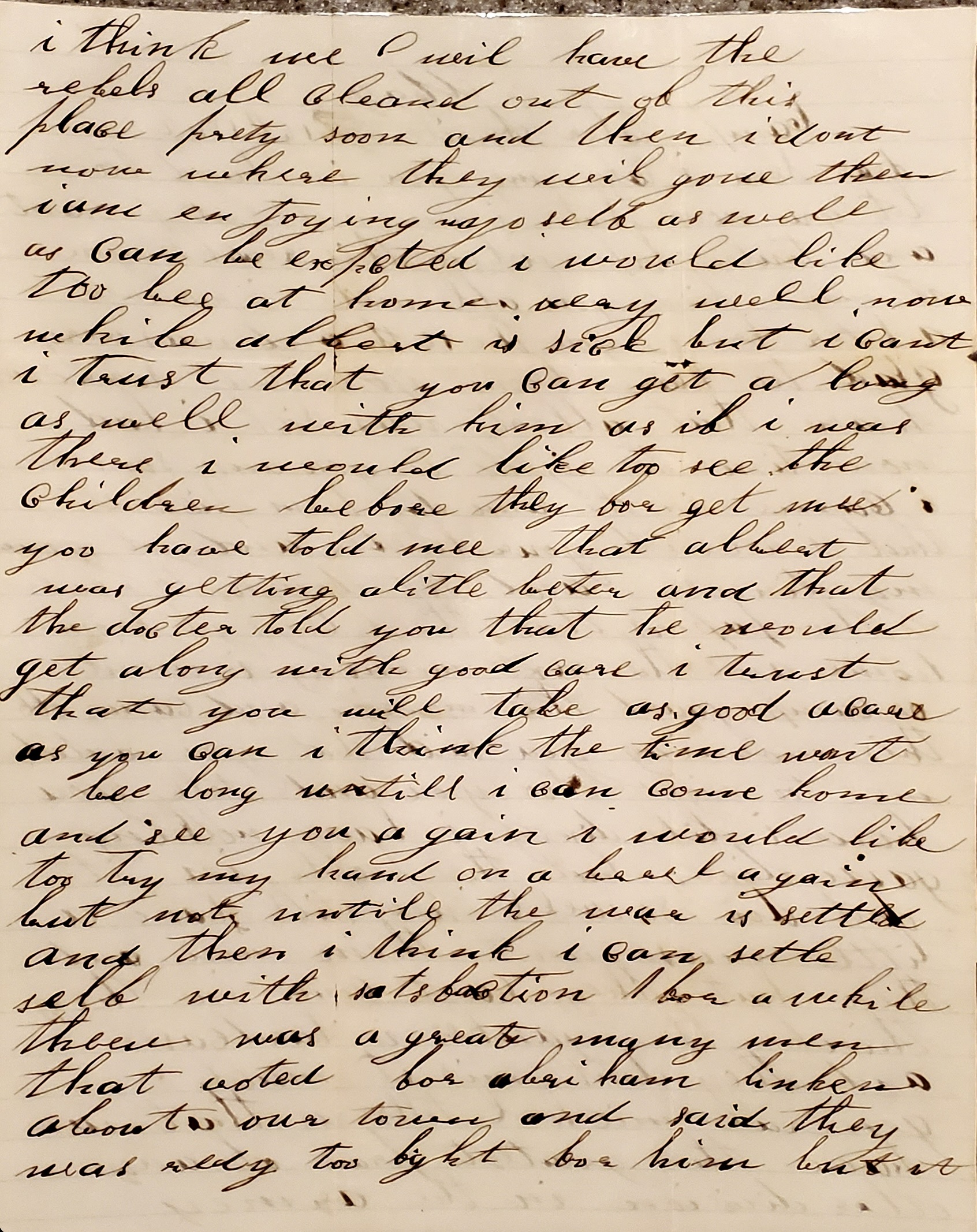
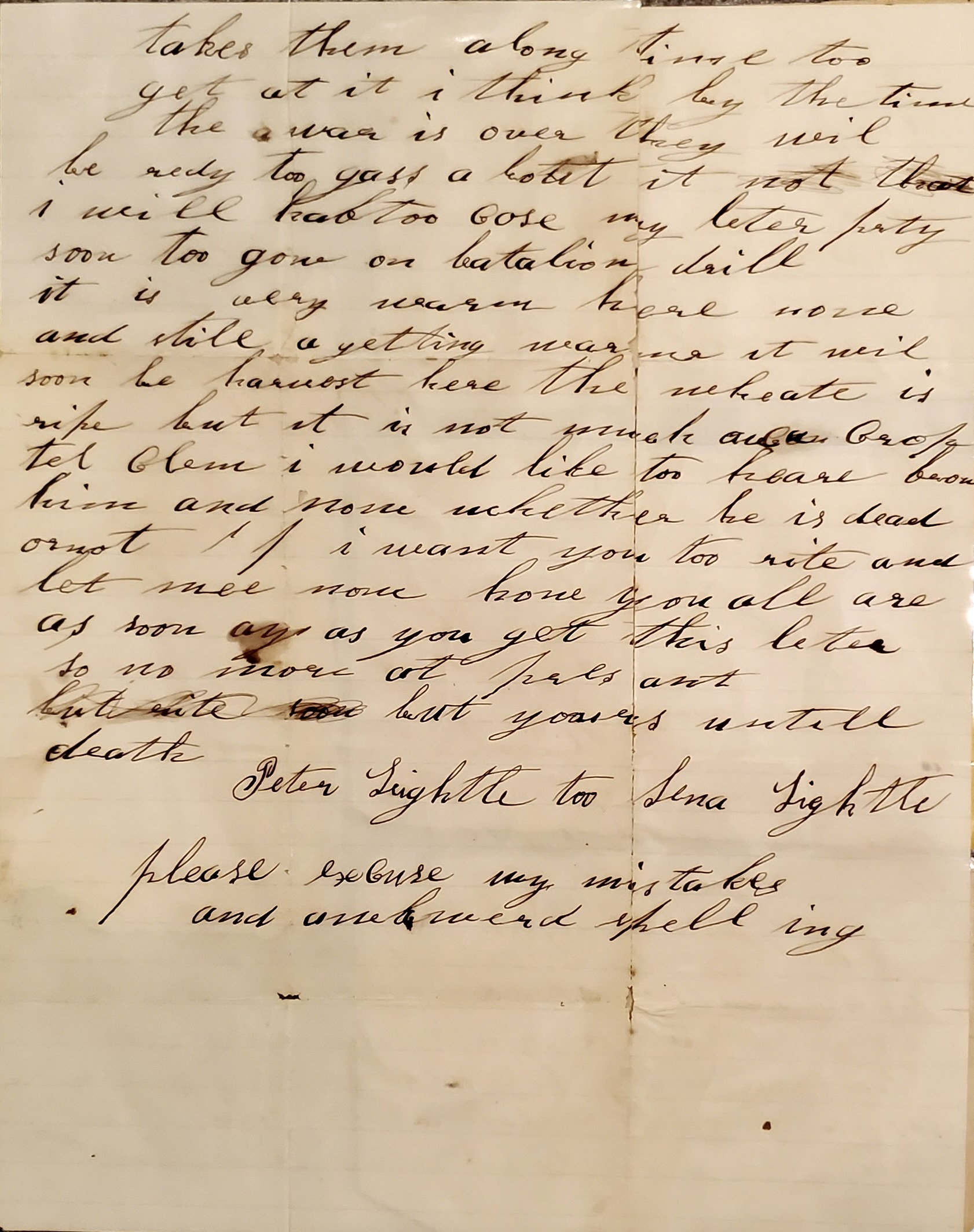

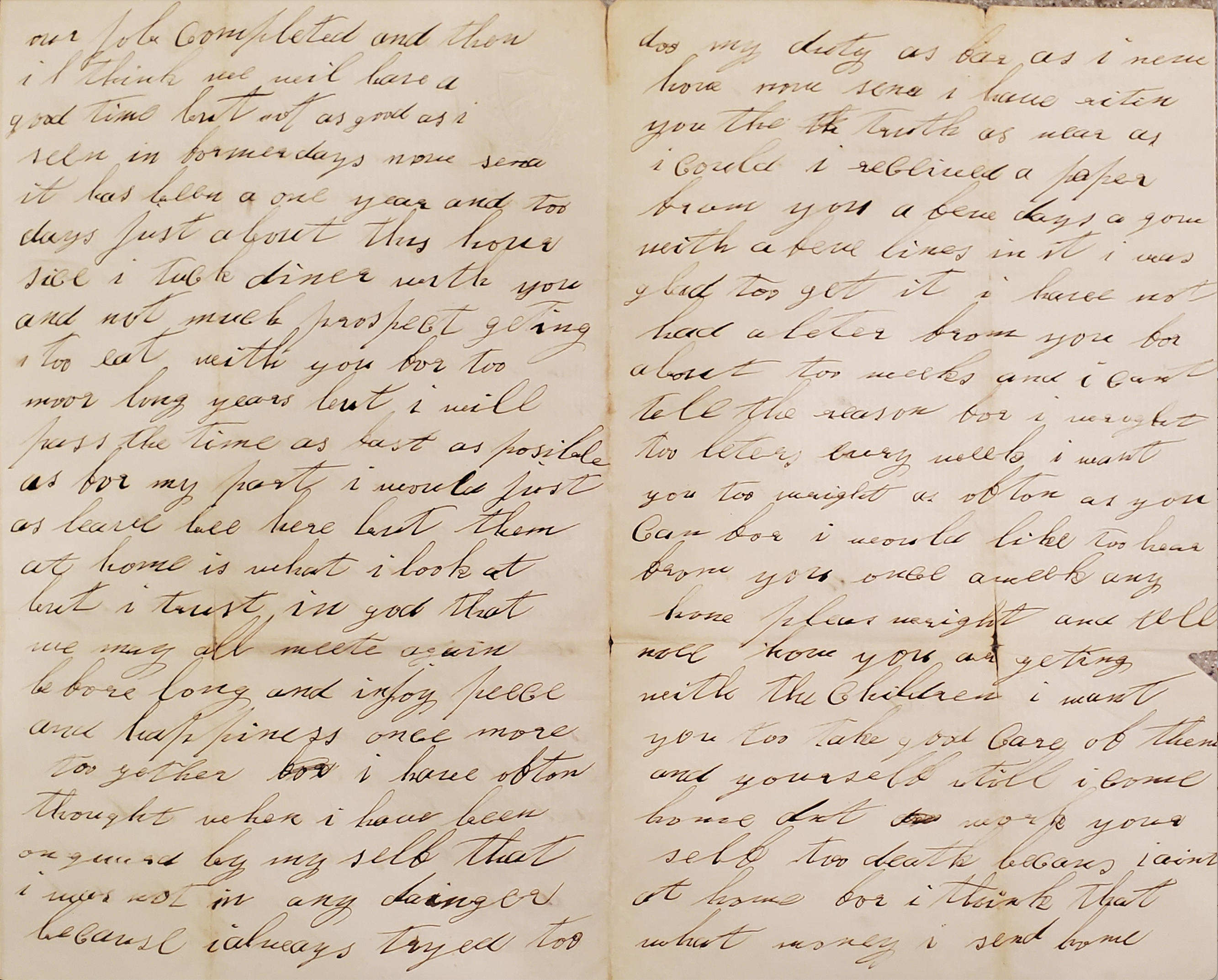

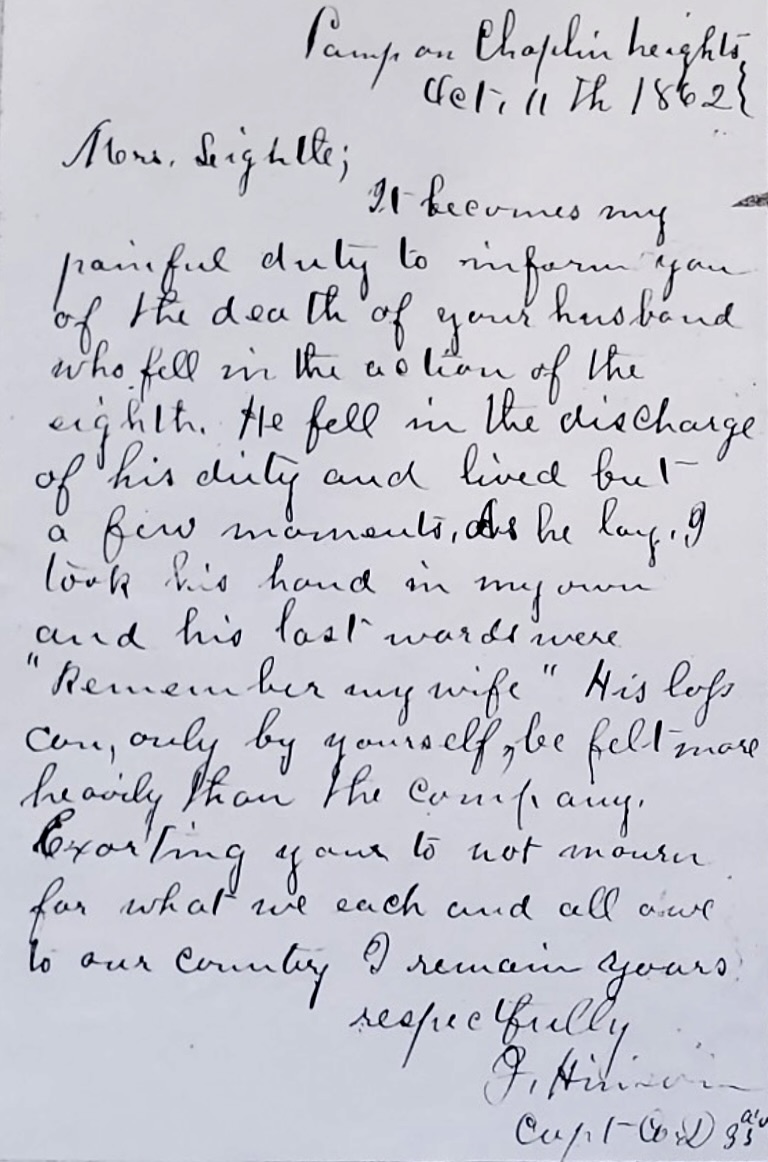
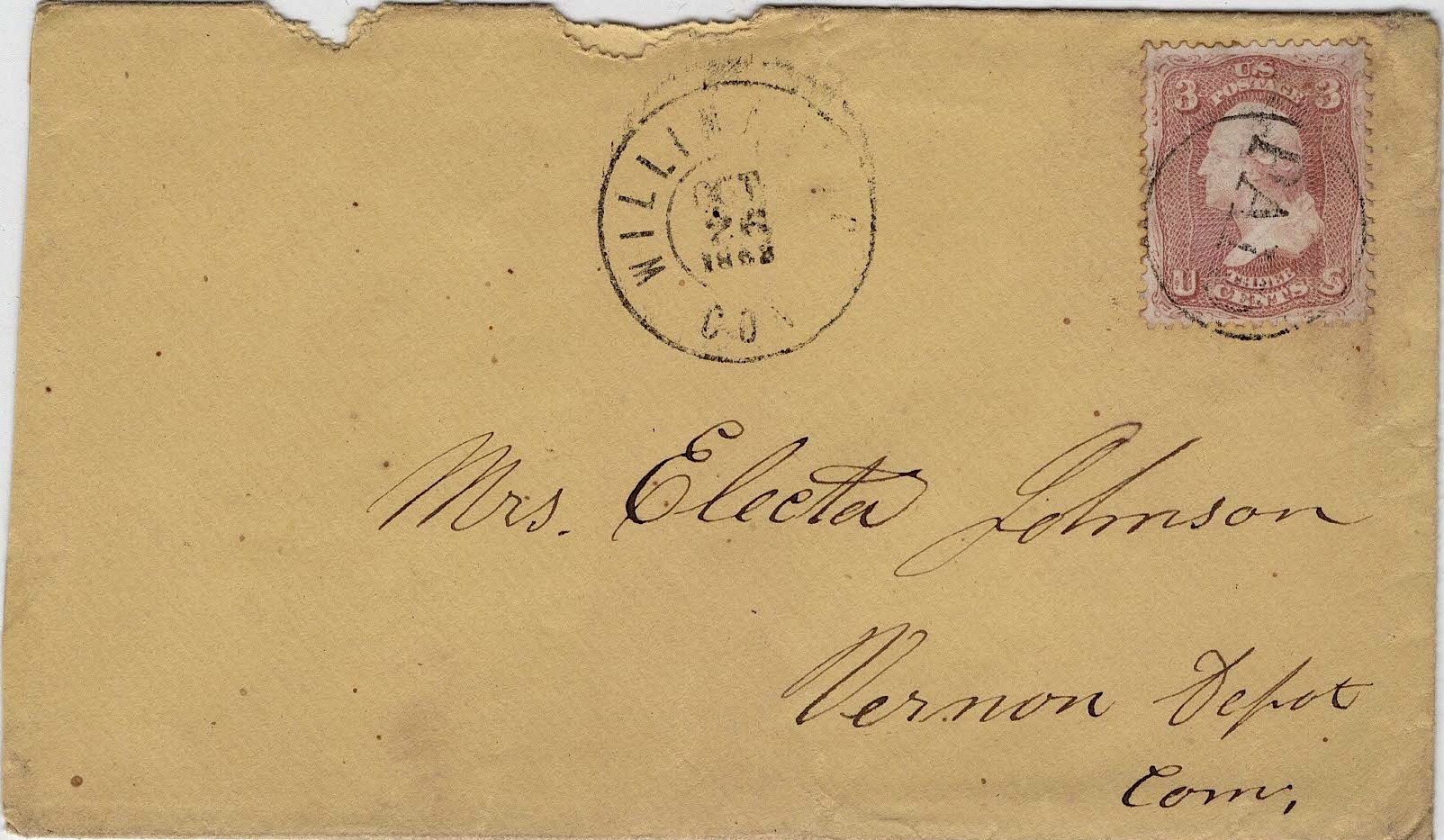


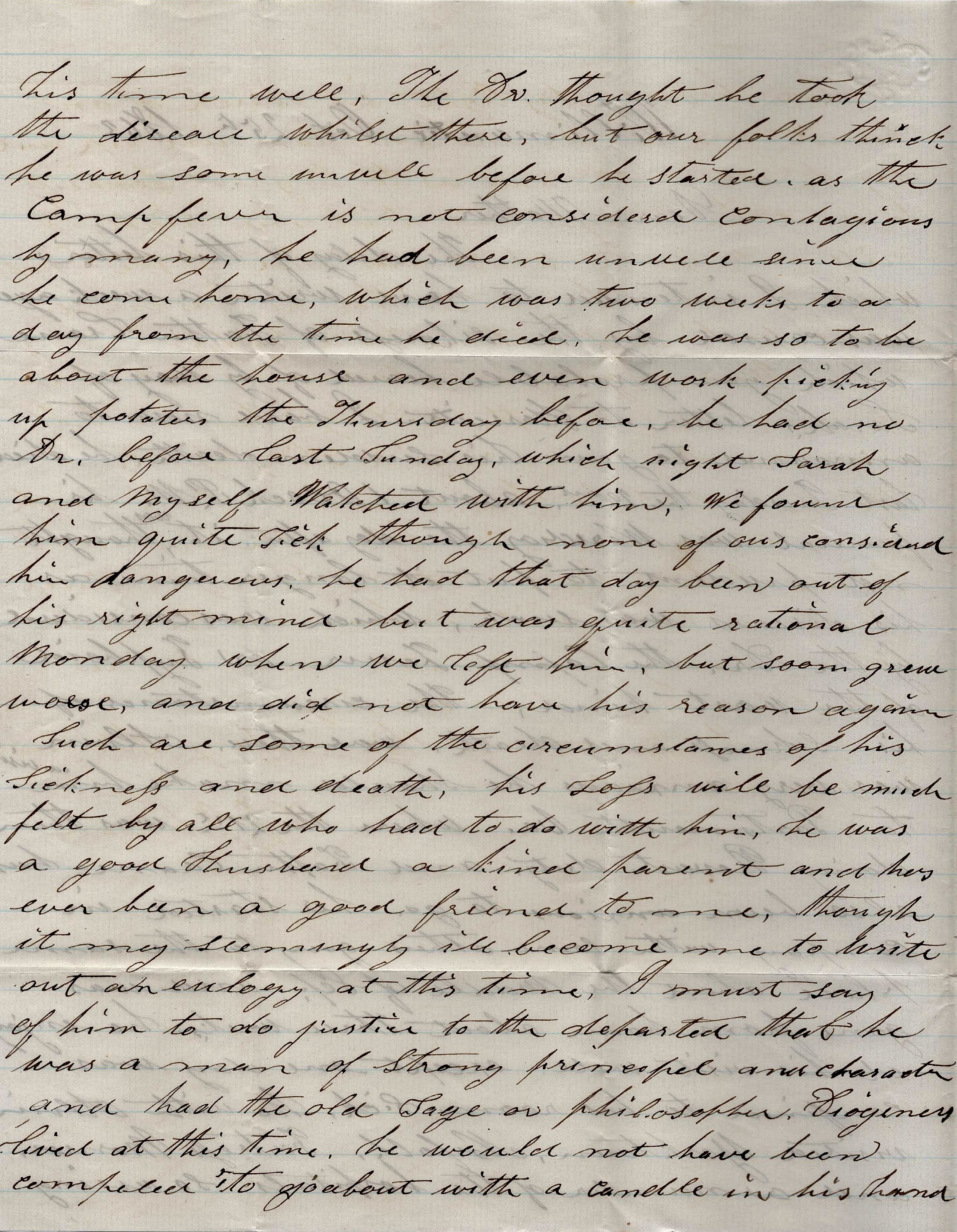


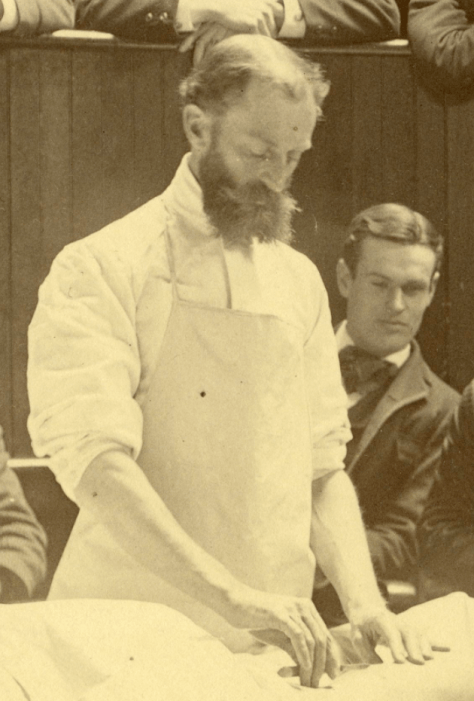
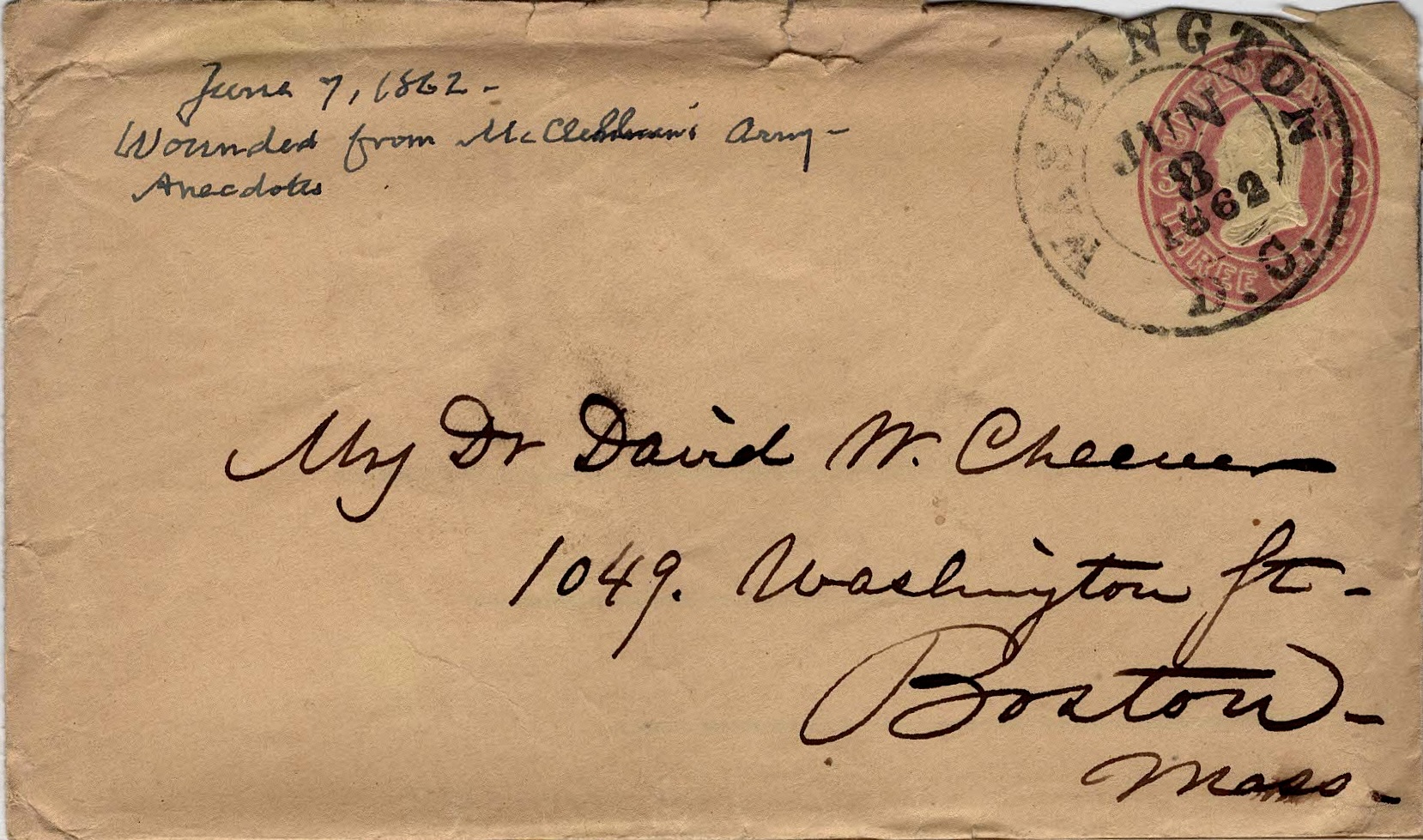
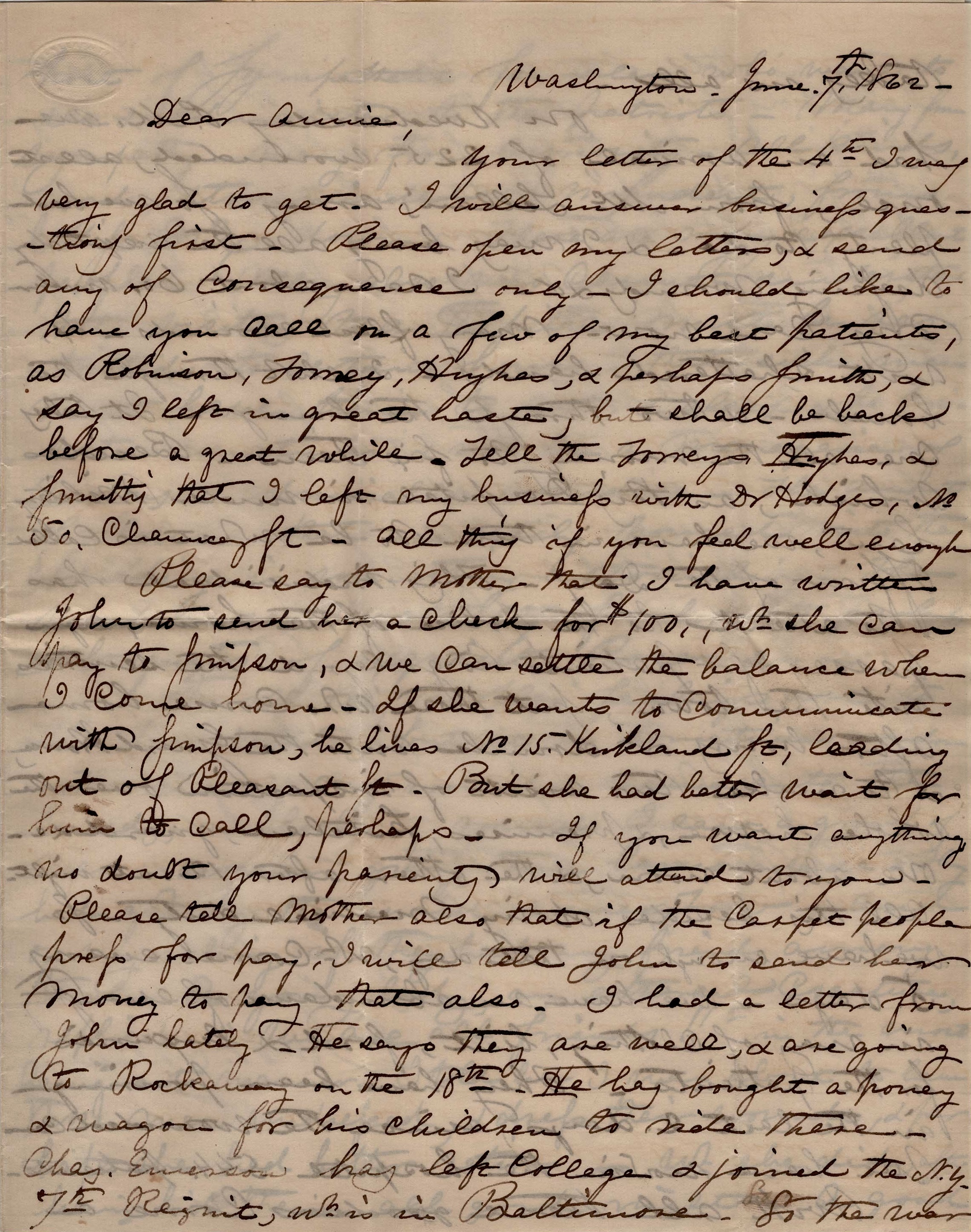
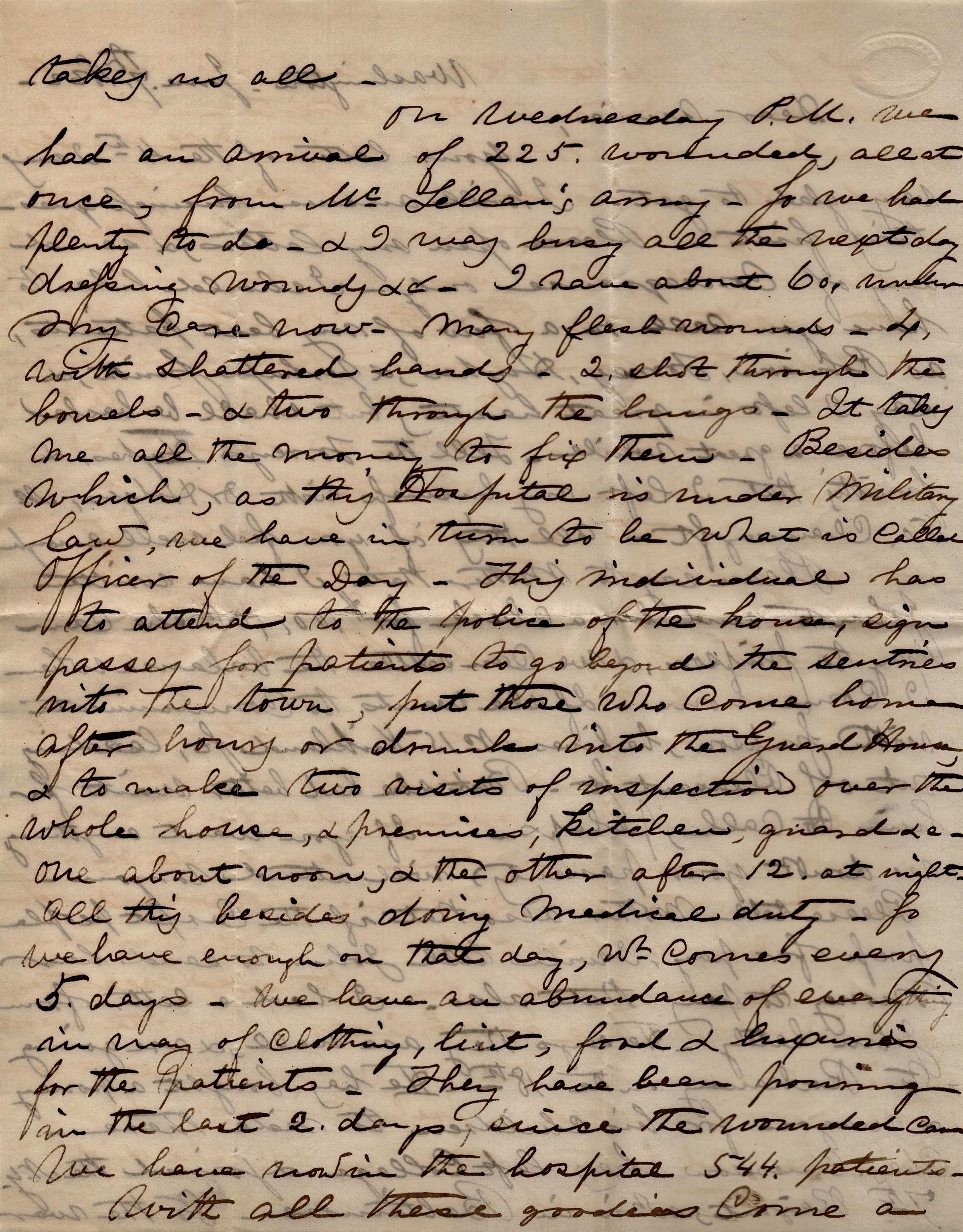
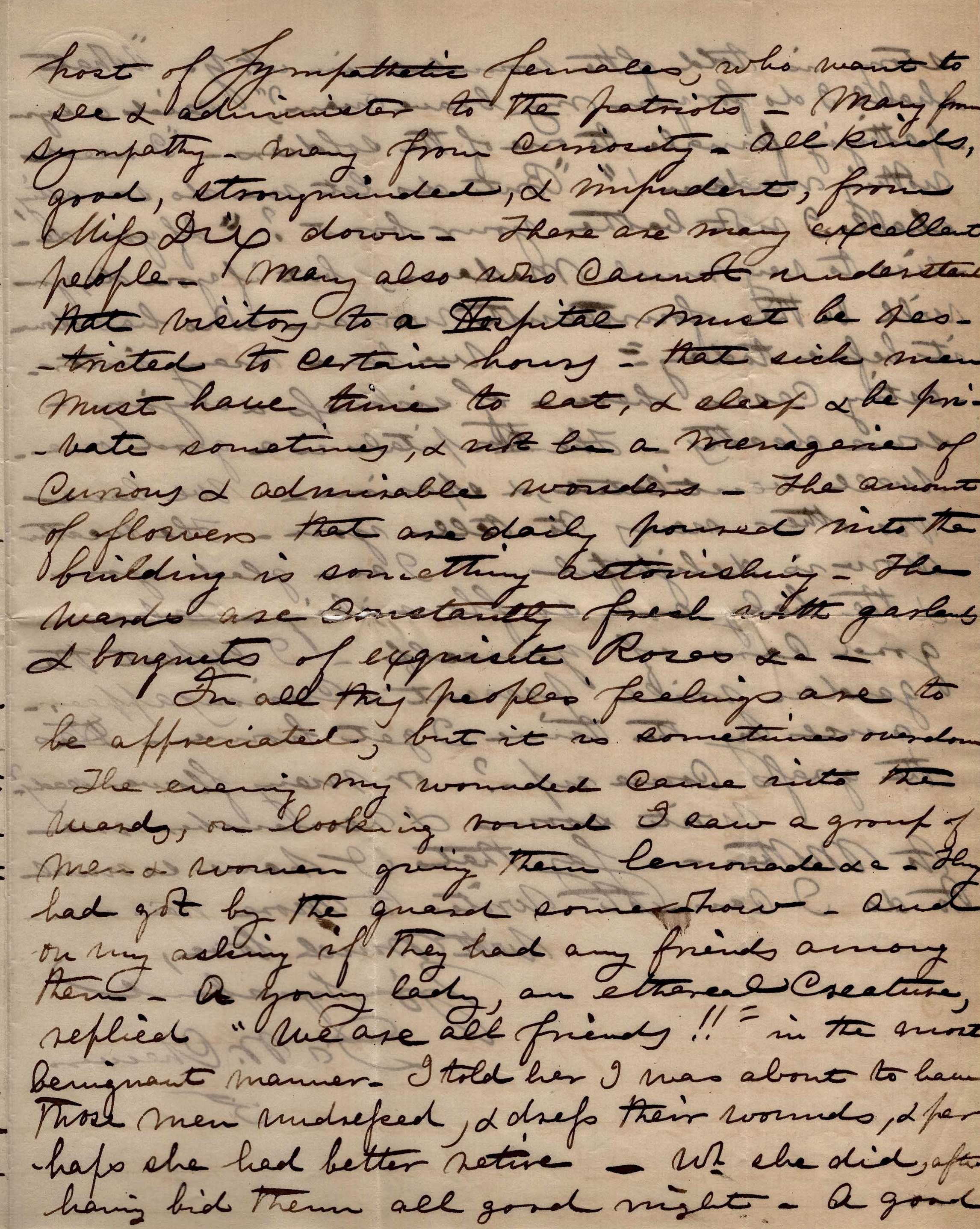
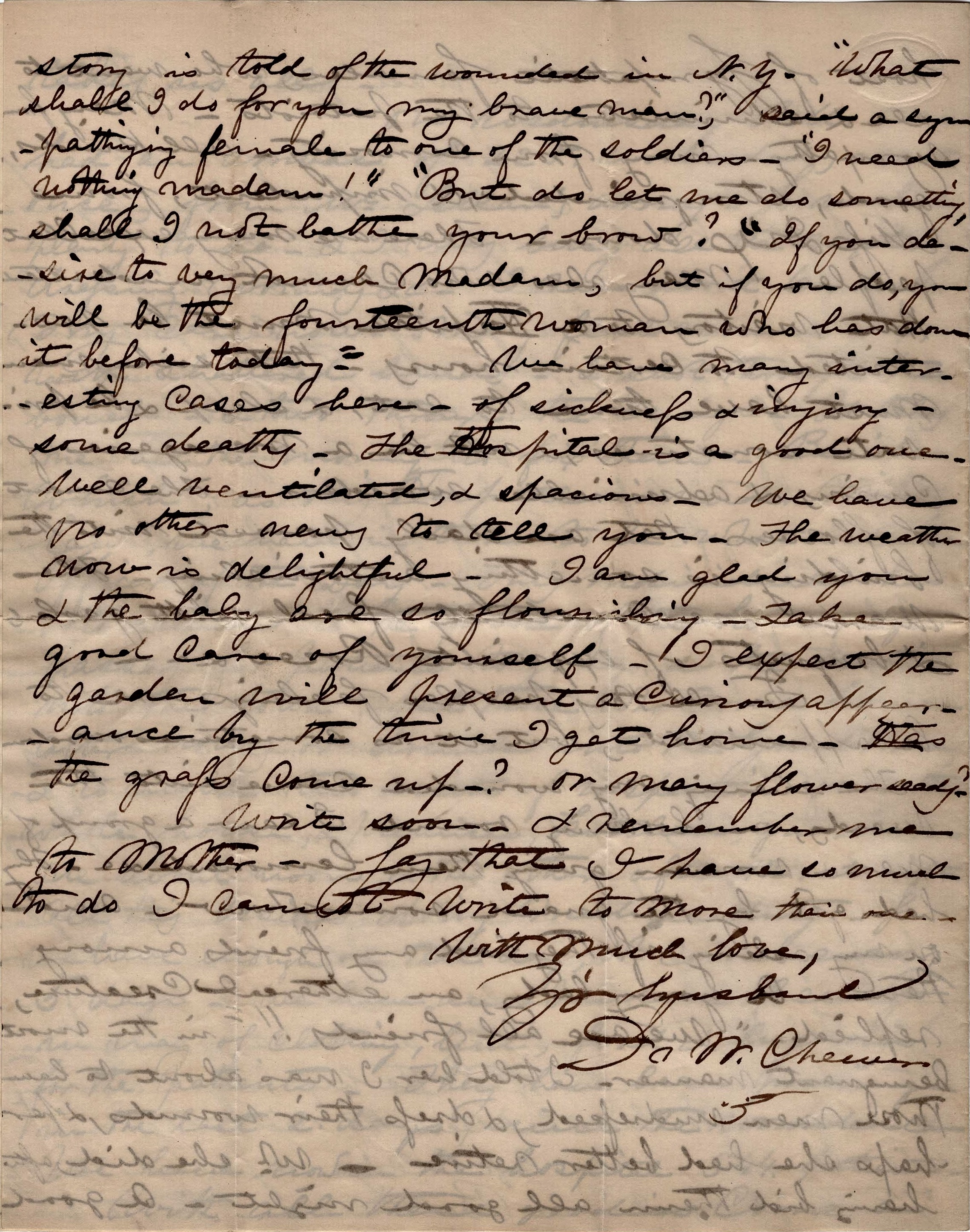
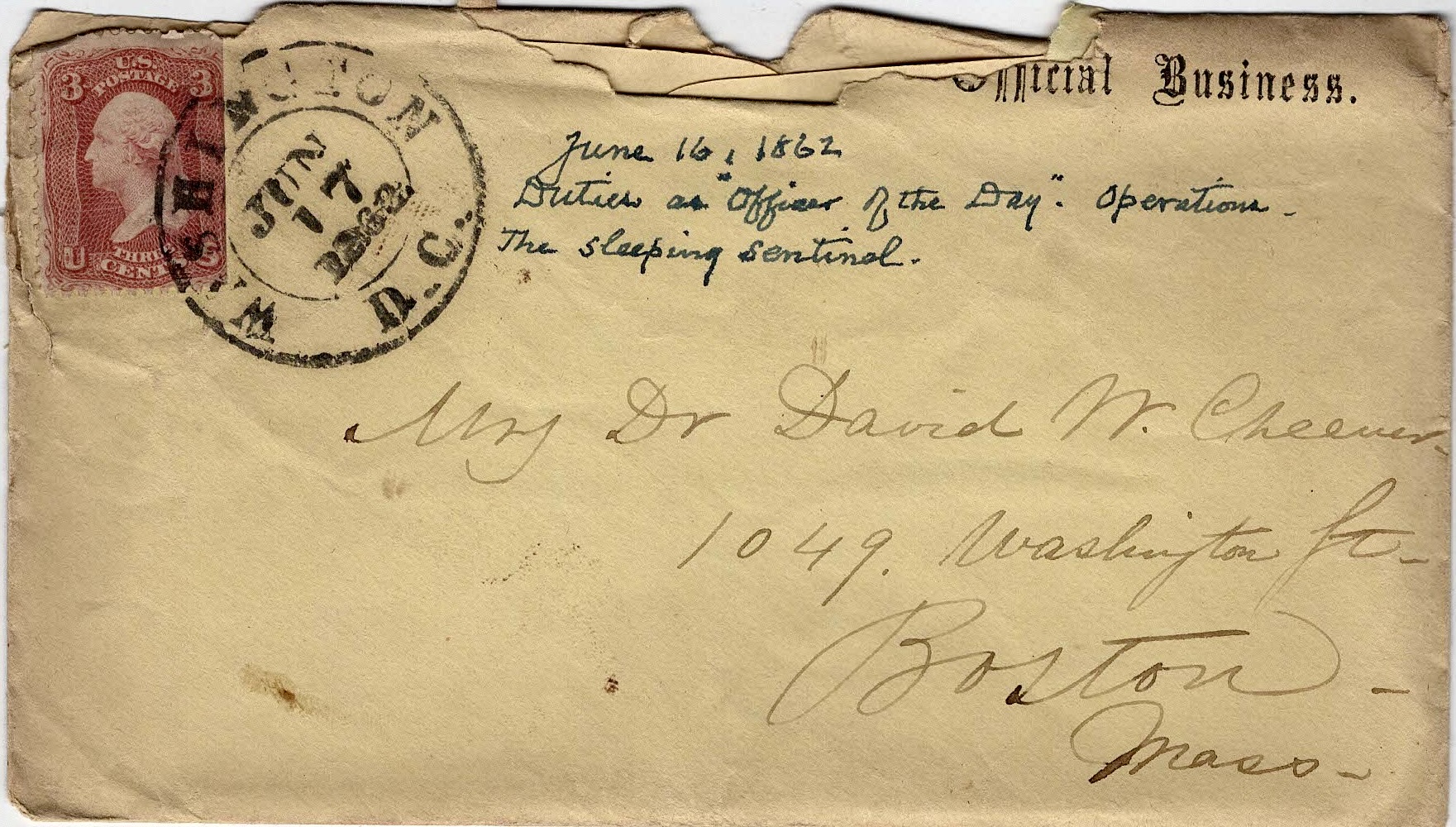
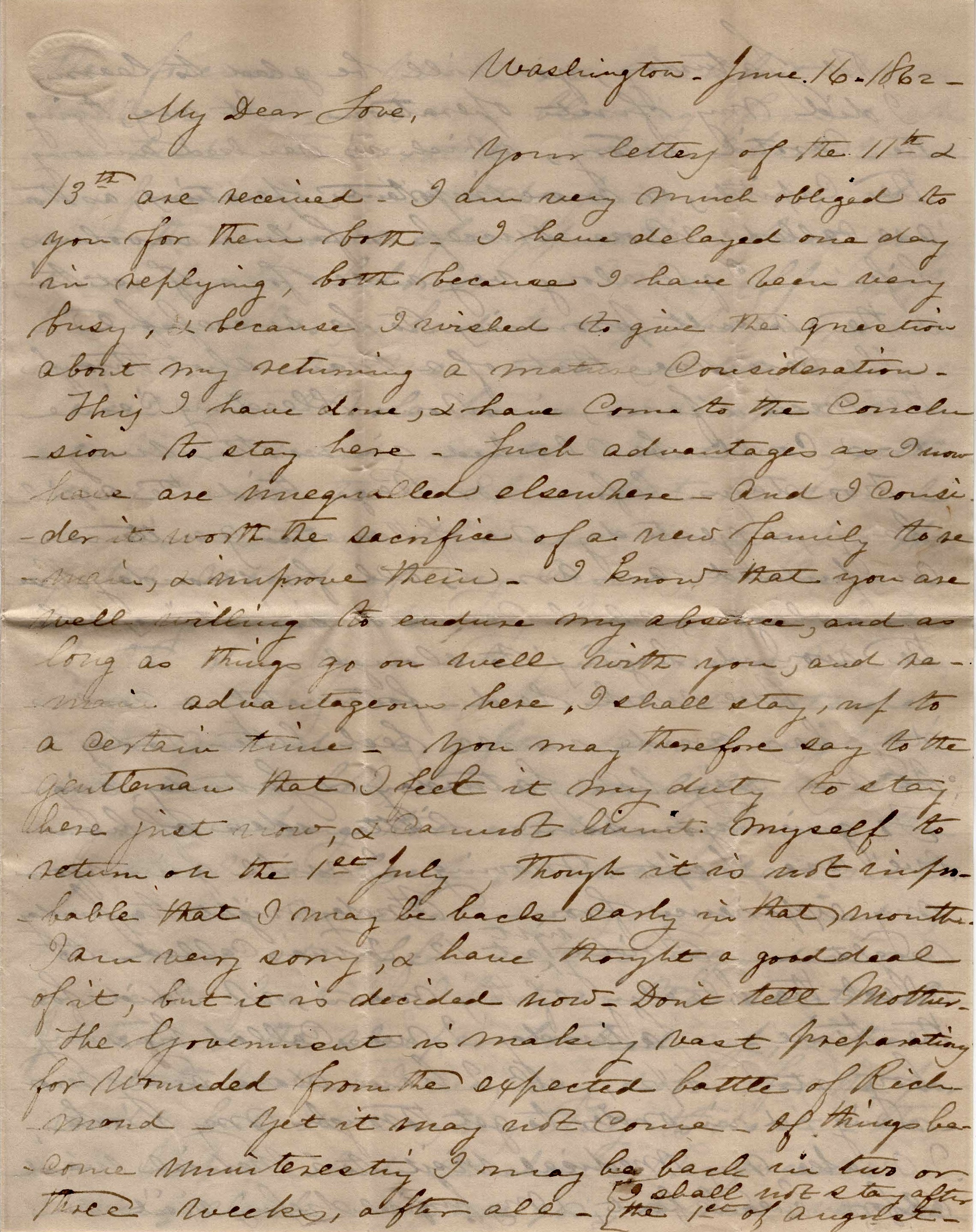


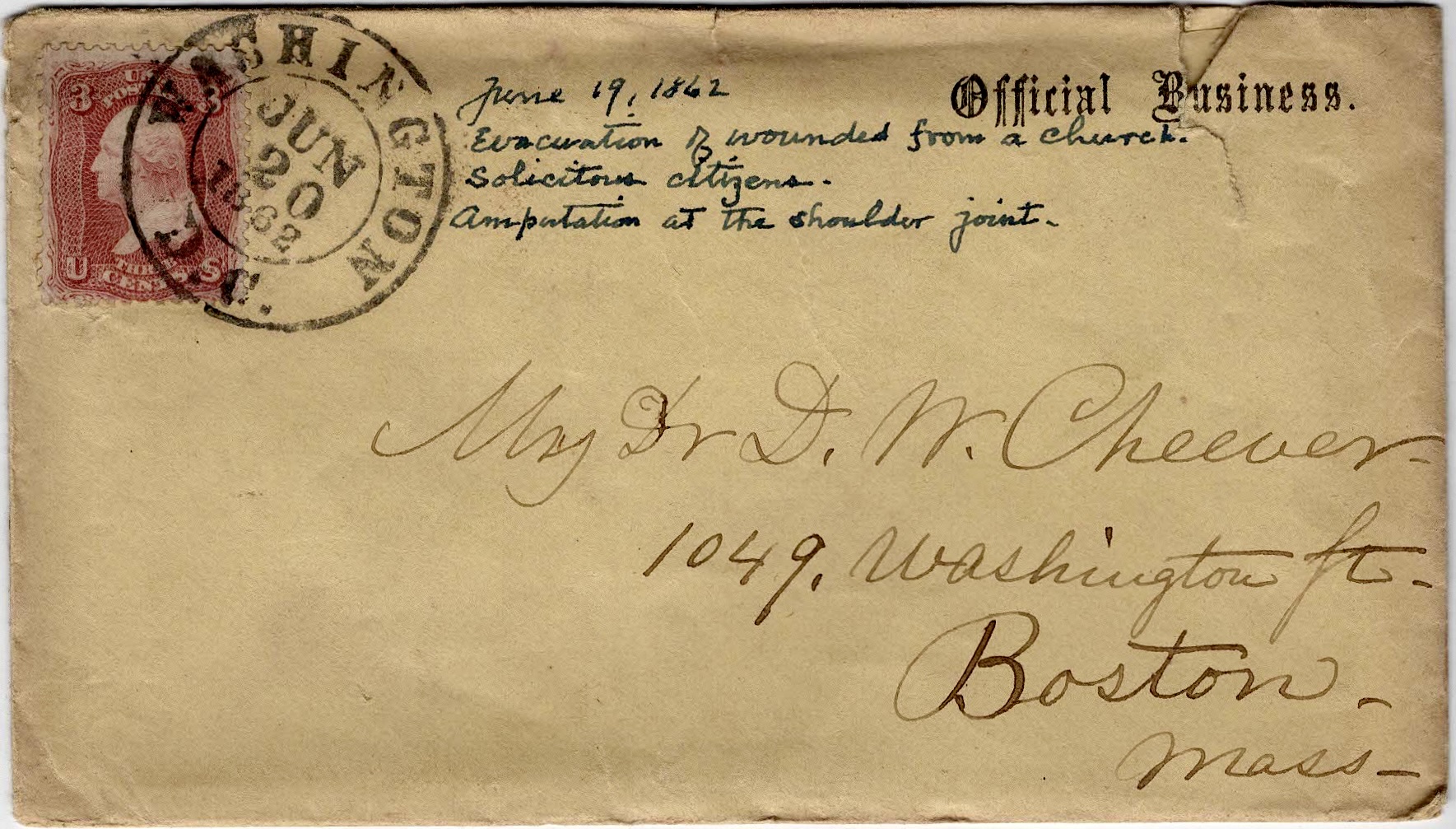
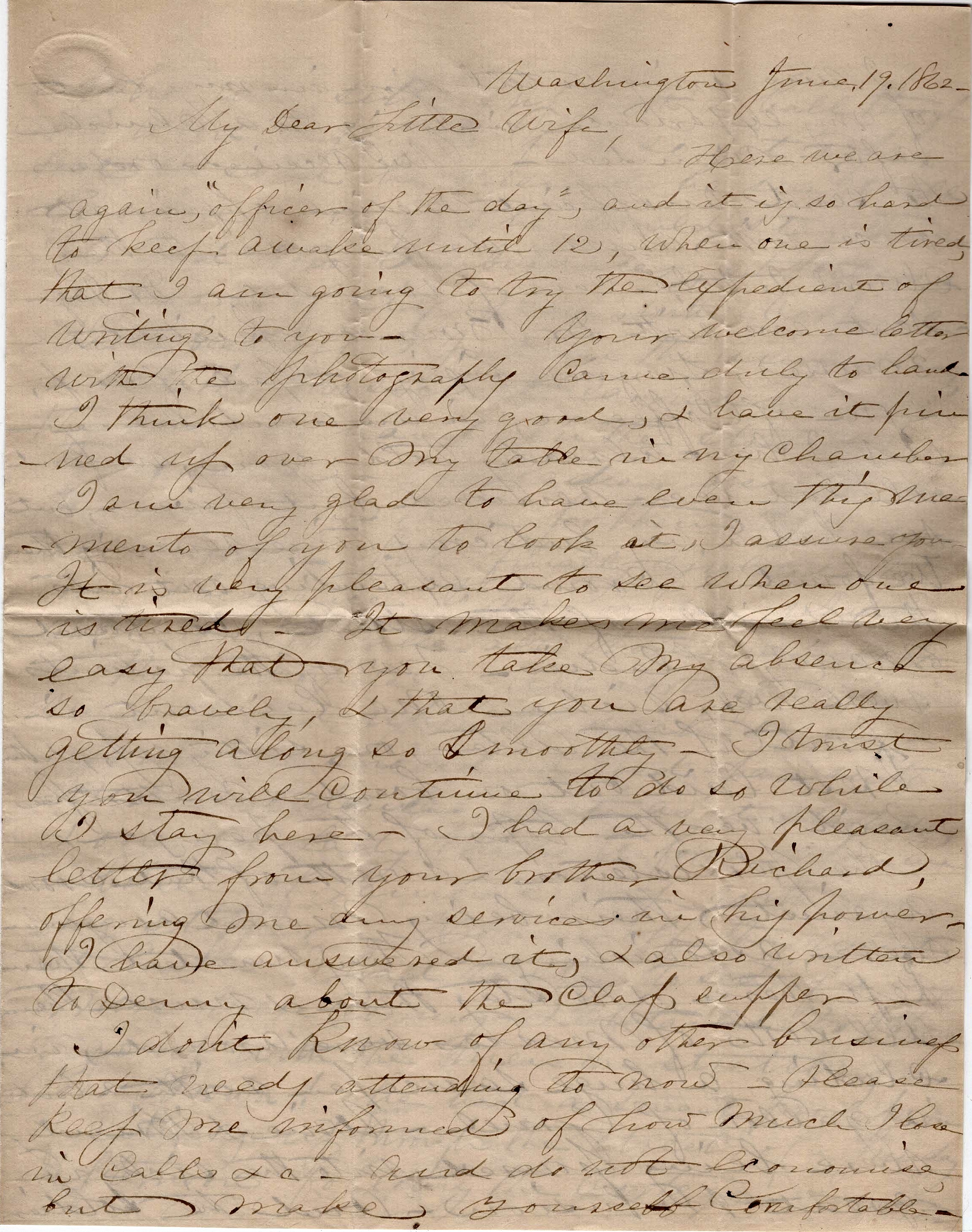
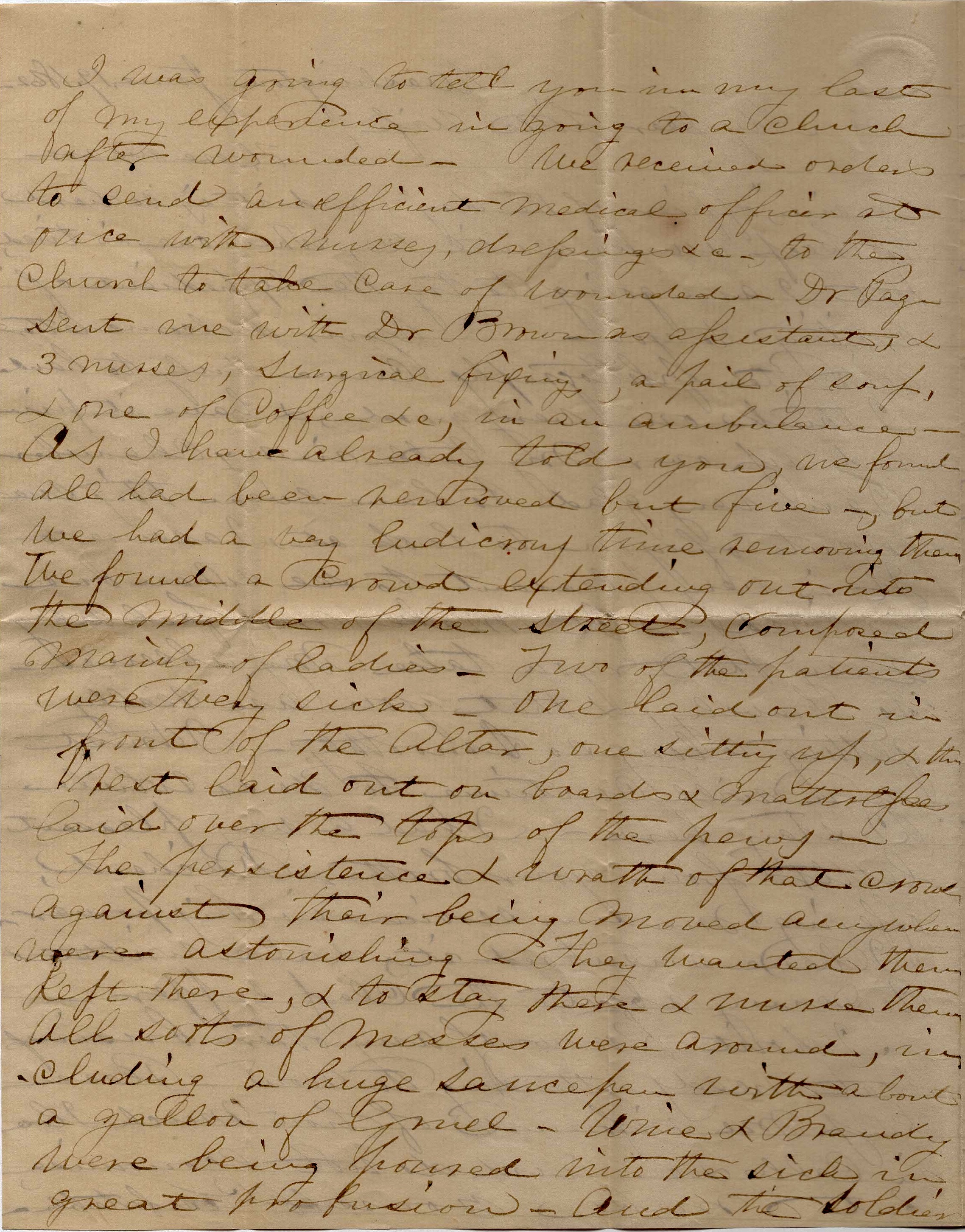
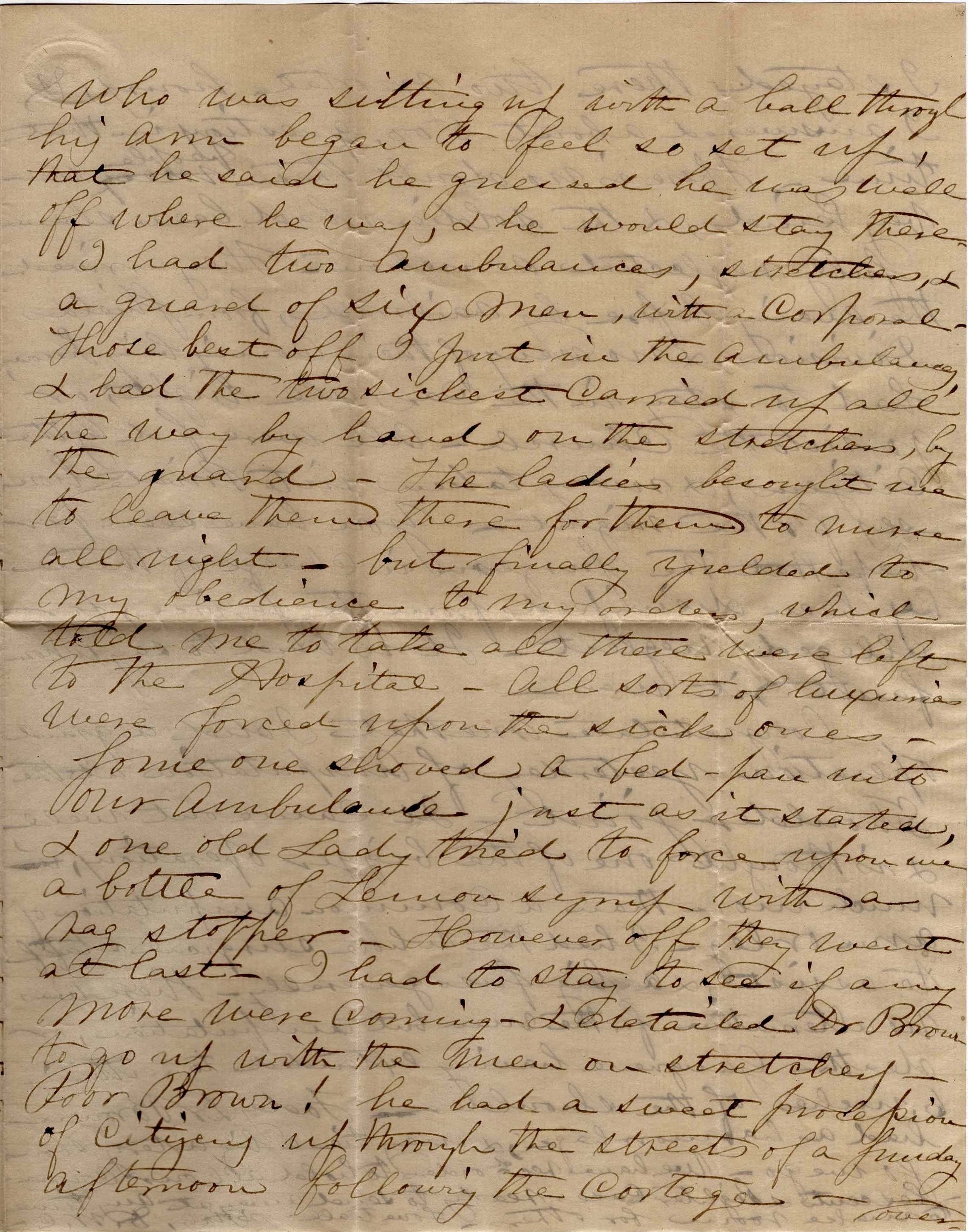
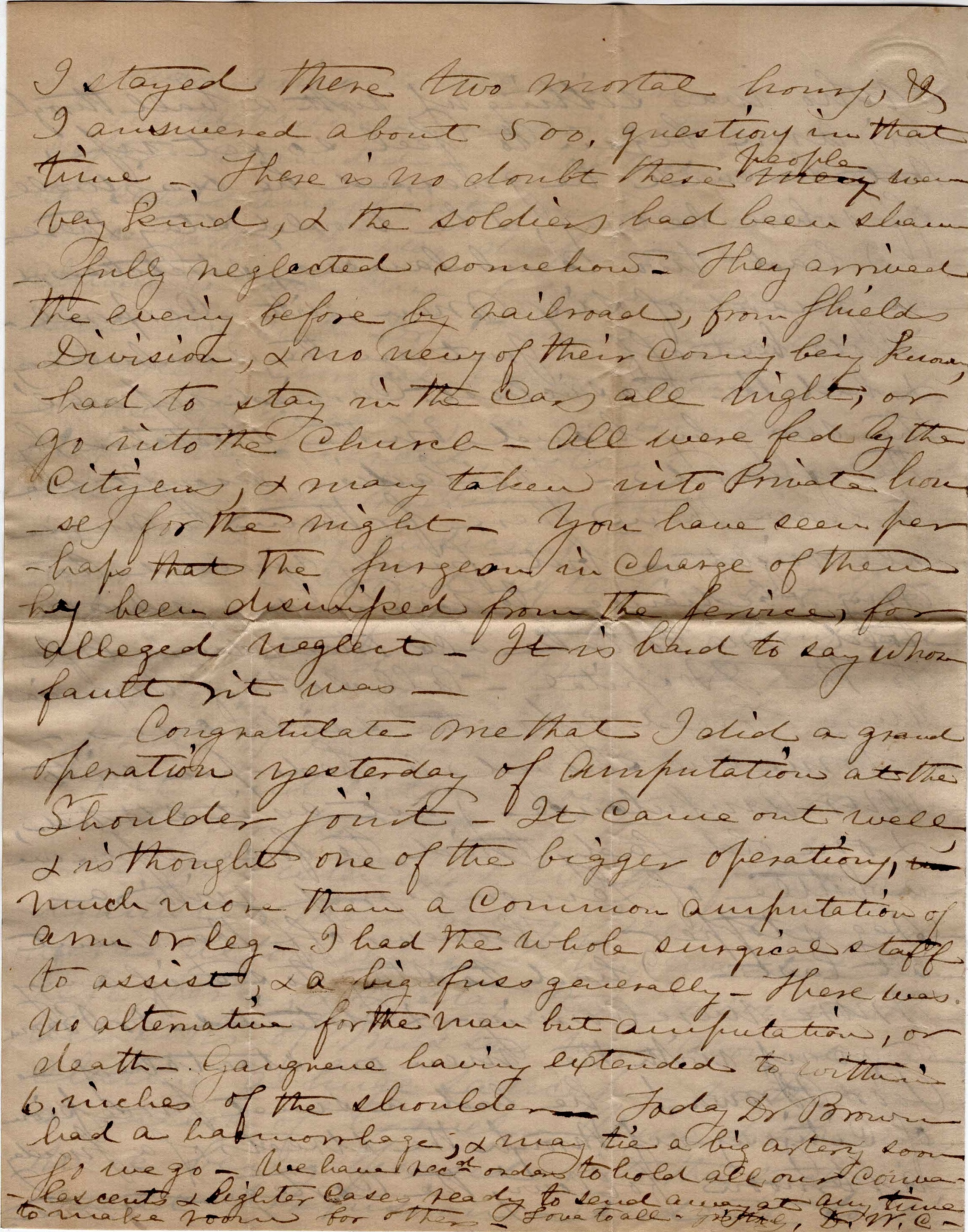
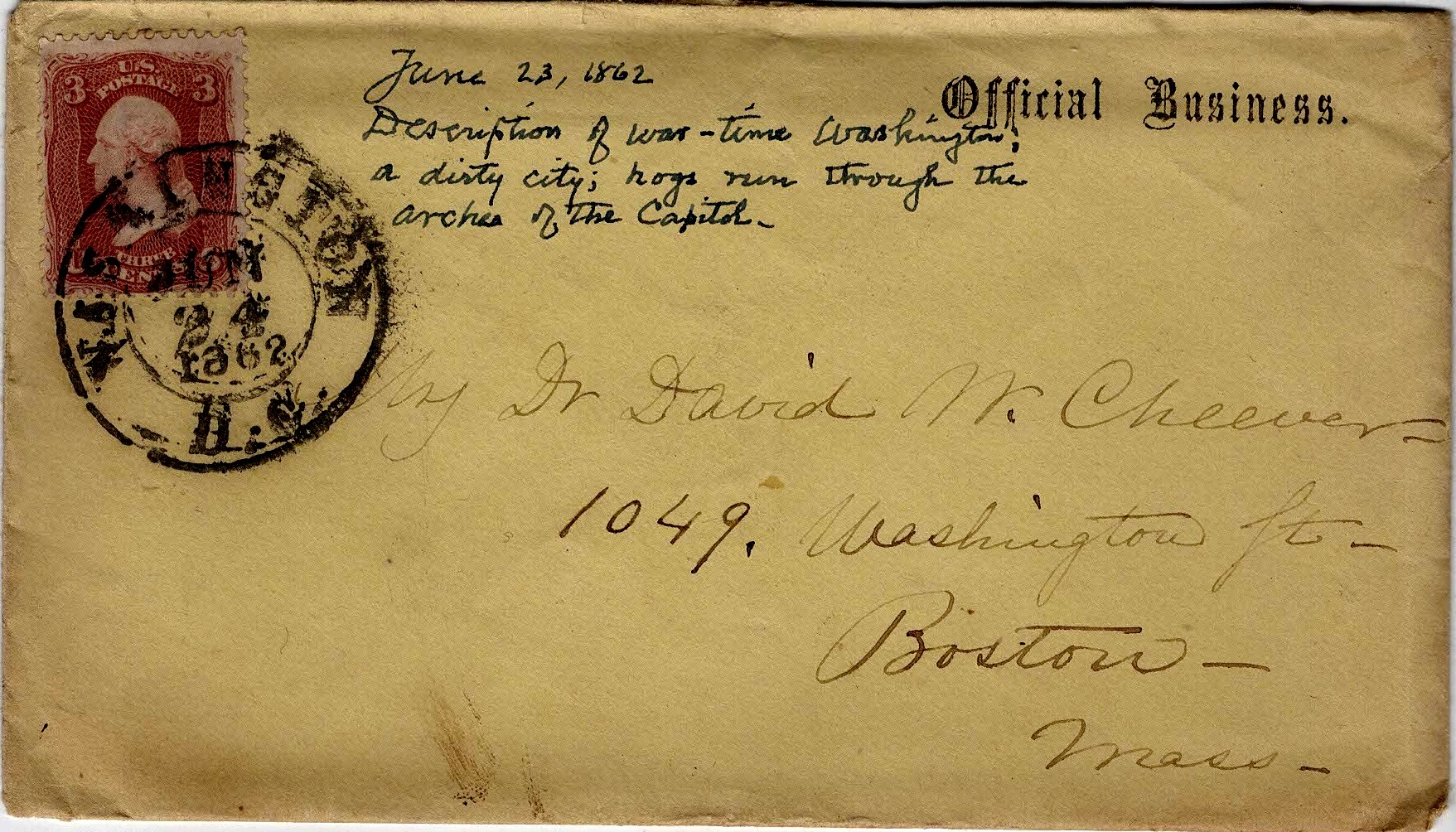
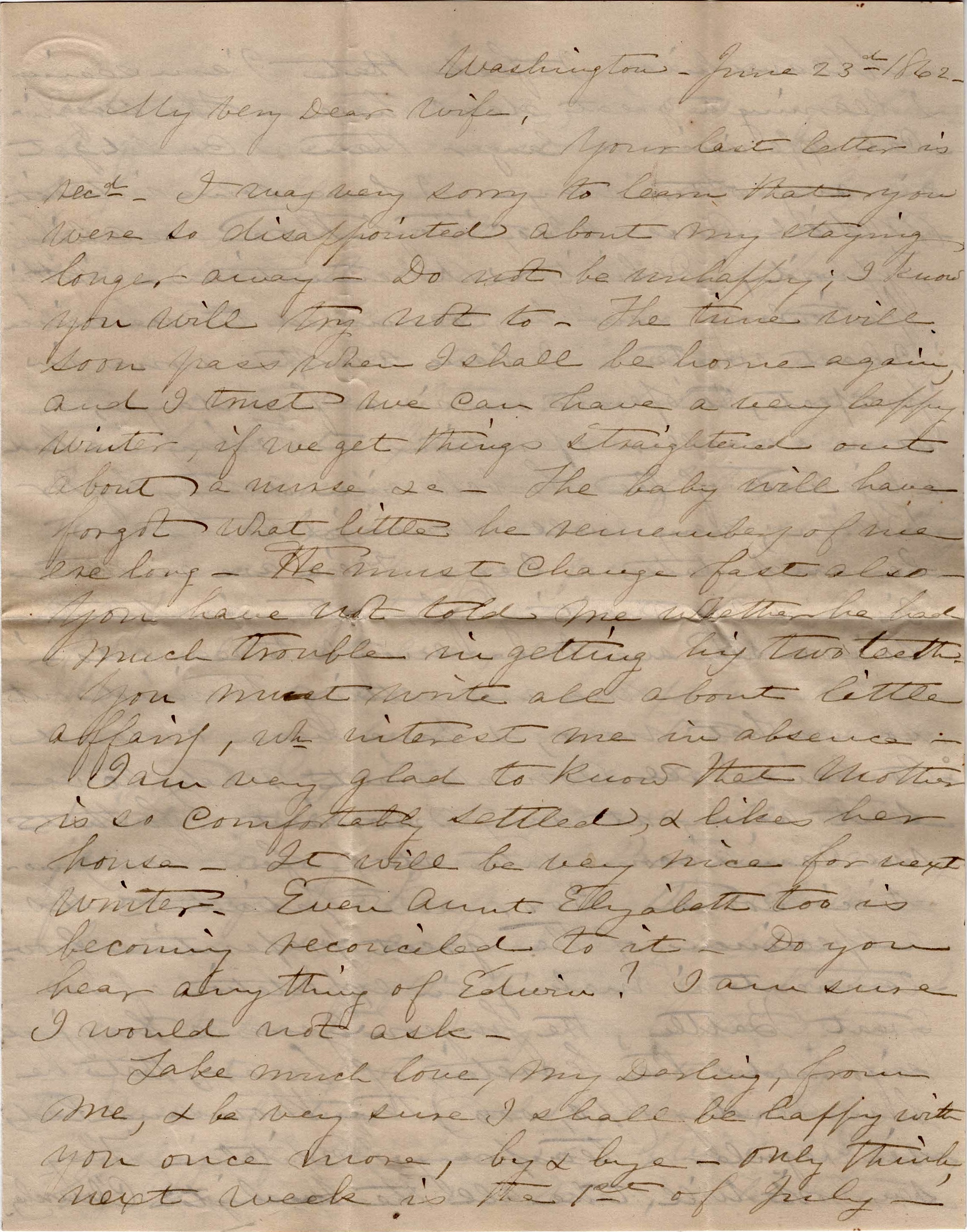
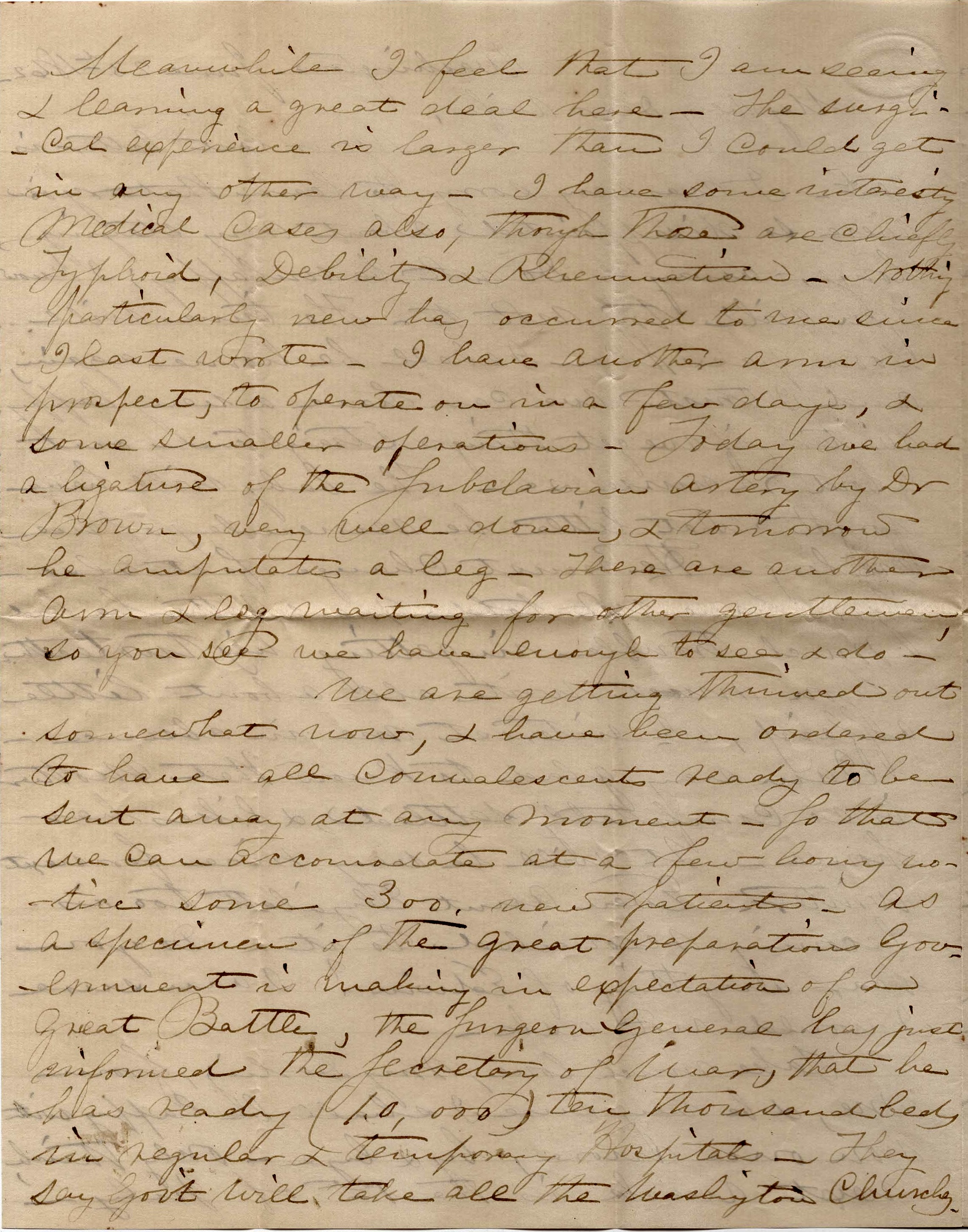
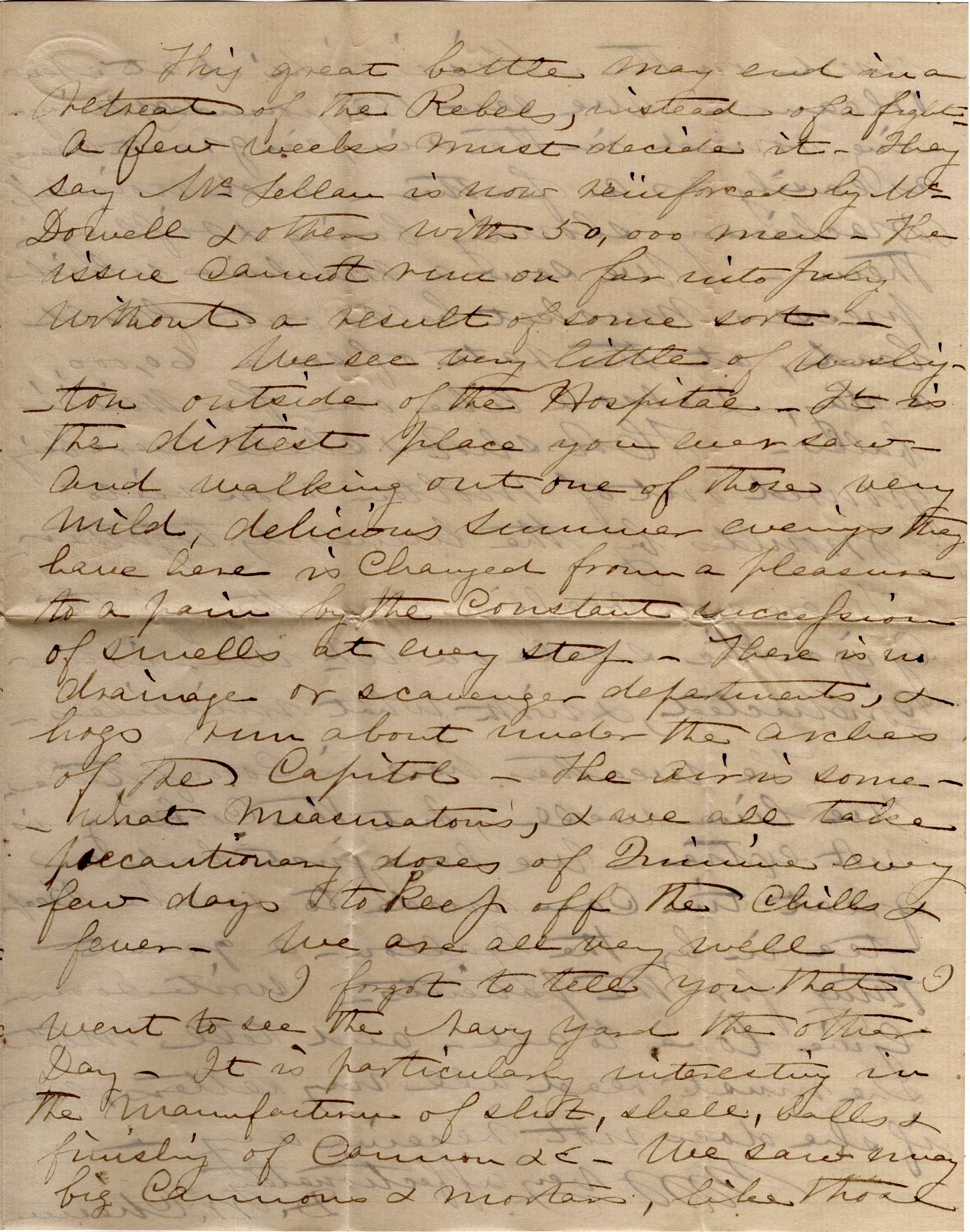
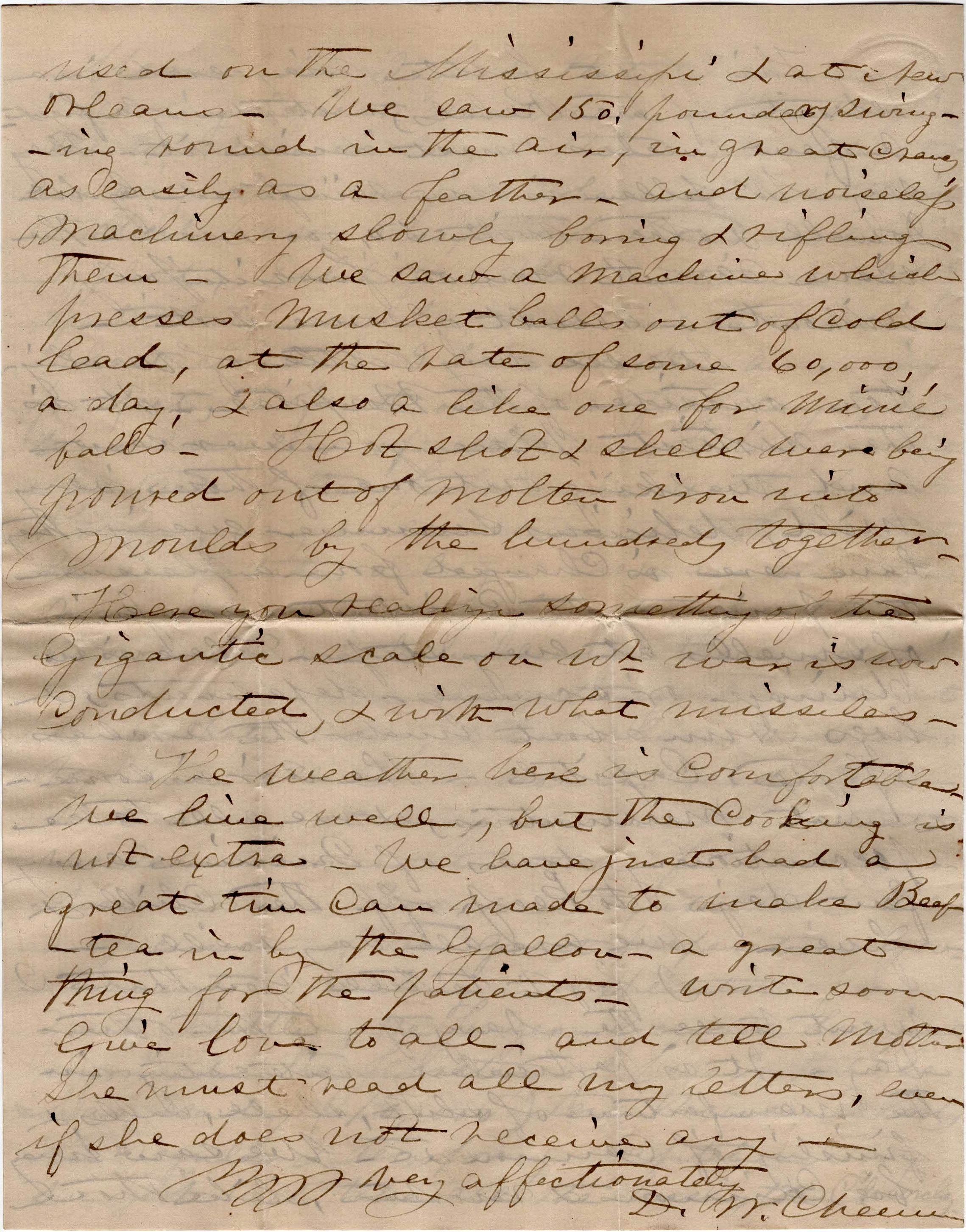
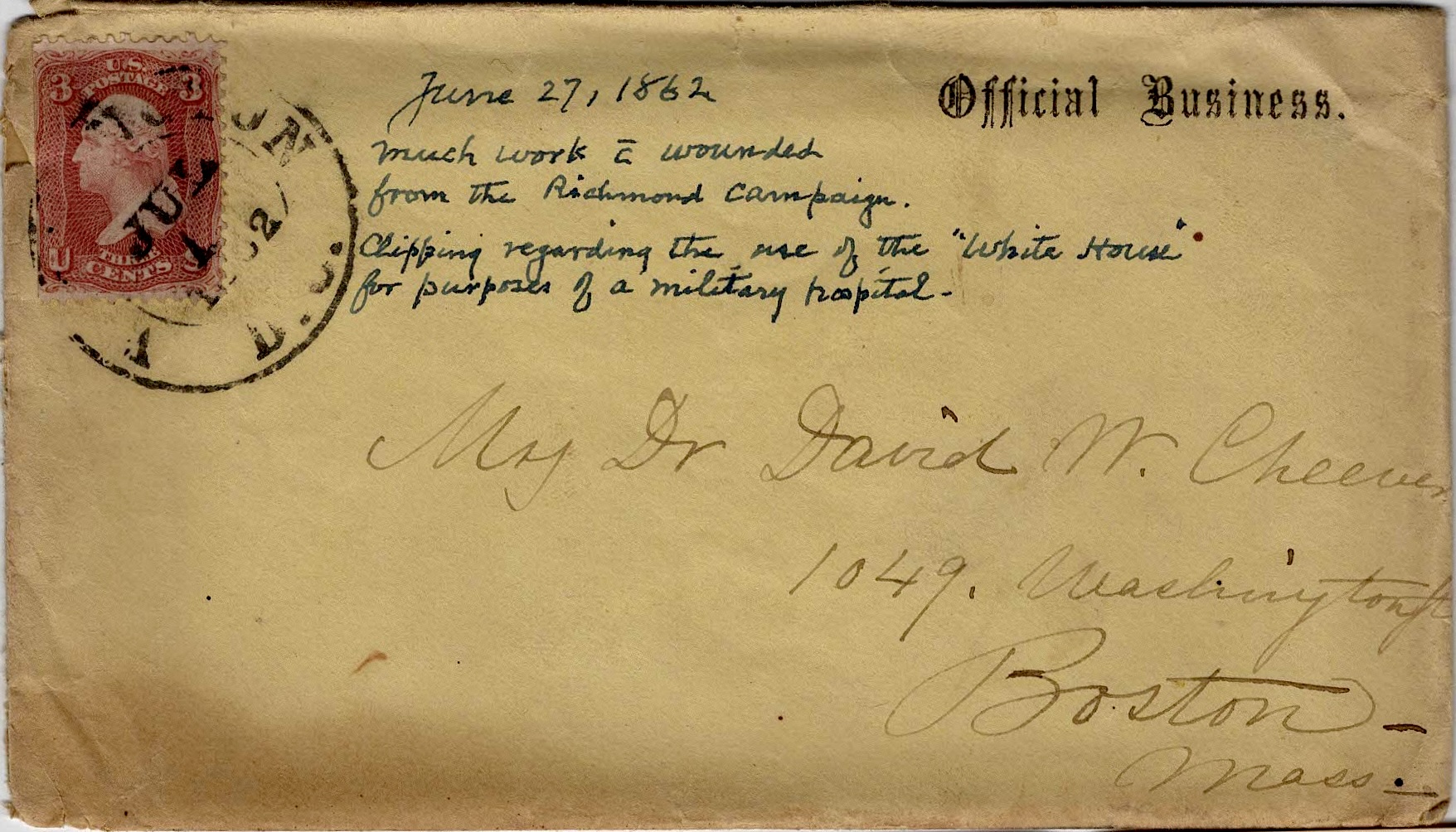
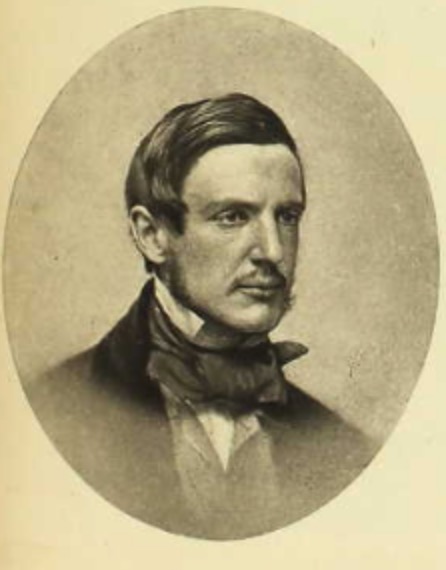
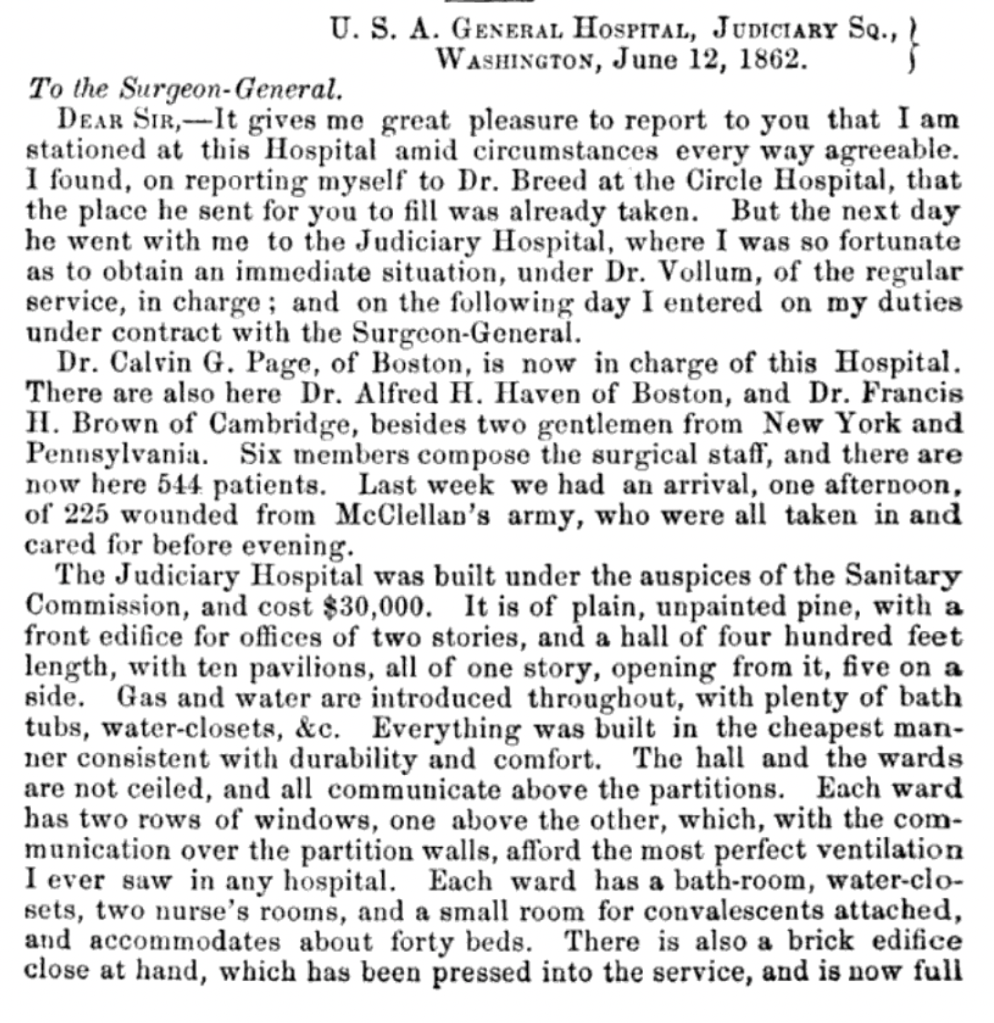
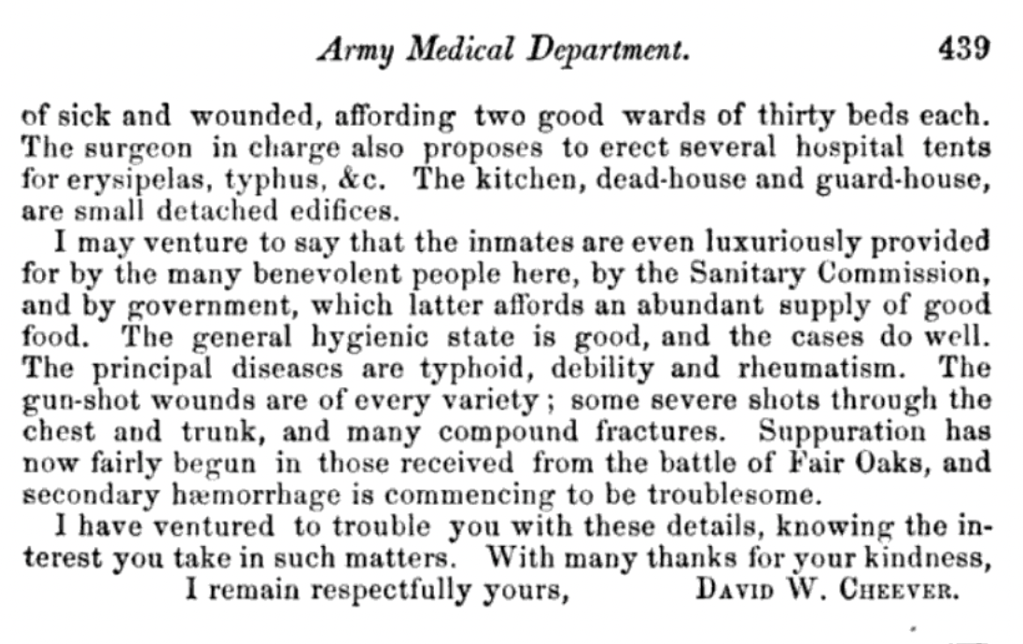
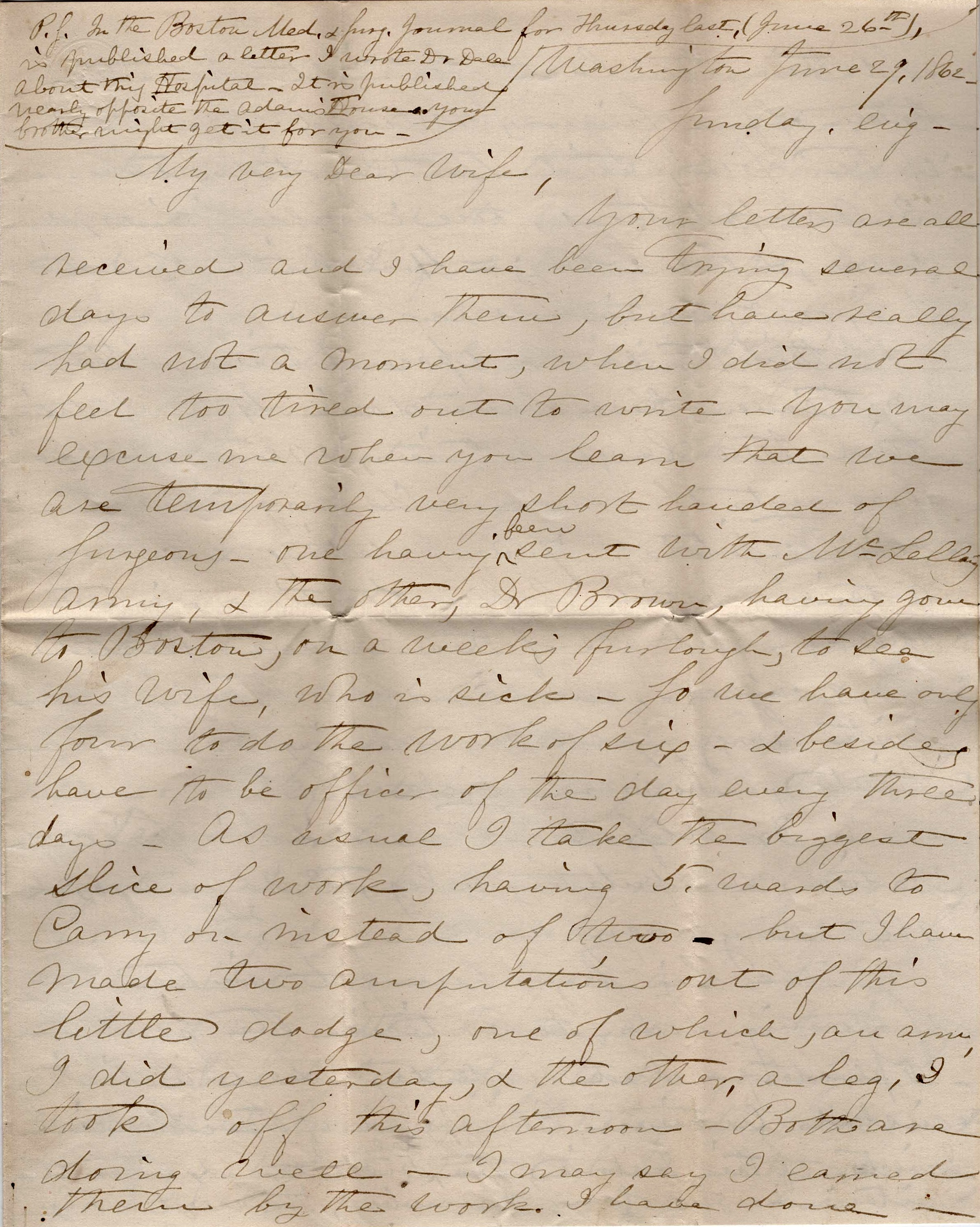
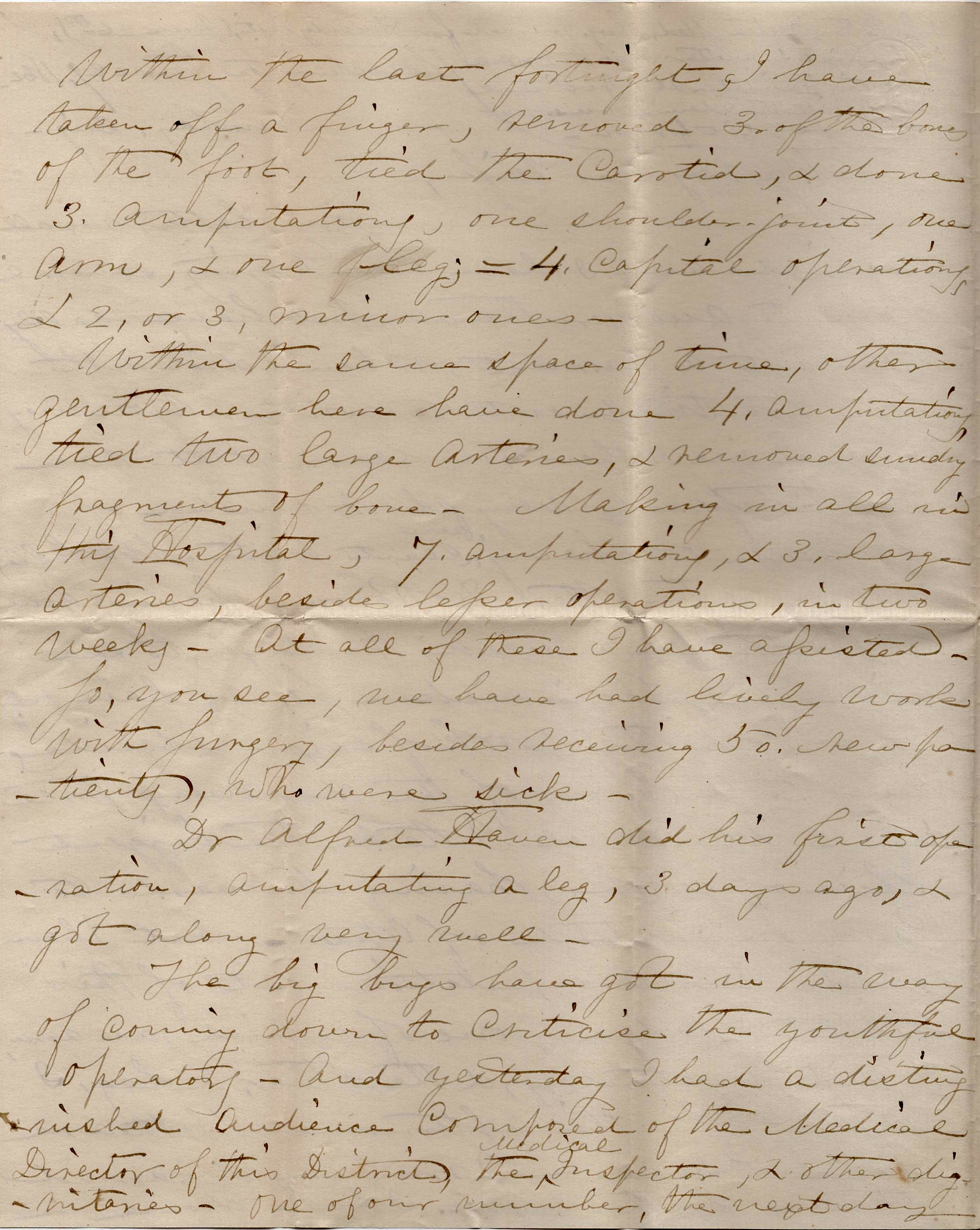
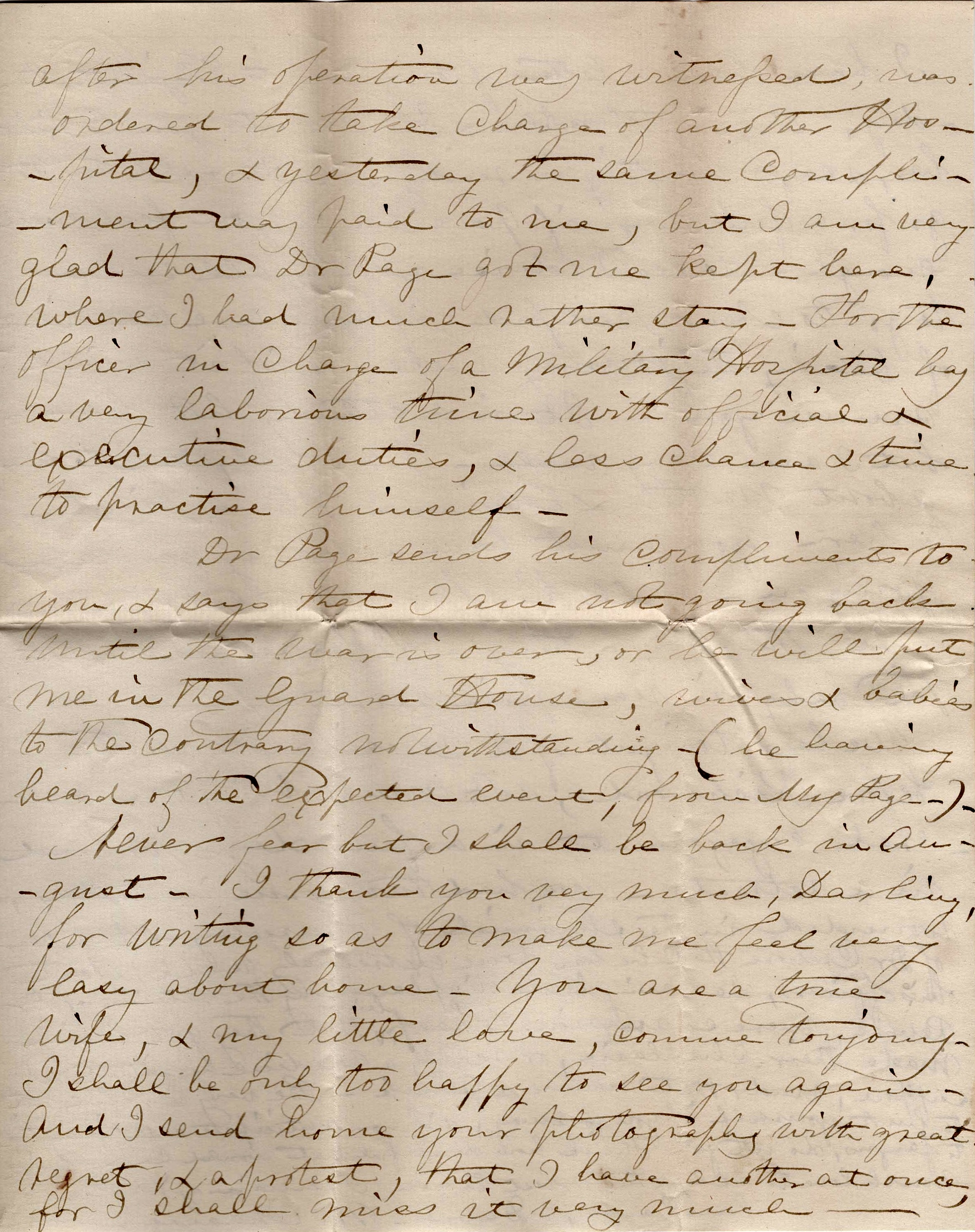
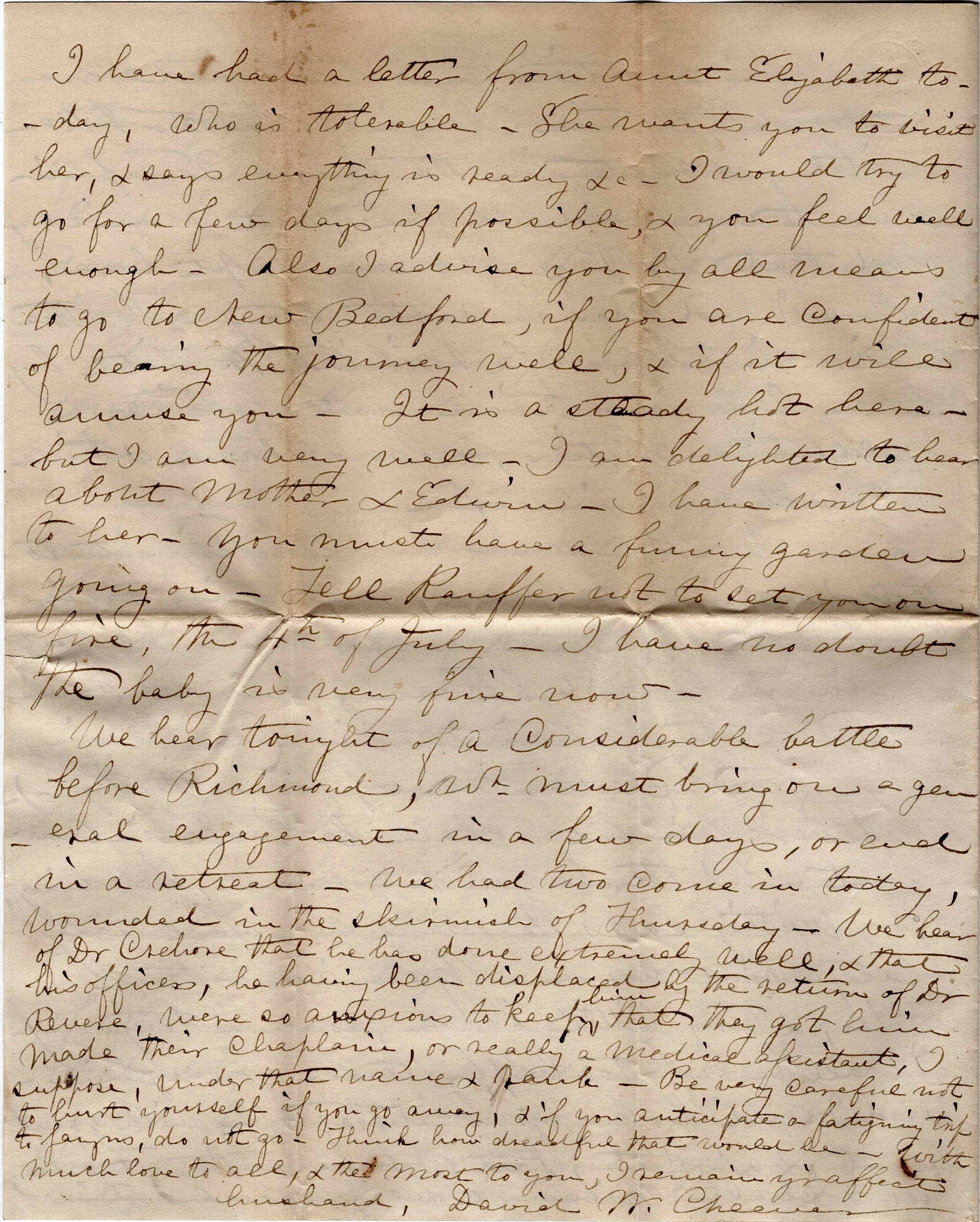



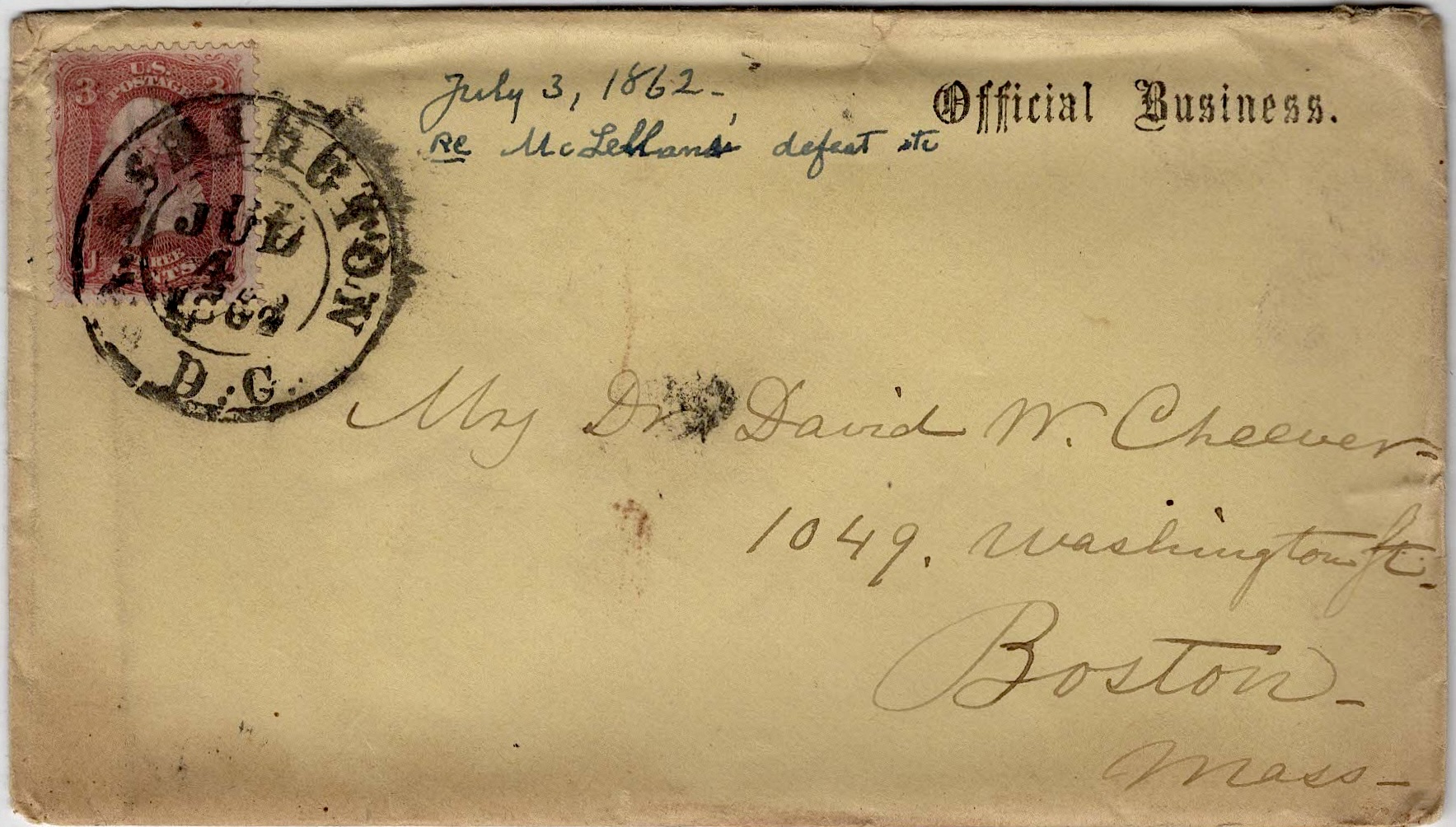
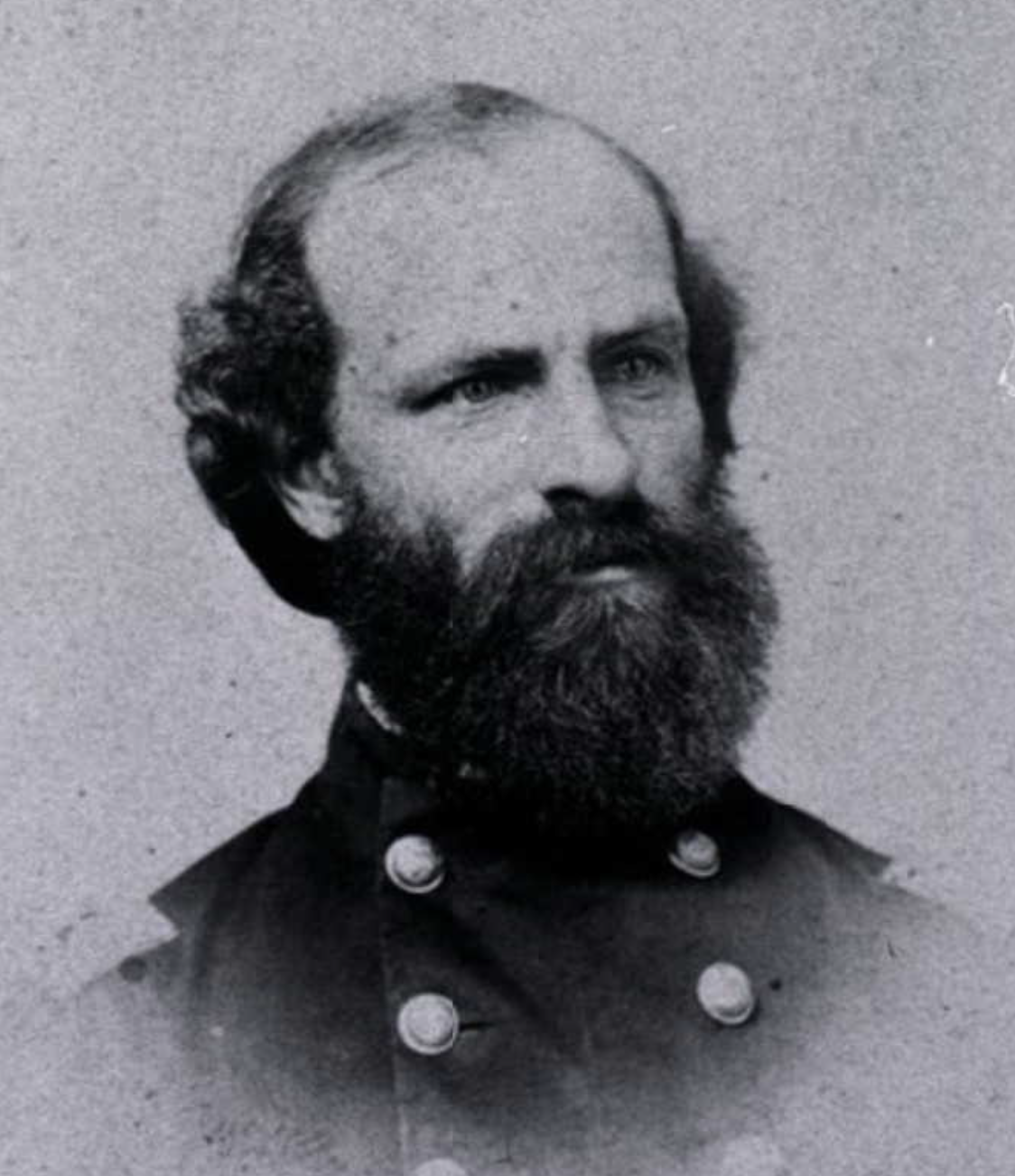
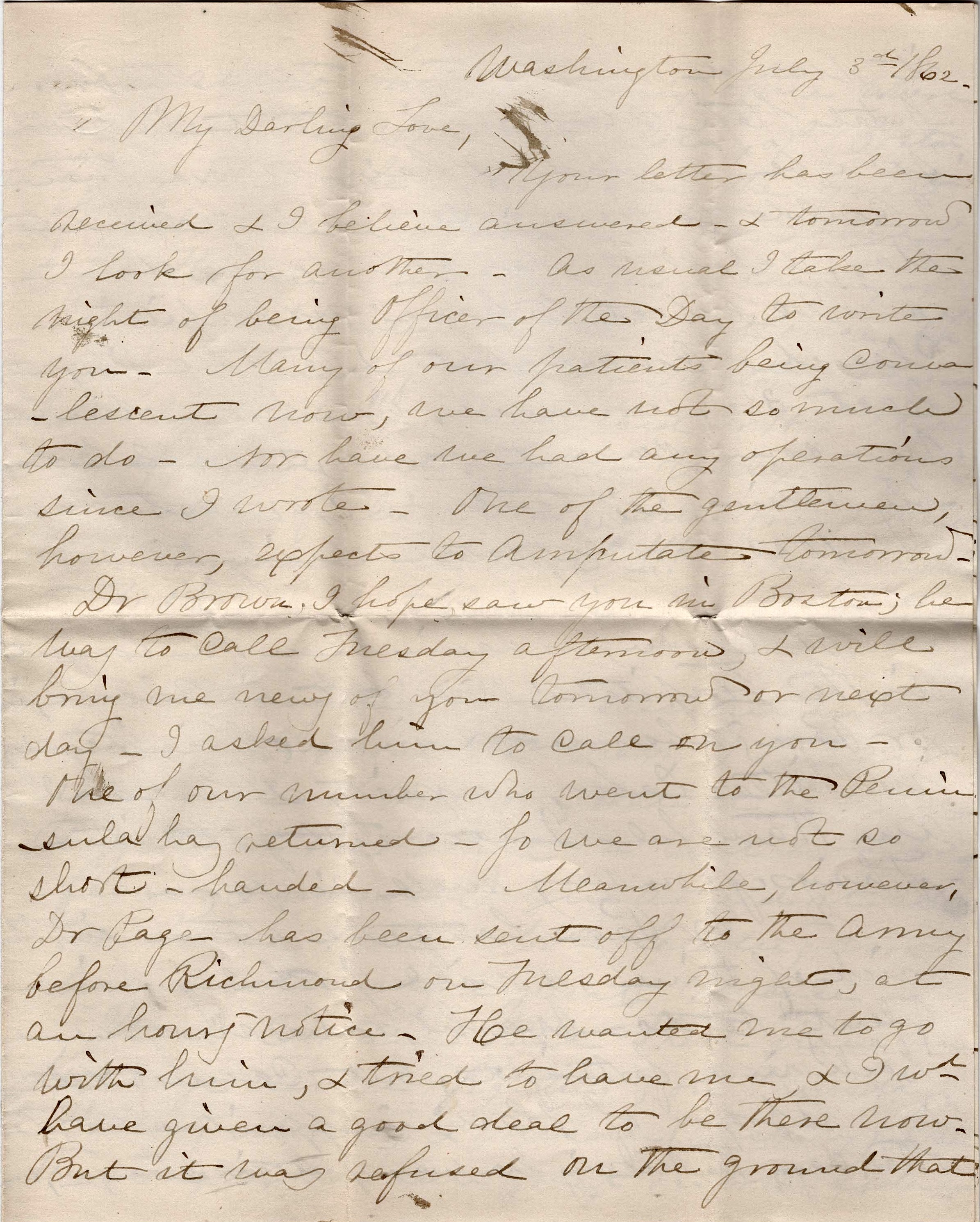


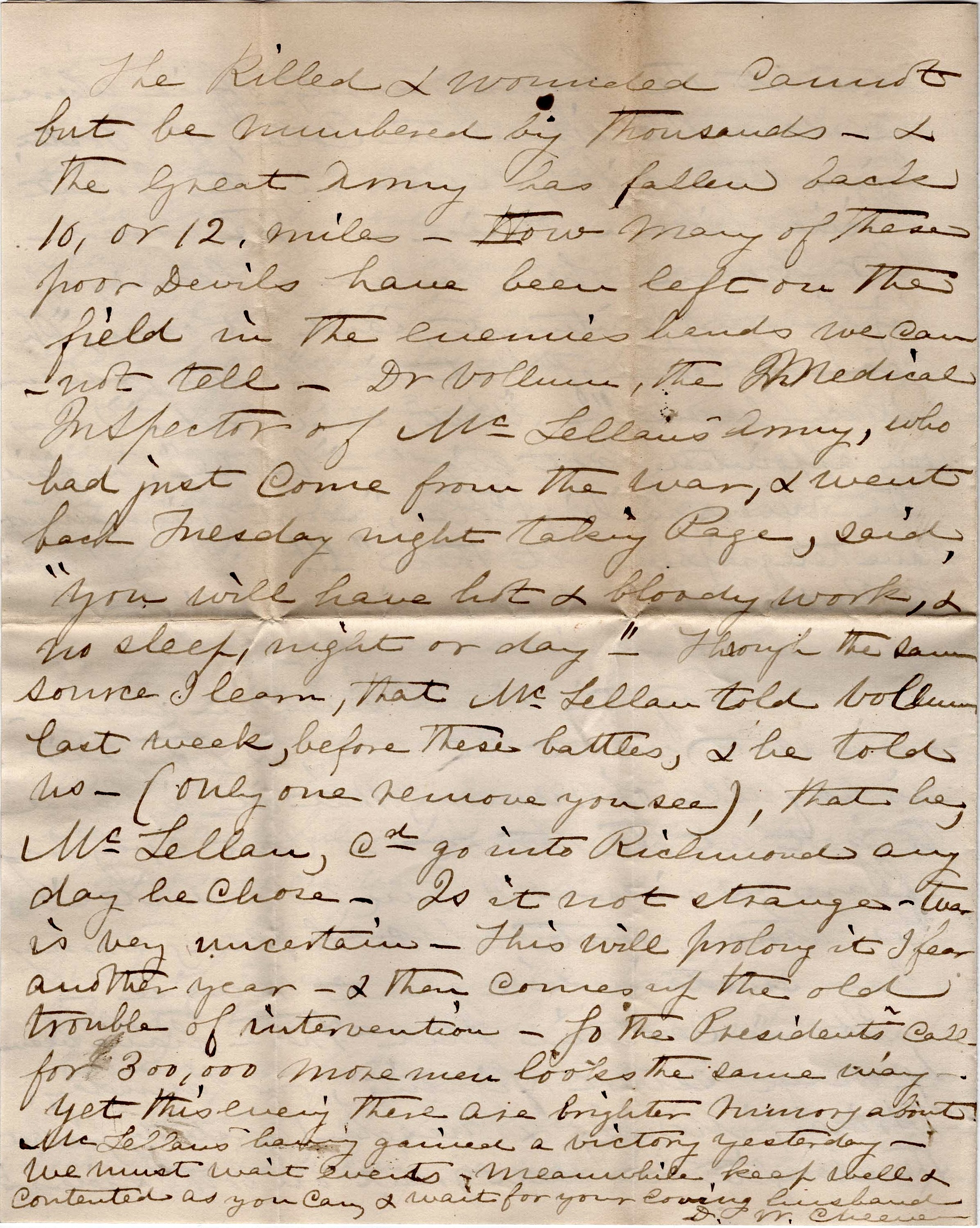

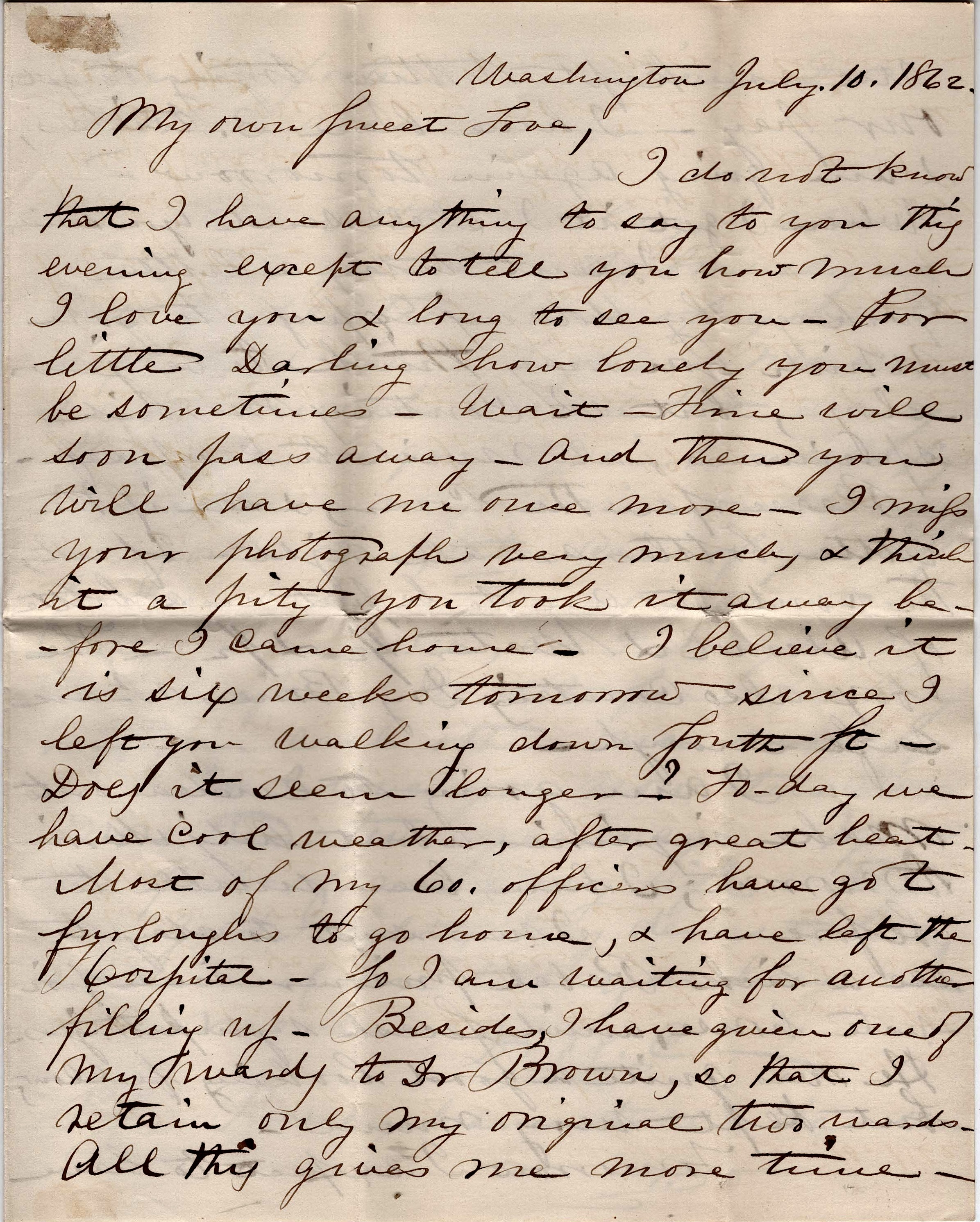
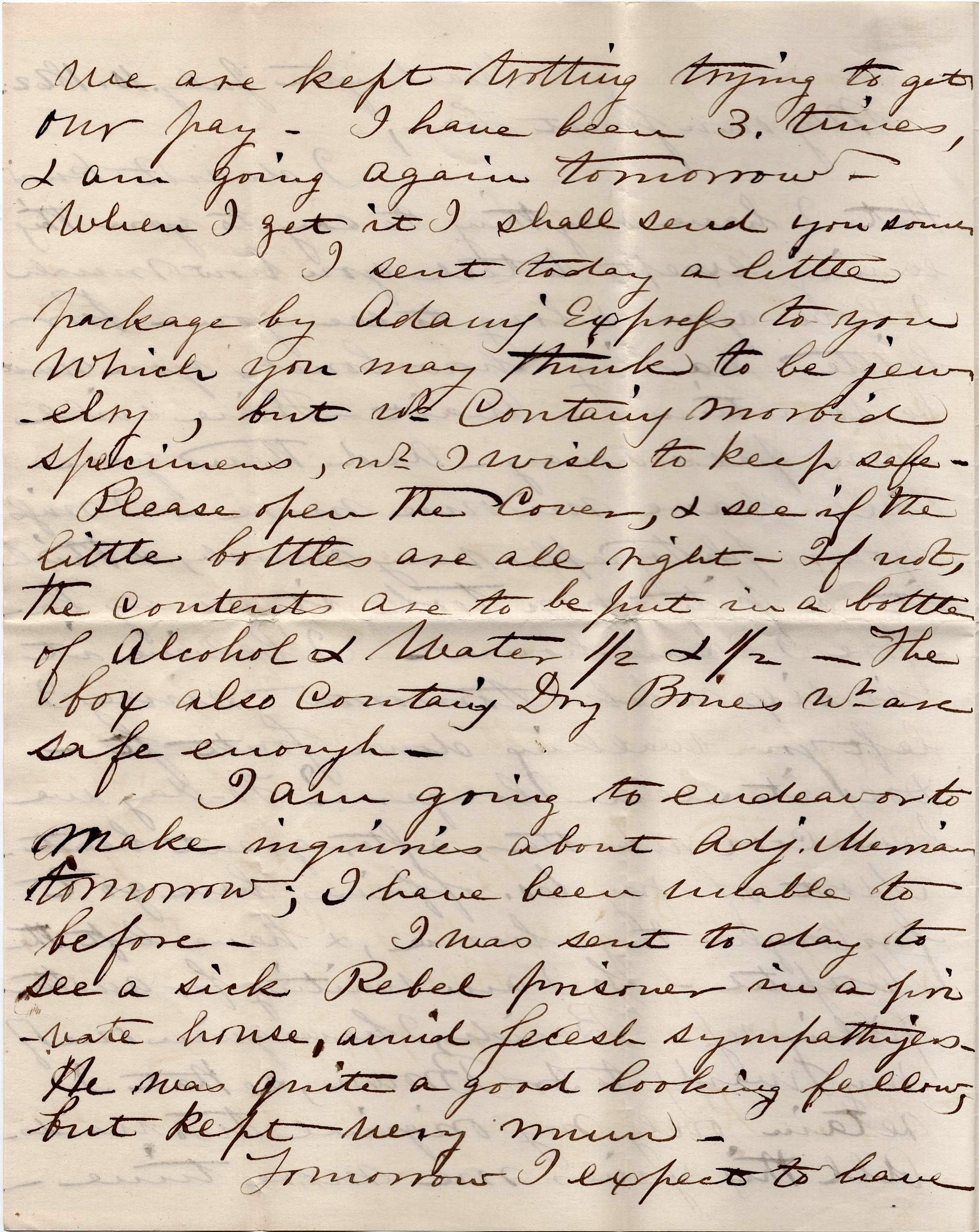
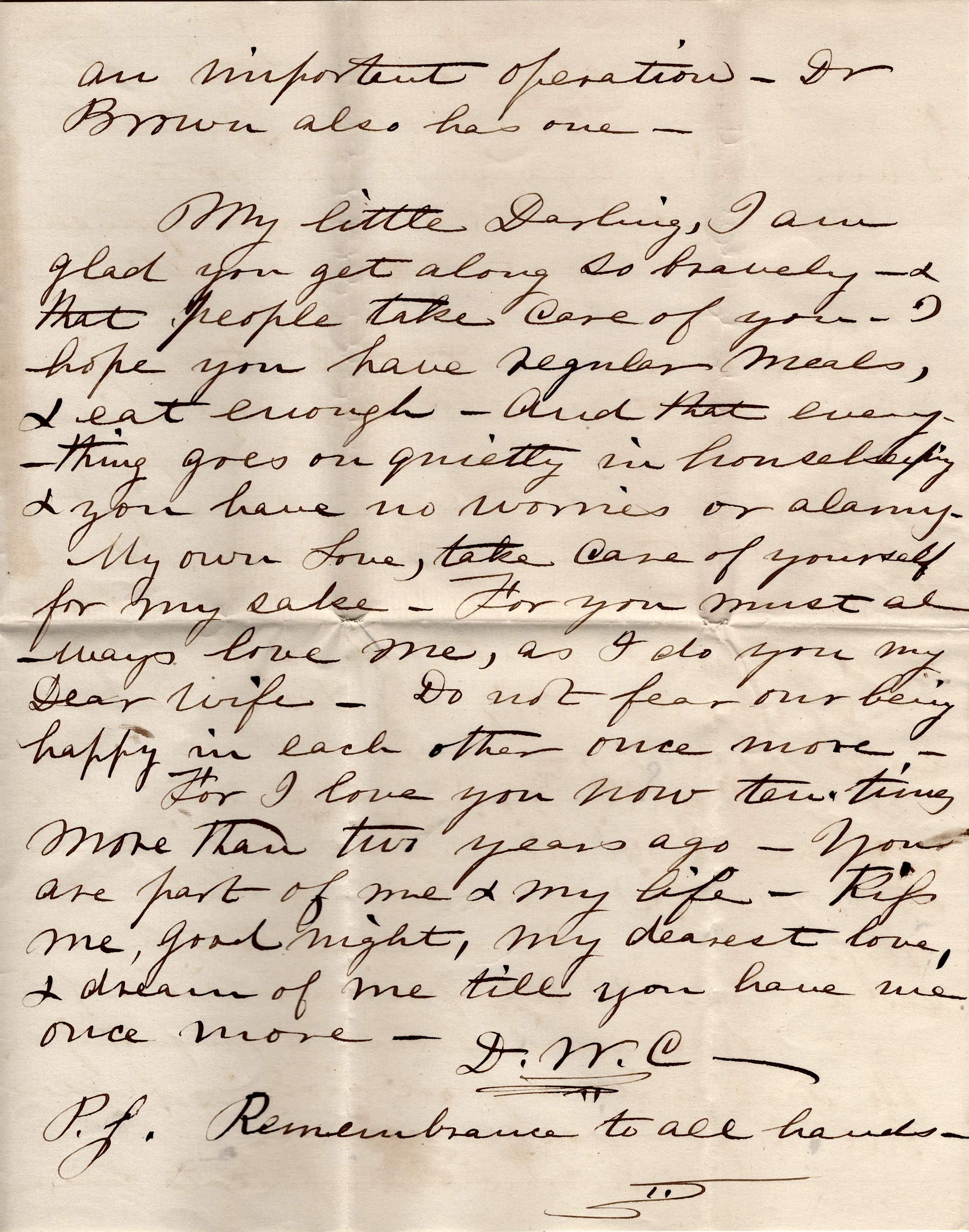
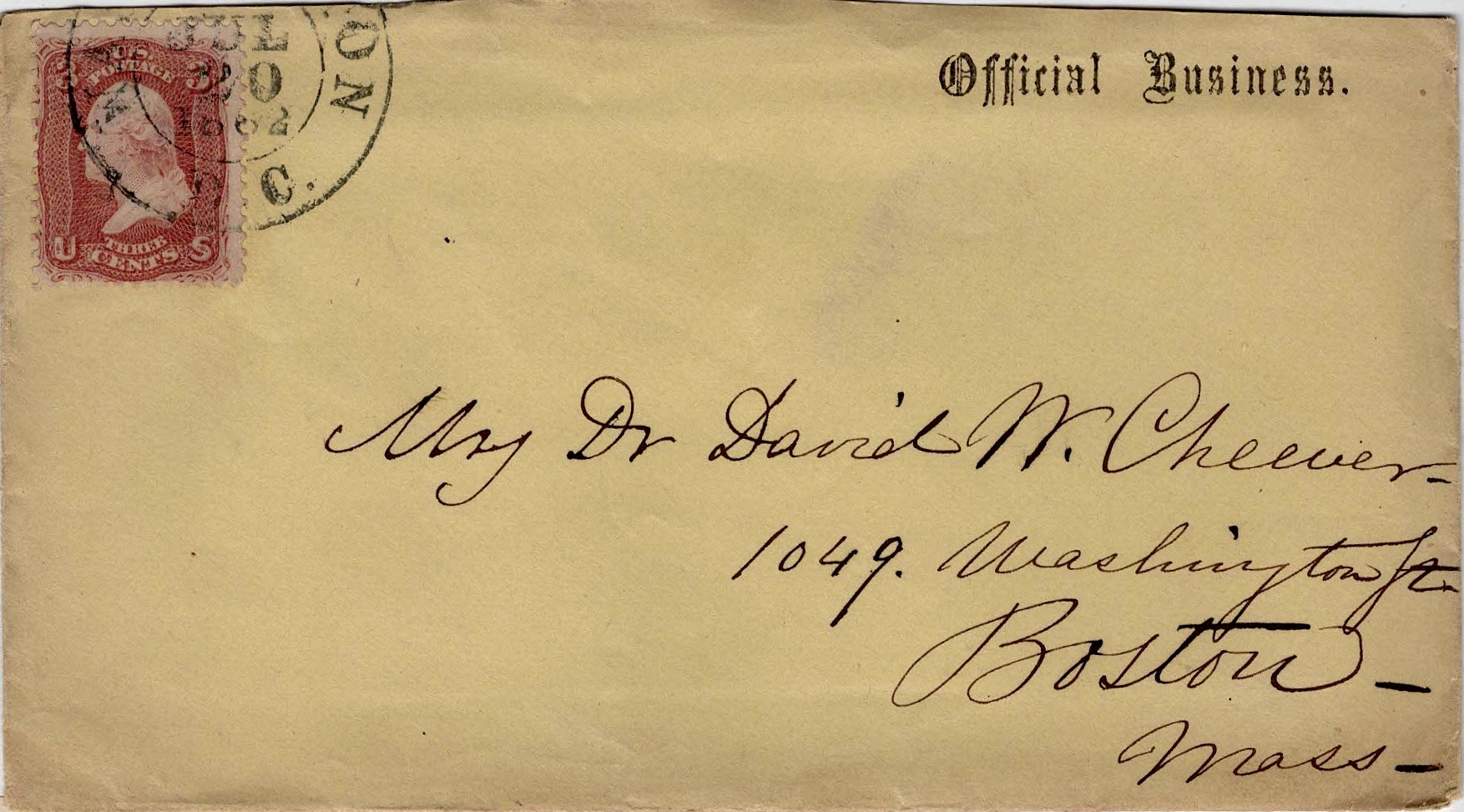
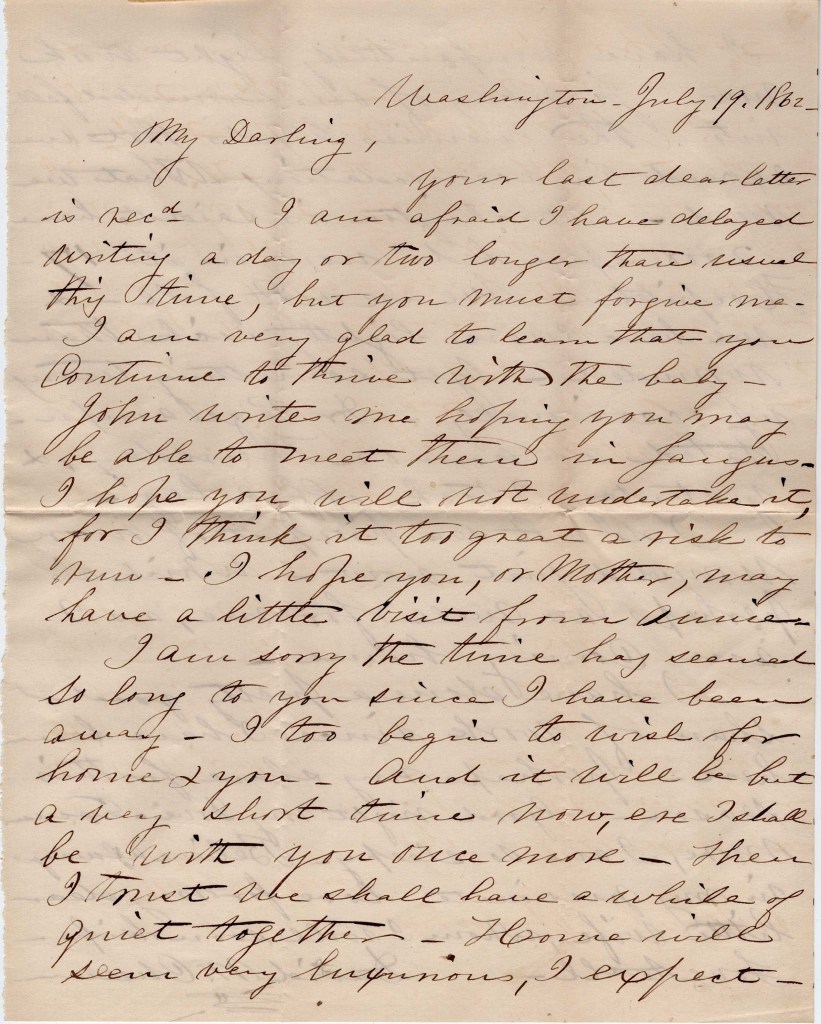
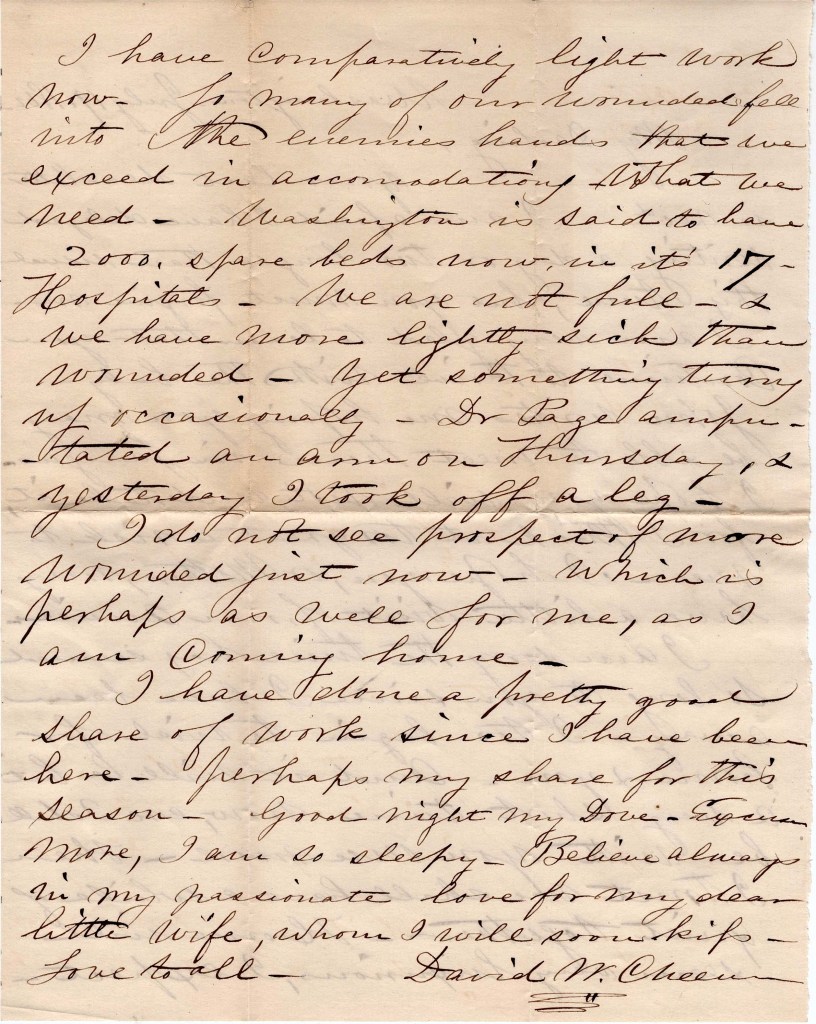
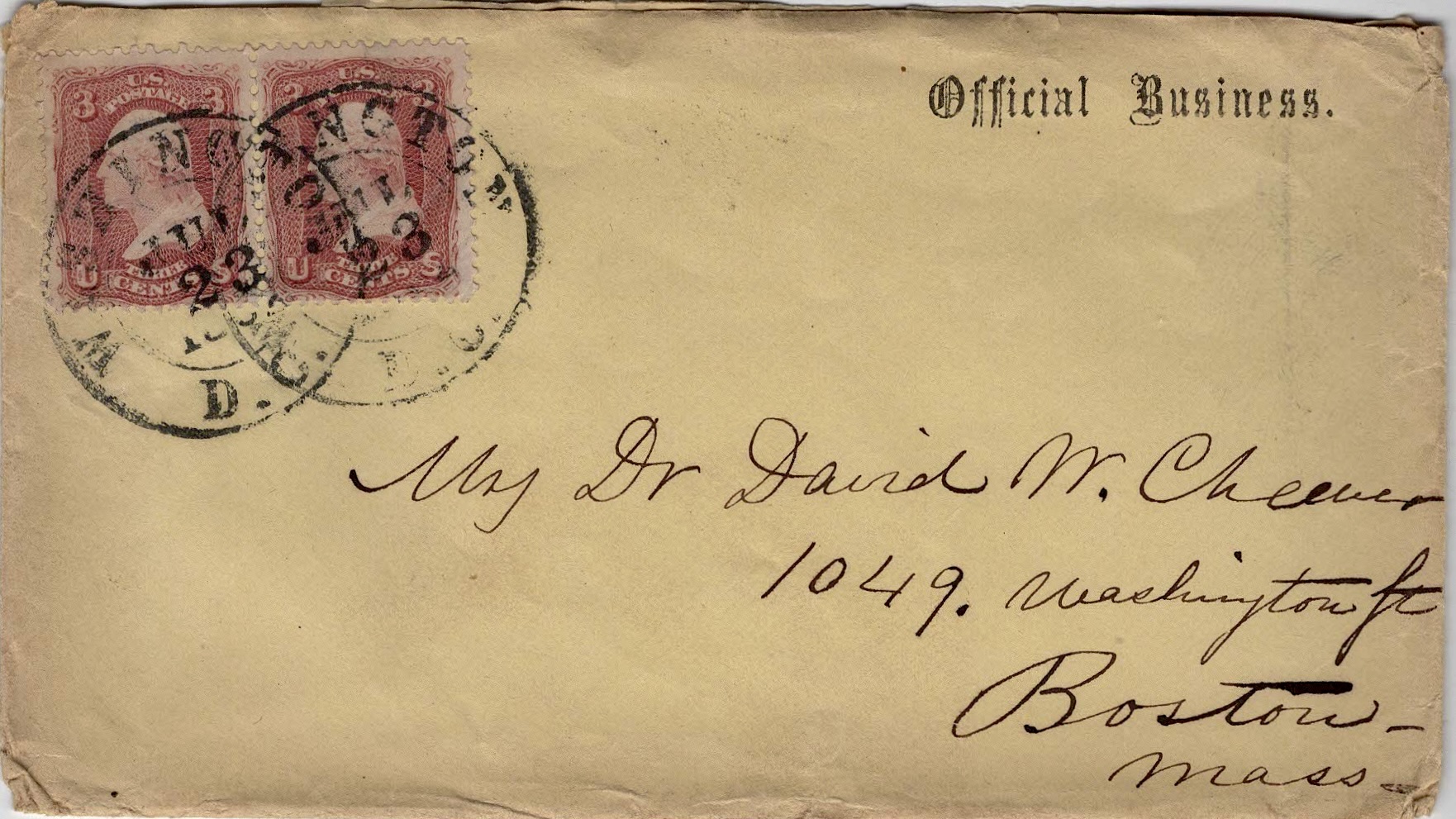
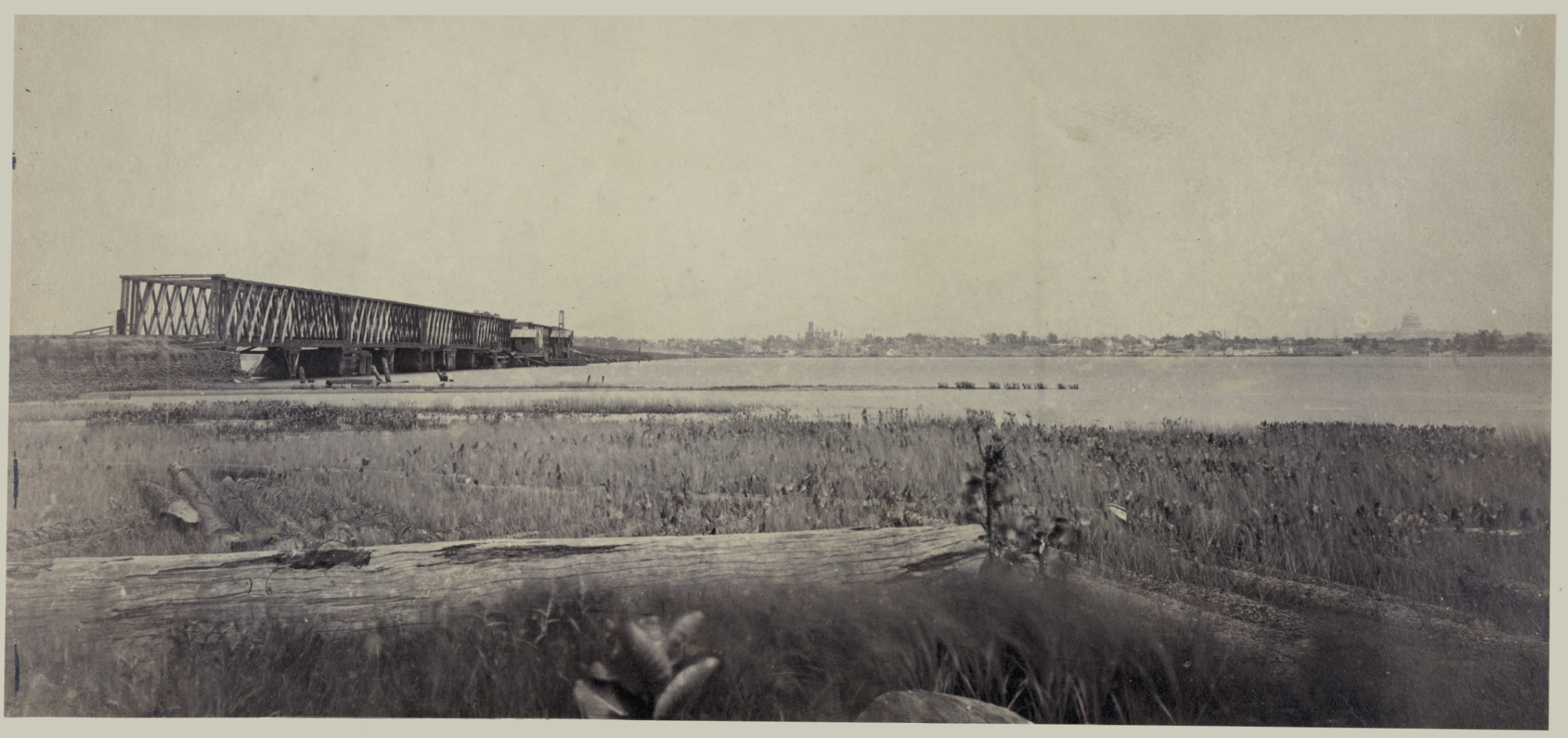
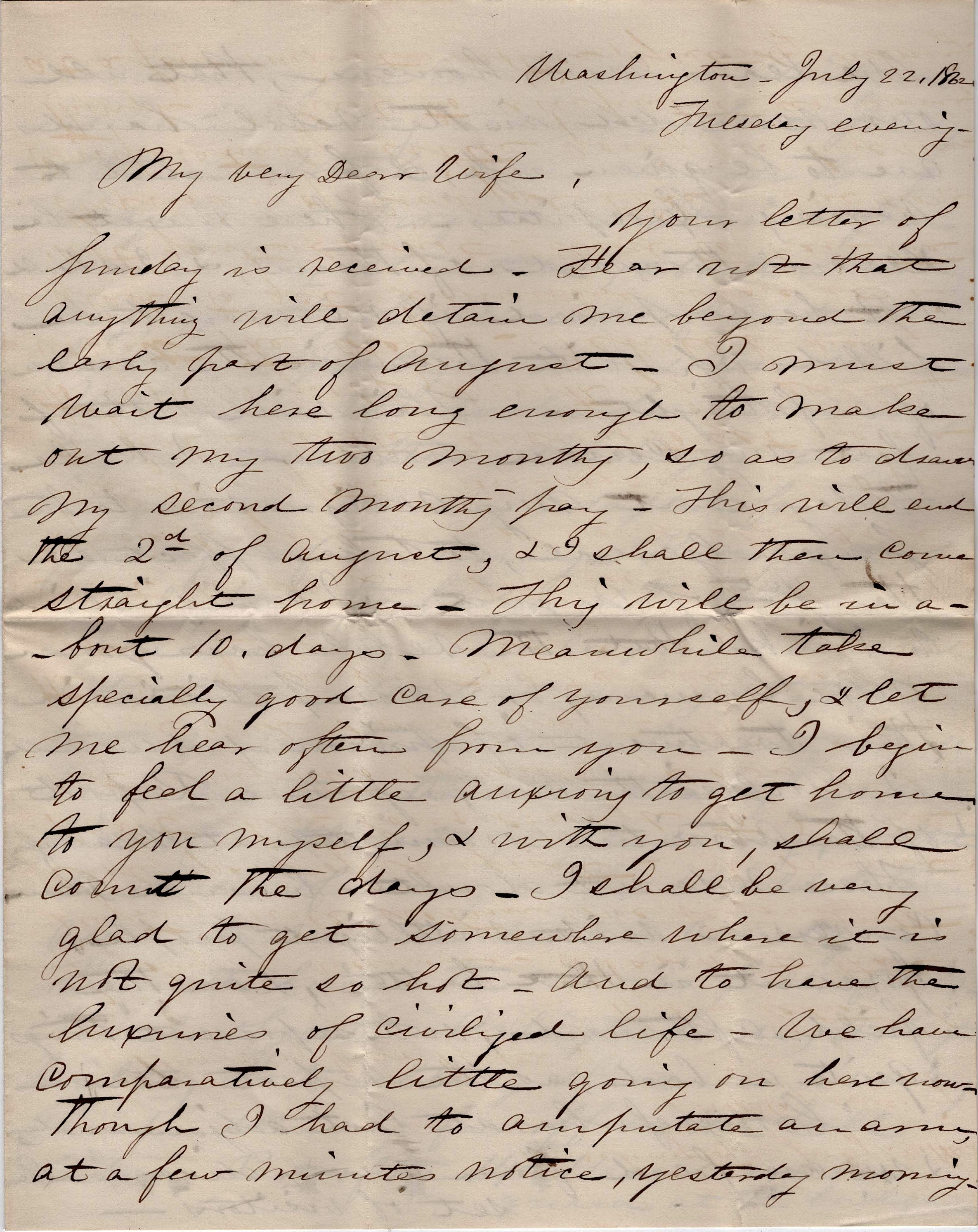
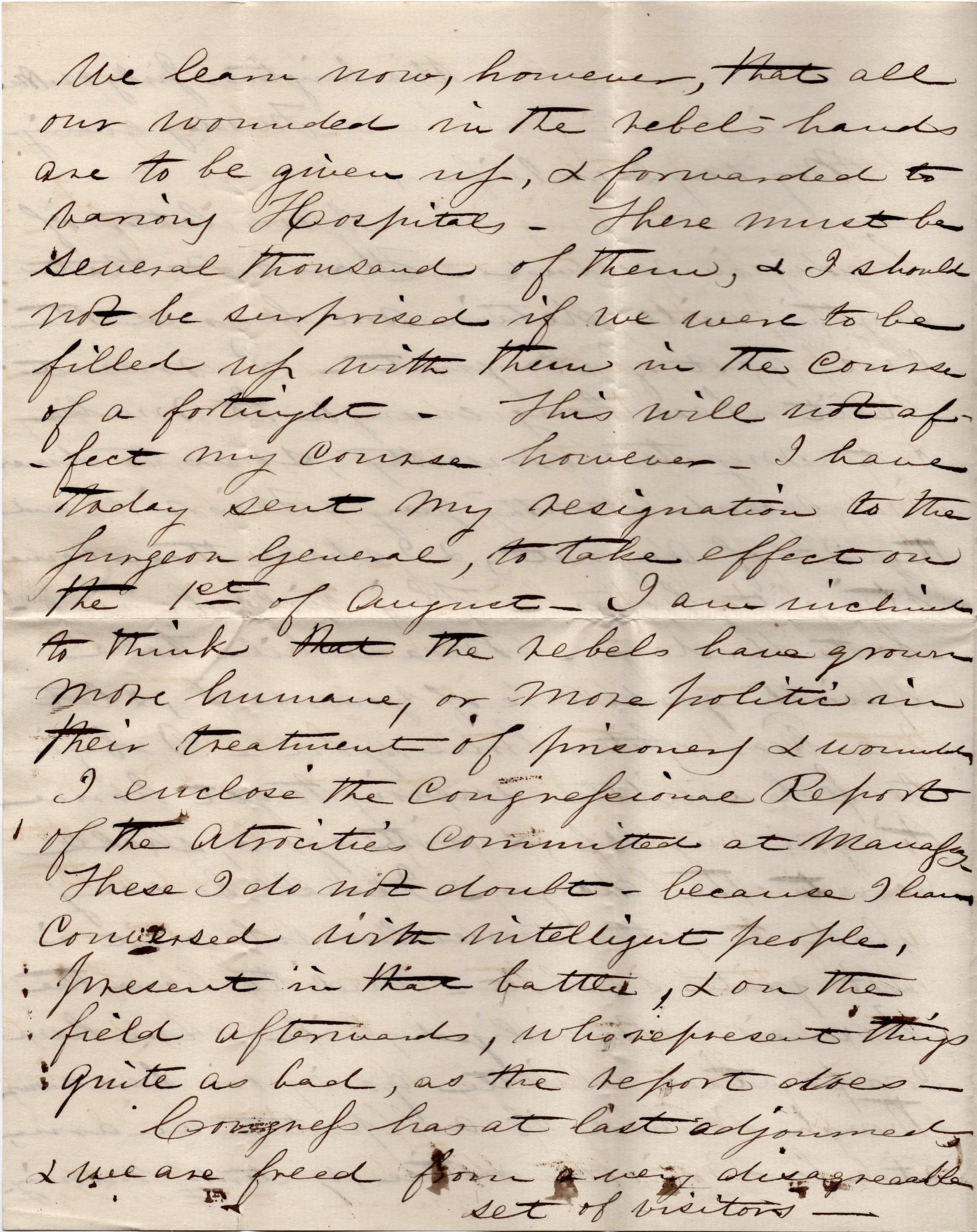
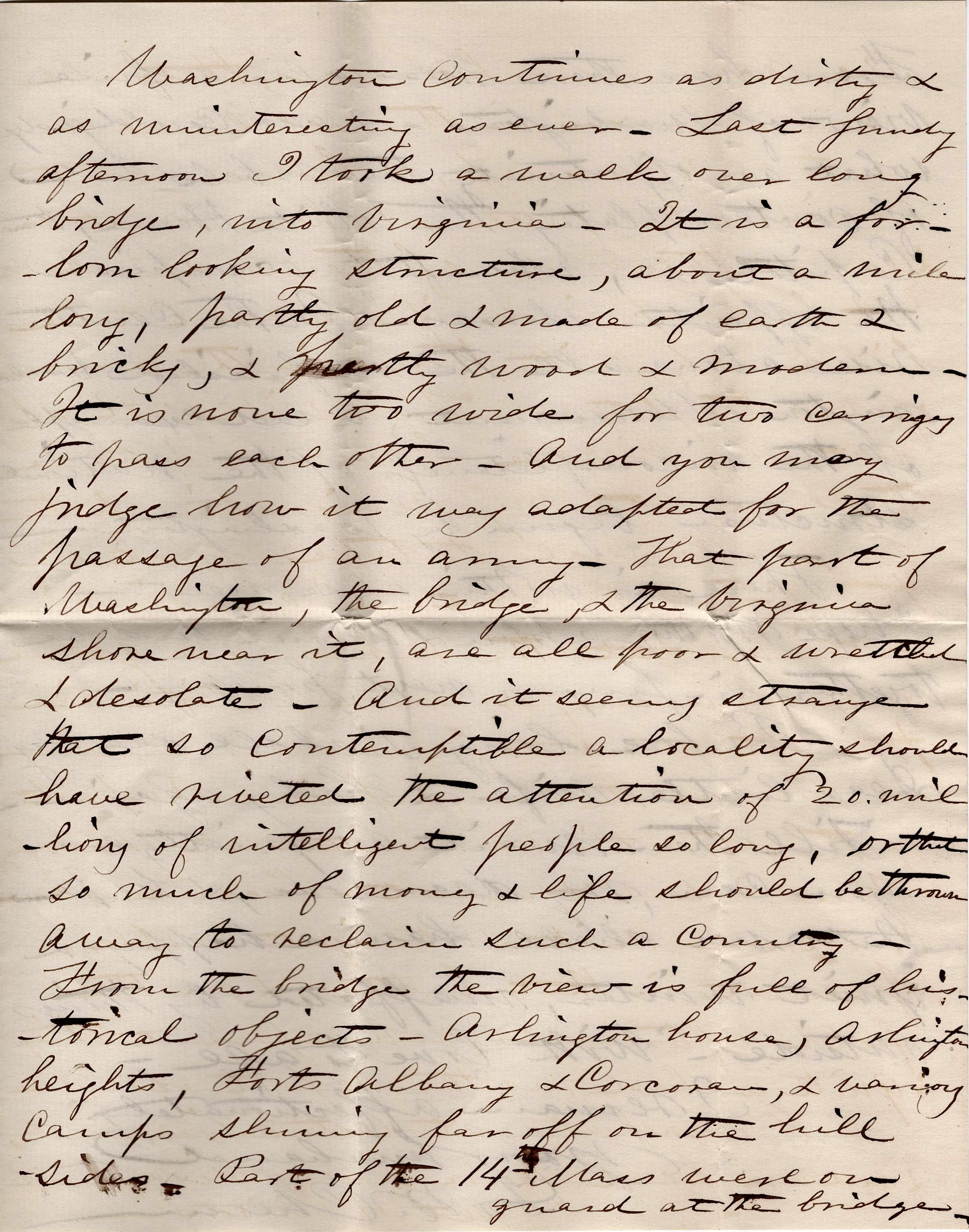
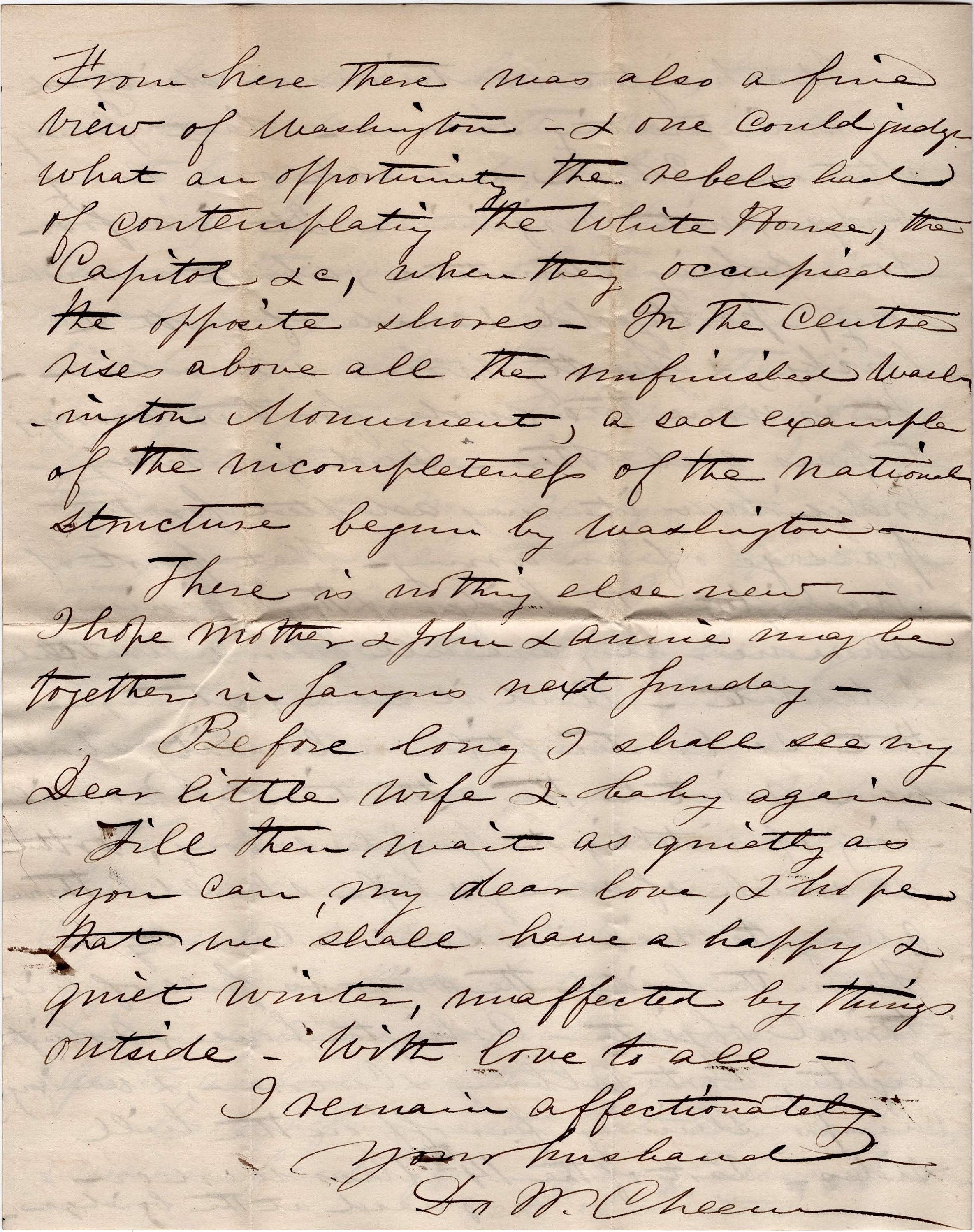
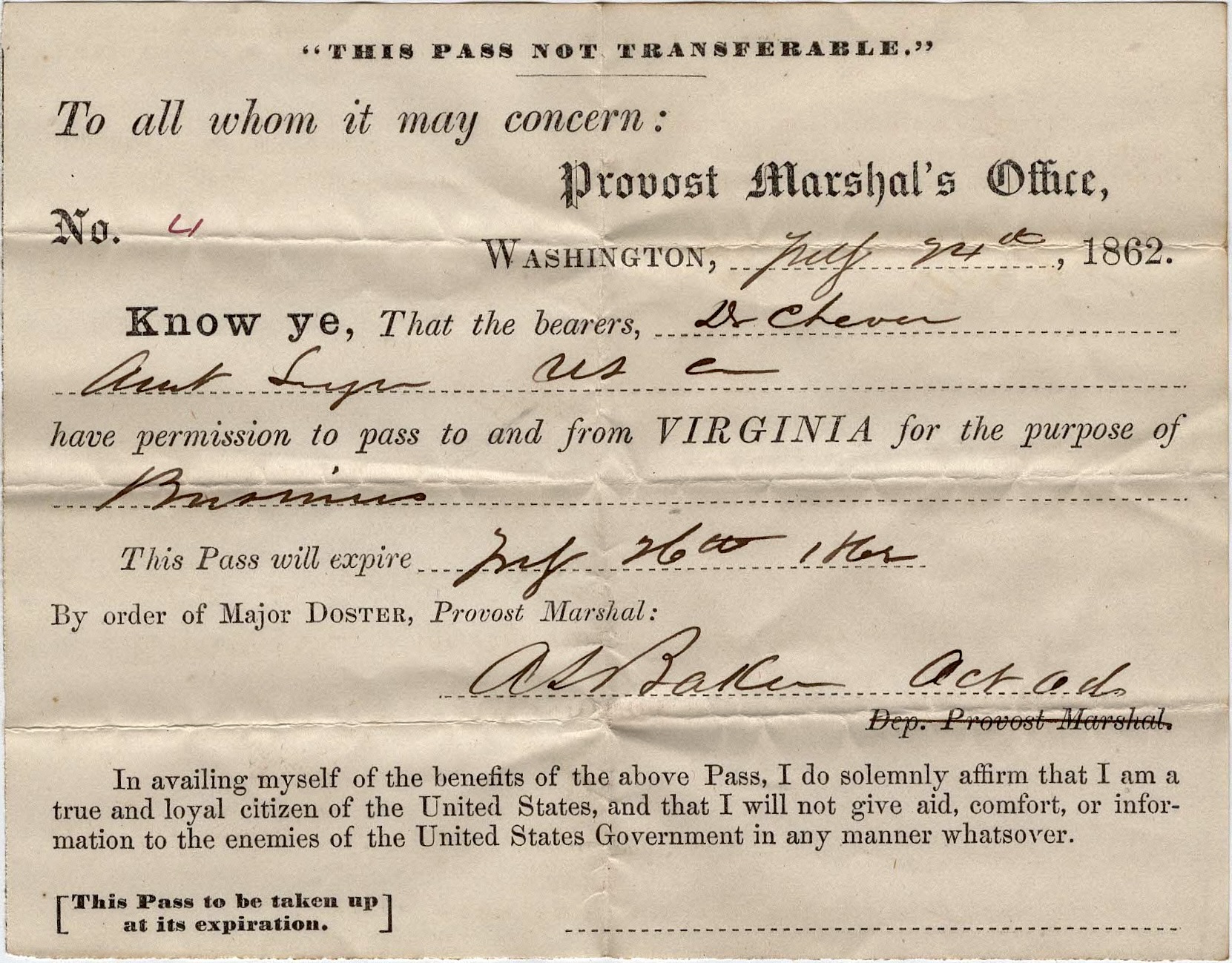
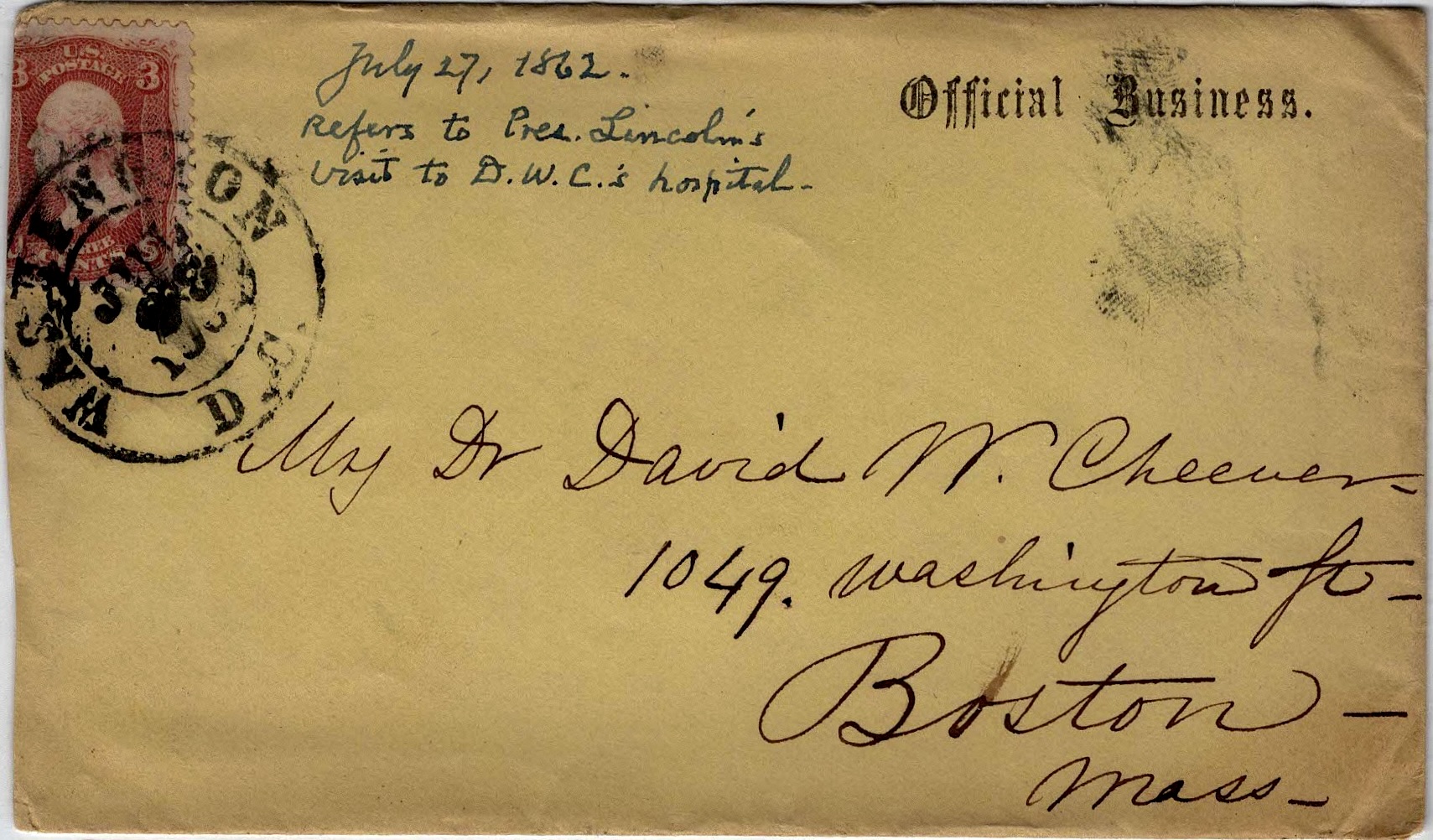
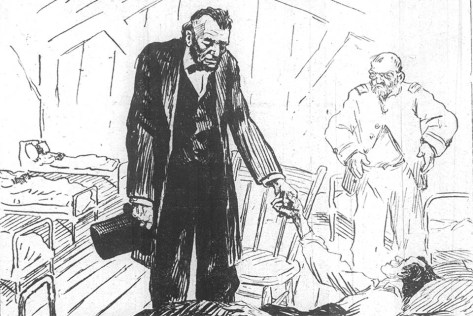
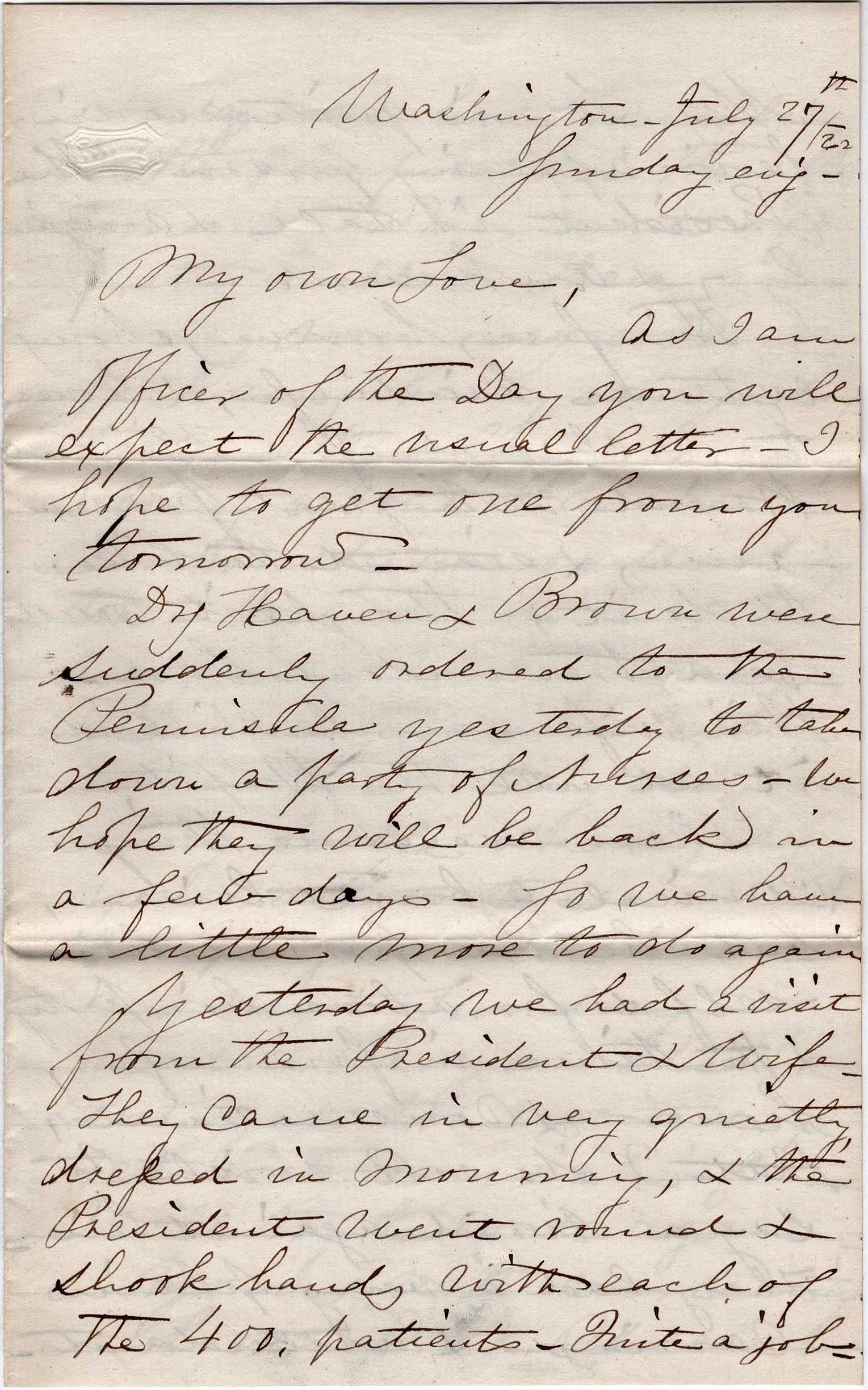
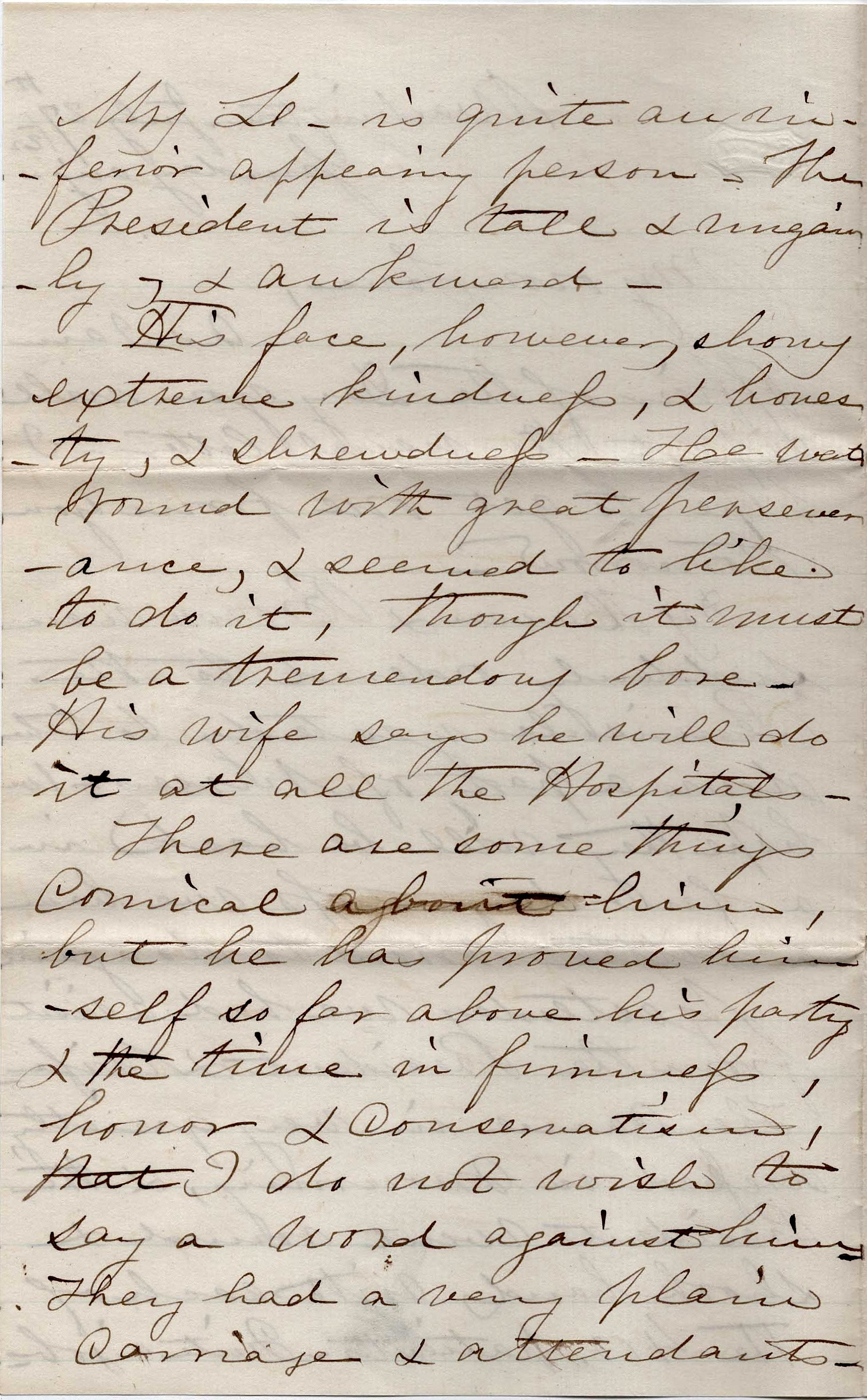
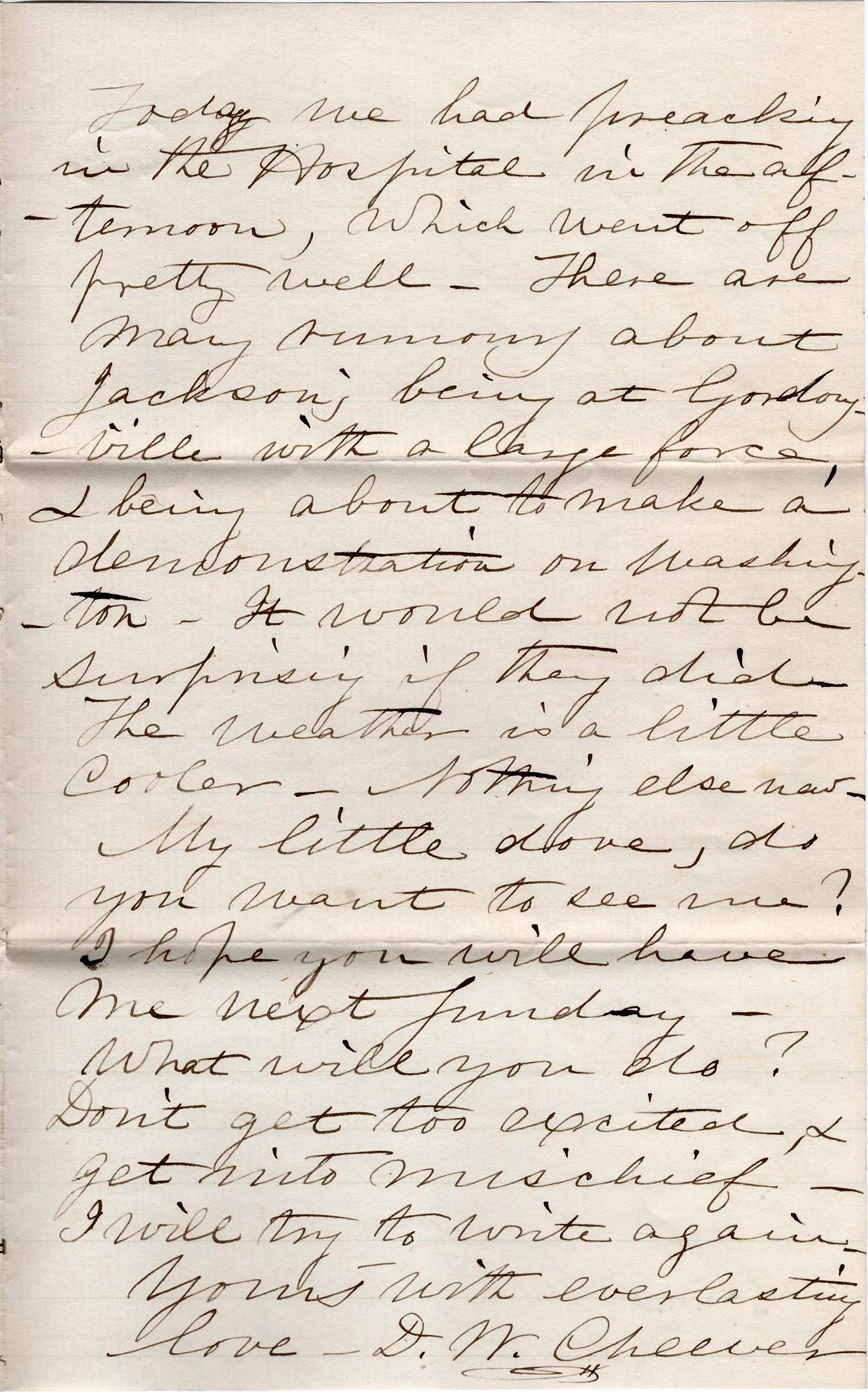
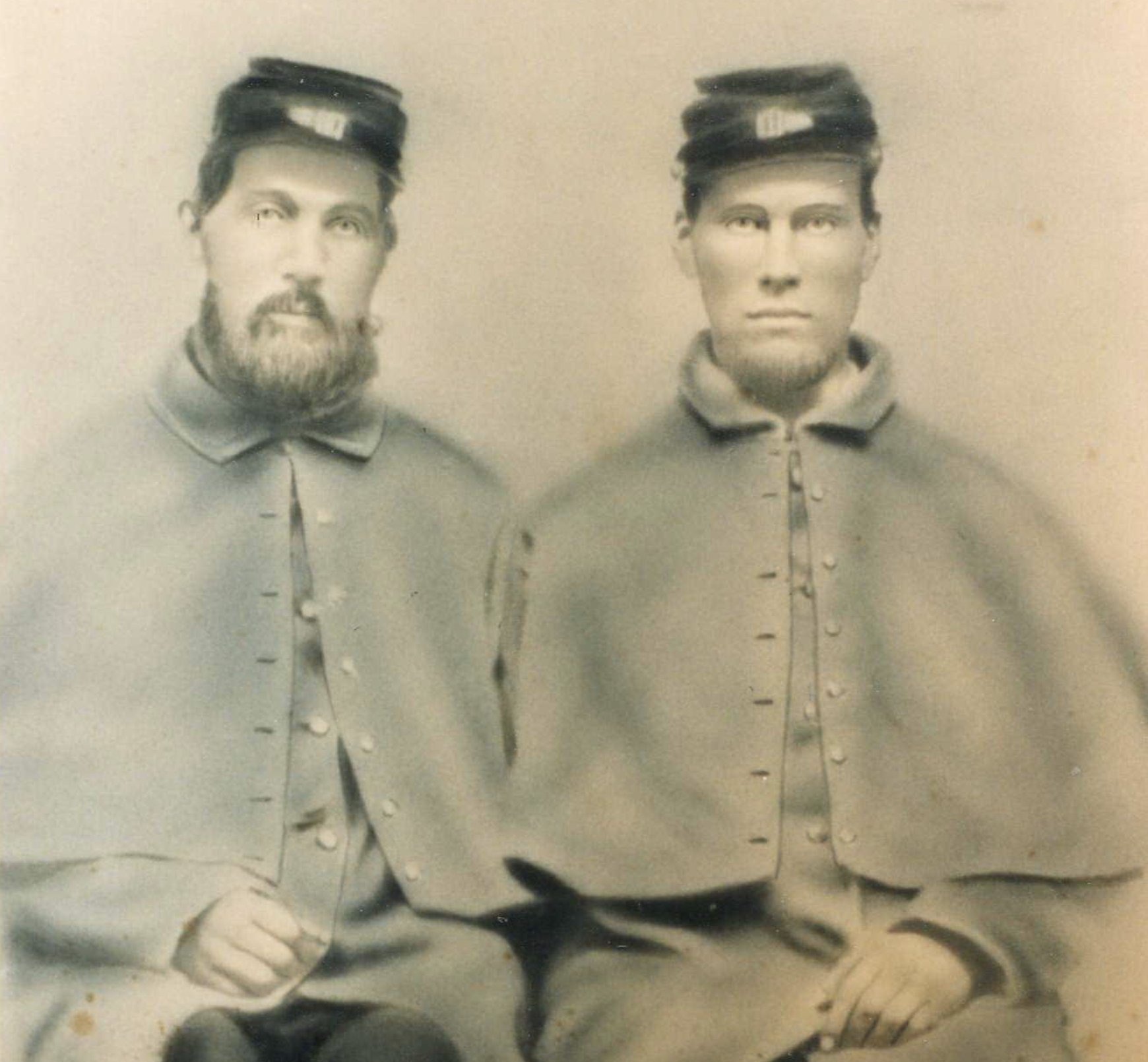
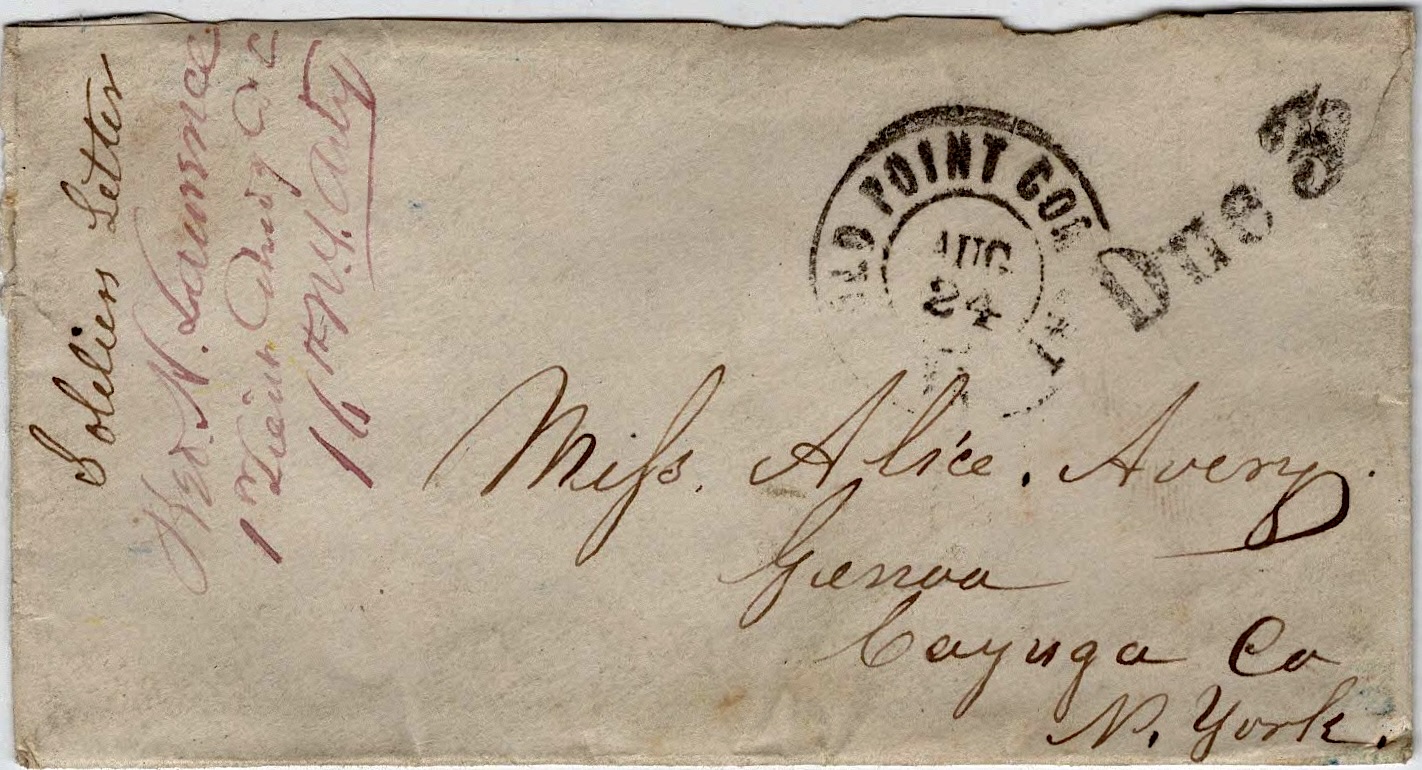


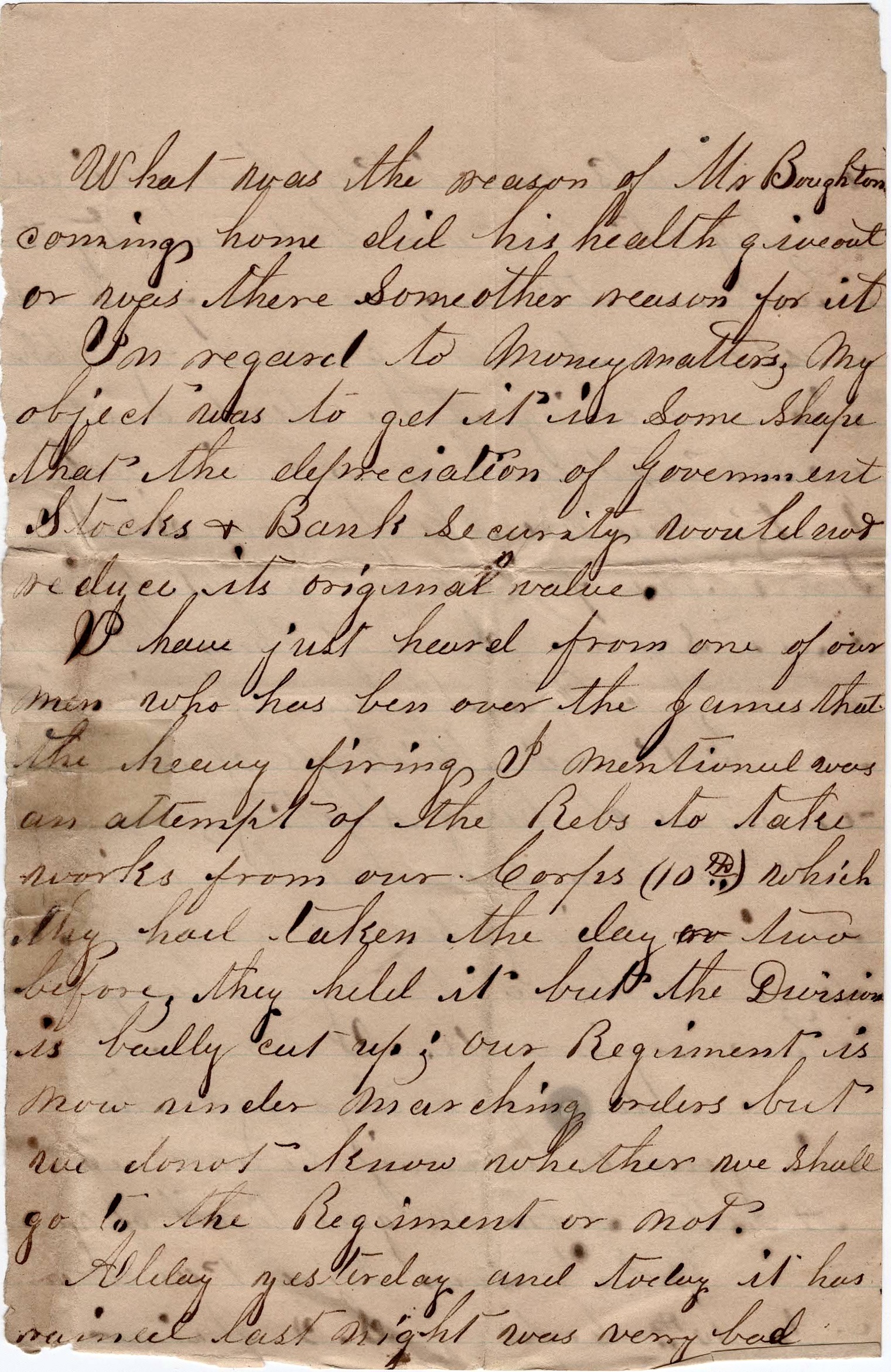


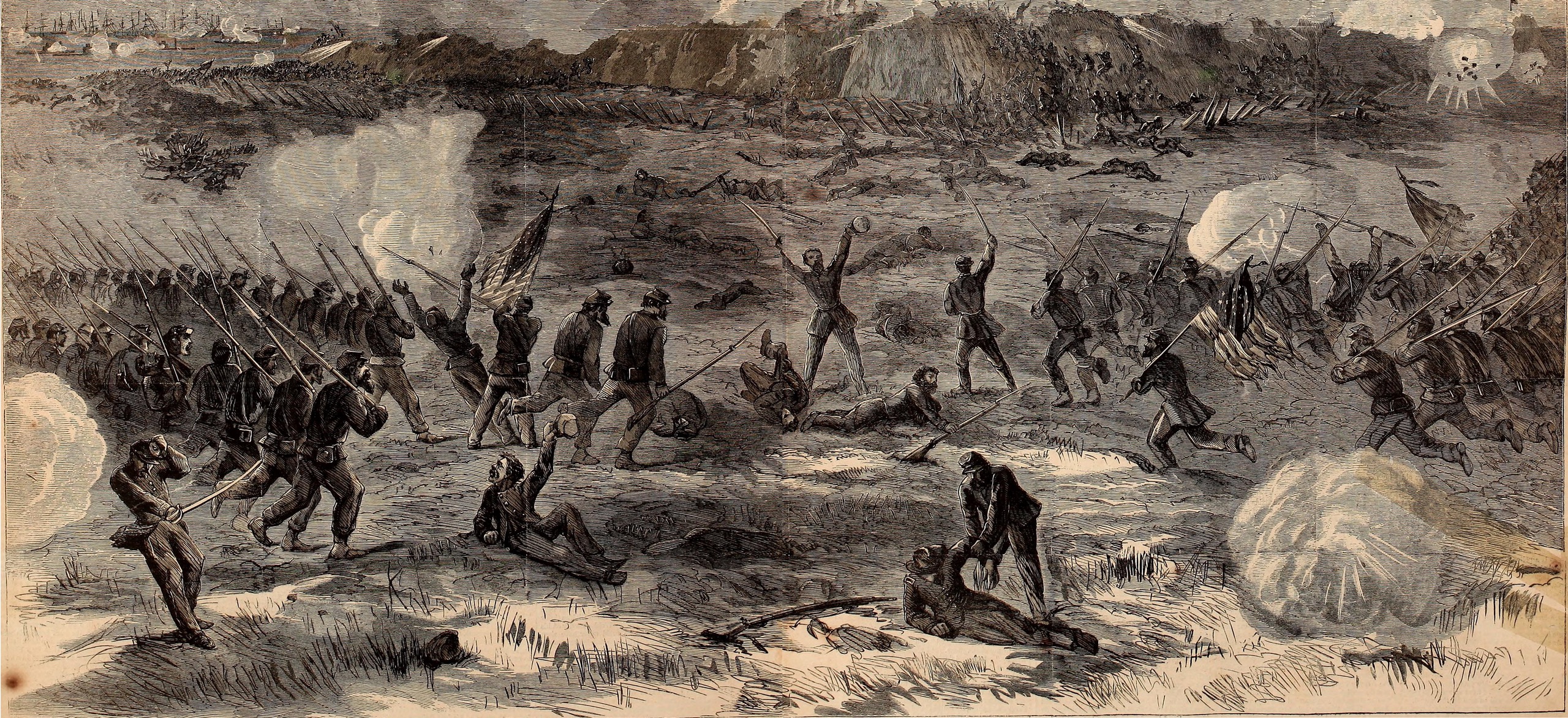
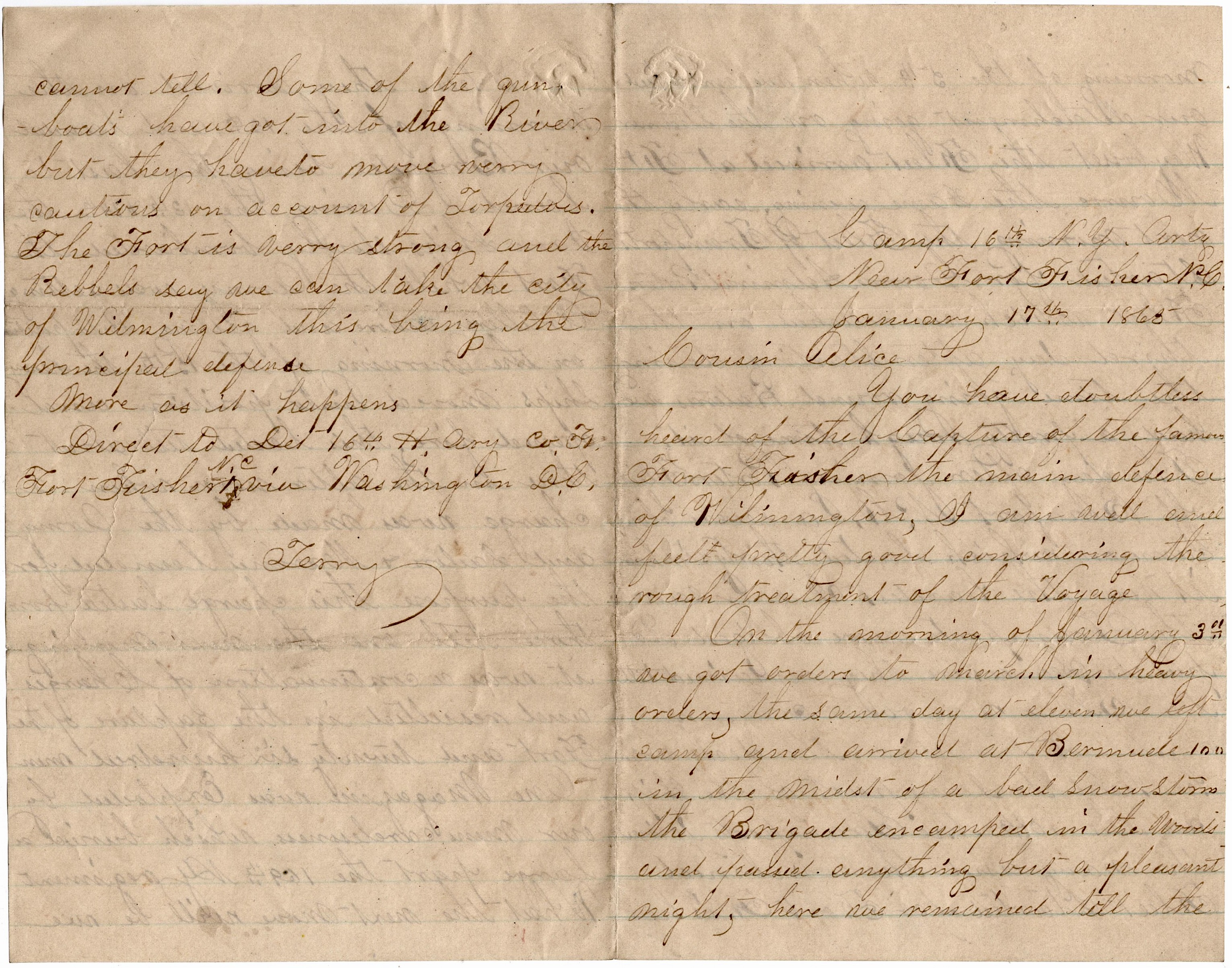
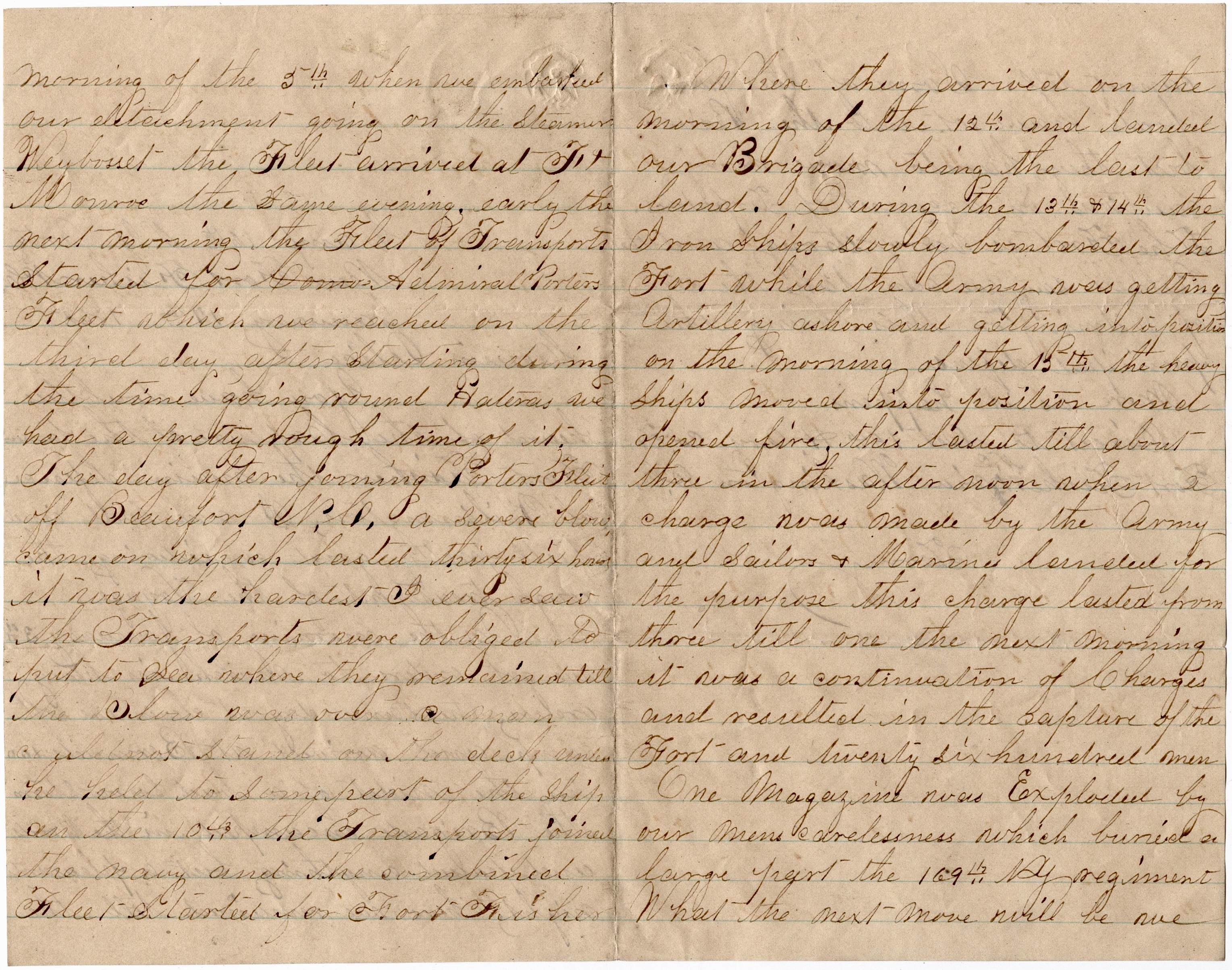
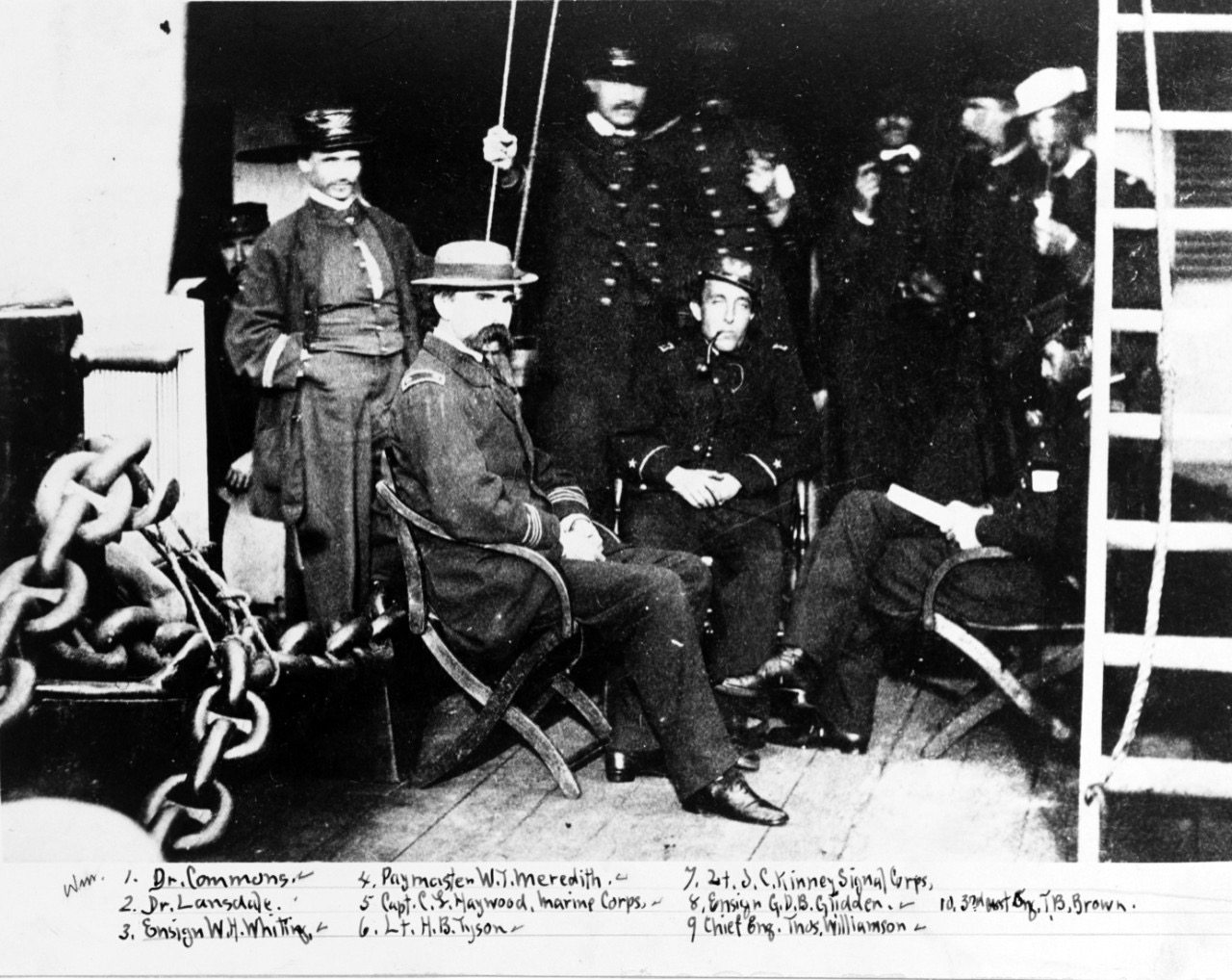
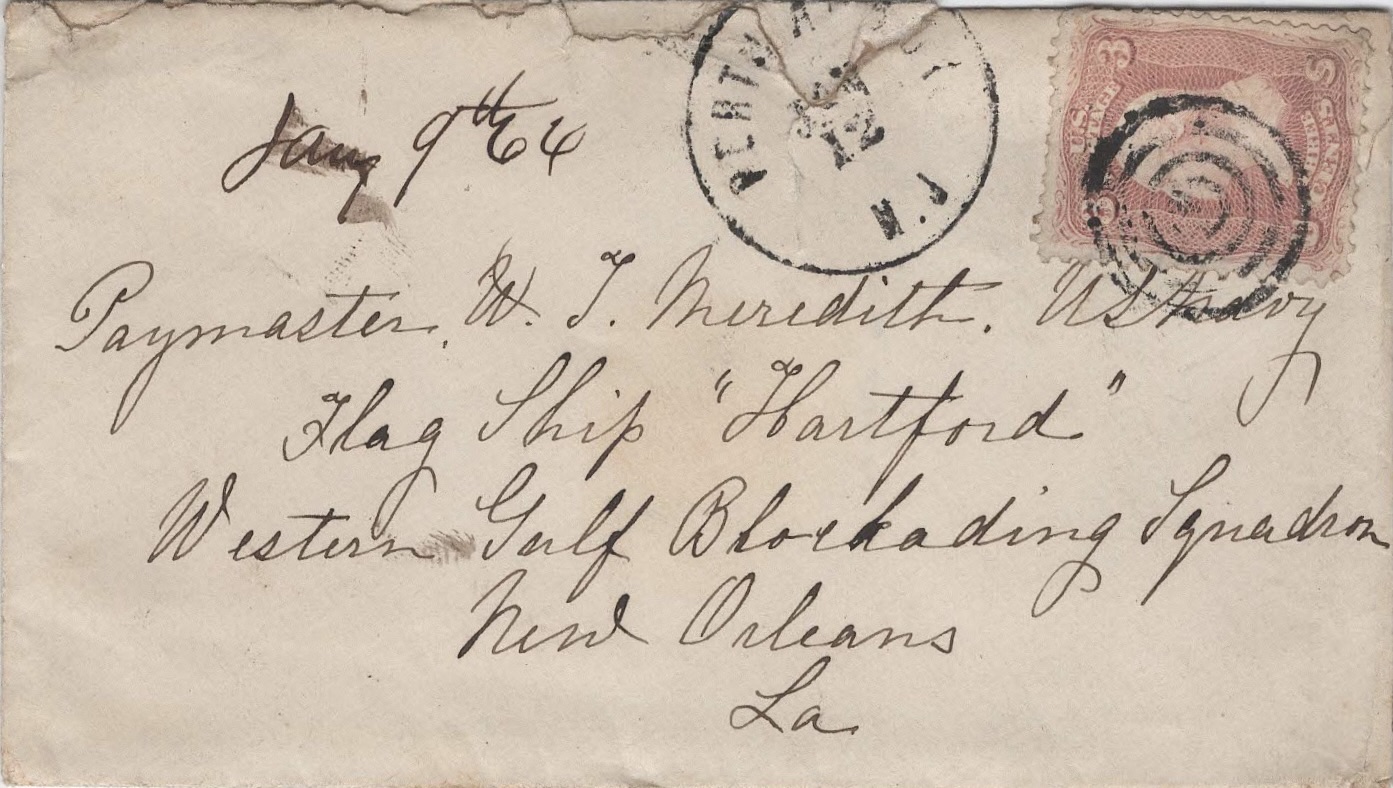

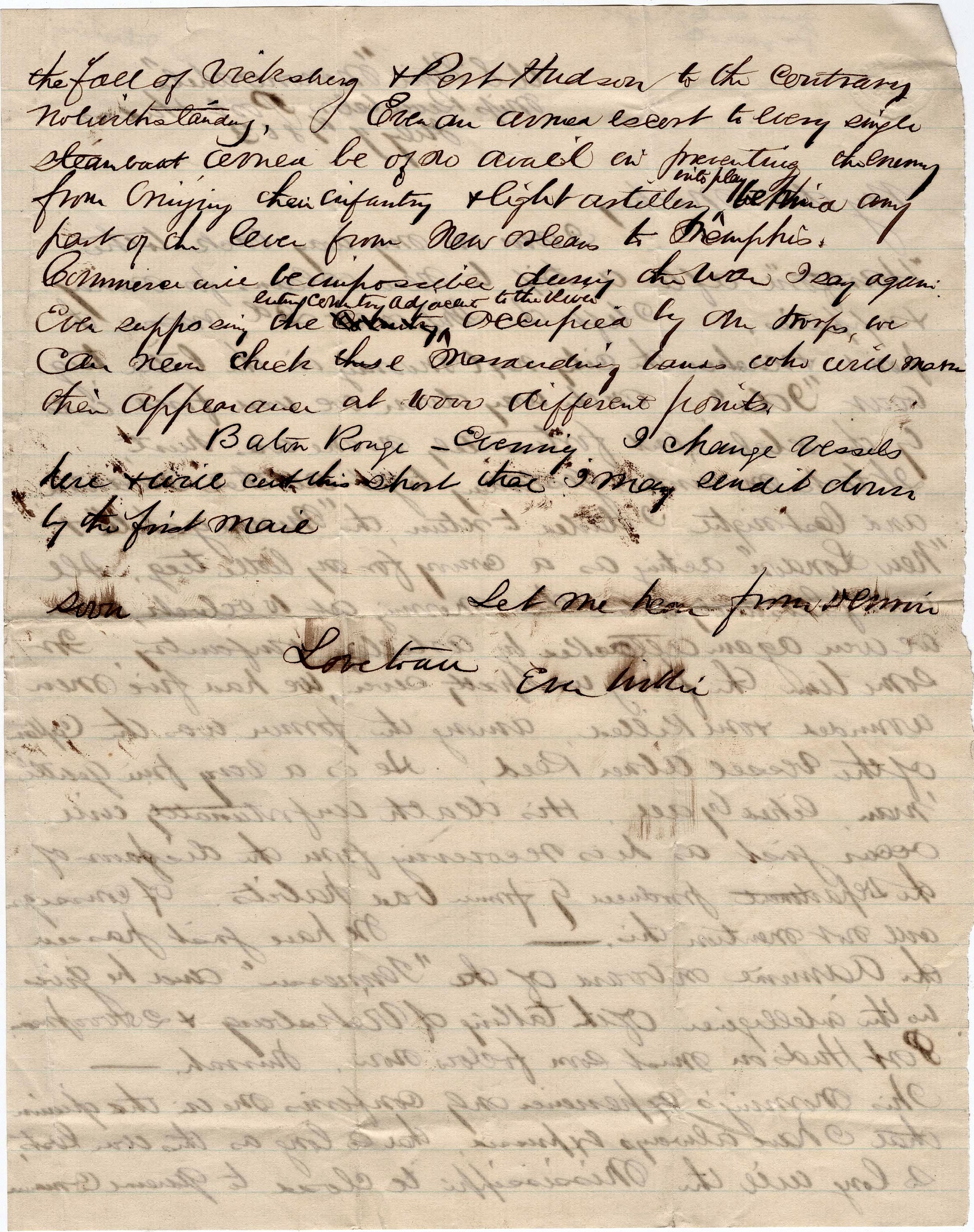
 Spared & Shared 23