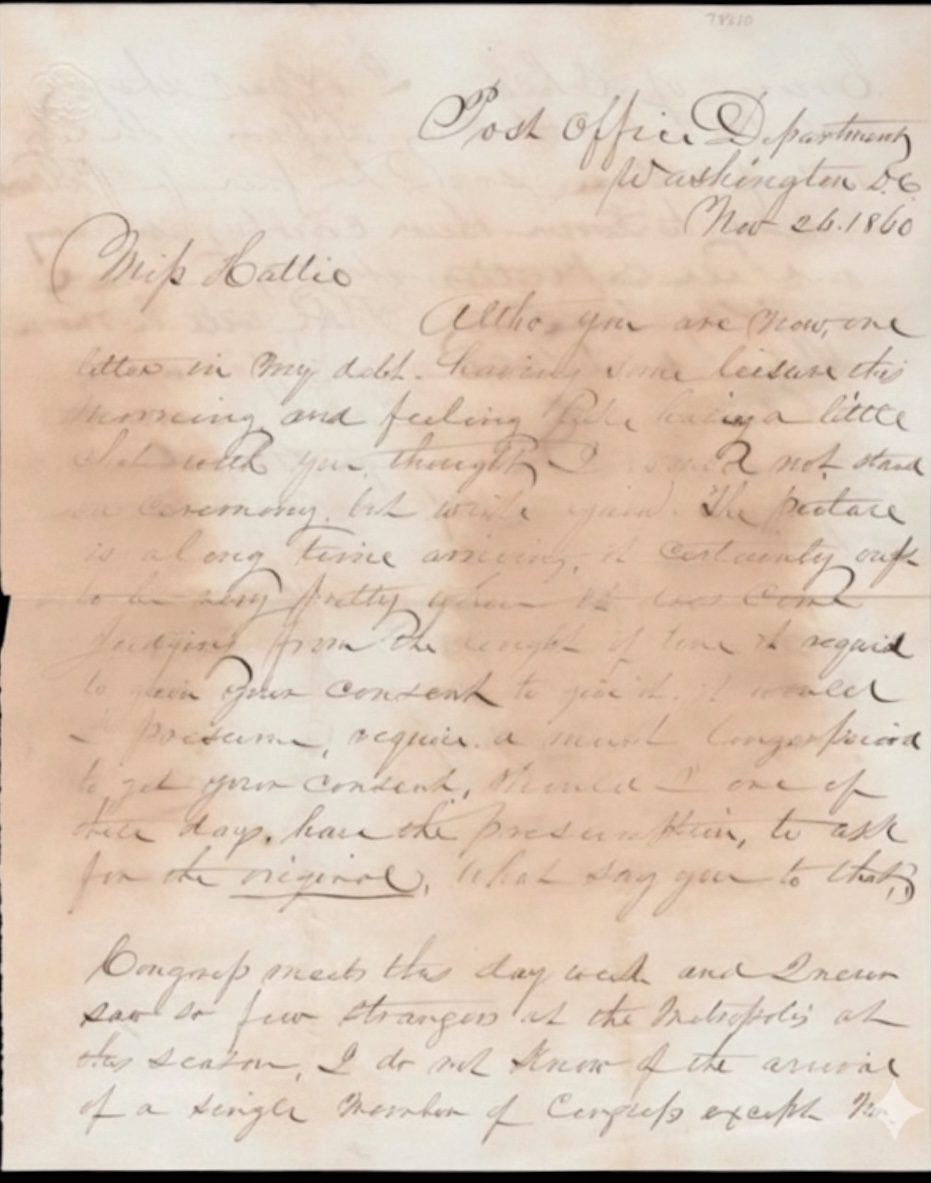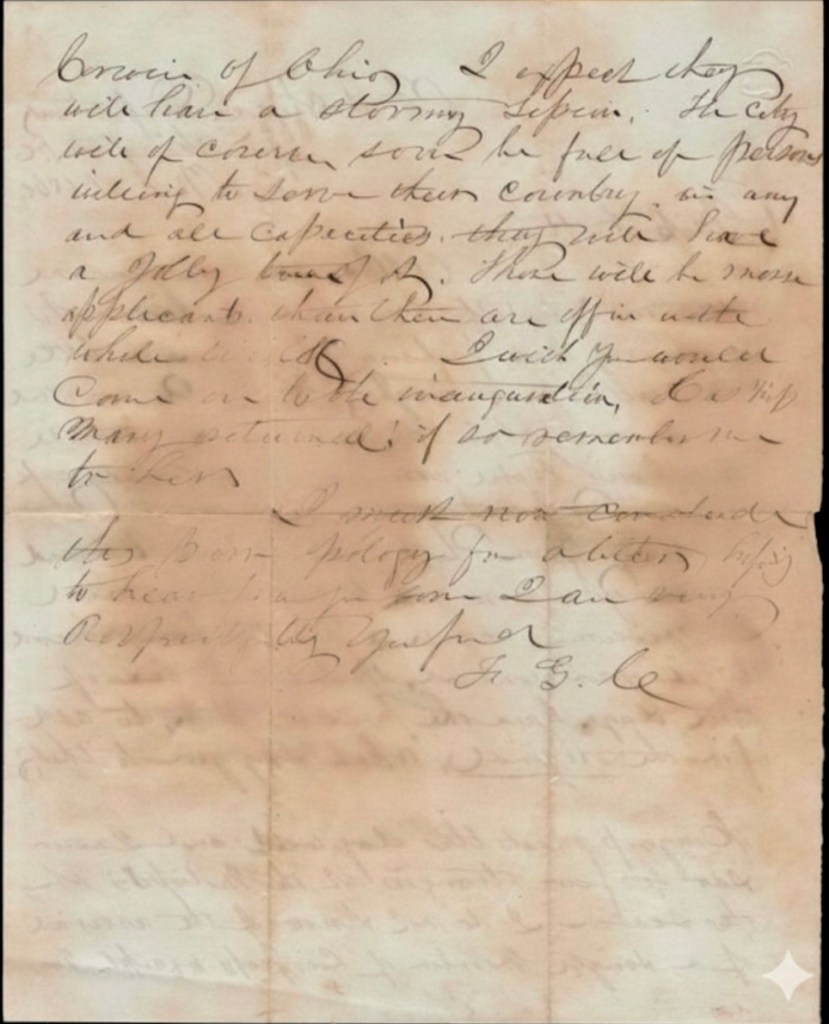
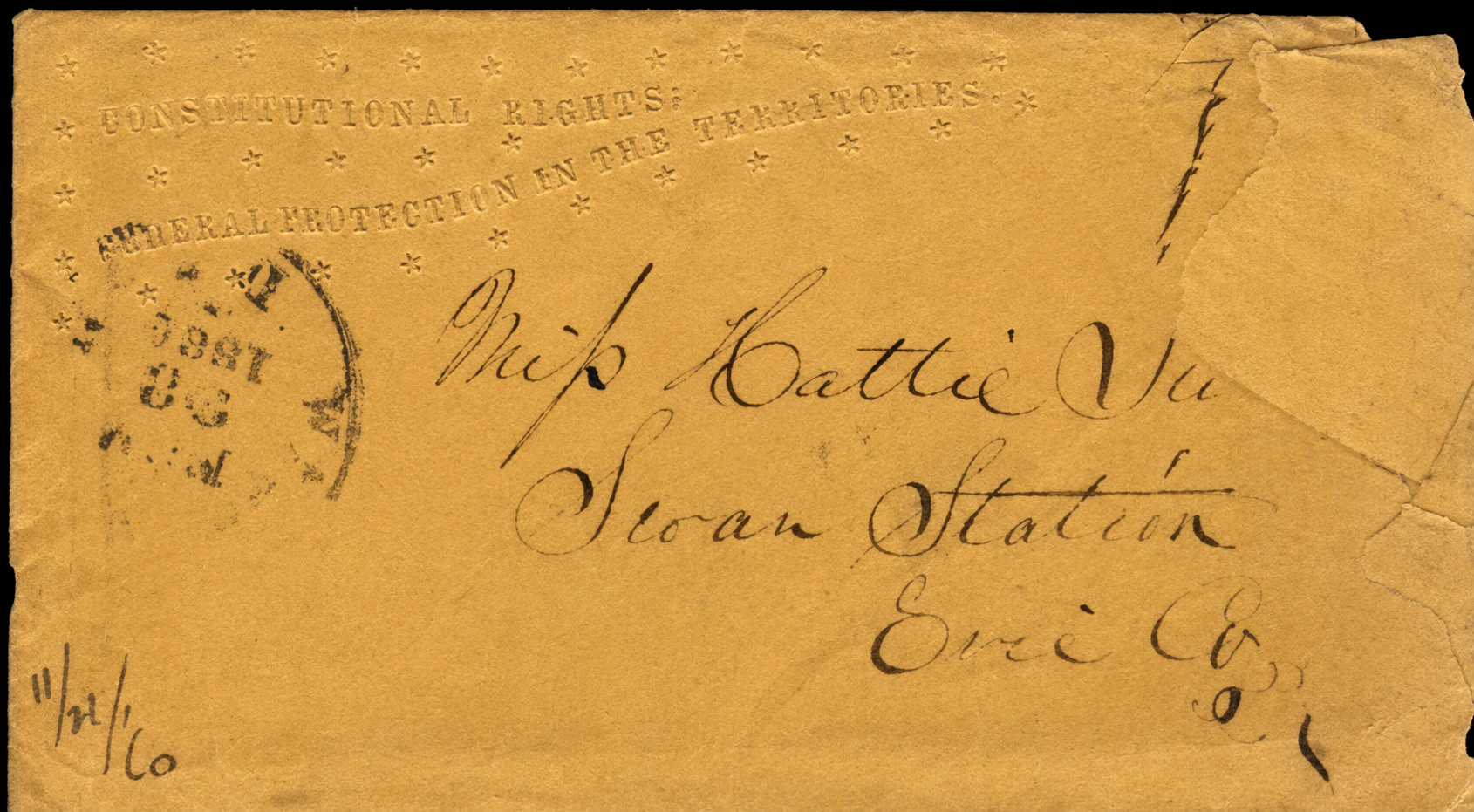
This letter presented for transcription by the “Alabama Dirt Digger” was composed in the Nation’s Capitol on November 26, 1860, a mere three weeks following the election of Abraham Lincoln. This correspondence reflects the anticipated turmoil facing members of the 36th US Congress as they returned to the Capitol, confronting both the shift in political party dynamics and the looming threats of secession. Originating from the U.S. Post Office Department, the letter suggests authorship by an individual affiliated with that department; however, the absence of a full signature, with only the initials “R. G. C.” provided, precludes my ability to identify the writer despite my review of the Post Office Department employee lists in Boyd’s 1861 Washington Directory.
He composed the letter to his close acquaintance, Harriet Swan (1834-1893), a 26-year-old daughter of Tavern Keeper John J. Swan (1793-1878) and Eunice A. White (1805-1855) from Swanville, Erie County, Pennsylvania. Harriet was the younger sister of Andrew F. Swan (1832-1876), who subsequently served with distinction in the Civil War as a member of the 6th US Cavalry, achieving the rank of Lieutenant Colonel by the war’s conclusion. It is notable that Harriet never entered into matrimony.
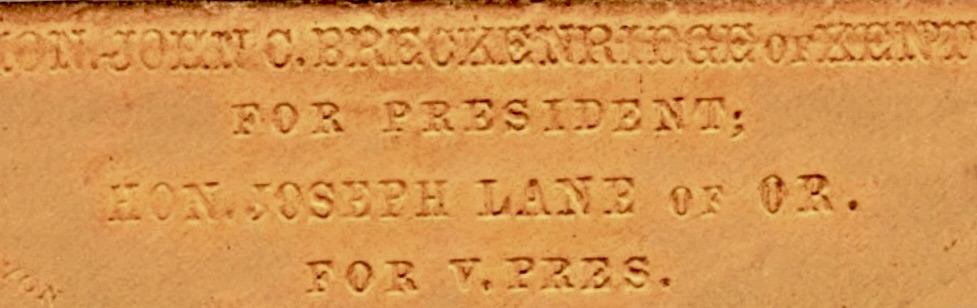
I find it ironic that the letter, which serves as an invitation to attend Lincoln’s inaugural in March 1861, was sent in an envelope bearing the political endorsement of John C. Breckenridge for President—the Southern Democratic candidate in the 1860 election.
T R A N S C R I P T I O N
Post Office Department
Washington D.C.
November 26, 1860
Miss Hattie,
Altho’ you are now one letter in my debt, having some leisure this morning and feeling like having a little chat with you, thought I would not stand on ceremony, but write again. The picture is a long time arriving. It certainly ought to be very pretty when it does come. Judging from the length of time it required to gain your consent to give it, it would I presume, require a much longer period to get your consent, should I, one of these days have the presumption to ask for the original. What say you to that?
Congress meets this day week and I never saw so few strangers at the Metropolis at this season. I do not know of the arrival of a single member of Congress except Mr. [Thomas] Corwin of Ohio. 1 I expect they will have a stormy session. The city will of course soon be full of persons willing to serve their country in any and all capacities. They will have a jolly time of it. There will be more applicants than there are offices in the whole world. I wish you would come on to the inauguration. Has Miss Mary returned? if so, remember me to her.
I must now conclude this poor apology for a letter, hoping to hear from you soon. I am very Respectfully Yours, — F. G. C.
1 Thomas Corwin of Ohio led the House of Representatives’ effort to end the secessionist crisis that arose following the 1860 elections. Corwin sponsored a constitutional amendment that would have forbidden the federal government from outlawing slavery, even through further constitutional amendments. Though several states ratified the amendment, it did not prevent the outbreak of the civil war. Corwin resigned from Congress in March 1861 to become the United States Ambassador to Mexico. He held that position until 1864 and died the following year.