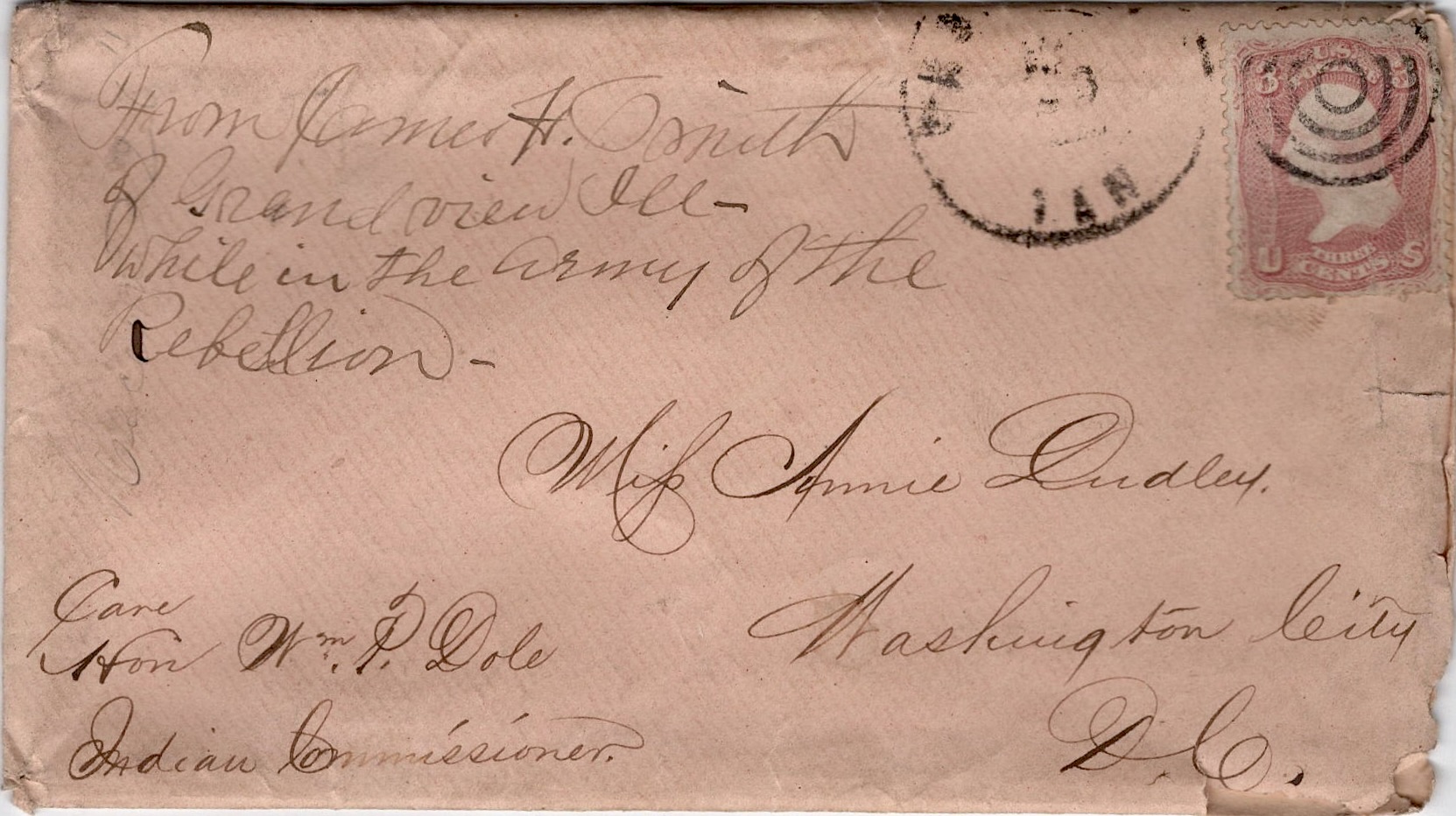
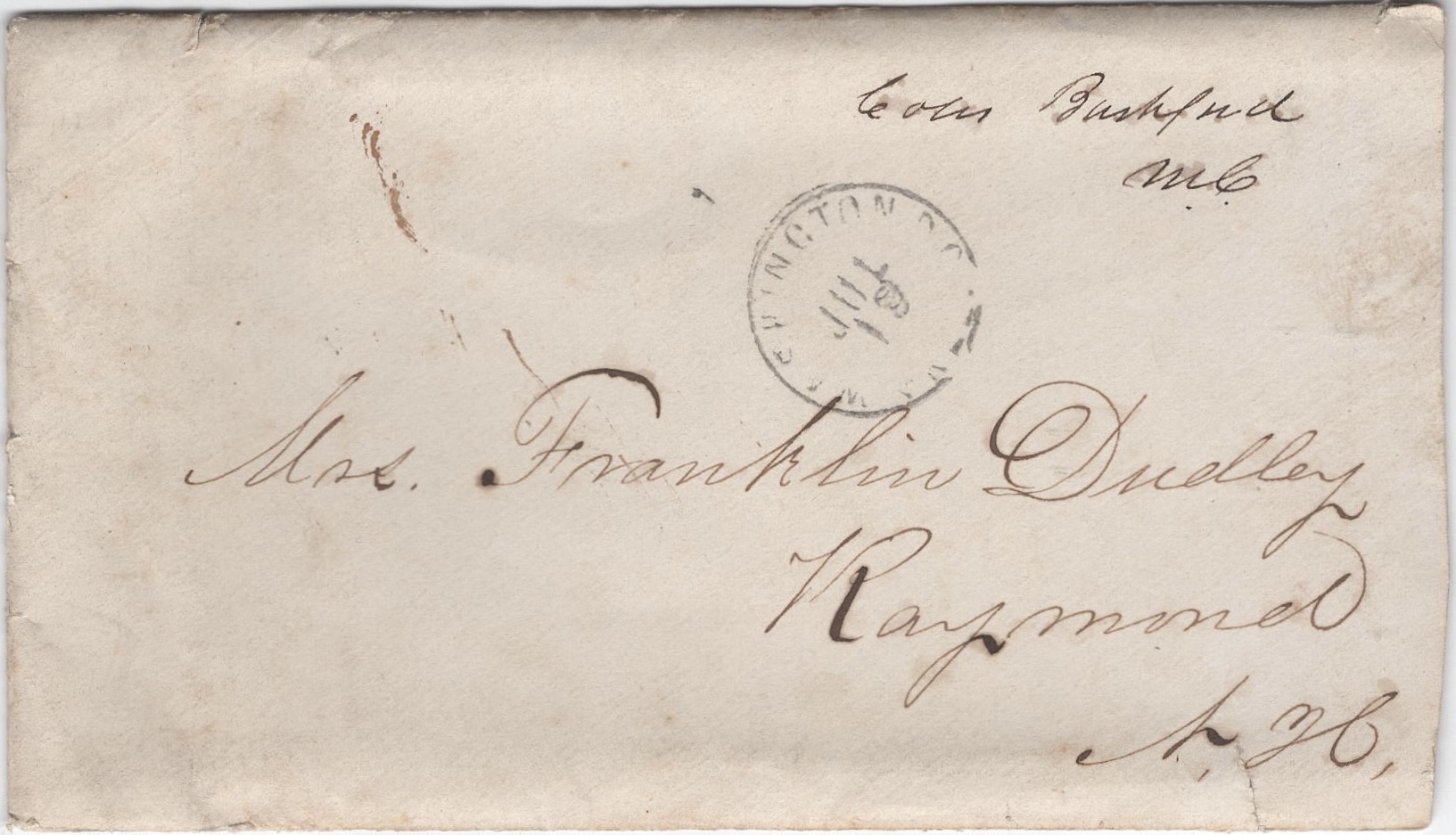
This letter was written by Annie Glidden Dudley (1834-1927), the daughter of Franklin Dudley (1799-1870) and Olive Bean (1794-1875) of Raymond, Rockingham county, New Hampshire. During the Civil War, Annie was an employee of the Bureau of Indian Affairs in Washington D. C. After the Civil War, she returned to Grandview, Edgar county, Illinois where she had lived briefly before, and where she married an Indianapolis lawyer named Edwin A. Davis in March 1870. Annie G. Dudley Davis died in Northboro, Mass.
During her time in Washington D. C., Annie kept a diary from January 1, 1861 through March 24, 1868. The original manuscript is preserved at the Huntington Library in San Marino, California (Call # mssHM 58019). Unfortunately it is not accessible on-line and I have no idea if it’s been transcribed or not. If this letter is any indication of the content of her diary, it must be incredible.
In attempting to learn more about Annie, I discovered that she was one of several women featured in a book by Jessica Ziparo, published by the University of North Carolina Press. Ziparo’s “traces the struggles and triumphs” of early female federal employees who found employment in the federal government. She “demonstrates how these women challenged societal gender norms, carved out a place for independent women in the streets of Washington, and sometimes clashed with the female suffrage movement.” According to Ziparo, Annie’s diary contains entries about her “dancing in her parlor, going to birthday hops, and partying till day-light—twice.” [See Jessica Ziparo on her new book, This Grand Experiment, January 2018]
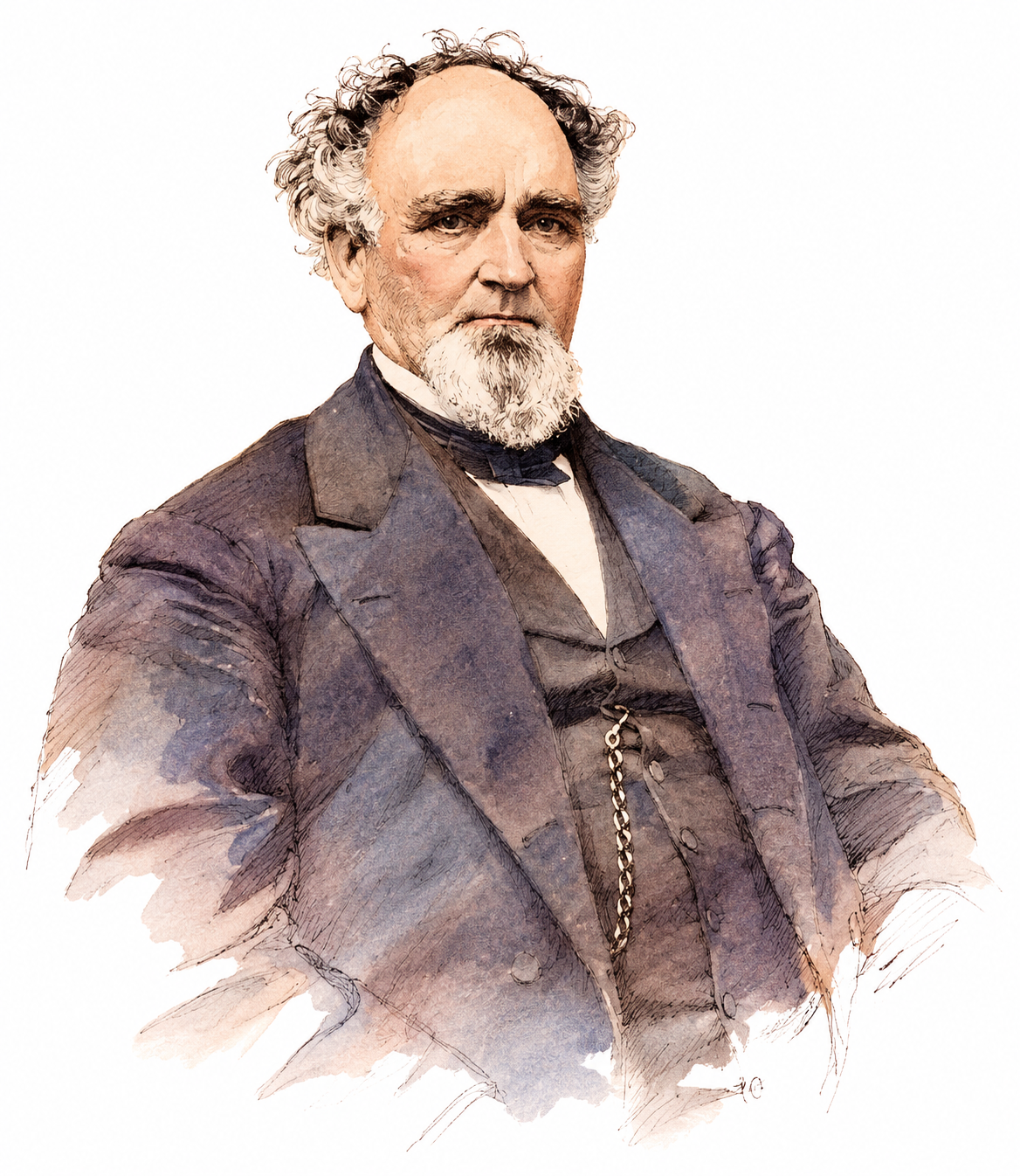
One of Annie’s correspondents was a childhood friend named James H. Smith who grew up in Raymond, New Hampshire, and resided in Edgar county, Illinois, at the time of his enlistment in the 12th Illinois Infantry. I recently posted four of his war-time letters to Annie. See 1863-64: James H. Smith to Annie Glidden Dudley. A letter from James Smith to Annie while she was in Washington, suggests that Annie boarded with the Doles. William Palmer Dole (1811-1889) was a former merchant in Paris, Edgar county, Illinois, who joined the Republican Party and was a delegate at the 1860 Republican National Convention in Chicago where Lincoln was nominated. He campaigned for Lincoln and was rewarded as the Commissional of Indian Affairs from 1861 to 1865. His position necessitated his absence from Washington at times, leaving his wife and Annie to socialize together.
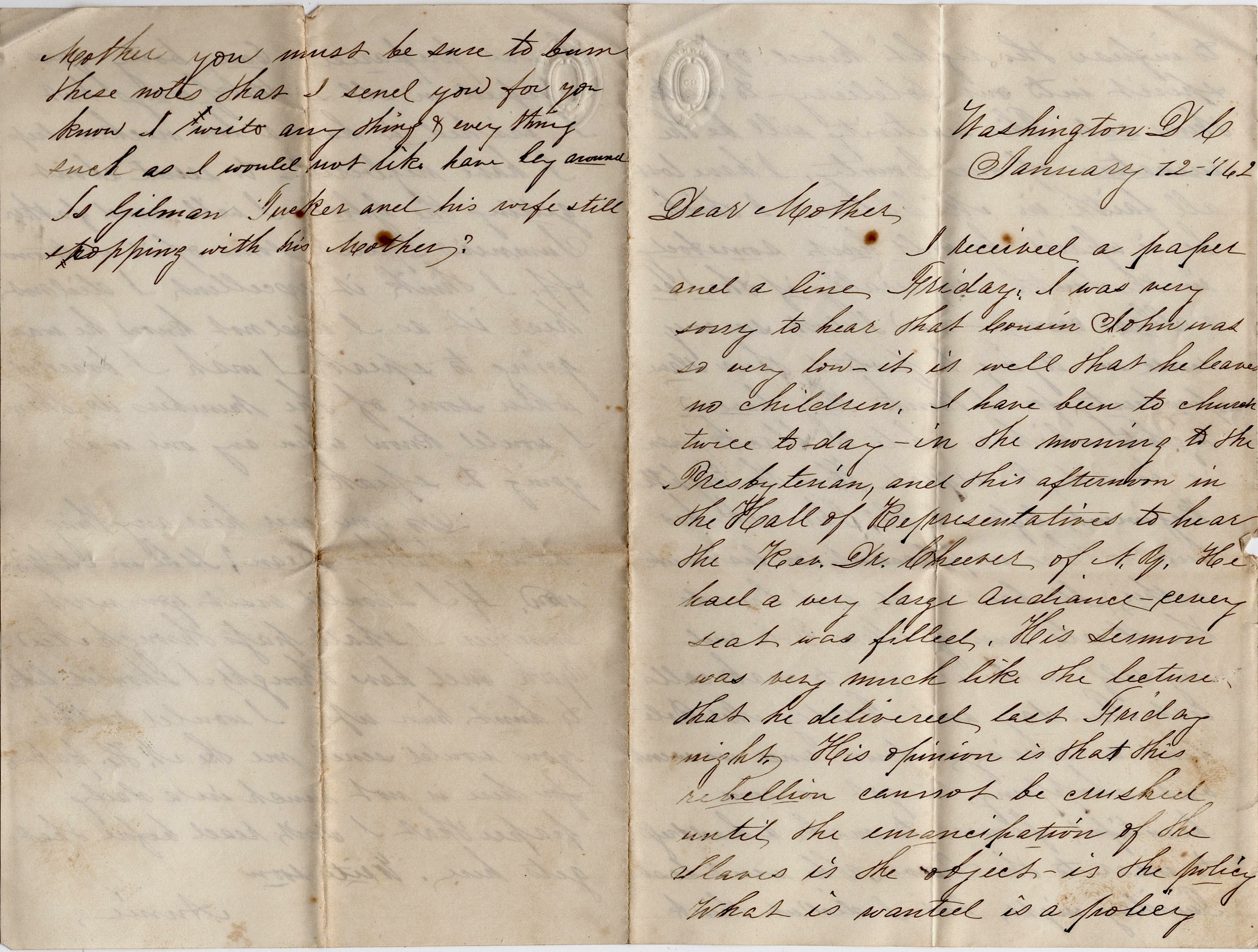
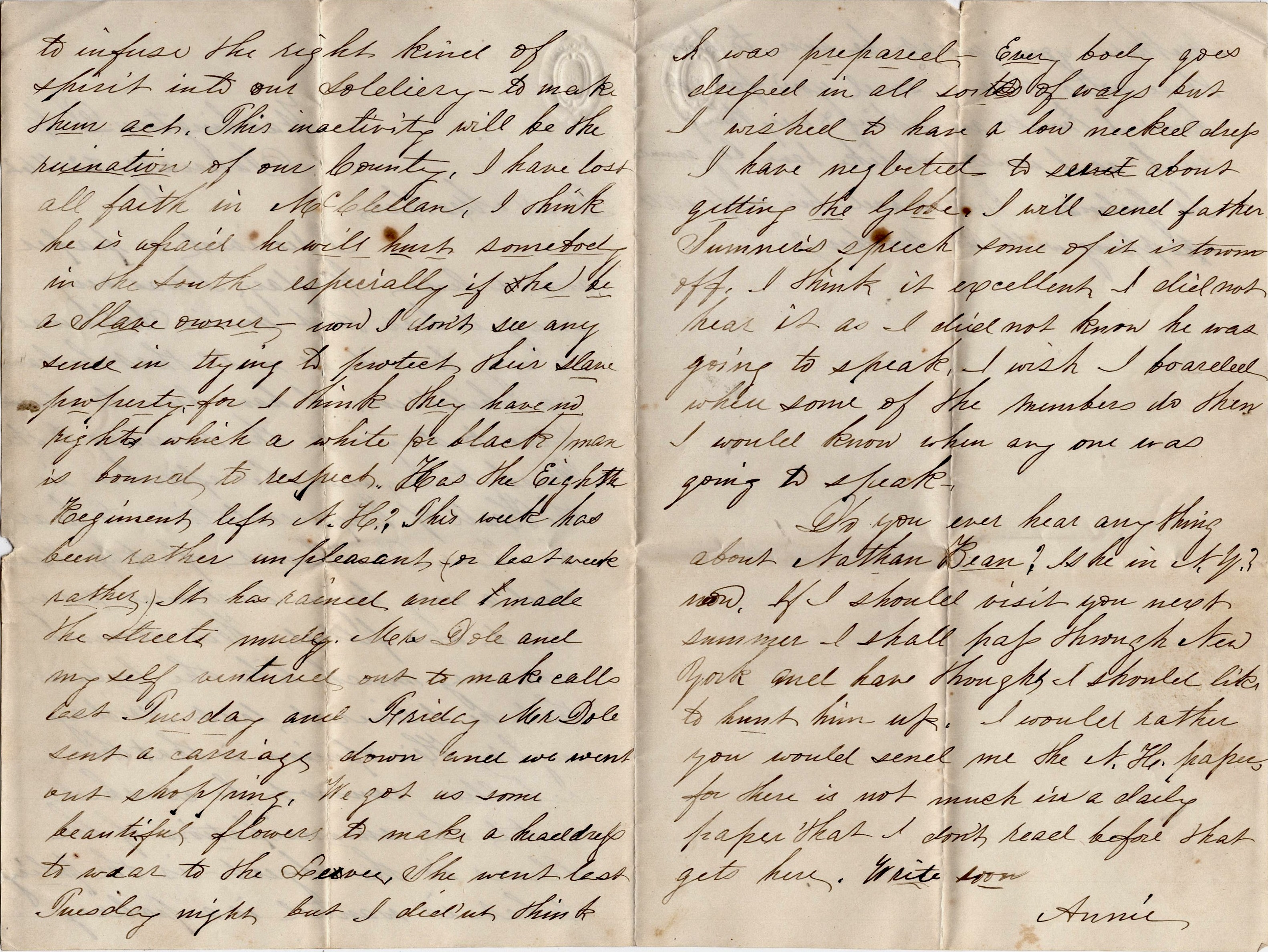
T R A N S C R I P T I O N
Washington D. C.
January 12, 1862
Dear Mother,
I received a paper and a line Friday. I was very sorry to hear that Cousin John was so very low. It is well that he leaves no children.
I have been to church twice today—in the morning to the Presbyterian, and this afternoon in the Hall of Representatives to hear the Rev. Dr. [George Barrell] Cheever of New York. He had a very large audience—every seat was filled. His sermon was very much like the lecture he delivered last Friday night. His opinion is that this rebellion cannot be crushed until the emancipation of the slaves is the object—is the policy. What is wanted is a policy to infuse the right kind of spirit into our soldiery—to make them act. This inactivity will be the ruination of our country. 1
I have lost all faith in McClellan. I think he is afraid he will hurt somebody in the South—especially if he be a slave owner. Now I don’t see any sense in trying to protect their slave property for I think they have no rights which a white (or black) man is bound to respect.
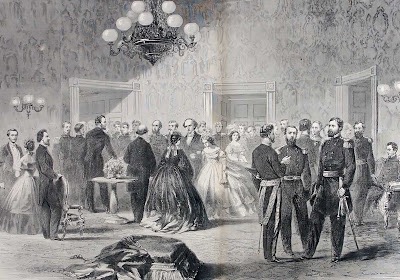
Has the Eighth Regiment left New Hampshire? This week has been rather unpleasant (or last week rather). It has rained and made the streets muddy. Mrs. Dole and myself ventured out to make calls last Tuesday and Friday Mr. Dole sent a carriage down and we went out shopping. We got us some beautiful flowers to make a headdress to wear to the levee. She went last Tuesday night but I didn’t think I was prepared. Everybody goes dressed in all sorts of ways but I wished to have a low necked dress. 2
I have neglected to see about getting the [Congressional] Globe. I will send father Sumner’s speech. Some of it is torn off. I think it is excellent. I did not hear it as I did not know he was going to speak. I wish I boarded where some of the members do. Then I would know when anyone was going to speak. 3
Do you ever hear anything about Nathan Bean? Is he in New York now? If I should visit you next summer, I shall pass through New York and have thought I should like to hunt him up. I would rather you would send me the New Hampshire paper, for there is not much in a daily paper that I don’t read before that gets here. Write soon. — Annie
Mother, you must be sure to burn these notes that I send you for you know I write anything & everything such as I would not like have lay around. Is GilmanTucker and his wife still stopping with his mother?
1 Rev. Dr. George Barrell Cheever (1807-1890) was a prominent NYC minister who used his pulpit, published works, and speaking tours to condemn slavery as a direct sin against God. His book, The Guilt of Slavery and the Crime of Slaveholding, published in 1860, dismantled pro-slavery arguments. During the Civil War, he pressed the Lincoln Administration to adjust his war aim to abolish slavery, believing it would be the only way in which the war could be won.
2 The “Levee” refers to the public reception held at the White House by President Lincoln and his wife on Tuesday, 7 January 1862. It was held in the East Room, giving the public an opportunity to witness first hand the extensive redecorating of the room overseen by Mrs. Lincoln.
3 The speech by Massachusetts Senator Charles Sumner was delivered in the Senate on 9 January 1862. It laid out the rationale for Lincoln’s decision to release James Mason and John Slidell. It was titled “The Trent Case, and Maritime Rights.” It was published in the Congressional Globe on 10 January 1862.