My passion is studying American history leading up to & including the Civil War. I particularly enjoy reading, transcribing & researching primary sources such as letters and diaries.
1st Lt. William Washburn, 35th Mass. Volunteer. Infantry
The following letter was written by William (“Will”) Washburn, Jr. (1840-1922), who first enlisted in Co. A, 1st Massachusetts Infantry on May 3, 1861. He was discharged for promotion on Aug. 17, 1862, and commissioned as a 2nd Lt. in Co. G., 35th Regiment Massachusetts Infantry during which time this letter was written. He was promoted to 1st Lt. and commissioned into Field and Staff of the 35th Massachusetts on Oct. 7, 1863. He was wounded and taken prisoner at the Battle of the Crater at Petersburg, Va. on July 30, 1864, and was afterward confined at Macon, Ga., and Columbia, S. C. He was promoted to Captain on Sept. 6, 1864.
Though William had been in the service since May 1861, the 35th Massachusetts was a “green” regiment when they arrived on the field at Antietam, having been in the service only a few weeks. Under Major Sumner Carruth, they crossed the Burnside Bridge, advanced toward Sharpsburg, and held a crucial position of the Union left until caught in a heavy crossfire where they suffered heavy casualties and had to retire, some of the men skedaddling their way back across Antietam Creek. Just days before they had been assigned to Reno’s Second Brigade of the Second Division (General Sturgis’s) of the Ninth Army Corps (General Burnside’s). Their regiment was brigaded with the 21st Massachusetts, 51st New York and 51st Pennsylvania, three regiments that had served in North Carolina and in General Pope’s battles in Virginia, with great distinction and with heavy losses. After the Battle of Antietam, to replenish the ranks, the 11th New Hampshire joined the Brigade.
[Note: This letter is from the personal collection of Greg Herr and was offered for transcription and publication on Spared & Shared by express consent.]
Union army wagons assemble in Berlin, Maryland, a few miles downstream from Harpers Ferry, in October 1862 in preparation for crossing the Potomac River to Virginia. Pontoon bridges were assembled next to the ruins of a stone bridge in order to move Union troops, wagons, and supplies across the river. (LOC)
T R A N S C R I P T I O N
Camp Massachusetts 35th Regiment Near Loversville [Lovettsville], Virginia October 28th [1862)
Dear Father,
We struck tents last Monday [Oct. 27th] morning, broke up camp, and with two days rations in our haversacks started. Many were the surmises and guesses at our destination. For a wonder, no clue could be had, and as far as we were concerned it was a plunge in the dark. LeavingPleasant Valley and taking the road for Harper’s Ferry, all were confident of going into Virginia. But when after three miles travel, instead of keeping up to the right, the column suddenly took a left hand roadm thus taking us directly away from Harper’s Ferry. The opinion of all was suddenly changed and “we were only going down to Knoxville to guard the railroad.” Knoxville was finally reached and very soon after, when it became evident that the column was not going to stop there, conjecture took another turn, and “we were going to the Relay House to recruit.”
Thus we passed down the river edge between that and the canal by the tow path for about nine miles when Berlin, or Point of Rocks, was reached. Berlin by the way is quite a pretty place, and in the summer time, it seems to me would be a very pleasant town. Way before the rebellion, a bridge spanned the Potomac. It was burned by the Rebels soon after hostilities commenced. In its stead, a pontoon bridge has recently been constructed and over this, the weary soldiers “marched along.” The Brigade finally went into camp about three miles this side of Point of Rocks in “Old Virginia.” There were many disappointed ones in our regiment, particularly among the skedaddlers, and we have quite a number of that class of individuals in this regiment. Their wish was that we might be sent somewhere to do guard duty out of all danger.
The place we halted at is near Loversville [Lovettsville]. The Blue Ridge is within plain sight just beyond which is Winchester. A very large body of troops is now here thought today regiments are leaving instantly for nobody knows where. We are expecting marching orders and without doubt tomorrow night will find us far away from here. I know no more of our destination than you do. A movement is being made of the whole army, and I trust and believe that the final battle of the war will be fought in a very few days. I shall keep you posted as far as I’m able about the movement of this portion of the army. You will have to trust the papers for the rest.
Last Sunday it rained all day and many thought that the rainy season had set in in earnest. Monday, however, it cleared up and it has been fine ever since. The roads in some places are quite bad. Another storm will make them utterly impassable.
No mail has arrived for three days. Write either yourself or “by proxy” often. I’m very well indeed and eager to have this thing settled. Remember me as usual. In haste, your affectionate son, — Will
The following letter was written by George “Dwight” Smith (1825-1862) who was mustered into the 45th Pennsylvania Volunteers on 7 October 1861 as the 1st Lieutenant of Co. I. A biographical sketch of Dwight appearing in the Wellsboro Agitator of 24 June 1890 reads: “On May 18, 1849 George Dwight Smith took over the office of postmaster. He afterwards became a lieutenant in the Civil War and was killed in action at the battle of South Mountain, Maryland, September 14, 1862 while carrying dispatches for his superior officers. He was the husband of Mrs. Azubah (Robinson) Smith (1835-1908) daughter of John L. Robinson, for many years of prominent banker in Wellsboro.”
Dwight was the son of Benjamin B. Smith (1791-1868) and Margaretta Christenot (1803-1872) of Wellsboro, Tioga county, Pennsylvania. Dwight wrote the letter to his friend, Dr. Charles Grosvenor Osgood (1820-1908) and his wife Mary Josephine Todd (1833-1922) of Wellsboro.
T R A N S C R I P T I O N
Camp Hale Co. I, 45th Regt. Pennsylvania Volunteers Col Thomas Welsh, commanding
C. G. Osgood, Esq.
Dear Sir, your letter was duly received two days since.I improve the first opportunity to write in return. I know when I left home that I was leaving some whom I could certainly call friends—first and foremost outside of immediate relations, did I place yourself & lady. I am happy to know that I was not in error. I think of home often & friends there & feel sad that circumstances should have been such as to have forced the conclusion upon me that my place was in another field from that in which I have been placed all my life. But so it is & I shall try to make the best of my position & do the best in my new calling that I possibly can.
Since leaving home my duties have been rather onerous besides extremely embarrassing to me. The Captain being away, I have been compelled to assume his duties, taking command of the company before striking tents at Harrisburg for our journey to Washington, pitching them again at this camp. All of this of course required not only work but experience—the first I felt adequate to, but the second had not. I had to assume positions of which I had not the slightest idea of what those positions demanded except as I imitated those in the same position before me. I do not, however, now regret in the least what I was called upon to do for I presume I have learned more that I otherwise would have done in ten times the length of time I have been thus engaged.
There are a great many questions about a soldier’s life which I think I can well imagine you to ask of me & which may be some time I will give you my opinion about them, but for the present will forbear. In some respects am as well situated as could be desired for the business engaged in & in some not quite so well as I would like. Trust I am sufficiently grateful that “I am what I am.”
Gov. Curtin dubbed the regiment his pet regiment when we left Harrisburg and from the way the Colonel puts us through, we judge that if there is any service or engagement within our reach at any time sooner or later, we shall have a hand in. I enclose a copy of our daily drill to show you that we are not idle. I am now feeling quite well though for a few days past have been troubled somewhat with a cold &c. Excuse more for the present. Love to Tody. Will put in a special plea for her some time. Truly, — Dwight
This letter by Robert William Burke (1835-1914) clearly illustrates the interplay between military operations during the Civil War and the pursuit of personal advancement. By August of 1864, the Shenandoah Valley—known as the breadbasket of the Confederacy—faced a dire threat from Union General Philip Sheridan. Although the Confederate forces under General Jubal Early had previously managed to maintain their position, they were now faltering under Sheridan’s relentless military strategies and total war tactics. In an effort to bolster Early’s army, Robert W. Burke highlights a plan by General James Kemper, commander of the Virginia Reserves, to dispatch a contingent of reserves to join forces with Early. Burke suggests that 63 year-old Harper of Augusta county, Virginia, who once led the 5th Virginia Regiment under Gen. Jackson at First Bull Run, and who retired in September 1861, lead the contingent. Burke also suggests that his older brother, Captain Thomas J. Burke (1833-1899) of the 5th Virginia, serve as Harper’s second-in-command. Such an elevation would have been questionable, given that Captain Burke had been reported as “Wounded leg, permanently disabled” following the 1862 Battle of Gaines’ Mill. Ultimately, Burke’s proposal yielded no results. Harper never took command of such a force, the Valley was decisively lost for the Confederacy after the Battle of Cedar Creek in October, and Thomas Burke departed from active duty that December.
Robert William Burke is buried at the foot of a Confederate soldier’s headstone in Edinburg, Virginia. Engraved on the stone, Burke is identified as a Bvt. 2d Lieutenant who once served in Co. E, 10th Virginia Infantry.
T R A N S C R I P T I O N
Richmond [Virginia] August 31st 1864
Col. Kenton Harper,
I learn from the authorities that there are at least forty thousand detailed men in Virginia who will legitimately belong to the reserve force and in addition to these are many beyond the age who would be willing to unite with it provided it is properly officered. For this reason Gen. Kemper has in his appointments endeavored to select as Colonels gentlemen who possess large sectional influence, as well as tried military capacity. I do not flatter you when I say that your acceptance of the Colonelcy of the Augusta regiment would give great satisfaction not only to your fellow citizens of the Valley, but your many friends here.
In the event you accept, I am well assured that my brother, Capt. Thomas I. Burke, can secure the Lieut. Colonelcy, and he is perfectly willing to relieve you of the trouble of organizing the regiment. Hoping that this will receive your favorable consideration, I remain very hastily yours, — R. W. Burke
P. S. Let me hear from you at your earliest convenience. — R. W. B.
The following letter was written by William Harrison Alexander (1841-1908), the son of William “Hopping Billy” Marion Alexander (1801-1885) and Anna Robertson (1804-1864) of Pickens county, South Carolina. The letter was addressed to his cousin, Martha Stewart—the widow of Abram B. Stewart (1841-1864). Abram was the son of Robert and Elizabeth (Dunham) Stewart. William and Abram served the Confederacy together as privates in Co. F, 22nd South Carolina Infantry until Abram was killed on 1 September 1864 in the trenches near Petersburg. William’s letter to Abram’s widow conveys—at her request—the details of her husband’s death. We learn that Abram recklessly exposed himself before the enemy despite warnings to take cover. His actions and his last words almost suggest that Abram had a death wish as he died quickly, expressing acceptance of his fate. The regiment, part of Elliott’s Brigade, had recently endured a period of extensive fighting from the time of the Battle of the Crater, where many of its solders were blown up, to the trench warfare that followed with constant artillery fire and skirmishing.
When he returned from the war, William married a woman named Maddie Stewart who I suspect was his cousin and the widow of his comrade. Together they had several children. William was buried at the Shady Grove Baptist Church Cemetery in Sunset, Pickens county, South Carolina.
William must have been illiterate as the letter was actually written by Jackson M. Odell who also served in Co. F, 22nd South Carolina Infantry.
[Note: This letter is from the collection of Keith Fleckner and was made available for transcription and publication on Spared & Shared by express consent.]
T R A N S C R I P T I O N
Addressed to Mrs. Martha Stewart, Crow Creek P. O., Pickens District, S. C.
In the Trenches near Petersburg, Virginia September 14th, 1864
Very Dear Cousin,
I seat myself this morning to write you a few lines which leave me well, truly hoping these few lines may come safe to your kind and distant hands and find you well and enjoying yourself as well as can be expected these troublesome times.
Cousin, I received a letter from you last Saturday and was truly glad to hear you was well. Cousin, you wanted me to write all I knew about Abram getting killed. I recon I can tell you as much as anybody else for I saw him killed. You wanted to know whether he was on the breastworks or not. He was not on the front works for we had to get in some little ditches that was cut in rear and he was upon a bank of dirt that was a’most as high as the breastworks. He was in fair view of the Yankees and not over fifty yards from them and I was in the ditch and tried to get him to get down. I told him several times to get down and he wouldn’t do it. He just stayed and kept a shooting at the Yankees as hard as he could till after a while he was shot through the right arm and [the bullet] went into his side. When he was hit, he fell back right on me and said, “Boys, I am done with this troublesome war. I am killed,” and [then] said, “Write home to my folks that I am killed and am gone to rest,” and died instantly. He seemed to die mighty easily. He had but a little time to suffer.
And now cousin, I have just wrote how it was, as nye as it can be told with pen and ink. That is just what he said and I have no doubt but what he is at rest this day. I believe he is in the presence of his Blessed Savior where no wars nor troubles can come.
Cousin, you must do the best you can. I hope the Lord will comfort you in all of your troubles and will be a husband to you and that you may meet that dear one that is gone in that happy world above. Dear Cousin, I would be glad to see you if I could, but I don’t know when I will get to see you though I hope it won’t be very long till we will meet. So I will come to a close. Write to me every chance.
So no more, only I remain your cousin till death.
W. H. Alexander
To Mrs. Martha Stewart. Wrote by the hand of J[ackson] M. Odell—a true friend of him that is gone.
The following letters were written by Spencer H. Bronson (1842-1930), the son of Rev. Major Tyler Bronson (1802-1880) and Matilda Hotchkiss (1812-1872) of Fountain Prairie, Columbia county, Wisconsin. Spencer enlisted in Co. B, 7th Wisconsin Infantry in May 1861 with his older brothers, Elisha (“Eli”) Bronson (1834-1862) and Manly Tyler Bronson (1839-1863). Eli was killed on 17 September 1862 at Antietam, Maryland. Manly died at Belle Plains, Virginia, on 26 March 1863. Spencer survived the war—his memory forever preserved in witnessing the assassination of President Lincoln [see the Journal Sentinel]. He did not pass through the war unscathed, however. He was wounded on 28 August 1862 in the Battle of Gainsville, Va., again at the Battle of Fitzhugh Crossing, Va. on 29 April 1863, and once again on Day 1 at Gettysburg where he because a prisoner of war and confined at Libby Prison and Belle Island in Richmond. He was exchanged in August 1863 but lost his teeth due to scurvy. After he returned to his regiment, he was wounded again in the Battle of the Wilderness and sent to a hospital in Washington D. C. where he was transferred into the Veteran Reserve Corps. The doctor reports included in his pension file make gruesome reading. Aside from losing the two brothers previously mentioned, Spencer lost another brother, 1st Lt. Edward Hotchkiss Bronson of Co. K, 32nd Wisconsin Infantry.
Civil War buffs will recognize the 7th Wisconsin Infantry as one of the five regiments that composed the vaunted Iron Brigade—also known as the “The Black Hats” or “Black Hat Brigade.” Two letters transcribed and previously posted on Spared & Shared by Spencer’s brother Manly can be found at 1861-62: Manly T. Bronson to Friends.
Letter 1
Camp Arlington March 9th 1861
Dear Friends,
We received your letter of the 2nd inst. and was glad to hear that you were enjoying usual health. We are all in good health. We are still in our old camp. How soon we will move on, no one knows but it is the general believe that we will move this week. Just before we go, we will write home.
The weather has moderated down some since I last wrote so that now the roads are in good order. We have just received our new sleeping tents. They are about as big as a large bed quilt each two privates have o carry them in our knapsack.
In several of your letters you have enquired why I have not wrote oftener. I have intended to write every two weeks and if I have not done so it was on accuont of my being ashamed of my writing or something of that kind. It always has been a task for me to write & since I have been in the army, it seems a double task as our accommodations here are not the best. But if we are where we can write, one of us will write every week. As the mud has dried up we will have to drill every day.
Perhaps I have never told you what the duties of a soldier is. I will do so. In the morning at 5 o’clock the Reveille is beat. The roll is then called. At 6 the Surgeon Call is beat and all those who are sick or disabled are taken to the hospital. From 6 to 8 we have to ourself which time is filled up in getting breakfast, cutting wood, fetching water, cleaning our guns, and many other duties too numerous to mention. At 8 we have guard mounting. At 9 we have company drill which lasts till noon. At one p.m. we have battalion drill which lasts until 4 at which hour we have dress parade which last until 6. From that time till 8 o’clock we have to ourselves. At 8 the Retreat is sounded when we have roll call. At 8.30 the beats are sounded when all lights must be put out in the camp, or a severe penalty will be inflicted.
Lieut. [Sandford] Bachelder has been released from arrest & is now with Co. B. But I must close. Write as soon as you receive this. From your brother, — Spencer
Letter 2
Camp Lincoln April 10, 1862
Dear Friends,
We received your letter a few days ago and I now sit down to answer it. We are all well as usual. The weather is very warm at present. we are now encamped near Catlett’s Station about 45 miles from Washington & 16 miles beyond Manassa Junction. We expect to move on as soon as a bridge is fixed near us so that the artillery can cross over in safety. There has been some change in the field officers since I last wrote. Gen. McDowell has been put in command of an Army Corps consisting of 4 Divisions. Gen. King being the Senior General in the Division takes his place. Gen. King’s place is filled by Col. Cutler, formerly Colonel of the 6th Regt. Wisconsin Volunteers.
Col. William W. Robinson, 7th Wisconsin
Last night Col. [William W.] Robinson said a few words to us while on Dress Parade. He said that for four or five days he had felt downhearted because he thought we should have no chance to see “secesh” and that there was a chance for us to guard the railroad (which all soldiers fairly despise). But he said that his opinion had changed. He had received news that General Magruder was within 10 miles of us with 30,000 rebel troops. If this was true, he thought the rebels would give us employment. All he asked of us was to do our duty as soldiers & put confidence in him & he thought all would come out well in the end. His speech was received with cheers by the regiment.
I believe that when [brother] Manly last wrote, we were at Bristol Station. Last Sunday we left there & marched 10 miles to our present camp which is about two miles from Warrenton Station (toward Washington). This morning we hear heavy firing towards the enemy. Our Colonel thinks that General Ord is having a battle with the enemy. Gen. Ord (the hero of Dranesville) is on the advance of McDowell’s Corps. His troops are among the best in the army and whenever they fight, they will do it with a will. Gen. McDowell’s Corp consists of Gen. McCall’s, Franklin’s, Blinker’s, and McDowell’s old division, now commanded by Gen. King of Wisconsin. General King is a West Point graduate and a first rate soldier. He is a gentleman in every sense of the word & uses his soldiers as a father would use his son. Wherever the 1st Division goes, they are willing to trust themselves in the hands of Gen. King.
Lieutenant Batchelder started for home a few days ago. I suppose you have heard that our Chaplain has resigned and gone home. He left for home two weeks ago so that now we have no religious services of Sunday. But I must close as it is drill time. Write soon. From your brother. — Spencer
Letter 3
Camp Lincoln April 19th 1862
Dear Friends
As I have a few moments of spare time, I will improve them by answering your letter. We are all well as usual & enjoy ourselves first rate. Near our camp is a small river & we boys amuse ourselves in various ways in making boats and bobbing for eels and going in swimming in the river. Our camp is a beautiful spot. From where I am, I can see the Alleghany Mountains looming up in distance while way to the south can be seen the Rappahannock.
The firing that we heard yesterday was as we expected a skirmish. It was about 8 miles from our camp. The rebels was repulsed with heavy loss. We expect to move on in a few days. Whenever the time comes, we will be heartily glad as we are tired of laying still. We expect to have a little brush with the enemy but we are prepared for them. We are going to send our overcoats [home] in a few days. Get and keep them for us till we come home.
I have just been down to see the railroad bridge which was burnt by the rebels a short time ago. The bridge cost 2,000. Tell Henry I will answer his letter as soon as I get time. From Spencer
Letter 4
January 26th 1863
In your last letter you spoke of the box as sent, or about to be. While we are glad that it is on the way, we are very sorry that Manly cannot be here to have some of the good of it. It was on his account more than on mine that we sent for it. At that time we supposed that we should be here if it came here before March the 1st. But this last movement has changed the state of affairs. On one account more than anything else, I am sorry that he is not here. T. E. the wine that you speak of, I think would do him good and on account of those kind friends who have taken so much pains to gratify our tastes & wishes, thank them for me for their kind regards. Such kindness will not be soon forgotten. The box has not yet….
[missing a page]
…consider with that great General McClellan when he said, “A successful winter campaign cannot be carried on in Virginia.” This saying has thus far proven itself true. Twice has the attempt been made & as often has it failed on account of bad weather. But perhaps the superior generalship of a Greeley or a Booth might triumph over any obstacle & before spring we might hear of their entering victoriously into Richmond on a stone bolt & their artillery on a mud scow. Give them a trial.
The mail is not very regular here. For instance, your letter of the 17th of December (or thereabout) was received almost few days ago while that of January 4th was received almost a week previous. The Daily Life comes pretty regular. Though not agreeing with the Editor in some small matters, it is nevertheless a good paper. The speech & sermons I like first rate. Thank you for the privilege of having them to peruse. Perhaps before long I shall be able to return the compliment. But the time for the mail to go out is rapidly advancing & I must bring this letter to a close. You ask whether your letters are too long. No! If we stay here long, I will try to follow youyr good example of long letters.
My health is first rate & I am contented & happy. As soon as I hear from Manly, I will write you. I am in hopes that now he is some good hospital, he will get a furlough or discharge. His disease is the chronic diarrhea though not in its worst state when he left. He was some better when he left. — Spencer
Letter 5
Camp near Belle Plains February 7th 1863
Dear Friends,
Your kind letter of the 25th came to hand after being 10 days on the road. Since we have been here, the mail for some reason or other has been very irregular. In your letter you speak of the same irregularity in the mail matters. The fault (with but few exceptions) does not lie with us. We have written a letter every week at least while not on the march & will endeavor to so do hereafter. And if we should find time lying idle on our hands (which would be I think the 8th Wonder), we will endeavor to comply with your wishes & write semi-weekly.
It is a warm and pleasant morning—the finest by far of the new year. If there is any class of people who appreciate good weather more than another, it is the soldier. In fact, good weather is almost a requisite to a soldier’s happiness. Give me ten pleasant days says Gen. Burnside, and Richmond will be mine.
Manly Tyler Bronson wearing the original grey uniform of the 7th Wisconsin Infantry
Last Saturday I was agreeably surprised by seeing Manly enter our little shanty. I had received a letter from him but a few days before & nothing was said in it about his returning to the company. He has been staying at the Brigade hospital at Wind Mill Point, Va., about 5 miles from here. He says the hospital was filled up so full that they could not do justice to so many so he thought he would come back to the company. He about the same as he was when I last wrote to you. You seem to think that I have kept back his true condition but you have judged wrong. I know that when his disease is fairly settled upon a person it is hard to cure but in my own experience, I have seen several persons cured who labored under the same disease. It is in this way that I have formed the opinion that Manly’s case is nothing very serious as his disease is not of the worst type. He has a good appetite. For a few days back, we have managed to get food that he relishes very well. He has a very good bed considering the circumstance in which we are placed. He is quite weak although when he came back from the hospital, he walked half a mile with his accoutrements on. Perhaps others who only see him occasionally are better able to judge than I can but I believe not. I may error in judgement but I am sincere in regard to my views in his case. Rest assured, however, that if his sickness should take a more alarming turn, I will inform you at once.
The box has not yet arrived and we begin to fear that something is not right. I hope it will come to hand soon at least while we are together & when not on the march. It is the prevalent opinion here in “Milertery circels” that the Army of the Potomac is about to be divided up. It is thus far rumored that (the veracity of which I believe is correct) that the 9th Army Corps & Sigel’s Grand Division has been taking shipping at Aquia & Belle Plain Landing all day. Their destination is believed to be North Carolina. If this be true, perhaps our military stage of action will be changed to a more southern climate. There is no news of any consequence going on here.
John Hughes of Otsego who was wounded at Gainesville has been discharged. He has secured the post of freight agent to transport provision for the use of the army. He receives $40 per month. For once, merit has received its reward. I received a letter from George Brown a few days ago. He is at work in a drugstore at Berlin, Wisconsin. He has secured a half pension ($8 per month) for life. He thinks his arm will always be stiff.
The company in general are enjoying good health. Herbert Dyer has been rather unwell for a few days past but is now as well as usual. There has been three corporals appointed lately—viz: Herbert Dyer, Theron Helm, & Alexander Hughs. Any news from Capt. [Martin C.] Hobart or Gary Russell will be read with interest at all times. We have not heard from them in a long while except by way of you. Tell Mrs. Haskins that Henry Beecham has been transferred to Battery B, 4th US Regular Artillery for them remainder of his time. He was transferred on the 12th of September 1862. The above named battery belongs to our brigade. He is over here quite often. He was liked very well while in our company. Lieut. Col. [Charles A.] Hamilton & Major [George] Bill of our regiment have or are about to resign the first on account of his wound received at Gainesville, the latter on account of ill health. They are good officers & brave men & we are sorry that they should be compelled to leave us.
Capt. [Mark] Finnicum of Co. H has been recommended to the Governor for one of the vacant places. Col. Robinson is still with us though at present in command of the Brigade while Gen. [Solomon] Meredith is absent at Washington. By the way, it is rumored that the business he has gone there on is to get our brigade into the fortifications near the Capitol. Gen. Meredith is a cousin of the President and relationship may have some weight with him. May he succeed but we shall not be disappointed if he should not. We have a drill of one hour duration daily, company inspection three times a week, regimental inspection Sunday at 11 o’clock. It is now 10:30 o’clock & my gun wants a little cleaning, so I must halt. From Spencer
Letter 6
Camp near Belle Plains March 25th [1863]
Dear Friend,
I have sad news to write to you. Control your feelings and may God help you to bear up under this great affliction. Manly has gone to a better world. He has gone from this world of care & sorrow to one “Where the sound of war is never heard.” He expired about 4.30 o’clock this morning. He died very easy.
Yesterday the Elder was over & staid with him quite a while. He asked him if he thought all would be well hereafter. Manly said he thought it would. Manly also said he was willing to die if it was God’s will.
I shall try and send his remains home to you if possible as I know you would like to have him buried at Fall River. Probably before this reaches you, you will hear of his death by telegraph as I shall send a dispatch this p.m. Inform Edward of his death as soon as possible. If I cannot send his body home, he will be buried here with military honors & his funeral sermon preached by our chaplain. The last words he said to me was “goodbye.” He also said we must all be contented.
The affliction seems almost to much to bear but we have a Friend to lean on. May God help us to be resigned to [His] will and may we be led to exclaim, “All is well.” He left a number of things which I will send home by express soon as I know that anything that was once his will be treasured up as a keepsake. He seemed sensible that he was about to leave this world. He read a great deal in the Testament—that being the only book that he read in some time previous to his death.
But I must close by saying that I have resolved to live so hereafter that I can meet brother Manly in a happy world. Pray for me that this may be my lot. From your brother, — Spencer
Letter 7
Addressed to Miss Amanda Bronson, Fall River, Columbia county, Wisconsin
Camp near Belle Plains April 4th 1863
Dear Friends,
The past week has been one of sorrow & bereavement to me. The loss of a brother at any time is almost heart rending but situated as I am away from home and friends and being the only relation near me, the loss of a brother is almost to much to bear up under. I have seen some of my earliest and best friends stricken down by my side on the battlefield & other trials incidental to a soldier’s life, but never have I had such a feeling of lonliness as I have had since the time when I knew Manly had gone from this world & that I should see his face no more on earth. Manly was more than a brother. He was a friend & companion, ever willing to help me when I was in trouble, to chide me when I erred from th path of virtue. I miss his counsel and advice a great deal. No one but those in my situation can imagine my feelings so you at home are the only ones that know what my feelings are.
But why should we murmur & complain. It is God’s will & we read in his Holy book that “He doeth all things well.” Manly has gone to a better world, I believe, where sickness & pain never enters. He has, I trust, gone to join those comrades of his gone before. God grant that though we cannot meet those loved ones no more on earth, that we may meet them in Heaven. To attain this end, I shall endeavor to live hereafter.
I have sent Manly’s remains home to you. I knew you would be more reconciled to his death if he could be buried at Fall River. Although I well knew that the cost would be considerable, notwithstanding this, I was resolved that he should not be buried on southern soil. To accomplish this, I had to borrow $45 of my tent mate Jacob Fresh which I promise to pay [on] pay day. To pay this debt, you will have to send that amount in a letter (after payday) as there is no express to here, There is about $40 coming to me that I have allotted. Take that or the $40 that you will receive as you please to send. I think we will be paid soon. The cost of sending the remains of Manly was $65. Manly left $20 with me when he was taken worse. Had it not been for this, I fear I should not have succeeded as well as I have.
To Capt. [Martin C.] Hobart, Lieut. [Charles E.] Weeks, & our Chaplain [Eaton] am I indebted for doing everything they could for Manly while he lived to make his sickness less painful. And after he was dead in aiding me in sending his remains home. He died on the 25th & on the 26th we sent him home to you. On the day of his death, I wrote to you and also telegraphed to F. Huggins, Columbus [Wisconsin], informing him of the fact that & telling him to forward the same to you. Probably both the letter and dispatch has reached you ere this. God help you to bear up under this sad news with resignation. Manly was a martyr to his country. He fell in a noble cause. How thankful I am that I could be near him in his last moments. The last five or six days before his death I was with him most of the time. But the mail is going out & I must close. — Spencer
Shortly after Manly’s death, I sent home his knapsack & other effects. You have probably received them ere this. Some time ago Manly told me if he should not live, he wished that the housewife [sewing kit] that you made for him before he left home should be returned to you. This article you will find in the knapsack. When Manly was alive, I have often heard him say that it was a very handy thing & that no soldier should be without one. If you can collect the debt of $40 which Mr. Prime owes me, I wish you would send that and an additional five dollars in a letter to me so that I can pay the debt of $45 which I had to incur in order to send Manly’s remains home. It may be some time before we are paid off and if possible, I should like to pay this up at once.
Rev. Samuel Witt Eaton, 7th Wisconsin
I will try to answer some of Mother’s questions. We have Divine service here every Sunday when the weather permits & also a prayer meeting during the week days. I have attended most of the time & intend to attend more regular hereafter. Our Chaplain, Rev. S[amuel W[itt] Eaton, formerly of Platteville, Wisconsin, is a whole soul man & I believe a good Christian. Before Manly died, he lacked for nothing that we could get for him for we both had money. While he was alive, I endeavored to act the part as you wished me to do of a friend and brother. There is quite a number of persons in the 7th who profess religion. There are five in the tent with [me] and they are all of a thoughtful & careful disposition. Finally let me say in answer to the last question that I am endeavoring to live a thoughtful and prayerful life.
Write often, all three of you, for your letters are prized. I am sorry you do not receive my letters regular. I shall continue to write every week while living in camp. My health is good and I am content with my lot, believing I can do more good here than elsewhere. This from, — Spencer
John Bissett is not very well at present. Capt. Hobart & all others are well.
Letter 8
Camp near Belle Plains. Va. April 12th 1863
Dear Friends,
I received your letter (and also Mother’s) of the 29th inst. Never was a letter read with more eagerness. Your feelings were natural, Amanda. In regard to the sickness & as you fear death of Manly, never have we as a family been called upon to suffer such a loss as this before. Never have we needed more help & strength from above to bear up under an affliction than at the present time. In order to bear up under this affliction, I have found we must put our trust in God. Had it not been for the belief in future happiness & meeting Manly in another world, his death would have been too great a trial to bear. But God in His infinite wisdom has ordained that we shall meet those loved ones in a better & happier world where parting will be no more. The Christian resignation & patriotism in Mother’s letter is well worthy to be the utterance of a Mother of a son who has died a martyr to his country. God forbid that I should prove a traitor to my country or be recreant to God’s high & holy will, after having such counsel and advice as this.
The weather is very pleasant & the roads are getting in good order. I expect every day when we will receive orders to march. The enemy are still on the opposite side of the Rappahannock, strongly entrenched. Many precious lives will have to be sacrificed before they are driven back. The army in general put great confidence in Gen. Hooker, believing he will win a triumphant but bloody victory. Our Brigade being in the 1st Division, 1st Army Corps, will probably be on the advance. The old “Iron Brigade” (as I see we are called at home) are determined to a man never to turn their backs to the enemy. I believe they will do it for they are a determined set of men. So be not surprised if you should hear of this brigade being badly cut up in the next great fight on the Rappahannock.
And if in the impending battle, I should become a prey to a rebel’s bullet, content yourselves with the thought that I could not have died in a better cause nor in a place where I could have done my country more good. I shall endeavor to act the part of a true soldier. So if such an event should happen, you would not hear of my acting the coward’s part & of my death at the same time. I shall endeavor also above all things to discharge my duty to that “Higher & greatest Commander” so that I shall be sure of a place beside my comrades gone before at the right hand of God. Blessed thought. I still feel that I have something to live for, at least to prepare myself for a high and glorious career above. To attain this end, may it be my chief study & aim.
Preparatory to a general advance, we have had several reviews the past two weeks. On the 2nd inst. our Division was reviewed by Gen. Hooker. He gave this brigade the praise of making the best appearance on parade of all the troops present. In order to give you some idea of the personal appearance of Gen. Hooker, I will say that he looks more like A. P. Birdsey than anyone that I can think of that you have seen, or in other words, he has all the good looks of Mr. B & other better looks added to these.
On the 9th there was another review of the 1st Army Corps by President Lincoln. The President has altered a great deal since first I saw him (November 20th 1861). The cares of office seems to wear upon him. He looks thin and careworn. Mrs. Lincoln & the President’s youngest son was present. Tell Boyd and Libby that he was about midway between them in size & age. He rode a splendid horse and seemed as self possessed as & cool as General Hooker or his father. Tell them that this little boy has within the year past, like them, been called upon to mourn the death of an older brother & may they, like him, in memory of a beloved brother, ever be kind and affectionate to anyone they may chance to have intercourse with.
I have not heard from Edward for a long time. I wrote to him some time ago but up to this time have received no answer from him. I fear the letters are miscarried. I shall make another attempt to get a letter through to him I think soon. Still continue to give me any and all news you hear from him at any time. — Spencer
William Sickles arrived here on the 2nd inst.
Letter 9
Camo near Belle Plains, Va. April 19, [1863]
Dear Friends,
I have received the three letters of the 5th & 6th of April (2 in one). Was very glad to hear that you were all enjoying your usual health. I was very glad to hear also that Manly’s remains had arrived safely, that his funeral sermon had been preached in the church of which he was a member & that he was buried in the Old Fall River burying ground. To attain this has been my aim ever since his death. And when I heard that it had been accomplished, a weight was lifted off from my mind. How thankful I am that everything has been arranged to our satisfaction in paying the last respects to the memory of Manly. Although you could not be near him to minister to his wants in his last moments & often I presume (as you say) there were dark hours hours for him, still not a murmur or complaint passed his lips. He said he was willing to go if it was God’s will. He now is without doubt enjoying heavenly bliss with his comrades in another and a better world. It is God’s will, Amanda. Why should we wish him back to this world of care and sorrow. Although he cannot come to us we can go to him if our acts & deeds are in accordance with God’s will.
Contrary to the opinion in my last letter, we are still at Belle Plains. Last Wednesday (14th) we received orders to march on the succeeding day. We drew 8 days rations of meet, bread, and sugar & coffee which we would have to carry on our back. Towards evening it commenced to rain and kept it up till the next evening so the orders to march was countermanded. The roads are now getting in good shape for traveling & I again prophecy that before this reaches you, we will be on the march.
Capt. Hobart is enjoying good health, as is all the company except John Bissell who is in the regimental hospital. He is now recovering slowly. Our company is increasing slowly in numbers. We have now 42 men, rank & file.
I was very sorry to hear that Aunt Abby was unwell. I hope she may recover before this reaches you. The weather is very warm & pleasant today as it has been for 4 or 5 days past. Last Sunday Manley’s funeral sermon was preached by our Chaplain. The company to a man was all present besides a good many from this and other regiments. The text was taken from the 116th Psalms, 7th verse. Last evening we had a prayer meeting in our tent. The Chaplain was present and several others from the regiment. We had a very good meeting & I was reminded of old times when 5 or 6 of us use to meet & have prayer meetings at Fall River. Most of that number have gone to a better and happy world. I pray God that that circle may not be broken nor that one should be lost.
Pa asked my opinion about selling the farm. I hardly know what answer to give. One thing is certain, Pa is getting too old to do anything towards working it. I believe I would not sell it unless you could get $800 for it at least for I believe it is worth that. Perhaps if you could get a good man to let it out to them would be the best way to go & if you get hard up for means to live on, he can use my money that I send home. Tell Pa & Ma not to work hard but to take it easy as possible. They have done a great deal of work in their lives & it is time they had some rest. Be as careful of your health as possible, Amanda, and do not make yourself sick working. Give my love to the children and all enquiring friends.
But it is almost time for our usual Sunday service so you must excuse my short letter. Write often. This from your brother, – Spencer
Letter 10
Camp near Belle Plains, Va. April 26th 1863
Dear Sister,
It is with pleasure that I seat myself this afternoon to answer your kind letter of the 12th of April. The mail matter comes to hand more regular now than it has formerly. I generally get your letters now the Sunday succeeding the Sabbath that it is wrote. Your last one was on the road just one week. Do my letters come regular? I write once a week & will try & do so while we are in camp. When we get on the march, if you should not receive letters from me regular, you must not think strange of it as I presume there will be times when I cannot possibly write. I shall endeavor to lay in for a good supply of stamps and paper before we march so that I think I shall not have that excuse to offer to you anymore. You ask me whether I have received the paper wrappers that you sent me. I have and also sent four of them back again with a Forney’s War Press enclosed. Have you received them?
You ask whether it wil be safe to send money by mail. I think it will be if you can get a draft for the amount that you send. It is of course running a risk but I think it is the best we can do under the present circumstances. Although judging from the past, it would be safe as I believe (from your first letter) I have received every one though several times they were not received for months after they were wrote.
You ask whether Manly was mustered for his pay. He was mustered while in the hospital on the last of February, the same and last time the regiment was mustered so I think you will receive the $40 allotted and the extra at the final settlement of the regiment. We received our pay yesterday for four months ($3 per month) so you will soon hear from the allotment money. I think it will be 6 or 8 months before we receive any more pay for it is difficult to pay troops while on the march. Do with my money as you think will best serve your interest and mine.
You ask whether these are all the things that Manly had. I do not know whether you refer to the things that I sent with the remains of Manly (an overcoat and blanket) or whether you mean the knapsack that I sent when my overcoat was sent. If you speak of the latter, I have sent all except a wallet which I thought I would keep so if the knapsack did not get home safe, I should have one thing to keep that was formerly his. In your next, tell me whether you have received the knapsack. It was expressed here at the same time that the overcoats was. I have received a receipt for the overcoats but not for the knapsack. In the knapsack was a kind of diary of mine for 6 or 8 months.
Contrary to my prophesies, we are still at Belle Plains though why it is so is a mystery to us all. The 24th Michigan (of our brigade) and the 14th Brooklyn have just returned from a reconnoitering expedition down and across the river (Rappahannock). They crossed the river at Port Royal about twenty miles below here, drove in the enemy’s pickets, took 8 prisoners, 8 horses, burnt 8 wagons, and in short stirred up the whole Southern Confederacy as they supposed “Fighting Jo” was advancing with his whole army. This is what I admire in General Hooker’s generalship—his good judgement in directing or resisting small affairs of honor cannot be excelled. Stuart’s Rebel cavalry raids have been far less frequent since Gen. Hooker took command. He understands the ways of his old classmate at West Point & T. R. B. Stuart knows it. And it is therefore careful how he puts his foot in a trap.
Gen. Hooker is as good in a pitch battle as he is in a skirmish. A glorious victory awaits the movement of the Army of the Potomac. Thus far the general has shown that he possesses those qualifications which is requisite to a successful general. That is “caution without slowness & bravery minus rashness.” Gen. Hooker has ordered that this point of land between the two rivers (Rappahannock & Potomac) shall be fortified. Already is his order being carried out and soon this peninsula will be strongly fortified by [ ] & equally so by artillery. Then bid defiance to the armies of all Europe & the South combined. In this, “Fighting Jo” is preparing (as he usually does) for the worse so that he would have something to fall back on should he meet with a repulse. If this should happen, it would not be an utter defeat as he would be in his stronghold here.
Governor Edward Salomon, Wisconsin Historical Society
Last Thursday (April 21) our brigade was drawn up in a square. Governor E[dward] Salomon of Wisconsin placed himself in the center & delivered a short speech to the Iron Brigade (as he called us). He complimented us highly on our bravery & courage while on the battlefield & our endurance while on the march. He paid a just tribute to the memory of our honored dead and finally told us (which pleased us most) that our patriotism & good conduct was appreciated at home & praise given us to that end. Among other things, he said, “When new troops were about leaving the state, in my farewell address I told them to look to the East at the Iron Brigade & see what a name they had won for themselves. Take them for a model. Go and do likewise.”
We as a brigade have been praised for our doings by Gen’s. McDowell & McClellan, Gov. Morton of Indiana, and even President Lincoln & others. In some instances we have thought that they used a flatterer’s tongue & took their words as such. But when we hear it from the Governor of our own state, we are pleased to believe it is the truth.
I have just returned from meeting. We had a very good sermon on the subject of gambling. The sermon was taken from the Book of Haggai 1st Chapter & 5th verse. Capt. Hobart is well as is most of the company at present. Capt. Hobart is gaining strength in his arm that was wounded. He is getting so that he can use it some. My health is good. Have not heard from Edward yet. Begin to feel very anxious about him as we have heard here that the 32nd [Wisconsin] has gone down to Vicksburg. Do you hear from Nelly Brayton very often? And where is he? Any other information in regard to Fall River’s soldiers will be read with interest. The papers Daily Life I receive weekly & occasionally an Independent & N. W. C. Advocate. Write often and tell me all about the affairs at home. From your brother, — Spencer
Letter 11
Camp near White Oak Church, Va. May 10th 1863
Dear Sister,
When I last wrote you April 30th, I was in the Division hospital on account of a wound received in the last great fight at Fredericksburg. I am now with the company, having recovered from my disability except a little soreness which in a day or two with proper treatment will be entirely removed. A 7 days fight has been fought since the 28th of April—a battle which for hard fighting, desperate courage and loss on both sides has not been equaled since the great battle at Solferino between the Austrians & French in the summer of 1859. I have taken considerable pains to learn the loss on both sides as near as I can figure it. We have lost 8,000 men in killed, wounded and taken prisoners while the loss of the Rebels is three times that number [or] 24,000.
Our cavalry under Gen. Stoneman has made a complete circuit of the Rebel army, burning railroad bridges, tearing up the track for 25 miles on the two railroads leading from the northern part of this state into Richmond, destroyed the 8 canal locks on the Richmond canal, took 1,000 prisoners, and any amount of contrabands. In fact, Gen. Hooker has done everything which he was ordered to do, not failing in the least manner which he has attempted to do. This may seem strange to you for I presume ere this you have read in the papers (as I have) of the defeat of our army on the Rappahannock. We are of course on this side of the river but that was the intention when we crossed. Gen. Hooker could have held the heights on the opposite side of the river if he had wished to. The intention of the War Department was to draw away the rebel force from Vicksburg and Charleston to the banks of the Rappahannock under the impression that Richmond was in danger from Gen. Hooker’s army. When the Secretary of War was once sure that the biggest share of the rebel army was here, he ordered Gen. Hooker to send our cavalry around to the rear of their army, cut the communications off with Richmond, and then withdraw his army back across the river & act on the defensive.
This order has been carried out in every particular although to carry it out the greatest battle if the war has been fought. 200,000 men of the rebel army (two-thirds of their entire force) has been placed Hors de combat by this strategic move of Gen. Hooker as two weeks will pass before Gen. Lee can transport his enormous army so as to take part in a fight either at Vicksburg or Charleston as it will take that length of time to repair the railroad between Fredericksburg & Richmond. So you see, Gen. Lee with 200,000 of his men is the same as prisoners of war to Gen. Hooker for two weeks, thus giving our generals at Vicksburg, Charleston, and Murfreesboro a chance to march on to a glorious victory as there cannot be a force in comparison with ours at any of these points.
I have dwelt thus long on this battle & the results on account of the prevailing sentiment at home (as I see by the papers) that we suffered a terrible defeat at this great battle. The whole movement here can be summed up in a few words—almost the whole Southern army has been decoyed to the banks of the Rappahannock, the railroad cut so that they could not get back again, thus leaving our armies a fair field to work upon in the South and Southwest. Thus much of the scene has been played to our advantage. The rest of the act is left to our army in those quarters & should they prove victorious & take Charleston & Vicksburg (as I believe they cannot help doing) this movement will prove to be a blow that will take effect on the vitals of this rebellion aimed at the heart & one that will prove to be the finishing blow to that great evil slavery.
Our Brigade has covered themselves with glory (or at least all of the papers say so) in the fight just over. Gen. Wadsworth thanks us in person for our conduct in crossing the river [at Fitzhugh’s Crossing] in boats under a terrible fire from the rebel sharpshooters. The General swam his horse across the river so as to take part in the fight himself, Our Brigade also took 230 prisoners. Among them was a Colonel & several other officers. Their loss in killed was about 50 while trying to prevent us from crossing the river. Our loss in the regiment was about ten killed and wounded. Among the killed are Capt. [Alexander] Gordon, Co. K, Lieutenant [William O.] Topping Co. C.
We had a very hard march before we crossed the river. I was at the hospital 8 days. It was a tough place & I am very glad that I am back to the company once more. There is no place in the army that I feel so much at home as I do here in the company. They are all good boys & I have been with them [so] long that they seem like brothers. But after all, they cannot any of them, however kind and affectionate they may be, fill that place in my heart made vacant by the death of brother Manly. Oh! how I miss him every day and hour that I live. But God has called him away from this world of care and sorrow. Sometimes when I am weary and tired from hard marching, I think of him and almost wish that I could join him in that happy land where I would be free from care and trouble. But it is but a moment when I think of you all at home. I believe that if God should spare me to return home, I could do some good by waiting on father & mother as they did on me when I could not help myself.
I am enjoying good health as is all of the company. Herbert Dyer has had the mumps but is now recovered. I received your letter of the 19th of April a few days ago. Send the money as soon as you can as I think we shall stay here a week or two before we cross the river again. Get a draft if you can for I think it will be the safest way. Write soon and tell me all the news. From your brother, — Spencet
Letter 12
Camp near Warrenton Station June 14th, [1863]
Dear Sister,
It has been some time since I have attempted to write you a letter but I am happy to say that it has been no fault of mine as we have been on the march for the last two weeks. I had just finished my last letter (June 1st) when the long roll was beaten & we fell in & started off on a reconnoitering expedition. Since that date we have been on the march every day (save one), having marched over 150 miles besides having taken part in that great cavalry fight at Beverly’s Ford [on June 9th]. In all this time, no rain has fallen to cool the atmosphere or to lay the heavy cloud of dust which is predominant no matter what bi-road we may take in order to avoid it. But in the midst of all these hardships, trials, and dangers, kind Providence has seen fit to spare my life, shield me from dangers innumerable, & finally fetch me through safely to our present camp in ordinary health. But perhaps a brief account of our long journey would not be uninteresting to you.
On the afternoon of the 1st inst., orders was received at the different Corps Headquarters from Gen. Hooker to furnish two of their best regiments from their respective commands to support Gen. Pleasanton in his great cavalry raid which he was about to attempt. Gen. Reynolds settled this by detailing our regiment and the 56th Pennsylvania to accompany this expedition. We started about three o’clock p.m. and went 10 miles when we stopped for coffee. Resumed our march & after going 5 miles we came to Hartwood Church (10 miles northeast of Fredericksburg) where we found the two regiments from the several corps in camp. They were all picked regiments & their military name stands high in the scroll of honor. Among them were the 3rd Wisconsin from the 12th Corps, 6th Maine from the 6th Corps (the regiment that made the famous charge at Chancellorsville) & the 5th New Hampshire—the oldest regiment now in the service.
It was midnight when we arrived here so we did not receive much sleep as we started on the next morning at 6 o’clock. That day we marched to Kelly’s Ford 25 miles notwithstanding the heat was intense & the roads very dusty. We encamped that night on the banks of the Rappahannock. The next morning (9th) we forded the river, driving the cavalry pickets before us like frightened sheep. We advanced without molestation about 5 miles when we came out on a large open field skirted on all sides by heavy timber. On the opposite side of this field near the woods, the rebel cavalry in large force was drawn up to dispute our advance. Our cavalry (10,000 strong) deployed and prepared for a charge. Then & there was enacted one of the grandest scenes which I have ever witnessed. 10,000 cavalry charging upon each other with demoniac yells, their horses at the utmost speed. But I am incompetent to portrait this grand scene while a [Henry] Raymond [of the NY Times] or a [Horace] Greeley [of the NY Tribune] have almost failed to give a true account of it.
Edwin Forbes’ sketch of the Battle of Beverly’s Ford
Near where our regiment was drawn up, preparatory to a charge, was a stone wall. Notwithstanding the shells and rifle balls were flying thickly over it, I could not resist the impulse to mount this wall & get in a position to witness the whole fight on each side, so I had a good chance to witness the great cavalry fight of “Beverly’s Ford.” You have doubtless read an account of this affair so I will simply say that our regiment advanced two miles, driving the enemy at every point. Happily none of our regiment were killed or wounded. But while I am writing, I can hear the boys telling of the many narrow escapes they passed through. One shell passed directly over & exploding between James Helliker’s feet, doing him no harm except a severe shock. We kept advancing till sundown when the whole CSA (seemingly) were seen rapidly advancing about two miles off. Of course, we had to retire across the river which was done in handsome style, our regiment acting as rear guard which is no new business to us. We crossed near Rappahannock Station where we had our first skirmish August 22nd 1862.
June 18th.
We stayed here till morning when we went on to Bealeton Station where we stopped 2 or 3 days. While here, our Corps joined us & we then learned that our whole army was on a move, endeavoring to checkmate Gen. Lee’s attempt to make another raid into Maryland.
The next morning (14th) we started on pressing through Warrenton Junction, Catlett’s & Bristol. At 8 o’clock (evening) we arrived at Kettle Run where we supposed we were to stop for the night as we had already come 20 miles that day. But we were doomed to be disappointed for we had hardly finished supper when we were ordered to fall in. We marched all that night & arrived at Manassas Junction about 4 o’clock a.m. We laid down & was soon out of reach of hard marching & dusty roads. Even then, after marching one day and night without sleep, we were allowed only three hours sleep for at 7 o’clock a.m., the drums beat and we started on. That day our rout lay through Manassas Plain, about twenty miles square. In this large tract of land there is only one place where good water can be had. This place is about 5 miles from Manasses & goes by the name of “Beauregard’s Headquarters” as it was here this General was domiciled at the 1st Battle of Bull Run. Many of the boys suffered for want of water. Very fortunately I filled my canteen before we started & when we came up to the above named house, refilled it. In this way I got along very well & did not suffer much for want of water.
At noon we arrived at Bull Run Creek where we stopped & made coffee using the water out of the run which accounts say ran red with blood on the 21st of July 1861. Started on at one o’clock & arrived at Centerville at three o’clock p.m. and encamped behind one of rebel’s old breastworks. We stayed here that night and the next day but on the morning of the 17th, we fell in and marched 18 miles to our present encampment. The station that we are now at is situated on the Alexandria, Loudoun & Hampshire [AL&H] Railroad—a road running from Alexandria to Leesburg. As near as I can find out, we are about twenty miles from Alexandria in a northeastern [northwestern] direction. I do not think that we shall stay here more than a day or so. It is generally believed that we are bound for My Maryland again. What the rebels are doing & where our army are—except our Corps—you know more about it than I do as we have received no mail or papers. But [there] is a belief here that the rebel army is either in Pennsylvania or marching that way.
If you should not receive another letter from me for some time hereafter, do not think [it] strange as I think we shall be on the march and while so, there is no chance to send out mail, even if I had time to write. In fact, it may be three or four days before I get a chance to send out this letter. I received your letter of May 30 & 31 about one week ago. Was very sorry to hear of Boydie’s sickness. You had not spoken before for some time of his sickness & I was in hopes that he had recovered from those bad spells. I hope and pray that his life may be spared & that he may entirely recover from his disability.
You spoke about sending my likeness. Since we left Camp Arlington, I have never seen an artist & his rig—only when we were out of money or when we were on the march. Believe me, at the first opportunity I have, I will send my picture. But should I do so, I hardly think you would know it for troubles and hardships have sadly changed my face. I will send you some flowers the first time I see some pretty ones. Where we are now, there is no flowers except rocks and sand!!! which I think would be most too heavy to enclose in an envelope. In my next letter, I will try & have one enclosed in it for Edward. I am very sorry that my letters do not reach him.
The boys are all well but considerable worn out with their hard marches. But I must halt. Excuse my poor writing & composition for after hard marching, my nerves are not very steady. From Spencer
Letter 13
College Green Barracks Annapolis, Md August 3rd [1863]
Dear Friends,
A long time has elapsed since I have had the pleasure of sitting down to converse with you via the pen. I have much to tell you & but little time to do it in as the mail leaves here soon, so I must be as brief in regard to particulars.
On the 1st of July, in company with Capt. [Martin] Hobart, Sergt. H[erbert] Dyer, Corp. C[harles] C. Spaulding, & A[lbert] Butler, J[ulius] Engleckee, Louis Privost, David B. Palmer, Wm. Sickels (all of our Co.), I was taken prisoner by a part of Ewell’s Corps. Besides the above enumerated prisoners, there were about 3,000 others taken belonging to each & all of the other corps of this army. Had the 11th Corps fought with the kind of bravery that distinguished the 1st Corps, I think I should not be classed as a “parole prisoner” at the present time. But the 2nd Division of the 11th Corps gave way on the right wing, thus giving the rebels a chance to attack us in the rear & on the right flank while we were fighting a large force in our front with a very good chance of success. Thus we were completely cut off & after making a strenuous effort to cut our way through, we were finally compelled to surrender ourselves as prisoners of war to rebel troops.
We lay near the battlefield until the 4th of July, when we started for Richmond, marching 18 or 20 miles a day. We passed rapidly through Hagerstown & crossed the Potomac into Virginia near Williamsport. Near Waynesburg, Pennsylvania, while crossing the mountains in the evening, Capt. Hobart escaped, as we suppose, as we have not heard from him since. If he succeeded in getting within our lines, you have probably heard from him ere this.
After getting into Virginia, we struck the Valley turnpike & marched through Martinsburg, Winchester, Strasburg, & finally arrived at Staunton on the 18th of July, hungry, weary, & foot sore, having marched 180 miles since the 8th of July, living at maximum on one half lb. of flour & one eighth lb. of meat per day, & several times going without a mouthful, excepting what the rebel citizens gave (which was very little) for two & three days. It was while suffering from hunger that I would make the wish that I could have my leavings from your table after your supper.
We lay at Staunton a few days, when we took the cars & arrived at Richmond on the morning of the 22nd inst., and were put into that ever-to-be-remembered place called Libby Prison, where we stayed till noon, when we fell in & were marched over to Belle Island, where we stayed eleven days. You have often read descriptions of this notorious Isle, but let me say a word, & then you can better judge of what we had to undergo than I could tell you at this moment. Situated about one mile southwest of Richmond covers 8 or 9 acres of which the prison camp occupies only 1½ acres. On this small spot of ground were confined 4,000 prisoners, not saying anything about millions of the diminutive spiny denominated “Grey Backs” by the prisoners.
A rare Confederate photograph taken in the field shows tents where Union prisoners of war were housed on Belle Isle, an open-air prison located on an island in the James River across from Richmond. The photographer, Charles R. Rees, took the image from a high point on the island; in the distance, at center left, is the Capitol.
For a day’s ration we received one half loaf of bread & one lb. of meat for 6 men. But why need I make you acquainted with the hardship that we had to undergo as long as it is something that has passed.
On the 31st of July, we received the welcomed orders to prepare to take the cars for City Point, to be sent from there to Parole Camp, Annapolis, Md. We started the next morning, passed through Petersburg at 9 a.m. & arrived at City Point about noon, where we found the U. S. Flag of truce boat, New York, with the old stars & stripes floating over her awaiting us. We went on board & there received a loaf of bread & a lb. of boiled ham. Then & there might have been seen some tall eating.
Arrived at Fortress Monroe at 6 o’clock, stayed there till 7 o’clock, when we started on, arriving here about one hour ago. Passing out of Hampton Roads into the Atlantic & from there passing up the Chesapeake Bay, we are now camped in barracks at the edge of the town near the Capitol where we shall stay till we receive new clothing & are removed to the regular Parole Camp about 2 miles distant, where we will stay until we are regularly exchanged, which I understand will be about the 1st of September.
Although reduced in flesh from 130 lbs. to 100 lbs., I am happy to say that I have contracted no disease while in Rebeldom, & at the present time am enjoying good health & in good spirits. I have just finished eating a regular, untainted U.S. Army ration. Soon we will receive an entire new suit, & after taking a swim in the Bay, I think I shall feel better still.
As son as you receive this, I wish you would answer it at once, telling me all the news that has happened at home and abroad from June 14th which was the last letter received from home; your other letters if you have continued to write weekly being, I presume with the regiment which I have not heard a word from since I have been a prisoner. Tell me whether you have heard of Capt. Hobart, also informing me of the casualties in killed & wounded of Co. B in the late fight at Gettysburg on the 1st July, which I fear is large, as one of the boys has just found an old Tribune in which it is stated that our brigade (Meredith’s) lost out of 1,800 men who went into the fight, in killed, wounded, & taken prisoners, 1,100, of which only 200 were taken prisoners.
If you have any Wisconsin papers which tell everything about the brigade in the fight, I wish you would send me one. All of the others are well except D. B. Palmer of Otsego who is in the hospital near here.
I will not probably receive more pay until I join the regiment. Tell me all about how you get along & whether you succeeded in [letting] out the farm or a part of it. But this must suffice till the next. From your son & brother, — Spencer
Till you hear from me again, direct your letters to S. H. Bronson, Co. B, 7th Regt., Wisconsin Vol., College Greene Barracks, Annapolis, Md. — S. H. B.
P. S. Excuse all mistakes as I have not time to look this over.
Letter 14
College Green Barracks Annapolis, Maryland August 4th [1863]
Dear Sister,
Enclosed is a part of a diary that I kept last winter. Keep it safe for me. I wrote a letter to you yesterday which you will probably receive before you do this. I am well & the boys say that I am rapidly gaining in flesh. We do not hear anything about being exchanged yet. There is a rumor in camp this p.m. that all paroled prisoners are to sent to their respective states but I do not believe it. We have not heard from the company yet but are waiting with painful anxiety fearing that many of our brother comrades fell in that desperate struggle at Gettysburg. I expect our corps is at the present time on the march and the Captain either has not received our letters or if he has received, has not time to answer them. Inform us if in your power as to what they are and what they have been doing.
We are in the same camp that we were when I wrote you yesterday. There are about 500 of us in this camp. We live in fine barracks within which are bunks. Last evening we all drew new clothes as we were obliged to throw away our old clothes in order to get rid of the “livestock.” In this, I am happy to say that we succeeded. 1
I think we shall be removed to the regular Parole Camp in a few days but until you hear to the contrary, direct your letters to S. H. B., College Green Barracks, Annapolis, Md. Co. B, 7th Wisconsin Vols.
Thankful to the giver of all good for His kind mercy unto me in sparing my life and health through many dangers, I remain your affectionate brother, — S. H. Bronson
Write often.
1 “St. John’s College was taken over by the Union Army, which used it as a parole camp and later as a military hospital in 1863. Named the “College Green Barracks,” St. John’s served as a landing ground for soldiers in need of fresh clothes and medical attention after being released from Confederate prisons. Wooden barracks were built on the back of campus, each housing around 150 men. These temporary residents reportedly threw their old clothes and shoes into College Creek after receiving new supplies, according to Union Army captain Henry Martyn Lazelle.” [Source: Halloween in Annapolis is a Spooky Affair, thanks to the Spirits of St. John’s College]
Letter 15
Kelly’s Ford, Virginia December 15th 1863
Dear Sister,
We have been upon our present camping ground over two weeks but so busily have we been engaged in putting up our winter shanties that we can hardly realize that we have been here so long. When we first came here the officers very kindly gave us “our time” (to no definite period in the future) till we could put up for ourselves commodious quarters for the winter. Being freed from the restraint and severity of military life (for a season), we in western style dip in and before many days had passed, a huge forest was transformed into the young but not unhandsome village “Kellysville”!! We cannot boast for our town of large princely mansions, colleges, factories, &c. But for a village containing 2,000 souls and 500 houses, we challenge the world to show us a town of a more rapid growth or of one where the inhabitants are more loyal or self sacrificing their country and county’s good. I for the present am domiciled with three others in our company, namely Louis Privost, Joseph Thomas, & J[ohn] Blowers. Our house is a very good one—42 by 14 feet with a good fire place in the center. On the whole, we are very well satisfied with our present situation, only hoping that we will remain here till spring.
The past week we have had conderable rain which has placed the roads in a very poor condition for campaigning. Unless the weather should materially change for the better (which from the signs at present, it will not) there will not be any more forward movements made on the part of Gen. Meade till spring fairly sets in. At least this is the general opinion here. I received your letters of December 3rd and 6th enclosed in one envelope. I was glad to hear that Edward had arrived safely. Nothing would have pleased me better than to have been present at the time & I agree with you that had this been the case, we would have had a “jubilee.” But it was not to be so & I am not the one complain of “[ ] & orders.” You speak of reading one of my letters to Edward & in it you find where I speak of learning more news in one of Edward’s than in a dozen of yours. This is true but not of general news pertaining to business affairs & I think if you read on further you will find that I say that it would not be expected that a woman would write about such affairs. Although I should like to have you whenever anything occurs relating to business affairs, I do not wish you to harbor the thought for a moment that these words meant anything like criticism of the style of your composition or of complaint in any shape for it would be the height of folly for one so deficient in everything pertaining to composition and writing as I am to criticize the doings of others and be assured that I will be contented with whatever you write, knowing that I in return cannot do as well by a good deal.
Lieut. [Charles E.] Weeks started for home last eve on a 15 days furlough. He told me before he started that if he went to Fall River, he should call on you folks. Lieut. Weeks has shown many acts of kindness to me & is withal a fine fellow. I can never forget how by his help I succeeded in sending the remains of a beloved brother home to his native place.
The boys are all well. Capt. Hobart has got him up a very fine shanty. He has also secured the services of an “intelligent contraband” who cooks, cuts wood, and in a hundred other ways makes himself useful. I think Captain is enjoying himself very well. He is at present the ranking captain of the 7th, the captain of Co. A being at home on recruiting service. We are now as we always have been in the 1st Corps, Maj. Gen. Newton commanding; 1st Division, Gen. Cutler; 1st Brigade at present commanded by our Col. Robinson. Major Finnicum being in command of the 7th. But I must stop for supper.
Last Sunday I had the pleasure of listening to an excellent sermon preached from these words, “Acquaint thyself with God,” delivered by a Rev. Mr. Hunt—a member of the New York Annual Conference, M. E. Church. It was a most excellent sermon & for over one hour he held the audience in a good state of discipline which is saying a good deal in favor of a speaker where the hearers are composed entirely of soldiers. Mr. Hunt is on a visit to his son at present a member of one of the New York Regiments in our Division.
Sol Meredith stood 6′ 7″ tall and was everything Spencer described except a relative of President Lincoln’s.
Gen. Sol Meredith who was a short time ago in command of our Division has been ordered home to take command of the Dept. of Indiana. A few days before he started, he drew the Brigade up in line and after making a farewell speech, took each officer & man by the hand & bade them an affectionate farewell. We as a Brigade are sorry to lose the service of such a man for he is not only a splendid officer, but a kind & generous man. No one, whether officer or private, ever wet to “Old Sol” (as he is familiarly called) & returned empty handed when it was in the power of the General to grant said favor. He is a cousin of Abraham Lincoln & like him, is famous for his length, plainness, and jokes—the latter of which he is full of.
Since I have been to the company, I have made the acquaintance of one William Richards of Co. G of our regiment. He is a brother of Mrs. Folsom whose husband formerly lived on the old Merchant farm. He also tells me that he has a brother younger than himself attending school at Fall River. Corporal Folsom is a member of the M. E. Church & I believe a true Christian. He is also a brave soldier having received two serious wounds—one at South Mountain and the other at Gettysburg, but fortunately has recovered from the effects of both.
Since I last wrote there has been considerable excitement caused by an order in reference to the Veteran Corps. Last Saturday, Col. Robinson (at present in command of our Brigade) ordered us into line when the Adjutant read to us an order from the Secretary of War as to the terms by which we might become “Veteran Volunteers.” It was somewhat after this fashion. Three-fourth’s of any regiment joining this corps would have a furlough to go home to remain at least 30 days within the state. A bounty of $402 to be paid in regular installments of $50 every six months. At first this proposition was looked upon with unfavorable eyes by the members of the 7th. But after thinking and talking the matter over among ourselves, we came to the conclusion that it would make our but about a year longer that it now is for we thought as the war looked at present it cannot continue a longer period than a year from next spring. So the required 3/4 of the organization signed their name to the Veteran roll & the officers commenced making out our discharge papers. The talk throughout the regiment was about going home for at least one month & we all anticipated a jolly good time.
Major Finnicum started on Monday following for army headquarters for the purpose of getting transportation for our regiment home. Arriving there he was informed personally by Gen. Meade that no more regiments could at present be accepted as veterans as there had at present 25,000 men applied to be admitted in said corps &that we could not be spared from the army. So this “Veteran” business has again been “squelched.” Perhaps it is as well. If you hear rumors about our company coming home, do not believe it as it has entirely “played out.” There is at present no chance whatever for a furlough, there being five ahead of me on the list. Also the cost for a furlough to go and come would be about $40 & the length of my leave of absence (could I secure one) would be but one week in the state. So I have made up my mind not to apply for one and I think that you will coincide in the propriety of my decision.
The weather has been bad for two or three days back. At present there is no signs of marching. Roads are in a very bad condition. The Daily Life & the Guardian I receive weekly. From your brother, — Spencer
Excuse mistakes.
Letter 16
Philadelphia September 9th 1864
Dear Sister,
The weather for the past week has been disagreeably wet and gloomy. Mud and water have prevailed to an almost alarming state. The storm commenced Saturday evening & continued without abatement until Wednesday morning. This beats any equinoctial storm that I was ever a witness of. Had this rain come three months ago, it would have done much more good than it does now but there is some good reason for this unusual weather & was planned out for our good by One “whose ways are above our ways.”
Yesterday it was pleasant so that I concluded to visit Sergt. [Herbert] Dyer over at Haddington Hospital and had a very pleasant time. Enjoyed myself well. Hub is now acting as Ward Master as the regular ward commander is home on furlough. While there he received a letter from “Brunde Cottage”, some extracts of which he read to me. In it it speaks of you staying at Mr. Dyer’s one evening shortly previous and about your being very anxious to hear from me as you had not heard from me since I was at Pittsburgh. So it appears that my letters have not gone through on the “lightning express” or you would have received them ere this.
There are several of the 7th [Wisconsin] boys at Haddington. Among them is Sergt. Wasterman, Co. B, who I have become well acquainted with since I have been in Philadelphia. He is at present the senior officer of his company & will be unless some of the “commish” reenlist. At any rate he is good for the shoulder bars as soon as he recovers from his wound. Enclosed you will find his photograph which he kindly gave me. The portrait is a good one & will fill the place of the one that I took out when I left home.
There is a good deal of excitement in this city growing out of the coming election. Most of the soldiers are all right (as usual) on this all important question but occasionally you will find a “true blue” who is depraved enough to give his vote to G. B. McClellan. How is the general feeling toward the selection of Lincoln at Fall River? I believe it is the duty of every person of both sexes to do everything that is in their power to contribute toward his success. For one, I am trying to do my duty. I have quite frequently heard ladies express the wish to the effect that they wished they could do something toward putting down the Rebellion. There surely is a chance for a display of their boasted patriotism—i.e., by taking the stump (in a domestic way) for Lincoln & the restoration of the Union among their masculine friends & acquaintances. I think that a lady endowed even with a limited talent would meet with a marked success if a vigorous effort should be made.
Next Saturday there is to be a great Union Meeting at Independence Square. All are invited to attend who is in favor of Lincoln & Johnson. A great array of talent is expected to be present as speakers. Sen. Sumner of Massachusetts, D. S. Dickerson of New York, Judge [William D.] Kelley of this city, and numerous others. I shall endeavor to attend if it possible for such a splendid class of speakers are worth hearing.
I receive the Weekly Wisconsin regularly. It is read with pleasure as all Wisconsin papers always are. I am watching with some interest to see who will be the Union nomination for Congress in our State & especially in our District.
I am rejoiced to hear of the numerous victories that our army is gaining at present. Surely if the Northern people are not a pack of cowards, this rebellion will soon be put down. Give Gen. Grant 100,000 men at once so that he can make a vigorous fall campaign and I believe he will accomplish wonders. As I told you while at home, I believe everything will turn out right in the end. He cannot always win victories & [we] should not expect it. There will be times in the future, I dare say, when we will be pained to read of reverses & defeats. But even if we should hear of the defeat of our best hopes—“Grant’s army”—I believe we would have no cause for despondency & fear as to the final result.
I am improving slowly. My wound is healing up which I hope will be for the last time. I do not experience much pain—only in the evening when by spells I am troubled with a considerable of inward pain.
I see by the morning paper that the Iron Brigade has been transferred to Crawford’s Division & that Cutler’s Division has been broken up. I received a Northwestern from you yesterday in which was the notice of the death of several of the Wisconsin 7th boys. Private [Melvin M.] Starkweather, 1 Co. D (whose bravery should win for his name lasting honors) I was some acquainted with. It is of such material that our Brigade is composed of. I presume you read this biography referred to.
William Ingalls is gaining slowly and is in a condition so that he can go out on a pass every day. James E. Ingraham formerly of Co. G, 7th [Wisconsin], but now of the Veteran Reserve Corps, os expecting his discharge daily. He has been working in the printing office connected with this hospital for some time back. His brother-in-law Mr. Brundage is Editor & proprietor of the Wood County Times, Grand Rapids, Wisconsin. James is a promising young man and will enter his brother’s office as one of the editors. Mr. Ingraham has favored us a good deal since we first came here. Have not heard from Edmund. Presume that his Corps is engaged in following up Hood’s demoralized army. “Bully for Sherman.”
— S. H. Bronson
I will send you two photographs. The other one being one of the boys in our ward and fine fellow. His name is in the back. — S. H. B.
1 Melvin M. Starkweather was called out by Capt. A. W. Bean of Co. D, 7th Wisconsin in an after action report: “On the 30th of July the 7th was again in for a long pull, as the regiment was to the front works when the fort was blown up and had orders to open fire as soon as the fort went up, which was done and kept up during the greater part of the day. There is one more circumstance of bravery which I wish to mention ; that of private Melvin M. Starkweather of my Company. He was wounded on the 6th of May in the Wilderness, and was absent for a few days, then came back and was wounded in the leg on the 12th of May, he left again for a few days and returned and was mortally wounded May 23rd, and died May 24th.”
Letter 17
Philadelphia September 23rd 1864
Dear Sister,
Your letter of the 19th ult. has just been received. I hasten to answer the same.
The past week has been passed very pleasantly, my condition & heath being in that state that would permit me to be out every evening. Sunday in company with Edward Pancoust (one of the nurses), I went over to Camden, New Jersey, on a visit to his sister, Mrs. James. Her husband has a large orchard & garden & you can calculate that we had some fine fruit while there. Mrs. James has a family of two children—a boy now in the 12th Jersey & a girl 18 years old & by the way a very handsome & accomplished young lady. While there we were treated superb & were told that “There is nothing to good for a soldier.” At 9 o’clock we started home & were politely invited to call again. Who wouldn’t—be a soldier!!
Monday p.m. I attended a Union Meeting at Concert Hall. The speakers were Ex-Governor [James] Pollock & Judge [William D.] Kelley, M. C. [Member of Congress]. The speaking was good & of course I enjoyed myself.
Edwin Booth as Richelieu, University of Pennsylvania Libraries
Tuesday evening I was invited by Henry Johnson to attend the theatre with him on Walnut Street. Although not a theatre going chap, I for once waived formality & accompanied him. The play for the evening was Richelieu, a French character & scene. The star actor was the young but talented Edwin Booth who impersonated an old man, the great “Cardinal Richelieu.” This Cardinal you will see by history was for 40 years at the head of the French Government to the great displeasure of other less talented young noblemen. As the Cardinal advanced in age, these young lords endeavored to displace him but were finely foiled by the old man. The characters are all dressed in the ancient aristocratical style and their acting & language are of the same pattern. Mr. Booth is said to be one of the best actors on the stage with the exception of Edwin Forrest. Before I went, I had been reading the History of France but could not understand the complex history of the Cardinal. When I returned, everything was clear & easily to be understood. So much benefit at least.
Wednesday evening I went to Mr. May’s house & spent a very pleasant evening while there. Music and singing was the program for the evening & I was of course in my element. Mr. May is a merchant & has a store on Arch Street. Was treated well by all while there.
Thursday Hub [Dyer?] came over & stayed in most of the day, By way of him I learn that it is true about the promotion of Capt. Hobart & Lieut. Weeks one grade. Hub heard from Sergt. [Charles] Spaulding but a short time before. Sergt. Spaulding says that there are but five men in the company—William Sickels & Thomas George being among the number.
On the 18th of July, Sergt. Miller was killed while the Brigade was charging the enemy’s works. John Lindsay & John Hilton was wounded shortly after. Azel Stoddard is a prisoner at the South. Hub thinks he is sure of the vacancy in the company & I hope soon to hear that this is the case. Louis Privost & John Bissett has not been heard from yet. Diligent enquiry has been made everywhere & of everyone that would have known of their fate. But all exertion has come to naught & all enquiries proved fruitless of information. I fear that they will never be heard from.
The weather for the past week has been very pleasant & everyone seems to have enjoyed it—at least I have. And I judge the folks by myself. I wrote to cousin Sarah some time ago. Do you know whether she received it?
More good news has been received from our armies. You will remember that while I was at home that military affairs looked dark & gloomy for the Union army. I then said that all would be well. Events that have since happened prove the assertion to be correct. Farragut has captured the defences of Mobile & has that place almost within his grasp. The “Great Flanker” [Sherman] has done his work well and “Atlanta is ours.” Warren & Hancock have repulsed the combined attack of Lee & Hill upon our defenses at Reams Station. And now, best of all, comes the report of the two glorious just achieved by Sheridan & his gallant army in the Valley. Two of the best generals of Early’s army have been killed, 4,000 prisoners captured, and twice that number placed hors de combat & his whole army only saved from capture by darkness & flight.
Surely the prospects look favorable. The military skies never looked brighter or more clearer. All that now is wanted is a determined effort on the part of the people to support the government, fill up the armies, reelect Lincoln & then all will be well.
But if the people hesitate and throw out to the light petty flaws of the administration, evils which cannot be remedied, the will a change take place. McClellan will be elected. An armistice will be made. Our armies will be recalled from their hard earned fields of victory. The blockade will be raised. Foreign powers will be raised. Foreign powers will commence free trade with the South & finally any person can see that the end will be the Independence of the Southern States & the destruction of our once happy Union. The only way to prevent this state of affairs is, I believe, in reelecting Abraham Lincoln. Speaking of this reminds me that we had an election in this hospital a few days ago resulting in 125 votes for Lincoln to 75 for McClellan. A prophetic vote of the final choice of the army.
I received a letter from Edward saying few days ago. The 32nd [Wisconsin] was then lying at East Point, south of Atlanta. He was well & of course in good spirits over the great victory just gained by their army.
I was interested with your account of the Great Sanitary Fair at Fall River. Should like to have been present & witnessed the “Comedy of the Kitchen” as played by the Fall River comedians. You forgot to tell me who the other boys paired off with besides Zeb.
I was surprised to hear by way of your letter that Capt. Hobart while with the company interested himself in my behalf. It remains for me to thank him for his unsuccessful attempt to promote my advancement. The good wishes for my advancement expressed by Sue Hobart is greatfully received. Under the circumstances, I hope that the wish will not come to pass, I should not wish to be promoted over my superior, not only in rank but in intellect. Sergeants Dyer & Spaulding are much better able and more deserving of the two vacancies in the Lieutenant and Orderly position than anyone in the company.
During the past week my wound has troubled me a good deal. At present, however, I am feeling very well. You may send those papers that you speak of from Chicago. I receive your letters quite regularly now (also the Wisconsin) every week. But I must close as the mail boy is coming around. Bear with this poor writing as I have had to use a steel pen, my gold pen having “played out.”
From your brother, — Spencer
Letter 18
Cliffburne Barracks, Washington D. C. October 9th, 1864
Dear Sister,
No letter has been received from you since I arrived here, but notwithstanding this failure, I will write my weekly letter as usual. The past week upon the whole has been an unpleasant one, it being my first experience as an invalid in the V. R. C. [Veteran Reserve Corps] service. Today I am acting as Sergeant of the Guard, as the sergeants have all been sent off, so that duty is now preformed by the “two striped officers.” My wound will not permit me to wear the accouterments yet so that I have charge of a guard of 32 men with nothing on but the “skie blue.”
Members of the Veteran Reserve Corps (formerly called the Invalid Corps) were generally issued sky blue wool uniforms such as this one sold on The Horse Soldier.
Cliffburne Barracks is situated on 16th Street, about two miles from the Capitol building & half that distance from the White House. Only a quarter of a mile from here is Columbia Collage Hospital where you will remember I stopped for a month in the fall of 62. There is about 200 men stopping in these barracks, all being “condemned yankees.” Of these 200, only 10 can have a pass per day so you see we do not have many privileges about going to town. With me, however, it has been different. By some unaccountable way, I have secured the good will of the officer in charge of these barracks & have been sent over with detachments to the city three times. Day before yesterday I received orders from Capt. Clark, commandant of post, to take 43 men over to Sherburn Barracks & deliver them to the Col. of the 10th Regt. V. R. C. A pass for 48 hours was given me & as it took but 4 hours to deliver these orders, the rest of the time I had to myself. I visited the Capitol, Patent Office, & the White House. All of these places I have visited before but as one & all of them will bear two examinations, I was not sorry that I again looked them over.
Cliffburne Hospital, Washington D. C.
The Capitol buildings are well nigh completed & have improved in appearance not a little since last winter. The Hall of Representatives is now occupied by the “National Union Committee” who are very busily engaged in sending campaign documents to all parts of the country. Entering into conversation with one of the committee—Mr. Blank, he kindly offered me several frank envelopes & told me to pick out any documents or speeches that I wished to send to my friend. I took advantage of his kind offer & sent reading matter to 10 or a dozen different persons at Fall River. Mr. B. informed me that it would all go free of charge. Please inform me in your next as to this & how it was received. If one vote can be gained by this trouble for Lincoln & Liberty, I shall consider myself amply repaid.
I received a letter from William Ingalls a few days ago. Will is still stopping at Philadelphia & is gettin along finely. With his letter came your two letters of the 25th & 30th of September which had been remailed at Folbert Hospital by Will. I never took a letter out of the office when I felt so down in my life. My wound was not feeling any too well & my general feeling was below zero. Although he letter fetched bad news on the whole, I felt much better after I had finished the perusal of your three sheets.
I am very sorry to hear of the death of Priscilla R. She was a good-hearted girl & her death will be deeply deplored by her many friends. I was satisfied when I visited her while at home that her stay coould not be long in this world. Her long suffering is at last over & without doubt she is enjoying endless life in a better and happier world.
I had not learned before that T. C. George had been wounded in the present campaign. “Tom” is a good soldier and I hope that he soon may recover. Should you see him, give him my best respects. Your letter was very interesting & was well gilled with news, gossip, &c.—the “desideratum” so much wished for by every soldier who receives letters. I think that Mr. Hobart’s folks’ ill will towards “Burberry b” will avail them but little. Shakespeare says, “What can’t be cured must be endured.” Good advice in this instance.
The “papers” in reference to a pension was safely received. They will not amount to anything & Mr. Isaac R. Hitts & Co. of Chicago have without doubt sent one of their notices where it will return them no reimbursement. At least I hope so for I wish to return. I should (at the close of the war) [return] sound—not only in a moral but physical sense of the term. What made me send for them was to satisfy curiosity for I could not imagine what they referred to.
You ask as to my condition &c. at present. I think that I am gaining finely all the while. My side is still quite sore, however, & most likely will be for some time to come. I can walk around quite well without a cane—i.e., if I keep a good look out for sudden descents in my road. But what troubles me most is that I cannot wear my belt or anything that will contract my side. Were I of the feminine gender, I would have a personal prompter that would prevent me from following out that old a fashion (and again coming into vogue)—i.e. making the waist as diminutive & small as possible. But I am getting [ ] once more and will “go into camp for coffee” hoping that it will have a beneficial effect on my head.
The hours that I have spent since I came here will not be noted down among the happiest hours of my life. On the contrary, were they worth a notice, they would be found in the lowest scale of enjoyment—not far from Camp Melancolly. I cannot say that I have been homesick (for three years of hardships have taught me that this is foolishness(, but by changing the formation of the sentence, I can with truthfulness say, “I have become sick of (my present) home.”
When I look down at my skie blues, I think that perhaps I shall have to wear them for two years & three months more. I can assure you that it is no pleasing thought. Far more to be preferred would be the hard but active life which I have been living for three years past than one of such staid monotony as this. My fear of shot & shell & utter abhorrence of hardships in any form cannot be surpassed by any one. But on the other hand, my detestation of this dull routine of guard duty has but very few parallels in any person or character.
In short, I wish to be a whole soldier or no soldier at all. I prefer to shoulder my gun in the rear rank at the front, rather than wear the shoulder straps in the Veteran Reserve Corps. But such cannot be. Would that my preferences would be granted, & my wishes be heeded.
I have another tale to tell. Last week I was examined by the surgeons who after a close inspection of my condition informed me that my seventh rib was fractured & that I should be placed in the 1st Battalion, V. R. C., the Co. to be designated hereafter. So you wee that the last note of the tune has been sung & I, like Macawber in Dickens’ works, have only to “wait for something to turn up.” Were I able, I should waive from military rule and soon jointhe boys in front at Petersburg. As it is, I can only live in hopes that I shall one day be able to join the Old Iron Brigade and again have the pleasure of seeing my name on the roster roll among the “Busy Bees.”
But think not that I am downhearted & discouraged for I have made up my mind like Richelieu, the great Cardinal of France, to say “never say fail.” I shall while lying here have a regular course of studies & by keeping busy, forget that there is such a word or complaint as the “Blues.” Fortunately I have secured the complete dramatical works of Shakespeare & when I begin to think of my own mishaps, I shall make it a general rule to read the play of Hamlet or Damon & in sympathy with their troubles & trials, I anticipate that I will be ashamed to think on my petty troubles.
So you see that I have partly laid out a campaign for the first year as a V. R. I know not how long I shall stay here but have an idea that it will be a fortnight if not longer. I wish you would send me a few stamps as my money has about played out. Do not send but a few for if I should be changed, the letter might be lost. I think it will be sometime before I am sent off. As for me, I have but little use for money for passes to the city are about as scarce as greenbacks is in this camp. But it is late & I must close up. From your brother, — Spencer
Letter 19
Judiciary Square Hospital [Washington D. C.] January 28th [1865]
Dear Sister,
This is a cold day. A chilly wind is blowing from the northwest which taken conjointly with six inches of snow on the ground renders it bitter cold indeed. But it matters but little to us inmates of the hospital what the state of the weather is for we are comfortably clothed and want for nothing that in reason we could expect. It is those at the front who are the greatest sufferers on account of this cold snap. While here we have blankets and clothing in almost an endless quantity, the boys at the front in a good many instances have but one solitary blanket to protect themself from the inclemency of the weather. There is certainly a great difference between soldiering at the front and in the hospital (if it is not a sin to call this soldiering). But with all the trials & hardships incidental to life in the field, I would much more prefer to be with them than to wear away time here.
During the week considerable excitement has been occasioned by the burning of the Smithsonian Institute, cause not known (but supposed by accident). I have written you a description of the fine art hall in one of my letters some time ago. It was filled with curiosities of animals, minerals, & all kind of curious affairs interesting to look at. It is certainly a great loss to the public which perhaps will never be replaced.
Your letter of the 22nd was received yesterday. The one written the week before, however, has not been received and has no doubt been lost on the road. Your description of the donation was good and was very interesting for everything of any account you speak of. With your letter came one from Mary but she does not say but little in regard to the donation giving as her reason that you were there & would tell me all about it tomorrow. I shall not tell her that you gave me as good a description. I was not surprised to hear of others writing for her for I perceived about the time [ ] I commenced teaching school. But keep mum about it. Have just received a letter from cousin Henry Stiles written at Seneca Castle, about 15 miles from his father’s. He is a partner in a store where he first commenced to clerk it 10 years ago. He says that his sister has got to be a big girl & that he supposed that she terms herself a lady. Wishes me to answer his letter and if I need anything, tell him and he will send it to me. He speaks of visiting cousin Edward & [ ] & says that he has one of the finest little women that he ever saw.
Enclosed is the portrait that I succeeded in getting. It is a rough but honest looking face. But I cannot write any more & send the portrait. — Spencer
Letter 20
[First sheet of letter missing; @ 20 April 1865]
…procession pass up the Avenue and the firing of cannon & the joy of everyone. Now it is changed & the solemn death march recalls painfully to our mind that that great and good man Abraham Lincoln is no more & all that remains to us is his examples & precepts. I believe the past week, with one exception, has been the darkest week that I ever knew. Seeing the tragedy perform & hearing nothing else spoke of it has been constantly in my mind & all efforts to banish this feeling of gloom & depression has failed of effect.
Rumors are constantly coming in that Booth has been captured but none of them come to pass for where there is ten million of hearts waiting anxiously to hear such a report, it is not strange that their wishes are made into reports on groundless suspicion. That he will be caught in time no one doubts for “murder will out.”
I received a letter from Edward last Wednesday dated Goldsboro, North Carolina. As you speak of receiving one about the same time you re of course acquainted with his situation. He speaks of the death of Joseph Bissett, Israel & Newton Watson & father states that he fears that Charles Sizer will have to lose his leg from a wound in battle. I have not answered it but shall try to do so tomorrow. My health I think is improving although the wound is about as it was. But I care little for that as long as I do not suffer from pain. I believe I have been about as patient as one could be but was almost worn out & discouraged before I commenced to mend. Now that warm weather has come again, I am in hopes that I will get up & recover some of my former strength. At present I am somewhat worn out for going out two days in succession is a good deal for one in my condition. But I do not imagine that it will do me any hurt after I once get rested.
You ask what a printer has to do in the hospital. I can answer that for I flattered myself in being one of that class although perhaps unknown to you. While at Philadelphia just before I was put into the VRC, James Ingraham, hospital printer. and formerly of Co. G, 7th Wisconsin, asked me to come into his office and write for him & take care of the office while he was out. I done so for two weeks & on the strength of that, I at times term myself a typo/ The hospital printer has a good deal to do striking off blank pass & reports & in a good many hospitals, a regular weekly paper is published. In fact, a hospital is a small town & requires all of the different workmen in order to be successfully carried on. For instance, there is in this hospital a printer, carpenter, shoemaker, painter, tailor, and mason, and they are kept busy most of the time.
The other evening we were favored with an excellent meal of fish through hte kindness of Mrs. Smith of whom you have heard me speak before. It was good because it was rare & we relished with a zest.
Write often for your letters are a great comfort to me. Tell Mother to write as often as convenient for her letters are always filled with good advice. You will do well if you read this for I can’t all of it. From your brother, — Spencer
Letter 21
Douglas Hospital [Washington D. C.] October 2, 1865
Dear Sister,
A Sabbath day has passed & the usual letter has not been written owing to my being somewhat unwell yesterday. In Fact, I hardly feel able to undertake the task this morning. My sickness, I am glad to say, is only of a temporal kind, brought on by the bad weather and without doubt, as soon as we are favored with sunshine again, my pain will disappear with the rain & clouds.
It has often been a query in my mind to find out the cause of affinity between dull, heavy wet weather and a gunshot wound. I have looked into medical affairs & also taken pains to study the laws of attraction but have been unable to satisfy myself as to why and wherefore this state of affairs exists. That such is the fact, dear experience has too often taught me for let there be a thunderstorm and it requires not a little effort & calling up manly pride to my aid to keep me from making a noise that would rival the noisy bolts of the fabled Jove himself. And then again, at times when the weather is bad, I have a quick sharp pain leaping from one side to the other that reminds me of lightning & as I think further, I wonder if this union between the element of nature & one of the elements of war will ever be divided or dissolved. As a party concerned, I should seriously object to this ill assorted union being of long continuance.
Douglas Hospital (formerly “Minnesota row”), 2nd and I Streets, NW
To mention nothing more of this matter, I would say that affairs have passed off very smoothly since last I wrote. I have had just the usual amount of duty to do & on the other hand, have been given to company business while the afternoon has been spent in reading & studying. Towards evening, I take a promenade on the avenue, call in at Willards, look over the new arrivals, and scan the faces of the crowd as they wander around through the massive halls of this splendid hotel. Should I then have time, I take the avenue leading past the Treasury [Department] and White House and quite often am there in time to see the President start out on his daily p.m. ride.
Coming around by the way of the Capitol, I generally stop in the park or going up into the Rotunda of the Capitol. look over the pictures which although I have examined many times, still always find something new in which to engage my attention. About at this period of my walk, the big City Hall clock strikes six and recalled from my examination into the artistic beauties of “The Baptism of Pocahontas,” I unwillingly start for home.
Arriving at the hospital, I eat supper and until 8 spend the time in reading the Washington Evening Star or some of the New York dailies. At 8 o’clock I call the roll after which I either retire for the evening or spend an hour or two in answering some of my correspondence which at the present time are not a few.
Frontispiece of the book, “Nurse & Spy in the Union Army, published in 1865.
Since Sunday, I have been obliged to put off the evening walk & have by way of making up for the loss been engaged in reading two very interesting works—viz: “The Nurse & Spy” and Lord Byron’s Poetical Works. The first name is a truthful history of Mrs. Edwards’ life while acting in the capacity of scout, spy and nurse in the Potomac Army. Many is the incidents related of how in the dead of midnight, clothed in male attire, she made her way through the rebel lines & gained by various means the desired information as to the strength & situation of the enemy. At other times when the battle was raging fiercely & her duty as scout was being performed on an extensive scale by regiments, divisions, and corps, she could be found at the rear administering to the wants of the wounded or giving spiritual comfort to the dying. Her work has certainly been a noble one and she is now receiving a benefit therefrom in the great sale of her new book.
The poetry of Lord Byron has been condemned on account of the infidelity of the author but I believe in using the sifting process in this as in other things. As wheat can be sifted from chaff, diamonds from sand, and gold from quartz, so can priceless literary treasures be sifted from the production of thisgifted young lord. And as these articles of precious metal mixed with dross are more pure than those found in larger quantity, so is many of his poems not to be equaled by any other poetical writers….[rest of letter missing]
The following letter was written by Rev. Artemas Bishop (1795-1872), an 1819 graduate of Union College in New York State, who with his wife Elizabeth (Edwards) Bishop (1796-1828) were among the Second Company of missionaries arriving in the Sandwich Islands (Hawaii) on 27 April 1823. Their first station was at Kailua on the Kona coast of the big island. After his first wife died in Hawaii in 1828, Artemas married Delia Stone (1800-1875) who came with the 3rd company of missionaries. Artemas wrote this letter to his son, Sereno Edwards Bishop, who was born in Hawaii in 1827. Artemas also mentions his daughter, Jane Elizabeth Bishop (1825-1904) who married Hermann Hillebrand in 1860. Artemas died at the age of 77, having spent 50 years as a missionary in Hawaii. He is credited with leading the effort to translate the Hawaiian Bible.
Bishop’s letter offers an extensive examination of the disruptive effects on Hawaii’s economy resulting from the announcement of gold discovery in California. He expresses grave concerns that this event may lead to a significant decline in religious practice throughout the nation and hinder the advancement of civilization in Hawaii particularly.
T R A N S C R I P T I O N
Ewa, Oahu October 17, 1848
My dear son,
I wrote a letter in July last to go by way of Canton & England. In that I stated some of the difficulties in the way of your returning to these islands to settle, and proposed that you take into consideration the subject of a residence in California. All that I then said in reference to a rapid settlement of that country is already being realized. The immediate effect produced at these islands, by the discovery of a gold deposit, was a great stir among the merchants in shipping goods to California by which they are realizing immense profits. Another effect has been to drain off nearly all the foreign population at the islands to go in quest of gold. They have not all got away, but are only waiting for a passage, all with the exception perhaps of a few who are too snugly settled to leave. Vessels are now plying continually between Honolulu & California, making a brisk trade with goods & passengers.
The Rev. T. D. [Timothy Dwight] Hunt 1 who left the mission last spring and commenced gathering an English congregation at Honolulu has been obliged to give up the attempt and follow his people to San Francisco where he intends, if practicable, to settle. I have requested him to look about and see what are the prospects of usefulness to a young man in that region as a preacher of the Gospel, and to ascertain withal what are the facilities afforded for the support of a minister. I propose to correspond with him on the subject, But I have no doubts what will be the state of things there a few years hence. There will be an immense rush of immigration to California from America and Europe by adventurers in quest of gold. It is said on good authority that the deposits are inexhaustible for the present generation.
The probable consequence of this discovery will be to throw a surplus of gold into the markets of the world and before 10 years there will be a fall in the value of gold, or in other words, a rise in the price of goods & all kinds of work. Such has already been the effect here. The price of a day’s work for a mechanic has risen from $3 to $4. And in San Francisco, mechanics are now receiving 15 to 20 dollars per day, and all sorts of merchandise has risen 100 and 200 percent. A man will not work at his trade for less than what he can realize at the mines. But this state of things cannot always continue. When the government shall have taken possession of the mines and [ ] the free diggings, and when the influx of strangers & goods from other ports shall have created a competition and equalized the rough surface od society, the state of things will settle down somewhat as they are in other countries. But at present, the gold diggings have paralyzed every other business in California. They are now dependent for their bread upon foreign supplies. This tate of things has thrown an uncertainty upon the means of support fora minister of the Gospel.
At present I suppose it would be quite difficult for him to get a living without going to work like the rest of them. Teachers, however, are much wanted and large salaries given to such as will undertake the business. Physicians are in great demand. But I suppose a full supply of these will be splendidly obtained. The price of wages for a common laborer is said to be 5 and 6 dollars per day, but this is owing to the scarcity of people in the towns, they having nearly all gone to the mines. It is surprising how quickly some men have already made a property and how easily others have dissipated theirs. There is a man here with his family who came overland to California with nothing but their hands. Upon the discovery of the gold, they all went to digging. they soon realized some 15,000 dollars and are now on their return to the U. S. intending to purchase a farm and settle down. The man says he is rich enough for all his purposes and would not stay there any longer for all the country affords. The society is indeed all in a chaotic state, without a government, a gospel, or Sabbaths. The people spend their Sundays in the grog shops at the card table. Drunkenness, gambling, fighting & horse racing are their pastimes. All these are done openly with no one to correct or restrain them.
The Panama steamers are about to commence their operations and will doubtless soon bring into the country a more respectable population. But they must have the gospel or the country will be ruined. Nor do I despair, but means will be provided for its support as fast as ministers can be raised up to enter into the work. I am not one who believes that the Alglo-Saxon race by which the world is to be regenerated is to be neglected in favor of the heathen who are passing away. Tis time the heathen must not be passed by. But the white race have doubtless the first claim in such circumstances of destitution as California, which is as much a missionary field as China, and will soon be filled with a teeming population from all parts of the civilized world. But time must develop what will be your path of duty and it is highly proper to seek the Divine direction in the view of your future field of labor. As I said in my last letter, your mother and I are growing old and feel that it will not be our duty to stay at this solitary station many years longer. But we would not run away from the path of duty, nor go without the clearest convictions of the Divine will.
My opinion is that the great emigration now going on here will drain the islands of nearly all the foreigners & of multitudes of the natives who are equally anxious to go—especially the half breeds & the more enterprising of the full blooded natives. What will be the results of this expatriation, it is impossible to predict. I fear this new feature of things will retard the progress of civilization of the nation now slowly going on. All the enterprise & capital of the country belongs to the foreign residents. But the difficulties in the way of procuring lands here, and the facilities offered for the same in California has been one cause of foreigners leaving in such numbers. Every year seems to lessen the hope that this nation as a whole will [ ] native race is destined to be perpetuated. They have as a people been anglicized [?] and multitudes, I trust , will be saved. But their indolent habits & their old method of living in miserable houses remain. Sickness and mortality is rapidly carrying them off. Just now, for the first time, the measles has been imported here and is spreading like wildfire through the Kingdom. The sickly & feeble are falling before it like grass before the scythe. Tis melancholy to look on it and count the dying. The only consolation we have is the hope that many of them are being removed to a better world—are dying in the faith of a crucified Savior.
My request is that we correspond frequently & freely. Next year the packet steamers will be running & letters will reach you from here in little more than two months. You will only have to put yours to me in the mail with directions for them to go via Panama & San Francisco (postage paid). The postmaster of the latter place will forward them by some of the vessels leaving there for Honolulu almost weekly. I shall write you again as soon as I shall hear next winter of the sailing of the steamers in this ocean. The expense of a voyage to & back from California which is now 100 dollars each way will probably prevent me from making the voyage which I contemplated when I wrote you in July. But I will correspond with persons with whom I am acquainted now there. Should you wish to know further particulars of that place, I advise you to write to the Rev. Mr. Hunt at San Francisco, should he remain there, which you can ascertain by enquiring of his father who lives in Rochester. He would be happy to give you any information you wish to know.
I send you two newspapers as a specimen of the state of affairs in this part of the world. When you have read them, be so good as to send them to your sister for her perusal. I hope you have received ere this the contemplated visit from her which she wrote me she intended to make. We pity the poor girl so far removed from all her relations and friends. You must act the part of a good brother to her and write her often. Her situation as to society has not been so favorable as yours. I wish we had a good home for her here but we are alone & I fear she would not be happy at Ewa. Though she has never expressed it in her letters, yet we fear her mind is often depressed at the feeling of having no home. May the Lord bless & provide for you both. Amen!
I directed my last to Auburn. But if you have not entered that Seminary, I fear you will not get it. I shall send this to Rochester as formerly lest you may not be at Auburn. Your mother sends much love to you and all her family. She intends to write to you and them all this fall. We like your letters very much for their manly style & [ ] sentiments, but they ought to tell us of more particulars than they arewont to do. Excuse my frankness & believe to remain your affectionate father, — A. Bishop
to Mr. S. E. Bishop
1 Timothy Dwight Hunt was born in Rochester, New York on March 10, 1821. Hunt attended Yale (graduating in 1840) and completed his degree at Auburn Seminary in 1843. Ordained by the Presbytery of Genesee, he and his wife sailed to Hawaii as missionaries. After four years, he and his family sailed to San Francisco, arriving on October 28, 1848. Hunt, a New School Presbyterian, is believed to have been the first full-time Protestant minister to settle in California. He held his first communion service at the “Public Institute” in Portsmouth Square, San Francisco on November 5, 1848. The congregation included different denominations. He was elected chaplain of San Francisco for two years. He organized the First Congregational Church in July 1849. Hunt became its minister on June 26, 1850. He also was one of three ministers who were part of the Presbytery in San Francisco in September 21 for Monterrey. The other ministers were Samuel H Wiley and John Waldo Douglas. Hunt left San Francisco in 1857, becoming the minister for First Presbyterian Church in Ithaca. He died February 7, 1895, leaving behind a significant legacy of journals, letters and church registers.
The following essay or oration on slavery was not dated and signed only by the name “H. Flagg” so confirming the author’s identity remains problematic. However, I think there’s a high probability that it was written by Henry Collins Flagg (1792-1863), a native of Charleston, South Carolina, a graduate of Yale, and a lawyer in Charleston by 1814. He gave up the practice to return to New Haven to edit the Connecticut Herald, honing his skills as a writer and immersing himself in politics. He returned to the practice of law in South Carolina in the 1820s and then resided in New Haven once again in the 1830s so that his children could attend school there. He remained there until his death in 1863.
The essay refers to frequent fires in southern cities that were thought by many to be started by slaves. Charleston was one such city that had numerous fires in the 1850s and these would have no doubt caught the attention of Henry Flagg. He was described by those who knew him as a “graceful and eloquent public speaker, with a powerful voice and fluent utterance, and a ready and effective writer. His attachment to his native State was strong, but secondary to his devotion to the Union.” [Source: Biographical Sketches of the Graduate of Yale College, page 385]
The essay presents a powerful persuasive argument for a gradual, if not immediate emancipation of the slaves held in the southern states and suggests that, once liberated and recognizing themselves that they could never be treated as equals in American society, most of the free Blacks would opt for migrating back to Africa. The author also suggests that by ridding themselves of slavery, the white population would become less indolent and more virtuous.
T R A N S C R I P T I ON
The great number and rapid increase of the slaves in the southern states is becoming a subject of considerable interest and alarm. The vindictive disposition they manifest, the jealousy with which they are watched, and the severity with which insurrection is punished, indicate a state of dreadful insecurity. Witness the fearful apprehensions of the inhabitants during the late distressing fires that have desolated the southern cities, many of which were attributed to the sable incendiary. At the cry of fire, the whites were not seen running with buckets & engines to extinguish the flames, but with arms, on horseback, galloping in every direction to intimidate the negroes & prevent them from seizing the favorable moment of general confusion & consternation for mutiny & outrage. The combinations they have formed & the policy with which they have been conducted, evinces what the negro is capable of achieving. The mischiefs they have already effected are but the precursors of wide-spreading devastations—the first tremulous shocks of an earthquake which is soon to convulse the continent. The period may not be far distant when we shall hear with horror that the negroes, conscious of their strength & goaded to frenzy by their sufferings, have burst like a deluge over every dike of opposition, and overwhelmed the territories of their oppressors with a tide of desolation. Who can say that when the menace of some foreign invasion has summoned an army from the slave-holding states, they will not find their return disputed by the negro who has seized on the wealth he has created & the fields he has cultivated, & with the courage of desperation shouts defiance to his masters?
Lacedaemon once beheld such a scene & but for a stratagem, the Helots would have remained the lords of Sparta. With what facility might another Corsican march a broken army into the heart of the country & recruit his ranks with any number of this oppressed & exasperated population, & incite the rest to a general insurrection & an undistinguished massacre. What measures shall be adopted to avert the impending calamities? What barriers shall be opposed to their threatening desolation? Shall we prevent their propagation by enacting penal statutes? Shall we break down their spirits, and reduce them to a state of uncomplaining acquiescence by increasing the severities of their bondage? If this were attempted, we should see the tragedy of Egypt acted over again. Their miseries are now swelled to the greatest magnitude of endurance & the least aggravation might drive them to desperation. Shall we try to make them contented in their present state? Shall we give them instruction? For this they are already enthusiastic & regard its attainment as the means of effecting their emancipation. Shall we ameliorate their condition?
Alas! How shall this be accomplished? Go, teach the tiger mercy, but think that you can learn those monsters whose property they are, who have been bred to despotism & hardened to cruelty, even the rudiments of kindness. But allowing that some mitigation of their sufferings could be effected, still it would be slavery & would be endured no longer than till an opportunity offered to break the accursed chain. Shall we determine to liberate a certain proportion annually until at the expiration of a given period they shall all have obtained their freedom? When indolence becomes progressively industrious, when intemperance gradually leaves the full flowing bowl, and when avarice becomes by degrees munificent, then, & not till then, may such a project hope to see its accomplishment. No, there is no other expedient to which we can resort, but to throw off their shackles immediately & universally; to disarm their resentments, & conciliate their affections by an act of generosity. But perhaps I misname it, for tho they might consider it an act of generosity, it would in fact be an act of justice. Will anyone urge that the consequences of such a measure would be more dreadful than those of an insurrection? That we should thus turn loose among our citizens a horde of unprincipled desperadoes who would gain their livelihood by theft & robbery? Has he not in his calculation forgot that overruling Providence which can avert these evils & preserve in tranquility the nation that dares to be just?
Or does he consider the slave unsusceptible of generosity & utterly destitute of virtue & humanity? Would not the recollection of his deliverance allay the resentment of the most vindictive, and unnerve the arm of the most desperate? But allowing that a small proportion of them should band together and lay waste on a few paltry villages & plunder some of the useless treasures of the opulent How easily might they be apprehended & punished! And what would be the losses sustained by a few districts compared with the devastations we must expect if things continue as they are, till, within a century, they will outnumber the white population of the confederacy. But what would in fact be the effects of the measure we advocate? The white inhabitants of the slave-holding states would be obliged to labour more. They would become more healthy & robust, & of course, would increase much faster than in their present state of pampered indolence. They would become more virtuous. They would no longer be employed in human traffic—that most detestable commerce, nor surrounded by the vices nor hardened by the enormities which are the concomitants of slavery. And as they are almost the sole proprietors of the soil, the negroes would be obliged to rent the fields of a landlord for their subsistence, or seek some distant settlement where they enjoy the fruits of their labors.
And feeling as they must the pride & independence of humans, they will not endure the consciousness of inferiority. They will still be despised and branded by the odious epithet of negro. But they, hearing of the colonies establishing in the land of their fathers, of the extent of the country, the exuberance of the soil, & the congeniality of the climate to their constitution, thither will they direct their attention & it will be both the interest of the politician & pleasure of the philanthropist to equip them for their departure. They will return to Africa in multitudes, leaving tranquility behind, & carrying with them the arts of life & the blessings of civilization. H. Flagg
The following letter was written by Levi Fletcher (1842-1898), the son of Nathan Fletcher (1798-1863) and Louise [ ] of Monticello, Wright county, Minnesota—formerly of Maine. In 1860, Levi was enumerated in his parent’s household in Monticello, identified as a 17 year-old mail carrier. When the Civil War began, Levi enlisted in May 1861 as a private in Co. B, 1st Minnesota Infantry. Fighting at the First Battle of Bull Run on Henry House Hill while supporting Rickett’s Battery, the 1st Minnesota suffered severe casualties with 49 killed, 107 wounded, and 34 missing. Levi was one of the wounded severely enough to warrant a discharge for disability, granted in October 1861. He filed for a pension as an invalid in 1863.
The year of this October 11th letter is not given but it had to be either 1863 or 1864; after the fall of Vicksburg and before the end of the war. Unfortunately, nothing in the letter gives us a clue as to which year it might have been. We learn that Levi has opened a store in Vicksburg where he believed there was “a great chance to make money.” But he found the town people hard to deal with. “They would not hesitate in taking a man’s life for a dollar. That is the kind of men that we have to deal with down here,” he told his cousin. Apparently this was not just so much hyperbole as there was a notice in the Vicksburg Daily Times of 28 November 1871 referring to the examination of Frank Newman “for the alleged shooting of Levi Fletcher.”
Levi lived out his days in Vicksburg and died there in 1898.
T R A N S C R I P T I O N
Vicksburg, Mississippi October 11 [1863]
Dear Cousin,
I have been so busy ever since I have been here that I could not have time to write to you until now and I have not time to write you but a few lines now. And I hope you will excuse me for not writing sooner. I think this is the meanest country that ever white man ever got into but this is a great chance to make money here. But everyone is trying to get rich in one day and that they cannot do. But if a man hangs on, he will make money here.
I like [being] in the store very well but I have some of the hardest men to deal with that I ever saw. They would not hesitate in taking a man’s life for a dollar. That is the kind of men that we have to deal with down here. I have to keep hopping around from night until morn and from morn until night and what time so I get to sleep? Why I sleep in the corner of the store while the customers are looking at the goods.
I should like to be up in the State of Minnesota for a short time. One feels as dull as if he had been sick all of the time. I do not feel as lively as I did when I was up there. There is something in the atmosphere that makes me feel very dull.
I had a very pleasant time in coming down here. There were a great many ladies on the boat and we had a very good time. We would dance in the evening and the day times. I would lie to them ladies and make them think that I and the whole of Minnesota and part of Wisconsin and a part of Illinois and they thought that I was one of the great. I am of the northwest. I made them think that I was coming down here to take charge of the Southern Confederacy and then they thought I was one of the southern spies and then some of them detectives and then I was a Yankey soldier. But before the boat landed, they come to the conclusion that I was a gambler and they were right.
Please answer as soon as convenient. From your ever true friend, — Levi Fletcher
I could not find an image of Wellington but here is a pen and watercolor rendering of Sgt. William T. Lambert who served in the same company.
The following letters were written by Wellington S. Cates (1836-1863), the son of Mark L. Cates (1797-1844) and Mary Palmer (1799-1861) of Washington county, Maine. Wellington was residing in St. Cloud, Minnesota when he enlisted in Co. D, 4th Minnesota Infantry. He did not survive the war, however. He was killed in the massive Union assault on the Confederate works at Vicksburg on 22 May 1863. There were 12 killed and 42 wounded in the 4th Minnesota during that assault which failed, though the regiment pressed right up to and on the enemy’s works.
Wellington wrote the letters to his sister, Sarah E. Cates (1834-1897). He often refers to his brothers, Calvin, Mark, and William Cates. Calvin served in Co. K, 1st Maine Heavy Artillery. Mark was married and living in Kingston, Meeker county, Minnesota at the time of the 1860 US Census. William (1841-1901) served in Co. H, 28th Maine Infantry, enlisting in October 1862.
There are 12 letters posted here that were written by Wellington; a 13th letter is included that was written by a comrade, William Henry Hall (1841-1932), announcing the death of Wellington. He was a native of Buckfield, Oxford county, Maine.
Letter 1
Ft. Abercrombie January 4, 1862
Dear Sister,
I am once again seated to write you a few lines thinking you would like to hear how I am getting along. I am well and have been the most of the time this winter. I like a soldier’s life first rate. It is a lazy life. We are drilling now every day for we expect to go south in the spring and we want to be good soldiers.
This Fort Abercrombie is in Dakota Territory on the west bank of Red River three hundred miles northwest of St. Paul. It is a fine country up here. The prairie is very level. You can look for miles and not see as much as one bush.
I have written you two letters—one from Kingston and one from Ft. Snelling, and I have got no answer from either of them yet. I have not heard from home for a long time. I should think some of you might write once more.
We have meetings here every Sunday and I go as a general thing. Our captain is a preacher and I think a very fine man. There is two companies here at this post. I was down to Georgetown last week. Went down with a six mule team to carry provision for the soldiers. Captain Lewig [?] and fifty soldiers went down to protect the settlers for the Indians is quite troublesome down that way. But there is no Indians about here.
I had a letter from Mark a few days ago. His family was all well. They have got another boy and he weighed twelve lbs. when he was born. Well, Sarah, I can’t think of anything more to write this time. Don’t forget to answer this. Write all of the news. Give my love to all of my folks. From W. S. Cater
Write Abercrombie, Dakota, Territory
Letter 2
Fort Snelling April 19, 1862
My Dear Sister,
I received your letter this morning & also one from William and a likeness from both of you. I need not tell you how glad I was to hear from you & also glad to hear you received my letter and present. You may judge for yourself about the Ambrotype. I was very much pleased with them. I have been up & had them put in cases. I shall take them wit me down to Dixie.
Well, Sarah, you may be some surprised to have a letter from me dated Fort Snelling. I arrived here eight days ago and will probably leave on Monday morning for St. Louis. I went into Kingsley as I came down. Mark and family was well. They have three boys now. Mark said he wrote to you and wanted you to send a make for his last boy. I should not have known William—he has changed so much since I left home. He is a fine looking fellow.
Sarah, I sent you my likeness in case. It put it in the office this morning. I hope you will get it. I wish Rufus & Adeline would send me that likeness together. I received a letter from Adeline some three weeks ago and will answer it soon. I don’t have a very good chance to write.
My health is very good at present & has been most of the time this winter. I like a soldier’s life very well. They are all in good spirits and willing to go south or anywhere we are called. You must not fret about me for I think I shall come out all right and come home when the war is all over. I can’t think of anything to write this time. I will try and do better next time.
Give my love to all the folks. You must write often. you have a better chance to write than i do. Well, I must now close. So goodbye Sarah. From Wellington
N. B. Write W. S. Cates, Ft. Snelling, 4th Regt. Co. D, Minnesota Vols., Care of Capt. Inman
Letter 3
Gen. Pope’s Division Near Corinth, Mississippi June 26, 1862
My dear sister Sarah,
I received your kind and interesting letter of the 10th instant adn was very glad to hear you was well but very sorry to think you should fret about me for I am getting along very well. I am enjoying good health. I have not been sick since I left Minnesota but there is a great many in our regiment that are very sick. There has been three soldiers died out of our company and four more not expected to live. It is very sickly here now. Our regiment are about half sick.
Sarah, I can’t think of much to write this time. I wrote you a letter three weeks ago and wrote all the news. I have not received that letter you sent to St. Louis. One letter is all I have received from my old home in Maine. I was very much pleased with your letter which I received yesterday.
We have not been in any battle yet and I do not think there is prospects of us having a battle very soon so you must not fret on that account. We made the rebels leave Corinth and I think they were badly frightened by the looks of things they left behind them. We followed them a ways as far as Booneville and have returned and shall stop here until further orders.
Dear sister, I wish you would write as often as possible for you don’t know how it pleases me to get a letter from home. If I leave here, I will write and let you know where I am, Excuse my bad spelling for I have a very hard chance to write. Don’t forget to write often. I will say goodbye. From your most affectionate brother, — Wellington
N. B. Give my love to all of my folks and tell them all to write. Goodbye.
Letter 4
Jacinto, Mississippi August 25, 1862
My dear sister,
I received your kind and interesting letter of the 11th and was very glad to hear from you. It is very strange that you do not get my letters for I see you have not received my last. I was much surprised to hear that Calvin had volunteered. I am very sorry that Rufus and Cal should be separated for it would benefit much pleasanter for them to be together. I think they will [find it is] no fun to be a soldier. I do hope they will get in a healthy climate. It has been very sickly here. A great many of our regiment has died. There has been nine men died from our company and a great many sick. I must confess that I am not very well now myself but think I shall be better soon.
You wished to know what I do with my money. I sent fifty dollars from St, Louis by Express to Minnesota. Mark for safe keeping. And I have 25 with me now. Get another payment the first of September. Then I shall have 50 dollars. Sarah, I am quite saving. I do not spend my money foolishly. Sarah, I can’t think of much more to write this time so goodbye.
From your absent brother, — W. S. Cates
P. S. My best respects to all of the folks. Goodbye, — W. S. C.
Letter 5
In Camp near Jacinto. Mississippi September 13, 1862
Dear Sister,
I am now seated to answer your kind letter which I received last evening. I need not tell you of my joy on receiving your very welcome letter. I was sorry to hear of William going to the war. I was in hopes he would stay to home with you for I know you need him with you. It is a very bad place for a boy in the army for he is with all kind of men—good and bad.
I received a letter from you ten days ago and answered it and also one from John & Hannah and I have not much news to write this time.
You wanted to know if I heard from Mark. Yes, I have heard that the Kingston folks were all alive. I haven’t received any letter from Mark since the Indian troubles broke out and I have written to him several times. I think he has forgotten us all. I don’t know what will become of us. We have war all around and on all sides.
There has been some two or three hundred soldiers sent from Ft. Snelling up to Kingston & Forest City so I think there will be no more trouble there so you must not fret about Mark for I thin khe is safe. I am expecting a letter from him daily.
We are now camped near Jacinto. We marched out to Iuka and [had a] great fight with Old Price & drove him & [his] forces from Iuka & took possession ourselves. Our troops occupy the town. Our Brigade was ordered back here. We are expecting another battle with Price daily. I wrote you all of the particulars of our late battle in my last letter.
You [should] direct your letter to W. S. Cates, Co. D, 4th Regiment Minnesota Vols., Gen. Buford’s Brigade, Army of Mississippi.
P. S. Sarah, you must not fret about us boys for we may all live to get home yet. If you want some money, you write to Mark and he will send it to you for me. I have sent 50 dollars to Mark from St. Louis and if you need money and I think you do, I want you to say so & you shall have it. So goodbye from your brother.
Letter 6
Corinth, Mississippi October 12th 1862
Dear Sister,
I am now seated to answer your kind letter which I received this morning. I was very glad to hear from you. The last time I wrote to you I was at Jacinto.
We have had a very bloody time here to Corinth since I last wrote to you. Old Price made an attack on our forces here and got badly licked. We fought him one day and a half & the Rebels all left & [we] chased hem four days. We took some prisoners. We had a very hard battle. The Rebels’ loss is two or three thousand killed & wounded. Our loss is not so great—I think about nine hundred killed & wounded. The field was covered with dead and wounded men. We had one man killed out of our company. I have been in three battles & have not got as much as a scratch yet so you see we do not all get killed—that is, in battle.
Sarah, you say you want me to lend you some money. I am very glad you let me know it for I shall send you ten dollars today & if you need more, I will [send] it out of my next payment. I have four month’s pay coming to me now. I have sent fifty dollars to Minnesota.
I am sorry you are obliged to leave home. You say you have a good friend that is going with you. I am very glad you have someone. I will send you money any time you want it.
Sarah I have not got time to write much today for we are a going to march in a few moments. So goodbye from your brother, — W. S. Cates
Letter 7
Oxford, Mississippi December 9, 1862
Dear Sister,
It is with pleasure I acknowledge the reception of your kind letter which I received two days ago. I was very glad to hear from you. I am now stopping in Oxford, Mississippi. We have seen some very hard marching since we left Corinth. We left that place about one month ago. We have been in Tennessee part of the time. It is one hundred miles from here to Corinth. We expected a fight with Price’s forces at Holly Springs but we were disappointed. He found that we was a coming and he made up his mind the best thing he could do was to leave & has done so. We have followed him as far as this place. I don’t know as we shall go any further at present. I hope we shall stop here a while for we all need rest.
The weather is very pleasant & war, here. It is as warm as summer. I am now seated on the ground under a tree & the boys are cooking our supper. We are all well and good spirits & all very anxious for the war to close for I [assure] you, a soldier has a pretty hard time of it.
You must excuse my bad writing for I am in a great hurry. I received a letter from William a few days ago. He was then to New York. I think he is not very well pleased with a soldier’s life. I hope he will have his health. I must now close, so goodbye. From Wellington
P. S. Give my respects to all. I will write again soon, so good night. — W. S. Cates
Letter 8
White’s Station, Tennessee January 22, 1863
My dear sister,
It is with pleasure I acknowledged the receipt of your kind & much esteemed letter of the 6th instant which I received two days ago—it being the first letter I had received from you since you left home. I was very glad to hear from you but sorry that you got disappointed. It was quite of an undertaking for you two girls to start off alone among strangers & I do hope you will get a chance in a shop in the spring. You say that a girl that works out in not thought much of. Were you or anyone that knew anything would not the least of girls that works. I know that some folks do. I wish I had plenty of money so I could help you, If I had, you shiould not hire to do house work for nobody.
I received a letter from Adaline Davis a few days ago. She writes a very good letter. The folks were all well when she wrote.
It has been five weeks since I received a letter from William. I think he is getting tired of a soldier’s life. I know that I have seen all the war that I care about seeing. I hope he will not have to go into battle.
I am on picket guard today and have got a very poor chance to write. We have a good deal of guard duty to do this winter. We are on guard every other day. We are in camp on the Memphis & Charleston Railroad. We have to guard the road. We camp nine miles from Memphis. We are having very pleasant weather here this winter—much warmer than I am used of seeing in the winter. My health is very good. The soldiers are all in good health here now.
Sarah, I wish this war would come to a close for I tell you, a soldier has a hard time of it. We have received a small payment of two months pay and have got five months more pay due us. i think Uncle Sam is getting pretty poor when he cannot pay us poor soldiers. What do you think about it?
I am a going to send you a five dollar bill for a New Year’s present & any time you need money, let me know it & if I have it, I will send it to you. I must now close by saying goodbye. From your brother, – W. S. Cates
P. S. Please give my love and respects to Mary J. & tell her I would like to receive a letter from her very much & will answer. So good night.
Letter 9
White’s Station, Tennessee January 27, 1863
Dear Sister,
I take the present opportunity to answer your kind letter of the 13th December which I received three days ago. I also received one dated 6 January and answered it before. I was very much pleased to hear from you. I wrote to you the 22nd of January and sent you a five dollar bill for a New Year’s present. I was some surprised when I received your first letter dated Hallowell for I thought you had given up going. I hope you will like the people where you are stopping & you must not work too hard. If the work is so hard, I think you had not better stop long where you are. I am very sorry to think that you are obliged to work for a living. I think a good deal about you & if I had the money to help you more, you should not work for anyone.
I am on picket guard again today so you see I am well. I never had better health than I am having this winter & when this reaches you, I hope you will be enjoying the same great blessing.
Sarah, I have not much news to write this time for I wrote a few days ago.
Dear sister, you wished for me to tell you how I feel in regard to religion. I think it is a blessed thing to be a Christian & I wish that I could say to you that I was one. I know it would be a dreadful thing to die unprepared. I am like a great many others—think I will put it off until a more convenient time. Dear sister, it is a very hard place in the army. It is the hardest place I ever see. I hope that William will not learn any bad tricks. I think he is trying to be a Christian by his last letter. He tells me that he finds it a pretty hard place in the army.
I have not heard from Calvin nor Rufus since they left home. We are expecting to leave here soon and I expect we are a going to Vicksburg. That seems to be the talk. If we go there, I expect some to see William. I understand thatGen. Banks’ expedition landed in the Mississippi river below Vicksburg. I cannot think of anything more this time. So I will close by saying goodbye from your brother, — Wellington
Please direct to W. S. Cates, Co. D, 4th Regt. Minn. Vols., Gen. Quinby’s Division, ARmy of West Tennessee
My respects to Mary J., Goodbye, — W. S. C.
Letter 10
Tallahatchie River, Mississippi March 28th 1863
Dear Sister,
I am now seated to answer your kind letter which I received yesterday morning. I need not tell you of my great joy on the receipt of your letter. I also received one from William & one from Mark. I got them all by one mail. William was a hospital near New Orleans. He says he has got quite smart again and will join his regiment soon. Mark and family are well. They have got another baby. It is a girl. I think they are doing prett well in the baby line.
Our Division left Memphis the first of March. We went aboard of transports & went down the Mississippi River about two hundred miles & landed on the Arkansas side of the river & stopped there a day or two and we was ordered back to Helena & went aboard of smaller boats & come down the Yazoo Pass into Cold Water River and down the Cold Water into Tallahatchie River. And down the Tallahatchie to here. We have got some rebels to clean out before we can go any farther. The rebels are below here about ten miles at the mouth of the Tallahatchie. They have blockaded the river and have got the batteries planted on the shores & we have them to clean out before we can go any farther. I expect we are on our way to Vicksburg.
It is very warm here. The trees are all leafed out & the woods look green. The peach trees has been in bloom a month or more. I picked some peach blossoms from a tree in Arkansas. I am a going to send them to you in this letter.
It is getting sickly here. A great many of the boys are getting sick. My health is good and has been the most of the time. I have not heard from Calvin nor Rufus yet. I cannot see why they don’t write to me. I would write to them but I don’t know where to direct a letter to them.
I am real glad to hear that you have got a better place to live. If I should live to get home again, I want you and William to go to Minnesota with me & we will all settle on a farm and go a farming. I think I would like living in Minnesota. I cannot think of anything more to write this [time]. I will write again soon. I shall write as often as I can and you must do the same.
From your affectionate brother, — W. S. Cates
P. S. Direct to Co. D, 4th Regt. [Minn.], Quimby’s Division, Army of Tennessee
Letter 11
Tallahatchie, Mississippi April 4, 1863
Dear sister,
As I had a few spare moments today, I thought I would improve them by writing you a few lines to let you know how I am getting along. In the first place, I will tell you about my health which is good at present and I hope these few lines will find you enjoying the same great blessing.
It is very warm here today & it is getting very sickly here. A great many of our boys are sick. The country is very flat about here and badly overflowed with water & it cannot help being very unhealthy.
I received a letter from you about a week ago & answered it the same day. I wrote you all of the news so I haven’t much to write this time. We are still camping on the Tallahatchie RIver & have not taken the rebel’s fort yet. We have been expecting to attack them every day for more than a week but have not done it yet. I wish that I had it in my power to stop this war for I tell you, I am getting sick of the way it is carried on. I cannot see much prospects of it ending.
You must excuse the shortness of this letter for a I was on picket guard last night and I am pretty sleepy today. Please write as often as you can. I will do the same. From your affectionate brother, — W. S. Cates
To Sarah
P. S. The directions will be the same as before. So goodbye, — W. S. Cates
Letter 12
Big Black River, Mississippi May 8, 1863
Dear Sister,
It is with pleasure I take this opportunity to answer your kind letter which I received yesterday. It had been some time since I had heard from you and you know I was very glad to hear from you.
We have been having pretty hard times of late. We have crossed the Mississippi River and are now on Black River and about 20 miles from Vicksburg. We have found plenty of rebels on this side of the river and there was a battle fought near Port Gibson about ten miles from here and the rebels got the greatest whipping they ever got. Our Division did not get along quite soon enough to have a hand in the fight. We marched over the battlefield as we came along & I tell you, there was plenty of dead men laying all over the field. It is a horrid sight to behold. The rebels have retreated back towards Vicksburg & we have been chasing them up. We have taken about two thousand prisoners.
Now I’ll tell you about my health which is good. I never enjoyed better health than I do now. I hope it will continue to be so while I am in the army. I cannot think of much to write today so you will please excuse this short letter & I will do a better one next time.
So you think it is most time that you and I were thinking about getting married. I think we are almost old enough anyway. You wished to know if I had anyone in view. No, I have not. So I have answered your question & want you to tell me have you anyone in view? I hope you will make a wise choice when you do get married. Oh! I wish you would get a nice little girl for a wife if you can find [me] one. I think a good deal of the eastern girls. I am very sorry that Calvin didn’t get a better woman for a wife. I think he could done a great deal better than he did.
I must now close. So goodbye from your affectionate brother, — Wellington S. Cates
Letter 13
Rear of Vicksburg, Mississippi May 24th, 1863
Miss Sarah E. Cates,
It is with great plain that I have to announce to you the death of your brother Wellington. He was killed while nobly doing his duty in a charge on a rebel fort on the eve of the 22nd at 5 o’clock.
It was his wish if he met with any disaster that I should write you. After a daily acquaintance with him of nearly 3 years, he seemed to me more like brother than anything else. He was kind, affectionate, a true and noble soldier and a good man. May God comfort you all in your sad bereavement. From, — William H. Hall
P. S. Wellington had a few miniatures and a pocket bible which I shall take care of and send to Maine. I will write no more for it is needless for me to tell you how we charged the rebel works and was repulsed. We lost one third of the 4th Minnesota Regt. and 8,000 in all. I will say Wellington has been in six battles since we crossed the Mississippi.
I could not find any image of LaMotte but here is a pen & watercolor of Co. James Duncan (1811-1849) in his military uniform of the period. He was also a graduate of West Point and roughly the same age as LaMotte.
I can safely attribute the following letter to Major Joseph Hatch LaMotte (1807-1888), an 1827 graduate of the US Military Academy, Mexican War Veteran and career infantry officer. Joseph was married to Ellen M. Chambers (1818-1911) in May 1842 and his two oldest children, Francis Xavier LaMotte (1843-1868) and Charles Chambers LaMotte (1846-1896) are mentioned in this letter. An infant and unnamed daughter is also mentioned. She was Catherine Mullanphy LaMotte (1848-1852); she died in 1852 and was buried in St. Louis. A sister, Louisa, is also mentioned which would have been Louisa LaMotte (1826-1897).
Joseph’s presence at Fort Brown is confirmed by an article published in the New York Herald on 4 December 1848 stating that “The following officers are attached to the First Regiment of Infantry, five companies of which arrived at Fort Brown on the 21st inst.—Col. H. Wilson, Major J. H. LaMotte, Capt. R. S. Granger, Capt. F. S. Mumford…”
Joseph filled various frontier posts, rising to the rank of captain in the War with Mexico. He was severely wounded at the Battle of Monterey in September 1846 for which he was recognized for gallant and meritorious conduct, and was later reassigned as the acting Inspector General of Brig. General Kearny’s Division at Mexico City. After a brief stint at East Pascagoula, Mississippi, he was transferred to frontier duty in Texas. He retired to his farm near St. Louis in the 1850s where he died at the age of 81. His Italianate style home, called “Wildwood,” built in 1857 in Ferguson, still stands.
Fort Brown, originally called Fort Texas, was begun in April 1846 by Zachary Taylor. It was built near Brownsville on the Rio Grande river to establish the river as the southern boundary of Texas—the boundary between the United States and Mexico being the principal matter of dispute between the two countries. The earthen fort had a perimeter of 800 yards, with six bastions, and walls that were 9 feet high and a parapet 15 feet wide. It was surrounded by a ditch 15 feet deep and 20 wide. It was when the fort was being outfitted that a Mexican force intercepted the supply train and triggered the Mexican War. In 1848, after the war ended, the US garrison constructed quarters for officers and enlisted men at a permanent site a quarter mile north of the fort. The post was abandoned by US troops in 1861 though it was used for various purposes well into the 20th Century.
Diagram of Fort Brown
T R A N S C R I P T I O N
Fort Brown, Texas 24 January 1849
My dear wife,
Since my last dated, I believe, the 8th inst., I have not had a line from you. No mail, however, has arrived during this period and I am therefore—per force—as the Mexicans say, contento. The Quartermaster [Major. W. W. Chapman] it seems is disposed to send a steamer here every ten days and the growing wants of the country about us will probably induce the department to run a mail regularly for the benefit of the citizens. I hope therefore ere the lapse of many months, to be in direct communication with New Orleans (especially) as it takes but three days to run over.
The Mexican troops are directly opposite to us—1,000 in number. The music of their fine bands & the trumpet & bugle calls we hear day and night. The most friendly feelings appear to govern them. Gen. [Francisco] Ávalos, the commander, came over the other day and insisted upon our naming the time when we could dine with him. we went over as agreed and were treated very handsomely—so well indeed that we did not get back till 11 p.m. At the table we fixed upon the night for a Grand Biler [Ballare] as they call it, or as we would say—a Big Ball. It comes off this evening. Tomorrow at 9 our mail starts. If I have time and space after the labor is ended, I may attempt a short account. But you are aware that when I come to Ladie’s dresses, my genius loses all of the graphic, which in a fit of vanity, I might occasionally aspire to.
Two companies of Dragoons start for Camp Ringgold 1 tomorrow. That garrison will upon the arrival of this reinforcement number 5 companies. Some of them, however, will soon be on the way to Laredo and when I go up the river again, it will probably be towards that point. The Rio Grande Station will soon be passable though the access must always be more or less unpleasant. Notwithstanding the abuse that has on this account been heaped upon the country—in spite of appearance and prejudices—the region of the Rio Grande is even now very healthy and what was once considered a great drawback in this respect is now regarded as the greatest blessing. I mean the compulsory use of the river water. This becomes perfectly sweet and beautifully clear when settled, but when just taken from the river in time of high water, is is so turbid that the Missouri even would pale beside it.
Everything here seems quiet though we are busy in the erection of quarters and the town near us [Brownsville, TX] expands as rapidly as the mushroom does.
I commenced this letter in the full belief that ere this point was attained, I should have heard from you, but the mail has arrived without bringing me a letter. As this rarely happens, however, you are pardonable. Besides, there was an interval of five days only between the departure of the last two boats from New Orleans. Learn philosophy from this!
I have had, however, the satisfaction to receive a duplex epistle from Capt. Smith & his wife, & am pleased to hear that you and Frank & Charley and the little one continue in good health. Be assured it gives me joy to learn that the infant bids fair to equal, perhaps even to surpass, her brothers—those dear little fellows that I once fondly imagined would not so soon be eclipsed. Upon this point, however, I must have better proof than woman’s base assertion for in the philanthropy of her sex, she is bound to favor the weaker party. I am grieved to hear of Louisa’s ill health & sincerely hope she may soon recover. Our Mother will be much distressed when she hears of Louisa’s arrival in Saint Louis in such a state. I am exceedingly sorry to hear that the Judge is still an inmate of the Hospital.
The Ball is over (9 a.m.). Mr. [Capt. Ferdinand S.] Mumford & [1st Lt. Stephen D.] Carpenter & Mrs. & Dr. [Eugéne Hilarian] Abadie were there from our side—nearly all the officers. It was very much crowded and the room consequently warm. Altogether it went off well. Give my love to all. Kiss the children & believe me forever yours, — L.
1 Camp Ringgold was located upriver from Brownsville and barracks were eventually built on a high bank of the Rio Grande within a half mile of Rio Grand City.Camp Crawford was established in March 1849 just outside the old Mexican village of Laredo, 120 miles further upriver. A fort was eventually built there called Fort McIntosh.

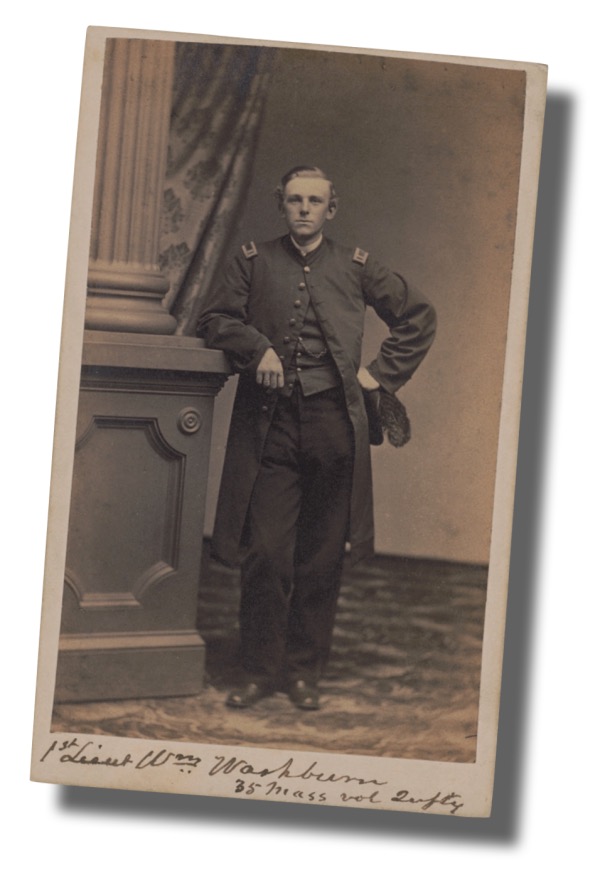
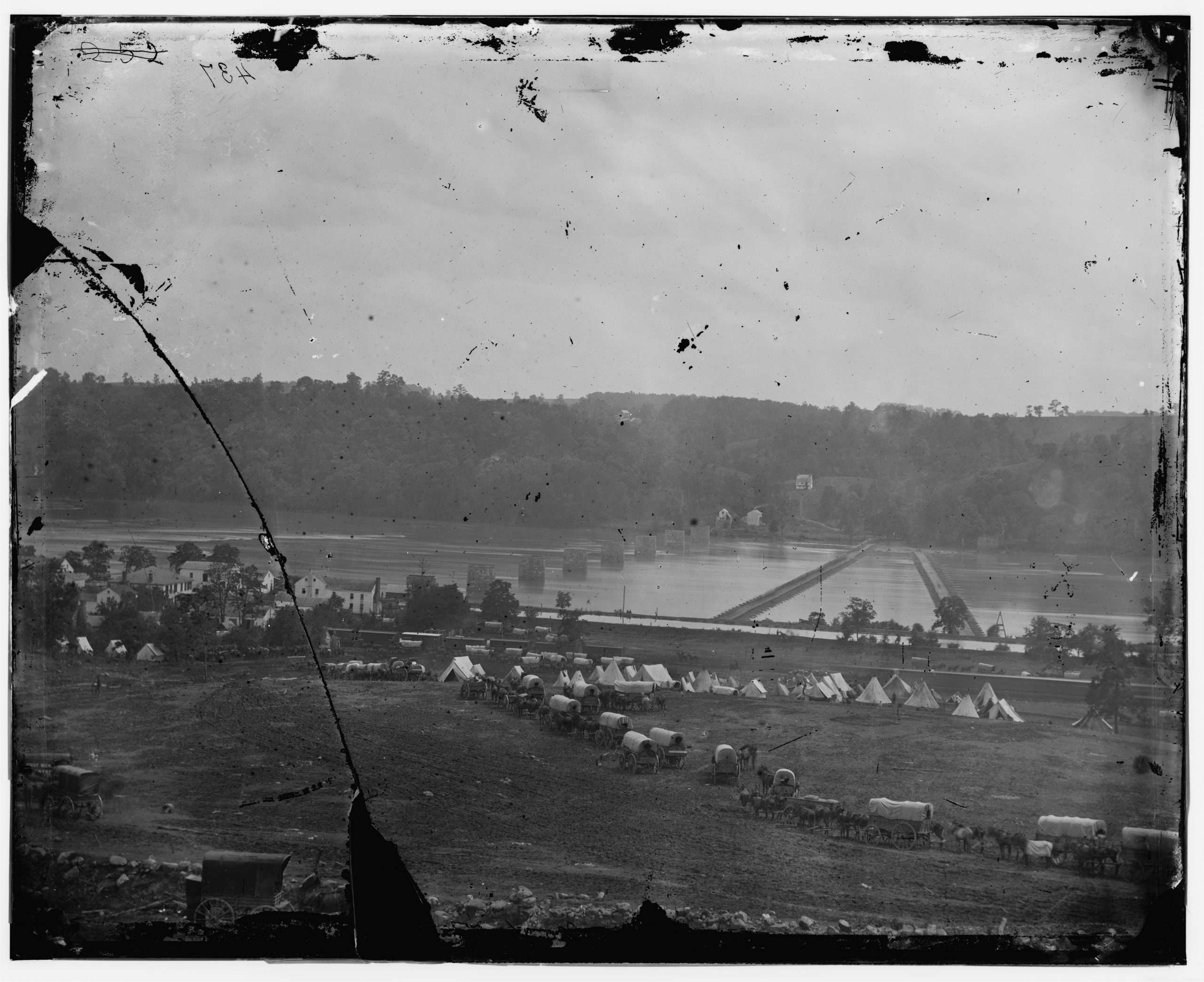
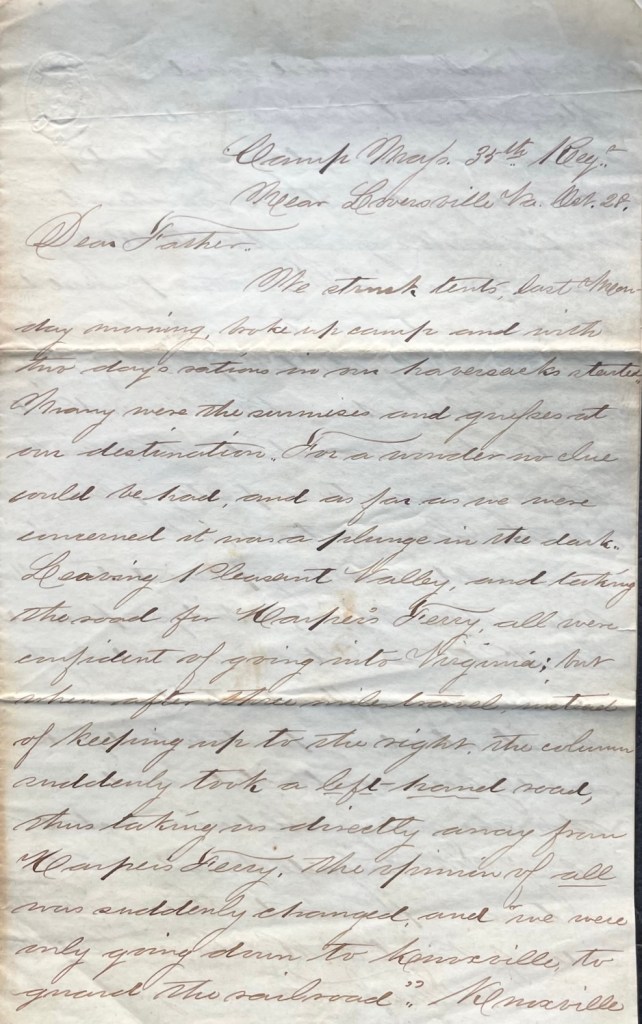
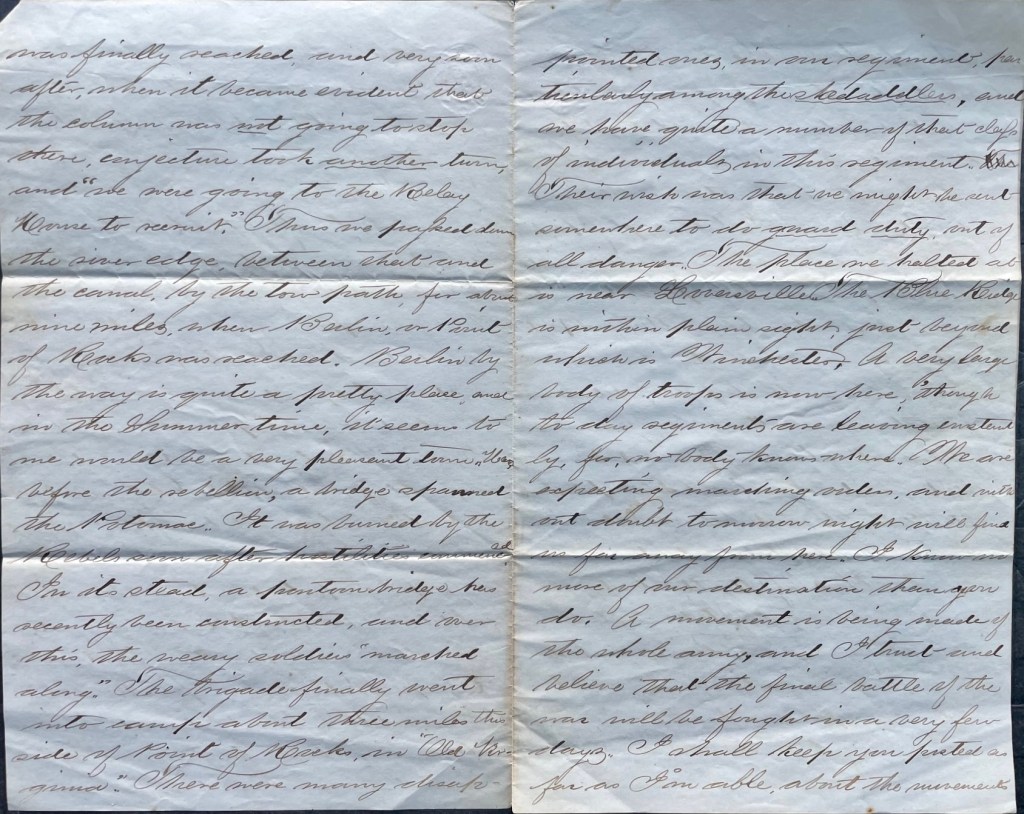
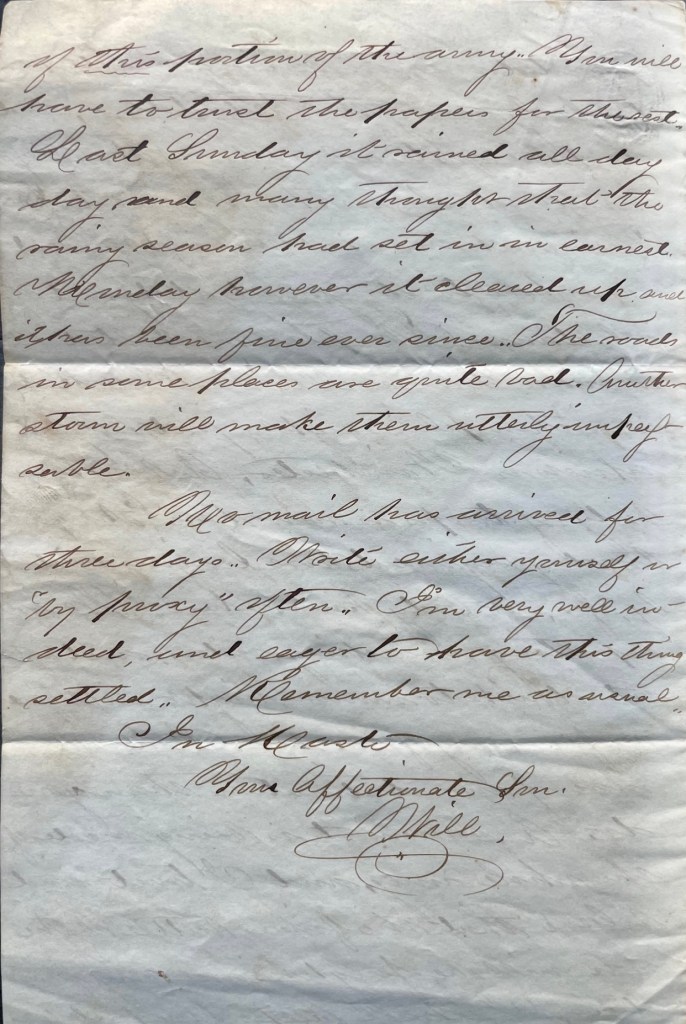
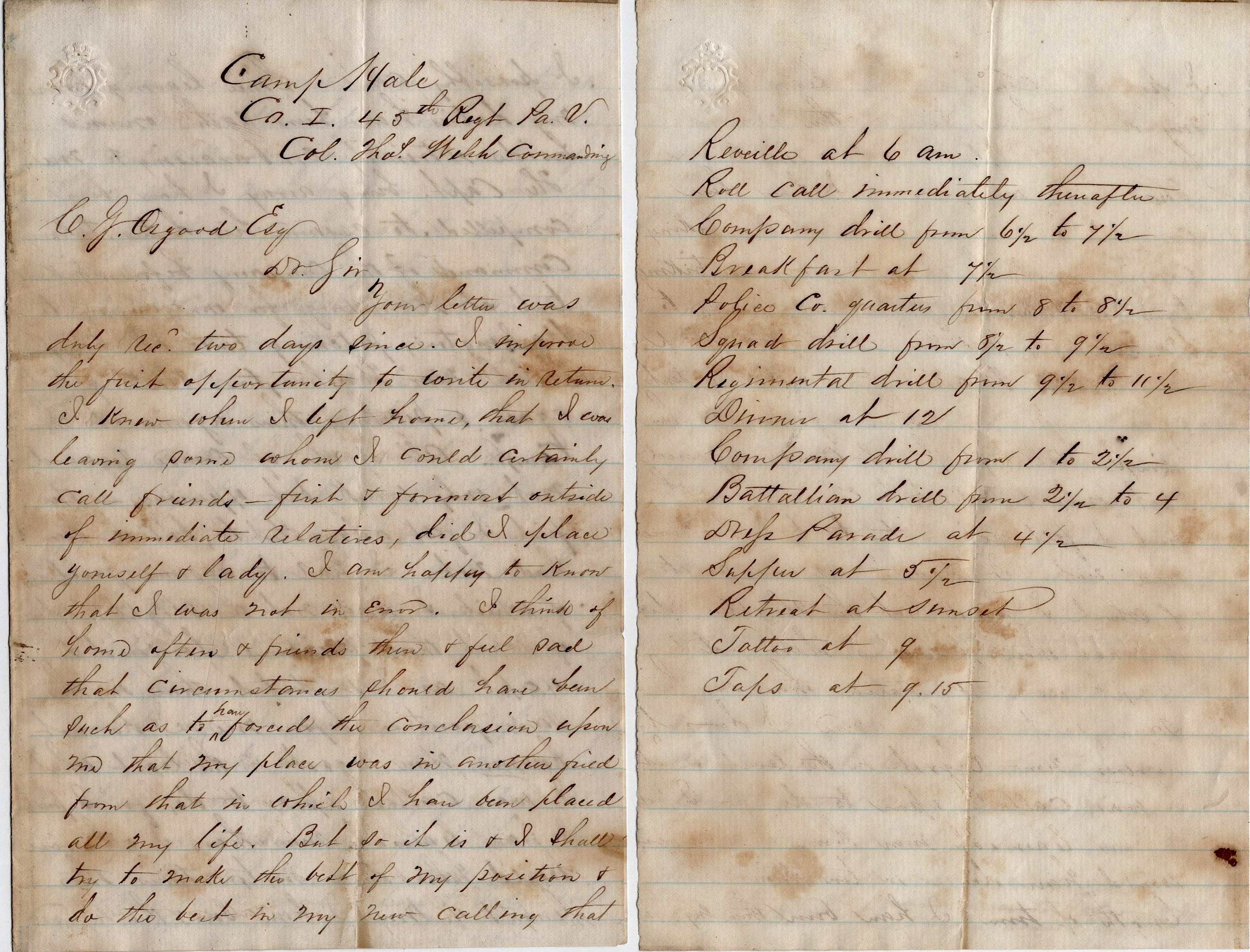
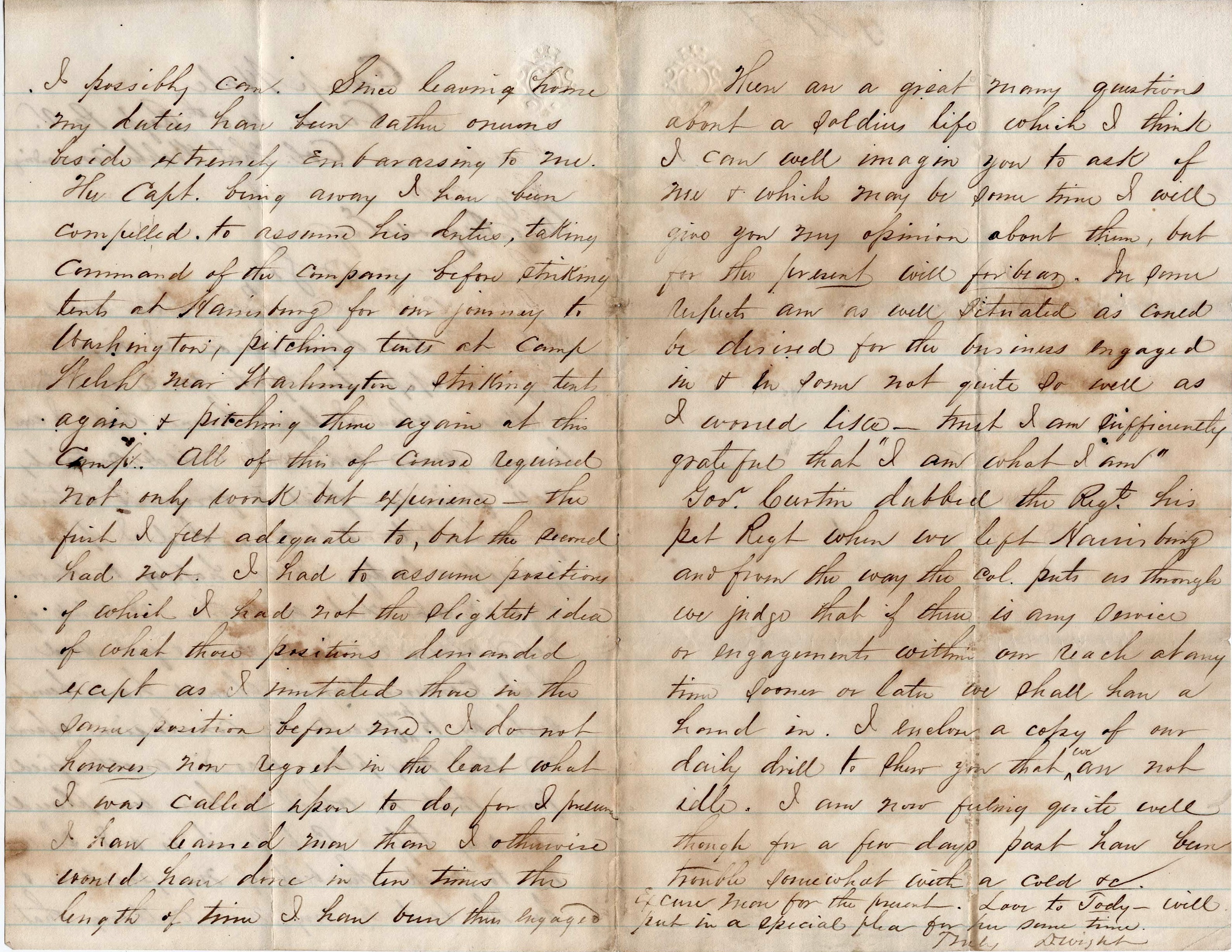
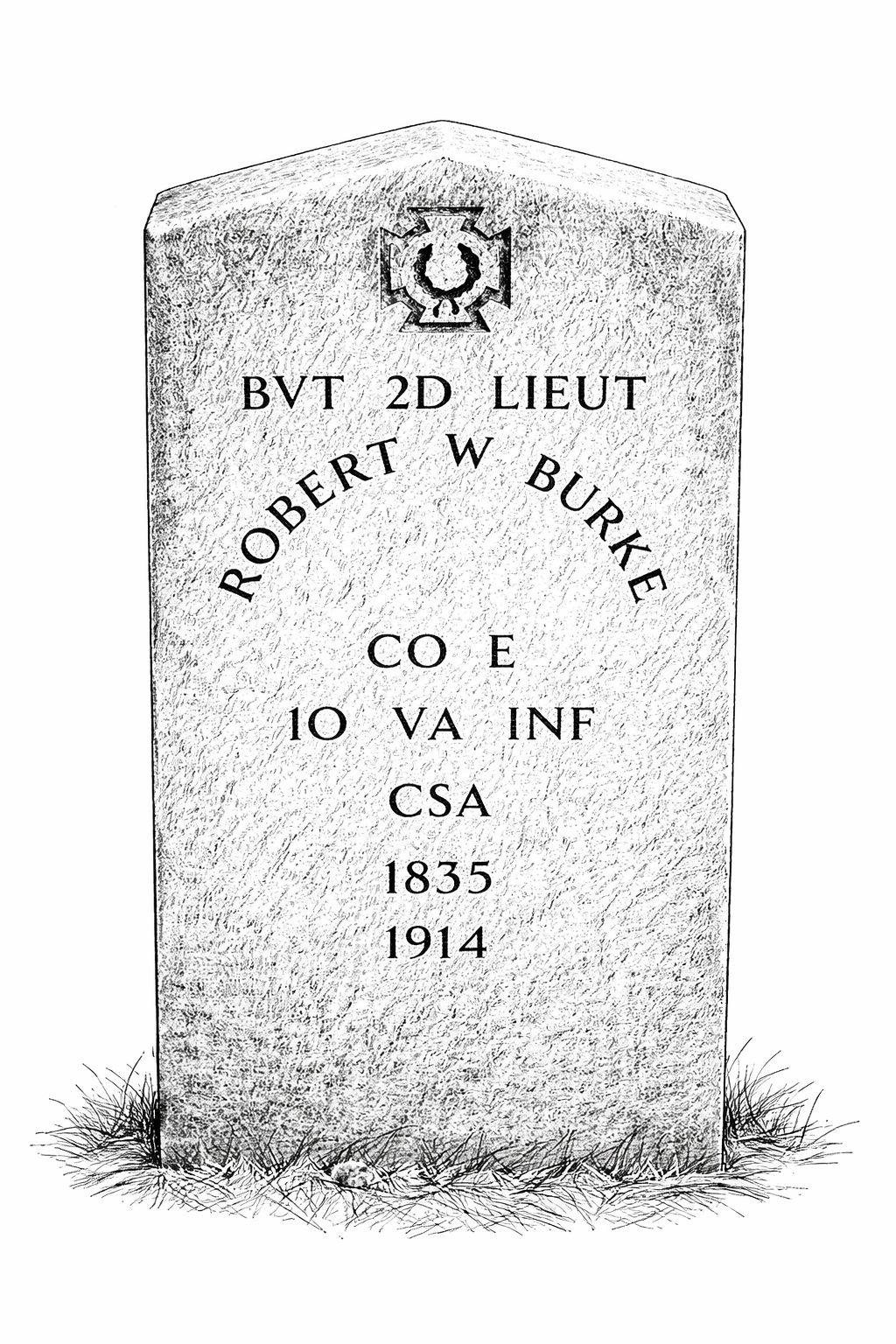
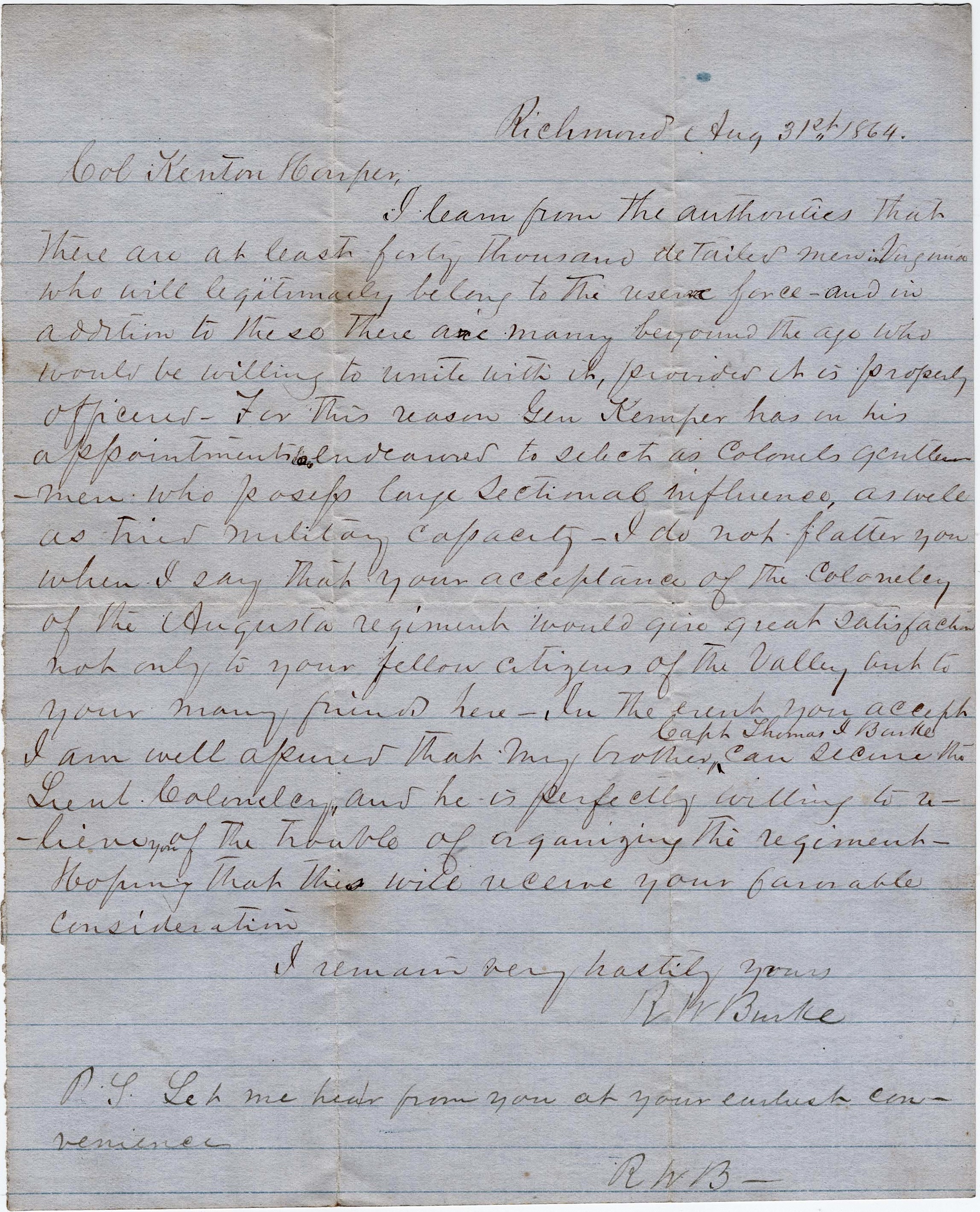
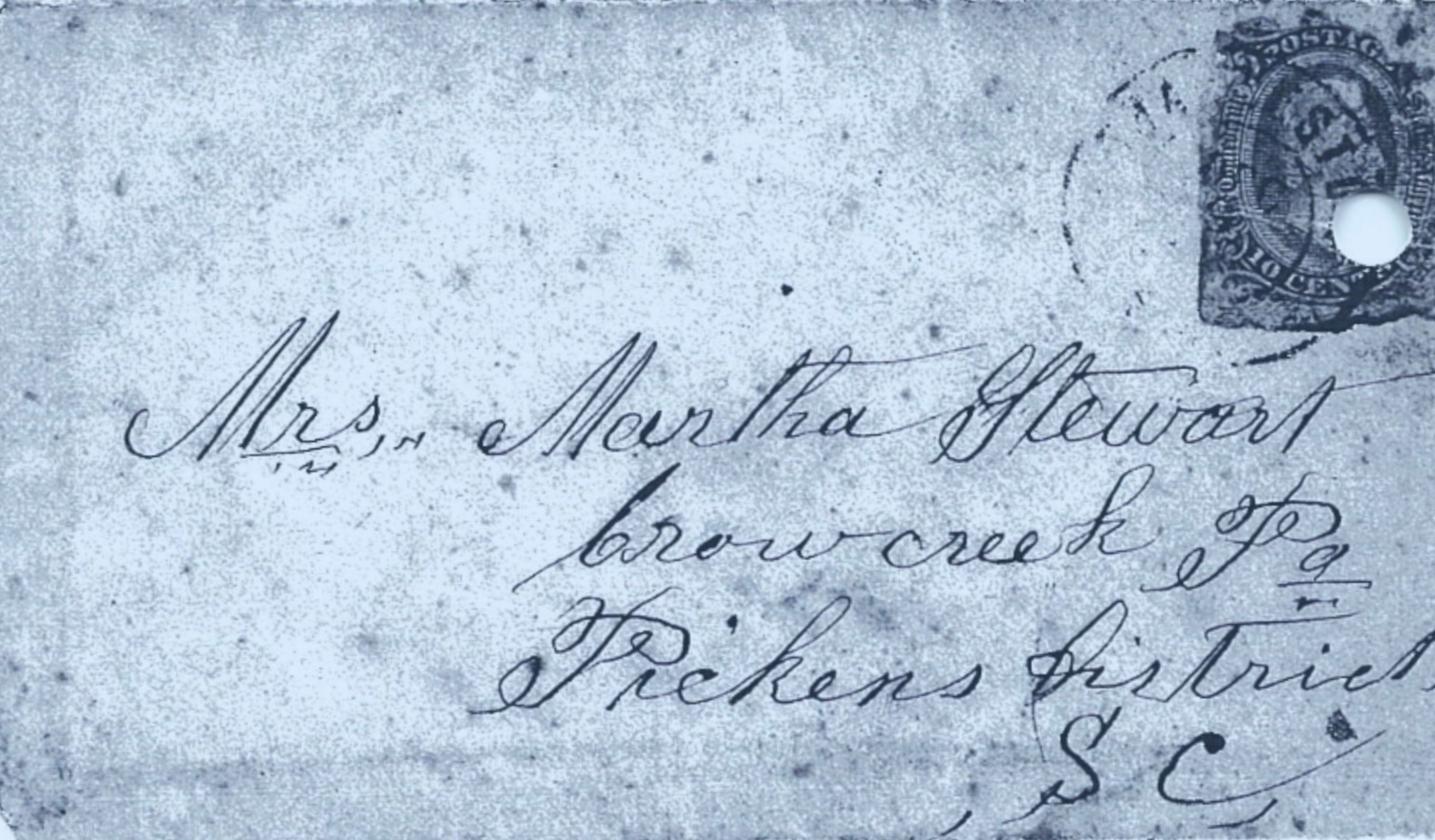
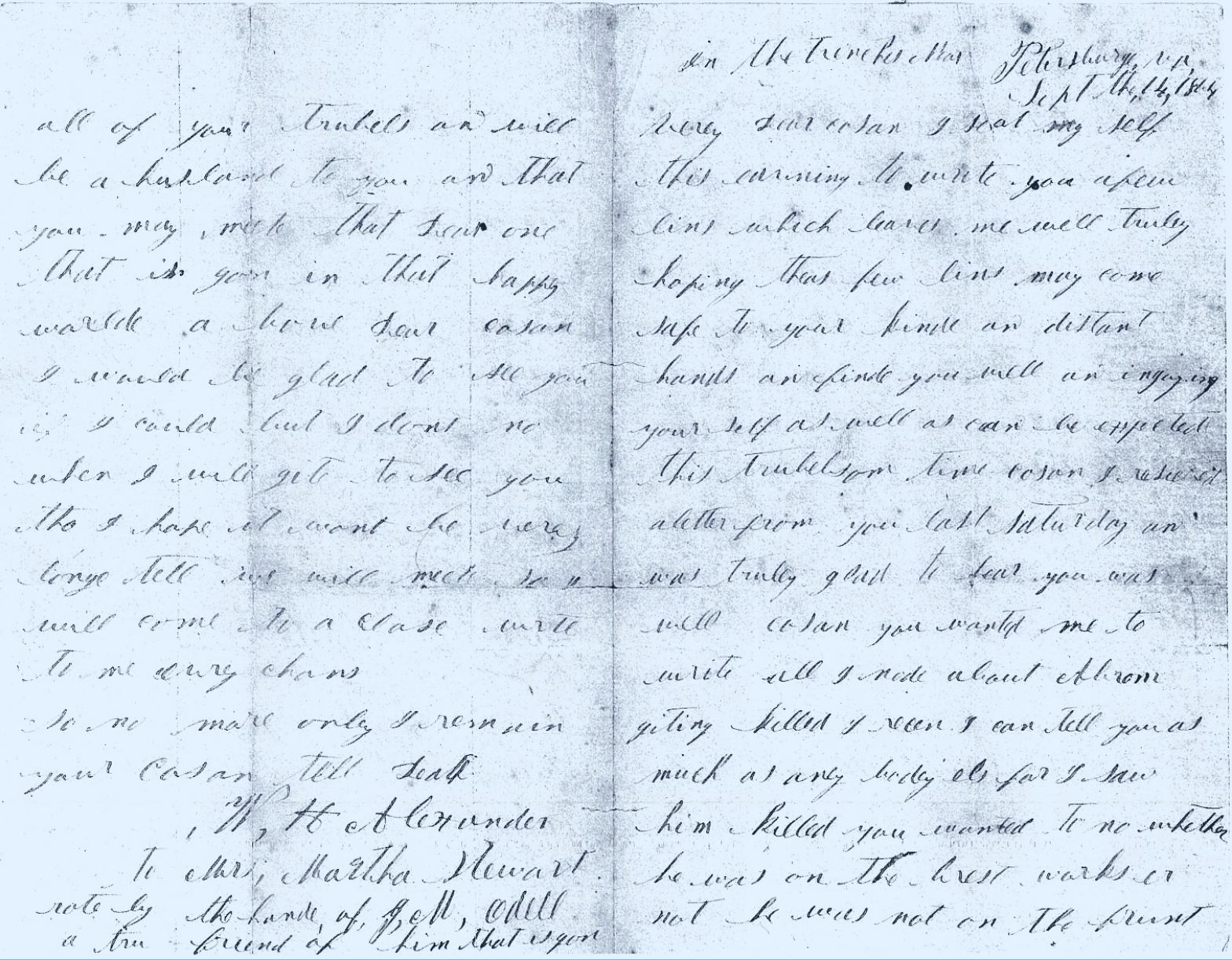
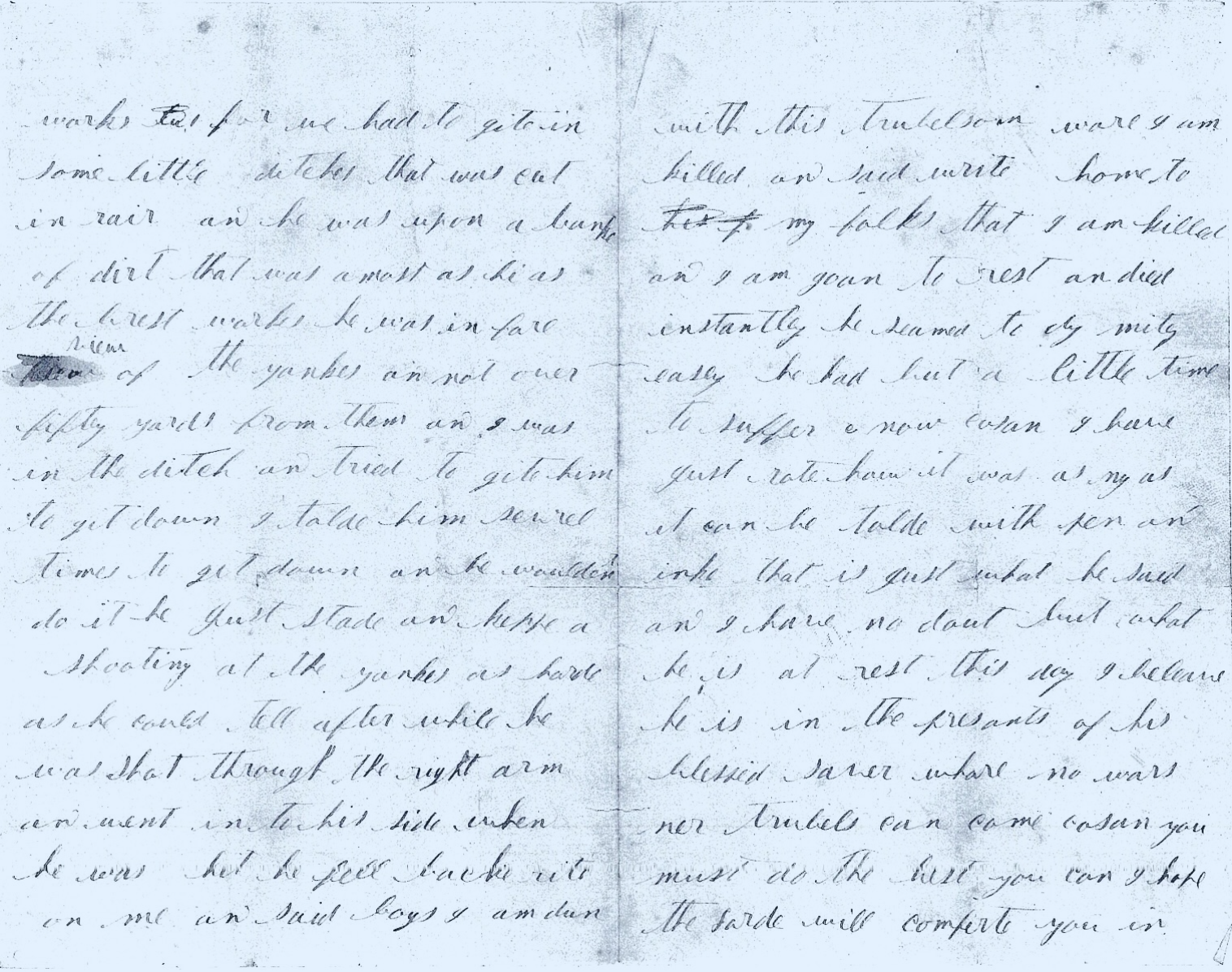
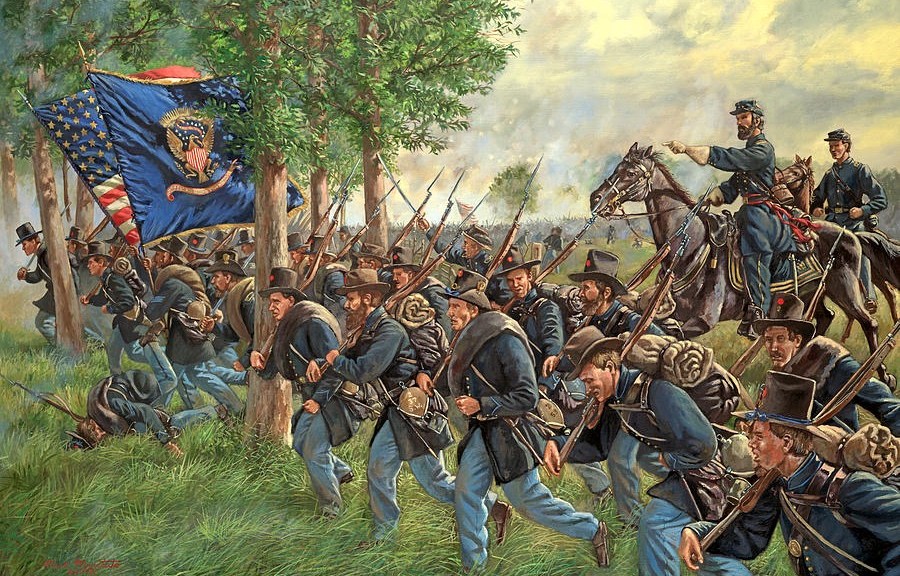
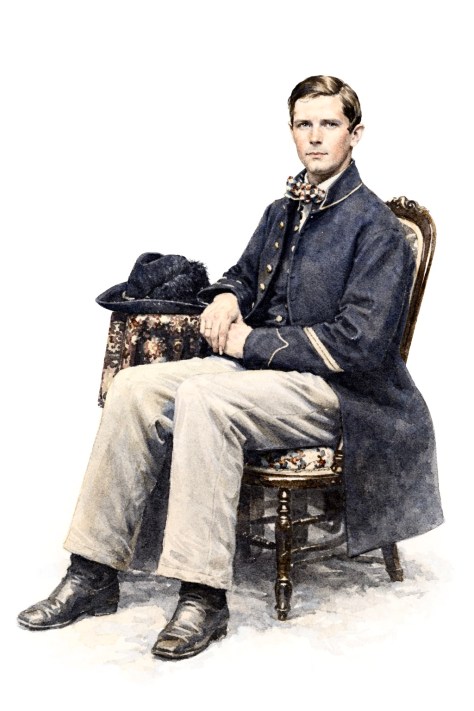
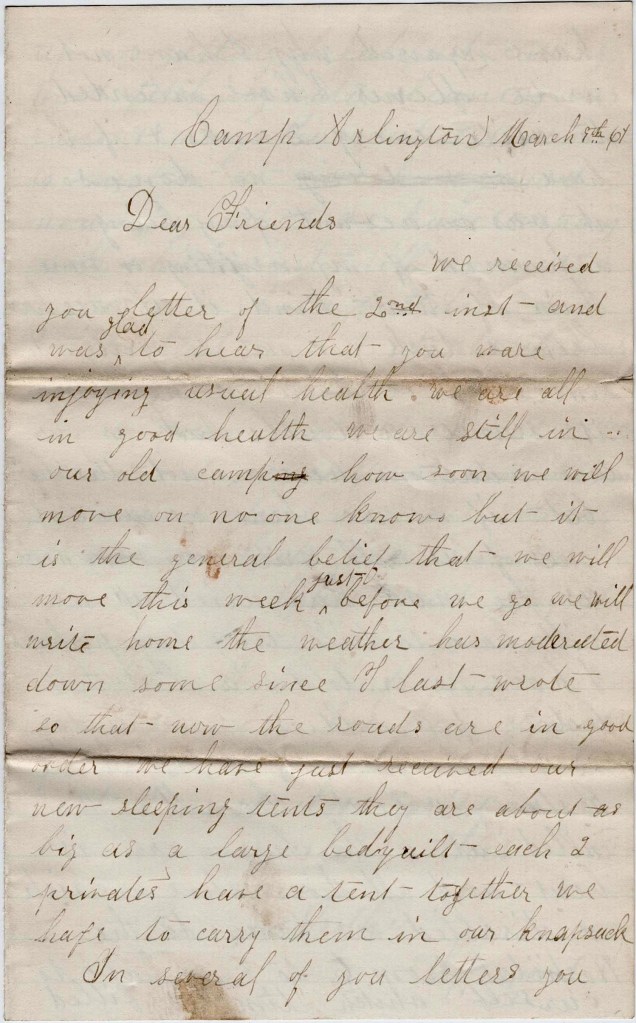
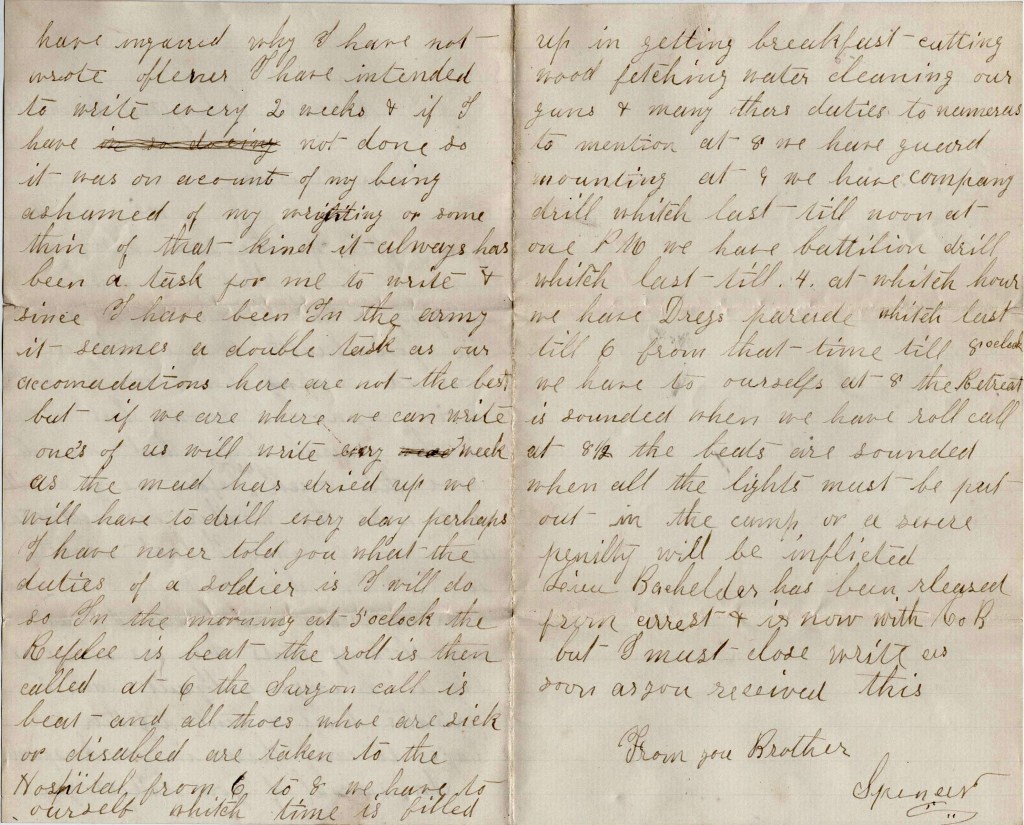
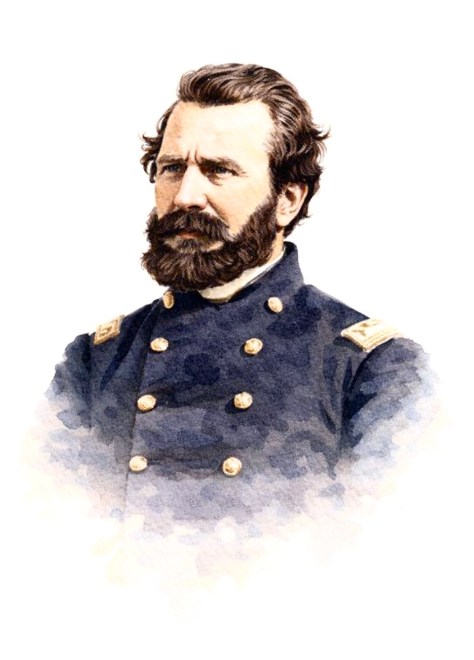
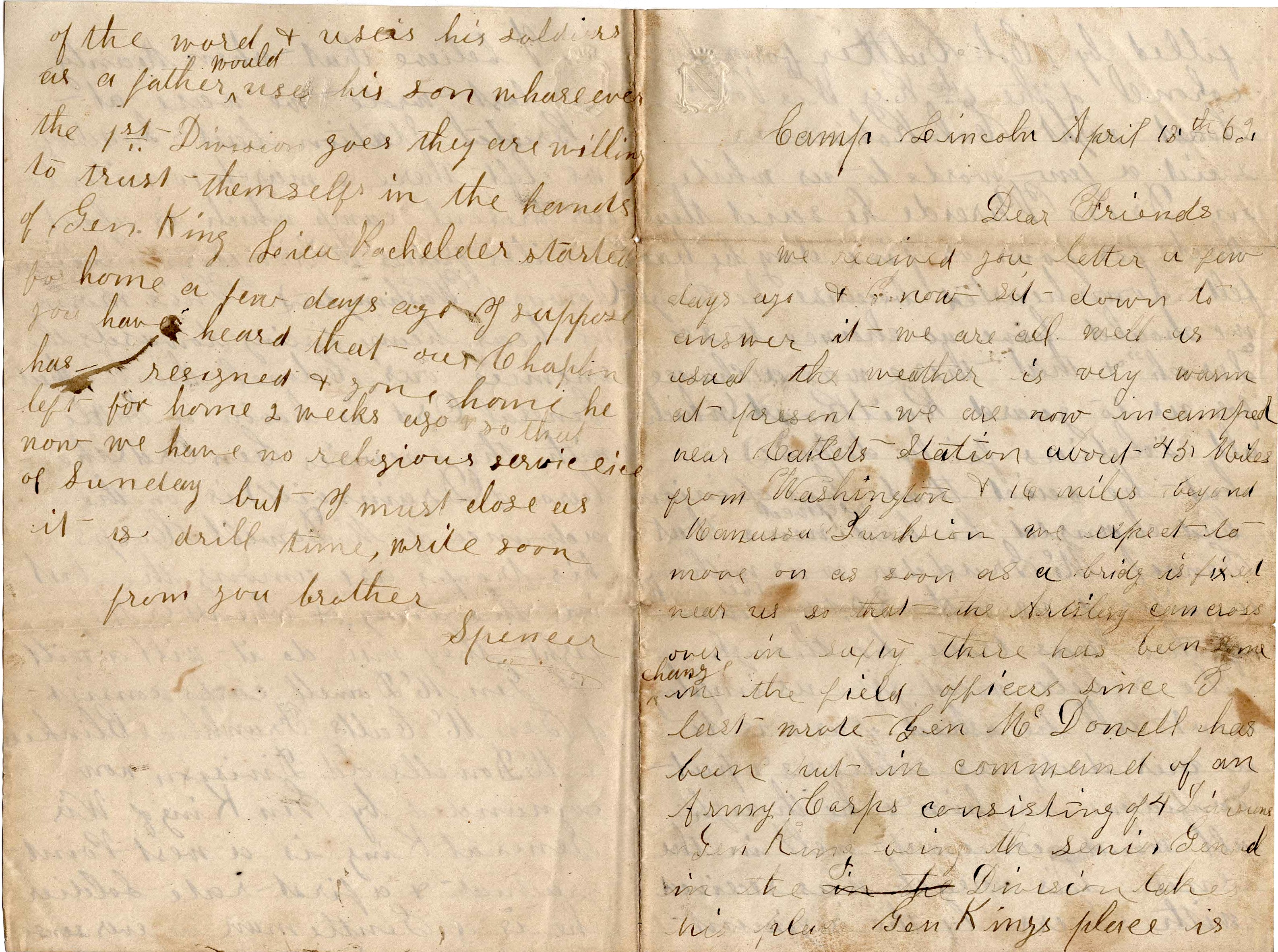
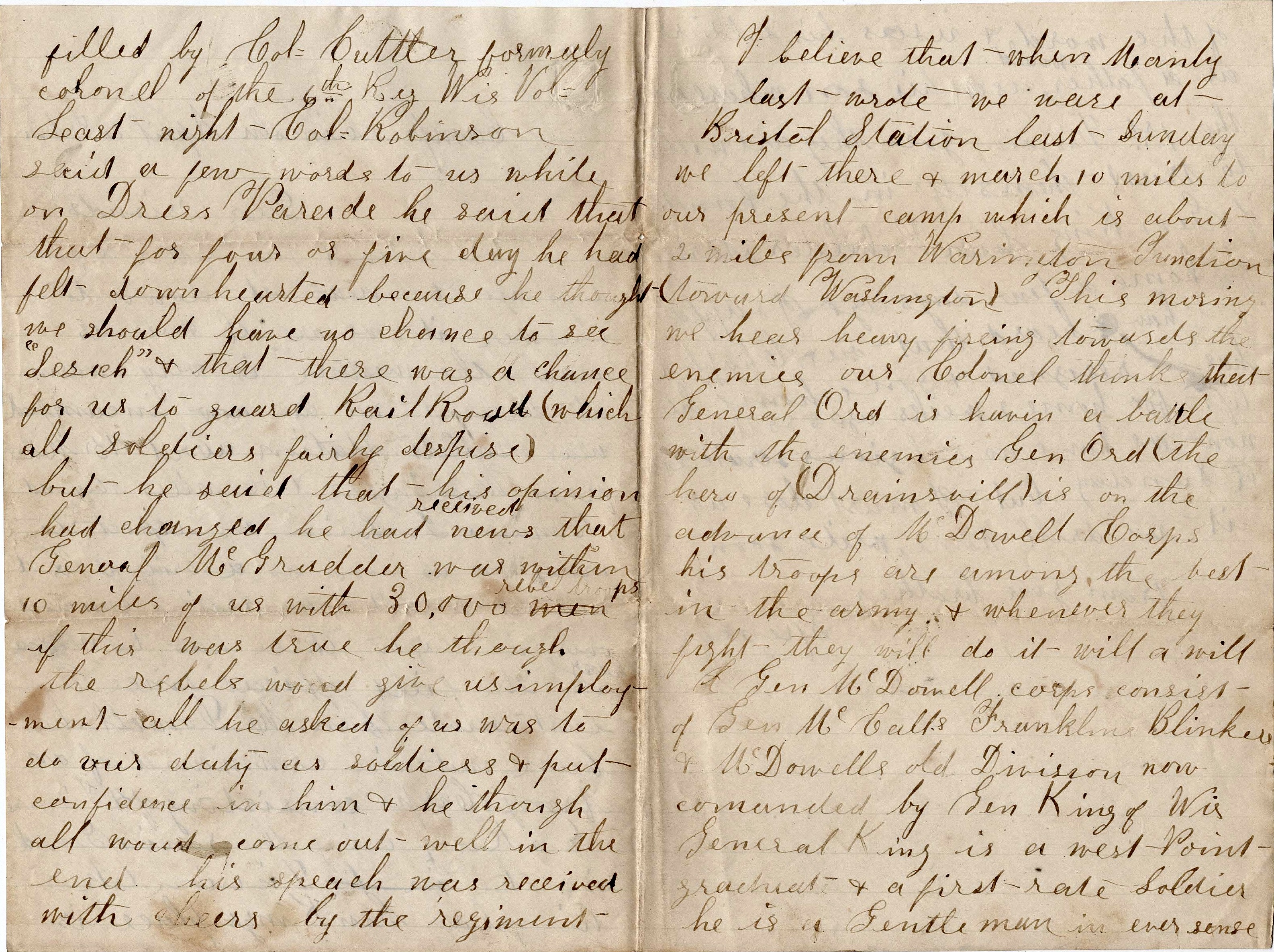
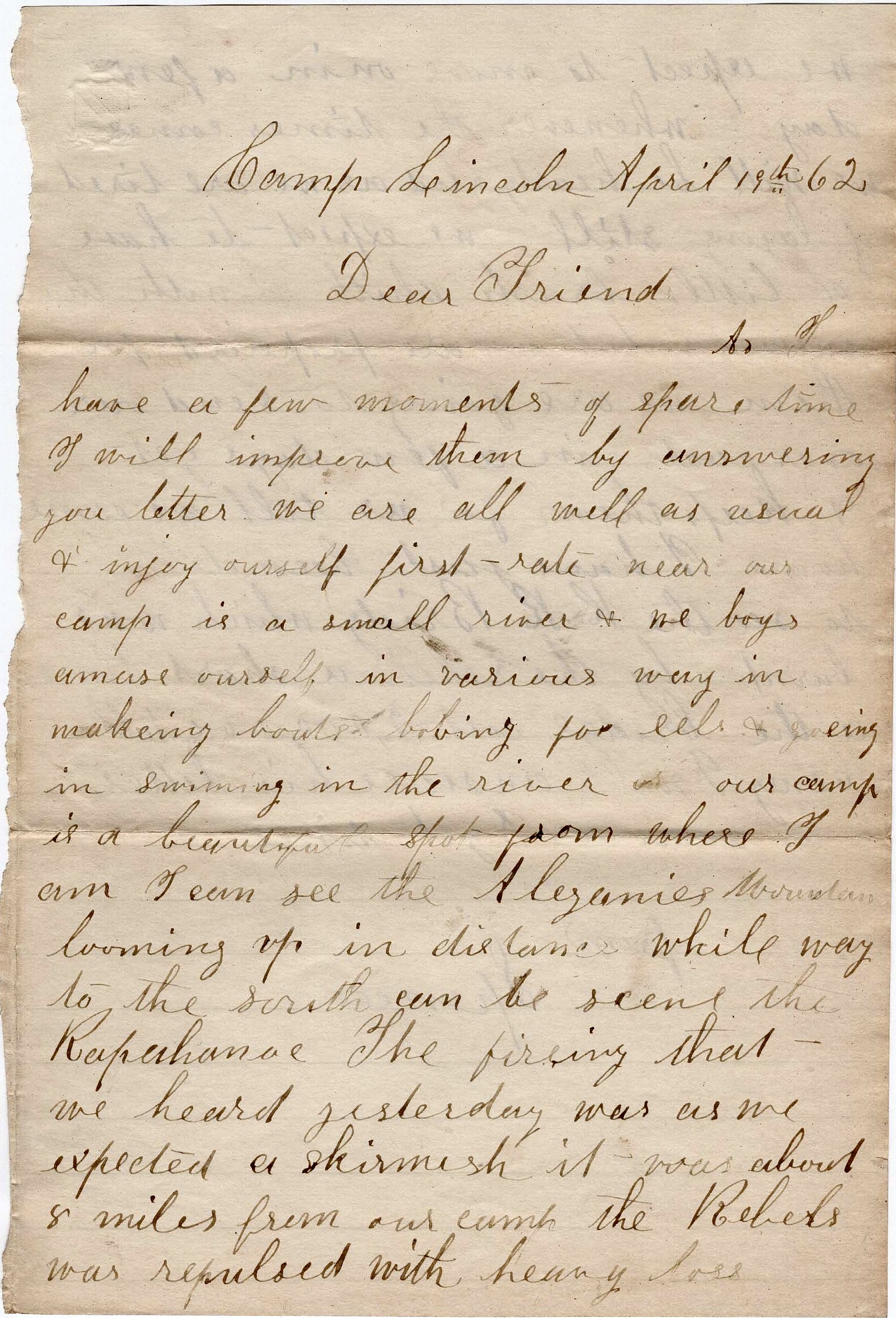
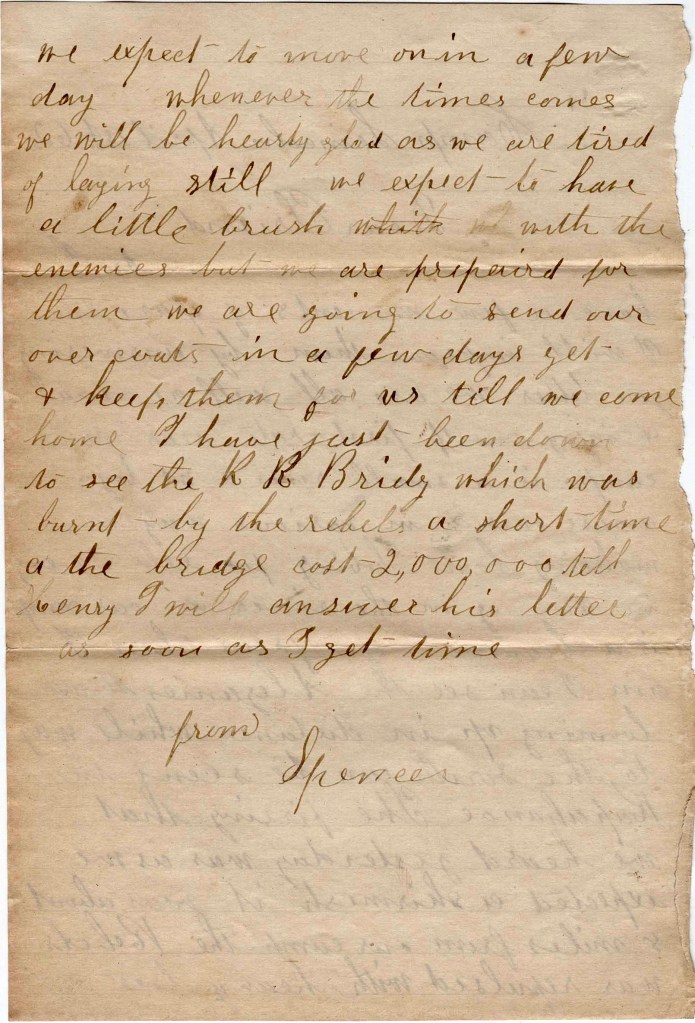
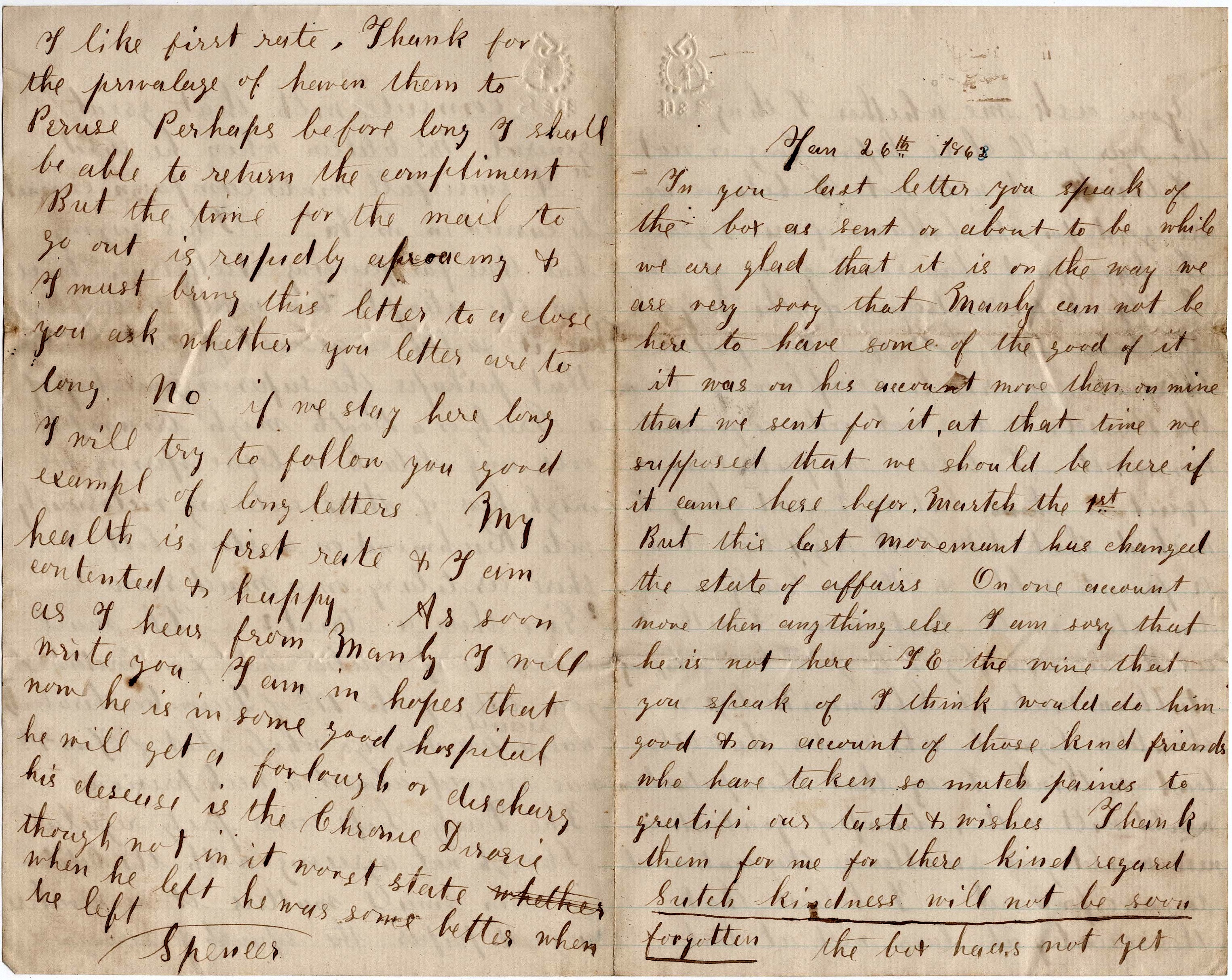
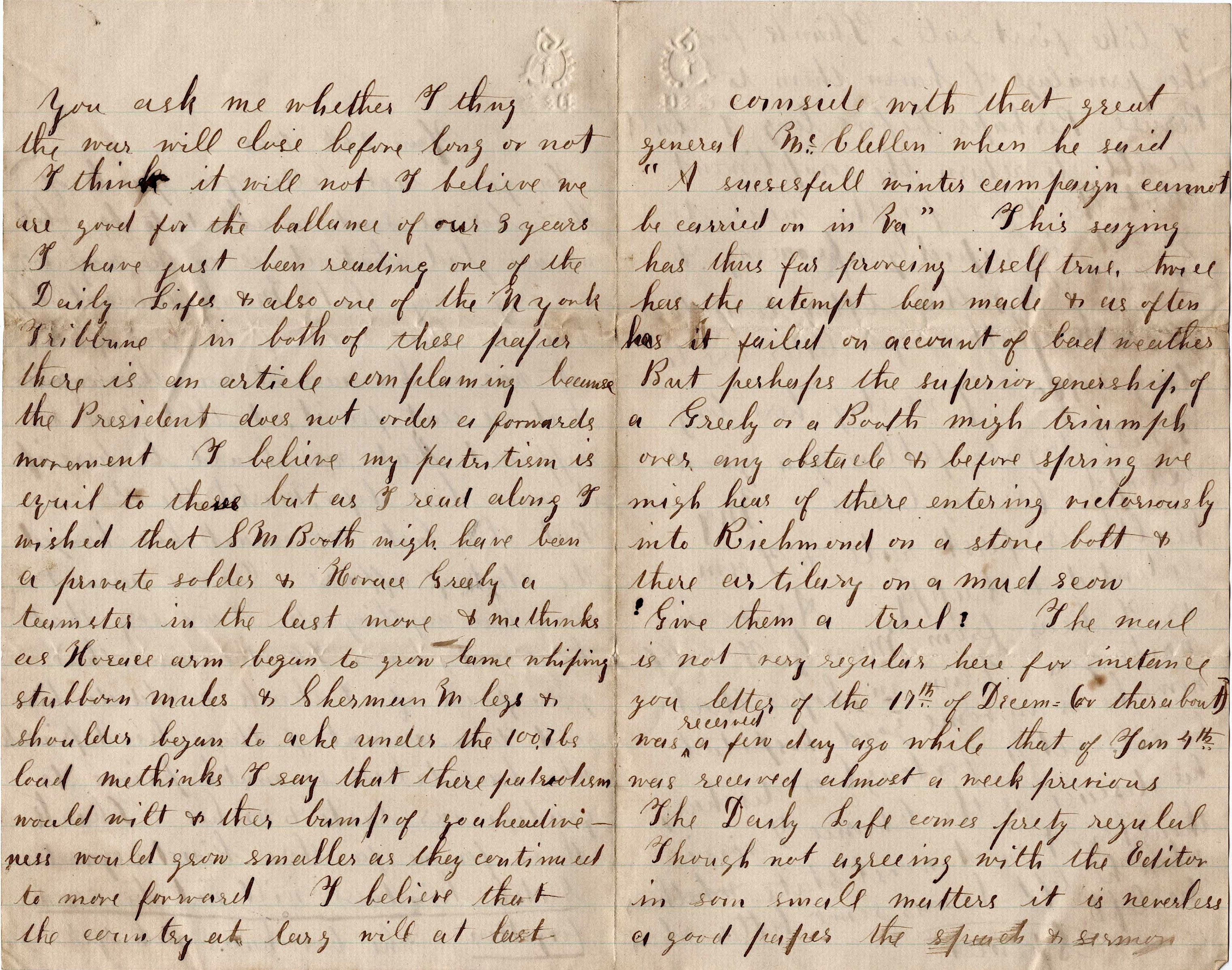
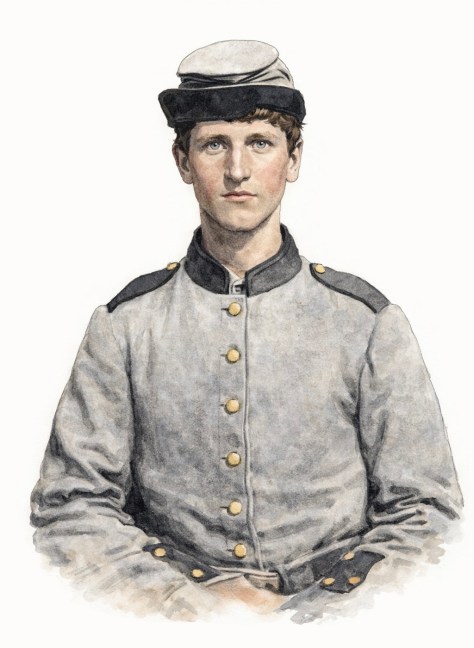
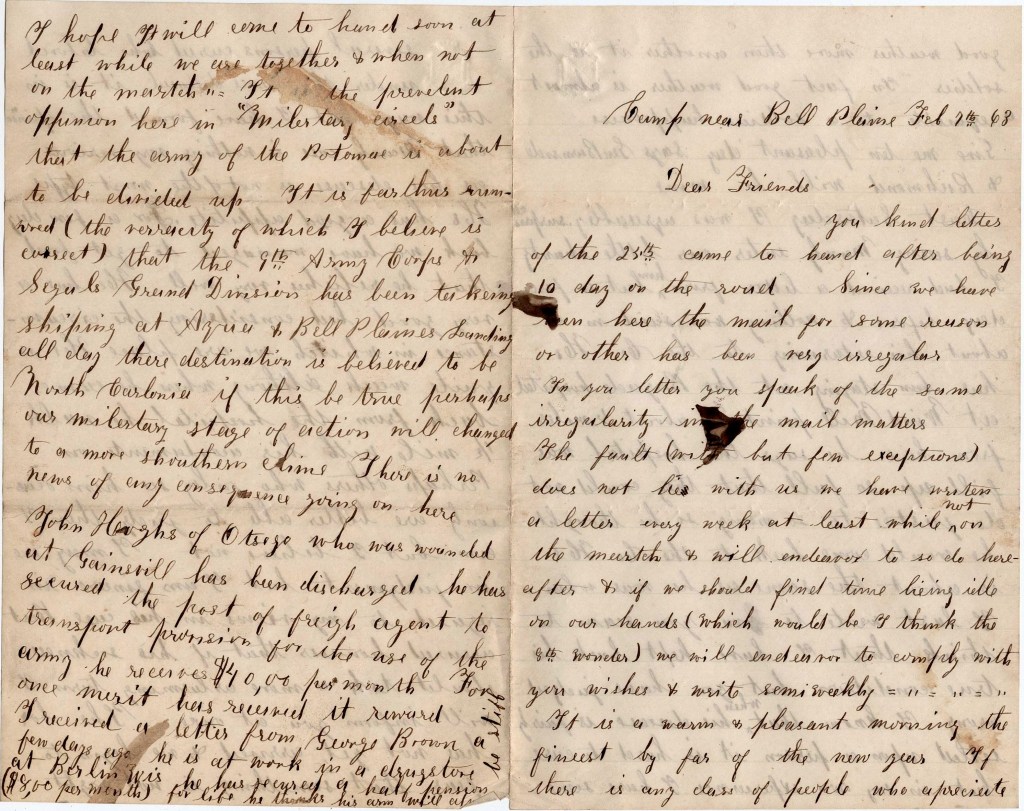
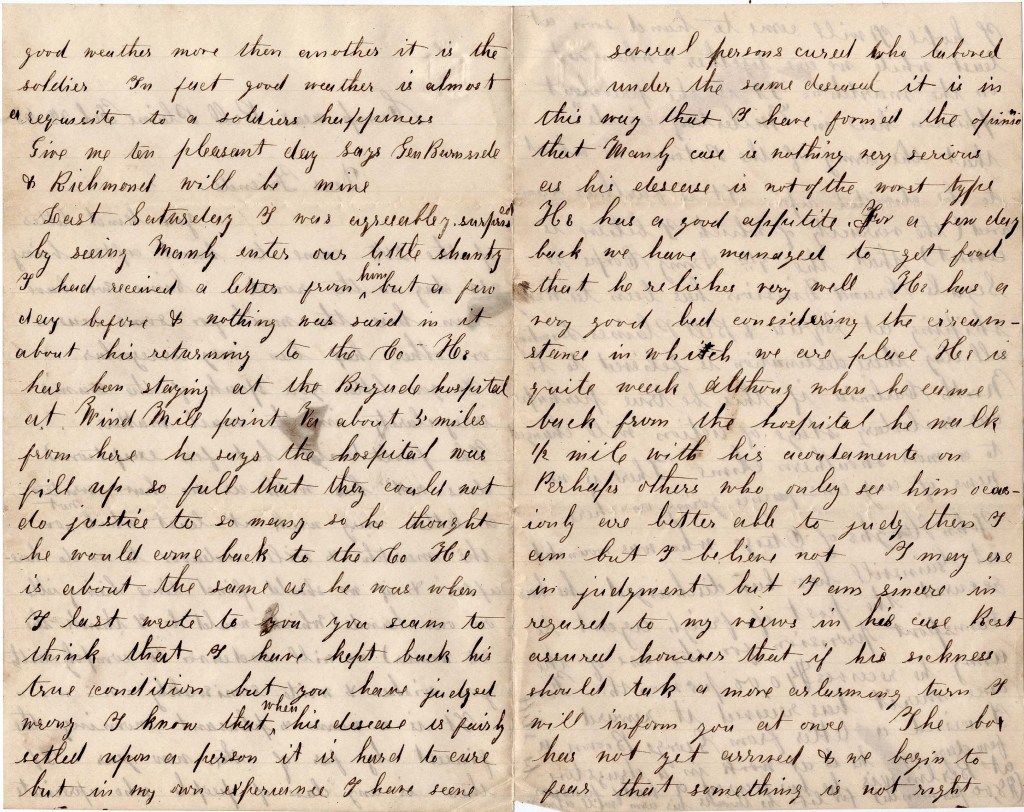
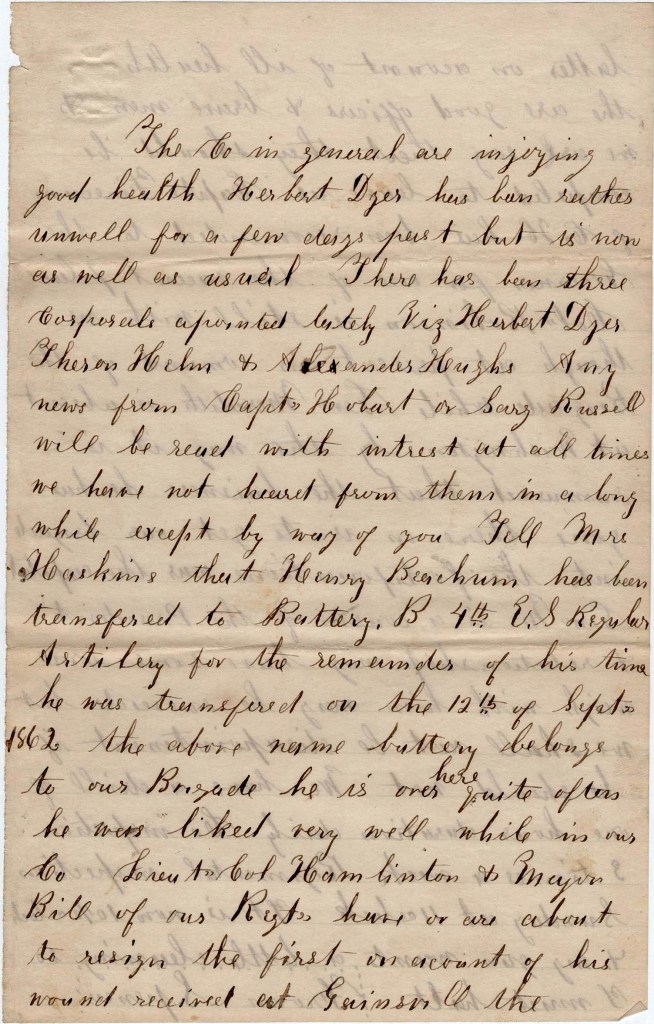
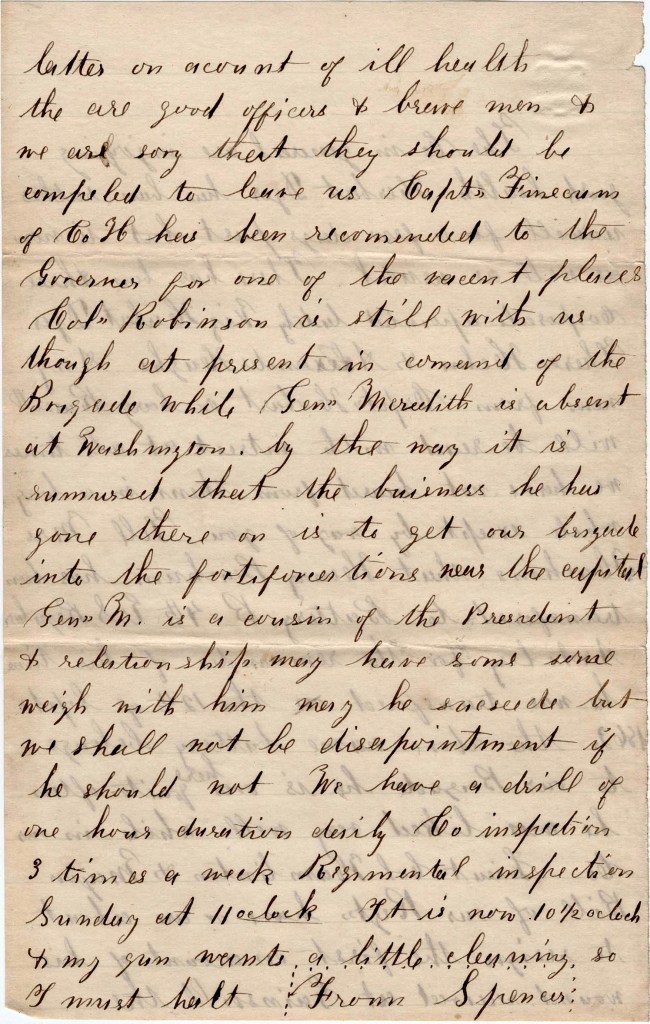
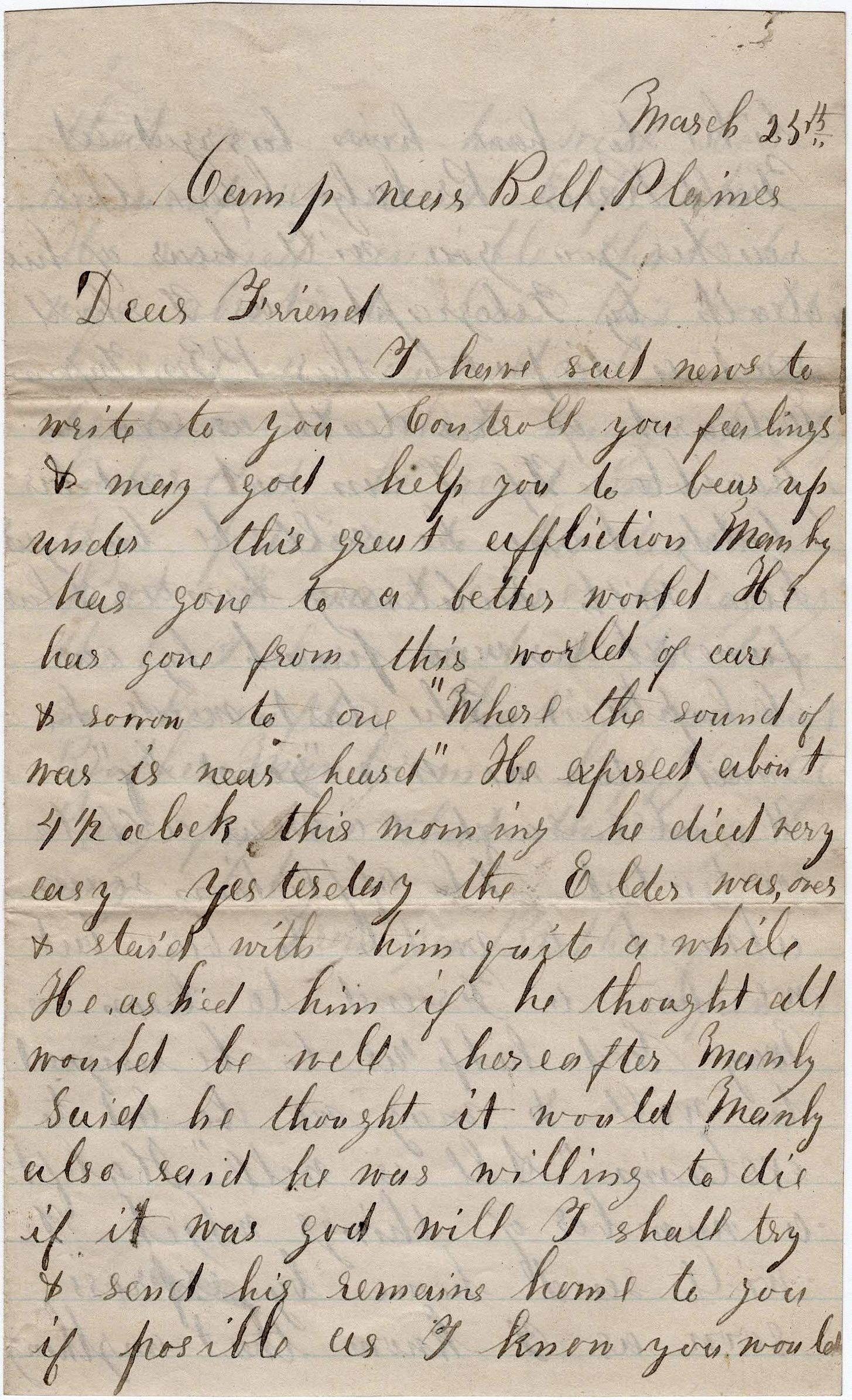
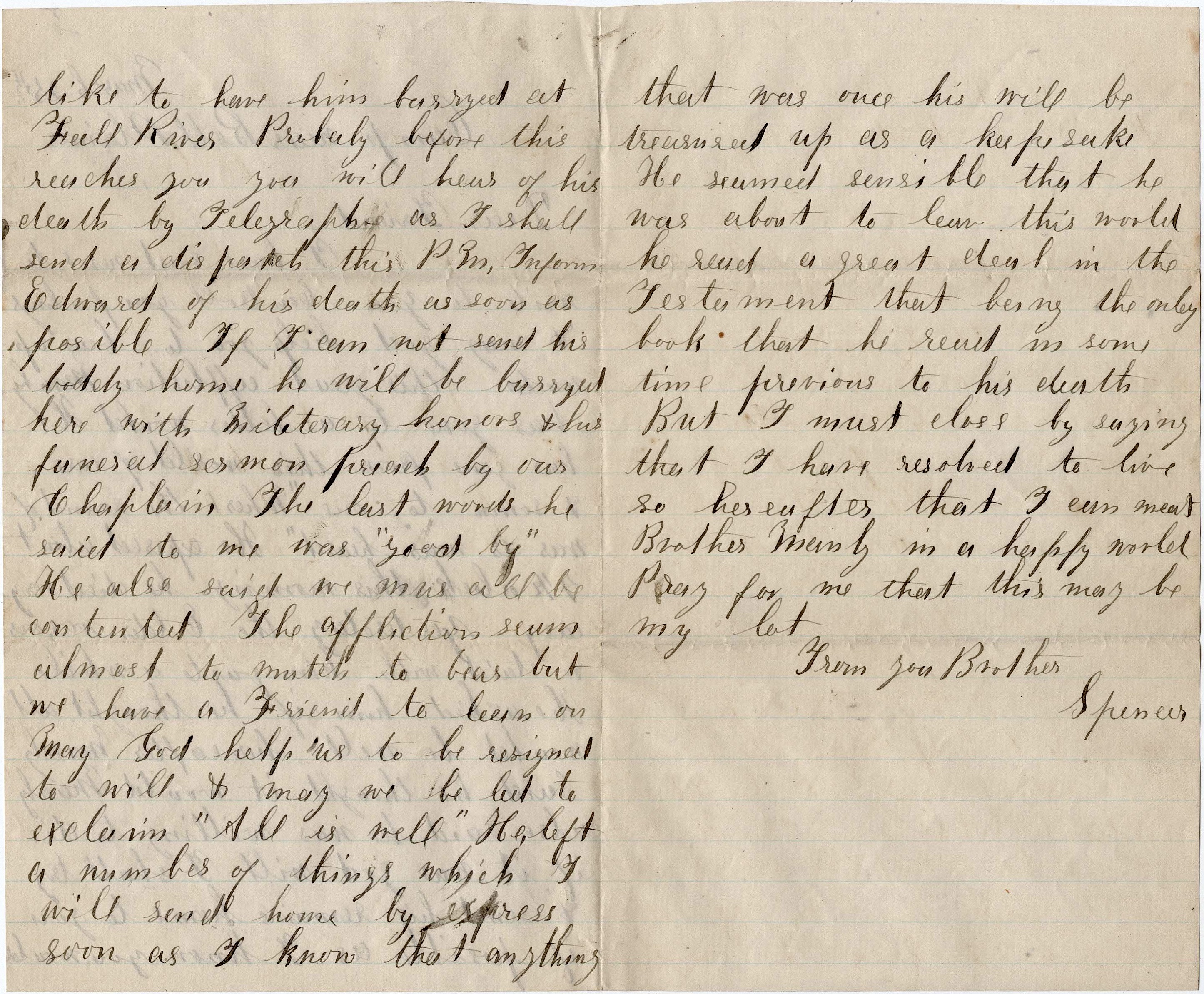
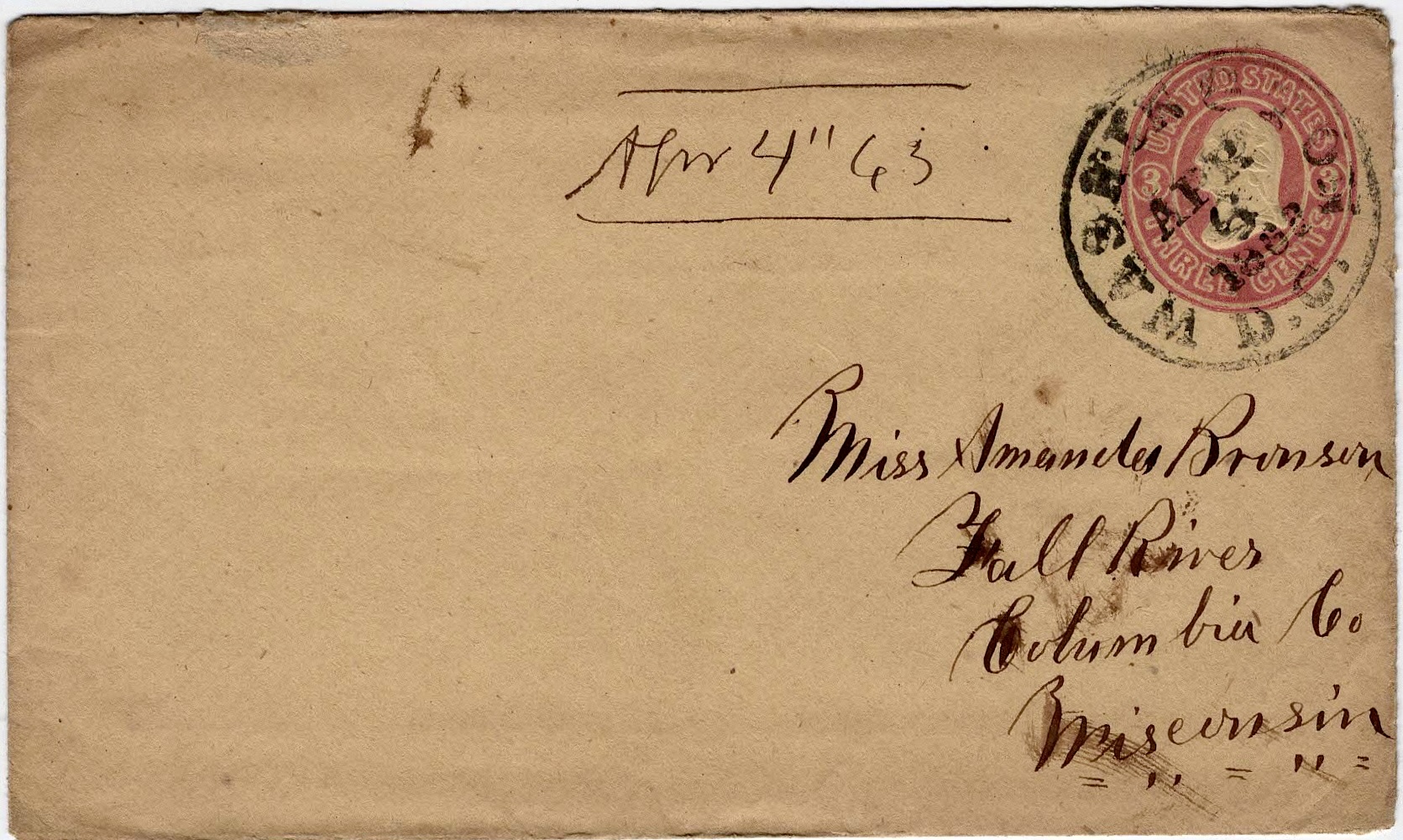
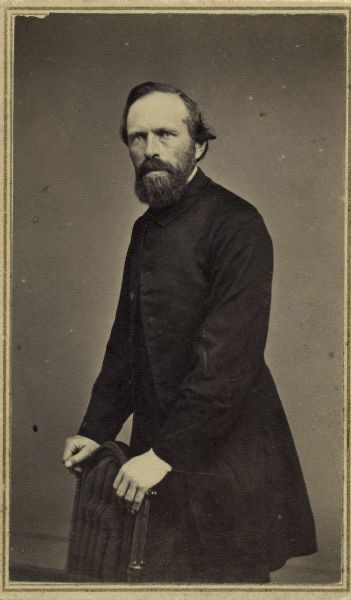
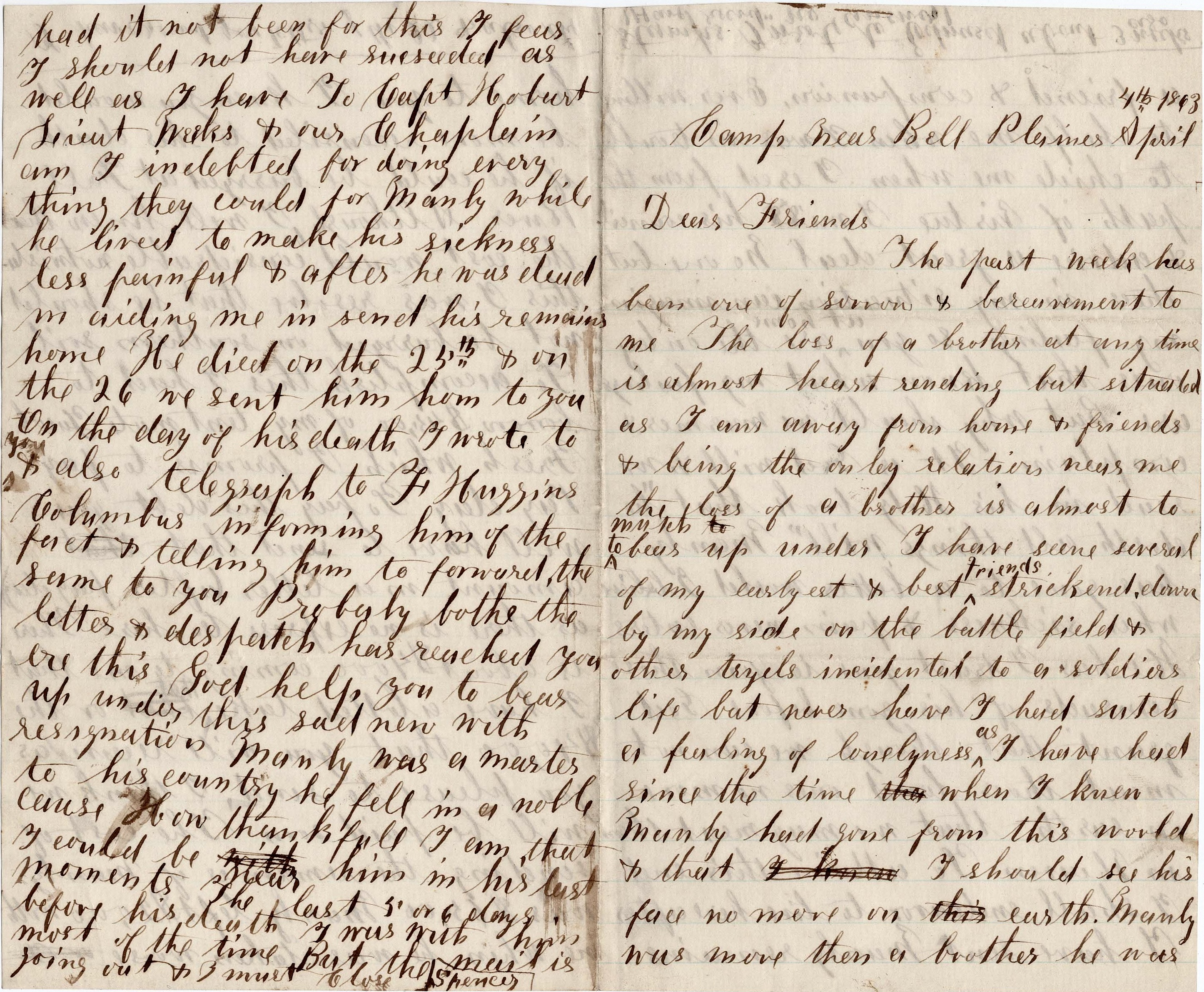
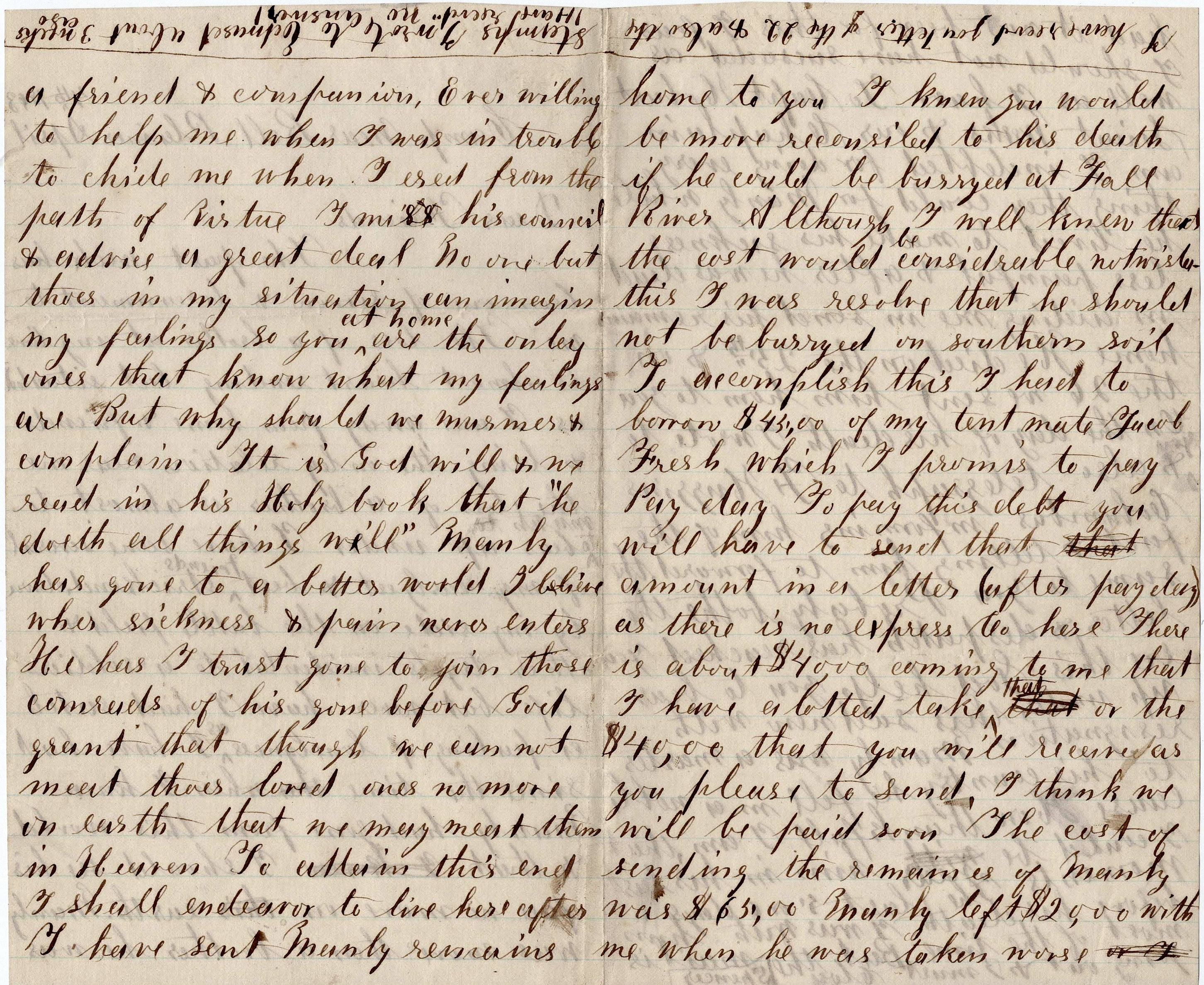
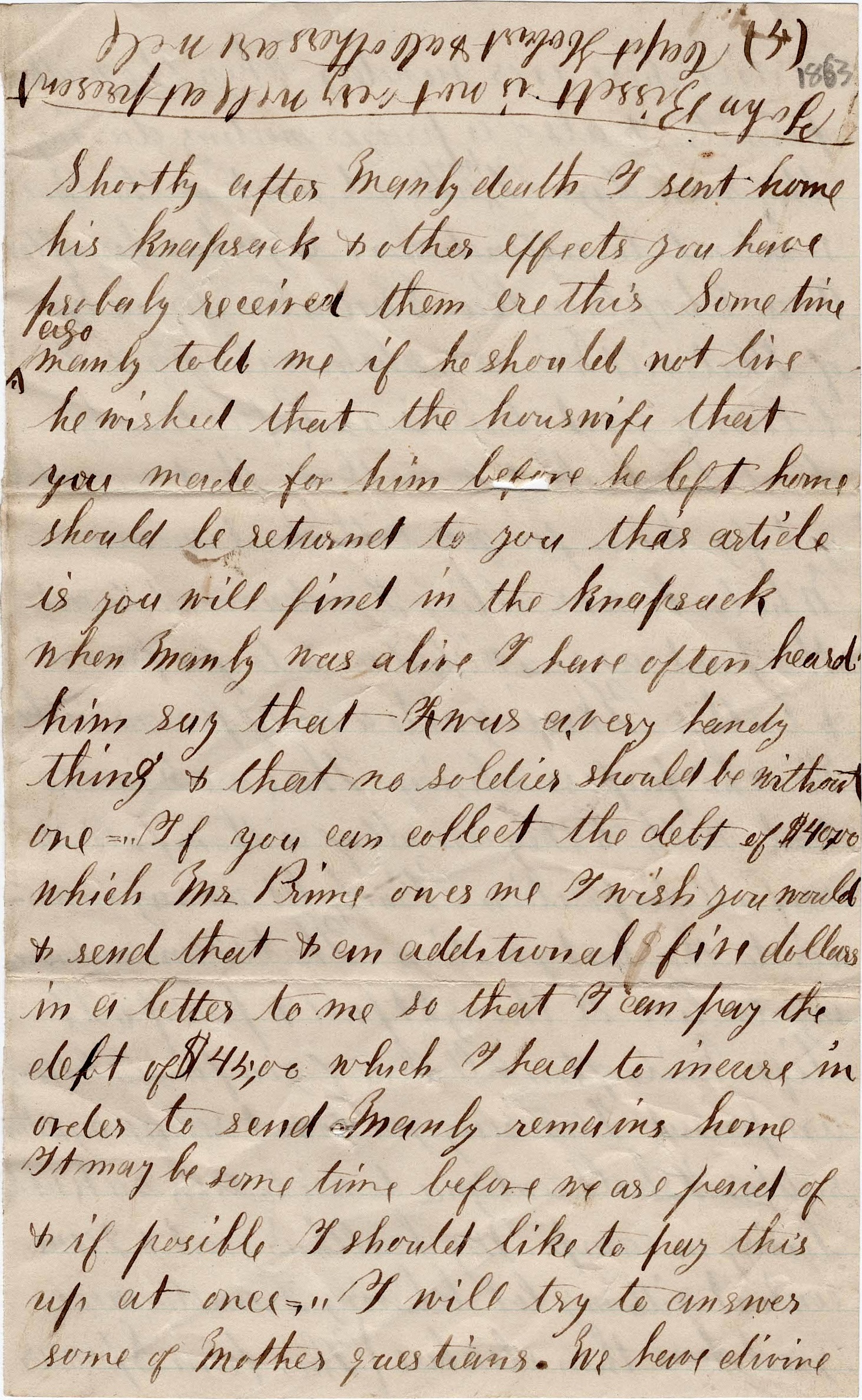
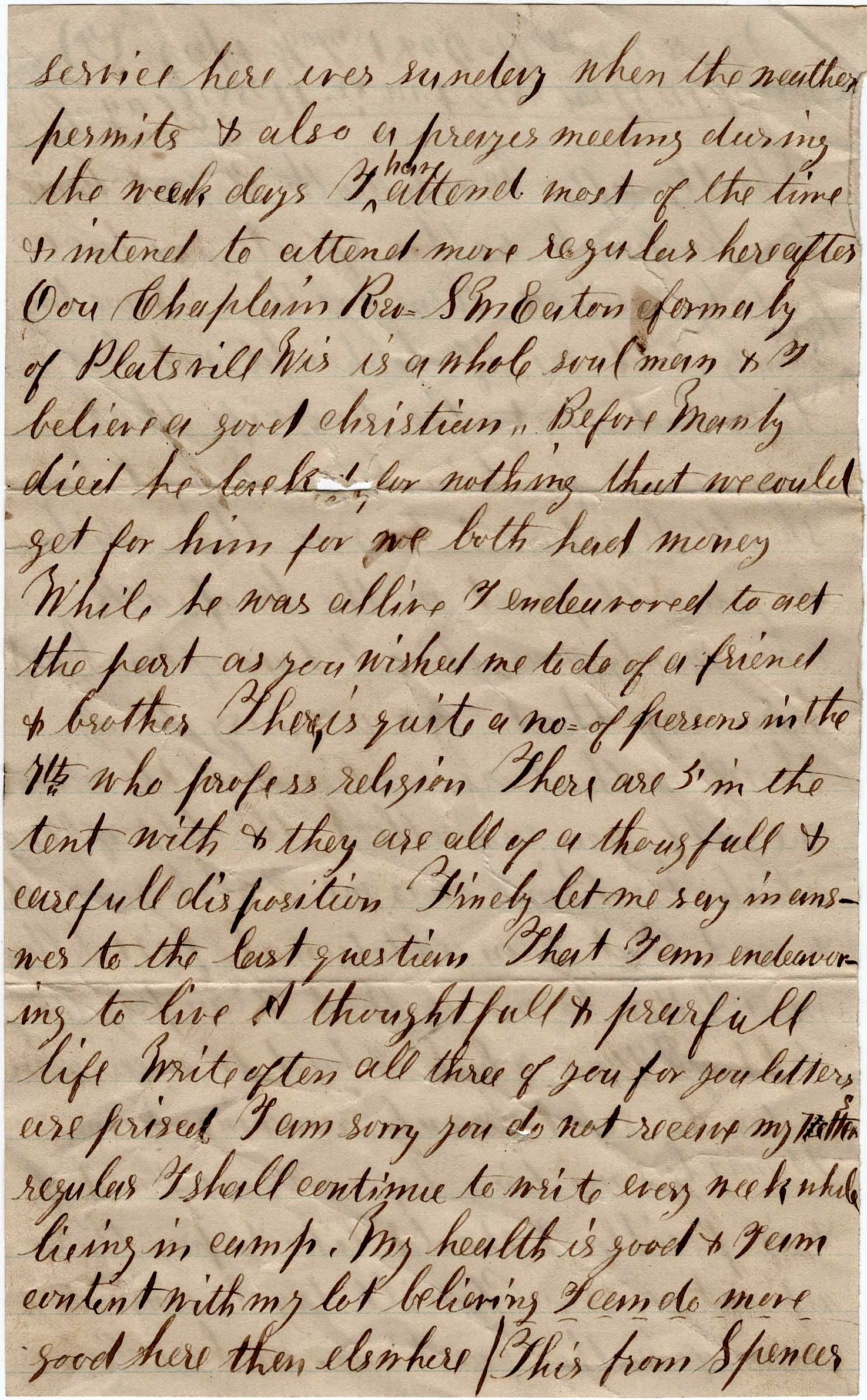
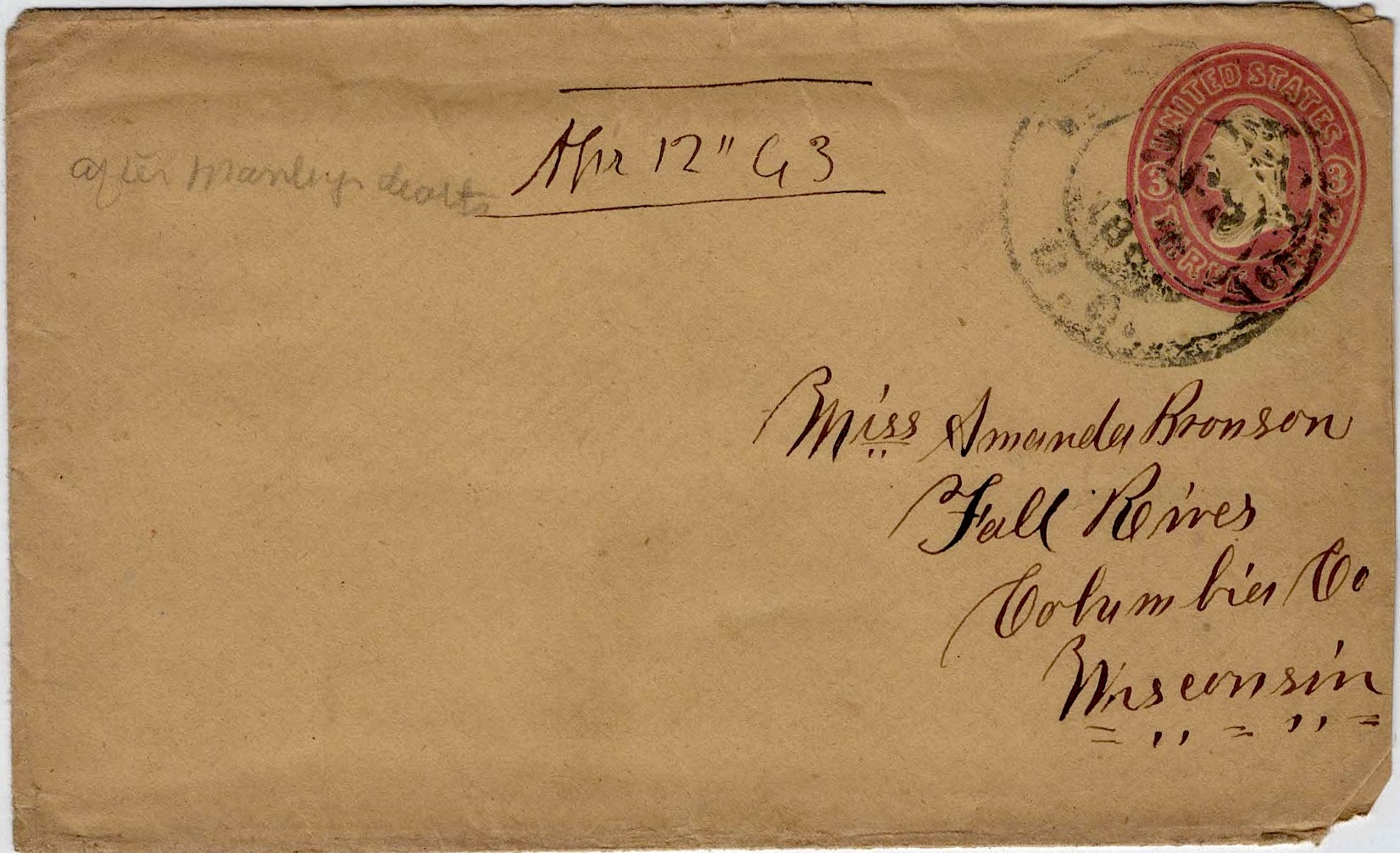
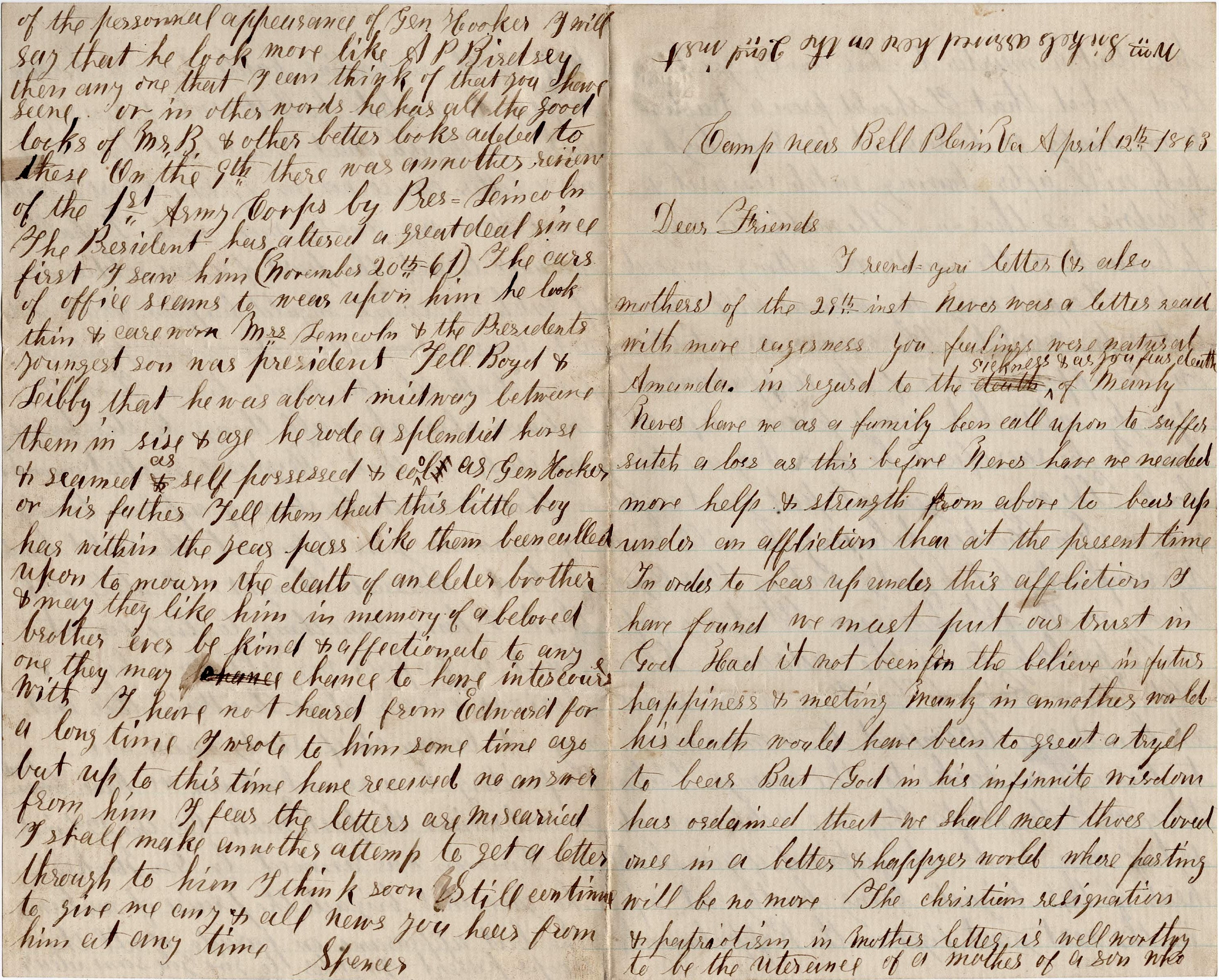
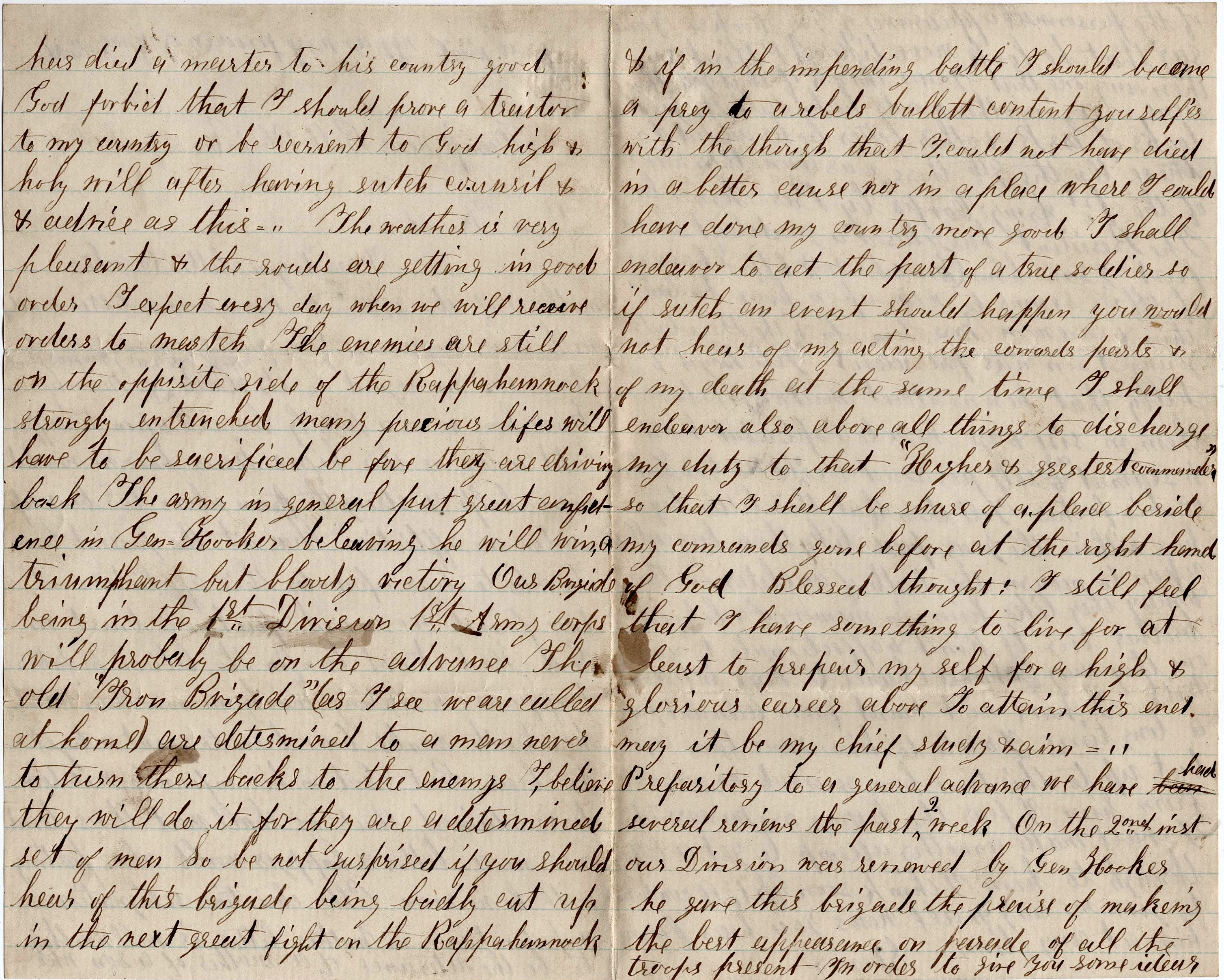
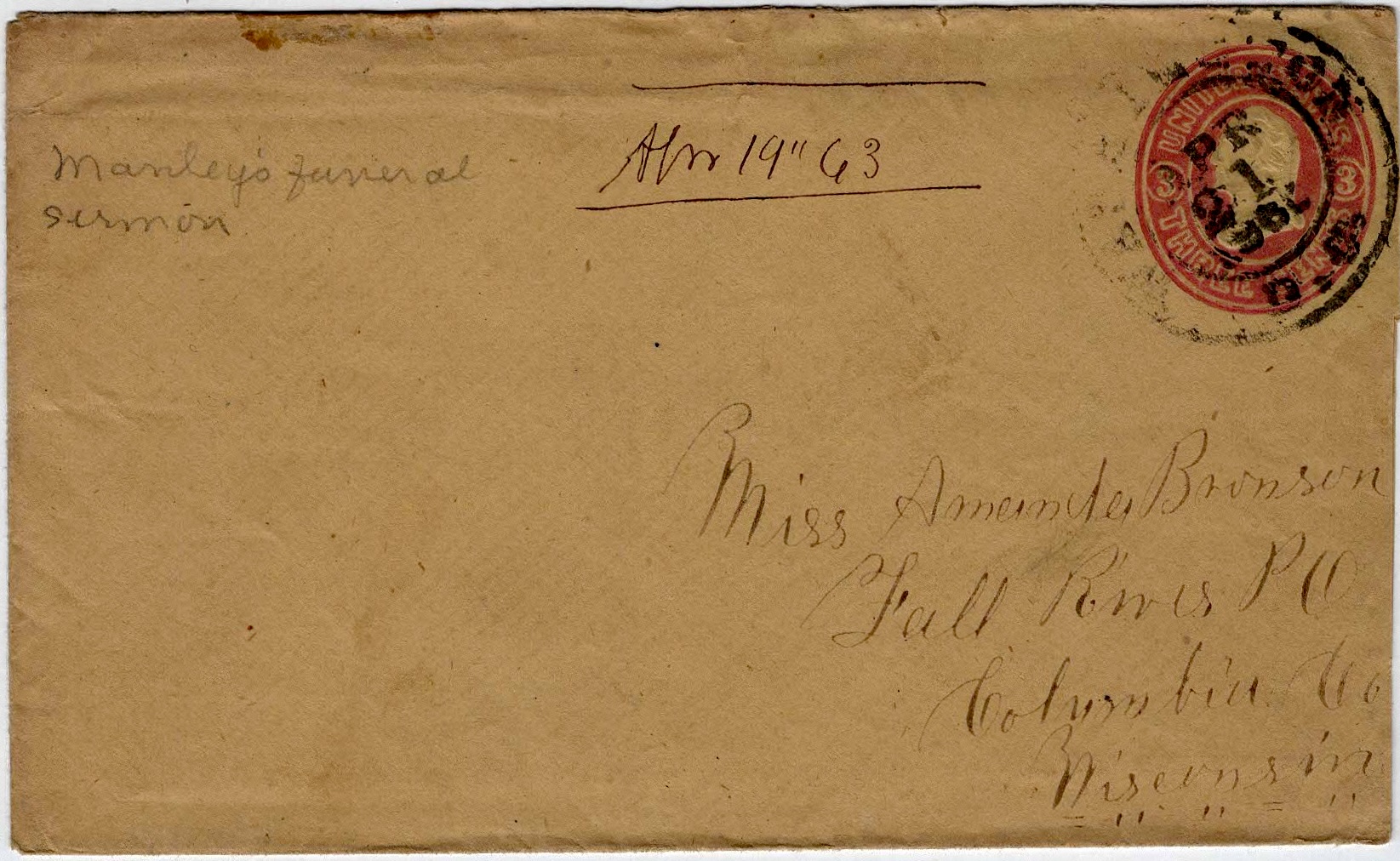
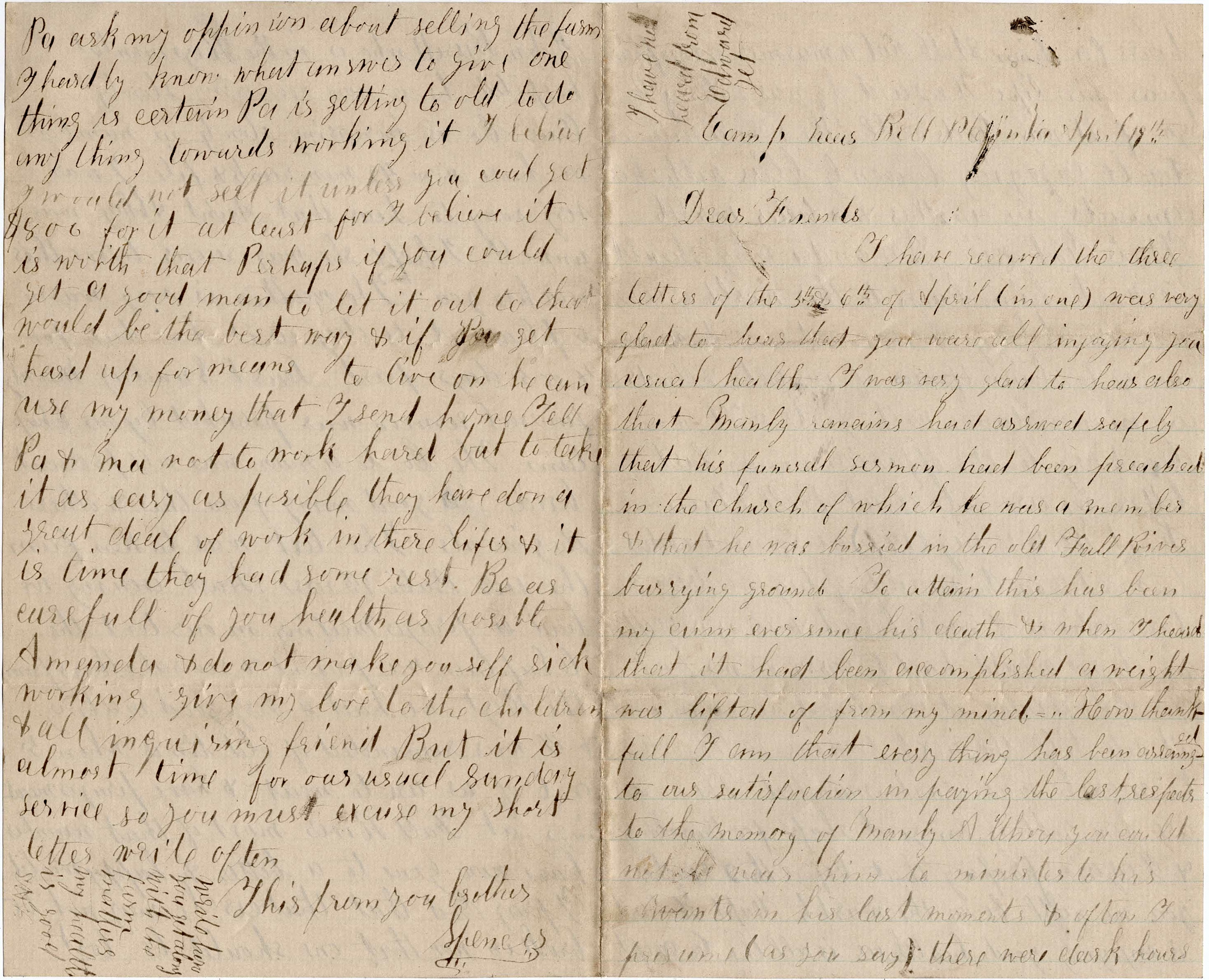
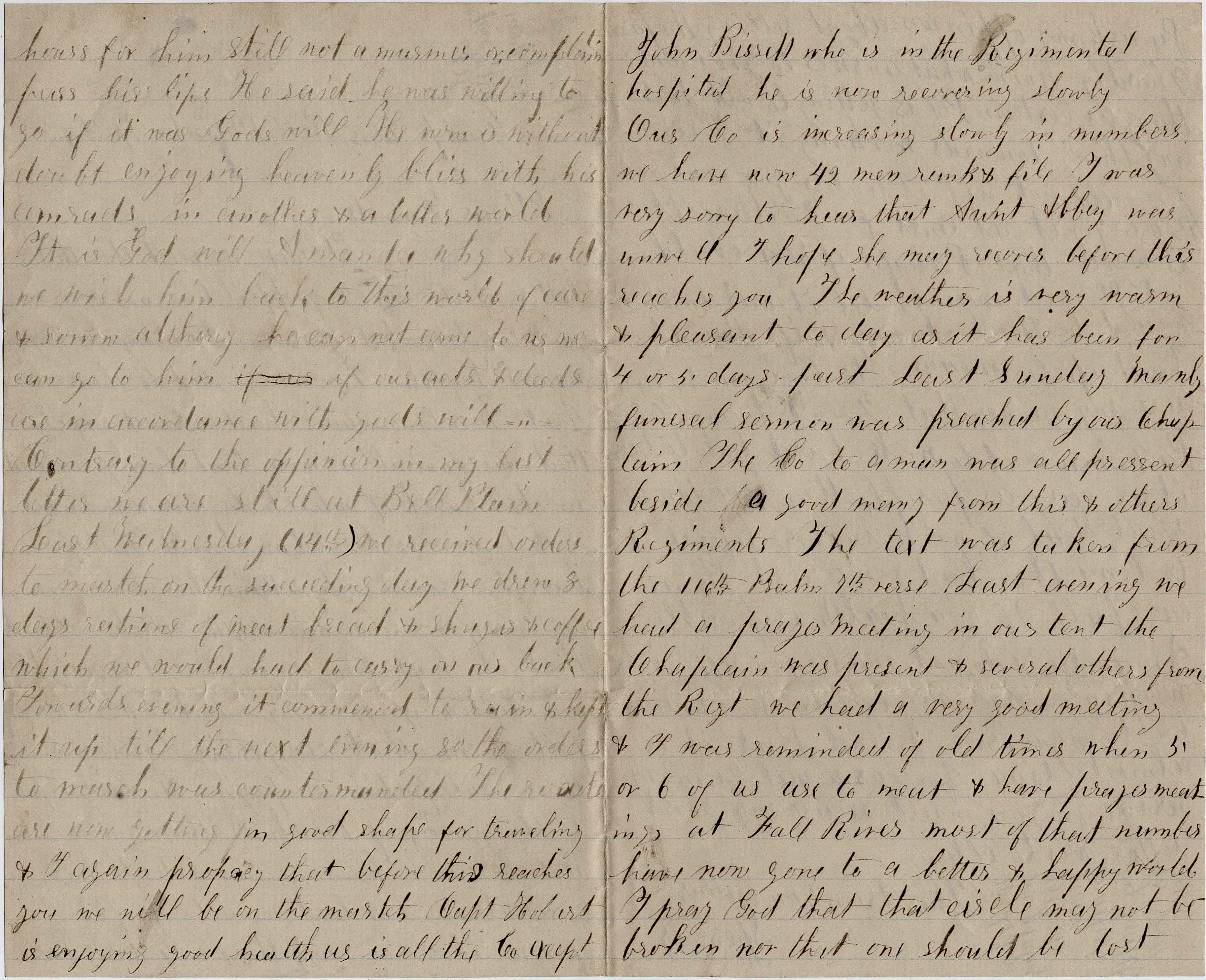
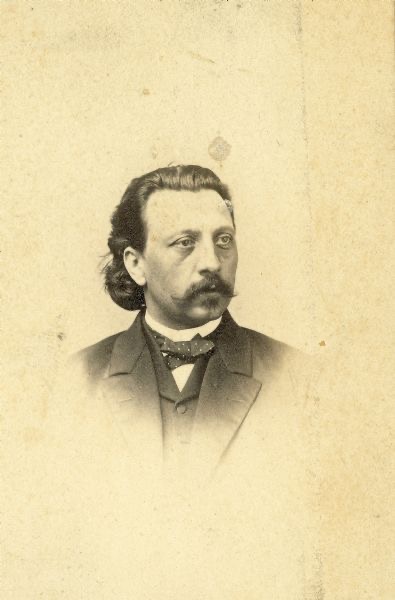
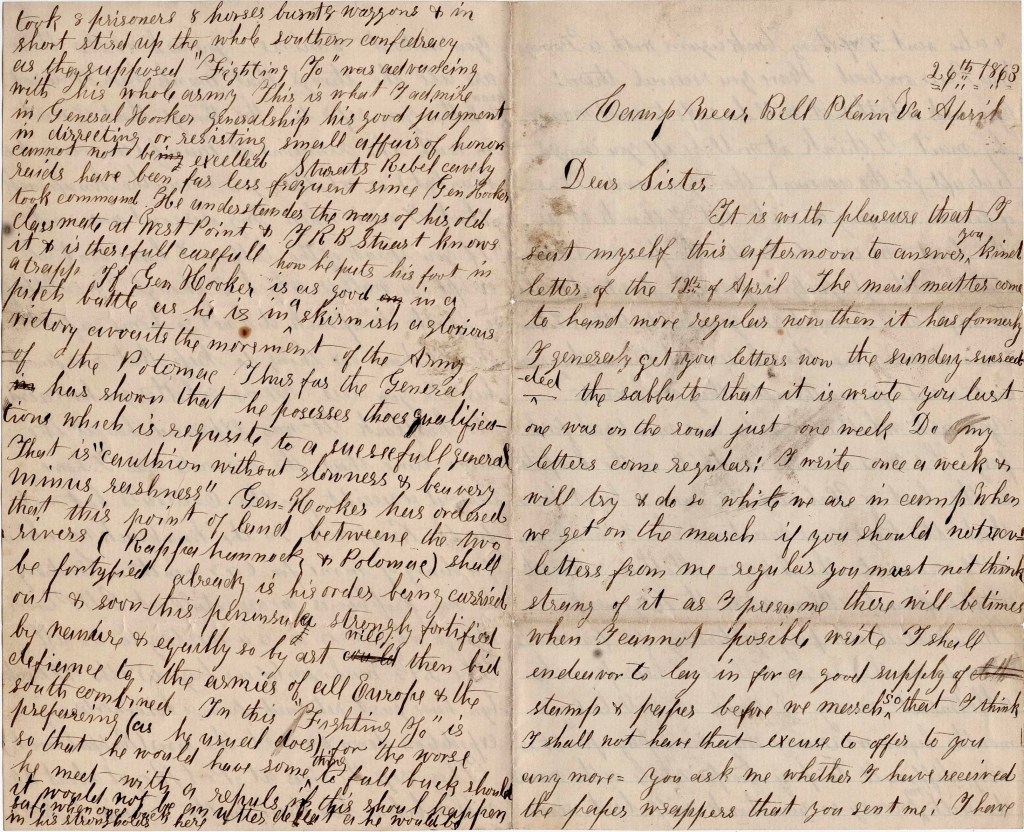
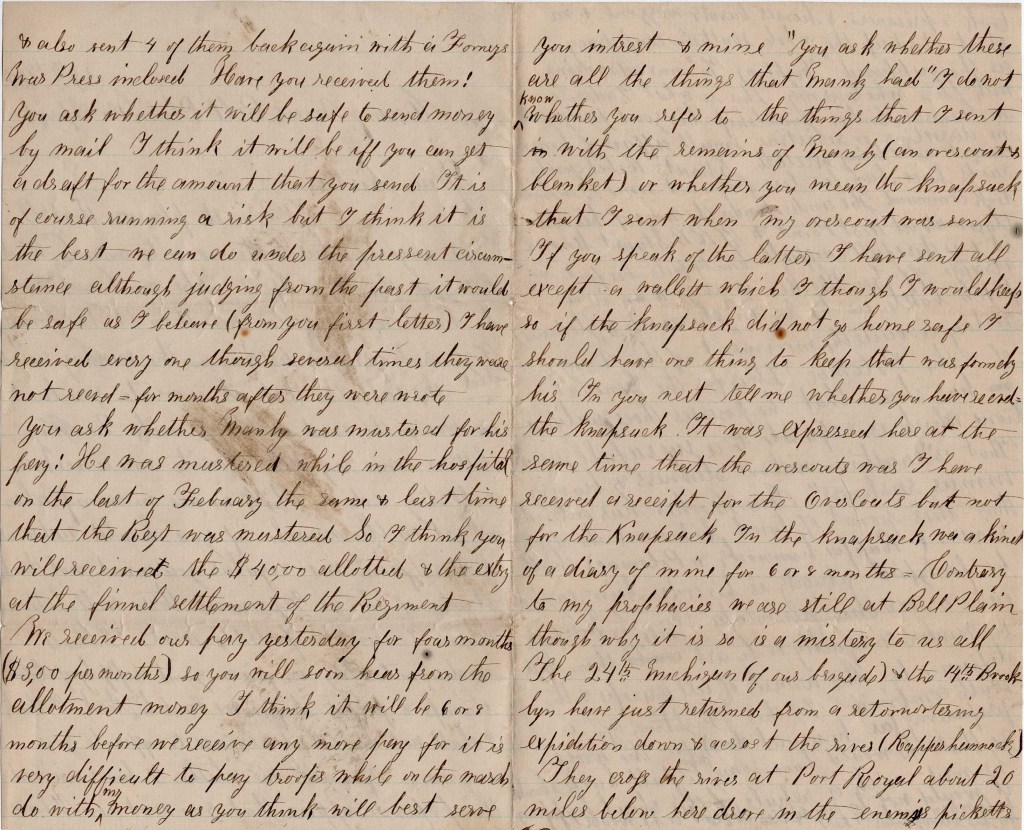
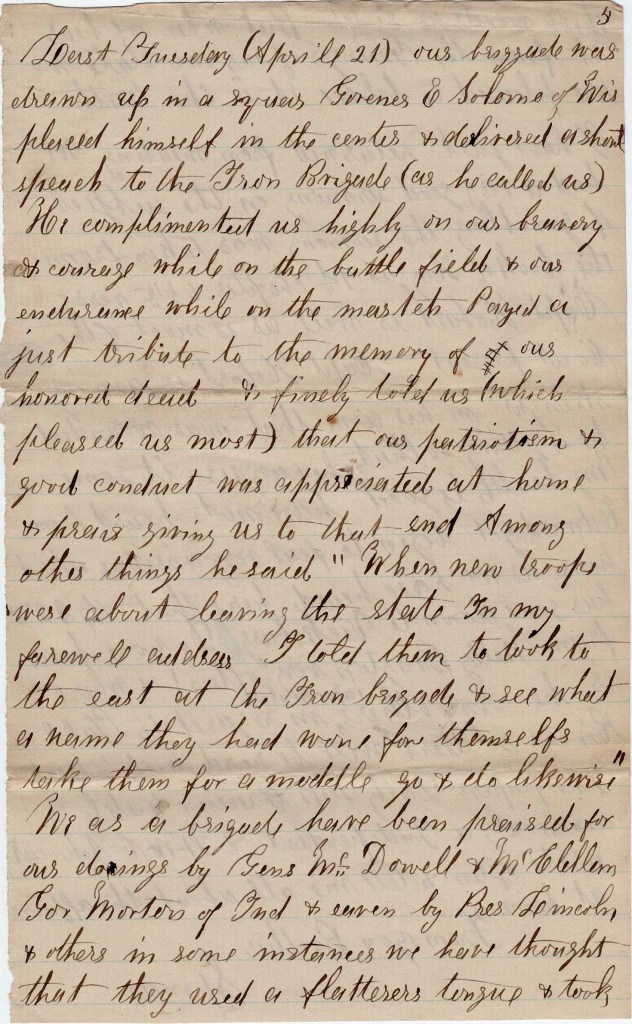
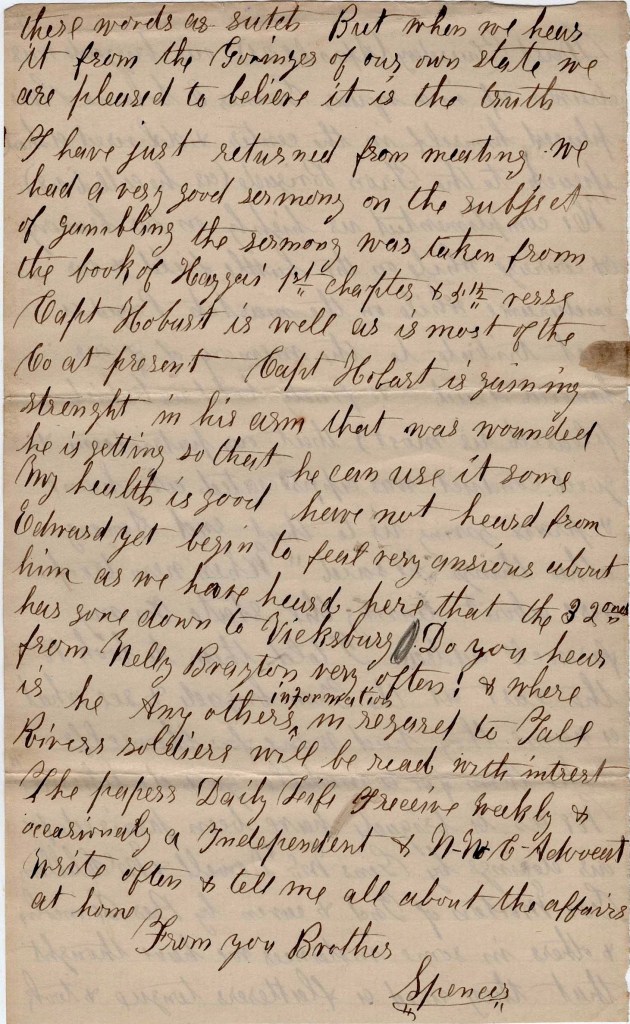
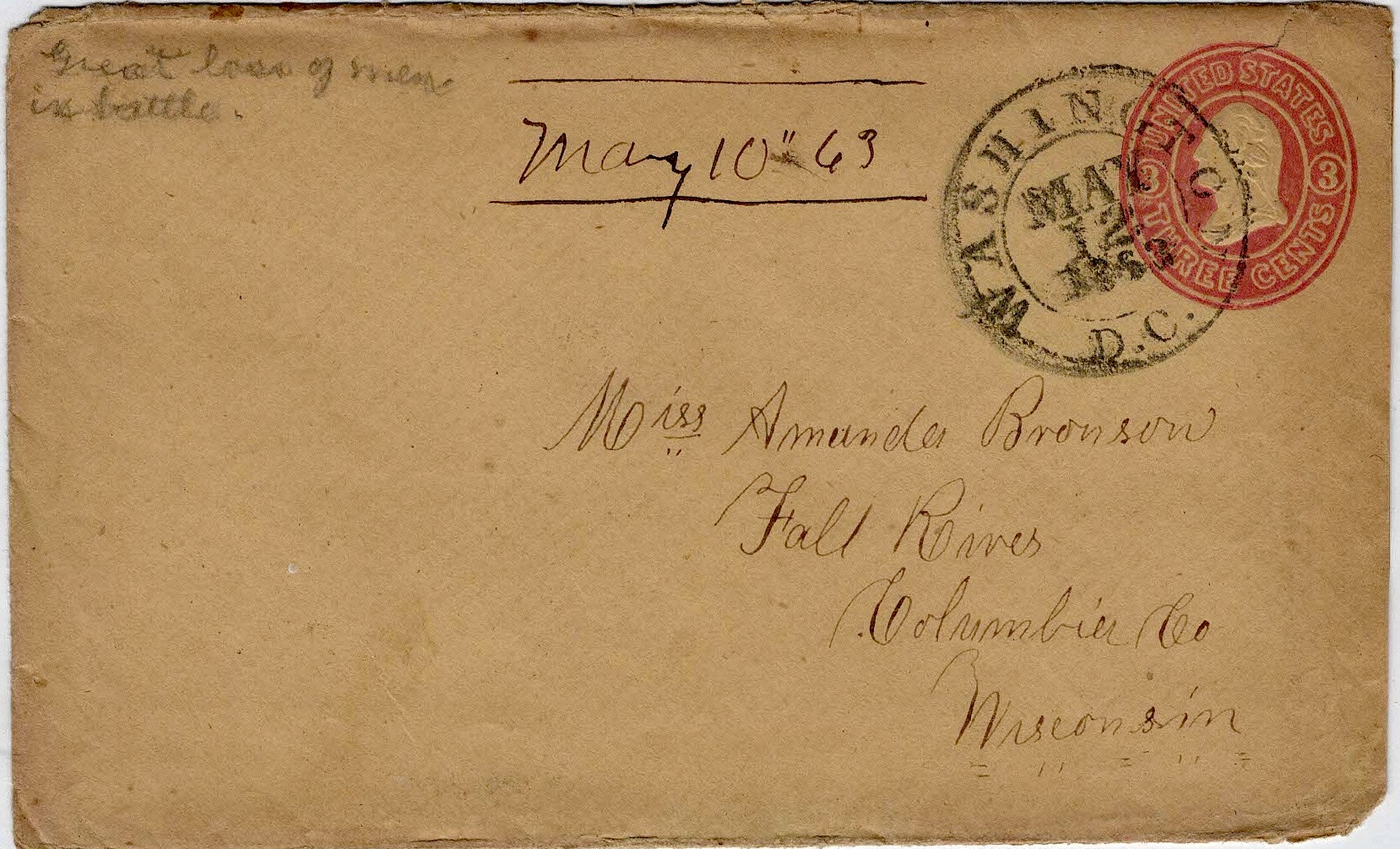
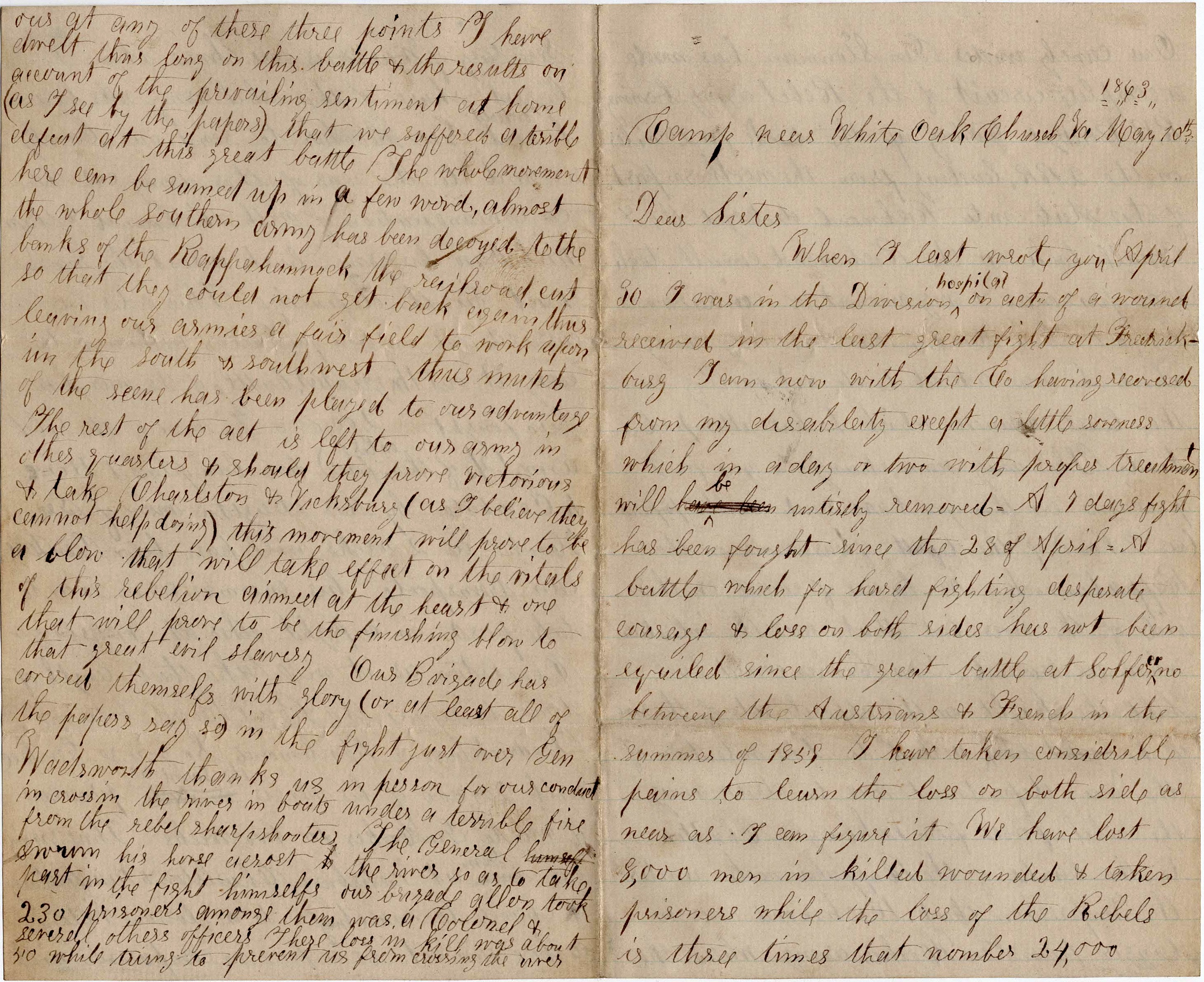
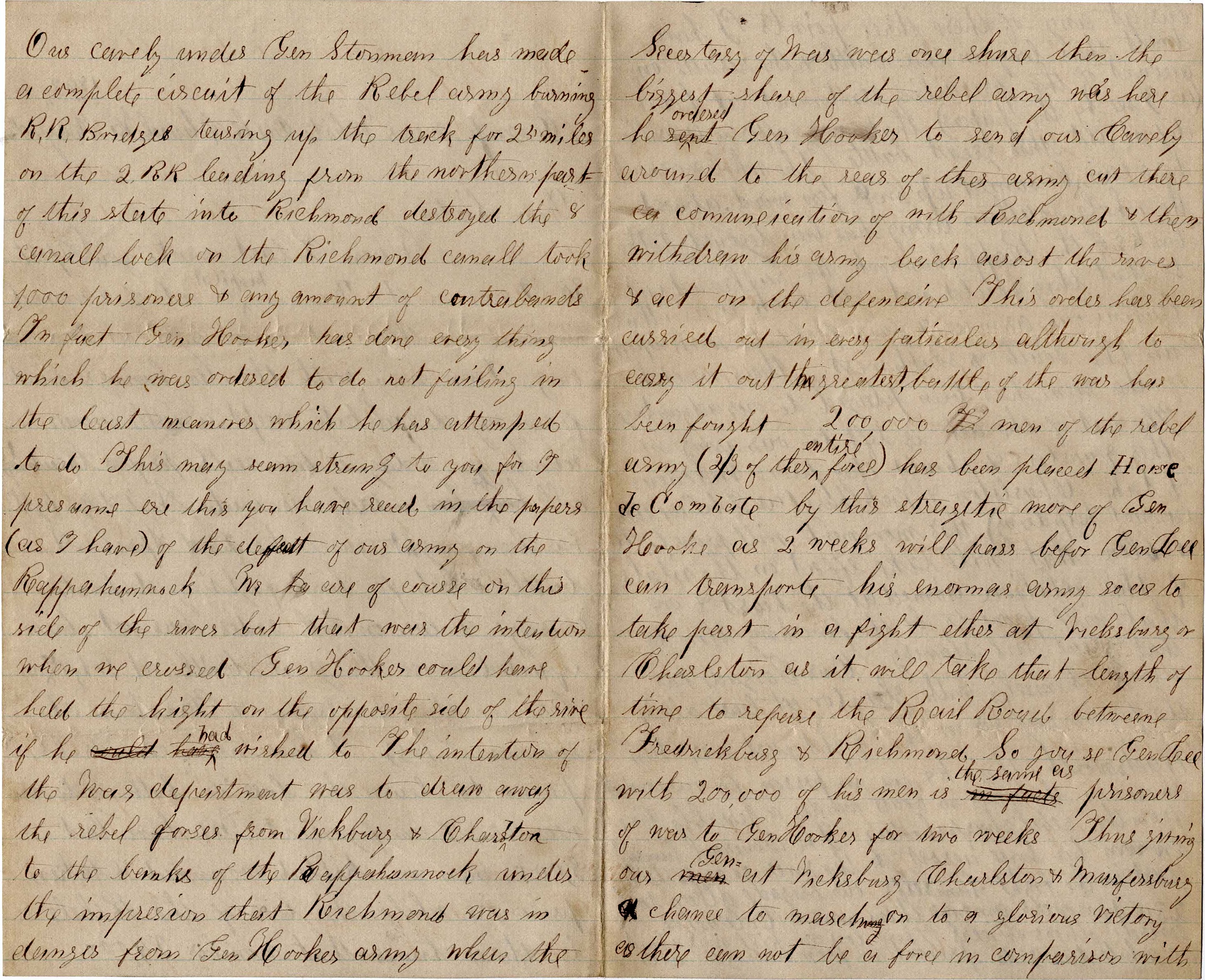
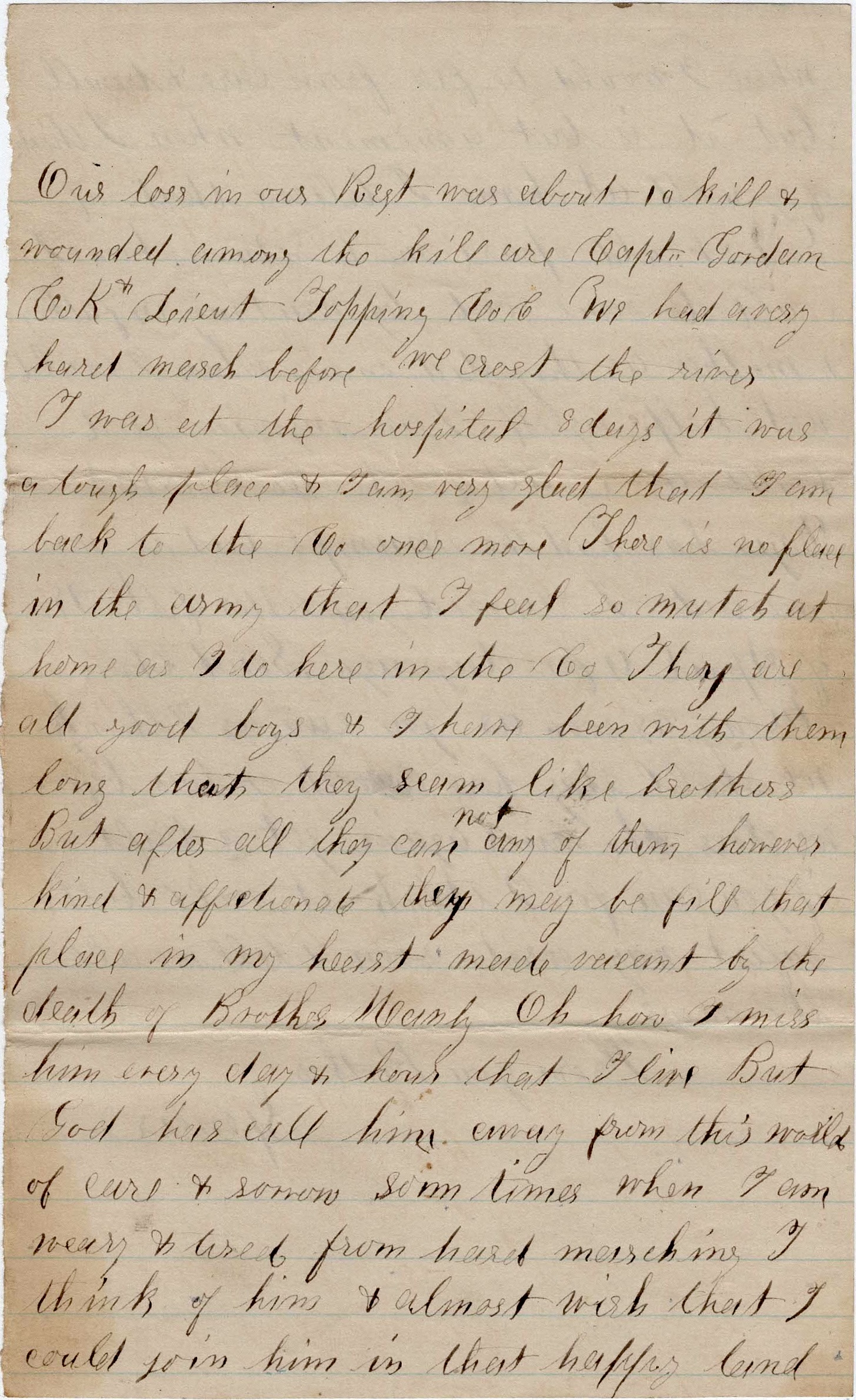
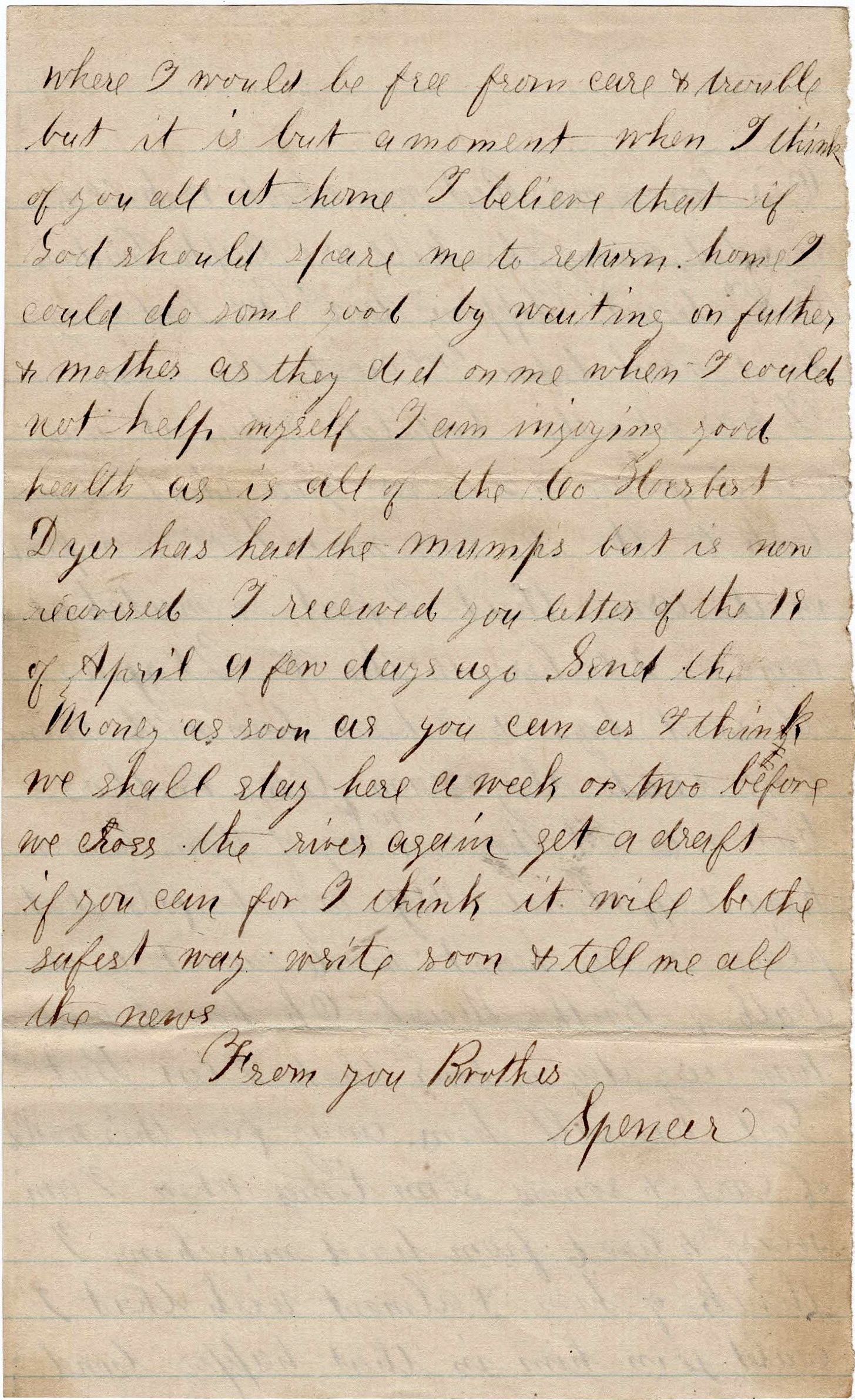
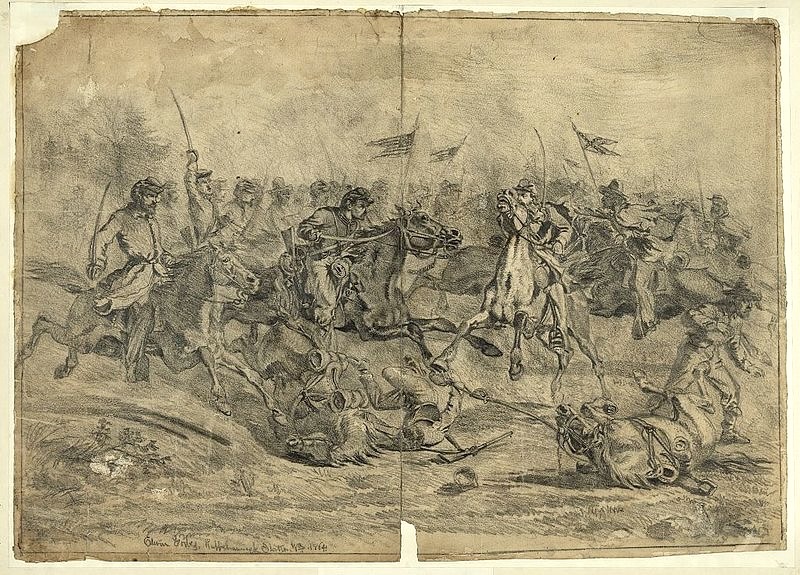
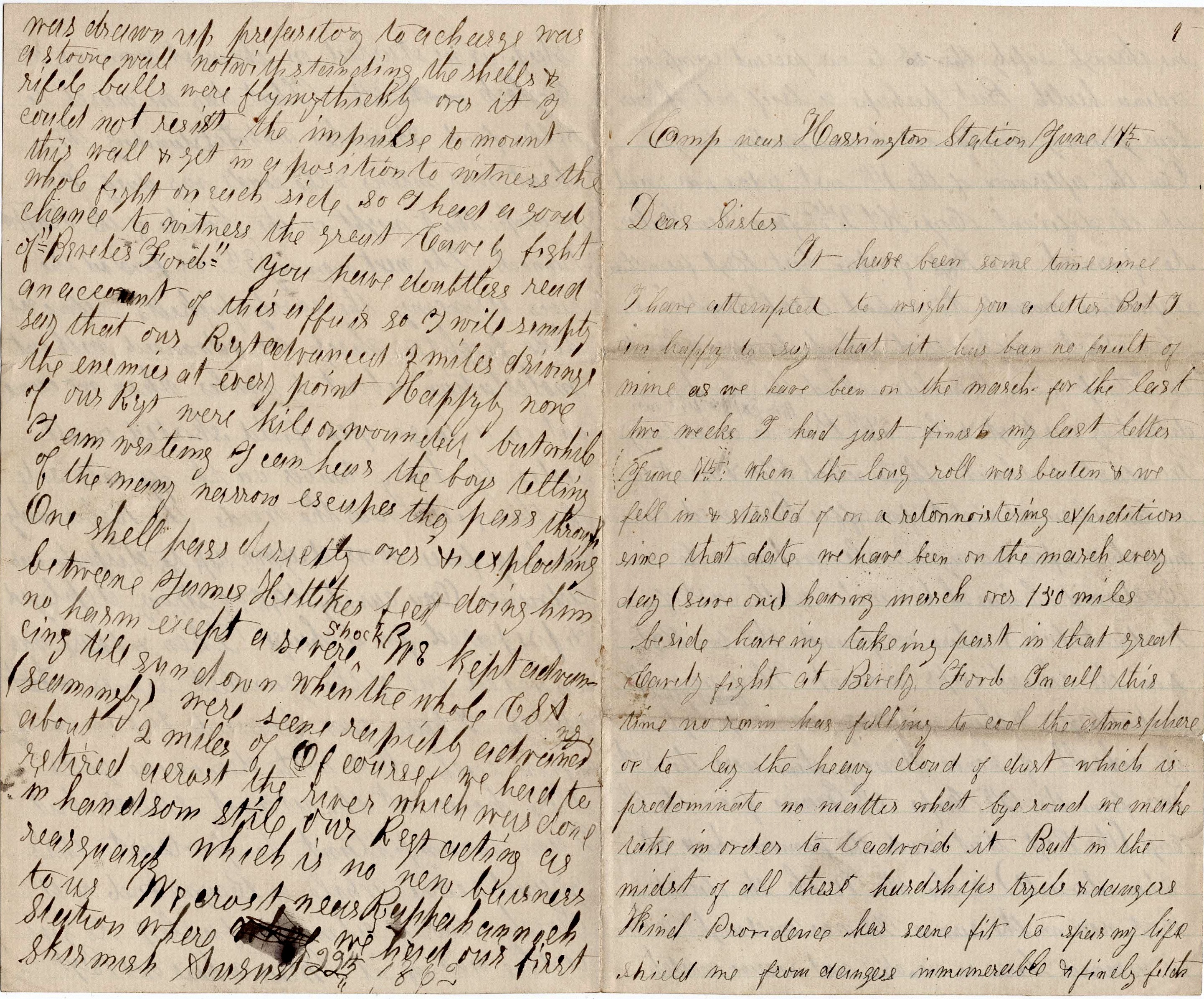
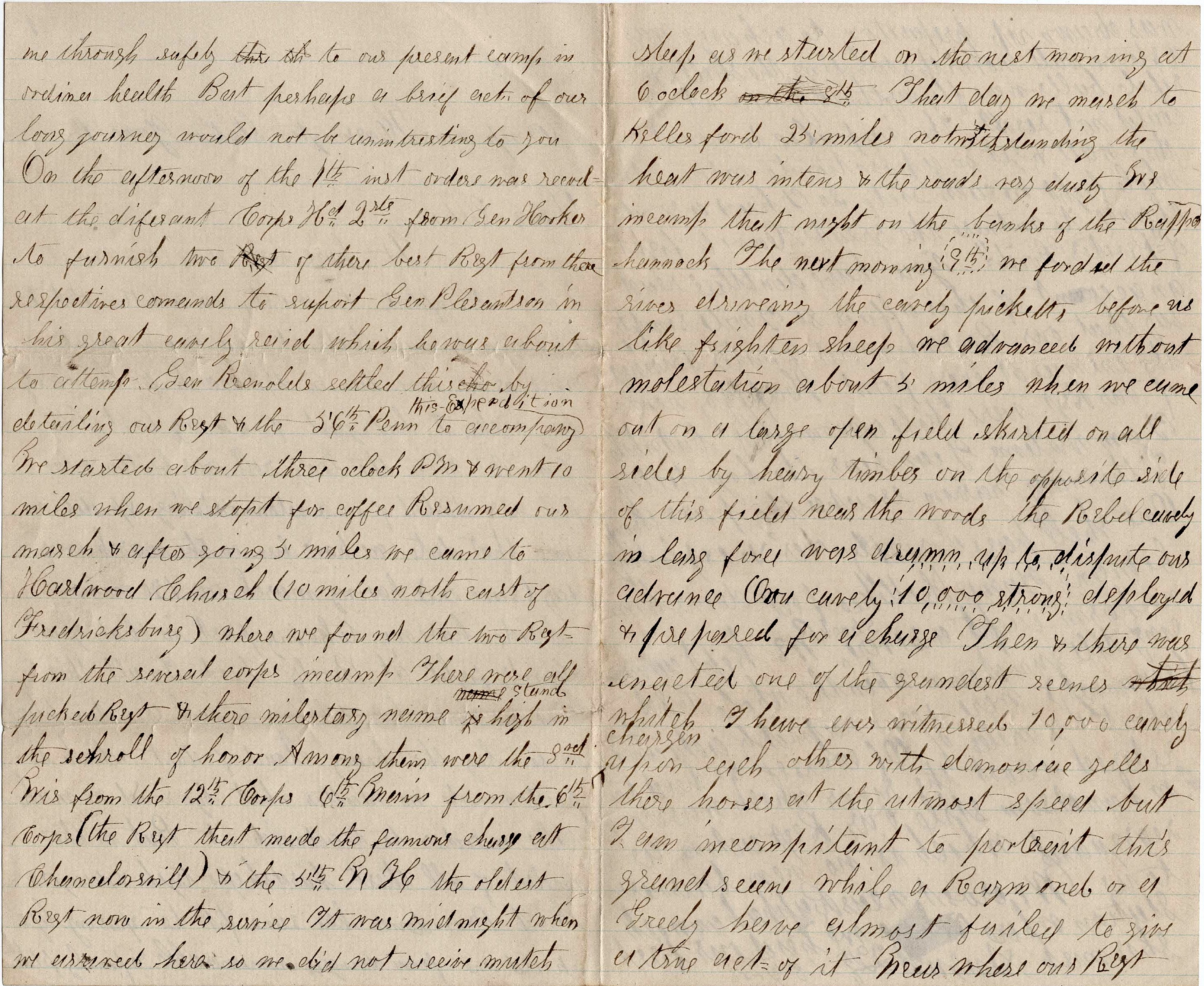
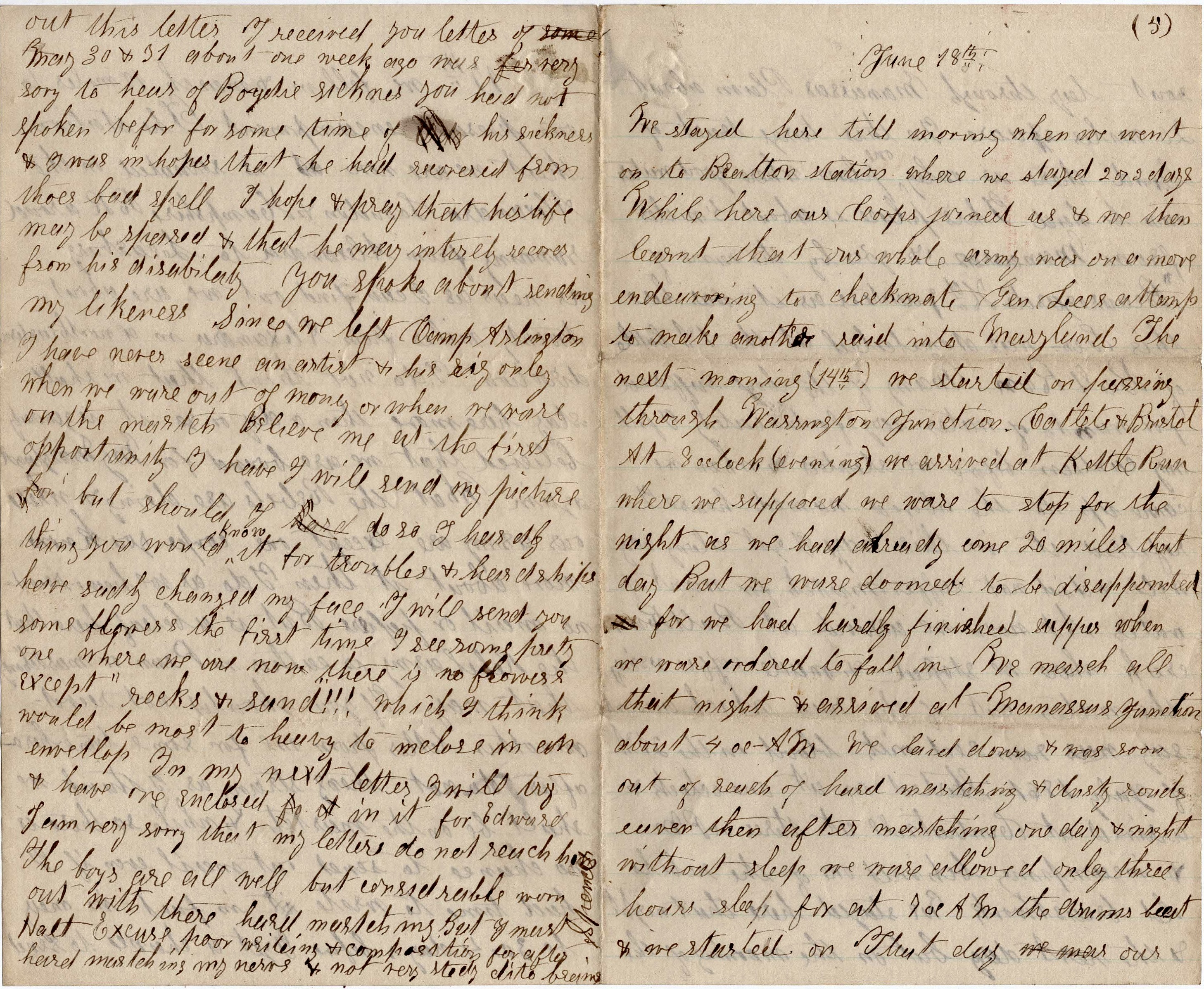
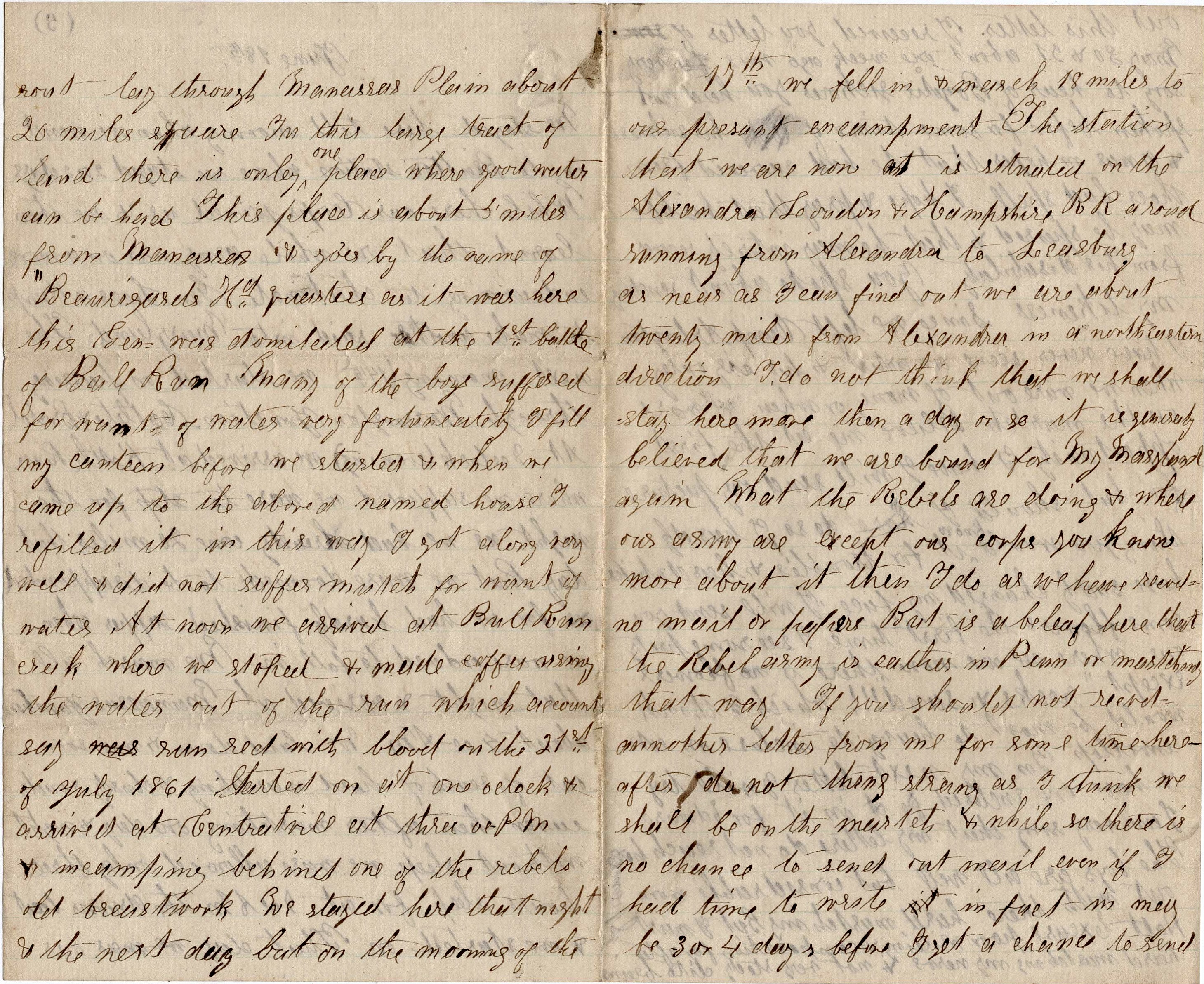
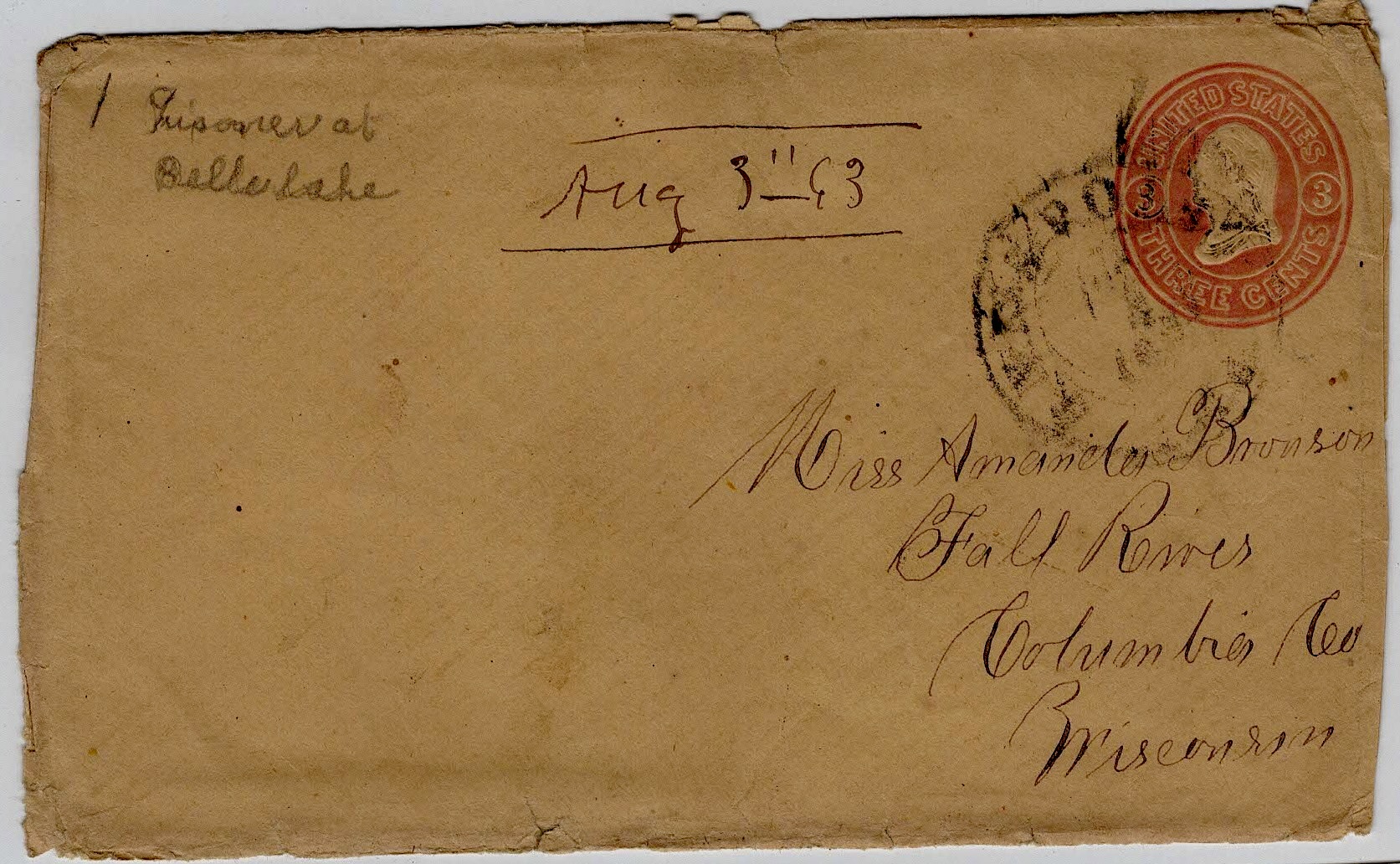
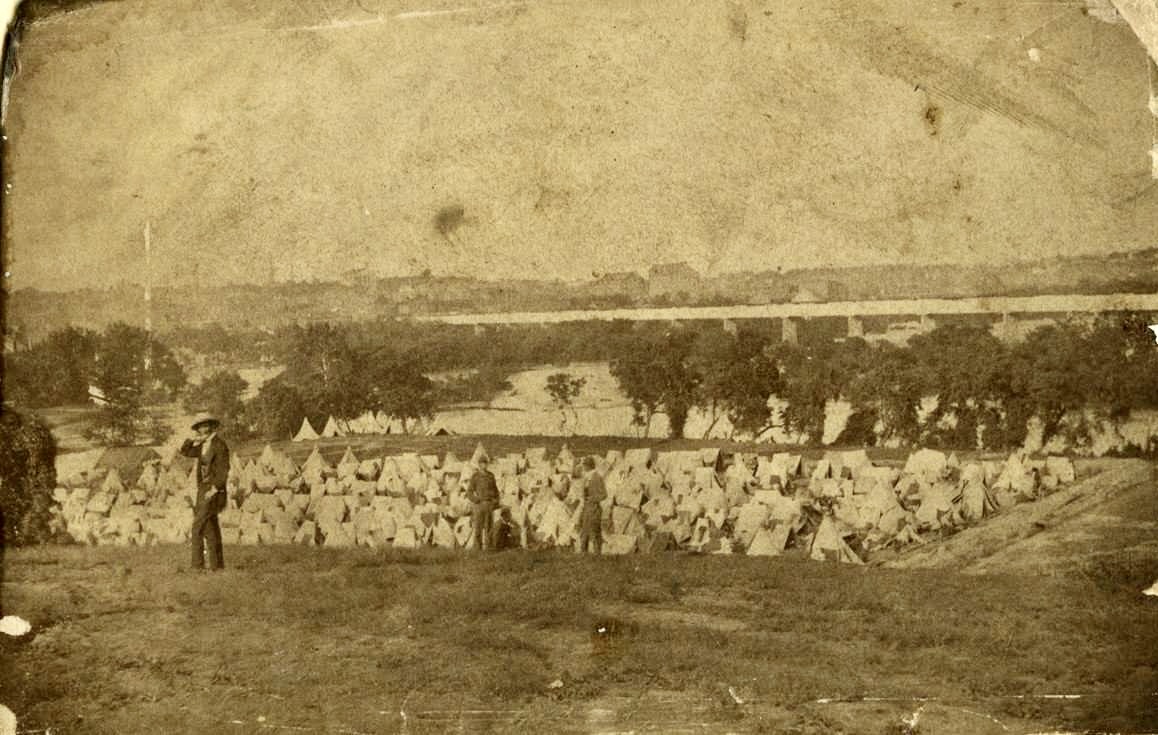
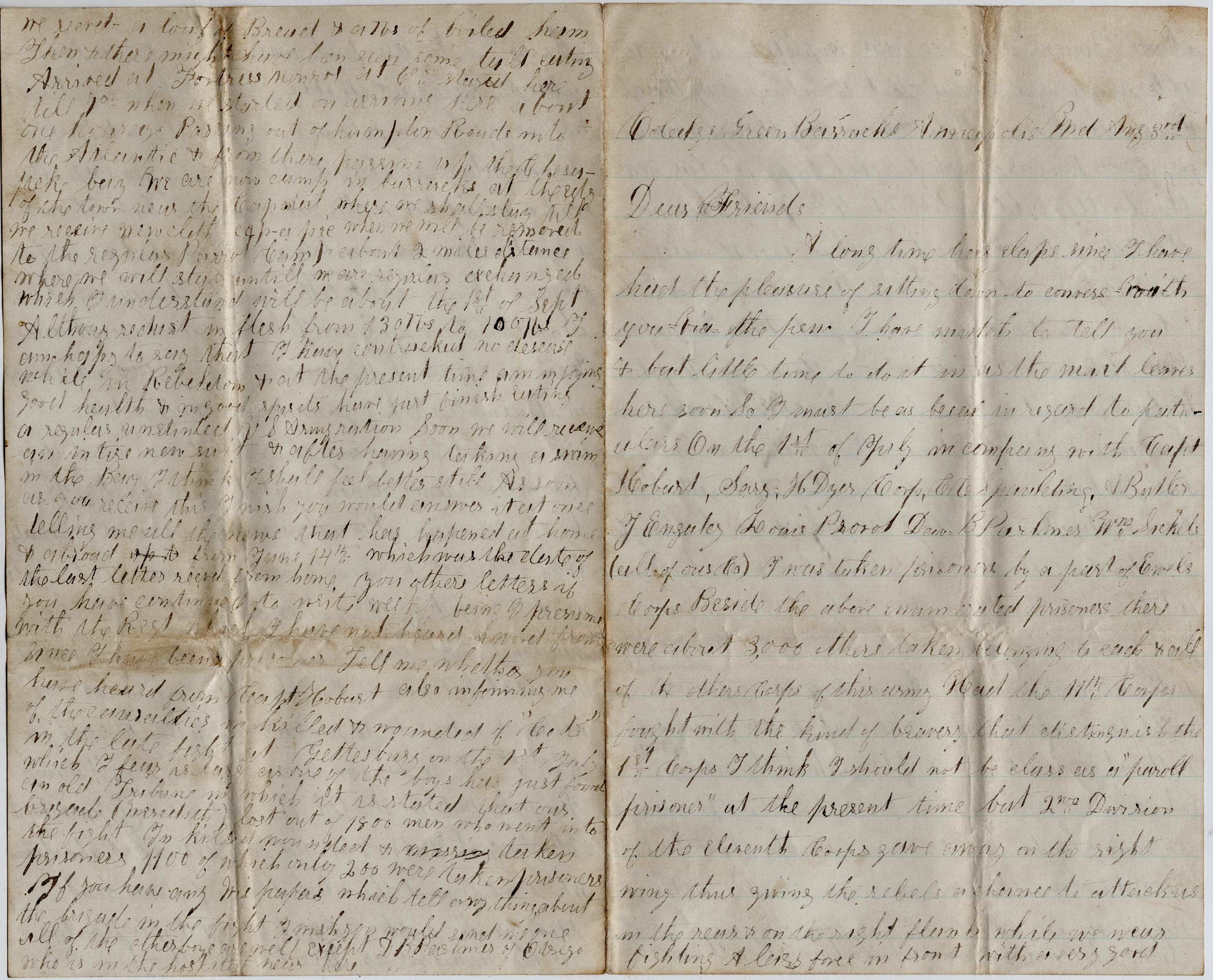
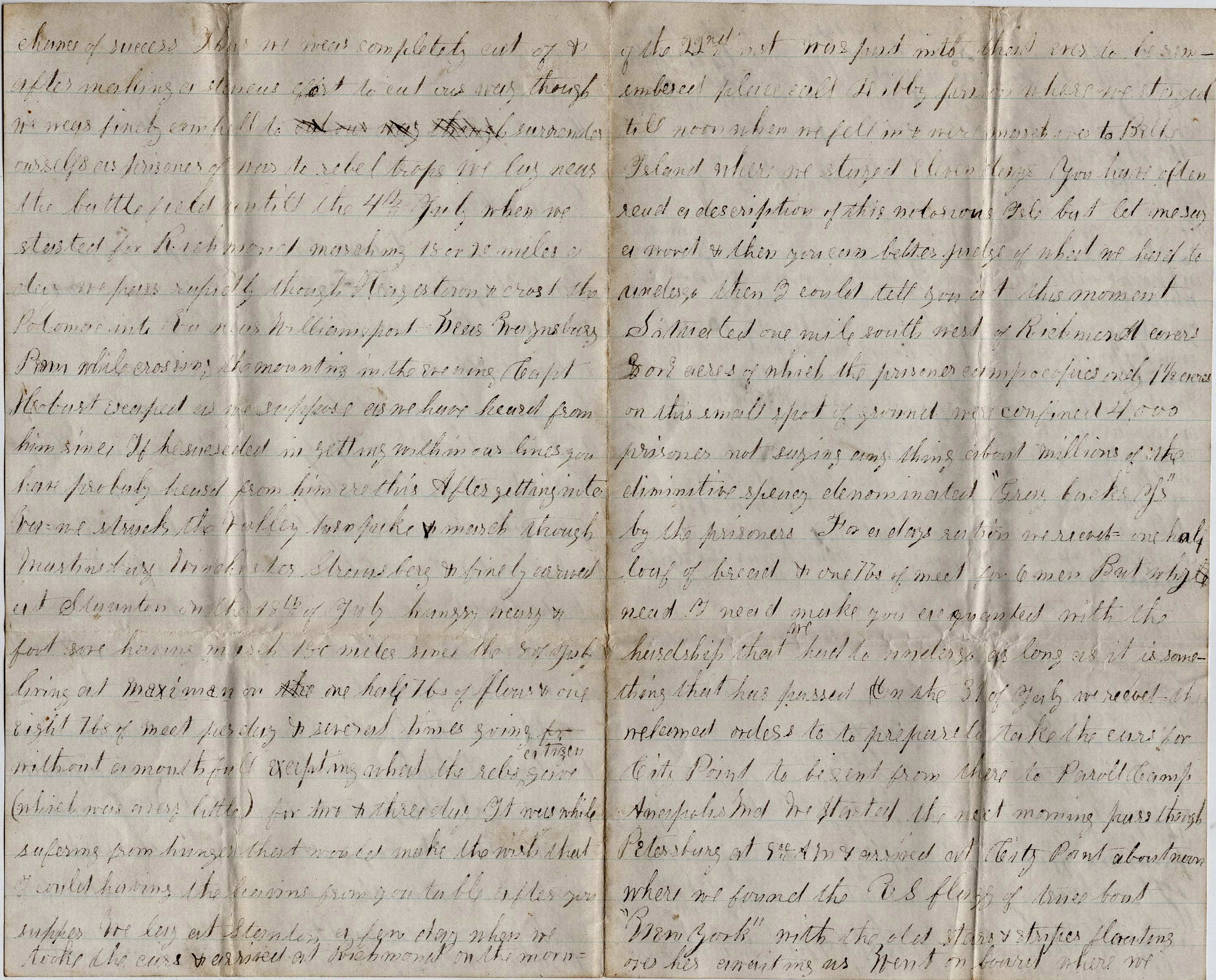
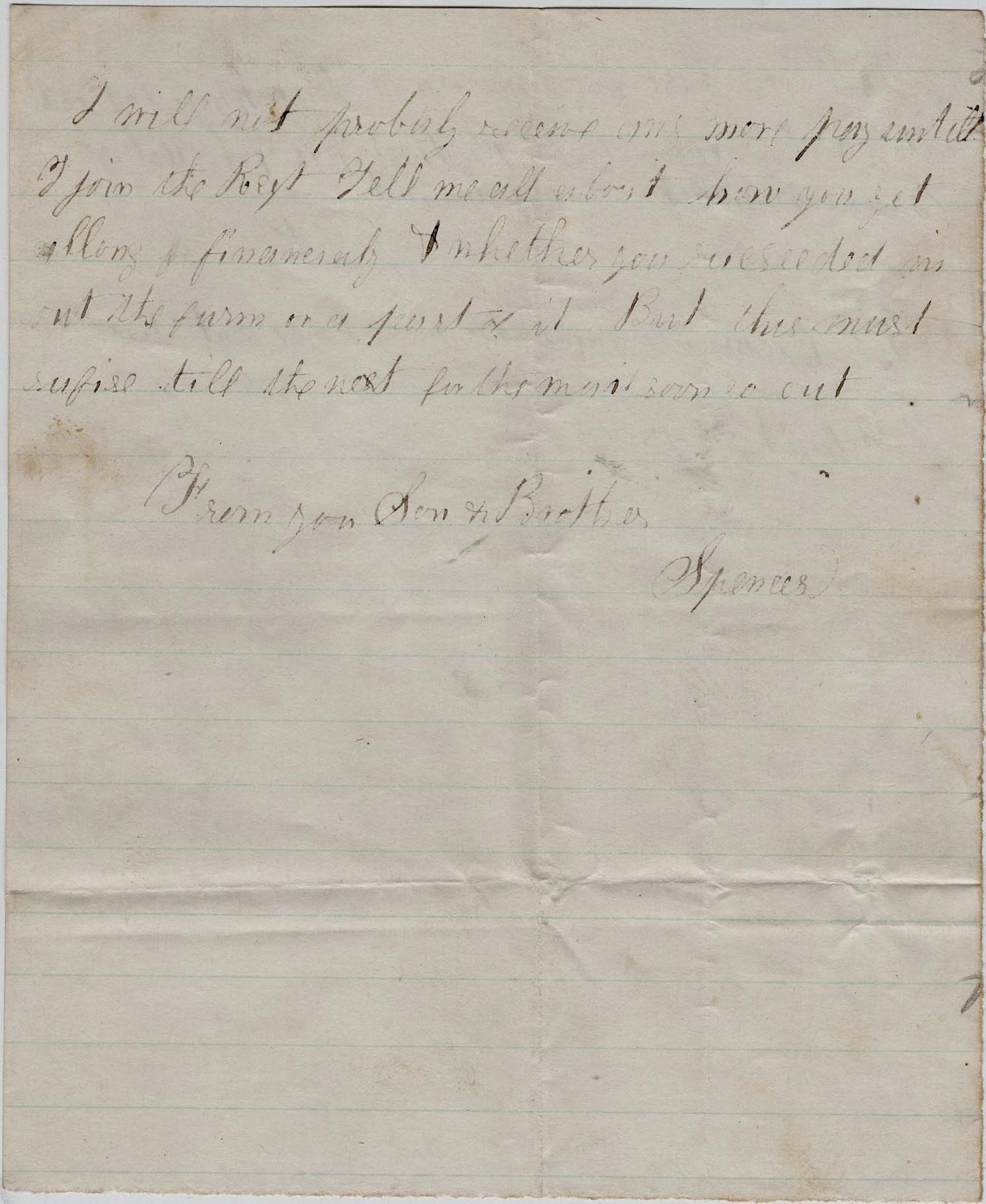
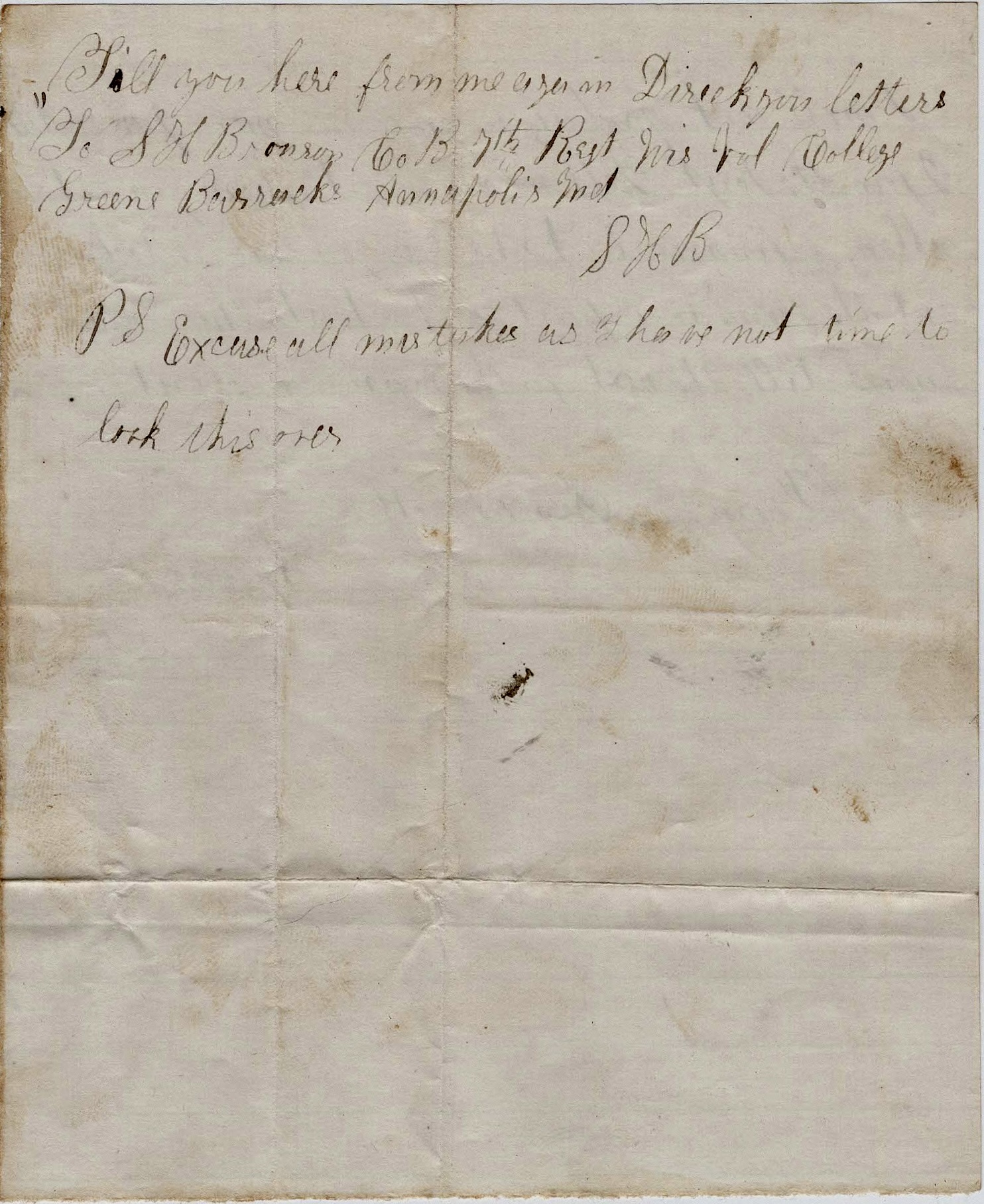
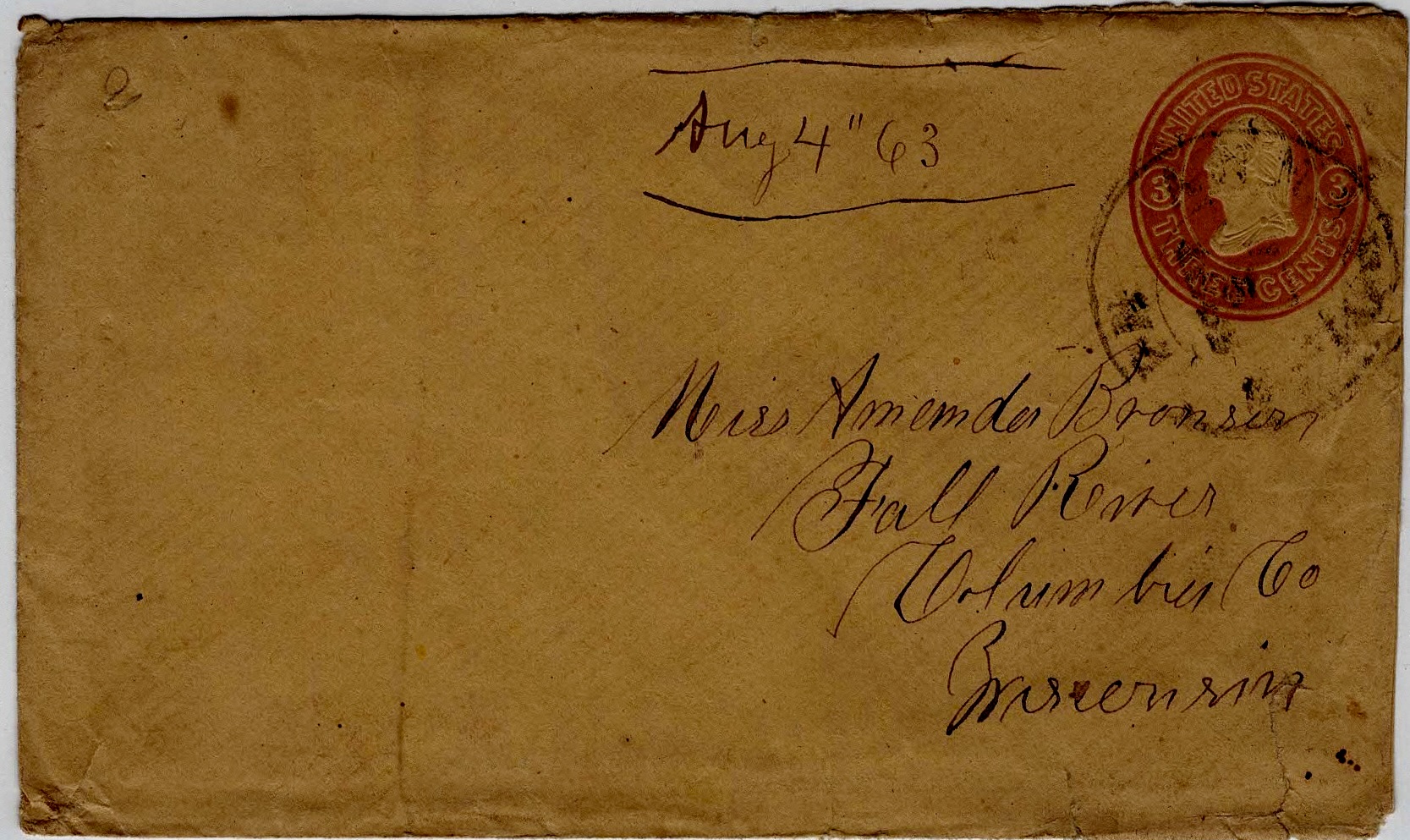
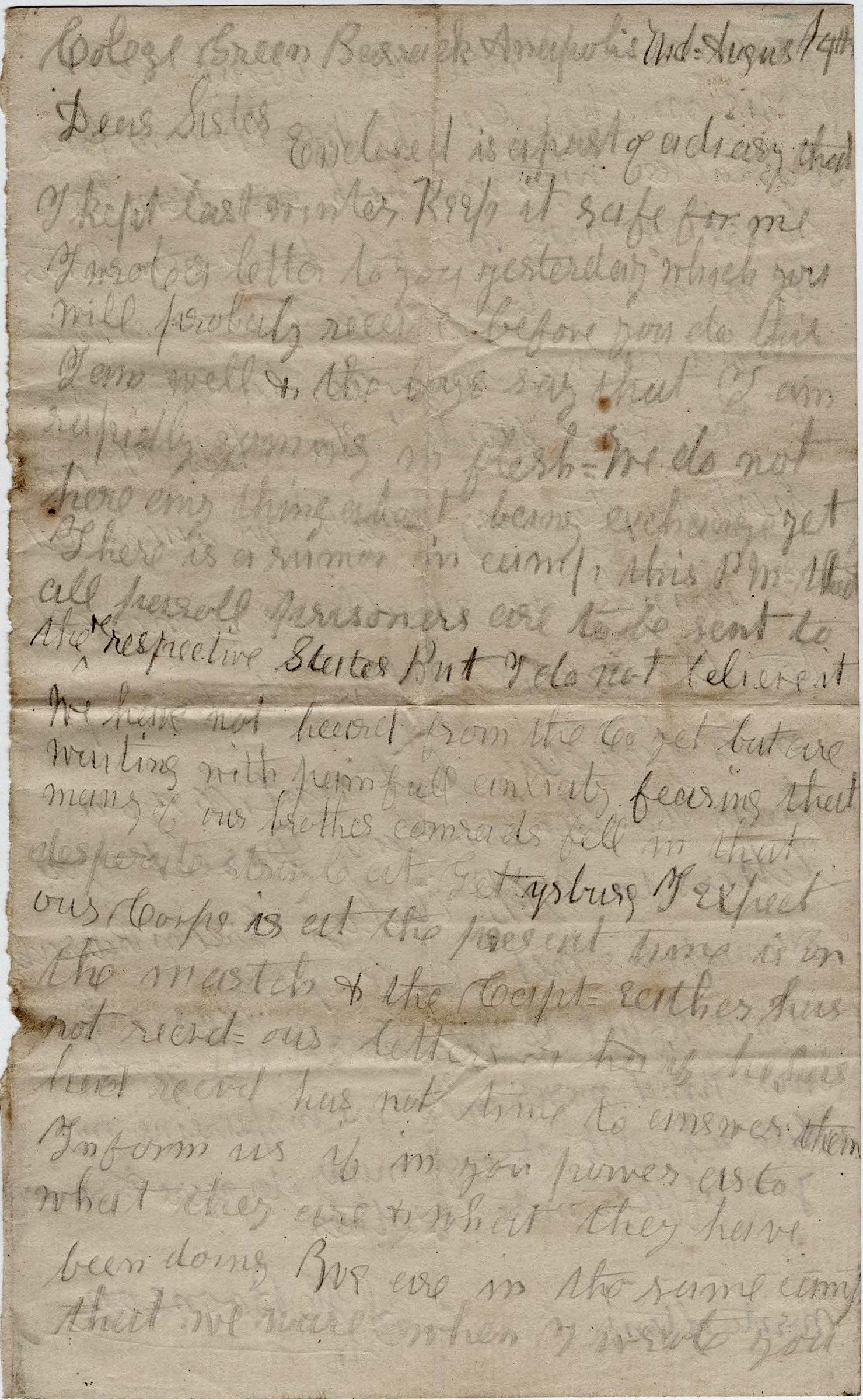
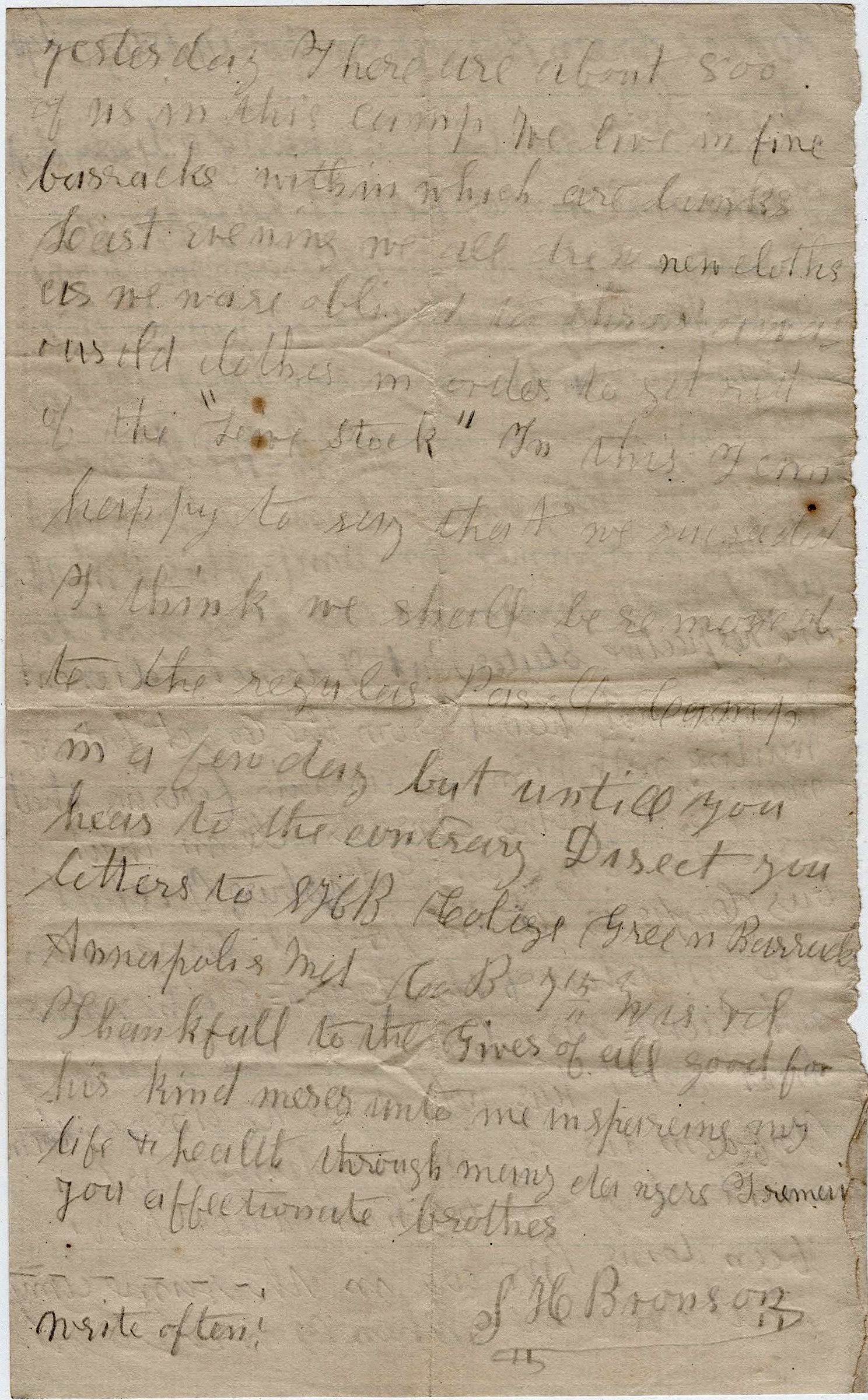
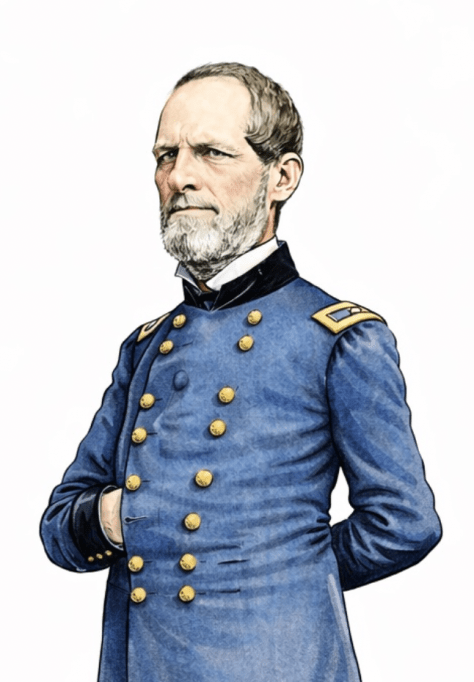
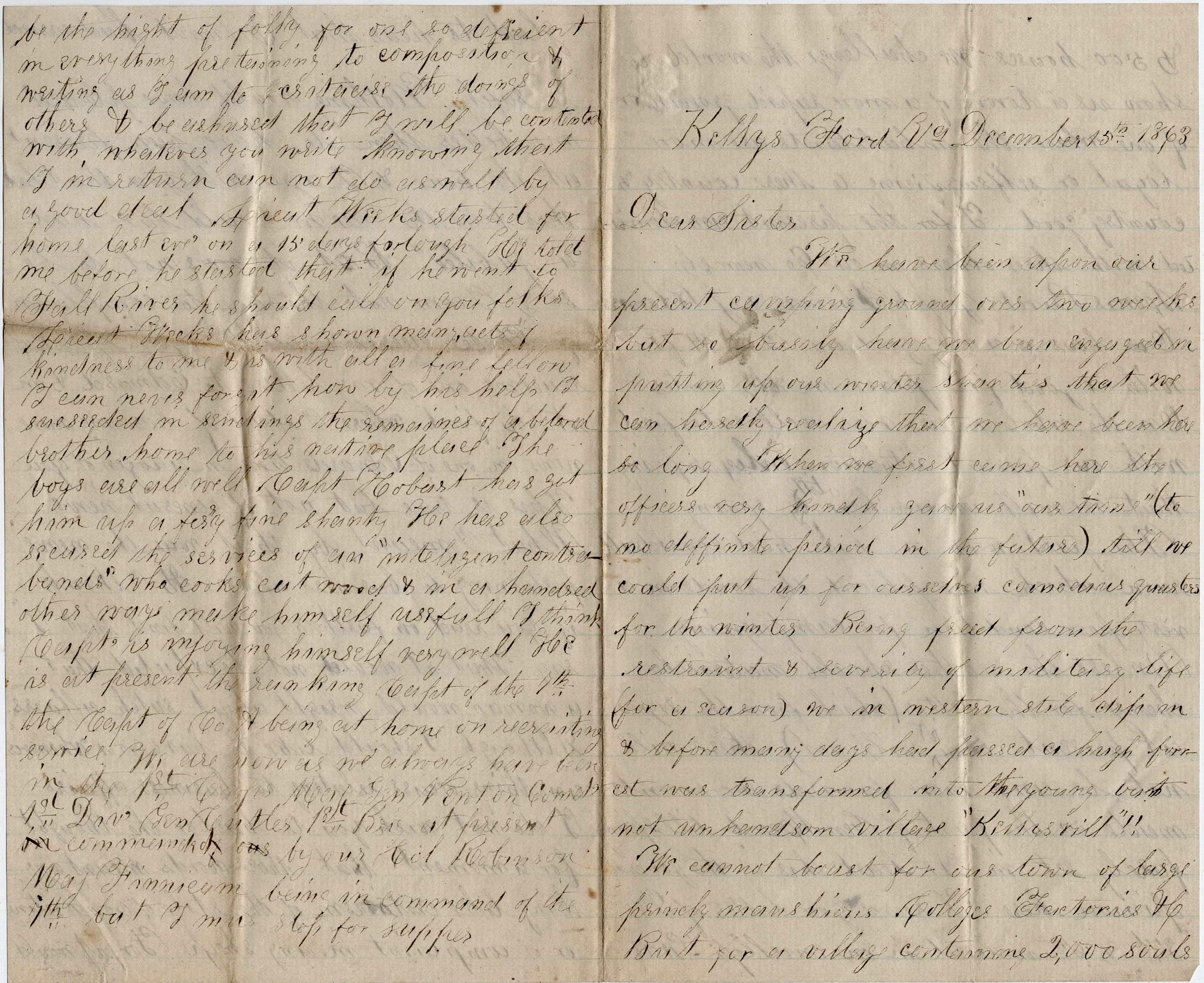
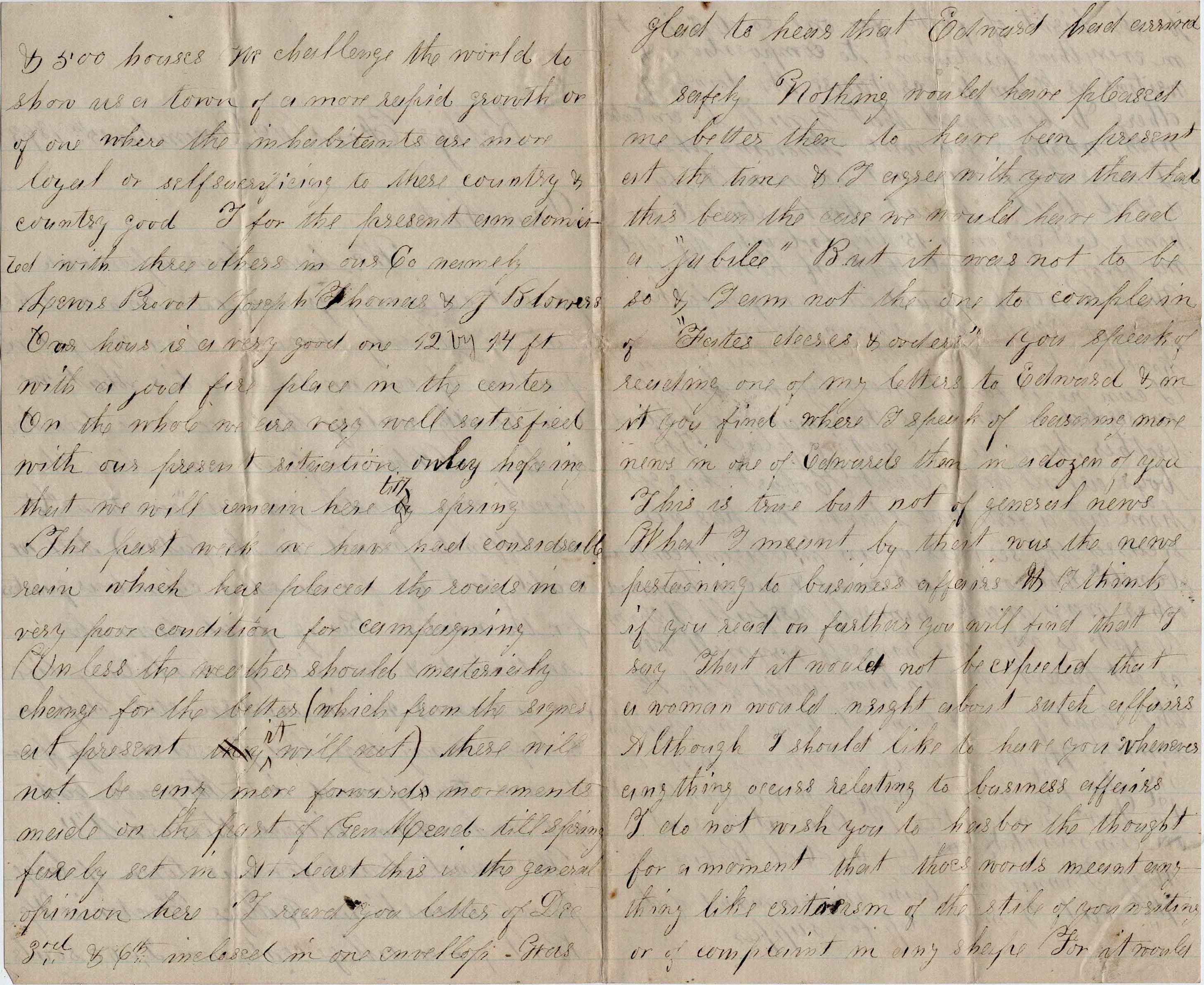
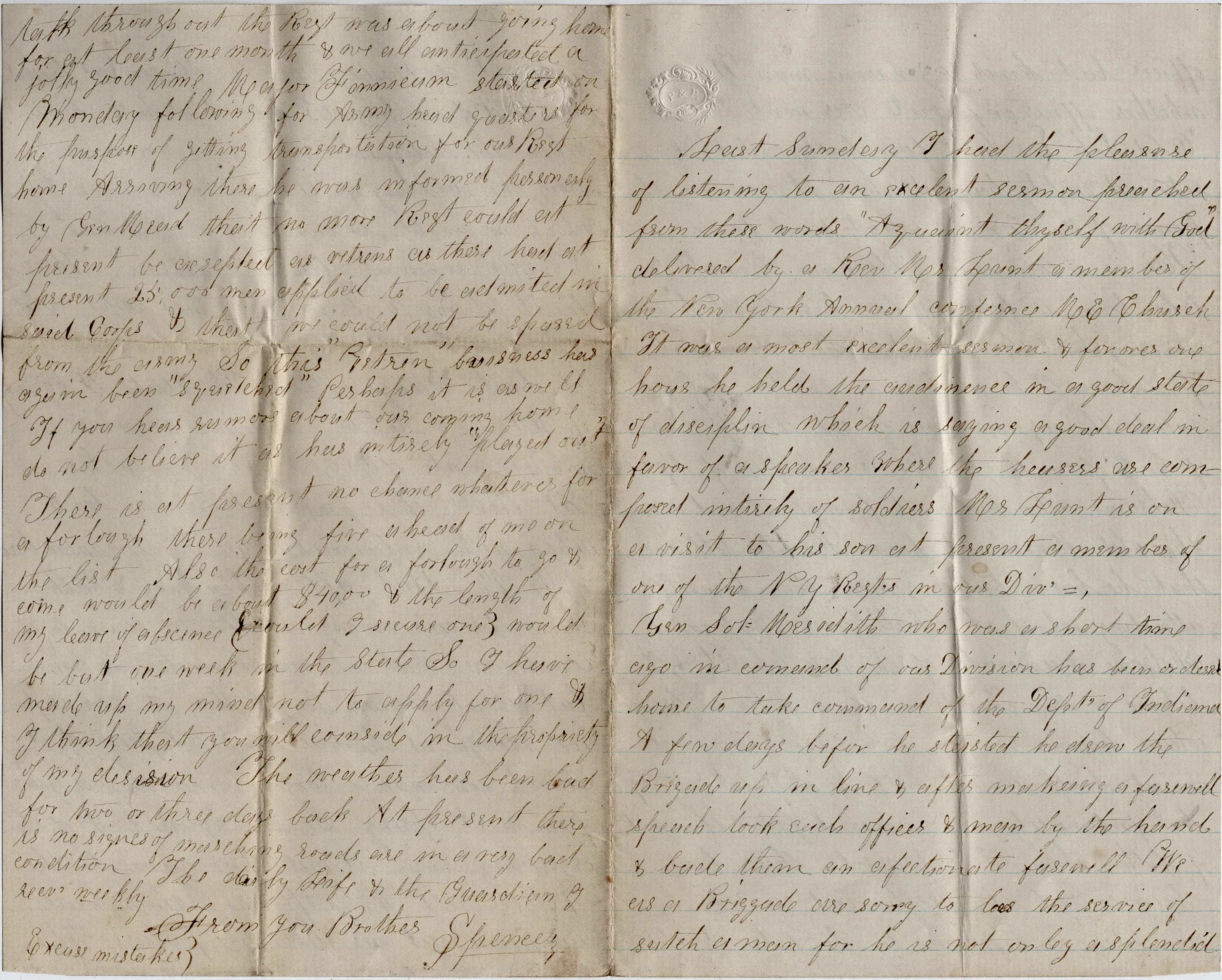
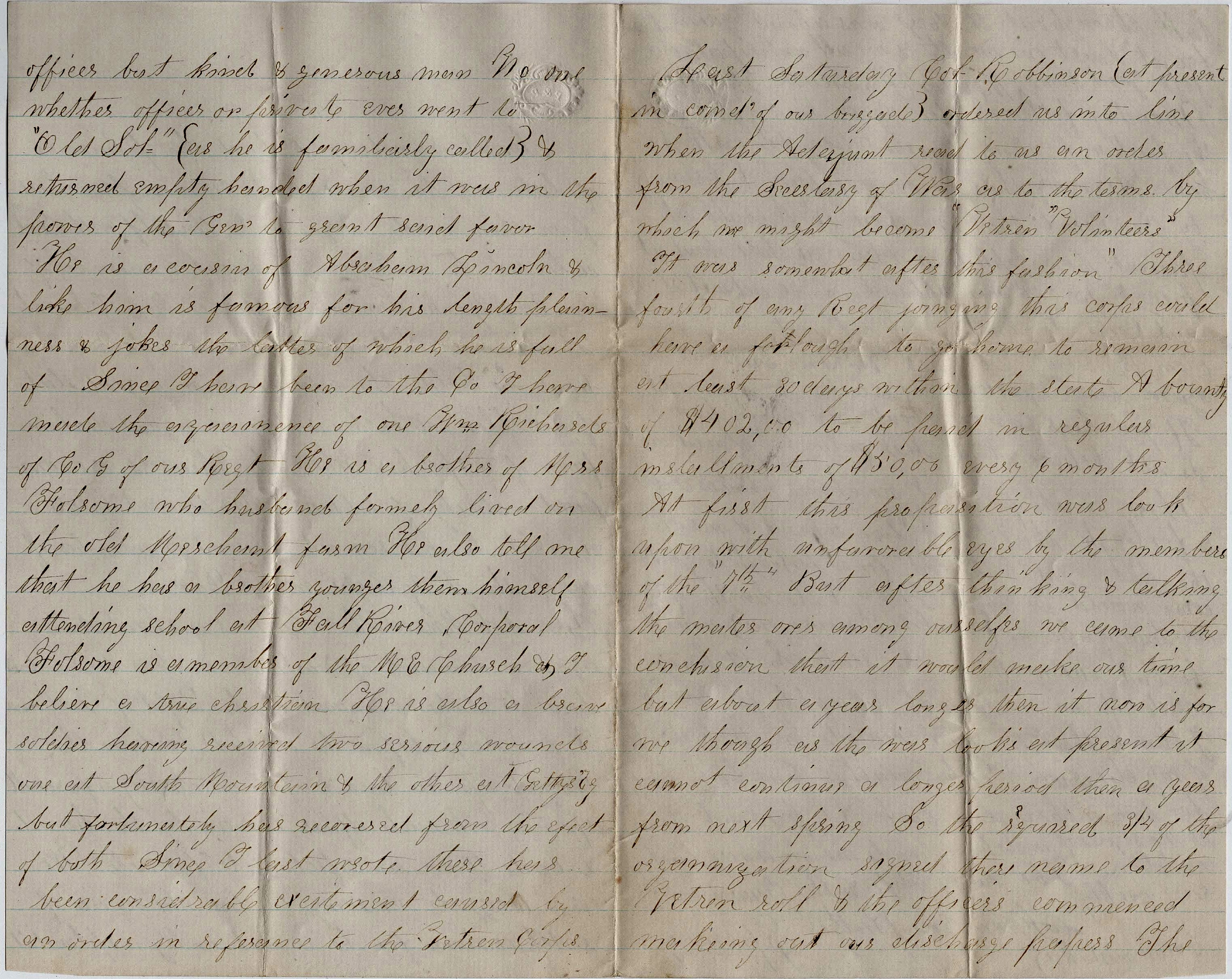
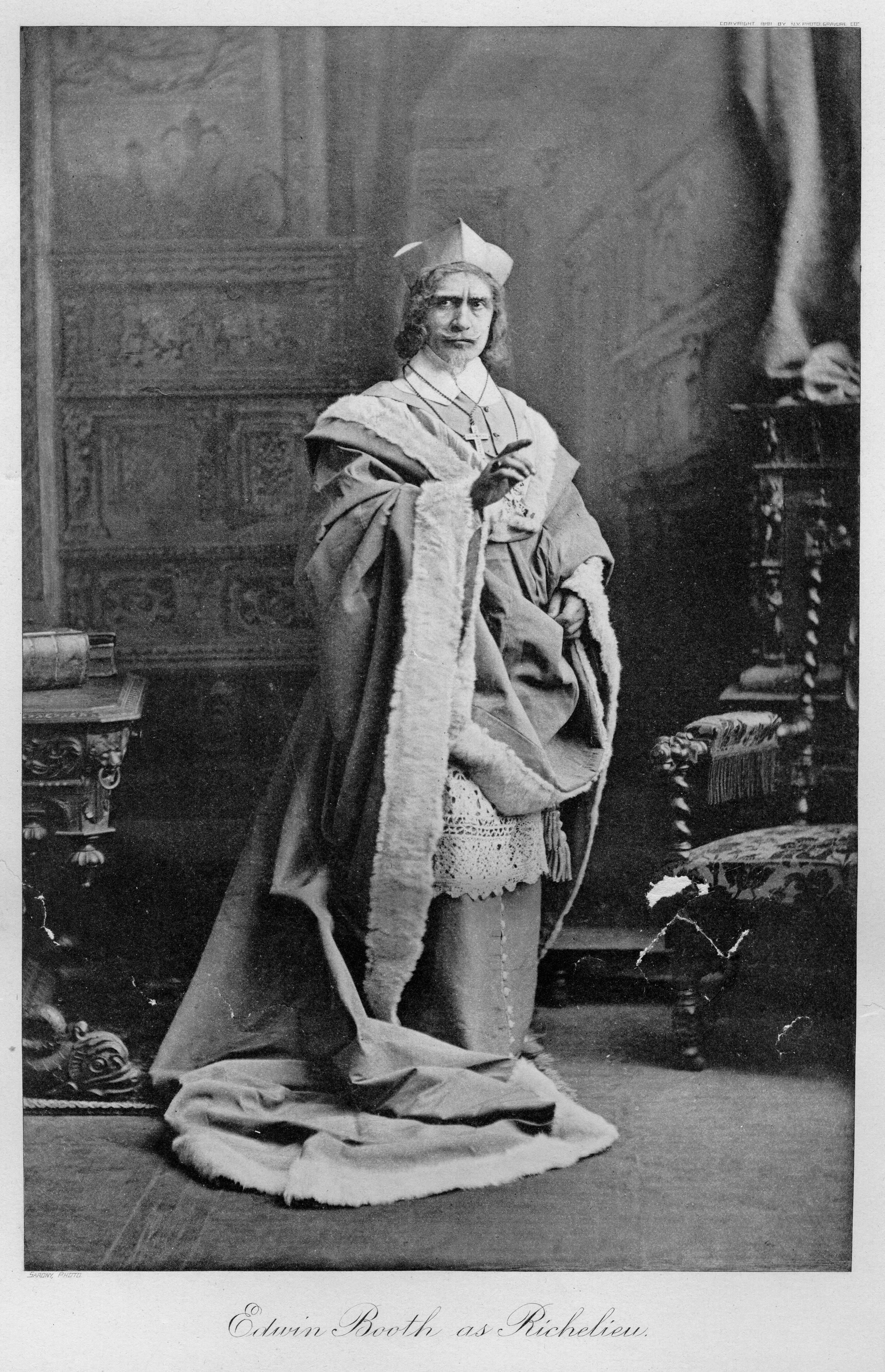
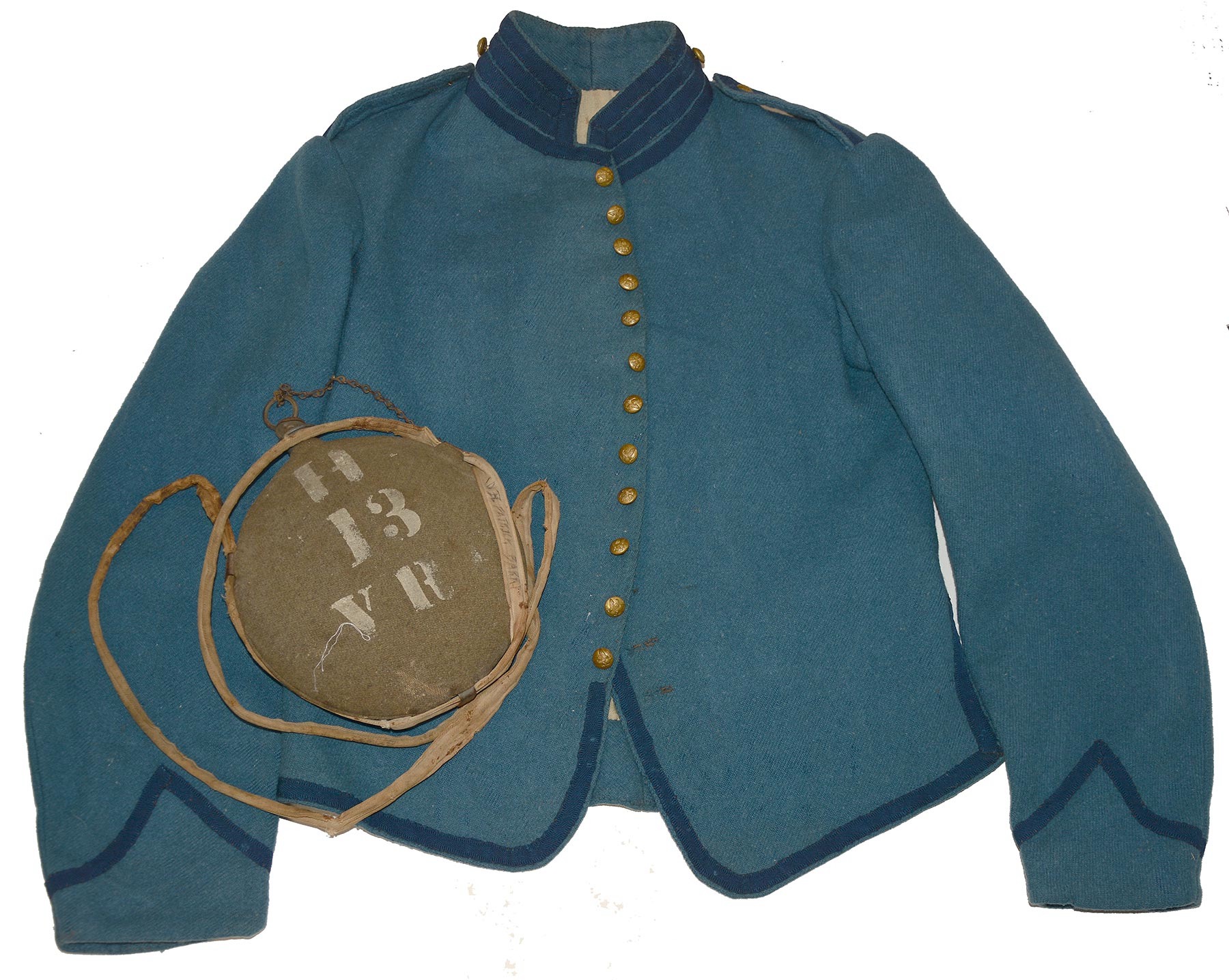
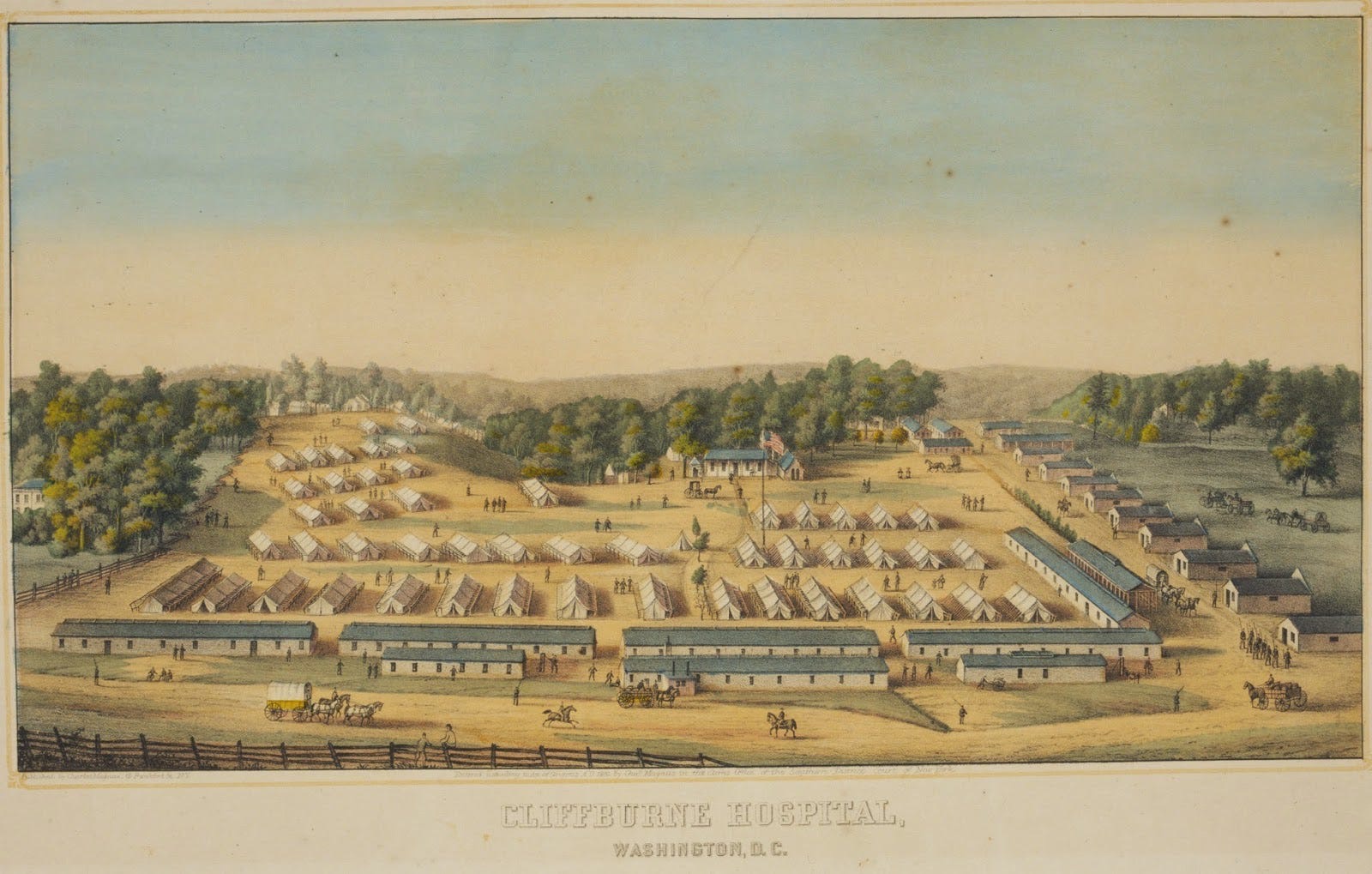
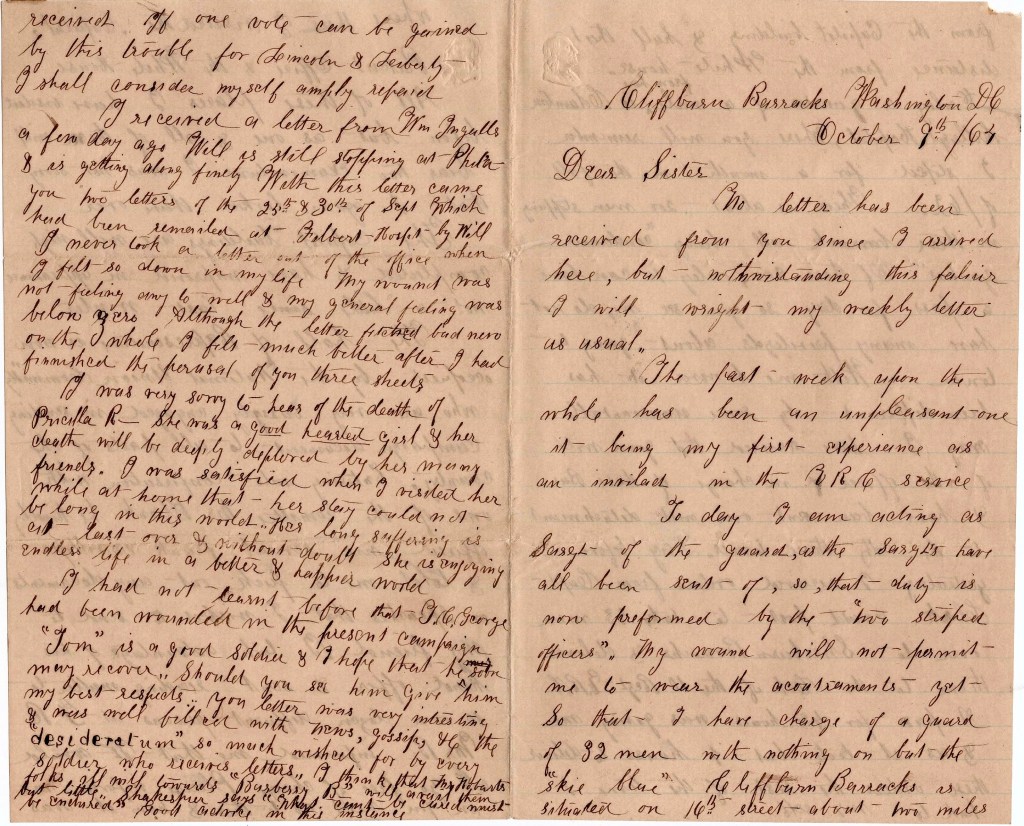
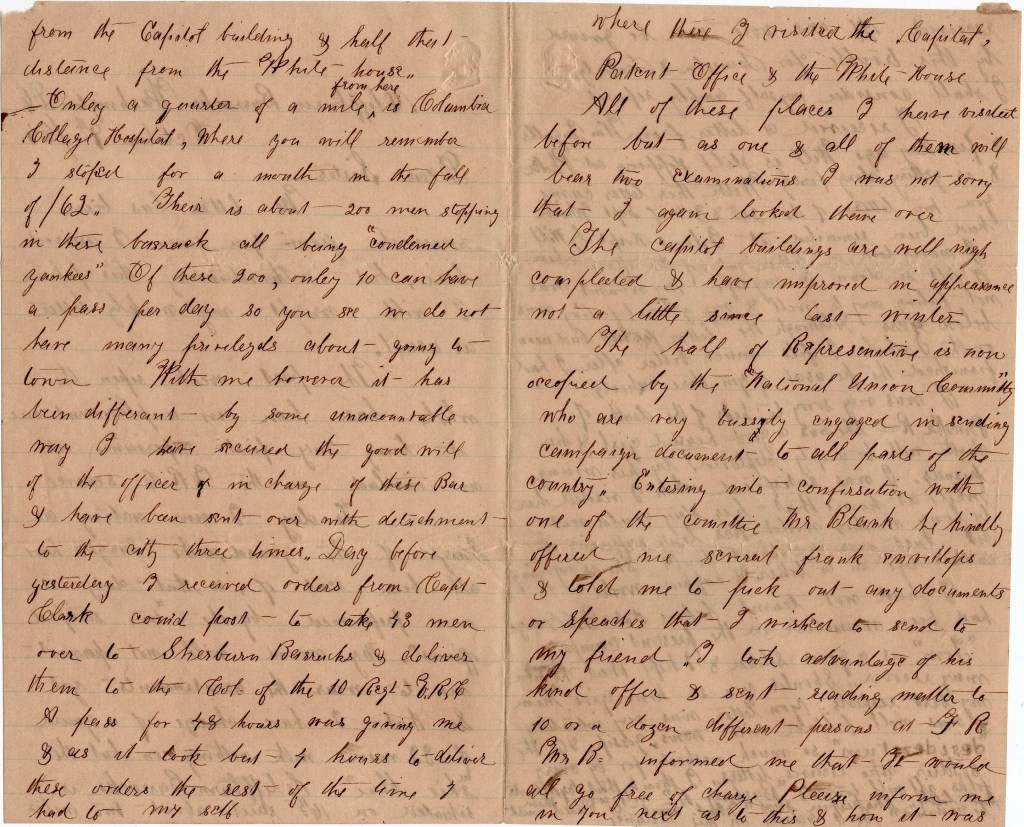
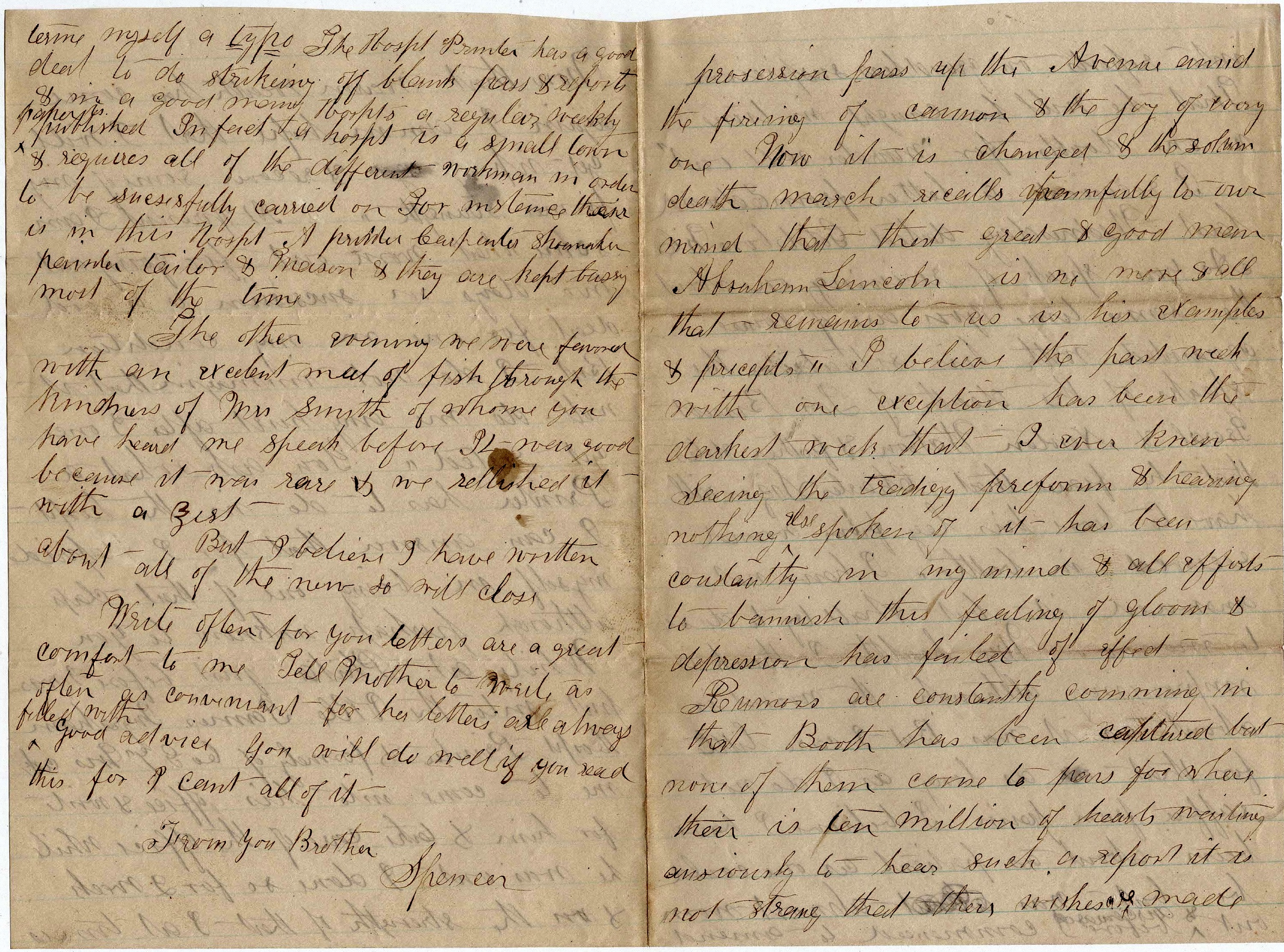
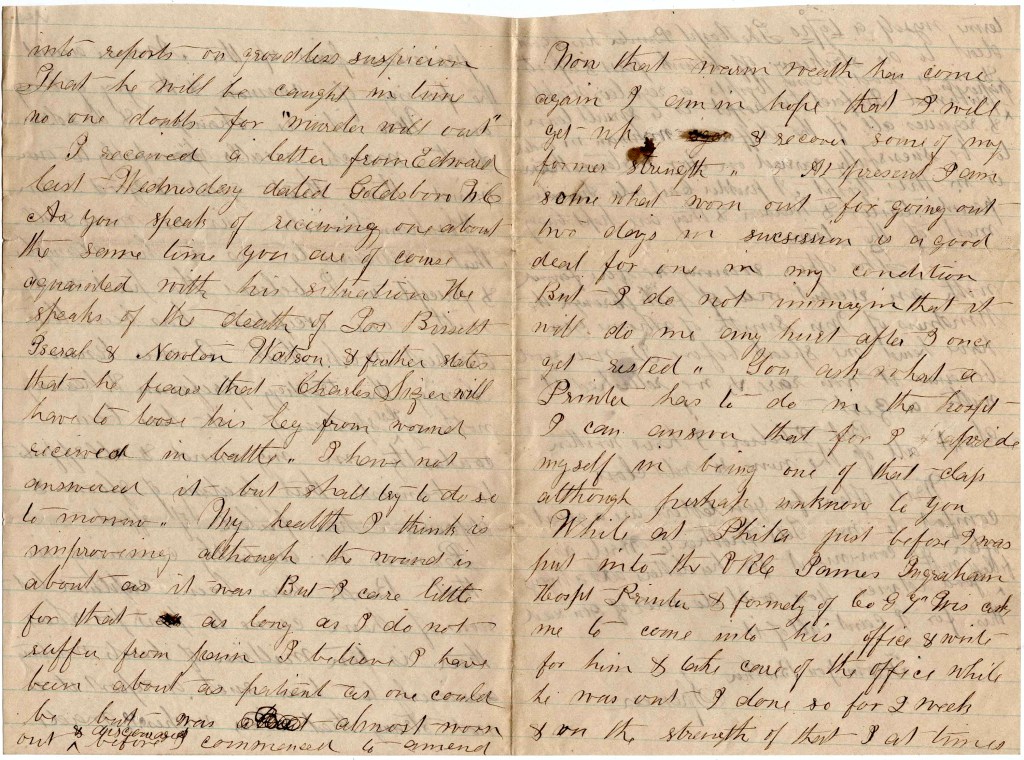
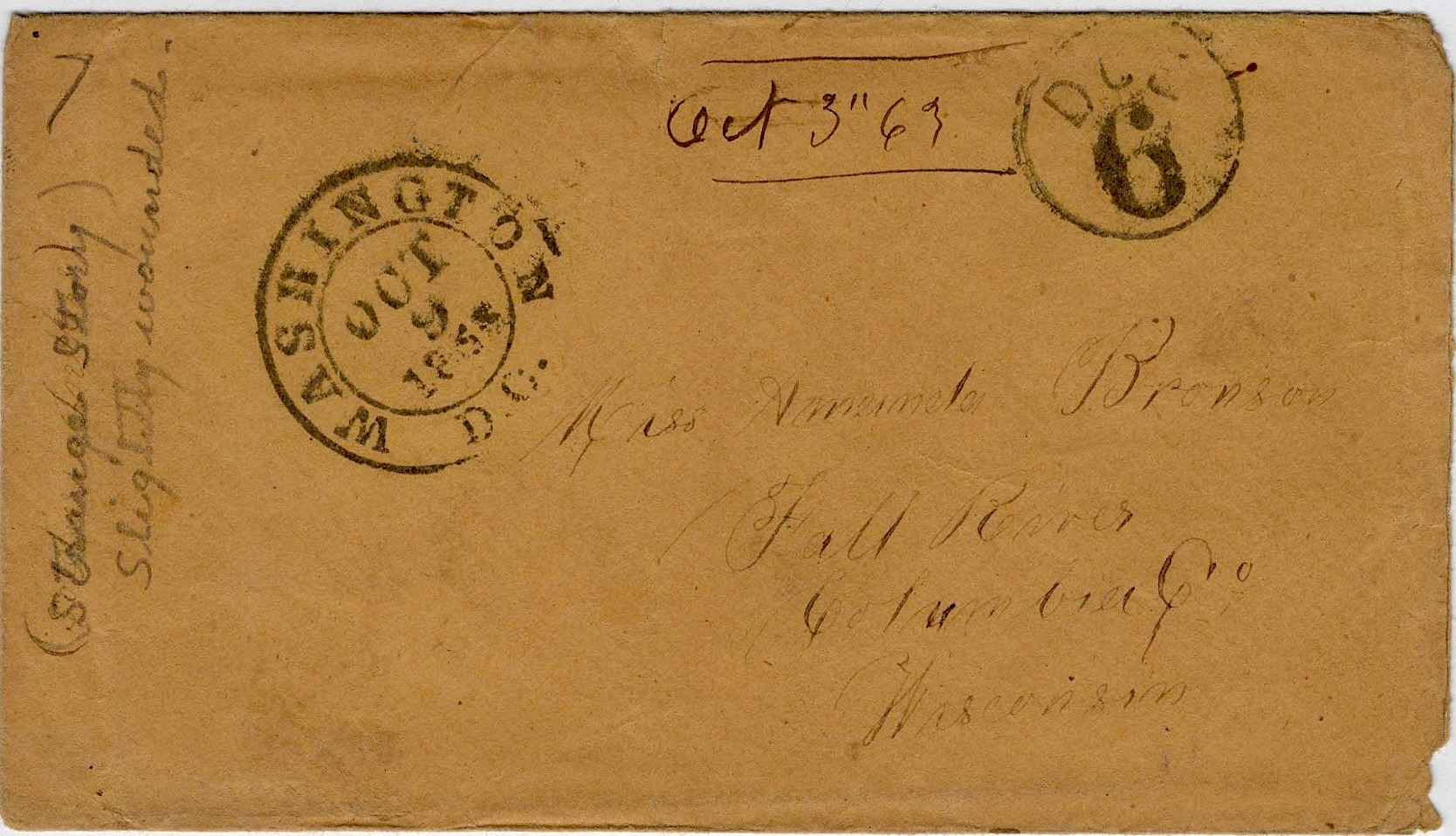
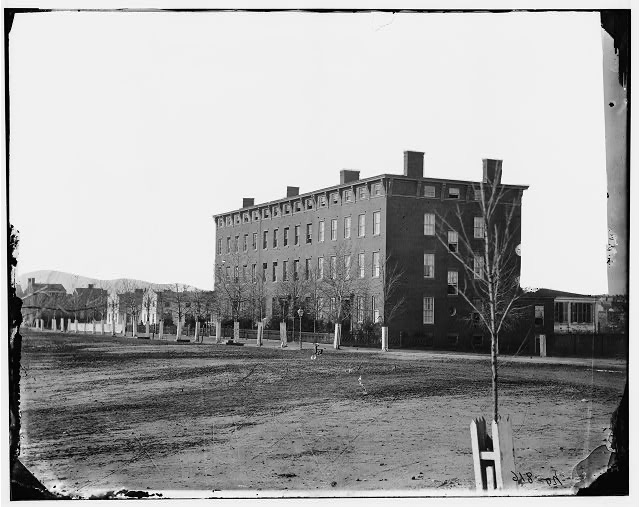
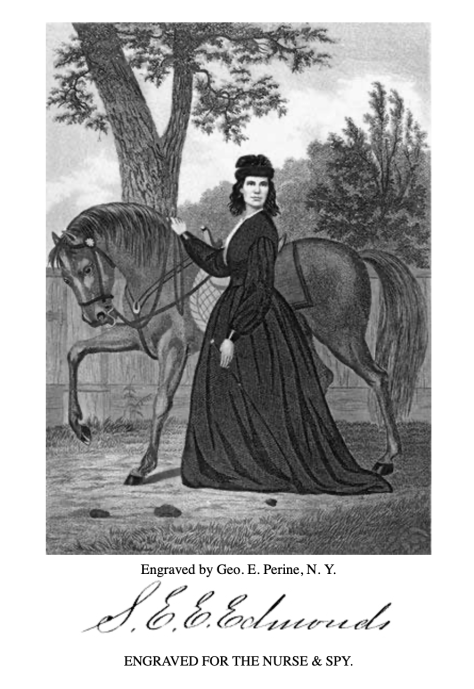
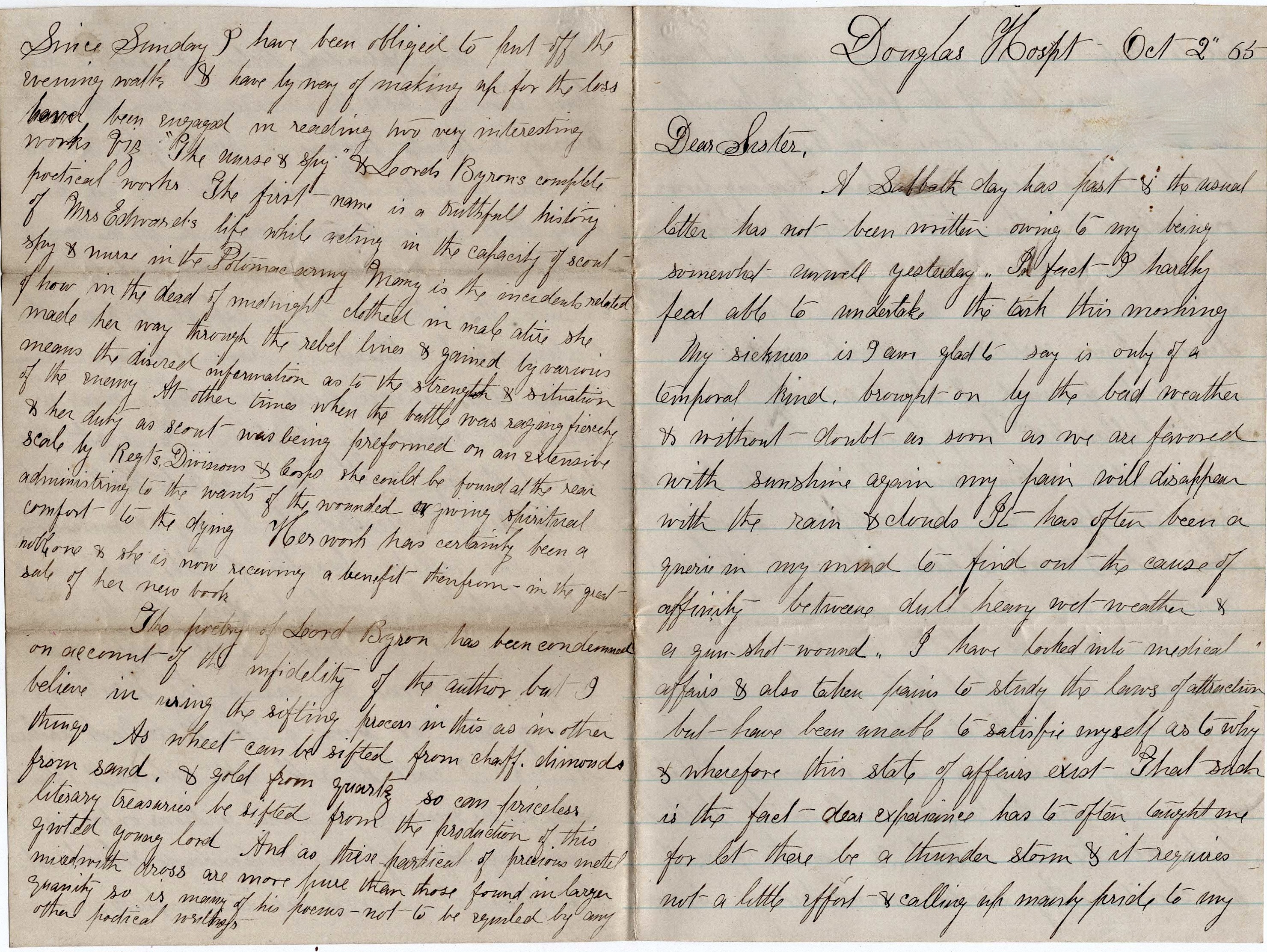
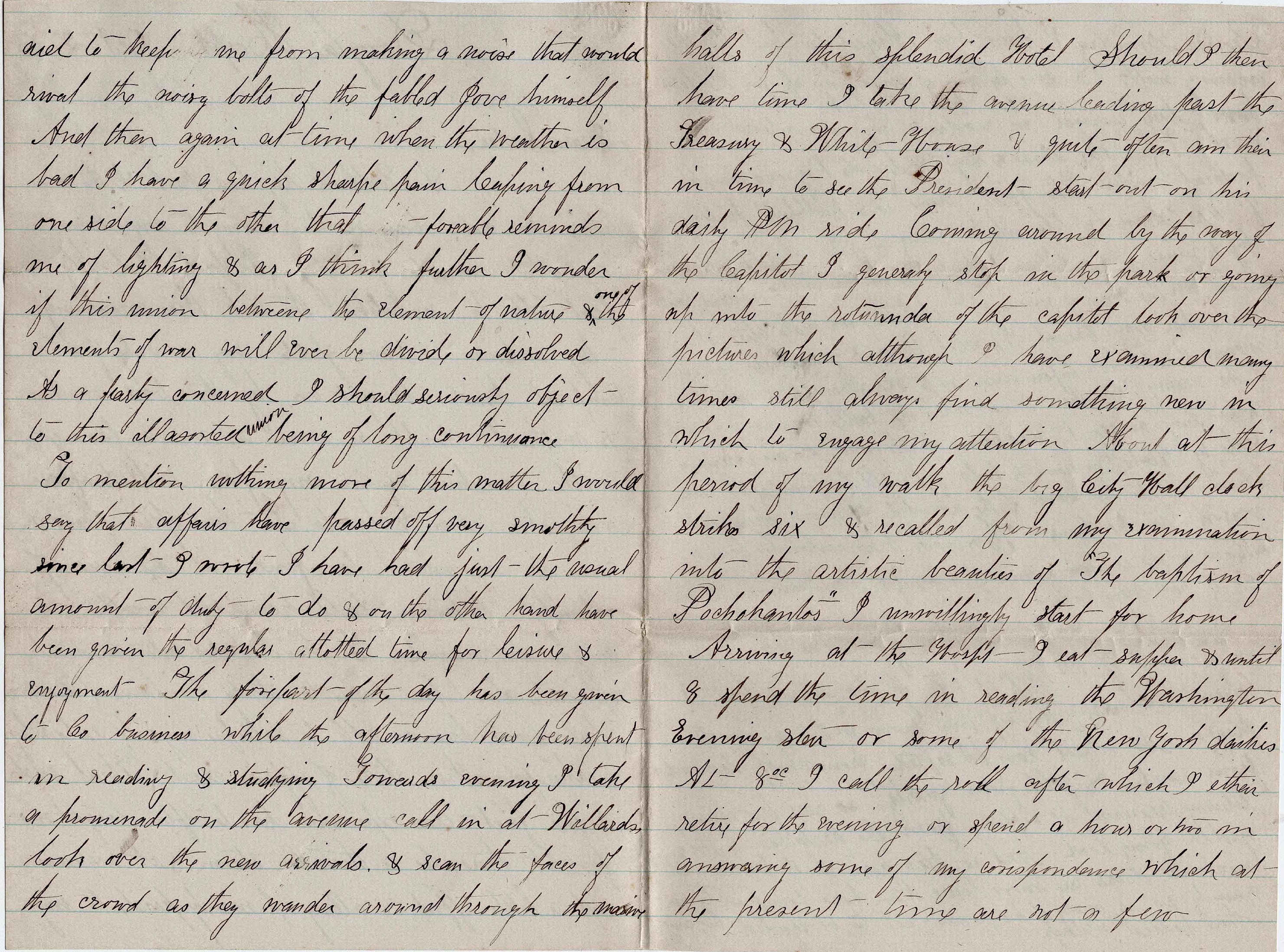
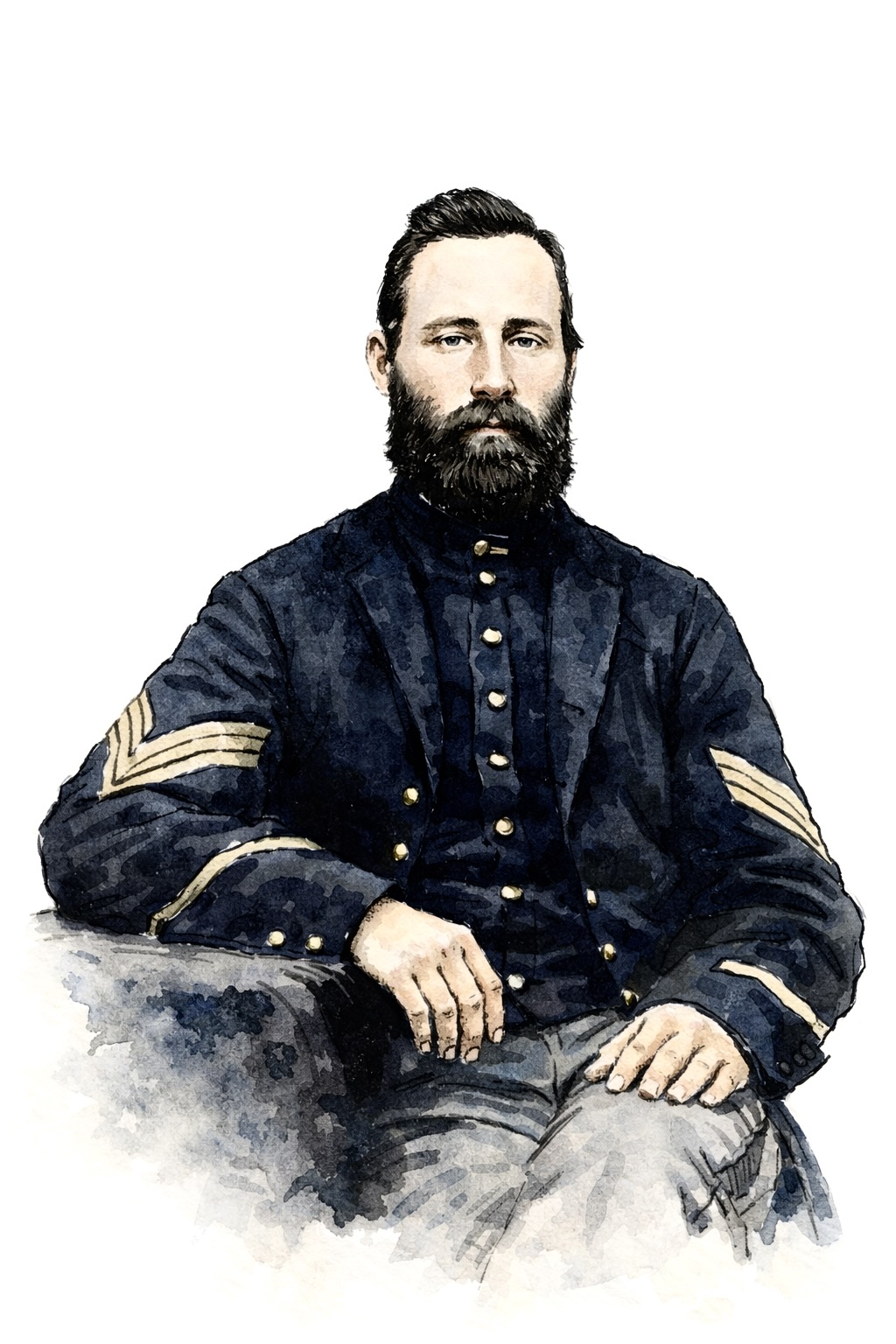
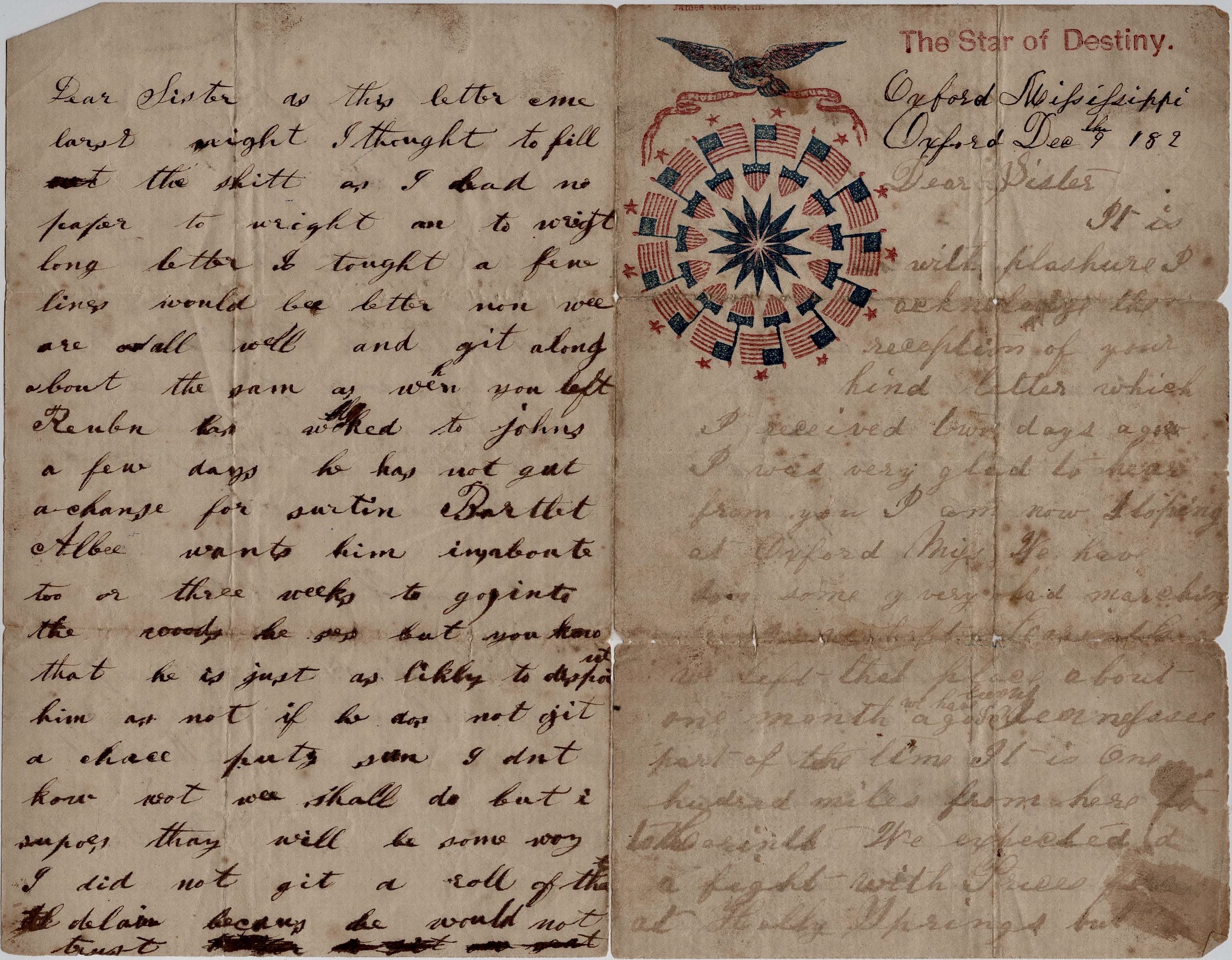
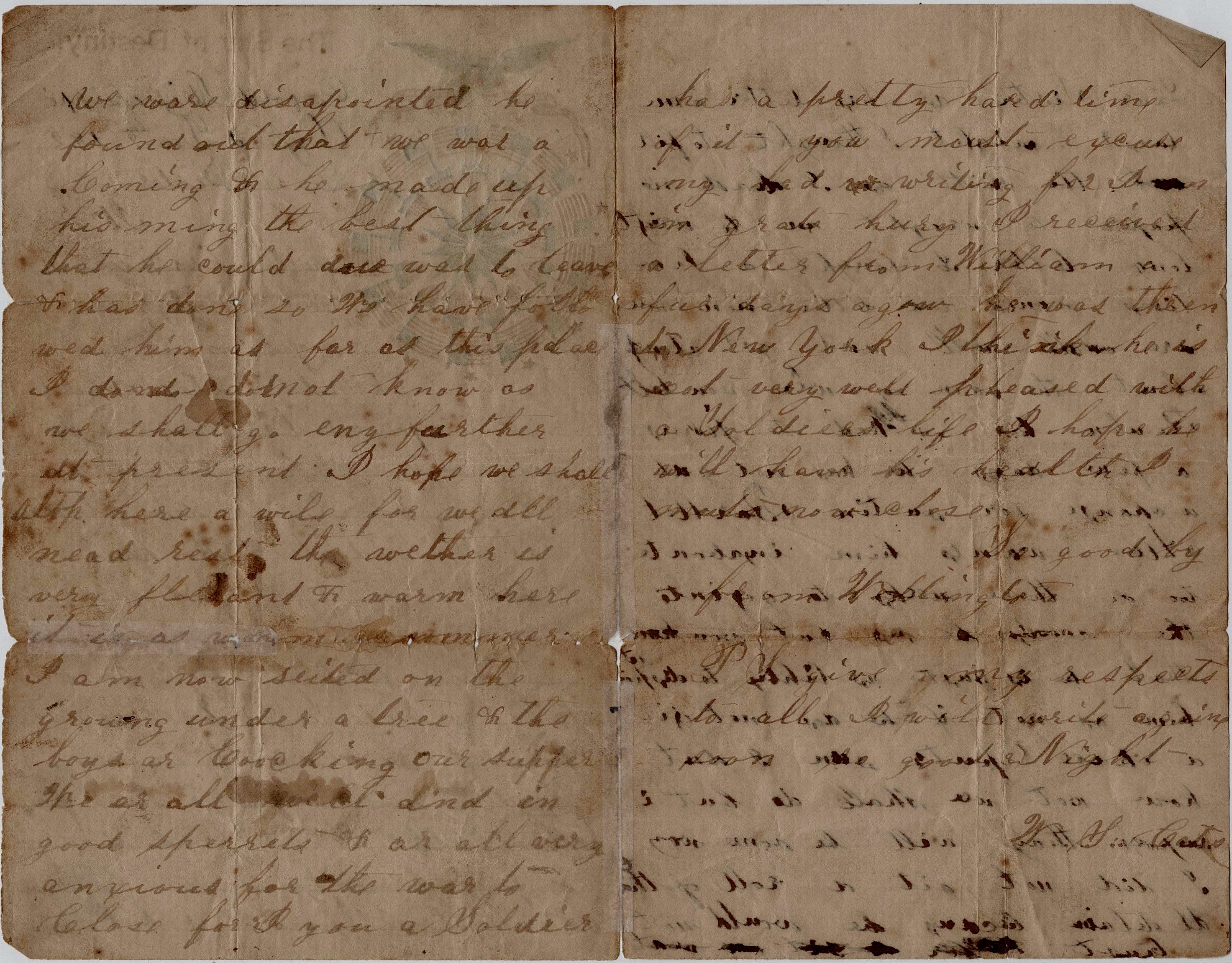
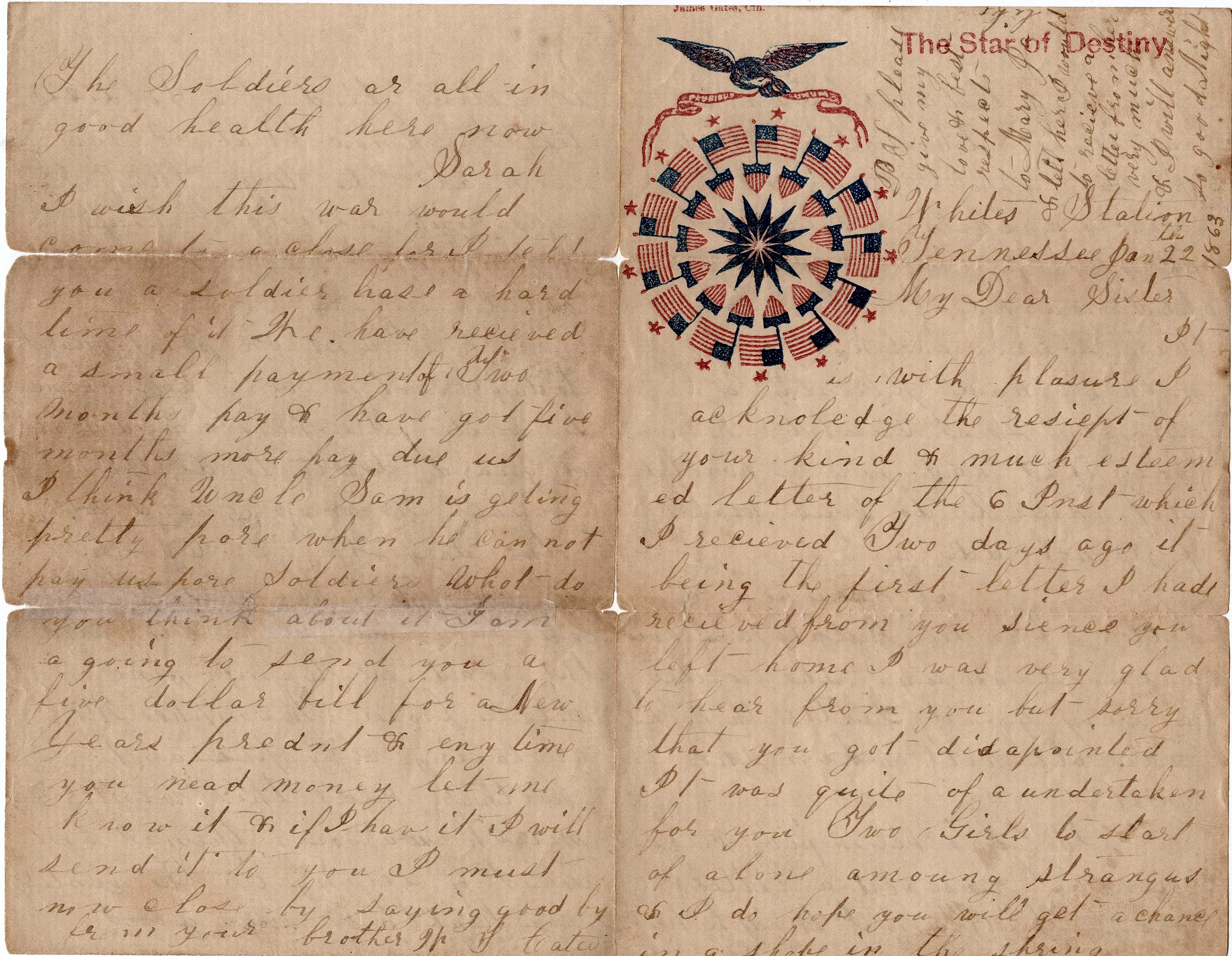
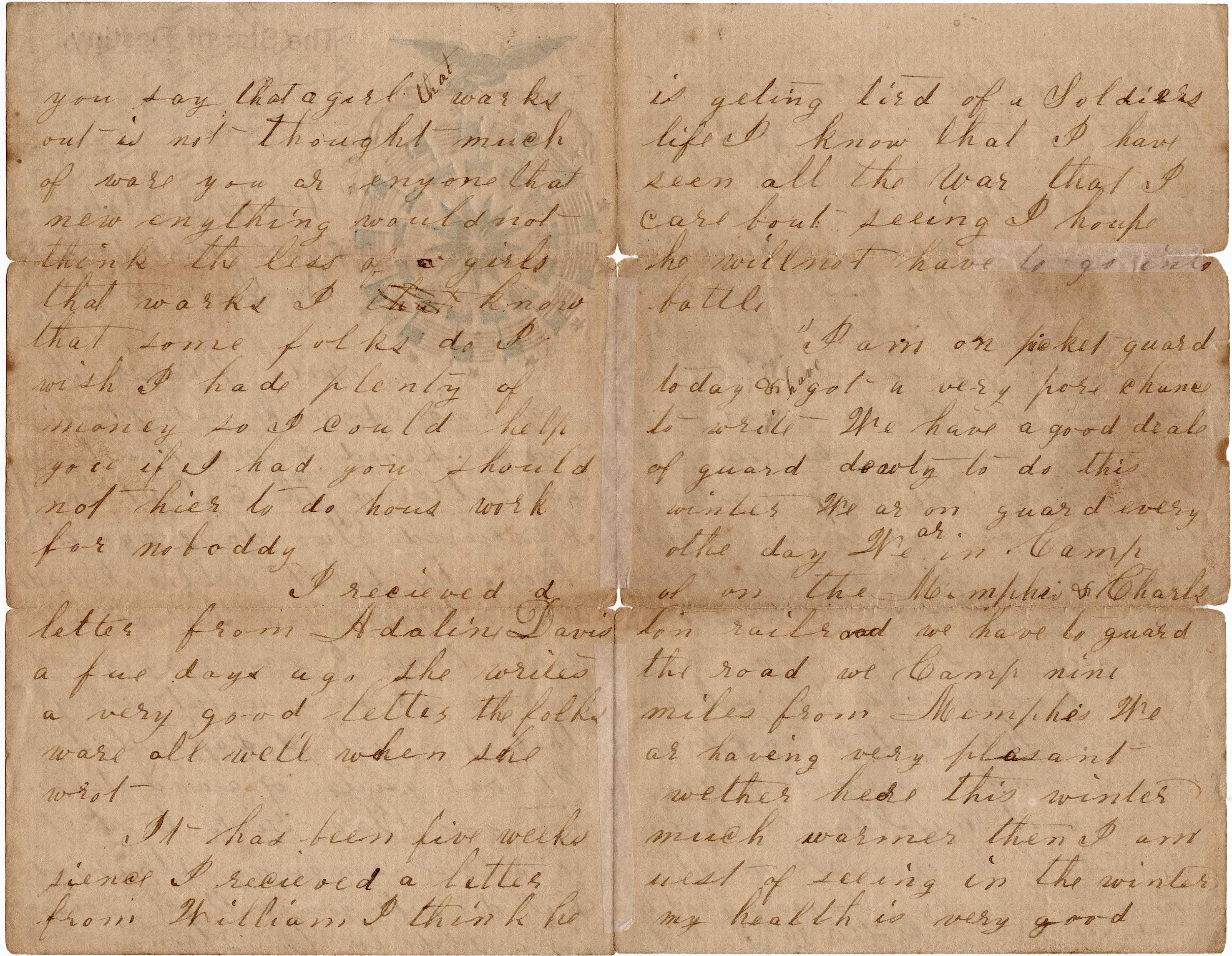
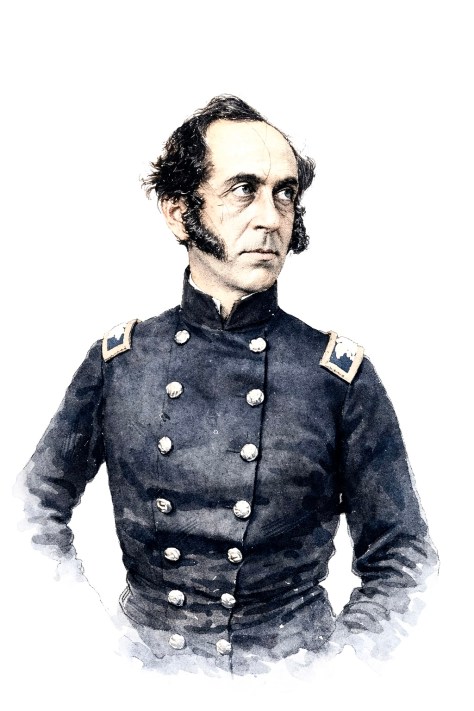
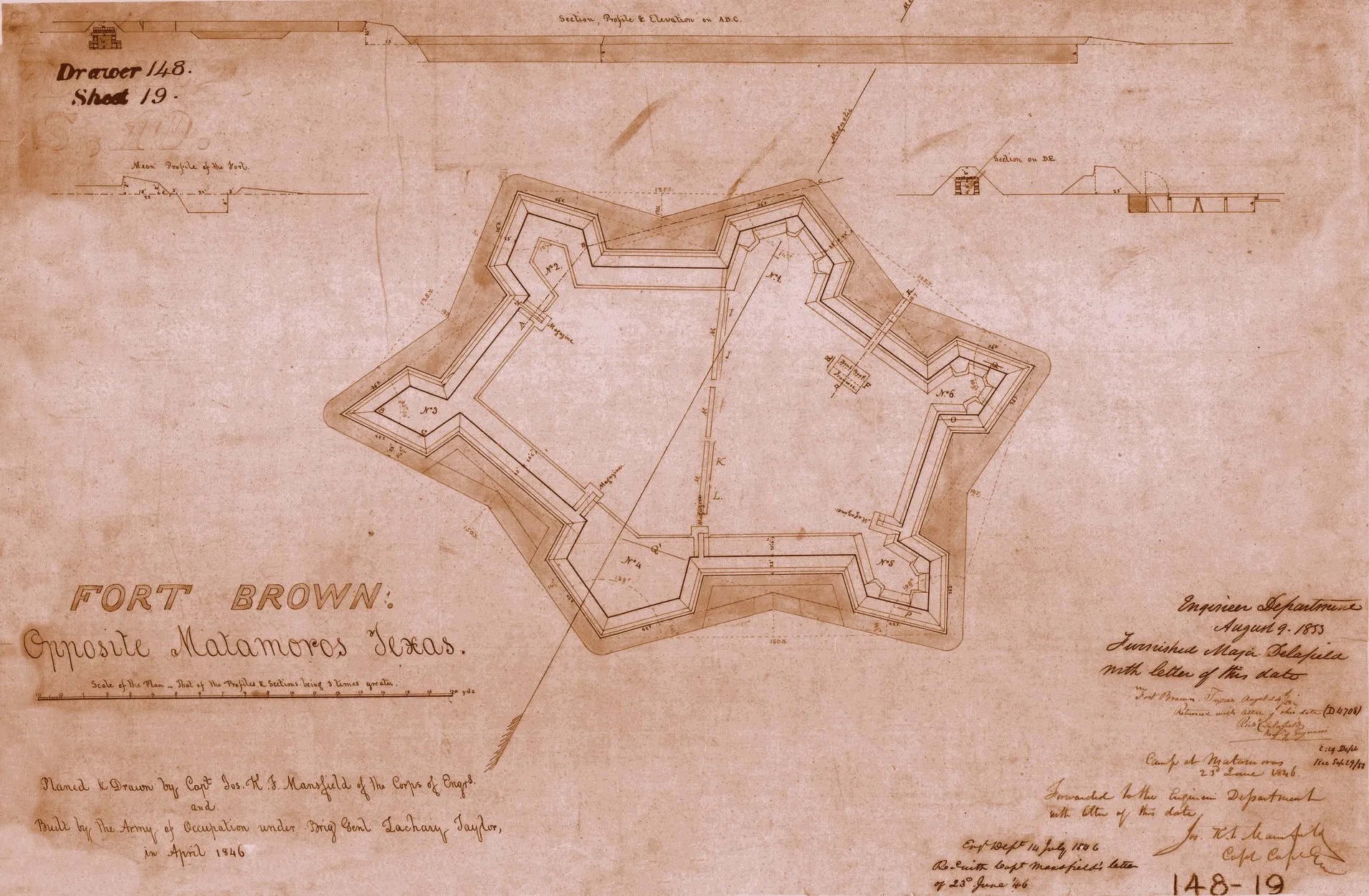
 Spared & Shared 23