All posts by Griff

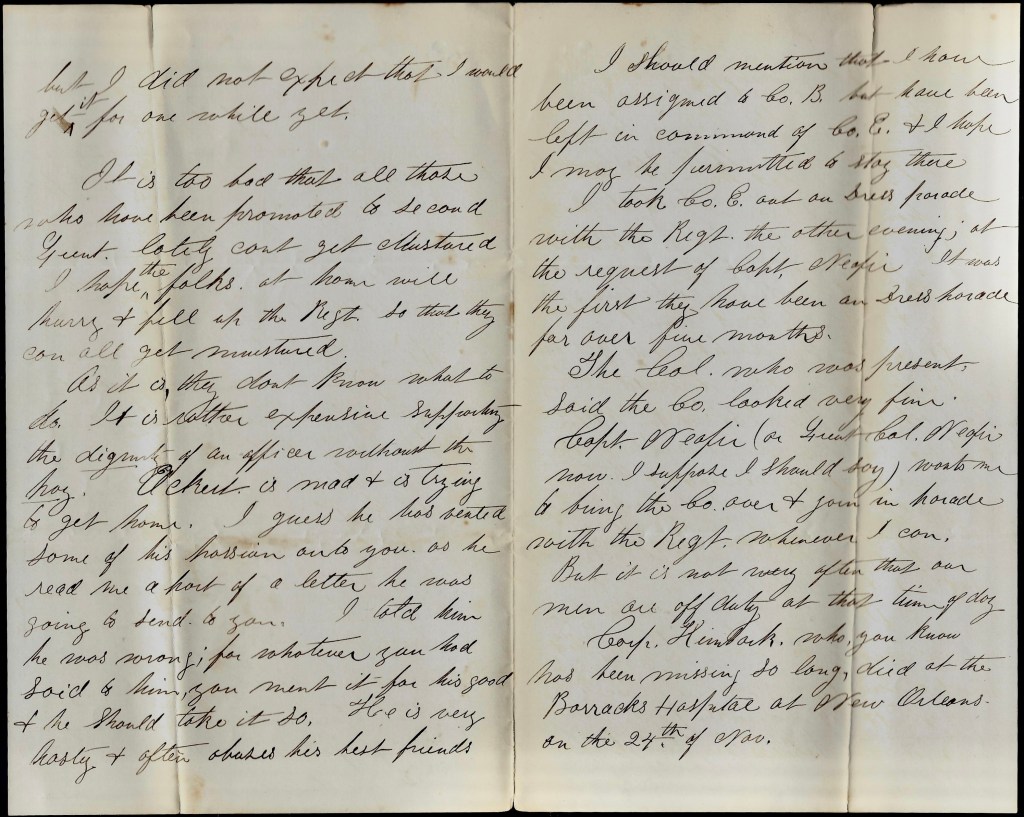
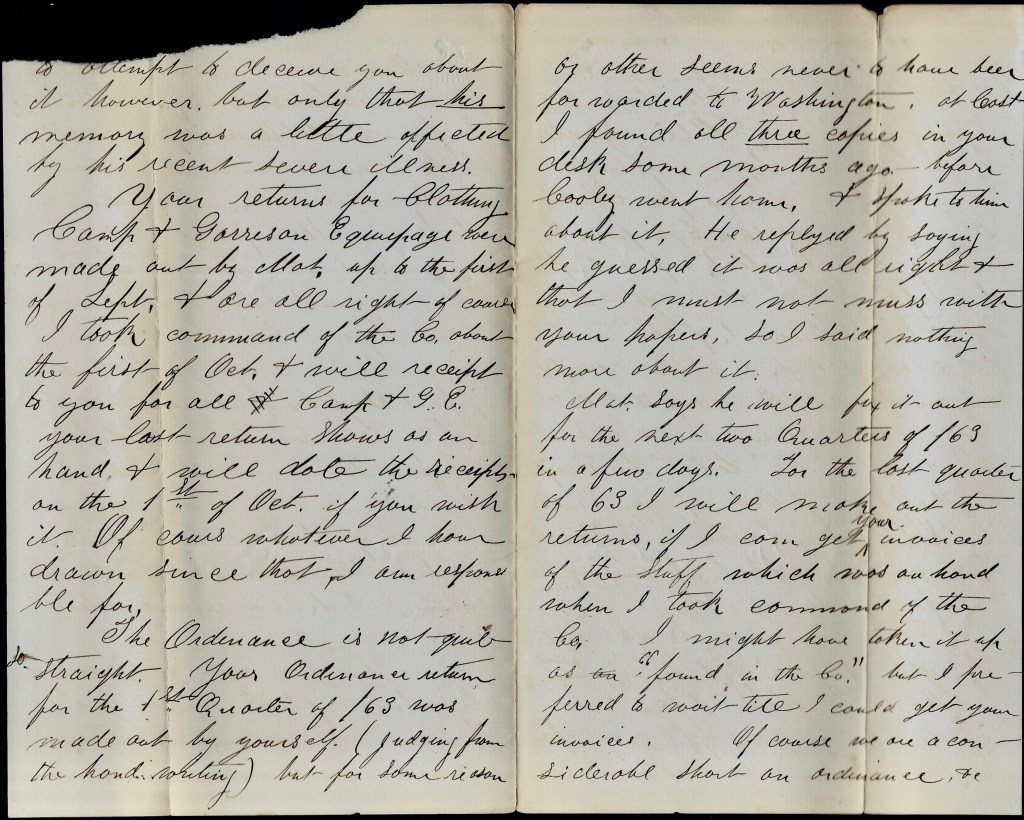
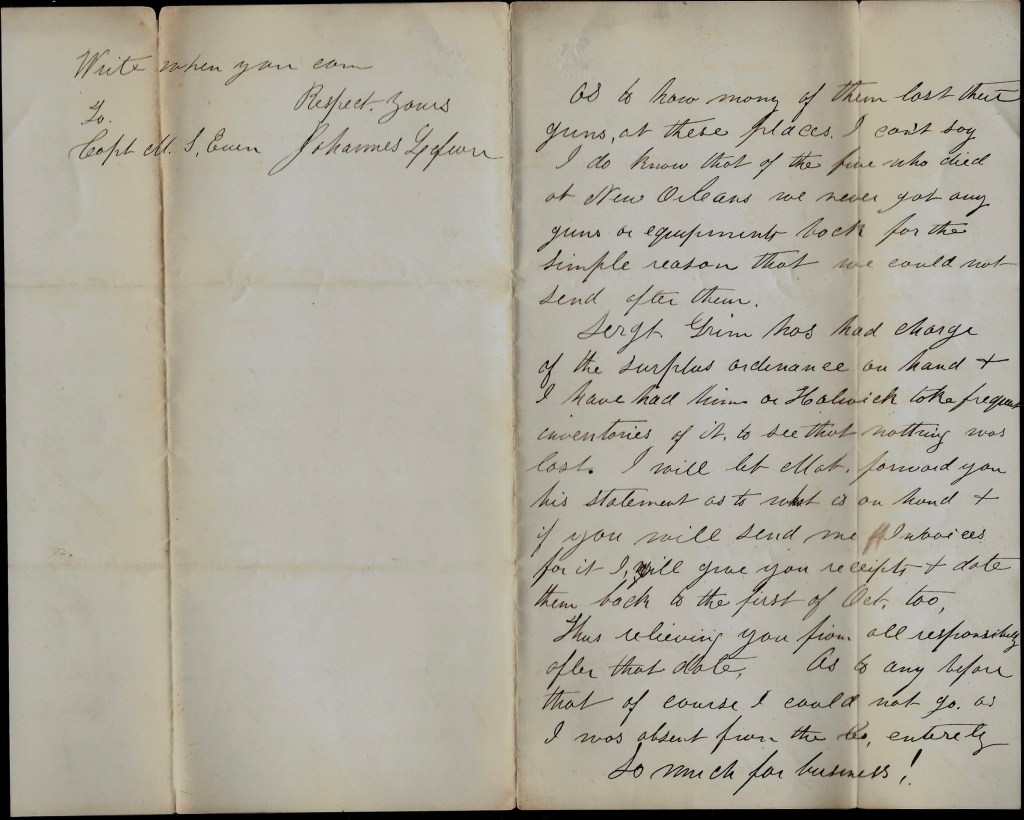
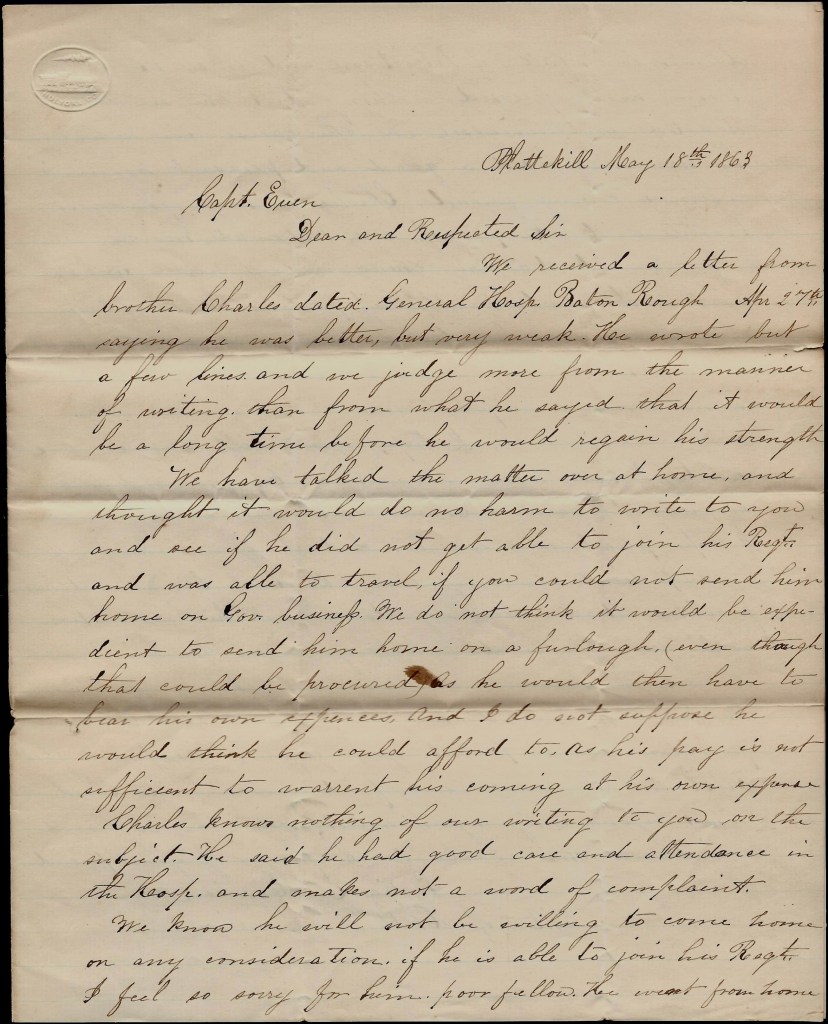
My passion is studying American history leading up to & including the Civil War. I particularly enjoy reading, transcribing & researching primary sources such as letters and diaries.

1865: John Deering, Jr. to William

The letter below was written by John Deering, Jr. (1842-1915), the son of Capt. John G. Deeering, Sr. (1806-1875) and Mary Downing Bachelder (1806-18xx) of Saco, Maine. John, Jr. started at Bowdoin College in 1860, but then joined as a private in Co. K, 13th Maine Infantry in December 1861 and served until 16 August 1862. He had to leave due to a disability, no doubt related to an accident while working as a clerk in the partially constructed custom office at New Orleans. According to his biographical sketch in a family history, he fell through a scuttle in the custom house roof and dropped thirty feet, but somehow managed to survive the fall.

The Maine Democrat, 17 June 1862

Following his discharge, he worked for a time in the Treasury Department and earned a degree from the Columbia College Law School in 1866. His obituary, published in the Lewiston Sun on 1 December 1915, claims that he “saw the assassination of President Lincoln and heard the last speech by the President, made from a window of the White House three days before he was shot…He was employed as a clerk in the Treasury Department at the time and continued in that department more than 15 years.”

By the time of the 1880 US Census, John had left his government job and returned to Saco, Maine, where he practiced law and worked as a pension agent. He married Lizzie H. Chase (1844-1894) in August 1866.

[Note: This unpublished letter resides in the Virginia Museum of History and Culture in Richmond. See Stacy Family Papers, 1802-1889, 51 items. Mss1ST124a.]

Transcription

Washington [District of Columbia]
January 10, 1865

Dear William,

That you have not ere this received a reply to your letter of December 6th proves two facts—viz: that everybody at all times does not get his just dies in this world, and that I am not a punctual correspondent. But I always have a reason for what I do and what I fail to do, and in this case, I must say that for a month past, I have not been able to write or study. It has seemed a moral and physical impossibility for me to write a decent letter and so I have deferred what is usually a very pleasant task. I feel a reaction now, and hope in the future to do justice to all my correspondents whose number is not great.

I have been in the enjoyment of my usual health since last I wrote you, and find that the climate here agrees with me much better than that of New England. The weather thus far has not been cold, and we have had but very little snow—but considerable rain. Today it has been raining very hard—the torrents pouring down as I have seen them at home some dark, gloomy night in October or November. In fact, the whole season of winter here is more of autumn than winter judged by a Northern standard. For the most part, the ground is bare, and we never lose that peculiar scent of dead leaves which is so characteristic of November at home. The ground is not frozen except for a very few days as the mud conclusively shows. Not much skating and—O miserrimum omnium—no sliding downhill, so dear to our youthful hearts. So, on the whole, give me a Washington winter—mud and all—and you are welcome to the sub-zero temperatures of Maine.

Shall I write you a little about the celebrities of Washington and their doings? If so, here goes. New Years day (Jany. 2) the President of the United States had a reception, according to custom. I was there and shook the hands of the graceful Chief Magistrate, wished him a Happy New Year, to which he replied in a few kind words, and came away with the prayer in my heart, “Long live Uncle Abe!” Last night he had another reception but I had a prior engagement and couldn’t honor him with my presence. Last Wednesday night, Mr. Lincoln and wife were at the Theatre, and I walked out close by them, and had a good long look at their various points of beauty. The conclusion there arrived at was this: They are both better looking than their pictures—especially Mrs. Lincoln. I do not call the President a bad-looking man, and think Mrs. Lincoln decidedly good-looking. “Our honored Chief Magistrate” has a sad, despairing expression of countenance, which almost tempts you to cry. Anyone that sees him cannot help feeling a sympathy and regard towards him. That at least was my experience, and others speak in a similar strain.

Edwin Forrest as Hamlet

I have also seen Vice-Admiral Farragut and wife, Secretary Staton and wife, Gens. Hancock, Meigs, Custer, Casey, nearly all the Senators and Representatives in Congress, and many other eminent men. But the greatest of them all, to my mind, is Edwin Forrest, the great tragedian, who is now acting at Ford’s Theatre. There is something sublime and most wonderful in that man’s power. He hasn’t his equal on the stage in Europe or America. Of course I cannot describe his points of excellence, but in respect to physical development, power and compass of voice, and expression of countenance, he far exceeds the highest ideal that I had ever formed in imagination. I have seen him in all his impersonations thus far, as “Damon” in Banim’s drama of “Damon and Pythias”—a classic story, familiar to us both; as “Richelieu” in Bulwer’s play of that name; as “Othello” in Shakespeare’s tragedy of the same name; and as “Macbeth” in the grand tragedy of that name by Shakespeare. Tomorrow night he plays Hamlet—the chef d’amour of “the myriad minded Shakespeare.” I am a great lover of the dramatist of Avon, and therefore of the renderings of his works by such an actor as Forrest.

I was in Congress twice last week, and heard speeches from various gentlemen both of the Senate and the House, among which was [Glenni William] Scofield’s reply to [James] Brooks’ speech, and the witty, crushing reply of Brooks. This Brooks is James of the New York Express, and in my opinion the best speaker in the House. I do not approve of the principles of the Copperheads but I cannot help admiring the eloquence of some of their champions. 1

Hon. Lyman Trumbull of Illinois

The best speaker in the Senate, to my view, is Lyman Trumbull of Illinois, a scholarly, logical man, whose every word and gesture counts. Charles Sumner can do the “heavy” eloquence better, but is not so ready and sharp and penetrating as Trumbull.

So much for others, I can say but little for myself. I have studied considerable Latin, some French, and have read considerable, but not methodically. Have made some advance in the study of Elocution—my favorite pursuit—and read some law. But as far as the knowledge of a profession is concerned, I am almost as far in the rear as four years ago.

I have been transferred from the Loan Branch to another Bureau of the Treasury—the Second Auditor’s—at my own desire, and am now an Examiner in the latter office. I like as well as before to say the least. My business is to look into the accounts of Army Office and report as to their condition for settlement.

Accept my best wishes for yourself and family. Remember me to Lucy and believe me yours sincerely, — John Deering, Jr.

Direct to Second Auditor’s, Treasury Department

1 This repartee between Scofield and Brooks is covered in the New York Times edition on 7 January 1865. James Brooks (1807-1873) represented NYC in the House of Representatives for seven consecutive terms, moving from the Whig to the Democratic Party and an outspoken critic of the Lincoln Administration. He died in office in 1873 while under scrutiny and formal censure for attempted bribery in connection to the Credit Mobilier scandal.

1862: Horace Stiles to Harriet (Burlingham) Stiles

Hod Stiles in later years

The following letter was written by Horace (“Hod”) Stiles (1828-1903) while serving as a sergeant in Co. G, 84th Pennsylvania Infantry. Horace was the son of Stephen H. Stiles (1802-1884) and Ruth Campbell (1804-1886). He was married to Harriet Jean Burlingham (1832-1871) in 1851 and was employed as a farm laborer in Shippen, McKean county, Pennsylvania, at the time of the 1860 US Census (though his muster rolls state he was a “lumberman”). The couple had two children at the time this letter was written in the summer of 1862—4 year-old Louis, and 2 year-old Willie.

Hod mustered into the 84th Pennsylvania in October 1861. A discharge date could not be found in his record but the 1890 Veterans Schedule indicates he served 1 year and 9 months. If this is the case, he must have obtained a disability discharge not long after this letter was penned.

Following his discharge from the service, Hod moved his family to Mentor, Clark county, Wisconsin where he became a hotel keeper.

Transcription

Camp in the Woods or 20 miles from Luray
and 35 miles from Gordonsville, Va.
June 5th [1862]

My dear wife and friends,

I take time to let you know how things wag with me. I am well and doing as well as I can to put down rebellion and take good care of myself and friends. General [James] Shields told us to help ourselves to such fixings as our appetites called for—pigs, honey, boots, cheese, shirts, potatoes, and continued. But we have some hardships to contend with. In the first place, we have marched a hundred and eight miles through mud, heat, rain and enemies on all sides. The rebels are making this their fighting ground. They have large forces here and so have we about here but you hear more about the war than I do but there is some things you don’t hear about.

I will let you know some things in our company. We had 79 men once in our company but now there ain’t only twenty in all. I will mention them you know—Capt. [James] Ingram, J[udson] Beers, [Herman] Morgan, H[enry] Stricklen, [Taggert] Culver, Sam Drew, Sile Wheaton, Welt [Nelson] Cutler, Fred Nickerbocker, and the rest is scattered for two hundred miles and over. But Web will be there soon and he can tell you a good deal. I am all the sergeant there is in our company now. We have had some little fighting here and do expect to have more for we take some prisoners most every day. I could see the rebel pickets last night about one hundred rods off but we weren’t allowed to shoot at them.

Hat, I can’t write often because we can’t get letter out. You must write as often as you can. You direct to Washington D. C. General Shields Division, 84th [Pennsylvania] Regiment, Co. G, and I will get them some time.

I don’t think the war will end very soon and I shall stick as long as I can stand it. I han’t saw Ton since I was there. He was in Winchester. I han’t been there. I am afraid he was taken prisoner there. I don’t know. I wish I did. You tell Merrick [Housler] how our company stands and tell him that sesh [secesh] Colonel has resigned and I ain’t sorry. Capt. Ingram is the same as he was only more so.

Hat, I want to see you and the babies more than I did before I came home. I want you to write how Andrew is—the poor fellow. It is awful to have the small pox. And tell me if it has spread or not and how much. I am anxious about you. I don’t know what you would do if you should get it and the children. You kiss the babies for me and tell Louis Pa will come home to see him as soon as he can [and] to be a good boy for Pa. Give my love and best wishes to all. Let father’s folks see this and be a good girl.

This is from Sergeant H. Stiles

To Harriet Stiles

You shall hear from me as often as I can find opportunity to write and get letters out.

1861: Henry Parsons to Friend Dwight

The following letter was written by Henry Parsons (1825-1913), a native of Goshen, Hampshire county, Massachusetts, who was working as a common laborer at the time of his enlistment in Co. H, 10th Massachusetts Infantry on 21 June 1861. He was wounded in the right arm at the Battle of Fair Oaks during the Peninsula Campaign where the 10th Massachusetts had 27 killed and 95 wounded—six of them mortally. Henry recovered from his wound and was mustered out of the service on 1 July 1864 after three years. He was a resident of Spruce Corner, Massachusetts, after the war.

Henry’s parents were Theodore Parsons (1791-1865) and Pamela Partridge (1796-1843). It does not appear that he ever married. He was still working as a farm hand in Ashfield township, Franklin county, Massachusetts in 1900 when he was 75 years old.

Transcription

Columbian Hospital
November 15, 1861

Friend Dwight,

I received your letter of the 3rd on the 14th and one of the 11th today and think that I shall have to answer them both in this. Well, as you will see, I am here in the hospital as yet, but do not know whether I am a going to stay or not for certain as yet. The doctor asked me about a fortnight ago if I would and I told him that I did not know; did not think that I should like it. Well the next morning he wanted to know if I had made up my mind and I told him I had not yet but the next morning he spoke to me again and finally told him I would if he he would let me stay on the ward where I am and he said that he guessed he would and he has not said anything to me since so I don’t know whether I am a going to stay here or not yet. Have not much to do now but write and plenty of that to do. If I answer all the letters that I get with some little help that I am taken care of the sick and opening those porter bottles.

Oh, but I have one wounded man in the room where I am. He had a ramrod and wiper and ball accidentally shot through the outside of his right leg but no bones broke, but rather an ugly looking gash. Have to wet it in cold water ever 15 or 20 minutes and the rest of the time am writing or down in the yard smoking as they will not let us smoke in the hospital so have too to chewing for comfort. And we have one man in the same room that cut off three of his fingers from his left hand hewing a board.

Well, I have just had my wounded man up and made his bed and now have nothing more to do but to write tonight. Have to lift him from one bed to another to make his bed. Well, I had not forgot that I had wrote to [you] since I received any letter from you for had not received any since the one that was dated October 3rd until the one that was dated November 3rd. So that as for the swearing and the nonsense, I suppose that I do not know anything about but am glad to hear that you have got pious and hope you will stick to it and I think that before you get the 40 letters I wrote that I shall answer three or four of them so that you will have to write 40 more.

Well, I suppose that you will have pretty nice times when that house gets done and I want you should ask Fran if he is not going to give me an invitation to that spree. Well, as to the brandy, should like to have you drink one or two for me as I do not get much—only when I open the bottle for the nurse and then I generally take a little sip. And I suppose that you would be glad to have Sire enlist if you thought that you would stand any better chance of getting Elno. Well, by your letter of the tenth, think that you must have lost all of your piety for I think there is d—d hard swearing in that. Well I should think that Sp[ruce] C[orner] was growing to be a city instead of a wilderness by the building that is going on there. Well, I do not see as you are a going to get better wages for your month’s work than I do and Uncle Sam does not reckon any lost time if a man is sick.

Well, I do not know as I have wrote any news or anything very interesting so I will stop here. So accept this from — H. Parsons

Friend Eliza, — Well, I always pay my debts when I know what they be, and as I had not had any letters from you since the 3rd of October and knew that I had not wrote you anything and do not want you should think that I had so far forgotten you as to not answer them when I get them and think I shall not right away so that you can hold on to your anchor for a spell yet for I will try to answer everyone that I get, and the that do not reach me I do not think I owe you for.

Well, your letter found me well, but have been a little homesick for a day or two and have had the teeth [ache] for a day or two and not courage enough to have them pulled. Well, what a hand do you think that i should make to fight the rebels with not courage enough to have a tooth pulled. Well, aside from all that, I am enjoying myself pretty well and have some pretty good ties here and should like to have you step in here. Should like to see you first rate and would show you all over the hospital—that is, if you would like to look at it. There has been three or four Massachusetts ladies been in here to see the Massachusetts boys since I have been here but none that I ever saw before had quite a long conversation with one of them.

Well, as to your knowing me, I do not think that I have altered much since I left Spruce Corner but do not think you would if you had seen me the first time that I went up to the camp. I was so poor that the boys up there did not hardly know me. Well, I do not know as I have wrote anything that will be interesting to you and as for news, have wore that all out.

This makes the fifth letter that I have wrote today so you will have to accept it as it is. From your friend, — H. Parsons

1863: Silas Pardee to Estelle Pardee

The following letter was written by 43 year-old Silas Pardee (1820-1894) while serving in Co. I, 25th Connecticut Infantry—a nine-months regiment that served from mid-November 1862 until late August 1863.

Silas was married to Mary Brocket in 1844. The couple were divorced in February 1880—the cause for divorce attributed to intemperance on his part. In this letter to his 12 year-old daughter Estelle, Silas defends the reputation of a soldier named Josiah but I don’t believe he was in the same company as Silas. There are family references to “Fanny” so I suspect that Josiah was a relative but I haven’t established the relationship.

Transcription

Baton Rouge, Louisiana
May 15th 1863

Dear Daughter,

I once more sit down to write a few lines to you to let you know that my health is very poor. I have been very sick since I last wrote to you and for a while I thought I never should live to go home and see you anymore. But I have been prospered and am on the gain slowly. I hope these few lines will find you in good health. They think we shall be home the 7th of July and I hope we shall.

I have not much courage to write home for I don’t get any answer to the letters I wrote lately. I sent home my ten dollar check to you a good while ago and have not received any word whether you have received it or not. I want you to write just as soon as you receive it for it’s probably the [last] I shall write.

Josiah sends his best respects to you all and wants you to write. I suppose you have heard the report about Joe’s gambling and drinking all is money away from Fanny, but it is entirely false and it will be proved by good respectable men as live in Plainville and Bristol. They are men that won’t lie. They have been with him every day and night and know what he has been doing while he has been out here and so do I, and I think them same folks would find enough to do to mind their own business and not try to make disturbance among a man and his wife. Show this to Fanny when you see her, My best respects to you all. — Silas Pardee

In haste. Direct to Baton Rouge, La., US General Hospital, and that is all.

1863-64: Francis Pardee to Estelle Pardee

The following letters were written by Francis L. Pardee (1846-1864), the son of Silas Pardee (1820-1894) and Mary Brockett (1815-1897) of Bristol, Hartford county, Connecticut. Francis enlisted 24 July 1862 and was mustered 24 Aug 1862 into Co. K, 16th Connecticut Infantry. He was captured on 20 April 64 at Plymouth, North Carolina and held a POW at Andersonville, GA & Charleston, SC. He died on 5 Oct 1864 at Charleston, SC.

Silas J. Matthews (1842-1864) is mentioned here and throughout Francis’ letters. They were cousins who served together in Co. K, 16th Connecticut, both from Bristol. Like Francis, Silas was taken prisoner at Plymouth, North Carolina. He died in Andersonville Prison in 10 September 1864 at the age of 22. Silas’s parents were Henry N. Matthews (1807-1887) and Olivia Pardee (1819-1900).

Francis wrote most of the letters to his sister Estelle Pardee (b. 1851).

The saga of the 16th Connecticut is best summed up by Prof. Leslie Gordon’s “The Most Unfortunate Regiment—the 16th Connecticut and the Siege of Plymouth, N. C.” or “A Broken Regiment: The 16th Connecticut’s Civil War.”

Letter 1

Camp Hartford opposite Fredericksburg
January 23, 1863

Dear Sister,

I now take my pen in hand to let you know that I am well and hope these few lines will find you the same. I received your letter last night dated the 17th and was glad to hear that you were all well. I received a letter from Charley Bradley yesterday dated the 2nd and his folks were all well when he wrote the letter. He said that he went to school this winter. I answered his letter yesterday and are a going to send it today when I do this.

You spoke about them drawers. If Mr. Churchill is a going to send a box, you can wait and send them in with Charley’s things. If they are willing, you should and it won’t cost you much that way if you do so. But I hope they will send it before long because I hain’t got any for a change so that I can wash them. I am much obliged to you for that pepper which you sent to me in this letter which I received last night.

We have got a fireplace in our tent so so that we can keep it as warm as we are might and we can do all our cooking by it too. And I have got a big pail that I found when we was over to Fredericksburg and we can make enough for three or four to one mess. The other day we made some onions soup in it and they are just the things for us for we can put on our fireplace and it will cook just like a pin.

Have you heard from Uncle James lately. I hain’t heard from him since I wrote to him last. The last letter I wrote to him was on New Year’s Day and hain’t never received any answer from it yet and I don’t no what it means. Perhaps they are sick or else he has been hard up so in the shop that he couldn’t get time for he has always answered them before till now.

You say that Amelia is living to Plainville now. I suppose she likes it first rate there and I hope she will do the best she can and get along with them. I suppose you go to school this winter, don’t you? You must try and learn all you can before I come home for we shall want to go visiting all around and see all the folks. wouldn’t you like that? I would, I’ll bet. You tell mother that I am out of postage stamps and this is the last one on this letter and if she could send some in the next letter, I wish she wood.

Silas [J. Matthews] 1 is well and send his best respects to all. He wrote a letter to his folks yesterday and is a going to send it the same time I do mine and he wrote one to Ed [Norton] the same time and will send that today too. I wrote to before that. We had got to march the next day but we hain’t left yet.

I can’t think of more to write now so goodbye. My best respects to all. This from your truly brother, — Francis Pardee

1 Silas J. Matthews (1842-1864) is mentioned here and throughout Francis’ letters. They were cousins who served together in Co. K, 16th Connecticut, both from Bristol. Like Francis, Silas was taken prisoner at Plymouth, North Carolina. He died in Andersonville Prison in 10 September 1864 at the age of 22. Silas’s parents were Henry N. Matthews (1807-1887) and Olivia Pardee (1819-1900).


Letter 2

This is probably the view of Newport News on the stationery Francis referred to in his letter. (Library of Congress)

Newport News [Virginia]
March 8th 1863

Dear Mother,

I now sit down to answer your kind letter which I received yesterday, the 7th, and was very glad to hear from you and to hear that you were all well. We have just had a thunder shower and it rained pretty hard for about half an hour. We was expecting to have a Sunday morning inspection but it is so wet now since the rain that I don’t think that they will have any for it is so wet that they can’t very well inspect us. We have to have our knapsacks inspected to see if our clothes are all clean and then they have us open our coats so that they can see if we have got clean shirts on. And I have got some news to tell you. Night before last, just before dress parade, the company all had white gloves give out to wear our on dress parade.

You wrote to know whether I had ever received them candies which Freddy and Mary Allen sent to me. I believe I did find some in the toe of the boots. Tell them that I am very much obliged to them and I will try to remember them and if I ever come across anything, I will send them as much.

Yesterday we didn’t have any drill and so Co. K all went out and played ball and then in the afternoon, George Atkins and I went down to see a horse race about a mile and we had a pretty good time. This George Atkins that I’m tell you about is deaf and dumb Atkins that lives in Stafford the time we did. I wrote a letter to you with the picture of Newport News on the top of the page and I wrote one to Fannie too. Please write what you think about it and if you see Fannie, tell her to write too. You can’t tell much by it by that one for it was taken when the troops was here before, but I will get a large one for 25 cents that looks just as it does now and you can see the barracks which we are in too. And I will write over the top of it so that you can see what kind of a place it is.

I am glad to hear that you have got that money which I sent to you and if I stay here two years, I mean to have more than two hundred dollars in the bank for I guess I have got over 1 hundred now. I hain’t got much more news to write to you today.

Sile is well and sends his love to you all. What is Ed Norton doing now days? Does he trade as much as ever? I suppose that he is as fat as ever, ain’t he? Have you seen Wallace Sutleff lately? Tell him that I wish he would write and let a fellow know what is going on and wants to know whether you go hunting and what he does Sundays—whether he goes up around Elmore’s Shop and make water wheels and go up to the old shanty and down round by Waterzes old shop. I will now close my letter. So goodbye. My best respects to all. This from your own brother, — Francis Pardee

to Miss Estelle Pardee, Bristol, Conn. Please write how to direct a letter to Father.


Letter 3

Suffolk, Va,
April 23, 1863

Dear mother and sister,

I not site down to write a few lines to let you know that I am well and hope these few lines will find you the same. We are still lying out by the breastworks but don’t see any signs of any rebs not I don’t think we ever shall. It has rained like shot all day but we fixed our rubber blankets we didn’t get very wet. We have just drawed some new tents and so Ed Allen and I put one and then he went and bought some cookies and some paper and a dandy and we are enjoying ourselves pretty [well]. Sile is well and sends his best respects to you all. How does Amelia get along now days? Does she live to Mr. Mather’s yet?

Estelle, I suppose you go to school every day, don’t you? You must be a good girl and try and learn all you can and try and help mother till I come home and I will bring you something nice. I wrote a letter to Fannie yesterday. Tell mother that I wish she would send me some more postage stamps for I have sent the last one I had on this letter. You wrote in your letter that you wanted to have me have my picture taken without a cap on. Sile and I had our pictures taken together a long while ago and they are taken without any cap on and I will send it home to you as soon as I can. Ed Markland sent his picture to Sile the other day and it is a pretty [good] one too.

I don’t think of much more to write to you tonight. Ed Allen sits here drawing pictures. I must now close my letter. My best respects to all. So goodbye. This from your own brother, — Francis Pardee


Letter 4

White House Landing
June 27th 1863

Dear sister and mother,

I now take my pen in hand to write you a few lines to let you know how I am getting along. I am well and hope these few lines will find you the same. I received your letter the other day and was glad to find you were all well and hope these few lines will find you the same, We have had another route on the water. We was called up at three o’clock night before last to get ready to march. We then marched down about a mile down to the wharf and lay there till about 11 o’clock and then went aboard of the boat. We then started for the White House, it was called, about 70 miles from Yorktown to where we landed. We landed here about 5 o’clock in the afternoon. This White House is where General Lee was born and where General Washington was married. This house is now torn down. There is nothing but the under pinnings to it left. It ain’t but a few rods from our camp.

The rebs left here two or three days ago. They had been here and had got a fort built and was fixing the place for the guns so our folks drove them back. They had got a turn table fixed in the fort so that they could turn the gun clear around the fort and then they had got a railroad run from the fort into Richmond. They say that they was bringing in guns when our follks got here and drove them back.

You said that you had had a letter from Mirum. If I knew where to direct one, I would write to him. I don’t [know] of much more to write today. I wish when you write again that you would send me some fish hooks and lines and some large ones for it is a good place to fish down here and we can catch some big fish here too. Have you heard from Father lately? If you send them fish lines, you had better send them in a little bundle.

We are within 21 miles of Richmond and I guess that it is about as near as we ever shall get too. You spoke about the men being afraid that they would be drafted. I hope they will draft the right ones when they do draft. Sile is well and is writing to Amelia to put in with mine. I thank you very much for them postage stamps which you sent to me in your letter. I wish you could send me a little money for we don’t get much to eat now since we left Portsmouth and if you could send me a little box with dried beef, it would go first rate on a march—and a couple of calico shirts for I hain’t got but one shirt in the world.

I must now close my letter so goodbye. Give my respects to all and write as soon as you get this letter. This from your son, — Francis Pardee, 16th CT. V. M.


Letter 5

Camp near Portsmouth, Va.
July 23, 1863

Dear sister and mother,

I now sit down with pleasure to write you a few lines to let you know that we are well and hope these few miles will find you the same. I received them lines that you sent to me in Sile’s letter yesterday and you wrote that you would send them things in Charley Churchill’s box. I think that that would be a good thing and it saves you some work too, and it will be just as well. Have you heard from father lately? I haven’t heard from him yet and I don’t see why he don’t write unless he is sick. Perhaps he is. Mother, I wish you could send me some more postage stamps for I have sent my last one on this letter. There has two officers started this morning from our regiment to go to Connecticut after some drafted men to fill up our regiment. There is about 500 of them, I believe.

Mother, I wish you could see what a nice camp we have got. There is any quantity of preachers down here. I guess that the drafted men will find it a pretty hard place to come in with a lot of old soldiers for there will be a good deal of fun when they get here. I hope that there be some of them Republicans that have stayed at home and tried to get others to enlist so as to save them from going. I haven’t received any letter from Ed or Jo Bradshaw yet. I wish you would tell them that I want them to write and let a fellow know what is going on around Old Bristol now days. I don’t think of much more to write to you today. I wrote a letter and sent to Fannie yesterday.

Sile is well and sends his best respects to all. Give my best respects to grandmother and Uncle Henry’s folks. I must now close my letter so goodbye. Please write soon. This from your dear son, — Francis Pardee, 16th Regt. C. V.

The roses red the violets blue, I shall some time be with you.


Letter 6

Camp near Portsmouth, Va.
July 21st 1863

Dear sister and mother,

I now sit down to answer your kind letter which I received last night and was glad to hear from you and to hear that you were all well and hope these few lines will find you the same. We have just had a pretty hard shower. We have been trying to have a review for three days but the General didn’t come so we tried it today. We got out and stood in line for about two hours and the General just got here as it began to rain so we hain’t had any yet but the General is here ready to review us just as soon as it blows off. The man’s name is Foster, He is a going to take command of this Division. I tell you, when we have showers here, they come right straight down and the wind blew so hard that it blew some of the tents down and then the boys would laugh at them.

The story is now that we are a going to have Thanksgiving here next month and we have been to work fixing up the camp ever since we got back from the march. I have not heard from Father since I wrote to him to the White House, and I hain’t had any answer from it yet. I should have wrote to Uncle James before but I did not know [how] to direct the letters so I didn’t write. I wrote one when I was up to Suffolk but didn’t know how to direct it so I didn’t send it. I have wrote to Amelia and Lib since I got back and one to Ed day before yesterday. Please send the box as soon as you can and direct it to Portsmouth, Va., and when you don’t know where we are, direct them to Washington the same as you use to. But now direct them to Portsmouth for they will come through sooner. They say we ain’t a going to get our pay again under two months from this time but I don’t know the reason why. Give my best respects to grandmother and tell her that I am all right yet, and tell that I should like to have her write to me and I will do the same. And tell Uncle Henry’s folks that Sile is well and sends his best respects to all. And give my respects to Uncle Henry’s folks and tell them that I should like to have them write. Estelle, I am glad that you love to go to school so well. Give my best respects to all. This from your dear brother Francis Pardee

Please write soon as you get this letter.


Letter 7

Camp Tenent
Portsmouth, Va.
September 6th [1863]

Dear Sister,

I now take my pen in hand to answer your kind letter which I just received and was glad to hear from you and to hear that you were all well and hope these few lines will find you the same. I have had the sore throat for a week back but it is getting better now. There is a good many down here with the sore threat. i believe I wrote to you some time ago about mr. Rowley that died with the sore throat in our company. There has been quite a number of our boys in our company had it and are getting better now. Sile and Coony Sutliff have had it but are getting better now.

It hain’t been very warm down here for a week or two back till today it’s pretty warm and makes a fellow sweat writing letters. Estelle, ths is the first letter that I have had for over a week from anybody. I got a letter from CHarley Bradley today. Did mother show or tell Mrs. Allen what I wrote about the money> Tell mother that I think we shall get paid off again before long for the pay rolls have been made out. I have had my bounty check and I wanted some money so bad that I let it go to the sutler and he paid me the money for it so I have had spending money about all the while. I have got some of it left yet. I shall send home to have mother send me one pair of boots and a couple of woolen shirts for winter. But I shall write before I want them and what kind.

I don’t think if much more to write to you today. Sile sends his love to you and all the rest of the folks. How does Uncle Henry’s folks get along now days? I hain’t heard from them in some time. Give my love to them all and kiss the girls for me and tell them to write to me. I don’t think of any more to write now so I will close my letter and give my best respects to all. This from your own dear brother, — Francis Pardee

To his sister Estelle Pardee, Bristol, Conn.


Letter 8

Camp 16th Regiment
September 26, 1863

Dear sister and mother,

I thought [I] would write you a few lines as I have just received a letter from you. I have just put in one about 15 minutes ago but I thought I would answer this so as to get there as soon as I could. But I shall have to close now for I have got to go on fatigue but I will finish writing tonight.

You wanted to know what number my boots wanted to be. I want number 7s and I wrote in the other letter that I wanted a vest for it is getting pretty chilly down here and it’s pretty cold night down here. I am sorry that Amelia is so sick and hope she will get well before long. Please tell father that I want him to write to me and give him my best respects and Siles too. Sile is well and sends his respects to all. Does Fannie work to Forsville now, and Lib? Tell them the next time you see them to write to me. I hain’t had any letters from family in a long time. I must now close my letter. So goodbye. Please write soon. This from your own dear brother, — Francis Pardee

Rose red, violets blue, you love me and I love you. Goodbye Estella.


Letter 9

Camp 16th Regt Conn. Vol.
Near Portsmouth, V.
November 6, 1863

Dear mother,

I now take my take my pen in hand to answer your kind letter which I received today dated the 2nd of November and was glad to hear that you were well and hope these few lines will find you the same. Sile has received one from his folks the same time that I got one from you, and we thought we would sit down and write together, I was on guard yesterday and came off this morning and I am rather tired but I had not anything else to do only to write after I came off guard this morning.

Our regiment started to see two deserters shot and got about half ways to where they were going to be shot and then heard that they weren’t a going to shoot them today so we turned around and went back to camp. But I heard that they are a going to be shot Monday and some say that they ain’t a going to be shot at all.

We have begun to drill again. We commenced last Monday. We had not drilled any for about six months. I believe that I had rather do fatigue duty a good deal than to drill for it ain’t so hard work for me. Oh, Ike Dozier came here day before yesterday to see his folks in Norfolk and so he came to see us and is a coming again tomorrow noon or tomorrow night and I am in hopes that he will bring me something. But I don’t know whether he will or not. Perhaps you have given him something to bring to me? Who knows. I hope so if nothing but a hundred dollars for I would accept of it.

You wanted me to write what number I was for a furlough. I am somewhere between 15 and 25 so you need not make any preparations for me yet awhile. Our captain started today on a furlough and will be there in two or three days or if nothing happens. I am very much obliged to you for them postage stamps that you sent to me. I don’t think of much more to write to you today. Give my best respects to father and tell him to write to me. I will now close for today. So goodbye. This from your affectionate son, — Francis Pardee


Letter 10

Camp 16th Conn. Vol.
Plymouth, North Carolina
January 31st 1864

Dear mother and sisters,

I now sit down to answer your kind letter which I received last night and was glad to hear that you were all well and hope these few lines will find you all the same. I am very much obliged to you for that money and also the postage stamps. The postage stamps I will keep but the money I will send back for I have got plenty without it as we have been paid off sooner than we expected to when I wrote for the money. I have answered the letter that I received from Estelle and Amelia three or four days ago and was glad to hear from them. Yesterday I wrote a letter to Ed Parsons.

Last night there was a detail from our regiment to go out on a road and I was one of them and we took a ferry boat and sailed about five miles and then we met another squad coming back that went out day before our regiment so we turned around and came back. I can’t think of much to write to you today. Please give my best respects to all of my friends and relations. The boys all send their best respects to father. Tell father that I should like to have him write to me. I suppose father is getting along well getting his saloon. I now close, so goodbye. Please write as soon as you get this. This from your dear brother, — Francis Pardee

1865: Solomon Steward to his Cousin

The following letter was written by 42 year-old Dr. Solomon Steward (1823-1918), an 1847 graduate of the Cleveland Medical College who was practicing medicine in Troy, Richland county, Ohio, at the time of the 1860 US Census. Solomon was the son of William Steward (1778-1858) and Mercy Clark (1783-1867). He was married to Olive D. Hyde (1830-1906).

Dr. Solomon Steward & his daughter Cora, ca. 1915

According to a biographical sketch, Solomon served as a surgeon at the Mound City, Illinois, Hospital in 1864 and 1865. In 1867 he relocated to Missouri and took up farming near Trenton, Grundy county. He eventually returned to medicine in Trenton, however, and practiced until 1898. (Source: Missouri History Encyclopedia, 1901)

Solomon’s letter contains the tale of a nephew’s service with an Illinois regiment and of his capture at the Battle of Pea Ridge (March 1862) and extended confinement in Confederate prisons—including Andersonville. The particulars of this tale appeared incredulous and a subsequent search of the soldier’s service record revealed that he didn’t even join the regiment (81st Illinois) until months after the Battle of Pea Ridge and, though he was taken prisoner, it wasn’t until June 1864 and his incarceration at Andersonville was limited to a “short stay” only. While it may have made for an entertaining story, the facts behind it are far from accurate.

Solomon’s letter also expresses a disappointment in the manner in which President Andrew Johnson was administering the reconstruction of the South which he called a “criminal experiment,” believing it would require “re-subjugation.”

Transcription

Mansfield, Ohio
December 18th 1865

Dear Cousin,

I received a letter from you something more than a year since, but was at that time ready to leave home, which I did acting as Surgeon in the Army until the close of the war. Though I have been so negligent in answering I am glad that you have reminded me of a neglected duty by writing to Mother. She received your letter not long since and was very thankful for your remembrance of her.

My mother is making her home with me this winter, Sister Sophronia and family having moved to their own farm. 1 She is quite feeble and greatly afflicted by her cough. The relations here are all reasonably well and situated much the same as when you were here.

Thomas Pyeatt (1842-1927), not long after war’s end.

Sister Amanda 2 had two sons in the army when you was here, that had been in since the commencement of the war. They both had the good fortune to return with good health after having been engaged in most of the bloody battles of the southwest. Sister Elizabeth 3 who lives in Illinois had a son [Thomas Pyeatt] taken prisoner at the Battle of Pea Ridge, Arkansas, but he did not have the privilege of writing or rather of getting a letter through to his mother and therefore for nearly two years she knowed not whether he was dead or alive, but expected him dead. He also came home after the close of the war having received the hospitalities of Andersonville Prison as well as that of some ten others much of the same kind.

The cost of conquering the South can never be computed but was fully dine by our noble boys who counted sufferings and death in its most appalling forms as nothing compared with victory. They nobly done their work and the South were ready to receive with thankfulness whatever terms of reconstruction their government might have adopted, but such is not the case now. They must be conquered again because of President Johnson’s criminal experiment. The fresh recollection of the past will make their re-subjugation an easy and bloodless task if Congress carries on its healthful treatment of the ex-rebels so nobly commenced.

I received your New York paper which you had the goodness to send me, but I think its teaching much more conservative than the welfare of the country demands. There have been and now is some very fine opportunities to invest money in the late rebel states. I some think of visiting Alabama next month for the purpose of investing what money I can conveniently raise at a venture.

We have had a very nice season just past—very healthy with all. My wife wishes me to ask you for your process of purifying sugar, If not too much trouble, please let us know when you write next. Harriet Steward is teaching here yet. Mrs. Moor is not enjoying very good health. Has been at the Water Cure for some time past. We hope to hear from you often and I will try to be more prompt in answering in the future.

Please give my respects to your family. We would be much pleased to receive a visit from any or all of them. Yours respectfully, — Solomon Steward

December 24th 1865


1 Sophronia Steward (1828-1898) was married to George V. Anders in 1855. They were enumerated in the 1870 US Census in Madison township, Richland county, Ohio.

2 Amanda Steward (1804-1879) was married to James Williams (1800-1852). Her sons in the service were probablyWilliam Williams (b. 1839) and James Williams (b. 1844) though I have not looked up their service records.

3 Elizabeth Steward (1805-1875) was married to Jacob Pyeatt (1802-1857) of DuQuoin, Illinois. She had many children but it was her son Thomas Pyeatt (1842-1927) that was mentioned as a prisoner of war. Thomas enlisted in August 1862 as a musician in Co. K, 81st Illinois Infantry. He was taken prisoner on 10 June 1864 at Guntown, Mississippi, and paroled on 17 June 1865.

1864: Henry G. Stewart to Harvey Stewart

The following letter was written by 52 year-old Rev. Henry G. Stewart (1811-1871), a native of Vermont employed as a clergyman in Warwick, Kent county, Rhode Island, on the cusp of the Civil War. He was married to Ardelia Bailey Day in 1841 and had several children one of whom—Sarah (b. 1846) added a post script to this letter. He wrote the letter to his older brother, Harvey Stewart (1798-1868), a farmer in Clarendon, Rutland county, Vermont.

In his letter Henry refers to the Rhode Island Association for Freedman that was established in early February 1864 (predating the Freedmen’s Bureau by almost a year) of which he anticipated serving as a general agent upon his return from a trip to the Mississippi river valley to visit the Freemen’s (Contraband) Camps sited there. Some of the best accounts of the condition of these Contraband Camps was captured in a piece by E. C. Collins, the Secretary of the Friends Association of Philadelphia; see—1863-64: Condition of Contraband Camps.

Henry also refers to the 14th Rhode Island Heavy Artillery Regiment (Colored) that was mustered into service at Providence in late August 1863 for three years service. They were later designated the 8th US Colored Heavy Artillery, and then again to the 11th US Colored Heavy Artillery. They spent some time garrisoning a fort on Matagorda Island, Texas.

Transcription

Providence [Rhode Island]
March 28th 1864

My dear Brother,

Your last came duly to hand and I have only time to say a few words in reply. Tomorrow I expect to start for New Orleans direct, by transport from Newport, with the 14th Rhode Island [Heavy Artillery] Regt. (Colored). I go with them as far as New Orleans, from whence they will go to Texas and I shall go up the Mississippi river to visit the different camps of the Freedmen on its banks between New Orleans and St. Louis. I expect to be absent eight or ten weeks and will write you again on my return, and perhaps while I am on my tour, I go as a delegate of the Christian Commission, not for, and as General Agent of the Rhode Island Association for Freedmen in whose behalf I expect to labor in Rhode Island and vicinity after my return. My pay is $75 per month and expenses paid.

We are all very well at present. Sarah has recovered from her severe sickness excepting strength. There is nothing of special interest with us. Yours truly, — H. G. Stewart

[to] Harvey Stewart, Esqr.

P. S. Dear Uncle, I have had some pictures taken for our friends in Vermont. Since I have lost my hair by the fever as a “natural curiosity”—enclosed is one for your family. Your affectionate niece—Sarah

1862: Unidentified Soldier to his Sister

Camp California, January 1862

The author of the following letter has not been identified though his initials appear to be “G. C. M.” The letter was datelined from Camp California on 4 January 1862. This camp was located southwest of Fort Worth, two to three miles west of Alexandria, Virginia. It was occupied principally by units from New York, New Hampshire, and Rhode Island that were part of Sumner’s Division including the famed 69th New York, the 63rd New York, the 57th New York, the 5th New Hampshire, the 53rd Pennsylvania, the 8th Illinois Cavalry, the 52nd New York and the 88th NY. It was named Camp California because the Division commander — Gen. Edwin V. (“Bull”) Sumner — had recent service there. It was approximately eleven miles (by horse) from Washington D. C. in Fairfax county, Virginia. 

A soldier from the 69th New York described it: “We are located on a very fine hill, overlooking a magnificent valley, studded with white tents, and presenting a view of some ten miles in every direction.  The location is exceedingly healthy, the soil is dry, firewood abundant, in fact inexhaustible, and the men getting wise by experience, have not only put up their tents scientifically, cut drains round them, but have been able to put in substantial floors, and glean as much straw in the neighboring fields as to make themselves beds.”

The soldier wrote the letter to his sister who is not named in the letter though I suspect her children were “Mary, Stuart, Lizzie, and little Harry.” I’ve checked the rosters of all the above named regiments for a soldier with those initials but did not find an obvious match. More time would be needed to search exhaustively though the content is not particularly newsworthy. The author’s handwriting skills were quite good so I suspect he was not in the Irish Brigade regiments (63rd, 69th, and 88th New York Regiments) as they were mostly Irish emigrants.

[Note: This letter is from the personal collection of Greg Herr and was transcribed & published on Spared & Shared by express consent.]

A black arrow points to the general area where Camp California was located.  The map is an 1861 map of the Defenses of Washington reprinted in the “Atlas to Accompany The Official Records of the Union and confederate Armies.”  Camp California was under the shelter of nearby Fort Worth (misspelled as Ft Wohth on this map). 

Transcription

Camp California
January 4th 1862

Dear sister,

I received your letter. Also the package from Richard for which I am much obliged.

We have had some very cold weather since I last wrote home but we have changed our quarters and are fixing up fr the winter, I think, now that we will stay in the place we are all winter. We live very comfortably although we have not much room. I spent Christmas out on picket duty and New Year’s Day in Alexandria. We had a very pleasant dinner party at one of the restaurants for which we had to pay $5 apiece—rather dear. In our county the same dinner might be gotten for one dollar. We had terrapin and canvas back duck, oysters, &c.

There is very little of anything occurring here to write about except the army and that you can see in the papers everyday. Nothing but drill all the time except when it comes our turn on picket. I thought a great deal of home on Christmas. I think it is one of the first I ever spent away from home. I could very easily imagine what was going on in my absence. I should like to see all the children. I suppose they will have grown considerably by the time I get home if I am lucky enough. I think I may get home in the spring if nothing happens and things look now as if the war would end before many months.

I like military very much and think I would like to spend some time at it in a good position. I got a letter from Cele last evening and am looking out anxiously for a box from home. Almost every man in the army has got one.

We had quite a snow storm here yesterday but it did not amount to much. I should like to enjoy a little sleighing at home. I suppose my sleigh has been out already. I hope the folks will be able to enjoy it. I got a letter from Charley and will answer it soon as I get time. I must draw this to a close as I have several others to write. Give my love to all the family. Tell them I am well and never enjoyed better health. I suppose the children are have fine times. I would like to see little Mary, Stuart, Lizzie, and little Harry especially. Write to me as often as you can. I am always so glad to hear from home. I never enjoyed letters so much as I do now.

Remember me to all. Direct as before. Your affectionate brother, — G. C. M.

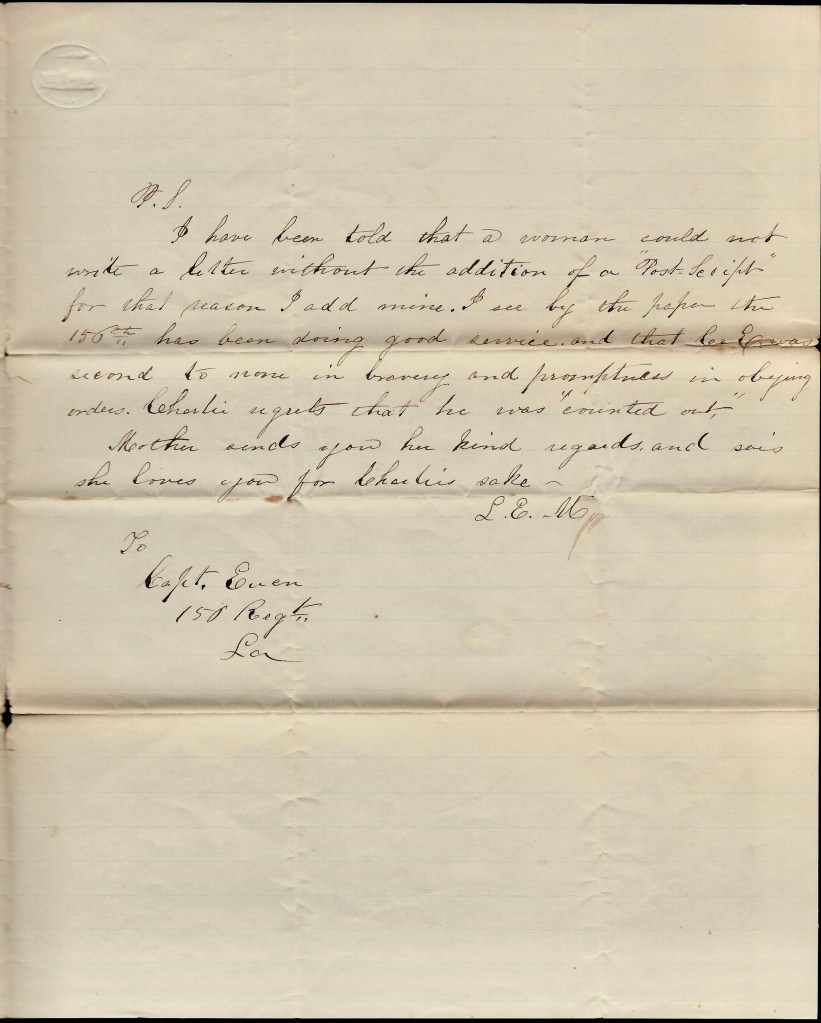
1863: Enoch Carkhuff to Mary (Reed) Carkhuff

Charles Van Martyr of New Brunswick, a musician in the 35th New Jersey, Co. A. (Rick Brown Collection)

The following letter was written by 39 year-old Enoch Carkhuff (1824-1881), the son of Jacob Quick Carkhuff (1786-1865) and Catharine Cole (1793-1862). Enoch was married in 1844 to Mary Reed (b. 1825) of Somerset county, New Jersey. Their only child was George Van Nest Carkhuff (b. 1850).

It was in late August 1862 when Enoch volunteered to serve as a private in Co. E, 30th New Jersey Infantry—a nine-month’s regiment. He mustered out of the service on 27 June 1863. At the time that Enoch wrote this letter in March 1862, the regiment had already participated in the “Mud March” and were awaiting orders that would eventually take them to the Battlefield at Chancellorsville, their only major engagement, but they escaped with little exposure and no casualties. They had 64 deaths from disease and 14 desertions during their nine months service.

Transcription

Belle Plain Landing, Virginia
March 7th 1863

Mary and George Carkhuff,

Dear friends—I take the opportunity to let you know that I am well and hope these few lines will find you the same. I have no news to write about the move for all is quiet here now. We have plenty of work to do now days but we ain’t going to work very hard for the pay we get.

The mud is drying up a little but it is bad enough yet. I got my box last Sunday the 1st of March and it was all first rate. There was four loaves of bread and four good pies, ginger and doughnuts, and a fine big pound cake and cheese and butter and apples and two first rate pair of stockings. I tell you that I live bully now days. You must let us know who sent us our night caps. You must tell them we are very much obliged to them for their present. They are very nice to wear in our tents or outdoors, either. The boys wonder who made them. Some of the stuff they did know and some they did not know where it came from but they are very much pleased with them.

I suppose you are thinking about moving pretty soon. George, you must work smart and help mother get ready to move. You must let me know who moves where you are. They say that we will get some more pay this month. I hope they will pay us some so that you can pay doctor all his rent before you move. Maybe he will let you stay yet for 4 dollars a month if he don’t rent it soon. You must let me know who bought Dunman’s houses and whether they are all rented or not. Give my respects to Mr. Ore’s folks. Tell Mr. Ore he will have to come down to Old Virginna and see the elephant and then they will know how it goes to have a box.

You must let me know whether Tunis is home yet or not. Mr. John Whitenack and Sherfeherder and Mr. Hope has been down here this week and they said that John Davis and Ellis Porter is coming down next week. But the boys don’t think that they will come. Our young boys is getting tired of the business. Samuel Davis is not very well. He don’t do much duty now nor hain’t for some time. He has got plenty of the war. If he gets back, he won’t come again. But I must close for it is most time for the mail to go. But you must write soon for I have not heard from you since I wrote the other letter. Goodbye mother and George. Your dear husband and father, — Enoch Carkhuff

1862: Myron Harvey Skinner to Juliann Hubbel Skinner

An unidentified private believed to be from the 2nd Michigan Infantry (Dale Niesen Collection)

This letter was written by Myron Harvey Skinner (1842-1904), the son of Adolphus Harvey Skinner (1811-1892) and Mary Angeline Fuller (1811-1893) of Walled Lake, Oakland county, Michigan. Myron enlisted on 25 May 1861 in Co. G (“Constantine Union Guards”), 2nd Michigan Infantry. He was transferred out of the regiment on 21 January 1863 into Battery H, 1st US Light Artillery. Myron datelined his letter on 19 December 1862, just days after the Battle of Fredericksburg when the regiment was encamped near Falmouth, Virginia

Myron wrote of visiting the encampment of his older brother, Dolphus Skinner (1835-1903) who had been serving as a private in Co. F, 10th US Regular Infantry since March 1858 and had only recently been attached to the Army of the Potomac. Previous to, and in the early part of the war, Co. F of the US Regulars had seen duty in the far west but in late November they were sent to Aquia Creek, Virginia, and were attached to Sykes Division of Butterfield’s 5th Corps during the Battle of Fredericksburg. During the battle, Sykes’ regulars moved up after darkness on the 13th and spent the night on the field. The Regulars were significantly engaged during the day of the 14th, with fighting around the Tannery on the northern end of the line. 

Myron addressed the letter to “Jule” whom I’m guessing was his cousin—Juliann Hubbel Skinner (1831-1922), a daughter of Hiram and Elizabeth (Otto) Skinner of Oakland county, Michigan.

[Note: This letter is from the private collection of Dale Niesen and was transcribed and published on Spared & Shared by express consent.]

Transcription

[Camp near Falmouth, Virginia]
December 19th 1862

Dear Jule,

I received yours some days since. I will endeavor to answer it. I learned by letters from home that Dolphus was in the Army of the Potomac and yesterday he came to my camp. I knew him just the minute I set my eyes on him. He don’t look as he used to but the longer I am with him, I see more of his old looks. He was glad to see me, I tell you, and I was glad to see him as he was to see me and this morning I came over to his camp and seen him. They are camped about 6 miles from my camp. But 6 miles hant much for a soldier to walk to see his brother that he hant seen in 5 years. You know he is well and doing well.

I would have answered your letter before this but I didn’t have a sheet of paper or couldn’t get any so I couldn’t write. So you must excuse me this time. I will try to do better next. You must excuse a short letter this time for I have got to write two more today.

— M. H. Skinner, Co. G, 2nd Michigan Vols.

Myron’s sketch with words, “Go it Old Jeff”