All posts by Griff

My passion is studying American history leading up to & including the Civil War. I particularly enjoy reading, transcribing & researching primary sources such as letters and diaries.

1861: Charles W. Reaves to Robert Hodges Reaves

The following letters were written from Charles W. Reaves (1845-1863), the son of Robert Hodge Reaves (1813-1875) and Anna Louisa Grice (1825-1901) of Marion county, South Carolina. He wrote the letters to his younger brother, Robert Hodges Reaves (1846-1865) who later enlisted (March 1864) in Co. H, 21st South Carolina Infantry and was killed in action on 18 June 1864.

In August 1861, Charles enlisted in Co. E, 1st South Carolina Infantry (McCreary’s). Marion District. He was promoted to 4th Corporal between August 19, and December 31, 1861. The regiment completed its organization at Richmond, Virginia, in August, 1861. Most of the officers and men had served previously in the 1st South Carolina Volunteers, a six-month command, which was mustered out of service in late July. The men were from Charleston and Columbia, and the counties of Darlington, Marion, Horry, Edgefield (now Aiken), and Florence. Charles’ service record indicate he was with the regiment until the Battle of Gettysburg when he was killed in the first days action on Seminary Ridge. Charles made the charge in late afternoon with his regiment—and the rest of Abner Perrin’s South Carolina Brigade—on Union Cavalry Col. William Gamble’s cavalrymen who carried Sharps repeating rifles, making things hot for the foot soldiers in grey. Though Charles would not see the result, Perrin’s Brigade broke the 1st Corps Union line, regrouped, and then chased the Union soldiers into the streets of Gettysburg. The 1st South Carolina claimed to have been the first regiment to plant the Confederate flag on the town square.

The task of informing Charles’ family of the death of their son fell upon his captain, Washington P. Shooter who was from the same district. See—1863: Washington P. Shooter to Robert Hodge Reaves, Sr.

[Note: These letters are from the private collection of Richard Weiner and were transcribed and published on Spared & Shared by express consent.]

Letter 1

Camp Jager
Suffolk, Virginia
October 12, 1861

Dear Brother,

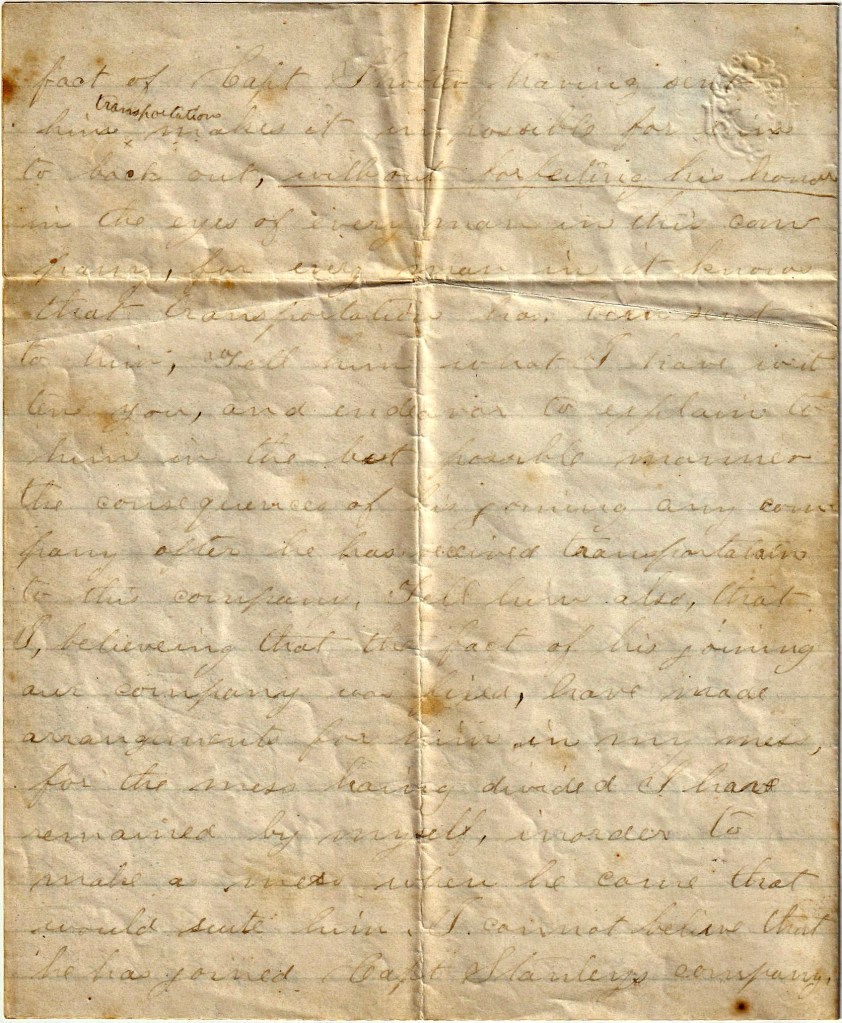
I received yours of the 5th with much pleasure for I had concluded that you had given out writing to me. I received a letter from Sarah yesterday by which I learned that Cousin Joe had joined Capt. Stanley’s company, but I think that surely it must be a mistake for he has irrevocably committed himself to our company, for he even went so far as to send for transportation which Capt. [Washington P.] Shooter sent him. He may have joined Stanley’s company before he received an answer from me after he had applied for transportation, in which case he will have to explain to Capt. Stanley for the fact of Capt. Shooter having sent him transportation makes it impossible for him to back out, without forfeiting his bonds in the eyes of every man in this company for every man in it knows that transportation has been sent to him. Tell him what I have written you, and endeavor to explain to him in the best possible manner the consequences of his joining any company after he has received transportation to this company. Tell him also that I, believing that the fact of his joining our company was fixed, have made arrangements for him in my mess, for the mess being divided I have remained by myself in order to make a mess when he came that would suite him. I cannot believe that he has joined Capt. Stanley’s company, but if he has under the circumstances, it can he settled by his telling Capt. Stanley that after joining his company, he received transportation to Capt. Shooter’s company and therefore he is hound more closely to Shorter than he is to him.

You say you heard that we had been given flintlock muskets. In part that is true, for we have borrowed about fifty flintlocks from the state of Virginia, but these muskets are not for our arms. We only borrowed them to drill with until we could get the rifles which the Secretary of War himself promised to Capt. Shooter in person. As long as we are here where we are in no danger flintlocks are as good as any to drill with. But you need give yourself no uneasiness about our being armed with them, for the men would not have them, and if they would, Capt. Shooter would not lead them into action with them. But there is no danger of our getting into action before next spring for there is no probability of our moving away from here before that time. There are several of our men sick with the measles, and two men from the Horry [Rebels] company [Co. F] died a few days ago. These are the deaths we have had among the soldiers of our regiment. Our regiment has been increased to eleven companies by arrival of the Carolina light infantry [Co. L] from Charleston. It has been a fine company and contains eighty-six members.

Our band also arrived a few days ago which is quite an addition for we now have good music. Your affectionate brother, — Charles

I could write more, but my paper will not allow it, so I must close. You must answer this immediately. Give my love to Grandma.

Letter 2

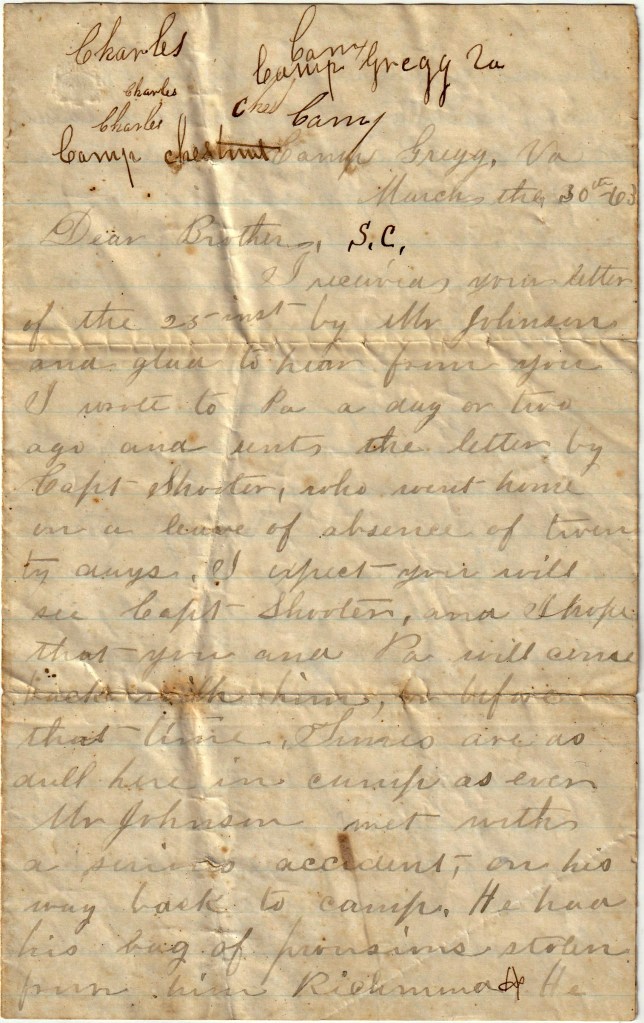
Camp Gregg, Virginia
March 30, 1863

Dear Brother,

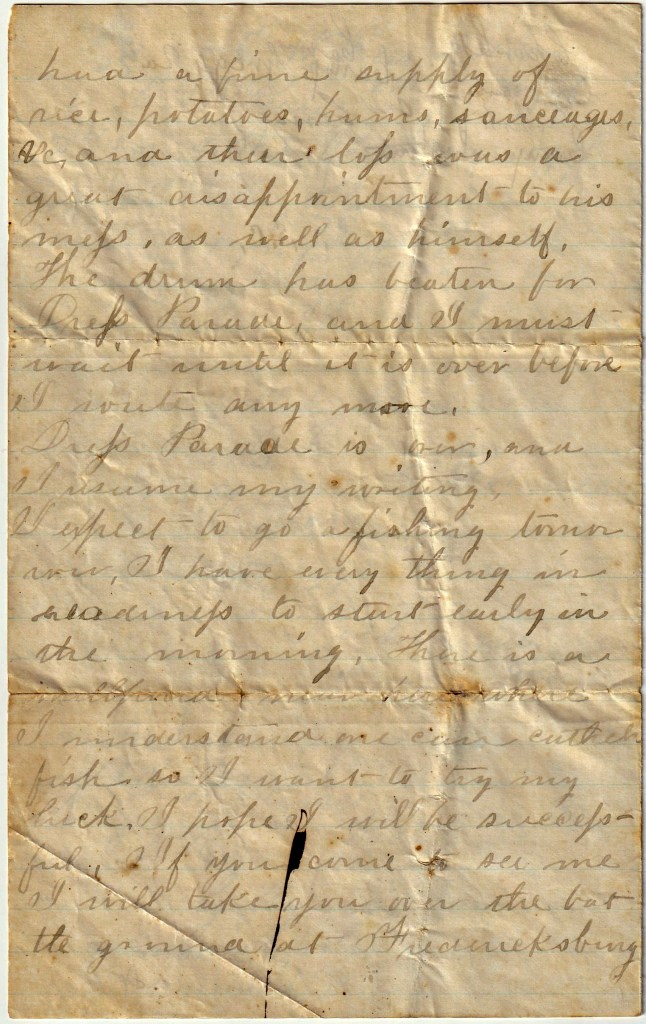
I received your letter of the 25 inst. by Mr. Johnson and glad to hear from you. I wrote to Pa a day or two ago and sent the letter by Capt. Shorter who went home on a leave of absence of twenty days. I expect you will see Capt. Shorter and I hope that you and Pa will come back with him, or before that time. Times are as dull here in camp as ever. Mr. Johnson met with a serious accident on his way back to camp. He had his bag of provisions stolen from him at Richmond. He had a fine supply of rice, potatoes, hams, sausages, team and their loss was a great disappointment to his mess, as well as himself. The drum has beaten for dress parade and I must wait until it is over before I write any more.

Dress parade is over, and I resume my writing.

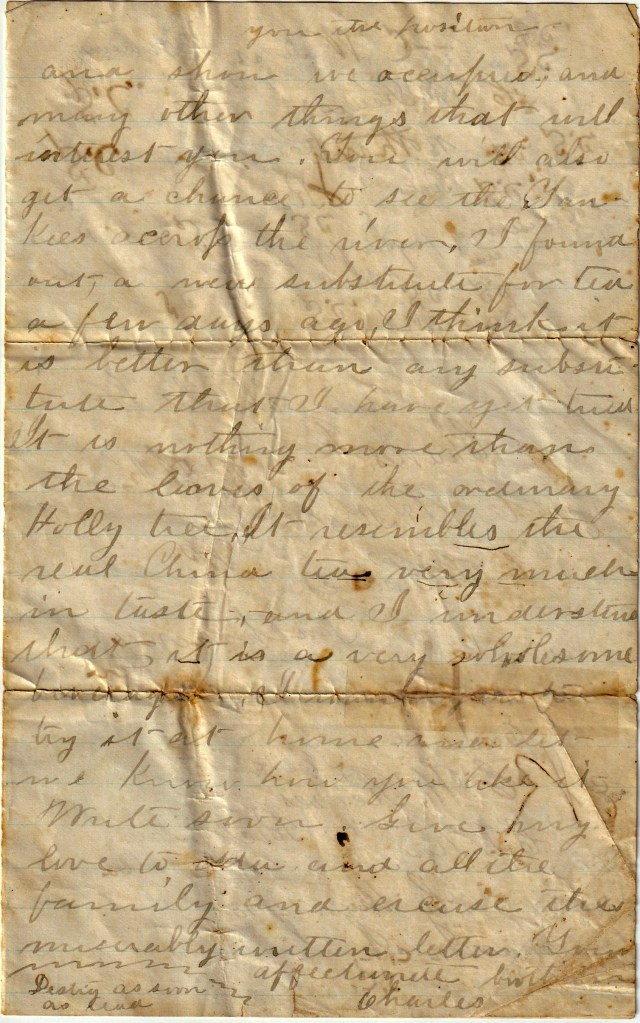
I expect to go fishing tomorrow. I have everything in readiness to start early in the morning. There is a millpond near here where I understand one can catch fish so I want to try my luck. I hope I will be successful. If you come to see me, I will take you over the battleground at Fredericksburg and show you the position we occupied, and many other things that will interest you. You will also get a chance to see the Yankees across the river. I found out a new substitute for tea a few days ago. I think it is better than any substitute that I have yet tried. It is nothing more than the leaves of the ordinary holly tree. It resembles the real China tea very much in taste, and I understand that it is a very wholesome beverage. I encourage you to try it at home and let me know how you like it. Write soon. Give my love to Ma and all the family and excuse the miserably written letter.

Your affectionate brother, — Charles
1862: Joseph Freeman Williams to his Parents

The following letters were written by Joseph “Freeman” Williams (1846-1908) of the 31st Mississippi Infantry. The regiment was organized in March 1862 and was initially part of the garrison at Vicksburg. They then fought at Baton Rouge and Jackson.

Letter 1

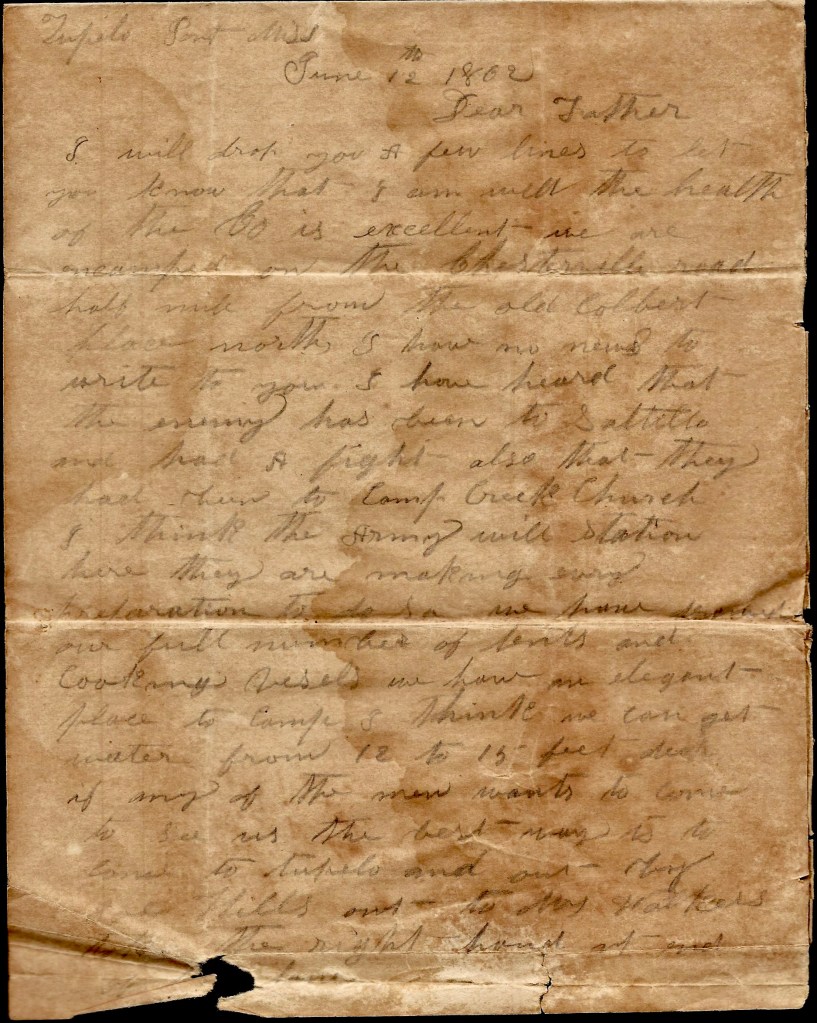
Tupelo Post, Mississippi
June 12th 1862

Dear Father,

I will drop you a few lines to let you know that I am well. The health of the company is excellent. We are encamped on the Chesterville road half mile from the old Colbert place north. I know no news to write to you. I have heard that the enemy has been to Saltillo and had a fight. Also that they had been to Camp Creek Church. I think the army will station here. They are making every preparation to do so. We have drawed our full number of tents and cooking vessels. We have an elegant place to camp. I think we can get water from 12 to 15 feet deep.

If any of the men wants to come to see us, the best way is to come to Tupelo and out by [ ] Hill’s, out to Mrs. Walker’s. Take the right hand [road] at end of the lane [and] come up towards Parson More’s. You might come by Chesterville but the small pox I expect is there. Mr. Braley’s and Mr. Brandon’s family has it. The cases are getting better except one of Braley’s negro women, they think, will die. I have seen Mrs. Walker and Tom and Joe. They are all well.

I saw Tom Freeman. He invited me to come someday and take dinner with him. I will slide around someday when I get milk hungry. Fount is Provost Marshall in Tupelo. I saw a paper dated the 9th which stated that Stonewall Jackson had cut Fremont all to pieces. It is said that Jackson has the most able army that belongs to the South. Write soon to Freeman Williams


Letter 2

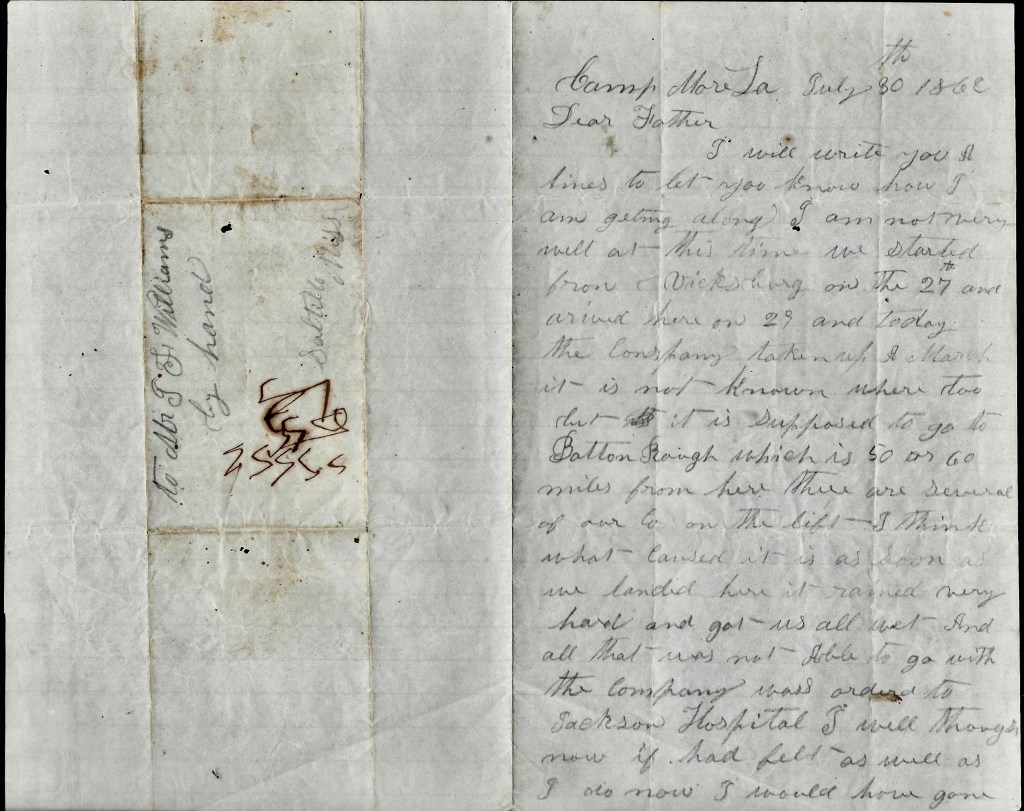
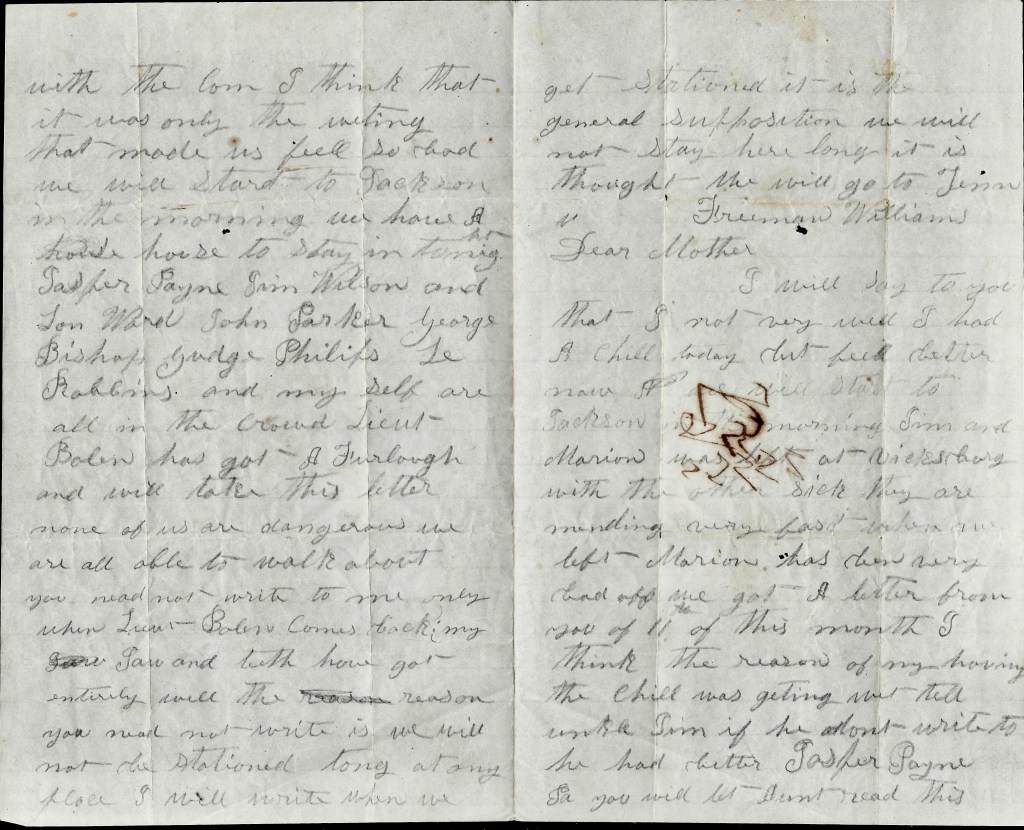
When this letter was penned in late July 1862, Freeman was with a handful of others from his regiment too sick to march so they were left behind at Camp Moore near Kentwood, Louisiana, and ordered to make their way to the hospital at Jackson, Mississippi. After finishing his letter, it appears that Freeman has written a short letter for his comrade Jasper Payne.

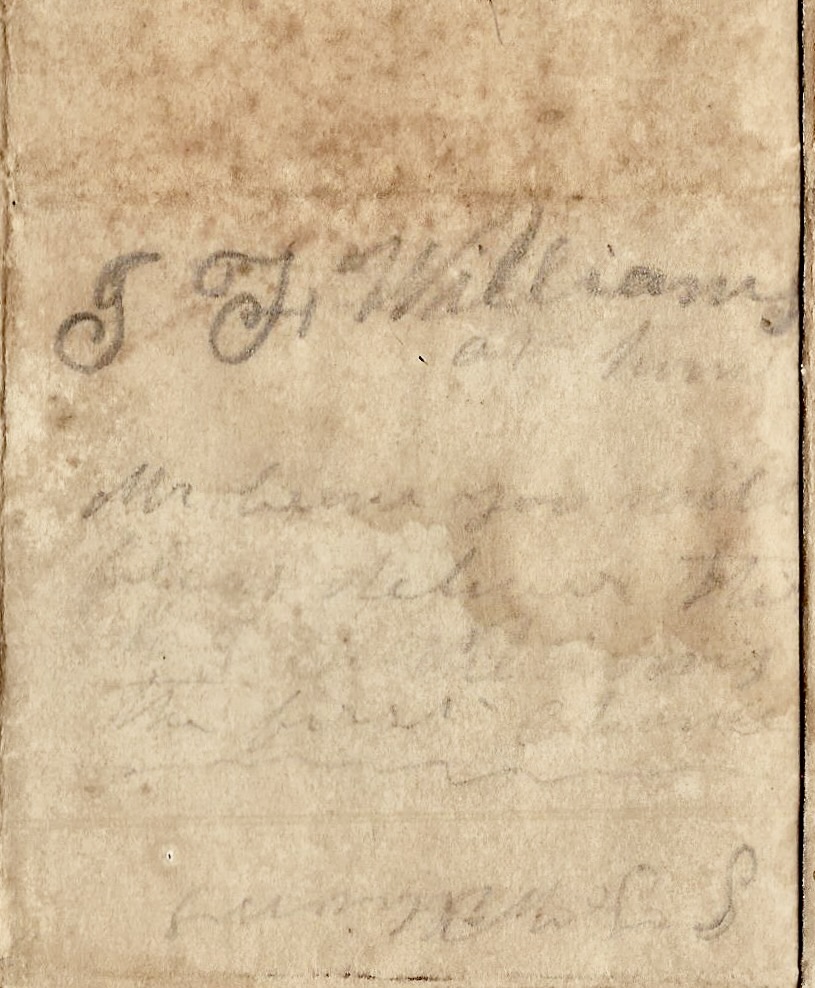
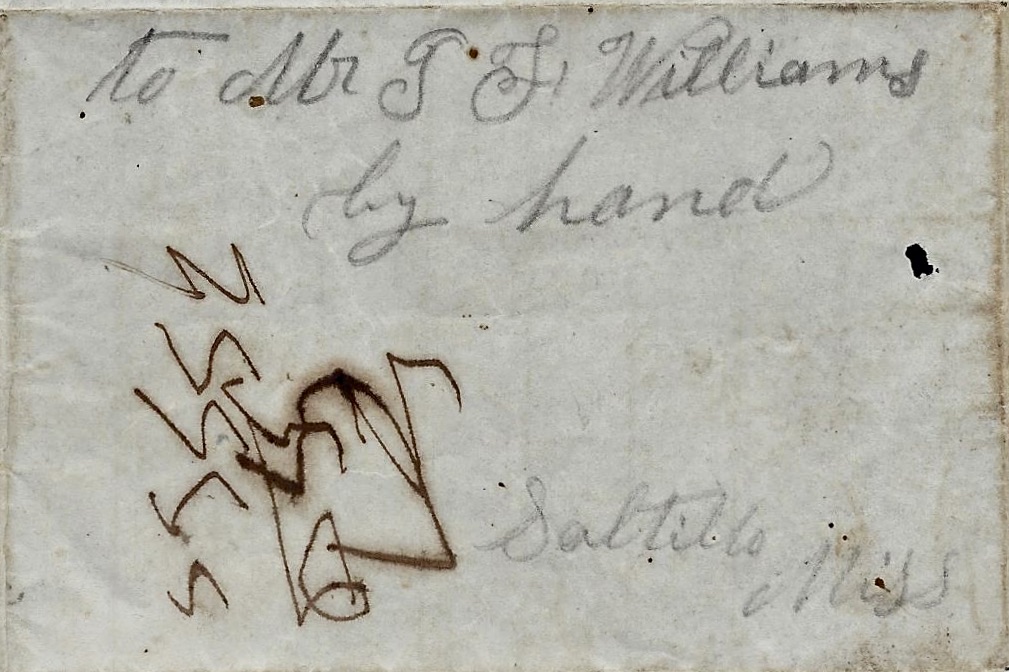
Hand carried Letter, addressed to Mr. J. F. Williams, Saltillo, Mississippi

Camp Moore, Louisiana
July 30th 1862

I will write you a few lines to let you know how I am getting along. I am not very well at this time. We started from Vicksburg on the 27th and arrived here on the 29th and today the company taken up and march it is not known where to but it is supposed to go to Baton Rouge which is 50 or 60 miles from here.

There are several of our company on the [sick] list. I think what caused it is as soon as we landed here, it rained very hard and got us all wet. And all that was not able to go with the company was ordered to Jackson Hospital. If I had felt as well as I do now, I would have gone with the company. I think that it was only the wetting that made us feel so bad.

We will start to Jackson in the morning. We have a house to stay in tonight. Jasper Payne, Jim Wilson, and Tom Ward, John Parker, George [W.] Bishop, Judge Philips, L. Robbins and myself are all in the crowd. Lieut. [Willoughby] Bolen has got a furlough and will take this letter. None of us are dangerous. We are all able to walk about. You need not write to me only when Lieut. Bolens comes back. My jaw and teeth have got entirely well. The reason you need not write is we will not be stationed long at any place. I will write when we get stationed. It is the general supposition as will not stay here long. It is thought we will go to Tennessee.

— Freeman Williams

Dear Mother, I will say to you that I am not very well. I had a chill today but feel better now. We will start to Jackson in the morning. Jim and Marion was left at Vicksburg with the other sick. They are mending very fast when we left. Marion has been very bad off. We got a letter from you of 11th of this month. I think the reason of my having the chill was getting wet. Tell Jim if he don’t write to me he had better. Jasper Payne.

1861: William Turner Smith to Betty Floyd

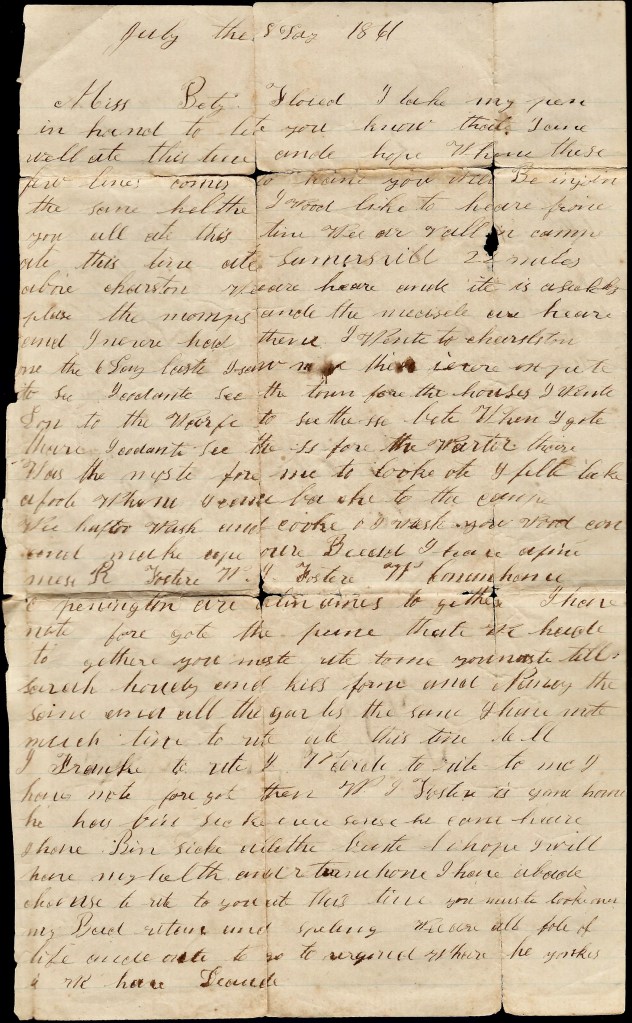
The following letter was written by William Turner Smith of Co. K (the Carolina Mountaineers”), 6th South Carolina Infantry. Its members were mostly recruited from the Pickens and Greenville Districts (counties) of South Carolina. I believe William was from the Greenville District. He may be the same “W. T. Smith” who later served in the 26th South Carolina Infantry which was formed from the consolidation of the the 3rd and the 9th regiments in 1862.

The 6th was engaged at Dranesville under J.E.B. Stuart, then was brigaded under Generals R.H. Anderson, M. Jenkins, and Bratton. The 6th fought with the army from Williamsburg to Fredericksburg, served with Longstreet at Suffolk, and later moved with D.H. Hill to North Carolina. Again with Longstreet, it did not arrive in time to take part in the Battle of Chickamauga but was engaged at Knoxville. Returning to Virginia, it participated in the conflicts at The Wilderness, Spotsylvania, and Cold Harbor, endured the hardships of the Petersburg trenches, and saw action around Appomattox. The regiment reported 18 killed and 45 wounded at Dranesville and in April, 1862, contained 550 officers and men. It lost 27 at Williamsburg and fifty-two percent of the 521 at Seven Pines, then sustained 100 casualties at Gaines’ Mill and Frayser’s Farm, 115 at Second Manassas, 58 during the Maryland Campaign, and 16 at Wauhatchie. In 1864 the unit lost 9 killed and 85 wounded during Wilderness Campaign, and from June 13 to December 31, there were 26 killed, 176 wounded, and 16 missing. On Apirl 9, 1865, it surrendered 30 officers and 328 men. The field officers were Colonels John Bratton, John M. Steedman, and Charles S. Winder; Lieutenant Colonels Andrew J. Secrest and John M. White; and Majors James L. Coker, Edward C. McLure, and Thomas W. Woodward.
William wrote his letter on 8 July 1861 from Summerville, South Carolina. The regiment was ordered to proceed by rail to Richmond, Virginia, on 15 July 1861—just one week later. After they arrived there, they were stationed at Church Hill in Richmond.

Transcription

[Summerville, South Carolina]
July the 8th day, 1861

Miss Betty Floyd,

I take my pen in hand to let you know that I am well at this time and hope when these few lines comes to hand, you will be enjoying the same health. I would like to hear from you all at this time. We are all in camp at this time at Summerville, 22 miles above Charleston. We are here and it is a sickly place. The mumps and the measles are here and I never had them. I went to Charleston on the 6th day last. I saw [ink smudged…]. I couldn’t see the town for the houses. I went down to the wharf to see the [ ] for the water there was the most for me to look at. I felt like a fool when I came back to the camp.

We have to wash and cook. I wish you would come and make up our bread. I have a fine mess—R[ansom] Foster, W[illiam] J. Foster, W. Co____, C[unningham] Pennington are all in together. I have not forgot the fun that we had together. You must write to me. You must tell Sarah Honely [?] and kiss for me and Nancy the same and all the girls the same. I have not much time to write at this time. Tell J. Frank to write and [ ] to write to me. I have not forgot them.

W[illiam] J. Foster is gone home. He has been sick a little but I hope I will have my health and return home. I have a bad chance to write to you at this time. You must look over my bad writing and spelling. We are all full of life and ready to go to Virginia where the Yankees is. We have dandy muskets, cartridge boxes, knapsacks, haversacks, and tin plates and tin cups and spoons and frying pans and tin cans and a bucket. You ought to see us cooking and a washing the dishes and washing our clothes. We have a hard time sure. We sing every night.

Nancy, you must ask me to your wedding and I will come if I can. You must not marry until I can come and if I live to come, I am coming down. We shall. have a fine [ ].

I must fetch my letter to a close. You must write to, William Turner Smith, Capt. S. D. Goodlett, Carolina Mountaineers [Co. K], 6th Regiment S. C., Summerville, S. C.

1862: Timothy M. Gillan to Sarah (Reynolds) Gillan

The following letters were written by 35 year-old Timothy M. Gillan (1827-1863), the son of Danial Gillan (b. 1805) and Sarah Reynolds (b. 1808) of Corning, Steuben county, New York. Timothy was the oldest of at least seven children born to Daniel and Sarah Gillan, a few of whom are mentioned in these letters. Sadly, Timothy’s father abandoned his family in 1858 and it fell upon the older children to provide for their mother’s support.

Timothy was one of the first to answer Lincoln’s call for volunteers to help put down the rebellion. He enlisted on 6 May 1861 at Elmira to serve as a private in Co. F, 23rd New York Infantry. By August 1861, he had been promoted to corporal. The first letter was penned from Upton’s Hill in March 1862; the second from Fredericksburg when they were part of Pope’s Army Of Virginia. Their biggest engagements were 2nd Bull Run, Antietam, Fredericksburg and Chancellorsville. Both letters were found in the Pension Files as evidence that Timothy continued to provide financial support to his mother, even while in the service. Timothy’s death is described in the file in a letter signed by William M. Dingeldry, Captain of Co. F (pictured below), who testified that on or about the 16th of May 1863, while the regiment was returning to Elmira, New York, to be discharged, and while at Washington D. C., Timothy was taken sick with Typhoid Fever” and sent to a hospital. He died on 29 May 1863.

Timothy refers to his younger brother “Frank” frequently in both letters. William Francis (“Frank”) Gillam (1845-1930) served 3 years and 8 months in Co. B, 1st New York Light Artillery.

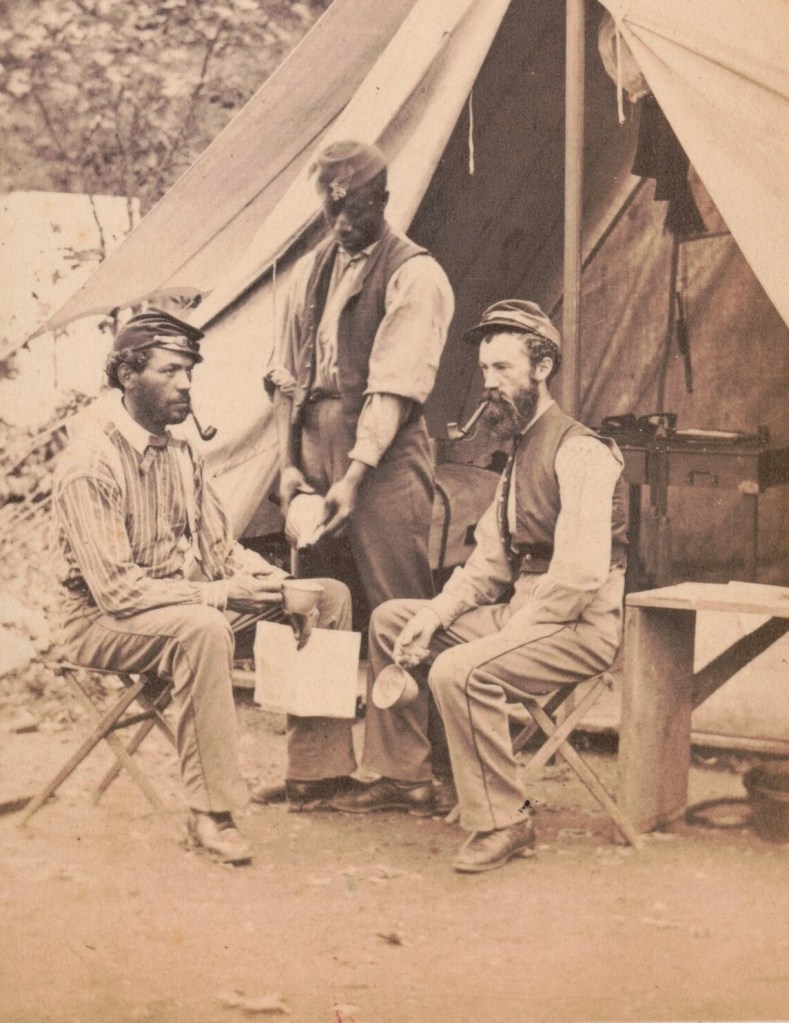
Captain William W. Dingeldry of Co. F, 23rd New York Infantry Regiment and his servant with Sergeant Lucian W. Bingham of Co. K, 23rd New York Infantry Regiment in camp at Arlington, Virginia. From the Liljenquist Family Collection of Civil War Photographs, Prints and Photographs Division, Library of Congress

Letter 1

Upton’s Hill
March 18th 1862

Dear Mother,

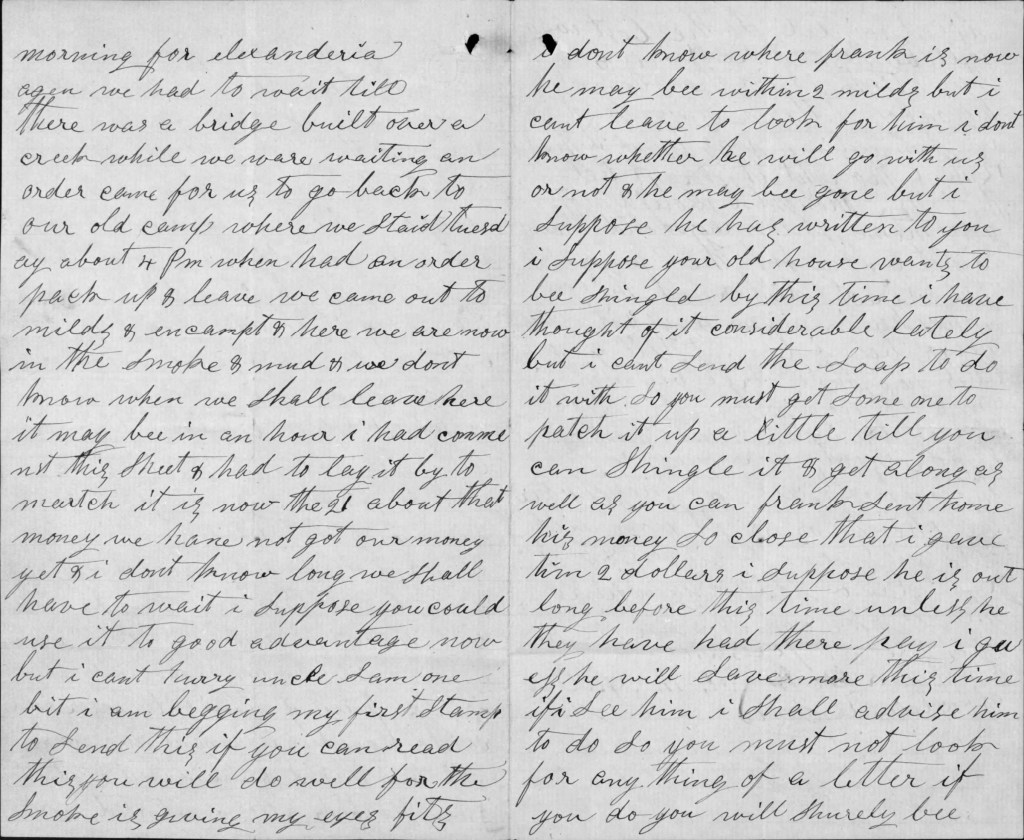
I now seat myself to address a few lines to you to let you know that I am well at present & hope you are all enjoying the same valuable blessing. We left camp last Monday or a week ago last Monday at 5 o’clock in the morning for Bulls Run but did not have to go all the way as the rebels had left. We had orders to go back to Alexandria & stayed all night in a piece of woods. It was a cold rain and rained all night. We were all wet and cold but came out all well enough after all.

We started next morning for Alexandria again. We had to wait till there was a bridge built over a creek. While we were waiting, an order came for us to go back to our old camp where we stayed Tuesday about 4 pm when [we] had an order to pack up and leave. We came out two miles and encamped & here we are now in the smoke and mud and we don’t know when we shall leave here. It may be in an hour.

I had commenced this sheet and had to lay it by to march. It is now the 21st [of March]. About that money, we have not got our money yet and I don’t know [how] long we shall have to wait. I suppose you could use it to good advantage now but I can’t hurry Uncle Sam one bit. I am begging my first stamp to send this. If you can read this, you will do well for the smoke is giving my eyes fits.

I don’t know where Frank is now. He may be within two miles but I can’t leave to look for him. I don’t know whether he will go with us or not & he may be gone but I suppose he has written to you. I suppose your old house wants to be shingled by this time. I have thought of it considerably lately but I can’t send the soap to do. it with so you must get someone to patch it up a little till you can shingle it & get along as well as you can. Frank sent home his money so close that I gave him two dollars. I suppose he is out long before this time unless they have had their pay. I guess he will save more this time. If I see him, I shall advise him to do so you must not look for anything of a letter. If you do, you. will surely be disappointed. So the best way will be to just read htis & then stick it in the stove.

The only letter I have had in some time was John’s of the 12th. I thought it might be that you thought I would not get them. You may send them right along just the same till I direct different. This may be in a few days and it may never be—I cannot tell any better how this will be than I can tell how the wind will blow next week.

Give my respects to Mr. & Mrs. Shoemaker and all the neighbors. The check or draft you will get will come to Gibson & you can draw soap anywhere. The smoke comes again so no more at present. From your affectionate son, — T. M. Gillan


Letter 2

Camp. 23rd [New York] Regt.
Opposite Fredericksburg [Virginia]
June 27th 1862

Dear Mother,

It is with pleasure that I now seat myself to address a few lines to you to let you know that I am well. I have had a letter from Frank dated the 18th. He was well & says they have had a brush with the rebels at Fair Oaks. He says that it was pretty sharp work but the rebels used their legs as usual. I have sent his letter to Benjamin & requested him to send it to you when he has seen it

We have been back to Catlett’s Station & from there to Gainesville and we have been camping & moving camp this way till we have got back here & we have moved camp this forenoon. We are encamped in an open field about a mile and a half or two miles from the [Rappahannock] river. Our sick are in the city. James Smith was taken there last Sunday and yesterday he was well enough to come over to camp and went back again. He thought he would be able to come back to duty soon. Peter Calkins & Jackson Gorton is in the hospital also. Jackson is—to use James’ language—suffering considerable. Amos Beeman will soon come home, I suppose. At least I have heard that his papers were made out for his discharge.

We still have good news from the South. Though it has cost a great many lives, it is steadily gaining ground. I hope it may come to a close before long but it does not look as if it was going to close so that we shall be able to come home before fall, if we do then. We seem to be fixing our camp as if to stay here some time but we may leave here at any time & go to reinforce McClellan. But it seems to be the general opinion here that we may stay here some time. It is rather dull business to lay here in camp doing nothing. We shall not be worth a cent to work when our time is out if we lay round here in camp all the time. In the first place, we could not stand to do a day’s work now. And in the second place, we will [be] too shiftless.

I had like to have forgotten to mention that Jerome & John Gorton are well. I had a letter from Farmington. They were all well but Lide & she was getting better. They say they have had a letter from Jake’s folks. They were well & Jake had planted 8 acres of corn and was a going to plant half an acre of sugar cane & had a good garden. I should like to hear from all of the people in Buckwheat Square & vicinity. If we lay here in camp, I shall not be very likely to have much news for you. As it has been, I have nothing that seems new to me as we have not loaded our guns except we were on guard or went out foraging or something of that kind of duty.

Frank says that they did not have any loss of life in their Battery. There was one man shot in the neck & he was getting along first rate.

I am going to enclose fifteen dollars as before & hope you will get it as well as you did the last. This from your affectionate son, — T. M. Gillan

1861: George Washington Waterman to L. B. Skeels

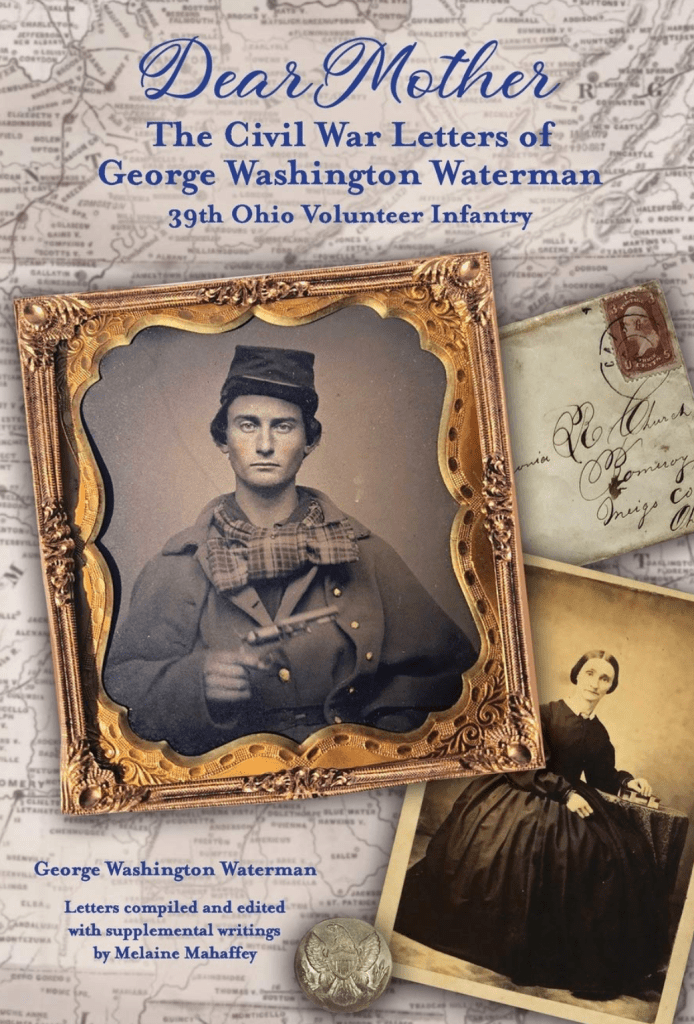
The following letter was written by George Washington Waterman (1841-1863) of Co. K, 39th Ohio Volunteer Infantry (OVI). George was the third of eight children born to Sophronia Skeels (1816-1900) and Luther Waterman (1812-1852) of Athens county, Ohio. While researching this letter, having already transcribed it, I discovered that George’s letters had already been published by Melaine Mahaffey in 2019. Apparently there are 119 letters of George’s published in the book. I don’t know whether this letter was included in the book or not.

In this letter, George mentions that the regiment had left St. Louis, leaving Co. K to remain on detached service as barracks guards. Nine companies of the regiment left St. Louis for Medon on 6 September 1861; four of the regiments were assigned to guarding the Northern Missouri Railroad and five other companies marched to the relief of Lexington, Missouri.

Transcription

Camp Benton
Sunday, September 15th 1861

Dear Uncle,

I expect you would like to hear from me how and where I am. I had intended to wrote to you before but somehow I never have got at it. We have just had the best kind of meeting & Sunday school this morning & the preacher said for us to go to our quarters and read our bibles or write letters to our friends so I thought I would write you a letter.

We are now about three miles back of St. Louis but how long we will be here I cannot tell. We may be here a month or two and we may have marching orders in less than an hour. It is just that uncertain. Our regiment has all left but this company. It had to stay to guard the barracks. A regiment left night before last and one artillery company left this morning and another is just going out now. There is something going to be did now before long. I have no idea how many soldiers there is in & about this camp. Go out in what direction you will & all you can see is camps for miles around. I wish that we was with our regiment wherever it is. I expect it is up in the northern part of the state somewhere.

We have the nicest place for a camp here that I ever saw. The barracks are 3/4’s of a mile long & there is three rows of them, They will hold a large family for Uncle Sam. They say that we will have to winter here. It is a nice country out here. The land is very rich and lays well. There is plenty of fruit out here.

I got a letter from Mother after she got home & she said that you would volunteer if it was so you could get in this company for this is a good company & we have good officers. We have the best kind of times & plenty to eat. Some would complain of anything but if we don’t see no harder times we have had, I will say we have had easy times. They have one of the nicest fairgrounds out that I ever saw. They are fixed up in style, you had [better] think.

I believe that this fuss will come to an end before long by the way the troops are pouring in. The North has got her Irish up now and when they once get at it, they will make the fur fly. We got the news this morning of a battle somewhere on the Potomac & the Union men took some fifty thousand prisoners. They are expecting a battle at Washington City all the time. It will be hot times there when they get at it.

Some two weeks ago a regiment came in to camp from Springfield. They got whipped out there & had everything they had taken from them & their wives and daughters’ clothes was taken from them. They came here & a madder set you never saw. I think there is where those soldiers are going to that left here.

I had no idea when I was at your house that I would go so soon although I thought of going. I hope this war won’t last long so that we all can return home again. I don’t expect there will be any chance to get to go home soon—not as long as we are here. I don’t think it will be over eight or ten months before we will all get to go home and stay there. I have wrote a letter every day for four days now & I have wrote. about all I can think of so I will close by stating that I am well at present & I hope these few lines will find you all the same & will bring an answer soon. Give my best respects to all. inquiring friends. Yours with respect, — George W. Waterman

[To] L. B. Skeels

Direct to Camp Benton, St. Louis, Mo., 39th Ohio Regiment, Care of Capt. Rhoades [Co. K]

P. S. You will see on the envelope how much different Jeff Davis looks when returning home than he did when he was going to war.

1865: Joseph H. Prime to his Wife

The following letter was written by Joseph (“Joe”) H. Prime of Strafford, New Hampshire. Joe enlisted when he was 21 years old as a corporal in Co. F, 13th New Hampshire Infantry, serving from August 1862 until October 1863 when he was discharged so that he could be commissioned as a Lieutenant in Co. G, 7th US Colored Troops (USCT). He was wounded on 29 September 1864 in the attack on Fort Gilmer, a bulwark on the Confederate defensive line six and a half miles from Richmond. Two months later, Joe was promoted to Captain of Co. F in November 1864.

Joseph H. Prime, 7th USCT

The 7th USCT was on duty at Camp Benedict, Maryland, until March 1864 when they were ordered to Portsmouth, Virginia, then to Hilton Head, S. C., and to Jacksonville, Florida. In August they returned to Virginia and participated in the siege operations against Petersburg & Richmond. “Fort Gilmer was yet another instance in which USCTs proved their mettle, getting farther with four companies than an entire division had been able to just hours earlier. Perhaps the best compliment came from a Confederate who was guarding the few men of Birney’s brigade who had been captured. When asked if blacks could fight, the Rebel replied: “By God! If you had been there you would have thought so. They marched up just as if they were on drill, not firing a shot.” After the war, another Confederate was willing to admit that on September 29th, “Richmond came nearer being captured, and that, too, by negro troops, than it ever did during the whole war.” [Source: Freedom By the Sword]

Transcription

U. S. General Hospital
Point of Rocks, Virginia
May 2nd, 1865 Tuesday

Dear Wife,

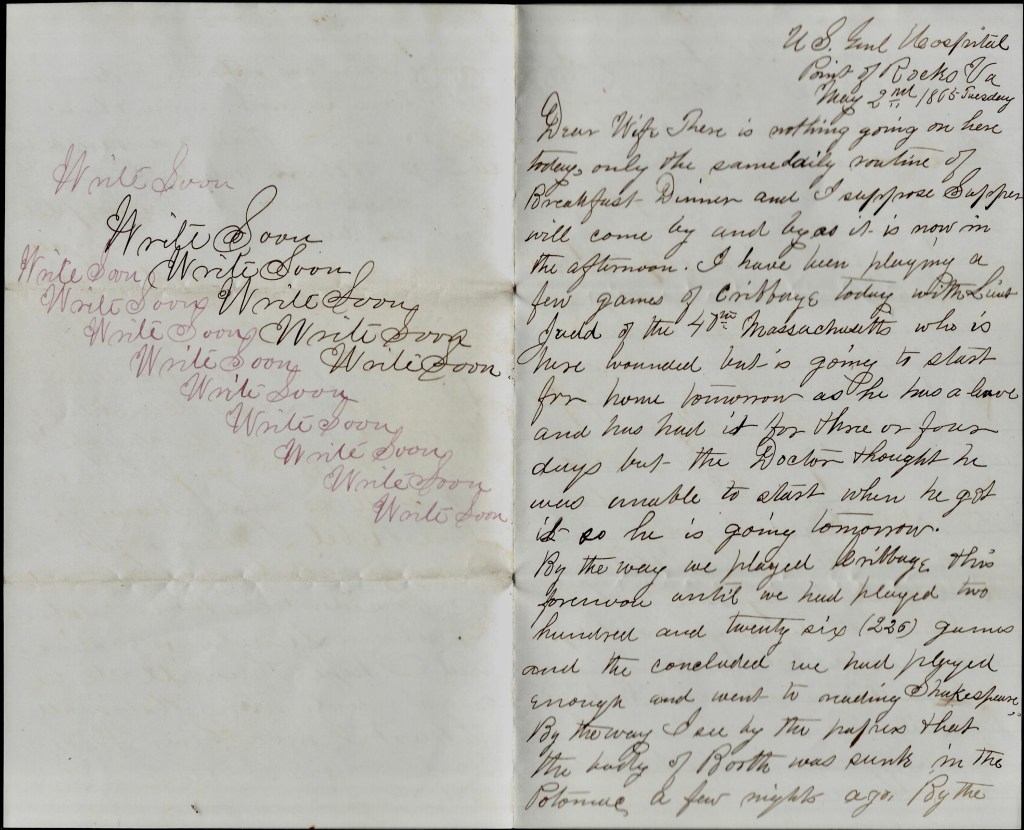
There is nothing going on here today, only the same daily routine of breakfast, dinner, and I suppose supper will come by and by as it is now in the afternoon. I have been playing a few games of cribbage today with Lieut. [Eugene] Judd of the 40th Massachusetts who is here wounded but is going to start for home tomorrow as he has a leave and has had it for three or four days but the doctor thought he was unable to start when he got it so he is going tomorrow. By the way, we played cribbage this forenoon until we had played two hundred and twenty six (226) games and then concluded we had played enough and went to reading Shakespeare.

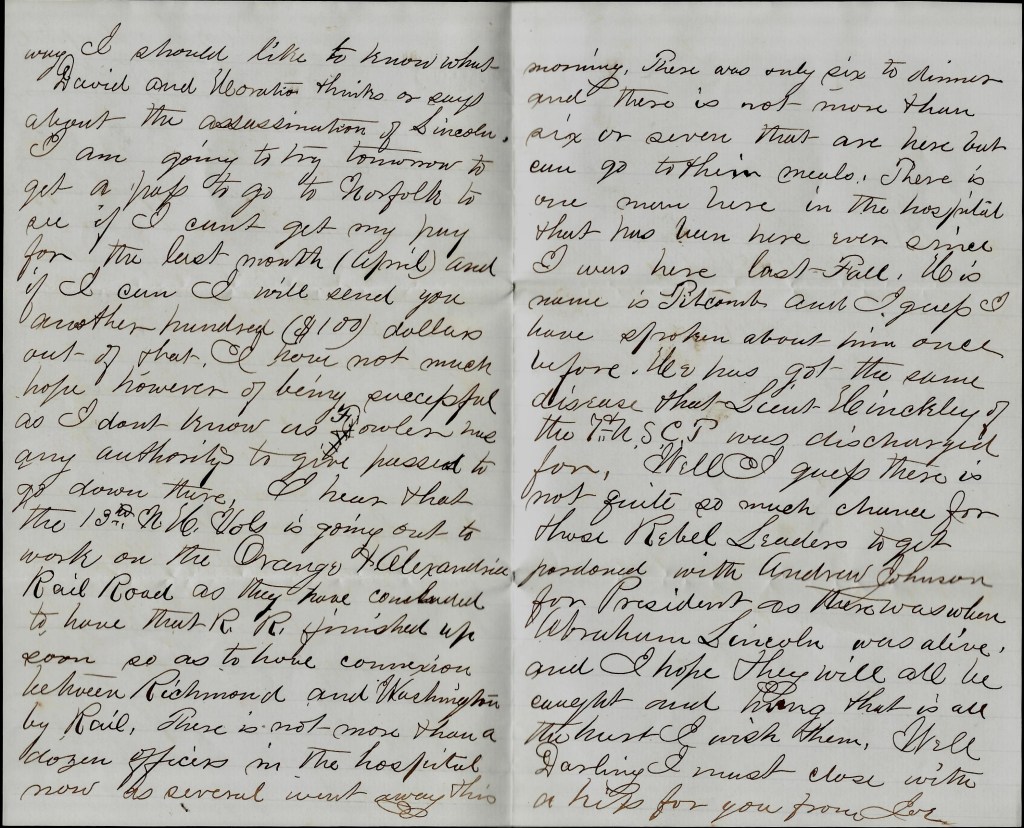
By the way, I see by the papers that the body of Booth was sunk in the Potomac a few nights ago. By the way, I should like to know what David and Horatio thinks or says about the assassination of Lincoln. I am going to try tomorrow to get a pass to go to Norfolk to see if I can’t get my pay for the last month (April) and if I can, I will send you another hundred ($100) dollars out of that. I have not much hope, however, of being successful as I don’t know as Fowler has any authority to give passes to go down there.

I hear that the 13th New Hampshire Volunteers is going out to work on the Orange & Alexandria Railroad as they have concluded to have that railroad finished up soon so as to have connection between Richmond and Washington by rail. There is not more than a dozen officers in the hospital now as several went away this morning. There are only six to dinner and there is not more than six or seven that are here but can go to their meals. There is one man here in the hospital that has been here ever since I was here last fall. His name is Titcomb and I guess I have spoken about him once before. He has got the same disease that Lieut. [Charles A.] Hinckley of the 7th USCT was discharged for.

Well, I guess there is not quite so much chance for those Rebel leaders to get pardoned with Andrew Johnson for President as there was when Abraham Lincoln was alive. And I hope they will all be caught and hung—that is all the hurt I wish them.

Well, darling, I must close with a kiss for you from Joe.

Write soon, write soon, write soon, write soon.

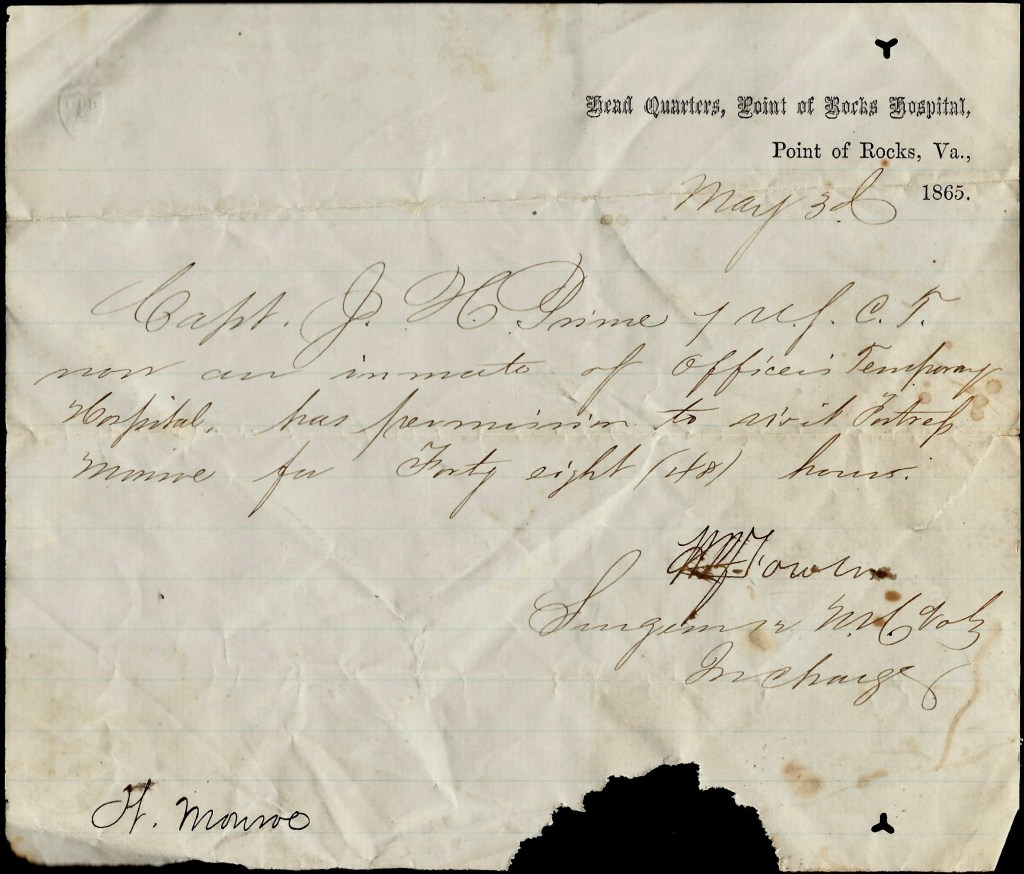
[Included is a pass for Capt. Prime of the 7th USCT of the Officer’s Temporary Hospital at Point of Rocks to visit Fortress Monroe, dated 3 May 1865. The pass was signed by Hadley B. Fowler, Surgeon in charge.]

.

1864: Richard Watson Musgrove to Abbie M. Blake

The following letters were written by Capt. Richard Watson Musgrove (1840-1914), the son of James Musgrove (1798-1878) and Ann Donker (1802-1879) of Bristol, New Hampshire.

Capt. Richard Watson Musgrove

Richard entered the service in August 1862 as a corporal in Co. D, 12th New Hampshire Infantry, was appointed sergeant, Mar. 17, ’63; first sergeant, Feb. 1, ’64; was at battles of Fredericksburg, Chancellorsville (where he had one musket shattered and another knocked from his hands), at Gettysburg (where he carried the state colors on the third day’s fight), and at Wapping Heights. When the regiment was stationed at Point Lookout, he was detailed for duty at the camp for prisoners of war, where he had charge of 1,000 men, all a later was sergeant of the provost guard at Gen. Gilman Marston’s brigade headquarters; discharged, Apr. 23, ’64, to accept promotion, and Apr 24, ’64, was appointed first lieutenant of Co. D, 1st Regt. U. S. Vol. Inf., a regiment, organized by Gen. Butler, and composed of prisoners of war who had taken the oath of allegiance and enlisted into the service of the Union; appointed captain of Co. I, same regiment, Aug. 13, ’64, and mustered out, May 21, ’66, after a service of three years and nine months. While in this regiment, he served three months in Norfolk, Va., as provost guard, and the balance of the time on the northwest and western frontiers, being stationed one year at Fort Ridgely, Minn. In the fall of ’65, his company with three others opened what is now the Smoky Hill route of the Union Pacific railroad, from Atchison, Kan., to Denver, Col. In winter of ’65-6, he was stationed at what is now Fort Wallace, Kansas, over 300 miles from the nearest settlement on the east. (Source: History of Bristol, N. H., vol. I, p. 208.)
In his letter of 4 October 1864, Richard mentioned hearing of the death of his younger brother, Adam Clark (“Abbott”) Musgrove (1842-1864). Abbott enlisted as a Private serving the Union Army in Halfmoon, Saratoga, New York on 21 Jul 1862. On 20 August 1862 he enlisted in Co. H, New York 115th Infantry Regiment. Abbott was killed in action and mustered out of service as a Corporal on 16 Aug 1864 in Deep Bottom Run, Henrico, Virginia.

Richard wrote the letters to Abigail (“Abbie”) Blake (1844-1911). Abbie married Rodolphus M. Locke (1839-1883) in November 1870.

Readers are also referred to a blog post on “Our War” describing Musgrove’s experience at the Battle of Chancellorsville when he was a sergeant in Co. D, 12th New Hampshire Volunteers. See Our War, 6 May 2014.

Letter 1

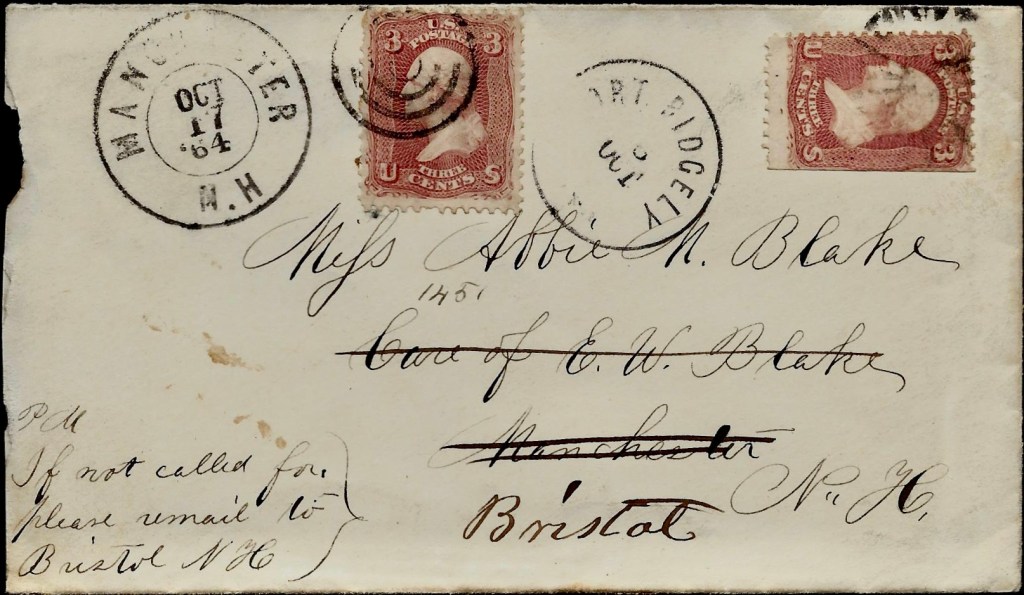
Addressed to Miss Abbie M. Blake, Bristol, New Hampshire

Fort Ridgely, Minnesota
October 4th 1864

Friend Abbie,

I presume you have concluded by this time that I have forgotten you, but such is not the case. I have thought of you often and wondered that you did not write. By the last mail, however, the mystery was explained by the arrival of your letter bearing date of July 3rd directed to Norfolk Va,

As I did not leave there till the middle of August, I do not see why I did not receive it before I left there but it was anxious to find me, and followed me to Milwaukee, Wisconsin, to Madison, then to St. Paul, Minnesota, to Fort Snelling and then here. I have been at all these places and am now stopping here, but how long I shall remain here I know not.

My 2nd Lieut. is now gone to Fort Wadsworth, Dakota Territory, with 40 men of my company as a guard for a train of supplies going to Fort Wadsworth. I expected to go myself with the whole company and remain there during the winter, but I am pleased at the prospect of remaining here. We are now 120 miles west of St. Paul. There is not but one or two houses within fifteen miles of here so I am far enough out of the world. But we should be worse off at Fort Wadsworth which is 180 miles west of here and not a habitation within 150 miles of there. Wild animals of all description—buffaloes, bears, wolves, and Indians are very numerous and troublesome, but I should not care for them. I do not like, however, to be so far from friends. Here we get a mail three times a week. There we should have one only once a week. I had just as leave go there next summer and expect we shall go further west then—probably on an expedition against the Indians.

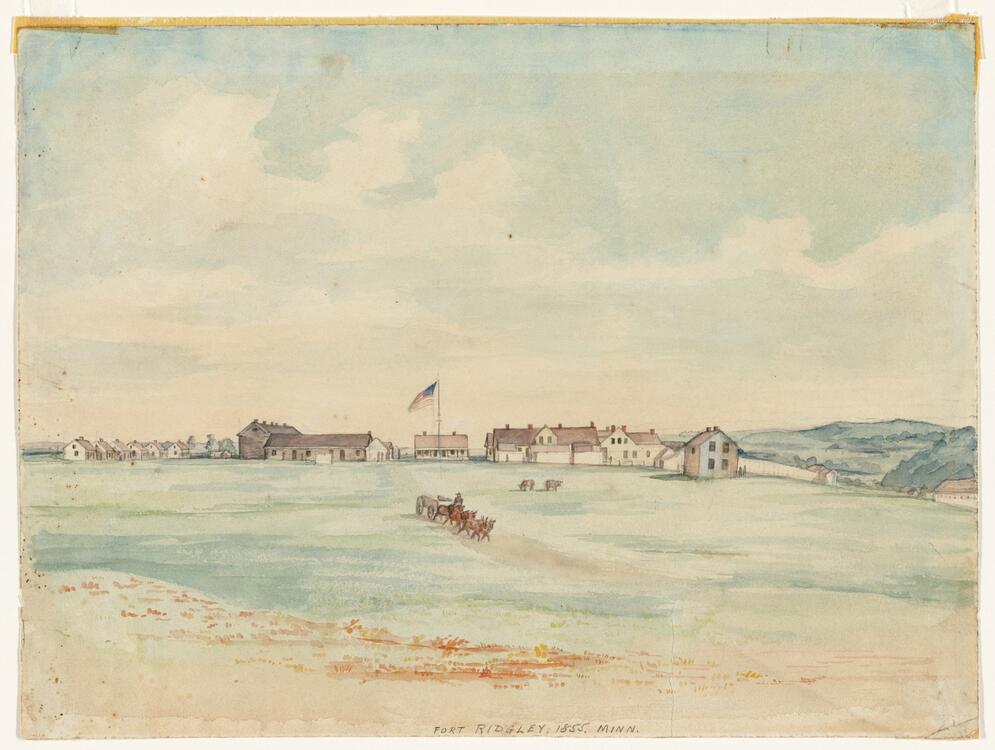
Fort Ridgely, Watercolor by Alfred Sully

I suppose you was aware of the death of my brother long before I was, as I did not know that he was dead till about three weeks ago, but looked in each mail for a letter from him, little thinking that I had received my last from him. Of course I feel very badly about his early fall. I miss his letters, always cheerful and hopeful, and I shall miss him very much when I get home as I hope to some day. But I am proud to think that he died so noble a death in the service of his country and I have the fact to cheer me that he died a christian soldier and while I mourn his loss, I am cheered at the thought that he is at rest where war is unknown, and that if I am faithful to my God, I may one day meet him above, although I can never more see his face upon earth. It would be a pleasure in some respects to be at home at this time to mourn with those there, or I would esteem it a great privilege to hear his funeral sermon preached, but as this cannot be, I will try and bow submissively to this heavy affliction and may his death result in good to me and us all.

It has been so long since you wrote your last that I hardly know where to direct [your letter] but I guess I will direct this to Manchester as you said nothing about leaving there and I hope you will receive it. I thank you for the little gift enclosed in your letter. I will try and heed its warning voice, and if you fail to hear from me for a long time, you must not think that I have forgotten you but attribute it to some such cause as delayed me now, or maybe I shall not have an opportunity to write as I am very much of the time on the move. So if you do not get a prompt answer, just write again and I hope they will get round even if they are delayed three months.

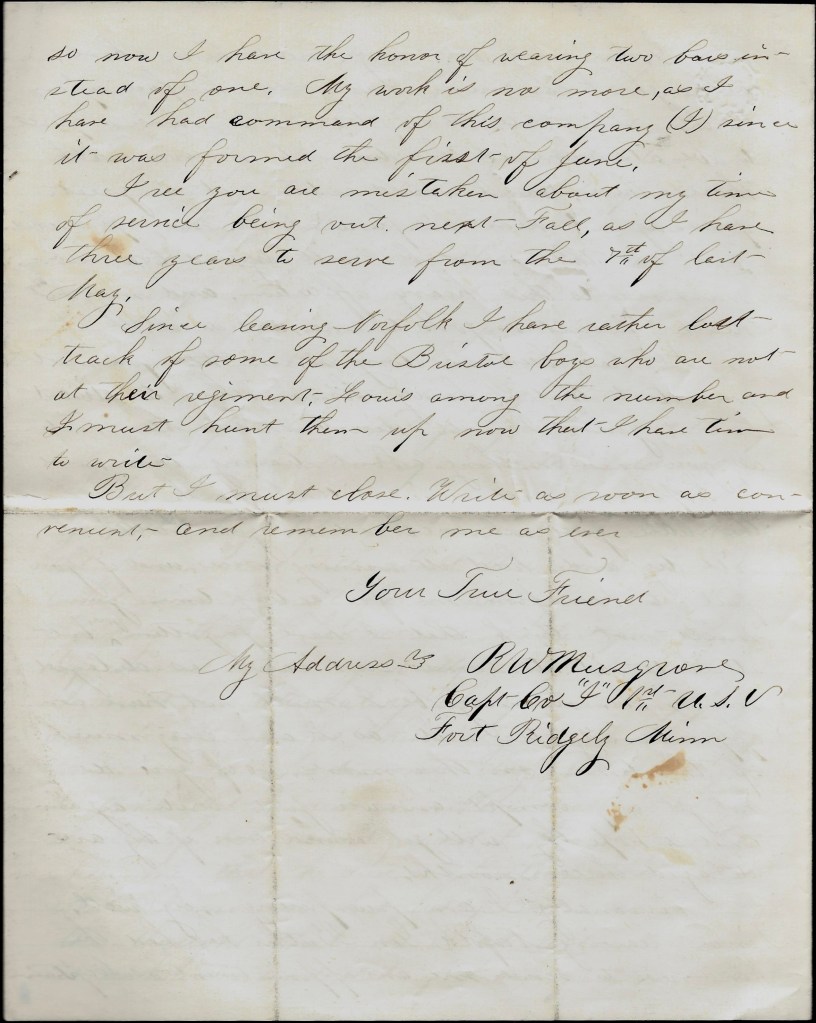
Personally I am prospering very well since leaving Norfolk. Gen. Butler has had the kindness to send me an appointment as Captain so now I have the honor of wearing two bars instead of one. My work is no more, as I have had command of this company (I) since it was formed the first of June.

Since leaving Norfolk, I have rather lost track of some of the Bristol boys who are not at their regiment, Louis among the number, and I must hunt them up now that I have tome to write. But I must close. Write as soon as convenient and remember me as ever. Your true friend.

My address is R. W. Musgrove, Capt. Co. I, 1st USV. Fort Ridgely, Minnesota


Letter 2

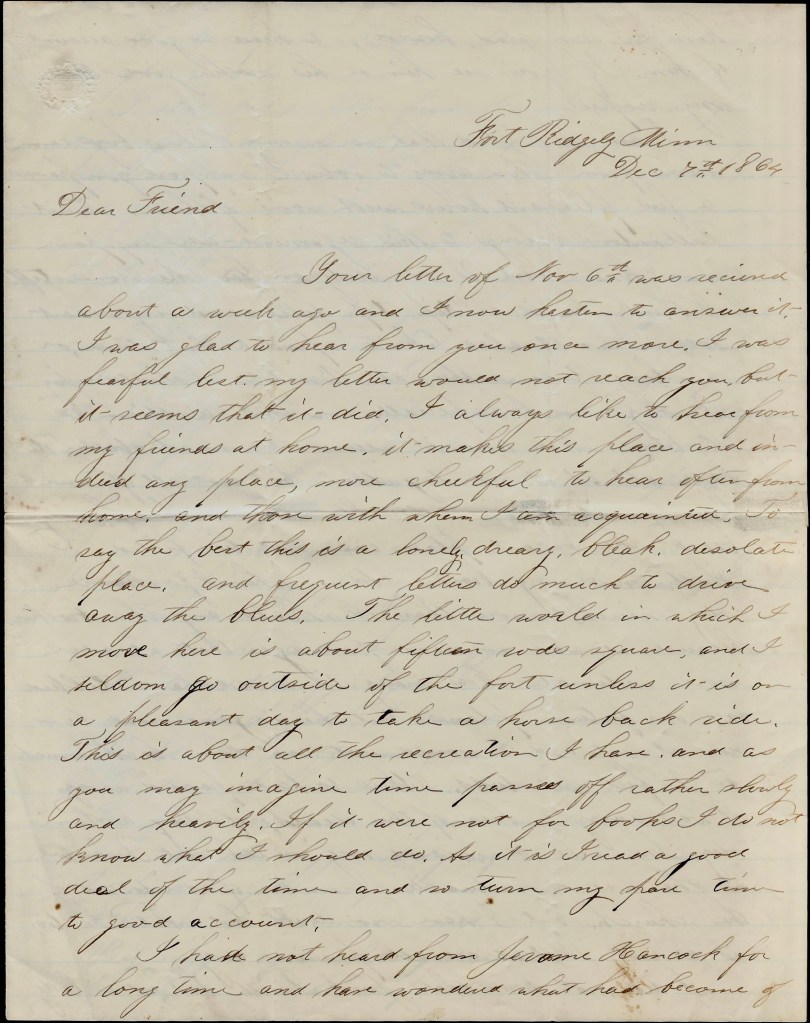
Fort Ridgely, Minnesota
December 7th 1864

Dear Friend,

Your letter of Nov. 6th was received about a week ago and I now hasten to answer it. I was glad to hear from you once more. I was fearful lest my letter would not reach you, but it seems that it did. I always like to hear from my friends at home. It makes this place and indeed any place, more cheerful to hear often from home, and those with whom I am acquainted. To say the best, this is a lonely, dreary, bleak, desolate place, and frequent letters do much to drive away the blues. The little world in which I move here is about fifteen rods square, and I seldom go outside of the fort unless it is on a pleasant day to take a horse back ride. This is about all the recreation I have, and as you may imagine, time passes off rather slowly and heavily. If it were not for books, I do not know what I should do. As it is, I read a good deal of the time and so turn my spare time to good account.

I had not heard from Jerome Hancock for a long time and have wondered what had become of him. I am glad, however, to hear so good account of him. If you see him or his mother, give them my respects.

I am very glad that so many of the boys came home from the army to vote. I suppose you passed a few pleasant hours with some of them. Lieut. Fullonton belongs to this regiment—as I suppose you know, but is on duty on Gen. [____ston’s] Staff. I think he is a tip top fellow and very smart too. I would like to spend a short time, or a long time rather, atBristol. I should enjoy it very much—especially now that William is at home. You know it seems so much better to have all at home together, but not all of our family will again assemble around the family board. The vacant place cannot be filled. I shall miss my brother Adam when I go home very much, more than I should any other brother because we were so near of an age that we were more intimate. How many times we have talked over our future plans. But he is gone now. He is now at rest and I would not call him back much as I feel his loss. Others too have passed away. I was sorry to hear of the death of Mary Woolson very. She will be missed very much at Brostol as she was a valuable member of society and of the church. But I have no doubt but what she too is at rest. Thus we are all passing away.

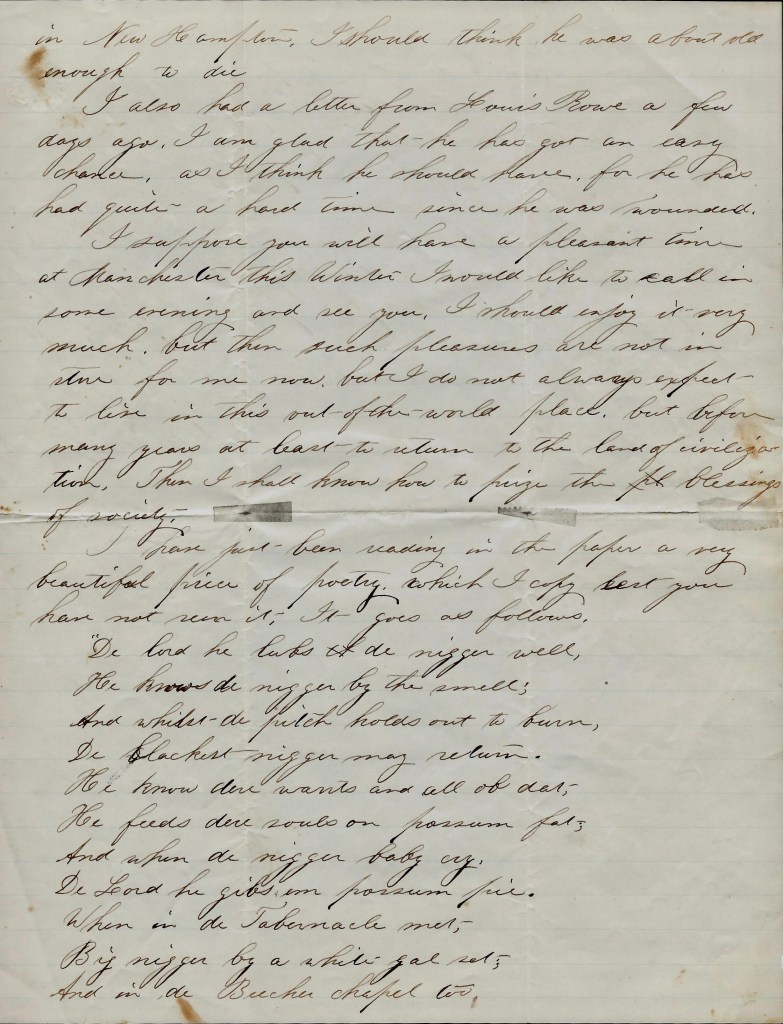
I do not know that Jack Smith had just a lady in New Hampton. I should think he was about old enough to die.

I also had a letter from Louis Rowe a few days ago. I am glad that he has got an easy chance as I think he should have, for he has had quite a hard time since he was wounded.

I suppose you will have a pleasant time at Manchester this winter. I would like to call in some evening and see you. I should enjoy it very much. But then such pleasures are not in store for me now, but I do not always expect to live in this out-of-the-world place. But before many years at least to return to the land of civilization. Then I shall know how to prize the blessings of society.

I have just been reading in the paper a beautiful piece of poetry which I copy lest you have not seen it. It goes as follows.

“De lord he lubs de nigger well,
He knows de nigger by the smell;
And whilst de pitch holds out to burn,
De blackest nigger may return.

He knows dere wants and all of day,
He feeds dere souls on possum fat;
And when de nigger baby cry,
De Lord he gibs ’em possum pie.

When in de Tabernacle met,
Big nigger by a white gal set;
And in de Beecher Chapel too,
De nigger habs a good front pew.

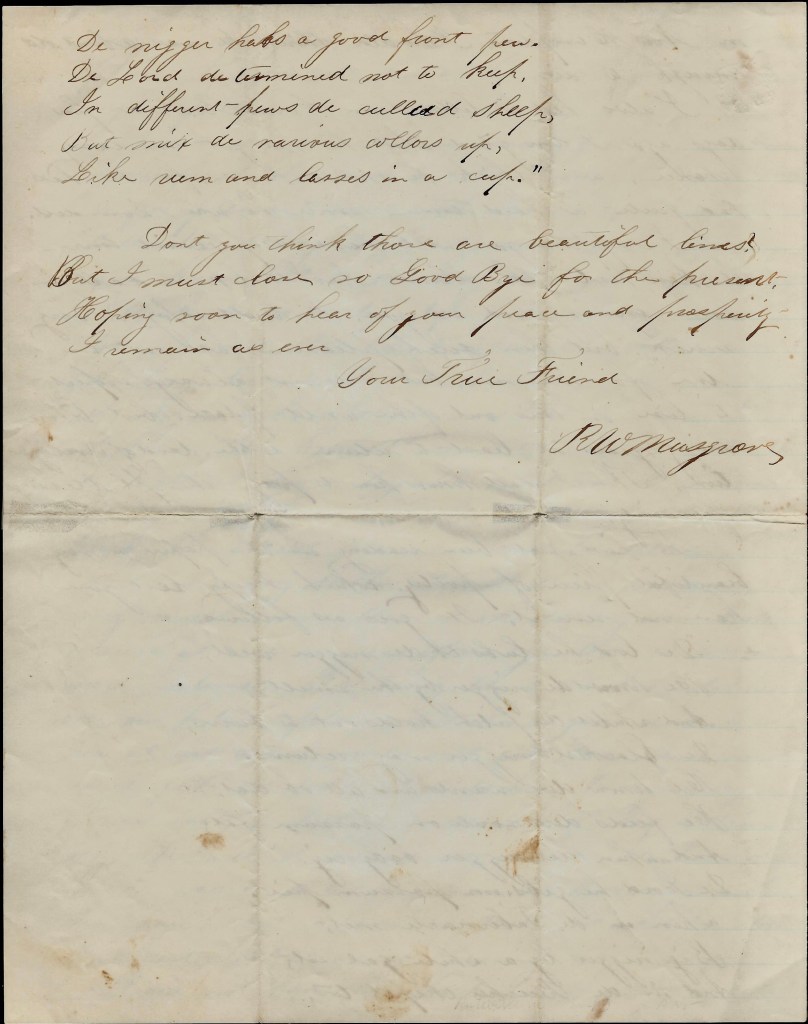
De Lord determined not to keep.
In different pews de cullerd sheep,
But mix de various collors up,
Like rum and lasses in a cup.”

Don’t you think those are beautiful lines? But I must close so goodbye for the present. Hoping soon to hear of your peace and prosperity, I remain as ever your true friend, — R. W. Musgrove

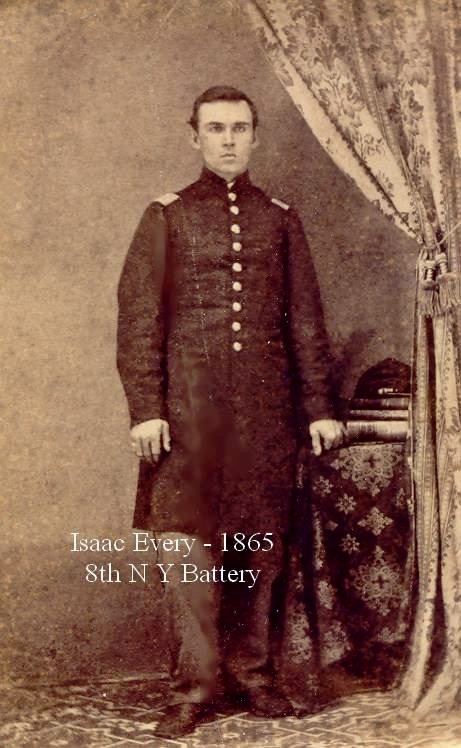
1861-64: Isaac Hiram Every to his Father

The following letters were written by Isaac Hiram Every (1838-1920), the son of Hiram Leon Every (1809-1896) and Hannah Eliza Stoutenburg (1813-1898) of Kortright, Delaware county, New York.

Isaac was 23 years old when he enlisted in October 1861 to serve in the 8th New York Light Artillery. According to family lore, Isaac went to war as a substitute for his younger brother who had been drafted and judged by the family to be too young to serve. This seems unlikely, however, as he went into the service in 1861, well before passage of the Conscription Act and the implementation of the Draft. The family also say that he was mustered out of the service in 1864 suffering from a disease that took him more than a year to recover from once he was home. After the war Isaac married Esther Ann Ferguson (1847-1936) and relocated to LeRoy, Mower county, Minnesota.

The Battery left the state commanded by Capt. Fitch on 7 November 1861; proceeded to Washington, where it was assigned to Casey’s division; and was with the 4th Corps in the Peninsular campaign in 1862, sustaining a loss of 6 killed and wounded at Fair Oaks. It then performed garrison duty at Gloucester Point, Yorktown and Portsmouth, being engaged at Gloucester Court House and Baltimore cross-roads. A section of the battery served with the cavalry division, Army of the James, in the operations against Petersburg and Richmond in May, 1864. It continued in service as a veteran organization and was mustered out at Norfolk, Va., June 30, 1865, under command of Capt. Morton. It lost during service 1 enlisted man died of wounds, and 40 men died of disease and other causes.

In his first letter, Isaac mentions three of his siblings, Katherine (“Kat”) Every, (1840-1916), Stephen A. Every (1843-1927), and Jennie Every (1848-1918). The second letter was written while in the service but the content is limited to discussion of a legal matter.

These letters were made available for transcription and publication on Spared & Shared by Laurie Every Manuse, a great-granddaughter of Isaac H. Every.

A Soldier’s Memorial for the 8th Independent New York Battery belonging to Isaac.

Letter 1

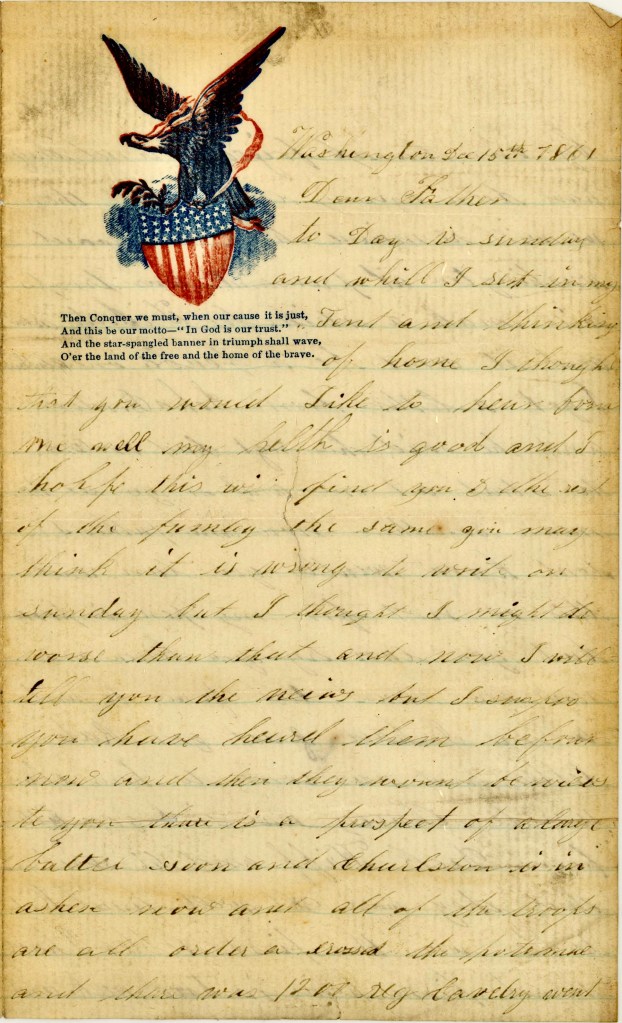
Washington [D. C.]
December 15th 1861

Dear Father,

Today is Sunday and while I sit in my tent and thinking of home, I thought that you would like to hear from me. Well, my health is good and I hope this will find you and the rest of the family the same. You may think it is wrong to write on Sunday but I thought I might do worse than that. And now I will tell you the news, but I suppose you have heard them before now and then they won’t be news to you.

There is a prospect of a large battle soon and Charleston is in ashes now and all of the troops are all ordered across the Potomac and there was 1200 regular cavalry went by our camp Friday and they have been agoing every [day] since then. We will remain here and guard Washington at present. Our troops will make a strike for Liberty now and it won’t be a feeble one either.

I got a letter from John Bradon and he said his regiment had orders to start at one and so you see they mean something now. And Father, I don’t know whether you can read this or not for my pen is poor but you can try try [to write] you know, and now you must tell Jennie to write to me. I have just got Kat’s letter and was sorry to hear that Uncle Charley was sick. Got a letter from Dock Kiff and he said that they were all well and Kat’s letter was the first letter I have heard from home in two weeks and I had just begun to think you had forgotten me.

And so Steve has got a new dog? Hope Sport will whip him every time he wants it, and I think he can do it. Tell Mother not to worry about me for I will take good care of myself and Father, you heard that I was sick. Well I was sick a few days when I first came here and so was they all. But I was not taken to the hospital for I was not very sick and now I feel better for it for we have to get acclimated to this place, you know, and that was all there was about it. So you see they can make a story about nothing for if I get sick, I shall come home, you know. But my health is good now and if I was there I might be sick, you know.

I must close for the present. Tell Kate I will answer her letter as soon as I get time which will be soon as the first of this week. It is warm weather here yet. Today is as warm as it is in summer there and we all go in our shirts sleeves. But we will go in barracks in a few days more. I send my love to you all. So now goodbye for the present. This from your son, — I. H. Every

Letter 2

Camp near Portsmouth, Virginia
July 7th 1864

Dear Father,

You will probably think I ought to have written to you before but could not until now and you wanted to know what they asked me in regards to the letters. I told he Captain that you wrote to me wanting me to state when I knew of the payment. I have now done so and he wanted to know if anyone else had wrote to me. I told him that my sister had wrote to me and that she wrote nothing that was anyway or I should say she wrote nothing about the lawsuit pending between you and Coan, only stating that you were sent by Orin Coan the letters I lost. Then also the one you sent they can’t make anything out of that they wanted me to state if I knew the time the money was paid. I told them or the Captain it was in the spring of 1858 in or about the middle of March. Also it was on the store stoop of Peters McC___ or in the store, I could not say which it was and that will have no bearing in the case. It will probably be sent off tomorrow. You can ask Squire Peters to let you see it and then you will know all about it. He will let you see it, I think. If not I will write the whole of the testimony down for you.

So write as soon as you get this if there is any more you would like to know but I don’t know as it will be of any account any way. I did not swear to the [bible] on it for I could not remember that and the Captain said it was not necessary. And now Father, you must not blame for it was some six years ago that this happened and a little over. Hoping this will find you well and in good health. Also the rest of he family there. My love to all.

I remain your true son, — Isaac H. Every

Write soon if you want to know any more. Goodbye.

1910: William Knight Letter to Pension Office

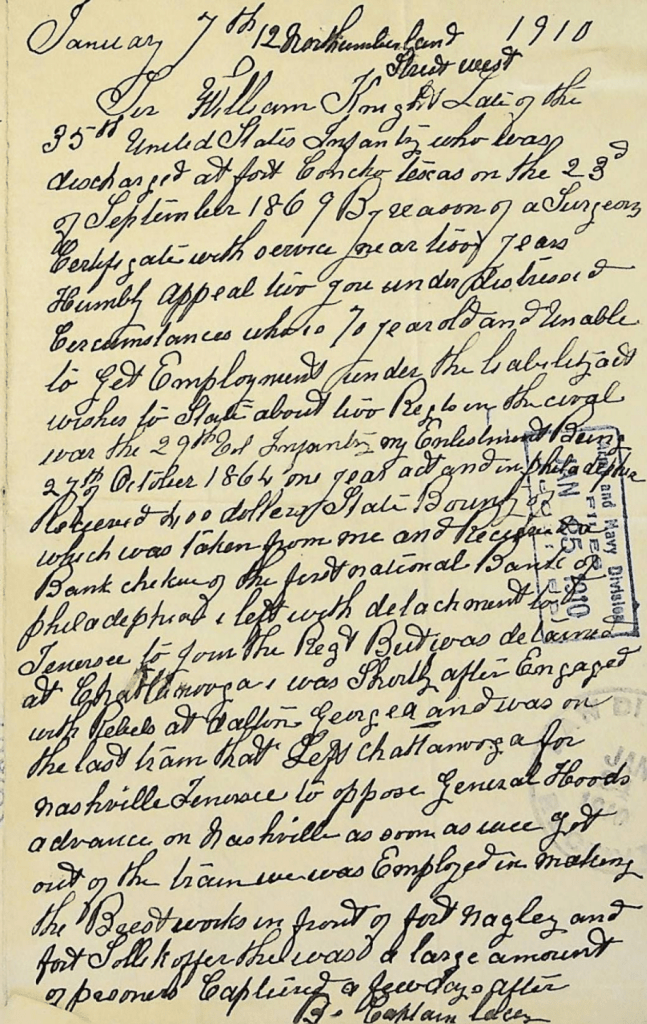
The following letter from William Knight’s pension file was sent to me for transcription by my friend Gina Denham who is showcasing William’s service in the Civil war along with many other British citizens who served in the American Civil War. As a teenage, William served in the 61st Foot of the British army to put down the rebellion in India against British rule in the late 1850s. He then went with the Royal Irish Fusiliers to participate in the Battle of Shanghai (1861-62) in China before coming to the United States in the middle of the Civil War.

It’s a bit difficult to trace William’s service record in the United States. It appears that he walked into a Philadelphia recruiting office in the fall of 1864, accepting a $400 bounty to serve in the 29th Pennsylvania Infantry. By this stage of he war, the regiment had been moved from the Eastern Theatre of the war to the Western Theatre and so he was transported to Chattanooga in time to fight the rebels at Dalton and then to help defend Nashville from Hood’s army in December 1864. Shortly afterward we learn that William deserted for reasons explained in his letter and then enlisted in the 195th Ohio Infantry where he accepted yet another bounty.

Becoming inadvertently separated from the 195th Ohio Infantry while enroute to the Shenandoah Valley in March 1865, William was arrested as a deserter and taken to Fort McHenry in Baltimore. He was subsequently sent to Alexandria to stand trial and was found guilt and made to pay a fine and return to duty. At war’s end, believing his contract to serve for the duration of the war only, William booked passage to London to visit his friends. He then returned to serve two years in the 2nd US Infantry from 1867-69.

William’s life seems to have been filled with tragedy and misfortune, perhaps a consequence of his overindulgence in spiritous liquors. An notice for William in a London paper about 1900 claims a “Sad Ending of an Old Soldier” who, at age 60, was living on the streets and without means to purchase food and clothing.

William was the 84th Member of the London Branch of American Civil War veterans. Gina is currently writing a book to commemorate the service of these veterans.

Transcription

12 Northumberland Street West [London, England]
January 7th 1910

Sir,

William Knight, late of the 35th United States Infantry, who was discharged at Fort Concho, Texas, on the 23rd of September 1869 by reason of a surgeon’s certificate with service near two years humbly appeals to you under distressed circumstances who is 70 years old and unable to get employment under the liability act, wishes to state about two regiments in the Civil War—the 29th [Pennsylvania] Vol. Infantry, my enlistment being 27 October 1864 one year and in Philadelphia, received 400 dollars state bounty of which was taken from me and received a bank check on the First Nation Bank of Philadelphia & left with a detachment to Tennessee to join the regiment but was detained at Chattanooga & was shortly after engaged with rebels at Dalton, Georgia, and was on the last train that left Chattanooga for Nashville, Tennessee to oppose General Hood’s advance on Nashville. As soon as we got out of the train, we was employed in making the breastworks in front of Fort Negley and Fort Zollicoffer. There was a large amount of prisoners captured a few days after.

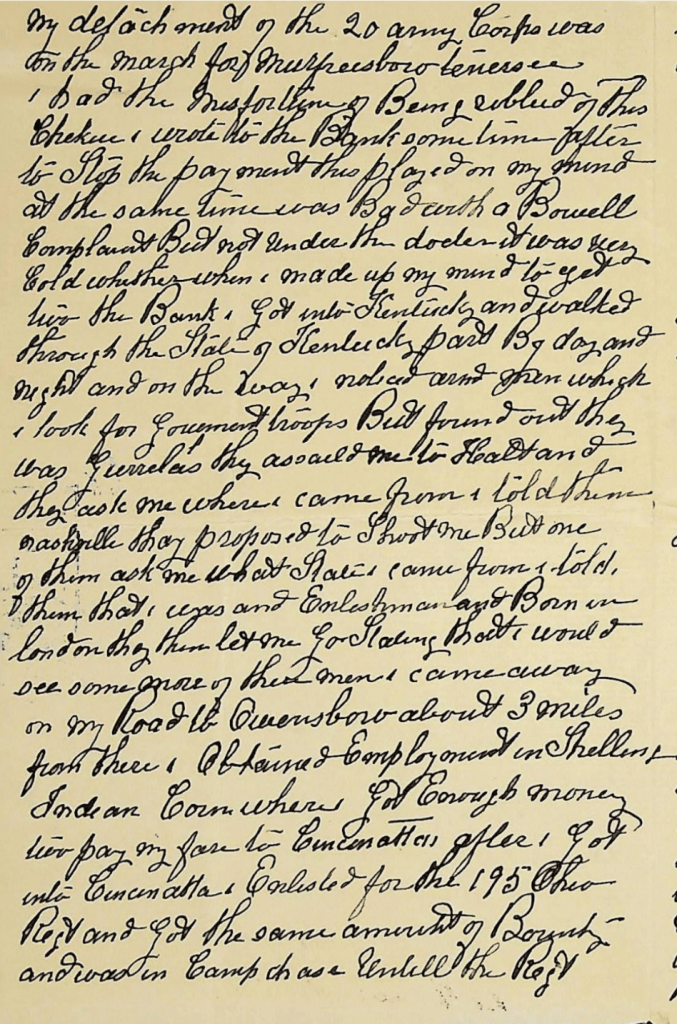
[While] my detachment of the 20th Army Corps was on the march for Murfreesboro, Tennessee, I had the misfortune of being robbed of this check. I wrote to the bank sometime after to stop the payment. This played on my mind. At the same time I was bad with a bowel complaint but not under the doctor’s [care]. It was very cold weather when I made up my mind to get to the bank. [Deserting, I] got into Kentucky and walked through the State of Kentucky, part by day and night and on the way noticed armed men which [I believed were on the] look [out] for government troops, but found out they was guerrillas. They asked me to halt and they asked me where I came from & [I] told them Nashville. They proposed to shoot me but one of them that was an Englishman and born in London [intervened and] they let me go stating that I would see more of these men. I came away on my road to Owensboro about three miles from there and obtained employment in shelling Indian corn where I got enough money to pay my fare to Cincinnati.

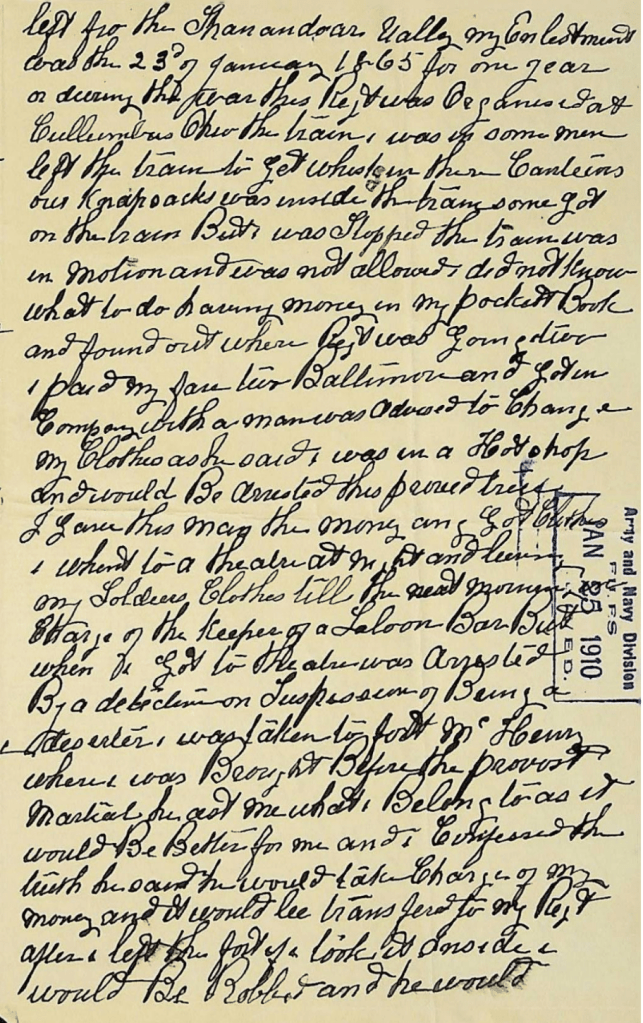
After I got into Cincinnati, I enlisted for the 195th Ohio Regiment and got the same amount of bounty and was in Camp Chase until the regiment left for the Shenandoah Valley. My enlistment was the 23rd of January 1865 for one year, or during the war. This regiment was organized at Columbus, Ohio. [When I was on] the train, [I got off with] some men to get whiskey in their canteens, [leaving] our knapsacks inside the train. Some got [back] on the train but I was stopped. The train was in motion and I was not allowed. I did not know what to do. Having money in my pocketbook and finding out where the regiment was going to, I paid my fare to Baltimore and got in company with a man who advised me to change my clothes as he said I was in a hot spot and would be arrested. This proved true. I gave this man the money and got [civilian] clothes. I went to the theatre at night, leaving my soldier clothes till the next morning with the keeper of a saloon bar, but when I got to the theatre, I was arrested by a detective on suspicion of being a deserter and was taken to Fort McHenry where I was brought before the Provost Marshal. He asked me what [regiment I] belonged to as it would be better for me and I confessed the truth. He said he would take charge of my money and it would be transferred to my regiment [telling me that] after I left the fort, if I took the [money] outside, I would be robbed and he would [give me] a little money to get food with.

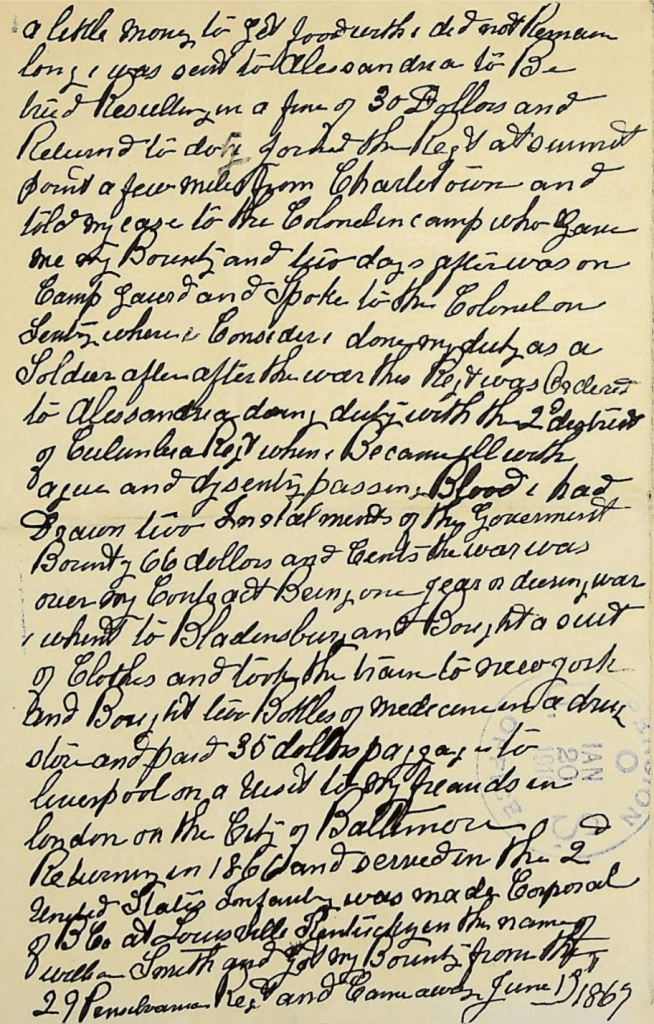
I did not remain long. I was sent to Alexandria to be tried [for desertion] resulting in a fine of 30 dollars and returned to duty. I joined the regiment at Summit Point a few miles from Charlestown and told my case to the Colonel in camp who gave me my bounty and two days after was on Camp Guard and spoke to the Colonel on sentry where I considered I done my duty as a soldier. After the war [ended], the regiment was ordered to Alexandria doing duty with the 2nd District of Columbia Regiment when I became ill with ague and dysentery, passing blood. I had drawn two installments of my government bounty (66 dollars). The war was over—my contract being one year or during the war—I went to Bladensburg and bought a suit of clothes and took the train to New York and bought ten bottles of medicine in a drug store and paid 35 dollars passage to Liverpool on a visit to my friends in London on the City of Baltimore and returning in 1866 and served in the 2nd United States Infantry [where I] was made corporal of Co. B at Louisville, Kentucky under the name of William Smith and got my bounty from the 29th Pennsylvania Regt. and came away June 19, 1869.

William Knight, alias William Smith, wishes to state that when enlisted for the 2nd US Infantry at Louisville, Kentucky, I was asked by Captain Lacey of Co. B whether I had been in the army before. I stated that I was in the 29th Pennsylvania—a regiment in the war, that I lost a bank check on the 1st National Bank of Philadelphia for the sum of 380 dollars and I put it in the hands of a claim agent, As I found out, it was in the hands of the government. He told me to write to Mr. Jackson and tell him that the Captain of my company would write to the government and he got this bounty which I had an order payable by any paymaster the sum of 380 dollars as William Smith, 29th Pennsylvania Volunteers the day I left the regiment 1st day of June 1867. I was under arrest for sending a barrel of beer for the use of the company—that is the reason I gave the name of William Smith.

I remain respectively, — William Knight, 12 Northumberland Street West [London, England]

1865: James C. Magee to Sallie R. McQuiston

The following letter was written by James C. Magee who, at the age of 23, enlisted on 16 July 1861 to serve three years in Co. D, 47th Ohio Volunteer Infantry (OVI). He was appointed a corporal on 1 September 1863 and made sergeant on 4 August 1864. In July 1865 he was promoted to Hospital Steward.

James was the son of Robert Magee (1808-1885) and Catharine Campbell (1806-1853) of Somers, Preble county, Ohio. After the war, James married Caroline Brown (1841-1924) and moved to Andrew County, Missouri, where he farmed and raised his family. Later in life he moved to Scott City, Kansas.

Transcription

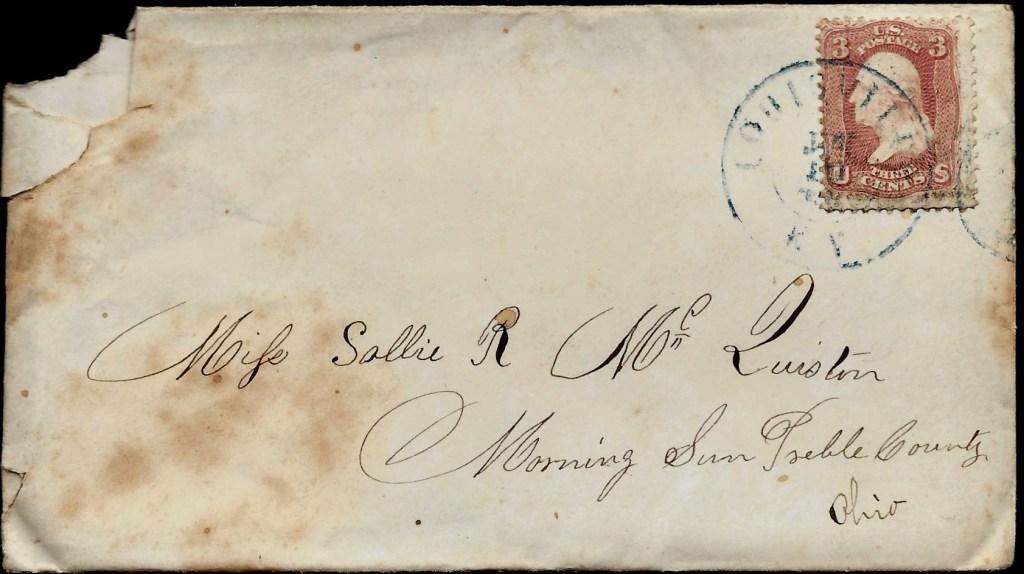
Addressed to Miss Sallie R. McQuiston, Morning Sun, Preble county, Ohio

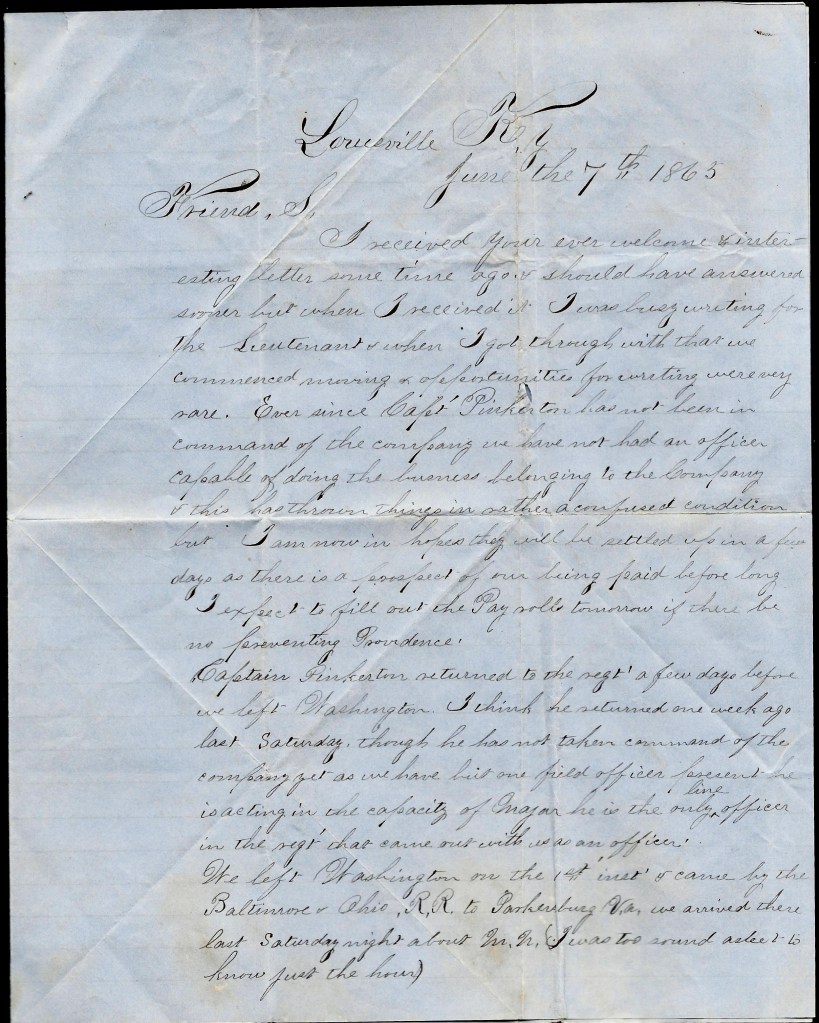
Louisville, Kentucky
June 7th 1865

Friend Sallie,

I received your ever welcome & interesting letter some time ago & should have answered sooner but when I received it, I was busy writing for the Lieutenant & when I got through with that we commenced moving & opportunities for writing were very rare. Ever since Capt. [Joseph L.] Pinkerton has not been in command of the company, we have not had an officer capable of doing the business belonging to the company & this has thrown things in rather confused condition. But I am now in hopes they will be settled up in a few days as there is a prospect of our being paid before long. I expect to fill out the Payrolls tomorrow if there be no preventing Providence.

Captain Pinkerton returned to the regiment a few days before we left Washington. I think he returned one week ago last Saturday, though he has not taken command of the company yet as we have but one field officer present. He is acting in the capacity of Major. He is the only line officer in the regiment that came out with us as an officer.

We left Washington on the 1st inst. and came by the Baltimore & Ohio Railroad to Parkersburg, Va. We arrived there last Saturday night about midnight (I was too sound asleep to know just the hour). We embarked on the Steamer Express on Sabbath morning at 9 a.m. bound for Louisville. We had quite a fine trip. Stopped at Cincinnati on Monday evening between sunset and dark & the Colonel gave us liberty to run around through the city until eight o’clock Tuesday morning when we were to report back to the boat. As a general thing, the boys were punctual, but as you know there are more or less of the black sheep in every flock. There is one of the numbers of Co. D that I presume you will see or at least hear of before this reaches you.

We arrived at the City of Louisville about 9 o’clock last night & marched some two or three miles south of east from the town. We have a very nicely situated camp. There is more or less talk every day as to where we are going & what we are going for. Some think we will be mustered out while the greater portion think we will be sent to Texas & I don’t profess to know anything about it & I believe I know nearly as much about it as any of them. That is as much to say, there is none of the, knows anything about it. Be these things as they may, I think I have fulfilled my contract. I agreed to serve three years if the war lasted so long & if it didn’t, I was to quit sooner. So if they want to go to Texas or to Mexico to fight Maximilian, they may go but I think I’ll go to Preble county, Ohio. That is hte feeling at present. I think four years of actual service is enough at one time, don’t you?

Well Sallie, you rather set me to thinking pretty seriously over my being elected. I must confess the subject is too serious for joking, yet I fear there is too much truth in the statement. You asked me to excuse all mistakes & whatever I was not pleased with. I had no occasion for either mistakes I did not find & I had no occasion for any displeasure. You seem to think that my market is made & I hear hints to the same effect from some others though that’s what I am utterly unable to see. Why you don’t suppose she would stoop so low as even dream of such a worm as I.

The weather is quite warm and sultry & makes me so lazy I can hardly see. The boys are all in their usual health, I believe, except W[illiam] T. Ramsey. He came near getting his left leg broke. Just as we were leaving Cincinnati, he got it caught between the fenders of the boat we were on & another one though I think he will be able to go about in a few days.

I suppose there is quite a number of young ladies wondering what they’ll do when their soldier comes home but there are some of hem won’t be left in doubt long. How I wish I could be some young lady’s soldier! Wouldn’t I cut a swell though?

You seem to think it a pity that Old Jeff disgraced skirts. So do I, but he has disgraced the masculine gender so much worse that I would like to be classed with the feminine if I could. I guess I have written about all the nonsense I can think of & perhaps more than you will care to read so for fear of wearying your patience, I will close hoping to hear from you in due time.

Ever your friend, — James C. Magee

To Sallie